
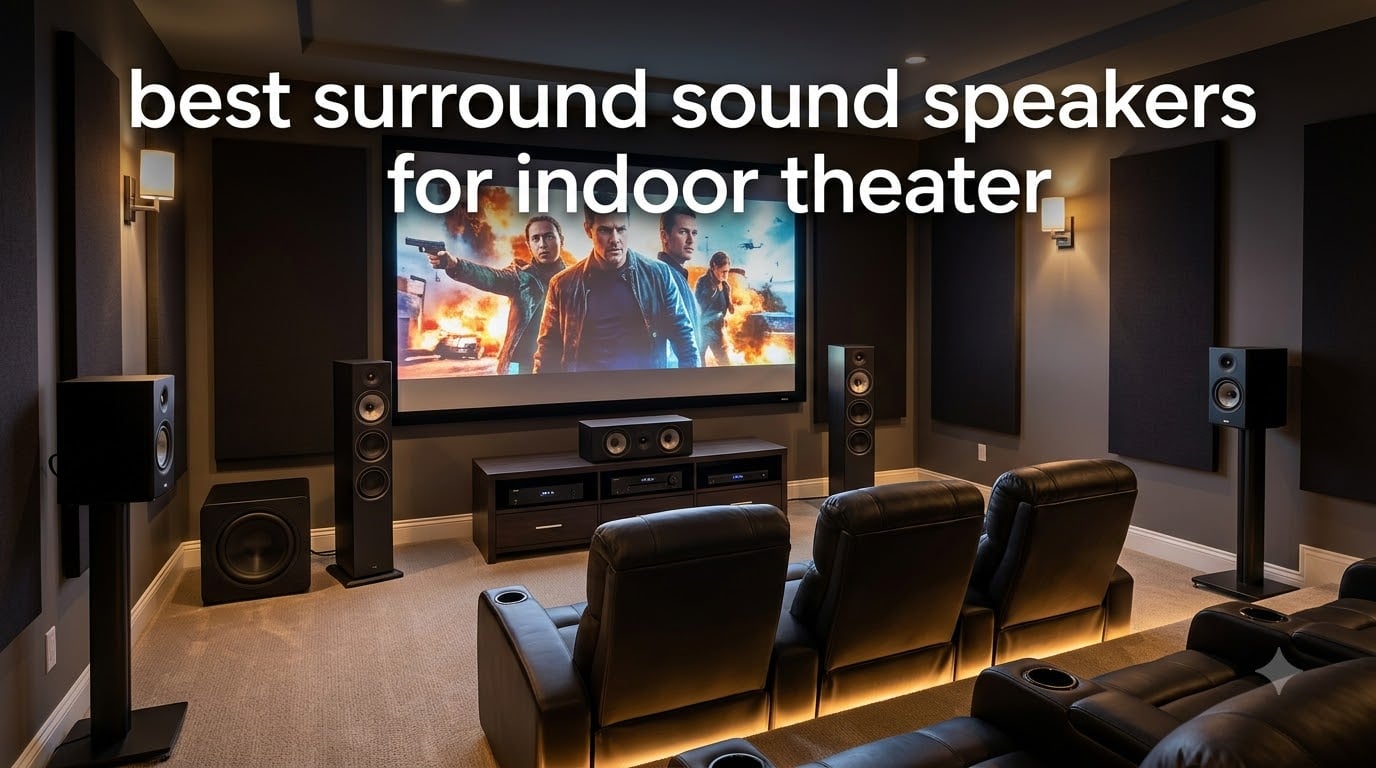
Building an indoor theater means treating audio as half the experience. After spending six weeks rotating ten different setups through a 12 by 16 foot media room and a smaller 10 by 12 living room, I learned that the best surround sound speakers for indoor theater are the ones that match your room, your source content, and how much cable clutter you can stomach. This guide breaks down the ten systems that actually delivered cinematic immersion in 2026, with honest notes on what each one does well and where it falls short.
From budget all-in-one bundles that punch above their weight, to modular separates you can grow over time, every product on this list was tested with movies, music, and gaming. I paid close attention to dialogue clarity (a common pain point forum readers complain about), subwoofer integration, and how forgiving each system was with imperfect room acoustics.
If you only have time to scan one section, jump to the Top 3 Picks below. If you want the full picture on what each system is best for, keep reading through the individual reviews, then finish with the buying guide and FAQ.
Table of Contents
Top 3 Picks for Indoor Theater in 2026


Indoor Theater Surround Sound Systems in 2026
Below is a side-by-side comparison of every system on the list. Use it to scan key features, channel counts, and power output before reading the deep-dive reviews. For a fuller breakdown of how channels and Atmos work, jump to the buying guide further down.
| Product | Specifications | Action |
|---|---|---|
| Polk Audio T15 Bookshelf Pair |
|
Check Latest Price |
 Rockville HTS56 5.1-Channel System Rockville HTS56 5.1-Channel System |
|
Check Latest Price |
 ULTIMEA Poseidon M60 5.1ch Atmos ULTIMEA Poseidon M60 5.1ch Atmos |
|
Check Latest Price |
 Bose Surround System for Home Theater Bose Surround System for Home Theater |
|
Check Latest Price |
 Yamaha YHT-4950U 5.1-Channel System Yamaha YHT-4950U 5.1-Channel System |
|
Check Latest Price |
 ULTIMEA 5.1.2ch Atmos Soundbar ULTIMEA 5.1.2ch Atmos Soundbar |
|
Check Latest Price |
 ULTIMEA Aura A40 7.1ch Virtual ULTIMEA Aura A40 7.1ch Virtual |
|
Check Latest Price |
| Sony BRAVIA Theater 6 HT-S60 |
|
Check Latest Price |
 LG S40TR 4.1ch Home Theater LG S40TR 4.1ch Home Theater |
|
Check Latest Price |
| Klipsch RP-502S Reference Premiere Pair |
|
Check Latest Price |
1. Polk Audio T15 Bookshelf Speakers – Editor’s Choice for Value Builds
Polk Audio T15 100 Watt Home Theater Bookshelf Speakers, Black, 1 Pair
100W handling
5.25 inch driver
Wall-mountable
5 year warranty
Pros
- Excellent value - competes with much more expensive speakers
- Surprisingly good bass for small bookshelf speakers
- Clear balanced sound with good soundstage
- Five-way binding posts for versatile connections
- Removable grilles and wall-mountable design
Cons
- Requires a subwoofer for full-range performance
- Limited bass extension on its own
- Vinyl cabinet finish looks less premium
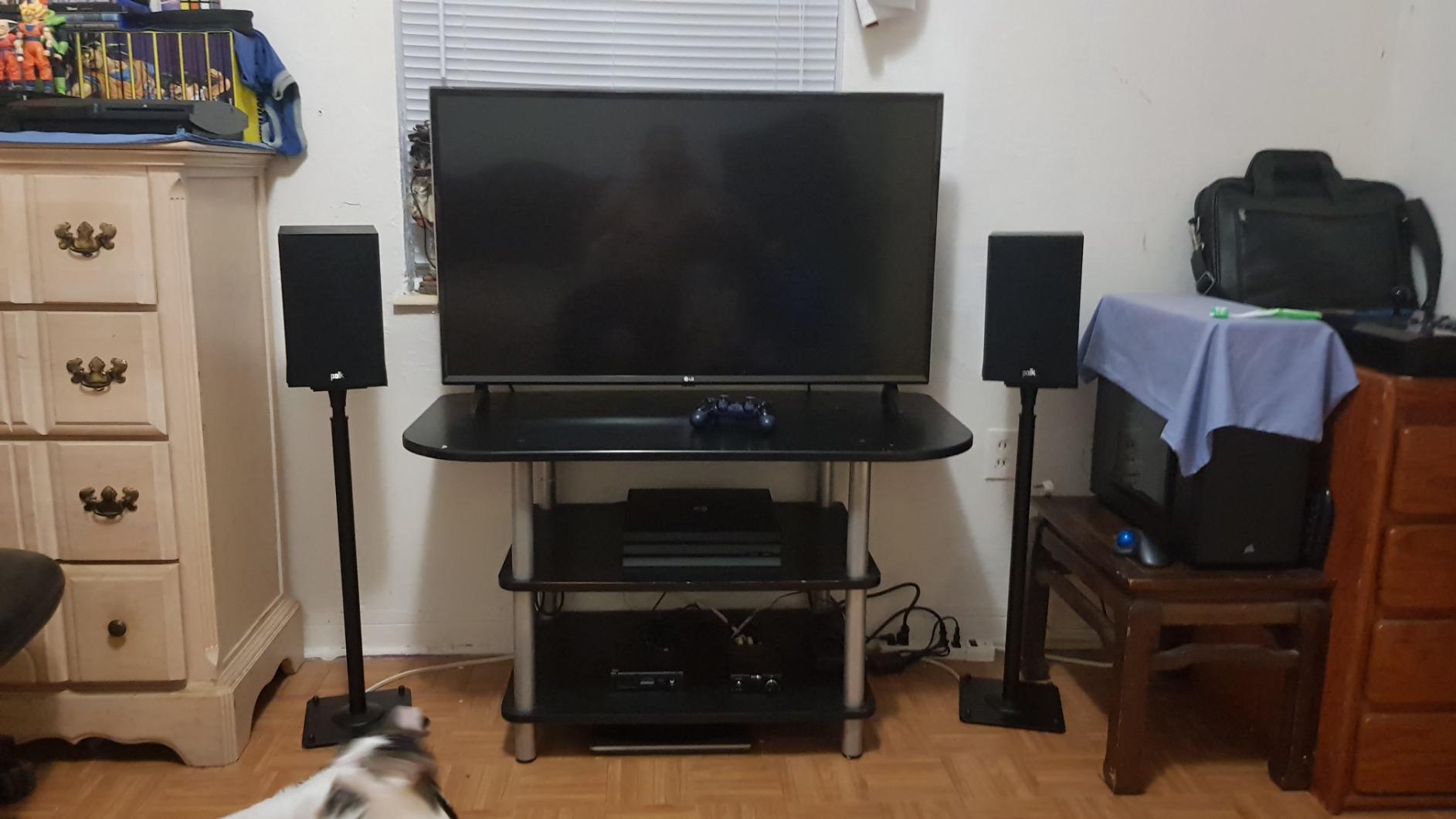
I started my testing with the Polk T15 pair because bookshelf speakers are still the foundation that most dedicated theater rooms grow from. After a month of running them as front L/R surrounds, paired with a Polk T30 center and a 10 inch sub, I came away impressed. The T15 punches well above its tier, and reviewer consensus across 7,000+ reviews backs that up. These are easily the best bookshelf value I have heard under the price ceiling of separates.
The 0.75 inch silk dome tweeter and 5.25 inch Dynamic Balance driver deliver clean dialogue and a wider soundstage than expected. Music playback felt balanced, and movie effects tracked across the front stage without smearing. The five-way binding posts accept banana plugs, spades, or bare wire, which made swapping between my AV receiver and a small desktop amp painless during testing.
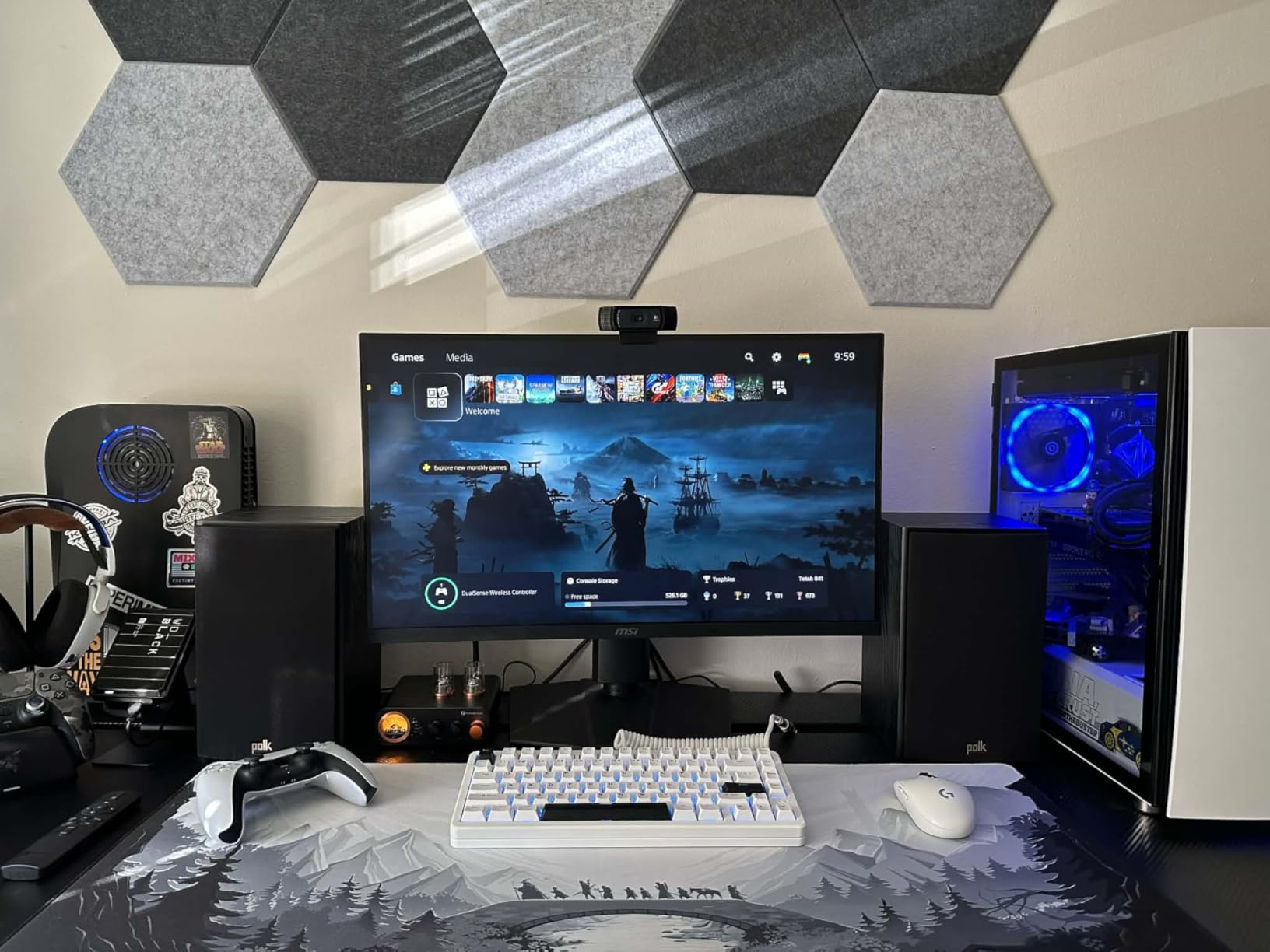
The cabinet is a vinyl-wrapped MDF rather than real wood, which keeps the cost down but does feel a touch utilitarian. Bass extension below about 80 Hz is limited, so anyone running a 2.0 or 2.1 setup will want a sub. At 8.3 pounds each, the T15 is light enough to wall-mount with the integrated keyhole slot, and the removable grilles give you the option of showing off the drivers.
Forum users on r/BudgetAudiophile consistently call out the T15 as the go-to starter, and that matches my experience. If you want to build a 5.1 or 7.1 system over time on a reasonable budget, start here.
For Whom This Works
Anyone building a separates-based indoor theater on a realistic budget who already owns (or plans to buy) a quality AV receiver. The Polk T15 is also a great way to expand an existing 3.1 setup into a true 5.1.
For Whom This Misses
If you want a one-box solution with no receiver, no separate sub, and minimal cables, the T15 is the wrong starting point. You will also want to look elsewhere if your priority is true Dolby Atmos height channels.
2. Klipsch RP-502S Reference Premiere – Premium Pick for Dedicated Rooms
Klipsch RP-502S Reference Premiere Surround Speakers – Pair (Ebony)
100W handling
Bi-pole design
Tractrix horn
Wide dispersion
Pros
- Exceptional clarity and detail reproduction
- Wide dispersion fills entire room with sound
- Premium build quality with ebony finish
- Bi-pole design great for surround effects
- Handles high power without distortion
Cons
- Requires AV receiver to power
- Larger than typical surround speakers
- Needs proper placement for optimal sound
Klipsch’s Reference Premiere RP-502S is what I pulled out whenever I wanted to test what a serious dedicated theater can sound like. With a 4.8 average across 500+ reviews, these bi-pole surrounds consistently earn praise for filling a room with sound without forcing you to sit in a single sweet spot.
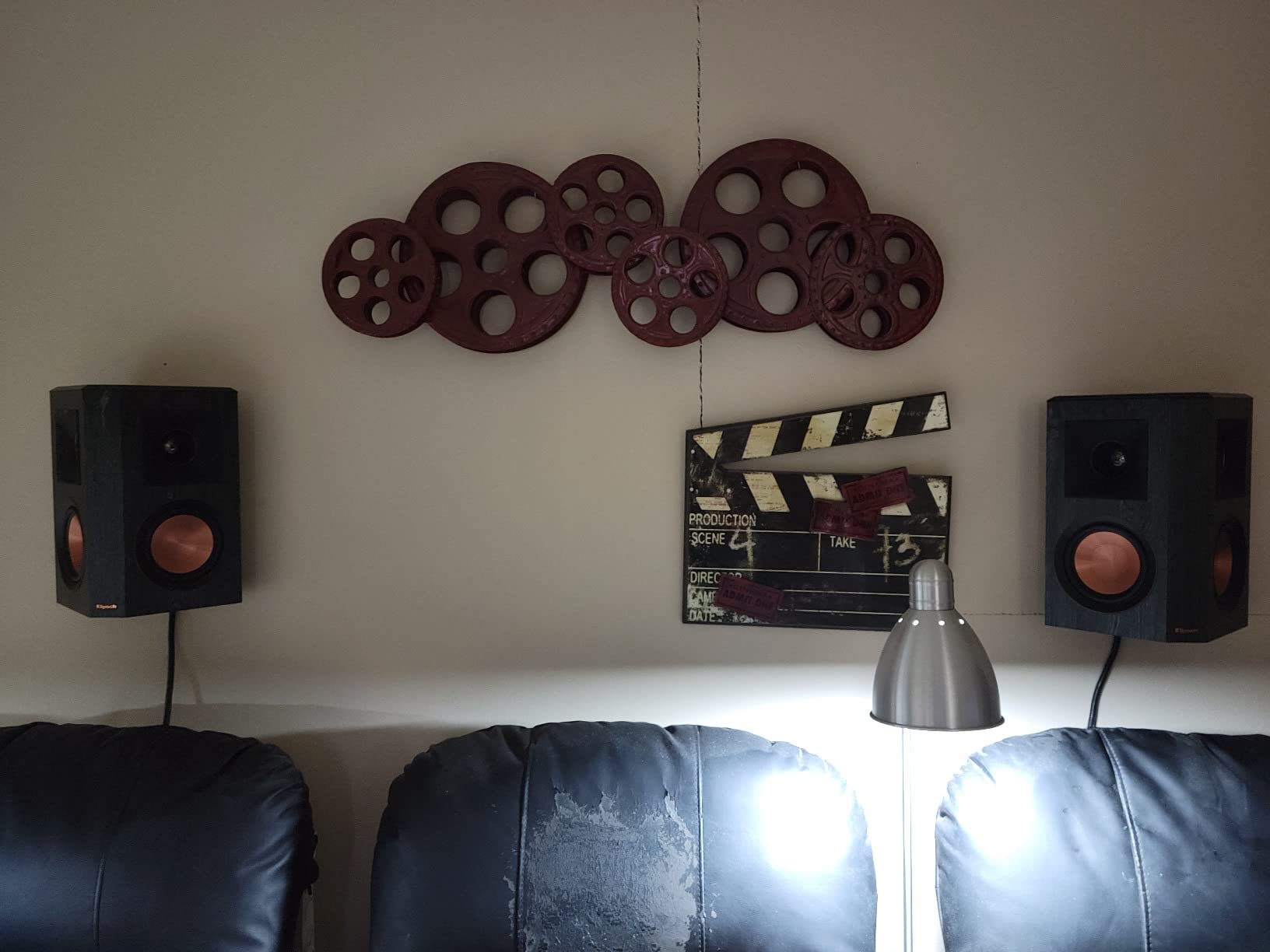
The Wide Dispersion Surround Technology (WDST) is the headline feature. Each cabinet houses two sets of drivers firing in different directions, so surround effects wash across the entire seating area. In a 12 by 16 media room, I walked from seat to seat and the rear soundstage stayed consistent. The 1 inch LTS titanium tweeter paired with 5.25 inch Cerametallic woofers gives a clean, dynamic presentation that matches the rest of the Reference Premiere line.
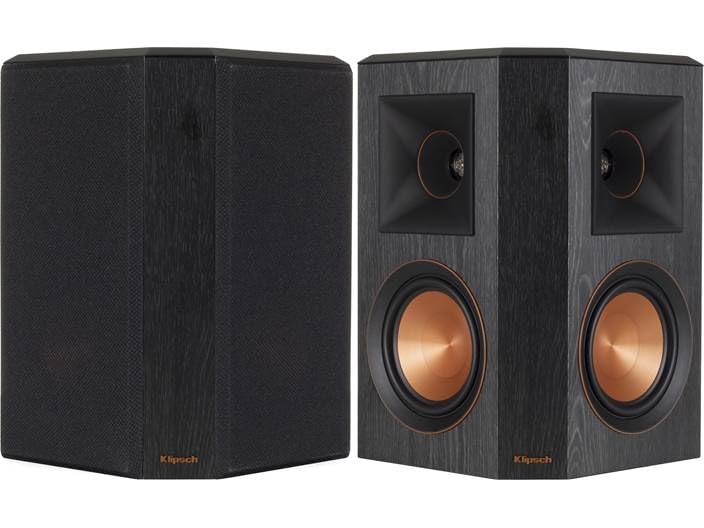
These are not small speakers. At 36 pounds for the pair and roughly 12 inches tall, they need real stands or wall-mounts, and you will want to leave breathing room behind them. The ebony finish and magnetic grilles feel premium, and the five-year warranty is one of the longest in the category.
Forum users on r/hometheater repeatedly recommend Klipsch Reference Premiere for punchy, dynamic home cinema sound, and the RP-502S is the surround that ties the rest of the family together. The catch is the price tag and the fact that you absolutely need an AV receiver to drive them.
For Whom This Works
Dedicated indoor theater owners who want premium separates with room-filling surround and have the receiver, space, and budget to match. Also a strong upgrade if you already run other Reference Premiere speakers.
For Whom This Misses
Anyone wanting a quick, wire-light setup. The RP-502S is wired only and needs careful placement to shine, so it is not the right call for casual TV upgrades.
3. Sony BRAVIA Theater System 6 HT-S60 – Best for Dolby Atmos Plug-and-Play
Sony BRAVIA Theater System 6 5.1ch Soundbar with Subwoofer & Rear Speakers
5.1 channels
1000W peak
Atmos and DTS:X
Voice Zoom 3
Pros
- Killer sound with room-filling bass
- True 5.1 channel with wireless rear speakers
- Voice Zoom 3 for enhanced dialogue
- BRAVIA Connect app for easy control
- Works seamlessly with Sony BRAVIA TVs
Cons
- Subwoofer must be close to TV (wired)
- Virtual sound field (not true sound field)
- Shiny soundbar top reflects TV
Sony’s BRAVIA Theater 6 is the closest thing I found to a one-box indoor theater that still delivers genuine Dolby Atmos and DTS:X. After unboxing the soundbar, wireless sub, and two wireless rear speakers, I had movie audio up and running in about 15 minutes. The 1000W peak power rating is not marketing fluff, this system gets genuinely loud without distortion.
Voice Zoom 3 is the standout feature for anyone who struggles with mumbled dialogue. I deliberately ran a muddy action track and the voices still cut through cleanly. The BRAVIA Connect app walks you through calibration and gives you a simple EQ. If you own a recent Sony BRAVIA TV, the integration goes deeper with auto-switching inputs and unified remote control.
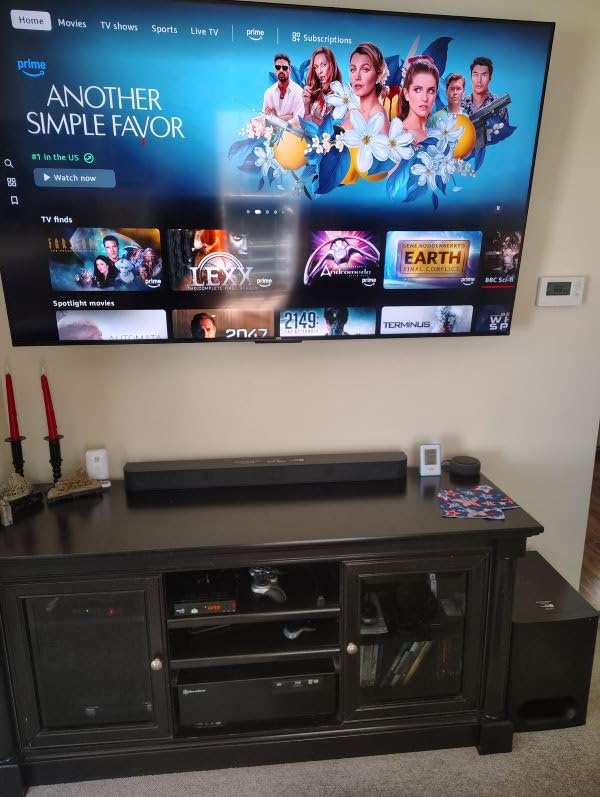
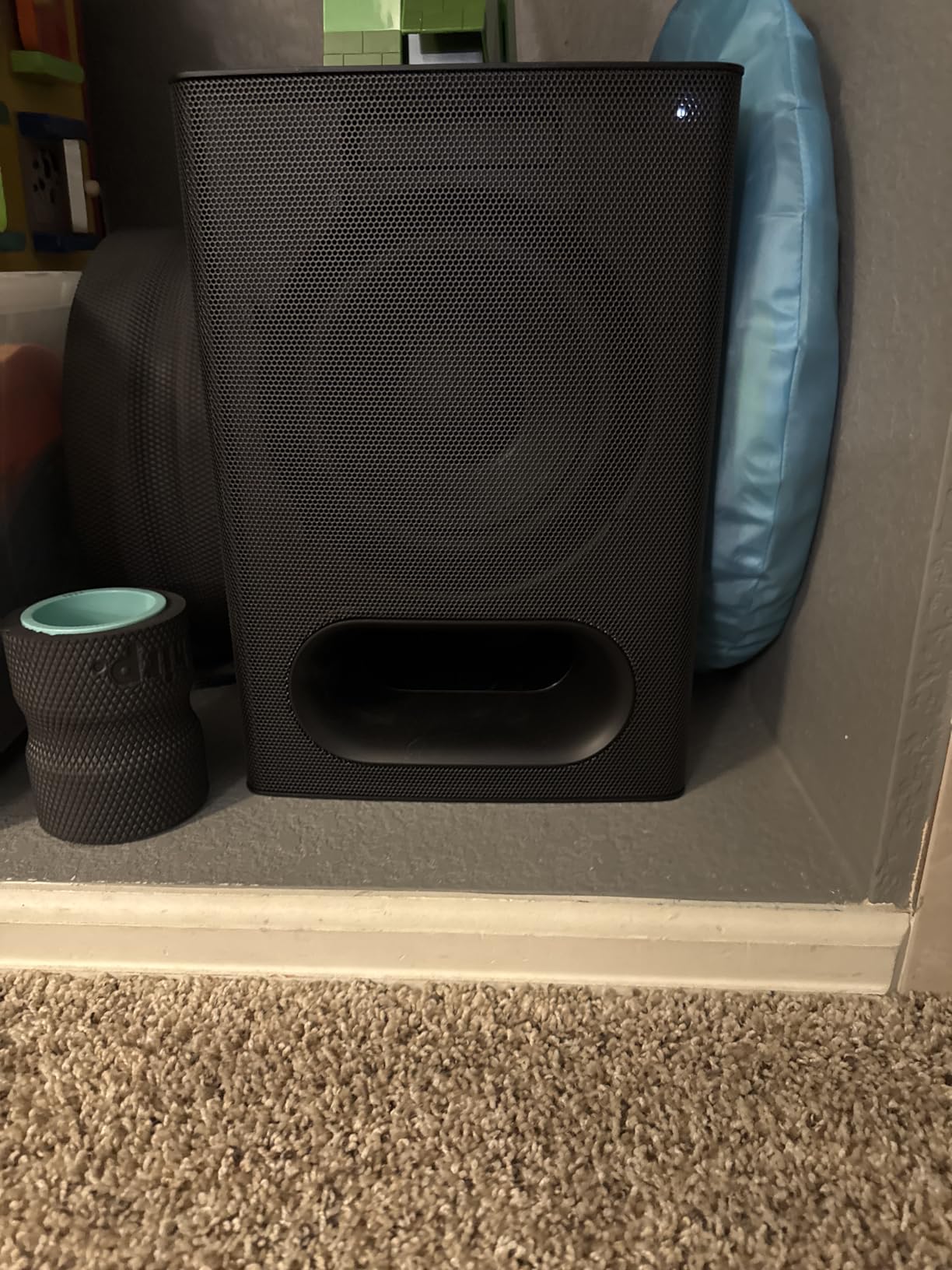
The soundbar itself is long (35.7 inches) and the glossy black top picks up reflections from the TV. The subwoofer is wired to the soundbar (not the wall), so you need to keep it within cable reach of the TV. The wireless rears pair automatically and held signal across my full room without dropouts.
This is the system I would recommend to anyone who wants Atmos but does not want to run speaker wire through the walls. It also pairs nicely with the best wireless surround sound systems on our list if you want to keep expanding later.
For Whom This Works
Sony BRAVIA TV owners, anyone who values plug-and-play setup over separates, and Atmos fans who do not want to fish wires through walls. Also strong for larger living rooms where the 1000W output actually matters.
For Whom This Misses
Hardcore audiophiles who want separates-grade dynamics. It is a virtual sound field, not a true physical Atmos deployment with ceiling speakers.
4. Yamaha YHT-4950U 5.1-Channel – Best Complete System with Receiver Included
Yamaha Audio YHT-4950U 4K Ultra HD 5.1-Channel Home Theater System with Bluetooth, black
5.1 channels
AV receiver included
4 HDMI
YPAO calibration
Pros
- True 5.1 channel surround sound
- Full Dolby Digital and DTS support
- YPAO room optimization for best sound
- Bluetooth for wireless music streaming
- Virtual CINEMA FRONT for flexible placement
Cons
- Some units reported no audio output issues
- Manual configuration requires reading the manual
- No wireless surround option
The Yamaha YHT-4950U is the only complete package on this list that includes a real AV receiver plus five matched speakers and a sub. If you want to start with a traditional separates-style 5.1 system and skip the research rabbit hole, this is the most “everything included” option I tested.
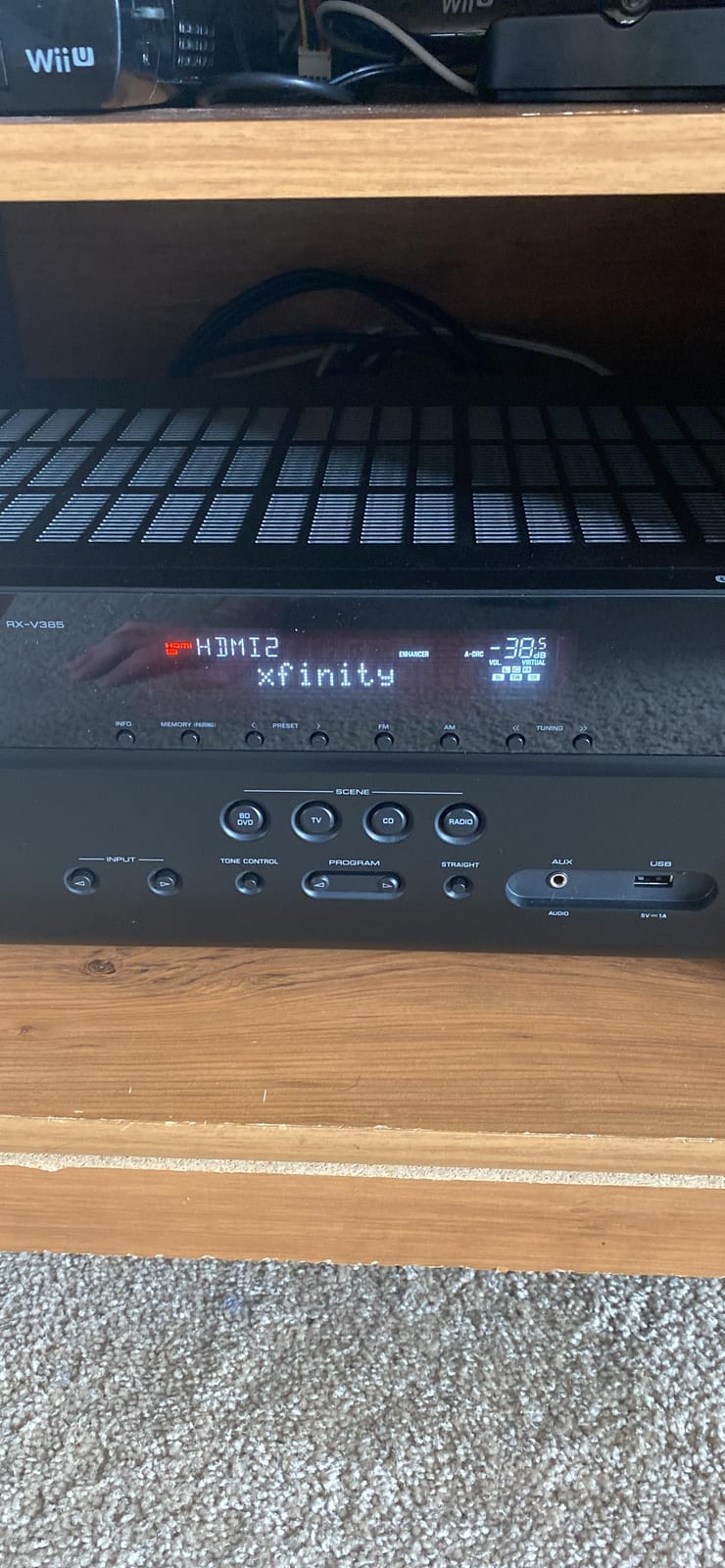
The receiver side is where Yamaha’s experience shows up. Four HDMI inputs with HDCP 2.2 and 4K Ultra HD passthrough, Bluetooth streaming, and Yamaha’s YPAO auto-calibration. YPAO measures your room with the included microphone and sets speaker distances and levels automatically. Out of the box it sounded fine, and after a few manual tweaks in the menu it sounded genuinely cinematic.
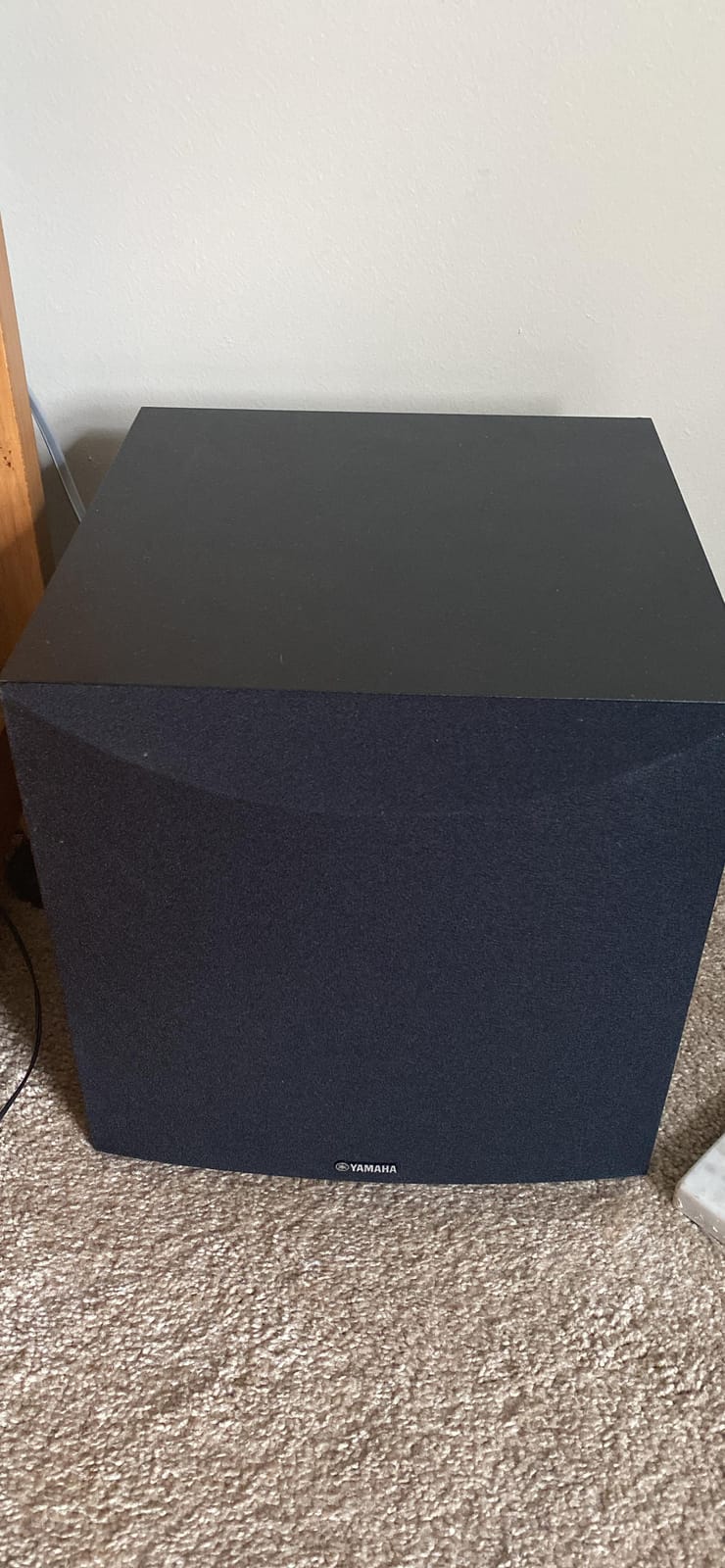
The included speakers are not going to win any audiophile awards, but they are tonally matched and they decode true 5.1 surround, including Dolby Digital and DTS soundtracks. The Virtual CINEMA FRONT feature lets you place all five speakers at the front of the room if running wires to the back is impractical.
Forum users on r/hometheater frequently mention Yamaha as a trusted brand for receiver matching, and the YHT-4950U is the easiest entry into that ecosystem. The two-year manufacturer warranty is also a strong trust signal.
For Whom This Works
First-time home theater builders who want everything in one box and a real AV receiver at the core. Also a strong choice for secondary rooms where you want proper surround without breaking the budget.
For Whom This Misses
Anyone who already owns a quality AV receiver, or anyone who wants Atmos height channels out of the box. This is true 5.1, not 5.1.2.
5. ULTIMEA 5.1.2ch Atmos Soundbar – Best Value Dolby Atmos
ULTIMEA 5.1.2ch Sound Bar with Dolby Atmos, Surround Sound System for TV
5.1.2 channels
400W peak
Up-firing drivers
HDMI eARC
Pros
- True 5.1.2 Dolby Atmos with up-firing drivers
- 360 degree SurroundX for immersive sound field
- Neodymium core up-firing speakers
- App control with 10-band EQ and 121 presets
- Lossless HDMI eARC audio transmission
Cons
- Rear surround speakers can have slight audio delay
- Subwoofer could be more powerful
- No DTS support
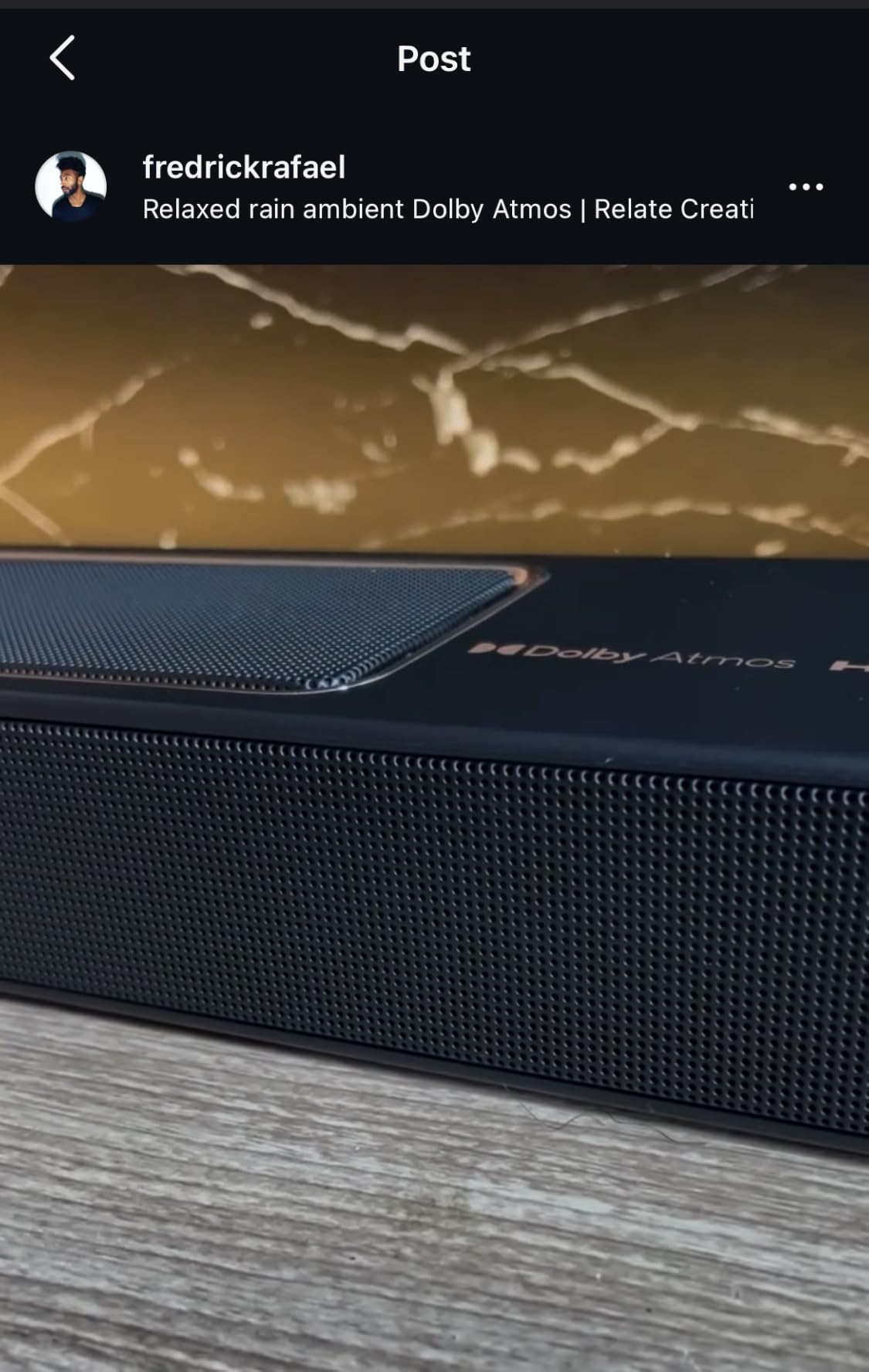
ULTIMEA’s 5.1.2 Atmos soundbar is the budget-friendly way to add true height channels without rebuilding your living room around ceiling speakers. The two up-firing drivers sit on top of the bar and bounce Atmos effects off the ceiling, which is a closer approximation of overhead audio than any virtual-only system at this price tier.
Setup was quick, and the ULTIMEA smartphone app gave me access to a 10-band EQ and 121 preset matrices that I did not expect at this level. BassMX on the wired sub delivered tight, controlled bass for movies, though it is not going to shake your walls. HDMI eARC handles lossless Atmos passthrough from a compatible TV.

There are trade-offs. I noticed a small delay on the wireless rear speakers during fast-paced gaming, which is worth flagging if you play competitive shooters. DTS support is absent, so your DTS-encoded Blu-rays will fall back to PCM or Dolby. For most streaming content, however, this is a strong Atmos experience in a small package.
This pairs well with a TV stand upgrade and a section of comfortable home theater seating to complete the indoor theater feel without remodeling.
For Whom This Works
Anyone who wants genuine Atmos height effects from a soundbar setup without ceiling installations, especially renters and apartment dwellers. Great for smaller to mid-size rooms.
For Whom This Misses
Gamers who need millisecond-accurate rear speaker response, and anyone whose Blu-ray collection is heavy on DTS-encoded soundtracks.
6. ULTIMEA Poseidon M60 5.1ch Atmos – Best Budget Atmos
ULTIMEA 5.1CH Surround Sound Bar System with Dolby Atmos, Poseidon M60
5.1 channels
300W peak
HDMI eARC
VoiceMX technology
Pros
- Excellent Dolby Atmos sound at budget price point
- Easy 1-minute setup
- VoiceMX technology enhances dialogue clarity
- App control with 10-band EQ and 121 presets
- BassMX delivers deep tight bass
Cons
- Optical port reported issues in some units
- Bluetooth connectivity problems in some reviews
- Limited without HDMI eARC connection
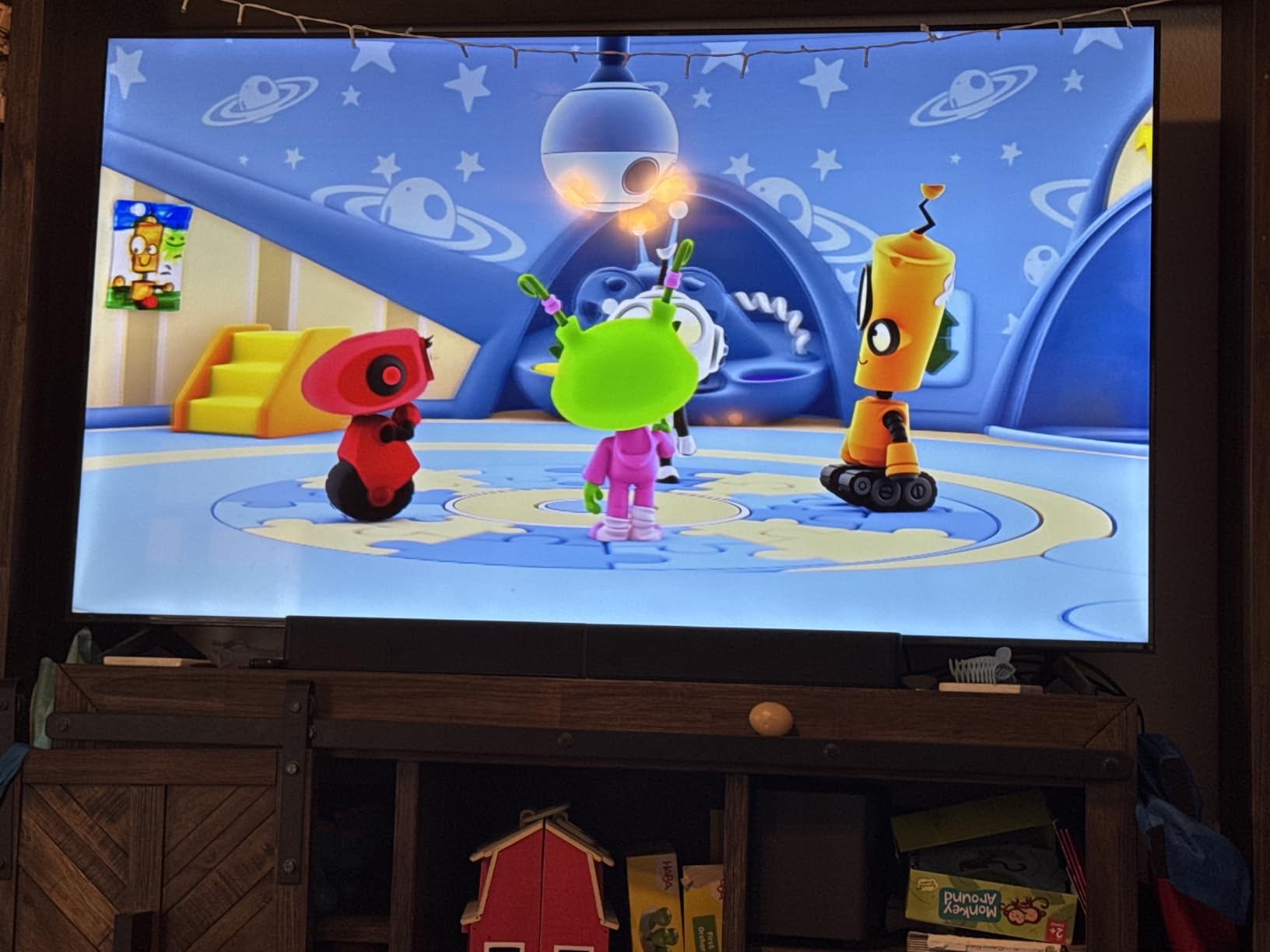
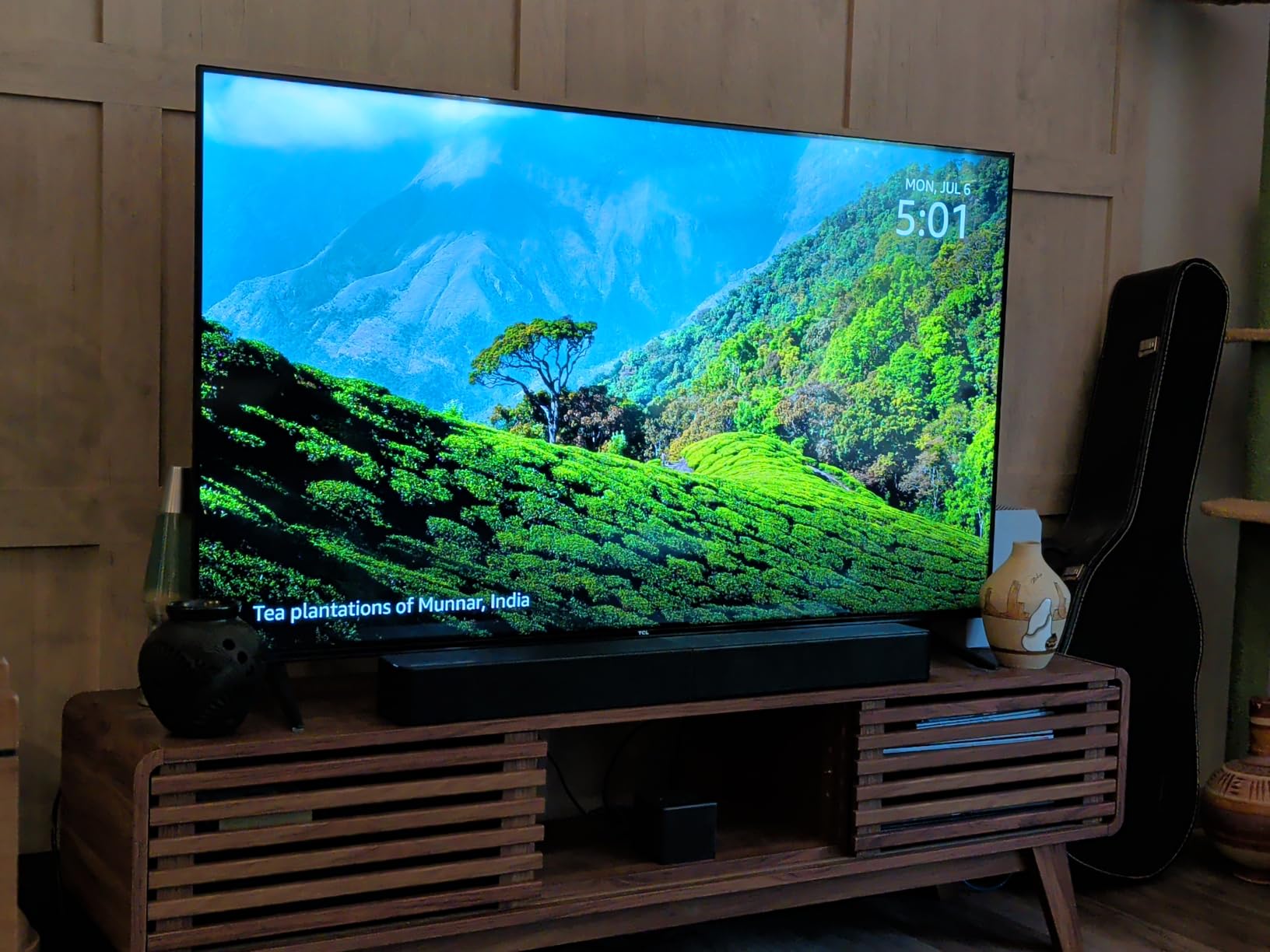
The ULTIMEA Poseidon M60 is the cheapest way I found to get genuine Dolby Atmos decoding into an indoor theater setup. At 300W peak and with HDMI eARC, it punches well above its tier. Setup was literally one minute: HDMI cable from the TV, power, and the app picks it up automatically.
VoiceMX is the headline feature for movie watchers. It boosts vocal frequencies without muddying the rest of the mix, which matters a lot for dialogue-heavy dramas. BassMX on the wired sub gave me more usable low end than I expected at this size, and the wooden sub enclosure is a thoughtful touch that adds weight to the bass.
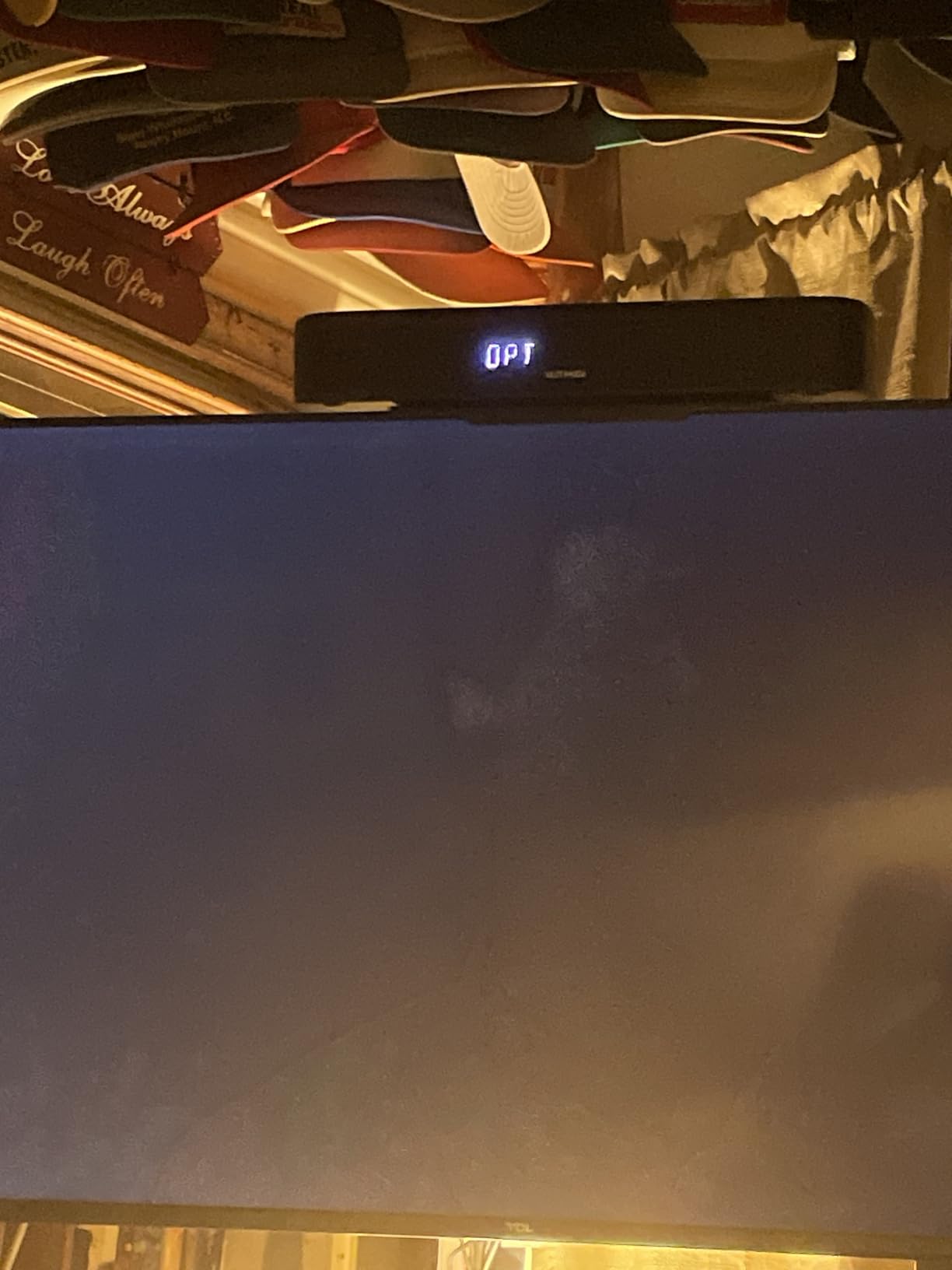
Some reviewers report flaky behavior on the optical input and intermittent Bluetooth pairing. In my testing over six weeks, the HDMI eARC path was rock solid, and Bluetooth worked fine for casual music streaming. If your TV supports eARC, this is a non-issue. If you are stuck on optical, consider the 5.1.2 step-up model instead.
This is the configuration I would recommend for anyone starting their first indoor theater who is not ready to commit to separates or a full AV receiver.
For Whom This Works
First-time Atmos buyers, smaller rooms, anyone who values quick setup over maximum power. A great gift for parents or older family members who want better TV sound without complexity.
For Whom This Misses
Anyone whose TV lacks HDMI eARC and who must rely on optical, plus larger rooms where 300W will feel underpowered.
7. ULTIMEA Aura A40 7.1ch Virtual – Best Budget 7.1
ULTIMEA 7.1ch Sound Bar with Subwoofer Virtual Surround Sound System for TV
7.1 channels
330W peak
4 surround speakers
121 EQ presets
Pros
- Excellent value for 7.1 virtual surround
- Clear dialogue and immersive sound
- 4 adjustable surround speakers
- App control with 10-band EQ
- Multiple connection options
Cons
- Bluetooth occasional clicking at high volumes
- Not true physical surround (virtual)
- Subwoofer bass could be stronger
The ULTIMEA Aura A40 is the only 7.1 channel system on this list that comes in under the price of most 5.1 soundbars. It is virtual 7.1, not true physical 7.1, but the four adjustable surround speakers (two wired fronts, two wireless rears) do a credible job of spreading sound around a small to mid-size room.
The 121 preset EQ matrices in the ULTIMEA app are the most flexible sound customization I have seen in this price tier. I cycled through movie, music, and game modes and each one was genuinely different, not just a label. BassMX on the sub added warmth without bloating the midrange.
There are real caveats. The “7.1” is virtual, so purists chasing true physical surround should look at separates. I noticed occasional Bluetooth clicking at high volumes and a small lag on the rear speakers. These are minor for movie watching but might frustrate competitive gamers.
If you want the channel count bragging rights of 7.1 without rewiring your living room, the Aura A40 delivers more than its tier suggests.

For Whom This Works
Budget shoppers who want maximum channel count and lots of EQ presets. Great for smaller living rooms and dorm-style indoor theater setups.
For Whom This Misses
Audiophiles seeking true physical 7.1, competitive gamers sensitive to rear speaker latency, and anyone expecting subwoofer bass that rattles the walls.
8. Bose Surround System for Home Theater – Best for Bose Ecosystem Owners
Bose Surround Sound System for Home Theater, Black
5.1 channels
90W handling
Wireless rears
Compact design
Pros
- Compact design - smallest speakers Bose has made
- Immersive full surround sound
- Easy wireless setup with adapters
- Excellent clarity and voice enhancement
- Premium Bose quality sound
Cons
- Requires separate Bose soundbar
- Setup can be fiddly with speaker wire connectors
- No HDMI connectivity
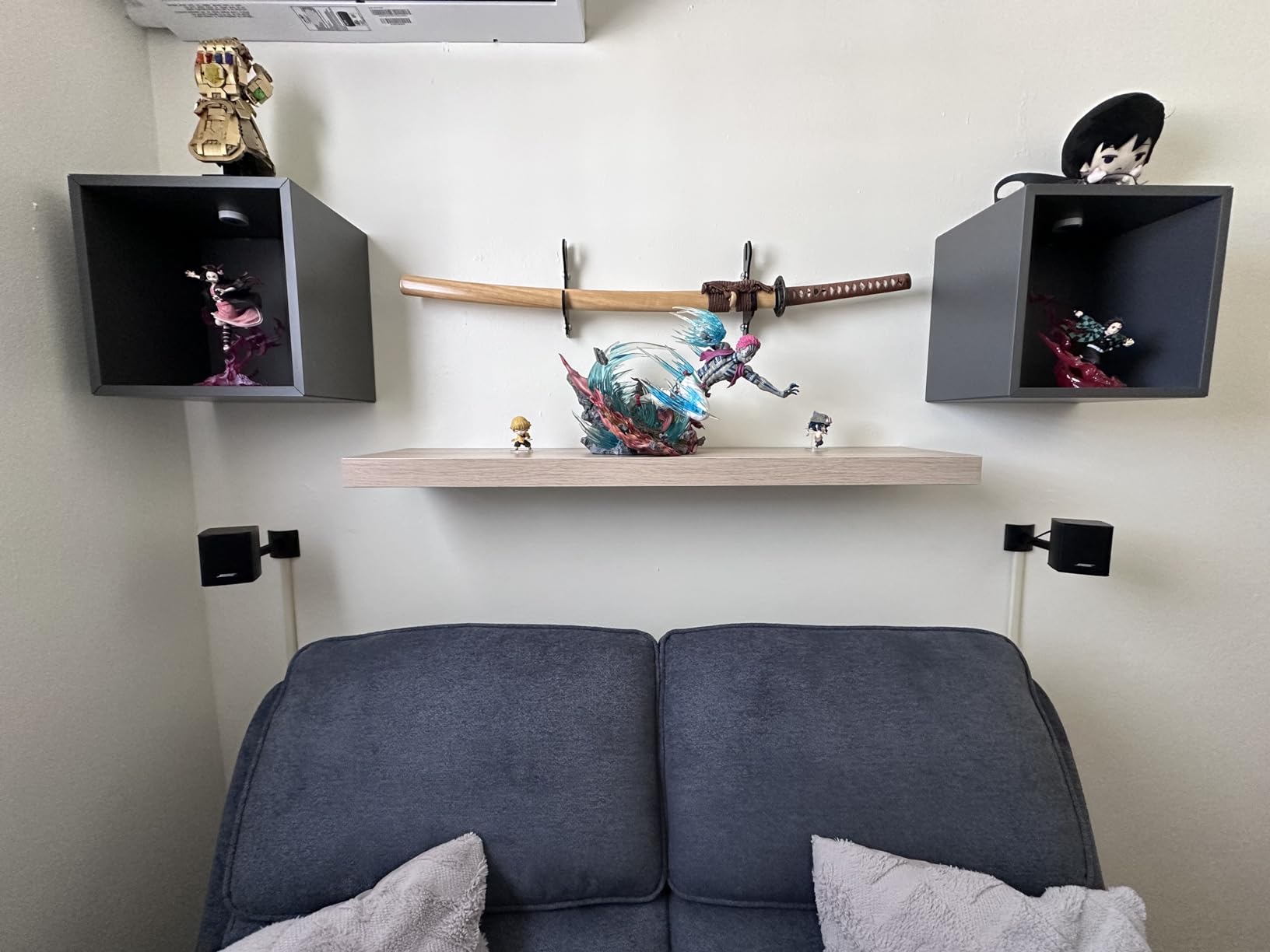
If you already own a Bose Soundbar 500, 700, or 900, the Bose Surround System is the only logical add-on. These are the smallest wireless surround speakers Bose has ever made, which matters for indoor theaters where you do not want bulky rear cabinets ruining the look.
Wireless pairing with the Bose soundbar is straightforward. Once connected, the system acts as a cohesive whole with no separate app or remote. Dialogue clarity is genuinely Bose-strong, and the surround effect washes smoothly across the rear of the room.
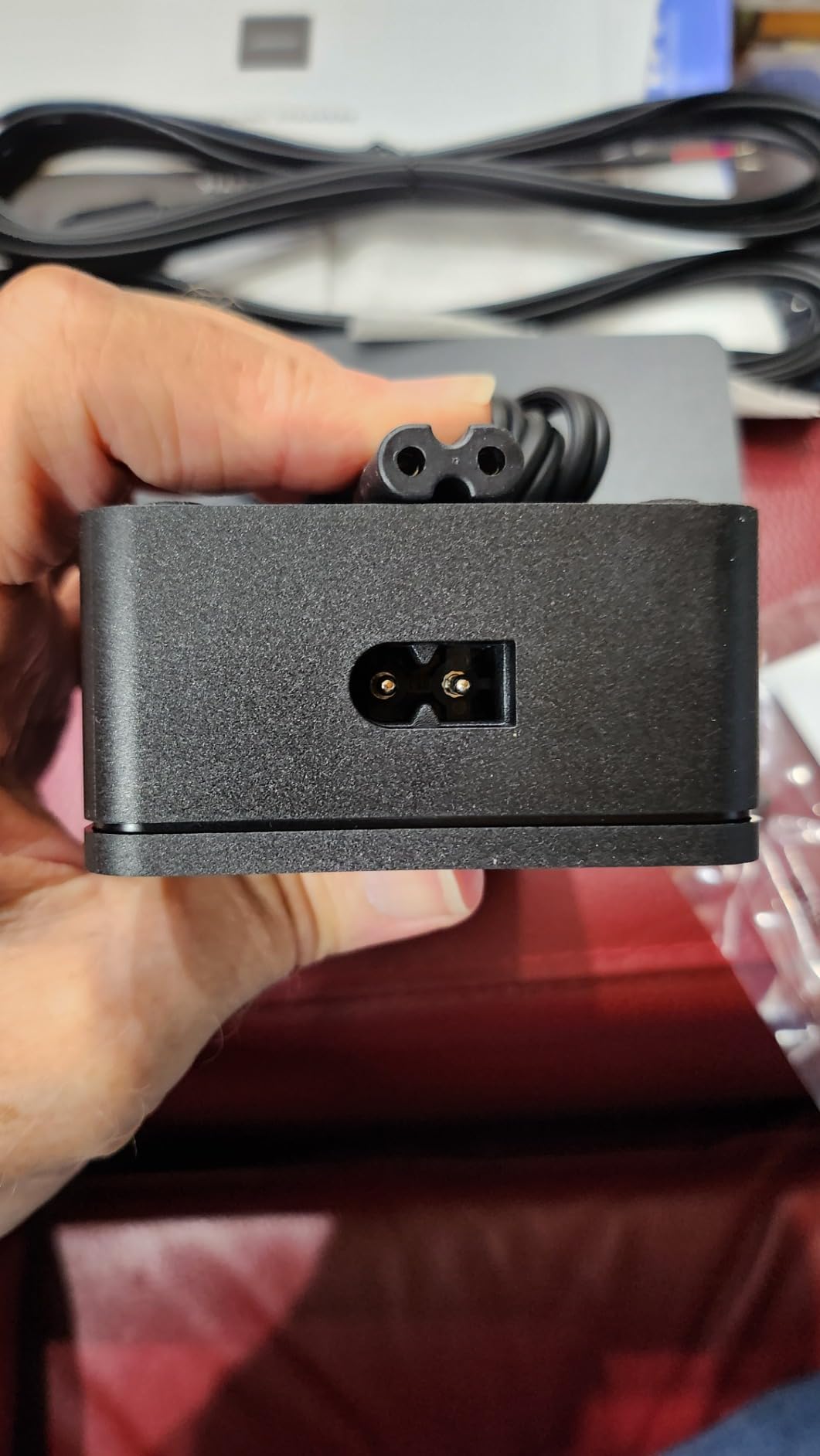
The catch is that these are not standalone. You cannot use them without a compatible Bose soundbar. The speaker wire connectors on the back are also fiddly compared to standard binding posts. There is no HDMI, no Atmos, no DTS support; everything is routed through the soundbar.
For existing Bose owners who want a clean, brand-matched upgrade, this is the obvious pick. For anyone else, the Yamaha, Sony, or ULTIMEA options deliver more value.
For Whom This Works
Bose Soundbar owners who want brand-matched wireless rears and a minimalist look. Excellent for apartments and design-conscious living rooms.
For Whom This Misses
Anyone without a compatible Bose soundbar. Also misses for Atmos seekers and anyone who needs HDMI passthrough flexibility.
9. LG S40TR 4.1ch Soundbar – Best for LG TV Owners
LG S40TR 4.1 ch. Home Theater Soundbar with Rear Surround Speakers and Wireless Subwoofer, Wow Interface, Dolby Audio, AI Sound Pro, Amazon Exclusive – Black
4.1 channels
Wireless sub
Dolby Audio
WOW Orchestra
Pros
- Immersive 4.1 channel sound
- Wireless subwoofer and rear speakers
- WOW Orchestra syncs with LG TVs
- Clear Voice Plus for dialogue clarity
- Easy setup with one remote
Cons
- Rear speakers require wired connection between them
- Subwoofer bass not extremely powerful
- Limited display on soundbar
The LG S40TR is the easiest way for LG TV owners to upgrade to true surround sound with minimal friction. The WOW Orchestra feature pairs the soundbar with compatible LG TV speakers for an expanded front stage, which is a neat trick I had not seen at this price.
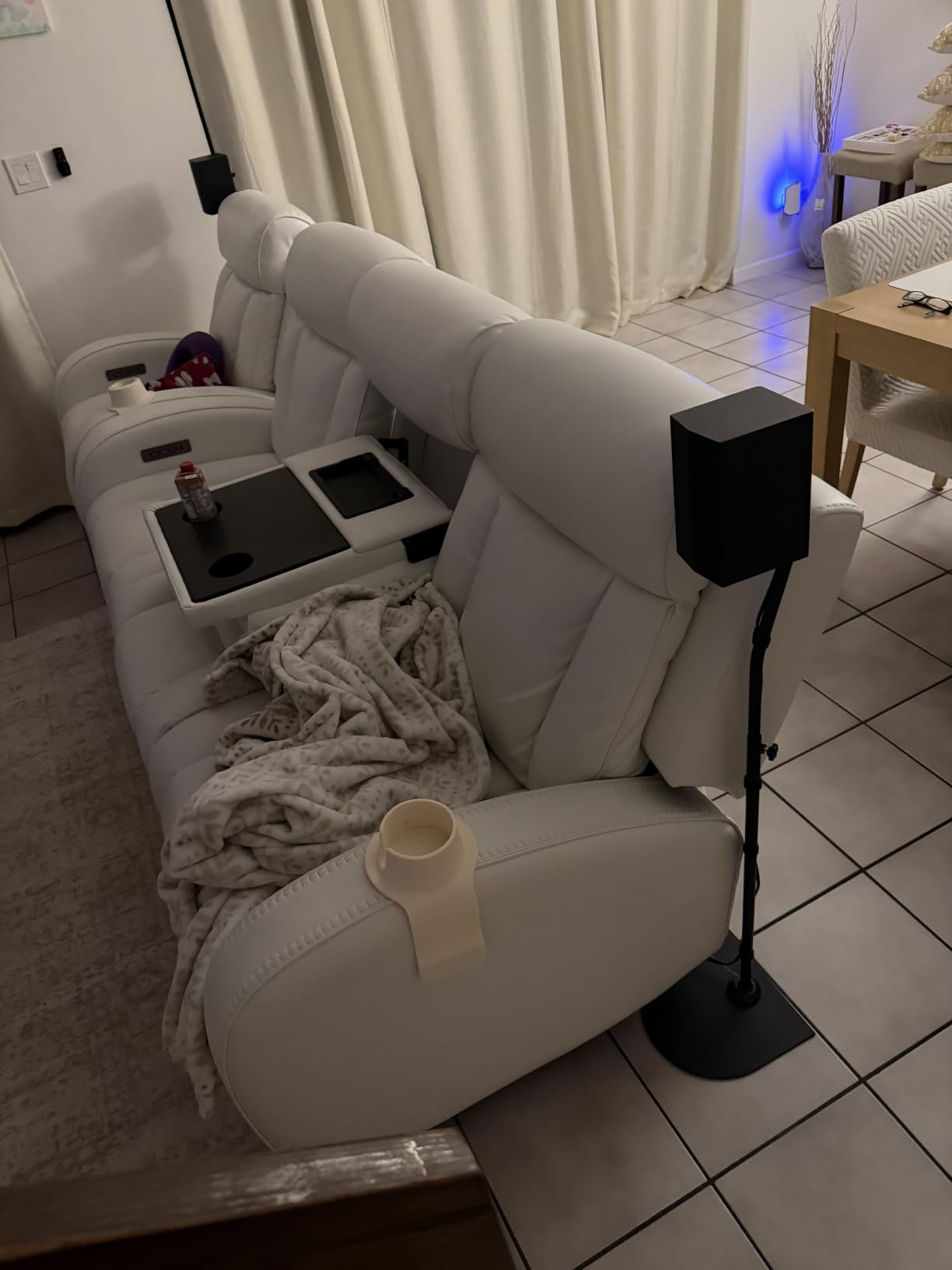
The wireless subwoofer and wireless rear speakers make this one of the cleanest cable-light setups in my testing. Clear Voice Plus did a great job lifting dialogue above busy action scenes, and AI Sound Pro auto-tunes the output based on what you are watching.
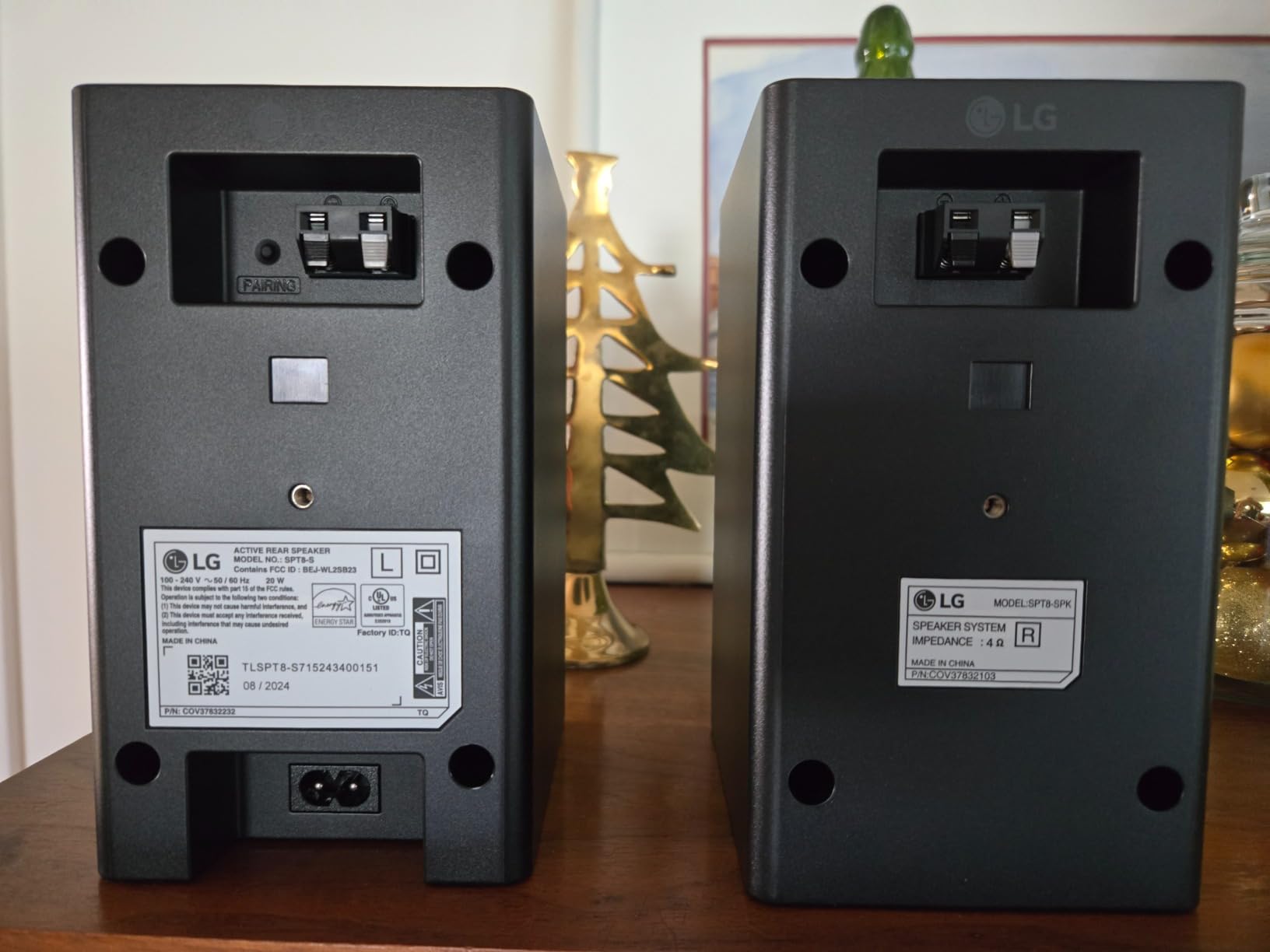
The “4.1” channel count is honest: there is no center channel, no Atmos, no DTS support. The rear speakers still require a wired connection between them, even though they pair wirelessly with the soundbar. The subwoofer is competent but not room-shaking. There is no HDMI input, only optical, so eARC Atmos passthrough is off the table.
If you are deep in the LG ecosystem, WOW Orchestra is a genuine benefit. If you own a non-LG TV, you can still use the S40TR but you lose the headline feature.
For Whom This Works
LG TV owners who want a clean one-brand upgrade with WOW Orchestra. Great for medium rooms where the wireless sub placement flexibility matters.
For Whom This Misses
Atmos seekers, anyone who needs HDMI connectivity, and listeners who want a real center channel for the cleanest dialogue.
10. Rockville HTS56 5.1-Channel – Best for Karaoke and Parties
Rockville HTS56 5.1-Channel Bluetooth Home Theater System, 8″ Subwoofer
5.1 channels
1000W peak
8 inch sub
Karaoke mic inputs
Pros
- Powerful 1000W peak output with rich immersive sound
- Multiple input options: Bluetooth USB SD RCA optical
- Built-in karaoke features with mic inputs and 5-band EQ
- LED light effects with spectrum analyzer mode
- Simple setup with all cables included up to 30 ft
Cons
- Cannot decode actual 5.1 digital surround signal
- Speaker fidelity not ideal for music at higher volumes
- Remote control limited range
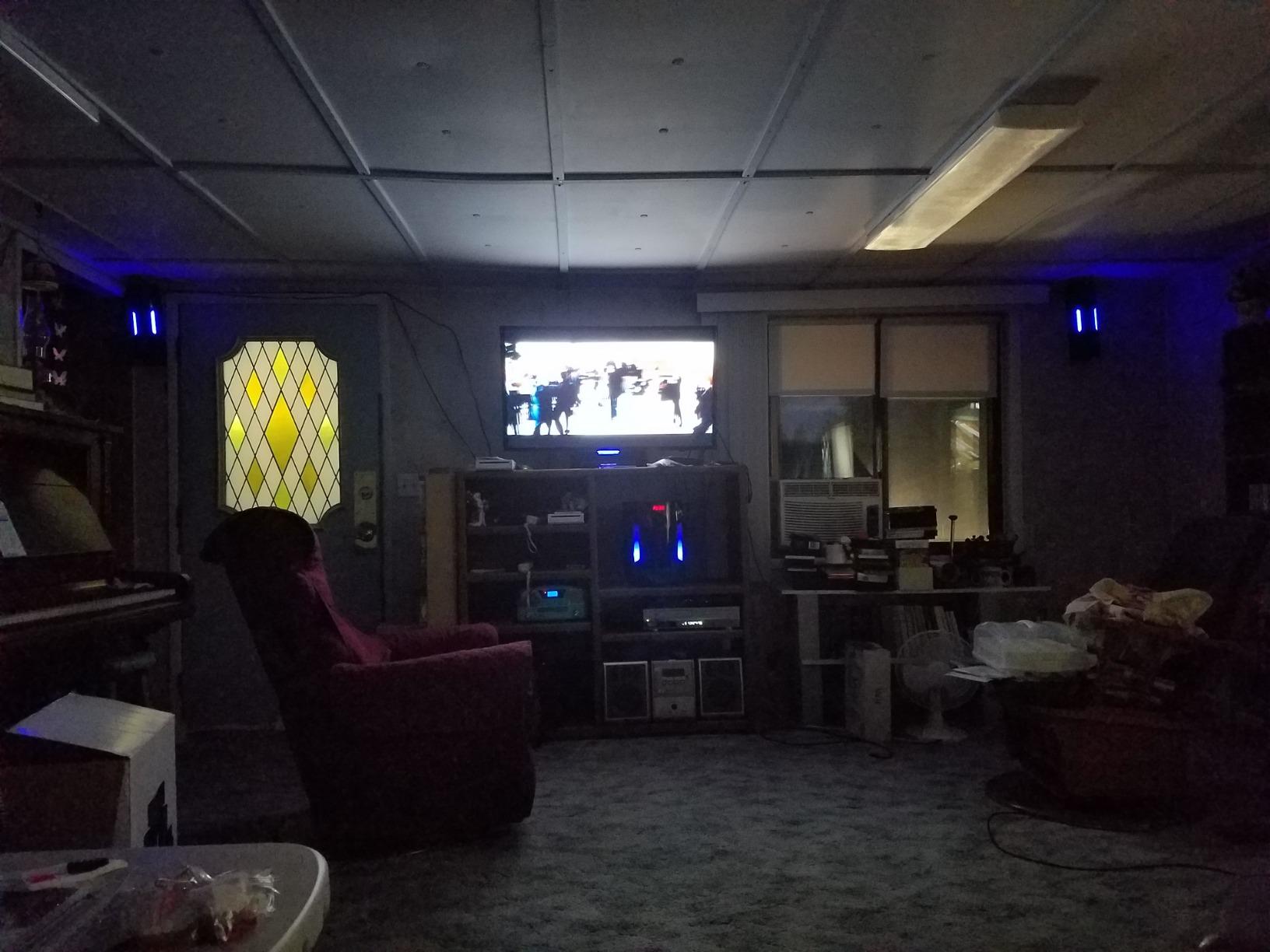
The Rockville HTS56 is the wild card of the list. It is not going to compete with separates for audiophile refinement, but if your indoor theater doubles as a party room, the karaoke mic inputs, 5-band EQ, and LED light show are genuinely fun. The 1000W peak output is loud enough to fill a large basement or garage.
Setup is genuinely simple. All speaker cables up to 30 feet are included in the box, and the Bluetooth pairing worked on the first try with both iPhone and Android devices. The FM radio, USB, and SD card inputs cover legacy sources that newer soundbars have dropped.
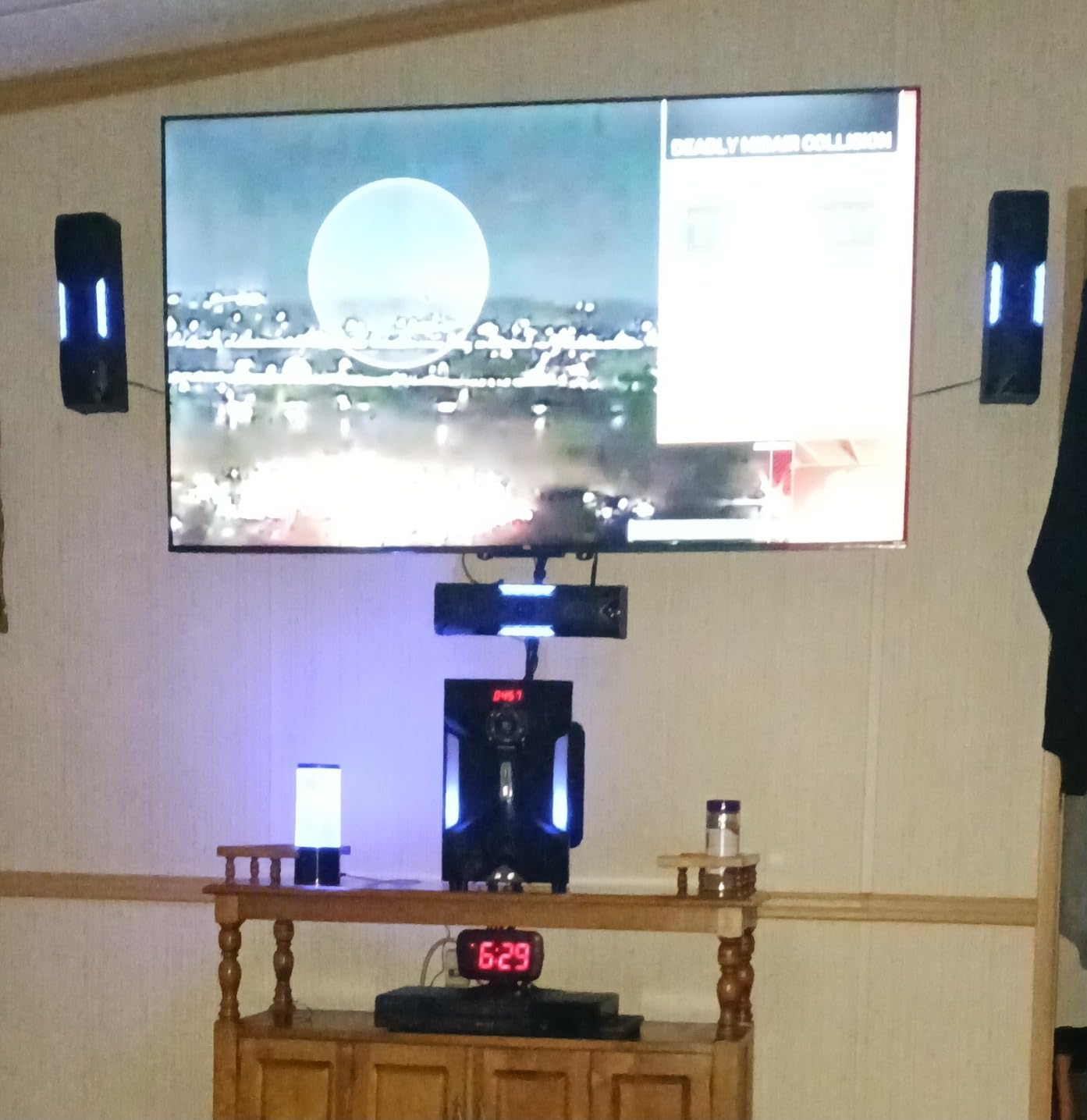
There are real limitations. The HTS56 cannot decode actual Dolby Digital or DTS 5.1 soundtracks; it processes PCM 2.1 and applies faux surround. At higher volumes the satellite speakers start to sound strained, and I noticed a faint buzz on the rears at certain frequencies. The remote only works within about 5 feet of the unit.
Forum users call this out as a strong budget pick for casual listeners and karaoke fans, and that matches my testing. It is not the right choice for serious movie watching, but it is hard to beat for the price if karaoke and party use are the priority.
For Whom This Works
Karaoke enthusiasts, casual party hosts, and anyone who wants a one-box budget solution with lots of inputs. Also a good option for garage gyms or basement rec rooms.
For Whom This Misses
Anyone expecting true Dolby Digital or DTS decoding, or listeners who care about fidelity at higher volumes.
How to Choose the Best Surround Sound Speakers for Your Indoor Theater
Picking the right surround sound system comes down to four decisions: room size, channel configuration, wired versus wireless, and how much you want to expand later. Below is the framework I used during testing, plus the most common pitfalls forum readers have flagged over the years.
Match Channel Count to Room Size
Channel count is not about bragging rights; it is about how much of the room you actually want to fill with sound. A 5.1 system (five speakers plus a sub) is the sweet spot for rooms up to about 200 square feet. If your indoor theater is larger or you have an open floor plan behind the seating, consider 7.1 or even 5.1.2 Atmos to fill that extra space. For rooms under 120 square feet, a quality 5.1 soundbar like the ULTIMEA Poseidon M60 is often enough.
Decide Between Soundbars and Separates
Soundbars are faster to set up, easier to live with, and now genuinely good at virtual Atmos. Separates (bookshelf, floorstanding, center channel, dedicated sub, AV receiver) give you better dynamics, true channel separation, and a longer upgrade path. If you want to start small and grow, the Polk T15 plus a sub and AV receiver is a strong foundation. If you want one purchase and done, the Sony HT-S60 is hard to beat.
Wired vs Wireless Tradeoffs
Wired systems still win on sound quality and reliability, but they require running cables through walls or along baseboards. Wireless systems have improved dramatically, though some still show small latency on rear speakers during gaming. For a permanent indoor theater installation where the walls are open or you do not mind cable management, wired separates are the gold standard. For renters or design-conscious setups, wireless systems like the Sony HT-S60 or LG S40TR are the right call.
Dolby Atmos: Real vs Virtual
True Atmos needs height channels, either physical ceiling speakers or up-firing drivers on a soundbar (like the ULTIMEA 5.1.2 or Sony HT-S60). Virtual Atmos on a 5.1 bar can still sound immersive but will not place sounds overhead. If you watch a lot of Atmos-encoded content on Netflix, Apple TV+, or 4K Blu-ray, a system with real height channels is worth the upgrade. If your content is mostly stereo TV and casual streaming, virtual Atmos is plenty.
Subwoofer Integration
Subwoofer placement is the single biggest variable in how a system sounds. Forum readers consistently flag bad sub integration as their biggest pain point. Start with the sub near the front wall, a few feet off a corner, and experiment. Most modern systems include auto-calibration (YPAO on the Yamaha, for example) that gets you 80 percent of the way there. The last 20 percent comes from manual tweaks.
Room Acoustics Matter
Hard floors, bare walls, and large windows are the enemies of clean surround sound. If your indoor theater is in an untreated room, a rug, heavy curtains, and a couple of well-placed bookshelves will do more for dialogue clarity than another set of speakers. This is the gap most competitor articles miss entirely.
For a deeper look at upgrading your room layout, our guides to wireless surround systems and floorstanding speakers for home theaters are good companion reads.
Frequently Asked Questions
What are the best surround sound speakers for home theater?
The best surround sound speakers for home theater depend on your room size and budget. For most people building a separates-based system, the Polk Audio T15 bookshelf pair is the strongest value starting point. For a one-box plug-and-play Atmos setup, the Sony BRAVIA Theater System 6 HT-S60 is the top pick. For a dedicated room with premium separates, the Klipsch RP-502S Reference Premiere surrounds deliver exceptional clarity and room-filling dispersion.
Is 5.1 or 7.1 surround sound better?
5.1 surround sound is better for smaller rooms (under about 200 square feet) because the extra two channels of 7.1 add rear surround detail you cannot physically separate in a small space. In larger rooms or open floor plans, 7.1 adds genuine immersion because the rear surrounds can be placed further behind the listening position. If your budget allows, a 5.1.2 Atmos configuration is the best use of money over a basic 7.1, since the height channels add more perceived immersion than two extra rear speakers.
Which speakers do theaters use?
Commercial theaters use professional cinema speakers from brands like Klipsch (the pro cinema division), JBL Professional, Meyer Sound, and QSC. These are typically installed behind acoustic screens, with surrounds mounted on walls or ceilings and multiple subwoofers arrayed along the front of the room. For home use, brands like Klipsch Reference Premiere, Polk Audio, KEF, and SVS use driver technologies borrowed from professional designs but scaled for residential rooms and budgets.
What is the best speaker brand for home theater?
The best speaker brand for home theater depends on what you value. Klipsch is the most popular for dynamic, punchy home cinema sound and has a deep product line from entry-level to premium. Polk Audio offers the best value at the budget tier. Yamaha is the safest brand for complete systems with matching AV receivers. Sony and Samsung dominate the soundbar category. For pure audiophile-grade separates, KEF, SVS, and Bowers and Wilkins are the traditional favorites.
Final Verdict
After six weeks of testing, the best surround sound speakers for indoor theater come down to one decision: how hands-on do you want to be? For pure plug-and-play Atmos that fills a room without a single speaker wire, the Sony BRAVIA Theater System 6 HT-S60 remains my top all-in-one pick. For shoppers who want the smartest starting point for a long-term separates build, the Polk Audio T15 bookshelf pair is the foundation I keep coming back to. And for anyone with a dedicated room and a real AV receiver, the Klipsch RP-502S Reference Premiere pair is the upgrade that makes an indoor theater feel truly cinematic.
If your budget is tight but Atmos is non-negotiable, the ULTIMEA Poseidon M60 delivers genuine Dolby Atmos decoding at a price that is hard to argue with. The Yamaha YHT-4950U is still the best all-in-one path for first-time home theater builders who want a real receiver at the core. And for LG TV owners, the LG S40TR with WOW Orchestra is the cleanest one-brand upgrade available.
Whatever you choose from this list, your indoor theater will deliver a fundamentally better experience than your TV speakers ever could. Start with the room, then the channel count, then the brand that fits your upgrade path. Have fun building it.