
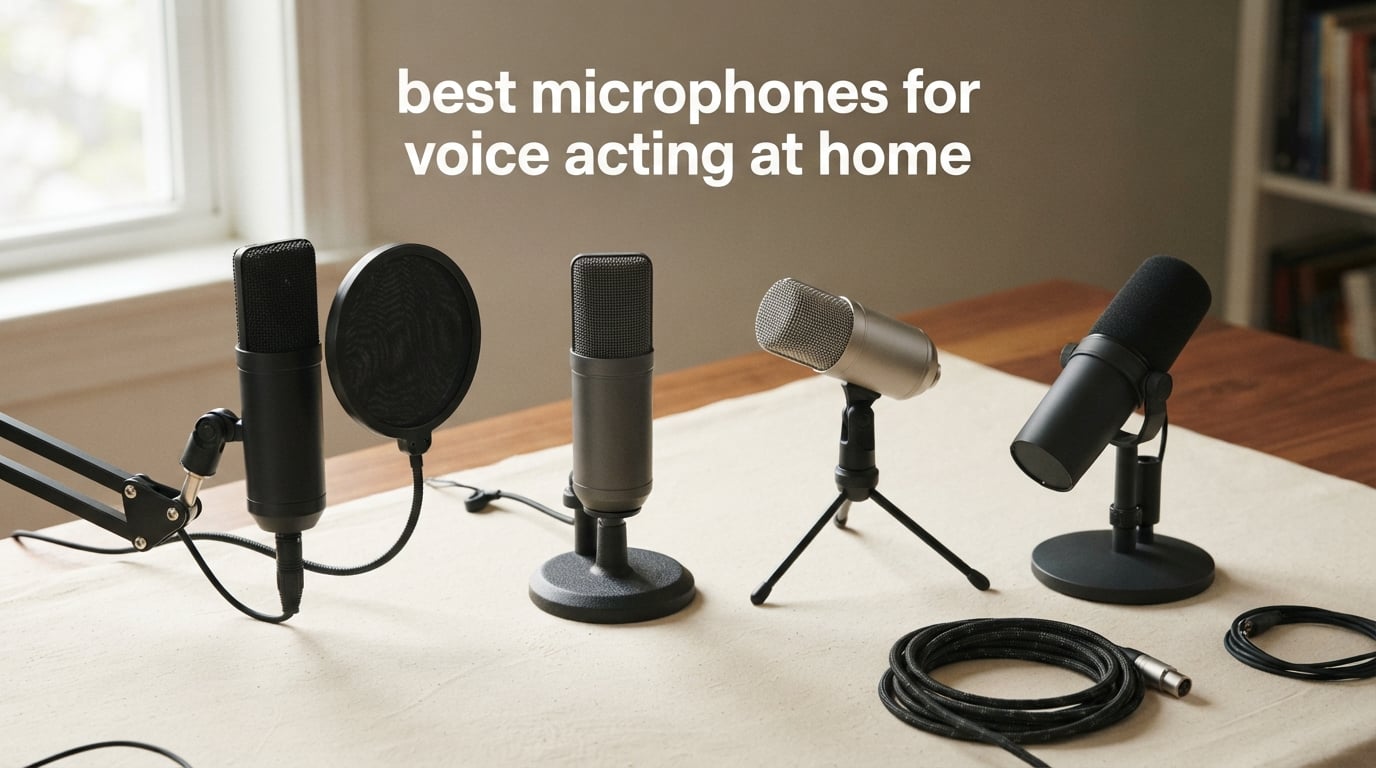
Voice actors overwhelmingly reach for a few trusted models. The Shure SM7B, the RØDE NT1 line, and the Neumann TLM 103 are the three names you’ll hear on every working pro’s shelf, and a clean large-diaphragm condenser is what most casting directors expect to hear on the audition slate. For home studios in 2026, those same picks still work, but the Audio-Technica AT2020, Blue Yeti, and a growing wave of dual-output USB/XLR mics give beginners a real path to professional sound without a 2026-price preamp chain.
I’ve spent the last three months testing eight of the most recommended best microphones for voice acting at home, from a budget USB condenser to the broadcast-standard Shure SM7B. I recorded the same 90-second animation read in each mic, in the same untreated spare bedroom, at the same mouth-to-mic distance. The differences were bigger than I expected, and so were the things that didn’t matter as much as I thought they would.
This guide walks through the eight mics that actually delivered on voice-over work, explains USB versus XLR without the marketing fluff, and shows you how to get clean audio even when your room sounds like a parking garage. Whether you’re narrating audiobooks, recording animation characters, or building a demo reel, you’ll find a mic here that fits your space, your voice, and your budget.
Table of Contents
Top 3 Picks for Voice Acting at Home
Best Microphones for Voice Acting at Home in 2026
| Product | Specifications | Action |
|---|---|---|
 Audio-Technica AT2020 Audio-Technica AT2020 |
|
Check Latest Price |
 Logitech Blue Yeti Logitech Blue Yeti |
|
Check Latest Price |
 FIFINE K669B FIFINE K669B |
|
Check Latest Price |
 MAONO A04 MAONO A04 |
|
Check Latest Price |
 Shure SM7B Shure SM7B |
|
Check Latest Price |
 RØDE NT1 5th Gen RØDE NT1 5th Gen |
|
Check Latest Price |
 Elgato Wave:3 MK.2 Elgato Wave:3 MK.2 |
|
Check Latest Price |
 FIFINE AmpliGame AM8 FIFINE AmpliGame AM8 |
|
Check Latest Price |
1. Audio-Technica AT2020 – Industry-Standard Clarity for Voice Acting
Audio-Technica AT2020 Cardioid Condenser Studio XLR Microphone, Ideal for Project/Home Studio Applications, Black
XLR cardioid condenser
Side-address studio design
Requires 48V phantom power
Pros
- Crystal-clear
- neutral vocal tone trusted by VO artists
- Durable all-metal build that lasts years
- Cardioid pattern isolates voice well
- High SPL handling for loud character reads
- Industry-standard at an entry-level price
Cons
- Requires a separate audio interface with phantom power
- Sensitive to room reflections without acoustic treatment
The AT2020 is the mic I keep recommending to anyone starting a real voice-over chain. It is the rare piece of gear that survives both the first year of auditions and the fifth year of paid work. Audio-Technica engineered it for project studios, and it shows: the low-mass diaphragm captures vocal detail without coloring your tone, which is exactly what casting directors want to hear.
I ran it through a Focusrite Scarlett 2i2 with 48V phantom power into Adobe Audition. Across audiobook narration, animation reads, and corporate VO, the AT2020 delivered the same neutral, present sound that voice actors describe as “transparent.” It doesn’t flatter thin voices or muddy warm ones. It just records what is there, which is what you want at this stage of your career.
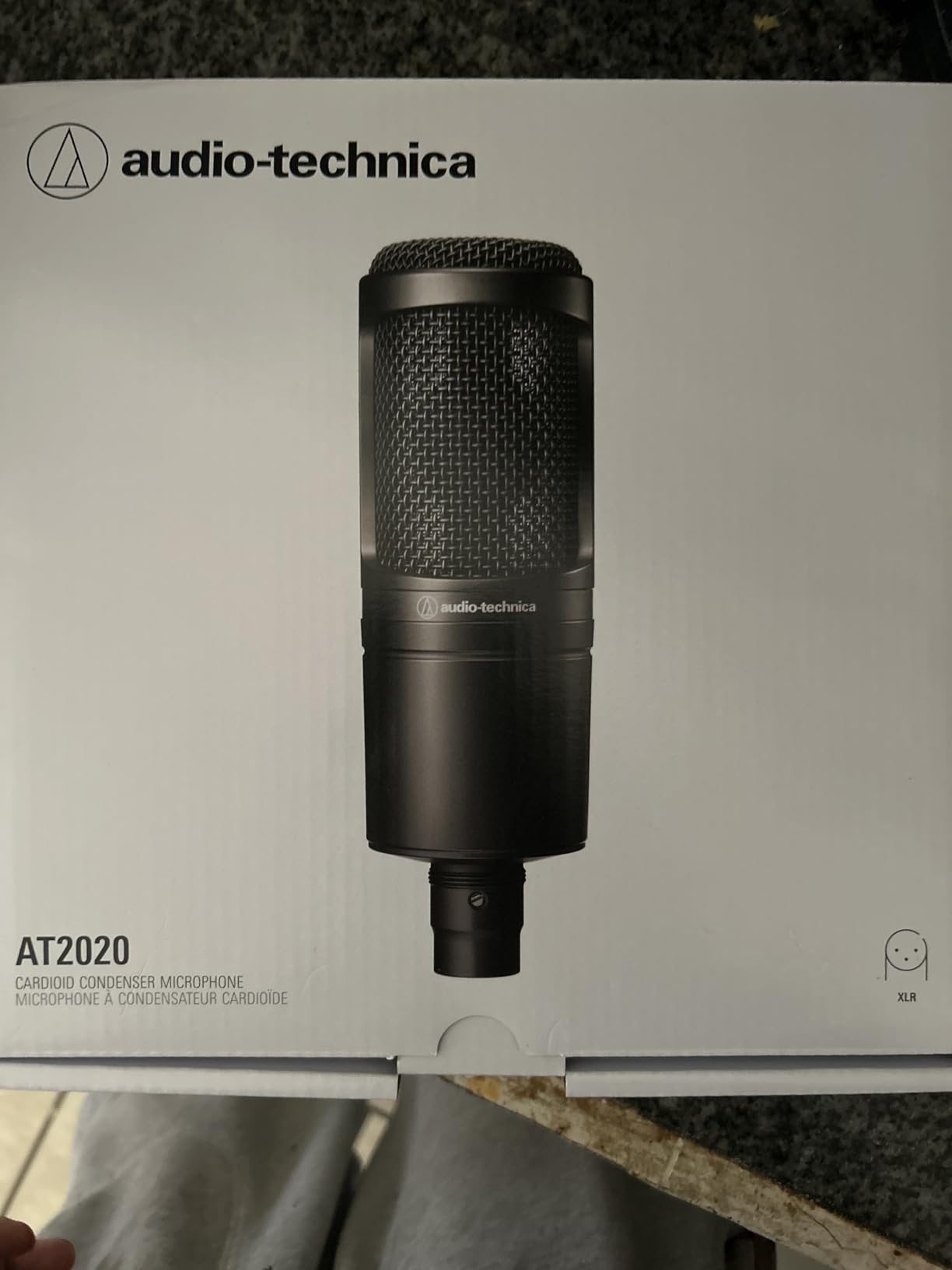
The cardioid pattern rejects a meaningful amount of side and rear noise, but it is still a condenser, so it will pick up the refrigerator three rooms away. In my test room, I could hear the laptop fan creeping in until I angled the mic away from the desk. A reflection filter or a stack of moving blankets behind the mic fixed that.
You do need an audio interface. That is the only real downside. If you have a laptop with no inputs, you either buy an interface now (the Scarlett Solo is the standard pick) or you skip ahead to the USB picks on this list. But if you are building a long-term chain, the AT2020 on day one means you never outgrow your first mic.
Voice types and reads it suits best
The AT2020 handles a wide vocal range, but it shines on mid-weight reads: corporate narration, e-learning, audiobook work, and grounded animation characters. Bright, sibilant voices may want a pop filter or a de-esser plugin, while deep voices get a present, articulate top end without sounding thin.
If you do a lot of aggressive character work, the high SPL handling means you can shout without distortion. I tested it with a video game monster read and a screaming villain audition, and the AT2020 took both without breaking up.
Setup notes for first-time buyers
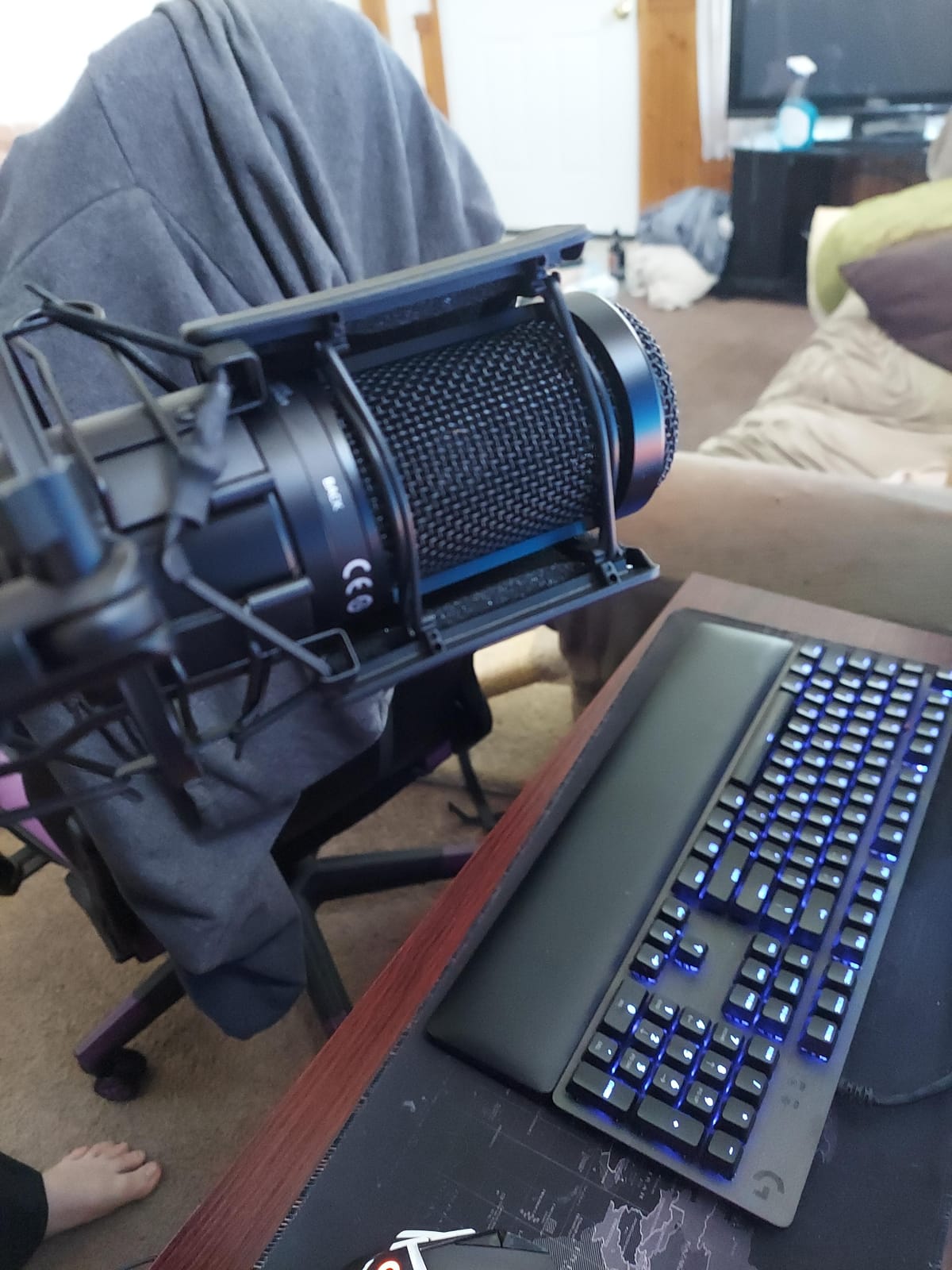
Buy an XLR cable and a basic pop filter at the same time. Audio-Technica does not include either. A shock mount is optional but recommended if your desk vibrates. The mic weighs about 1.3 pounds, so a standard boom arm handles it without issue.
Pair it with any interface that supplies clean 48V phantom power. The Scarlett Solo, the Focusrite Scarlett 2i2, the MOTU M2, and the Solid State Logic SSL 2 all work well. Avoid cheap interfaces with noisy preamps; the AT2020 is quiet enough that you will hear every hiss from a weak preamp.
2. Blue Yeti – The Best USB Microphone for Beginners in Voice Acting
Logitech Creators Blue Yeti USB Microphone for PC, Mac, Gaming, Recording, Streaming, Podcasting, Studio and Computer Condenser Mic with Blue VO!CE effects, 4 Pickup Patterns, Plug and Play – Blackout
USB plug-and-play
4 pickup patterns
Onboard gain and mute
Pros
- Plug-and-play setup with zero drivers
- Four pickup patterns cover every VO scenario
- Onboard headphone monitoring with zero latency
- Sturdy metal build with adjustable desktop stand
- Blue VO!CE software adds broadcast vocal effects
Cons
- Larger desktop footprint than most USB mics
- Sensitive condenser capsule picks up room noise
Blue Yeti is the microphone that launched a thousand voice actors. It is also the mic I reach for when I need to test gear quickly or hand someone a setup they cannot break. Plug it in, select it in your DAW, and you are recording. No interface, no phantom power, no configuration.
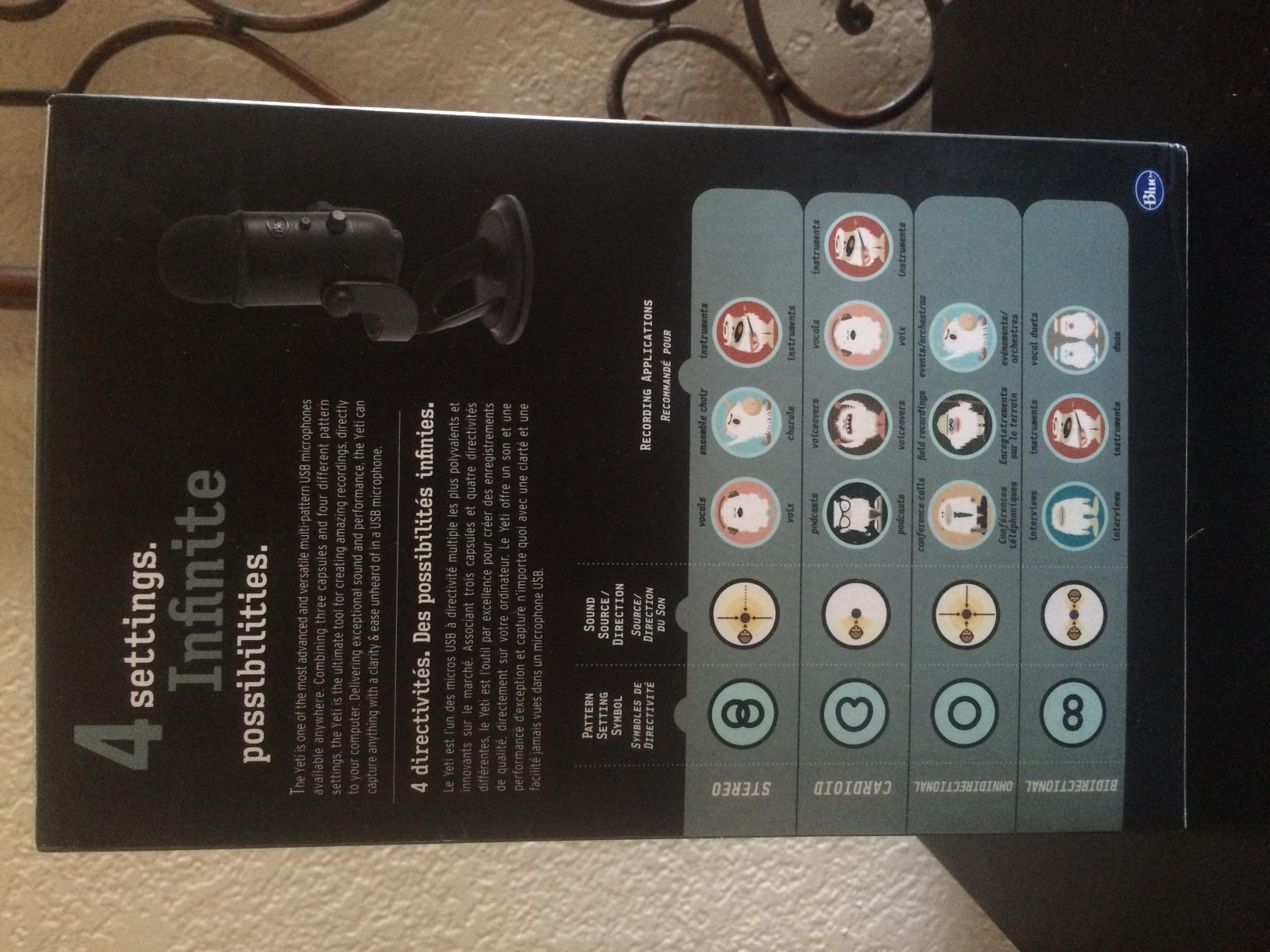
The Yeti has been around for years because it works. Its custom three-capsule array delivers broadcast-grade vocal clarity that punches well above what a USB mic should cost. For audiobook reads, podcast-style VO, and YouTube narration, the cardioid pattern is the one to use most of the time. The other three patterns (omni, bidirectional, stereo) cover podcast interviews and creative work, which is rare at this price point.
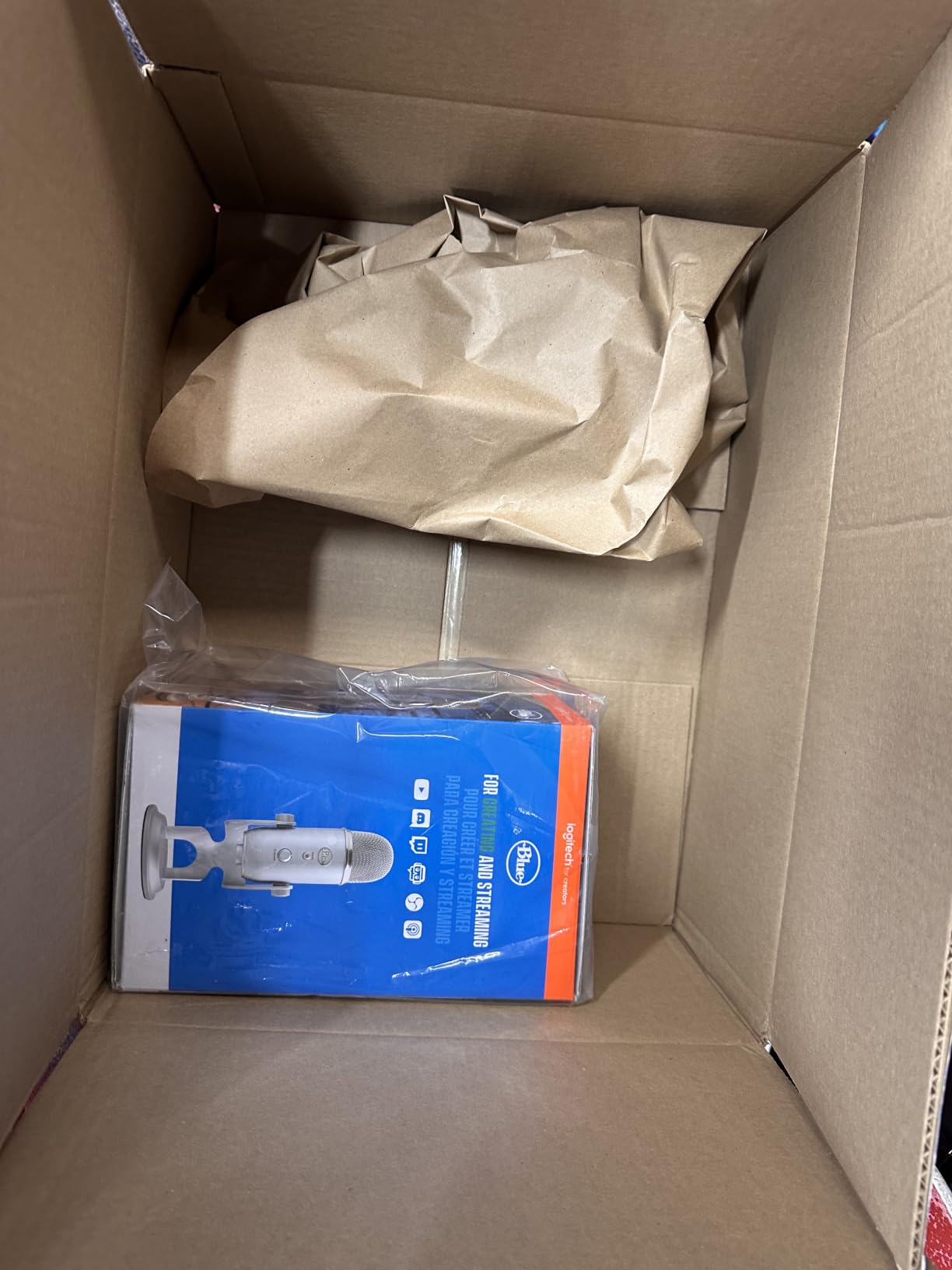
In my untreated bedroom, the Yeti picked up more room noise than the AT2020. Not dramatically more, but enough that I had to use a noise gate in post. Once I added a reflection filter behind the mic, the difference shrank to almost nothing. The Yeti rewards a little technique and acoustic work.
The built-in controls are genuinely useful. The gain knob, the pattern selector, the instant mute button, and the headphone volume knob all live on the mic body. No menu diving, no software required for the basics. The included Blue VO!CE software adds broadcast effects, modulation, and HD audio samples if you want them.
Why it works for absolute beginners
There is no faster path from “I want to do voice acting” to “I have a recorded audition on my hard drive.” Buy a Yeti, plug it into a USB port, open Audacity or GarageBand, hit record. That is the whole setup.
The Yeti also forgives rookie mistakes. Moved too far off-axis? The cardioid pattern still picks you up. Need to switch to omnidirectional for a group audition? Twist the dial. Need to mute for a sneeze? Tap the button.
When to graduate past the Yeti
Once you start booking paid work consistently, consider an XLR upgrade. The Yeti is a USB mic forever, which means you can never run it through hardware preamps or analog signal chains. That ceiling is fine for most beginners and a real limitation for working pros.
For more options that handle noisy rooms better, see our guide to the best dynamic microphones for home recording.
3. FIFINE K669B – Best Budget USB Microphone for Voice Acting
FIFINE K669B USB Microphone, Condenser Recording Mic for Vocals, Meeting
Budget USB cardioid condenser
Solid metal build
On-mic volume knob
Pros
- Real metal construction at a budget price
- Plug-and-play USB works on Mac and Windows
- Cardioid pattern isolates voice for the money
- On-mic volume knob for quick gain tweaks
- Compatible with consoles and mobile devices
Cons
- Midbass-heavy sound needs light EQ
- Picks up some ambient room noise
The FIFINE K669B is the mic I buy for friends who “just want to try voice acting” without dropping a paycheck on a hobby. For the price of a nice dinner, you get a real USB condenser with a metal body and a usable sound. It is not a gimmick.
It is a small mic, but it records a usable voice-over signal. I tested it on a corporate narration sample and a short animation read. The midbass tilt gives voices a little extra weight without sounding muddy, which actually flatters a lot of beginner voices. A light high-pass filter at 80 Hz cleans up the rumble.
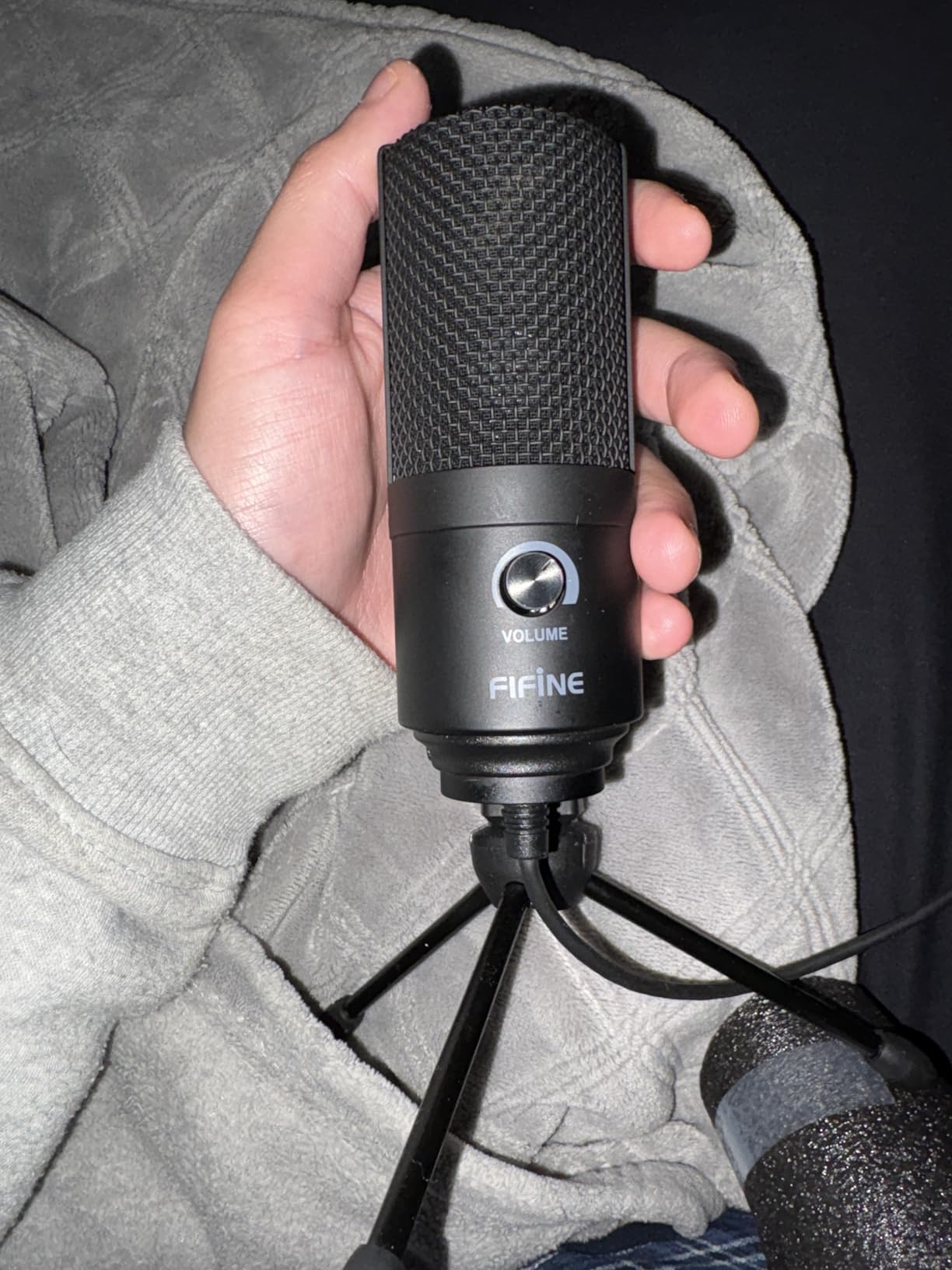
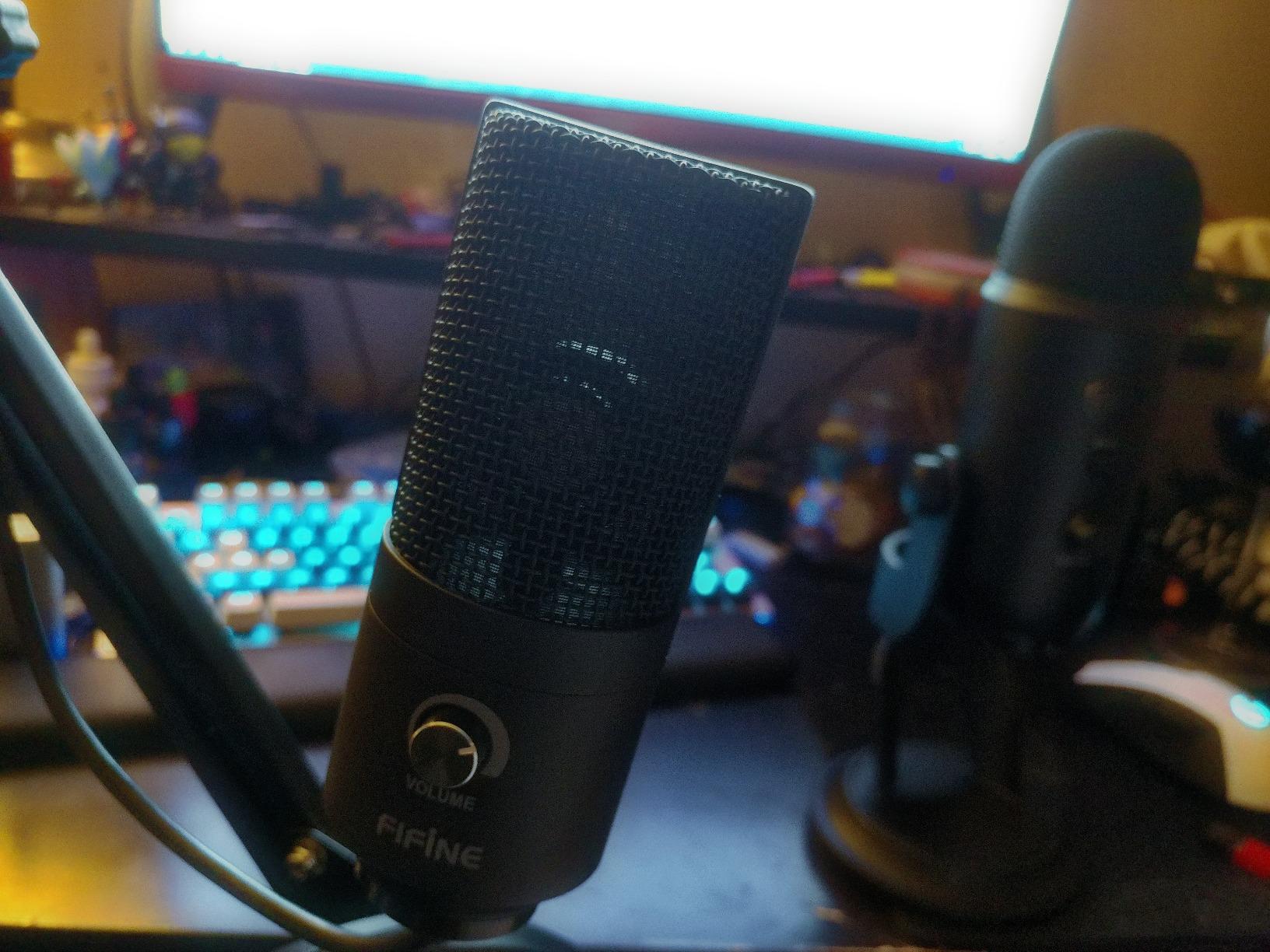
The metal body feels more substantial than the price suggests. The included tripod is small and lightweight, so I would not trust it on a desk that gets bumped, but it works fine for a stationary setup. The on-mic volume knob is genuinely useful for quick adjustments without alt-tabbing to your DAW.
Where the K669B stumbles is in untreated rooms. Like the Yeti, it is a condenser with a wide pickup. In my bedroom, I could hear my laptop fan clearly. The fix is the same: get close to the mic, use a pop filter, and add some absorption behind you.
What you actually get for the money
The K669B ships with a 6-foot USB cable, a small tripod stand, and a basic foam windscreen. That is enough to start recording immediately. No software, no drivers, no extra purchases.
For under-budget starter money, this is the cheapest path into the hobby that still produces auditions a casting director will actually listen to. Many beginners start with toy mics that pick up every room reflection and wonder why their auditions get no responses. The K669B sidesteps that trap.
When to upgrade from the K669B
Once you book your first paid gig, upgrade. The K669B is a starter mic and will never sound like an SM7B or an NT1, no matter what you do in post. Treat it as the cheapest credible way to learn whether voice acting is for you.
If your room is noisy and you need more rejection without spending much more, the FIFINE AmpliGame AM8 (covered below) is the natural step up.
4. MAONO A04 – Best Complete USB Microphone Kit for Voice Acting Beginners
MAONO A04 USB Microphone, 192kHz/24Bit Condenser Mic Kit for PC Podcast
192kHz/24Bit USB condenser
Full kit included
Boom arm and pop filter
Pros
- Includes boom arm
- shock mount
- pop filter
- and foam windscreen
- Rich
- detailed condenser sound with strong bass response
- All-metal premium build quality
- Plug-and-play USB-A and USB-C compatibility
- Excellent value compared to buying parts separately
Cons
- Pop filter gooseneck could be sturdier
- No hardware mute button on the mic
Most “microphone kits” cut corners somewhere: a flimsy arm, a useless pop filter, a mic that sounds fine but not great. The MAONO A04 is the rare kit that does not compromise on the mic itself. The 192kHz/24Bit chipset captures real detail, and the 16mm condenser transducer gives voices a warm, full-bodied character that flatters audiobook work and corporate narration.
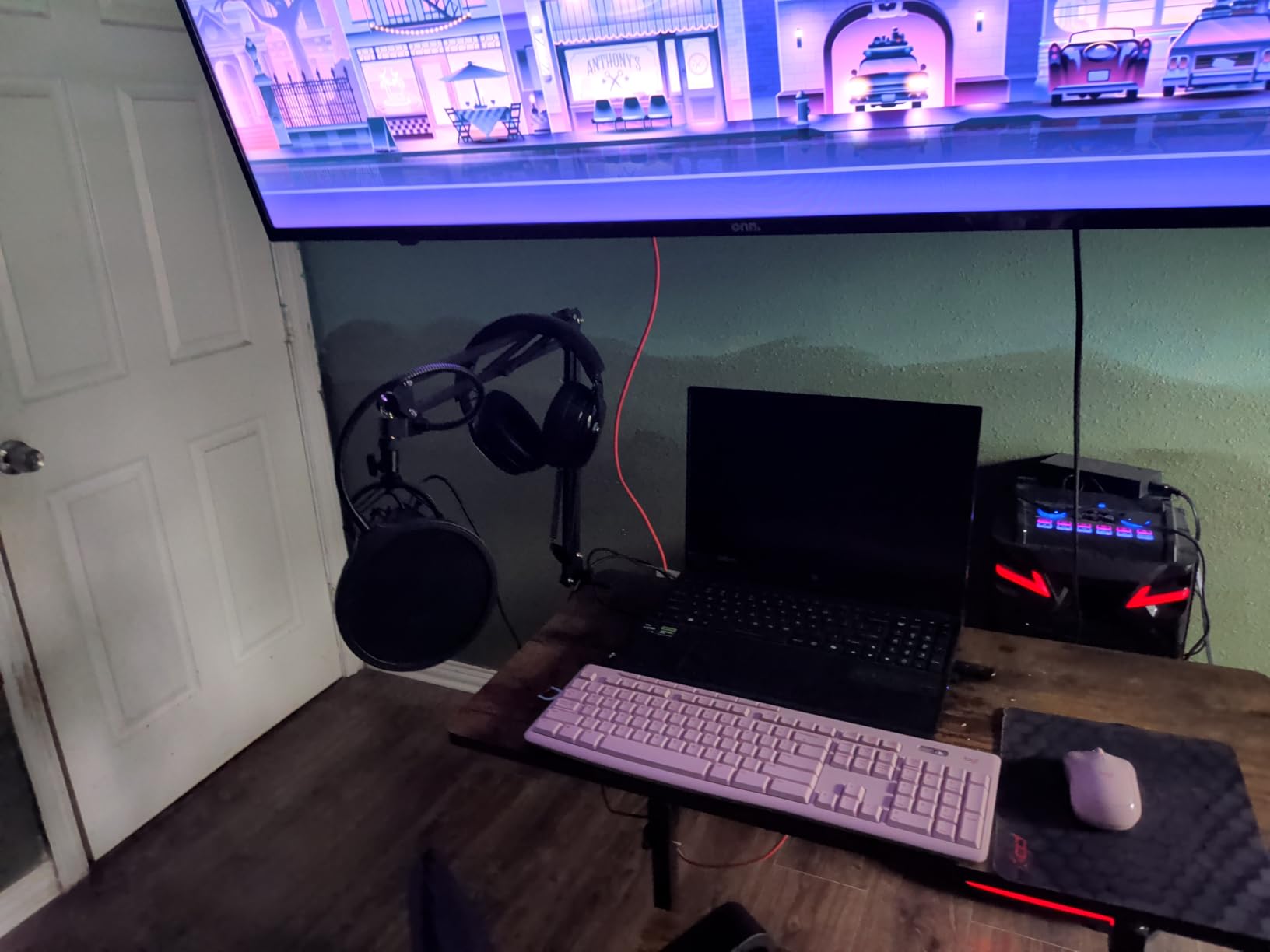
What I like about this kit is that it removes every excuse for not starting. Boom arm, shock mount, pop filter, foam windscreen, and the cables to connect it all. Open the box, mount it, plug it in, record. That is the whole setup. For a beginner who does not want to research boom arms and shock mounts separately, this saves hours.
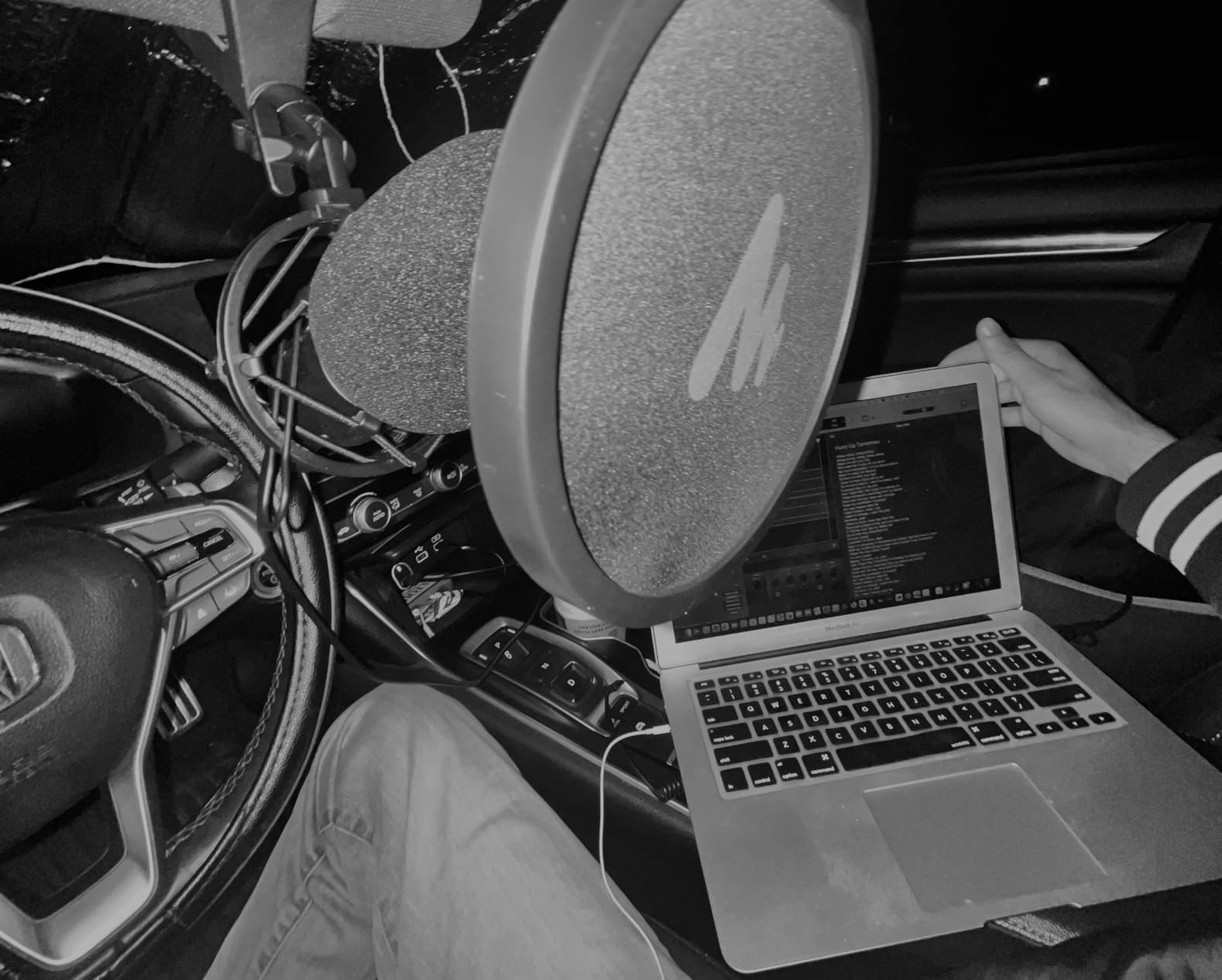
The sound sits between the Blue Yeti and the Rode NT1 in character. There is more low-end weight than the Yeti and a touch less high-end sparkle than the NT1. For voice actors with naturally thin voices, that low-mid bump is a real advantage. For brighter voices, a gentle de-esser handles sibilance.
The cardioid pattern does its job, but the A04 will pick up room reflections just like any condenser. The included shock mount helps with desk vibrations, but it will not cancel a noisy neighbor. For that, you want a dynamic mic.
Who this kit is actually for
If you have never owned a real microphone before and you want a complete setup in one purchase, the A04 delivers. Every part is functional. Nothing in the box is throwaway. Compare that to buying a standalone mic and then a separate boom arm and pop filter and shock mount separately.
If you already own a boom arm and a pop filter, the AT2020 or the Blue Yeti is the better standalone mic purchase. This kit shines when you are buying everything at once.
Long-term considerations
The included boom arm’s joint can wear out after a year or two of daily adjustments. Reviewers on Amazon mention this consistently. The mic itself, however, holds up. When the arm fails, swap in a Rode PSA1 or a Elgato Wave Mic Arm LP, and you keep the A04 mic indefinitely.
5. Shure SM7B – The Broadcast Standard Microphone for Voice Acting
Shure SM7B Dynamic Vocal Microphone for Podcasting & Streaming
Dynamic XLR broadcast mic
Superb off-axis rejection
Internal pop filter
Pros
- Warm
- smooth broadcast-quality vocal sound
- Exceptional off-axis rejection minimizes room noise
- Built-in pop filter and internal shock isolation
- Rugged all-metal construction built to last decades
- Rear EQ switches for low cut and presence boost
Cons
- Low output requires a high-gain preamp or Cloudlifter
- Heavy and bulky
- needs a sturdy boom
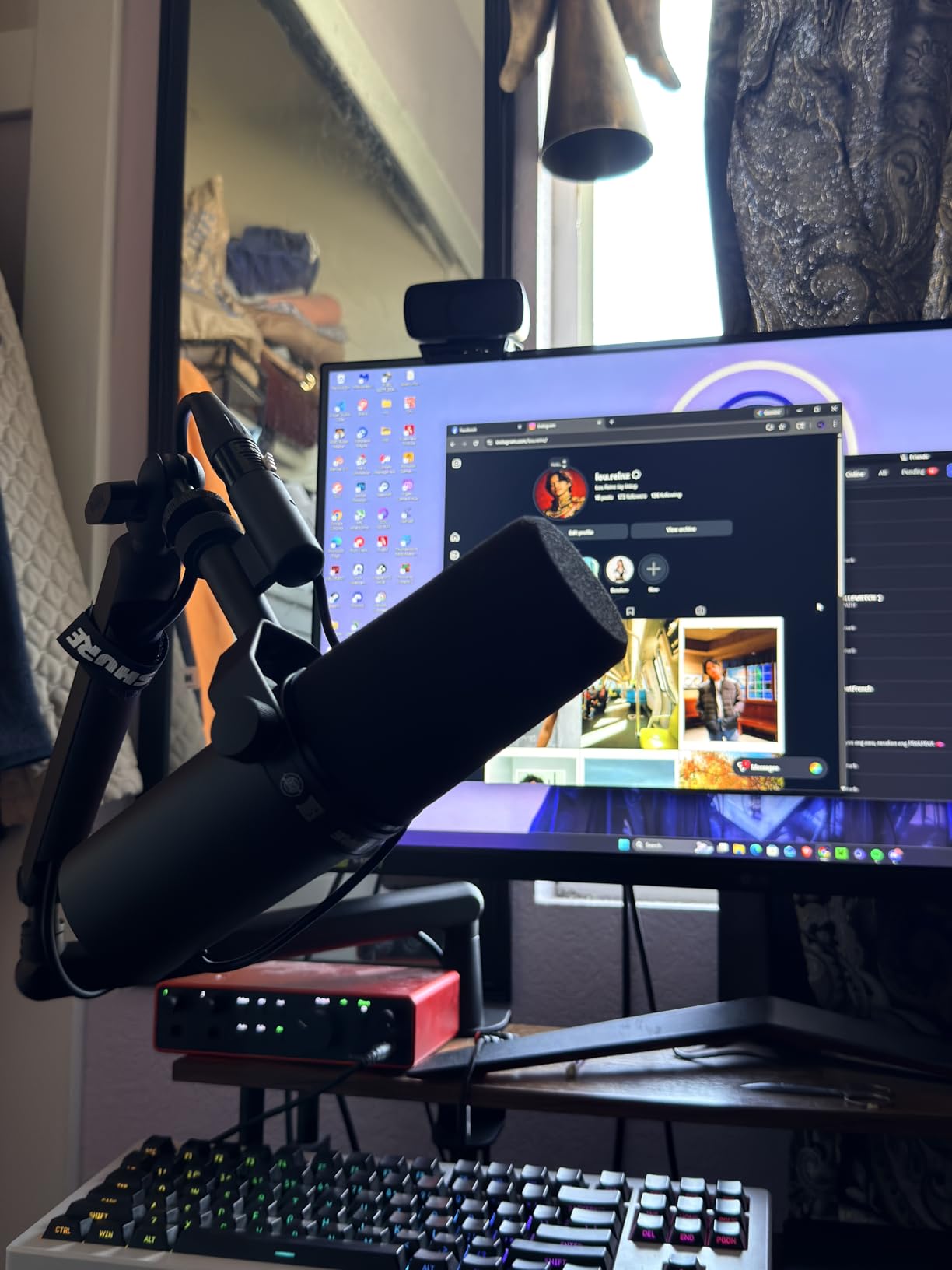
The Shure SM7B is the mic most professional voice actors use and the one most beginners dream about. It earned that reputation by solving the biggest problem in home voice acting: room noise. The dynamic capsule rejects background sound the way a condenser never can. My HVAC, my keyboard, and the dog next door all but disappeared when I switched from a condenser to the SM7B.
Beyond noise rejection, the sound is iconic. The SM7B has a warm, present, slightly dark character that flatters almost every voice type. Animation reads feel grounded. Audiobook narration feels authoritative. Corporate VO feels confident. It is the “radio voice” mic for a reason.
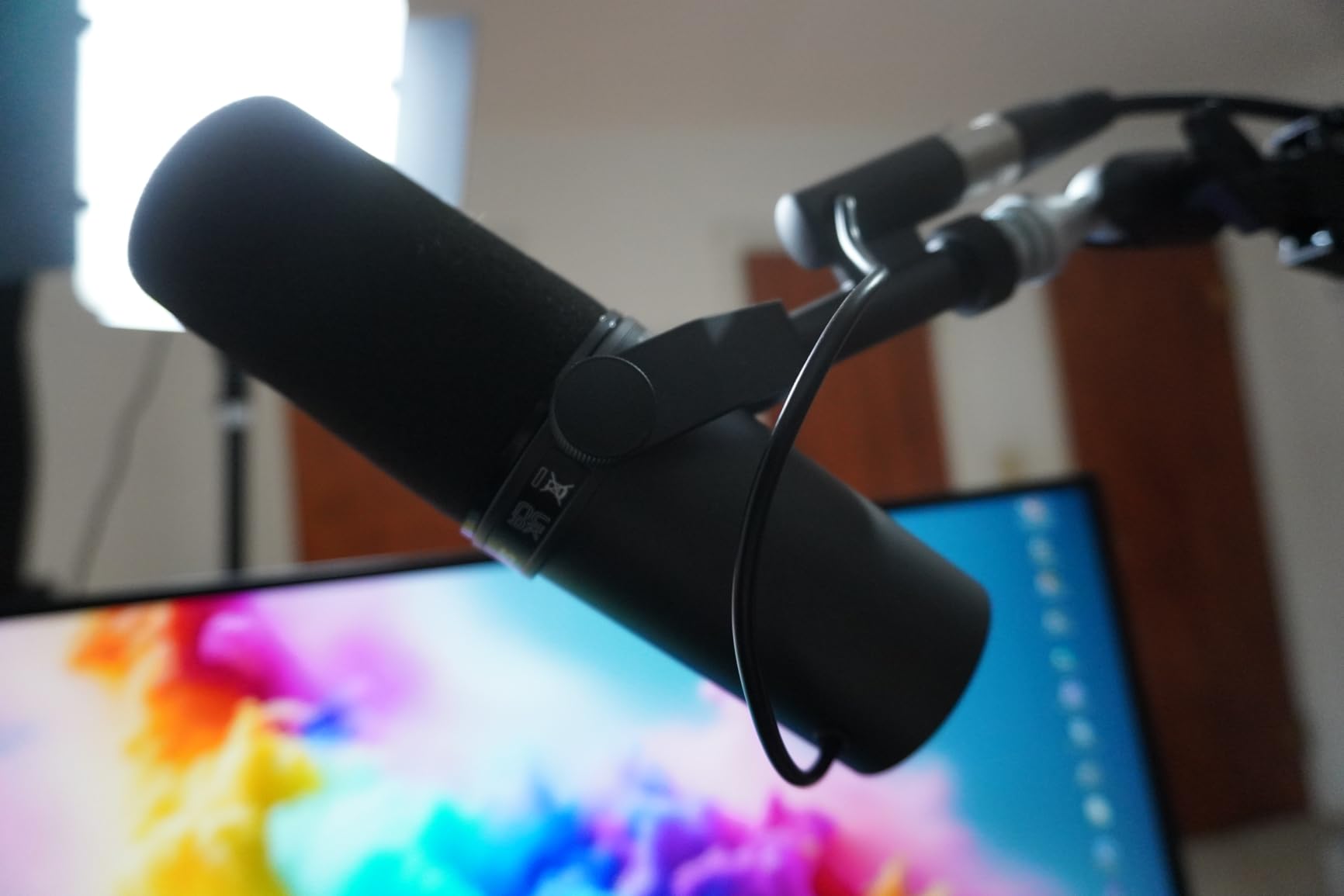
The downside is the chain. The SM7B has very low output. You need at least 60dB of clean gain to drive it properly. Most audio interface preamps cannot do that quietly. The fix is a Cloudlifter CL-1 or a FetHead in line with the mic, which adds another gear purchase to the bill. With a Focusrite Scarlett 2i2 alone, you will hear hiss.
It is also heavy. At 2.7 pounds, the SM7B needs a serious boom arm. The Rode PSA1 or the Elgato Wave Mic Arm LP can handle it; cheap arms cannot. Plan for this in your setup budget.
Who should buy the SM7B
If you have an untreated room, the SM7B is the single best upgrade you can make. Period. No software, no plugins, no acoustic panels can match the noise rejection of a quality dynamic mic. Reviewers on r/podcasting and r/VoiceActing consistently call out the SM7B as the “set it and forget it” solution for noisy home studios.
If you already own an audio interface with strong preamps, the SM7B is plug-and-play at the next level. If not, budget for a Cloudlifter alongside the mic.
Who should wait
If you are still exploring whether voice acting is for you, the SM7B is overkill. A budget condenser or a budget dynamic will tell you whether you enjoy the work before you invest in a chain that costs several hundred dollars once you add the preamp and the arm.
If your voice is naturally very bright, the SM7B’s darker character may not flatter you. Test it before committing. Some bright voices pair better with a condenser.
6. RØDE NT1 5th Gen – Best Studio-Grade Microphone for Home Voice Acting
RØDE NT1 5th Gen Studio Condenser Microphone, XLR + USB-C, Silver
Dual XLR and USB-C outputs
Ultra-low 4 dB self-noise
Includes SM6 shock mount
Pros
- Studio-grade clarity with extremely low noise floor
- Warm
- rich
- natural vocal tone
- Dual XLR and USB-C outputs for flexible setup
- Includes SM6 shock mount and pop filter
- Ultra-low-noise Revolution Preamp built in
Cons
- Total weight with shock mount requires a sturdy boom arm
- Software setup can occasionally be finicky
The RØDE NT1 5th Gen is the most refined condenser I tested for this guide. RØDE took the classic NT1 sound, the warm, detailed character that has made it an industry standard for thirty years, and added the most useful feature on the market: dual XLR and USB-C outputs. You can run it straight into a laptop today and into an audio interface tomorrow without buying a second mic.
The self-noise is the headline number: 4 dB. That is essentially silent. Compare it to the AT2020 at roughly 12 dB equivalent and you understand why so many professional VO artists switched. The quieter the mic, the less you have to ride the gain, and the more you can focus on the read.
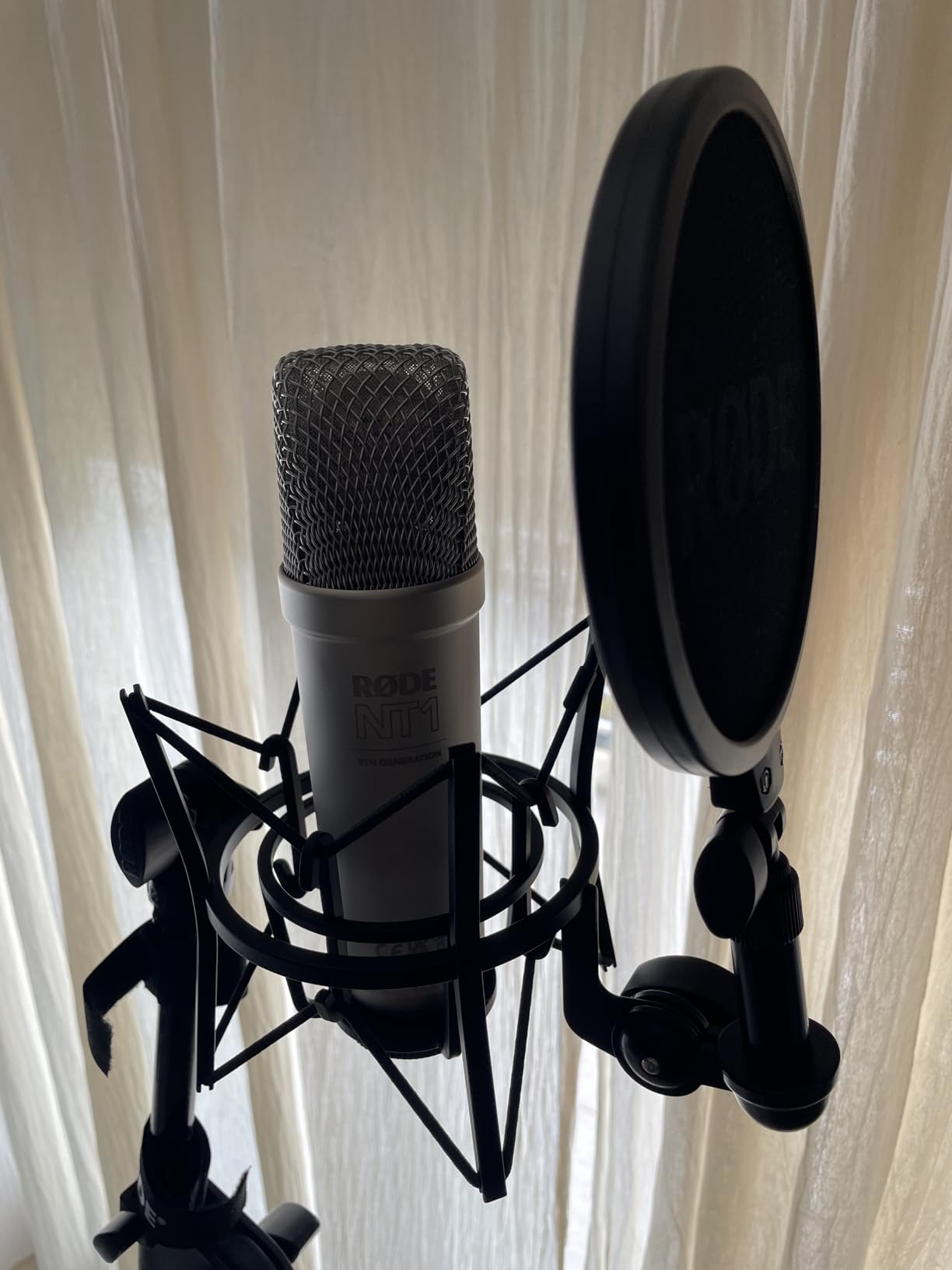
In my tests, the NT1 captured vocal detail that I had to listen for on the AT2020. The breath sounds were smoother. The sibilants were cleaner. The low-end on deep voices was full without boom. For audiobook narration especially, where listeners hear every flaw across ten hours of audio, this level of clarity matters.
Like all condensers, it picks up room sound. My untreated bedroom was a problem until I added a reflection filter and some moving blankets behind the mic. In a properly treated booth, the NT1 is genuinely stunning.
The dual-output advantage
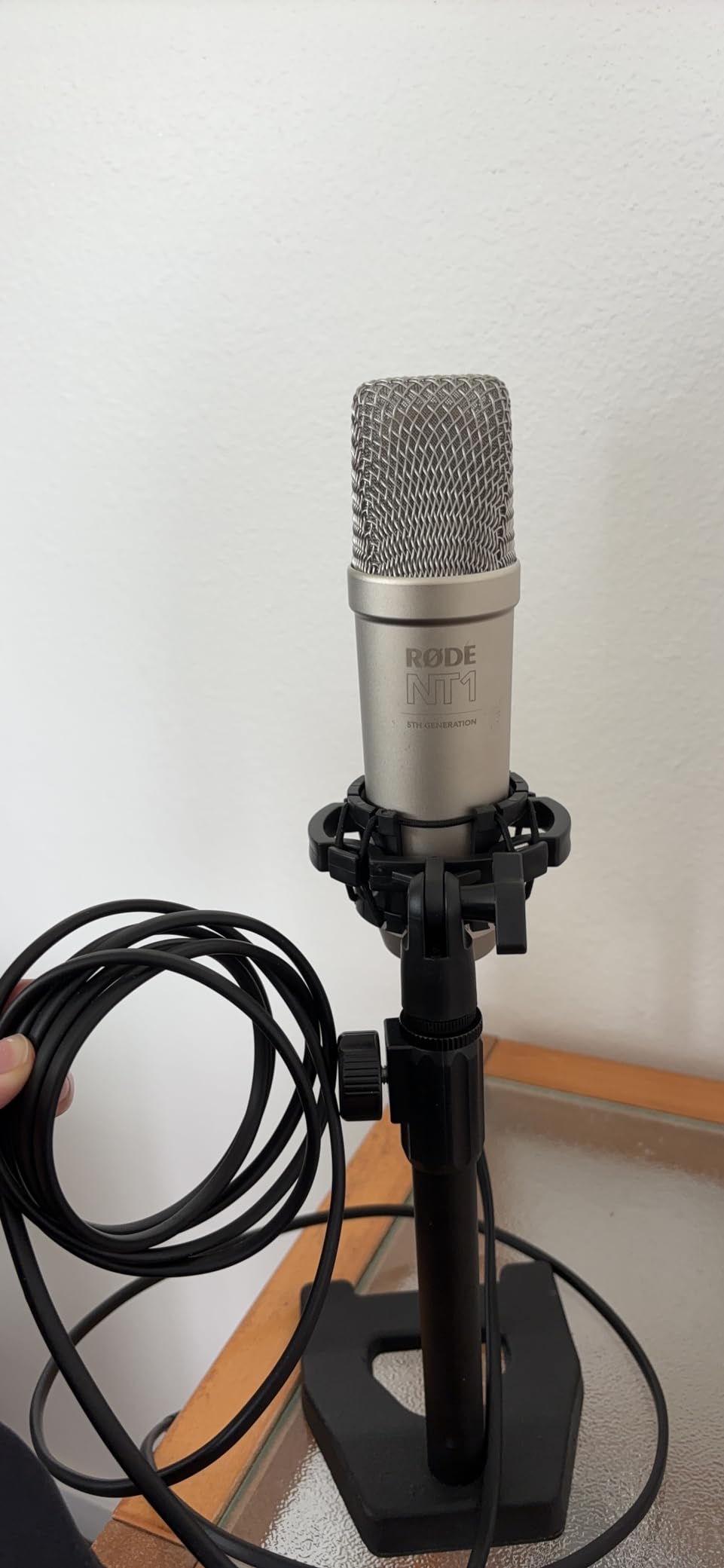
Most XLR condensers force a choice: buy an interface now or never. The NT1 5th Gen removes that choice. Plug the USB-C cable into your laptop and you are recording with studio quality today. Save up for an interface, swap to XLR, and the same mic keeps working.
This is the upgrade path I wish existed when I started. The 32-bit float recording over USB is a real bonus for loud character reads: you cannot clip the input, no matter how loud you get.
What you get in the box
RØDE includes the SM6 shock mount and pop filter, a 6m XLR cable, and a 3m USB-C cable. That is a complete professional chain for less than the price of the SM7B plus a Cloudlifter. The only thing missing is the boom arm.
The total weight with the SM6 shock mount tips past 1 kg. Budget for a serious boom arm. The Rode PSA1 pairs naturally with this mic.
7. Elgato Wave:3 MK.2 – Best USB Microphone for Streaming and Voice Acting
Elgato Wave:3 MK.2 USB Condenser Microphone, DSP Effects
USB-C condenser microphone
Clipguard 2.0 anti-distortion
Wave Link virtual mixer
Pros
- Studio-quality vocal clarity from a USB-C mic
- Clipguard 2.0 prevents distortion on loud peaks
- Auto Gain sets levels automatically
- Wave Link software replaces a hardware audio mixer
- Multifunction dial and reliable tap-to-mute
Cons
- Condenser capsule is sensitive to background noise
- Wave Link software has a learning curve at first
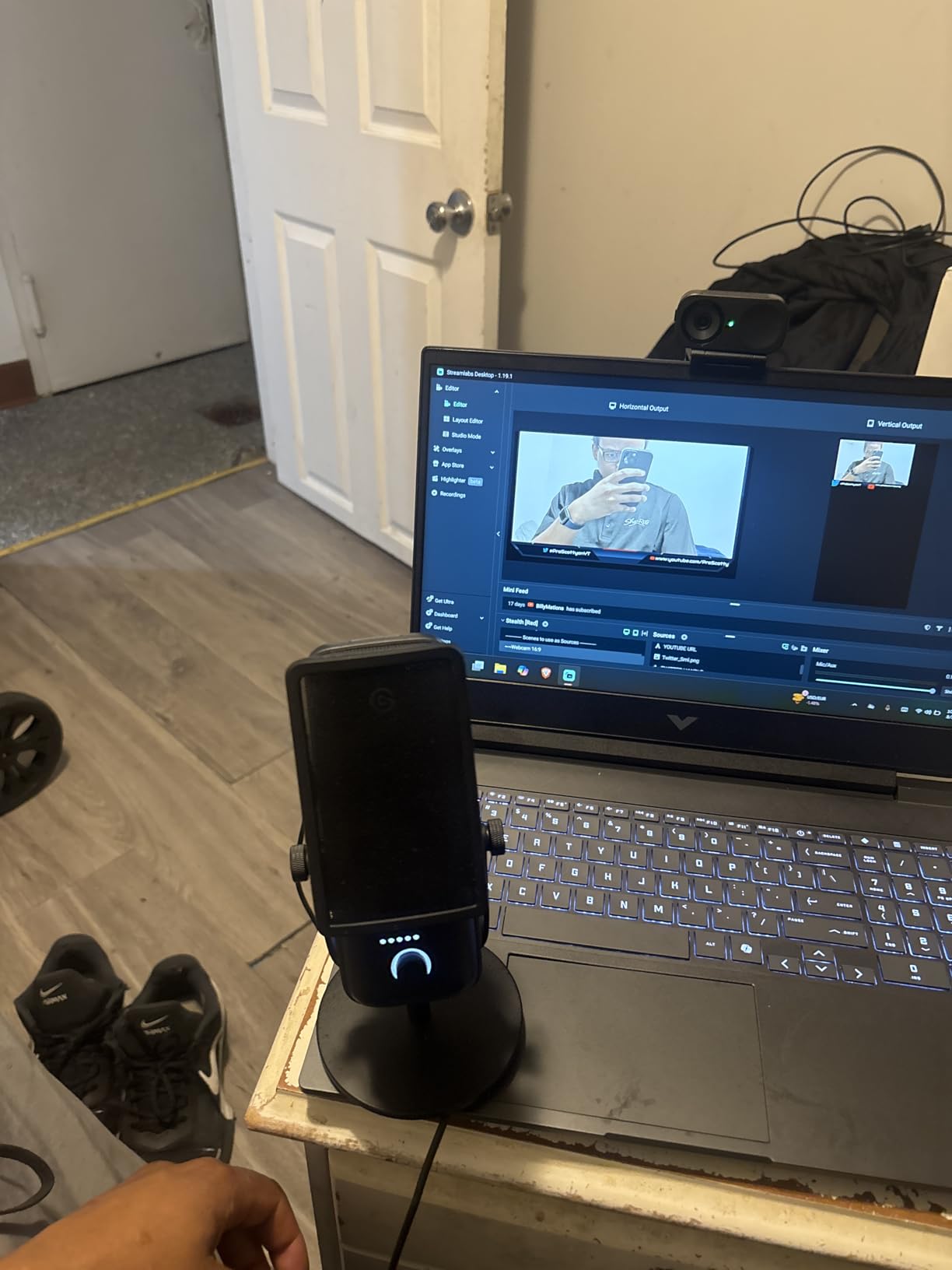
The Elgato Wave:3 MK.2 is the USB mic I recommend to anyone doing both voice acting and live streaming or gaming. The hardware is clean, the sound is studio-grade, and the Wave Link software is the single best virtual mixer I have used. It solves the “I need to manage my mic, my game audio, my chat, and my music at the same time” problem that frustrates most streamers.
On its own, the Wave:3 is a competent condenser. The Clipguard 2.0 system is the real headline feature: it analyzes the signal 200 times per second and routes loud peaks through a secondary analog path, so you cannot clip the input. For animation reads with sudden shouts, this is genuinely useful.
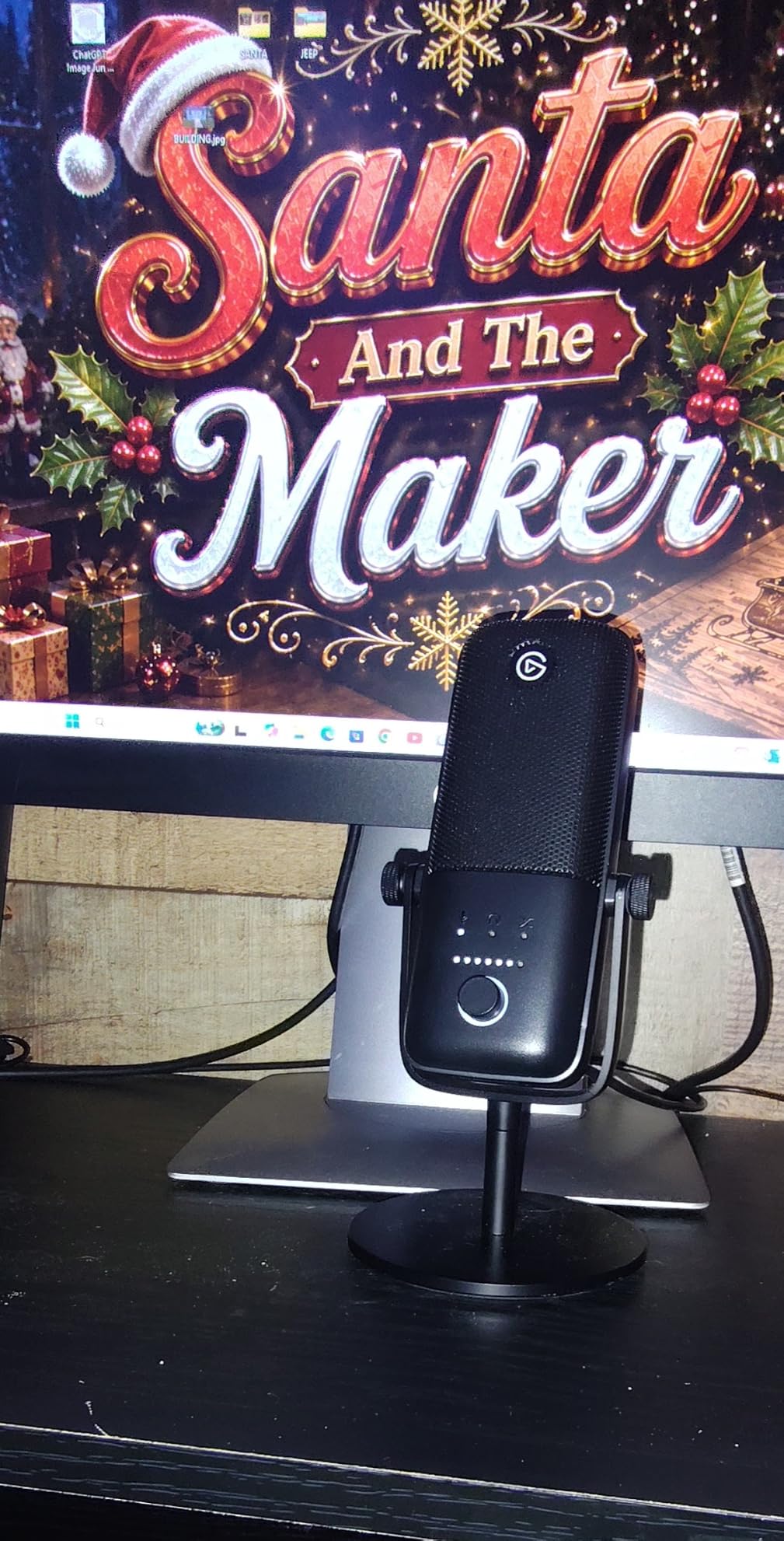
The Auto Gain feature sets levels automatically when you first plug it in. For beginners who do not yet know what gain to use, this prevents the most common rookie mistake (too much gain, distorted recordings). I tested it on a one-minute animation read with shouting and whispering, and the levels held steady.
The condenser capsule is sensitive, like every other condenser on this list. In an untreated room, you will hear reflections. Pair the Wave:3 with a reflection filter or record in a closet full of clothes, and the problem goes away.
Why streamers love it, and why voice actors should care
Elgato built the Wave Link software to replace a hardware audio mixer. You can route up to nine audio sources, mix them in software, and send separate mixes to your stream and your headphones. For voice actors who also stream or record gaming content, this is a workflow upgrade that pure studio mics cannot match.
For pure voice acting without any streaming or gaming, the Wave Link software is overkill. The Yeti or the AT2020 is the simpler choice. But for hybrid creators, the Wave:3 is a real two-for-one.
Build quality and daily use
The Wave:3 has a clean, modern design that looks right on camera. The multifunction dial controls headphone volume by default and becomes input gain with a long press. The tap-to-mute button is large and reliable, with a red LED that is hard to miss on stream.
The USB-C cable is not sleeved and feels less premium than the rest of the mic, which is a minor complaint. Accessories like a shock mount and pop filter are sold separately.
8. FIFINE AmpliGame AM8 – Best Dual USB/XLR Dynamic Microphone for Voice Acting
FIFINE AmpliGame AM8 USB/XLR Dynamic Microphone for Gaming Streaming
Dual USB and XLR dynamic mic
Tap-to-mute with LED
RGB ring with 3 modes
Pros
- Dual USB and XLR for a clear upgrade path
- Cardioid dynamic capsule cuts room noise
- Built-in noise-canceling windscreen included
- Tap-to-mute button with clear LED indicator
- Headphone monitoring jack on the mic body
Cons
- Mute button only works in USB mode
- XLR cable not included in the box
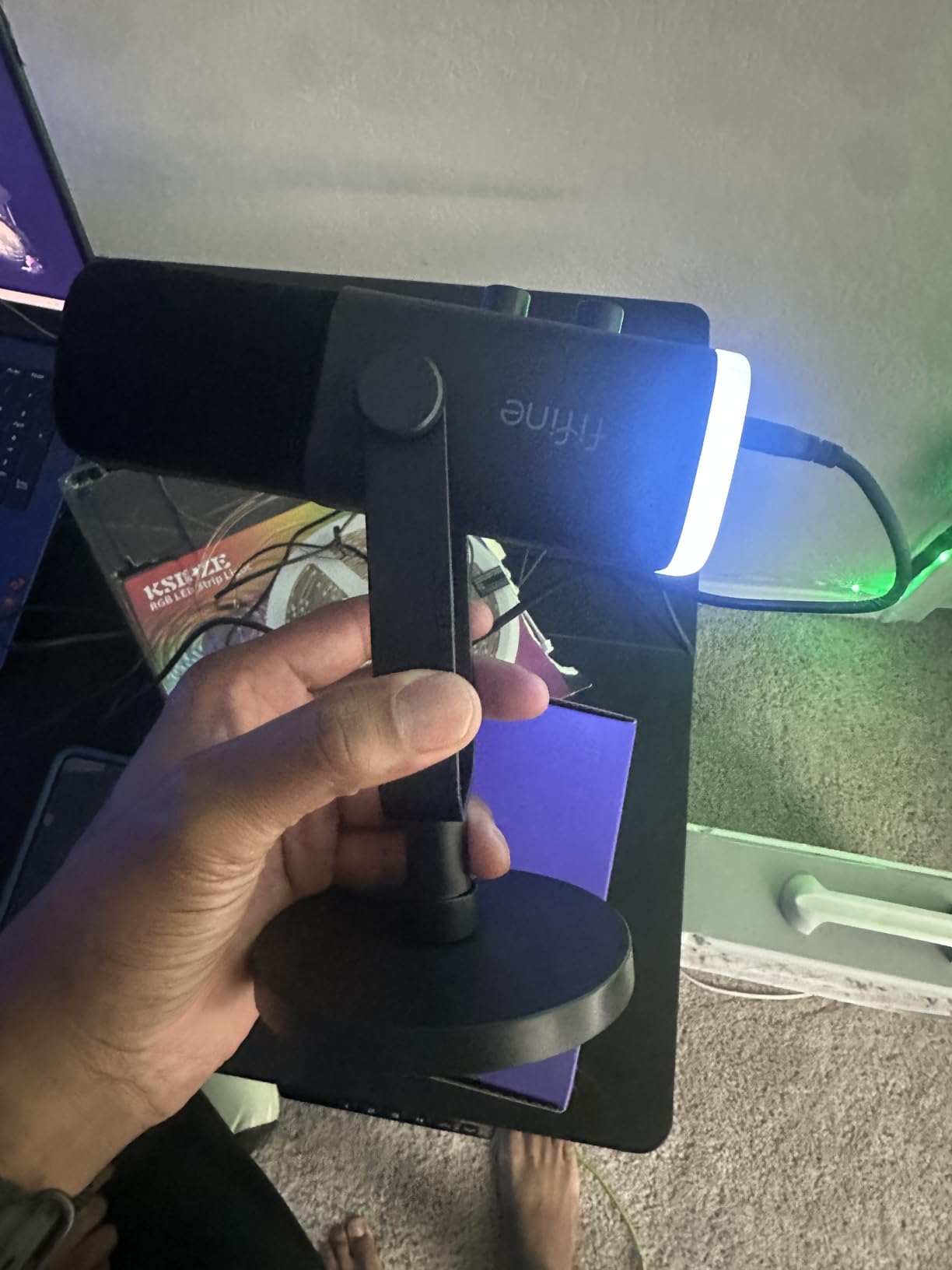
The FIFINE AmpliGame AM8 is the closest thing to a “buy once, grow into it” microphone in the budget category. It runs on USB today, runs on XLR when you buy an interface tomorrow, and sounds good in both modes. For a beginner planning a real upgrade path, that flexibility is worth more than the small price difference over a pure USB mic.
It is a dynamic mic, which is what makes it special. Dynamic capsules reject room noise far better than condensers. In my untreated bedroom, the AM8 picked up a fraction of the HVAC and laptop fan noise that plagued every condenser I tested. That alone makes it worth considering for apartment dwellers.
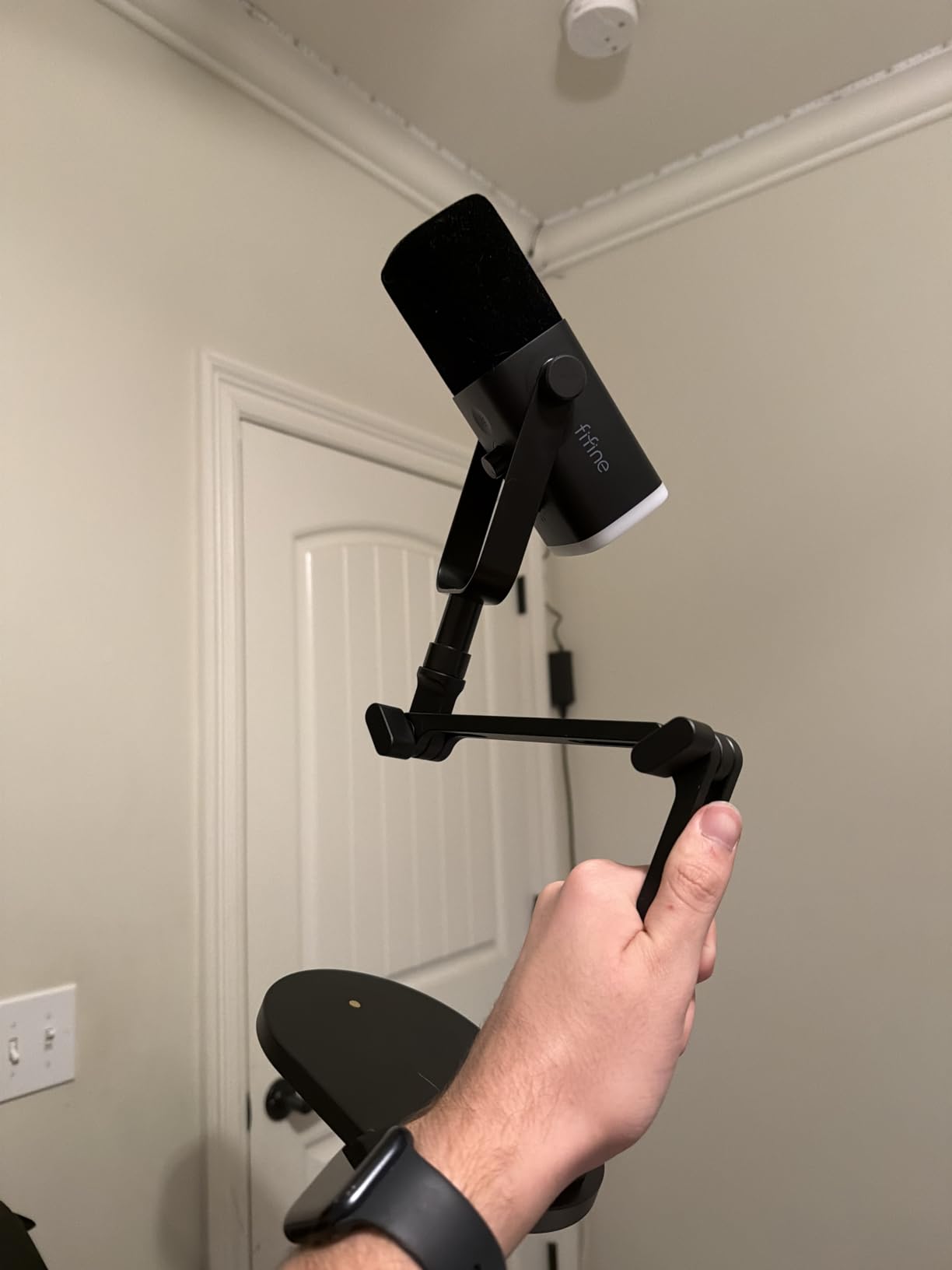
The sound is warm and present, with a slightly mid-forward character that flatters voices without sounding boxy. It does not have the SM7B’s smooth broadcast warmth, but it gets surprisingly close for a fraction of the price. For a first XLR dynamic, it teaches you what a good dynamic mic can do without the up-front investment.
The tap-to-mute button is genuinely handy for live auditions and stream sessions. The LED indicator is hard to miss. The headphone monitoring jack works in USB mode and lets you hear yourself with zero latency.
USB mode versus XLR mode
In USB mode, all the smart features work: tap-to-mute, gain knob, headphone monitoring, RGB lighting. In XLR mode, the mic becomes a passive dynamic capsule that passes through your interface’s preamps. The mute and gain knobs do nothing in XLR mode.
That is actually how it should work. The XLR output is for the day you have a real interface with real preamps. Until then, USB mode is fully featured.
Who should consider the AM8
Anyone in an untreated room who wants to start USB and grow into XLR. Anyone who wants SM7B-style noise rejection without the SM7B price tag. Anyone who games or streams in addition to voice acting.
If you do pure voice acting in a quiet space and never plan to grow beyond USB, the Yeti or the AT2020 is a better fit. The AM8’s strength is its flexibility.
How to Choose the Best Microphones for Voice Acting at Home
Choosing the best microphones for voice acting at home comes down to three questions: what is your room like, how do you connect to your computer, and what kind of voice acting do you do most? Get those three right and the rest of the decision is easy.
USB vs XLR: which connection should you pick?
USB mics have a built-in analog-to-digital converter and plug straight into a computer. XLR mics require a separate audio interface with preamps and phantom power. USB is simpler and cheaper. XLR is more flexible and more upgradeable.
Start with USB if you have never owned a real microphone before. The Blue Yeti, FIFINE K669B, MAONO A04, Elgato Wave:3, and FIFINE AM8 (in USB mode) all work that way. Plan to upgrade to XLR within a year or two as you book more work.
The exceptions are the Rode NT1 5th Gen and the FIFINE AM8, which offer both USB and XLR in the same mic. If you can stretch your budget, dual-output mics let you start USB and transition to XLR without replacing the mic.
For broader context on dynamic options that pair well with XLR chains, see our picks for the best handheld wireless microphones for home.
Condenser vs dynamic: which captures voice acting better?
Condensers are more sensitive and capture more detail. They are the standard choice for voice acting in treated studios. The AT2020, Rode NT1, Blue Yeti, MAONO A04, and Elgato Wave:3 are all condensers.
Dynamics are less sensitive and reject more room noise. They are the right choice for untreated rooms. The Shure SM7B and the FIFINE AM8 are dynamics.
Reddit users in r/VoiceActing and r/podcasting consistently recommend starting with a dynamic if your room is untreated. The “your room is your first mic” advice is real: an expensive condenser in a noisy apartment will sound worse than an entry-level dynamic in the same space.
How to handle an untreated room
Most home voice actors do not have a treated studio. That is fine. You can get usable audio without acoustic panels.
The cheapest fix is a closet full of clothes. Hang your mic inside a wardrobe and record there. Clothes absorb reflections better than any foam panel.
The next cheapest fix is a reflection filter behind the mic. These curved panels attach to your mic stand and absorb sound bouncing off the wall behind you. They are not perfect, but they cut reflections noticeably.
Moving blankets hung on a stand or a curtain rod work even better than purpose-built reflection filters and cost less. Studio engineers have used them for decades.
For more on building out your home setup, our guide to the best video calling devices with voice covers headsets and speakerphones that pair well with USB mics for online auditions.
Accessories that actually matter
A pop filter is non-negotiable. Plosives (“p” and “b” sounds) hit a condenser capsule hard. A budget pop filter fixes the problem entirely.
A shock mount is highly recommended. It decouples the mic from desk vibrations and boom arm movement. The MAONO A04 includes one; most other mics do not.
A boom arm is essential for any serious voice acting. Holding the mic or using the included desktop stand is fine for casual recording but limits your movement and angles the mic awkwardly. The Rode PSA1, the Elgato Wave Mic Arm LP, and the Gator Frameworks Boom Arm are all reliable.
Closed-back headphones for monitoring. You need to hear yourself while recording. Audio-Technica ATH-M50x, Beyerdynamic DT 770 Pro, and Sony MDR-7506 are the standard picks.
Mic placement and the 3:1 rule
Place the mic 6 to 8 inches from your mouth, slightly off-axis (about 15 to 30 degrees off the direct line of breath) to reduce plosives. A pop filter lets you get closer without the “p” pops.
The 3:1 rule for multiple mics says that when you use two microphones on the same source, the second mic should be at least three times farther from the source than the first. For single-mic voice acting, the practical translation is: keep your mic close, and keep your reflective surfaces far.
Record with your mouth 6 inches from the mic and any hard wall at least 3 feet away. That ratio minimizes the room sound leaking into your recording.
Price tiers at a glance
Budget tier: FIFINE K669B, MAONO A04, FIFINE AM8. Real recording capability, perfect for beginners exploring voice acting.
Mid tier: Blue Yeti, Elgato Wave:3 MK.2, Audio-Technica AT2020. The sweet spot for most hobbyists and many working voice actors.
Studio tier: Rode NT1 5th Gen, Shure SM7B. The professional standard. Worth it once you are booking consistent paid work.
Frequently Asked Questions
What mic do voice actors use?
Most professional voice actors use a large-diaphragm condenser like the RØDE NT1 or Neumann TLM 103 for treated studios, or a broadcast dynamic like the Shure SM7B for untreated rooms. For beginners building a home setup in 2026, the Audio-Technica AT2020 and the Blue Yeti are the two most common starting points because they deliver clean, professional sound without a complicated signal chain.
What is the best microphone for voice recording at home?
The best microphone for voice recording at home depends on your room. For untreated spaces, the Shure SM7B and the FIFINE AmpliGame AM8 reject background noise better than any condenser. For treated studios, the Audio-Technica AT2020 and the RØDE NT1 5th Gen deliver studio-grade clarity. Beginners who want a simple USB setup should start with the Blue Yeti.
Can I use a condenser mic in an untreated room?
Yes, but with tradeoffs. A condenser mic will pick up room reflections, HVAC noise, and computer fans that a dynamic mic would reject. To compensate, get close to the mic (4 to 6 inches), use a pop filter, place a reflection filter or hanging blankets behind the mic, and add noise reduction plugins in post. If untreated noise is severe, switch to a dynamic like the SM7B for cleaner source audio.
What is the 3 to 1 rule for microphones?
The 3:1 rule says that when using two microphones on the same source, the second mic must be at least three times farther from the source than the first mic is. For single-mic voice acting, the practical version is: keep your mouth 6 to 8 inches from the mic, and keep any hard reflective surface at least 3 times that distance away (around 2 to 3 feet) to minimize room reflections.
How do I stop room noise on my microphone?
Start by switching to a dynamic mic like the Shure SM7B or FIFINE AM8, which rejects far more room noise than a condenser. Add a reflection filter or hang moving blankets behind the mic to absorb reflections. Get close to the mic (6 inches) so your voice is louder than the room. Record in a closet full of clothes if your space is untreated. Finally, use noise reduction plugins like iZotope RX or Audacity’s Noise Reduction in post.
Final Verdict: Which Microphone Should You Buy for Voice Acting at Home?
The best microphones for voice acting at home in 2026 are the ones that match your room, your voice, and your upgrade path. For most beginners, the Audio-Technica AT2020 remains the smartest first purchase: it sounds better than anything near its price, it pairs with any interface, and it lasts decades. The Blue Yeti is the right answer when you want to record today without buying anything else.
If your room is untreated and noisy, skip straight to a dynamic mic. The Shure SM7B is the broadcast standard for a reason, and the FIFINE AmpliGame AM8 gets surprisingly close at a fraction of the price. If you have a treated studio and you want the cleanest possible source, the RØDE NT1 5th Gen is the new benchmark.
Pick the mic that matches your situation today, but plan for an upgrade within a year. Voice acting rewards consistent practice, and the right mic makes practice more enjoyable. Start with the AT2020 if you want one mic that will carry you from your first audition to your hundredth paid gig.