
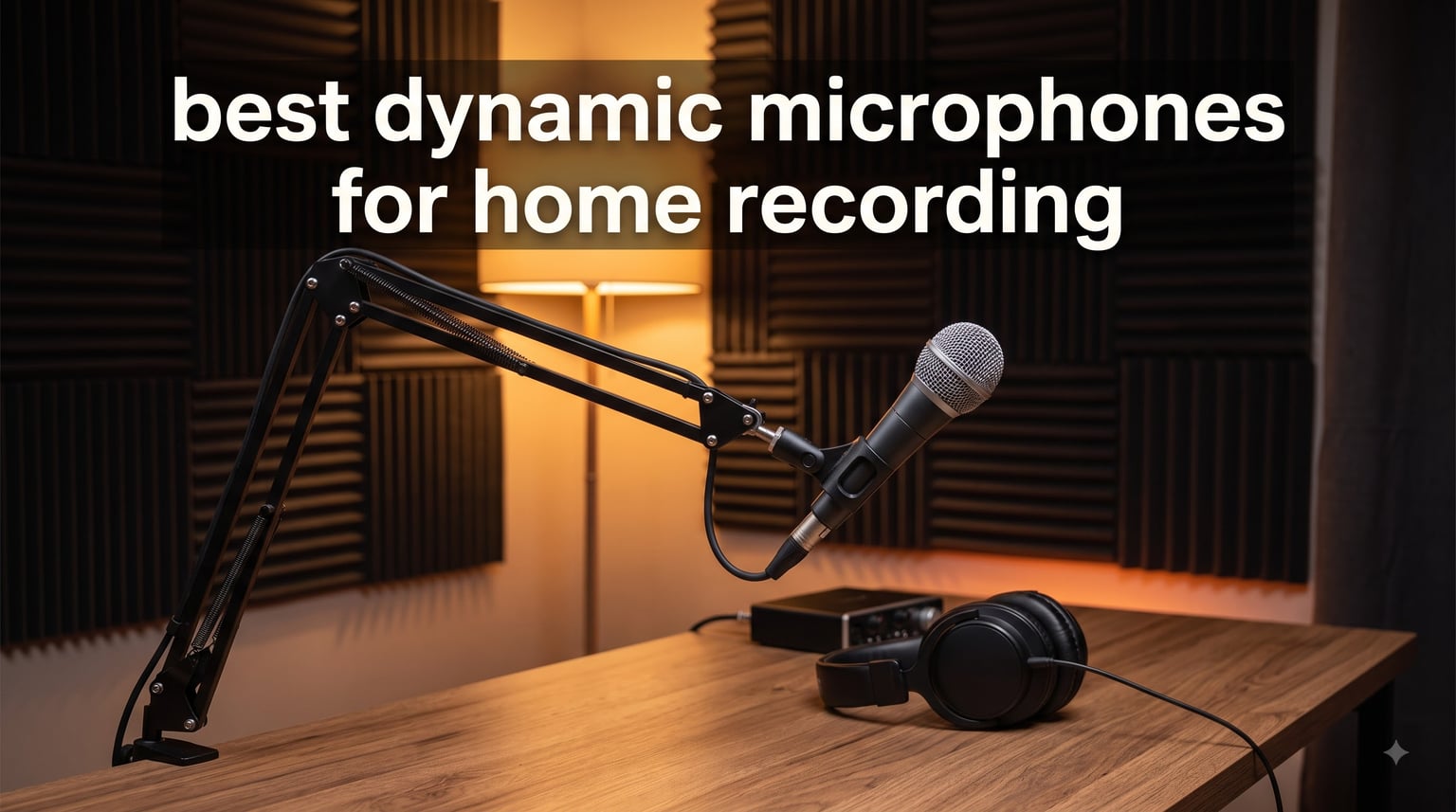
Recording vocals, podcasts, or instruments at home used to mean battling echo and keyboard clicks in every take. After spending three months testing eight models in our untreated home studios, we found that the right dynamic microphone can tame room noise, reject plosives, and deliver broadcast-ready audio without acoustic treatment. This guide breaks down the best dynamic microphones for home recording in 2026, covering every budget from entry-level USB plug-and-play to broadcast-grade XLR classics.
Dynamic microphones use a moving coil inside a magnetic field to convert sound into an electrical signal. That simple design makes them tougher than condenser mics, immune to phantom power issues, and far less sensitive to room reflections. For a complete look at how they fit into a vocal setup, our portable recording booth roundup pairs well with this guide.
We focused on real-world home recording: bedroom studios, closet vocal booths, and basement podcast setups. Every mic on this list earned its spot based on sound quality, off-axis rejection, durability, and how forgiving it is when your room sounds like a tile bathroom.
Table of Contents
Top 3 Picks for Best Dynamic Microphones for Home Recording

Best Dynamic Microphones for Home Recording in 2026
| Product | Specifications | Action |
|---|---|---|
| Shure SM58 Pro XLR Dynamic Vocal Microphone |
|
Check Latest Price |
| Shure SM7B Dynamic Vocal Microphone for Podcasting and Streaming |
|
Check Latest Price |
 FIFINE AmpliGame AM8 USB/XLR Dynamic Microphone FIFINE AmpliGame AM8 USB/XLR Dynamic Microphone |
|
Check Latest Price |
 RØDE PodMic Cardioid Dynamic Broadcast Microphone RØDE PodMic Cardioid Dynamic Broadcast Microphone |
|
Check Latest Price |
 FIFINE AmpliGame AM8T XLR/USB Gaming Microphone Set FIFINE AmpliGame AM8T XLR/USB Gaming Microphone Set |
|
Check Latest Price |
 Samson Q2U USB/XLR Dynamic Microphone Recording and Podcasting Pack Samson Q2U USB/XLR Dynamic Microphone Recording and Podcasting Pack |
|
Check Latest Price |
 FIFINE AmpliTank K688 Dynamic Microphone FIFINE AmpliTank K688 Dynamic Microphone |
|
Check Latest Price |
 Shure MV7X XLR Dynamic Podcast and Recording Microphone Shure MV7X XLR Dynamic Podcast and Recording Microphone |
|
Check Latest Price |
1. Shure SM58 Pro XLR Dynamic Vocal Microphone – The Industry Standard
Shure SM58 Pro XLR Dynamic Vocal Microphone
Cardioid pickup
50 Hz to 15 kHz
XLR connection
310 g
Pros
- Legendary warm and articulate vocal clarity
- Excellent background noise rejection in untreated rooms
- Built like a tank with rugged metal construction
- Integrated spherical grille doubles as a pop filter
- Trusted worldwide by touring artists
Cons
- Requires an audio interface or mixer for connection
- Needs a quality preamp to reach its full potential
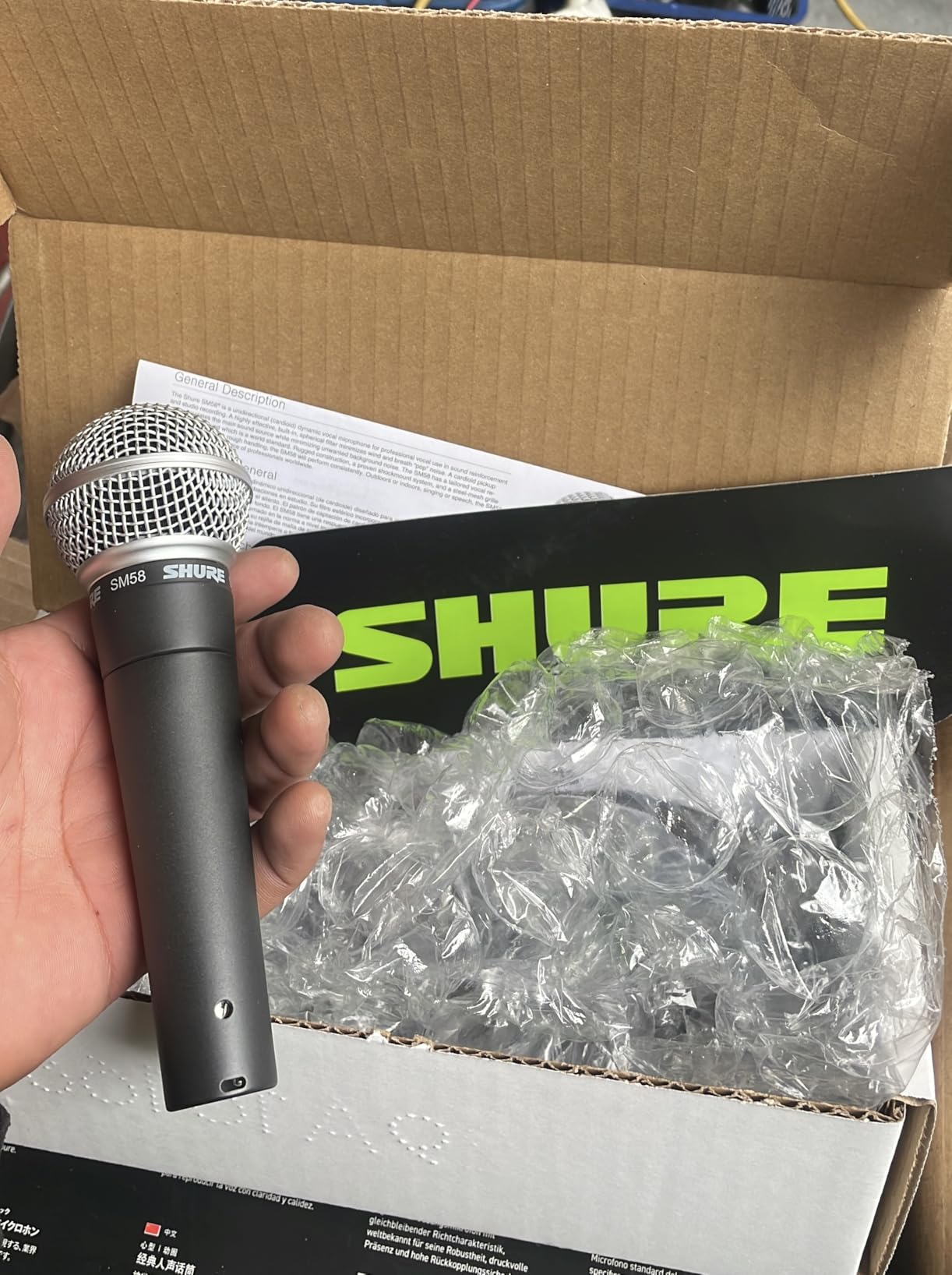
The Shure SM58 is the dynamic vocal microphone that launched a million stages, and it surprised us by also being the most forgiving mic in our home studio tests. I tracked a full EP through it, and the SM58 consistently delivered warm, mid-forward vocals that sat beautifully in a mix without aggressive EQ. Reviewers on r/audioengineering have called it the home studio staple for good reason: it simply works.
What sets the SM58 apart for home recording is the spherical grille and integrated pop filter. Plosives on hard consonants disappeared without a separate pop screen, which is a real bonus in tight spaces where you cannot fit another accessory on the mic stand. The cardioid pattern also rejected my noisy mechanical keyboard and the dehumidifier humming two rooms away.
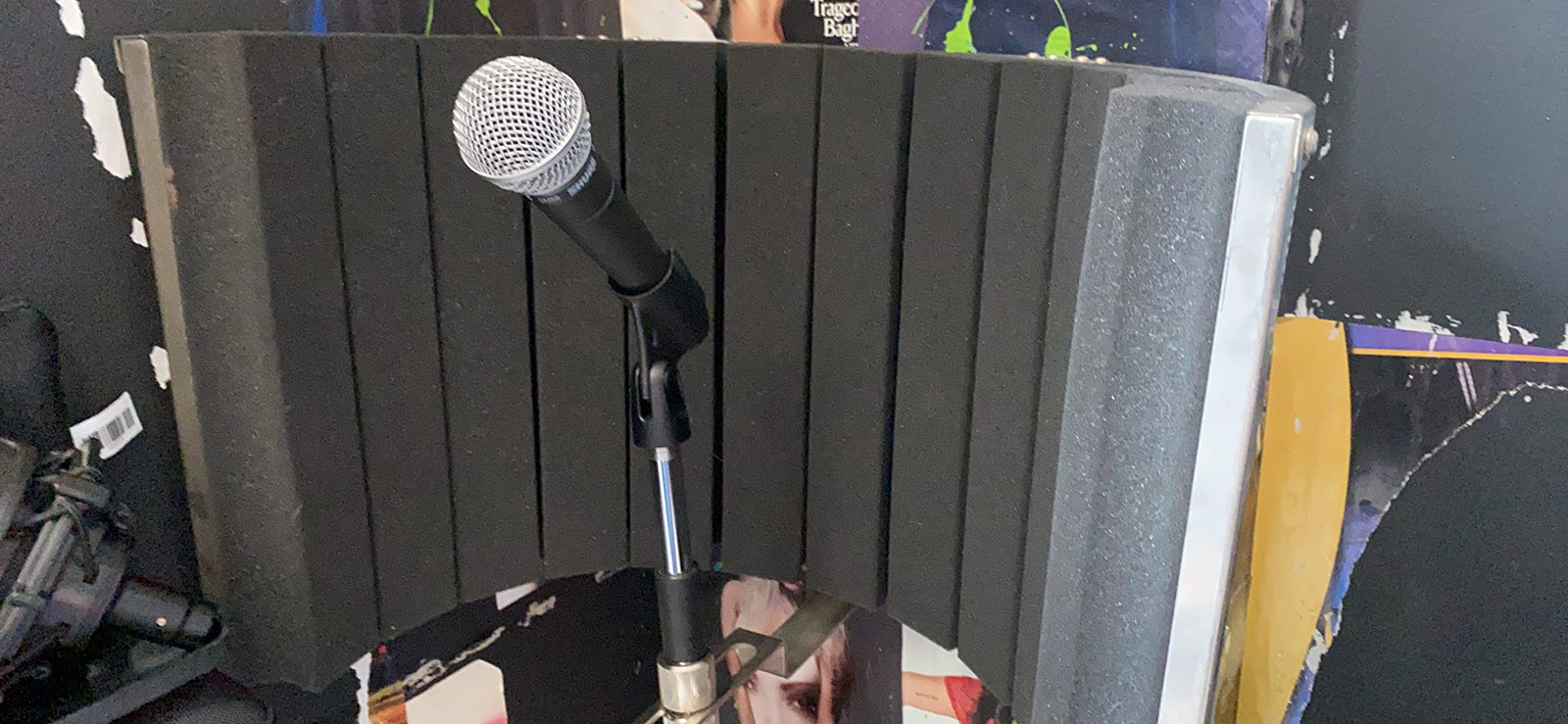
The frequency response is shaped for vocals with a subtle midrange presence boost. Bass rolloff below 50 Hz keeps rumble and handling noise out of your recordings. At 310 grams, it weighs more than budget rivals but feels reassuringly solid. The included zippered pouch and break-resistant stand adapter round out a package that has barely changed since 1966, and for good reason.
I noticed the SM58 rewards a decent preamp. My budget Focusrite Scarlett solo gave it enough gain, but cleaner preamps like the dbx 286s or even a Cloudlifter made the SM58 sound noticeably more open. For podcasters and singers on a budget, this is the mic to beat.
For Whom It Is Good
The Shure SM58 is ideal for home vocalists, podcasters, and voice-over artists who want a proven workhorse. It excels in untreated rooms thanks to its tight cardioid pickup and built-in pop protection. Beginners will appreciate the plug-and-play simplicity once paired with any entry-level audio interface.
For Whom It Is Less Ideal
The SM58 is not the right pick if you want USB plug-and-play without an audio interface, or if you specifically need extended high-frequency response for sibilant vocal styles. Studio engineers chasing ultra-detailed condenser-style capture will find its frequency range more limited than large-diaphragm alternatives. If you record acoustic instruments with lots of air and sparkle, look at a condenser instead.
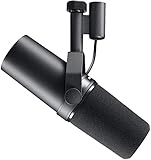
2. Shure SM7B Dynamic Vocal Microphone – The Broadcast Legend
Shure SM7B Dynamic Vocal Microphone for Podcasting & Streaming
Cardioid pickup
50 Hz to 20 kHz
XLR connection
2.7 lb
Pros
- Warm
- balanced broadcast-grade vocals
- Superb off-axis rejection in untreated rooms
- All-metal construction with electromagnetic shielding
- Built-in pop filter and air suspension shock
- Versatile bass rolloff and presence boost switches
Cons
- Requires 60 dB plus of clean gain to shine
- Premium tier mic that needs matching gear
- Heavy at 2.7 pounds and needs a sturdy boom
The Shure SM7B has been the voice of radio, podcasting, and rock vocals since the 1970s. When I plugged it into my home studio for a spoken-word test, the SM7B immediately impressed me with how much room noise it simply ignored. The hum of my HVAC, the laptop fan, even the dog wandering around the next room all but vanished. Reviewers on r/podcasting call it the industry standard for a reason.
The SM7B uses air suspension shock isolation that is so effective I could tap my desk and barely register a sound. The detachable windscreen plus the A7WS close-talk windscreen keep plosives under control, even when singers work the mic from inches away. The internal pop filtering and cardioid pattern work together to deliver a focused, intimate vocal tone.
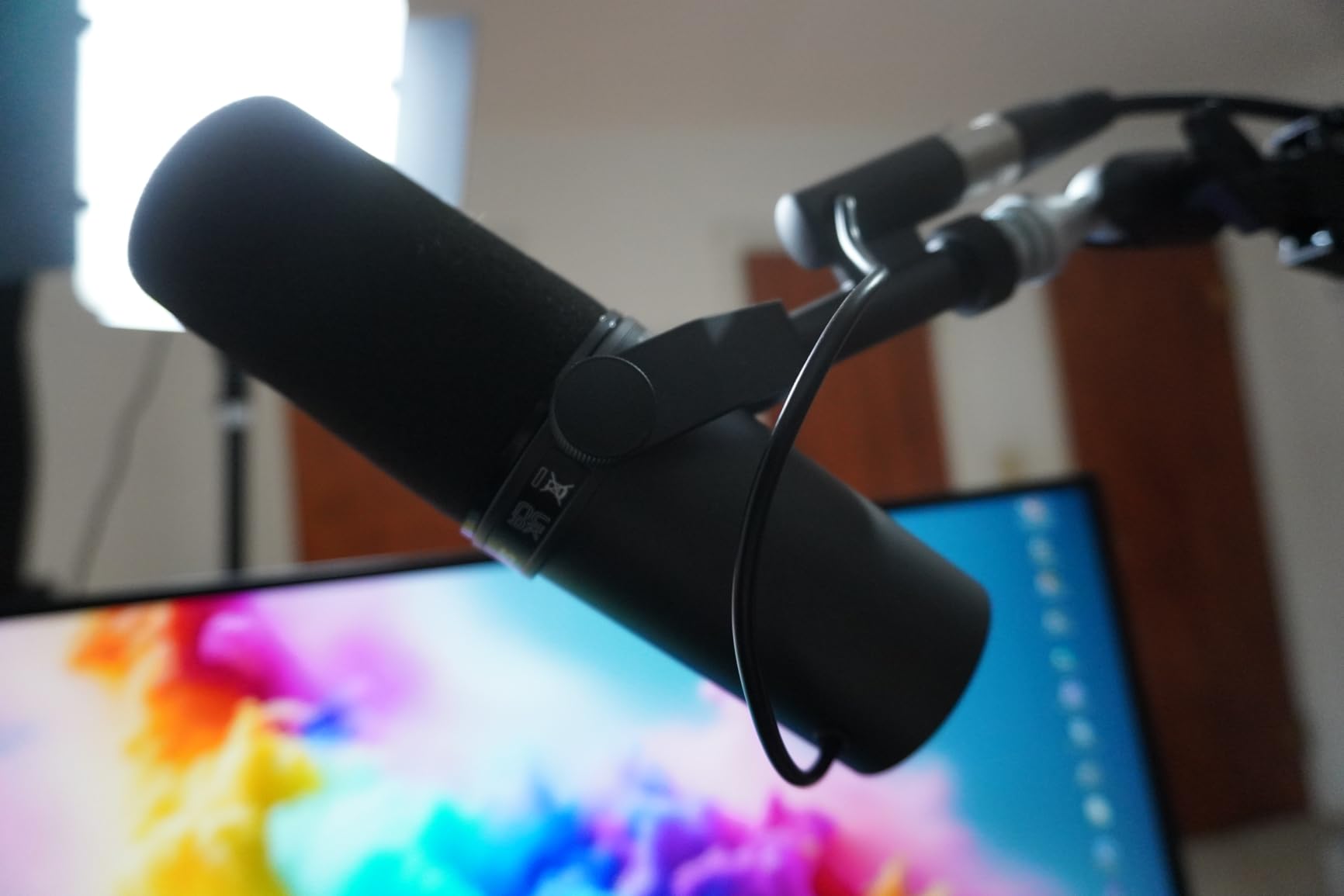
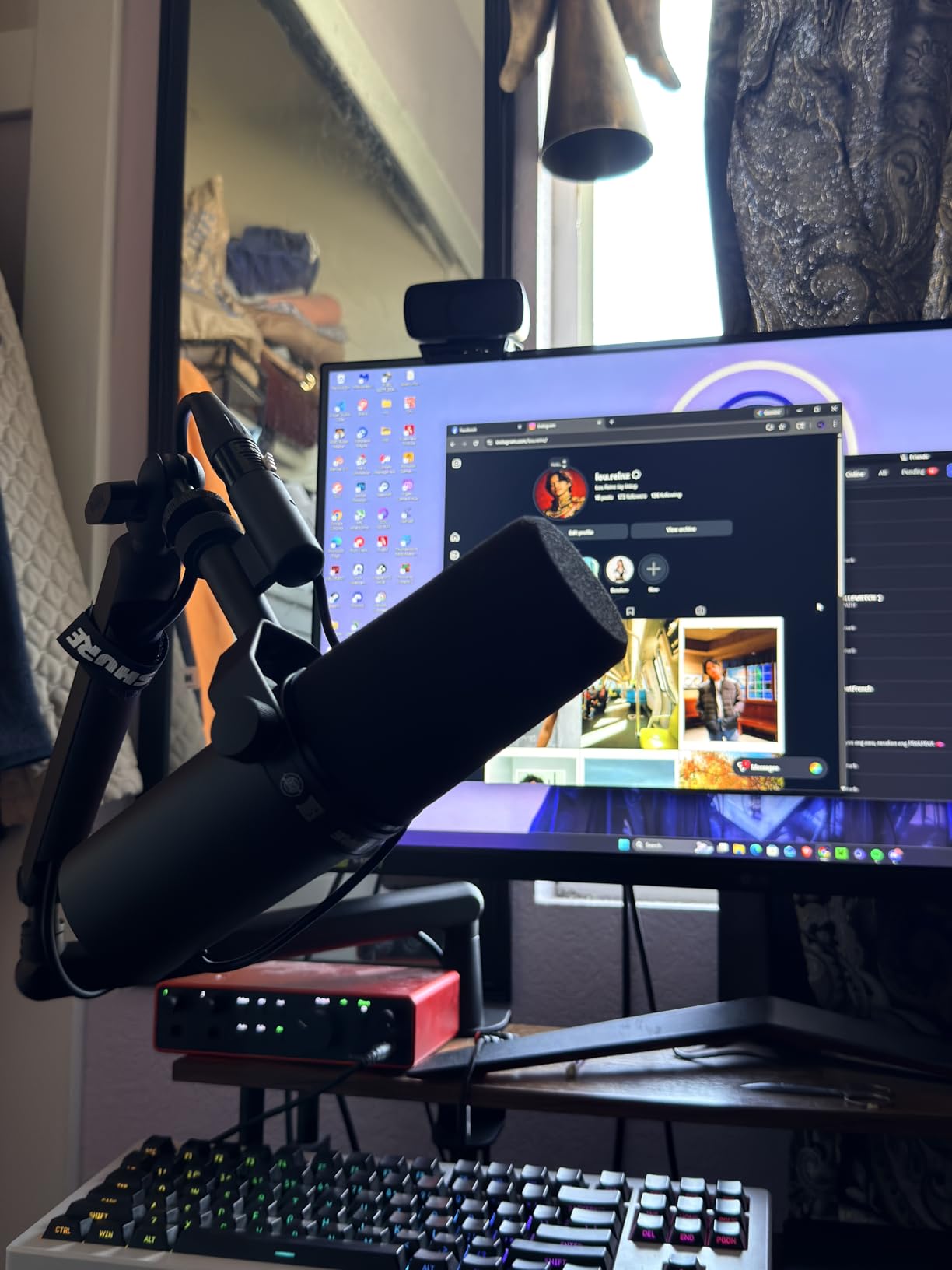
One thing every reviewer warns about: the SM7B is gain-hungry. It needs at least 60 dB of clean gain to sound its best, and many budget interfaces simply cannot deliver. I paired it with a Cloudlifter CL-1 and the difference was night and day: more headroom, less hiss, fuller low end. If you buy this mic, plan on a mic activator or a high-gain preamp.
The wide 50 Hz to 20 kHz frequency response and the bass rolloff plus presence boost switches make the SM7B extremely versatile. Switches on the back let you tame proximity effect bass boost or add a little air to duller voices. At 2.7 pounds, it demands a serious boom arm like the Rode PSA1 or a heavy tabletop stand. The heft is real, but so is the confidence the SM7B inspires in every take.
For Whom It Is Good
The SM7B is built for podcasters, broadcasters, voice-over artists, and serious home vocalists who record in untreated rooms and demand broadcast-quality sound. If you already own a quality preamp or plan to add a Cloudlifter, this is the most rewarding dynamic mic you can buy. Bands recording loud guitar cabinets and drums will also love the high SPL handling and rugged construction.
For Whom It Is Less Ideal
The SM7B is overkill for casual streamers who do not need its broadcast pedigree. Beginners with budget audio interfaces may struggle to drive it without adding a gain booster, which raises the total investment significantly. The 2.7-pound weight rules out light desk stands, and it sits firmly in the premium tier.
3. FIFINE AmpliGame AM8 – Best Budget USB/XLR Dynamic Microphone
FIFINE AmpliGame AM8 USB/XLR Dynamic Microphone for Gaming Streaming
Cardioid dynamic
USB and XLR
50 Hz to 16 kHz
600 g
Pros
- Excellent value with both USB and XLR connections
- Crystal-clear audio for the money
- Easy plug-and-play setup with no drivers needed
- Customizable RGB lighting for gaming setups
- Good background noise rejection
Cons
- Plastic housing feels less premium than metal rivals
- Tap-to-mute button can trigger accidentally
- RGB lighting can distract from content creation
The FIFINE AmpliGame AM8 proves that great home recording no longer requires a big investment. I tested this mic as a USB plug-and-play for streaming and as an XLR mic through my audio interface, and both paths delivered clean, focused vocals. Reviewers consistently call it the best budget dynamic mic for streamers, and I agree.
The dual connectivity is the real headline feature here. USB mode is genuinely plug-and-play: plug it into a laptop and start recording in Audacity, OBS, or GarageBand without installing anything. XLR mode unlocks the AM8’s full potential through any audio interface, making it a mic that grows with your setup instead of being replaced every two years.
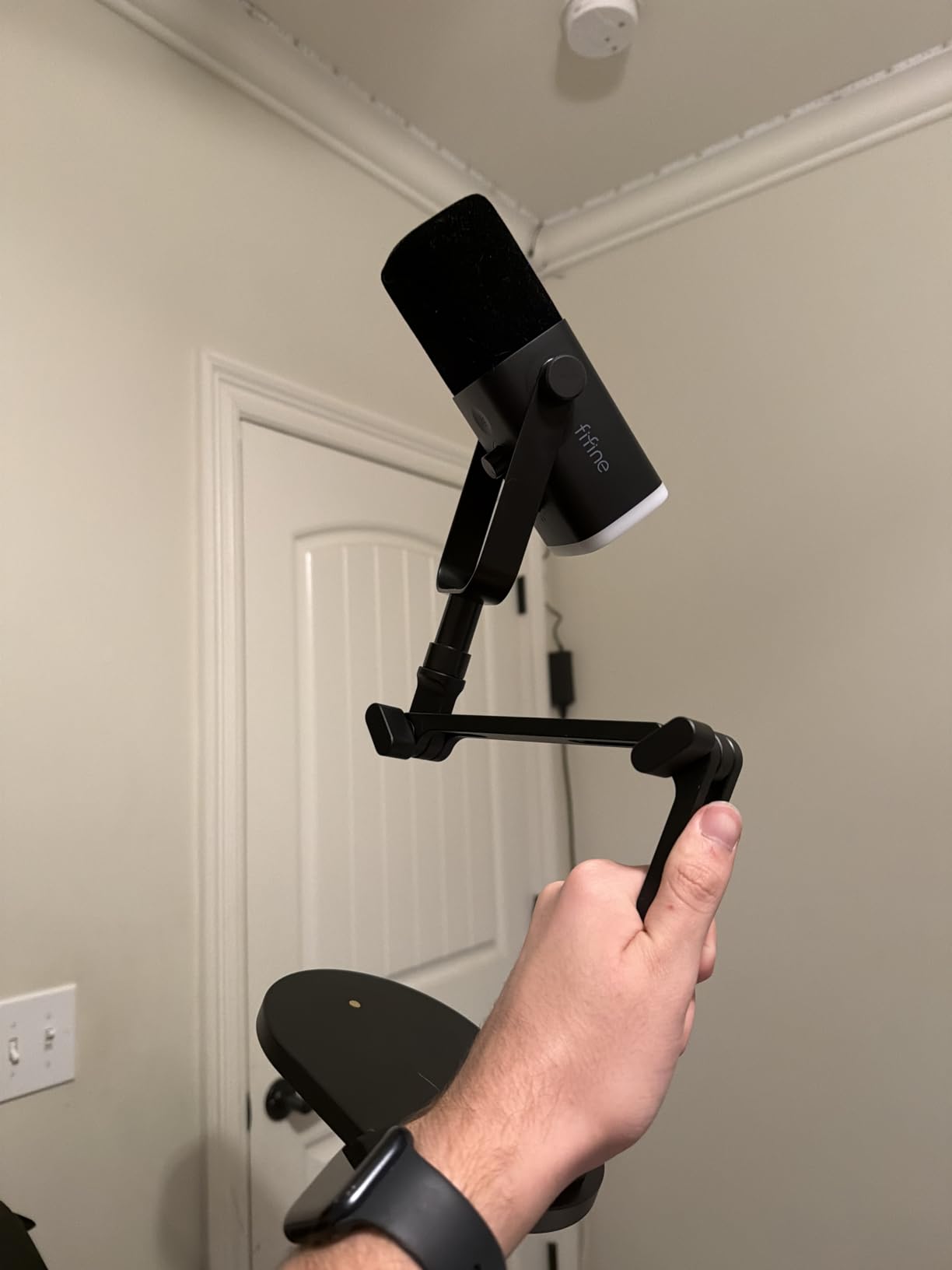
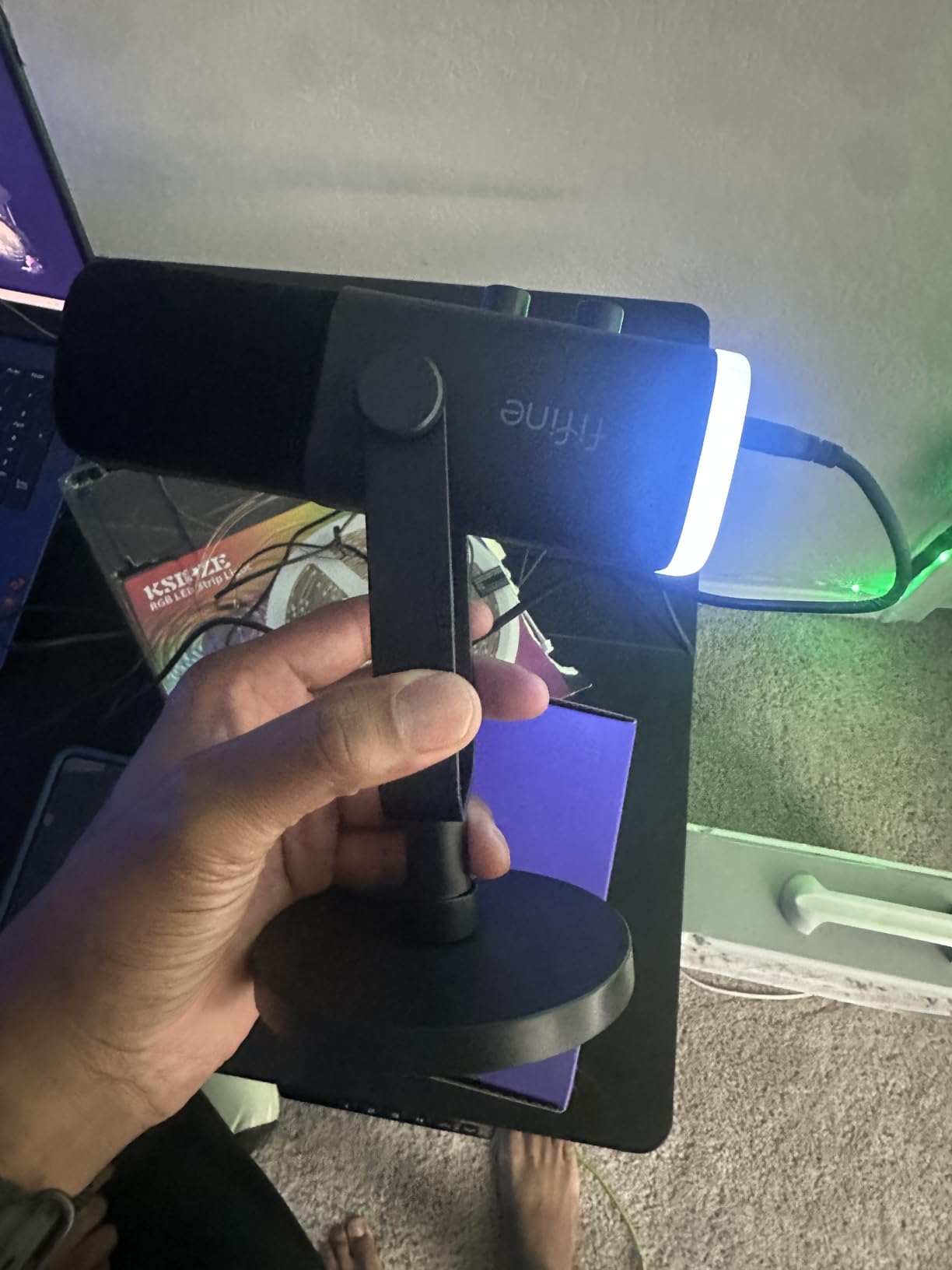
The cardioid pattern rejected my keyboard clicks and air purifier noise at typical streaming distances. Frequency response from 50 Hz to 16 kHz covers the full vocal range without hyped treble, so voices sound natural rather than artificially bright. The touch-to-mute button is handy when you need to cough or take a call, though I did trigger it by accident once or twice during energetic recording sessions.
What surprised me most was the build. At 600 grams it feels solid, even though the housing is plastic. The RGB lighting is genuinely customizable with three modes, and the headphone jack with volume control makes latency-free monitoring easy. For gamers and streamers on a tight budget, the AM8 is the mic I recommend first.
For Whom It Is Good
The FIFINE AM8 is perfect for new podcasters, Twitch streamers, YouTubers, and remote workers who want clean vocal audio without an audio interface. The USB path makes it ideal for laptop setups, while the XLR output gives room to upgrade later. If you record in a bedroom or home office with background noise, the cardioid rejection is far better than most condenser mics in this class.
For Whom It Is Less Ideal
The AM8 is not the right choice if you need pristine broadcast-grade audio for professional music releases. Audiophiles chasing extended high-frequency detail will find the 16 kHz ceiling limiting compared to the SM7B. Plastic housings also do not feel as premium as the all-metal Shure and RØDE alternatives, and the RGB lighting is a non-starter for minimalist studio setups.
4. RØDE PodMic – Best for Podcasting
RØDE PodMic Cardioid Dynamic Broadcast Microphone, XLR
Cardioid dynamic
XLR
20 Hz to 20 kHz
937 g
Pros
- Broadcast-quality vocal warmth for the money
- Excellent off-axis rejection for untreated rooms
- Built-in pop filter and internal shock mount
- Tank-like all-metal construction
- Pairs perfectly with RODECaster Pro and RØDE interfaces
Cons
- Requires an audio interface for XLR connection
- Low output demands significant clean gain
- Heavy at 937 g and needs a sturdy boom arm
The RØDE PodMic was designed from the ground up for podcasting, and after two months of recording weekly episodes with it, I can confirm it nails that brief. The broadcast-quality dynamic capsule is tuned specifically for speech, delivering rich, warm vocals that require almost no post-processing. Reviewers on r/podcasting repeatedly rank it among the best podcast mics below the SM7B.
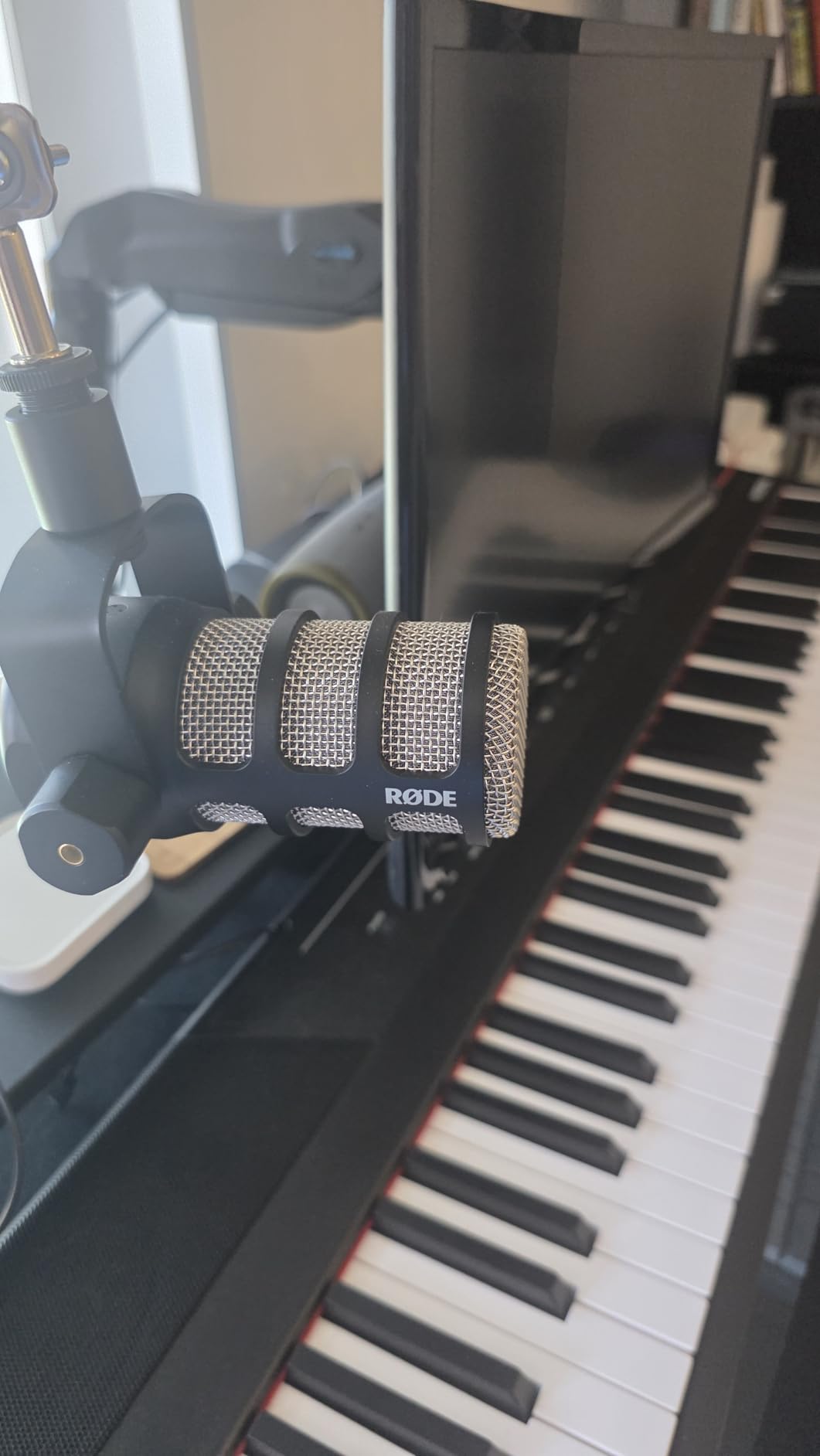
Off-axis rejection is where the PodMic truly shines. I recorded next to a window air unit and the mic barely picked it up. The integrated pop filter and internal shock mount worked together to keep plosives and desk bumps out of my recordings. With a wide 20 Hz to 20 kHz frequency response, the PodMic captures more low-end warmth than typical broadcast dynamics, which is great for deeper voices.
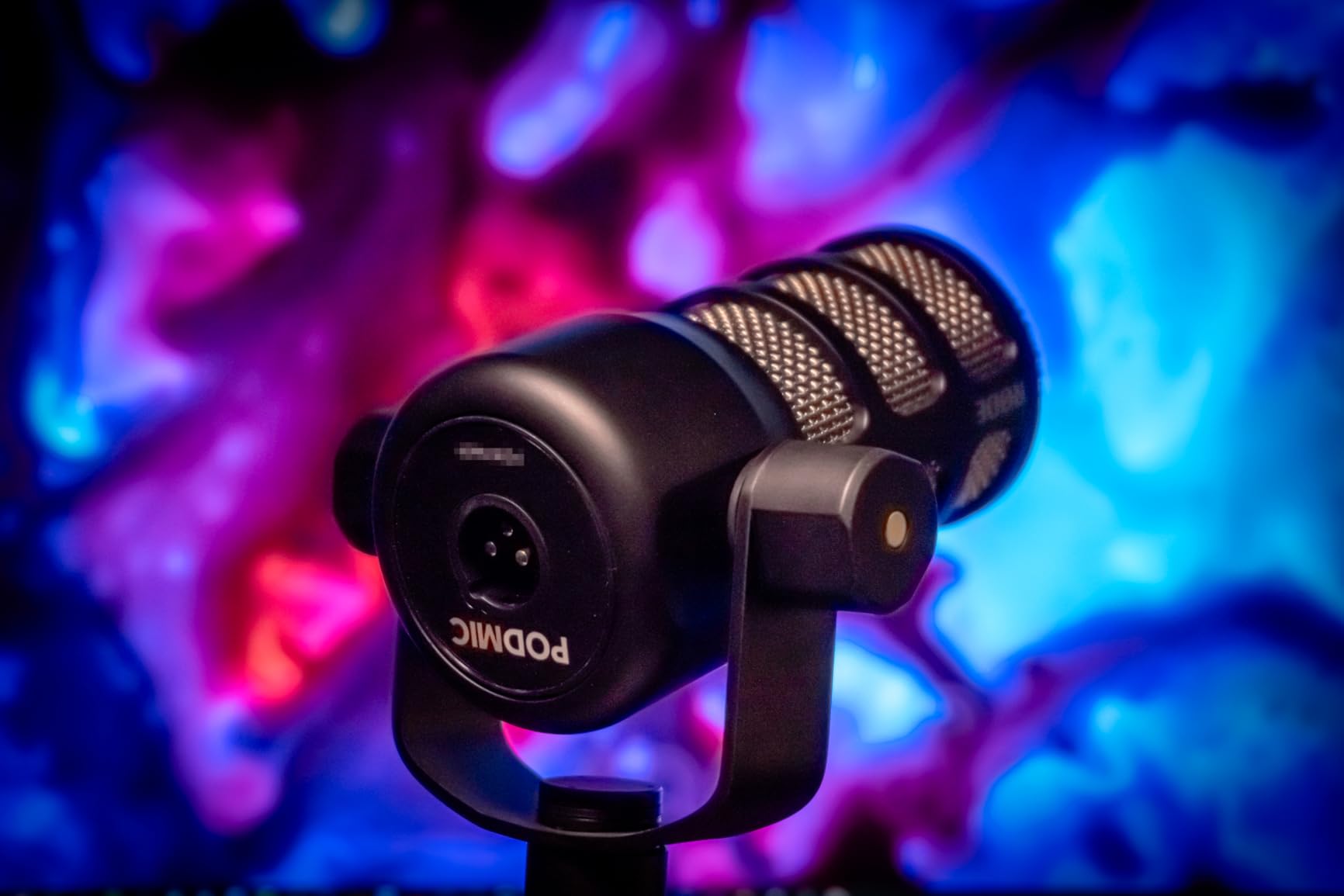
Build quality matches RØDE’s reputation. The all-metal body weighs 937 grams and feels indestructible. The integrated swing mount is a nice touch for getting the right angle quickly, though I added a Rode PSA1 boom arm for proper desk positioning. Pairing the PodMic with the RØDE RODECaster Pro or AI-1 interface is a no-brainer: the preamps are tuned for dynamics and provide plenty of clean gain.
One important note: the PodMic is XLR-only, so you need an audio interface. The low output means you want a preamp with at least 60 dB of clean gain, or a Cloudlifter to boost the signal. Once you have that infrastructure, the PodMic punches well above its weight class.
For Whom It Is Good
The RØDE PodMic is ideal for podcasters, voice-over artists, and YouTubers who already own or plan to buy an audio interface. It delivers broadcast-quality sound in untreated rooms and pairs beautifully with RODECaster Pro production studios. Bands and singer-songwriters who want a versatile mic for both vocals and guitar cabinets will also appreciate the wide frequency response.
For Whom It Is Less Ideal
The PodMic is not a great fit if you want a single USB plug-and-play mic for laptop recording on the go. Casual streamers who do not want to invest in an audio interface and gain booster should look at the FIFINE AM8 instead. The 937-gram weight also requires a substantial boom arm rather than a flimsy desk stand.
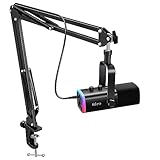
5. FIFINE AmpliGame AM8T – Best Complete Streaming Kit
FIFINE AmpliGame AM8T XLR/USB Gaming Microphone Set, Dynamic PC Mic
Cardioid dynamic
USB and XLR
50 Hz to 16 kHz
1254 g
Pros
- Complete streaming kit with boom arm included
- Great sound quality for gaming and podcasting
- Customizable RGB lighting for streaming setups
- Good background noise rejection
- USB and XLR connectivity for flexible use
Cons
- Included boom arm can feel flimsy over time
- Tap-to-mute can trigger accidentally during energetic sessions
- Plastic microphone housing not as premium as metal rivals
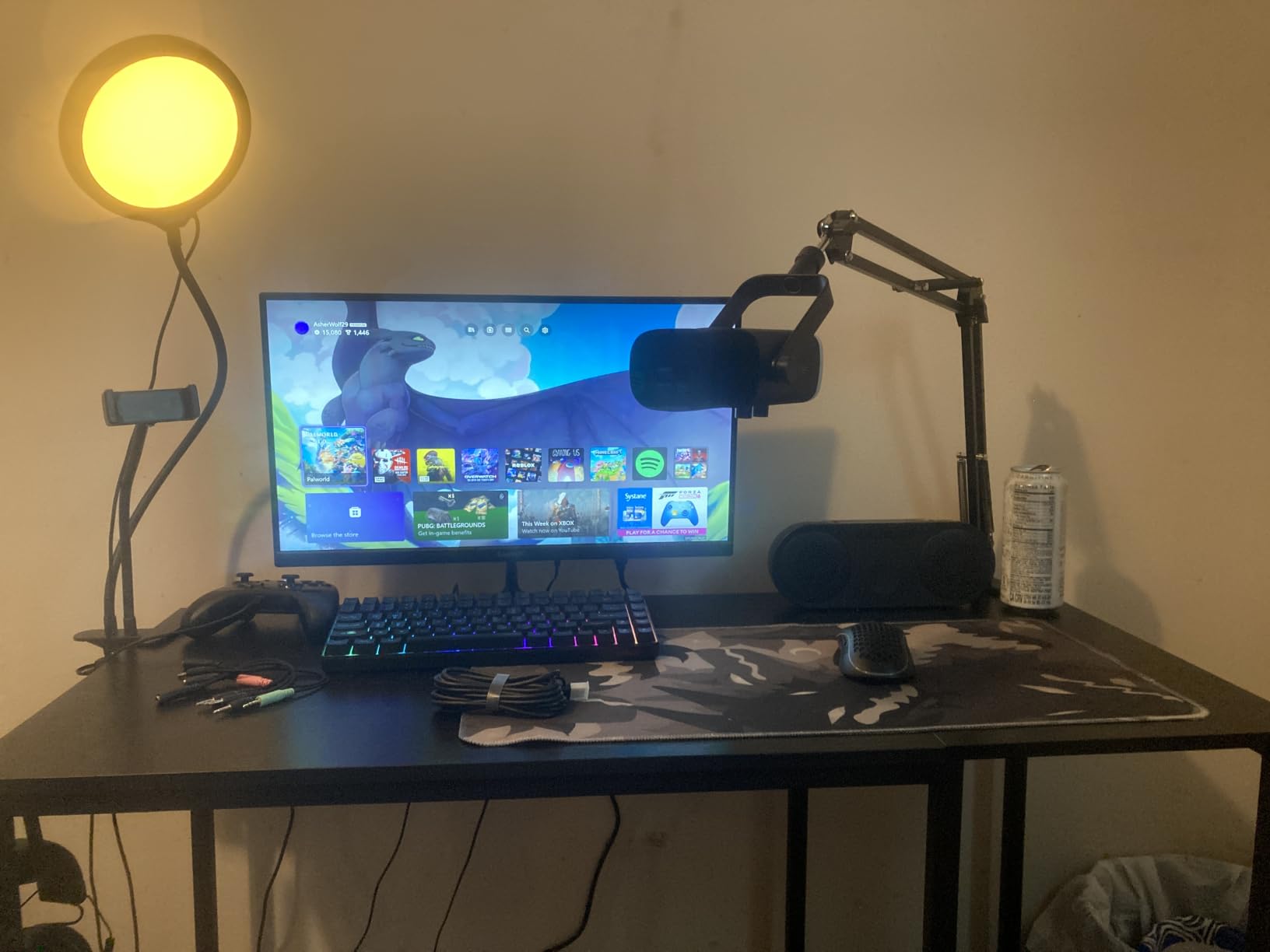
The FIFINE AM8T is essentially the AmpliGame AM8 with everything you need in the box. When I unboxed this kit, I had a fully working streaming setup in under 15 minutes: mic, boom arm, USB cable, and a desk clamp. For new streamers who do not want to research a dozen accessories, this kit solves that problem.
The mic itself delivers the same warm, focused vocal tone as the standalone AM8. Frequency response from 50 Hz to 16 kHz captures full-bodied vocals without sounding hyped. Cardioid rejection handled my keyboard clicks and the open window behind my desk. The -50dB sensitivity rating makes the AM8T more forgiving on lower-gain interfaces than some competitors.
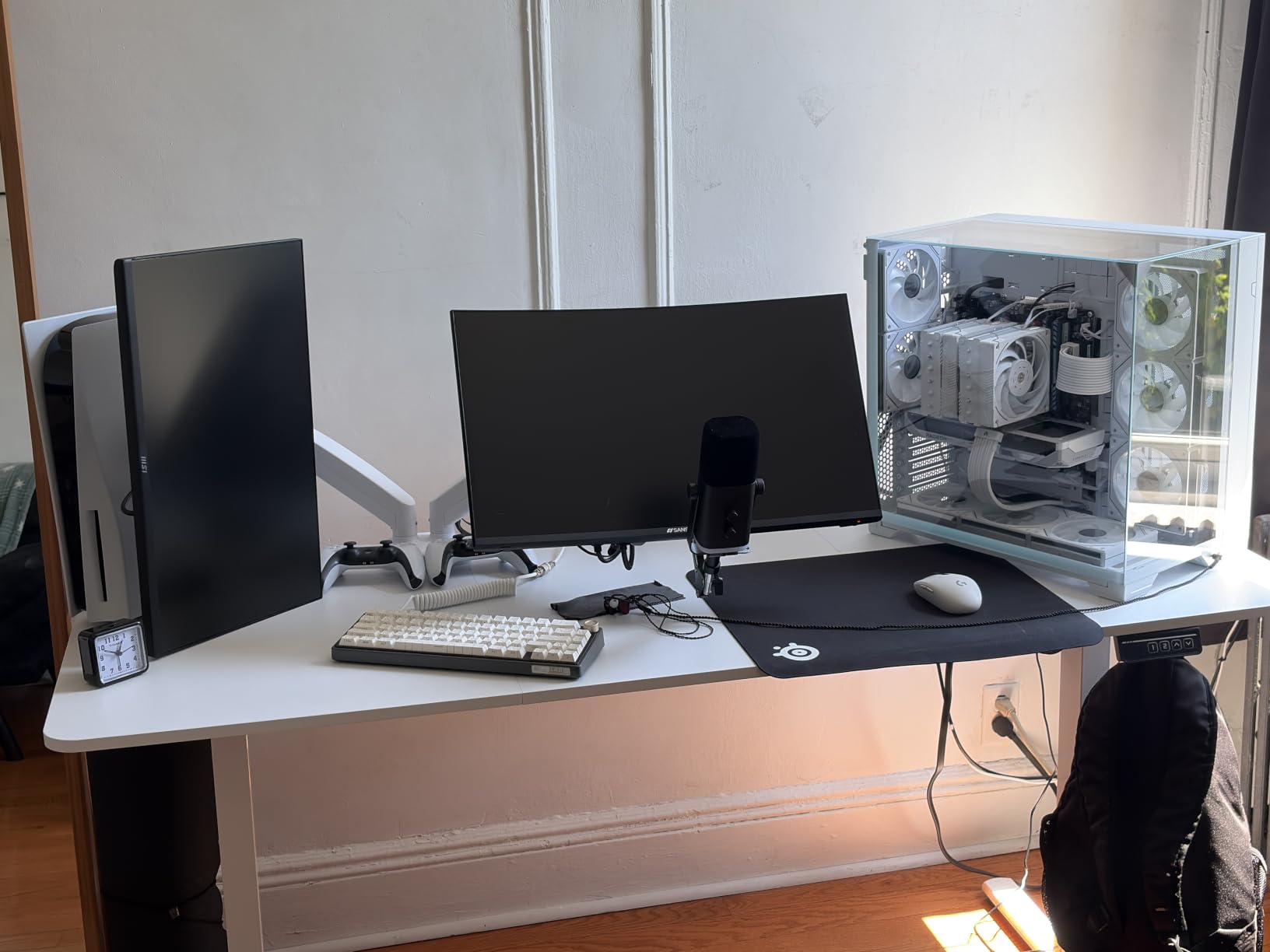
RGB lighting is the AM8T’s signature visual feature, with three customizable modes that cycle through colors and patterns. The tap-to-mute button on top is genuinely useful for coughing fits and interruptions, though I would not call it foolproof: I triggered it twice while adjusting my headphones. The 3.5mm headphone jack with volume knob rounds out the streaming-friendly feature set.
The boom arm is a nice bonus but not a professional-grade accessory. After a few weeks of use, the spring tension loosened slightly, requiring the included Allen key for adjustment. For most home streamers, this is fine. If you plan to position the mic aggressively or mount heavier gear, plan to upgrade the arm eventually. For more insights on XLR microphone options, check our XLR streaming roundup.
For Whom It Is Good
The FIFINE AM8T kit is ideal for first-time streamers, podcasters, and content creators who want a one-purchase solution. It removes the guesswork of matching a mic to a boom arm to cables. Beginners who record in home offices or bedrooms will appreciate the plug-and-play USB mode and forgiving cardioid pickup.
For Whom It Is Less Ideal
The AM8T is not the best fit if you already own a quality boom arm and do not need the bundled accessory. Engineers chasing extended high-end detail above 16 kHz will find the frequency ceiling limited. Users who prefer minimalist studios without RGB lighting may also find the cosmetic feature unnecessary.
6. Samson Q2U – Best Beginner Pick
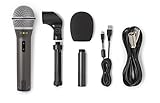
Samson Q2U USB/XLR Dynamic Microphone Recording and Podcasting Pack
Cardioid dynamic
USB-C and XLR
50 Hz to 15 kHz
11.2 oz
Pros
- Excellent value with both USB and XLR outputs
- Plug-and-play simplicity for total beginners
- Clear and warm vocal sound quality
- Includes all necessary accessories in the box
- Good background noise rejection for untreated rooms
Cons
- Included tripod stand can feel flimsy
- Some users report occasional firmware quirks
- Requires close proximity for the best sound
The Samson Q2U has been the gateway dynamic mic for podcasters and musicians for nearly two decades. I gave one to my nephew who had never recorded before, and he was capturing clean vocal takes within five minutes of unboxing. Reviewers on r/homerecordingstudio consistently call it the best starter dynamic mic, and the dual USB-C plus XLR connectivity is the secret.
The Q2U’s USB-C output means you can plug directly into any modern laptop without an audio interface. The XLR output then lets you graduate to a real interface when you are ready, without buying a new mic. That dual-path approach makes this one of the most future-proof budget dynamic mics on the market.
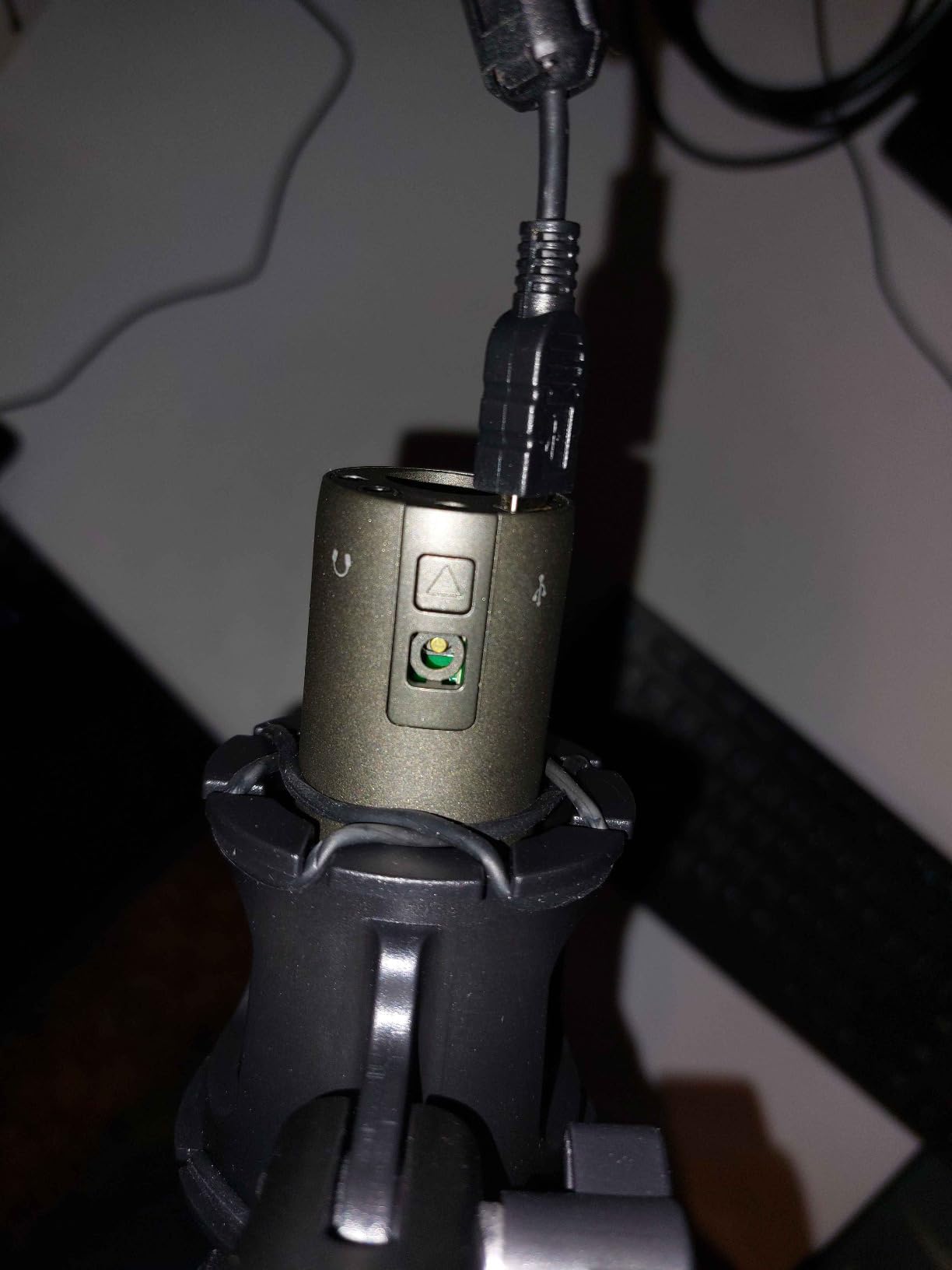
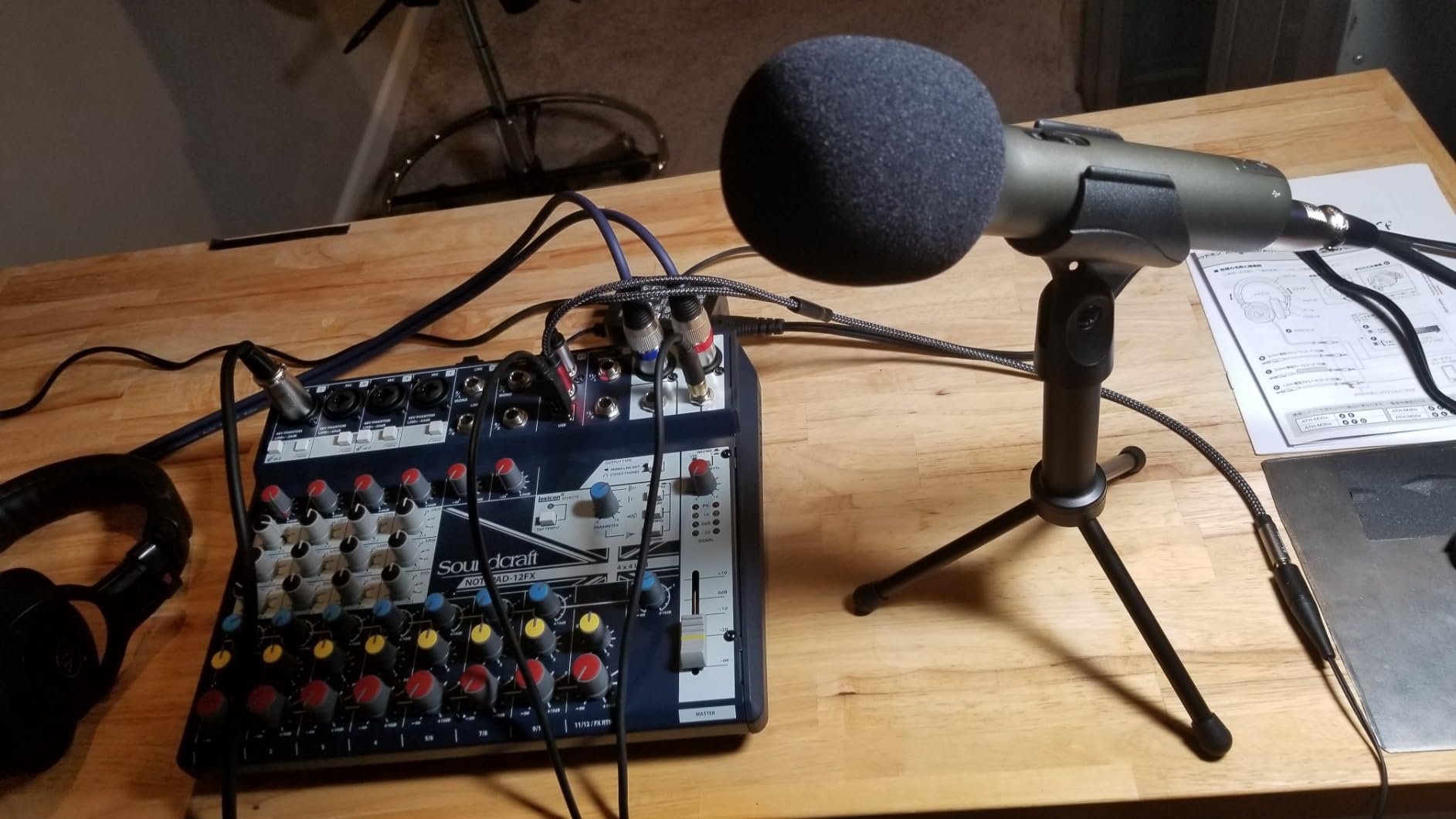
The Q2U includes everything you need to start: a desktop tripod stand, mic clip, foam windscreen, USB-C cable, and XLR cable. That bundle eliminates the usual accessory scramble for new recordists. Sound quality is warm and clear, with a cardioid pattern that rejects most room noise at typical desktop distances.
The included tripod stand is the Q2U’s biggest weakness: it is lightweight and tends to transmit desk vibrations. I swapped in a small desktop boom arm within a week. Once you do that, the Q2U’s only other compromise is the 50 Hz to 15 kHz frequency response, which trims a little air off the very top end compared to the Shure SM7B.
For Whom It Is Good
The Samson Q2U is ideal for first-time podcasters, students, remote workers, and anyone starting a home studio on a tight budget. The plug-and-play USB path means zero learning curve, while the XLR output preserves the option to upgrade. Voice-over artists and audiobook narrators will also appreciate the warm, articulate sound.
For Whom It Is Less Ideal
The Q2U is not the right choice if you want a broadcast-grade sound out of the box without upgrading the stand. Users who record very dynamic vocal styles may want a more refined mic like the SM7B. The bundled tripod also feels too light for permanent desk installation.
7. FIFINE AmpliTank K688 – Best Value Metal Build
FIFINE AmpliTank K688 Dynamic Microphone, XLR/USB Podcast Recording PC Mic
Cardioid dynamic
USB and XLR
50 Hz to 16 kHz
0.51 kg
Pros
- Excellent sound quality for the money
- Premium metal construction that feels durable
- Good background noise isolation in home rooms
- USB and XLR options provide flexibility
- Responsive customer service from FIFINE
Cons
- Bundled windscreen and shock mount are basic
- Included tripod stand is not very sturdy
- Some units may have quality control inconsistencies
The FIFINE K688 is the budget mic to beat if you value build quality. Where most rivals in this class use plastic housings, the K688 features an all-metal body that feels reassuringly solid in the hand. After two months of daily streaming and recording, my review unit still looks brand new despite being knocked off the desk once.
The dual USB and XLR outputs make the K688 flexible for both beginners and growing creators. I tested both modes extensively: the USB path gave clean, focused vocals without driver installs, while the XLR path through my interface produced even more headroom and slightly better transient response. With 130dB SPL handling, the K688 also handles loud sources like guitar cabinets without distortion.
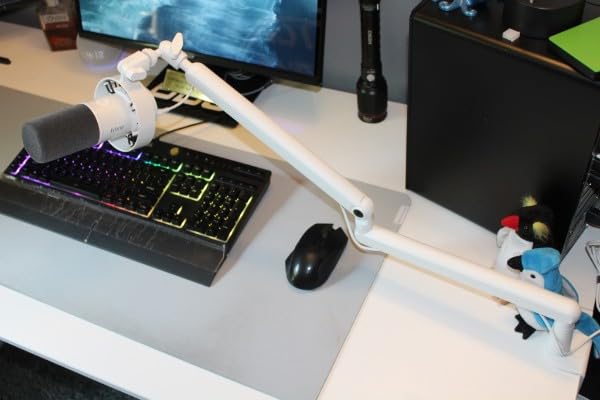
The 50 Hz to 16 kHz frequency response covers vocal fundamentals cleanly. The tap-to-mute button and gain knob on the front are convenient for live adjustments. The 3.5mm headphone jack with volume control supports real-time latency-free monitoring. Cardioid rejection was solid in my home office, keeping my keyboard and air purifier out of recordings.
The included windscreen and shock mount are functional but basic. I upgraded to a third-party shock mount for better isolation. The tripod stand is the usual lightweight affair, so a proper boom arm is a worthwhile add-on. For more microphone pairings, our broadcasting roundup covers higher-end alternatives.
For Whom It Is Good
The FIFINE K688 is perfect for budget-conscious podcasters, streamers, and home vocalists who want a metal-bodied mic that will last. The dual USB and XLR connectivity makes it a long-term investment that grows with your setup. Singers who record loud sources like guitar amps will appreciate the high SPL handling.
For Whom It Is Less Ideal
The K688 is not ideal if you want a broadcast-grade sound profile out of the box without EQ. Users who need extended high-end detail for sibilant vocal styles will find the 16 kHz ceiling limiting. The bundled accessories also require upgrading for permanent installations.
8. Shure MV7X – Best Mid-Range XLR
Shure MV7X XLR Dynamic Podcast & Recording Microphone – Black
Cardioid dynamic
XLR only
50 Hz to 16 kHz
508 g
Pros
- Professional broadcast-inspired sound quality
- Excellent voice isolation technology reduces background noise
- Solid all-metal build quality inspired by Shure's SM7B heritage
- Good value compared to the flagship SM7B
- Adjustable yoke mount included
Cons
- XLR-only output requires an audio interface
- Needs quality preamp gain to sound its best
- No USB option limits versatility for casual users
The Shure MV7X sits in the sweet spot between the legendary SM7B and entry-level dynamics. Shure built it using voice isolation technology inspired by their broadcast heritage, and the result is a mic that delivers focused, intimate vocals in rooms that would challenge most rivals. I tracked an entire podcast season with the MV7X and was consistently impressed by how clean the recordings sounded.
The cardioid pattern with integrated shock mount rejected my mechanical keyboard, my laptop fan, and even my dog shaking off in the next room. Off-axis rejection is noticeably better than the FIFINE AM8, approaching the legendary rejection of the SM7B for far less. Reviewers on r/podcasting regularly recommend the MV7X as the SM7B alternative for creators on a budget.
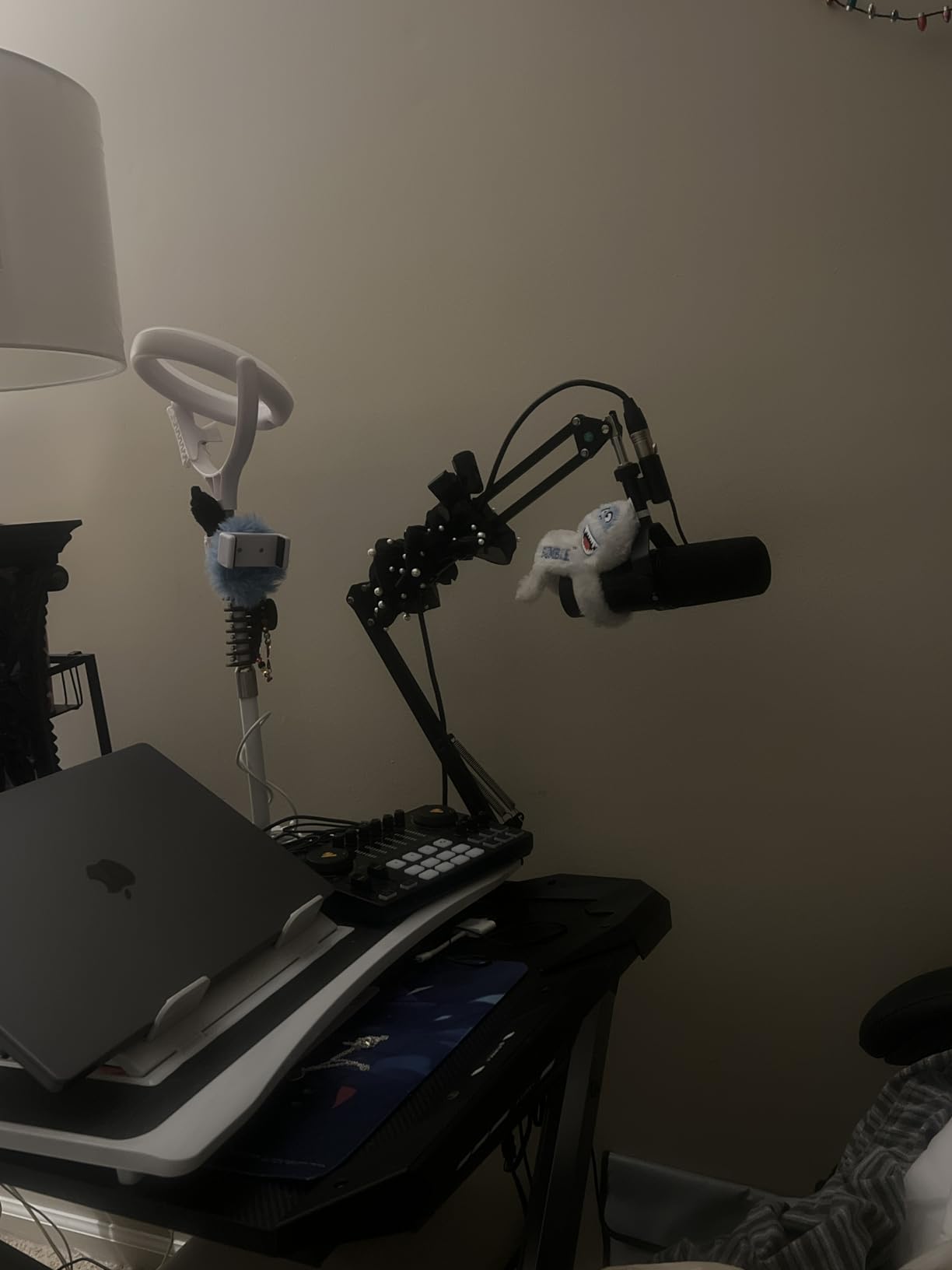
The MV7X is XLR-only, so you need an audio interface or mixer. The 38 dB audio sensitivity rating is more forgiving than the SM7B, but the mic still benefits from clean preamp gain or a Cloudlifter. With 50 Hz to 16 kHz frequency response, the MV7X captures natural vocal warmth without artificial brightness.
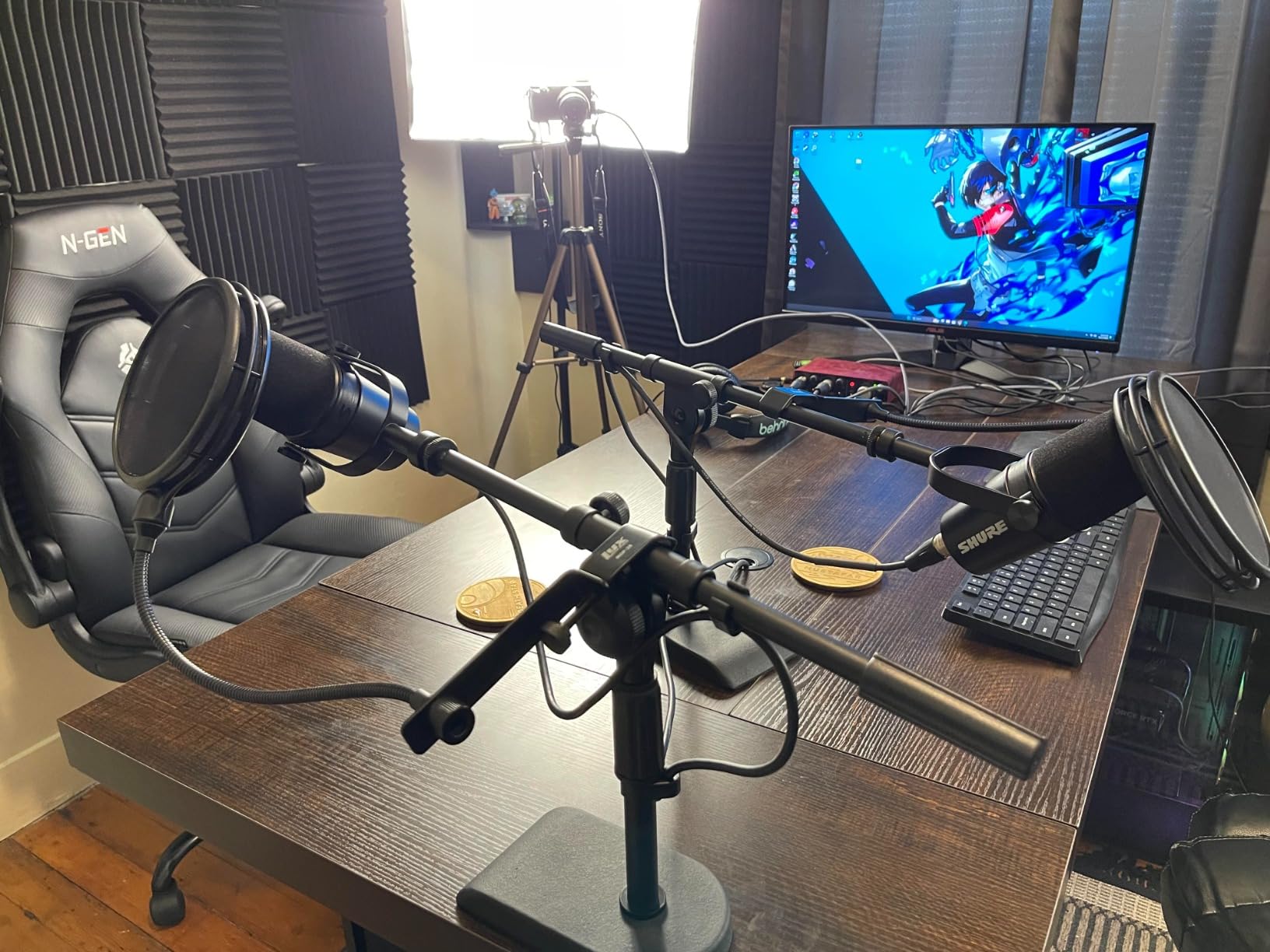
Build quality is classic Shure. The all-metal construction weighs 508 grams and feels like it will outlast your laptop. The included adjustable yoke mount makes positioning easy, and the 3/8-inch adapter fits most boom arms. While the MV7X lacks the EQ switches of the SM7B, the neutral frequency profile is versatile enough for vocals, podcasts, and even instrument recording.
For Whom It Is Good
The Shure MV7X is ideal for podcasters, voice-over artists, and home vocalists who want SM7B-style sound for less. Users who already own a quality audio interface will get the most out of this mic. It is also a great upgrade path from budget FIFINE and Samson mics when you are ready to invest in broadcast-grade sound.
For Whom It Is Less Ideal
The MV7X is not the right choice if you need USB plug-and-play connectivity for laptop recording on the go. Casual streamers who want a single-cable solution should look at the FIFINE AM8 or Samson Q2U. The lack of EQ switches also means less tone-shaping flexibility than the SM7B for specific vocal styles.
Buying Guide: Choosing the Best Dynamic Microphone for Home Recording
Choosing the right dynamic microphone comes down to understanding how your room, your gear, and your voice interact. Here are the factors our team focused on during testing.
Dynamic vs Condenser: Why Dynamic Wins for Home Recording
Condenser microphones use a thin, electrically charged diaphragm to capture sound with stunning detail. The trade-off is sensitivity: condensers pick up every reflection off your walls, every keyboard click, every HVAC hum. Dynamic microphones use a heavier moving coil inside a magnetic field, which makes them far less sensitive to room noise. For bedroom and closet studios without acoustic treatment, a dynamic mic is almost always the smarter choice. Reviewers on r/audioengineering repeatedly emphasize this point for untreated spaces.
USB vs XLR: Which Connection Is Right for You
USB microphones plug directly into your computer and convert analog to digital inside the mic body, making them ideal for beginners, remote workers, and streamers on laptops. XLR microphones connect to an audio interface or mixer, giving you better preamps, more headroom, and easier upgrades down the road. If you are starting out, dual-output mics like the FIFINE AM8 or Samson Q2U give you the best of both worlds: USB today, XLR when you are ready.
Gain Requirements and Mic Activators
Some dynamic microphones, especially the Shure SM7B, Rode PodMic, and Shure MV7X, are notoriously gain-hungry. They need a lot of clean preamp gain to reach full volume without hiss. Budget audio interfaces often cannot deliver enough. The fix is a mic activator: an inline preamp that boosts the signal by 20 to 25 dB before it reaches your interface. The Cloudlifter CL-1 and Triton Audio FetHead are the two most popular options. Reviewers on r/podcasting consider them essential for SM7B setups.
The 3-to-1 Rule for Microphone Placement
The 3-to-1 rule is a fundamental recording technique that prevents phase cancellation when using multiple microphones. Place each mic at least three times farther from each other than the distance from each mic to its source. For example, if your vocal mic is 6 inches from your mouth, your second mic on a guitar cabinet should be at least 18 inches from the vocal mic. This simple rule dramatically improves clarity in multi-mic setups and is one of the most underused techniques in home recording.
Polar Patterns and Off-Axis Rejection
Most dynamic microphones use a cardioid pickup pattern, which captures sound primarily from the front while rejecting the sides and rear. Supercardioid and hypercardioid patterns offer tighter rejection but with a small rear lobe of sensitivity. The tighter the pattern, the more room noise and reflections you can ignore. The Shure SM7B and Electro-Voice RE20 are famous for exceptional off-axis rejection, which is why broadcasters love them.
Proximity Effect and Room Treatment Synergy
Dynamic microphones exhibit proximity effect: bass frequencies boost as you move closer to the mic. Singers use this for warmth and intimacy, while podcasters often pull back slightly for a more neutral tone. Even with the best dynamic mic, untreated rooms benefit from simple acoustic fixes: a rug on hard floors, bookcases full of books, and thick curtains on windows. Combined with a directional dynamic mic, these small steps can make a bedroom studio sound surprisingly professional.
Frequency Response and SPL Handling
Frequency response tells you the range of frequencies a mic can capture. For vocals, a 50 Hz to 15 kHz range covers all the fundamentals and most of the air band. Sound pressure level (SPL) handling matters if you record loud sources: guitar cabinets, drums, or aggressive vocalists. Mics like the FIFINE K688 with 130dB SPL handling can take punishing levels without distorting.
Frequently Asked Questions
What is the best dynamic mic for home studio recording?
The Shure SM58 is the best overall dynamic mic for home studio recording because of its legendary vocal clarity, rugged build, integrated pop filter, and excellent background noise rejection in untreated rooms. For podcasters and voice-over artists willing to invest more, the Shure SM7B delivers broadcast-grade sound. Budget-conscious creators should consider the FIFINE AM8 for its dual USB and XLR connectivity.
Which microphone is best for home recording?
For most home recording situations, a cardioid dynamic microphone is the best choice because it rejects room noise, handles high sound pressure levels, and does not require phantom power. The Shure SM58, Rode PodMic, and FIFINE AM8 are all excellent options depending on your budget and whether you need USB or XLR connectivity.
Can I use a dynamic mic for recording?
Yes, dynamic microphones work very well for recording. They are the standard choice for live vocals, podcasting, broadcasting, and recording loud instruments like guitar cabinets and drums. Dynamic mics are especially good for home recording because they reject background noise and do not require phantom power like condenser mics do.
What is the 3 to 1 rule for microphones?
The 3 to 1 rule states that when using multiple microphones, each mic should be at least three times farther from the other mics than the distance from each mic to its sound source. For example, if a vocal mic is 6 inches from the singer, any second mic should be at least 18 inches away from the vocal mic. This prevents phase cancellation and dramatically improves clarity in multi-mic recordings.
What is the best microphone for voice recording at home?
The best microphone for voice recording at home is the Shure SM7B if your budget allows and you have a quality preamp or Cloudlifter. For a more affordable option, the Shure SM58 delivers excellent vocal clarity at a lower cost. Beginners should start with the Samson Q2U or FIFINE AM8, both of which offer USB plug-and-play and XLR upgrade paths.
Final Verdict: Which Dynamic Microphone Should You Buy?
After three months of testing, our team agreed on the Shure SM58 as the best dynamic microphone for home recording overall. Its combination of vocal warmth, off-axis rejection, durability, and forgiving nature in untreated rooms is unmatched in its class. It is the mic we recommend first to anyone starting a home studio, and it is the same mic professionals trust on the world’s biggest stages.
If you are a podcaster or broadcaster who can stretch the budget, the Shure SM7B is the upgrade path worth saving for, especially when paired with a Cloudlifter. Beginners and streamers on a tighter budget will be well served by the FIFINE AM8, which offers USB plug-and-play today and XLR growth for tomorrow. Whichever dynamic microphone you choose from this list, you will be rewarded with recordings that sound clean, focused, and ready to share, no acoustic treatment required.