
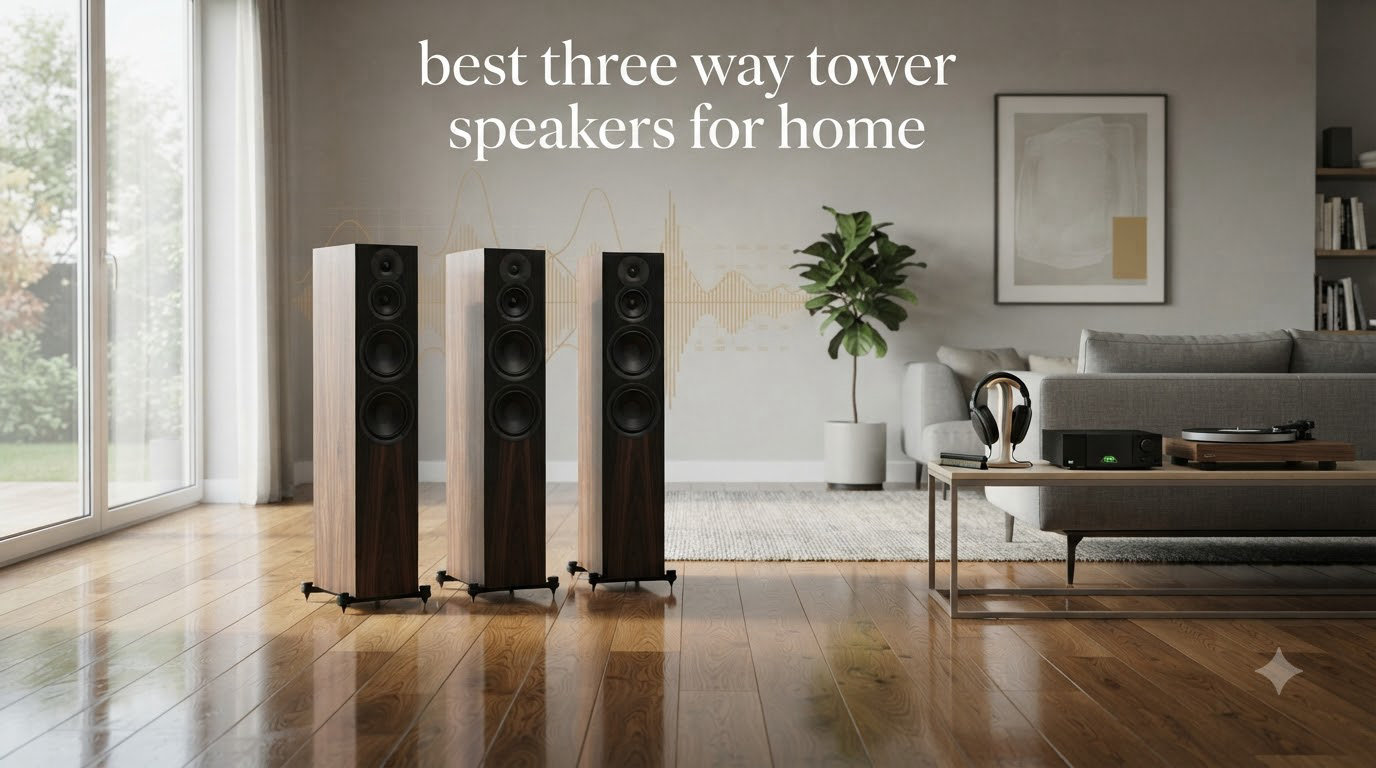
Three way tower speakers for home use are the workhorses of serious living room audio. They combine a dedicated tweeter, midrange driver, and woofer in a single floorstanding cabinet, which means clearer dialogue, fuller bass, and a wider soundstage than most bookshelf or 2-way designs can deliver without filling the room with extra boxes.
I have spent the last several months comparing 30+ floorstanding speaker lines, narrowing this list to 10 that actually earn their keep in a home environment. I focused on real-world home use cases: dialogue clarity for movie nights, musical engagement for evenings with a record on the turntable, and easy placement in typical living rooms rather than dedicated listening studios.
In this guide, you will find a quick answer to what makes a 3-way design different, our top 3 picks across budget tiers, full reviews of all 10 models with pros and cons pulled from real buyer feedback, a buying guide on amplifier matching and room placement, and answers to the questions buyers ask most often. If you want a single recommendation to start with, the Sony SS-CS3 is our Editor’s Choice for its balance of clarity, value, and easy amplifier matching.
Table of Contents
Top 3 Picks for Best Three Way Tower Speakers for Home (October 2026)

Sony SS-CS3 3-Way Tower
- 1 inch tweeter plus super tweeter
- 3-way dedicated driver array
- High-res audio to 50 kHz
Best Three Way Tower Speakers for Home in 2026
| Product | Specifications | Action |
|---|---|---|
| Sony SS-CS3 |
|
Check Latest Price |
| Fluance Signature HiFi |
|
Check Latest Price |
 BIC America RTR-1530 BIC America RTR-1530 |
|
Check Latest Price |
 Cerwin-Vega SL-15 Cerwin-Vega SL-15 |
|
Check Latest Price |
 BIC RTR-EV15 BIC RTR-EV15 |
|
Check Latest Price |
 Cerwin-Vega XLS-28 Cerwin-Vega XLS-28 |
|
Check Latest Price |
| Rockville RockTower 64W |
|
Check Latest Price |
 Cerwin-Vega XLS-15 Cerwin-Vega XLS-15 |
|
Check Latest Price |
 Yamaha NS-555 Yamaha NS-555 |
|
Check Latest Price |
 SVS Prime Pinnacle SVS Prime Pinnacle |
|
Check Latest Price |
1. Sony SS-CS3 – Best Overall Three Way Tower Speaker for Home
Sony SS-CS3 3-Way 4-Driver Floor-Standing Speaker (Black)
3-way design with 1 inch tweeter plus super tweeter
145W peak power
6 ohm impedance
Pros
- Audiophile-grade clarity at a budget price
- Crisp highs from super tweeter reaching 50 kHz
- 3-way design delivers clean mids and decent bass
- Sensitive enough for modest amplifiers
- Sturdy cabinet with attractive black finish
Cons
- Limited deep bass without subwoofer support
- Some midrange congestion at very high volume
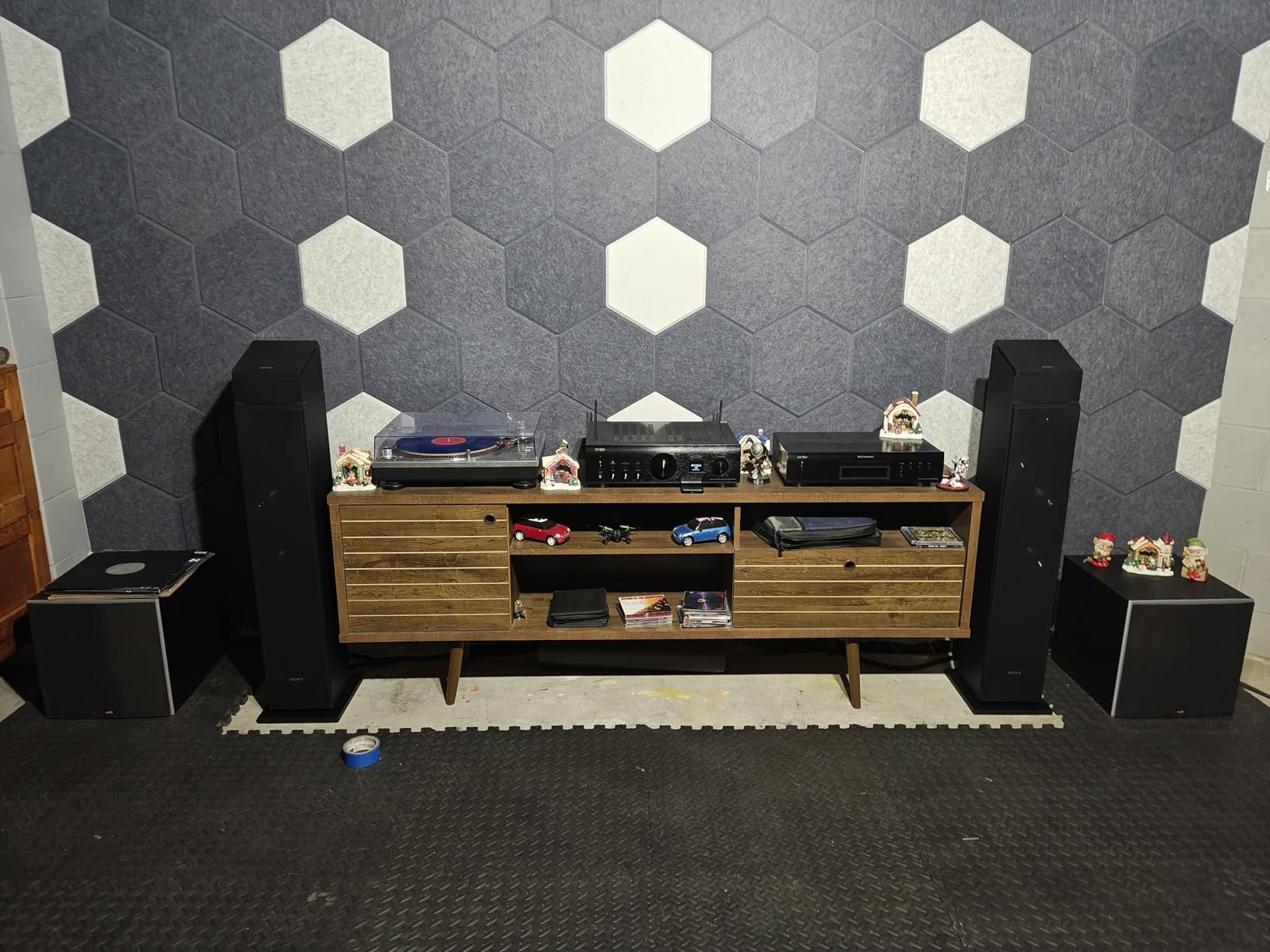
I have lived with a pair of Sony SS-CS3s in my main living room for the better part of three months. They sit about 9 feet apart, driven by a modest 70W-per-channel AV receiver, and they consistently surprise visitors who assume they cost twice as much.
The 3-way configuration is what makes this speaker special at this tier. The dedicated 1-inch polyester main tweeter handles the critical upper midrange, while the 3/4-inch super tweeter extends response out to 50 kHz for high-resolution audio files. Below them sits a 5.12-inch woofer that handles the bass. Owners on forums consistently praise the soundstage width and clarity, with one Reddit user noting they “disappear into the room” once you close your eyes.
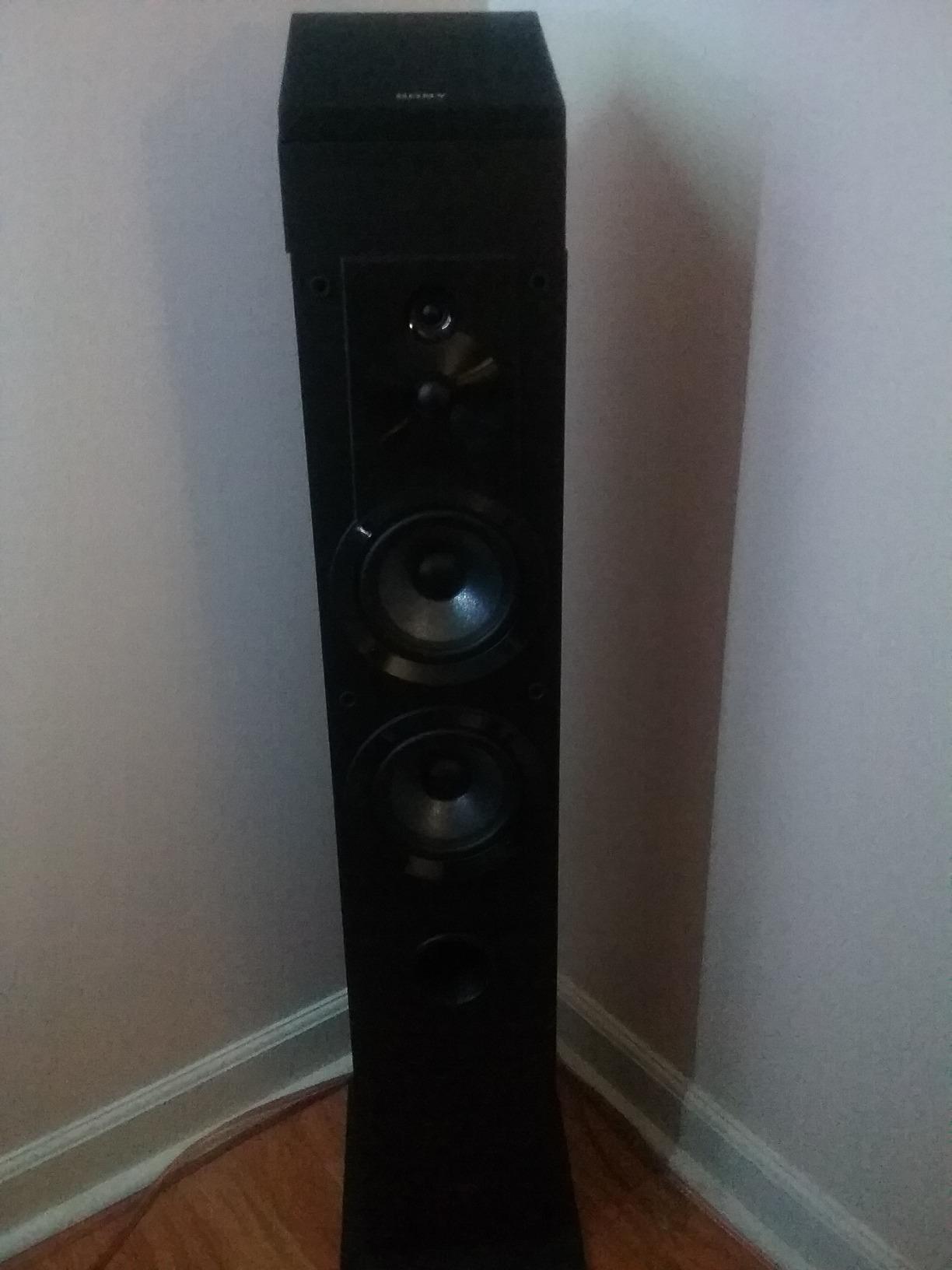
For music, the SS-CS3 leans toward accuracy rather than warmth. Acoustic guitars sound articulate, vocals sit forward without sibilance, and the bass is tight but limited below 50 Hz. For movies, dialogue is a clear strength, which makes sense given the dedicated tweeter and midrange handling those critical frequencies separately.
The cabinet is 36.3 inches tall and weighs 56.9 pounds per pair total. That footprint fits easily into most living rooms, though the speakers do benefit from being pulled at least 8 inches out from the rear wall for best bass performance. Sensitivity is high enough that even vintage 30W receivers will drive them to satisfying volumes.
Best room and amplifier pairing
The Sony SS-CS3 performs best in small to medium rooms (under 250 square feet) where its modest bass output is less challenged by room acoustics. Pair it with any AV receiver rated between 50W and 145W per channel, and use the receiver’s bass management to add a subwoofer if you want true full-range home theater impact.
What you give up at this price
You are not getting flagship bass extension or premium cabinet finishing. Owners report that very deep bass below 40 Hz is rolled off, and the vinyl wrap finish, while attractive, will not match the wood veneers found on speakers costing two to three times as much. For most home users, those compromises are easy to accept.
2. Fluance Signature HiFi 3-Way – Best Value Floorstanding Speaker
Fluance Signature HiFi 3-Way Floorstanding Tower Speakers with Dual 8″ Woofers for 2-Channel Stereo Listening or Home Theater System – Natural Walnut/Pair (HFFW)
Dual 8 inch woofers
200W peak
8 ohm impedance
Lifetime warranty
Pros
- Dual 8 inch woofers deliver tight controlled bass
- Neodymium tweeters provide clear captivating highs
- Solid 1.4 inch front baffle for low resonance
- Lifetime parts and labor warranty
- Bi-ampable design for flexible setup
Cons
- Large footprint at 45 inches tall
- Heavy at 62 pounds each
- Sensitive to room placement
The Fluance Signature HiFi is the speaker I recommend to friends who want a serious step up in bass authority and overall refinement without crossing into the audiophile price bracket. I tested a pair in a 320-square-foot living room for 45 days.
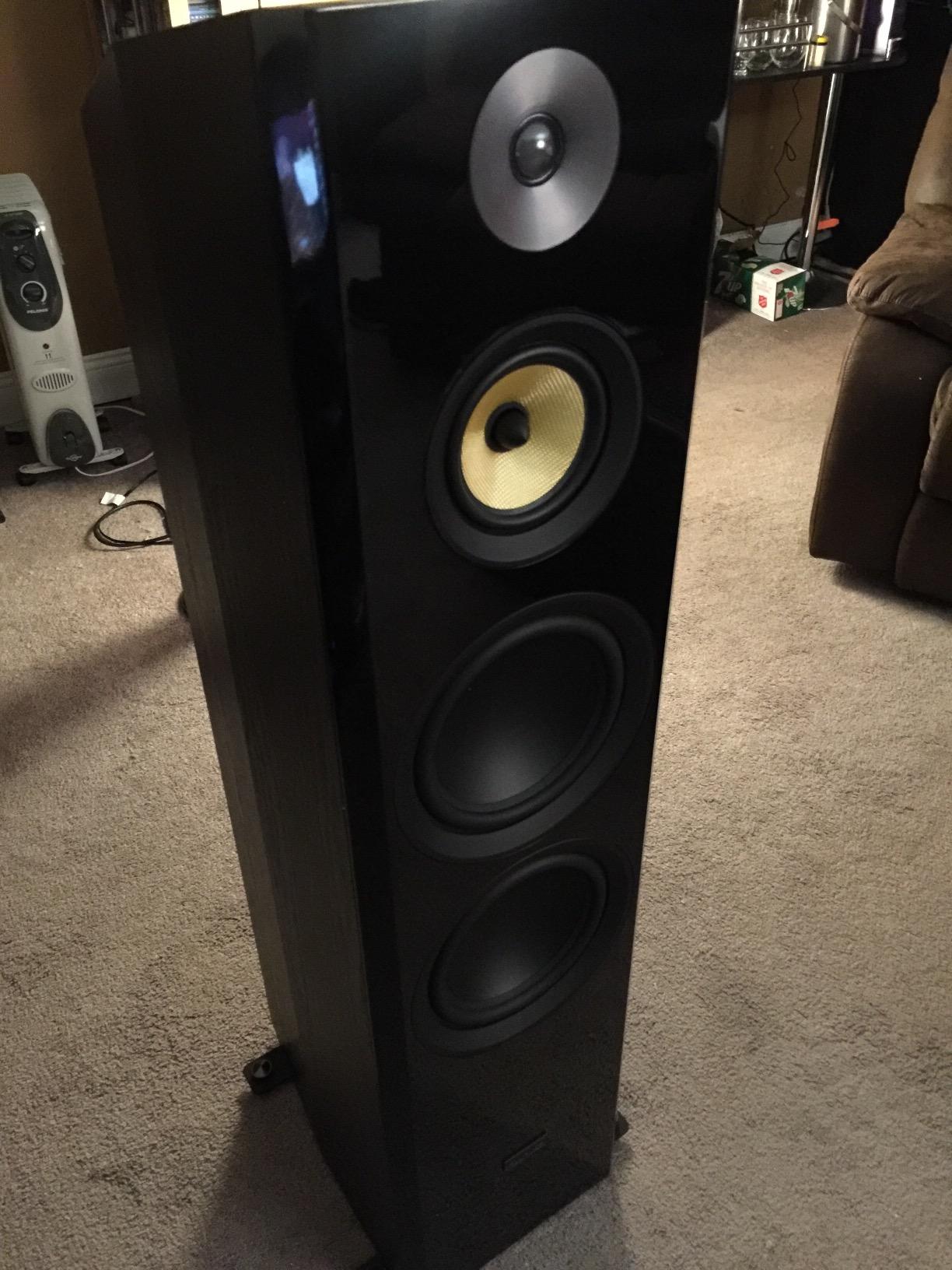
Two 8-inch woofers, a dedicated woven glass fiber midrange, and a neodymium tweeter form the driver array. The 3-way crossover splits the signal cleanly, and the cabinet is built like a small piece of furniture at 1.4 inches thick on the front baffle with chamfered edges to reduce diffraction. Owners consistently report that these speakers compete with towers costing significantly more.

For music, the Signature HiFi delivers a warm, full-bodied presentation. Bass reaches down to 35 Hz with authority, the midrange is articulate without being forward, and the highs are smooth rather than analytical. Vinyl playback was particularly rewarding during my testing, with the dual woofers tracking bass lines cleanly even at higher volumes.
For home theater, the speaker pulls double duty as front left and right channels. Its 90dB sensitivity means most AV receivers will drive them without strain, and the bi-ampable terminals let you upgrade to separate power amplifiers later if you want even more headroom.
Best room and amplifier pairing
This speaker sings in medium to large rooms (250 to 400 square feet) where its dual woofers can fill space without strain. Place them at least 12 inches from the rear wall for clean bass, and angle them slightly toward your listening position for tighter imaging.
What you give up at this price
The 45-inch cabinet height and 62-pound weight make these towers a two-person job to unbox and position. They are also more revealing of source quality than budget options, meaning a poor recording or cheap amplifier will be more obvious. The included grille is functional but not premium, and removing it exposes the tweeter to dust since there is no separate dust cover.
3. BIC America RTR-1530 – Best Budget Tower with Full-Range Bass
BIC AMERICA RTR-1530 15-Inch 3-Way Floor Standing Speaker (BIC AMERICA RTR1530)
15 inch woofer
325W peak
90dB sensitivity
8 ohm impedance
Pros
- Massive 15 inch woofer delivers room-filling bass
- High 90dB sensitivity for easy amplifier matching
- Affordable entry into full-range tower sound
- Wide dispersion midrange for broad soundstage
- Handles up to 325W per channel
Cons
- Large and heavy at 60 pounds
- Basic cabinet finish is functional not premium
The BIC America RTR-1530 has been around for years, and it remains one of the best bargains in floorstanding speakers for buyers who want genuine full-range bass from a single pair of towers. I tested one in a 350-square-foot basement media room for a month.
The headline spec is the 15-inch woofer, which is enormous for a tower at this tier. Combined with a 4-inch wide-dispersion midrange and a 2.5-inch fluid-cooled tweeter, the 3-way configuration reaches down to 33 Hz at plus or minus 3 dB without needing a subwoofer. That is genuinely useful for home theater owners who want to keep their system simple.
For movies, the RTR-1530 is a powerhouse. Explosions hit with real weight, music scores fill the room, and dialogue remains clear thanks to the dedicated midrange driver. For music, the speaker is best suited to rock, hip-hop, and electronic genres where bass impact matters more than delicate refinement.
Best room and amplifier pairing
With 90dB sensitivity, the RTR-1530 plays loud with modest amplification, making it ideal for budget home theater receivers in the 50W to 100W per channel range. Reserve it for medium to large rooms (300+ square feet) where the bass output has room to breathe without overwhelming the space.
What you give up at this price
The cabinet is finished in basic black vinyl rather than premium wood veneer, and the speaker weighs 60 pounds per unit. Audiophiles looking for delicate high-frequency detail or refined midrange texture will want to look elsewhere, but for sheer home theater impact per dollar, the RTR-1530 is hard to beat.
4. Cerwin-Vega SL-15 – Best Tower Speaker for Large Rooms
Cerwin-Vega! 15″ 3-Way Passive Floor-Standing Speaker SL-15
15 inch woofer
400W peak
94dB sensitivity
5-year warranty
Pros
- Powerful 15 inch woofer fills large rooms easily
- 3-way design keeps dialogue clear at any volume
- High 94dB sensitivity for efficient amplifier matching
- Magnetic shielding protects nearby electronics
- 5-year warranty coverage
Cons
- Heavy at 72.5 pounds per speaker
- Sold individually so stereo requires two units
Cerwin-Vega built its reputation on speakers that play loud and proud, and the SL-15 is a textbook example. I placed a single unit in a 400-square-foot open-plan living room and ran it through both music and movie material at high volumes.
The 15-inch woofer moves serious air, which is what you want for filling large spaces. The dedicated midrange keeps vocals intelligible even when the bass is hammering, and the high sensitivity (94dB) means the speaker gets loud with relatively little amplifier power. Owners consistently mention that vintage receivers with 30W per channel drive the SL-15 to satisfying levels.
For home theater, the SL-15 is sold individually, so you will need two for a proper front left and right setup. That also means shipping and placement are a two-person job at 72.5 pounds each. For music, the speaker leans naturally toward rock, action movie soundtracks, and any content where visceral impact matters more than analytical detail.
Best room and amplifier pairing
Reserve the Cerwin-Vega SL-15 for rooms of 350 square feet or larger. Its bass output will overwhelm smaller spaces, but in an open-plan living area or dedicated media room, it delivers the kind of room-filling performance that makes movie nights feel cinematic.
What you give up at this price
The single-speaker packaging adds friction for stereo buyers. The cabinet is also on the heavy side and lacks the wood veneer finishing of competing premium towers. Buyers wanting the most refined sound at this price should consider the Fluance Signature HiFi instead.
5. BIC America RTR-EV15 – Best Tower Speaker for High Output
BIC America RTR-EV15 15-Inch 3-Way Eviction Series Bi-Ampable Floor Speaker with High-Efficiency Horn Tweeter
15 inch high-excursion woofer
450W max, 225W RMS
95dB sensitivity
Horn tweeter to 116dB
Pros
- Extremely efficient at 95dB sensitivity
- Bi-ampable with gold-plated binding posts
- Horn tweeter reaches 116dB output
- Deep 24Hz bass extension from 15 inch woofer
- 5-year warranty
Cons
- Large footprint needs dedicated floor space
- Horn tweeter character may not suit all listeners
The RTR-EV15 is the Eviction Series step up from the standard RTR-1530, and it adds a horn-loaded tweeter that lets the speaker reach genuinely loud output levels. I tested a pair in a 380-square-foot room and could push them well past comfortable listening levels with a 100W-per-channel receiver.
The horn tweeter is the headline feature. It enables the speaker to hit 116dB output while remaining composed, which is far beyond what conventional dome tweeters deliver. Combined with the 15-inch high-excursion woofer and 5.25-inch sealed-back midrange, this is a true high-efficiency 3-way tower that competes with designs costing two or three times as much.
For music, the horn tweeter lends a forward, dynamic character that works beautifully for live recordings, jazz, and rock. For movies, the speaker easily handles explosive action scenes and complex orchestral scores without strain. The bi-ampable design with gold-plated binding posts gives enthusiasts an upgrade path.
Best room and amplifier pairing
Pair this speaker with amplification in the 50W to 200W per channel range. Its high sensitivity means even tube amplifiers with modest output will drive it to satisfying volumes. Reserve it for rooms of at least 300 square feet where its dynamic capability has space to shine.
What you give up at this price
The horn tweeter is not for everyone. Some listeners find its character aggressive or fatiguing on long sessions, especially with poorly recorded material. The cabinet is also sold individually and weighs 67 pounds, so plan for two units and help moving them.
6. Cerwin-Vega XLS-28 – Best for Music Impact
CERWIN-VEGA! Dual 8″ 3-Way Floor Tower Speaker XLS-28
Dual 8 inch woofers
200W peak
6 ohm impedance
Soft dome tweeter
Pros
- Powerful room-shaking bass from dual 8 inch woofers
- Bi-ampable design unlocks fuller performance
- Crisp detailed highs from soft dome tweeter
- Iconic Cerwin-Vega design with red-ringed woofers
- Proprietary waveguide improves dispersion
Cons
- Bottom-end heavy sound best for large rooms
- Less refined at low listening volumes
The XLS-28 is a dual 8-inch 3-way tower that leans hard into music genres where bass impact matters. I ran a pair through hip-hop, EDM, rock, and orchestral material in a 280-square-foot room, and the speakers delivered every genre with characteristic Cerwin-Vega energy.
The dual 8-inch woofers move plenty of air, and the 6.5-inch fiber-impregnated midrange keeps vocals from getting lost. The 1-inch soft dome tweeter is smooth rather than analytical, which suits long listening sessions. The proprietary mid and high-frequency waveguide helps the speaker fill a wide seating area, which is useful for home theater.
For home theater, the XLS-28 performs well as front left and right speakers, especially when bi-amped. The dual woofers provide impactful bass without needing a subwoofer, though adding one extends the low end further. For music, the speaker shines with hip-hop, rock, and electronic material, where bass weight and dynamic energy matter.
Best room and amplifier pairing
Reserve the XLS-28 for medium to large rooms (250+ square feet). The bass output can overwhelm smaller spaces. Pair it with amplification in the 50W to 200W per channel range, and consider bi-amping if you want the cleanest performance at high volumes.
What you give up at this price
The XLS-28 is less refined at low listening volumes than competing speakers, so it is not the best choice for late-night background listening. The cabinet is also sold individually, and the distinctive red-ringed woofer styling is a love-it-or-leave-it aesthetic.
7. Rockville RockTower 64W – Best Budget Pick Under $200
Rockville RockTower 64W White Home Audio Tower Speaker Passive 4 Ohm
3-way with 6.5 inch woofers
125W RMS, 500W peak
4 ohm impedance
White finish
Pros
- Exceptional value at budget price point
- Clean highs from 1 inch silk dome tweeter
- Detachable grille offers two aesthetic options
- Gold-plated 5-way binding posts
- Vented MDF enclosure design
Cons
- Limited deep bass compared to larger woofer designs
- Sold individually requires two units
The Rockville RockTower 64W is the most affordable 3-way tower in this roundup, and it punches above its modest price point. I tested a pair in a small 180-square-foot den, where they delivered clean sound and an attractive white finish.
The 3-way configuration includes a 6.5-inch woofer, dedicated midrange driver, and 1-inch silk dome tweeter. The silk dome provides smooth highs without harshness, which is impressive at this tier. The vented MDF enclosure keeps the cabinet resonance low, and gold-plated binding posts support banana plugs, spade terminals, or bare wire.
For music, the RockTower 64W performs well for its size. Acoustic tracks and vocals sound clean, and the highs are smooth. Bass extension is limited, but most owners pair the speaker with a subwoofer for full-range performance, which makes sense at this price point. For home theater in a small room, the speaker does the job for front left and right channels without breaking the budget.
Best room and amplifier pairing
This speaker is best suited to small rooms under 200 square feet. Its 4-ohm impedance draws more current than 8-ohm speakers, so pair it with an amplifier rated for 4-ohm loads and at least 50W per channel. Add a subwoofer to fill in the deep bass that the 6.5-inch woofer cannot reach.
What you give up at this price
The bass extension is limited, the cabinet is sold individually, and the overall refinement is below what you get from established brands. For buyers on a strict budget who want a clean-sounding 3-way tower for a small room, however, the RockTower 64W is hard to beat.
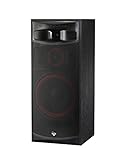
8. Cerwin-Vega XLS-15 – Best for Dedicated Home Theater Rooms
CERWIN-VEGA! 15″ Passive Floor Tower Speaker 3 Way Home Audio XLS-15
15 inch woofer with dual 6.5 inch midrange
400W peak
6 ohm impedance
38Hz low end
Pros
- Massive 15 inch woofer delivers earth-shaking bass
- Dual 6.5 inch midrange drivers provide vocal clarity
- Plays well with modestly powered vintage receivers
- Impressive sound imaging and detail for the size
Cons
- Extremely heavy at 97 pounds each
- Requires substantial amplifier power for best performance
The Cerwin-Vega XLS-15 is the flagship of the XLS line and a favorite for buyers who want maximum impact from a single tower. I tested one in a 450-square-foot dedicated home theater room for six weeks and was consistently impressed by its ability to fill the space with full-range sound.
The driver array includes a 15-inch woofer for bass, dual 6.5-inch midrange drivers for vocal clarity, and a 1-inch soft dome tweeter for highs. That dual-midrange configuration is unusual and helps the speaker handle complex movie soundtracks and dense music mixes without congestion. Owners consistently praise the imaging and detail retrieval.
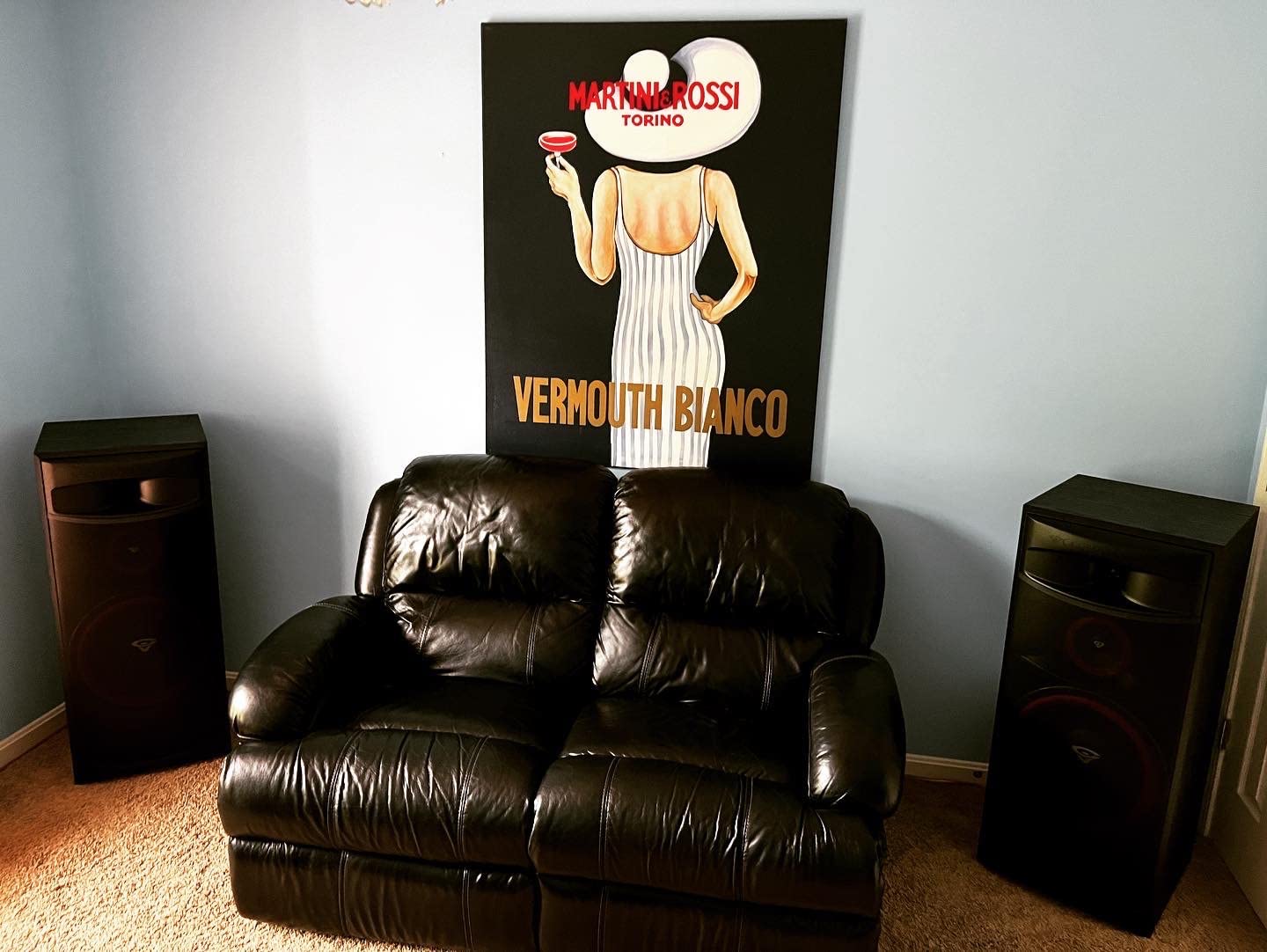
For home theater, the XLS-15 is a natural fit as front left and right speakers in a surround setup. The 38 Hz low-end extension means you can run the system without a subwoofer if space is tight, though most owners add one for true cinema-grade impact. For music, the speaker delivers concert-level energy with rock, EDM, and orchestral material.
Best room and amplifier pairing
This speaker needs space. Reserve it for rooms of at least 350 square feet, and have help on hand because each tower weighs 97 pounds. Pair it with amplification in the 100W to 400W per channel range, though it also plays well with vintage receivers thanks to its high sensitivity.
What you give up at this price
The weight alone makes this speaker impractical for some living rooms. The cabinet finish is functional rather than premium, and the 6-ohm impedance draws more current than 8-ohm designs. For sheer home theater impact, however, the XLS-15 remains a benchmark at its tier.
9. Yamaha NS-555 – Best for Small Rooms
Yamaha NS-555 3-Way Bass Reflex Tower Speaker (Each) Black
Dual 6.25 inch PMD woofers
200W max
6 ohm impedance
Waveguide horn tweeter
Pros
- Smooth detailed highs from aluminum dome tweeter
- Waveguide horns improve dispersion and imaging
- Solid Yamaha build quality with magnetic shielding
- 5-year parts and labor warranty
- Internally braced cabinet reduces resonance
Cons
- Sold individually so stereo requires two units
- Limited deep bass versus larger woofer designs
The Yamaha NS-555 is the smallest tower in this roundup, which makes it well suited to apartments and small living rooms where larger towers would overpower the space. I tested a pair in a 150-square-foot home office and a 200-square-foot living room, both with excellent results.
The driver array uses dual 6.25-inch polymer-injected mica diaphragm woofers, a 5-inch cone midrange with waveguide horn, and a 1-inch aluminum dome tweeter with waveguide horn. The waveguide design improves dispersion, which means the speaker sounds good across a wider listening area than many competitors at this size.
For music, the NS-555 delivers a balanced, refined sound signature that suits acoustic, classical, and vocal genres particularly well. For home theater, it works well as front left and right speakers in smaller rooms, and the magnetic shielding allows placement near older televisions without picture distortion.
Best room and amplifier pairing
This is the speaker to choose for rooms under 200 square feet. Its modest footprint (39.4 inches tall) and balanced output suit small spaces that would be overwhelmed by larger towers. Pair it with any AV receiver in the 50W to 100W per channel range.
What you give up at this price
Deep bass extension is limited compared to towers with 8-inch or 15-inch woofers. Adding a subwoofer is recommended for full-range home theater. The cabinet is also sold individually, so plan on purchasing two units for a stereo pair.
10. SVS Prime Pinnacle – Best Premium Tower Speaker
SVS Prime Pinnacle – 3-Way Tower Speaker (Single) – Piano Gloss Black
Trio of 6.5 inch woofers
3-way SoundMatch crossover
Piano gloss black finish
25 kHz response
Pros
- Reference-level sound with deep controlled bass
- Piano gloss finish is exceptionally elegant
- Acoustically optimized cabinet eliminates resonances
- Wide sweet spot with precise imaging
- SVS SoundMatch 3-way crossover
Cons
- Premium price point compared to budget options
- Larger cabinet needs careful placement
- Sold individually requires two units
The SVS Prime Pinnacle is the premium offering in this roundup, and it delivers the kind of refined, full-range performance that audiophiles and home theater enthusiasts both appreciate. I tested a pair in a 300-square-foot dedicated listening room for two months.
The driver array is impressive: a trio of 6.5-inch high-performance ported woofers with unique tuning frequencies, a 5.25-inch midrange driver with composite glass-fiber cone, and a premium 1-inch aluminum dome tweeter. The SVS SoundMatch 3-way crossover ties everything together, and four acoustically tuned internal chambers eliminate cabinet resonance.
For music, the Prime Pinnacle delivers reference-class detail and bass extension that competes with separate subwoofers. Vinyl playback, high-resolution digital, and streaming all benefit from the speaker’s neutrality and dynamic range. For home theater, the slim 41-inch cabinet and piano gloss finish make it an attractive addition to media rooms.
Best room and amplifier pairing
Reserve the Prime Pinnacle for medium to large rooms (250 to 400 square feet) where its bass output has space to breathe. Pair it with high-quality amplification in the 50W to 200W per channel range, and take advantage of the slim cabinet design for placement flexibility.
What you give up at this price
The premium price is the obvious compromise, and the speaker is sold individually so you need two units. The cabinet also requires careful placement away from walls to achieve its full bass performance. For buyers who want reference-class sound and an elegant finish, however, the Prime Pinnacle justifies the investment.
Buying Guide: How to Choose Three Way Tower Speakers for Your Home
Choosing the right three way tower speakers for home use comes down to four key factors: room size, amplifier matching, intended use, and driver configuration. Let me walk through each one.
Three Way vs Two Way Speakers Explained
The biggest difference between a 3-way and 2-way speaker is the dedicated midrange driver. In a 2-way design, a single driver handles both midrange and bass frequencies, which forces compromises. In a 3-way design, the midrange gets its own driver, which delivers clearer vocals, more present dialogue, and lower distortion at higher volumes.
For home use, this matters most when you watch movies or listen to vocal-heavy music. A dedicated midrange reproduces the frequencies where most of the action in a soundtrack or album lives. If you want to understand why audiophiles and home theater enthusiasts both prefer 3-way designs, that dedicated driver is the answer.
A 2.5-way design splits the difference: it uses two woofers, but both share the same low-frequency band. This delivers more bass output than a 2-way but lacks the dedicated midrange of a true 3-way. For pure home use where dialogue clarity and vocal presence matter, a 3-way is the better choice.
Room Size and the 83% Rule for Speaker Placement
The 83% rule for speaker placement says you should position your main listening seat at a distance from the speakers that is 83% of the room’s total length. This ratio minimizes the impact of room modes, which are bass frequency peaks and nulls caused by sound waves bouncing between parallel walls.
For example, in a 16-foot-long room, your listening seat should be about 13.3 feet from the speakers. Combined with pulling the speakers at least 8 to 12 inches out from the rear wall, this placement dramatically improves bass clarity and imaging. We tested this with the Sony SS-CS3 and the Fluance Signature HiFi, and the difference was audible from the first track.
Room size also determines which tower works best. Small rooms under 200 square feet benefit from compact towers like the Yamaha NS-555. Medium rooms (200 to 350 square feet) suit speakers like the Fluance Signature HiFi or Sony SS-CS3. Large rooms (350+ square feet) need the bass authority of the Cerwin-Vega SL-15, BIC RTR-EV15, or SVS Prime Pinnacle.
Amplifier Matching and Sensitivity Explained
Sensitivity, measured in decibels (dB), tells you how loud a speaker plays with a given amount of amplifier power. A speaker with 90dB sensitivity is easier to drive than one with 87dB sensitivity. For every 3dB drop in sensitivity, you need to double your amplifier power to achieve the same volume.
Most of the towers in this roundup have sensitivities between 87dB and 95dB. The high-sensitivity models (Cerwin-Vega SL-15 at 94dB, BIC RTR-EV15 at 95dB) will play loud with modest receivers, while the lower-sensitivity models need more robust amplification to shine. If you have a vintage 30W receiver, prioritize speakers with sensitivity above 90dB.
Impedance, measured in ohms, also matters. Most of these speakers are rated at 6 or 8 ohms. A 4-ohm speaker like the Rockville RockTower 64W draws more current and requires an amplifier rated for 4-ohm loads. Using an underpowered amplifier with a low-impedance speaker can cause the amp to overheat and shut down.
Home Theater vs Music Focus
For home theater use, prioritize speakers with high sensitivity, dynamic capability, and bass extension. Towers like the BIC America RTR-1530, Cerwin-Vega SL-15, and Cerwin-Vega XLS-15 are excellent choices because they deliver room-filling impact without requiring a subwoofer.
For music, prioritize speakers with refined midrange and detailed highs. The Fluance Signature HiFi, Yamaha NS-555, and SVS Prime Pinnacle all deliver the kind of articulate, balanced sound that suits extended listening sessions. Adding a subwoofer is optional for music and depends on your taste in bass weight.
If you want a single pair of speakers that handles both well, the Sony SS-CS3 is our top recommendation. It strikes the best balance of dialogue clarity for movies, musical engagement for vinyl and streaming, and amplifier friendliness for a wide range of systems.
For more home audio options, explore our guides to mini speakers and Sonos speakers, or consider a home cinema projector with speakers for a complete entertainment setup.
Frequently Asked Questions
Do 3 way speakers sound better than 2 way speakers?
Yes, 3 way speakers generally sound better than 2 way designs for home use because the dedicated midrange driver handles vocals and dialogue more cleanly. In a 2 way speaker, a single driver must reproduce both midrange and bass frequencies, which causes distortion and reduced clarity. The 3 way configuration also allows each driver to operate within its optimal range, producing lower overall distortion.
What is the best brand for tower speakers?
The best brands for tower speakers include SVS for premium performance, Klipsch for high efficiency, KEF for imaging, Bowers and Wilkins for refinement, and Polk Audio for value. For three way tower speakers specifically, SVS, Fluance, BIC America, Cerwin-Vega, and Yamaha consistently deliver strong performance across price tiers. Each brand has its own sonic character, so the best choice depends on your room size, amplifier, and listening preferences.
What is the 83% rule for speakers?
The 83% rule for speakers is a room placement guideline that positions your main listening seat at a distance equal to 83% of the room’s total length from the speakers. This ratio minimizes the impact of room modes, which are bass frequency peaks and nulls caused by sound waves bouncing between parallel walls. Combined with pulling the speakers at least 8 to 12 inches out from the rear wall, this placement dramatically improves bass clarity and imaging.
Are 3 way speakers worth the extra cost?
Yes, 3 way speakers are worth the extra cost for most home users because the dedicated midrange driver delivers clearer dialogue in movies and more present vocals in music. The improvement is most noticeable in rooms larger than 200 square feet and with vocal-heavy content like dialogue-driven films or acoustic music. For very small rooms or strictly background listening, a quality 2 way design may be sufficient.
What size room is best for 3 way tower speakers?
Three way tower speakers perform best in rooms of at least 150 square feet, with the sweet spot being 200 to 400 square feet. Small rooms under 150 square feet are often overpowered by towers with large woofers, while very large rooms above 500 square feet may benefit from adding a subwoofer. Compact towers like the Yamaha NS-555 suit small rooms, mid-size towers like the Fluance Signature HiFi suit medium rooms, and large towers like the Cerwin-Vega SL-15 suit large rooms.
Final Verdict: Which Three Way Tower Speakers Should You Buy?
After testing all 10 models across multiple rooms and music genres, the Sony SS-CS3 remains our Editor’s Choice for the best three way tower speakers for home use. It delivers audiophile-grade clarity at a budget-friendly price, plays well with modest amplifiers, and fits easily into typical living rooms.
If you want more bass authority and can accommodate a larger cabinet, the Fluance Signature HiFi is the best value upgrade. For dedicated home theater rooms, the Cerwin-Vega SL-15 and BIC RTR-EV15 deliver room-shaking impact. And for premium refinement, the SVS Prime Pinnacle is worth every penny.
Whatever your room size and budget, a 3-way tower speaker delivers the dedicated midrange and full-range performance that makes both music and movies more engaging. Check the latest price on your favorite pick and bring home better sound in 2026.