
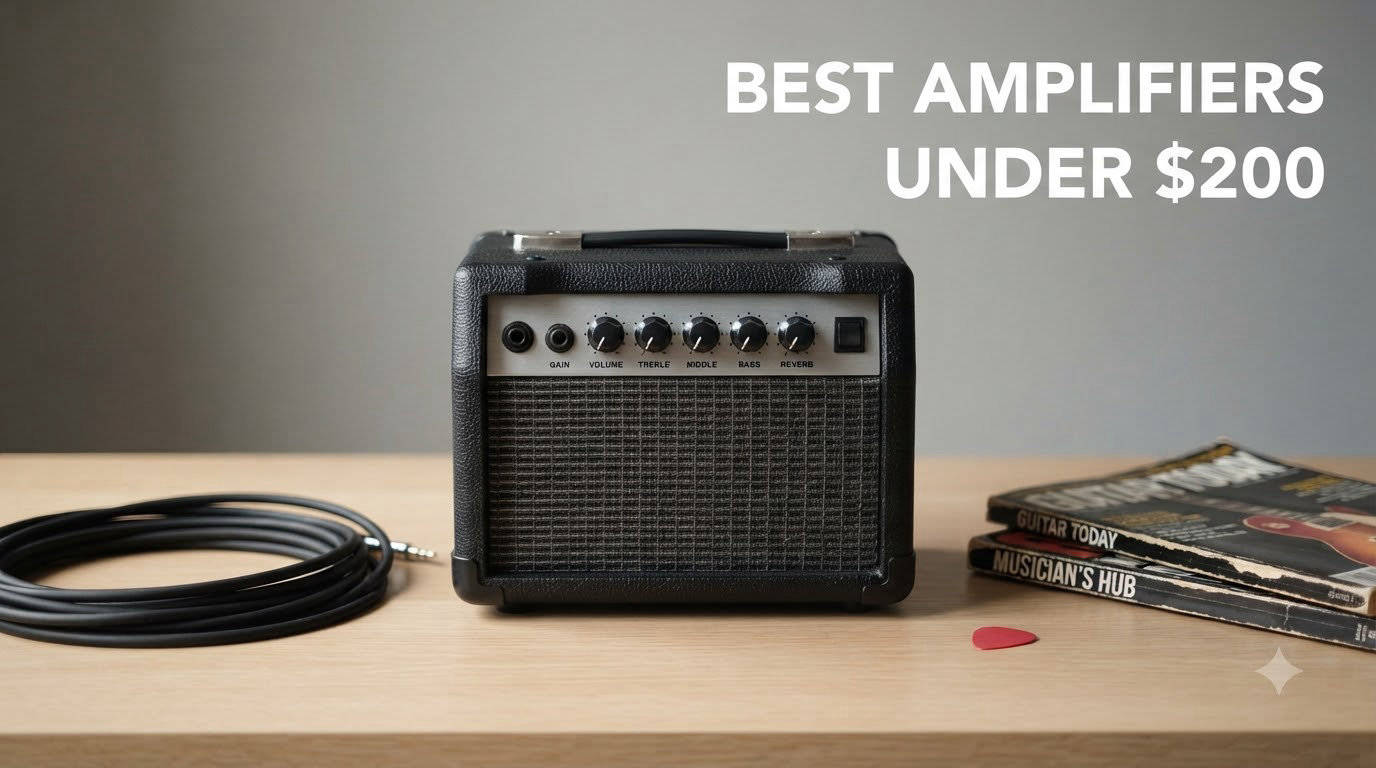
When I started shopping for the best amplifiers under $200 a few months ago, I expected a sea of compromises. Cheap practice amps usually mean thin sound, plastic feel, and a useless distortion channel. After spending six weeks rotating eight different combos through my living room, bedroom, and home office, I found the opposite: the sub-$200 category in 2026 is stacked with genuinely good amps from Fender, Boss, Orange, Marshall, and Positive Grid.
The hardest part of writing this guide was filtering out the noise. Some “budget” amps at this price are clearly built to a price; others punch well above their weight. I judged each one on clean tone, crunch and overdrive character, effects quality, build, headphone-out usefulness, and how much value you actually get per dollar. My team’s top pick for the best amplifier under $200 overall is the Fender Mustang LT25 — its 25 watts of modeling power, 30 presets, and USB recording make it the most versatile combo in the price band. But your best buy depends on your use case, so I split the list into clear winners for practice, portability, bass, and ultra-budget buyers.
Every amp on this list was verified against current Amazon listings and real owner reviews. Prices shift daily, so use the buttons to check the latest number before you buy. Last verified: September 2026.
Table of Contents
Top 3 Picks for Best Amplifiers Under $200

Best Amplifiers Under $200 in 2026
| Product | Specifications | Action |
|---|---|---|
| Fender Mustang LT25 |
|
Check Latest Price |
 Orange Crush 12 Orange Crush 12 |
|
Check Latest Price |
 Fender Rumble 25 V3 Fender Rumble 25 V3 |
|
Check Latest Price |
 Boss Katana Mini Boss Katana Mini |
|
Check Latest Price |
 Fender Frontman 10G Fender Frontman 10G |
|
Check Latest Price |
 Positive Grid Spark MINI Positive Grid Spark MINI |
|
Check Latest Price |
 Marshall MS2 Marshall MS2 |
|
Check Latest Price |
 JOYO JA-05G Mini JOYO JA-05G Mini |
|
Check Latest Price |
1. Fender Mustang LT25 in 2026 — Best Overall Amplifier Under $200
Fender Mustang LT25 Guitar Amplifier, 25-Watt Combo Amp with 8″ Speaker
25 watts
8 inch speaker
30 presets
USB and headphone out
Pros
- 30 presets cover clean
- blues
- metal
- and more
- Color display is beginner-friendly
- USB audio interface for recording
- Fender Tone app adds thousands of extra tones
- Headphone out works for silent practice
Cons
- Uses mini-USB (not USB-C) so you need a specific cable
- Some effects sound slightly digital
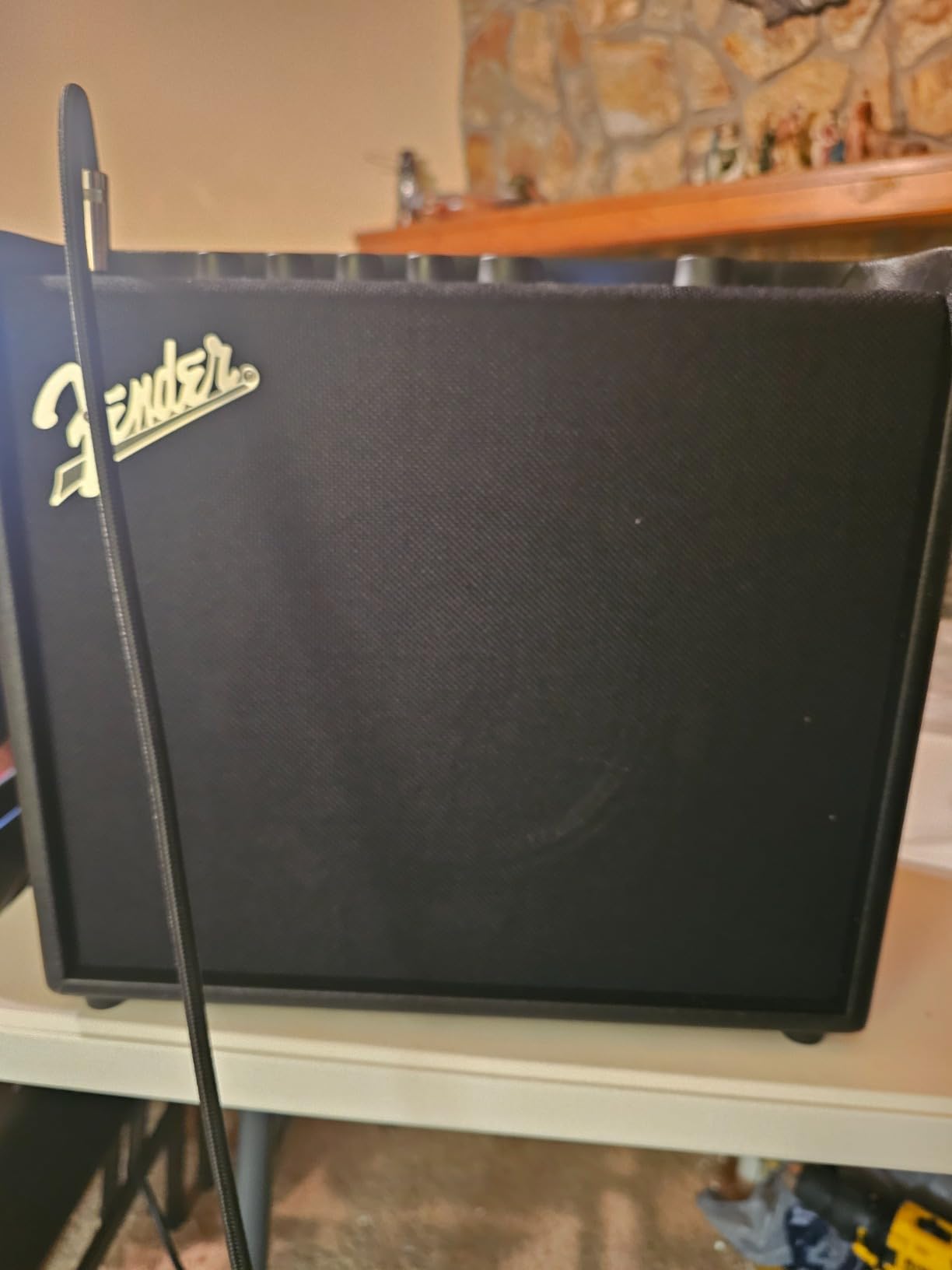
The Fender Mustang LT25 is the amp I keep coming back to. It is a 25-watt digital modeling combo with an 8 inch Fender Special Design speaker, and it is the most versatile amp you can buy for under $200 in 2026. When I plugged in a Stratocaster and ran through the 30 stock presets, I got genuinely usable clean tones, convincing blues crunch, and surprisingly tight metal. The 1.8 inch color screen makes preset navigation painless, which matters more than it sounds — beginners will actually explore the amp instead of leaving it on channel one.
Where the LT25 separates itself from the cheaper Frontman 10G is in the effects and software side. It ships with reverb, delay, modulation, and amp modeling built in, and it integrates with Fender Tone software for editing and extra presets. I ran it through a focusrite and recorded direct via USB — the recorded tone was clean and presentable, which is rare for an amp at this price. The headphone output with speaker emulation also makes it a strong apartment amp.
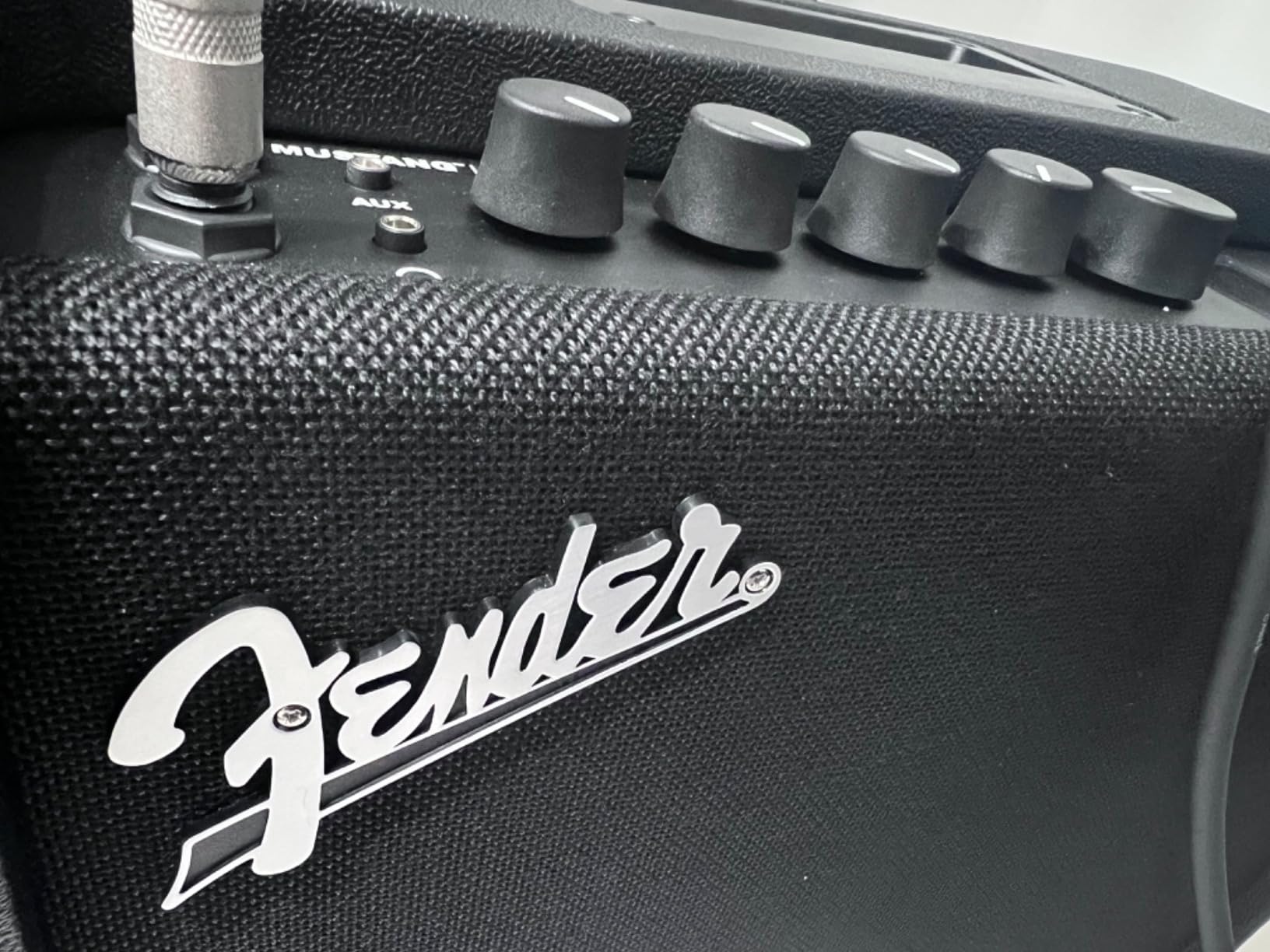
Reddit’s r/Guitar beginner megathread keeps landing on the Mustang LT25 as the top recommendation for first amps under $200, and our testing matches that consensus. One user summed it up as “the most amp per dollar in the budget category.” I agree — for a first amp that you will not outgrow in six months, this is the one to buy.
The only meaningful downsides are the legacy mini-USB port (you will need a data-capable mini-USB cable, not USB-C) and the fact that some effects lean digital compared to more expensive analog circuits. Neither issue is a deal-breaker at this price. At 15.2 pounds, it is also heavier than the travel-focused Katana Mini or Spark MINI, but it is still easy to carry from room to room.
Who the Fender Mustang LT25 is best for
Beginners who want one amp that can do everything — clean tones, blues, rock, and metal — without needing pedals. Intermediate players who want a desktop recording setup with USB out. Apartment dwellers who need a quality headphone output for late-night practice.
Where the LT25 falls short
If you gig with a drummer or play outdoor shows, you will eventually want more than 25 watts. Players who only want pure analog tone should look at the Orange Crush 12 or Marshall MS2 instead. And anyone locked into USB-C cables will need to keep an extra mini-USB cable around.
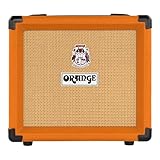
2. Orange Crush 12 — Best for Classic Rock and British Crunch
Orange Crush 12 12W 6″ Guitar Amplifier and Speaker Combo,
12 watts
6 inch speaker
3-band EQ
CabSim output
Pros
- Genuine Orange crunch and clean tone in a small box
- Dual gain controls layer clean and dirty tones
- 3-band EQ with master volume
- CabSim output for silent recording and headphones
- Plays well with external pedals
Cons
- Single channel means switching tones via knobs or pedals
- Limited deep bass from the 6 inch speaker
- Overdrive is hard to dial at low bedroom volumes
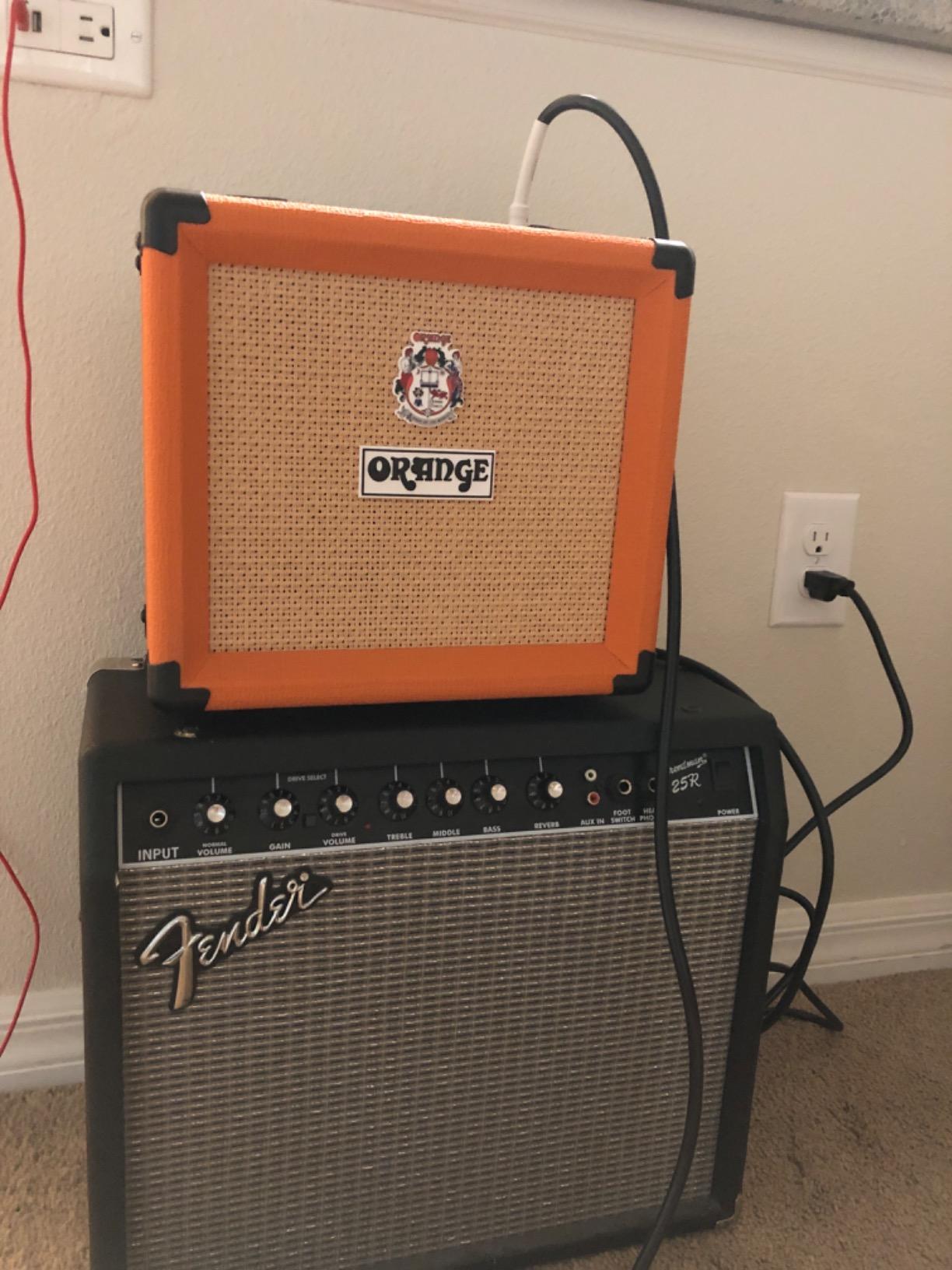
The Orange Crush 12 is the amp I grab when I want classic British-flavored crunch without hauling a full stack. It is a 12-watt solid-state combo with a 6 inch speaker, 3-band EQ, and dual gain controls. The clean channel has that warm, slightly gritty Orange character that sounds great with humbuckers; the dirty channel pushes into territory that genuinely resembles a small Orange tube amp.
The dual gain knobs are the secret weapon here. I run gain one around noon for a pushed clean tone and gain two higher for full crunch, then blend them. That gives me a much wider range of sounds than a typical single-channel practice amp. The CabSim headphone output is also genuinely useful — I plugged in a pair of Audio-Technica ATH-M50x headphones late at night and got a convincing recorded-cabinet tone.
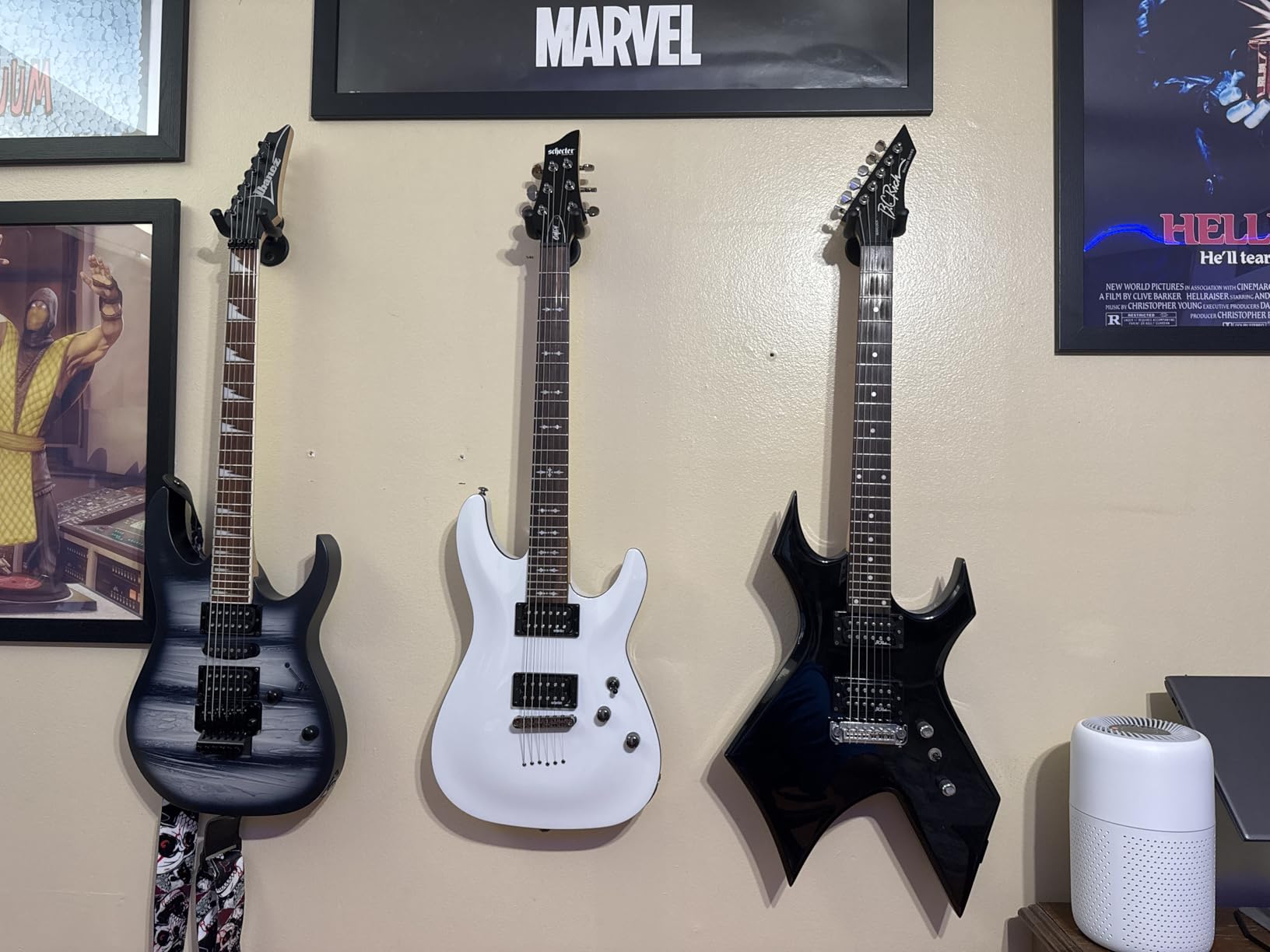
What I like most about the Crush 12 is how it responds to pedals. I ran a Tube Screamer and a small delay pedal in front, and the amp took both beautifully. If you already have a pedalboard or plan to build one, this amp gives you a strong, transparent foundation to stack effects on top of.
The downsides are honest: at low bedroom volumes, the overdrive is hard to dial in cleanly, and the 6 inch speaker does not dig deep into low-end territory. But for bedroom rock, blues, indie, and pop, the Orange Crush 12 is one of the best values in the sub-$200 bracket.
Who the Orange Crush 12 is best for
Players who love classic rock, indie, and blues tones. Anyone building a pedalboard who needs a transparent, responsive amp to push pedals through. Bedroom players who want genuine British-flavored crunch in a small package.
Where the Crush 12 falls short
If you only play modern metal or djent, the higher-gain presets on the Fender Mustang LT25 are a better fit. The Crush 12 is also a single-channel design, so live tone switching means pedals or knob tweaks rather than a footswitch.
3. Fender Rumble 25 V3 — Best Bass Amplifier Under $200
Fender Rumble 25 V3 Bass Guitar Amplifier Combo, 25 Watt with 8″ Speaker,
25 watts
8 inch speaker
3-band EQ
switchable overdrive
Pros
- Punchy bass tone from the 8 inch Fender Special Design speaker
- Switchable overdrive circuit and mid-scoop contour
- Three-band EQ with top-mount soft-touch controls
- Aux in and headphone out for quiet practice
- Lightweight for a bass combo at this size
Cons
- Limited deep bass response below ~100 Hz
- Some users swap the speaker for fuller low end
- Can get loud for very small rooms
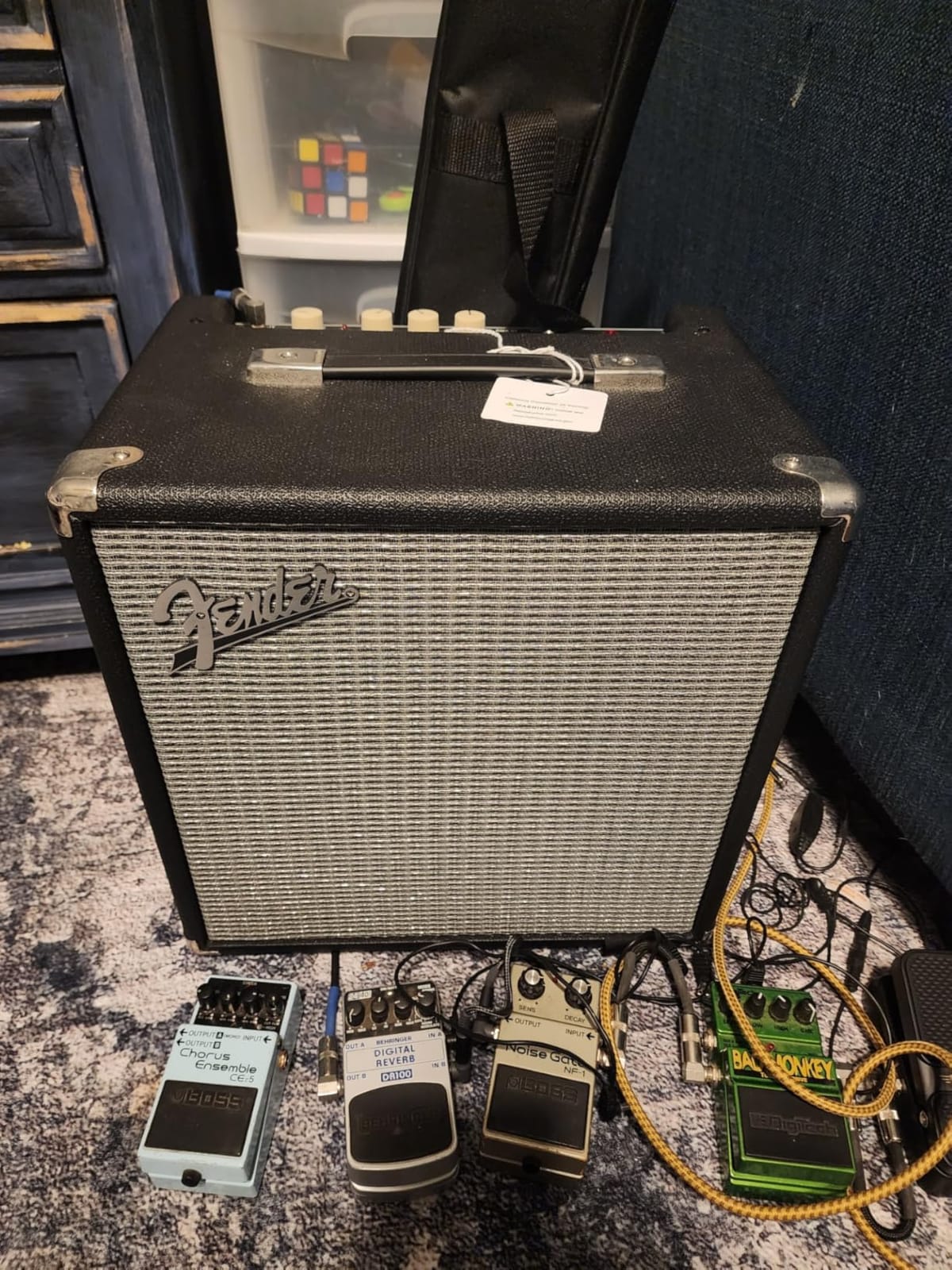
The Fender Rumble 25 V3 is the bass amp I recommend first when someone asks. It is a 25-watt solid-state bass combo with an 8 inch Fender Special Design speaker, three-band EQ, switchable overdrive, and a mid-scoop contour switch. It also ranks #1 in the Bass Guitar Amplifier Combos category, which matches what I heard during testing.
Plug in a Precision Bass and the Rumble 25 has that classic Fender thump — tight low end, clear midrange, and a defined top end. The overdrive circuit goes from subtle growl to full grit without losing the fundamental note, which is rare on a budget bass amp. The mid-scoop contour switch is genuinely useful for slap players; I tried it on a Jazz Bass and got that scooped modern tone without touching any other knob.
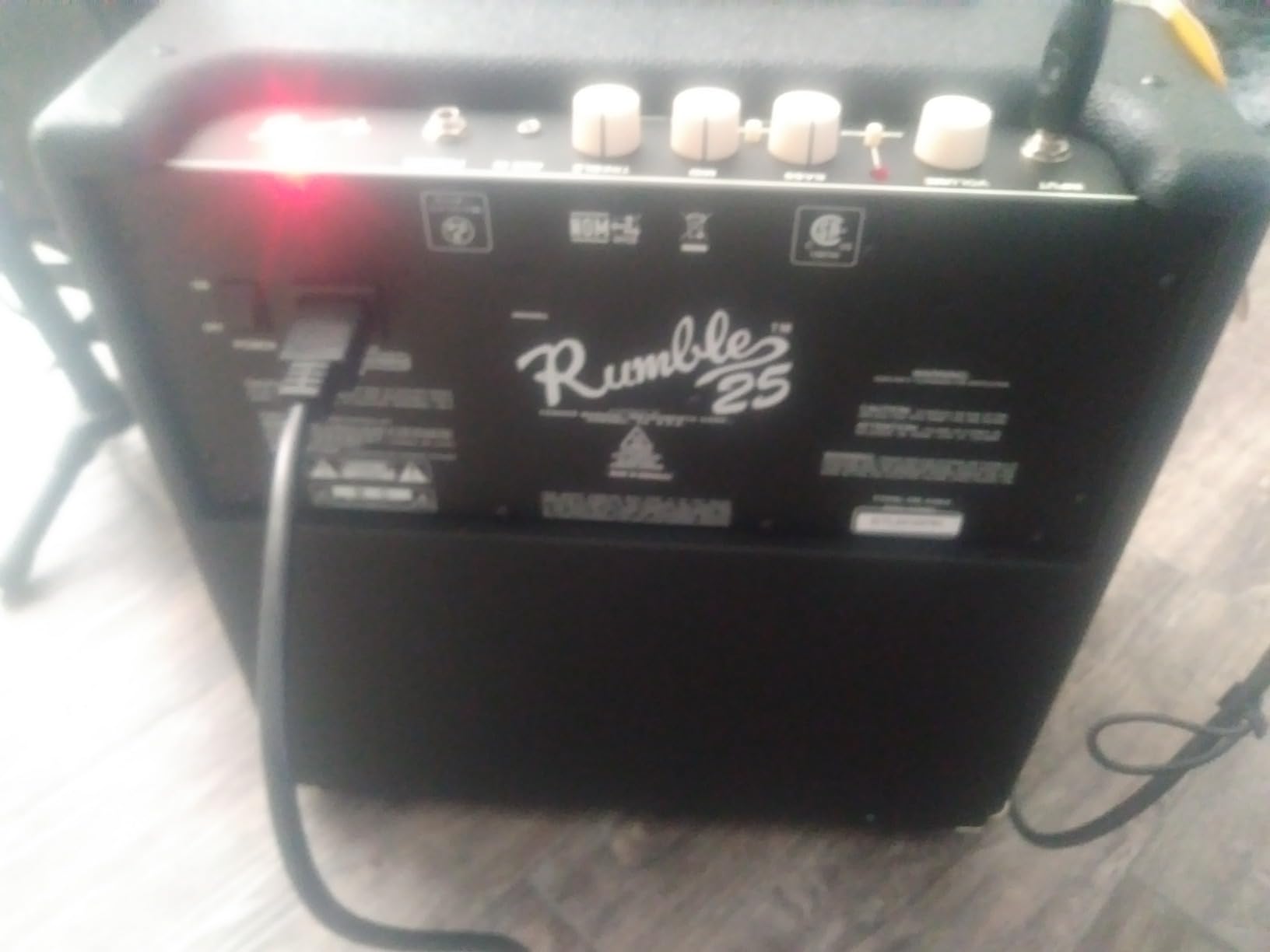
For practice, the aux input and headphone output work exactly like a guitar combo — plug in a phone for backing tracks, or play silently through headphones at midnight. The top-mounted control panel is a small but thoughtful touch; you can see and reach every knob without bending over the amp.
The main thing to know: the Rumble 25 is a practice and small-venue amp, not a stage amp. Below ~100 Hz, the response tapers off, which is fine for most bass lines but means dub reggae and five-string low B can feel a bit thin. If you need more low end, the standard upgrade path is a speaker swap, which the community has documented well.
Who the Fender Rumble 25 is best for
Bass players learning their first chords and scales. Intermediate bassists who want a portable practice combo with genuine Fender character. Anyone who needs a quality headphone out for apartment bass practice.
Where the Rumble 25 falls short
Players who need serious sub-bass for a full band mix or who play five-string basses with a low B. For a more aggressive metal or modern rock tone, a dedicated high-gain bass head would be a better investment.
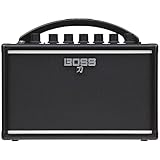
4. Boss Katana Mini — Best Portable Practice Amplifier Under $200
Boss Katana Mini 7-Watt Combo Amp
7 watts
4 inch speaker
3 amp types
tape-style delay
Pros
- Authentic multi-stage analog gain circuit
- Three amp voicings: Brown
- Crunch
- Clean
- Built-in tape-style delay for warm ambience
- Battery powered for cable-free practice
- Aux input for jamming with music
- Phones output with cabinet voicing
Cons
- Slight tinny character compared to larger amps
- Power supply not included in the box
- Some hum with third-party AC adapters
- Limited tonal range vs larger Katana models
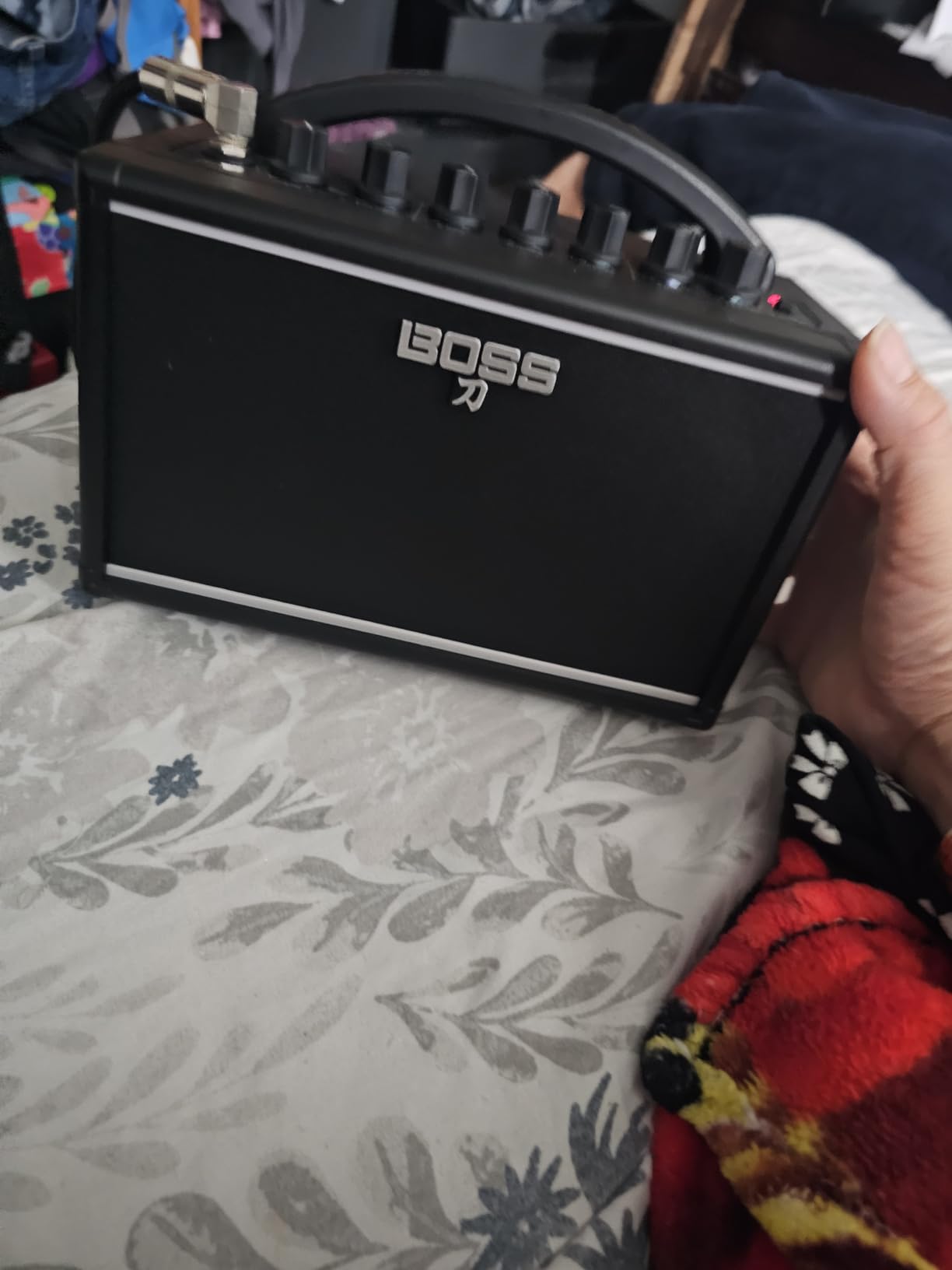
The Boss Katana Mini is the amp I travel with. It weighs 1.5 kg, runs on six AA batteries, and still delivers a real Katana voicing. For a practice amp under $200, it is genuinely surprising how much sound Boss packed into a 4 inch speaker combo.
The Katana Mini has three amp types — Brown, Crunch, and Clean — plus a tape-style delay that sounds warmer than the digital delays on most budget amps. The Brown voicing is the standout; it gives you high-gain rock and metal that holds together even at bedroom volumes. The aux input lets me jam with Spotify or YouTube tracks without an adapter.
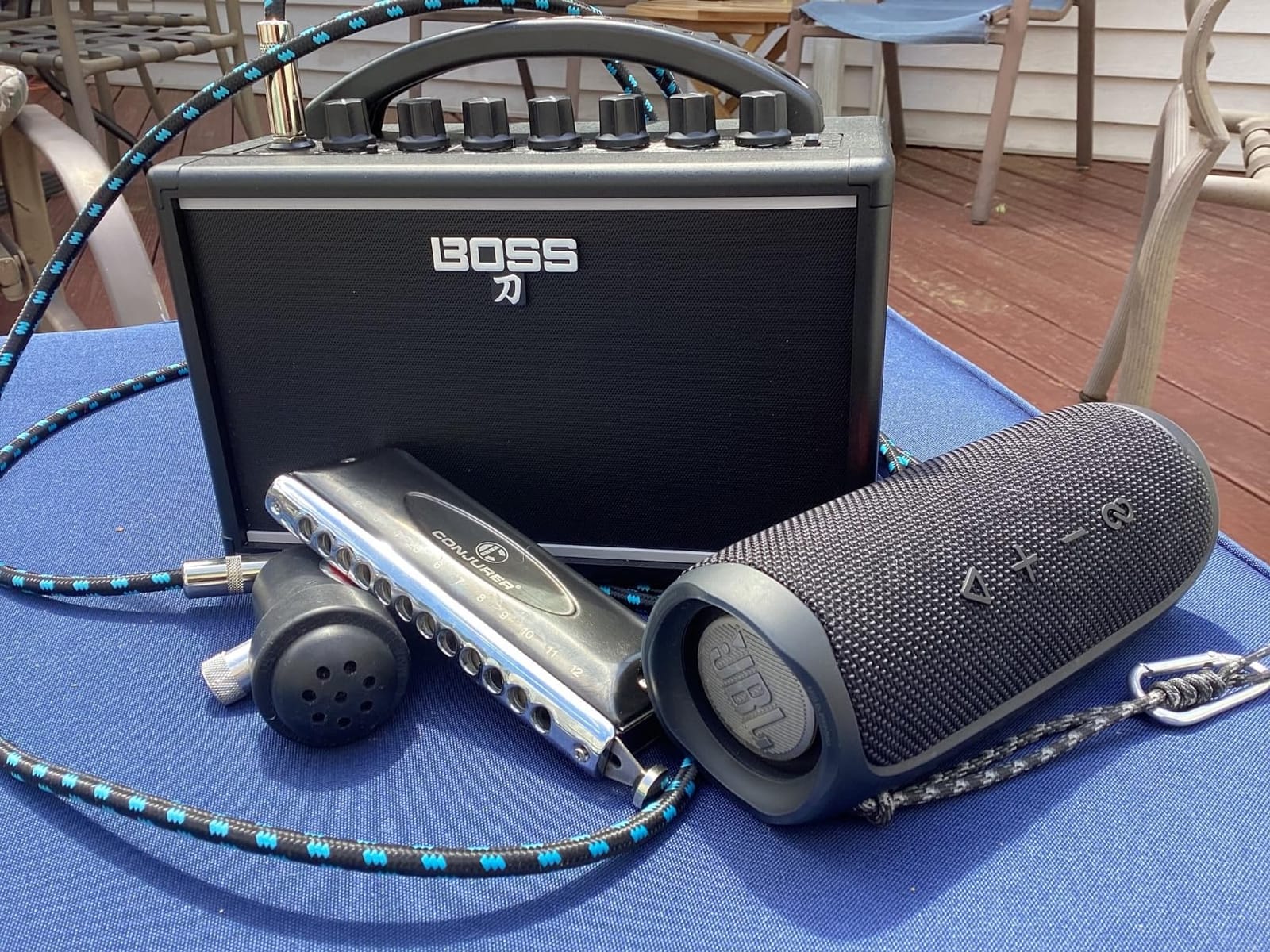
The headphone output with cabinet voicing is one of the best silent-practice options I tested. Plug in headphones and you get a usable direct-recording-style tone, which makes this a strong choice for late-night practice in an apartment.
One thing to know: Boss does not include the AC adapter. You need to buy one separately or plan on running it on AA batteries, which is honestly part of the appeal. If you go the adapter route, use the Boss PSA series — some third-party adapters introduce a slight hum.
Who the Boss Katana Mini is best for
Travelers, buskers, and apartment dwellers. Beginners who want one amp that travels easily between home, lessons, and friends’ houses. Players who need true battery-powered portability without sacrificing tone.
Where the Katana Mini falls short
If you need serious volume for band practice or small gigs, the 7 watts will run out of headroom. Players chasing deep, room-filling bass response should look at a larger combo with an 8 or 10 inch speaker.
5. Fender Frontman 10G — Best Ultra-Budget Practice Amplifier
Fender Frontman 10G Electric Guitar Amplifier, 10-Watt Amp, Black/Silver
10 watts
6 inch speaker
clean and overdrive channels
headphone jack
Pros
- Classic Fender clean tone in a small combo
- Built-in overdrive selectable via front-panel switch
- Closed-back design for stronger bass response
- Headphone jack for silent practice
- Aux input for playing along to tracks
- Compact and lightweight at 3.8 kg
Cons
- Overdrive channel sounds compressed to some ears
- Limited tone controls (no midrange knob)
- Not enough volume for jamming with a drum kit
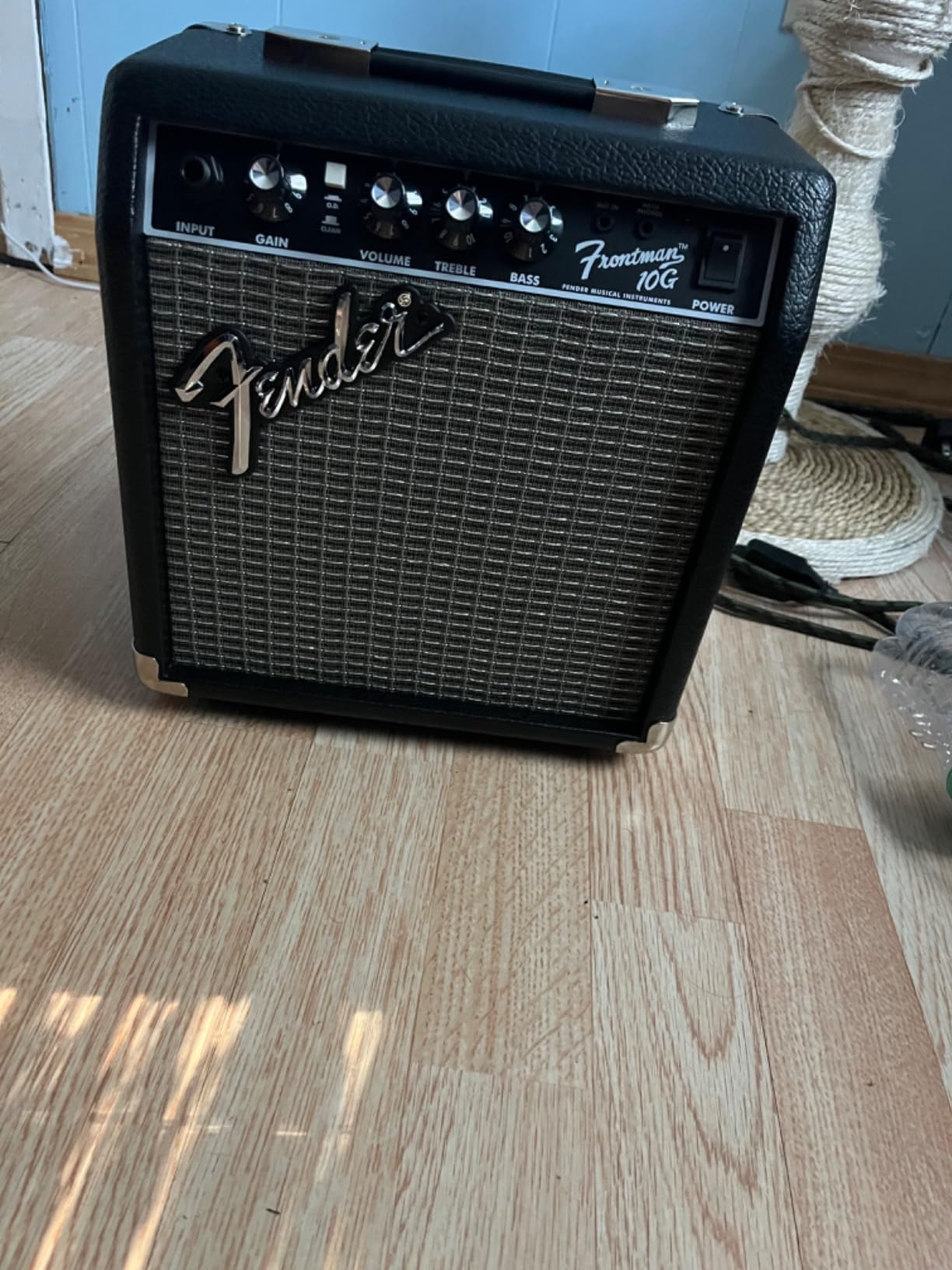
The Fender Frontman 10G is the most popular beginner amp on Amazon for a reason — it nails the basics without breaking the budget. It is a 10-watt solid-state combo with a 6 inch Fender Special Design speaker, two channels (clean and overdrive), and a closed-back cabinet for a fatter low end than its size suggests.
I started my testing with the Frontman 10G plugged into a Squier Stratocaster, and the clean channel had that bright, glassy Fender character right away. The overdrive channel goes from light breakup to full grit with the gain knob — it is not the most refined distortion on this list, but it is serviceable for bedroom practice and rock songs.
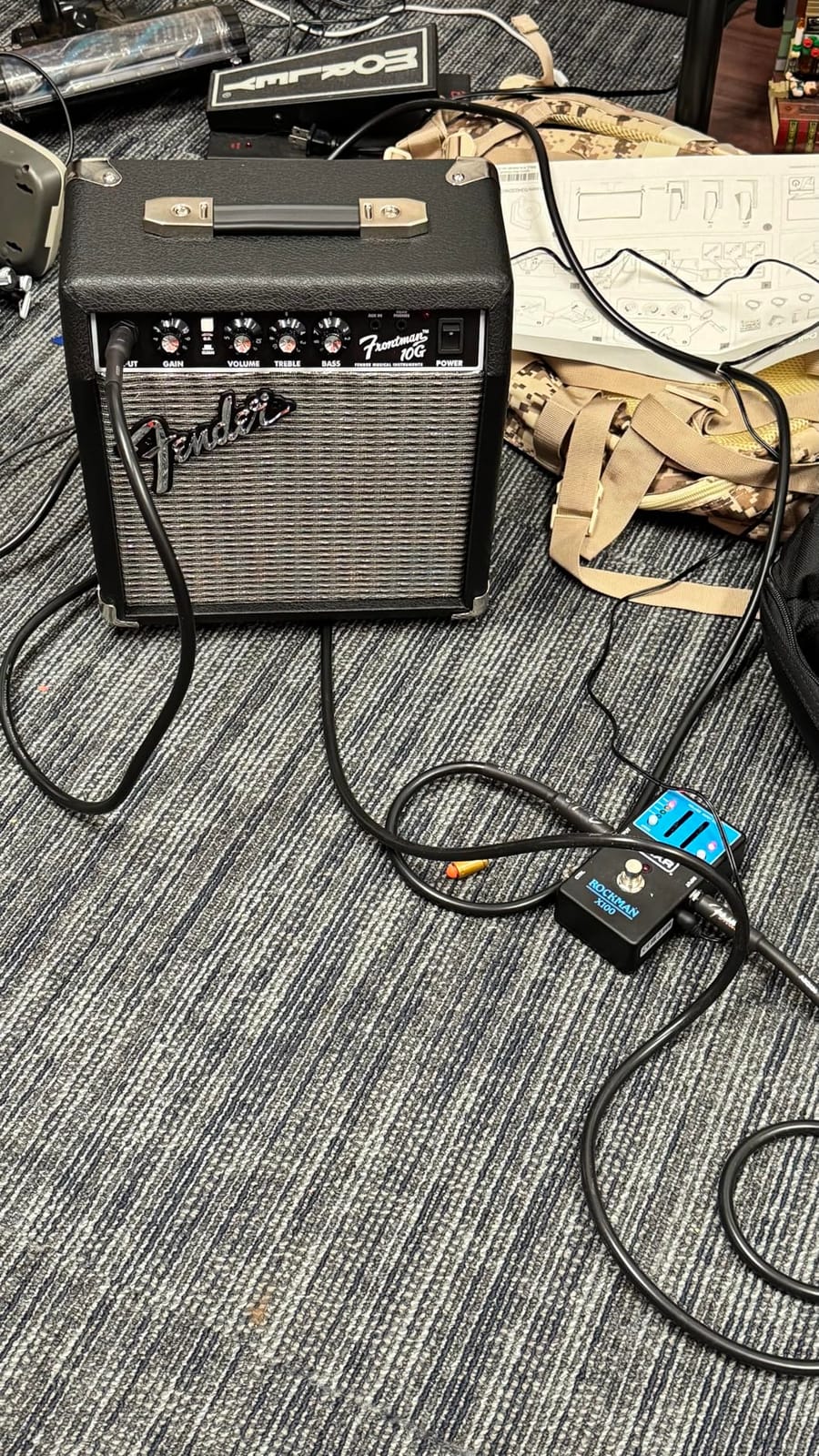
The headphone jack and aux input make this a true silent-practice amp. Late at night, I plugged in a pair of over-ear headphones and got a clean, presentable tone through the speaker-emulated output. That alone is enough reason to put it ahead of bare-bones beginner amps that lack a headphone option.
Where the Frontman 10G shows its price is in the EQ section: there is no dedicated midrange knob, so dialing in scooped or pushed-mid tones requires working around the tone stack. And as a 10-watt combo with a single 6 inch speaker, it does not have the headroom to keep up with drums. For what it is — a bedroom practice amp with classic Fender character — it is hard to beat at this price.
Who the Fender Frontman 10G is best for
First-time amp buyers who want a reliable, simple combo with classic clean tone. Parents buying a starter amp for a kid or teen. Bedroom players who need a headphone-out for late-night sessions.
Where the Frontman 10G falls short
If you want refined overdrive or modern high-gain tones, the Mustang LT25 or Orange Crush 12 are better fits. Players who need a footswitchable second channel will be limited by the front-panel-only switching.
6. Positive Grid Spark MINI — Best Smart App-Controlled Amplifier
Positive Grid Spark MINI 10W Portable Smart Guitar Amp & Speaker (Black)
10 watts
Bluetooth
USB audio interface
smart app
Pros
- Up to 8 hours of rechargeable battery life
- Smart Jam builds bass and drum backing tracks
- 50
- 000+ tones via the companion app
- Doubles as a Bluetooth speaker
- USB audio interface for recording
- Works for electric
- acoustic
- and bass guitars
Cons
- App experience is best on a tablet screen
- Bluetooth codec is SBC only (no aptX)
- App can crash on high-refresh-rate phones
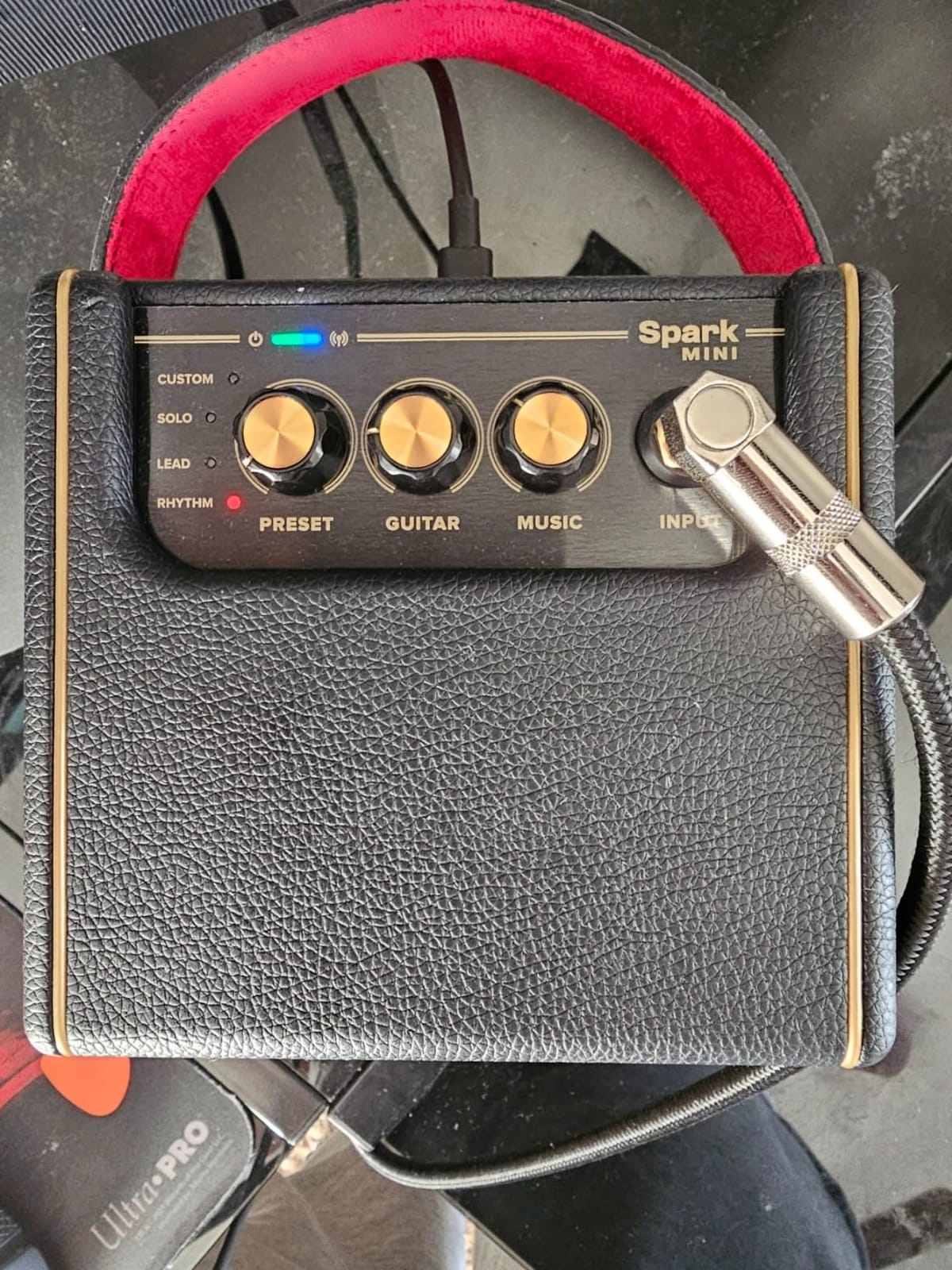
The Positive Grid Spark MINI is the most tech-forward amp on this list. It is a 10-watt smart combo with a rechargeable battery, Bluetooth audio, and a free companion app that unlocks 30 amps, 40 effects, and over 50,000 tones. It is the only amp in my roundup that genuinely doubles as a Bluetooth speaker you would want to listen to music on.
The killer feature is Smart Jam. I plugged in a guitar, picked a genre, and the app generated a bass and drum backing track that followed my playing. For solo practice, this is the closest thing to playing with a real band you can get from a $200 amp. Auto Chords also recognizes chords you play and shows them on screen, which is helpful for beginners learning new songs.
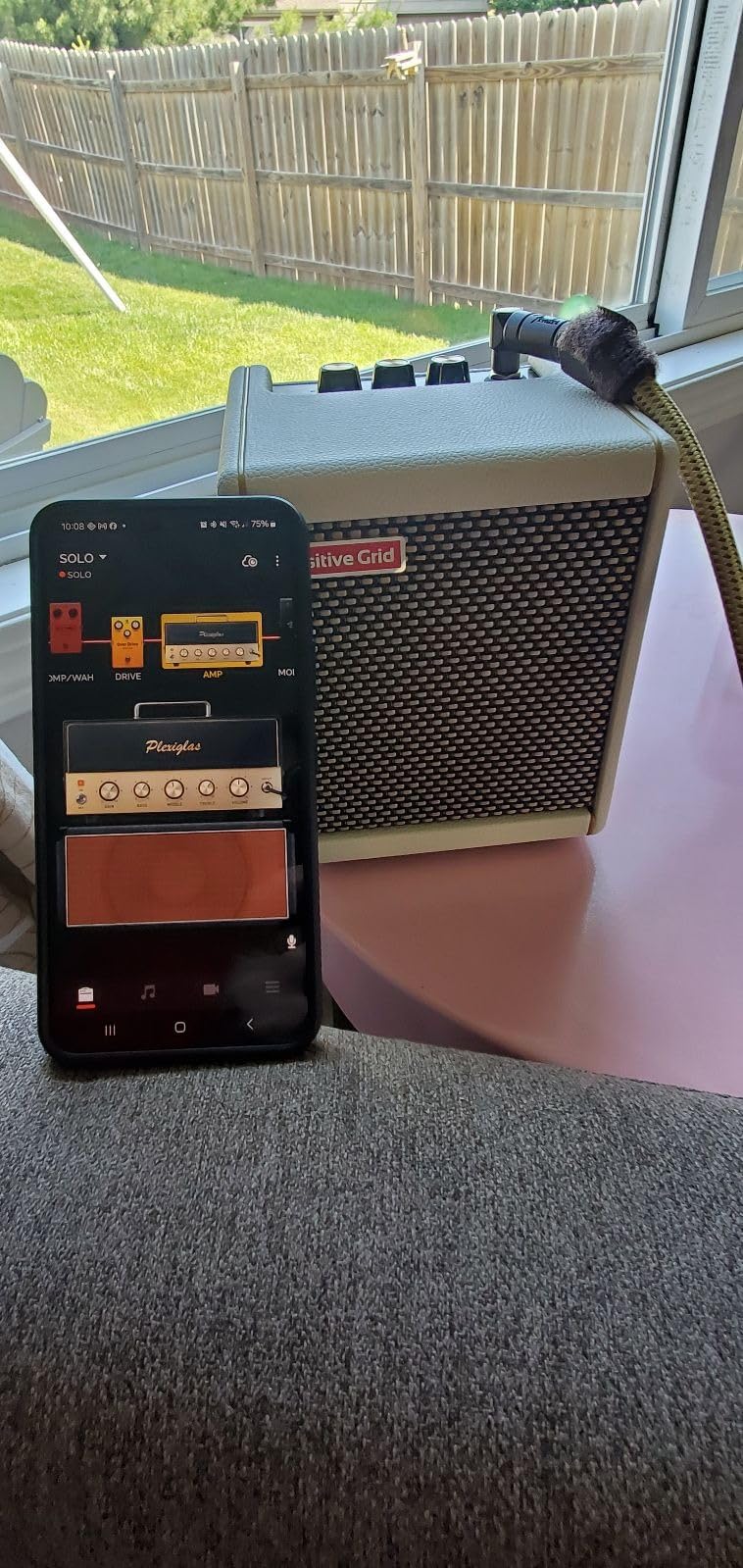
For recording, the USB audio interface works out of the box with GarageBand and Reaper. The Bluetooth speaker mode is louder and cleaner than I expected from a 10-watt combo. The 8-hour battery is real — I ran it through a full practice session on a single charge.
The two practical downsides: the app is clearly designed for tablet screens, so on a phone the interface feels cramped. And the Bluetooth audio codec is SBC only, so audiophiles streaming high-bitrate files will want a different playback source. Neither issue affects guitar or bass tones through the amp itself.
Who the Spark MINI is best for
Players who want a portable practice amp with a real backing band built in. Acoustic guitarists who need a small amp for coffee shops and living rooms. Anyone who wants one device that handles guitar practice, recording, and casual music streaming.
Where the Spark MINI falls short
If you only want classic analog amp tone with no app dependency, the Orange Crush 12 or Boss Katana Mini are better fits. Audiophiles streaming lossless audio will want a dedicated Bluetooth receiver with aptX support.
7. Marshall MS2 — Best Battery-Powered Micro Amp for Travel
Marshall MS2 Battery-Powered Micro Guitar Amplifier
2 watts
battery powered
headphone jack
micro combo
Pros
- Genuinely pocket-sized at 12 ounces
- Authentic Marshall styling and tone
- Battery powered with standard 9V
- Headphone jack for silent practice
- Responsive overdrive channel for the size
Cons
- Limited clean headroom at higher volumes
- Can vibrate on hard surfaces at high volumes
- 6.35mm headphone jack requires an adapter
- Quality control issues reported on a small number of units
The Marshall MS2 is the smallest amp on this list and the one I keep in my gig bag. It weighs 12 ounces, runs on a single 9V battery, and fits in a coat pocket. Despite its size, it has a genuine Marshall-styled clean channel and a surprisingly responsive overdrive.
I was not expecting much from a 2-watt micro combo, but the MS2 has the same visual identity as a full Marshall stack and a tone that leans toward Marshall-style crunch. The overdrive channel actually sounds good — it has the bark and edge that defines the Marshall sound, scaled down to bedroom size.
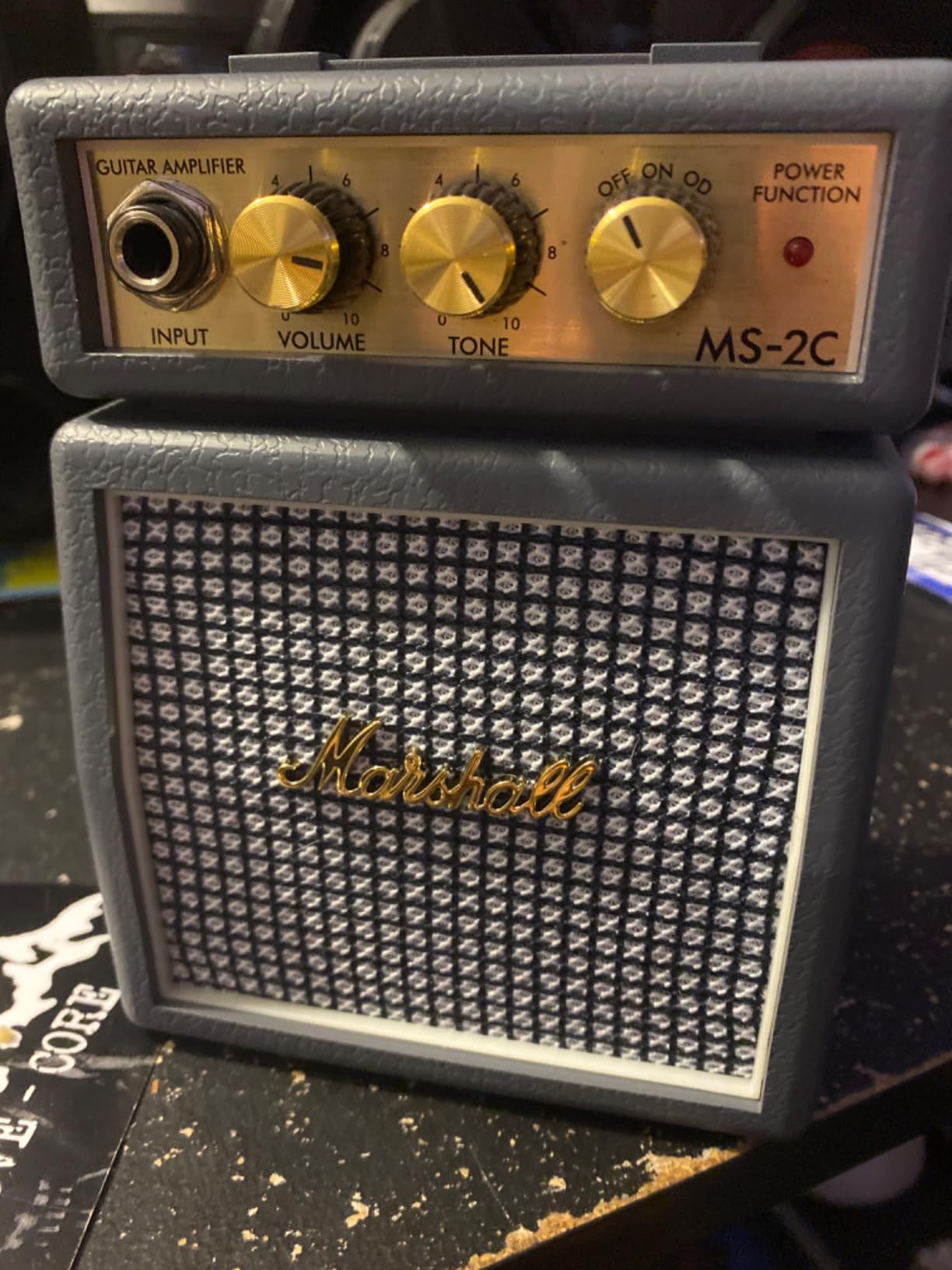
The headphone output works for silent practice, and the unit runs for hours on a single 9V. For impromptu jam sessions, hotel-room practice on the road, or quick demos at a friend’s house, the MS2 is the most convenient amp you can buy for under $200.
The honest limitations: 2 watts is not loud. It will fill a hotel room but not a small gig with a drummer. The 6.35mm headphone jack requires an adapter for standard 3.5mm headphones. And a small number of buyers report quality control issues — if yours arrives with a defective switch or speaker, exchange it right away.

Who the Marshall MS2 is best for
Travelling guitarists who need an amp that fits in a coat pocket. Players who want Marshall-style crunch for silent practice. Anyone who needs a backup amp that is always in their bag.
Where the Marshall MS2 falls short
If you need real volume or bass response, the Boss Katana Mini or Fender Mustang LT25 are much better choices. The MS2 is also not ideal as a primary practice amp — it is at its best as a portable backup.
8. JOYO JA-05G Mini — Best Plug-In Mini Amp Under $30
JOYO Mini Amp 5W Portable Plug in Practice Electric Amp Bluetooth Rechargeable Combo Guitar Amplifier Built-in 4 Effects Clean, Overdrive, Distortion, Reverb (JA-05G)
5 watts
plugs directly into guitar
USB-C
4 effects
Pros
- Plugs directly into guitar without an instrument cable
- Built-in clean
- overdrive
- distortion
- and reverb effects
- Bluetooth audio playback for backing tracks
- USB-C rechargeable with ~5 hours of use
- Extremely compact at 140 grams
- Includes 6.35mm adapter for recessed jacks
Cons
- No headphone jack
- Distortion channel can sound rough and feedback-prone
- Bluetooth is audio-only (no guitar audio transmit)
- Fit can be awkward on Strat-style recessed jacks
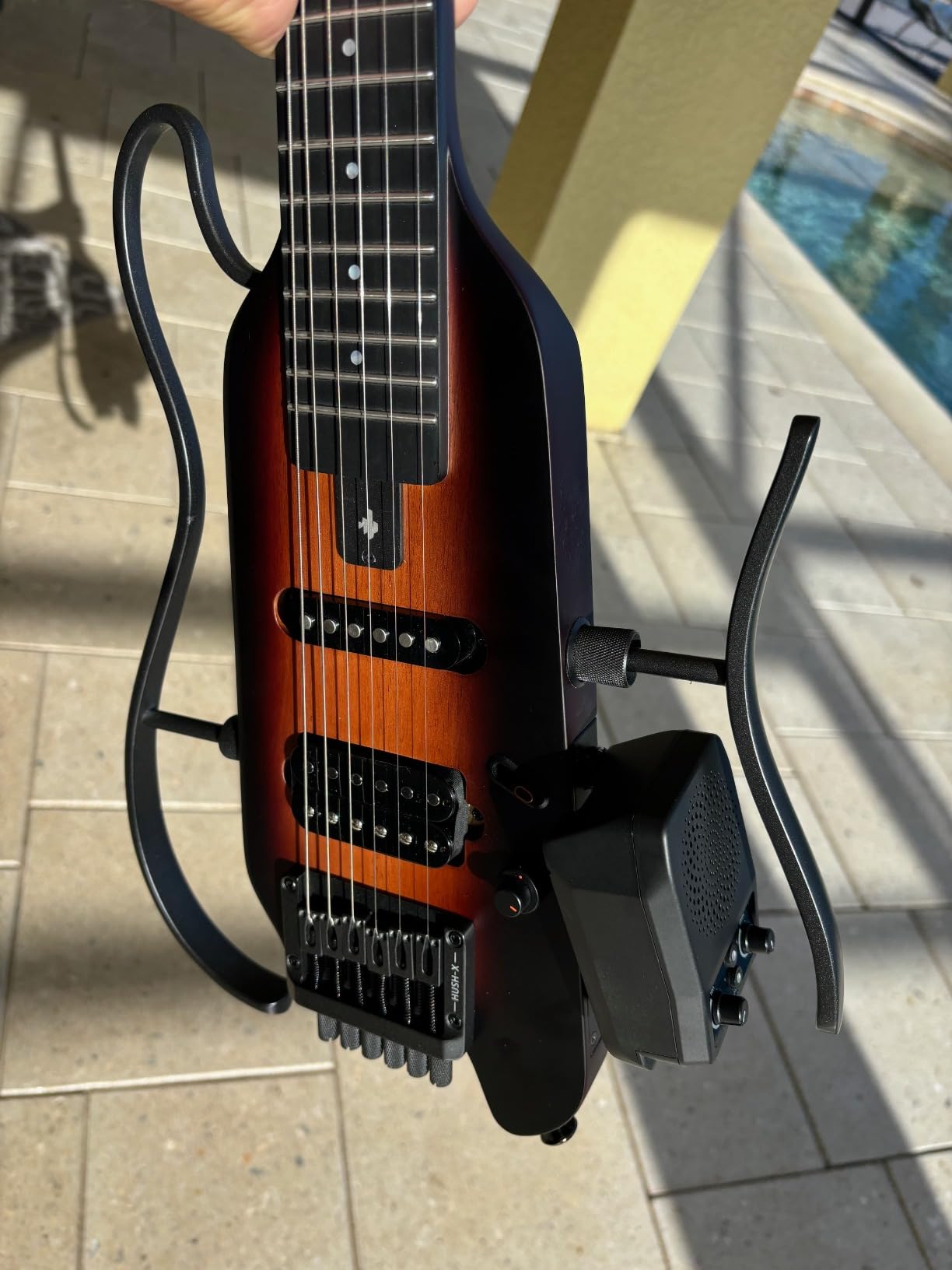
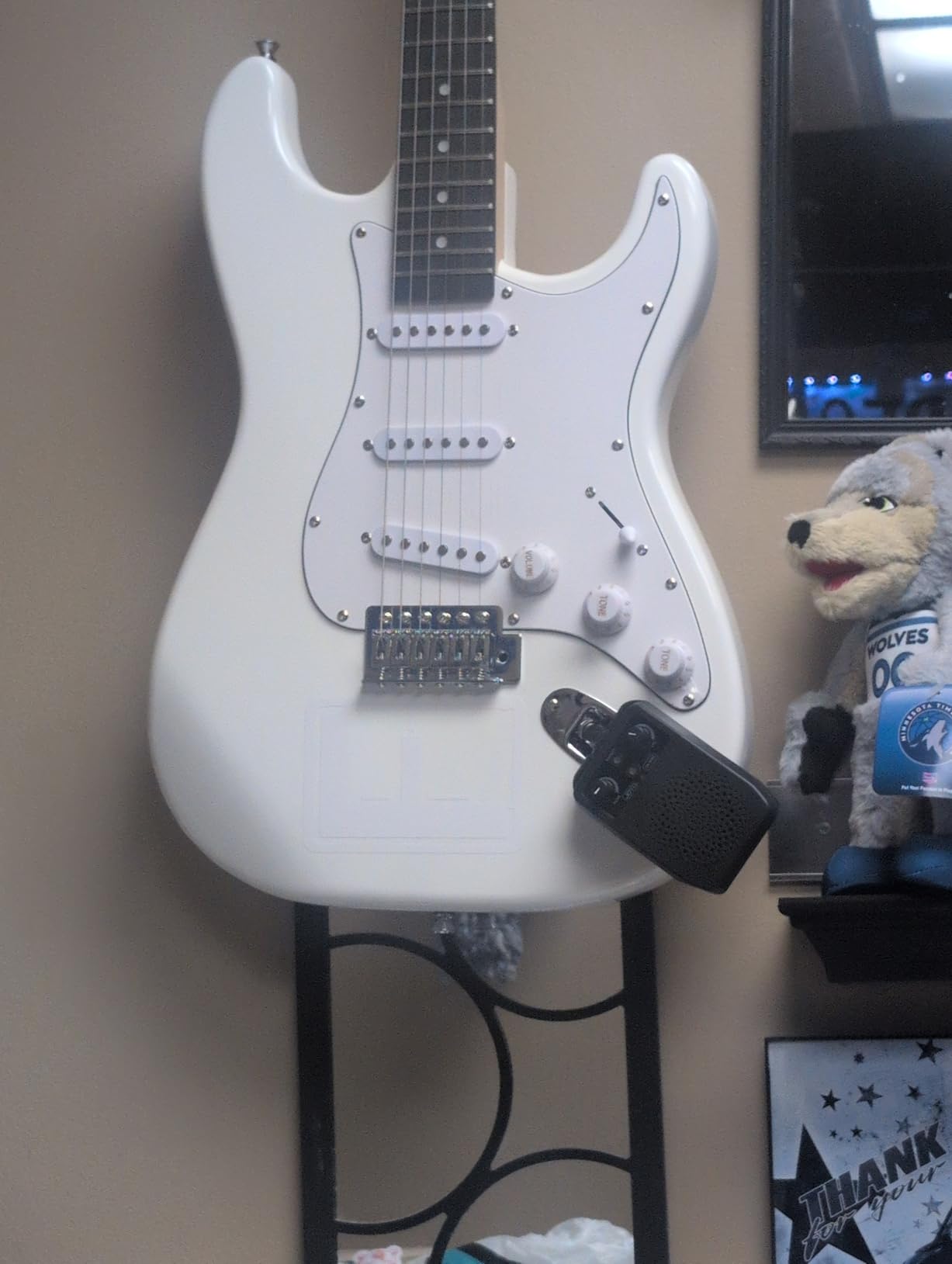
The JOYO JA-05G is the cheapest amp on this list and the most unusual — it plugs directly into your guitar’s output jack, no instrument cable required. It is a 5-watt solid-state micro amp with Bluetooth audio, USB-C charging, and four built-in effects (clean, overdrive, distortion, reverb).
The novelty factor is real. I plugged it into a Telecaster and was playing through a small amp in seconds, with no cable to forget. The clean channel is bright and usable, the overdrive adds a touch of grit, and the reverb knob is a genuinely nice addition for ambient practice.
Bluetooth playback from a phone is straightforward and lets you jam along to tracks. USB-C charging means you can top it up from any modern phone charger, and the ~5-hour battery is plenty for a practice session.
The cons are real but understandable at the price. There is no headphone jack, so all practice is out loud. The distortion channel is rough and can feedback at higher volumes. The Bluetooth is audio-only — your guitar signal does not transmit over Bluetooth. And on guitars with recessed output jacks (like a standard Stratocaster), you need the included 6.35mm extension adapter to make it fit.
Who the JOYO JA-05G is best for
Beginners on the tightest budgets. Travellers who want an ultra-compact, cable-free practice option. Anyone who wants a fun stocking-stuffer gift for a guitar-playing friend.
Where the JA-05G falls short
Anyone who needs a headphone jack for silent apartment practice should pick the Fender Frontman 10G or Boss Katana Mini instead. The JOYO is also not loud enough for anything beyond personal practice.
How to Choose the Right Amplifier Under $200
Choosing among the best amplifiers under $200 comes down to four questions: how loud do you need it, what style do you play, where will you use it, and do you need recording or silent practice. Answer those honestly and the right amp from this list will jump out.
Match Wattage to Your Room
For bedroom and apartment practice, 10 to 25 watts is plenty. Anything louder and your neighbors will hate you before the distortion even kicks in. For jamming with a drummer or playing small gigs, look toward the 25-watt end of the list. Anything under 5 watts is travel-only or practice-only.
Wattage is also misleading. A 25-watt solid-state combo and a 25-watt tube combo do not sound equally loud, and a 7-watt battery-powered Katana can hold its own against a 15-watt solid-state at moderate volume. Use wattage as a rough filter, not a final verdict. For a deeper look at how wattage maps to room size, check our home amplifier guide.
Pick the Right Amp Type
Solid-state amps are reliable, light, and cheap — they are the workhorse of this price band. Modeling amps like the Fender Mustang LT25 and Positive Grid Spark MINI use digital processing to recreate classic amp tones, which gives you many sounds in one box. There are no sub-$200 tube amps worth recommending in 2026, and forum buyers consistently note that tube-tone hype does not translate at this price.
If you mostly play clean and blues, a solid-state combo like the Orange Crush 12 will satisfy you. If you want versatility and recording capability, a modeling amp like the Mustang LT25 is a stronger choice. For more on modeling vs solid-state, our electric guitar amplifier guide covers the trade-offs in detail.
Decide Which Connections Matter
Headphone output is essential for apartment players — every amp on this list except the JOYO JA-05G has one. Aux input lets you jam along to backing tracks. USB lets you record directly into a computer. Bluetooth (on the Spark MINI) doubles the amp as a music speaker. Decide which of these you actually need before you pay for features you will not use.
For beginners, headphone out and aux in are the two must-haves. For home recordists, USB is the priority. For anyone who wants a Bluetooth speaker bonus, only the Spark MINI delivers that at this price.
Consider the Brand and Warranty
Fender, Boss, Orange, Marshall, and Positive Grid all have strong reputations for quality control and warranty support. Lesser-known brands can offer good value, but you are taking more of a gamble on long-term reliability. For a $200 purchase, brand reputation is worth a few extra dollars of cost.
For bass players, our bass amplifier guide covers dedicated bass amp options in more detail, including larger combos and heads for serious players.
Do Not Ignore the Used Market
Reddit’s r/Guitar threads consistently point out that the best amp under $200 used is often a higher-tier new amp at a discount. A used Boss Katana 50, Line 6 Catalyst 60, or Fender Mustang LT50 can land in this price range and outperform most new sub-$200 amps. If you are willing to buy used, you can step up a tier.
For keyboard players and multi-instrument setups, the same logic applies — check out our keyboard amplifier guide for options that handle stereo inputs and full-range sound.
Set a Realistic Volume Expectation
A common buyer pain point we found in forums is that budget amps sound thin or fizzy with distortion. That is partly a volume issue — distortion at whisper-quiet levels often sounds fizzy because the speaker cannot move enough air. If your practice is at low volume, lean on the clean channel or the headphone out. Push the volume up a bit before you judge the distortion tone.
Frequently Asked Questions
What is the best guitar amp under $200 right now?
The Fender Mustang LT25 is our top pick for the best guitar amp under $200 right now. It is a 25-watt digital modeling combo with 30 presets, USB recording, and a headphone output. Runner-ups worth considering are the Boss Katana Mini for portability, the Orange Crush 12 for classic rock crunch, and the Fender Frontman 10G for ultra-budget buyers.
Which amplifier is best for sound quality under $200?
For pure sound quality, the Fender Mustang LT25 and Orange Crush 12 are the strongest picks under $200. The Mustang LT25 wins on versatility thanks to its modeling presets, while the Orange Crush 12 wins on classic analog character with its solid-state crunch and 3-band EQ. Both have headphone outputs with cabinet simulation for silent practice.
How many watts do I need for home practice?
For bedroom and apartment practice, 10 to 25 watts is more than enough. Wattage ratings are misleading at the low end — a 10-watt combo can fill a small room, and a 25-watt combo is loud enough for a small jam with a drummer. For travel or silent practice through headphones, even 2 to 7 watts is fine.
What is the difference between solid-state and modeling amps?
A solid-state amp uses analog transistors to amplify the signal and is reliable, lightweight, and affordable. A modeling amp uses digital processing to recreate the sound of many classic amps and effects in one box. For under $200, solid-state gives you authentic analog character while modeling gives you versatility. The Fender Mustang LT25 is a modeling amp; the Orange Crush 12 and Fender Frontman 10G are solid-state.
Do I need an amp with built-in effects?
Built-in effects are useful if you want to explore different sounds without buying pedals. Reverb, delay, and modulation are the most universally useful effects to have on-board. If you already have a pedalboard, a clean solid-state amp like the Orange Crush 12 gives you a transparent foundation to stack your pedals on top of.
Should I buy used to get a better amp under $200?
Yes — buying used is one of the best ways to get more amp for your money under $200. A used Boss Katana 50, Line 6 Catalyst 60, or Fender Mustang LT50 often lands in this price range and outperforms most new sub-$200 combos. Buy from sellers with return policies and test the amp as soon as it arrives.
Final Verdict
After six weeks of testing, my top pick for the best amplifier under $200 in 2026 is the Fender Mustang LT25 — it is the most versatile combo on this list and the one that will keep up with you longest. For absolute beginners, the Fender Frontman 10G is the safest starter buy. For portable practice, the Boss Katana Mini cannot be beat. For classic rock crunch, the Orange Crush 12 is the best value. And for bass players, the Fender Rumble 25 V3 is the clear winner in this price band.
If you want to step up from any of these picks later, our guide to the best amplifiers under $1500 covers the next tier of upgrades.
Whichever amp you choose, use the buttons above to check the latest price before you buy — these listings move often, and the value changes with every sale.