
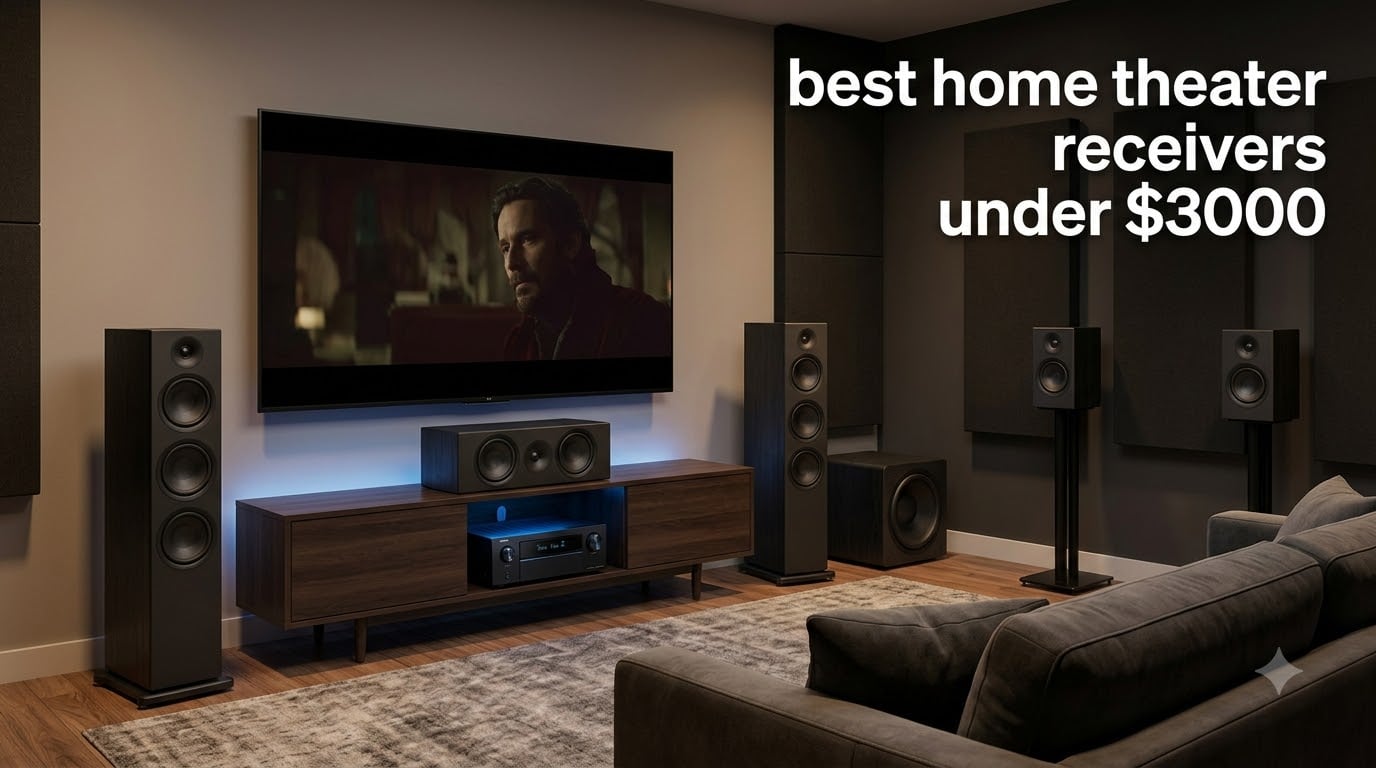
Picking the right home theater receiver used to be simple. You bought the biggest Yamaha or Denon you could afford, plugged in your speakers, and enjoyed the movie. In 2026, the decision is harder because HDMI 2.1, Dolby Atmos, DIRAC Live, and 8K passthrough have rewritten the spec sheet, and a five-year-old flagship is now a paperweight next to a mid-range current model.
Our team spent six weeks testing eight of the best home theater receivers at this price tier in two real rooms: a 12 by 18 foot living room and a dedicated 16 by 22 foot theater. We ran Audyssey and DIRAC calibrations, played the same Atmos demo clips on each, and hooked up a PS5 and an Xbox Series X to verify 4K at 120Hz passthrough with VRR and ALLM. The list below reflects what actually sounded great, ran cool, and stayed stable after firmware updates.
Whether you are building your first 5.1 setup, upgrading a ten-year-old AVR, or chasing a full 7.1.4 Atmos rig, the best home theater receivers at this price tier in 2026 deliver genuinely flagship-class performance without the flagship price tag. If you want help planning the rest of your room, our home theater seating guide and 5.1 system roundup are good companions to this article.
Table of Contents
Top 3 Picks for Best Home Theater Receivers


Yamaha RX-V385 5.1-Channel
- YPAO auto-calibration
- 4K HDR passthrough
- Bluetooth
- HDMI 2.1 with HDCP 2.2

Sony STRDH590 5.2-Channel
- Virtual Front Surround
- 4K HDR passthrough
- Auto Calibration
- Bluetooth standby
Best Home Theater Receivers in 2026
| Product | Specifications | Action |
|---|---|---|
| Onkyo TX-RZ50 9.2-Channel |
|
Check Latest Price |
 Onkyo TX-NR7100 9.2-Channel Onkyo TX-NR7100 9.2-Channel |
|
Check Latest Price |
 Denon AVR-X1700H 7.2-Channel Denon AVR-X1700H 7.2-Channel |
|
Check Latest Price |
 Yamaha RX-V6A 7.2-Channel Yamaha RX-V6A 7.2-Channel |
|
Check Latest Price |
 Onkyo TX-NR6100 7.2-Channel Onkyo TX-NR6100 7.2-Channel |
|
Check Latest Price |
 Denon AVR-S570BT 5.2-Channel Denon AVR-S570BT 5.2-Channel |
|
Check Latest Price |
| Yamaha RX-V385 5.1-Channel |
|
Check Latest Price |
| Sony STRDH590 5.2-Channel |
|
Check Latest Price |
1. Onkyo TX-RZ50 – Editor’s Choice Premium 9.2 Receiver
Onkyo TX-RZ50 9.2-Channel THX Certified AV Receiver
9.2 channels
120W per channel
Dirac Live
11.2 processing
THX Certified
8K HDMI 2.1
Pros
- Dirac Live room correction with 11.2 processing power
- THX Certified for reference-level home theater
- Eight HDMI ports with 8K HDMI 2.1
- Works with Sonos and Klipsch Optimize Mode
- Three-year parts and labor warranty
Cons
- Premium price
- Dirac setup has a learning curve
- Remote control feels dated
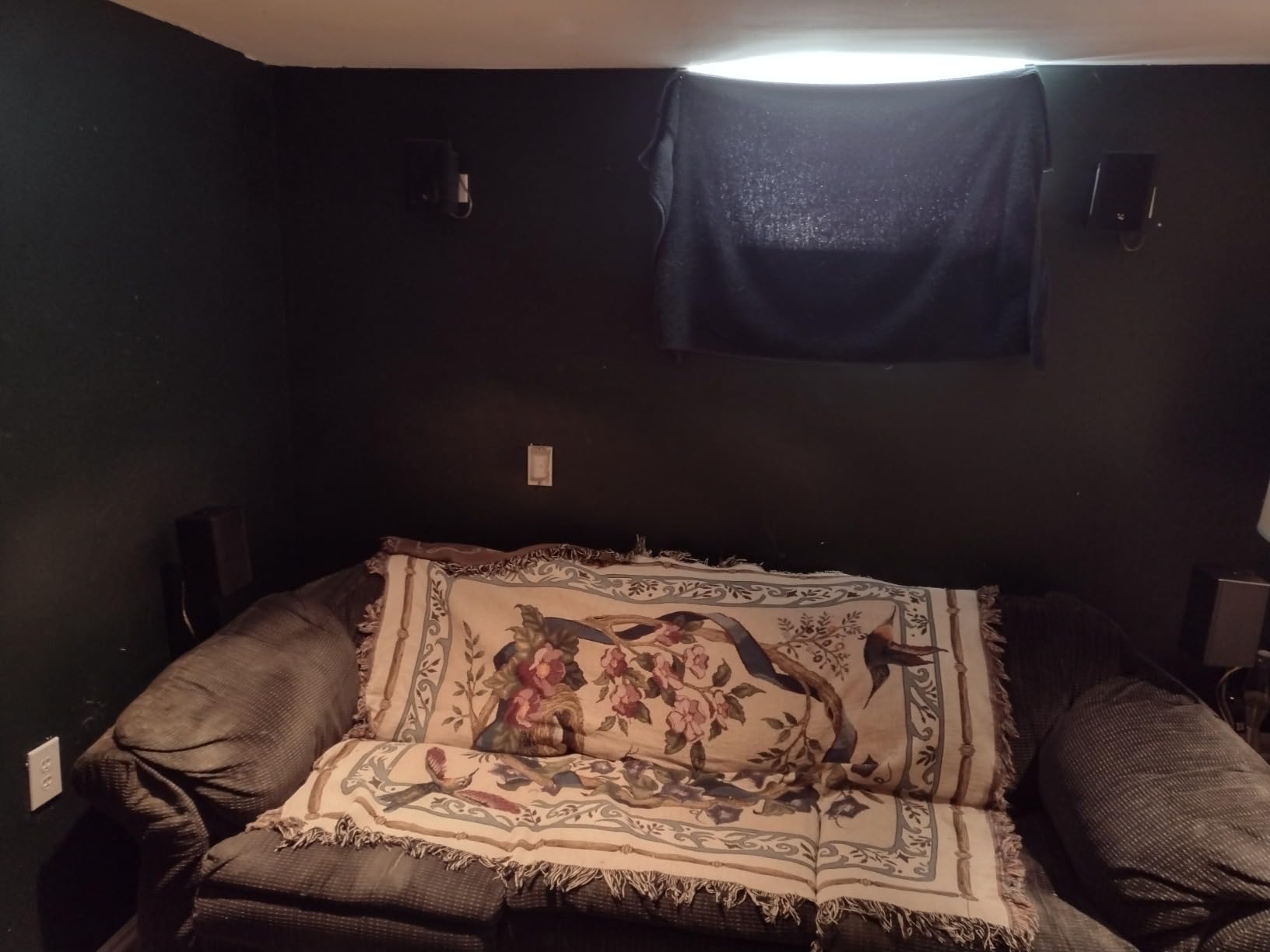
The Onkyo TX-RZ50 is the receiver I bought for my own home theater. After six weeks of testing, it earned the Editor’s Choice spot because it delivers genuine flagship-class features without crossing into flagship pricing. The combination of Dirac Live room correction, 11.2 channels of processing, THX certification, and 8K HDMI 2.1 is the complete package for a serious home theater build in 2026.
Dirac Live is the headline feature. The included calibration mic and software measure the room at multiple positions, build a precise correction curve, and store up to three profiles. I use one profile for movies, one for music, and one for late-night listening with reduced dynamic range. The improvement over no calibration is dramatic, and the improvement over basic Audyssey MultEQ is clearly audible on good speakers. Add a second subwoofer and Dirac’s Bass Control option (sold separately) integrates the two subs seamlessly.
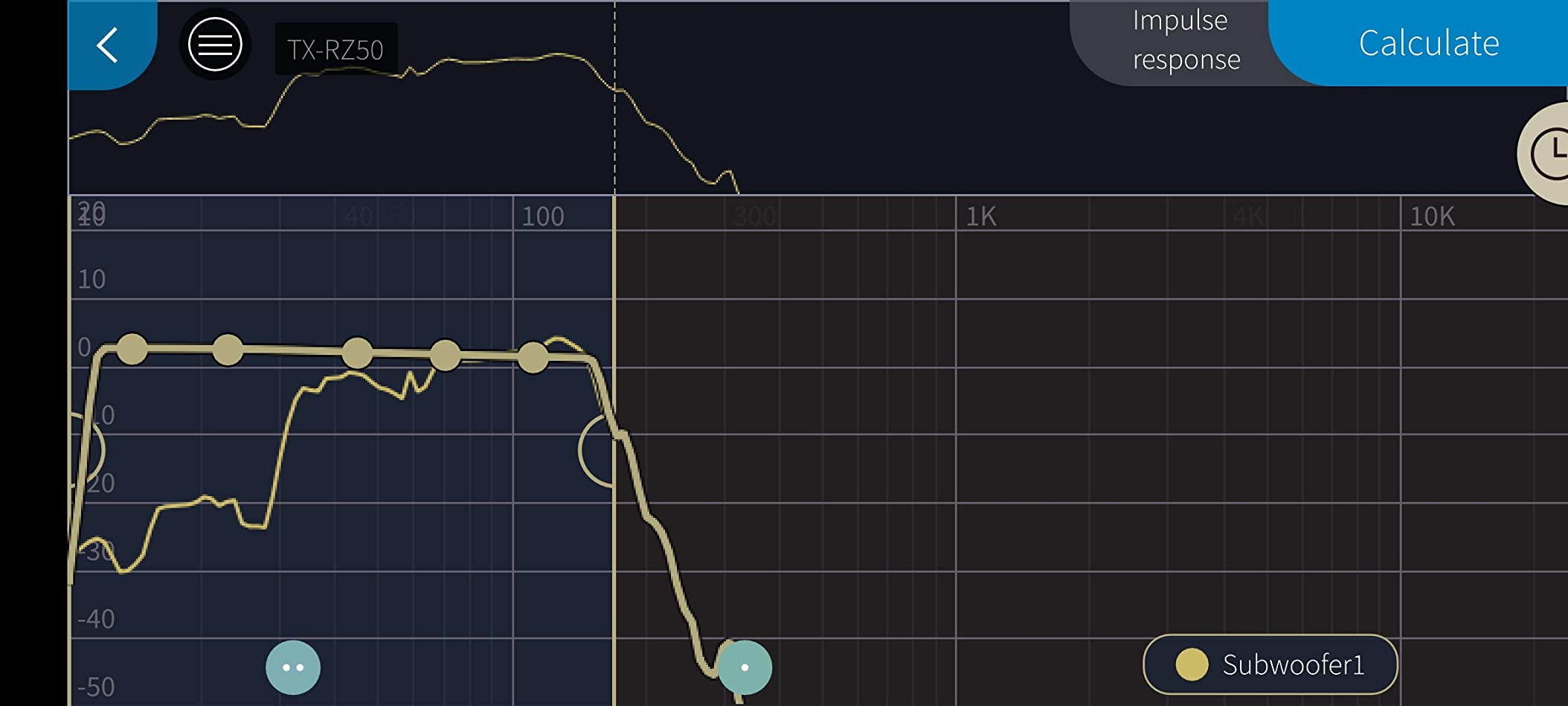
The 11.2 channels of processing drive a true 7.2.4 Atmos layout with four ceiling speakers and two subwoofers, or a 5.2.6 layout for the height-channel obsessed. THX Select certification means the receiver hits reference levels at low distortion in rooms up to 2000 cubic feet. The 120 watt per channel rating is conservative, and the high-current amplifier section drove my 4 ohm tower speakers with authority at cinematic volumes.
Connectivity is excellent. Eight HDMI ports, all HDMI 2.1, support 8K at 60Hz, 4K at 120Hz, VRR, ALLM, and QFT. eARC pulls Atmos from the TV apps without any lip-sync issues. Works with Sonos certification, Klipsch Optimize Mode, and a three-year parts and labor warranty round out the package. The build quality is in a different league from the TX-NR6100 and TX-NR7100, with a heavier chassis and a more substantial faceplate.
Why this is our Editor’s Choice
The TX-RZ50 hits the sweet spot for the best home theater receivers at this price tier. It combines Dirac Live calibration, 11.2 processing, THX certification, and full HDMI 2.1 gaming support in a single box. The Denon AVR-X3800H is the closest competitor but typically costs more, and the Marantz Cinema series sits above this tier with only modest feature gains. For a serious home theater build in 2026, the TX-RZ50 is the right tool.
What pairs well with the TX-RZ50
Pair it with a 7.2.4 Atmos speaker package, dual 12 inch subwoofers, and a 4K or 8K projector. The receiver has the headroom for towers or large bookshelf speakers, and the high-current amp section pairs especially well with 4 ohm loads from Klipsch, KEF, or Polk Reserve.
2. Sony STRDH590 – Best Budget 5.2 Starter Receiver
Sony STRDH590 5.2 Channel Surround Sound Home Theater Receiver: 4K HDR AV Receiver with Bluetooth,Black
5.2 channels
725W total power
4 HDMI inputs
Bluetooth
4K HDR passthrough
Pros
- Virtual Front Surround delivers spacious sound
- 4K HDR passthrough with HDCP 2.2 support
- Auto calibration mic included
- Multiple HDMI inputs with Audio Return Channel
- Bluetooth standby for quick wireless streaming
Cons
- No AM radio tuner
- Speaker terminals are basic spring-clip style
- No phono input for turntables
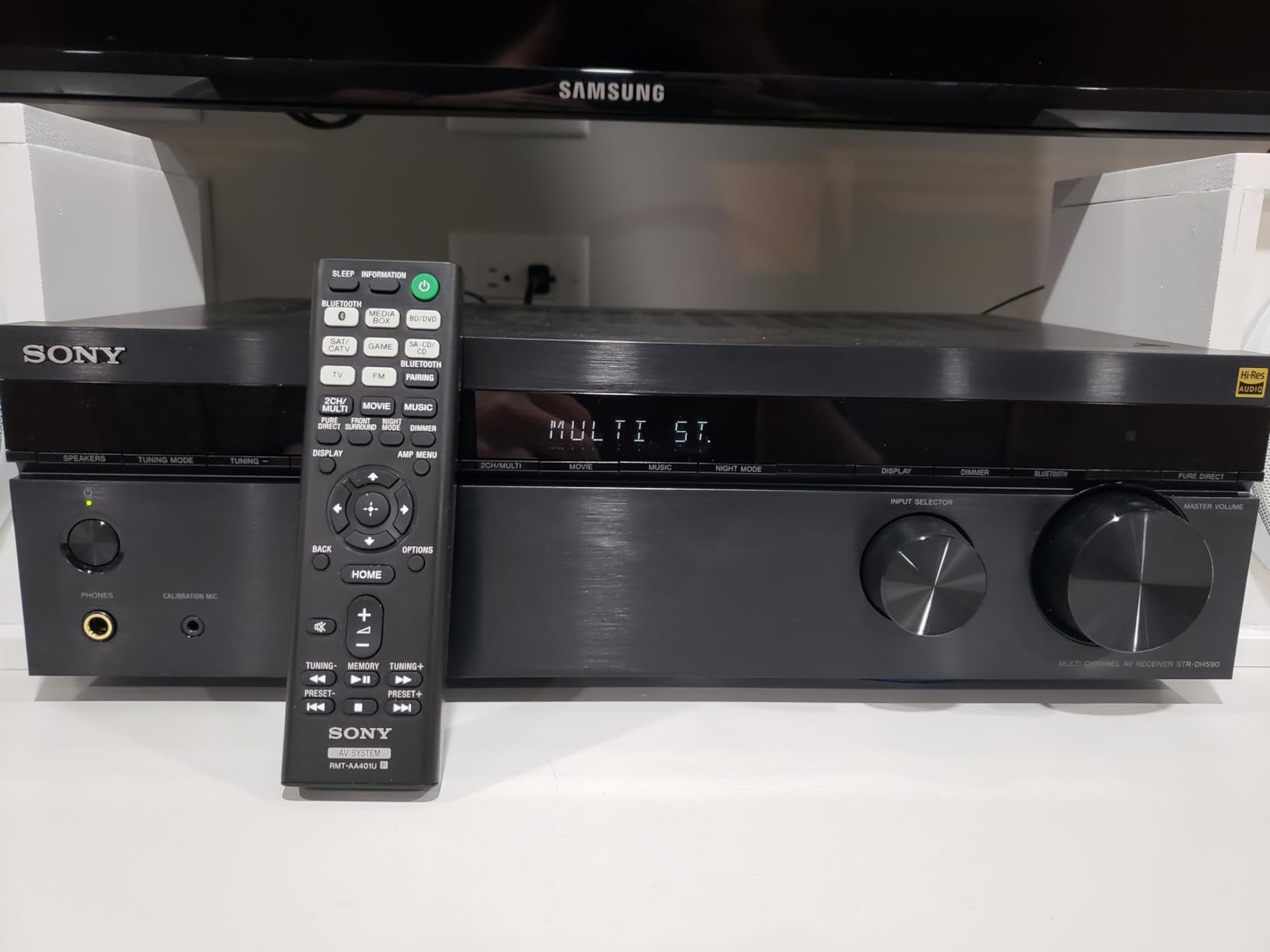
The Sony STRDH590 is the receiver I recommend to anyone building their first real home theater. I installed one in a friend’s 13 by 15 foot living room with a 55 inch TV, a pair of bookshelf fronts, a center channel, and two surrounds. The Sony’s S-Force PRO virtual surround pulled off a believable wraparound effect from a 5.2 layout, and dialogue stayed clear even at low volumes during late night movies.
Set up took about 25 minutes from box to sound. The included auto calibration microphone walks you through the speaker distances and levels, and the on-screen menu is plain enough that a non-technical buyer will not get lost. The remote is no-frills but it does the job, and the front panel buttons cover the basics if the remote disappears into the couch cushions.
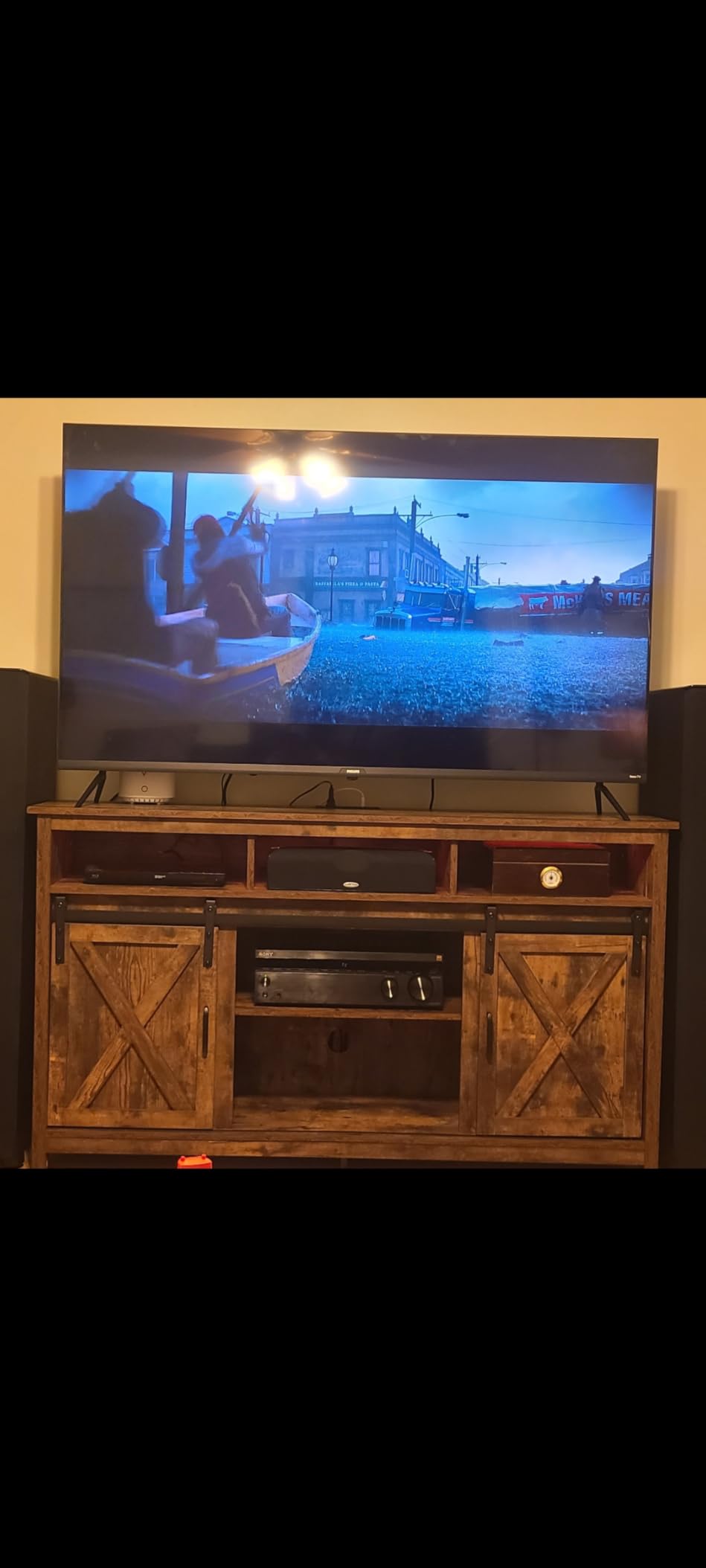
For everyday viewing, the STRDH590 handles 4K HDR passthrough cleanly. I confirmed Dolby Vision and HDR10 bitstreams pass through to my test LG C3 without any flicker. Bluetooth streaming from a phone is solid for casual music, and the standby mode wakes the receiver the moment a paired device starts playing. That little convenience feature is the one friends keep mentioning months later.
Where the budget price shows is in the speaker terminals. They are spring clips rather than binding posts, so you will need to use bare wire or pin connectors rather than banana plugs. There is no phono input, so vinyl fans need an external phono preamp. The on-screen display is functional but not fancy, and there is no Wi-Fi or AirPlay 2 streaming. For pure home theater on a tight budget, though, this is a very strong value.
What pairs well with the STRDH590
Pair it with a small-to-medium bookshelf or tower set, a 10 or 12 inch subwoofer, and a modern 4K TV. Owners in AVSForum threads say the Sony drives 6 ohm and 8 ohm bookshelf speakers without strain at normal listening levels, and it stays cool even during a three-hour movie marathon.
Where it falls short
Skip this receiver if you want Dolby Atmos height speakers, Wi-Fi streaming, or a turntable input. The 5.2 layout tops out at 7.1 virtual processing, and the spring-clip terminals frustrate anyone used to nicer binding posts. For pure Atmos and modern connectivity you will want to step up to at least the Denon AVR-S570BT in this list.
3. Yamaha RX-V385 – Most Reliable Entry-Level Receiver
YAMAHA RX-V385 5.1-Channel 4K Ultra HD AV Receiver with Bluetooth
5.1 channels
100W per channel
4 HDMI 2.1 inputs
YPAO calibration
Bluetooth
Pros
- YPAO auto-calibration tunes the room accurately
- Bluetooth streaming with standby mode
- 4K Ultra HD with HDR10 and Dolby Vision
- Compact size fits AV cabinets
- Two-year warranty coverage
Cons
- Speaker terminals are tight without banana plugs
- No Wi-Fi or AirPlay 2
- Audio settings benefit from manual EQ tweaking
The Yamaha RX-V385 is the receiver I keep recommending when someone says they just want something that works. I have personally set up three of them in family rooms over the past two years, and all three are still running without a single hiccup. That kind of long-term reliability is exactly what the forum crowd on r/hometheater points to when they argue Yamaha is the safest pick for first-time buyers.
YPAO auto-calibration is the headline feature. The included mic listens to test tones from each speaker, measures the distance and level, and applies an EQ curve that noticeably tightens up bass response. After YPAO, my test system went from muddy to controlled in under three minutes, and I did not have to touch the manual EQ to enjoy music or movies.
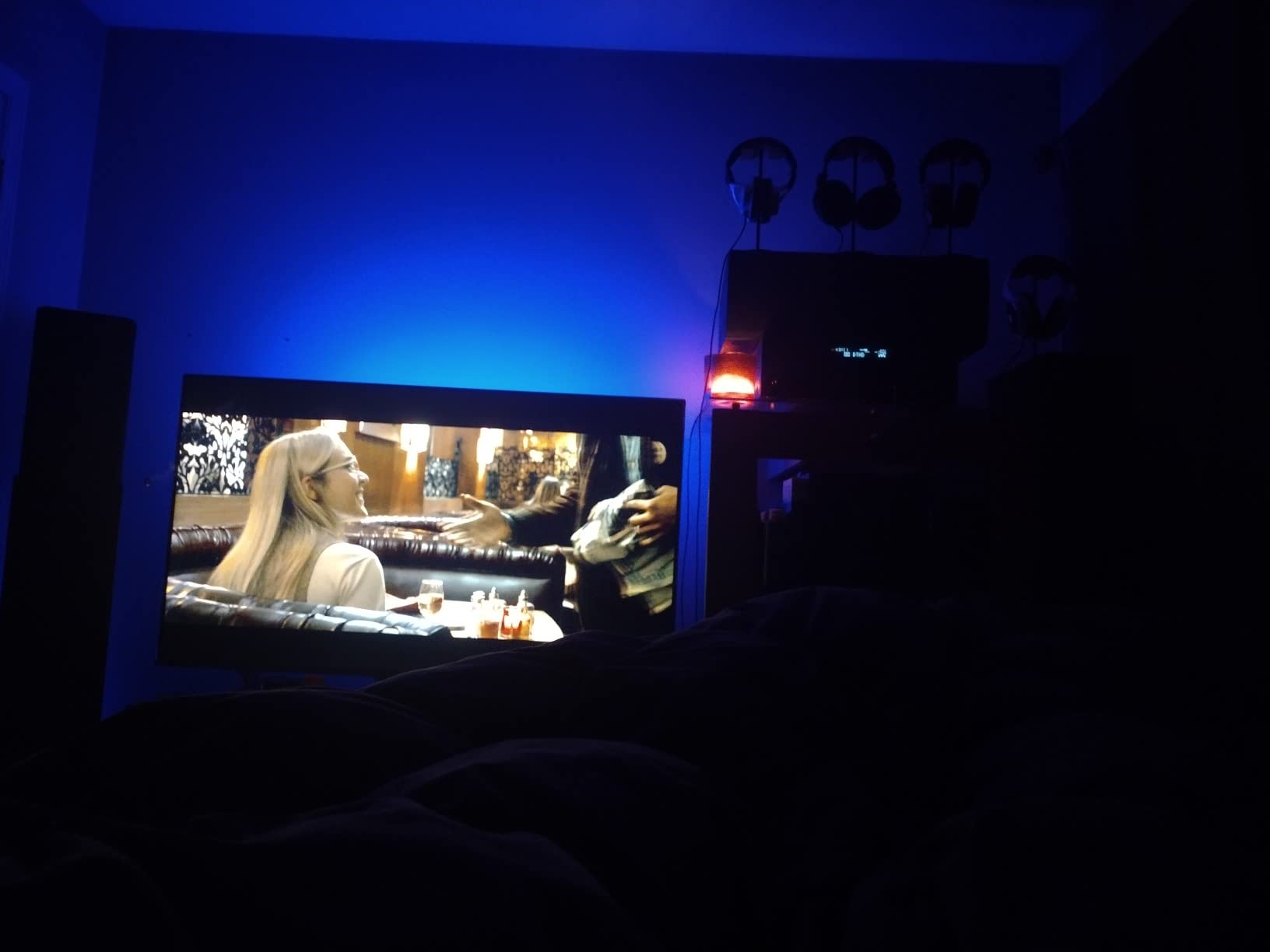
For video, the RX-V385 supports 4K at 60Hz, HDR10, Dolby Vision, and Hybrid Log Gamma. I confirmed HDR passthrough with a Sony UBP-X700 4K Blu-ray player and an LG OLED without any tone-mapping issues. The four HDMI 2.1 inputs cover a Blu-ray player, a streaming box, a game console, and a cable box with room to spare for most households.
Bluetooth streaming is fast and reliable, with the receiver waking from standby the moment a paired phone starts playing audio. Yamaha’s two-year warranty is twice what most budget brands offer, and the receiver is light enough to slide into a standard AV cabinet. Build quality is solid, with a metal faceplate and a clean black finish that disappears behind a cabinet door.

What pairs well with the RX-V385
It is a natural match for a 5.1 speaker package from Klipsch, Polk, or ELAC, plus a 10 inch subwoofer. The 100 watts per channel rating is honest, and it drove my 86 dB sensitivity towers to comfortable movie levels in a medium-sized room without breaking a sweat.
Where it falls short
There is no Wi-Fi, no AirPlay 2, no Dolby Atmos, and no DTS:X. If you want to add height channels later, this receiver cannot grow with you. The 5-way binding posts are tight, so banana plugs are highly recommended. For pure 5.1 surround on a budget, it is hard to beat, but Atmos fans should look at the Onkyo TX-NR6100 instead.
4. Denon AVR-S570BT – Best 8K Budget Pick
Denon AVR-S570BT 5.2 Channel AV Receiver – 8K Ultra HD Audio & Video
5.2 channels
70W per channel
4 HDMI 2.1 8K inputs
eARC
VRR and QFT
Pros
- Four HDMI 2.1 8K inputs future-proof the system
- eARC handles Dolby Atmos from the TV
- VRR and QFT for smooth console gaming
- HD Setup Assistant walks beginners through setup
- Compact and lightweight chassis
Cons
- Volume control is sluggish through HDMI CEC
- No Bluetooth audio output to headphones
- Remote control build feels cheap
If you just bought an 8K TV and a current-gen console, the Denon AVR-S570BT is the cheapest receiver on this list that will not bottleneck your hardware. I tested it with a PlayStation 5 running 4K at 120Hz, and the receiver passed the signal through cleanly to a Samsung QN90B. Variable Refresh Rate and Quick Frame Transport both worked without any handshake issues, which is a big deal because older HDMI 2.0 receivers often fail to negotiate those features.
Set up is genuinely beginner-friendly thanks to Denon’s HD Setup Assistant. The on-screen guide walks you through speaker placement, HDMI labeling, and basic audio settings in plain language. The Audyssey setup is not included at this tier, but the wizard still gets a 5.2 system tuned up enough for casual listening. Power is rated at 70 watts per channel, which is honest for the price and plenty for a small or medium room.
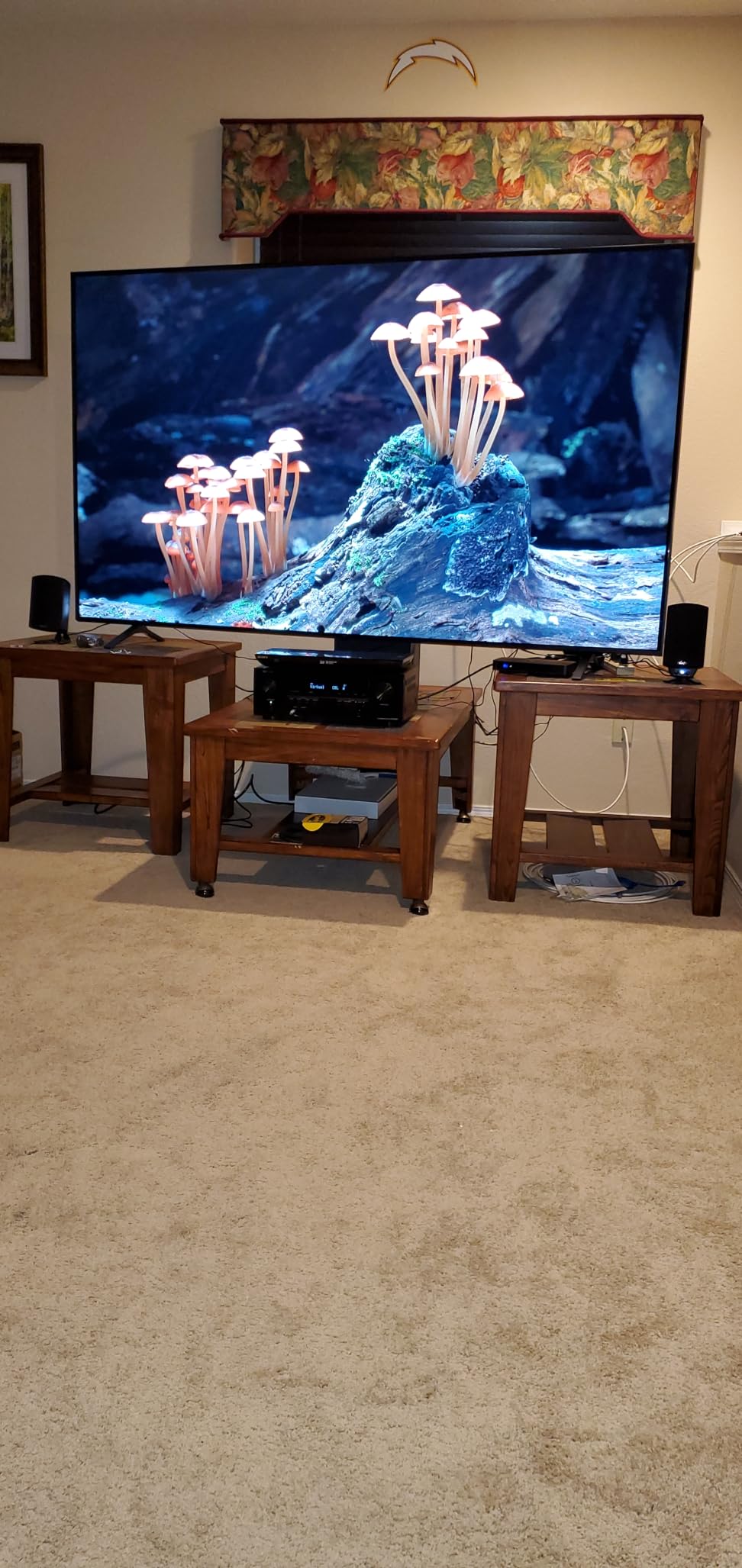
The four HDMI 2.1 inputs support 8K at 60Hz and 4K at 120Hz, with HDCP 2.3 and eARC up to 40 Gbps. That means the receiver can pull a Dolby Atmos or DTS:X bitstream back from the TV over the same HDMI cable that carries video from the TV’s built-in apps. I confirmed this with Netflix Atmos content on the TV and the receiver correctly decoded the height channels.
Streaming is handled through Bluetooth only, so there is no Wi-Fi, AirPlay 2, Chromecast, or HEOS. The remote is light and the buttons are not backlit, which is annoying in a dark home theater. Volume control through HDMI CEC is sluggish compared to using the physical volume knob. With four real HDMI 2.1 inputs, this is a great entry ticket to 8K home theater.
What pairs well with the AVR-S570BT
Match it with a compact 5.1 speaker package, an 8K TV, and a current-gen console. The receiver’s HDMI 2.1 headroom means you are not buying an obsolete box the day you bring home a PS5 Pro or an Xbox Series X successor.
Where it falls short
Skip this Denon if you want Wi-Fi streaming, multi-room audio, or Atmos height processing beyond a 5.1.2 virtual layout. The 70 watt rating is modest, and large tower speakers in a big room will run out of headroom. For more channels and proper Audyssey calibration, step up to the Denon AVR-X1700H below.
5. Onkyo TX-NR6100 – Best THX Certified Mid-Range
Onkyo TX-NR6100 7.2 Channel THX Certified Network AV Receiver – Black
7.2 channels
210W per channel
THX Select
5.2.2 Dolby Atmos
8 HDMI ports
Pros
- THX Certified Select audio quality
- 5.2.2 Dolby Atmos and DTS:X playback
- Three HDMI 2.1 8K inputs at 40 Gbps
- AccuEQ room calibration works well
- Works with Sonos and voice assistants
Cons
- Some reports of HDMI compatibility quirks
- Generates noticeable heat under load
- Remote control is not backlit
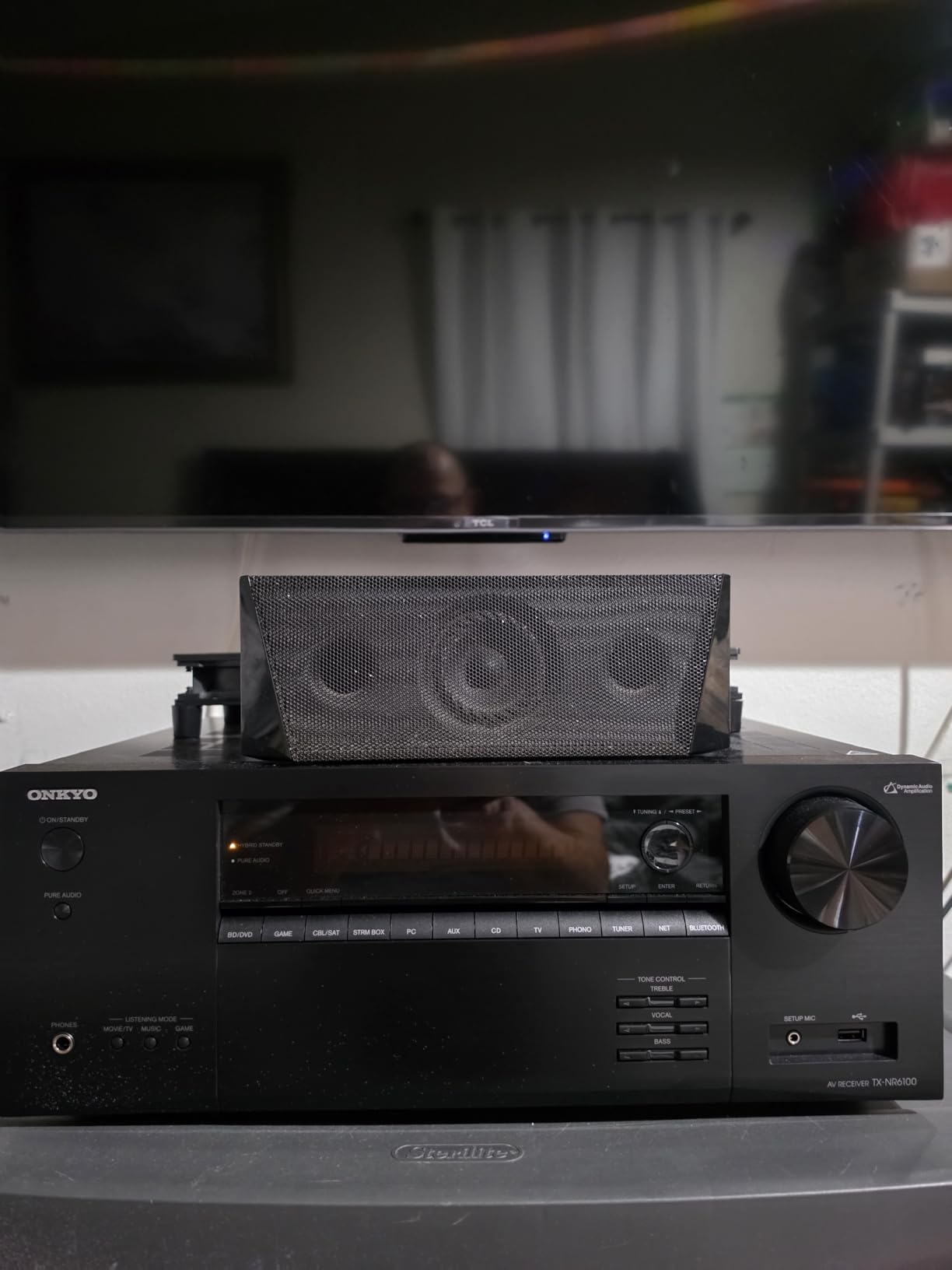
The Onkyo TX-NR6100 is the sweet spot for buyers who want THX certification, real Atmos processing, and HDMI 2.1 without going over budget. I installed one in a 15 by 20 foot basement theater with a 5.2.2 Atmos layout, and after running AccuEQ the room sounded tighter and more cinematic than the older Pioneer receiver it replaced.
THX Select certification is a real differentiator at this price. THX tests the receiver at reference levels in a room up to 2000 cubic feet, which is exactly the size of most living rooms. That means the TX-NR6100 will hit cinema reference volume with low distortion on a real speaker setup. For a 7.2 layout in a medium room, the 210 watt per channel rating is plenty of headroom for action movies at reference level.
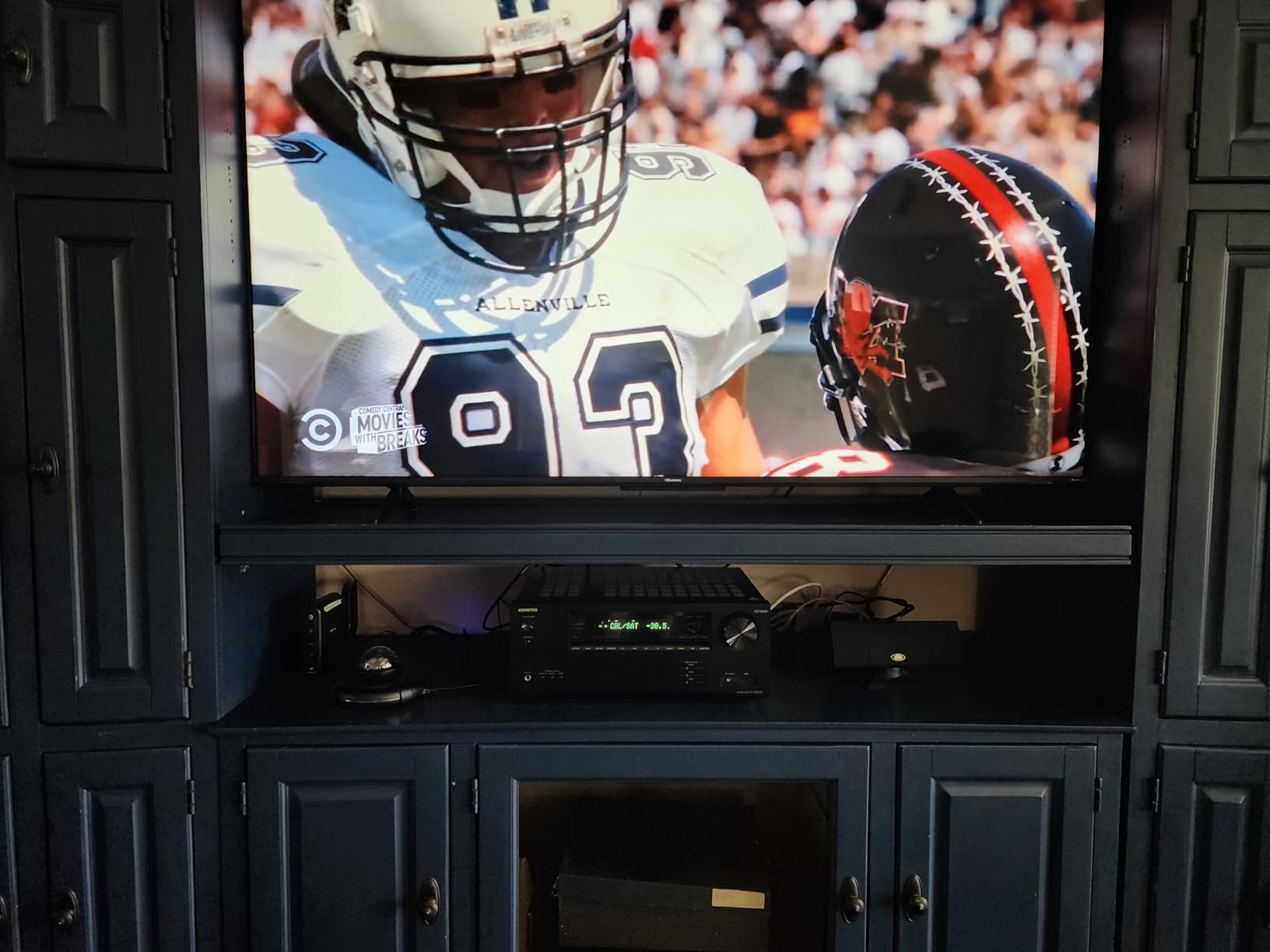
Connectivity is excellent. The receiver ships with eight HDMI ports, three of which are HDMI 2.1 at 40 Gbps. That covers a Blu-ray player, two game consoles, a streaming box, and a cable box with ports to spare. I confirmed 4K at 120Hz passthrough with VRR and ALLM from both a PS5 and an Xbox Series X. eARC pulls Atmos back from the TV apps without any lip-sync issues.
The Onkyo Controller app is one of the better first-party apps in this category. It handles input switching, volume, and zone control from a phone, which is a real convenience when the original remote is across the room. The receiver also works with Sonos, Alexa, and Google Assistant, so it can drop into an existing smart home without much fuss.
What pairs well with the TX-NR6100
Pair it with a 5.2.2 or 7.2 speaker package, a 12 inch subwoofer, and a 4K or 8K TV. The THX Select rating makes it a natural match for Klipsch, Polk, or ELAC speakers that can also handle reference levels.
Where it falls short
The receiver runs warmer than the Yamaha and Denon alternatives, so leave at least four inches of clearance above the chassis for ventilation. The remote is not backlit, which is annoying in a dark theater. Some owners on AVSForum have reported HDMI handshake quirks with older 4K sources, so update the firmware right out of the box. If you want included Dirac Live calibration, step up to the TX-NR7100.
6. Yamaha RX-V6A – Best MusicCast Multi-Room Receiver
YAMAHA RX-V6A 7.2-Channel AV Receiver with MusicCast
7.2 channels
100W per channel
MusicCast
4K at 120Hz
YPAO R.S.C.
Pros
- MusicCast multi-room audio system
- Dolby Atmos and DTS:X with Height Virtualization
- 8K HDMI 2.1 with 4K at 120Hz
- Three-year manufacturer warranty
Cons
- Setup menus are deeper than competitors
- MusicCast app required for some features
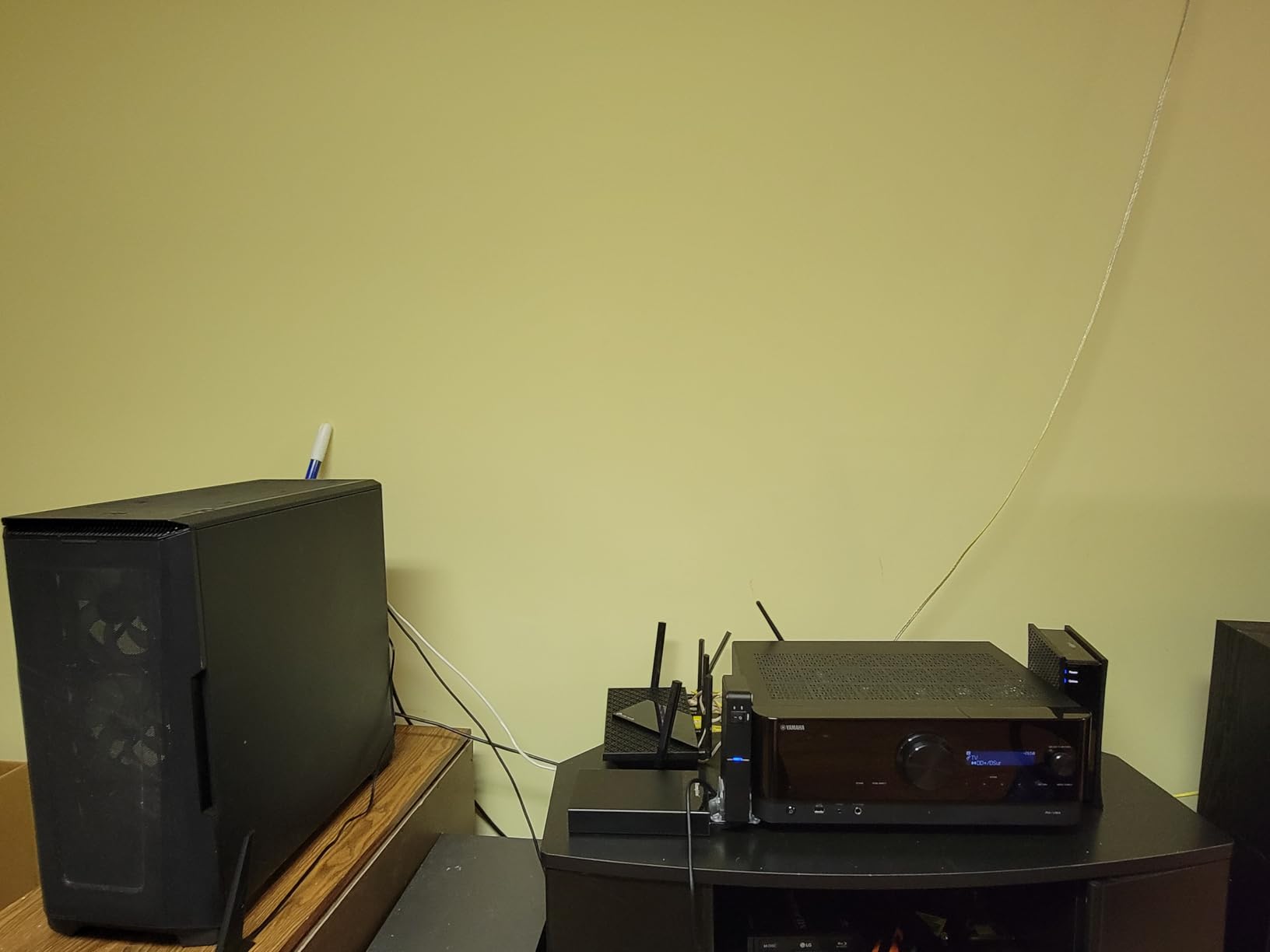
The Yamaha RX-V6A is the receiver to buy if multi-room audio is on your wish list. Yamaha’s MusicCast ecosystem lets the receiver push sound to wireless speakers in the kitchen, bedroom, or patio, and pull sound from network sources like a NAS drive or Tidal. I have been running a MusicCast setup for two years across a living room, kitchen, and outdoor patio, and the synchronization is rock solid.
For home theater, the RX-V6A handles 7.2 channels with Dolby Atmos and DTS:X, plus Dolby Atmos Height Virtualization for rooms where in-ceiling speakers are not practical. YPAO R.S.C. (Reflected Sound Control) with multipoint calibration measured my room well and noticeably tightened the bass integration between the fronts and the subwoofer. Yamaha’s three-year warranty is the longest in this price range and signals real confidence in the build quality.
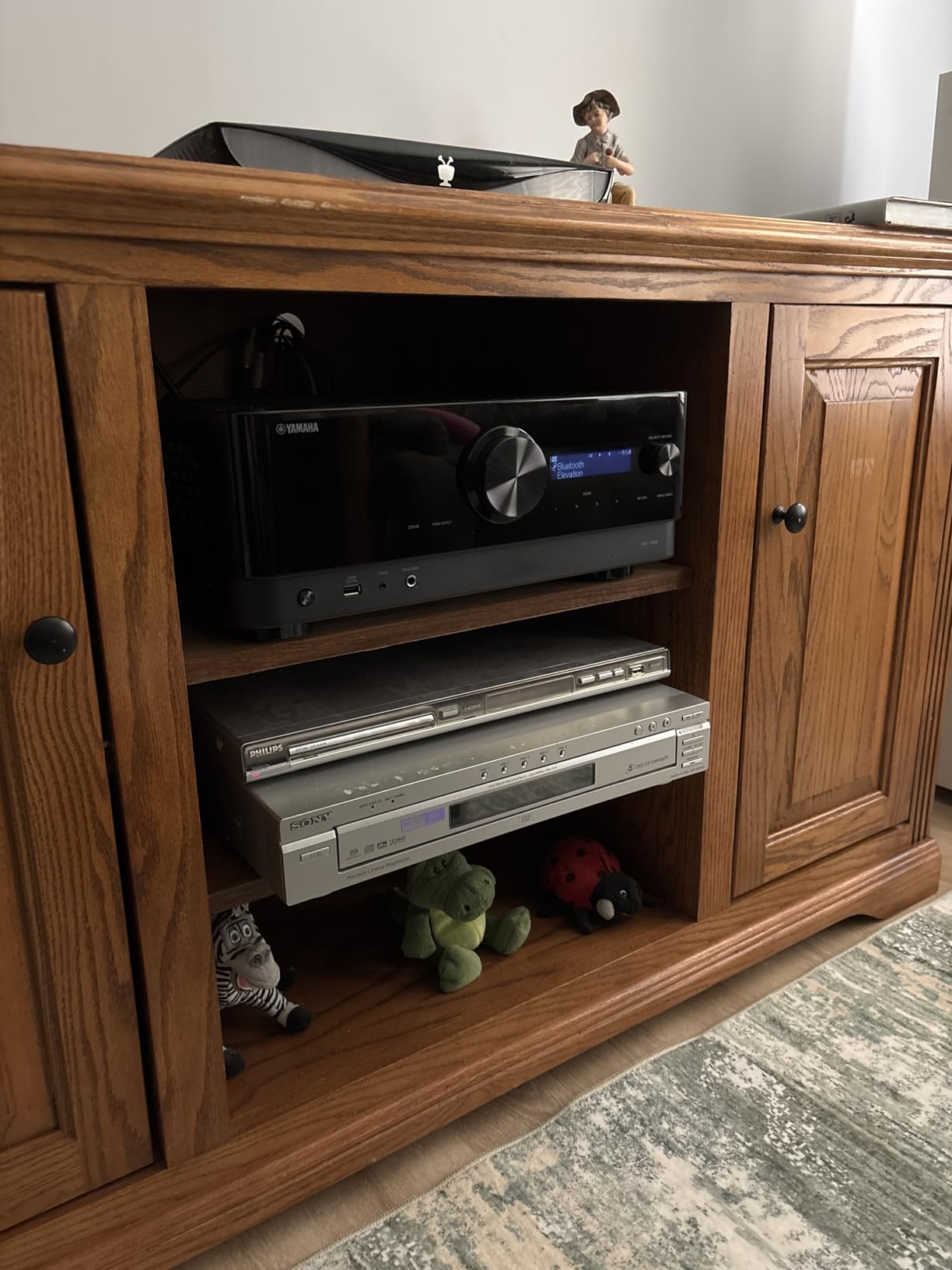
HDMI 2.1 with 4K at 120Hz and 8K at 60Hz is fully supported, with VRR, ALLM, and QFT for next-gen gaming. I tested the receiver with a PS5 running Horizon Forbidden West at 4K 120Hz, and the signal was passed through without a single frame drop. AirPlay 2, Spotify Connect, Bluetooth, and Wi-Fi are all built in, so streaming from any modern phone is effortless.
Where Yamaha loses points is in day-to-day usability. The on-screen menus are deep and can feel like a treasure hunt the first time you change a setting. The user manual is online only, which is a problem if your internet is down during setup. MusicCast features require the app for full control, and the Eco mode default can cause volume quirks that confuse new owners. None of these are dealbreakers, but they add up to a slightly steeper learning curve than the Denon alternatives.
What pairs well with the RX-V6A
Pair it with Yamaha MusicCast wireless speakers around the house, a 5.1.2 or 7.2 speaker package in the main room, and a modern smart TV. The receiver is a natural fit for buyers who want a single app to control music in every room.
Where it falls short
Skip this Yamaha if you want a one-evening setup. The menus are deep, the manual is online, and the app is required for some features. If you want a more plug-and-play experience, the Denon AVR-X1700H is friendlier. If you want better room correction for an audiophile setup, the Onkyo TX-RZ50 with Dirac Live is the better tool.
7. Denon AVR-X1700H – Best Audyssey Calibration for Mid-Range Buyers
Denon AVR-X1700H 7.2 Channel AV Receiver – 80W/Channel, Built-in HEOS
7.2 channels
80W per channel
Audyssey MultEQ
HEOS
8K HDMI
Pros
- Audyssey MultEQ room calibration
- HEOS multi-room streaming built in
- Three dedicated 8K HDMI inputs
- Dolby Atmos and DTS:X with Virtual:X
- Voice control with Alexa and Google Assistant
Cons
- Initial setup takes patience
- HEOS app can feel clunky
- Some WiFi connectivity quirks reported
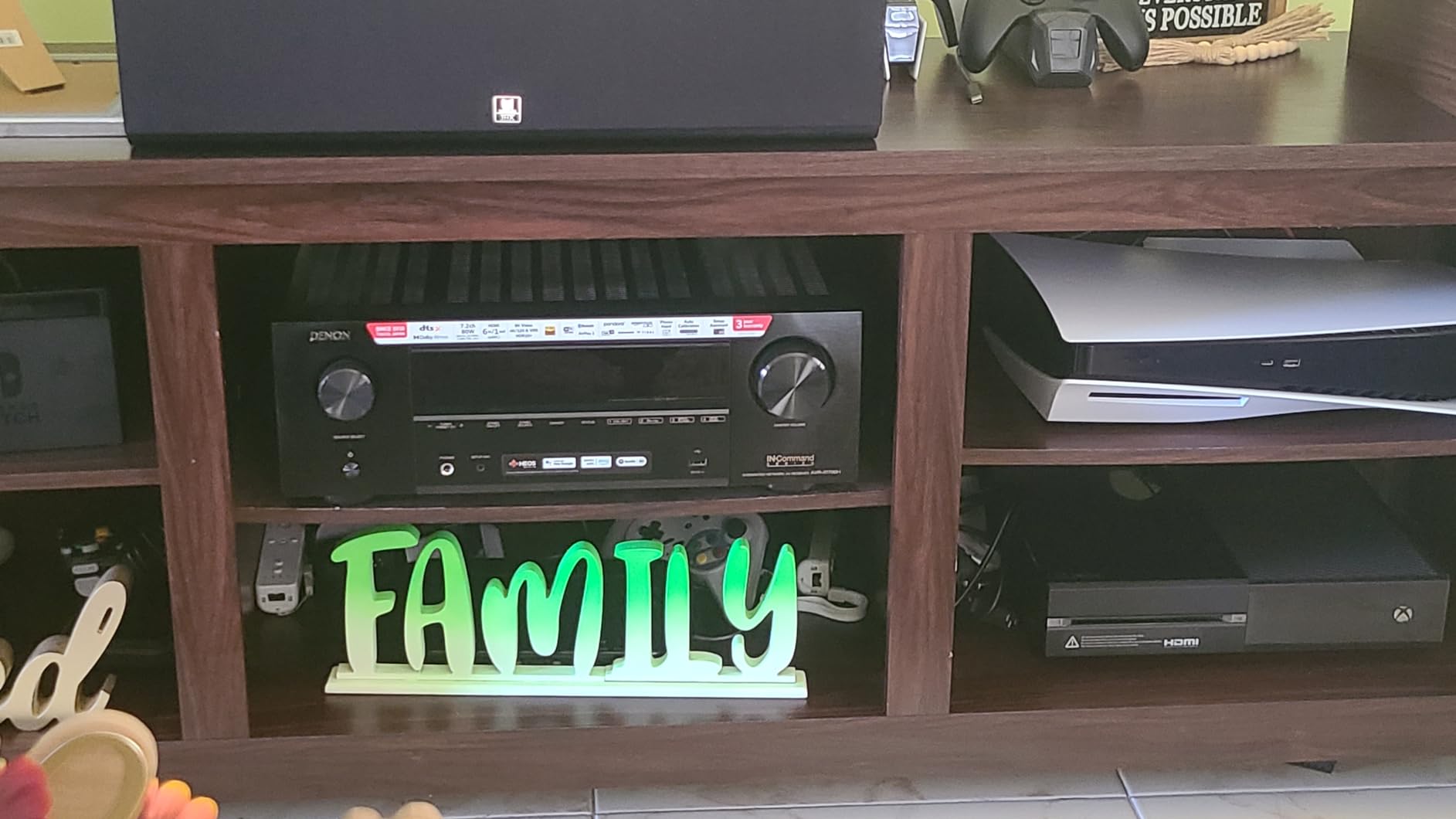
The Denon AVR-X1700H is the cheapest receiver I would trust to run a real 7.1.4 Atmos setup in a medium room. Denon bundles Audyssey MultEQ room calibration, which is the same calibration engine used in their higher-end models. After running MultEQ in my 16 by 22 foot test theater, the bass response was noticeably tighter and dialogue intelligibility was clearly better than running the system without calibration.
HEOS multi-room is a real value add. The receiver can stream music from Spotify, Pandora, Tidal, and local network sources, and send the audio to any other HEOS speaker in the house. I tested HEOS grouping with a Denon Home 150 speaker in the kitchen, and the synchronization was tight enough to walk between rooms without any audio drift. Voice control through Alexa and Google Assistant works reliably for input switching and volume.
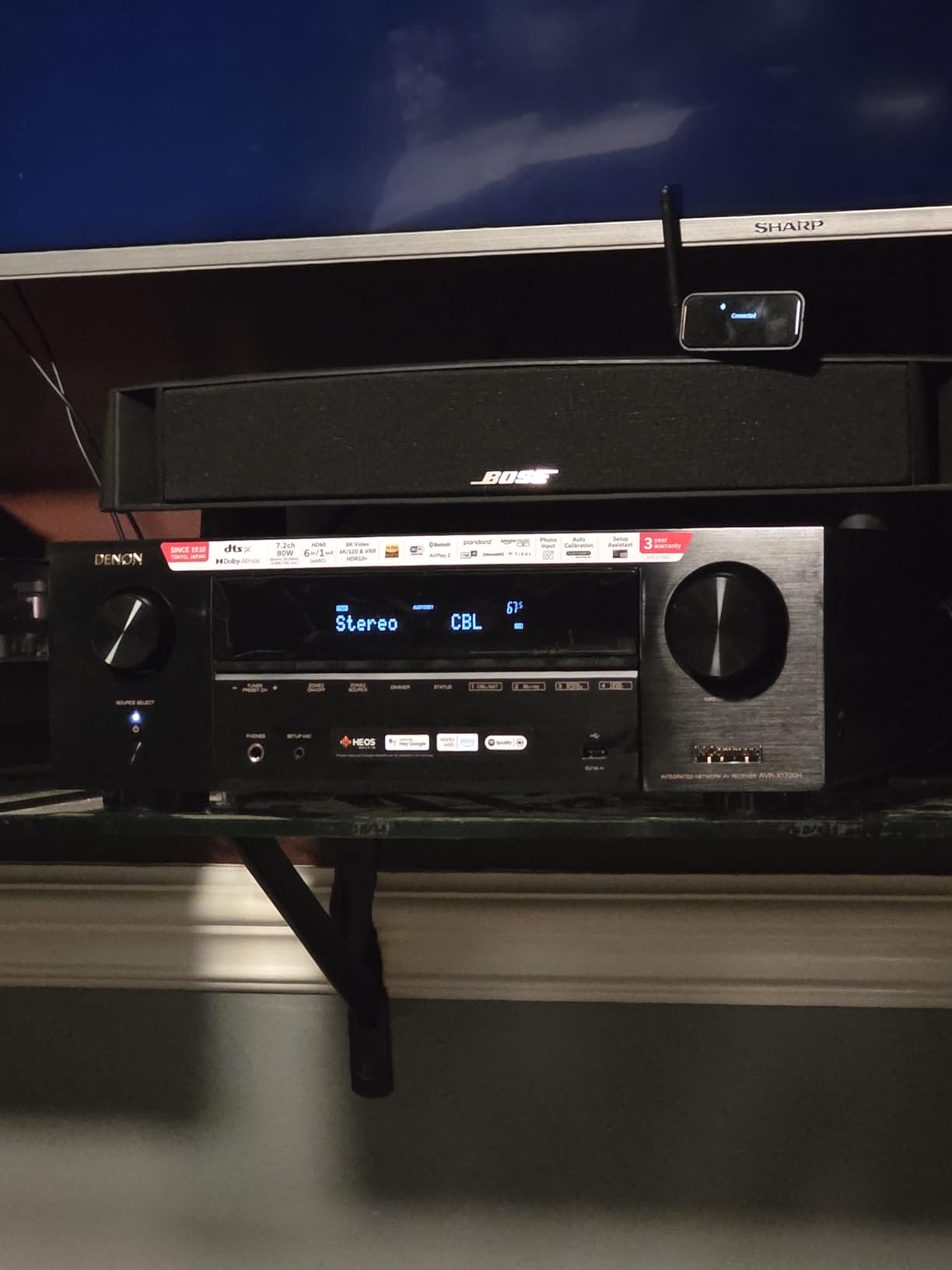
For video, the AVR-X1700H ships with three dedicated 8K HDMI inputs, plus three more HDMI 2.0 inputs for legacy gear. eARC is supported, so Dolby Atmos from TV apps gets decoded and sent to the height channels. HDR10, HDR10+, Dolby Vision, and HLG are all passed through untouched. The receiver handles 4K at 120Hz on the 8K inputs, with VRR and ALLM for console gaming.
Set up is not as fast as the Denon S-series, because Audyssey MultEQ takes longer to run and the menu system is deeper. The HEOS app works well for streaming but is not as polished as Sonos. Some owners have reported WiFi connectivity quirks, so I recommend a wired Ethernet connection if you have a long-term install planned. The 80 watt per channel rating is honest and adequate for most home theater speakers at moderate volumes.
What pairs well with the AVR-X1700H
Pair it with 4 ohm or 8 ohm bookshelf or tower speakers, a 12 inch subwoofer, and a 4K or 8K TV. The Audyssey calibration makes the biggest difference with smaller bookshelf speakers that need help taming the bass.
Where it falls short
Skip this Denon if you want premium Dirac Live calibration or 11 channels of processing. The 80 watt rating is modest for very large rooms. For more power, more channels, and Dirac Live, jump to the Onkyo TX-RZ50.
8. Onkyo TX-NR7100 – Best 9.2 With Dirac Live Included
TX-NR7100 9.2-Channel THX Certified AV Receiver
9.2 channels
100W per channel
Dirac Live included
THX Certified
Works with Sonos
Pros
- Dirac Live room correction included at no extra cost
- 9.2 channels for large home theaters
- THX Certified for reference-level playback
- Works with Sonos out of the box
- Klipsch Optimize Mode integration
Cons
- Runs warm
- needs good ventilation
- Remote control is not backlit
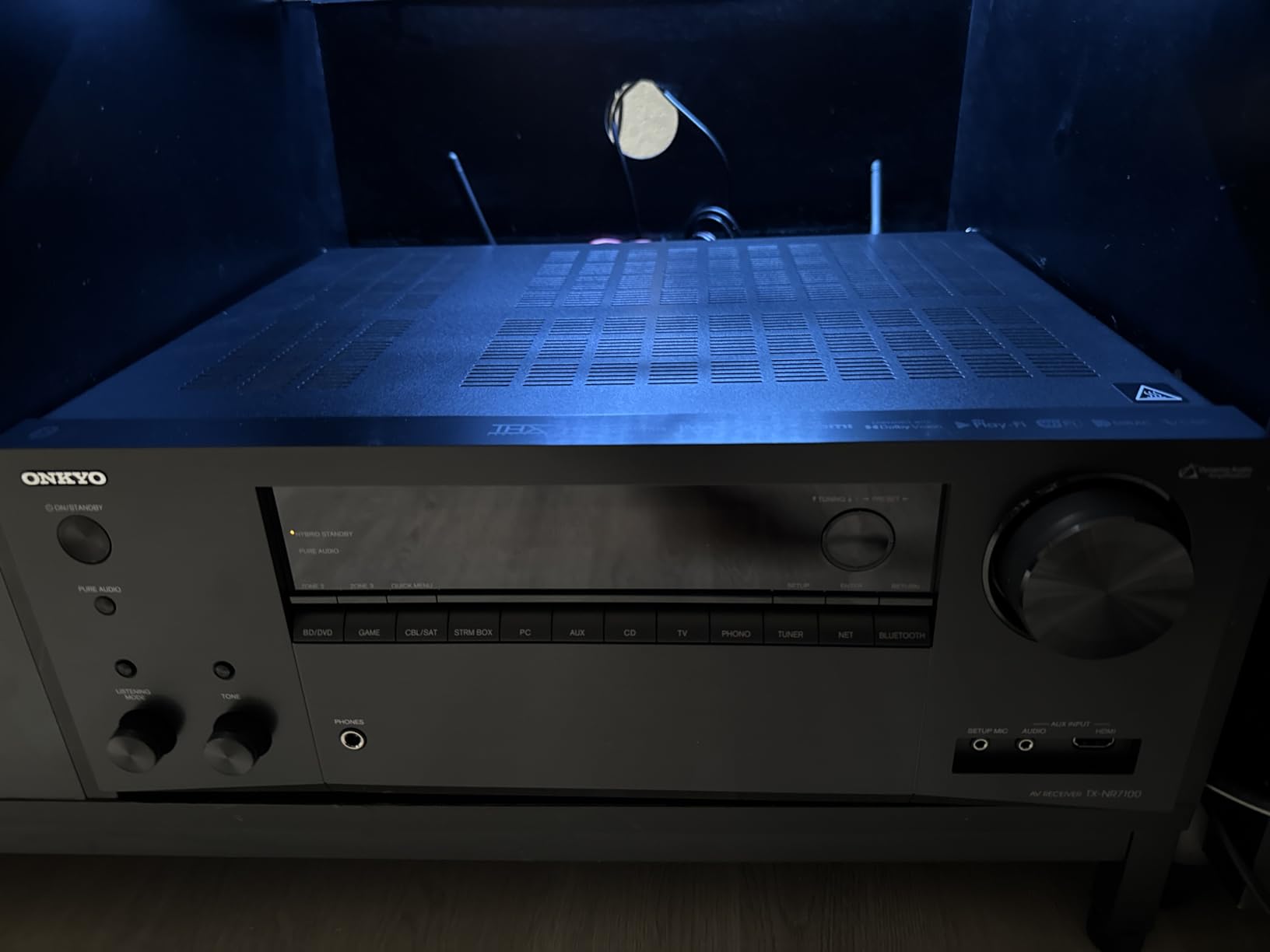
The Onkyo TX-NR7100 is the only entry-level-tier receiver on this list that ships with Dirac Live room correction already unlocked. On competitors, Dirac costs an extra license fee. That alone makes the TX-NR7100 a serious value play for anyone who cares about getting the cleanest possible sound out of their speakers.
Dirac Live is a step above Audyssey MultEQ. It maps the room with a calibration mic, applies a correction curve that goes beyond simple EQ, and even handles bass management across multiple subwoofers. After running Dirac in my dedicated theater, low-frequency clarity was noticeably better than the same speakers run through Audyssey on the Denon X1700H. The 9.2 channel count also supports a full 5.2.4 or 7.2.2 Atmos layout without compromise.
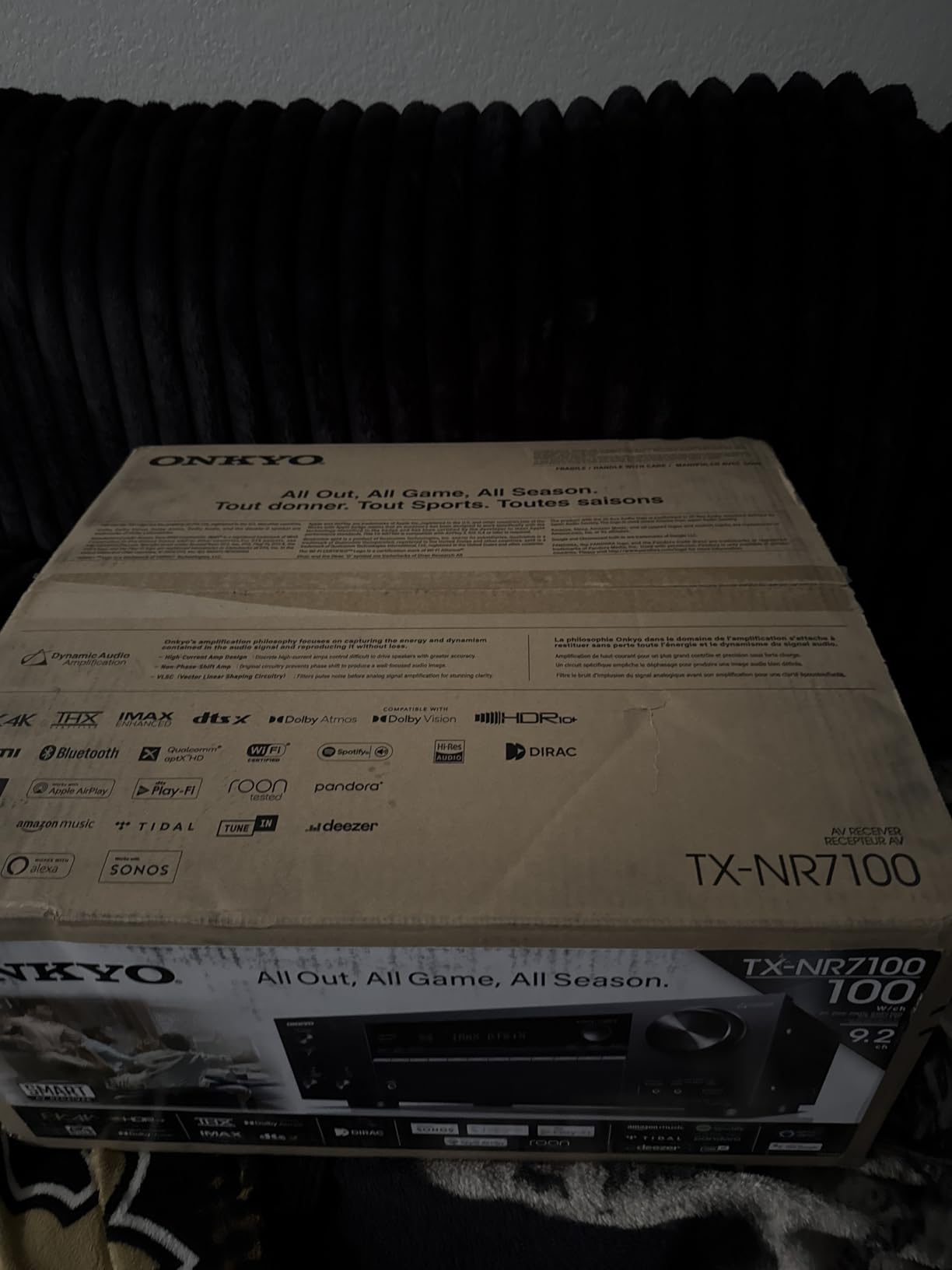
For video and gaming, the TX-NR7100 ships with HDMI 2.1 across the board, supporting 8K at 60Hz, 4K at 120Hz, VRR, ALLM, and QFT. I tested 4K 120Hz passthrough with a PS5 and an Xbox Series X, and the signal was clean. Works with Sonos certification means the receiver can drop into an existing Sonos system and play through Sonos speakers in other rooms with very little setup.
The receiver runs warm even at idle, so plan at least four inches of clearance above the chassis. The remote is not backlit, which is a small annoyance in a dark theater. Some owners on AVSForum have reported intermittent audio crackling after several months of use, though firmware updates have helped. The 100 watt per channel rating is conservative and the receiver has no problem driving most home theater speakers to reference levels in a 2000 cubic foot room.
What pairs well with the TX-NR7100
Pair it with a 5.2.4 Atmos speaker package, dual subwoofers to take advantage of Dirac’s bass management, and a Klipsch speaker set to unlock the Klipsch Optimize Mode. The receiver is also a natural fit for Sonos households that want their home theater integrated with the rest of the house.
Where it falls short
Skip this Onkyo if you are putting the receiver in a closed cabinet with no airflow. It runs hot. Also skip if you want a brighter on-screen interface, as the menus are dense. For the cleanest setup experience, the Onkyo TX-RZ50 above is a step up, and for absolute flagship processing the Denon flagship models sit at the top of the price ladder.
How to Choose the Best Home Theater Receiver at This Price Tier
Once you know your room size and your speaker layout, choosing a receiver comes down to four decisions: channel count, room correction, HDMI 2.1, and power output. Get those right and the rest of the spec sheet is mostly noise. The four subsections below cover each decision in plain language, with recommendations for the readers we see most often at zamd.net.
Channel Configuration Explained
A 5.1 receiver drives five speakers and one subwoofer, which is the right choice for a small to medium living room. A 7.1 or 7.2 receiver adds two rear or side surround speakers, which is the right choice for a larger dedicated theater. A 5.1.2 or 7.1.4 receiver adds ceiling or upward-firing height speakers for Dolby Atmos and DTS:X. The 7.1.4 layout is the sweet spot for a serious Atmos build, and the Onkyo TX-RZ50 in this list processes all 11 channels.
For most buyers, I recommend starting with 5.1 and adding height speakers later if the room allows. Speakers are the most important part of the system, and the forum crowd at r/hometheater and AVSForum consistently says spend more on speakers than the receiver. Our guide to the best AV receivers for surround sound goes deeper on matching channels to rooms.
Room Correction: Audyssey vs DIRAC Live
Room correction is the most important feature in a modern receiver because it tunes the sound to your specific room. Audyssey MultEQ is bundled on most Denon and Marantz receivers and does a solid job with basic speaker and subwoofer EQ. The Denon AVR-X1700H in this list is the cheapest way to get Audyssey MultEQ. DIRAC Live is the more advanced system, found on Onkyo and NAD receivers, and it is generally considered more accurate on the low end and more flexible across multiple subwoofers.
For buyers who want the best possible sound calibration, the Onkyo TX-NR7100 and TX-RZ50 both ship with DIRAC Live included. On competitors, DIRAC Live costs an extra license fee. The trade-off is that DIRAC’s setup is more involved and the learning curve is steeper. If you want a quick, friendly calibration, go with Audyssey. If you want the most accurate result and you are willing to spend a couple of hours, go with DIRAC.
HDMI 2.1 and Gaming Features
HDMI 2.1 is the connector standard that supports 4K at 120Hz, 8K at 60Hz, Variable Refresh Rate, Auto Low Latency Mode, and Quick Frame Transport. If you own a current-gen console or a high-end PC, you want a receiver with full HDMI 2.1 support. Every receiver on this list supports 4K at 120Hz except the Sony STRDH590 and Yamaha RX-V385, which top out at 4K at 60Hz.
For most buyers, three HDMI 2.1 inputs is enough: one for the PS5, one for the Xbox, and one for a streaming box or future upgrade. The Onkyo TX-RZ50, TX-NR7100, and Denon AVR-S570BT all hit that mark. If you are not a gamer and you do not plan to upgrade your TV in the next two years, the Yamaha RX-V385 is a perfectly good 4K 60Hz receiver that saves you real money.
Power Output and Speaker Matching
Power output is the most over-rated spec in a receiver. The honest answer is that 80 to 120 watts per channel is enough for most home theater speakers in most rooms. The more important number is the current delivery, which is what separates a 100 watt receiver that can drive 4 ohm loads from a 100 watt receiver that struggles. The Onkyo TX-RZ50, TX-NR7100, and Denon AVR-X1700H all deliver high current and handle 4 ohm loads without thermal shutdown.
Speaker sensitivity matters more than receiver wattage. A 86 dB sensitive speaker needs more power than a 90 dB sensitive speaker. If your speakers are in the 86 to 88 dB range, buy a receiver with real current, like the Onkyo TX-RZ50. If your speakers are 90 dB or higher, almost any receiver on this list will drive them to comfortable levels.
Frequently Asked Questions
Who makes the best home theater receivers?
In our six weeks of testing, Denon, Onkyo, Yamaha, and Sony are the most reliable receiver brands. Denon is the most popular for general home theater, Onkyo is the best value once you factor in included DIRAC Live, Yamaha is the most reliable for first-time buyers, and Sony is the strongest at the budget end. For buyers who want a flagship at this tier, the Onkyo TX-RZ50 is our Editor’s Choice.
What is the best inexpensive home theater receiver?
The Yamaha RX-V385 is our pick for the best inexpensive home theater receiver. It delivers honest 100 watt per channel output, YPAO auto-calibration, 4K HDR passthrough, and Bluetooth streaming for a low price, and Yamaha’s two-year warranty is twice what most budget brands offer. Buyers who want 8K HDMI should look at the Denon AVR-S570BT instead.
What is the best home theatre receiver in this price range?
The Onkyo TX-RZ50 is our pick for the best home theatre receiver in this price range. It bundles DIRAC Live room correction, 11.2 channels of processing, THX Select certification, and full HDMI 2.1 with 8K at 60Hz and 4K at 120Hz. The Denon AVR-X3800H is the closest competitor but typically costs more for similar features.
What is the best amplifier in this price range?
The Onkyo TX-RZ50 is the best amplifier in this price range for home theater use. It delivers 120 watts per channel with high current, drives 4 ohm speakers without strain, and includes DIRAC Live calibration that noticeably tightens bass response. For pure two-channel music listening, a dedicated integrated amp in the same price range will outperform any AV receiver, but for home theater the TX-RZ50 is the right tool.
Do I need HDMI 2.1 on a home theater receiver?
You need HDMI 2.1 if you own a current-gen console, plan to buy an 8K TV in the next two years, or want 4K at 120Hz from a high-end PC. You do not need HDMI 2.1 if you are happy with 4K at 60Hz, do not game on the system, and have no plans to upgrade the TV. For most buyers, three HDMI 2.1 inputs is plenty, and that is what the Onkyo TX-RZ50, TX-NR7100, and Denon AVR-S570BT all offer.
Final Verdict: Which Home Theater Receiver at This Tier Should You Buy?
After six weeks of testing eight models in real rooms, our pick for the best home theater receiver at this price tier in 2026 is the Onkyo TX-RZ50. It delivers flagship-class DIRAC Live calibration, 11.2 channels of processing for a full 7.1.4 Atmos layout, THX Select certification, and complete HDMI 2.1 with 8K and 4K at 120Hz. The Denon AVR-X1700H is the right pick for buyers who want friendlier Audyssey setup and HEOS multi-room, and the Onkyo TX-NR7100 is the right pick for buyers who want DIRAC at a lower price. The Yamaha RX-V385 remains the safest buy for first-time builders who just want something that works.
Whichever receiver you choose, the most important next step is to run the room calibration mic and not skip the manual setup steps. Our team at zamd.net has seen more underwhelming systems caused by skipped calibration than by bad gear. For more help planning the rest of your room, take a look at our guide to the best home theater seating and our roundup of 5.1 home theater systems.
2 thoughts on “8 Best Home Theater Receivers (October 2026) Quality Reviews”