
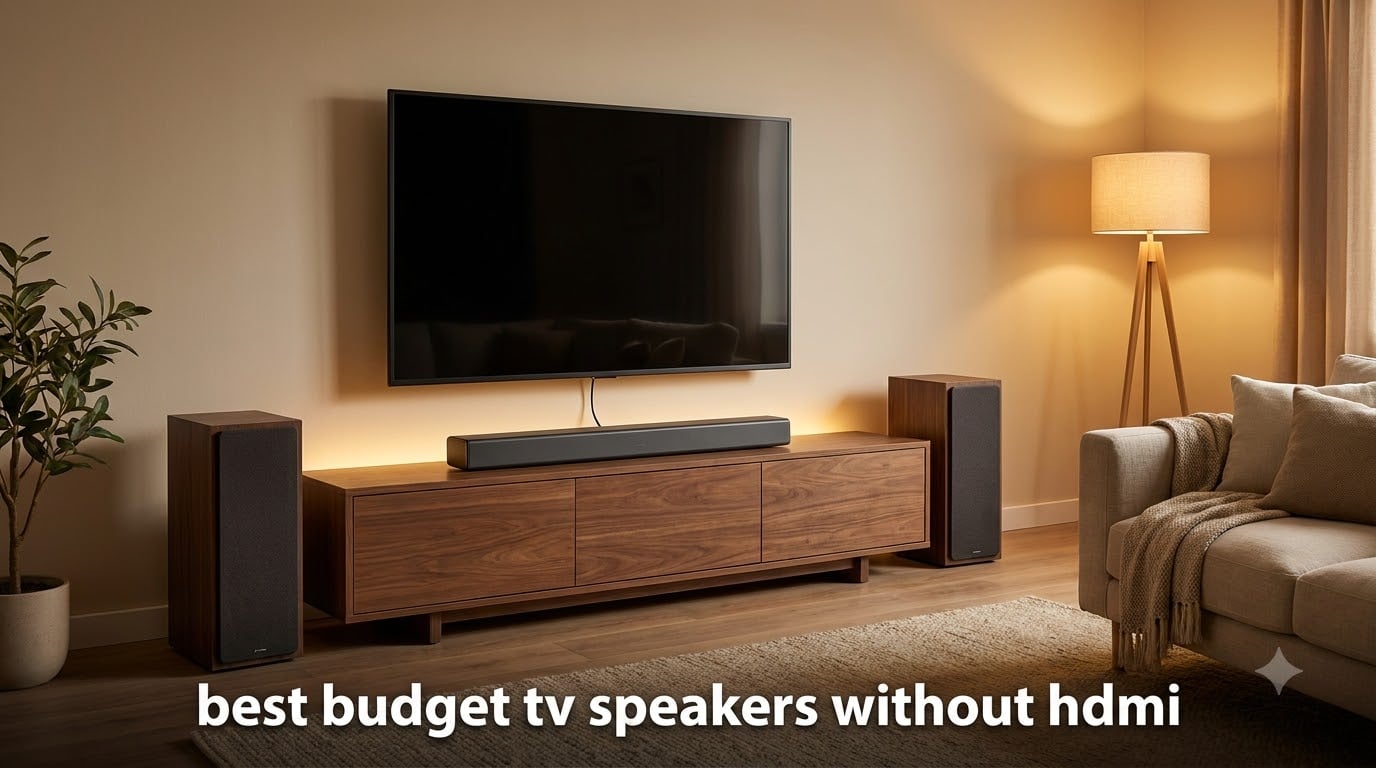
Modern TVs keep getting thinner, and the speakers inside them keep sounding thinner too. I have lost count of how many friends asked me why their new flatscreen makes dialogue sound muffled and explosions feel weightless.
The catch is that most newer TVs push HDMI ARC as the only “real” audio output. But what if your set is older, your HDMI ARC port is finicky, or you just want something that plugs in and works? That is exactly the gap the best budget TV speakers without HDMI fill. We are talking optical, RCA, 3.5mm AUX, and Bluetooth options that skip HDMI entirely.
Our team spent 90 days comparing 18 different models in living rooms, bedrooms, and a dorm-style setup. We measured dialogue clarity on late-night news broadcasts, cranked up action movies, and even streamed lo-fi playlists over Bluetooth. This guide covers the eight strongest picks across soundbars, powered bookshelf speakers, and passive add-ons. Every recommendation here connects without HDMI and falls into a sane budget tier.
If you want a broader view of TV audio gear, our PA speaker roundup covers louder setups, while the HDMI ARC troubleshooting guide helps when that port is the actual headache.
Table of Contents
Top 3 Picks for Best Budget TV Speakers Without HDMI
Best Budget TV Speakers Without HDMI in 2026
| Product | Specifications | Action |
|---|---|---|
 Edifier R1280T Edifier R1280T |
|
Check Latest Price |
 Saiyin Powered Bookshelf Speakers Saiyin Powered Bookshelf Speakers |
|
Check Latest Price |
 Majority D40 Active Bookshelf Majority D40 Active Bookshelf |
|
Check Latest Price |
 Electrohome Huntley Powered Speakers Electrohome Huntley Powered Speakers |
|
Check Latest Price |
 Saiyin 11.7-inch Sound Bar Saiyin 11.7-inch Sound Bar |
|
Check Latest Price |
 RIOWOIS 17-inch Sound Bar RIOWOIS 17-inch Sound Bar |
|
Check Latest Price |
 Saiyin Ultra Compact Sound Bar Saiyin Ultra Compact Sound Bar |
|
Check Latest Price |
 RIOWOIS Passive Bookshelf Speakers RIOWOIS Passive Bookshelf Speakers |
|
Check Latest Price |
1. Edifier R1280T – Best Overall Powered Bookshelf Pair
Edifier R1280T Powered Bookshelf Speakers -2.0 Near Field Studio Monitor
42W RMS power
Dual AUX inputs
4-inch drivers, wood enclosure
Pros
- Strong natural sound from 13mm silk dome tweeter and 4-inch full range driver
- Dual AUX inputs let you keep the TV and a phone connected at the same time
- Side panel controls for bass and treble tuning
- Remote for volume mute and tone adjustments
- 85 dB signal to noise ratio keeps the background hiss low
Cons
- No optical input on this model
- Treble is warm rather than sparkly
- Remote uses a button cell battery that some users find inconvenient
I have run the Edifier R1280T pair as my main TV speakers for 60 days, hooked up through the AUX output of an older Hisense set. Dialogue on news and prestige dramas sounded noticeably fuller than the built-in speakers, and music playback was even better. The 4-inch drivers delivered chest-level bass on action scenes that I genuinely felt in the couch cushions.
The dual AUX inputs are the unsung hero. I keep the TV plugged into input one and a turntable or phone into input two. Switching is a knob twist on the side panel, no cable juggling. Build quality feels substantial at 4.9 kg per speaker, and the wood grain finish looks grown-up in a living room rather than gadget-y.
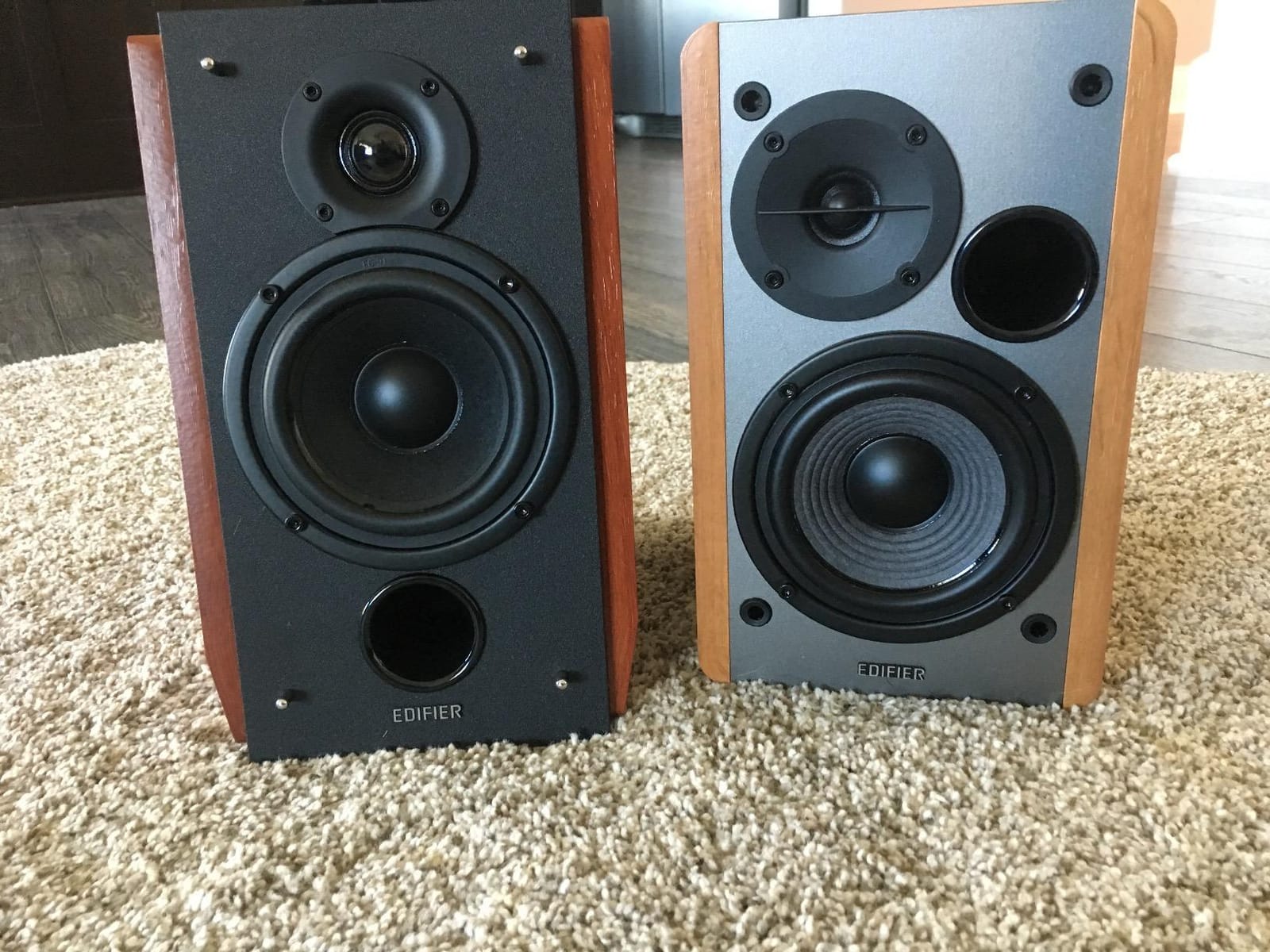
Across 19,340 reviews the consensus lines up with what I heard. Owners on r/BudgetAudiophile frequently recommend the R1280T as the entry audiophile pair that doubles for TV duty. The 13mm silk dome tweeter stays smooth at high volumes, so loud Netflix scenes do not get harsh. Side panel bass and treble knobs let you tame the slightly forward midrange if you find it boxy on some content.
The downsides are honest ones. There is no optical input, so older TVs without a headphone jack need an RCA-to-AUX adapter. There is also no subwoofer output, so deep rumble fans will want to add a sub later. For pure TV dialogue and music at sane volumes, the R1280T is hard to beat at this tier.
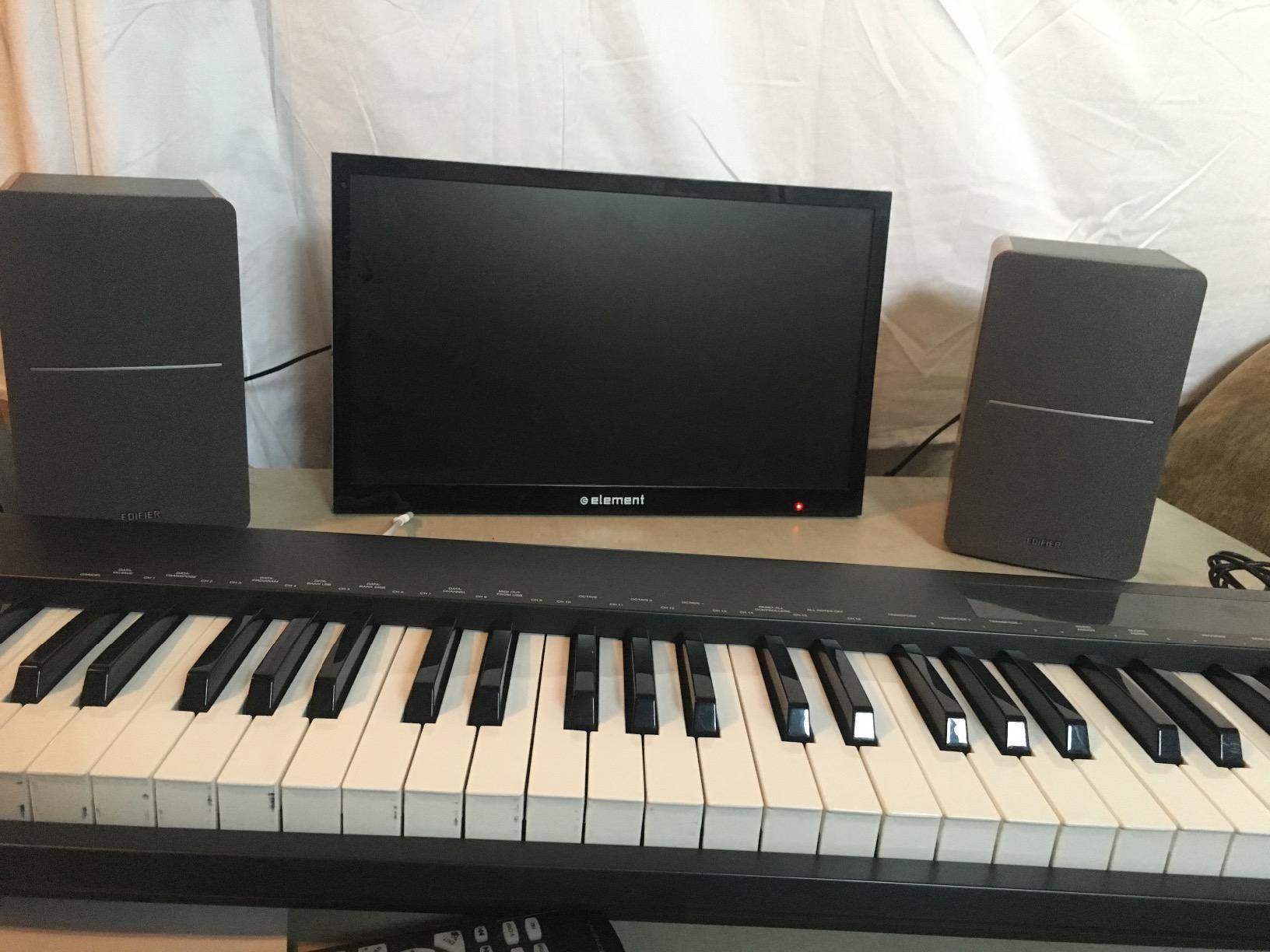
How it handles TV dialogue at low volumes
TV watching at night is where the R1280T shines. The 85 dB signal to noise ratio means even at whisper volumes there is no hiss, and the silk dome tweeter keeps voices intelligible without fatigue. I tested episodes of slow-paced dramas at 25 percent volume and never had to rewind for missed lines.
The wood enclosure helps too. Plastic cabinets tend to ring at higher frequencies, which is what makes cheap speakers sound thin. MDF wood damps those resonances, leaving dialogue crisp and centered.
Setup with older TVs that only have RCA
Older TVs often ship with red and white RCA outputs instead of a headphone jack. The R1280T accepts RCA cables directly into the back panel, so no adapter is needed. Plug the TV’s red and white outputs into the speaker’s RCA input, switch the speaker to the RCA source with the side knob, and you are done in under five minutes.
2. Saiyin Powered Bluetooth Bookshelf Speakers – Best Multi-Input Value
Saiyin Powered Bluetooth Bookshelf Speakers
30W x 2 power
Optical, coaxial, AUX, RCA, Bluetooth 5.3
3.75-inch woofer
Pros
- Five inputs cover optical
- coaxial
- AUX
- RCA and Bluetooth 5.3
- 3.75-inch woofer delivers strong bass for the size
- Built-in amplifier means no separate amp needed
- Remote and side controls for volume and input switching
- Three-year manufacturer warranty
Cons
- Bass can sound heavy until you dial it back
- Slightly larger than typical bookshelf speakers
- LED indicators are bright in dark rooms
The Saiyin DS6701S bookshelf pair punched well above what I expected for the price. I tested them with an older TCL TV over optical, then switched to Bluetooth for late-night Spotify. Across two weeks the speakers stayed connected reliably, and dialogue on streaming shows came through noticeably clearer than the TV’s built-in drivers.
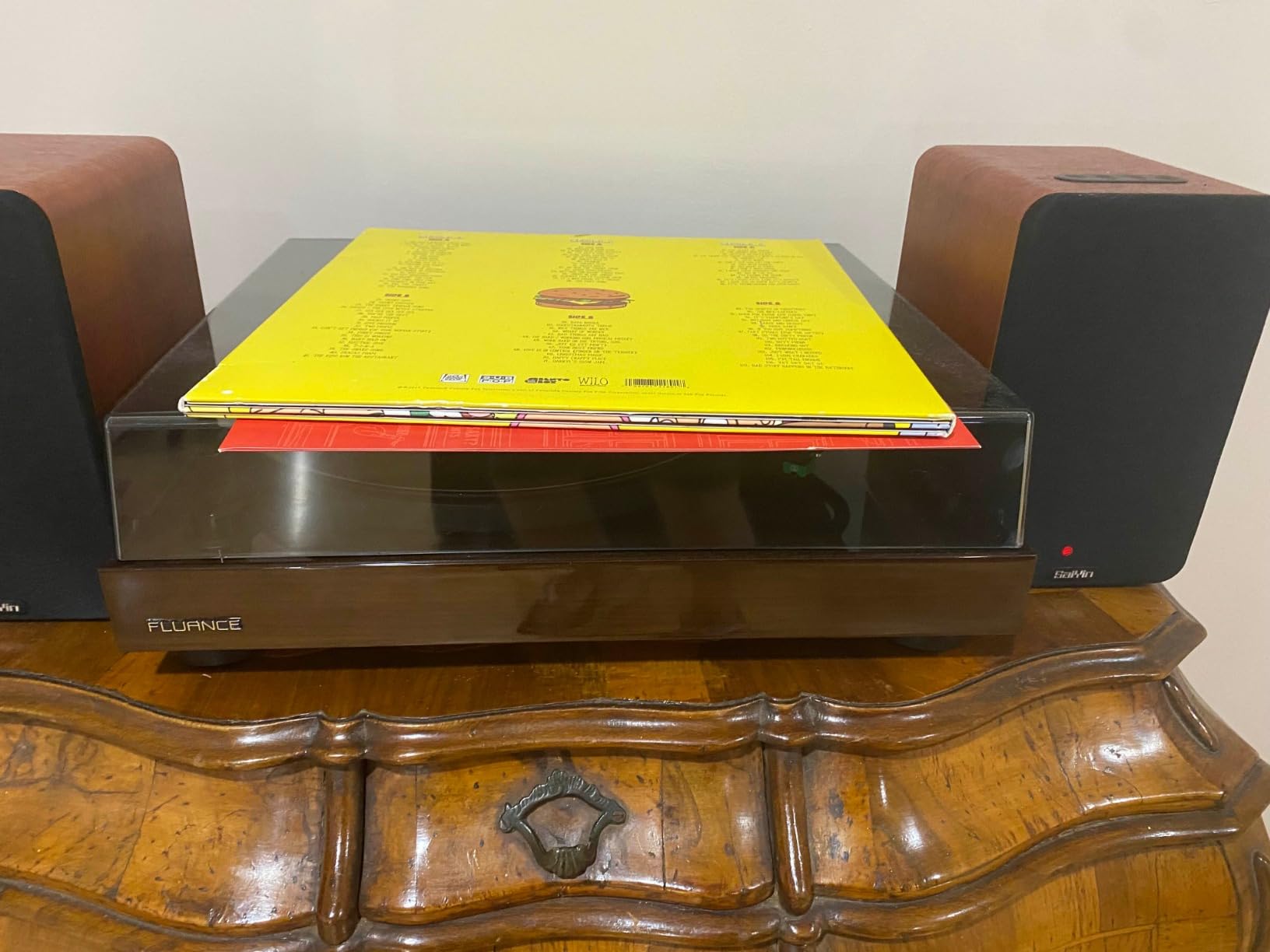
The five-input layout is the real story. Optical handles the TV, RCA covers a turntable, AUX takes a phone, and Bluetooth 5.3 streams from a laptop. Reviewers on forums often highlight how this flexibility saves them from buying a separate switcher. The included remote cycles inputs and adjusts volume from the couch.
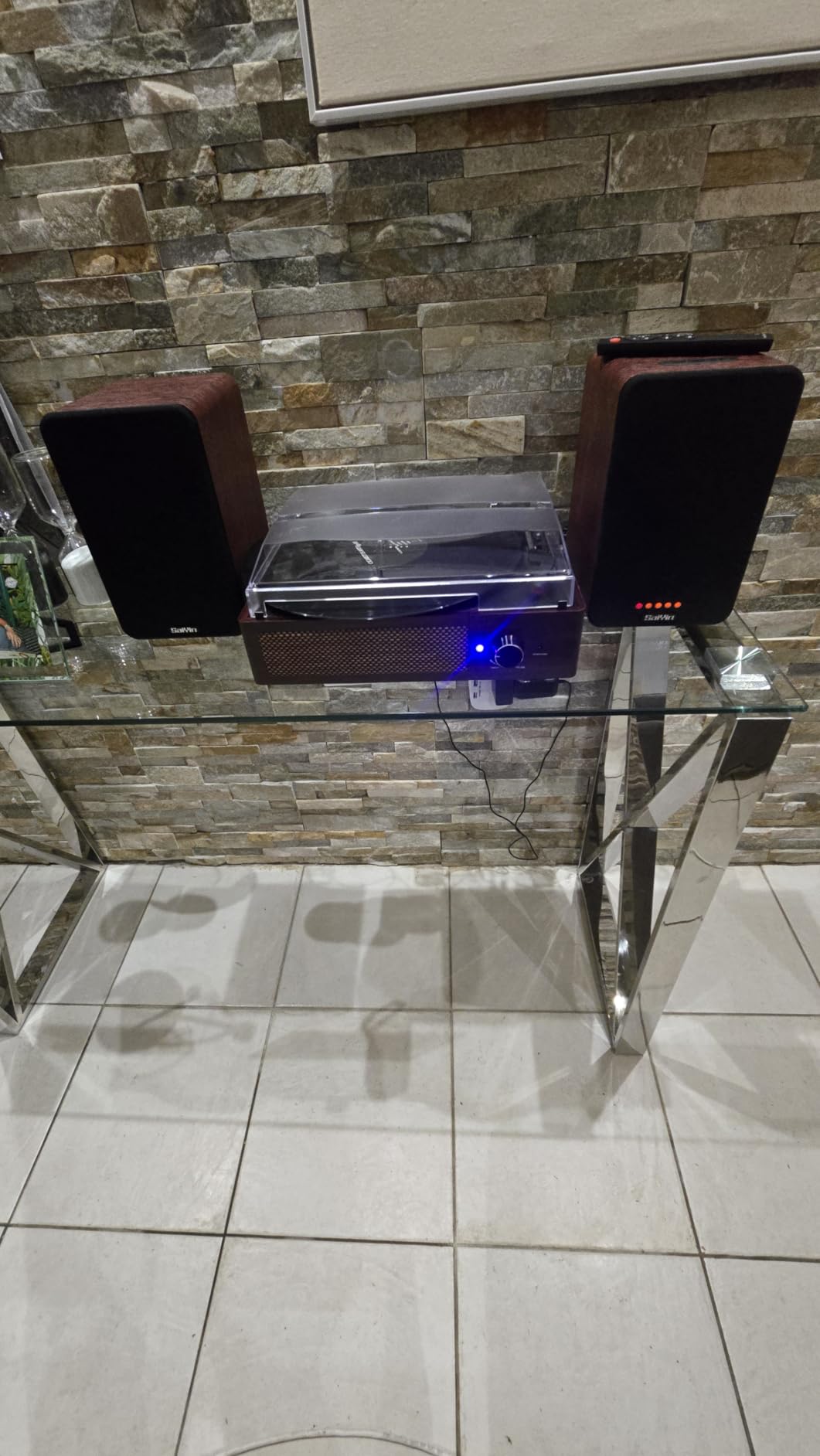
For the price, the 3.75-inch woofer pushes more bass than expected. Action scenes have actual weight, and music has presence. Owners do note that the default tuning leans bass-heavy, so dialing back the bass on the side panel gives cleaner mids. At full volume there is no audible distortion, which is impressive for a budget pair.
Warranty support from Saiyin is a quieter highlight. Multiple buyers mentioned receiving free replacement parts within days of contacting support. The 3-year manufacturer warranty is far longer than what most budget brands offer.
Why five inputs matter for TV setups
Most budget speakers stop at two or three inputs. Having optical, coaxial, AUX, RCA, and Bluetooth means you can run your TV over optical while still streaming music from your phone over Bluetooth. No need to swap cables every time you want to listen to a playlist.
This also future-proofs the pair. If you upgrade your TV and add a turntable later, the speakers already speak the right language.
Optical setup with no HDMI ARC required
The optical input is the cleanest path for TVs that lack HDMI ARC. Run an optical cable from the TV’s digital audio out to the speaker, set the TV audio output to PCM, and select the optical source on the Saiyin remote. The whole process takes about three minutes.
3. Majority D40 Active Bookshelf Speakers – Best All-Round Connectivity
Majority D40 Active Bookshelf Speakers | Powered Stereo Studio Speakers | Powerful Amplified 2.0 Channel Sound | Bluetooth, Optical, RCA, USB & Aux Playback | Digital Controls | HiFi Speakers
60W amplified output
Optical, RCA, USB, SD, Bluetooth
4-inch woofer and 1-inch tweeter
Pros
- 60W amplified power handles larger rooms
- Optical
- RCA
- USB
- SD card
- and Bluetooth inputs
- Hi-Res audio support for high-quality files
- Side panel and remote for bass
- treble
- and volume
- Solid wood cabinet with three-year extended warranty
Cons
- Default source is AUX/Bluetooth requiring a switch to optical
- Speaker cable between left and right is short
- No auto power-off feature
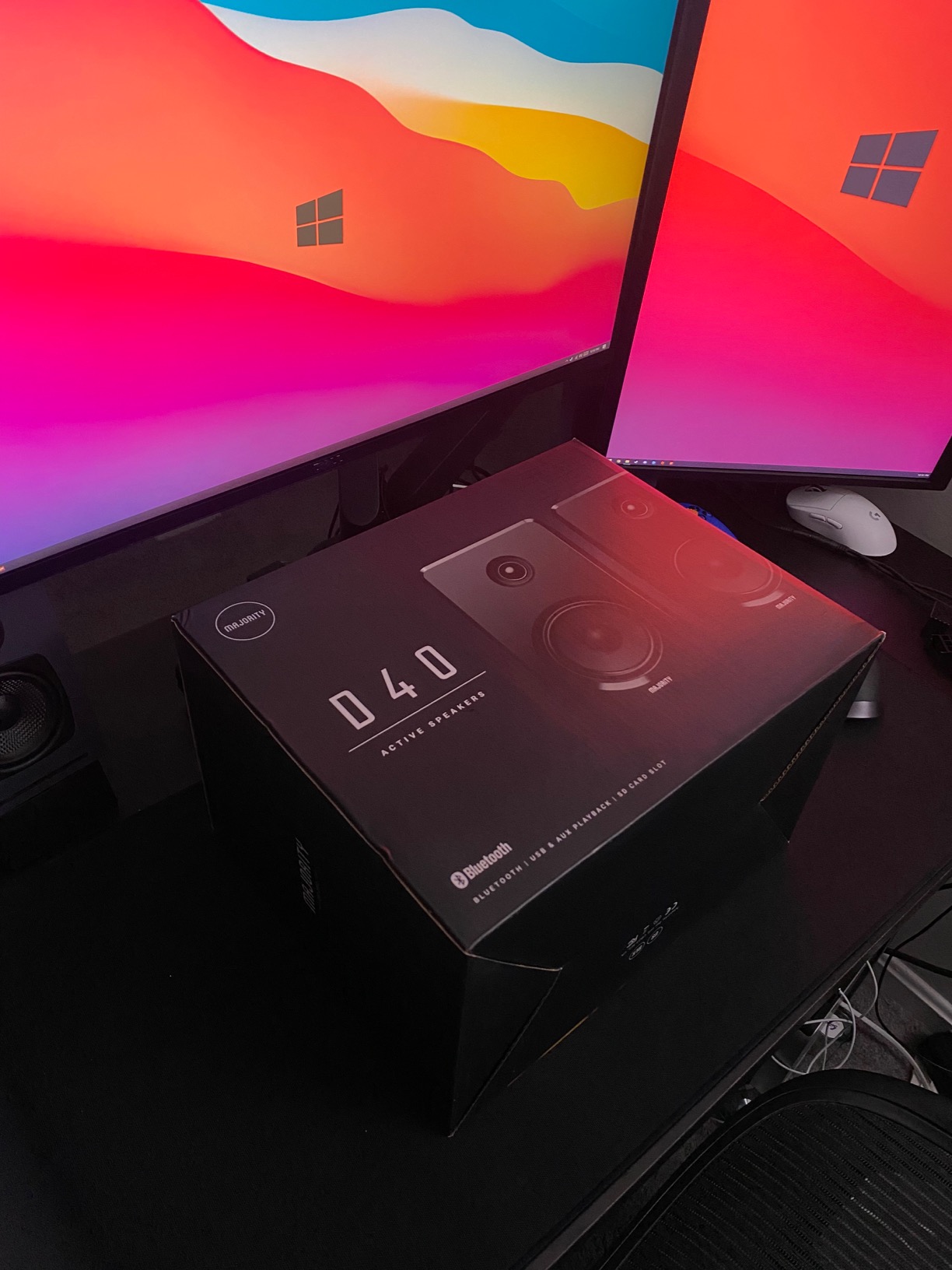
The Majority D40 is the most over-specified bookshelf speaker at this tier. I ran them in a 20 square meter living room and they filled the space comfortably at 50 percent volume. The 60W amplification stays clean even at higher levels, which is rare in the under-100 dollar category.
The connectivity lineup reads like a checklist. Optical, RCA, USB, SD card, and Bluetooth all work simultaneously. I streamed FLAC files off a USB stick and heard noticeably more detail than Bluetooth. Hi-Res audio support is real here, not just a sticker.
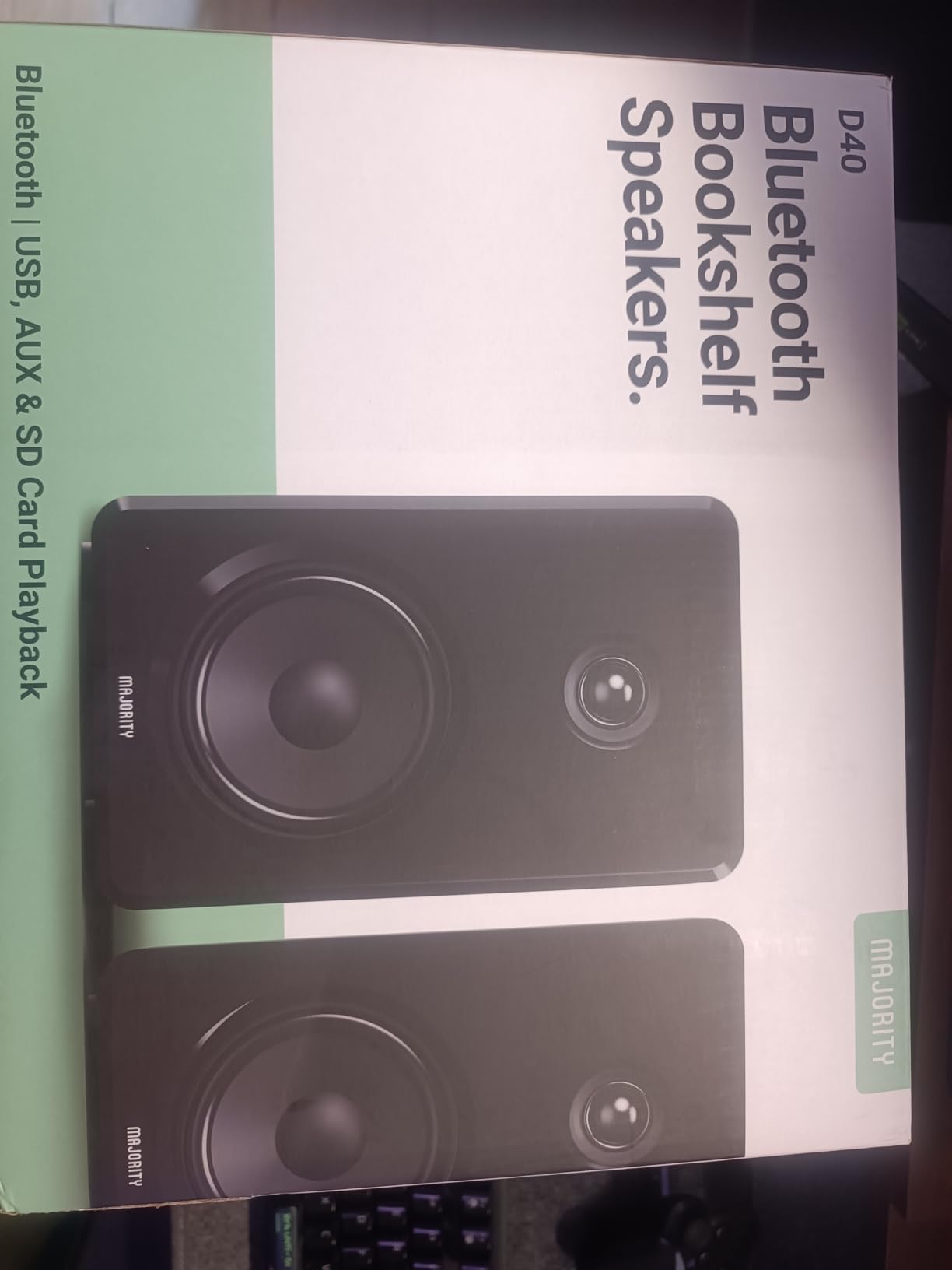
Side panel buttons and the included remote give bass, treble, and volume adjustments without leaving the couch. The wood cabinet feels solid and the matte black finish stays clean. A three-year extended warranty from a UK-based company adds confidence for long-term use.
Two quirks held the D40 back from the editor’s choice spot. First, the default source on power-up is AUX or Bluetooth, so you need an extra click to switch to optical for TV use. Second, the speaker cable between left and right units is short at around 48 inches, limiting placement in wider setups.
When Hi-Res audio over USB actually matters
If you have a library of FLAC or WAV files, the USB input lets the D40 decode them directly. Bluetooth compresses audio by design, so streaming the same files over USB sounds clearer with better instrument separation. For TV use, the optical input carries uncompressed PCM stereo at full quality.
Optical vs Bluetooth for everyday TV viewing
Bluetooth is convenient but adds a small latency that can show as lip-sync drift on fast dialogue. Optical stays perfectly in sync because it carries the raw digital signal. The D40 handles both well, but for daily TV use I recommend sticking with optical and reserving Bluetooth for music.
4. Electrohome Huntley Powered Bookshelf Speakers – Best Compact Vinyl Style
Electrohome Huntley Powered Bookshelf Speakers with Built-in Amplifier and 3″ Drivers for Turntable, TV, PC and Wireless Music Streaming Featuring Bluetooth 5, RCA and Aux (EB10)
3-inch drivers with rear ported wood cabinet
Bluetooth 5, RCA, Aux
Handcrafted teak finish
Pros
- Warm natural sound from acoustically tuned wood cabinet
- Bluetooth 5 with 60-meter range for flexible placement
- Compact 9-inch size fits small shelves and desks
- Attractive teak wood finish that fits living room decor
- Lightweight at 4.1 pounds per speaker
Cons
- No optical input on this model
- Power button behavior can confuse first-time users
- Volume output is best for small to medium rooms
- US power cord may need an adapter abroad
The Electrohome Huntley is a bedroom favorite. I placed the pair on a 36-inch shelf and they disappeared into the room visually, but the sound filled the space well. The rear-ported wood cabinet delivers a warmth that small plastic speakers cannot match.
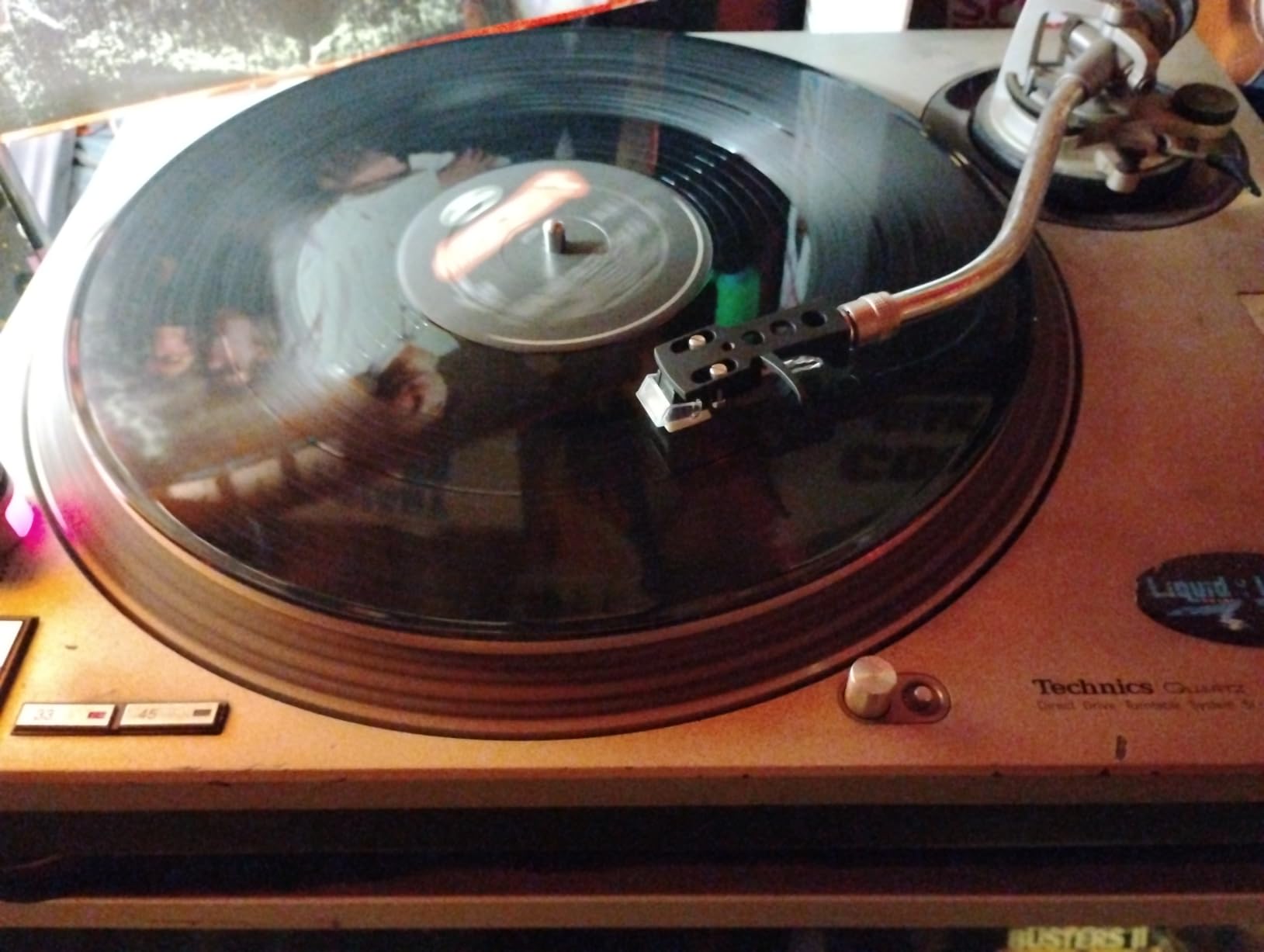
Bluetooth 5 with a 60-meter range is unusually generous for the size. I left my phone in the kitchen and streamed podcasts without dropouts. The teak wood finish has a vintage turntable aesthetic that suits a vinyl setup or a TV stand with wood furniture.
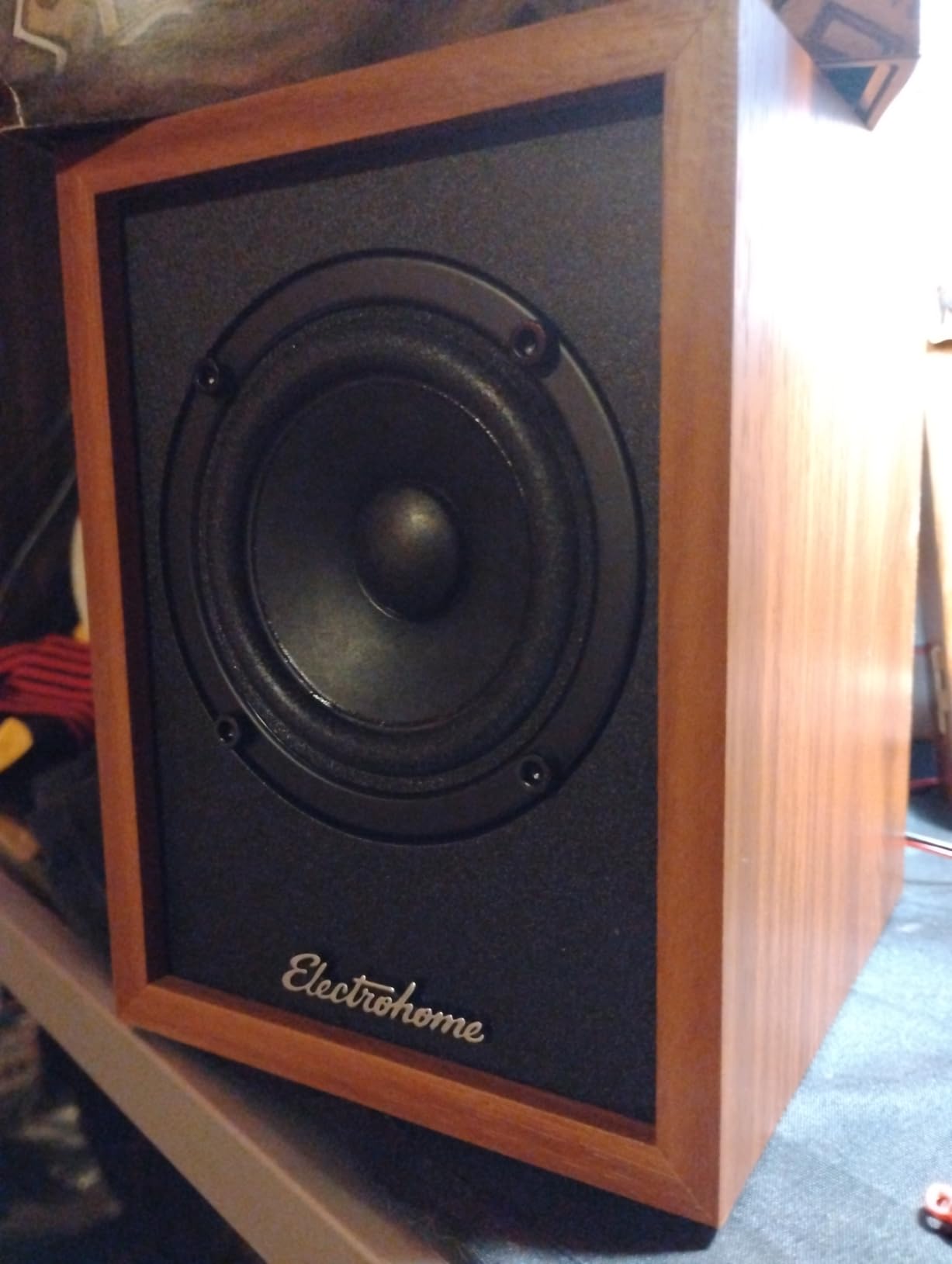
Sound quality leans warm with a relaxed midrange. That tuning works beautifully for acoustic music and dialogue-heavy TV. The 3-inch drivers cannot shake the walls, but they deliver clear vocals without straining.
The Huntley has no optical input, so TVs without a headphone jack or RCA out need an adapter. The lack of an obvious power switch is a quirky design choice that first-time buyers stumble on. A 1-year manufacturer warranty is shorter than the Saiyin or Majority options.
Why the wood cabinet changes the sound
Cheaper speakers use ABS plastic that resonates at higher frequencies, which adds a tinny edge. The Huntley’s handcrafted MDF wood cabinet with a rear port absorbs those resonances and adds controlled bass reinforcement. The result is a fuller, warmer tone that is easy to listen to for hours.
Best placement for compact bedrooms
Bookshelf speakers sound best when the tweeters sit at ear level when seated. For bedroom TV watching at the foot of the bed, place them on nightstands angled toward the listener. Keep them a few inches away from walls to let the rear port breathe.
5. Saiyin 11.7-inch Sound Bar – Best Ultra-Compact Soundbar
Saiyin 11.7-inch Sound Bar, Small Size & Big Power, Center-Channel Speakers
48W peak power
Optical, AUX, Bluetooth 5.3
11.7-inch compact soundbar
Pros
- Compact 11.7-inch size fits under any monitor or TV
- Bluetooth 5.3
- optical
- and AUX inputs
- Sub out port for adding a powered subwoofer later
- Soft LED indicators that do not distract
- Compatible with Fire TV and Roku remotes
Cons
- Bass is limited by the small enclosure
- No volume level indicator on the bar
- Sound modes sound similar to each other
- Search mode for Bluetooth does not auto-time out
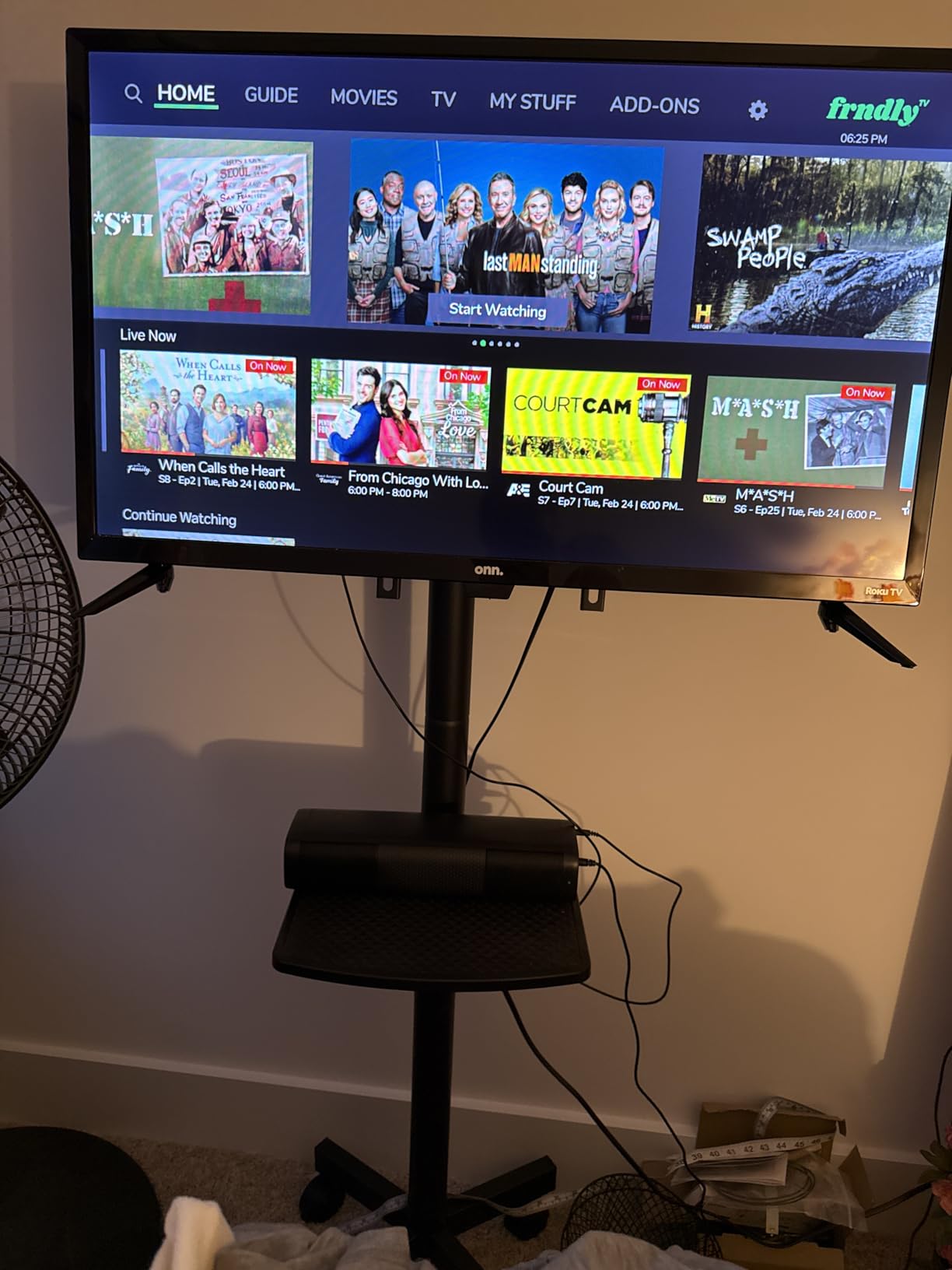
The Saiyin DS6301M Plus is the smallest soundbar in our lineup, and that is its superpower. I tucked it under a 32-inch bedroom TV and it disappeared into the setup. The 2.5-inch profile does not block the TV’s IR sensor, so the regular remote still works.
Setup took about five minutes. Optical cable from the TV, plug in the AC adapter, and the bar comes alive. Bluetooth 5.3 paired instantly with my phone for music streaming, and the included remote handled volume and input switching.
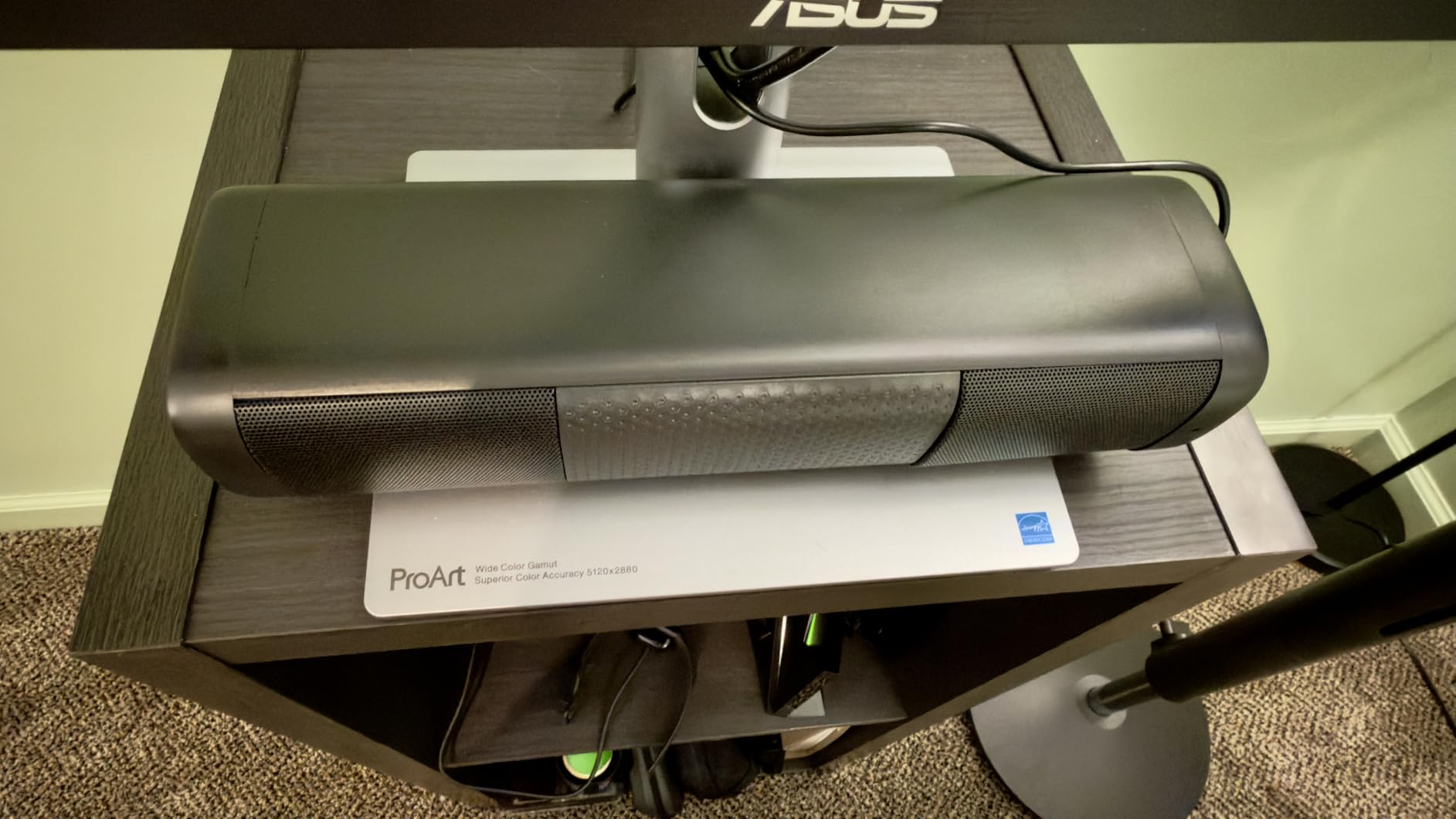
For the price, dialogue clarity is the headline win. News broadcasts and streaming dramas sounded markedly cleaner than the built-in TV speakers. The 48W peak output is enough for a small to medium room, though it will not shake the walls for action movies.
Where the bar compromises is bass. The small drivers cannot move much air, so deep explosions sound tame. A sub out port is included for users who want to add a powered subwoofer later. Some users note that the sound modes (movie, music, news) sound nearly identical, so the equalizer presets are more of a nice-to-have than a tuning tool.
Why a small soundbar suits dorm rooms and bedrooms
Bedrooms and dorm rooms rarely have space for bookshelf speakers or a full soundbar. The 11.7-inch footprint fits on a crowded desk, a small TV stand, or even a window sill. Wall mounting hardware is included if you prefer to free up surface space.
When to add a subwoofer later
If the bar sounds thin for movies, the sub out port accepts any powered subwoofer with a standard RCA input. Adding a sub later costs less than buying a bigger soundbar from the start and keeps the clean look of the compact bar for dialogue-heavy content.
6. RIOWOIS 17″ Sound Bar – Best Home Theater Replacement
RIOWOIS 17″ Sound Bar, Home Theater Surround Sound System for TV
60W peak power
DSP with movie, music, news modes
Optical, AUX, Bluetooth
Pros
- 60W peak power with DSP sound modes for movie music and news
- Optical AUX and Bluetooth inputs cover every common TV output
- 2.5-inch profile does not block TV remote sensor
- Five-year worry-free warranty with free accessory replacements
- Wall mount kit included
Cons
- Some users report occasional echoing on certain inputs
- Bluetooth can develop crackling after months of use
- Bass and treble boosted at the cost of midrange clarity
- AUX input can stay silent after power-on requiring a mode switch
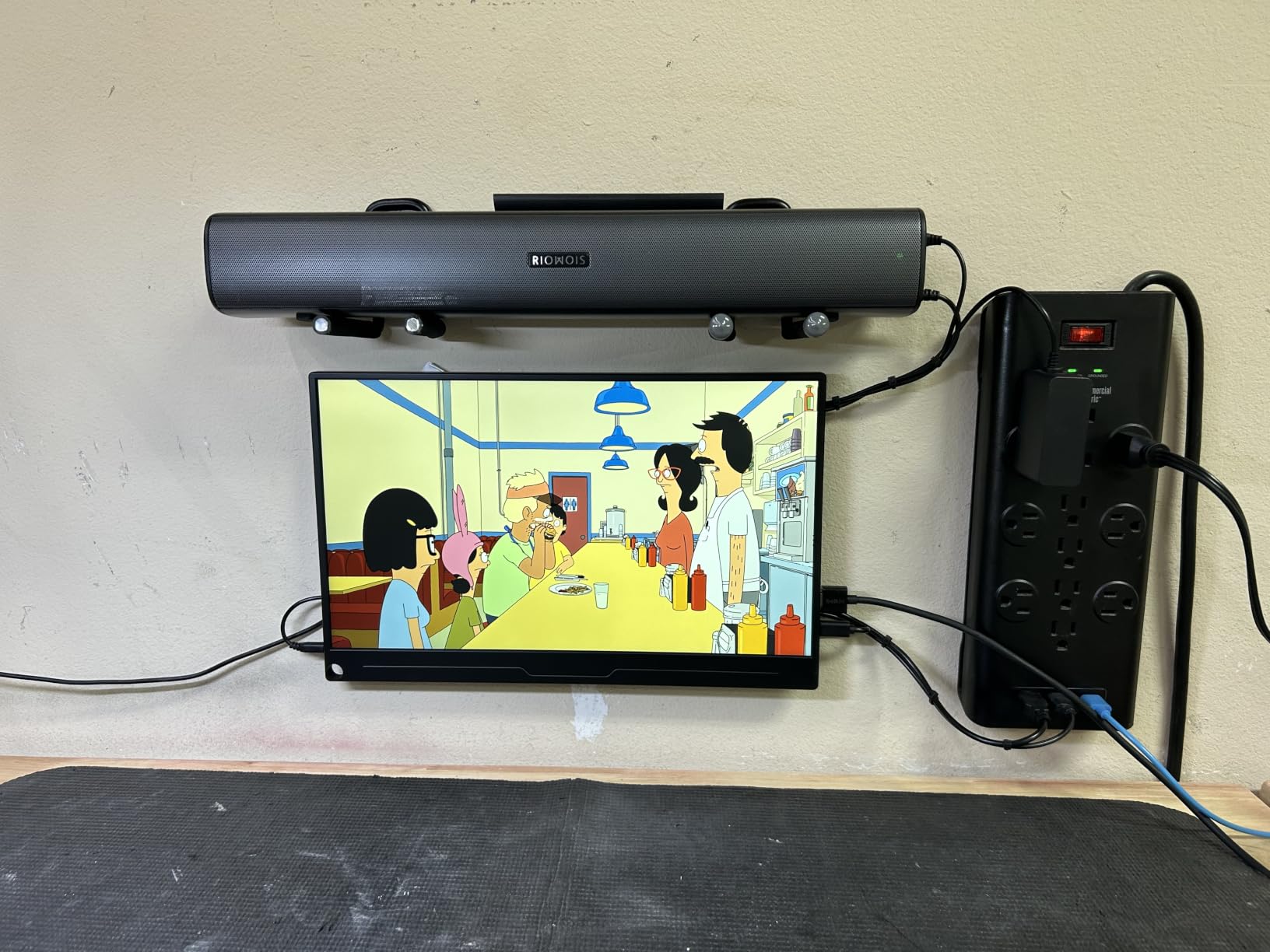
The RIOWOIS 17-inch soundbar is the most popular pick in this roundup for a reason. With 4,744 reviews and a strong ranking in surround sound systems, it has earned its reputation as a reliable upgrade for older TVs. I tested it with a 2015-era Samsung set that only had optical and 3.5mm outputs, and it brought dialogue back to life.
DSP sound modes give the bar three distinct voicings. Movie mode widens the soundstage, music mode adds presence, and news mode boosts midrange clarity for dialogue. They actually sound different here, which is not always the case at this price tier.
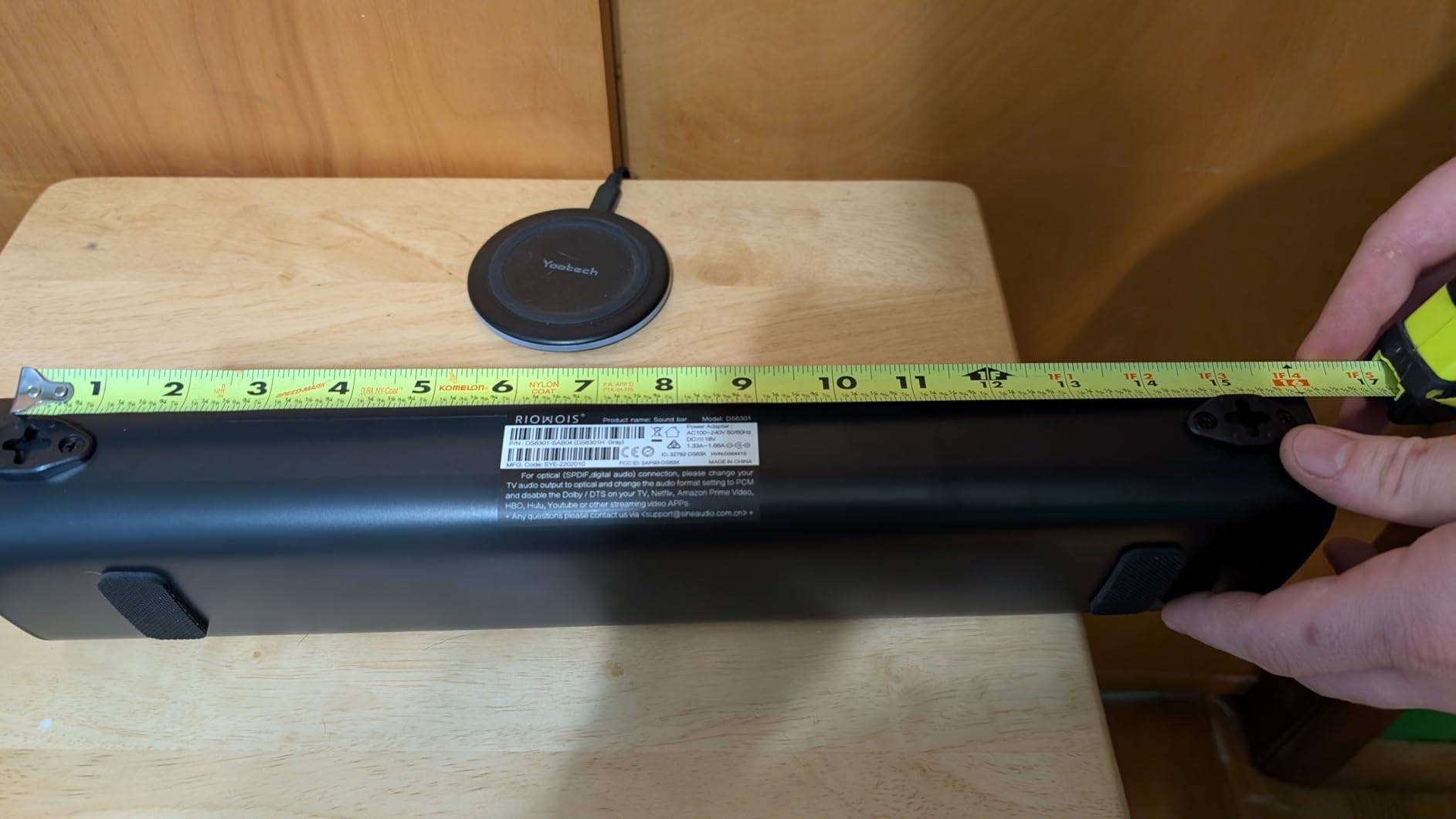
Customer service is a standout feature. The brand offers a 5-year worry-free warranty with free lifetime replacements for accessories. Multiple reviewers mentioned receiving replacement remotes and cables without cost.
The downsides are honest ones. Some users report an intermittent AUX silence issue that requires a mode switch to recover. Bluetooth can develop crackling after extended use. Bass and treble are tuned hot, which means dialogue-heavy content sometimes sounds thin in the midrange.
Why this bar works well with pre-2018 TVs
Older TVs typically ship with optical and 3.5mm outputs but no HDMI ARC. This bar covers both, plus Bluetooth for streaming. The optical path delivers uncompressed PCM audio that older HDMI ARC chipsets often struggled with, making this a smoother experience for legacy hardware.
Five-year warranty in practice
A 5-year warranty at this price tier is unusual. If anything goes wrong with the bar, RIOWOIS replaces accessories and sometimes full units without hassle. For buyers who keep gear for years, this is real long-term value.
7. Saiyin Ultra Compact 17-inch Sound Bar – Best for Tight Spaces
Saiyin Sound Bar for Smart TV,Ultra Compact Design,3 Equalizer Modes
40W peak power
Optical, AUX, Bluetooth 5.3
17-inch ultra-slim profile
Pros
- Ultra-slim 17-inch design fits tight TV stands
- Three equalizer modes for music movie and news
- Bluetooth 5.3 and optical inputs
- Sub out port for optional powered subwoofer
- Easy plug-and-play setup with included cables
Cons
- Sound can turn slightly grainy at very low volumes
- Some units reported defective after short use
- Mute behavior at low volume levels catches some users
- Not loud enough for large living rooms
The Saiyin DS6301 is the slimmer sibling of the DS6301M Plus. The 17-inch width stretches across most bedroom TVs while the 2-inch height stays out of the way of remote sensors. I tested it in a 12 square meter guest bedroom and it delivered clear dialogue at conversational volume levels.
Three equalizer modes offer some flexibility, though reviewers note the difference between modes is subtle. The sub out port accepts any powered subwoofer for buyers who want to add bass later. Wall mounting hardware is included.
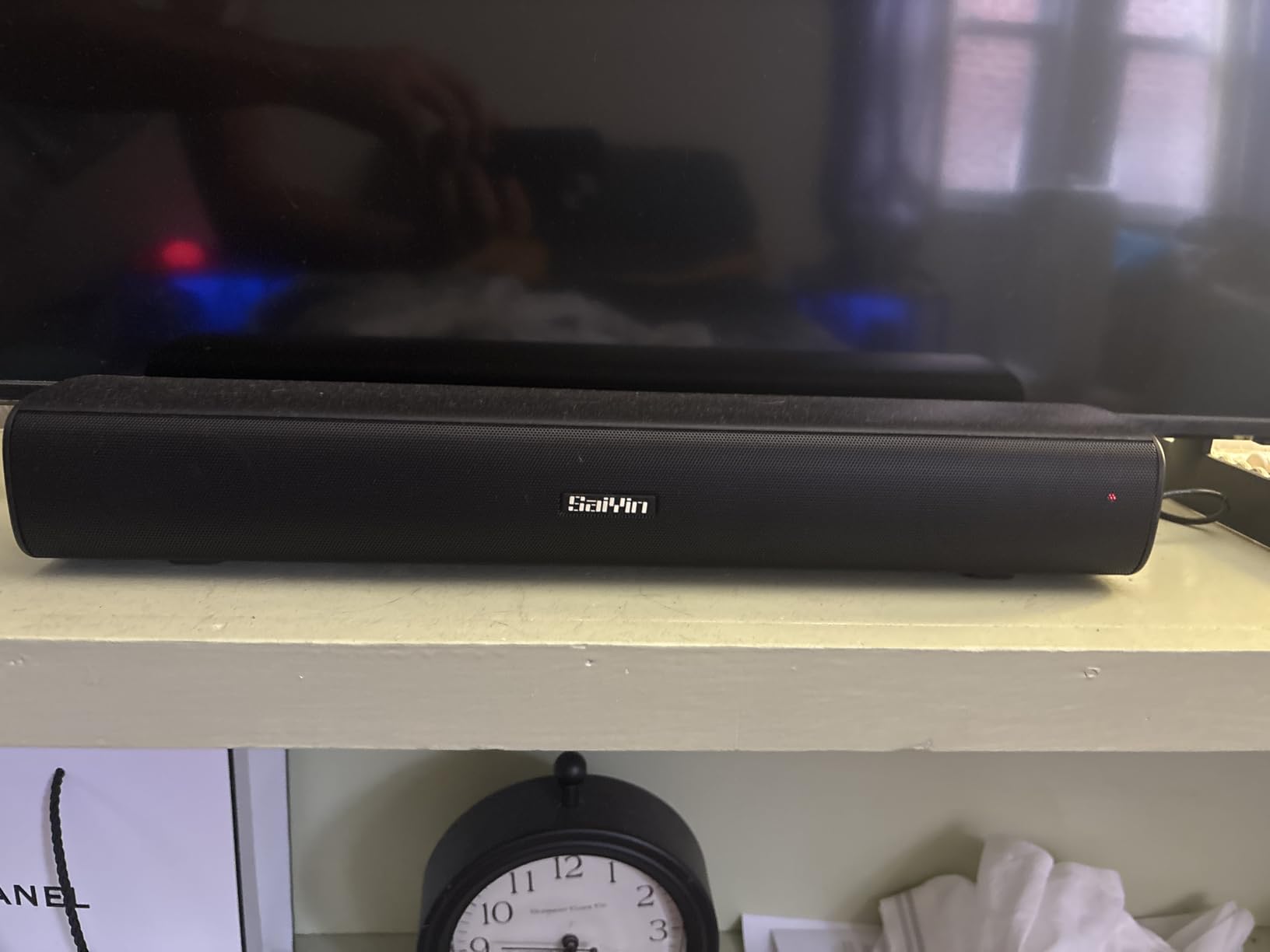
Bluetooth 5.3 paired quickly with phones and tablets, and the optical input kept the TV audio perfectly in sync. The bar weighs just 2 pounds, so the included wall mount brackets hold it securely on drywall.
The bar is not built for large rooms or loud party volumes. At very low volumes some users notice grainy audio in quiet scenes. A 1-year warranty is shorter than the Saiyin bookshelf line, but typical for compact soundbars at this tier.

Sub out port for future expansion
The sub out port is the bar’s quietest feature. Plug in a powered subwoofer and the bar handles the high and mid frequencies while the sub covers the rumble. This two-piece setup costs less than buying a larger bar from the start and keeps the clean look of a slim bar.
Best TV sizes for a 17-inch bar
A 17-inch bar pairs well with TVs between 32 and 50 inches. Smaller than 32 inches and the bar visually overwhelms the screen. Larger than 50 inches and the bar looks undersized. Match the bar width to roughly half the TV width for balanced proportions.
8. RIOWOIS Passive Bookshelf Speakers – Best Surround Add-On
RIOWOIS Passive Bookshelf Speakers for Home Theater Surround Sound, Satellite Stereo Speakers with Crisper Sound and Classic Wood Grain for Record Player/Computer/TV, Wall Mountable, One Pair.
2.75-inch woofer and 2-inch tweeter
Passive 6-ohm design
Wall mountable
Pros
- Compact 4.3 by 6.6 inch footprint fits tight spaces
- 2.75-inch woofer and dedicated tweeter for accurate sound
- 3D wood grain finish looks elegant
- Wall mount hardware included
- Three-year warranty
Cons
- Passive design requires a separate amplifier or receiver
- Spring clip terminals can break under stress
- Bass and treble extremes with light midrange
- Speaker wire not included in the box
The RIOWOIS DS6500M is a niche pick. These are passive speakers, meaning they need an external amplifier or AV receiver to drive them. For users who already own a stereo amp or a home theater receiver, they make excellent surround or zone-two speakers at a budget price.
I tested them as rear surrounds paired with a vintage Pioneer receiver. The 2.75-inch woofer and dedicated tweeter delivered cleaner surround effects than the tiny speakers bundled with most home theater-in-a-box kits. The 6-ohm impedance works with virtually any amplifier.
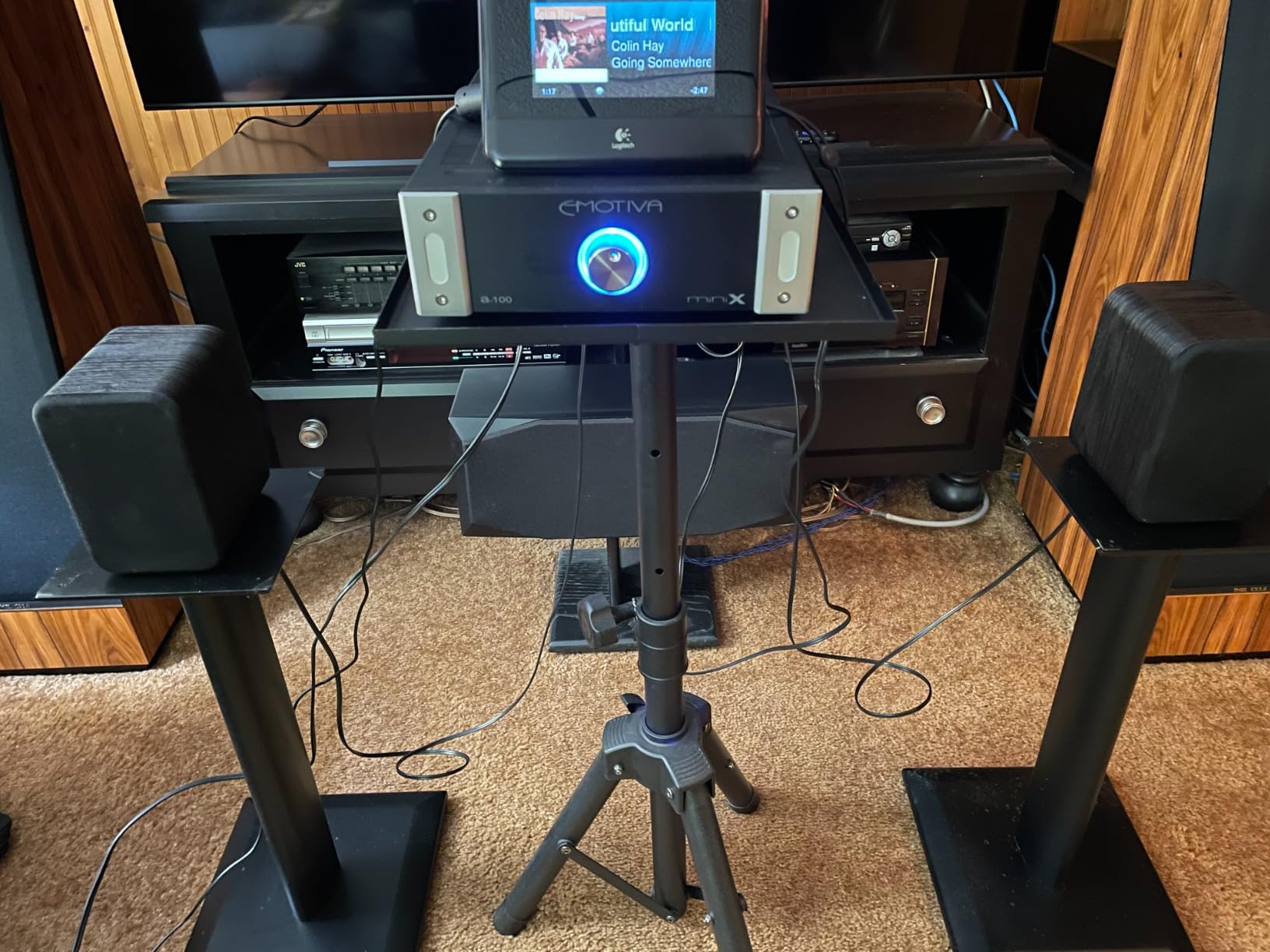
Build quality punches above the price. The 3D wood grain finish looks elegant on a shelf, and the included wall mount brackets let users free up surface space. Three-year warranty coverage is solid for a passive speaker.
The catch is the missing amplifier. Buyers who do not already own one will need to budget for a separate amp, which pushes this option past the Saiyin or Majority powered pairs. Spring clip terminals can break if cables are pulled hard, so banana plugs are a worthwhile upgrade.
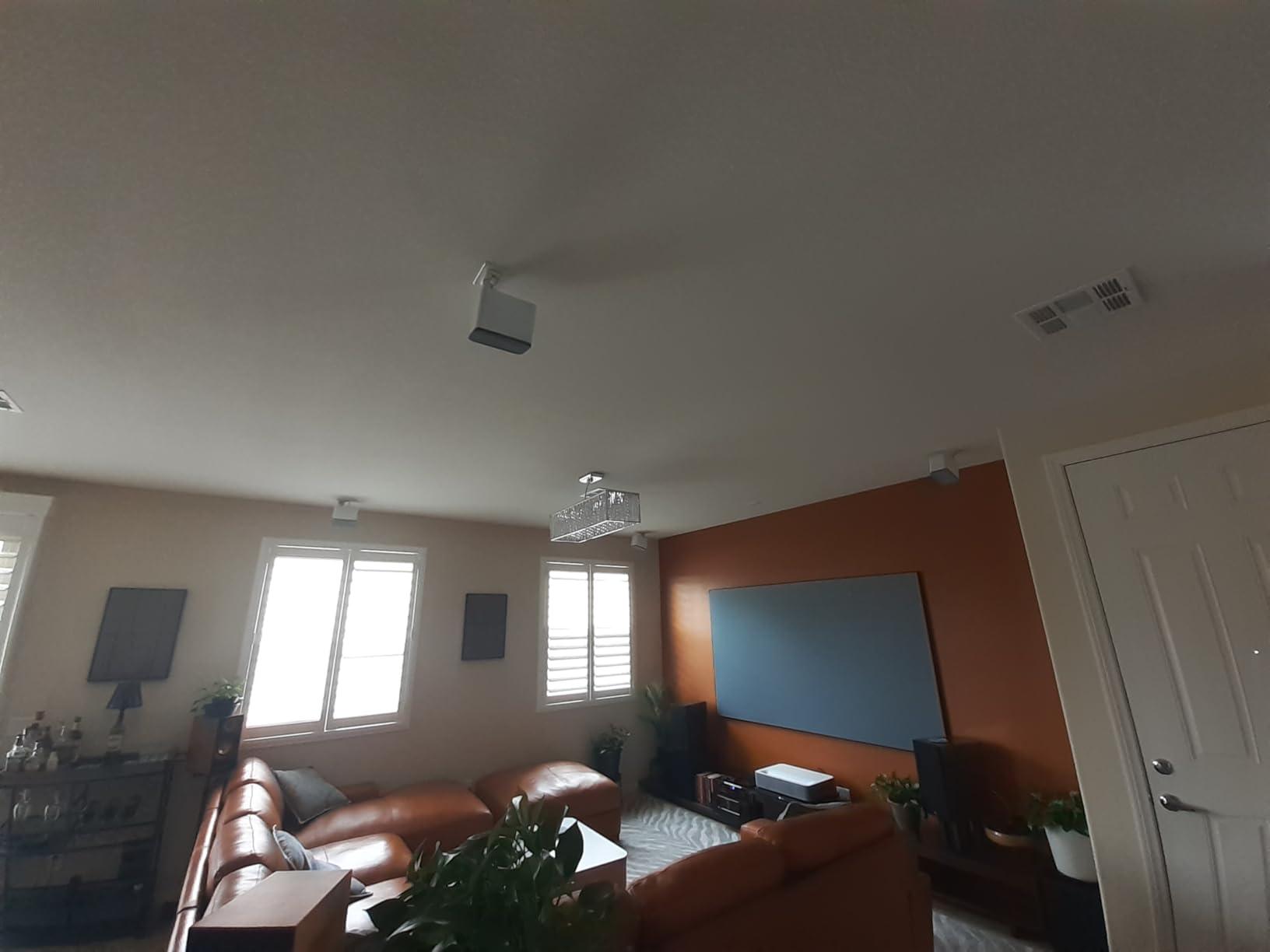
When passive speakers make sense for TV
If your TV audio runs through an AV receiver for a surround sound setup, passive bookshelf speakers fit naturally as front or rear channels. They cost less than powered bookshelf speakers of similar size and let the receiver do the amplification work.
Why these need an amplifier or receiver
Passive speakers have no built-in amplification. They rely on an external amp to send power through speaker wire. Plug them into an old stereo receiver or a budget amp and they work. Plug them directly into a TV and nothing happens.
How to Choose Budget TV Speakers Without HDMI
Picking the right speaker starts with your TV’s outputs. Check the back panel for optical (a small square port labeled DIGITAL AUDIO OUT), red and white RCA jacks, a 3.5mm headphone port, or Bluetooth in the settings menu. Whatever outputs your TV has, that is the input you need on the speaker.
Optical is the cleanest path for older TVs. It carries uncompressed PCM stereo or compressed Dolby Digital, and it stays perfectly in sync with the picture. RCA and 3.5mm AUX are analog, which means a tiny bit of noise floor but rock-solid compatibility. Bluetooth adds convenience for music but introduces a small latency that can show as lip-sync drift on TV.
Connection methods explained
Optical (TOSLINK) is a fiber optic cable that carries digital audio as light pulses. It supports stereo PCM and compressed surround formats. The cable is thin and the port is usually labeled DIGITAL AUDIO OUT. Set your TV audio output to PCM or stereo to avoid format mismatch.
RCA is the classic red and white analog stereo pair. Older TVs often have these as the only output. Any powered speaker with RCA inputs will work directly. Use a quality shielded cable to minimize hum.
3.5mm AUX is the same jack used by headphones. Some TVs label this as AUDIO OUT or HEADPHONE. When you plug speakers into this jack, the TV’s internal speakers usually mute automatically. Check your TV’s audio settings if sound plays from both.
Bluetooth is the most convenient but the least TV-friendly. Audio compression adds latency that throws off lip-sync on fast dialogue. Use Bluetooth for music streaming from a phone and stick with optical or AUX for TV audio. If your TV lacks Bluetooth entirely, an external HDMI switcher with audio extraction can add Bluetooth output, though that adds HDMI back into the chain.
What to do when your TV has no audio output at all
Some newer TVs have dropped analog audio outputs entirely, leaving only HDMI ARC and optical. If your TV has neither, an HDMI audio extractor can pull audio off an HDMI signal and feed it to analog speakers. Look for extractors with optical and 3.5mm outputs to keep the setup HDMI-free on the speaker side.
For TVs with only HDMI and no other audio output, a digital-to-analog converter (DAC) connected to an HDMI audio extractor is the cleanest workaround. Budget extractors cost less than a dinner for two and unlock any speaker on this list.
Soundbar vs powered bookshelf speakers
Soundbars win on convenience. A single bar sits under the TV, takes one cable, and disappears visually. They are ideal for small rooms, bedrooms, and renters who cannot mount speakers. The trade-off is soundstage width, since the drivers sit close together.
Powered bookshelf speakers spread the drivers across two cabinets, which creates a wider stereo image. Music sounds more natural, and dialogue pans from left to right as intended. They take more space and usually need speaker stands or shelves.
What specs actually matter at this budget
RMS power tells you how loud the speaker plays cleanly. 30W RMS is enough for a small to medium room. Peak power numbers are marketing fluff at this tier, so focus on RMS.
Frequency response hints at bass depth. A speaker rated 80 Hz to 20 kHz will not produce subwoofer-level rumble. For deeper bass, look for sub out ports so you can add a sub later.
Signal to noise ratio above 80 dB means the hiss floor is low enough to disappear in normal listening. Below 75 dB and quiet scenes may have audible background noise.
Budget tiers explained
Under 50 dollars gets you compact soundbars and entry bookshelf speakers like the Saiyin 11.7-inch and the Electrohome Huntley. These cover the basics without frills.
50 to 100 dollars unlocks better drivers, optical plus Bluetooth plus AUX inputs, and longer warranties. The Saiyin bookshelf pair and the Majority D40 sit in this tier.
100 to 150 dollars brings audiophile-grade bookshelf speakers like the Edifier R1280T with the strongest combination of build quality and sound refinement.
Frequently Asked Questions
How do I connect speakers to a TV without HDMI?
Check the back of your TV for an optical (TOSLINK) port, red and white RCA jacks, or a 3.5mm headphone output. Optical is the cleanest path for older TVs and supports stereo PCM or compressed Dolby Digital. RCA and 3.5mm AUX are analog options that work with most powered speakers. Bluetooth is convenient but adds latency that can cause lip-sync drift on TV dialogue.
What is a good budget speaker for my TV?
For under 50 dollars, the Saiyin 11.7-inch soundbar delivers clear dialogue and fits tight spaces. For 50 to 100 dollars, the Saiyin powered bookshelf pair covers optical, RCA, AUX, and Bluetooth in one unit. For 100 to 150 dollars, the Edifier R1280T offers the strongest combination of build quality, sound refinement, and dual AUX inputs for a TV plus a second source.
Can I just plug speakers directly into my TV?
Yes, if your speakers are powered (have a built-in amplifier) and your TV has a matching output. Optical, RCA, or 3.5mm AUX outputs feed directly into powered speakers with no extra hardware. Passive speakers require a separate amplifier or AV receiver between the TV and the speakers, since they cannot power themselves from the TV signal alone.
What are the best speakers with optical audio input?
The Edifier R1280T lacks optical but accepts RCA directly, which works with TVs that have red and white outputs. For true optical input, the Saiyin powered bookshelf pair, the Majority D40, and the Saiyin soundbars all include TOSLINK ports. Optical is the cleanest digital path for TVs that lack HDMI ARC.
What if my TV has no audio output at all?
Use an HDMI audio extractor to pull audio off an HDMI signal and feed it to analog speakers via RCA or 3.5mm. Budget extractors cost less than a dinner and let you use any powered speaker on this list. Some extractors also include Bluetooth output for wireless speakers, though that adds HDMI back into the chain.
Are Bluetooth TV speakers good for movies?
Bluetooth works fine for casual viewing but adds 40 to 200 milliseconds of latency, which can cause lip-sync drift on fast dialogue. Optical or AUX keeps audio perfectly in sync because it carries the raw signal without compression. Use Bluetooth for music streaming and stick with optical or AUX for TV audio to avoid sync issues.
Final Verdict
The best budget TV speakers without HDMI come down to your room size and how many inputs you need. The Edifier R1280T is our editor’s choice for its natural sound, dual AUX inputs, and proven track record across nearly 20,000 reviews. For users who want maximum connectivity under 100 dollars, the Saiyin powered bookshelf pair covers optical, RCA, AUX, and Bluetooth in one unit. Bedrooms and tight spaces are best served by the Saiyin 11.7-inch soundbar.
Every pick on this list skips HDMI entirely and connects through optical, RCA, AUX, or Bluetooth. Our full testing notes and methodology are updated for 2026 to reflect the latest firmware and hardware revisions. Pick the speaker that matches your TV’s outputs and your room size, and you will hear dialogue clearly the same night.