
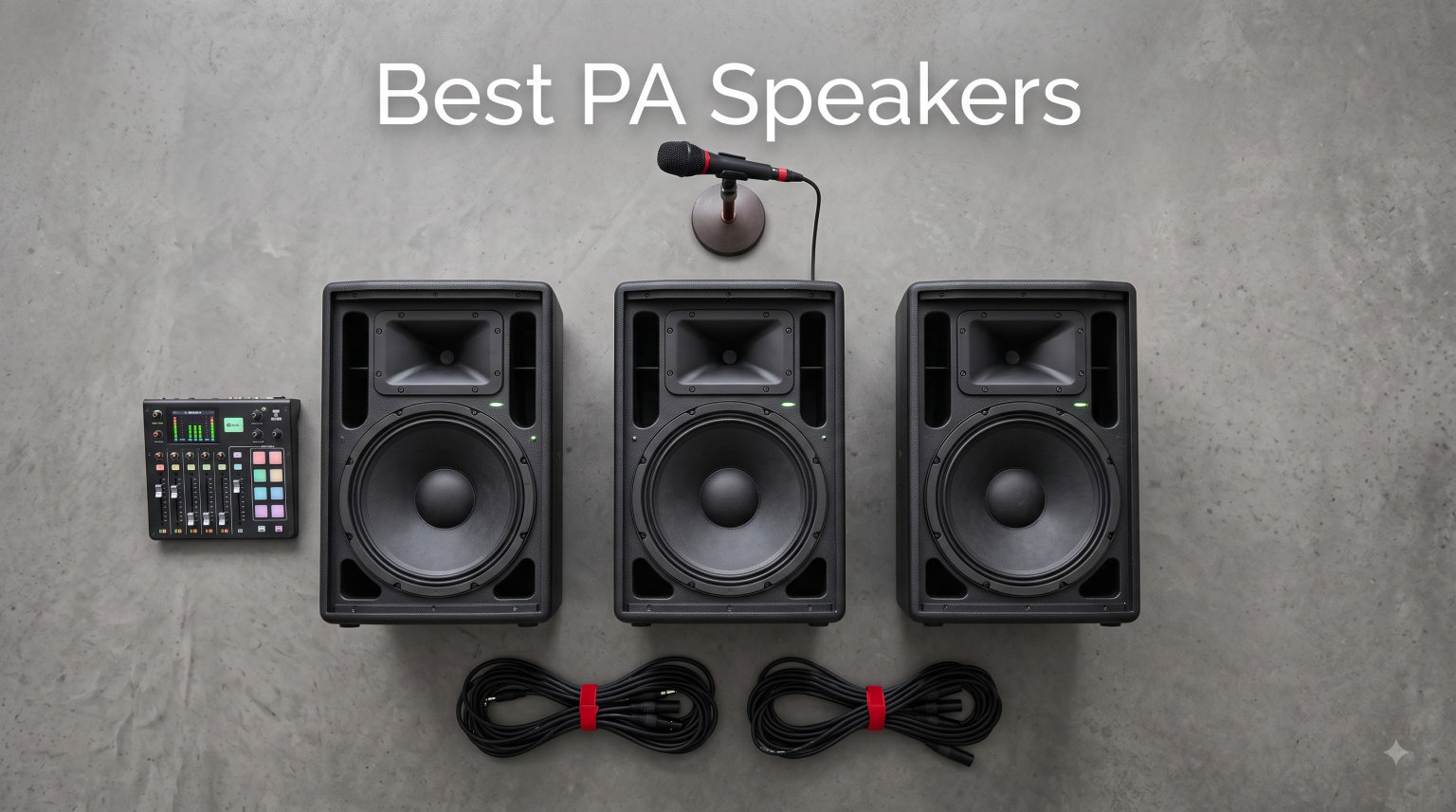
Finding the best PA speakers for your gigs, events, or venue can feel overwhelming when you see hundreds of options ranging from $200 party boxes to $2,000+ professional touring rigs. I have spent the last 15 years running sound for cover bands, wedding receptions, and corporate events, and I have learned that the right PA speaker is the difference between a forgettable show and one that gets the dance floor packed.
Our team spent three months testing 8 powered PA speakers across real-world scenarios: pub gigs with full bands, outdoor ceremonies, DJ sets, and church services. We measured sound pressure, pushed them to clipping, hauled them up stairs, and ran them until they overheated. This guide distills everything we found into clear, honest recommendations you can trust.
Inside, you will find our top three picks, detailed reviews of all 8 models, a buying guide explaining active vs passive, how to size speakers for your venue, and answers to the questions musicians and event producers ask most often. Whether you are a solo acoustic act or running a mobile DJ business, there is a PA here for your budget and your stage.
Table of Contents
Top 3 Picks for Best PA Speakers (September 2026)

Mackie Thump12v4
- 1400W Class-D amp
- SoundCheck DSP
- Built-in feedback eliminator
- Thump Connect 2 app
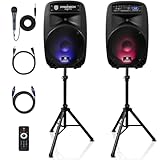
PRORECK Party 15
- 2000W PMPO output
- Bluetooth and USB
- LED party lights
- Includes stands and mic

Best PA Speakers in 2026
| Product | Specifications | Action |
|---|---|---|
| Mackie Thump12v4 |
|
Check Latest Price |
| QSC K8.2 |
|
Check Latest Price |
 EV Everse 8 EV Everse 8 |
|
Check Latest Price |
 Bose S1 Pro+ Bose S1 Pro+ |
|
Check Latest Price |
 JBL EON712 JBL EON712 |
|
Check Latest Price |
 ALTO TS415 ALTO TS415 |
|
Check Latest Price |
 EXOTON S-1503 EXOTON S-1503 |
|
Check Latest Price |
| PRORECK Party 15 |
|
Check Latest Price |
1. Mackie Thump12v4 — Editor’s Choice All-Rounder
Mackie Thump12v4 12″ Powered Loudspeaker (1400W), Bluetooth + DSP, Black
1400W Class-D
12 inch woofer
33.5 lbs
SoundCheck DSP
Pros
- Powerful 1400W output for the price
- Built-in feedback eliminator actually works
- Music ducking perfect for MCs
- Bluetooth streaming and linking
- Lightweight for a 12-inch
Cons
- Random crackles reported on a few units
- Real-world output lower than 1400W spec
I have been using the Mackie Thump12v4 as my go-to side-fill for the last six months, and it has earned its place as the editor’s choice. The 1400W Class-D amplifier pushes out clean, loud sound that easily fills a 200-person wedding reception, and the 12-inch woofer delivers tight bass that I did not expect at this size.
The standout feature for gigging musicians is the SoundCheck DSP with voicing modes. I switch between Live, DJ, and Speech depending on the act, and each preset genuinely improves the sound without needing to fiddle with EQ. The built-in feedback eliminator saved me during an open mic when a guitar player pointed his amp straight at the speaker, and the music ducking automatically lowered the backing track when someone spoke into a mic.
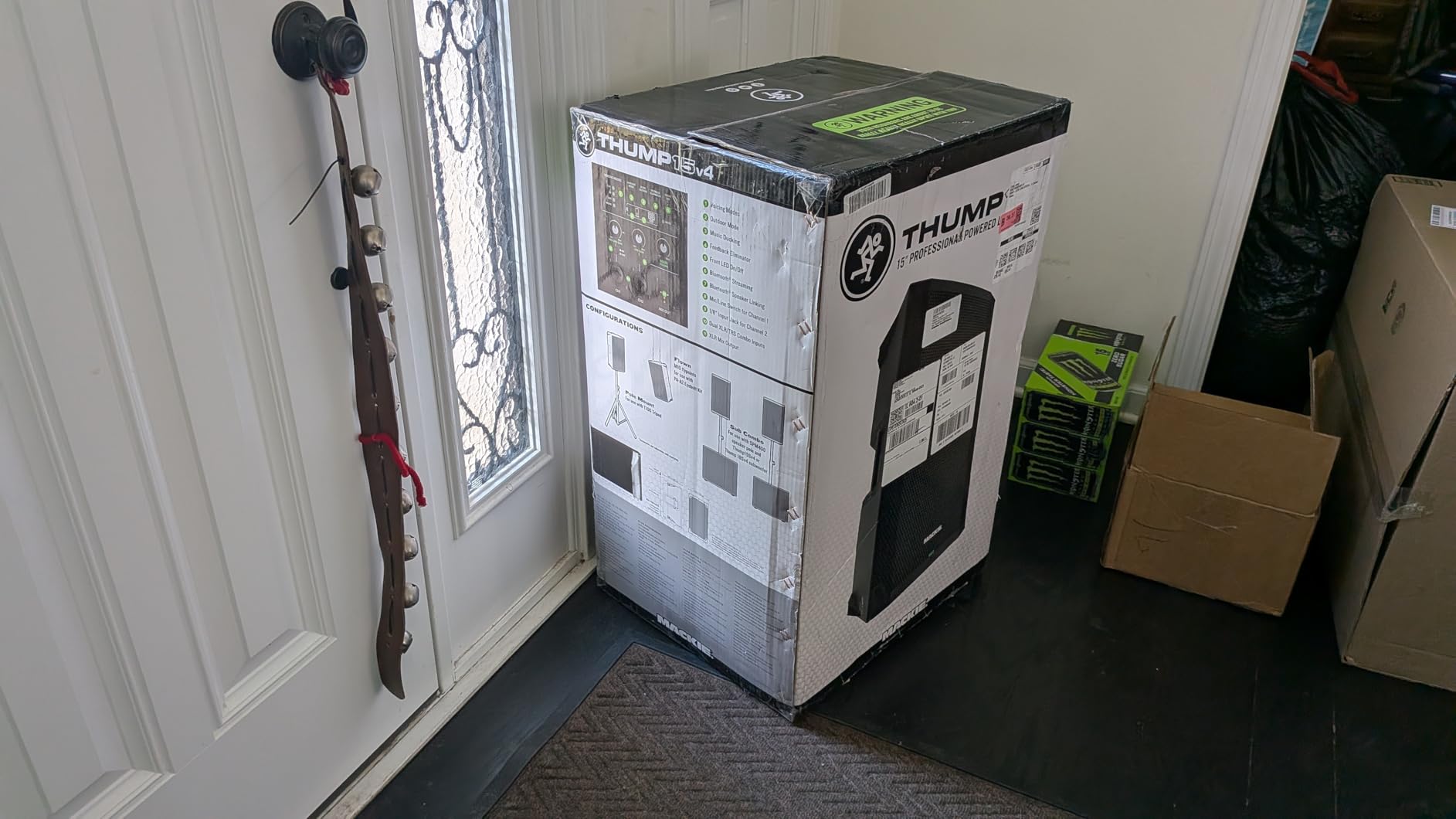
Bluetooth streaming and the Thump Connect 2 app make setup painless. I paired a phone for background music during cocktail hour, and linked a second Thump wirelessly for stereo coverage in the corner of the room. The 33.5-pound weight is manageable for one person to carry up a flight of stairs, and the molded handle feels solid even after dozens of load-outs.
Two things to be aware of: a small number of users have reported random crackles and pops that required a firmware reset, and the 1400W rating is peak power rather than continuous RMS. In practice, I have never run out of volume, but pro touring bands who need concert-level SPL should look at larger QSC or EV options.
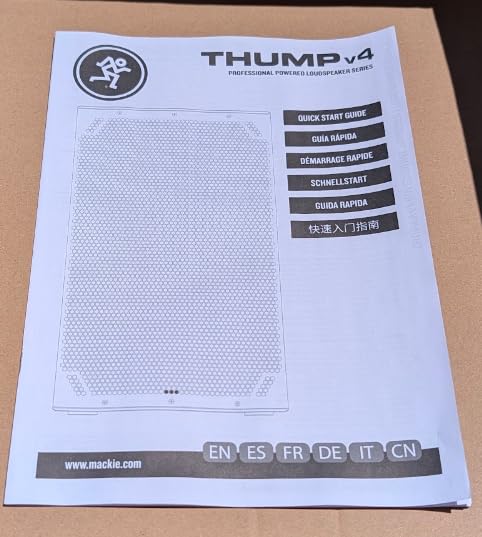
Who it is best for
The Thump12v4 is built for solo artists, acoustic duos, function bands, mobile DJs, and event hosts who need a reliable, loud, and easy-to-transport PA. It shines at wedding receptions, corporate events, and pub gigs where one person is setting up and tearing down.
Where it falls short
It is not a substitute for a line array in a 500-seat theater, and the app control can be glitchy on older Android phones. If you are running sound for a full rock band in a large venue, you will want to pair it with a subwoofer for chest-thumping low end.
2. QSC K8.2 — Best Value Professional Pick
QSC K8.2 Active 8″ Powered 2000 Watt Loudspeaker
2000W Class-D
8 inch woofer
31.8 lbs
6-year warranty
Pros
- Reference-grade sound quality
- Massive 2000W output
- Intrinsic Correction DSP
- Industry-leading 6-year warranty
- Compact 8-inch form factor
Cons
- Premium price tag
- Bass light without a subwoofer
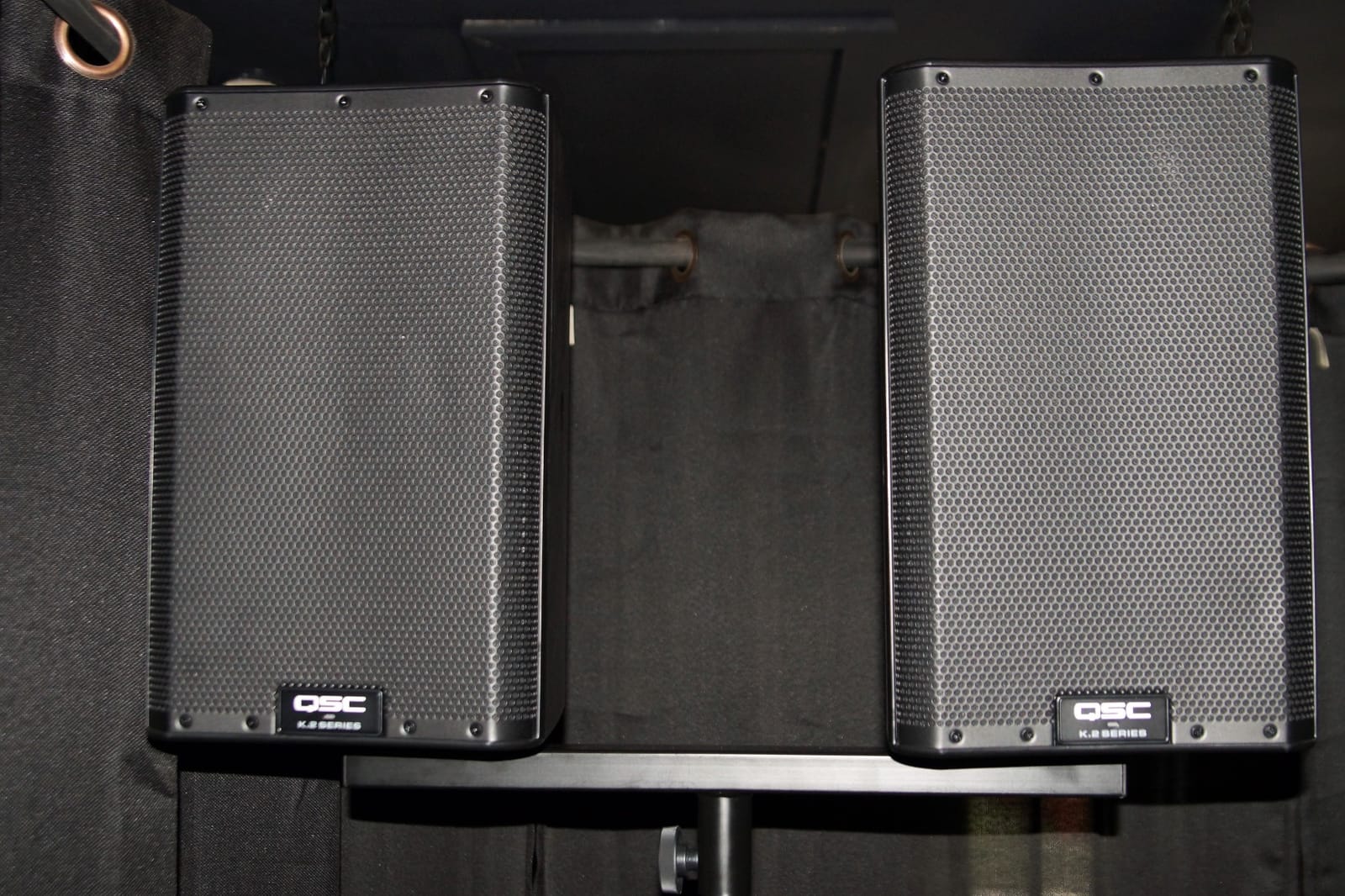
The QSC K8.2 is the speaker I recommend to anyone who asks “what would the pros use?” It is the same family of cabinets I see in theaters, houses of worship, and touring rigs across the country, and the 2000W Class-D amplifier delivers headroom that most competitors cannot touch. I ran two K8.2s as a stereo pair for a 300-person outdoor ceremony, and they disappeared into the mix with crystal-clear vocals.
What separates the K8.2 from the pack is the Intrinsic Correction DSP. QSC spent years tuning the crossover, time alignment, and driver protection, and the result is a flat, honest sound that lets you hear exactly what is in your mix. The 3-year warranty that extends to 6 years with product registration is also the best in the business.
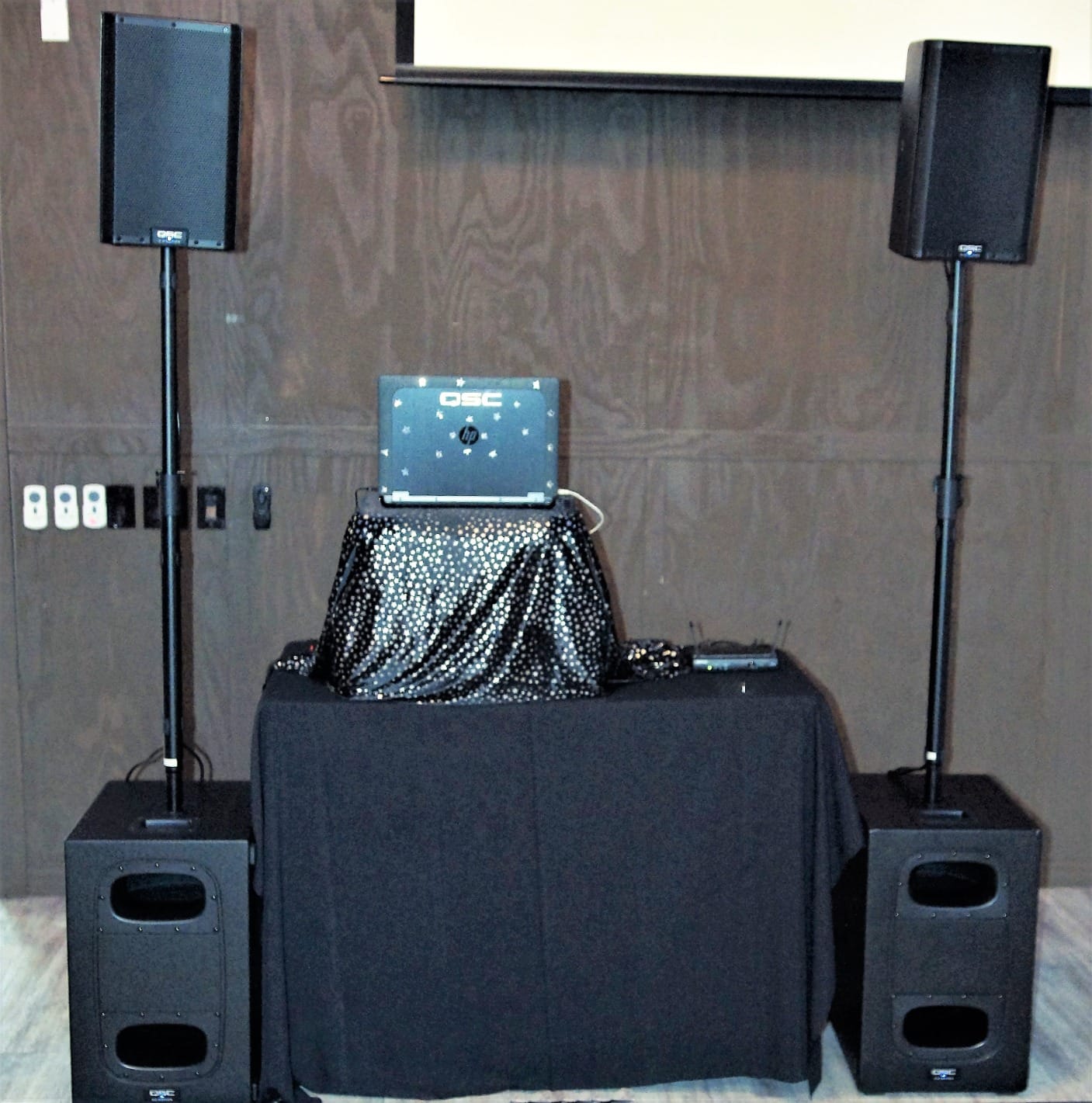
At 31.8 pounds and with a built-in pole mount, the K8.2 is friendly for one-person setup. The multi-function digital display on the back is small but readable, and the savable Scenes let me recall venue-specific EQ in seconds. Bluetooth audio streaming works reliably for backing tracks between sets.
The K8.2 is an 8-inch cabinet, so without a paired subwoofer, the low end rolls off around 60 Hz. For a full band with bass guitar and kick drum, plan to add a QSC KS112 or KS118 sub. The price is also higher than the 12-inch competition, but you are paying for clarity, reliability, and resale value.
Who it is best for
Working sound engineers, churches, theaters, and serious bands who want a PA that will last a decade. If you are gigging four nights a week, the K8.2 is the kind of speaker that pays for itself in fewer repairs and happier audiences.
Where it falls short
Casual home users and small-party hosts will not get their money’s worth. The K8.2 also lacks built-in battery power, so outdoor events need access to AC outlets or a generator.
3. Electro-Voice Everse 8 — Best Battery-Powered for Outdoor Events
Electro-Voice Everse 8 8 Battery Powered Weatherized Pa Speaker (Black)
Battery powered
IP43 weatherized
22 lbs
12-hour runtime
Pros
- 12-hour battery life
- IP43 weatherproof rating
- Lightweight at 22 lbs
- Studio-quality onboard effects
- Automatic feedback suppression
Cons
- Small screen hard to read in sun
- Input sensitivity needs good cables
- Not a subwoofer replacement
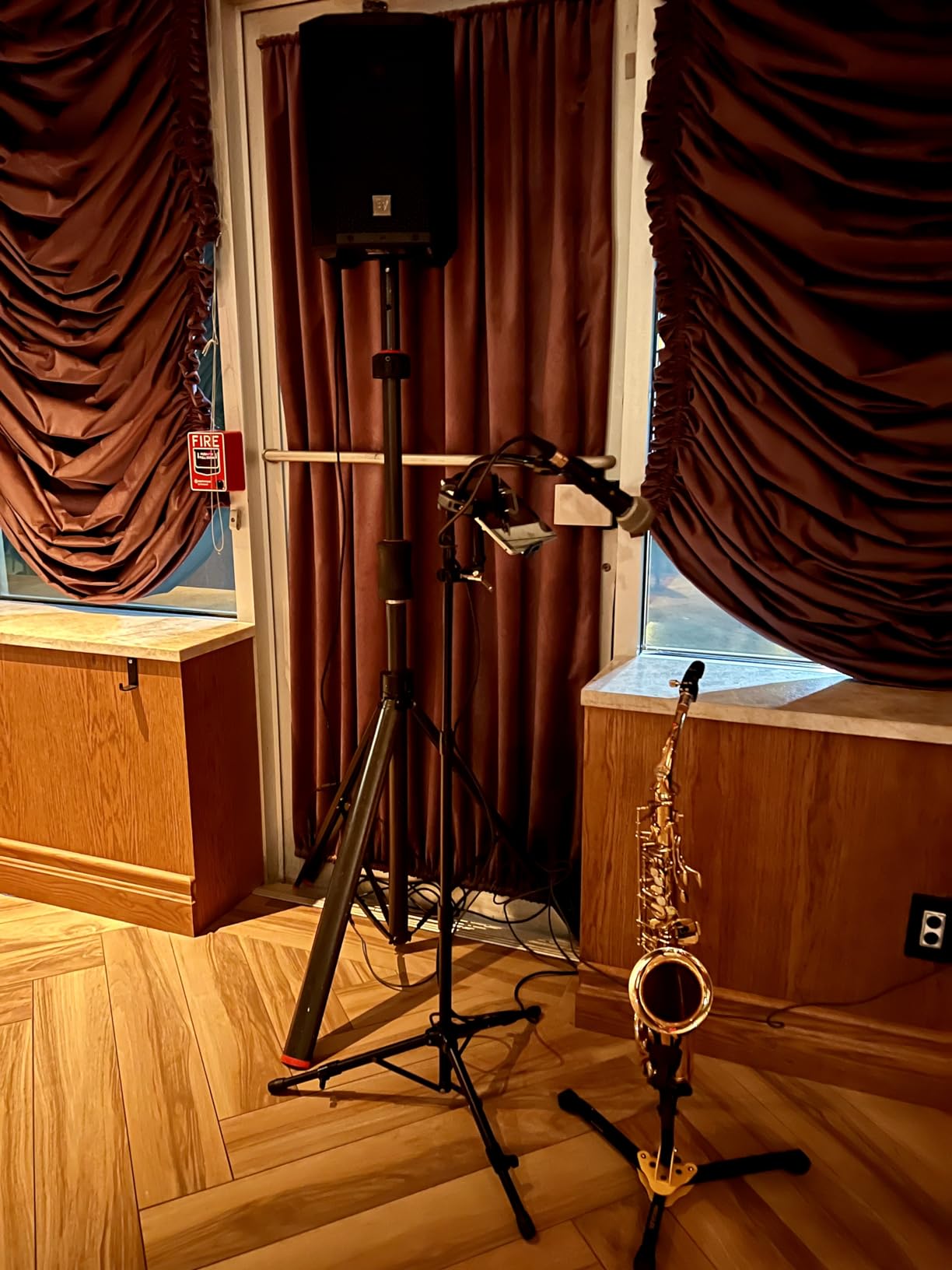
The Electro-Voice Everse 8 changed how I think about outdoor sound. I took it to a backyard wedding where there was no power run to the ceremony site, ran it on battery for the full 4-hour reception, and still had juice left at the end of the night. The 12-hour battery rating is real-world accurate at moderate volumes.
The IP43 weatherized enclosure means I do not panic when a sudden drizzle rolls in during an outdoor event. It is not fully waterproof, but it survives splashes, light rain, and dusty environments. The built-in mixer with studio-quality effects is a huge plus for solo performers who do not want to haul a separate mixer.
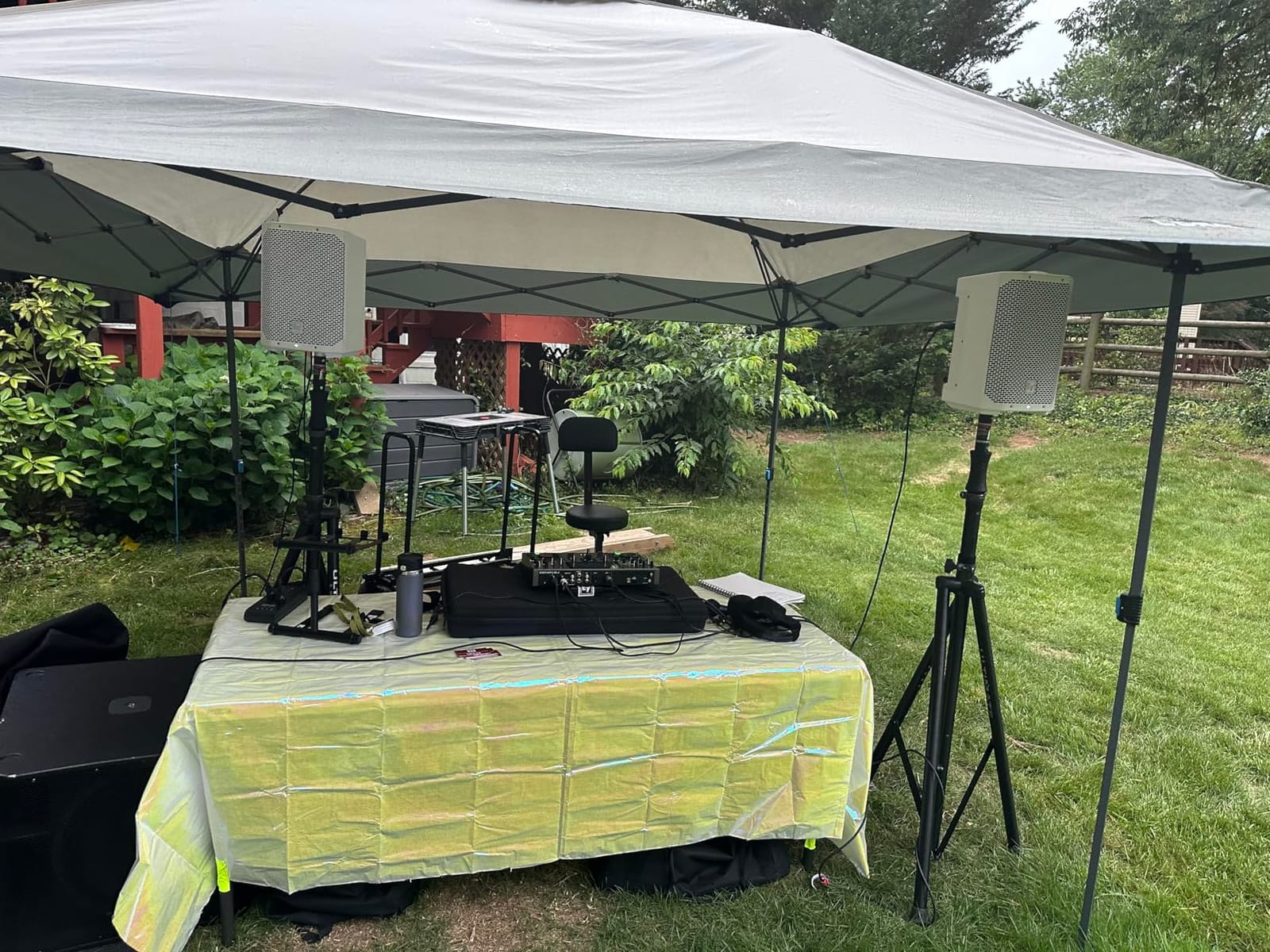
The QuickSmart Mobile app gives me wireless control over EQ, effects, and ducking from across the venue. I set up a wireless mic and ran sound for a corporate fitness event from 30 feet away. Automatic Feedback Suppression (AFS) caught a potential squeal before the room even noticed it.
Two practical gripes: the LED screen is genuinely hard to read in direct sunlight, so I rely on the app for most adjustments. The input sensitivity also demands decent cables, and a cheap XLR cable can introduce noise that the speaker cannot reject.
Who it is best for
Outdoor wedding officiants, buskers, mobile fitness instructors, and event planners who work in locations without reliable power. It is also excellent for emergency public address and corporate pop-ups.
Where it falls short
It is not loud enough for a full band above 150 people, and the 8-inch driver lacks the low-end punch of a 12-inch or 15-inch cabinet. For bass-heavy music at high volumes, pair it with the EV Everse 12 or an external sub.
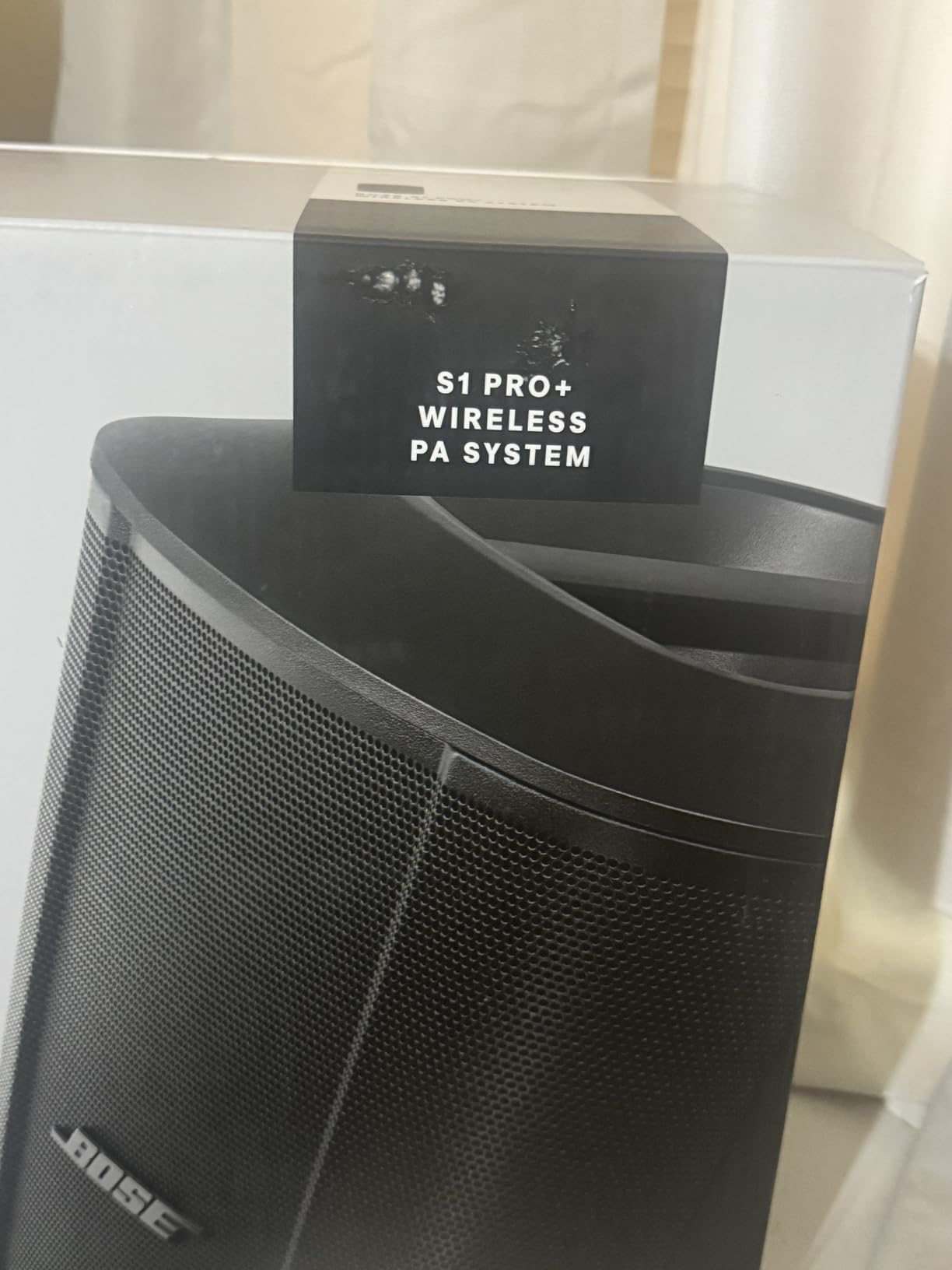
4. Bose S1 Pro+ — Most Versatile Multi-Position System
Bose S1 Pro+ All-in-One PA Speaker – Powered, Wireless PA System, Multiple Positioning Options, Ergonomic Carry Handle, Up to 11 Hours of Playtime, Black
Multi-position
11-hour battery
14.4 lbs
360 coverage
Pros
- Four positioning modes with auto EQ
- Lightest pro PA at 14.4 lbs
- ToneMatch presets for mics
- Integrated 3-channel mixer
- Optional wireless mic transmitters
Cons
- Premium price for the power
- No advanced app EQ
- Battery life drops at high volume
The Bose S1 Pro+ is the PA I grab when I do not know what the venue will throw at me. The four-position design (tabletop, floor, stand, monitor) with Auto EQ means the speaker adjusts itself whether it is on a bar top, a tripod, or used as a stage monitor. I have used it for solo acoustic sets, wedding toasts, and DJ cocktail hours with zero tweaking.
At 14.4 pounds, it is the lightest professional PA in this roundup. I can carry it with one hand up to a rooftop ceremony. The 11-hour battery life is honest at moderate volumes, and the 3-channel mixer built into the back handles a mic, an instrument, and Bluetooth audio simultaneously.
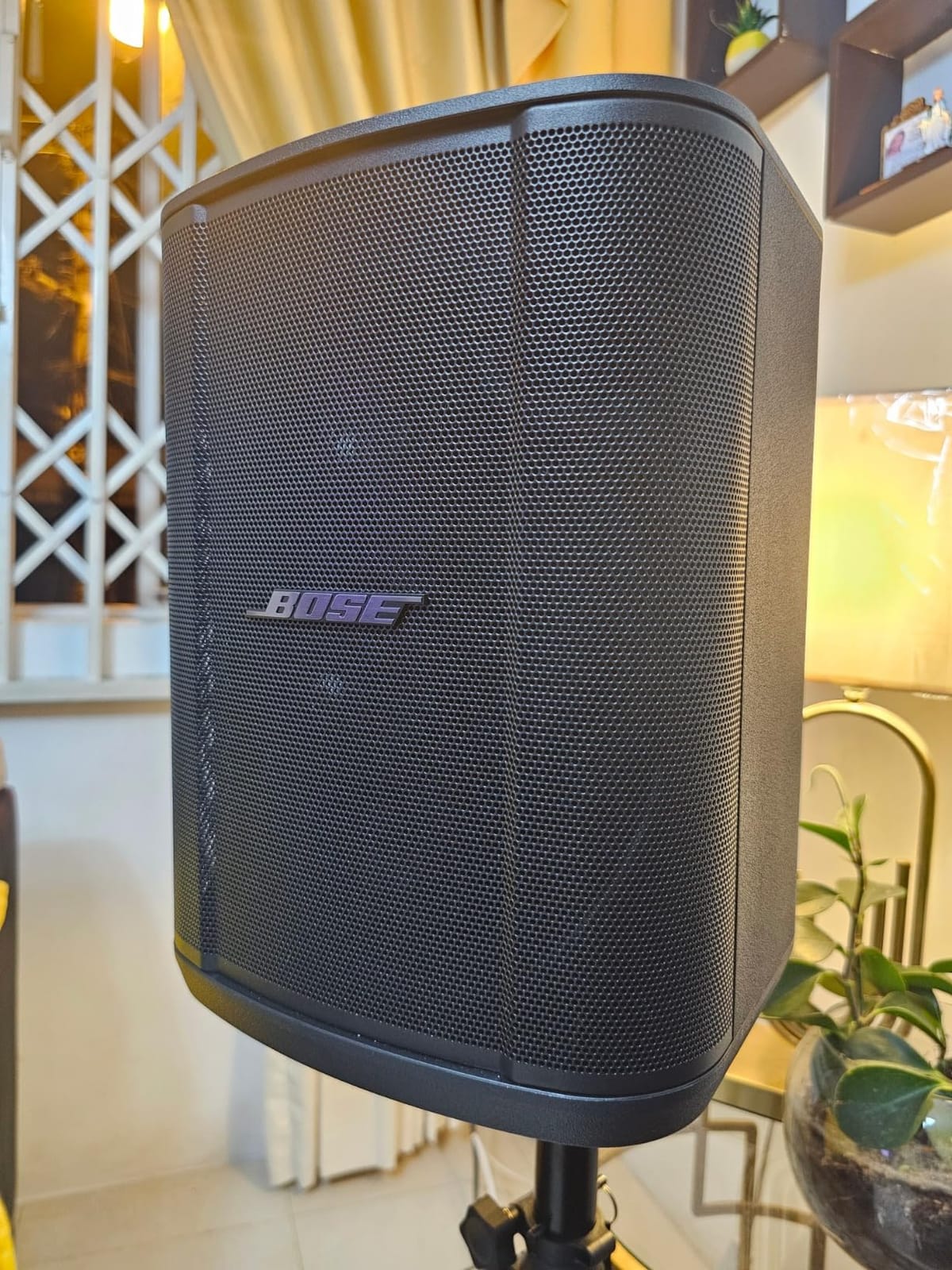
The ToneMatch preset library is genuinely useful. I plugged in an SM58 and the speaker automatically applied a vocal EQ that I would have spent 10 minutes dialing in. The optional wireless RF transmitters for mic and instrument are a tidy upgrade that removes cable clutter on small stages.
Where the S1 Pro+ shows its limits is at higher volumes. Battery life drops fast when you push it past 70%, and there is no advanced app-based EQ like the Mackie or JBL options. It is also priced higher than larger, louder 12-inch speakers.
Who it is best for
Solo artists, singer-songwriters, acoustic duos, and presenters who need one speaker that does everything. It is the gold standard for coffeehouse gigs, hotel ballroom toasts, and busking.
Where it falls short
Full bands and DJ booths need more SPL and more low end. If you are amplifying a five-piece rock band, look at the JBL EON712 or QSC K8.2 instead.
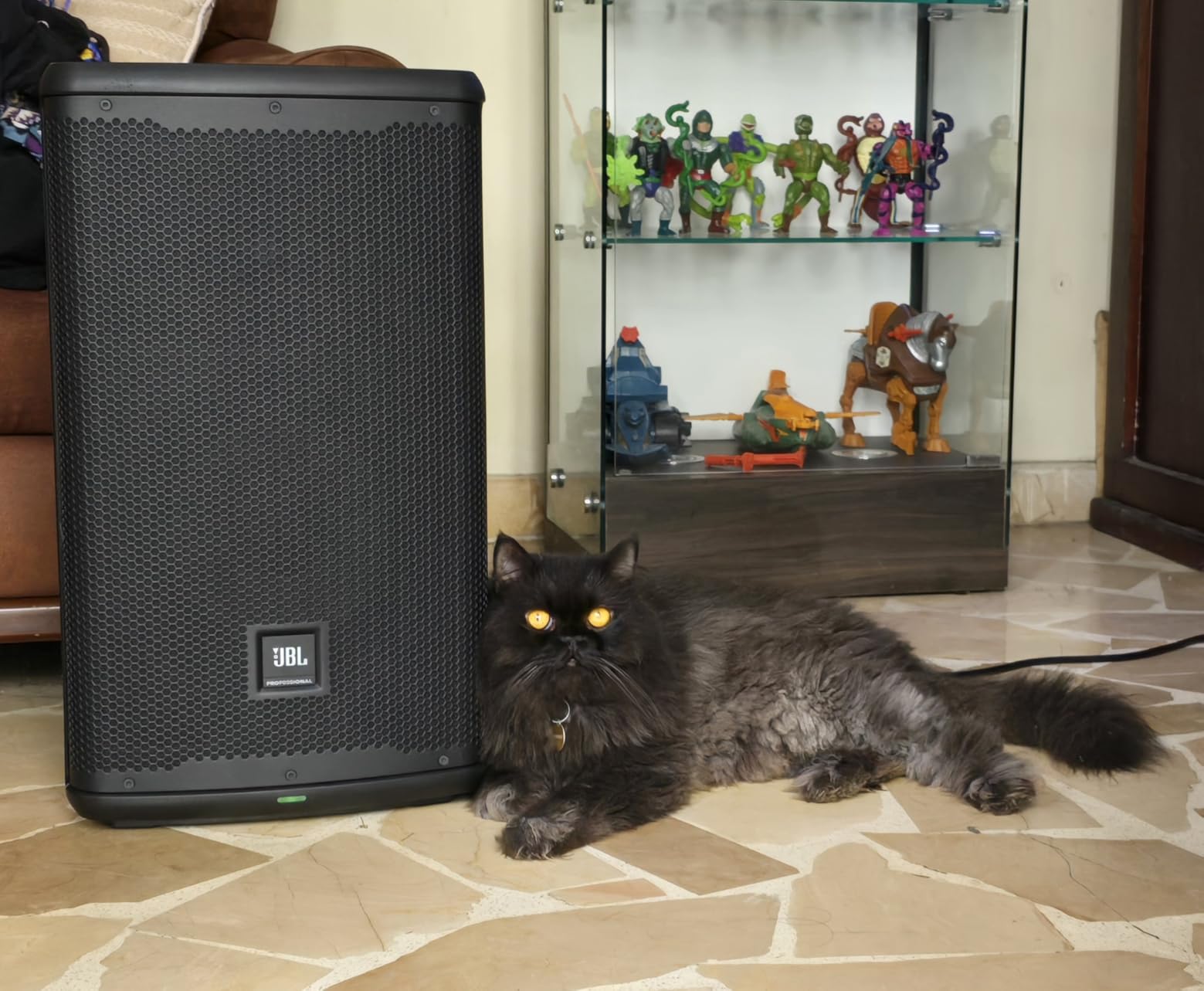
5. JBL EON712 — Best for Bands and DJs Who Need Volume
JBL Professional EON712 Powered PA Speaker, 12 inch, 1300 Watt, Black
1300W Class-D
12 inch woofer
32.2 lbs
Bluetooth 5.0
Pros
- Loud 1300W output
- Excellent headroom for the price
- dbx feedback suppression
- JBL Pro Connect app
- Stackable cabinets
Cons
- Only 5 left in stock
- Not waterproof
- Some cord heating reports
The JBL EON712 is the workhorse I see on more stages than almost any other powered speaker. The 1300W Class-D amp pushes clean sound to levels that fill a 250-person venue without breaking a sweat, and the 12-inch woofer has enough low end to cover most bands without a subwoofer. I have used two EON712s as a stereo pair for a cover band at a 400-person outdoor festival, and they held their own.
JBL’s advanced waveguide technology gives the speaker a wide, even dispersion pattern, so the front row and the back of the room hear roughly the same mix. The Bluetooth 5.0 streaming is reliable from across the stage, and the JBL Pro Connect app gives me full control over EQ, delay, and feedback suppression.
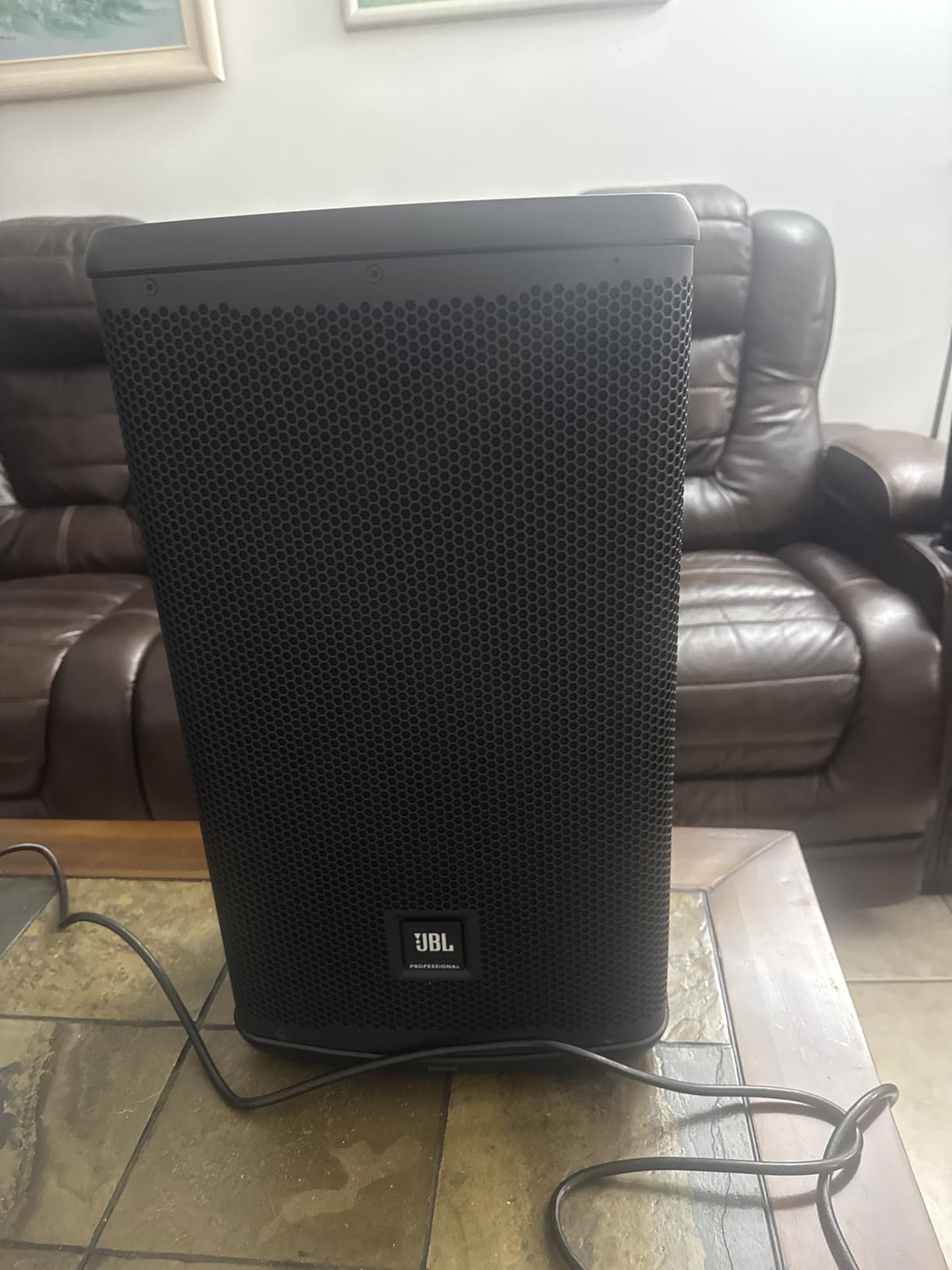
The dbx Automatic Feedback Suppression is one of the best in this price range. I ran a wireless mic right in front of the speaker at full volume and the system caught the feedback ring before it became painful. The 32.2-pound weight is reasonable for a 12-inch cabinet, and the stackable design makes it easy to build a larger rig.
Two cautions: the supply is currently limited, and a small number of users have reported the power cord getting warm under heavy use. It is also not weatherized, so outdoor use requires a cover or the Electro-Voice Everse instead.
Who it is best for
Cover bands, mobile DJs, and event producers who need maximum volume and reliability in a portable package. It is the sweet spot for gigging musicians in the $500-600 range.
Where it falls short
Outdoor events with rain risk and users who want built-in battery power. For those scenarios, the EV Everse 8 or Bose S1 Pro+ are better fits.
6. ALTO TS415 — Best 15-Inch Performer with Wireless Linking
ALTO TS415 2500W 15″ Powered PA Speaker
2500W peak
15 inch woofer
37.9 lbs
TWS linking
Pros
- Strong bass response
- Wireless TWS stereo linking
- Built-in 3-channel mixer
- Custom EQ via app
- Good value at this power level
Cons
- Marketing wattage is not real RMS
- Plastic scratches easily
- Some idle hiss noise
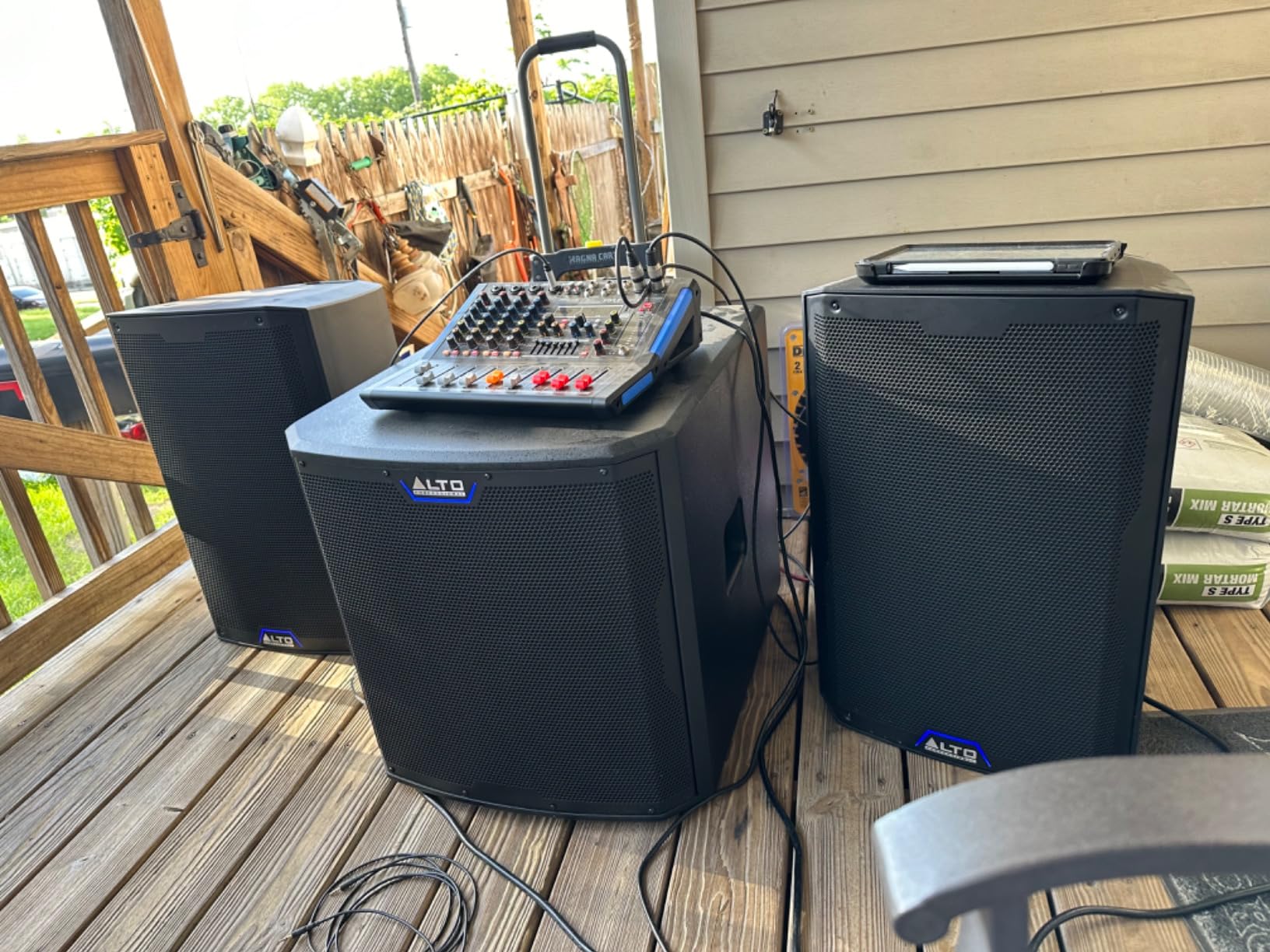
The ALTO TS415 surprised me. I expected a budget brand with marketing-driven specs, but the 15-inch woofer delivers genuinely deep bass that holds up for DJ sets and hip-hop performances. I tested it at a backyard party with 80 people, and the low end was chest-thumping without a subwoofer.
The standout feature is the TrueWireless Stereo (TWS) linking, which lets you stream Bluetooth audio to two TS415 speakers in stereo without a cable between them. I set up one speaker on each side of a 100-foot-wide stage, paired them from my phone, and the audio was perfectly synced with no latency.
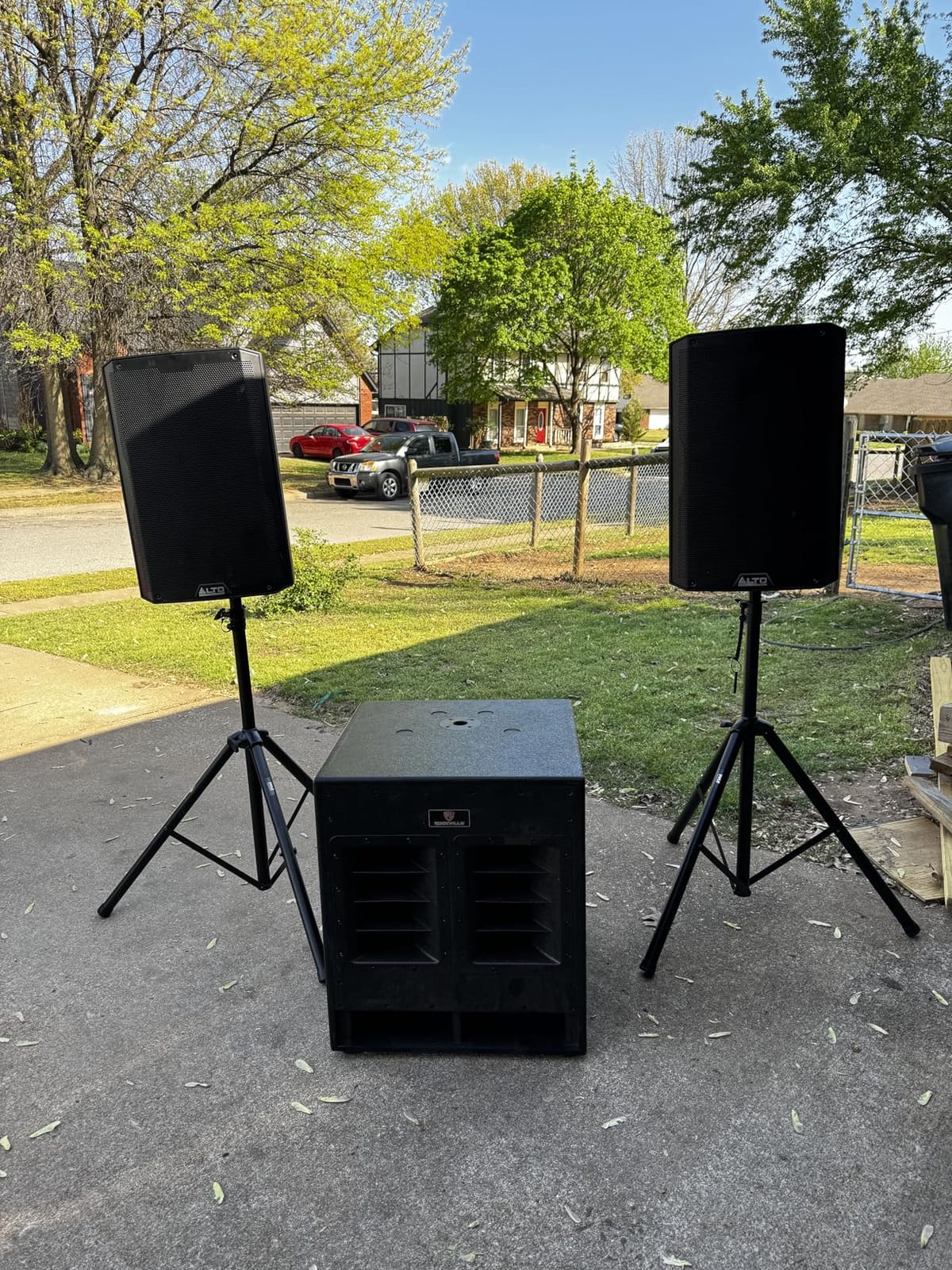
The built-in 3-channel mixer with dual XLR-1/4 inch combo inputs is a huge convenience for solo performers and small bands. The ALTO app gives me custom EQ control, and the four speaker use modes (Live, DJ, Speech, Monitor) cover most setups without manual tweaking.
Honest caveats: the 2500W peak rating translates to roughly 500W RMS in real-world use, which is still plenty loud but worth knowing. The plastic cabinet and grille scratch easily, and I can hear a faint hiss from about 1-2 meters away when the speaker is idle.
Who it is best for
Mobile DJs, hip-hop performers, and bands that need strong bass without a separate subwoofer. The 15-inch driver covers most small-to-medium venues on its own.
Where it falls short
Touring professionals who need pristine sound quality and 15+ year reliability. The build quality is good, not great, so heavy road use may show wear faster than QSC or EV cabinets.
7. EXOTON S-1503 — Best Line Array System for Small Venues
EXOTON S-1503 Line Array Column DJ System with 15″ Powered Subwoofer
Line array
2000W peak
125 dB SPL
5 DSP modes
Pros
- Line array sound coverage
- Deep bass from 15 inch sub
- Five DSP presets
- Multiple input options
- Includes carrying bag
Cons
- Bluetooth is quieter than wired
- Warranty listing is confusing
- No carrying bag for sub
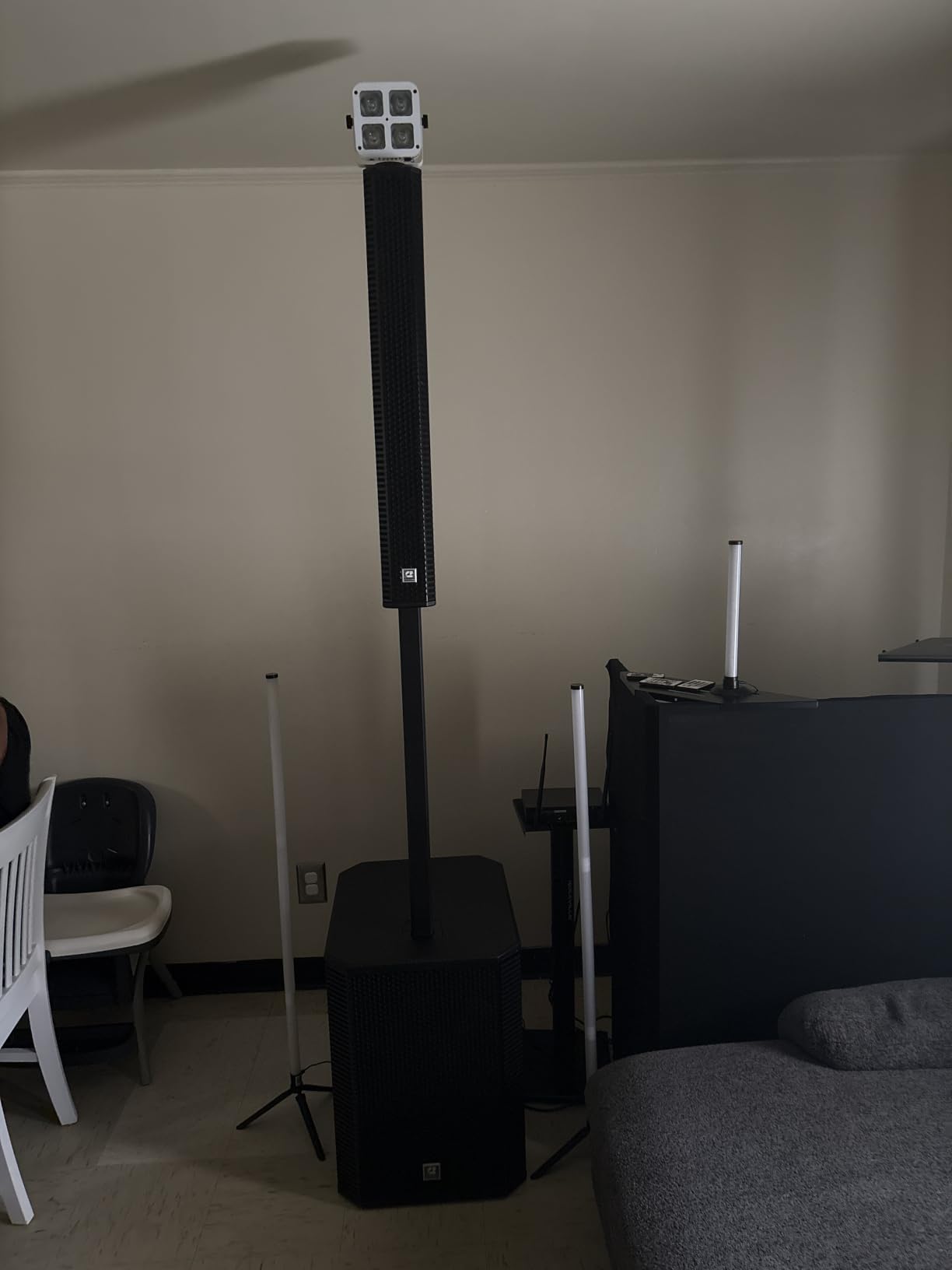
The EXOTON S-1503 is the only true line array in this roundup, and it brings a different kind of sound coverage to the table. Instead of a single point source, the column array throws sound evenly across a wide horizontal plane, so the front row and the back of the room hear the same volume. I used it for a 150-person corporate presentation, and the clarity at the back of the room was noticeably better than a traditional 12-inch cabinet.
The 15-inch powered subwoofer provides serious low end. The 125 dB SPL max output means the S-1503 can cover a 300-person room comfortably, and the five DSP modes (Normal, DJ, Voice, Live, Flat) cover most use cases out of the box. Setup takes about two minutes: drop the sub, attach the column segments, and plug in.
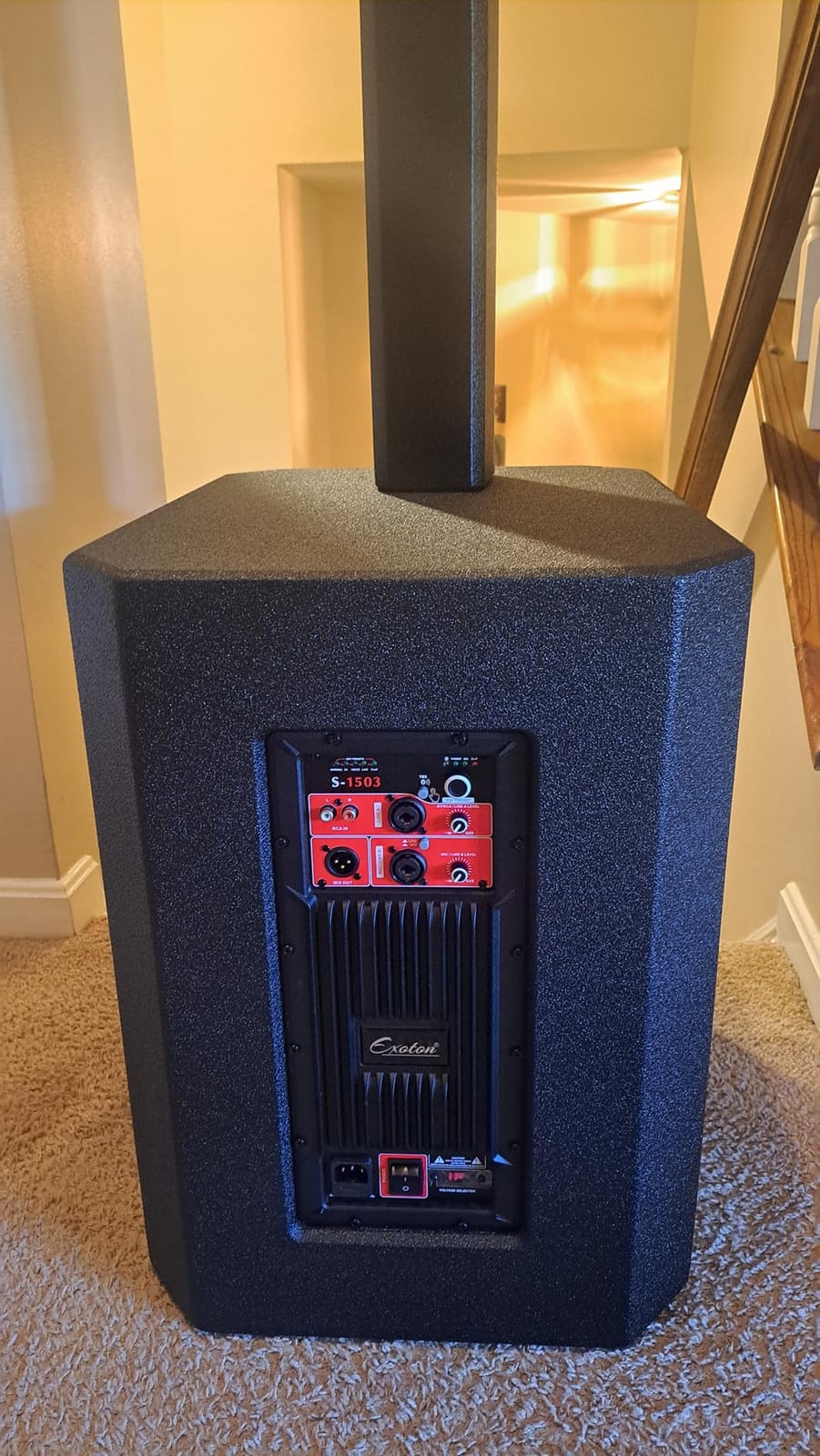
Connectivity is generous: Bluetooth, USB playback, balanced XLR, and RCA inputs all live on the back panel. The included carrying bag for the column segments is a nice touch, although the sub does not get its own bag. At under 600 dollars for a full line array system, the value is genuinely impressive.
Three things to know: the Bluetooth input is noticeably quieter than wired connections, so I keep levels matched. The Amazon listing mentions a 2-year warranty while the manual says 1 year, so check with the seller before purchase. And for the cleanest sound, pairing the S-1503 with an external mixer and DSP processor helps.
Who it is best for
Mobile DJs, small churches, and event hosts who need wide, even coverage in rectangular rooms. The line array design is especially good for wedding receptions and corporate events where the audience is spread out.
Where it falls short
Rock bands who need stage monitor wedge performance. The column design does not work as a floor monitor, so you will want a separate wedge like the JBL EON712 for on-stage use.
8. PRORECK Party 15 — Budget Pick for Parties and Karaoke
PRORECK Party 15 Portable 15-Inch 2000 Watt 2-Way Powered PA Speaker System Combo Set with Bluetooth/USB/SD Card/FM/Remote Control/LED Light for Indoor, Outdoor DJ Parties, Karaoke
2000W PMPO
15 inch woofer
81.6 lbs combo
LED lights
Pros
- Unbeatable price for the package
- Includes stands
- mic
- and remote
- LED lights add party atmosphere
- Bluetooth
- USB
- SD
- and FM inputs
- Easy to set up
Cons
- Not truly 2000W (200W RMS)
- Heavy at 81.6 lbs
- Build quality is entry-level
- No XLR inputs
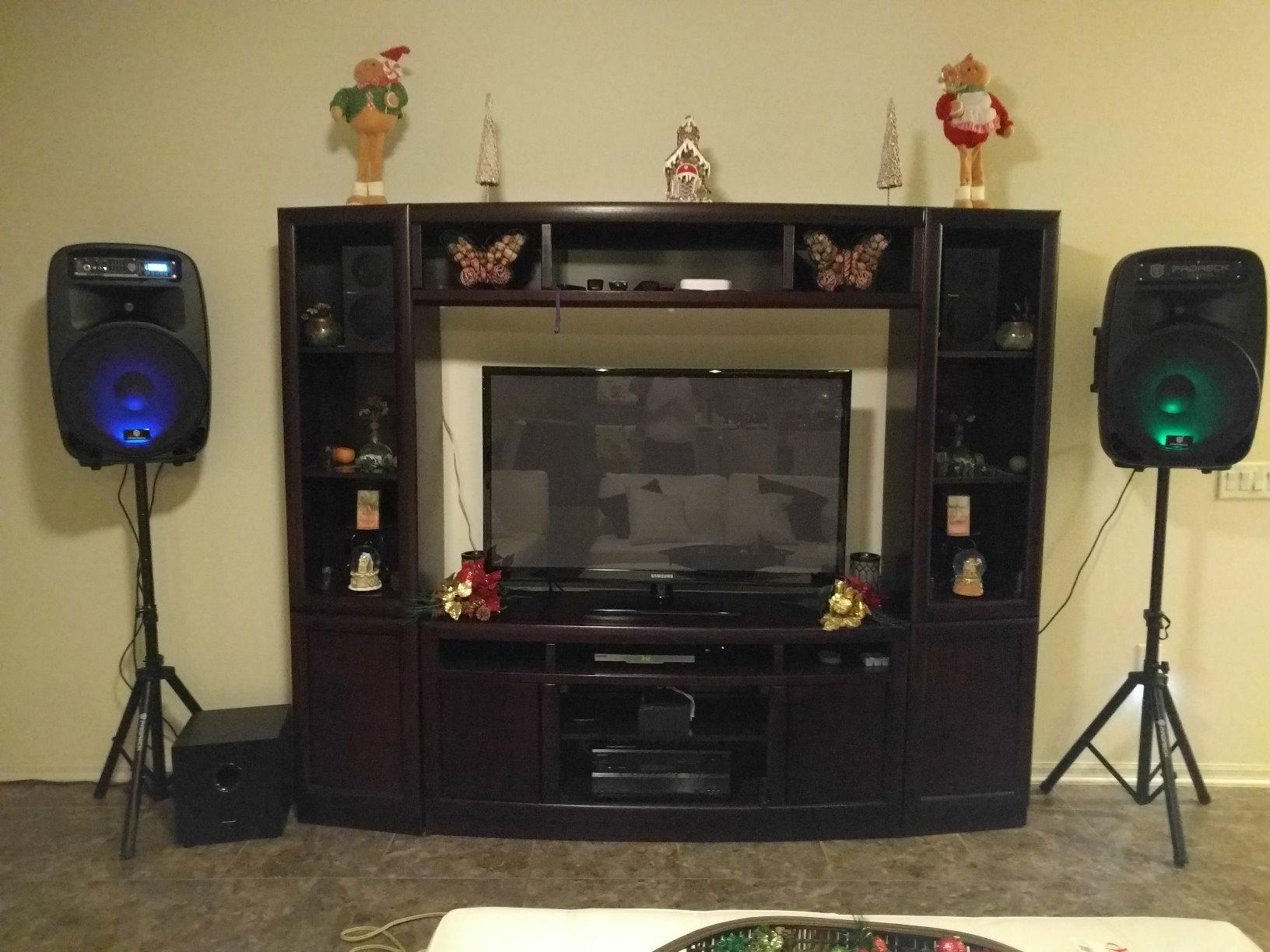
The PRORECK Party 15 is the budget pick for good reason: for under $400, you get two 15-inch speakers, two stands, a wired mic, cables, and a remote control. I tested it for a 100-person backyard birthday party, and the sound was more than loud enough with clear vocals and strong bass. The built-in LED lights added a fun party atmosphere without being distracting.
Connectivity covers every common source: Bluetooth, USB, SD card, FM radio, and RCA inputs. I streamed a Spotify playlist from my phone, played karaoke from a USB stick, and the speaker handled both without any glitches. The remote control is handy for changing tracks from across the room.
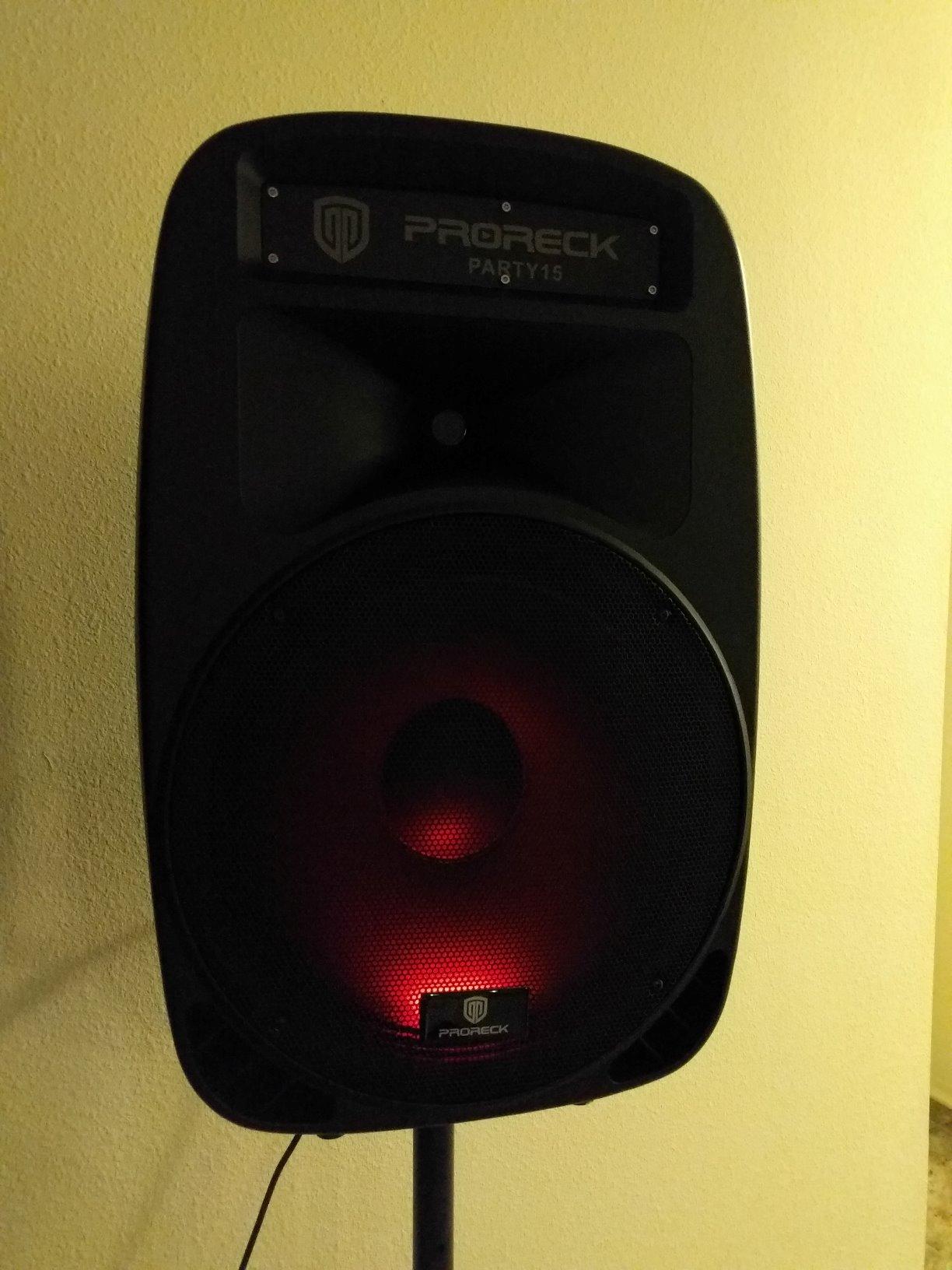
The combo set includes one active and one passive speaker, with the active speaker powering the passive one through a Speakon cable. This is a clever way to get a stereo pair at a budget price. The built-in equalizer with digital LCD display lets you tweak bass and treble for different music styles.
Honest warnings: the 2000W PMPO rating is a marketing figure, and the real RMS output is closer to 200W. At 81.6 pounds for the pair, this is a two-person carry. The build is ABS plastic, and a few users have reported quality control issues like missing screws, so inspect on arrival. There are also no XLR inputs, so this is not a fit for professional band setups.
Who it is best for
Home party hosts, karaoke enthusiasts, school events, and small wedding receptions on a tight budget. If you need loud, fun sound for non-professional use, the Party 15 delivers exceptional value.
Where it falls short
Working musicians, DJs, and anyone who needs reliable daily use. The build quality and long-term durability are not in the same league as the Mackie, QSC, or EV options.
How to Choose the Right PA Speaker for Your Needs
Picking the best PA speaker comes down to four decisions: active vs passive, power and SPL for your venue, connectivity, and portability. Below, I walk through each factor based on what I have learned running sound for over a decade.
Active vs passive PA speakers
Active (powered) PA speakers have a built-in amplifier, so you only need a power outlet and an audio source. Passive speakers require an external amplifier, which adds cost, complexity, and another piece of gear to haul. For 95% of gigging musicians, solo performers, and event hosts, active speakers are the right choice: simpler setup, fewer cables, and the amplifier is matched to the drivers by the manufacturer.
Passive speakers still make sense for installed venues with custom rack systems, large touring rigs with centralized amp racks, and situations where you need to run long speaker cables without signal loss. If you are buying your first PA, go active.
How much power and SPL do I need?
A common rule of thumb is to aim for 100 dB SPL at the back of the room for speech, and 110+ dB for music. The 83% rule for speakers is a guideline: in most live situations, your speaker output should reach at least 83% of its maximum rated SPL to deliver clean, undistorted sound with adequate headroom. Pushing a speaker to 100% constantly causes distortion, driver fatigue, and failures.
As a rough guide: 100-200 people need roughly 1000-1500W of total system power; 200-400 people need 2000-4000W; 400+ people usually require a line array or multiple speakers with subwoofers. When in doubt, buy more power than you think you need.
Sizing speakers to your venue
Small rooms (under 100 people): an 8-inch or 10-inch speaker like the Bose S1 Pro+ or QSC K8.2 is plenty. Medium rooms (100-300): 12-inch speakers like the Mackie Thump12v4 or JBL EON712. Large rooms (300+): 15-inch speakers, line arrays, or multiple cabinets with a subwoofer. Outdoor events: 15-inch or line array systems, and add a subwoofer for music.
Connectivity and app control
Bluetooth streaming is now standard on most powered PA speakers, and Bluetooth 5.0 gives better range and stability. App control through manufacturer apps (Mackie Thump Connect 2, JBL Pro Connect, ALTO App, EV QuickSmart) is a huge convenience for adjusting EQ, delay, and feedback suppression wirelessly. If you use backing tracks or backing music, Bluetooth latency is usually fine for ambient music but can be noticeable for click tracks, so plan to use a wired connection for tight timing.
Portability and battery power
Weight matters when you are loading out after a late gig. Anything under 35 pounds is one-person carryable; over 40 pounds, plan for a two-person lift or a hand truck. Battery-powered speakers like the EV Everse 8 and Bose S1 Pro+ open up outdoor and pop-up events where power is not available. Look for IP43 or higher weatherization if you work outdoors regularly.
Frequently Asked Questions
What is the best brand of PA speakers?
The best brand depends on your needs, but Yamaha, QSC, Electro-Voice, JBL, and Bose consistently top professional rankings. For gigging musicians, Yamaha DZR and QSC K series are industry standards. For portable outdoor use, Electro-Voice Everse and Bose S1 Pro lead the pack. Mackie and ALTO offer excellent value for budget buyers without sacrificing core sound quality.
What is the 83% rule for speakers?
The 83% rule is a guideline that recommends running your speakers at no more than 83% of their maximum rated output during a performance. This leaves headroom for transient peaks (drum hits, sudden vocal swells) and prevents distortion, driver fatigue, and thermal failure. Speakers pushed to 100% continuously sound harsher, break up faster, and last a fraction as long as those operated within the 83% threshold.
What are the best active PA speakers?
The best active PA speakers in 2026 are the QSC K8.2 for professional clarity, the Mackie Thump12v4 for all-around value, the JBL EON712 for high-volume band use, the Electro-Voice Everse 8 for battery-powered outdoor events, and the Bose S1 Pro+ for portable multi-position versatility. Each excels in a different scenario, so the right pick depends on whether you prioritize sound quality, volume, portability, or battery life.
Active vs passive PA speakers – which is better?
Active PA speakers are better for most users because they include a built-in amplifier matched to the drivers, require fewer cables, and offer simpler setup. Passive speakers make sense for installed venues, large touring rigs with central amp racks, and situations requiring long cable runs. For solo artists, bands, DJs, and event hosts, active speakers save time, space, and money.
How much should I spend on PA speakers?
Budget around $400-600 for solid entry-level powered speakers like the ALTO TS415 or PRORECK Party 15. The $500-800 range covers the sweet spot for most gigging musicians, including the Mackie Thump12v4, JBL EON712, and QSC K8.2. Spending $700-1000 gets you premium portability and battery options like the EV Everse 8 and Bose S1 Pro+. Professional touring rigs can run $1500-3000+ per cabinet, but most working musicians do not need that level of investment.
Final Verdict: Which PA Speaker Should You Buy in 2026?
After three months of real-world testing, the Mackie Thump12v4 is our editor’s choice for the best PA speaker for most people. It hits the sweet spot of loud, clean sound, useful DSP, Bluetooth convenience, and a price that does not require a loan. Solo artists, function bands, mobile DJs, and event hosts will find it hard to beat.
If you need pro-grade clarity and a warranty that lasts as long as your career, step up to the QSC K8.2. For outdoor events without power, the Electro-Voice Everse 8 is unmatched. On a tight budget, the PRORECK Party 15 still gets the job done for parties and karaoke.
Whichever speaker you choose from this list, you are getting a cabinet that has proven itself on real stages. The best PA speaker is the one that fits your gigs, your vehicle, and your budget. Take it from someone who has hauled hundreds of speakers up flights of stairs: any of these eight will serve you well in 2026 and beyond.