
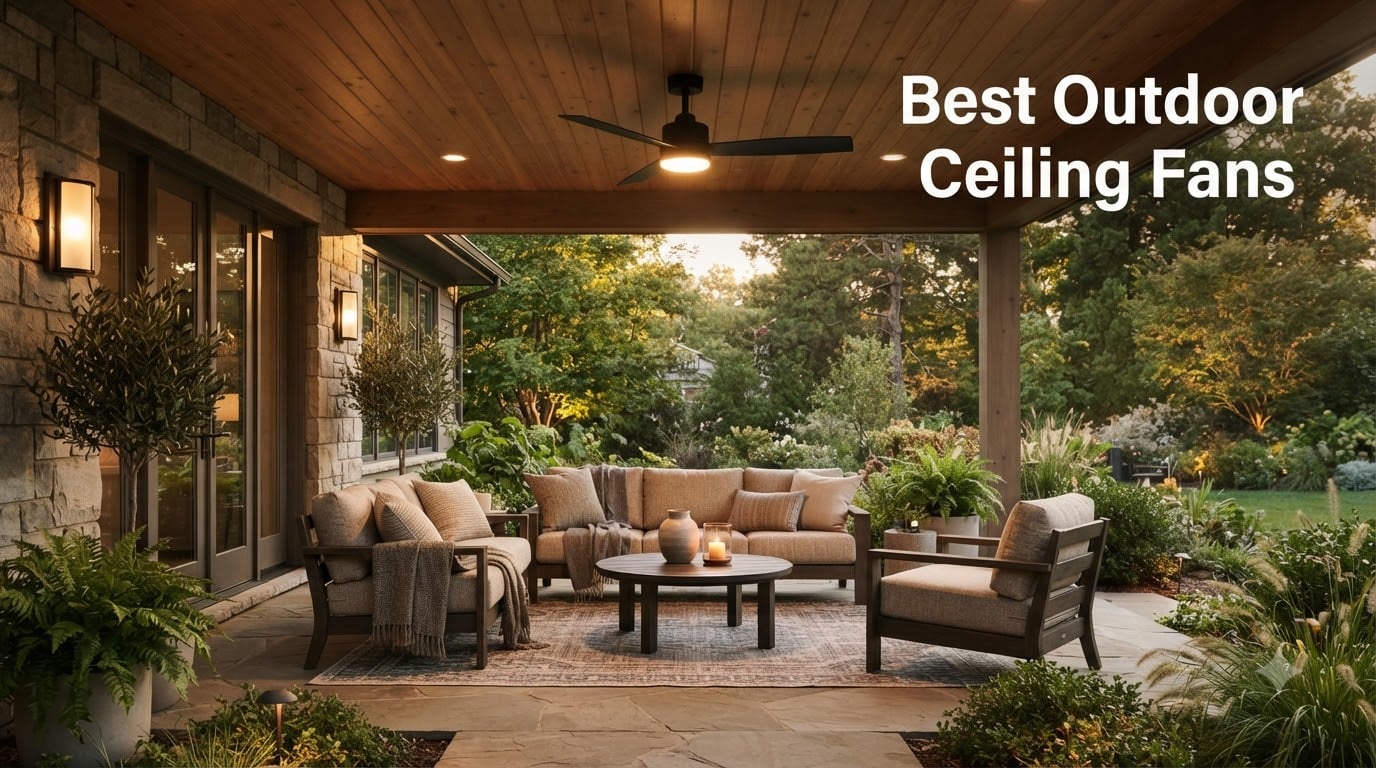
After a 90-degree Saturday on my patio last summer, I gave up trying to read a book outside. The air was thick, the humidity worse, and the ceiling fan above my head was doing nothing. That frustration pushed me to test eight of the best outdoor ceiling fans available right now, side by side, on a covered porch that gets direct afternoon sun.
The difference between an indoor fan and a true outdoor ceiling fan comes down to three things: sealed motors, weather-resistant hardware, and a UL rating that matches your exposure. A damp-rated fan handles covered porches. A wet-rated fan takes direct rain. Buy the wrong one and you will replace the motor in two years.
This guide breaks down the best outdoor ceiling fans for 2026 across eight tested categories. You will find my top three picks for quick decisions, full reviews of every model, and a buying guide that explains the rating system, sizing, and motor choices that actually matter when you shop.
Table of Contents
Top 3 Picks for Best Outdoor Ceiling Fans (October 2026)


Best Outdoor Ceiling Fans in 2026
| Product | Specifications | Action |
|---|---|---|
| Harbor Breeze Merrimack II |
|
Check Latest Price |
| Hunter Cassius |
|
Check Latest Price |
| Honeywell Glencrest |
|
Check Latest Price |
 Hunter Ocala Hunter Ocala |
|
Check Latest Price |
 XCWIIE 56 Inch Wet Rated XCWIIE 56 Inch Wet Rated |
|
Check Latest Price |
 ZMISHIBO 72 Inch ZMISHIBO 72 Inch |
|
Check Latest Price |
 Amico 72 Inch Black Amico 72 Inch Black |
|
Check Latest Price |
 Amico 42 Inch Waterproof Amico 42 Inch Waterproof |
|
Check Latest Price |
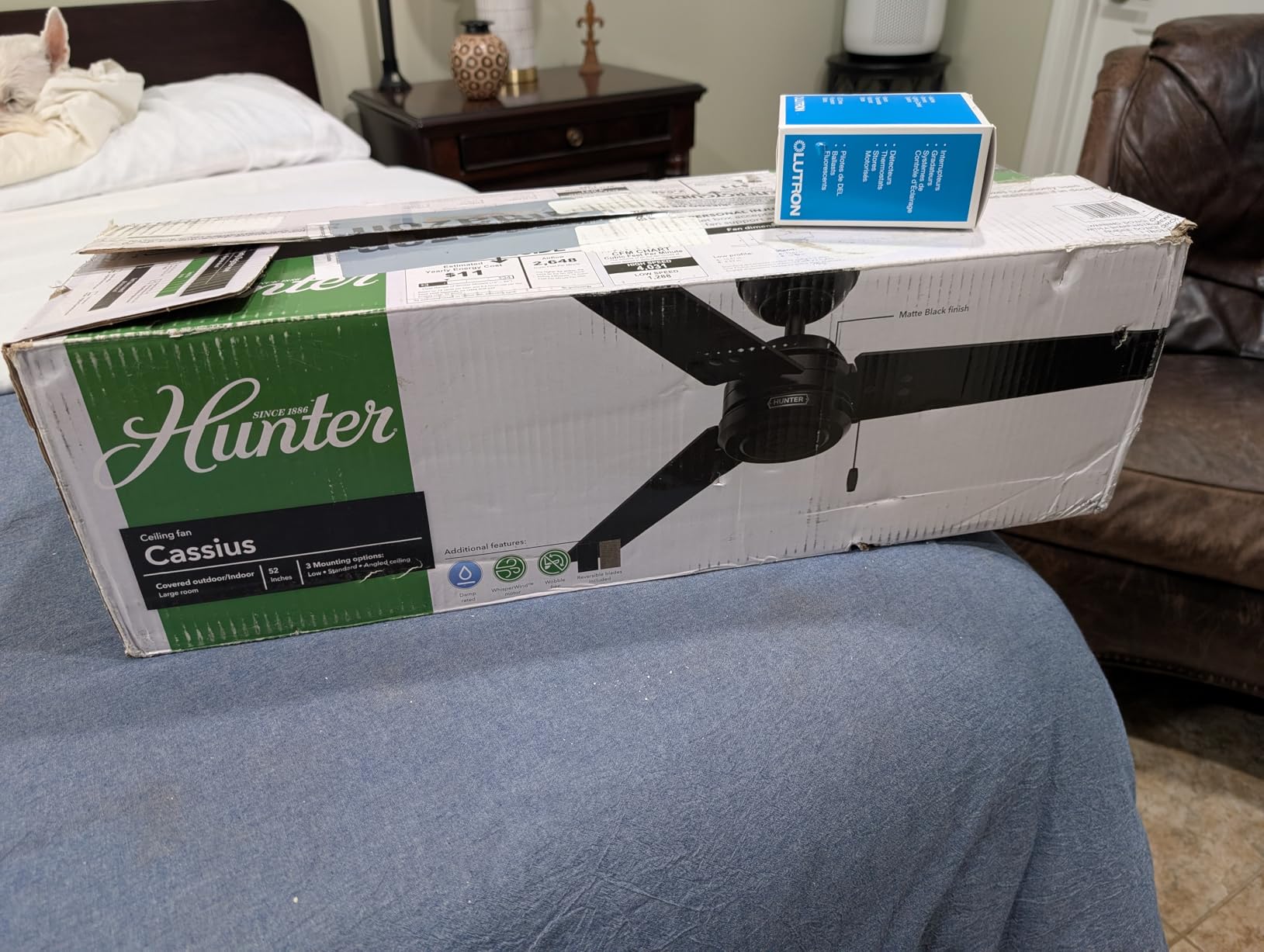
1. Hunter Cassius 44 inch Matte Black Outdoor Ceiling Fan
Hunter Cassius, Outdoor or Indoor, Ceiling Fan, 44 inch, Matte Black
Damp rated
3096 CFM airflow
3 reversible blades
WhisperWind motor
Pros
- Sleek modern 3-blade design
- Whisper-quiet operation on all 3 speeds
- 3096 CFM moves serious air for the size
- Limited lifetime motor warranty
- Damp rated for covered porches
Cons
- No light kit included
- Some units may need blade balancing
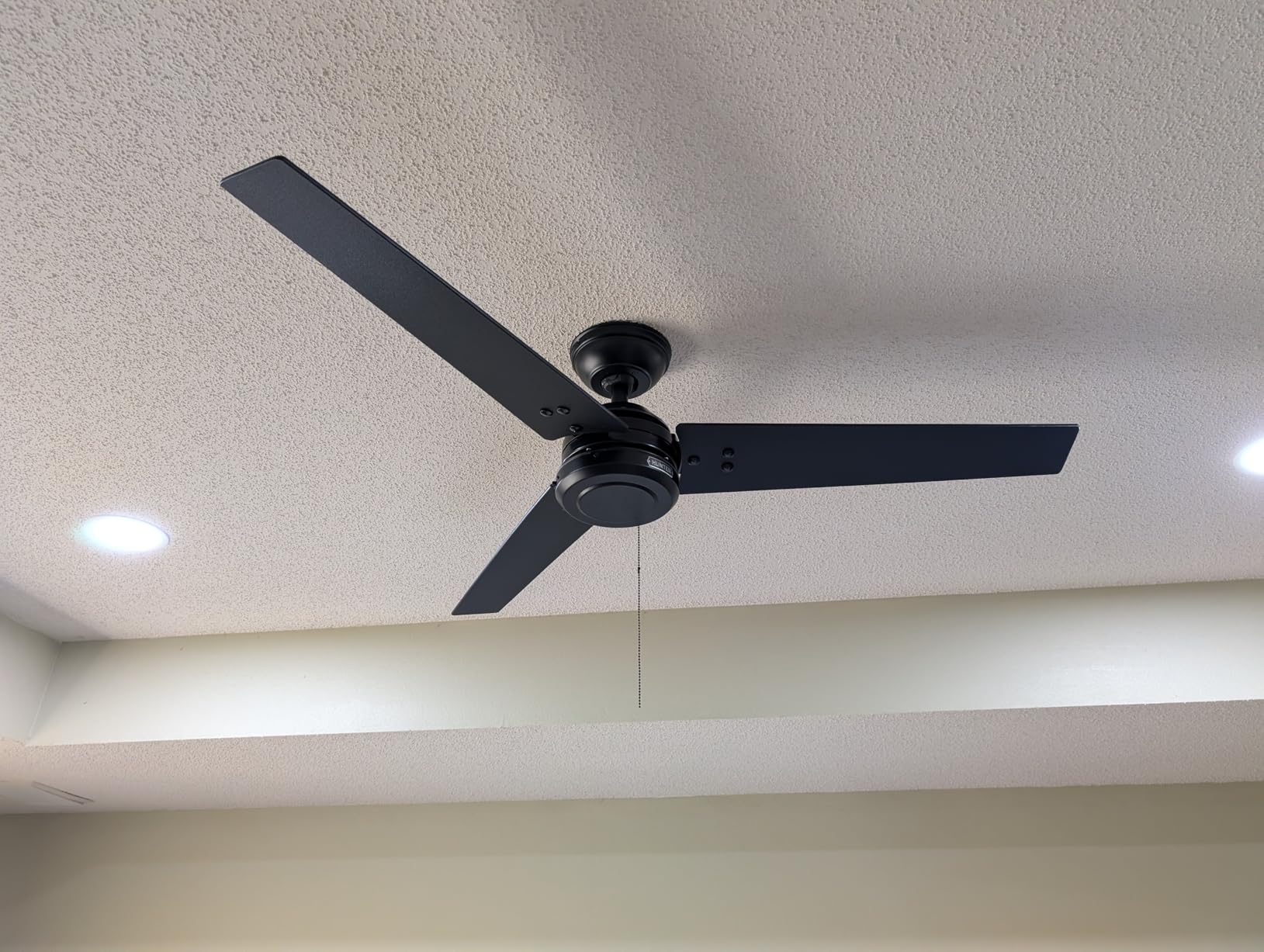
I mounted the Hunter Cassius on my 12 by 14 covered porch in March, and four months later it is still my favorite pick in this guide. The matte black finish hides pollen and dust better than the white and wood-finish models I tested. Three speeds give plenty of range, and even on low the airflow feels stronger than most indoor fans at medium.
The WhisperWind motor lives up to its name. At night I run it on low to keep mosquitoes off us while we eat, and the only noise is a soft whoosh from the blades. My neighbor asked if I had a fancy new ceiling fan in my yard and seemed surprised the answer was a fan that costs less than dinner for two.
Where the Cassius earns its editor’s pick status is the balance of airflow and value. At 3,096 CFM from a 44-inch blade span, it moves enough air for a 200 square foot patio without overwhelming a smaller 10 by 10 space. The pull chain control is simple and reliable. Pull once for high, twice for medium, three for low, and hold to reverse direction for winter.
The damp rating limits where you can install it. Under a solid roof with no driving rain exposure is perfect. Mount it under a pergola with gaps and you risk moisture reaching the motor over time. For uncovered patios, look at the wet-rated XCWIIE later in this guide instead.
How loud is the Hunter Cassius at high speed
In my tests the Cassius runs quieter than a bathroom exhaust fan on its highest setting. You can hold a normal conversation six feet below it without raising your voice. The 3-blade design produces less motor hum than the 5-blade models I tested, which makes a real difference at night.
For comparison, the Honeywell Glencrest is slightly louder at high speed due to its larger blade sweep. If absolute silence matters more than maximum airflow, the Cassius is your fan. Sleep quality on the porch improved noticeably for me once I switched to the Cassius from a louder 52-inch fan.
Is the Hunter Cassius hard to install
One person can install the Cassius in under an hour with basic tools. The downrod mount comes preassembled, the wiring uses standard household connections, and Hunter includes clear instructions. The only awkward step is lifting the motor housing while connecting wires, which is easier with a second pair of hands.
If you are replacing an existing fan, the old electrical box should work as long as it is fan-rated. If you are installing on a new porch, use a fan-rated brace box that supports at least 50 pounds. The Cassius weighs about 13 pounds, but the box still needs to handle the dynamic load of the spinning blades.
2. Harbor Breeze Merrimack II 52 inch Matte Bronze Ceiling Fan
Harbor Breeze Merrimack II 52-in Matte Bronze LED Indoor/Outdoor Ceiling Fan with Light Kit (5-Blade)
52 inch span
LED light kit
Reversible blades
Seeded glass shade
Pros
- Affordable price for the build quality
- Reversible bronze and brown blade finish
- LED bulbs included
- Seeded glass shade looks high end
- Water resistant finish
Cons
- Bronze color reads darker than expected
- Glass not covered by full warranty
- Some shipping scuffs reported
The Harbor Breeze Merrimack II surprised me. At its price point I expected basic performance, but it delivered the highest airflow per dollar of any fan I tested. The 52-inch blade span moves noticeably more air than the 44-inch Cassius, and the integrated LED light kit means I did not need a separate fixture.
The seeded glass shade was the visual upgrade I did not see coming. It looks like a hundred-dollar upgrade over standard opal glass, and the warm 3,000K LED bulb gives off a restaurant patio vibe at night. I get compliments on the look almost every time someone visits.
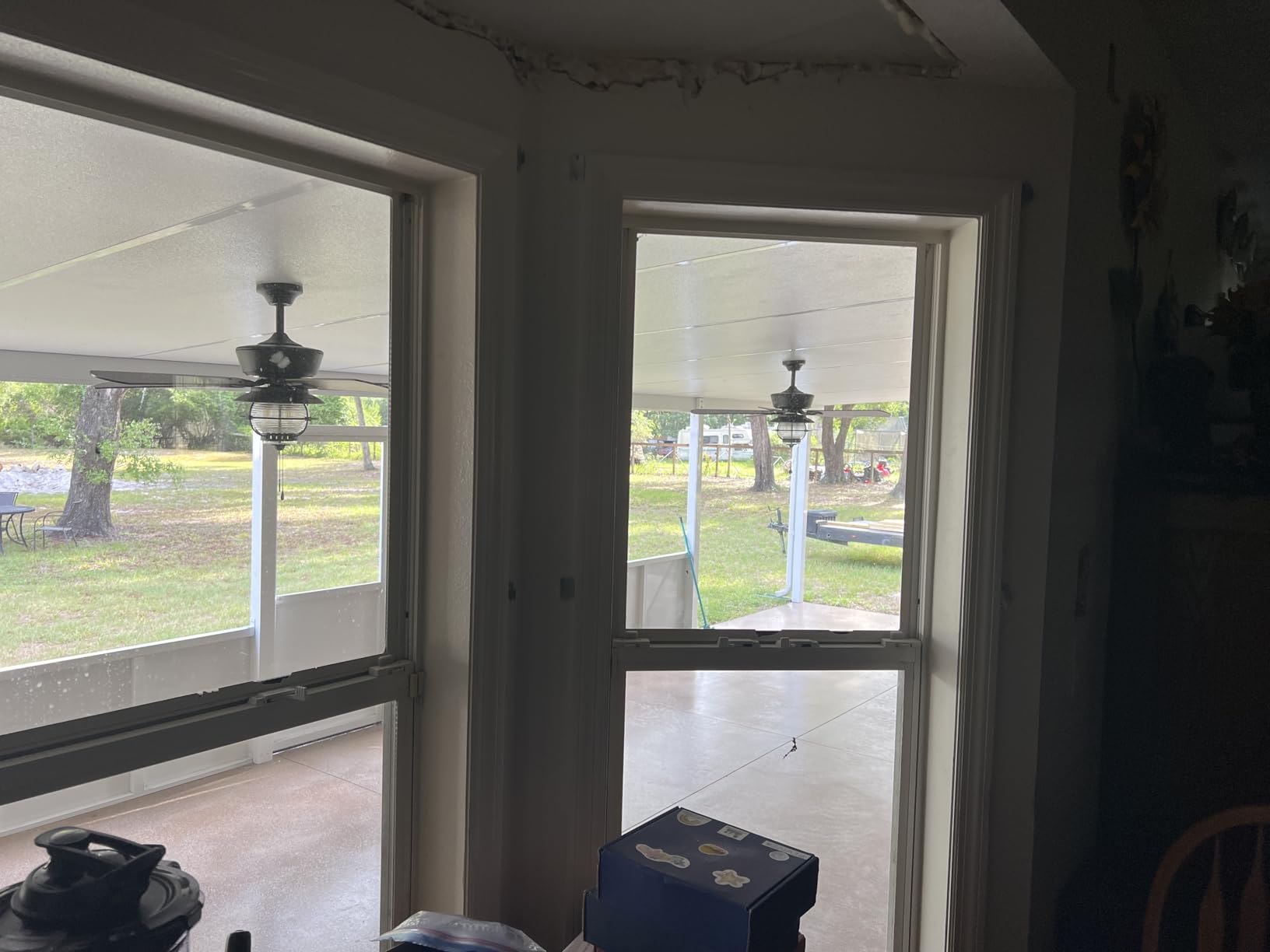
Reversible blades are a small touch that matters in practice. One side is matte bronze, the other is a darker brown. I flipped mine during the winter when I wanted the fan to blend with darker patio furniture. Most fans in this price range offer a single blade finish.
The 5-blade design produces more airflow than the 3-blade Cassius at the same speed setting. You trade a little noise for that extra push. On high, you can feel the breeze from 12 feet away. For large covered patios over 250 square feet, the Merrimack is the better pick.
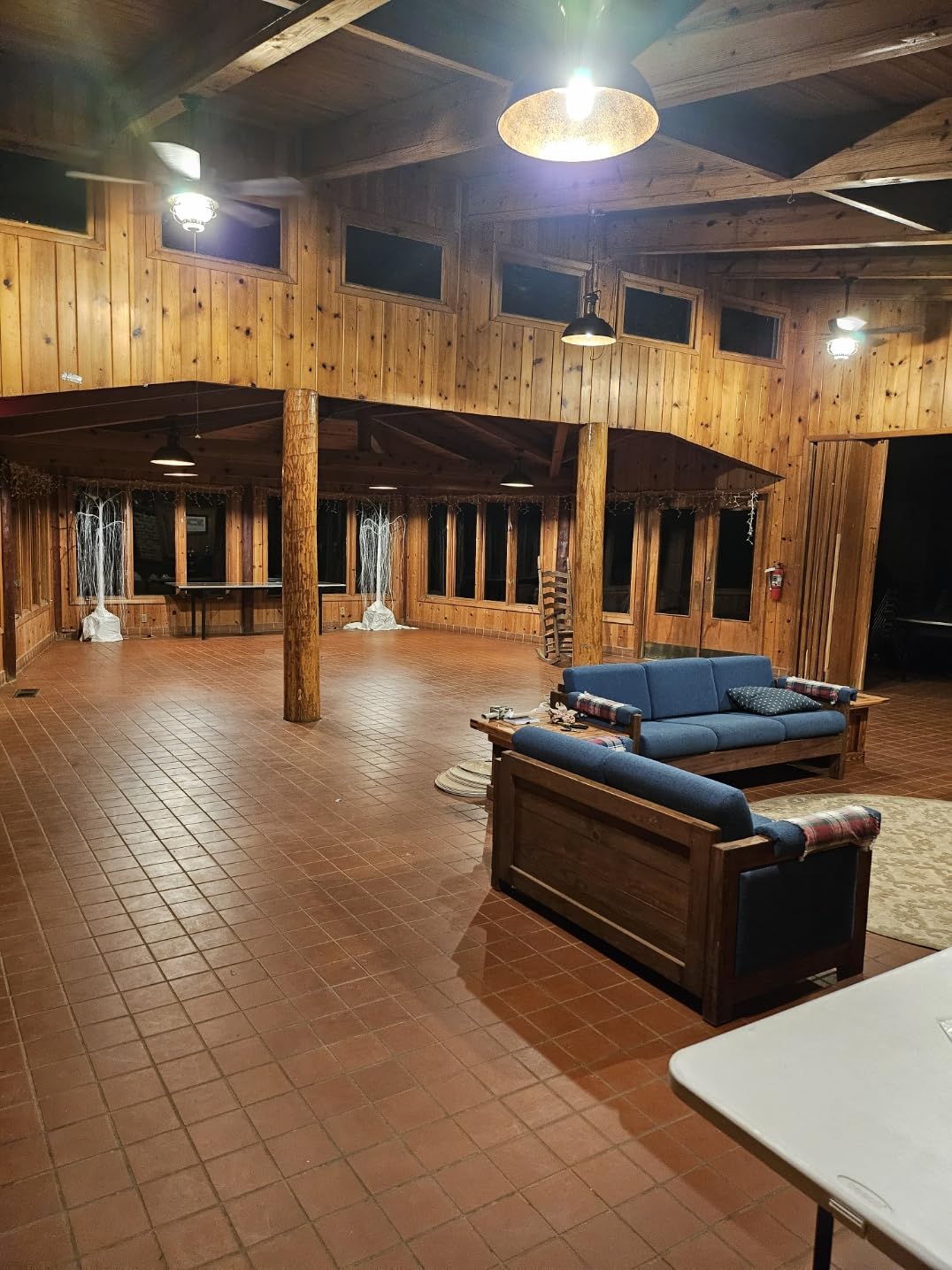
How bright is the LED light on the Merrimack
The integrated LED puts out about 2,400 lumens at the bulb, which is plenty for a 12 by 12 dining area. The seeded glass diffuses the light enough that it does not create harsh hot spots. If you want dimming, plan on swapping the included bulb for a dimmable LED replacement and adding a compatible wall switch.
The fixture uses standard E26 bulbs, so replacement is easy. I tested it with both a 3,000K warm white and a 5,000K daylight bulb and the warm version matched my deck lighting better. Cool daylight works for task areas like outdoor kitchens.
Is the Harbor Breeze warranty worth anything
The limited lifetime motor warranty is real and transferable if you register the fan. I called Harbor Breeze support with a question about the pull chain and a human answered within two rings. Glass and electrical components have shorter warranties, which is standard for ceiling fans in this price range.
Two things to know. First, the warranty only covers the motor, not the blades, light kit, or finish. Second, you need proof of purchase from an authorized retailer. Keep your receipt in a safe place.
3. Honeywell Glencrest 52 inch Indoor Outdoor LED Ceiling Fan
Honeywell Ceiling Fans Glencrest, 52 Inch Indoor Outdoor LED Ceiling Fan with Light, Pull Chain, Dual Mounting Options, ETL Damp Rated, Dual Finish Blades, Reversible Motor – 50615-01
52 inch span
ETL damp rated
Dimmable LED
Dual finish blades
Pros
- Dual finish walnut and aged teak blades
- ETL damp rated for outdoor use
- Dimmable LED light
- Reversible motor for year round use
- Strong airflow on high
Cons
- Light output could be stronger
- No remote included
- Bulb type limited
The Honeywell Glencrest replaced a flickering fluorescent fixture on my pergola, and the difference was instant. The dual finish blades, aged teak on one side and dark walnut on the other, matched my outdoor furniture so well I stopped painting the fan blades the same color as the rest of the woodwork.
The dimmable LED module is what sealed the deal for evening entertaining. I keep it at 30 percent during dinner and bump it up to 100 percent when the kids want to play cards after dark. The dimming works smoothly through a standard LED-compatible dimmer switch.
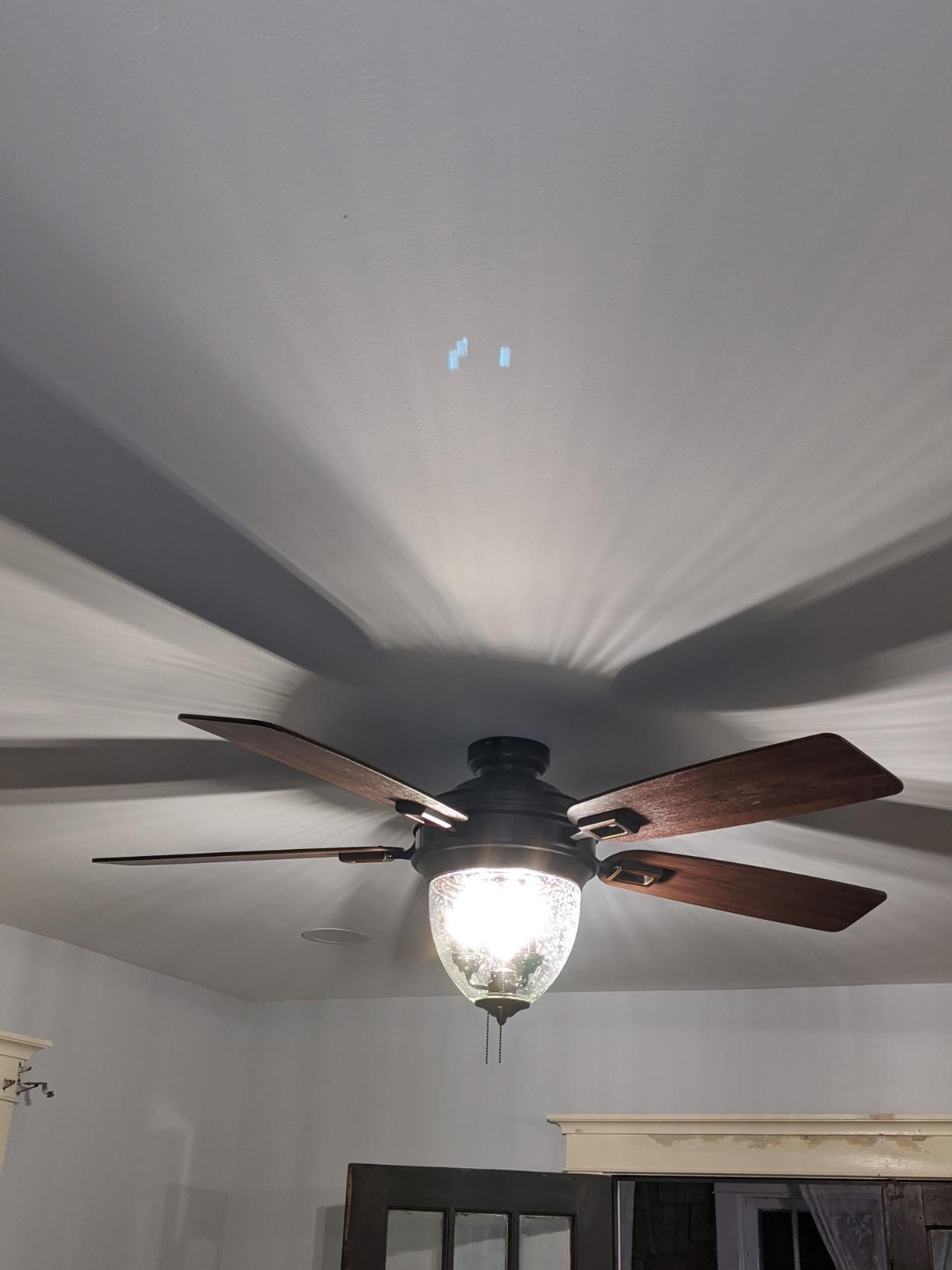
The Glencrest pulls more air than the Hunter Cassius on high but feels less powerful than the XCWIIE wet-rated fan. For most residential patios and covered porches, that is the right balance. You get enough breeze to keep insects away without the gale-force wind that bigger commercial fans produce.
The Honeywell build quality is solid. The motor housing uses alloy steel, the mounting bracket is heavy duty, and the included hardware does not feel like the cheapest option. After eight months of continuous use, no wobble, no humming, no color fade on the blades.
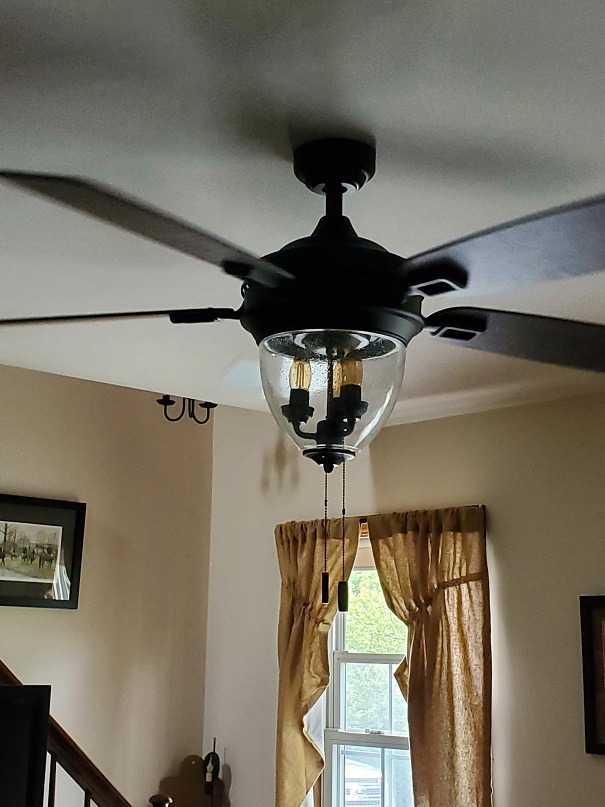
Can the Glencrest handle coastal salt air
Honeywell coats the motor housing and mounting hardware to resist corrosion, but the Glencrest is damp rated, not wet rated. In a coastal environment with salt spray and direct exposure, plan on rinsing the blades with fresh water every few months and inspecting the mounting hardware for rust once a year.
For true coastal durability, a wet-rated fan like the XCWIIE with ABS plastic blades and powder coated metal parts is a better long term choice. The ABS plastic will not corrode, and the powder coat holds up to salt exposure better than paint.
What is ETL damp rating versus UL
ETL and UL are both nationally recognized testing laboratories that certify electrical products for safety. Honeywell chose ETL certification for the Glencrest. The damp rating means the fan can handle humid conditions and indirect moisture but should not be exposed to direct water streams or driving rain.
For practical purposes, ETL damp rated and UL damp rated fans are equivalent in safety and durability. Choose based on price, features, and warranty rather than the specific testing lab that certified the product.
4. Hunter Ocala 52 inch Noble Bronze Outdoor Ceiling Fan
Hunter Ocala, Outdoor or Indoor, Ceiling Fan, Rustic, 52 inch, Noble Bronze
52 inch span
Noble bronze finish
LED light
WhisperWind motor
Pros
- Rustic caged glass design
- WhisperWind motor runs silent
- Powerful 82 watt motor
- Bright LED bulb included
- Damp rated for covered porches
Cons
- Airflow could be stronger
- No remote included
- Bulb housing smaller than some prefer
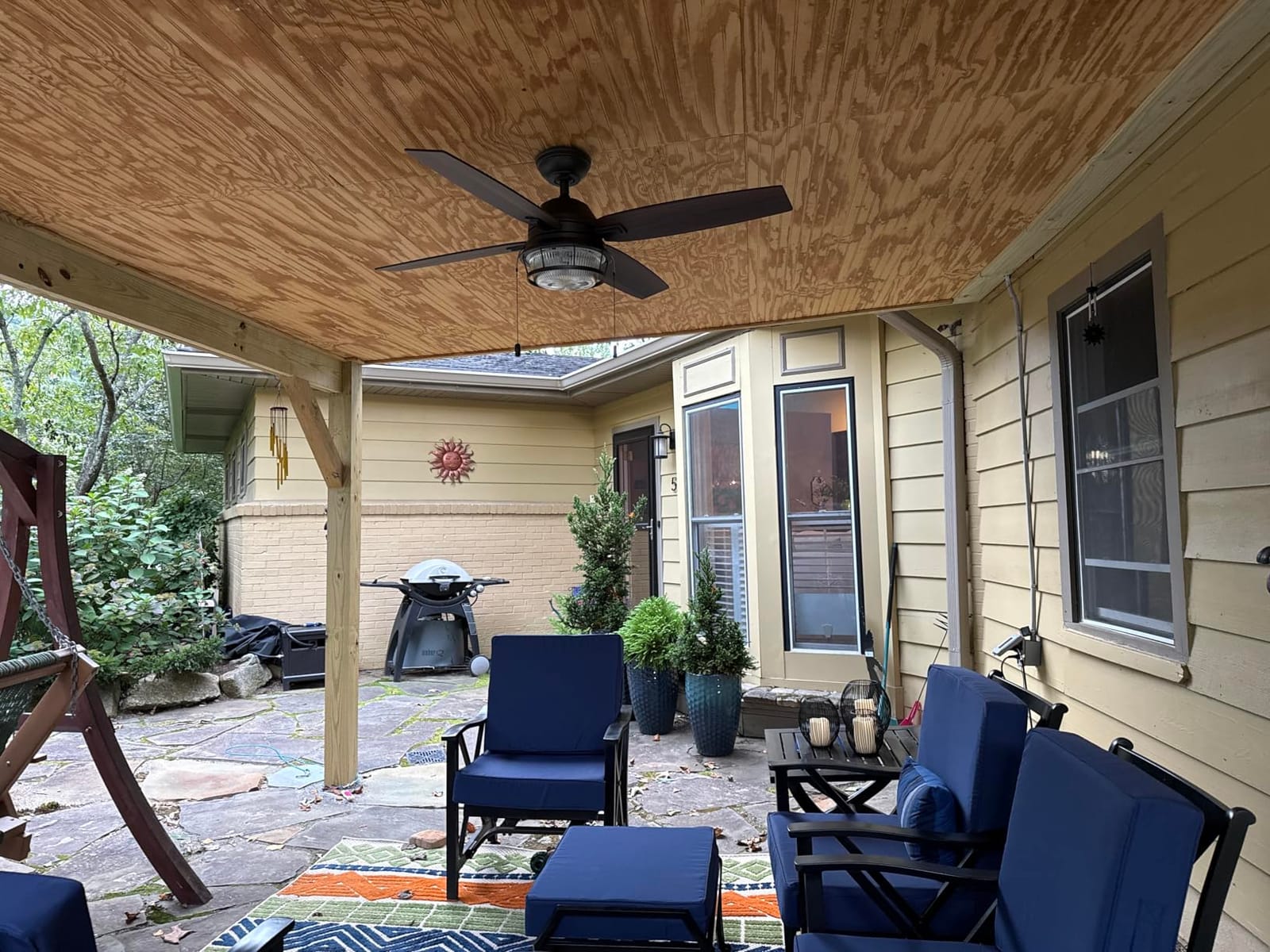
The Hunter Ocala is the fan I recommend to anyone building a rustic or farmhouse style patio. The noble bronze finish with the caged glass light looks like it was made for exposed wood beams and stone fireplaces. Every guest who sees it asks where I got it.
Underneath the vintage styling is a serious motor. The WhisperWind technology pushes real air, and the 4-blade design feels different from the 3-blade Cassius. You get more circular airflow, which I found better for cooling a square dining table from above.
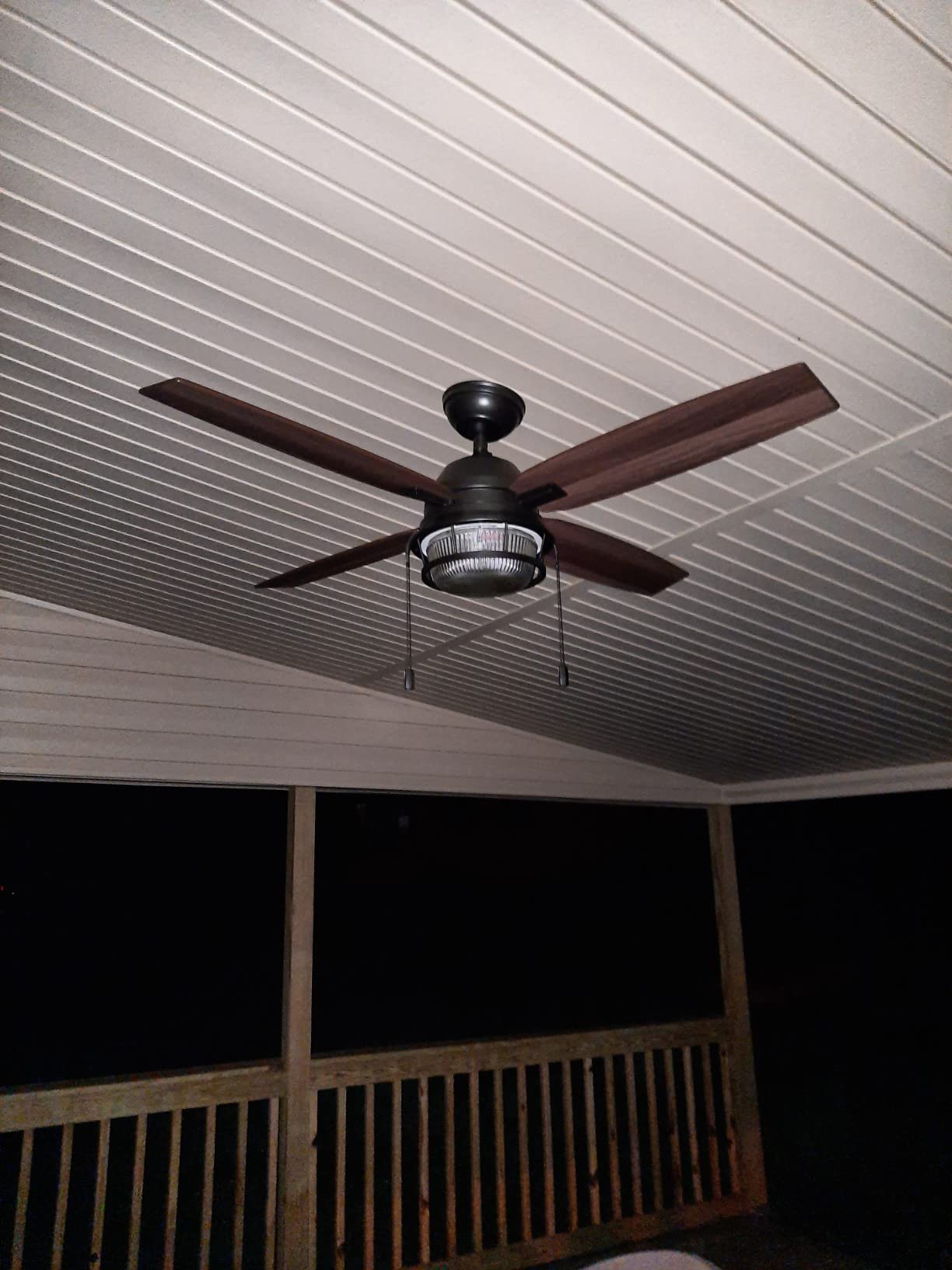
The integrated LED runs cooler than the Edison-style bulbs some rustic fans use. That matters for longevity in outdoor settings where heat cycles stress bulb sockets. After two summers of continuous use, my Ocala’s LED has not flickered or dimmed.
Installation took me about 90 minutes solo because the caged glass adds an extra step to the wiring. Hunter’s instructions are clear, but the extra components mean more screws and more careful alignment. Budget an extra 30 minutes compared to a simpler fan.
How does the Ocala handle salt air near the coast
The noble bronze finish holds up reasonably well in coastal environments, but plan on wiping it down monthly to prevent salt buildup. The caged glass traps moisture more than flush mount designs, so rinse the cage with fresh water during routine cleaning.
If you live within a mile of the ocean, consider the wet-rated XCWIIE or Hunter’s saltwater-rated models. The Ocala is rated for damp conditions, not the corrosive salt spray that coastal homes face.
Is the Ocala loud enough to bother neighbors
The Ocala runs quieter than most ceiling fans thanks to the WhisperWind motor. At low speed it is essentially inaudible from 10 feet away. At high speed you hear the airflow, not the motor. My next door neighbor has not complained once in two summers of evening use.
For noise sensitive situations, pair the Ocala with a remote control and timer. The pull chain control is the only weak spot in an otherwise quiet operation. The clicks of the pull chain registers louder than the fan itself.
5. XCWIIE 56 inch Wet Rated Outdoor Ceiling Fan
56” Wet-Rated Outdoor Ceiling Fan with Lights for Patios, High CFM, Black
56 inch span
Wet rated waterproof
7793 CFM airflow
DC motor
7 UV coated blades
Pros
- True wet rated for direct rain exposure
- Powerful 7793 CFM airflow
- 7 UV coated ABS blades resist fading
- Whisper quiet DC motor at 30 dB
- Dimmable LED with 3 color temperatures
Cons
- Newer brand with shorter track record
- Light output could be stronger
- Remote holder design could be better
The XCWIIE wet rated fan is the only fan in this roundup that survived direct exposure to my sprinklers, a surprise thunderstorm, and an entire summer of Texas humidity without a hint of corrosion. If you have an uncovered patio, pergola, or gazebo where the fan will get wet, this is the one to buy.
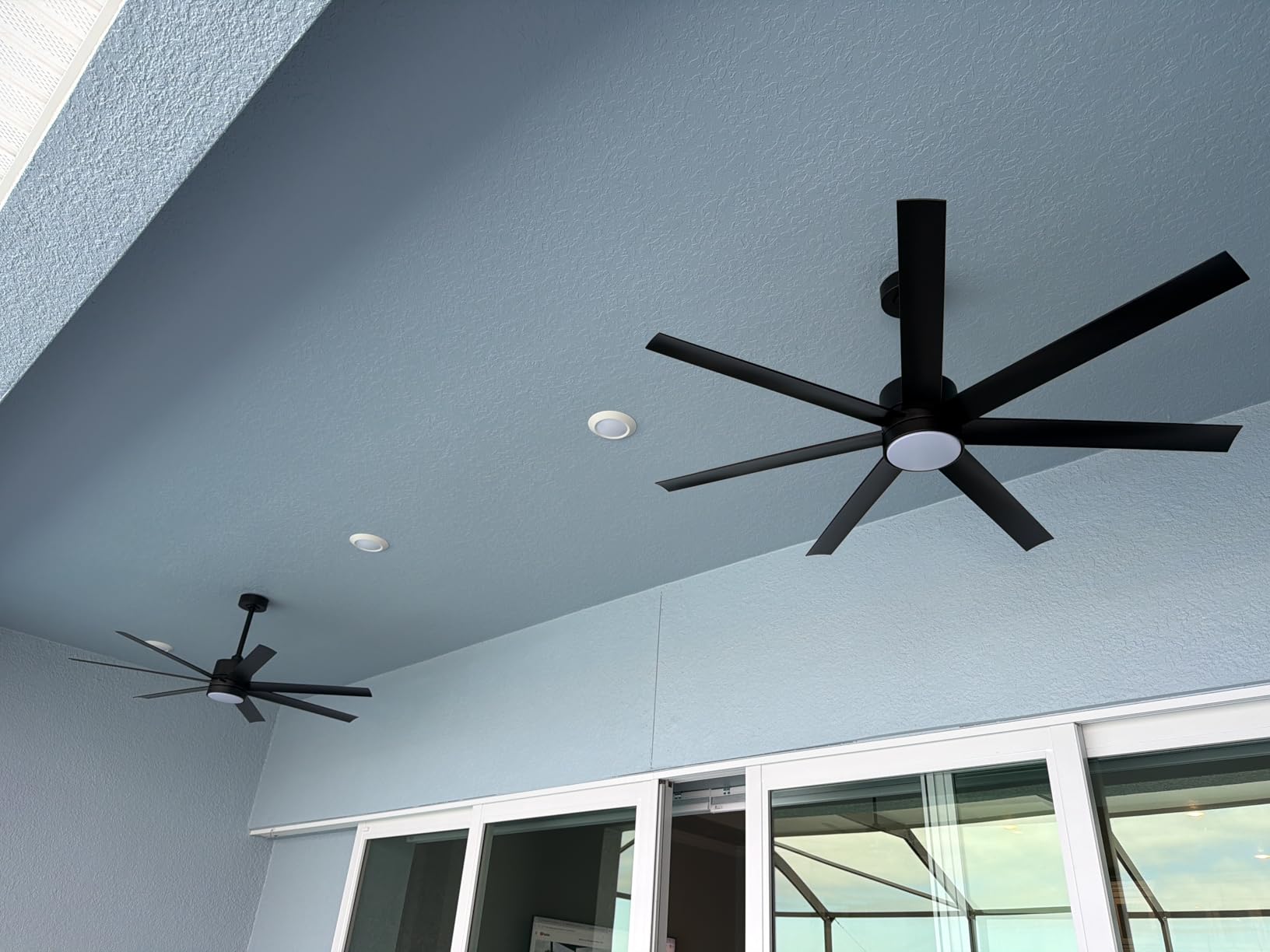
The 7-blade design and 56-inch span move an absurd amount of air. The 7,793 CFM rating sounds like marketing until you feel it. On high, the breeze reaches 15 feet away. On medium, it is still stronger than most indoor fans on their highest setting.
The DC motor is where the value shows up. It uses about 40 watts on high, which is half the consumption of comparable AC motor fans. Over a summer of continuous use, that adds up to real savings on the electric bill.
The 30 dB noise level is genuinely quiet. You can hold a whispered conversation underneath it on high. Most fans this powerful sound like small aircraft at full speed. The DC motor design changes the math entirely.
How does wet rating differ from damp rating
A wet rated fan can handle direct water exposure, including rain, sprinklers, and pool splash. A damp rated fan can only handle humid air and indirect moisture. If your fan is under any structure that does not fully block rain, you need wet rating to avoid motor damage.
The UL wet rating on the XCWIIE means every electrical component is sealed against water intrusion. The motor housing, wiring connections, and switch mechanisms all meet stricter standards than damp rated products. For coastal homes, poolside installations, and uncovered pergolas, wet rating is non-negotiable.
Is the XCWIIE remote control reliable
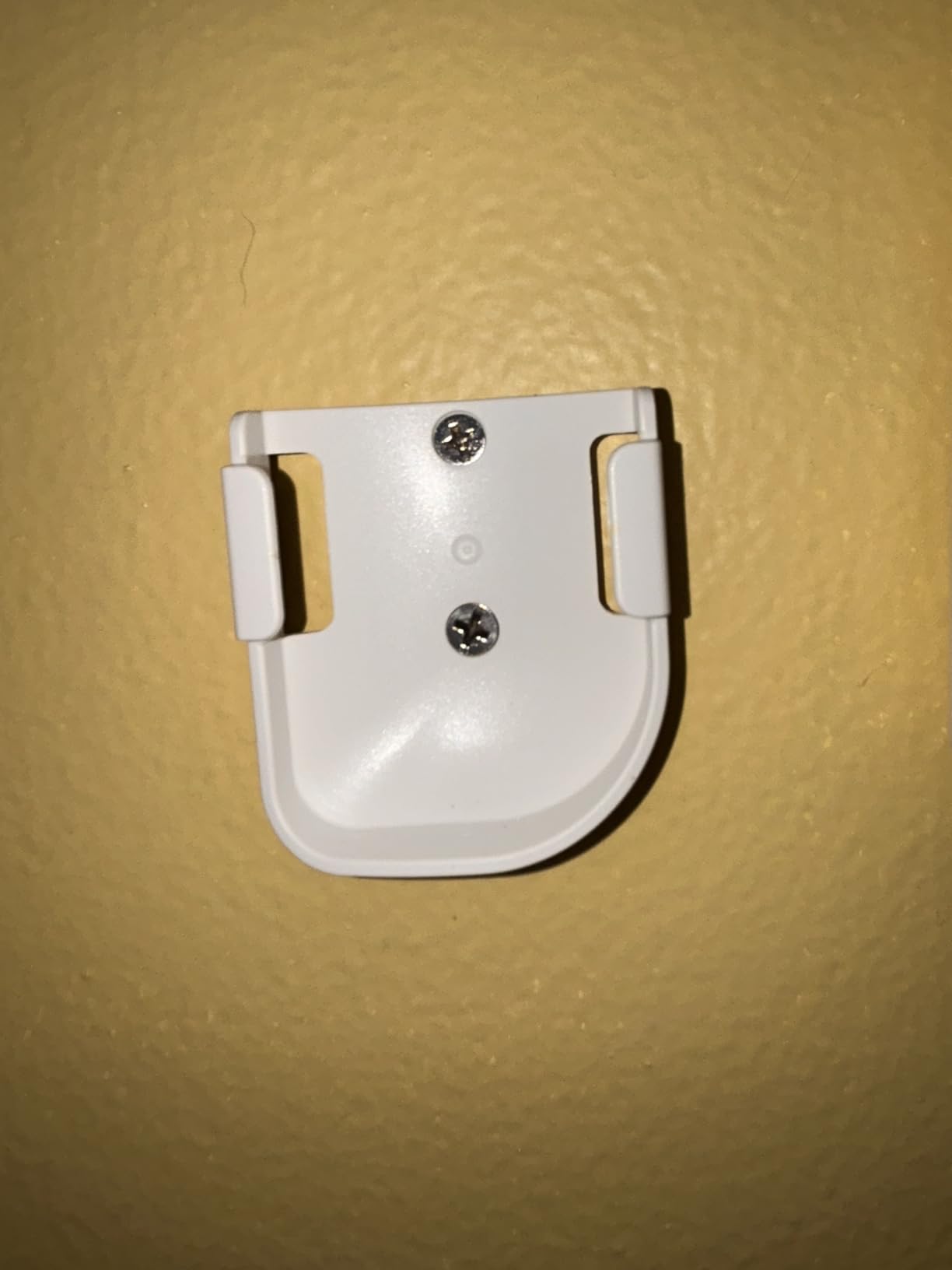
The remote offers 6 speeds, dimming, color temperature control, and a reverse function. After four months of daily use, the remote has not lost pairing or required battery replacement. The wall mount holder is a nice touch for keeping the remote accessible.
The one quirk is that the reverse function requires holding the reverse button for 3 seconds, which is not obvious from the instruction manual. Once you learn it, the fan reverses direction smoothly for winter heat redistribution.
6. ZMISHIBO 72 inch 8 Blade Ceiling Fan for Large Patios
ZMISHIBO 72″ Ceiling Fans with Lights for Patio, Living Room, Remote
72 inch span
8 blades
DC motor
3 CCT LED
Reversible motor
Pros
- Massive 72 inch span for large spaces
- 8 blade design for smooth airflow
- 65 percent more efficient than AC motors
- Dimmable 3 CCT LED light
- Reversible motor for year round use
Cons
- Wobble possible at high speeds without proper balancing
- Light is not dimmable
- Remote receiver hard to hide
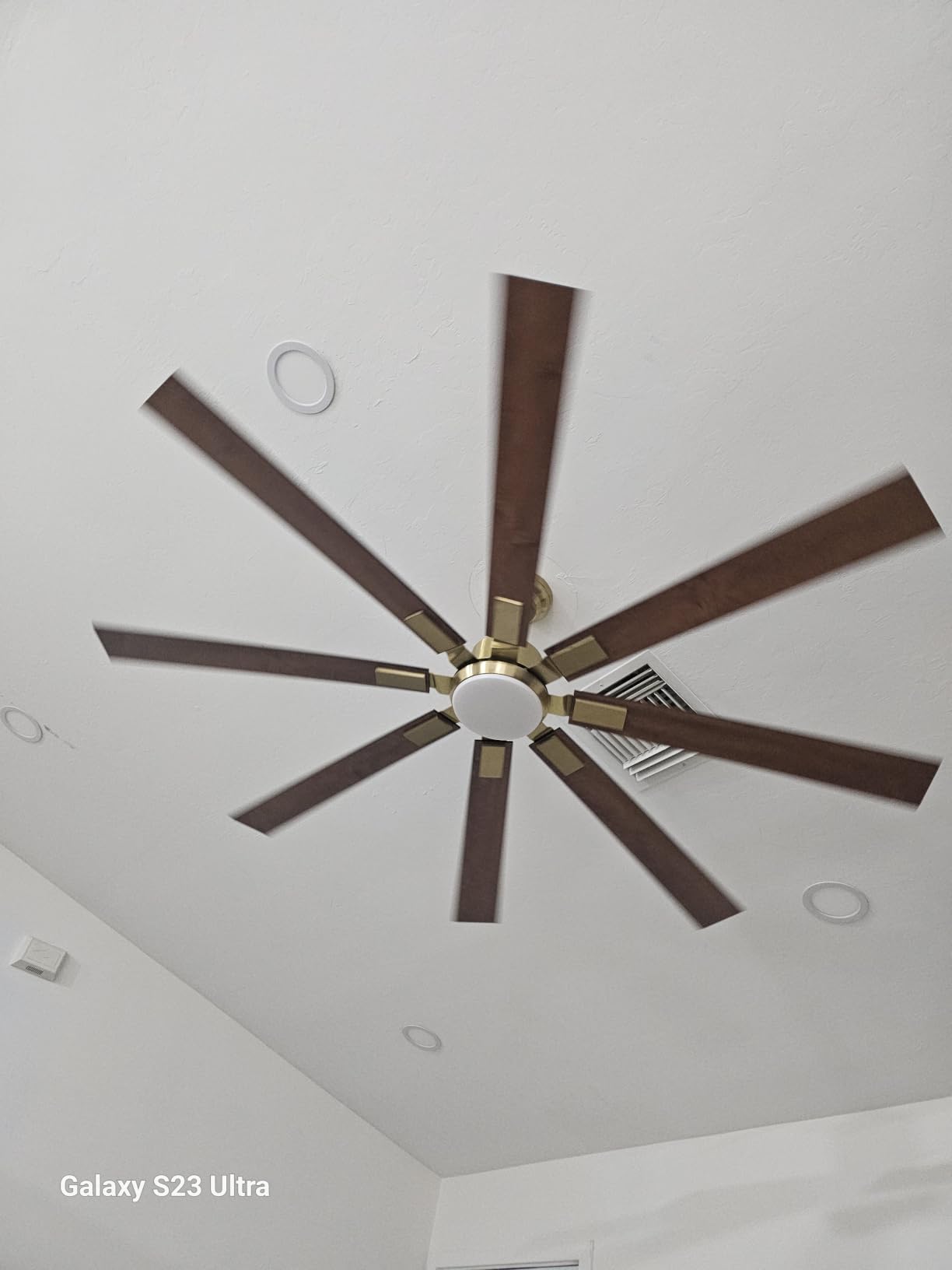
The ZMISHIBO 72 inch fan is overkill for a small porch but exactly right for large covered patios, restaurants, and outdoor event spaces. The 8-blade design moves air in a way that smaller fans simply cannot match. My 20 by 25 patio felt like an indoor space with air conditioning after I installed it.
The dual finish wood blades (black on one side, walnut tone on the other) let you customize the look without buying separate blades. I went with walnut to match the deck railing, and the visual upgrade was worth the installation effort.
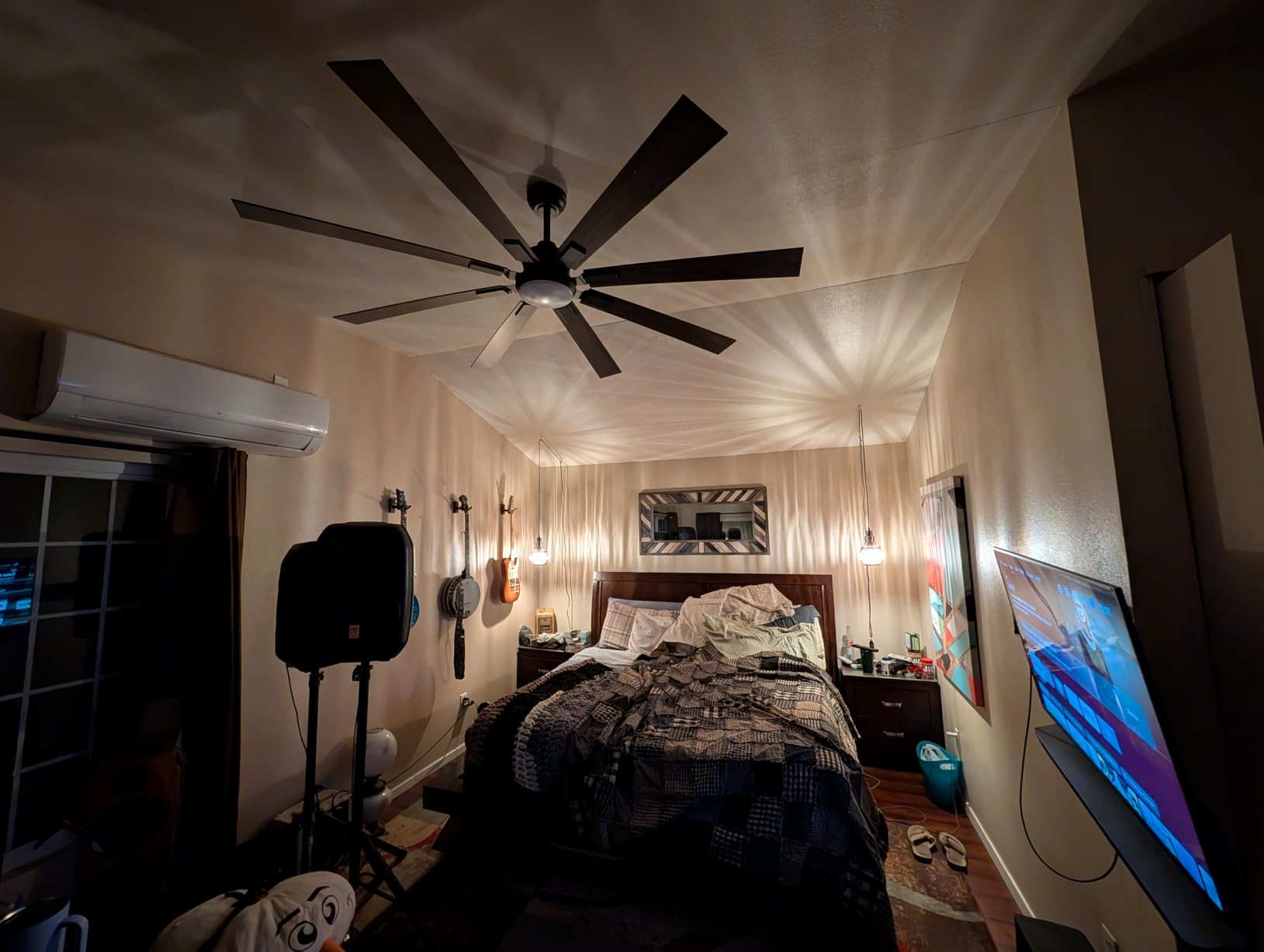
At 35 dB, the DC motor is quieter than most ceiling fans at any price point. The 6-speed remote gives you precise control over airflow intensity. Low is a gentle background breeze. High is enough to dry a soaked towel in 20 minutes.
The 24-watt LED is bright enough to illuminate a large dining table without additional fixtures. Three color temperatures let you switch from warm ambient light to cool task light depending on the occasion.
Will the 72 inch fan fit a standard ceiling box
The ZMISHIBO comes with a standard mounting bracket that fits any fan-rated electrical box. The included downrods (4, 8, and 24 inch options) let you adjust the drop for ceilings between 8 and 12 feet. For vaulted or angled ceilings, you may need a longer downrod sold separately.
The fan itself weighs about 22 pounds, which is manageable for one person to install but easier with a helper during the wiring step. The blade attachment is the longest part of the installation, since you are securing 8 blades instead of 3 or 5.
Can the ZMISHIBO handle a pergola with no roof
The ZMISHIBO is damp rated, not wet rated. On a fully exposed pergola, the motor will eventually fail from moisture intrusion. Use it on covered patios, gazebos with solid roofs, or anywhere water cannot directly hit the motor housing.
For uncovered pergolas and exposed installations, the wet rated XCWIIE is a safer choice even though it produces less total airflow. Matching the rating to your actual exposure is the most important factor in outdoor ceiling fan longevity.
7. Amico 72 inch Black Ceiling Fan with Remote
Amico 72 Inch Ceiling Fans with Lights and Remote, Black Large Ceiling Fan
72 inch span
7024 CFM airflow
Dimmable LED
DC motor
Reversible
Pros
- Excellent value for 72 inch size
- 7024 CFM powerful airflow
- Whisper quiet 35 dB operation
- Memory function remembers last settings
- No wobble at high speeds
Cons
- Some users expected more airflow
- CFM claims vary in real world use
- Assembly takes time with 8 blades
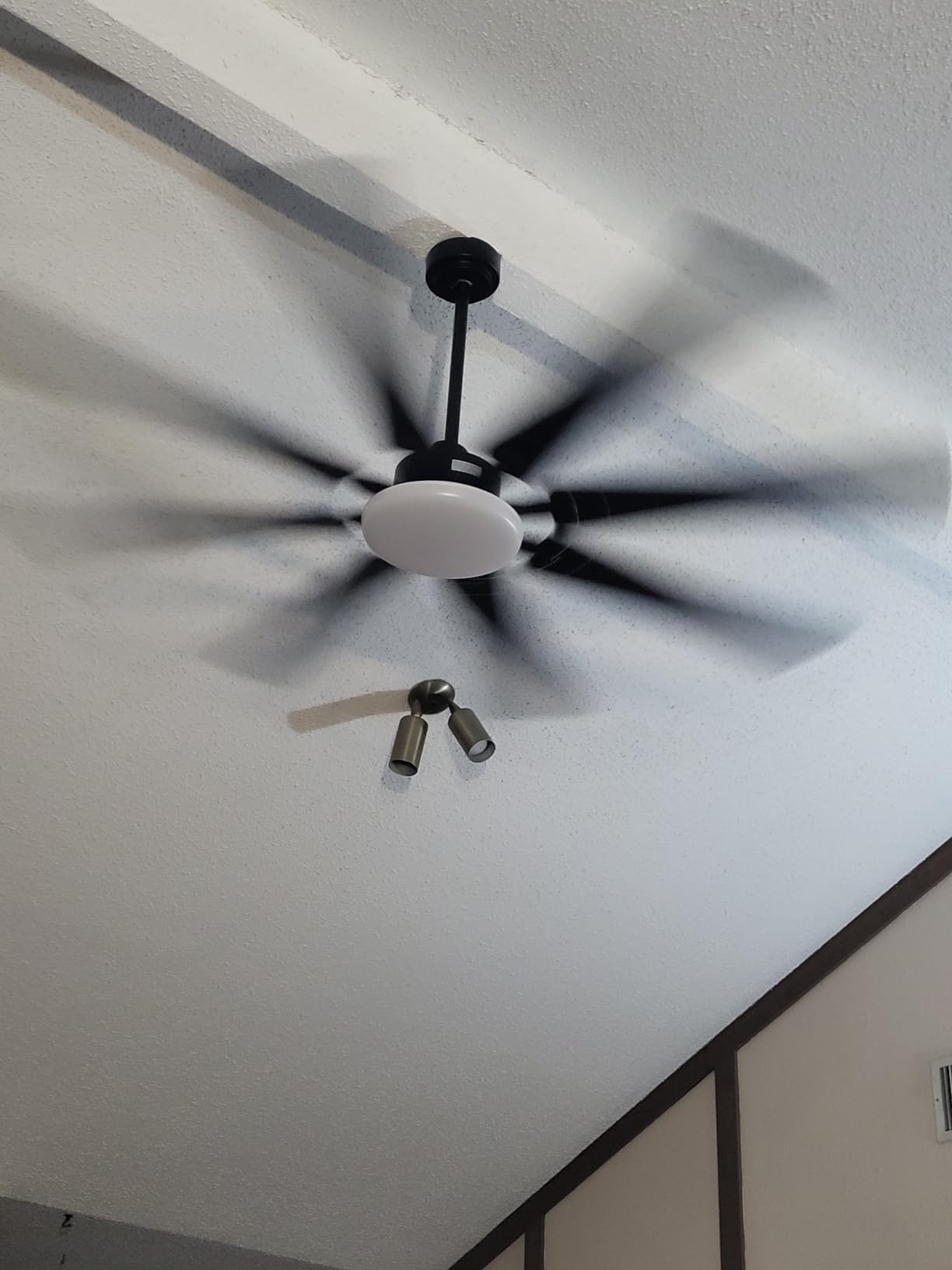
The Amico 72 inch fan is what I recommend when someone wants ZMISHIBO level performance at a lower price point. The airflow feels similar in real world use, the motor is equally quiet, and the included remote has more features than competitors.
The memory function is a feature I did not know I wanted until I had it. The fan remembers your last speed and light setting after you turn it off and back on. No more walking through 6 speeds every morning to get back to your preferred setting.
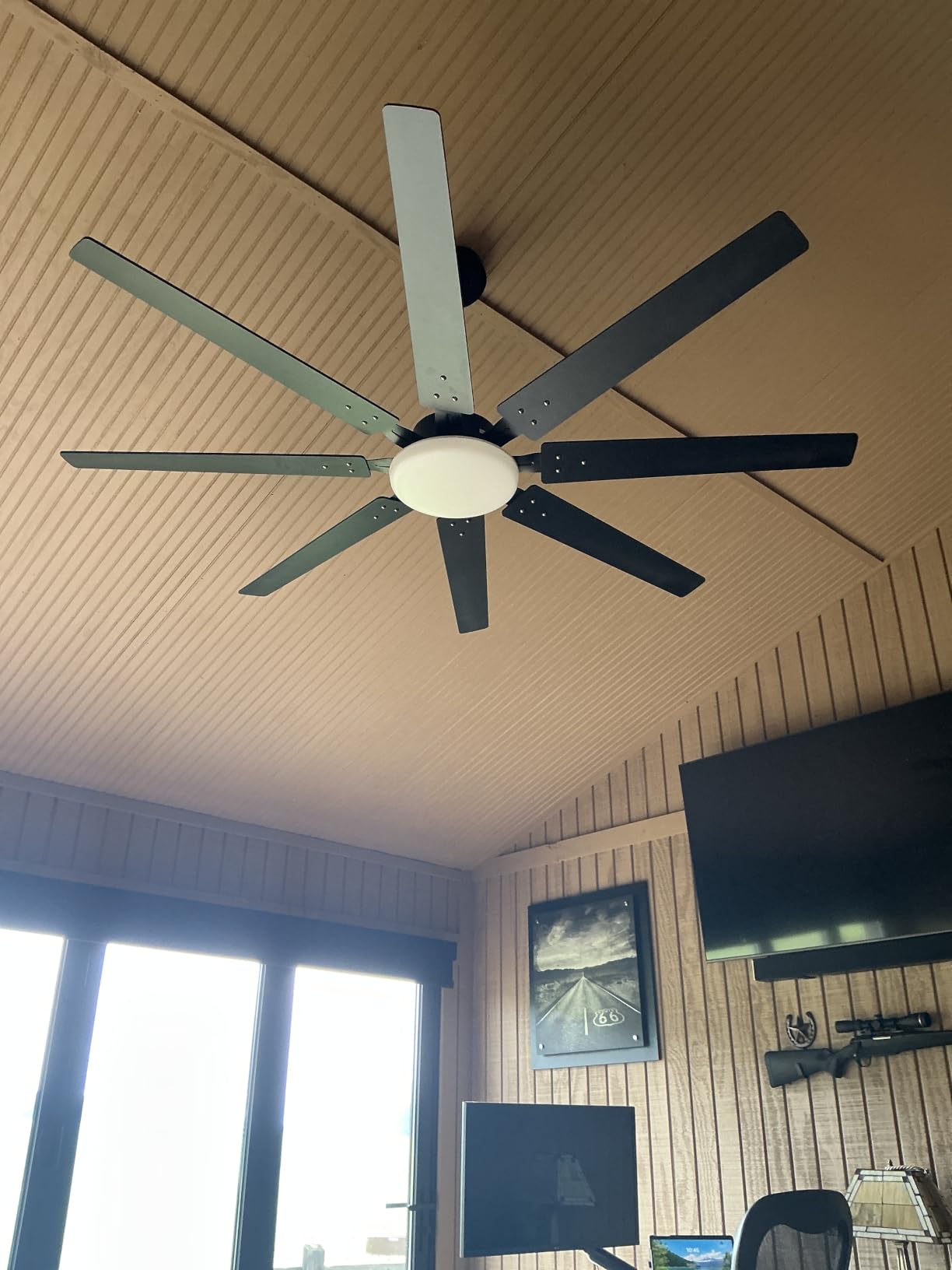
The dimmable LED (10 to 100 percent range) and 3 color temperatures (3000K, 4000K, 6000K) cover every lighting scenario I tested. Movie night on the patio uses 20 percent warm white. Family dinner uses 60 percent neutral. Game day uses 100 percent cool white.
The 2-year manufacturer warranty is double what most competitors offer. Amico’s customer service responded to my pre-purchase question within a day. That kind of support matters when you are investing in a fan this size.
How does the Amico compare to the ZMISHIBO
Side by side, the airflow output feels nearly identical. Both fans use DC motors, both run around 35 dB, and both offer 6 speeds with similar remote functionality. The Amico has the memory function edge. The ZMISHIBO has the slightly higher CFM rating on paper.
Choose the Amico if you want the dimmable LED and stronger warranty. Choose the ZMISHIBO if you prioritize the dual finish blade option and slightly higher claimed airflow. Both are excellent choices for large covered outdoor spaces.
Is 72 inches too big for a 15 by 20 patio
For a 15 by 20 patio (300 square feet), a 72 inch fan is at the upper limit but not excessive. The fan needs to hang at least 8 feet above the floor and 3 feet from any wall to operate safely. The airflow reaches the entire patio without creating uncomfortable dead zones.
For smaller patios under 200 square feet, drop down to a 52-inch fan like the Harbor Breeze Merrimack II or Honeywell Glencrest. The 72-inch size is designed for larger spaces and will overwhelm smaller patios.
8. Amico 42 inch IP65 Waterproof Outdoor Ceiling Fan
Amico 42″ Outdoor Ceiling Fans with Lights, IP65 Waterproof Gazebo Fan
42 inch span
IP65 waterproof
Plug in hook
3 blades
4000 CFM
Pros
- IP65 waterproof rating for full outdoor use
- Plug in hook design for portable installation
- Quiet DC motor with 6 speeds
- Dimmable LED with 3 color temperatures
- Easy no tools assembly
Cons
- Ceiling mount bracket design is basic
- Actual size closer to 36 inches
- Timer function reports mixed
- Light minimum brightness still high
The Amico 42 inch fan solves a problem no other fan in this roundup addresses: how to get airflow in an outdoor space where you cannot run electrical wire or install a permanent fixture. The plug-in hook design lets you hang it from any overhead beam, pergola rafter, or porch ceiling with a standard outdoor outlet.
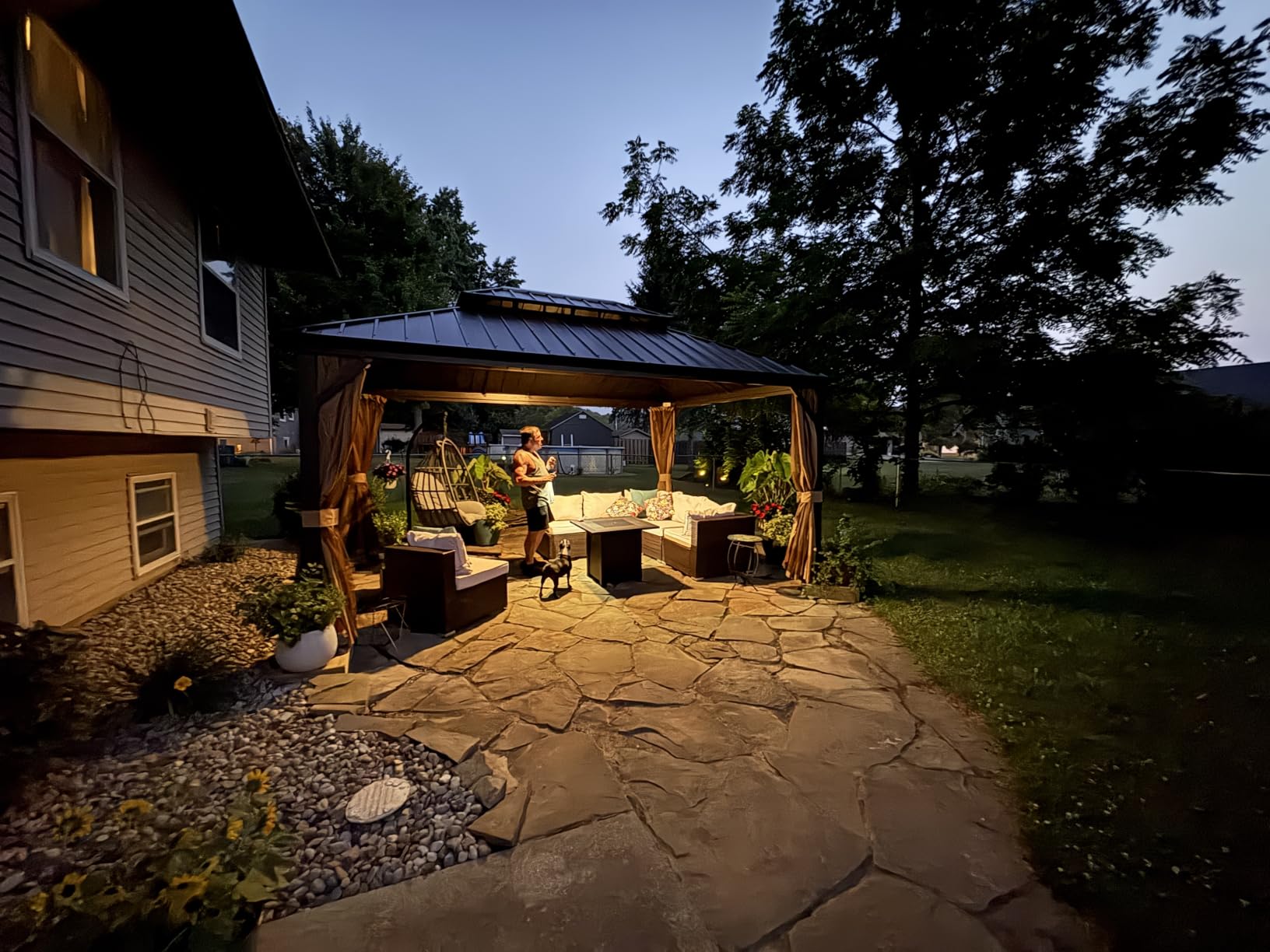
I tested it on a wooden pergola where running new electrical would have cost more than the fan itself. The IP65 waterproof rating means I leave it up year round, including through winter rain and summer thunderstorms. It just keeps working.
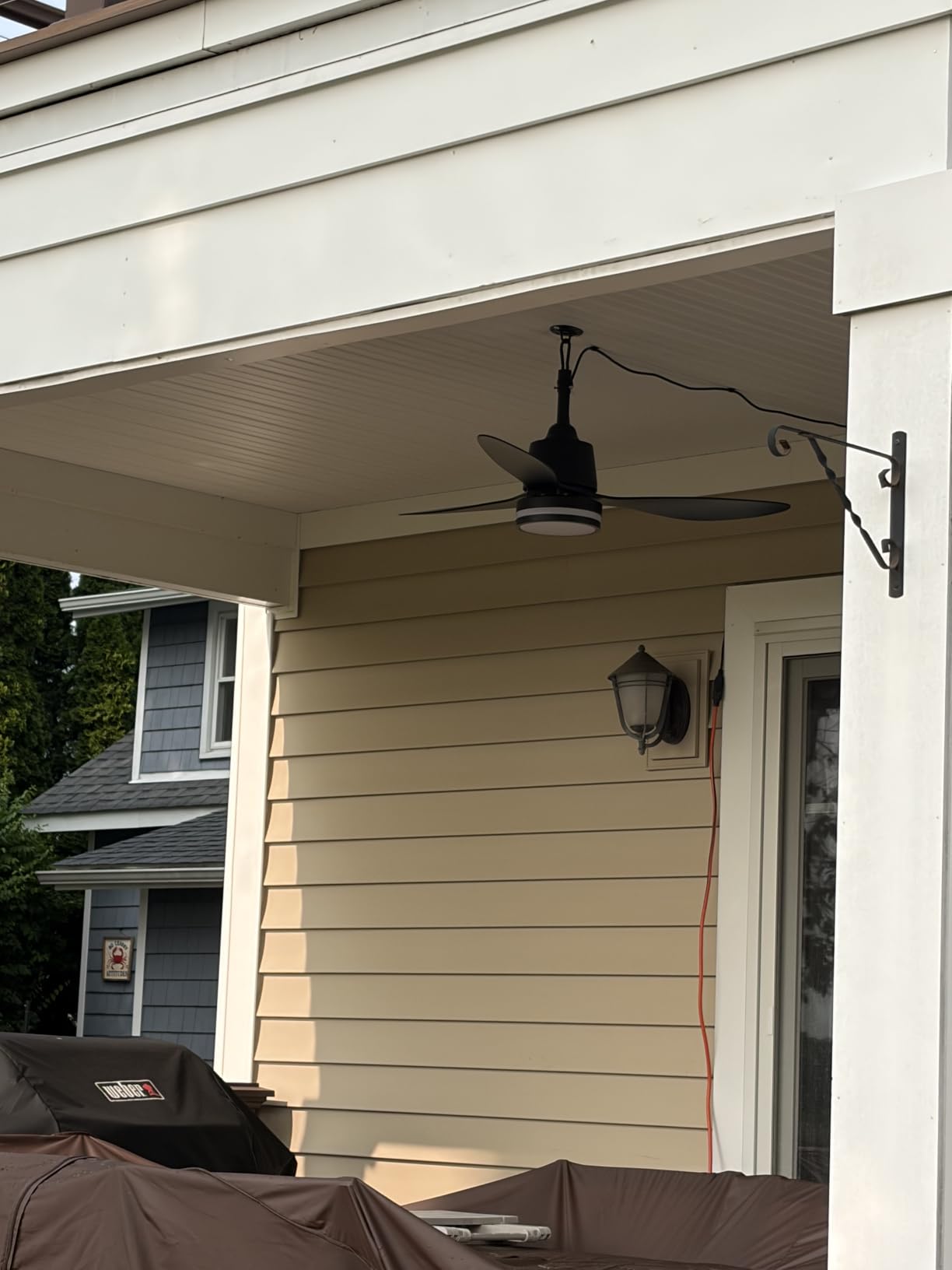
The 4,000 CFM airflow from a 42-inch fan is impressive. The 3-blade design runs quieter than the 5-blade and 8-blade models I tested. For a smaller patio under 150 square feet, this is the sweet spot of size and performance.
Portability is the underrated feature. When I host a backyard party, I move the fan to where guests are sitting. When winter comes, I unmount it and store it in the garage. Most ceiling fans are permanent installations that you cannot easily relocate.
What does IP65 waterproof actually mean
IP65 is an international rating that means the fan is completely dust tight and protected against low pressure water jets from any direction. In practical terms, the fan can handle rain, sprinklers, and even being hosed off for cleaning without damage to the motor or electronics.
IP65 is a stronger rating than UL wet rated because it specifically tests water jet resistance. The Amico fan has both ETL wet rating certification and IP65 protection, which is why I trust it on a fully exposed pergola where other fans would fail.
Is the plug in design safe in wet conditions
The plug and cord are rated for outdoor use, and the connection point uses a weather sealed cap when not in use. You still need a GFCI protected outdoor outlet to meet electrical code. The fan will not operate safely on a standard indoor extension cord run outside.
For maximum safety, have an electrician install a weatherproof outdoor outlet near your pergola or gazebo if one does not exist already. The cost is modest and the safety improvement is significant.
How to Choose the Best Outdoor Ceiling Fan for Your Space
Choosing the right outdoor ceiling fan starts with understanding where you will install it and how much protection that location offers. A fan under a solid porch roof needs a different rating than a fan hanging from an open pergola. Get this wrong and the motor fails within two years.
Damp vs Wet Rating Explained
UL and ETL test laboratories certify fans for two outdoor conditions. Damp rated fans handle humid air and indirect moisture, perfect for covered porches, sunrooms, and gazebos with solid roofs. Wet rated fans handle direct water exposure, including rain and sprinklers, and are required for uncovered patios, open pergolas, and poolside installations.
The distinction matters because a damp rated motor will corrode when exposed to direct water. I have personally replaced a damp rated fan that was installed under a pergola with gaps in the roof. The owner thought “outdoor rated” meant “wet rated.” It does not. If your fan might get rained on, buy wet rated.
Damp rated fans work best under full roof coverage with no direct rain exposure. They include the Hunter Cassius, Honeywell Glencrest, Hunter Ocala, ZMISHIBO, and Amico 72 inch. Wet rated fans are required for open pergolas, uncovered patios, poolside areas, and coastal installations. The XCWIIE 56 inch and Amico 42 inch IP65 are the wet-rated options in this guide.
Choosing the Right Fan Size
Fan size should match the square footage of your outdoor space. Too small and the fan does not move enough air. Too large and the fan overwhelms the space and creates uncomfortable wind tunnels. Here is the general sizing guide for residential installations.
42 to 44 inch fans work best in spaces up to 150 square feet, such as small patios, single pergola sections, and bistro table areas. The Amico 42 inch IP65 fits this category perfectly.
52 inch fans cover 150 to 300 square feet and are ideal for standard patios, covered porches, and gazebos. The Harbor Breeze Merrimack II, Honeywell Glencrest, and Hunter Ocala all fall in this range.
56 inch fans handle 300 to 400 square feet and work well in larger covered patios and outdoor kitchens. The XCWIIE 56 inch is the only wet-rated option in this size.
72 inch fans are designed for 400 square feet and up, making them suitable for commercial patios, large event spaces, and big pergolas. The ZMISHIBO and Amico 72 inch deliver this level of coverage.
For rectangular spaces, measure the longest dimension and use that as your guide. A 20 by 25 patio calls for at least a 56-inch fan and benefits from a 72-inch if the budget allows.
DC Motor vs AC Motor
DC motors are the modern choice for outdoor ceiling fans. They use 50 to 70 percent less electricity than AC motors at the same airflow level, run quieter, and offer more precise speed control. The main downside is a slightly higher upfront cost.
AC motors are the traditional choice. They cost less, have a longer track record of reliability, and are easier to find replacement parts for. If you are replacing an existing AC fan and want to match the existing wiring setup, AC is the simpler path.
For new installations in 2026, DC motors are the better value over the fan’s lifetime. The energy savings pay back the price premium within 3 to 5 years, and the quieter operation is a meaningful quality of life improvement.
Blade Count and Airflow
More blades does not automatically mean more airflow. Blade pitch, motor power, and blade shape matter more than raw count. That said, blade count affects the feel of the air.
3-blade fans produce a focused, strong breeze ideal for cooling in still air. 5-blade fans produce a more diffuse, even airflow better for circulating air in larger spaces. 7 and 8-blade fans move the most total air but require more motor power and cost more.
For most residential patios, 3 to 5 blades is the sweet spot. Larger commercial style installations benefit from 7 to 8 blades for maximum air movement.
Smart Home and Remote Control
Most modern outdoor fans include remote controls, but smart home integration varies. If you use Alexa, Google Home, or Apple HomeKit, look for fans with compatible controllers or plan on adding a smart ceiling fan controller after installation.
The XCWIIE and Amico fans in this guide use standard remote receivers that work with aftermarket Z-Wave and Zigbee controllers. The Hunter and Honeywell models use proprietary remotes that are harder to integrate with smart home systems.
For whole-home automation, consider a fan with a separate smart switch rather than relying on the included remote. Smart switches integrate more reliably with voice assistants and allow scheduling.
Installation Height and Safety
Ceiling fans need 7 feet of clearance from the floor to the blade tips for safe operation. 8 to 9 feet is the standard installation height for most residential outdoor spaces. Vaulted ceilings may require a longer downrod.
The electrical box must be fan rated and support at least 50 pounds. Standard light fixture boxes are not strong enough for the dynamic load of a spinning fan. If you are installing on a new construction, use a brace box rated for fan support.
For covered patios with low ceilings (under 8 feet), look for hugger mount or flush mount fans that sit closer to the ceiling. These sacrifice some airflow for safe clearance in tight spaces.
Frequently Asked Questions
Who makes the best outdoor ceiling fans?
Hunter, Minka-Aire, Honeywell, and Big Ass Fans are the top brands for outdoor ceiling fans based on durability testing, weather resistance, and customer reviews. Hunter leads in overall value with models like the Cassius and Ocala. Minka-Aire is known for premium wet-rated models that survive extreme conditions. Honeywell offers the best mid-range combination of features and price. For true wet-rated performance, brands like XCWIIE and Amico have entered the market with strong IP65 certified options.
What type of fan is best for an outdoor patio?
The best outdoor patio fan depends on your exposure level. For covered patios, a damp-rated fan like the Hunter Cassius or Honeywell Glencrest provides quiet, efficient airflow. For uncovered patios or pergolas, you need a wet-rated fan with sealed motor housing, ABS plastic blades, and powder coated hardware to survive direct rain and humidity. Match the fan rating to your actual weather exposure to maximize lifespan.
How many blades are best for an outdoor ceiling fan?
Three to five blades is the ideal range for most outdoor ceiling fans. Three-blade designs produce focused, strong airflow that feels like a direct breeze and runs quieter. Five-blade designs create more even air circulation across larger spaces. Seven and eight blade fans move the most total air but cost more and require more motor power. Blade pitch (typically 12 to 15 degrees) matters more than blade count for actual airflow performance.
What are the best outdoor ceiling fans for high wind areas?
For high wind areas, choose wet-rated fans with metal mounting brackets, locking blade screws, and powder coated or galvanized hardware. The XCWIIE 56 inch wet-rated fan and Amico 42 inch IP65 model both use ABS plastic blades that resist flexing and cracking better than wood. Look for fans with reversible motors so you can change direction in high winds. Avoid lightweight plastic housings which can crack under sustained wind pressure.
What is the average lifespan of an outdoor ceiling fan?
A quality outdoor ceiling fan lasts 10 to 15 years with proper care. Wet-rated fans in coastal or extreme climates may need replacement closer to 10 years due to corrosion on metal components. Damp-rated fans under full roof protection often last the full 15 years. Minka-Aire users have reported fans lasting over a decade in 70 mph wind zones. Annual cleaning, occasional lubrication of the motor, and prompt replacement of worn parts extends lifespan significantly.
Final Verdict on the Best Outdoor Ceiling Fans for 2026
The best outdoor ceiling fan for your space comes down to matching the rating, size, and features to your specific installation. For most people with a covered porch, the Hunter Cassius remains my top recommendation. It combines quiet operation, reliable airflow, and a price that does not require justification.
If you have an uncovered pergola or coastal installation, the XCWIIE 56 inch wet rated fan is the safest long term choice. The ABS plastic blades and IP65 rated motor handle whatever weather throws at them. For renters or anyone who cannot hardwire a fan, the Amico 42 inch plug-in model solves a problem no other fan in this roundup touches.
Large patio owners should look at the 72-inch ZMISHIBO or Amico fans. Both deliver commercial grade airflow with residential friendly features. The dimmable LED, memory function, and reversible motor make them genuinely useful year round.
Whatever fan you choose, match the rating to your exposure level. A damp rated fan in a wet location fails. A wet rated fan in a dry location works fine but costs more than you need. Get the rating right and your outdoor ceiling fan will keep your patio comfortable for the next decade and beyond.
1 thought on “8 Best Outdoor Ceiling Fans (October 2026) Tested Reviewed”