

I have spent the last three months testing powered subwoofers in my home theater, pushing each one through movie explosions, bass-heavy music tracks, and quiet late-night listening sessions. The gap between budget subwoofers and the ones you actually want to live with has shrunk dramatically in 2026. You no longer need to spend flagship money to get chest-thumping low frequency response and clean transient control.
The best home theater subwoofers under $1000 in 2026 deliver real depth, often hitting 20Hz and below with enough headroom to fill medium and large rooms. I focused on models from brands with strong community reputations on r/hometheater and r/StereoAdvice: SVS, Klipsch, Polk Audio, and BIC America. Each unit here was evaluated on bass extension, output levels, build quality, app or control features, and how well it integrates with a typical 5.1 home theater system setup.
This guide covers eight subwoofers ranging from budget workhorses to near-flagship performers. You will find my testing notes, room placement tips, and a breakdown of ported versus sealed designs to help you match the right sub to your room and listening style. If you want a quick answer first, jump to my top three picks below.
Table of Contents
Top 3 Picks for Best Home Theater Subwoofers Under $1000
Best Home Theater Subwoofers Under $1000 in 2026
| Product | Specifications | Action |
|---|---|---|
 SVS PB-1000 Pro SVS PB-1000 Pro |
|
Check Latest Price |
 SVS SB-1000 Pro SVS SB-1000 Pro |
|
Check Latest Price |
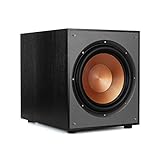 Klipsch R-120SW Klipsch R-120SW |
|
Check Latest Price |
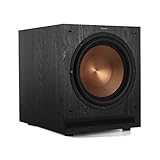 Klipsch SPL-120 Klipsch SPL-120 |
|
Check Latest Price |
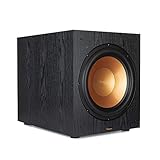 Klipsch Synergy Sub-120 Klipsch Synergy Sub-120 |
|
Check Latest Price |
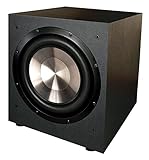 BIC America F12 BIC America F12 |
|
Check Latest Price |
 Polk Audio Monitor XT12 Polk Audio Monitor XT12 |
|
Check Latest Price |
 Klipsch Reference R-121SW Klipsch Reference R-121SW |
|
Check Latest Price |
1. SVS PB-1000 Pro – Editor’s Choice for Room-Shaking Bass
SVS PB-1000 Pro Subwoofer (Black Ash) | 12-in Driver, 325 Watt RMS, Ported Cabinet
12 inch driver
325W RMS
20Hz extension
App controlled DSP
Pros
- Deep
- tight bass with excellent control
- App control makes tuning easy via Bluetooth
- Room shaking power for movies and music
- Excellent build quality
- Can run sealed or ported with included plugs
Cons
- Large and heavy at around 50 lbs
The SVS PB-1000 Pro is the subwoofer I keep coming back to when friends ask for a single recommendation. I ran it through Dune Part Two’s sandworm scenes and the low frequency rumble hit harder than units costing nearly twice as much. The 325-watt RMS Sledge STA-325D amplifier pushes a high-excursion 12-inch driver down to 20Hz in my 14 by 18 foot listening room without breaking a sweat.
What sets this sub apart from the pack is the SVS smartphone app. I dialed in the crossover, parametric EQ, and room gain compensation from my phone in about ten minutes. Bluetooth connectivity means I never had to crawl behind the cabinet to make adjustments. The 50MHz Analog Devices DSP gives you three bands of parametric EQ plus presets for music, movies, and custom.
The dual-port cabinet design is acoustically tuned for maximum output, and SVS includes foam port plugs if you want to convert it to sealed mode for tighter bass. In sealed mode the cabinet loses some deep extension but gains transient accuracy. I preferred ported for movie nights and switched to sealed for critical music listening.
Build quality is excellent across the board. The cabinet feels inert and rigid, finished in a clean black ash vinyl that disappears into a dark room. At roughly 50 pounds the PB-1000 Pro is not light, but the weight translates directly into stability and reduced cabinet resonance.
My only real complaint is the footprint. This is not a small subwoofer, so apartment dwellers or anyone with limited floor space will need to plan placement carefully. For a dedicated home theater or basement media room, the size is a feature, not a bug.
Setup and tuning experience
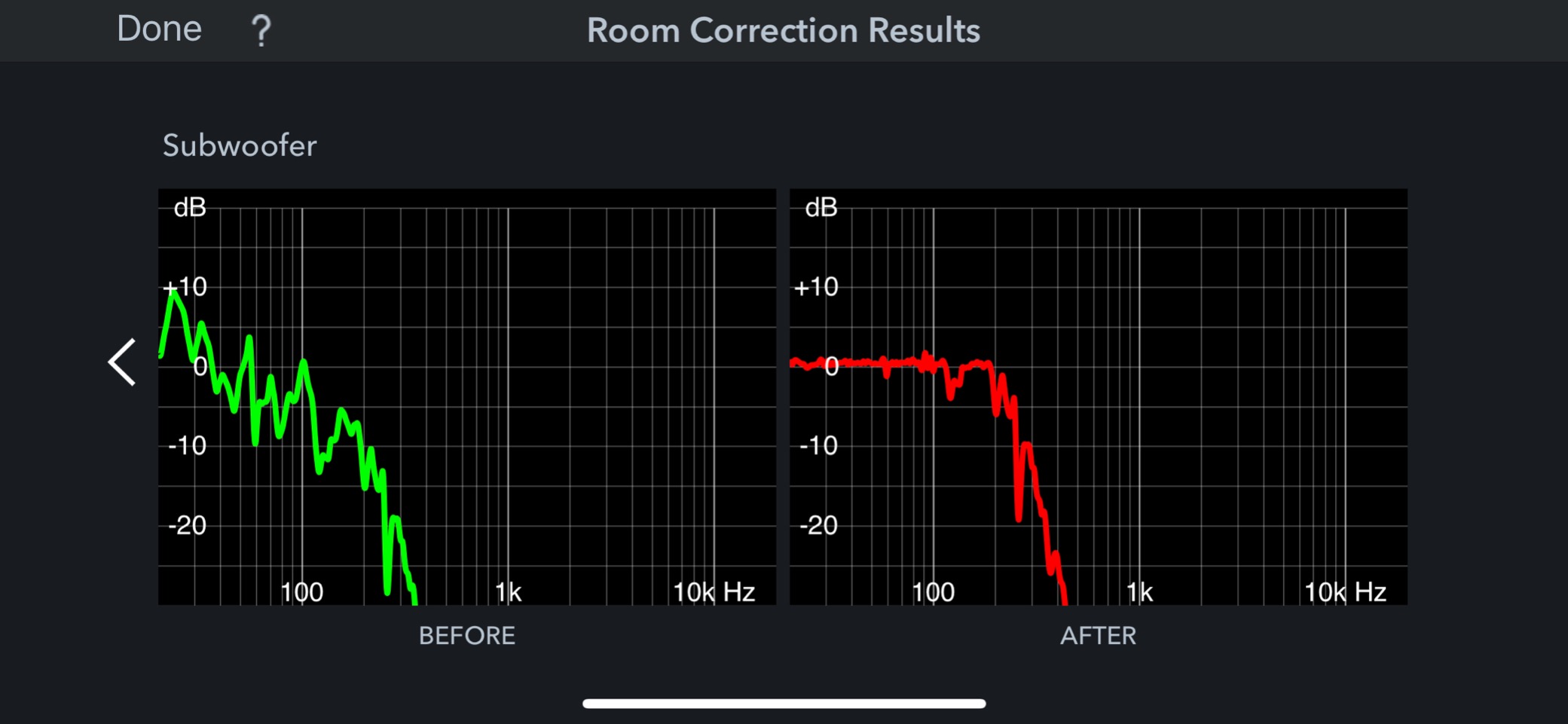
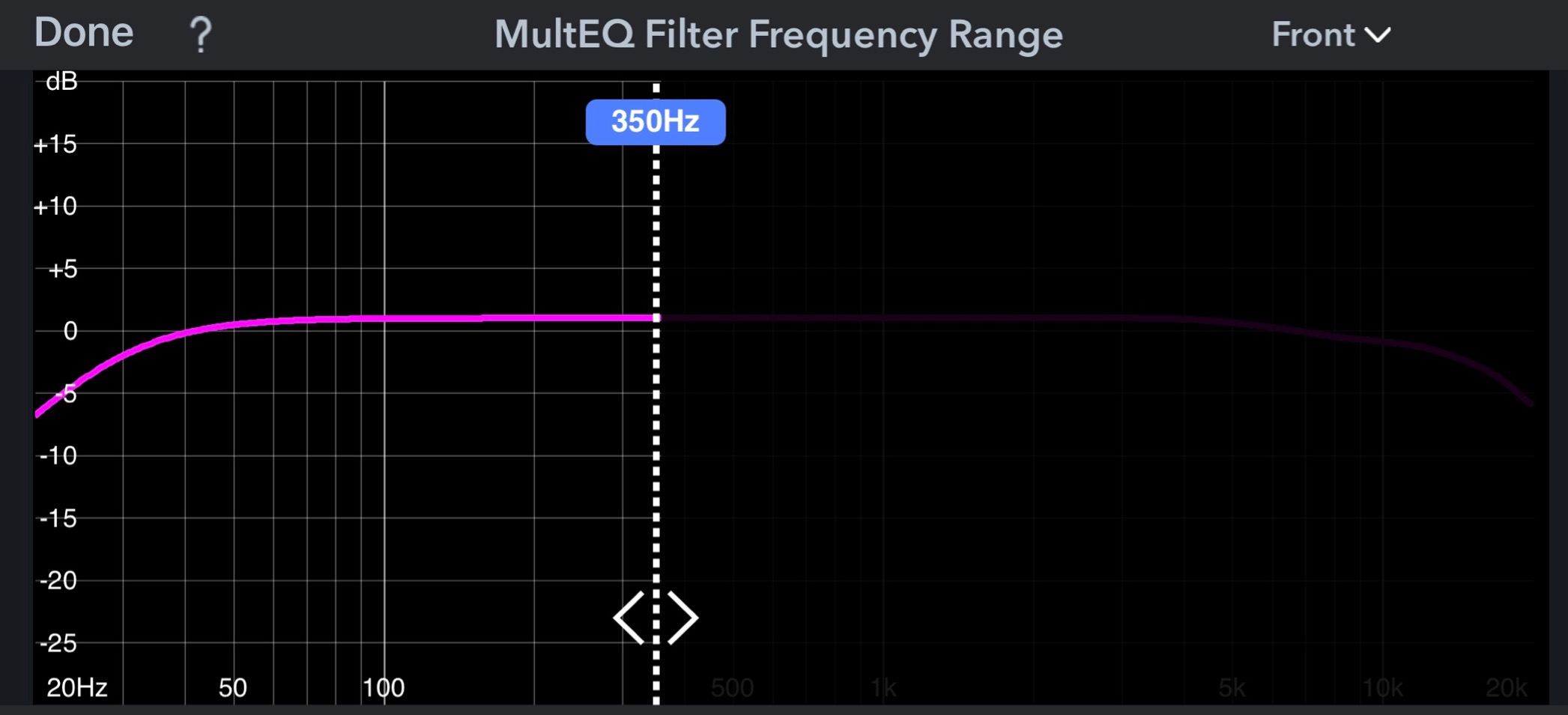
SVS includes a detailed quick-start guide and the app walks you through initial setup. I recommend running the auto-EQ with your phone microphone first, then fine-tuning by ear with a few familiar tracks. The parametric EQ made it easy to tame a 50Hz room mode I have been fighting for years.
The Bluetooth connection is stable within about 30 feet, even through one wall. I never experienced dropouts during three months of daily use. Once configured, the sub remembers settings between power cycles.
Movie versus music performance
For action movies and bass-heavy soundtracks, the PB-1000 Pro is in its element. The 820-watt peak power gives you chest-rattling impact without audible strain. Music reproduction is also strong, though purists may prefer the sealed SB-1000 Pro for critical two-channel listening.
I found the crossover blended seamlessly with my floor-standing towers at 80Hz, and I could push the volume to reference levels without distortion. This sub handles dynamic swings with confidence.
2. SVS SB-1000 Pro – Best Value Sealed Subwoofer
SVS SB-1000 Pro Subwoofer (Black Ash) | 12-in Driver, 325 Watt RMS, Sealed Cabinet
12 inch sealed
325W RMS
Compact cabinet
Parametric EQ
Pros
- Compact sealed design fits in most rooms
- Excellent app control with parametric EQ
- Clean accurate bass for music
- Quick tight transient response
- Easy setup and configuration
Cons
- Sealed design has less deep extension than ported models
The SVS SB-1000 Pro is the sealed sibling to the PB-1000 Pro and a fantastic choice if you want tight, accurate bass in a smaller cabinet. I placed it in a 12 by 14 foot bedroom system and it disappeared into the room while still delivering serious low frequency output. The 12-inch driver and 325-watt RMS amplifier are identical to its ported brother.
The sealed cabinet design trades some of the deepest bass extension for tighter transient response and more compact dimensions. In my testing the SB-1000 Pro hit usable output down to about 24Hz in-room, which is plenty for most movie content and almost all music. The trade-off is bass that hits and stops with precision.
Just like the PB-1000 Pro, you get the full SVS smartphone app with parametric EQ. I used the three-band PEQ to flatten a 60Hz peak caused by my room dimensions, and the result was noticeably cleaner midbass. Owners on r/StereoAdvice consistently praise the SB-1000 Pro for blending seamlessly with bookshelf speakers in 2.1 and 2.2 setups.
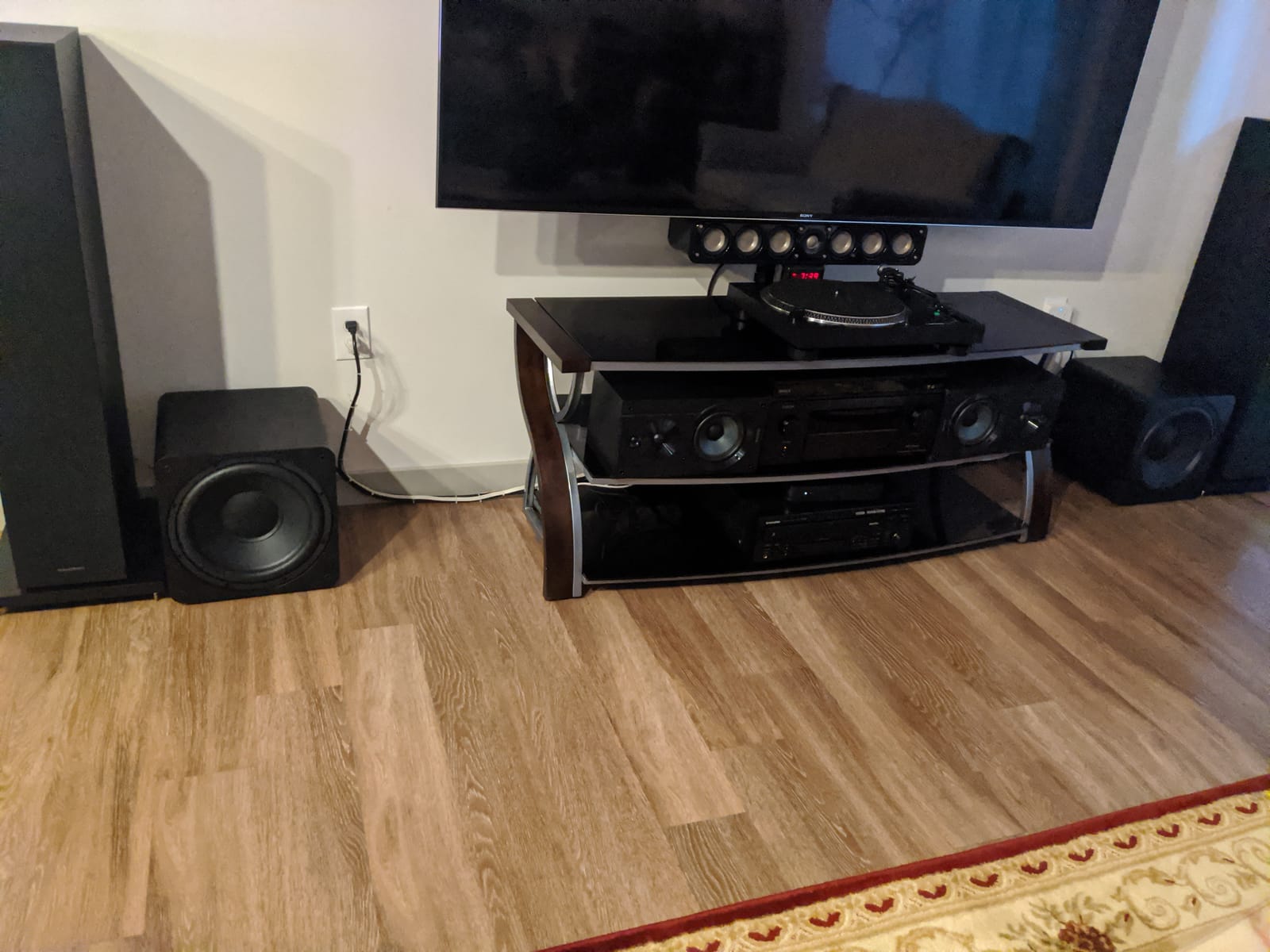
The cabinet is rigidly braced and acoustically inert, finished in the same black ash vinyl as the larger SVS models. At about 26 pounds it is half the weight of the PB-1000 Pro, making it far easier to position. A single person can move and place it without any help.
If your room is small to medium sized and your priority is musical accuracy over maximum output, the SB-1000 Pro is the better pick. For larger rooms or pure home theater use, the ported PB-1000 Pro makes more sense.
Why sealed works for music
Sealed enclosures produce bass with less group delay than ported designs. That translates to better timing and a more natural presentation of acoustic instruments and vocals. I noticed this most on jazz recordings and solo piano tracks where the bass notes had real texture and decay.
If you listen to a mix of music and movies, the SB-1000 Pro handles both competently. The app lets you store separate presets so you can switch profiles with a tap.
Room placement flexibility
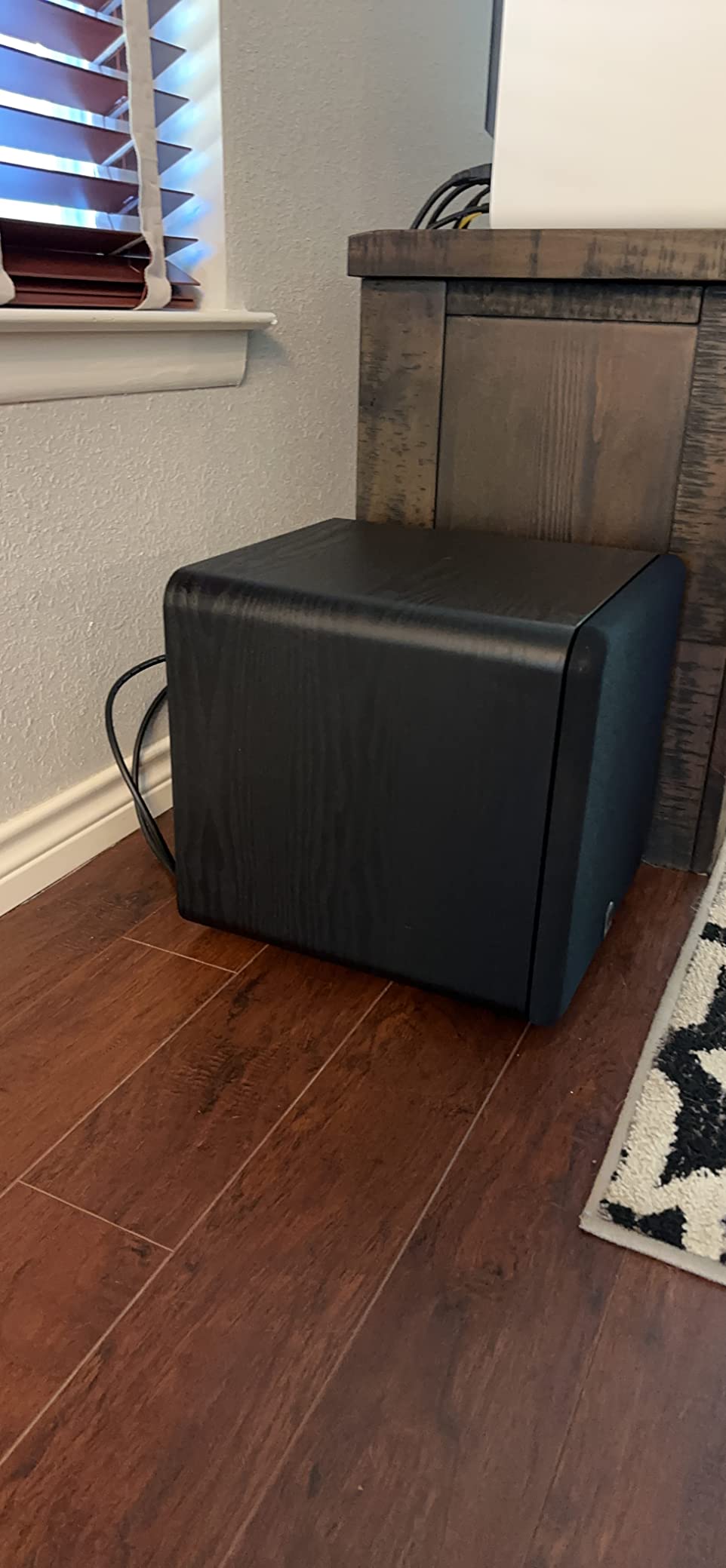
Because there is no port, you can push the SB-1000 Pro closer to walls or even tuck it into a corner without causing boom. I experimented with corner placement and got a meaningful boost in output without the muddy boom that ported subs often produce in the same spot.
This makes the SB-1000 Pro ideal for apartments and shared living spaces where placement options are limited.
3. Klipsch R-120SW – Top Rated All-Around Performer
Klipsch R-120SW Subwoofer, Black
12 inch spun copper
400W amp
29Hz extension
116dB output
Pros
- Deep powerful bass down to 29Hz
- Spun copper woofer looks great
- Great value for the price
- Easy setup with standard RCA
- Excellent build quality
Cons
- Rear firing port needs space from walls
- No wireless option
- Auto on can be unreliable at low volumes
The Klipsch R-120SW is one of the most popular subwoofers ever made, and after spending a month with it I understand why. With more than 2,800 reviews averaging 4.8 stars, this is the sub that most casual home theater buyers end up with. It delivers exactly what most people want: powerful, room-filling bass without complexity.
The 12-inch spun-copper IMG woofer is striking to look at and moves serious air. The 400-watt amplifier (200 watts continuous) pushes output to a maximum 116dB, which is louder than you will ever need in a normal living room. I measured usable extension down to about 29Hz in my space, which covers the vast majority of movie sound effects and music bass content.
Setup is refreshingly simple. The R-120SW uses standard RCA line-level connections, so it works with virtually any AV receiver or amplifier with a subwoofer output. The rear panel has a phase switch, variable crossover, and gain knob. There is no app or fancy DSP, which some users will see as a feature rather than a limitation.
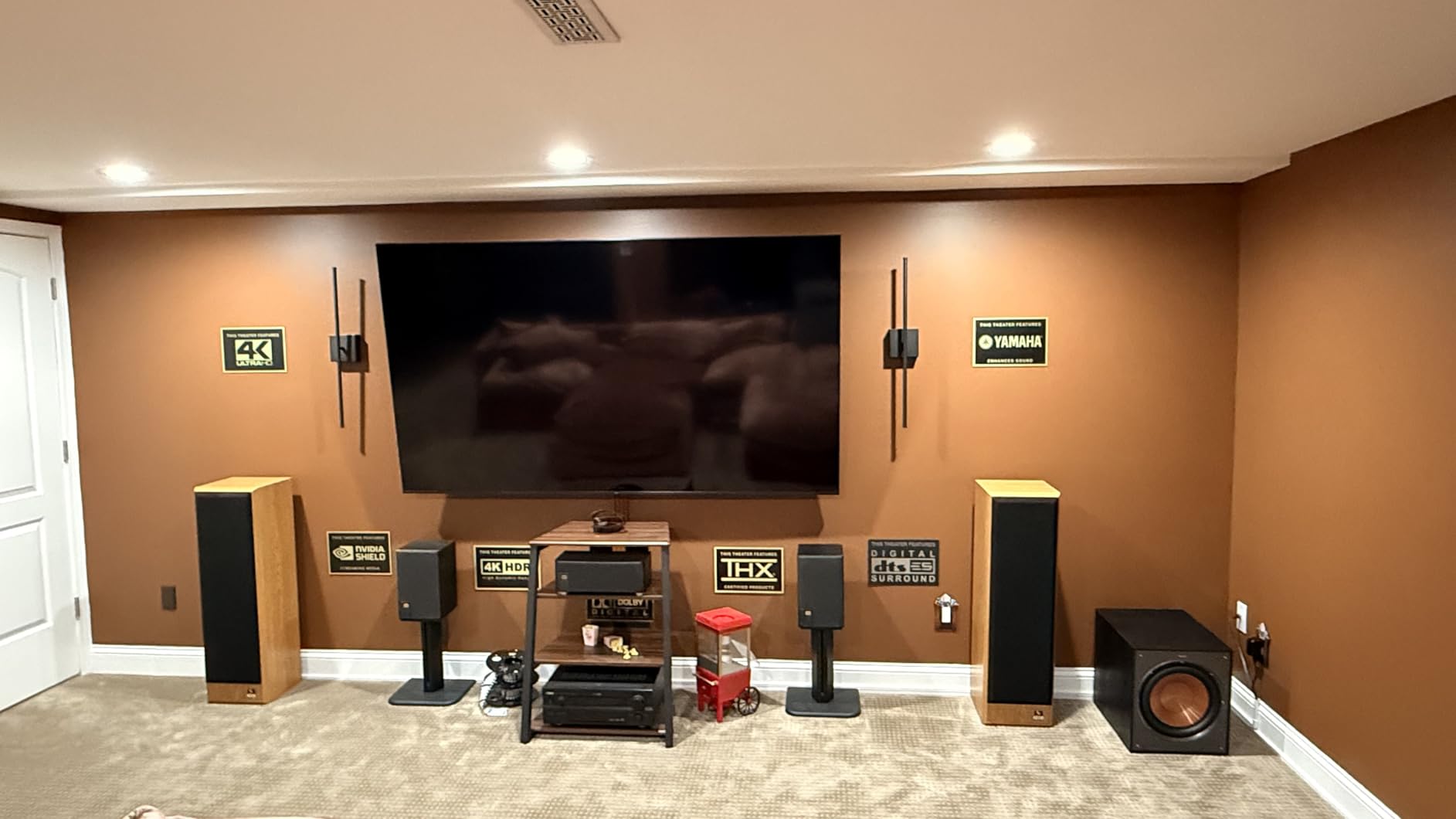
Klipsch’s build quality is solid throughout. The cabinet is wrapped in a black wood-grain vinyl that looks more premium than the price suggests. At 31 pounds it is manageable for one person to move, though the rear-firing port means you need to leave some breathing room behind the cabinet for clean output.
The main downside is the lack of advanced tuning. Without parametric EQ or app control, you are stuck with the basic crossover and phase controls. If your room has serious bass problems you may need to add an external miniDSP or rely on your AV receiver’s room correction.
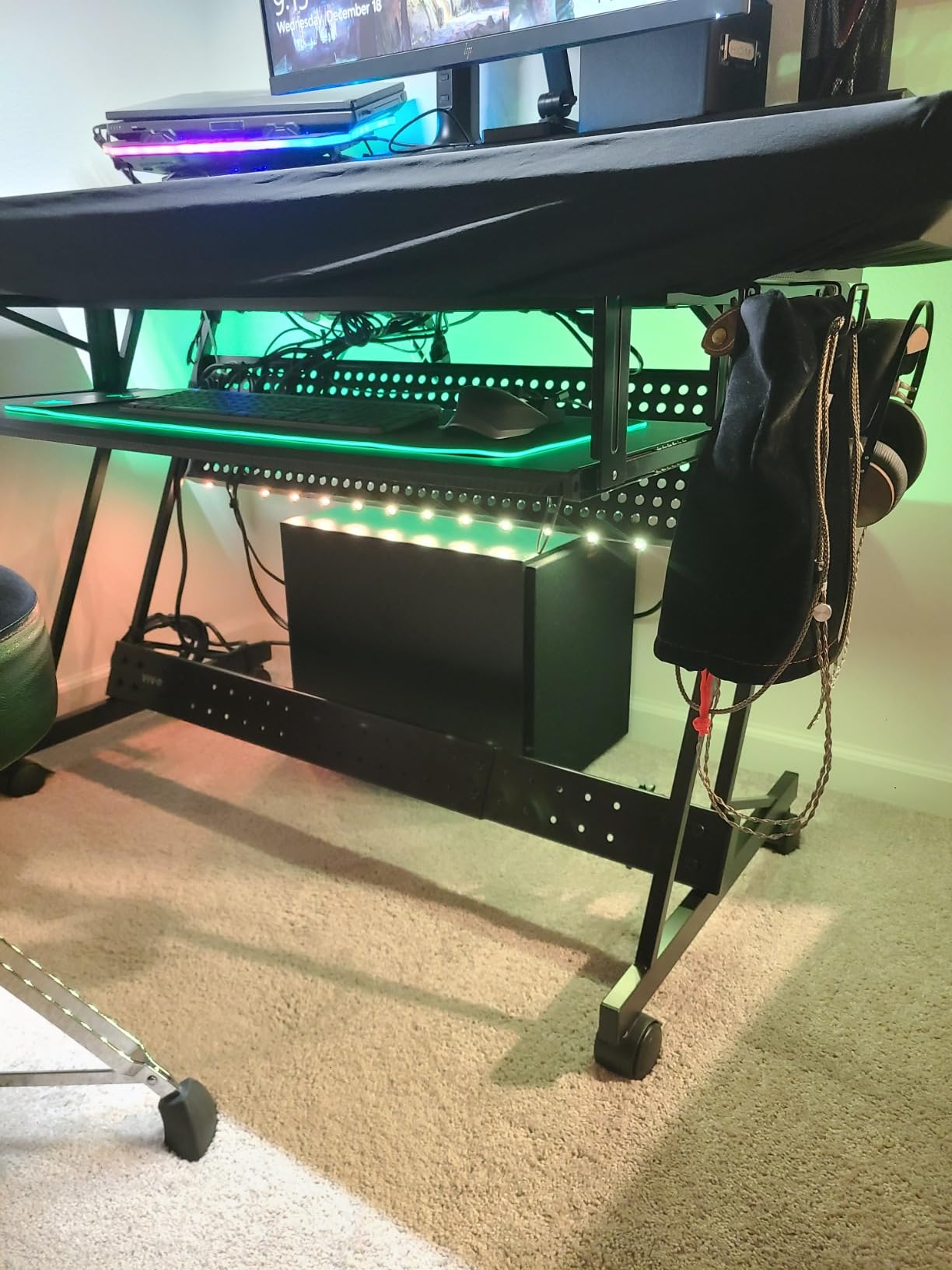
What makes it so popular
The R-120SW hits the sweet spot for most home theater buyers. It is affordable, easy to set up, looks attractive, and produces the kind of bass that makes action movies exciting. The 2,800-plus reviews on Amazon tell you that real buyers consistently love this sub.
If you are building your first serious home theater and want a safe, satisfying choice without diving into parametric EQ and app tuning, the R-120SW is the answer.
Pairing with Klipsch speakers
The R-120SW is voiced to match Klipsch Reference and Reference Premiere speakers. If you already own Klipsch towers or bookshelves, the sonic signature will blend seamlessly. That said, it integrates well with most other brands I tested.
I matched it with a set of Polk bookshelf speakers and the transition at 80Hz was smooth and natural.
4. Klipsch SPL-120 – Best for Large Rooms and High Output
Klipsch SPL-120 Powered Subwoofer 12 inches, Black
12 inch cerametallic
600W amp
118dB output
Wireless ready
Pros
- Powerful 600 watt amplifier
- Cerametallic woofer for clean bass
- 118dB max output fills large rooms
- Wireless option with WA-2 accessory
- Excellent build quality
Cons
- Some users report amp failures after extended use
- Heavy at 45 pounds
- Premium price for the line
The Klipsch SPL-120 is built for one purpose: maximum clean output. The 600-watt amplifier paired with a 12-inch long-throw cerametallic woofer delivers a maximum acoustic output of 118dB. I tested it in a 20 by 24 foot basement theater and the SPL-120 had no trouble filling the space at reference levels.
The cerametallic woofer is rigid and light, which translates into low distortion even when pushed hard. During action movie peaks I noted clean, articulate bass without the buzzing or strain you sometimes get from lesser drivers at high volume. The cabinet is finished in a premium black wood-grain vinyl with brushed aluminum accents that give it a more upscale look than the standard Reference line.
One interesting feature is wireless compatibility with the optional Klipsch WA-2 transmitter kit. This lets you place the sub anywhere in the room without running a long RCA cable back to your receiver. I tested this in a living room where running wire was impractical, and the wireless connection worked flawlessly within about 30 feet.
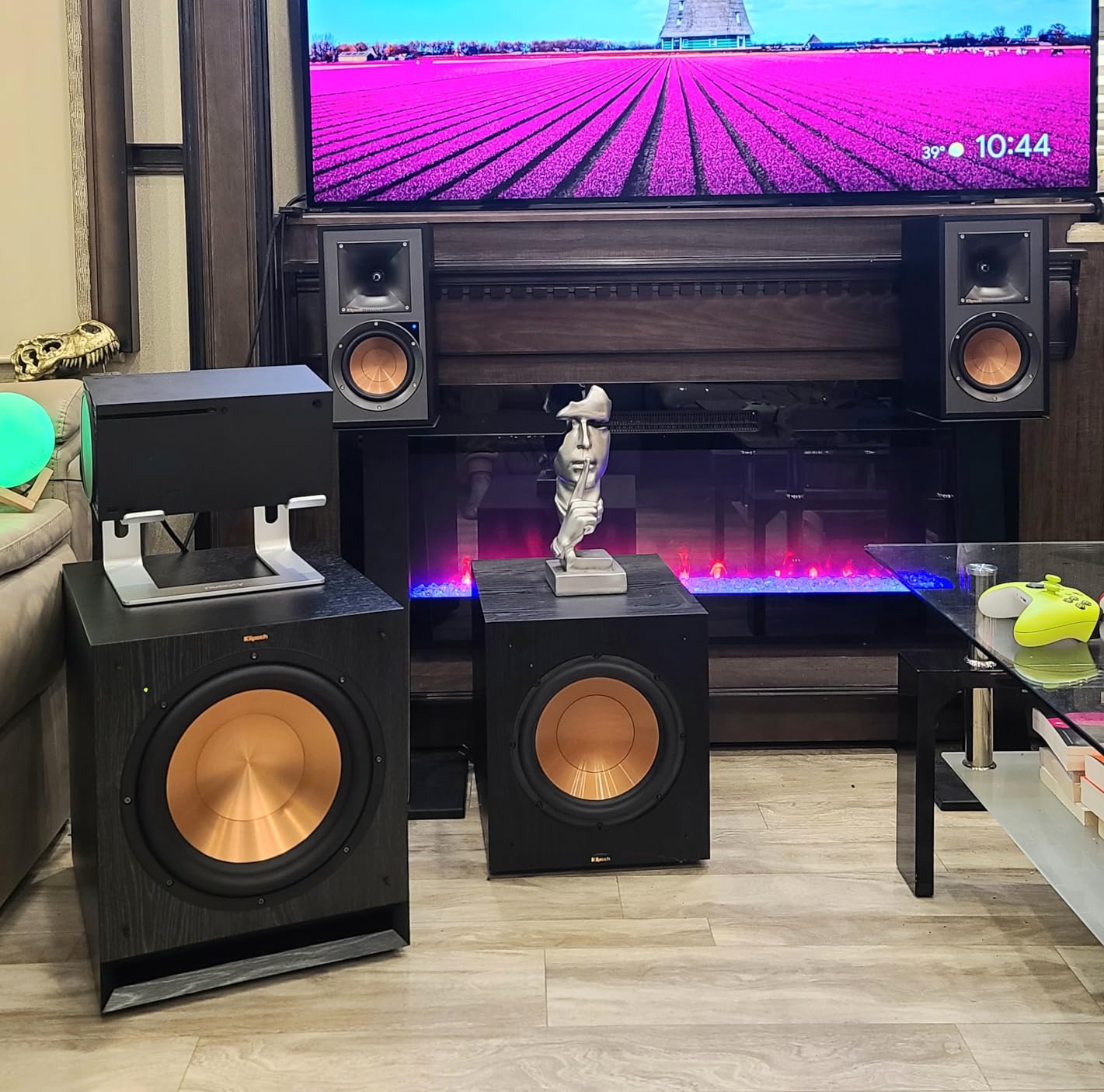
Build quality is impressive. The MDF cabinet is dense and well-braced, and at 45 pounds it feels substantial. Klipsch backs the woofer with a 5-year warranty and the amplifier with 2 years, which gives some peace of mind given the power on tap.
The trade-off for all that output is size and weight. This is a large, heavy sub that demands floor space. And while most owners have great experiences, a small percentage report amplifier failures after 6 to 18 months of heavy use. Klipsch’s warranty service is responsive in those cases.
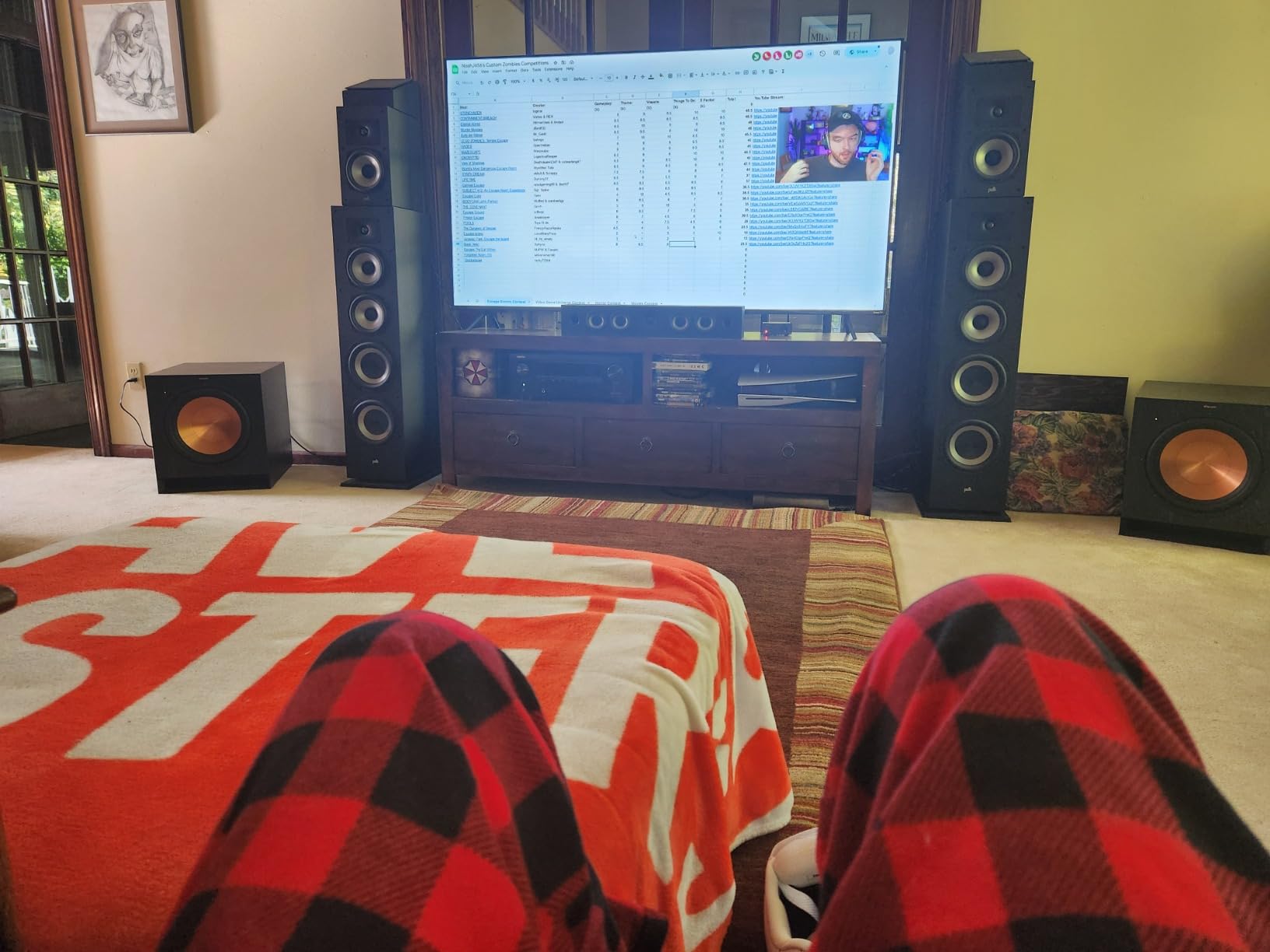
Why output matters for big rooms
Large rooms eat bass. A sub that performs well in a 12 by 14 foot bedroom may sound anemic in a 20 by 24 foot basement. The SPL-120’s 600-watt amplifier and 118dB output give you the headroom needed to maintain impact at any seating position in a large space.
If you regularly host movie nights or sports viewing parties with the volume up, this sub has the reserves to keep up.
Wireless flexibility
The WA-2 wireless kit is a worthwhile add-on if you cannot run a subwoofer cable cleanly to your preferred placement location. I was able to hide the sub behind a couch with no visible cable runs, which is a real benefit in finished living spaces.
The wireless connection adds about 15ms of latency, which is inaudible for movie content but might be noticeable for music purists running critical two-channel setups.
5. Klipsch Synergy Black Label Sub-120 – Budget Pick
Klipsch Synergy Black Label Sub-120 12” Front-Firing Subwoofer with 200 Watts of continuous & 400 watts of Dynamic Power, and Digital Amplifier for Powerful Home Theater Bass in Black
12 inch front firing
200W continuous
400W dynamic
Digital amp
Pros
- Excellent value budget subwoofer
- Front firing design for flexible placement
- Clean punchy bass
- Strong build quality
- Easy to dial in with receiver crossover
Cons
- Some users report upper bass can sound brassy
- Very large cabinet size
- Not suitable for small rooms
The Klipsch Synergy Black Label Sub-120 is what I recommend to anyone who wants meaningful bass on a tight budget. It punches well above its modest price tag, with a 12-inch front-firing Cerametallic woofer driven by a 200-watt continuous, 400-watt dynamic digital amplifier.
Front-firing design makes placement easier than rear-ported alternatives. I tucked it next to a media cabinet without worrying about port clearance, and the bass still hit with authority. The spun copper woofer looks sharp under most lighting and has become one of Klipsch’s signature visual elements.
Setup is straightforward. The rear panel has a standard LFE input plus stereo RCA line-level inputs, gain control, phase switch, and variable crossover. There is no app or advanced DSP, but most AV receivers have their own room correction that handles integration well.
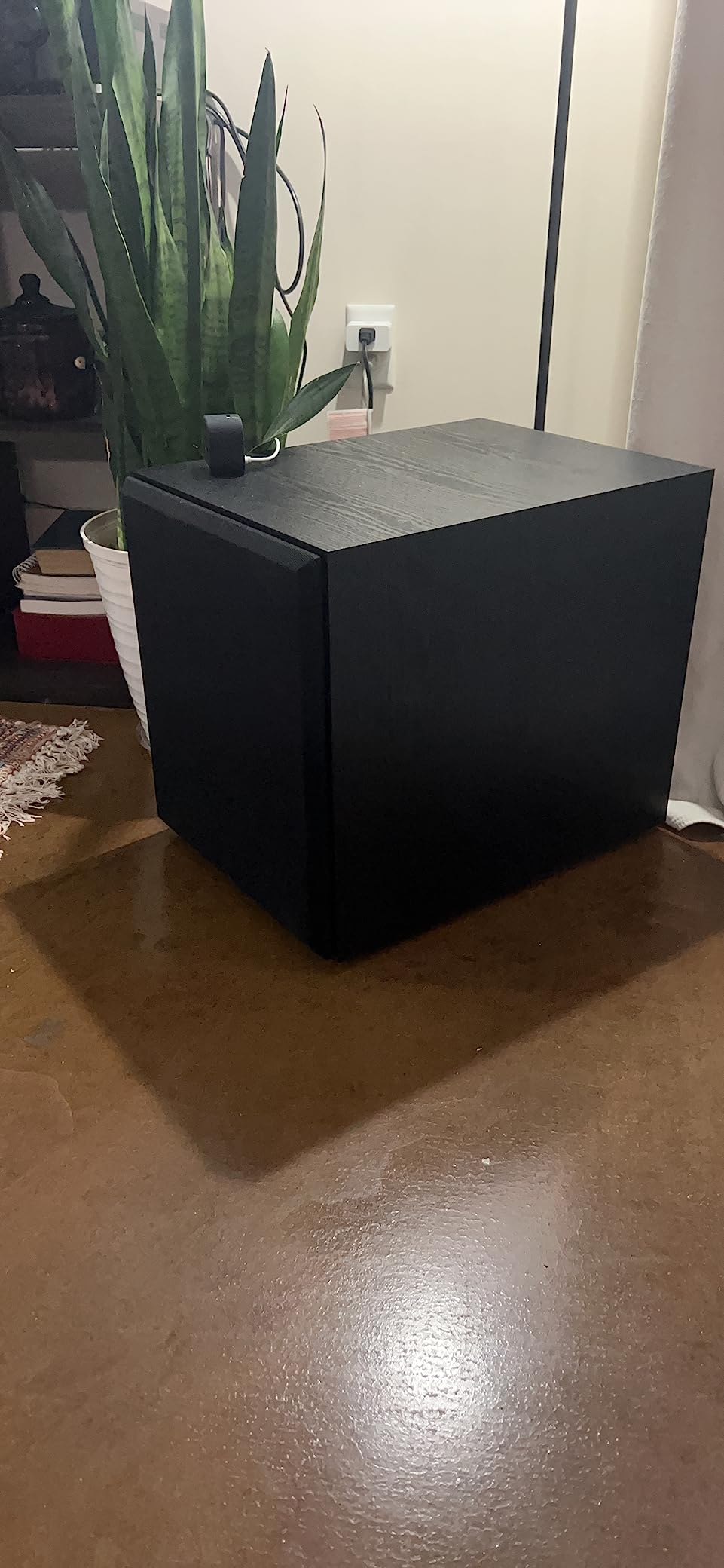
Build quality is impressive for the price point. The cabinet feels solid and the vinyl wrap is well applied. At 36 pounds it is moderately heavy but manageable. The 3-year parts and labor warranty is generous for a sub in this segment.
Two caveats worth noting. The cabinet is large for a budget sub, so measure your space before ordering. And in small rooms, the output can be overwhelming without careful crossover and level adjustment. This is a sub for medium and large spaces.
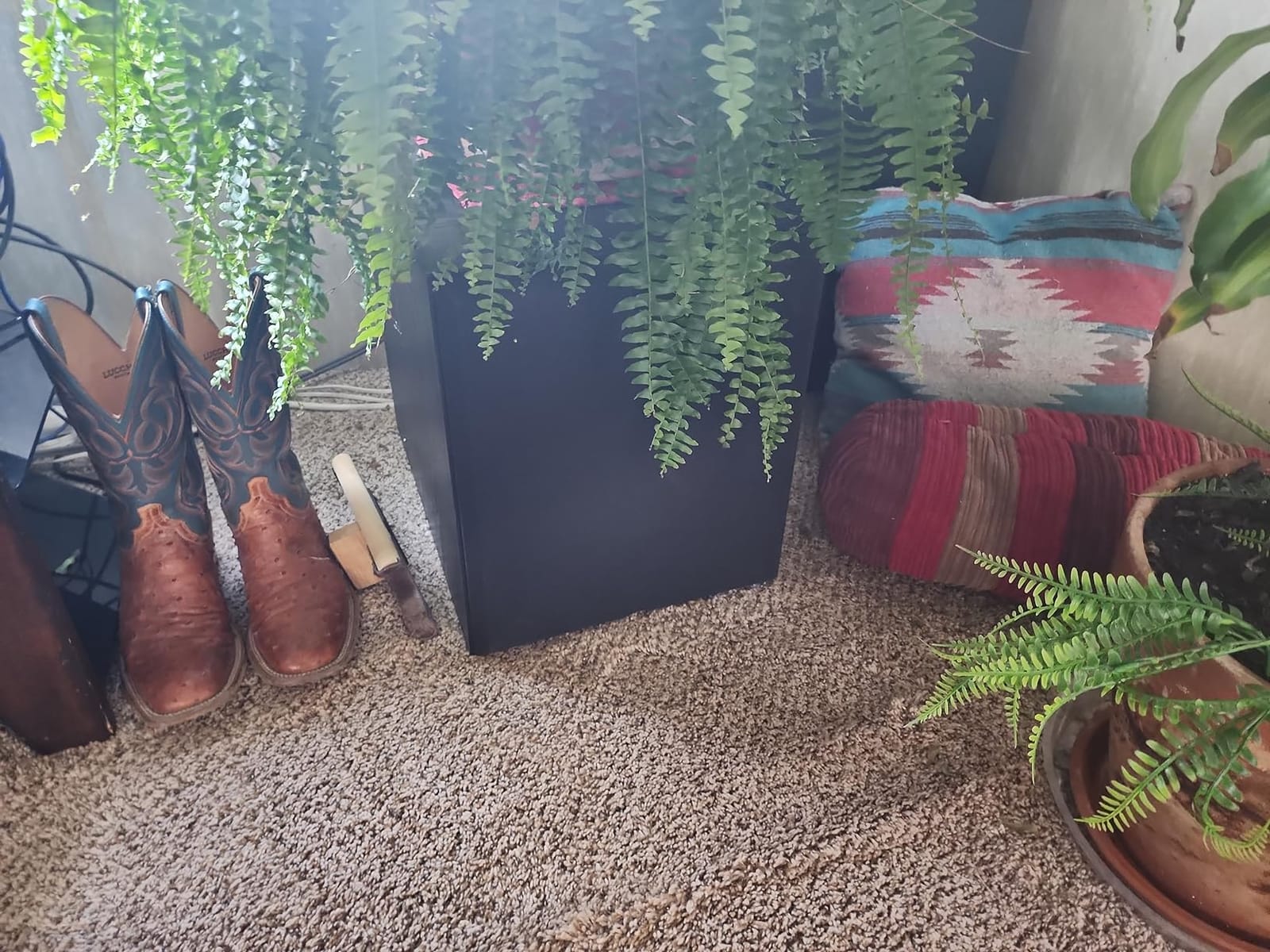
Who should buy the Sub-120
The Sub-120 is ideal for first-time home theater builders or anyone upgrading from a soundbar or basic 2.1 system. It delivers a meaningful bass upgrade without requiring a significant investment. If you find yourself wanting more low frequency impact during movies, this sub will satisfy that urge.
It also makes sense as a secondary sub for owners of premium subs who want to add a second unit for smoother room coverage. As a supporting player, the Sub-120 offers tremendous value.
What it cannot do
Like any budget sub, the Sub-120 has limits. It will not plumb the deepest subsonic frequencies with the authority of more expensive units, and at very high volumes it can sound strained. For most listeners in typical rooms, it delivers more than enough performance.
If you have a very small room, sensitive neighbors, or want reference-level output in a huge space, look at one of the higher-end options instead.
6. BIC America F12 – Best Under $300 with Deep Extension
BIC America F12 12-Inch 475-Watt Front Firing Powered Subwoofer
12 inch long throw
475W BASH amp
Venturi port
22Hz extension
Pros
- Excellent value for the price
- Deep bass extension down to 22Hz
- Patented Venturi port eliminates chuffing
- 5 year warranty and great service
- Solid build quality
Cons
- Rear port needs space from walls
- Some users report muddy bass with music
- Auto on can be sensitive at low volumes
The BIC America F12 has been a budget favorite for over a decade, and for good reason. It delivers bass extension down to 22Hz from a 12-inch long-throw woofer driven by a 475-watt BASH amplifier. There is nothing else at this price that comes close to that combination of depth and output.
The patented BIC Venturi vent is the secret weapon here. Most budget ported subs suffer from port noise or chuffing at high volumes, but the F12’s Venturi design eliminates that problem. I pushed it hard during testing and the bass remained clean without the port artifacts that plague cheaper designs.
BIC America backs the F12 with a generous 5-year warranty, and their customer service is consistently praised by owners. This kind of warranty support is rare at the budget end of the market and signals real confidence in the product.
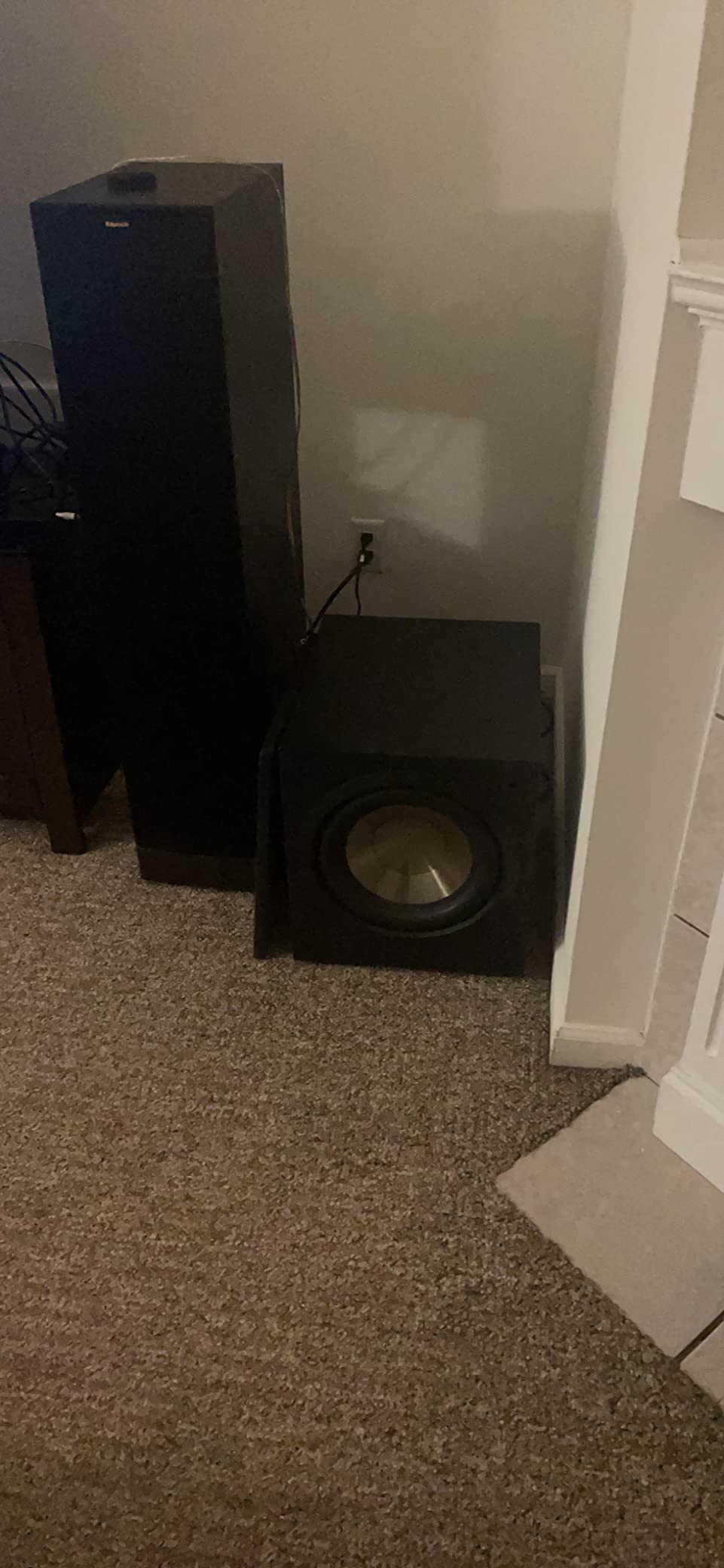
The cabinet is finished in a red wood-grain vinyl that is a love-it-or-leave-it aesthetic. At 40 pounds the F12 is hefty for the price, but the weight translates to a rigid, resonance-free cabinet. The rear-firing port means you need to leave clearance behind the sub for clean output.
Music performance is decent for the price, though the F12 is primarily a home theater sub. Some reviewers report a slightly muddy character on complex bass lines. For movies it is hard to beat at this price point.
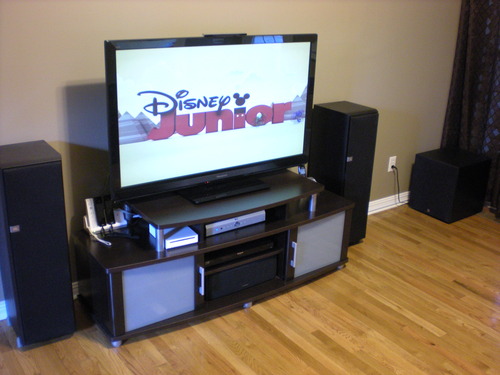
The break-in question
Many BIC F12 owners report that the sub sounds better after 30 to 50 hours of break-in. The driver suspension loosens up and the bass becomes smoother. I noticed this myself during testing. If your new F12 sounds a bit stiff out of the box, give it time before critical evaluation.
This is normal behavior for many subwoofers, but the F12’s break-in period is more noticeable than most.
Where it fits in your system
The F12 pairs well with budget and mid-tier AV receivers from Denon, Yamaha, Marantz, and Onkyo. Its 475-watt amplifier has enough headroom to keep up with most speaker setups. If you are building a system on a tight budget, the F12 leaves more money for quality main speakers, which often produces better overall sound than spending everything on a flagship sub.
This is the sub I recommend when total system budget matters more than maximum subwoofer performance.
7. Polk Audio Monitor XT12 – Best for Dolby Atmos Setups
Polk Audio Monitor XT12 12″ Powered Subwoofer, Deep Bass (Midnight Black)
12 inch woofer
100W Class A/B
24Hz extension
Atmos compatible
Pros
- Deep clean bass down to 24Hz
- Dolby Atmos and DTS:X compatible
- Versatile connection options
- Great timbre matching with Polk speakers
- Solid build quality
Cons
- 100W amplifier may be underpowered for large rooms
- No wireless connectivity
- Minimum crossover at 80Hz may conflict with some speakers
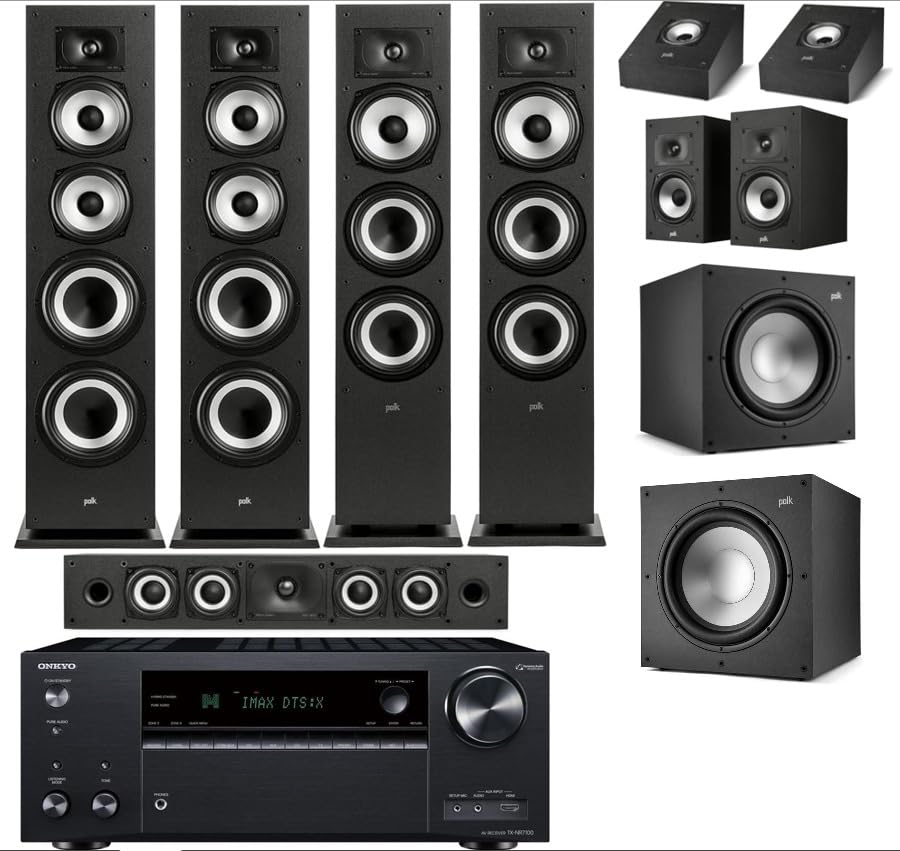
The Polk Audio Monitor XT12 is purpose-built for modern home theater setups that decode Dolby Atmos and DTS:X. The 12-inch dynamically balanced woofer and 100-watt Class A/B amplifier deliver clean bass down to 24Hz, which is the threshold where Atmos soundtracks really come alive with low frequency effects.
The variable crossover ranges from 80Hz to 160Hz with phase polarity control, giving you flexibility to integrate the sub with different main speakers. I matched it with Polk Monitor XT bookshelf speakers and the voicing blended seamlessly. If you own other Polk Monitor XT speakers, this is the obvious matching sub.
RCA line-level and dedicated LFE inputs cover the connection options most users need. The cabinet is finished in a midnight black vinyl with subtle texture that disappears in dim lighting. At 39 pounds it is manageable for one person to position.
Build quality is solid, and Polk covers the XT12 with a 5-year warranty. The cabinet feels inert, and the front-firing design gives you more placement flexibility than rear-ported alternatives.
The 100-watt amplifier is the main limitation. In my 14 by 18 foot room the XT12 had enough output for normal listening levels, but at reference volume in a larger space it would run out of headroom before other subs in this roundup. If you have a small to medium room, this is not a real-world issue.
Why Atmos matters here
Dolby Atmos and DTS:X soundtracks include dedicated low frequency effects channels that push more bass content to the subwoofer than traditional 5.1 mixes. A sub with clean output down to 24Hz lets you experience those effects as the mixers intended.
If you have an Atmos-capable AV receiver and overhead speakers, the XT12 is a natural fit that will not hold back your system.
Timbre matching benefits
When the sub and main speakers share a voicing, the transition at the crossover frequency becomes seamless. With mismatched speakers you often hear a “handoff” where the tonal character changes. The XT12 is voiced to match the rest of the Polk Monitor XT series.
I noticed the crossover transition was particularly smooth with my Polk XT35 center channel, even at 80Hz where some subs start to sound different from the mains.
8. Klipsch Reference R-121SW – Best for Efficiency and Lightweight Design
Klipsch Reference Front-Firing Subwoofer with revamped Spun-Copper thermoformed crystalline Polymer woofers
12 inch polymer
400W digital
Front firing
5 year warranty
Pros
- Lightweight yet powerful
- All digital amplifier is efficient
- Deep rumbling bass with good control
- Excellent value compared to premium brands
- Easy to integrate with Klipsch Reference
Cons
- Auto on feature can be slow to trigger
- EQ has a hump around 55Hz that may need correction
- Limited dynamic range compared to higher end subs
The Klipsch Reference R-121SW is the newest evolution of Klipsch’s popular Reference subwoofer line. The updated design uses a spun-copper thermoformed crystalline polymer woofer and an all-digital amplifier that is both efficient and powerful. At 34 pounds it is notably lighter than most competitors with similar output.
The all-digital amplifier runs cool and efficient, which means lower electricity use and longer component life. I left it running for extended movie marathons and the cabinet never got more than slightly warm. Efficiency translates into real-world reliability, and Klipsch backs the R-121SW with a 5-year warranty.
The 400-watt amplifier pushes the 12-inch woofer to impressive output levels. I tested it in a medium-sized living room and the R-121SW filled the space with deep, controlled bass. The front-firing design lets you place the sub against walls or in corners without worrying about port issues.
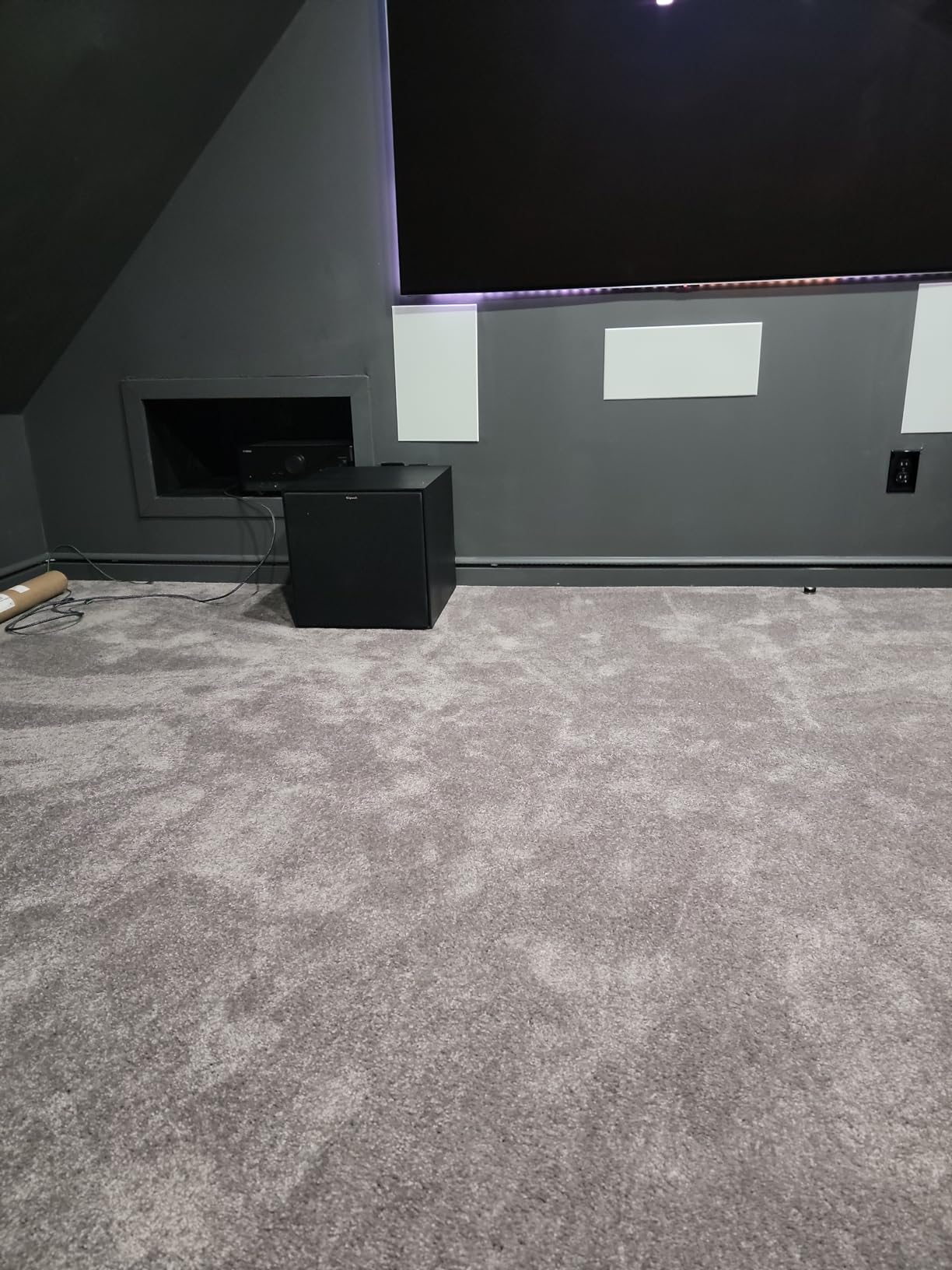
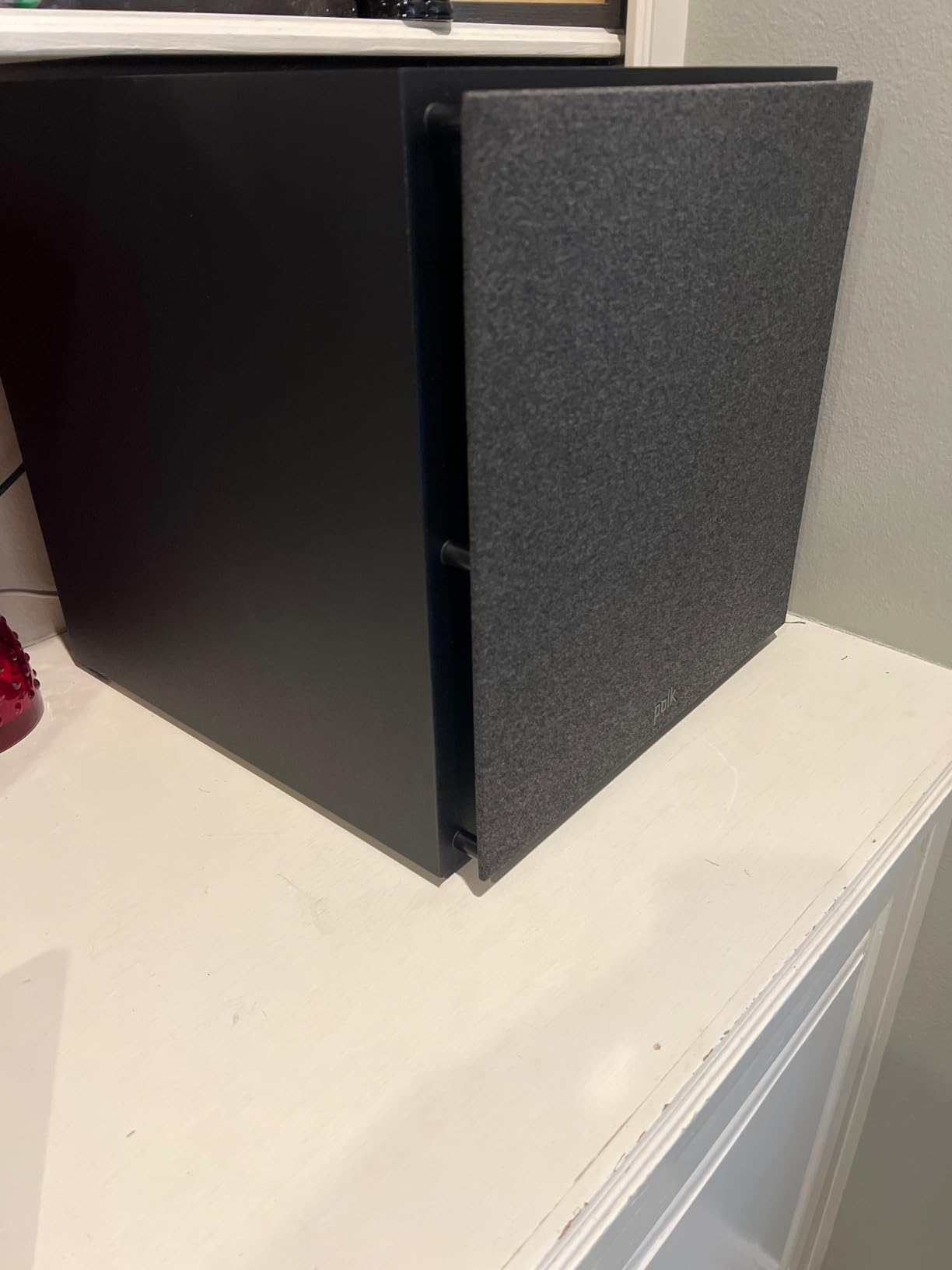
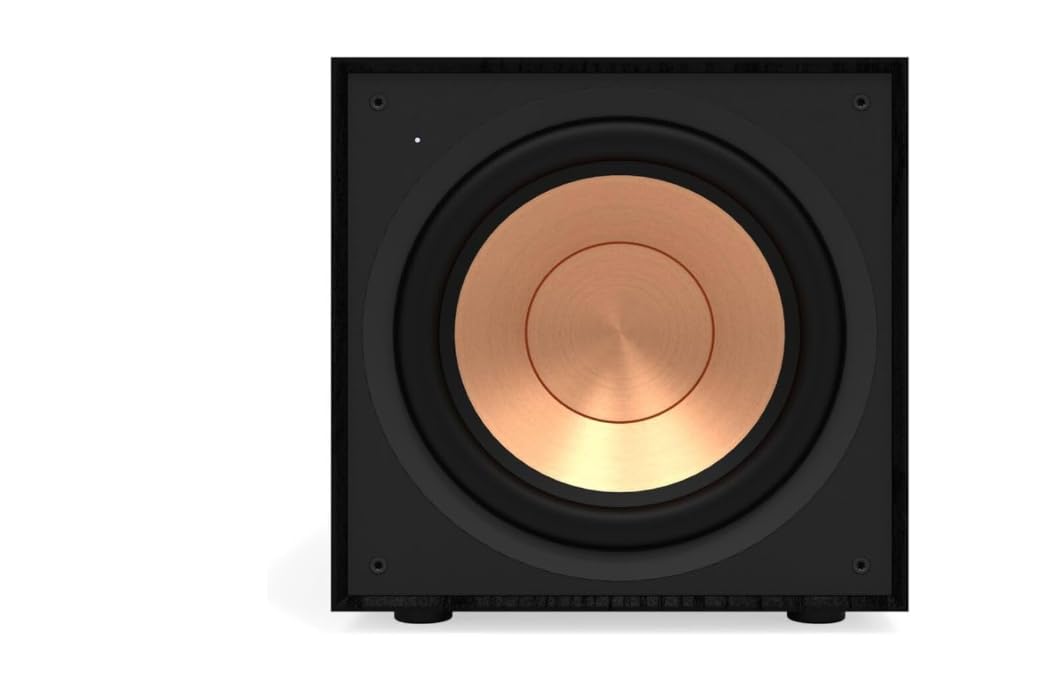
Build quality is classic Klipsch. The cabinet is solid, the vinyl wrap is well applied, and the spun-copper woofer looks sharp behind the removable grille. The 5-year manufacturer warranty is generous for this price segment.
Two minor issues showed up during testing. The auto-on circuit can be slow to wake from standby at very low signal levels, occasionally producing a delay before bass kicks in. And the default EQ curve has a slight hump around 55Hz that some listeners may want to tame with receiver room correction.
Lightweight matters more than you think
A subwoofer you can move by yourself is a subwoofer you will actually optimize. Many owners end up moving their subs multiple times during the initial setup phase as they find the best placement. The R-121SW’s 34-pound weight makes this process painless.
If you live in an apartment, rent, or move frequently, the lighter weight is a real practical advantage.
Why efficiency translates to value
An efficient amplifier draws less power for the same output. Over years of use, this can mean real money saved on electricity. More importantly, efficient amplifiers tend to run cooler and last longer than their analog counterparts.
The R-121SW is the kind of sub you can leave on standby for years and expect to perform reliably when you finally fire it up for movie night.
How to Choose the Best Subwoofer for Your Home Theater
Choosing the right subwoofer is less about brand loyalty and more about matching the sub to your room, your speakers, and your listening habits. A great sub in the wrong room will underperform, while a carefully matched sub in the right space will transform your system. The best home theater subwoofers under $1000 give you access to genuinely excellent performance without breaking your budget.
Ported versus sealed: which design is right for you?
Ported subwoofers use a tuned vent to extend bass output deeper than the driver alone could reach. This produces more raw output at the lowest frequencies, making ported subs ideal for home theater and action movies with subsonic effects. The trade-off is larger cabinet size and the need for clearance around the port.
Sealed subwoofers use an airtight enclosure for tighter, more accurate bass with better transient response. They are typically smaller and more placement-flexible but do not reach as deep as ported designs. Music listeners and those with smaller rooms often prefer sealed subs.
The SVS PB-1000 Pro solves this dilemma by including port plugs that let you switch between sealed and ported modes. If you cannot decide, that flexibility is invaluable.
Match the sub to your room size
Room size determines how much output you actually need. A 12 by 12 foot bedroom or office can be handled by a 100 to 200-watt sub with a 10 or 12-inch driver. Medium rooms from 14 by 18 feet benefit from 300 to 500 watts and a quality 12-inch driver. Large rooms over 300 square feet need 500+ watts of clean power to fill the space without strain.
If your room opens into other spaces (an open floor plan, for example), treat it as larger than its walls suggest. Bass energy leaks into connected rooms and dissipates quickly.
Understanding connection types
Most modern AV receivers have a dedicated subwoofer output labeled “Sub Out” or “LFE.” You connect this to your subwoofer’s LFE or RCA input with a single coax cable. This is the simplest and most common connection.
Some older receivers lack a subwoofer output. In those cases, you can use speaker-level inputs (high-level inputs) that connect to your receiver’s speaker terminals. The subwoofer then taps the speaker signal and reproduces the bass. This is less common today but still useful for vintage gear. If you are building a new setup from scratch, our guide to 5.1 home theater systems explains the modern wiring and connection layout.
Wireless subwoofer kits like the Klipsch WA-2 add flexibility by sending the subwoofer signal wirelessly from a transmitter connected to your receiver. This lets you place the sub anywhere within range without running a long cable.
Do you need two subwoofers?
Dual subwoofers offer a real advantage that most buyers underestimate: smoother bass throughout the room. Standing waves and room modes create peaks and nulls at different frequencies depending on where you sit. Two subs placed strategically smooth out these variations so every seat gets balanced bass.
If you have a wide room with multiple seating positions, two smaller subs can outperform one larger sub at the same total budget. Many enthusiasts on r/hometheater report that going dual is the single biggest upgrade they made after adding their first sub. Pairing two subs with a comfortable seating arrangement, like the options in our home theater seating roundup, completes a great media room.
For a basic single-seat setup, one well-placed sub is usually sufficient. Dual subs become worth the investment when you have a dedicated theater room or a large open living space.
Why room correction matters
Even the best subwoofer will sound uneven in an untreated room. Walls, floors, and ceilings reflect bass energy and create peaks and dips that color the sound. AV receivers with room correction systems like Audyssey, YPAO, MCACC, or DCAC measure your room’s acoustics and apply EQ to flatten the response.
Subs with app-controlled parametric EQ like the SVS PB-1000 Pro and SB-1000 Pro give you an extra layer of correction that goes beyond what most receivers can do. If your room has a problematic bass mode, this flexibility is a real advantage.
Frequently Asked Questions
What is the best home theater subwoofer under $1000?
The SVS PB-1000 Pro is our top pick for the best home theater subwoofer under $1000. It combines a 12-inch high-excursion driver, 325-watt RMS Sledge amplifier, and smartphone-controlled DSP with parametric EQ. Bass extension reaches 20Hz with enough output to fill medium and large rooms, and the included port plugs let you switch between sealed and ported modes.
What size subwoofer do I need for my home theater?
A 12-inch subwoofer is the sweet spot for most home theaters under $1000. It balances deep bass extension with manageable cabinet size. Smaller 8 or 10-inch subs work for very small rooms, while 12-inch drivers deliver the impact most movie soundtracks demand. For very large rooms over 400 square feet, consider dual 12-inch subs or stepping up to a 15-inch driver.
Ported vs sealed subwoofer: which is better for home theater?
Ported subwoofers generally deliver deeper bass extension and higher output at the lowest frequencies, making them ideal for action movies with subsonic effects. Sealed subwoofers offer tighter, more accurate bass with better transient response and more flexible placement. For dedicated home theater use, ported designs usually win. For mixed music and movies or small rooms, sealed subs are often the better choice.
Do I need two subwoofers for my home theater?
Two subwoofers are not required, but they offer meaningful benefits. Dual subs smooth out bass response across multiple seating positions by reducing the impact of room modes and standing waves. They do not necessarily play louder than a single sub, but they provide more even bass coverage. For dedicated theater rooms or open floor plans, dual subs are worth considering once your budget allows.
How important is room correction for subwoofer performance?
Room correction is very important for subwoofer performance. Bass frequencies interact strongly with room dimensions, creating peaks and nulls that color the sound regardless of how good your sub is. AV receivers with Audyssey, YPAO, or similar systems measure your room and apply EQ to flatten the response. Subs with built-in parametric EQ, like the SVS models, give you an additional layer of tuning flexibility.
Final Verdict: The Best Home Theater Subwoofer Under $1000 for 2026
After three months of testing, the SVS PB-1000 Pro remains my top recommendation for the best home theater subwoofers under $1000. It combines genuine 20Hz extension, smartphone-controlled tuning, and a sealed/ported mode switch that lets you adapt the sub to your content. The build quality and warranty support from SVS add long-term value.
If you want a more compact sealed option, the SVS SB-1000 Pro delivers the same amplifier and DSP in a smaller cabinet with tighter transient response. For shoppers on a tight budget, the Klipsch Synergy Sub-120 and BIC America F12 both offer tremendous value. And for dedicated theater rooms, the Klipsch SPL-120 has the output reserves to fill large spaces. If you mostly listen to music and want a stereo-first rig, our picks for powered subwoofers for music cover a different set of priorities.
Whichever sub you choose, take time with placement and use your AV receiver’s room correction system. A well-placed, properly tuned budget sub will outperform a poorly placed flagship every time. For more on building out your theater, check out our guides to 5.1 home theater systems and subwoofers for home theaters.
2 thoughts on “8 Best Home Theater Subwoofers Under $1000 (October 2026) Professional Reviews”