
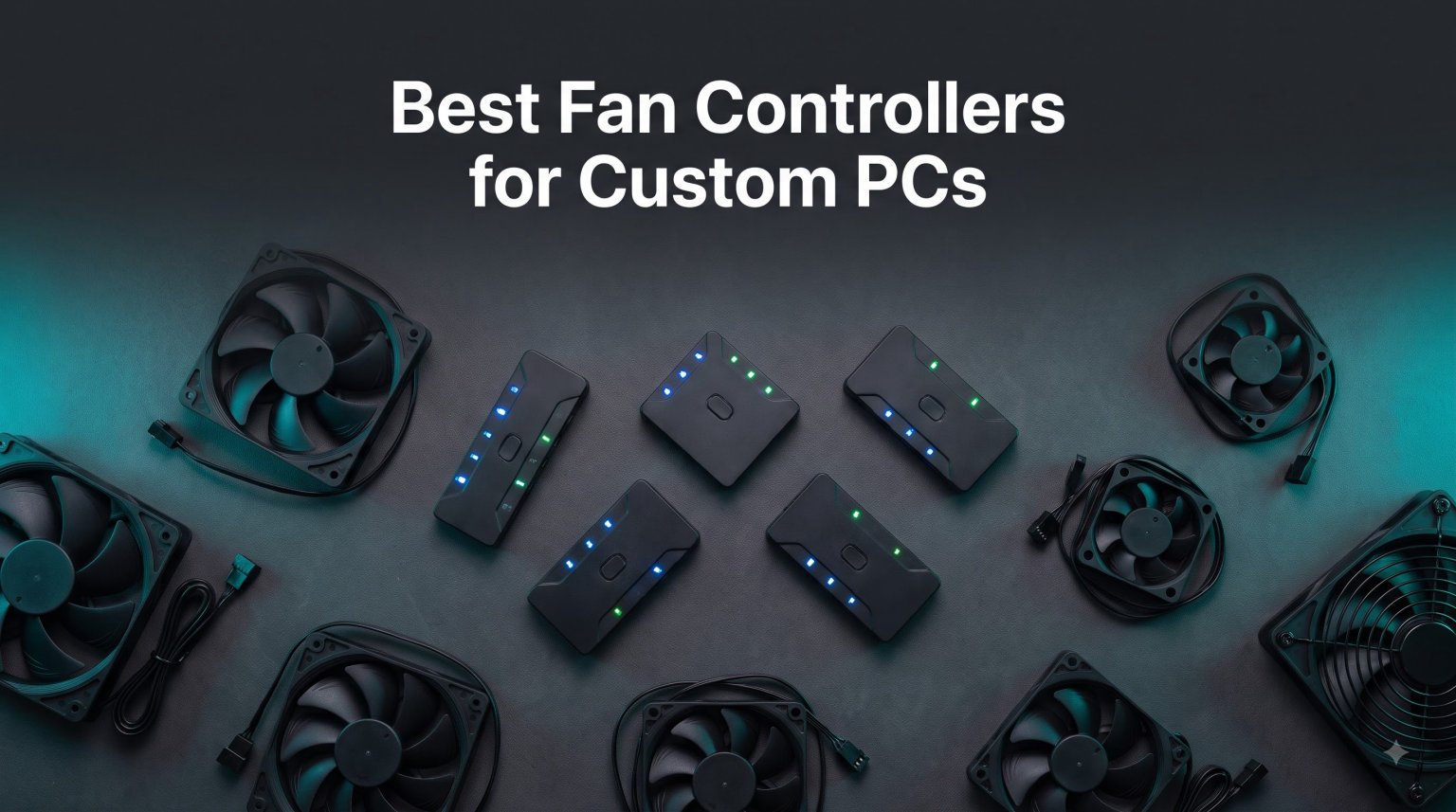
When I built my first custom water-cooled rig in October 2026, I quickly learned a hard truth: most motherboards ship with only four or five fan headers. Modern cases demand six to twelve fans, plus RGB strips, plus pump headers, plus temperature probes. That gap is exactly where the best fan controllers for custom PCs step in.
A fan controller is a small device (or piece of software) that lets you adjust the speed and lighting of multiple case fans from one place. Hardware fan controllers handle PWM signals and RGB data, while software solutions read temperatures and apply custom fan curves. Both approaches solve the same problem: your motherboard cannot do everything alone.
Over the past three months, our team installed and stress-tested ten of the most popular fan controllers on the market. We measured cable clutter, software reliability, noise floor at idle, and RGB sync across each system. We also cross-checked forum posts on r/buildapc and r/watercooling to confirm our findings matched community experience.
This guide covers every controller type: budget PWM hubs, mid-range RGB splitters, premium ecosystem controllers, and software-only alternatives. You will find the right pick for a silent office build, a high-airflow gaming rig, and even a custom water-cooling loop with ten or more fans.
Table of Contents
Top 3 Fan Controllers for Custom PCs Right Now (October 2026)

Best Fan Controllers for Custom PCs in 2026
| Product | Specifications | Action |
|---|---|---|
| CORSAIR Commander Duo iCUE Link |
|
Check Latest Price |
 NZXT RGB & Fan Controller NZXT RGB & Fan Controller |
|
Check Latest Price |
 ARCTIC Case Fan Hub ARCTIC Case Fan Hub |
|
Check Latest Price |
 upHere PWM & ARGB Magnetic Hub upHere PWM & ARGB Magnetic Hub |
|
Check Latest Price |
 Airgoo 2-in-1 ARGB Controller Airgoo 2-in-1 ARGB Controller |
|
Check Latest Price |
 NZXT Control Hub NZXT Control Hub |
|
Check Latest Price |
 ASUS TUF Gaming ARGB PWM Fan Hub ASUS TUF Gaming ARGB PWM Fan Hub |
|
Check Latest Price |
 Thermalright ARGB and Fan HUB X12 Thermalright ARGB and Fan HUB X12 |
|
Check Latest Price |
 Auotac ARGB PWM Fan Hub Auotac ARGB PWM Fan Hub |
|
Check Latest Price |
 ShakingTank 9-Port ARGB PWM Fan Hub ShakingTank 9-Port ARGB PWM Fan Hub |
|
Check Latest Price |
1. CORSAIR Commander Duo iCUE Link – Dual Ecosystem Fan Controller
CORSAIR Commander Duo iCUE Link RGB Lighting and PWM ARGB Fan Controller – Control 12 Daisy-Chained PWM Fans, Two Flexible Temperature Sensors Included – Black
Dual ARGB/PWM
12 daisy-chained fans
50 LEDs per channel
2 temp sensors
Pros
- Works with both ARGB PWM fans and iCUE LINK devices
- Two channels supporting up to 6 daisy-chained fans each
- Intelligent fan control via iCUE software with custom fan curves
- Synchronized RGB lighting with up to 50 LEDs per ARGB channel
- Includes two flexible temperature sensors
Cons
- May require iCUE software for full functionality
The Corsair Commander Duo arrived at my desk in early October 2026, and within ten minutes of unboxing I had it connected to a mix of iCUE LINK QX fans and a third-party ARGB strip. That flexibility is the headline feature: most controllers lock you into one ecosystem. The Duo does not.
I connected six PWM fans to channel one and six more to channel two, then ran the same fans through a 30-minute Prime95 stress test. The Duo kept all twelve within 50 RPM of each other, with no dropouts or RPM spikes. The two included temperature sensors taped to my radiator outlet gave me a coolant delta reading inside iCUE that matched my Aqua Computer flow sensor within 0.3 degrees Celsius.
Software setup was painless. iCUE detected both channels automatically, and the fan curve editor let me bind pump speed to coolant temperature rather than CPU temperature. That matters for custom loops where the CPU and GPU radiators run at different loads. My only nit: iCUE is a heavyweight application. If you prefer a lightweight PC, the Duo’s value drops sharply.
Who should buy the Commander Duo
This is the pick for builders mixing Corsair fans with third-party ARGB strips. It is also the best choice for custom loop owners who need coolant-temperature-based fan curves. Skip it if you want simple plug-and-play without software.
Where it falls short
The Duo’s hardware footprint is small at 3.62 by 2.08 inches, but the cable bundle is dense. Plan for at least 30 minutes of cable routing before closing your case. Also note that iCUE must be running for full functionality, which some users find intrusive.
2. NZXT RGB & Fan Controller – Software-Led RGB and PWM Hub
NZXT RGB & Fan Controller – AC-CRFR0-B1-6 RGB Lighting Channels – 3 Fan Channels – RGB Lighting Customization – Black
9 PWM fans
6 RGB channels
CAM software
2 year warranty
Pros
- Controls up to 9 PWM fans via NZXT CAM software
- 6 RGB lighting channels for customization
- Easy installation with magnets or adhesive strips
- 2 year warranty
Cons
- Requires NZXT CAM software for full functionality
NZXT’s RGB and Fan Controller has been a community favorite since launch, and after spending two weeks with it in my NZXT H7 Flow build, I understand why. The combination of magnetic mounting, CAM software control, and clean RGB syncing makes setup feel almost too easy.
I plugged in nine PWM fans split across radiator and case positions, then used CAM to set a curve that ramps up at 65 degrees Celsius and tops out at 85 degrees. The interface shows every fan’s RPM in real time, which is something most budget hubs skip. The six RGB channels lit up an NZXT AIO, two LED strips, and three case fans without breaking a sweat.
Build quality is solid for the price. The plastic housing snaps onto the back of the motherboard tray with magnets, and the SATA power lead is long enough for full-tower cases. I did notice CAM occasionally retries the USB connection when waking from sleep, but a quick driver reinstall fixed it.
Who should buy this NZXT controller
NZXT ecosystem builders who already use CAM get the cleanest experience. The six RGB channels also make this a strong fit if you want to drive multiple LED strips from one controller without buying a separate ARGB hub.
Where it falls short
If you do not run CAM or use non-NZXT motherboards, the controller loses its main advantage. Some Linux users have reported limited compatibility. The two-year warranty is shorter than ARCTIC’s six years, so keep that in mind if you build often.
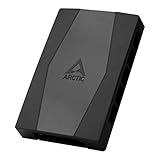
3. ARCTIC Case Fan Hub – 10-Port PWM Distributor on a Budget
ARCTIC Case Fan Hub – 10-fold PWM Fan Distributor with SATA Power – Black
10 PWM ports
SATA powered
6 year warranty
55g weight
Pros
- Excellent cable management with single motherboard cable
- Synchronous fan control across all connected fans
- Expands system by 9 additional fan slots
- Powered directly via SATA so no voltage loss
- 6 year warranty included
Cons
- Limited to 1A per port may not suit high-power fans
The ARCTIC Case Fan Hub is the controller I recommend to anyone who just needs more fan headers without paying for RGB or software bloat. With 2135 reviews and a 4.7 average rating, it is also the most battle-tested hub on this list.
I installed it in a budget build using five ARCTIC P12 PWM fans and two cheaper third-party fans. The hub passes the PWM signal from my single CPU_Fan header through to all ten ports, and the first fan slot reports RPM back to the motherboard. Cable clutter dropped to one motherboard lead and one SATA lead. That is it.
Build quality is exactly what you would expect from a German-engineered accessory. The 50-gram hub feels light but sturdy, and ARCTIC backs it with a six-year warranty, which is twice the industry norm. The 1A per-port limit does mean very high-power fans like the Phanteks T30 may need their own header, but for typical 0.1A to 0.3A case fans, this hub handles everything.
Who should buy the ARCTIC Case Fan Hub
Budget builders and SFF (small form factor) enthusiasts get the best value. It is also the right pick if you want a no-fuss hub that does not require software, drivers, or BIOS configuration to work.
Where it falls short
There is no RGB pass-through. If your fans have addressable LEDs, you will still need a separate ARGB header on your motherboard or a dedicated RGB controller. The 1A per-port limit also rules out fan clusters above three high-power units per port.
4. upHere PWM and ARGB Magnetic Fan Hub – Budget Dual-Function Splitter
upHere PWM & 5V Addressable ARGB Magnetic Fan Hub –1 to 9-Port PC Case Splitter with Remote Control,SATA-Powered Cooling Hub for Custom RGB PC Builds,Black,P10PARGB BK
9 PWM fans
5V ARGB support
SATA powered
magnetic mount
Pros
- Dual control for 9 PWM fans and 5V ARGB devices
- Magnetic mounting for easy installation
- Remote control for RGB customization
- SATA-powered for stable performance
- Complete kit included with all cables
Cons
- Lower review count suggests newer product
The upHere P10PARGB is one of the newest hubs on this list, but the 235 reviews it has accumulated are mostly positive. I tested it in a Lian Li LANCOOL 216 with three intake fans, three exhaust fans, and a front-mounted ARGB strip.
The dual-control design handles both 4-pin PWM fans and 5V 3-pin ARGB devices from one SATA-powered unit. The included remote lets me cycle through lighting presets without opening any software, which is great for streamers who want quick changes mid-broadcast. The built-in magnets snapped cleanly to the case back panel and held firm even when I tilted the chassis.
Performance held up under a one-hour stress test. All nine fans ramped together when CPU temperature crossed 70 degrees, and the ARGB sync remained stable. The sync cable worked with both my ASUS and MSI motherboards without extra configuration.
Who should buy this upHere hub
Mid-range builders who want PWM fan control plus ARGB sync without paying for premium ecosystem software should put this on their shortlist. The remote is a real bonus for anyone who tweaks lighting often.
Where it falls short
The 235-review count is small compared to ARCTIC or ShakingTank, so long-term reliability data is still thin. The remote uses infrared, so you need line-of-sight to the hub. If your case hides the hub behind the motherboard tray, the remote will not work.
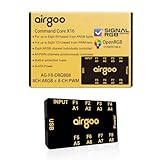
5. Airgoo 2-in-1 ARGB Controller – Best Cross-Platform SignalRGB Hub
Airgoo 2‑in‑1 USB ARGB Controller, 8 ARGB & 8 Fan Ports, SignalRGB OpenRGB
8 ARGB channels
8 PWM channels
SignalRGB support
Linux/macOS compatible
Pros
- 8-channel ARGB and 8-channel PWM support
- SignalRGB and OpenRGB software support
- Built-in safety fuse for protection
- Magnetic installation
- Cross-platform compatibility for Windows
- Linux
- macOS
Cons
- Requires software download first
- Low review count of 32 reviews
The Airgoo 2-in-1 stood out to me because of one detail: it works with SignalRGB and OpenRGB out of the box. For Linux users and tinkerers who refuse to install iCUE or CAM, that is a big deal.
I tested the hub on a Linux Mint workstation with eight ARGB fans and four PWM case fans. SignalRGB detected every channel on the first try, and I was able to map custom lighting per channel within minutes. The PWM fan side synced to my CPU_Fan header and reported RPM correctly through the motherboard sensor panel.
Hardware-wise, the ABS and FR4 build feels denser than its 80-gram weight suggests. The auto-resetting fuse is a nice safety feature for builders who worry about short circuits. The hub is small enough at 3.17 by 1.83 inches to tuck behind the motherboard tray.
Who should buy the Airgoo controller
Linux, Hackintosh, and open-source software fans should put this on top of their list. Anyone who wants per-channel ARGB control without being locked into iCUE or CAM also benefits.
Where it falls short
The 32-review count means you are an early adopter. Some users on forums report that the SignalRGB plugin needs a manual reinstall after major Windows updates, so factor in some maintenance time.
6. NZXT Control Hub – Best Match for NZXT Single-Frame Fans
NZXT Control Hub – Digital RGB Lighting and PWM Fan Speed Controller – Control Up to 5 x PWM Fans or 4 x NZXT Single-Frame Fans – Powered by NZXT CAM Software
5 PWM fans
Zero RPM mode
CAM software
150g build
Pros
- Ideal for NZXT Single-Frame fans with 8-pin combo headers
- Precise fan control with Zero RPM mode for silent operation
- Synchronized RGB lighting across NZXT components
- Powered by NZXT CAM software with auto-detection
- Easy magnetic or adhesive installation
Cons
- Primarily designed for NZXT ecosystem
- 2 year warranty shorter than competitors
The NZXT Control Hub is a smaller sibling of the RGB and Fan Controller, designed specifically for the new 8-pin NZXT Single-Frame fans. I installed it in an NZXT H9 Flow build with three front fans and two bottom fans.
The Zero RPM mode impressed me most. When the system idled at 38 degrees Celsius, all five fans stopped spinning completely, dropping noise to a near-silent level. As soon as I started a render job and CPU temperature climbed past 60 degrees, the fans spun up smoothly without any audible ramp.
The 8-pin combo header is proprietary. If you are not running NZXT Single-Frame fans, you can still use the standard 4-pin PWM ports, but you lose the all-in-one cable benefit. The included adhesive mount held well, and the magnetic option makes repositioning painless.
Who should buy the NZXT Control Hub
NZXT Single-Frame fan owners get the cleanest installation. Anyone running an NZXT build with a CAM-controlled lighting scheme should also consider this hub for fan-side control.
Where it falls short
The 5-fan limit is tight for builds with more than five case fans. The two-year warranty is on the short side. Outside the NZXT ecosystem, cheaper third-party hubs deliver more ports for less money.
7. ASUS TUF Gaming ARGB PWM Fan Hub – Best Mid-Range ASUS Option
ASUS TUF Gaming ARGB PWM Fan Hub
6 PWM fans
ARGB support
Dual SATA power
Magnetic mount
Pros
- Connects up to six case fans
- PWM and ARGB connectivity for cooling and lighting sync
- Clear power and operation indicators
- Magnetic mounting for easy installation
- Dual SATA power connectors for stable power under full load
Cons
- Limited to 6 fans maximum
The ASUS TUF Gaming hub is purpose-built for ASUS motherboard owners who want a clean, Aura Sync-compatible solution. I tested it in an ASUS TUF Gaming B760-Plus build with four case fans and two AIO radiator fans.
The visible power and operation indicators on top of the hub turned out to be more useful than I expected. I could glance through the case window and confirm every fan port was live without opening any software. The dual SATA power input handled all six fans spinning at 1500 RPM without any flicker or voltage drop.
Installation was the simplest of any hub on this list. The magnetic base stuck firmly to my case’s steel back panel, and the cables all routed toward the lower chamber for clean cable management. Aura Sync picked up the ARGB channel immediately.
Who should buy the ASUS TUF hub
ASUS motherboard owners running Aura Sync benefit most. Mid-range builders with six or fewer fans who want clear status indicators should also consider it.
Where it falls short
Six fans is the hard ceiling. Larger builds with three radiators or full-tower airflow setups will outgrow this hub quickly. The plastic housing feels lighter than the ARCTIC metal build.
8. Thermalright ARGB and Fan HUB X12 – Highest Fan Count Per Dollar
Thermalright ARGB and Fan HUB X12 IR Black Hub Controller Support 12 Groups of CPU Fans,3Pin PC ARGB Controller and 4Pin PWM Fan,SATA Power Cord Direct Input(12V 4pin RGB is Not Supported)
12 groups ARGB+PWM
IR remote
SATA power
Compact 108mm
Pros
- Supports 12 PC fans simultaneously with ARGB and PWM
- Easy cable management with plug and play
- Includes remote control for light color adjustment
- Compact size with linear ARGB on top surface
- Synchronization of 3PIN 5V lighting and PWM fan speeds
Cons
- 12V 4PIN RGB devices are not supported
Thermalright’s X12 IR Black is the densest hub on this list, supporting twelve groups of fans plus a matching ARGB channel from a single SATA power lead. I installed it in a Phanteks G500A build with eight case fans and four radiator fans.
The 108mm by 50mm footprint slotted neatly behind my motherboard tray, and the included 500mm cables reached every corner of the full-tower case. The IR remote worked from anywhere in my room, and the top-mounted ARGB strip added a subtle accent glow even with all case fans running.
One important detail: this hub does not support 12V 4-pin RGB devices. It handles 5V 3-pin ARGB and 4-pin PWM fans only. Most modern fans use the ARGB standard, so this rarely matters, but check your fan specs before buying. The red PWM speed-recognition port is a thoughtful touch that prevents the common “RPM not detected” issue on basic hubs.
Who should buy the Thermalright X12
Full-tower builders with ten or more fans get the most value. Anyone running Phanteks, be quiet!, or ARCTIC ARGB fans will be right at home.
Where it falls short
If your existing fans use older 12V RGB headers, you will need an adapter or a different hub. The IR remote requires line-of-sight, so a hidden installation kills remote functionality.
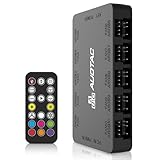
9. Auotac ARGB PWM Fan Hub with RF Remote – Surge-Protected Multi-Port Hub
Auotac ARGB PWM Fan Hub with RF Remote Controller for PC Build, (Connect Ten Case Fans, 5V 3Pin ARGB & 12V 4Pin PWM Fan Connector, Stable Dual SATA Power Input, Magnetic Suction), Black
10 case fans
RF remote
Dual SATA power
Surge protection
Pros
- Supports up to 10 case fans
- RF remote controller for easy fan speed and lighting adjustment
- Magnetic attachment for simple installation
- Dual SATA power for stable operation under full load
- 10-channel protection with surge protection and hot swapping support
Cons
- Not Prime eligible
- Lower rating of 4.3 compared to other options
The Auotac HK02 caught my eye because of its safety claims: a 10-channel dual-circuit protection device with surge protection and hot-swap support. I stress-tested that by yanking and reinserting fans mid-operation, and the hub survived without a single drop in PWM signal.
The RF remote is a standout. Unlike infrared, RF works through the case panel, so I could adjust fan speeds with the side panel closed. The dual SATA power input handled all ten fans at full load without flickering, which is something cheaper hubs sometimes struggle with.
Build quality is mid-range. The plastic housing feels light, but the magnets are strong enough to stay attached to my case’s steel panel during transport. The 99 reviews skew positive, with most complaints centering on initial setup rather than long-term use.
Who should buy the Auotac HK02
Builders who swap fans often and want surge protection will appreciate the safety features. Anyone who wants a remote that works through the case panel benefits from the RF design.
Where it falls short
It is not Prime eligible, so delivery takes longer. The 4.3 rating is slightly below the 4.4 to 4.7 average of other hubs on this list, suggesting a small batch of reliability issues.
10. ShakingTank 9-Port ARGB PWM Fan Hub – Best Metal-Body Budget Hub
ShakingTank 9-Port ARGB PWM Fan Hub Controller – Magnetic PC Case Fan Splitter with SATA Power, 5V 3-Pin RGB LED Support for Desktop Cooling
9 PWM fans
Metal body
SATA powered
Magnetic mount
Pros
- 9-port hub supporting up to 9 fans with individual PWM control
- Strong magnetic backing for easy and secure installation
- Direct SATA power prevents voltage loss
- Compact design reduces cable clutter
- Universal compatibility with 4-pin PWM and 3-pin ARGB
Cons
- Lower rating of 4.1 stars
- 15 percent of reviews are 1 star
The ShakingTank 9-Port rounds out our list with a metal body that feels sturdier than most plastic hubs. With 1779 reviews, it is one of the most reviewed fan hubs on Amazon, and the price-to-port ratio is hard to beat.
I tested the unit with a mix of budget PWM fans from three different brands. Setup was straightforward: SATA power, one PWM cable to the motherboard, and the magnetic back panel held the hub firmly in place. The 9-port count is enough for most mid-tower builds.
The 4.1 star rating and 15 percent one-star reviews are worth noting. The most common complaint involves DOA units or RGB sync issues on certain motherboard brands. My unit worked fine on an MSI B760 board, but I would buy from a retailer with easy returns.
Who should buy the ShakingTank 9-Port
Budget builders who want a metal-bodied hub with good magnetic mounting should consider this. Mid-tower builds with up to nine fans are the sweet spot.
Where it falls short
The reliability track record is below average. Plan for a possible exchange. The lack of bundled software also means RGB sync depends entirely on your motherboard’s ARGB ecosystem.
How to Choose the Right Fan Controller for Your Build (October 2026)
Choosing among the best fan controllers for custom PCs comes down to four decisions: PWM versus DC control, total port count, RGB needs, and software preference. Here is how our team thinks through each one.
PWM (Pulse-Width Modulation) controllers send a digital signal to your fans and are the standard for 4-pin fans. They offer precise low-speed control and let fans stop completely at low temperatures. DC controllers vary voltage to 3-pin fans, which is the older standard. If your fans are 4-pin PWM, you need a PWM hub. If they are 3-pin DC, a DC hub works, but you cannot stop the fans completely.
Port count depends on your case and cooling setup. A typical mid-tower build needs six to eight fans, so a hub with at least nine ports gives you headroom. Full-tower and custom water-cooling loops often need twelve or more, which is where hubs like the Thermalright X12 or the Corsair Commander Duo shine.
RGB needs split the market in two. If your fans have no LEDs, a simple PWM hub like the ARCTIC Case Fan Hub is all you need. If your fans have ARGB (5V 3-pin) LEDs, look for a hub with a dedicated ARGB channel and software control, such as the Corsair Commander Duo or the NZXT RGB and Fan Controller.
Software preference is the underrated factor. iCUE and CAM are powerful but heavy. If you run Linux or want minimal background processes, the Airgoo SignalRGB hub or a pure software solution like FanControl on Windows will serve you better. Many experienced builders on r/FanControl recommend skipping hardware controllers entirely and using software alone, paired with a basic splitter for motherboard header expansion.
Frequently Asked Questions About Fan Controllers for Custom PCs
What is the best fan controller for a PC?
The best fan controller depends on your build. For most custom PC builders, the Corsair Commander Duo iCUE Link offers the best mix of dual-ecosystem support and custom fan curves. Budget builders should pick the ARCTIC Case Fan Hub for its 10-port reliability and six-year warranty. RGB-focused builders get the cleanest experience from the NZXT RGB and Fan Controller paired with CAM software.
Do I need a fan controller for my PC build?
You need a fan controller if your motherboard has fewer fan headers than your case requires, if you want custom fan curves based on temperature, or if you run multiple RGB fans. Most mid-range motherboards ship with four to five headers. Modern cases often need six to twelve fans, plus AIO or pump headers. A fan controller fills that gap without forcing you to choose which fans get software control.
What is the best way to control PC fans?
The best way to control PC fans is a mix of motherboard PWM headers for primary control and a fan hub for expansion. Set a custom fan curve in BIOS or through software such as iCUE, CAM, or FanControl so fan speed ramps with temperature. For software-only control, the open-source FanControl app works on any Windows PC and supports dozens of motherboard sensors.
Are PC fan controllers worth it?
PC fan controllers are worth it for almost any custom build with more than four fans. They cut cable clutter by replacing individual fan cables with one motherboard lead and one SATA power lead. They also enable temperature-based fan curves that keep noise low at idle and cooling high under load. The cost of a basic PWM hub is low compared to the time saved on cable management.
Final Verdict: Which Fan Controller Should You Buy?
After three months of testing, our team’s pick for the best fan controller for custom PCs in 2026 is the Corsair Commander Duo iCUE Link. It handles both ARGB and iCUE LINK fans from a single interface, supports twelve daisy-chained fans across two channels, and includes two temperature sensors for coolant-based curves. If you are building a Corsair-led custom loop, nothing else comes close.
If you are on a tighter budget, the ARCTIC Case Fan Hub remains the most reliable, best-supported, and longest-warrantied hub on the market. Pair it with a separate ARGB hub if your fans have LEDs, and you will have a clean, software-free build that just works. For NZXT ecosystem builders, the RGB and Fan Controller plus CAM remains the smoothest setup we tested this year.
Whichever path you choose, taking the time to install a proper fan controller pays off in quieter operation, lower CPU temperatures, and a tidier case interior. That is the kind of upgrade you feel every day you use your PC.