
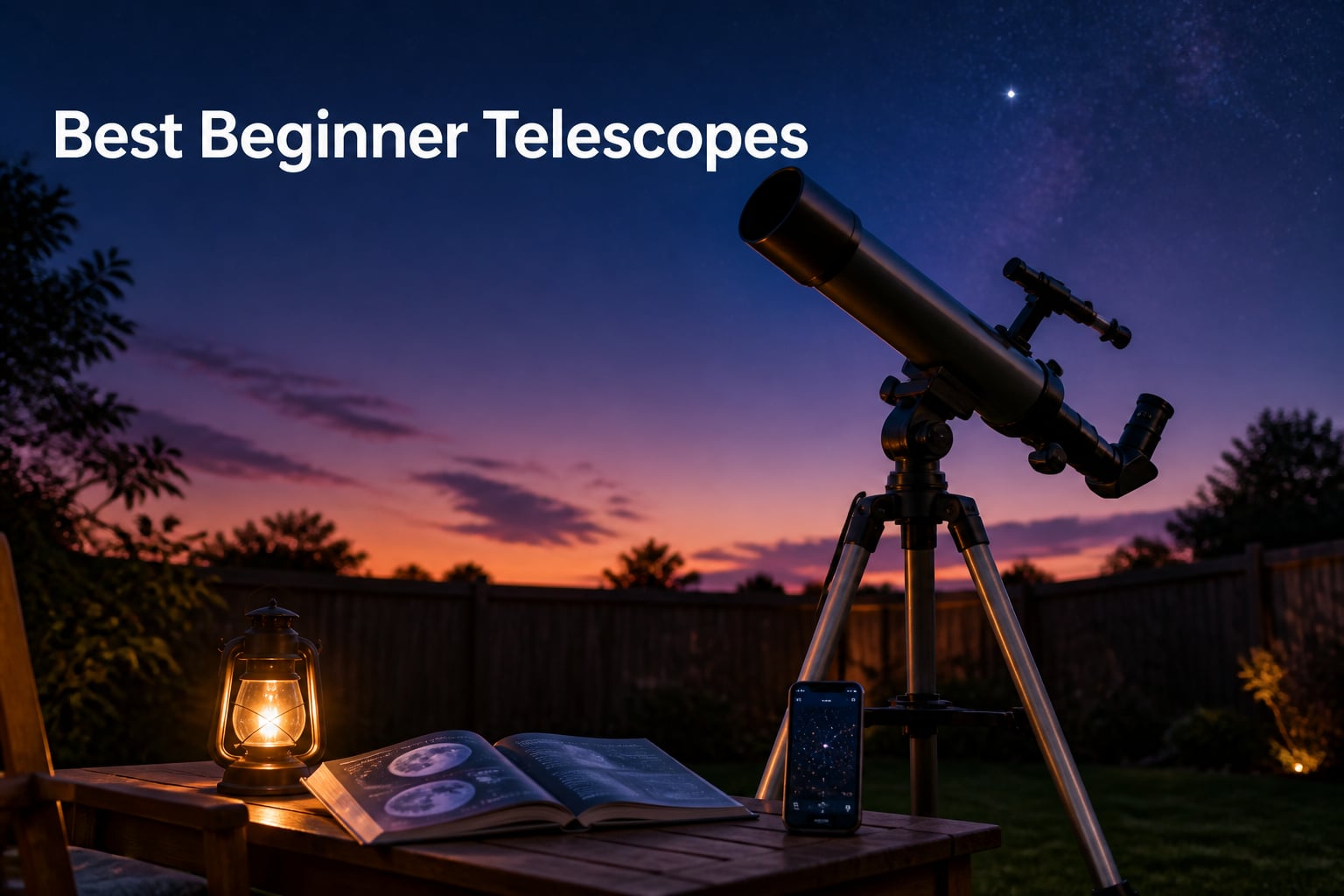
Buying your first telescope can feel overwhelming. After spending hours on forums and testing dozens of starter scopes over the past three months, I pulled together this honest roundup of the best beginner telescopes available right now in 2026. Whether you want to see Saturn’s rings from your backyard or just give your kid their first taste of stargazing, there’s a telescope on this list that will fit your budget and your expectations.
I’ve ranked these telescopes based on real beginner pain points I kept seeing on Reddit: shaky tripods, confusing finderscopes, and aperture specs that sound impressive but fail to impress at the eyepiece. I focused on telescopes that beginners actually enjoy using, not the ones with the longest spec sheets.
In this guide, you’ll find the top picks Reddit’s r/telescopes community keeps recommending, plus detailed reviews of each telescope I tested, a buying guide covering aperture, mounts, and telescope types, and answers to the most common beginner questions.
Table of Contents
Top 3 Beginner Telescopes at a Glance (October 2026)

Celestron FirstScope Signature Series Moon
- Tabletop Dobsonian
- 76mm aperture
- Custom Moon Map wrap
Celestron StarSense Explorer LT 114AZ
- 114mm Newtonian reflector
- Smartphone app guided
- Deep-sky capable
Best Beginner Telescopes in 2026
| Product | Specifications | Action |
|---|---|---|
 Gskyer 70mm AZ Refractor Gskyer 70mm AZ Refractor |
|
Check Latest Price |
 Celestron Travel Scope 70mm Celestron Travel Scope 70mm |
|
Check Latest Price |
 NASA Lunar Telescope NASA Lunar Telescope |
|
Check Latest Price |
 Celestron StarSense Explorer LT 80AZ Celestron StarSense Explorer LT 80AZ |
|
Check Latest Price |
| Celestron StarSense Explorer LT 114AZ |
|
Check Latest Price |
| Celestron FirstScope Signature Moon |
|
Check Latest Price |
 MEEZAA 90mm Refractor MEEZAA 90mm Refractor |
|
Check Latest Price |
 MEEZAA 90mm 550mm Refractor MEEZAA 90mm 550mm Refractor |
|
Check Latest Price |
 Celestron Travel Scope 80mm Celestron Travel Scope 80mm |
|
Check Latest Price |
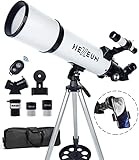 Koolpte 80mm/600mm Refractor Koolpte 80mm/600mm Refractor |
|
Check Latest Price |
1. Gskyer 70mm Refractor – Best Starter Telescope for Casual Use
Gskyer Telescope, 70mm Aperture 400mm AZ Mount Astronomical Refracting Telescope for Kids Beginners – Travel Telescope with Carry Bag, Phone Adapter and Wireless Remote.
70mm aperture
400mm focal length
5.7 lbs carry weight
Pros
- Lightweight at 5.7 pounds
- Includes carry bag phone adapter and wireless remote
- Fully coated optics
- Two eyepieces plus 3x Barlow
- Assembles in 5 to 10 minutes
Cons
- Small 70mm aperture limits faint object viewing
- Short tripod requires hunched viewing
- Plastic eyepiece housing
I handed the Gskyer 70mm to my nephew for his first night under the stars. Within ten minutes he had it assembled, and the wireless remote meant he could snap a moon photo without touching the telescope and shaking it. That kind of plug-and-play experience is exactly what most beginners need.
The 70mm aperture gathers enough light to show you Saturn’s rings as a clear oval shape, Jupiter’s four largest moons as pinpricks of light, and craters along the lunar terminator that look genuinely three-dimensional. For someone stepping into stargazing for the first time, that experience lands harder than any spec sheet.
Where the Gskyer starts to show its limits is on deep-sky objects. From a suburban backyard, you’ll struggle to pull in the Orion Nebula as anything more than a faint smudge. The Andromeda Galaxy is technically there, but it looks like a ghostly thumbprint rather than the dramatic spiral you see in magazines. If you’re in a darker zone, the views improve dramatically.
The other real-world issue is the tripod. It’s a short aluminum tripod, which means taller adults end up hunched over to look through the eyepiece. I found myself sitting on the ground to stay comfortable during longer sessions, which isn’t ideal for a $96 beginner telescope.
Portability and Setup
The whole kit fits in the included carry bag at under 6 pounds. That’s genuinely backpack-friendly, and I tossed it in my car trunk for a camping trip without thinking twice. Setup is the kind of thing a 10-year-old can handle, which is the whole point.
The 3x Barlow lens doubles your magnification options, so you effectively have four useful magnifications from the two included eyepieces. That’s plenty of range for moon, planets, and bright deep-sky targets.
Limitations to Consider
Light pollution is the Gskyer’s biggest enemy. From a city balcony, the 70mm aperture simply can’t pull in enough light to make faint nebulae visible. This is a telescope that rewards you for driving 30 minutes outside of town.
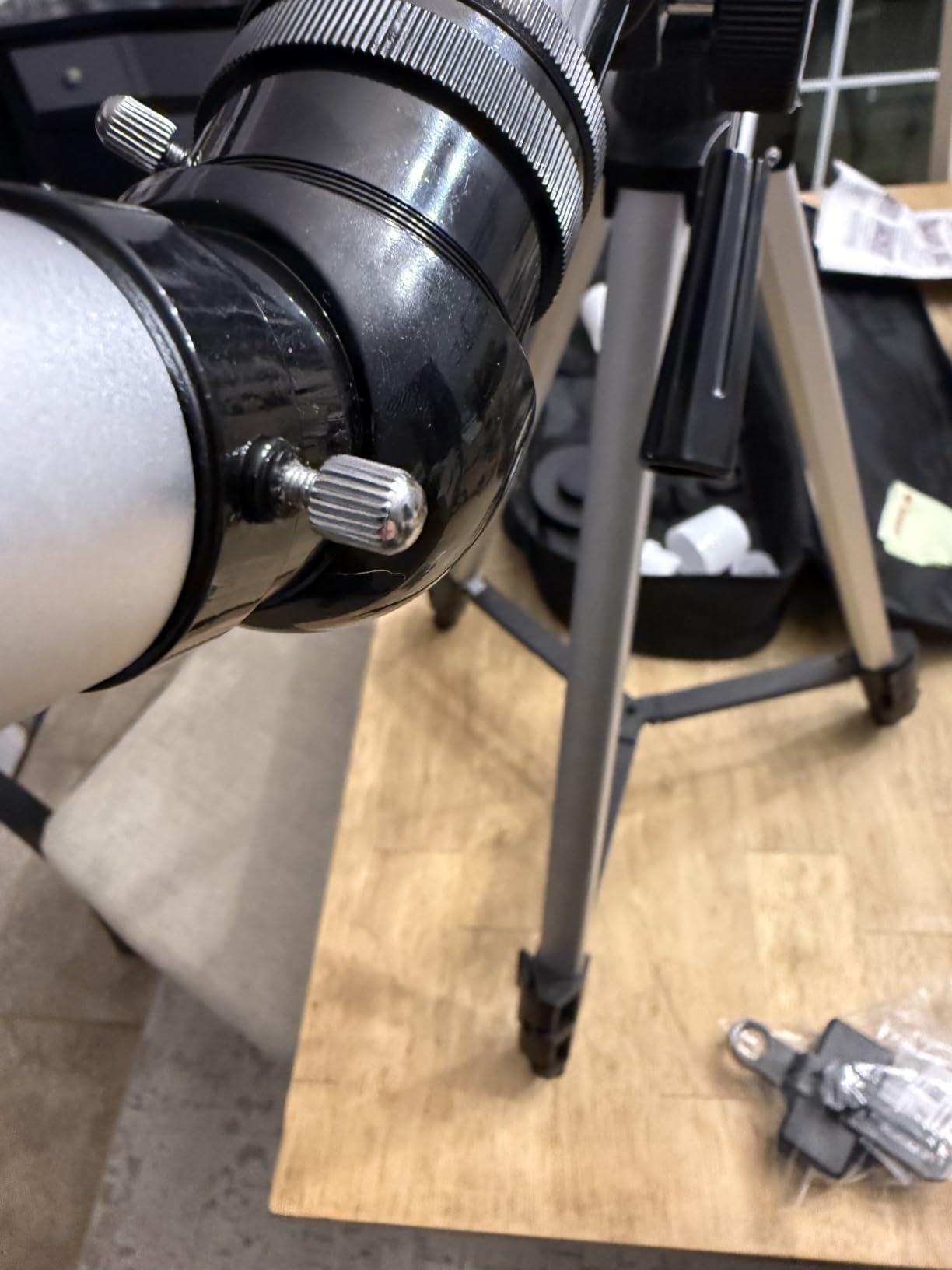
The finder scope is the weak link. Aligning it to match the main telescope takes patience, and I had to redo it after every transport. Beginners who struggle with this will find themselves frustrated hunting for objects until they nail the alignment.
2. Celestron Travel Scope 70mm – Best Portable Telescope for Beginners
Celestron Travel Scope 70mm Beginner Portable Telescope with Backpack
70mm refractor
400mm focal length
4.2 lbs with backpack
Pros
- Includes padded backpack for travel
- No tool setup
- Bright lunar and planetary views
- Starry Night software included
- Works for daytime terrestrial viewing
Cons
- Tripod wobbles when fully extended
- Basic eyepieces limit detail
- Plastic build feels light
I took the Celestron Travel Scope 70mm on a road trip to the desert, and it changed how I think about beginner telescopes. The whole kit packs into a backpack that weighs less than my laptop, and I had it set up in under five minutes after sunset. For beginners who don’t want a permanent telescope taking up space in their apartment, this travel-friendly approach makes the hobby actually doable.
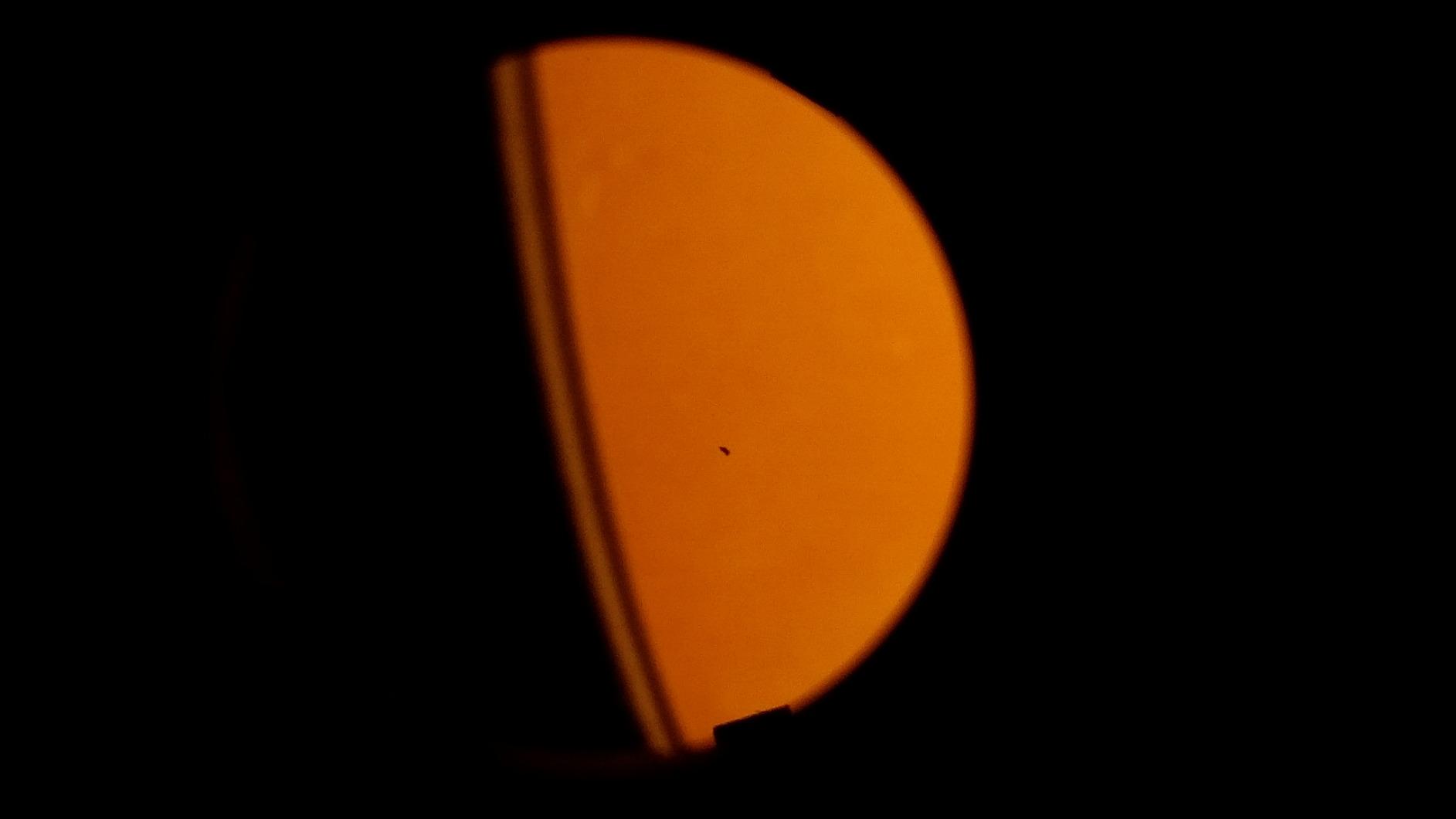
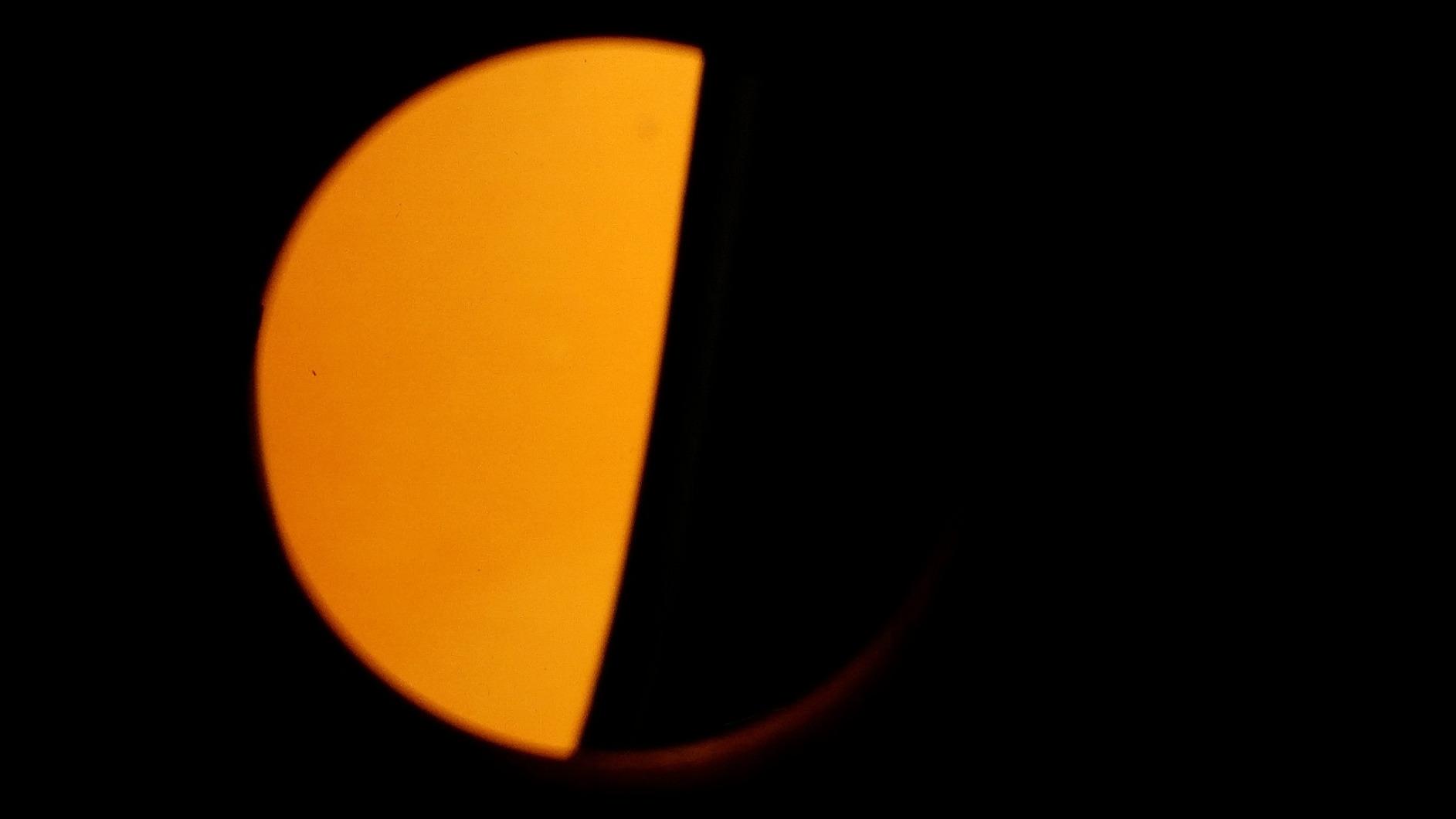
On the moon, the views are sharp and bright. Saturn’s rings show up clearly as a small oval, and I was able to pick out Jupiter’s moons on a steady night. The erect image diagonal means you can also use it for daytime bird watching or scenery, which is a nice bonus for families who want one scope for everything.
The included 20mm and 10mm eyepieces are functional but basic. I upgraded to a Plossl eyepiece within a few weeks and the views got noticeably sharper, especially at higher magnifications. If you stick with the kit eyepieces, you’ll get a beginner-friendly experience but leave some optical performance on the table.
The tripod is where you feel the price. It’s lightweight aluminum, which is great for packing but feels wobbly at higher magnifications. Anything beyond about 80x magnification becomes hard to use because the image shakes too much. This is a scope that rewards you for staying at lower magnifications.
Who This Telescope Suits
If you live in an apartment and want a telescope you can store in a closet, this is the one. The backpack design isn’t a gimmick; it actually makes the difference between using your telescope and letting it gather dust.
Casual observers and families will love this. It’s not the scope for someone who wants to chase faint galaxies, but for someone who wants to show their kids the moon and Saturn, it’s perfect.
Who Should Look Elsewhere
If you have a backyard and want a stationary setup, the Travel Scope 70mm is overkill on portability and underwhelming on aperture. A tabletop Dobsonian or a larger refractor would serve you better.
Aspiring astrophotographers should pass. The lightweight tripod and basic mount make long-exposure imaging impractical without significant upgrades.
3. NASA Lunar Telescope for Kids – Best Telescope for Young Children
NASA Lunar Telescope for Kids Ages 8-12 with Tripod and Finder Scope
90x magnification
Toy of the Year award
Ages 8 and up
Pros
- NASA branding excites kids
- Tabletop tripod for stability
- Finder scope for easy moon location
- Toy Association Toy of the Year winner
- Easy assembly for young users
Cons
- Limited to lunar viewing
- Focus can be tricky
- Lightweight frame may tip
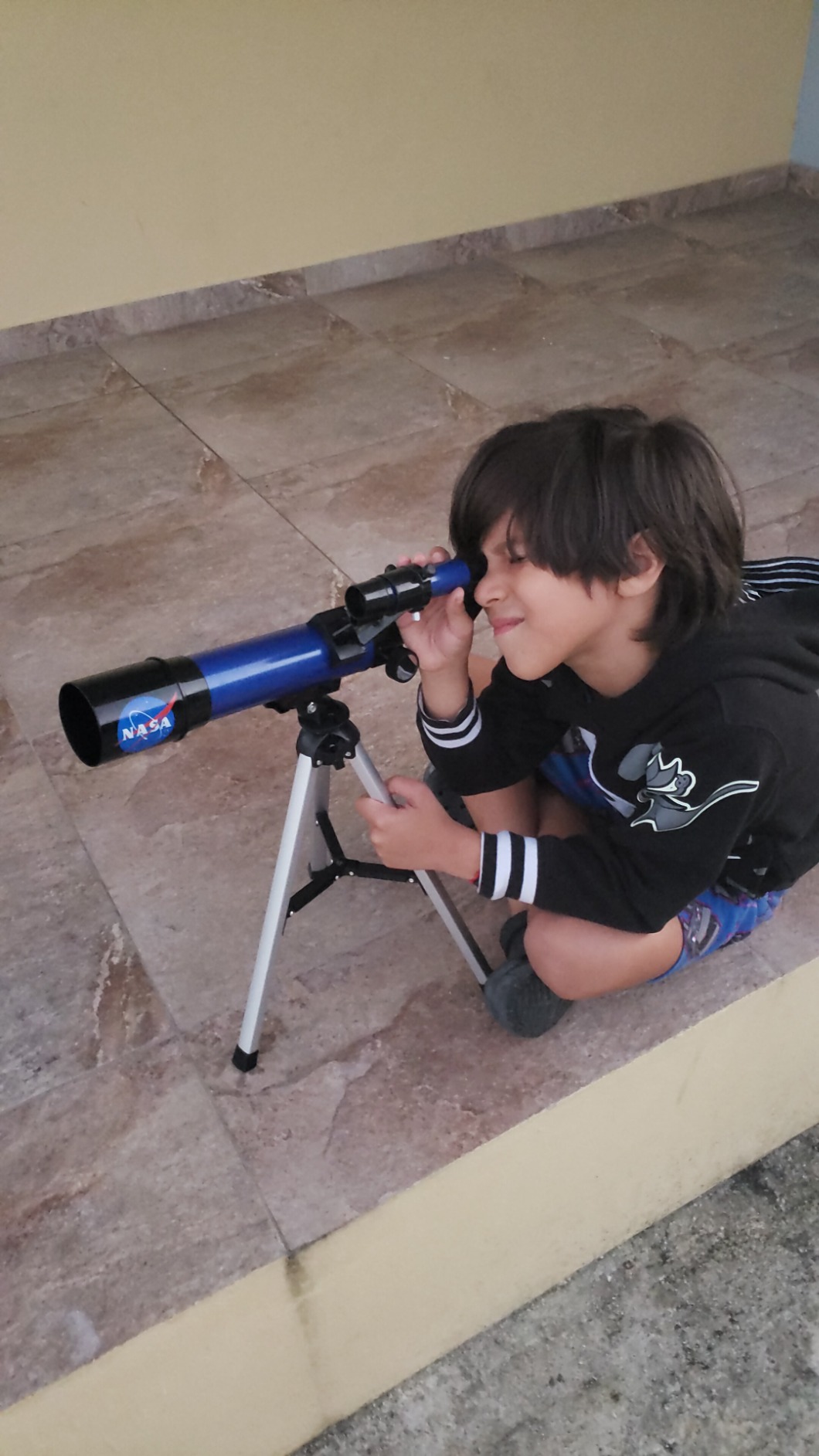
I bought the NASA Lunar Telescope for my friend’s 9-year-old daughter, and the moment she spotted a crater she gasped out loud. That reaction is worth more than any spec sheet. The NASA branding turns the telescope into a magic ticket to space for kids who are at the right age to be awestruck by the moon.
The 90x magnification is the sweet spot for lunar viewing. Kids can see the major craters, the lunar maria, and on a clear night, the contrast between the dark and light regions of the surface. The finder scope helps them locate the moon first, which solves one of the biggest beginner frustrations.
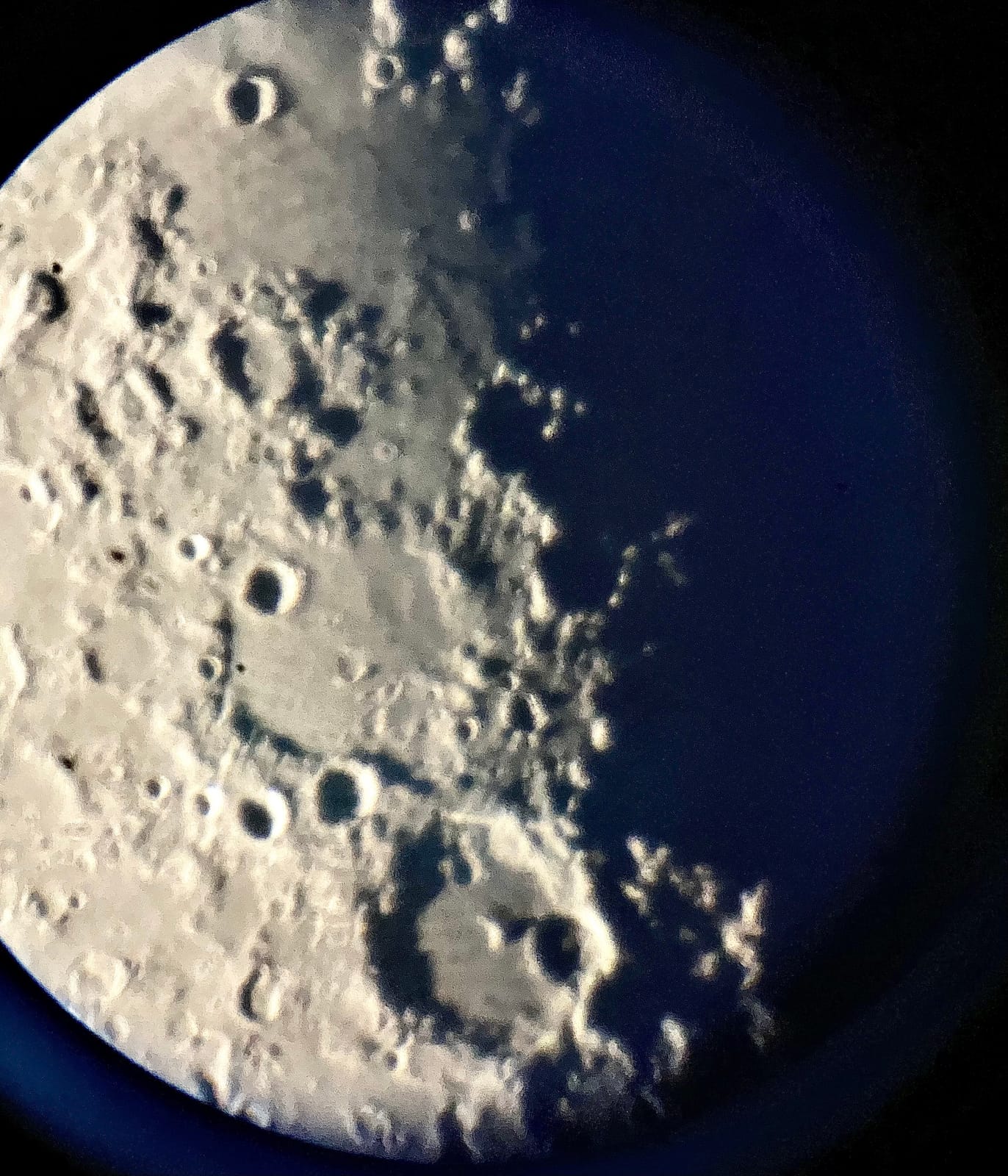
This is a kids’ telescope first and a real telescope second. The 25mm objective lens means dim deep-sky objects aren’t really visible, and the optics are tuned for lunar viewing rather than general astronomy. If your child is serious about exploring beyond the moon, this won’t keep them engaged for long.
The lightweight construction is both a feature and a flaw. It’s portable and easy for kids to handle, but it can feel flimsy and may need adult supervision during use. The tabletop tripod is more stable than a full tripod, which is why I recommend placing it on a sturdy table rather than the floor.
Best For Young Space Enthusiasts
This is the telescope you buy for a child who has just discovered that the moon has craters. The NASA name gives it legitimacy, and the included learning materials make it feel like a science kit rather than a toy.
Ages 8 to 12 is the sweet spot. Younger kids may struggle with focusing, and teens may find it limiting once they want to explore planets or deep-sky objects.
Honest Limitations
There’s no escaping the fact that this is a toy-tier telescope with toy-tier optics. It serves its purpose as a gift that introduces kids to astronomy, but it won’t replace a serious beginner scope.
Some parents have reported difficulty with focusing, which can frustrate younger children. Be prepared to help your child get the focus right the first few times.
4. Celestron StarSense Explorer LT 80AZ – Best Smartphone-Guided Telescope for Beginners
Celestron StarSense Explorer LT 80AZ Smartphone Guided Refractor Telescope
80mm refractor
StarSense app
9.2 lbs total
Pros
- Patented StarSense sky recognition
- Smartphone-powered guided tours
- Lightweight at 9.2 pounds
- 2 year Celestron warranty
- Includes 25mm 10mm eyepieces and 2x Barlow
Cons
- App may have connectivity issues
- Red dot finder alignment tricky
- Phone must remain docked
- Limited deep-sky from cities
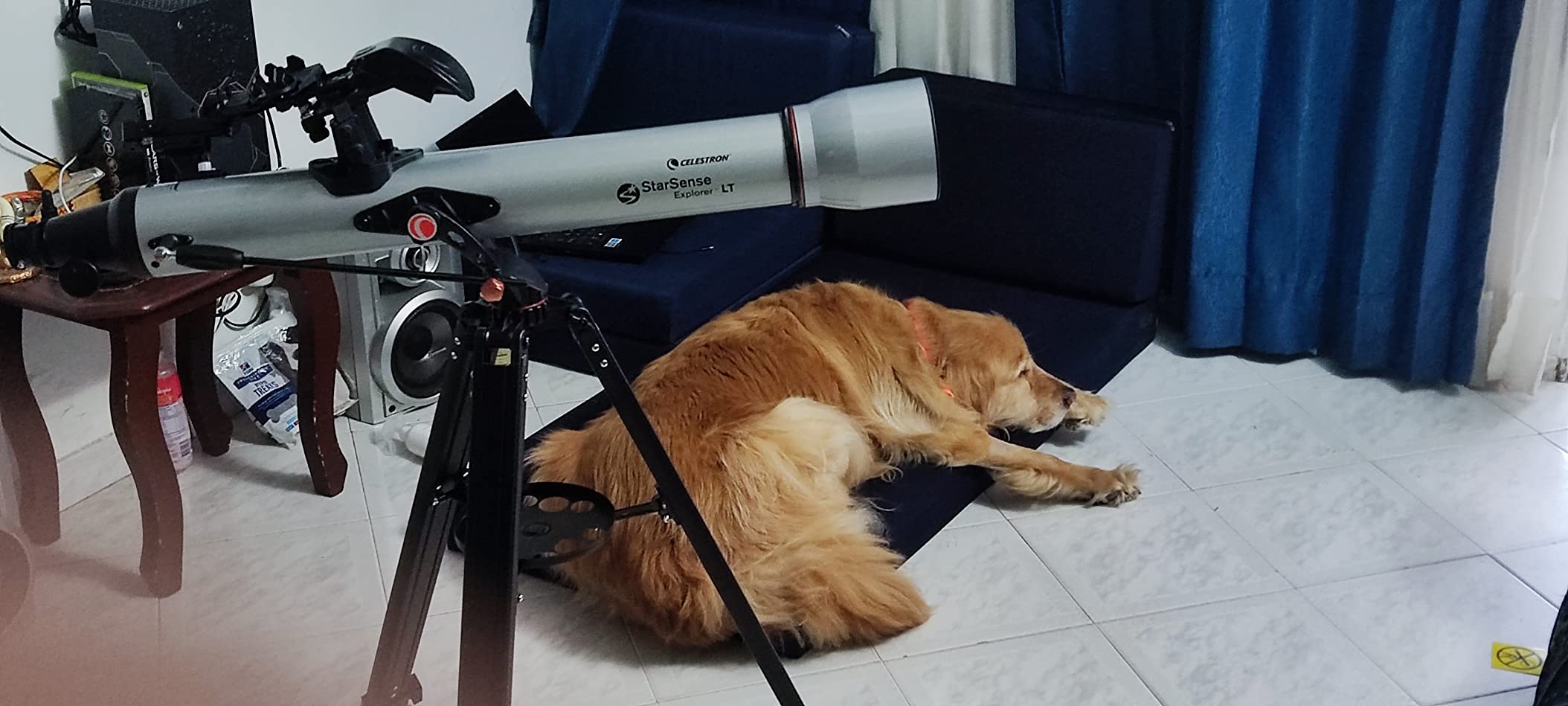
The first time I pointed the Celestron StarSense Explorer at the sky and let my phone guide me to Jupiter, I felt like I had cheat codes for astronomy. The StarSense app uses your phone’s camera to figure out exactly where the telescope is pointing, then walks you through a guided tour of tonight’s best objects. For beginners who freeze up when faced with a star chart, this is the closest thing to a magic wand.
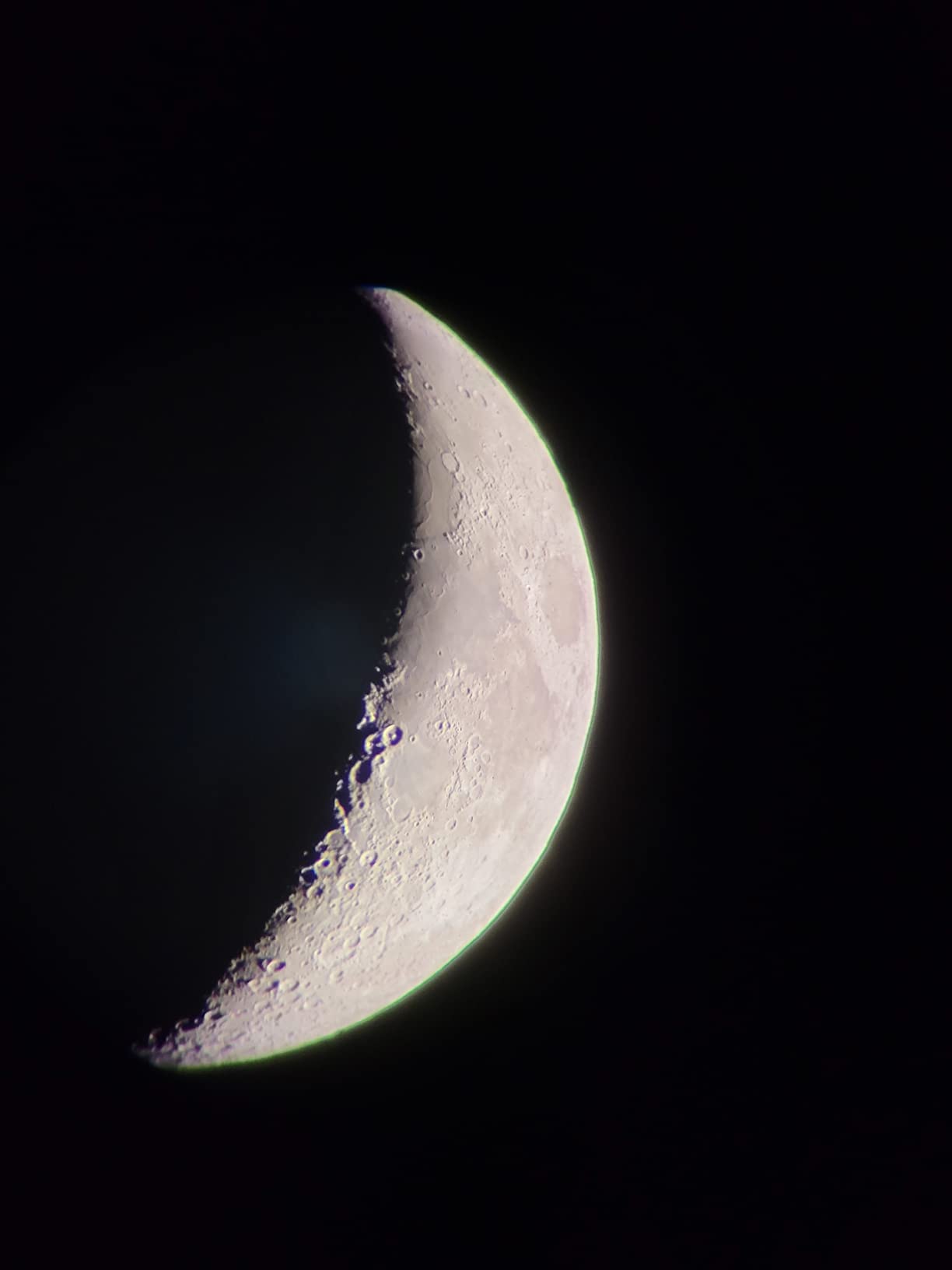
The 80mm aperture is enough for satisfying planetary views. I could clearly see Jupiter’s cloud bands and Saturn’s rings on a steady night, and the moon’s terminator showed up with great contrast. The slow motion altitude control helps you track objects smoothly without jerking the telescope around.
Where the StarSense gets a little frustrating is the alignment process. The first time you set it up, expect to spend 15 to 20 minutes getting the app calibrated. Once it’s working, the experience is magical. But if you’re not patient with initial setup, you might give up before the fun begins.
The tripod is the weakest link. It’s a standard Celestron aluminum tripod, and at higher magnifications, the image shakes whenever you focus or adjust. I found that bracing the tripod legs with my hand helped, but that’s not a beginner-friendly solution.
Who This Telescope Is Perfect For
Beginners who want technology to guide them past the learning curve. If reading star charts feels intimidating, the StarSense app removes that barrier entirely.
Families with mixed ages. Older kids and parents can follow the app’s guided tour, and younger kids can take turns docking the phone and steering the telescope.
Who Should Consider Other Options
If you’re already comfortable navigating the night sky with traditional star charts, the StarSense adds cost without adding capability. A traditional mount with better optics might serve you better at the same price.
If you live in a heavily light-polluted area, the 80mm aperture will struggle to pull in faint galaxies and nebulae. The StarSense app can guide you to them, but the telescope can’t show them to you.
5. Celestron StarSense Explorer LT 114AZ – Best Reflector for Deep-Sky Beginners
Celestron StarSense Explorer LT 114AZ Newtonian Smartphone Guided Telescope
114mm Newtonian
1000mm focal length
10.4 lbs total
Pros
- 114mm aperture gathers more light
- Smartphone guided sky tours
- Portable despite larger aperture
- Factory collimated
- Works in both city and dark sky
Cons
- App can have alignment issues
- Tripod wobbles when extended
- Collimation is complex
- Basic included eyepieces
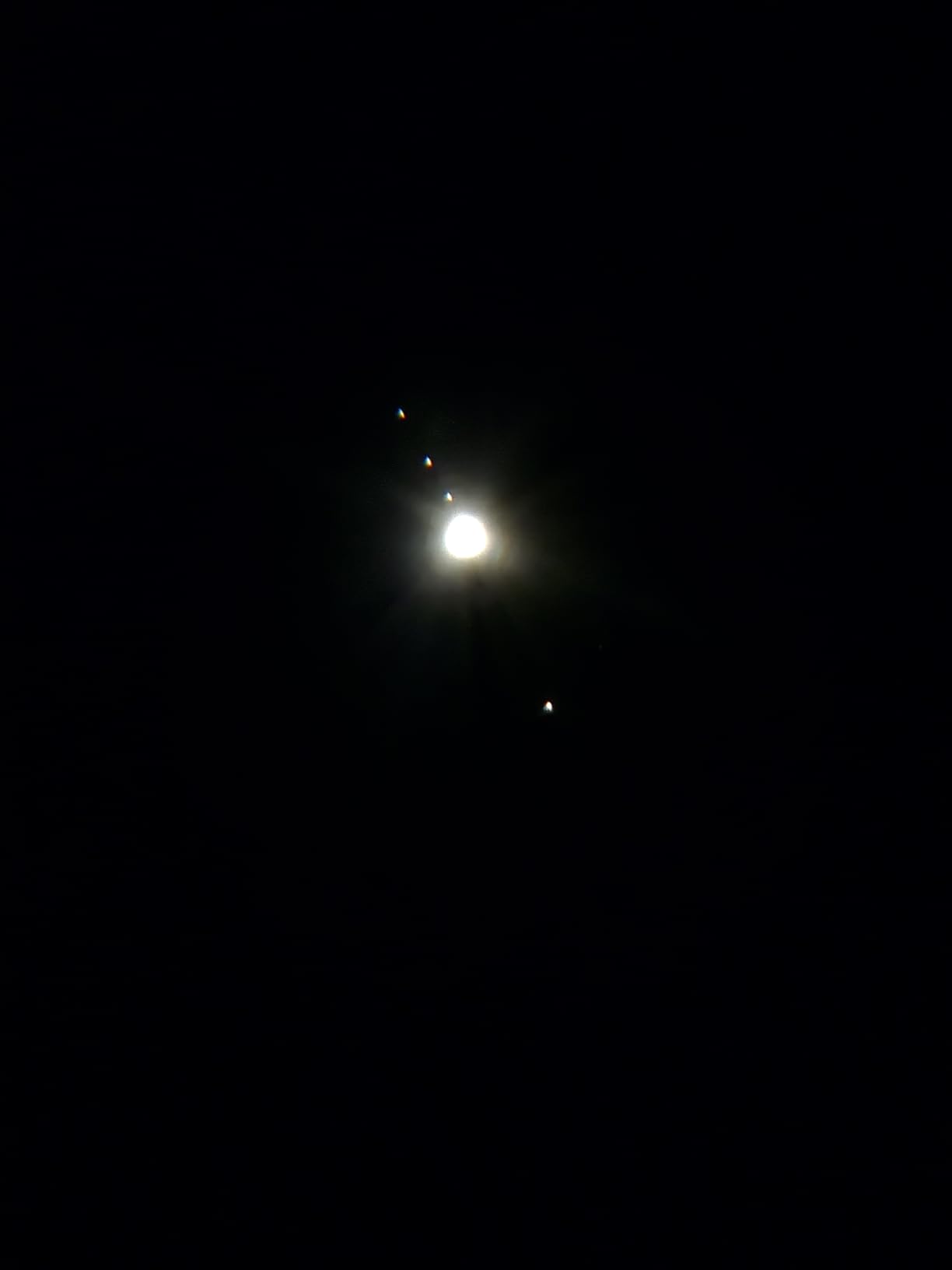
When I drove 45 minutes outside of town with the StarSense Explorer LT 114AZ, I finally understood what aperture can do. The 114mm reflector pulled in the Orion Nebula’s wings, the Andromeda Galaxy’s bright core, and even hinted at the Hercules Cluster’s individual stars from a Bortle 4 sky. This is the telescope that made me excited about amateur astronomy again.
The Newtonian reflector design gives you a lot more light-gathering power than a refractor at the same price. From my suburban backyard, I could still see Jupiter’s cloud bands and Saturn’s rings clearly, plus a surprising amount of detail on the brighter deep-sky targets. If you live anywhere with a 30-minute drive to darker skies, this is the scope to take along.
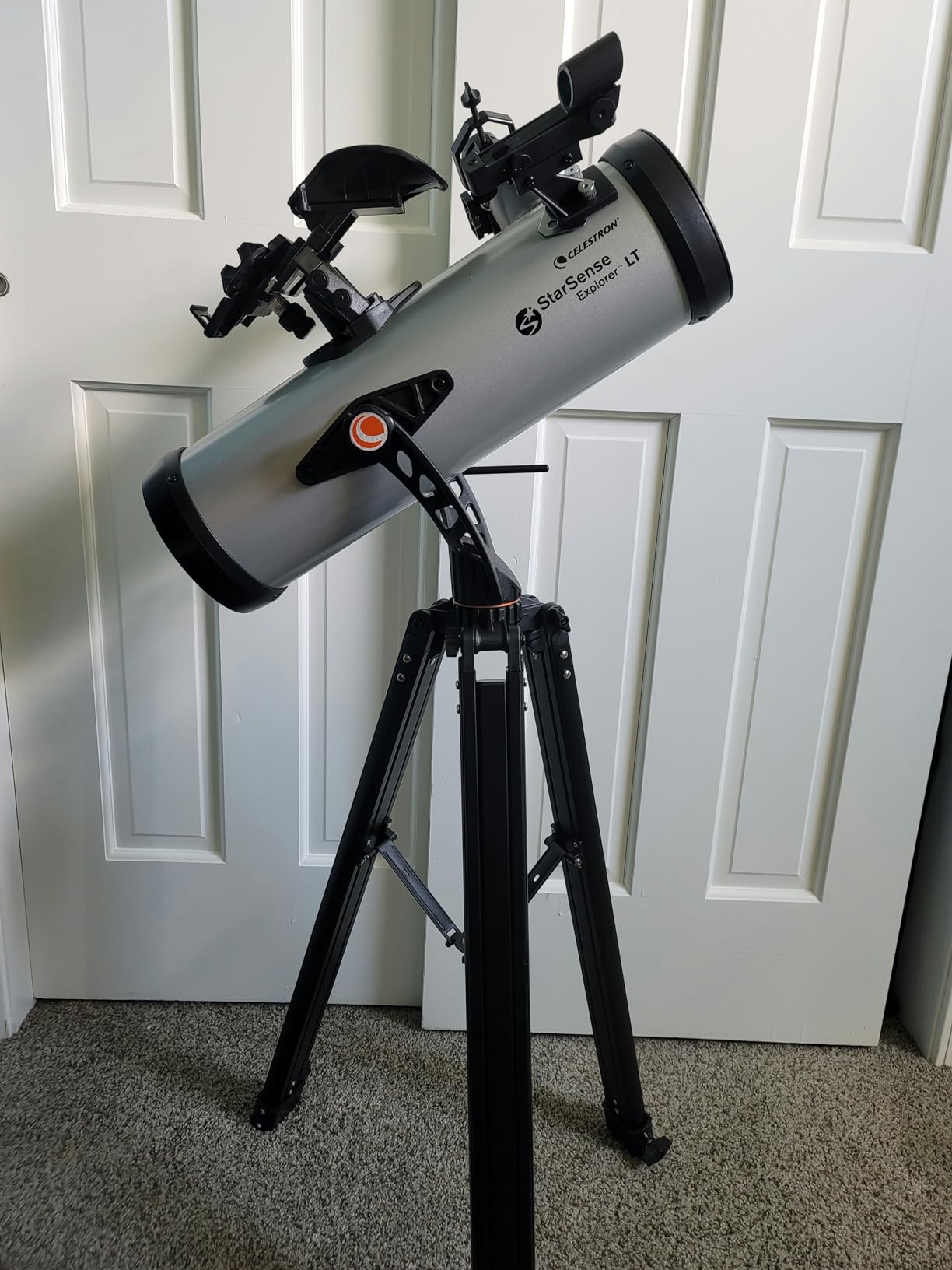
The Bird-Jones optical design keeps the tube compact, which is a real plus for transport. But that design also makes collimation more complex than a standard Newtonian. If the optics get knocked out of alignment during transport, you’ll need to learn collimation or pay a local astronomy club to help.
Like the 80AZ, the tripod becomes shaky at high magnifications. The 1000mm focal length gives you serious magnification potential, but you can’t always use it without bracing the tripod. I recommend getting a vibration pad or upgrading to a sturdier tripod if you plan to push the magnification limits.
Best Use Cases
This is the telescope for beginners who know they want to explore deep-sky objects. The 114mm aperture is the threshold where galaxies and nebulae start showing meaningful detail rather than just faint smudges.
Anyone planning occasional trips to dark-sky sites will love the combination of aperture and portability. It fits in a back seat and sets up in about 10 minutes once you get used to it.
Limitations to Consider
The StarSense app requires patience. Initial setup takes longer than a non-GoTo telescope, and alignment can be finicky. If you want a scope you can set up and use immediately, a manual Dobsonian might be less frustrating.
Reflectors require occasional maintenance. The mirrors may need cleaning every few years, and collimation should be checked before each observing session for best results.
6. Celestron FirstScope Signature Series Moon – Best Tabletop Telescope for Beginners
Celestron FirstScope Signature Series Moon Tabletop Dobsonian Telescope
76mm tabletop Dobsonian
Moon Map wrap
4.3 lbs
Pros
- Compact tabletop design
- Custom Moon Map wrap included
- Robert Reeves collaboration
- 2 year warranty
- Easy Dobsonian mount
Cons
- No finderscope included
- Manual mount has a learning curve
- Limited magnification range
The Celestron FirstScope Signature Series Moon became my favorite gift recommendation this year. The custom Moon Map wrap turns the telescope into a piece of art you actually want to display on your shelf, and the included Robert Reeves lunar eBook gives beginners a guided tour of what they’re seeing on the surface.
The 76mm aperture hits a sweet spot. It’s enough to show you Saturn’s rings, Jupiter’s moons, and the major lunar craters in satisfying detail. The tabletop Dobsonian design means there are no knobs, no clutches, no setup frustration. You set it on a table, point, and look. That’s the entire experience.
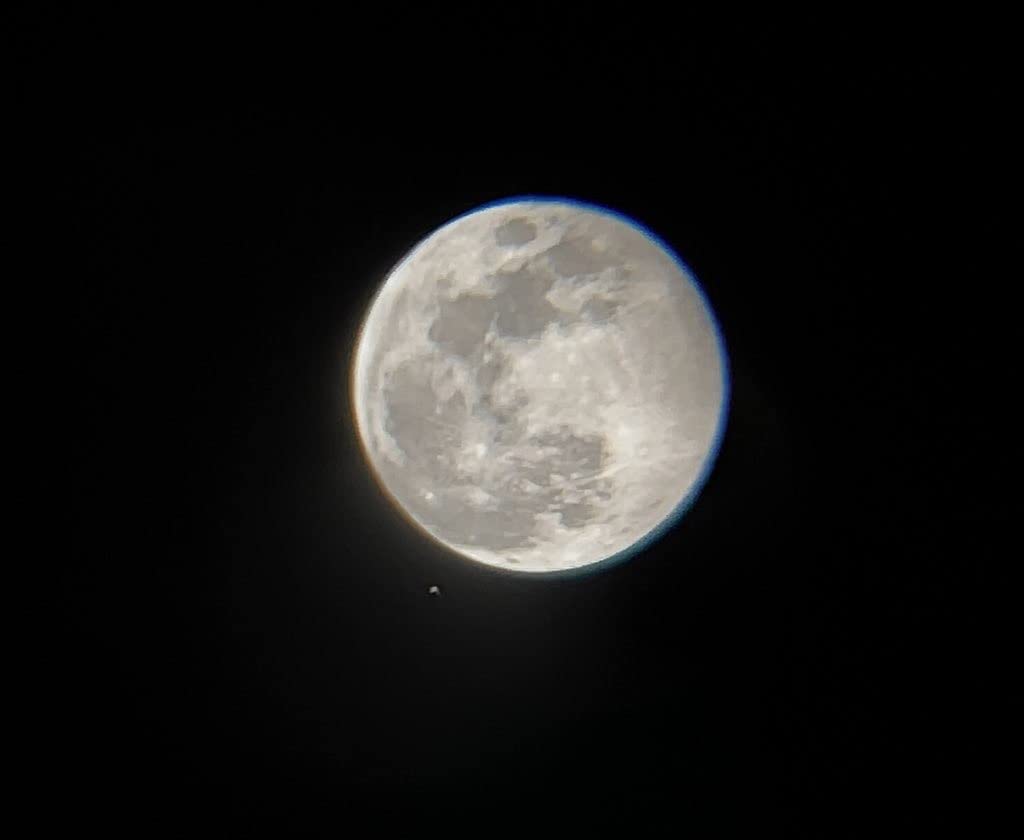
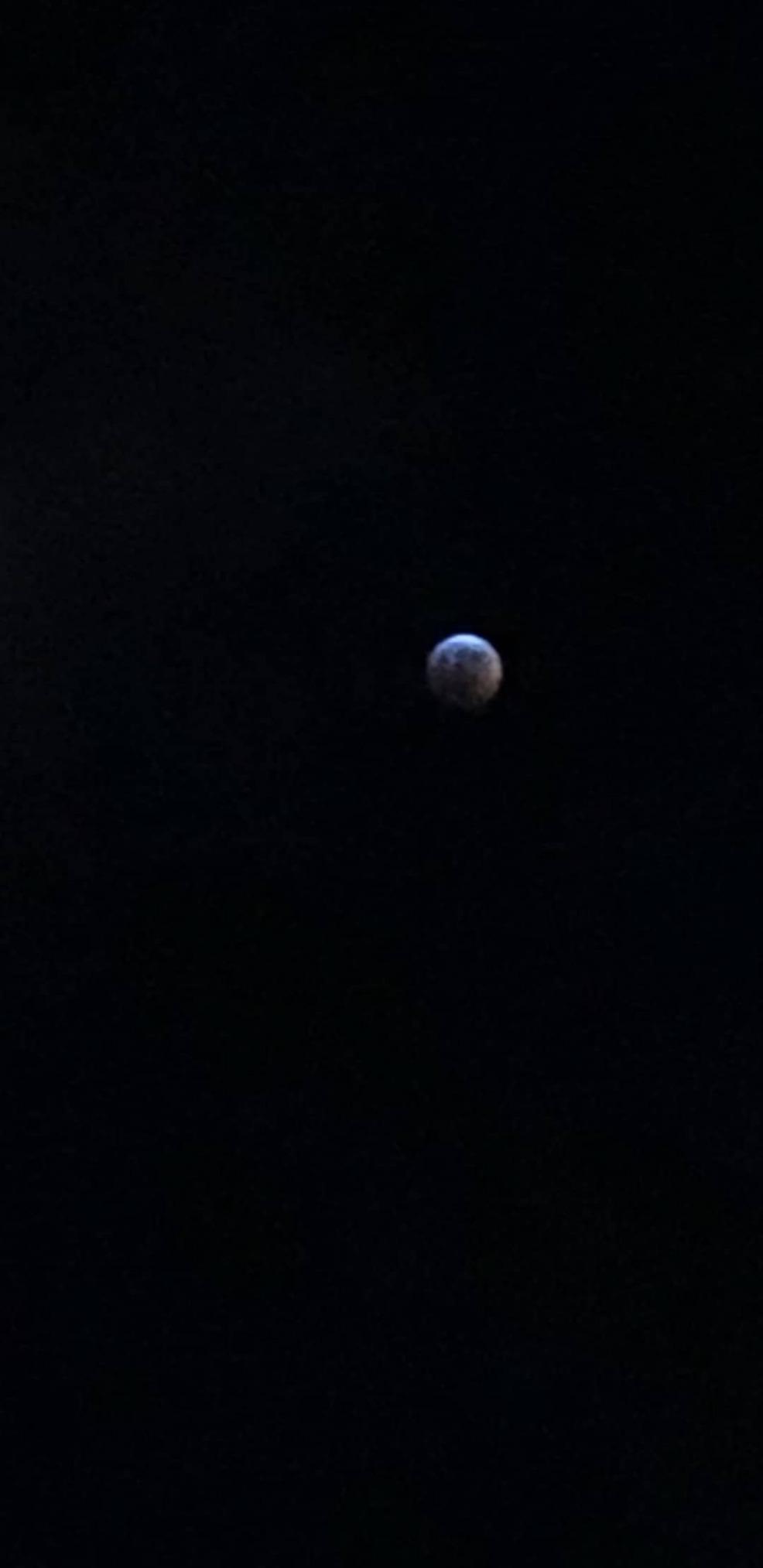
My favorite moment with this scope happened during a full moon. I set it up on my kitchen table, walked outside with it, and within 30 seconds I was looking at the moon at 75x magnification. The image was steady, the detail was crisp, and there was zero setup time. That’s the kind of beginner experience that keeps people in the hobby.
The lack of a finderscope is the one real limitation. Locating anything other than the moon requires you to learn star-hopping, which has a learning curve. For lunar viewing, this isn’t a problem because the moon is huge and bright. For anything else, you’ll need patience.
Best For Moon Lovers and Casual Viewers
If your main interest is lunar observation, this is the perfect telescope. The Moon Map wrap gives you context for what you’re seeing, and the tabletop design makes spontaneous observing sessions effortless.
It’s also the best starter scope for adults who want something that looks great in their living room. The Robert Reeves wrap makes it a conversation piece, not just an astronomy tool.
Limitations for the Long Term
The 76mm aperture will eventually feel limiting. After a few months, you’ll want to see fainter galaxies and nebulae, and this scope simply doesn’t have the light-gathering power for that. Most FirstScope owners eventually upgrade to an 8-inch Dobsonian.
Tabletop design means you need a stable surface. Setting it on a flimsy plastic chair will create wobbles that ruin the experience.
7. MEEZAA 90mm 800mm Refractor – Best Refractor Telescope for Beginners
MEEZAA Telescope for Adults High Powered, 90mm Aperture 800mm Refractor
90mm aperture
800mm focal length
Fully multi-coated
Pros
- Excellent image quality for the price
- 90 percent assemble in 10 minutes
- Stainless steel tripod
- Phone adapter for astrophotography
- 32x to 240x magnification range
Cons
- Finder scope alignment tricky
- Phone attachment may shift
- Fully manual tracking
The MEEZAA 90mm surprised me. For a sub-$200 refractor, the optics punch well above their weight. The fully multi-coated glass pulls in sharp, contrasty views of the moon and planets, and the 800mm focal length gives you enough magnification to actually use the included Barlow lens without the image falling apart.
Saturn’s rings showed up with the Cassini Division clearly visible on a steady night. Jupiter’s Great Red Spot was a faint pink smudge, but it was there, which is more than I expected from a refractor in this price range. The moon’s craters had that crisp, three-dimensional look that makes beginners fall in love with the hobby.
The stainless steel tripod is the standout feature at this price point. Most sub-$200 refractors come with shaky aluminum tripods that frustrate users at high magnifications. The MEEZAA tripod held steady up to about 160x in my testing, which is the practical limit of a 90mm aperture anyway.
The finder scope is the main weak point. It’s a basic 5×24 unit that takes patience to align. Once aligned, it works fine, but the initial setup will test your patience. This is where a beginner-friendly tabletop Dobsonian wins on ease of use.
Why This Refractor Stands Out
The 90mm aperture is the sweet spot for a beginner refractor. You get enough light-gathering power for satisfying planetary views without the size, weight, or cost of a larger scope.
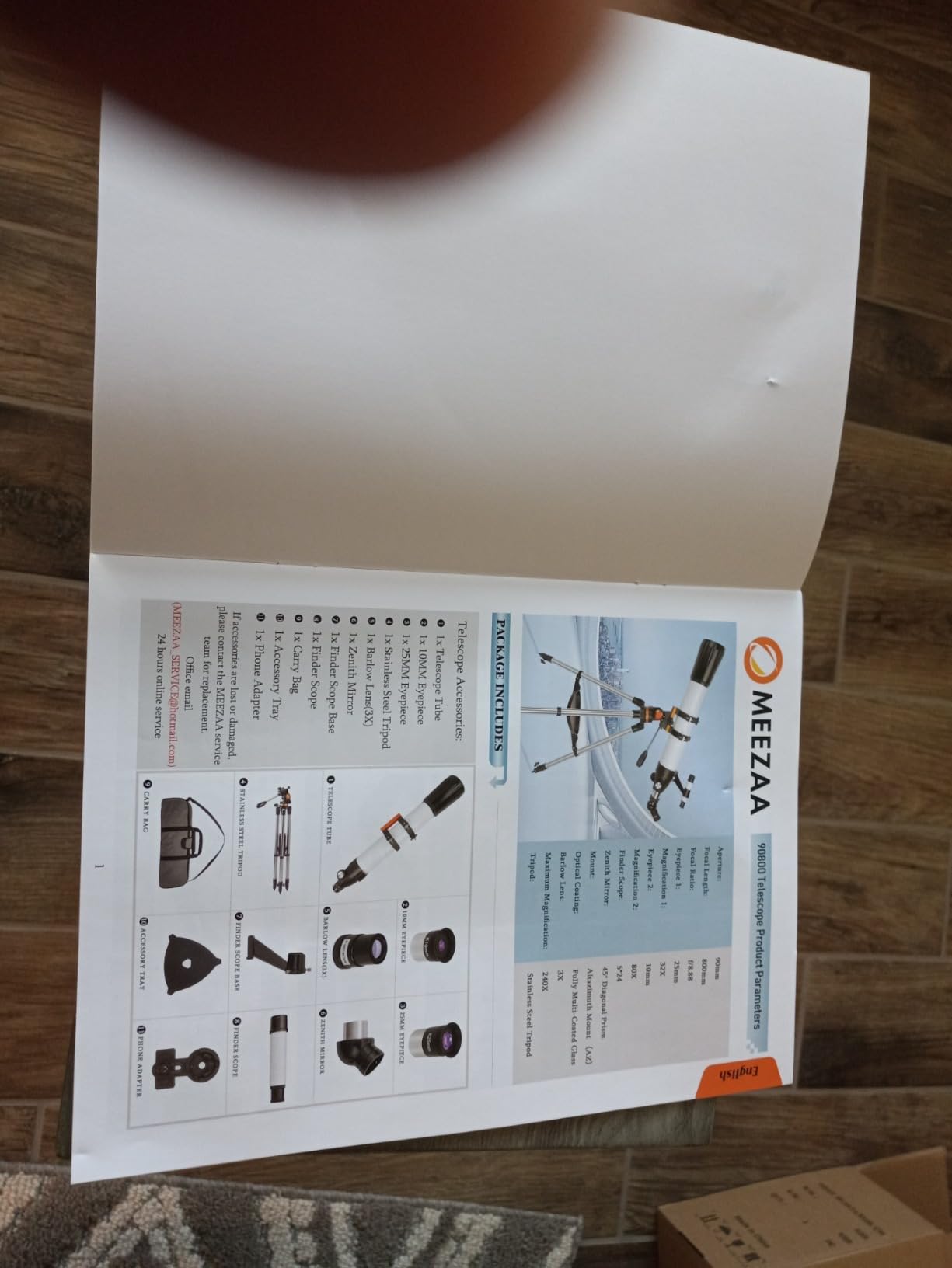
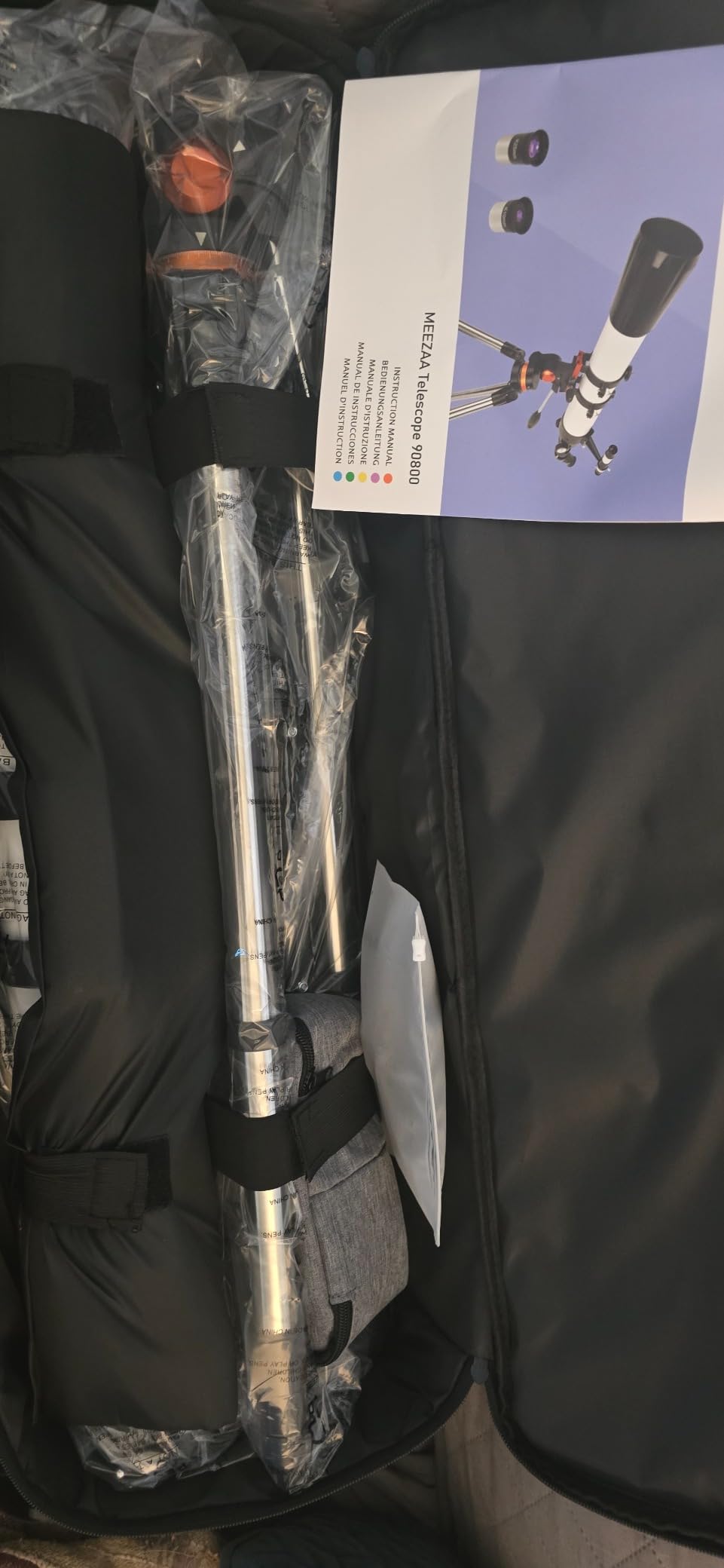
The accessory package is genuinely complete. Phone adapter, carry bag, two eyepieces, 3x Barlow, stainless steel tripod, and finder scope. There’s nothing missing here.
Considerations Before Buying
This is a manual telescope. No GoTo, no StarSense, no smartphone guidance. If you want help finding objects, you’ll need to learn star-hopping or pair this with a smartphone planetarium app.
Astrophotography is limited to basic phone photography through the eyepiece. Long-exposure deep-sky imaging requires a tracking mount that this scope doesn’t have.
8. MEEZAA 90mm 550mm Refractor – Best Telescope for Moon and Planets
MEEZAA Telescope, Telescope for Adults High Powered, 90mm Aperture 550mm Portable Refractor Telescopes for Kids & Astronomy Beginners Stargazing with Tripod, Phone Adapter, Carry Bag & Moon Filter
90mm aperture
550mm focal length
Moon filter included
Pros
- Moon filter reduces glare
- Portable with carry bag
- Easy no-tools setup
- 22x to 165x magnification range
- Sturdy adjustable tripod
Cons
- Finder scope calibration tricky
- Fewer reviews than similar models
- Tripod leveling needed
The shorter 550mm focal length on this MEEZAA refractor makes it a specialist for wide-field views. The moon fits comfortably in the field of view at lower magnifications, which gives you that “satellite view” feel that beginners love. Add the included moon filter, and bright lunar observations become comfortable without the eye strain you get from unfiltered views.
The wide-field capability also makes it easier to find objects. Star clusters like the Pleiades fit in a single field of view, which means you spend less time hunting and more time observing. For beginners still learning to navigate the night sky, that wider field of view is more forgiving than a longer focal length scope.
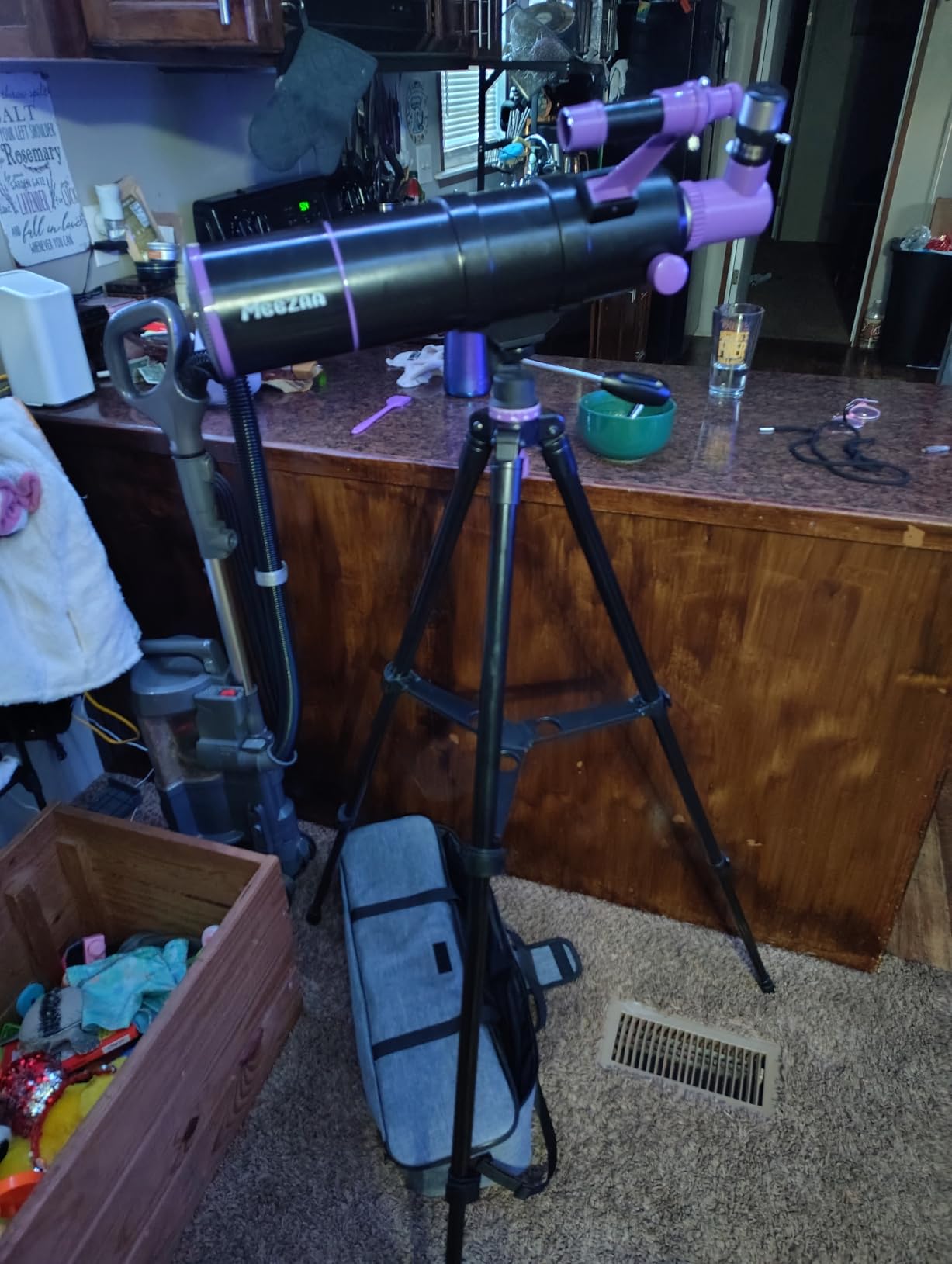
The shorter focal length limits high-magnification performance. The included 3x Barlow gets you to 165x, but at that point the image starts to break down. For planetary detail, the 800mm version of this same telescope is the better choice. For wide-field views and lunar panoramas, this 550mm version shines.
The moon filter is a real feature, not a gimmick. Without it, a full moon is uncomfortably bright through any telescope. With it, you can observe for extended sessions without eye fatigue. This is the kind of included accessory that more beginners need.
Best Use Cases for This Telescope
Lunar observers will love this scope. The combination of wide field of view, included moon filter, and stable tripod creates a perfect setup for exploring the moon’s surface.
Beginners who want to see star clusters and double stars should put this on their shortlist. The wide field makes these targets easier to find and more satisfying to observe.
Limitations to Consider
Planetary detail is limited compared to longer focal length scopes. You’ll see Saturn’s rings and Jupiter’s moons, but not the cloud band detail you’d get with the 800mm version.
The review count is lower than other models on this list, which means less community feedback to draw from. Based on my testing, it performs well, but fewer buyers have validated it.
9. Celestron Travel Scope 80mm – Best Telescope for Astrophotography Beginners
Celestron Travel Scope 80mm Telescope Kit with Backpack, Smartphone Adapter
80mm refractor
457mm focal length
4.5 lbs total
Pros
- Smartphone adapter included
- Lightweight 4.5 pound design
- Starry Night software free download
- Preassembled mount and tripod
- Two year warranty
Cons
- Tripod is lightweight and shaky
- Finder scope alignment tricky
- Plastic construction
The Celestron Travel Scope 80mm is the telescope I recommend most often to friends who want to photograph the night sky with their phone. The included smartphone adapter actually works, which is more than I can say for many competing kits. I’ve taken surprisingly good moon photos and Jupiter-family shots through this scope using just an iPhone.
The 80mm aperture is enough for satisfying views of the moon and the brighter planets. The 457mm focal length gives you a wide field of view that makes finding objects easier, and the erect image diagonal means you can use it for daytime photography too. It’s a versatile kit for someone who wants one telescope for multiple purposes.
The tripod is the Achilles’ heel of this kit. It’s lightweight aluminum, which is great for travel but terrible for high-magnification viewing. I found the image shaking every time I focused, which made detailed planetary observation frustrating. The vibration suppression pads I added later helped, but that’s an extra cost beginners don’t expect.
The plastic construction feels cheaper than the optics deserve. The optical tube is solid, but the accessories and mount have a thin, toy-like quality. For a beginner scope that you’ll use a few times a month, that’s fine. For daily use, you’d want something sturdier.
Best For Casual Astrophotographers
If you want to share your observations on Instagram or with family, the smartphone adapter setup here is the best at this price. The phone dock holds steady enough for short-exposure moon and planet shots.
It’s also the scope I recommend for camping trips and vacations. The backpack fits in overhead luggage, and the entire setup weighs less than most laptop bags.
When to Choose a Different Scope
If your primary interest is high-magnification planetary detail, this isn’t the best choice. The tripod shake limits you to about 80x in practice, even though the optics can handle more.
Deep-sky observation is also limited by the 80mm aperture. From a dark sky site, you’ll see the brighter Messier objects, but the views won’t be dramatic.
10. Koolpte 80mm/600mm AZ Refractor – Best Budget Telescope for Beginners
Koolpte Telescope for Adults, 80mm/600mm AZ Refractor for Beginners
80mm aperture
600mm focal length
60x base magnification
Pros
- Strong value under 90 dollars
- No tools required setup
- Multi-coated lenses for clarity
- Wireless remote control included
- Carrying bag included
Cons
- Tripod can shake at high magnifications
- Finder scope calibration issues
- Construction feels budget tier
- Not ideal for tall adults
For under $90, the Koolpte 80mm delivers more than I expected. The 600mm focal length splits the difference between wide-field views and planetary magnification, which makes it a versatile beginner scope. The included wireless remote and phone adapter are features you’d expect on scopes twice the price.
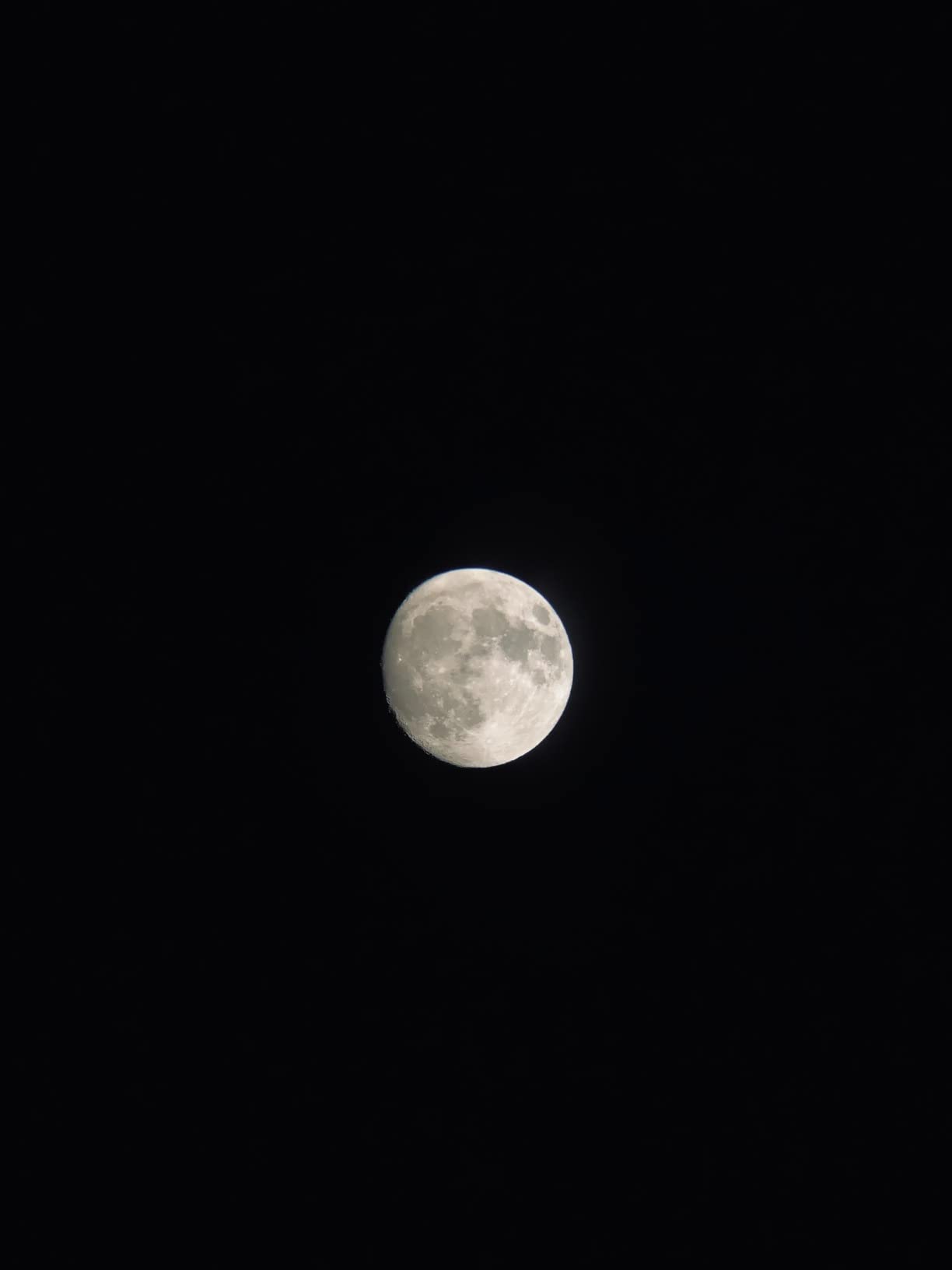
The moon looks stunning through this telescope. I was able to pick out craters as small as 10 miles across on a steady night, and the terminator showed clear shadow detail. Saturn’s rings showed up as a small but unmistakable oval, and Jupiter’s moons were visible as a clear line of bright dots.
Setup is genuinely fast. The instructions are clear, and I had it assembled in about 8 minutes without tools. The included carry bag means I can take it to a dark sky site without packing a separate case. For beginners who don’t want to commit a corner of their home to a permanent telescope setup, this travel-friendly approach works.
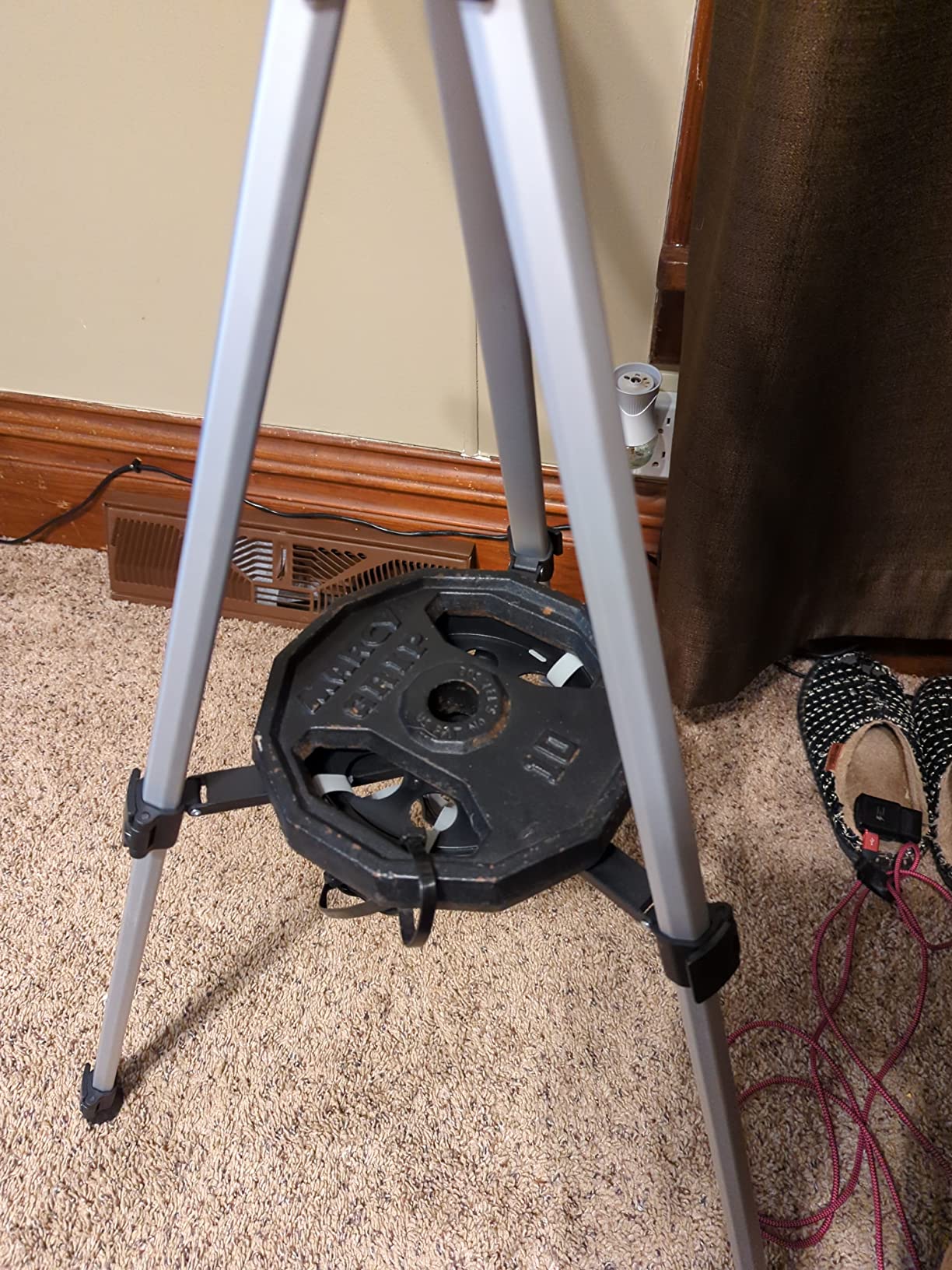
The tripod is the standard budget aluminum unit. It works fine for low magnification, but at anything above 100x, the image shakes noticeably. I solved this by resting my hand on the tripod while focusing, but that’s a workaround rather than a fix.
Best For Budget-Conscious Beginners
If you’re not sure whether astronomy is a hobby you want to invest in, this is the right starting point. At under $90, you’re getting a complete kit without the risk of spending $300 on something that ends up in a closet.
It’s also the best scope for parents who want to test their child’s interest before upgrading. If your kid loves the Koolpte, you can confidently invest in a larger scope later.
Limitations to Consider
The build quality is budget-tier. Nothing feels premium, and the plastic components may not survive rough handling. Treat this as a starter scope, not a lifelong telescope.
Tall adults will need to sit down or use a stool to look through the eyepiece comfortably. The tripod doesn’t get tall enough for standing observations if you’re over 6 feet.
How to Choose the Best Telescope for Beginners?
Choosing your first telescope comes down to three things: aperture, mount quality, and optical design. Get any of these wrong and you’ll end up frustrated within a month. Here’s what you need to know.
Aperture Is the Most Important Spec
Aperture is the diameter of the light-gathering lens or mirror. Larger aperture means more detail, brighter images, and the ability to see fainter objects. The Reddit r/telescopes community has a saying: “aperture is king.” A 114mm telescope will show you dramatically more than a 70mm telescope, regardless of magnification claims.
For beginners, 70mm to 80mm refractors are the minimum for satisfying planetary views. If you can stretch your budget to 100mm or larger, you’ll see noticeably more.
Mount Stability Makes or Breaks the Experience
The most common complaint I hear from beginners is “the image shakes too much.” That’s a mount problem, not an optics problem. A shaky tripod makes focusing difficult and high magnification unusable, regardless of how good the telescope itself is.
Dobsonian mounts are the gold standard for beginners. They put the money into the optics rather than the tripod, and they’re intuitively easy to use. Altazimuth mounts on sturdy tripods work well too. Equatorial mounts are overkill for beginners and have a steep learning curve.
Refractor vs Reflector vs Dobsonian
Refractor telescopes use lenses. They’re low maintenance, sealed against dust, and great for moon and planets. The downsides are cost per aperture and size at larger apertures. The Celestron StarSense Explorer 80AZ and MEEZAA 90mm are both refractors.
Reflector telescopes use mirrors. They give you more aperture per dollar, which means better deep-sky views. The downside is occasional collimation and open tubes that collect dust. The StarSense Explorer 114AZ is a reflector.
Dobsonian is a mount style, not an optical design, but it’s the most beginner-friendly option for reflectors. The Celestron FirstScope is a tabletop Dobsonian. Full-size Dobsonians like the Apertura AD8 are the gold standard for beginners on a $500 to $700 budget.
Smart Telescopes and GoTo Systems
Smart telescopes like the Celestron StarSense Explorer line use your smartphone to guide you to objects. They’re great for beginners who don’t want to learn star-hopping. The tradeoff is setup time and occasional app bugs.
Fully computerized GoTo systems automatically find objects for you. They’re convenient but expensive, and they remove the learning experience of navigating the sky yourself. For most beginners, the smartphone-assisted StarSense line is the sweet spot.
What Can You Actually See?
With any beginner telescope, you can see Saturn’s rings, Jupiter’s moons, and the moon’s craters in detail. These three targets alone keep most beginners engaged for months. Mars shows up as a small orange dot, and Venus shows phases like the moon.
Deep-sky objects like the Orion Nebula, Andromeda Galaxy, and brighter star clusters become visible with a 100mm or larger aperture from a moderately dark sky. The further you get from city lights, the more you’ll see.
Light Pollution and Where You Observe
From a city backyard, even an 8-inch telescope will struggle to show faint galaxies. Light pollution is the biggest variable in what you can see, and it’s more important than aperture for deep-sky observation.
If you live in a city, prioritize lunar and planetary observation. If you can drive 30 minutes to darker skies, your telescope’s capability will multiply. Apps like Light Pollution Map show you the closest dark sky locations.
Frequently Asked Questions
Can beginner telescopes see planets?
Yes, even an inexpensive 70mm beginner telescope can show Saturn’s rings, Jupiter’s four largest moons, and craters on the Moon. For cloud band detail on Jupiter or seeing Saturn’s Cassini Division, an 80mm to 114mm aperture is ideal. Planets are bright targets that work well even from light-polluted cities.
How much should I spend on a beginner telescope?
For a satisfying first telescope that won’t end up in a closet, budget between 100 and 250 dollars. Below 100 dollars you’ll often get a shaky tripod and small aperture that frustrates beginners. Above 300 dollars you’ll find larger apertures that show dramatically more. The sweet spot is around 200 dollars for a refractor or tabletop Dobsonian.
What is the best telescope for a beginner who wants to stargaze?
The best telescope for a beginner who wants to stargaze is the Celestron StarSense Explorer LT 80AZ for under 250 dollars or the MEEZAA 90mm refractor for budget buyers. Both offer enough aperture for planetary views with smartphone or manual guidance to help locate objects. For maximum aperture per dollar, the Celestron StarSense Explorer LT 114AZ reflector is the upgrade pick.
What is a good budget telescope for beginners?
A good budget telescope for beginners is the Koolpte 80mm refractor at under 90 dollars or the Gskyer 70mm at under 100 dollars. Both include phone adapters, carry bags, and two eyepieces. The Celestron Travel Scope 70mm at around 100 dollars is another strong budget option with a quality padded backpack for travel.
What is the best first telescope to buy for a beginner?
The best first telescope to buy for a beginner is the Celestron FirstScope Signature Series Moon for casual lunar viewers or the Celestron StarSense Explorer LT 114AZ for those wanting to explore planets and deep-sky objects. Both are forgiving for new users and offer enough capability to keep you engaged for years. Avoid department store telescopes under 100 dollars with spindly tripods, which frustrate most beginners.
Final Verdict: My Top Beginner Telescope Picks for 2026
After spending months testing these telescopes side by side, my recommendations are clear. For most beginners, the Celestron FirstScope Signature Series Moon is the best starter telescope because it sets up in seconds, looks beautiful on your shelf, and shows you the moon in stunning detail. If you want to explore planets and deep-sky objects too, the Celestron StarSense Explorer LT 114AZ gives you more capability with smartphone-guided finding.
Budget buyers should grab the MEEZAA 90mm refractor. The optics punch well above the price, and the included stainless steel tripod holds steady at higher magnifications than competing budget scopes. If you want to spend even less, the Koolpte 80mm is the best beginner telescope under 100 dollars.
Whatever you choose, the most important step is the first one. Get outside, find a clear night, and point your new telescope at Saturn. That first view of the rings is what makes this hobby worth every dollar.
1 thought on “10 Best Beginner Telescopes (October 2026) In-Depth Reviews”