
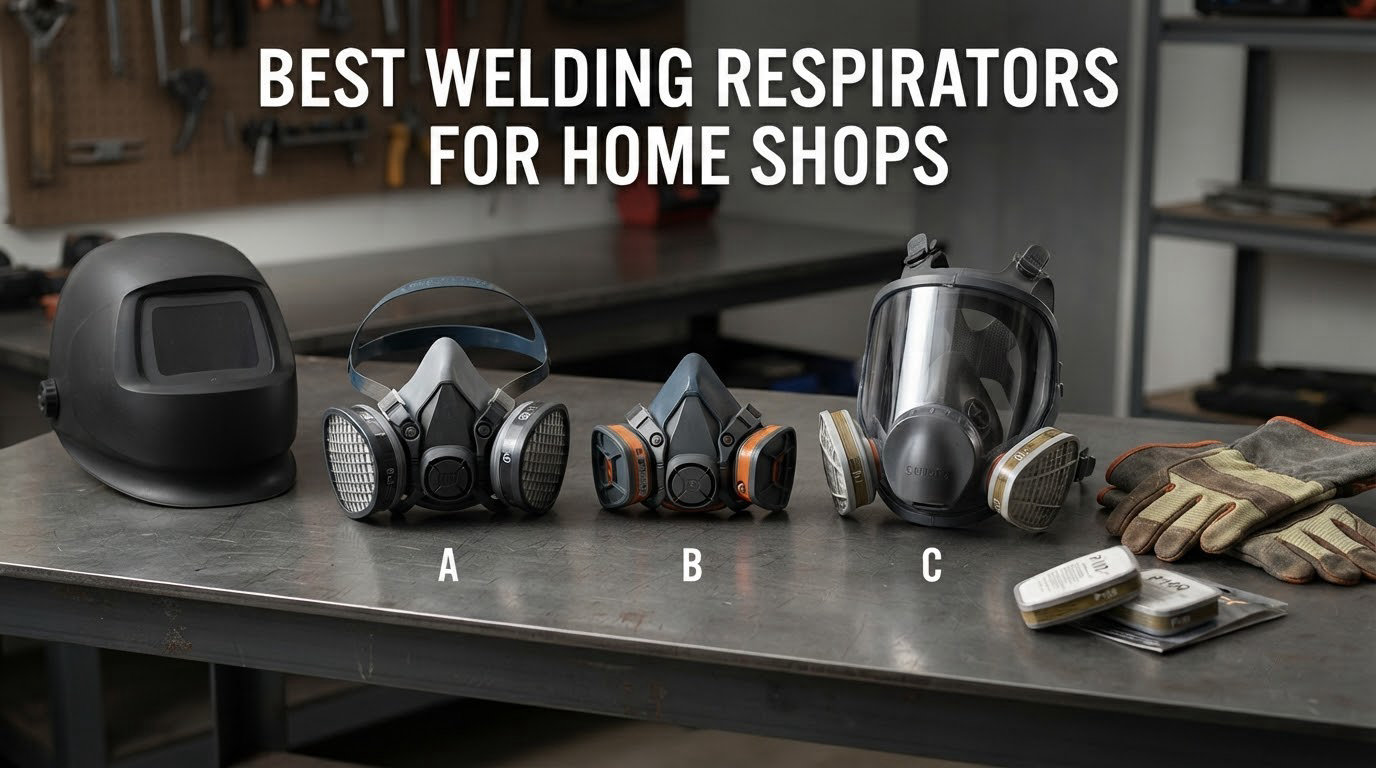
The best welding respirators for home shops are not the disposable dust masks most hobbyists reach for first. A half-mask elastomeric respirator with NIOSH-approved P100 cartridges is the standard answer among working welders, because the danger in a garage is not sawdust but metal fume: microscopic oxides of iron, manganese, chromium and zinc that a cloth mask passes straight through.
Garage welding concentrates that fume. A closed two-car bay with the door down can hold more particulate near your face than a ventilated fabrication shop ever does, and the arc keeps generating it every minute the power is on. So the respirator is the last line of defence after ventilation, not a replacement for it.
We compared 10 respirators built for welding fume protection, grinding and cutting, weighing the filter class, face seal, whether the profile clears an auto-darkening hood, and what the recurring filter cost looks like over a year. If your shop is still missing the basics, start with our welding table roundup and our multi-process welder picks before you worry about air.
Last updated for 2026. Every pick below is NIOSH-approved unless we say otherwise, and we list the limitations for each one, including the two masks in this group that are not certified for heavy fume work.
Table of Contents
Top 3 Best Welding Respirator for Home Shops (October 2026)
Three masks stood out. The GVS Elipse wins on comfort and review depth, the 3M 65021 wins on value and dual-cartridge protection, and the Miller LPR-100 wins specifically for wearing under a helmet.
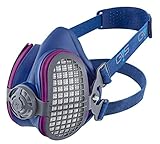
GVS SPR457 Elipse P100 Half Mask
- NIOSH P100 approval
- Very low breathing resistance
- Replaceable filters rated up to 5 years

3M 65021 P100/OV Multi-Purpose
- P100 plus organic vapor cartridge
- Reusable washable facepiece
- Twin cartridge bays
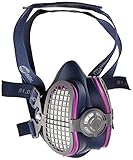
Miller ML00894 LPR-100
- Low profile fits under most hoods
- Large non-return exhaust valve
- Filters included
All 10 Welding Respirators Compared Side by Side
Here is every mask in the roundup with the spec that actually changes the buying decision. Filter class tells you what it blocks, and the helmet column tells you whether it will fit under your hood.
| Product | Specifications | Action |
|---|---|---|
| GVS SPR457 Elipse P100 Half Mask |
|
Check Latest Price |
| 3M 65021 P100/OV Multi-Purpose Half Mask |
|
Check Latest Price |
| Miller ML00894 LPR-100 with Filters |
|
Check Latest Price |
 3M 62023 P100/OV/AG Reusable Half Mask 3M 62023 P100/OV/AG Reusable Half Mask |
|
Check Latest Price |
 3M 65023 Quick Latch Multi-Purpose 3M 65023 Quick Latch Multi-Purpose |
|
Check Latest Price |
 Drager X-plore 3500 Multi-Gas P100 Drager X-plore 3500 Multi-Gas P100 |
|
Check Latest Price |
 North Honeywell 5500 Bundle with 2 P100 North Honeywell 5500 Bundle with 2 P100 |
|
Check Latest Price |
 Safety Works SWX00320 Multi-Purpose Safety Works SWX00320 Multi-Purpose |
|
Check Latest Price |
 Tesoro Moda M401 with Goggles and 10 Filters Tesoro Moda M401 with Goggles and 10 Filters |
|
Check Latest Price |
 Tesoro Moda 7-Filter Reusable Half Mask Tesoro Moda 7-Filter Reusable Half Mask |
|
Check Latest Price |
Why Home Shop Welders Need a Respirator
Welding fume is a gas and a particle problem, and that is why a dust mask is the wrong tool. The arc vaporizes metal, and the plume that rises off hot steel, stainless or galvanized coating is a mix of fine particulate oxides plus vapors that only a cartridge rated for them will remove.
The classic symptom is metal fume fever, the flu-like reaction that can start a few hours after a session, with flu symptoms, throat irritation and chest tightness. Nobody reaches that state intentionally, but long-term exposure to the same plume is associated with lung damage and elevated cancer risk, and a hobbyist in a closed garage gets a bigger dose per weld than a welder in a shop with extraction arms.
Welders have historically skipped respirators for two reasons. The first is that arc flash is bright enough to fog the lens, and the second is heat: a mask in a hot garage gets removed, and once it is off it stays off. Both complaints are real, which is why a low-profile profile, a downward vent design and low breathing resistance are safety features here rather than comfort extras. The consensus on both the Miller and AWS welding forums is the same: get a 3M-style half mask with P100 pancake filters, and get one comfortable enough that you actually keep it on.
Two bits of folklore to retire. Drinking milk after welding does nothing for fume; it was a home remedy for discomfort, not a filter. And the old idea that welding smoke is simply annoying does not hold up, because the specific concern is the metal content, not the smell or the dirt.
One more thing a respirator cannot do for you: clear the air. Move the welding outdoors or at least to an open doorway, put a shop fan in the window blowing outward, and keep a canopy or arm-mounted extractor within a few inches of the arc. We have seen a well-fitted P100 half mask still pulling gas and smoke through the filter because the wearer was breathing hard and the seal slipped, so extraction reduces the load the respirator has to carry.
1. GVS SPR457 Elipse P100 Half Mask: The Most Comfortable Long-Wear Pick
GVS SPR457 Elipse P100 Dust Half Mask Respirator with replaceable and reusable filters included, blue, m/l size
NIOSH P100 TC-84A-6949
Silicone and latex free elastomer
Filters rated up to 5 years
Low breathing resistance
Pros
- Lowest breathing resistance in the group for long sessions
- Compact profile that clears eye and ear protection
- Replaceable P100 filters rated for up to 5 years
- Hypoallergenic elastomer with no latex or silicone
- 6392 reviews averaging 4.6 stars
Cons
- Particulate only with no vapor or acid gas protection
- Single M/L facepiece may not seal equally on very different face sizes
This is the mask I end up wearing on long Saturday sessions, and the reason is not the specification sheet, it is the air path. Owners consistently describe low breathing resistance and a compact shell that does not fight with safety glasses or hearing protection, which is the exact problem that pushes people back to no mask at all.
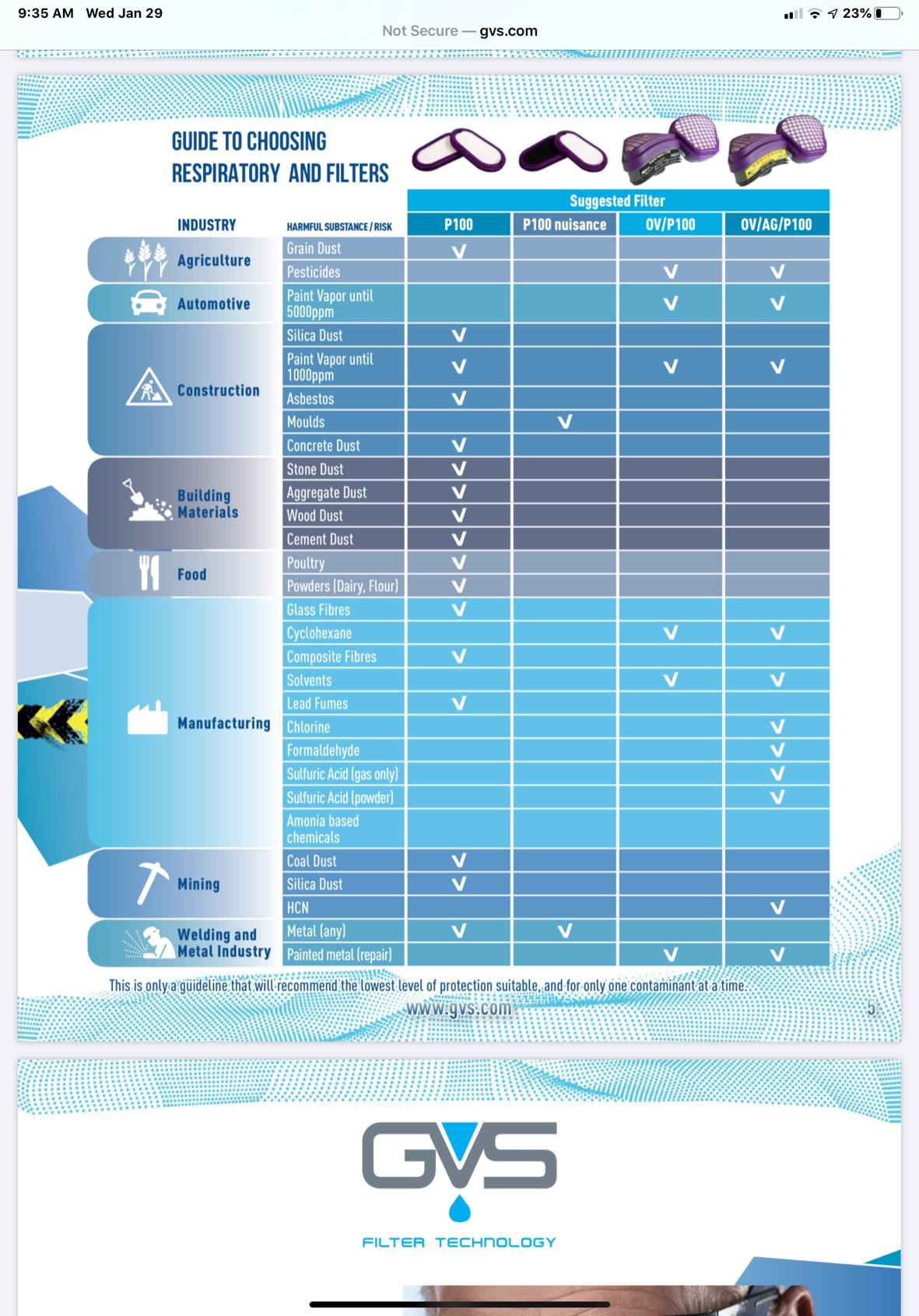
The GVS is NIOSH-approved as a P100 particulate respirator (TC-84A-6949, meeting 42CFR84) and is rated for dusts and fumes including silica, coal dust, iron and zinc. The facepiece is a soft thermoplastic elastomer with no latex and no silicone, which matters for people who react to one or both.
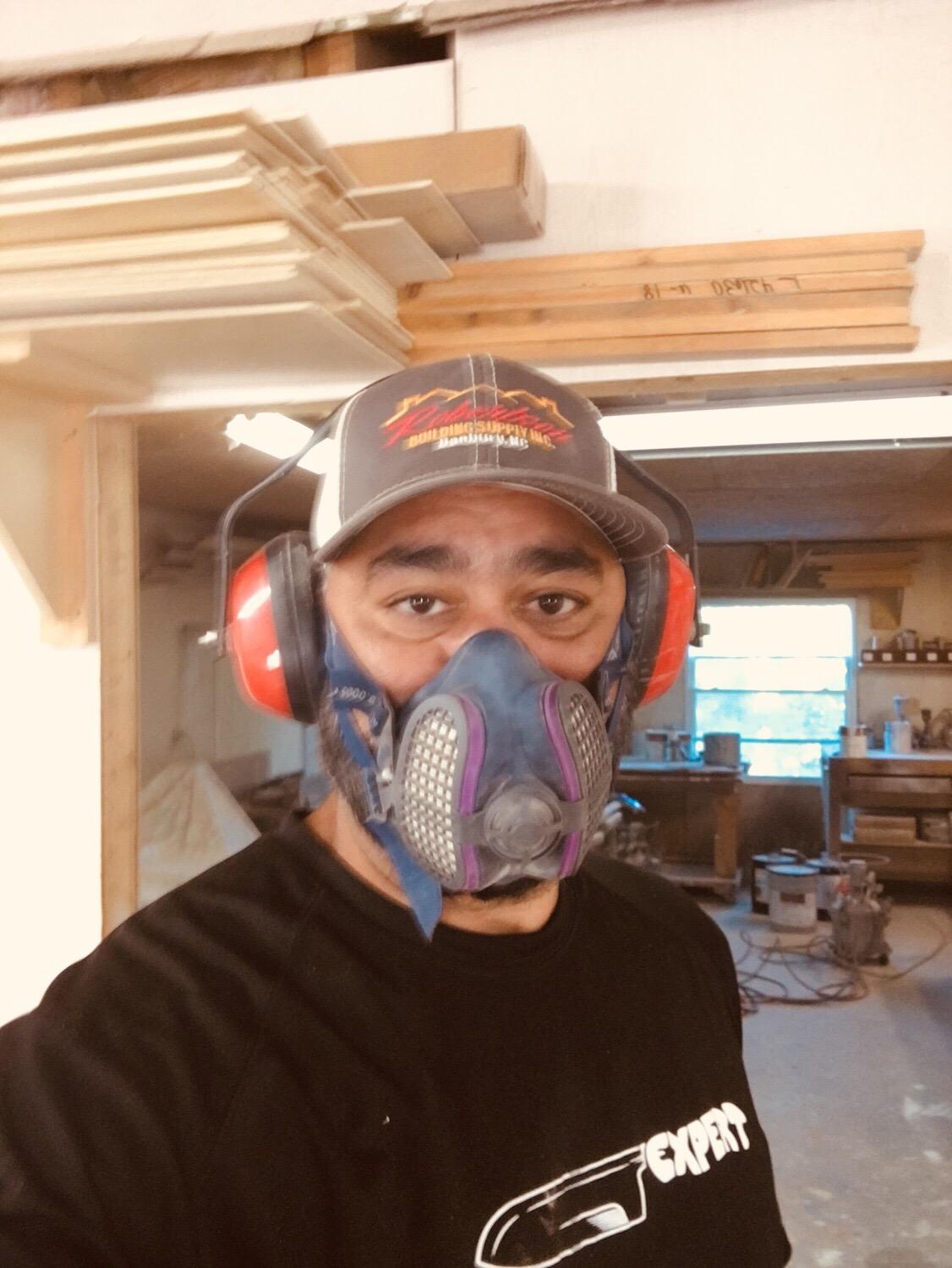
At 6392 reviews and a 4.6 average, this is the most heavily reviewed respirator in the roundup, and the review themes are consistent rather than promotional. People like the wide field of view, the easy headband adjustment, and the fact that the filters are replaceable rather than single-use, which is what makes the running cost reasonable across a year of hobby work.
The specification that surprised me was the filter service life. GVS rates the replaceable filters for up to 5 years, so a home shop that keeps the facepiece and swaps filters occasionally spends very little per weld. The listed protective coverage is broad, covering coal, silica, cotton, iron ore, graphite, kaolin, zinc and aluminium dusts, plus asbestos and bauxite type dusts.
Who It Suits Best
It suits a hobbyist who welds most weekends, grinds a lot, and wants one mask that stays comfortable from the first weld to the last. The low profile also means it clears the crown of a welding helmet better than most cartridge half masks, so it works for anyone who grinds and welds in the same session.
For anyone with sensitive skin, the latex-free and silicone-free elastomer removes a common source of redness around the nose and chin after an hour of wear.
Where It Falls Short
It is a particulate filter only. If you are cutting or grinding coated steel, spraying anything, or working around solvents, the P100 media will not touch organic vapors, and you want a mask with an organic vapor cartridge instead, like the 3M 65021 or 3M 62023 in this list.
The facepiece is a single M/L size. Faces at the narrow or wide end of the range may not get an equal seal, and a leak at the nose bridge is the failure point that matters most on a welding respirator.
2. 3M 65021 P100/OV Multi-Purpose Half Mask: The Best Value All-Rounder
3M OV/P100 Odor/Particulate Multipurpose Respirator 65021, Medium
NIOSH organic vapor cartridge with P100 filtration
Reusable half facepiece with twin cartridges
Odor reduction for coatings
Medium size
Pros
- Highest rated pick here at 4.7 stars across 1429 reviews
- Particulate and organic vapor protection in one cartridge
- Cuts odor from stains varnishes and coatings
- Washable reusable facepiece lowers cost per wear
Cons
- Medium size only in this configuration
- Organic vapor cartridges have a fixed service life and add a recurring cost
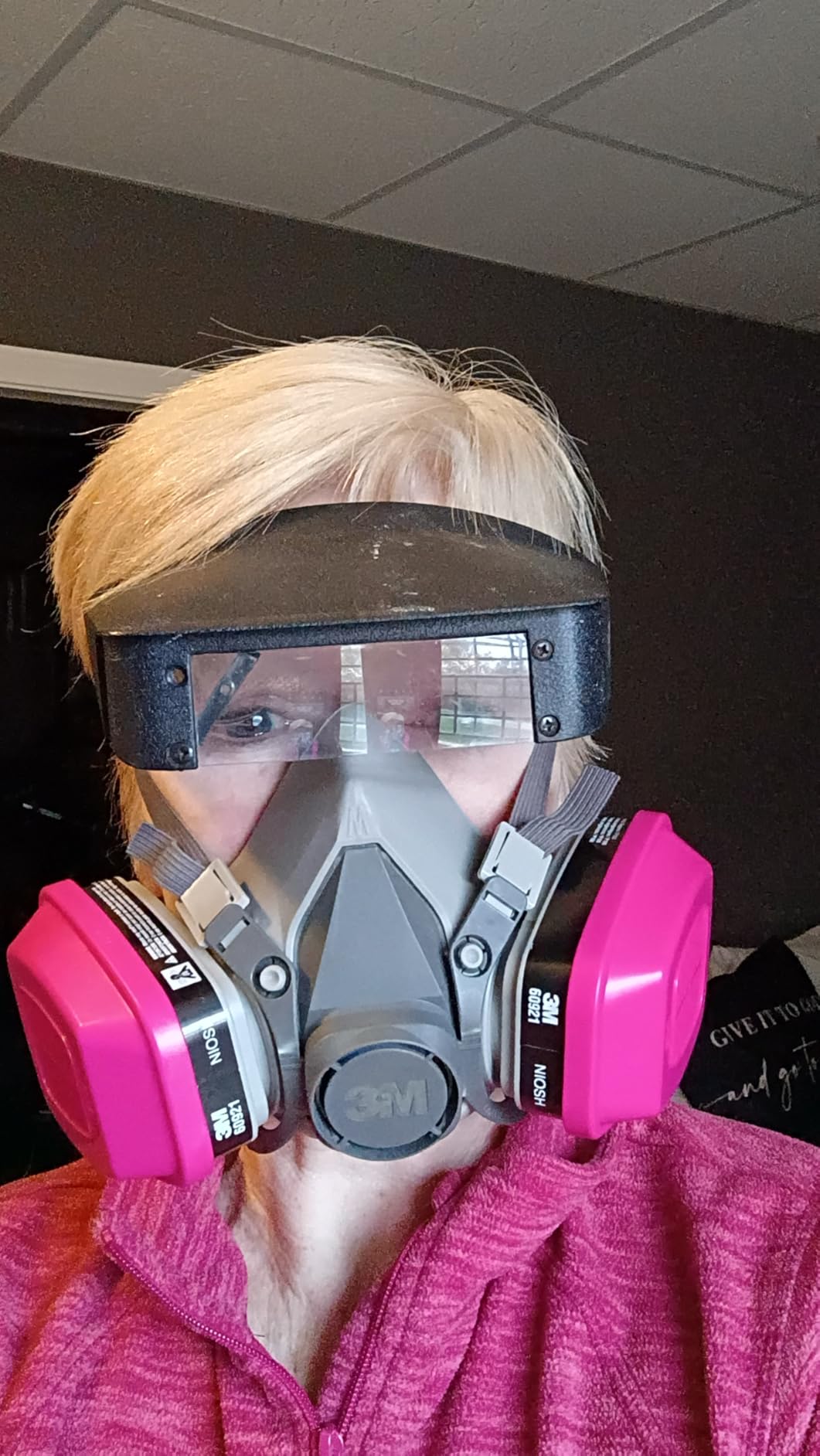
If you weld mild steel on weekdays and occasionally cut painted or sealed metal, this is the one I would buy first. The cartridge is a NIOSH-approved organic vapor cartridge with P100 particulate filtration, so it handles the fume and the coating vapour in the same breath.
That dual rating is the difference between this and most of the budget half masks. The listed capability includes odor reduction for sprays and vapors from stains, varnishes, coatings and sealants, which is exactly the situation a hobbyist creates when they weld a bracket that still has shop primer on it.
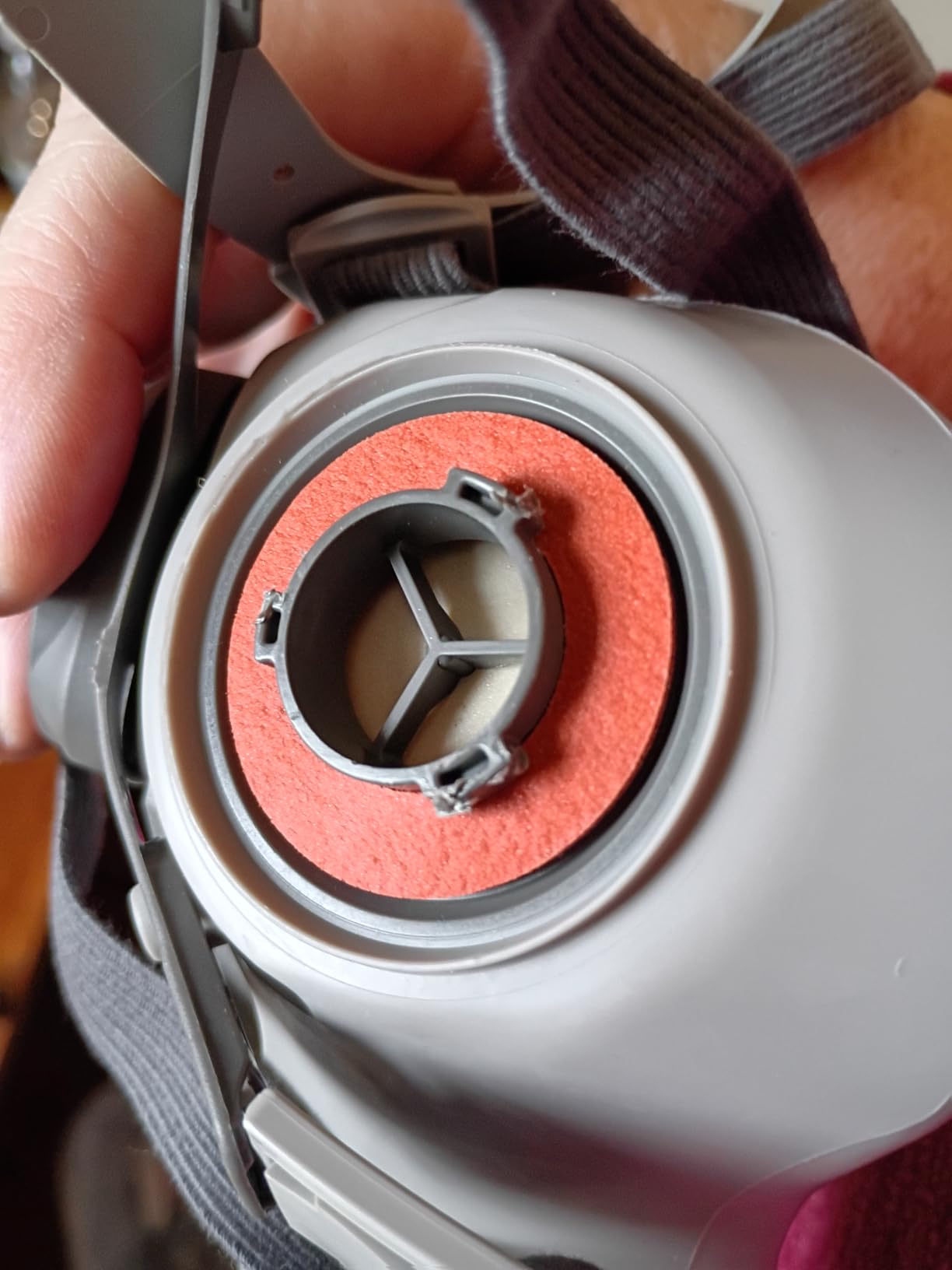
Reviewers rate the build quality, the simple cartridge swap and how easy the facepiece is to clean. With a 4.7 average across 1429 reviews, it sits at the top of the rating range here without relying on a huge review count, and the category placement reflects how commonly it is bought for general shop work.
Because the facepiece is washable and the cartridges are replaceable, the economics work in your favour. You buy it once, wash it with mild detergent, and replace the cartridge pair on a schedule rather than replacing the whole mask every time the filter loads up.
Who It Suits Best
It suits a home shop that mixes processes, where a single project might include MIG on mild steel, some grinding, and cutting into material with paint or sealant still on it. Organic vapor protection costs little extra to carry and removes a whole class of mistake.
It also suits anyone who has never owned a proper reusable respirator and wants one that covers cleaning, spraying and welding without a second purchase.
Where It Falls Short
This configuration is a medium size. Buyers with very large or very small faces often need a different size, and buying the wrong size is the fastest way to end up with a mask you never wear.
The organic vapor cartridge has a limited service life, and once it is exhausted you are buying a new pair even though the particulate layer may still be fine. A half mask also carries an assigned protection factor of 10, so a closed garage during heavy grinding or plasma cutting is pushing the limit of what it can do.
3. Miller ML00894 LPR-100: Built Specifically to Wear Under a Helmet
Miller ML00894 Lpr-100 Respirator W/Filters, Small/Medium
Low profile that fits under most welding helmets
Large non-return exhaust valve
NIOSH standard
Includes filters
Small/medium sizing
Pros
- Purpose-built low profile for use under an auto-darkening hood
- Large non-return exhaust valve reduces heat and fatigue
- Miller Electric designs specifically around arc work
- Filters included in the box
- 4.6 stars from 979 reviews
Cons
- Small/medium sizing excludes larger face shapes
- Listed as disposable in the product metadata despite the respirator format
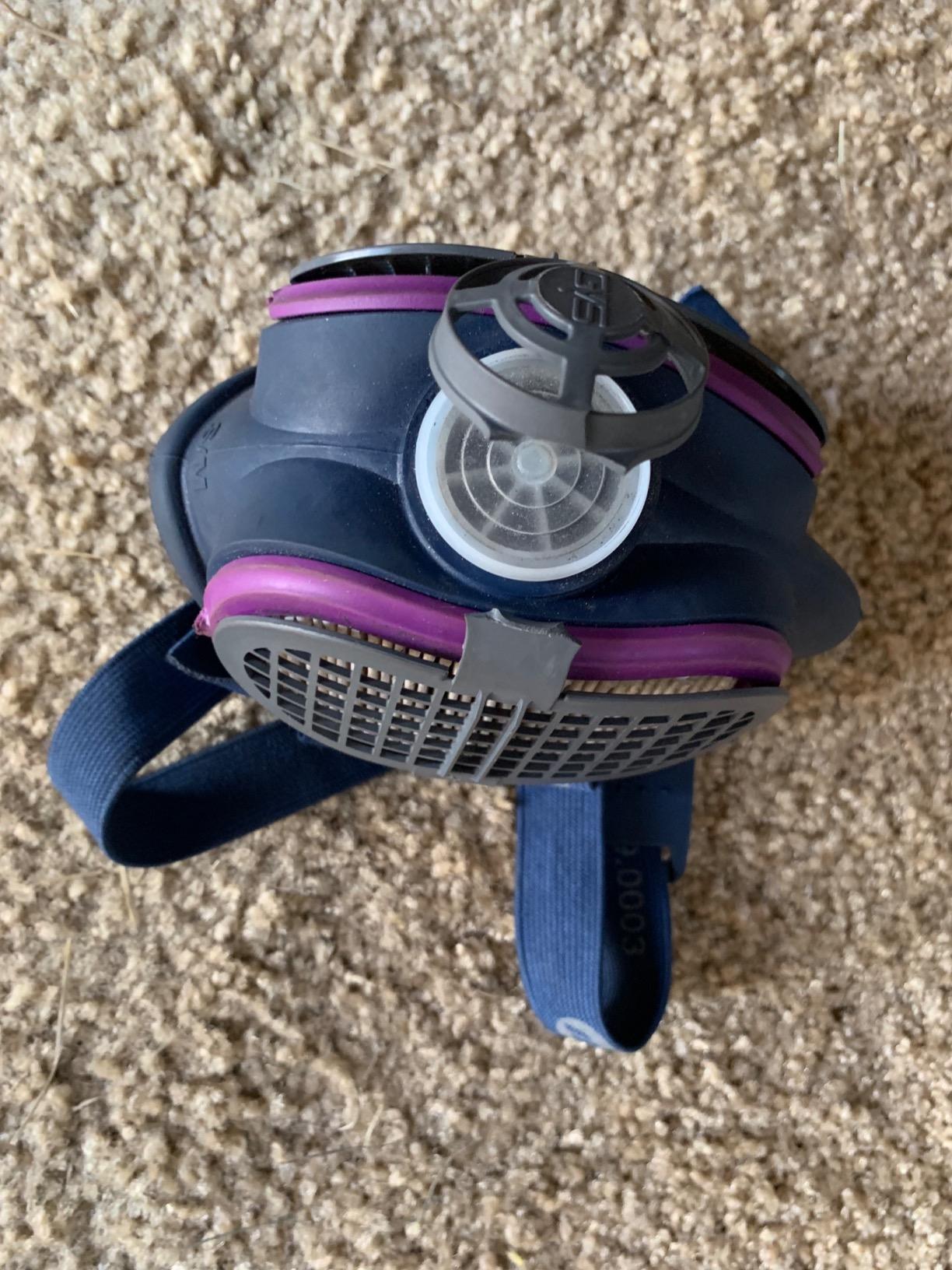
There is a category of helmet problem that has nothing to do with optics. A cartridge half mask that sits too tall fouls the inside of the hood, presses the crown padding into your forehead, and gets dragged down when you flip the hood down. The Miller LPR-100 was designed to avoid that.
The manufacturer states plainly that it fits easily under most welding helmets, and reviewers who weld at home back that up. The low profile is the whole point of the product, and it is why a Miller mask comes up so often in helmet-side conversation among hobby welders.
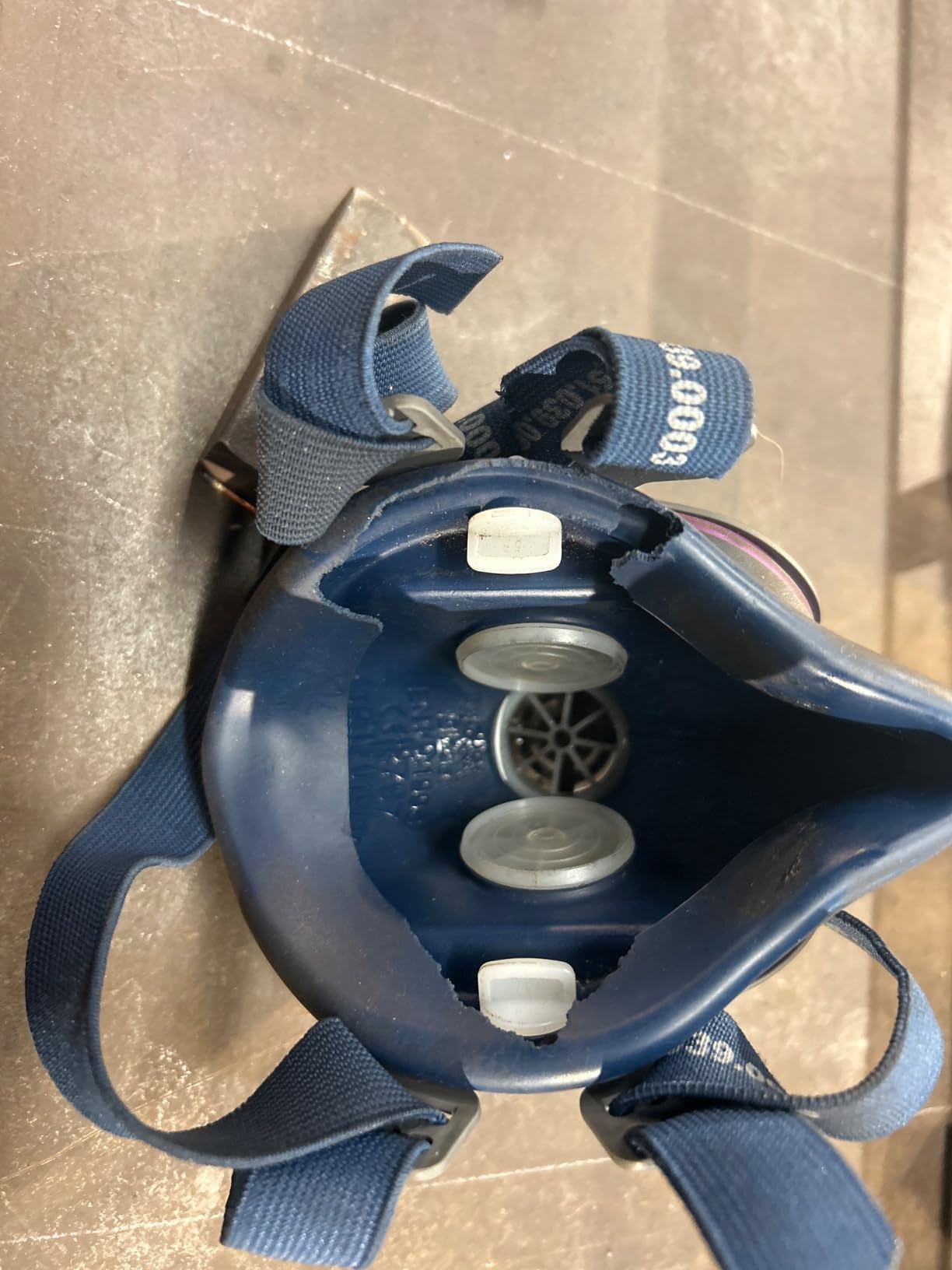
The other design win is the large non-return exhaust valve. It moves a bigger volume of exhaled air than a standard valve, which means less heat and moisture building inside the mask over a long weld. That directly addresses the complaint that hot garage sessions make respirators intolerable.
It is NIOSH standard, comes with filters, and comes from a welding-specialist brand, so the geometry was checked against real helmets rather than a generic safety catalogue. It is made in the USA.
Who It Suits Best
It suits a welder whose main concern is wearing protection and a helmet at the same time without constant adjustment. If you work in a small or medium face size, the fit is the part of this mask that will genuinely impress you.
It also suits anyone welding outdoors or in a hot garage, because the exhaust valve is the difference between a mask you keep on and one you take off after twenty minutes.
Where It Falls Short
The sizing is small/medium, and larger face shapes need a different mask. The product metadata also lists it as disposable despite the respirator and filter format, which is a listing inconsistency worth being aware of before you plan to keep the facepiece long term.
It is a half mask, so it does not protect the eyes from spatter and arc light. You still need a welding helmet or safety glasses underneath, and the filter here is a particulate type rather than a combined vapor cartridge.
4. 3M 62023 P100/OV/AG Reusable Half Mask: The Most Complete Cartridge Protection
3M P100 / OV/AG Multi-Purpose Reusable Respirator 62023, Medium
NIOSH OV/AG/P100 combination cartridge
99.97 percent filtration
3M bayonet connection
12.8 ounces
Reusable
Pros
- Organic vapor
- acid gas and P100 protection in one cartridge pair
- Filters at least 99.97 percent of solids
- liquid aerosols and oil particulates
- Easy cartridge swaps and simple cleaning
- Adjustable straps help dial in a tight seal
Cons
- Firmer silicone seal than newer 3M facepieces
- Noisy to breathe through and harder to talk in
- Takes more effort to disassemble for cleaning
This is the cartridge you want when your shop has more than one kind of hazard in it. The 62023 combines organic vapor, acid gas and P100 particulate filtration, so it covers paint sprays, certain solvents, heavy-duty cleaners, bleach, sealants and pool chemicals alongside the metal fume.
The filtration figure is at least 99.97 percent of solids and liquid aerosols and oil-based particulates, and the P-series media is oil-proof. That oil resistance matters for welding because cutting oils, way lubricants and cutting fluid aerosols are common in a home shop that also does machining or metalwork.
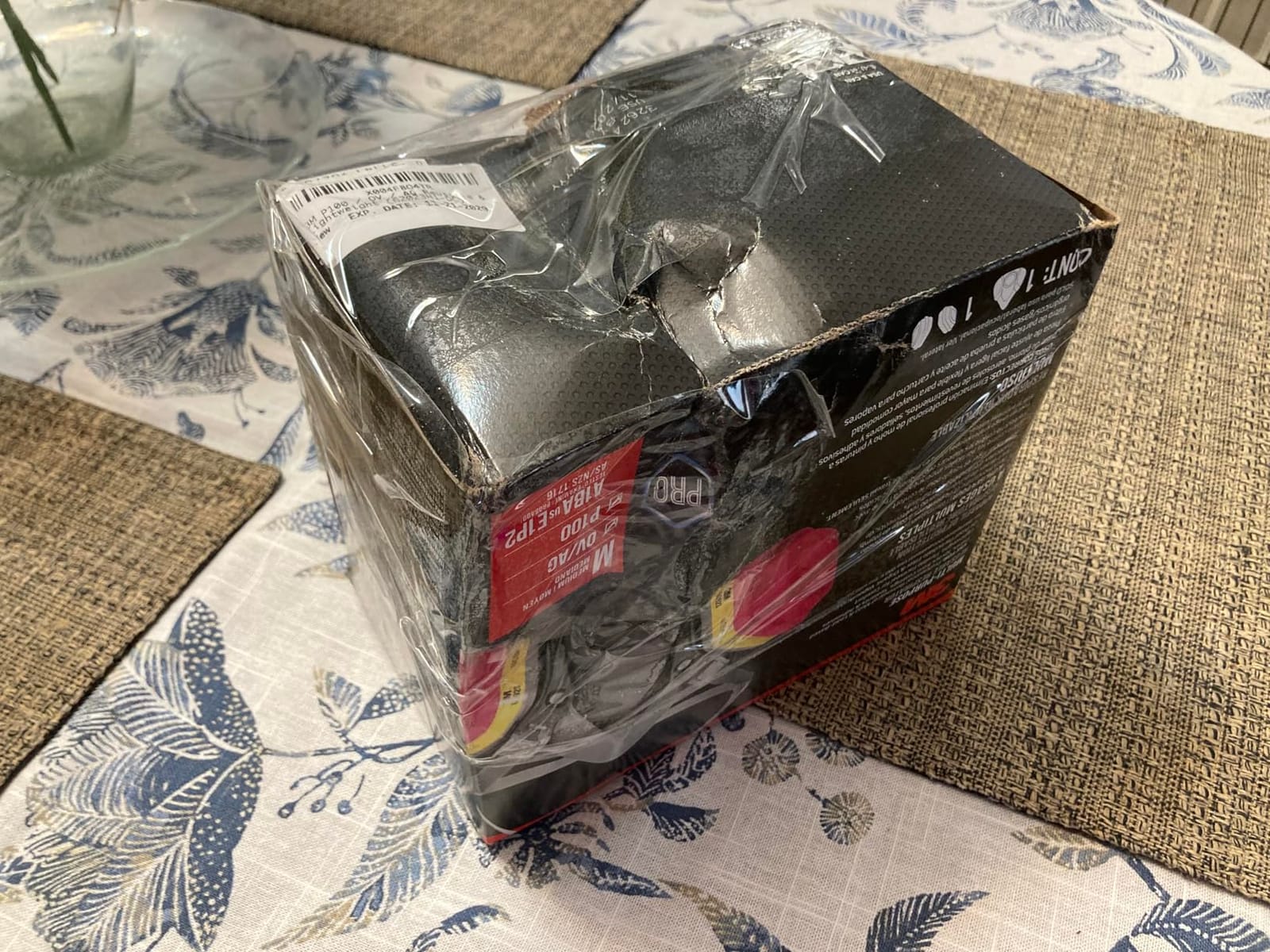
Buyers praise the filter performance, easy strap adjustment and how straightforward it is to clean. Some users report it sealing well even with facial hair, which is worth mentioning cautiously: a seal over a beard can work, but a clean-shaven sealing surface is the only condition the fit is designed around.
It uses the 3M bayonet connection, so it is compatible with other 3M cartridges and filters. That is a quiet advantage if you later add a chemical cartridge for a specific job, and it means the facepiece is not locked into one filter type. The listed weight is 12.8 ounces with dimensions of 4.5 by 7.5 by 7.7 inches.
Who It Suits Best
It suits a home shop that treats metal and also sprays, cleans or does acid work with the same facepiece. Buyers running mold cleanup, spray finishing and shop welding reach for this cartridge because it removes the guesswork about which hazard is present.
It also suits anyone who wants a P100 filter that keeps working through oil-laden dust rather than a time-limited N-class filter.
Where It Falls Short
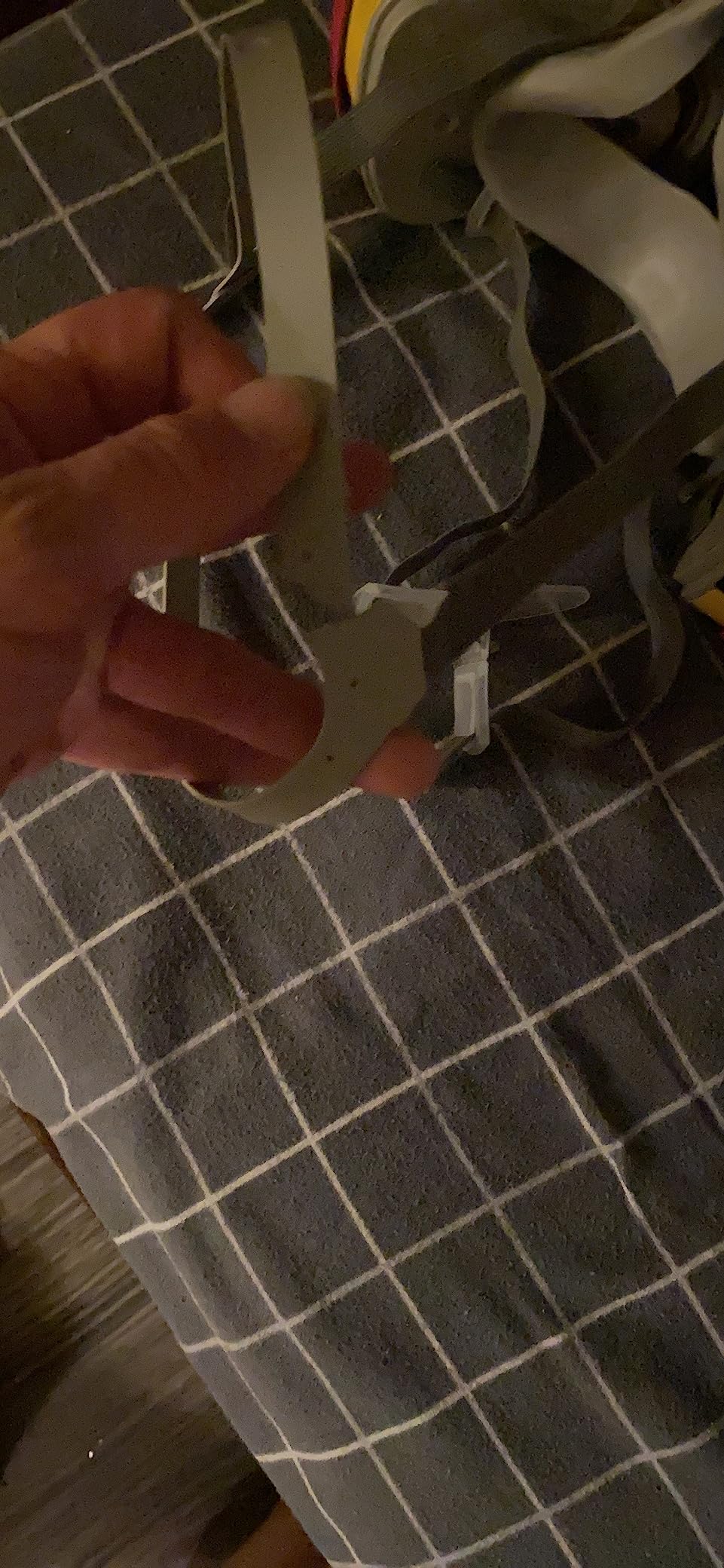
The face seal is the older, firmer silicone style, and the most repeated review complaint is that it is less comfortable than newer 3M facepieces over a long session. If you are highly sensitive to pressure points, expect to adjust the straps more often.
It is also noticeably noisy to breathe through, which makes it a poor choice for a shop where you need to talk to someone while wearing it. And the product is labelled for workplace or occupational use under a government-compliant respiratory protection program, so a hobbyist is using it in a different context than its approval assumes.
5. 3M 65023 Quick Latch Multi-Purpose: Best Rated and Easiest On and Off
3M Quick Latch Multi-Purpose Respirator 65023 w/ 1-Pair Cartidges, Medium
NIOSH 60923 OV/AG/P100 cartridges
99.97 percent filtration
Quick latch drops mask without unstrapping
13.44 ounces
Pros
- Highest average rating in the roundup at 4.8 stars
- Quick latch allows one-handed on and off and dropping the mask for a break
- Valve cover directs breath and moisture downward away from glasses
- Full organic vapor
- acid gas and P100 protection
Cons
- Costs more per unit than the standard strap 3M models
- Quick latch hardware is proprietary and cannot be swapped for standard head straps
The 65023 has the highest average rating in this group at 4.8 stars, and the reason owners keep pointing to is the quick latch system. You can put it on and take it off with one hand, and more usefully, you can pull the respirator down off your face for a break without unstrapping anything.
That single feature changes how a mask gets used. A respirator you must fully re-don each time you lift your hood is a respirator that comes off more often, and every time it comes off the fume reaches your lungs.
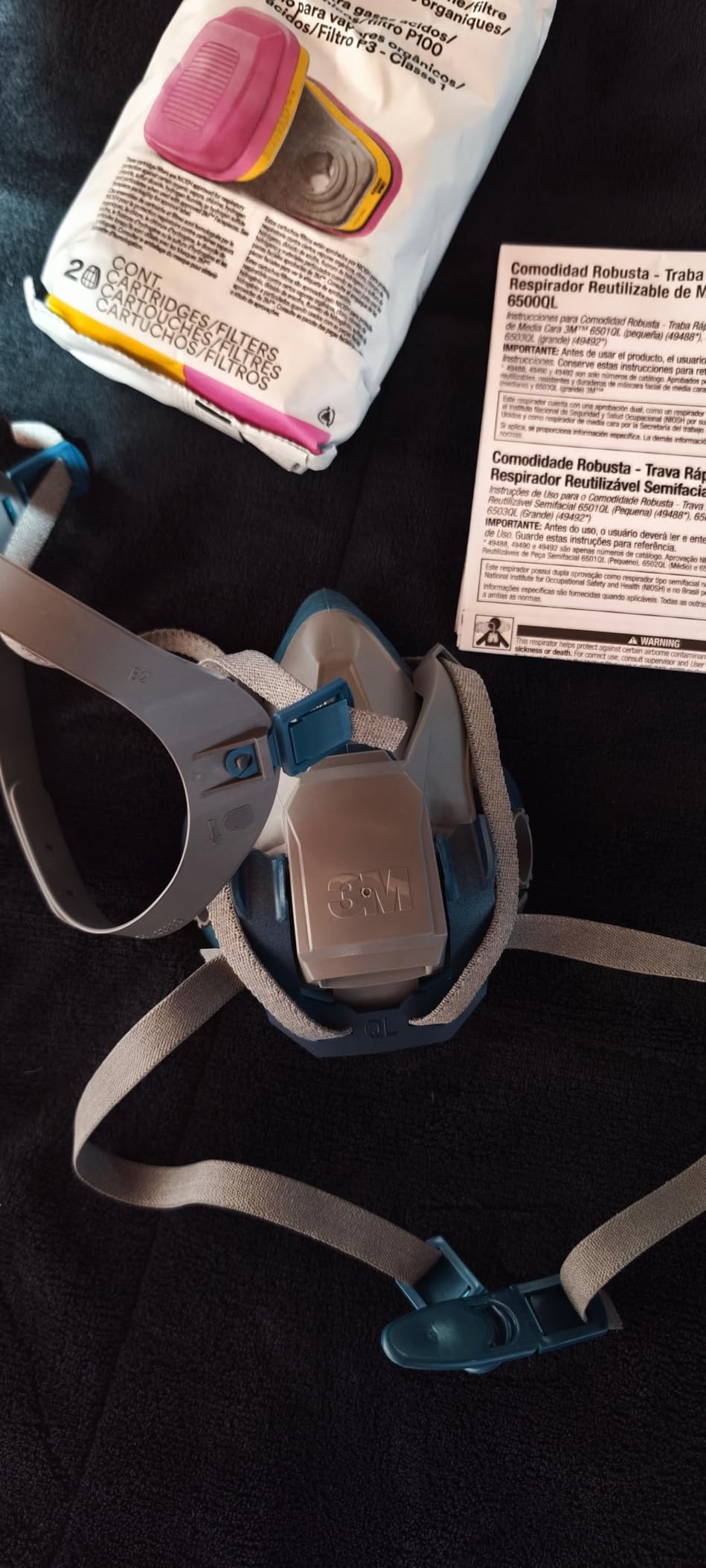
The valve cover is the second detail worth calling out. It directs exhaled breath and moisture downward rather than forward, which is why owners say it does not fog safety glasses. Glasses fogging is a common reason welders abandon a mask, and this design addresses it directly.
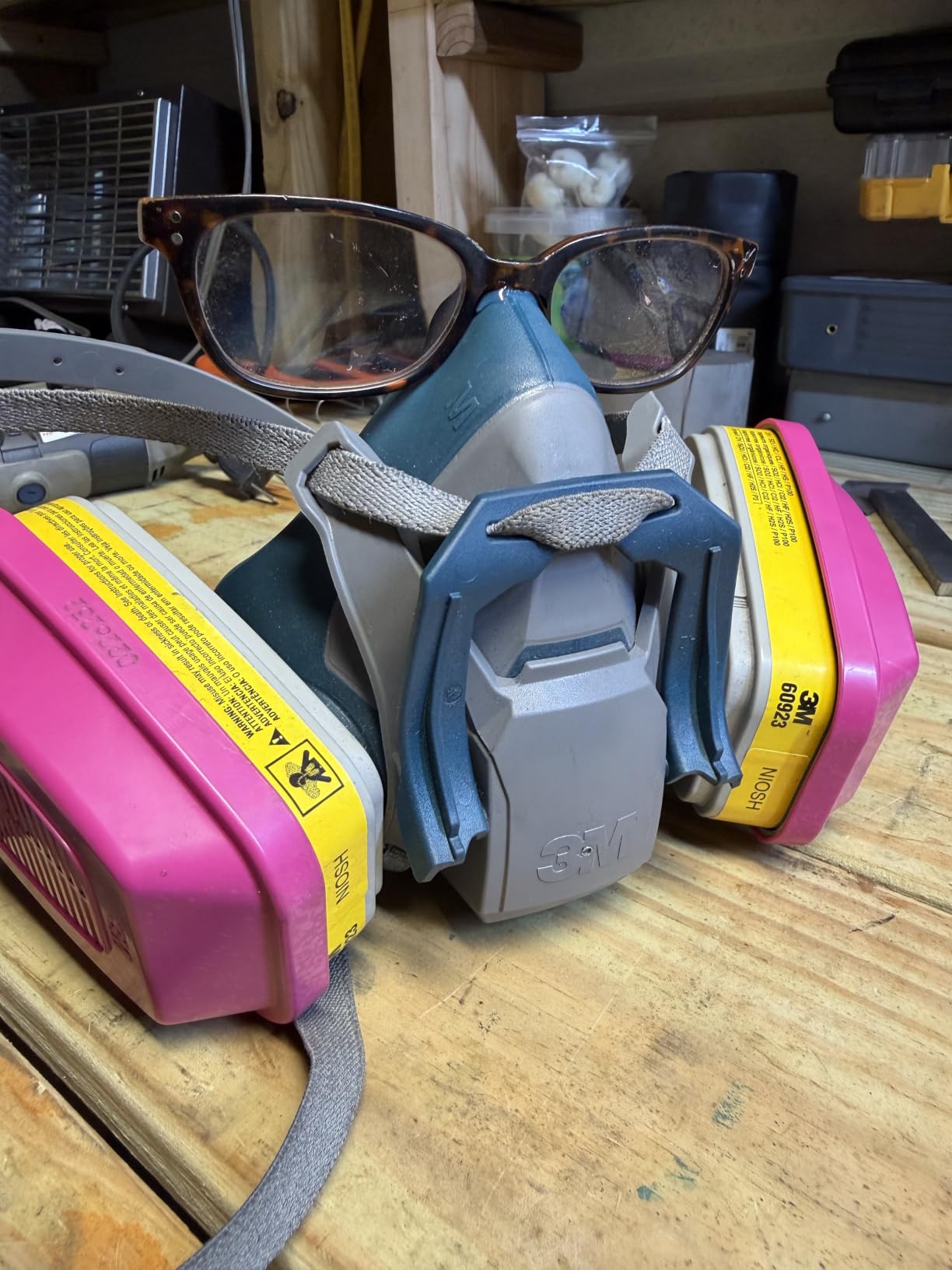
The 60923 cartridges are NIOSH-approved OV/AG/P100 units filtering at least 99.97 percent of solids, liquid aerosols and oil-based particulates. They cover organic vapors from painting, varnishes, stains, sealants, solvents and solvent-based cleaners, plus acid gases from heavy-duty cleaners, bleach and pool chemicals.
Who It Suits Best
It suits anyone who wears prescription glasses or safety glasses under a respirator, because the downward breath path keeps lenses clear. That is a bigger deal than it sounds, since lens fogging is one of the most common reasons a mask comes off mid-session.
It also suits a welder who moves between the hood, a grinder and a cleanup task several times an hour and does not want to fully re-don the respirator each time.
Where It Falls Short
It costs more per unit than the standard strap 3M respirators, and the quick latch is proprietary hardware. If the latch mechanism breaks, you cannot simply swap in a conventional four-point head strap, so treat the latch as a part that matters.
With 586 reviews it has the smallest evidence base of the well-reviewed picks here. The rating is excellent, but fewer owners means less long-term data on seal durability than the 6392-review mask above.
6. Drager X-plore 3500: The Widest Chemical Coverage Here
Dräger X-plore 3500 Respirator Mask Multi-Gas/P100 Combination Cartridge (OV/AG/HF/FM/CD/AM/MA/HS/P100) NIOSH-certified Half-Mask for Painting, Chemicals, Construction
NIOSH-certified half mask
Two Multi-Gas plus P100 filters included
Side-positioned filters for field of view
Flexible head harness
Pros
- Covers nine gas classes plus P100 particulates in one cartridge
- Side-mounted filters preserve a wide field of view
- Does not fog safety glasses or goggles
- Strap system favored by users with facial hair or smaller faces
Cons
- Instructions are unclear and the neck strap is stowed inside the mask body
- Replacement cartridges cost a lot relative to the mask
- Becomes uncomfortable over very long continuous wear
The X-plore 3500 exists for people who handle more than one kind of chemical. The Multi-Gas plus P100 filters cover organic vapors, chlorine, hydrogen chloride, sulfur dioxide, chlorine dioxide, hydrogen fluoride, formaldehyde, ammonia, methylamine, hydrogen sulfide and particulates.
No other mask in this roundup carries that spread of gas coverage in a half-mask format. If your shop ever involves a degreaser, a pool chemical, a bleach mix or a solvent cleanup alongside the welding, this is the cartridge that covers all of it without a second purchase.
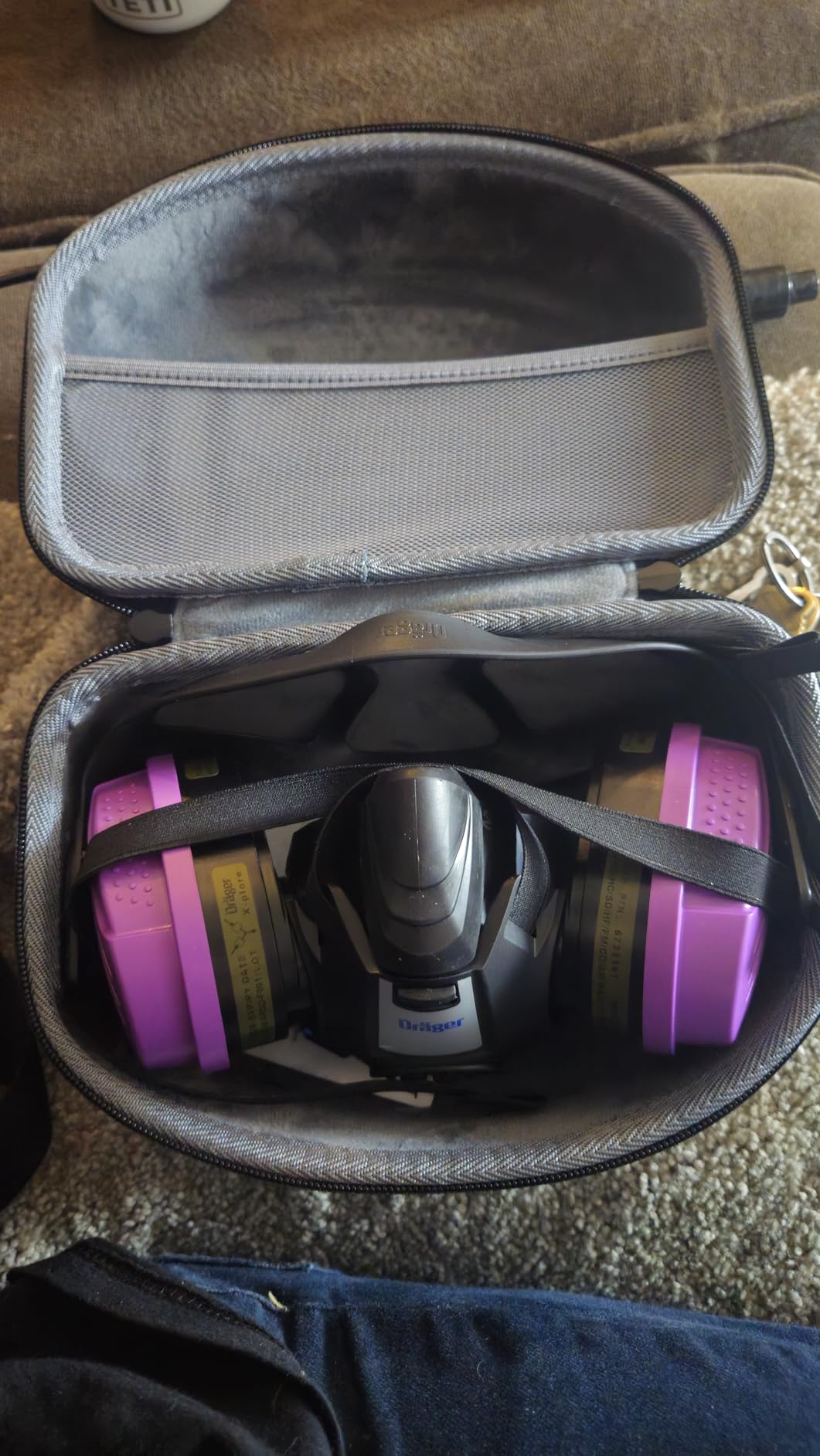
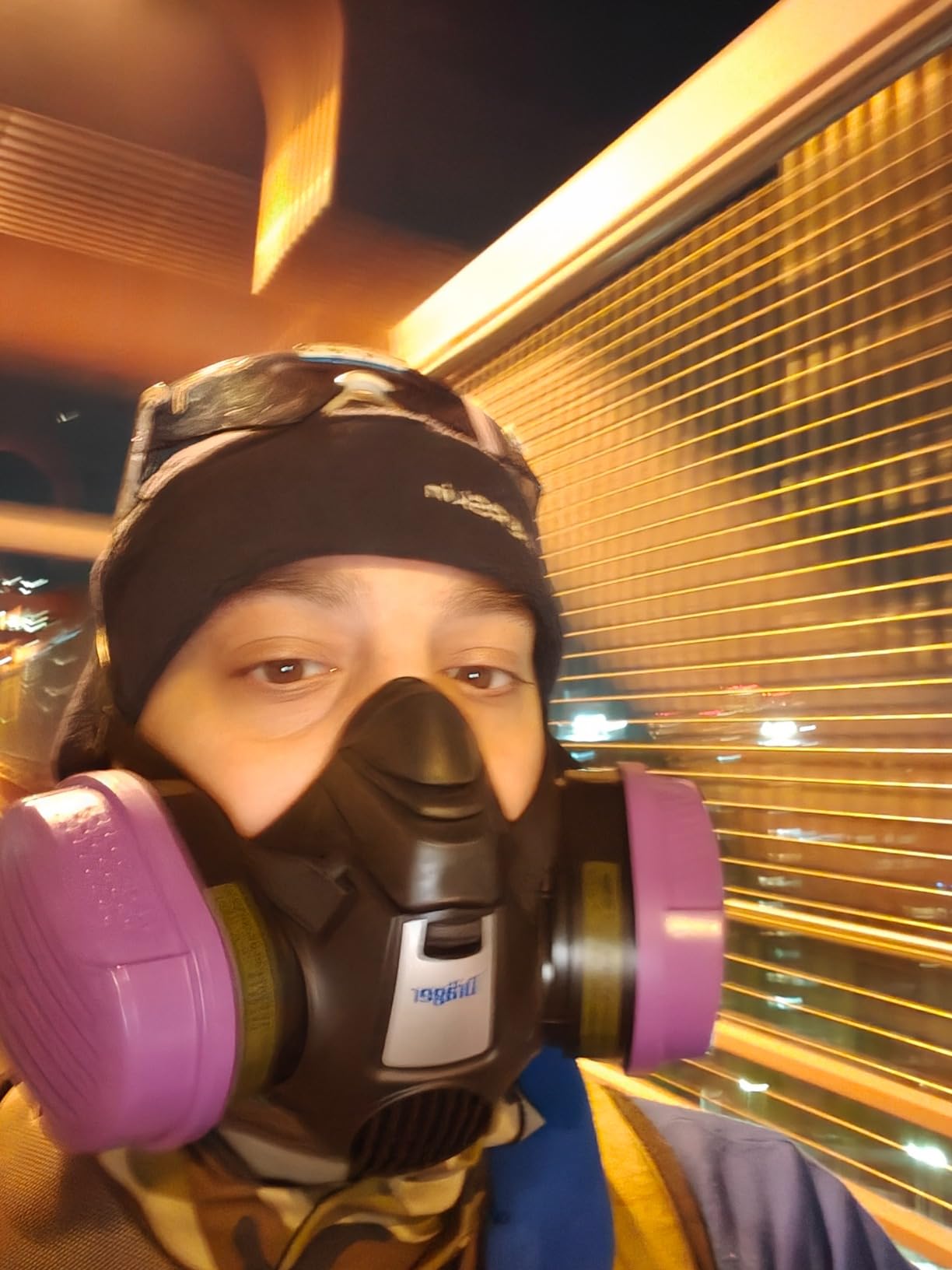
The seal is the other headline. Owners upgrading from cheaper masks single out the way it holds around the nose and does not fog glasses or goggles, which is unusual for a half mask with side-mounted cartridges. Several users report it working over facial hair and with smaller face shapes, and the flexible head harness with neck clips is what makes that possible.
Side-positioned filters are a genuinely good design choice for welding. The cartridges sit away from the centre of the face, so your view through the lens is unobstructed and the filters do not press against the crown of a helmet.
Who It Suits Best
It suits a home shop that mixes welding with chemical handling, cleaning and coating work, and does not want to track multiple cartridge types. The included package is a size M facepiece plus two Multi-Gas plus P100 breathing filters, so it is usable straight away.
It also suits anyone who wears glasses under the respirator and values field of view while working, since the side filter position keeps the front of the mask clear.
Where It Falls Short
The instructions are confusing, and the neck strap is stowed inside the mask body where it is easy to miss entirely. Budget a few minutes with the manual before your first weld rather than fighting the harness in the middle of a job.
Replacement cartridges are expensive relative to the mask itself, and with only 223 reviews there is less long-term owner history than the 3M and GVS options. Some users also report discomfort during very long continuous wear, which is a real limit for full-day grinding work.
7. North Honeywell 5500 Bundle with Two P100 Filters: The Simplest Starter Setup
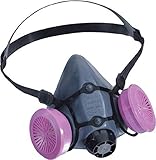
North Honeywell 5500 Series Half Mask Respirator Medium and 2 P100 filters (Bundle Pack)
5500 series half mask with 2 P100 filters included
Soft non-allergenic elastomer facepiece
Medium size
4 by 13.5 by 9.5 inches
Pros
- Facepiece plus two P100 filters in one box so it works immediately
- Very soft non-allergenic elastomer that stays comfortable over long wear
- Simple no-frills design with readily available replacement filters
Cons
- Particulate only with no organic vapor or acid gas cartridge
- Lowest rated pick here at 4.3 stars with 8 percent one-star reviews
- Medium size only which can be a problem for larger faces
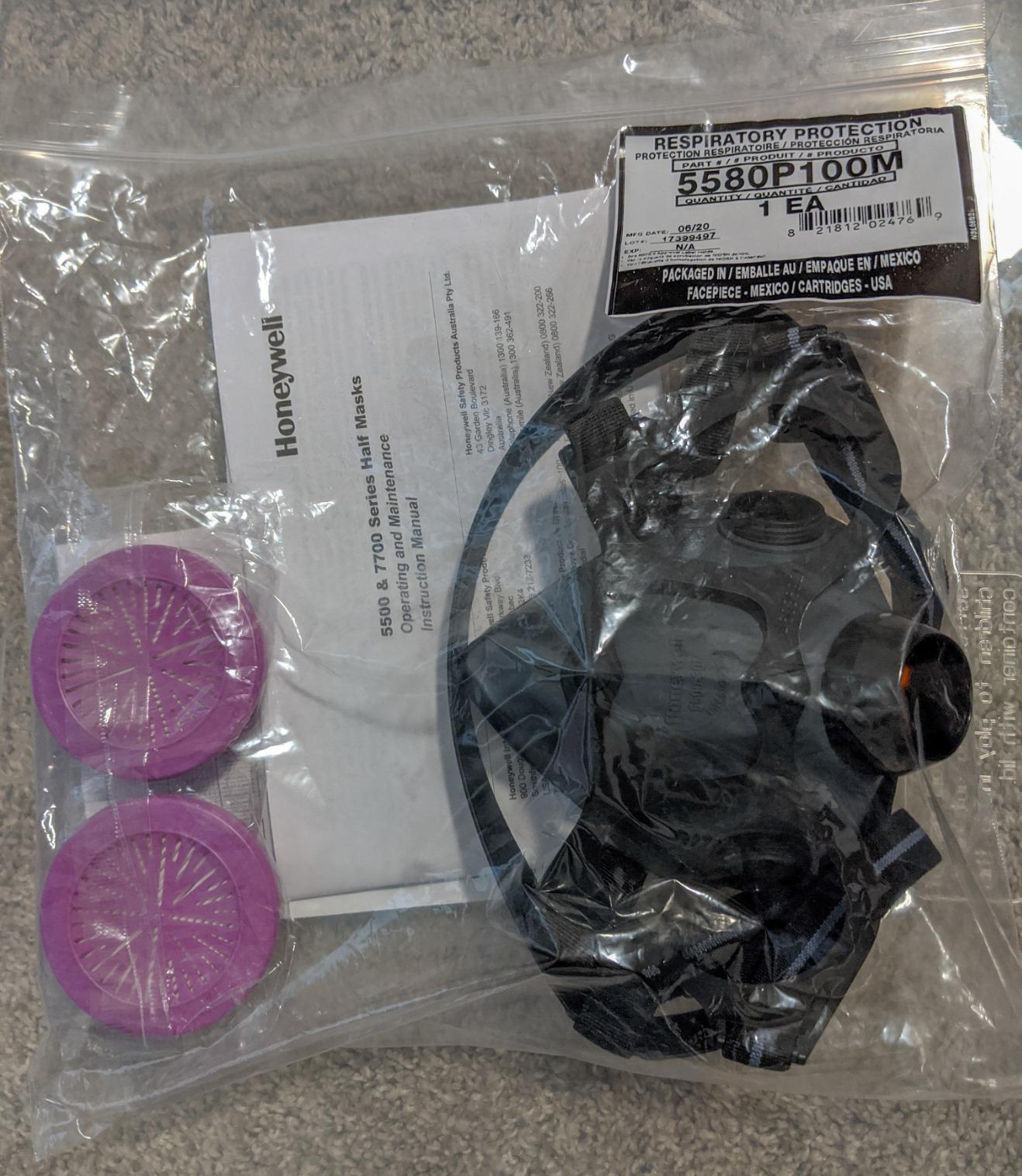
This is the bundle to buy if you want a mask that works the day it arrives with no extra shopping. The 5580P100M pack combines the 5500 series half mask with two P100 filters, which is the simplest possible way to get from unpacking to welding safely.
The facepiece is made from what the manufacturer describes as extremely soft non-allergenic elastomer, and that softness is the main thing reviewers mention. It sits against the face without digging in, which matters if you are going to wear it for several hours while grinding.
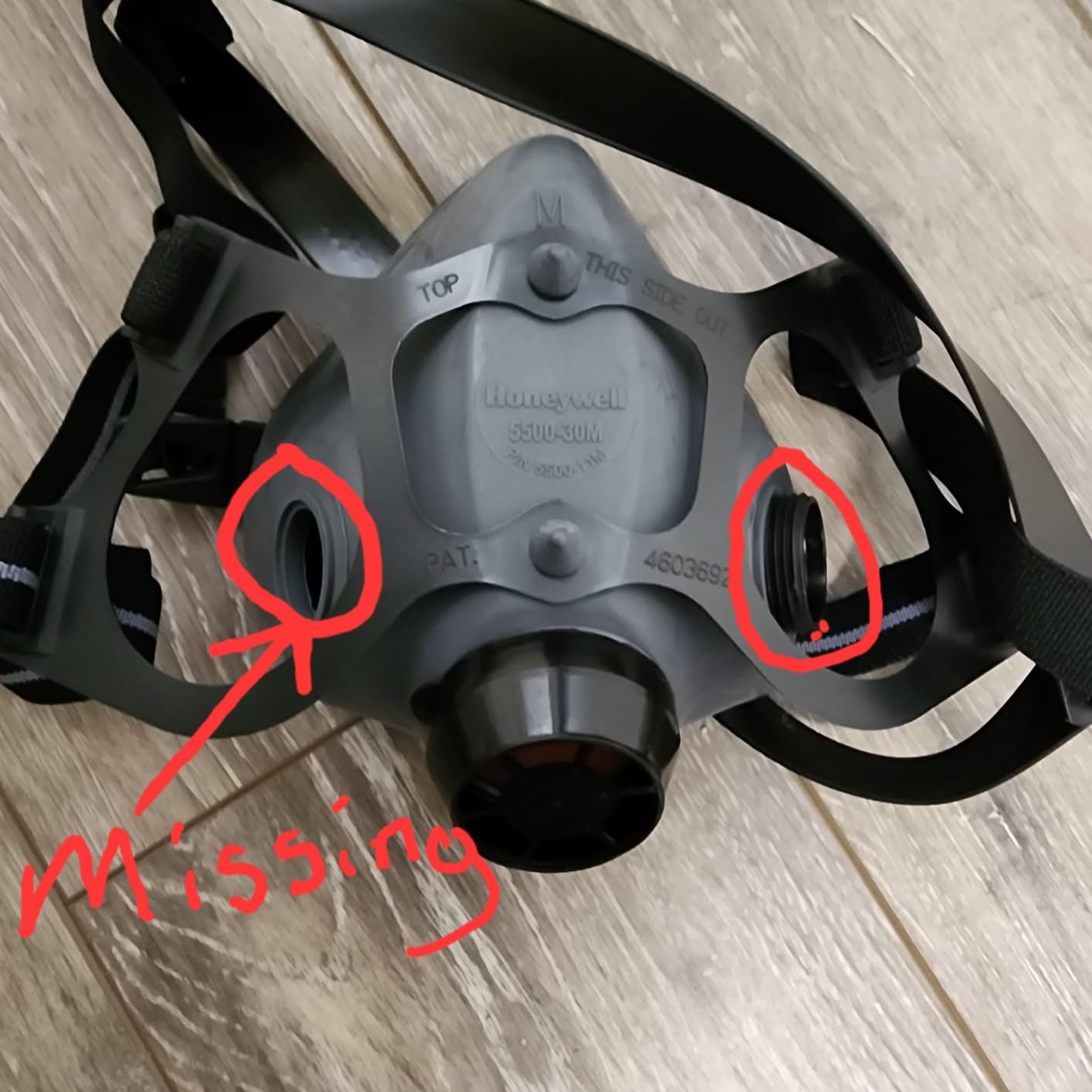
Its role in this roundup is straightforward: a plain particulate respirator for grinding, sanding and shop cleanup, with filters you can reorder easily. The listed dimensions are 4 inches deep by 13.5 inches wide by 9.5 inches high, and it is a medium size.
The reviews are more mixed than the other picks. With a 4.3 average, it has the lowest rating in the group and 8 percent of reviews are one-star, with recurring complaints about cartridge longevity under heavy dust loads and the total absence of any vapor protection.
Who It Suits Best
It suits a first-time buyer who welds clean mild steel and grinds occasionally, and wants one box that solves the problem. The soft elastomer is comfortable for shorter sessions and the filters are common enough to replace without hunting.
It also works as a secondary dust mask for cleanup work around the shop, separate from the respirator you wear while the arc is lit.
Where It Falls Short
It is a P100 particulate respirator with no organic vapor or acid gas cartridge. That is fine for grinding and clean steel welding, and it is the wrong tool the moment you cut painted, primed or galvanized material.
The 4.3 average with a meaningful share of one-star reviews is the honest reason it is not higher on this list. Heavy dust loading shortens filter life sooner, and medium-only sizing can be a problem for larger faces.
8. Safety Works SWX00320: Long-Life Cartridges With No Time Limit
Safety Works SWX00320 Multi-Purpose Respirator Half-Mask Niosh Ov/AG/P100, Grey/Blue
NIOSH P100/OV/CL/SD/HC cartridges
99.97 percent efficient and oil-proof
APF factor of 10
Hygiene cover included
Pros
- Oil-proof P100 cartridges with no time-use limitation
- Flexible facepiece holds its seal while bending and talking
- Lightweight plastic filters more comfortable than metal-bodied ones
- No odor breakthrough reported with MEK
- acetone
- toluene and resin
Cons
- Straps stretch and slip at the fasteners over time
- Lower face section can pull away from the chin when bending forward
- A clean-shaven sealing surface is required
The defining claim on this one is the absence of a time limit. The P100 class cartridges are oil-proof with no time-use limitation, meaning you do not have to retire them on a schedule, you replace them when they stop performing. For a hobbyist welding in bursts, that is a meaningfully different cost curve from a time-limited filter.
Approval covers more than particulates too. It carries NIOSH approvals against chlorine, hydrogen chloride, hydrogen sulfide and organic vapors, listed as P100/OV/CL/SD/HC, with an APF factor of 10.
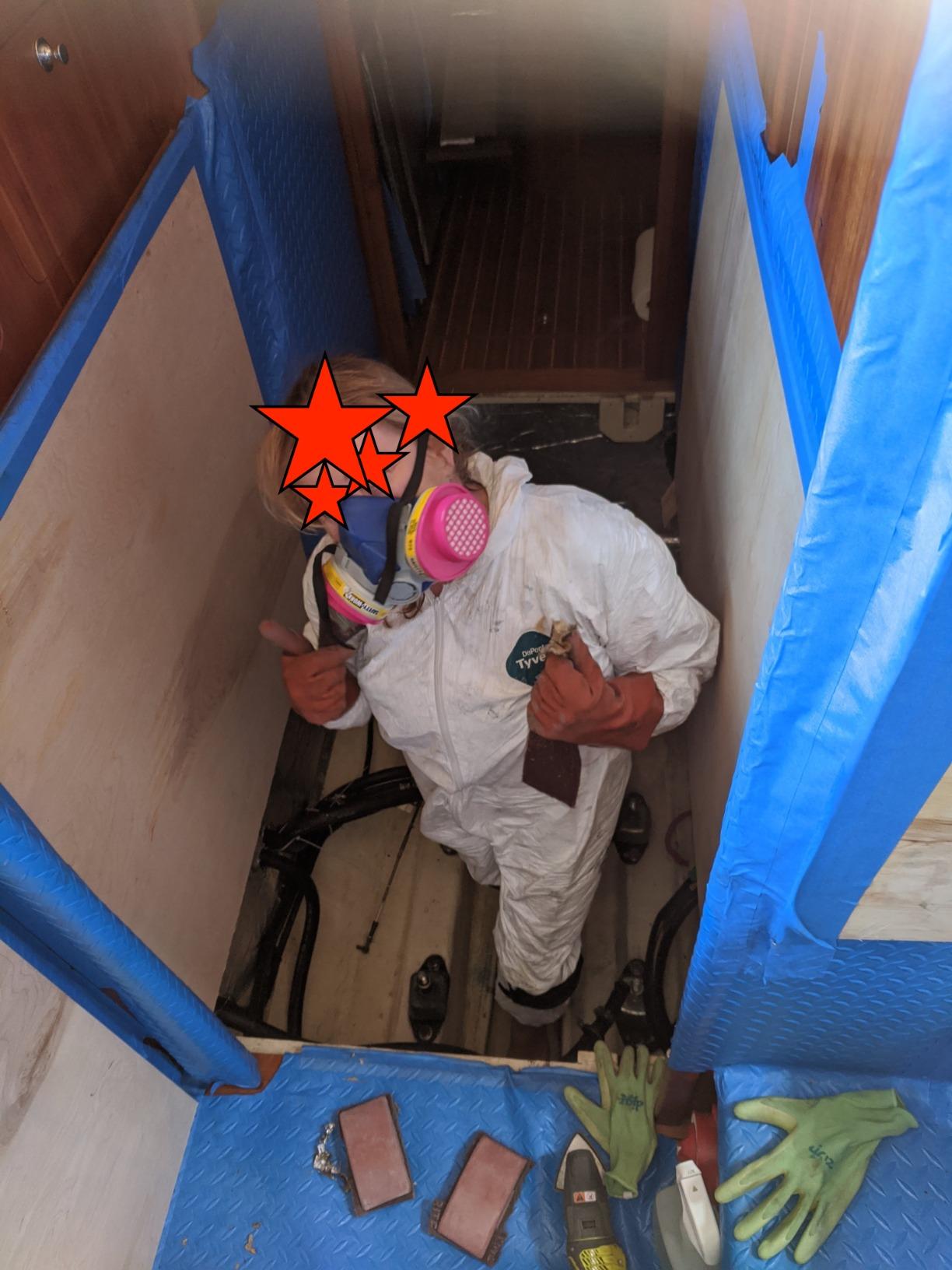
Users working with fiberglass, epoxy and paint stripping report no vapor breakthrough, and they like the grippy flexible facepiece and the lightweight plastic filters. The listed weight is 2.88 ounces, which is why it stays comfortable through multi-hour work, and a hygiene cover is included to keep dirt out of the mask and preserve the shape of the seal during storage.
The honest problem with this mask is adjustment. The elastic straps can stretch out and slip at the fasteners, and the lower face section is partly held in place by the geometry of the seal, so bending forward over a workbench can pull it away from the chin. Retighten it and you are back to square one.
Who It Suits Best
It suits a fabricator who works in resin, epoxy, paint stripping or chemical cleanup as often as they weld, and who wants a filter they do not have to retire on a calendar. The no-time-limit P100 media suits irregular, bursty usage especially well.
It also suits anyone who works bent over a bench, provided you re-tighten the straps often, because the flexible facepiece is what holds the seal through movement and talking.
Where It Falls Short
The strap system is the weak point. Stretch and slip at the fasteners is the most common complaint, and it directly affects seal quality, which is the one thing a respirator cannot compromise.
It is a 4.6 rating on 210 reviews, so the evidence base is thin. And the fit only works as designed against a clean-shaven sealing surface, which rules out a good share of hobby welders unless they are willing to shave the mask line.
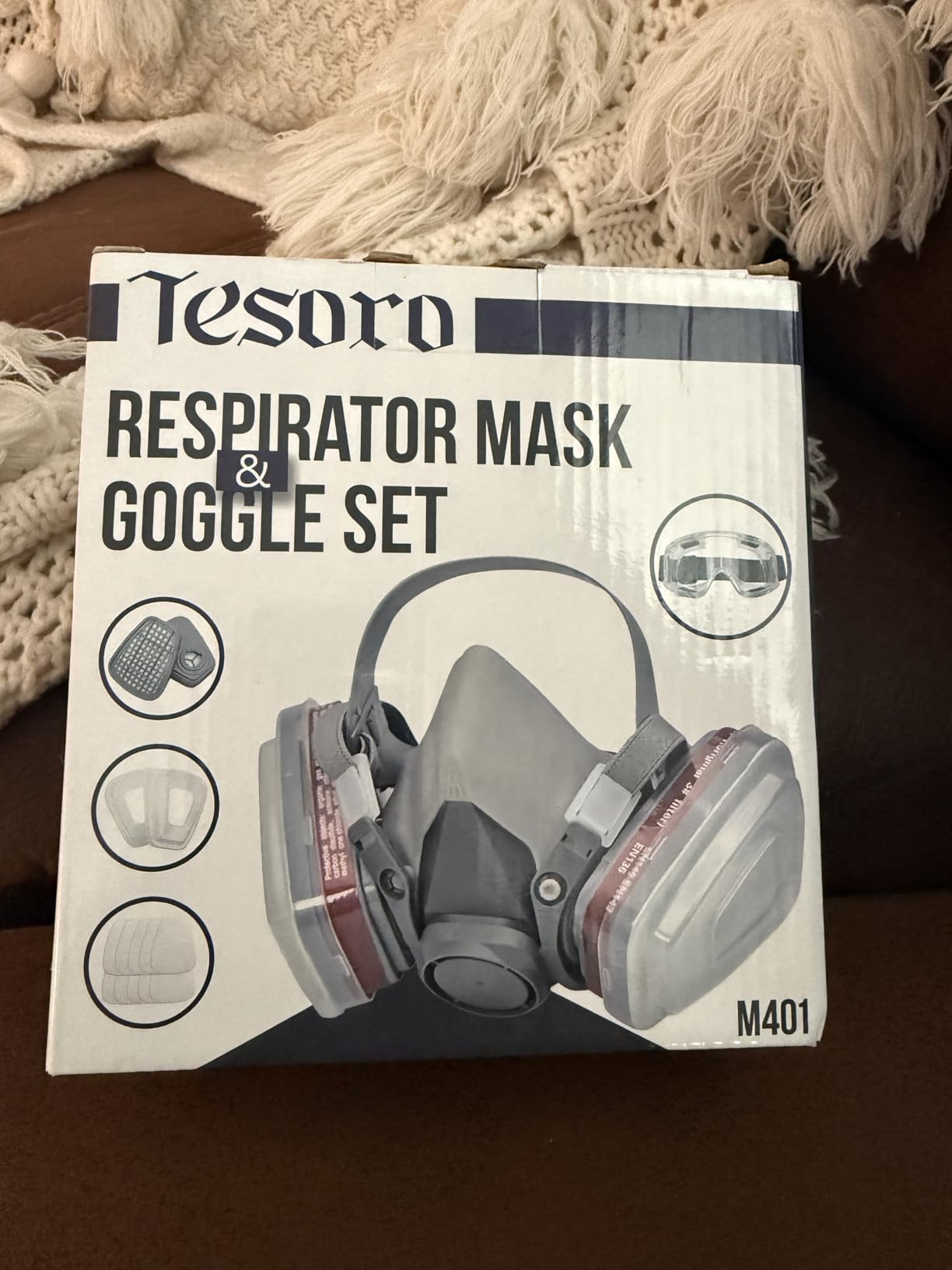
9. Tesoro Moda M401 with Goggles and 10 Filters: The Convenient All-in-One Kit
Tesoro Moda Respirator Mask for Spray Painting, Woodworking, Welding, Dust, and General Safety with Clear Eye Goggles, 10 Replacement Filters, Half Face Cover with Safety Glasses
Reusable half face respirator
10 replacement filters included
Clear safety goggles included
Soft silicone seal
One size fits most adults
Pros
- Ten replacement filters cover many months of shop work
- Clear goggles fit alongside the mask instead of fighting it
- Soft silicone seal that does not dig in
- No chemical odor reported when spraying
- sanding and on pesticide work
Cons
- Hard to wear at the same time as prescription glasses
- Not a NIOSH-listed P100 or organic vapor respirator
- Heavier at 1.08 pounds than most half masks
The pitch here is convenience. You get a reusable half face respirator, ten replacement filters and a pair of clear safety goggles in one package, which solves the annoying problem of a respirator that does not sit properly over your eye protection.
Buyers treat it as a value bundle for do-it-yourself protection rather than heavy industrial work. The soft silicone face seal is comfortable and does not dig in, and owners report no chemical odor during spraying, sanding and pesticide application, which are the jobs most people actually buy this for.
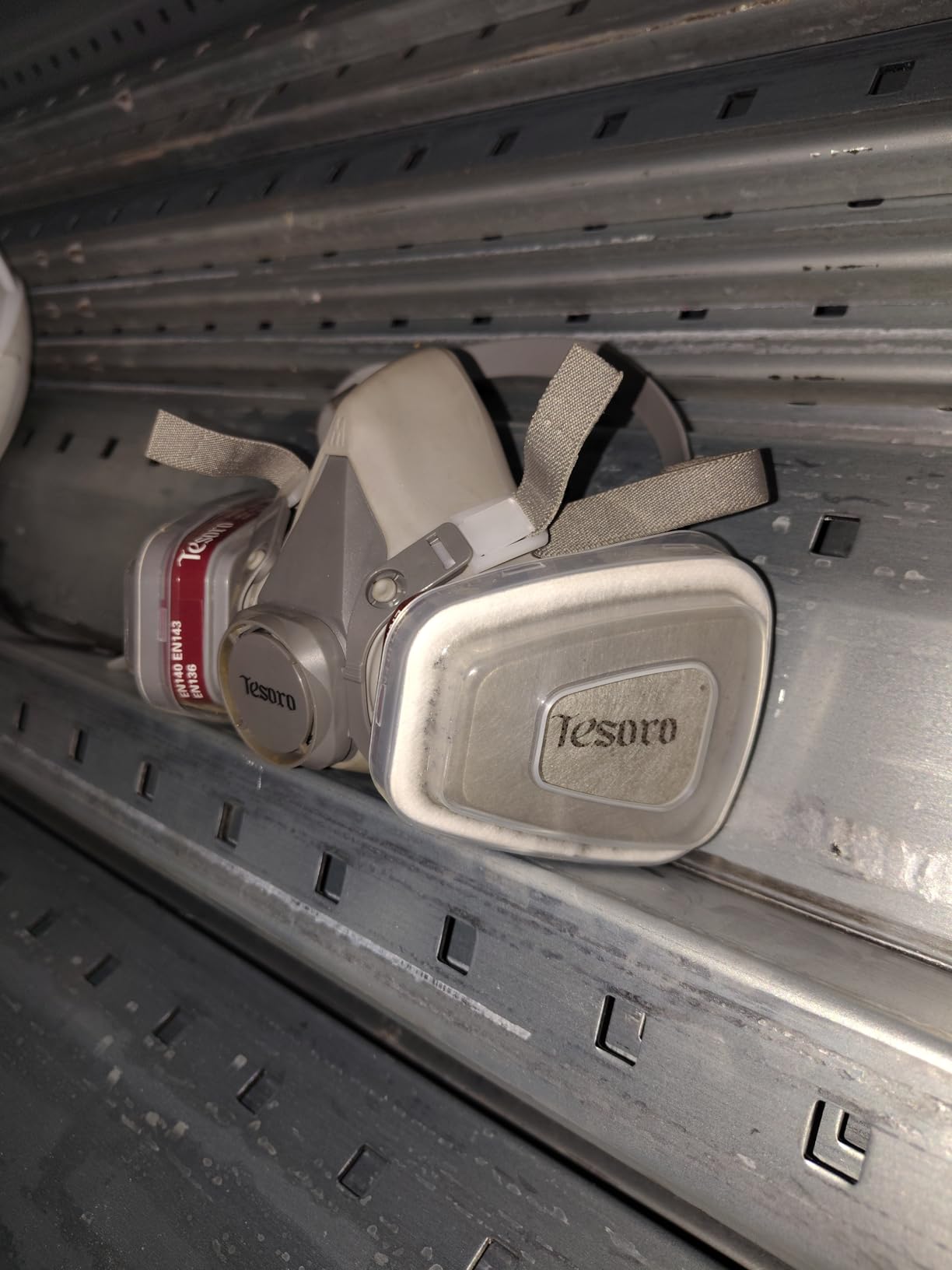
Its listed use cases are broad: spray painting, airbrushing, staining and finishing, plus woodworking, sanding, drywall dust, insulation and concrete grinding, and resin and epoxy work. The adjustable headband and lightweight silicone construction keep it workable for extended periods.
Here is the part that matters for a welding shop, and I would not skip it. This is not a NIOSH-listed P100 or organic vapor respirator. Its rating sits well below NIOSH-listed respirators, which limits it to lighter-duty work, and a welding fume plume is not lighter duty.
Who It Suits Best
It suits a hobbyist whose real exposure is sanding, painting, spraying and general shop dust, and who wants a complete kit in a single box. Ten filters is a lot of spare capacity for someone who welds occasionally and paints more often.
It also suits anyone who struggles to get a respirator and safety glasses to coexist. The included goggles are designed to sit with the mask, which removes that frustration entirely for people who do not need prescription lenses.
Where It Falls Short
It is not NIOSH-listed, which is the disqualifying limitation for a dedicated welding shop. For heavy fume, grinding dust or plasma cutting, use a certified respirator instead and treat this one as a comfort and nuisance-dust mask.
It is also hard to wear at the same time as prescription glasses, and at 1.08 pounds it is noticeably heavier than the elastomeric half masks in this roundup, which you feel during a long session.
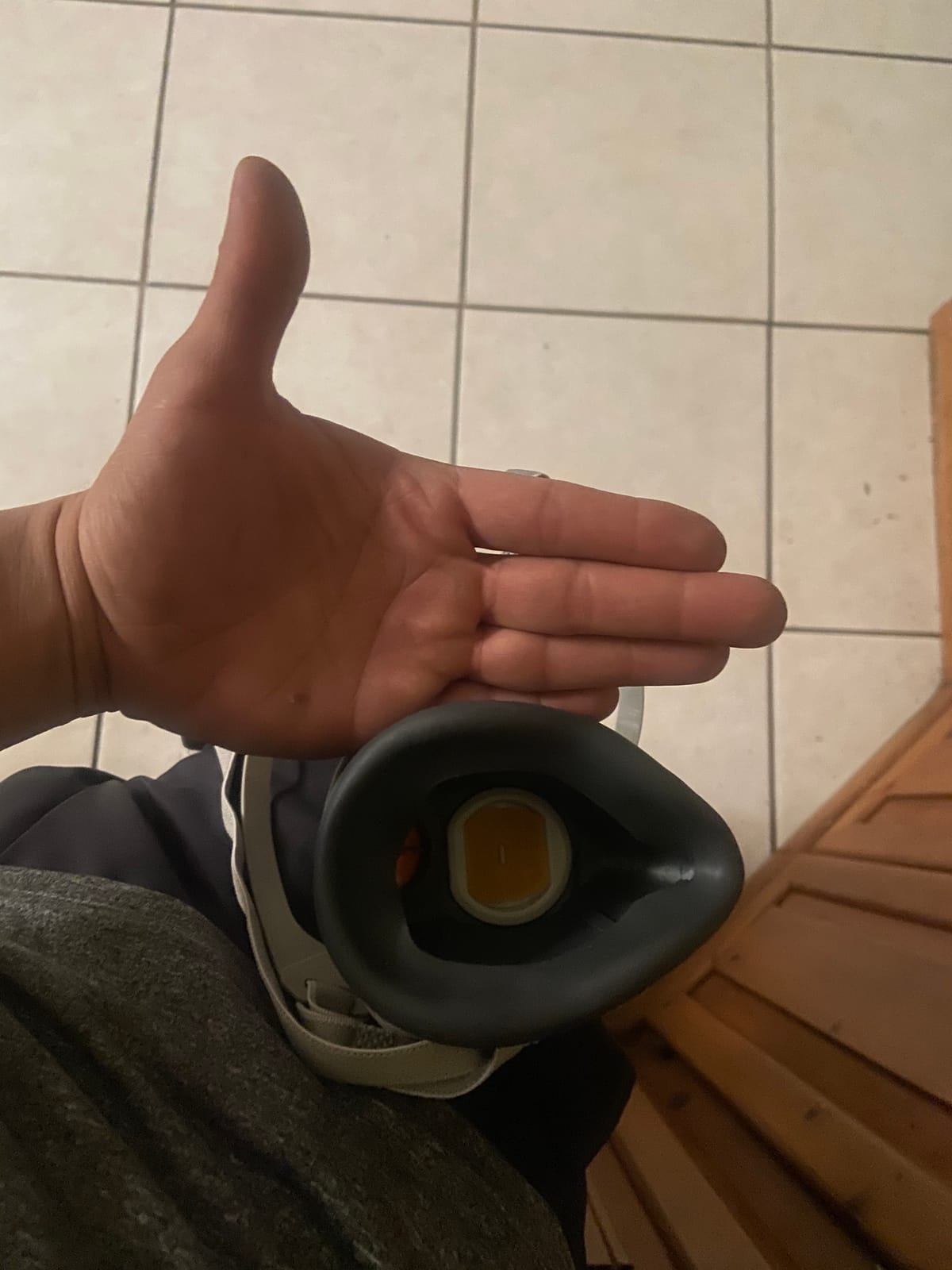
10. Tesoro Moda 7-Filter Half Mask: A Low-Cost Mask With a Certification Gap
Tesoro Moda Reusable Respirator Mask with 7 Filters – Half Mask Respirator for Woodworking, Welding, Polishing Painting and Work Protection – Comfortable Quick-Release Headband and Dual Filtration
Reusable half mask
7 replacement filters included
Dual filtration system
Quick-release headband
5.6 ounces
Pros
- Lowest cost in the roundup with 7 filters in the box
- Soft silicone facepiece conforms to facial contours
- Quick-release headband avoids pulling the mask over the head each time
- Dual filtration traps particulate while keeping airflow comfortable
Cons
- Not a NIOSH-listed respirator which is a significant limitation for welding fume
- Lowest rating in the group at 4.2 stars with 9 percent one-star reviews
- Replacement filters are a separate purchase after the seven run out
This is the cheapest option here and it is tempting for a reason: seven replacement filters land in the box, the silicone facepiece conforms to facial contours, and the quick-release headband means you are not dragging the mask over your head every time you pull it off.
At 5.6 ounces it is also one of the lightest, and the dual filtration system is designed to trap particles while improving air circulation so it stays bearable over a long sanding session.
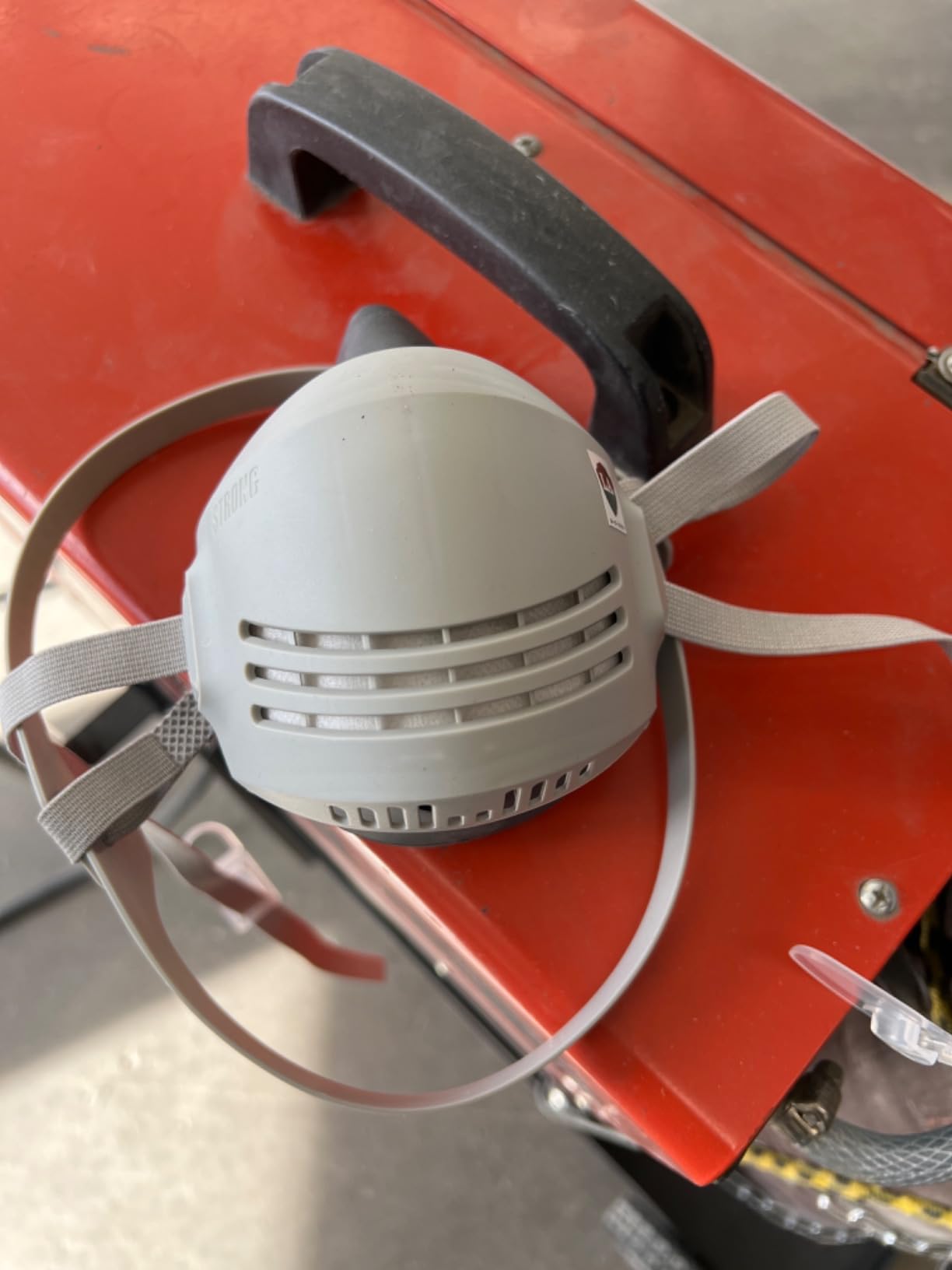
The problem is certification. It is not a NIOSH-listed respirator, and that is a meaningful limitation when the question is welding fume. There is no assigned protection factor, no NIOSH approval number and no stated filtration efficiency, so you have no independent basis for trusting it against a metal fume plume.
With a 4.2 average and 9 percent one-star reviews, it is the lowest rated pick in the roundup, and reviewers treat it as a comfort and nuisance-dust mask for light sanding, painting and polishing rather than protection for heavy welding fumes. Also note that the filters after the first seven are a separate purchase.
Who It Suits Best
It suits a complete beginner who wants to try wearing respiratory protection at all, and who works mainly on sanding, painting, polishing and light woodwork. The included filter count means you will not be buying consumables for months.
It is a reasonable first step for someone who finds elastomeric half masks uncomfortable, because the light weight and quick-release strap are the least intimidating entry point into wearing a mask.
Where It Falls Short
Not being NIOSH-listed is the short answer to whether you should weld wearing it. Treat it as a nuisance-dust and comfort mask, not as fume protection, and move to a certified half mask before you light the arc on anything coated or galvanized.
The 4.2 rating with 9 percent one-star reviews reflects that gap, and you will be buying replacement filters separately once the included seven are used up, so the low entry cost is not the whole ongoing picture.
How to Choose a Welding Respirator for a Home Shop
What type of respirator is recommended for welding?
A NIOSH-approved half-mask elastomeric respirator with P100 particulate filters is the recommended respirator for most home shop welding. Add an organic vapor cartridge when you weld coated, painted or galvanized material, and move up to a full facepiece or powered air-purifying respirator for heavy grinding, plasma cutting or long sessions in a closed garage.
Here is the short version of the options, in the order most home welders should consider them:
1. Reusable half-mask elastomeric with P100 cartridges. This is the default for a garage, and it is what welders on the Miller and AWS forums converge on. Assigned protection factor 10, replaceable filters, works under a helmet if the profile is low enough.
2. Disposable N95 or N100 half mask. Fine for welding fume particulates in a well-ventilated space, and much less useful than the reusable option, because you discard the mask whenever it loads up. N100 is the stronger of the two for fume.
3. Half mask with combined particulate and vapor cartridges. Adds organic vapor and acid gas protection, which is what you want for painted, primed or galvanized steel and for any spraying or solvent work in the same shop.
4. Full facepiece. Seals over the whole face, protects the eyes from spatter and arc light, and carries a higher protection factor than a half mask. The trade-off is fogging, weight, and a much higher cost.
5. Powered air-purifying respirator, or PAPR. A fan pushes filtered air into a hood or full facepiece, so breathing resistance is close to zero and the protection factor is far higher. This is the answer for heavy grinding and plasma cutting, and for anyone who finds every half mask uncomfortable. If you consider a pre-owned unit, check the filter condition, battery health and the approval label before you trust it.
Is N95 enough for welding? Is P100 better?
No, an N95 is not enough for welding fume. An N95 filters at least 95 percent of non-oil-based particles and it stops being oil resistant once it is exposed to oil-based aerosols, so it is a poor match for a shop that also handles lubricants and cutting fluid. It also says nothing about gases, and a P100 filter does not cover organic vapors either, which is why a combined cartridge exists.
Here is how the classes compare, and why the middle of this list is where the P100 sits.
N95: at least 95 percent filtration of non-oil-based particulates, not oil resistant, disposable, cheap and convenient. Fine for dust, sanding and drywall, marginal for welding fume.
N100: at least 99.97 percent filtration of non-oil-based particulates, not oil resistant, disposable. A meaningful step up from N95 for fume particulates in a ventilated space.
P100: at least 99.97 percent filtration of both oil-based and non-oil-based particulates, with no time-use limitation, normally in a replaceable cartridge. This is the standard recommendation for welding and for cutting oils.
HEPA: the highest efficiency grade, commonly quoted at 99.97 percent at 0.3 microns. On a half mask the practical difference from a P100 is small, because the limiting factor becomes the face seal rather than the media.
The point to hold onto is that filter class is not where most welding respirators fail. Filter class sets the ceiling, and the face seal sets the floor. One practical machinist thread shows a wearer still breathing gas and smoke through a certified 3M mask with P100 filters, because the seal was not holding. You cannot fix that with a better cartridge, which is why the seal check below matters more than the label.
A half mask has an assigned protection factor of 10, meaning it is designed to reduce exposure to roughly one-tenth of the workplace limit. That is a real protection factor, and it is also a finite one: weld in a closed garage for an afternoon with a P100 half mask and you are relying on a 10x reduction, not an unlimited one. Extraction is what takes the load off.
How to fit test and seal check a respirator at home
Do this before every first weld with a new mask, and again whenever your face changes, your eyewear changes, or you start wearing a helmet crown pad differently. A seal check takes two minutes and catches most fit problems before they matter.
1. Check the facepiece for cracks, tears or a hardened or deformed seal. A facepiece stored rolled up or folded will not recover its shape properly.
2. Inspect the filter or cartridge. Make sure it is seated fully and locked, and that it is within its service life. A cartridge past its date can smell fine and protect poorly.
3. Put on the head straps in the correct order. Pull the top strap first, then the lower strap, then tighten evenly from the back. Most leaks come from putting the lower strap on first and sealing the mask into a bad position.
4. Conduct a positive pressure check. Cover the filter inlet with your hand and exhale gently. If the facepiece inflates slightly and holds, the seal is good. If it collapses or you feel air escaping around the edge, the seal has failed.
5. Conduct a negative pressure check. Cover the exhaust valve with your palm and inhale gently. The facepiece should collapse slightly and draw inward against your face, with no air entering around the edges.
6. Watch for movement. Bend forward, turn your head left and right, and talk. Any air movement at the nose bridge or the chin means the seal is not holding during the positions you actually weld in.
7. If it fails, adjust before you blame the mask. Move the harness, shorten a strap, or try a different size. A mask that fails three seal checks in a row is the wrong facepiece for you, and no cartridge will fix that.
For sizing, measure from the bottom of your chin to the bridge of your nose. Under about 11.2 cm points to a small or medium facepiece, roughly 11.2 to 12.5 cm is a medium or large, and over 12.5 cm needs a large or extra large. Two of the masks in this roundup ship as medium only, so measure before you buy rather than after.
Glasses and facial hair are the two most common seal-breakers. A respirator designed to sit with safety glasses, like the Tesoro kit or the 3M quick latch, will save you a lot of frustration, and a clean-shaven sealing surface is a genuine requirement rather than a formality.
What respirator mask can you wear under a welding helmet?
A low-profile half-mask elastomeric respirator is what fits under an auto-darkening welding helmet. Look for a mask with a shallow depth front to back, side-mounted or low-mounted cartridges, and a harness that sits flat rather than standing up into the crown of the hood.
In practice, the mask in this roundup built specifically for the helmet is the Miller LPR-100, whose whole design brief is fitting under most welding helmets with a large exhaust valve to control heat. The GVS Elipse also works well under a hood because of its compact profile and low breathing resistance, and the Drager X-plore 3500 works because its filters sit at the sides and leave the centre of the face clear.
Test the fit yourself before you buy a mask for helmet use. Wear the helmet, drop the hood, and check that the mask does not push the hood forward, catch on the crown padding, or get dragged when you flip the hood up. Also check that you can see the weld through the lens with the mask on, since some cartridge placements block the lower corners of the viewing area.
One more practical point: keep the hood moving independently of the mask. If you have to remove the respirator every time you inspect a weld, you will stop wearing it. The 3M 65023 quick latch is designed around exactly that friction, letting you drop the respirator for a check without unstrapping.
Garage ventilation and fume extraction checklist
A respirator is the last line of defence, not the first. Work through this list before you light the arc, because extraction reduces the concentration the respirator has to handle and a half mask only offers a 10x reduction.
1. Weld outdoors whenever the weather allows. It is the cheapest and most complete extraction there is.
2. If you must weld inside, keep the garage door fully open and position a shop fan in the doorway blowing outward, so contaminated air leaves rather than recirculates into the bay.
3. Use a canopy or arm-mounted fume extractor positioned within a few inches of the arc. Capturing the plume at the source is dramatically more effective than cleaning the whole room afterwards.
4. Add a spark arrestor rated for welding to any fan you run near the arc, and keep combustible rags, thinners and paint cans out of the airflow path.
5. Keep the bay clean. Welding over dust, rust, mill scale and old paint turns the fume far worse, so grinding or removing coatings before welding reduces the load.
6. For plasma cutting, grinding and heavy cutting, treat a half mask as the minimum and consider a full facepiece or PAPR, because those jobs generate particulate loads beyond a 10x protection factor.
7. Know when to step back. A garage that fills with visible fume within a few minutes of striking an arc is telling you the extraction is not working, and a respirator is not the fix.
If your shop is not yet laid out for this work, our guide to welding magnets for angle setups covers the fixturing side, and our TIG welding glove picks cover the hand protection that goes with the helmet and the mask.
Filter replacement and cleaning routine
Replace particulate filters when breathing resistance climbs noticeably, when you can see dust loading in the media, or at roughly 40 hours of use in typical shop conditions, whichever comes first. A P100 cartridge has no regulatory time limit, but it still has a real physical limit, and pushing a loaded filter raises breathing resistance until you take the mask off.
Replace organic vapor cartridges on the manufacturer schedule or as soon as you notice odor breakthrough, which is the point where the sorbent is exhausted. Do not wait for a smell to be strong to act on it, because by then you have already been breathing through a spent cartridge.
Clean the facepiece weekly and any time it gets dirty. Mild detergent and lukewarm water, a soft brush, then air dry fully in a clean place away from direct heat. Avoid solvents, since many of them attack elastomer face seals, and never use a machine dryer or leave a mask on a heater. Store it in a breathable bag or a clean paper bag, never sealed in plastic, and keep the filter ports covered so shop dust does not load a new cartridge before you wear it.
Over a year of weekend hobby welding, count on replacing a cartridge pair every one to three months on a P100 mask in a typical garage. On a mask with organic vapor cartridges, budget for a cartridge set on a similar cadence or shorter. That ongoing cost, not the mask price, is what separates a cheap disposable habit from an expensive reusable setup, and it is the reason a mask with long-life oil-proof cartridges can cost less per year than one that looks cheaper up front.
Frequently Asked Questions
What is the best respirator for welders?
A NIOSH-approved half-mask elastomeric respirator with P100 particulate filters is the best respirator for welders in a home shop. Add an organic vapor cartridge for coated or galvanized work, and move to a full facepiece or PAPR for heavy grinding and plasma cutting. Fit matters more than filter class, so seal check before every use.
What type of respirator is recommended for welding?
A reusable half-mask elastomeric respirator with P100 cartridges is the recommended type for most home shop welding. Disposable N100 masks are acceptable in a well-ventilated space. Half masks with combined particulate and organic vapor cartridges suit painted or primed steel, while full facepieces and PAPRs suit heavy grinding and long sessions in a closed garage.
Is N95 enough for welding?
No. An N95 filters at least 95 percent of non-oil-based particles and is not oil resistant, and it offers no protection against gases. Welding fume includes metal vapors that particulate filters alone do not remove. A P100 filters at least 99.97 percent of oil and non-oil particulates, and an organic vapor cartridge adds gas protection.
Is a P100 respirator good for welding?
Yes, a P100 is the standard filter class recommended for welding. It removes at least 99.97 percent of both oil-based and non-oil-based airborne particulates, which covers the iron, manganese, zinc and chromium oxides in welding fume. It does not filter gases, so combine it with an organic vapor cartridge for coated or galvanized material.
Is a P100 mask better than an N95?
Yes. A P100 filters at least 99.97 percent of oil and non-oil particulates with no time-use limitation, while an N95 filters at least 95 percent of non-oil particles and degrades with oil exposure. In practice the bigger difference is reusability: a P100 cartridge is replaced in a washable half mask, while an N95 is discarded each time it loads up.
What respirator mask can I wear under my welding helmet?
A low-profile half-mask elastomeric respirator fits under an auto-darkening helmet. Look for shallow depth front to back, side-mounted or low-mounted cartridges, and a flat harness that will not catch the hood crown. Test the fit by dropping the hood and checking that the mask does not push it forward, block the lower corners of the lens, or drag when you flip the hood up.
How often should I change welding respirator filters?
Replace particulate filters when breathing resistance climbs, when you see dust loading in the media, or at roughly 40 hours of use in typical shop conditions, whichever comes first. Replace organic vapor cartridges on the manufacturer schedule or as soon as you notice odor breakthrough. A P100 has no regulatory time limit, but a loaded filter still raises breathing resistance until you remove the mask.
Is welding smoke worse than cigarette smoke?
Welding fume is a different hazard from cigarette smoke, but it is not harmless. It contains metal oxides including iron, manganese, chromium and zinc that can cause metal fume fever within hours of exposure, and long-term exposure is linked to lung damage and elevated cancer risk. A home garage concentrates that fume far more than a ventilated fabrication shop, which is why extraction and a P100 respirator are both needed.
Final Verdict for Home Shop Welders in 2026
Our editor’s choice for 2026 is the GVS SPR457 Elipse P100. It has the lowest breathing resistance and the most heavily reviewed owner history in this roundup, filters rated for up to 5 years keep the running cost low, and the compact profile clears a welding helmet and safety glasses without a fight.
Buy the 3M 65021 if you want one mask for welding and coating work, since the P100 plus organic vapor cartridge combination covers more than a particulate-only filter. Buy the Miller LPR-100 if wearing protection under your hood is the problem you actually need solved, and consider the 3M 65023 quick latch if you wear prescription glasses and need to drop the mask for weld checks.
Skip the two uncertified Tesoro Moda masks for anything involving an arc, and use extraction to take the load off whatever you choose. Whatever you pick, do the seal check before the first weld rather than after you have already been breathing fume for a season, and pick the best welding respirators for home shops for your actual process, not the one with the longest spec sheet.