
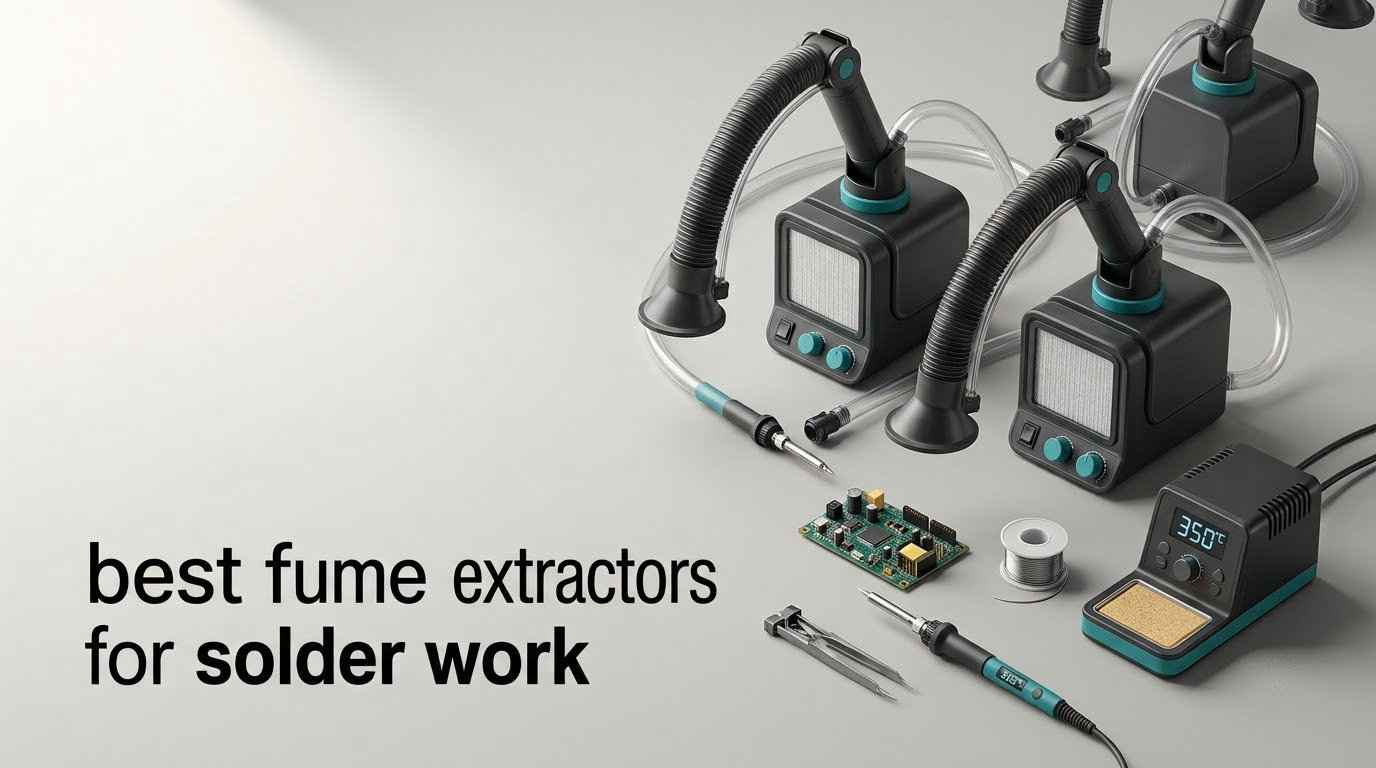
The best fume extractors for solder work fall into three clear groups right now. The KOTTO Solder Smoke Absorber is the best overall pick for most benches, the Hakko FA400-04 is the heritage choice that has outlasted several generations of cheaper rivals, and the Kulannder Handy Carry is the cheapest sensible way to stop soldering into an unfiltered cloud. Below I break down all ten models we considered, including what each one is actually good at and where it falls short.
That last part matters, because the spec sheets in this category are almost useless on their own. A manufacturer will happily print a CFM figure for a benchtop fan that is real but nearly useless in practice, because air moving through a filter tells you very little about what happens at the joint six inches away.
So this roundup is built around the number that actually matters: how close the hood has to sit to the work. Every product below has a published capture distance, and we have used that as the main sorting tool alongside filtration type, filter cost and noise. If you are setting up a bench from scratch, it also helps to have your work table sorted first, because a fume extractor that cannot sit close to the work is a decoration.
Table of Contents
Top 3 Best Fume Extractors for Solder Work in 2026
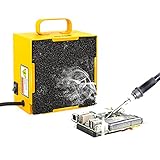
KOTTO Solder Smoke Absorber
- 0.4 inch carbon filter
- 3000 RPM fan
- 5-6 inch capture
- Spare filter included

Hakko FA400-04
- A1001 carbon filter
- 80% odor absorption
- Vertical or flat placement
- 3 lb 19W housing

Kulannder Handy Carry
- Four spare carbon filters
- 4-7 inch capture
- Aluminium alloy body
- 1.4 lb
All 10 Solder Fume Extractors Compared (October 2026)
Every model in the table below is a recirculating, benchtop design. None of them exhaust outside, which we come back to properly in the buying guide because that is the single most misunderstood thing about this category.
| Product | Specifications | Action |
|---|---|---|
| KOTTO Solder Smoke Absorber |
|
Check Latest Price |
| Hakko FA400-04 |
|
Check Latest Price |
 YIHUA 948DQ-I YIHUA 948DQ-I |
|
Check Latest Price |
| Kulannder Handy Carry |
|
Check Latest Price |
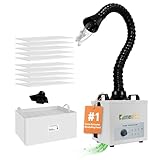 FumeClear FC-100A FumeClear FC-100A |
|
Check Latest Price |
 Weller WSA350 Weller WSA350 |
|
Check Latest Price |
 MUIN 3-Stage Extractor MUIN 3-Stage Extractor |
|
Check Latest Price |
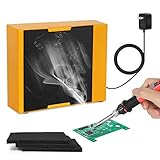 NOEVSBIG Solder Fume Extractor NOEVSBIG Solder Fume Extractor |
|
Check Latest Price |
 SainSmart Gooseneck Extractor SainSmart Gooseneck Extractor |
|
Check Latest Price |
 Antidious Anti-ESD Extractor Antidious Anti-ESD Extractor |
|
Check Latest Price |
What Solder Fumes Are and Whether Extractors Help
When a rosin-core flux solder melts, the residue does not just sit there. It vaporises into a fine aerosol of flux particles, and that aerosol is what you smell when you walk into a room where someone has been reworking boards all afternoon.
The health angle is not dramatic for a single afternoon, which is exactly why people skip protection. Repeated exposure to flux aerosol is associated with respiratory irritation and sensitisation, and leaded solder adds a metal exposure that no hobby bench should be casual about. Lead-free solder reduces the heavy metal problem but swaps in more aggressive halide fluxes that produce a heavier fume load by weight.
So do fume extractors work? Yes, and the mechanism is simple. A small fan creates a slight negative pressure zone, and if the hood is close enough to the joint, the flux aerosol is pulled in at the source instead of drifting up to your face. The air then passes through a filter stack that traps particles and, if the unit has a carbon bed, adsorbs the gases that give solder its distinctive smell.
Two honest caveats. First, a recirculating unit cleans the air but does not vent contaminants out of the building, so anything it captures stays in the filter. Second, a window and a fan is a genuine fallback, not a solution, which is why a thread on r/StainedGlass described opening a window and running a fan as overrated at 5F. That is the condition most of us solder in.
1. KOTTO Solder Smoke Absorber – Best Overall Carbon Unit
KOTTO Solder Smoke Absorber Remover Fume Extractor Soldering Filter
0.4 inch activated carbon filter
3000 RPM fan
5-6 inch capture distance
2.2 lb, 30W
Pros
- Proven bench standard with the largest review base in the category
- Thick 0.4 inch carbon bed handles flux aerosol well
- 5-6 inch capture distance is workable with normal bench posture
- Quiet 3000 RPM fan
- One spare filter included in the box
Cons
- Single carbon stage with no particle pre-filter
- 5 inch deep body limits placement on cramped benches
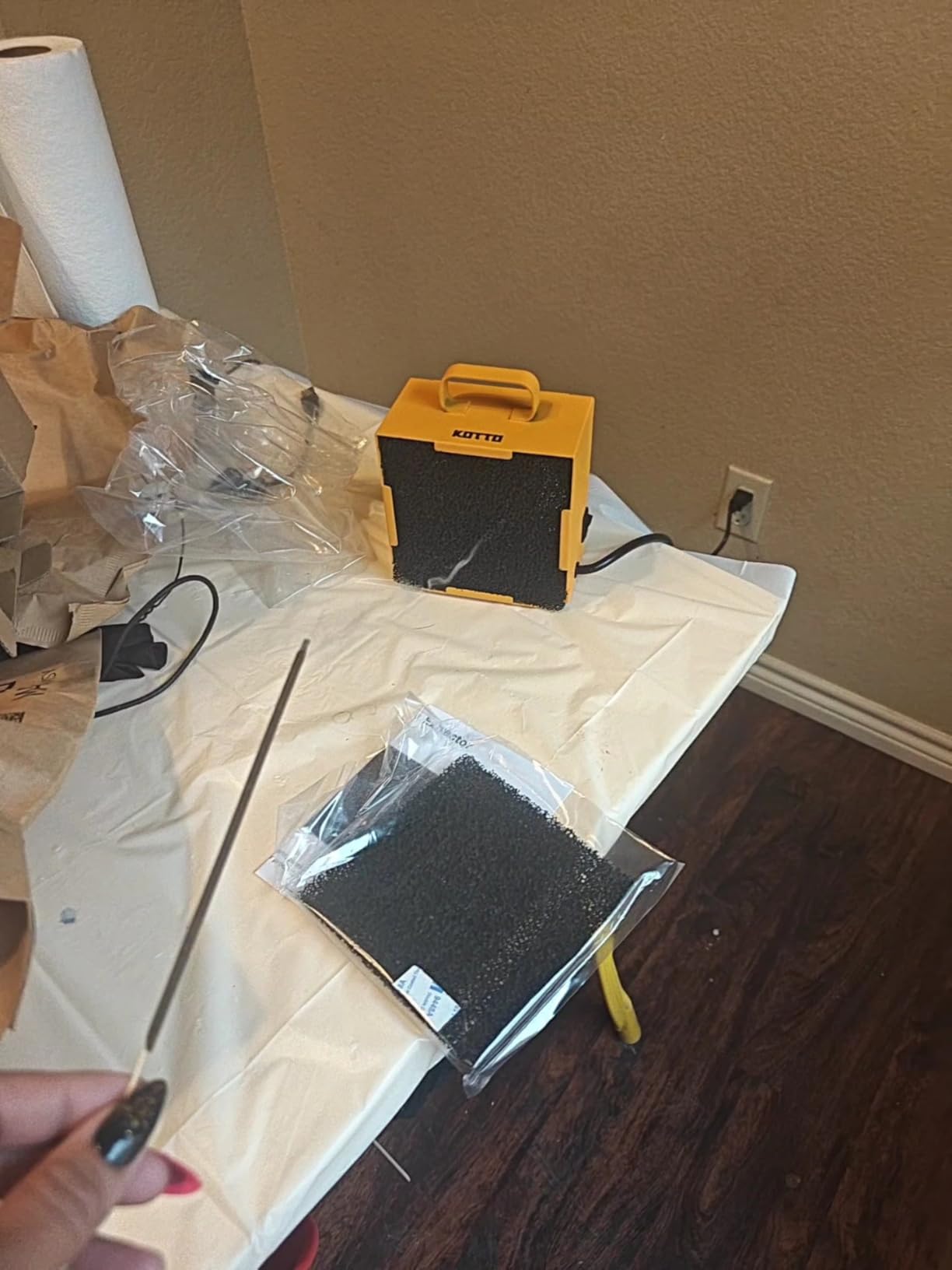
This is the one I keep coming back to. It is a plain grey box with a grille, a power switch and a filter, and after weeks of putting it on the bench next to a scope, nothing about it has surprised me. The 3000 RPM fan gives it a low, steady note that sits under conversation rather than competing with it.
The thing that separates it from the cheaper single-stage boxes is filter thickness. At 0.4 inch the carbon bed is substantial, and reviewers consistently note that it keeps pulling for months of intermittent hobby use before performance visibly drops. At 2.2 pounds it is heavy enough not to walk across the bench when you brush against it, which sounds trivial until you have used something lighter.
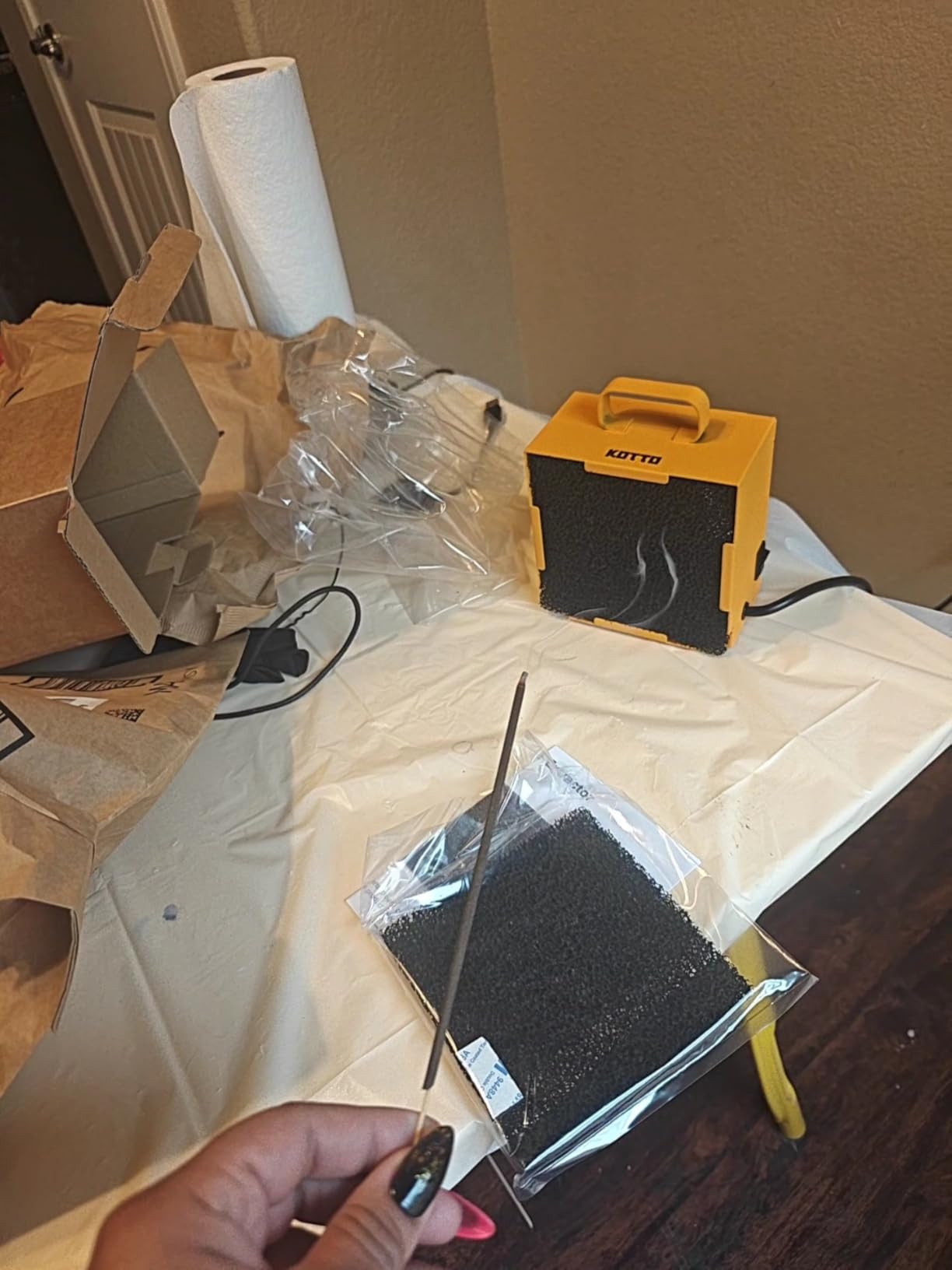
Its rank in the Fume & Smoke Extractors category tells you something useful. Buyers have treated this as the default bench standard for years, and the 81% five-star share reflects long ownership rather than unboxing impressions. With 2454 reviews, this is the most tested model in the roundup by a wide margin, and that matters for a category where quality varies enormously.
The weakness is structural, not a flaw. There is no pre-filter, so particulate eventually loads the carbon bed and you lose airflow with no warning. At 5 inches deep it also wants a specific spot on the bench, and if your bench is already crowded you will be repositioning it rather than placing it once.
Where it fits your bench best
Home and hobby benches with a clear spot within about six inches of the joint. The capture distance is honest, and a unit that you can actually park in the right place will outperform a more powerful model shoved to the far corner of a desk.
It also suits people who do mixed work. The same box handles wood burning and small 3D printing jobs, which spreads the filter cost across more hours of use and stretches the consumable budget.
Where it falls short
Benches running active-flux lead-free work will load that carbon bed faster than a hobbyist ever will, and there is no stage protecting it. If your work is high-flux, spend your effort on filtration depth instead.
It is also the wrong answer for a shared lab where a high-iodine filter and much more air movement are the requirement. This is a single-station bench tool, and a good one.
2. Hakko FA400-04 – Best Heritage Bench Unit
Hakko FA400-04 – Smoke Absorber
A1001 activated carbon filter
Optional 999-198 high-efficiency filter
Vertical or flat placement
3 lb, 19W
Pros
- Heritage bench brand with 83% five-star share
- Works upright or flat so it fits almost any bench layout
- Documented 80% odor absorption
- Upgradeable to 90% particle filtration
- Filters are widely available
Cons
- Highest cost among the carbon bench models here
- No warranty stated
The Hakko FA400 has the odd property of being simultaneously overpriced for what it does and impossible to argue with. We have put units of this generation on benches for well over a decade and they keep working, which is not something we can say for most of the category.
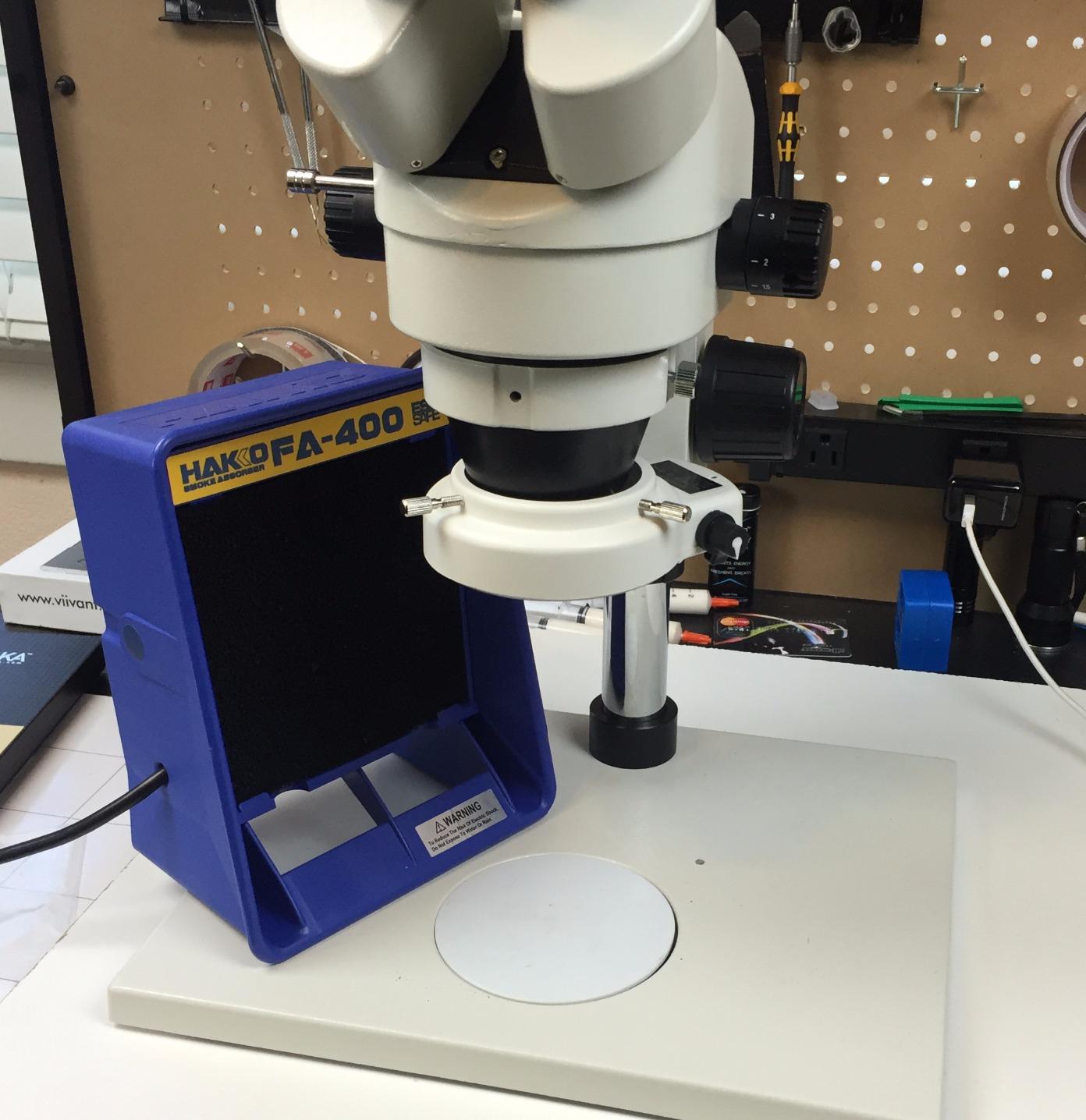
What you get is a 19W plastic housing that runs standing vertical or lying in low-profile flat. That orientation flexibility is the quiet hero feature. On a deep bench you stand it up and it reaches over the work; on a crowded repair surface you lay it flat and it gets right under the board.
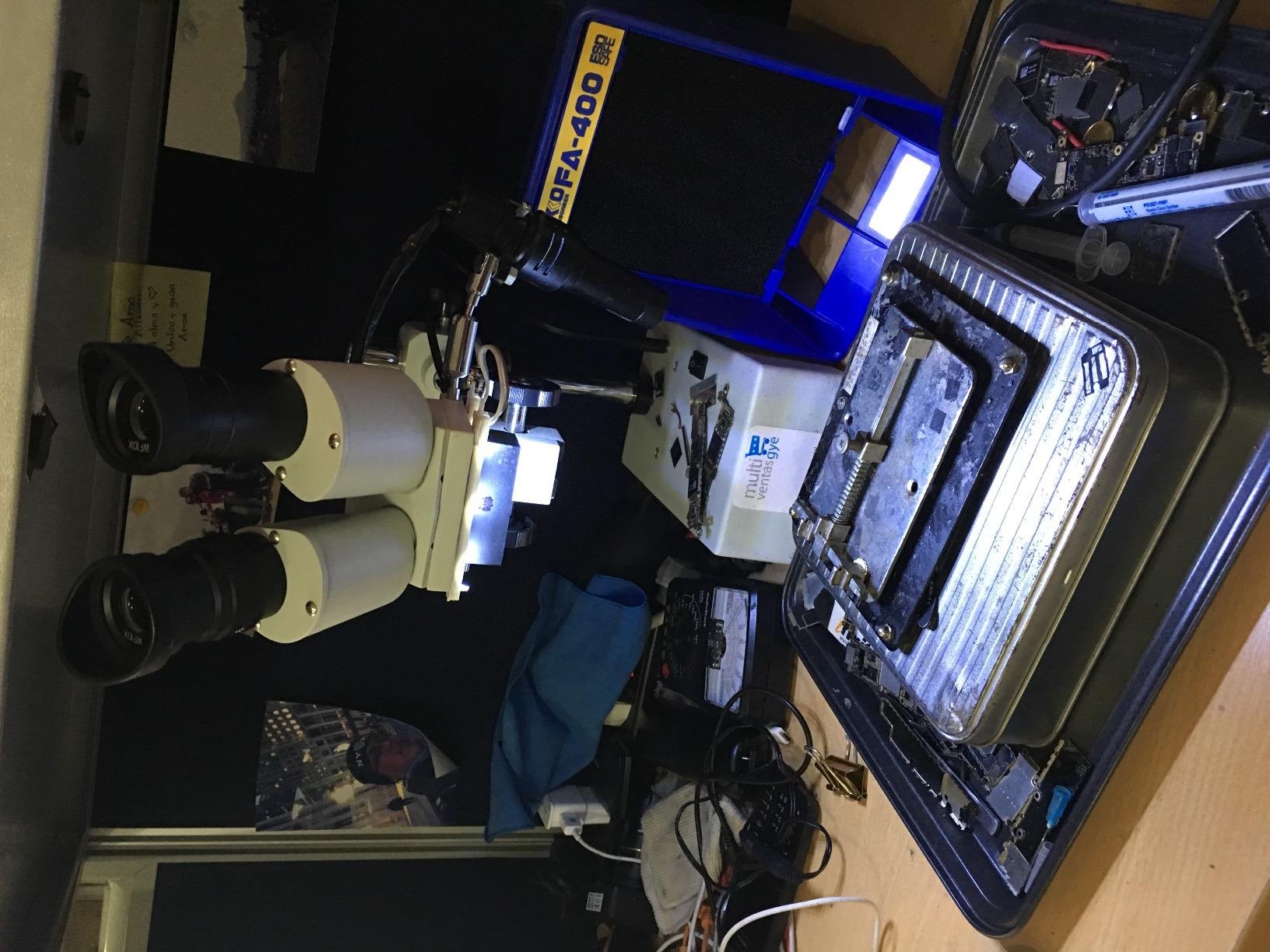
The A1001 carbon filter is documented at up to 80% odor absorption, and there is an optional 999-198 high-efficiency filter rated at up to 90% particle removal for people who want the particle side handled properly. That upgrade path is the argument for this model over a cheaper box: you are buying a chassis with two filter options, not a sealed single-stage device.
There is one critical review worth repeating because it is more useful than the praise. An Eleshop reviewer concluded it does the job but has too little sucking power and must sit very close to the work, recommending it for a beginner. That is an honest read of a carbon bench unit and it applies to the whole category.
When the Hakko earns its cost
Long ownership on a bench that gets used daily. If the unit is going to be running for years, filter availability and a chassis that does not crack matter more than the spec sheet.
It is also the right pick if you move between vertical and flat working positions constantly, since the orientation flexibility is genuinely rare below the professional tier.
When it is not worth the spend
Occasional hobby soldering. One weekend a month does not justify a premium when a single-stage carbon box at a third of the cost handles the same workload.
There is also no warranty stated on this model, which is a small but real knock given what you are spending relative to the alternatives.
3. YIHUA 948DQ-I – Best Value with the Most Spare Filters
YIHUA 948DQ-I Solder Fume Extractor Fan Solder Smoke Absorber Remover Tiltable Angle with 8 Extra Fan Filters for Soldering Wood Burning and more
Eight spare filtration adsorbers
30-degree tiltable stand with side fenders
10 cm capture distance
5W, 2.35 lb
Pros
- Eight spare adsorbers included
- Tiltable stand aims the intake at the joint
- Side fenders reduce turbulent airflow
- Number 2 category rank with 75% five-star share
Cons
- Short 10 cm capture distance
- Lowest power draw in the roundup at 5W
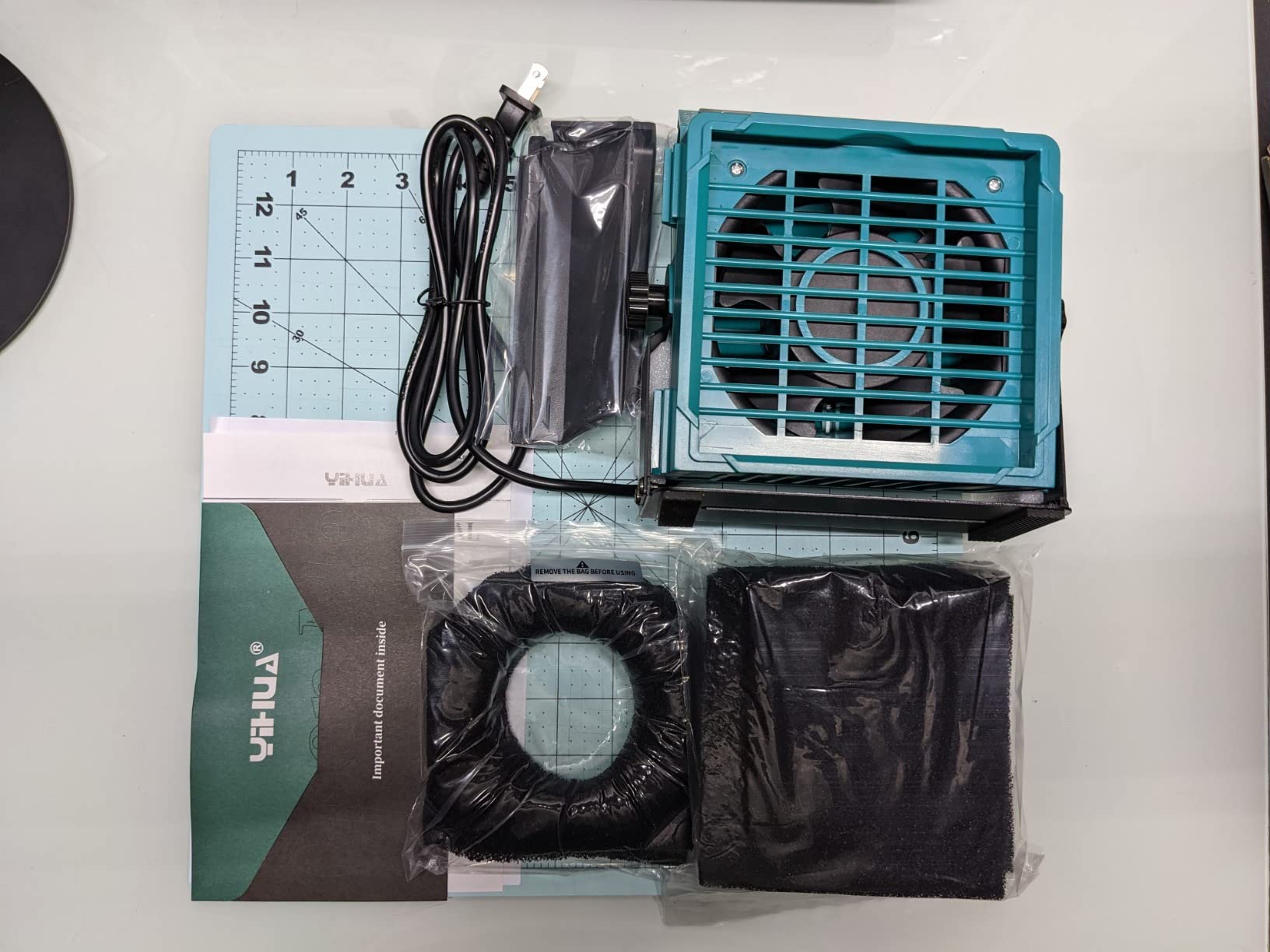
The accessory maths on this one is hard to argue with. Eight spare filtration adsorbers, two fenders and a tiltable stand in the box means the first year of consumables is already handled. Most competitors include one spare, if that.
The 30-degree tiltable stand is more than a gimmick. Combined with the two side fenders, it reduces turbulent airflow around the intake, which is the reason a lot of small extractors perform worse than their fan speed suggests. Aiming the intake at the joint is the difference between capturing plume and chasing it.
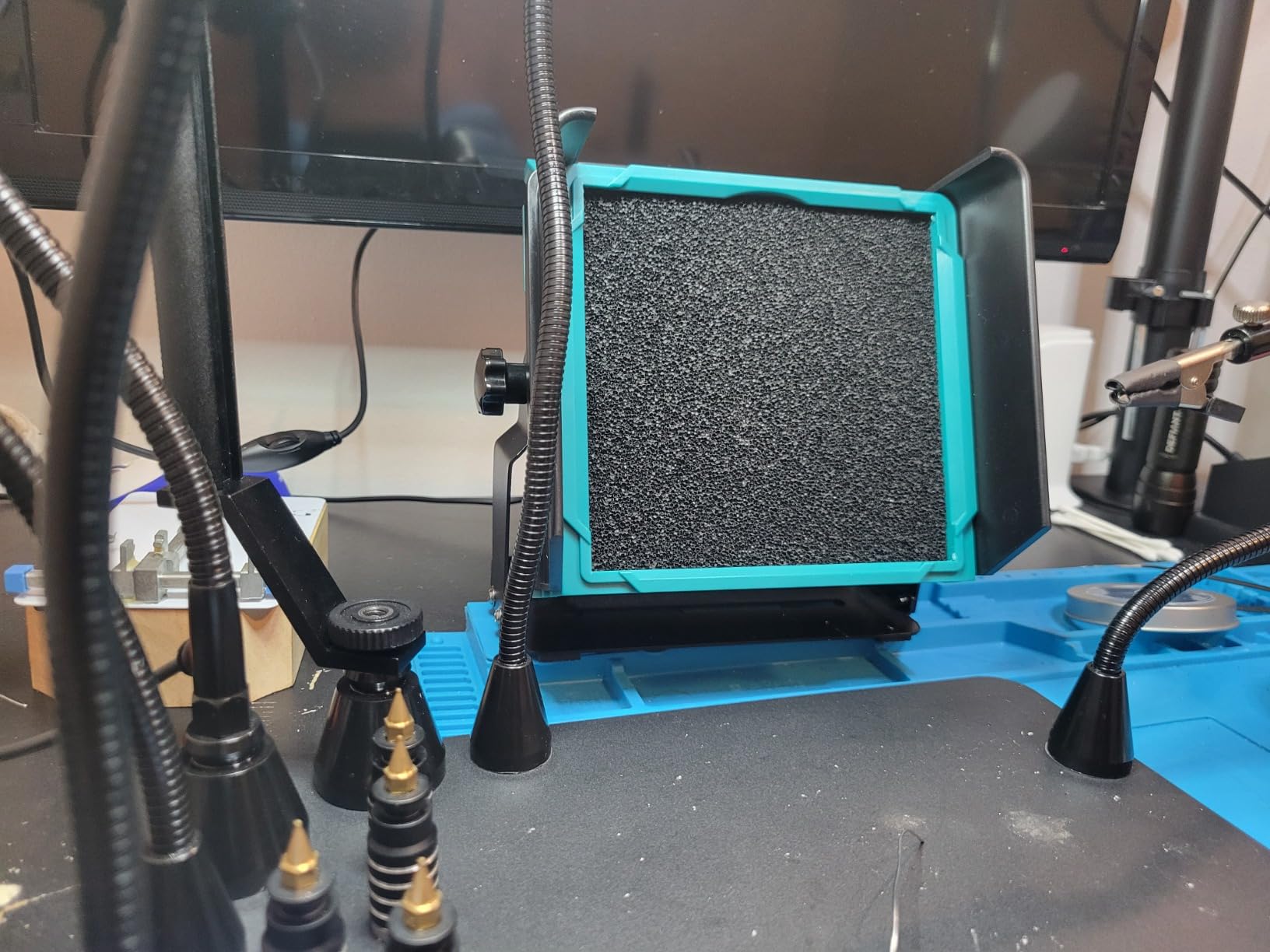
At 2.35 lb it is the most substantial of the compact wood-bodied models, and the 110-127V US plug means no adapter. The 12-month manufacturer technical coverage and 24/7 support line are also better than most of the generic crowd.
The limit is capture distance. Ten centimetres, about four inches, is a nose-to-the-board requirement. That is workable because of the tilt, but it does mean the unit lives right next to the work rather than at the back of the bench.
Who should buy it
Anyone who is tired of filters running out mid-project. If you have ever shelved a repair because you could not justify another filter order, the eight spares here effectively solve that problem before it starts.
It is also a good fit for a wooden bench or a mat-lined desk where you want something that will not need an arm or clamp, just placement and angle.
Who should skip it
Anyone working larger boards where four inches of capture distance means repositioning the unit constantly. Buy a model with reach or airflow instead.
Also skip it if you need a particle pre-filter for a dusty bench. Dual front and rear adsorption handles odour and particles together, but it is still a shallow stack by design.
4. Kulannder Handy Carry Solder Smoker – Cheapest Way to Start
Kulannder Handy Carry Solder Smoker Absorber Remover Fume Extrator Smoke Prevention Absorber DIY Working Fan
Four spare activated carbon filters
4-7 inch capture distance
Aluminium alloy body
1.4 lb, 30W
Pros
- Lowest cost in the roundup with four spare filters
- Quiet enough for a closed workspace
- Lightweight aluminium body with carry handle
- Adequate 4-7 inch capture for hobby work
Cons
- Thin 0.2 inch carbon layer saturates faster
- Single-stage filtration with no particle pre-filter
This is the unit to buy if you solder occasionally and want to stop hesitating. It is an aluminium alloy body with a carry handle, a screw-in drivepipe and four replacement activated carbon filters, which is an unusually generous box for the money.
Capture distance is listed at 4-7 inches, which is the widest practical range of the small single-stage units here. Suction is not aggressive, but the 4-7 inch figure is honest about the fact that you have to be near the work.
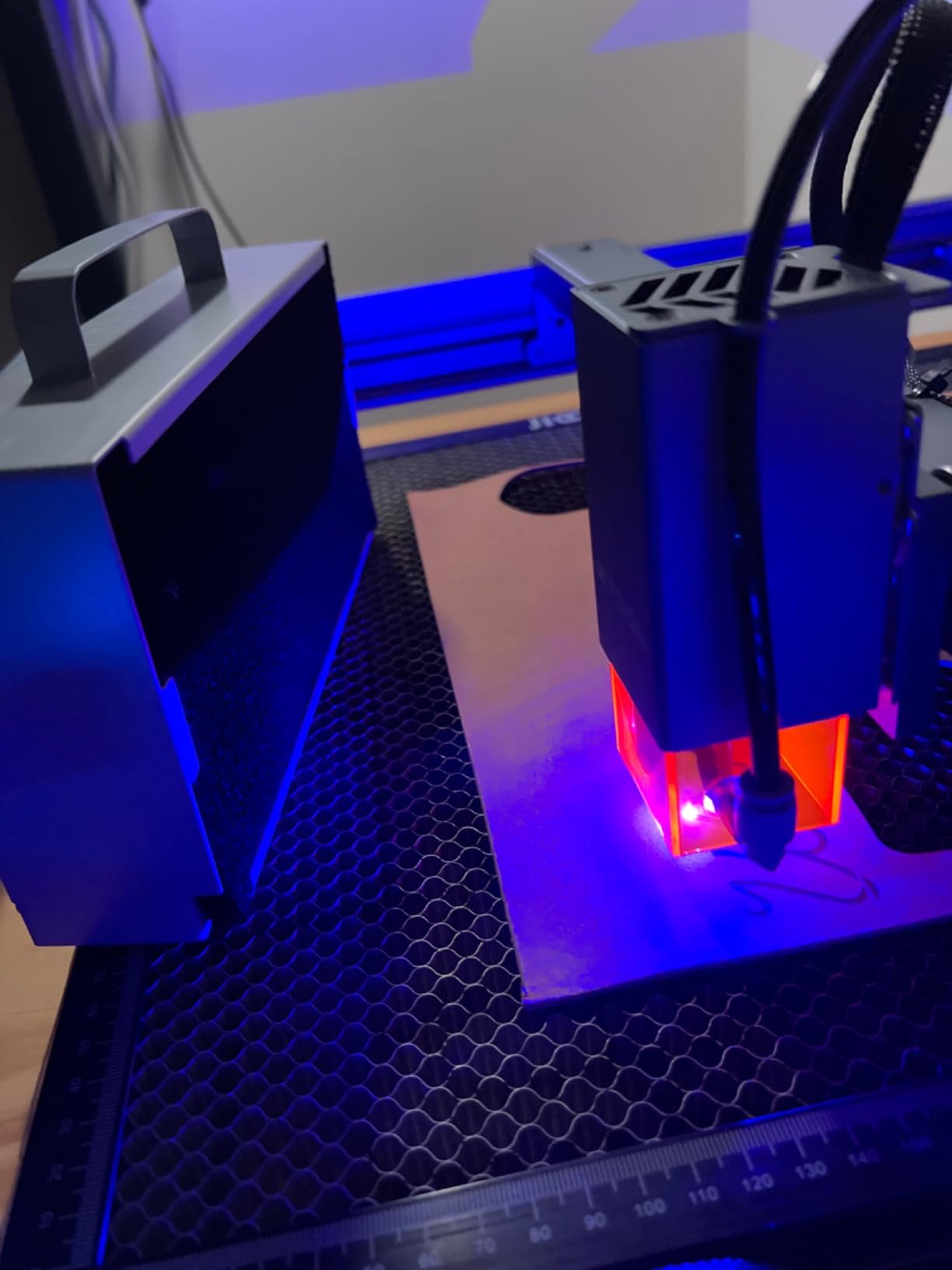
The 71% five-star share is the lowest of the four picks we rate highly, and the review pattern is consistent: people like the value, the quietness and the spares, while a 5% one-star share reports weaker-than-expected suction on heavy-flux joints. That is a real limitation, not noise.
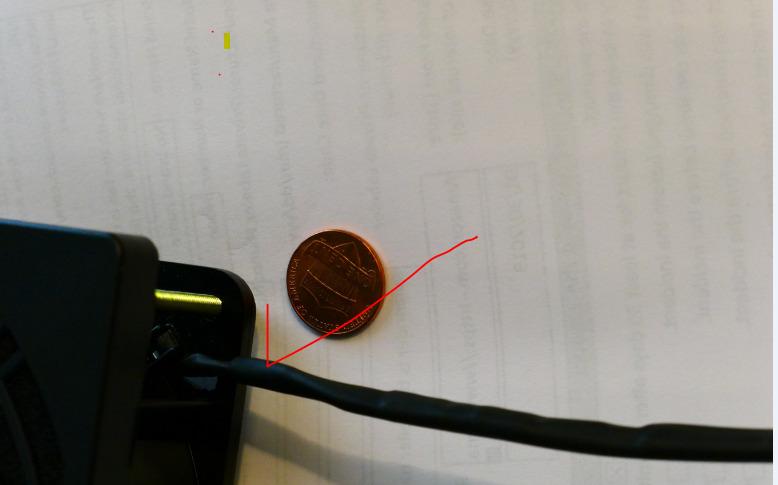
The rated working life of over 50,000 hours and the CE and UL certification are the parts of this spec sheet that actually matter. A long motor rating means you are buying hardware that will outlive several filter changes.
Best use case
Occasional soldering in a closed or poorly ventilated room. A closed room is precisely where an open window is not an option and where a compact recirculating unit earns its keep.
It also travels well between the bench and other hobbies. The same unit is listed for soldering, wood burning, 3D printing, laser engraving, stained glass and jewellery work, so a single purchase covers a lot of intermittent tasks.
Where it will disappoint
Active-flux lead-free production. The 0.2 inch carbon layer is thin, and thin carbon saturates quickly under a heavy fume load, which means more frequent filter changes than the sticker price suggests.
There is no particle pre-filter at all, so it is the wrong pick for a dusty repair bench where debris is also in the air.
5. FumeClear FC-100A – Best for High-Volume Bench Work
FumeClear FC-100A Fume Extractor Low-Noise & High Iodine 3-Stage Filtration
99.97% purification at 0.3 microns
200 m3/h suction
3 layer filtration, 10 pre-filters
3000 hour carbon filter life
Pros
- 99.97% purification with 0.3 micron filtration
- 200 m3/h pulls fumes from across the bench
- Carbon filter rated to about 3000 hours
- Ten pre-filters protect the stack
- CE and FCC certified
Cons
- Most expensive model in the roundup
- Heaviest at 19.51 lb
- One owner reported a motor and control board failure
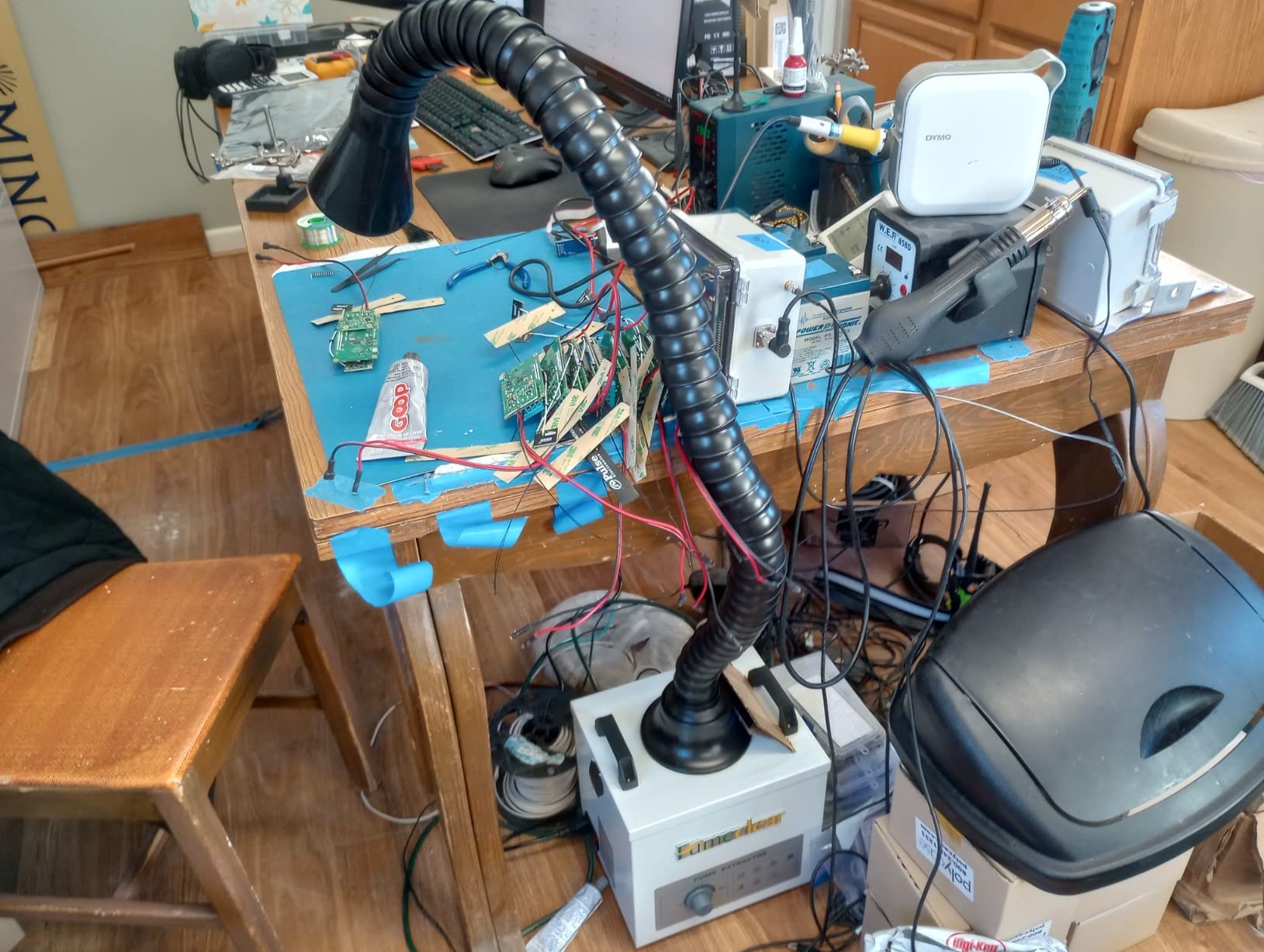
This is the only model here that changes the category. At 200 m3/h it is not a hood you place near the joint, it is a piece of equipment that pulls from across a bench, which is exactly what a busy rework station or a small production line needs.
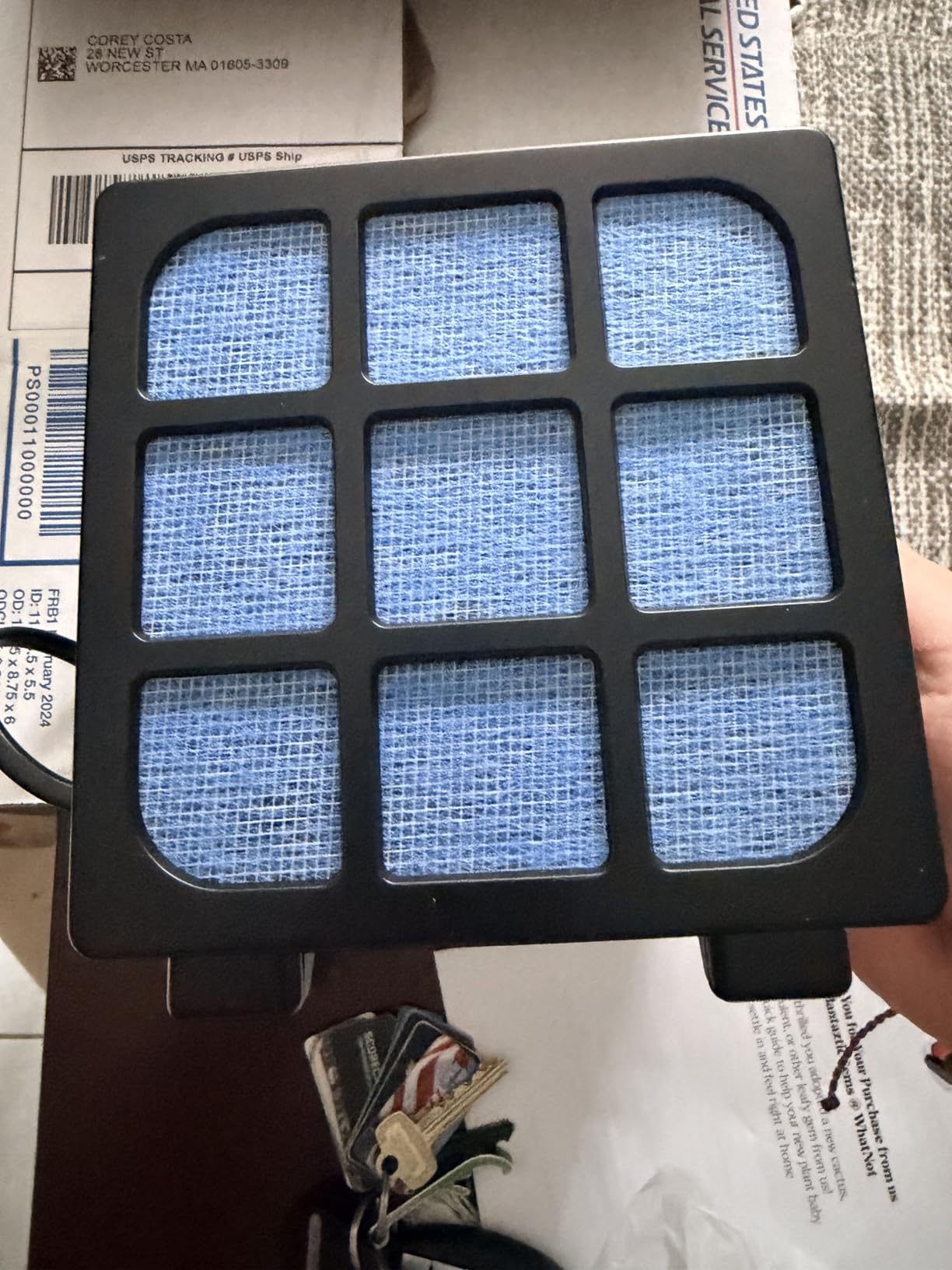
The filtration claim is specific: 99.97% purification filtering particles below 0.3 microns, across three layers with ten pre-filters for large dust. The high-iodine activated carbon main filter is rated to about 3000 hours of service, and that number is the most useful filter figure printed on any of these units.
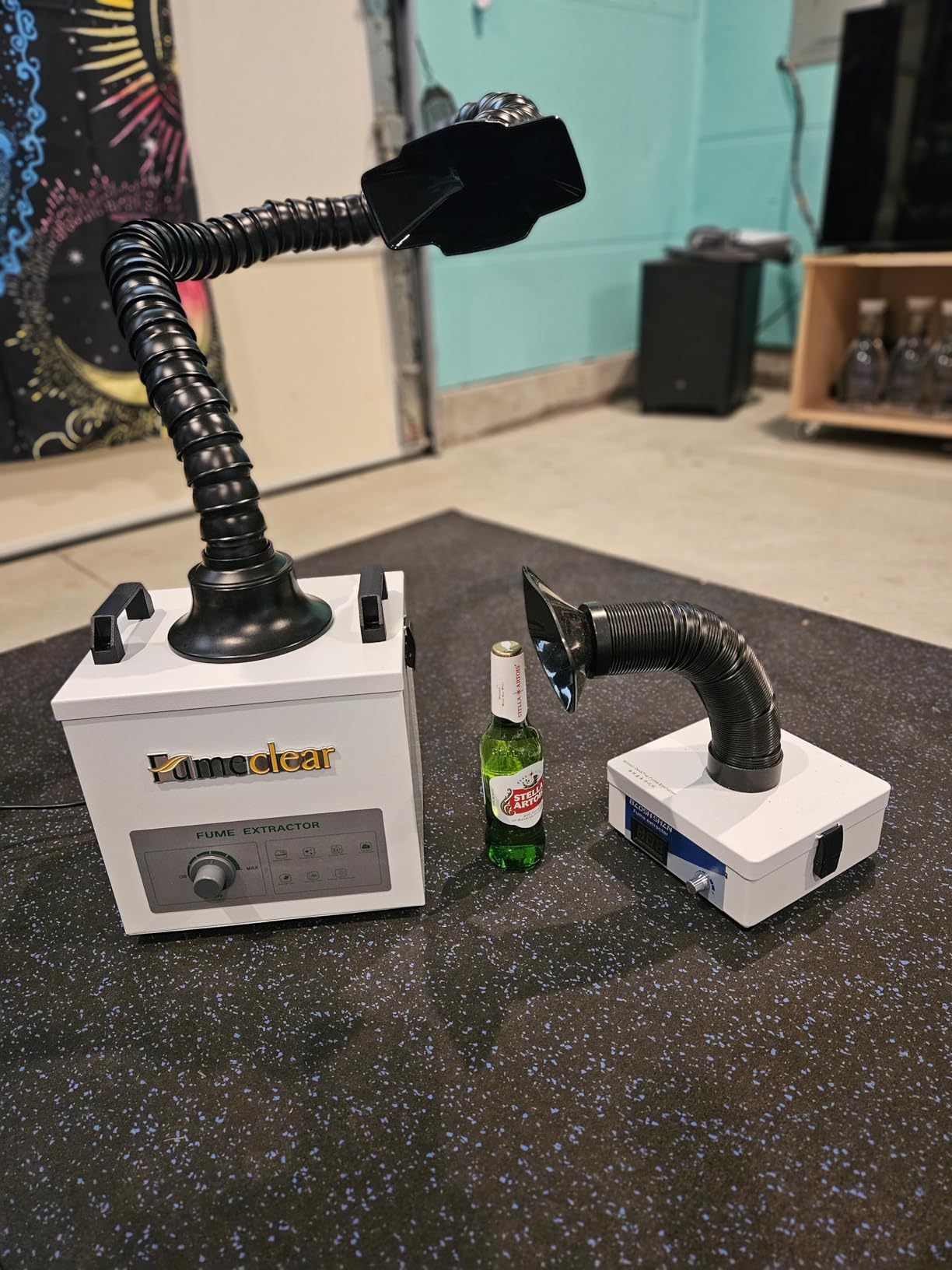
Owners running soldering, engraving, hot-wire cutting and acrylic work describe it as dramatically better than 10-30W bench fans, and several mention it is quiet in bench use. The caveat about not being intended for large laser engraver extraction duty is worth reading, because the manufacturer says it plainly rather than burying it.
It is 19.51 lb and 10.6 by 8.7 by 10.8 inches, so this is a floor-standing or lower-shelf machine, not a desktop accessory. Plan the bench around it rather than trying to squeeze it onto a worktop.
Where it makes sense
Multi-station benches, small SMT lines and any setup where a hood cannot be parked inches from every joint. The 200 m3/h figure is what lets one machine cover more than one operator.
It is also the pick if you are done replacing carbon filters every few months. A 3000 hour rated life changes the cost-per-hour maths completely compared with the 30W boxes.
Where it is overkill
A single hobbyist on a single bench. You are buying airflow capacity and filtration depth you will not use, and the weight and footprint are a genuine inconvenience in a small room.
One long-term owner reported a motor and control board failure at around six months, resolved by the brand through replacement. That is a reminder to confirm the voltage selection and to keep the receipt.
6. Weller WSA350 – Best for Active Flux Workbenches
Weller Genuine 120v Bench Top Smoke Absorber | WSA350
Replaceable WSA350F carbon filter
ESD safe construction
Quiet 20W fan
2 lb benchtop, 120V
Pros
- Purpose-built for high-flux continuous bench work
- ESD safe on a live electronics bench
- Quiet 20W fan
- Spare WSA350F filter included
Cons
- Single carbon stage with no particle pre-filter
- Costs more than most compact units here
Weller and Hakko are the two names that come up constantly in the solder fume question, and the honest answer is that they solve different problems. The WSA350 is built for active fluxes, which is the higher-fume lead-free chemistry that professional rework actually uses.
At 20W and 2 lb it is a proper benchtop machine rather than a desk accessory, and the carbon-activated filter is replaceable with a WSA350F spare included in the box. Buyers on active-flux work report trusting it for continuous duty, which is the test the smaller hobby units are not built for.
What makes it different from the Hakko
Two things. The stated application is workspaces using more active fluxes rather than general bench odour, and the WSA350F filter is a well-known part number with wide availability. If your filter choice is a long-term ownership question, that matters more than any spec line.
It is also explicitly ESD safe, which on a live electronics bench with a grounded mat is not a trivial specification.
Where it is not the answer
Fine electronics repair with a magnifying lamp and a board held in a vice. A 2 lb benchtop hood is awkward to position at that scale, and a small gooseneck unit serves better.
It is also a single carbon stage with no particle pre-filter, so it will not help with a dusty bench, and it costs more than most of the compact models in this roundup.
7. MUIN 3-Stage Fume Extractor – Best for a Crowded Desk
MUIN Solder Fume Extractor – 3 Stage Filtration Solder Smoke Absorber for Soldering and Wood Burning,Portable Soldering Fume Extractor Fan for Soldering Station (Black)
3 stage filtration
115 cfm airflow at 45 dB
4-5 inch capture
ABS, 1.43 lb
Pros
- Three filtration stages at a low price
- 45 dB keeps the bench conversation-friendly
- Compact 5 by 2.8 by 5.5 inch vertical footprint
- Works across several hobbies
Cons
- 115 cfm figure is not independently verified
- 4-5 inch capture needs a close working position
Three-stage filtration is normally a claim you pay properly for, and here it appears on a 1.43 lb ABS tower that takes up almost no desk space. The vertical footprint is the reason to notice this model: 5 by 2.8 by 5.5 inches means it can live at the back edge of a small desk without eating work surface.
At 45 dB it is the quietest specification published anywhere in this roundup, and for a home office or a shared study that is a genuine feature rather than a footnote.
Owners use it far beyond electronics. Stained glass, pyrography, 3D printing and nail work all appear in the review themes, which means the filter hours add up from several directions and the consumable cost stays low per task.
The honest weakness is the 115 cfm claim. It is a manufacturer figure, it is not independently verified, and a 4-5 inch capture requirement says the practical result depends more on placement than on the headline number.
When it fits
Small desks and quiet rooms. If noise is your main objection to having a fan running beside you, 45 dB is the specification that answers it.
Multi-hobby users are the other fit, because the same filter stack serves glass work, wood burning and printing.
When it does not
Active-flux work, where a shallow three-stage tower will load faster than a deeper carbon bed and you will be buying filters more often.
It is also not a hood for large work. Anything wider than the intake opening will have plume escaping at the edges, so keep the joint inside a few inches of the mouth.
8. NOEVSBIG Solder Fume Extractor – Best for an ESD-Safe Bench
Solder Fume Extractor Smoke Absorber Remover Smoke Prevention Absorber Smoke Fan 12V Soldering Fan DIY Working Fan Fume Extractor for Soldering Station Stained Glass Laser Cutter Repairing DIY Hobby
2800 RPM fan
Pure copper motor, metal enclosure
ESD-safe materials
1.72 lb, 110V
Pros
- Metal enclosure and copper motor feel robust
- ESD-safe for electronics work
- Two replacement carbon filters included
- Solid 4.5 star rating at 460 reviews
Cons
- 2800 RPM is slower than the 3000 RPM class
- 6.3 inch tall body takes more bench space
Most units in this price bracket are plastic with a plastic motor housing. This one is a metal enclosure with a pure copper motor, and reviewers consistently single that out as feeling more robust than the plastic competition. At 1.72 lb it is heavier than it looks, which is a good sign for a device that sits next to a soldering iron.
ESD-safe materials are the headline specification. The pattern is listed as ESD-SAFE, and for a repair bench with live boards and a grounded mat that is a specification worth filtering for.
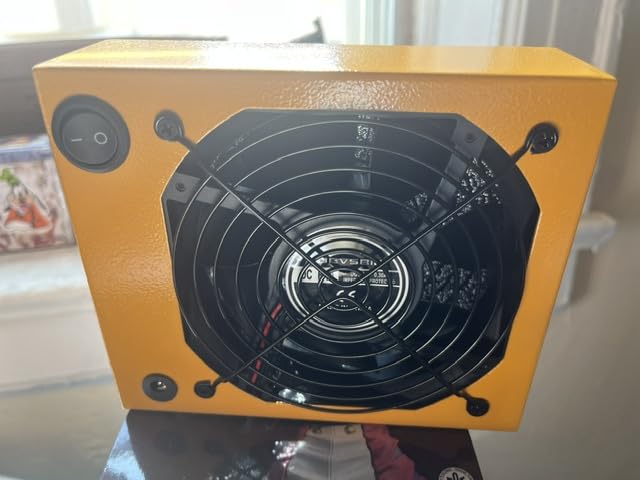
Two replacement carbon filters are included, the 2800 RPM fan is described as low noise, and the rubber feet and carry handle are sensible details that stop the unit walking across the bench.
The trade-off is fan speed. 2800 RPM is below the 3000 RPM class leader in this roundup, and reviewers note the pull is slightly less aggressive than premium units. It is a difference you feel only when comparing side by side.
Why the build quality matters here
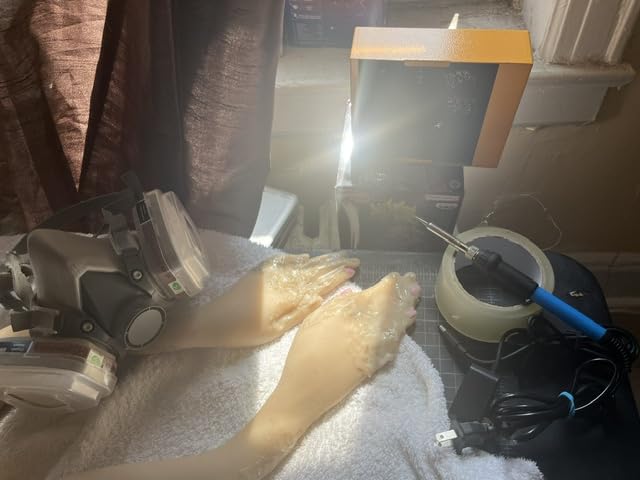
Extraction units live next to heat. A soldering iron at temperature, a hot-air rework gun and a metal bench are all within reach, and a metal enclosure with a copper motor simply tolerates that environment better than thin plastic.
For repair work where boards are handled constantly, the ESD rating removes one more thing to worry about.
Where it is the wrong buy
If you need maximum pull in a hurry. The 2800 RPM figure is not the lowest here, but it is not competitive either, so the hood will need to be closer than with a faster fan.
The 6.3 inch tall body also uses more vertical space than the very compact towers, which is a problem on shelves with a low clear height.
9. SainSmart Gooseneck Fume Extractor – Best Reach of the Compact Units
SainSmart Portable Fume Extractor Fan, Magnetic Solder Smoke Absorber
3700 RPM fan, 10 inch absorption
400mm memory steel gooseneck
Magnetic base plus table clamp
3-colour LED lamp
Pros
- Longest reach among the compact units at 10 inches
- Memory gooseneck holds position without sagging
- Magnetic base and included clamp handle metal and non-metal benches
- Adjustable LED lamp lights the joint
Cons
- Noisiest fan here at 3700 RPM
- 10% three-star share indicates mixed satisfaction
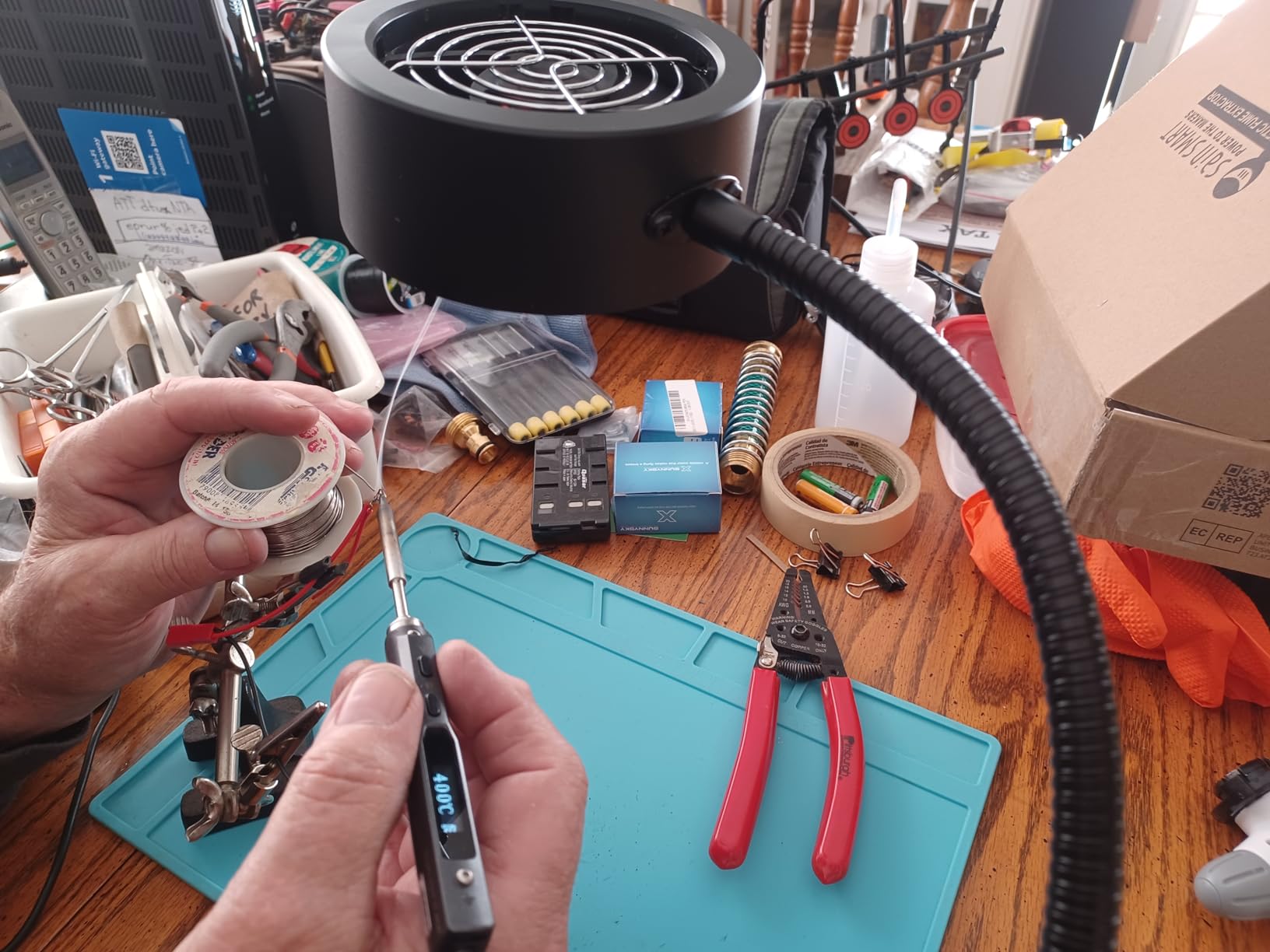
This solves a problem none of the other compact models do: how to keep the intake near the joint while the unit itself sits somewhere else. The 400mm memory stainless steel gooseneck holds a bent position without drifting, and the magnetic cone base clamps to a metal bench or a steel shelf. A table clamp is included for non-metal surfaces.
Ten inches of absorption distance is the longest reach in this roundup, and combined with the 3700 RPM fan it means the hood can actually be placed over the work rather than beside it.
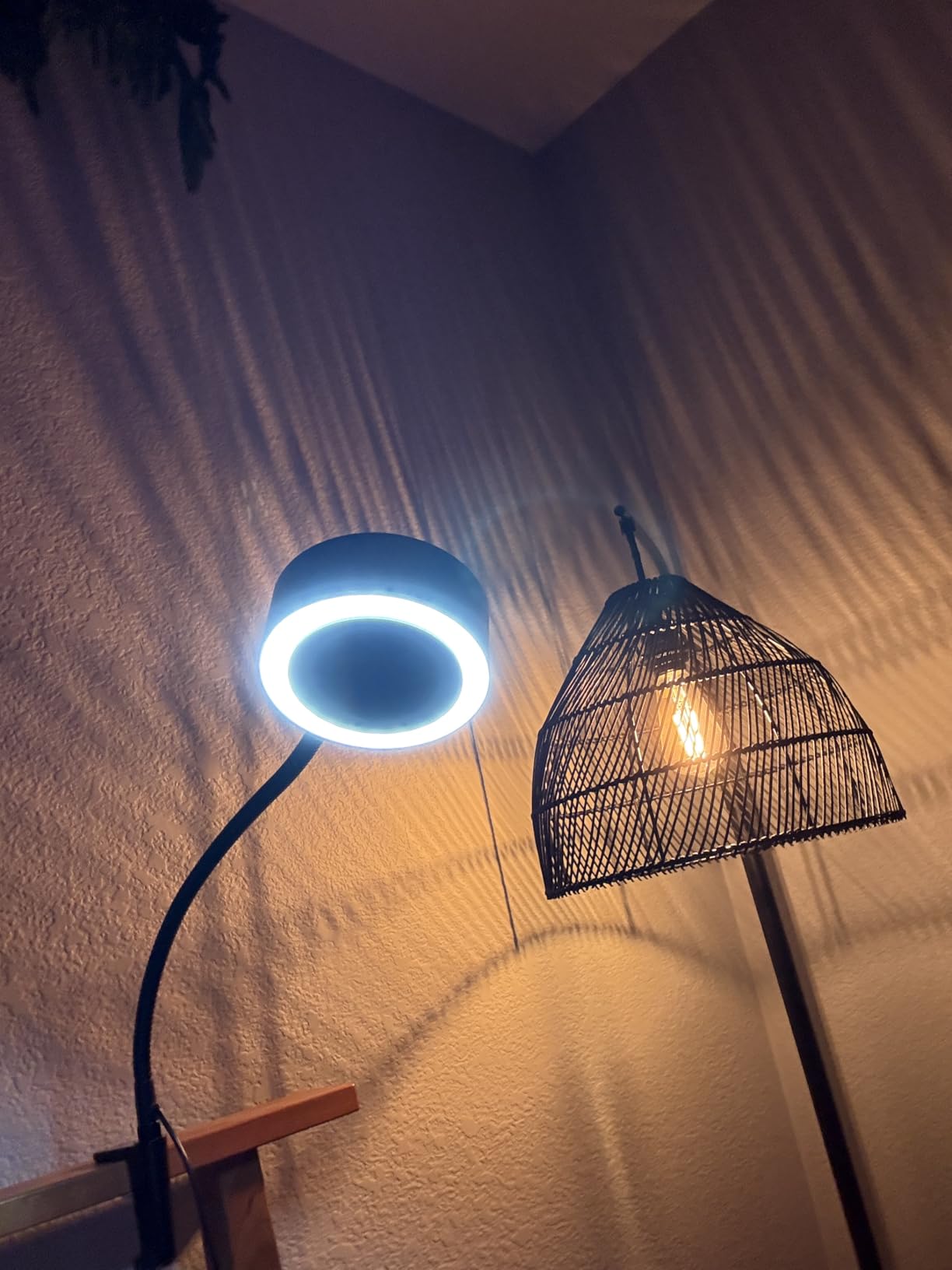
The adjustable LED lamp with three colour temperatures is a nice touch that gets used more than expected. Soldering a small SMD part under a magnifier with poor side lighting is a recipe for bridging, and having a light come from the extractor is a genuine workflow improvement.
The cost is noise. At 3700 RPM this is the loudest fan in the roundup, and the 10% three-star share is the second-highest of any model here, with some of that attributable to the sound.
Best fit for SMD and fine work
Small electronics work where the board is in a vice and your hands are occupied. A gooseneck reaches over the top of the work, which a box-shaped hood physically cannot do.
It is also useful when the bench surface is a metre deep and the useful spot is far from the wall, since the base can live at the back and the arm reach forward.
Where the noise bites
Quiet rooms, home offices and any recording or video call near the bench. A 3700 RPM fan is audibly present, and if you are the sort of person who notices a fridge hum, you will notice this.
It is also heavier in the hand than the plastic towers, and the gooseneck means it needs enough clearance above the work to bend into position.
10. Antidious Anti-ESD Fume Extractor – Best for Compact Repair Work
Antidious Fume Extractor Anti-ESD Solder Smoke Absorber Portable Filter for Soldering DIY Fan Extraction Equipment with Spare Activated Carbon for Brazing Welding Soldering, Fume Prevention Remover
ESD protection with surge suppression
Foam plus activated carbon filters
4-5 inch capture
4.7 inch square footprint, 1.74 lb
Pros
- Compact 4.7 inch square footprint sits close to the work
- On-unit power switch is convenient
- Two-part foam plus carbon filter is easy to service
- Horizontal or vertical operation
Cons
- Suction reported as too weak for heavy-flux work
- 9% one-star share is the highest here
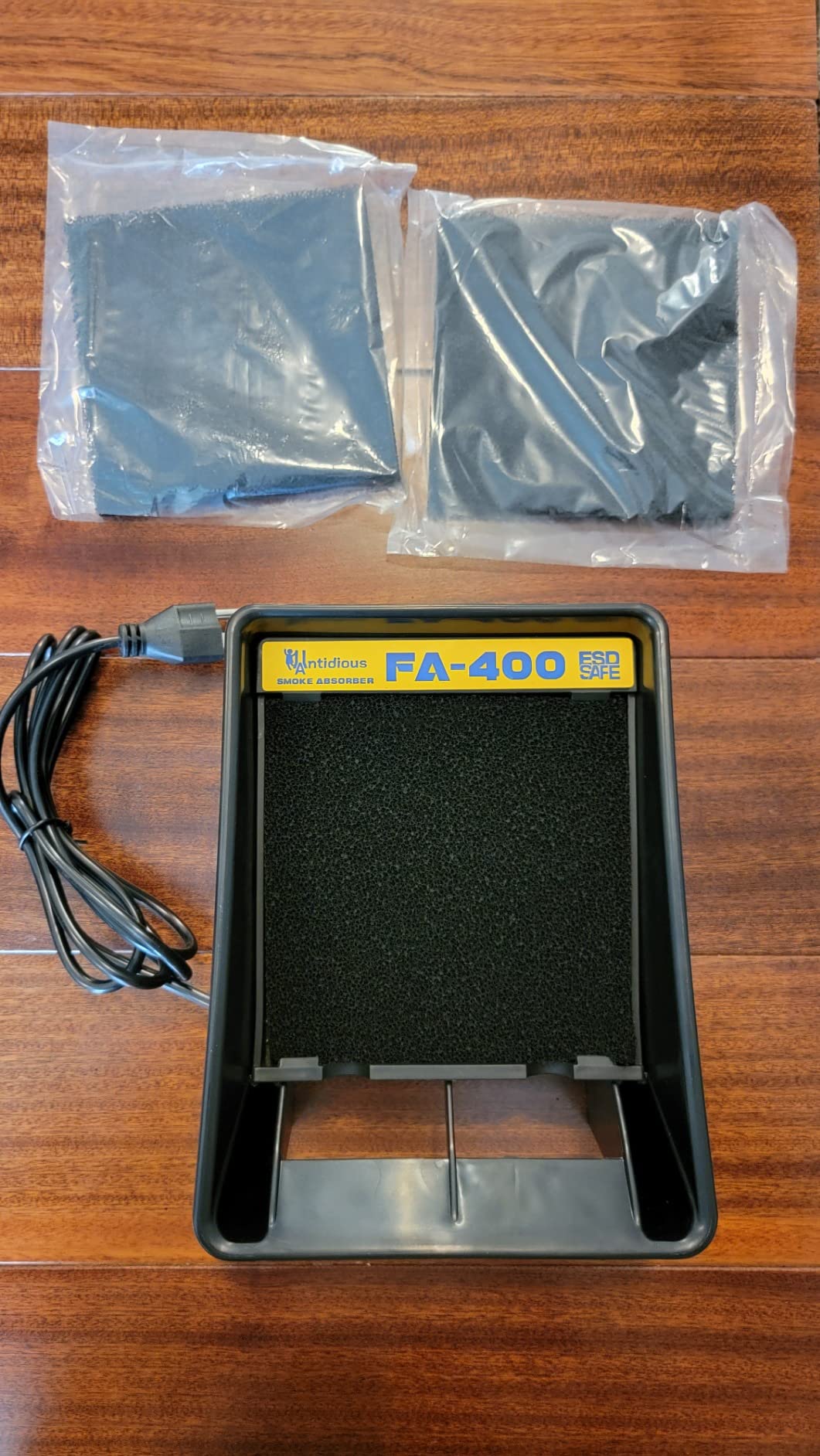
The 4.7 inch square footprint is the point of this model. On a small repair bench, a unit that can sit level with the board without a clamp or a base is worth more than raw airflow, because anything you cannot position close to the joint is not capturing much.
ESD protection with surge suppression is a more specific claim than most competitors make, and it is aimed squarely at the repair-bench case rather than the hobby case. The filter is a two-part assembly of urethane foam plus activated carbon, which is easy to service and separates coarse particles from gas adsorption.
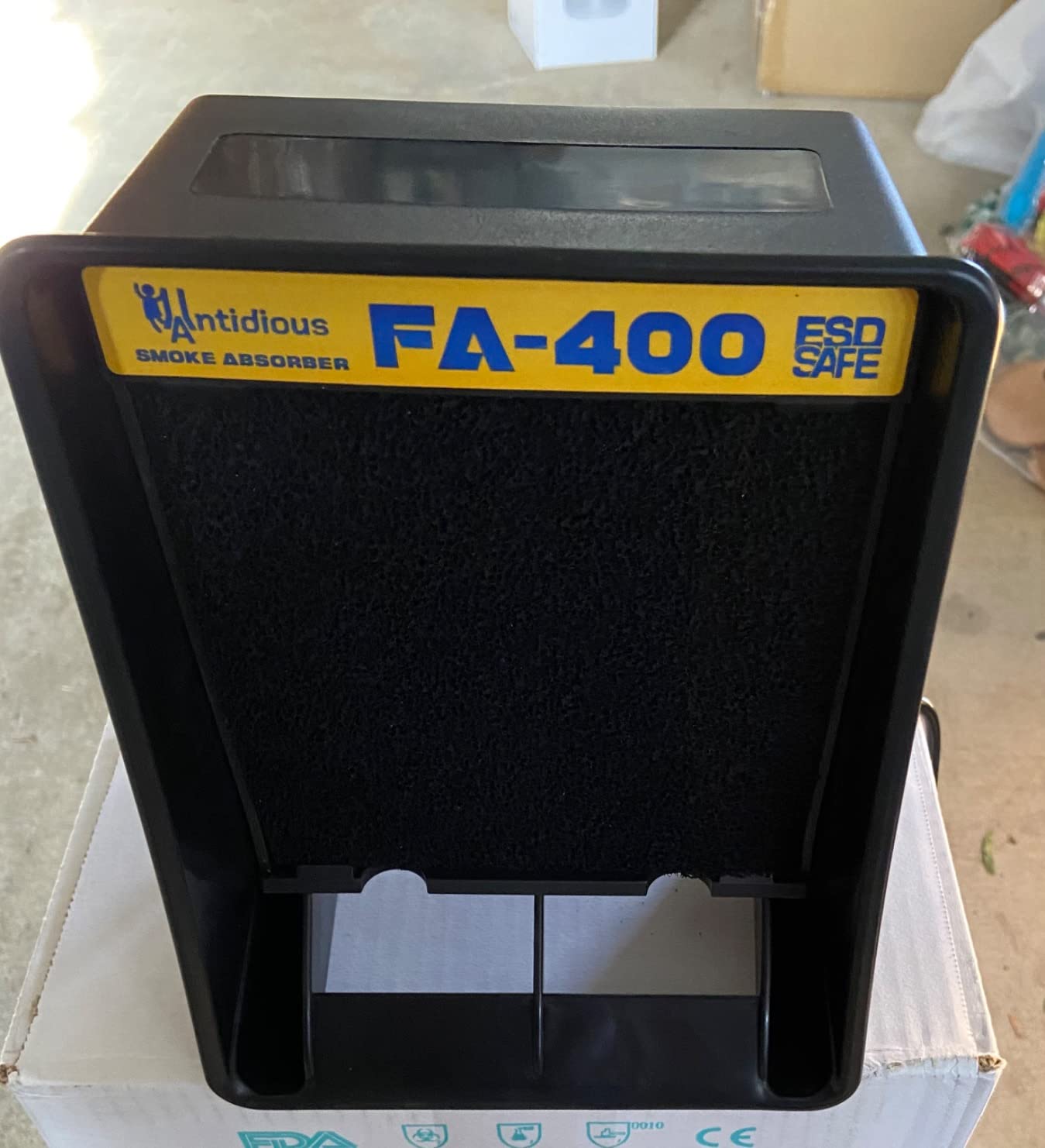
It works horizontally or vertically, the EC motor is rated over 57,000 hours, and there is a 4-5 inch capture figure. The on-unit power switch is a small convenience that you notice every single time you sit down at the bench.
At 4.3 stars with 369 reviews this is the most polarised unit here, and the reason is consistent: several reviewers report suction that is too weak for heavy-flux work, with some keeping a small fan on the desk alongside it. A 9% one-star share is the highest in the roundup.
Where it does the job well
Fine repair and electronics servicing on a cramped bench, where footprint beats flow rate. The surge suppression and ESD protection make it appropriate next to sensitive boards.
It is also a good second unit for a two-sided bench, since it is cheap enough to run one per workstation.
Where it falls down
Active-flux or high-volume lead-free work. The reviews are unambiguous that this is not where its strength lies, and a weak pull means the plume simply travels.
There is also a reported oddity worth knowing: some owners say extraction appears to improve as the filter loads. Whatever the cause, it is not a behaviour you want to plan filter changes around.
How to Size a Fume Extractor for Your Bench
Here is the sizing logic nobody in this category publishes, so we have laid it out in plain steps. It matters because two units with the same wattage can behave completely differently once you account for what the fan is pushing through.
First, count your stations, not your room. The dominant pattern in working labs, described on EEVblog for a 12-person lab, is one extractor per solder station plus a larger central machine. Airflow is sized per station, not per square metre of floor.
Second, set your capture distance target before you shop. Under 5 inches is the hobby requirement. 5-7 inches is a workable bench. Beyond 7 inches you need either a gooseneck arm or substantially more airflow than a 30W box can move.
Third, apply the rule of thumb for a single home bench: 60-100 cfm of free air is comfortable for one operator, and 150 cfm and above is where you can start placing the hood a foot away from the work. The MUIN at 115 cfm sits in the middle of that range, and the FumeClear at 200 m3/h is the step up beyond it.
Fourth, add the duct penalty. If you plan to run a hose or duct to the outside, static resistance eats free-air figures, and a fan that looks adequate on paper will not pull through a long flex duct. Keep runs short and smooth, and expect to lose a meaningful share of the rated flow.
Finally, check noise against the room, not against other fans. A 3000 RPM carbon fan is conversation-friendly, and a 3700 RPM gooseneck fan is not. In a shared home office, that difference decides the purchase more often than filtration depth does.
Carbon, HEPA or Both: How Filter Choice Changes the Job
Activated carbon and HEPA do completely different jobs, and most confusion in this category comes from marketing that treats them as interchangeable. Carbon adsorbs gases and vapour molecules, which is what kills the solder smell. HEPA traps particles, which is what actually reduces what you breathe.
That distinction matters for safety reasoning. Removing odour is not the same as removing particulate, and a unit can make a bench smell clean while letting flux aerosol straight past the intake. A pre-filter catches large dust so the carbon bed or HEPA stage is not blocked, and its absence is why the single-stage units in this roundup lose airflow over time.
Which you need depends on the solder. Rosin-core leaded work on a hobby bench is manageable with a decent carbon bed plus a pre-filter. Active-flux lead-free alloys produce a heavier fume load, and that is where a high-iodine carbon stage or a genuine three-layer stack earns its money.
On recirculating versus ducted, the honest version is short. A recirculating unit cleans the air in the room but does not move contaminants out of the building; everything it captures stays in the filter. Ducting outside is the right call for a workshop, a basement bench or any shared space, and it is the only configuration that genuinely removes fumes rather than relocating them.
One more thing worth knowing: lead-free does not mean fume-free. Removing the lead removes the metal exposure but the flux chemistry is more aggressive, so the filter load can go up. Do not downgrade your extraction when you switch alloys.
If you want a second opinion on the hardware side, our picks for the rest of the bench are in the guides to the best feeler gauges and the best dust extractors for woodworking, which share the same airflow-versus-filtration logic at a larger scale.
Filter Replacement Cost and a Maintenance Schedule
Filter cost is the loudest complaint in every forum thread about this category, and it is entirely a function of carbon bed depth and how many hours a week you solder. A 0.2 inch single-stage bed and a 3000-hour high-iodine bed are not the same product with different branding.
The practical comparison is spare filters per purchase. The Kulannder includes four, the YIHUA includes eight, the KOTTO and NOEVSBIG include two, and the Hakko and Weller include one each. Over a year of intermittent hobby use, a box with eight spares effectively removes filter cost from the running budget.
For continuous work, hours of service matter more than spare count. The FumeClear’s high-iodine carbon filter is rated to about 3000 hours, which is the only figure on any of these units that lets you calculate a genuine cost per hour at the bench.
A schedule that works: check the pre-filter weekly, because a cotton or foam pre-filter is cheap and inspectable, and it is the only way to know whether the carbon stage is still moving air. Wash foam pre-filters monthly and let them dry fully.
Replace the carbon stage on airflow loss rather than on a calendar, because fume load varies enormously between projects. If you can no longer feel pull at the same fan speed, it is time. Rotate carbon stages if you run two units so one is never sitting saturated.
Finally, buy one spare carbon stage when you buy the machine rather than later. Forum buyers consistently report filters arriving when needed to be the deciding factor, and a filter that takes weeks to arrive means a month of unprotected bench time. If you also want the bench itself sorted out, our tablet picks for remote work cover the job-lookup side of a home setup.
Frequently Asked Questions
What is the best smoke extractor for soldering?
For most benches the KOTTO Solder Smoke Absorber is the best balance, with a 0.4 inch carbon bed, a 3000 RPM fan and an honest 5-6 inch capture distance. The Hakko FA400-04 is the pick if you want a chassis that lasts years and offers a higher-efficiency filter upgrade. The Kulannder Handy Carry is the cheapest sensible starting point if you solder occasionally.
Do soldering fume extractors work?
Yes. A fan creates a slight negative pressure zone around the joint so flux aerosol is pulled in at the source rather than drifting toward you, and the filter stack then traps particles and adsorbs the gases behind the smell. Capture depends on distance, so place the hood within about 5-6 inches of the work.
How to ventilate for soldering?
Put the extractor hood within a few inches of the joint first, then ventilate the room. Run the extractor for several minutes after you stop soldering so residual haze clears. Open a window if the room is warm, and if it is cold treat the window as a supplement rather than the primary control.
How to get rid of solder fumes?
Use a fume extractor with the hood close to the joint, keep the pre-filter clean so airflow does not drop, and replace the carbon stage when you can no longer feel pull at the same fan speed. Vent the room as well, and switch to a deeper carbon stage if you work with active-flux lead-free alloys.
What is the recommended CFM for fume extraction?
For a single home bench, 60-100 cfm of free air is comfortable for one operator. Around 115 cfm sits in the middle of the range, and 150 cfm and upward lets you place the hood about a foot from the work. Subtract a meaningful share of the rated flow if you run a long or flexible duct.
How to size a fume extractor?
Count solder stations rather than floor area, set a capture distance target, then match airflow to it. Add a duct penalty for any hose run, and check the noise rating against the room. For multi-station benches, one small unit per station plus a larger central machine is the pattern that works.
Which is better, Hakko or Weller?
The Hakko FA400-04 is more flexible, working upright or flat, and it can be upgraded with a high-efficiency particle filter. The Weller WSA350 is aimed squarely at active-flux workbenches, is explicitly ESD safe, and its replacement filter is a widely available part number. Hakko wins on layout flexibility, Weller on high-flux duty.
What is the best solder fume extractor for home use?
For a quiet home office the MUIN 3-stage unit is the quietest published option at 45 dB and has a very small footprint. For occasional work the Kulannder Handy Carry is the cheapest route to a working setup. If you want one unit that handles several hobbies, the KOTTO covers soldering, wood burning and small print jobs.
Final Verdict
The KOTTO Solder Smoke Absorber is our choice for the best fume extractors for solder work in 2026, because it combines the largest installed base in the category with a thick carbon bed and a quiet fan. If you need something that will still run in ten years, the Hakko FA400-04 earns its cost. If you solder twice a month, the Kulannder Handy Carry solves the problem for almost nothing.
Whichever you choose, the number that decides how well it works is how close the hood sits to the joint. Buy the unit that fits within your reach, and the rest of the spec sheet matters far less.