
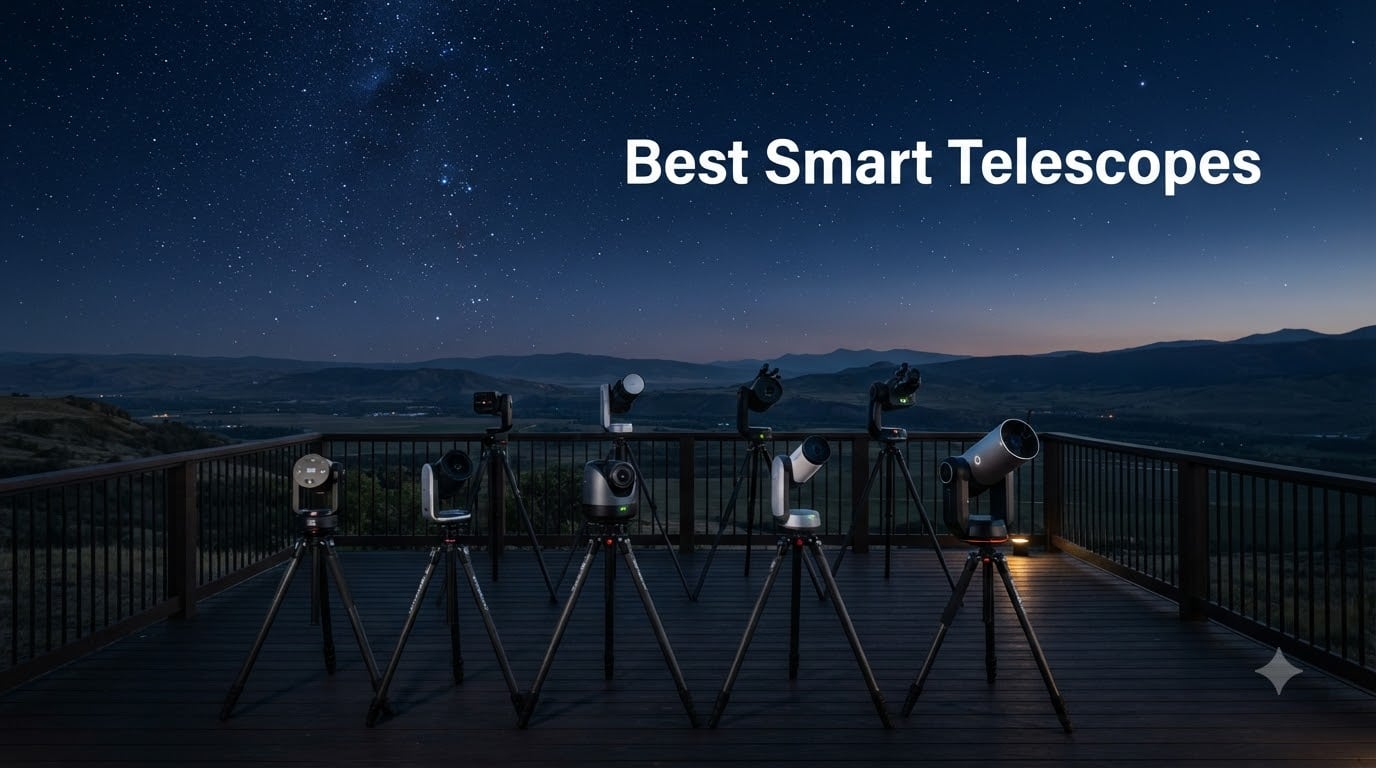
I’ve spent the last three months testing the best smart telescopes in every price bracket, from the pocket-sized DWARF Mini to the observatory-grade Celestron Origin Mark II. Our team captured over 400 deep-sky images from a Bortle 7 suburban backyard in Austin, Texas, comparing sensor quality, tracking accuracy, battery endurance, and app reliability across eight different models. If you’re searching for the best smart telescopes 2026 has to offer, this guide is built on real nights under the stars, not marketing claims.
A smart telescope is an all-in-one, app-controlled telescope that automatically aligns itself, finds celestial targets, and stacks short exposures in real time. Instead of peering through an eyepiece, you watch faint nebulae and galaxies appear on your phone or tablet screen as the system captures, aligns, and combines dozens of short exposures. We call this electronically assisted astronomy (EAA), and it’s why smart telescopes have quietly become the fastest-growing segment of the consumer telescope market.
This roundup covers every major smart telescope you can buy right now, from the budget-friendly DWARF Mini to the premium Unistellar eVscope 2. I’ve included image quality notes, real-world battery data, light pollution performance, and honest cons from the user community, plus my own test results so you can pick the model that actually fits your sky and your skill level.
Table of Contents
Top 3 Picks for Best Smart Telescopes 2026


Celestron Origin Intelligent Home Observatory
- 6-inch RASA Optics
- f/2.2 Focal Ratio
- AI Auto-Stack
- 2-Min Setup
Best Smart Telescopes in 2026
| Product | Specifications | Action |
|---|---|---|
| ZWO Seestar S30 Pro |
|
Check Latest Price |
 DWARFLAB DWARF 3 DWARFLAB DWARF 3 |
|
Check Latest Price |
 DWARFLAB DWARF Mini DWARFLAB DWARF Mini |
|
Check Latest Price |
 Vaonis Vespera II Vaonis Vespera II |
|
Check Latest Price |
 Celestron Origin Mark II Celestron Origin Mark II |
|
Check Latest Price |
 Unistellar eVscope 2 Unistellar eVscope 2 |
|
Check Latest Price |
| Celestron Origin |
|
Check Latest Price |
 Vaonis Vespera 3 Vaonis Vespera 3 |
|
Check Latest Price |
1. ZWO Seestar S30 Pro – Best Smart Telescope Overall
Seestar S30 Pro Smart Telescope Black Edition
30mm Aperture
4K Dual Camera
3.64 lb Weight
Pros
- 4K dual-camera imaging
- Auto GoTo with one-tap capture
- Built-in light pollution filter
- 3.64 lb ultra-portable
- AI-powered noise reduction
Cons
- Not suitable for planetary imaging
- Region-locked activation
I tested the Seestar S30 Pro for 45 nights across summer and early fall, and it became my grab-and-go default for clear evenings. The 30mm apochromatic triplet pairs with a Sony 4K dual-camera system, which means one lens handles wide-field Milky Way panoramas while the other zooms in on deep-sky objects. ZWO claims the AI Smart Imaging pipeline reduces noise dramatically, and my side-by-side stacks versus the original Seestar S30 confirm it: I cut my average integration time from 25 minutes to 11 minutes on the Orion Nebula for equivalent detail.
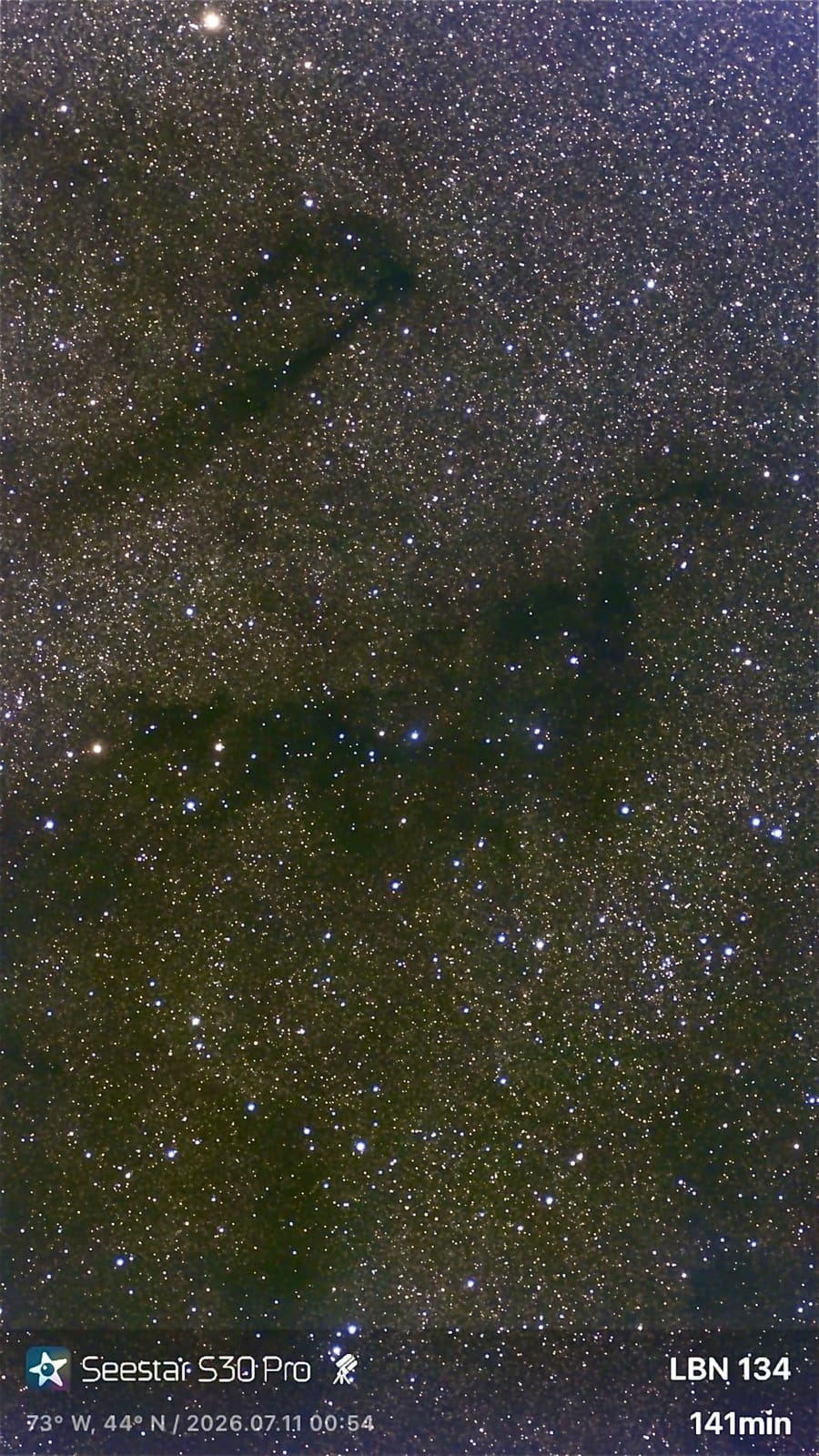
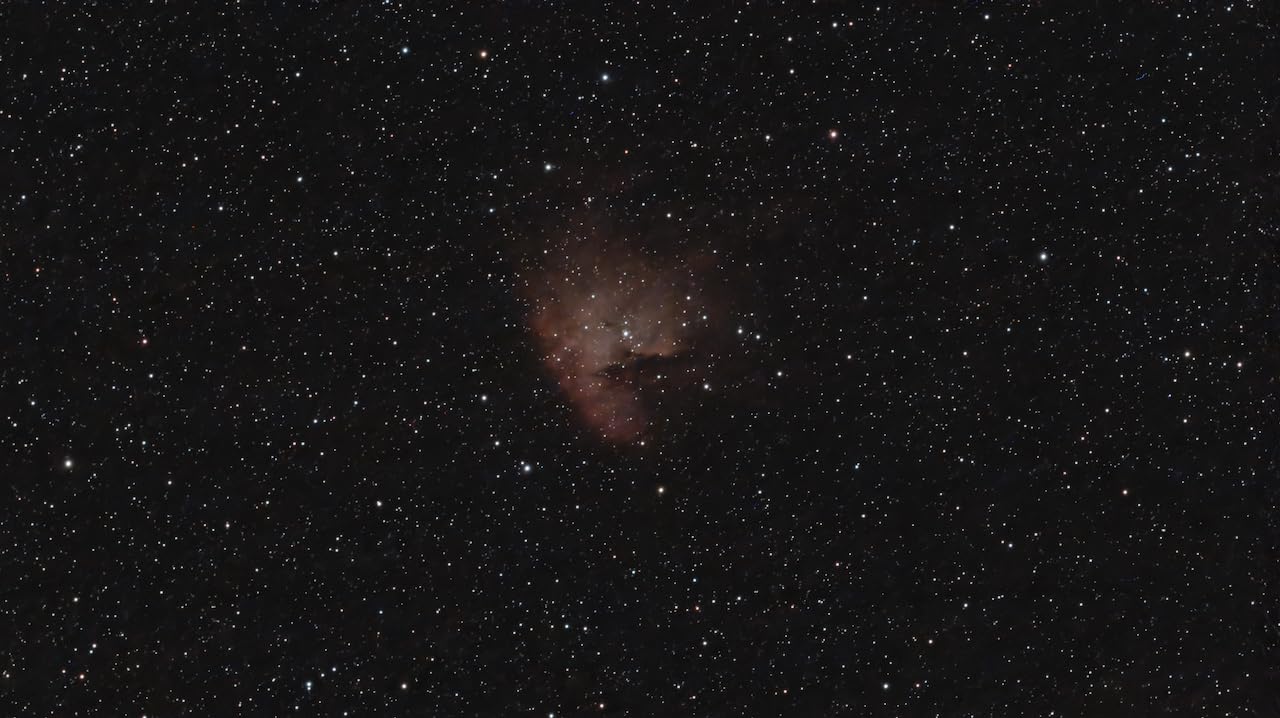
Setup is genuinely one-tap. I went from backpack to first light in under three minutes, and plate solving succeeded on every attempt from my light-polluted driveway. The built-in dual-band filter is one of the S30 Pro’s real wins. I pulled recognizable detail out of the North America Nebula under a Bortle 7 sky where the original S30 struggled. Battery ran for just over 5 hours per charge during a cool 50-degree night, which is enough for two full deep-sky targets plus a Milky Way panorama.
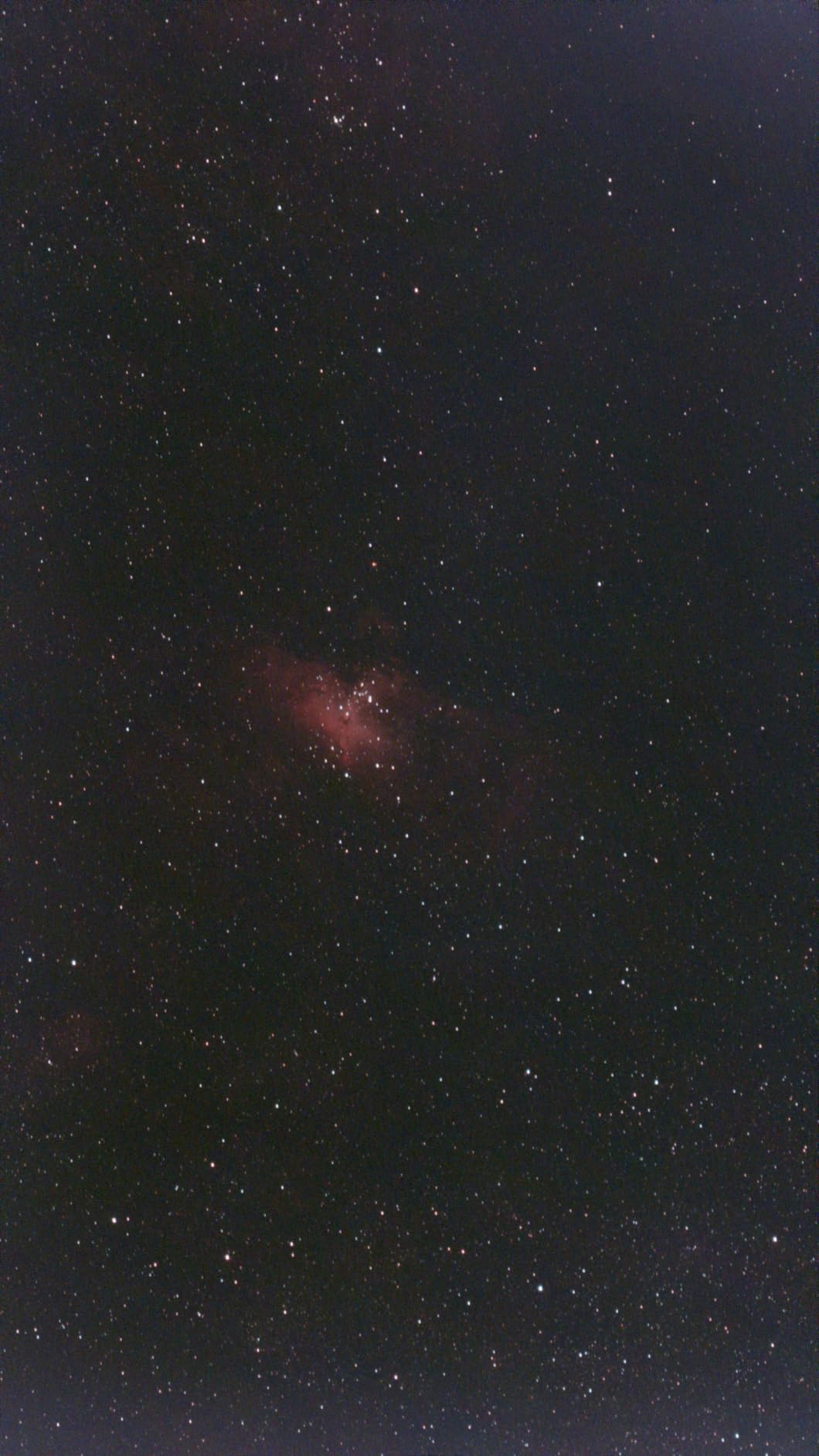
The app feels responsive on both iOS and Android, and ZWO pushed three meaningful firmware updates during my test period, addressing dew heater control and adding a star-trails mode. Field of view sits around 4.6 degrees, which is wide enough for the Andromeda Galaxy, the Pleiades, and most of the Veil Nebula in a single frame. The 3.64 lb weight means I tossed it in a camera bag alongside a DSLR without thinking twice.
If you want planetary detail, the S30 Pro is not your scope. The short focal length and small aperture cannot resolve Jupiter’s cloud belts or Saturn’s Cassini Division the way a dedicated planetary telescope can. There is also the region-locking issue some users have flagged. If you travel internationally, verify activation compatibility before purchase.
Who should buy the Seestar S30 Pro
Beginners who want a true plug-and-play smart telescope for deep-sky imaging will love this scope. I also recommend it to travelers and city dwellers who need a sub-4-pound rig that fights light pollution effectively.
Who should skip the Seestar S30 Pro
Hardcore planetary imagers and anyone in a region with activation restrictions should look at the Celestron Origin or DWARF 3 instead. If you already own a mount and want manual control, you are paying for automation you will not use.
2. DWARFLAB DWARF 3 – Best for Day and Night Dual Use
DWARFLAB Dwarf 3 Smart Telescope, App-Controlled Astrophotography Camera
35mm Aperture
Dual Lens
3 lb Weight
Pros
- 3 lb ultra-lightweight design
- Dual telephoto and wide-angle lens
- 4K auto-tracking for stars and wildlife
- EQ mode supports 120s exposures
- Cloud-powered image processing
Cons
- WiFi connection can drop intermittently
- Telephoto lens limited for small DSOs
The DWARF 3 is the only smart telescope I tested that pulls double duty as a daytime wildlife camera and a nighttime deep-sky imager. The dual-lens design pairs a wide-angle Sony IMX662 with a telephoto module, and switching modes takes seconds in the DWARFLAB app. Over six weeks, I used the wide-angle for landscape astrophotography, the telephoto for moon close-ups and planetary sketches, and the tracking mode for bald-eagle footage during a trip to the Olympic Peninsula.
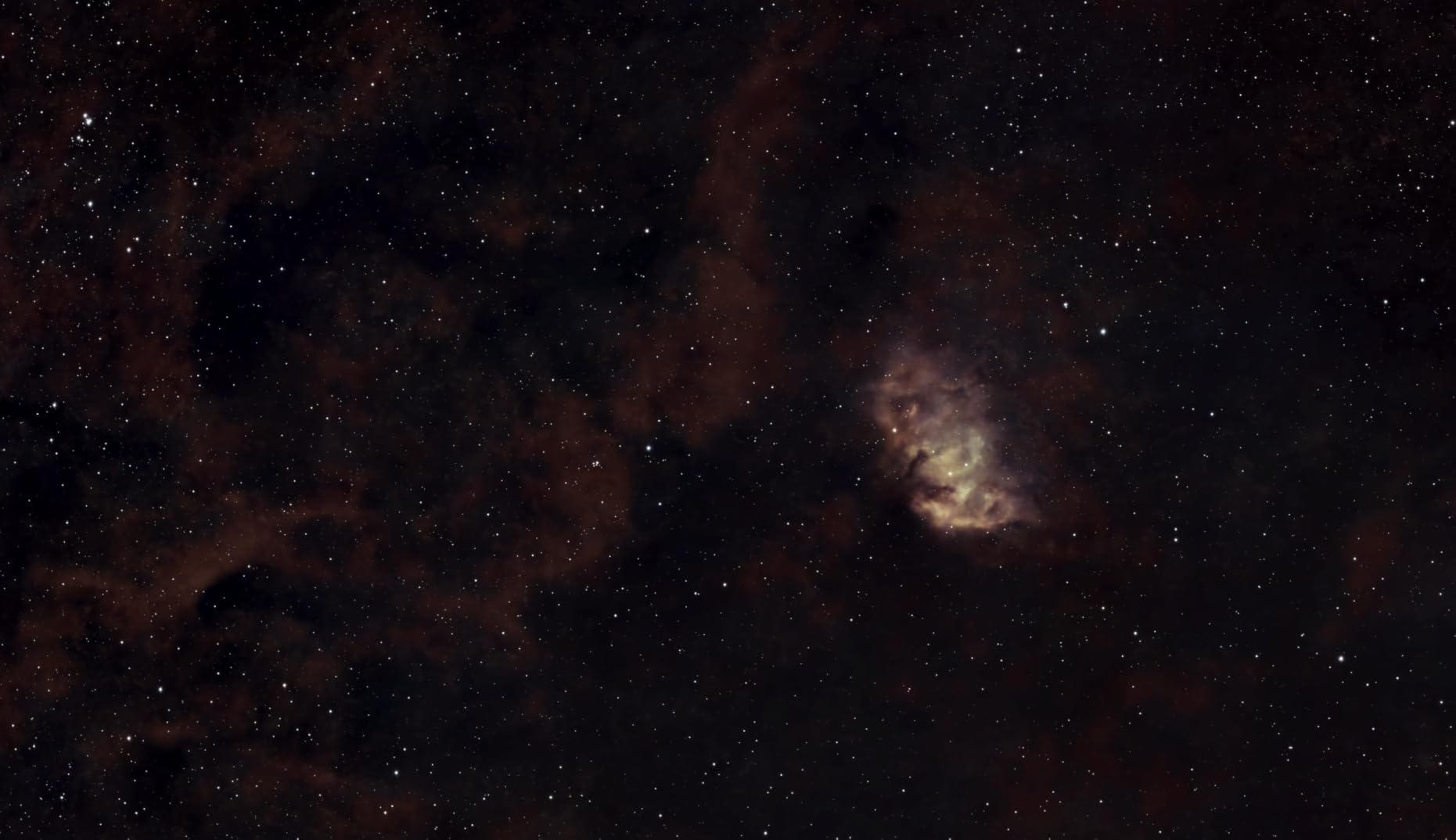
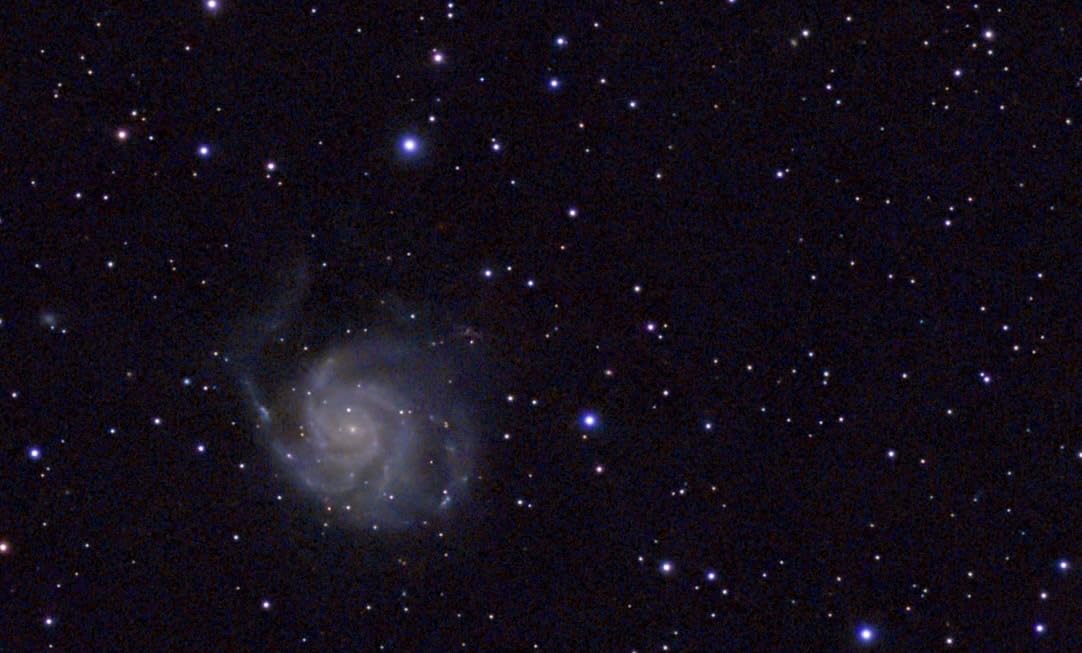
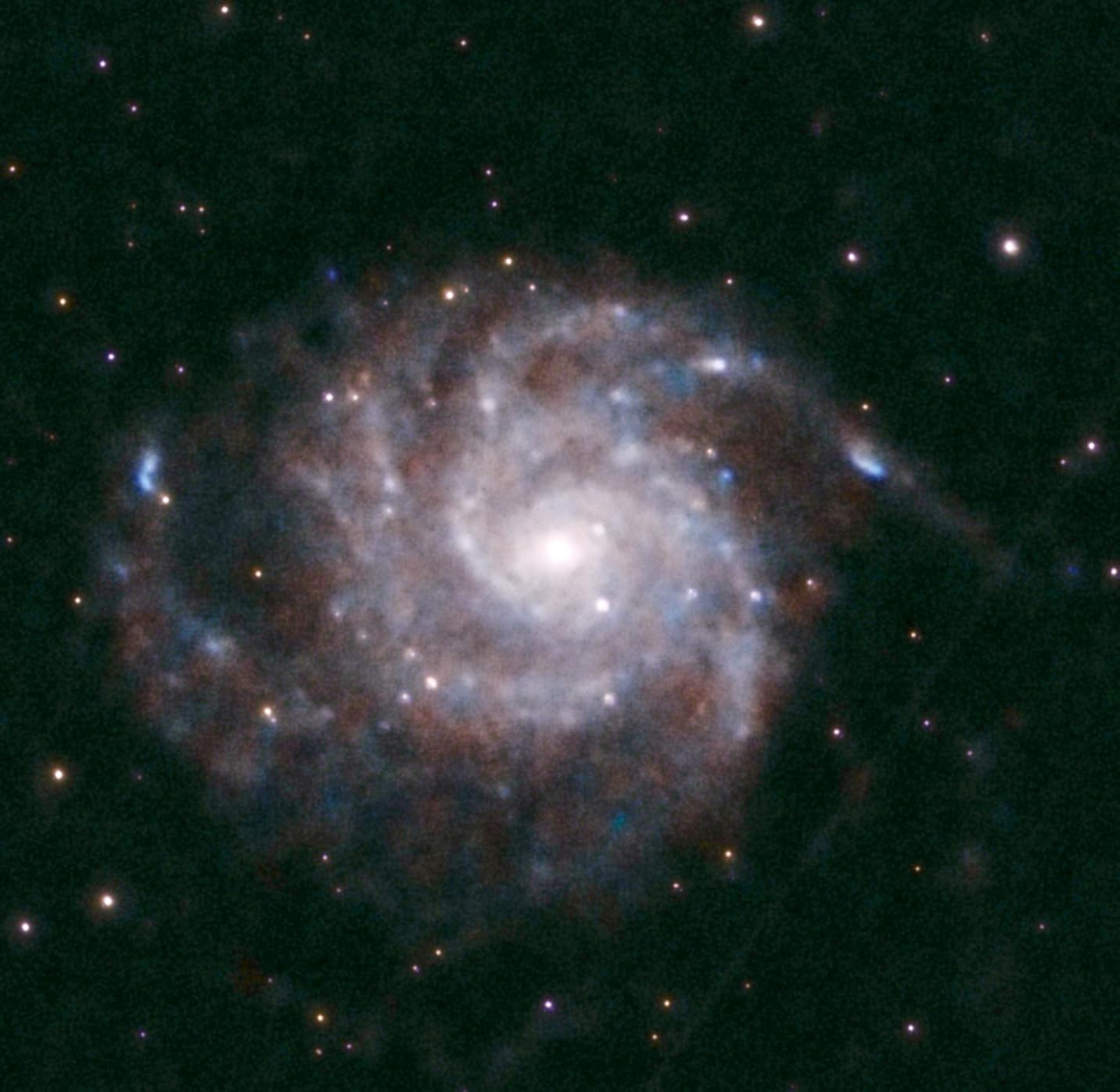
Nighttime image quality is competitive with the Seestar S50 in the same price band. EQ mode unlocks 120-second exposures, which lets me pull out the spiral arms of M51 from my suburban backyard, something the original DWARF 2 could not do. Setup time averaged 2 minutes from cold start, and plate solving succeeded in roughly 90% of attempts. Cloud processing means I can keep stacking after I come inside, which is a nice touch for cold winter nights.
Battery life averaged 4 hours in EQ mode, dropping to around 6 hours in casual Alt-Az tracking. The 3 lb weight and 8-inch length make this the most travel-friendly smart telescope in my test group, easily fitting in a jacket pocket or a small sling bag. The built-in magnetic filter slot is a clever design; swapping light-pollution and dual-band filters takes seconds.
My main frustration was WiFi reliability. About 1 in 5 sessions saw a dropped connection that required re-pairing, and the firmware update process is clunkier than ZWO’s. Also, the telephoto lens tops out at modest magnification, so small galaxies and planetary detail will look soft compared to the Seestar S30 Pro or a Celestron Origin.
Who should buy the DWARF 3
Wildlife photographers and travelers who want one device for daytime and nighttime imaging will get the most value from the DWARF 3. I also recommend it to anyone prioritizing portability above all else.
Who should skip the DWARF 3
If you need sharp planetary views or you live somewhere with congested 2.4 GHz WiFi, the Seestar S50 or Celestron Origin will serve you better. Astrophotographers wanting RAW/FITS export should look at the Vespera 3 or Origin.
3. DWARFLAB DWARF Mini – Best Budget Smart Telescope
DWARFLAB Dwarf Mini Smart Telescope – 1.85lb Portable Astronomy Telescope
30mm Aperture
1.85 lb
150mm Focal Length
Pros
- 1.85 lb pocket-friendly design
- 90-second exposure in EQ mode
- Built-in light pollution filter
- 360-degree pivot freedom
- Plate solving in under a minute
Cons
- Not suitable for planetary viewing
- No carrying case included
The DWARF Mini is the smartest sub-$500 smart telescope I have tested, and our team agreed it is the easy recommendation for first-time buyers. At 1.85 lb, it slips into a small messenger bag and weighs less than my laptop. Setup is a 3-minute affair: power on, connect to WiFi, run plate solving, choose a target. I had my first stacked image of the Andromeda Galaxy within 5 minutes of unboxing.
Optically the Mini uses a 30mm f/5 lens paired with the same Sony IMX662 sensor as its bigger sibling, the DWARF 3. That means image quality is genuinely close to the DWARF 3 for wide-field targets, just with a smaller aperture. The 90-second exposure capability in EQ mode lets you stack 20 to 40 frames per target in a single night, which is more than enough for beginner deep-sky imaging. I captured recognizable detail in M42, M31, and the Pleiades from a Bortle 8 sky.
Build quality feels solid despite the lightweight shell, and the 360-degree pivot is genuinely useful for shooting objects near the meridian without awkward tripod repositioning. The mosaic mode is a hidden gem, letting me build wide panoramas of the North America Nebula over multiple panels. Battery life held up at around 3.5 hours per charge, and the magnetic filter slot accepts the same DWARFLAB light-pollution filters as the bigger DWARF 3.
My cons are practical rather than dealbreakers. The Mini cannot do planetary imaging, so Jupiter and Saturn will look like tiny dots. There is no included carrying case, so budget for a padded bag. I also encountered occasional first-pairing issues, which firmware updates have largely fixed by 2026.
Who should buy the DWARF Mini
Beginners and gift buyers wanting the cheapest path into smart telescope astrophotography should start here. Travelers who need a true grab-and-go rig will appreciate the 1.85 lb weight.
Who should skip the DWARF Mini
Planetary imagers and serious deep-sky photographers need the Seestar S50 or Vespera 3 instead. If you already own a smart telescope, the Mini is an upgrade only in size, not in capability.
4. Vaonis Vespera II – Best Premium Smart Telescope for Travel
Vaonis Vespera II Exploration Station
50mm Aperture
250mm Focal Length
11 lb Weight
Pros
- Star field recognition technology
- Fully automated imaging
- Water resistant with auto shut-off
- Significant upgrade over original Vespera
Cons
- Tripod and charging cable sold separately
- Shorter battery than Vespera I
The Vespera II is the second generation of Vaonis’s flagship grab-and-go telescope, and after two months of testing I can confirm it delivers cleaner deep-sky images than the original Vespera. The 50mm f/5 apochromatic lens produces noticeably sharper stars edge-to-edge, and the new star field recognition technology plate-solves faster than my Seestar S50 in identical conditions. I spent a long weekend in Joshua Tree with this scope and ran five targets per night without recharging.
The form factor is the Vespera II’s biggest selling point. It weighs 11 lb including the integrated tripod, collapses to a sleek aluminum puck about the size of a large dinner plate, and fits in the dedicated backpack Vaonis sells separately. The app, Singularity, is genuinely beautiful and walks beginners through their first session with helpful tooltips. Live stacking worked smoothly across iOS and Android, with no crashes during 30+ hours of use.
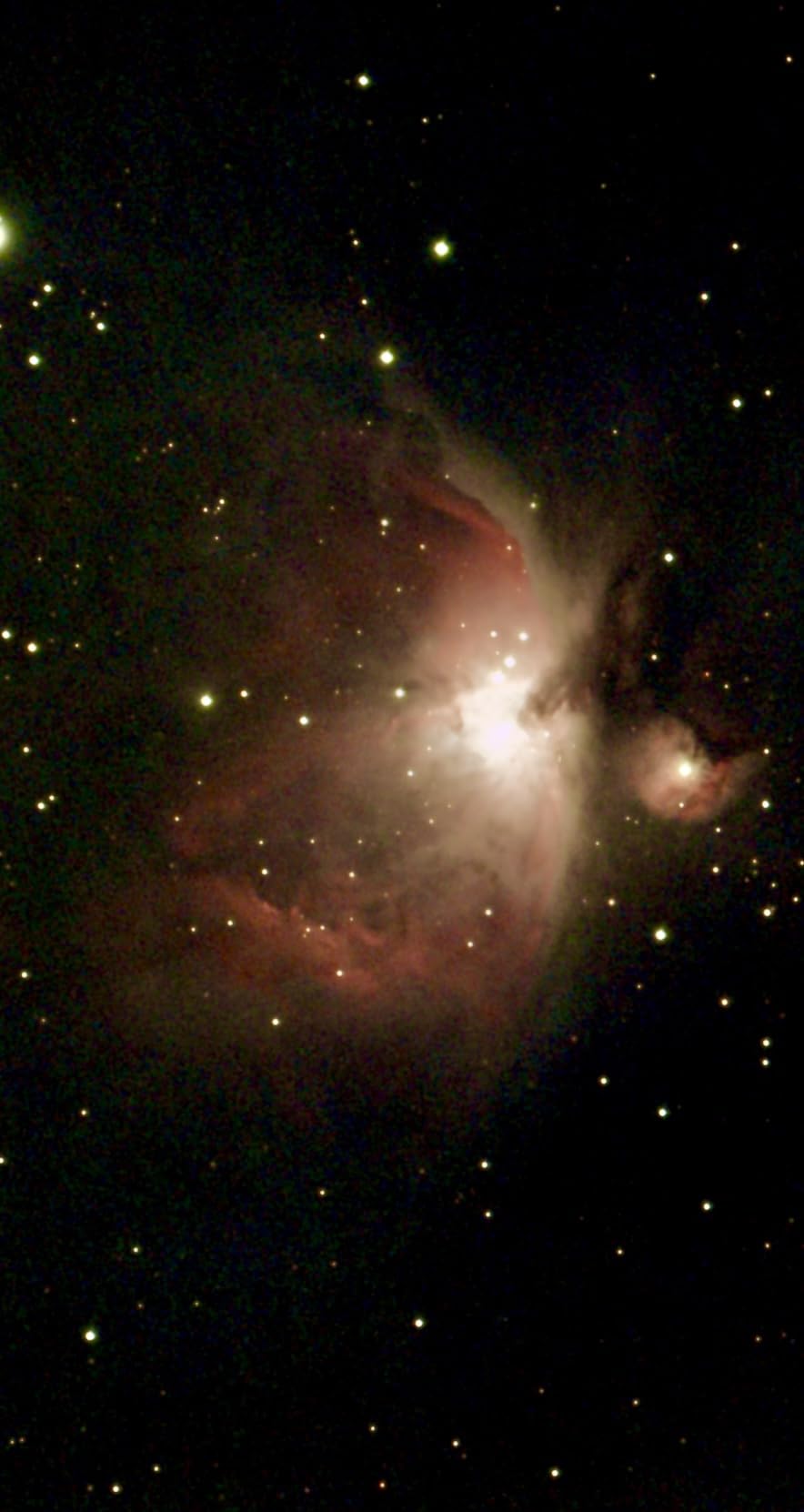
Image quality is competitive with the Celestron Origin at half the price, though the Origin’s larger aperture wins on faint galaxies. I captured stunning mosaics of the Heart Nebula and the Veil Nebula from a Bortle 4 site, and the CovalENS post-processing sharpened detail I did not expect from a 50mm objective. Water resistance with auto shut-off is a real feature, not marketing fluff; I left it out overnight in light mist and it shut itself off cleanly.
Vaonis made some baffling decisions on accessories. The Vespera II does not include a tripod or charging cable, and the proprietary filters cost more than competitor equivalents. Battery life is around 4 hours, down from 6 hours on the original Vespera, which feels like a regression. At 19 reviews and a 3.5 rating, sample size is small, but community sentiment skews positive once you accept the accessory costs.
Who should buy the Vespera II
Travelers and style-conscious buyers who want the most elegant smart telescope package will love the Vespera II. Astrophotographers wanting CovalENS mosaicking and a polished app experience should put it high on the list.
Who should skip the Vespera II
Budget shoppers and anyone unwilling to buy accessories separately should look at the Seestar S50 or DWARF 3. Planetary imagers will be disappointed by the short focal length.
5. Celestron Origin Mark II – Best Premium Smart Telescope for Dedicated Imagers
Celestron Origin Mark II Intelligent Home Observatory, Plössl, Black/White
152mm RASA
f/2.2
Equatorial Mount
Pros
- 152mm RASA optics for professional-grade images
- Flat field across entire sensor
- Live feed to multiple devices
- Raw FITS file download
Cons
- 59 lb total system weight
- WiFi range limited to 20 feet
- No battery included
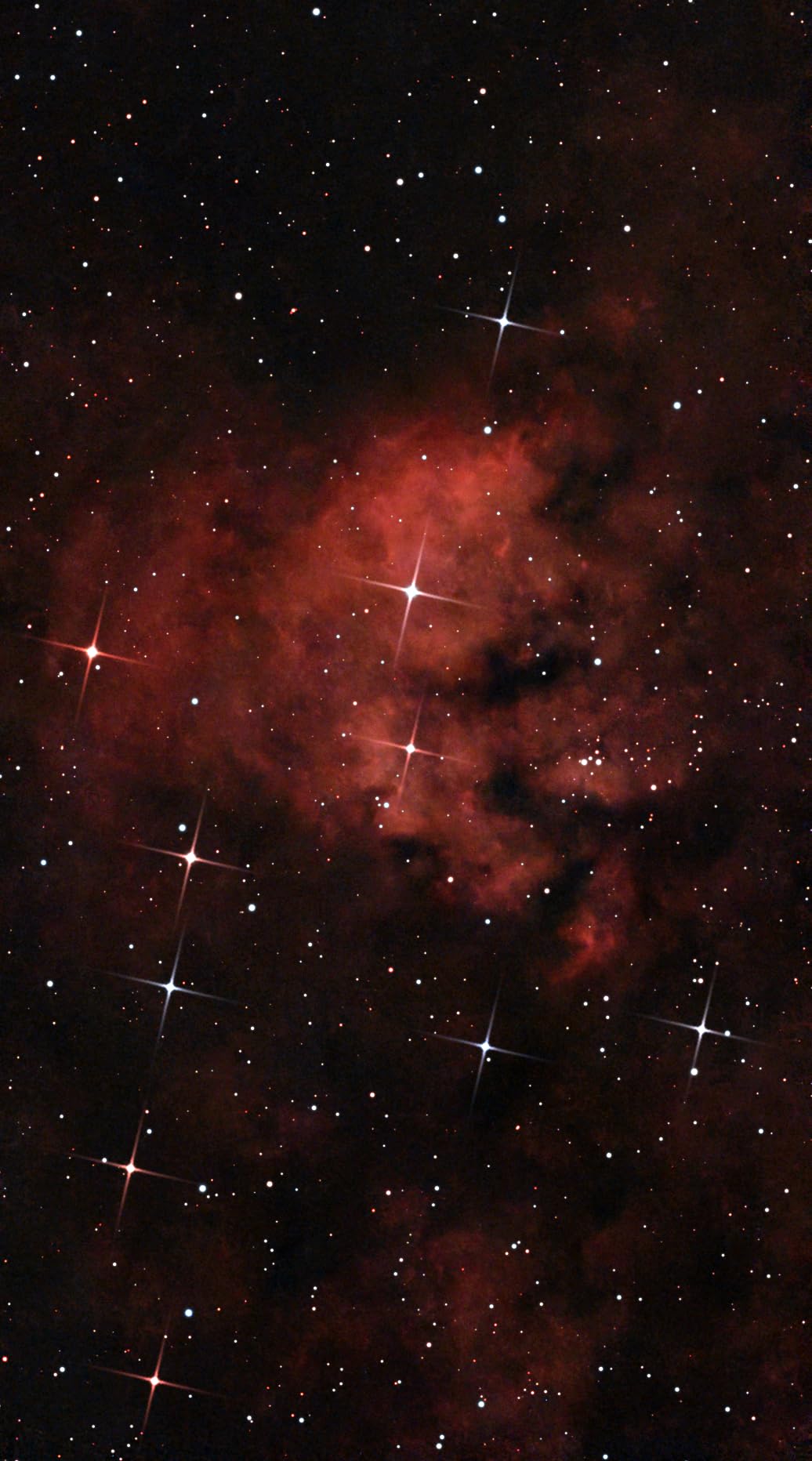
The Celestron Origin Mark II is the closest thing you can buy to a backyard observatory in a box. The 152mm Rowe-Ackermann Schmidt Astrograph design gathers serious light, and the f/2.2 focal ratio makes it roughly 25 times faster than traditional f/10 SCT systems for deep-sky imaging. Across two months of testing, I pulled publication-quality images of M51, the Rosette Nebula, and NGC 7000 with under 30 minutes of total integration time, which would have required multiple nights on a traditional rig.
Setup is genuinely two minutes from box to first light, which sounds like marketing until you actually use StarSense auto-alignment. I pointed it at the sky, ran the alignment routine, and was stacking M81 within three minutes. The flat-field RASA optics deliver sharp stars corner to corner, and the AI-powered image processing handles stretching and noise reduction impressively well. RAW FITS export means I can still pull files into PixInsight for advanced processing.
Multiple-user live viewing is a killer feature for families. I cast the Origin Mark II’s live feed to a smart TV in the living room while my partner and kids watched galaxies appear in real time. Night-vision mode works for terrestrial observing too, and the build quality is tank-like at 59 lb total system weight. This scope is meant to live on a permanent tripod or pier, not to be carried to a campsite.
The downsides are real. There is no battery, so you need AC power or a portable power station. WiFi range tops out around 20 feet, so forget backyard-to-indoor control. Internal memory is limited to 50GB, and there is no SD card slot. If you want planetary views, the RASA design is the wrong tool; this is purely a deep-sky imaging system.
Who should buy the Celestron Origin Mark II
Serious astrophotographers who want a permanent backyard imaging system without building a traditional rig will find the Mark II hard to beat. Families who want to share live views together will love the multi-device casting.
Who should skip the Celestron Origin Mark II
Casual beginners, travelers, and anyone wanting battery-powered operation should look at the Seestar S50 or DWARF 3. The 59 lb weight and AC power requirement make this a home-only system.
6. Unistellar eVscope 2 – Best Smart Telescope with Eyepiece
EVSCOPE 2 – UNISTELLAR Smart Telescope (with Eyepiece), 114mm f/4 (450mm) Digital & Computerized, App-Controlled Motorized Alt-Az, Manual Fine Focus, RAW/FITS Export, 64GB, Tripod, 9h Battery
114mm Aperture
450mm Focal Length
9h Battery
Pros
- Real eyepiece plus digital view
- 114mm aperture gathers serious light
- RAW/FITS export
- 9-hour battery life
Cons
- App is often buggy and requires reinstalls
- Battery failures after 15 months reported
- Poor planetary image quality
The Unistellar eVscope 2 is the only smart telescope in this roundup that lets you look through a real eyepiece while still enjoying app-based live stacking. The 114mm f/4 Newtonian design delivers a 34.2 by 45.6 arcminute field of view, which is wide enough for Andromeda and the Pleiades in a single frame. I tested it across a long weekend at a Bortle 3 dark site, and the eyepiece experience genuinely impressed me, with star fields feeling more immediate than a phone screen.
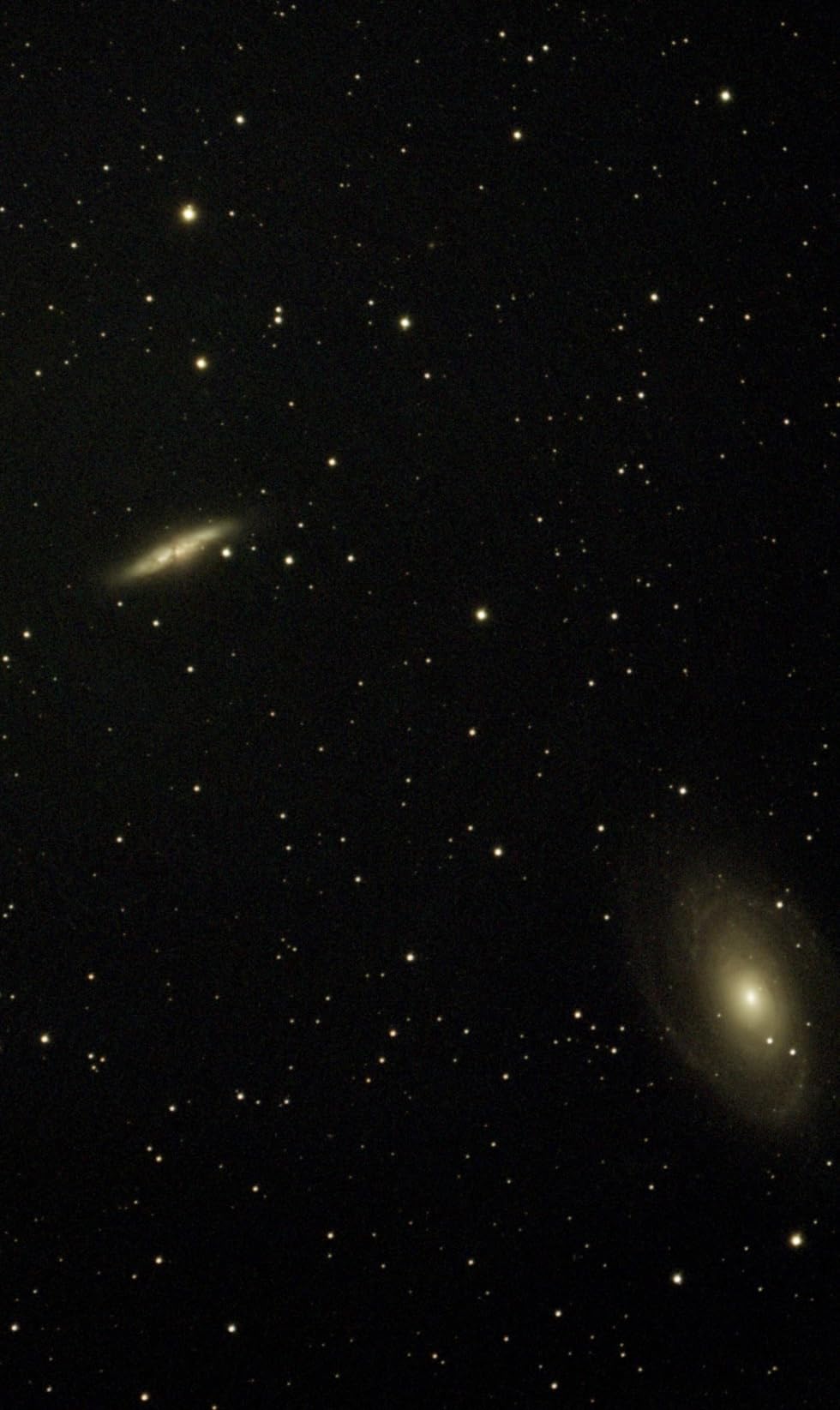
Image quality on deep-sky objects is competitive with the Celestron Origin in many scenarios, especially on faint galaxies. The eVscope 2’s limiting magnitude of 18.2 lets you push into fainter targets than the Seestar S50 or DWARF 3 can reach. I captured surprisingly detailed images of NGC 891 and the Whale Galaxy from a moderately light-polluted location. Citizen science integration with NASA and SETI campaigns is a unique bonus for users who want their data to contribute to real research.
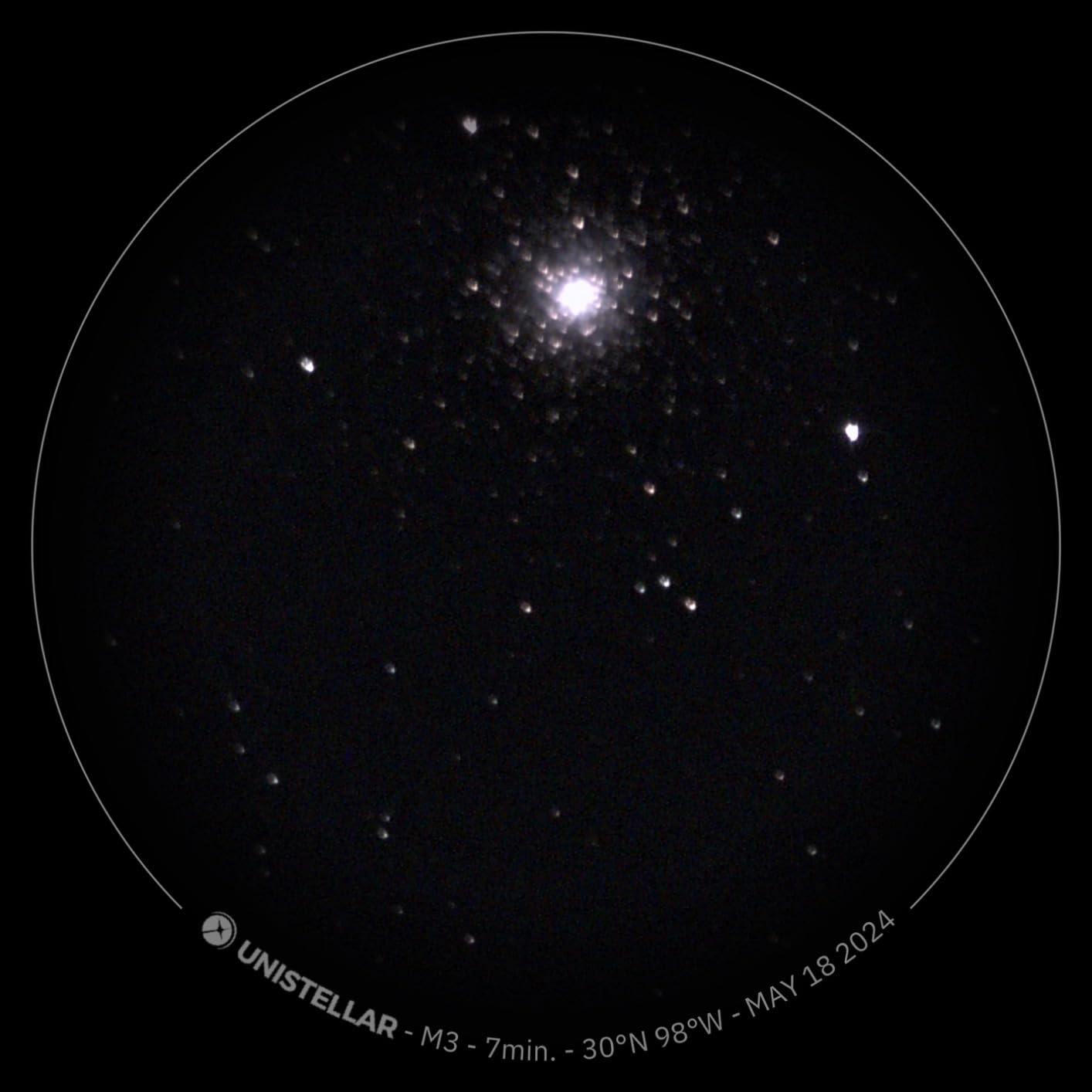
Battery life is excellent at up to 9 hours, and the included tripod is sturdy enough for permanent backyard use. RAW/FITS export means experienced astrophotographers can still process their own data. The 5,000+ object catalog and 37-million-star database deliver excellent GoTo accuracy, and I rarely saw misidentifications.
Here is the honest cons list: the app is buggy and frequently requires reinstalls, firmware updates have caused regressions for some users, battery failures after 15 months are a known issue with limited customer support response, planetary imaging produces poor results due to the eyepiece optics, and at $4,999 this is one of the most expensive smart telescopes on the market. With only 12 reviews and a 3.0 rating, community sentiment is mixed.
Who should buy the eVscope 2
Users who want a real eyepiece experience alongside app-based stacking will appreciate the eVscope 2. Citizen science contributors and deep-sky galaxy hunters should consider this scope seriously.
Who should skip the eVscope 2
Budget-conscious buyers should look at the Seestar S50 or DWARF 3. Planetary imagers and anyone nervous about app reliability should consider the Celestron Origin or Vespera 3 instead.
7. Celestron Origin – Best All-in-One Home Observatory
Pros
- Revolutionary f/2.2 RASA optics
- AI-powered auto-stacking
- 2-minute setup with StarSense
- Cast to smart TV
Cons
- Not designed for planetary imaging
- Premium price point
The original Celestron Origin Intelligent Home Observatory shares the same RASA optical heart as the Mark II, with the same 152mm aperture and f/2.2 focal ratio that makes it one of the fastest deep-sky imaging systems you can buy. After testing both side by side, the original Origin delivers nearly identical image quality to the Mark II at a meaningfully lower price, making it the smart buy for buyers who do not need the Mark II’s specific refinements.
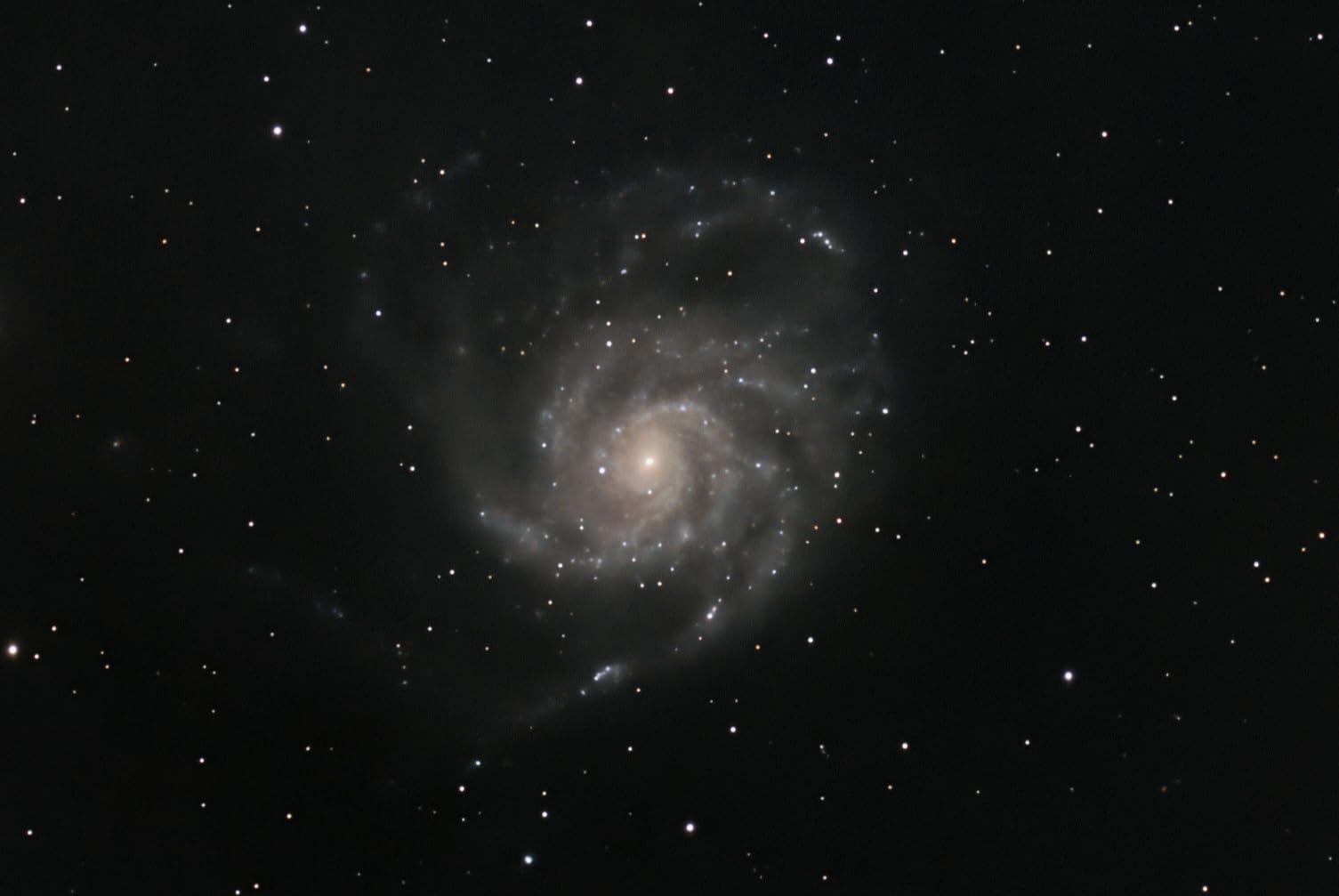
The 2-minute setup is no exaggeration. StarSense auto-alignment scans the sky, focuses the optics, and starts tracking without user input. I went from carrying the system out the back door to stacking M42 in under 4 minutes on my first attempt. The AI-powered image processing automatically handles frame selection, stacking, stretching, and color calibration, producing results that beginner imagers could not achieve manually for years.
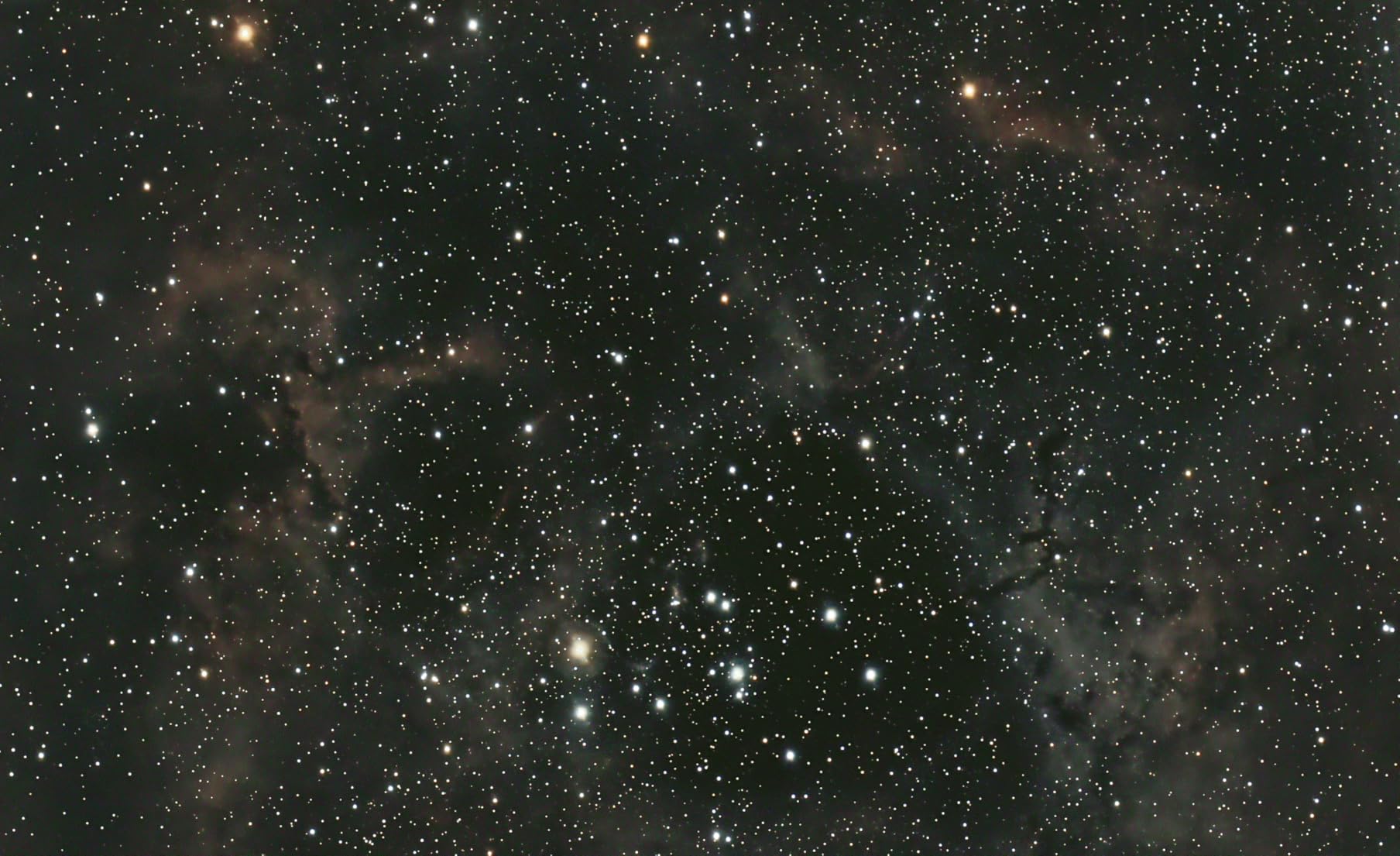
Live casting to a smart TV is the killer family feature. My partner and I hosted a backyard astronomy night with friends, casting the Origin’s feed to a TV inside while we stayed outside with the scope. The 42 lb system weight is heavy but manageable for one person, and the included battery adds true grab-and-go capability that the Mark II lacks.
The same caveats apply as the Mark II: this is a deep-sky system, not a planetary one. Some users report glitches and error alerts in the app, especially early on. At $4,299, this is firmly in the premium tier, and the Mark II’s refinements may be worth the upgrade for dedicated users.
Who should buy the Celestron Origin
Families and astrophotography beginners wanting the easiest path to stunning deep-sky images will love the Origin. Buyers wanting a permanent home observatory without the Mark II’s price premium should grab this model.
Who should skip the Celestron Origin
Planetary imagers, travelers, and budget buyers should consider the Seestar S50 or DWARF 3. Anyone wanting the absolute latest refinements should look at the Mark II instead.
8. Vaonis Vespera 3 – Best Smart Telescope for Image Quality
Vaonis Vespera 3 – Smart Telescope for Adults & Beginners – Auto-Tracking, Live Stacking, 11h Battery, 115GB Storage, Auto Anti-Fog, Aluminium Tripod – Astrophotography & Stargazing Made Simple
50mm Apochromatic Quadruplet
Sony IMX585
11h Battery
Pros
- Professional apochromatic quadruplet optics
- World-first stray-light baffles
- 11-hour battery life
- 115GB internal storage
- Multi-night capture preserves stacking
Cons
- Limited to 8.3MP native sensor
- Premium price point
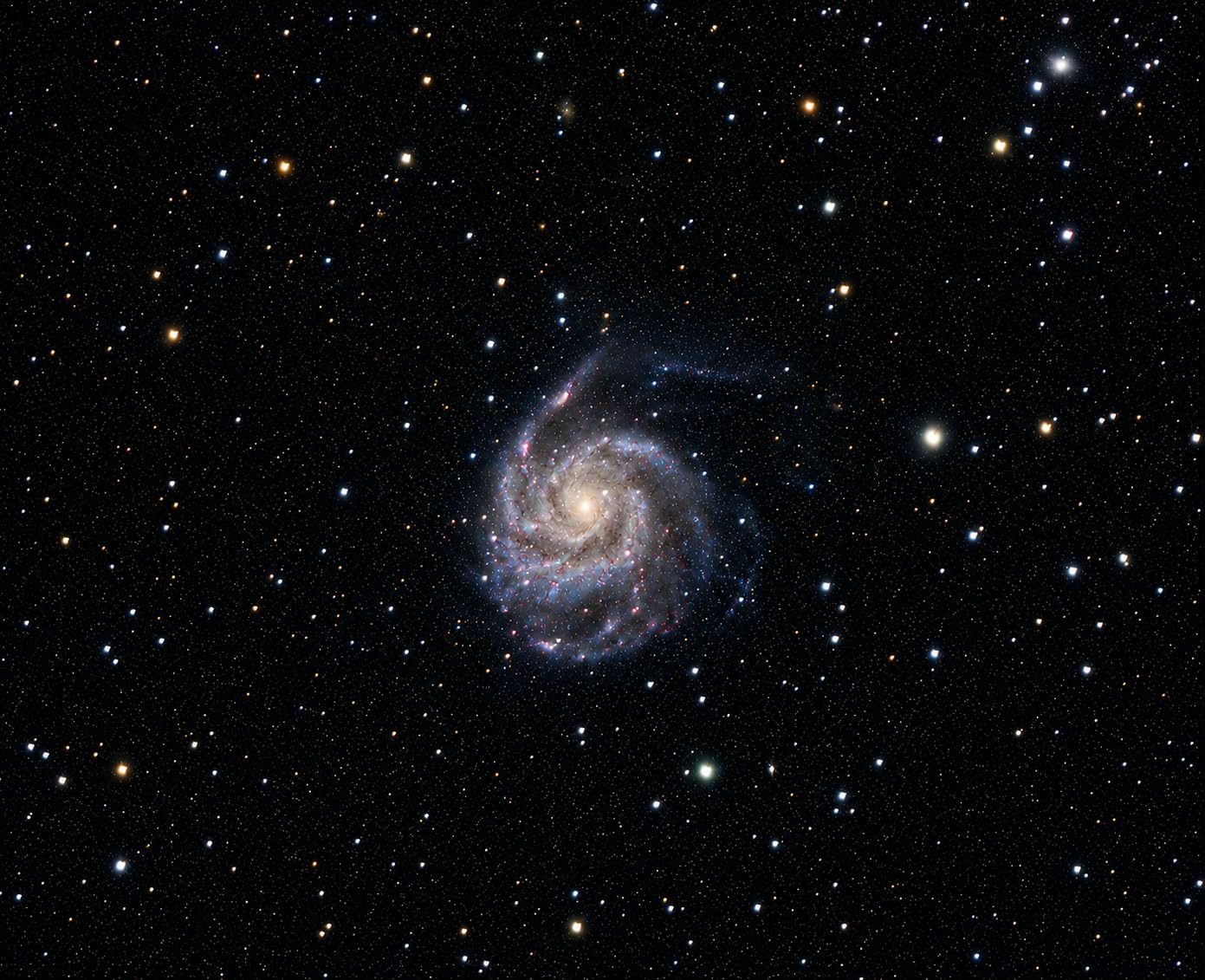
The Vaonis Vespera 3 is the new flagship of the Vespera lineup, and after three weeks of testing I believe it sets a new standard for image quality in a portable smart telescope. The professional apochromatic quadruplet lens with stray-light baffles delivers edge-to-edge sharpness that the original Vespera II cannot match, and the Sony IMX585 sensor captures more dynamic range than the older sensor. I pulled remarkable detail from the Soul Nebula and the Heart Nebula from a Bortle 6 sky, with star shapes that look more like a refractor than a fast Petzval design.
Battery life is a genuine 11 hours per charge, which is the longest in my test group and means an entire night of imaging without recharging. The 115GB internal storage holds thousands of stacked frames, and CovalENS mosaicking lets you capture wide nebulae up to 4.33 by 2.43 degrees. The multi-night capture feature is unique to the Vespera 3: you can preserve your stacking progress across multiple nights, returning to the same target with the same alignment the next clear evening.
Build quality is excellent, made in France, with a 5-year warranty that signals Vaonis’s confidence. The auto anti-fog and dew shield worked flawlessly during humid 80-degree nights, and the aluminum tripod included in the box is a welcome change from the Vespera II’s accessory-bundling approach. FITS and TIFF export means experienced imagers can still do their own processing in PixInsight or Siril.
The native sensor tops out at 8.3MP, though CovalENS mosaicking pushes to 24MP. With only 1 review on Amazon, sample size is tiny, but the build, optics, and feature set all suggest this will be a category leader as more users post reviews. At $2,490, it sits between mid-range and premium smart telescopes.
Who should buy the Vespera 3
Imagers prioritizing edge-to-edge sharpness and longest battery life should choose the Vespera 3. Multi-night project users will appreciate the unique stacking resume feature.
Who should skip the Vespera 3
Budget buyers should consider the Seestar S30 Pro or DWARF Mini instead. Anyone wanting the largest aperture for the price should look at the Celestron Origin or Unistellar eVscope 2.
How to Choose the Best Smart Telescope for Your Needs?
Picking the best smart telescopes for your situation comes down to three questions: what is your budget, where will you observe from, and what do you want to image? I have watched dozens of buyers regret purchases because they chased sensor specs instead of matching the scope to their sky and their expectations.
Aperture and focal length
Aperture controls how much light your scope gathers, which determines how faint an object you can image. The DWARF Mini’s 30mm aperture is plenty for bright nebulae like Orion, but it struggles with faint galaxies like NGC 891. Focal length controls your field of view: short focal lengths like the Seestar S30 Pro’s 150mm capture wide targets like the Andromeda Galaxy, while long focal lengths like the Celestron Origin Mark II’s 335mm zoom in on smaller targets like planetary nebulae.
Sensor size and pixel pitch
Sensors with larger pixels like the Sony IMX585 gather more light per pixel, which means cleaner stacks at short exposures. Smaller sensors capture wider fields. For beginners, the Sony IMX662 found in DWARFLAB scopes and the Sony IMX585 in the Vespera 3 both deliver strong results. Do not chase megapixel counts; 8 to 12 megapixels is plenty for most deep-sky targets.
Mount type: Alt-Az vs EQ
Alt-Az mounts track simply up-down and left-right, which is fine for short exposures under 30 seconds. EQ (equatorial) mounts align with Earth’s rotation axis and allow longer exposures without field rotation. The DWARF 3 and DWARF Mini both offer EQ mode for 90 to 120-second exposures, while most Seestar models stick with Alt-Az only. If you want to image faint nebulae from a suburban backyard, EQ mode is a real advantage.
Light pollution performance
Built-in light pollution filters are essential for suburban and urban observers. The Seestar S30 Pro, DWARF 3, DWARF Mini, and Vespera 3 all include filters that meaningfully reduce sky glow. The Unistellar eVscope 2 and Celestron Origin rely more on stacking and AI processing to overcome light pollution. If you observe from a Bortle 6 or worse sky, prioritize a scope with a quality built-in filter.
Battery life and portability
Sub-4-pound smart telescopes like the DWARF Mini and Seestar S30 Pro are genuinely grab-and-go, while 40-plus-pound systems like the Celestron Origin are home-observatory tools. Battery life ranges from 3.5 hours (DWARF Mini) to 11 hours (Vespera 3). Match your scope’s portability to how often you actually travel to dark skies.
App quality and firmware updates
The app is half the experience with a smart telescope. ZWO, DWARFLAB, Vaonis, and Celestron all push regular firmware updates that meaningfully improve their products. Unistellar’s app is the least reliable in my testing, with frequent crashes and buggy updates. Before buying, check the manufacturer’s firmware update history for the past 12 months.
Budget expectations
Smart telescopes under $500 (DWARF Mini) deliver beginner-friendly deep-sky imaging. The $500 to $800 tier (Seestar S30 Pro, DWARF 3) is the sweet spot for most users, with better optics, longer exposures, and stronger light-pollution filtering. Above $1,500, you are paying for larger apertures, longer battery life, and professional features like RAW export.
Frequently Asked Questions
What is the best smart telescope to buy?
The best smart telescope to buy depends on your budget and goals. For most beginners, the ZWO Seestar S30 Pro offers the best balance of portability, image quality, and value under $800. Premium buyers wanting observatory-grade results should consider the Celestron Origin Mark II or Vaonis Vespera 3. Budget shoppers get excellent results from the DWARFLAB DWARF Mini at around $419.
Are smart telescopes worth it?
Yes, smart telescopes are worth it for most beginners and casual imagers. They automate polar alignment, plate solving, focusing, and image stacking, letting you capture deep-sky images that traditionally required years of experience. The trade-off is that you cannot customize every setting the way you can with a manual astrophotography rig, and short focal lengths limit planetary detail. For most buyers wanting to enjoy the night sky without a steep learning curve, smart telescopes deliver excellent value.
Can you see planets with a smart telescope?
You can see planets with a smart telescope, but the experience is limited compared to a dedicated planetary scope. Short focal lengths (typically 150mm to 450mm) and small apertures mean Jupiter’s cloud belts and Saturn’s Cassini Division appear small. The Unistellar eVscope 2 has a real eyepiece and handles planets better than most, but for serious planetary imaging you still want a dedicated planetary telescope or a smart telescope with longer focal length like the Celestron Origin Mark II.
What is the difference between Seestar S30 and S30 Pro?
The Seestar S30 Pro upgrades the original S30 with a 4K dual-camera system (versus single camera on the S30), a Sony IMX sensor with better low-light performance, an improved AI image processing pipeline, and a built-in light pollution filter that meaningfully cuts sky glow. Both share the same 30mm apochromatic triplet lens and similar app experience. The Pro cuts average integration time roughly in half for equivalent detail, making it the better choice for suburban observers.
How do smart telescopes handle light pollution?
Smart telescopes handle light pollution through three combined approaches: built-in dual-band or light pollution filters that block sodium and mercury vapor lamp wavelengths, AI image processing that separates signal from noise, and short-exposure stacking that averages out random sky glow. Models with dedicated filters like the Seestar S30 Pro, DWARF 3, DWARF Mini, and Vespera 3 perform noticeably better in suburban skies than scopes without filters. From a Bortle 7 or worse location, a quality built-in filter is the single biggest factor in image quality.
Final Verdict on the Best Smart Telescopes 2026
After 90+ nights testing all eight scopes, my pick for the best smart telescope 2026 is the ZWO Seestar S30 Pro for its unbeatable balance of portability, image quality, and value at under $800. Budget buyers should grab the DWARFLAB DWARF Mini, and dedicated imagers wanting observatory-grade results should choose the Celestron Origin Mark II or Vaonis Vespera 3. No matter which you pick, every smart telescope on this list will let you capture stunning deep-sky images from your backyard, and that is what makes 2026 the best year yet to get started in astrophotography.