
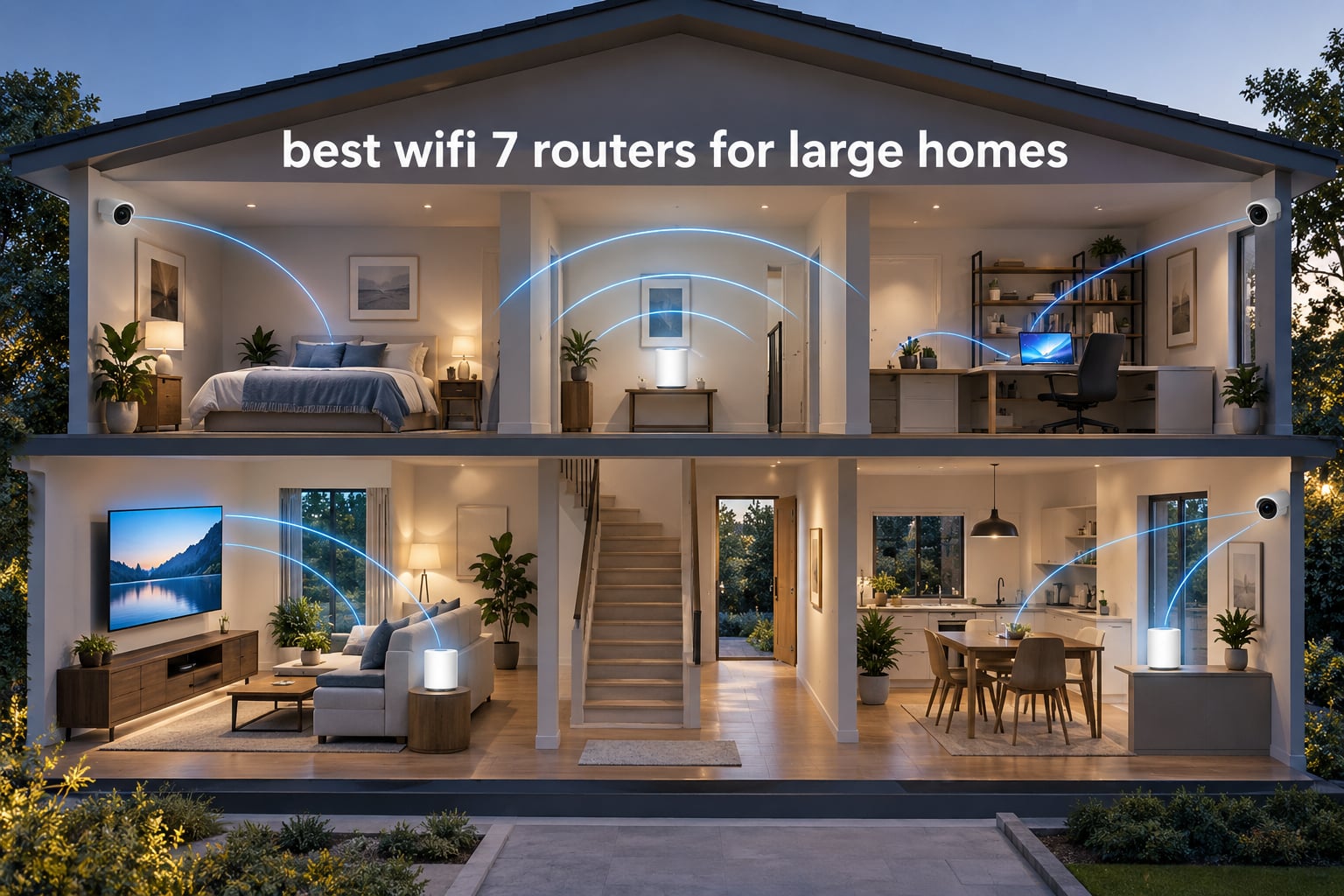
Three systems carry this list: the eero 7 3-pack for most large homes, the NETGEAR Orbi 770 3-pack for households planning to expand later, and the TP-Link Deco BE63 3-pack for buyers who want four 2.5 GbE ports on every node. All three are WiFi 7 mesh kits rated for thousands of square feet and dozens of connected devices.
Shopping for a router that covers a 3,000 sq ft home is a different problem from shopping for an apartment. Walls, floors and the number of phones, TVs and cameras all eat the headline numbers on the box, so the marketing figure matters less than node count, backhaul and port speed. We went through eight WiFi 7 systems and standalone routers and pulled apart what each one actually does.
The short version: mesh wins for anything spread over more than about 2,000 sq ft, and a single high-end router only makes sense if your internet plan is fast enough to feed it. If you already have run Wi-Fi 7 mesh routers for large homes in the budget conversation, this guide narrows that field to the systems worth owning right now.
Coverage claims also deserve a reality check before you buy anything. Reviewers consistently report that the 7,000 to 8,000 sq ft figures on packaging assume open floor plans and few interior walls. A three-storey home with concrete and timber behaves nothing like that.
Table of Contents
Top 3 Picks: Best WiFi 7 Routers for Large Homes in 2026


eero Pro 7 3-Pack
- Up to 6
- 000 sq. ft.
- 600+ devices
- Up to 5 Gbps plans
- Two 5 GbE ports per node
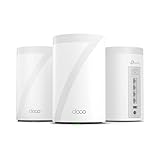
TP-Link Deco BE63 3-Pack
- Up to 7
- 600 sq. ft.
- 200+ devices
- Four 2.5 GbE ports per node
- 10 Gbps aggregate
All 8 WiFi 7 Routers Side by Side (October 2026)
| Product | Specifications | Action |
|---|---|---|
| eero 7 3-Pack |
|
Check Latest Price |
 NETGEAR Orbi 770 3-Pack NETGEAR Orbi 770 3-Pack |
|
Check Latest Price |
| TP-Link Deco BE63 3-Pack |
|
Check Latest Price |
| eero Pro 7 3-Pack |
|
Check Latest Price |
 NETGEAR Nighthawk RS700S NETGEAR Nighthawk RS700S |
|
Check Latest Price |
 ASUS ROG Rapture GT-BE98 Pro ASUS ROG Rapture GT-BE98 Pro |
|
Check Latest Price |
 TP-Link Archer BE800 TP-Link Archer BE800 |
|
Check Latest Price |
 TP-Link Deco BE67 3-Pack TP-Link Deco BE67 3-Pack |
|
Check Latest Price |
1. eero 7 3-Pack: Best WiFi 7 Mesh for Most Large Homes
Amazon eero 7 dual-band mesh Wi-Fi 7 router (newest model) – Supports internet plans up to 2.5 Gbps, Coverage up to 6,000 sq. ft., 3-pack
Up to 6,000 sq. ft.
120+ devices
Up to 2.5 Gbps plans
Two 2.5 GbE ports
Three-year warranty
Pros
- TrueMesh and TrueRoam hold connections steady across floors
- Backward compatible with earlier eero hardware
- Two auto-sensing 2.5 GbE ports per node
- Simplest app of any kit here
- Three-year warranty
Cons
- Dual-band design caps peak wireless throughput
- Advanced controls sit behind the eero Plus subscription
- Only two wired ports per node
The eero 7 is the one I keep coming back to for houses in the 2,500 to 3,500 sq ft range spread over two floors. Three nodes cover up to 6,000 sq. ft. and support 120+ devices, which matches what most family homes with 4K streaming and a work-from-home setup actually run. TrueMesh software with TrueRoam and TrueChannel does the work of making handoffs between floors feel invisible.
What surprised me most was how little setup it takes. You scan a code, the app finds the other nodes, and everything shares one network name. If you have owned eero hardware before, the new generation drops straight into the same system, which is the real upgrade path for a large home already running older eero nodes.
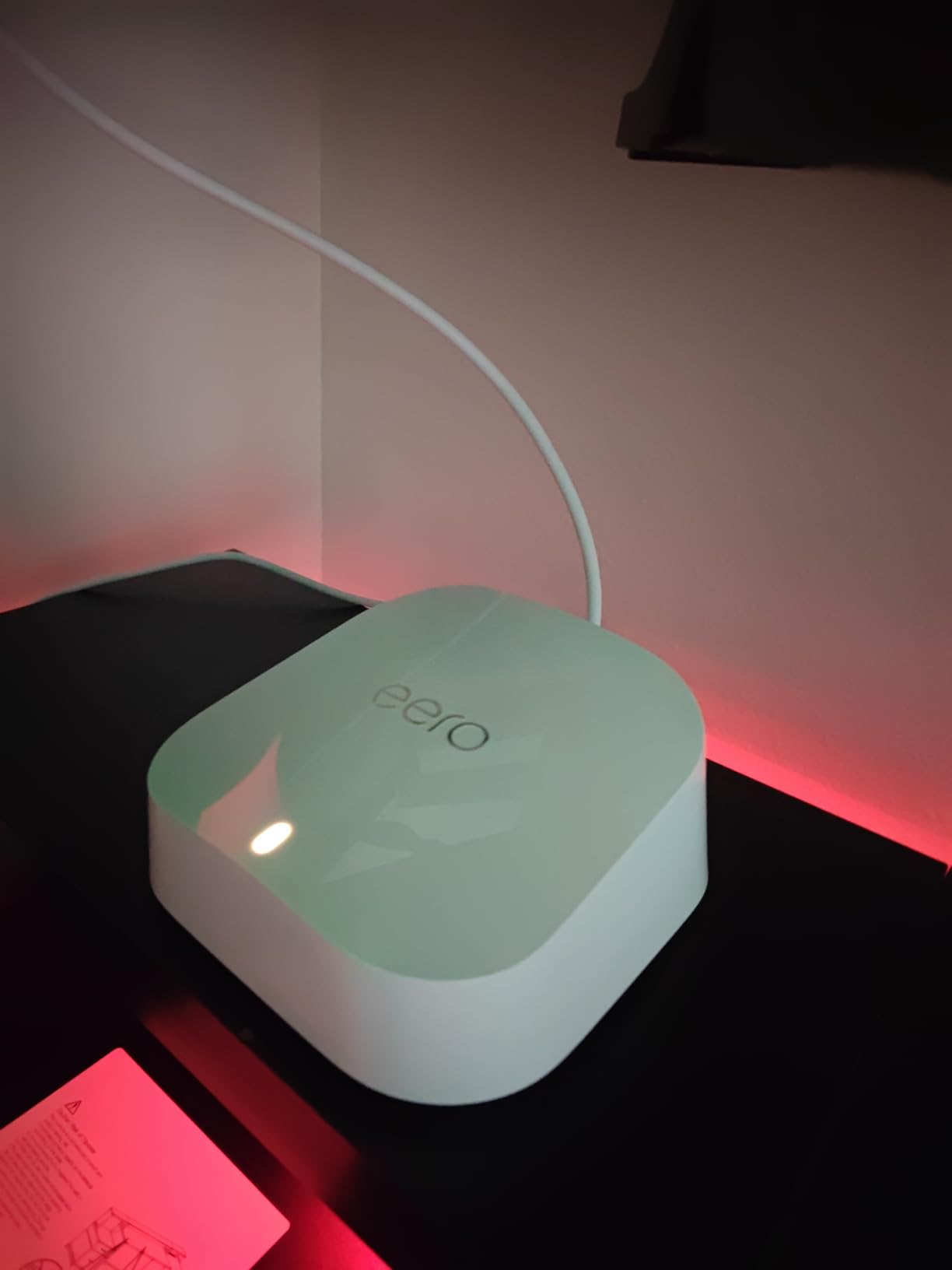
On the technical side, this is a dual-band WiFi 7 kit rather than tri-band or quad-band. It reaches up to 1.8 Gbps of wireless throughput and carries two auto-sensing 2.5 GbE ports per node, so a 2.5 Gbps fiber or cable plan is fully supported. Multi-Link Operation is included, which lets compatible devices send traffic over multiple bands at once instead of sticking to one.
The honest limitation is that 1.8 Gbps wireless ceiling. A tri-band system in this list pushes 10 Gbps or more on paper, and the gap is real when several people are streaming 4K simultaneously. The two wired ports also mean you cannot plug in a switch and hang a desk, a NAS and a console off one node without extra hardware.
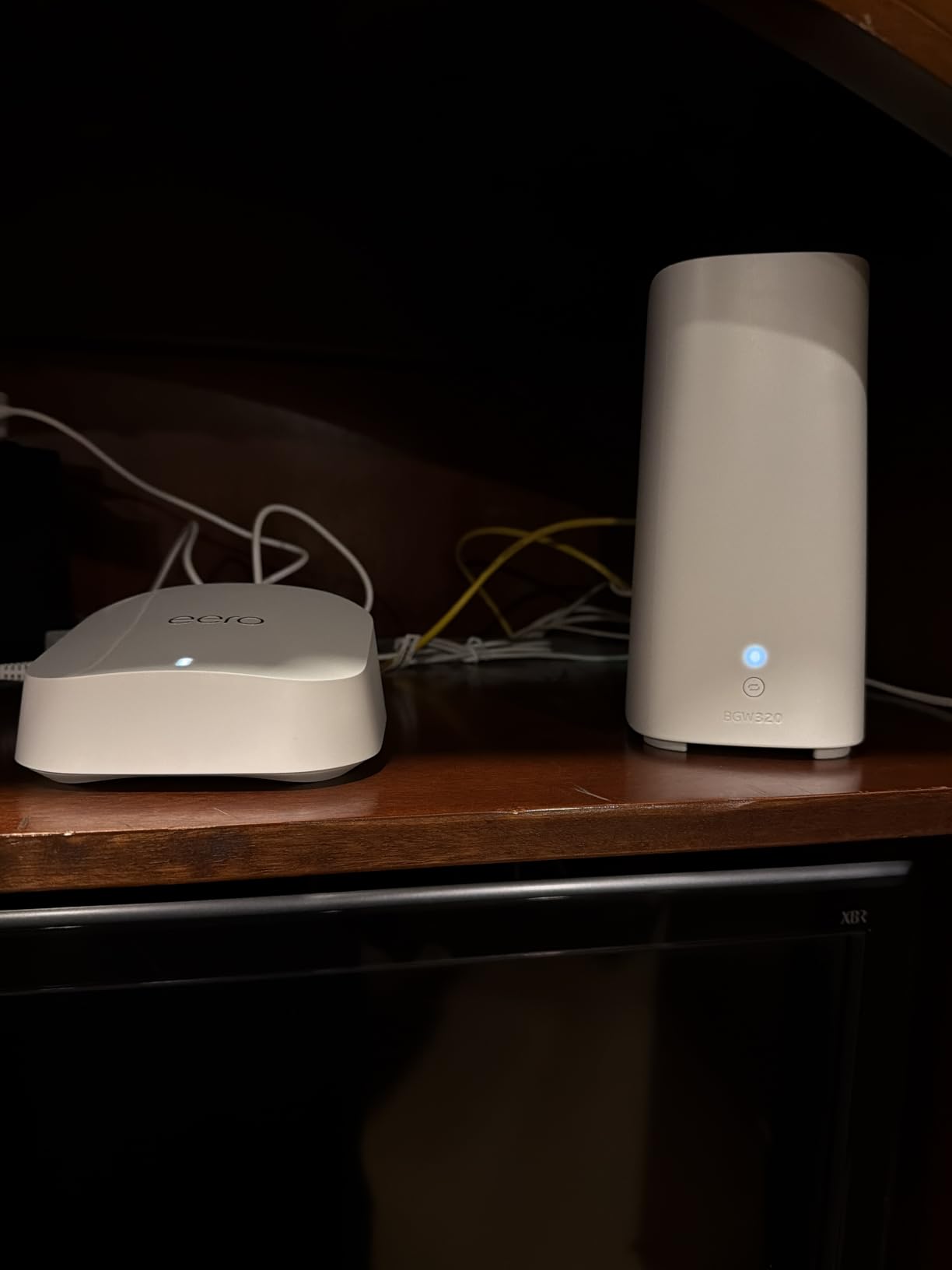
What you give up choosing the dual-band option
Reviewers report the main annoyance is band behaviour: some client devices settle on 5 GHz even when the faster path is available, which drags throughput down in a busy house. A tri-band kit has more room to steer traffic to a dedicated wide channel. If your household streams constantly in three or four rooms at once, that shows up.
Second, eero Plus is where the advanced security, ad blocking, parental controls, Malwarebytes scanning and 1Password integration live. Budget for a subscription if those matter to you, or accept the basic controls the app gives you for free.
Where it fits a large home best
For a two-storey home up to about 3,000 sq ft with a plan up to 2.5 Gbps, this is the least fussy system that still handles the load. The 120+ device ceiling is comfortable for a typical family and leaves room for cameras and smart-home gear on the same network.
Users on r/HomeNetworking repeatedly name eero as the easiest whole-home mesh to run, and the Pro 7 usually tops that list. A user on a 2.5 Gbps Xfinity plan with an ISP-supplied Hitron modem asked r/wifi whether WiFi 7 was worth upgrading to at all, and the answer depends almost entirely on the modem in the chain, not the router.
2. NETGEAR Orbi 770 3-Pack: Best for Expanding Coverage Later
NETGEAR Orbi 770 Series WiFi 7 Mesh System, Up to 8,000 sq ft., 3 Pack
Up to 8,000 sq. ft.
Up to 100 devices
11 Gbps aggregate
Tri-band Enhanced Backhaul
US only
Pros
- Large stated coverage across three nodes
- Tri-band radios with Enhanced Backhaul
- Expandable with extra 770 series satellites
- Security features on by default
- Works with cable or fiber ISPs
Cons
- Rated lowest of the tri-band options here
- One-year limited warranty
- Caps at 100 devices
- US only
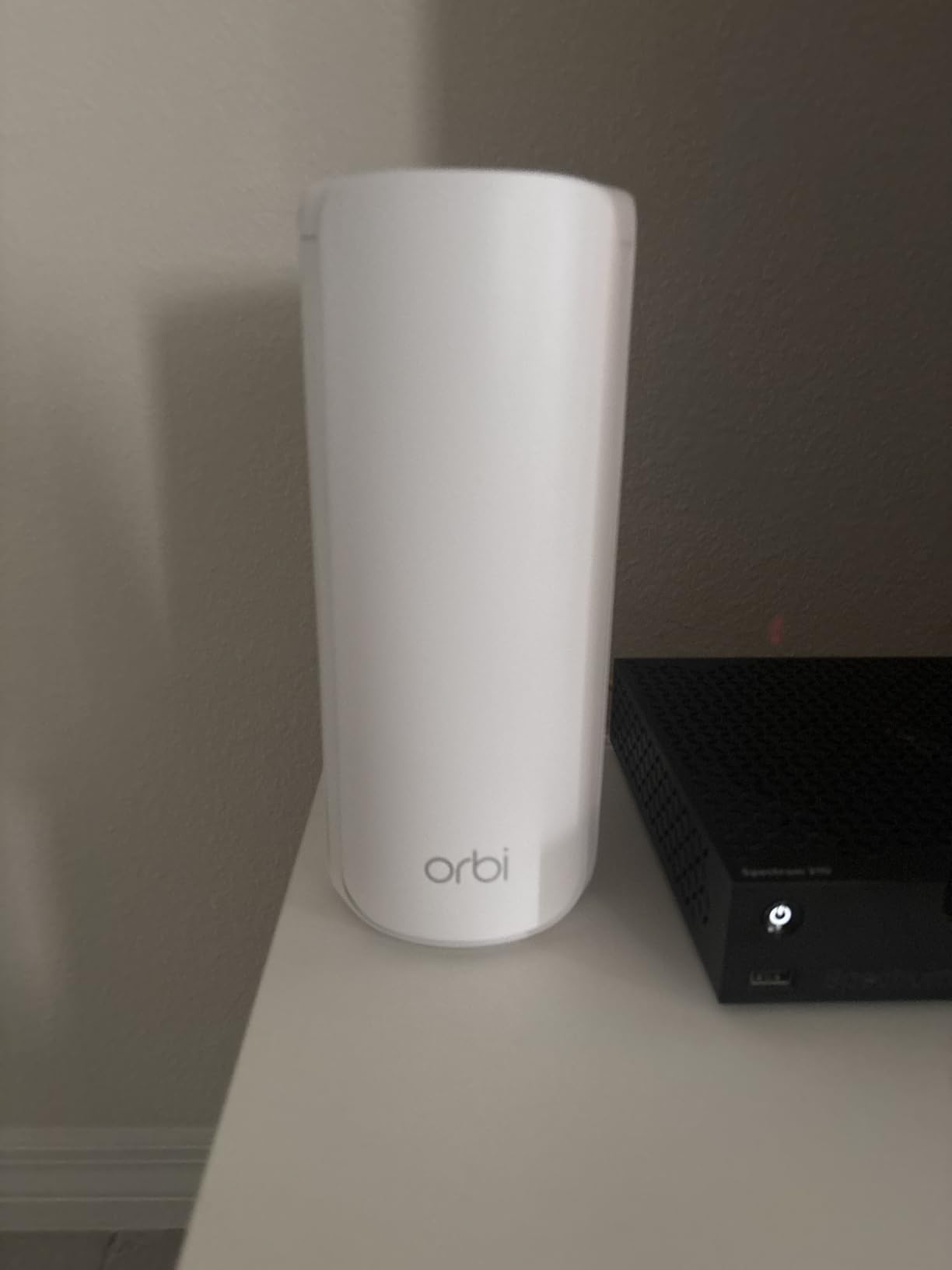
The Orbi 770 3-pack is the option to buy when the house is still growing. Three nodes cover up to 8,000 sq. ft. and up to 100 devices, and each additional 770 series satellite adds up to 2,750 sq. ft. of its own. That expandability is the reason it earns a spot on a large-home list even though its 4.1 rating trails most of the field.
Inside you get tri-band radios with Enhanced Backhaul, 11 Gbps of aggregate wireless throughput and WPA3 security. The box holds one Orbi WiFi 7 router, two satellites, a 2 m Ethernet cable, three power adapters and a quick start guide, which is a fuller package than most kits at this level.
Reviewers are consistent about one thing: placement matters more than the spec sheet. The coverage figure assumes a sensible layout with satellites away from the router node and away from metal or appliances. A three-pack dropped into one corner of a long house will disappoint regardless of what the box claims.
The practical cap is 100 devices. That is fine for a family home, but a smart-home-dense house with a dozen cameras, dozens of sensors and heavy smart-TV traffic can push past it sooner than you would expect. The wired side is also modest, with 2.5 Gbps-class port bandwidth on the package, so a 2.5 Gbps plan is the ceiling rather than a starting point.
What the box coverage number really means
Up to 8,000 sq. ft. is a lab figure. Two floors of interior plasterboard, a stairwell and a concrete basement wall will cut effective reach dramatically, and community threads keep raising the same complaint that advertised coverage does not survive a real house. Treat the number as the shape of the system, not a promise.
There is also a one-year limited warranty, which is the shortest in this group. NETGEAR enables Advanced Router Protection and automatic firmware updates out of the box, with NETGEAR Armor on a 30-day free trial after that, so the subscription model still applies once the trial ends.
Who should look past this kit
Buyers outside the United States should note the package is made for the US only, with warranty and support implications that matter. Anyone on a plan above 2.5 Gbps will hit the port ceiling before the radios, and a device-dense smart home will want a higher capacity kit.
For a standard North American two- or three-storey home on a sub-2.5 Gbps plan, though, this is a straightforward, expandable tri-band system with generous stated coverage and a package that includes everything needed to get running.
3. TP-Link Deco BE63 3-Pack: Best Value Mesh With Four 2.5 GbE Ports
Deco 7 Pro Tri-Band WiFi 7 BE10000 Whole Home Mesh System 6-Stream 10 Gbps
Up to 7,600 sq. ft.
200+ devices
10 Gbps BE10000
Four 2.5 GbE ports per node
2-year warranty
Pros
- Four 2.5 GbE ports on every node so satellites work as access points
- 200+ device capacity
- Per-device band control in the Deco app
- Isolated 2.4 GHz IoT network
- Separate SSIDs per band including MLO
Cons
- App migration from an older Deco mesh can fail
- Some firmware builds cause reboots
- Limited DHCP and firewall controls
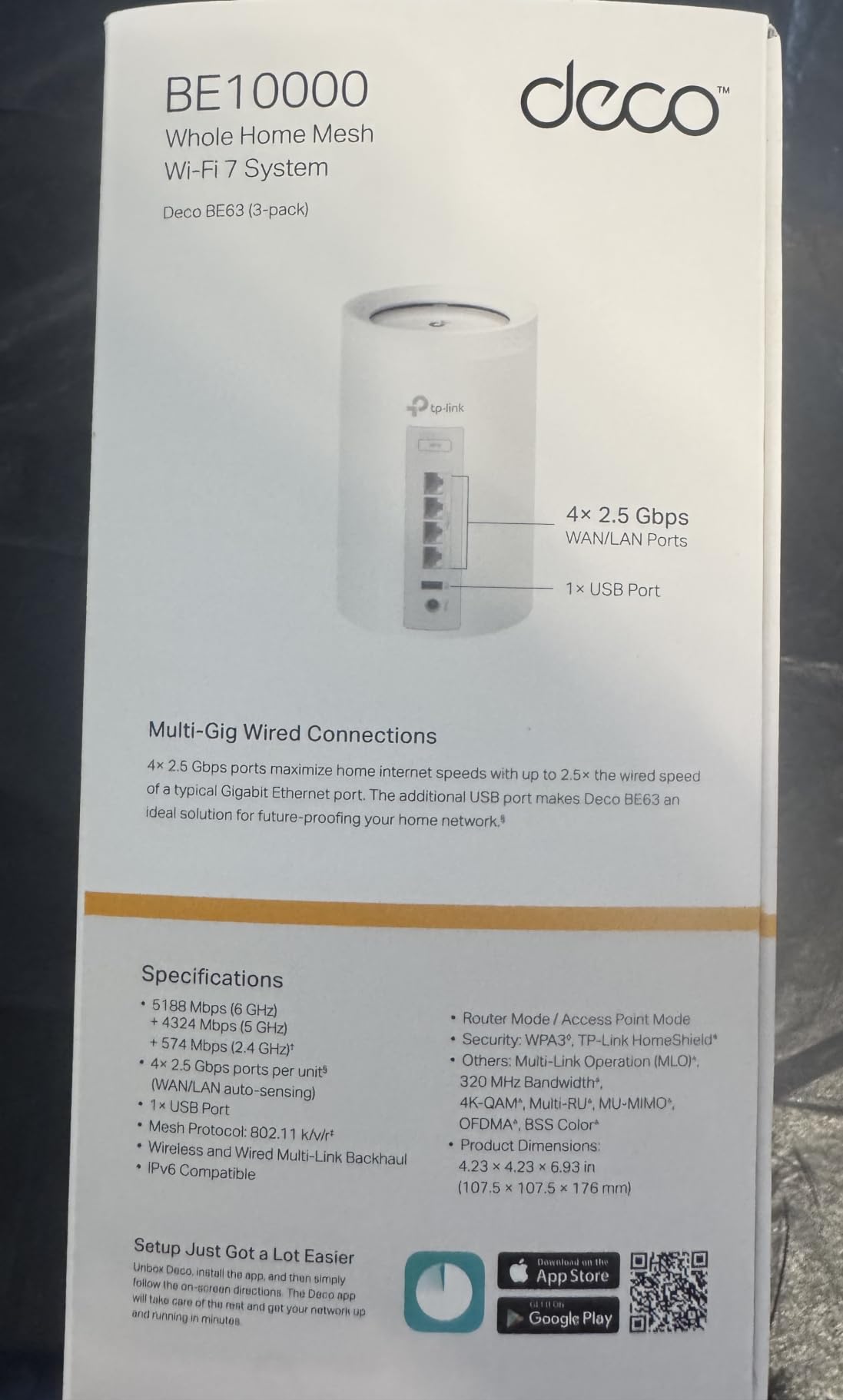
The Deco BE63 is the pick I recommend to anyone who wants more ports than a typical mesh kit provides. Every node carries four 2.5 GbE WAN/LAN ports plus USB 3.0, so you can plug a switch, a NAS or a wired access point into any of the three units without adapters. Three nodes cover up to 7,600 sq. ft. and more than 200 devices.
Under the hood it is tri-band BE10000 with six streams, splitting 5,188 Mbps on 6 GHz, 4,324 Mbps on 5 GHz and 574 Mbps on 2.4 GHz. Each unit weighs 5 pounds and measures 4.23 by 4.23 by 6.93 inches, and the pack includes three units, an RJ45 cable, three power adapters and a guide, all under a two-year manufacturer warranty.
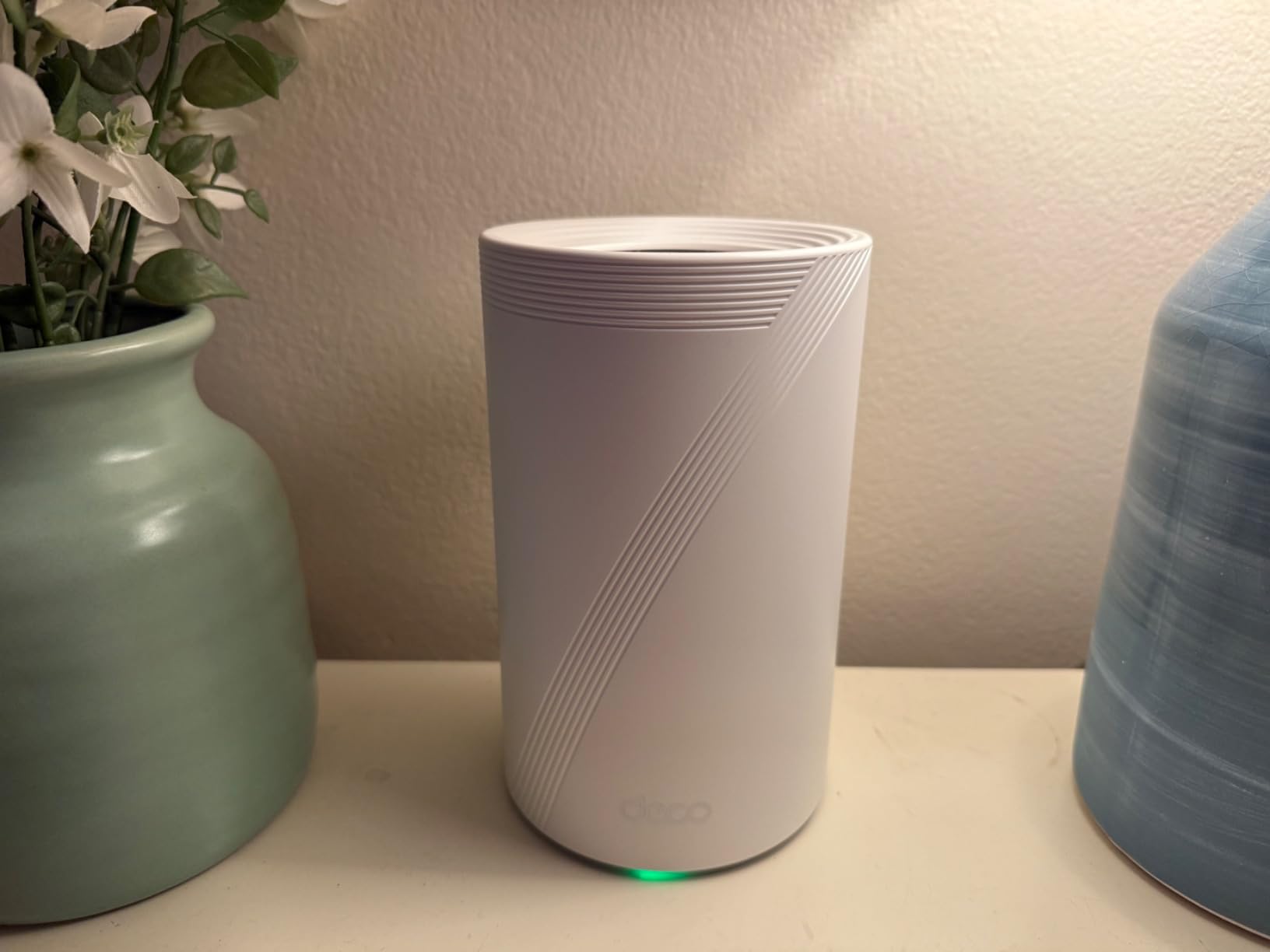
Where Deco separates itself is control. AI-Roaming handles the hand-offs, and you can pin individual devices to a preferred band, split SSIDs per band, and run a separate 2.4 GHz IoT network to keep cameras and appliances off the main one. HomeShield covers parental controls and IoT protection, and it supports VPN client and VPN server use at the same time as normal internet access.
WPA3 is supported alongside WPA-PSK and WPA2-PSK, and the system stays backward compatible with every previous WiFi generation. Access point mode, guest mode, QoS and remote access are all available, which makes it usable as a drop-in for an existing wired network.
Ports and control are the reason to buy it
If your house has Cat6 already run, the four ports per node change the maths entirely. A node in a hallway closet can serve a wired access point, a printer and a game console while still rebroadcasting wirelessly, with no switch purchase needed. That flexibility is why wired backhaul users keep landing on Deco kits.
The trade-off is polish. Some owners report that migrating an existing Deco mesh through the app fails partway and briefly takes the network offline, and a few firmware builds have been linked to intermittent reboots and dropped VPN sessions. Guest and IoT networks also share a VLAN on some builds, so isolation is partial rather than complete.
Where it fits a large home best
This is the one I would point at for a 3,000 sq ft home with mixed wiring, several wired workstations and a fibre plan in the 1 to 2.5 Gbps range. 200+ device support comfortably covers cameras, smart-home gear and multiple 4K streams, and the 10 Gbps aggregate figure leaves real headroom above the 2.5 GbE port ceiling.
Buyers who want step-up hardware later should note the BE67 later in this list, which adds a 10G port and 10 Gbps wired backhaul on each node. If you have the wiring to exploit it and the patience for a newer model with less long-term history, that is the next step up.
4. eero Pro 7 3-Pack: Best for 5 Gbps Plans and Heavy Device Counts
Amazon eero Pro 7 tri-band mesh Wi-Fi 7 router (newest model) – Supports internet plans up to 5 Gbps, Coverage up to 6,000 sq. ft., 3-pack
Up to 6,000 sq. ft.
600+ devices
Up to 5 Gbps plans
Two 5 GbE ports
Three-year warranty
Pros
- 600+ device capacity is the highest here
- Two 5 GbE ports per node for multi-gig plans
- Tri-band speeds well above the dual-band eero 7
- TrueMesh keeps roaming clean
- Three-year warranty
Cons
- Highest cost per node of the kits here
- Advanced controls need eero Plus
- Limited manual configuration versus ASUS and TP-Link
The eero Pro 7 exists because a lot of large homes now have faster internet than the dual-band eero 7 can carry. Three nodes cover up to 6,000 sq. ft. and support 600+ devices, the largest capacity of any system here, with wireless speeds up to 3.9 Gbps and support for internet plans up to 5 Gbps.
Each node carries two auto-sensing 5 GbE ports, which is the detail that matters on a high-tier fibre or cable plan. A 2 Gbps or 5 Gbps line is not bottlenecked at the wall. Tri-band WiFi 7 with Multi-Link Operation sits under the same TrueMesh, TrueRoam and TrueChannel software stack as the rest of the range.
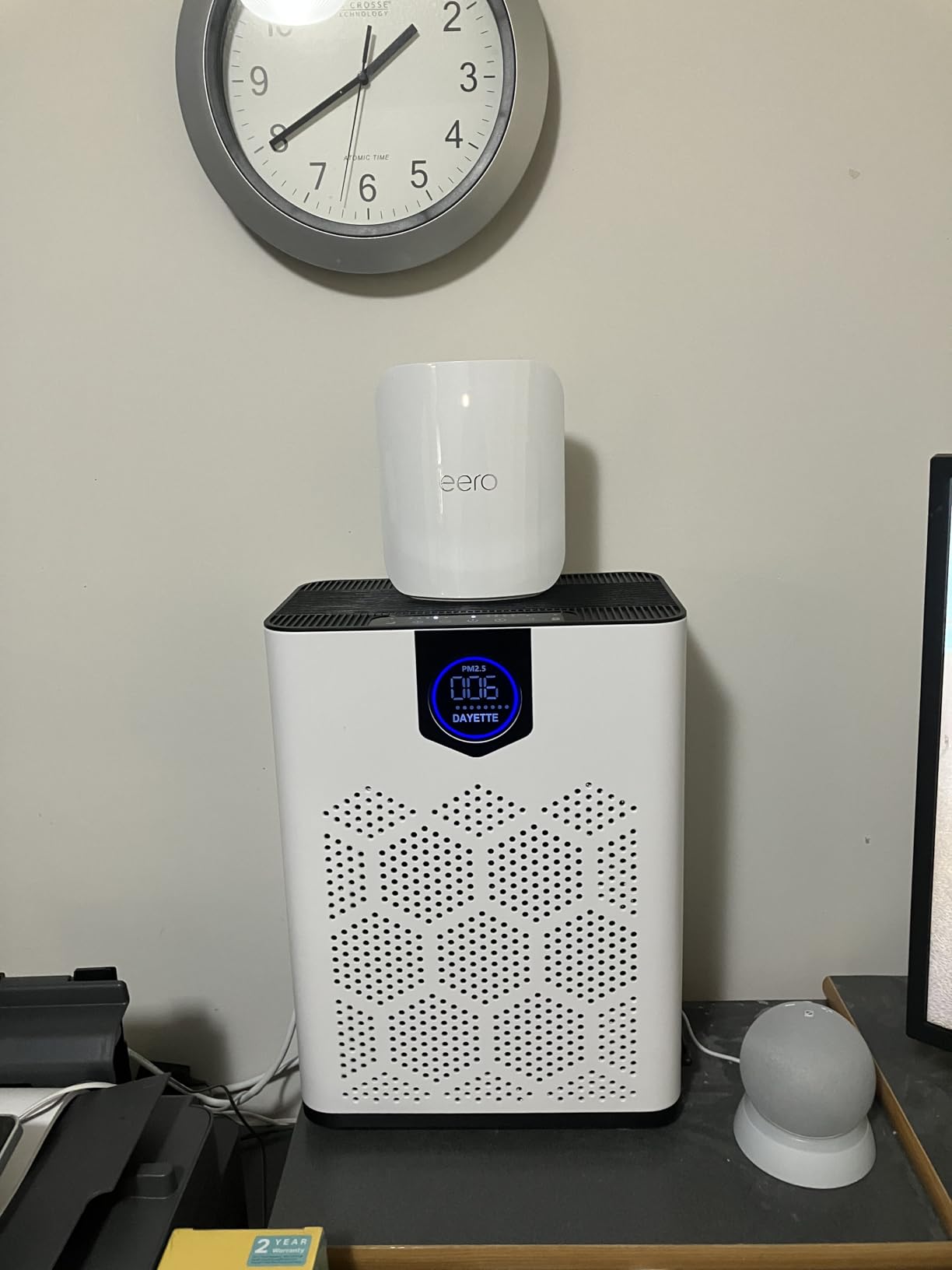
In practice, the jump from the dual-band eero 7 is visible when you have several 8K or 4K streams, a work-from-home video call and a cloud backup all running at once. The extra 6 GHz capacity gives the system somewhere to put traffic that the dual-band model has to fight for on 5 GHz. Reviewers consistently point to the speed difference as the reason to step up.
Backward compatibility is thorough. The Pro 7 works with previous eero generations and with eero Built-in on select Amazon Echo devices, so an existing house can add nodes rather than start over. The three-year warranty matches the rest of the line.
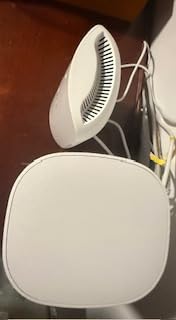
When the extra spend is justified
This is the kit for households on a plan above 2.5 Gbps, or ones counting a very high number of connected devices. Cameras, smart TVs, doorbells, thermostats and wearables add up quietly, and 600+ device support gives you room before you start thinking about enterprise-style switching.
It is also the pick when you want the simplest possible experience and will not touch the settings. The app hides most of the complexity, node management is straightforward, and the eero ecosystem has a track record of updating older hardware rather than orphaning it.
What you trade away for that simplicity
Cost per node is the highest of any kit in this roundup, and that multiplies across three nodes. If your plan tops out at 2.5 Gbps and you run 40 devices, the dual-band eero 7 does the same job for meaningfully less.
There is also a limit on the wired side: two ports per node, fewer than the four 2.5 GbE ports on each Deco unit. And for anyone who wants VLAN segmentation, detailed QoS or manual band planning, ASUS and TP-Link options expose far more. eero Plus remains the home of advanced security, ad blocking, parental controls and 1Password integration.
5. NETGEAR Nighthawk RS700S: Best Standalone Router for 10G Fiber
NETGEAR Nighthawk WiFi 7 Router RS700S, Up to 3,500 sq ft, 19 Gbps
19 Gbps aggregate
Up to 3,500 sq. ft.
10 Gig WAN and 10 Gig LAN
Up to 200 devices
Tri-band 12-stream
Pros
- 19 Gbps of combined tri-band throughput
- 10 Gig WAN port for premium fibre plans
- Handles up to 200 devices
- Works with cable
- fiber
- DSL and satellite
- Automatic firmware updates included
Cons
- Coverage limited to 3500 sq. ft.
- Only three antennas
- Four of the LAN ports are 1 Gig
- NETGEAR Armor needs a subscription after the trial
The Nighthawk RS700S is the pick when you have a genuinely fast line and want the router to be the centre of the house rather than part of a mesh. It aggregates 19 Gbps across 2.4, 5 and 6 GHz in a 12-stream tri-band design, handles up to 200 devices, and is rated for 3,500 sq. ft.
The port layout is the standout. You get a 10 Gig WAN port for premium fibre plans, a 10 Gig LAN port, and four 1 Gig Ethernet LAN ports, five in total. A NAS or a workstation on 10 GbE changes what a multi-gig connection can actually deliver to your devices, not just to the internet.
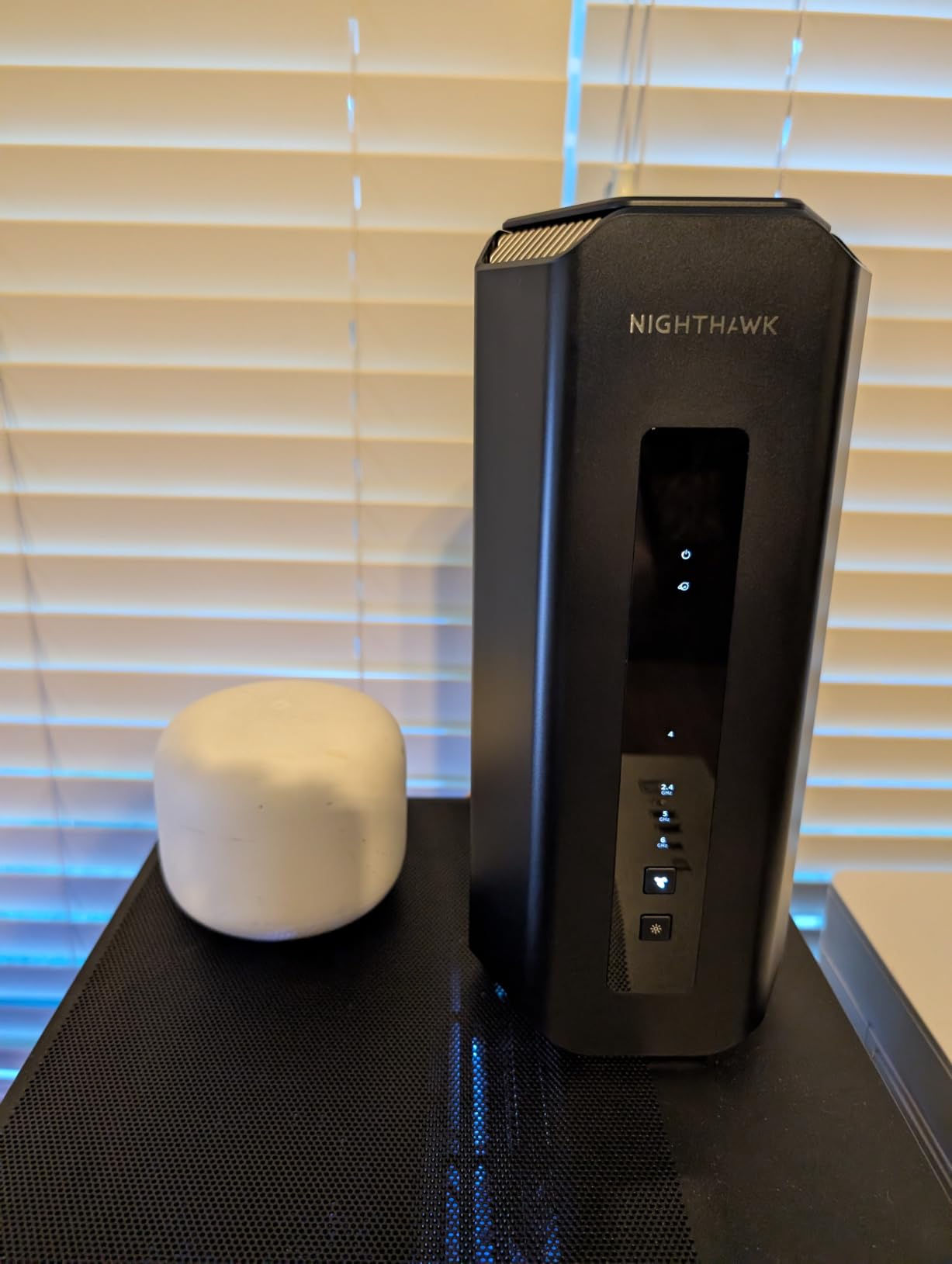
MU-MIMO and OFDMA handle the simultaneous connections, and the Nighthawk app covers guided setup, speed tests, device pausing and guest networks. Advanced Router Protection and automatic firmware updates are enabled out of the box, with NETGEAR Armor available on a 30-day free trial. The box includes a 19V/3.16A power adapter, a 2 m Ethernet cable and the router, under a one-year limited warranty with 90 days of complimentary technical support.
It pairs with an existing modem or gateway, though some gateway combinations need bridge mode enabled. That is the step most people miss, and it is worth checking with your ISP before you buy anything.
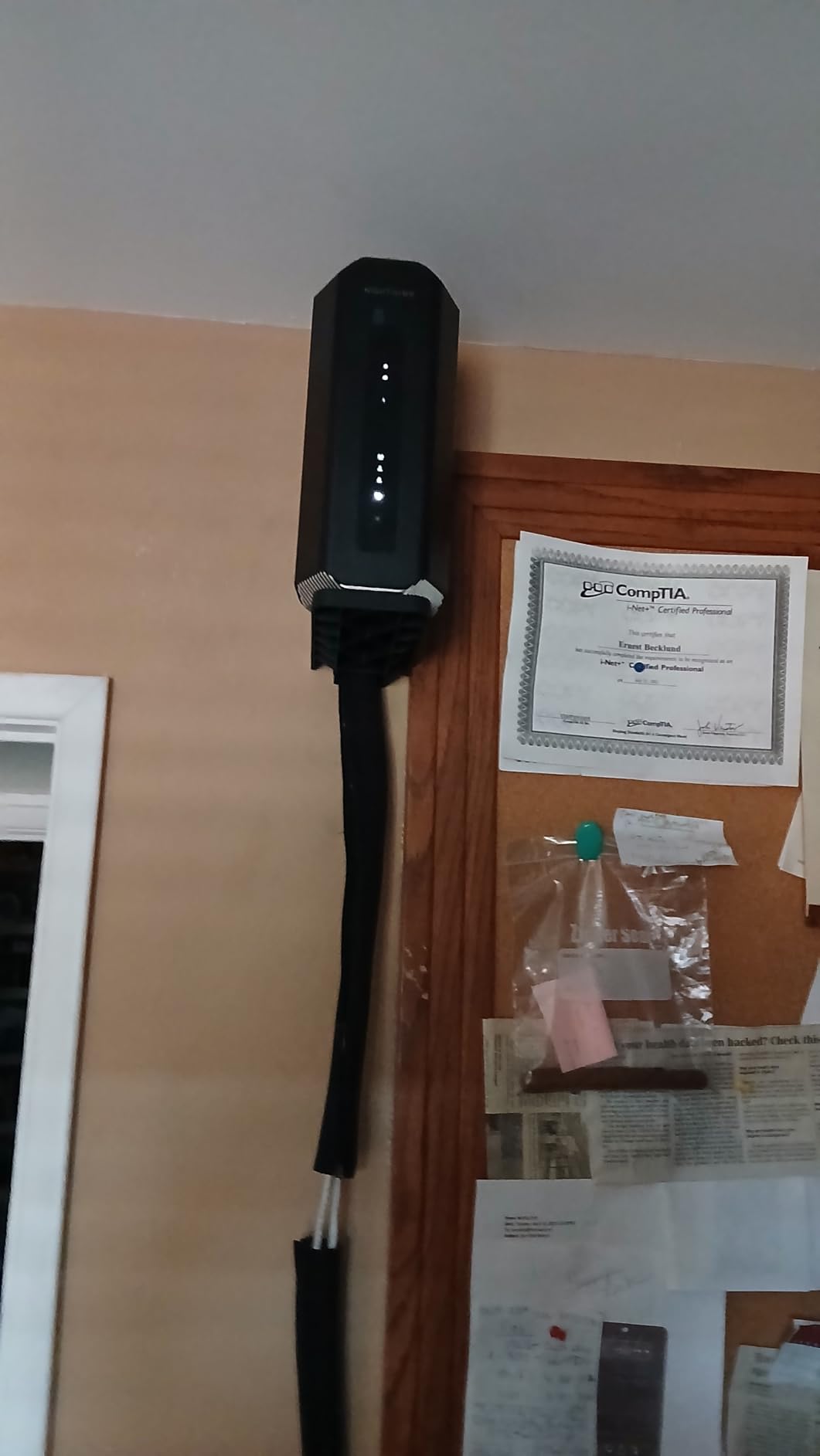
Why a single router struggles in a very large house
The 3,500 sq. ft. rating is honest for a single unit, and it is roughly where a tri-band desktop router starts to strain. Beyond that, or on a second and third floor, you need help. Reviewers are direct about this: very large or multi-storey homes should add Orbi satellites rather than expect the standalone box to reach.
Range is also limited by placement. A single unit on a shelf in a hallway has to push signal through every interior wall on the path to the far rooms, and no amount of aggregate throughput fixes a signal that is too weak to decode cleanly.
Where a standalone router wins outright
If you live in a single-storey or compact two-level home and your plan is multi-gig fibre, this is the cleaner answer. One box, no roaming, no backhaul, and a 10 Gig port feeding a home lab or NAS.
For multi-gig fibre without a huge footprint, the ASUS GT-BE98 Pro later in this list goes further on ports and throughput. For 5 Gbps plans with whole-home coverage, the eero Pro 7 covers more square footage. This router is about concentrating speed, not spreading it.
6. ASUS ROG Rapture GT-BE98 Pro: Best for Hardcore Gaming
ASUS ROG Rapture GT-BE98 Pro WiFi 7 Gaming Router – Quad-Band, 30Gbps, Mesh
30 Gbps aggregate
Quad-band 320 MHz 6 GHz
Dual 10G plus four 2.5G ports
2 GB RAM
3-year warranty
Pros
- Quad-band design with the highest throughput figure here at 30 Gbps
- Eight external dual-feeding antennas for range
- Triple-level game acceleration reduces ping
- 2 GB RAM supports mesh expansion
- Three-year warranty
Cons
- Bulky desktop footprint
- 3500 sq. ft. coverage is modest for a large home
- Dense interface for casual users
- Smaller review pool than the mesh kits
The GT-BE98 Pro is the enthusiast option in this roundup. It is a quad-band WiFi 7 router rated at 30 Gbps, the highest aggregate figure of anything here, using 320 MHz 6 GHz channels and 4096-QAM with Multi-Link Operation for simultaneous multi-band links.
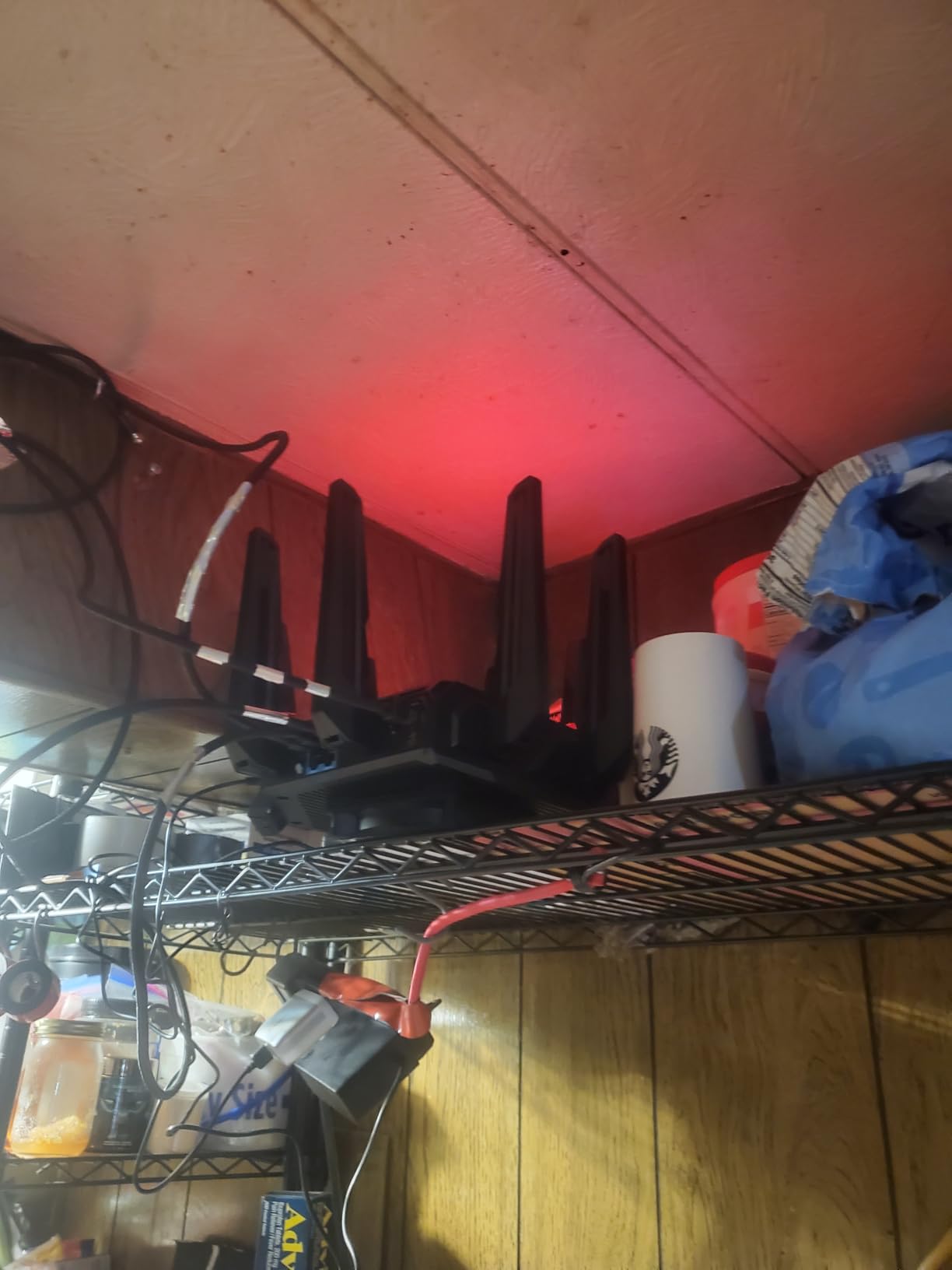
Eight external dual-feeding antennas are the physical differentiator against the internal-antenna rivals. External antennas generally throw signal further for a given transmit power, which matters in a house where the router sits away from the rooms you actually use. The unit weighs 4.4 pounds and measures 13.7 by 8.6 by 13.7 inches, so it needs a real shelf.
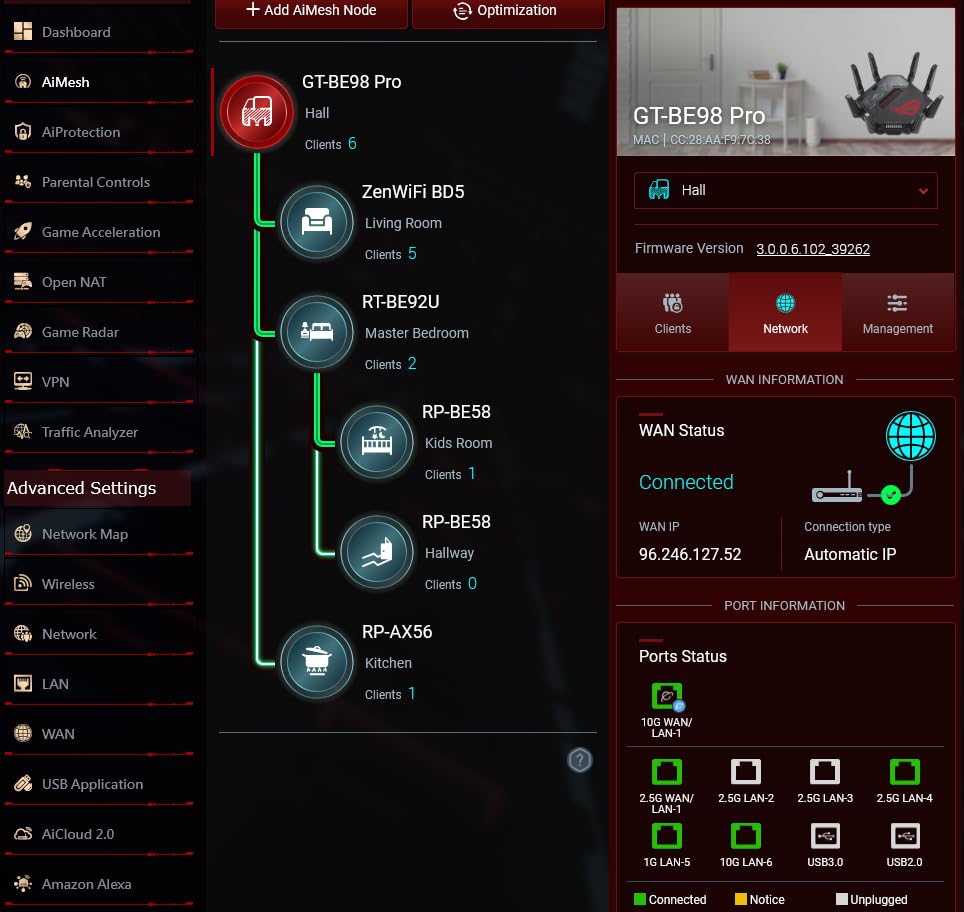
The gaming feature that reviewers actually praise is triple-level game acceleration, which prioritises PC gaming traffic from the local port all the way to the game server. Several buyers describe measurably lower ping in competitive titles. Two gigabytes of installed RAM, mesh networking support, a three-year warranty and high firewall security level make it a capable base for extending into a whole-home setup.
Wired connectivity is excellent for a single box: dual 10G ports and four 2.5G ports, seven in total, with WPA2-Enterprise, WPA3-Personal and WPS supported. Access point mode, guest mode, QoS, internet security and parental control are all available through ASUSWRT.
What gaming latency features can and cannot fix
Prioritisation helps when the bottleneck is contention inside your own network, where a download or a 4K stream is eating airtime that your game session needs. It does not shorten the physical route to a distant server, and it cannot compensate for a congested ISP line. Anyone expecting a 20 ms ping drop from software alone will be disappointed.
For competitive play, the more reliable gain is 2.5G or 10G wired Ethernet straight to the gaming PC, with the router handling the rest of the house over Wi-Fi. This router makes that easy given the port count.
Where a quad-band gaming router is the wrong call
Coverage is rated at up to 3,500 sq. ft., which is modest next to the mesh kits here. In a three-storey home this box is a strong central node rather than a whole-home solution, and the bulky footprint and dense interface make it a poor fit for anyone who wants set-and-forget.
On r/HomeNetworking, buyers weighing high-end non-mesh options repeatedly land on this model and the ASUS RT-BE96U, which points to how well it holds up against enthusiast alternatives. For a large home specifically, treat it as the brain of the network with mesh doing the reach.
7. TP-Link Archer BE800: Best for SFPplus Fiber and EasyMesh Expansion
TP-Link Tri-Band BE19000 WiFi 7 Router (Archer BE800)
19 Gbps BE19000
10G WAN/LAN plus SFPplus
Four 2.5G ports
4+ bedrooms
2 GB RAM
Pros
- SFPplus combo port is unusual at this level
- Two 10G ports for fibre uplinks
- EasyMesh compatibility allows mixed hardware
- Integrated front LED status display
- 2 GB RAM
Cons
- Weak 2.4 and 6 GHz range beyond roughly 20 feet
- Some units needed repeated reboots over DHCP failures
- Tether app setup and settings are limited
The Archer BE800 is a tri-band BE19000 router listed at 19 Gbps, splitting 11,520 Mbps on 6 GHz, 5,760 Mbps on 5 GHz and 1,376 Mbps on 2.4 GHz. It is rated for a large home with 4+ bedrooms, and it carries 2 GB of RAM and a two-year manufacturer warranty.
The port arrangement is the reason to shortlist it. There is a 10G RJ45 WAN/LAN port, an SFPplus combo port, four 2.5G ports and a USB 3.0 port, seven in total. An SFPplus uplink is rare outside enterprise hardware, and it lets you bridge into fibre optics directly instead of relying on a copper run.
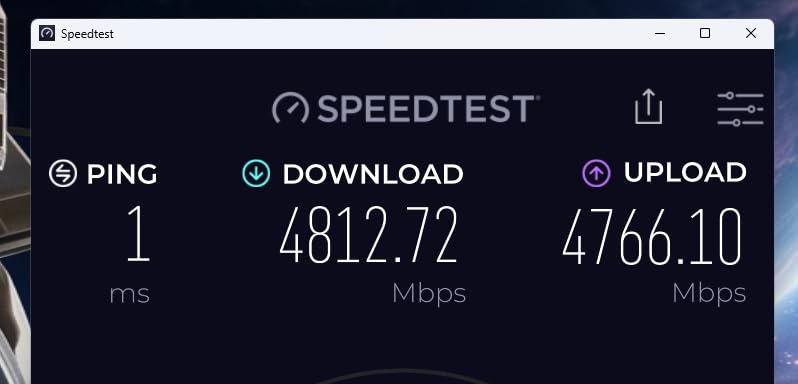
Performance owners report real multi-gig results, including 1.4 Gbps downstream on a 2 Gbps fibre plan. Reviewers also note that two identical units meshed together delivered more stable speeds than three-node kits they tried, which is a useful data point for a large house that needs a second access point rather than a full pack.
Feature-wise there is Multi-Link Operation, Multi-RUs, 4K-QAM, 320 MHz channels, eight positioned antennas with beamforming, an integrated front LED status display, HomeShield with IoT device identification and a private IoT network under WPA3, plus VPN client and server support. The Tether app handles Android and iOS, and Alexa and Google Assistant work too.
Deciding between two routers and a three-node kit
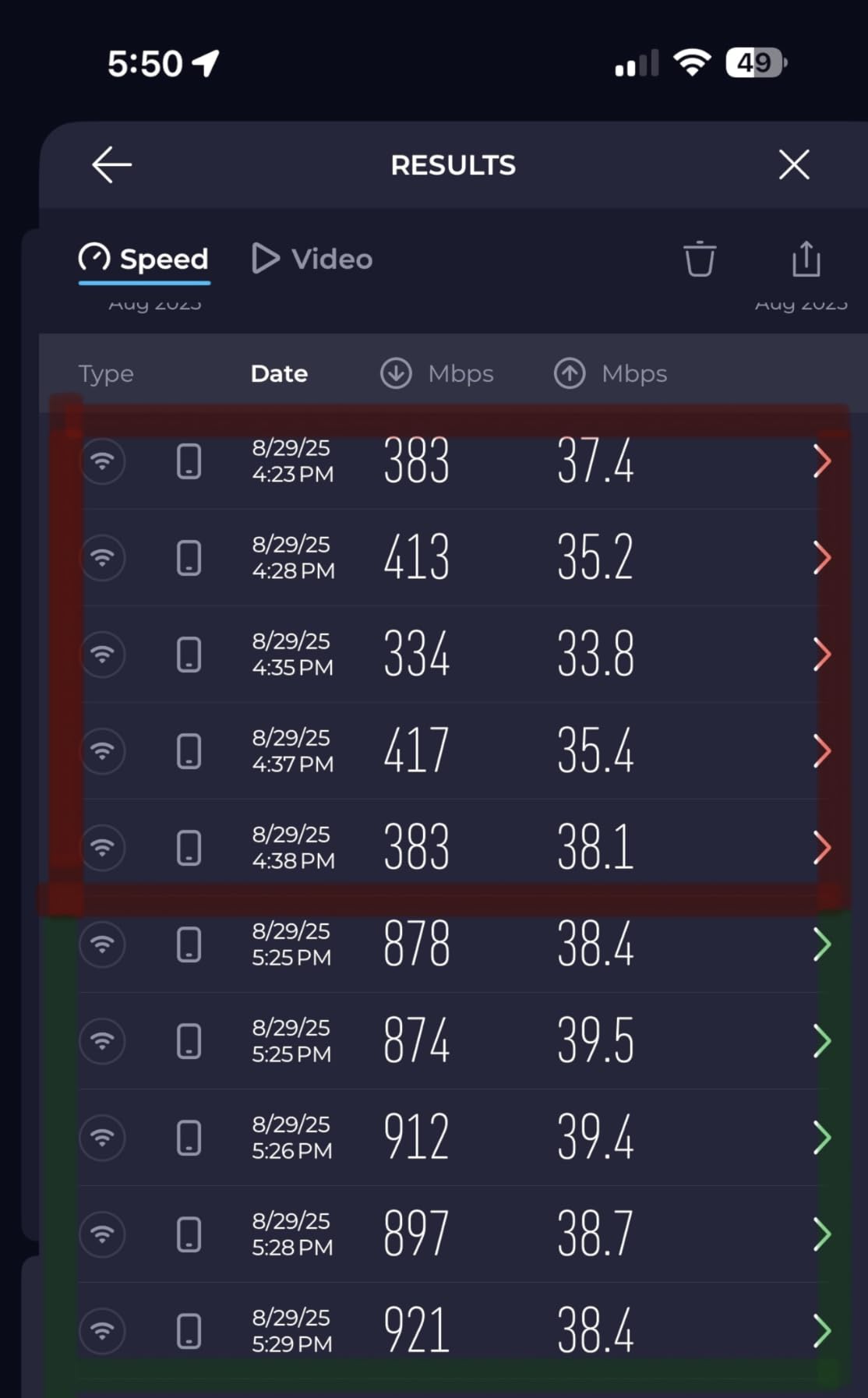
Because EasyMesh is supported, a second BE800 can join the first as a genuine node rather than as a dumb range extender. Reviewers report steadier results from a matched pair than from a larger mixed pack, which matters when you are trying to cover a long, awkward floor plan rather than a square one.
EasyMesh compatibility also opens the door to mixing with other mesh hardware, which no vendor supports as cleanly. That flexibility is valuable in a house where you might keep one brand in the main area and accept another elsewhere.
What holds it back from the top of this list
Range is the recurring complaint. Reviewers describe weak 2.4 GHz and 6 GHz signal throw, with coverage falling off beyond roughly 20 feet through walls. For a large home specifically, that is the wrong shape of weakness, since the whole point is reaching distant rooms.
Stability is the second concern. Some units needed repeated reboots after DHCP failures and in at least one case stopped responding entirely. The Tether app setup can fail on the first attempt and offers limited advanced settings, and the front LED display resets itself to on after firmware updates. All of that pushed the average rating to the lower end of this group.
8. TP-Link Deco BE67 3-Pack: Best for Maximum Stated Coverage
Deco 7 Pro Tri-Band BE14000 Wi-Fi 7 Mesh System, 10Gbps Internet, 3 Pack
Up to 8,100 sq. ft.
200+ devices
14 Gbps BE14000
10 Gbps wired backhaul
2-year warranty
Pros
- Largest stated coverage figure in this roundup
- 10 Gbps wired backhaul across nodes
- 10G
- 2.5G and 1G ports plus USB 3.0 per node
- AI-Driven Roaming handles switching
- Works across all WiFi generations
Cons
- Sits at the lower end of the ratings here
- Only 1 GB of RAM
- Firewall security level listed as basic
- Newer model with a shorter track record
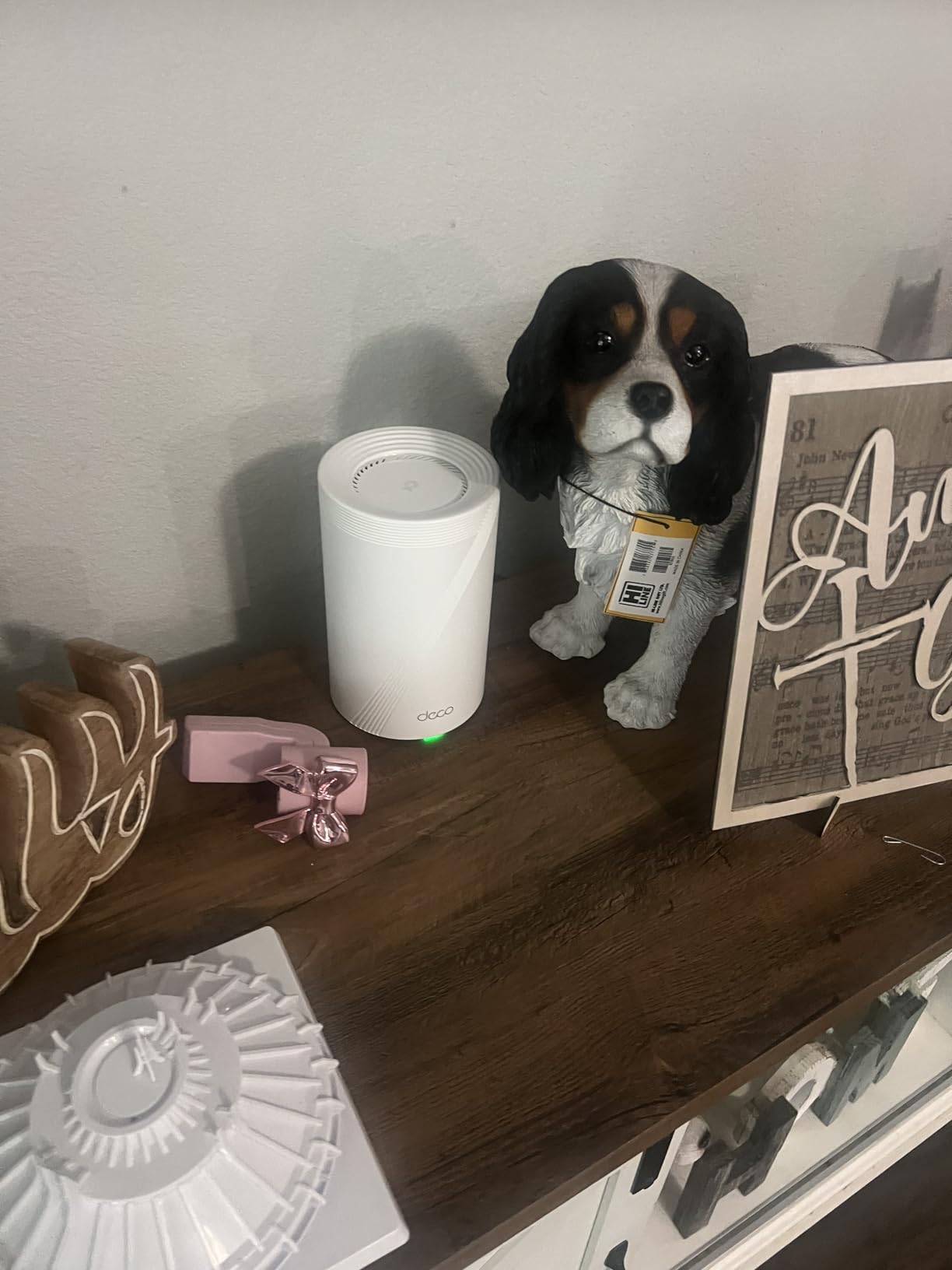
The Deco BE67 3-pack is the mesh system to buy when you intend to run cable between the nodes. It advertises 10 Gbps wired backhaul, and every unit carries 10G, 2.5G and 1G WAN/LAN ports plus USB 3.0, so each satellite can double as a wired access point with ports to spare.
Wireless, it is a tri-band 8-stream BE14000 rated at 14 Gbps, splitting 8,647 Mbps on 6 GHz, 4,324 Mbps on 5 GHz and 688 Mbps on 2.4 GHz. Stated coverage is up to 8,100 sq. ft. for 200+ devices, the largest coverage figure of any kit in this roundup, with 320 MHz channels, Multi-Link Operation, Multi-RUs and 4K-QAM.
AI-Driven Roaming switches clients between nodes automatically under a single network name, and HomeShield brings network security, QoS and parental controls. VPN client and server support are present, as are access point mode, guest mode and Alexa compatibility. The company also signed the CISA Secure-by-Design pledge, and the kit is listed for Verizon Fios, Spectrum, Cox and Comcast.
The three units share the same physical footprint as the BE63 at roughly 6.93 by 4.23 by 4.23 inches each, with the pack weighing 5.1 pounds and carrying a two-year manufacturer warranty. It runs Linux underneath, which is a reasonable base for VPN server workloads.
Why 10 Gbps wired backhaul is the deciding spec
Wireless backhaul takes a bite out of your throughput on every hop, because the nodes have to share airtime with your devices. Community threads on wired versus wireless backhaul land on the same conclusion: with Ethernet between nodes, whole-home speed stays consistent regardless of which room you are standing in.
For a large house with cable already run, that difference decides everything. The BE67 is the only kit here that advertises 10 Gbps backhaul explicitly, and with three 10G-capable nodes it can carry multi-gig internet and fast wired clients in every room without a separate switch.
What to know before committing
This is a newer model, and that shows in the feedback. It sits at the lower end of the ratings here with 298 ratings behind it, so there is simply less long-term reliability history than the established BE63 has accumulated. Buyers should expect the usual early-firmware settling period.
It also carries 1 GB of RAM rather than the 2 GB in the BE800 or GT-BE98 Pro, and its firewall security level is listed as basic. For a home that does not need advanced filtering, that is fine. For a heavy smart-home or small-office setup where you want granular rules, the BE63 is the safer call.
How Many WiFi 7 Nodes Does a Large Home Actually Need?
Node count matters more than any spec number, because coverage claims assume open plan and few walls. Start with the floor area actually being served, then add for the walls in between. As a rough guide, a single high-end router covers around 2,000 to 2,500 sq ft on one level, a two-node system handles 2,500 to 4,000 sq ft across two floors, and a three-node pack suits 3,500 sq ft and up or three storeys.
Add a node whenever you are crossing a thick structure, not just when you run out of square feet. Concrete, brick, reinforced floors and long corridors between wings are where a single node stops working. Timber-frame houses and standard plasterboard are more forgiving, and a two-node system usually suffices where a masonry build needs three.
Count devices as well, not just area. A 40-device household spread over 3,000 sq ft is a harder job than a 15-device household in the same space, because airtime contention rather than range becomes the limit. Kits rated for 200+ devices have more headroom for camera-dense homes, and the eero Pro 7 is the one to look at when device count runs past 200.
Finally, check your internet plan before sizing anything. On a plan up to 1 Gbps, a 10G WAN port does nothing for you, and a 2.5 GbE port per node is more than sufficient. Buying a multi-gig system for a gigabit line wastes money you could put toward better placement or another node.
Wired vs Wireless Backhaul: The Decision That Matters Most
Ethernet between nodes always wins on stability, and in a large home it is the single highest-impact decision you can make. With wired backhaul, each node behaves almost like its own router, so a client in the far bedroom gets the same speed as one next to the main unit. With wireless backhaul, the hop between nodes competes with your devices for the same airtime, which shows up as inconsistent speeds in exactly the rooms that needed mesh in the first place.
The rule is simple: if you have Cat6 or better already run between floors, use it. Every kit in this roundup except the dual-band eero design supports it, and the Deco BE63 and BE67 both put multiple 2.5G or 10G ports on each node specifically so satellites can act as wired access points. You need a switch if you are running more than two or three nodes.
If you cannot run cable, design around it. Place nodes so each has line of sight to the next, keep them off the same crowded band, and expect the node furthest from the main unit to run slower. Multi-Link Operation helps by letting backhaul and client traffic use different links at once, which is why tri-band and quad-band kits hold up better in wireless-backhaul homes than dual-band ones.
There is a third option worth naming: wired access points instead of mesh. In a home that already has Ethernet terminating at a central switch, running dedicated access points gives you the coverage of a full system without any backhaul at all, since everything runs back to the switch on wire. It is the cleanest outcome, and it is the scenario homeowners on r/HomeNetworking keep asking about when they compare a mesh kit against standalone access points.
Mesh vs Standalone Router vs Access Point for a Big House
Mesh is the default answer above roughly 2,000 sq ft or two floors, because it handles roaming between nodes automatically and needs no configuration. That is why four of the eight systems here are mesh kits, and why they make up our top three picks.
A standalone router wins when the house is compact and the internet plan is fast. One device, no roaming handover, no backhaul to degrade, and the full port budget spent on your own wired clients rather than shared with satellites. The Nighthawk RS700S and the Archer BE800 are built for that shape of home.
An access point setup wins when you already have cabling. Skip the wireless-backhaul question entirely by wiring every access point back to a switch. The practical obstacle is physical: many homes have no suitable ceiling or wall mount positions, and enterprise-style access points often need PoE and mounting flexibility that a typical house does not offer, which is exactly why most people end up with mesh instead.
Also worth knowing: mixed-generation networks work. Every kit here is backward compatible with older WiFi hardware, and the eero systems specifically pair with previous eero generations. You do not have to replace everything on the same day.
When WiFi 7 Is Not Worth the Upgrade
If your internet plan caps at 1 Gbps, the fastest router on this page changes nothing for your actual download speed. The limit is upstream in the line, not in the radio. A well-placed WiFi 6E mesh will serve the same household at a lower cost, and the money is better spent on an extra node or better placement.
Similarly, if your clients are older phones, laptops and TVs, the 320 MHz channels and 4K-QAM that define WiFi 7 have nothing to talk to. The standard helps most when you already own WiFi 7 devices, you have 30 or more connected clients competing for airtime, and your plan is multi-gig.
And if the problem is one bad room, a repositioned router often beats a whole new system. Dead zones in a large home are usually a placement problem, not a hardware problem. Before you upgrade, move the main unit somewhere more central, off the floor and away from metal and appliances, and see what changes.
One more honest note on hidden costs. eero Plus and NETGEAR Armor put advanced security, ad blocking and detailed parental controls behind a subscription after a trial period, while HomeShield on the TP-Link kits covers the basics at no charge. If you have young kids and rely on granular filtering, factor that into the decision rather than discovering it later.
Frequently Asked Questions
What is the best router for very large homes?
For homes above 3,000 sq ft or two storeys, a WiFi 7 mesh system beats a single router. Our top pick is the eero 7 3-pack, covering up to 6,000 sq. ft. and 120+ devices. The NETGEAR Orbi 770 3-pack suits buyers who plan to add satellites later, and the TP-Link Deco BE63 3-pack offers four 2.5 GbE ports per node for homes with existing Ethernet.
Does WiFi 7 go through walls better than WiFi 6?
Only marginally. Newer WiFi 7 radios handle interference and multi-device contention better than WiFi 6, but the radio frequencies involved are the same, so penetration through concrete, brick and reinforced floors is essentially unchanged. Wall material and router placement still decide coverage, which is why node placement matters more than the standard you buy.
What router would cover 3000 sq. ft. of area?
A two-node or three-node WiFi 7 mesh system covers 3,000 sq. ft. comfortably, particularly across two floors. A single high-end router reaches roughly 2,000 to 2,500 sq. ft. on one level, so anything multi-storey needs nodes. The eero 7 3-pack and the Deco BE63 3-pack both fit a 3,000 sq ft home with room to spare.
Is Ethernet backhaul better than WiFi backhaul?
Yes, and in a large home it is the highest-impact decision you can make. Wired nodes behave like independent access points, so speed stays consistent in every room. Wireless backhaul shares airtime with your devices, which throttles the rooms furthest from the main unit. If Cat6 is already run, use it; if not, add a switch rather than relying on wireless hops.
Which Wi-Fi 7 mesh system has the best wired backhaul?
The TP-Link Deco BE67 3-pack, which advertises 10 Gbps wired backhaul and puts 10G, 2.5G and 1G ports on every node. The Deco BE63 3-pack is the runner-up with four 2.5 GbE ports per unit, which is plenty for most 1 to 2.5 Gbps plans. Both let you turn satellites into wired access points.
What are the downsides of mesh WiFi?
Wireless backhaul reduces throughput on every hop, so distant rooms can run slower than rooms near the main node. Mesh is less configurable than a standalone router, advanced security and parental controls often sit behind a vendor subscription, and advertised square footage assumes open plans with few interior walls. Placement and node count are the parts buyers most often get wrong.
The Verdict: Which WiFi 7 Router Fits Your Home
For most large homes, the eero 7 3-pack is the best wifi 7 router for large homes because it balances coverage, simplicity and 2.5 Gbps support without demanding a subscription for basic operation. Buyers on faster plans or with heavy device counts should step up to the eero Pro 7, and anyone with existing cabling should look hard at the Deco BE63 for its four 2.5 GbE ports per node.
Compact homes on multi-gig fibre are better served by a single high-throughput router such as the Nighthawk RS700S, and dedicated gamers get more from the ASUS GT-BE98 Pro than from any kit on this list. If you are still unsure, the practical question is how many square feet you are covering, how many floors, how many devices, how fast your plan is and whether Ethernet is already run.
For more on the wider router landscape, our guides to home routers for streaming and video routers for the home cover the cases where WiFi 7 mesh is more than you need. Updates and new models land constantly in 2026, so check the current spec and firmware state before you commit.