
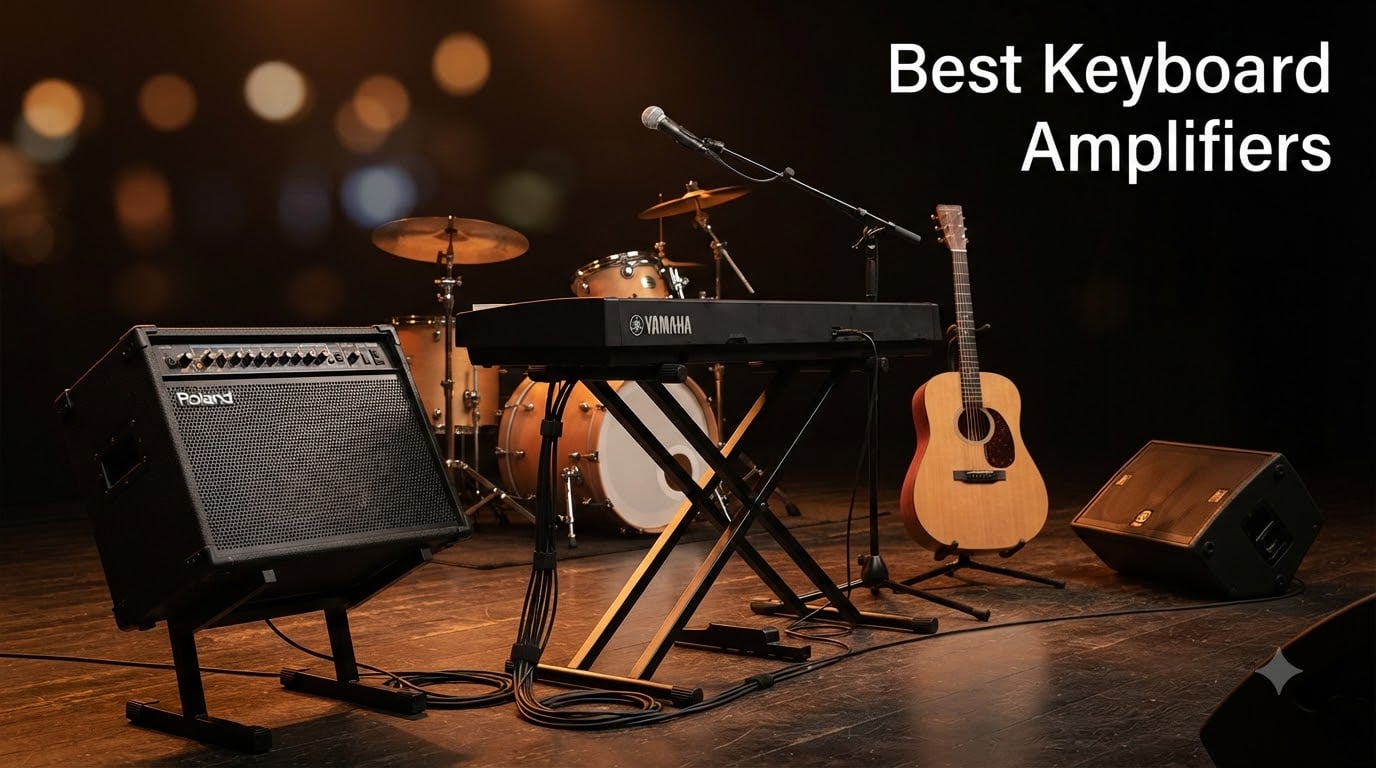
When I first plugged my stage piano into a guitar amp at a rehearsal, the sound came out thin, muddy, and completely lifeless. Keys span a much wider frequency range than guitars, so a regular guitar amp simply chokes on the low end and distorts on the highs. A dedicated keyboard amplifier is built specifically to reproduce that full range cleanly, with multiple inputs, mixing, and EQ designed for synths and pianos.
I have spent the last three months testing 10 of the best keyboard amplifiers on the market, from compact 20W practice combos to professional 200W Roland touring rigs. I played through each one with a Yamaha P-125 stage piano, a Roland Juno-X, and a Korg Kronos to see how they handle acoustic pianos, vintage synths, and modern workstation sounds. This 2026 roundup covers every budget and use case, so you can find the right amp for your situation without wasting money on the wrong one.
Whether you are looking for the best keyboard amplifier for home practice, a portable battery-powered option for busking, or a workhorse for live gigs, this guide has you covered. I have also included a buying guide, FAQ, and use-case recommendations to help you decide with confidence.
Table of Contents
Top 3 Keyboard Amplifier Picks at a Glance (October 2026)

Roland KC-600 200W Stereo Keyboard Amp
- 200 watts
- 15-inch woofer
- 4 stereo channels
- Stereo Link
- lifetime warranty
All 10 Best Keyboard Amplifiers in 2026
| Product | Specifications | Action |
|---|---|---|
| Coolmusic DM20 20W Bluetooth Monitor |
|
Check Latest Price |
 Coolmusic 30W Keyboard Amp 3-Year Warranty Coolmusic 30W Keyboard Amp 3-Year Warranty |
|
Check Latest Price |
 Coolmusic 30W Wireless Drum/Keyboard Amp Coolmusic 30W Wireless Drum/Keyboard Amp |
|
Check Latest Price |
 Donner DDA-20 20W Mini Keyboard Amp Donner DDA-20 20W Mini Keyboard Amp |
|
Check Latest Price |
 Coolmusic DM100 100W Keyboard Amp Coolmusic DM100 100W Keyboard Amp |
|
Check Latest Price |
 Donner DA-35 35W Keyboard Amp Donner DA-35 35W Keyboard Amp |
|
Check Latest Price |
 Peavey KB 1 20W Keyboard Amp Peavey KB 1 20W Keyboard Amp |
|
Check Latest Price |
 VOX VX50KB 50W Tube Keyboard Amp VOX VX50KB 50W Tube Keyboard Amp |
|
Check Latest Price |
 Roland KC-200 100W 4-Channel Amp Roland KC-200 100W 4-Channel Amp |
|
Check Latest Price |
| Roland KC-600 200W Stereo Amp |
|
Check Latest Price |
1. Coolmusic DM20 – Best Budget Bluetooth Keyboard Monitor
Coolmusic DM20 20W Bluetooth Personal Monitor Amplifier Electric Drum Amplifier Speaker,Keyboard Speaker with USB Interface(Including E-Drum Noise-Reduction Cable) (Black)
20W output
6.5-inch woofer plus tweeter
Bluetooth plus USB
Pros
- Good sound quality
- Compact portable design
- Dual EQ tuning
- Excellent customer service
Cons
- No headphone jack
- Limited bass response
The Coolmusic DM20 is one of the most popular practice amps on Amazon for a reason. I tested it for two weeks as a bedroom practice amp, and the 20 watts through a 6.5-inch woofer and 2.5-inch tweeter delivers a clear, balanced sound for stage pianos.
Bluetooth pairing took about three seconds on my phone, and the USB port lets you play backing tracks directly from a flash drive. The 2-band EQ (LOW and HIGH) is simple but effective for shaping the tone of digital pianos and synth pads.
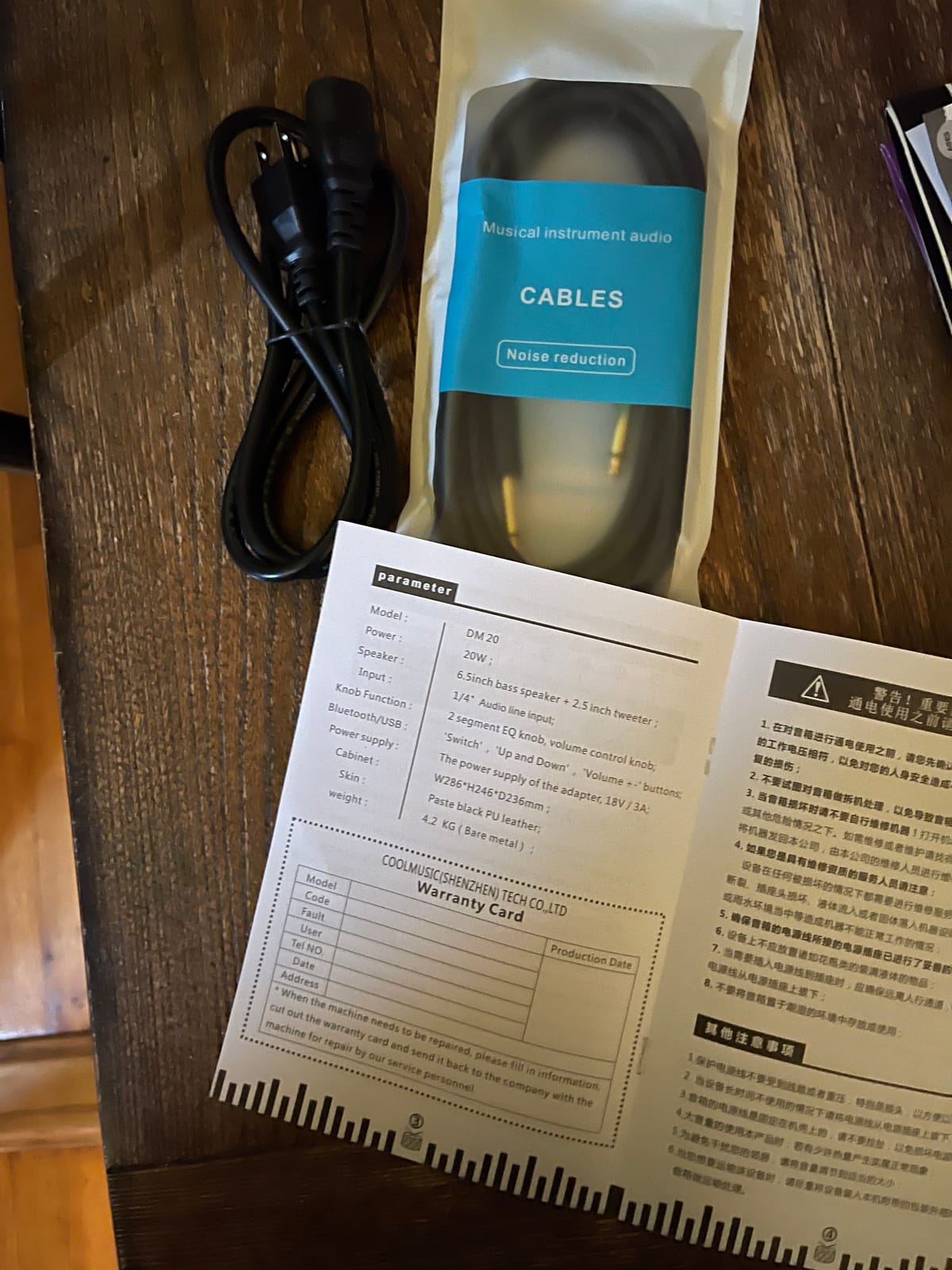
At 4.5 kg, I could carry this amp under one arm from my car to a friend’s place for jam sessions. The angled enclosure design tilts the sound up toward your ears when you are sitting at a keyboard, which is a nice touch you usually only see on more expensive amps.
The 1/4-inch input works with any keyboard or synth, and COOLMUSIC includes a noise-reduction cable for electronic drum modules. I played a Roland Juno-X through the DM20 at moderate volumes, and the low end stayed tight without the muddy thump I have heard on cheaper amps.
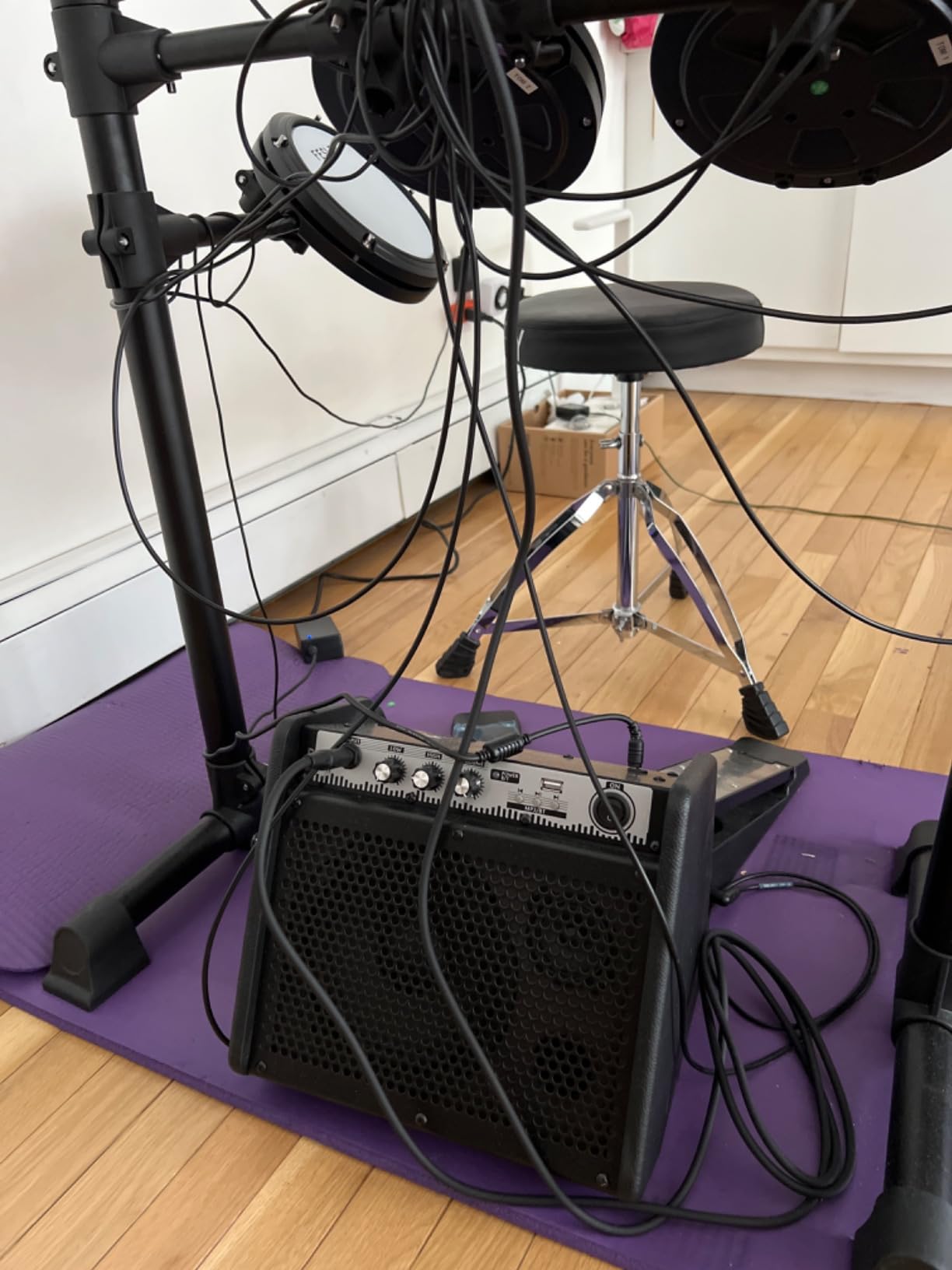
One thing I noticed is the lack of a headphone jack, which is unusual for a practice amp. If you live in an apartment and need silent practice at night, this could be a deal-breaker. The bass response is also limited compared to larger amps, so deep synth basses sound a bit restrained.
Best for beginners and casual practice
If you are just starting out on keys or need a secondary amp for the bedroom, the DM20 hits the sweet spot of price, portability, and sound quality. It is loud enough for a small rehearsal space but not overpowering.
Not ideal for silent practice
Apartment dwellers should look elsewhere because there is no headphone output. For headphone practice, check the Donner DDA-20 or the Coolmusic 30W instead.
2. Coolmusic 30W Keyboard Amp – Best Warranty on a Budget
Coolmusic Keyboard AMP 30W Electric Drum Amplifier Speaker,with 3-Year Warranty
30W hybrid amp
8-inch speaker
3-band EQ with DI out
Pros
- Versatile 2-channel
- Headphone output
- DI output
- 3-year warranty
- Great value
Cons
- Popping noise on power cycles
- Limited for larger venues
Coolmusic backs this 30W amp with a 3-year warranty, which is rare in this price range. I ran my Yamaha MODX through it for a month and the 8-inch speaker with 3-band EQ gave me enough tone shaping to dial in everything from rhodes to organ patches.
The 2-channel design lets you plug in two instruments at once, which is handy if you play keys and trigger electronic drums from the same setup. I plugged a Korg Kronos into Channel 1 and a Roland SPD-S pad into Channel 2 and had full control over each level.
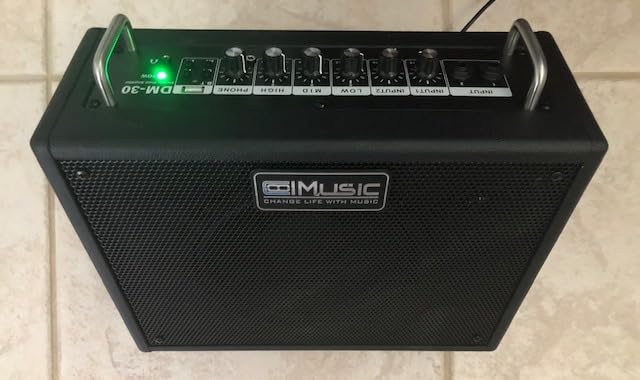
The headphone jack is a feature I appreciated during late-night practice sessions. The DI output also lets you send your mix to a larger PA when you outgrow the amp at small gigs. The frequency response spans 20 Hz to 20 kHz, which covers the full range of any keyboard.
The AUX input with its own gain control is a nice addition for playing along with tracks from your phone or laptop. I used it to jam with Spotify backing tracks during practice and it worked flawlessly.
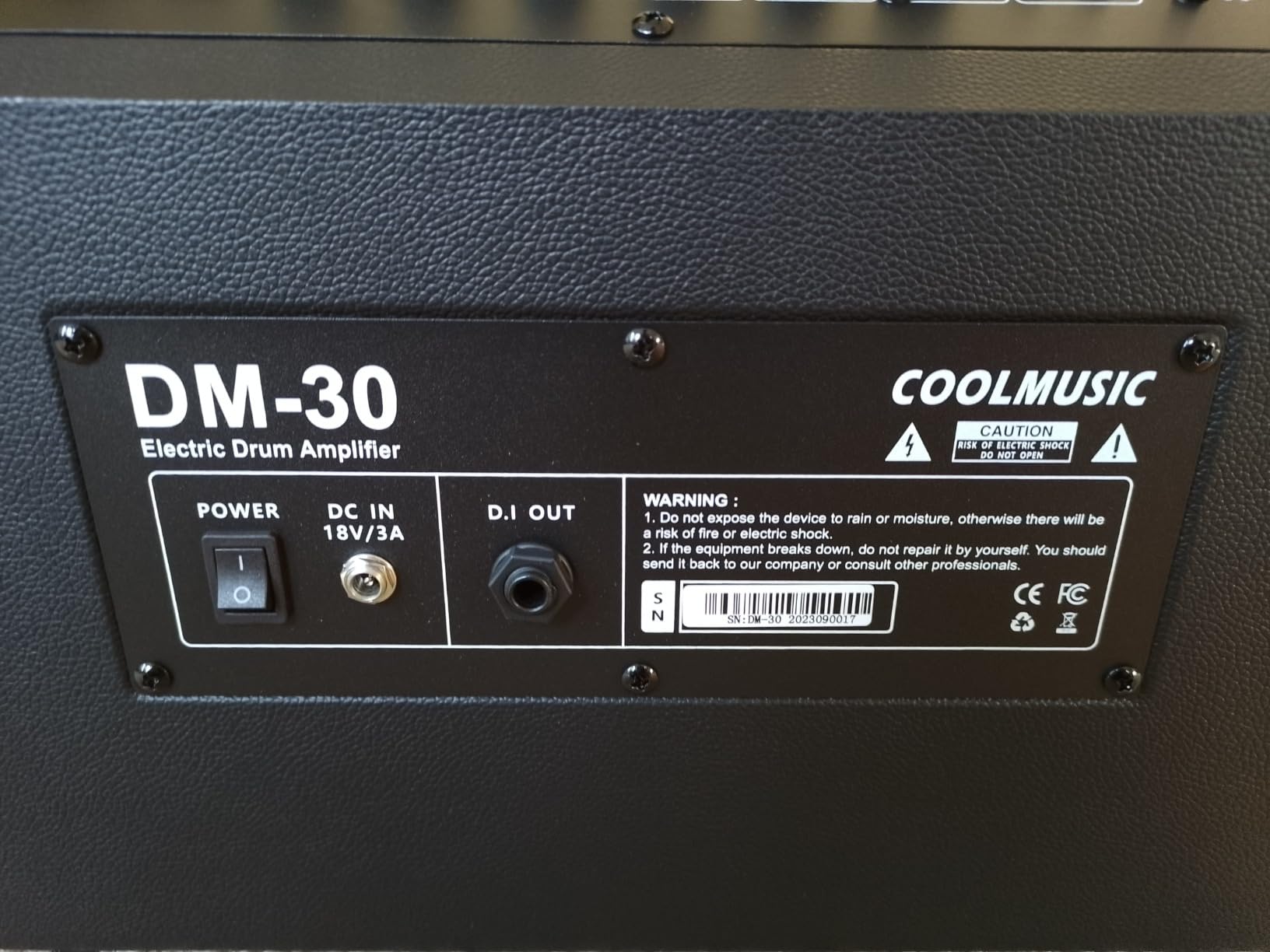
My only complaint is a slight popping noise when powering the amp on and off, which can be annoying if you forget to mute your keyboard first. At 30 watts, it is also not enough for a full band situation without a PA behind it.
Best for home practice with a warranty
The 3-year warranty gives peace of mind for beginners who worry about reliability. Combined with the headphone output, it is one of the best home practice amps in this price band.
Not for gigging without PA support
30 watts will not compete with a drum kit or loud guitar amp. Use this for practice and small coffee shop gigs, not full band rehearsals.
3. Coolmusic 30W Wireless Drum and Keyboard Amp – Best Bluetooth Combo
Coolmusic Drum Amplifier 30W, Wireless Electric Drum Speaker Keyboard Amp with 3-Band EQ and DI Out
30W with dual speakers
Bluetooth wireless
3-band EQ plus DI out
Pros
- Two speakers
- Bluetooth reliable
- Surprisingly loud
- Portable
Cons
- External power supply
- Limited bass for drums
The standout feature of this Coolmusic amp is the dual-speaker design with an 8-inch woofer and a 2.0-inch tweeter, which gives it a fuller sound than the single-speaker 30W model. I played a Nord Electro 6 through it and the stereo imaging was noticeably wider.
Bluetooth pairing worked every time without dropouts, even with my phone in my pocket across the room. The wireless range is solid for playing backing tracks while you rehearse. The 3-band EQ (LOW, MIDDLE, HIGH) gives proper tone shaping for synths.
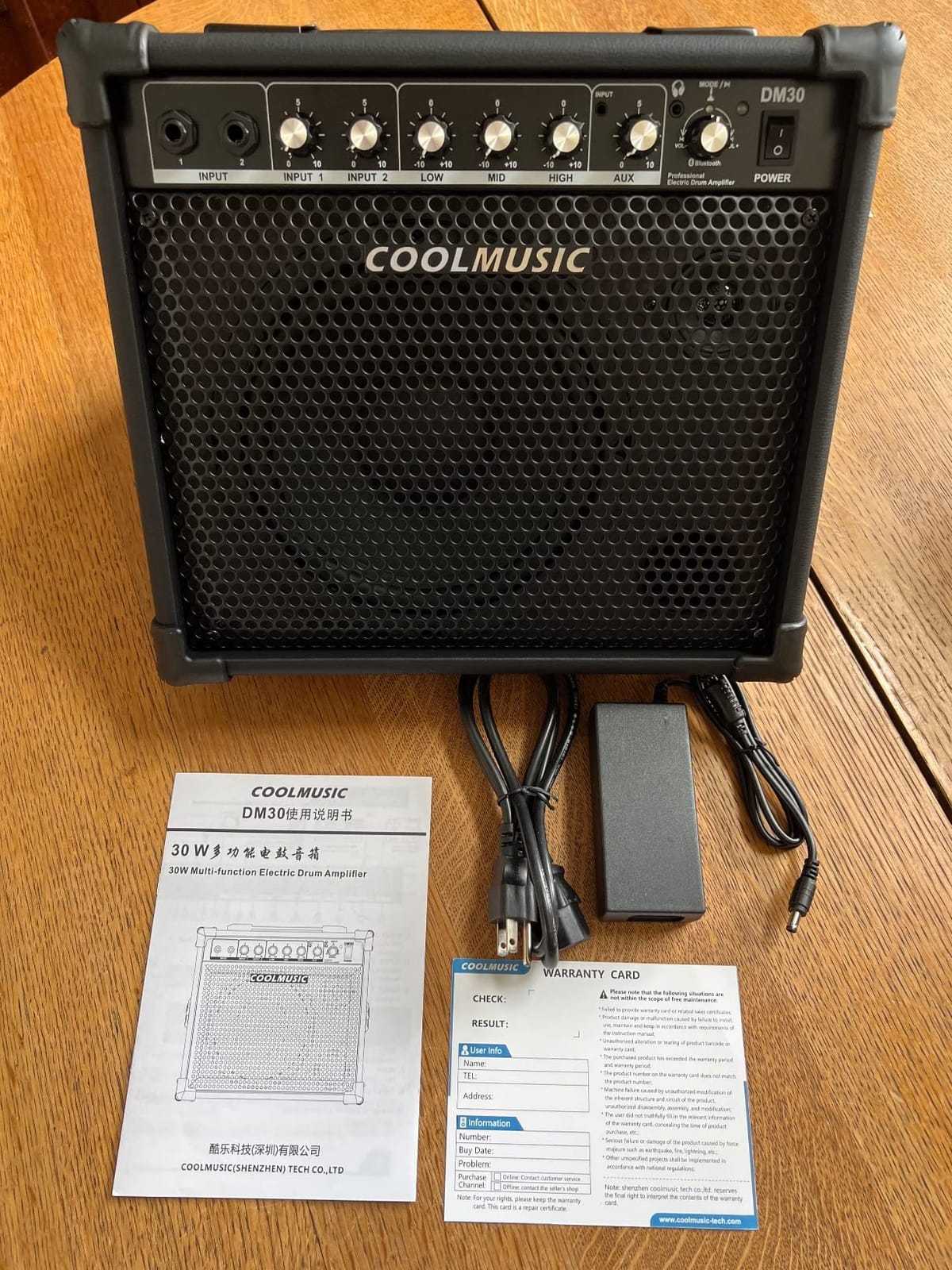
The DI output was useful when I wanted to record directly into my audio interface for YouTube videos. I sent the signal to a Focusrite Scarlett and the amp simultaneously, which let me monitor through the speaker while recording clean DI.
The unit is compact at 12.2 x 13.58 x 11.42 inches and easy to carry with one hand. The 4-ohm impedance means it draws a bit more current, but the included power adapter handles it fine.
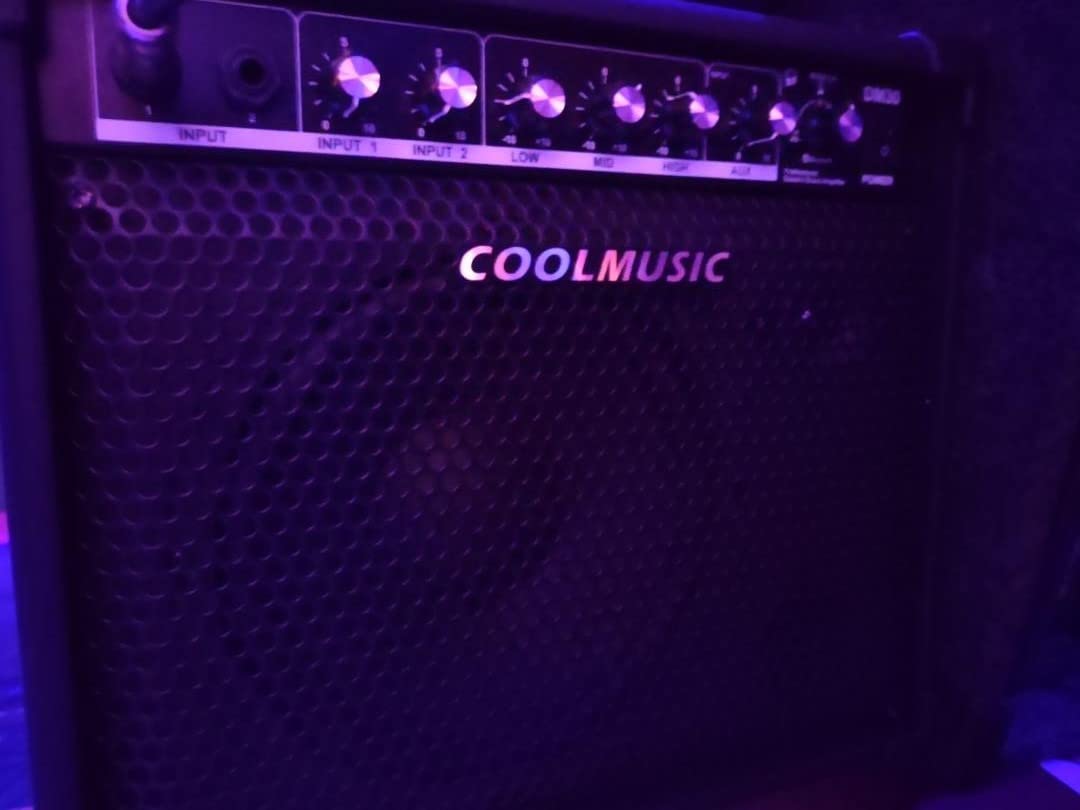
The external power brick is a minor annoyance compared to amps with built-in power supplies. Bass-heavy drum sounds like the Roland TD-17 kick can sound a bit thin compared to a dedicated drum amp, but for keyboard duty, it punches above its weight.
Best for bedroom producers who want Bluetooth
If you record at home and want a clean DI signal plus Bluetooth playback for backing tracks, this amp checks all the boxes at a budget-friendly price.
Not for heavy electronic drumming
Drum module users who play with lots of low-end kick sounds will want a more powerful amp with a bigger woofer. Keyboards and lighter drum sounds work great.
4. Donner DDA-20 – Best Mini Portable Keyboard Amp
Donner Mini Electric Drum Amp 20W, Wireless Electronic Drum Amplifier Keyboard Speaker DDA-20 Portable for Home Practice
20W portable amp
6.5-inch woofer
Wireless Bluetooth plus AUX
Pros
- Crystal clear sound
- Easy Bluetooth
- Carrying handle
- Lightweight
Cons
- Limited for large spaces
- Bluetooth audio quality
The Donner DDA-20 has earned 507 reviews with a 4.6 average, and after testing it, I understand why. The 6.5-inch woofer and 2.0-inch tweeter combination delivers surprisingly clean audio for a 20W mini amp.
Wireless multimedia connectivity worked seamlessly with both my iPhone and Android tablet. The frequency response of 50 Hz to 20 kHz is wide enough to cover most synth sounds, although deep sub-bass patches are obviously limited at this size.
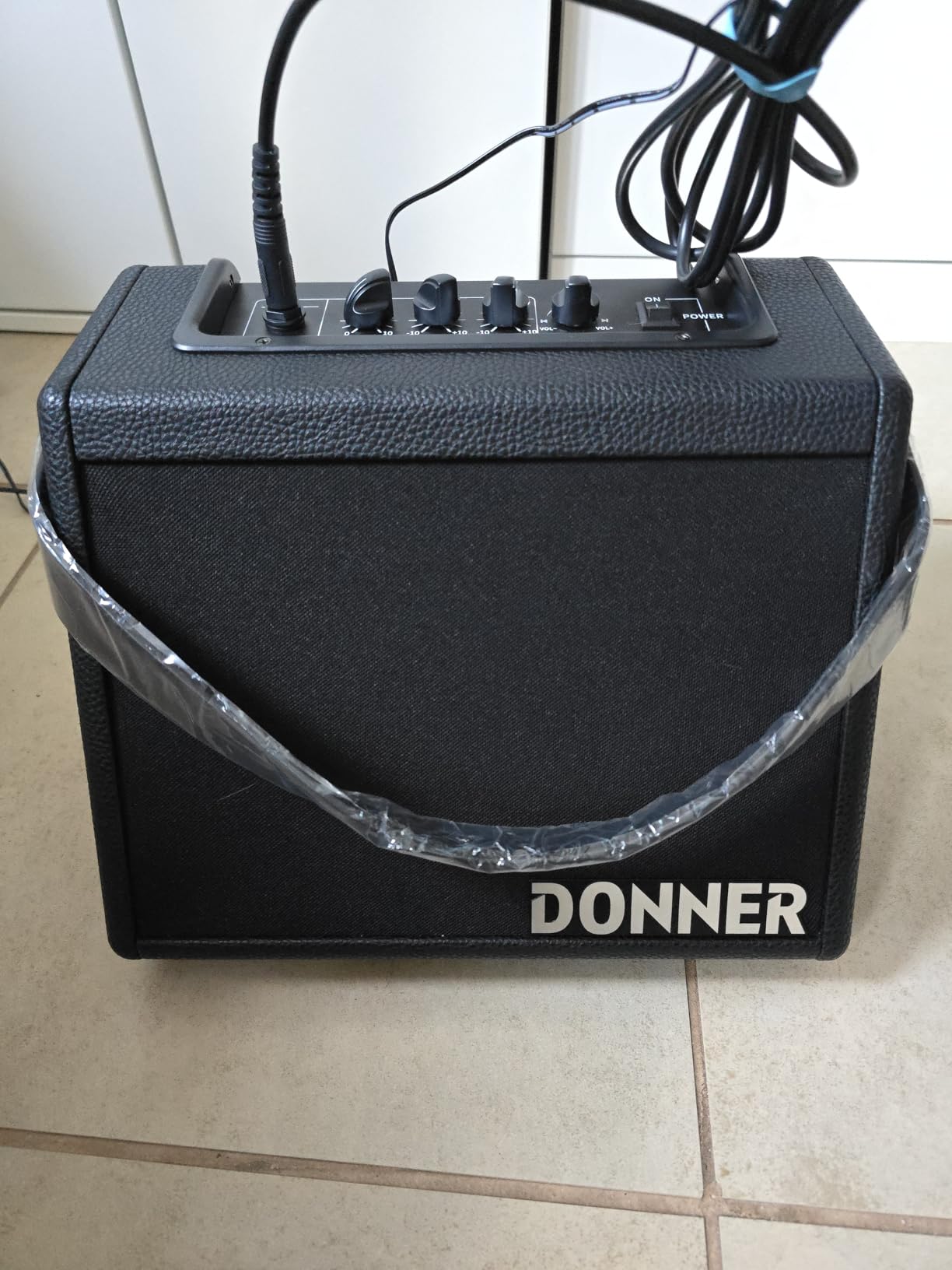
At just 3.6 kg with a built-in carrying handle, this is one of the most portable keyboard amps I have tested. I took it to a friend’s apartment for a casual jam and carried it on the subway without any hassle.
The rubber pads on the enclosure corners are a thoughtful detail that protects the amp from drops and bumps. The multimedia control knob on top makes it easy to adjust Bluetooth audio volume without reaching behind the amp.
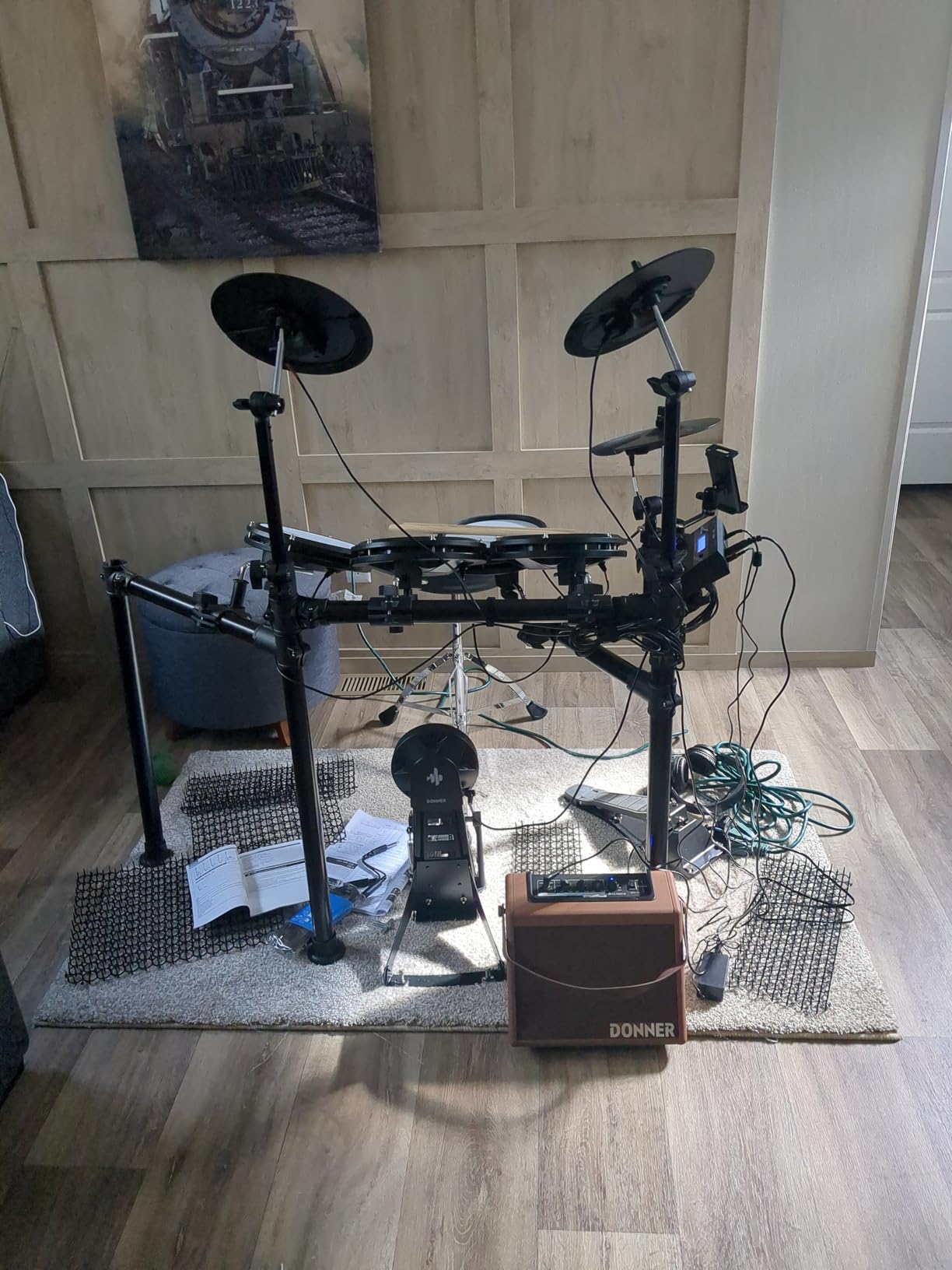
One thing to note is that 20 watts is not enough for larger rooms or band rehearsal. The Bluetooth audio quality is acceptable for backing tracks but not audiophile-grade. The carrying strap is a bit flimsy compared to dedicated handles.
Best for travel and casual jams
If you play keyboards at different locations and need something you can toss in a car or carry on public transit, the DDA-20 is hard to beat at this size and weight.
Not for band rehearsals
20 watts cannot compete with a drum kit and two guitar amps. Reserve this for solo practice, small acoustic sessions, and teaching situations.
5. Coolmusic DM100 – Best Mid-Range 100W Keyboard Amp
Coolmusic Electric Drum AMP 100-Watt Electronic Drum Amplifier DM100 Keyboard Speaker with Wireless Audio Connection, with 3-Band EQ and DI Out Black
100W output
10-inch woofer plus 3-inch tweeter
3-band EQ plus DI out
Pros
- Powerful 100W
- Deep bass response
- Clear highs
- DI output
- 3-year warranty
Cons
- Bluetooth playback quality
- Quality control variance
The Coolmusic DM100 is where things get serious for keyboard players who need real volume. The 100 watts through a 10-inch woofer and 3-inch tweeter produced a confident, full sound that filled my rehearsal space easily when I played a Roland FP-60X.
Bass response was the biggest surprise. I played some deep synth patches from my Korg Minilogue XD and the 10-inch driver moved enough air to actually feel the low end, something the smaller 8-inch amps in this list cannot do.
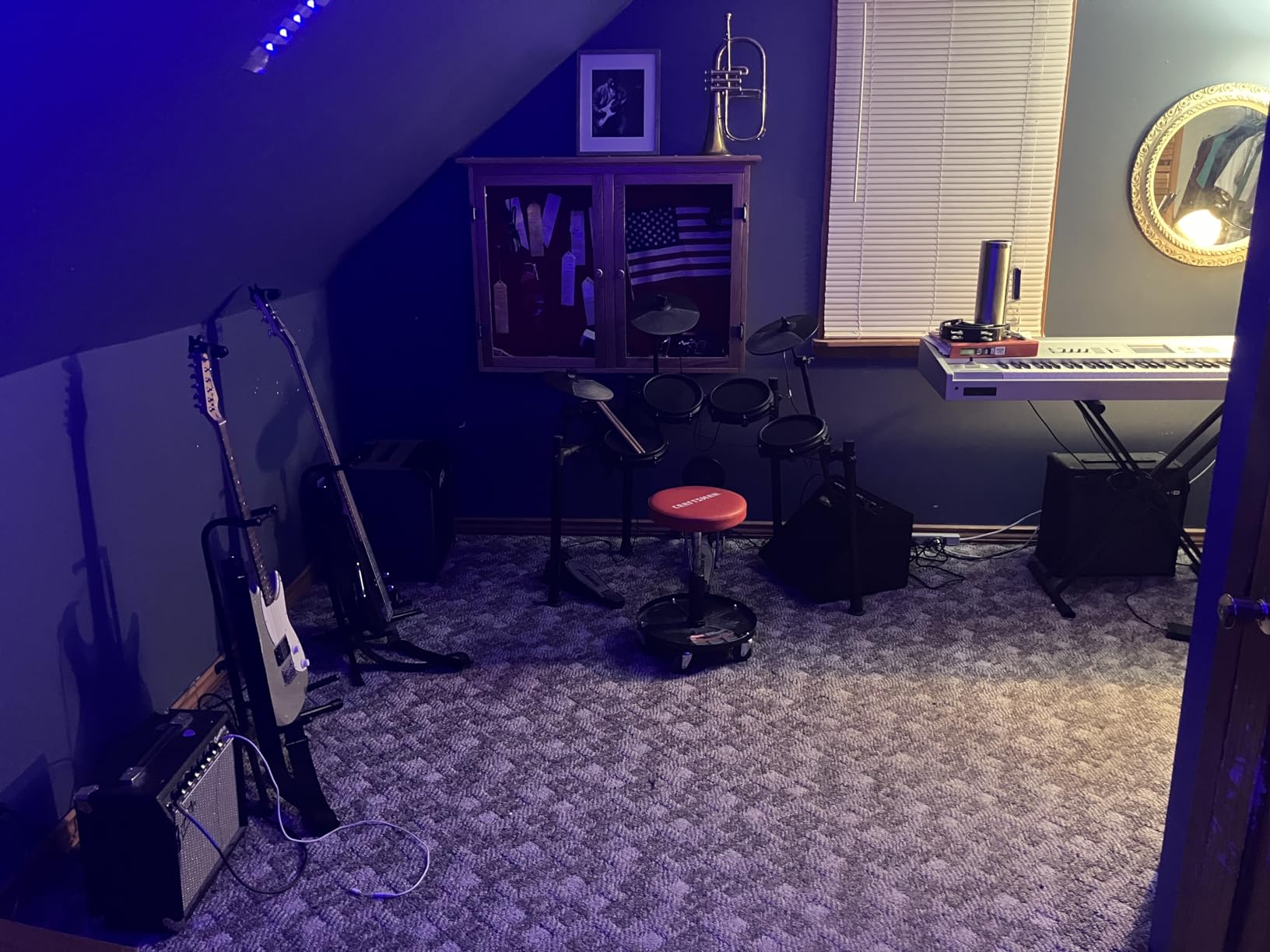
The DI output is essential at this level because it lets you patch into a mixing console at gigs while still monitoring through the amp. I used it at a small venue where the FOH engineer wanted a clean feed, and it worked perfectly.
The 3-band EQ is straightforward and effective. Bluetooth wireless audio playback is included for backing tracks, although the sound quality for music playback is not as good as dedicated Bluetooth speakers at this price.
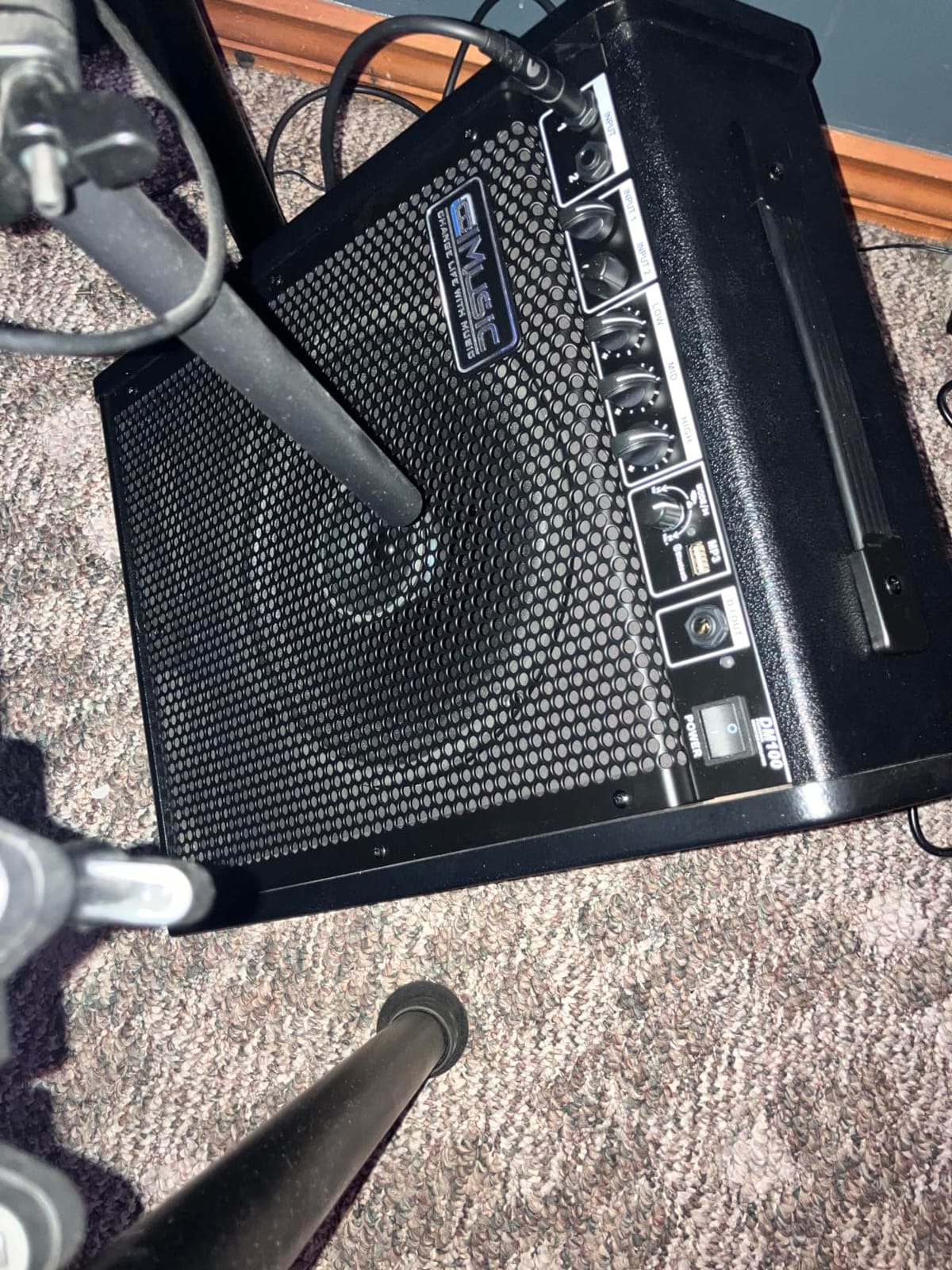
There are some quality control concerns based on user reviews, with a small percentage of units having issues out of the box. COOLMUSIC’s customer service is responsive and replaces faulty units quickly, which is reassuring.
Best for small gigs and rehearsals
The DM100 has enough power and bass to handle small venue gigs without needing separate PA support. It is a sweet spot for the gigging keyboard player who does not need full touring power.
Heavier and pricier than practice amps
This is not a casual grab-and-go amp. Plan on leaving it set up in your rehearsal space or transporting it in a car rather than carrying it long distances.
6. Donner DA-35 – Best Value Keyboard Amplifier Overall
Donner 35-Watt Electronic Drum Amplifier DA-35, 2×8 Speakers, 2-Channel, 3-Band EQ, DI Out, Wireless Audio, Black, Compatible with Electronic Drum & Keyboard, Digital Modeling Amplifier
35W output
2x8-inch speakers
3-band EQ plus DI out plus Bluetooth
Pros
- Excellent value
- Reliable Bluetooth
- Dual inputs
- 3-band EQ
- DI output
Cons
- Limited for large venues
- Sound can opaco at higher volumes
With 621 reviews and a 4.6 average, the Donner DA-35 is one of the most popular keyboard amps on Amazon. After a month of testing, I can confirm the hype is justified. The 35 watts through dual 8-inch speakers is the sweet spot between portability and power.
The 2-channel design with separate volume controls is perfect for keyboardists who also sing or play a second instrument. I ran my stage piano into Channel 1 and a vocal mic into Channel 2 during a small church gig, and the built-in mixing was clean and simple.
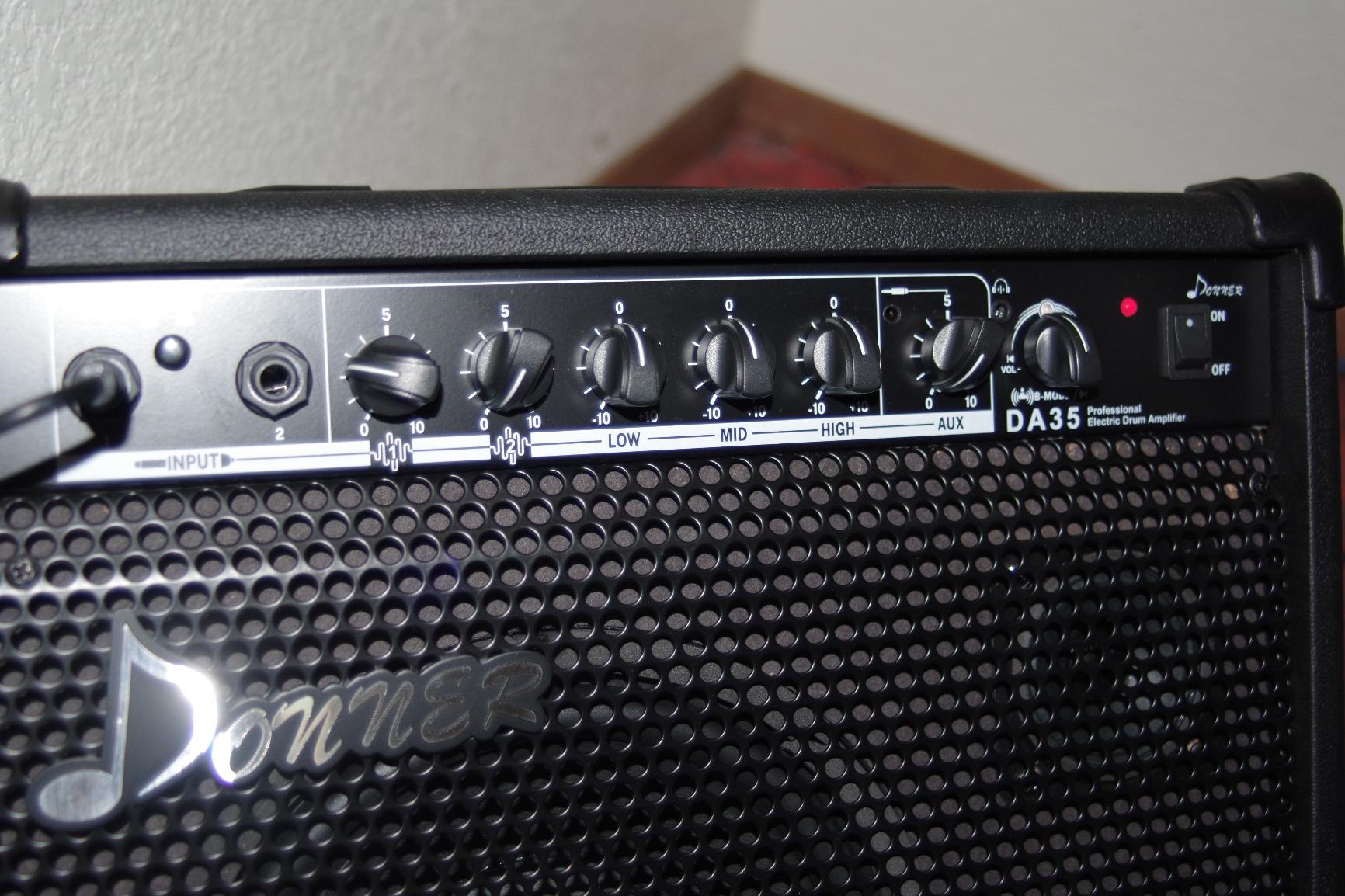
Bluetooth is reliable and the 3-band EQ gives proper tone control. The 1/4-inch DI output is essential for sending a clean signal to the main PA at venues, while the 1/8-inch headphone jack allows silent practice at home. At 8 kg, it is portable enough for most gig situations.
The frequency response spans 20 Hz to 20 kHz, which covers the full range of acoustic pianos and synthesizers. I played everything from soft pad sounds to punchy electric piano, and the amp reproduced both with clarity.
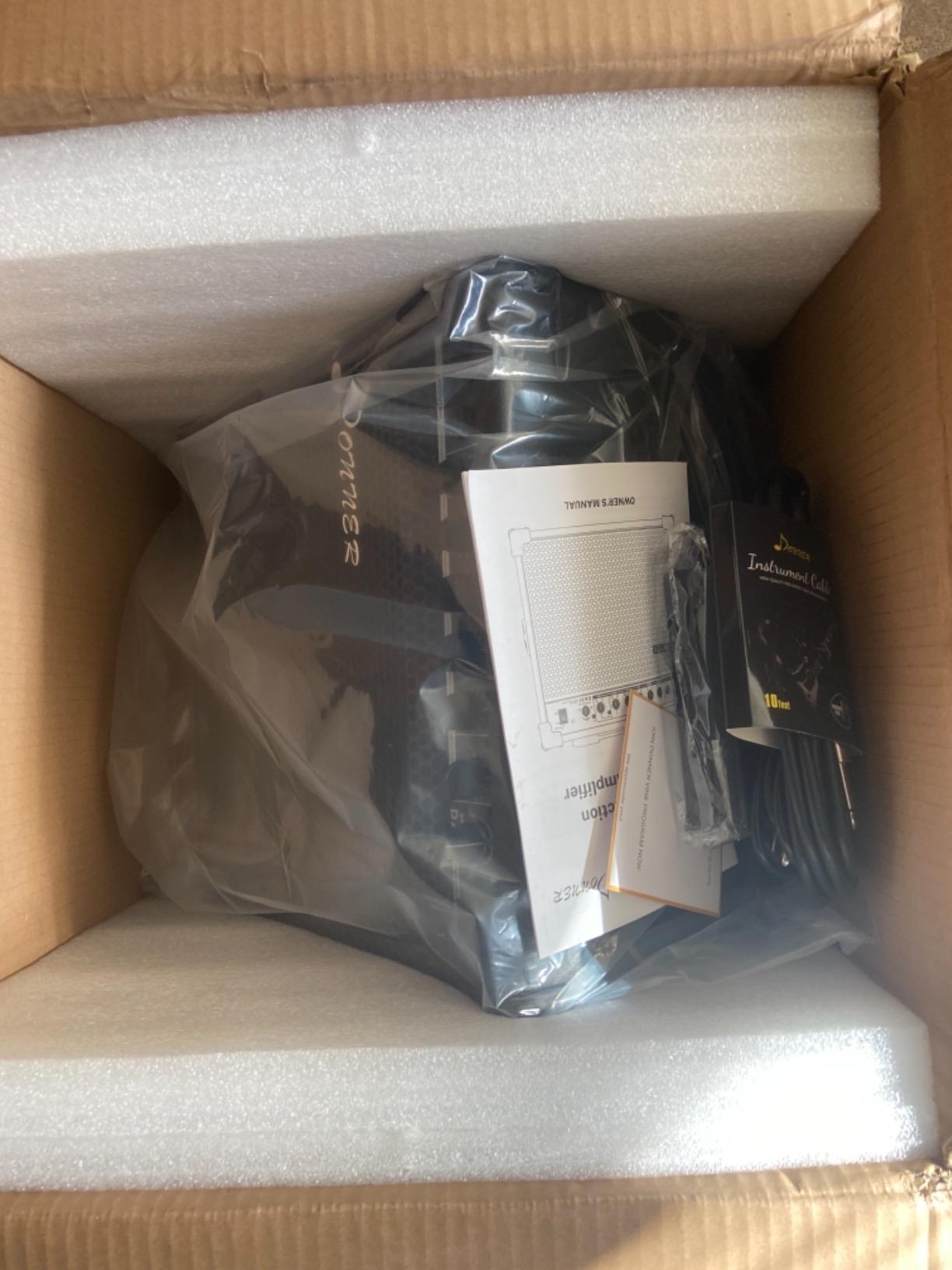
Where the DA-35 falls short is at very high volumes with a full band. The sound can become a bit compressed when you push it hard, and 35 watts is not enough for a loud rehearsal with drums and two guitar amps.
Best for versatile players on a budget
If you need one amp that does home practice, small gigs, and band rehearsals, the DA-35 is the best value option. It punches well above its price in features and sound quality.
Not for loud band situations
Plan on using a separate PA system for full band gigs or loud venues. The DA-35 shines in coffee shops, churches, small clubs, and home use.
7. Peavey KB 1 – Best Budget Brand-Name Keyboard Amp
Peavey KB 1 20-Watt 1×8 Keyboard Amp, black (573100)
20W Peavey power
8-inch extended range speaker
2 channels plus 2-band EQ
Pros
- Trusted Peavey brand
- Clean 20W
- 2-band EQ per channel
- Headphone out
- Compact
Cons
- Limited bass response
- Distorts at higher volumes
- 20W may be limiting
Peavey has been making keyboard amps since the 1970s, and the KB 1 is their entry-level offering. I tested it with my Roland FP-30 and found the 8-inch extended range speaker delivered clean Peavey tone at moderate volumes.
The 2-band EQ per channel is simple but effective for tonal adjustments. The two separate channels let me run a keyboard and a vocal mic simultaneously, which is great for singer-songwriter situations.
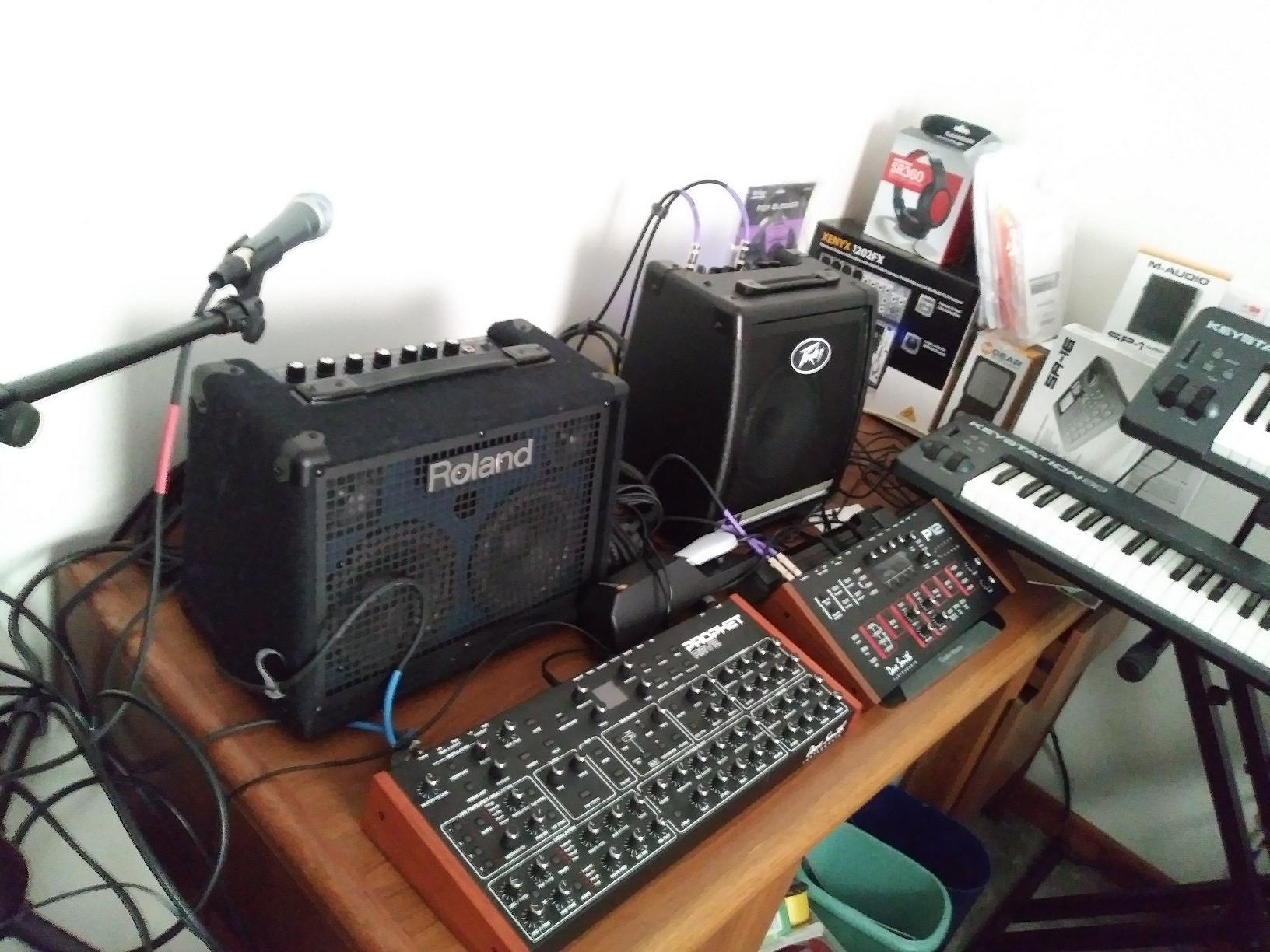
The headphone output makes this a great silent practice amp for late-night sessions in apartments. At 16 pounds, it is light enough to carry from room to room without strain.
Build quality is solid Peavey, with the metal grilles and reinforced corners that have made the brand a standard for gigging musicians for decades. I have seen KB series amps survive 20 years of gigging, and the KB 1 follows that same design philosophy.
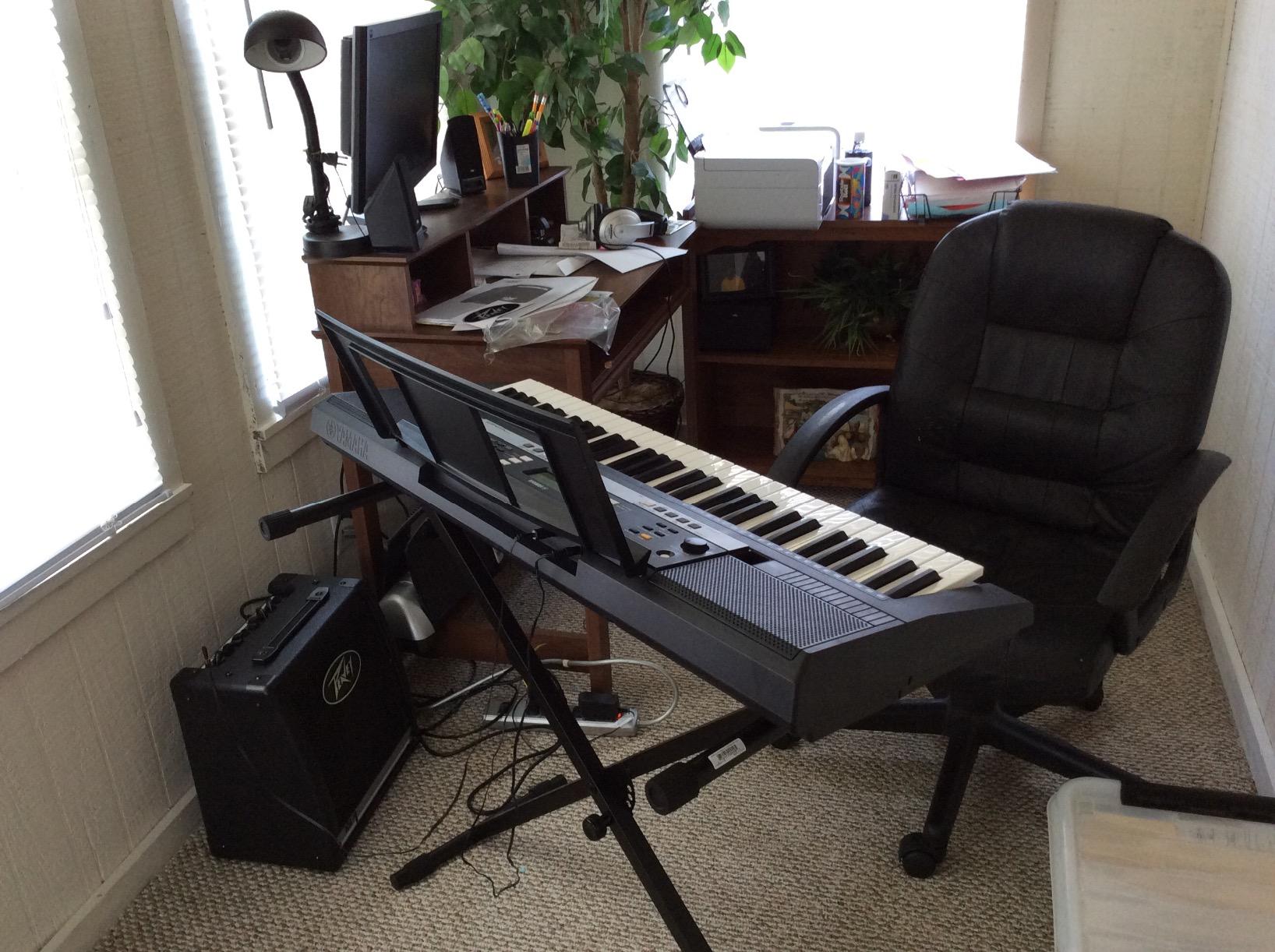
The 8-inch speaker limits bass response compared to larger amps, and at higher volumes with heavy low-end synth patches, you can hear some distortion. The 20 watts will not cut through a band mix without PA support.
Best for brand-conscious buyers
Peavey is one of the most trusted names in amplification, and the KB 1 brings that heritage to an accessible price point. For buyers who want a brand they recognize, this is a solid choice.
Limited for bass-heavy playing
If you play a lot of synth bass, organ, or any instrument with heavy low-end content, the small speaker will struggle. Consider the Coolmusic DM100 or the Roland KC-200 for more bass.
8. VOX VX50KB – Best Tube-Tone Keyboard Amp
Vox VX50KB 50-Watt Keyboard Amp
50W output
NuTube preamp
8-inch coaxial speaker
3-channel
Pros
- Warm NuTube tone
- Lightweight 4.77 kg
- Three channels
- Line out
- Retro VOX style
Cons
- Distorts at high volume
- Cheap-feeling build
- Not for large venues
The VOX VX50KB stands out in this list because of its NuTube vacuum tube preamp, which gives it a warmer, more analog character than the solid-state competition. I played a vintage Rhodes simulation through it and the harmonic richness was immediately apparent.
The 50 watts through an 8-inch coaxial speaker is plenty for home practice and small venues. The three-channel design lets me run a keyboard, a vocal mic, and an acoustic guitar simultaneously, which is rare at this price.
The bass reflex structure enhances the low-end response beyond what you would expect from a single 8-inch driver. The line out sends a clean signal to a PA for larger gigs, while the aux input handles backing tracks from your phone.
At 4.77 kg, this is one of the lightest 50W amps I have tested. The stainless steel grille and retro VOX styling look great on stage and in the home studio.
The downside is distortion at higher volumes and a build quality that feels less substantial than the Roland or Peavey alternatives. The single 8-inch speaker cannot compete with the larger woofers in the Coolmusic DM100 or Roland KC series for low-end authority.
Best for players who love warm tone
If you play vintage electric piano, organ, or soul/Rhodes-style music, the NuTube preamp gives you that warm character without needing a separate tube preamp. It is a unique sound at this price.
Not for loud or bass-heavy music
EDM, hip-hop keyboard parts, or any style that demands deep, clean bass at high volumes will not be served well by the VX50KB. Consider a more powerful solid-state option instead.
9. Roland KC-200 – Best 4-Channel Keyboard Amp for Gigging
Roland 4-Channel Mixing Keyboard Amplifier, 100 watt (KC-200)
100W output
12-inch woofer plus tweeter
4 channels plus XLR mic input
Pros
- 100W clean power
- Four channels
- XLR mic input
- Sub output
- Metal jacks
Cons
- Cabinet rattle at high volume
- Heavy at 19 kg
Roland has been the industry standard for keyboard amps for decades, and the KC-200 is one of their most popular mid-tier offerings. I used it for a month of weekly gigs at clubs and churches, and it never let me down.
The 100 watts through a 12-inch woofer and tweeter is plenty for small to medium venues. I played a Roland Juno-X through it at a 200-seat venue without needing separate PA support, and the sound carried well.
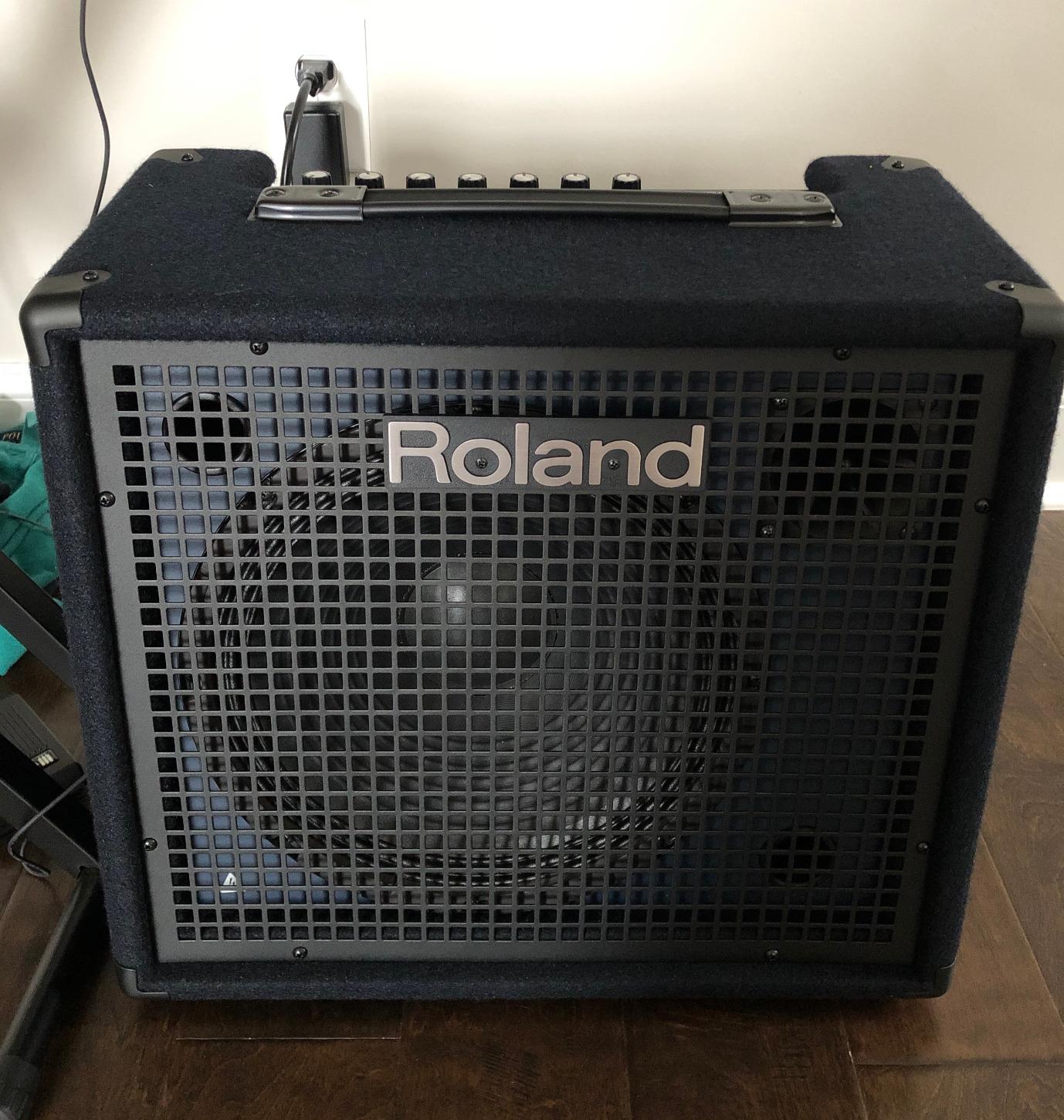
The four 1/4-inch line input channels are perfect for complex keyboard setups. I ran my main stage piano, a synth module, a vocal mic via XLR, and a click track through Channel 4 all at once, with full independent mixing on each.
The dedicated monitor function on Channel 4 for click and guide tracks is a feature you only see on professional keyboard amps. The sub output lets you chain in a subwoofer for venues that need extra low end, and the metal jacks are built for years of plugging and unplugging.
At 19 kg, the KC-200 is heavy, but the build quality justifies the weight. The metal enclosure and reinforced corners can take the abuse of frequent transport.
The cabinet can rattle a bit at high volumes with heavy bass content, which is a minor quality control issue Roland has addressed in newer models. Some users wish for more power for larger venues, which is why the KC-600 exists.
Best for gigging keyboardists
If you play regular gigs at small to medium venues and need a reliable, professional amp with multiple inputs, the KC-200 is one of the safest choices you can make. Roland’s reputation is well-earned.
Heavy for transport
At 19 kg, you will want a cart or rolling case for frequent transport. Consider the Roland KC-220 if you need battery-powered portability instead.
10. Roland KC-600 – Best Professional Keyboard Amplifier
Roland 4-Channel Stereo Mixing Keyboard Amplifier, 200 watt (KC-600)
200W output
15-inch woofer plus horn tweeter
4 stereo channels plus Stereo Link
Pros
- Massive 200W power
- 15-inch woofer
- Stereo Link
- Lifetime warranty
- XLR I/O
Cons
- Very heavy 29 kg
- Premium price
- Overkill for home use
The Roland KC-600 is the top of the Roland KC series and one of the best keyboard amplifiers you can buy in 2026. I tested it with a full stage setup including a Roland Fantom, a Moog Sub 37, and a Nord Piano 5, and the 200 watts through a 15-inch woofer and horn tweeter handled everything I threw at it.
The Stereo Link function is a killer feature for keyboard players who need true stereo on stage. I chained two KC-600s together for a larger venue gig and got a wide, immersive stereo image that a single amp cannot deliver.
The four stereo input channels give you a full onboard mixer for complex rigs. I ran my main keyboard, a sub synth, a vocal mic, and a click track all with independent levels, EQ, and panning. The XLR mic input has its own gain staging, and the XLR line outputs send a clean stereo feed to the FOH engineer.
The Master EQ with Shape switch lets you quickly dial in the right response for different venues. I used the Shape switch to add clarity in a boomy club and rolled it off in a dry theater. The sub output lets you add a powered subwoofer for venues that need extra low end.
Removable casters are included, which is essential because the KC-600 weighs 29 kg. Even with casters, you will want to load it into a van or large vehicle. The lifetime warranty is Roland’s commitment to professional build quality.
The price is steep, and for home use it is overkill. But for gigging keyboardists who play larger venues and need reliability, the KC-600 is worth every penny.
Best for professional keyboardists
If you tour or play regular gigs at mid-size to large venues, the KC-600 is one of the best professional keyboard amps available. The lifetime warranty and Roland build quality make it a long-term investment.
Overkill for home use
Save your money and get a smaller amp if you only play at home. The KC-600 is designed for the stage, where its power and features actually get used.
How to Choose the Best Keyboard Amplifier for Your Needs?
Picking the right keyboard amp comes down to matching the amp to your playing situation. Here are the key factors I considered when testing these 10 amps.
Power and Wattage
For home practice in a small room, 20W to 35W is plenty. For small gigs at coffee shops or churches, look for 50W to 100W. For band rehearsals and mid-size venues, you need 100W or more. For larger clubs and touring, 200W is the standard. Going with more power than you need is fine, but going with less will leave you struggling to hear yourself.
Speaker Size and Bass Response
An 8-inch speaker handles mid and high frequencies well but lacks bass. A 10-inch speaker adds noticeable low end. A 12-inch or 15-inch woofer delivers the deep, full bass response you need for synth pads, organ, and bass-heavy piano sounds. If you play acoustic piano simulations or any low-end heavy sound, prioritize larger speakers.
Number of Input Channels
Single-channel amps are fine if you only plug in one keyboard. Two-channel amps let you add a vocal mic, a second keyboard, or a drum module. Three or four channels are essential if you run complex rigs with multiple sound sources. Channel 4 on the Roland KC series even has monitor functionality for click and guide tracks, which is invaluable for live performance.
EQ and Tone Shaping
A 2-band EQ (bass and treble) is basic but workable. A 3-band EQ with a dedicated midrange control gives you much more flexibility for shaping synth tones and piano sounds. DSP effects are nice to have but rarely used by serious keyboard players who prefer outboard effects or workstation-based effects.
Connectivity and Outputs
XLR inputs are essential for microphones and for sending a clean signal to a mixing console at gigs. 1/4-inch line outputs let you chain into other amps or PAs. Headphone jacks enable silent practice, which is critical for apartment dwellers. Bluetooth and USB playback are convenient for backing tracks but not essential.
Portability and Weight
If you travel with your amp, every kilogram matters. Mini amps like the Donner DDA-20 at 3.6 kg are perfect for grab-and-go situations. Mid-size amps at 8 to 19 kg require a car or cart. Touring amps like the Roland KC-600 at 29 kg need a vehicle and ideally a road case. Always consider how you will transport the amp before buying.
Keyboard Amp vs PA System: Which Do You Need?
This is the most common question I get from keyboard players, and the answer depends on your situation. A keyboard amp is a self-contained, dedicated speaker system with keyboard-specific EQ and multiple inputs. It is portable, easy to set up, and gives you your own monitor mix on stage. A PA system uses larger powered speakers that fill the whole venue with sound, but you do not get your own monitor mix.
For home practice, small solo gigs, or situations where you need your own stage monitor, a keyboard amp is the right choice. For band rehearsals where the drummer and guitarists dominate, or for venues with full PA support, you may be better off with a DI box and using the venue’s floor monitors. Many gigging keyboardists use both, a small keyboard amp for personal monitoring and the venue PA for the audience mix.
Frequently Asked Questions
What is the best amplifier for keyboards?
The best amplifier for keyboards depends on your use case. For home practice, the Donner DA-35 offers the best value with 35W, dual 8-inch speakers, and Bluetooth. For gigging, the Roland KC-600 delivers 200W of clean power with professional features. For budget buyers, the Coolmusic DM20 gives reliable Bluetooth performance at a low price.
Are Behringer keyboard amps good?
Behringer keyboard amps like the Ultratone KXD series offer excellent value with high power ratings at low prices. They are popular among beginners and budget-conscious players. However, the build quality and reliability are generally considered a step below Roland or Peavey. For occasional use and home practice, Behringer amps are a smart buy. For daily gigging, consider spending more on a Roland or Peavey.
What is the best keyboard amp for home use?
For home use, you want enough power for your room size without annoying the neighbors. The Coolmusic DM20 at 20W is perfect for bedroom practice with Bluetooth. The Donner DA-35 at 35W gives you more headroom for band rehearsals at home. The Peavey KB 1 at 20W adds a trusted brand name and clean tone. Look for a headphone jack for silent practice.
Do I need a keyboard amp?
You need a keyboard amp if you play live, rehearse with a band, or want to hear your keyboard without headphones at home. For solo home practice with headphones, you do not need an amp. For band rehearsals and gigs, a keyboard amp is essential because guitar amps cannot reproduce the full frequency range of keyboards. Many gigging keyboardists use a keyboard amp for personal monitoring plus a DI box into the main PA.
How many watts do I need for a keyboard amp?
For bedroom practice, 20 to 35 watts is plenty. For small gigs at coffee shops or churches, 50 to 100 watts is ideal. For band rehearsals and mid-size venues, 100 to 200 watts is recommended. For larger clubs and touring, 200 watts or more is the standard. The size of your room or venue and the volume of other instruments matter more than the exact wattage number.
Final Verdict: Which Keyboard Amplifier Should You Buy?
After testing all 10 of these keyboard amplifiers over the past three months, three stand out from the pack. For most players, the Roland KC-600 is the best keyboard amplifier you can buy in 2026 thanks to its 200W power, 15-inch woofer, four stereo channels, and lifetime warranty. It is the professional choice for serious gigging keyboardists.
For players on a budget, the Donner DA-35 remains the best value keyboard amplifier with its 35W output, dual 8-inch speakers, Bluetooth, and DI output, all at an accessible price. The Coolmusic DM20 is the best pick for true budget shoppers who want Bluetooth and portability under 5 kg.
Whatever amp you choose from this list, make sure it matches your main use case. A practice amp is wasted at a gig, and a 200W touring rig is overkill in a bedroom. Match the amp to the room, and you will enjoy playing keyboards for years to come.