
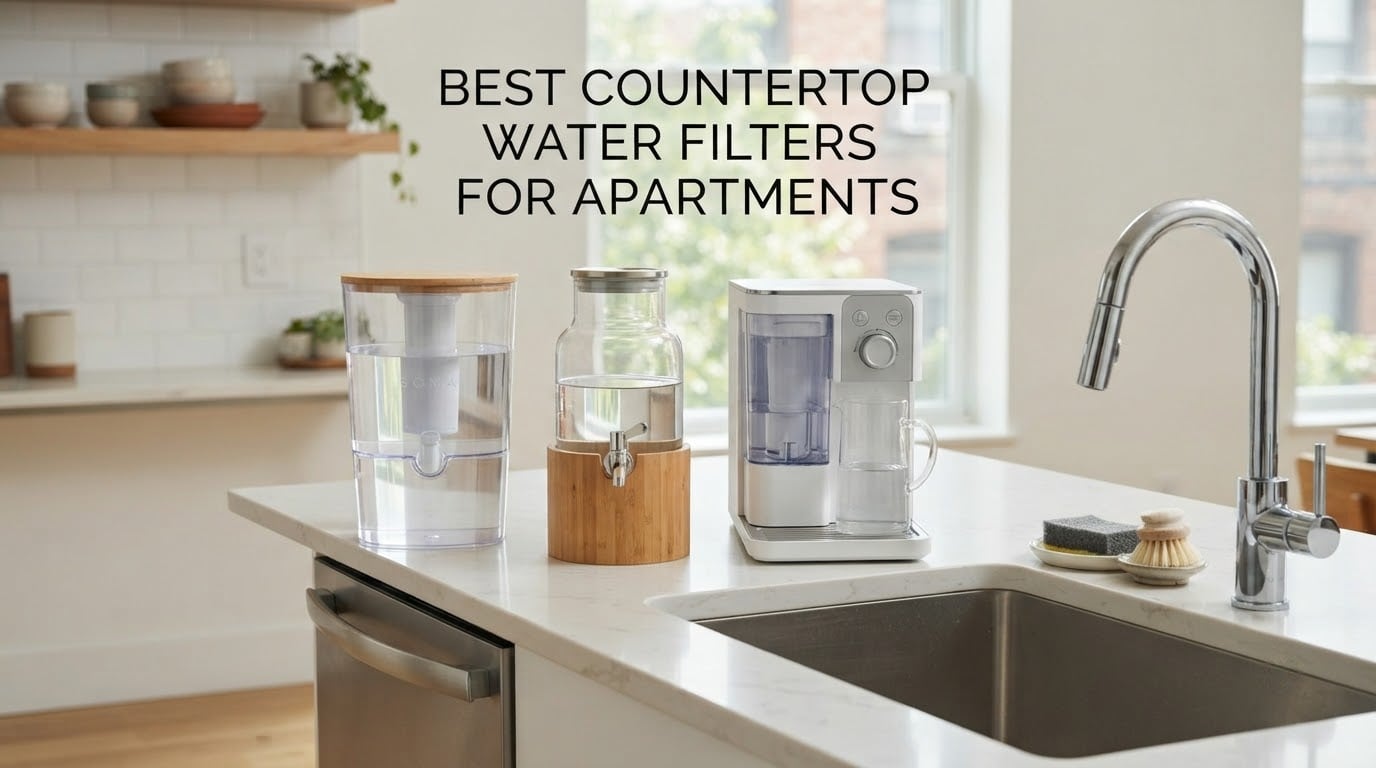
If you rent, your plumbing choices stop at the kitchen counter. A countertop water filter gives you verified filtration with no drilling, no under-sink plumbing and nothing to bolt into a wall you do not own. That constraint is the entire reason this roundup exists: every pick below is judged on no-drill setup, counter footprint, how easily it packs away at move-out, and what the cartridges cost per year.
We compared ten countertop units across gravity pitchers, faucet-fed carbon blocks and electric reverse osmosis systems, reading the certification claims, capacities, flow rates and replacement intervals on each. Three of the seven pages Google currently ranks for this topic are renter forum threads, which tells you the real question is not which filter removes the most contaminants. It is which one you can install in ten minutes, live with in a galley kitchen, and carry to the next apartment without calling a plumber.
A quick note on what we can and cannot claim. We did not lab-test these units ourselves, so every performance figure below comes from the manufacturer or from the customer review record, and we say which is which. Where reviewers measured total dissolved solids with their own meters, we report their numbers as reviewer measurements. That is the standard renters in r/WaterFilters and r/BuyItForLife use when they argue about marketing claims, and it is the standard we used here.
Short answer to the question most renters ask first: yes, you probably want a filter if your building is older than the 1980s, if you can taste chlorine or metallic notes in your tap water, or if you are buying bottled water by the case. If your municipal water already tests clean and tastes fine to you, a filter is a taste and convenience upgrade rather than a health necessity.
Table of Contents
Top 3 Best Countertop Water Filters for Apartments in 2026
These three cover the three setups we see most often: a renter who wants strong filtration and will use a nearby outlet, a renter who wants the simplest possible unit, and a renter with no reliable outlet or no interest in one.
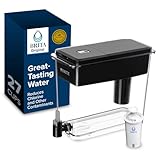
Brita X-Large 27 Cup Dispenser
- 27-cup reservoir
- No power or plumbing
- Filter indicator sticker
- Fridge-friendly

Bluevua RO100ROPOT
- 5-stage RO with remineralization
- Glass carafe
- 2:1 pure-to-drain
- Filter life display

Big Berkey 2.25 Gallon
- 2.25-gallon capacity
- Stainless steel
- No power or plumbing
- 6000 gallons per pair
The Brita leads on evidence. a 4.5-star average sitting on 17k+ customer reviews, the largest review base in the group, and it needs nothing but a faucet or a pitcher to pour into. The Bluevua is the filtration pick: it is the highest-rated system here at 4.6 stars and the only one that combines a five-stage reverse osmosis membrane, a glass carafe and a filter-life display. The Berkey is the answer when an outlet is not an option or the lease forbids an appliance on the counter.
All 10 Countertop Water Filters Compared (October 2026)
| Product | Specifications | Action |
|---|---|---|
| Brita X-Large 27 Cup Dispenser |
|
Check Latest Price |
 Waterdrop WFD-40L Dispenser Waterdrop WFD-40L Dispenser |
|
Check Latest Price |
 PUR 30-Cup Dispenser PUR 30-Cup Dispenser |
|
Check Latest Price |
| Big Berkey 2.25 Gallon Filter |
|
Check Latest Price |
| Bluevua RO100ROPOT |
|
Check Latest Price |
 SimPure Y7P-BW UV RO SimPure Y7P-BW UV RO |
|
Check Latest Price |
 Culligan ZeroWater 40-Cup Glass Culligan ZeroWater 40-Cup Glass |
|
Check Latest Price |
 DREO Countertop RO DREO Countertop RO |
|
Check Latest Price |
 iFilters CNTP-1C iFilters CNTP-1C |
|
Check Latest Price |
 Aigerri 5-Stage RO with UV Aigerri 5-Stage RO with UV |
|
Check Latest Price |
Two products here are not really competitors with the other eight. The iFilters is a faucet-mounted carbon block, and the four reverse osmosis units are plug-in appliances. The Brita, Waterdrop and PUR are pour-and-wait dispensers. Pick the category first, then the unit.
Apartments change the filter decision in four ways
Four apartment realities decide this purchase before contaminant counts enter the conversation.
No drilling and no plumbing. Every unit in this roundup is a countertop or freestanding design. Nothing needs a hole in a wall, a hole under a sink, or a plumber’s visit, which also means nothing you install can be blamed for a damaged deposit at move-out.
Counter footprint is the binding constraint. Measure the clear run between your backsplash and the front edge, and measure the vertical gap under any cabinet. The Culligan in this group stands 19.8 inches tall and weighs 6.53 kg, which is a real commitment in a galley kitchen. The Aigerri needs about 22 inches of vertical clearance when its lid is open. The iFilters is 13 inches tall and 6.49 inches deep, and it is the easiest of the ten to find a home for.
You will probably move. Renter forum threads keep circling the same point: people buy a filtration unit they intend to carry to the next lease, so a unit that must be plumbed in or hard-wired is a unit they will not buy. A gravity dispenser or a plug-in appliance packs into a box; a faucet-mounted carbon block unplugs in under a minute.
Nobody else uses your water. Under-sink systems make sense in a house you own. In a rental, the usual comparison is a countertop unit against delivered jugs, and that is a cost-per-gallon conversation rather than a specification conversation.
If you do own the place, or you want the permanent-install option anyway, our guide to under-sink water filters covers the mounted systems in detail. For a unit you can carry to a campsite instead of a counter, see our backpacking filter picks.
1. Brita X-Large 27 Cup Filtered Water Dispenser: the renter default
Brita X-Large 27 Cup Water Dispenser, Includes 1 Filter, Black
27-cup reservoir
3 lb weight
WQA and NSF/ANSI certified
Filter lasts 2 months
Pros
- Large 27-cup reservoir carries a full day
- Fridge-friendly body with easy-locking lid
- Cuts chlorine taste and odor
- No power or plumbing required
- Indicator sticker signals filter change
Cons
- Flip-top refill lid is awkward in a fridge
- Spigot can lose pressure and drip as it ages
- Plastic body must be carried to the sink to refill
This is the unit most apartments end up with, and the reason is volume of evidence rather than filtration depth. The X-Large holds 27 cups, stands 18 inches long by 5.67 inches wide by 10.47 inches tall, and weighs 3 pounds, which means it moves between counter and fridge shelf without any real effort.
It is a gravity dispenser. You carry the reservoir to the sink, fill it, and the carbon filter works while you do something else. There is no adapter to fit, no faucet to unscrew, and no outlet to find.
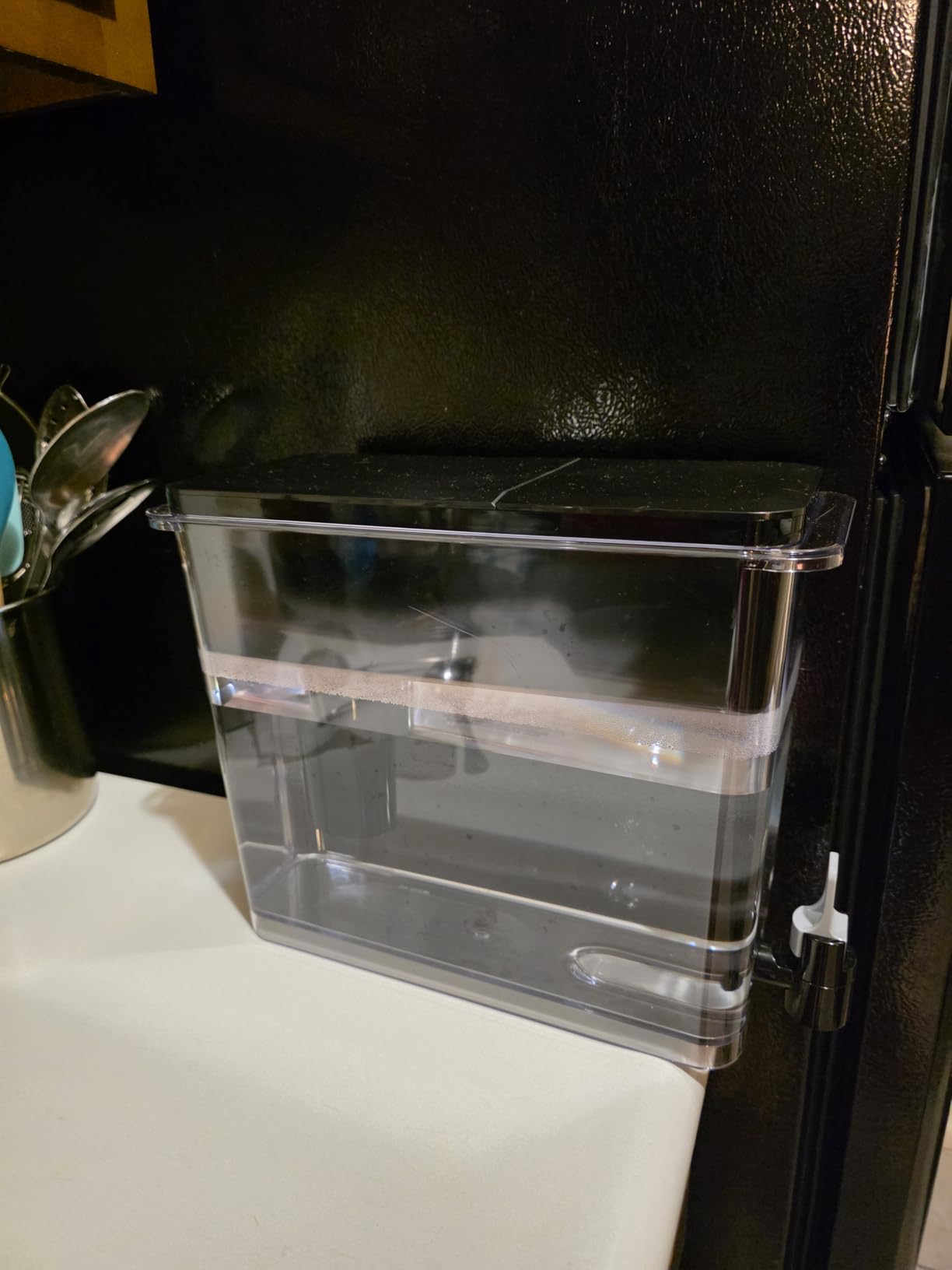
On contaminant coverage, the manufacturer claims chlorine taste and odor reduction plus reductions in copper, mercury and cadmium, and the unit is WQA and NSF/ANSI certified. What it does not do is lower dissolved solids. If your building’s water is heavily mineralized, the taste will be cleaner but not stripped, and a TDS reading will not move much.
The standard filter is rated at 40 gallons or about two months, and the Elite cartridge at 120 gallons or about six months. Both are compatible with this dispenser body, and the indicator sticker on the side tells you when the change is due rather than leaving you to guess.
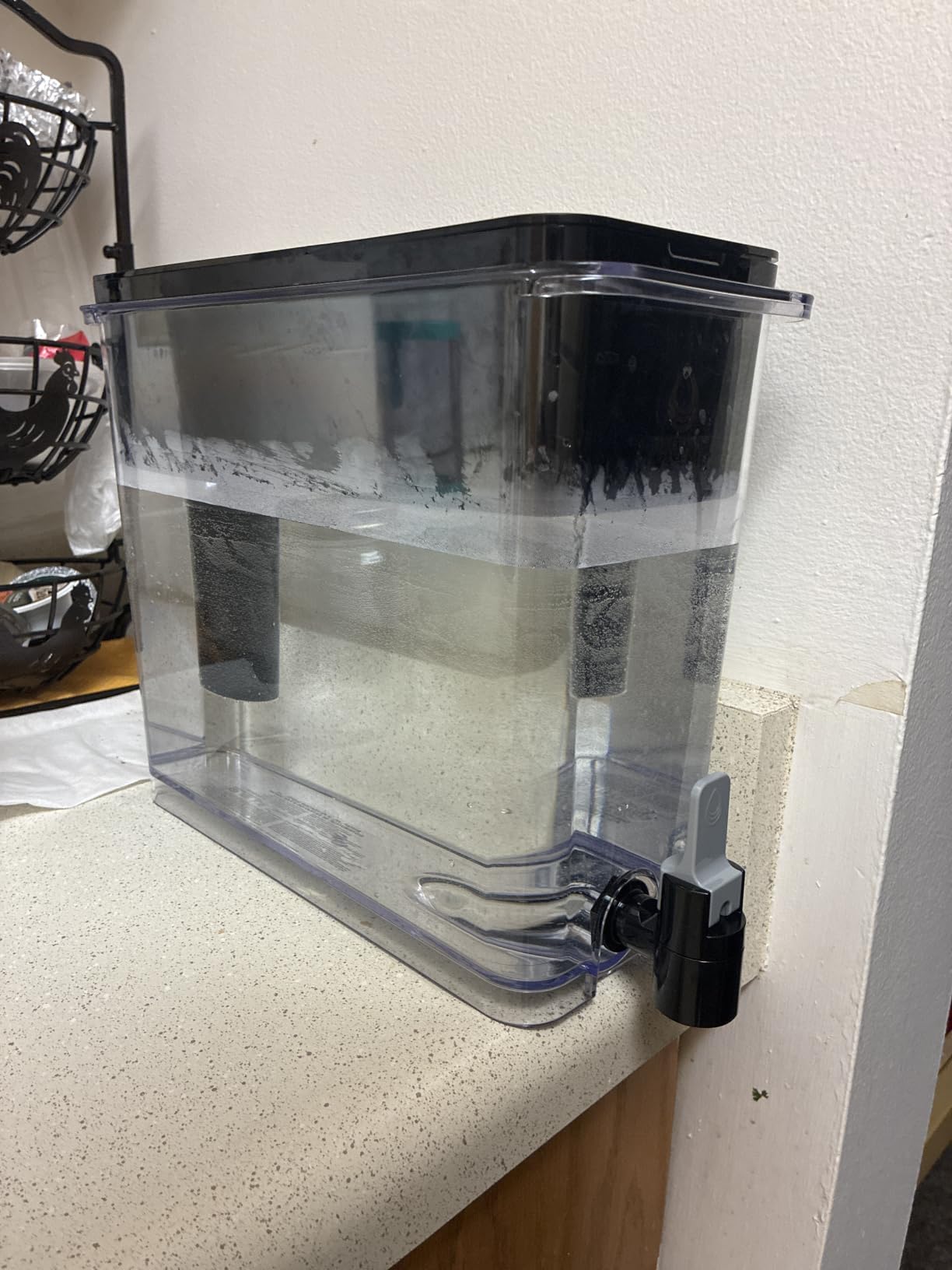
What we liked about living with it
Twenty-seven cups is roughly a day and a half of drinking and cooking water for one person, or a full day for two. That means you fill it once in the morning instead of twice, which is the difference between a filter you keep and one you stop using.
The precision-pour spigot and easy-locking lid are the small touches that matter, since in many apartment kitchens the fridge is where the filter lives rather than the counter.
What gave us pause
The plastic construction is the honest drawback. Because the reservoir is not plumbed in, refilling means lifting the whole unit to the sink, and the flip-top lid is awkward to work with in a tight fridge door. If your counter is right next to the sink, that inconvenience mostly disappears.
A recurring review theme is the spigot. Owners report that after several months of use the valve loses pressure and starts to drip, and some units arrived without the lid sensor shown in the listing. Both are minor-seal or assembly issues rather than filtration failures, and the sensor complaint is a fulfilment problem rather than a design one.
2. Waterdrop WFD-40L 35-Cup Dispenser: slimmer body, longer cartridge
Waterdrop WFD-40L Water Filter Dispenser, 35-Cup Capacity, Black
35 cups, 8.2 L
14.4 x 5.5 x 10.2 inch
200-gallon carbon life
Does not lower TDS
Pros
- Slim 35-cup body fits a narrow shelf
- 200-gallon cartridge life
- Top handle and sliding cover
- Filter status indicator
- Clear chlorine taste improvement
Cons
- Cartridge can clog weeks before rated life
- Reservoir plastic is thin
- Indicator must be pressed to check
- No TDS reduction
The Waterdrop has a slim 5.5-inch wide body and carries 35 cups, with 19 of those cups in the body and the rest above the collar. If your fridge shelf is the constraint, that width is the number that decides it.
Filtration here is activated carbon with carbon fibre, and the replacement cartridge is certified to NSF 42 and NSF 372 with a third-party tested residual chlorine reduction rate of up to 97.4 percent. The cartridge is rated for 200 gallons or two months, which is the longest rated carbon life among the pour-in units here.
Read the specification carefully before you buy, because the manufacturer states it plainly: this system does not lower TDS. A separate TDS-reduction model exists if you want dissolved solids stripped, and confusing the two is the most common complaint in the reviews of units like this.
Refilling is easier than the Brita because of the top handle and sliding cover, and the arc base gives it some stability when you are pouring into a full glass. The unit weighs 4.2 pounds.
The cartridge math that matters most
Two hundred gallons of rated life is the headline, but the real behaviour is that the carbon can clog two to three weeks early on hard or sediment-heavy water. Reviewers describe pulling the cartridge out, giving it a shake or a rinse, and getting the flow back. Plan on checking flow rather than trusting the calendar alone.
The 600 ppm maximum supported TDS figure and the 38 degrees Celsius upper temperature rating tell you this is a cold-water, municipal-water unit. It is not designed for well water or for anything hot.
Where it falls short
Long cartridge life is paired with a caveat that shows up in the review record: the reservoir plastic is thin, and at least one owner reported a crack forming around the printed logo. That is a durability report rather than a widespread failure pattern, but it is worth knowing if you have ever dropped a full reservoir.
The filter status indicator does not light up by itself. You press it to check, which means it will not warn you before the flow drops. For an apartment where you only notice the water when you go to pour some, that is a small but real difference from the Brita’s passive sticker.
3. PUR 30-Cup Filtered Water Dispenser: the big-reservoir workhorse
PUR 30-Cup Countertop Water Filter Dispenser, White/Blue, DS1800Z
30 cups, 7.09 L
15.3 x 5.3 x 10.1 inch
IAPMO certified
40-gallon filter life
Pros
- 30-cup reservoir serves a full household
- Slim 5.3-inch profile fits most fridge doors
- Consistent taste and odor improvement
- Pull-down spout pours mid-filter
- Dishwasher-safe parts
Cons
- Gravity filtration is slow
- Spigot seal failures are widely reported
- Cracked lids on some deliveries
- Email support is slower than phone
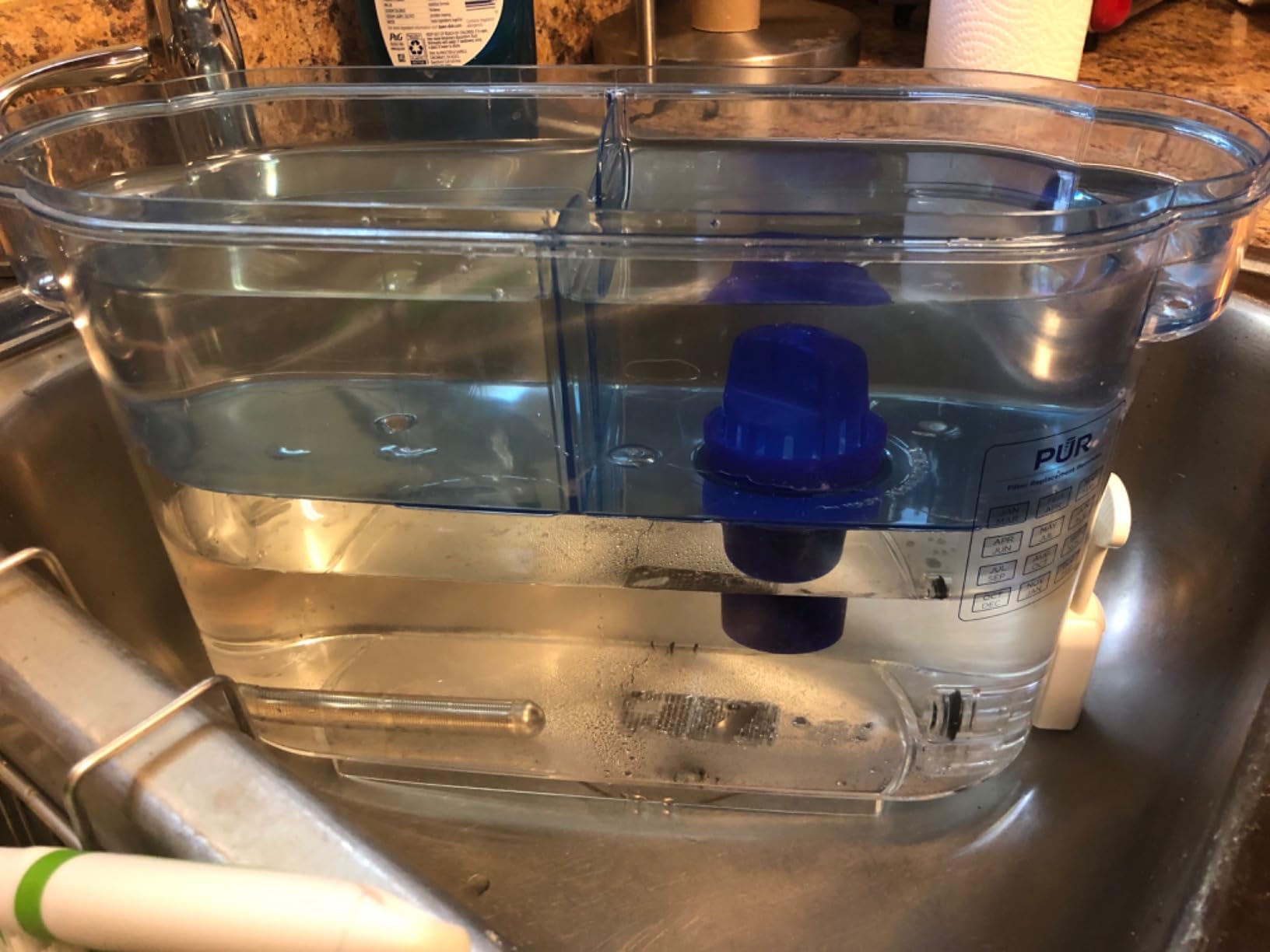
The PUR is the one to look at if two or three people share an apartment. At 7.09 litres and 30 cups, it holds more drinking water than the Brita while staying 5.3 inches wide, a fraction narrower than the Brita and the Waterdrop.
It uses ion exchange and is IAPMO certified to reduce chlorine, mercury, copper and zinc, and the genuine PUR cartridge is certified for 40 gallons or two months of regular use. The brand also states that its filters are certified to reduce 15 chemical and physical substances, which is a broader claim than the other pour-in units here make on the same footprint.
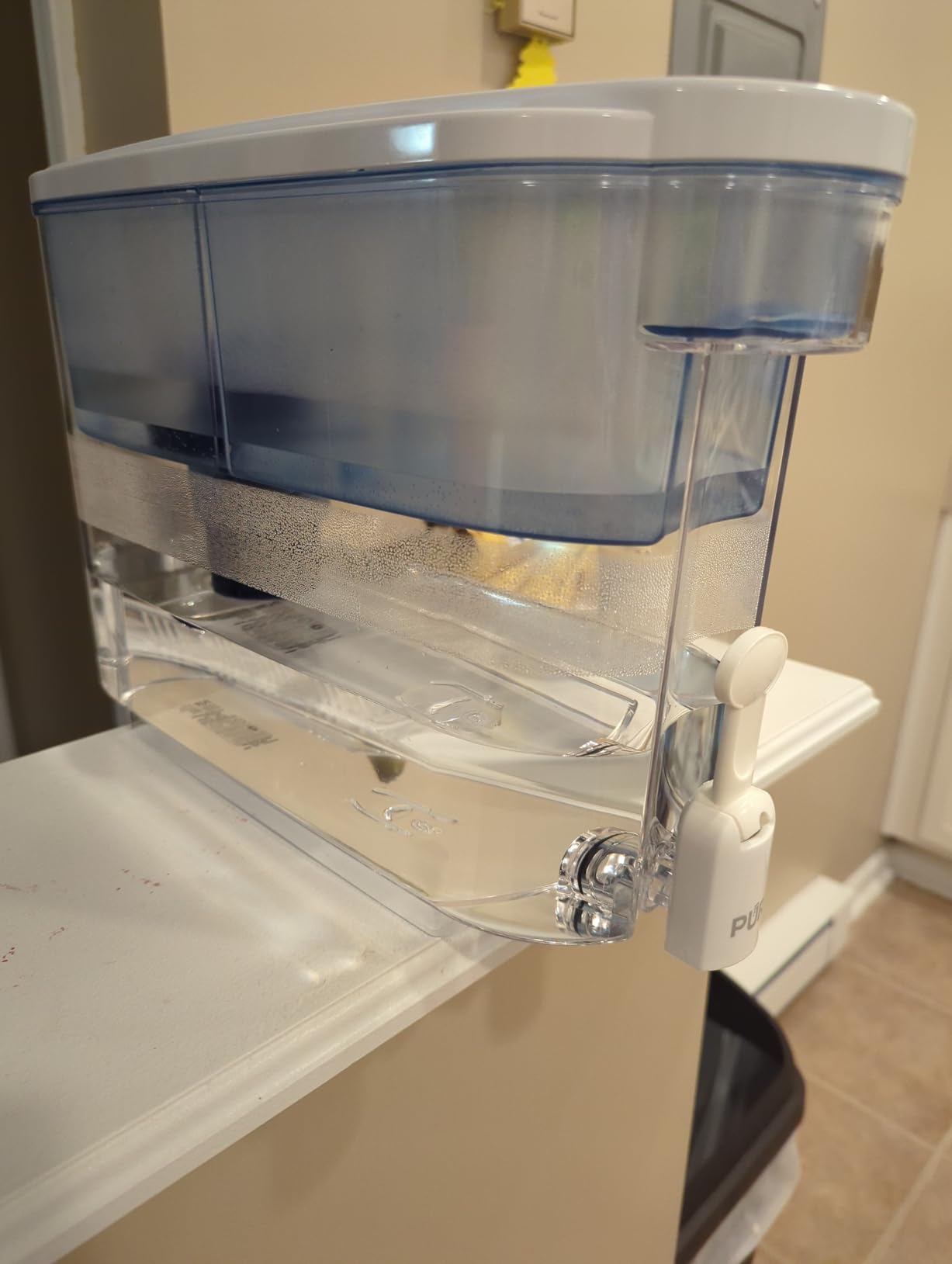
The pull-down spout is genuinely useful: you can pour a glass while the reservoir is still filtering, so you are not waiting for a full cycle. The dispenser and its parts are dishwasher safe, and the fixed handle makes the 30-cup carry manageable.
One specification note for renters. The listed power source is manual winding and the purification method is ion exchange, so there is no motor, no adapter and no outlet to fight over.
What makes it work for a shared kitchen
Capacity is the whole argument. A 30-cup reservoir means one person fills it in the morning and everyone draws from it all day without anyone topping up a pitcher mid-cook. In a shared apartment, the unit that gets refilled by someone else is the unit that stays alive.
Fridge fit is the second argument, and 5.3 inches is narrow enough for most fridge doors where a 27-cup unit would sit awkwardly. The trade is plastic for space, since this is a plastic body with a plastic spout.
Where the design frustrates people
Gravity filtration is slow. Reviewers report roughly 30 minutes for half a reservoir and over an hour for a full one, which is a real daily friction point if you are trying to fill a pot for pasta. The pull-down spout partly compensates by letting you pour while it works.
The most common negative theme is the spigot seal. Owners report leaks onto fridge shelves within weeks or months of daily use, and PUR does replace units when contacted, though reviewers say the email channel is slower than calling. Several buyers also report cracked lids arriving in transit or after light handling.
4. Big Berkey 2.25 Gallon Gravity Filter: the no-outlet option
Big Berkey 2.25 Gal Gravity Water Filter System with BB9-2 Filters
2.25 gallons, 8.5 L
8.5 x 8.5 x 19.25 inch
AISI 304 stainless steel
No power or plumbing
Pros
- No electricity
- plumbing or tools required
- Polished stainless steel build
- Elements rated to 6000 gallons per pair
- Chambers nest for compact storage
- Sized for 1-4 people
Cons
- Priming must be done thoroughly or flow drops
- About 30 minutes for a 2.5-gallon batch
- Priming instructions are thin
- Some kits include a rubber washer that taints early water
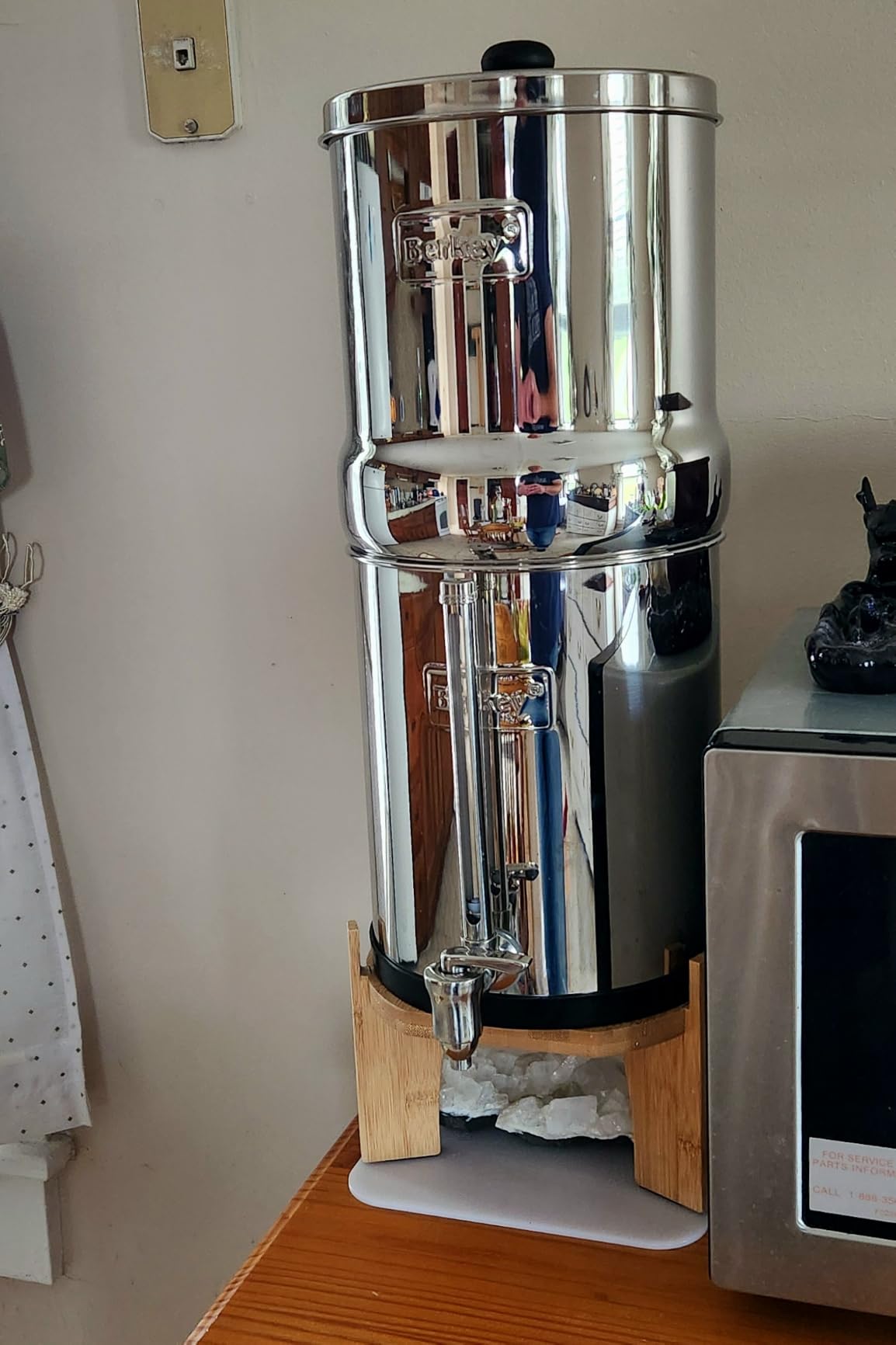
The Berkey is one of the two tallest units here at 19.25 inches, and it looks like an appliance rather than a plastic jug. Two polished AISI 304 stainless steel chambers hold 2.25 gallons, which the manufacturer sizes for one to four people, and the upper chamber nests inside the lower one when you are not using it.
Nothing about the setup involves electricity, plumbing, tools or incoming water pressure. You prime the two Black Berkey elements, seat them in the upper chamber, fill from the tap, and let gravity do the work. Maximum flow is listed at 0.03 gpm, which is slow by design, and maximum supported TDS is 1000 ppm.
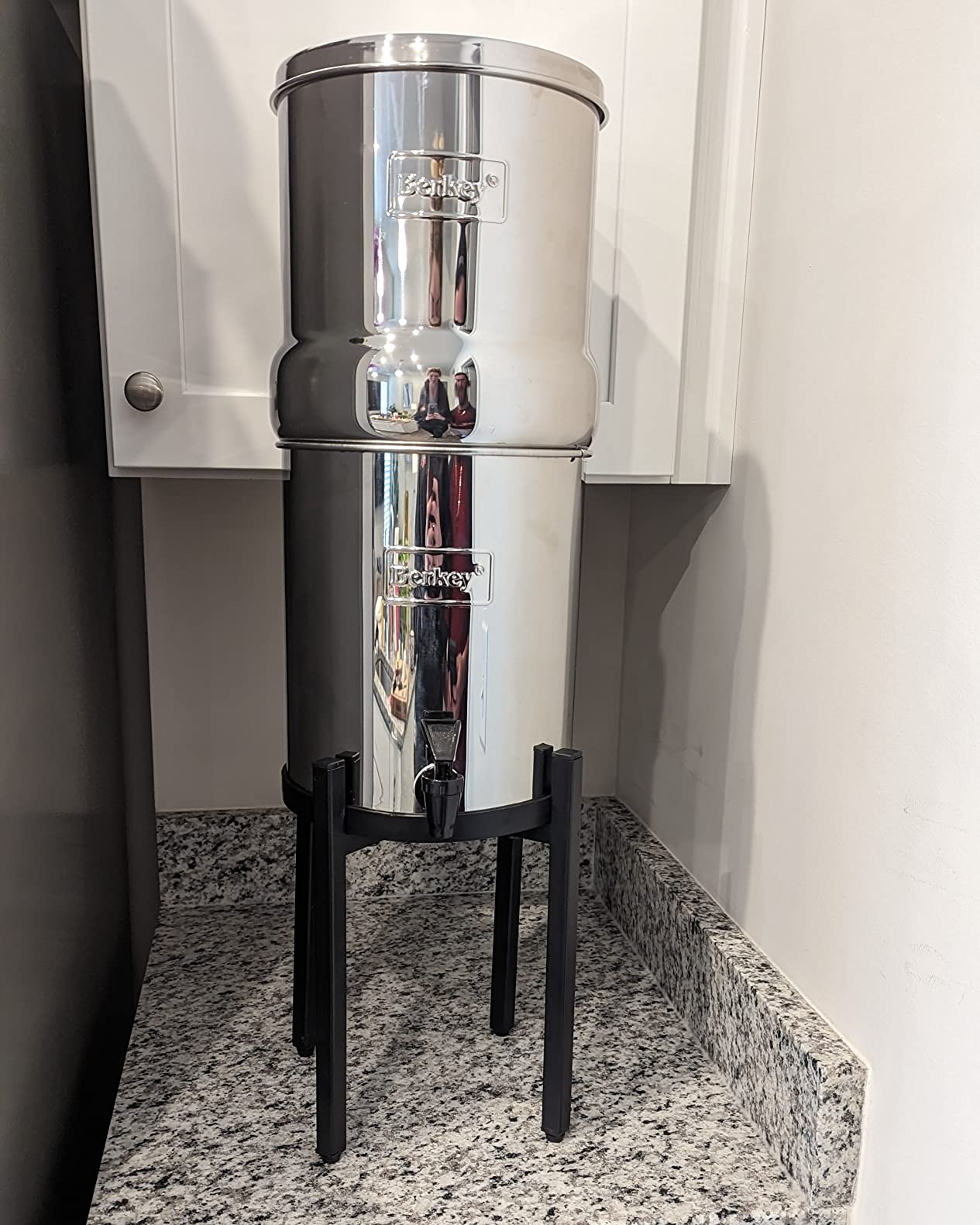
On long-run cost this is the strongest unit in the roundup. Each pair of elements is rated to 6000 gallons before replacement is recommended, and the system accepts up to four elements if you want more flow. There is a six-month system warranty and a two-year prorated warranty on the elements.
The certification question is the one to settle before you commit, because the Black Berkey element uses proprietary filter media and the marketing around it is contested in the communities that matter here. r/BuyItForLife threads on the brand split hard between enthusiasts and sceptics, and the recurring demand is for independent laboratory testing rather than a claim. Buy it for taste, chlorine and sediment reduction; do not buy it on an unverified contaminant count.
Why renters gravitate to it
It carries, it nests, and it needs nothing but a faucet to fill. For a lease with a six-month term or a move you already know is coming, a stainless steel canister that packs flat in a cupboard is the least complicated ownership story of any unit here.
Reviewers with years of daily use describe the taste change as transformative on chlorinated, hard or metallic tap water. If your complaint about apartment water is taste, this is the unit that addresses it most visibly.
The two things that trip people up
Priming is the make-or-break step. Skipping it or rushing it causes the flow rate to drop sharply until the elements are re-primed, and a lot of first-time owners never realise that is what happened. Many buyers report following video walkthroughs instead of the printed instructions, which is a fair summary of how thin the guidance is.
Flow is the other issue. A 2.5-gallon batch takes roughly 30 minutes, and the spigot and filter placement means a small amount of water stays in each chamber at the end. A few owners also report that the industrial rubber washers in some kits leave a rubber smell and taste in the first batches. If your kitchen needs a litre on demand for cooking, this is the wrong tool.
5. Bluevua RO100ROPOT: the strongest filtration in the group
Bluevua RO100ROPOT Countertop Reverse Osmosis Water Filter System
5-stage RO
10.9 x 15.4 x 14.3 inch
12L capacity
0.26 L per minute
Pros
- Highest-rated unit in the group
- Borosilicate glass carafe
- 2:1 pure-to-drain ratio
- Filter life and quality display
- No plumbing needed
Cons
- Needs a nearby power outlet
- Higher cost for comparable daily volume
- Larger counter footprint than a pitcher
The Bluevua is the only unit here with a 4.6-star average across 3695 reviews, and it is the one we would put first for anyone whose water quality is the actual concern rather than taste. It runs five stages of reverse osmosis including a remineralization filter, and the manufacturer states 99.9 percent removal of possible contaminants.
The remineralization stage is the detail that separates it from bare-bones RO. Instead of leaving you with flat, stripped water, it puts a small amount of minerals back, which is the difference between water that tastes empty and water that tastes like water. Buyers consistently single this out as the reason they stopped buying jugs.
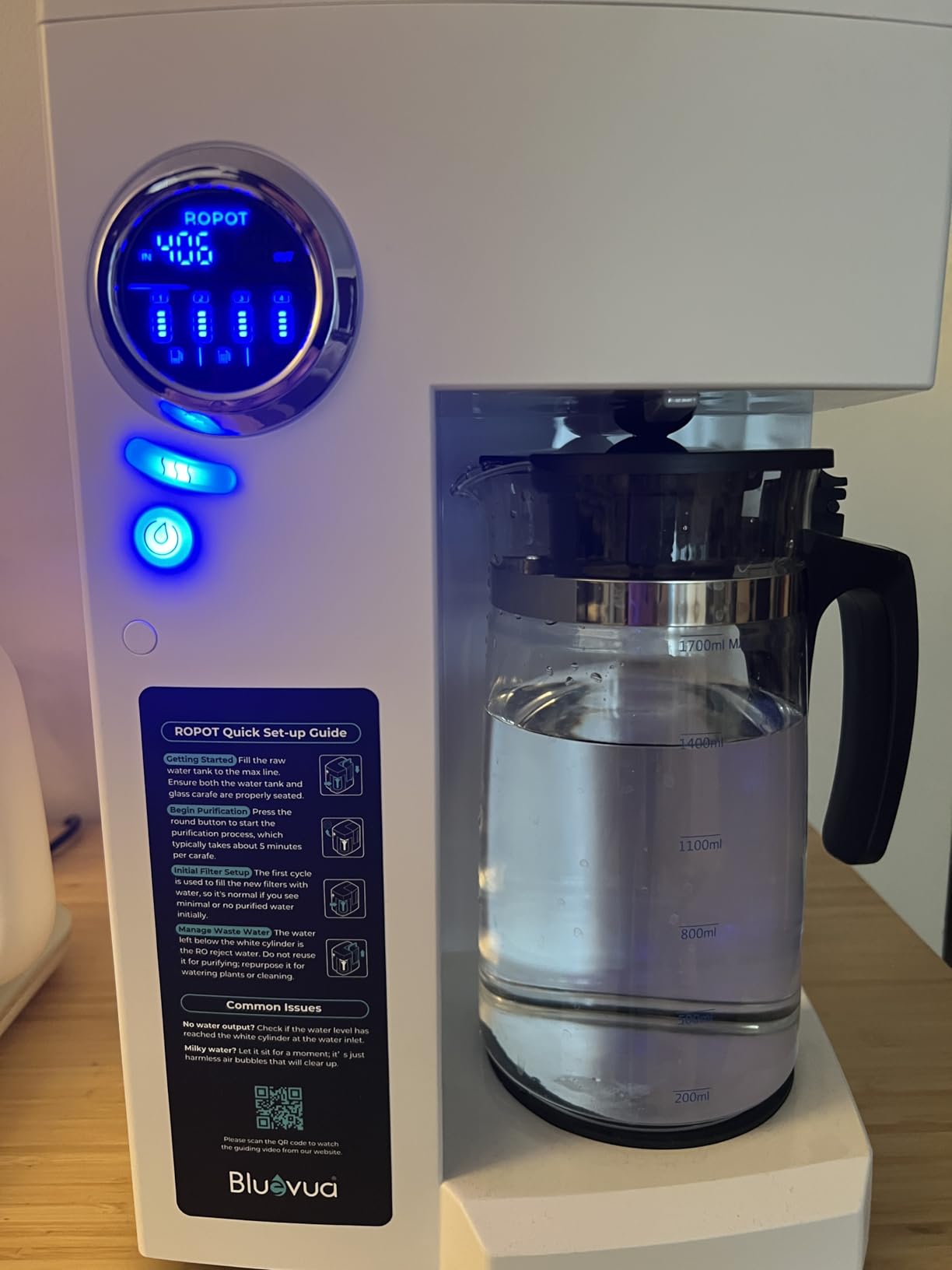
The carafe is borosilicate glass rather than plastic, which removes the secondary contamination question entirely and means the water sitting in your glass overnight is not sitting in plastic. The 12-litre figure covers the feed side, and the pour rate is listed at 0.26 litres per minute.
Water waste is the number to know. The 2:1 pure-to-drain ratio means two gallons of purified water for every gallon sent down the drain, which is roughly a quarter of what a typical under-sink RO system uses. In a rental where you pay the water bill, that ratio is the difference between a filter you barely notice on the statement and one you do.
What we liked about living with it
The display shows both remaining filter life and water quality, so cartridge timing is a glance rather than a guess. That matters more here than the numbers suggest, because the alternative is running a cartridge past its rated life and then wondering whether the water changed.
There is an automatic power-saving standby mode when the unit is not in use, and a one-year limited manufacturer warranty applies once you register it. Setup is a plug into any outlet with no plumbing and no permanent installation.
Where the compromises are
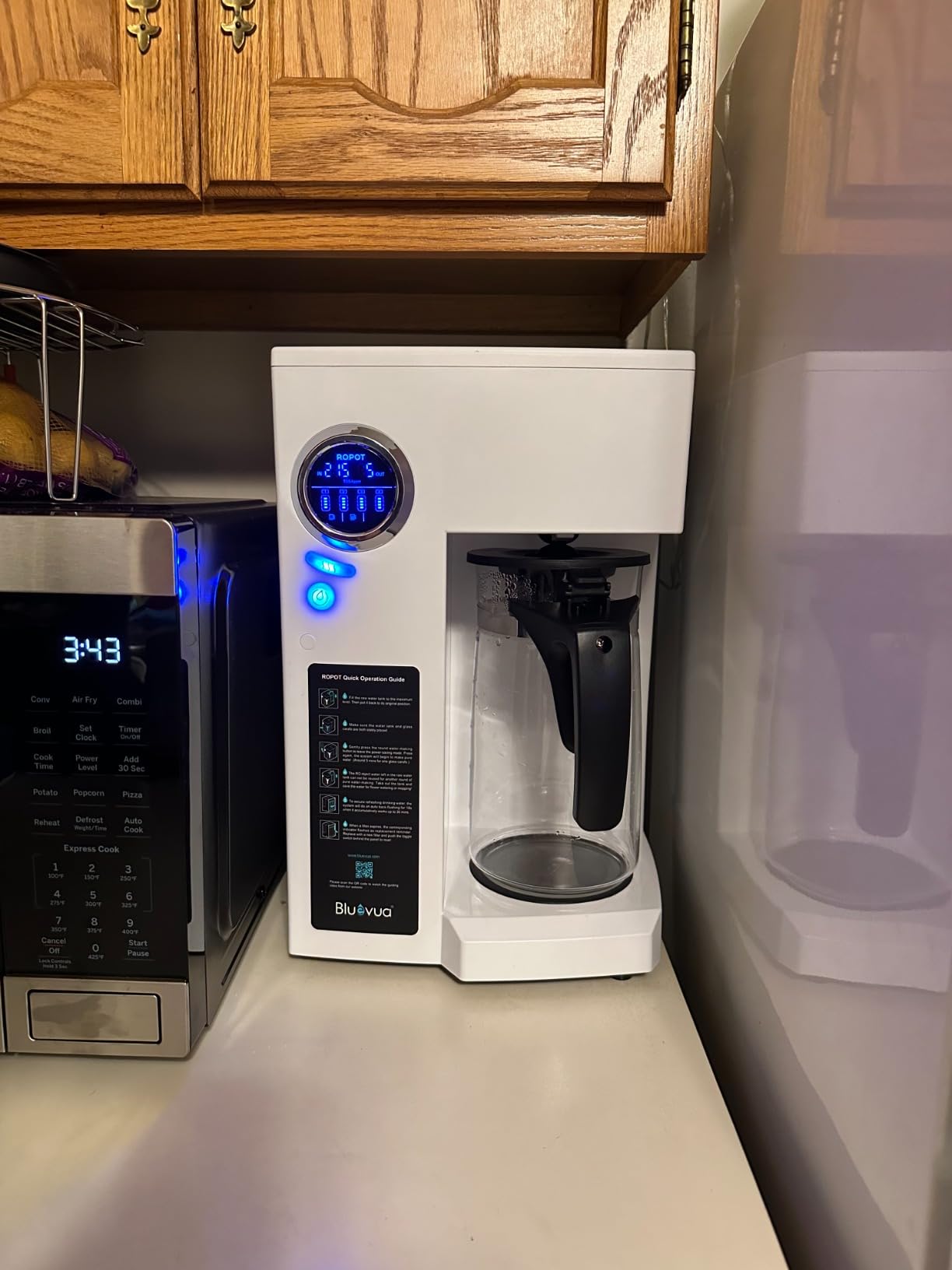
It needs a nearby power outlet and will not run without electricity, which rules it out for kitchens with no accessible socket. The body is 10.9 by 15.4 by 14.3 inches, so it is a permanent-looking object on a counter that a pitcher would have vacated in ten seconds.
Filter life is listed at 12 to 24 months, which is long, but that only makes the eventual cartridge change more of a lump-sum expense. It also costs more than a pitcher unit for a comparable daily volume, so the case for it is water quality rather than economics.
6. SimPure Y7P-BW UV Countertop Reverse Osmosis: UV stage and measured results
SimPure Y7P-BW UV Countertop Reverse Osmosis Water Filter, 5 Stage RO
UV plus 4-stage RO
0.0001 micron membrane
SGS tested to NSF/ANSI 58
418 GPD dispense rate
Pros
- Reviewers measure TDS dropping from hundreds to double digits
- UV stage with no chemical by-products
- Install-free plug-in setup
- Glass dispensing pitcher
- Compact slim body
Cons
- Drip tray and pitcher are small
- Reservoir can give a plastic taste after about a month
- Demanding cleaning schedule
- Cartridges can need changing early
The SimPure pairs a UV stage with four stages of 0.0001 micron reverse osmosis, and it is the unit in this group where the cleanest reviewer measurements appear. Owners who bought their own TDS meter report readings in the single to low double digits from tap water that started in the hundreds.
Testing is the selling point. The membrane was tested by SGS against NSF/ANSI 58 with a stated 99.99 percent reduction across more than 1,000 contaminants, including PFAS, PFOA, PFOS, heavy metals, chlorine and dissolved solids. Input water needs to be under 500 ppm TDS, and the operating range is 5 to 38 degrees Celsius.
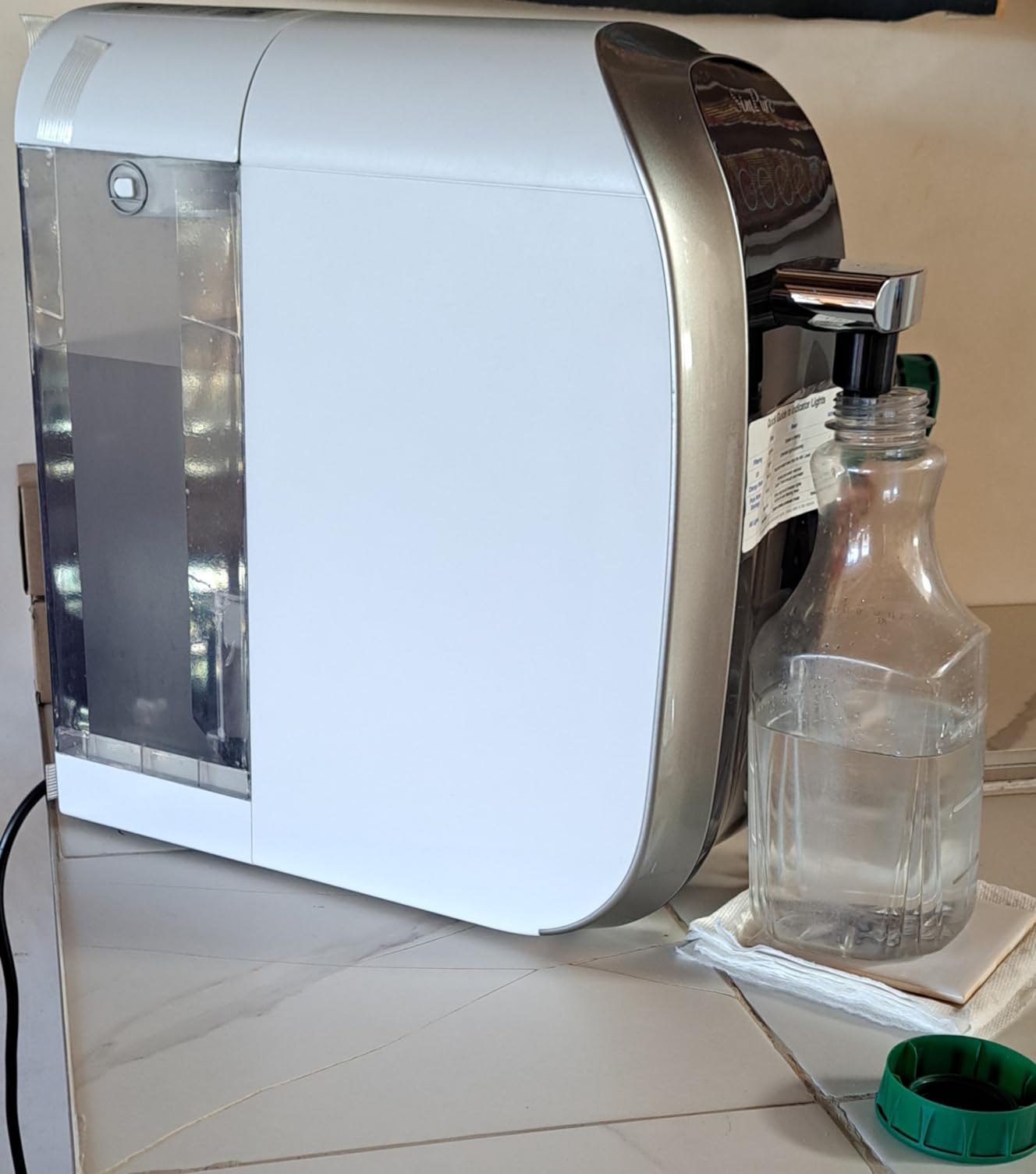
Flow is quick for a countertop RO unit at a listed 418 GPD, roughly one cup in 15 seconds, and the 4:1 pure-to-drain ratio means less water lost than a standard RO arrangement. The tank holds about 1.3 gallons, and you dispense with 6, 12 and 15 ounce buttons or by holding for continuous flow.
One limitation to state clearly: this dispenses room temperature water only. There is no hot or cold output, which matters if you were hoping for a single unit to cover tea, cold drinks and cooking.
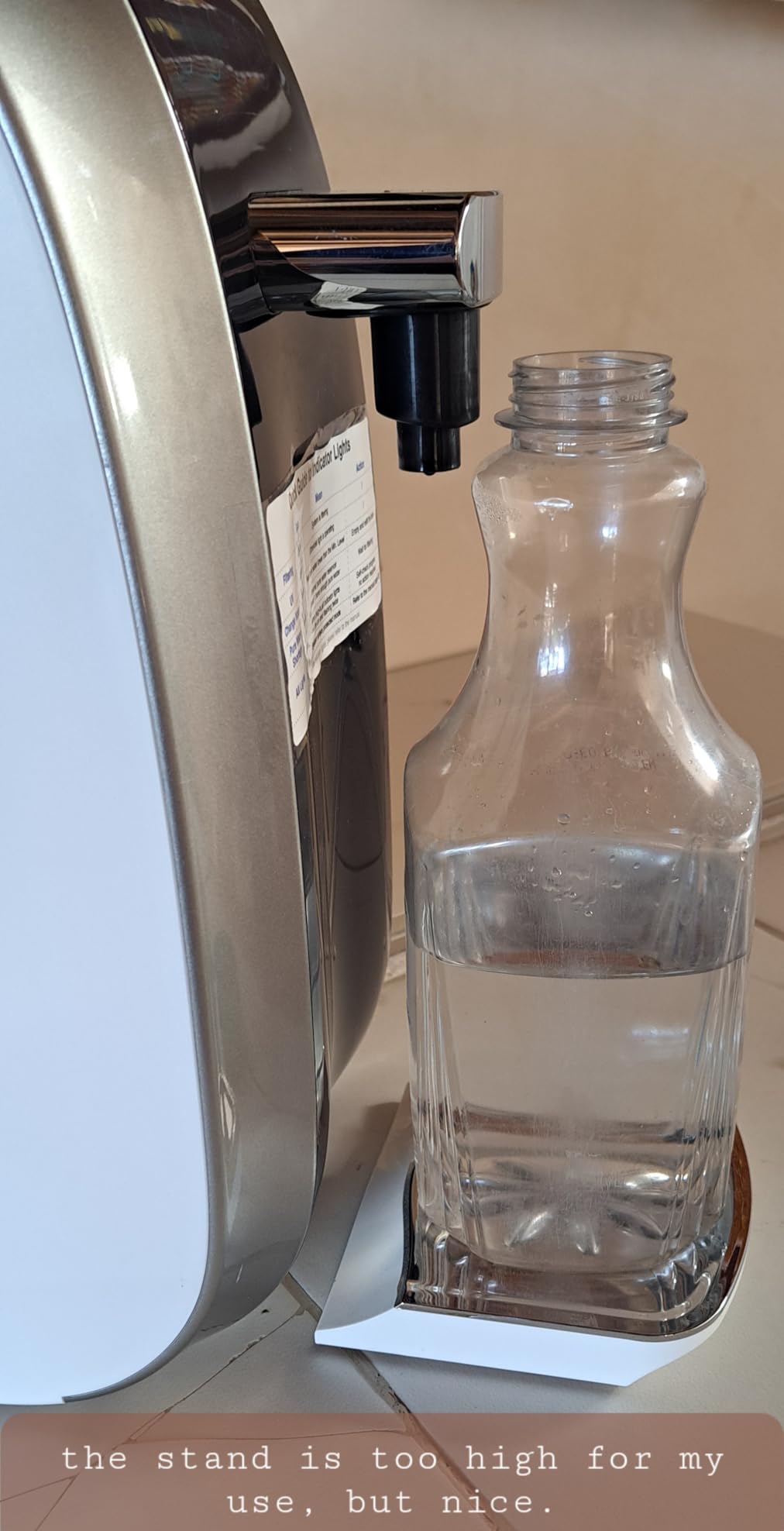
Why the UV stage is worth paying for
UV adds a physical disinfection step with no chemicals and no by-products, which is why this configuration is common on wells and in areas where microbial concerns sit alongside chemical ones. For an apartment, the practical argument is simpler: it is one more barrier between your tap and your glass, at a point in the price range where you are already buying membrane filtration.
The glass dispensing pitcher is also a real upgrade over a plastic tank, and the twist cartridge change is genuinely quick once you get the rhythm.
The maintenance reality
This is the unit that asks the most of you after purchase. The manual calls for a daily tank rinse, a monthly clean, and descaling with vinegar every two to four weeks, and reviewers report that the internal reservoir can give water a plastic taste after roughly a month if you do not keep to that. The translated manual is also confusing, and the initial flush takes multiple cycles.
Reviewers also warn that the drip tray and glass pitcher are small for heavy drinking households, which means decanting into a larger jug, and that cartridges can need replacement before the advertised six months. Rated for 528 gallons per filter set, the unit is listed at 13 pounds and 17.3 by 7.5 by 17 inches.
7. Culligan with ZeroWater Technology 40-Cup Glass Dispenser: lead and PFAS coverage
Culligan with ZeroWater Technology 40-Cup Glass Water Filter Dispenser – Includes 5-Stage Advanced Water Filter, Certified to Reduce Lead, Total PFAS (Forever Chemicals), Fluoride, and Chlorine
40 cups, 320 fl oz
11 x 9.8 x 19.8 inch
Gravity powered
Includes TDS meter
Pros
- IAPMO certified to reduce Total PFAS and lead
- Includes a TDS meter with change alerts
- 40-cup glass carafe
- Gravity powered with no outlet needed
- Removes 99.9 percent of dissolved solids
Cons
- Nearly 20 inches tall and heavy at 6.53 kg
- Awkward to lift for refilling
- Higher cost per gallon than basic pitchers
- Only fits the newer cartridge range
The Culligan is the one to shortlist if your building predates the 1986 lead-pipe cutoff, or if you have any reason to think about PFAS in your supply. It is IAPMO certified to reduce Total PFAS, lead, chlorine, mercury and other contaminants, and it combines activated carbon with ion exchange across five stages to remove 99.9 percent of dissolved solids.
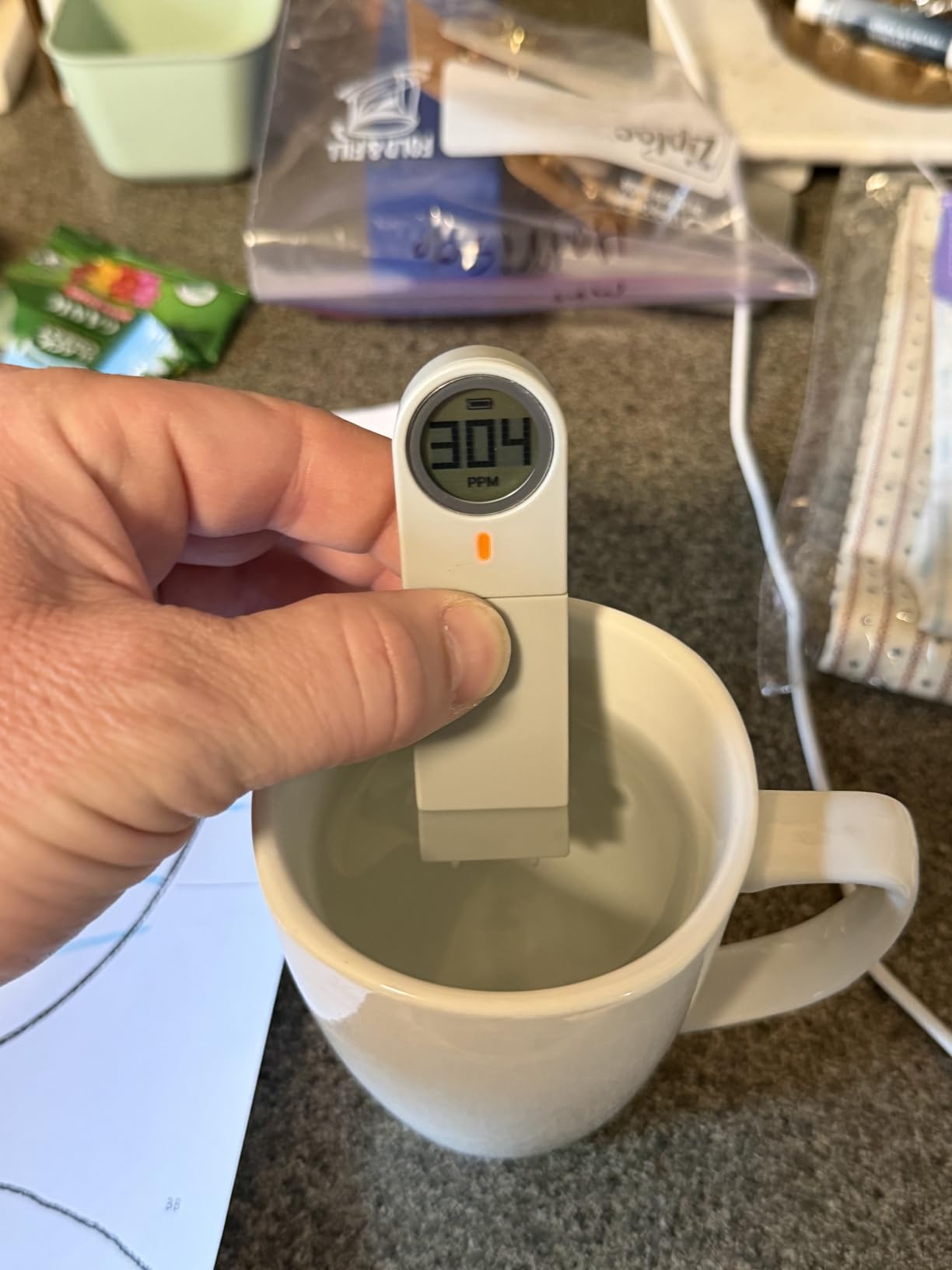
It ships with a TDS meter in the box, which is unusual at this level and immediately practical. The meter measures dissolved solids and alerts you when a filter change is due, and a reading of zero means the dissolved solids are effectively gone. You can see the filter working rather than taking the packaging’s word for it.
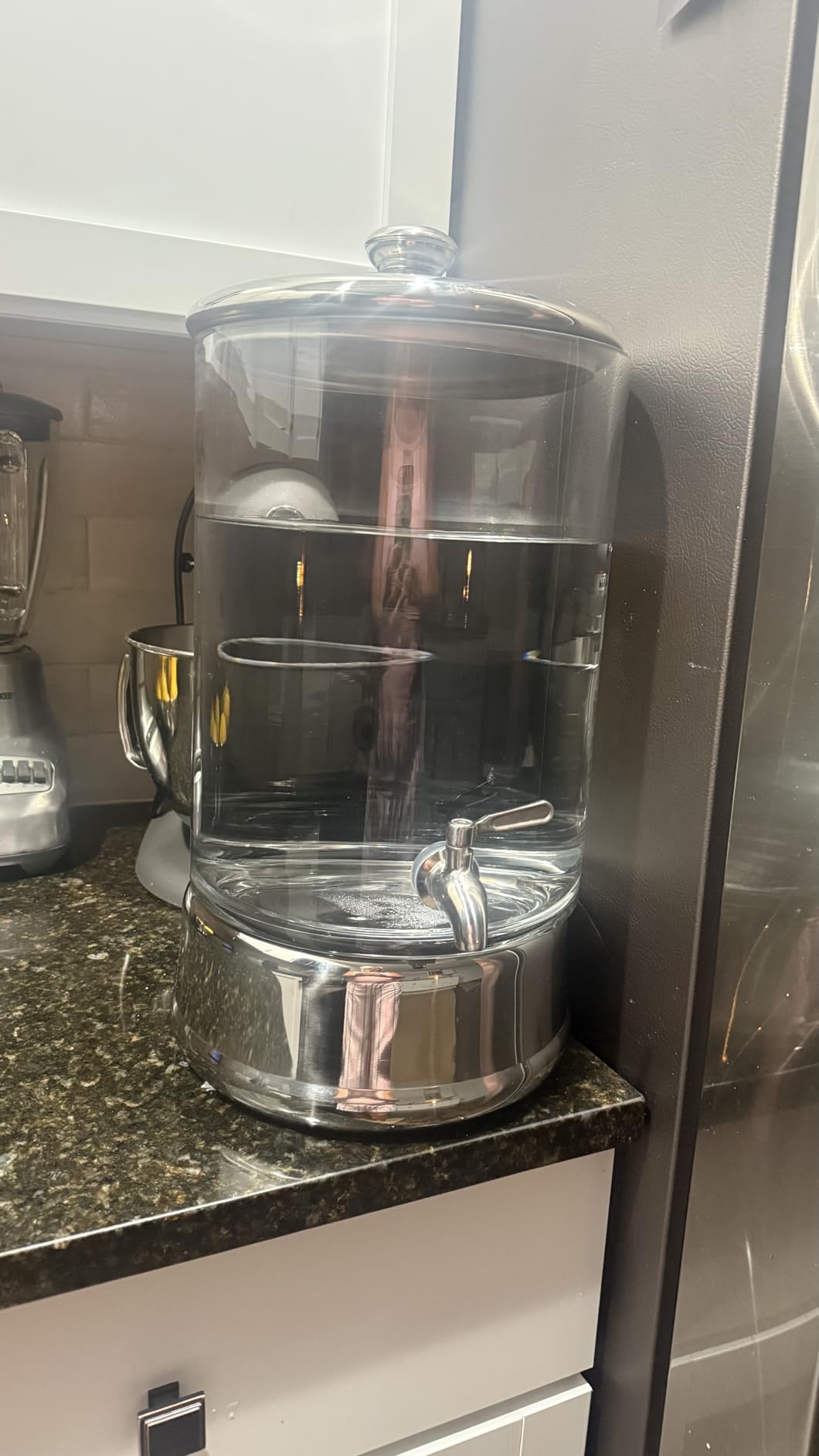
Despite stripping dissolved solids, it is gravity powered with no outlet and no plumbing, which is unusual for a unit in this category. Maximum flow is listed at 0.18 litres per minute. The 40-cup glass carafe keeps stored water out of plastic entirely, which is the other reason it turns up on hosting lists.
Buying the right cartridge matters. This body takes the newer Culligan with ZeroWater Technology filters only and is not compatible with legacy ZeroWater cartridges, so check the model number before you order refills.
The case for it in an older building
Lead reduction is the honest reason to reach for this unit. Soldered joints and older fixtures are the common source, and a carbon-only dispenser will not touch dissolved metals. The PFAS certification is a second reason, and it is the one that is hardest to find on a gravity unit that also handles dissolved solids.
Owning a TDS meter changes how you use it. You can check a glass in the morning, check it after two months, and let the number rather than the calendar tell you when the cartridge is spent.
Where the footprint bites
At 19.8 inches tall, 11 inches long, 9.8 inches wide and 6.53 kg, this is the biggest physical commitment in the roundup. The heavy glass carafe is a genuine lifting task to refill, and if your counter is already carrying a knife block and a toaster, this is the unit that gets moved to an inconvenient spot and then ignored.
It sits at the lower end of the ratings here at 4.1 stars across 2528 reviews, and reviewers point at size, weight and cartridge cost stacking up over time rather than at filtration performance. The cartridge compatibility restriction adds a small ongoing risk: the wrong refill simply will not fit.
8. DREO Countertop Reverse Osmosis with self-cleaning: the tidier RO
DREO Reverse Osmosis Water Filter Countertop, RO Filtration System, 3:1 Pure to Drain, TDS & Filter Life & 2 Autofill Pitchers, Install-Free, Self-Cleaning Water Purifier, RO Water Filter
7-in-1 RO
15.7 x 6.7 x 13.4 inch
5-litre tank
3:1 pure-to-drain
Pros
- 7-in-1 RO tested by SGS to NSF/ANSI 58
- Built-in TDS meter and filter indicator
- 3:1 pure-to-drain ratio
- Self-cleaning routine
- Two autofill pitchers included
Cons
- Fewer reviews than the established units
- Needs a power outlet
- 5-litre tank refills often for heavy use
The DREO answers the complaint that shows up most often in countertop RO reviews: maintenance. It has a built-in self-cleaning function, which means the reservoir is not a monthly chore you have to read a translated manual to understand.
Filtration is a 7-in-1 RO configuration tested by SGS to NSF/ANSI 58, with a stated 99.9 percent reduction across PFOA, PFOS, chlorine, fluoride and more. The 3:1 pure-to-drain ratio is better than a standard RO arrangement and still notably better than under-sink systems, which matters for a renter watching the water bill.
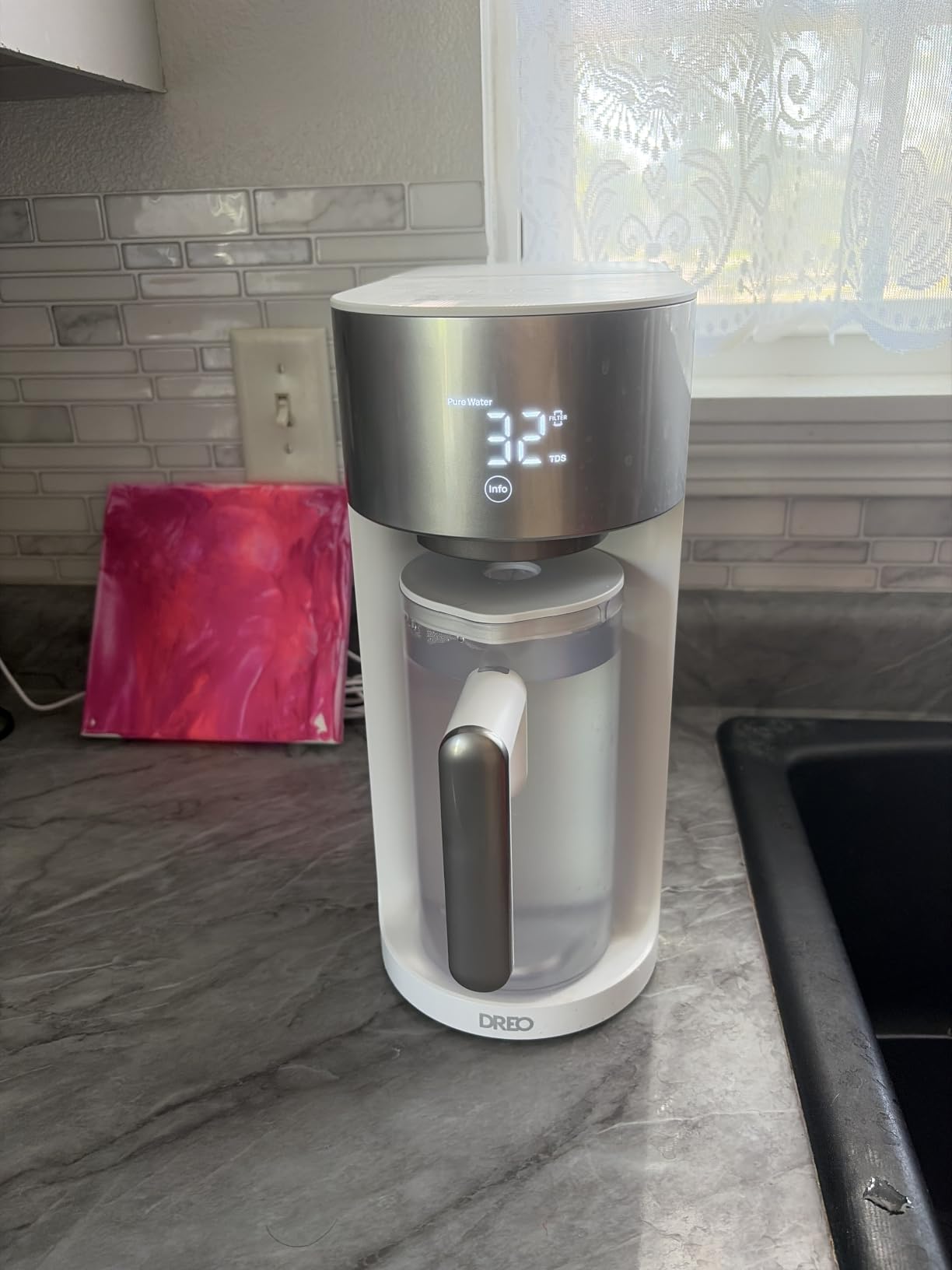
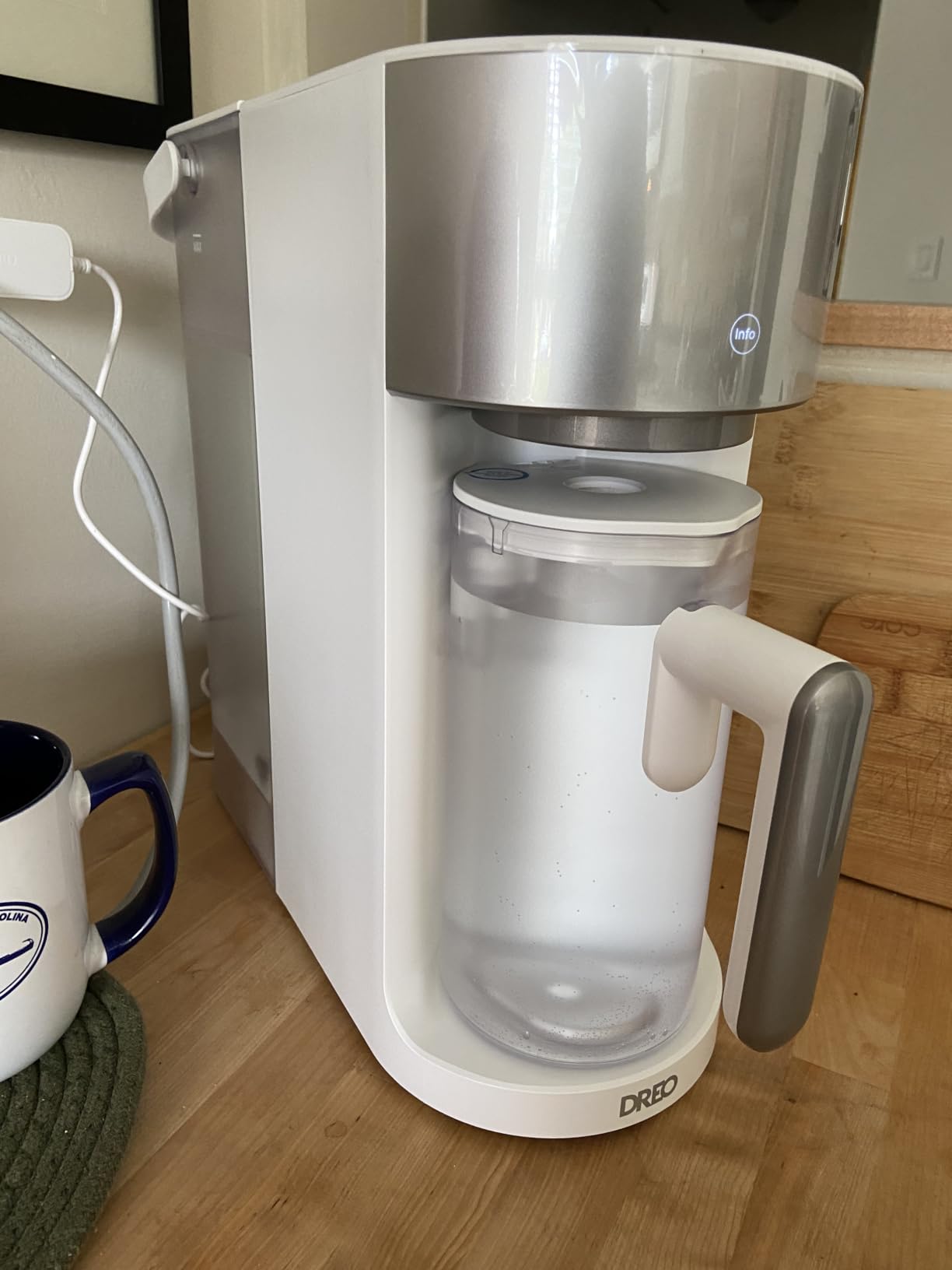
The touch control gives you a built-in TDS meter and a change-filter indicator on the same panel, so the two numbers you care about are always on screen. The unit is install-free and self-cleaning, and it arrives with two autofill water pitchers, which is a sensible inclusion given the tank size.
It is available in 3-litre and 5-litre tank configurations, and the body measures 15.7 by 6.7 by 13.4 inches at 10.8 pounds. That is a tall object for a counter, though narrower than the Culligan or the Aigerri.
Why the self-cleaning function is the deciding feature
Reservoir taste and biofilm are the two failure modes that end countertop RO ownership early, and both are maintenance problems rather than filtration problems. A self-cleaning cycle addresses them directly, which means you are not tracking a cleaning calendar alongside a cartridge calendar.
The included autofill pitchers also reduce the sting of the smaller tank. You draw what you need and pour it into a jug, which is roughly what you would do with a carafe anyway.
Why we would not call it proven
There are 870 reviews at a 4.4 average. That is a good ratio, but it is a fraction of the review volume behind the Brita, the PUR or the Waterdrop, and long-term durability across a few years is simply not established yet. Newer listing, less history behind it.
It also requires a power outlet and will not operate without electricity. And the 5-litre configuration means frequent refills for a household that drinks through more than a litre or two a day.
9. iFilters CNTP-1C 0.5 Micron Carbon Block: the smallest and fastest
iFilters CNTP-1C Countertop Water Filter with 0.5 Micron Carbon Block
6.49 x 5 x 13 inch
0.5 gpm flow
0.5 micron carbon block
Faucet adapter included
Pros
- Very fast 0.5 gpm flow rate
- Small body at just 13 inches tall
- Clear housing shows cartridge condition
- Standard 10-inch cartridge format
- Faucet adapter fits most taps
Cons
- Does not reduce TDS or minerals
- Housing is hard to unscrew once tightened
- Needs some mechanical confidence
- Must sit beside the sink
At 6.49 by 5 by 13 inches, the iFilters is the most compact unit in the roundup, and it is the only one that connects to your faucet. The flow rate of 0.5 gpm is roughly sixteen times the Berkey’s, which means a coffee pot fills in seconds rather than minutes. In a studio apartment where counter space is measured in coffee cups, that combination is the whole pitch.
Filtration is a 0.5 micron coconut carbon block, certified materials, rated against chlorine taste and odor, VOCs, cysts, Cryptosporidium, Giardia, organic chemicals, pesticides, herbicides, sediment, rust and scale particles. Cartridge life is about six months, and the replacement is a standard 10-inch format.
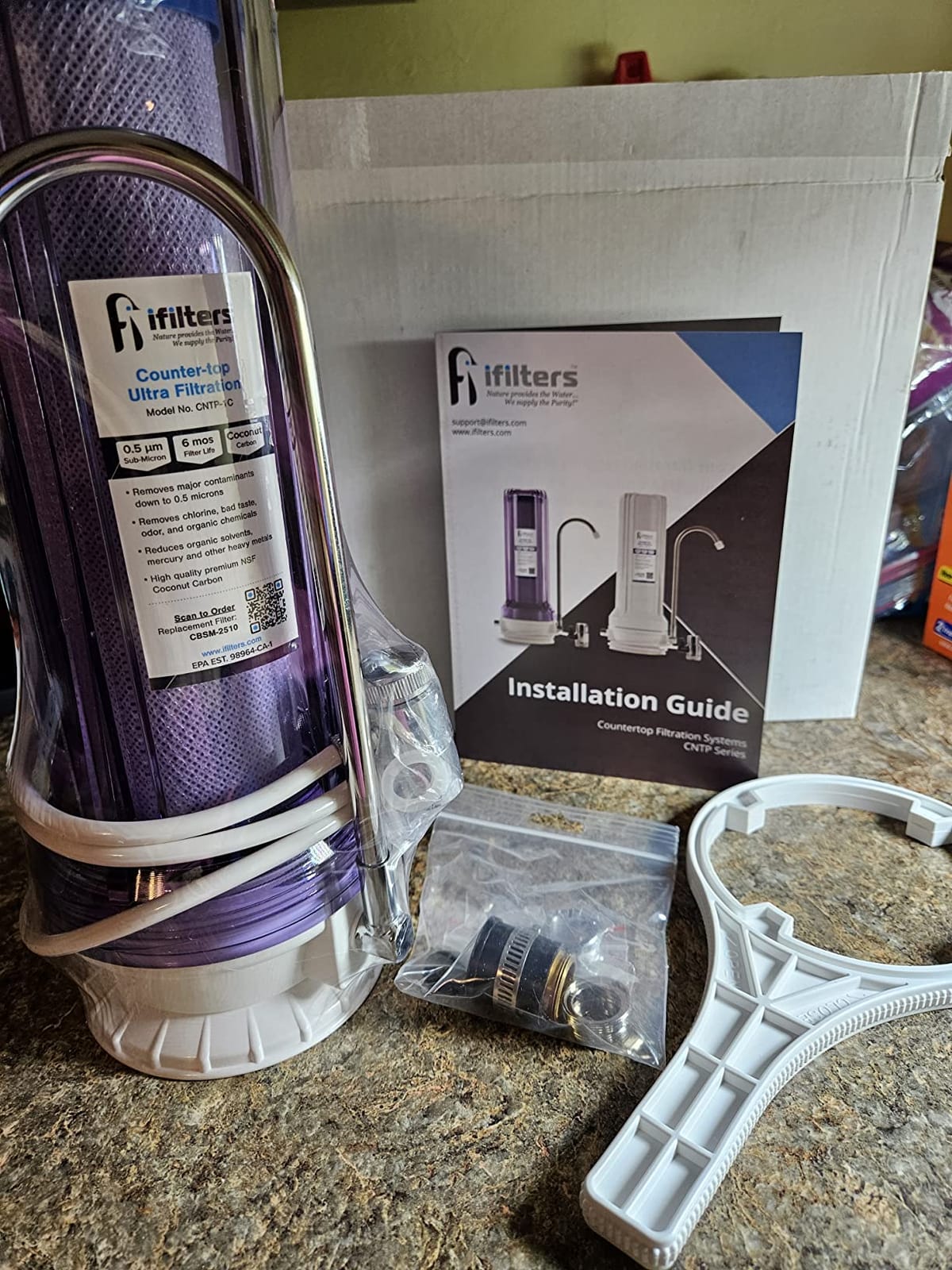
That standard cartridge format is a quiet advantage over the closed systems. Owners swap in better universal 10-inch carbon blocks, and the clear housing means you can watch the cartridge darken as it captures rust and sediment, which is the most convincing filter-status indicator you can get.
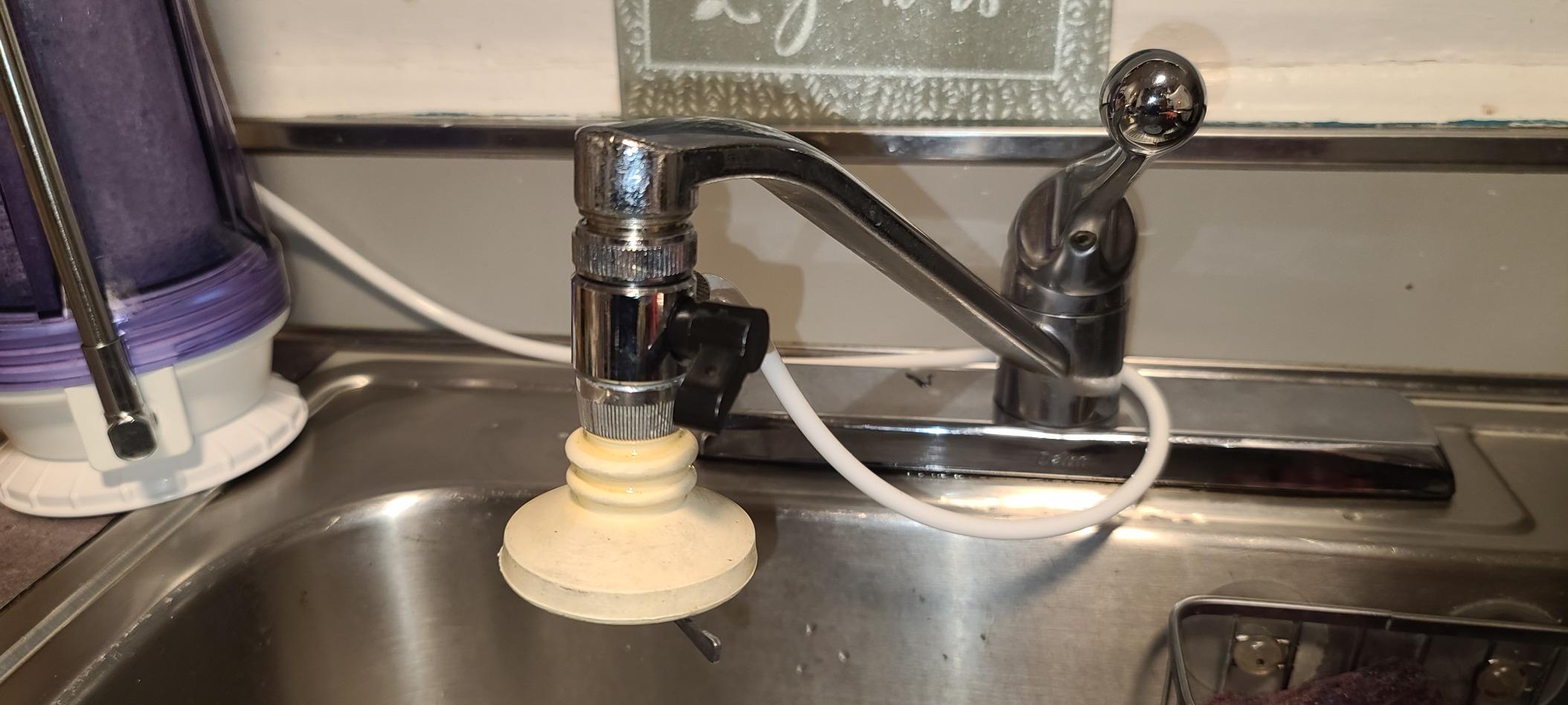
Installation involves no drilling, no permanent plumbing and no special tools. A faucet adapter with multiple thread sizes is included, and the brand states it fits most standard taps.
Where the speed actually shows up
Every other unit here is a gravity pour or a slow electric pump. This one runs at something close to tap speed, which is why owners report using it for coffee, tea, ice and cooking water as well as drinking. If your complaint about a filter is that filling a bottle takes an age, this is the answer in this roundup.
It also handles sediment well. Reviewers mention heavily chlorinated water and rusty water specifically, and describe pulling out a visibly discoloured cartridge after a few months, which is a good sign the media is doing its job.
What it cannot do, plainly
It does not reduce total dissolved solids. The manufacturer states this directly: it improves taste, odor, VOCs, cysts, chemicals and sediment, and reverse osmosis is required for TDS reduction. If lead or PFAS in dissolved form is your concern, this is not the unit.
Two mechanical caveats. The housing is hard to unscrew once it has been tightened, especially on hard or hot water, and a wrench is included for that reason. And it has to sit beside the sink, which is where the premium counter space is. You also need some confidence working with faucet adapters rather than a single fitting.
10. Aigerri 5-Stage Countertop RO with UV: a 5-litre feed tank and UV
Aigerri Countertop Reverse Osmosis Water Filter, 5-Stage RO Water Filtration System with UV, 5:1 Pure-to-Drain Ratio, No Installation Required, Portable Water Purifier for Home, Kitchen, Office & RV
5L feed tank plus 2L purified tank
7.4 x 16.2 x 16.4 inch
5:1 pure-to-drain
UV stage
Pros
- Reviewers measure TDS falling from 350-400 to 17-28 ppm
- 5:1 pure-to-drain ratio
- Plug-and-play with no installation
- 5L feed tank
- no setup steps
- Support resolves issues with replacement units
Cons
- Tank valve leaks reported within months
- Some units report a false lack-water error
- Troubleshooting links point to a different model
- Needs a power outlet
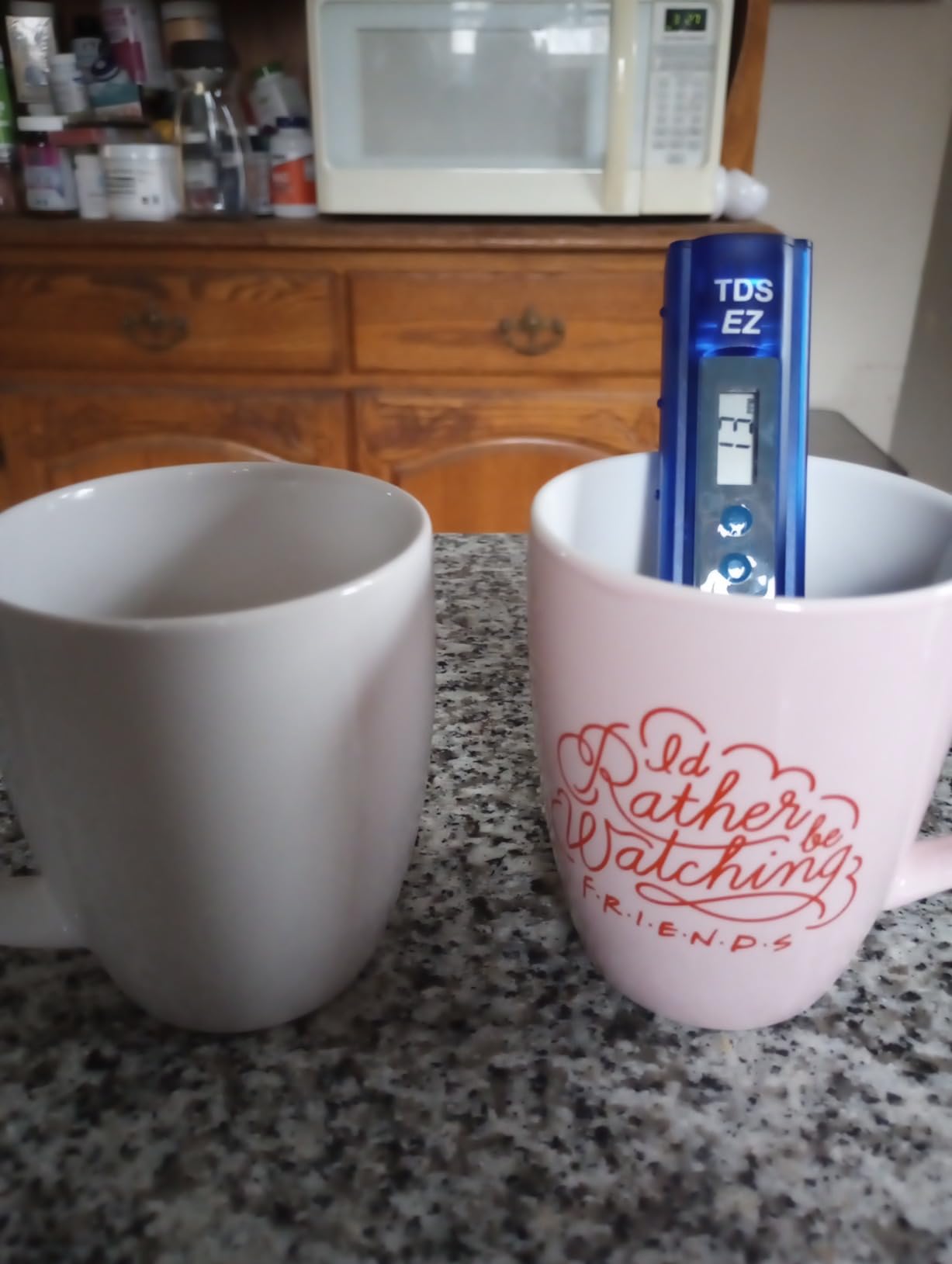
The Aigerri is the one in this roundup where buyers post the clearest numbers. Reviewers measuring with their own meters report tap water at roughly 350 to 400 ppm dropping to 17 to 28 ppm after filtration, which is a dramatic and independently visible result rather than a packaging claim.
It runs five stages of RO with UV purification and a 5:1 pure-to-drain ratio, which is the most water-efficient ratio among the RO units here. The 1 PPC filter and 1 RO filter provide up to 529 gallons of purified water, and the 5-litre feed tank feeds a separate 2-litre purified water tank.
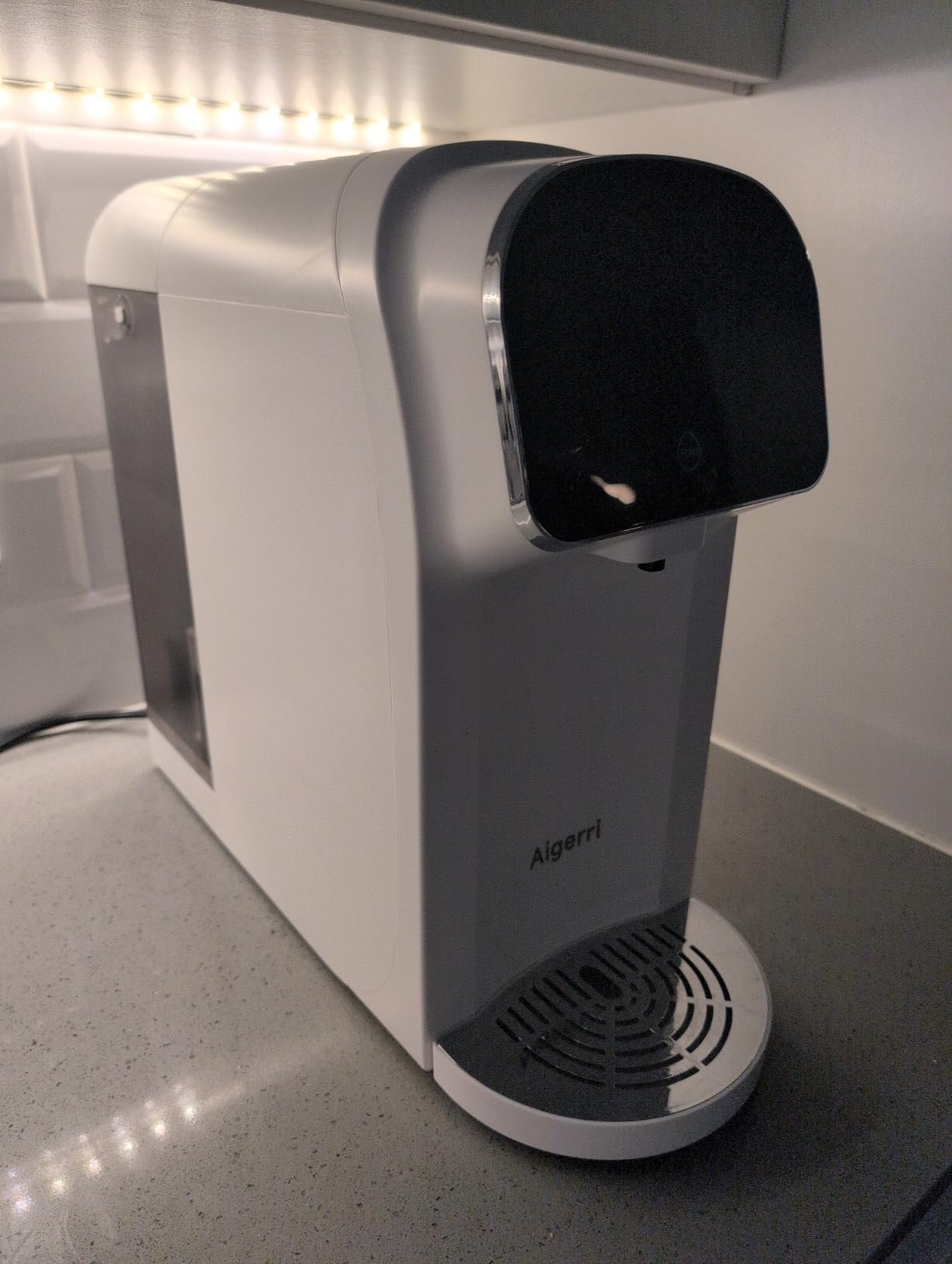
Dispensing is by volume, with small, medium and large options, so you are not holding a button down for a full glass. Setup is genuinely plug-and-play: fill the tank, plug in, and the unit is running. For a rental or a short-term apartment, that removes every installation question.
Why the 5-litre feed tank is the point
Small tanks are the reason countertop RO ownership fades. With a 5-litre feed and a 2-litre purified tank, you can fill two large bottles and a carafe before going back to the sink, which suits a couple or a shared kitchen better than a 1.3-gallon reservoir.
Support is also worth noting. Several reviewers describe Aigerri replacing whole units and tanks when things go wrong, which partly offsets the thinner review record.
The durability questions
With 343 reviews at 4.1 stars, this is the least-proven unit in the roundup, and the specific complaints are about plumbing inside the machine rather than filtration. Several owners report leaking from the two valves where the tank connects to the unit within a few months, and some units stopped dispensing with a false lack-of-water error after about two and a half months.
There is also a support snag worth knowing: the troubleshooting links on the listing point to an under-sink model rather than this unit, and one listed support address contains a typo. The unit requires a power outlet. If you are comfortable with a shorter record in exchange for verified filtration results, it is a reasonable pick; if you want years of feedback, the Bluevua or the SimPure have deeper histories.
How to choose a countertop water filter for an apartment
Eight criteria decide this purchase in a rental. Work through them in order and the shortlist usually drops to two units.
1. Confirm zero-drill, zero-plumbing setup. Every unit here qualifies, but confirm the connection method. Faucet-fed units need an adapter that fits your tap, and the mismatch is the single most common unpacking complaint in renter threads. Pour-in dispensers and tank-fed RO units have no connection problem at all, because you just fill them at the sink.
2. Measure the space, including the lid. Check counter depth, the vertical gap under cabinets, and whether a 20-inch-tall unit is acceptable to live beside your coffee maker. The Aigerri needs 22 inches of clearance when open and the Culligan stands 19.8 inches. If your kitchen is galley-style, the iFilters at 6.49 by 5 by 13 inches is the realistic shortlist.
3. Pick a contaminant target before a technology. Chlorine taste and odor, sediment, and rust are carbon-block problems, and a 0.5-micron block or a standard carbon pitcher handles them. Lead, PFAS and dissolved solids need more: ion exchange, or a reverse osmosis membrane. Buying a carbon unit hoping it addresses lead is the most common expensive mistake in this category.
4. Read the certification, not the count. NSF/ANSI 42 certifies taste and odor, which is a cosmetic standard. NSF/ANSI 53 certifies reduction of health-related contaminants. NSF/ANSI 58 is the standard for reverse osmosis systems. The units in this roundup carry a mix: IAPMO certification for the PUR and the Culligan, SGS testing to NSF/ANSI 58 for the SimPure and the DREO, NSF 42 and 372 for the Waterdrop cartridge, and NSF-certified materials for the iFilters. A phrase like removes 1,000 contaminants with no third-party certifier behind it is the thing to discount, and this is precisely the scepticism that shows up in the r/BuyItForLife discussions Google cites.
5. Know what the filter will not remove. Gravity carbon dispensers do not lower dissolved solids, and the Brita, Waterdrop and PUR will not strip minerals. Carbon block does not address dissolved lead or PFAS. No countertop unit without UV addresses microorganisms reliably. If you have a specific worry, match the technology to it rather than assuming more stages means more coverage.
6. Work out cost per gallon before you commit. Take the cartridge price and divide by the rated gallon life, then multiply by your household’s drinking and cooking water. A cheap unit with a short cartridge can cost more per gallon over three years than a more expensive unit with a long element, and ongoing cartridge cost is the single most common complaint in the community discussions we reviewed. Users accept a higher unit price far more readily than a high cost per gallon over years.
7. Check the pure-to-drain ratio if you are choosing RO. The units here range from 2:1 on the Bluevua to 5:1 on the Aigerri, with the SimPure at 4:1 and the DREO at 3:1. A 2:1 ratio sends two gallons down the drain per gallon purified. That is the number that shows up on a renter’s water bill, and it is worth comparing before you choose.
8. Plan the move-out. Unplug the unit, run the faucet for a minute to flush the line, dry the faucet threads, and return any adapter you removed. If you mounted anything with a removable suction base, take it with you and clean the surface. A gravity dispenser or a plug-in appliance lifts straight into a box. Photograph the counter and faucet before you set up, and again before you leave, so the deposit conversation is not a memory exercise. Keeping the original box makes all of it faster.
One more note on pairing. A common pattern in the forums is two units rather than one: a small fast unit near the sink for tea and coffee, and a higher-capacity unit for drinking and cooking volumes. It costs more up front and it solves two different constraints at once.
Frequently Asked Questions
Do I need a water filter in my apartment?
You need one if your tap water tastes of chlorine or metal, if you are in a building older than the 1986 lead-pipe cutoff, or if you are buying bottled water regularly. If your municipal supply already tests clean and the taste is fine to you, a filter is a taste and convenience upgrade rather than a safety requirement.
Do countertop water filters work?
Yes. They push or pull water through a sediment pre-filter, an activated carbon or ceramic cartridge, and in the reverse osmosis units a semi-permeable membrane, without any drilling or under-sink plumbing. What they remove depends entirely on the media inside, which is why certification matters more than the contaminant count on the box.
Can I install a countertop water filter without drilling?
Yes, that is the defining feature of every countertop design. Faucet-fed carbon blocks include a faucet adapter with multiple thread sizes, pour-in dispensers just get filled at the sink, and tank-fed reverse osmosis units plug into an outlet. No unit in this roundup needs a plumber.
What contaminants do countertop water filters remove?
Gravity carbon units target chlorine taste and odor, sediment, rust and some volatile organic compounds. Filters certified to NSF/ANSI 53 or IAPMO certified to reduce lead and Total PFAS, such as the Culligan in this roundup, address health-related contaminants. Only reverse osmosis units lower total dissolved solids, and only units with a UV stage address microorganisms.
How often do I change a countertop water filter?
Pour-in carbon cartridges are typically rated at 40 to 200 gallons or about two months, the iFilters carbon block at roughly six months, the Berkey element pair at up to 6000 gallons, and the Bluevua cartridges at 12 to 24 months. Treat the rating as a ceiling rather than a schedule, and change early if flow drops or your own TDS reading climbs.
How much water does a countertop filter waste?
Only reverse osmosis units waste water, and the pure-to-drain ratio tells you how much. The Bluevua runs 2:1, the DREO 3:1, the SimPure 4:1 and the Aigerri 5:1, where a higher number is more efficient. Gravity and carbon units send no water to a drain at all.
The best countertop water filter for your apartment
The best countertop water filters for apartments come down to one honest question: what is your water actually doing wrong. If it is chlorine taste and sediment, the Brita X-Large 27 Cup Dispenser is the pick, because its 4.5-star average rests on 17k+ customer reviews, the largest review base in the group, and it needs nothing but a faucet to work. If it is dissolved solids and you will use an outlet, the Bluevua RO100ROPOT takes the top spot for filtration quality with its glass carafe, remineralization stage and filter-life display.
Work within a narrower set and the choice is easier still. The iFilters CNTP-1C is the pick for a kitchen where counter space is the real problem, the Big Berkey is the answer when no outlet is available, and the Culligan ZeroWater 40-Cup is the one worth owning in an older building where lead and PFAS are the concern rather than taste.
Whichever you choose, check the faucet adapter, measure the vertical clearance, work out the cartridge cost per gallon, and take the unit with you when you move. Updated for 2026, and written to be read before you buy rather than after.