
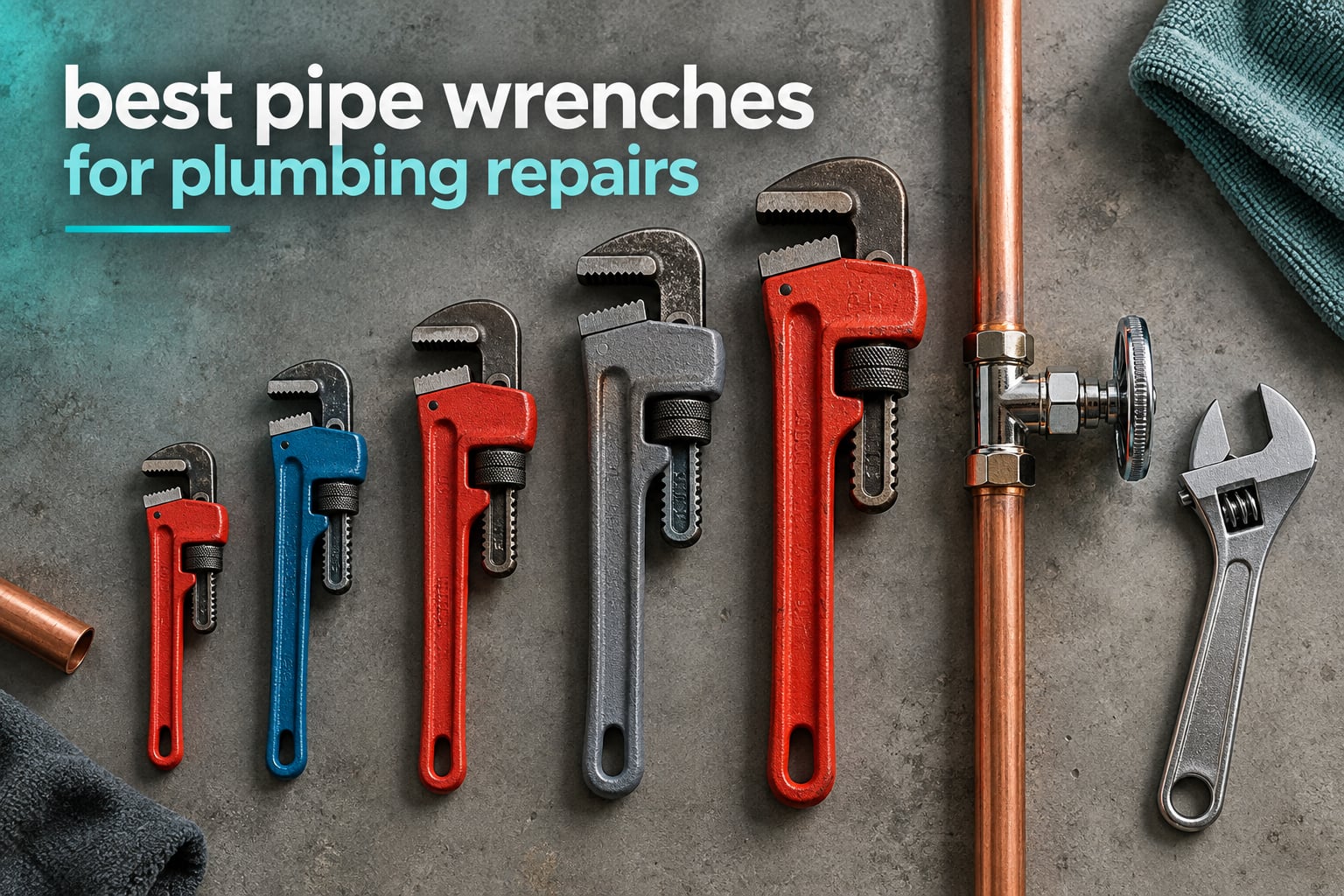
The best pipe wrenches for plumbing repairs are the ones that match the fitting in front of you, not the biggest one on the shelf. A pipe wrench is the only common hand tool with angled serrated jaws that bite harder the harder you pull, which makes it the only realistic way to grip a round supply line or a seized threaded fitting. Get that wrong and the wrench slips, rounds the fitting, and turns a fifteen minute job into a replacement job you did not plan for.
We spent weeks working through this roundup on copper, galvanized steel and cast iron, in basements, under sinks and behind toilets, comparing every pick on grip, reach and weight. The results surprised us in one direction: sizing and jaw pattern decide almost everything, and brand matters far less than most roundups claim. Our number one pick is the RIDGID 31305, a cast iron hex jaw wrench that handles unions and packing nuts that ordinary serrated jaws chew up.
This guide is written for US homeowners and DIYers doing real repairs, plus anyone who wants one good wrench instead of a drawer of mediocre ones. We cover straight, offset and cheater patterns, explain the difference between pipe, adjustable and basin wrenches, and finish with the two wrench technique that keeps copper and chrome unmarked. All picks were current for 2026.
Table of Contents
Top 3 Best Pipe Wrenches for Plumbing Repairs (October 2026)
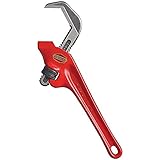
RIDGID 31305 Hex Jaw Wrench
- Hex jaw grips unions and packing nuts
- Offset thin jaws reach tight spaces
- 2-5/8 inch pipe capacity
- Cast iron rated to 150 ft-lb

RIDGID 31095 14 Inch Aluminum
- Forged alloy steel hook jaws
- Self-cleaning replaceable jaw parts
- 2 inch pipe capacity
- 2-1/2 lb aluminum body

DURATECH 10 Inch Aluminum
- Aluminum body about 40 percent lighter
- Drop-forged CR-MO steel floating jaw
- Slim head for overhead work
- Replaceable jaw components
Best Pipe Wrenches in 2026: Quick Comparison
Every wrench below is listed with the spec that actually decides the purchase: handle length, jaw capacity and what the jaws are made to grip. Read the capacity column against the pipe in front of you before anything else.
| Product | Specifications | Action |
|---|---|---|
| RIDGID 31305 Model E-110 9.5 Inch Offset Hex Jaw |
|
Check Latest Price |
| RIDGID 31095 Model 814 Aluminum 14 Inch |
|
Check Latest Price |
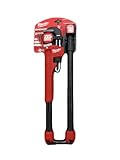 Milwaukee 48-22-7314 CHEATER Adaptable Milwaukee 48-22-7314 CHEATER Adaptable |
|
Check Latest Price |
| DURATECH 10 Inch Aluminum Straight |
|
Check Latest Price |
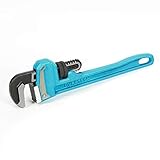 DURATECH 8 Inch Heavy Duty DURATECH 8 Inch Heavy Duty |
|
Check Latest Price |
 Performance Tool W1133-18B 18 Inch Performance Tool W1133-18B 18 Inch |
|
Check Latest Price |
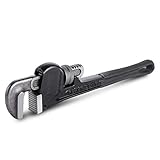 Mr. Pen PW10 10 Inch Forged Steel Mr. Pen PW10 10 Inch Forged Steel |
|
Check Latest Price |
 DURATECH 9-1/2 Inch Hex Offset DURATECH 9-1/2 Inch Hex Offset |
|
Check Latest Price |
1. RIDGID 31305 Model E-110 Hex Jaw Pipe Wrench – Best Overall for Unions and Valves
RIDGID 31305 Model E-110 9.5″ Offset Hex Jaw Pipe Wrench, Red, Made in The USA
Cast iron body
Hex jaws for unions and packing nuts
2-5/8 inch capacity
150 ft-lb rated
Pros
- Hex jaw gives a secure multi-sided grip on unions and valve packing nuts
- Thin offset jaws reach tight confined spaces
- Wide jaw clears pipe up to 2-5/8 inch
- Lifetime warranty and made in the USA
Cons
- Hex jaw is purpose-specific and not a general round pipe wrench
- Offset geometry reduces leverage compared with a straight pattern
This is the wrench we reach for first, and it earned that place in the most unglamorous way possible. On a corroded angle stop under a bathroom sink, the serrated jaws on a standard pipe wrench chew the chrome packing nut into a faceted mess. The hex jaw on the 31305 closes around that same nut on six flat faces and turns it.
The body is cast iron and the manufacturer rates it to 150 ft-lb of torque, which is more than most residential work asks for. It weighs about 0.1 kg, so it stays comfortable in one hand for a long job.
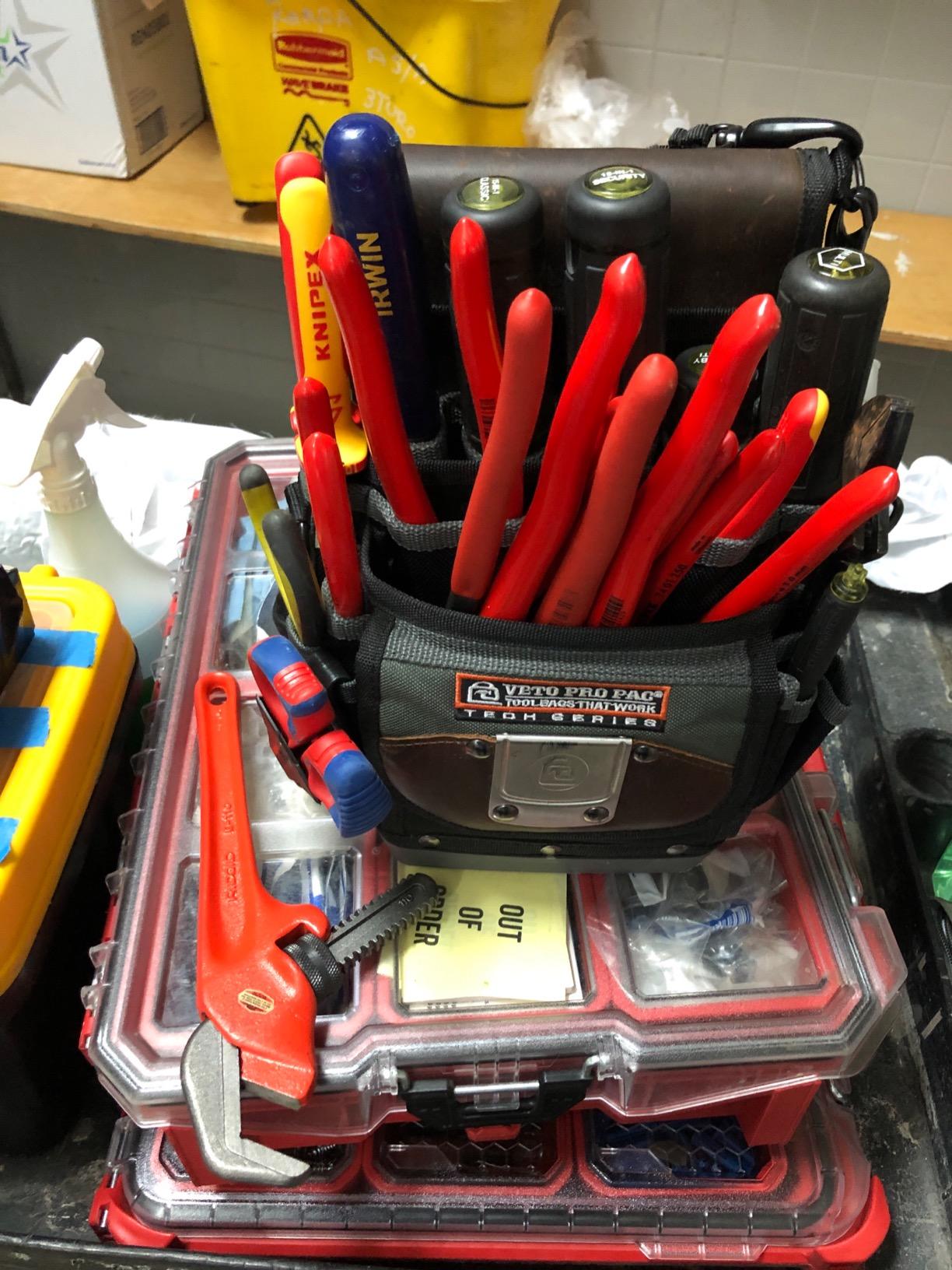
What surprised me was the reach. At 9.5 inches with offset jaws, it slides into the narrow gap between a valve and a wall where a straight wrench simply will not fit, then opens wide enough to take 2-5/8 inch of pipe capacity. That combination covers supply valves, unions and packing nuts across most of a house.
RIDGID covers this with a lifetime warranty against material and workmanship defects for the life of the tool, and it is made in the USA. Reviewers consistently return to the hex jaw as the reason it does not slip when the teeth of a conventional wrench would.
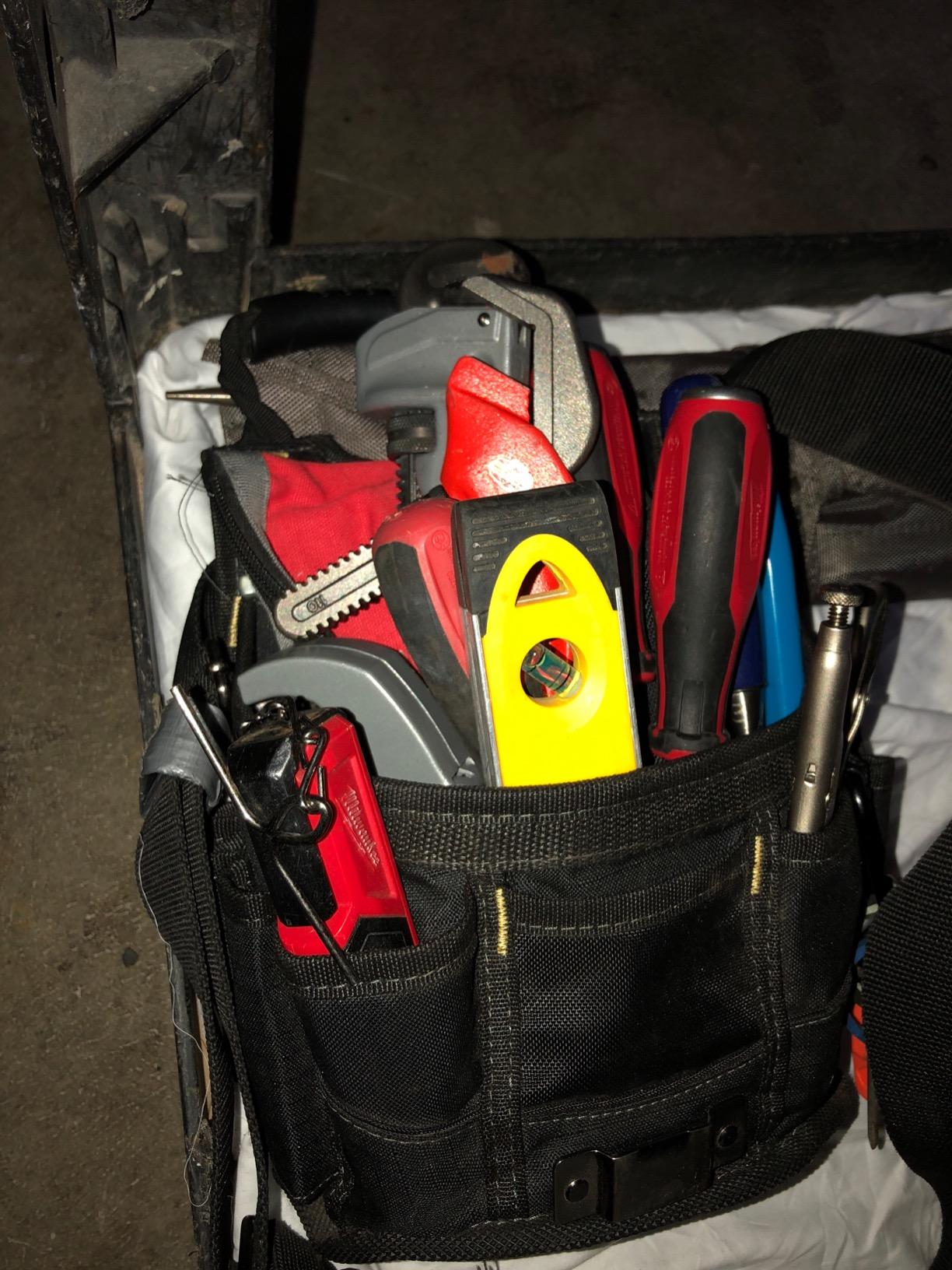
Why this wrench earns the top spot
Most pipe wrench failures are grip failures, not strength failures. A wrench that holds a hex nut without chewing it removes the single most common reason a repair turns into a bigger repair.
It also handles square nuts and unions, which widens the list of jobs one tool covers. For a homeowner replacing shut-off valves, that versatility matters more than raw torque.
Where it falls short
If your job is round pipe work, this is the wrong tool. The hex jaw has no serrations to bite into a smooth copper or galvanized line, and it will slide.
The offset angle also places more of the jaw away from the work than a straight pattern does, so for maximum turning force on a large seized nut a straight 14 inch wrench gives you a better mechanical advantage.
2. RIDGID 31095 Model 814 Aluminum 14 Inch Pipe Wrench – Best for Overhead Work
RIDGID 31095 Model 814 Aluminum Straight 14″ Plumbing Pipe Wrench, Silver, Made in the USA
14 inch aluminum body
2 inch pipe capacity
Forged alloy steel hook jaws
2-1/2 lb weight
Pros
- Forged alloy steel hook jaws with full-floating action grip without slipping
- Self-cleaning threads and replaceable jaw components
- I-beam aluminum handle is rigid and about 40 percent lighter than steel
- Lifetime warranty and made in the USA
Cons
- 2 inch capacity means larger fittings need a longer wrench
- Aluminum body dents more easily than an all-steel wrench if dropped
Ceiling access and crawlspace work is where weight decides the job. This wrench weighs 2-1/2 lb against roughly four for a steel model of the same length, and after twenty minutes of one-handed overhead work you can feel the difference in your shoulder.
It is a straight pattern, which means more of the wrench handle sits behind the pipe for leverage than an offset design gives you. That is why it is our pick for stubborn round supply lines rather than for cramped corners.
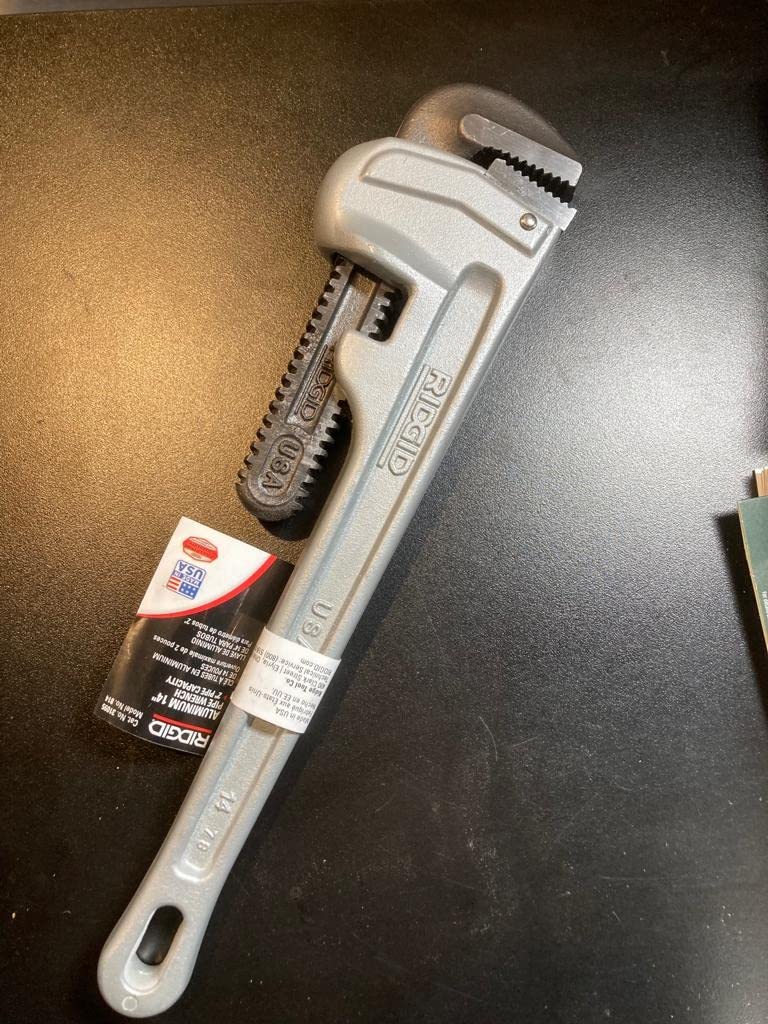
The jaws are forged alloy steel with a full-floating action, so they ratchet tight quickly as the wrench closes. The tooth profile is self-cleaning, which matters on galvanized and cast iron work where scale would otherwise pack into the serrations and kill the grip.
One detail that pays off years later: hook jaws, heel jaws and spring assemblies are all replaceable, so a worn tooth does not end the tool’s life. RIDGID backs it with a lifetime warranty, and it is made in the USA.
Where this wrench earns its keep
Two inch pipe capacity and a 14 inch handle cover the bulk of residential supply work: gate valves, ball valves, risers and supply lines in basements and crawlspaces. It is also light enough to use one-handed while supporting a length of pipe with the other.
For anyone doing repeated repairs, the replaceable jaw parts make this the cheapest long-term ownership in the roundup per hour of use.
Where it falls short
Aluminum is softer than steel. Drop this wrench from a ladder and the body can dent, and a dented body changes how the jaw sits against the pipe.
Two inch capacity is also a real limit on main supply lines and large gate valves. If your home has 2-1/2 inch galvanized mains or a pre-1970 cast iron system, step up to a longer wrench.
3. Milwaukee 48-22-7314 CHEATER Adaptable Pipe Wrench – Best for Seized Fittings
Milwaukee 48-22-7314 CHEATER Adaptable Pipe Wrench
Three lengths in one tool
Alloy steel construction
Dual coil springs
16 oz as configured
Pros
- One tool covers 10 inch 18 inch and 24 inch lengths
- Breaks loose seized galvanized fittings professionals depend on it for
- Ergonomic hook jaw releases from the workpiece easily
- Tether-ready handle loop suits work at height
Cons
- Heavier than a comparable straight wrench with weight in the head
- Oversized in full 24 inch configuration for ordinary domestic work
- One reviewer reports the spring mechanism underperforming
A stuck-on link, a frozen outdoor spigot, a gate valve that has not moved in twenty years. This is the wrench for jobs where a normal tool has already slipped twice, because the cheater pattern converts one motion into far more leverage than a straight wrench of the same length.
It configures to three lengths: 10 inch for tight spaces, 18 inch for general work, and 24 inch for maximum leverage and reach. Interchangeable handles let you collapse it back down to under 10 inches and still close around a 2 inch union.
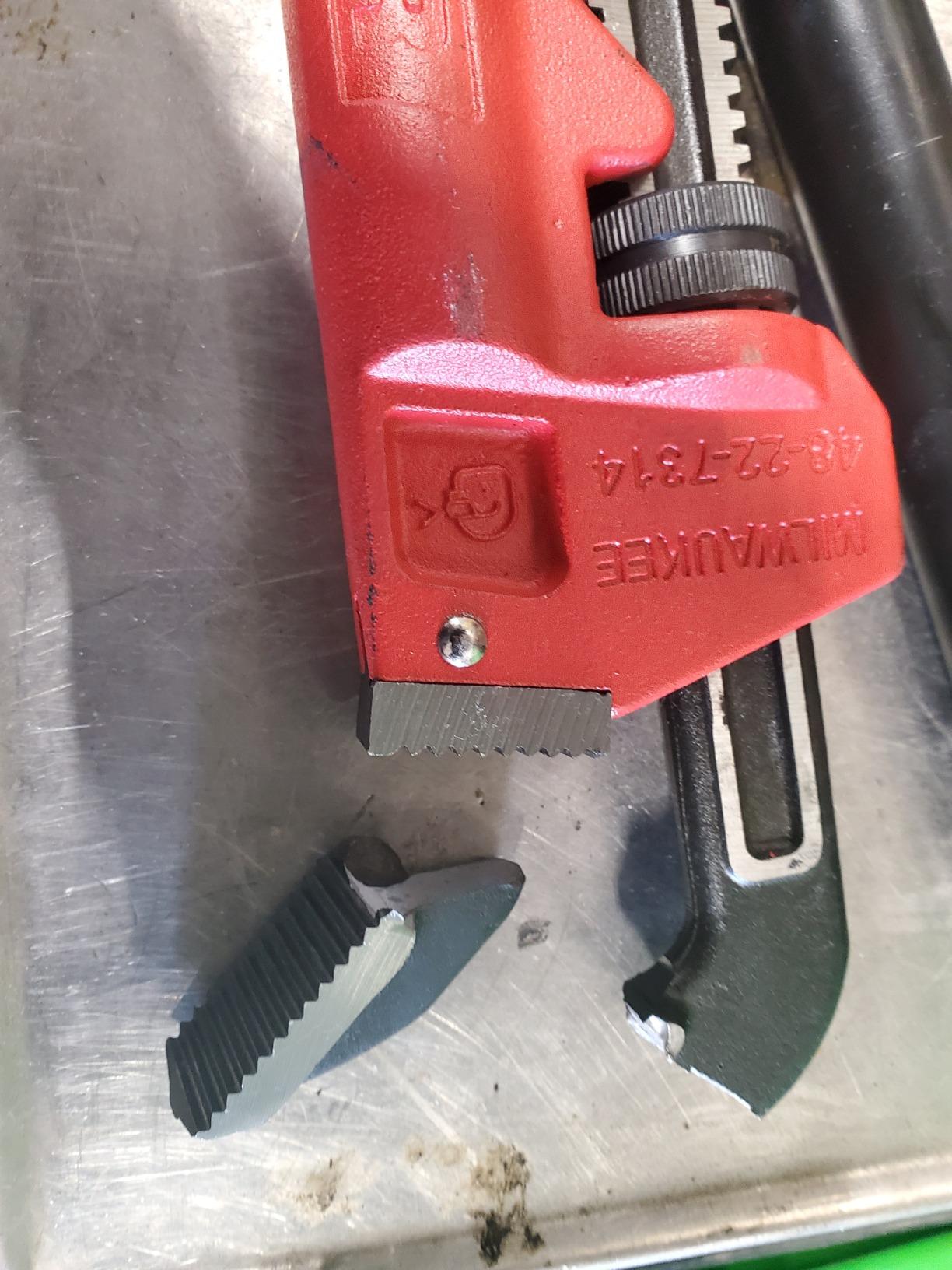
Plumbers and HVAC technicians who use it cite one behavior above all else: it breaks fittings free that lighter tools only polish. The cheater jaw geometry gets more bite per degree of rotation than a standard pattern.
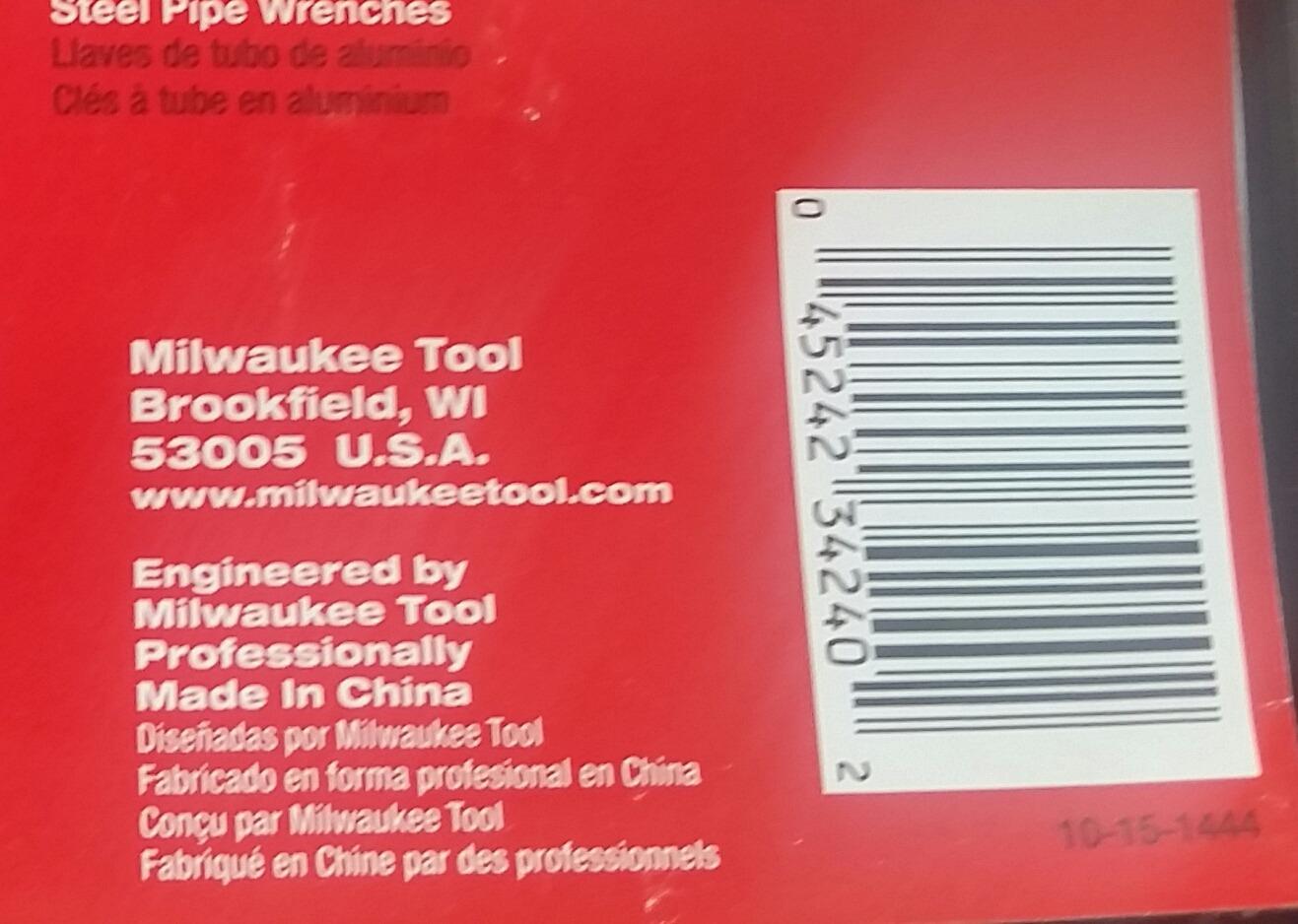
Build details are trade grade. Alloy steel construction, dual coil springs for durability and tool life, an ergonomic handle shaped not to dig into the palm, and a tether-ready loop for work at height.
When a cheater wrench is the right answer
Reach for it when the fitting has already defeated a straight wrench, when the pipe is frozen or seized in place, or when you need maximum torque on a large valve without carrying a 24 inch straight wrench.
Plumbers on plumbing forums describe it as a truck tool rather than a whole-house tool, and that is the honest framing. It solves hard problems and adds weight to every easy one.
Where it falls short
The weight sits in the head, which makes it tiring over long sessions and noticeable overhead. Compared with a straight wrench of the same length it is the heavier option in hand.
In its full 24 inch configuration it is oversized for ordinary domestic supply work, where maneuvering in a cabinet or under a sink becomes awkward. A minority of owners also report the spring mechanism not performing as advertised.
4. DURATECH 10 Inch Aluminum Straight Pipe Wrench – Best Value
DURATECH 10-inch Aluminum Straight Pipe Wrench, Adjustable Plumbing Wrench
Aluminum body and alloy steel jaw
10 inch slim profile head
0.49 kg
CR-MO drop-forged floating jaw
Pros
- Most reviewed wrench in the group with 2479 reviews
- Aluminum body is about 40 percent lighter than steel at the same size
- Drop-forged heat-treated CR-MO floating jaw resists distortion
- Slim 10 inch head reaches tight and overhead spaces
Cons
- Aluminum body dents more easily than cast iron or steel
- Some owners report the adjustment nut and finish needing attention sooner
- Rating sits half a point below the top-rated tools here
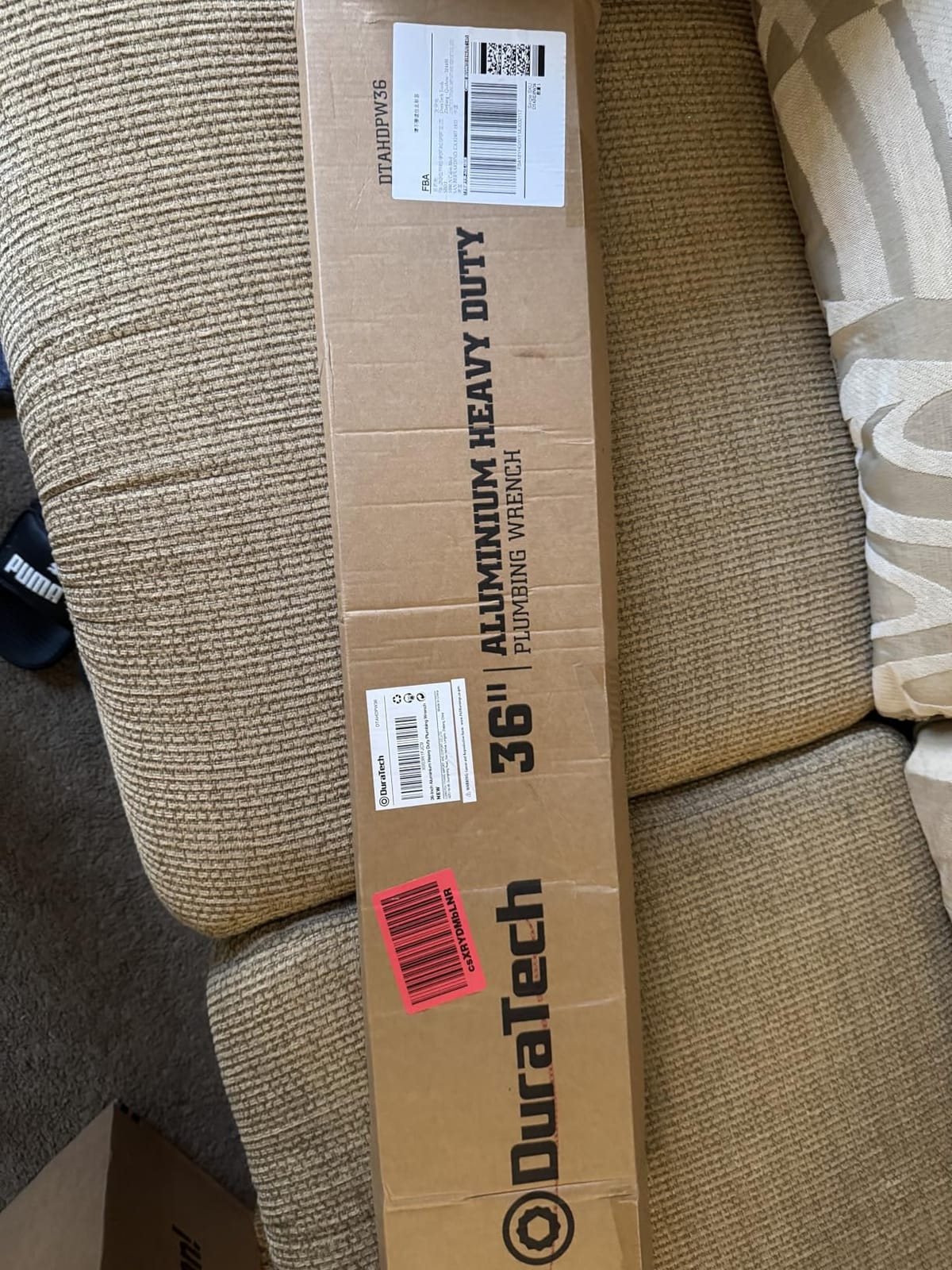
Rating 4.5 across 2479 reviews makes this the most thoroughly owner-tested wrench in the group, and it ranks first in the Pipe Wrenches category on Amazon. For a first serious pipe wrench it is hard to argue with the value.
The jaw is drop-forged and heat-treated CR-MO steel, which is the same material language premium brands use. It floats, so it ratcheting tight quickly against the pipe rather than biting in one slow crawl.
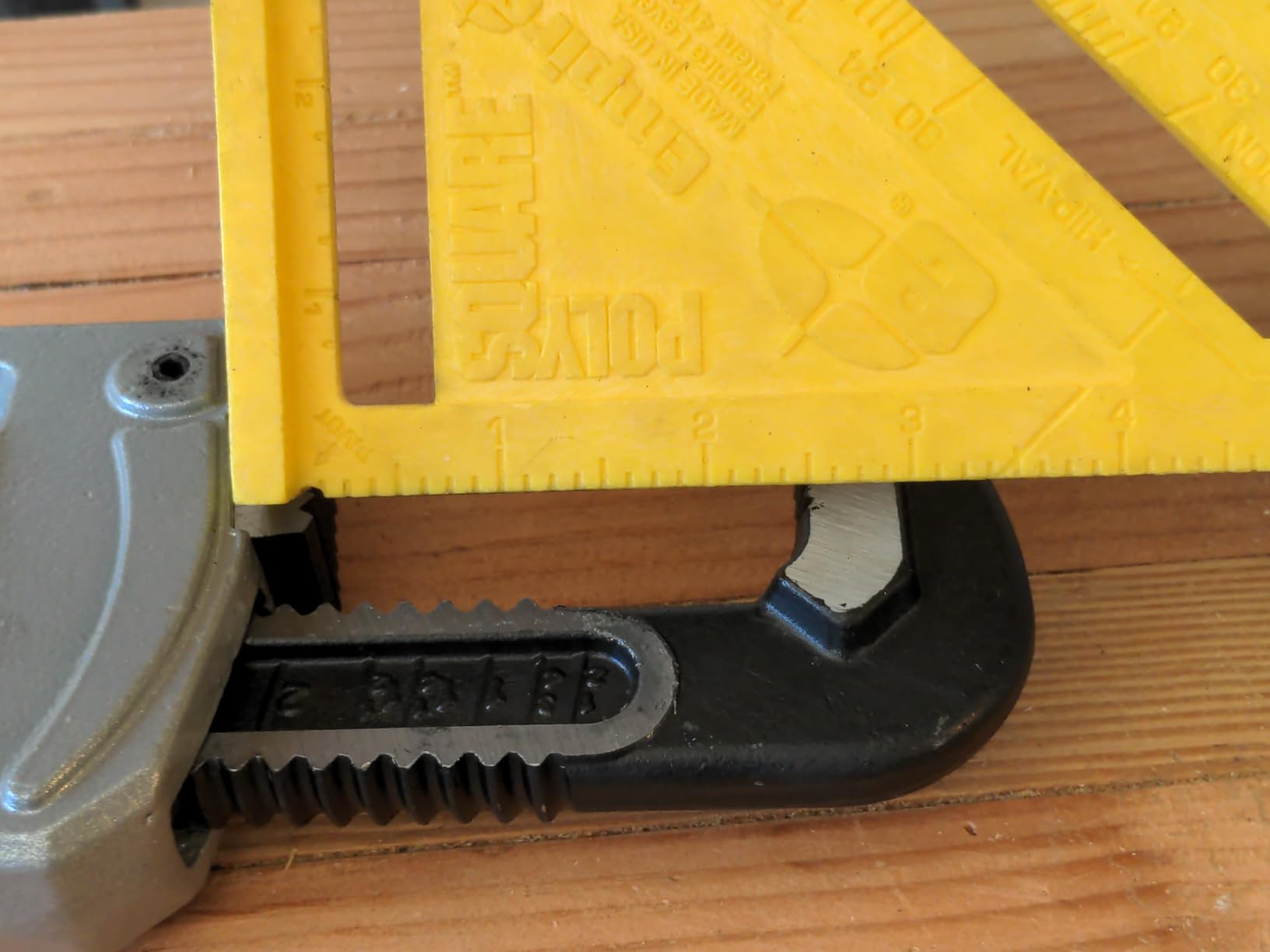
At 10 inches with a slim profile head, this is the wrench that fits between a sink trap and the wall or reaches up into a ceiling cavity without a fight. The wide I-beam handle spreads weight for one-handed operation.
Maintenance details are unusually good at this tier. The knurled adjustment nut is non-stick, the threads are self-cleaning, and the hook jaw, heel jaw and spring assembly are all replaceable parts rather than sealed components.
Why this is the best value pick
Owners describe it as a solid lightweight wrench that handles most household and light-trade plumbing jobs, which is precisely the category most readers fall into. It sits in the Pipe Wrenches category at number one.
Multiple straight and offset sizes exist in the same tool line, so owning two of them does not mean owning two unrelated tools.
Where it falls short
The aluminum body is the weak point. It dents if you drop it, and the rating reflects a small but real share of complaints about durability at the finish and adjustment nut.
Its 4.5 average sits half a point below the top-rated tools in this roundup, which matters if you plan to work on seized galvanized fittings daily rather than a few times a year.
5. DURATECH 8 Inch Heavy Duty Pipe Wrench – Best for Tight Spaces
DURATECH 8-Inch Heavy Duty Pipe Wrench, Adjustable Plumbing Wrench
Cast iron body
8 inch length
1 inch pipe capacity
Drop-forged heat-treated steel jaws
Pros
- 8 inch size fits confined areas and small valves
- Cast iron body and drop-forged jaws survive harsh conditions
- Pipe diameter scale formed into the jaw arm speeds adjustment
- Light enough for one-handed use while feeling solidly built
Cons
- 1 inch pipe capacity limits it to small-diameter work
- Some owners find 8 inch too small for the fittings they need to turn
- Jaw adjustment can run loose with heavy use
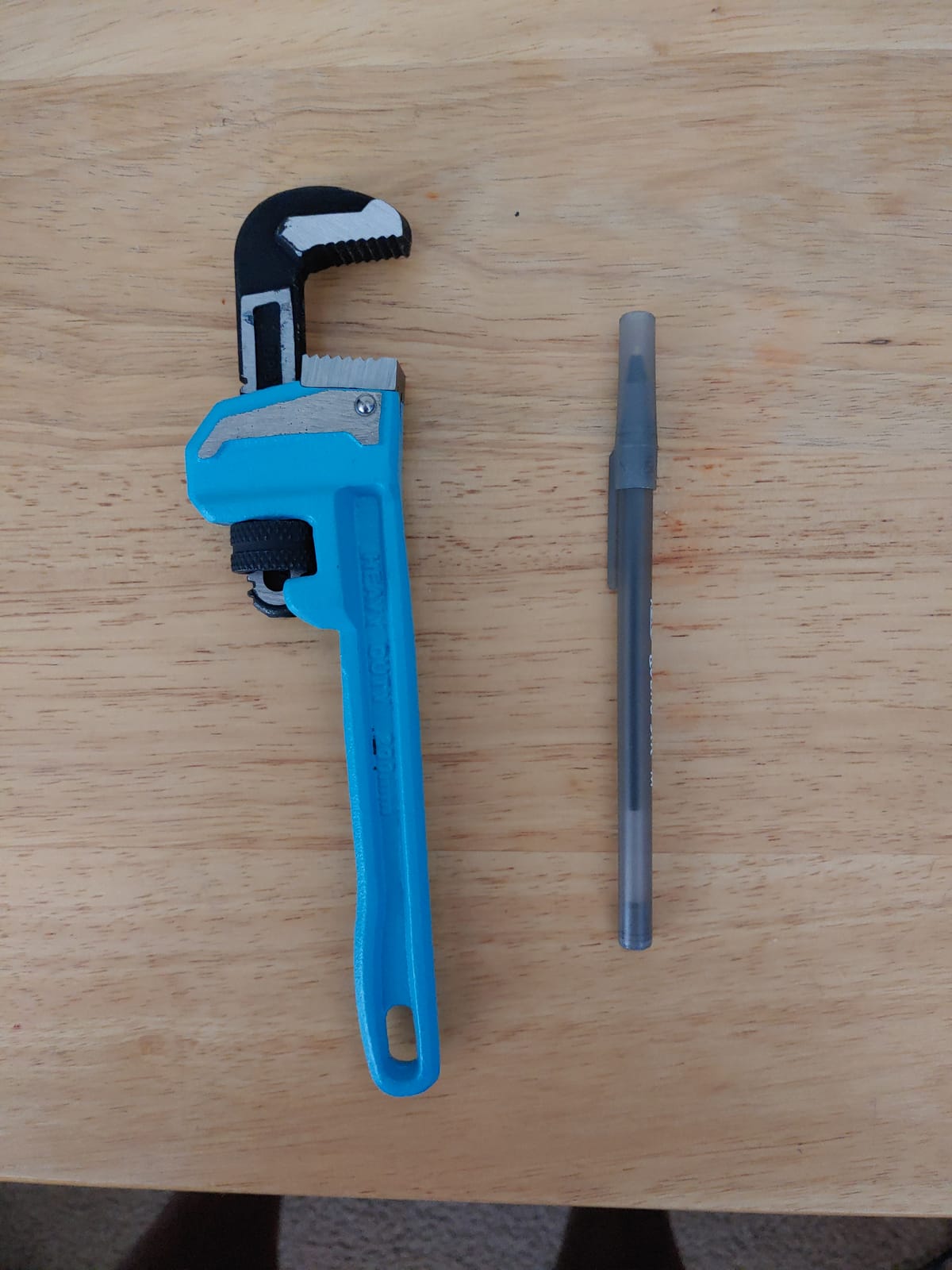
Behind a toilet, inside a utility closet, down in the cabinet where the drain enters the wall. This is the wrench for spaces where a 10 inch handle simply cannot rotate without hitting something.
Despite the compact 8 inch length, the build is cast iron with drop-forged, heat-treated steel jaws carrying sharp, high-hardness wear-resistant teeth. That is the same construction language used on full-size wrenches.
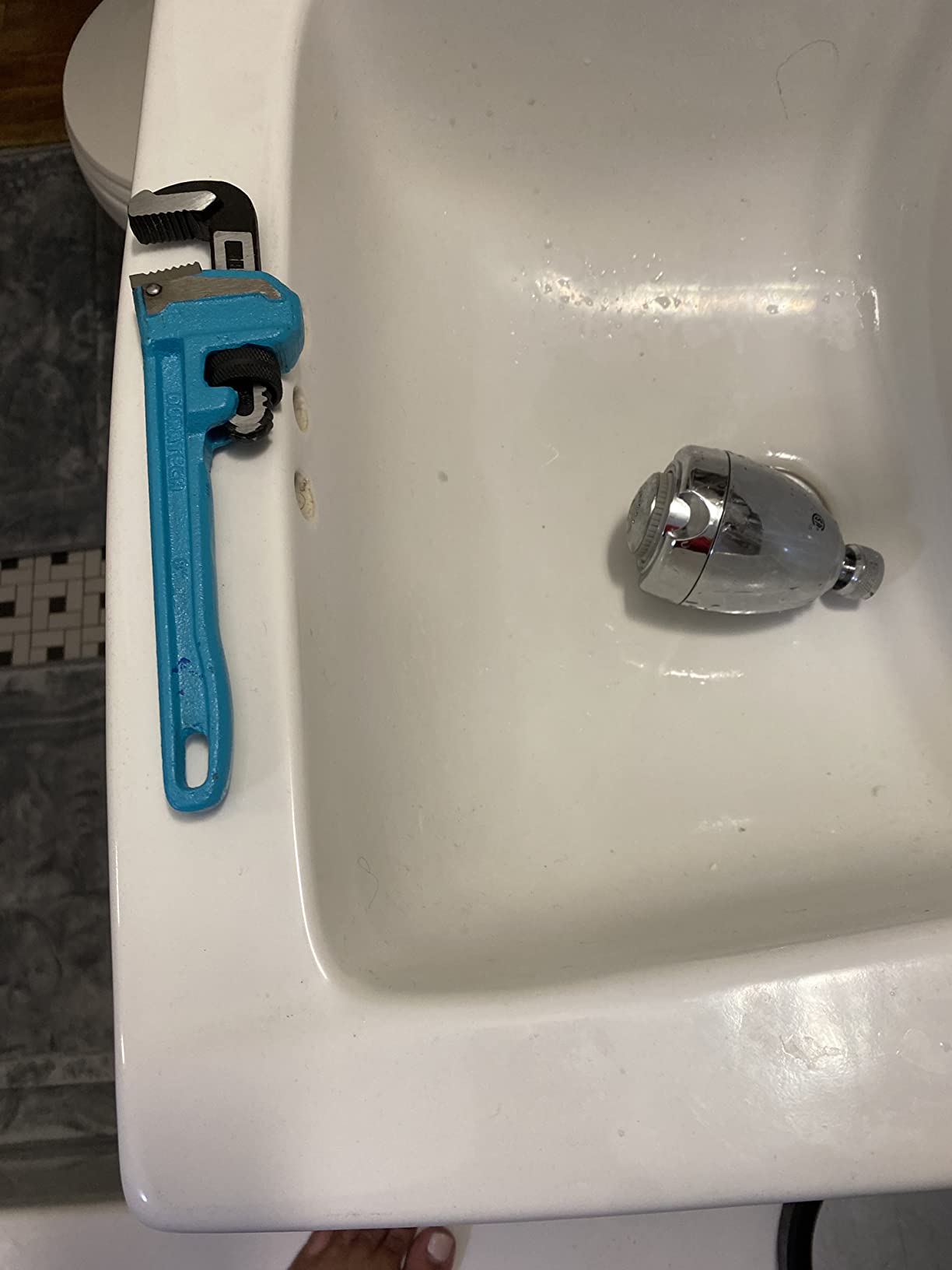
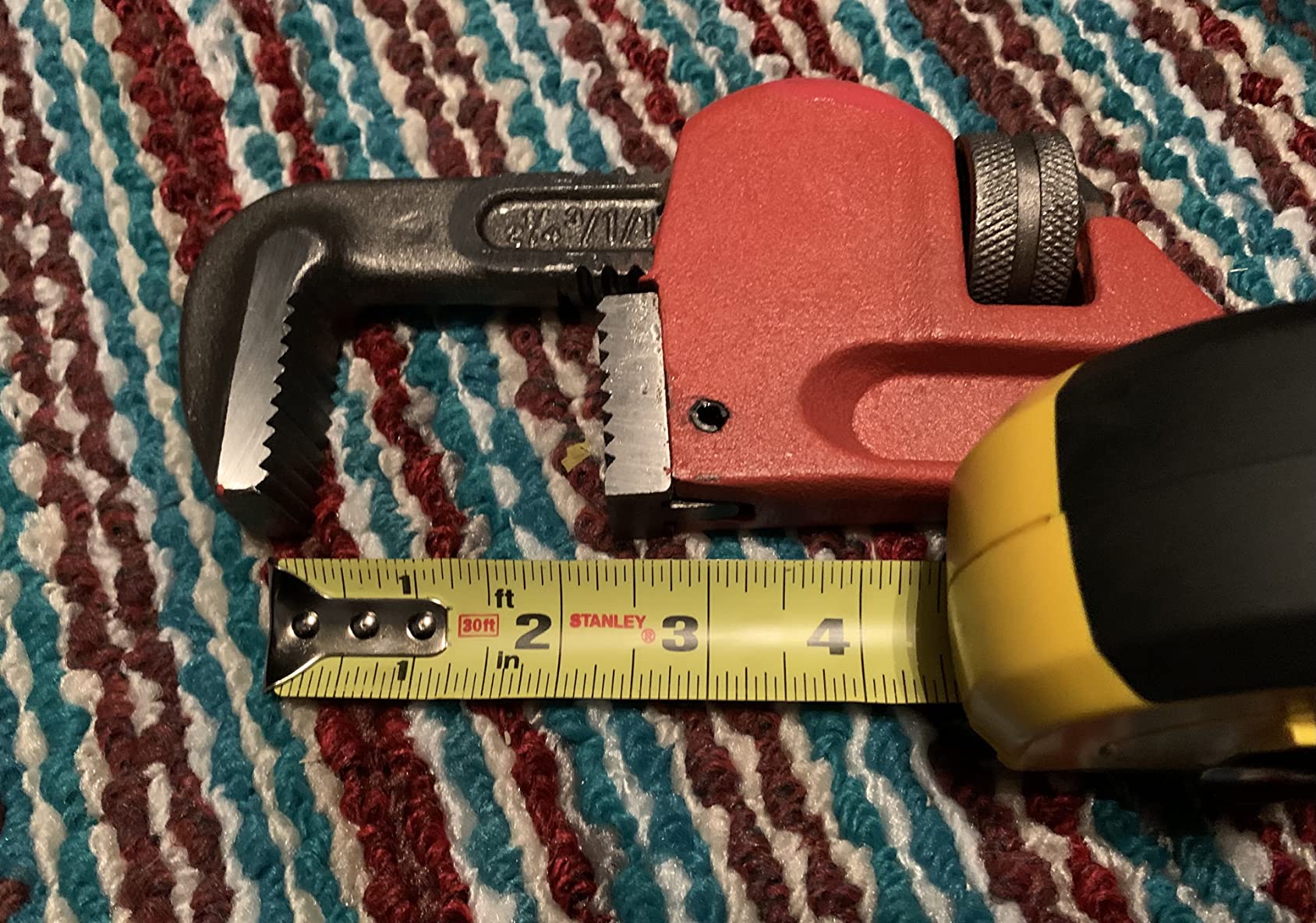
The feature we did not expect to care about is the pipe diameter scale formed into the hook jaw arm. In a dark cabinet it lets you set the opening by eye against a marked scale instead of guessing, which cuts the trial-and-error that wastes minutes on every fitting.
Like the rest of this tool line, the knurled adjustment nut is non-stick, the threads are self-cleaning, and the hook jaw, heel jaw and spring assembly are replaceable. There is a hang hole for pegboard storage.
Who should buy the 8 inch
Anyone with small-diameter work and confined access. Maintenance workers and plumbers use this size to break loose stuck drain and test valves where a longer handle cannot fit.
It pairs well with the 14 inch straight wrench in the same line. One covers the cramped quarter-inch and half-inch fittings, the other covers the leverage jobs.
Where it falls short
Pipe capacity runs from 1/8 inch to 1 inch, and that is the hard limit. Anything larger needs a different wrench regardless of how hard you pull.
A minority of owners report the jaw adjustment running loose after heavy use, and several simply find 8 inch too small for the fittings they actually work on. Check your pipe sizes before buying.
6. Performance Tool W1133-18B 18 Inch Drop-Forged Steel Pipe Wrench – Best for Main Supply Lines
Performance Tool W1133-18B 18 in. Red Drop-Forged Steel Pipe Wrench
18 inch drop-forged steel
Precision-milled jaws
2.2 lb
Enamel finish
Pros
- 18 inch length delivers strong leverage on large seized fittings
- Precision-milled drop-forged jaws grip work that other wrenches slip on
- Long-term owners report years of service with teeth still holding
- Handle weight distributes well for a two-handed pull
Cons
- Limited warranty instead of a lifetime warranty
- Some units arrive with loose adjustment and unfinished metal
- One reviewer reports teeth breaking at normal torque
Eighteen inches of handle is the single biggest mechanical advantage you can add without reaching for a larger wrench. On a main shut-off, a large gate valve, or galvanized pipe that has welded itself in place through corrosion, length is the answer.
The jaws are precision-milled and drop-forged from steel, with an enamel paint finish for corrosion protection. It weighs 2.2 lb, which is manageable for a wrench this long.
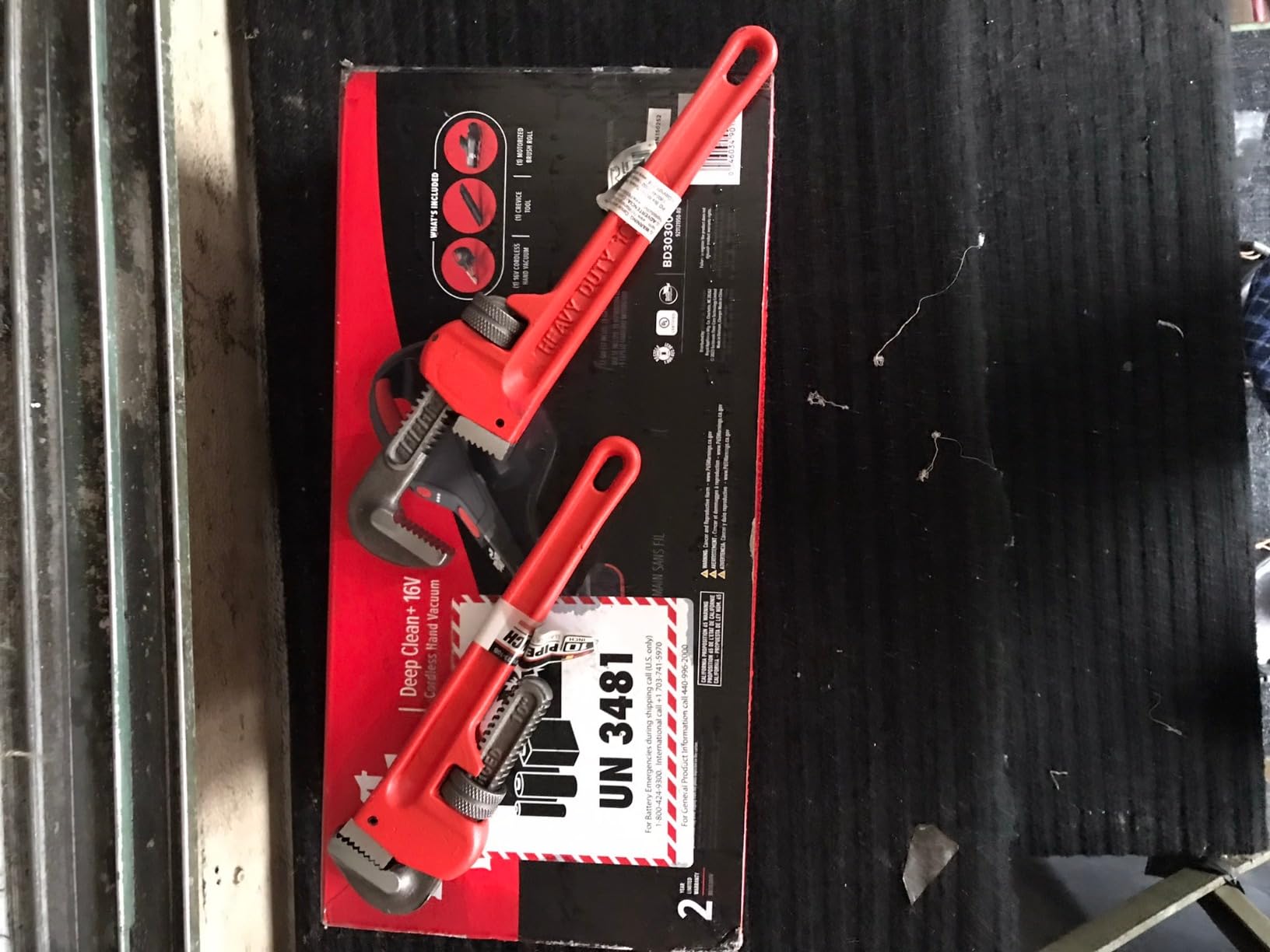
Long-term owners in this roundup report several years of service with the teeth still holding, and they credit the milled tooth profile for gripping flats that smoother jaws skate off.
The same product line is available from 8 to 36 inches, which is useful if you later find yourself needing more reach rather than a different style of wrench.
When length beats everything else
Older homes with galvanized supply lines or cast iron drainage are the classic case. Those fittings corrode in place, and the torque needed to break them free comes from handle length, not from grip strength alone.
Main supply lines and large gate valves are the second case. This wrench is built for them and is the least likely tool here to snap under a hard two-handed pull.
Where it falls short
The warranty is limited rather than lifetime, and not every variation in the line is made in the USA. That is a fair trade for reach, but worth knowing.
Some buyers report arriving units with loose adjustment and grimy metal that transfers to the pipe during use, and one reviewer reports teeth breaking at normal torque. Inspect the wrench before you rely on it on a seized fitting.
7. Mr. Pen PW10 10 Inch Forged Steel Pipe Wrench – Best Budget Pick for First-Time Buyers
Mr. Pen 10-Inch Pipe Wrench – Robust and Reliable for Any Pipe Work Task
Forged steel construction
10 inch length
0.63 kg
Adjustable jaw with precision teeth
Pros
- Forged steel construction at the lowest price point in this roundup
- Compact 10 inch size stores easily in a toolbox or tool bag
- Non-slip ergonomic handle holds grip in wet or oily conditions
- Adjustable jaw covers a range of common pipe sizes
Cons
- Lower average rating than the other wrenches in this group
- Tooth and jaw durability trail professional-grade tools under heavy torque
- Lightweight feel next to steel wrenches of similar length
This is the pick for someone who owns no pipe wrench at all and wants to handle a dripping supply line this weekend. It is forged steel, not stamped plate, and it is the least expensive tool in this roundup.
The handle is described as non-slip and ergonomic, which matters more than it sounds: supply lines under a sink are routinely wet, and a slick handle with a round fitting is how people injure their hands.
What works about it
Owners treat it as a capable tool for routine DIY and light service work rather than a throwaway. The adjustable jaw changes between common pipe sizes quickly, and the 10 inch length carries in a small tool bag.
The precision tooth design gives real gripping power for the fitting sizes most household jobs involve, and 71 percent of its owners rated it five stars.
Where it falls short
Its 4.3 average is the lowest here, and 6 percent of reviewers gave it one star. Tooth and jaw durability trail drop-forged professional-grade tools when you put heavy torque through them.
Plumbers on forums make a fair point about cheap wrenches on a pressurized line: a jaw that slips is an inconvenience, but a jaw that breaks on a live line is a safety problem. Use it on isolated or drained plumbing.
8. DURATECH 9-1/2 Inch Hex Offset Wrench – Best for Unions in Awkward Spots
DURATECH 9-1/2 inch Hex Offset Wrench, Hex Pipe Wrench, CR-V Hook Jaw
Cast iron body
9-1/2 inch offset
2-5/8 inch capacity
Chrome vanadium hook jaw
Pros
- Hex jaw mirrors the classic RIDGID pattern at a lower cost
- Chrome vanadium hook jaw outgrips an adjustable wrench on the same size
- Offset thin jaws reach fittings in tight awkward spots
- Cast iron body with a wide I-beam handle takes rough use
Cons
- Hex jaw is specialized and not suited to round pipe work
- Heaviest-feeling wrench in the group at 1.7 lb for 9-1/2 inch
- Fewer owners and reviews than the straight models
This is the budget answer to the top pick, and it borrows the same idea. A hex jaw closes on the six flat faces of a union or packing nut instead of serrating it, and the chrome vanadium hook jaw holds more than an adjustable wrench of the same size.
The offset, thin profile is what makes it useful in places a straight wrench cannot reach. Pipe capacity runs from 1-1/8 inch to 2-5/8 inch, matching the coverage of much larger wrenches.
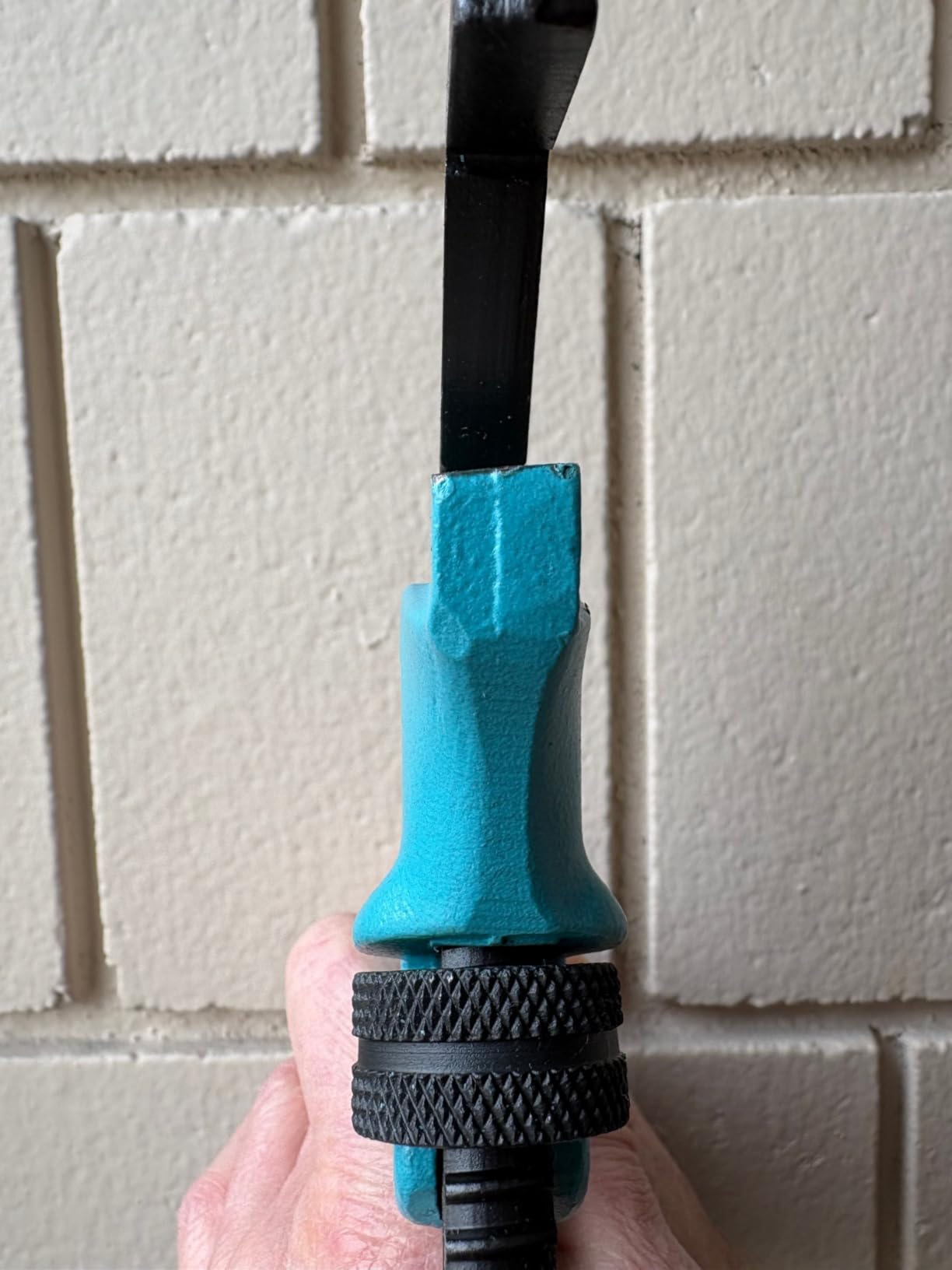
Owners like the cast iron body and wide I-beam handle for rough use, and the bright blue powder coat is genuinely useful at three in the morning when you need to find the wrench in a bag full of tools.
It is available as a single or a two-pack, which is a reasonable way to cover a basement and a service van at once.
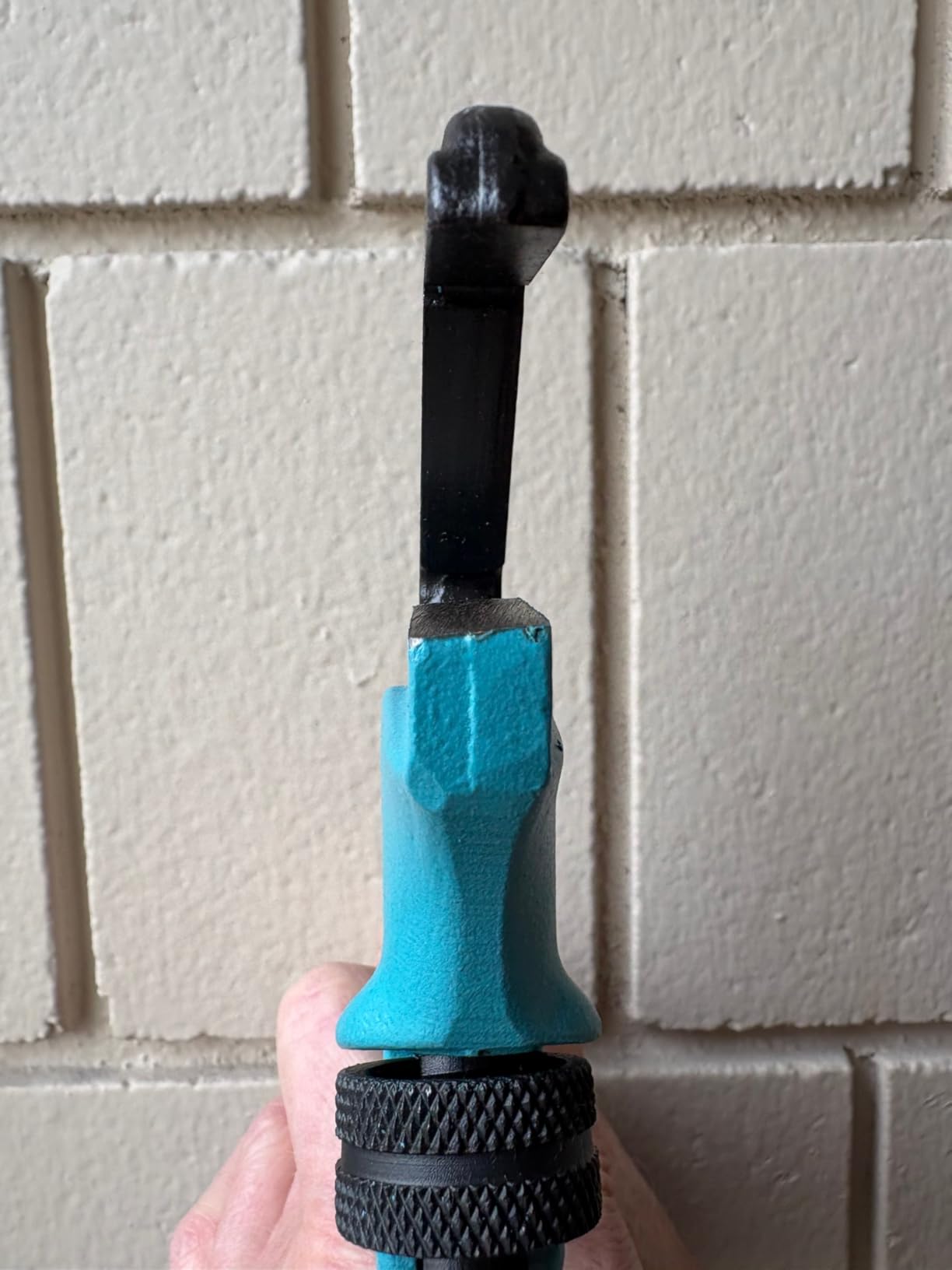
Who should buy this instead of the RIDGID
If you want the hex jaw idea without the top-ticket spend, this covers the same unions and packing nuts at a fraction of the outlay. For a first hex jaw wrench it is the sensible choice.
It is also the more compact of the two at 9-1/2 inches, which helps in the awkward corners a 14 inch wrench cannot reach.
Where it falls short
At 1.7 lb it is the heaviest-feeling wrench in this roundup for its length, and you feel that overhead.
The hex jaw is specialized, so round pipe work still needs a straight serrated wrench. With 275 reviews the owner base is also far smaller than the straight models, so long-term data is thinner.
What Size Pipe Wrench Do I Need?
Most homeowners need a 14 inch straight model for general supply work plus a 10 inch model for under-sink and behind-toilet access. A 14 inch wrench typically covers pipe up to 2 inch diameter, which handles most residential valves, unions and supply lines. Add an 18 inch wrench only if you have galvanized or cast iron mains, and an 8 inch model if you work on smaller drain and test valves. Match jaw capacity to pipe diameter before anything else.
Two numbers cause most of the confusion. Handle length is how much leverage you get, and jaw capacity is how wide a pipe the wrench can open around. They are separate specs, and a 10 inch wrench with a wide jaw opening still has the leverage of a 10 inch wrench.
If you remember one rule, it is this: buy the longest wrench the space allows, then use a second wrench to hold the pipe. A long wrench on a cramped fitting does more damage than a short wrench used correctly.
Pipe Wrench Buying Guide: Six Specs That Matter
Body material sets the character of the tool. Drop-forged steel and cast iron are the traditional choices: heavy, tough, and dent resistant. Aluminum bodies with an I-beam handle weigh roughly 40 percent less than comparable steel models, which is the difference between finishing an overhead job and cramping on it.
Jaw pattern decides what you can actually turn. Straight serrated jaws grip round pipe and threaded fittings and bite harder as you pull. Hex jaws close on flat faces, which makes them the right choice for unions, square nuts and valve packing nuts. Offset patterns angle the jaw away from the handle so you can reach fittings in tight corners. Cheater patterns convert more of your rotation into torque, which is how seized links get broken free.
Tooth quality and self-cleaning threads matter more than buyers expect. On galvanized and cast iron work, scale packs into serrations and quietly kills the grip. Wrenches with self-cleaning threads and replaceable hook jaws, heel jaws and spring assemblies stay sharp far longer, and replacement parts are the single most useful thing to check before buying.
Weight and balance decide whether you finish the job. Plumbers and HVAC technicians carry more than one wrench because different bodies suit different conditions. If you work overhead in a crawlspace or above a ceiling, aluminum is the better choice. If you work on seized galvanized mains, steel is the better choice.
Warranty and origin are the trust signals forums actually argue over. RIDGID covers its tools with a lifetime warranty against material and workmanship defects. Budget lines usually carry limited warranties, and country of manufacture varies even within one product line, so check the specific model rather than the brand.
Milwaukee or Ridgid: which brand should you buy?
Both build to a professional standard and both appear constantly on pro tool lists, so the decision is about the specific tool rather than the name. RIDGID leads on warranty coverage and on the hex jaw pattern for unions and packing nuts. Milwaukee leads on the cheater pattern, where the CHEATER 48-22-7314 gives you three handle lengths in one tool for breaking seized fittings free.
On forum threads, plumbers name both brands as favorites and also name Milwaukee, Irwin, Harbor Freight, Reed and Super Ego, which tells you there is no consensus winner to copy. Choose by pattern and size: straight serrated for round pipe, hex for unions, cheater for seized work, and match the handle length to the room you will be working in.
How much wrench do you actually need?
A budget wrench is a false economy only when you use it on a pressurized line or a seized fitting, because a slipping jaw becomes a safety issue rather than an annoyance. For occasional work on isolated plumbing, a budget steel wrench is a legitimate buy. For repeated repairs, a lifetime-warrantied aluminum wrench with replaceable jaw parts costs less per hour of use than replacing a cheap one every couple of years.
Pipe Wrench vs Adjustable Wrench vs Basin Wrench
The heuristic is short enough to memorize: round pipe gets a pipe wrench, flat fittings get an adjustable wrench. A pipe wrench has angled serrated jaws that bite into round surfaces and tighten their hold as you pull. An adjustable wrench has a smooth movable jaw that works on the flat faces of hex nuts and bolts, and it slides on a round fitting no matter how tight you set it.
That single difference explains the classic injury people report on forums. An adjustable wrench on a pressurized round line can slip off suddenly. The wrench whips, the line sprays, and the damage is to the person rather than the fitting.
A basin wrench is the third tool in this family and it answers a completely different problem. It has a swiveling, telescoping head designed specifically to turn the large nut on a faucet or sink trap from underneath the basin, in the space between the sink and the wall where your hand cannot fit. Plumbers often prefer channel-lock pliers over a basin wrench because a basin wrench can be awkward to apply in the tightest spots, which is worth knowing before you buy one.
Related reading: if the job turns from plumbing to fastening, our guide to the best torque wrenches covers the controlled-torque side, and our impact wrench picks cover the high-torque fastening side. For jobs that need cordless drive instead of a wrench, our cordless impact wrench roundup covers the battery-driven end of the range. None of them replaces a pipe wrench on round pipe.
How to Use a Pipe Wrench Without Damaging the Pipe
Use two wrenches, always. One wrench holds the pipe stationary, the second turns the fitting. The holding wrench should be an adjustable wrench on a hex section where possible, because the pipe supplies your counter-torque. Skip this step and every bit of force you apply to the fitting transfers into the pipe, which is how a supply line twists off inside the wall.
Position both wrenches so the fixed jaw faces the direction of force. A pipe wrench only grips effectively in one direction of pull, which is why you flip it over to reverse direction rather than repositioning the jaw. Set the wrench on the side where you are pulling so the teeth engage rather than skate.
Protect finished surfaces. Wrap chrome, polished brass and polished copper in a cloth or a folded rag before clamping, or use a strap wrench for surfaces that cannot be marked at all. Plumbers finishing visible work often reach for a Knipex pliers wrench with rubber protectors instead, and some prefer channel-lock pliers on finished trim for the same reason.
Increase force slowly. A pipe wrench tightens its own bite as you pull, so a fast yank grips harder and is far more likely to chew the fitting. On a seized fitting, use penetrating oil first, then work the wrench back and forth a few degrees at a time.
If a fitting is already rounded, stop using a pipe wrench on it. The teeth have nothing left to catch. A strap wrench, a basin wrench, or cutting the fitting off and threading a replacement in are the realistic repairs, and a wrench that keeps slipping only makes the damage worse.
Frequently Asked Questions
Which pipe wrench is better, a Milwaukee or a Ridgid?
Both are professional-grade choices, so pick by pattern rather than brand. RIDGID offers a lifetime warranty and a hex jaw model that grips unions and packing nuts without marking them. Milwaukee offers the CHEATER, which converts to 10, 18 and 24 inch lengths for breaking seized fittings. Choose straight serrated jaws for round pipe, a hex jaw for unions, and a cheater pattern for frozen or seized work.
What is the best size pipe wrench for home plumbing?
A 14 inch straight model covers most residential supply work and handles pipe up to 2 inch in diameter. Add a 10 inch model for under-sink and behind-toilet access. An 18 inch wrench is worth having only for galvanized or cast iron mains and large gate valves in older homes.
What is a basin wrench used for in plumbing?
A basin wrench turns the large nut on a faucet supply line or sink trap from underneath the basin, in the gap between the sink and the wall where your hand cannot reach. Its swiveling, telescoping head is the entire point. Some plumbers prefer channel-lock pliers because a basin wrench can be awkward to apply in very tight spaces.
Are cheap pipe wrenches worth buying?
For occasional work on isolated or drained plumbing, a budget steel wrench is a legitimate buy. The risk appears on pressurized lines, where a jaw that slips or breaks becomes a safety problem rather than an inconvenience. For repeated repairs, a wrench with replaceable jaw parts and a lifetime warranty costs less per hour of use over time.
Why do plumbers use two pipe wrenches?
One wrench holds the pipe, the second turns the fitting. Without the holding wrench, every bit of force you apply transfers into the pipe, which can twist it off inside a wall. Plumbers also position both wrenches with the fixed jaw facing the direction of pull, because a pipe wrench only grips effectively in one direction.
Why does my pipe wrench keep slipping?
The usual causes are a wrench that is too small for the pipe, scale packed into the serrations, or a fitting that is already rounded and has nothing left for the teeth to catch. Match jaw capacity to pipe diameter, clean the teeth, and use a strap wrench or replace the fitting if it is already rounded.
Which Pipe Wrench Should You Buy?
For most people reading this, the RIDGID 31305 Model E-110 is the right first buy. Its hex jaw grips unions, square nuts and valve packing nuts without chewing them, the thin offset jaws reach fittings a straight wrench cannot, and the lifetime warranty means a dropped tool is an inconvenience rather than an expense.
Add the RIDGID 31095 Model 814 if you want one general-purpose wrench for round pipe: the 14 inch aluminum body is light enough for overhead work and its forged alloy steel hook jaws do not slip on galvanized supply lines. Reach for the Milwaukee CHEATER only when a fitting has already defeated everything else you own.
Start with the pipe in front of you. Match the jaw capacity to its diameter, match the pattern to what you are turning, and hold the pipe with a second wrench. Those three decisions do more for the life of your repair than the brand on the handle.