
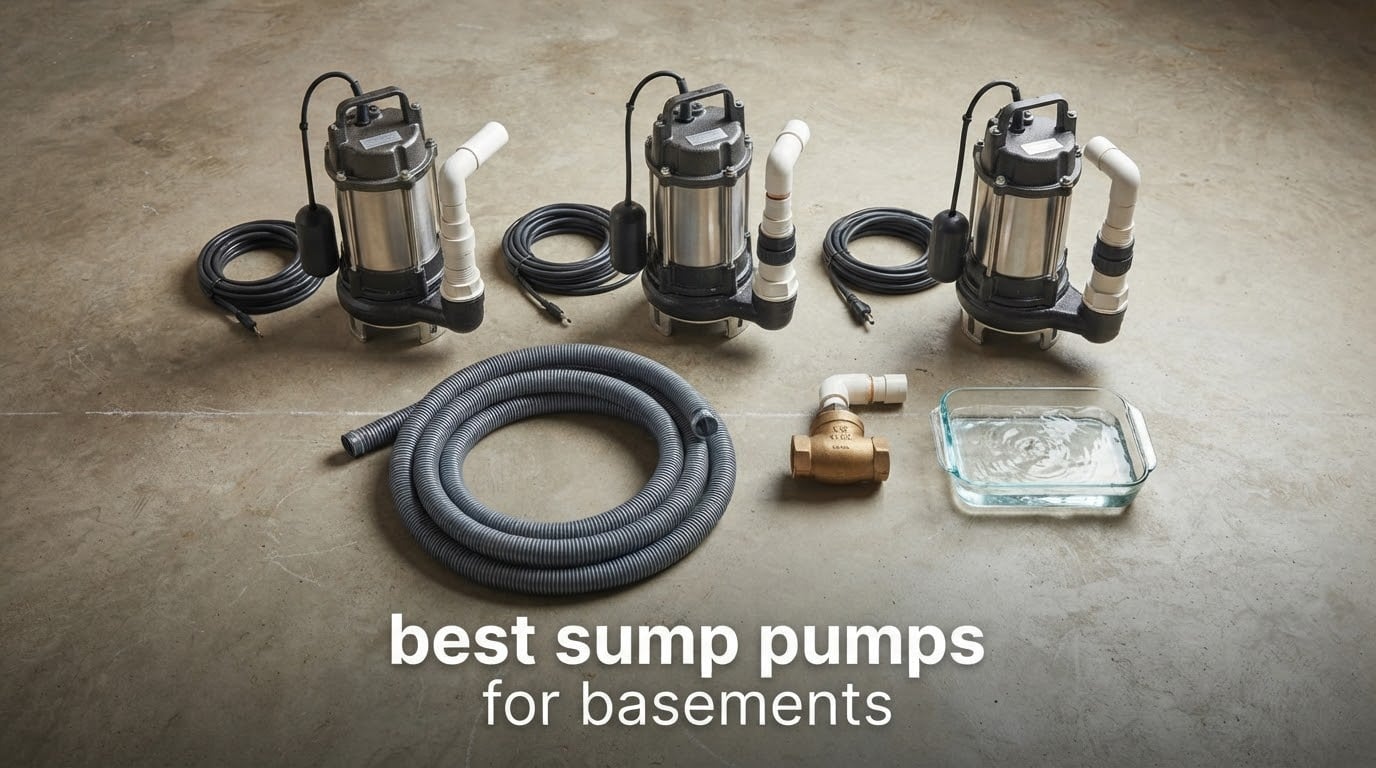
The sump pump is the least glamorous appliance in a basement and the one most likely to determine whether a storm is an inconvenience or a five-figure insurance claim. Groundwater and meltwater collect in the sump basin under the floor, a float switch detects rising water, and a pump pushes that water up and out through a discharge line to a dry well or storm drain. When that pump fails, the water does not wait for you to notice.
We spent the last several weeks working through the best sump pumps for basements that are actually sold to homeowners rather than the utility and effluent pumps that clutter most roundups. We read the spec sheets against real buyer reports, we paid attention to flow claims at real head height instead of the marketing zero-lift number, and we flagged the failure modes people actually experience: stuck floats, failed check valves, burned-out motors, and discharge lines that hammer at 2 a.m.
This guide covers twelve picks across the range, from a cast iron 1/3 HP workhorse for a typical basement to 3/4 HP and 1 HP models for high water tables, a pedestal pump for anyone who wants an adjustable float, and portable units for emergency drain-down. If you want the short version, our top pick below is the one we would put in our own pit. If you are still working out how much pumping capacity your basin needs, start with the sizing section near the end, because horsepower without head-height math is guesswork.
If you are comparing this list against another site, our broader sump pump roundup covers pump types we could not fit here.
Table of Contents
Top 3 Best Sump Pump Picks for Basements in 2026
Zoeller M53 Mighty-Mate
- 0.33 HP cast iron
- vortex impeller
- automatic float switch
- 19.25 ft lift

The Zoeller M53 takes the top spot because of the combination of rating, review volume, and construction details that matter in a wet pit. It is the model tradespeople name first on forums, and the vortex impeller plus cast iron housing are the two features that separate it from plastic pumps at similar horsepower.
The WAYNE CDU790 is the value pick. Owners report service lives measured in decades rather than seasons, the top suction design removes the weep hole step from installation, and the integrated vertical float fits pits where a tethered switch jams.
The WAYNE CDU980E takes the high water table slot. At 3/4 HP and 5490 GPH it has the capacity margin for a basement that fills fast in heavy rain, and the five-year warranty is the longest on this list.
All 12 Best Sump Pumps for Basements Compared (October 2026)
| Product | Specifications | Action |
|---|---|---|
| Zoeller M53 Mighty-Mate 1/3 HP |
|
Check Latest Price |
 WAYNE CDU790 1/3 HP WAYNE CDU790 1/3 HP |
|
Check Latest Price |
| WAYNE CDU980E 3/4 HP |
|
Check Latest Price |
 Superior Pump 92341 1/3 HP Superior Pump 92341 1/3 HP |
|
Check Latest Price |
 Prostormer 1 HP Prostormer 1 HP |
|
Check Latest Price |
 Zoeller M57 Mighty-Mate Zoeller M57 Mighty-Mate |
|
Check Latest Price |
 Little Giant 506158 1/3 HP Little Giant 506158 1/3 HP |
|
Check Latest Price |
 Superior Pump 92551 1/2 HP Pedestal Superior Pump 92551 1/2 HP Pedestal |
|
Check Latest Price |
 Liberty Pumps 237 1/3 HP Liberty Pumps 237 1/3 HP |
|
Check Latest Price |
 Zoeller M98 Flow-Mate 1/2 HP Zoeller M98 Flow-Mate 1/2 HP |
|
Check Latest Price |
 G green EXPERT Water Sensor Pump G green EXPERT Water Sensor Pump |
|
Check Latest Price |
 WAYNE WaterBUG WAYNE WaterBUG |
|
Check Latest Price |
Two things in that table deserve a note before the individual reviews. First, the GPH figures are zero-lift ratings, and the real number at your lift height is meaningfully lower. Second, three of these twelve are manual or portable units that earn their place as backups or emergency tools rather than as automatic primaries, and we have labelled them so you do not buy one by mistake.
1. Zoeller M53 Mighty-Mate – Best Overall Sump Pump for Basements
Zoeller M53 Mighty-mate Submersible Sump Pump, 1/3 Hp
0.33 HP
19.25 ft max lift
Vortex impeller
Cast iron housing
9 ft cord
Pros
- Automatic float-activated switch
- Non-clogging vortex impeller
- Cast iron motor and pump housing
- Stainless steel hardware
- LED power plug
Cons
- Heaviest 1/3 HP pick here at 21 pounds
- Only a 9-foot power cord
We put the M53 in first because it is the pump that comes up most often when homeowners and plumbers talk about reliability, and the spec sheet backs that reputation up rather than undercutting it. The motor, switch case and pump housing are cast iron, the impeller is a vortex design that passes debris without jamming, and the stainless hardware resists the corrosion that eats through fasteners in a permanently damp pit.
At 0.33 HP with a rated maximum lift of 19.25 feet, this is the right size for a typical American basement where the discharge line exits above the pit rim a few feet higher. Forum regulars repeatedly point to Zoeller as the brand professionals specify, and the M53 is the model most of those discussions are actually about.
The vortex impeller is the feature we would highlight to anyone buying this pump sight unseen. A standard closed impeller creates a suction vortex that can catch lint, pipe scale and small debris, and the failure shows up as a pump that runs but moves no water. The vortex geometry in the M53 keeps solids moving through the housing instead, which matters in pits where a weep hole in the lid collects grit and iron bacteria.
The LED power plug is a small thing that saves real troubleshooting time. When a pump fails to start, the first question is whether the receptacle has power, and a lit plug answers it in a second instead of dragging a multimeter into the pit. The switch is a conventional float-operated design that turns the pump on and off automatically, with no electronics to fail during a storm.
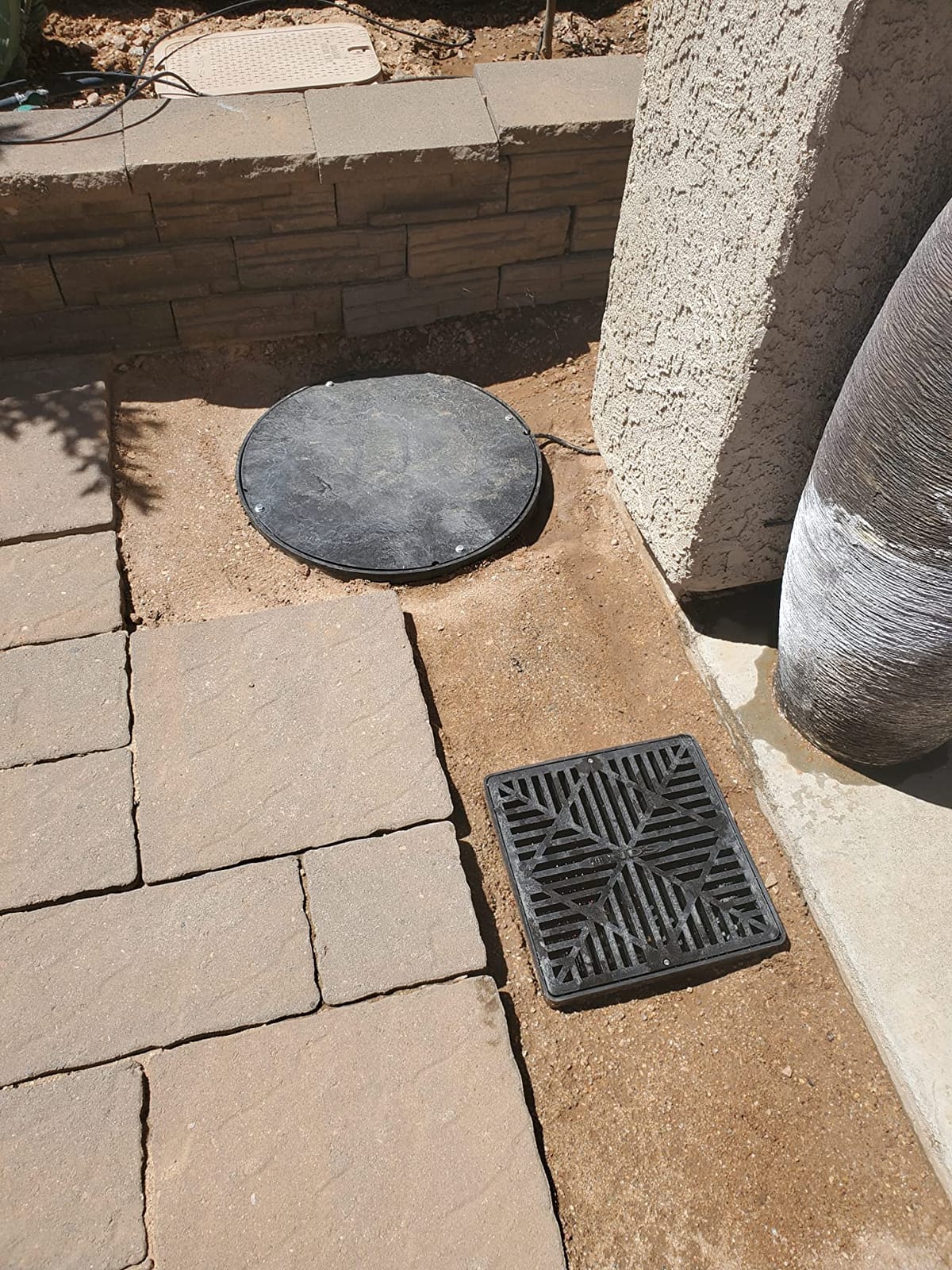
What the M53 gets right for a finished basement
Cast iron is the deciding factor here. Plastic-bodied pumps are lighter and cheaper, but a submersible pump in a sump pit cycles for years, and the housing material sets the ceiling on service life more than any other single spec.
The vortex impeller means fewer clogs in a pit that collects iron bacteria and silt. For a basement finished with drywall and flooring, the difference between a pump that runs for a decade and one that fails at year three is the difference between a sump check and a gutted basement.
The LED plug also gives an at-a-glance power confirmation, which matters when you are troubleshooting at night during heavy rain.
Where the M53 falls short
It weighs 21 pounds, which makes it a two-hand lift into a narrow pit and the reason we recommend a second person or a lifting strap for installation. The cord is 9 feet, so a deep pit with a distant receptacle will need an extension or a closer outlet.
There is no stated adjustable cycle on the float, so the pump stops at its factory-set level and leaves a little water behind. That is normal sump behaviour, not a fault, but it is worth knowing before you blame the pump for a wet pit floor.
2. WAYNE CDU790 1/3 HP – Best Value Cast Iron Sump Pump
WAYNE CDU790-1/3 HP Submersible Cast Iron and Stainless Steel Sump Pump with Integrated Vertical Float Switch – Up to 4,600 Gallons Per Hour – Heavy Duty Basement Sump Pump, Black
0.3 HP cast iron
4600 GPH
20 ft max lift
3-year warranty
Pros
- Top suction avoids air lock
- Epoxy-coated steel housing
- Quiet enough to be inaudible
- Integrated vertical float fits narrow pits
- Long reported service life
Cons
- Float switch cycling levels are not adjustable
- Weighs 16.4 pounds
- Top suction cannot drain below inlet height
The CDU790 is the pump we would recommend to a homeowner replacing a ten-year-old plastic unit on a budget. Owners frame it consistently as the step up from big-box plastic pumps, and the reports of seven to thirteen years of service before replacing it with the same model are not isolated comments.
What makes it work is the top suction design. Instead of pulling water in through the base of the pump with the motor sitting directly above the intake, the CDU790 draws water through an inlet positioned above the impeller, which eliminates the air lock that plagues bottom-inlet pumps. There is no weep hole to drill in the basin lid, and debris settles on the floor of the pit rather than on the intake screen.
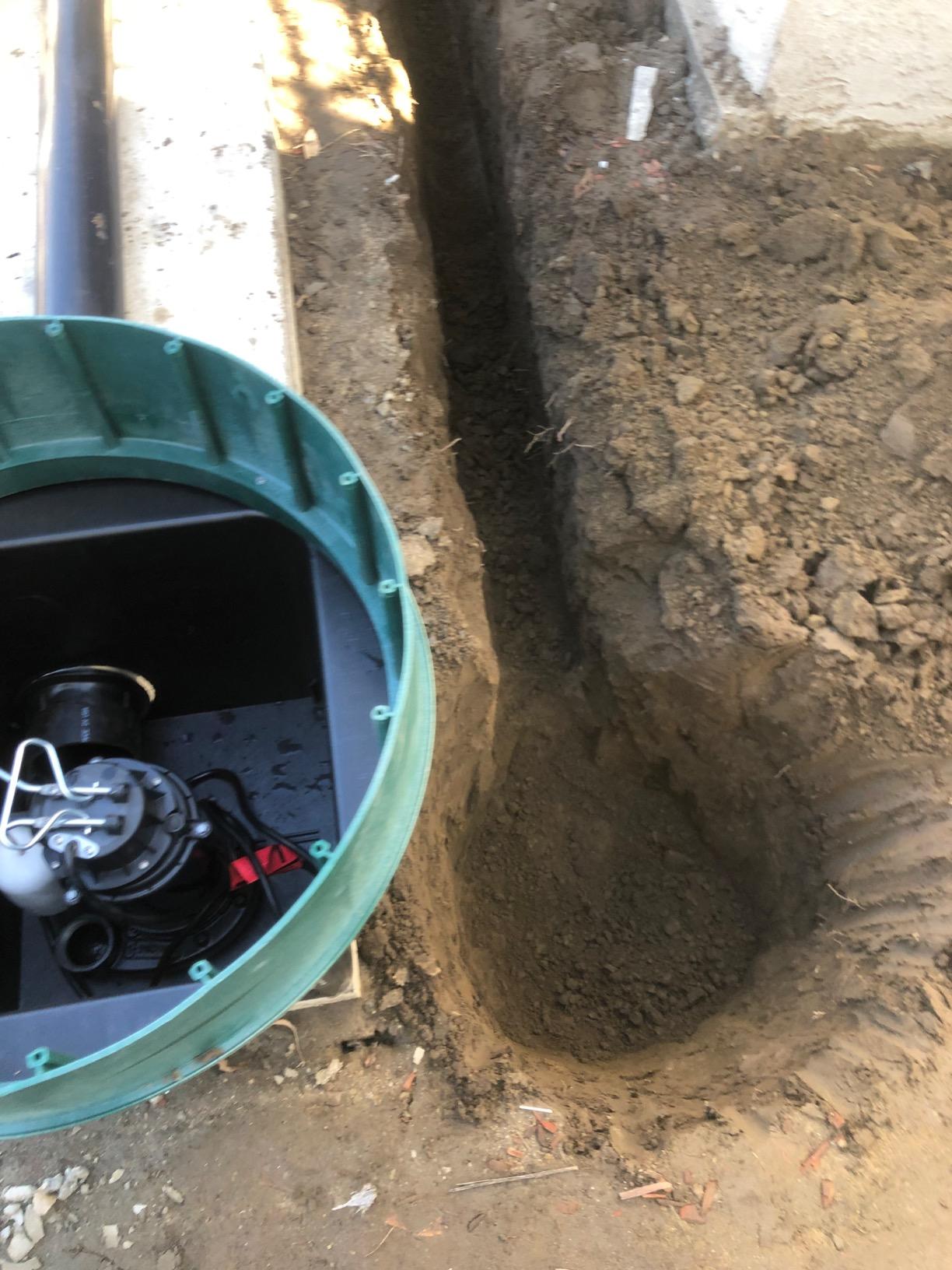
Construction is an epoxy-coated steel motor housing with stainless steel fasteners and a cast iron volute. A 3-year warranty backs it, which is longer than the 1-year terms common on plastic pumps in this class, and the whole thing assembles in about a quarter hour if you are replacing a like-for-like model with the same discharge size.
Buyers mention quiet operation constantly, often saying they cannot hear it running and have to look in the pit to confirm. On a finished basement with a sleeping area above, that is not a minor benefit.
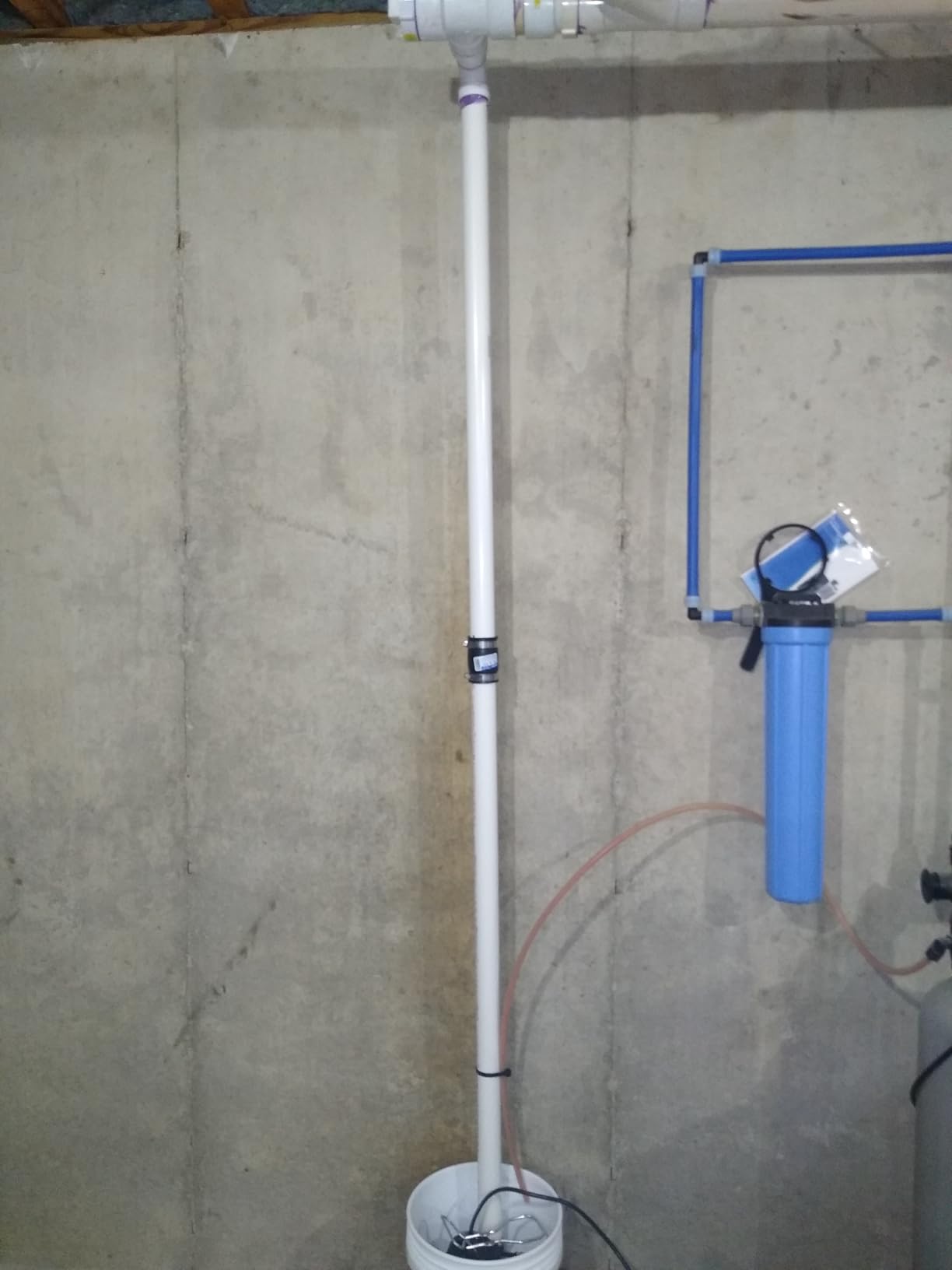
Why this is the value pick
The 3-year warranty and cast iron volute put it ahead of plastic pumps in the same horsepower range on the two factors that decide service life. The integrated vertical float switch has been cycle-tested to one million cycles, which is the number that separates a real switch from a novelty.
It empties a typical basin in seconds, and owners running a 24 by 18 inch pit describe roughly a four inch water column cycle. The narrow footprint means it fits pits where a swinging tethered switch would jam against the wall.
For anyone who wants a straightforward, quiet, repairable pump without a monitored controller or a battery system, this is the one.
Where the CDU790 falls short
The float switch on and off levels are fixed, so the pump stops at the factory setting and leaves residual water in the pit. Some owners improvise a hose on the float to shift the cycling point, but that is a modification, not a feature.
At 16.4 pounds it is a heavy lift, and the top suction intake means it cannot drain below its own inlet height. If you are chasing the last inch of water in a finished basement, you need a different pump for that job.
3. WAYNE CDU980E 3/4 HP – Best for High Water Tables and Flood Prone Basements
WAYNE CDU980E 3/4 HP Submersible Sump Pump – Cast Iron & Stainless Steel, Vertical Float Switch, 5,490 GPH, 5-Year Warranty
0.75 HP
5490 GPH
Cast iron and stainless steel
5-year warranty
Pros
- 5490 GPH capacity handles heavy storms
- Cast iron and stainless construction
- Integrated vertical float fits narrow pits
- Quiet for its output
- 5-year manufacturer warranty
Cons
- Retrofitting an older pit can need extra ABS fittings
- Float switch is the part most likely to wear out
- Fixed on and off cycle
The CDU980E exists for the basement that fills faster than a small pump can clear. At 3/4 HP and 5490 GPH it carries a real capacity margin, which is what you want if you are on a floodplain, have a high water table, or live somewhere where summer thunderstorms dump a basement’s worth of water into the pit in a couple of hours.
Construction is cast iron and stainless steel, and the top suction design means no weep hole. The integrated vertical float switch takes up minimal pit diameter, which matters because high-capacity homes often have deeper, larger basins and there is no penalty for the small switch footprint here.
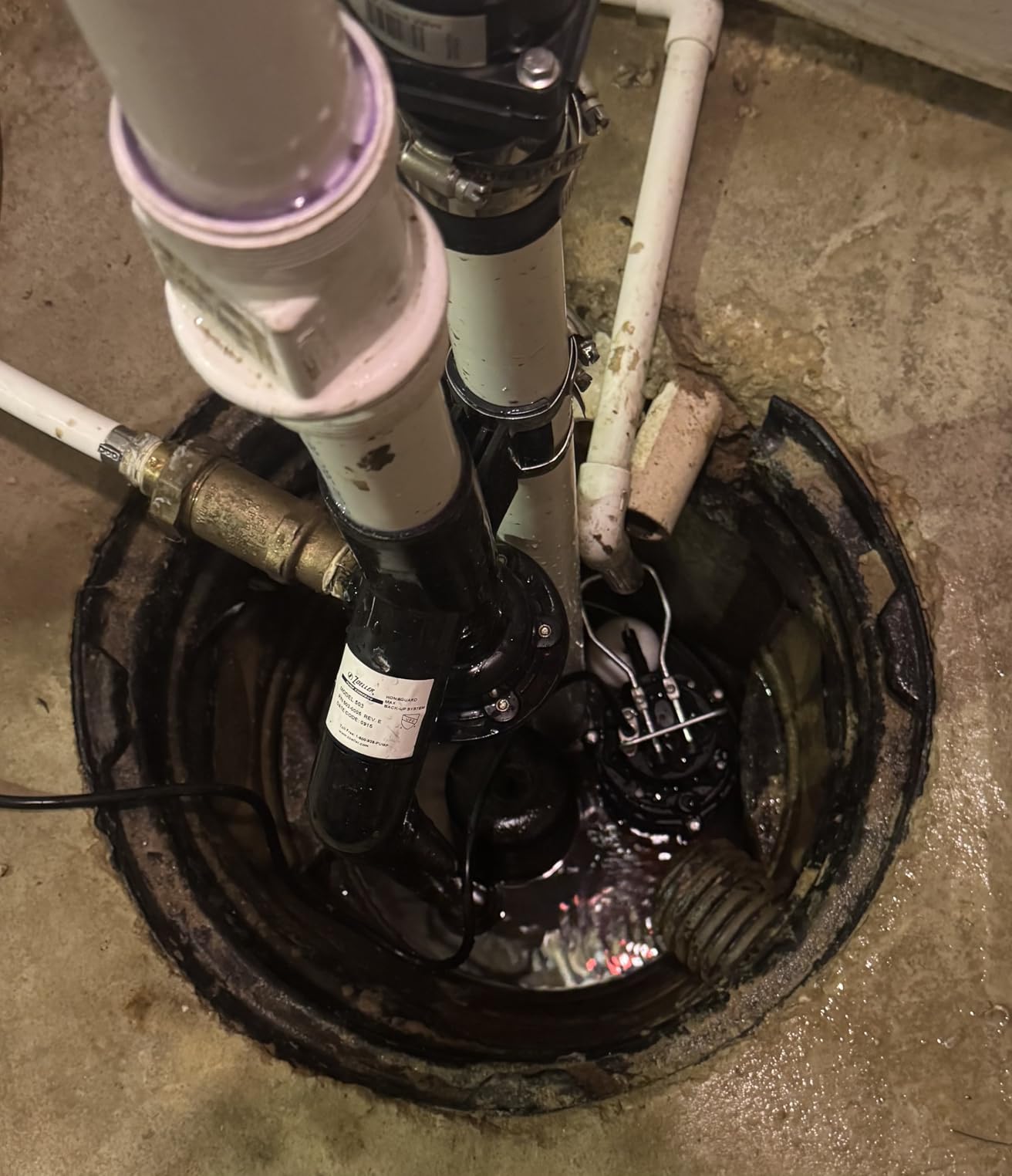
Multiple owners report eight or more years of continuous service and repeat purchases of the same model, and the general framing is that this feels like an upgrade rather than a swap. Installation is straightforward when you are replacing a similarly sized pump; when you are retrofitting a differently plumbed pit, expect to buy ABS fittings and glue.
Even at 3/4 HP the pump is reported as quiet, which is unusual for a unit moving this much water. That combination of capacity and noise control is the reason this one makes our list for finished basements in flood-prone areas.
When 3/4 HP is the right call
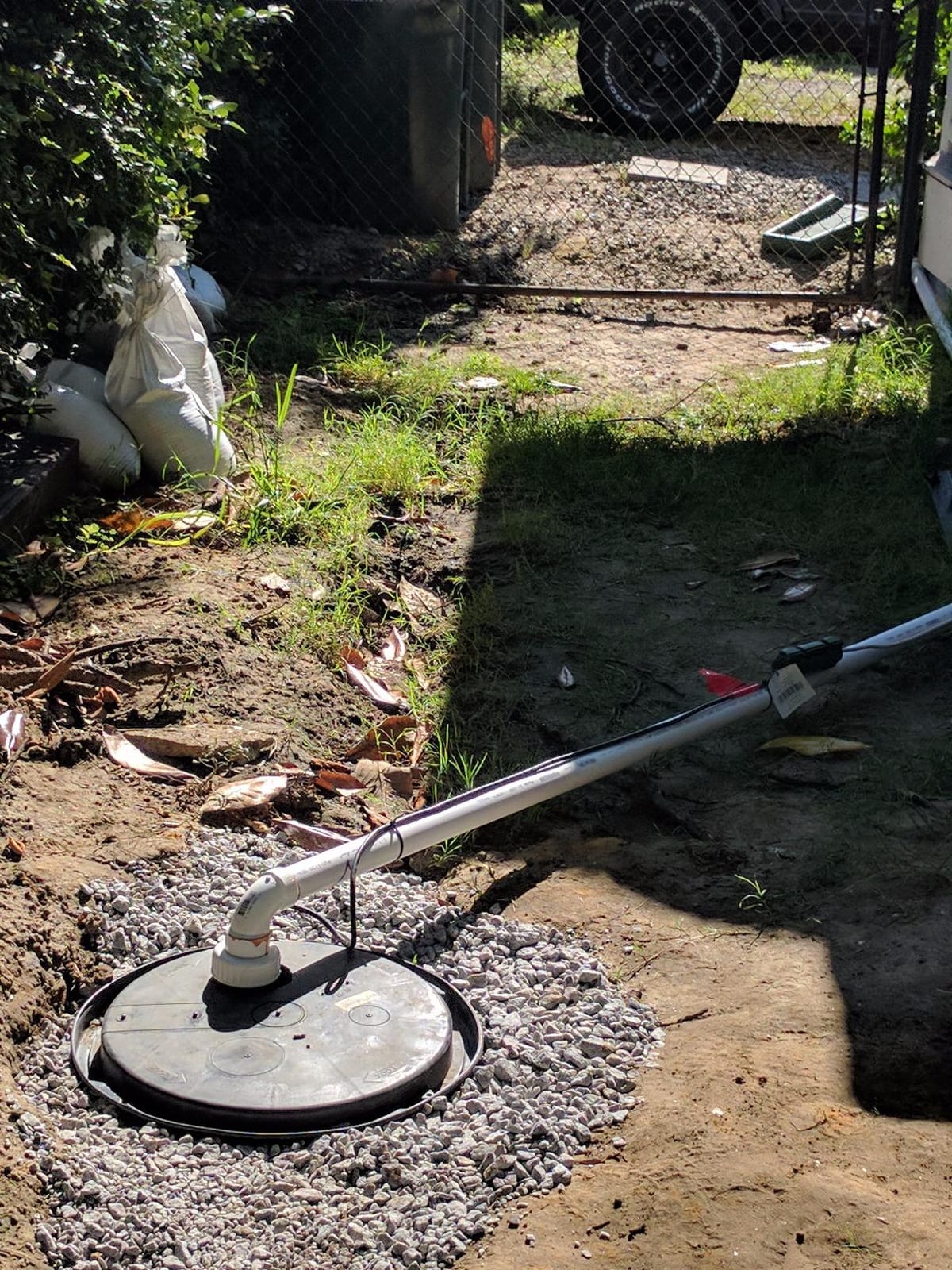
If your pit fills visibly fast during heavy rain, horsepower is your bottleneck, not pump quality. A 3/4 HP unit has the headroom to lower the water level quickly instead of chugging along at the pump limit while the pit creeps upward.
The 5-year warranty is the longest on our list, and cast iron plus stainless steel is the construction combination we look for in a permanent installation.
The narrow-pit vertical float means capacity does not cost you basin diameter.
Where the CDU980E falls short
It is not a small-pit pump. The basin needs enough diameter and depth to house a 3/4 HP body, and it weighs 12 pounds, so plan the lift before installation day.
The float switch is the component most likely to need replacement over time, and the cycle is fixed rather than adjustable. If your pit is older and differently plumbed, budget for fittings before the pump arrives.
4. Superior Pump 92341 1/3 HP – Best for Smaller Sump Basins
Superior Pump 92341 1/3 HP Cast Iron Submersible Sump Pump with Vertical Float Switch
0.33 HP cast iron
2760 GPH
25 ft lift
Vertical float
Pros
- Rugged cast iron body
- Compact footprint for tight pits
- Replacement parts are widely available
- Switch arm can be repositioned
- 100% factory tested
Cons
- Discharge adapters not included
- 10 foot cord is on the short side
- Moderate operating noise
- Leaves over an inch of water in the pit
The Superior Pump 92341 solves a specific problem: a narrow or shallow pit where a larger pump will not physically sit. At 7.75 by 7.25 by 11.5 inches it is one of the more compact bodies here, and the vertical float switch takes up almost no basin diameter compared with a tethered ball.
It is a 1/3 HP cast iron pump rated at 2760 GPH with a stated lift capacity of 25 feet. Owners consistently describe it as heavier and more solidly built than plastic alternatives, and several mention that replacement parts are easy to source, which matters when you want to swap a switch rather than buy a new pump at year five.
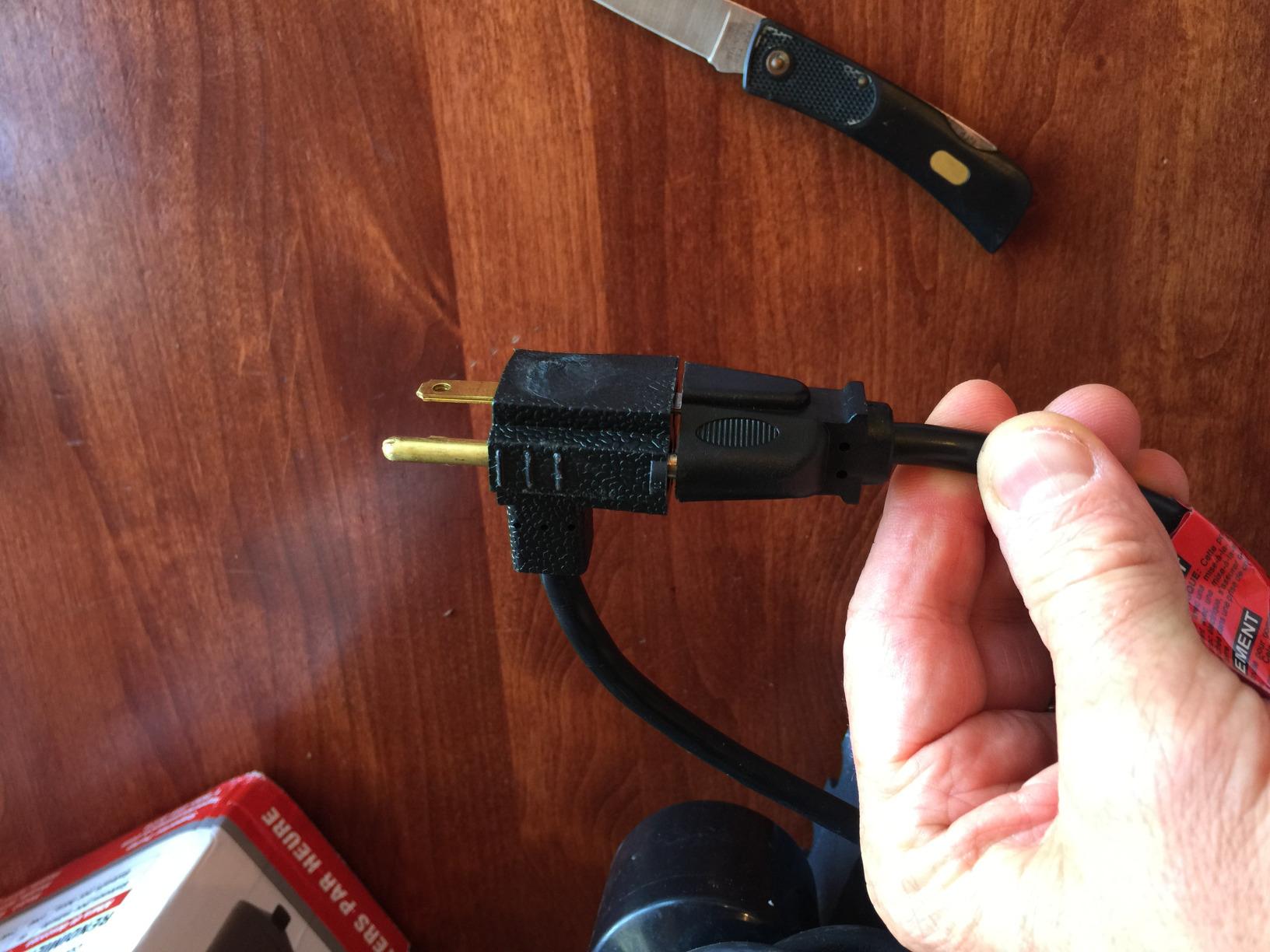
One practical feature we like: the switch arm can be repositioned to the back of the motor, which lets the pump sit alongside another pump in a narrow basin. That is exactly the geometry you have when adding a backup to a pit that already has a primary installed.
The vertical float cycles on at about 6 inches of water and off at about 2 inches, and the 1-1/2 inch NPT discharge is a standard size. It ships with a 10-foot cord and a 3-year limited warranty.
Why it fits small pits
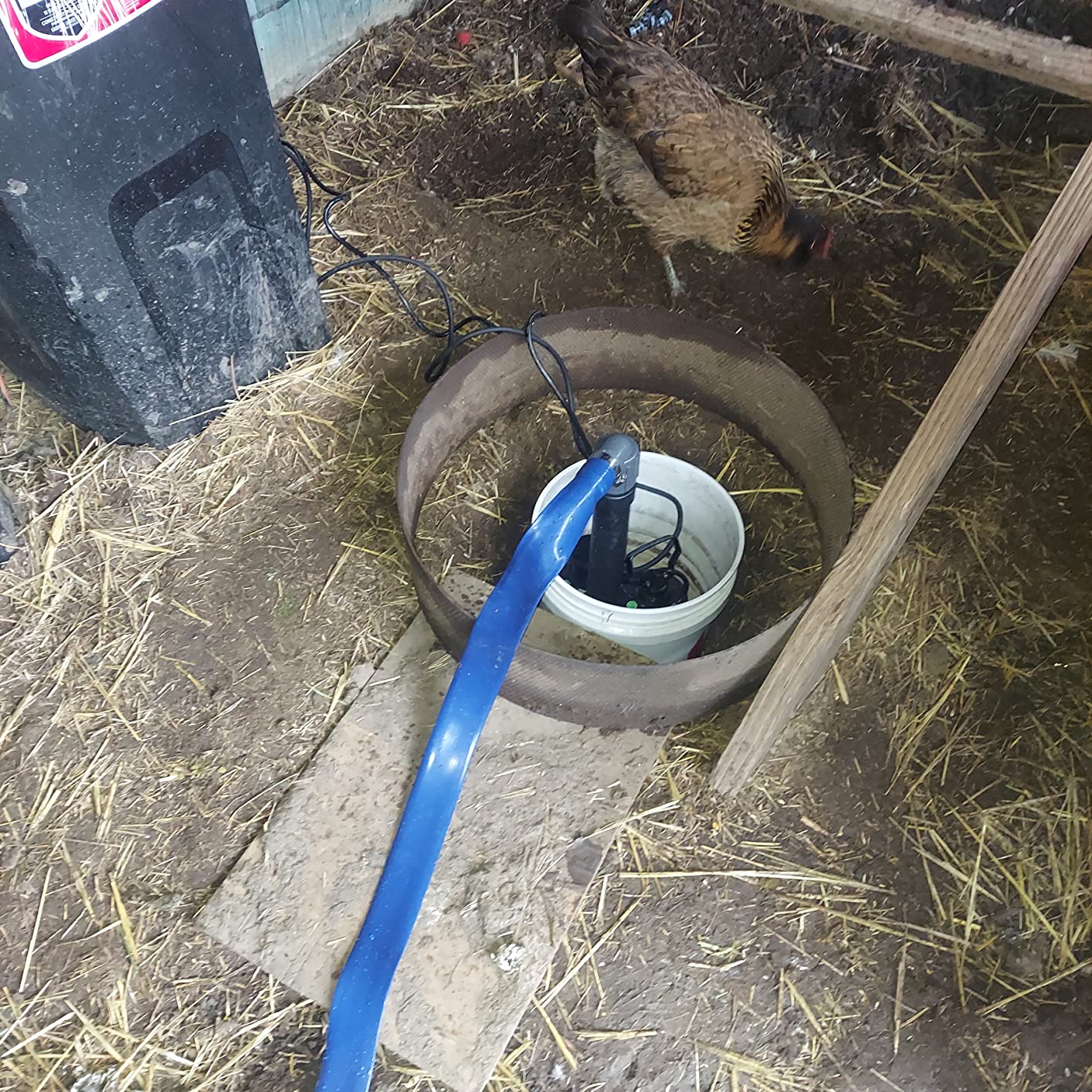
The vertical float is the whole story. A tethered float needs horizontal room to swing; a vertical float needs only vertical room in the discharge path, so a 16 inch wide pit stops being a constraint.
Cast iron construction with readily available replacement parts means a small pit does not have to mean a disposable pump. Owners report multiple years of reliable service and good manufacturer response when a part cracked.
Where the 92341 falls short
Discharge pipe adapters are not included, so plan on buying PVC fittings for the connection. The 10 foot cord is short compared with several competitors, and some owners find it noticeably noisier than premium cast iron models.
The published documentation gives incomplete dimensions, which creates real fit uncertainty in a tight pit. Measure your basin and check the drawing before ordering.
5. Prostormer 1 HP – Budget Pick for Light-Duty and Backup Pumping
Prostormer 1HP 3700GPH Submersible Sump Pump with Automatic Float Switch
1 HP
3700 GPH max
Plastic body
Three outlet sizes
Pros
- Moves a lot of water for the price
- Quiet for its output class
- Float switch locks on for continuous running
- Three discharge outlet sizes
- Fast to set up
Cons
- Plastic body not rated for continuous duty
- Bottom intake air locks without a weep hole
- Reported early motor and bearing failures
- Poor support on failed units
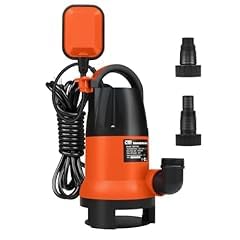
We include the Prostormer because it answers a real question: what happens when you need to move water tonight, not build a permanent installation. At 1 HP with a 3700 GPH maximum rating and a thermoplastic body, it is a portable-grade pump that several tradespeople carry as a job-site tool rather than install as a primary.
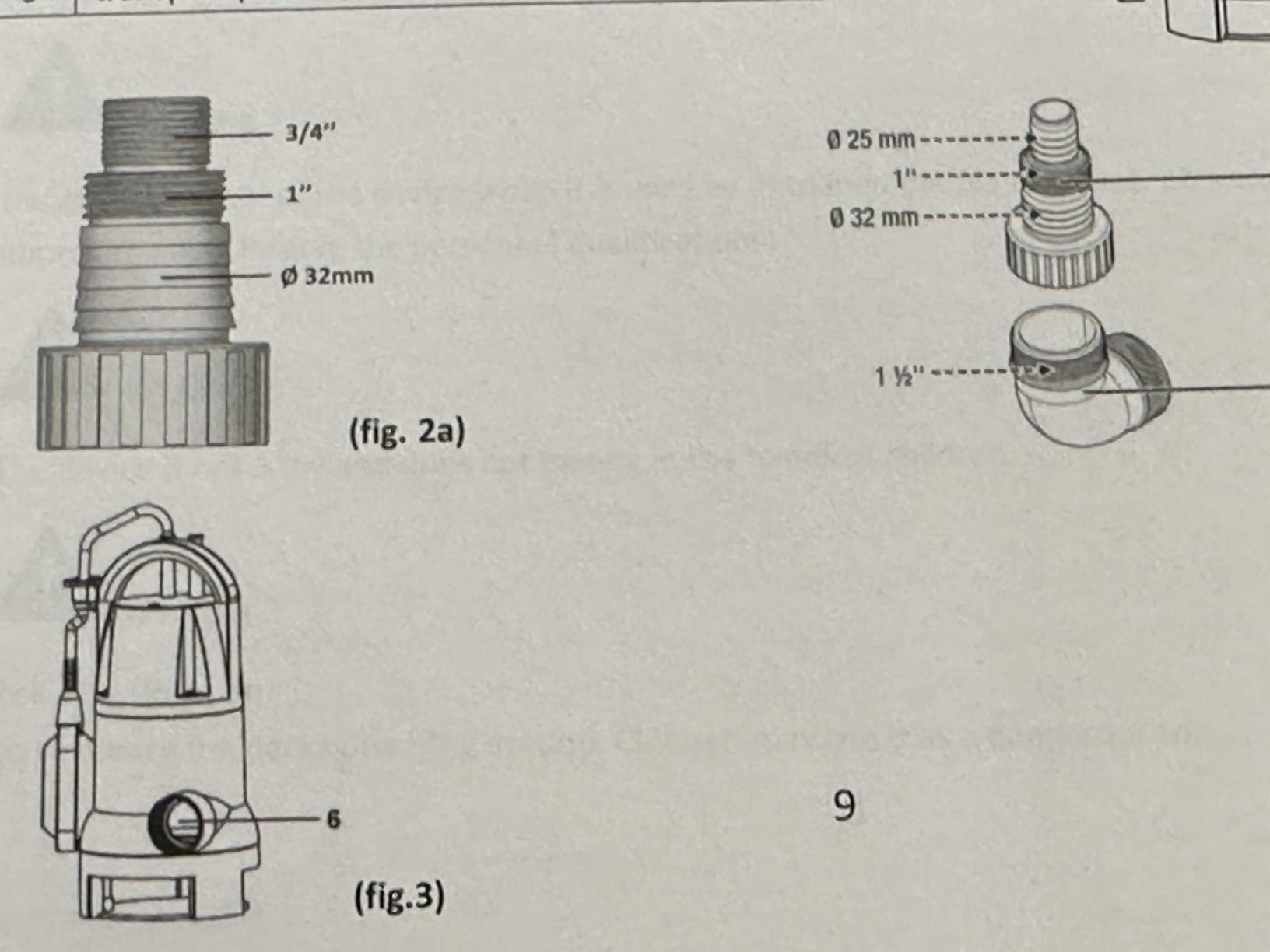
The features are genuinely useful for that role. The float switch locks on for continuous keep-running mode or unlocks for automatic on and off cycling, and three discharge outlet sizes (1 inch, 1-1/4 inch, and 1-1/2 inch) let you match hose diameter to the flow you need.
Owners set it up in under five minutes and report it is quiet for a pump of its size. The raised base plate is designed to reduce debris collection under the intake.
But the durability picture is the deciding factor. The body is thermoplastic and not rated for continuous duty, bearings can wear out within a season or two, and several owners report burned-out motors after short service. A bottom intake design also air-locks easily unless you drill a weep hole or tilt the pump to prime it.
When this pump makes sense
It works well as a secondary pump, a pit-clearing pump during clean-out, or a job-site dewatering tool. Owners regularly use it that way and report good results.
The lockable float is a nice touch for temporary setups where you want it to run continuously while you watch the water level.
Multiple outlet sizes make it adaptable to whatever hose and fittings you already own.
Where the Prostormer falls short
Do not install this as a permanent primary in a finished basement. The common advice from buyers who learned this the hard way is to buy a cast iron pump for continuous duty.
The bottom intake air locks without a weep hole, and some owners report cracked handles and poor returns support on failed units. A check valve is also required to prevent backflow after shutdown, and that is not included.
6. Zoeller M57 Mighty-Mate – Best for Heat-Heavy Continuous Duty
Zoeller M57 Mighty-Mate Submersible Sump Pump – 3/10 HP Cast Iron -115V
0.33 HP oil-filled
2580 GPH
19.25 ft lift
Cast iron
Pros
- Oil-filled motor sheds heat
- Cast iron vortex impeller resists clogging
- Solid polypropylene float will not waterlog
- Stainless hardware and float guard
- Automatic snap-action switch
Cons
- Listed with no manufacturer warranty
- At 27.1 pounds it is a heavy lift
- 2580 GPH trails the higher horsepower WAYNE models
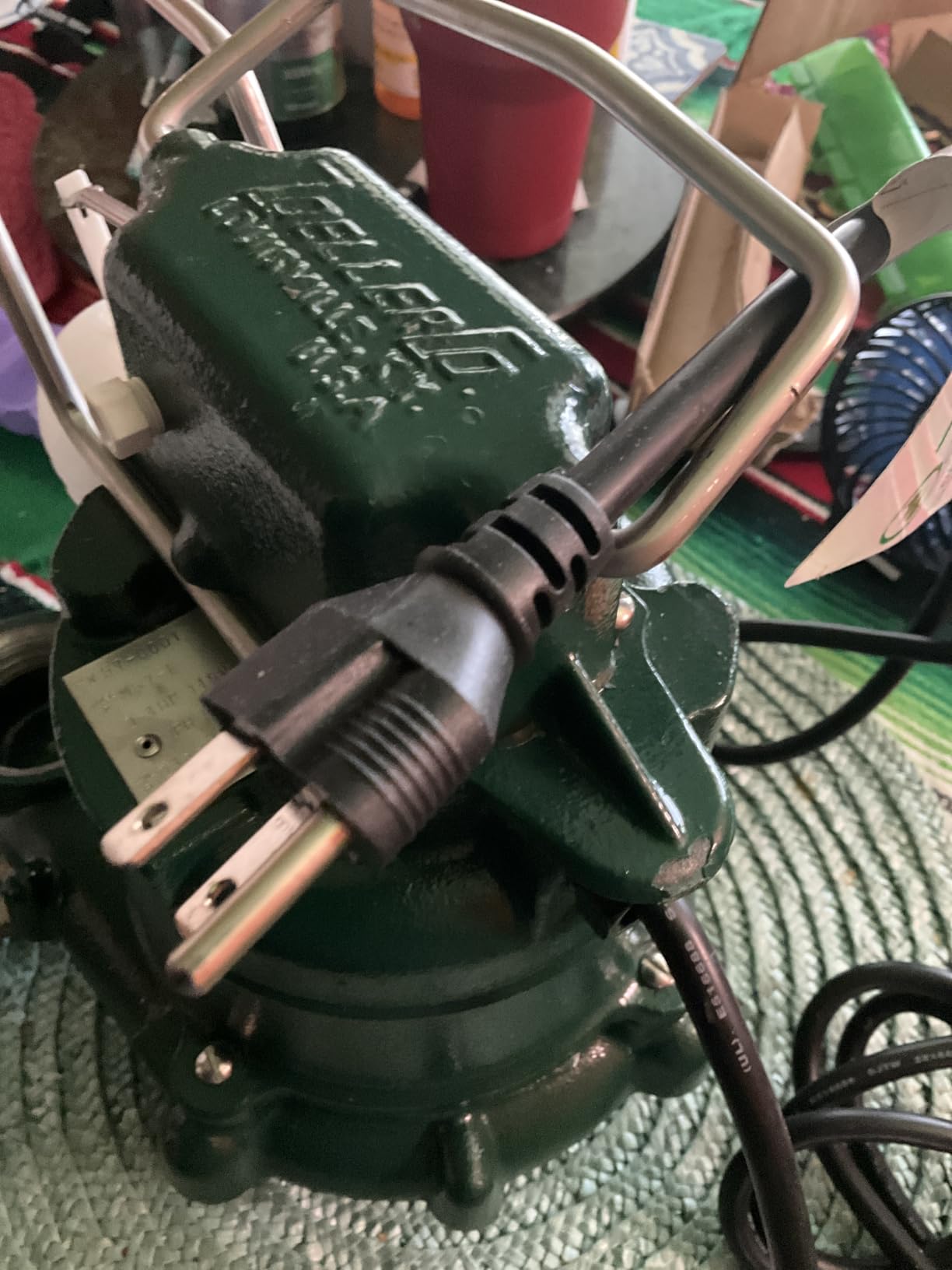
The M57 is the older sibling of the M53, and the difference is the motor. This one uses an oil-filled motor inside a cast iron housing, which means it dissipates heat far better than an air-cooled unit and resists the thermal damage that shortens pump life in pits where the pump runs for long stretches.
For a basement with a chronic water problem, where the pump cycles constantly rather than occasionally, that heat management is the argument. The vortex impeller passes solids easily and the solid polypropylene float will not become waterlogged the way a ball float can.
Flow is rated at up to 2580 GPH with a 19.25 foot maximum lift, which is below the 4600 GPH figure the WAYNE CDU790 claims and below the 5490 GPH of the 3/4 HP WAYNE. If your pit drains slowly because of a deep discharge run, the extra motor cooling will not make up the capacity difference.
The switch is a built-in snap-action float for automatic operation, and stainless steel hardware, a float guard and a switch arm resist corrosion in a wet environment.
Why the oil-filled motor matters
Motor heat is the leading cause of premature sump pump failure in pits that run often. An oil-filled motor in a cast iron housing sheds that heat across a much larger thermal mass than a plastic-bodied air-cooled motor.
The polypropylene float will not waterlog, which removes a failure mode that catches people a year or two in.
Stainless hardware, float guard and switch arm hold up in a persistently damp environment.
Where the M57 falls short
It is listed with no manufacturer warranty, and that is a real gap on a permanent installation. Buyers who expect warranty support into year five should weigh that carefully.
At 27.1 pounds this is a heavy lift into a pit, and the capacity figure trails higher horsepower competitors. If you have a wide basin and a fast inflow, the CDU790 or CDU980E serves you better.
7. Little Giant 506158 1/3 HP – Best for Listed Electrical Work and CSA Requirements
Little Giant 1/3 HP Cast Iron Submersible Sump Pump, Blue
0.33 HP continuous duty
2760 GPH at 5 ft lift
CSA listed
Thermally protected
Pros
- Continuous duty thermally protected motor
- Epoxy-coated cast iron housing
- Non-clog vortex impeller
- Nitrile carbon ceramic shaft seal
- CSA listed in the USA and Canada
Cons
- Diaphragm switch is not adjustable
- Not recommended for emergency dewatering
- 10 foot cord
- 13 percent one-star rating share
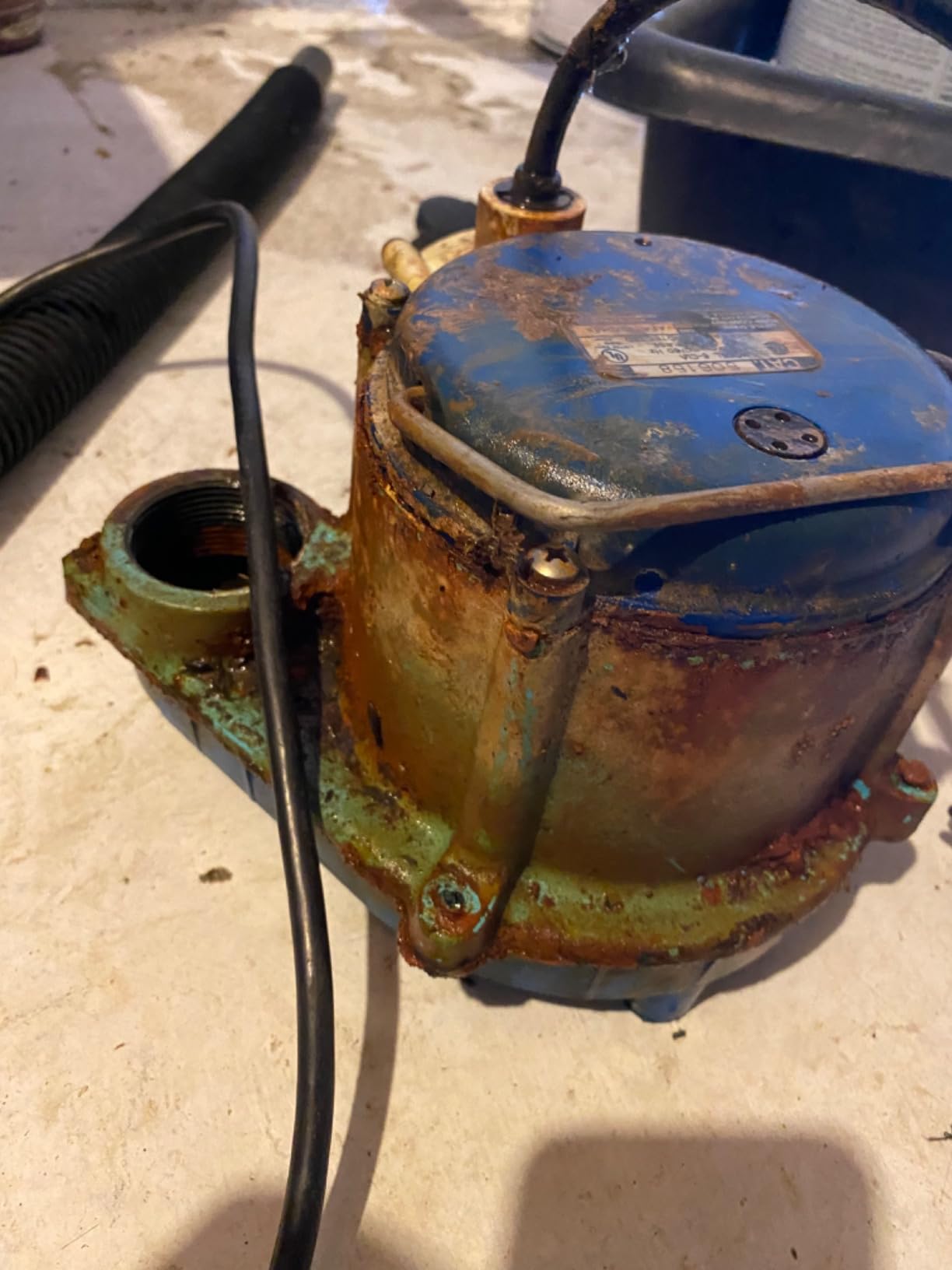
The Little Giant 506158 is the pick for anyone whose installation has to satisfy a listing requirement or an inspector. It is CSA listed in the United States and Canada, which matters in commercial or rental contexts where an unlisted pump creates friction.
Underneath, it is a properly built sump-only pump: an epoxy-coated cast iron housing, a non-clog vortex impeller, upper and lower bearings, and a nitrile, carbon and ceramic mechanical shaft seal designed for long service life. The continuous duty 1/3 HP shaded pole motor runs about 9.0 amps and is thermally protected.
Performance figures are unusually well specified: 2760 GPH at 5 feet of lift, an 18 foot shut-off point, a 1-1/2 inch FNPT discharge, and a 140 degree Fahrenheit maximum fluid temperature. That level of published detail makes it easier to size correctly.
The footprint is compact at 9.5 by 8.5 by 6 inches, which helps in a small basin, and a 3-year manufacturer warranty backs it.
Why the listing and the motor design matter
A CSA listing removes an entire category of argument with an inspector or a property manager. For rental properties and multi-family units, that is often the deciding factor.
Continuous duty with thermal protection is the right motor class for a sump application, where the pump may run for long stretches rather than in short bursts.
The mechanical shaft seal specification and the dual bearing arrangement are the parts most often skipped by budget manufacturers.
Where the 506158 falls short
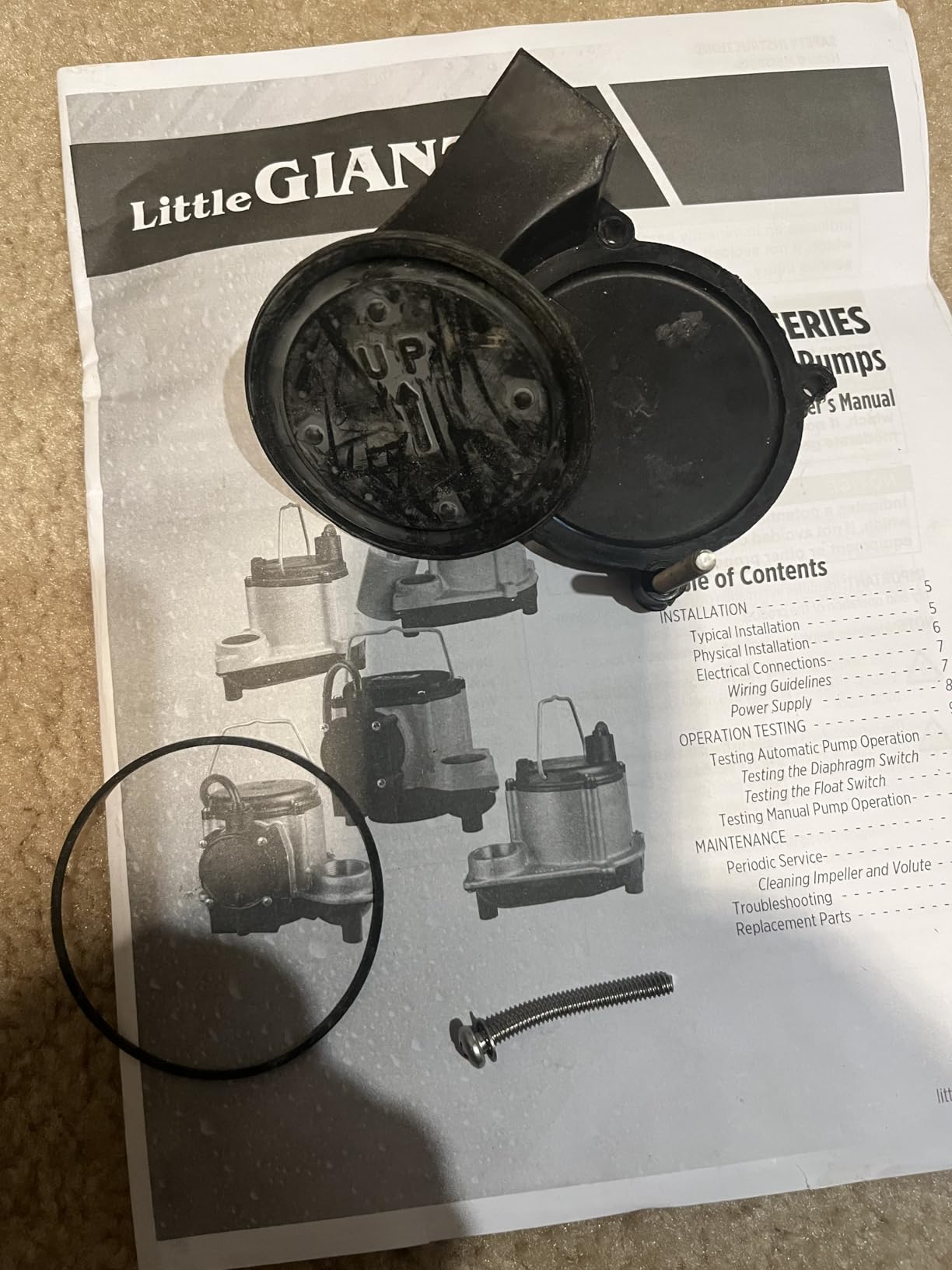
The built-in diaphragm switch is pressure activated and not adjustable, so the on and off water levels are fixed at roughly 7 to 10 inches on and 1 to 4 inches off. There is no way to tune the cycle to your basin.
The manufacturer explicitly does not recommend it for emergency water removal or general dewatering, only for sump systems. It also carries the highest share of one-star ratings among the picks here, at 13 percent, so expect some noise from owners.
8. Superior Pump 92551 1/2 HP Pedestal – Best for an Adjustable Float Switch
Superior Pump 92551 1/2 HP Cast Iron Pedestal Pump , Black
0.5 HP pedestal
3600 GPH
Fully adjustable switch
5-year warranty
Pros
- Switch and float stay above water
- Fully adjustable float switch
- Cast iron and stainless construction
- Quiet for a half HP pump
- 5-year warranty
Cons
- Check valve sold separately
- Pedestal format complicates installation
- Heavier than a comparable submersible
If you have run through submersible pumps and watched the float switch gum up or fail, the pedestal format is a different answer. On the Superior Pump 92551 the motor, drive shaft, float ball and switch all sit above the water line on a cast iron base, so the corrosion and debris exposure that kills submersible switches never happens to them.
The switch is fully adjustable with a metal switch arm, and that is the feature owners single out most. A shallow basin or a pit where you want the pump to run longer or start sooner can be tuned rather than accepted as the factory default.
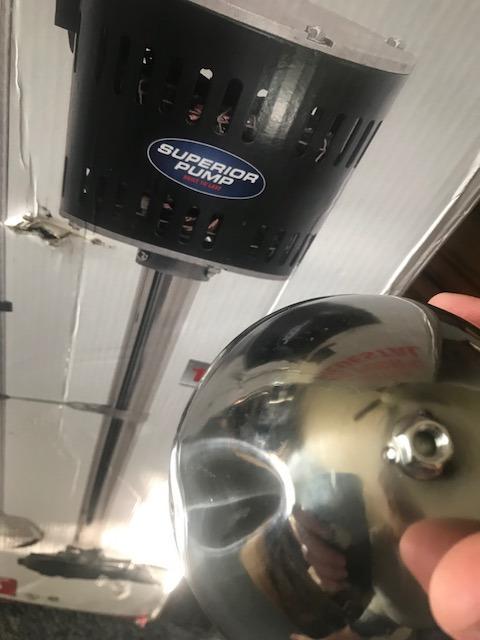
Capacity is up to 3600 GPH at 1/2 HP with a 1-1/2 inch NPT discharge, and it handles liquids up to 180 degrees Fahrenheit. The non-corrosive solid steel drive shaft, float ball and impeller are the wear parts, and the unit is cULus listed and CSA certified with a 5-year warranty.
Owners who came from cheaper submersibles credit the above-water controls with longer service life, and several report three or more years of running with plans to keep spares on hand.
When a pedestal pump is the better answer
Pedestal pumps last longer where switch corrosion is the failure point, because the switch never sits in the water. If your pit is small, acidic or full of iron bacteria, that is a meaningful difference.
An adjustable switch is the closest thing to real control you can get on a sump pump. Shallow pits and unusual basin geometry both benefit.
A 5-year warranty and CSA certification make this a safe choice for rental properties.
Where the 92551 falls short
The pump stays in the basin. You cannot lift it out for a motor check the way you can with a submersible, so installation and any future service take more planning.
The check valve is not included and must be bought separately, and the unit is heavier than a comparable submersible, which makes basin work less convenient.
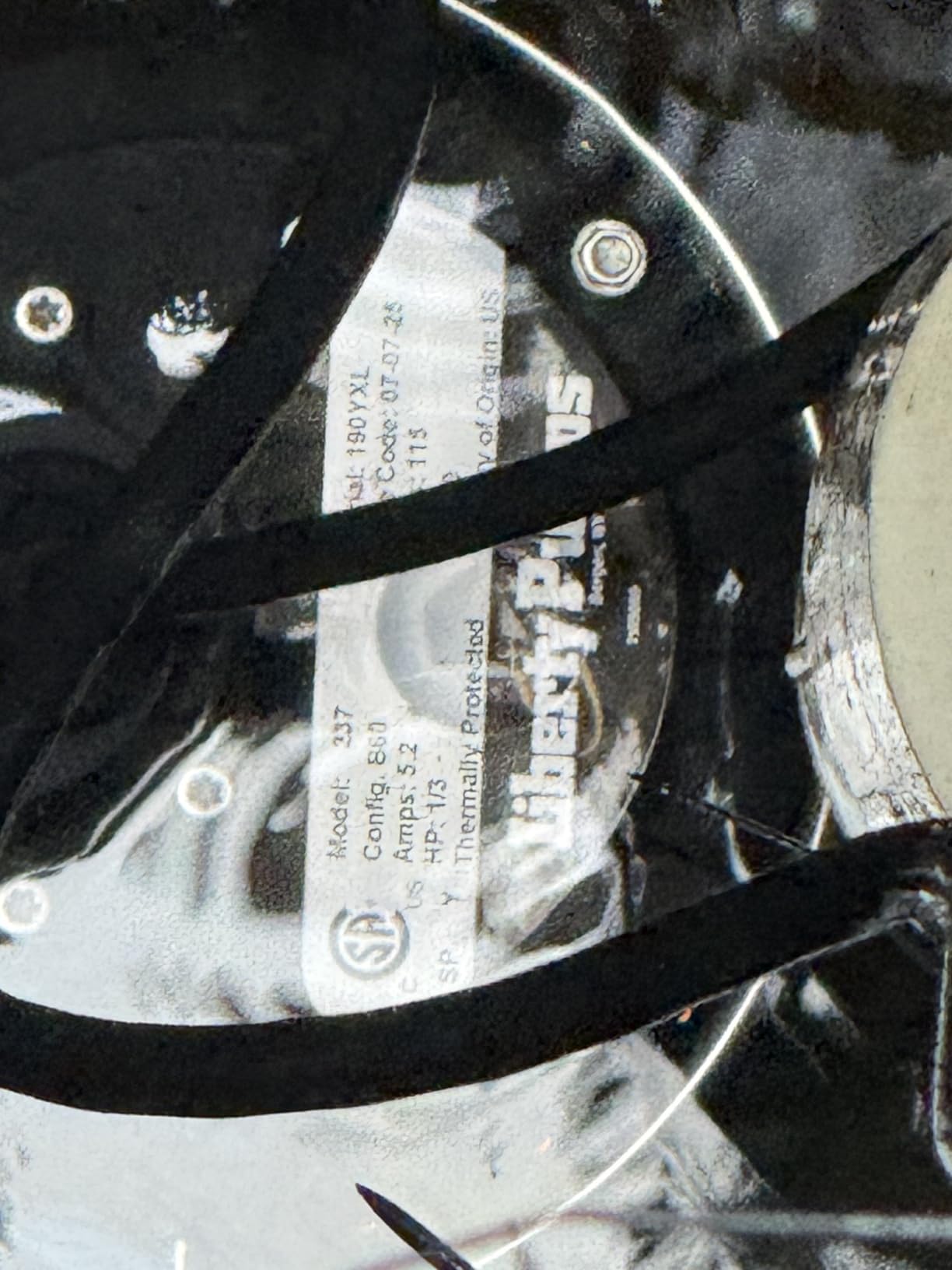
9. Liberty Pumps 237 1/3 HP – Best Lightweight Install for a Tight Basement
Liberty Pumps 237 1/3 HP Submersible Sump Pump
0.33 HP
21 ft max lift
Magnetic float
Aluminum housing
11 pounds
Pros
- Vertical magnetic float switch
- Vortex impeller reduces clogging
- Powder-coated aluminum housing with cooling fins
- Thermally protected motor
- Only 11 pounds
Cons
- 2-year warranty is shorter than competitors
- Aluminum is less heavy duty than cast iron
The Liberty 237 is the pump for anyone dreading the lift into the pit. At 11 pounds it is the lightest permanent installation on this list, roughly half the weight of the cast iron units, and that difference is meaningful when you are working alone in a confined crawl space.
The switch is a vertical magnetic float, which avoids the mechanical contact points that gum up in a wet pit. The impeller is vortex style to reduce clogging and improve flow, and the deep-finned powder-coated aluminum motor housing is thermally protected for extended run life.
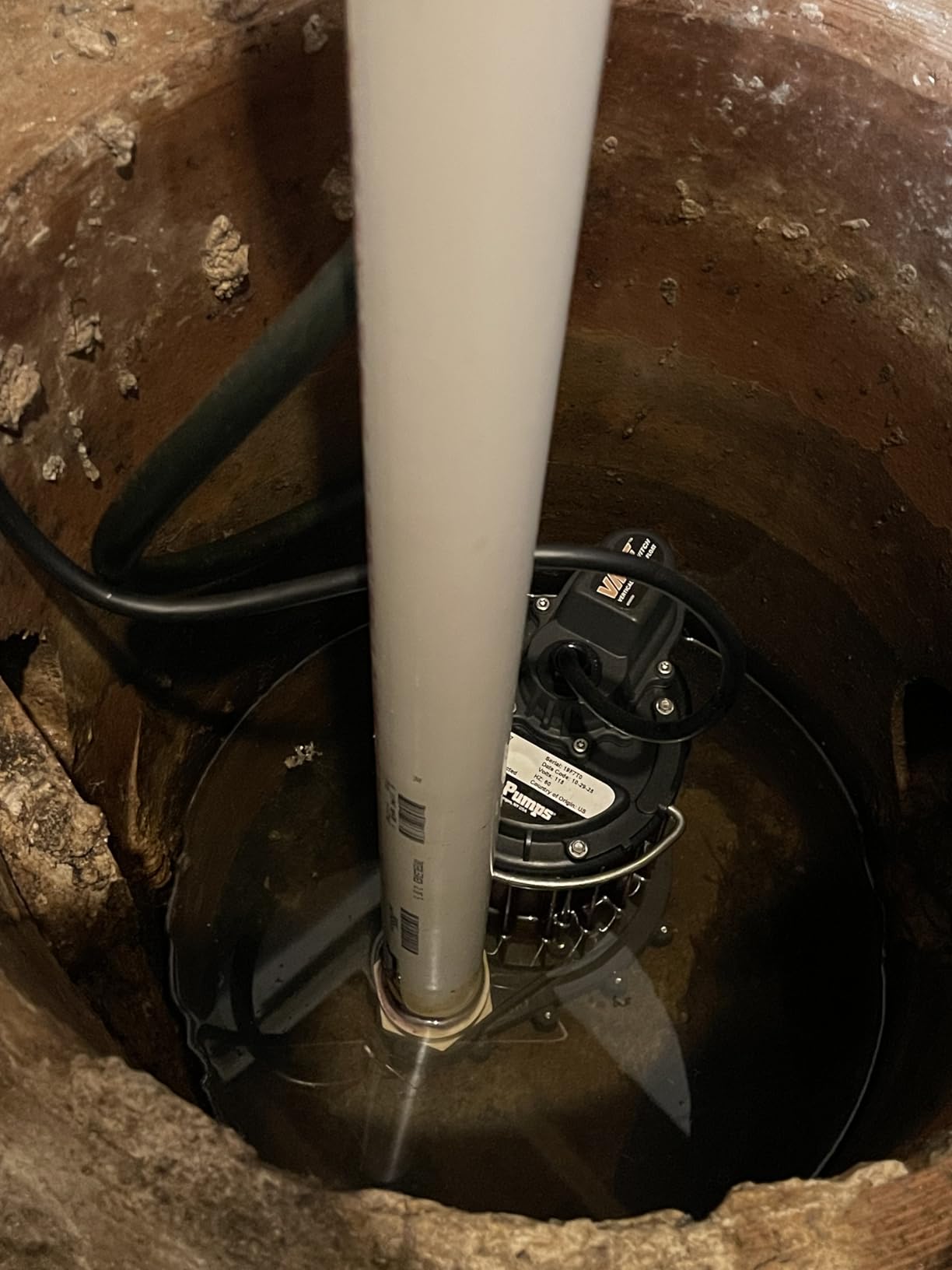
The 1-1/2 inch discharge fits standard sump basins and it handles solids up to 3/8 inch, which is more than most 1/3 HP pumps in this group. Maximum lift is listed at 21 feet, so it covers a deep basement discharge without stepping up in horsepower.
Liberty comes up repeatedly in plumbing forums alongside Zoeller and Goulds as a brand that performs. The 237 is a solid residential sump pump rather than a premium one.
Why weight and switch design matter
At 11 pounds this is a one-person install in a cramped pit, and for a finished basement where you are working in a crawl space rather than standing room, that is the practical difference between a weekend project and a hired job.
The magnetic float has no mechanical contact to corrode, so the switch failure mode that shows up most in older installs is largely designed out.
Aluminum with cooling fins and thermal protection gives reasonable longevity without the mass of cast iron.
Where the 237 falls short
The warranty is 2 years, which is shorter than the 3 to 5 year terms several competitors offer, and aluminum housing is less heavy duty than cast iron over a ten-year horizon.
Its review count is smaller than the big sellers here, so the volume of long-term owner reports is thinner. If you want a decade of field history behind the model, the Zoeller or WAYNE picks have more of it.
10. Zoeller M98 Flow-Mate 1/2 HP – Best for Deep Basement Lift
Zoeller M98 Flow-Mate Sump Pump – 1/2 HP – Cast Iron – LED Power Plug – High Flow – Vortex Impeller – Stainless Steel Hardware – Factory Tested and Float Operated – Submersible Sump Pump – 115V
0.5 HP
4320 GPH
23 ft max lift
Oil-filled motor
Pros
- High capacity with oil-cooled motor
- Quiet hum with no vibration
- LED power plug for quick checks
- Owners report 7 to 11+ years of service
Cons
- Float switches can fail within 1 to 3 years
- Start capacitors can fail early
- Weak customer service on warranty claims
- At about 31 pounds it needs two people
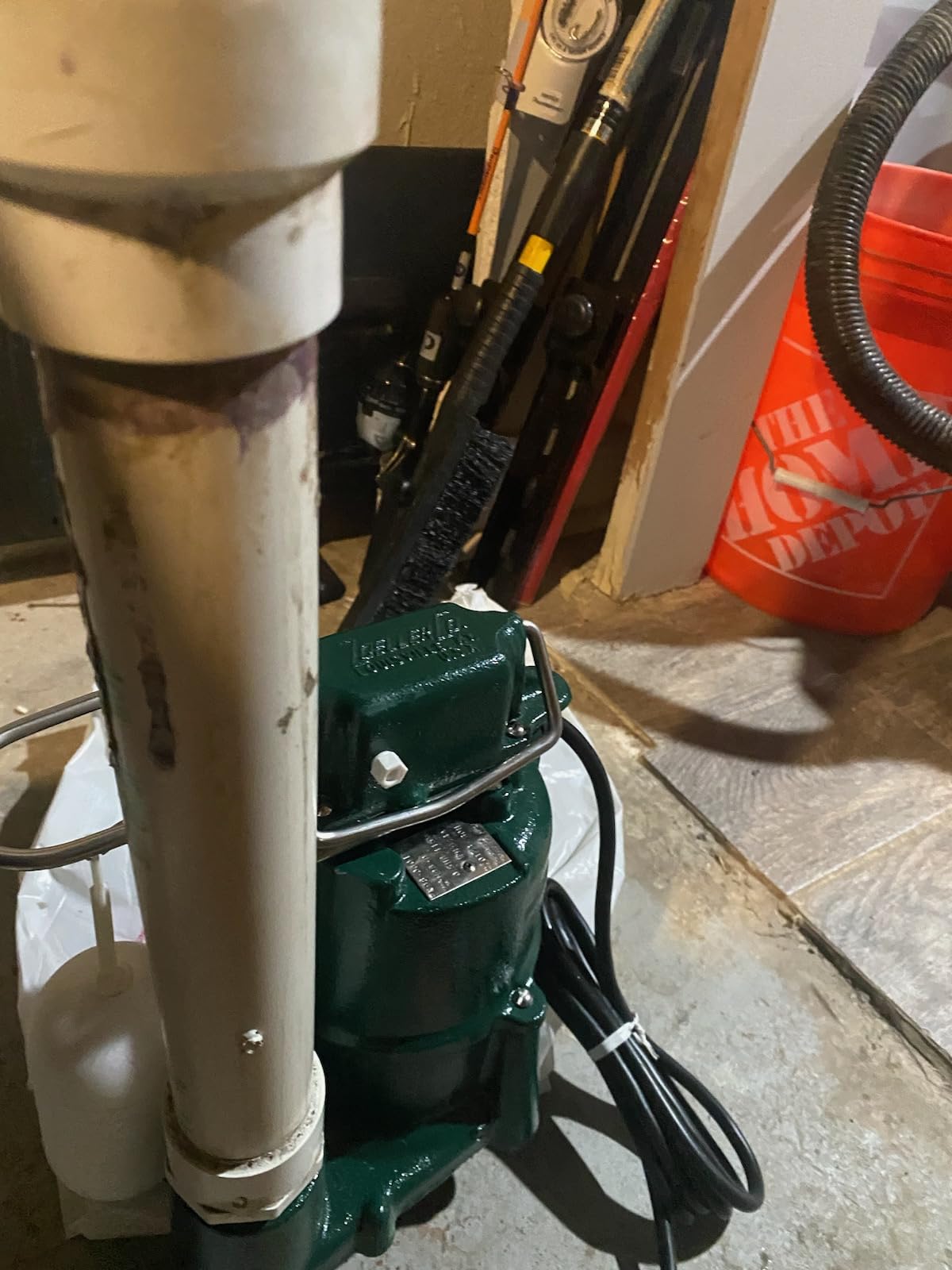
The M98 Flow-Mate is the one to look at when your discharge exits well above the pit, because the listed 23 foot maximum lift is the highest on this list. It pairs that reach with up to 4320 GPH of capacity at 1/2 HP, so it covers a deep basement without needing the 3/4 HP step.
Like the M57, it uses an oil-filled motor in a cast iron housing for heat dissipation. The non-clogging vortex impeller is made from corrosion-resistant plastic, and the stainless steel hardware, float guard and switch arm resist rust in persistently wet conditions. The 9-foot cord ends in an LED power plug for at-a-glance verification.
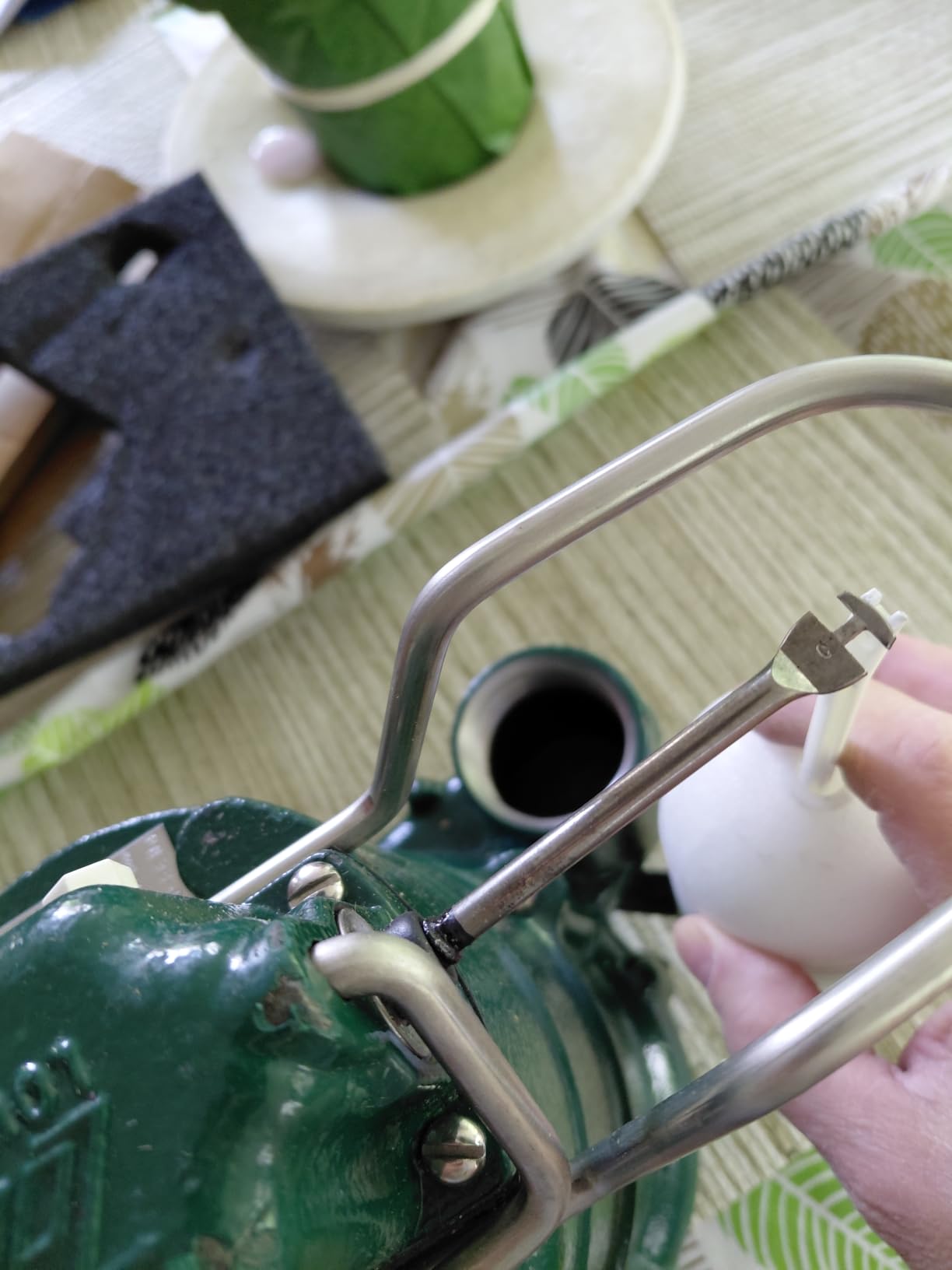
Owners praise the power, the quiet near-silent hum with no vibration, and the simple installation into a standard pit with existing PVC. Several report seven to eleven or more years of continuous service in flood-prone homes, which is real field history for a pump in this class.
The honest caveat is the float switch. Owners on this model report switches failing within one to three years, sometimes stuck on and sometimes stuck off, and start capacitors that fail early enough to leave the switch clicking without the motor turning.
What the oil-cooled motor buys you
An oil-filled motor in a cast iron housing sheds heat across a large thermal mass, which is the single best defence against the thermal failure that ends most pump lives early.
23 feet of rated lift is the reach you want for a deep basement or a discharge run that climbs above grade before reaching the dry well.
The LED power plug removes the most common troubleshooting question in under a second.
Where the M98 falls short
The float switch is the weak point, with reported failures inside three years. Plan on replacing a switch at least once over the pump’s life, and keep the model number handy so you can source the right part.
Customer service and warranty support are reported as weak, the warranty itself is 12 months from installation or 18 months from manufacture, and at about 31 pounds this needs two people to get into the pit.
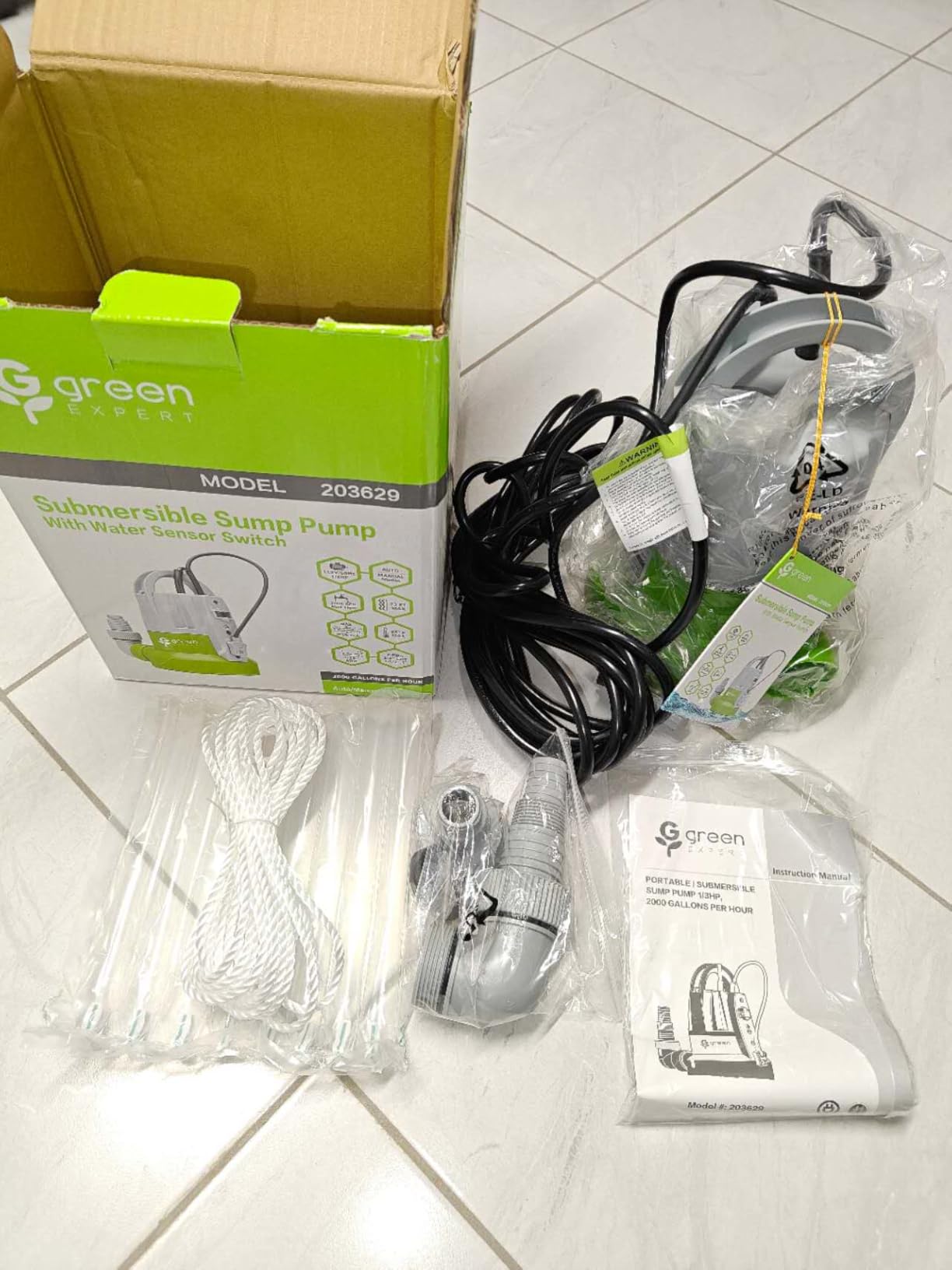
11. G green EXPERT Water Sensor Pump – Best for Last-Inch Drain Down and Portables
Green Expert 1/3HP Submersible Sump Pump with Water Sensor Switch, Low Water Last-Inch Drain Pump, 2000GPH Automatic/Manual Water Removal for Flooded Basement, Garage, Hot Tub Easy to Use Backup Pump
0.33 HP PSC
2000 GPH at zero lift
Drains to 1/25 inch
8.8 pounds
Pros
- Drains nearly all residual water
- Automatic and manual modes
- Includes hose adapters and non-return valve
- 25 foot cord with lifting rope
- Quiet and light at 8.8 pounds
Cons
- Water sensor can be unreliable when splash exposed
- Sensor plug can slip out of position
- Intake clogs with small debris
- Some units stopped pumping within about a year
This is not a permanent sump installation, and it earns its place for a different reason. The G green EXPERT pump uses a water sensor switch instead of a float, which lets it drain down to roughly 1/25 inch instead of stopping with an inch or two of water sitting in the container.
That last-inch capability is the reason to own one. After a main pump clears a flooded basement, this picks up the residual film on the floor and in the corner of a finished room where drywall is about to wick water into its base. It also handles hot tubs, garage floors and window wells, which is the same list our pool pump guides touches on for draining chores.
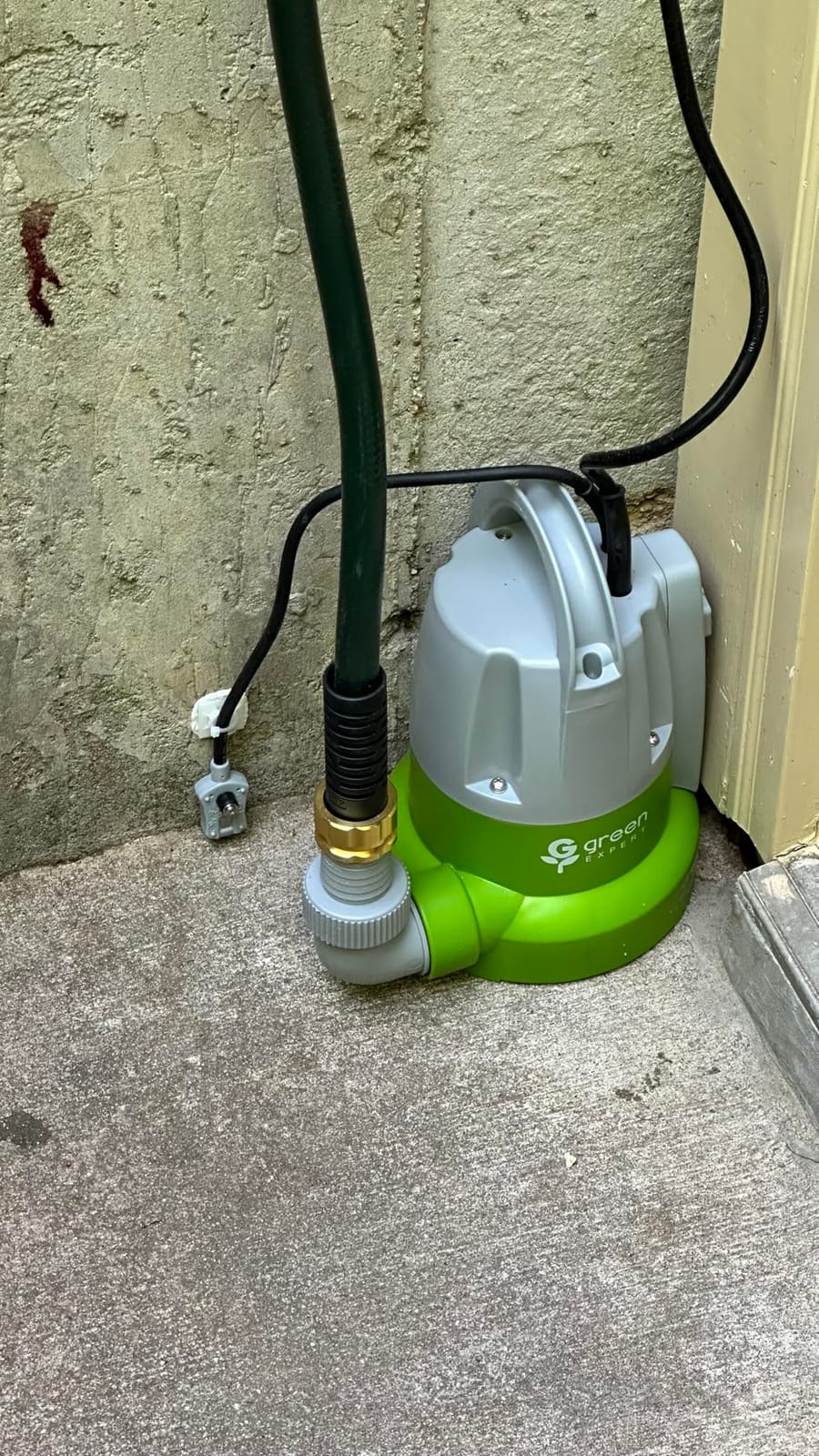
It runs 2000 GPH at zero feet and about 22.5 gallons per minute at a 10-foot discharge lift, driven by an oil-free 1/3 HP PSC motor with thermal overload protection. The included kit is generous: a lifting rope, a non-return valve, and adapters for 1 inch and 1-1/2 inch discharge hoses plus threaded garden hose connections.
At 8.8 pounds with a 25 foot cord, it is the easiest pump on this list to carry around, and the automatic mode shuts off after 15 seconds when no water is detected on the sensor.
When a sensor pump beats a float pump
The last-inch drainage is the headline. Anywhere residual water damages a surface, draining to 1/25 inch is worth more than gallons per hour.
The two-in-one design lets you switch from automatic sensor operation to manual mode when a sensor placement will not work in your situation.
The included adapter kit and non-return valve mean you can set it up with screw-on fittings and no tools.
Where the G green EXPERT falls short
The water sensor is not as dependable as a float switch in a rough environment, especially when splash-exposed, and the sensor plug lacks a locking slot so it can slip out of position. Owners report needing manual mode often.
The intake clogs with even small amounts of debris, which rules it out for a grit-filled pit. Some units stopped pumping within about a year, plastic fittings can separate while running, and warranty claims go unanswered.
12. WAYNE WaterBUG – Best Manual Emergency Backup Pump
WAYNE WaterBUG Submersible Water Pump for Water Removal
0.17 HP
1350 GPH
Drains to 1/16 inch
Manual operation
Pros
- Removes large volumes quickly
- Very quiet running
- Drains water down to 1/16 inch
- Dual top and side discharge
- Long cord with wrap
Cons
- Manual operation only with no float switch
- Can air-lock and stop pumping
- Intake strainer collects fur and debris
- No top handle or lifting loop
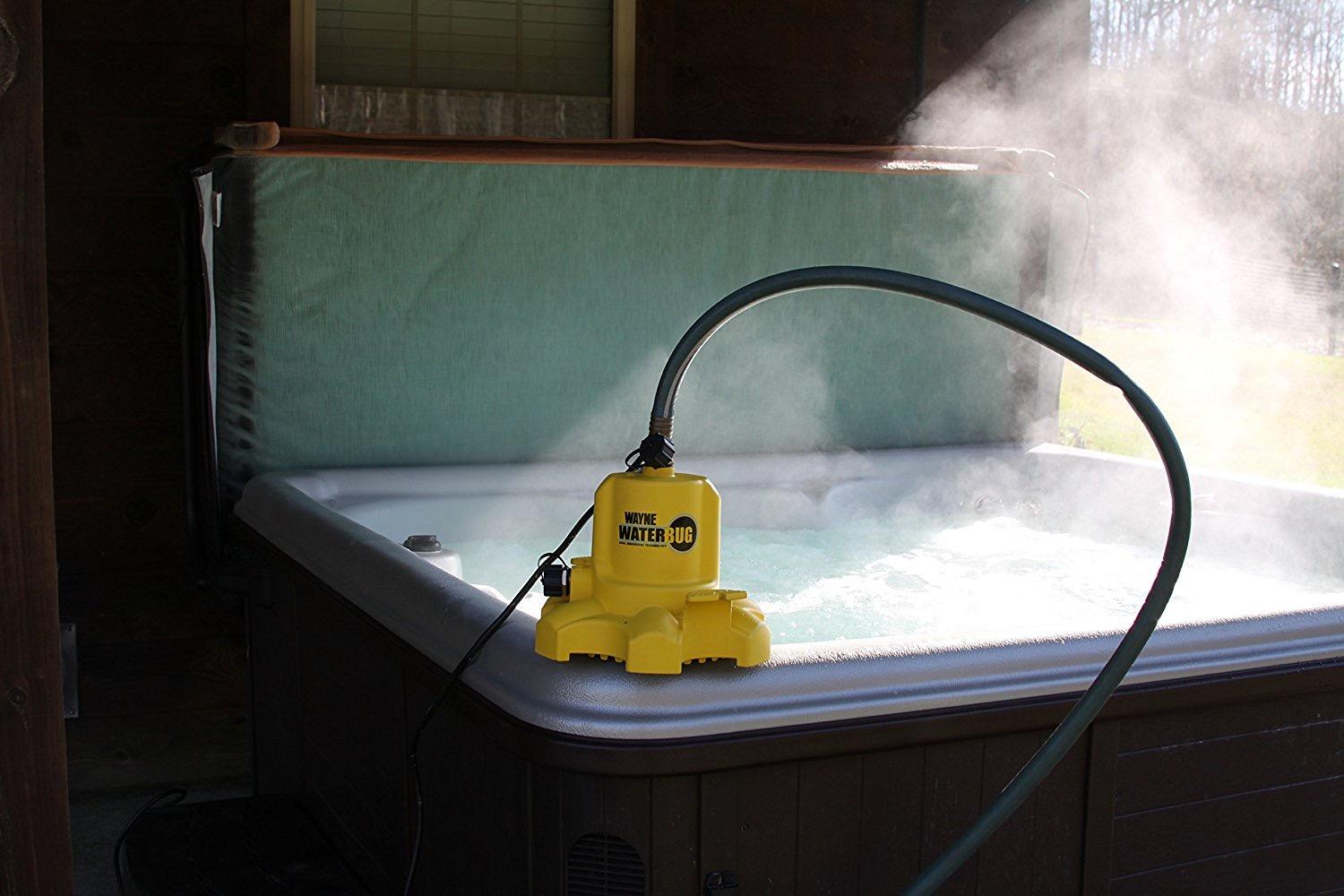
The WaterBUG is the emergency tool, not the installed pump. It has no float switch at all, which means it cannot be your primary sump pump, but it is the unit we would keep in the closet for a burst supply line in the mechanical room or a sump failure at 2 a.m. when the power is out.
It moves up to 1350 GPH and drains water down to 1/16 inch, which is close to as dry as a floor gets. Multi-Flo technology lets you choose between a top discharge for window wells and buckets and a side discharge for flat open surfaces, and the non-corrodible plastic outlets accept a standard garden hose.
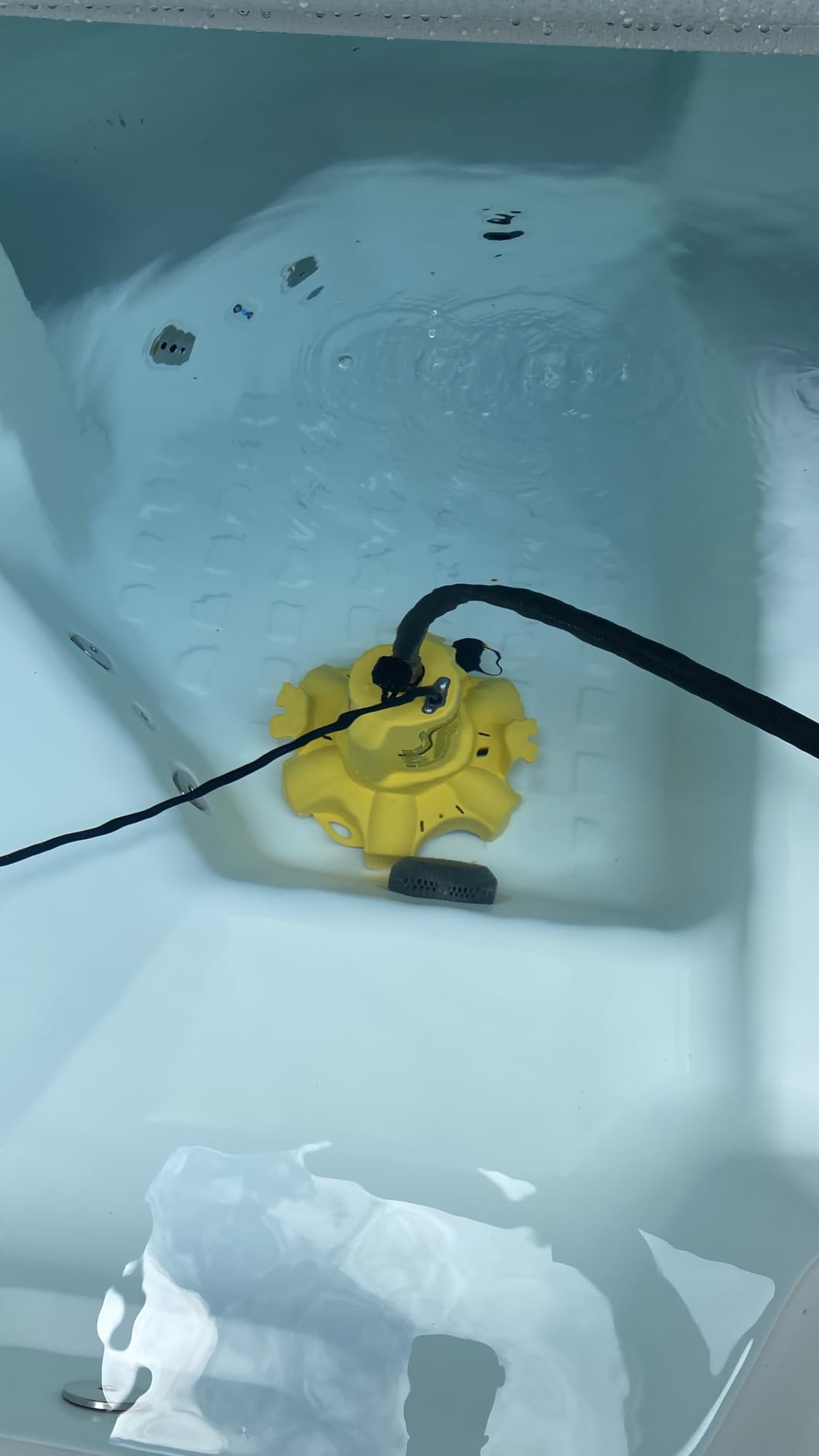
Owners report years of service and praise the quiet running for a pump that handles this volume. The multi-ring suction strainer filters debris to reduce blockages, which is a sensible design choice for a pump that will sit in a puddle of carpet fibres and construction dust.
Two limitations are worth naming. It can air-lock and stop pumping until you tilt it to release the trapped air, and there is no top handle or lifting loop, so you lift it by the body rather than the cord. The cord itself is long and has a wrap for storage.
Why keep one on hand
A manual pump is useless if it is not already in the house. The WaterBUG is the kind of tool that earns its storage space by being available the night the primary pump fails.
Draining to 1/16 inch is genuinely useful for damage control on carpet, pad and subfloor.
Dual top and side discharge means it fits a bucket, a window well or a flat flooded floor with one tool.
Where the WaterBUG falls short
Manual operation only. Without a float switch it will not run unattended, so it cannot protect a basement by itself and it will not run during an outage unless you are there to start it.
It air-locks and stops until tilted, the intake strainer collects fur and debris and needs periodic disassembly, and the lack of a lifting handle makes retrieval from a deep pit awkward.
How to Size a Sump Pump for Your Basement
Horsepower is the least useful number on the box, and it is what most buyers shop on. What actually matters is total dynamic head, the combined vertical lift and friction loss your water has to overcome, and the flow the pump still delivers at that height. A pump rated at 4600 GPH may deliver a fraction of that once it has pushed water twenty feet vertically and through a hundred feet of pipe.
Here is the measurement sequence we use. First, measure the vertical distance from the water level in the basin to the discharge outlet, whether that outlet is at the foundation wall, up a wall, or out at a dry well above grade. That is your static lift, and it is the number the lift ratings on the box are measured against.
Second, measure the total horizontal run of discharge pipe and add roughly one foot of head for every ten feet of pipe run. Third, count the fittings, because every 90 degree elbow and every check valve costs you head that a straight run does not. A double check valve on a code-compliant discharge can add several feet of equivalent head on its own.
Fourth, note the discharge diameter. A 1-1/2 inch line is the practical minimum for a permanent installation; an 1 inch line chokes flow badly and forces the pump to run longer at higher pressure, which shortens motor life. Fifth, add the static lift and the pipe loss together to get your total dynamic head, then pick a pump whose published flow at that head still exceeds your inflow rate.
Your inflow rate is the other half of the equation and it is hard to calculate. A rough rule of thumb is one gallon per minute per hundred square feet of basement roof area in a heavy rainstorm, doubled for a high water table or a lot with poor surface drainage. Even a rough inflow number tells you whether a 1/3 HP pump has any headroom left.
Basin size matters too, and not only for volume. A pump that empties a small basin too quickly short-cycles, which wears the switch and overheats the motor. Most quality pumps are tested to one million switch cycles, but short cycling also means noise in a finished basement. A basin that holds several minutes of water between cycles is a healthier installation.
1/3 HP vs 1/2 HP vs 3/4 HP: Which Horsepower You Actually Need
The rough guidance plumbers use, and the guidance that shows up in homeowner forums, is that a good 1/3 HP pump lifts water more than 15 feet, which covers most basements. If you need to lift more than 20 feet, step up in horsepower. That is the short version, and it is a reasonable starting point.
For a typical basement with a shallow pit and a discharge that exits a few feet above grade, a 1/3 HP pump is the right call and nothing more is needed. This is where the Zoeller M53, the WAYNE CDU790 and the Superior Pump 92341 sit, and between them they cover the majority of residential installations.
For a deeper basement, a discharge run that climbs a wall or crosses a finished room, or a pit that fills fast, a 1/2 HP pump adds the capacity to lower the water level instead of hovering near the pump limit. The Superior Pump 92551 pedestal and the Zoeller M98 Flow-Mate are our 1/2 HP choices, with the M98 offering the longer listed lift for deep setups.
For a high water table, a floodplain home, or a basement where water arrives faster than any single small pump can move it, step up again. The WAYNE CDU980E at 3/4 HP is the pick here, and its 5490 GPH rating with a five-year warranty gives both capacity margin and the longest warranty on our list. A 1 HP unit such as the Prostormer belongs in temporary or backup duty, not as a permanent plastic-bodied primary.
Two sizing mistakes show up repeatedly. The first is buying on the zero-lift GPH number printed on the box, which is a laboratory best case rather than a real installation figure. The second is undersizing because a 1/3 HP pump is cheaper and the pit does not seem to fill that fast in fair weather. Ask how fast the pit fills during the worst storm of the year, because that is the condition the pump has to survive.
Zoeller vs WAYNE vs Liberty vs Basement Watchdog: The Brand Verdict
This is the question that comes up most on plumbing and home improvement forums, and the honest answer is that reputation beats spec sheets in this category. In the r/HomeImprovement sump pump recommendations thread, the consensus is that Zoeller is the best brand because it is what professionals use. A parallel thread in r/HomeMaintenance calls Zoeller far and away the best brand and recommends the pre-assembled package if you want something simple.
In r/Plumbing the answer is wider, with Liberty, Zoeller and Goulds all described as pumps you cannot go wrong with, and with a specific piece of advice attached: make sure it is a fixed float and not a swinging float. That advice maps directly to the products on our list. Every submersible model here uses a vertical or integrated switch, and the only tethered-style behaviour people complain about is on pump models we did not recommend.
The brand-level read we take from all of this is straightforward. Zoeller has the deepest professional reputation and the best field history on the M53 and M98, built around oil-filled motors in cast iron housings and vortex impellers. WAYNE is the strongest all-round value, with the CDU790 delivering cast iron construction and a three-year warranty at a lower tier. Liberty is a steady performer that trades cast iron weight for aluminum lightness and carries the shorter warranty. Basement Watchdog dominates the battery backup and pre-plumbed combination category rather than the bare primary category, which is why none of its units appear in the picks above.
For a plain primary pump, we keep coming back to Zoeller or WAYNE. For a monitored system with outage protection, that is where combination systems earn their place.
Battery Backup and Outage Protection for Finished Basements
The most common way basements flood is not a pump failure. It is a power outage during a storm, with the primary pump switched off and a pit filling faster than a bucket can empty. In storm regions the two events arrive together, which is why a backup pump is the highest-value addition to a finished basement.
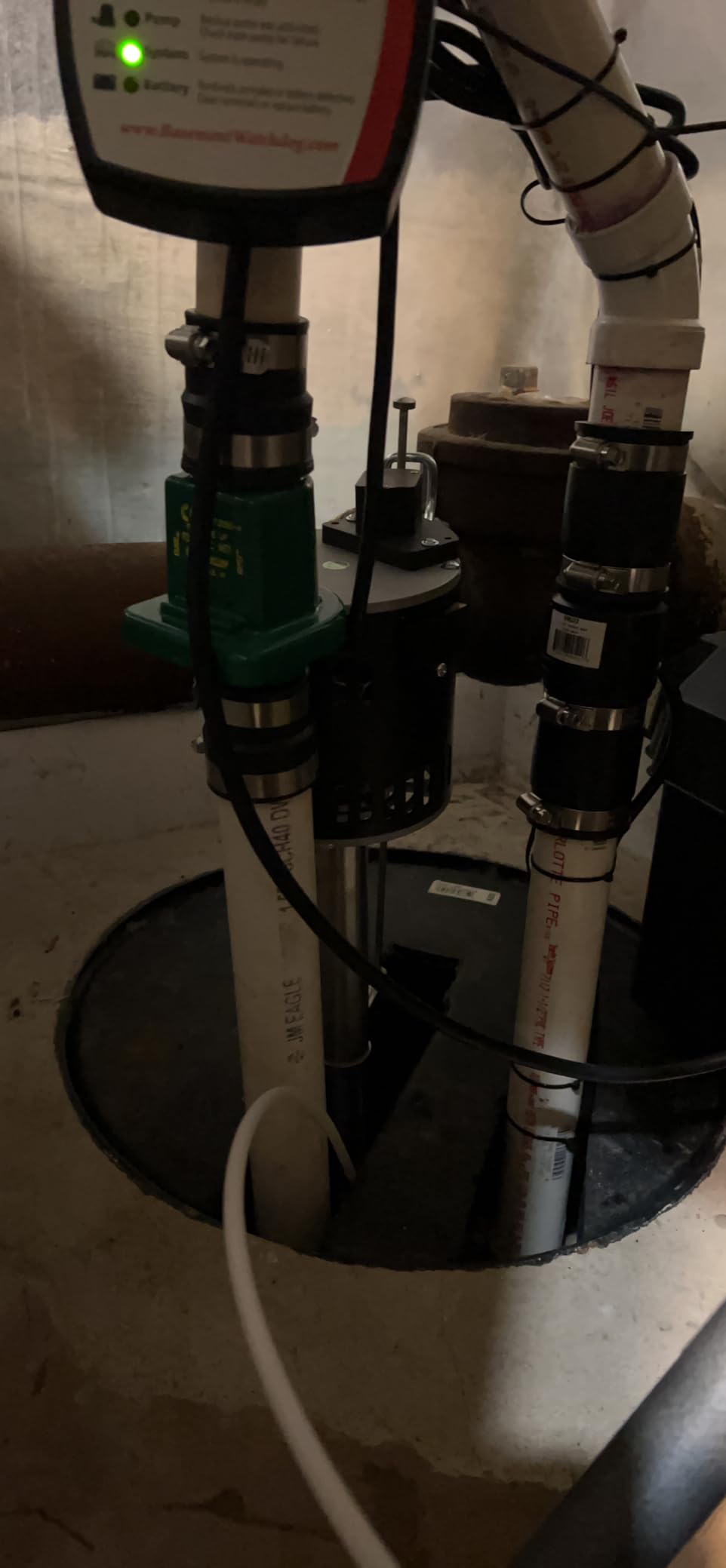
There are three backup options and they solve different problems. A separate battery backup pump sits in the same basin and switches on when the primary stops, which is the most common retrofit and works with an existing installation. A battery backup combined with the primary in one unit runs on house power until power fails, then takes over on battery, and is what combination systems such as the Basement Watchdog range are built for. A water-powered backup has no battery at all and uses municipal water pressure to drive a small pump, which makes it immune to power outages but useless if you are on a private well.
Our read is that a finished basement with drywall and flooring should have a backup, and that the battery option is the most broadly applicable. Our dedicated guide to battery backup sump pumps goes deeper on the sizing and controller side if you are planning that install.
A generator is the fourth option and the one to approach carefully. A portable generator running inside a basement creates a carbon monoxide hazard, and improvised transfer switch connections are a fire risk. If you go this route, use a listed transfer switch and run the generator outside, well away from the house openings.
Whichever backup you choose, add a high-water alarm. A pump that fails silently in an occupied basement is far more damaging than one that fails loudly, and an alarm costs very little next to a finished room.
Installation, Testing and the Annual Maintenance Schedule
A sump pump is a fifteen minute install for most people and a ten minute test. The test is the part people skip, which is exactly why pumps fail unnoticed for months. After installing, or at the start of every storm season, work through this checklist.
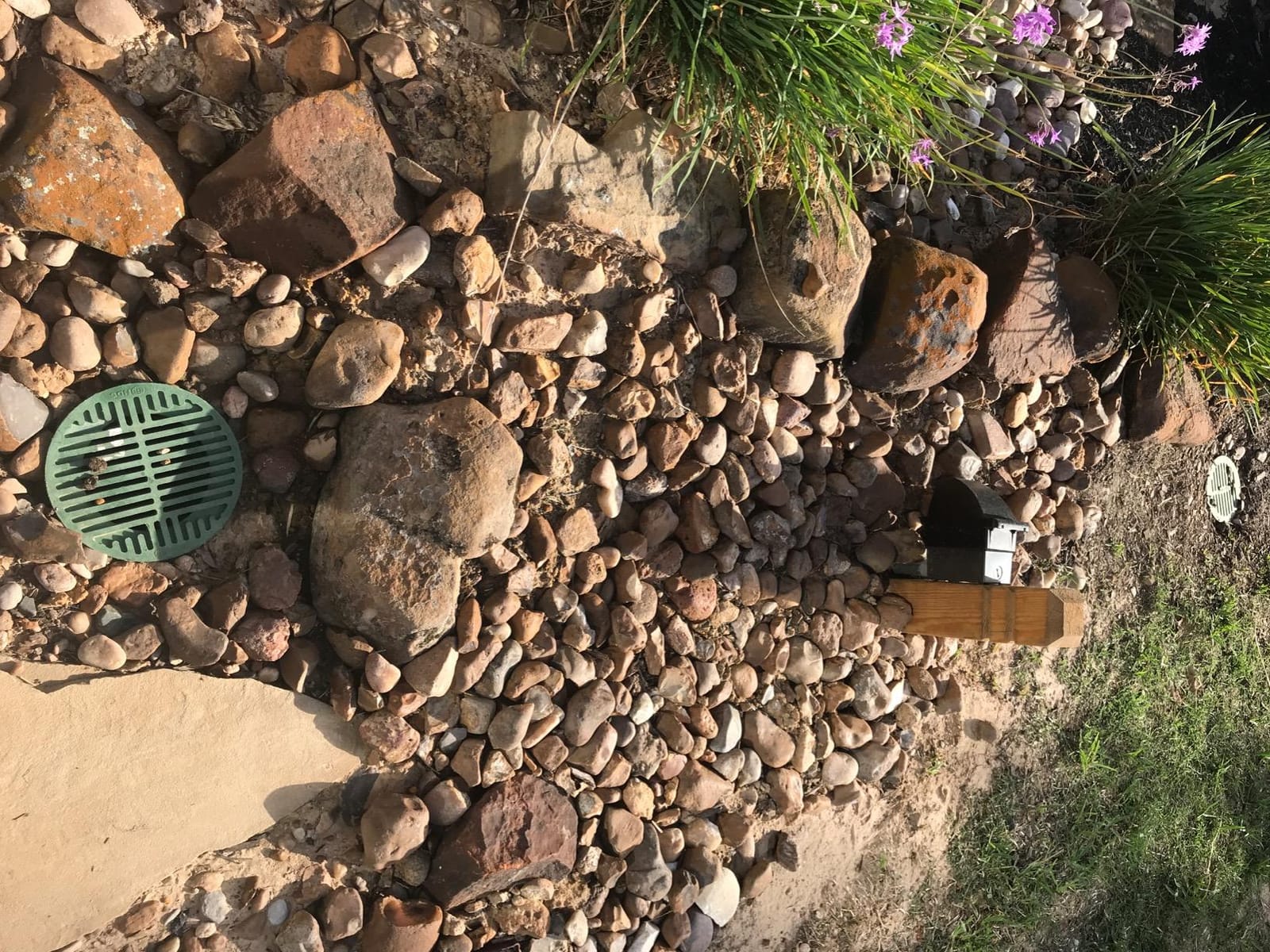
Confirm the pump starts on its own by slowly pouring water into the basin until the float lifts and the pump engages. Listen for a steady running sound and watch the discharge pipe for flow at the outlet. Confirm the discharge pipe is securely fastened to the foundation or exterior wall, because a pump that discharges onto loose soil can quickly saturate the soil and end up pumping the water back into the pit. Check that the check valve is installed and oriented correctly so water cannot flow back in after shutdown.
Confirm the power plug is seated and, on models with an LED power plug, lit. Run the pump manually if the model has an auto and manual mode, so you know the impeller turns freely before you need it to. Check that the discharge line is protected from freezing where it exits the building, and that it is routed to a location permitted by local code. GFCI protection on the receptacle is the safe default. Pour water into the basin and confirm the pump shuts off at its designed cut-off level and that the basin refills normally afterwards.
Ongoing maintenance is lighter than most people expect. Once a year, pull the pump out and clean the intake screen, especially if your pit collects leaves or iron bacteria residue. Test the float switch by lifting it manually and confirm it moves freely and is not tangled. Check the power cord for cracking or rodent damage, and confirm the check valve still holds after the pump stops.
Know when to replace rather than repair. Replace the pump if the motor hums without turning, if it runs continuously without the water level rising, if the discharge pipe bangs or gurgles after shutdown, if the switch sticks in one position, or if the housing is cracked or badly corroded. Replace the switch alone if the pump turns but never starts or never stops, since that is a component failure rather than a pump failure. A pump that has run for ten years in a wet pit is a reasonable replacement candidate on age alone, which is also why many owners keep a known-good spare on the shelf.
Frequently Asked Questions
What is the most reliable sump pump brand?
Zoeller has the strongest professional reputation in this category, and homeowners on plumbing and home improvement forums consistently name it as the brand they would trust with a finished basement. WAYNE is the strongest alternative on value, with cast iron construction and a three-year warranty. Liberty is a solid steady performer. The reliability gap between the top brands is smaller than the gap between any of them and a plastic-bodied budget pump.
Is a 1/3 HP or 1/2 HP sump pump better?
A 1/3 HP pump is the right choice for a typical basement because it lifts water more than 15 feet, which covers most homes. Choose 1/2 HP if your discharge exits well above the pit or your basin fills quickly. Step up to 3/4 HP for a high water table, a floodplain home, or a deep basement where water arrives faster than a smaller pump can clear it.
Which sump pump is better, Wayne or Zoeller?
Both are excellent and the difference is narrow. Zoeller has deeper professional reputation and models like the M53 use an oil-filled motor in a cast iron housing for heat management. The WAYNE CDU790 delivers cast iron construction, a three-year warranty and quiet operation at a lower tier, which makes it the value pick. Choose Zoeller for the strongest field history, WAYNE for the best balance of cost and durability.
What size sump pump do I need for a basement?
Size by total dynamic head rather than horsepower alone. Measure the vertical distance from the basin to the discharge outlet, add roughly one foot of head for every ten feet of horizontal pipe, and add the cost of every elbow and check valve. Then pick a pump whose flow at that combined head still exceeds your inflow rate. Most basements land on 1/3 HP, deeper setups on 1/2 HP, and high water tables on 3/4 HP.
Do I need a backup sump pump for a finished basement?
Yes, and the reason is that most basement flooding happens during a power outage rather than a pump failure. In storm regions, the outage and the water arrive together. A battery backup pump or a combination system with battery capability covers the common case. If you are on a private well, a water-powered backup is worth considering because it needs no electricity, though it does need municipal pressure.
Why does my sump pump run constantly?
Common causes include a stuck or jammed float switch, a switch set too close to the pump’s shut-off level, a basin that is too small so the pump empties it faster than it refills, and a stuck check valve that sends water back down the discharge line. Pull the pump, clean the intake, free the float, and confirm the check valve is installed and oriented correctly. Short cycling wears switches and overheats motors.
How often should a sump pump be tested?
Test it at the start of every storm season and after any power outage. Pour water slowly into the basin until the float lifts and the pump engages, listen for steady running, and confirm flow at the discharge outlet. Once a year, pull the pump and clean the intake screen, check the cord for damage, and confirm the check valve holds. The whole seasonal test takes about ten minutes.
Can I install a sump pump myself?
Usually yes, especially if you are replacing a like-for-like pump with the same discharge size and float style. Top suction designs need no weep hole, which removes the most common stumbling block. You will need basic plumbing knowledge for the discharge connection and a check valve, and you must follow local code on where the discharge line may terminate. Pedestal pumps and retrofitting an older differently plumbed pit are the two cases we would hand to a plumber.
How long does a sump pump last?
A well-built cast iron pump from a major brand commonly lasts ten years or more, and owners of the WAYNE CDU790 and Zoeller M98 report service lives in that range. Plastic-bodied pumps wear out far sooner, with bearings and motors sometimes failing within a year or two. The float switch and the check valve usually wear out before the pump body does, and both are replaceable components.
The Bottom Line on the Best Sump Pumps for Basements
For a typical basement, the Zoeller M53 Mighty-Mate is the pump we would install. Cast iron housing and motor, a vortex impeller that resists clogging, an automatic float switch, and the deepest professional reputation in the category add up to a set-and-forget installation.
Buy the WAYNE CDU790 instead if you want cast iron construction and a three-year warranty at a lower tier, or if a narrow pit makes the small vertical float the deciding factor. Choose the WAYNE CDU980E when your pit fills fast, you are on a high water table, or you want the longest warranty available here.
Add a battery backup system to any of them if the basement is finished, because an outage during a storm is the failure mode that actually floods homes. Check the float by pouring water into the basin twice a year, and you have done everything that matters.
These are our picks for the best sump pumps for basements in 2026. Use the current prices and ratings on each product page before you buy, and size the pump to your own head height rather than to the headline gallon figure.