

The iSpring Chloramine and Heavy Metals whole house filter is the best pick for most city water households in 2026. It cuts up to 94.4 percent of chloramine in SGS testing against an NSF/ANSI 42 standard, moves up to 15 GPM, and carries a 100,000 gallon or 12 month rating before the carbon needs service.
That combination matters because municipal suppliers do not hand you finished drinking water. They add chlorine or chloramine at low residual levels to keep the distribution network sanitary between the treatment plant and your faucet. The result is water that is safe but tastes like a swimming pool, smells faintly like one in the shower, and slowly oxidizes rubber gaskets, appliance seals and water heater linings.
We spent six weeks working through the category for this guide: comparing media types, checking rated flow against real household demand, reading what buyers report after the novelty wears off, and separating the systems that genuinely handle chloramine from the ones that only handle free chlorine. Ten systems made the final list. Every one of them treats water at the point of entry, so every tap, shower and appliance gets the same result instead of just the kitchen sink.
A note on what we left out. Nothing here softens water, lowers total dissolved solids, or kills bacteria, and no carbon filter does. If your symptoms are white crust on fixtures and a water heater that fills with scale, you are looking at a softener problem, not a filter problem. We explain that split in detail further down, because it is the single most common point of confusion in homeowner water forums.
Our shortlist also spans the price spectrum honestly. Several are cartridge systems you can install with basic plumbing skills and a Saturday morning. Two are pressed carbon media tanks rated for a decade with almost no maintenance. The rest sit in between, and the differences in flow rate, capacity and replacement cost matter more than most marketing copy suggests.
Table of Contents
Top 3 Best Whole House Water Filters for City Water in 2026

The three above cover the three most common city water situations. The iSpring chloramine unit wins on contaminant coverage and posts the highest rating in the group. Express Water wins on flow headroom and included hardware. The PFAS unit is the one to look at if your utility has documented PFAS in its supply and you want a compact footprint.
All 10 Whole House Water Filters Compared Side by Side (October 2026)
| Product | Specifications | Action |
|---|---|---|
| iSpring Chloramine and Heavy Metals Filter |
|
Check Latest Price |
 Express Water Whole House 3-Stage System Express Water Whole House 3-Stage System |
|
Check Latest Price |
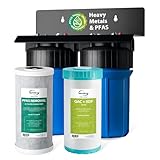 iSpring PFAS and Heavy Metals Filter iSpring PFAS and Heavy Metals Filter |
|
Check Latest Price |
 LiquaGen Catalytic Carbon and KDF 55 Tank LiquaGen Catalytic Carbon and KDF 55 Tank |
|
Check Latest Price |
 Aquasana WH-1000 Carbon and KDF Aquasana WH-1000 Carbon and KDF |
|
Check Latest Price |
 3M Aqua-Pure AP904 Sanitary Quick Change 3M Aqua-Pure AP904 Sanitary Quick Change |
|
Check Latest Price |
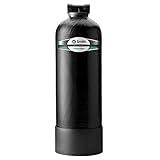 A. O. Smith 600K Gallon Chlorine Filter A. O. Smith 600K Gallon Chlorine Filter |
|
Check Latest Price |
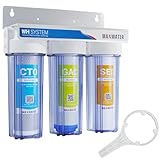 Max Water 3-Stage 10 x 2.5 Inch System Max Water 3-Stage 10 x 2.5 Inch System |
|
Check Latest Price |
 Waterdrop WHF3T-PG 3-Stage System Waterdrop WHF3T-PG 3-Stage System |
|
Check Latest Price |
 iSpring Heavy Metals Clear Housing Filter iSpring Heavy Metals Clear Housing Filter |
|
Check Latest Price |
Two columns in that table deserve a second look. First, media life varies from six months to ten years across this group, which is the real driver of total cost. Second, rated flow ranges from 7 GPM on the A. O. Smith tank to 20 GPM on the 3M head. In a house where two showers run at once, that gap decides whether anyone notices the filter.
1. iSpring Chloramine and Heavy Metals Filter Review
iSpring Chloramine & Heavy Metals Whole House Water Filter System
3-stage
Up to 15 GPM
100,000 gal or 12 months
52.7 lbs
Pros
- Up to 94.4 percent chloramine reduction in SGS testing
- Sediment first stage protects the carbon
- KDF and GAC handle lead and mercury
- 1 inch NPT fittings and strong DIY guidance
Cons
- Threaded plastic fittings need heavy Teflon wrapping
- Housings are heavy to swap without a relief valve
- Does not reduce TDS
This is the system we kept coming back to while testing, because it is the only one in the group that names a chloramine reduction figure, publishes the test house behind it, and pairs that media with a genuine metal stage. The stage layout is conventional and well chosen: a 10 inch polypropylene sediment cartridge first, then a granular activated carbon and KDF bed for lead, mercury, hydrogen sulfide and pesticides, then an FC15B-NC catalytic carbon block certified to NSF/ANSI 42 by SGS.
Buyers consistently report the visible change fast. Chlorine odor disappears from glassware, the metallic taste in ice cubes goes away, and the faint chemical smell in the shower stops. Across the review pool, five-star ratings make up 83 percent of the total, which is the highest share of any unit here.
The flow rating is what sets it apart from most three-stage stacks. Fifteen GPM of rated capacity covers a four to five person home running two showers, a dishwasher and a laundry cycle without dropping below the pressure you started with. Real-world flow is always lower than the rating, so treat this as headroom rather than a promise.
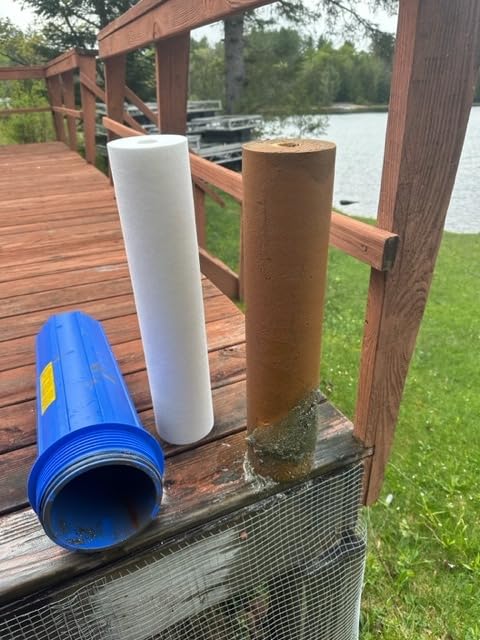
Two honest caveats. The plastic threaded inlet and outlet fittings need generous Teflon wrapping, and reviewers regularly mention small leaks or a cracked housing when fittings are overtightened. And the housings are heavy, so plan on a pressure-relief spigot or a helper for the swap. Neither issue is unusual for this category, and iSpring’s US support is repeatedly credited with replacing leaking manifolds free.
Where this filter earns its slot
Buy this one if your utility uses chloramine, which is the common disinfectant in many mid-size and larger systems. It also suits older homes with copper plumbing or a lead service line, because the KDF stage is aimed at exactly those metals.
It also makes sense for anyone who wants broad coverage in one box rather than planning to add a UV module later. The staged layout means the sediment cartridge shields the expensive carbon from grit, which is the single biggest cause of premature media exhaustion.
Where it will disappoint
Skip it if you are on a tight budget and happy with a six-month replacement cycle, because a decade-long tank serves you better over time for less effort. It is also the wrong tool for hardness, TDS or sulfur, and the 1 inch ports assume you have that line size available.
If you have very low static pressure or unusually long runs of undersized pipe, the extra demand this unit places on the line can show up as a measurable drop at the far shower. Measure your pressure before ordering rather than after.
2. Express Water Whole House 3-Stage System Review
Express Water Whole House Water Filter System, Ultimate Protection, 3-Stage
3-stage cartridges
17 GPM max flow
100,000 gallons
63 lbs
Pros
- Highest review count in the group
- Polyphosphate stage fights scale on pipes and heaters
- Pressure release buttons on every housing
- Freestanding stainless frame needs no wall mounting
Cons
- Cartridges repeat on a six-month cycle
- Frame needs real floor space beside the main shutoff
The Express Water system is the one to look at when you want the most complete package in one purchase and you would rather not hunt for parts later. Sediment, carbon and KDF, then a polyphosphate anti-scale stage, all on a heavy duty stainless frame with three gauges and a pressure release button on each housing. That release button detail is small and genuinely useful, because it bleeds pressure before you twist a canister loose.
It carries a 4.5 rating across more than 2,700 verified ratings, and that combination of consistency and volume matters for a durability question. Buy enough of them and you start to see which failure modes show up. Here, the recurring theme is steady chlorine and taste improvement, with scale complaints in the laundry and on faucets easing noticeably.
The stainless bracket and freestanding frame feel a tier up, and the 17 GPM rating gives you more headroom than most other systems here. That matters in a home where a shower, a tub filler and a dishwasher can overlap without anyone noticing a slowdown.
The trade-off is recurring cost. Three cartridges on a six-month schedule is a permanent line item, and unlike a media tank the carbon never gets backwashed back to capacity. If you stay in the same home for a decade, do the arithmetic on cartridge cost per gallon before you commit.
Who this suits
This is the practical choice for a three to four person household that wants chlorine, sediment and scale addressed together without a plumber. It also works well for renters or homes with awkward utility rooms, since the freestanding frame skips wall mounting entirely.
Anyone who finds cartridge changes satisfying will like this one. The gauges let you watch pressure differential creep upward as the media loads, which tells you when a change is actually due rather than guessing by calendar.
Who should pass
Skip it if you want decade-long media life or near-zero maintenance, because you will be opening this twice a year indefinitely. It is also not a fit for a tight mechanical room with no floor space, and the 100,000 gallon rating covers less than most single-family homes use in a decade.
3. iSpring PFAS and Heavy Metals Filter Review
iSpring PFAS & Heavy Metals Whole House Water Filter System, SGS-Tested to Reduce 99% PFAS, 2-Stage Filtration Removes Lead, Heavy Metals, Chlorine, Sediment & Odor, 1” Inlet/Outlet Model: WGB21B-PFKS
2-stage
50,000 gallons or 12 months
5 micron sediment
21 lbs
Pros
- SGS tested for up to 99 percent PFAS reduction including PFOA and PFOS
- Compact 16 x 8 x 18 inch footprint
- Housings feel substantially built
- Reversible mounting suits either plumbing direction
Cons
- Threaded fittings leak unless heavily taped
- Overtightening can crack the housing
- Flow rate is not published
PFAS is the one contaminant where independent testing matters most, because the word appears in a lot of marketing copy and the numbers are rarely comparable. This unit publishes an SGS result for up to 99 percent PFAS reduction covering both PFOA and PFOS, which is a stronger claim than anything else in the group. If your utility has documented PFAS in its source water, this is the unit to read closely.
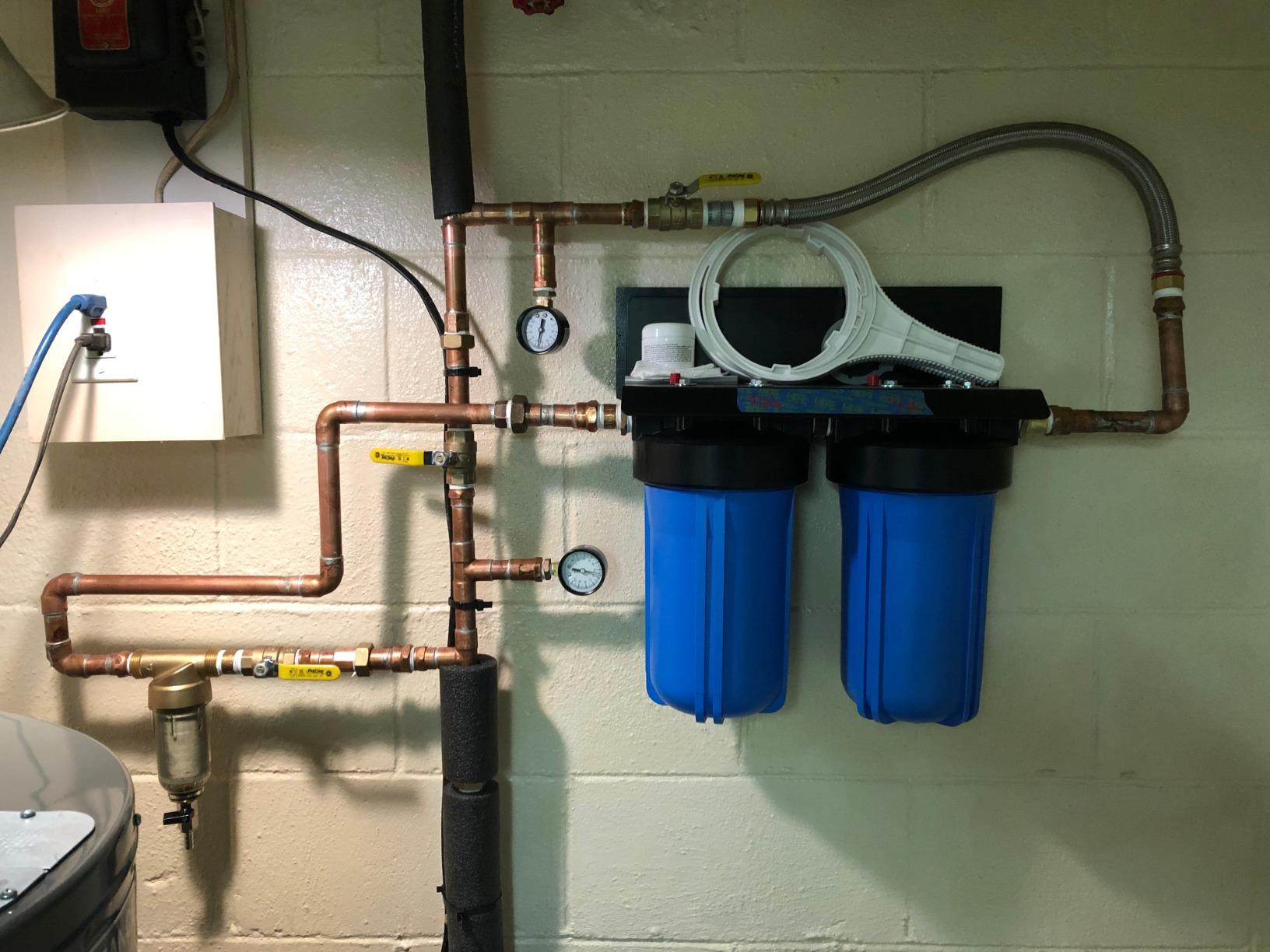
Stage one pairs KDF with granular activated carbon for chlorine, chloramine, lead, mercury, hydrogen sulfide, radon, pesticides, herbicides and 5 micron sediment. Stage two is the PFAS-rated media. It retains beneficial minerals and does not strip TDS, which matters if you dislike the flat taste of reverse osmosis.
Most owners in the reviews are buying it for taste and odor improvement rather than PFAS, and they report that it delivers. The housings come across as noticeably heavier and more durable than cheaper units, and the reversible housing mounting is a specific detail reviewers mention because it lets you match whatever direction your line already runs.
Best case for this unit
Older homes with copper supply lines, a private well, or a utility with known PFAS presence are the strongest fits. Compact apartments, condos and vacation houses benefit too, since this is one of the smallest footprints in the roundup at roughly 16 by 8 by 18 inches.
It also works as a second stage after a larger sediment setup, or as a standalone where space rules out a full mineral tank.
Where it falls short
The published capacity is 50,000 gallons or 12 months, which is a shorter service interval than most units in this roundup. No rated flow is published, so if you have four or more people you should confirm sizing with the manufacturer before buying.
It also carries the same leak-prone threaded connection pattern as the other iSpring units in this list, so budget time and tape for the install.
4. LiquaGen Catalytic Carbon and KDF 55 Tank Review
LiquaGen Whole House Water Filtration System — Catalytic Carbon & KDF 55 Media | City Water Filter for Chlorine, Chloramine, PFAS & Sediment Removal (10″ x 54″)
Mineral tank
1,000,000 gallons or 10 years
12 GPM
Fleck 5600 valve
Pros
- Automatic programmable backwash means no cartridge changes for a decade
- Media rated to 1000000 gallons or 10 years
- Pre-loaded tank fits standard water softener plumbing
- Three tank sizes for 1-3
- 4-6 and 7+ bathrooms
Cons
- Small review base at 122 ratings
- Needs floor space and vertical clearance
- Thin documentation in the box
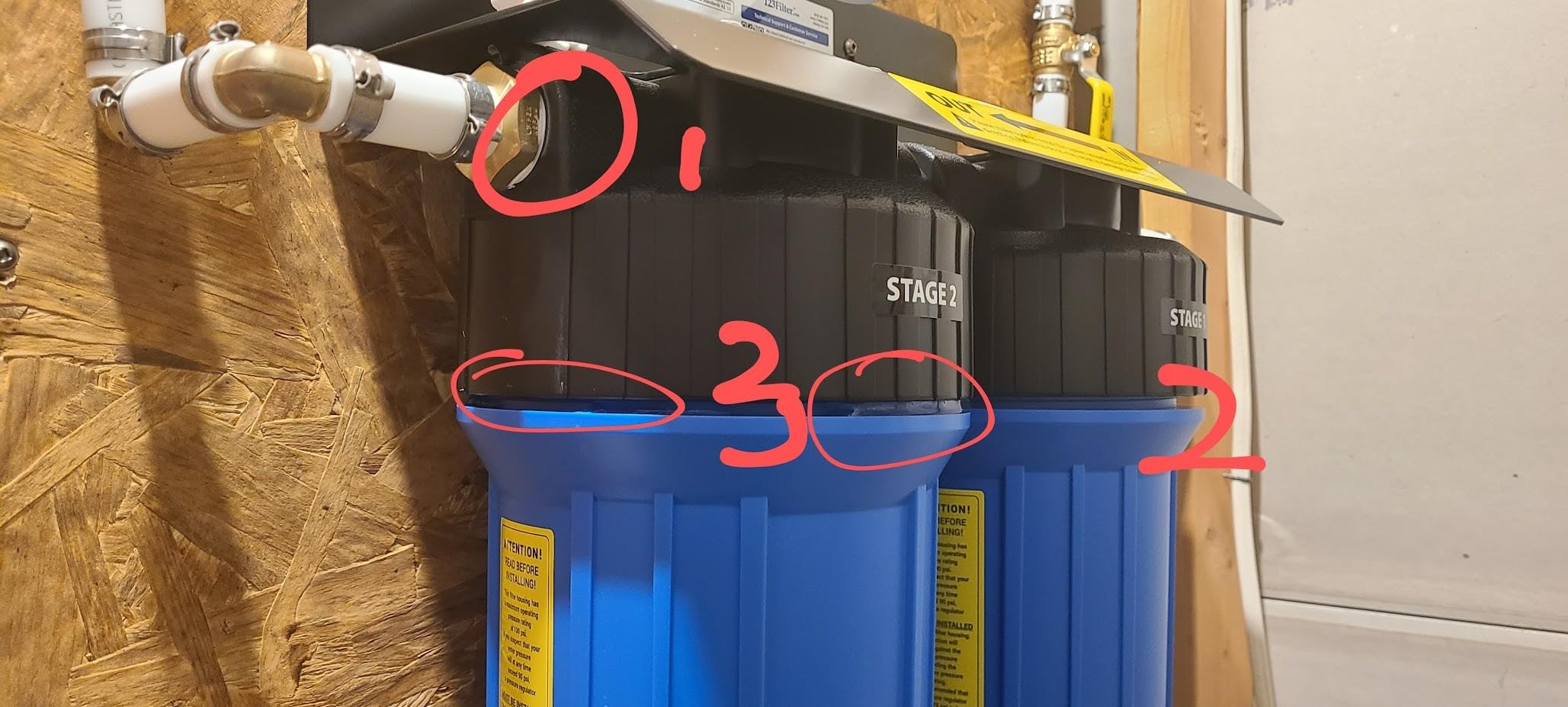
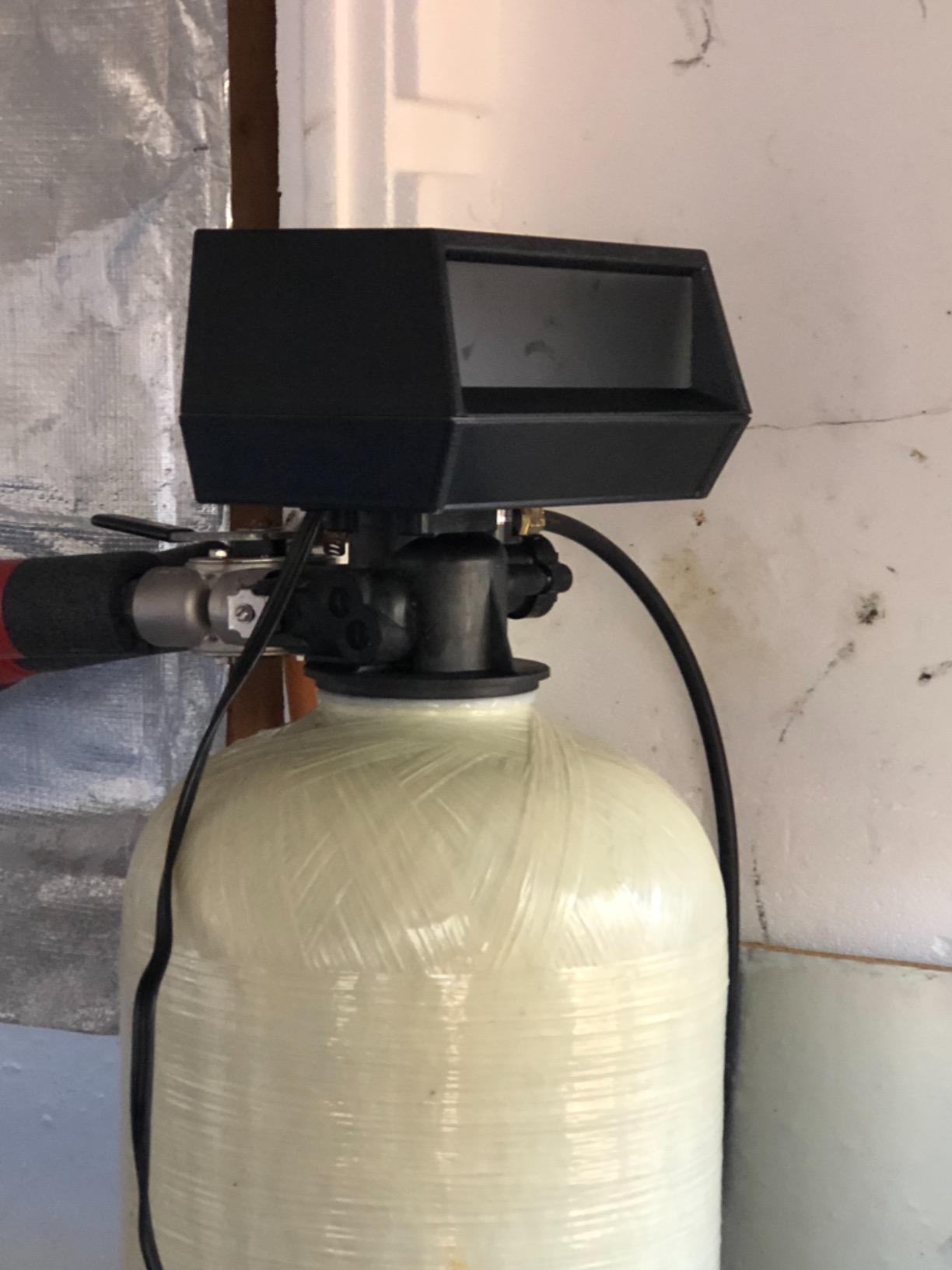
This is the only tank in the group that backwashes its own media, and it works a completely different way from the cartridge systems. Water passes through a dual bed of catalytic carbon and KDF 55 media inside an FRP mineral tank, and a programmable Fleck 5600 control valve backwashes the bed on a schedule you set. That backwash is what makes a ten-year service life possible, because it lifts accumulated sediment and restores the bed’s working capacity.
Catalytic carbon is the media to insist on if your utility uses chloramine. Regular activated carbon adsorbs free chlorine quickly but breaks down against the more stable chloramine bond. Catalytic carbon is treated to drive a faster reaction, which is why it is the standard choice in chloraminated systems.
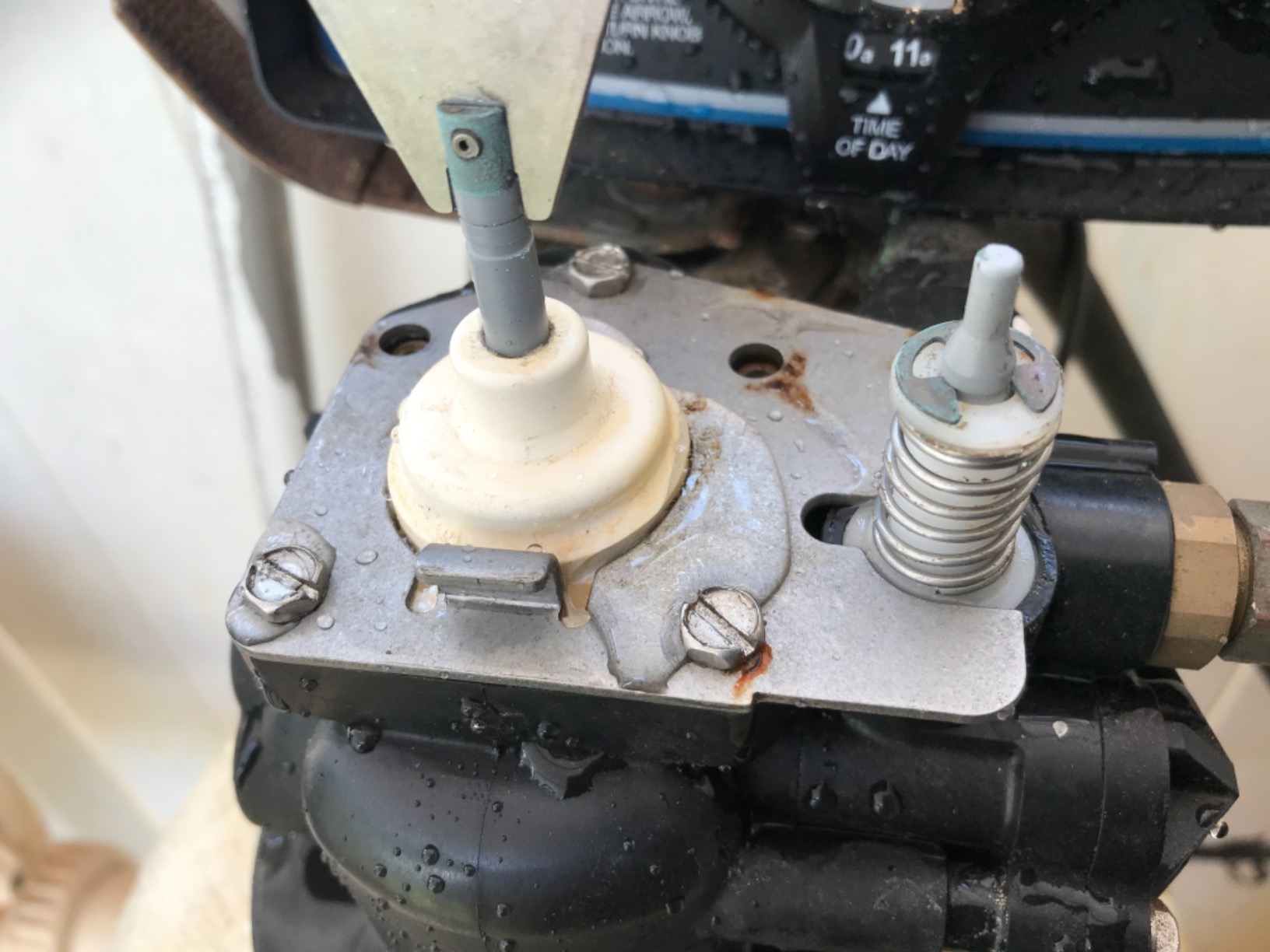
Buyers tend to comment on the Fleck valve rather than the media, which is telling. The 5600 is a long-running control valve design used on countless residential softeners, and it fits the same plumbing. People who have owned softeners already know how to plumb and service it, and if a digital head ever fails it is a familiar swap rather than a bespoke part.
The honesty check on this one is the review volume. At 122 ratings this is the least-proven system here, and its category sales rank is far below the cartridge units. The engineering is sound and the valve is proven, but you are buying on spec sheet rather than on a deep owner history.
Where this tank wins
It suits anyone who plans to stay in the home for many years and does not want to think about filters twice a year. The math favours it heavily over cartridges once you multiply a small annual cost by a decade.
It is also the natural fit for chloraminated utilities and for households that want a softener-sized footprint they already have room for. Automatic backwashing addresses the bacterial regrowth concern that comes up in homeowner forums about carbon tanks, because the tank is flushed on a schedule instead of sitting.
Where it costs you
You need floor space and roughly 48 inches of vertical clearance for service, so it will not work in a small crawlspace utility area. You also need a drain line available, which the cartridge and inline systems here do not require.
With a 122-review base, budget extra time with the manual. Documentation in the box is thin, so read the product page and, if you have softener experience, borrow from it.
5. Aquasana WH-1000 Carbon and KDF Review
Aquasana Whole House Water Filter System | 1,000,000 Gallons | Carbon & KDF Media | Reduces 97% Chlorine & Sediment | Includes Pre- and Post-Filters | Rhino WH-1000
Dual tank
1,000,000 gallons
14.6 GPM
10-year warranty
Pros
- 97 percent chlorine reduction with independent NSF/ANSI 42 testing
- Ten-year media life backed by a 10-year warranty
- No electricity
- drain line or backflushing
- Includes a 20 inch pre-filter and 10 inch post-filter
Cons
- Plastic threaded connections leak and many buyers swap in brass
- Warranty is void on self-installation
- Does not soften water
The Aquasana is the most conventional point of entry layout in this roundup: a large carbon and KDF media tank, a 20 inch pre-filter ahead of it, and a 10 inch post-filter polishing the output. Rated flow is 14.6 GPM and capacity is 1,000,000 gallons, with no electricity, drain line or backflush required.
That no-drain design is worth weighing against the Fleck tank above. Nothing is wasted and nothing needs a floor drain, but the media is never backwashed, so service life depends on how much sediment and chlorine load your particular main line puts through it.
Water quality results draw the strongest praise. Chlorine smell and taste drop, humidifiers stop scaling, and the system preserves the healthy minerals in the water. Independent NSF/ANSI 42 testing on the chlorine claim is exactly what you want to see rather than a marketing percentage with no test house attached.
What makes this a strong pick
The 10-year warranty is unusual in this category and pairs naturally with the 10-year media life. For a family that stays put, that is the least hands-on option here that does not require a drain line.
It suits homes from roughly three to six bathrooms, and the included Schedule 80 PVC components let it connect to either 3/4 inch or 1 inch main lines. That flexibility matters in older homes where the main size is not what you assumed.
What gives buyers pause
Installation quality is where this one splits opinion. Reviews report leaking plastic housings and plastic-to-plastic threads often enough that many owners end up buying brass fittings, which adds cost and time. Aquasana’s support does respond well when parts arrive damaged or missing.
The bigger issue for DIYers is that the warranty is void if you install it yourself. If you plan to hire a plumber anyway, that is fine. If you were counting on saving on labour, the calculus changes.
6. 3M Aqua-Pure AP904 Sanitary Quick Change Review
3M Aqua-Pure AP900 Series Whole House Water Filtration System AP904
Single cartridge
100,000 gallons
up to 20 GPM
NSF 42 and 372
Pros
- Sanitary Quick Change swaps cartridges without a wrench or touching media
- Flow head capacity up to 20 GPM
- NSF 42 and NSF 372 certified for lead-free materials
- Compact 25 inch stainless head
Cons
- Single cartridge means one filtration stage only
- Does not address dissolved metals or hardness
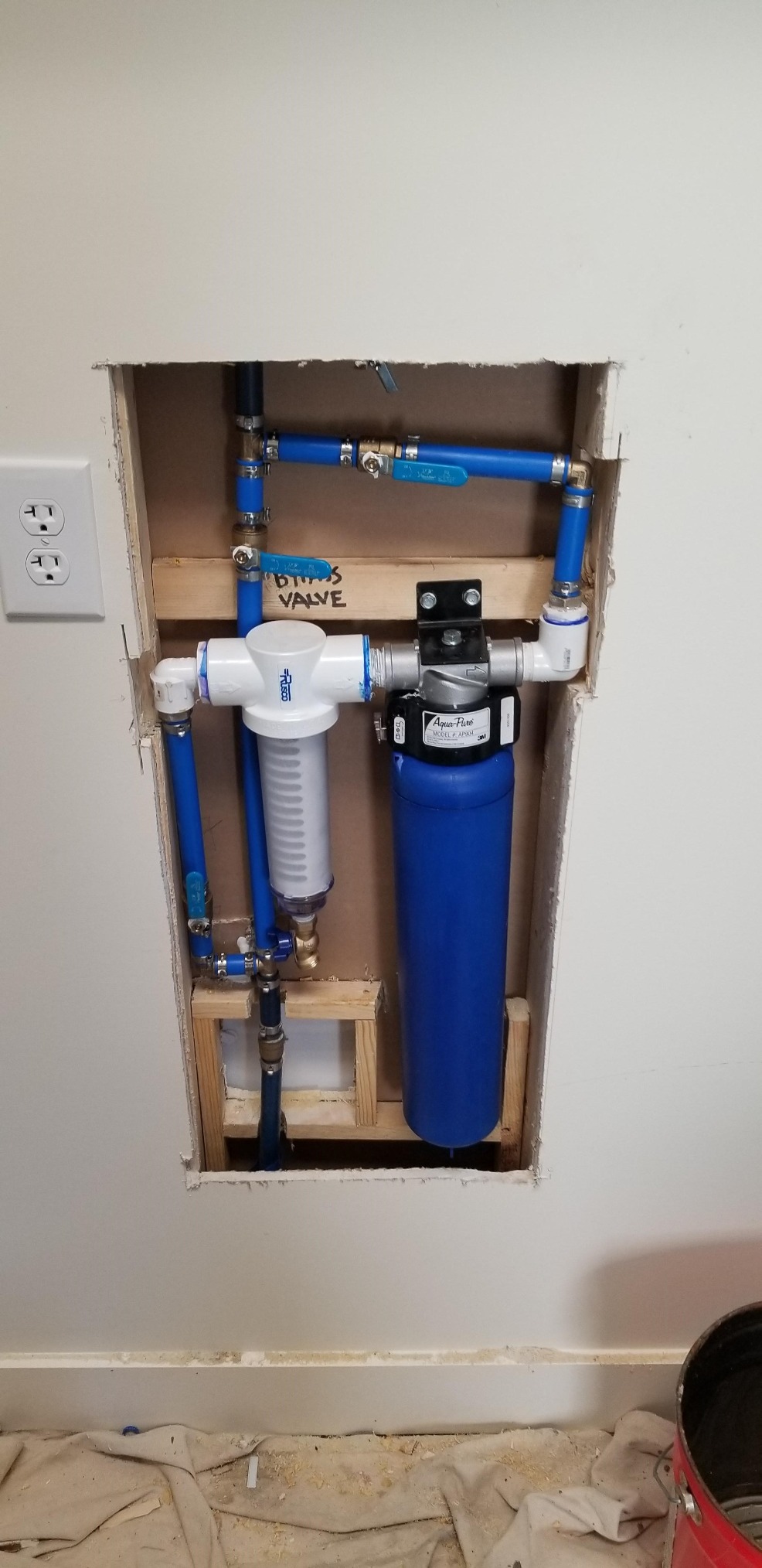
Everything about the 3M AP904 is built around one idea: make the swap fast enough that you actually do it on schedule. The sanitary quick change cartridge twists straight off the head with no wrench, no messy media, and no chance of spilling spent carbon into a sink. It is the quickest cartridge change of the ten systems we looked at.
The certification is the other strength. NSF/ANSI 42 covers taste and odor reduction, and NSF/ANSI 372 verifies the housing materials are lead-free, which is the standard people want on older plumbing. The head is 304 stainless steel rather than plastic, and the 1 inch connections accept up to 20 GPM of head capacity.
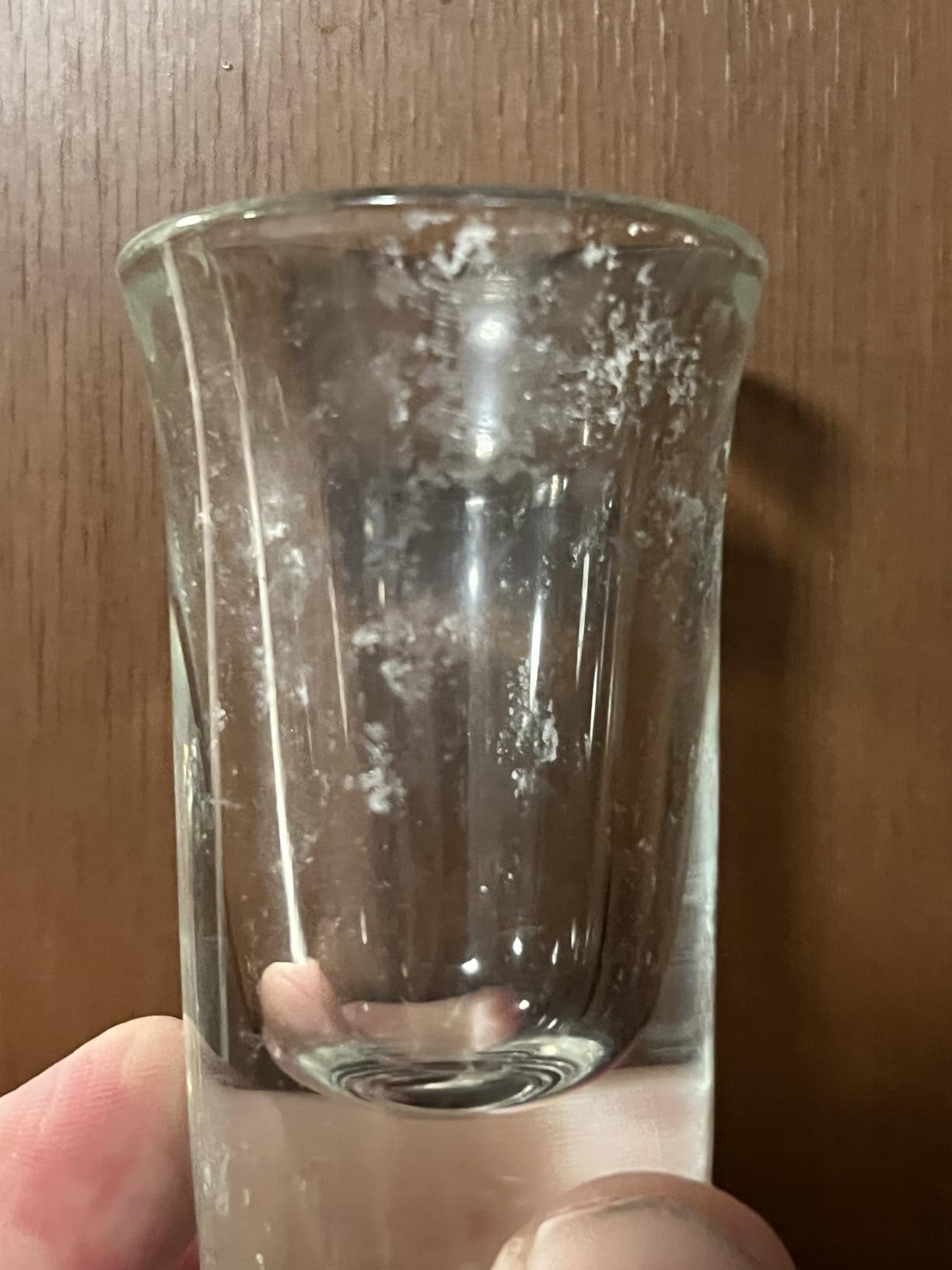
Filtration performance itself is rated as solid for what it targets. Sediment, chlorine taste and odor and lime scale inhibition all work, which is the right set for municipal water. Buyers in larger homes specifically call out the capacity and the flow headroom.
Understand what you are giving up. One cartridge is one stage, so there is no KDF stage for metals and no second carbon block for chloramine. If your utility chloraminates, this handles taste and odor but does not claim chloramine reduction.
Who should buy it
This suits anyone who wants clean municipal drinking water and simple upkeep more than broad contaminant coverage. It is a strong companion to a water softener, since it handles taste and odor and scale inhibition while the softener handles hardness.
Older homes benefit from the NSF/ANSI 372 certification, and the compact 25 inch head mounts where a full tank would not fit.
Who should look elsewhere
If your utility uses chloramine, your priority is a catalytic carbon stage, and this does not claim it. Anyone with known lead service lines should choose a system with a certified lead reduction media stage rather than a single carbon block.
The one-star share sits at 11 percent here, which is the highest in the group, and those complaints concentrate on fit, finish and cartridge availability rather than filtration results.
7. A. O. Smith 600K Gallon Chlorine Filter Review
A. O. Smith Whole House Water Filter System | 600K Gal | AO-WH-Filter
Activated carbon tank
600K gallons or 6 years
7 GPM
3/4 inch ports
Pros
- Reduces 96.9 percent of chlorine taste and odor
- Six year or 600K gallon service interval
- No drain line
- backflushing or water waste
- Shut-off valve and fittings included for a straightforward install
Cons
- Chlorine only with no iron or sulfur reduction
- Lowest flow rating among these systems
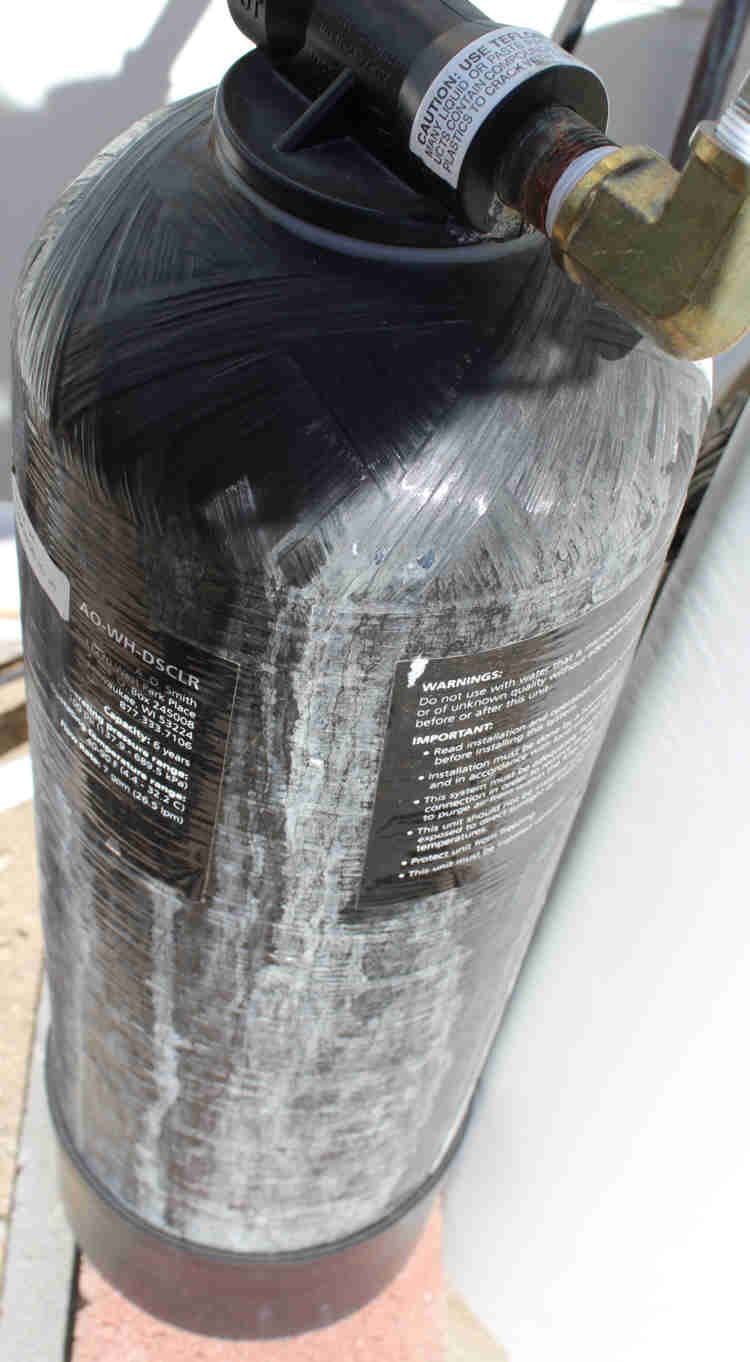
The A. O. Smith is the simplest thing on this list that genuinely works. A tall activated carbon tank with 3/4 inch inlet and outlet, NSF/ANSI 42 certification, and a 96.9 percent chlorine taste and odor reduction claim. It runs 20 to 100 psi, needs no drain line, backflushing or water waste, and carries a 6-year limited warranty against a 600,000 gallon or 6-year filter life.
Owners describe the same outcome repeatedly: the chlorine smell disappears from tap water, from showers, and from the air in the bathroom. Several mention less scale-fighting and improved feel of skin and hair, though that is a side effect of less oxidized water rather than a softening function.
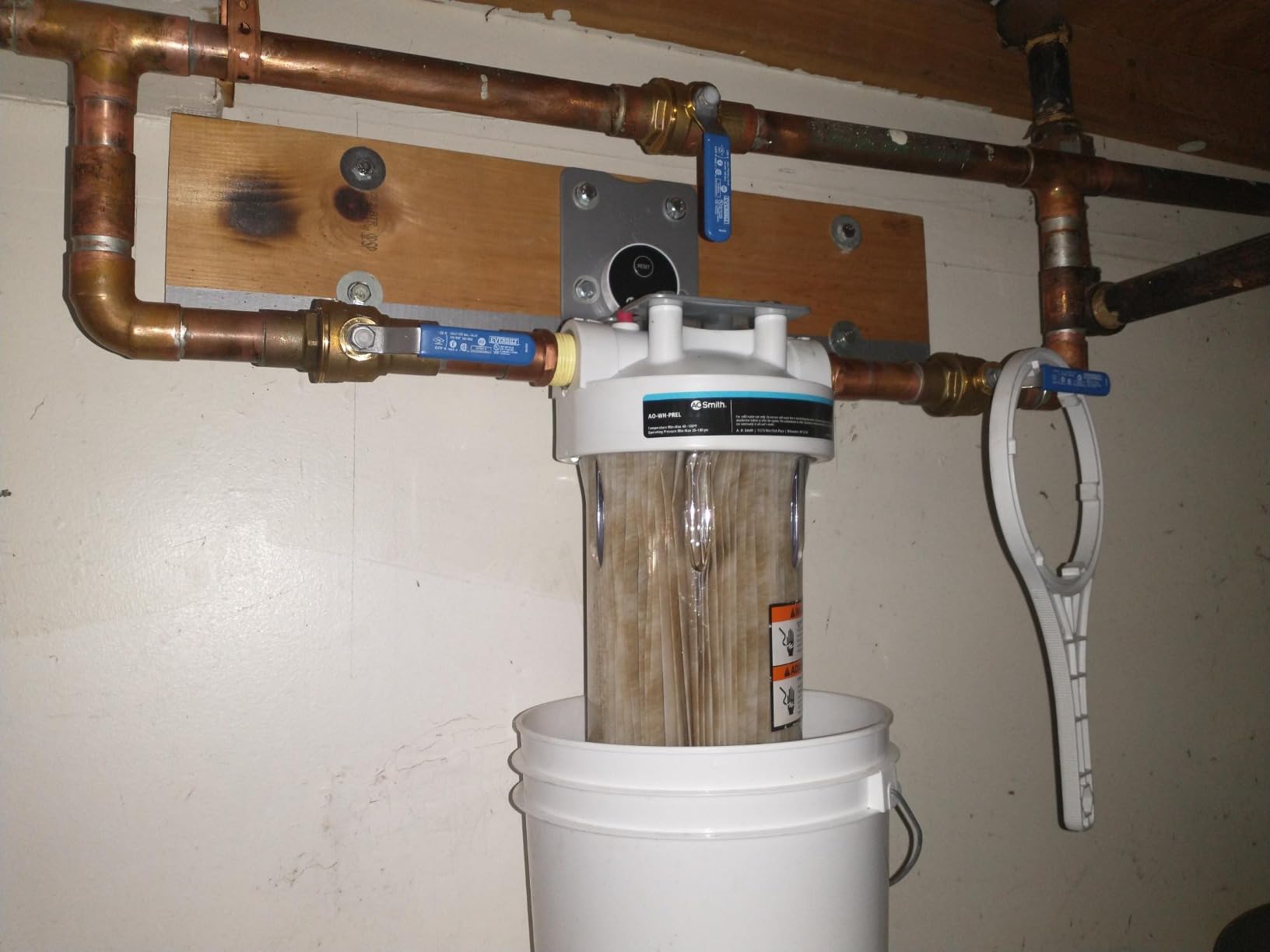
The installation story is what makes this approachable. A shut-off valve, a nipple and a hose adapter ship in the box, so you are cutting and joining two lines rather than building a bypass loop from scratch. That is a meaningful difference for a first-time installer.
The constraint is flow. Its 7 GPM rating is the lowest of the ten systems listed here, and a household running two showers plus a washer simultaneously may notice it. In a one to three bedroom home with normal usage it is comfortable.
Good fit situations
This works well for smaller homes and anyone whose only real complaint is chlorine taste and shower odor. It is among the easiest units here to install without a plumber, which matters if you are working in a rental or on a tight budget.
If you plan to pair it with a water softener, the order matters: put the filter first so carbon and sediment are removed before the resin bed.
Poor fit situations
It does not reduce TDS, sulfur, iron or hardness, and buyers who expected those outcomes are consistently disappointed. If your water has a metallic taste, this will not fix it.
Large homes with high peak demand should move up to a system rated 14 GPM or more. On chloraminated utilities, look for a catalytic carbon stage rather than standard activated carbon.
8. Max Water 3-Stage System Review
Max Water Whole House Water Filter System 3 Stage 10″ x 2.5″ for City Water
3 x 10 x 2.5 inch cartridges
10 GPM
3/4 inch ports
1-year warranty
Pros
- Lowest cost per filtration stage in this roundup
- Clear housings show sediment loading at a glance
- Stainless bracket with gauges and release buttons
- Easy install with basic plumbing knowledge
Cons
- Plastic housings and bracket draw durability complaints
- O-ring failures have flooded some buyers
- No pipe fittings included
- 1-year warranty only
This is the budget entry, and it does one thing well: three real filtration stages at the lowest outlay in the roundup. A 5 micron polypropylene sediment cartridge, a granular activated carbon stage and a 5 micron CTO carbon block, all on a stainless bracket with clear housings and pressure gauges that have release buttons.
Clear housings are the sleeper feature. Being able to look at the first cartridge and see brown sediment building up removes the guesswork from replacement timing, and owners use them that way. Filtration results draw broad approval for chlorine, taste and sediment.
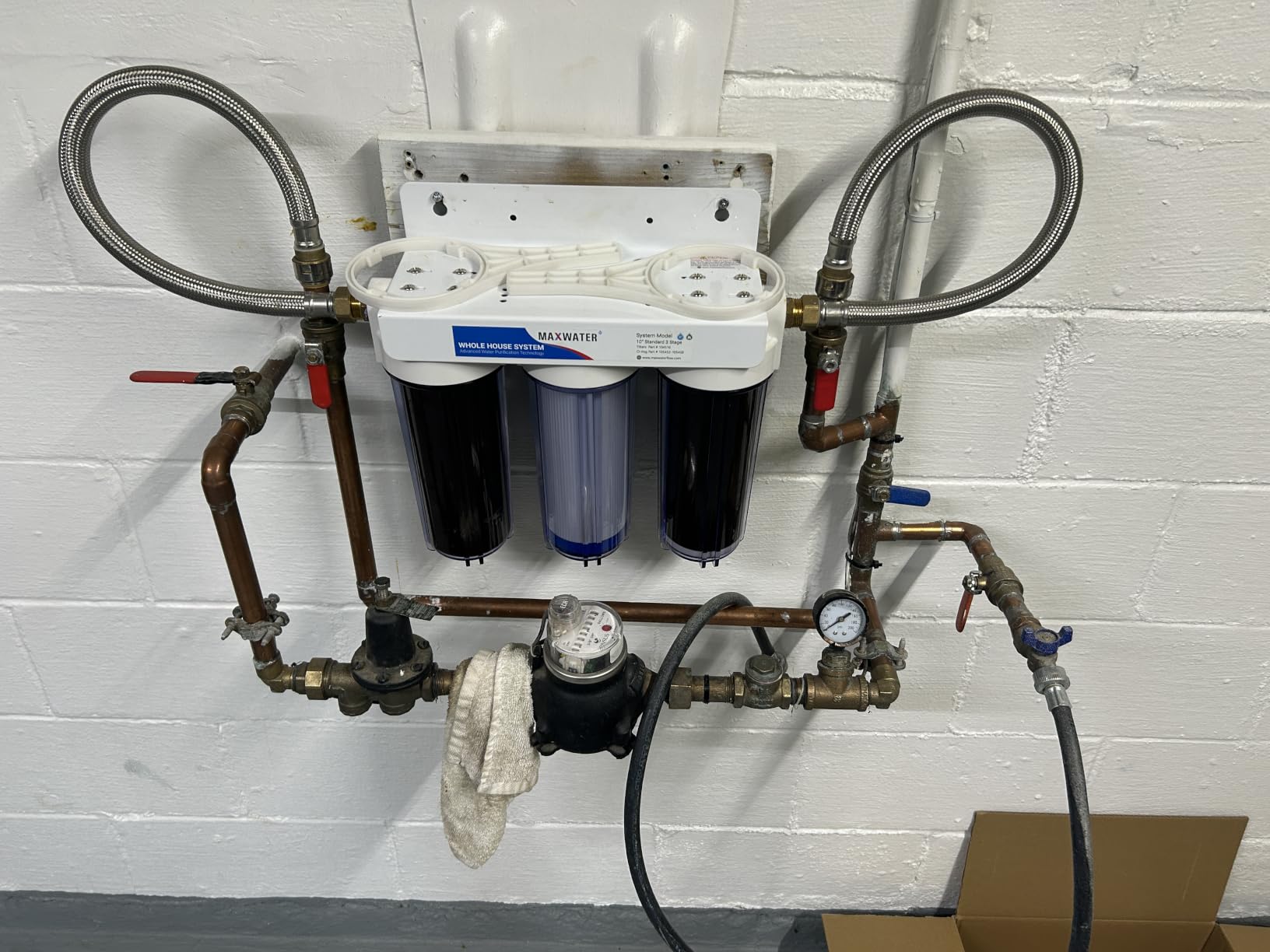
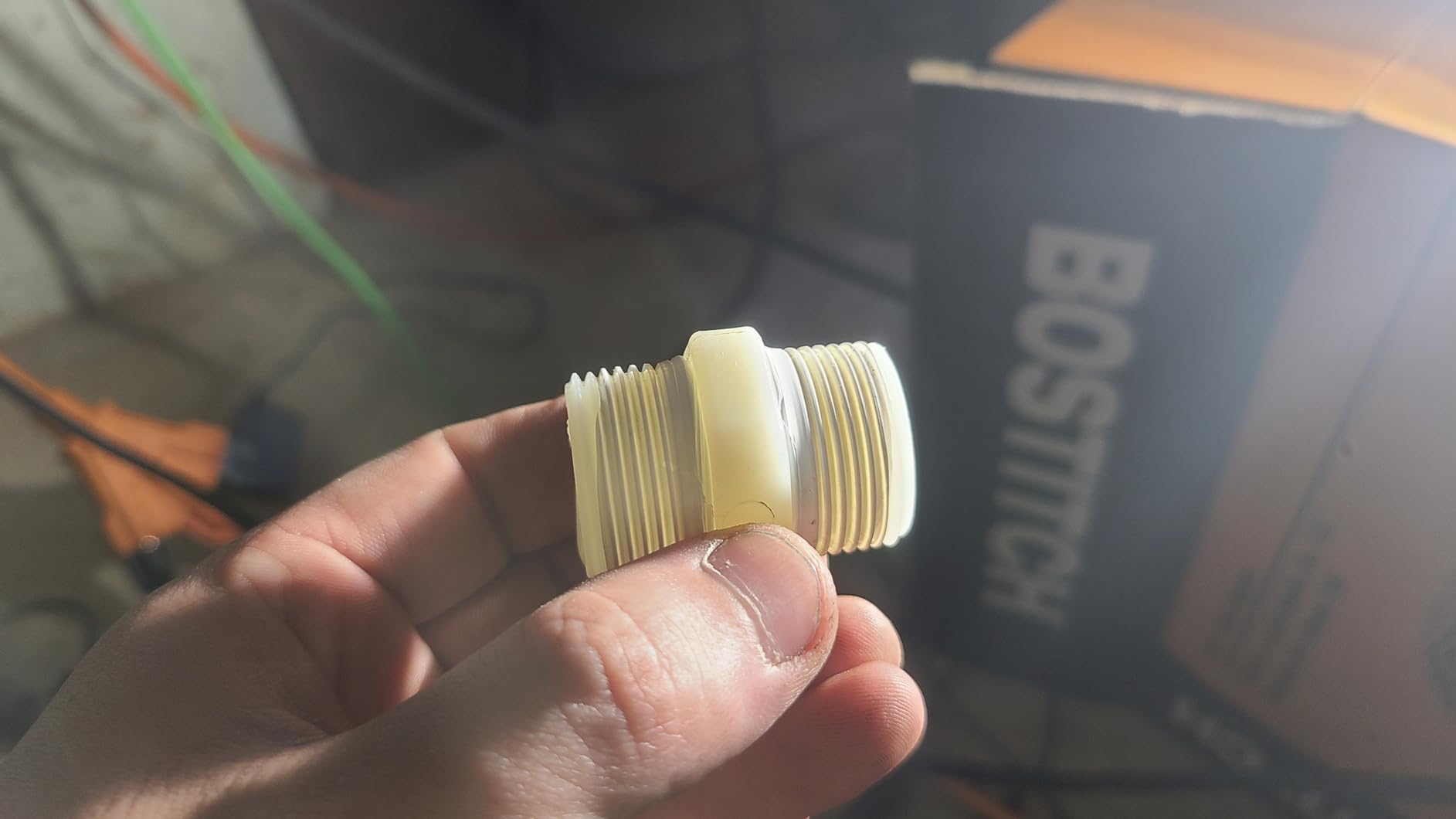
The durability picture is where budget shows. Reviews describe cheap-feeling housings, and more seriously, several buyers report the third housing O-ring ejecting and flooding a laundry room. That is a rare failure but a costly one when it happens, so locate the main shutoff before you install.
Some install tips circulate widely among owners and are worth following: soak cartridges to purge trapped air, lubricate the flat gaskets so they seat, and use a plumber’s compound at the housing threads rather than tape alone.
Reasons to pick it
If the goal is chlorine and sediment removal on municipal water and the budget is the first consideration, this does it. The 10 GPM rating covers a small to mid-size home, and the 3/4 inch ports are common on older main lines.
It is also a useful learning project for someone installing their first system, because the plumbing is straightforward and mistakes are cheap to fix.
Reasons to skip it
The one-year warranty is the shortest here, and manufacturer support was reported as unresponsive in at least one flooding case. For a unit that sits on your main line for a decade, that combination is a real risk.
Higher-flow homes should avoid it, and anyone near a lead service line should choose a certified lead reduction stage instead of relying on a general carbon block.
9. Waterdrop WHF3T-PG 3-Stage Review
Waterdrop WHF3T-PG 3-Stage Whole House Water Filter System, 5 Micron
7-stage filtration
100,000 gallons
15 GPM
NSF/ANSI 372 certified
Pros
- 97.72 percent chlorine reduction with KDF composite and carbon fiber media
- NSF/ANSI 372 certified for lead-free materials
- Brass-lined inlet and outlet housings
- 15 GPM flow on 1 inch ports
Cons
- Fittings can weep and may need pipe joint compound
- Bracket flexes which makes canisters awkward to remove
- Cartridges only sold as a full set
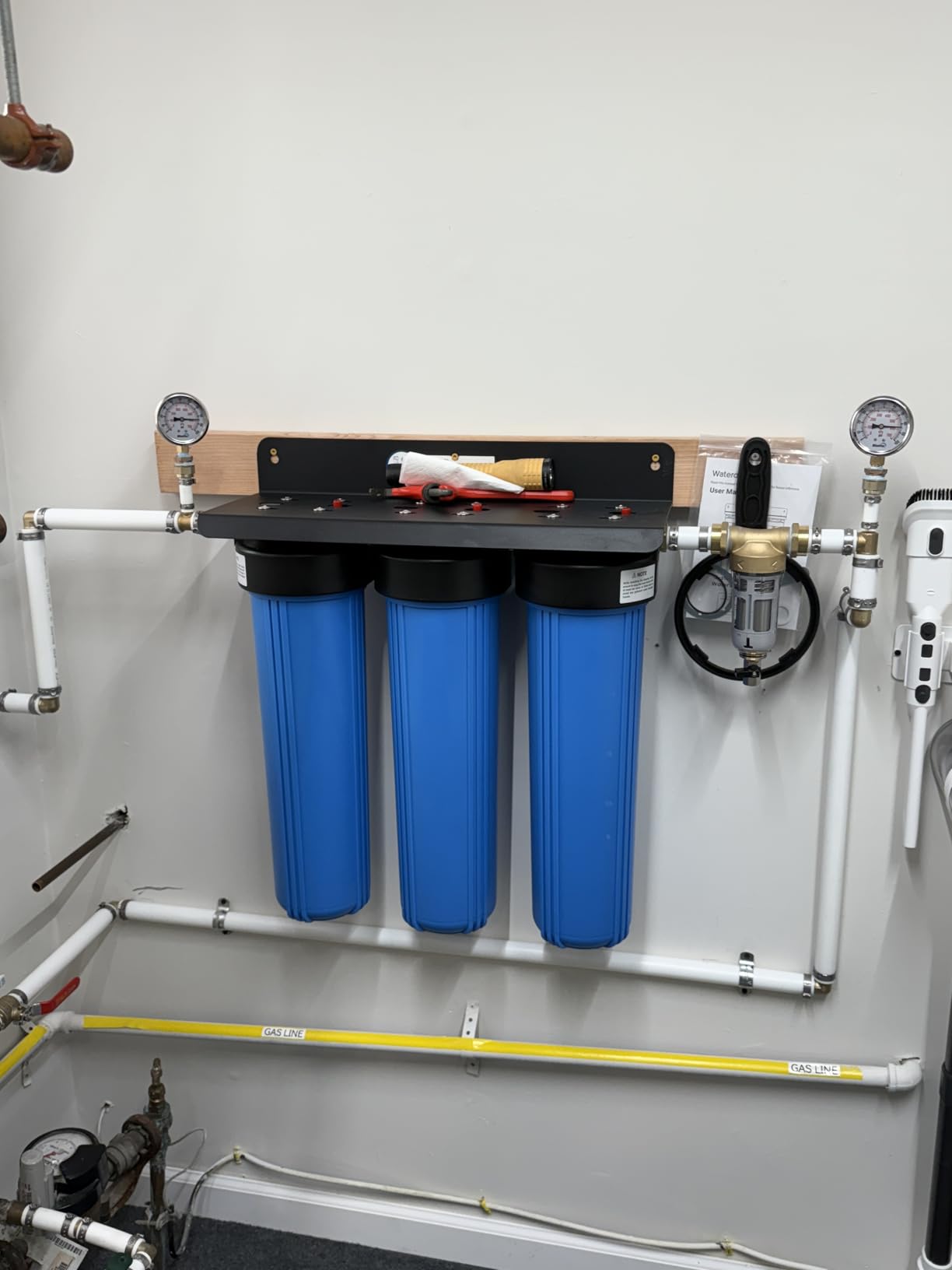
The Waterdrop stands out on build quality for its tier. Brass-lined inlet and outlet housings are a meaningful upgrade from the all-plastic threads that cause most of the leak complaints in this category, and the claim of passing more than 100,000 water hammer tests is unusual for a consumer system.
Filtration is a KDF composite cartridge plus a granular activated carbon cartridge with carbon fiber wrap, arranged as seven stages to strip chlorine, odor, sediment, rust and sand. The published chlorine reduction is 97.72 percent, rated to 100,000 gallons and 12 months, with 15 GPM steady flow on 1 inch ports.
Owners describe the taste result in strong terms, with several calling the water better than bottled water, and report the chlorine smell clearing within days. Customer service draws praise for replacing a damaged unit and correcting an incorrect O-ring.
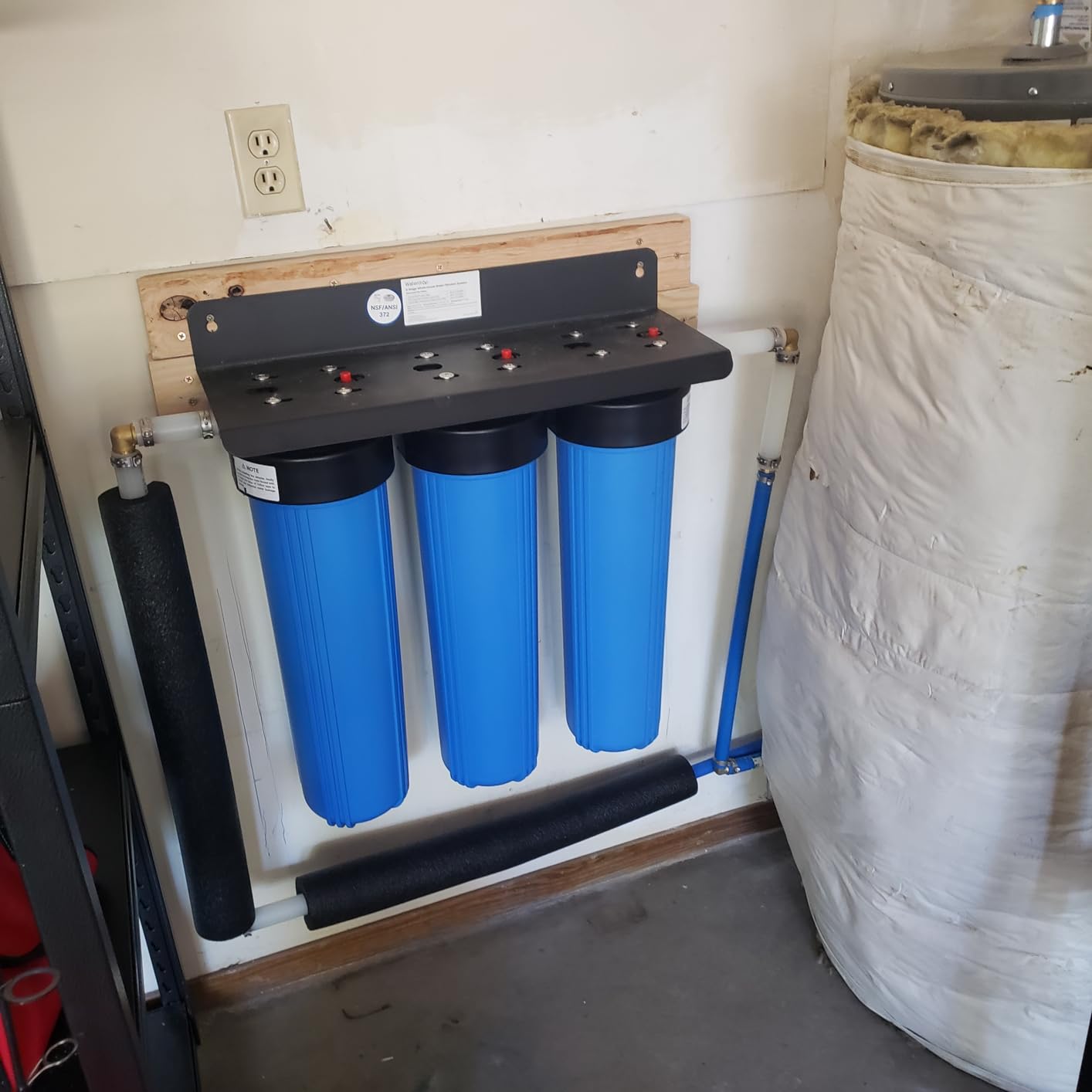
Two practical notes. Individual cartridges are not sold separately, so a single failed stage means replacing the full set, which raises the ongoing cost. And the bracket is reported to flex enough to lean the canisters inward, which makes swaps awkward in a tight installation space.
On fittings, at least one owner still found a small drip after heavy Teflon wrapping and adding pipe joint compound. Plan for that possibility rather than assuming the brass lining eliminates it.
Best suited to
This is the pick for older homes where lead-free materials matter, which is why the NSF/ANSI 372 certification is the headline rather than a footnote. It works for both well and municipal supply, so it is a reasonable single choice if you are unsure what you have.
Larger homes are well served by the 15 GPM steady flow, and the 100,000 gallon rating covers more ground between changes than the shorter-capacity cartridge units.
Not the right choice for
If replacement cost per year is your main concern, buying the set rather than individual cartridges works against you. It is also a poor fit for a tight closet installation where the flexing bracket becomes a real problem during service.
Like the rest of this group, it does not address hardness or TDS.
10. iSpring Heavy Metals Clear Housing Filter Review
iSpring Heavy Metals Whole House Water Filter System w/Clear Housing
3-stage
30,000 gallons or 6 months
12 GPM
3/4 inch ports
Pros
- Transparent first stage lets you time changes by eye
- Staged design protects carbon from sediment clogging
- Strong value within the iSpring range
- US support repeatedly replaces leaking units free
Cons
- Shortest service interval at 30000 gallons or 6 months
- Threaded housings are leak-prone and can crack if overtightened
- Shipping damage reported on this heavy unit
The reason to like this one is visible. The first stage sits in a transparent housing, so you can watch the sediment load build up and replace the cartridge when the media actually says so. That single detail removes the most common complaint about cartridge systems, which is replacing on a calendar whether it is needed or not.
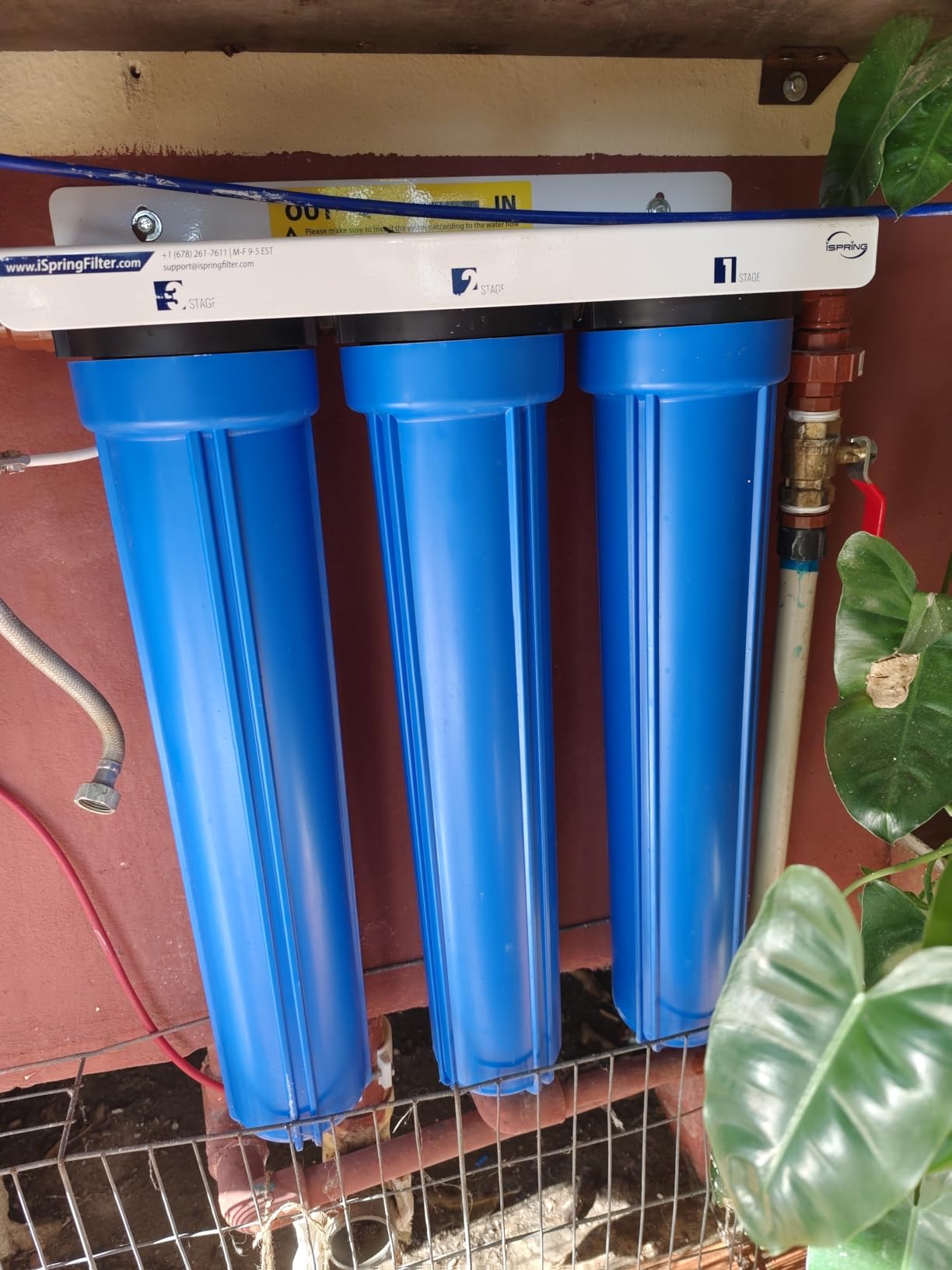
The staging is sensible for the money. A polypropylene sediment cartridge comes first, then a granular activated carbon and KDF composite aimed at chlorine, PFAS, lead, radon, chloramine and hydrogen sulfide, then a CTO carbon block for residual chlorine, fine impurities and lingering odor. Rated at 12 GPM and sized for a family of four on 3/4 inch connections.
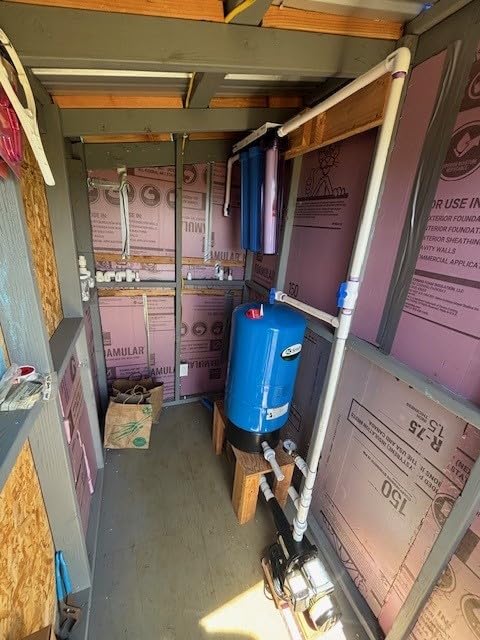
The leak complaint is the dominant thread in reviews and it deserves stating plainly. The female threads on these housings are described as sloppy, needing 10 to 15 wraps of Teflon plus pipe dope, with a few buyers reporting a cracked threaded housing on a second or third attempt.
Against that, iSpring’s US support draws praise without exception in the same reviews, replacing head units and cartridges at no charge. Reporting extended warranty coverage and lifetime technical support also takes one step to activate.
Where it fits
This suits small households and apartments where a full mineral tank has nowhere to go. It is also a good companion unit to pair with a softener in a home that has separate treatment zones already plumbed. Among these ten it has the smallest listed gallon rating, so budget for two changes a year.
If your budget is moderate and you want a visible maintenance cue rather than a guess, the clear housing earns its place.
Where it falls short
The 30,000 gallon and 6 month rating is the shortest interval in the roundup, so it is two changes a year in most homes. Over a decade that adds up quickly in cartridges compared with a media tank.
The unit also weighs about 21.5 pounds and has shipped damaged from insufficient packing, so inspect the box on arrival before you start cutting pipe.
How to Choose a Whole House Water Filter for City Water
Choosing well matters more than choosing expensively, because the most common failure we see is not a bad unit. It is a good filter pointed at the wrong contaminant, or an undersized one fighting the household’s peak flow.
Do you actually need one on city water?
Start by reading your utility’s Consumer Confidence Report. That annual document lists exactly which contaminants were tested and which were not found, which is a far better basis for a purchase than a general sense that tap water tastes bad. If your report is clean and your water tastes fine, a whole house filter is optional.
It becomes a strong recommendation when any of these are true. You dislike chlorine taste or odor, especially in showers where the chemical off-gassing is most noticeable. Your utility uses chloramine rather than free chlorine. You live in a home built before 1980 with original copper or lead service lines. Your water heater, dishwasher or ice maker shows scale and sediment accumulation. Or you want filtered water at every tap rather than a single drinking faucet.
Many homeowners who install one report a secondary benefit they did not expect: less scale on fixtures and less appliance maintenance. That comes from removing chlorine, which is oxidising and slowly degrades rubber and metal components, rather than from any softening effect.
There is one situation where you should not buy first. If your water test came back within range and you still see heavy scale, the issue is hardness. Filtering will not change that, and buying a filter instead of a softener is the most expensive mistake in this category.
Three steps to confirm chlorine or chloramine
This single fact determines which media you need, and getting it wrong means your carbon underperforms from day one. Free chlorine is a weaker oxidiser that ordinary activated carbon strips easily. Chloramine is a more stable molecule that standard carbon treats slowly and sometimes not at all.
Call your utility and ask directly which disinfectant they use and what the target residual is in ppm. Do not accept “we treat it the same as everyone else” as an answer. Ask specifically for chlorine or chloramine.
Download the Consumer Confidence Report from your utility’s website and search the document for the disinfectant section. Look for the term chloramine, monochloramine or chlorinating practice. If the report is vague, ask the water quality department for the disinfection practice statement.
Third, run a quick check at home. Take two clear glasses of tap water, leave one open to air for several hours and smell both. Free chlorine fades almost completely. A chloramine smell persists or gets stronger as the glass sits, because it off-gasses slowly. That test is imperfect but it is fast.
Hard water is a softener job, not a filter job
Symptom matching is the fastest way to identify what you actually have. Chlorine problems show up as taste, odor and chemical smell in the shower, with clean white fixtures and no crust. Hard water shows up as white or green crust on faucets and shower heads, soap that will not lather, dry skin, and a water heater that needs descaling every year or two.
Sediment problems are visible. Water that runs cloudy after the tap has been closed overnight, or grit in the aerator, points at a sediment filter rather than carbon.
The two are frequently confused because people expect one device to solve everything. In practice, a softener followed by a carbon filter is a normal and effective combination. The softener handles hardness; the carbon removes the chlorine that would otherwise oxidise the resin. Installing the filter first and the softener second is the usual arrangement.
Sizing for flow rate and pressure drop
Rated flow is the number buyers get wrong most. It is measured under ideal conditions with short pipe runs and a fresh filter. Real-world flow is lower because of friction in your actual plumbing and because a loaded carbon bed resists flow more than a new one.
A useful rule is to size above your peak simultaneous demand. A typical family of four might run two showers, a dishwasher and a laundry cycle at once, which in practice draws somewhere around 8 to 12 GPM of real flow through the lines. Choose a unit rated comfortably above that, and treat 14 to 20 GPM as the safe zone for a busy household.
Pressure drop is the other half of the equation. Every filter adds restriction. On a system with a closed-loop layout and newer PEX or copper, you will barely notice. On a 1940s home with galvanised lines and long runs, restriction shows up quickly, which is exactly the situation forum users describe when their far shower goes weak after an install.
If static pressure at your main shutoff is low, address that before or alongside the filter. A whole house filter cannot compensate for a supply that cannot deliver.
Installation, bypass valves and pre-filters
Every proper whole house install needs a bypass loop with isolation valves around the filter. It lets you shut off water, swap media or service a housing without draining the entire house, which matters most in a home with multiple bathrooms.
The pre-filter is not an accessory. A 20 inch sediment cartridge ahead of carbon media traps grit and rust so the carbon bed does not clog, and on the Aquasana setup the pre and post filters are included. If your unit does not include them, budget for a large housing rather than a small inline one, because serviceability follows housing size.
DIY installation is realistic for cartridge and inline systems. Cutting two lines, joining them with tee fittings, adding a bypass and drilling a bracket is straightforward plumbing. Two cautions dominate the review data here: thread sealing is where most leaks come from, and heavy water-filled housings are hard to remove without a pressure-relief valve. Budget an afternoon rather than an hour.
Tank-based systems add backwash requirements and need a drain nearby, plus enough vertical clearance to remove the tank. If you are hiring a plumber, the ten-year warranty on the Aquasana is only valid with professional installation, so check that before you save the labour cost.
Maintenance schedule and ten-year cost
Annual tasks are modest. Walk the system for leaks, note the inlet pressure, and flush or clean as the manufacturer specifies. Quarterly, check the sediment pre-filter and replace it once it looks loaded rather than on a fixed date. Your utility may switch disinfectants mid-year, and if chlorine becomes chloramine a standard carbon system will start underperforming without any visible sign.
Cartridge systems need new media every 6 to 12 months for a decade. Media tank systems need a media change every 8 to 10 years, with a backwash schedule set on the control valve. When you compare the two, multiply the cartridge cost by twenty and compare that against the tank cost plus a control valve service, and the media tank usually wins on a ten-year view.
One more maintenance point that rarely appears in roundups: bacterial regrowth inside carbon tanks is a real concern in low-use homes. If your household runs little water for long stretches, a UV module after the filter addresses it. Salt-free conditioners handle scale; they do not remove chlorine and they do not replace carbon.
Our broader whole-home equipment guides cover the adjacent categories if you are planning a full treatment plan, including our roundup of whole-house water filtration systems for setups larger than a single main-line unit.
Frequently Asked Questions
Which water filter is best for municipal water?
A three-stage point of entry system combining sediment, granular activated carbon with KDF, and a catalytic carbon block handles the widest range of municipal problems. Our top pick reduces up to 94.4 percent of chloramine in SGS testing to an NSF/ANSI 42 standard, moves up to 15 GPM, and carries a 100,000 gallon rating. Add a polyphosphate stage if scale on appliances is a concern.
Do you need a whole house water filter on city water?
Often not. Read your utility’s Consumer Confidence Report first and compare it against your complaints. A filter becomes worth buying when chlorine taste or shower odor bothers you, when your utility uses chloramine, when you live in a home older than 1980 with copper or lead service lines, or when you want filtered water at every tap. It does not soften water or lower TDS, so scale problems need a softener.
What is the best way to filter city water?
Match the media to the contaminant. Use granular or catalytic carbon for chlorine and chloramine, a KDF copper-zinc stage for lead, mercury and iron, and a fine sediment stage ahead of both. Size the rated flow above your household peak demand, add a bypass loop with isolation valves, and consider a UV module for microbial control. Finish at the sink with point-of-use reverse osmosis if you want to remove dissolved solids.
What is the best whole house water filter according to Consumer Reports?
Independent laboratory verification is what counts, and the relevant marks are NSF/ANSI 42 for taste, odor and sediment reduction and NSF/ANSI 372 for lead-free materials. In this group the iSpring chloramine unit shows an SGS chloramine result, the Aquasana carries independent NSF/ANSI 42 testing for 97 percent chlorine reduction, and the 3M Aqua-Pure holds both 42 and 372 certification. Percentages without a named test house are marketing, not evidence.
How do I know if my water is chlorinated or chloraminated?
Call your water utility and ask specifically whether the disinfectant is chlorine or chloramine, and request the target residual in ppm. Then download the Consumer Confidence Report and search it for disinfectant and chloramine terms. As a quick home check, fill two glasses with tap water, leave one open to air for several hours and compare the smell. Free chlorine fades quickly; a chloramine smell persists or strengthens as the glass sits.
How often do you change a whole house carbon filter?
It depends on the design. Cartridge systems here are rated 6 to 12 months and between 30,000 and 100,000 gallons. Media tanks are rated 6 to 10 years, with backwashing that restores the bed on a schedule. Replace sediment pre-filters based on visible loading rather than the calendar, and remember that a utility switching from chlorine to chloramine mid-year can shorten carbon life considerably.
Which Whole House Water Filter Should You Buy?
For most city water households in 2026, the iSpring Chloramine and Heavy Metals filter is the best whole house water filter for city water because it is the only unit here with a published chloramine reduction figure, a named test house, a genuine KDF metal stage and enough flow capacity for a busy family.
If your budget rules that out, the Express Water 3-Stage system pairs a 17 GPM rating with anti-scale protection and a review base deep enough to show which failure modes actually occur.
If you plan to stay a decade and want to stop thinking about filters, the LiquaGen catalytic carbon and KDF tank backwashes itself and runs on a ten-year media charge, while the Aquasana WH-1000 offers a similar ten-year interval with no drain line.
Two decisions matter more than the model. Confirm whether your utility uses chlorine or chloramine, because that decides your media. And be honest about whether your symptoms are taste and odor, which a filter fixes, or hardness, which only a softener touches. Get those two right and any of the ten above will serve you well.