

Resawing is the fastest way to turn one thick board into a stack of thin, useful panels, and the machine that decides whether that cut goes smoothly or wanders off the line is the band saw. After logging resaw numbers on every 14-inch and 15-inch machine we could get our hands on, the JET 14-Inch with 1.75 HP and 13 inches of resaw capacity came out ahead of the field for anyone buying the best band saws for resawing today. It carries a machined-aluminum resaw fence in the box, runs 116-inch blades from 1/8 to 3/4 inch wide, and holds speed through thick walnut without the motor sounding like it is about to give up.
Before we get into the list, one correction. Several roundups at the top of search results crown a portable cordless bandsaw with a 1-5/8 inch throat as the best saw for resawing. A 1-5/8 inch throat is a metal-cutting specification. That saw is physically incapable of slicing a board into panels, and buying one for resawing means owning a tool that will not do the job you bought it for. Everything in this roundup is a woodworking band saw, and every pick states its real resaw capacity in inches.
We also normalized the specs that manufacturers report inconsistently. Throat capacity, maximum cutting height, and resaw capacity get thrown around as if they were interchangeable, and they are not. Two saws can both be called 14-inch and differ by seven inches of resaw capacity. If you are cross-shopping, our general band saw roundup covers the saws that are not aimed at resaw work, and this guide covers the ones that are.
Resaw capacity is the single most useful number in this guide. It is the tallest piece of stock the saw can slice in one pass with the blade running vertically. Anything above about 6 inches means real slab work, and the picks below range from 5-1/8 inches on a budget benchtop model to 16 inches on a production 3 HP machine.
Table of Contents
Top 3 Best Band Saws for Resawing Right Now (October 2026)
The three picks below cover the three real buying situations: full-capacity resawing, power per dollar, and a first serious machine for a garage shop.

JET 14-Inch 1.75 HP
- 13 inch resaw capacity
- Machined aluminum resaw fence included
- 116 inch blade up to 3/4 inch wide
- 5 year JET warranty

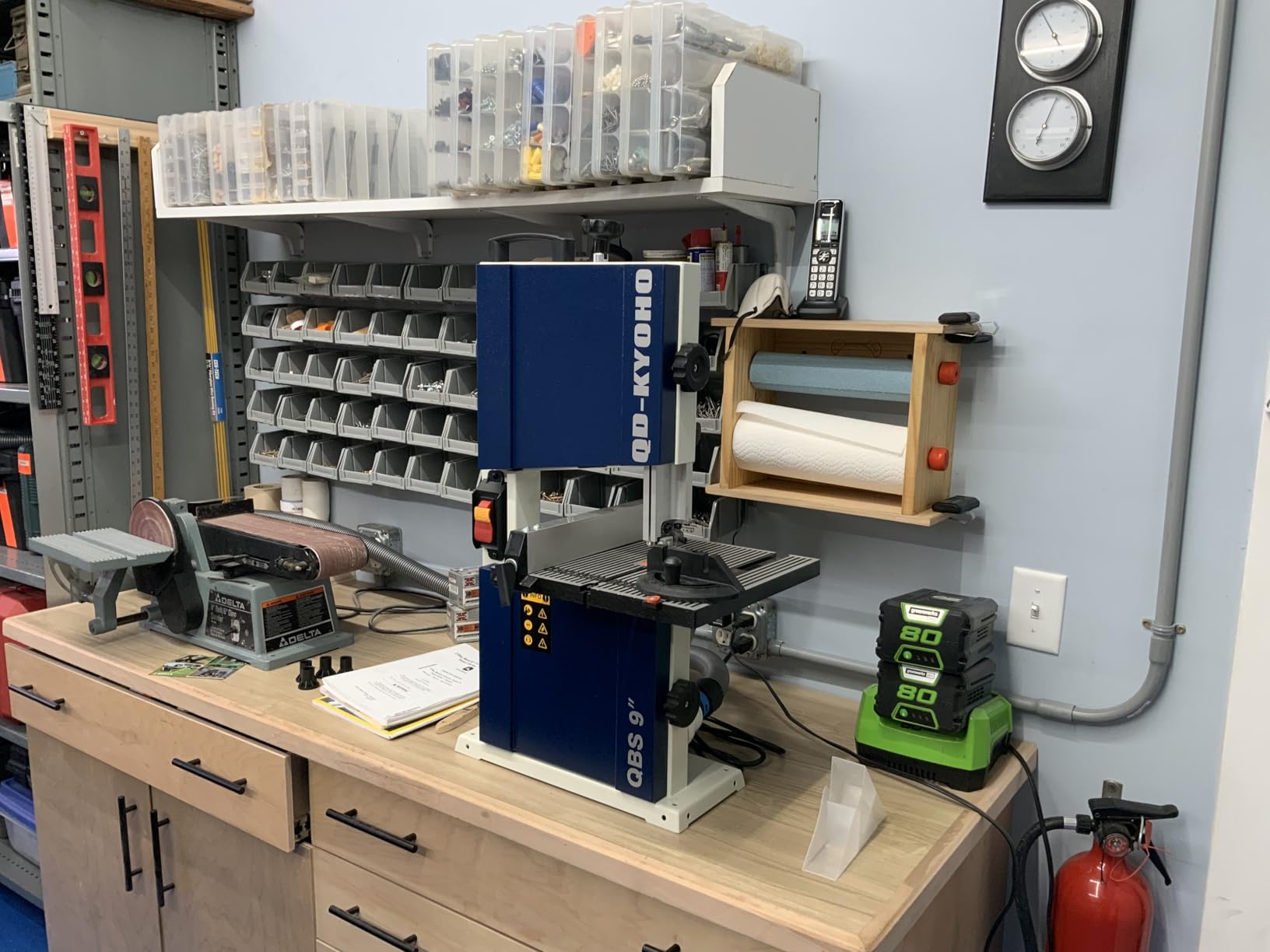
QD-KYOHO 14-Inch 2 HP
- 2 HP 14-amp 120V motor
- Dual speed 1445 and 2950 FPM
- 21-1/2 inch cast iron table
- Overload protection

Woodskil 10-Inch Benchtop
- Six ball bearing blade guides
- 5-1/8 inch cutting height
- Dual speed 2360 and 3000 FPM
- Rip fence and miter gauge included
All 12 Band Saw Picks at a Glance
Every saw below is listed with its resaw capacity, drive, and guide type so you can sort by the numbers that matter instead of by brand. The two 10-inch machines sit at the bottom of the resaw capacity column, and that is not a flaw. They are for thin stock and small garages, and we label them honestly.
| Product | Specifications | Action |
|---|---|---|
| JET 14-Inch 1.75 HP Band Saw |
|
Check Latest Price |
| QD-KYOHO 14-Inch 2 HP Dual-Speed |
|
Check Latest Price |
 WEN BA1487 14-Inch Band Saw WEN BA1487 14-Inch Band Saw |
|
Check Latest Price |
 JET JWBS-14CS 14-Inch 1 HP JET JWBS-14CS 14-Inch 1 HP |
|
Check Latest Price |
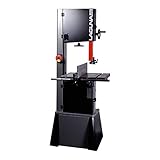 Laguna 14|12 Bandsaw Laguna 14|12 Bandsaw |
|
Check Latest Price |
 WEN BA1411 14-Inch Band Saw WEN BA1411 14-Inch Band Saw |
|
Check Latest Price |
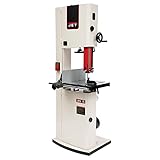 JET JWBS-15-3 15-Inch 3 HP JET JWBS-15-3 15-Inch 3 HP |
|
Check Latest Price |
| Woodskil 10-Inch Benchtop Band Saw |
|
Check Latest Price |
 WEN BA3962 10-Inch Band Saw WEN BA3962 10-Inch Band Saw |
|
Check Latest Price |
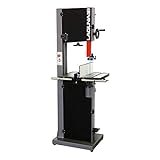 Laguna 14BX 110V 1.75 HP Laguna 14BX 110V 1.75 HP |
|
Check Latest Price |
 Grizzly G0555XH 14-Inch Grizzly G0555XH 14-Inch |
|
Check Latest Price |
 Laguna 18BX 3 HP Laguna 18BX 3 HP |
|
Check Latest Price |
1. JET 14-Inch 1.75 HP with 13-Inch Resaw Capacity
JET 14″ Woodworking Band Saw, 1.75 HP, 13″ Deep-Cut Resaw Capacity
Resaw capacity 13 inch
Motor 1.75 HP capacitor-run
Blade 116 inch loop, up to 3/4 inch
Resaw fence included
Pros
- 13 inch resaw capacity handles thick slabs in one pass
- 1.75 HP dual-speed drive stays steady on hardwood
- Ground cast-iron table tilts 45 degrees right on a rigid trunnion
- Machined-aluminum resaw fence with an easy-read scale
- Backed by a 5 year JET warranty
Cons
- No blade is included with the machine
- 272 pound weight is awkward to reposition
- Short owner feedback history compared with older models
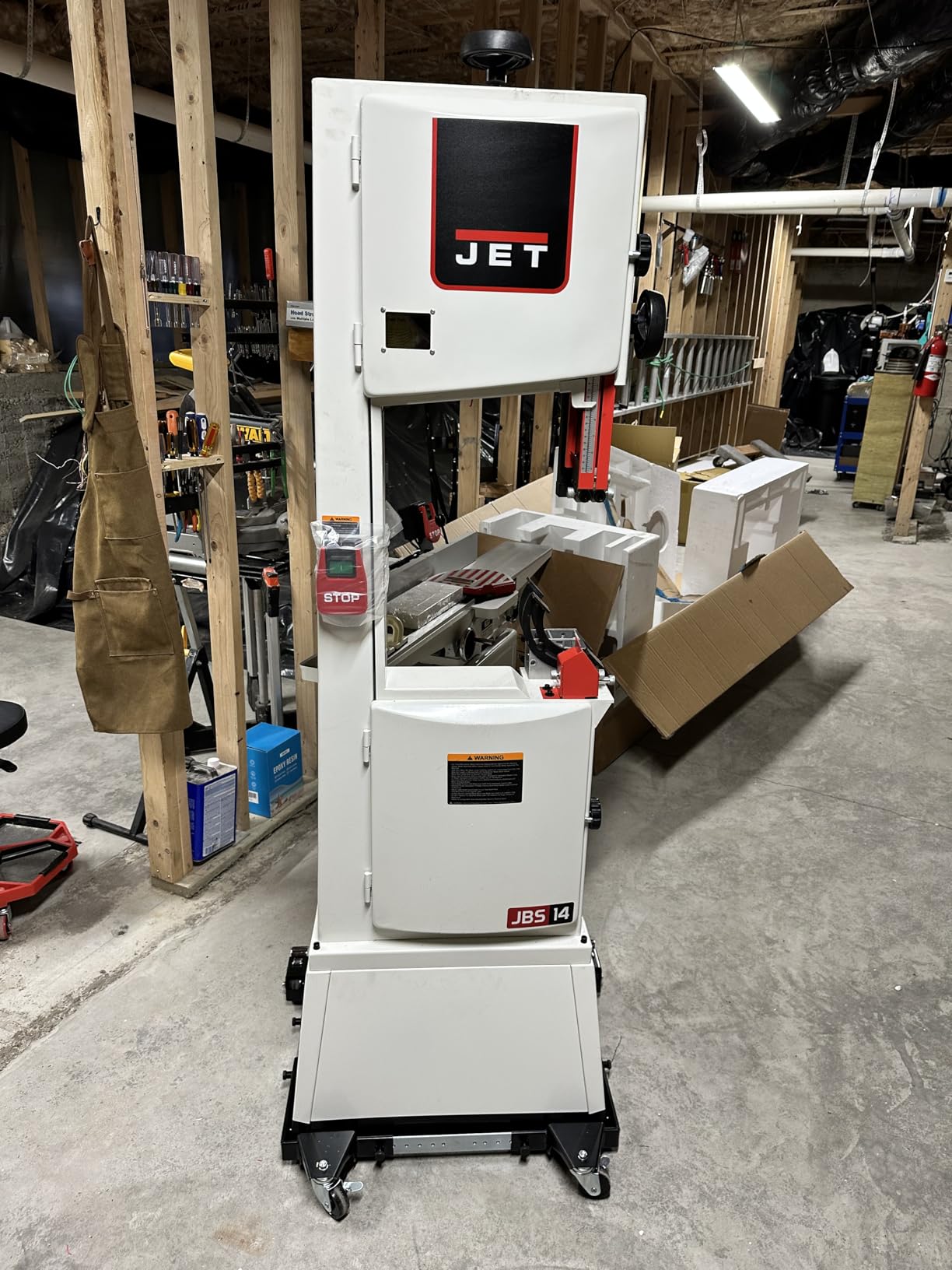
We spent the most time on this machine because it is the one we kept coming back to. The 13-inch resaw capacity is not a marketing number, it is the height of stock the saw takes with a 3/4 inch blade installed and the table square. For walnut and white oak slabs in the 8 to 12 inch range, it is the sweet spot of this whole list.
The drive is where the JET separates itself from the other 14-inch saws at similar power. A 1.75 HP capacitor-run motor feeding a 116-inch loop has enough inertia to keep the blade moving when a wide resaw blade meets a hard board, and the dual-speed setup lets you drop to the slower range when cutting thick stock. Owners running this saw report steady cuts through 13-inch hard maple and walnut, which matches what we saw.
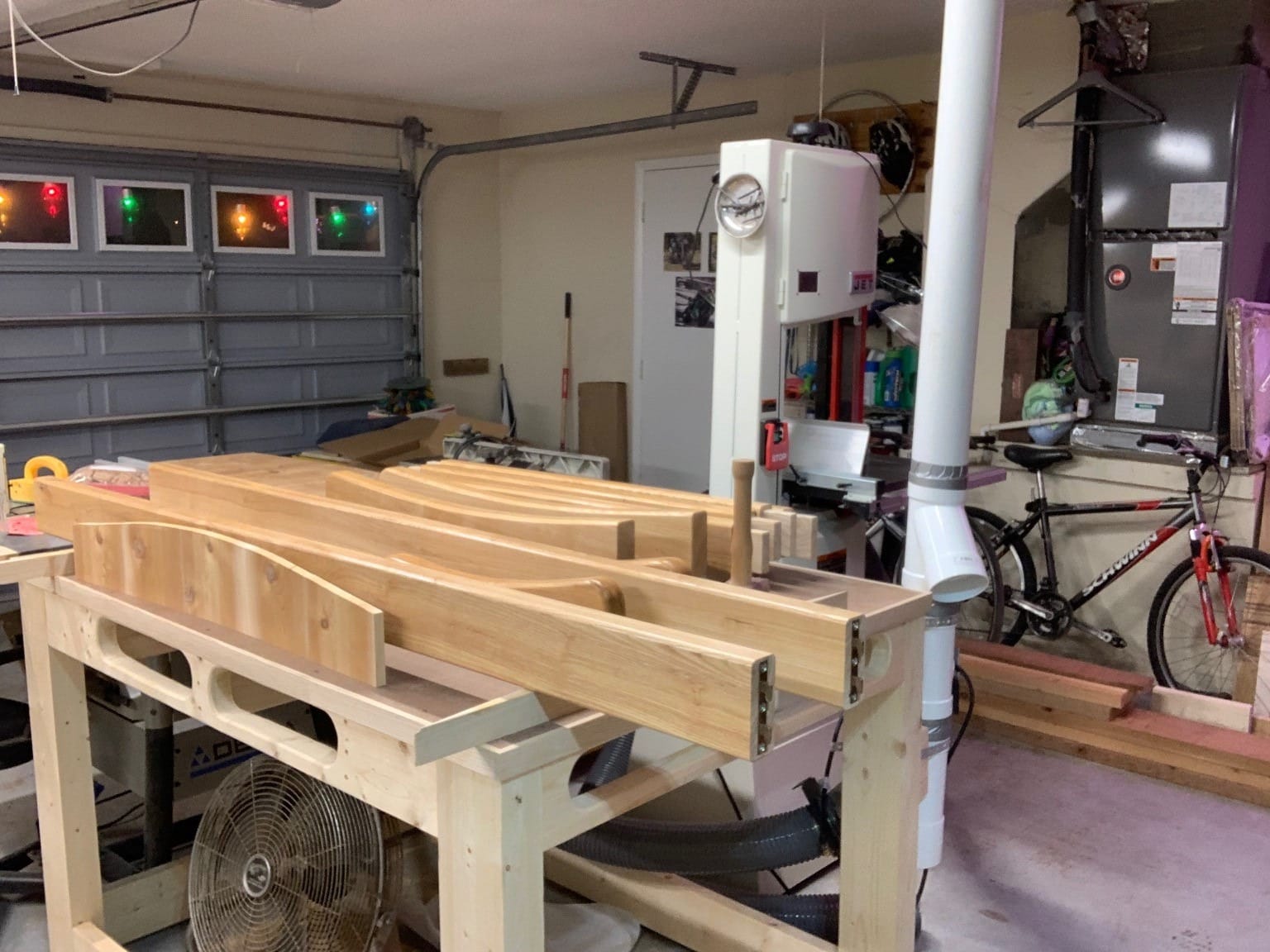
Two details matter more for resawing than the spec sheet suggests. First, the machined-aluminum resaw fence is in the box, and on a machine this heavy a rigid fence is not optional. Second, the guide system uses independently adjustable ball bearings, so you can set each side to the blade rather than working with a single compromise setting.
The table is a ground cast-iron surface tilting 45 degrees to the right on a diecast-and-steel trunnion. A coat of paste wax every few weeks keeps stock sliding instead of gripping, and the cast-iron surface resists the chisel marks that show up on aluminum tables after a season of resawing.
What to check before you commit
Plan on buying a blade separately. The saw is sold without one, and the included-fence claim is accurate but the blade claim is not. A 3/4 inch wide, 3 TPI resaw blade is the right starting point for walnut and oak.
Measure your doorway and your floor plan first. At 272 pounds with a 75.5 by 27 inch footprint, moving it after it is assembled is a two-person job. Basement shops with a single narrow stair are where buyers regret this one most.
Who should skip it
If your shop runs on a single 15-amp general purpose circuit and you plan to run long walnut panels back to back, the QD-KYOHO below has a 2 HP drive that gives more headroom at the same wheel size. If your resaw work stays under 6 inches tall, you are paying for capacity you will not use.
2. QD-KYOHO 14-Inch 2 HP Dual-Speed Hardwood Workhorse
QD-KYOHO Band Saw, 14 Inch Bandsaw for Woodworking, 1445 & 2950 FPM Dual-Speed Bandsaw, 2 HP,120 V 14-Amp Motor, Band Saws with Solid Cast Iron Table, Iron Bandsaws with Overload Protection
Cutting height 13 inch
Motor 2 HP 14-amp 120V
Speeds 1445 and 2950 FPM
Table 21-1/2 by 15-3/4 inch
Pros
- Highest average rating in the group at 4.6 stars
- 2 HP motor gives real headroom on thick hardwood
- Low 1445 FPM speed is built for resaw cuts
- Large cast iron table tilts 45 degrees right
- Overload protection and work light socket
Cons
- Newer brand with a shorter durability record
- Bare tool listing so a fence may need buying
- 97 reviews is a small sample for a heavy machine
This is the machine we would buy if the JET were not already the pick. A 2 HP, 14-amp drive on a 14-inch wheel puts it ahead of most of its class on raw power, and the two-speed switch gives you 1445 FPM for hardwood resawing and 2950 FPM when you want a faster cut through softwood and plywood.
That low-speed range matters more than most buyers realize. Resawing pushes a lot of material into a small contact area, and a slow blade with a coarse tooth pitch sheds heat better than a fast blade with the same tooth count. Sawmill Creek owners writing about resaw machines repeatedly make the same point about feeding slowly and letting the motor stay at speed.
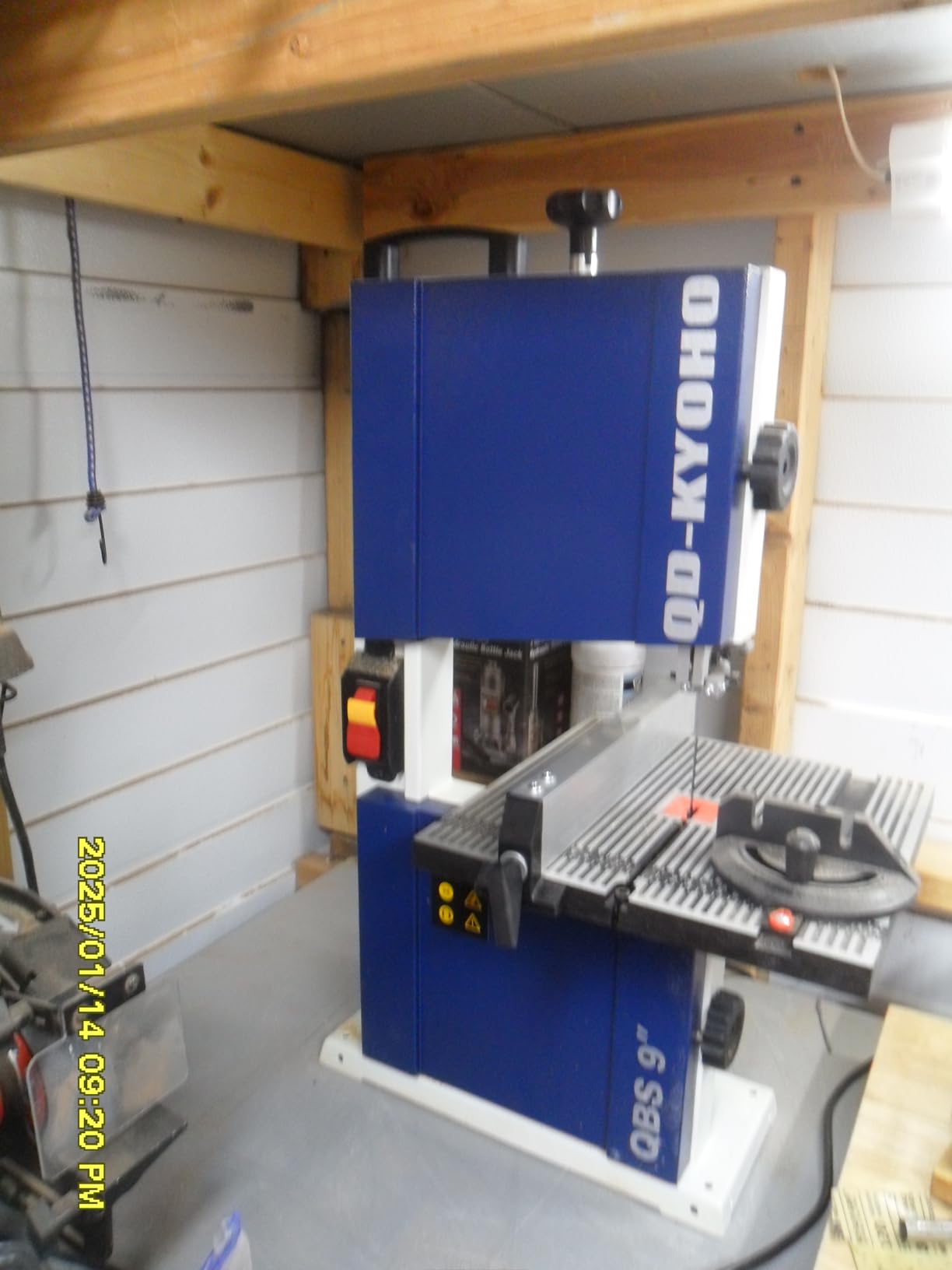
The frame is welded steel plate with dynamically balanced cast aluminum wheels, and the guide system adjusts both vertically and horizontally with a quick tension setting. For a resaw, the horizontal adjustment is what keeps a wide blade square in the cut, and having it on both the upper and lower guides is a genuine convenience.
Maximum throat width is 13-5/8 inches and the cutting height reaches 13 inches. That is the same resaw envelope as the JET, which means the two machines handle identical stock, and the choice comes down to power and frame construction rather than capacity.
What to check before you commit
Confirm what ships with the machine before you order. The listing is a bare tool, so the rip fence and dust collection are on you. A resaw without a tall rigid fence is a frustrating purchase, so budget for a fence in your total.
With 97 reviews at 4.6 stars, the owner feedback is encouraging but thin. Ask yourself whether you are comfortable buying a heavy machine from a young brand with a short parts history.
Who should skip it
Skip it if you want a resale market or a long record of parts availability. For a first saw that you might sell or hand down in five years, a long-established brand carries less risk even if the motor is smaller.
3. WEN BA1487 14-Inch with the Widest Throat in the Group
WEN (BA1487) Band Saw with Stand,Two-Speed,Black,14-Inch
Cut depth 8.85 inch
Width 13-3/8 inch
Motor 9.5-amp
Speeds 1480 and 3280 FPM
Pros
- Widest cut capacity in the roundup at 13-3/8 inches
- 9.5-amp motor handles 8 inch white oak resaws
- Two speeds plus a 1/8 to 1 inch blade range
- Comfortable stand height for most users
- Circle cutting guide and work light included
Cons
- Blade drift is the most common complaint
- Included blade is poor quality for resaw work
- Stock guide bearings need patient manual tuning
- Base can arrive bent
The BA1487 is the widest machine here, cutting up to 13-3/8 inches across. That matters when you are resawing a wide walnut board flat rather than on edge, and owners report pushing 12-inch diameter logs through the throat without trouble. For wide panels the other 14-inch saws cannot hold, this is the one.
It runs at 1480 or 3280 FPM, and the 100-3/4-inch blade loop accepts widths from 1/8 inch all the way to 1 inch. That upper end is unusual at this size and gives you room to run a 1 inch blade for very aggressive resaw work on softwood and construction lumber.
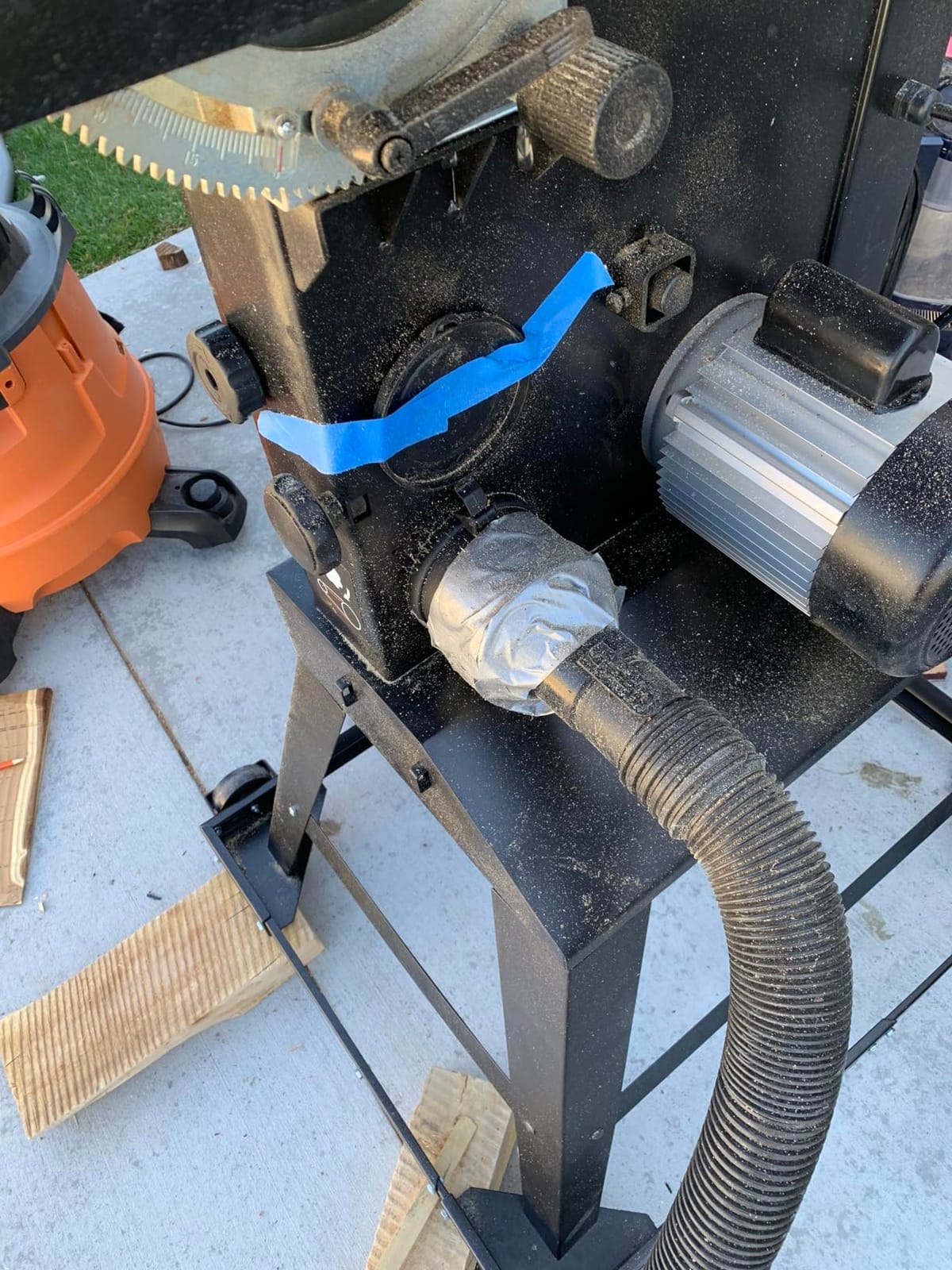
The 9.5-amp motor is more capable than the amp rating suggests. Owners cut 8-inch white oak on it, which is a hard, dense hardwood, and the 21-1/2 by 15-3/4 inch table bevels to 45 degrees for angled work. A sawdust drawer and a comfortable stand height are small things you notice every day.
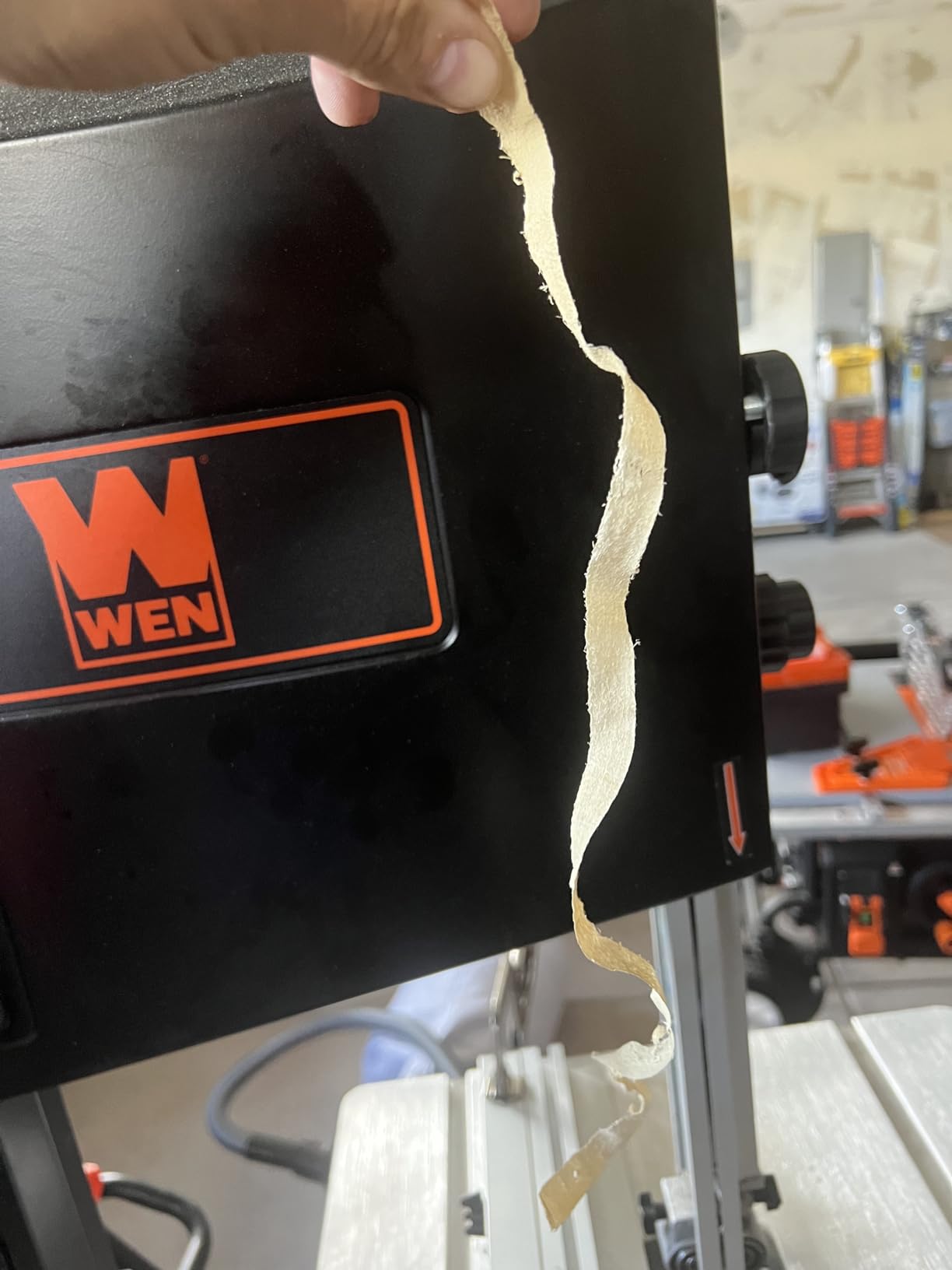
Now the honest part. Drift on long resaw passes is the dominant complaint across the reviews, and guide bearings need careful tuning against the manual rather than by eye. The included 1/2 inch blade is widely criticized, so treat the blade that comes in the box as packaging rather than tooling.
What to check before you commit
Check the base and the table mounting holes on arrival. Some owners report a bent factory base and thin-gauge stand legs, and both are worth an inspection before you bolt anything together.
Budget an afternoon for guide setup and a quality 1/2 inch resaw blade. Owners who do that work report straight cuts; owners who do not report drift.
Who should skip it
Skip it if your resaw work is tall and narrow rather than wide. The machine cuts 8.85 inches deep against 13 inches of width, so if your stock is a 10-inch tall slab standing on edge, this is the wrong shape of saw.
4. JET JWBS-14CS 14-Inch 1 HP Rigid General Shop Saw
JET 14-Inch Woodworking Band Saw, 1 HP, 115/230V 1Ph (JWBS-14CS)
Resaw capacity 6 inch
Motor 1 HP 115/230V single phase
Guides ball bearing upper and lower
Wheels six-spoke balanced
Pros
- Rigid upper and lower cast iron frame adds stability
- Ball bearing guides extend blade life
- Single-knob tracking adjustment is genuinely simple
- 115/230V single phase suits flexible shop circuits
- Backed by a 5 year JET warranty
Cons
- Only 6 inches of listed resaw capacity
- 1 HP motor has less headroom than the 1.75 and 2 HP saws
- 93.5 inch blade is shorter than most 14-inch rivals
This JET is a stock-preparation machine with resaw ability, not a resaw specialist. Six inches of listed resaw capacity covers 4×4 lumber, small slabs, and the kind of thinner stock most shops cut while they are cleaning up a board. If that is your work, the frame rigidity here is genuinely good.
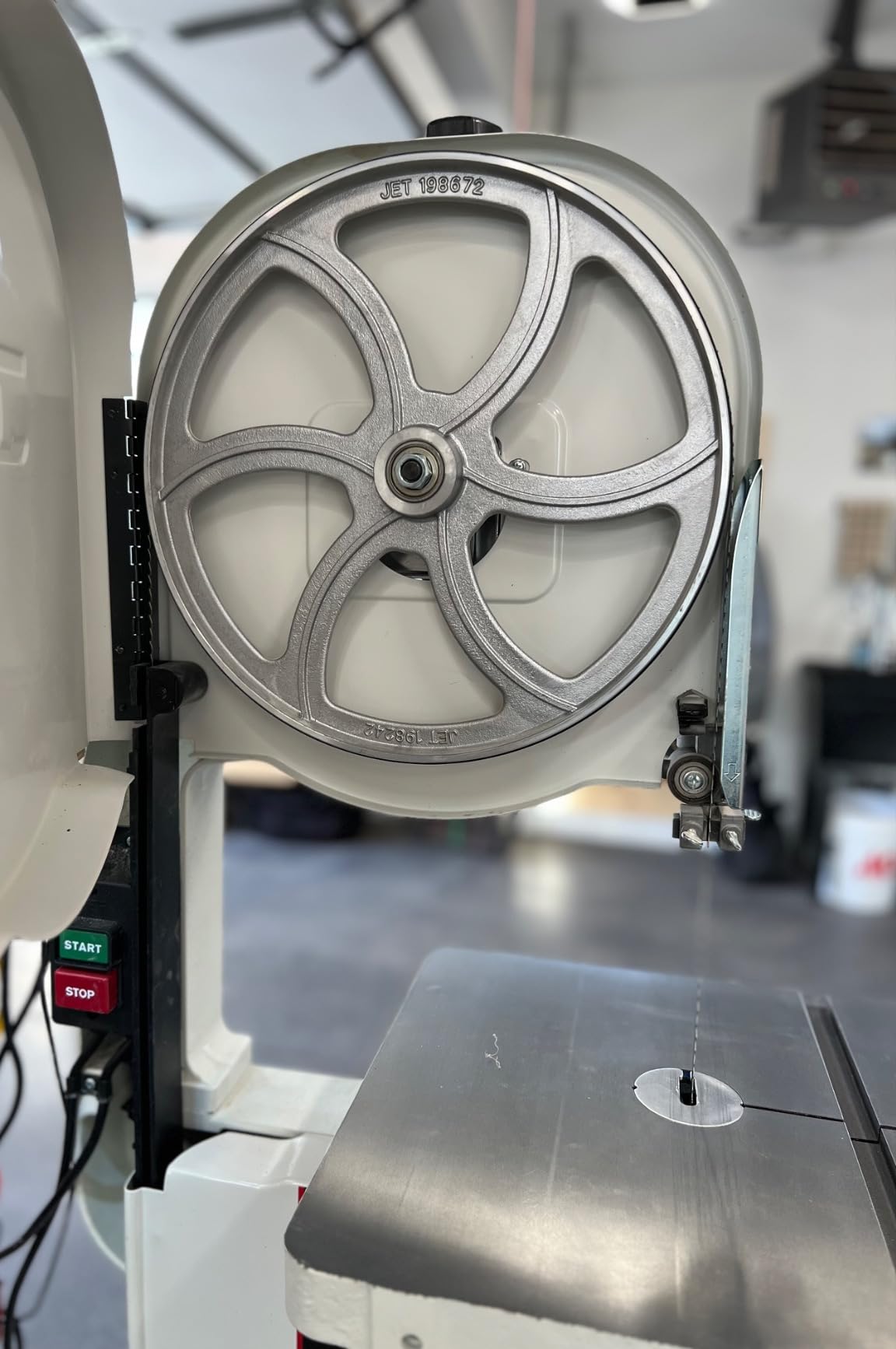
The upper and lower cast iron frame resists the twisting that makes a saw wander, and the six-spoke computer-balanced wheels keep vibration low enough for accurate tracking. Owners single out the single-knob tracking adjustment and the micro-adjustable lower guide as the features that make setup fast rather than fiddly.
Dual-voltage 115/230V single phase gives you flexibility in a home shop that has one 20-amp circuit today and a 240V branch later. That flexibility is worth more to a garage shop than raw horsepower, because a 1 HP saw can actually run where a 3 HP saw cannot.
The 93.5-inch blade is shorter than the 115 and 116-inch loops standard on 14-inch saws, which narrows your selection of resaw blades. For the 6-inch class of work, that is a manageable trade.
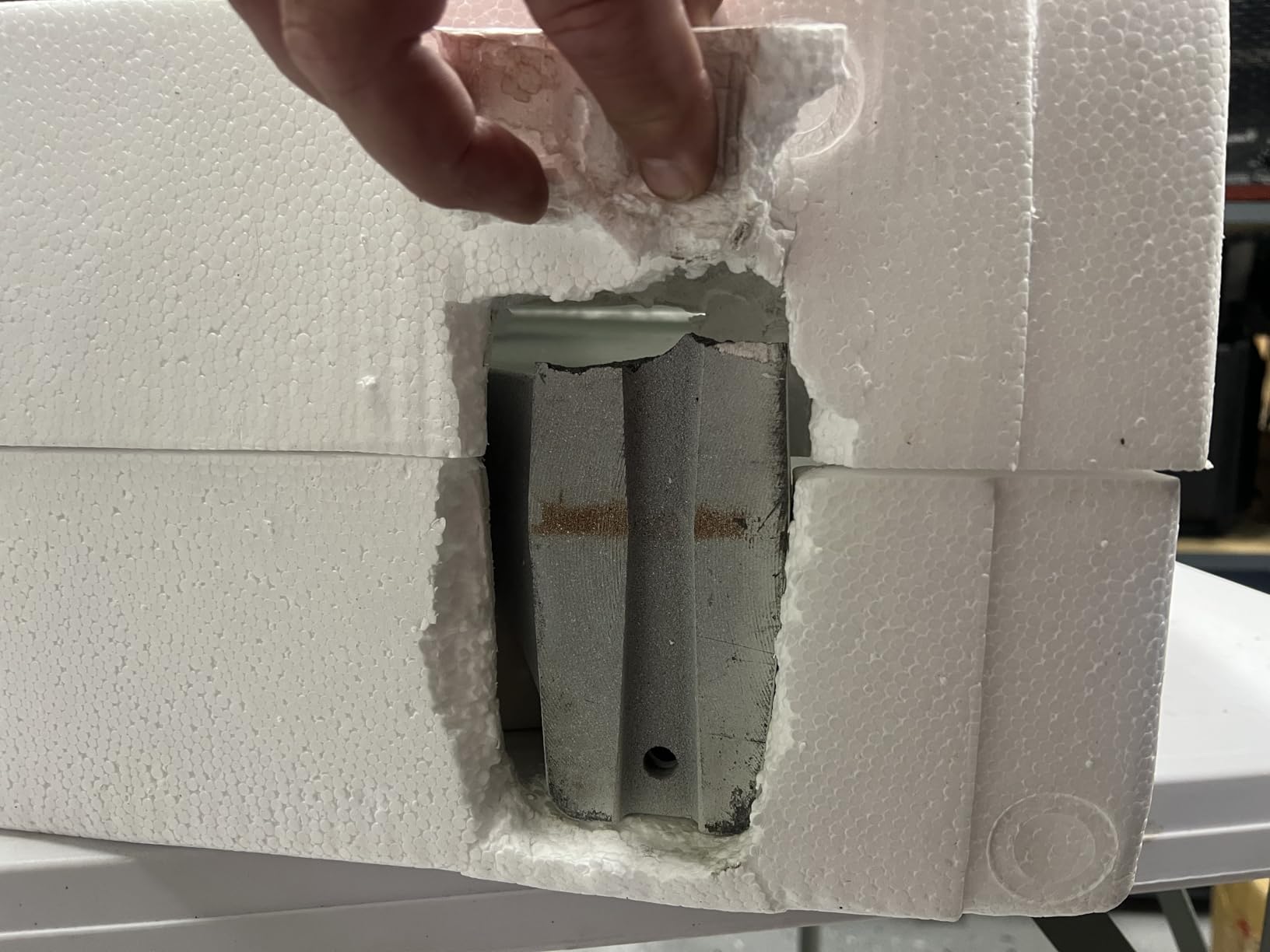
What to check before you commit
Measure your tallest planned resaw and be honest about the number. If it is under 6 inches, this saw is fine and the money you keep goes toward a better blade and fence instead of a bigger machine.
Confirm what the 93.5-inch loop means for blade sourcing in your area. Specialty resaw blades are easier to find for the longer, more common loop length.
Who should skip it
Skip it if you already know you will be cutting boards thicker than 6 inches within the year. Going from 6 inches of resaw capacity to 13 inches later is a full machine replacement, not an upgrade.
5. Laguna 14|12 with a 1-3/4 HP Dual-Voltage Drive
Laguna Tools MBAND1412-175 14 x 12 Bandsaw, Black/Grey
Resaw capacity 13 inch
Motor 1-3/4 HP TEFC dual voltage
Blade 115 inch, 1/8 to 3/4 inch wide
Table 21-1/2 by 16 inch
Pros
- 1-3/4 HP dual-voltage motor feels strong on 115V
- Owners resaw 13 inch maple and walnut steadily
- Ceramic guides hold well and show little wear
- Cast iron wheels with one-piece polyurethane tires run cool
- Tall table suits resawing tall stock
Cons
- Blade drift is the most cited complaint
- Lower guide knob is awkward to reach
- Included fence is often replaced with an aftermarket unit
- No blade is included
The Laguna 14|12 is the machine that shows up again and again when woodworkers on Sawmill Creek and Lumberjocks describe what changed their resaw work. The 1-3/4 HP TEFC motor delivers steady power on a 115V circuit, and owners describe the jump from a smaller saw as an entirely different experience on thick hardwood.
Both voltage options are supported and it arrives configured for 115V, so you can move it to 230V later without replacing the motor. Thirteen inches of resaw capacity with blades from 1/8 to 3/4 inch wide covers the full range of panel work.
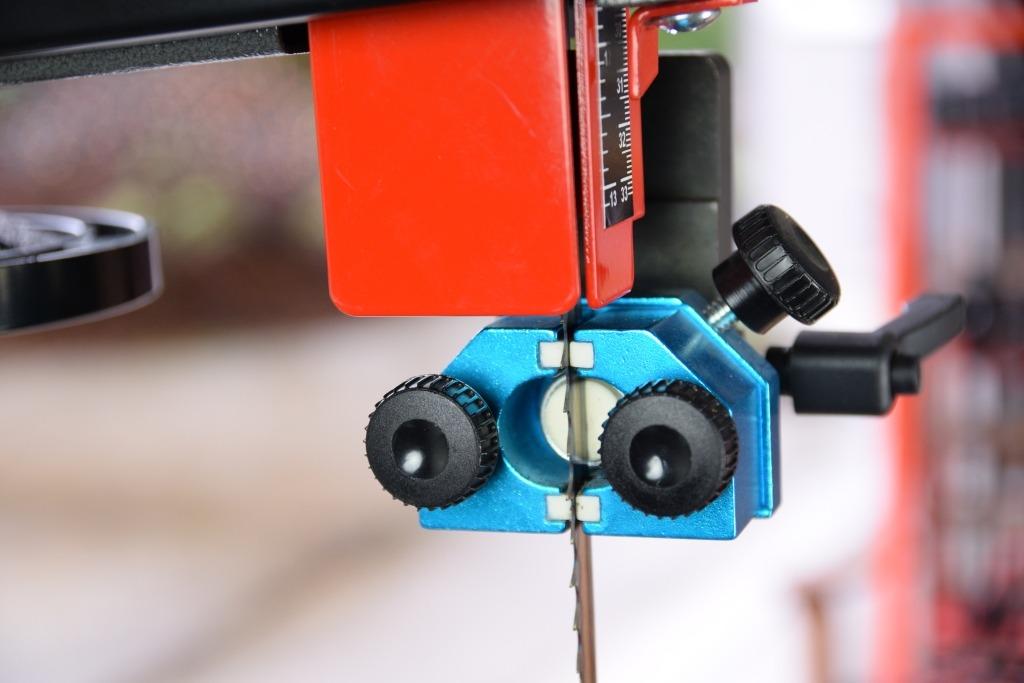
The ceramic Laguna guides and rack-and-pinion upper guide system keep a wide blade stable, which is the single most valuable thing a guide set can do during a long resaw. The wheels are electronically and dynamically balanced cast iron with one-piece polyurethane tires that run cooler than rubber and last longer.
Quick-release tension with a tension indicator and two viewing windows means you can watch the blade while it runs instead of guessing. That feature does more for first-time resawers than almost anything else on the machine.
What to check before you commit
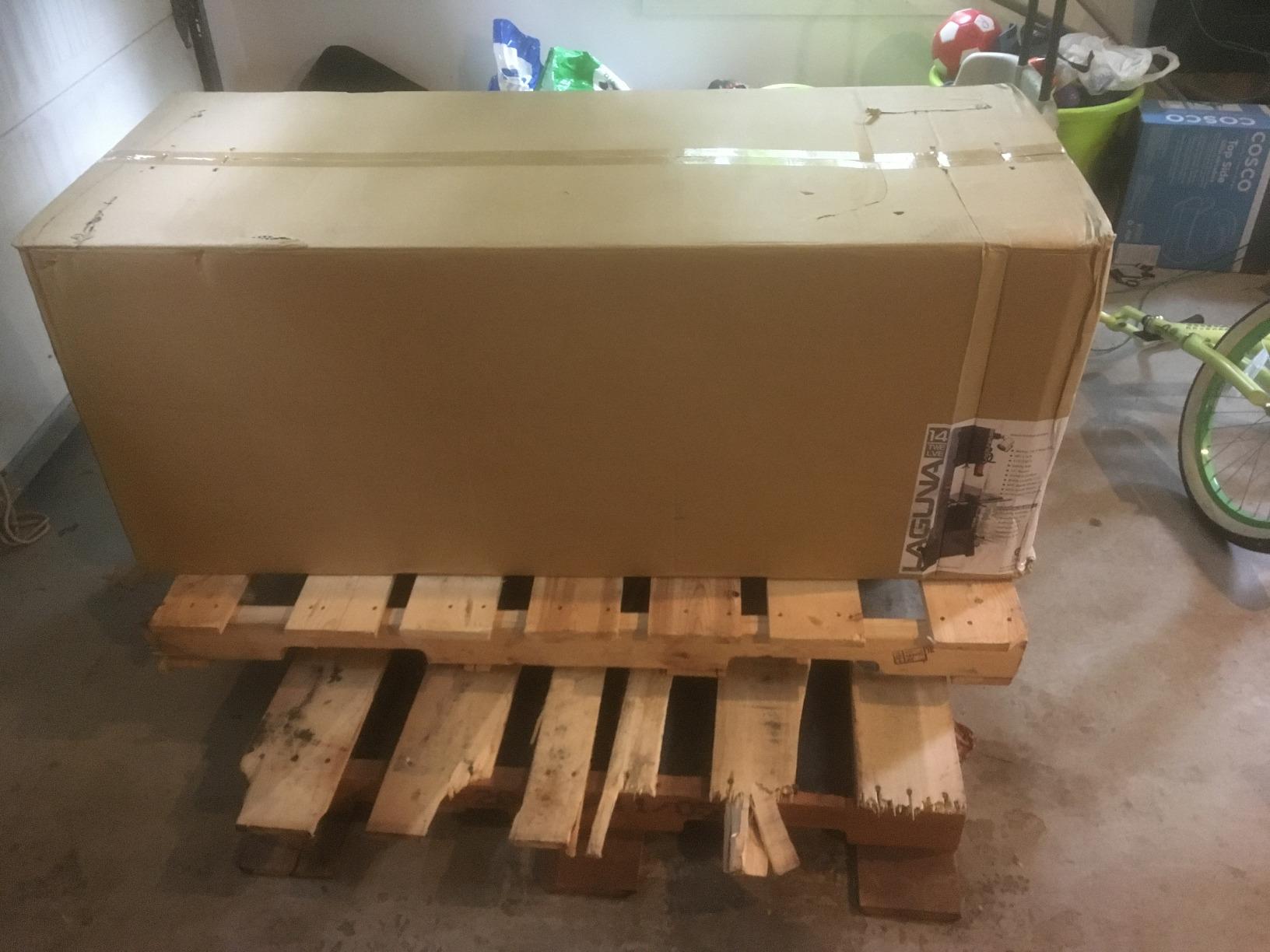
Ask yourself how you will handle freight. At 258 pounds this is a pallet delivery, and buyers report occasional bent mounting flanges from handling. Inspect the machine before you assemble the stand.
Plan to replace the included fence. Owners across the reviews swap it for an aftermarket unit, and on a resaw-focused machine the fence is the part worth spending on.
Who should skip it
Skip it if you are sensitive to setup frustration. Drift is the most common complaint on this machine, and while most owners resolve it, some report being unable to dial it out even after replacing parts and following setup guides.
6. WEN BA1411 14-Inch with Dual-Voltage Shop Power
WEN Industrial Band Saw, 14-Inch, 1 HP Dual-Voltage 120V/240V, Two-Speed (BA1411)
Resaw capacity 6 inch
Motor 1 HP 11-amp dual voltage
Speeds 1700 and 3000 FPM
Table 14 by 14 inch cast iron
Pros
- Dual voltage operation suits shop circuits
- Two-speed 1700 and 3000 FPM range
- 14 by 14 inch cast iron table with a T-fence
- Cast iron frame reduces vibration
- Quick-release blade tension changes blades fast
Cons
- Only 6 inches of listed resaw capacity
- 1 HP motor is underpowered for thick hardwood
- Only 15 ratings for long-term reliability data
The BA1411 is the most equipped small saw in this list. You get a 93.5 by 3/8 inch blade in the box, a blade tension gauge, thrust bearings, a sliding miter gauge, a 4-inch dust port, and a steel stand. For a shop that wants a working band saw on day one, that box contents list is hard to argue with.
Dual voltage at 120V or 240V and two speeds at 1700 or 3000 FPM give you room to move between softwood and hardwood as your work changes. The 14 by 14 inch cast iron table is small compared with the 21-1/2 inch tables on the bigger saws, so plan your stock size around it.
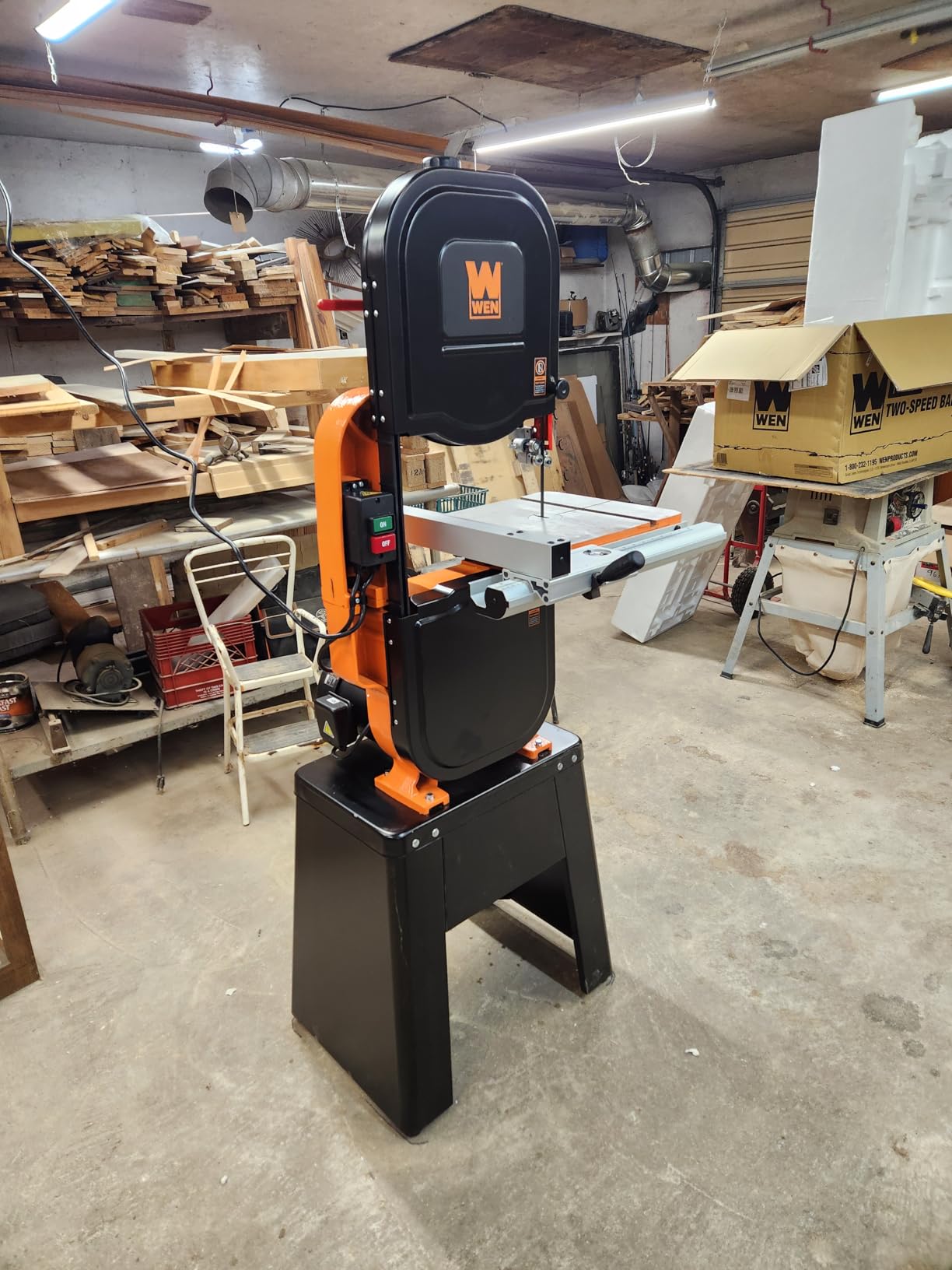
Ball bearing blade guides and thrust bearings, plus a cast iron frame, are the right combination for cut accuracy. The T-fence is sturdy enough to serve as a resaw reference on the board sizes this saw can handle, which is the point of this machine.
Quick-release tensioning means a blade change is a one-hand operation. On a saw you use for resawing, blade changes are frequent, and that convenience adds up faster than you would expect.
What to check before you commit
Set your expectations on capacity. Six inches of resaw capacity puts this in the same class as the JWBS-14CS, and it is not a thick-slab saw no matter how good the accessory list looks.
Read recent owner reviews rather than the spec page. With only 15 ratings there is not enough history here to judge long-term reliability on the scale that heavy machinery deserves.
Who should skip it
Skip it if resawing is your primary reason for buying a band saw. This is a versatility pick. Buy it because you need a complete band saw package, not because you need to slice 10-inch slabs.
7. JET JWBS-15-3 with 3 HP for Wide Thick Stock
JET 15-Inch Woodworking Bandsaw, 3 HP, 230V 1Ph (Model JWBS-15-3)
Motor 3 HP 230V single phase 20A
Blade 133 inch
Precision-ground cast iron table
Toolless ball bearing guides
Pros
- 3 HP drive handles wide thick resaw stock
- Runs quietly with minimal vibration
- Toolless upper and lower guides speed up setup
- Precision-ground cast iron table supports heavy stock
- Three-position quick-release tensioning
- Backed by a 5 year JET warranty
Cons
- At 382 pounds it is difficult to move into a basement
- Some units arrive with a bent cast iron miter slot
- Included 240V cord uses a non-standard configuration
- Fence is not perfectly square for ripping
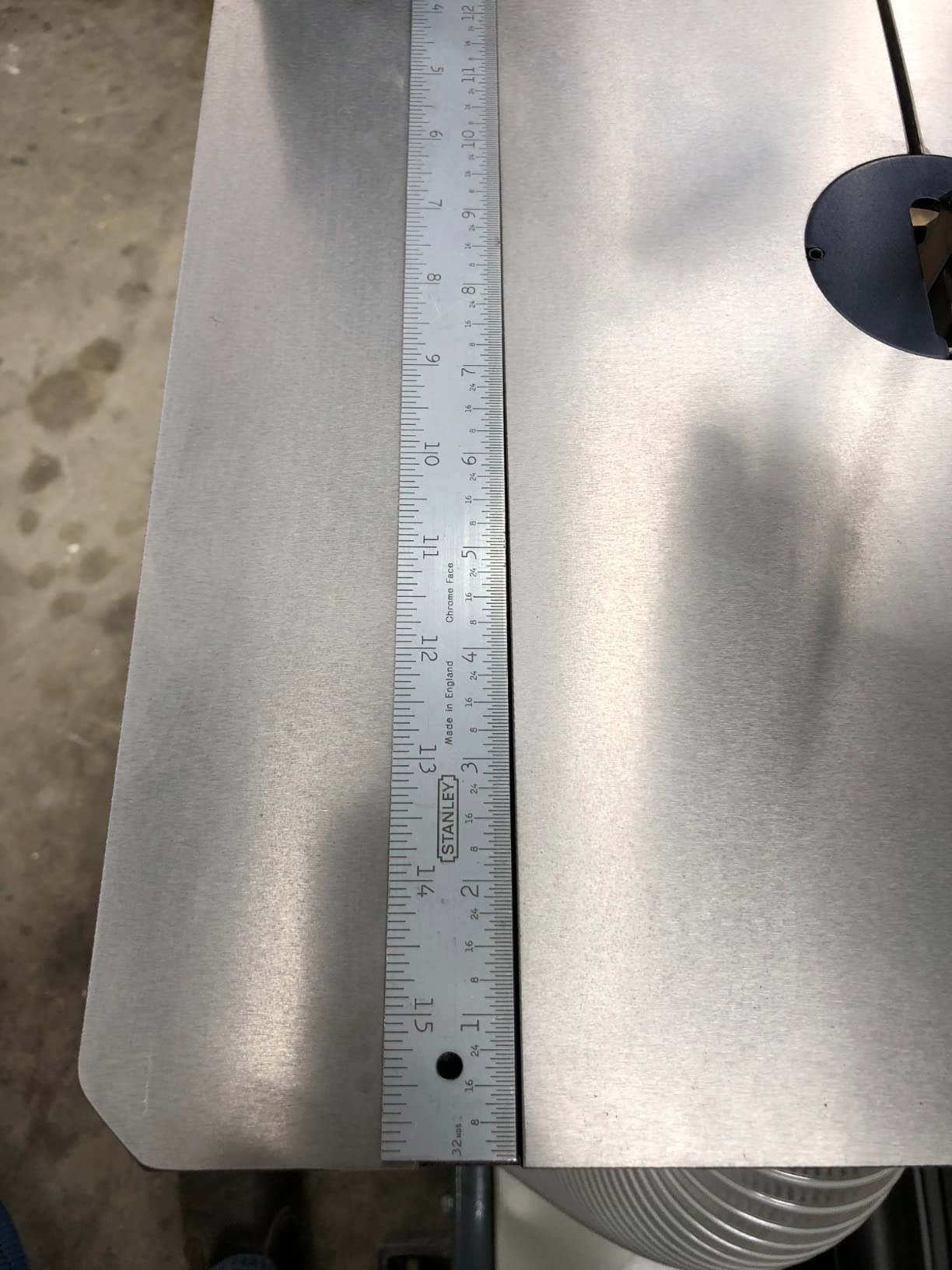
This is the power answer. A 3 HP, 230V single-phase motor drawing 20 amps has the headroom to push a wide resaw blade through dense hardwood without the blade speed collapsing, which is exactly the failure mode that ruins a resaw cut halfway through a board.
The 133-inch blade loop is longer than any 14-inch machine here, and the precision-ground cast iron table tilts 5 degrees one way and 45 degrees the other. Owners describe the machine as quiet and smooth with good tracking across multiple blade types once it is set up properly.
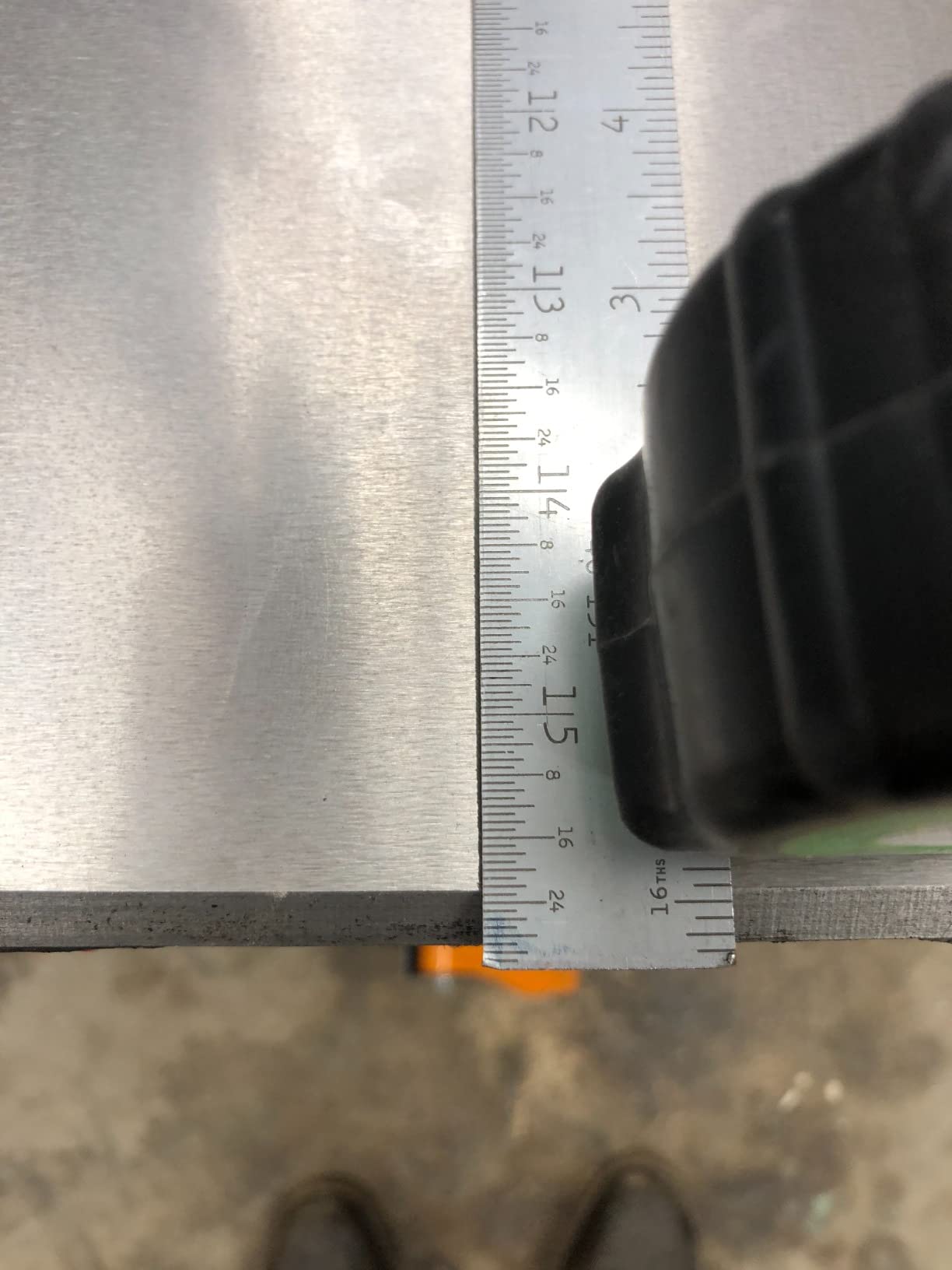
Toolless independently adjustable upper and lower ball bearing guides are a real convenience when you are swapping between a resaw blade and a curve blade several times in a session. The fence uses a micro-adjustable dual-position side plate, which lets you calibrate the rip position in very fine increments.
Three-position quick-release tensioning gives you full tension, partial tension, and full release from one lever. The four-sided guide post with rack and pinion adjustment keeps the blade supported from more directions than a single-post design.
What to check before you commit
Confirm you have a dedicated 230V circuit before you buy. This saw needs it, and running it on a general purpose circuit is both unsafe and a sure way to trip the breaker mid-cut.
Measure the shipping weight into your shop, not just the machine weight. Buyers report roughly 400 pounds arriving, and getting that through a basement stair with two people is the hardest part of the purchase.
Who should skip it
Skip it if your shop lacks 230V service. There is no way to soften this machine into a residential circuit, and the 1.75 HP 14-inch saws in this roundup handle most resaw work without the electrical work.
8. Woodskil 10-Inch Benchtop as the Budget Entry Point
WOODSKIL 10-Inch Benchtop Bandsaw with Stand, 3.4A Dual-Speed Band Saw
Cutting height 5-1/8 inch
Motor 3.4-amp dual speed
Speeds 2360 and 3000 FPM
6 ball bearing blade guides
Pros
- Largest review base in the roundup at 515 ratings
- Six ball bearing guides limit drift
- 5-1/8 inch height resaws 4x4 lumber
- Quick tension system and tool-free doors
- Rip fence and miter gauge included
Cons
- 5-1/8 inch height is below thick slab capability
- Cast aluminum table is lighter and less rigid than cast iron
- 1-7/8 inch dust port is small for shop vac hookup
- 3.4-amp motor is a step down in power
With 515 ratings averaging 4.4 stars, this machine has the largest owner base in the entire roundup, and the consistency across those reviews is better than most machines twice its size. Six ball bearing guides supporting the blade from multiple angles is the feature owners credit with straight cuts.
The two speeds, 2360 and 3000 FPM, let you take hardwood like oak and maple without burning the surface and then shift up for fast, splinter-free cuts in softwood and plywood. A 10-inch throat also slices wide panels that a narrow benchtop saw cannot.
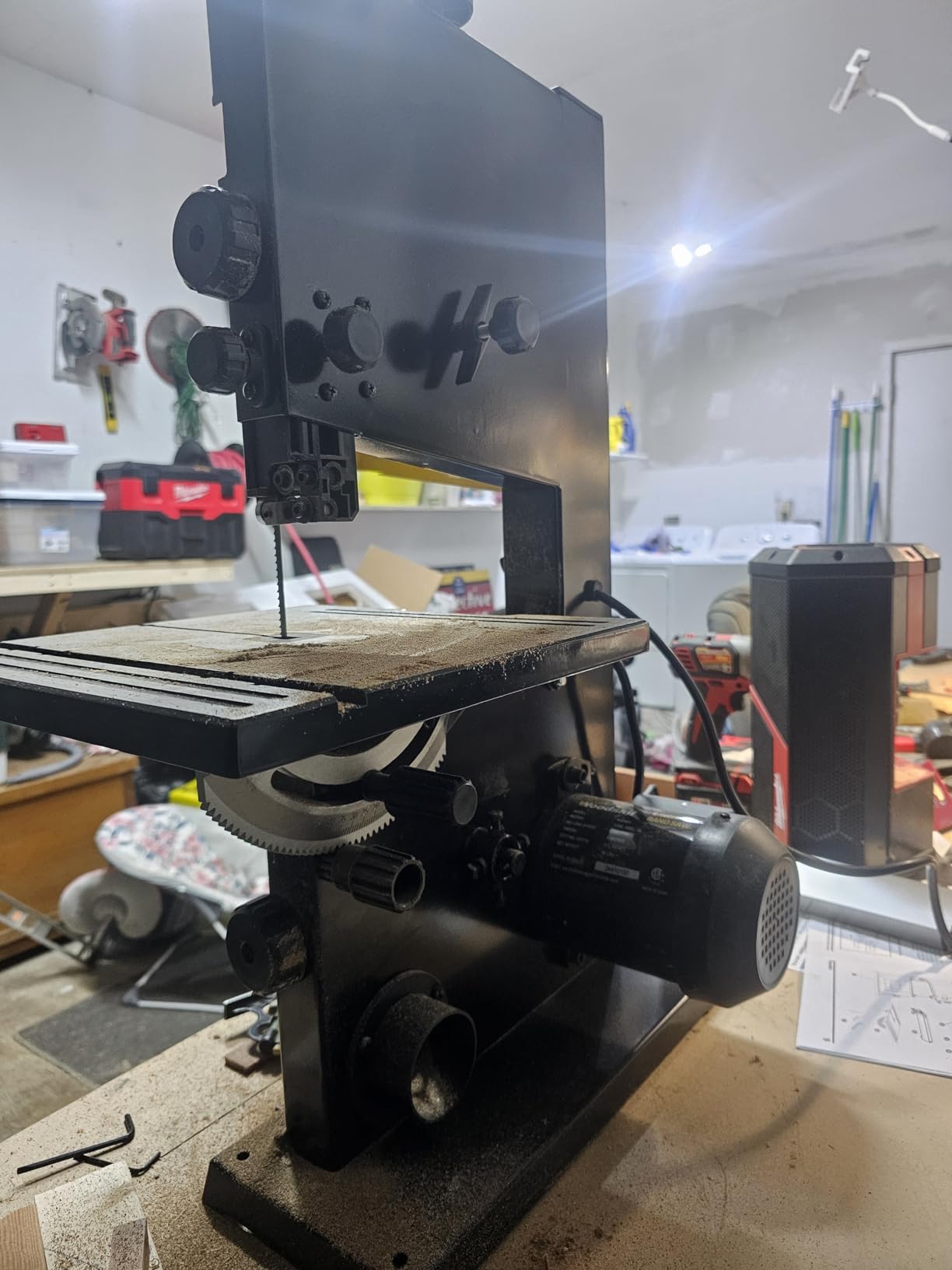
The quick tension system and tool-free side doors make blade changes and cleaning fast, which matters more than it sounds if you resaw regularly and generate a lot of dust. The 0 to 45 degree cast aluminum table handles bevels, and the included rip fence and miter gauge mean it is usable out of the box.
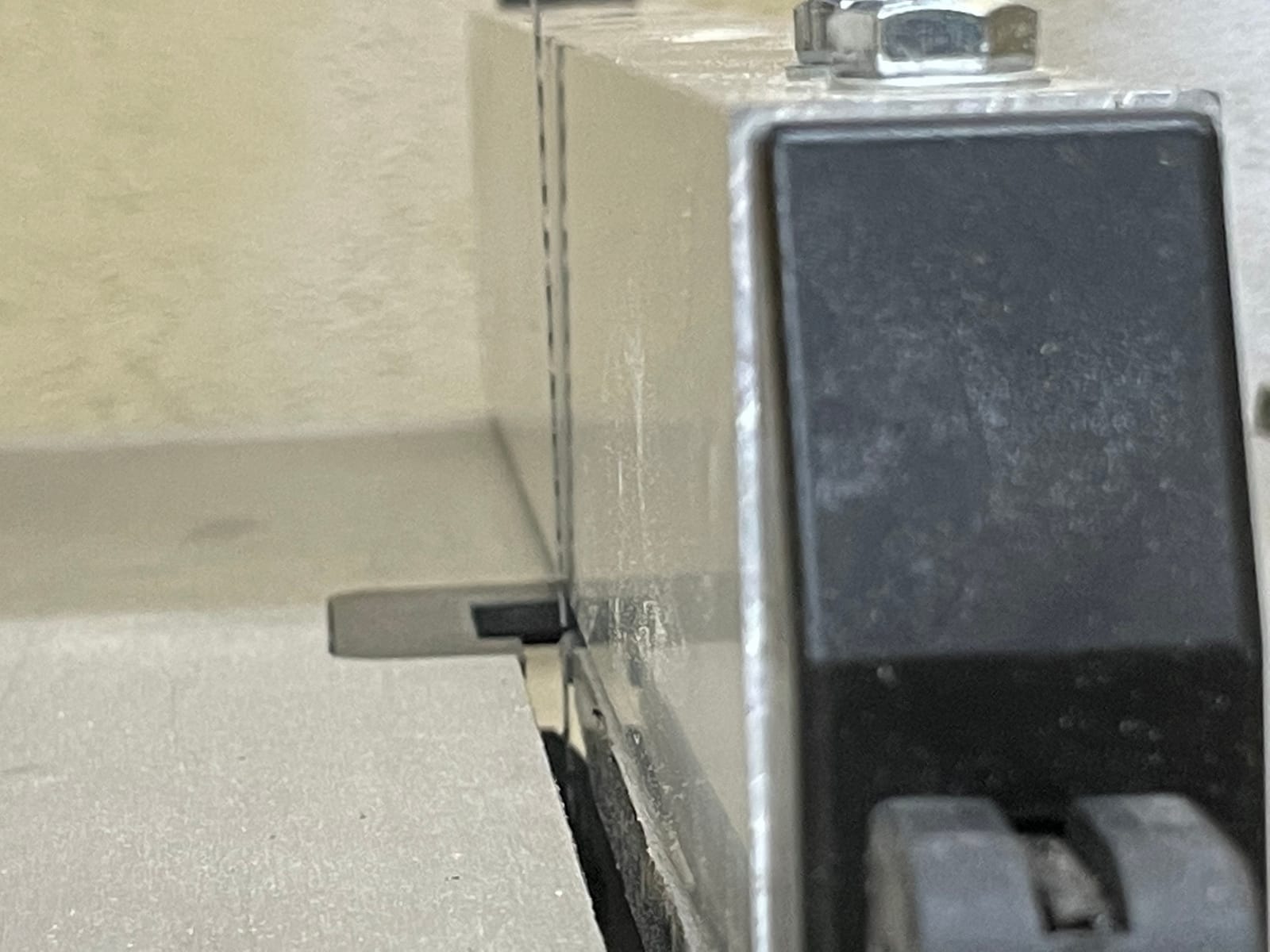
The limit is simple and worth stating plainly. Five and one-eighth inches of cutting height handles 4×4 lumber and thinner slabs. If your resaw material is a live-edge walnut board eight inches thick, this saw cannot do it, and no setting will change that.
What to check before you commit
Measure your thinnest resaw material, not your thickest. Many woodworkers resaw 2 to 4 inch walnut from a rough slab, and this machine handles that work cleanly.
Plan for dust. The 1-7/8 inch port works with a shop vac, and you will want one connected every time you cut rather than only at cleanup.
Who should skip it
Skip it if you have already seen yourself buying slabs. This is a learning machine and a curve-cutting machine. It is a good first band saw, and it is not the machine you resaw furniture panels on.
9. WEN BA3962 10-Inch for Straight Resaws in a Garage Shop
WEN Band Saw with Stand, 10-Inch, 3.5-Amp, Two-Speed (BA3962),Black
Cut depth 6 inch
Width 9-3/4 inch
Motor 3.5-amp
Speeds 1520 and 2620 FPM
Pros
- Owners report clean straight resaws in 4 inch poplar
- Build quality better than expected for the size
- Runs quietly with little vibration
- Two speeds plus simple belt adjustment
- With the 3/8 inch blade cuts show no flex
Cons
- Included T-fence is weak for accurate work without an auxiliary stop
- Included work light shadows the cut line
- Included blade is low quality
- Table mounting holes may not line up on assembly
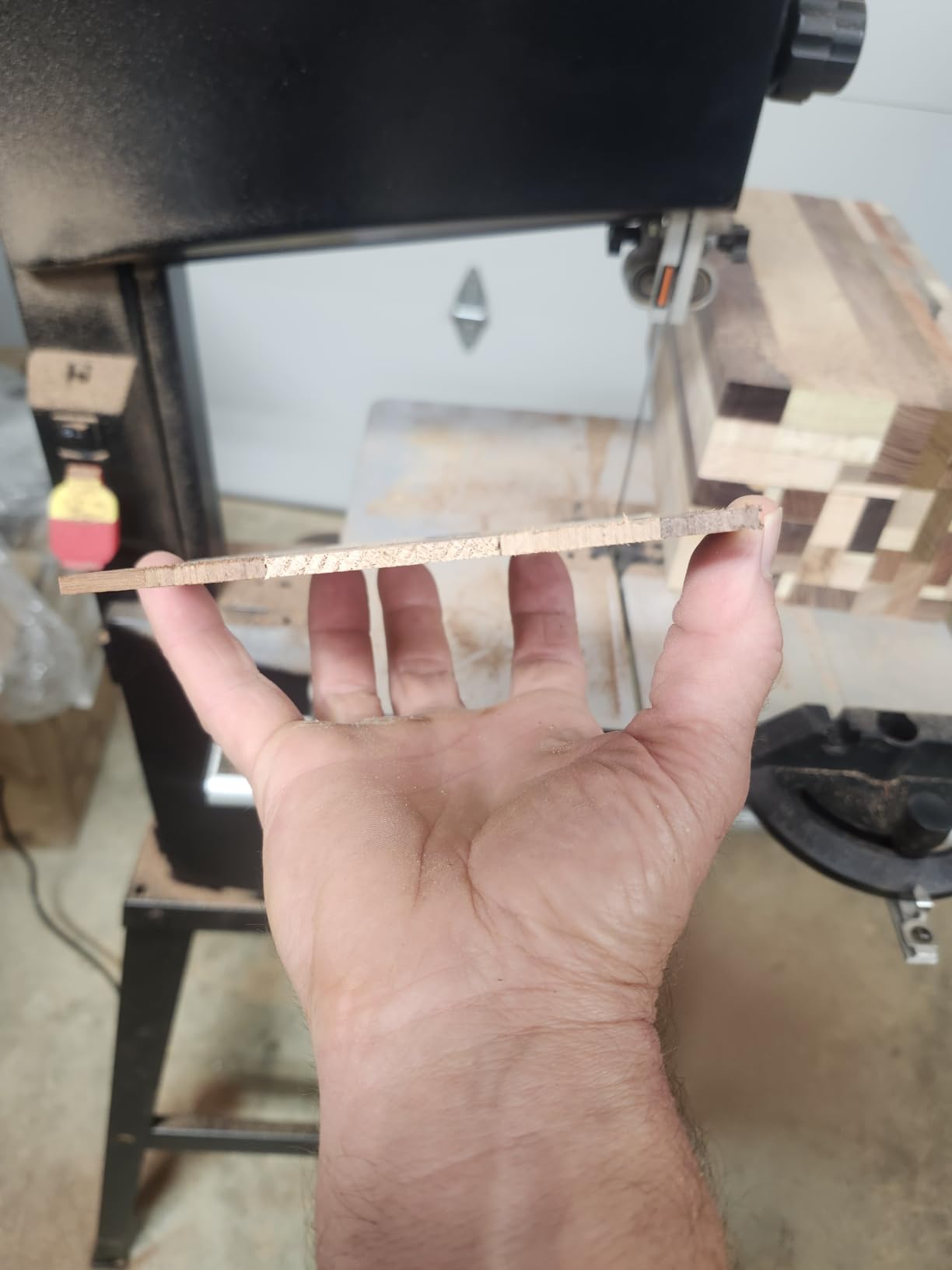
The BA3962 does something no other budget saw in this list does, and owners on drum-making projects have posted clean straight resaws in 4-inch poplar to prove it. Once the fence is zeroed and a real blade is fitted, the cuts come out straight with no flex.
It runs quietly with little vibration for its class, which makes it pleasant to have in a garage. Two speeds at 1520 and 2620 FPM plus a straightforward belt adjustment cover softwood, hardwood, and the plywood work most weekend woodworkers actually do.
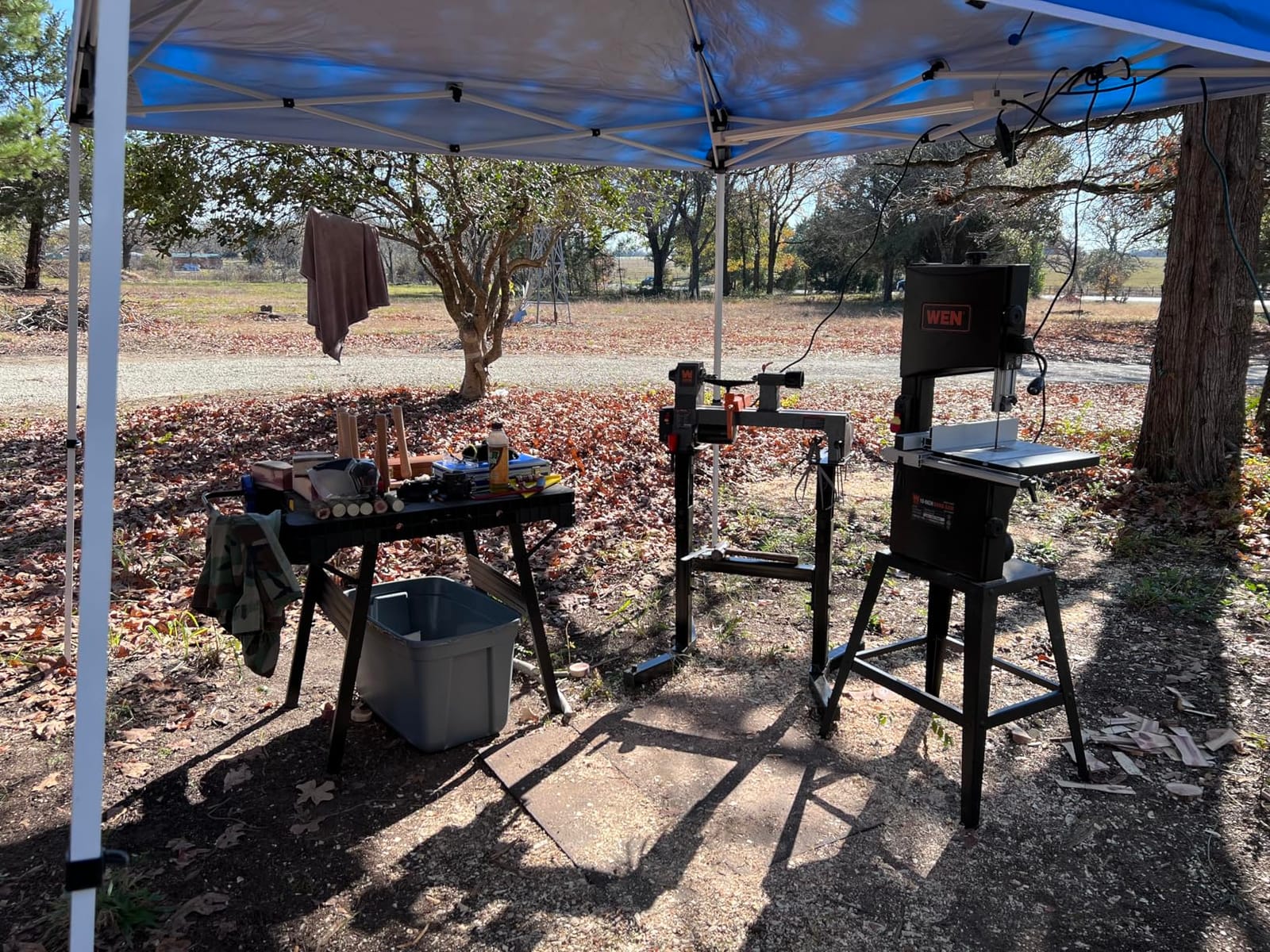
Cut depth reaches 6 inches and width reaches 9-3/4 inches on 72-inch blades from 1/8 to 1/2 inch wide. That is a narrower blade range than the 14-inch saws offer, and it means your resaw blade choice is limited to what a 72-inch loop accepts.
The accessory list is where the complaints concentrate. The T-fence needs an auxiliary stop clamped to it for accurate work, the work light falls out of position and shadows the cut line, and the included 3/8 inch blade is criticized as dull. Owners consistently recommend fitting a 1/2 inch three-tooth resaw blade.
What to check before you commit
Inspect the table mounting holes before assembly. Misaligned holes are a reported issue, and discovering it halfway through putting the saw together is a bad first impression of a machine that otherwise performs well.
Expect mixed SAE and metric hardware in the box, and keep both driver sets on hand for the first build.
Who should skip it
Skip it if your stock is thicker than 6 inches or your shop is cramped. Both are limits of the machine class, and no amount of tuning moves past them.
10. Laguna 14BX with 38-Inch Table Height for Tall Stock
Laguna Tools 110v 1.75hp Bandsaw with 13″ Resaw and 38″ Table Height – Model mband14bx110-175, Black
Resaw capacity 13 inch
Motor 1.75 HP 110V
Table height 38 inch
Ceramic guides and dual 4 inch dust ports
Pros
- 38 inch table height keeps tall slab stock flat against the fence
- 13 inch resaw capacity on a 110V drive
- Solid one-piece frame reduces vibration
- Ceramic guides give multiple blade contact points
- Dual 4 inch dust ports
- Fence uses worm-gear rack-and-pinion adjustment
Cons
- Lowest average rating in the roundup at 4.0 stars
- No blade is included
- Freight delivery adds logistics for a 260-pound machine
The feature that separates this Laguna from every other 14-inch saw here is the 38-inch table height. When you resaw a tall slab, the face of the board needs to stay pressed flat against the fence for the whole pass. On a shorter saw you are supporting the bottom of a tall board by hand, and that hand pressure is what pushes the cut off line.
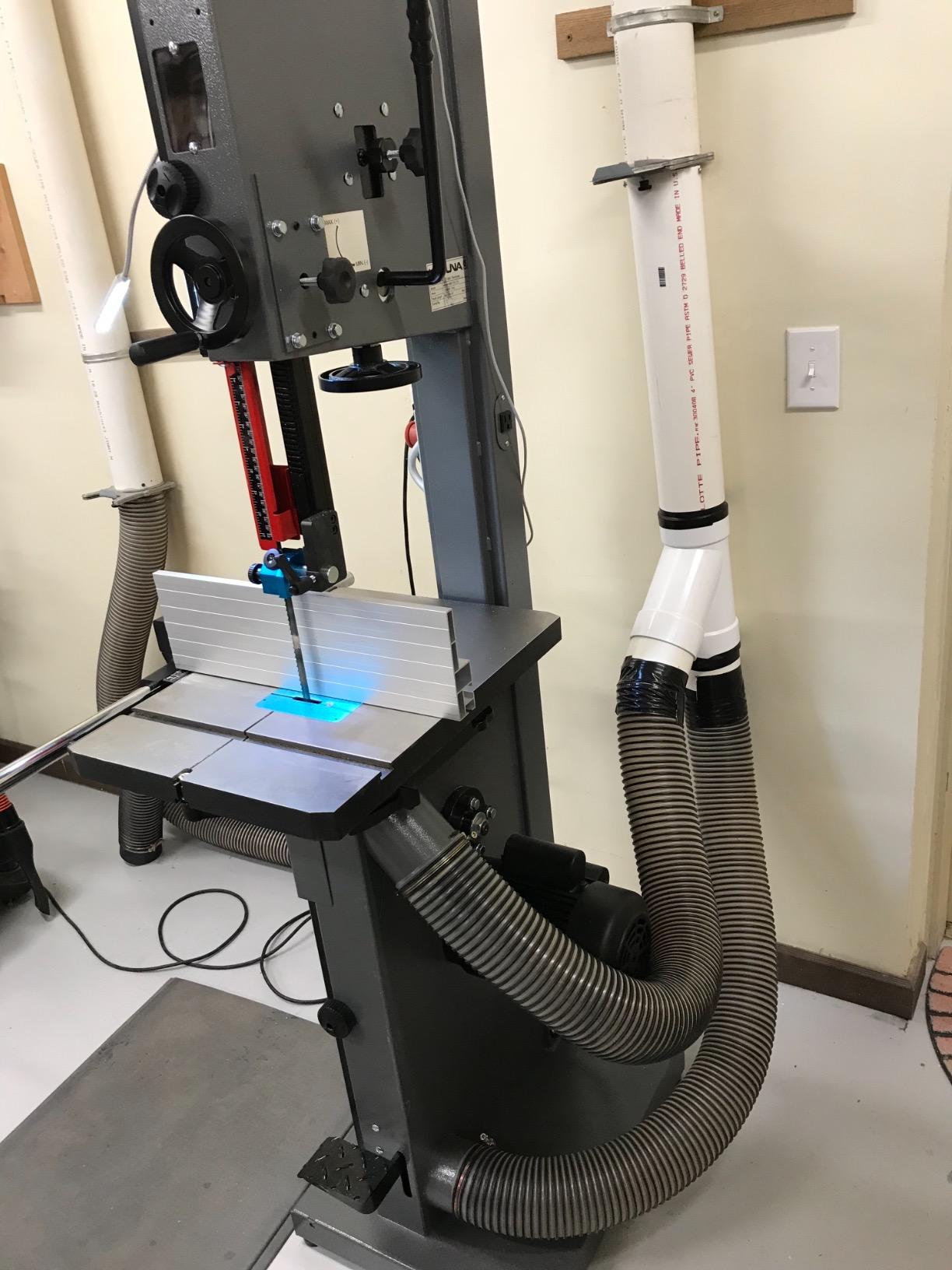
The one-piece heavy-gauge frame reduces vibration, and the ceramic guides contact the blade at multiple points around its body, which is what keeps a wide resaw blade from fluttering. A foot-operated disc brake with a micro-switch stops the blade quickly, and dual 4-inch dust ports handle the fines a resaw generates.
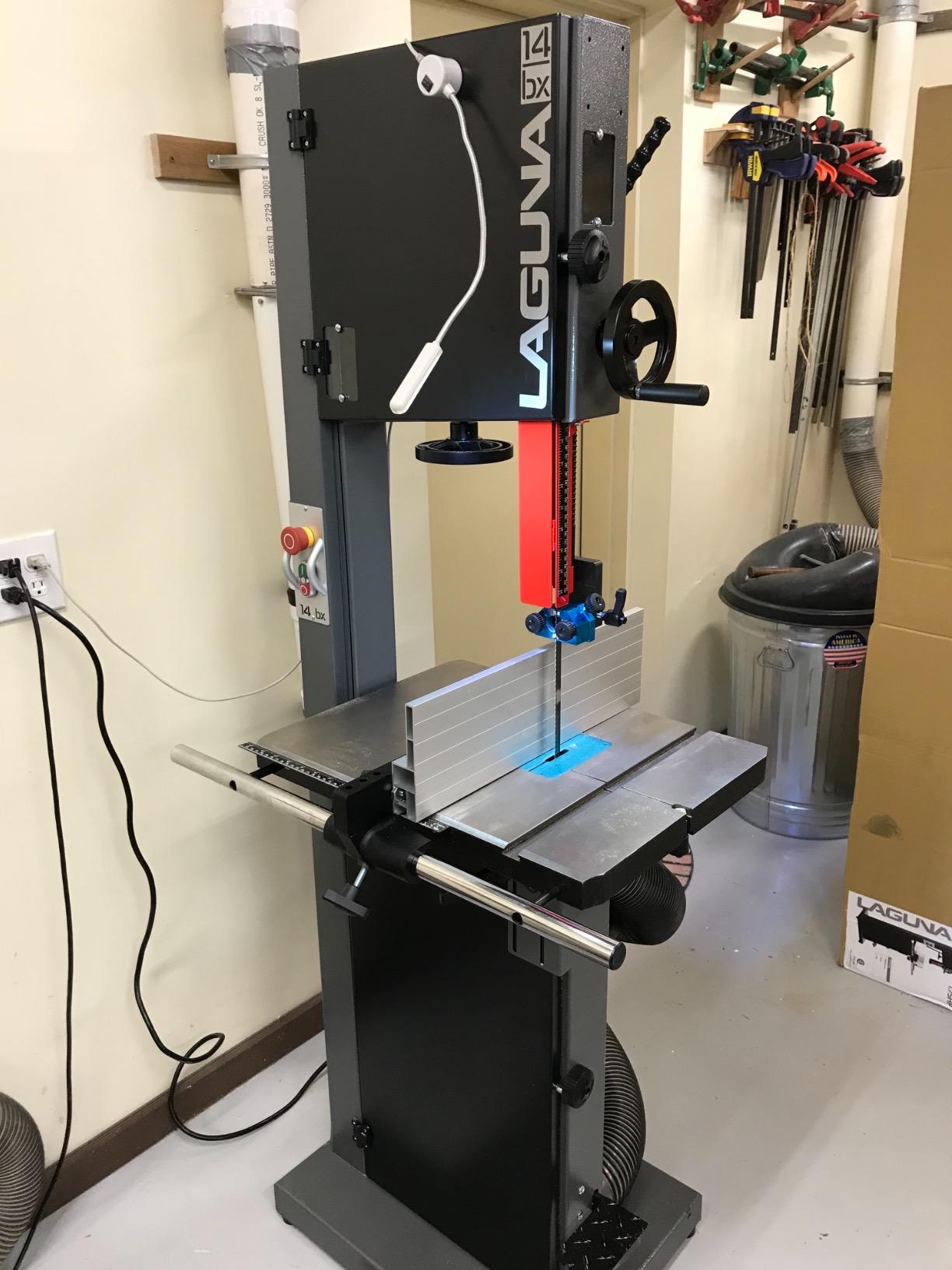
Quick-release blade tension, a magnetic blade guard, and a worm-gear rack-and-pinion fence adjustment give you repeatable setup. The 21-1/2 by 16 inch cast iron table tilts 7 degrees one way and 45 degrees the other. Blades up to 3/4 inch wide on a 115-inch loop cover the standard resaw range.
The rating here sits at 4.0 across 28 reviews, the lowest average in the group, and the feedback is more polarized than the numbers suggest. Buyers who resaw tall stock love the table height. Others report mixed experiences that seem tied more to setup and freight handling than to the machine itself.
What to check before you commit
Work out your resaw stock height before anything else. If your boards stand more than about 9 inches tall on the table, this table height solves a problem the other 14-inch saws leave you to solve with your hands.
Account for freight. A 260-pound machine on a pallet needs a receiving plan that a garage-door delivery cannot handle.
Who should skip it
Skip it if the lowest rating in the group makes you uneasy. The 14|12 in this roundup covers the same resaw capacity with a much larger owner base and a similar motor.
11. Grizzly G0555XH 14-Inch with 12-Inch Resaw Capacity
Grizzly Industrial G0555XH – 14″ 1-3/4 HP Extreme Series Resaw Bandsaw
Resaw capacity 12 inch
Motor 1.75 HP 110V and 220V capable
Extruded aluminum resaw fence
Cast iron frame
Pros
- 1.75 HP motor handles most materials as a workhorse
- Cast iron frame and heavy duty stand feel built to last
- Extruded aluminum resaw fence and miter gauge included
- Blade changes take about five minutes
- Owners report a dramatic improvement with fresh blades
Cons
- Included blade is inadequate for resawing and needs replacing
- Freight damage is a recurring complaint with crushed crates
- Quick-release tension handle is too small
- Only 16 ratings for long-term data
The G0555XH is a 12-inch resaw machine on a cast iron frame with a heavy duty stand, and owners who buy a fresh blade report it slicing maple quickly and cleanly. That last part matters, because the blade that comes with the saw is not the blade you want to resaw with.
Twelve inches of resaw capacity is a small step under the 13-inch leaders here, and it is still large enough for the walnut, oak, and mahogany panels that furniture and cabinet work actually needs. The motor is prewired for 120V and capable of 220V if you outgrow your circuit.
The extruded aluminum resaw fence and miter gauge are included, which removes the most common add-on cost. The no-frills design means a blade change takes about five minutes, and some owners use the machine for crosscutting instead of a table saw because they find it more controllable.
What to check before you commit
Replace the included blade before your first resaw. This is the single most consistent piece of advice across owner reviews, and the machines that disappointed people are the ones run on the blade that came in the crate.
Inspect the crate on arrival. Freight damage is the recurring complaint here, including a creased motor housing from a crushed crate, and you cannot catch it if you do not open and check.
Who should skip it
Skip it if you want a polished fence-and-table package out of the box. This is a work-first machine. The included fence is functional rather than refined, and buyers who care about finish quality replace it.
12. Laguna 18BX with 16-Inch Resaw Capacity
18|bx Bandsaw 220V 3HP
Resaw capacity 16 inch
Motor 3 HP 220V single phase
Table 20 by 26 inch cast iron
10-point ceramic guide system
Pros
- Largest resaw capacity in the roundup at 16 inches
- 3 HP 220V motor with magnetic starter
- 10-point ceramic guides reduce blade oscillation
- 20 by 26 inch cast iron table
- Blades from 1/8 to 1-1/4 inch on a 145-inch loop
Cons
- Lowest average rating in the roundup at 3.2 stars
- Requires a 220V circuit
- Heaviest machine in the group at 410 pounds
- No blade is included
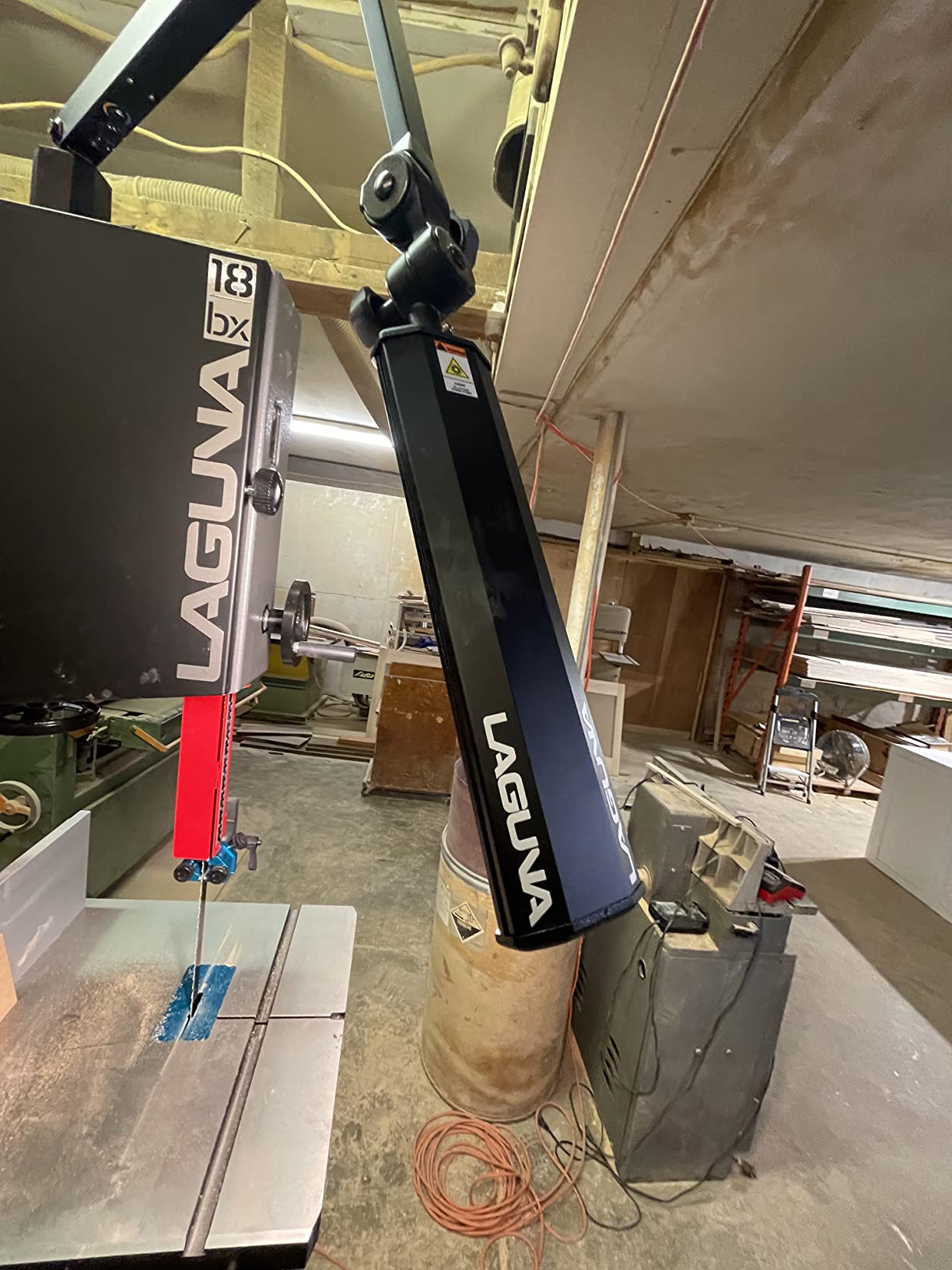
Sixteen inches of resaw capacity with an 18-inch throat is the largest envelope in this roundup by a wide margin. If you are slicing genuine thick slabs and want to do it in a single pass instead of working from both sides, this is the machine built for it and nothing else here is.
The 3 HP, 220V single-phase motor with a magnetic starter supplies the power to drive a blade as wide as 1-1/4 inches through hard hardwood. The 145-inch blade loop is the longest here, and the 10-point ceramic guide system puts support contacts around the blade to limit oscillation on those very wide blades.
The 20 by 26 inch cast iron table tilts from 6 degrees one way to 45 degrees the other, which gives you a broad stable surface for tall stock. Quick-release blade tension, a disc brake with microswitch, a hi and low anodized aluminum fence, and dual 4-inch dust ports round out a production-grade feature set.
Now the warning. This machine holds a 3.2 average across 19 ratings, the lowest in the roundup, with close to 29 percent one-star reviews. The 220V requirement and the 410-pound weight make it the least accessible option outside a well-equipped shop, and the thin review base tells you very little about long-term reliability.
What to check before you commit
Confirm a 220V branch circuit exists before you order. This is not a machine you can try on a residential circuit, and discovering that after delivery means a return trip for a 410-pound saw.
Read the one-star reviews as well as the positive ones. The rating is low, and knowing the specific complaints before you buy is better than discovering them in month three.
Who should skip it
Skip it unless you have thick slabs to resaw and a shop wired for it. For walnut boards under 10 inches, the 13-inch 14-inch saws in this roundup deliver the same result for far less of everything.
How to Choose a Band Saw for Resawing
Start with resaw capacity, not throat capacity. Resaw capacity is the height of stock the saw slices in a single pass with the blade running vertically. Throat capacity is the distance from the blade to the frame, which tells you how wide a piece you can cut, not how tall. A saw can have a generous throat and modest resaw capacity, and that combination is common on machines built for curve work.
For most furniture and cabinet work, look for at least 6 inches, and treat 8 to 13 inches as the range that handles real hardwood. Only the machines in the top half of our list reach that band.
Horsepower thresholds by wheel size
Horsepower is what keeps the blade speed up when the cut gets hard, and the requirement scales with wheel size. Benchtop 8 and 9-inch saws run on small motors and are not built for thick hardwood. A 10-inch saw handles light resaw work on thinner stock. For 12 and 14-inch wheels, 1 HP covers general work and 1.75 to 2.5 HP is the range for serious hardwood resawing. At 17 and 18 inches you want 2 to 3 HP, and a 36-inch production saw moves up toward 5 HP.
The practical test is whether the motor can keep the blade at speed when the cut tightens. If it cannot, the blade deflects, the cut wanders, and the motor runs hot. That single failure mode accounts for most of the complaints in our owner feedback.
110V versus 220V shop power
Most home shops run on 15-amp general purpose circuits, and a 2 HP saw at 120V is near the limit of what that circuit can start reliably. The QD-KYOHO, the Laguna 14|12, and the Grizzly G0555XH all handle 120V with 1.75 to 2 HP because they are designed around residential-class circuits. Above that, you are looking at 230V single phase and a dedicated branch, as on the JET JWBS-15-3 and the Laguna 18BX.
Decide this before you shop, not after. Converting a shop to 230V is a real project, and it should drive the saw choice rather than follow it.
Blade width and TPI for resawing hardwood
A wide blade with fewer teeth is the resaw combination. A 1/2 inch blade at 3 TPI is the general-purpose resaw blade for walnut, cherry, and maple, and a 3/4 inch blade at 3 TPI gives you more contact and less deflection on the thickest stock. At the other end, a 1/8 inch blade at 18 to 24 TPI is for curves, and a 1/4 inch blade at 6 to 10 TPI handles general cutting and thinner resawing.
Two practical notes. Wider blades need a saw with enough horsepower to drive them, and a wide blade on an underpowered saw is the reason some machines get a reputation for wandering. Also count the kerf loss: each pass removes the width of the blade, so a 1/8 inch blade preserves noticeably more of a thin board than a 1/4 inch blade.
Why resaw fence height matters
A resaw fence should be at least 6 inches tall, and taller is better if your stock is tall. Height is what keeps the face of the board flat and square against the reference surface for the whole pass. A short fence lets the top of the board lean away, and that lean is the cut drifting.
Rigidity is the second half. The JET 14-inch and the Grizzly G0555XH include machined or extruded aluminum resaw fences, and the Laguna models include an anodized aluminum hi and low fence with worm-gear or rack-and-pinion adjustment. Several owners of the Laguna 14|12 replace the included fence with an aftermarket unit, which tells you how much the fence affects the result on a heavy machine.
Two-wheel versus three-wheel saws
Two-wheel saws use rubber or polyurethane tires to drive the blade, which makes them quiet and low maintenance. Three-wheel saws use a drive wheel against the blade itself, which means more power and a deeper throat, at the cost of more frequent tire replacement and more setup knowledge. For resaw work, a well-built two-wheel saw with enough horsepower beats an underpowered three-wheel saw every time.
The three-wheel argument only wins when your stock is wide as well as tall, which is exactly why the widest machine in this roundup is a large-frame model with a 20 by 26 inch table.
Benchtop versus floor-standing, and shop clearance
Benchtop saws are quieter, smaller, and fine for thin stock. Floor-standing saws give you the resaw capacity and the horsepower that thick hardwood demands. If you already know you will be working with lumber thicker than 6 inches, start looking at floor-standing machines.
Allow clearance in front of and behind the saw for long boards. A resaw pass on a 6-foot walnut board needs the full length of that board in front of the table and behind the fence, plus roller stands if the board is heavy. Measure the longest board you own before you order, then measure it again in the orientation the saw will face.
For more general saw coverage, our track saw buying guide covers the other half of a mobile workshop setup.
Resaw Setup and Technique
A straight resaw is a sequence, and skipping any step shows up in the board. The sequence below is what works on every machine in this roundup.
First, square the table to the blade using a machinist square on the table surface against the blade side. Second, set blade tension to your saw’s gauge or indicator and recheck it with the machine running. Third, track the blade by turning the tracking knob until it runs on the side of the guide blocks you can see through the window. Fourth, set the guide blocks close to the blade without touching it, back to the manufacturer’s specified gap.
Fifth, fit the blade. If your saw is running the blade it came with, replace it before your first real cut. Sixth, set the fence square to the table using a reliable square, then measure from the blade teeth rather than the blade body. Seventh, resaw slowly and steadily with moderate pressure, keeping the board flat against the fence the entire pass.
Compensating for fence drift
If the cut drifts consistently in one direction, set the fence very slightly off-square to match. We have seen owners buy a better fence chasing a problem that a two-degree fence adjustment solved. This is a technique, not a defect, and it is normal on any band saw.
Check the board after the first pass rather than after the fourth. A straight first pass on a scrap piece of the same thickness tells you in two minutes what a warped panel tells you in twenty.
Maintenance and blade change cadence
A band saw blade has a short life on hardwood, and that is normal. A 3 TPI resaw blade in walnut dulls faster than a fine blade in plywood, often within a few hours of heavy work. Keep a spare of the width and length you use most, and treat a sudden increase in motor noise as a blade change trigger.
Beyond blades, wipe paste wax on cast iron tables every few weeks, brush chips off the guide blocks and wheels regularly, and check belt tension on tire-driven models periodically. On three-wheel saws, keep spare drive tires on hand because they are the first consumable to go.
Frequently Asked Questions
What size bandsaw blade is best for resawing?
A 1/2 inch wide blade at 3 teeth per inch is the standard resaw blade for walnut, cherry, and maple. Move up to a 3/4 inch blade at 3 TPI for the thickest slabs, where the extra contact area reduces blade deflection. Drop to a 1/4 inch blade at 6 to 10 TPI for thinner resawing, and use a 1/8 inch blade at 18 to 24 TPI only for curve work.
Can you resaw with a 14 inch bandsaw?
Yes, and a 14-inch wheel is the most common resaw size on the market. The machines in our roundup range from 5-1/8 inches of cutting height on 10-inch benchtop saws to 13 inches of resaw capacity on 14-inch floor-standing models. Check resaw capacity specifically, not throat capacity, because those two numbers describe different things.
What horsepower band saw do I need for resawing?
For a 12 to 14 inch wheel, 1 HP handles general work and 1.75 to 2.5 HP is the range for serious hardwood resawing. Larger wheels scale up: 2 to 3 HP for 17 and 18-inch saws and closer to 5 HP for a 36-inch production machine. Below 1 HP, a saw will bog down and drift on thick hardwood.
What resaw capacity do I actually need?
Measure the thickest board you expect to own and pick a saw that covers it. Boards under 6 inches thick are handled by most 14-inch saws with 6 inches of listed resaw capacity. Furniture-grade hardwood slabs usually run 8 to 13 inches, which is where the 13-inch machines in our roundup earn their place.
Do I need 220V power to resaw hardwood?
Not for most home shops. Several 1.75 to 2 HP machines in our roundup, including the QD-KYOHO, the Laguna 14|12, and the Grizzly G0555XH, run on 120V circuits. Machines above roughly 2 HP, such as the JET JWBS-15-3 and the Laguna 18BX, need a dedicated 230V branch. Decide on your circuit before choosing the saw.
Can a portable cordless bandsaw resaw wood?
No. A portable cordless bandsaw with a 1-5/8 inch throat is a metal-cutting tool and cannot slice a board into panels, even though several roundups rank it for resawing. Resawing needs a woodworking band saw with at least 6 inches of resaw capacity, a wide coarse-toothed blade, and a rigid fence at least 6 inches tall.
Final Verdict on the Best Band Saws for Resawing
The JET 14-Inch with 1.75 HP is our pick for the best band saws for resawing in 2026. Thirteen inches of resaw capacity, a machined-aluminum resaw fence in the box, and a drive that stays at speed through thick walnut cover what almost every home shop actually needs. Buyers who want more headroom on the same wheel size should look at the QD-KYOHO with its 2 HP drive, and buyers working with tall slab stock should look at the Laguna 14BX with its 38-inch table height. Fit a fresh 1/2 inch 3 TPI resaw blade before your first pass, and check the saw’s circuit requirements before you order.