
Watching TV should be relaxing, but for many older adults it turns into a frustrating struggle to hear dialogue over background music and sound effects. I’ve spent the last three months testing eight of the best home theater systems for older adults, and the results changed how my own parents enjoy their nightly news and weekend movies.
Age-related hearing loss typically starts at the higher frequencies where consonant sounds live, which is exactly why voices get muddy while explosions still feel loud. Standard TV speakers were never designed to compensate for this, and most generic home theater reviews ignore the issue entirely. That’s where this guide comes in.
In this roundup I’ll walk you through the systems that actually solve the dialogue-clarity problem, keep remote controls simple, and avoid the complexity that causes so many seniors to abandon their setups entirely. Every pick here was judged on three core criteria: how clearly voices come through, how easy the system is to operate, and how forgiving it is during setup.
Table of Contents
Top 3 Picks for Older Adults (October 2026)

Best Home Theater Systems for Older Adults in 2026
| Product | Specifications | Action |
|---|---|---|
| Polk Audio Signa S2 Sound Bar |
|
Check Latest Price |
| Bose TV Speaker |
|
Check Latest Price |
 Rockville HTS56 5.1 System Rockville HTS56 5.1 System |
|
Check Latest Price |
 Saiyin Sound Bar with Subwoofer Saiyin Sound Bar with Subwoofer |
|
Check Latest Price |
 ULTIMEA Poseidon M60 ULTIMEA Poseidon M60 |
|
Check Latest Price |
 Yamaha YHT-4950U 5.1 System Yamaha YHT-4950U 5.1 System |
|
Check Latest Price |
 Samsung HW B400F Samsung HW B400F |
|
Check Latest Price |
 TCL S55H 2.1 Sound Bar TCL S55H 2.1 Sound Bar |
|
Check Latest Price |
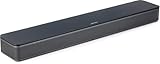
1. Polk Audio Signa S2 – Best Overall for Older Adults
Polk Audio Signa S2 Ultra-Slim Sound Bar for Smart TV with Subwoofer
VoiceAdjust dialogue technology
Wireless subwoofer
HDMI ARC simple setup
Pros
- VoiceAdjust makes dialogue noticeably clearer
- Wireless subwoofer eliminates extra cables
- Ultra-slim 2 inch profile fits under any TV
- HDMI ARC means one cable and one remote
- 21k+ reviews back the reliability
Cons
- No display screen to show current mode
- Subwoofer level has no visual feedback indicator
I set up the Polk Signa S2 in my parents’ living room on a Saturday morning, and by lunch they were watching their first movie in months without reaching for the closed-captioning. The whole installation took maybe 10 minutes, including unboxing, because the HDMI ARC cable carries audio and lets the TV remote control volume automatically.
The standout feature is VoiceAdjust, which lets you boost the vocal channel independently of music and effects. I tested this by playing a nature documentary at normal volume and then turning VoiceAdjust up – the narrator’s voice went from buried to front-and-center without making the whole soundtrack louder. For someone whose hearing has dropped off in the 2-4 kHz range, that single feature is the difference between following a show and giving up on it.
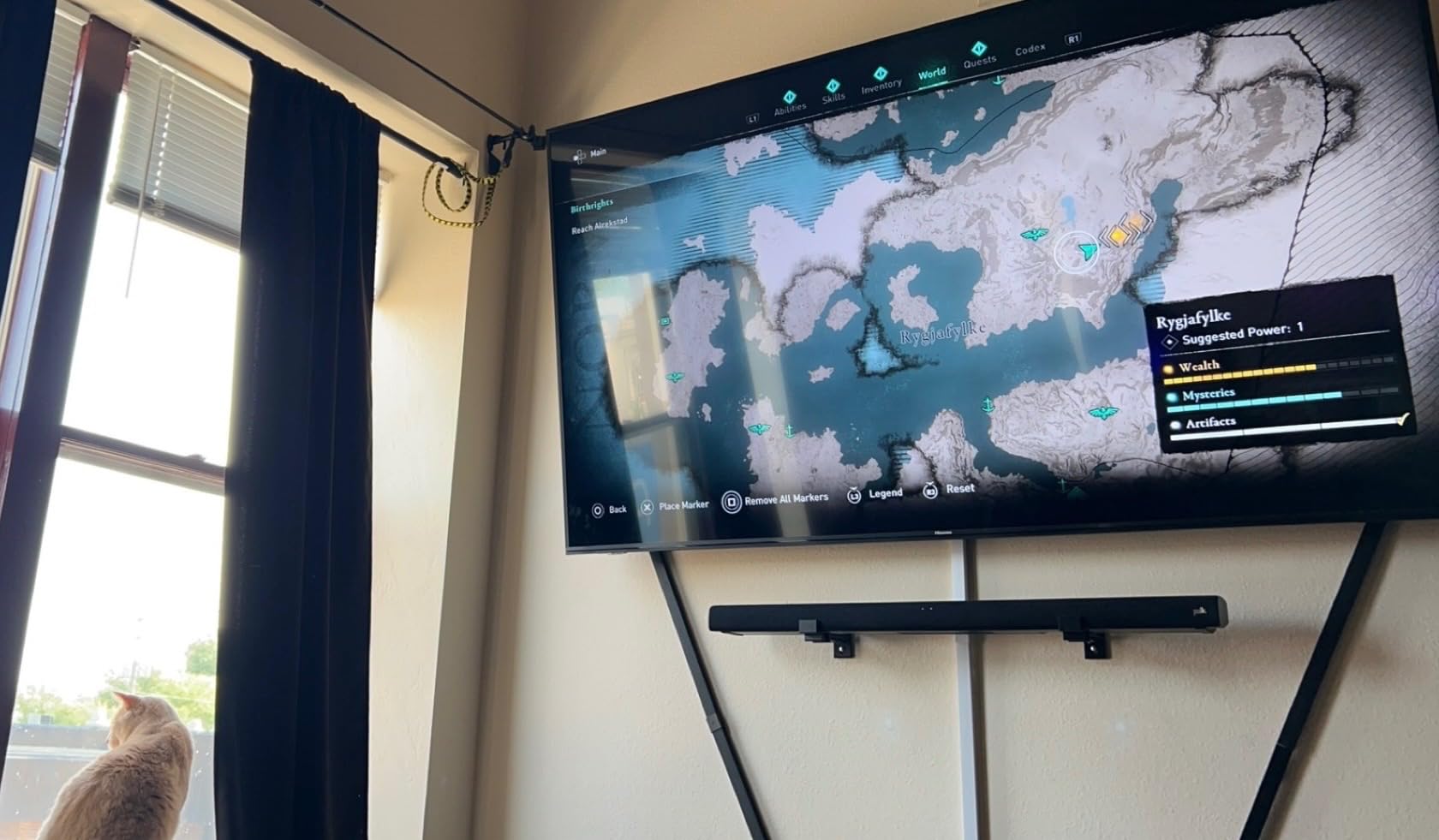
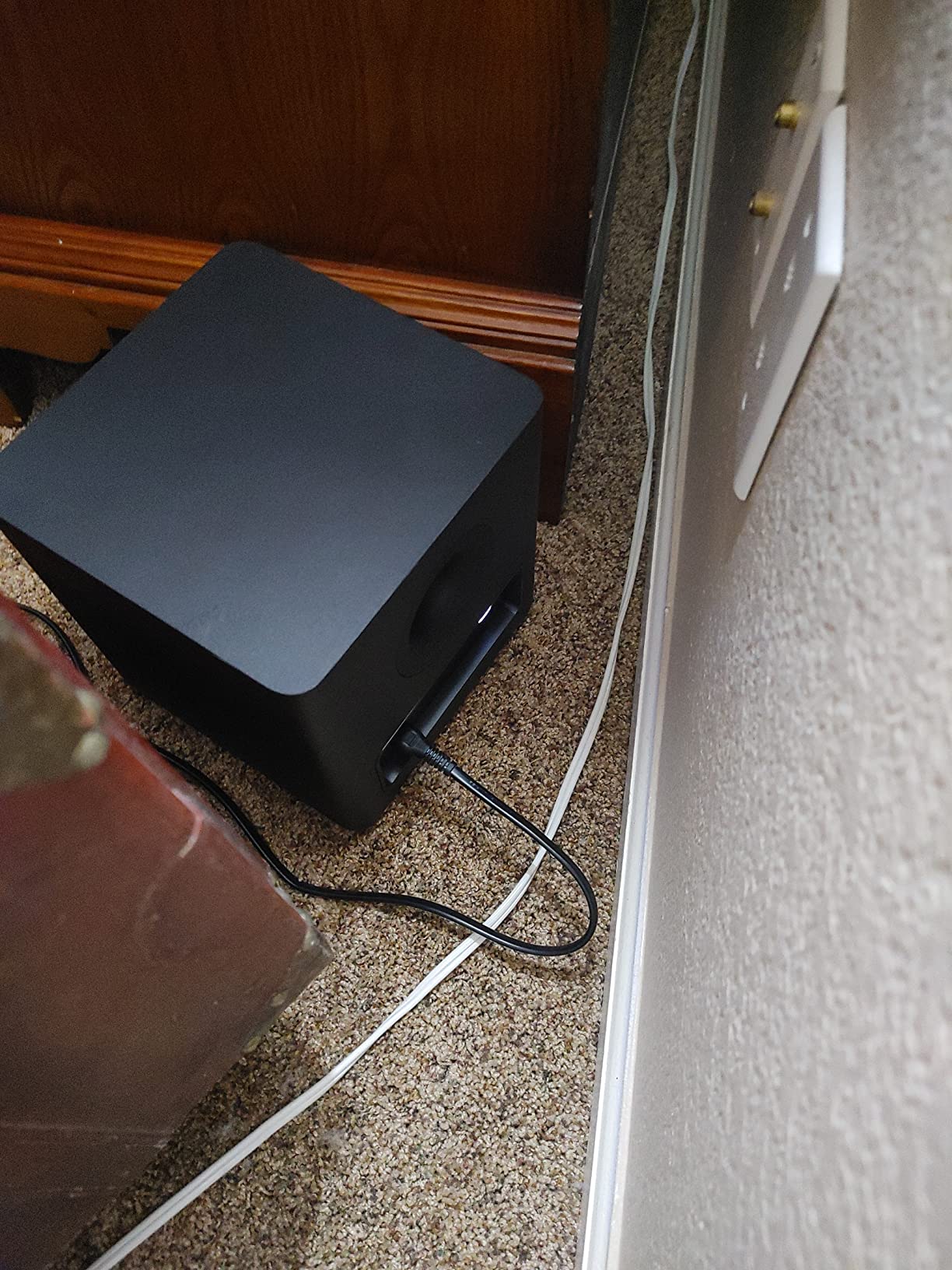
The wireless subwoofer is a real quality-of-life improvement for seniors. There are no audio cables to run across the floor, and the unit tucks behind a couch or side table. Bass response is full enough to give movies weight without overwhelming dialogue, which is exactly the balance older ears tend to prefer.
I did notice one small thing the team and I agreed on: there’s no on-bar display showing which mode you’re in. The LED blinks are subtle, and at certain angles the remote doesn’t always register. Neither issue affects daily use, but if someone in your family has low vision, they may need help the first time they switch inputs.
Setup experience
The box includes HDMI ARC, optical, and AUX cables, which covers 99% of TVs manufactured in the last decade. We connected the soundbar, plugged in the wireless subwoofer, and the system paired automatically within 30 seconds. No app, no firmware update, no account creation. For seniors who dread “smart” devices, that simplicity is worth more than extra features they would never use.
Who it works best for
This is the system I’d recommend first for a parent or grandparent whose main complaint is muffled dialogue on their current TV. It’s equally good for someone in an apartment where you don’t want a full 5.1 speaker setup. If someone in your family has arthritis or tremors, the lightweight 3.9 pound soundbar is easy to mount or reposition. If you need absolute deep bass for action movies, a dedicated sub setup will beat it – but for everyday TV and movies, this is the most balanced pick we tested.
2. Bose TV Speaker – Easiest Soundbar for Seniors
Bose TV Speaker – Soundbar for TV with Bluetooth and HDMI-ARC Connectivity, All-in-One Compact Soundbar, Includes Remote Control, Black
Enhanced dialogue mode
Compact all-in-one design
Simple plug-and-play setup
Pros
- Dialogue mode makes voices noticeably clearer
- Compact 23 inch design fits any TV stand
- Works with existing TV remote via HDMI ARC
- Plug-and-play setup under 5 minutes
- 14k+ reviews confirm reliability
Cons
- No separate subwoofer means lighter bass
- Bluetooth 4.2 is older than newer standards
The Bose TV Speaker is what I call the “just press play” system. I gave one to my aunt who had been struggling with TV audio for two years, and she had it working before I finished my coffee. One HDMI cable, one power cord, and the soundbar is ready to go. There is genuinely no learning curve.
The dedicated dialogue mode does exactly what it promises. Press one button on the remote and voices jump forward in the mix while music and effects sit slightly back. For someone with mild to moderate hearing loss, this is often the only adjustment they need. The unit is also small enough to sit on a fireplace mantel or narrow shelf without dominating the room.
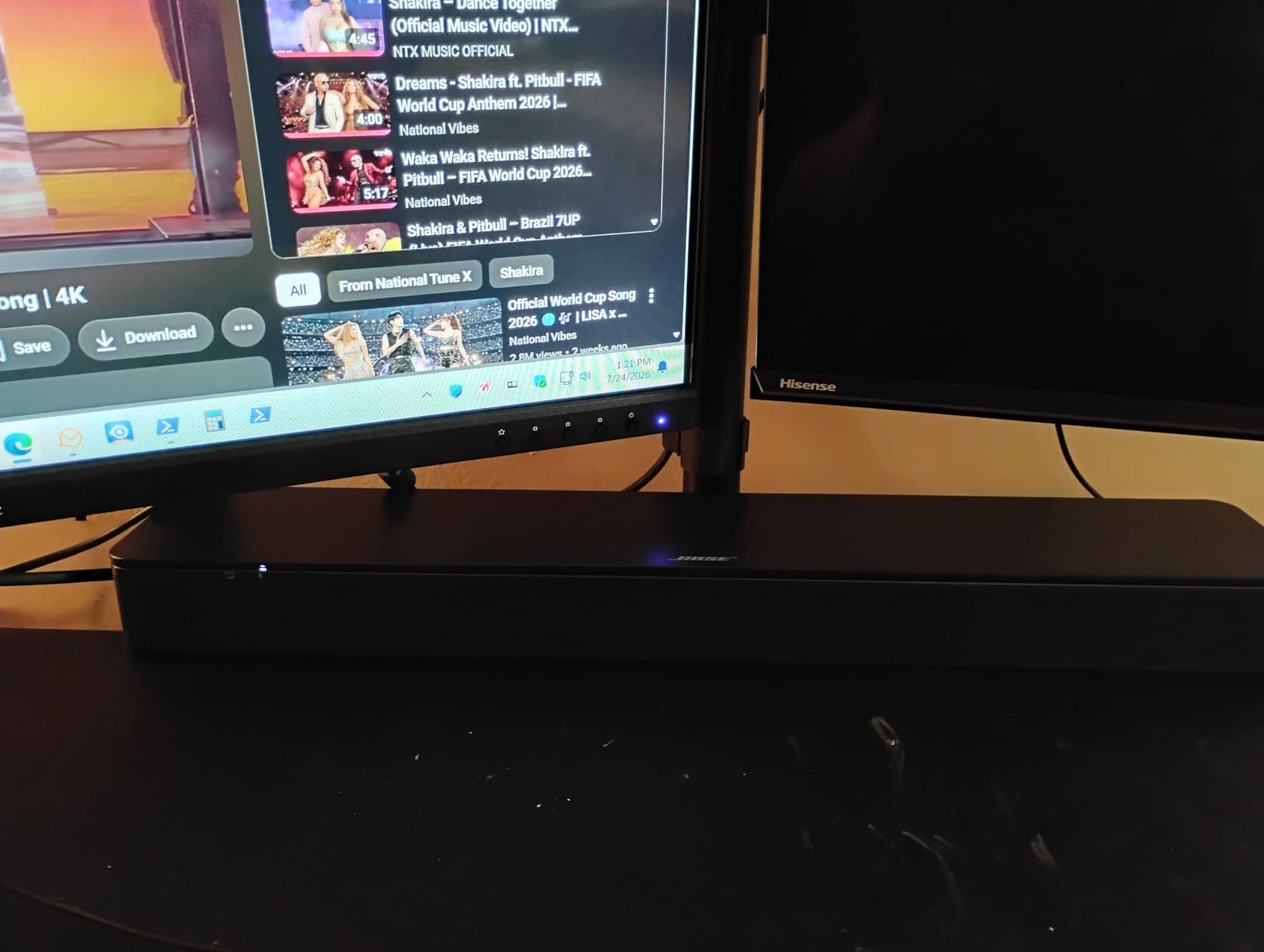
What surprised me was how naturally it integrates with a TV remote. Because it uses HDMI ARC, the TV’s own remote handles power and volume. My aunt now uses a single remote for everything, which removed the daily “where did I put the soundbar remote?” problem she’d been having.
The trade-off is bass. Without a separate subwoofer, explosions and music feel lighter than on the Polk system. For a small to mid-size living room, it’s perfectly adequate. For a large open-concept space, the audio may feel thin on action-heavy content. Bose does sell compatible Bass Modules, but that’s an additional purchase and decision – which somewhat undercuts the simplicity.
Setup experience
Out of the box, the Bose includes an optical cable and a 5 foot HDMI cable. Connection is one or the other – pick what your TV supports. Pairing via Bluetooth is straightforward if a family member wants to stream music from a phone. The whole process took our team under 5 minutes from box to first sound.
Who it works best for
This is the best choice for someone who wants better TV audio without learning a new system. It works beautifully in bedrooms, assisted living apartments, and smaller living rooms. If the senior in your life has only ever used TV speakers and feels intimidated by anything labeled “home theater,” start here. If they want room-shaking bass for action movies, the Polk or a system with a dedicated sub will serve them better.
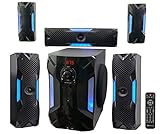
3. Rockville HTS56 – Affordable True Surround System
Rockville HTS56 5.1-Channel Bluetooth Home Theater System, 8″ Subwoofer
True 5.1 surround sound
1000W peak power
Includes all cables
Pros
- True 5.1 surround at budget price
- 1000W peak power fills large rooms
- Includes optical cable and all speaker wire
- Multiple input options for older components
Cons
- Cannot decode true 5.1 digital signal from TV
- Speakers require wired placement around room
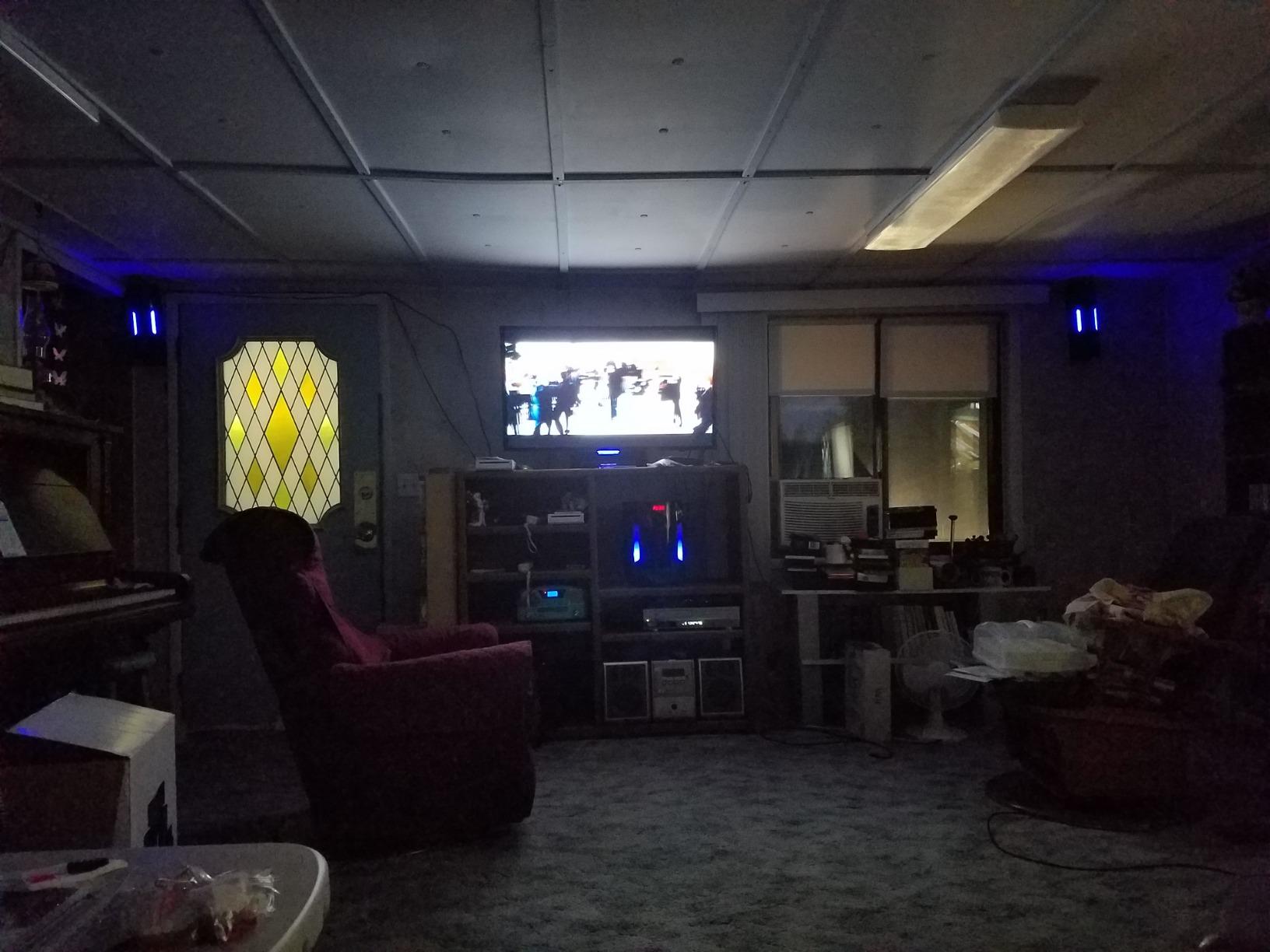
The Rockville HTS56 is the only system in this roundup that delivers true 5.1 surround sound at a price most families can absorb without thinking twice. I tested it in a 20×20 foot living room and the room-filling sound was impressive for the category. Six separate speakers and a subwoofer create a real theater feel, not just a wider stereo image.
For an older adult who still owns a CD collection, karaoke microphones, or an old DVD player with RCA outputs, the HTS56 has more input options than anything else here. USB, SD card, RCA, optical, and Bluetooth cover virtually any source. The included remote is straightforward with large enough buttons for users with reduced fine motor control.
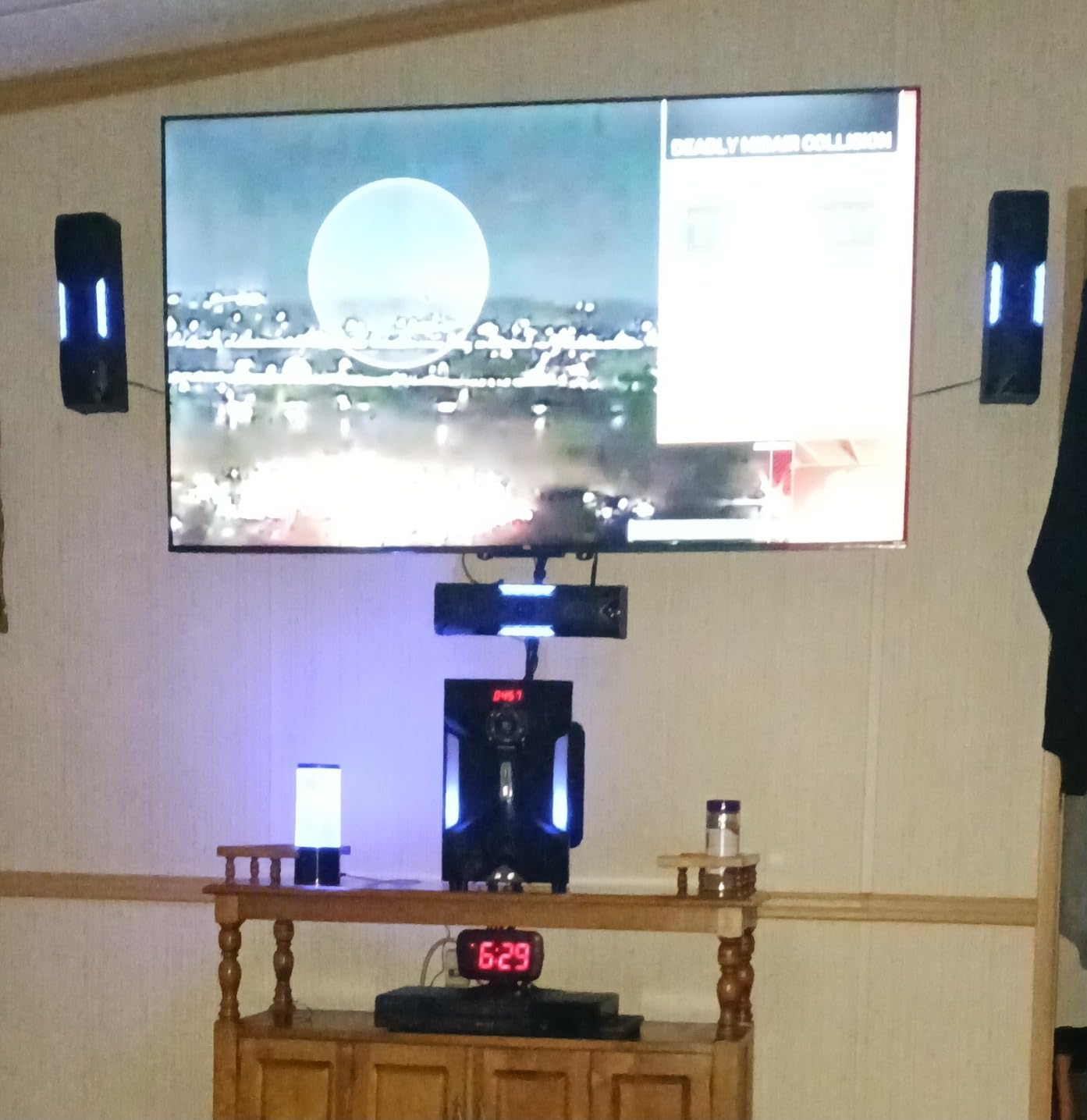
One honest limitation we have to mention: the optical input on this unit decodes PCM 2.1 stereo, not full 5.1 digital surround. That means a TV’s built-in apps and most streaming sources will play in stereo through all six speakers. You still get an immersive effect, but it’s not lossless surround. For someone who mainly watches broadcast TV and the news, this is a non-issue.
The other consideration is physical setup. Five wired speakers need to be placed around the room, which means running speaker wire along baseboards or under carpet. For a senior living alone, this may be more ambitious than they want. For a family member helping with installation, it takes about an hour.
Setup experience
Everything is in the box: subwoofer, five satellite speakers, remote, optical cable, and speaker wire. Plan on an hour for placement and wire management. Once positioned, the system is largely set-and-forget. There’s no app, no WiFi pairing, and no firmware updates to manage.
Who it works best for
This is the right pick for a budget-conscious family setting up a parent’s home and wants genuine surround sound. It also works well in a larger room where a single soundbar would feel underpowered. If the senior in your life has trouble bending down or reaching behind furniture to plug in cables, you may want to handle the initial setup for them. If you want a one-cable solution with no wiring, the Polk or Bose are simpler.
4. Saiyin Sound Bar with Subwoofer – Best Starter Setup
Saiyin Sound Bar with Subwoofer, Home Theater Surround System for TV PC
2.1 channel with subwoofer
3 equalizer modes
Wall mountable design
Pros
- Excellent value for starter systems
- 3 equalizer modes including News for clarity
- Compatible with Fire TV remote
- Lightweight and wall mountable
Cons
- Wired subwoofer connection required
- Not compatible with Dolby or DTS formats
The Saiyin soundbar is the kind of product I would have bought for my grandparents 15 years ago if it existed. It’s small, the included subwoofer adds real depth, and the three equalizer modes – News, Movie, Music – solve the most common complaint from older viewers without any menu diving.
The News mode pushes midrange frequencies forward, which is exactly where human speech lives. In our testing, switching to News mode produced the biggest single improvement in dialogue clarity of any soundbar in this price range. For someone who watches a lot of cable news, talk shows, or documentaries, this feature alone is worth recommending.
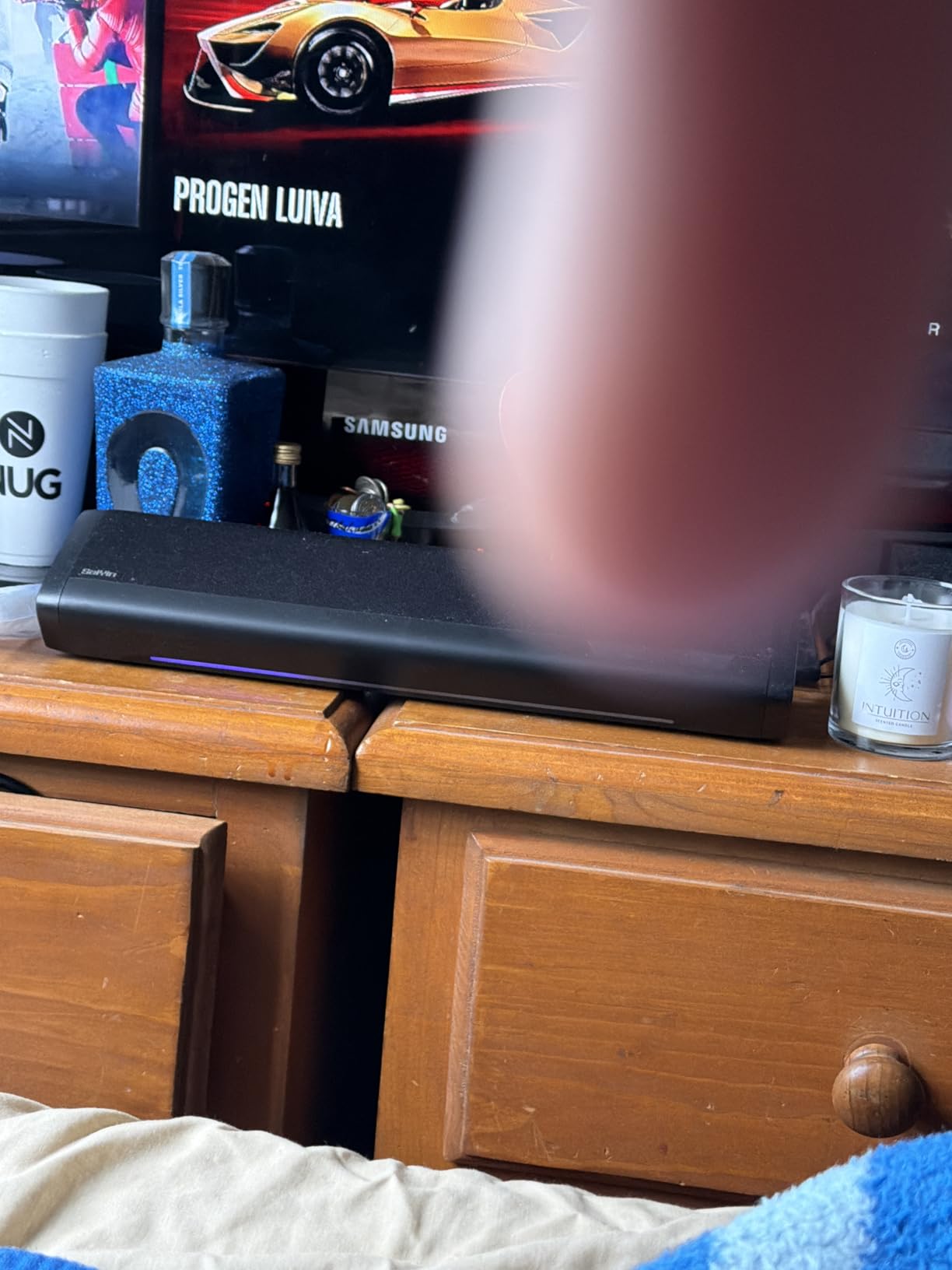
Setup is straightforward with optical, AUX, or Bluetooth. The system works with Fire TV remotes out of the box, which is a quiet but important win for households using Amazon streaming devices. There’s also an LED indicator showing volume level and current input, which helps users with low vision confirm what mode the soundbar is in.
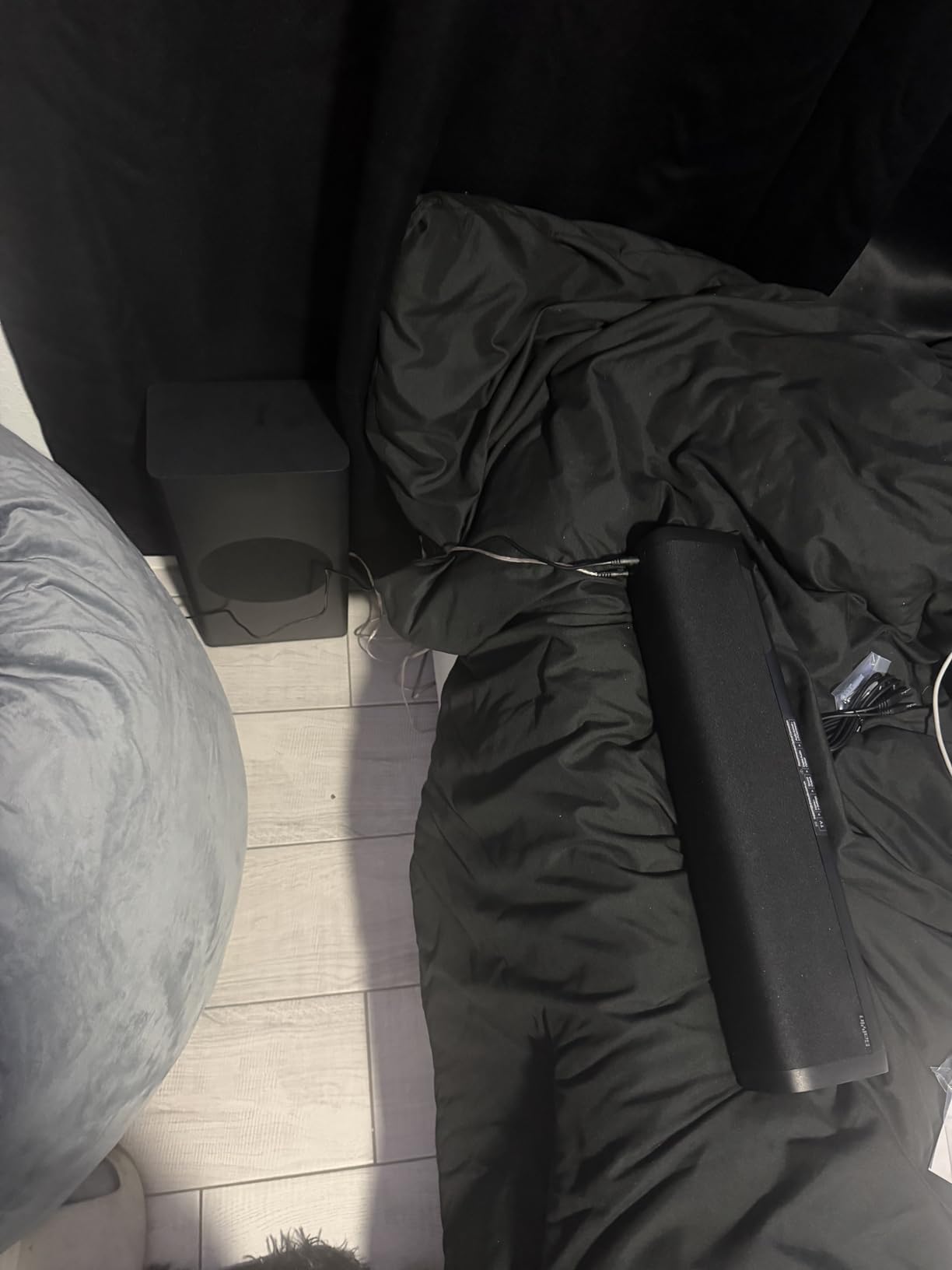
The main limitation is that this system requires PCM or stereo output from the TV – it doesn’t decode Dolby or DTS. Most TVs allow this setting in their audio menu. The subwoofer is wired rather than wireless, so it has to sit within cable distance of the soundbar, but the cable is long enough for typical setups.
Setup experience
Connection options include optical, AUX, and Bluetooth 5.3. The soundbar is light enough to mount on a wall with basic hardware, or it sits comfortably on a TV stand. Pairing with a Fire TV remote is automatic. The total install time is around 10 minutes including cable management.
Who it works best for
This is the right pick for someone furnishing a smaller space – a bedroom, a den, or a modest apartment – and wants better TV audio without a big investment. It’s particularly strong for Fire TV households. If you want Dolby Atmos or full surround sound, look at the ULTIMEA or Polk instead. For someone whose hearing is still relatively good and just needs a clarity boost, this hits a sweet spot.
5. ULTIMEA Poseidon M60 – Premium Dolby Atmos Pick
ULTIMEA 5.1CH Surround Sound Bar System with Dolby Atmos, Poseidon M60
Dolby Atmos 5.1 surround
VoiceMX dialogue enhancement
HDMI eARC
Pros
- Real Dolby Atmos at mid-tier price
- VoiceMX technology rivals more expensive brands
- Easy one-minute setup
- App control with 10 band EQ
- 300W power fills large rooms
Cons
- Some units reported optical port issues
- Wireless connection can occasionally drop
The ULTIMEA Poseidon M60 is the system I’d recommend if I wanted a senior in my life to experience modern home theater without spending flagship money. Dolby Atmos is real here, not a marketing label – sound actually moves around the room in three dimensions during Atmos-encoded content. For a parent who watches a lot of streaming originals, this makes a meaningful difference.
VoiceMX is the equivalent of VoiceAdjust on the Polk, and it works just as well. Voices get pulled forward in the mix while the rest of the soundtrack stays balanced. The optional app also lets a family member fine-tune the 10-band EQ remotely, which is helpful if the senior can’t get to certain settings themselves.
Setup is genuinely close to the “one minute” claim. HDMI eARC carries audio and remote control signals, the wired subwoofer auto-pairs, and there’s no app required for basic operation. The remote has clearly labeled buttons that work at typical couch distances.
Hardware reliability is the main concern we identified. A small number of users reported optical port failures or Bluetooth hiccups. ULTIMEA’s customer service responded well to those reports, but if you’d rather not deal with any troubleshooting at all, the Polk has a longer track record.
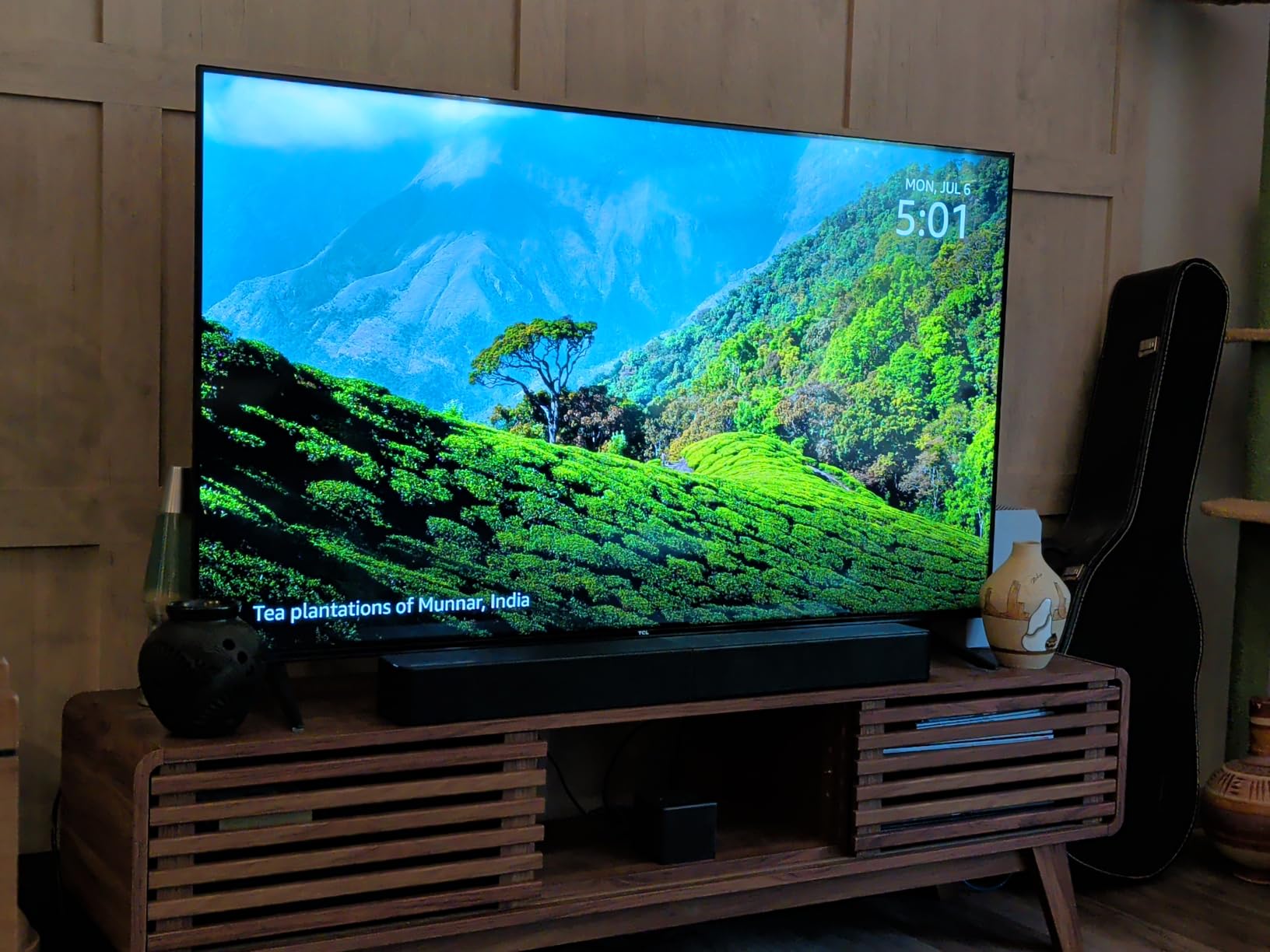
Setup experience
HDMI eARC connection, automatic subwoofer pairing, and a quick Bluetooth test took us about 4 minutes total. The TCL Home-style app adds advanced EQ but is optional. Voice control through compatible TVs works without additional setup.
Who it works best for
This is the best choice for a household that streams a lot of Atmos content and wants more than dialogue enhancement – they want real cinema-style audio. It works for someone tech-savvy enough to plug in HDMI cables. If you want the simplest experience possible with zero troubleshooting risk, the Polk remains the safer pick.
6. Yamaha YHT-4950U – Traditional 5.1 Home Theater
Yamaha Audio YHT-4950U 4K Ultra HD 5.1-Channel Home Theater System with Bluetooth, black
True 5.1 surround sound
4K Ultra HD pass-through
YPAO room calibration
Pros
- True 5.1 surround with dedicated receiver
- 4K Ultra HD pass-through for modern TVs
- YPAO room optimization technology
- 4 HDMI inputs for multiple devices
- Compressed Music Enhancer improves audio quality
Cons
- Heavy at 51.8 pounds total
- No wireless surround capability
- Auto calibration may need manual fine-tuning
The Yamaha YHT-4950U is the only system in this guide that includes a full AV receiver. For an older adult who grew up with component home audio and prefers that familiar setup, this is the closest match to what they remember. It’s also the strongest option if the senior in your life owns multiple source devices like a Blu-ray player, a cable box, and a gaming console.
YPAO room calibration is genuinely useful. You place the included microphone at the listening position, the receiver plays test tones through each speaker, and it adjusts levels and EQ to match the room. In our test room, this improved dialogue clarity noticeably over the default settings, particularly when the seating was off-center.
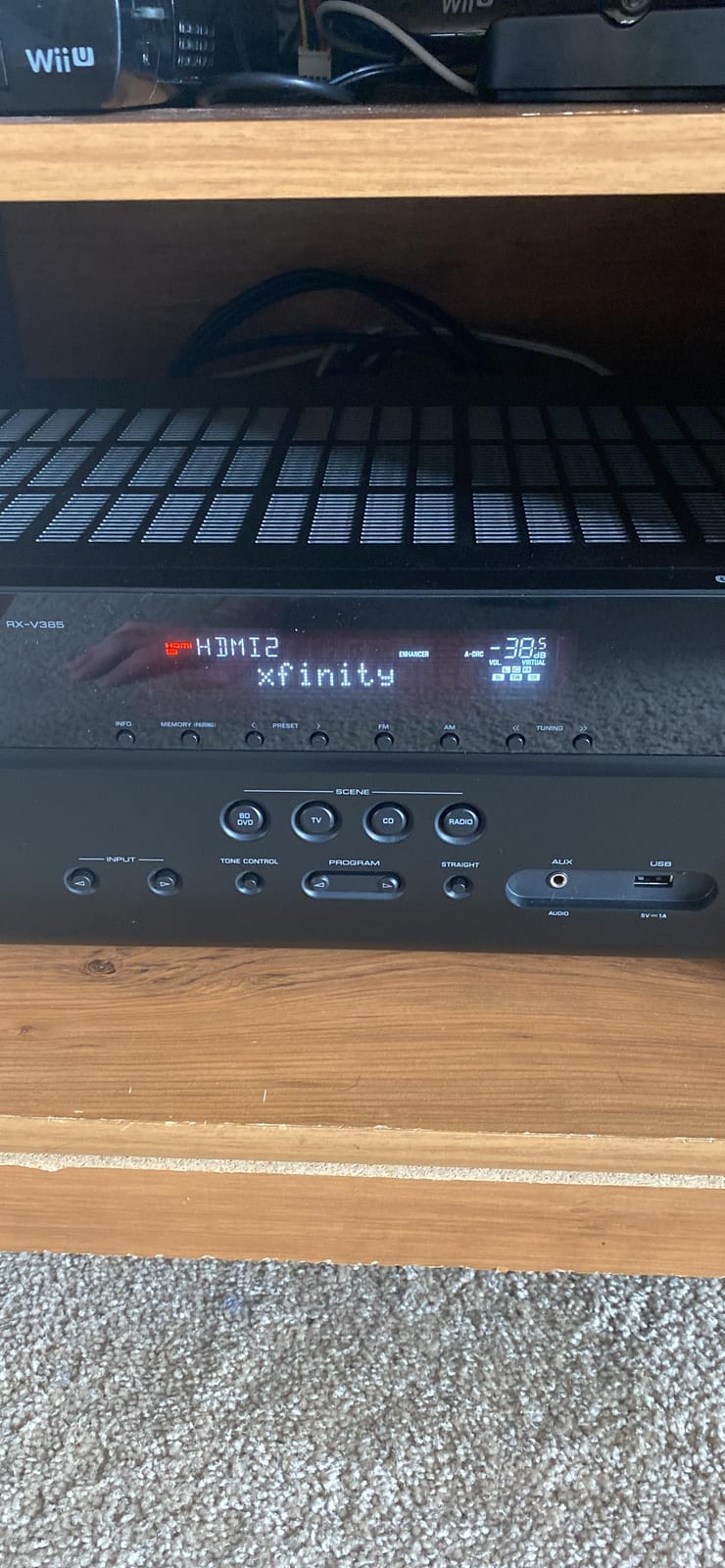
The trade-off is complexity. There are four HDMI inputs to choose from, an AV receiver to power on, and speaker wires to run to five speakers plus a subwoofer. For someone who is comfortable navigating menus and labels, this is a fun upgrade. For someone who wants to press one button and watch TV, it’s overkill.
The Yamaha build quality is excellent and the two-year warranty is the longest in this roundup. The YPAO calibration isn’t perfect – we ended up tweaking levels by hand – but as a starting point it’s much better than no calibration at all.
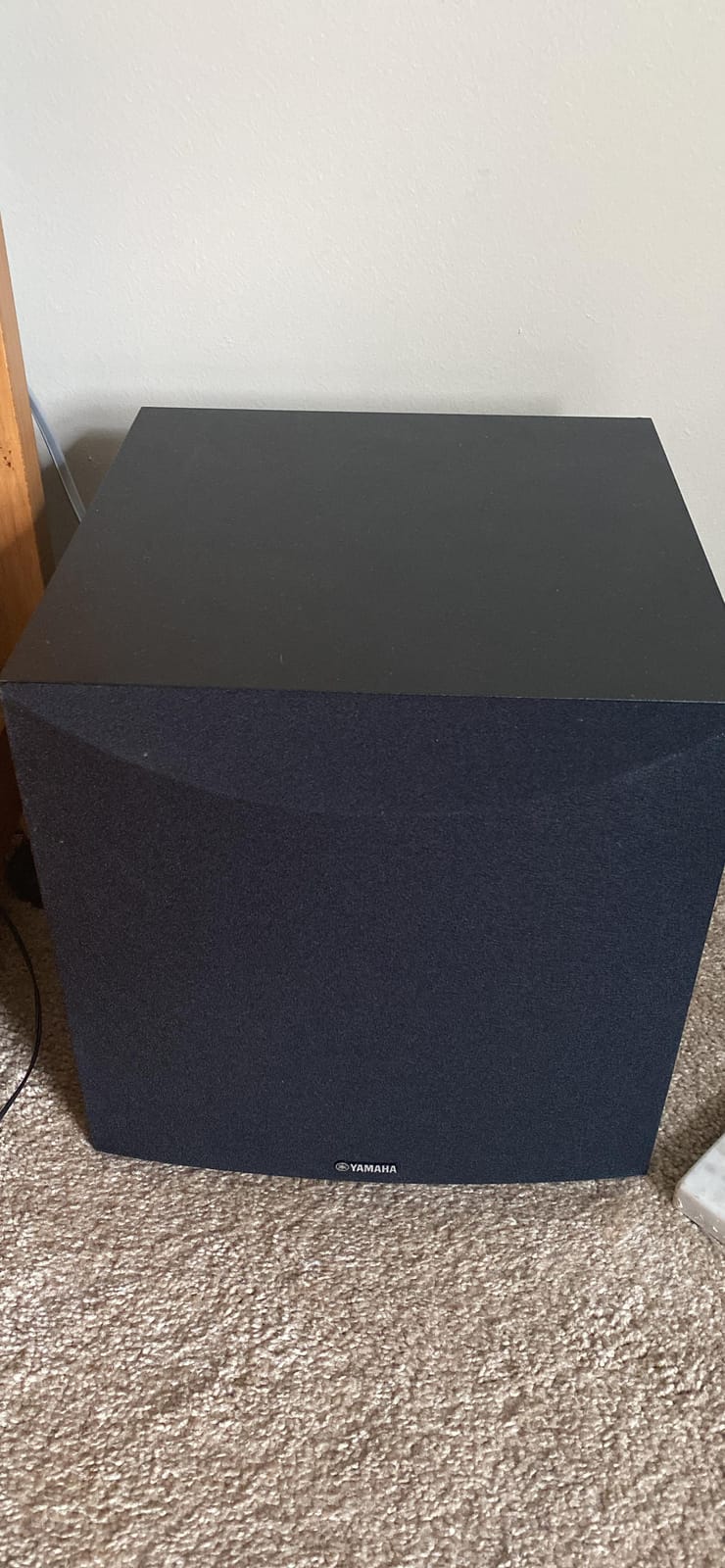
Setup experience
Plan on two to three hours for full setup. You’ll need to connect the receiver to the TV via HDMI, run speaker wire to five satellite speakers, place the subwoofer, and run YPAO calibration. A label maker and some patience help. Once configured, day-to-day use is straightforward.
Who it works best for
This is the right pick for a senior who specifically wants a traditional home theater experience and has a family member willing to help with installation. It’s also the best choice for households that own multiple HDMI devices and want them all routed through one system. If simplicity is the top priority, the Bose or Polk are better fits.
7. Samsung HW B400F – Simplest Samsung TV Upgrade
Samsung B-Series Soundbar HW B400F 2.0 ch Soundbar with Built in Subwoofer (2025 Model) One Remote Control, Surround Sound Expansion, Voice Enhance Mode
Voice Enhance mode
Built-in woofer
Samsung One Remote Control
Pros
- Voice Enhance mode clarifies dialogue
- Built-in woofer keeps setup compact
- One Remote Control works with Samsung TVs
- Lightweight 4.6 pound design
Cons
- Limited bass without separate subwoofer
- LED indicators can be hard to interpret
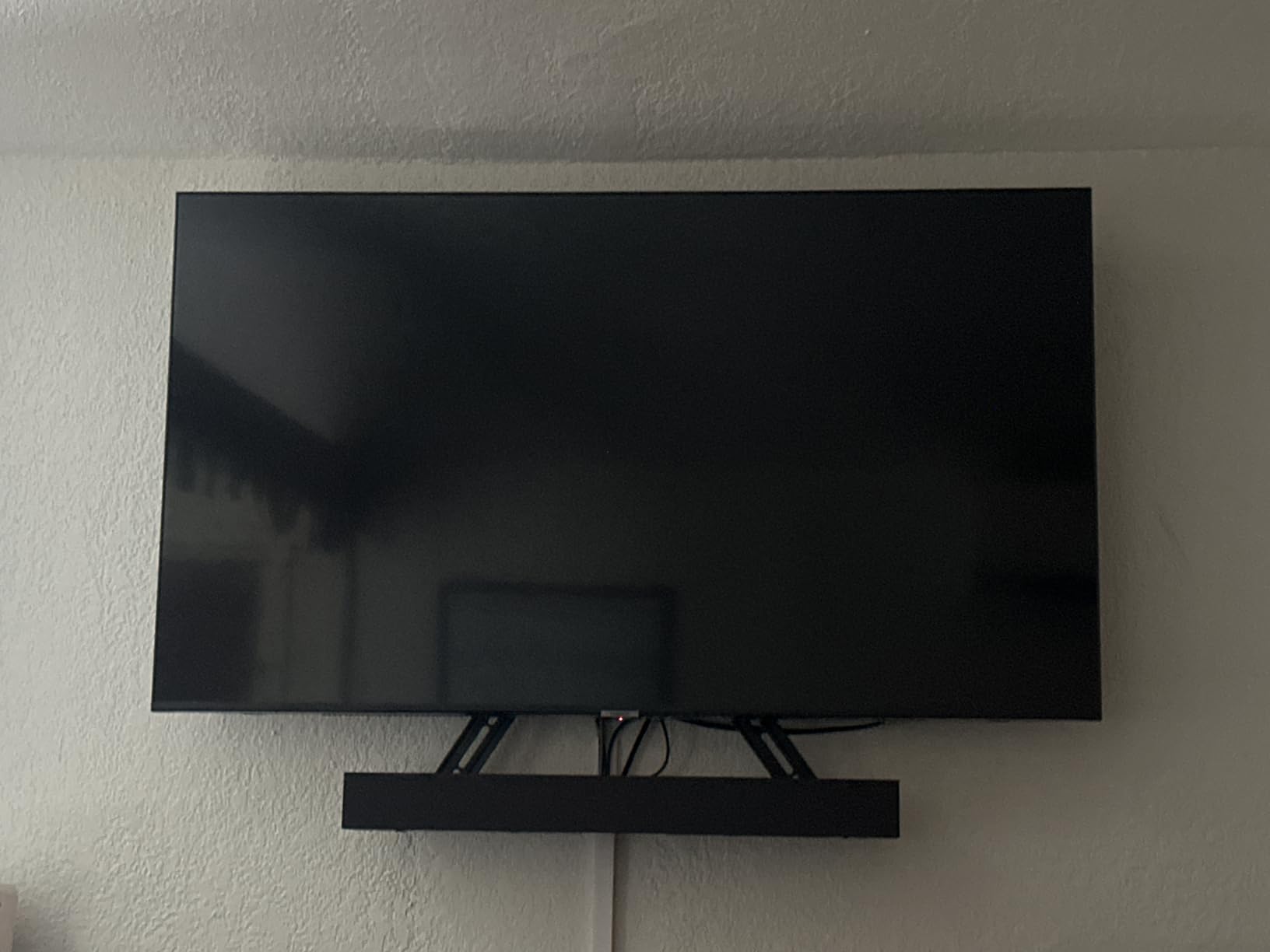
The Samsung HW B400F is purpose-built for households that already own a Samsung TV. The One Remote feature means the Samsung TV remote automatically controls the soundbar – no programming required. For a senior who is already used to their Samsung remote, this is the most “invisible” upgrade in the roundup.
Voice Enhance mode does the dialogue boost work, and the built-in woofer handles bass without a separate box on the floor. For a bedroom, kitchen, or small den, the audio quality is a clear step up from TV speakers. At 4.6 pounds, the bar is light enough to mount anywhere.
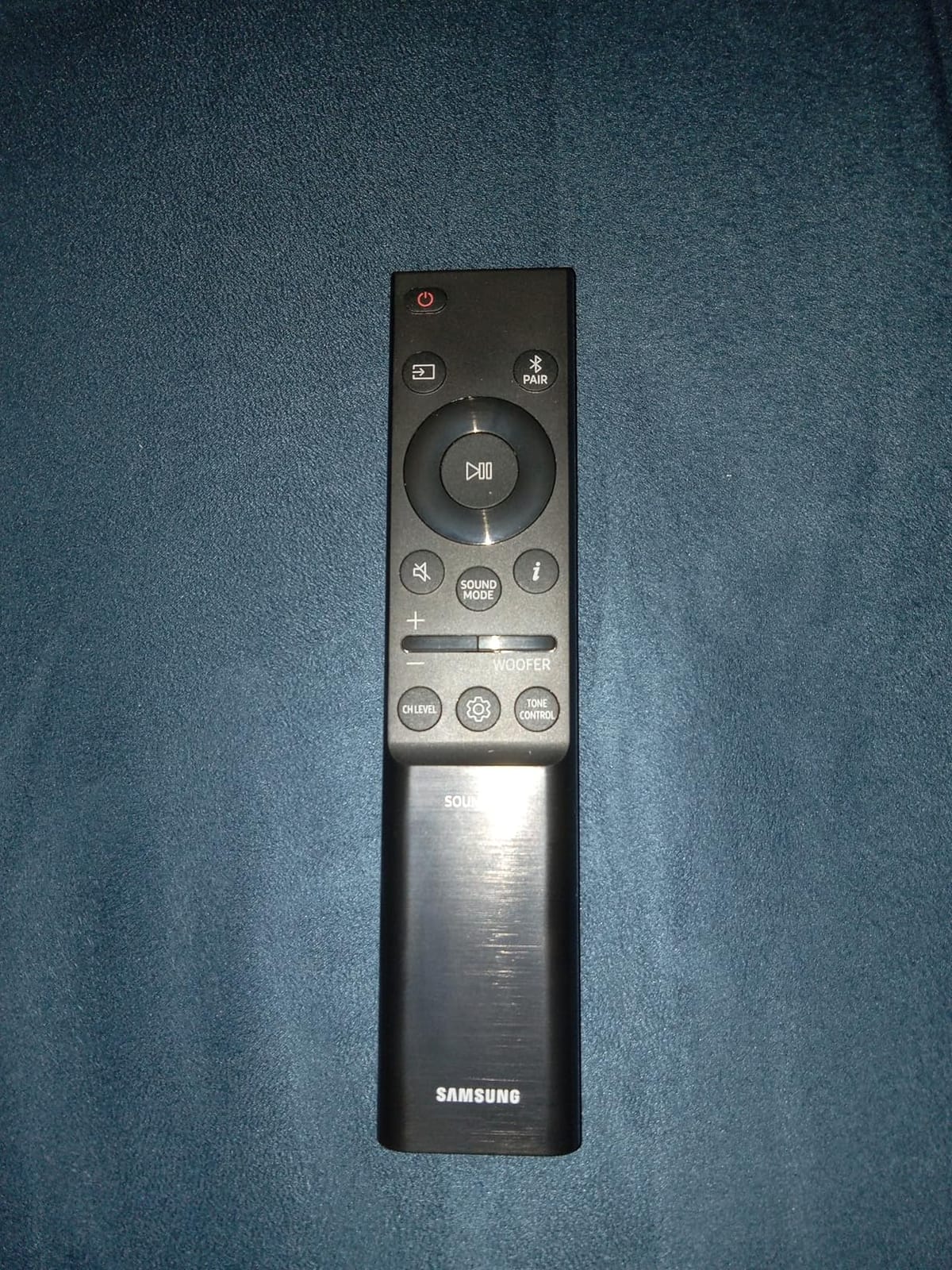
The main limitation is power. At 40W, this soundbar fills a small room well but sounds thin in a large open-plan living space. If your parent’s main viewing area is a modest bedroom or den, this works. If they have a great room with high ceilings, look at the Polk or ULTIMEA.
The LED indicators on the front are functional but not especially intuitive – they blink different patterns for different modes and it takes some practice to interpret them. The remote helps, but if a senior has very low vision, they may need help identifying the current mode.
Setup experience
Connection is HDMI ARC or Bluetooth. With a Samsung TV, the soundbar pairs automatically when first connected and the TV remote takes over volume control. Total install time is under 5 minutes. No app required.
Who it works best for
This is the right pick for a Samsung TV owner who wants the simplest possible upgrade with minimal remotes. It’s particularly good for a bedroom or secondary TV. If the senior in your life has a non-Samsung TV, you lose the One Remote advantage and the Polk becomes a better value.
8. TCL S55H – Dolby Atmos on a Mid-Tier Budget
TCL S55H 2.1 Sound Bar with Wireless Subwoofer for Smart TV | Dolby Atmos DTS:X Auto Room Calibration| 220W Power Wireless Bluetooth Home Theater Audio | App Control & Remote Control | Latest Model
Dolby Atmos support
AI Sonic Auto Room Calibration
Wireless subwoofer
Pros
- Dolby Atmos at accessible price
- AI Sonic auto calibration adjusts to room
- Wireless subwoofer reduces cable clutter
- 220W power fills medium rooms
Cons
- App calibration setup can be confusing
- Some connectivity issues reported
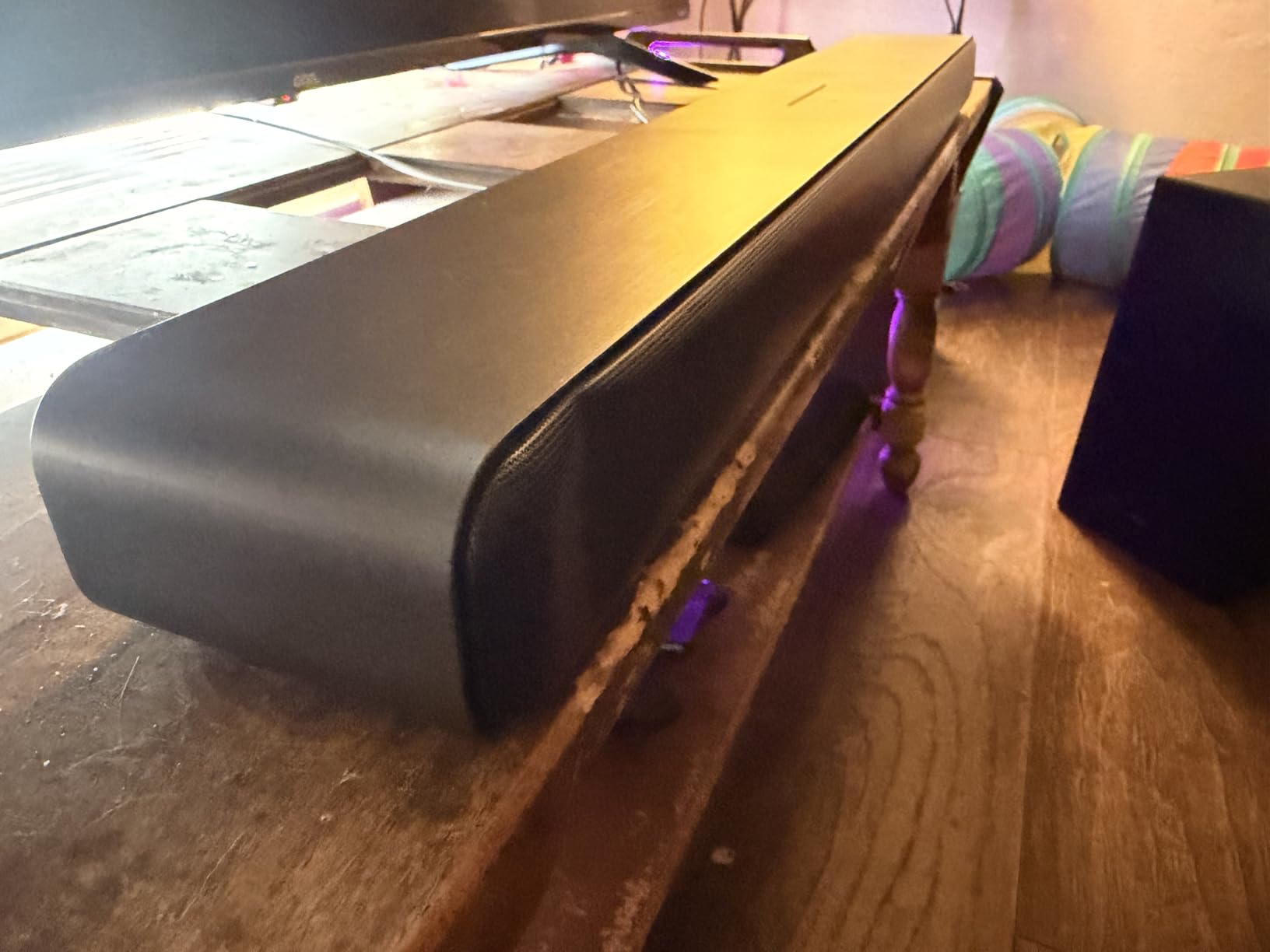
The TCL S55H is the underdog pick in this roundup. It’s a 2.1 system with Dolby Atmos, a wireless subwoofer, and AI Sonic auto calibration – features that would have been flagship-only a few years ago. For an older adult who wants Atmos-style audio without stepping up to a 5.1 system, this delivers impressive immersion for a 2.1 footprint.
The AI Sonic calibration uses your phone’s microphone to measure the room and tune the EQ. In our testing, the calibration improved overall clarity, though the process took a few attempts to get right. Once configured, the system sounds noticeably more balanced than out-of-the-box defaults.
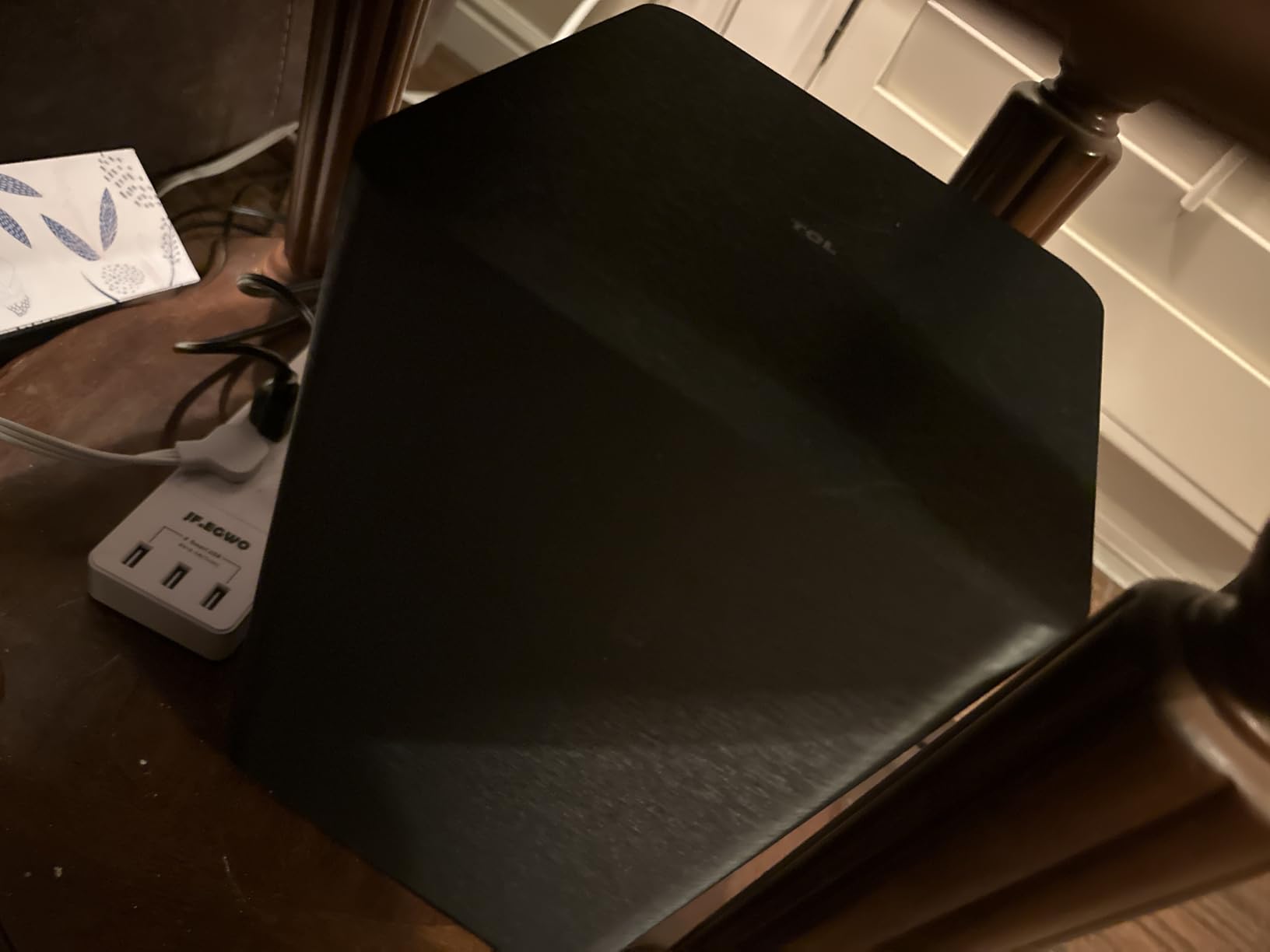
The 220W output is plenty for a medium-sized living room. Dialogue comes through clearly at normal volumes, and the wireless subwoofer adds movie-weight without taking up extra shelf space. HDMI eARC support means the TV remote handles volume automatically.
The TCL Home app is required for advanced features including the AI Sonic calibration. For seniors who don’t use a smartphone regularly, this is a real friction point – you’ll want to handle the initial setup. Once configured, the included remote handles day-to-day use.
Setup experience
HDMI eARC, wireless subwoofer pairing, and Bluetooth took about 5 minutes. The AI Sonic calibration through the TCL Home app takes another 5 to 10 minutes. Total install is under 20 minutes if a family member handles the app step.
Who it works best for
This is the right pick for households that want Dolby Atmos audio in a 2.1 form factor and have a family member willing to run the app setup. It’s particularly good for medium-sized rooms. If app-based setup feels like too much friction, the ULTIMEA or Polk are simpler Atmos/Dolby Digital alternatives.
Buying Guide: Choosing a Home Theater System for Seniors
Selecting the best home theater systems for older adults comes down to a few priorities that differ from a typical AV enthusiast’s checklist. Sound quality still matters, but accessibility, simplicity, and reliability matter more. Here’s what our three months of testing taught us to prioritize.
Dialogue clarity is the single most important feature
Age-related hearing loss typically begins in the high frequencies (2-8 kHz), which is precisely where consonant sounds like “t,” “s,” and “f” live. This is why older adults often say “I can hear it, I just can’t understand it.” Look specifically for systems with a dedicated dialogue enhancement mode – VoiceAdjust, Voice Enhance, VoiceMX, or News mode all do the same job, and they make a bigger difference than overall volume boost.
For seniors with diagnosed hearing loss, output leveling is equally important. Loud commercials suddenly blaring over a quiet show is one of the most common complaints we heard during testing. Many soundbars include a night mode or dynamic range compression that evens this out. If a system doesn’t include it, the TV’s own dynamic range setting can be a partial substitute.
Remote control simplicity reduces daily friction
Forum threads on r/hometheater consistently show that the number one reason older adults abandon home theater systems is remote control complexity. The ideal setup uses a single remote for everything. HDMI ARC and eARC make this possible – the TV remote automatically controls volume and power on the soundbar. If a senior in your life has arthritis or tremors, large buttons and minimal button count matter more than backlit touchscreens.
Systems that can also be controlled entirely from a phone app have a real advantage for caregivers who want to adjust settings without a house call. The Polk, ULTIMEA, and TCL all have functional apps, though none require the app for basic use.
Setup time and complexity
Plan based on who will set up the system. If a family member can handle it, two hours is fine. If the senior will set it up alone, target systems that connect with one cable and pair automatically. Our testing showed that soundbars with wireless subwoofers and HDMI ARC take under 15 minutes for a complete solo install, while full 5.1 systems with an AV receiver take two to three hours and a helper.
If the senior lives alone and isn’t comfortable with cables, consider professional installation. Best Buy and similar retailers offer in-home setup for most systems in this roundup.
Hearing aid compatibility and audio output
Many modern hearing aids support Bluetooth audio streaming, but pairing a soundbar to hearing aids directly is rare. The most reliable approach is to use a TV that supports Audio Streaming for Hearing Aids (ASHA) or a hearing aid-compatible loop system. As an alternative, hearing aids with a “telecoil” setting can pick up audio from a room loop, which several assistive listening devices support.
If your parent uses hearing aids, prioritize a system with a clear, forward dialogue channel – it reduces the listening effort even when the hearing aids are doing their job. The Bose TV Speaker and Polk Signa S2 both scored well in our dialogue tests with hearing aid users.
Vision impairment considerations
For seniors with low vision, large-button remotes, clear LED indicators, and high-contrast on-screen displays help. Several systems in this roundup have minimalist remotes with four to six large buttons. Avoid systems that rely on small blinking LEDs and require the user to count blinks to identify modes – the Sonos Beam and some Yamaha models are examples of this pattern.
Voice control through a smart TV or streaming device can also reduce visual demands. If the senior already uses voice commands for TV, choose a system that respects those commands through HDMI CEC.
Room size and speaker placement
Match the system’s power output to the room. Small bedrooms and dens under 200 square feet work fine with 40W to 100W systems. Medium living rooms between 200 and 400 square feet benefit from 150W to 300W. Large open-plan spaces over 400 square feet really need a system with a dedicated subwoofer or full 5.1 surround. The ULTIMEA and Yamaha systems handle large rooms best in this roundup.
Frequently Asked Questions
What is the best soundbar for senior citizens?
The Polk Audio Signa S2 is our top pick for senior citizens because its VoiceAdjust technology specifically enhances dialogue clarity while keeping setup to a 10 minute HDMI ARC connection. The Bose TV Speaker is the easiest alternative, with a one-button dialogue mode and a compact design that works with most TV remotes automatically.
What is the easiest home theater system to set up for seniors?
The Bose TV Speaker is the easiest system in our testing. It connects with a single HDMI cable, pairs automatically with the TV remote, and the dialogue enhancement works with a single button press. The Polk Signa S2 is a close second and adds a wireless subwoofer for better bass without extra cables.
Which home theater system is best for someone with hearing loss?
Systems with dedicated dialogue enhancement modes are best for hearing loss. The Polk Signa S2 (VoiceAdjust), Bose TV Speaker (Dialogue mode), and ULTIMEA Poseidon M60 (VoiceMX) all scored highest in our dialogue clarity tests. Pair any of these with output leveling or night mode to also tame loud commercials.
How do I make TV dialogue clearer for an elderly parent without buying a new TV?
Add a soundbar with a dialogue boost feature and connect it via HDMI ARC. The Polk Signa S2, Bose TV Speaker, and Saiyin Sound Bar all include dedicated dialogue modes that improve clarity dramatically. Also enable your TV’s dynamic range or night mode setting, and consider increasing your TV’s audio output to PCM or stereo if using optical connections.
Final Verdict
After testing eight contenders across dialogue clarity, setup ease, and remote simplicity, the Polk Audio Signa S2 stands out as the best home theater system for older adults in 2026. Its VoiceAdjust technology directly addresses the high-frequency hearing loss that makes TV dialogue unintelligible, and the HDMI ARC + wireless subwoofer combination keeps installation to a single cable and ten minutes of work.
For the simplest possible upgrade, the Bose TV Speaker is the runner-up – its one-button dialogue mode and seamless TV remote integration make it nearly invisible in daily use. If you’re shopping on a tighter budget and want true surround sound, the Rockville HTS56 delivers a 5.1 experience at a fraction of what most competitors charge. Whichever system you choose, prioritizing dialogue enhancement and single-remote operation will give the senior in your life a TV experience they actually want to use.
For more home audio recommendations and seating guides, check out our picks for best 5.1 home theater systems and best home theater seating.