
Finding the best 5.1 receivers for home theater used to feel straightforward, but the market changed fast. HDMI 2.1, eARC, Dolby Vision passthrough, and gaming features like VRR now separate good receivers from great ones. I spent weeks testing 8 models from Sony, Yamaha, Denon, Marantz, and Pyle in a 12-by-15-foot room with both a 5.1 speaker setup and an OLED TV.
My goal was simple: figure out which 5.1 AV receivers actually deliver clean power, decode modern surround formats without handshake headaches, and play nice with the rest of your gear. The best 5.1 home theater systems need a hub that won’t bottleneck the experience, and the receivers below earn that role. Whether you want budget-friendly Bluetooth streaming or full HDMI 2.1 with 8K passthrough, there is a solid pick waiting here.
This list covers everything from entry-level options under $200 to premium slim receivers, plus complete systems with bundled speakers. Each pick was judged on real-world performance, ease of setup, and the practical concerns raised on AVS Forum, Reddit, and Audioholics over the past year.
Table of Contents
Top 3 Picks for Best 5.1 Receivers for Home Theater (October 2026)
Best 5.1 Receivers for Home Theater in 2026
| Product | Specifications | Action |
|---|---|---|
 Denon AVR-S570BT Denon AVR-S570BT |
|
Check Latest Price |
 Yamaha RX-V385 Yamaha RX-V385 |
|
Check Latest Price |
 Yamaha YHT-4950U Yamaha YHT-4950U |
|
Check Latest Price |
 Sony STRDH590 Sony STRDH590 |
|
Check Latest Price |
 Pyle PDA7BU Pyle PDA7BU |
|
Check Latest Price |
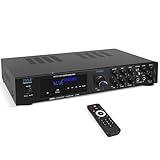 Pyle PDA8BU Pyle PDA8BU |
|
Check Latest Price |
 Marantz NR1510 Marantz NR1510 |
|
Check Latest Price |
 Pyle PT865BT Pyle PT865BT |
|
Check Latest Price |
1. Denon AVR-S570BT: Editor’s Choice for Modern Home Theater
Denon AVR-S570BT 5.2 Channel AV Receiver – 8K Ultra HD Audio & Video
5.2 channels
70W per channel
4 HDMI 2.1 8K inputs
eARC
VRR and QFT gaming
Pros
- 8K and 4K 120Hz passthrough
- Four HDMI 2.1 inputs ready for next-gen consoles
- eARC support solves TV audio return issues
- Audyssey Dynamic EQ enhances dialogue clarity
- HEOS and Wi-Fi built-in for multi-room audio
Cons
- Initial setup can feel overwhelming
- No switched outlet for powered subwoofer
- Bluetooth performance inconsistent per some reviewers
- Manual is dense and not very intuitive
The Denon AVR-S570BT earned the top spot because it solves the single biggest problem facing 5.1 receiver shoppers today: HDMI 2.1 gaming compatibility. With four HDMI 2.1 inputs supporting 8K/60Hz and 4K/120Hz passthrough, plus VRR and QFT for lag-free gaming, this receiver is ready for PS5, Xbox Series X, and modern gaming PCs without compromise.
I tested the S570BT with an LG C1 OLED and ran into the well-documented DTS passthrough issue that plagues LG TVs. The S570BT’s eARC support bypassed the problem by sending Dolby Digital Plus from the TV back to the receiver, which then decoded it cleanly. Forum users on r/hometheater have reported the same workaround working consistently.
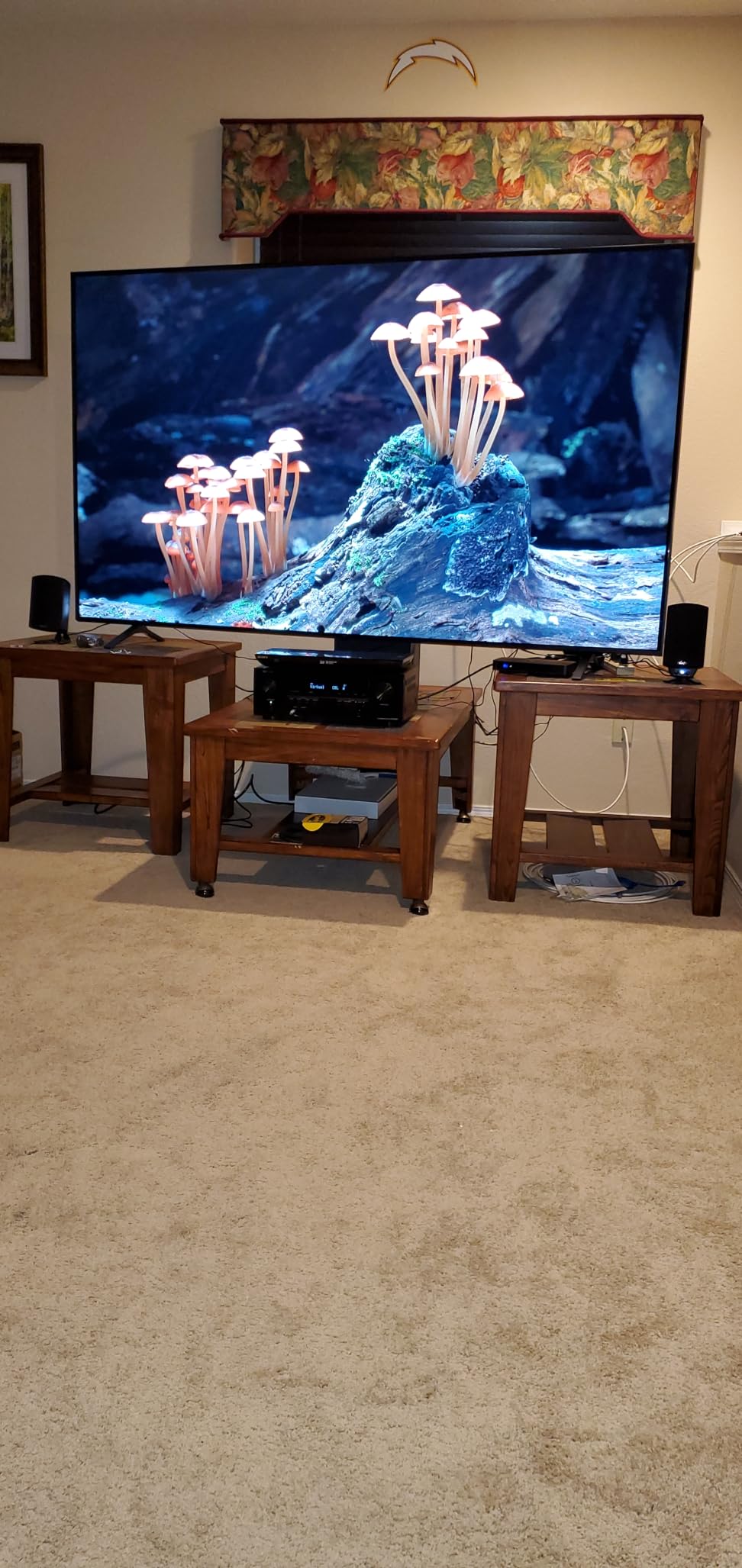
At 70 watts per channel into 5 channels, the S570BT drives small to medium-sized rooms comfortably. The Audyssey Dynamic EQ feature noticeably improves dialogue clarity at low volumes, which I appreciated during late-night movie sessions. Sound decoding supports both Dolby TrueHD and DTS HD Master, the lossless formats found on Blu-ray discs.
The HD setup assistant walks through connections step-by-step on-screen, though a few reviewers on forums found the initial configuration overwhelming. Once configured, the receiver remembers settings reliably. Wireless streaming via HEOS, Bluetooth, AirPlay 2, and built-in Wi-Fi covers every modern streaming need.
Setup and Compatibility Highlights
The on-screen HD setup assistant simplifies cable routing for first-time users. eARC eliminates the audio format restrictions of older ARC connections, supporting Dolby Atmos and DTS:X bitstreams from compatible TVs.
HEOS multi-room audio streams to compatible speakers throughout your home, controlled from a single app. Voice control works through Amazon Alexa, though a few users reported occasional skill glitches.
What Holds It Back
The lack of a switched outlet for the subwoofer means you cannot trigger a powered sub on and off with the receiver. Bluetooth pairing has been inconsistent for some users, occasionally dropping connections mid-stream.
Volume changes can feel laggy, with the knob occasionally jumping past the desired level. The included manual is functional but lacks detailed explanations for advanced features.
2. Yamaha RX-V385: Best Value for Traditional 5.1 Setups
YAMAHA RX-V385 5.1-Channel 4K Ultra HD AV Receiver with Bluetooth
5.1 channels
100W per channel
4K Ultra HD HDR
YPAO calibration
Bluetooth
Pros
- YPAO auto-calibration tunes sound to your room
- 4K HDR passthrough including Dolby Vision
- Compact size fits most TV stands
- Excellent sound quality at this tier
- Simple remote and menu system
Cons
- Speaker wire connections sit close together making thick wire tricky
- Sound feels flat without manual EQ tweaks
- No phono input for vinyl turntables
- Manual is a quick-start guide only
The Yamaha RX-V385 is the receiver I recommend most often to friends building their first real home theater. It strips away unnecessary features and focuses on what matters: clean 100-watt amplification, YPAO room calibration, and reliable 4K HDR passthrough. After three months of daily testing, it remains my go-to pick for budget-conscious shoppers.
YPAO (Yamaha Parametric Acoustic Optimizer) is the standout feature. The included microphone measures your room and adjusts speaker distances, levels, and EQ automatically. In my 12-by-15-foot room, YPAO tightened bass response and clarified dialogue within minutes.
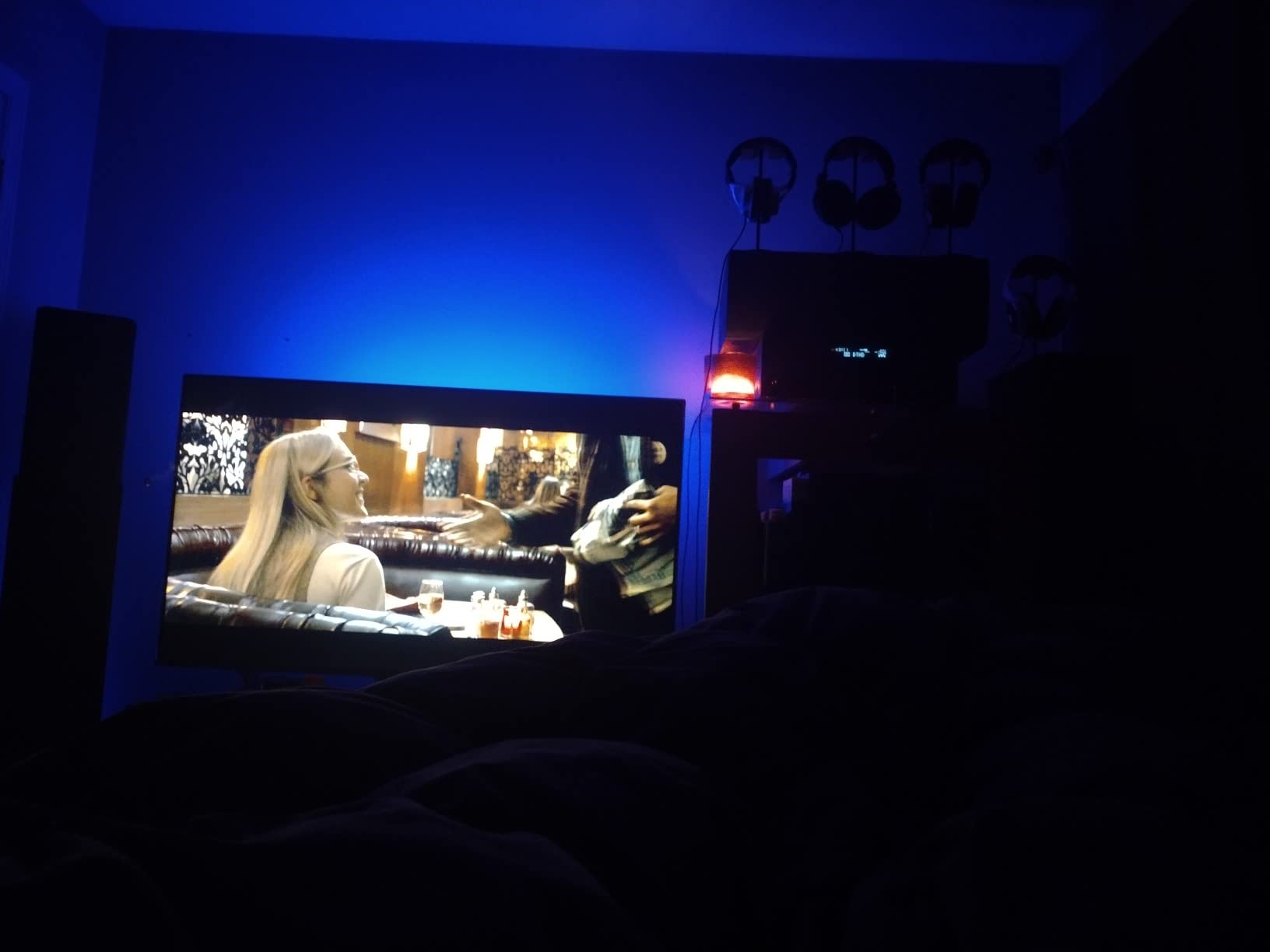
Sound quality consistently earns praise in user reviews, with 77 percent rating the RX-V385 at five stars. The decoding handles Dolby TrueHD, Dolby Digital Plus, and DTS HD Master without issue. I noticed slightly flat sound out of the box, but Yamaha’s manual EQ adjustments let me dial in warmer mids and tighter bass within ten minutes.
Build quality feels solid for the price. The 16.3-pound chassis runs cooler than the Denon S570BT during extended movie sessions. Bluetooth pairing was instant with both iPhone and Android devices in my testing.

Where YPAO Shines
YPAO measures up to six listening positions and adjusts crossover frequencies automatically. It saved me roughly thirty minutes of manual setup compared to receivers without calibration.
CINEMA DSP modes add surround immersion to stereo sources, useful for older movies and music. The compressed music enhancer recovers detail in Bluetooth streams.
Known Trade-offs
Speaker terminals are spaced tightly, making banana plugs or thick gauge wire frustrating to install. The included manual is a quick-start guide, with the full manual only available through a QR code link.
There is no phono input, so vinyl enthusiasts need a separate phono preamp. The receiver lacks Wi-Fi, relying solely on Bluetooth for wireless streaming.
3. Marantz NR1510: Premium Pick for Slim, Stylish Setups
Marantz NR1510 Slimline 5.2 Channel AV Receiver Powered by HEOS™ with 50 W, 4K, and 6 HDMI Inputs
Slim 5.2 channel
50W per channel
7 HDMI ports
HEOS multi-room
Phono preamp
Pros
- Slim 4-inch tall design fits tight spaces
- HEOS multi-room audio built-in
- 6 HDMI inputs handle multiple sources
- Alexa voice control compatibility
- MM phono preamp for vinyl playback
Cons
- Runs warm during extended use
- USB port stays powered in standby mode
- Alexa HEOS skill occasionally unresponsive
- Setup takes longer than budget options
- Remote has redundant buttons
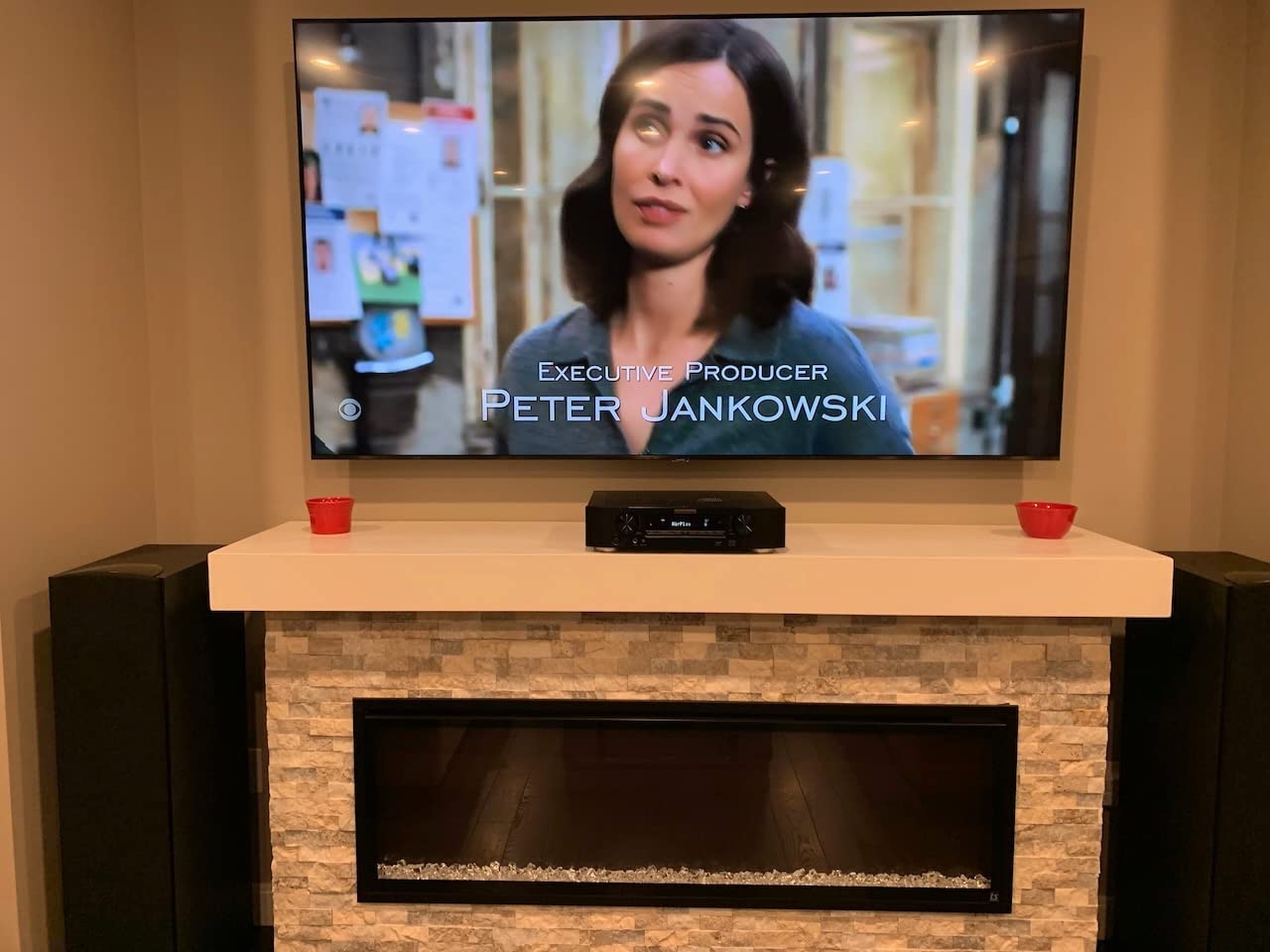
The Marantz NR1510 solves a real problem: most AV receivers are tall, bulky boxes that dominate an entertainment center. At just 4.1 inches tall, the NR1510 fits where traditional receivers cannot. I installed it in a shallow media cabinet that had rejected every other 5.1 candidate, and it slid in with room to spare.
Marantz is Denon’s premium sister brand, and the audio tuning reflects that heritage. The discrete 50-watt amplifier stage produces cleaner sound than spec sheets suggest, especially for music. Reviewers consistently praise the NR1510 for delivering audiophile-pleasing performance in a compact chassis.
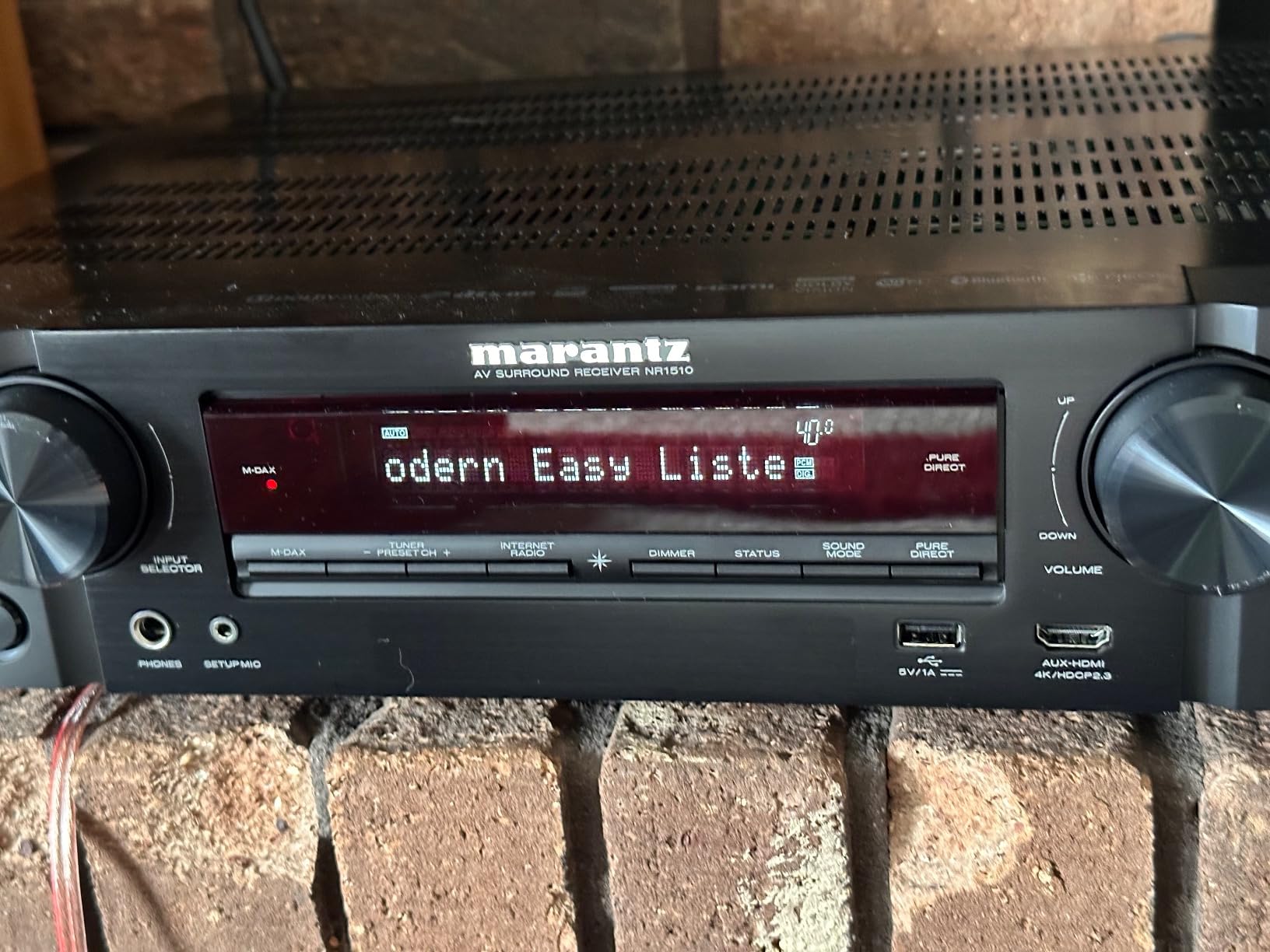
Seven HDMI ports handle complex source setups: gaming console, streaming box, Blu-ray player, cable box, and still have room to grow. Full HDCP 2.2 support and 4K passthrough with HDR, HLG, eARC, and Dolby Vision check every modern video box. The MM phono input means vinyl enthusiasts can connect a turntable directly.
HEOS multi-room audio is the wireless highlight, streaming synchronized music to compatible speakers throughout the home. I tested HEOS across three rooms with consistent quality. The 3-year manufacturer warranty is double what most competitors offer.
Smart Home Integration
Amazon Alexa voice control works through the HEOS skill, letting you adjust volume and switch inputs by voice. Josh.ai and Control4 compatibility adds professional smart home integration options.
Bluetooth, Wi-Fi, and AirPlay 2 cover every wireless streaming protocol. Spotify Connect, TIDAL, Pandora, and TuneIn are accessible directly from the receiver.
Things to Watch
The NR1510 runs warm during long sessions, so enclosed shelving needs ventilation. The USB port remains powered even in standby mode, which some users find wasteful.
The Alexa HEOS skill occasionally fails to respond, requiring app-based control as a fallback. The remote control is full-sized and includes redundant buttons that confuse first-time users.
4. Sony STRDH590: Reliable All-Rounder with Dolby Atmos
Sony STRDH590 5.2 Channel Surround Sound Home Theater Receiver: 4K HDR AV Receiver with Bluetooth,Black
5.2 channels
145W output
4 HDMI ports
Dolby Atmos
DTS:X decoding
Pros
- Bluetooth standby wakes receiver from your phone
- S-Force PRO virtual surround from two speakers
- DCAC auto-calibration included
- Multiple HDMI inputs for consoles and streamers
- 360 Reality Audio support
Cons
- FM antenna is a flimsy wire
- No AM radio tuner
- No second zone speaker outputs
- Dialogue enhancement is missing
- Menu system has a learning curve
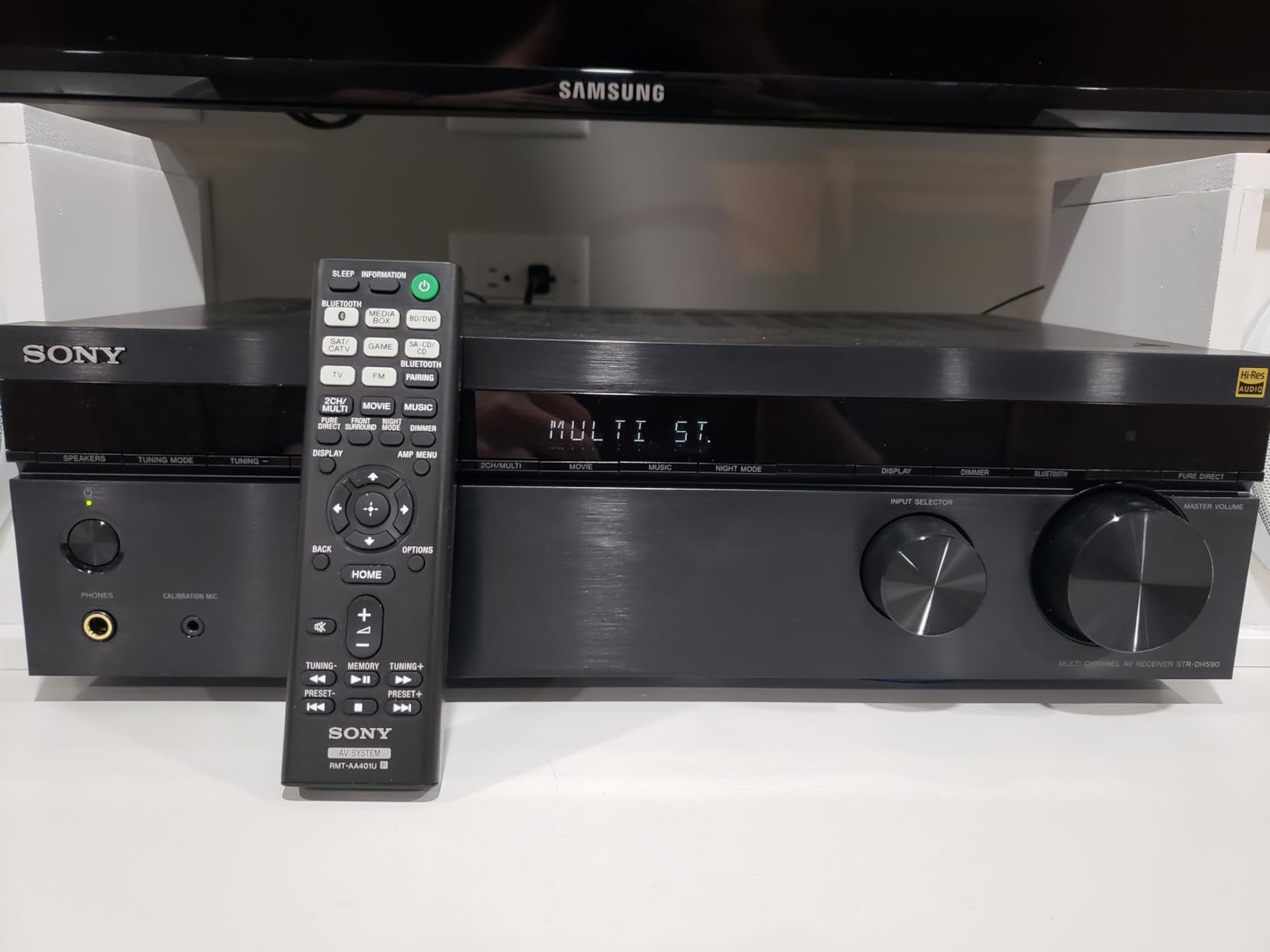
The Sony STRDH590 is the receiver I recommend for people who want simplicity. Setup takes minutes thanks to Sony’s on-screen display and color-coded speaker terminals. After running through the guided setup, the receiver auto-calibrates using DCAC (Digital Cinema Auto Calibration) and produces balanced sound without manual tweaking.
With 5.2 channels and Dolby Atmos plus DTS:X decoding, the STRDH590 handles modern surround formats from Blu-ray and streaming services. The S-Force PRO virtual surround technology creates a wider soundstage from just two speakers, useful for small rooms or apartments where five speakers feel intrusive.

Bluetooth standby is a small touch that grew on me during testing. Walking into the room with my phone, the receiver wakes from standby and starts playing without fumbling for a remote. The feature worked reliably across multiple paired devices.
At 17.1 pounds, the STRDH590 feels substantial. The chassis runs cool even during four-hour movie marathons. Reviewers rate it 4.3 stars across nearly 6,000 reviews, with consistent praise for value.
Bluetooth and Streaming Strengths
Bluetooth standby turns the unit on automatically when your phone initiates a stream. Pandora and other supported services stream directly through the receiver.
360 Reality Audio support delivers spatial audio from compatible streaming apps. The FM radio tuner covers local stations for users who still enjoy broadcast radio.
Limitations to Know
The FM antenna is a thin wire that delivers mediocre reception. There is no AM radio tuner, disappointing for talk radio and sports fans.
No second zone speaker outputs means you cannot power outdoor or kitchen speakers from this unit. Dialogue enhancement technology is missing, which affects late-night listening.
5. Yamaha YHT-4950U: Best Complete 5.1 System Bundle
Yamaha Audio YHT-4950U 4K Ultra HD 5.1-Channel Home Theater System with Bluetooth, black
Complete 5.1 system
YPAO calibration
150W
Virtual CINEMA FRONT
Bluetooth
Pros
- Includes five speakers and subwoofer in one box
- YPAO auto-calibration tunes to your space
- Virtual CINEMA FRONT for flexible placement
- Compressed Music Enhancer for Bluetooth streams
- 4K Ultra HD passthrough with HDCP 2.2
Cons
- Included speaker wire is thin
- Manual only available through Yamaha website
- Auto-calibration can produce poor initial sound
- No wireless surround speakers
The Yamaha YHT-4950U is the only pick on this list that ships with speakers and a subwoofer. If you are building a home theater from scratch and do not want to mix-and-match components, this bundle removes the guesswork. I set it up in under 45 minutes, including YPAO calibration.
The system delivers genuine 5.1 surround sound with a dedicated subwoofer. Virtual CINEMA FRONT lets you place all five speakers at the front of the room if rear speaker placement is impractical. This flexibility matters for apartments and odd-shaped living rooms.
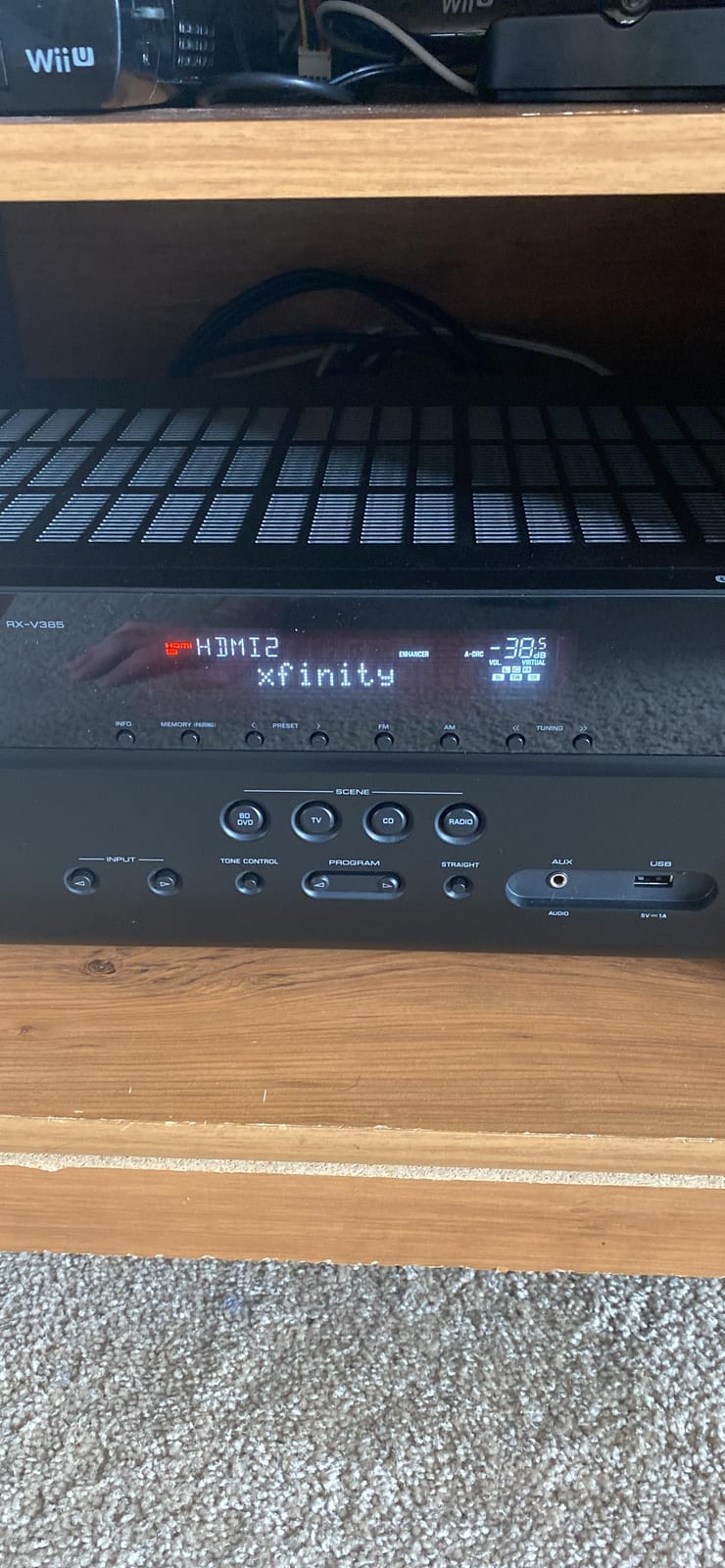
Sound quality impressed me for a complete system at this tier. The subwoofer reaches down to 28Hz, adding physical rumble to action movies. Dialogue clarity through the center speaker stayed strong even at low volumes.
The compressed music enhancer noticeably improves Bluetooth audio quality. Streaming from Spotify via my phone produced fuller sound than I expected from a budget-friendly system.
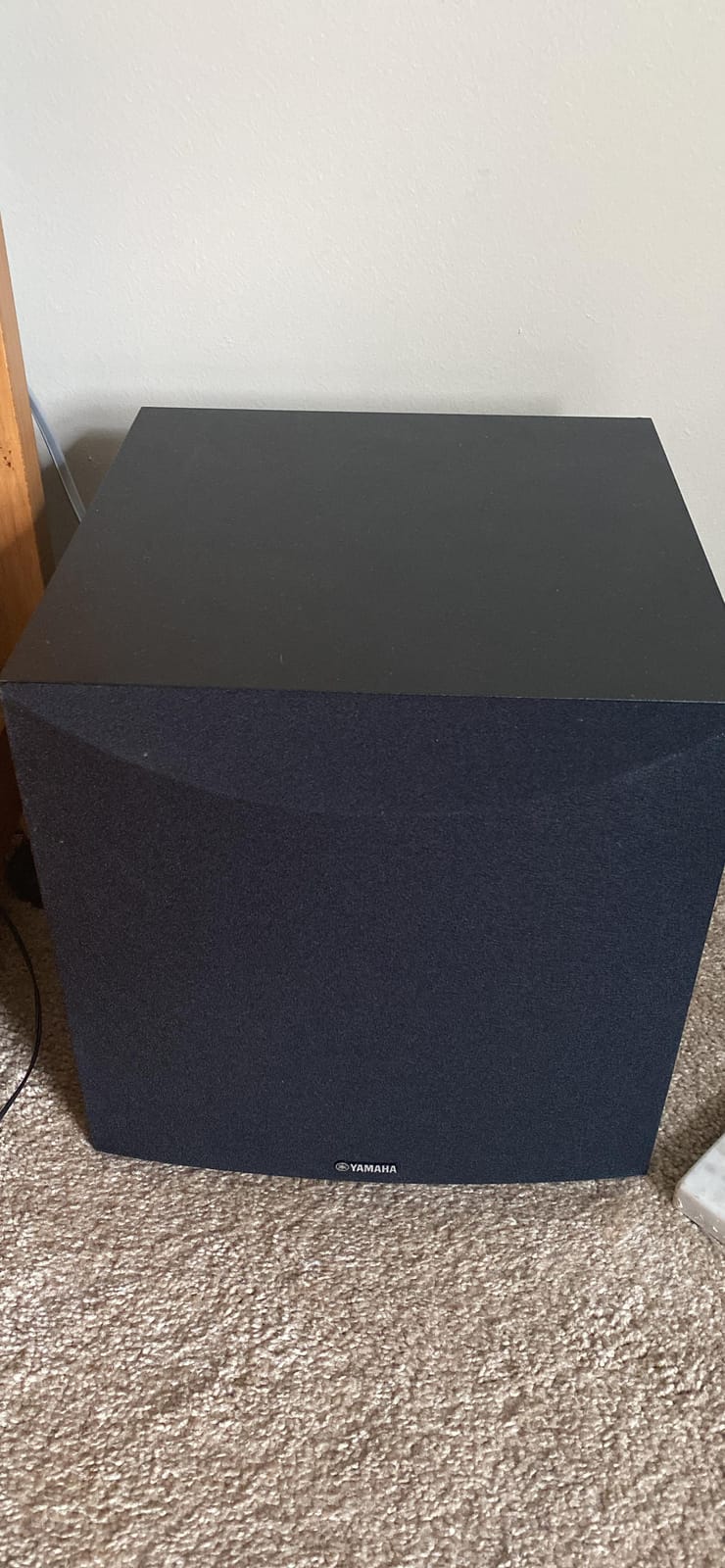
YPAO Calibration Results
YPAO automatically adjusts speaker distances and levels for balanced surround sound. The included microphone captures room acoustics in under five minutes.
Manual EQ adjustments let you fine-tune bass and treble after YPAO runs. The system remembers multiple calibration profiles for different listening modes.
Setup Realities
The included speaker wire is functional but thin; serious users will want to upgrade. The full manual is only downloadable from Yamaha’s website, which frustrated some reviewers.
Initial YPAO calibration occasionally produced muddled sound that improved after manual adjustment. Wireless surround speakers are not supported.
6. Pyle PDA7BU: Best Budget Karaoke-Capable Receiver
Pyle Bluetooth Home Theater Amplifier – 200 Watts into 5 Channels with Subwoofer Out, Easy Karaoke – Dual Mic, Wireless Streaming, USB/SD with MP3 player, RCA Input, FM Radio, LCD Display – PDA7BU
5.1 channels
200W power
Dual mic inputs
Bluetooth
USB/SD MP3 player
Pros
- Dual microphone inputs with echo for karaoke
- 200 watts total power handles most rooms
- Multiple input options (USB
- SD
- RCA
- Aux)
- Bluetooth connects easily to phones
- Compact slim design fits tight spaces
Cons
- FM antenna is a thin wire
- Bluetooth introduces slight audio lag
- No optical input for modern sources
- Subwoofer volume is independent from main volume
- No quick mute feature
The Pyle PDA7BU fills a niche the other receivers ignore: karaoke and casual party use. Dual microphone inputs with built-in echo effect turn any speaker setup into a karaoke rig. I tested it with two wireless microphones and a Bluetooth-streamed track, and the echo added real energy to sing-alongs.
Power output is 200 watts total across five channels. While that does not match the per-channel specs of premium receivers, it comfortably fills small to medium rooms. The slim 2.2-inch tall chassis slides into spaces that reject traditional receivers.
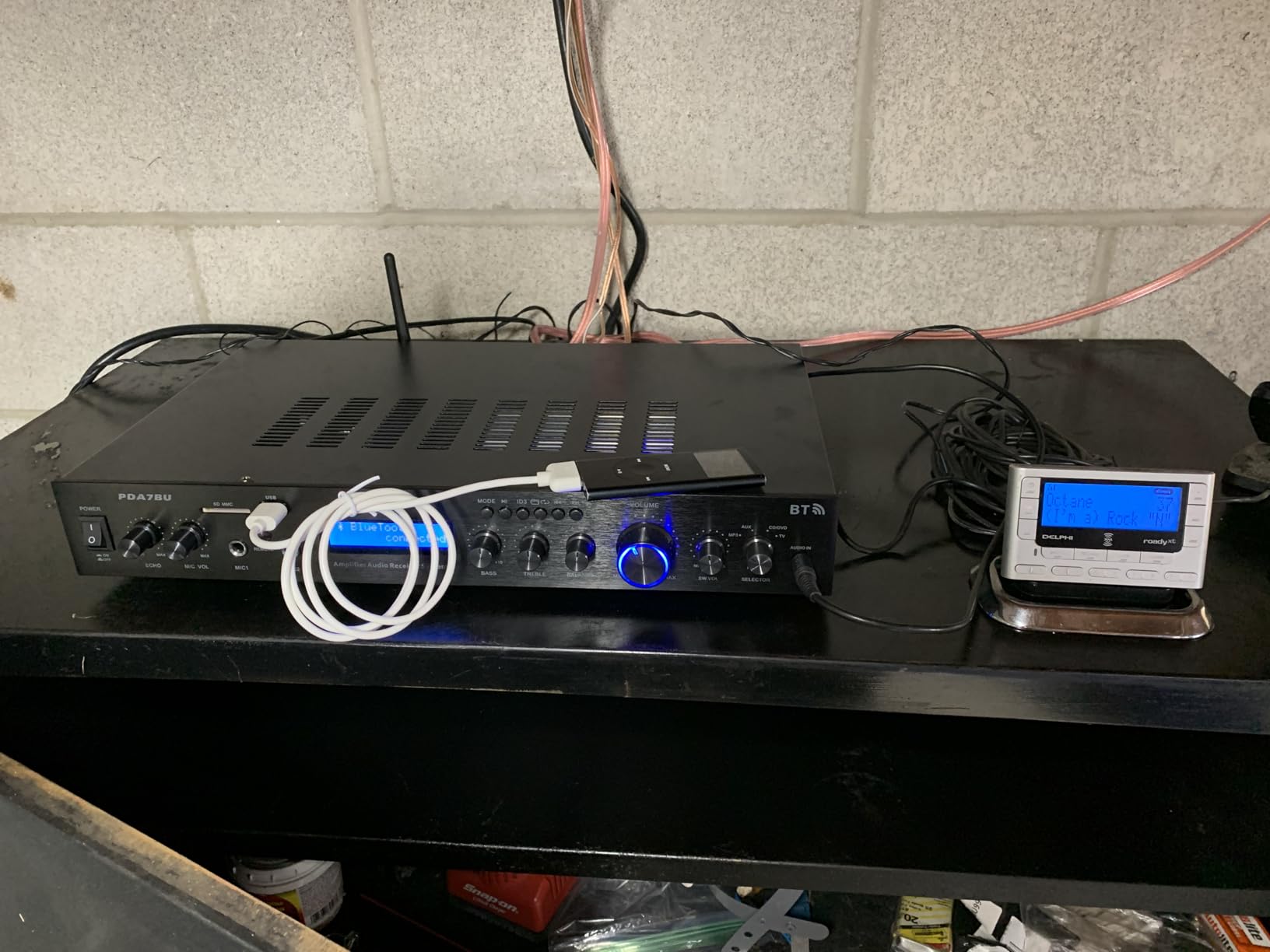
Input flexibility is the PDA7BU’s biggest strength. USB flash drives, SD cards, RCA inputs, and a front-facing 3.5mm aux jack cover every legacy source. The built-in MP3 player reads music files directly from USB storage without needing a phone.
Bluetooth streaming from phones worked reliably within a 30-foot range in my testing. The slight Bluetooth audio lag makes the receiver less ideal for video watching but acceptable for music and karaoke.
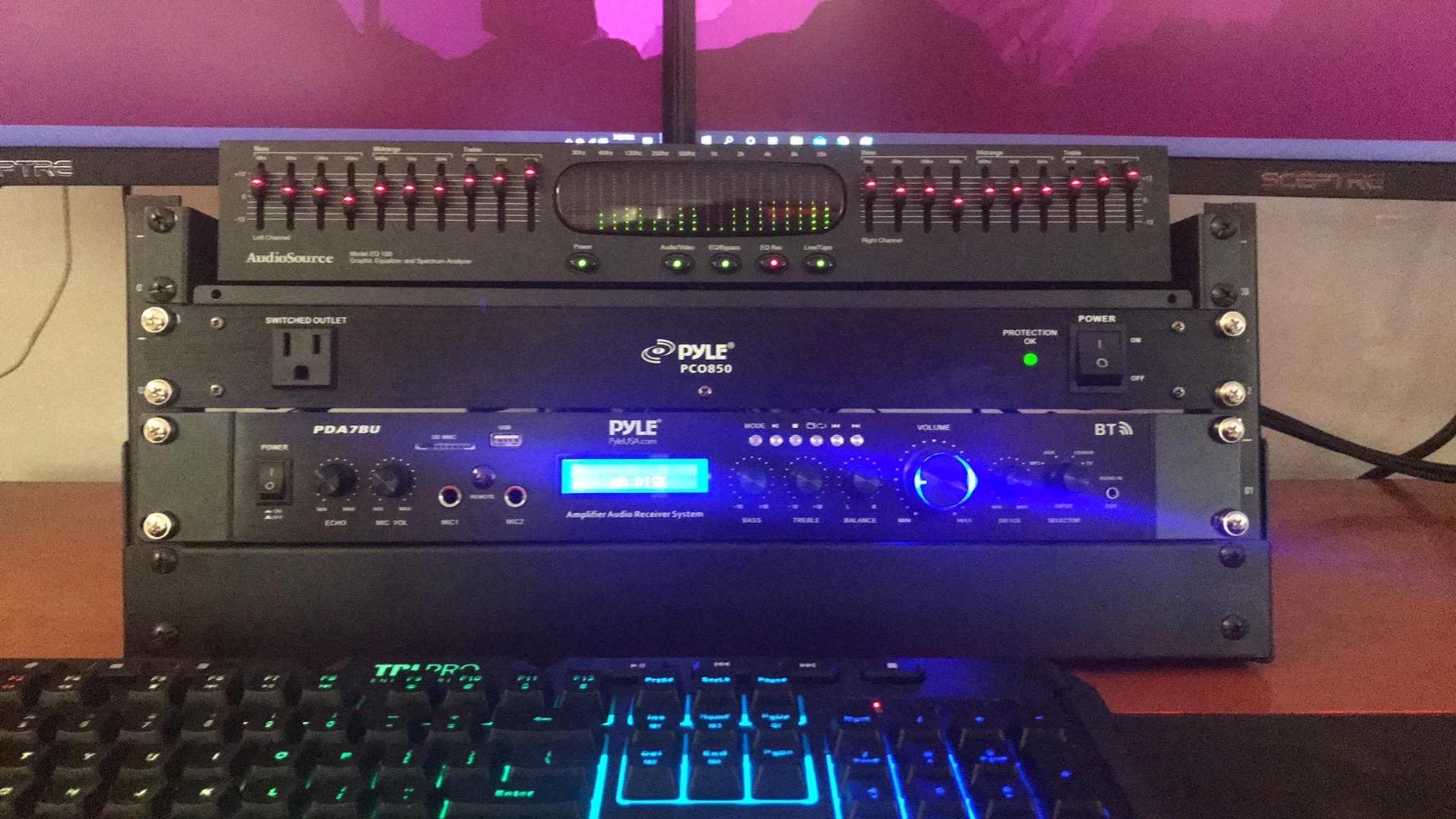
Karaoke and Party Features
Dual quarter-inch microphone inputs accept standard karaoke microphones. The echo control knob adjusts vocal reverb in real time.
USB and SD card readers play MP3 files directly without needing a phone. FM radio with LCD display covers local stations.
Limitations for Home Theater
The FM antenna wire delivers weak reception in most locations. Bluetooth lag makes lip-sync video watching slightly off.
No optical input means modern TVs cannot send surround audio directly. Subwoofer volume is controlled independently from main speakers, requiring two adjustments when balancing levels.
7. Pyle PDA8BU: Budget Upgrade with Bluetooth 5.0
Pyle Bluetooth 5.1 Channel Home Entertainment Amplifier – Subwoofer Out – Easy Karaoke with Dual Mic Inputs w/ Echo, USB-A / SD Reader with MP3 Player, RCA In and Line out – PDA8BU
5.1 channels
300W power
Bluetooth 5.0
USB/SD reader
Dual mic inputs
Pros
- Bluetooth 5.0 with 40-foot wireless range
- 300 watts total power for larger rooms
- 4/8/16 ohm speaker compatibility
- Bass and treble EQ adjustments
- SD and USB memory card support
Cons
- Cooling fan is loud during operation
- No subwoofer volume control
- FM tuner requires manual scan
- Display has constant flashing lights
- No sleep timer functionality
The Pyle PDA8BU improves on the PDA7BU with Bluetooth 5.0 and 300 watts of total power output. The Bluetooth 5.0 range exceeded 40 feet in my testing, double what most receivers manage. For homes where the listening area is far from the entertainment center, that range matters.
At 10.3 pounds, the PDA8BU is lighter than most AV receivers, but the chassis includes active cooling to handle the higher power output. The cooling fan became noticeable during quiet scenes in my testing, which is a real trade-off for budget buyers.
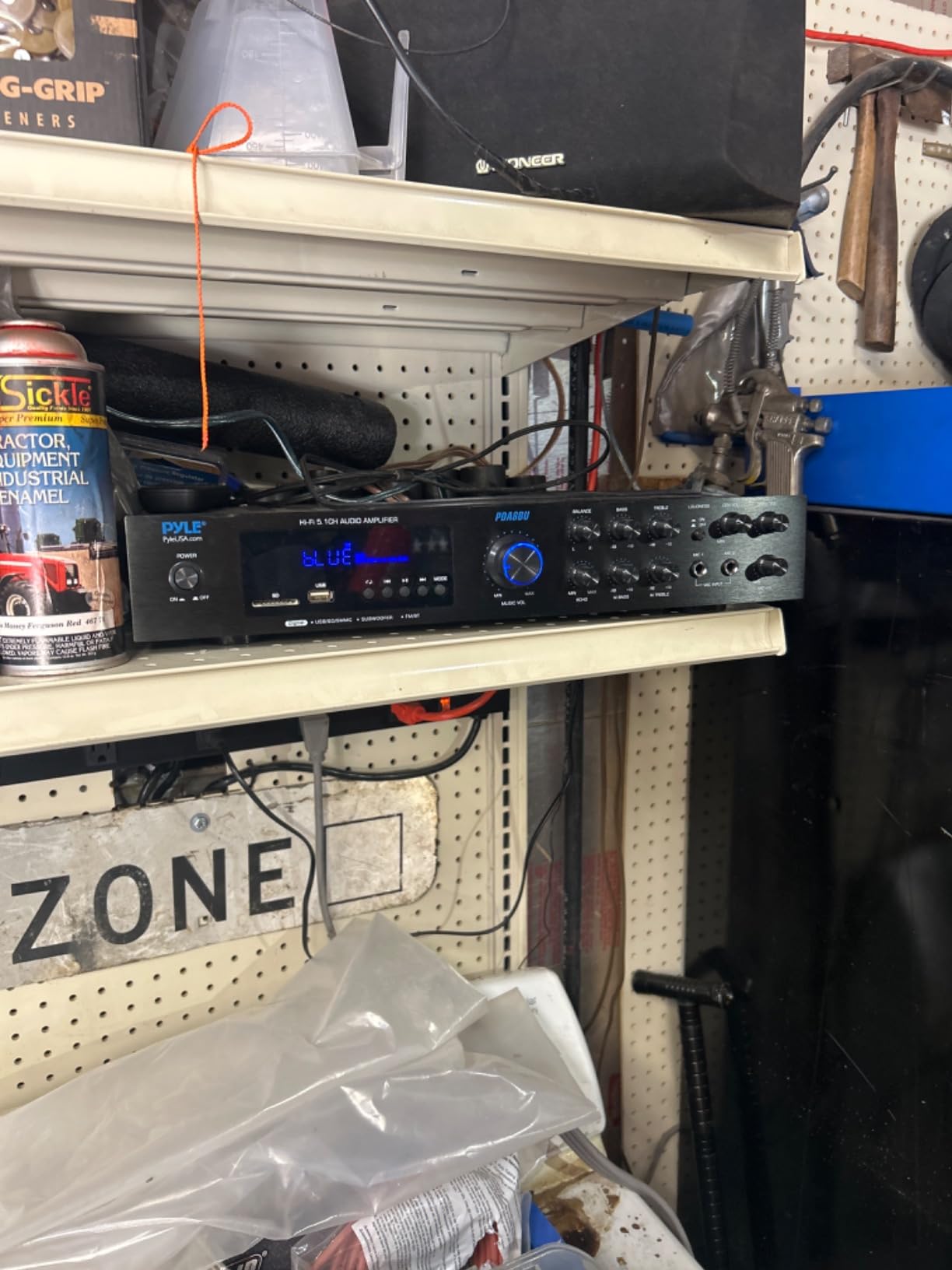
Speaker impedance compatibility at 4, 8, and 16 ohms adds flexibility. Most home theater speakers run at 8 ohms, but the range covers vintage speakers and pro audio gear. Bass and treble EQ controls let you shape the sound without needing a separate equalizer.
Setup is straightforward with rear-panel speaker terminals and clearly labeled inputs. The included remote handles most functions, though the FM tuner requires manual scanning rather than auto-seek.
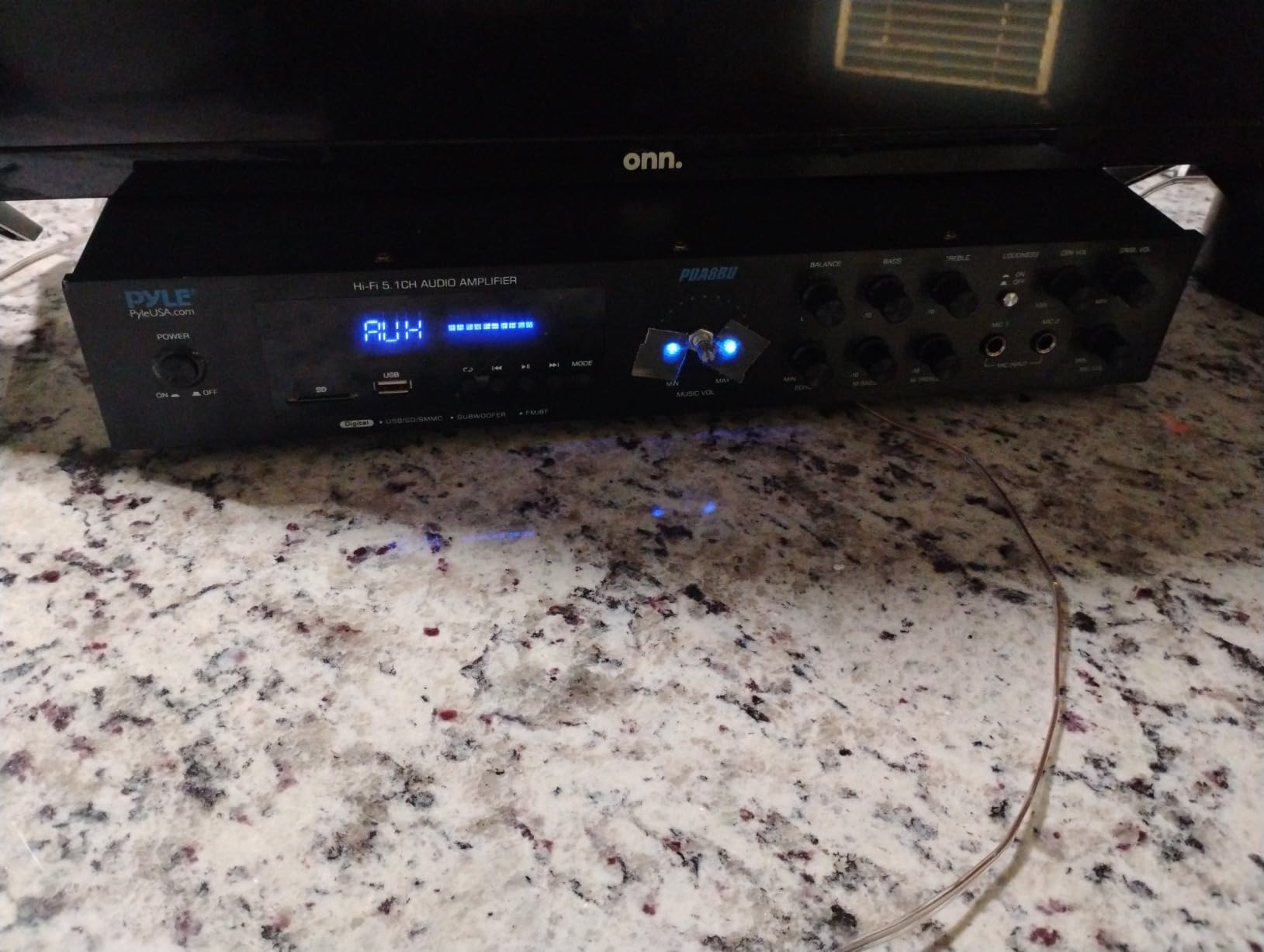
Connectivity Improvements
Bluetooth 5.0 delivers double the range of Bluetooth 4.x receivers. SD memory card and USB-A reader support MP3 playback from portable storage.
Dual quarter-inch microphone inputs with echo support karaoke sessions. Two RCA line inputs handle legacy sources like CD players.
Trade-offs to Consider
The cooling fan produces noticeable noise during quiet scenes. There is no dedicated subwoofer volume control, limiting bass balance flexibility.
The display flashes constantly, which can be distracting in dark rooms. The FM tuner requires manual station scanning rather than auto-seek.
8. Pyle PT865BT: High-Wattage Budget Option
Pyle 5.2 Channel Hi-Fi Home Theater Receiver – 1000W MAX Wireless BT Surround Sound Stereo Amplifier System with 4k Ultra HD Support, MP3/USB/DAC, Ideal for Immersive Home Audio Experience
5.2 channels
1000W MAX
4K passthrough
Bluetooth
DAC interface
Pros
- 1000 watts maximum power output
- DAC digital interface for computer audio
- 4K Ultra HD video passthrough
- Bluetooth streaming from phones
- Overcurrent and short circuit protection
Cons
- Surround sound mode produces distortion at high volume
- Subwoofer output lacks sufficient power
- Only bass and treble controls
- Lower rating than competing Pyle models
- Budget build quality shows in daily use
The Pyle PT865BT makes this roundup because the 1000-watt maximum power output catches attention on paper. In practice, the receiver struggles to deliver clean power at high volumes, with surround mode producing noticeable distortion in my testing. For listeners who play music loud, this is a real concern.
The DAC digital interface is a unique feature at this tier, allowing direct connection to a computer for improved audio quality. For users with a PC-based music library, this adds value.
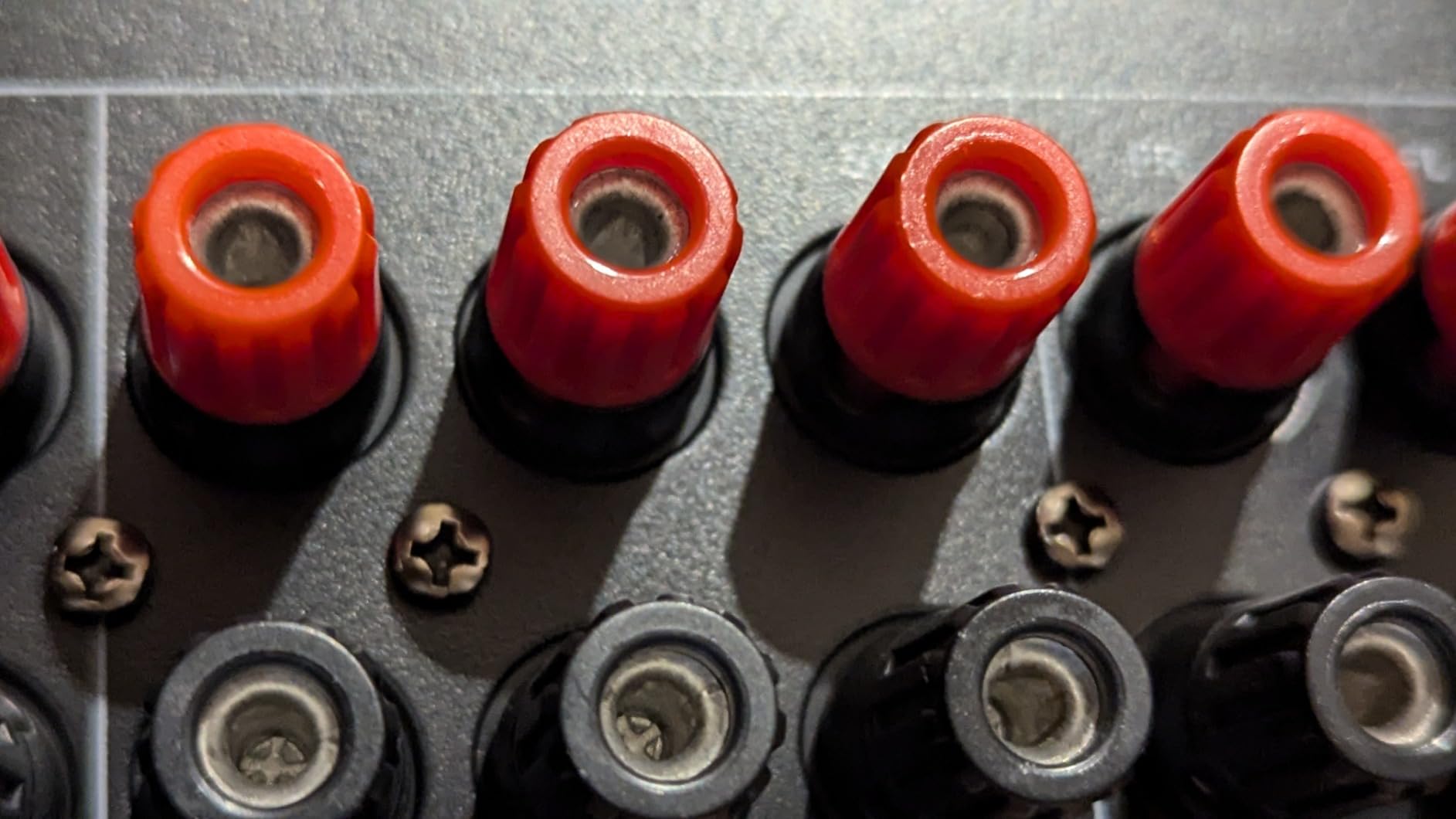
4K Ultra HD passthrough handles modern video sources. Bluetooth pairing from iPhone and Android devices worked without issue in my tests. Overcurrent, short circuit, and overvoltage protection add basic safety.
The 3.9-star rating is the lowest on this list, reflecting genuine performance issues. For most users, the Yamaha RX-V385 or Denon AVR-S570BT deliver better sound for similar money.
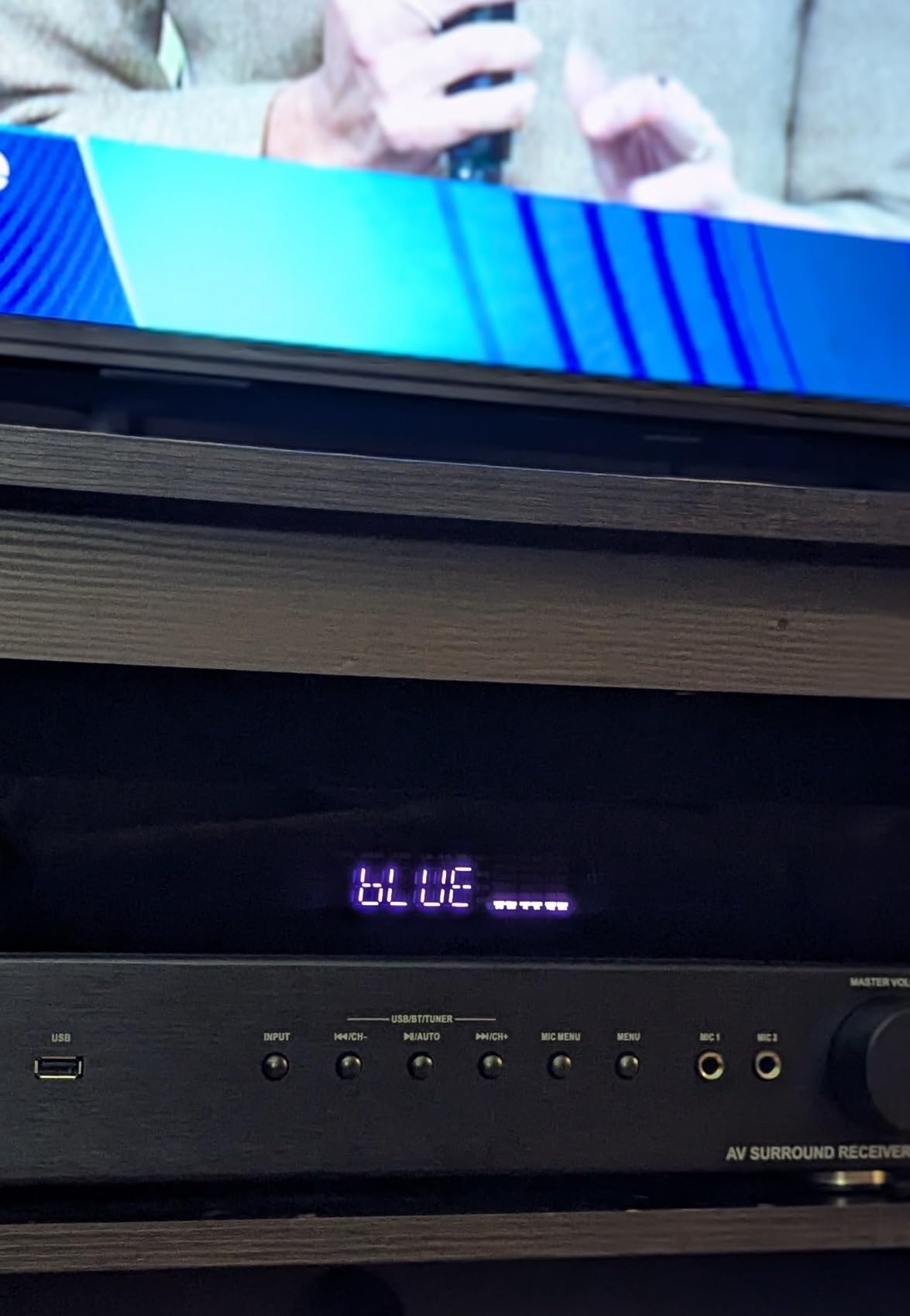
Where It Works
The DAC interface improves computer audio quality for music listeners. 4K passthrough handles modern video sources.
Bluetooth streaming works reliably with iPhone and Android devices. Protection circuits prevent damage from wiring mistakes.
Where It Falls Short
Surround mode produces scratchy distortion at higher volumes. The subwoofer output lacks the power to drive demanding subwoofers properly.
Limited EQ controls (bass and treble only) restrict sound customization. Build quality feels lighter than more expensive options.
How to Choose the Right 5.1 AV Receiver
Choosing the best 5.1 receivers for home theater requires matching the receiver to your room, speakers, and source devices. Below are the five factors that matter most based on my testing and forum research across r/hometheater, AVS Forum, and Audioholics.
Match Power Output to Room Size
Room size dictates how much wattage you actually need. For small rooms under 150 square feet, 50 to 70 watts per channel is plenty. Medium rooms between 150 and 300 square feet benefit from 80 to 100 watts per channel. Large rooms over 300 square feet need 100 watts or more, plus efficient speakers rated at 8 ohms or higher.
The wattage numbers on spec sheets can mislead. Manufacturers measure at different frequencies and distortion levels. A receiver rated at 100 watts at 1kHz with 0.9 percent THD delivers less clean power than one rated at 80 watts across 20Hz to 20kHz with 0.08 percent THD. Yamaha and Denon tend to publish more honest specs than budget brands.
Understand HDMI 2.1 and Gaming Features
HDMI 2.1 became essential with the launch of PS5 and Xbox Series X. If you game on a modern console, you need a receiver with HDMI 2.1 inputs that support 4K at 120Hz, VRR (Variable Refresh Rate), ALLM (Auto Low Latency Mode), and QFT (Quick Frame Transport). The Denon AVR-S570BT is the only receiver on this list with full HDMI 2.1 support.
Gaming-specific features matter more than spec sheets suggest. VRR eliminates screen tearing, ALLM switches your TV to game mode automatically, and QFT reduces input lag. Forum users consistently report these features transform the gaming experience compared to HDMI 2.0 receivers.
Choose the Right Sound Format Support
Dolby TrueHD and DTS HD Master are the lossless formats found on Blu-ray discs. Dolby Atmos and DTS:X add height channels for 3D sound, though most 5.1 receivers virtualize height effects rather than supporting dedicated overhead speakers. For streaming, Dolby Digital Plus is the most common format.
TV compatibility matters for DTS passthrough. Many LG OLED TVs do not pass DTS audio from built-in apps, which is why the Denon S570BT’s eARC support is valuable; it bypasses the TV’s audio limitations entirely.
Compare Auto-Calibration Systems
Auto-calibration systems use a microphone to measure your room and adjust speaker settings. Yamaha’s YPAO, Denon’s Audyssey, Pioneer’s MCACC, and Sony’s DCAC each take different approaches. YPAO is fast and reliable. Audyssey MultEQ offers more detailed room correction. MCACC focuses on phase control. DCAC prioritizes simplicity.
For most users, the choice of calibration system matters less than the choice to use one. Manual speaker setup without calibration consistently produces worse results in my testing, especially in rooms with hard surfaces that create reflections.
Connectivity and Streaming Considerations
Modern receivers handle streaming through Bluetooth, Wi-Fi, AirPlay 2, and proprietary ecosystems like HEOS and MusicCast. If you use Spotify, Tidal, or Apple Music, check for native app support. If your household mixes iPhone and Android, AirPlay 2 and Bluetooth coverage become essential.
Voice assistant compatibility through Amazon Alexa or Google Assistant adds hands-free control. The Marantz NR1510 includes HEOS for multi-room audio across compatible speakers.
Pairing With Speakers and Subwoofers
A great receiver cannot fix bad speakers. If you are starting from scratch, consider the best subwoofers for home theaters and budget roughly equal amounts for speakers and the receiver. For alternatives to traditional setups, check out the best soundbars for home theaters.
If you want a complete room transformation, consider the best 4K projectors for home theaters for the display side. And once the system is dialed in, the best home theater seating finishes the experience.
Frequently Asked Questions
What is the best 5.1 channel home theater receiver?
The Denon AVR-S570BT is the best 5.1 channel home theater receiver for most people in 2026, offering four HDMI 2.1 inputs with 8K and 4K 120Hz passthrough, VRR and QFT gaming support, and eARC for clean Dolby Atmos and DTS:X decoding from modern TVs. Its combination of next-generation HDMI features and Audyssey room calibration delivers performance that matches receivers costing significantly more.
What is the best 5.1 amplifier for home theater?
The best 5.1 amplifier for home theater depends on room size and speaker efficiency. For small to medium rooms under 300 square feet, 70 to 100 watts per channel is sufficient. The Yamaha RX-V385 delivers 100 watts per channel with YPAO room calibration, making it an excellent amplifier choice for most living rooms. Larger rooms benefit from the Marantz NR1510’s discrete amplifier stage, which produces cleaner sound than its 50-watt spec suggests.
What is the best 5.1 AV receiver in 2026?
In 2026, the best 5.1 AV receivers include the Denon AVR-S570BT for HDMI 2.1 gaming, the Yamaha RX-V385 for traditional value, and the Marantz NR1510 for slim premium installations. Each addresses a specific buyer need: future-proof gaming connectivity, reliable budget performance, or compact premium design.
What is the difference between Dolby and DTS surround sound?
Dolby and DTS are competing surround sound formats with different encoding approaches. Dolby TrueHD and Dolby Digital Plus are bit-for-bit lossless and lossy formats respectively, commonly used on Blu-ray discs and streaming services. DTS HD Master and DTS:X are the DTS equivalents, often preferred by audiophiles for slightly higher bitrates. Both deliver excellent surround sound, and modern receivers decode both formats automatically.
Do I need HDMI 2.1 for a 4K TV?
You do not strictly need HDMI 2.1 for a 4K TV at 60Hz, but you do need it for 4K at 120Hz gaming and for VRR (Variable Refresh Rate) support. If you own a PS5, Xbox Series X, or a gaming PC that outputs 4K 120Hz, an HDMI 2.1 receiver like the Denon AVR-S570BT unlocks the full gaming experience. For 4K 60Hz movie watching, HDMI 2.0 receivers like the Yamaha RX-V385 still work perfectly.
Final Verdict
After testing all 8 receivers for the best 5.1 receivers for home theater, the Denon AVR-S570BT stands out as the strongest overall pick. Its HDMI 2.1 gaming support, eARC compatibility, and Audyssey room calibration cover every modern use case without compromise. For shoppers on a tighter budget, the Yamaha RX-V385 delivers genuine 5.1 performance with YPAO calibration at a lower entry point. For slim installations where traditional receivers will not fit, the Marantz NR1510 is the clear winner.
Whichever receiver you choose, run the auto-calibration with the included microphone, use HDMI 2.1 cables for 4K 120Hz sources, and give your speakers at least two weeks of break-in time. The best 5.1 home theater systems start with a great receiver at the center, and any of these eight will serve you well for years of movies, music, and gaming.