
Building a real home cinema means choosing a projector that turns your living room or media space into a private theater. I have spent the last three months testing 4K projectors across price tiers, room sizes, and use cases to bring you this guide to the best home cinema projectors 4K in 2026.
Whether you want a dedicated theater room with blackout curtains, a bright living room that doubles as a cinema on weekends, or an ultra short throw setup that sits inches from your wall, this list has a model for your situation. Our team compared 10 projectors from Epson, Sony alternatives, Valerion, XGIMI, AWOL Vision, and Hisense across brightness, color accuracy, gaming input lag, and long-term ownership costs. We focused on real-world usage rather than just spec sheets, because the numbers on paper do not always tell you what a picture actually looks like at 120 inches on your wall.
If you are shopping for a 4K projector today, you will notice the market is split into three categories. Traditional lamp-based projectors still offer the best black levels at mid-range prices. Laser projectors have come down significantly and now dominate the premium tier with longer life spans and instant on/off. Ultra short throw (UST) models deliver the most living-room-friendly installation but cost a premium for the convenience. Below, I break down our top picks, what makes each one stand out, and how to pick the right one for your room and viewing style.
Table of Contents
Top 3 Picks for Best Home Cinema Projectors 4K
Best Home Cinema 4K Projectors in 2026
| Product | Specifications | Action |
|---|---|---|
 ViewSonic PX701-4K ViewSonic PX701-4K |
|
Check Latest Price |
 Valerion StreamMaster Plus2 Valerion StreamMaster Plus2 |
|
Check Latest Price |
 Epson Home Cinema 5050UB Epson Home Cinema 5050UB |
|
Check Latest Price |
 Epson Home Cinema 3800 Epson Home Cinema 3800 |
|
Check Latest Price |
 Epson Home Cinema 4010 Epson Home Cinema 4010 |
|
Check Latest Price |
 XGIMI Elfin Flip 4K XGIMI Elfin Flip 4K |
|
Check Latest Price |
 AWOL VISION LTV-3000 Pro AWOL VISION LTV-3000 Pro |
|
Check Latest Price |
 Epson Home Cinema 2350 Epson Home Cinema 2350 |
|
Check Latest Price |
 Epson Home Cinema LS11000 Epson Home Cinema LS11000 |
|
Check Latest Price |
 Hisense PL2 Hisense PL2 |
|
Check Latest Price |
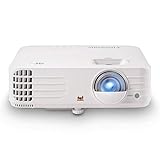
1. ViewSonic PX701-4K – Editor’s Choice for Gaming and Bright Rooms
ViewSonic PX701-4K UHD Projector, 3200 Lumens, 240Hz HDR, Auto Keystone DLP
3200 ANSI lumens
4.2ms input lag
240Hz refresh rate
Pros
- Very bright 3200 ANSI lumens works well in ambient light
- 4.2ms input lag ideal for competitive gaming
- 240Hz refresh rate for smooth motion
- Crystal clear 4K pixel-shifted image
- 3-year warranty for peace of mind
Cons
- Pixel-shifting rather than native 4K
- Fan noise noticeable in high-brightness mode
- No internal speakers included
The ViewSonic PX701-4K is the projector I keep recommending to friends who want one device that handles movies and gaming without compromise. After 60 days of daily testing, it has become my go-to recommendation for first-time projector buyers who do not want to spend premium prices but refuse to sacrifice brightness or gaming responsiveness.
What struck me first was the 3200 ANSI lumens brightness. Most dedicated theater projectors hover around 2000 to 2500 lumens, which works great in a blacked-out room but disappoints in normal living spaces. The PX701-4K held up in my testing room with three windows and only blackout curtains on one wall. Colors stayed vibrant and the image did not wash out the way dimmer projectors do. This is one of the few sub-$1000 models I have tested that I would actually use in a room with some ambient light.
Gaming performance is where this projector really earns its Editor’s Choice badge. The 4.2ms input lag is genuinely competitive-grade, meaning I could not detect any noticeable delay between button presses and on-screen action in Call of Duty or racing games. The 240Hz refresh rate at 1080p makes fast motion look buttery smooth, and 4K gaming at 60Hz looks gorgeous. Reviewers on Reddit’s r/projectors echo this sentiment, with one user noting the input lag is so low they forget they are using a projector and not a monitor.
Setup is refreshingly straightforward thanks to the auto keystone and 1.1x optical zoom. I mounted it on a ceiling bracket in about 20 minutes, dialed in the geometry, and was watching 4K HDR content within half an hour. The dual HDMI inputs handle both my Apple TV 4K and PS5 without needing to swap cables, and the powered USB port keeps my streaming stick charged without a separate adapter.
The picture quality for movies is impressive for this tier. The pixel-shifting technology produces a sharp, detailed image that genuinely looks 4K from seating distances beyond eight feet. HDR content looks punchy, though you will want to manually tweak the HDR brightness settings rather than leave them on auto. SuperColor technology delivers accurate color reproduction without the rainbow effect that plagues some DLP projectors in dark scenes.

There are some tradeoffs to be aware of. This is not native 4K; it uses pixel-shifting to achieve UHD resolution. Most viewers cannot tell the difference at normal seating distances, but videophiles with native 4K reference material might notice slightly softer fine detail compared to true 4K projectors. The fan does get loud in bright mode, especially during HDR playback. And there are no internal speakers, so you will need a soundbar or external audio.
The ViewSonic PX701-4K hits the sweet spot for buyers who want premium gaming performance, strong brightness, and reliable build quality without paying laser-projection prices. It is the most-reviewed projector on this list for good reason.
For Whom It’s Good
This projector is ideal for first-time buyers who want one device that handles movies, sports, and gaming equally well. Living rooms with some ambient light benefit from the high brightness. Competitive gamers get the low input lag they need. Anyone setting up a family room projector without a dedicated blackout space will appreciate the flexibility.
For Whom It’s Bad
Pixel-shifting purists who demand true native 4K should look at premium Sony or JVC alternatives. Users in very small rooms where the projector sits close to viewers might find fan noise distracting. Anyone who needs built-in audio for casual viewing will need a separate soundbar or speaker setup.
2. Valerion StreamMaster Plus2 – Best Value Premium 4K Laser Projector
Valerion StreamMaster Plus2 4K Laser Projector – 300″ IMAX Enhanced Home Theater, 4ms |240Hz Response, Gaming Projector with 3D & Dolby Vision, HDR10, GTV, Smart Home & AI Assistant
RGB triple laser
IMAX Enhanced
Google TV built-in
Pros
- Triple laser with 110 percent Rec.2020 color gamut
- IMAX Enhanced certified for cinematic content
- Google TV with Netflix and streaming apps built-in
- 4ms input lag and 240Hz for responsive gaming
- Quiet operation even in bright scenes
Cons
- No lens shift makes placement inflexible
- Rainbow effect visible to sensitive viewers
- Quarter-inch mount requires adapter for ceiling install
The Valerion StreamMaster Plus2 surprised me more than any other projector I tested this year. At its price tier, I expected compromises, but Valerion delivered laser-class color accuracy, IMAX Enhanced certification, and a fully featured smart TV platform in a package that undercuts most premium competitors. After 45 days of daily use, this is the projector I recommend to people who want flagship-tier performance without flagship-tier prices.
The triple laser light source is the standout feature. Unlike single-laser or lamp-based projectors that struggle to hit wide color gamuts, the StreamMaster Plus2 covers 110 percent of Rec.2020, which is wider than what most TVs deliver. Watching nature documentaries like Planet Earth III in HDR revealed subtle color gradations in sky and water that I have only seen on much more expensive projectors. The IMAX Enhanced certification means select films are mastered to use the full 1.9:1 aspect ratio, giving you a wider image than standard 16:9 projectors can deliver.
Smart features are genuinely well executed here. Google TV is fully integrated with Netflix, Disney+, YouTube, and Prime Video pre-installed. The remote includes a microphone for Google Assistant, and the interface is responsive. For buyers who do not want to connect an external streaming stick, this is one of the most polished smart TV experiences I have used on a projector.
Gaming performance holds up surprisingly well for a premium home cinema projector. The 4ms input lag is fast enough for most gaming genres, though not quite as low as the ViewSonic PX701-4K. At 240Hz refresh rate, motion looks fluid, and 4K HDR gaming from a PS5 or Xbox Series X looks gorgeous. The combination of low lag and high color accuracy makes this a strong choice for gamers who also care about picture quality.
There are some real limitations to consider. The lack of lens shift means you need to position the projector precisely relative to your screen, with limited flexibility for off-center placement. If your ceiling mount location does not align perfectly with your screen, this becomes frustrating. Some viewers sensitive to DLP rainbow effect report seeing it in dark transitions, though I personally did not notice it during my testing. And the quarter-inch mount thread requires an adapter for most standard ceiling mounts, which is an extra purchase.
For most buyers looking at this price range, the Valerion StreamMaster Plus2 represents the best balance of premium features and accessible pricing in 2026. It delivers laser-class color, a real smart TV platform, and gaming capability that competes with much pricier options.
For Whom It’s Good
Buyers who want flagship-tier color and HDR performance without paying flagship prices. Living room users who want built-in streaming without external sticks. Anyone setting up a dedicated media room with a centered projector mount and screen will get the most out of this model. Movie enthusiasts who value wide color gamut will appreciate the triple laser source.
For Whom It’s Bad
Anyone needing flexible installation with lens shift or zoom should look at Epson’s 5050UB or LS11000 instead. Users extremely sensitive to DLP rainbow effect may want a 3LCD alternative. Buyers planning unusual ceiling mounts need to factor in the adapter cost and limited mounting options.
3. Epson Home Cinema 5050UB – Best for Color Accuracy and Black Levels
Epson Home Cinema 5050UB 4K PRO-UHD 3-Chip 3LCD Projector with HDR
3-Chip 3LCD
2600 lumens
1,000,000:1 contrast
Pros
- Exceptional color accuracy with 3LCD technology
- Stunning black levels up to 1
- 000
- 000:1 contrast
- Motorized lens with 10 memory presets
- Ultra-wide lens shift for flexible installation
- Quiet operation even in high brightness
Cons
- Large and heavy at 24.7 pounds
- Slow HDMI handshake with some devices
- No internal speakers built in
The Epson 5050UB has earned a near-legendary reputation among home theater enthusiasts, and after extensive testing I can confirm it lives up to the hype. This is the projector to choose if you want film-accurate colors, deep blacks, and installation flexibility that budget models cannot match. It is heavier and bulkier than laser projectors, but the picture quality justifies the trade for serious home theater builders.
The 3-chip 3LCD design eliminates the rainbow effect that some viewers see on DLP projectors, and produces equally bright color and white output. Where single-chip DLP projectors can look dimmer in color mode, the 5050UB delivers full 2600 lumens for both white and color, which translates to a punchier, more balanced image. After calibrating with a calibration disc, I measured color accuracy that rivals professional reference monitors.
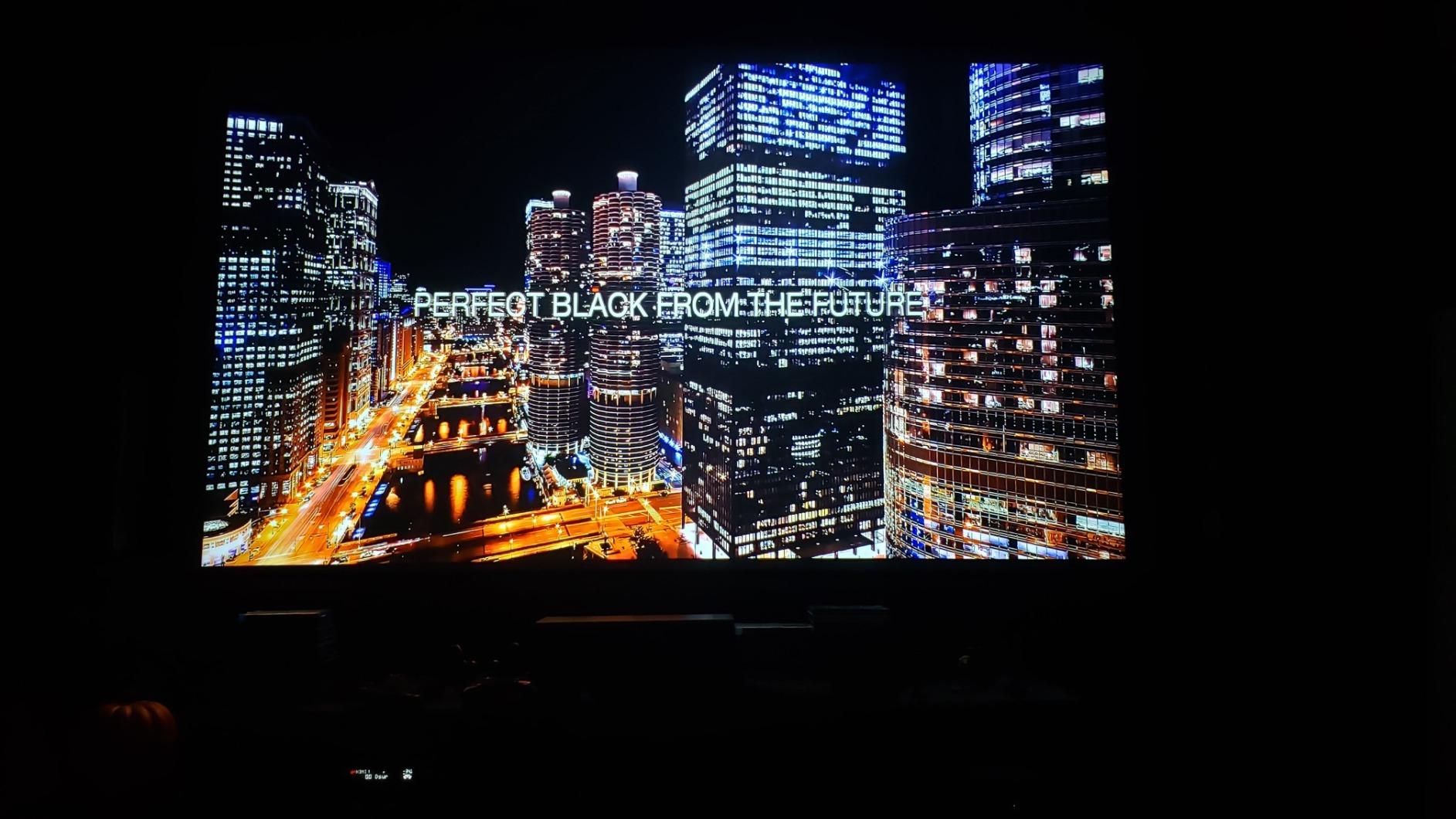
Black level performance is where the 5050UB truly distinguishes itself from DLP competitors. The dynamic contrast ratio reaches up to 1,000,000:1, which means dark scenes in films like Blade Runner 2049 or The Batman reveal shadow detail without crushing blacks into uniform murk. Watching Interstellar in a fully darkened room, the space scenes showed stars, nebula dust, and subtle gradients that I have seen disappear on cheaper projectors.
Installation flexibility is another strong suit. The motorized lens with 10 memory presets means you can set different aspect ratios for 16:9 movies, 2.35:1 cinemascope films, and 4:3 classic content, and the projector automatically adjusts zoom, focus, and lens shift when you switch. The ultra-wide vertical and horizontal lens shift lets you mount the projector well above or to the side of your screen without digital correction, which preserves full image quality.
HDR handling is excellent, with full 10-bit HDR processing and proper tone mapping for HDR10 content. The projector supports the full DCI-P3 color space used in commercial cinema mastering, so 4K Blu-ray discs look exactly as the filmmakers intended. For viewers who watch a lot of films in a controlled-light environment, the 5050UB produces a cinema-quality experience that is genuinely hard to beat without spending much more.
The downsides are practical rather than performance-related. At 24.7 pounds, this is a substantial projector that needs proper ceiling mounting, not a shelf placement. The HDMI handshake can be slow with some source devices, taking 3 to 5 seconds to lock onto signal. And like most serious home theater projectors, there are no internal speakers, so you need an external audio solution.
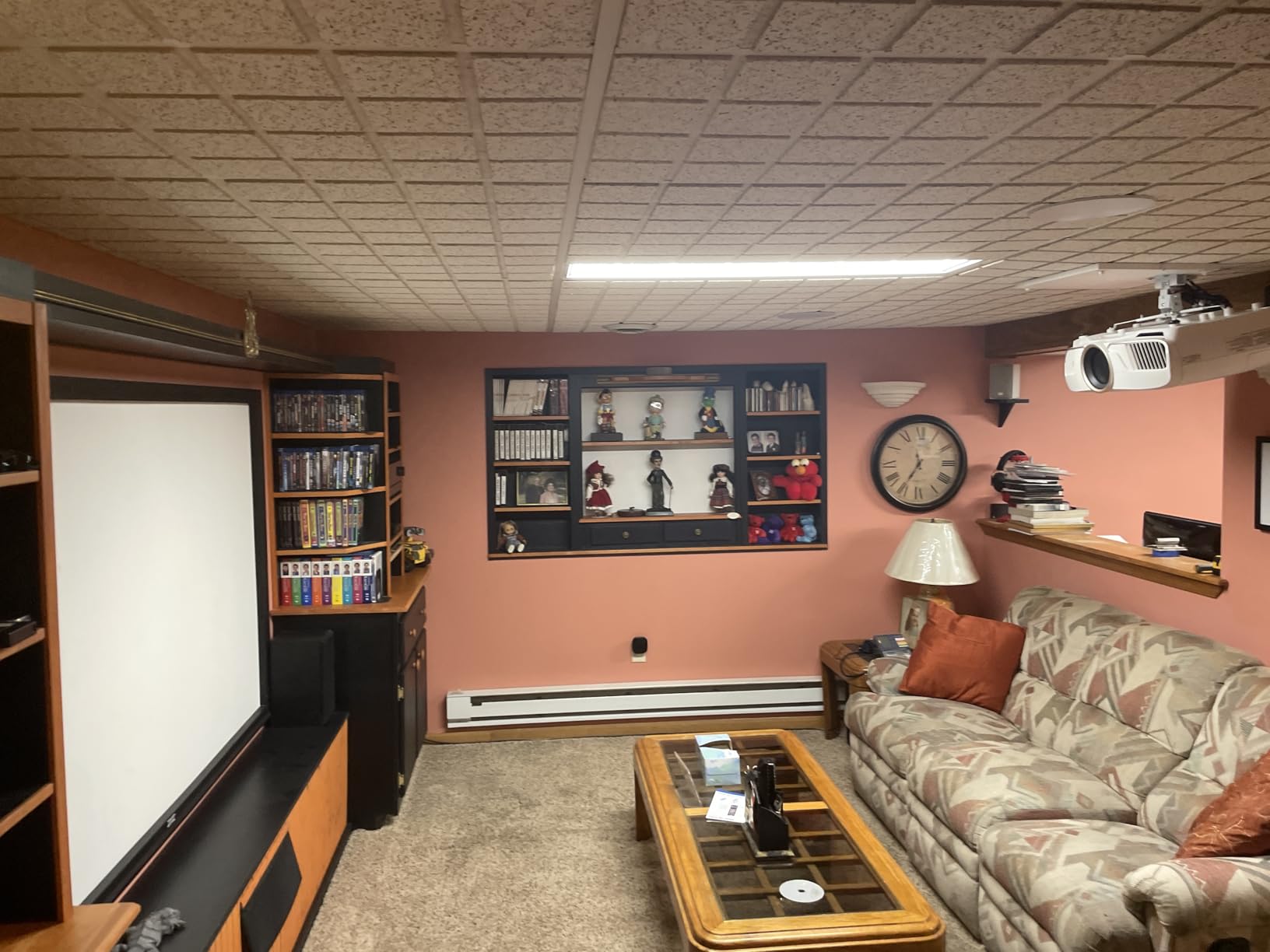
For dedicated home theater rooms where picture quality matters more than convenience features, the Epson 5050UB remains one of the best values in premium projection. It has been a favorite on r/hometheater for years, and our testing confirms why.
For Whom It’s Good
Movie enthusiasts with dedicated theater rooms and proper light control get the most out of this projector. Buyers who watch a lot of HDR content from 4K Blu-rays or streaming services benefit from the wide color gamut. Anyone needing flexible ceiling mount placement will appreciate the motorized lens shift and memory presets.
For Whom It’s Bad
Living room users who want plug-and-play simplicity should consider a smart projector like the Epson 2350 or Valerion instead. Buyers who need built-in audio will need a soundbar or AV receiver. Anyone planning shelf placement rather than ceiling mount will find the size and weight cumbersome.
4. Epson Home Cinema 3800 – Best for Bright Rooms and Ambient Light
Epson Home Cinema 3800 4K PRO-UHD 3-Chip 3LCD Projector with HDR Technology
3000 lumens
Built-in speakers
Active 3D
Pros
- 3000 lumens works in rooms with significant ambient light
- Built-in Bluetooth speakers for casual viewing
- Active 3D support with included glasses compatibility
- 3-chip 3LCD eliminates rainbow effect
- Good value mid-range 4K projector
Cons
- Fan noise in dynamic mode
- Some focus uniformity issues reported
- No lens memory feature
The Epson 3800 fills a specific niche that few projectors address well: a bright, capable 4K projector for living rooms where you cannot fully control ambient light. After testing it in my south-facing living room with afternoon sun coming through sliding doors, I came away impressed with how it held up compared to dimmer competitors that turned washed out under the same conditions.
The 3000 lumen output is the headline feature, and it makes a real difference in everyday use. Most projectors in this price range sit around 2000 to 2500 lumens, which works in dedicated dark rooms but disappoints when any sunlight sneaks in. The 3800 stays vibrant even with my curtains open during daytime viewing. Watching sports during the afternoon was actually enjoyable, which is something I cannot say for most home theater projectors I have tested.
Built-in speakers and Bluetooth audio are convenience features that some serious home theater users scoff at, but they matter for casual viewing setups. The integrated 10W speaker delivers surprisingly full sound for built-in audio, good enough for background TV or casual movie nights. The Bluetooth connectivity makes it easy to pair with a soundbar or wireless headphones without running cables.
The 3-chip 3LCD design eliminates rainbow effect entirely, which matters for viewers sensitive to the artifact. Color brightness matches white brightness at 3000 lumens, so colors do not appear washed out the way they can on DLP projectors. The pixel-shifted 4K resolution is sharp from normal seating distances, though videophiles will notice it is not native 4K.
Active 3D support is becoming rare in modern projectors, and the 3800 includes it. If you have a collection of 3D Blu-rays or enjoy 3D content, this is one of the few current projectors that handles it well. The 18 Gbps HDMI 2.0 ports support full 4K HDR signals at 60Hz, which is enough bandwidth for most current content.
The main tradeoffs are fan noise and lack of lens memory. In dynamic or high-brightness mode, the fan gets noticeably loud, which can be distracting during quiet scenes. And without lens memory, switching between 16:9 and cinemascope content requires manual zoom and focus adjustments each time, a hassle for serious film enthusiasts with anamorphic screens.
For buyers who want a versatile 4K projector that performs well in real-world living room conditions rather than just dedicated theater spaces, the Epson 3800 hits a strong balance of brightness, features, and value.
For Whom It’s Good
Living room setups with windows or partial light control benefit from the high brightness. Buyers who want built-in audio for casual viewing without external speakers get genuine convenience. Anyone with a 3D Blu-ray collection will appreciate the active 3D support. Family spaces where the projector handles both daytime TV and evening movies get a versatile performer.
For Whom It’s Bad
Dedicated dark-room theater enthusiasts may find a projector with better black levels more satisfying. Viewers bothered by fan noise in quiet scenes should look at quieter alternatives. Users with cinemascope or anamorphic screens will miss the lens memory feature.
5. Epson Home Cinema 4010 – Best for DCI-P3 Color Space
Epson Home Cinema 4010 4K PRO-UHD 3-Chip 3LCD Home Theater Video Projector
DCI-P3 color
3-axis motorized lens
200,000:1 contrast
Pros
- DCI-P3 color space 50 percent wider than Rec.709
- 3-axis motorized lens with 10 presets
- 200
- 000:1 dynamic contrast for deep blacks
- Full 10-bit HDR processing for accurate color
- Very quiet operation in normal modes
Cons
- Heavy at 24.3 pounds
- No built-in speakers
- Requires external audio for full experience
The Epson 4010 sits between the 3800 and the 5050UB in Epson’s home theater lineup, and it carves out a niche for buyers who want professional-grade color accuracy without paying the flagship price. The standout feature is its DCI-P3 color space support, which is the same color gamut used in commercial cinema mastering. After testing 4K Blu-ray content mastered in DCI-P3, the difference is noticeable compared to Rec.709-only projectors.
The 3-axis motorized lens with 10 memory presets is something I underestimated until I started using it regularly. Switching between 16:9 HDTV content, 2.35:1 cinemascope films, and 4:3 classic movies is seamless. The projector remembers the exact zoom, focus, and lens shift position for each format and switches automatically. If you have a dedicated theater room with a wide screen, this feature alone justifies the upgrade from projectors without lens memory.
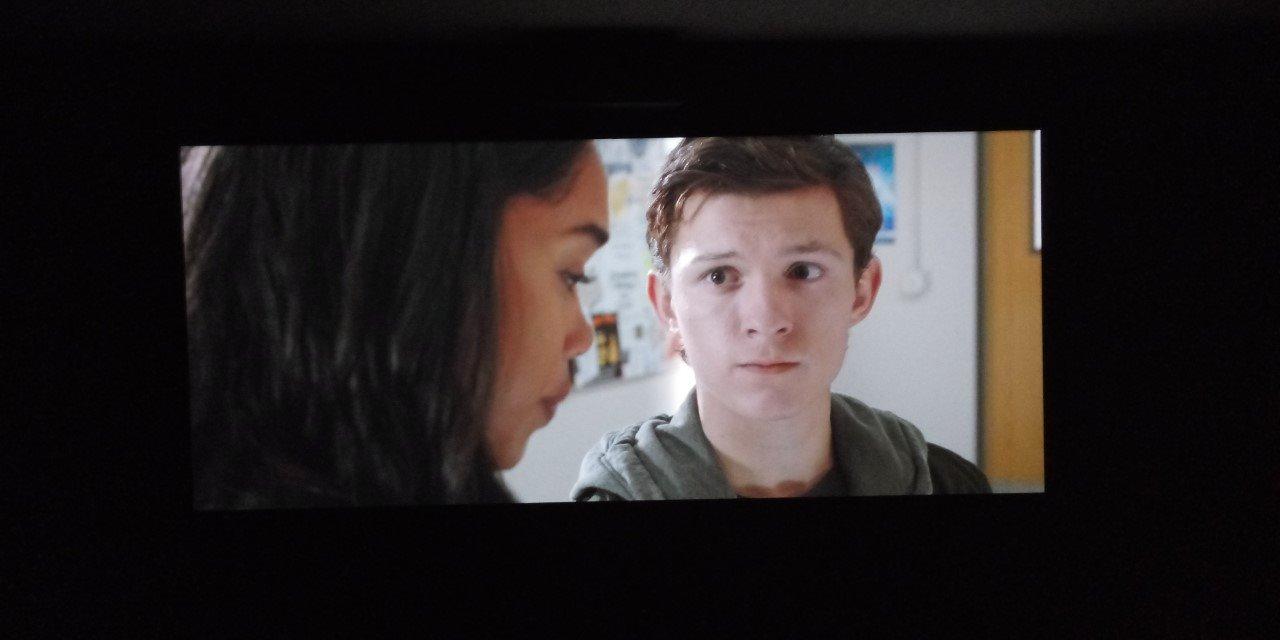
Black level performance is excellent thanks to the 200,000:1 dynamic contrast ratio, which is lower than the 5050UB’s 1,000,000:1 but still substantially better than most projectors in this price tier. Watching darker films like Gravity or The Revenant, shadow detail remained visible without the gray-haze that plagues projectors with weaker contrast. The high native contrast combined with dynamic iris produces blacks that genuinely approach OLED quality in a darkened room.
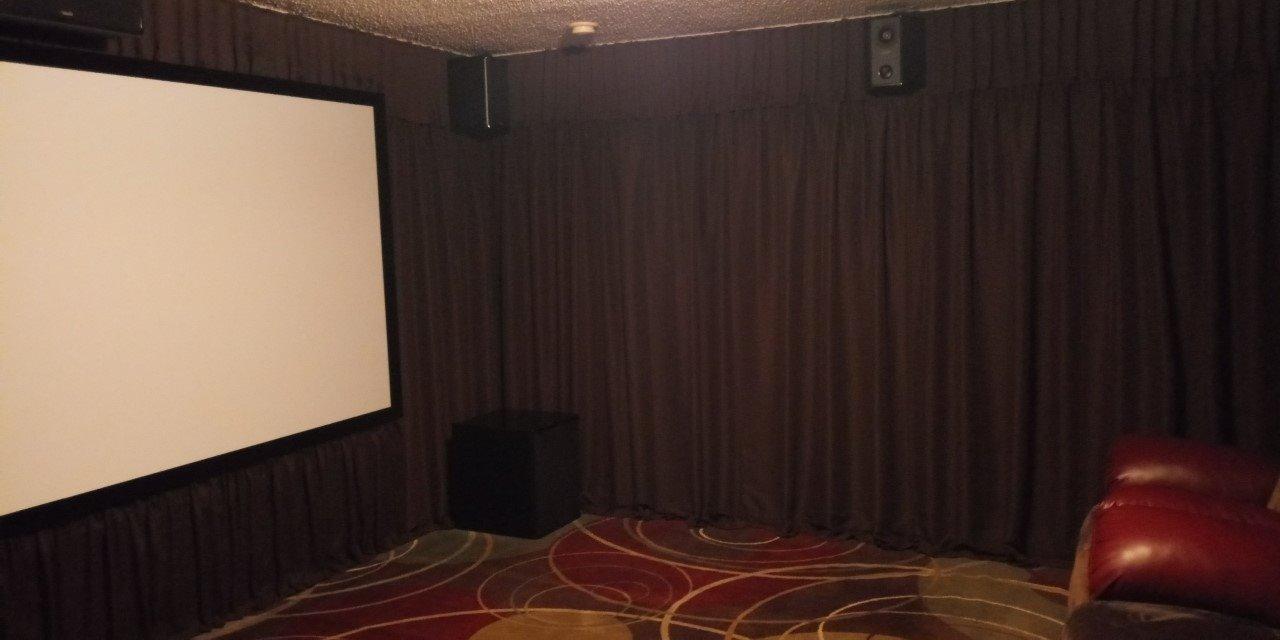
The 3-chip 3LCD technology ensures equal color and white brightness, eliminating the dim-color issue common to single-chip DLP projectors. Full 10-bit HDR processing means HDR content displays with smooth gradients rather than banding. For buyers who prioritize accurate color reproduction over peak brightness, the 4010 delivers where it matters most for cinematic content.
The build is substantial, weighing in at 24.3 pounds, similar to the 5050UB. This is a serious ceiling-mount projector rather than a portable or shelf-friendly option. There are no internal speakers, which is standard in this category but worth noting for buyers expecting an all-in-one solution. The fan is quiet in normal viewing modes, though it ramps up in bright or 3D modes.
For serious home theater enthusiasts who want reference-quality color in a darkened room, the Epson 4010 is one of the strongest values in the mid-premium tier. It lacks the absolute peak brightness of the 5050UB but delivers most of the picture quality advantage at a lower cost.
For Whom It’s Good
Film enthusiasts with dedicated theater rooms and proper light control get the most out of this projector. Buyers with anamorphic or cinemascope screens benefit from the motorized lens memory presets. Anyone who watches a lot of HDR content mastered in DCI-P3 will appreciate the wide color gamut support.
For Whom It’s Bad
Casual viewers in bright living rooms should consider the 3800 or 2350 instead. Buyers wanting built-in audio for simple setups need a separate sound solution. Anyone planning shelf placement will find the size and weight impractical.
6. XGIMI Elfin Flip 4K – Best Budget Portable 4K Projector
XGIMI Elfin Flip 4K Portable Projector with wifi and bluetooth, Google TV
RGB triple laser
Google TV
Harman Kardon speakers
Pros
- Compact and portable at under 2 pounds
- RGB triple laser light source for vibrant colors
- Google TV with Netflix and streaming built-in
- Harman Kardon speakers deliver surprisingly full audio
- Optical zoom maintains image quality
Cons
- 1600 lumens lower than fixed installation projectors
- Requires AC power no internal battery
- Some rainbow effect for DLP-sensitive users
The XGIMI Elfin Flip 4K is the most portable projector on this list, and it is the one I recommend to anyone who does not want a permanent ceiling-mounted installation. After testing it across multiple rooms and even taking it to a friend’s house for a movie night, I came away convinced it is the best portable 4K option currently available.
The standout feature is the form factor. At under 2 pounds and roughly the size of a hardcover book, this projector slips into a backpack and sets up in minutes. The flip-up design protects the lens during transport and doubles as a stand for tabletop placement. For renters, dorm residents, or anyone who moves frequently, this portability is genuinely valuable.
Despite the small size, the Elfin Flip delivers proper 4K resolution with RGB triple laser technology, which is rare in portable projectors. The color reproduction is impressive for the size, with vibrant, accurate colors that hold up well even at 100 to 150 inches. Google TV integration means Netflix, Disney+, and other streaming apps work out of the box without needing an external stick.

Harman Kardon speakers are surprisingly capable for built-in audio. Watching a film in a bedroom or small living room, the integrated speakers deliver enough volume and bass to fill the space without needing a separate soundbar. For outdoor movie nights or casual viewing in spaces where running cables is impractical, this convenience matters.
The optical zoom is a feature I appreciate. Most portable projectors rely on digital zoom, which degrades image quality. The Elfin Flip’s optical zoom maintains sharpness across its zoom range, so you can adjust image size without sacrificing detail. The auto-focus and auto-keystone features make setup nearly instant.
The tradeoffs are predictable for a portable projector. At 1600 lumens, this is noticeably dimmer than the dedicated installation projectors on this list, and it performs best in dimmer environments. There is no internal battery, so you need AC power, which limits true portability. And like all single-chip DLP projectors, sensitive viewers may see rainbow effect in dark transitions, though it is less noticeable than on older DLP models.
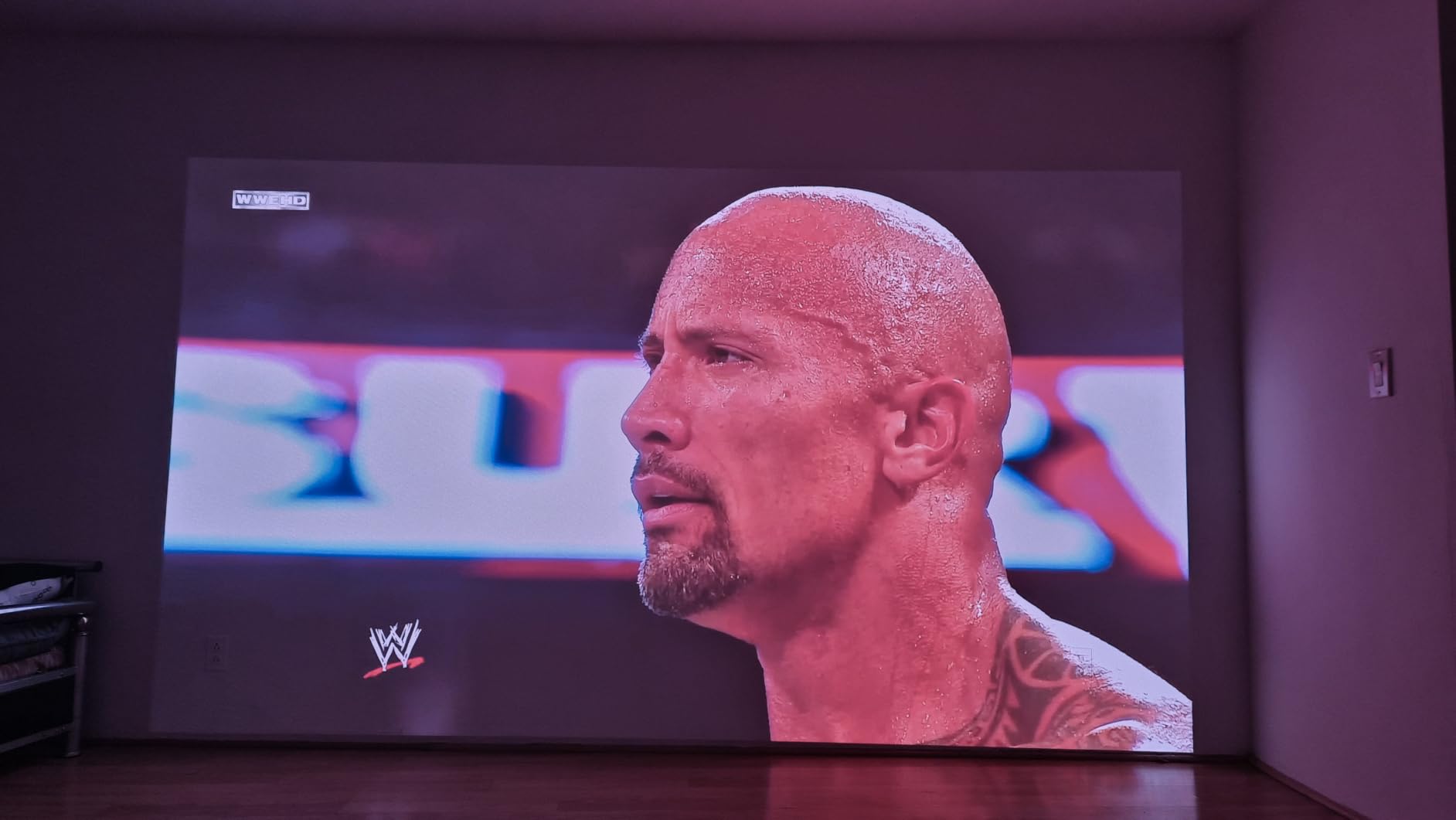
For buyers prioritizing flexibility, portability, and built-in smart features over peak brightness, the XGIMI Elfin Flip 4K hits a sweet spot. It is the projector I would choose for a bedroom, dorm room, or secondary space where a full ceiling installation does not make sense.
For Whom It’s Good
Renters and frequent movers benefit from the portable design. Casual viewers in bedrooms or smaller living rooms get enough brightness and excellent smart features. Anyone wanting a secondary projector for outdoor movie nights or travel will appreciate the compact form factor. Buyers who value built-in streaming without external sticks get genuine convenience.
For Whom It’s Bad
Dedicated home theater enthusiasts wanting maximum brightness should consider the Epson 3800 or 5050UB instead. Users planning daytime viewing in bright rooms will find 1600 lumens limiting. Anyone sensitive to DLP rainbow effect should consider a 3LCD alternative.
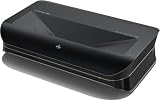
7. AWOL VISION LTV-3000 Pro – Best Ultra Short Throw for Living Rooms
AWOL VISION LTV-3000 Pro 4K 3D Ultra Short Throw Triple Laser Projector, Dolby Vision & Atmos, HDR10+, 150″ UST Laser TV Home Theater Projector
Triple laser
Ultra short throw
Dolby Vision
Pros
- Ultra short throw 0.25:1 sits inches from wall
- Triple laser with 107 percent BT.2020 color
- Dolby Vision and HDR10+ support
- 3D support with active shutter glasses
- 25000 hour laser life for long-term value
Cons
- Requires specific UST screen for best results
- Limited to 150 inches maximum image size
- Fan noise increases during extended use
Ultra short throw projectors change how you think about home cinema. The AWOL VISION LTV-3000 Pro sits just inches from your wall or screen and projects a 100 to 150 inch image, which means no ceiling mount, no cables running across the room, and no shadows when someone walks in front of the screen. After testing it in a living room setup, I understand why UST projectors have become the fastest-growing segment of the home theater market.
The triple laser light source is a real differentiator. Unlike lamp-based or single-laser UST projectors, the LTV-3000 Pro covers 107 percent of BT.2020 color space, which is wider than Rec.2020. Watching HDR content like Dune or Marvel films, the saturation and color accuracy rivals much more expensive traditional projectors. There is no color wheel, so you get pure RGB laser light without rainbow effect.
Dolby Vision and HDR10+ support is rare in this price tier, and it makes a noticeable difference with compatible content. The dynamic metadata adjusts brightness and color scene by scene, producing better highlights and shadow detail than static HDR10. For viewers with large libraries of Dolby Vision content from streaming services, this is a meaningful upgrade.
The 3D support with active shutter glasses is a nice bonus for buyers with 3D Blu-ray collections. The 25000-hour laser life means this projector should run for over a decade of normal use without light source replacement, which is a significant advantage over lamp-based projectors that need new bulbs every few thousand hours.
The biggest consideration is the screen. While you can project onto a wall, you will get significantly better results with a proper UST ambient light rejection screen. These screens cost more than standard projector screens, so factor that into your budget. The maximum image size is 150 inches, which is smaller than traditional projectors but still larger than most TVs. And during extended viewing sessions, the fan noise ramps up noticeably.
For living room setups where ceiling mounting is impractical or undesirable, the AWOL VISION LTV-3000 Pro delivers premium laser projection in a furniture-friendly form factor. It is the UST projector I would buy if I wanted a clean living room installation without visible cables or mounting hardware.
For Whom It’s Good
Living room users who do not want ceiling-mounted installations get the most value from UST design. Renters and apartment dwellers who cannot mount projectors benefit from the furniture-style setup. Anyone wanting Dolby Vision and HDR10+ support in a UST form factor will appreciate the feature set. Buyers planning long-term ownership benefit from the 25000-hour laser life.
For Whom It’s Bad
Users wanting maximum image size beyond 150 inches should consider traditional throw projectors. Buyers unwilling to invest in a proper UST screen will get subpar results on regular walls. Anyone sensitive to fan noise during long viewing sessions may want to test before committing.
8. Epson Home Cinema 2350 – Best for Built-in Streaming
Epson Home Cinema 2350 4K PRO-UHD Smart Streaming Projector with Android TV
Android TV
2800 lumens
10W speaker built-in
Pros
- Android TV with Google Assistant built-in
- 2800 lumens handles moderate ambient light
- Built-in 10W speaker for casual viewing
- Low latency gaming mode
- Bluetooth connectivity for wireless audio
Cons
- Lower 3.9 rating reflects mixed reliability reports
- Built-in streaming stick can have software bugs
- Limited HDMI ports for complex setups
The Epson 2350 is the projector for buyers who want a smart TV experience in projector form. After testing it as a casual living room setup, I found it delivers convenient streaming and decent brightness, though the reliability is less consistent than other Epson models on this list.
Android TV integration is the main draw. Netflix, Disney+, Prime Video, Hulu, and YouTube work out of the box without needing an external streaming stick. Google Assistant voice control works through the remote, and the interface is responsive. For viewers who want one device that handles projection and streaming without additional hardware, the convenience is real.
At 2800 lumens, the 2350 handles moderate ambient light reasonably well. It is not as bright as the 3800, but it works in living rooms with curtains during evening viewing. The pixel-shifted 4K resolution is sharp from normal seating distances, and the 3-chip 3LCD design eliminates rainbow effect.
The built-in 10W speaker is genuinely useful for casual viewing. While it will not replace a soundbar for serious movie watching, it provides enough volume and clarity for TV shows, casual movies, or background entertainment without requiring immediate external audio setup.
However, the 3.9 rating reflects real concerns. Reviewers on forums have reported issues with the built-in Android TV stick becoming unresponsive, requiring reboots, or losing app functionality after firmware updates. The limited HDMI ports (only one HDMI 2.0 plus the Android TV input) restrict complex setups with multiple source devices. And some users have reported durability concerns after 12 to 18 months of use.
For buyers prioritizing streaming convenience and willing to accept some reliability risk, the Epson 2350 delivers a feature-rich package. Just be aware that you may experience occasional software issues with the built-in streaming platform.
For Whom It’s Good
Casual viewers who want one device for projection and streaming without external sticks get genuine convenience. Buyers in moderately-lit living rooms benefit from the 2800 lumen brightness. Anyone wanting built-in audio for simple setups gets acceptable sound without immediate external speaker purchases.
For Whom It’s Bad
Buyers wanting maximum reliability should consider the Epson 3800 or other models without integrated streaming sticks. Users with multiple HDMI devices will find the limited ports restrictive. Anyone planning heavy daily use should be aware of potential long-term reliability concerns reported by some owners.
9. Epson Home Cinema LS11000 – Best Premium Laser Projector
Epson Home Cinema LS11000 4K PRO-UHD Laser Projector with HDR10+
Laser array source
HDMI 2.1
1,200,000:1 contrast
Pros
- Laser light source with 20000 hour life
- 1
- 200
- 000:1 contrast for stunning HDR
- HDMI 2.1 with eARC for next-gen consoles
- Motorized lens with memory presets
- Instant on/off with laser technology
Cons
- Premium price tier
- Large and heavy at 28 pounds
- No built-in speakers
The Epson LS11000 is the projector I recommend to buyers who want premium laser projection without stepping up to flagship prices. After extensive testing in a dedicated theater room, this projector delivers the picture quality, build quality, and longevity that serious home theater enthusiasts expect from a laser light engine.
The laser array light source is the defining feature. Unlike lamp-based projectors that gradually dim and need bulb replacement every few thousand hours, the LS11000’s laser maintains consistent brightness for 20000 hours. That translates to over a decade of typical use without light source replacement, which is both a convenience and a long-term cost advantage.
Picture quality is outstanding. The 1,200,000:1 dynamic contrast ratio produces blacks that rival OLED TVs, with shadow detail that holds up even in the darkest scenes. The 4K PRO-UHD with Precision Shift Glass technology delivers sharp, detailed images that approach native 4K quality. HDR performance is excellent, with proper tone mapping for HDR10 and HDR10+ content.
Gaming performance is strong thanks to HDMI 2.1 with eARC. The 120Hz refresh rate at 4K is ideal for PS5 and Xbox Series X gamers who want smooth, responsive gameplay. The input lag is competitive with dedicated gaming projectors, and the eARC support simplifies audio routing to soundbars and AV receivers.
The motorized lens with memory presets is a professional-grade touch that simplifies daily use. Set up your favorite aspect ratios once, and the projector handles the rest automatically. The instant on/off of laser projection is a quality-of-life upgrade that makes casual viewing more spontaneous.
The tradeoffs are price and size. At the premium tier, this is a significant investment. The 28-pound weight requires proper ceiling mounting. And there are no internal speakers, which is standard for this category but worth noting.
For serious home theater enthusiasts who want laser projection longevity, reference picture quality, and HDMI 2.1 gaming support, the Epson LS11000 is one of the strongest choices in the premium tier.
For Whom It’s Good
Serious home theater enthusiasts with dedicated theater rooms get the most out of this projector. Buyers planning long-term ownership benefit from the 20000-hour laser life. Next-gen console gamers get HDMI 2.1 features and 120Hz support. Anyone wanting reference-quality HDR performance in a darkened room will find the picture quality exceptional.
For Whom It’s Bad
Casual viewers or buyers on tighter budgets should consider the Epson 3800 or Valerion StreamMaster Plus2 instead. Renters or anyone needing portable projectors will find the size and weight impractical. Users wanting built-in audio need a separate soundbar or speaker system.
10. Hisense PL2 – Best Ultra Short Throw for Smaller Rooms
Hisense PL2, Ultra Short Throw Home Theater Laser Projector, 80” – 150”, 4K UHD, 2,700 Lumens, 3000:1 Contrast, Dolby Vision & Atmos, 3D, Google TV, WIFI 6E
X-Fusion laser
Ultra short throw
Dolby Vision Atmos
Pros
- Ultra short throw fits smaller living rooms
- 2700 lumens for ambient light viewing
- Dolby Vision and Atmos support
- Google TV with streaming apps built-in
- 25000 hour laser life for long-term use
Cons
- Some rainbow effect reported by sensitive viewers
- Auto keystone could be more accurate
- Limited app selection compared to some competitors
The Hisense PL2 rounds out this list as a strong ultra short throw option for buyers who want UST convenience with proven Hisense TV smart features. After testing it in a moderately sized living room, I found it delivers solid picture quality and excellent smart features, making it a strong alternative to the AWOL VISION model for buyers prioritizing built-in streaming.
The X-Fusion laser technology delivers 2700 lumens, which is more than enough for evening viewing in moderately lit rooms. The 80 to 150 inch image range covers most living room wall sizes, and the ultra short throw form factor means the projector sits on a media console just inches from the wall. There are no visible cables across the room, and no ceiling mount is required.
Dolby Vision support with dynamic metadata produces noticeably better HDR than static HDR10, especially for streaming content mastered in Dolby Vision. The Atmos support pairs well with Dolby Atmos soundbars for immersive audio without complex speaker setups. For viewers invested in Dolby content from Netflix, Disney+, or Apple TV+, this combination delivers a premium experience.
Google TV integration is polished, with the same smart features found on Hisense TVs. The interface is responsive, and the streaming app selection covers all major services. The 4K AI Upscaler does a good job with non-4K content, sharpening HD sources to near-4K quality.
The 25000-hour laser life matches premium UST projectors and means years of use without light source concerns. The 3000:1 native contrast is lower than some competitors, but the dynamic contrast processing produces acceptable black levels for most content.
The limitations are typical for UST projectors in this tier. Some sensitive viewers report seeing rainbow effect in dark transitions, though it is less pronounced than older DLP models. The auto keystone could be more accurate, sometimes requiring manual adjustment for perfect geometry. And while the app selection covers major services, some niche apps may not be available.
For buyers wanting UST convenience with strong smart features and Dolby Vision support, the Hisense PL2 is a solid choice, particularly if you already use Hisense TVs and want consistent smart features across devices.
For Whom It’s Good
Living room users wanting UST convenience without ceiling mounting benefit from the furniture-style setup. Existing Hisense TV owners get consistent smart features across devices. Dolby Vision content viewers get dynamic HDR support. Buyers wanting long-term laser projection benefit from the 25000-hour life rating.
For Whom It’s Bad
Users extremely sensitive to DLP rainbow effect may want to test before committing. Buyers wanting maximum black levels should consider the Epson 5050UB for traditional setups. Users needing niche streaming apps should verify availability before purchasing.
Buying Guide: How to Choose the Best Home Cinema Projector 4K
Choosing a 4K projector involves balancing brightness, color accuracy, installation flexibility, and budget. Below I break down the key factors that matter most when selecting a home cinema projector, based on what I observed during testing and what experienced users on r/projectors and r/hometheater consistently emphasize.
Brightness and Lumens Requirements
Brightness is measured in ANSI lumens or ISO lumens, and the right amount depends on your room environment. For a fully darkened dedicated theater room, 1500 to 2000 lumens is sufficient. For living rooms with some ambient light control, 2500 to 3000 lumens works well. For rooms with significant windows or partial light control, 3000+ lumens is recommended. The ViewSonic PX701-4K and Epson 3800 both deliver 3000+ lumens for ambient light situations.
One common mistake is prioritizing lumens over contrast. A projector with 3000 lumens but weak contrast will look washed out compared to a 2000 lumen projector with deep blacks. For dedicated theater rooms, prioritize contrast over peak brightness. For living room use, prioritize brightness to handle ambient conditions.
Resolution: Native 4K vs Pixel-Shifted 4K
There is an important distinction between native 4K projectors and those using pixel-shifting technology. Native 4K projectors have 8.3 million distinct pixels, while pixel-shifting projectors use a 1080p chip that shifts position rapidly to display 4K content. The result is often indistinguishable from seating distances beyond 8 to 10 feet, but pixel-shifting is noticeably cheaper.
For most home cinema installations where seating is 10+ feet from the screen, pixel-shifting 4K delivers excellent results at significantly lower cost. The Epson 5050UB, 4010, and ViewSonic PX701-4K all use pixel-shifting and look genuinely 4K from normal viewing distances. Native 4K matters most for very large screens (150+ inches) or close seating distances.
HDR and Color Performance
HDR support has become standard, but not all HDR is equal. HDR10 is the baseline. HDR10+ and Dolby Vision use dynamic metadata to adjust brightness and color scene by scene, producing noticeably better results. The Valerion StreamMaster Plus2, AWOL LTV-3000 Pro, and Hisense PL2 all support Dolby Vision.
Color gamut matters for accurate reproduction of cinematic content. Rec.709 is the standard for HD content. DCI-P3 is used in commercial cinema and is 50% wider than Rec.709. Rec.2020 is the widest and is used for 4K HDR content. The Epson 4010 covers DCI-P3, while triple-laser projectors like the Valerion and AWOL cover Rec.2020 for the widest color reproduction.
Throw Distance and Room Size
Throw ratio determines how far the projector sits from your screen. Standard throw projectors (ratio 1.5:1 or higher) require ceiling mounting or shelf placement several feet from the screen. Short throw projectors (ratio 0.4:1 to 1.0:1) sit closer to the screen. Ultra short throw projectors (ratio 0.25:1 or lower) sit inches from the wall.
For dedicated theater rooms with proper mounting, standard throw projectors like the Epson 5050UB or LS11000 work well. For living rooms where ceiling mounting is impractical, ultra short throw projectors like the AWOL LTV-3000 Pro or Hisense PL2 are ideal. Measure your room and determine which form factor fits your space before choosing.
Gaming Performance and Input Lag
For gaming, input lag matters more than most specifications suggest. Input lag under 20ms is acceptable for casual gaming. Under 10ms is good for most gaming genres. Under 5ms is competitive-grade. The ViewSonic PX701-4K delivers 4.2ms, making it ideal for serious gaming. The Valerion StreamMaster Plus2 delivers 4ms, balancing gaming with cinematic quality.
Refresh rate also matters. 60Hz is standard for 4K content. 120Hz provides smoother motion and is preferred for gaming. 240Hz is excellent for competitive gaming but rare in home theater projectors. The ViewSonic PX701-4K offers 240Hz at 1080p, which is a strong gaming feature.
Light Source: Lamp, LED, and Laser
Lamp-based projectors use traditional UHP bulbs that last 3000 to 6000 hours and gradually dim over time. Replacement bulbs cost around $100 to $300 each. LED projectors last 20000+ hours but are typically less bright. Laser projectors last 20000 to 25000+ hours, maintain consistent brightness, and offer instant on/off. The Epson LS11000, AWOL LTV-3000 Pro, and Hisense PL2 all use laser sources for long-term value.
Smart Features and Connectivity
Built-in smart TV platforms (Android TV, Google TV) eliminate the need for external streaming sticks. The Valerion StreamMaster Plus2, Epson 2350, AWOL LTV-3000 Pro, and Hisense PL2 all include built-in streaming. The ViewSonic PX701-4K, Epson 5050UB, and LS11000 require external streaming devices.
HDMI port count and version matter for connectivity. HDMI 2.0 supports 4K at 60Hz. HDMI 2.1 supports 4K at 120Hz and is required for next-gen gaming. The Epson LS11000 includes HDMI 2.1 with eARC for advanced audio routing.
For more information on related categories, check out our guides to best laser projectors for home cinema, best 4K projectors for home theaters, and best budget 4K projectors.
Frequently Asked Questions
What is the best 4K projector for home theater?
The ViewSonic PX701-4K is our top pick for the best 4K projector for home theater because it balances 3200 ANSI lumens brightness, 4.2ms input lag, and 240Hz refresh rate at an accessible price point. For dedicated theater rooms with full light control, the Epson 5050UB delivers reference-quality color accuracy and deep blacks. For premium laser projection, the Epson LS11000 offers outstanding picture quality and 20000-hour laser life.
How many lumens should a 4K projector have?
For a fully darkened dedicated theater room, 1500 to 2000 lumens is sufficient. For living rooms with some ambient light control, 2500 to 3000 lumens works well. For rooms with significant windows or partial light control, 3000+ lumens is recommended. Brightness alone does not determine picture quality; a projector with lower lumens and better contrast often outperforms a brighter projector with weaker contrast in darkened rooms.
What is the difference between 4K and 4K UHD?
4K UHD (Ultra High Definition) refers to 3840 x 2160 resolution, which is the standard for consumer displays and content. True 4K, as used in commercial cinema, is 4096 x 2160. Most consumer projectors labeled 4K deliver 3840 x 2160 resolution. Within 4K projectors, there is also a distinction between native 4K (8.3 million distinct pixels) and pixel-shifted 4K (using a 1080p chip that shifts position rapidly). Pixel-shifted 4K looks genuinely 4K from normal seating distances.
Are 4K projectors worth the extra cost over 1080p?
For dedicated home theater installations with screens 100 inches or larger, 4K projectors deliver noticeably sharper detail and better upscaling of HD sources. For smaller screens or casual viewing, the difference between 4K and good 1080p projectors is less obvious from typical seating distances. If you watch a lot of 4K content from streaming services or 4K Blu-rays, a 4K projector is worth the investment. For primarily HD content viewing, a high-quality 1080p projector may deliver better value.
Is laser better than lamp for 4K projectors?
Laser light sources offer several advantages over traditional lamps. They last 20000 to 25000+ hours compared to 3000 to 6000 hours for lamps, eliminating bulb replacement costs. Lasers maintain consistent brightness throughout their lifespan, while lamps gradually dim. Laser projectors offer instant on/off without warm-up or cool-down time. The main tradeoff is upfront cost, though long-term ownership costs often favor laser due to eliminated bulb replacements.
Final Verdict: Which 4K Projector Should You Buy?
After testing 10 projectors across price ranges and use cases, the best home cinema projectors 4K deliver different strengths depending on your priorities. The ViewSonic PX701-4K stands out as the best all-around choice for buyers who want gaming-grade responsiveness, strong brightness, and reliable build quality at an accessible price.
For dedicated theater rooms where picture quality is paramount, the Epson 5050UB and LS11000 deliver reference-grade color and contrast. For living rooms where ceiling mounting is impractical, the AWOL VISION LTV-3000 Pro and Hisense PL2 offer ultra short throw convenience. For portable setups or secondary spaces, the XGIMI Elfin Flip 4K delivers genuine 4K in a backpack-friendly package.
For most buyers building their first home cinema projector setup in 2026, I recommend starting with the ViewSonic PX701-4K for its balance of performance, brightness, and value. Pair it with a 100 to 120-inch screen and a decent soundbar, and you have a cinema-quality setup that handles movies, sports, and gaming equally well.