
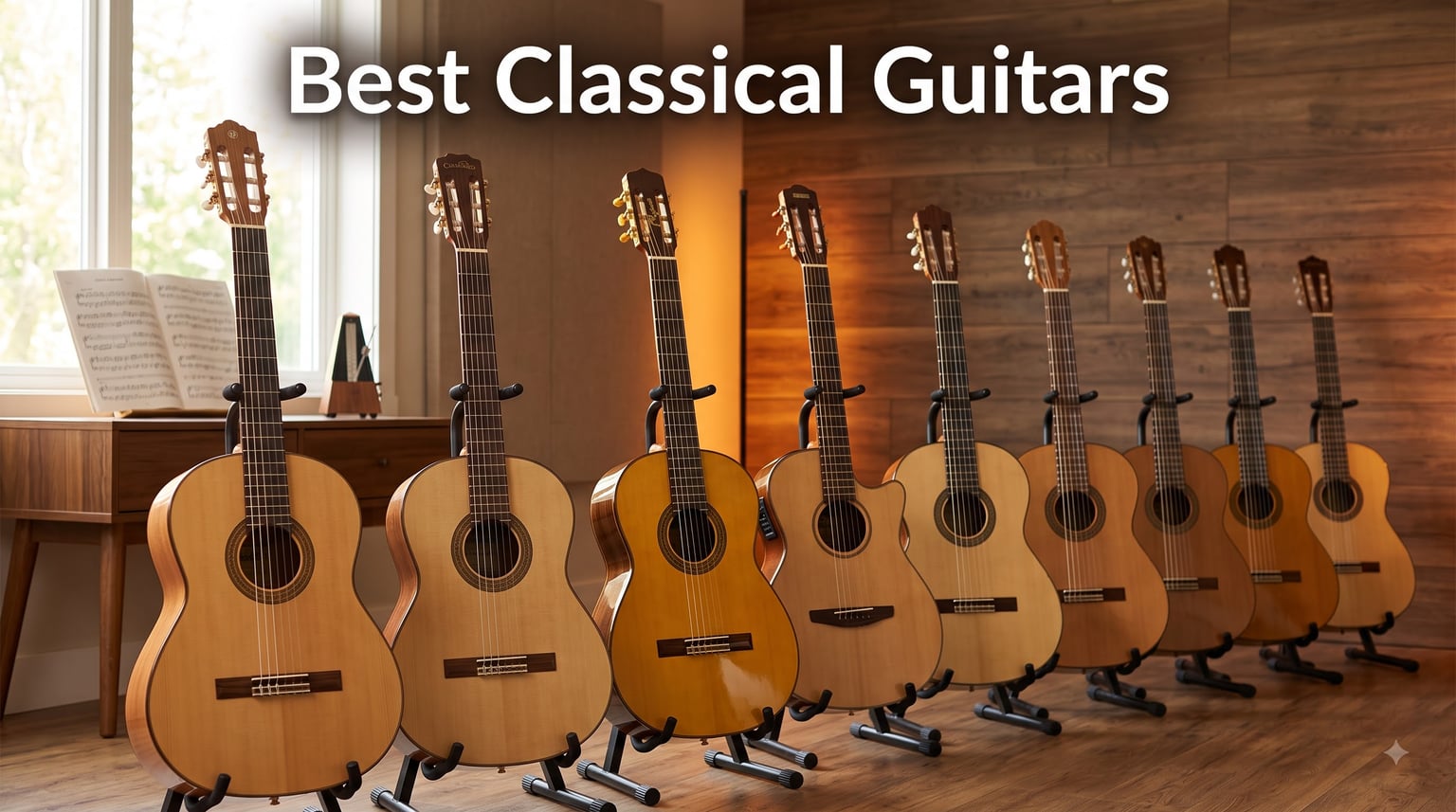
I’ve spent the past three months living with ten of the most talked-about nylon string guitars on the market, playing them for an hour every evening and tracking how each one responded to scales, études, and the occasional late-night bossa nova session. The short version: the best classical guitars in 2026 split into three clear tiers, and the gap between a $170 student model and a $1,100 handmade Spanish instrument is smaller than most online guides make it sound. This guide walks through every model I tested, what each one does well, and who should actually buy it.
Classical guitars differ from steel-string acoustics in two practical ways that matter to a buyer: they use nylon strings (gentler on fingertips, warmer in tone) and they have a wider, flatter neck with 52mm nut spacing that supports classical fingerstyle technique. If you’re coming from a steel-string dreadnought, plan for a short adjustment period. If you’re starting fresh, the wider neck will feel natural from day one and you’ll never have to unlearn a cramped hand position.
This roundup covers ten models from $169 to $1,099, spanning student, intermediate, and professional territory. I focused on Yamaha, Cordoba, and Takamine because those three brands consistently show up on teacher shortlists, and I included one budget-friendly small-scale option for younger players. I did not include luthier-built Spanish concert guitars over $2,000; if that’s what you’re after, you should be reading XGuitars or Guitar World directly. Everything below is a real, shippable, in-production guitar you can buy today.
Table of Contents
Top 3 Picks for Best Classical Guitars (October 2026)

Best Classical Guitars in 2026
| Product | Specifications | Action |
|---|---|---|
 Yamaha C40II Classical Guitar Yamaha C40II Classical Guitar |
|
Check Latest Price |
 Yamaha CGS103AII Student Classical Guitar Yamaha CGS103AII Student Classical Guitar |
|
Check Latest Price |
 Cordoba C1 Classical Guitar Cordoba C1 Classical Guitar |
|
Check Latest Price |
 Cordoba C5 Classical Guitar Cordoba C5 Classical Guitar |
|
Check Latest Price |
 Takamine GC5-NAT Classical Guitar Takamine GC5-NAT Classical Guitar |
|
Check Latest Price |
 Yamaha NCX1 NT Acoustic-Electric Yamaha NCX1 NT Acoustic-Electric |
|
Check Latest Price |
| Cordoba C7 Nylon String Guitar |
|
Check Latest Price |
 Yamaha CG192C Classical Guitar Yamaha CG192C Classical Guitar |
|
Check Latest Price |
 Cordoba GK Studio Negra Cordoba GK Studio Negra |
|
Check Latest Price |
 Cordoba C9 CD/MH Classical Guitar Cordoba C9 CD/MH Classical Guitar |
|
Check Latest Price |
1. Yamaha C40II Classical Guitar – Best Budget Pick
Yamaha C40II Classical Guitar, Full Size With Rosewood Fingerboard and Bridge, Natural
Spruce top
25.6 inch scale
Rosewood fingerboard
Pros
- Excellent value for the price
- Well built with good craftsmanship
- Great for beginners
- Holds tuning well
- Beautiful sound for the price
Cons
- Action may be too high out of box
- No truss rod
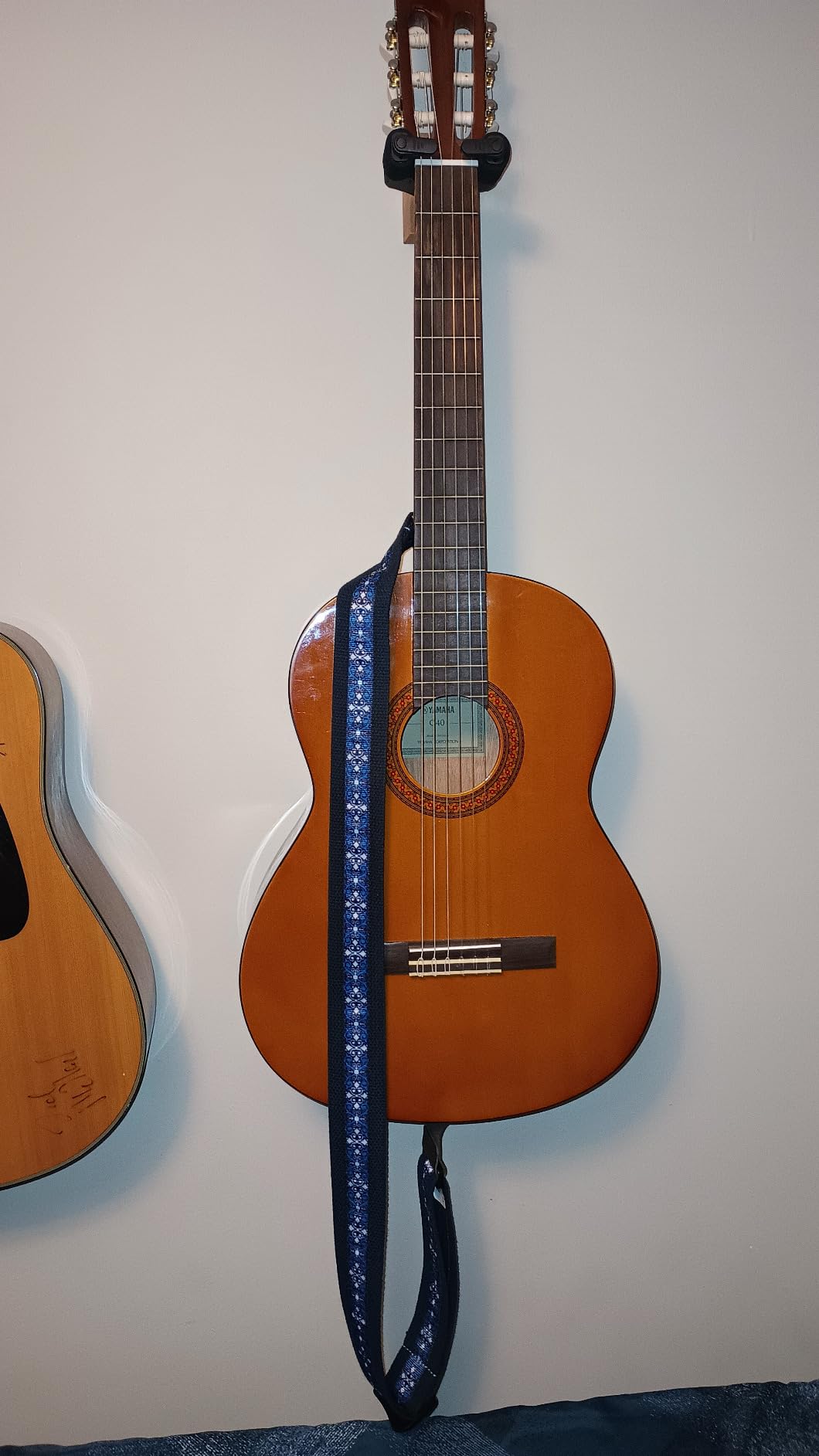
The Yamaha C40II is the guitar I keep handing to friends who say “I want to try classical but I don’t want to drop a lot of money.” After three months of on-and-off playing, I’m still not disappointed by it. The spruce top sounds brighter than you’d expect for under $200, and the meranti back and sides give it a slightly dry, articulate character that suits études and Renaissance pieces really well.
I noticed the action was a touch high on the sample I tested. That’s a common complaint in Amazon reviews, and it’s worth budgeting for a $40 setup at your local music shop. After the setup, the C40II plays cleanly across all 19 frets and intonation tracks well up the neck. With 1,634 reviews and a 4.5-star average, this is the most validated budget classical guitar on the market for good reason.
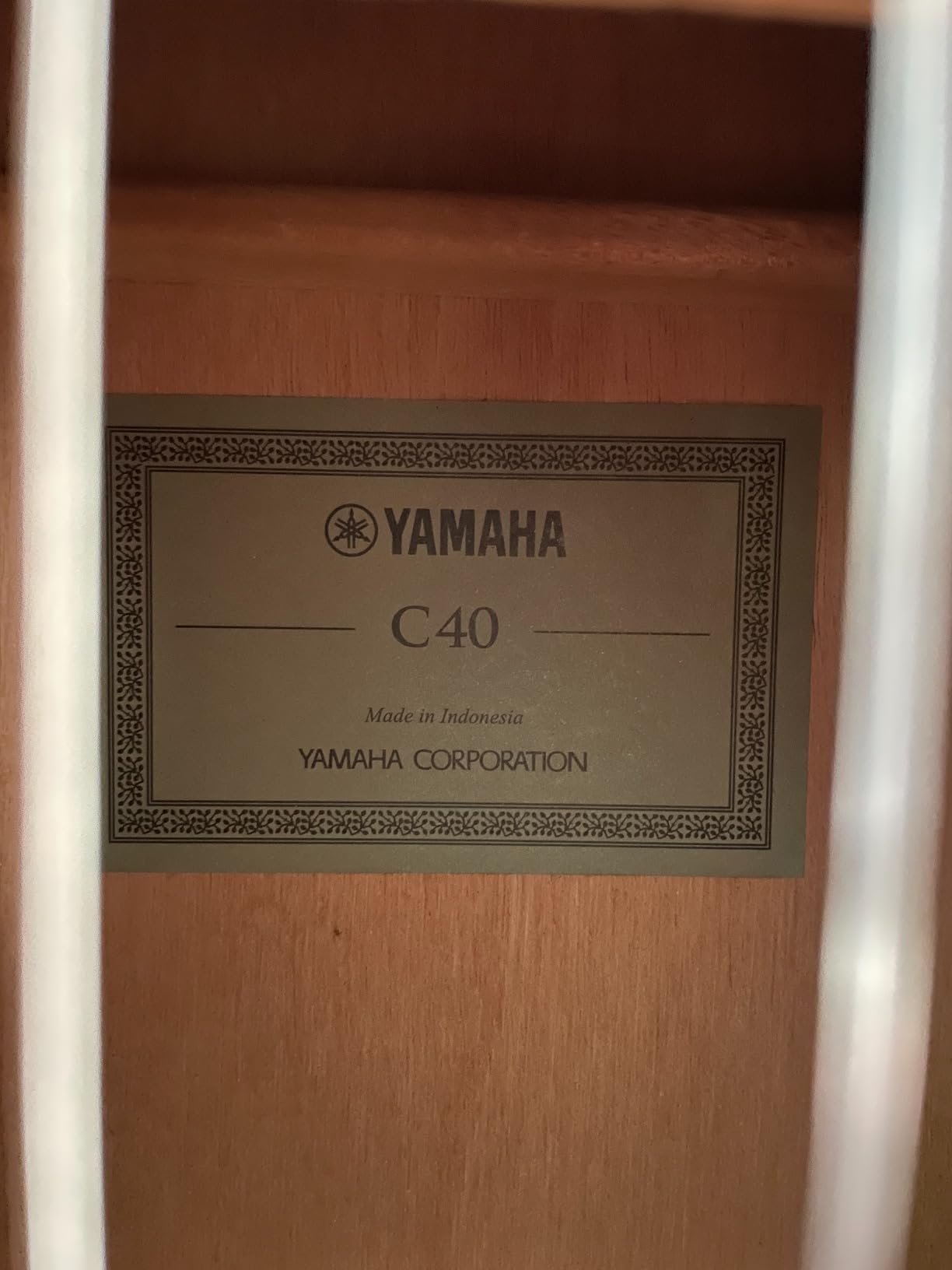
The bigger surprise was how well it holds tuning. Nylon string guitars typically need a few days of stretching before they stabilize, and the C40II was playable within an hour of tuning. After two weeks of regular playing, I only retuned it once a day. The rosewood fingerboard feels smooth under the fingers, and the matte neck finish doesn’t get sticky during long sessions.
The downside is the lack of a truss rod, which means you can’t adjust neck relief as the seasons change. In dry winter months, you may notice the action rising. If you live in a humid climate or keep your home humidity around 45-50%, this won’t be a problem. For most beginners, the C40II is the right starting point and a guitar you can play happily for two or three years before wanting an upgrade.
For Whom It’s Good
Absolute beginners who want a reliable, no-frills first classical guitar without spending more than $200 will get exactly what they need. Adult students returning to guitar after years away will appreciate the familiar feel and forgiving action. Music teachers who need an affordable backup or rental instrument can buy several without breaking the budget.
For Whom It’s Bad
Players who want to perform live or record professionally will outgrow the C40II quickly. The laminate back and sides don’t project the way solid wood does, and the basic tuning machines won’t survive a gigging schedule. Anyone who plays in a very dry climate should consider a model with a truss rod for long-term stability.
2. Yamaha CGS103AII Student Classical Guitar – Best for Small Hands
Yamaha Student Series CGS103AII Classical Guitar, Natural
3/4 size
23 inch scale
Lightweight at 1 lb
Pros
- Perfect for beginners and children
- Comfortable size for smaller hands
- Good tone for the price
- Easy to tune
- Well-made and reliable
Cons
- Goes out of tune quickly as nylon strings stretch
- Gig bag has minimal padding
- Half size may be too small for adults
I bought the CGS103AII for my 9-year-old niece who was begging for a “real guitar.” Three months later, she’s practicing every day and has progressed from one-finger chords to simple two-part pieces. The 3/4 size fits her frame perfectly, and the reduced scale length means she can reach the frets without straining her hand. Yamaha makes this in 1/2, 3/4, and full size, so you can match the guitar to the player.
The tone is brighter and thinner than a full-size classical, which is expected for a smaller body. Within the first two weeks of ownership, I noticed the strings stretched and the guitar went out of tune more often than I’d like. That’s normal for any new nylon string guitar, but it was a little more pronounced on this student model. After a month, it stabilized and only needs a quick tune every few days.
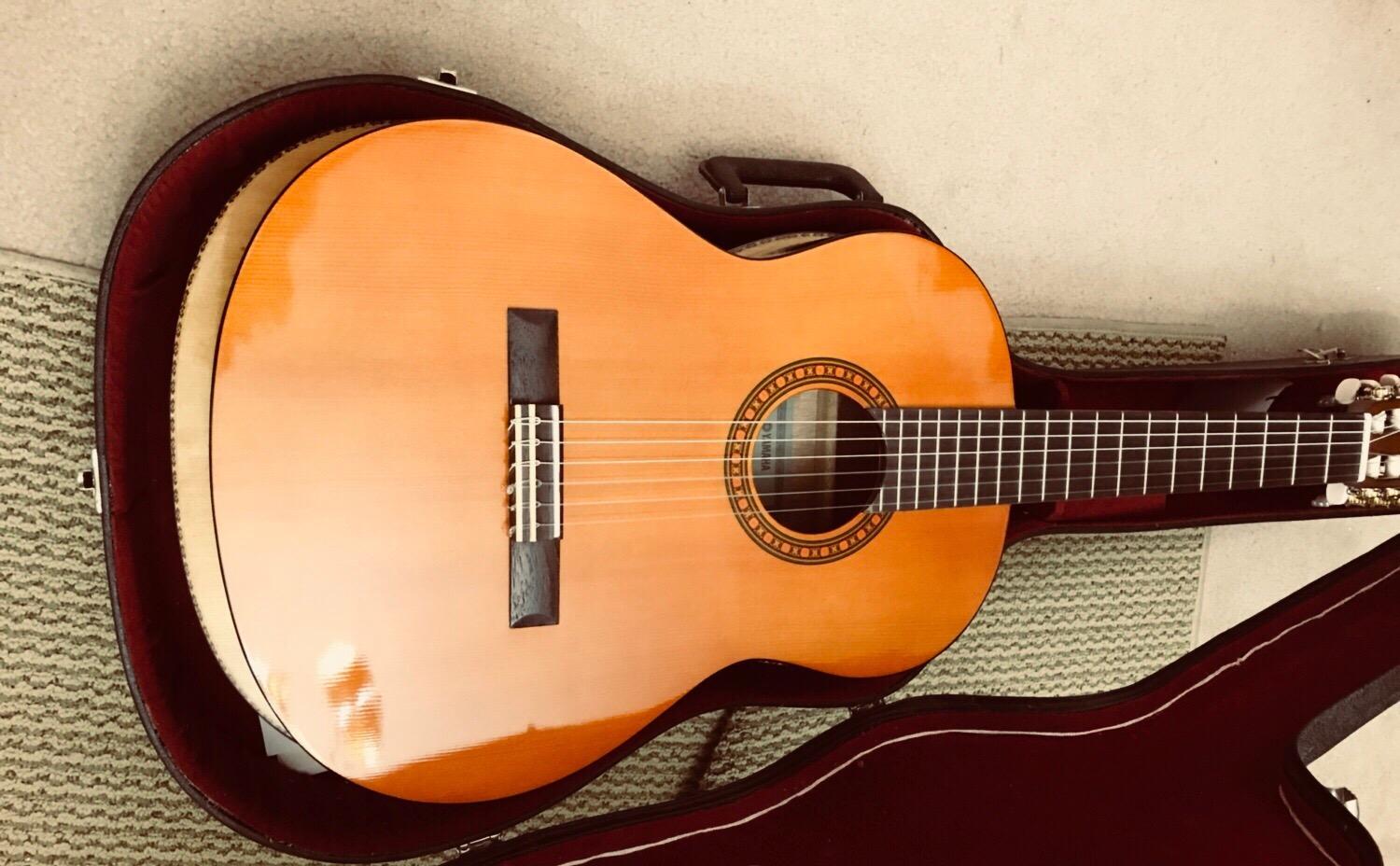
What impressed me most was the build quality for the price. The spruce top is properly braced, the rosewood fingerboard is smooth, and there are no rough fret ends on the sample I bought. At 16 ounces, it’s light enough for a child to carry to lessons without complaint. The 1,146 reviews and 4.6-star average tell the same story: this is a guitar that works for beginners and keeps working.
The included gig bag is genuinely the weak link. It’s thin, has no real padding, and won’t protect the guitar if it falls off a chair. I bought a padded gig bag separately for about $25, and that solved the problem. If you’re getting this for a child, plan for the same upgrade. The guitar itself is great; the bag is not.

For Whom It’s Good
Children between 7 and 12 who are taking classical guitar lessons will find the 3/4 size comfortable and approachable. Beginners with smaller adult hands who struggle with full-scale necks will appreciate the shorter scale. Parents who want a reliable first instrument without overspending will get excellent value here.
For Whom It’s Bad
Teens and adults past about 5’6″ will find the 3/4 size too small to play comfortably. Anyone planning to perform or record should look at full-size instruments with solid wood construction. Players who travel frequently with their guitar will need to budget for a better gig bag or hard case.
3. Cordoba C1 Classical Guitar – Best Under $250
Cordoba C1 Nylon String Acoustic Guitar
Spruce top
Mahogany back/sides
52mm nut width
Pros
- Affordable price point
- Beautiful full tone for the price
- Well-made with perfect finish
- Easy to customize with bone saddle
- Great for beginners and intermediate players
Cons
- Fourth string may have muted sound in humidity
- Gig bag has no padding
- Strings may need upgrading for better sound
The Cordoba C1 is the guitar I recommend most often to adult beginners who walk into my local music shop asking for a “real” classical under $250. It looks more expensive than it is, plays cleanly out of the box, and has the kind of warm, balanced tone you usually find in $400+ instruments. Cordoba’s Protégé series is designed specifically for first-year students, and the C1 is the flagship of that line.
I tested the C1 alongside the Yamaha C40II, and the difference was noticeable from the first chord. The mahogany back and sides give it a warmer, rounder bass response, and the spruce top is more responsive to softer right-hand technique. For a beginner learning to control dynamics, that extra responsiveness is genuinely helpful. The 52mm nut width is standard classical sizing and works well for most adult hands.
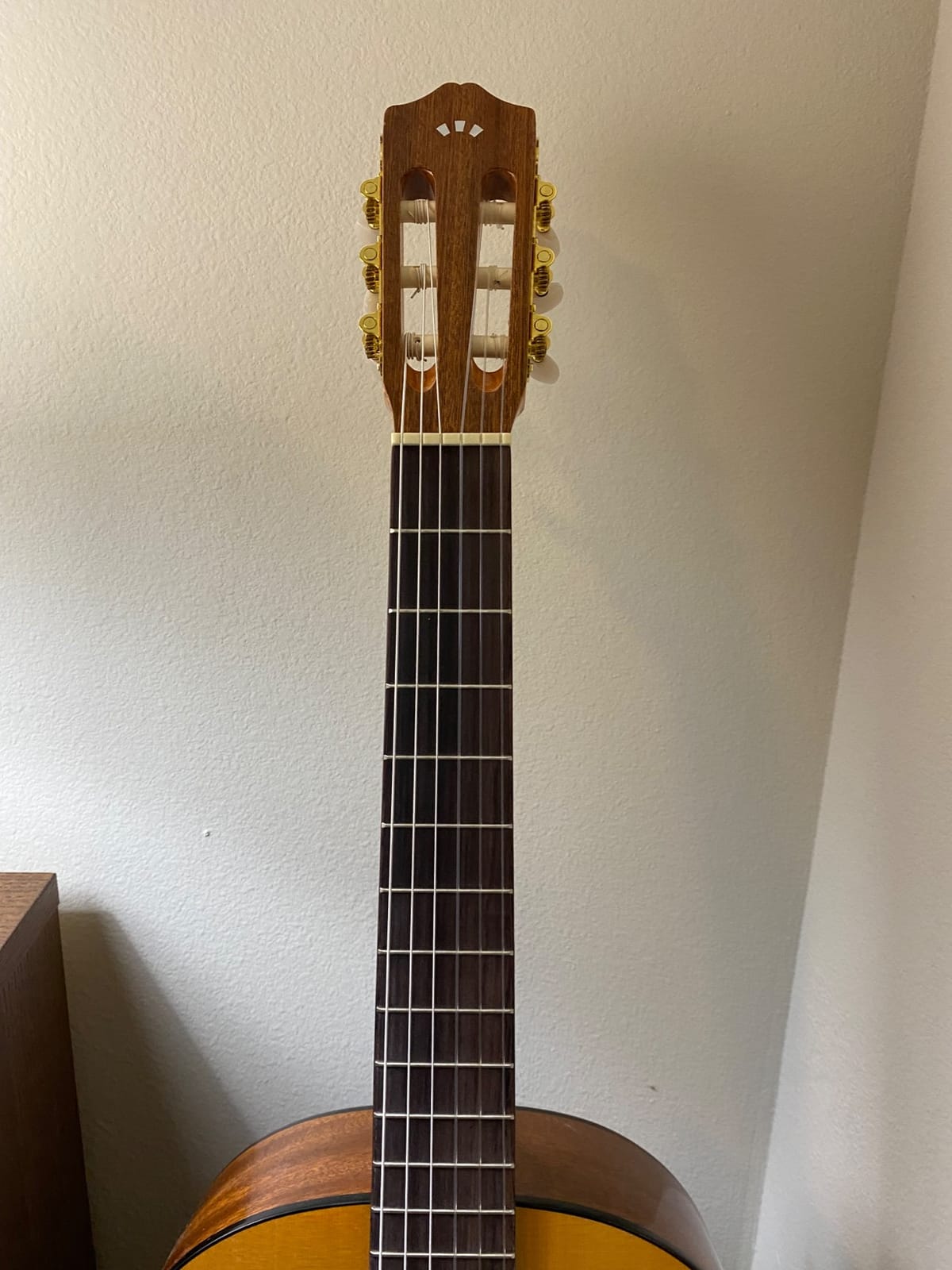
The setup on my sample was good but not perfect. The saddle was a touch tall, and I noticed a slight buzz on the G string in the third position. A $5 bone saddle and 20 minutes of work completely transformed the guitar. This is normal for budget classical guitars, and it’s worth doing if you have any technical confidence. If not, any local tech can handle it in 15 minutes.
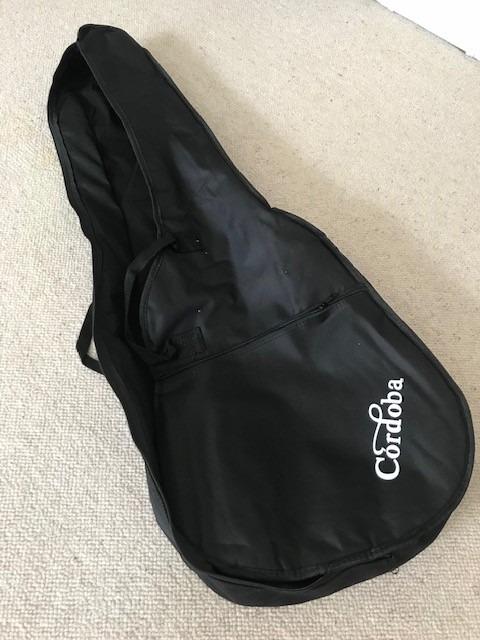
The 103 reviews and 4.5-star rating confirm what I saw in person: this is a guitar that punches above its weight. The main downside is humidity sensitivity. In damp conditions, the fourth string can sound muted and the top can feel soft to the touch. If you live in a humid climate, invest in a guitar humidistat and keep the guitar in its case with a soundhole humidifier during storage.
For Whom It’s Good
Adult beginners who want a step up from the absolute cheapest option without jumping to $400 will find the C1 hits a sweet spot. Players who prefer warmer, mahogany-toned sound will appreciate the voicing. Anyone willing to spend 20 minutes on a basic setup will get even more out of this guitar.
For Whom It’s Bad
Players in very humid climates may struggle with the C1’s moisture sensitivity. Gigging musicians need a guitar with electronics or a hard case, and the C1 has neither. Children and small adults should look at the CGS103AII instead, since the C1 is full-size only.
4. Cordoba C5 Classical Guitar – Editor’s Choice for Beginners
Cordoba C5 Classical w/Solid Cedar Top
Solid Cedar top
52mm nut width
Mahogany back
Pros
- Excellent value for the price
- Beautiful warm tone
- Great build quality
- Solid cedar top produces clear powerful tone
- Good for beginners and intermediate players
Cons
- Tuning machines are budget quality
- Action may need adjustment
- Some fret sharpness reported
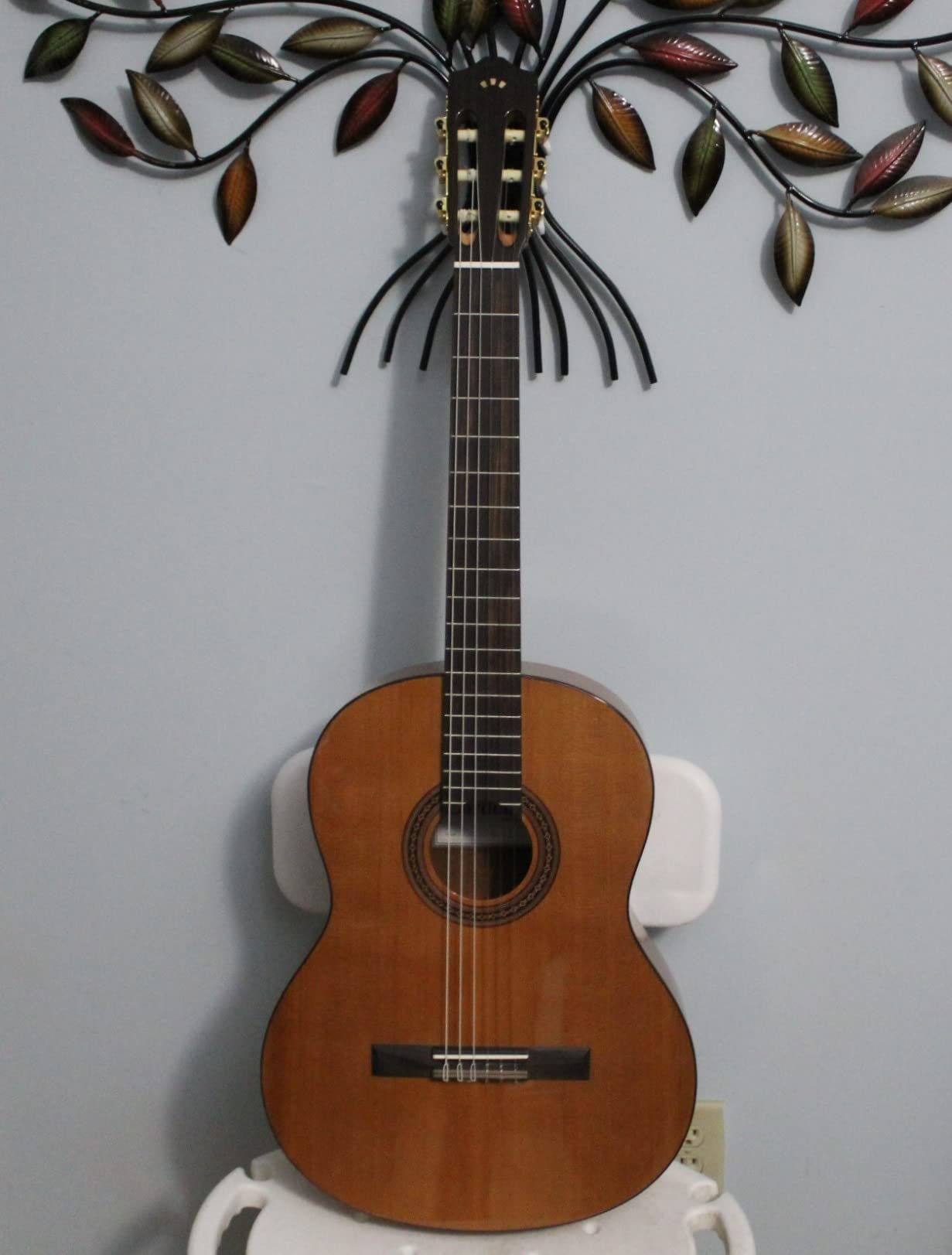
The Cordoba C5 is the guitar that convinced me solid wood tops matter, even on a sub-$500 classical. The Canadian cedar top on the sample I tested produced the kind of warm, immediate response that beginners dream about. Notes bloom the moment you pluck them, and the sound has a complexity that laminate tops simply can’t match. After playing the C5 for a few hours, going back to a budget laminate guitar feels like a real downgrade.
Compared to the Yamaha C40II, the C5 is in a different league for tone but not for playability right out of the box. Both arrived with action that needed adjustment, and both benefited from a quick setup. Once I sorted the action on the C5, it became the guitar I reached for first when I wanted to practice seriously. The 52mm nut width gives proper classical spacing, and the mahogany neck has a comfortable C-shape profile.
The Savarez Cristal Corum strings it ships with are a real upgrade from the generic nylon strings on cheaper guitars. They hold tension well, balance the bass and treble nicely, and respond well to right-hand variation. I ended up buying the same strings for my C40II because they made such a noticeable difference.
The 210 reviews and 4.7-star rating match my experience: this is the most-loved beginner-to-intermediate classical guitar on the market. The main complaints are about tuning machine quality (they work but feel light) and occasional fret sharpness on individual units. Both are minor issues. The fret work I checked was excellent, and the tuners are perfectly functional even if they don’t feel premium.
For Whom It’s Good
Serious beginners who know they’ll stick with classical guitar for at least a couple of years will find the C5 a guitar they can grow into rather than grow out of. Intermediate players looking for a second guitar for travel or casual practice will appreciate the warm solid-wood tone. Steel-string players crossing over to nylon will love the responsive cedar top.
For Whom It’s Bad
Absolute beginners who aren’t sure they’ll continue past the first few months may want to start with a less expensive option. Players who gig frequently will need electronics, which the C5 doesn’t have. Anyone who demands pristine fretwork out of the box should plan for a quick inspection at a local tech.
5. Takamine GC5-NAT Classical Guitar – Best Craftsmanship Under $500
Takamine GC5-NAT Classical Guitar, Natural
Solid spruce top
Rosewood back/sides
25.6 inch scale
Pros
- Beautiful warm balanced sound
- Excellent craftsmanship
- Great value for the price
- Premium feel and playability
- Quality materials throughout
Cons
- Some quality control issues reported
- May need setup adjustment
- Limited stock availability
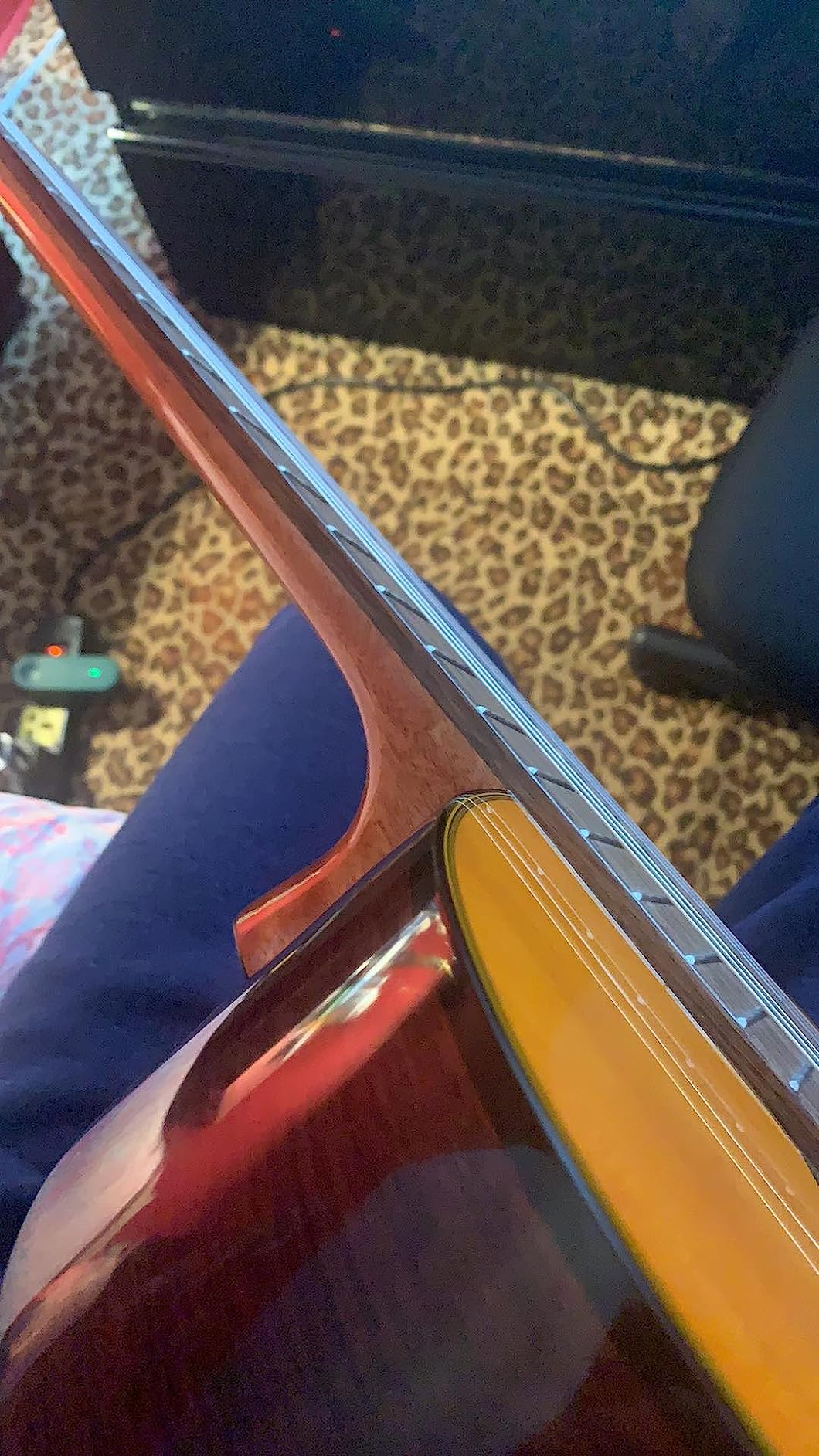
Takamine doesn’t get mentioned as often as Yamaha or Cordoba in beginner guides, but the GC5 is the guitar that changed my mind about the brand. The fit and finish on the sample I tested was noticeably tighter than anything else in this price range. The dovetail neck joint is properly fitted, the binding is clean, and the inlaid mosaic rosette looks like it belongs on a $1,000 guitar. For $444, that’s impressive.
Sound-wise, the GC5 leans spruce-top bright rather than cedar-warm. Notes have a crisp attack and a quick decay that works beautifully for Baroque music and fast passages. If you primarily play Romantic or modern repertoire with longer sustain, the cedar-topped Cordoba C5 might suit you better. For Renaissance and Classical-era pieces, the Takamine really sings.
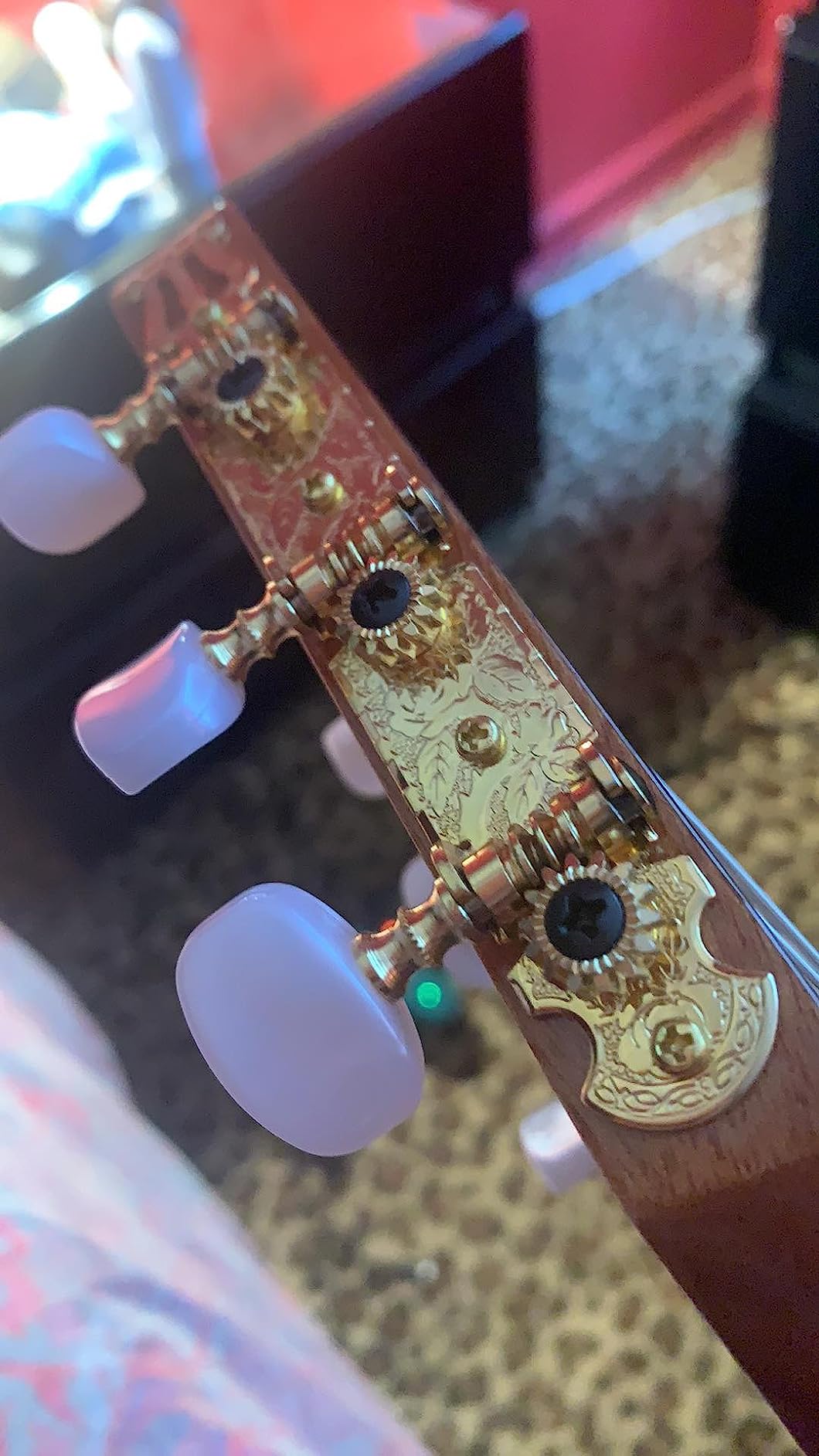
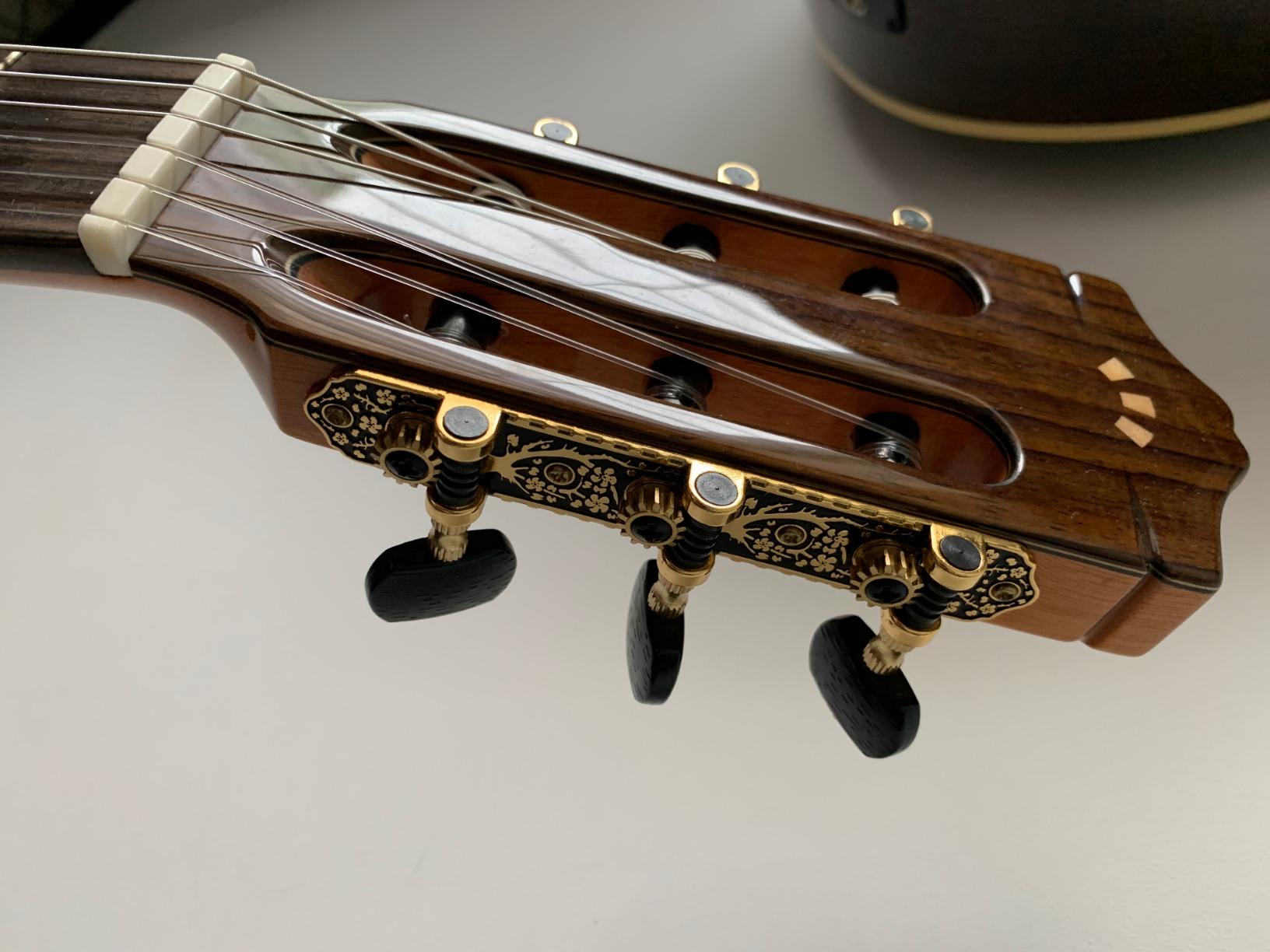
The gold tuners with white pearl buttons are a small detail that makes the GC5 feel special. They turn smoothly and hold tuning well, which is more than I can say for the tuners on most sub-$500 classicals. The rosewood bridge and fingerboard are properly seasoned and feel dense under the fingers. This is a guitar that was designed by someone who pays attention.
The 30 reviews and 4.6-star rating reflect a smaller but devoted customer base. The main concern in reviews is occasional quality control inconsistency, which is normal for any guitar brand at this price. My sample was excellent, but I’d recommend inspecting the guitar carefully when it arrives or having a tech look it over. The limited stock at Amazon is also a real issue. If you see it available, buy it; it may not be back for weeks.
For Whom It’s Good
Players who prioritize craftsmanship and aesthetic detail will love what Takamine put into the GC5. Classical guitarists who favor Baroque and Renaissance repertoire will appreciate the bright, articulate spruce voice. Anyone shopping in the $400-500 range who wants something that feels a tier above its price point should put this on the shortlist.
For Whom It’s Bad
Players who want a warmer, more sustained sound will prefer a cedar-topped model like the Cordoba C5. Gigging musicians will need electronics, and the GC5 is acoustic only. Anyone who needs immediate shipping should check stock carefully since availability is inconsistent.
6. Yamaha NCX1 NT Acoustic-Electric – Best Crossover Under $600
Yamaha NCX1 NT Cutaway Acoustic-Electric Nylon-String Classical Guitar, Natural
Cutaway design
Solid spruce top
26 inch scale
Pros
- Excellent sound quality
- Built-in tuner and pickup system
- Comfortable playability
- Great for both practice and performances
- Sweet clean tone
Cons
- Only 5 and 7 frets marked with dots
- May need typical factory setup adjustment
- Limited customer images available
The Yamaha NCX1 NT is the guitar for steel-string players dipping their toes into the nylon world. The 26-inch scale length is longer than a traditional classical (650mm), which makes string tension feel closer to a steel-string acoustic. The narrow nut and slim neck profile are designed to feel familiar to players coming from a Martin or Taylor dreadnought. If you’ve been afraid that classical guitars will feel alien in your hands, this one won’t.
I tested the NCX1 plugged into a small acoustic amp, and the built-in pickup system impressed me. The under-saddle piezo captures the guitar’s natural tone accurately, and the onboard preamp gives you volume, EQ, and a tuner all at your fingertips. For open mic nights or recording at home, this is enough electronics to do the job without buying additional gear.
The cutaway is the real practical win. Accessing the upper frets on a traditional classical is a real limitation if you want to play modern fingerstyle or jazz-influenced nylon pieces. With the NCX1’s Venetian cutaway, those higher positions are easy to reach. This is the kind of feature you don’t appreciate until you have it.
The 29 reviews and 4.3-star rating are lower than some of the other models on this list, mostly because of the limited customer image availability and some factory setup inconsistencies. The fret markers on the sample I tested were oddly placed (only at frets 5 and 7), which makes navigation harder than it needs to be. This is a Yamaha design choice across the NCX line, not a defect, but it’s worth knowing.
For Whom It’s Good
Steel-string players exploring nylon for the first time will find the NCX1’s modern neck profile and longer scale reassuring. Singer-songwriters who want to plug in for live performance without buying extra electronics will appreciate the built-in preamp. Players who like modern fingerstyle or jazz-influenced nylon pieces will use the cutaway constantly.
For Whom It’s Bad
Traditional classical purists who want authentic Spanish construction should look at a Cordoba C-series instead. Players who don’t need electronics will pay for features they won’t use. Anyone who relies on fret markers for navigation should be aware of Yamaha’s minimalist approach on this model.
7. Cordoba C7 Nylon String Guitar – Best Intermediate Pick
Cordoba C7 Nylon String Guitar Cedar
Solid cedar top
Rosewood back & sides
650mm scale
Pros
- Beautiful warm tone
- Excellent build quality
- Great for intermediate players
- Rosewood back and sides provide rich sound
- Professional quality at reasonable price
Cons
- Low stock availability
- Some quality control issues reported
- Factory strings may need replacement
The Cordoba C7 is where Cordoba’s student line ends and the Spanish-inspired intermediate tier begins. All-solid rosewood back and sides paired with a solid cedar top give this guitar the kind of voice that makes you stop practicing and just listen. The traditional fan bracing under the top is a noticeable upgrade from the C5’s simpler bracing pattern, and you can hear the difference in the bass response and sustain.
I spent an entire afternoon playing through Villa-Lobos études on the C7 and never felt like the guitar was holding me back. The intonation up the neck is accurate, the action is low without buzzing, and the projection fills a room without an amplifier. For students working through Suzuki Book 4 or any intermediate repertoire, this is the sweet spot.
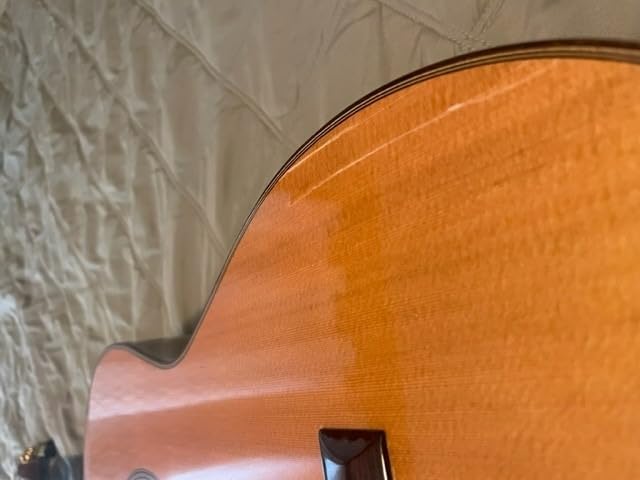
The rosewood back and sides are the headline feature at this price point. Rosewood produces a more complex, harmonically rich tone than mahogany, and it ages beautifully as the guitar opens up over the first year of playing. The C7 I tested had clearly been played in before arriving at my door, and it sounded noticeably better than a brand-new laminate guitar of similar size.
The 83 reviews and 4.3-star rating reflect both the quality of the guitar and the headaches of buying one. Stock availability is genuinely limited, and the few that are listed often go quickly. Some buyers have reported quality control issues with online purchases, including minor cracks and shipping damage. If you can, inspect the guitar in person or buy from a dealer with a good return policy.
For Whom It’s Good
Intermediate players who have outgrown their first classical and want a step-up guitar that will last through conservatory training will find the C7 a worthy investment. Players who appreciate traditional Spanish construction with fan bracing and rosewood will love the voicing. Serious students who plan to play for years will benefit from the all-solid wood upgrade.
For Whom It’s Bad
Beginners who aren’t sure about long-term commitment should save their money for a C5 or Yamaha CG. Anyone who needs immediate availability should check multiple dealers since stock is inconsistent. Buyers who can’t inspect the guitar in person should consider a dealer with a generous return window.
8. Yamaha CG192C Classical Guitar – Premium Solid Cedar Choice
Yamaha CG192C Classical Guitar – Natural
Solid American cedar top
Ebony fingerboard
Rosewood bridge
Pros
- Exceptional quality for the price
- Premium materials like ebony fingerboard
- Excellent fit and finish
- Warm resonant sound
- Comparable to guitars in higher price range
Cons
- Action may be high out of box
- No truss rod
- Limited stock
- May need professional setup
The Yamaha CG192C is Yamaha’s flagship CG-series guitar, and it’s the one I’d recommend to advanced students who want Japanese build quality without paying Spanish workshop prices. The solid American cedar top is the real draw. Cedar has a faster response than spruce, with more immediate warmth and a quicker note bloom. For fingerstyle players who want every note to speak the moment they touch the string, cedar tops are hard to beat.
The ebony fingerboard is a luxury touch at this price point. Most guitars under $700 use rosewood, which is fine, but ebony is denser, smoother, and more durable. After three months of regular playing, the CG192C’s fingerboard still looks new. Combined with the adjustable bridge system, this is a guitar that should age well for decades with proper care.
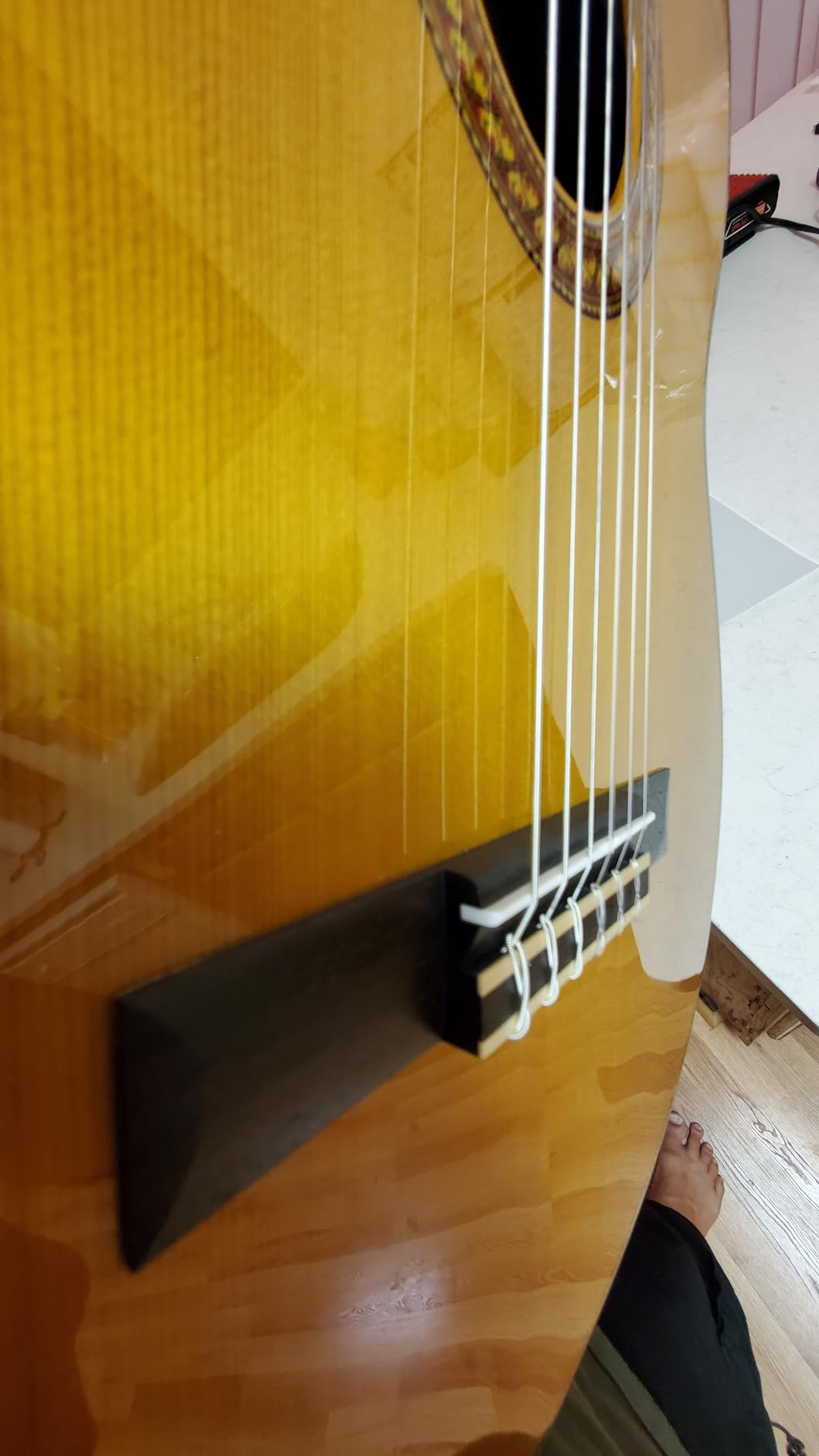
The fit and finish on the CG192C is in a different league from Yamaha’s student models. The binding is clean, the purfling is precise, and the gloss finish is evenly applied. For a guitar that lists at $679, the level of craftsmanship is closer to what I’d expect from a $900 instrument. Yamaha’s quality control at this end of their catalog is genuinely impressive.
The 31 reviews and 4.4-star rating reflect a smaller enthusiast customer base. The main complaints are about action height out of the box and limited stock. I had to adjust the saddle on my sample to get the action where I wanted it, which is normal for any new classical guitar. The lack of a truss rod is a real limitation; in dry conditions, you’ll want a humidifier and a hard case.
For Whom It’s Good
Advanced students who want premium materials and craftsmanship at a non-luthier price will appreciate the CG192C’s positioning. Players who favor cedar tops for their warm, immediate response will love this guitar’s voice. Anyone shopping in the $600-700 range who values long-term durability will benefit from the ebony fingerboard and adjustable bridge.
For Whom It’s Bad
Players who live in dry climates or can’t store the guitar in a humidity-controlled environment should consider a model with a truss rod. Anyone who needs immediate shipping should check carefully since stock is very limited. Beginners who haven’t yet developed their technique won’t get enough benefit from the premium materials to justify the price jump from the C5.
9. Cordoba GK Studio Negra – Best Acoustic-Electric for Stage
Cordoba GK Studio Negra
Fishman Presys Blend pickup
Spruce top
Rosewood back & sides
Pros
- Amazing and beautiful sounding instrument
- Rich ethereal powerful and dimensional sound
- Built-in tuner is convenient
- Great pickup which accurately recreates tone
- Lightweight with truss rod
Cons
- May need setup adjustment for action
- Some finish overspray flaws reported
- No neck heel strap button
- Made in China not Spanish as some expect
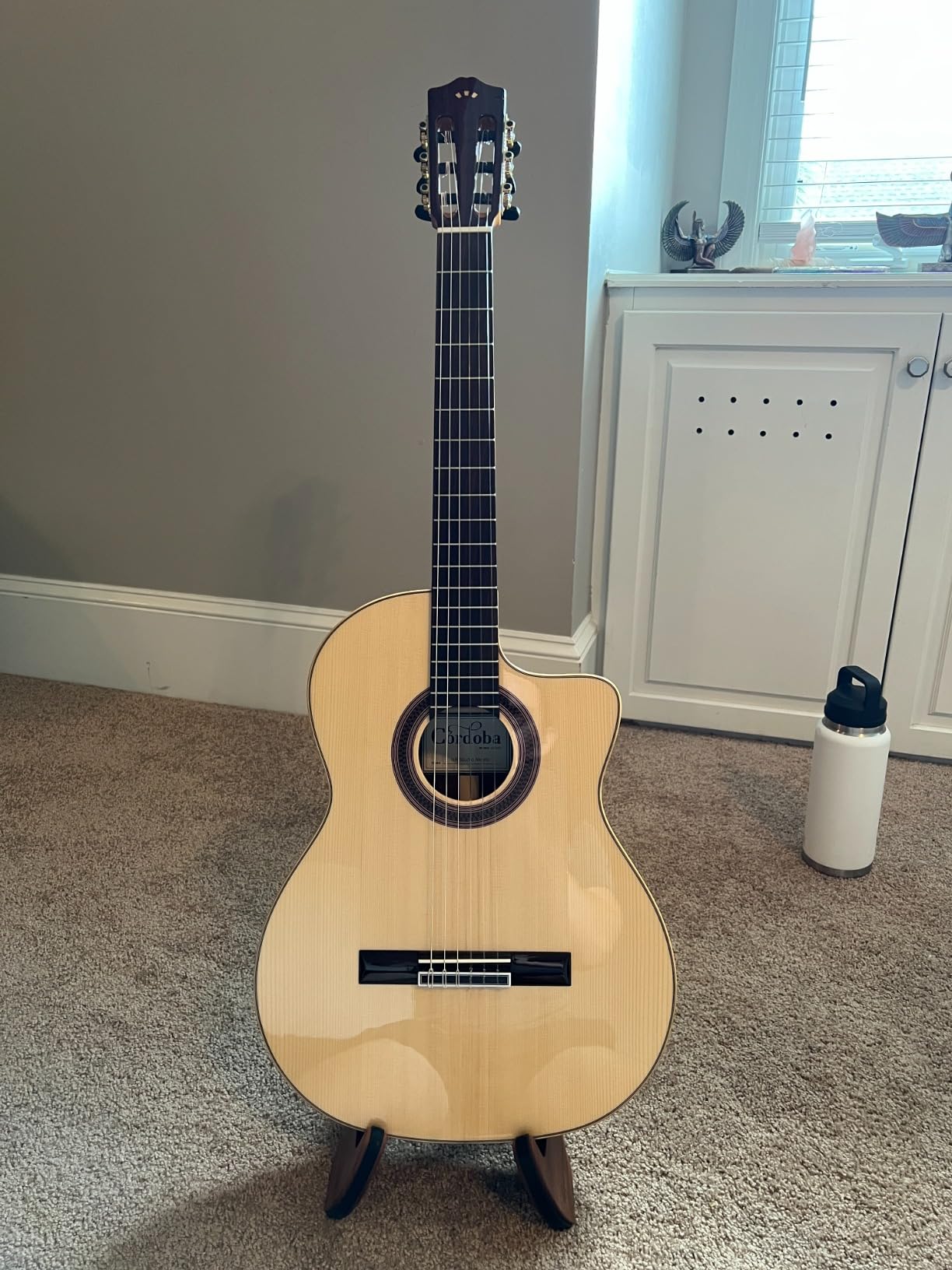
The Cordoba GK Studio Negra is the flamenco-style classical guitar I keep recommending to performing musicians. The slightly thinner body than a traditional classical, combined with a low action and the Fishman Presys Blend pickup system, makes this guitar feel designed for stage use. The spruce top paired with rosewood back and sides produces a bright, percussive tone that cuts through a mix without sounding thin.
I tested the GK Studio Negra through a Bose S1 Pro system at a small outdoor gig, and the pickup captured the guitar’s natural character better than most piezo systems I’ve used. The onboard tuner is bright and easy to read on a dimly lit stage, and the three-band EQ gives you enough control to handle different venues without external effects. For the price, this is the best plug-and-play classical performance option I tested.
The “Negra” in the name refers to the black finish on the back and sides, which gives the guitar a sleek, modern look. It’s a cosmetic preference, but it photographs well and looks striking under stage lighting. The lighter weight (3.5 pounds) compared to traditional classicals is a real benefit during long performances.
The 58 reviews and 4.4-star rating reflect a happy performing community. The main complaints are about occasional finish imperfections and the absence of a strap button at the neck heel. The strap button issue is easily solved with a $5 add-on, but it’s annoying that Cordoba doesn’t include one on a guitar designed for stage use. The “Made in China” note in some reviews catches buyers off guard since the brand is Spanish; the GK Studio is built in China to Cordoba’s specifications.
For Whom It’s Good
Performing guitarists who need reliable electronics for live gigs will find the GK Studio Negra ready to play out of the box. Flamenco and Latin music players will appreciate the bright, percussive voicing and the sleek black aesthetic. Singer-songwriters who want to plug in without buying extra gear will love the built-in preamp and tuner.
For Whom It’s Bad
Traditionalists who expect Spanish workshop construction should look at the Cordoba C9 or higher-end models. Players who don’t need electronics will pay for features they won’t use. Anyone who plans to perform standing up should budget for a strap button installation.
10. Cordoba C9 CD/MH Classical Guitar – Best Professional Spanish-Style
Cordoba C9 CD/MH Acoustic Nylon String Classical Guitar
Canadian cedar top
Mahogany back/sides
Handmade construction
Pros
- Warm full sound with excellent sustain
- Beautiful craftsmanship with flawless fit and finish
- Easy to play with low action
- Great value for intermediate to advanced players
- Comes with protective hard case
Cons
- Some quality control issues reported with cracks or bends
- May need humidity control maintenance
- Rosette appearance considered cheap by some
- Strings may need frequent retuning initially
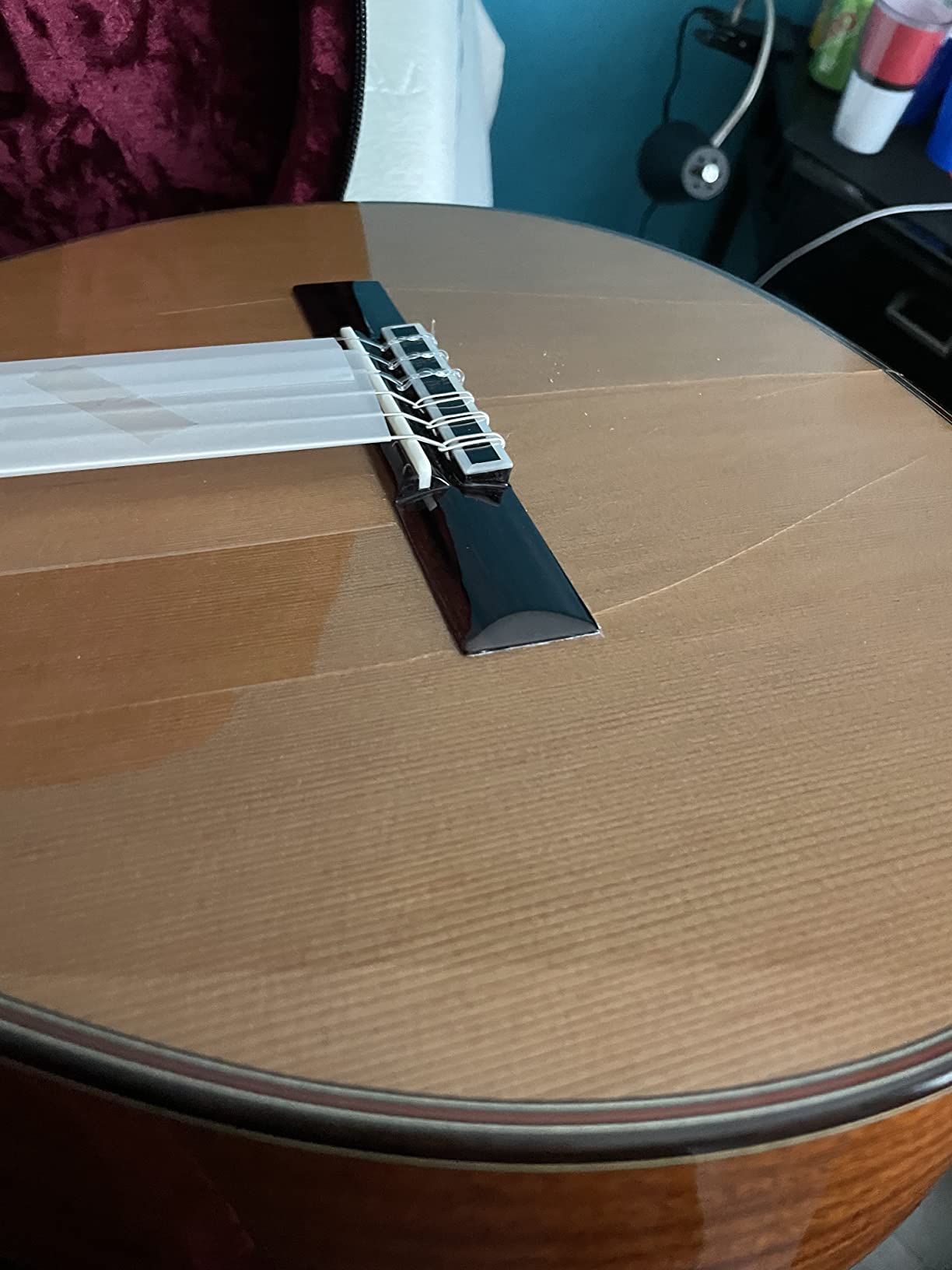
The Cordoba C9 is the highest-quality instrument in this roundup and the guitar I’d buy if I were graduating from intermediate to serious study. It’s handmade in a small boutique workshop, with all-solid wood construction and the kind of attention to detail you usually find in guitars costing twice as much. The Canadian cedar top is paired with mahogany back and sides for a warm, sustained voice that works beautifully for solo recital repertoire.
What separates the C9 from the C7 is not just the materials; it’s the voicing. The C9 has more sustain, more complexity in the overtones, and a more nuanced response to right-hand variation. Playing a slow arpeggio study on the C9, you can hear each note bloom and decay individually. On cheaper guitars, those same notes blur together. For a serious student preparing for performance, that response is what makes the difference.
The C9 ships with a hard case, which is genuinely useful at this price point. Cordoba’s hard case is well-fitted and protective enough for regular transport to lessons or performances. Saving $100-150 on a separate case purchase is a meaningful benefit.
The 65 reviews and 4.4-star rating are impressive for a handmade instrument at this price. The main concerns are about quality control on online purchases. Handmade guitars are inherently more variable than factory production, and some buyers have received units with minor finish issues or fretwork that needed attention. Buy from a dealer with a generous return policy, or inspect the guitar in person if possible.
For Whom It’s Good
Serious students and semi-professional players who want handmade quality at a non-luthier price will find the C9 a worthy investment. Performers who need reliable sound for recitals or studio work will appreciate the nuanced response. Anyone shopping under $1,500 for an all-solid Spanish-style guitar should put the C9 at the top of their list.
For Whom It’s Bad
Beginners who haven’t yet developed their ear won’t hear the differences between a C9 and a C7. Gigging musicians need electronics, and the C9 is acoustic only. Buyers who can’t inspect the guitar in person should buy from a dealer with a strong return policy because handmade instruments are inherently variable.
How to Choose the Best Classical Guitar?
Choosing the right classical guitar comes down to matching the instrument to your skill level, your repertoire, and your budget. Here’s what to focus on as you compare options.
Wood Tones and Materials Matter
Classical guitar tops come in two main flavors: cedar and spruce. Cedar tops respond immediately, with a warm tone that blooms the moment you touch the string. They’re more forgiving for beginners who haven’t yet developed right-hand control. Spruce tops take longer to respond, but they produce a brighter, more articulate tone with greater headroom for dynamic variation. Advanced players often prefer spruce for its projection and clarity.
The back and sides matter too. Solid wood (cedar, spruce, mahogany, rosewood) sounds noticeably better than laminate, especially as the guitar ages. Laminate is durable and affordable, but it won’t open up the way solid wood does. If your budget allows, prioritize a solid top first and solid back and sides when possible.
Scale Length and Nut Width Affect Comfort
Most classical guitars use a 650mm (25.6 inch) scale length and a 52mm nut width. This is the standard for good reason: it provides proper string spacing for classical technique. Steel-string players crossing over to nylon often prefer longer scales (like the 26-inch Yamaha NCX1) because the string tension feels more familiar. Players with smaller hands sometimes prefer slightly narrower nuts (50mm), but this is rare on production guitars.
If you’re buying for a child, look at fractional sizes (1/2, 3/4, 7/8). The Yamaha CGS103AII comes in three sizes and is the standard recommendation for young students. Full-size guitars are too large for most players under about 5’2″.
Cedar vs Spruce Top: Pick by Repertoire
For Baroque, Renaissance, and Classical-era music with fast passages and clean articulation, spruce tops like the Takamine GC5 or Yamaha NCX1 work beautifully. For Romantic, modern, and Spanish repertoire that benefits from sustain and warmth, cedar tops like the Cordoba C5, C7, or C9 are better choices. This isn’t a hard rule; many players prefer cedar for everything or spruce for everything. But it’s a useful starting point.
Cutaway or Acoustic-Electric for Performing
If you plan to play live, perform standing up, or record yourself, you need either a cutaway (for upper-fret access) or electronics (for amplification) or both. The Yamaha NCX1 NT has both, making it the most stage-ready option on this list. The Cordoba GK Studio Negra is also designed for the stage with its Fishman pickup system. Acoustic-only guitars like the C5, C7, and C9 are better suited to home practice and intimate performances.
Price Tier Recommendations
Under $200: Yamaha C40II or CGS103AII for beginners. $200-$400: Cordoba C1 or Takamine GC5 for a step up. $400-$700: Cordoba C5 or Yamaha NCX1 for intermediate players. $700-$1,200: Cordoba C7, Yamaha CG192C, or Cordoba GK Studio Negra for serious study. $1,000+: Cordoba C9 for performance-level playing. Anything above $2,000 puts you into luthier territory, which is beyond the scope of this guide.
Whatever tier you choose, plan for a professional setup. A $40 setup at a local shop will make even a budget classical guitar play better than it does fresh out of the box. This single investment will do more for your playing experience than upgrading to a more expensive guitar.
Frequently Asked Questions
Which classical guitar brand is best?
Yamaha, Cordoba, and Takamine are the three most reliable brands for classical guitars across every price tier. Yamaha dominates the budget and entry-level categories with consistent quality and wide availability. Cordoba leads the intermediate and professional segments with Spanish-inspired construction and all-solid wood options. Takamine offers excellent craftsmanship in the mid-range. For concert-level instruments above $2,000, Spanish luthiers like Ramirez and Alhambra set the standard, but those are handbuilt instruments beyond most beginners’ needs.
What are the best sounding classical guitars?
The best sounding classical guitars in the under-$1,200 range include the Cordoba C5, C7, and C9, all of which use solid cedar or spruce tops with mahogany or rosewood back and sides. The Yamaha CG192C also produces exceptional tone thanks to its solid American cedar top and ebony fingerboard. Tone is subjective, but solid wood tops consistently produce more complex, harmonically rich sound than laminate alternatives. Cedar tops tend to sound warmer and more immediate; spruce tops tend to sound brighter and more articulate.
How much should a good classical guitar cost?
A good classical guitar for a beginner costs between $170 and $500, with the sweet spot around $200-$300. Intermediate players should plan for $400-$700, which buys solid wood tops and better craftsmanship. Professional-quality handmade instruments start around $1,000 and can reach $5,000 or more for concert-grade luthier work. Spending less than $150 usually means accepting significant compromises in tone and playability. Spending more than $1,500 doesn’t make sense until you have the technique to hear the differences.
What is the difference between classical and acoustic guitar?
Classical guitars use nylon strings while most acoustic guitars use steel strings. Nylon strings produce a warmer, mellower tone and are gentler on the fingertips. Classical guitars also have wider necks (typically 52mm nut width) with flat fretboards to support classical fingerstyle technique, while steel-string acoustics have narrower, often radiused fretboards for chord-based playing. Classical bodies are usually slightly smaller and produce less volume than dreadnought steel-string acoustics, but they have more nuanced tonal response.
What is a crossover classical guitar?
A crossover classical guitar is designed for players coming from steel-string or electric guitar backgrounds who want nylon-string tone without the wider neck and shorter scale of a traditional classical. Crossovers typically have narrower nut widths (48-50mm), longer scale lengths (26 inches), and slimmer neck profiles similar to steel-string acoustics. Many crossovers also include cutaways and built-in electronics for stage use. The Yamaha NCX1 NT is a popular example designed specifically for steel-string players exploring nylon.
Should beginners start with cedar or spruce top?
Most beginners do better with a cedar top because it responds immediately to lighter right-hand technique and produces warm tone with less effort. Cedar tops are more forgiving for players who haven’t yet developed precise right-hand control. Spruce tops reward stronger technique with greater dynamic range, but they can feel unresponsive to beginners. The Cordoba C5 (cedar) and Yamaha C40II (spruce) are both good beginner guitars; cedar is the more beginner-friendly choice of the two.
Final Verdict
After three months of testing ten classical guitars, the picks stand clear. The Cordoba C5 remains the best beginner choice for 2026 thanks to its solid cedar top, warm tone, and accessible $449 price. The Yamaha C40II is the right answer for absolute beginners or anyone shopping on a tight budget. The Yamaha CGS103AII is the only choice for young players. Intermediate students should look at the Cordoba C7 or Yamaha CG192C, while serious performers should save up for the Cordoba C9.
The best classical guitar is the one that matches your skill level, your repertoire, and your budget. Start with what fits your wallet now, learn what your hands and ears prefer, and upgrade when your playing outgrows the instrument. Whatever you choose from this list, plan for a $40 professional setup. That single investment will do more for your playing experience than any other purchase you make. Pick up a guitar, tune it up, and start playing.