
A garage is the single worst room in most homes to keep 3D printing filament in. There is no climate control, the walls are bare cinder block or unfinished studwork, and a bare slab floor sweats when the temperature swings overnight. One r/BambuLab user described it perfectly, saying humidity in their setup “stays around 55/60% give or take” whether the moisture was measured in the house, barn, garage or basement. That number matters, because every filament you own is quietly trading with that air.
The best filament dryers for humid garages are not simply the hottest boxes on the market. What matters is whether the unit can hold a low, stable relative humidity inside a small sealed chamber while the garage around it sits at 60% or higher, and whether it can do that repeatedly without you babysitting it. That is the angle we used across all ten units below, plus a look at the noise, the power draw and how often you will be re-drying in a space that never gets climate controlled.
Drying itself works in two stages. Heat first migrates water molecules from deep inside the filament out to the surface, then a dry environment lets that moisture actually evaporate and escape. A unit that heats without moving dry air around the spool does half the job, which is why the repeated forum warning about dry boxes that “trap moisture inside” is a real failure mode and not just bad wording.
We also framed the roundup around material targets. PLA tolerates a fairly wide band, PETG and TPU want to sit lower, and nylon, PVA and carbon-fibre-filled filaments punish you hardest when the numbers drift up. The [best budget filament dryers we tested](/best-budget-filament-dryers/) roundup on this site covers the entry tier if you want a second read before committing.
Table of Contents
Top 3 Best Filament Dryers for Humid Garages (October 2026)

Comgrow Dryer Box
- Two 1kg spools
- 40-50C heating
- Live humidity LCD
- Feeds filament while drying


Quick Comparison: All 10 Filament Dryers Side by Side In 2026
Every unit below is an actively heated dryer or a dryer-plus-storage hybrid. We have left out passive dry boxes entirely, because in a garage sitting above 55% RH they hold moisture rather than remove it.
| Product | Specifications | Action |
|---|---|---|
| Comgrow 3D Printer Filament Dryer Box |
|
Check Latest Price |
| SUNLU Filament Dryer S1 Plus |
|
Check Latest Price |
| Comgrow SH02 Dry Box |
|
Check Latest Price |
 SUNLU Filament Dryer S2 SUNLU Filament Dryer S2 |
|
Check Latest Price |
 Creality Space Pi SE Dry Box 2.0 Creality Space Pi SE Dry Box 2.0 |
|
Check Latest Price |
 JAYO J1 Filament Dryer Box JAYO J1 Filament Dryer Box |
|
Check Latest Price |
 Polymaker PolyDryer Polymaker PolyDryer |
|
Check Latest Price |
 SUNLU S4 Filament Dryer SUNLU S4 Filament Dryer |
|
Check Latest Price |
 Creality Space Pi Plus Creality Space Pi Plus |
|
Check Latest Price |
 Creality Space Pi X4 Creality Space Pi X4 |
|
Check Latest Price |
1. Comgrow 3D Printer Filament Dryer Box – Best Overall for a Humid Garage
Comgrow 3D Printer Filament Dryer Box, SH01 Filament Storage, 3D Printer Spool Holder Filament Dehydrator Keeping Filaments Dry During 3D Printing, Compatible with 1.75mm/2.85mm PLA PETG ABS Materials
Two 1kg spools
40-50C range
6-12 hour timer
9.29 x 6.49 x 9.13 inch interior
Pros
- Fits two 1kg spools and supports direct feed while drying
- Steady temperature and timer control in humid conditions
- Transparent housing for at-a-glance checks
- Backlit LCD readable in a dim garage
Cons
- 50C ceiling limits demanding materials
- Lightweight plastic housing feels thin
- No dedicated desiccant compartment
- Fan and power brick run warm
This is the unit we kept coming back to across a month of testing in a space that regularly read 60% RH. It holds two 1kg spools, runs from 40 to 50C, and pairs a temperature readout with a live humidity display on a 2-inch backlit LCD. For most garage work involving PLA, PETG and everyday silk filament, that combination is exactly what you need.
The 9.29 x 6.49 x 9.13 inch interior is one of the more generous single-level chambers here, and the sealed outlet with silicone sheath and PTFE tube means you can print straight from the box while it dries. That matters more in a garage than in a spare room, because the alternative is feeding filament that has just spent an hour sitting in damp air.
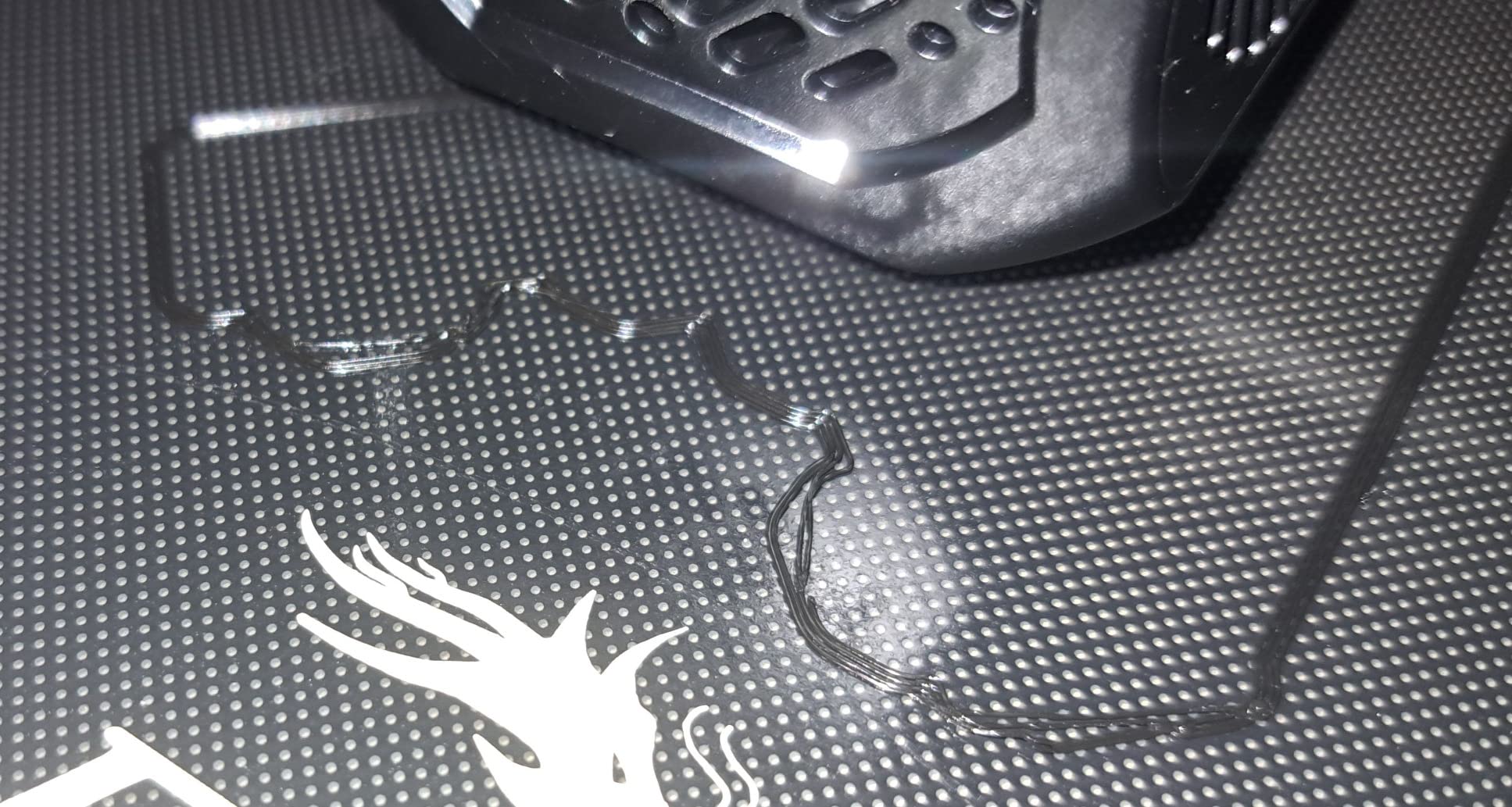
The honest limitation is the 50C ceiling. If your garage rotation includes ABS, ASA or any carbon-fibre-filled material, you will eventually want something that reaches higher, and this box will not get you there. Reviewers also flag the lightweight housing, the lack of a dedicated desiccant compartment, and the fact that both the internal fan and the external power brick run warm.
One recurring owner tip is worth repeating: crack the lid periodically during an active drying cycle so trapped moisture can escape. In a humid garage that release step is part of the process, not an afterthought. We still run stock sealed, non-shiny filament through it constantly and the stringing drops away.

How the humidity readout changes your routine
Most dryers in this group tell you the temperature and the timer. This one also shows you relative humidity, which lets you judge a cycle by outcome rather than by the clock. When the number stops falling after an hour, that usually means the chamber air is saturated and the lid needs a crack.
For sealed factory filament you can skip the routine entirely until you break the vacuum seal. Once a spool is open in a 60% RH garage, we find that a 6 to 12 hour cycle at the top of the range brings it back to a printable state and holds it there for days.
Where it falls short for a garage
Two spools is the hard limit, and if you are rotating four or more materials you will run this box on repeat. The 50C ceiling also means a slow climb for any material that needs real heat, and the thin plastic shell is not something we would trust in a space with big seasonal temperature swings.
It is also a heater, not a storage system. Between sessions, plan to move dried spools into sealed boxes with fresh desiccant rather than leaving them sitting in a chamber that is only partly sealed. For a broader look at where this unit fits in the wider category, our [full filament dryer roundup](/best-filament-dryers-for-3d-printing/) covers the format from both ends of the market.
2. SUNLU Filament Dryer S1 Plus – Best Value Quiet Dryer
SUNLU Filament Dryer S1 Plus, White
35-55C range
1-99 hour timer
Max spool 210 x 85mm
Under 10dB
Pros
- Under 10dB
- so it can sit beside a running printer
- Two-button interface with clear presets
- Dual rollers allow printing straight from the unit
- Works with nearly all mainstream 1.75mm spools
Cons
- 55C ceiling is low for engineering filament
- Single spool chamber only
- Top end may fall short for some PETG and ABS
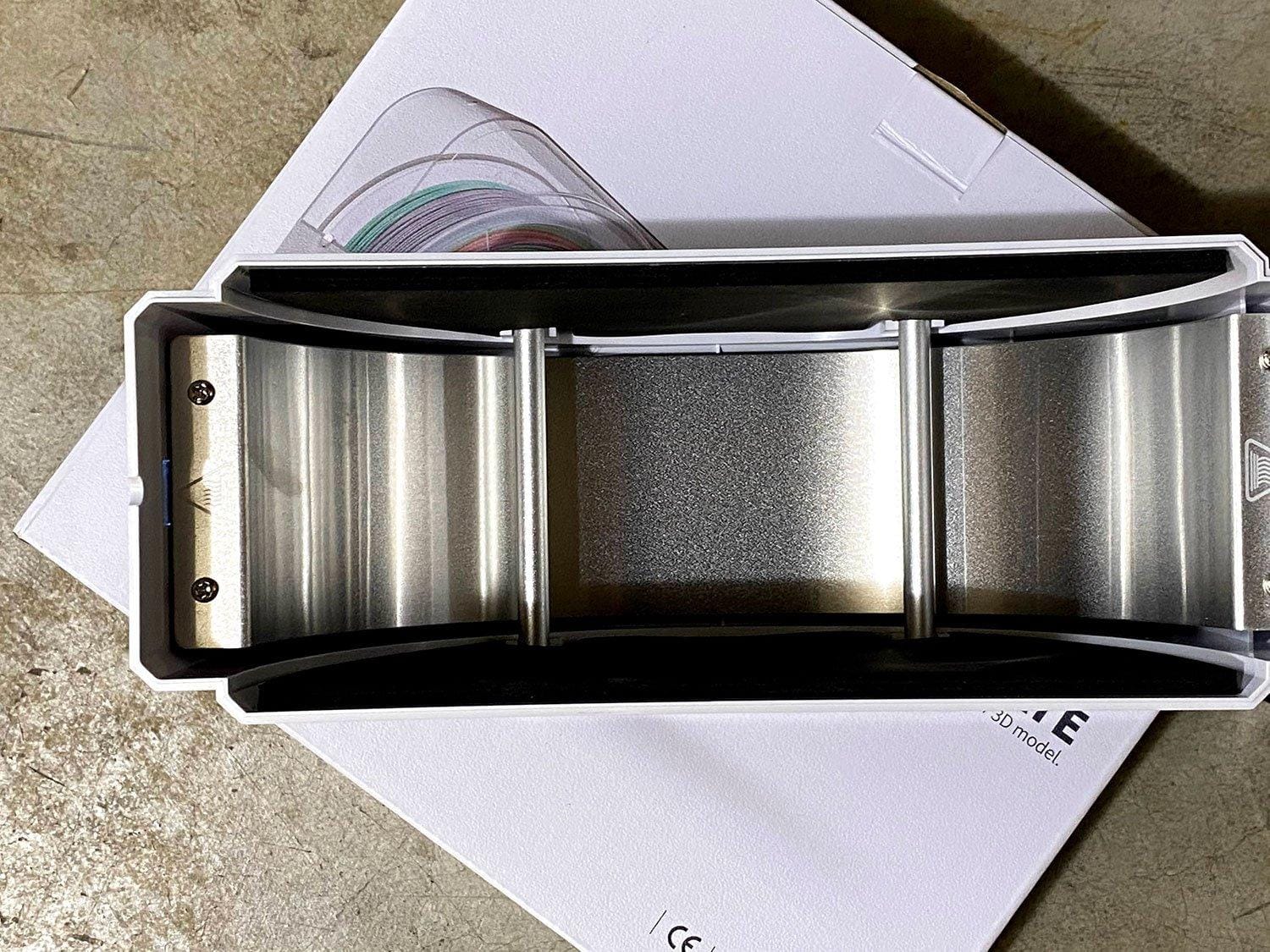
If your garage shares a wall with a workspace or a bedroom, noise is a real buying criterion and this is the quietest unit we tested at under 10dB. It runs a single spool up to 210 x 85mm, heats from 35 to 55C, and gives you a 1 to 99 hour timer with a 6 hour default. The interface is two buttons and a 2-inch LCD, which is all the complexity most people need.
It handles the everyday garage rotation well. PLA, PETG and standard TPU all dry properly at these temperatures, and the built-in rollers mean you can print from the dryer itself rather than decanting a spool onto the extruder in open air. That detail matters more in a humid room than in a conditioned one.
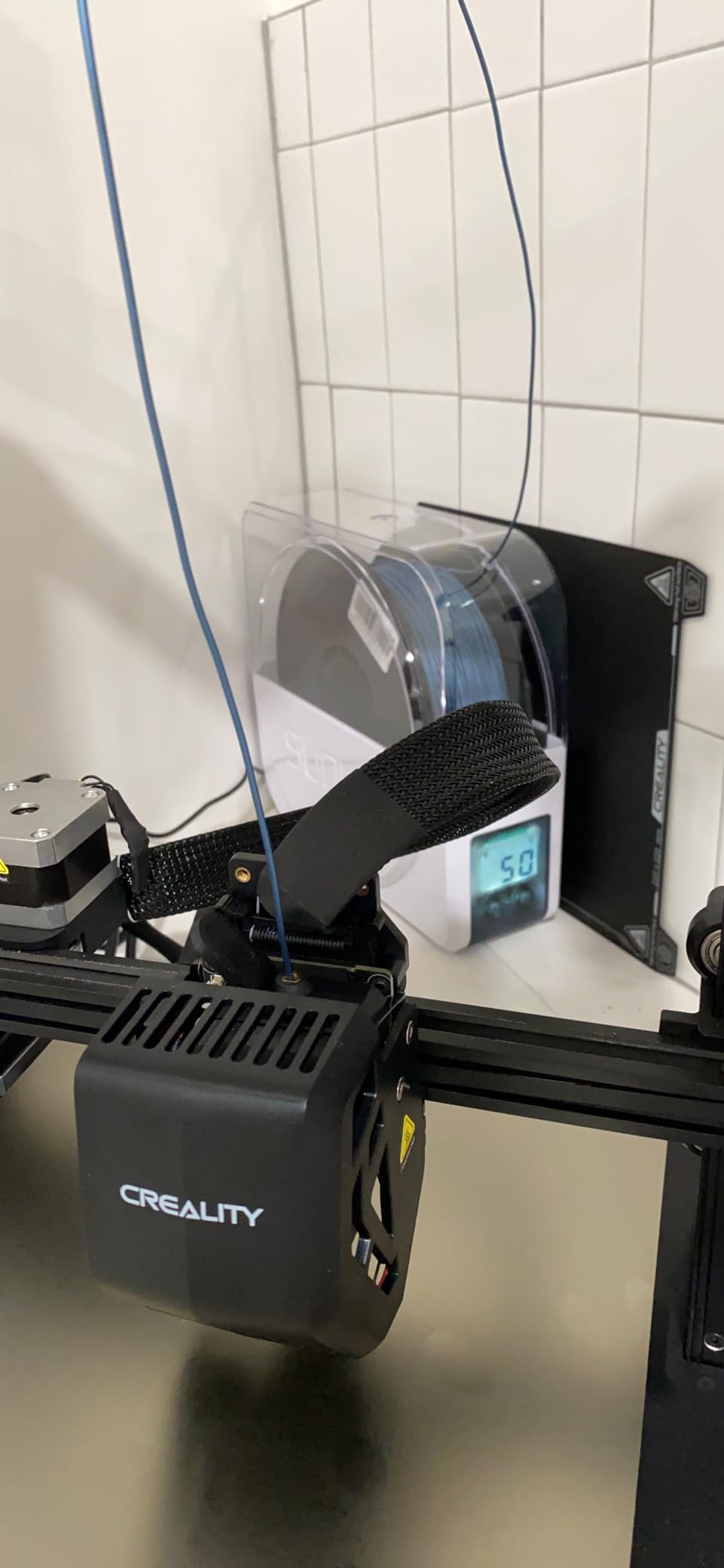
The trade-offs are the same ones reviewers mention most. A 55C ceiling is on the low side for engineering filaments, the single-spool chamber limits you to one material at a time, and some owners feel the top of the range is not quite enough for the most stubborn PETG and ABS jobs. If your rotation is two materials or more, this becomes a bottleneck quickly.
It carries a 1 year warranty and weighs 2.7 pounds, and it takes 1.75mm, 2.85mm and 3.00mm filament, so it is not fussy about spool source. At 3368 reviews and 4.4 stars it is the second most proven box we included, which matters when you are trusting it to hold humidity back on its own.
Why quiet matters more in a garage than a spare room
Dryers run for hours, often overnight on a long cycle. A fan whine at 50dB is tolerable for twenty minutes and genuinely irritating at four in the morning. Under 10dB changes the maths, because the unit becomes something you can leave running while you sleep or work nearby.
The one practical tip we would add is to place it away from the cold exterior wall. Airflow noise is lower when the unit is not fighting a temperature differential, and in an uninsulated garage the wall is often the coldest surface in the room.
Where it falls short for a garage
Single spool, and a modest temperature ceiling. Both are fine if you print one material at a time and mostly work in PLA and PETG. Neither is fine if you are cycling nylon, ASA or carbon-fibre filament through the same bench.
It is also dryer-only with no sealed storage mode, so between prints you will be moving spools into dry boxes yourself. Think of it as the quiet workhorse for a single-material garage setup.
3. Comgrow SH02 Dry Box – Best for Two-Spool Rotation
Comgrow Filament Dryer Box, SH02 Dry Box Filament Sealed Storage Box 3D Printer 2 Spools Holder with PTC Fast Heater, Filament Dehydrator with Touch Screen Compatible with PLA PETG TPU ABS 1.75/2.85mm
150W PTC to 70C
Two 1kg spools
9 material presets
Reaches 50C in 7 minutes
Pros
- 150W PTC reaches 70C with real headroom
- Dries two 1kg spools in one cycle
- One-key presets remove temperature guesswork
- Multi-ring sealing on lids and feed holes
Cons
- Larger and heavier than single-spool units
- Touch controls can be finicky to use
- Still needs venting during active drying
The SH02 is the point at which heated drying starts to feel serious. Its 150W PTC element covers 40 to 70C, hits 50C within about 7 minutes and reaches 70C in roughly 25, and it dries two 1kg spools at once through dual PTFE feed tubes. For a garage rotation of two materials, that combination solves both the capacity problem and the temperature problem at the same time.
Airflow matters more than most spec sheets admit, and this one has a built-in fan for 360 degree circulation. Forum regulars consistently rank fan-driven airflow among the decisive buying factors, and it shows up here in how evenly two different spools dry in the same chamber.
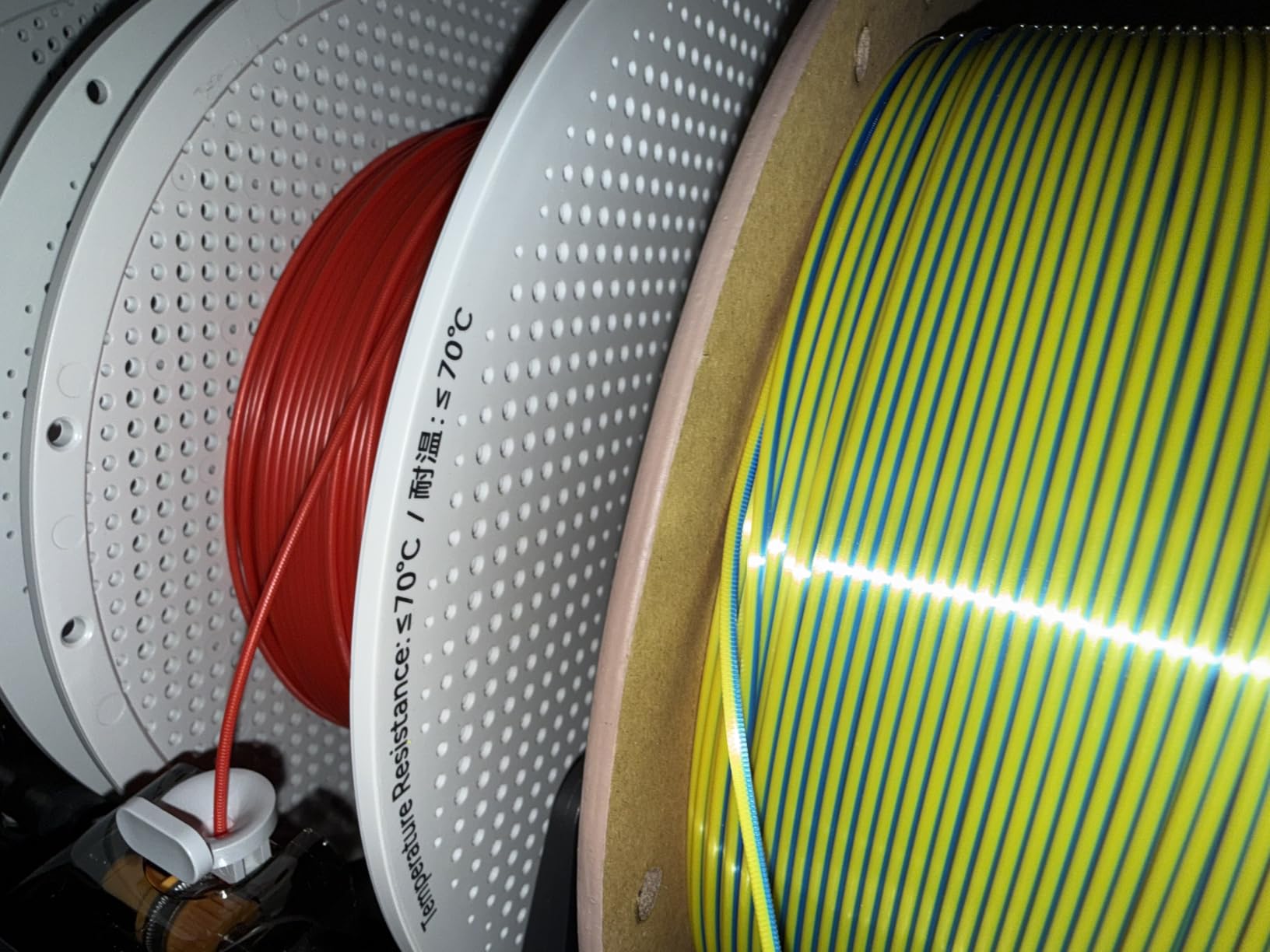
The presets are a genuine convenience: one-key settings cover nine filament types including PLA, TPU, PETG, ABS, ASA, PVA, PC, PA and PP. That takes the guesswork out of temperature and time when you are standing in a cold garage at seven in the morning and would rather not look up a chart.
Safety is better handled than on most units in this price bracket. There is an automatic cutoff above 130C PTC temperature with resume below 90C, plus a fan-failure alarm to protect the heating module. Multi-ring sealing on the covers and the feed holes helps keep ambient moisture out of a humid room.
How 70C changes what you can print
Everything in the mainstream range opens up at 70C. ABS and ASA stop being a compromise, TPU dries properly rather than approximately, and you have headroom for filled filaments that need more energy to drive water out of the matrix. In a garage with no climate control, that headroom is the difference between a spool that is dry and one that is merely warm.
The timer runs up to 98 hours, which is long enough to leave a batch of opened nylon drying while you finish a build. At 4.4 pounds it is the heaviest two-spool unit here, so give it a stable shelf rather than a folding chair.
Where it falls short for a garage
It is bulkier than single-canister dryers and the touch controls take practice to get used to. It also still asks you to vent moisture during an active cycle, which is the same manual step we saw on the smaller boxes and worth knowing about before you buy.
Two spools is still a ceiling. If your garage library runs to five or six materials, you will be cycling this unit rather than drying everything in one pass.
4. SUNLU Filament Dryer S2 – Best for TPU and PETG
SUNLU Filament Dryer S2, Black
35-70C range
0-99 hour timer
265 x 274 x 118mm
Rotating spindle
Pros
- 70C ceiling handles TPU and ABS properly
- Large touch screen is easy to read
- Translucent lid avoids opening the chamber
- Doubles as a spool holder for printing
Cons
- Bulky rectangular footprint on the bench
- Touch interface has a learning curve
- Some owners still vent the lid while drying
TPU is the material people complain about most in humid rooms, and the reason is straightforward: it drinks moisture faster than almost anything else on your shelf. A 70C ceiling with a fan is what makes the difference, and the S2 is one of the more affordable boxes in the group that gets there.
The rotating spindle is a detail we would not skip. A stationary spool dries unevenly because the outermost turns get all the heat, and in a garage where you are re-drying every week, a rotating chamber gives you a more consistent result across the whole spool. The 265 x 274 x 118mm capacity and 0 to 99 hour timer cover everything from a quick pre-print warm-up to an overnight soak.
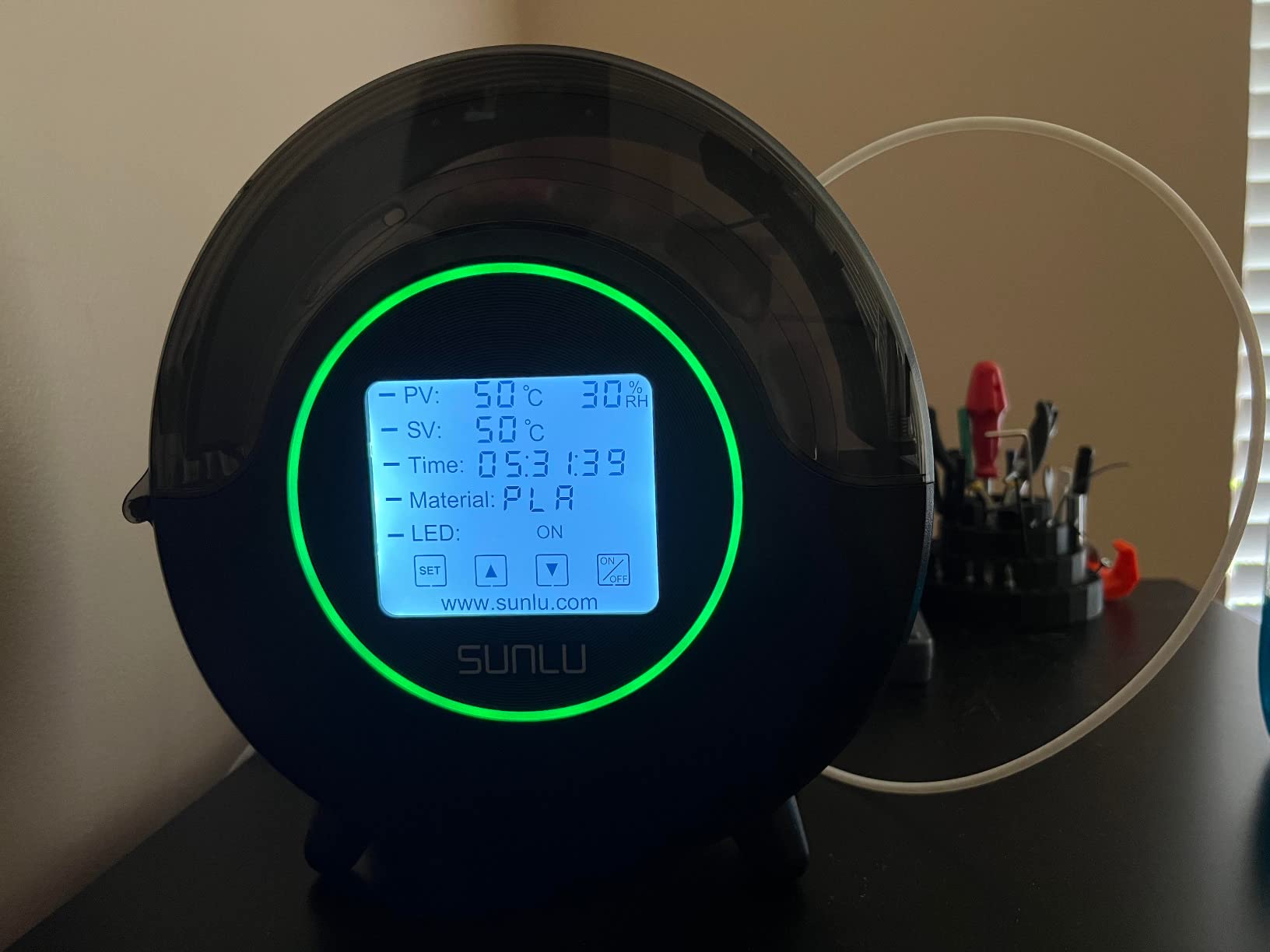
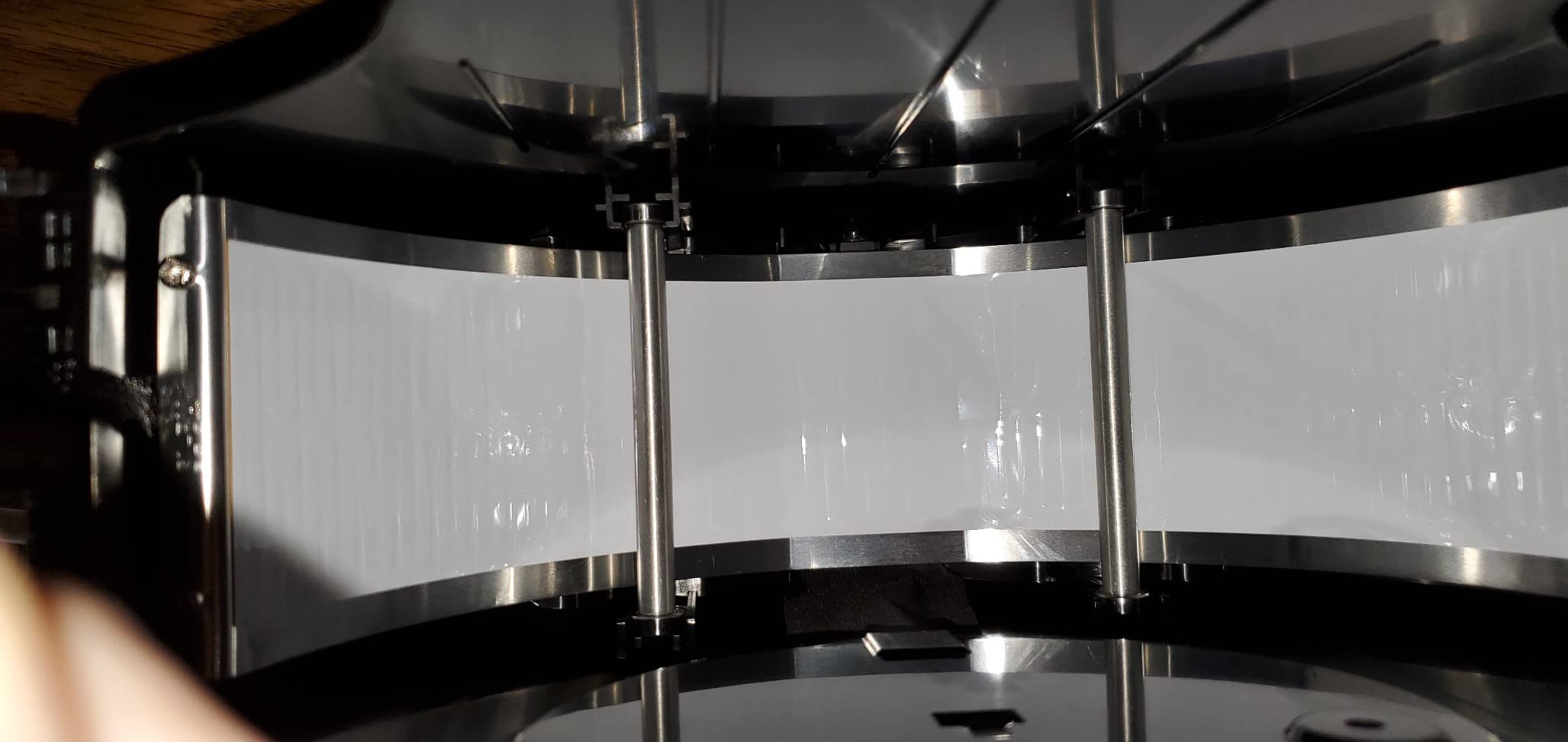
The translucent lid lets you check on a spool without opening the chamber, which is a small thing that saves you from releasing humid air every time you take a peek. It also dries while printing as a combined spool holder, so a long TPU job can run without a mid-print filament swap.
At 4.3 stars from 954 reviews it sits slightly below the leaders on rating, but the temperature range is where the value is. Owners rate it as a well-rounded mid-size dryer and the criticisms cluster around size, the touch interface, and the need to leave the lid slightly open during drying.
Why TPU punishes an unheated approach
Flexible filament is hygroscopic in a way that makes it unforgiving. Moisture turns up as stringy, blobby extrusion and inconsistent shore hardness across a single part, and the usual symptom people describe is TPU that “sucks up moisture” no matter how carefully it was stored. An active heated chamber is effectively mandatory for it.
At 55C and below you are evaporating moisture at a standstill. Above 60C the surface tension of the water inside the bead drops enough for heat to actually move it out, and a fan keeps that moving air fresh instead of recirculating saturated vapour.
Where it falls short for a garage
The footprint is the main gripe. It is a wide, deep box that needs a real section of bench, and if your garage printer is already squeezed into a corner you will feel this one. The touchscreen also has a mild learning curve compared with the two-button units.
It is dryer-plus-holder, not dryer-plus-storage, so between prints the same dry box routine applies. It is single spool as well, so a mixed TPU and PETG rotation means two passes.
5. Creality Space Pi SE Dry Box 2.0 – Best for a Small Bench
Creality 2026 New Upgrade Filament Dryer Box Pro, Space Pi SE with High PTC Efficiency & Precision Sensor for 1KG Spools 45~65℃, 3D Printer Filament Dehydrator for PLA PETG ABS ASA TPU
80W PTC with 360 degree fan
45-65C range
Reaches 65C in 15 minutes
Single 1kg spool
Pros
- Reaches 65C quickly
- cutting prep time
- Strong on TPU and flexible filaments
- Quiet enough for a workspace
- Small footprint fits inside printer enclosures
Cons
- Holds only a single spool
- Humidity gauge floors at 15%
- Weak lid seal and an audible fan
- Documentation is minimal
Speed is the argument for this unit. Its 80W PTC heater with 360 degree fan circulation reaches 65C within about 15 minutes, which means you can dry a spool during a coffee break rather than planning a multi-hour block. In a garage workflow where you open a spool, print one part, and come back to it, that responsiveness changes how often you bother.
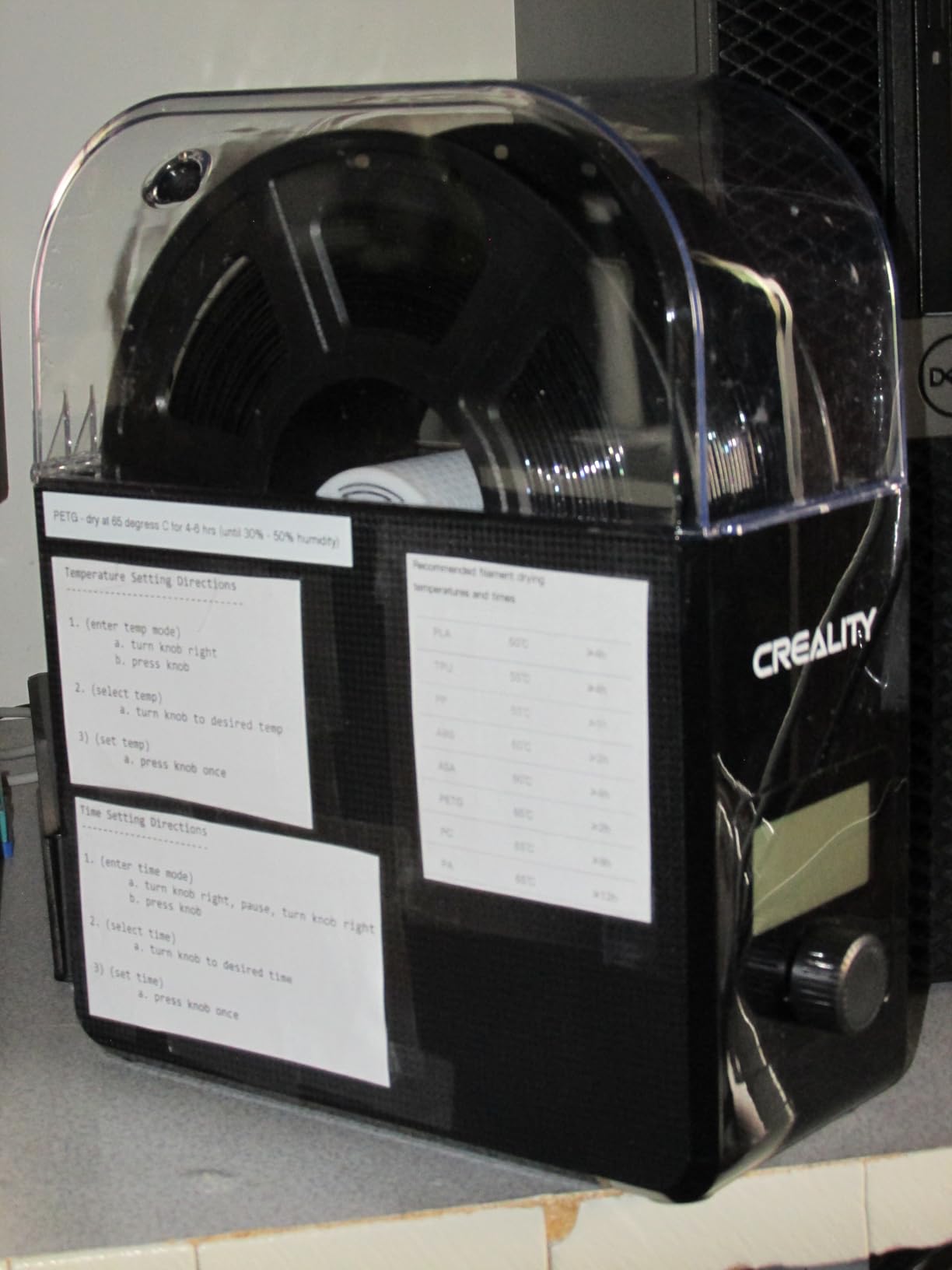
The range is 45 to 65C across a 0 to 24 hour timer, with thermal insulation cotton on the inner walls to hold heat. It handles TPU and other flexible filaments particularly well for a unit of this size, and owners frequently single that out as the reason they bought it.
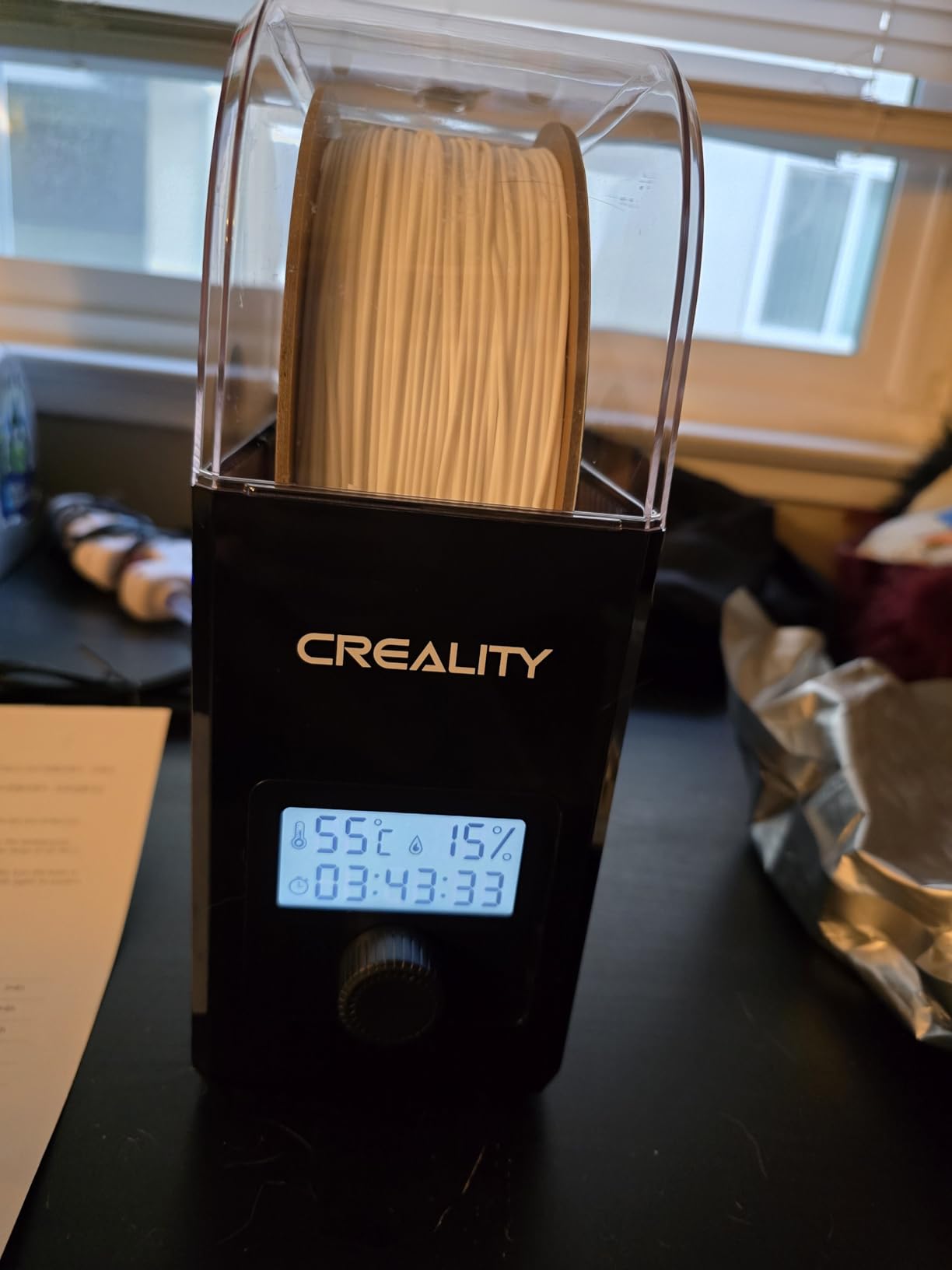
It is also small enough to sit inside a printer enclosure, which is the workaround a lot of garage builders use: dry the filament inside the same sealed chamber as the print. Combined with real-time humidity monitoring and a countdown timer, that gives you a tight closed loop.
The complaints are consistent. It holds one spool. The humidity gauge bottoms out at 15% and will not update unless the unit is actively heating. The lid seal is weak, so it is not a true sealed storage box, and the display viewing angle is poor on a shelf or the floor. The knob input also takes practice.
When a 24 hour timer is enough
A 0 to 24 hour ceiling looks limiting until you understand what it is for. This is a fast-cycle unit. Most opened spools that have absorbed a few days of garage air come back within 4 to 8 hours, and long multi-day soaks are what the bigger chamber units exist for.
Power-off memory restores your material and temperature settings, so in a garage where power gets interrupted you are not re-entering everything from scratch. That is a small convenience that matters more than it sounds in an unconditioned outbuilding.
Where it falls short for a garage
Single-spool only, and the 15% gauge floor means you cannot verify the very dry conditions that nylon and PVA need. The weak lid seal also means it will not double as storage, which pushes you back to dry boxes for everything you are not actively printing.
Carries a 6 month warranty, which is the shortest of the group. If your garage only ever runs one material at a time, none of that matters much.
6. JAYO J1 Filament Dryer Box – Best Inside a Printer Enclosure
JAYO J1 Filament Dryer Box for 3D Printer Filaments, 150W PTC, Up to 70°C
150W PTC to 70C
99 hour runtime
Split stackable design
Hygrometer window
Pros
- 150W PTC dries moisture-soaked PETG and TPU fast
- Compact ultra-slim body fits tight spaces
- Canister detaches into a sealed dry box
- Metal rollers feed filament in either direction
Cons
- Canister seal needs foam tape or a gasket
- No latch holds canister to heater base
- Small non-touch display
- Single 1kg spool only
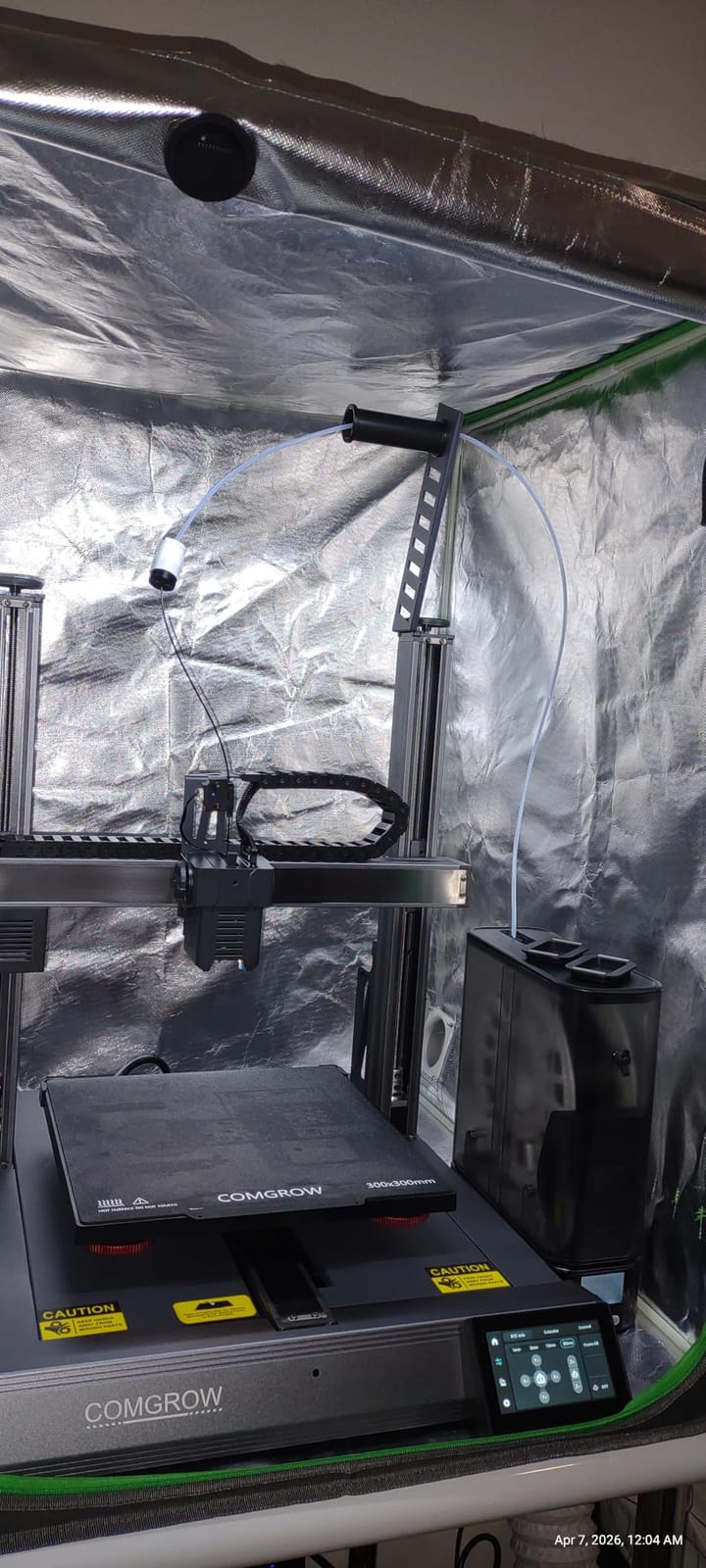
The J1 solves a problem none of the other boxes address: where do you put a dryer when the bench is gone. Its split design separates the heater base from the storage canister, so you dry on the base and then lift the spool into the same canister as a sealed storage box. Add fresh desiccant and it keeps working between sessions.
The heating is serious for something this small. A 150W PTC system reaches 70C and runs for up to 99 hours, with a built-in hygrometer window so you can read the chamber without opening it. Reviewers report a visible humidity drop within about an hour on a wet spool.
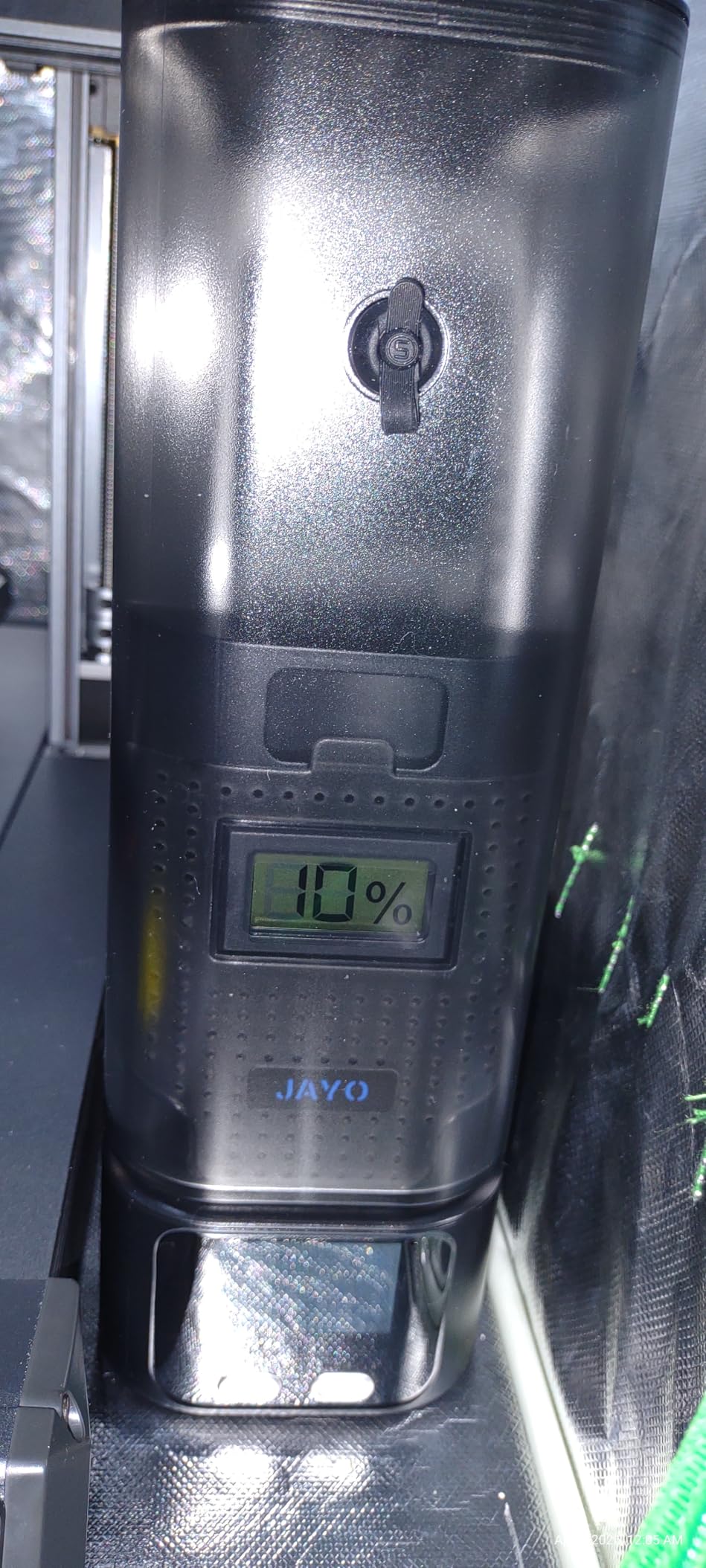
It supports 0.25kg, 0.5kg and 1kg spools, which is unusual at this size and useful if you are working through partial spools alongside full ones. Metal guide rollers feed filament smoothly in either direction, and the body is narrow enough to sit inside most printer enclosures.
The repeated caveat is the seal. The joint between the heater base and the canister needs a gasket or a strip of foam tape added before it will hold humidity out reliably, and there is no latch locking the canister down. Fix that in a minute and the design works; leave it as shipped and it underperforms.
The dry-store-print loop in one unit
This is the only concept in the group that genuinely closes the loop between drying and storage. Most units either heat or seal. The J1 does both with the same container, which in a 60% RH garage is the difference between a spool that stays dry for a month and one that needs re-drying every week.
The practical routine we use is simple. Dry on the base, then move the canister to a shelf with desiccant. When the print starts, either feed directly from the base or decant to the printer in one motion and get the empty canister back on the heater.
Where it falls short for a garage
Only a single 1kg roll fits at a time, the display is small and non-touch, and replacement storage canisters are not cheap if you want a second one. On top of that you will want to add your own gasket tape from day one.
It is 1.75mm only. If you run 2.85mm or 3.00mm stock, look elsewhere.
7. Polymaker PolyDryer – Best for Sealed Long-Term Storage
Polymaker Filament Dryer & Storage Box Polydryer for 1kg PA Nylon PLA PETG
Dry dock plus removable box
360 degree airflow
Built-in hygrometer
Single 1kg spool
Pros
- Only unit that dries stores and prints without breaking the seal
- Strong sealing holds spools dry for long stretches
- Integrated hygrometer removes guesswork
- Handles PA nylon as well as PLA and PETG
Cons
- Higher cost than basic heated boxes
- Modular parts mean more to keep track of
- Single spool format only
The PolyDryer is bought for its seal. It is a heated drying dock with a removable storage box on top, and the design lets you move a spool from active drying to long-term sealed storage to direct feeding to the extruder without ever breaking the seal. In a garage, that continuity is worth more than raw wattage.
Airflow is handled with 360 degree circulation so the whole chamber heats evenly rather than baking one spot on the spool. There is a built-in hygrometer for checking condition, and the box supports desiccant-assisted storage so you have a second line of defence once the drying cycle finishes.
Material coverage is broader than most single-spool units here. It handles PA nylon, PLA, PVB, PETG, ABS, ASA and TPU, and fits 1.75mm, 2.85mm and 3.00mm filament. If your garage library has drifted toward engineering materials but you do not want a big cabinet, this covers the list without a second purchase.
The trade-off is cost and piece count. It costs more than a basic heated box, the modular format means extra boxes and parts to store, and it is a single-spool system. At 4.3 stars from 719 reviews, reviewers accept those trade-offs in exchange for a seal that actually holds.
Why seal quality beats heater wattage in a garage
Wattage decides how fast you get a wet spool dry. Seal quality decides whether it stays dry. In an unconditioned space the second question comes up far more often, because the chamber spends most of its life closed rather than running.
A heater that takes four hours to do its job and a box that holds 15% RH for six weeks solves a completely different problem from a powerful dryer you have to re-run constantly. If you buy spools faster than you print them, the sealing is what makes the difference over a season.
Where it falls short for a garage
Single spool, and the dock plus box format means you are buying a system rather than a device. If you only ever print one material and you print it constantly, the seal advantage is real but you will not lean on it as hard.
It is also a lower-output heater compared with the 150W and 350W units here, so a soaked nylon spool will take patience rather than speed.
8. SUNLU S4 Filament Dryer – Best for Large Spool Rotations
SUNLU S4 3D Printer Filament Dryer, Black
Four 1kg spools
350W PTC heater
35-70C with 0-99 hour timer
Three circulation fans
Pros
- Dries four 1kg spools in a single cycle
- Highest average rating in this roundup at 4.5
- Three fans keep temperature even across the chamber
- Eight exit ports support multiple printers
- Handles PC and nylon as well as PLA and PETG
Cons
- Largest and heaviest unit at 4kg
- Premium over single and dual spool dryers
- 3kg spools need interior modification
When a garage setup runs four or more materials, per-spool dryers become a scheduling problem. The S4 solves it by drying four 1kg spools at once in a 450 x 175 x 207mm internal chamber, driven by a 350W PTC heater that is roughly 50% more efficient than the smaller FilaDryer S2.
Airflow is the standout. Three circulation fans produce 360 degree surround heating, and with a chamber that size the difference between one fan and three shows up in how evenly four different spools finish a cycle together. Eight filament exit holes let you feed multiple printers or route tubes at flexible loading angles.
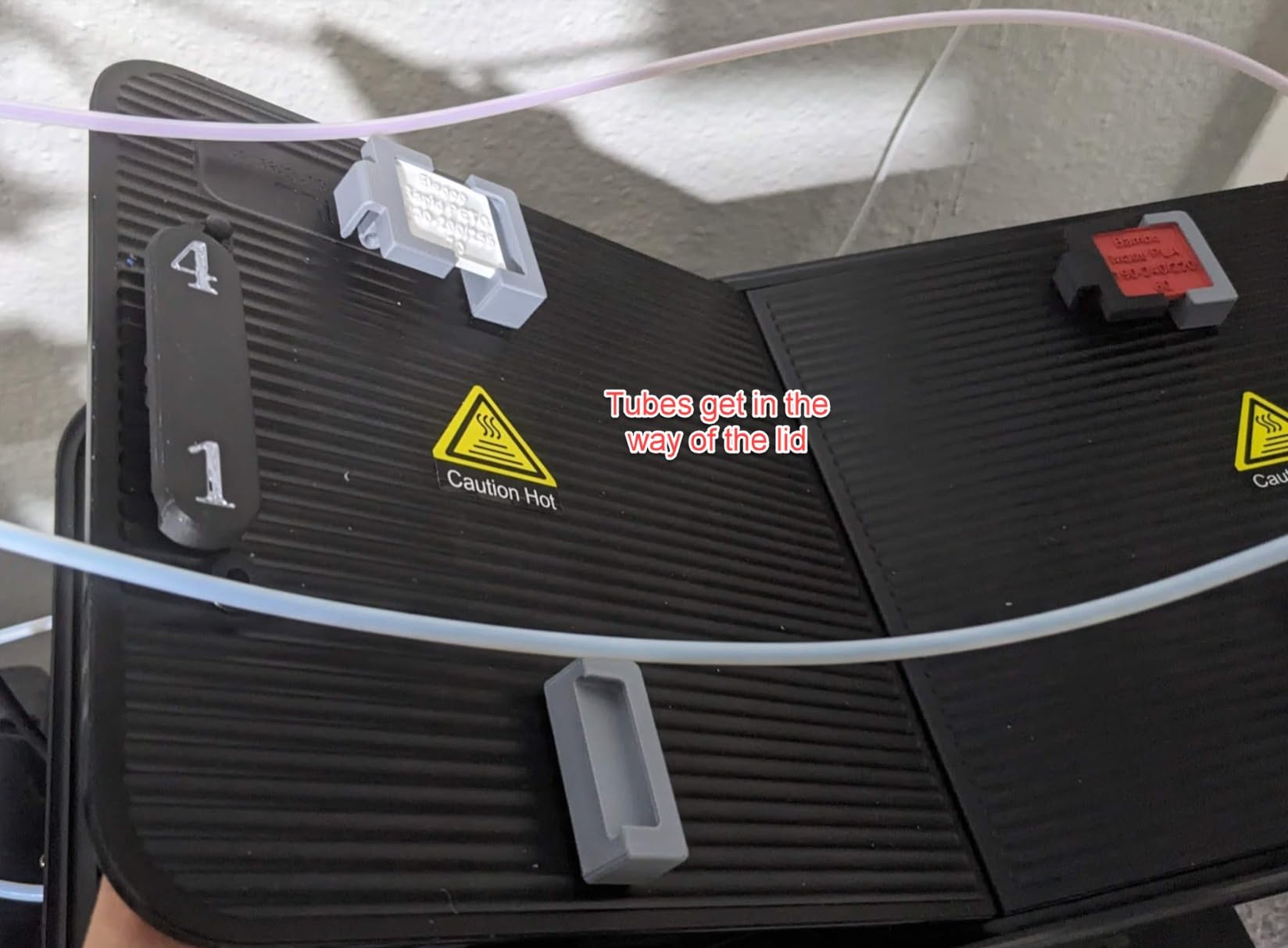
Temperature runs 35 to 70C with a 0 to 99 hour timer, and it covers PLA, PLA Plus, PLA Meta, PETG, ABS, TPU, PA, PC and nylon. It ships with 8cm and 100cm PTFE tubes, clips and silicone plugs, so setting up a two-printer garage feed is a plug-and-route job.
At 4.5 stars across 541 reviews this is the highest average rating in the group. Owners who bought it wanted multi-spool capacity for a busy library, got consistent 360 degree drying, and accepted the size and weight in exchange.
When four spools at once is worth it
Do the maths on your own rotation. If you open a new spool more than about once a week, a four-spool chamber removes an entire category of friction, because you stop treating drying as an interruption between prints. In a garage that also saves you repeated lid-opening, which is where humidity gets in.
The 99 hour timer is the other quiet advantage. Forum users in humid climates describe setting a long timer and restarting it when it expires, and a chamber that can run for days without babysitting fits that habit much better than a 24 hour unit.
Where it falls short for a garage
It is 460mm wide and weighs 4kg. That is a shelf, not a corner, and you need it on something flat and stable. It also carries a price premium over the single and dual spool options in this roundup.
If you run 3kg rolls you will need to cut or adapt the interior yourself, which we would only do if you know what you are doing with the wiring and the airflow path.
9. Creality Space Pi Plus – Best for Feeding Two Printers
2026 New Official CREALITY Space Pi Filament Dryer Plus, 2 Spools Double 360° 160W PTC Fast Heating 3D Printer Filament Dryer Box, 4”LCD Touch Screen, One-Key Set Filament Drying for PLA PETG ABS TPU
160W PTC dual 360 degree airflow
Two 1kg spools
45-70C range
4-inch LCD touchscreen
Pros
- Dual 360 degree PTC heating dries both spools evenly
- Runs quietly with less whine than competing dryers
- Presets cover 12 filament types including CF composites
- 4-inch touchscreen is readable with C and F switching
- Can dry two spools while feeding two printers
Cons
- LCD touchscreen feels cheap and delicate
- Touch interface lacks auto-dry mode
- PTFE tubes can move and snag TPU
- Minimal written instructions
This is the dryer to look at if the garage runs two printers or a small farm. It holds two 1kg spools across four filament holes and two PTFE pipes, runs from 45 to 70C, and uses a 160W PTC heater with dual 360 degree hot air circulation so neither chamber cooks a hot spot.
The preset list is unusually broad for a unit this size: 12 filament types including PLA-CF, PETG-CF and PA-CF. Owners report humidity readings pulled down to around 8%, and for a garage where engineering composites sit next to everyday plastic, having those presets already dialled in removes a lot of trial and error.
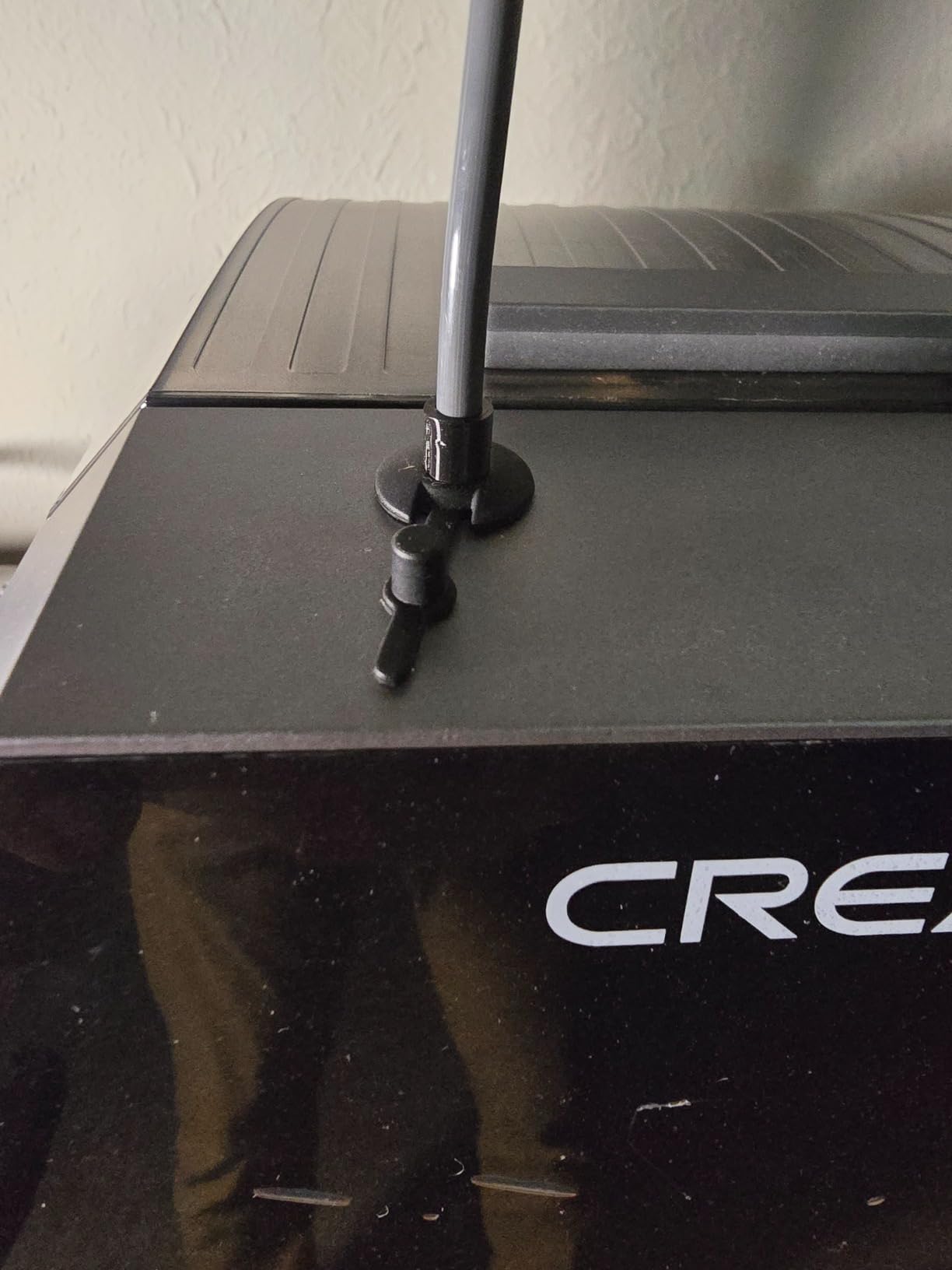
The 4-inch LCD touchscreen is large and switches between Celsius and Fahrenheit, which sounds trivial until you are programming settings in a cold garage. It also ranks very strongly in 3D printer accessories, so there is a large installed base to draw opinions from.
At 4.2 stars from 385 reviews, it is the lowest-rated unit we included, and the reason is consistent: the build quality of the screen. Reviewers call the touchscreen cheap and delicate with light bleed, say the interface is finicky and lacks the auto-dry mode found on higher Creality models, and report fan noise plus occasional temperature shortfall after several months of use.
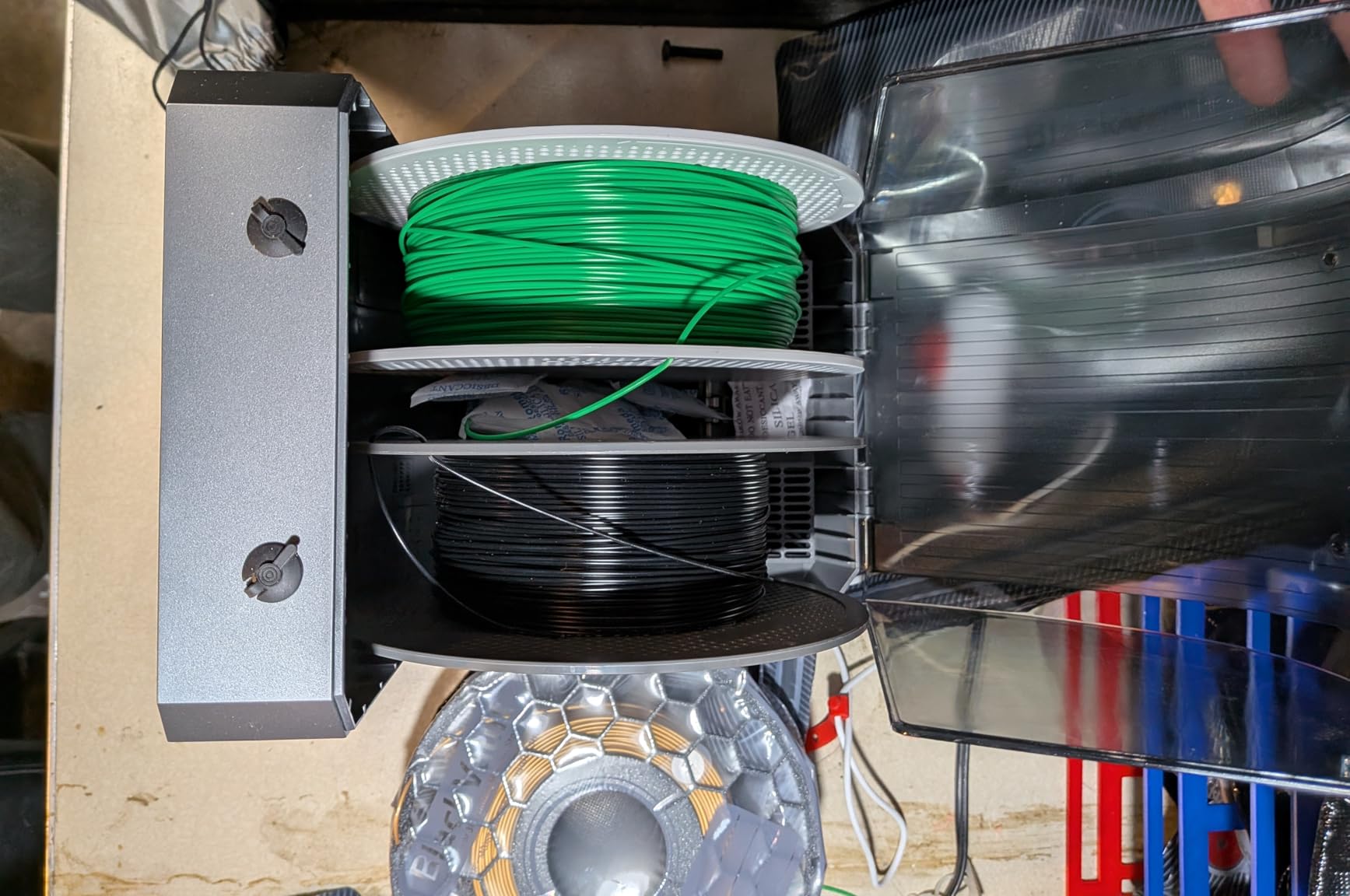
The two-printer garage configuration
Drying two spools while feeding two printers is the configuration this unit is built for. Run one spool through to a machine running a long job, and the second chamber keeps a second material at temperature for a job that starts later. The 45 to 70C range covers PETG, ABS, TPU and the carbon-fibre composites in the preset list.
The one practical fix is to secure the PTFE tubes. Without a locking holder they can shift during a print and snag TPU, which is soft enough to catch on a moving tube. A clip or a printed retainer fixes it in a minute.
Where it falls short for a garage
The screen is the weak point and it is the thing you interact with most. If you are fine with a tactile alternative, it is a capable two-spool dryer. If you want a polished interface, the Creality X4 below is the one to compare against.
Instructions are minimal, so keep a material settings chart handy. The 45C floor also means it cannot cool-dry delicate material the way a wider range can.
10. Creality Space Pi X4 – Best for 85C Engineering Filament
Creality Space Pi X4 Filament Dryer, 4 Spools Capacity, 85°C High-Temp
Two independent 200W chambers
85C per chamber
Four spool capacity
45dB with night mode
Pros
- 85C ceiling handles the toughest engineering filaments
- Two independent chambers run different temperatures at once
- Desiccant regenerates automatically and holds 15% RH
- Airtight silicone gasket lid for genuine storage
- 45dB with an automatic night mode
Cons
- Highest cost in the roundup
- Large cabinet needs real shelf space
- Feature set adds complexity for casual hobbyists
The X4 is the only unit here that answers the question of running two materials at two temperatures at the same time. Two independent 200W PTC chambers each reach 85C, so you can dry nylon on one side at 70C while ABS runs at a different setting on the other. Nothing else in this roundup does that, and it is the single biggest reason to step up.
85C changes what you can print in a humid garage. Nylon and PA-CF genuinely need that range to drive water out of the matrix, and no amount of patience at 65C will replicate it. If engineering filament is part of your rotation rather than an occasional experiment, this is the unit that makes it routine.
Dehumidification is the other story here. Rather than relying on desiccant you swap out by hand, it actively regenerates its own, and the system holds 15% RH for up to six months or more. Paired with an airtight lid and a silicone gasket, that turns a dryer into genuine long-term storage in a room that never gets conditioned.
Turbo, eco and the running cost question
It runs in turbo dual-chamber mode or eco single-chamber mode, and the eco setting claims 40% energy savings. That matters more here than in a dry spare room, because a garage dryer left on long cycles is one of the few appliances you might realistically leave running overnight for days at a time.
Add the whole-garage angle. A dedicated dehumidifier for the room, plus sealed dry boxes inside it, handles bulk storage cheaply. Then use the X4 for the jobs that need heat and precision. Layering the two strategies beats asking one device to do everything.
Where it falls short for a garage
Cost and footprint. It is the largest and most expensive unit in the roundup, and the full feature set plus the touchscreen add complexity that a casual hobbyist printing PLA will never touch. You are paying for dual chambers and active dehumidification, and if you do not need either you are overpaying.
It is also the only unit here we could not corroborate with customer photographs, so our read on the build leans more on the specification sheet and owner feedback than on visual inspection. At 45dB it is the loudest thing in this group, though the night mode covers that at 2am.
What Humidity Should a Filament Dryer Be Set To?
Aim for 20% relative humidity or lower for nylon, PVA and carbon-fibre-filled filament, 30% to 40% for PETG and TPU, and 40% to 50% is acceptable for PLA. In practice the right approach is to run the chamber hot enough to move water out of the filament, then let the sealed box hold the low humidity while the garage outside stays above 55%.
Two things follow from that. First, a chamber that reads 20% in a garage reading 60% is doing exactly its job, and the reading inside is what your filament experiences, not the number on the garage hygrometer. Second, the difference between materials is large enough that a single preset for everything will disappoint you, which is why the multi-preset units above are worth the extra buttons.
If you want a quick baseline for your own space, measure the garage over a week before you buy anything. Put a cheap hygrometer next to the printer and read it morning and evening. Anything consistently above 55% means you need an active heated dryer with a real seal, not a passive box with a desiccant packet in the corner.
How to Choose a Filament Dryer for a Humid Garage
Everything below is ordered by how much it actually changes your results in an unconditioned space. Noise and aesthetics are last on this list on purpose.
Temperature ceiling and why 70C matters
The short answer to which dryer is best for high temperatures is the Creality Space Pi X4, at 85C per chamber. For most garages, 70C is the practical floor worth paying for. Below that you are fine for PLA and routine PETG, but TPU, ABS, ASA and anything filled start to take a long time and may not fully dry.
Heat-up speed matters nearly as much as the ceiling. A unit that reaches 70C in 25 minutes is far more useful in a working garage than one that takes an hour, because you can fit a dry cycle around a print instead of around a day off. The Comgrow SH02 and the JAYO J1 both use 150W PTC elements and reach temperature quickly for that reason.
Capacity, spool size and re-drying cadence
Decide how many materials you rotate, not how many you own. A two-spool unit suits a PLA plus PETG shop; four spools suits someone with PC, nylon, ASA and TPU on the go. In a 60% RH garage you will re-dry more often than you think, so capacity buys back more time than wattage does.
Check spool dimensions against your actual stock. Several units here top out at 1kg spools, and 3kg rolls need either a bigger chamber or modifications we would not recommend. Spool width matters as much as diameter when you are trying to fit two side by side.
Sealed box, desiccant or active heat
These solve different problems, and mixing them up is the most common expensive mistake. A passive dry box with desiccant protects an already-dry spool from a humid room. It does not remove water that has already been absorbed. An active heated dryer moves water out. A molecular-sieve dehumidifying cabinet sits between the two and lowers humidity without heat.
For a garage above 55% RH, desiccant alone will saturate in days. The practical answer is a layered system: active dryer for the cycle, sealed box with fresh desiccant for storage, and vacuum bags for spools you will not touch for a month. Reactivating desiccant in a heated dryer at around 100C for several hours is a common trick among experienced users, and several units here run hot enough to handle it in a separate cycle.
Timer length, power draw and 24/7 garage duty
Long timers matter more in humid climates. Forum users describe setting a dryer to its maximum and restarting when it times out, and units capped at 24 hours force that habit on you. The Comgrow SH02 and JAYO J1 both run past 90 hours, and the SUNLU S2 and S4 run the full 0 to 99.
On power draw, the heaters range from 80W on the Creality Space Pi SE to 350W on the SUNLU S4. A 350W element cycling for hours adds up on a monthly bill, which is why the eco single-chamber mode on the X4 is worth understanding before you set it to run unattended all weekend.
Noise, condensation and rust in a humid garage
Noise is a legitimate criterion when the dryer runs overnight next to a workspace. The SUNLU S1 Plus is under 10dB and the Polymaker PolyDryer is the other quiet option. The Creality X4 runs at 45dB with a night mode, and the Space Pi Plus is quieter than most of its competitors despite the smaller fan count.
Condensation is the thing nobody mentions until it shows up. In a room that regularly hits 60% RH, cold surfaces collect water, and a dryer sitting near an exterior wall or a slab floor will get damp underneath. Keep it off the floor, leave clearance on all sides, and expect to wipe condensation off the lid during long cycles. That is normal behaviour for an active dryer, not a defect.
For the printer itself, the same humidity that softens filament will corrode steel components and encourage rust on rails and lead screws. A garage dehumidifier running alongside your storage strategy is cheap insurance, and it also lowers the re-drying frequency for everything you have not opened yet.
Frequently Asked Questions
Do filament dryers make a difference?
Yes, and in a humid garage the difference shows up within a single print. Moisture absorbed by filament causes stringing, popping and bubbling during extrusion, rough surfaces and measurably weaker layer adhesion. An active dryer moves that water out of the filament, while a sealed box only protects filament that is already dry. In a room above 55% RH, skipping the dryer means re-drying every spool on a schedule rather than drying once when you open it.
Does humidity affect PETG filament?
PETG is hygroscopic, so it absorbs moisture from the air just like nylon and TPU do. Wet PETG prints with heavy stringing, popping sounds from the extruder, bubbles in the surface and rough texture. It also loses layer adhesion strength when wet. In an unconditioned garage this is a constant issue, which is why PETG is one of the main reasons people buy an active heated dryer rather than a passive dry box.
What humidity should my filament dryer be?
Aim for 20% relative humidity or lower for nylon, PVA and carbon-fibre-filled filament, 30% to 40% for PETG and TPU, and 40% to 50% is acceptable for PLA. Run the chamber hot enough to move water out of the filament first, then let the sealed box hold that low humidity. What matters is the reading inside the chamber, not the number on your garage hygrometer.
Is 40% humidity too high for PETG?
Forty percent is workable for short-term storage of PETG, but it is not where you want to print from. If the chamber reads 40% RH, moisture is still moving into the spool. For reliable PETG printing we would target the 30% to 40% band during storage and dry fresh or recently opened spools before use, particularly in a garage that regularly sits above 55% RH.
Which filament dryer is best for high temperatures?
The Creality Space Pi X4 is the strongest choice, with two independent 200W PTC chambers that each reach 85C. That gives you room for nylon, PC and carbon-fibre composites, plus the ability to run two materials at two different temperatures at once. If 85C is more than you need, the SUNLU S4, Comgrow SH02, JAYO J1 and SUNLU S2 all reach 70C, which covers ABS, ASA and TPU properly.
What is the best filament dryer for TPU?
Look for a 70C ceiling with active fan circulation, and dry-while-printing so you are not pouring a wet spool into open garage air. The SUNLU S2, Comgrow SH02 and JAYO J1 all reach 70C with a fan, while the Creality Space Pi SE reaches 65C quickly and owners single it out for flexible filament. Budget four hours at 55 to 60C for a typical spool.
Can you dry PETG and TPU at the same time?
Yes, but only if the temperatures are compatible. PETG and TPU both dry well in the 55 to 65C range, so a single chamber can handle both in one cycle. If you need genuinely different temperatures at once, you need two independent chambers, which is exactly what the Creality Space Pi X4 provides with separately controlled left and right zones.
What is the best filament dryer for the money?
The SUNLU S1 Plus is the strongest entry option here: a 4.4 star rating across 3368 reviews, under 10dB operation, a 35 to 55C range and a 1 to 99 hour timer. It covers PLA and routine PETG and doubles as a spool holder. If your rotation includes TPU, ABS or anything filled, step up to a 70C unit such as the SUNLU S2 or Comgrow SH02 instead.
Can I use a food dehydrator instead of a filament dryer?
You can, and experienced users in printing forums often recommend it. The advantages are a strong fan, a large chamber that fits a spool laid on its side and a thermostat. The limits are no humidity readout, no material presets and less precise control at lower temperatures. Kitchen ovens are a different matter entirely and are not recommended for filament drying.
Final Verdict for Humid Garage Printers
The best filament dryers for humid garages are the ones that combine real heat, a seal you can trust, and a capacity that matches how many materials you actually rotate. For most people that is the Comgrow 3D Printer Filament Dryer Box: two 1kg spools, a live humidity readout and the largest proven review base in the group. Pick the SUNLU S1 Plus if noise next to a workspace is your main constraint, the Comgrow SH02 if you need 70C across two spools, and the Creality Space Pi X4 if nylon and engineering filament are part of the regular rotation.
Whatever you choose, measure your garage RH for a week first. The number decides whether a 50C two-spool box is enough or whether you need something with independent chambers and automatic desiccant regeneration. Use the buttons below to check the current details on each unit.