
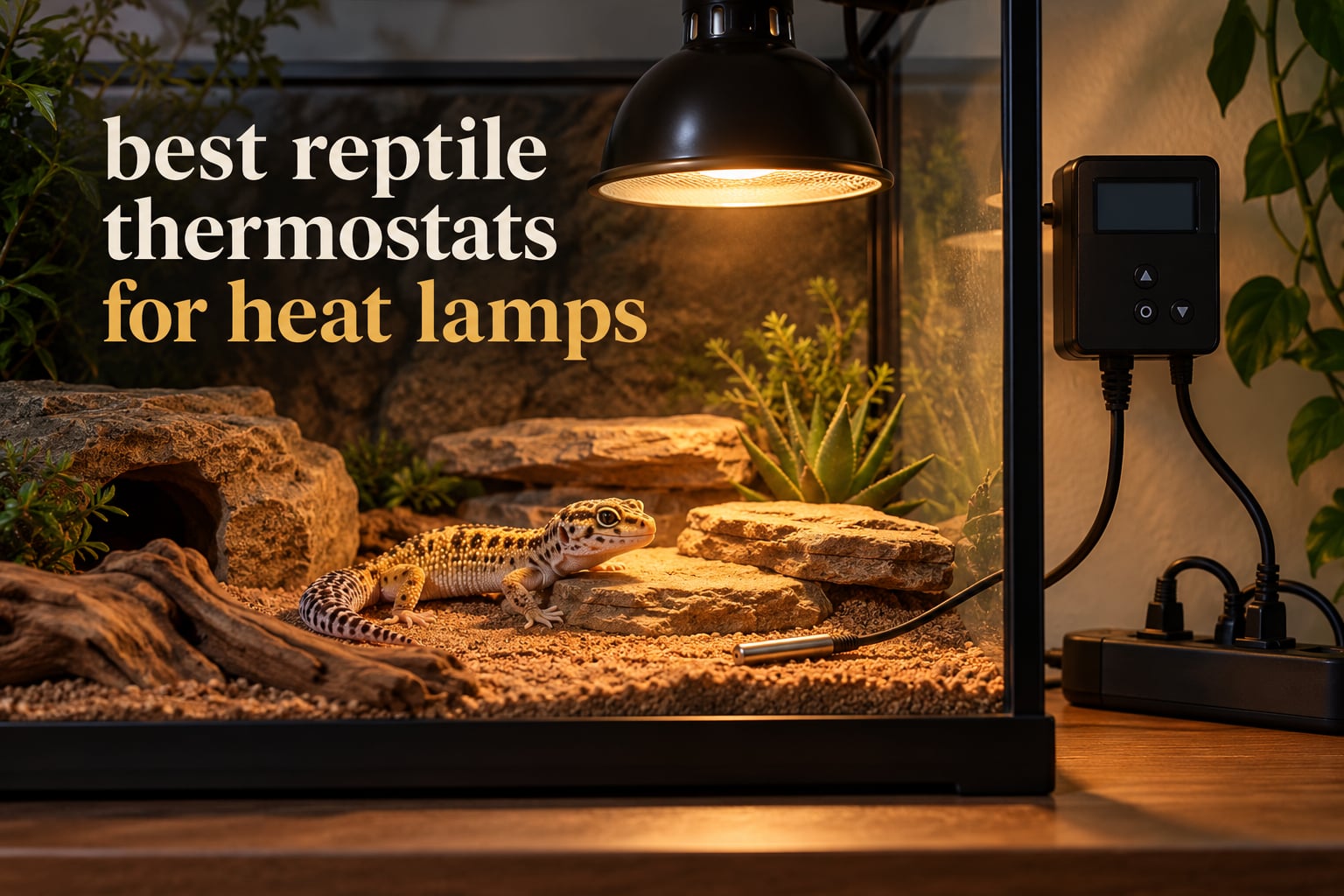
Here is the rule that settles the biggest argument in reptile keeping: if your heat source puts out light, it needs a dimming or pulse proportional thermostat. An on/off thermostat belongs on heat mats, heat cables, ceramic heat emitters and radiant panels, where nothing is visible and the filament has no light to spare. Nearly every roundup on this topic buries that distinction, which is why the same search returns both “use dimming for basking lamps” and “avoid dimmers” with equal confidence.
We ran the best reptile thermostats for heat lamps side by side rather than copying spec sheets. What matters for a lamp is the control type, the wattage ceiling against your actual bulb, the probe, and whether the unit holds a setpoint with a visible readout. Thermostats that simply cut power in and out will cook a basking bulb’s filament through repeated thermal shock, and cheap units with no fail-safe can leave a heater running indefinitely if the probe fails.
Below are the ten controllers worth considering in 2026, including four true dimmers and two dual-zone options for multi-tank rooms. If you are still choosing hardware, our best reptile terrariums guide covers the enclosures these get installed in.
Table of Contents
Top 3 Picks for Best Reptile Thermostats for Heat Lamps In 2026
Inkbird ITC-306T
- Dual day/night cycles
- 1200W on/off load
- Over-temperature alarm with buzzer

Zoo Med ReptiTemp RT-600
- HEAT and COOL modes
- 600W heating and 150W cooling
- 6 foot remote sensor

REPTIZOO Dimming TC02
- PID dimming for heat bulbs
- 41F to 140F control range
- Memory function after power loss
The 10 Best Reptile Thermostats for Heat Lamps (October 2026)
| Product | Specifications | Action |
|---|---|---|
| Inkbird ITC-306T Pre-Wired Day Night Thermostat |
|
Check Latest Price |
 Inkbird WiFi IPT-2CH Two Outlet Thermostat Inkbird WiFi IPT-2CH Two Outlet Thermostat |
|
Check Latest Price |
 Inkbird ITC-306T-A Dual Outlet Thermostat Inkbird ITC-306T-A Dual Outlet Thermostat |
|
Check Latest Price |
| REPTIZOO Dimming Thermostat TC02 |
|
Check Latest Price |
| Zoo Med ReptiTemp RT-600 |
|
Check Latest Price |
 REPTITRIP SOP24 Timer and Thermostat REPTITRIP SOP24 Timer and Thermostat |
|
Check Latest Price |
 CAVACHEW PID Dimming Thermostat 300W CAVACHEW PID Dimming Thermostat 300W |
|
Check Latest Price |
 REPTITRIP PT02 Dimming Thermostat with Timer REPTITRIP PT02 Dimming Thermostat with Timer |
|
Check Latest Price |
 Comyan 15A 1800W Dual Probe Outlet Comyan 15A 1800W Dual Probe Outlet |
|
Check Latest Price |
 ReptiKing X100 PID Dimming Thermostat ReptiKing X100 PID Dimming Thermostat |
|
Check Latest Price |
Types of Reptile Thermostats Explained
Three control types cover almost everything sold today, and picking the wrong one is the most expensive mistake a keeper can make with a lamp.
On/off thermostat. Cuts full power to the heat source, then restores it when the probe falls below setpoint. Simple, cheap, and the right choice for heat mats, heat cables, ceramic heat emitters and radiant panels, which have no filament to protect. On a basking lamp it produces visible swings of several degrees and repeated hard starts that shorten bulb life.
Dimming thermostat. Reduces the power delivered to the lamp in small steps instead of switching, so the enclosure settles at a steady temperature and the bulb is never slammed on at full power. A dimmer can only reduce output. It cannot cool below ambient room temperature, which matters in warm rooms.
Pulse proportional thermostat. Cycles power very rapidly, often several times per second, so the delivered average sits just under the setpoint. It gives the tightest control of the three and is often paired with a dimming mode in premium controllers.
Match that to the source. A dome lamp, incandescent basking bulb, halogen basking spot, infrared night lamp and deep heat projector all need dimming or pulse control. Anything running a sun lamp with UVB output must be on a plain timer, not a thermostat, because a thermostat would happily switch off the ultraviolet component and cause a lighting cycle mismatch.
One practical note on wattage. Dimming controllers in this group are rated far lower than on/off controllers, generally between 200W and 300W, while on/off units reach 1200W and beyond. A dimmer is sized for a single modest bulb, not for a 160W halogen plus a ceramic emitter.
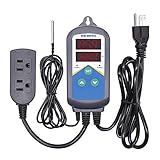
1. Inkbird ITC-306T: Best Overall Thermostat for Heat Lamps
Inkbird ITC-306T Pre-Wired Electronic Heating Thermostat Temperature Controller and 24 Hours Digital Day & Night Cycle Timer Controller for Seed Germination Reptiles Hatching
On/off control to 1200W
Dual day and night cycles
Dual display, buzzer alarm
Pros
- Heaviest review base in the group
- Plug-and-play setpoint and differential control
- Dual display shows measured and set temperature at once
- Over-temperature alarm cuts outputs on probe fault
- Handles 1200W across two outlets
Cons
- Setup menu takes practice and a slow manual read
- Switching C to F resets programmed values
- Heating only with no cooling output
This is the controller we keep reaching for when a basking lamp needs steady daytime control and a drop at night. The dual time-cycle function is the reason: you set a warm day target and a cooler night target over 24 hours, and the unit moves between them without a separate light timer, so the temperature schedule stays in step with your photoperiod.
The second display window shows measured and set temperature simultaneously, so a drift is obvious at a glance. The over and under-temperature alarm sounds a buzzer and drops the outputs if the probe reads out of range, which is the closest thing to a fail-safe in this price bracket. Twelve hundred watts across two outlets means a halogen basking spot and a small ceramic emitter can share one controller.
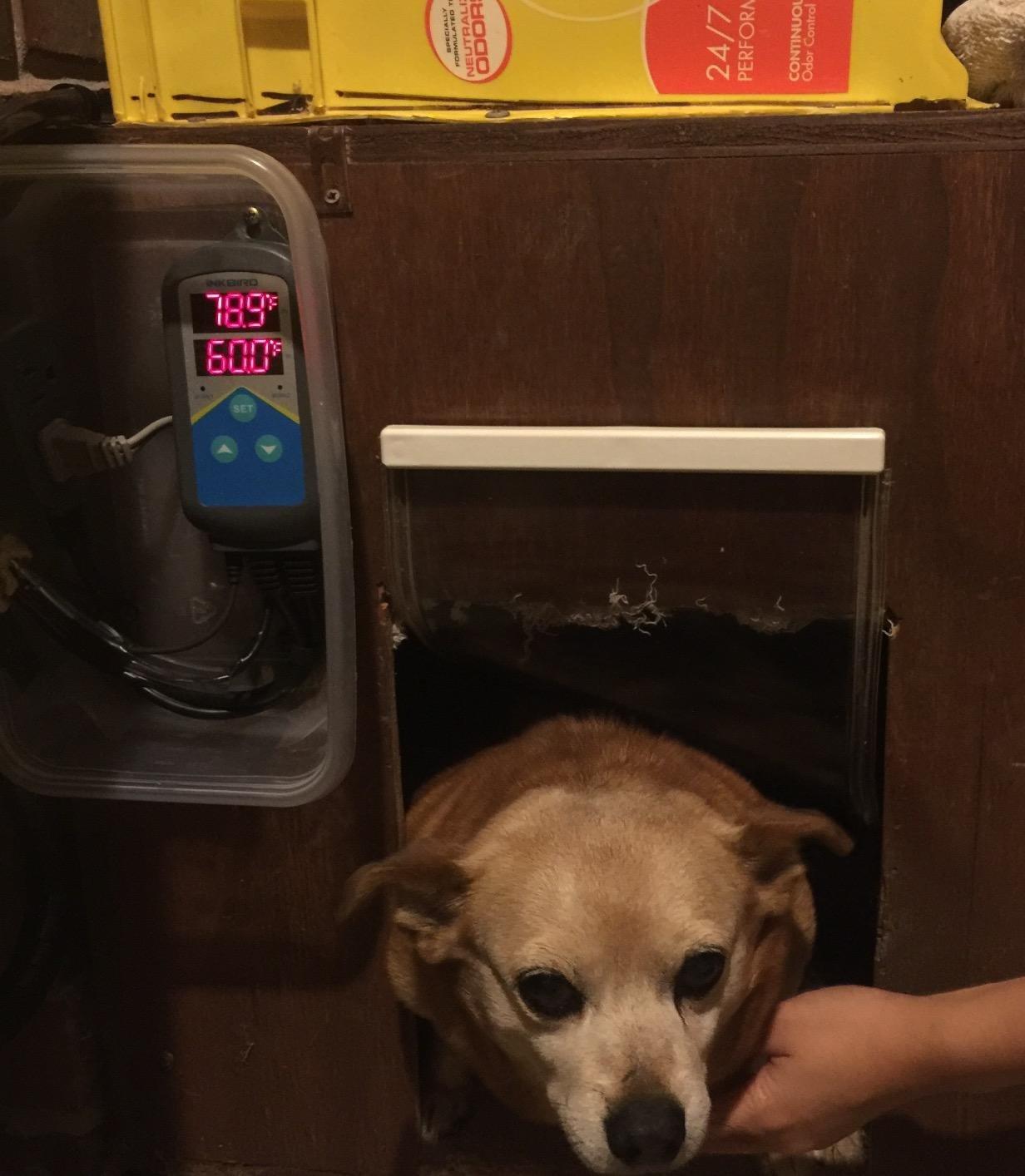
Two honest drawbacks. The setup menu is not intuitive and the printed manual is slow reading, so budget an evening for first programming. Switching the display from Celsius to Fahrenheit resets other programmed values, which is an irritating quirk to discover after a day of tuning. Reviewers report probe readings that check out against separate thermometers, which is the only validation that matters when a live animal depends on the number.
When this is the right pick for a lamp
It suits diurnal species where the basking target and the night target differ and you want one box handling both, including bearded dragons, corn snakes and leopard geckos. The 1200W ceiling is also the safe choice if you plan to add a second heat source later.
Where it falls short
There is no cooling output, so in a warm room the controller can only hold the temperature by cutting power, not by adding a fan. Because it switches rather than dims, a filament bulb connected here is hard-started repeatedly, and on/off cycling can overshoot by a degree or two past setpoint.
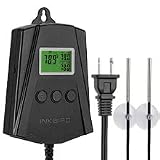
2. Inkbird WiFi IPT-2CH: Best for Multi-Enclosure Setups
Inkbird WiFi Heat Mat Reptile Thermostat Controller Temperature Controller with 2 Probes and 2 Outlets, IPT-2CH Reptiles Heat Mat Thermostat (Max 250W per Outlet)
Two independent outlets and probes
Wi-Fi app monitoring
250W per outlet
Pros
- Two independently controlled outlets and probes
- App temperature history and alarm alerts
- Works with heat mats as well as lamps
- Compact wall-mount body
Cons
- 2.4 GHz Wi-Fi only
- 250W ceiling per outlet restricts larger bulbs
- Heating only
- Remote features depend on phone and network access
This is the one to buy if you run more than a single enclosure and do not want to walk the room with a laser thermometer every evening. Two outlets and two probes operate independently, so a nursery row of leopard gecko tanks can run on one controller while you watch both temperature graphs from your phone.
It accepts heat mats as well as heat lamps and other heaters, which makes it the most genuinely flexible box here for a mixed room. The app handles data charts, data export, high and low temperature alarms, and probe error alarms, so a failed sensor produces a notification rather than silence.
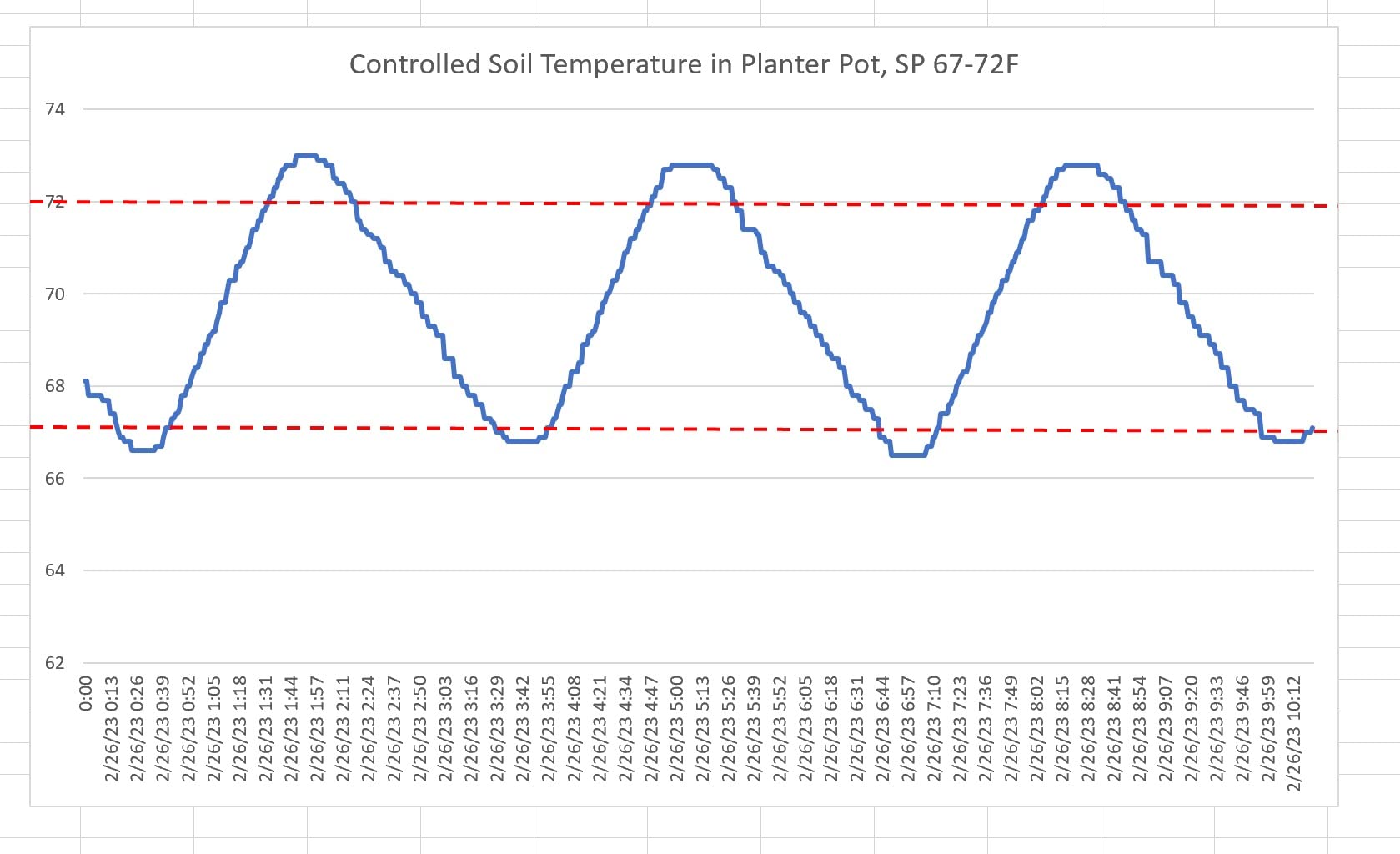
The limits that matter most are the 250W ceiling per outlet and 2.4 GHz only networking, so it will not join a 5 GHz network and will not carry a 160W halogen basking spot. Both outlets are heating only, so there is no fan support in a warm room.
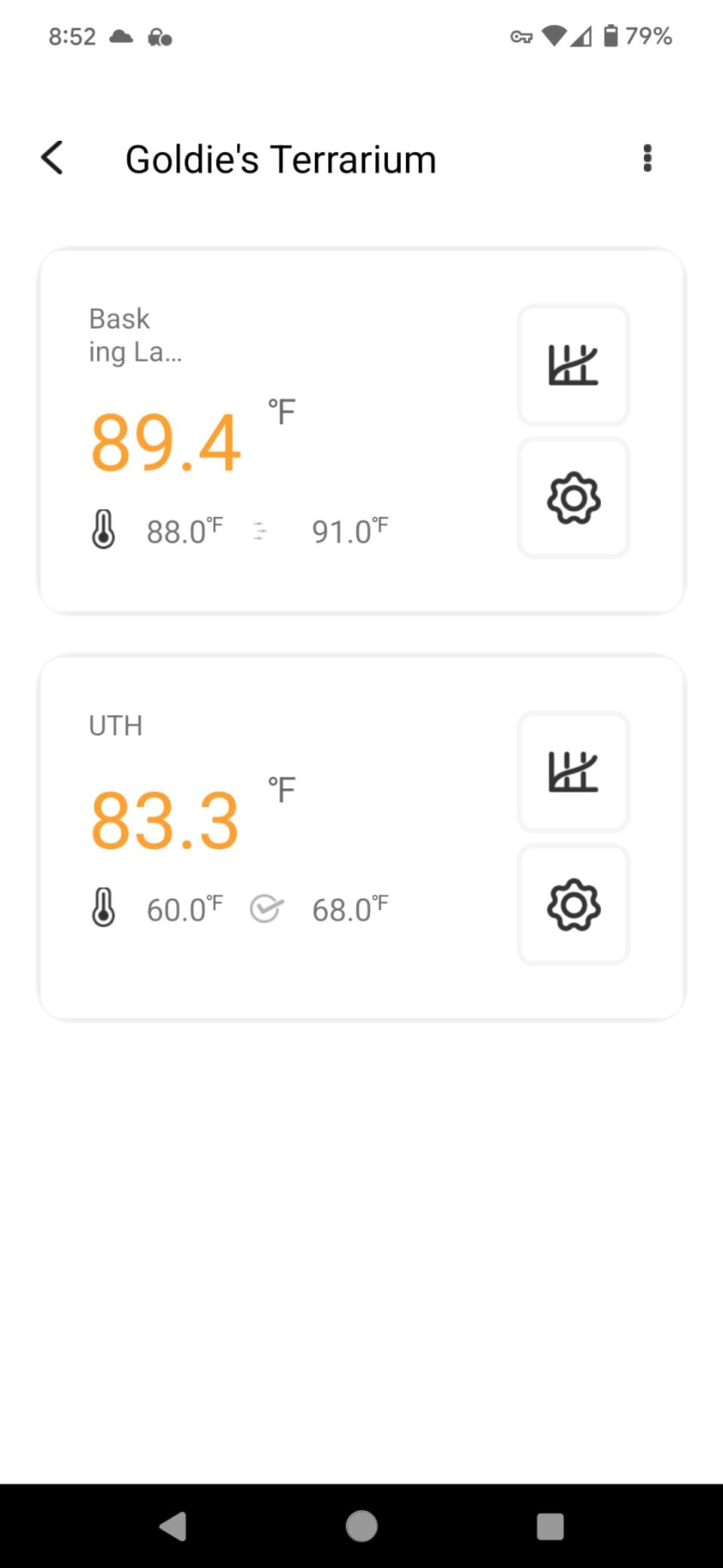
Who gains the most from the Wi-Fi layer
Keepers with several enclosures across more than one room, and breeders who cannot check every enclosure several times a day. Independent high and low alarms mean a failed probe reaches you as a notification rather than as silence.
When to skip it
If your basking lamp is above 250W, this is the wrong box and no software changes that. It is also a poor fit if you want the lamp itself dimmed, because it switches rather than modulates output.
3. Inkbird ITC-306T-A: Top Rated for Breeding and Hatching
Inkbird Digital Outlet Heat Temperature Controller with Day Night Control for Brewing Aquarium Breeding Reptiles Hatching Heat Mat
Two heating outlets at 1200W
Dual time cycles for day and night
Calibration and sensor fault alarms
Pros
- Highest average rating with a very low one-star share
- Two independent outlets from one controller
- Day and night cycles support natural gradients
- Calibration plus over-temperature and sensor fault alarms
- 1200W total capacity
Cons
- Heating only with no cooling function
- Combined 1200W ceiling across both outlets
- On/off control rather than PID dimming
This variant shares the top average rating in our group with a very tight distribution, only 2% one-star. For breeding and hatching work, where a stable incubation temperature is the whole job, that consistency is the reason to pick it over a cheaper generic.
Two outlets both control heating devices and share a 1200W total. In practice that means you can run an incubation heat mat and a small lamp from a single box, or split a room’s worth of small enclosures across one controller instead of buying several.
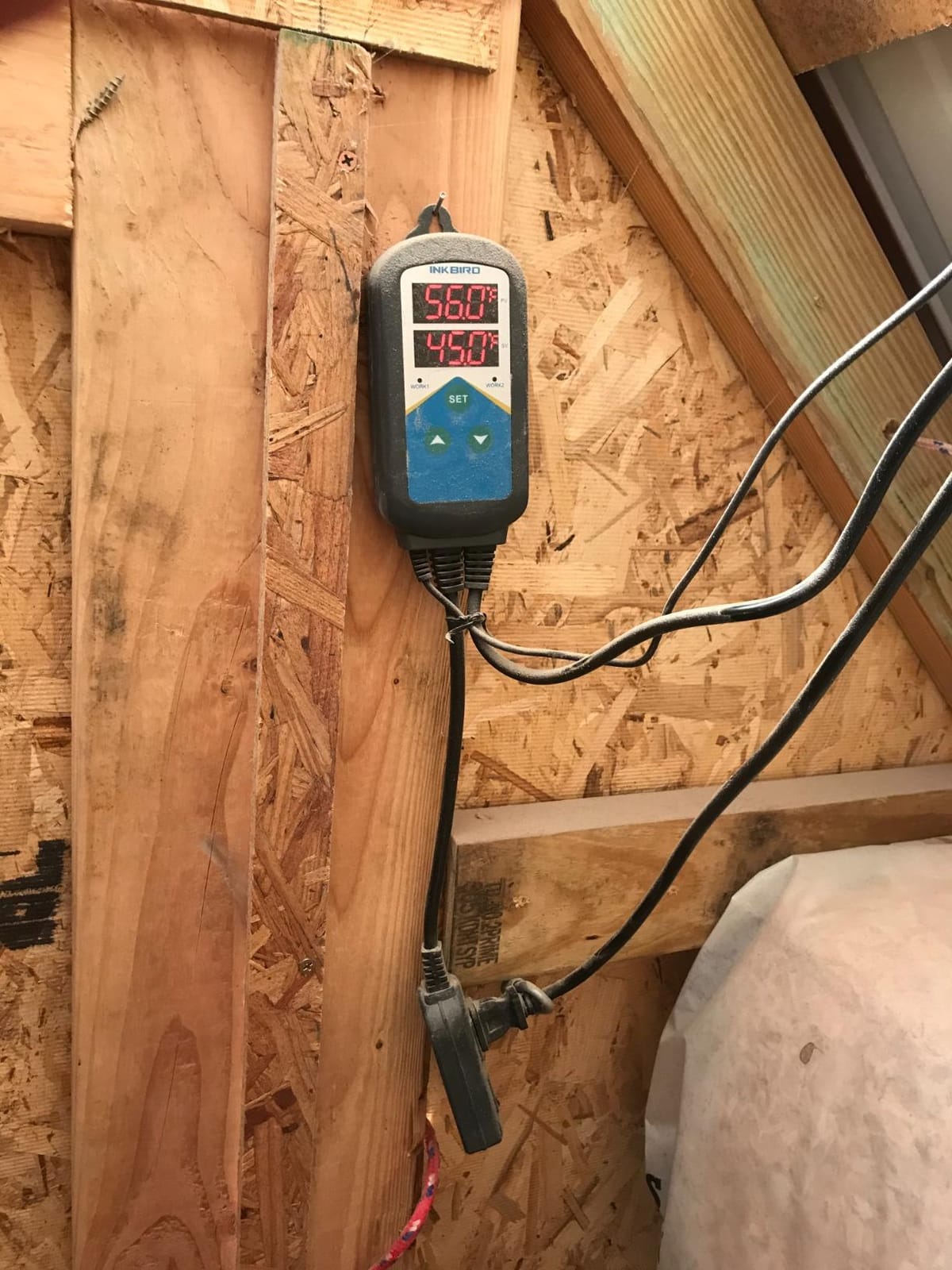
Measurement quality is the differentiator. It supports temperature calibration so you can correct a probe offset against a reference thermometer, and it carries over-temperature and sensor fault alarms alongside two time cycles. It is heating only, the 1200W ceiling is shared across both outlets, and it switches rather than dims.
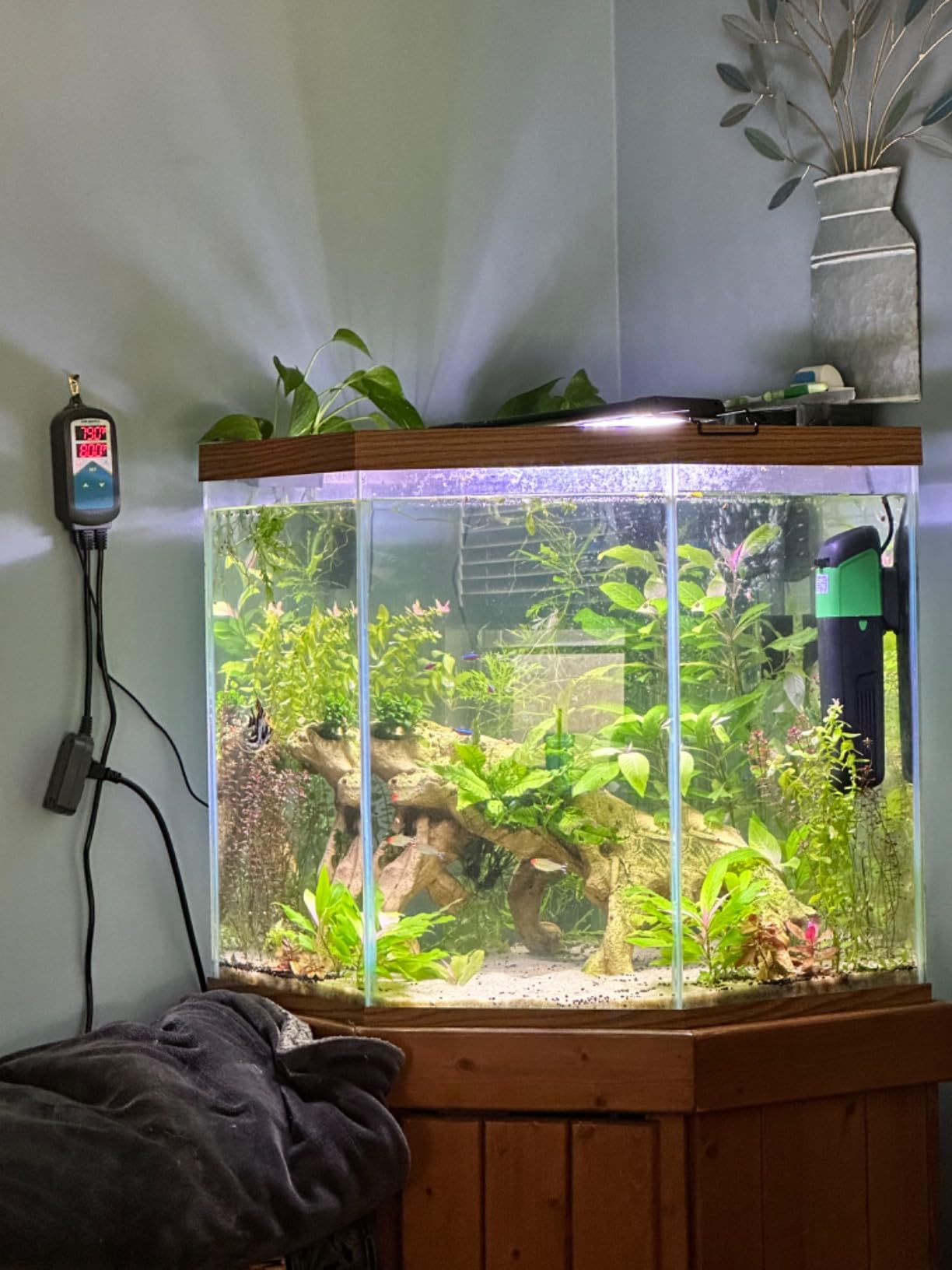
Where it earns its rating
Breeders running egg incubators, hatchling brooders and small nursery enclosures. The calibration function is what separates it from unbranded boxes that simply trust whatever the sensor reports, and the sensor fault alarm means a broken probe announces itself.
The limitation to plan around
Because the 1200W ceiling is shared, adding a second heat source later can push you over the limit. And the on/off output is the deciding factor if your lamp is a halogen basking spot, since cycling is the mechanism that shortens its life.
4. REPTIZOO TC02: Best PID Dimmer for Heat Bulbs
REPTIZOO Dimming Thermostat, PID Temperature Controller with Memory Function, Reptile Thermostat for Reptile Heat lamp, Specifically Designed for Light Heat Bulbs & Heaters
PID dimming for heat bulbs
41F to 140F control range
300W maximum output
Pros
- Genuine PID dimming that spares bulb filaments
- Memory function restores settings after a power cut
- Works with lamps
- mats and heat cable
- One-year manufacturer warranty
Cons
- 300W ceiling is low for larger fixtures
- 9 percent one-star share with some unit failure reports
- Probe must sit at least 15cm from the heat source
- Not for sun lamps or UVB output
This is the budget entry that actually does what a lamp needs. The smart PID heating mode reduces power in steps to hold the setpoint rather than switching the fixture on and off, and the manufacturer states this extends bulb life. For a basking lamp, that is the whole argument for spending more than the price of a mat thermostat.
Control range runs from 41F to 140F, which covers basking and ambient targets for most species without the ceiling sitting uncomfortably close to a desert setpoint. The memory function restores previous settings after power interruption, so a wall-timer cutoff or a brief outage does not leave your lamp at the wrong temperature.
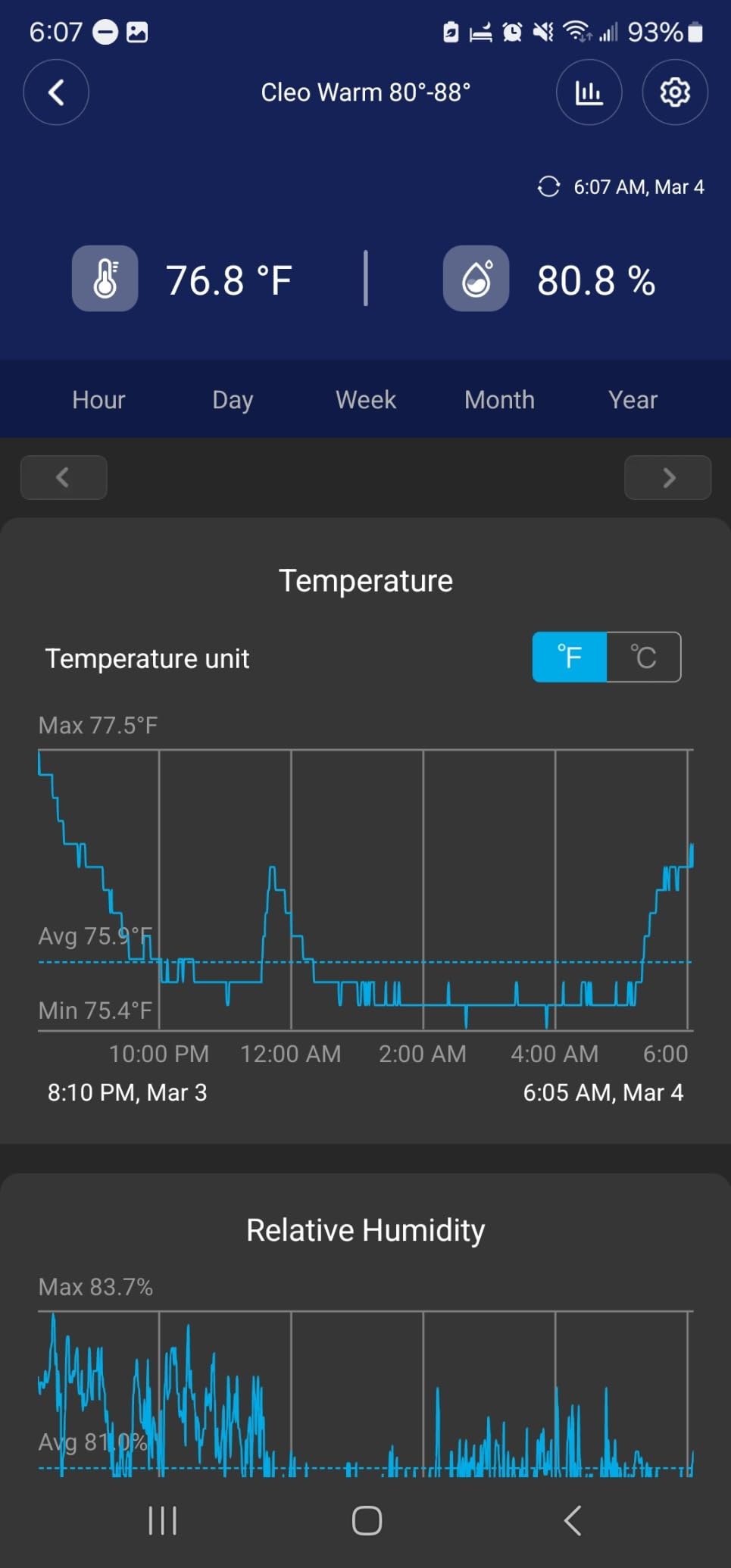
It also accepts heat mats and heat cable, so one controller can serve a lamp during the day and a mat at night if your enclosure is arranged for it. The LED screen shows ambient and set values with C/F switching, and there is a one-year manufacturer warranty behind it, which is more than most controllers at this level offer.
Two practical cautions. The 300W output ceiling rules out big halogen fixtures, and the 9% one-star share is the widest spread in this group, with reports of units that stopped responding after a few weeks. Place the probe at least 15cm from the heat source; if it sits directly under the lamp, the controller reduces power and the basking spot never reaches target.
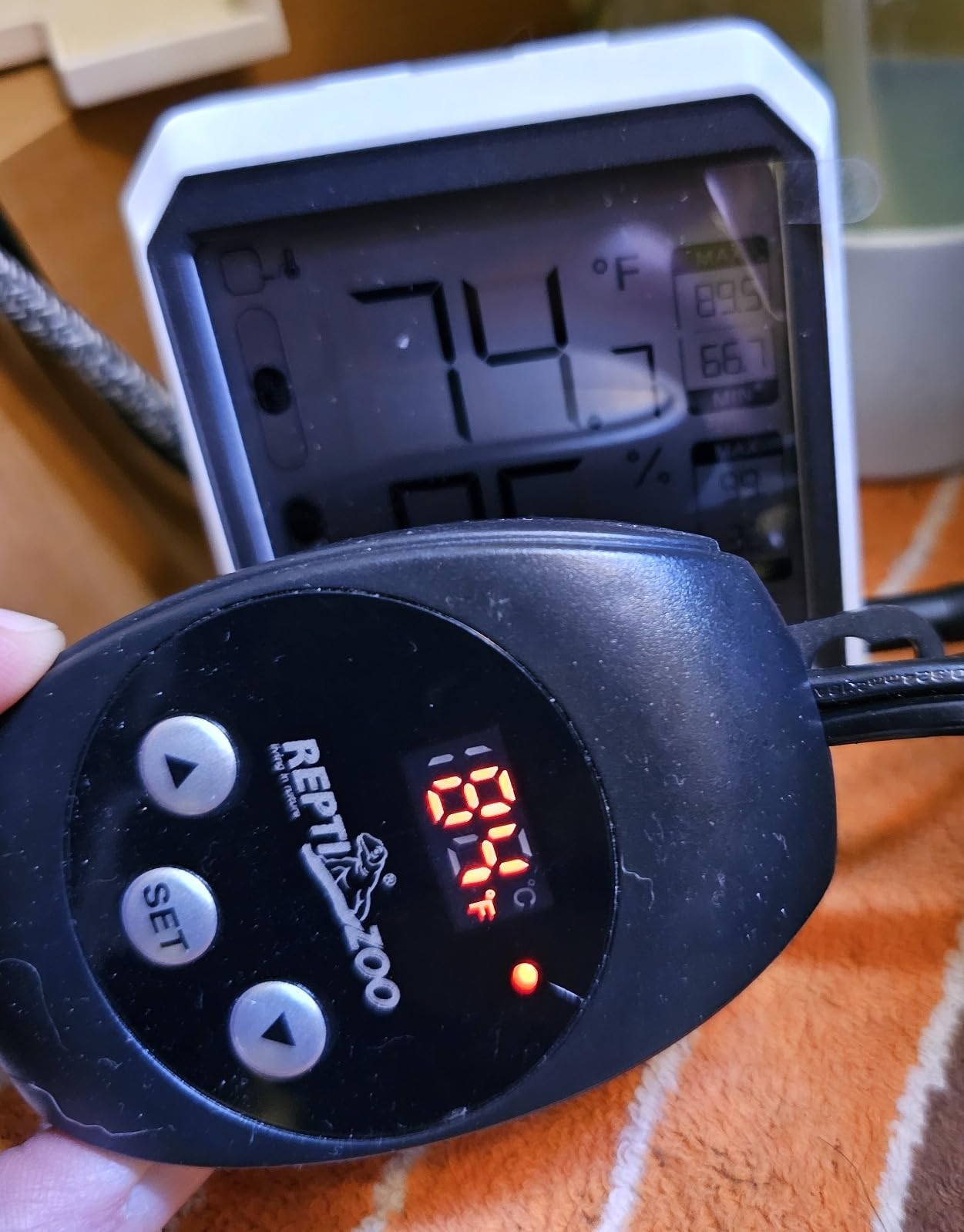
Why dimming matters for a lamp
A dimmer holds temperature by trimming power continuously, so the filament never experiences a cold shock followed by a sudden surge. It reduces visible flicker, steadies the gradient inside the enclosure, and means the bulb reaches the end of its life on schedule. It suits a single small enclosure, a leopard gecko dome lamp, or a modest halogen spot in a glass terrarium.
When the 300W ceiling rules it out
Any fixture above 300W is outside its rating, and the manufacturer is explicit that it must not be used with sun lamps. If output seems low, the guidance is to raise the set temperature by 3 to 5C to confirm the unit is driving the lamp before suspecting a fault.
5. Zoo Med ReptiTemp RT-600: Best Branded Single-Zone Unit
Zoo Med ReptiTemp Digital Thermostat
HEAT and COOL modes
600W heating and 150W cooling
6 foot remote sensor
Pros
- Only single-zone unit here with both heat and fan control
- Highest rating average at 4.6 stars
- 6 foot remote sensor allows flexible probe placement
- Built-in memory survives a power failure
- Audible and flashing extreme temperature alarm
Cons
- Cooling output limited to 150W
- Single outlet controls only one device
- On/off switching rather than dimming
- No built-in day and night program
Zoo Med is the name most keepers already own, and the RT-600 is the reason: it is the only single-zone controller in this group with both HEAT and COOL modes. In a warm room, where a dimmer can only reduce power and an on/off box can only wait for the lamp to cool on its own, driving a small fan from the cooling relay is a real advantage.
Its rating distribution is among the most consistent we saw, with 81% five-star and 11% four-star across 1487 reviews. Owners single out the brand’s reliability record and the flexible 6 foot remote sensor, which lets the controller body sit outside the enclosure while the probe sits where the animal actually is.
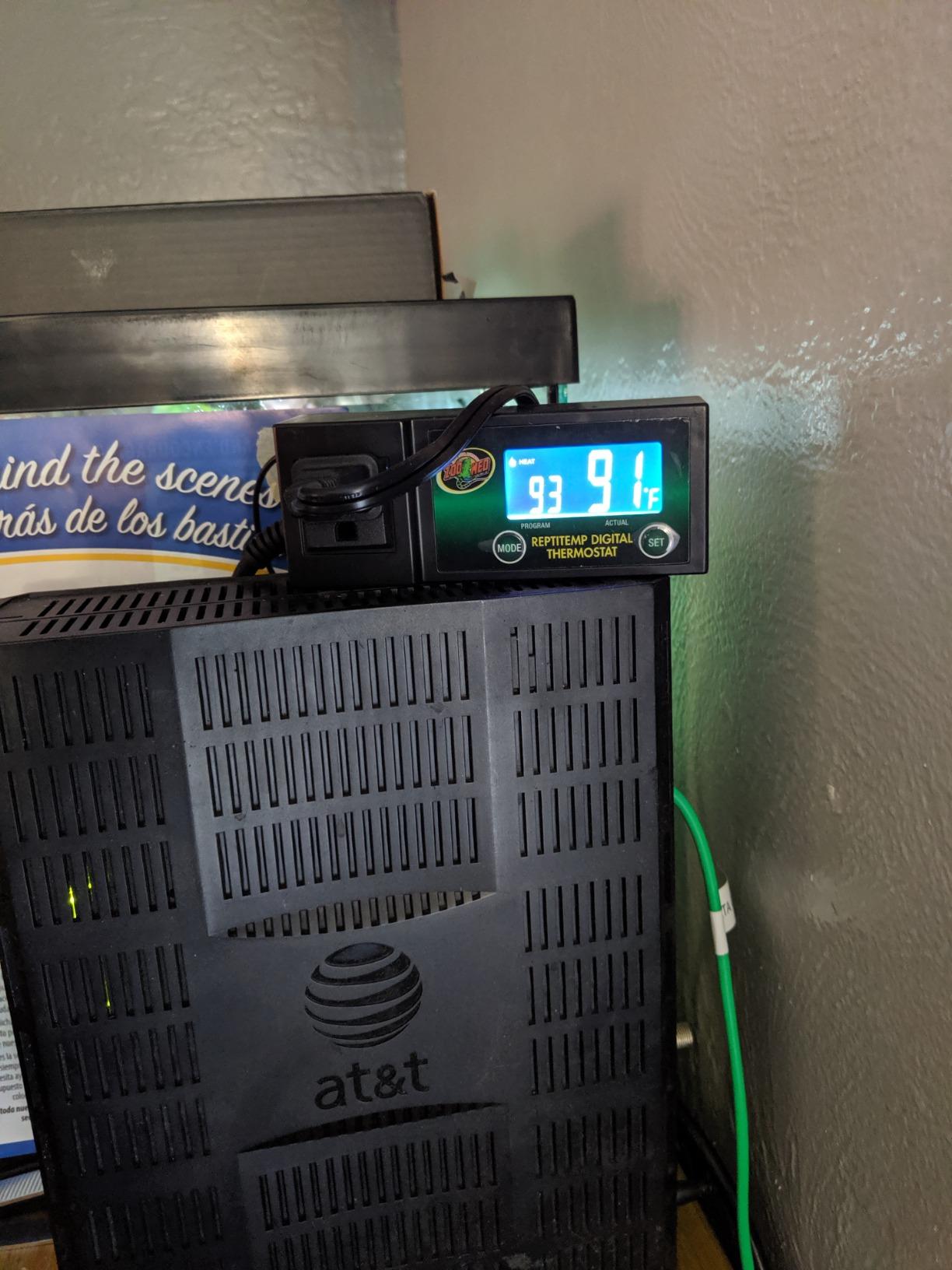
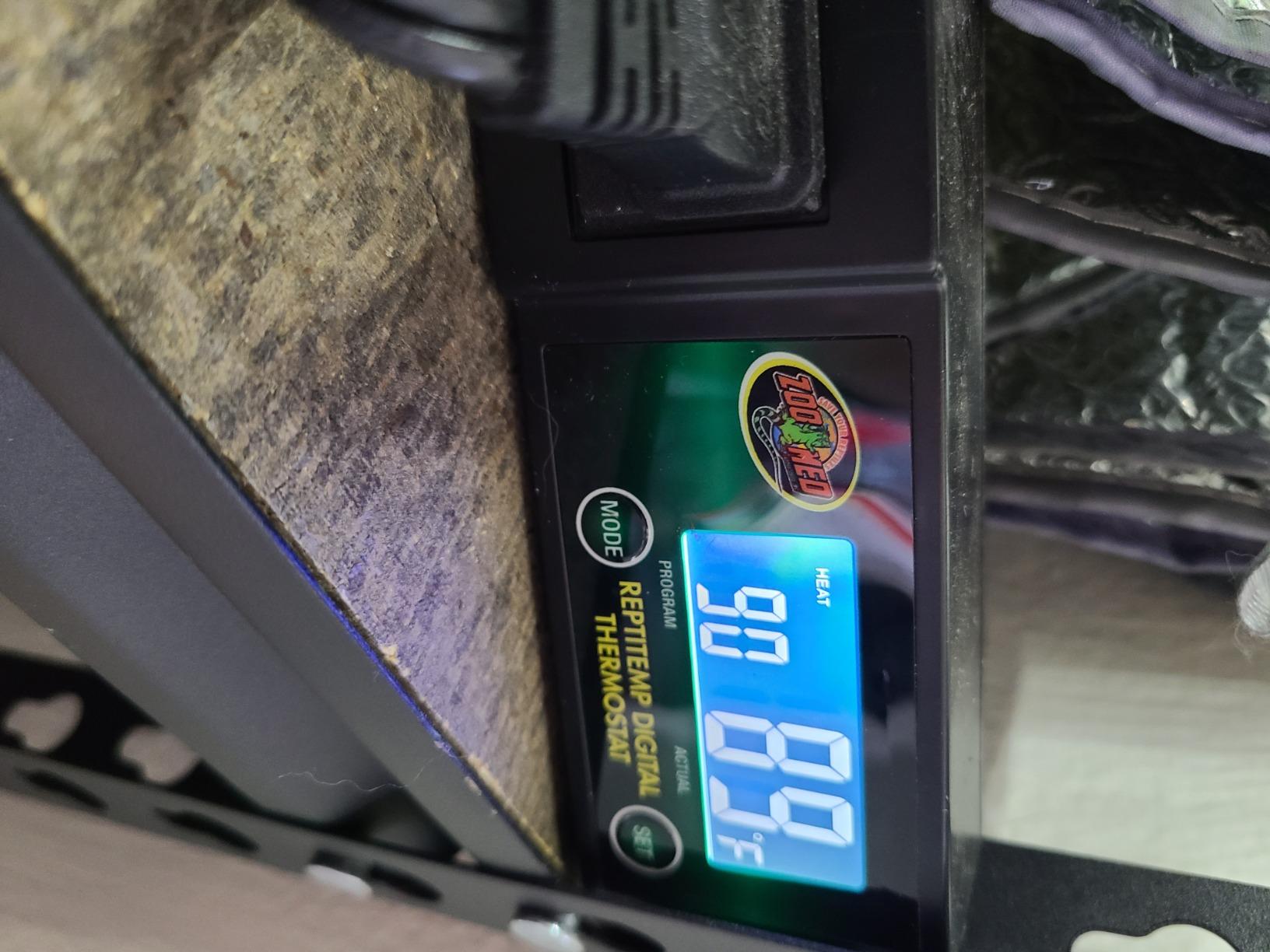
Capacity is well above the dimming boxes at 600W of heating, with 150W available for cooling devices such as fans. Built-in memory stores your settings through a power failure, and the alarm flashes and sounds at extreme high or low readings. Control range is 50F to 122F, which suits temperate and tropical setups but sits low for a desert basking target, and there is one outlet and no day and night program.
Who should buy the branded option
Keepers who want a recognised brand name behind the unit, and anyone whose room gets warm enough in summer that they need a fan to pull the enclosure down. The 6 foot probe cable is also the longest of the single-probe controllers here, which solves awkward routing on a tall enclosure.
What it does not solve
It switches rather than dims, so it is the wrong partner for a halogen basking spot you want to keep for a full season, and the 122F ceiling means it cannot serve a high desert basking target. One device per outlet is the real constraint for a multi-heat enclosure.
6. REPTITRIP SOP24: Best Combined Timer and Thermostat
REPTITRIP Reptile Thermostat, Light Timer for Temperature and Lighting Control, Day-Night Timer Thermostat with Reptile Thermometer for UVB Light, Heat Lamp, Heating Pad, 10A 1250w
One timed socket and one thermostatted socket
1250W maximum load
32F to 140F range
Pros
- Highest load ceiling of the temperature-controlled options here
- Lighting timer and thermostat in one enclosure controller
- Day and night temperature periods
- 0.1F display resolution and 500ms refresh
- Replaceable temperature sensor
Cons
- Thermostat socket is non-dimmable
- Heating only with no cooling
- Some two-star reviews report timer programs not behaving as expected
- Plus or minus 2F sensor accuracy
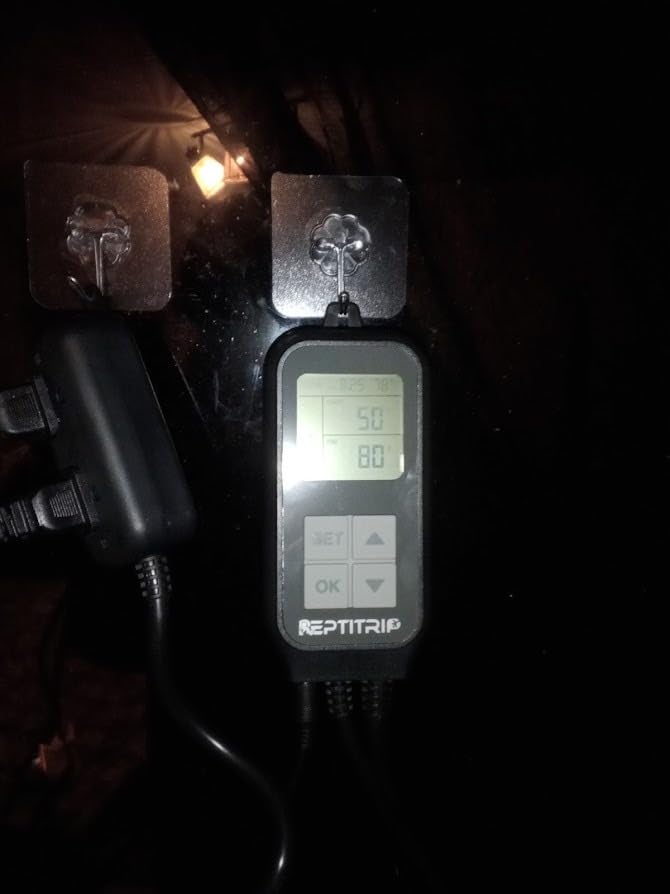
Most enclosures need two things at once: a heat source that responds to temperature, and a light source on a fixed photoperiod. This controller puts both in one body. Socket S1 switches on and off on a timer program, and Socket S2 switches on and off by temperature, each running its own schedule independently.
The 1250W ceiling on a 10A cable load is the highest of the temperature-controlled options here, which gives you room to pair a basking lamp with a second heat source. The set range runs from 32F to 140F, and the display resolves to 0.1F with a 500ms sensor refresh, so the response to a change in basking temperature is quick.
The compromises are worth stating plainly. Socket S2 is explicitly non-dimmable, so a heat lamp plugged into it is switched fully on and off, which is exactly the cycling we are trying to avoid on a basking bulb. Sensor accuracy is plus or minus 2F, and the unit is heating only with no fan support.
Best used for lighting schedules
This is at its best when your UVB or daylight fixture needs a timer and your heat source is a mat or emitter that tolerates on/off cycling. Day and night temperature periods can also be set on the thermostatted socket, so a real photoperiod and a real night drop can run from one box.
Where the accuracy number bites
A plus or minus 2F sensor is workable but not precise, and it compounds with the switching overshoot from a non-dimmable socket. The replaceable sensor is a genuine plus, since a damaged probe does not mean replacing the whole controller.
7. CAVACHEW 300W PID Dimming Thermostat: Best Entry Dimmer
CAVACHEW Dimming Thermostat Reptile, Thermostat for Reptile Heat Lamp Mats Bulbs, PID Temperature Controller for Reptile Amphibian Habistat, Memory Function, LED Digital Screen, Sensitive Probe, 300W
PID dimming with memory function
68F to 122F control range
300W output, 110V to 240V
Pros
- Entry-level PID dimming with memory function
- 68F to 122F control range
- 300W output
- 110V to 240V
Cons
- One report of the housing melting and a fire after about a week
- Another report of flickering or cutting out after three weeks
- Defaults to Celsius display
- 68F to 122F range is narrower than some alternatives
Of all the dimmers here, this is the cheapest way into PID control, and for a small dome lamp on a single enclosure it does the job. Dimming output is gentler on bulbs than on/off switching, and reviewers with leopard gecko setups specifically note that they prefer it for that reason.
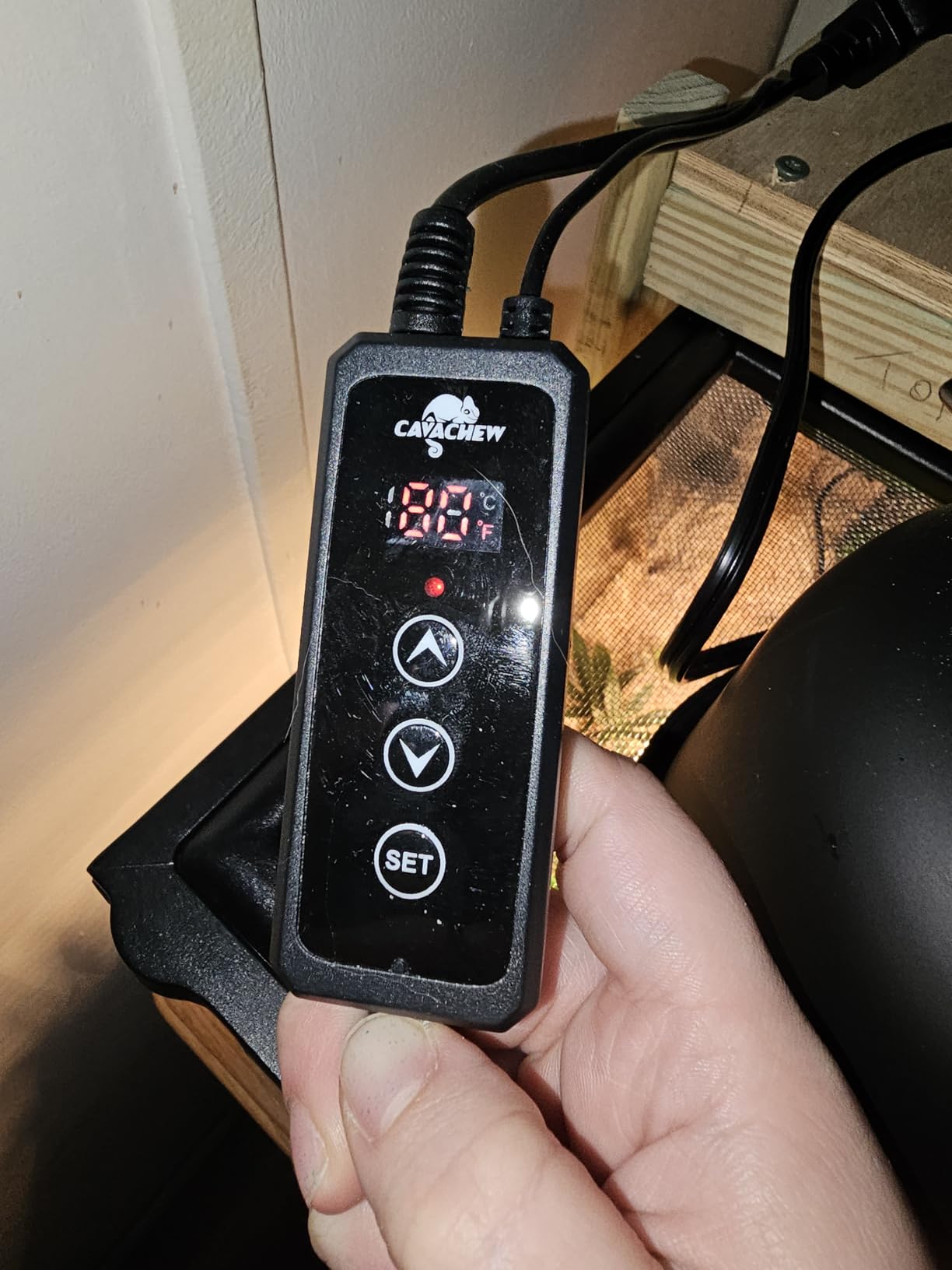
The memory function is the detail that matters most in daily use. It restores previous settings after power-on, so a wall-timer cutoff or a short outage does not leave the lamp sitting at an incorrect target until you notice. Setup is described as hold SET until it blinks and enter the target temperature.
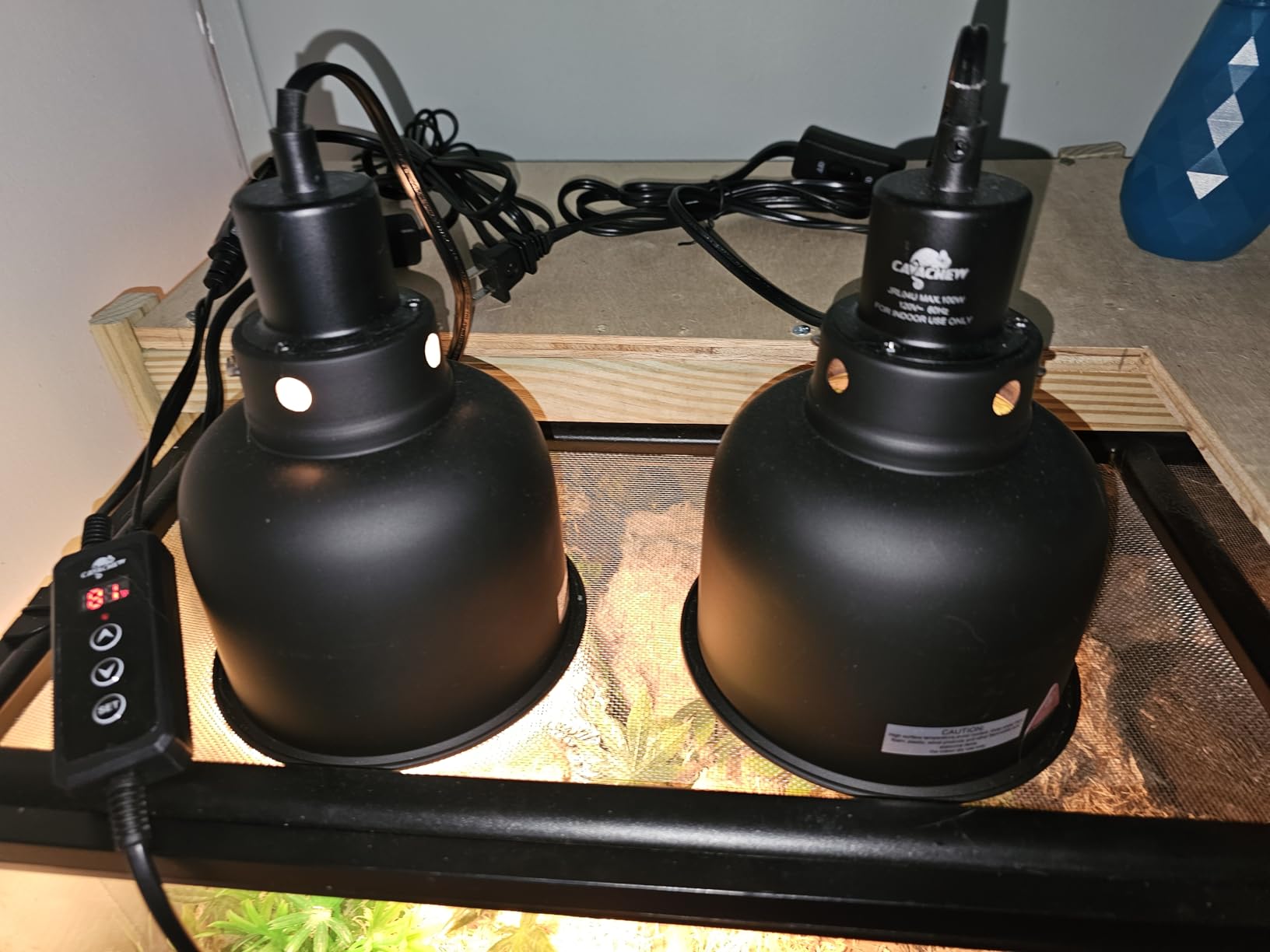
Input voltage of 110V to 240V gives unusual flexibility, and reviewers report the probe accurate enough for halogen heat lamps in their own testing.
Reliability is the concern. Two of the lowest-rated reviews describe hardware failures within weeks, including one report of the housing melting and a fire after about a week of use, and another of the unit flickering or cutting out until the wire was wiggled. The default display is Celsius, which catches out Fahrenheit users on first power-up.
Reasonable for a first dimmer
If you are moving from a mat thermostat to a lamp, this is a low-commitment way to test whether dimming suits your setup. The memory function covers the outage problem that keepers complain about most, though the 68F to 122F control range will not cover a very high desert basking target.
Where reliability concerns bite
Reports of a melted housing and intermittent cut-outs within weeks are exactly the failure mode keepers describe with an unbranded controller. If your animal depends on the thermostat, keep a secondary infrared thermometer on the enclosure, and note the 300W ceiling rules out larger fixtures.
8. REPTITRIP PT02: Best Dimmer with a Built-In Timer
Reptile Thermostat, Dimming Thermostat with 1-24H Timer Setting
PID dimming with 1-24H timer
50F to 140F range
260W maximum output
Pros
- Combines PID dimming with a 1-24 hour timer
- LCD shows real-time output power and temperature
- Backlight auto-off after 20 seconds
- Compatible list covers night infrared lamps and ceramic emitters
- 80 percent of reviews are five star
Cons
- 260W ceiling is low for larger fixtures
- Only a two-month manufacturer warranty
- Not for UVB
- LED or sun lamps
- A higher wattage bulb is needed if the basking spot falls short
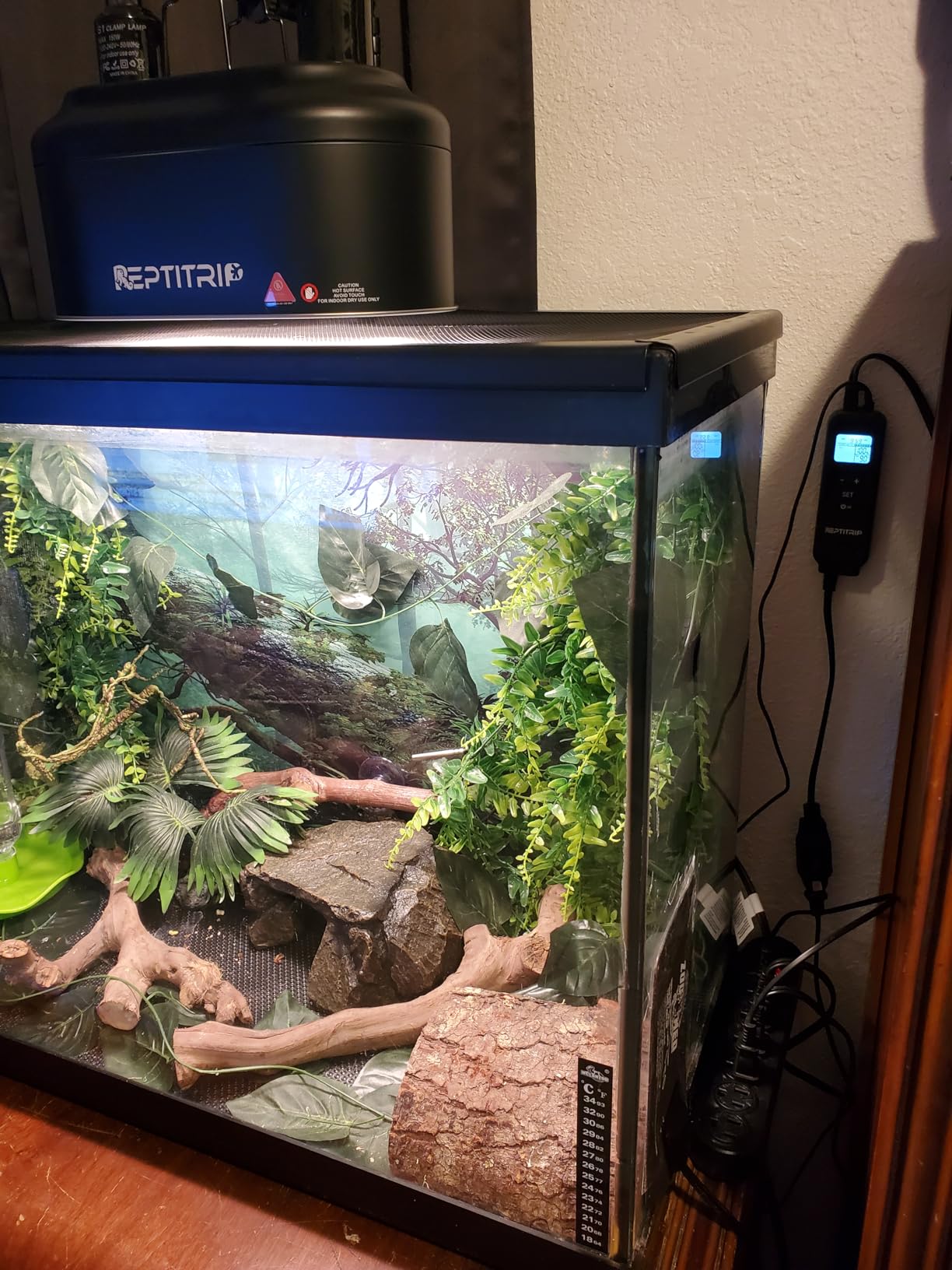
Dimming plus a timer is an unusual pairing, and it is the reason to look at this one. PID control trims output power for stable heating, while a 1 to 24 hour timer setting lets you control when the lamp runs, which covers a day and night cycle without a separate plug-in timer.
The LCD showing real-time output power alongside environmental temperature is the feature we found most useful during testing. When a thermostat is dimming correctly, you watch the power figure rise and fall as the basking spot heats and cools, which is immediate feedback that the unit is actually modulating rather than only switching.
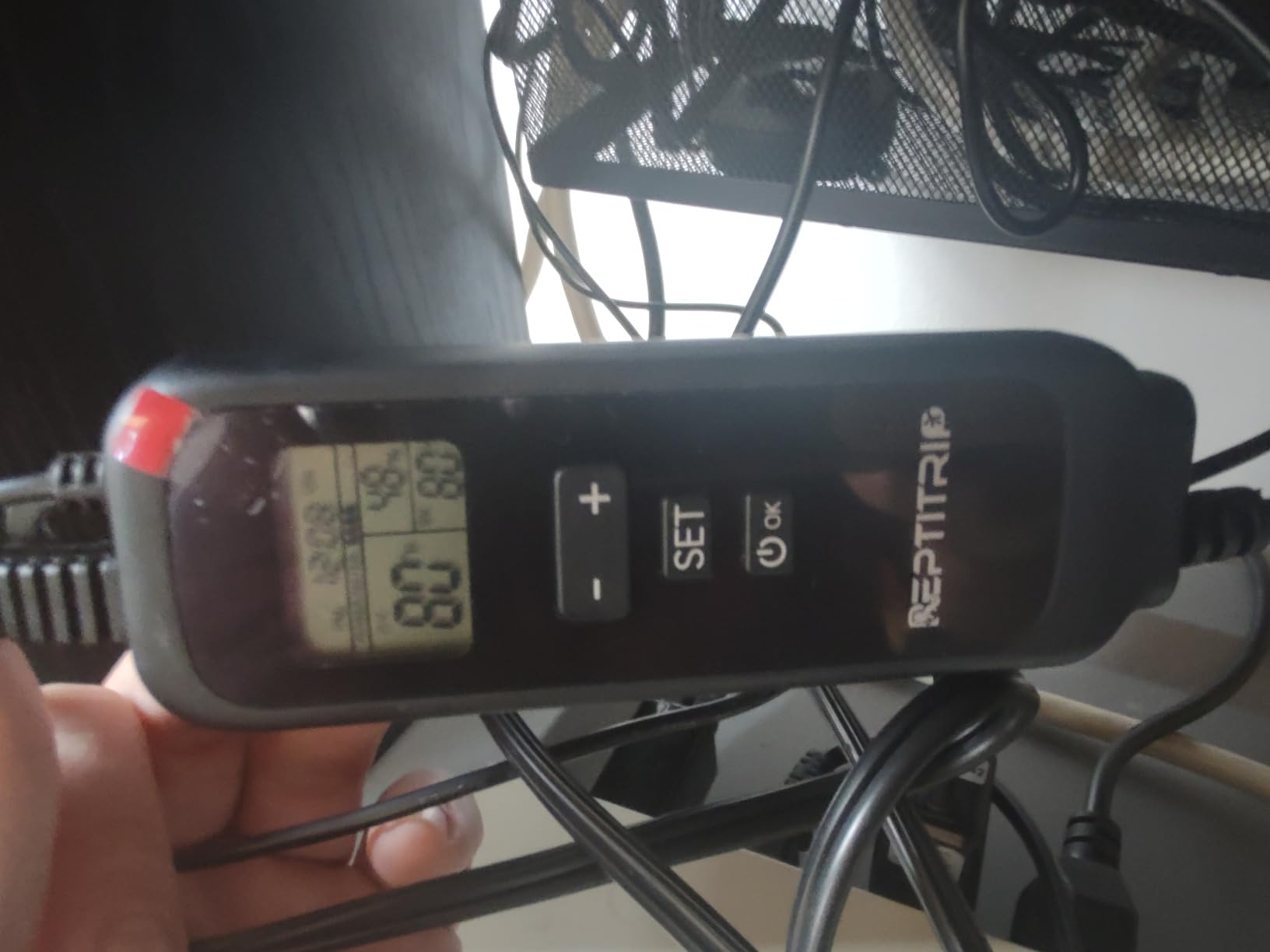
It also has the highest proportion of five-star ratings in the group at 80%, and the backlight shuts off after 20 seconds so the display does not disturb nocturnal animals. The compatibility list is the broadest of the dimmers here, covering heating mats, day and infrared heat lamps, night heat lamps and ceramic heat emitters.
The 260W maximum is the lowest ceiling among the dimming options and the manufacturer warranty runs only two months. If the basking spot never reaches setpoint, the guidance is to fit a higher wattage bulb rather than push the controller past its rating.
Best for controlled day and night cycles
This suits a nocturnal or crepuscular setup where you want the lamp to run for a defined number of hours and then dim back. The visible output power readout makes it easy to confirm behaviour after any bulb change, and for a mixed enclosure with a mat by day and a lamp by night, the timer and dimming function together cover both behaviours in one box.
What to watch
Two hundred and sixty watts is genuinely restrictive, so measure your fixture first. A two-month warranty gives little protection, it must not be used with UVB, LED or sun lamps, and if the reading plateaus below setpoint, add wattage to the bulb rather than raising the set temperature past what the enclosure needs.
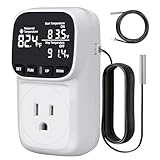
9. Comyan 15A Dual Probe Outlet: Best for High Loads and Incubators
COMYAN Temperature Controlled Outlet with 16.4ft & 6.5ft 2 Probes, Reptile Thermostat 15A 1800W Digital Thermostat, Heating Cooling Timer with Cyclic Timing/Countdown, -40℉~210℉ for Reptile Incubator
15A and 1800W rated output
Probes at 16.4ft and 6.5ft
Plus or minus 0.2F accuracy
Pros
- Widest temperature range at -40F to 210F
- Two different probe lengths solve routing problems
- 1800W rating handles heavy halogen plus mat loads
- Dual relays handle heating and cooling independently
- Tightest claimed accuracy at plus or minus 0.2F
- Blackout-safe settings with self-recovery
Cons
- No dimming or PID control
- Listed under industrial temperature controllers rather than reptile gear
- Opaque unbranded housing
- Smallest review base in the group
When a single enclosure needs more than a lamp, this is the capacity answer. Fifteen amps and 1800 watts of rated output with reinforced copper terminals sits far above every dimming controller here, and dual relay outputs manage heating and cooling devices independently.
Accuracy is the standout specification at plus or minus 0.2F across minus 40F to 210F, with plus or minus 9F of calibration available for sensor offset. Two probes of different lengths, 16.4ft and 6.5ft, solve a real routing problem when the enclosure sits far from the wall outlet.
There are also anti-spark and short-circuit protections, cyclic timing from one minute to 99 hours, and settings preserved through blackouts with self-recovery. That combination suits incubation work far better than anything else here.
Where the capacity matters
Breeders running incubation rooms, greenhouse propagation, or a rack where one channel must carry a heavy halogen plus a mat. The cooling relay can also run a fan in a warm room rather than waiting for passive cooling. For a single terrarium it is overkill, which is a different use rather than a fault.
Why it is not a lamp answer
There is no dimming or PID mode, so a basking bulb connected to it is cycled rather than modulated and swings by a degree or two around setpoint. It is also unbranded and sold into the industrial temperature control category, so there are no reptile presets, and its 132 reviews are the smallest sample here. Use it for capacity and accuracy, not for lamp longevity.
10. ReptiKing X100: Best for Small Single-Enclosure Setups
ReptiKing Reptile Dimming Thermostat, Heat Lamp Temperature Controller, Reptile Terrarium PID Digital Thermostat, Heating Controller for Basking Spot Heat Bulbs and Ceramic Heat Emitter
PID dimming for heat lamps
68F to 122F setting range
200W maximum load
Pros
- PID dimming holds temperature without on/off swings
- Claimed lamp life extension of up to 45 percent
- Suction cup probe mount makes positioning simple
- UL certified power cord and one-year warranty
- Clear digital readout of target-space temperature
Cons
- 200W ceiling is the lowest in the group
- 68F to 122F range is narrower than the REPTITRIP PT02
- Not for mercury vapor sun lamps or UVB bulbs
- Heating only with no cooling function
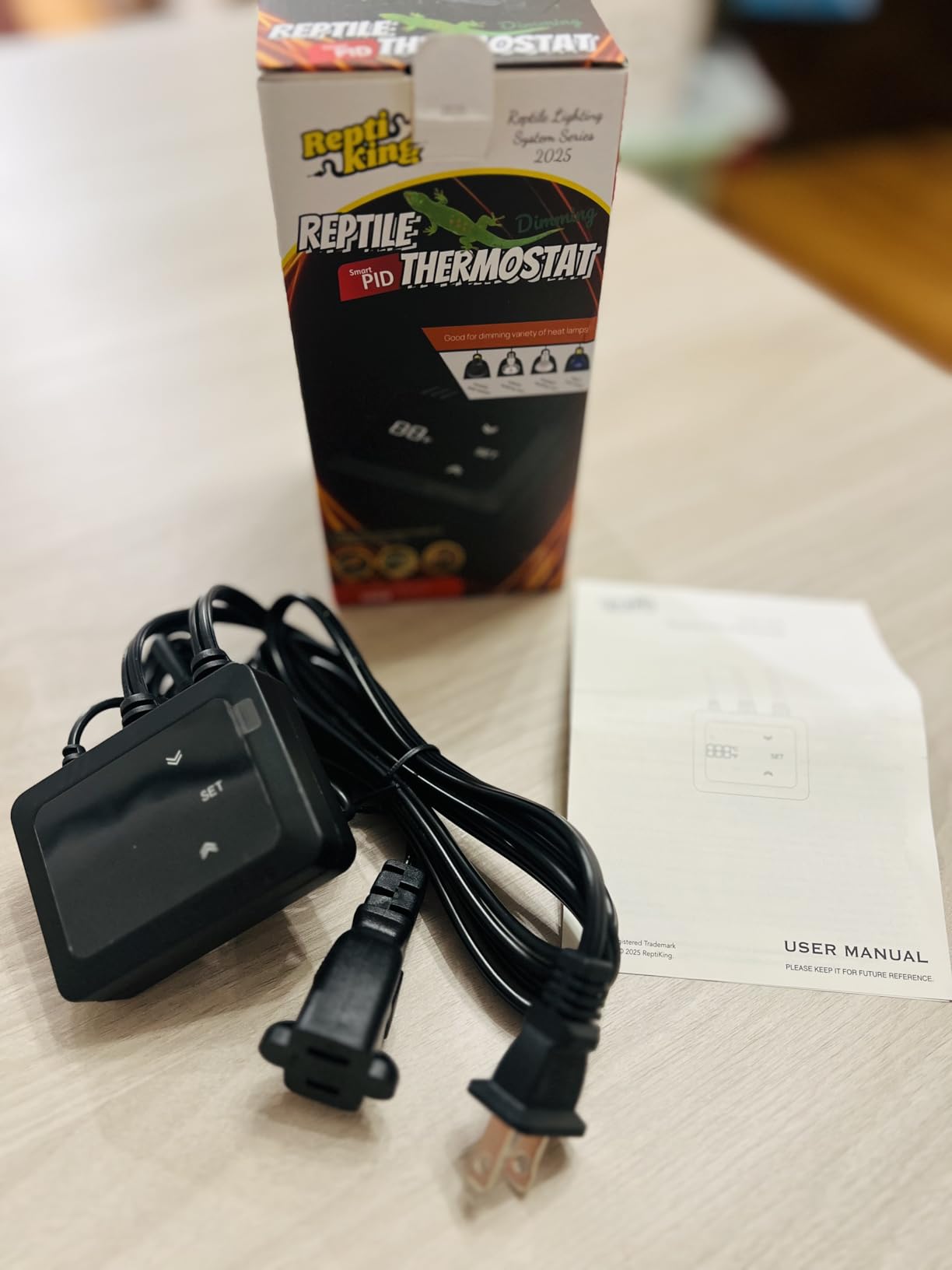
The simplest dimmer here to install. You plug the fixture into the female socket, power the unit on, and set your target. The suction cup probe mount is the detail we appreciated most, because secure probe placement is the step most often skipped and the one that most often produces readings nobody can explain.
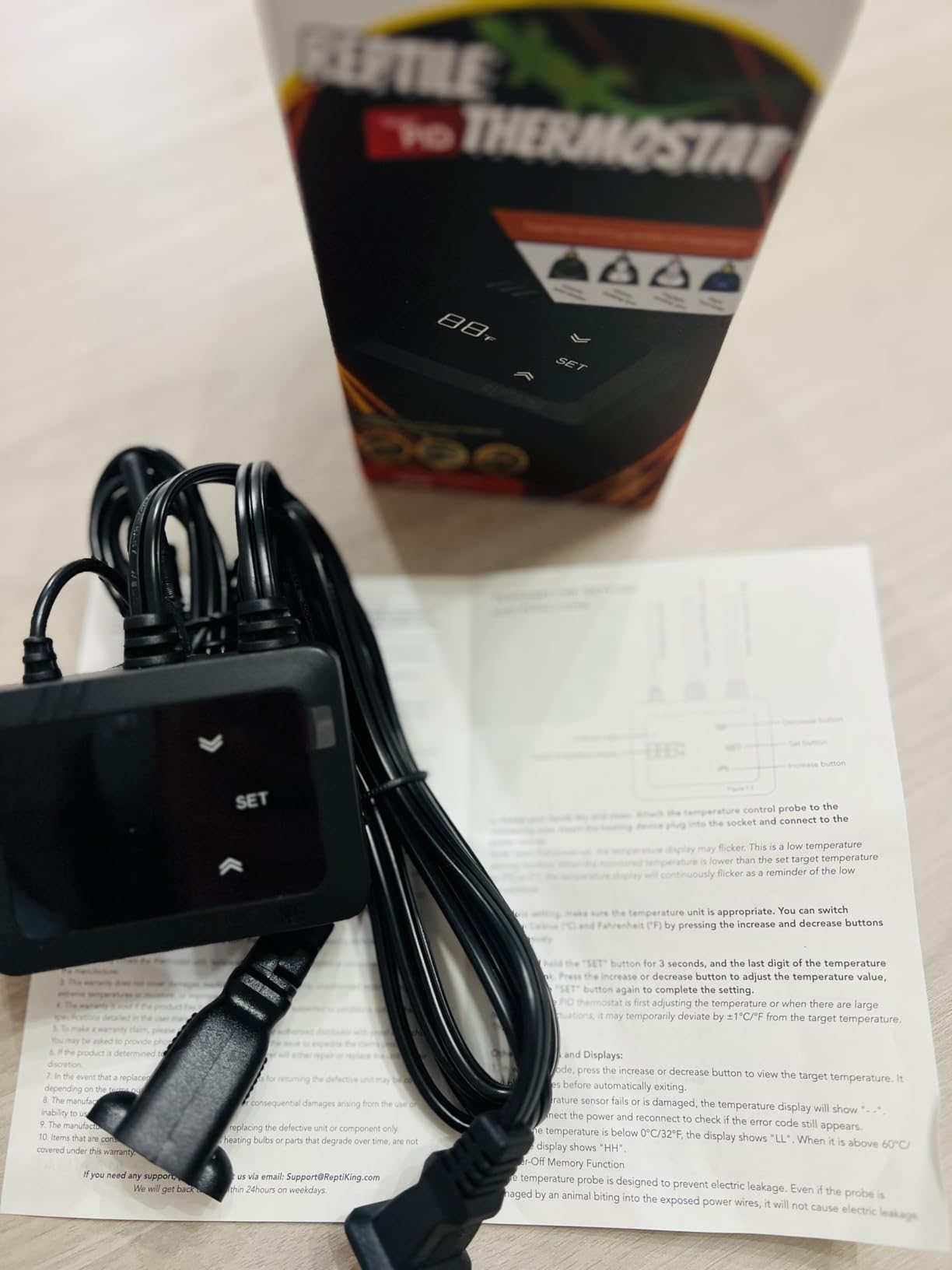
That mount matters more than it looks. A probe that shifts a centimetre can change what it reports, and a controller compensating for a false reading cuts power to a basking spot that is already correct. Fixing the sensor where the animal actually sits removes a whole category of confusing behaviour.
PID control avoids the swings that come from frequent on/off switching, and the manufacturer claims lamp life extension of up to 45% along with lower energy use. It works with basking spot bulbs, infrared heat lamps and ceramic heat emitters, which covers most of the light-emitting sources a single enclosure uses.
The digital display shows real-time target-space temperature, so you can read the trend without leaving the enclosure. Setup is described as straightforward: plug the fixture into the female socket, power on, and set your target.
Where it fits well
A small glass terrarium with a modest dome lamp, or a single gecko or snake enclosure where you want the bulb treated gently. The UL certified power cord with a one-year manufacturer warranty is a better safety story than most budget controllers offer.
The ceiling you have to respect
Two hundred watts is the lowest maximum load here and genuinely restricts lamp choice. A 100W to 150W dome lamp fits, a 160W halogen basking spot does not, and the 68F to 122F setting range is narrow. It is heating only and not for mercury vapor sun lamps or UVB bulbs.
How to Set Up a Dimming Thermostat for a Heat Lamp
Most setup problems with a dimmer come from two mistakes: putting the probe too close to the lamp, and expecting the controller to cool an enclosure it cannot cool. The sequence below avoids both.
Confirm the lamp and socket can be dimmed. Touch control, LED bulbs and many integrated LED fixtures cannot. Use an incandescent or halogen basking bulb in a ceramic or glass socket, and run a plain timer instead for any sun lamp or UVB source.
Check the wattage. Add up every device on that controller and stay under the stated maximum. Dimming units in this group sit between 200W and 300W, so one modest bulb is the realistic load.
Mount the controller outside the enclosure where you can read the display, and secure the probe at animal level on the warm side, not at the bulb and not against the glass. The REPTIZOO guidance is a minimum of 15cm from the heat source.
Set your basking target rather than a warm air number. Then allow 30 to 60 minutes for the enclosure to settle before judging anything.
Verify with a secondary infrared thermometer aimed at the basking surface. A dimmer reduces power but cannot cool below ambient, so if the room is hot the reading may never climb to target no matter what the display says.
Learn the restart behaviour before you need it. Check whether the unit has a memory function that restores your setpoint after a power cut, and confirm it does by testing the outlet timer on a day your animal is not depending on the lamp.
From there, adjustments are small. If the basking spot is running cool, the bulb is underpowered for the enclosure rather than the controller being faulty, and adding wattage or shortening the distance is the correct fix.
How to Choose a Reptile Thermostat for a Heat Lamp
Match the control type to the light. This is the first filter and it removes most of the catalogue. Dome lamps, incandescent basking bulbs, halogen basking spots and infrared night lamps need dimming or pulse proportional control. Heat mats, heat cables, ceramic heat emitters and radiant heat panels are fine on an on/off thermostat. A dimmer cannot cool, so a heating-only dimmer is a poor tool in a warm room.
If you are still comparing bulb types rather than controllers, our roundups on the best food heat lamps and the best poultry heat lamps for chicks cover the infrared bulb side of the market, where wattage and duty cycle matter for the same reasons they do here.
Match the load to the fixture. Add up the wattage of everything on the controller and compare it with the rating. Dimming controllers here run 200W to 300W; on/off controllers reach 1200W, 1250W and 1800W. An on/off controller with too much headroom for a small lamp is a perfectly good pairing, and the reverse is not.
Look at control range, not just measurement range. A unit may display minus 40F to 210F while only controlling a narrow band, and vice versa. For reptiles you need a control range that reaches your basking target, and the Zoo Med RT-600 topping out at 122F is a genuine limit for high desert species even though the brand is strong.
Prioritise the probe. Probe length decides whether you can place the sensor where the animal is rather than where the cable reaches, and a suction cup or adhesive mount makes the correct placement survivable. Replacement probes matter too, since a damaged sensor should not mean a new controller. Two probes of different lengths, as on the Comyan, are genuinely useful in a large enclosure.
Treat accuracy and fail-safes as safety features. A plus or minus 0.5F class probe gives you room to work, and a plus or minus 2F probe does not. A high and low temperature alarm with a buzzer or an app notification, plus output cut-off on probe fault, is the difference between learning about a failure and discovering it. A memory function that restores your setpoint after a power cut is the single most requested feature among keepers.
Decide on day and night control. Diurnal species need a drop at night, which is best handled by a controller with two time cycles rather than by changing the setpoint by hand. A built-in timer also lets a single box handle both the photoperiod and the heat schedule.
Count the enclosures, not the tanks. Multi-tank keepers should look at two independent outlets and two probes, as on the Inkbird WiFi IPT-2CH, or at a dual-zone controller built for rack work. Remember that one controller per outlet means you may still need more than one box per room. Our smart thermostat guide covers the monitoring side for anyone building that kind of setup.
Keep a secondary thermometer. Every controller in this roundup depends on a single probe. An independent infrared thermometer and a visible analog thermometer inside the enclosure are cheap, and they are the only way to catch a probe that has drifted or a controller that has stopped responding.
Frequently Asked Questions
Do I need a thermostat for a reptile heat lamp?
Yes. A thermostat is the only device that switches or dims the lamp in response to temperature, and a thermometer alone cannot cut power. It also stops the lamp overshooting during the warm-up period, which is when burns happen. Run the lamp through a dimming or pulse proportional controller for a light-emitting source, and use a secondary infrared thermometer to confirm the basking surface is where you expect.
Can I use an on/off thermostat with a basking bulb?
You can, and many keepers do, but it is not the better choice. An on/off controller applies full power, then cuts it entirely, so the enclosure swings by a degree or two and the filament is shocked every time it restarts. A dimming thermostat reduces power in steps instead, which holds a steadier basking temperature and reduces the thermal cycling that shortens bulb life.
What is the difference between a dimming and a pulse proportional thermostat?
A dimming thermostat reduces the power sent to the heat source in small steps and cannot cool below room temperature. A pulse proportional thermostat switches power very rapidly, often several times per second, so the average delivered sits just under your setpoint. Dimming is gentler on a filament bulb, while pulse proportional generally gives the tightest temperature control. Some premium controllers offer both modes.
Why does my basking bulb keep burning out?
Repeated hard on/off switching is the usual cause. Each restart sends cold current into a hot filament, and the thermal shock eventually cracks it. Moving the lamp onto a dimming thermostat reduces that cycling and extends bulb life. A failing socket, a lamp running above the fixture rating, or a bulb left in a fixture that gets too hot will also shorten its life.
Why won’t my thermostat turn the lamp back on?
Check the obvious first: a probe sitting too close to or touching the heat source, a probe disconnected, or a setpoint below the temperature the controller is actually reading. On restart after a power cut, some units revert to factory settings or wait for the probe to register correctly, so give it a minute. Models with a memory function restore the previous setpoint instead, which is why keepers treat that feature as a purchase requirement.
Where should I put the temperature probe?
Put it at animal level in the warm part of the enclosure, roughly where the reptile sits or basks, not directly under the lamp and not against the glass. One manufacturer specifies a minimum of 15cm from the heat source, because a probe sitting in the lamp’s path reads far hotter than the basking surface and causes the controller to cut power prematurely. Secure it so it cannot shift when the animal moves.
Do I need one thermostat per enclosure?
One controller per heat zone is the practical rule. A two-outlet model such as the Inkbird WiFi IPT-2CH can run two independent probes and channels, which covers two small enclosures or a lamp and a mat in one box. Remember that a single outlet limits you to one device, and that dimming controllers have low wattage ceilings, so heavy basking fixtures still need their own controller.
How accurate should a reptile thermostat be?
Plus or minus 1F or better gives you useful working room, and plus or minus 0.5F class probes are common among the better units in this roundup. Anything looser than plus or minus 2F means you are relying on a secondary thermometer rather than the display. Accuracy claims are also only as good as probe placement, so always offset-calibrate against a reference reading.
Final Verdict
The best reptile thermostats for heat lamps in 2026 come down to which lamp you run. For most single-enclosure setups the Inkbird ITC-306T earns the top spot, with the highest review volume, two day and night cycles, a dual display and a 1200W ceiling. If the lamp is the point of the enclosure, pick a dimmer instead: the REPTIZOO TC02 is the one we would choose, with a 41F to 140F range, a memory function and a one-year warranty.
Multi-tank keepers should start with the Inkbird WiFi IPT-2CH for two independent channels and app alarms, and anyone running heavy halogen fixtures or incubation equipment should look at the Comyan 1800W unit for capacity and probe accuracy rather than lamp gentleness. Whatever you choose, keep an independent thermometer in the enclosure and confirm the basking surface with an infrared reading every week.