

A van roof fan is the cheapest piece of equipment that decides whether summer travel is miserable or fine. It sits in the roof, pulls thousands of cubic feet of air per minute out of the cabin, and gets the trapped heat that collects under the metal skin moving somewhere else. It does not cool the air. It moves air, and moving air is the difference between 95 degrees inside and 80 degrees inside.
That distinction matters more in hot climates than anywhere else. A fan alone will not rescue you in August humidity, and anyone selling you a fan as an air conditioner replacement is overselling it. What a fan will do is pull the superheated air that piles up at the ceiling and push it outside, while a cracked window on the shaded side feeds cooler air back in. The result that van owners keep reporting is a drop of roughly 10 to 14 degrees Fahrenheit, or 5 to 7 Celsius, once the sun is off the roof.
We pulled together ten roof vent fans and compared them on the things that decide whether one survives a desert summer: how much air it moves, what it pulls off the battery, whether the lid can stay open when the monsoon arrives, and how thin the plastic is when you are drilling into a roof. Ten units, ten product sections, and one clear winner at the end.
Table of Contents
What Is the Best Roof Vent Fan for a Van?
The best roof vent fan for a van is the MaxxAir MaxxFan Deluxe 7500K, because it reverses between intake and exhaust on ten speeds and its integrated rain shield lets it run with the lid open in a downpour. In hot climates that combination is the whole game. Any fan can blow hot air out; a fan that can also pull the cooler night air in, and survive an afternoon storm while doing it, works year round.
Top 3 Picks for Best Van Roof Vent Fans for Hot Climates (October 2026)

MaxxAir MaxxFan Deluxe
- 10-speed reversible fan
- Built-in rain shield
- Remote with thermostat
- 60W on 12V

MaxxAir MaxxFan Plus 4500K
- Rain sensor closes the lid
- 28W draw
- Remote or manual open
- Runs with lid shut

Every Fan in This Roundup Compared Side by Side
All ten fans in this guide fit the standard square roof opening used across RV and van conversions. CFM figures appear only where the manufacturer publishes one, so a blank cell means the spec was not stated rather than that the fan is weak.
| Product | Specifications | Action |
|---|---|---|
| MAXXAIR Maxxfan Deluxe 7500K |
|
Check Latest Price |
| MAXXAIR Maxxfan Plus 4500K |
|
Check Latest Price |
| RVLOVENT 1000 CFM Manual Fan |
|
Check Latest Price |
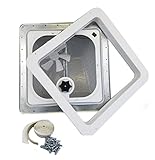 Ventadome Ventline CW001 Ventadome Ventline CW001 |
|
Check Latest Price |
 caqeg 14 Inch Reversible Vent caqeg 14 Inch Reversible Vent |
|
Check Latest Price |
 Starvent A021C Six-Speed Fan Starvent A021C Six-Speed Fan |
|
Check Latest Price |
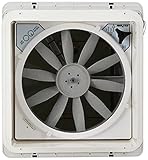 MaxxAir Original MaxxFan 4401K MaxxAir Original MaxxFan 4401K |
|
Check Latest Price |
 HENG’S 71112A Roof Vent HENG’S 71112A Roof Vent |
|
Check Latest Price |
 2012RVAccessories F36AR LED Fan 2012RVAccessories F36AR LED Fan |
|
Check Latest Price |
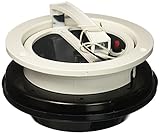 Ventline VP543 Round 6 Inch Vent Ventline VP543 Round 6 Inch Vent |
|
Check Latest Price |
1. MaxxAir MaxxFan Deluxe 7500K: The Fan That Handles Every Kind of Heat
MAXXAIR Maxxfan Deluxe Vent, Fan and Vent Cover All in One – Powerful 10-Speed Reversible Fan with Thermostat, Built-in Rain Cover, Remote Control, Intake & Exhaust Fan, Smoke (00-07500K)
60W on 12V
10-speed reversible
Remote plus thermostat
14 x 14 inch opening
Pros
- Vent
- fan and rain cover in one unit
- Reversible intake and exhaust
- Built-in rain shield so it runs in storms
- Thermostat with 10-speed remote
- Fits every standard 14 x 14 inch roof opening
Cons
- Highest price in this roundup
- Remote and thermostat electronics add wiring complexity
The MaxxFan Deluxe is the unit most van builders end up with, and after reading through owner reports the reason is easy to see. It is not the highest airflow fan here and it is not the lowest draw. What it is, by a wide margin, is the most complete: the vent, the ten-blade fan and the rain cover are one molded assembly, so there is no separate lid mechanism to strip, stick, or warping in desert sun.
Reversibility is the feature that separates it from cheaper units. Run it as an exhaust fan on high while the sun is up and the roof is cooking, then flip it to intake once the outdoor air drops below the cabin temperature. The thermostat and ten-speed remote mean you set it once rather than reaching up to a knob in the dark. Rated at 60 watts on 12 volts, that is about 5 amps, which is real but manageable on a 300 amp-hour bank.
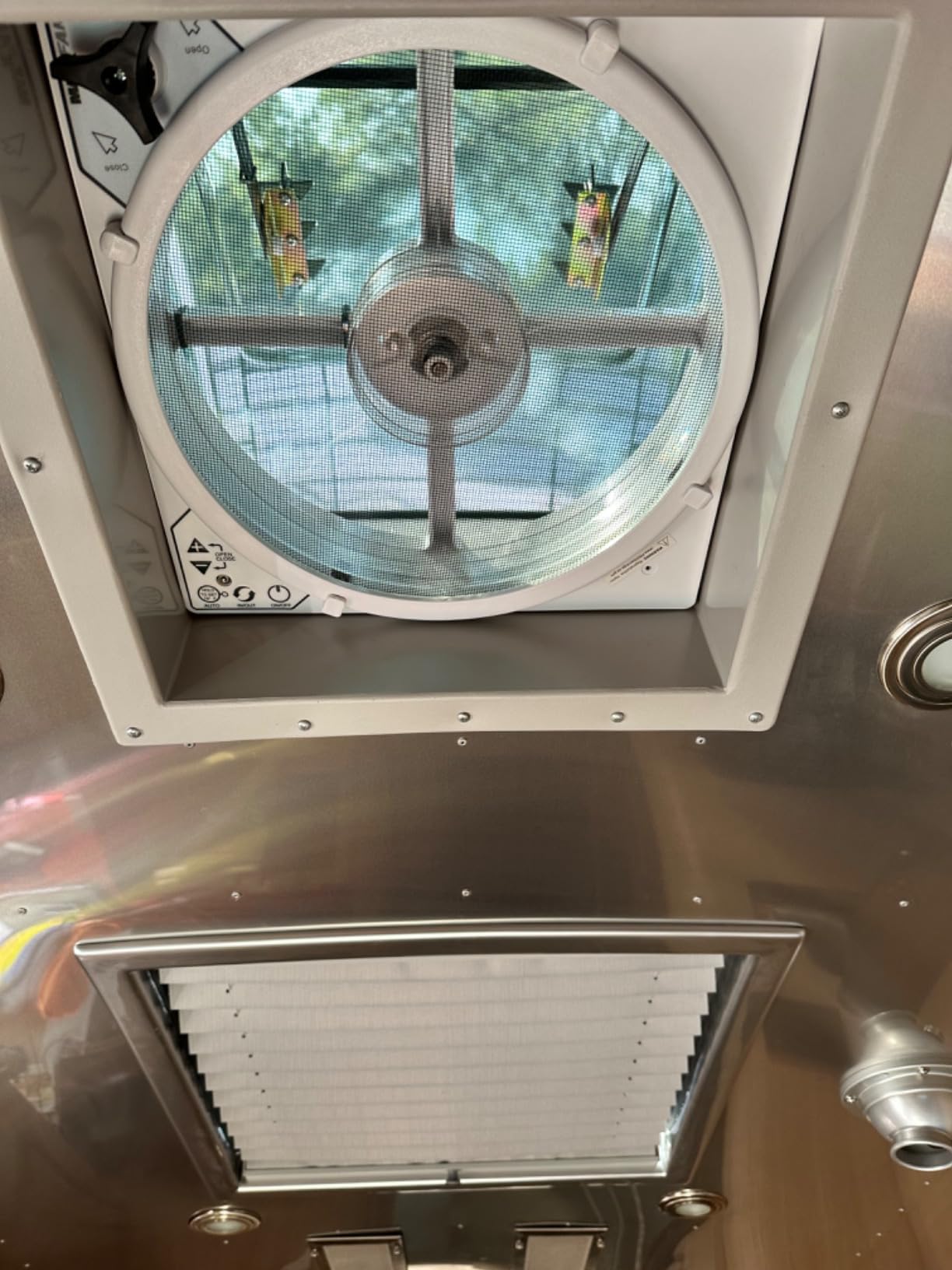
The rain shield is what makes it a hot-climate choice rather than a fair-weather one. An afternoon storm in places like the Gulf Coast or the southern Rockies does not mean you have to crawl up on the roof and shut the lid, so the fan keeps working through the worst of the afternoon heat. Owners also like that the interior insect screen lifts out without tools, which matters in dusty country where the mesh clogs in a season.
Where it is not the right pick: this is the most expensive fan in the group, and the electronics mean it needs a clean 12V feed. If your battery bank sags badly under load, builders on the van forums repeatedly recommend adding a voltage regulator between the bank and the fan, because fluctuating charge voltage is the number one cause of failed roof fan electronics.
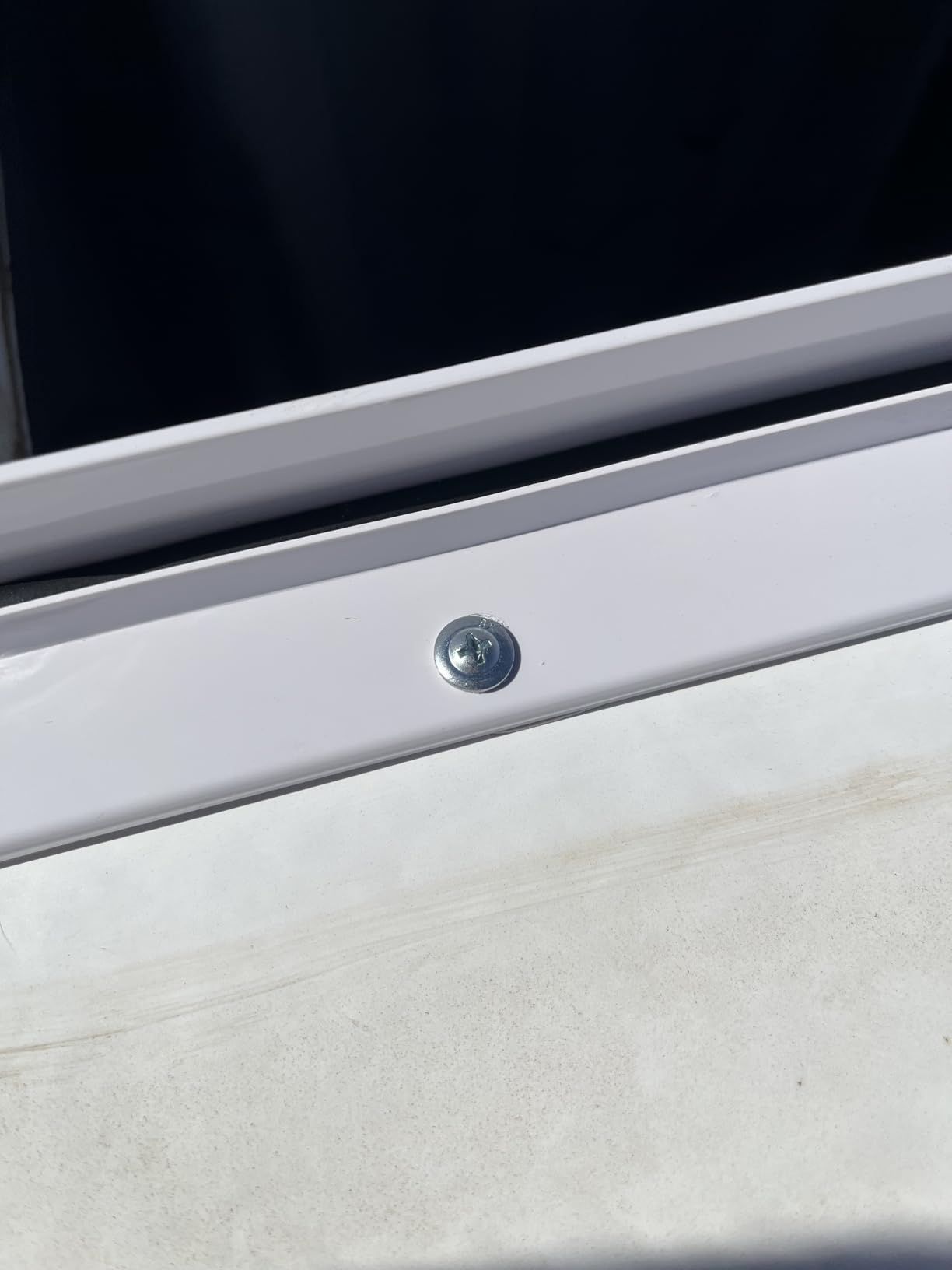
Why hot-climate buyers keep choosing it
Two capabilities do the work. Reversible airflow lets you switch strategy at sunset without touching the roof, and the integrated rain shield keeps that airflow going through a storm, which is exactly when a closed-lid fan only recirculates the heat it was trying to remove.
Where it disappoints
Cost and wiring. At the top of the price range in this roundup, and the thermostat plus remote means more conductors in the ceiling than a manual knob needs. Budget owners replacing a failed factory vent will find a simpler unit does the same job for a fraction of the outlay.
2. MaxxAir MaxxFan Plus 4500K: Strong Airflow and an Automatic Rain Sensor
MAXXAIR Maxxfan Plus High Powered 10-Speed RV Intake and Exhaust Fan – Manual or Remote Control Electric Opening, Easy Ceiling Controls, Rain Sensor with Automatic Lid Closure, Smoke (00-04500K)
28W on 12V
10-speed reversible
Rain sensor auto close
Runs with lid shut
Pros
- Rain sensor closes the lid automatically
- Low 28 watt draw for a ten-speed fan
- Circulates air with the lid shut
- Tool-free vent cover mounting tabs
- Remote or manual opening available
Cons
- FANMATE vent cover sold separately
- Premium price against budget 12V fans
The MaxxFan Plus sits between the flagship and the budget tier, and its differentiator is automation. The rain sensor detects water and closes the lid on its own, which removes the one chore that makes a roof fan annoying in bad weather. You do not have to be outside to notice, because the fan keeps circulating air with the lid shut and the cabin stays protected.
At 28 watts, it moves a lot of air for what it takes from the battery, roughly half the draw of the Deluxe. That makes it a better fit for boondocking, where the fan runs for hours off solar while the roof adapter and ceiling controls are already in place. It is a ten-speed reversible unit with both remote and manual opening options and ceiling-mounted controls.

Owners rate it consistently at 4.6 across more than 1,200 reviews, which tells you the platform is settled rather than experimental. The recurring theme in the reviews is the rain sensor combined with closed-lid circulation: it means the fan never becomes a liability when the weather turns, which in a humid subtropical summer happens often.
The catch is straightforward. The FANMATE vent cover is not included, so if you want that flush-mounted look you are buying a second piece. And in a hot dry climate, where you mostly want the lid wide open to dump heat, the automatic close is a safety feature you will occasionally find mildly annoying.
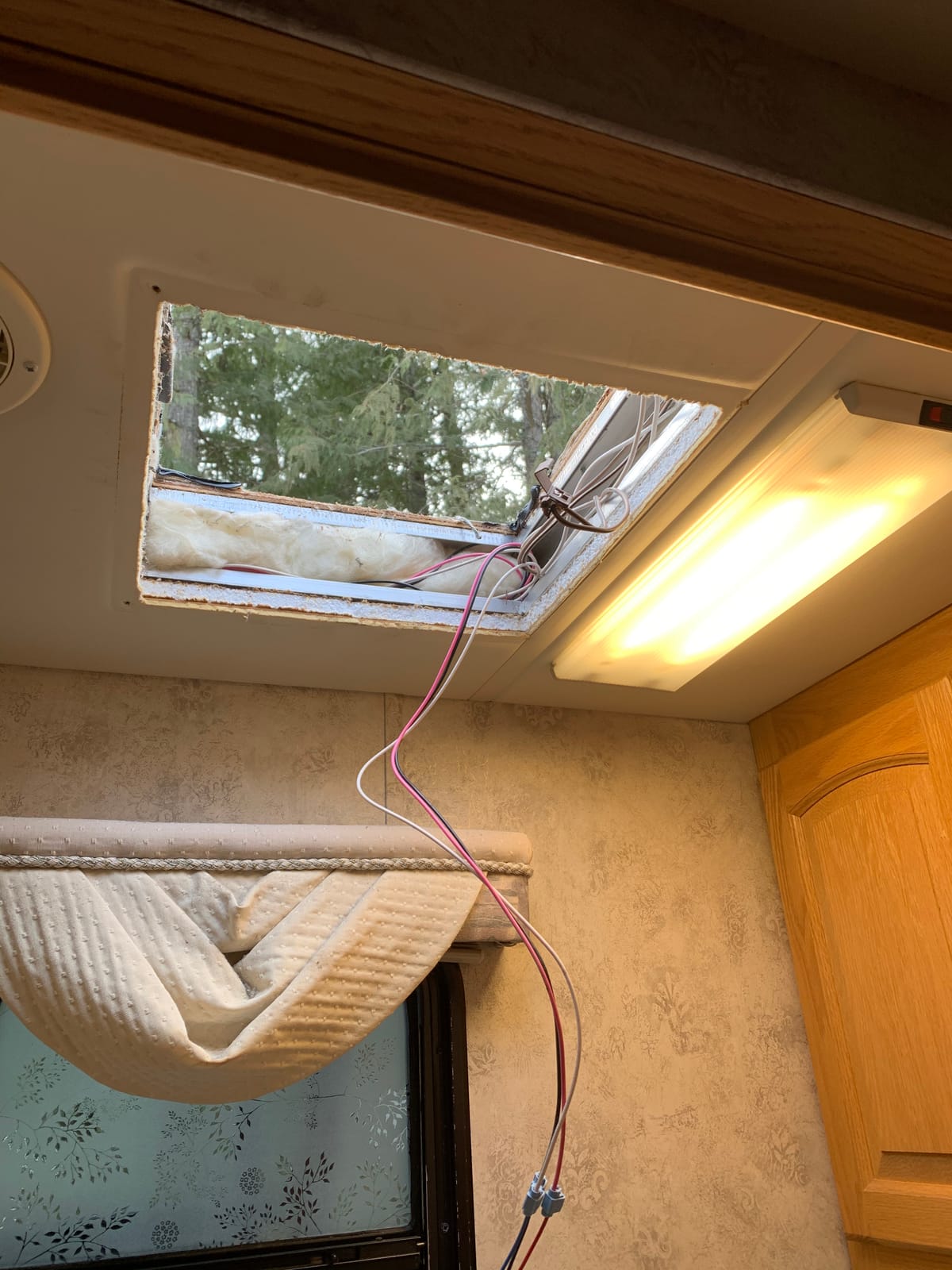
Best fit for humid and storm-prone travel
The rain sensor is the deciding factor. In a place with afternoon thunderstorms every week, a fan that closes itself and keeps circulating keeps working through the wettest part of the day instead of sitting idle with the lid down.
What you give up for the automation
The lid cover is a separate purchase, and the sensor-driven close means you cannot hold the vent open through a drizzle if you judge the air still worth moving. For dry desert routes, that is a mild irritation rather than a real problem.
3. RVLOVENT 1000 CFM Manual Reversible Fan: The Best Balance of Airflow and Draw
RVLOVENT 12V RV Roof Fan Vent 14” 10 Speed Reversible Manual Lift (NO REMOTE)
1000 CFM
45 dB noise
18W on 12V
Manual crank lift
Pros
- 1000 CFM published airflow
- 45 dB noise rating and quiet low speed
- 18 watt draw suits solar setups
- Spare insect screen plus spare fuses in the box
- Drops into a standard 14 x 14 inch opening
Cons
- Manual crank only
- no remote or electric opening
- Intake mode reported around 60 percent efficiency
- Garnish ring may need trimming on a sloped ceiling
This is the fan that makes the most sense for a builder who wants serious airflow without a serious electrical bill. It publishes a 1000 CFM figure, runs on 18 watts, and carries a 45 dB noise rating. Those three numbers together put it ahead of most of the group for hot-weather duty, where you want the fan on high for hours at a time and you want to sleep next to it.
It is a manual design. A crank on the lid opens the vent, a pull chain runs the fan, and there is no remote or electric actuator to wire. For many van builds that is a feature, not a compromise, because there is one less thing to fail and one less hole in the ceiling. The box also includes an extra screen frame and spare slow-blow fuses, which matters when you are several hours from a hardware store.
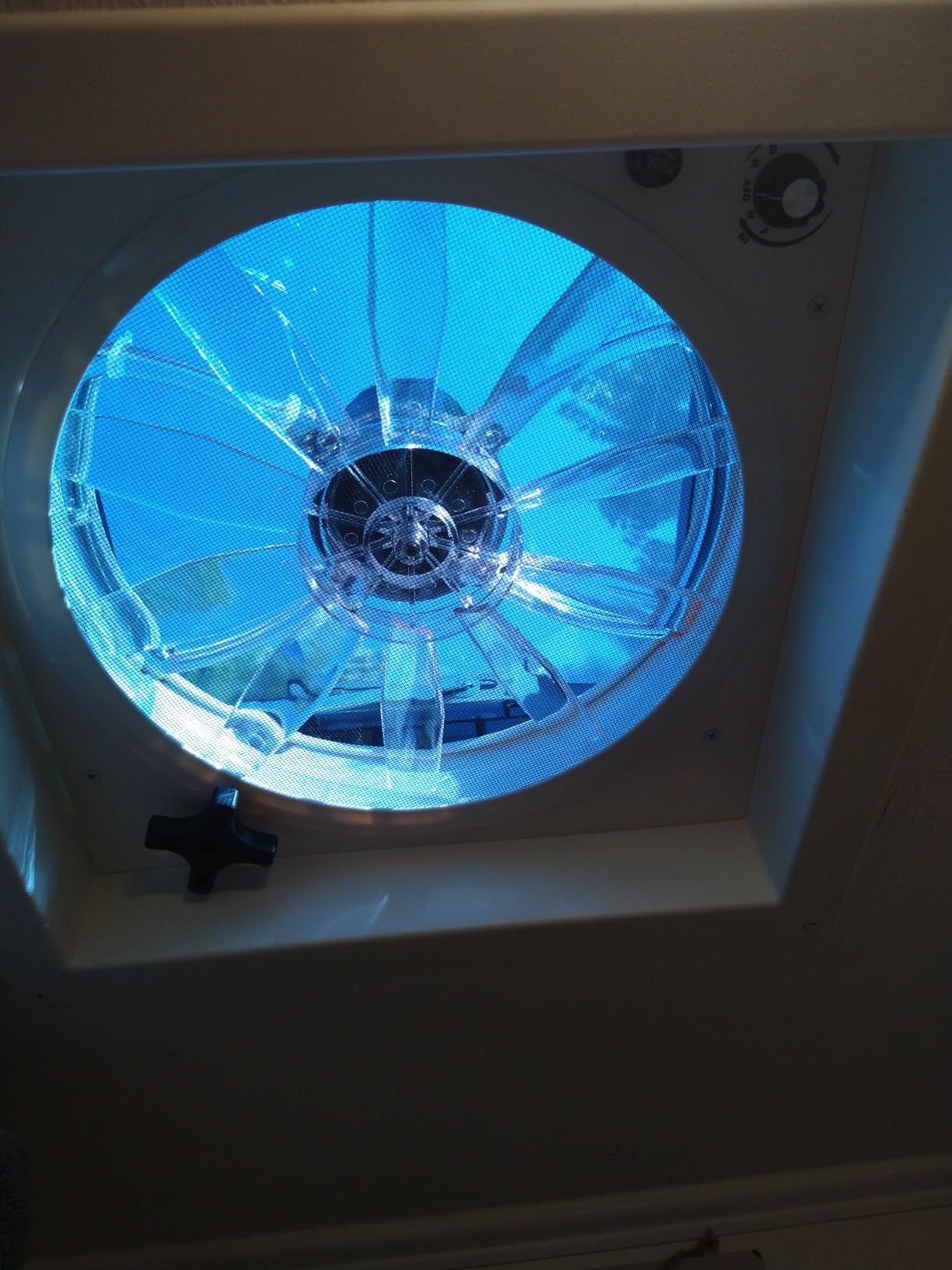
Reviewers repeatedly compare it favorably to smaller stock fans they replaced, noting the motor size and the way it cools a trailer in 90-plus degree heat well enough to skip running an air conditioner. Low-speed quietness comes up often, particularly from people who swapped out a louder factory unit.
Two limitations are worth planning around. Intake mode is reported as less effective than exhaust, roughly 60 percent of the way there, so treat the intake function as useful for fresh air rather than as a cooling tool. And the interior garnish ring can need trimming on a van ceiling that is not flat.
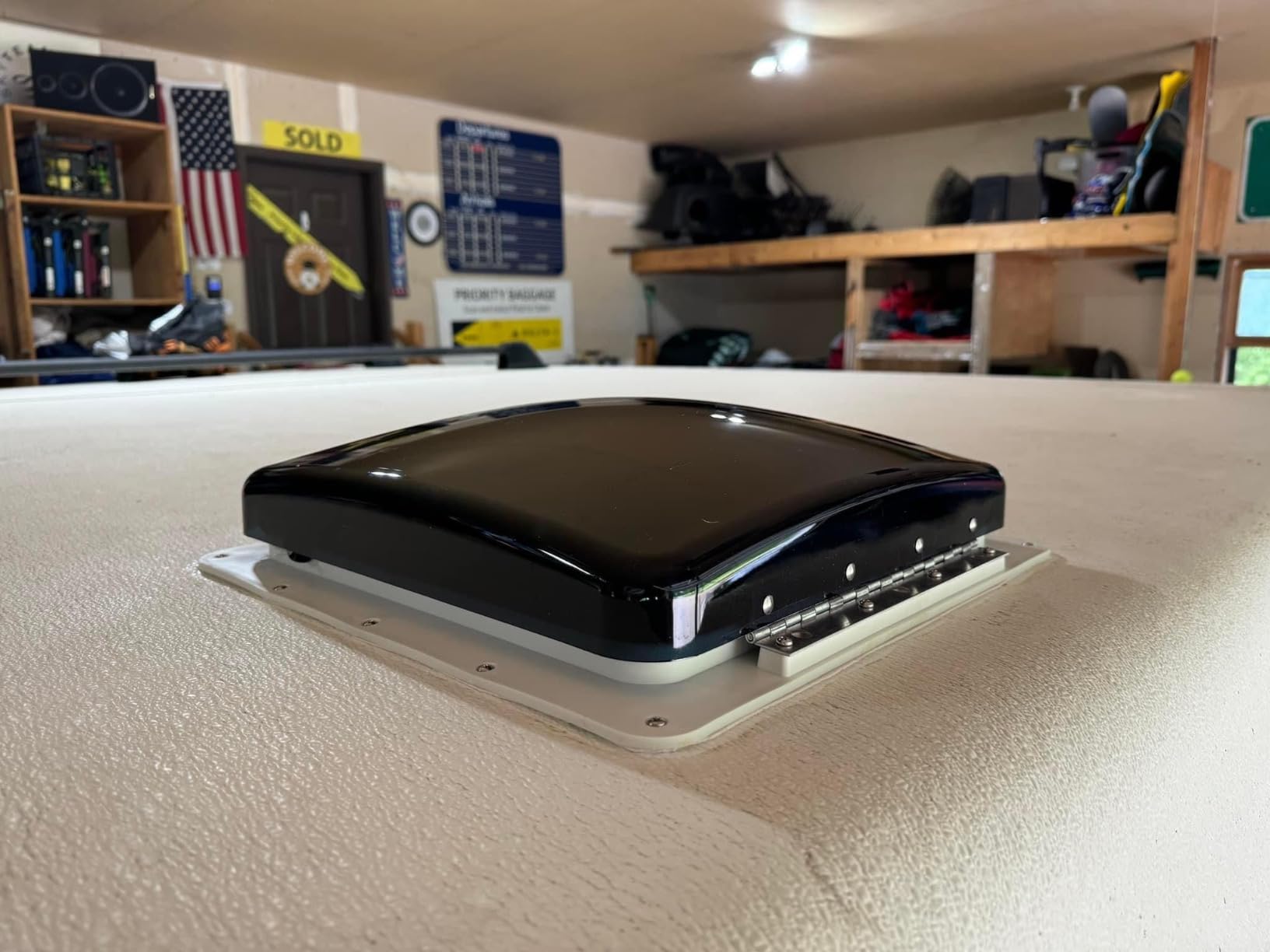
Why it works as a daily driver in the heat
Eighteen watts is about 1.5 amps, so it will run all afternoon off a modest solar setup without touching your reserve. Combined with 1000 CFM and a 45 dB rating, it does more useful work per amp than anything else in this roundup.
What a manual design costs you
You reach up to a crank instead of pressing a button, and you plan around an intake mode that is weaker than its exhaust mode. In humid air, where you mostly need the exhaust setting anyway, that trade is easy to accept.
4. Ventadome Ventline CW001: The Cheapest Complete Roof Vent Kit
Ventline RV Roof Vent White w/ 12 Volt Fan, Putty & Screws¡
3.6W on 12V
Single speed exhaust
14.25 inch opening
Kit includes putty and screws
Pros
- Lowest power draw in the roundup at 3.6 watts
- Putty tape screws and garnish ring all included
- Complete vent and fan kit in one purchase
- Single-speed push button operation
- 4.6 stars across 962 reviews
Cons
- Single speed with no reversible intake mode
- Galvanized flange is sharp during install
The Ventline CW001 from Ventadome is a plain white wedge vent with a small DC fan inside, and it is the answer for anyone who needs a working roof vent without a large outlay. At 3.6 watts it is by a wide margin the lowest draw here, which means it can run for hours on almost any setup without a meaningful conversation about battery capacity.
Everything you need to install is in the box: putty tape, screws, and a 1.75 inch interior garnish ring. It fits a 14.25 inch rough opening, which is the common factory dimension on many trailers and vans, so it doubles as a direct replacement for an original vent that has failed.
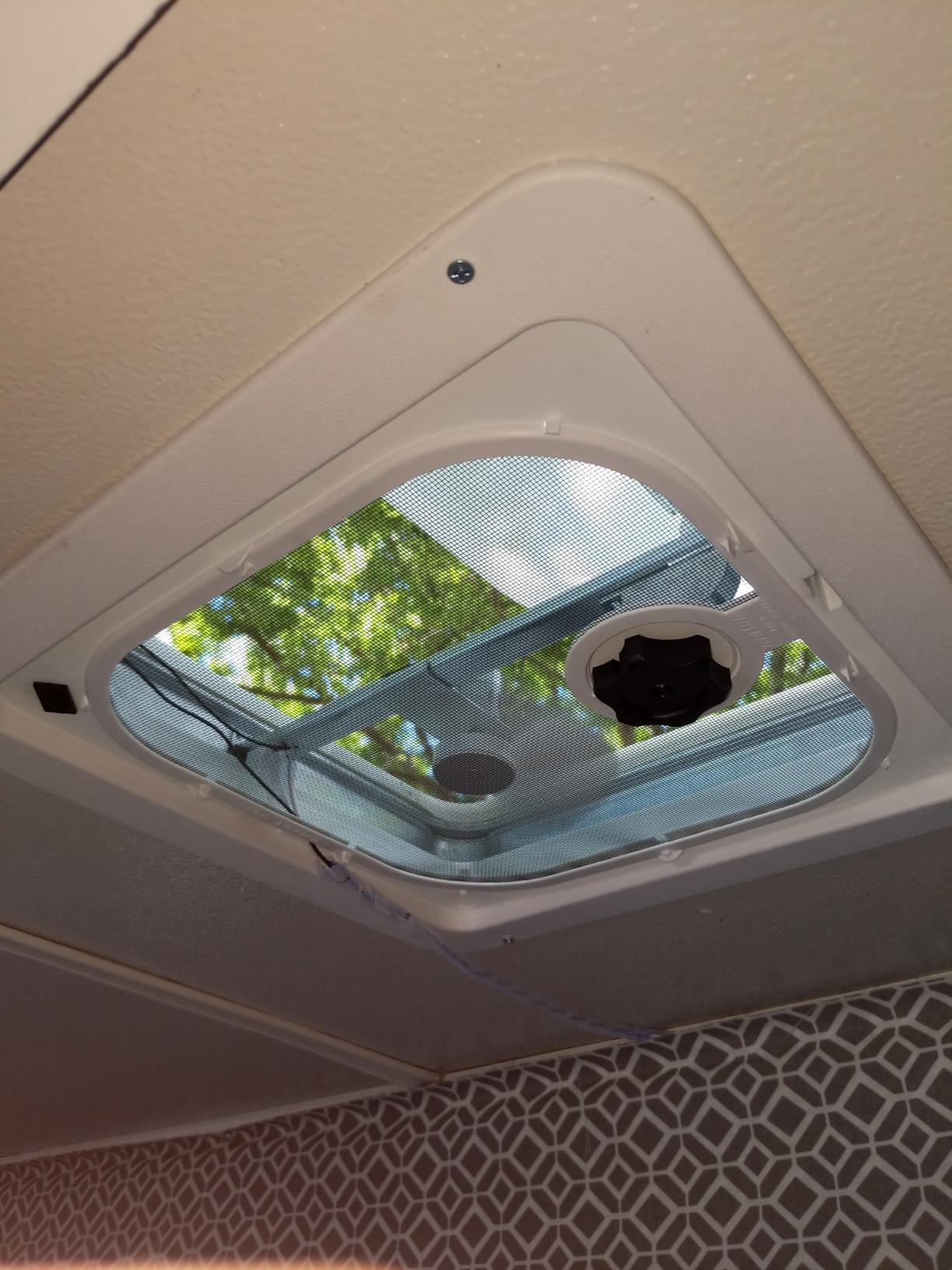
The 4.6 rating across 962 reviews is one of the strongest consistency records in the group, and the reason is that expectations are clear. Nobody expects a single-speed exhaust fan to reverse or to run quietly at a whisper. They expect it to move stale air out of a hot van and they expect it to keep doing that for years.
The honest limits are the single-speed design and the exhaust-only airflow. In a hot climate, exhaust is the mode you actually need during the day, so this is less of a problem than it sounds, but it means you cannot reverse to intake at night or run it as a ceiling fan with the lid closed. Handle the galvanized flange carefully during the cut, because it is sharp by design.

Where it is the right call
Back-up vehicles, weekend campers, a van that needs a vent replaced after a tree branch. Three point six watts means you can leave it running without thinking about it, and the included hardware removes the extra shopping trip.
Where it falls short
No intake mode and no speed control. If your heat strategy depends on reversing to pull cool night air in, or you want the fan to run at a lower output at night, this is not the unit for it.
5. caqeg 14 Inch Universal Reversible Vent: Runs in Rain and While Driving
14″ RV Roof Vent for Camper Trailer Universal White Lid Roof Vent with 12V RV Vent Fan 6″ Blades White lid Inner for Garnish Ring
24W on 12V
Reversible airflow
Runs with lid shut
2-wire hookup
Pros
- Reversible intake and exhaust airflow
- Keeps the rain out while running with the lid closed
- Works while driving as well as parked
- Interior garnish and screws included
- Strong sales rank in RV Ventilation
Cons
- Thin plastic some owners crack during install
- Only fits 1.25 to 2.25 inch roof thickness
- Single-speed push button control
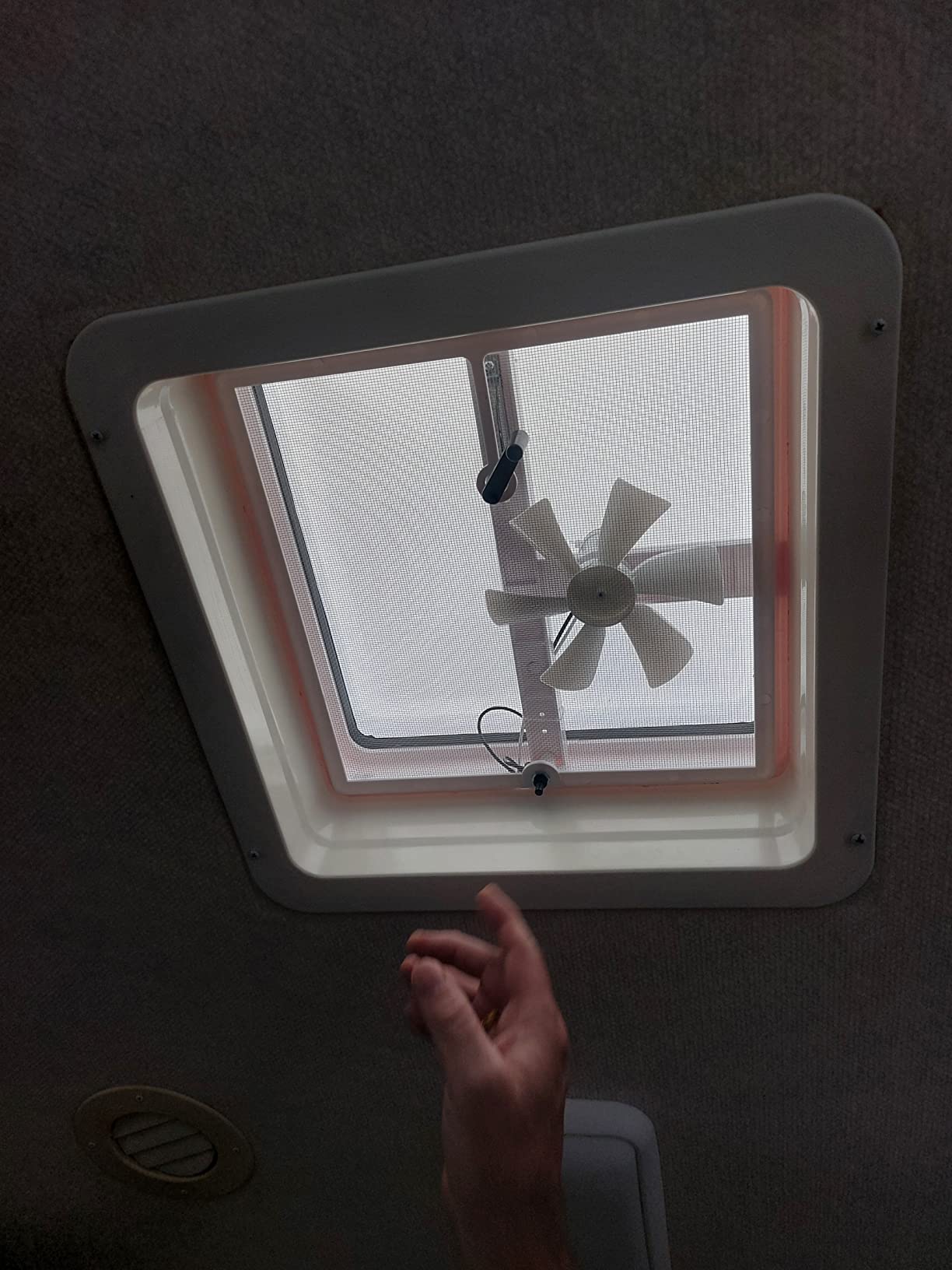
The caqeg vent is a simple plastic dome with a 12V fan that moves air in or out and can run with the lid closed. That closed-lid capability is the part that matters in weather. A fan that circulates interior air without opening the roof keeps working in rain and at highway speed, where an open vent would push water in and turn the van into a wind tunnel.
It runs at 24 watts on a two-wire hookup, which is among the simplest installs in this roundup. The interior garnish and screws are included. For a van conversion, the two-wire design means there is no accessory chain or extra control box to find a home for behind a panel.

Reviewers report consistent fits in a standard 14 inch square opening across RV, camper, trailer, caravan, and motorhome roofs, and several mention it noticeably cooling the interior. The airflow claim on the listing is written in unusual units, so treat any CFM number you see for this unit with caution and judge it on the reversible, closed-lid behaviour instead.
The material is the concern. Multiple reviews point out the thin acrylic and plastic body, including one owner who cracked it during installation, which means you handle it gently and support the lid while the screws go in. Check your roof thickness before ordering: this one fits 1-1/4 to 2-1/4 inches, so a thicker laminated roof needs modifying.
Why it suits driving and rain
Closed-lid operation is the advantage. You can run it through a downpour or down the interstate without opening the roof, and in a humid climate that means you keep the airflow going during the exact hours when heat and moisture are highest.
Fragility is the trade
The body is thin plastic. Several reviews describe cracking during install, and the thickness range is narrower than some competitors, so a thick insulated roof may not accept it without trimming the opening.
6. Starvent A021C Six-Speed Fan: The Widest Roof Thickness Range and 1100 CFM
Starvent RV Roof Vent Fan 6-Speed-Reversible White
1100 CFM
6-speed reversible
Roof 1.16 to 5.5 inch
59.5 dB at full output
Pros
- 1100 CFM published airflow
- Six speeds with smooth ramp up and down
- Fits roof thicknesses from 1.16 to 5.5 inches
- Reverses for intake or exhaust
- Removable screen cleans from inside
Cons
- White lid glows pink from inside
- Corner crank is awkward to reach
- Lid rattles when closing
- Screen mesh can rub blades and get noisy
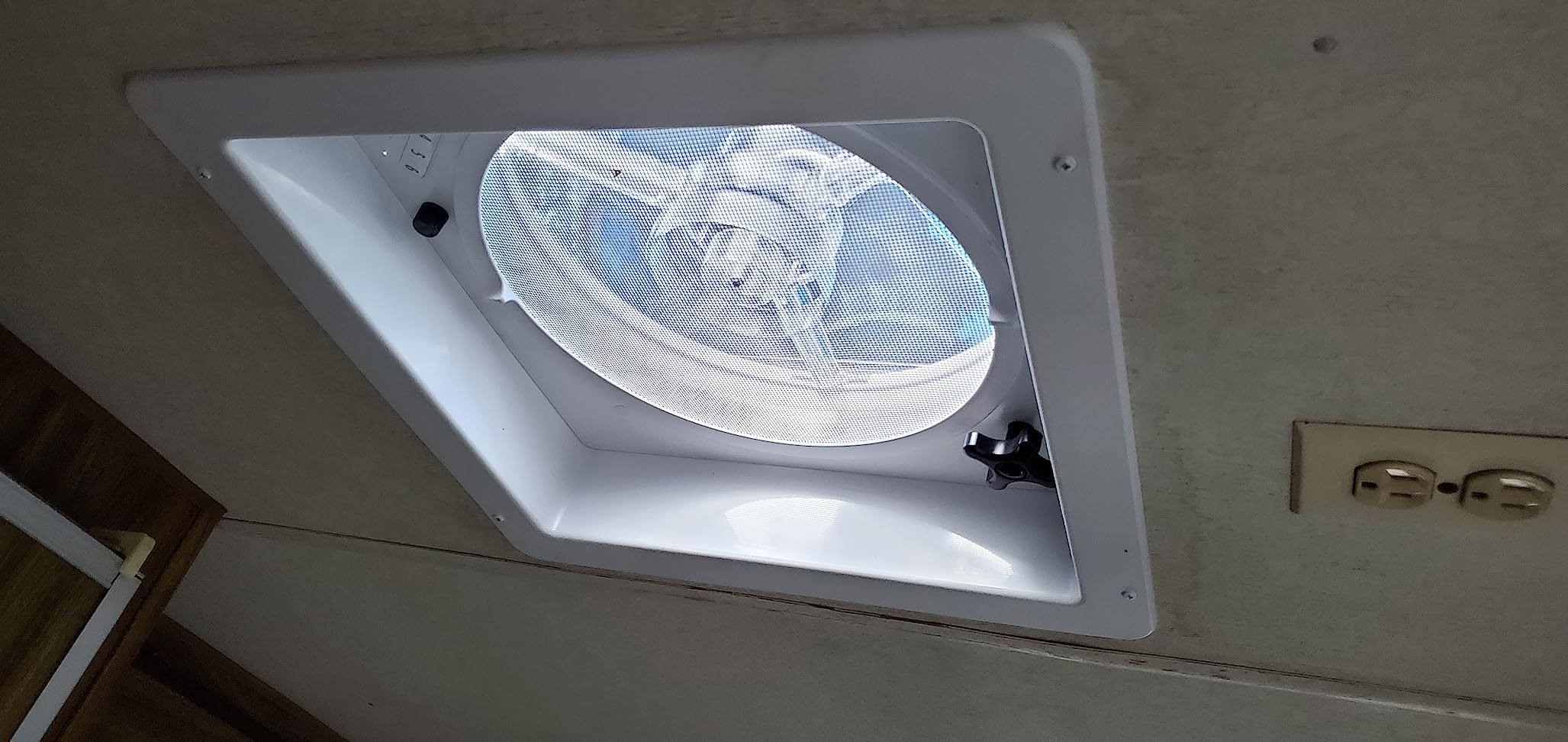
The Starvent publishes 1100 CFM, the highest stated airflow figure in this roundup, and it accepts roof thicknesses from 1.16 to 5.5 inches. That range matters more than the raw CFM number for van builders, because a van roof with an air gap, a fan adapter, and a layer of insulation is often far thicker than a trailer roof.
Six speeds with smooth ramping is the feature owners notice most. Instead of the fan jolting to speed in one step, it eases up and eases down, which is much easier to live with at 2 in the morning. The 59.5 dB rating is the highest noise figure published here, so it is a fan for a hot afternoon rather than a quiet night, and the removable screen is a plus in dusty conditions.
The four-star-plus reviews repeatedly mention that it replaced a premium brand fan at a fraction of the cost, and that the airflow was more than expected. On a roof-thickness tolerance this wide, it is one of the few fans here that will seat without modification on a heavily built-out van roof.
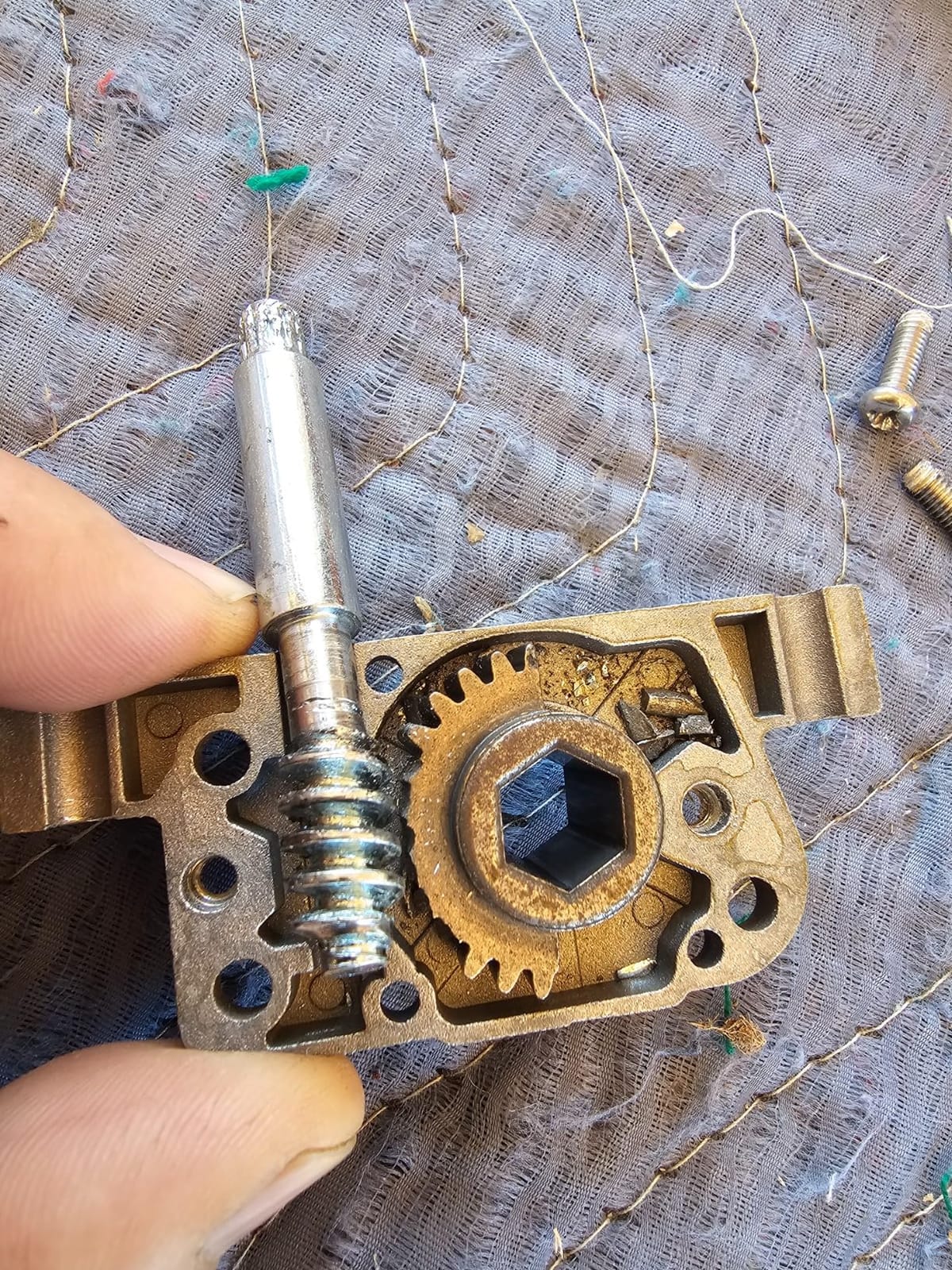
It is also the unit with the widest spread in its ratings, and the negative reviews concentrate on durability. There are reports of a cracked hinge frame that began to leak after one season and a motor that stopped within a fortnight, along with repeated mentions of unresponsive customer support. If leaks are your top fear, seal carefully regardless, and note that there are no factory brackets for fitting an aftermarket rain cover without modification.
Why it earns a place in hot climates
Published airflow plus a six-speed ramp gives you real control over how hard it works, and the roof thickness range means it fits builds where thinner plastic units will not seat properly. Both matter when you are running it hard through a long afternoon.
Where the reports go negative
Durability reports are the weak point: cracked hinge frames, a failed motor, and support that is hard to reach. The lid also rattles on close and the crank sits awkwardly in the corner. Buy it with a sealing plan in mind.
7. MaxxAir Original MaxxFan 4401K: Simple Mechanical Exhaust With No Electronics to Fail
MAXXAIR Original Maxxfan – Vent, Fan & Rain Protection All-in-One, High Powered 4-Speed Exhaust Only Fan, Manual Knob Control, 14″” x14, Smoke (00A04401K)
4-speed exhaust only
Manual ceiling knob
14 x 14 inch opening
2-year warranty
Pros
- Vent fan and rain protection in one unit
- Four-speed exhaust clears stale air and odors
- Manual knob needs no actuator wiring
- Waterproof mounting tabs for a vent cover
- 2-year limited warranty
Cons
- Exhaust only with no reversible intake
- Lid opens manually
- 10 pound unit
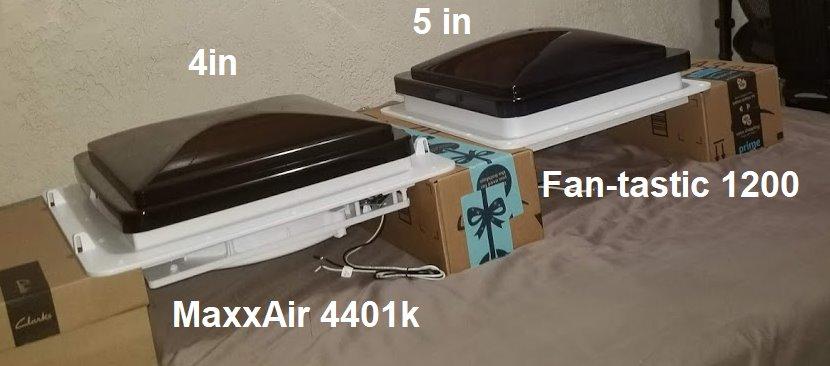
The Original MaxxFan is the mechanical option in a category full of electronics. Four speeds, a ceiling knob to open the lid, and no actuator motor or remote in the wiring path. That is the appeal for anyone who has watched a fan controller fail and decided the electronics are not worth the trouble.
It is exhaust-only. In a hot climate that is genuinely the mode you want most of the day, because the job during peak sun is to push hot air out of the roof and draw replacement air in through a low window. It fits the standard 14 inch square opening, comes with a 2-year limited warranty, and has held a 4.6 average across 649 reviews with a strong proportion of five-star ratings.
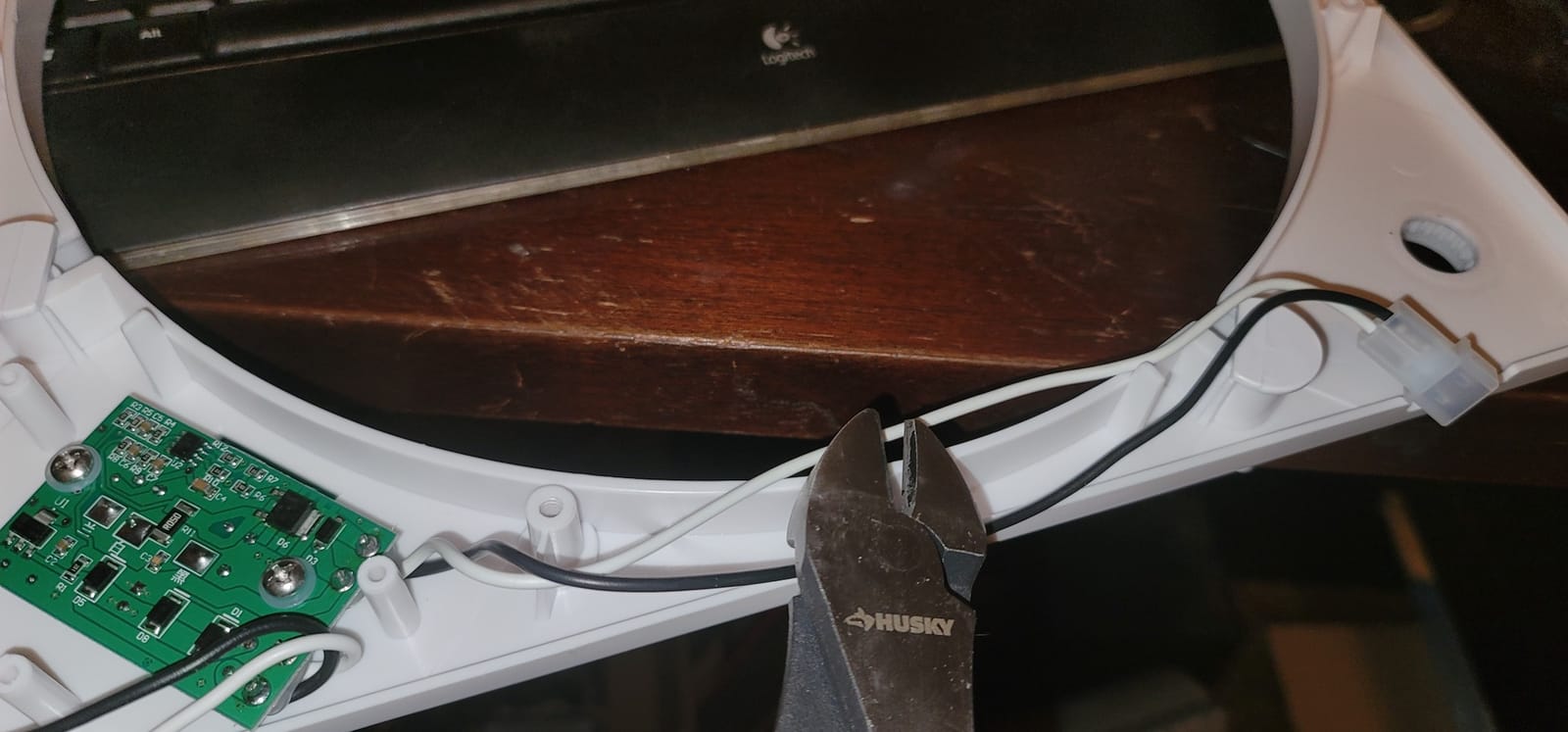
Buyers who want dependable exhaust ventilation without smart features tend to be satisfied, and the reason is that it does one job without a learning curve. There is nothing to pair, nothing to program, and no failure mode beyond the motor itself. The waterproof molded mounting tabs also accept a vent cover without extra sealing work.
At 10 pounds it is a substantial unit, and being fixed-direction means you cannot use it as an indoor ceiling fan or bring in cool night air. If your summer strategy depends on reversing direction at sunset, add a fan with a reversible motor to the shortlist instead.
Where it beats the electronic options
Fewer failure points. No actuator, no remote, no sensor to confuse you when it closes in a shower you did not notice. For full-time builders who value a knob that works every morning, that reliability argument is worth more than a thermostat.
What you give up
Direction control and electric opening. You get excellent hot-day exhaust and nothing else, so plan your nighttime ventilation around window flow rather than a reversed fan.
8. HENG’S INDUSTRIES 71112A: The Drop-In Replacement Vent
HENG’S INDUSTRIES 14″ RV Roof Vent 12 Volt Powered Fan with WHITE Wedge Style Lid – 1” Garnish Ring | 71112A
4W on 12V
Single speed
14.5 inch cut-out
1 inch garnish ring
Pros
- Low four watt power draw
- Includes 1 inch interior garnish and trim ring
- Mesh insect screen included
- Manual crank with no motor wiring
- Popular replacement part in Roof Vents
Cons
- Mounting hardware and sealant not included
- Sharp metal flanges during handling
- Single speed with no reversible intake
The HENG’S 71112A is what most people are actually searching for when a factory vent dies: a complete vent with a small 12V fan that fits an existing hole. The rough cut-out is 14.5 inches square with a 16.5 inch exterior flange, so it covers an existing opening on most trailers and vans without any roof surgery.
Power draw is four watts, the mesh insect screen and a one-inch interior garnish ring are included, and a manual crank handle opens the lid. There is no actuator motor to wire, which keeps the electrical job down to two conductors. It has a 4.5 rating across 517 reviews and a solid sales rank in the roof vent category, which reflects how often it is bought as a direct replacement.
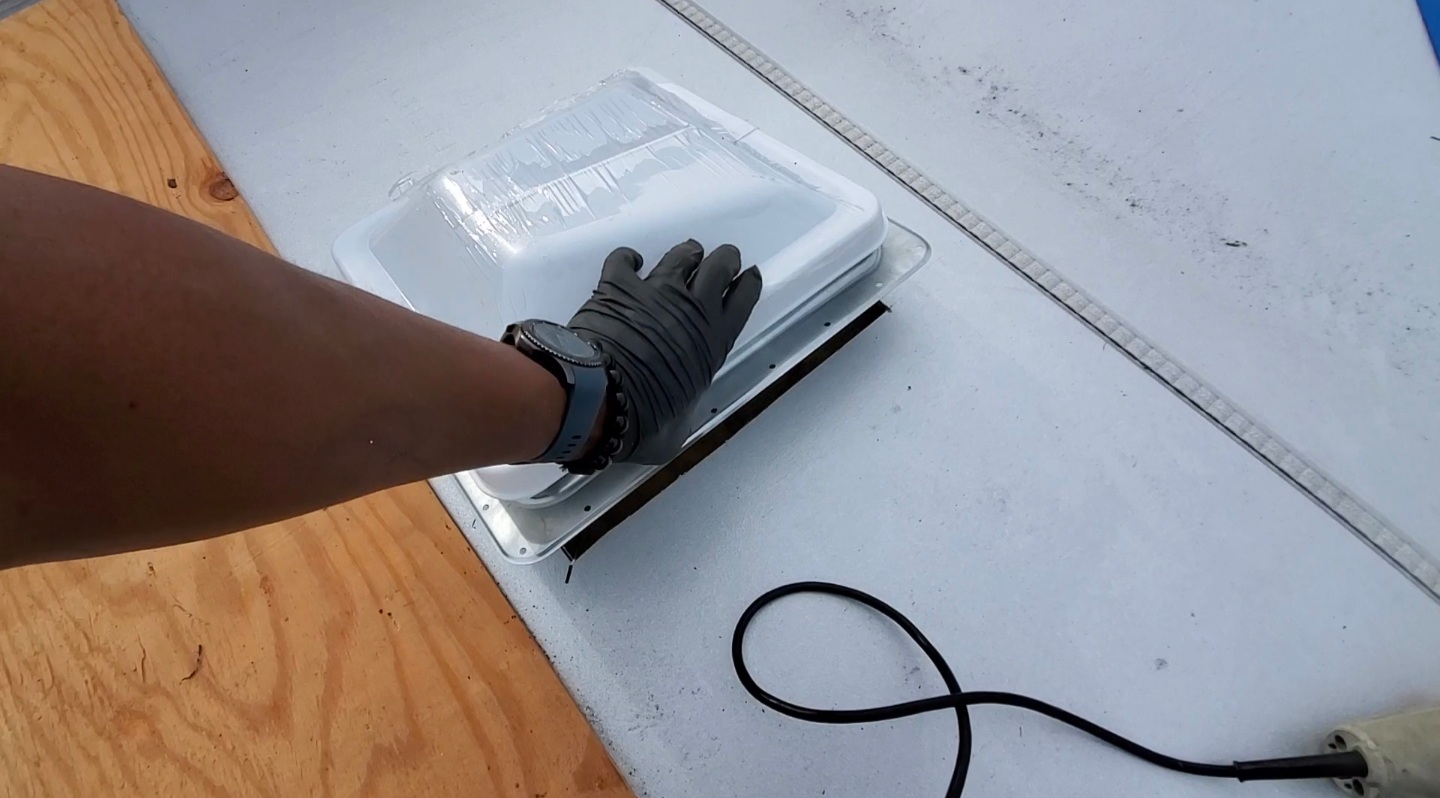
The recurring practical notes in reviews are exactly what you would expect: measure your cut-out and flange dimensions before ordering, and plan on supplying your own caulk or putty and screws because they are not in the box. Budget a few dollars for sealant, and the job is genuinely a one-afternoon project.
It is single-speed and exhaust-only, so it does the minimum job competently. Like other budget vents, the metal flange is sharp enough to cut you, and handle it with gloves while you position it. For replacing a failed factory vent on a trip already underway, this is the pick that gets you moving.
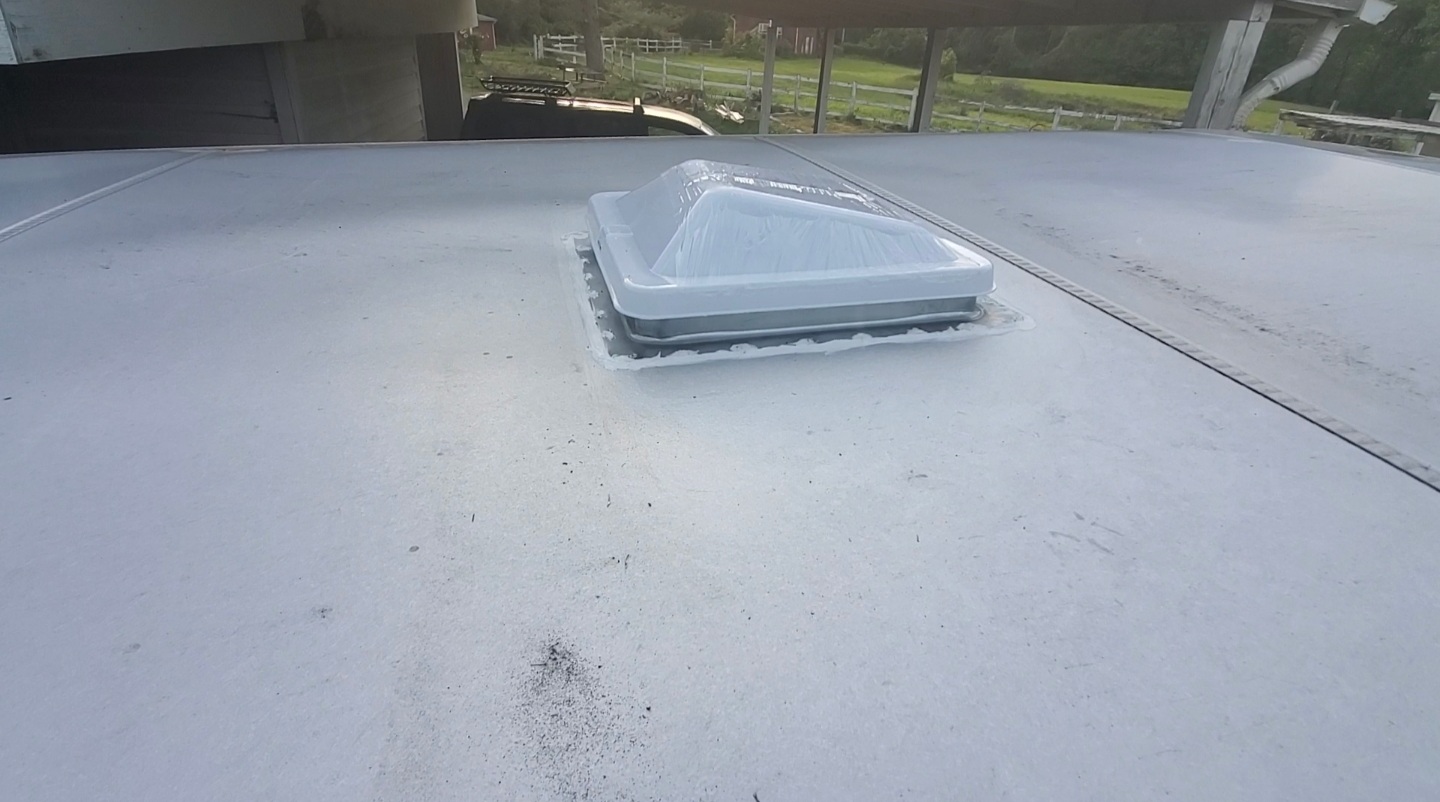
Best used as a repair rather than an upgrade
It covers an existing 14.5 inch opening with no roof modification and a four watt draw, which makes it the fastest path back to a working vent when something fails far from home.
Not an upgrade over a modern fan
Single speed, no reverse, and hardware that is not included. If you are building rather than repairing, spend the extra effort on a reversible multi-speed unit you will actually want to run at high all afternoon.
9. 2012RVAccessories F36AR: The Quietest Fan and the One for Sleeping
RV Roof Vent Fan 14×14 with 4 Color LED Ambiance Light, Reversible Airflow, Ultra-Quiet 12V (24V Max) Vent Fan with Remote & Rain Sensor
674 CFM
25 dB brushless
4 speeds at 3/10/20/40W
Rain sensor plus LED
Pros
- Brushless motor rated at 25 dB or less
- Four-speed reversible with remote and manual control
- Automatic rain sensor closes the lid
- Four-color LED ambience light
- 3-year parts plus lifetime repair support
Cons
- Fan keeps running after the rain sensor closes the lid
- Short interior flange with taller trim sold separately
- Sparse instructions
- Tinted lid blocks daylight
This is the fan for anyone who has ever tried to sleep through a roof fan. It carries a brushless motor rated at 25 dB or less, the lowest published noise figure in this roundup, and offers four speeds drawing 3, 10, 20, and 40 watts. On the lowest setting it is effectively silent, which means you can run it overnight without it becoming the thing that wakes you up.
The feature list is unusually complete for the price band: reversible airflow, remote and manual control, an automatic rain sensor, and a four-color LED ambience light built into the fan for late-night cabin use. It fits the standard 14 inch square opening and European 400 mm openings, works with roof thicknesses from 1.5 to 3.3 inches, and carries three years of free parts with lifetime repair support.
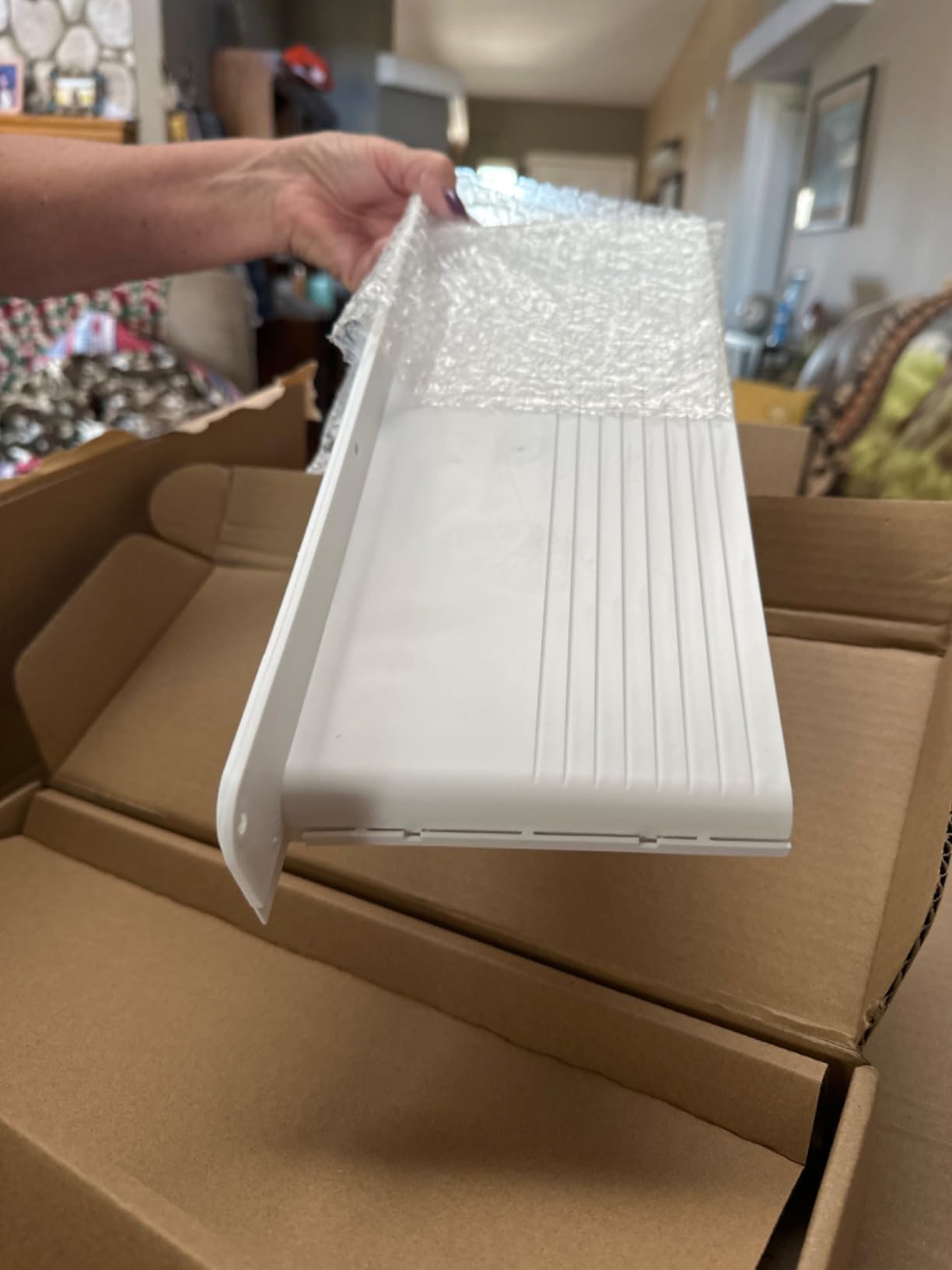
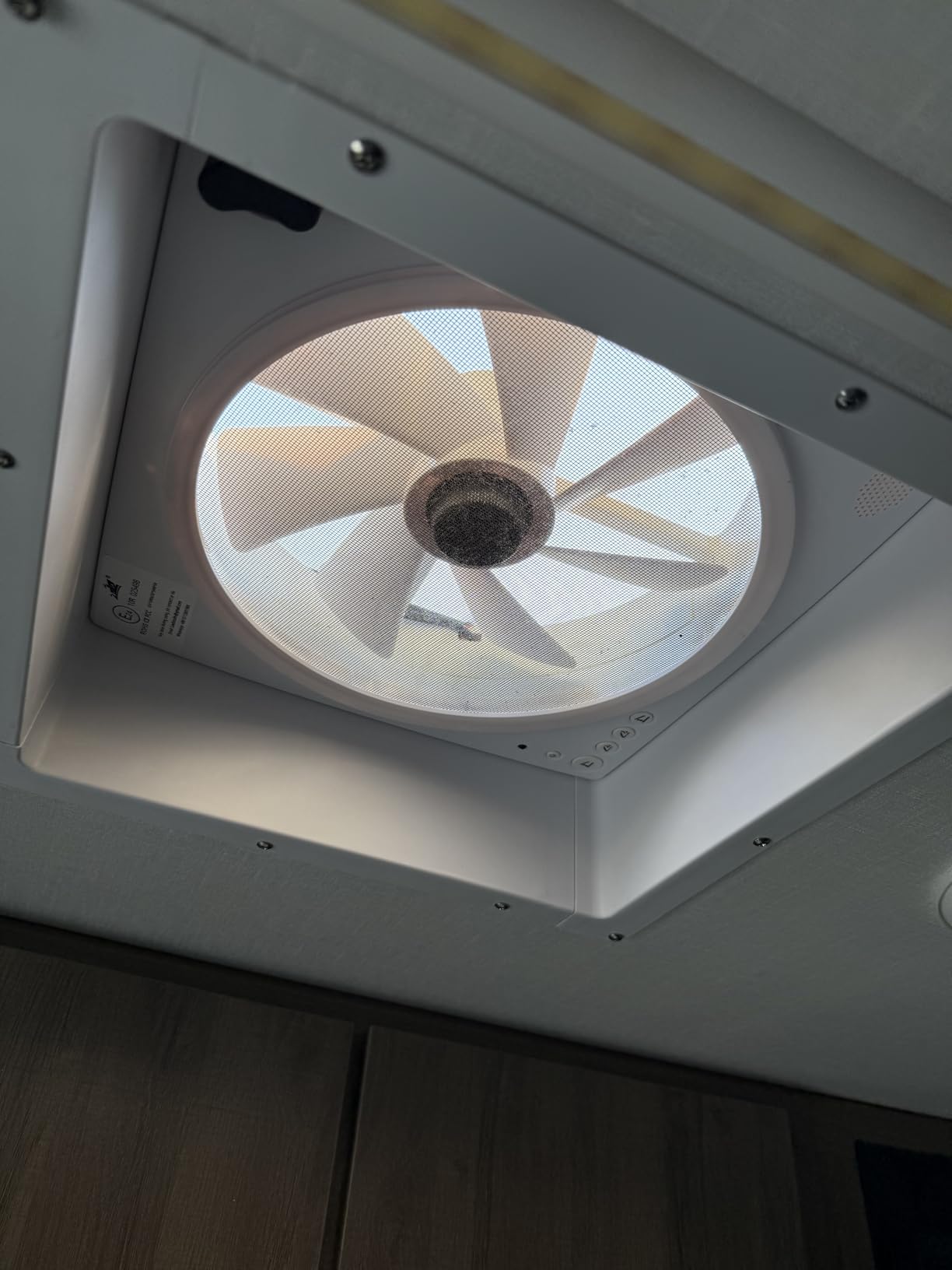
Owners in hot climates specifically report cutting back air conditioner run time in 85 to 100 degree conditions because of it. Support responsiveness and availability of replacement parts get singled out as strengths, which is worth noting in a category where several manufacturers are hard to reach after a failure.
The main annoyance is a logic gap: when the rain sensor closes the lid, the fan keeps running instead of shutting off, so you have to switch it manually. The short interior flange also means a taller trim piece is a separate purchase if your ceiling build-up is thick, and the tinted acrylic lid cuts daylight in a cabin that may already be dark.
Why it wins at night
Twenty-five decibels on a brushless motor is the quietest published figure here, and the four-speed range lets you drop to the lowest draw once the cabin has cooled. The LED lighting means you are not fumbling for a torch in the dark.
Watch for the rain sensor behaviour
The fan does not shut itself off when the lid closes in rain, so plan to switch it manually. The short flange and tinted lid are the other two items to confirm against your ceiling thickness before you commit.
10. Ventline VP543 Six Inch Round Vent: For Round Openings Only
Ventline/Dex VP543 6″ 12V Powered Round Vent
15W on 12V
6 inch round format
2 power levels
Wire mesh screen
Pros
- Exact fit for round vent openings and OEM replacements
- Wire mesh screen keeps insects out
- Quieter than the stock vents it replaces
- Handled dome is easy to open and close
- Usable as a secondary vent in a build
Cons
- Only fits the round 6 inch pattern
- Push-up handle is delicate
- One owner reported failure within two months
The VP543 is included because not every van has a square roof hole. It is a six-inch round 12V vent with a handled dome and a wire mesh screen, built on the Ventline/Dex round pattern, and it is the correct answer for a build that already has a round opening or wants a second smaller vent alongside a main fan.
At 15 watts across two power levels it is a modest but sensible draw. Owners of trailers with the original round vent report an exact fit and a noticeably quieter result than the factory unit they replaced, and several describe it as a useful second vent to move air in a converted van with an awkward roof.
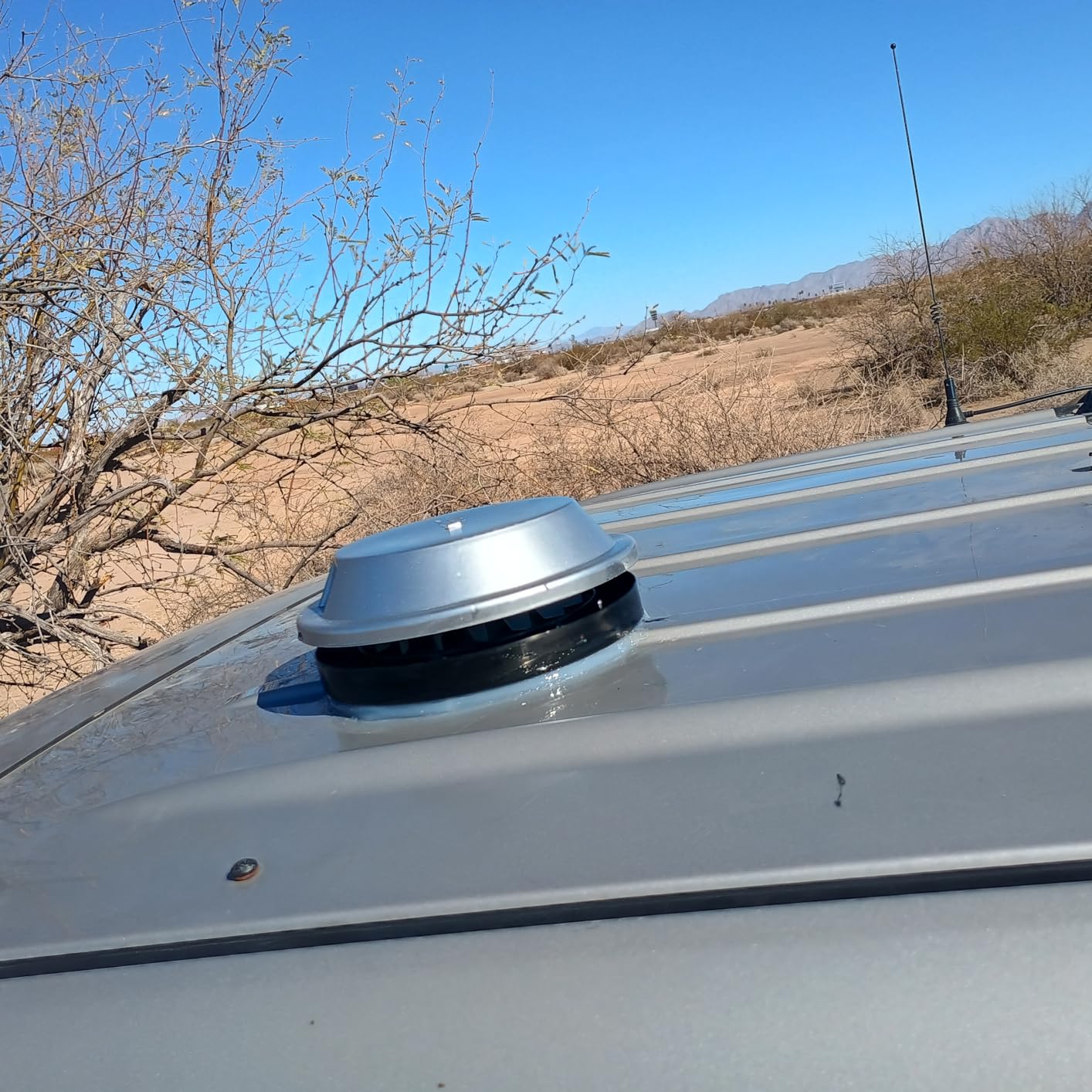
The important caveat is size. This is a six-inch round pattern, not the universal square, and reviews note that several buyers ordered the wrong size on the assumption it was universal. Confirm the shape and rough opening of your hole before anything else.
It can stay open while driving and in rain without leaking according to owner reports, which is useful in a wet climate. Two cautions: the push-up handle is delicate and wants steady pressure, and there is at least one report of a unit failing within two months, so keep the receipt for a warranty claim.
Where it fits the build
Round openings, OEM replacements on trailers that used the Ventline or Dex pattern, and secondary vents in a van that has already got a main square unit doing the heavy lifting.
Why it is not a universal choice
It will not fit a square cut-out at all, and the handle mechanism is the part most likely to bother you. Check your opening shape carefully, since misordering is the most common complaint in the reviews.
How to Choose a Roof Vent Fan for Hot Climates
Most buyers fixate on airflow, and airflow matters, but it is not the first filter to apply. Here is the order we would use, drawn from what the ten fans above actually publish and from how owners report using them.
Start with the lid, not the motor
Ask one question: can the lid stay open when it rains? A fan that runs with the lid closed recirculates air, which is fine for comfort and useless for heat. In a climate with afternoon storms, a rain shield or an automatic rain sensor is what lets the fan keep working through the hottest hours.
Then check the watts, not just the CFM
Published draws in this roundup run from 3.6 watts on the budget Ventline unit to 60 watts on the MaxxFan Deluxe, with most reversible fans between 18 and 40. That spread decides whether you can run the fan all afternoon on solar or have to ration it. Convert to amps at 12 volts by dividing watts by twelve, so 18 watts is about 1.5 amps and 60 watts is about 5.
Decide whether you need to reverse
Exhaust mode pushes hot air out during the day. Intake mode brings cooler air in at night, which is when outdoor temperatures actually drop below the cabin. Fans with reversible motors also run as a ceiling fan with the lid closed. Exhaust-only units are cheaper and simpler, and for pure daytime heat they do most of the work.
Check the roof thickness before anything else
This is where van builds get caught. The Starvent accepts 1.16 to 5.5 inches, the caqeg only 1.25 to 2.25, and others fall in between. A van roof with an adapter plate and an air gap is often outside the range of the cheapest vents. Measure your roof build-up, not just the hole.
Noise decides whether it stays on overnight
Three of these fans publish a figure: 25 dB for the brushless F36AR, 45 dB for the RVLOVENT, and 59.5 dB for the Starvent. If you plan to sleep with the fan running, that published number matters more than the CFM.
Dry heat and humid heat need different plans
Desert heat is dry, which means an evaporative cooler alongside the fan can genuinely drop the temperature. The widely used rule is that swamp coolers work well below roughly 40 percent relative humidity and lose effectiveness above it. In humid subtropical heat, evaporation adds moisture to air that is already saturated, so the fan plus shade and reflective window covers is the realistic plan, and a rooftop air conditioner is the only thing that actually pulls heat and moisture out.
If you also carry gear on the roof, our guides to roof cargo boxes and RV vent fans cover the clearance and airflow trade-offs that come with a crowded roof.
Roof Fan vs Rooftop Air Conditioner in Hot Climates
They are not competitors, and treating them as an either-or choice is the most common mistake people make in van cooling. A roof fan moves air. A rooftop air conditioner removes heat. Neither does the other job.
The fan is nearly free to run, quiet, and improves comfort immediately in shade and moderate heat by helping your skin shed heat and clearing the carbon dioxide that builds up in a closed cabin. Its realistic ceiling is a drop of roughly 10 to 14 degrees Fahrenheit, and only when the van is shaded and a low window is open to create cross-flow.
The air conditioner will drop the interior far more, and it will also pull moisture out of the air, which is the entire reason it is required in humid climates. The costs are significant: a rooftop unit adds roof weight, takes a large slice of your electrical budget, needs a generator or a large inverter to run off-grid, and consumes far more energy than the fan ever will.
The workable strategy for hot climates is to run both on a schedule. Fan on high exhaust through the afternoon with the shaded-side window cracked, air conditioner for the hottest stretch when you need the extra drop, then reverse the fan to intake overnight once the outdoor air is cooler than the cabin.
Installing a Roof Fan Without Leaking It
Leaks are the single most reported complaint about roof fans, and almost all of them trace back to installation rather than to the fan. The sequence below is the order that works.
Fit an adapter or leveling plate on a curved or ribbed van roof so the fan flange sits flat rather than bridging a crown.
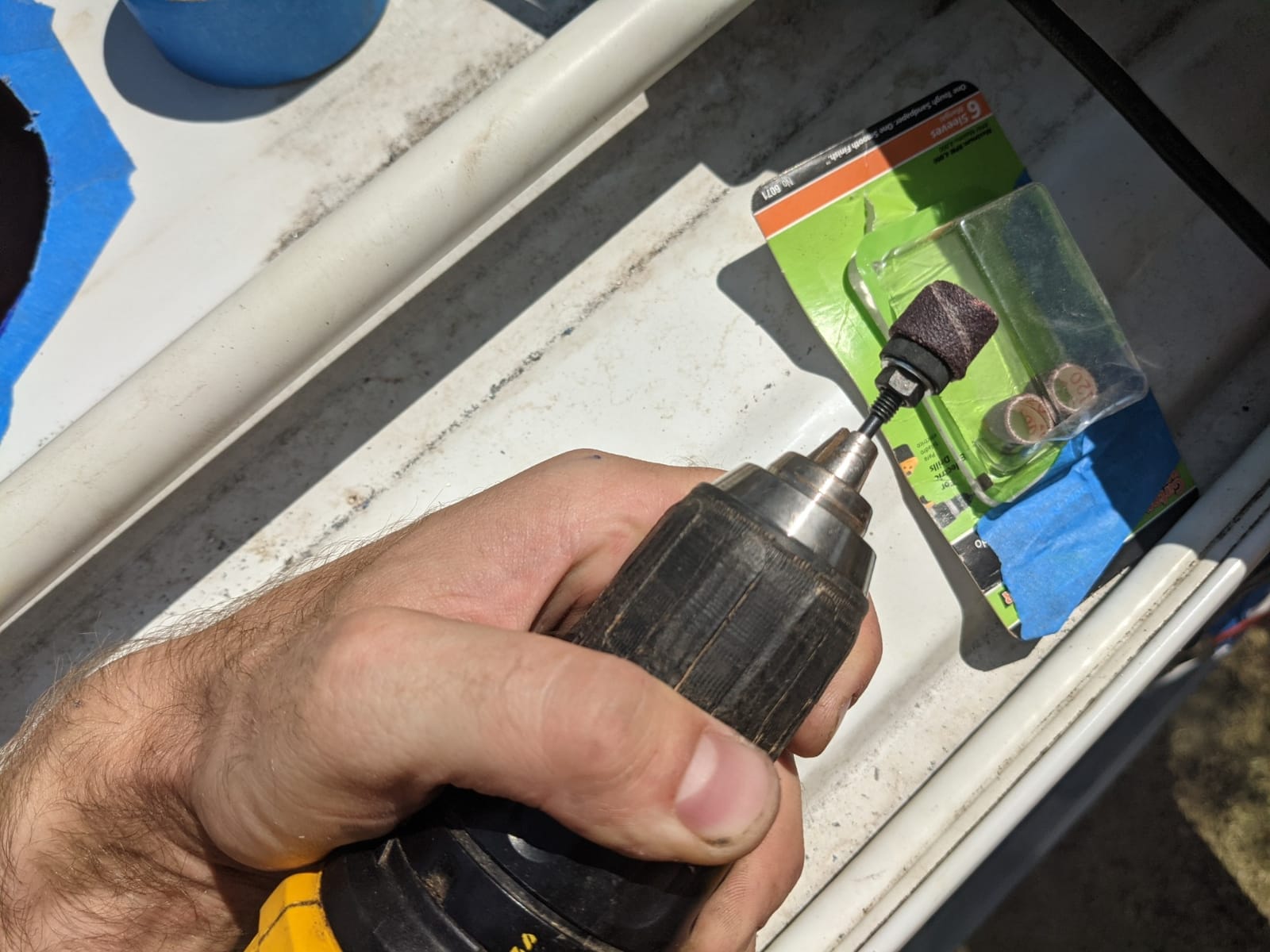
Use the adapter or the new flange as your cutting template, and cut with a fine-tooth blade with the roof fully supported underneath so metal shards cannot fall into the living space.
Prime the raw cut edge immediately. Bare steel edges on a van roof are where rust starts, and it starts faster in heat.
Clean both mating surfaces with isopropyl alcohol before any sealant goes on. Sealant will not bond to a dusty or oily flange.
Run a bead of polyurethane sealant such as Sikaflex rather than pure silicone. Silicone will never come off later, which matters if you ever want to swap the fan.
Add a butyl tape gasket for the seating surface, then drill pilot holes before the screws. Pilot holes stop the plastic flange from splitting.
Tighten by hand until the gasket compresses, and no further. These flanges are plastic and will crack if you overtighten them.
Cap every screw head with lap sealant, because water travels down the threads, then add a second pass the following day.
One electrical note while you are in there. A voltage regulator between the battery bank and the fan is the most repeated piece of advice across van forums, because fluctuating charge voltage is a common cause of roof fan electronics failing. Check the polarity on the replacement wiring carefully while the unit is still easy to access.
Frequently Asked Questions
Can you use a MaxxAir fan in the rain?
Yes, and that is the main reason to choose it for a hot climate. The MaxxFan Deluxe has an integrated rain shield built into the same molded unit as the vent, so it can run with the lid raised during a shower without water entering the cabin. Some models also include an automatic rain sensor that closes the lid for you. The real risk is not the fan design but the seal where the flange meets your roof, so treat leak prevention as the deciding factor between models.
Are MaxxAir fans worth it in hot weather?
For hot climates specifically, yes, because reversible intake plus a lid that stays open in rain is exactly what summer heat demands. The MaxxFan Deluxe draws 60 watts on 12 volts and moves a substantial volume of air, and it is the most heavily reviewed fan in this roundup. It is less compelling if you already run a rooftop air conditioner and only need condensation control, or if noise is your top priority and a brushless fan is a better fit.
How much cooler does a 12V roof fan make a van?
Roughly 10 to 14 degrees Fahrenheit, which is 5 to 7 Celsius, under the right conditions. That figure comes from owners comparing a fan with and without a rooftop unit, and it holds when the van is shaded and a low window is open to create cross-flow. In full sun with the windows shut, expect far less. A fan moves air rather than removing heat, so it is not a substitute for an air conditioner in extreme conditions.
What are good alternatives to MaxxAir fans for van roofs?
The strongest alternatives in this roundup are the 2012RVAccessories F36AR for quiet brushless operation with a rain sensor and LED lighting, the Starvent A021C for the highest published airflow and the widest roof thickness range, and the RVLOVENT 1000 CFM model for high airflow at 18 watts with no electronics to fail. All of them use the standard 14 inch square opening, so they can often replace a MaxxAir in the same cut-out.
Do swamp coolers work in 100 degree temperatures?
Temperature alone does not decide it. Humidity does. An evaporative or swamp cooler works well in dry desert air, generally below roughly 40 percent relative humidity, because dry air absorbs moisture efficiently. Above that, it adds moisture to already humid air and cools almost nothing. So in dry desert heat, pair a roof fan with a swamp cooler. In humid subtropical heat, the fan plus shade and reflective window covers is the realistic plan.
Which Roof Vent Fan Should You Buy?
If you want one answer for the best van roof vent fans for hot climates, take the MaxxFan Deluxe 7500K. It reverses between intake and exhaust on ten speeds, and its integrated rain shield means it keeps working through the afternoon storms that define a hot summer. It is also the most heavily reviewed fan here, which matters when you are cutting a hole in your roof.
Adjust for two things. If you sleep with the fan running, go for the F36AR brushless unit at 25 dB with a four-color LED instead. If you are boondocking on solar or need a van roof that is unusually thick, the RVLOVENT at 18 watts and the Starvent with its 1.16 to 5.5 inch range make more sense, and both cost materially less.
Whatever you choose, run it as an exhaust fan on high with a low window cracked on the shaded side, and only treat the rooftop air conditioner as necessary when the humidity is too high for moving air to help. Seal the flange properly the first time, because that is where leaks come from, not the fan itself.