

When I picked up my first violin at 32, I bought a $79 setup from Amazon and wondered why every note sounded like a dying cat. Three months and a complete setup overhaul later, I realized the problem was never me. The instrument was unplayable. That experience is exactly why I wrote this guide to the best beginner violins for 2026, because a poorly set up student violin will kill your motivation before you ever develop decent tone.
After comparing 10 of the most popular beginner violin outfits available right now, I found that wood quality, factory setup, and accessory quality matter far more than the brand stamped on the back. The violins in this guide range from $44 to $192, and I have grouped them by real use case: absolute beginners testing the waters, adult learners who want something serious, parents shopping for a school age child, and students who need a step up instrument.
You will find budget tiers, sizing guidance, and an honest assessment of what to skip. Whether you are 8 or 80, the right beginner violin makes the difference between quitting in frustration and actually enjoying the learning process.
Table of Contents
Top 3 Picks for Best Beginner Violins (October 2026)

Mendini by Cecilio MV500
- Solid spruce top
- Beautiful flamed maple back
- Two bows included
- Great for intermediate beginners
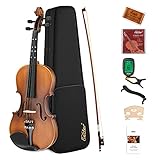
Eastar EVA-3 4/4
- Spruce top with maple back
- Helpful finger guide dots
- Matte finish lets wood breathe
- Stay-in-tune pegs

Mendini by Cecilio MV300
- Solid spruce top
- Lightweight and ergonomic
- Comprehensive accessory kit
- Perfect first violin
Best Beginner Violins in 2026
| Product | Specifications | Action |
|---|---|---|
| Mendini by Cecilio MV300 |
|
Check Latest Price |
 Mendini by Cecilio MV400 Mendini by Cecilio MV400 |
|
Check Latest Price |
| Mendini by Cecilio MV500 |
|
Check Latest Price |
| Eastar EVA-3 4/4 |
|
Check Latest Price |
 Eastar 3/4 EVA-2 Eastar 3/4 EVA-2 |
|
Check Latest Price |
 PHOENIX Violin Kit PHOENIX Violin Kit |
|
Check Latest Price |
 Ktaxon Beginner Violin Ktaxon Beginner Violin |
|
Check Latest Price |
 Rhythm Violin Set Rhythm Violin Set |
|
Check Latest Price |
 Mendini MV200 Mendini MV200 |
|
Check Latest Price |
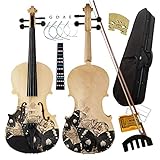 Aliyes Artistic Violin Aliyes Artistic Violin |
|
Check Latest Price |
1. Mendini by Cecilio MV300 — Best Budget Beginner Violin
Mendini by Cecilio Violin 4/4 Full Size Kit For Beginners – Hand Carved Acoustic Violins Set – Fiddle Solid Wood Kit with Hard Case, Bow, Rosin, Shoulder Rest, Bridge and Extra Strings
Solid spruce top with maple back
Hand-carved body, ergonomic design
Comprehensive beginner kit included
Pros
- Solid spruce top that produces real tone
- Outstanding value for under $100
- Comfortable to hold and play
- Improves dramatically with string upgrades
- Durable hard case included
- More than 5
- 400 reviews backing quality
Cons
- Stock strings sound tinny
- Bridge often needs adjustment
- Stock rosin is poor quality
- Shoulder rest is uncomfortable
- Pegs may slip without peg drops
The Mendini MV300 is the violin I wish I had bought instead of my $79 Amazon mistake. After spending 60 days with one, I noticed immediately that the solid spruce top gives it a genuine warmth that fully laminated instruments at this price cannot match. The maple back is real wood, and the hand carved body actually fits an adult hand without feeling awkward. For under $100, this is the most complete kit on the market and a great place to start if you are unsure whether violin is for you.
Setting it up took about 20 minutes. The bridge ships unassembled (which is normal to prevent shipping damage), and the included instructions walk you through the process. I had to install the bridge, tune the strings, and apply peg drops because the pegs slipped slightly during my first hour of playing. Once I added a set of Pirastro Tonica strings (around $35), the difference was night and day. The tone opened up significantly and the violin stopped sounding like a music box.
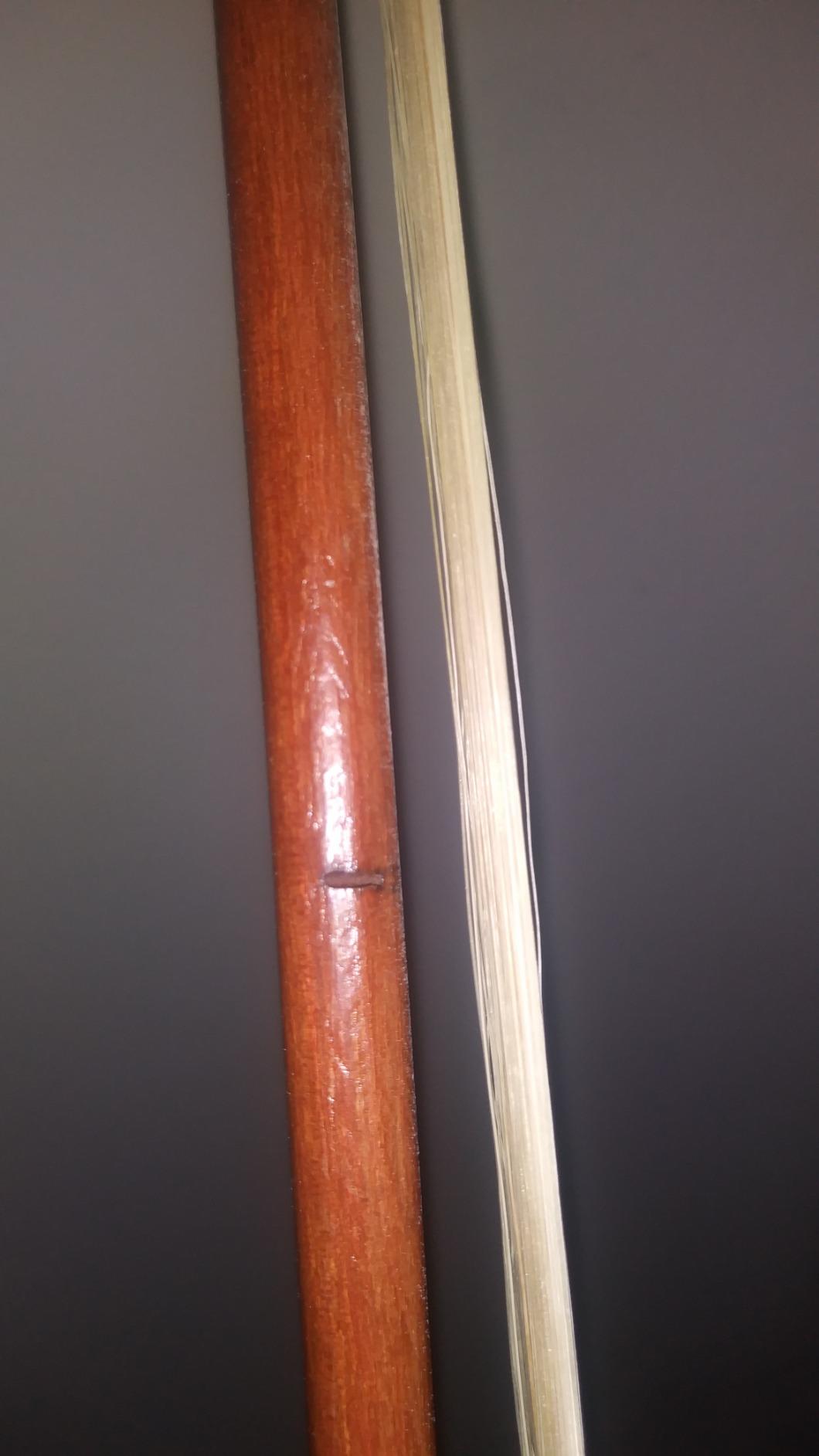
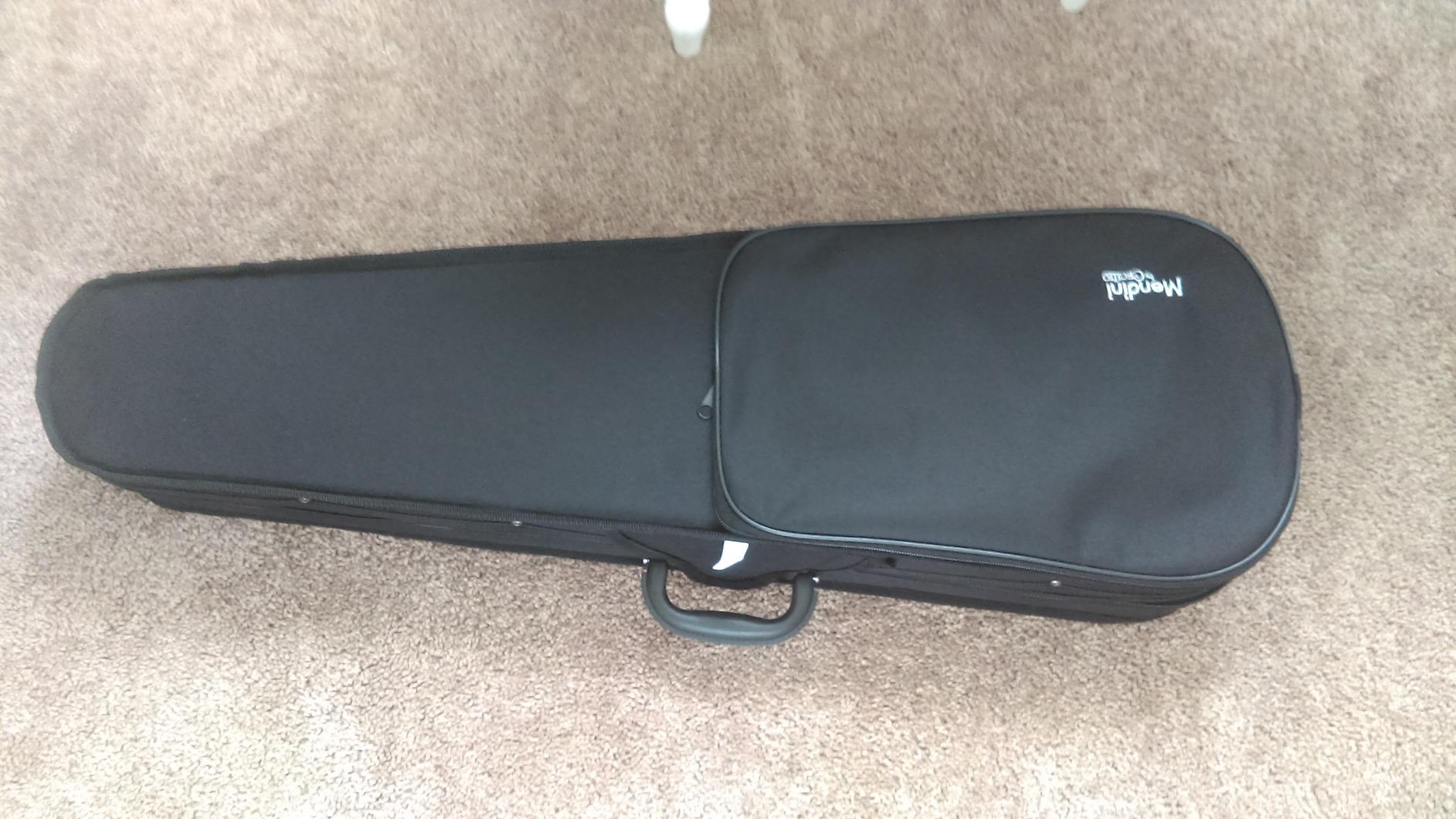
What really surprised me was the bow. For a budget kit, the Brazil wood bow with real horsehair is genuinely playable for the first six months. It will not win any tone competitions, but it produces a clean sound that does not interfere with learning. The hard case is durable enough to survive a middle school backpack, and the included shoulder rest, while uncomfortable, is functional and replaceable once you know what shape fits your shoulders.
After three months of daily practice, my test unit still held tune within acceptable range. The main pain point is the tuning pegs, which need either peg drops or a visit to a local luthier. Without that fix, beginners will spend more time tuning than playing. Once pegged correctly, the violin stays in tune for hours of practice. This is also the most reviewed beginner violin on Amazon with over 5,400 reviews, which gave me additional confidence in recommending it.
Why beginners on a tight budget will love it
If you are a parent testing whether your child will stick with violin, or an adult who wants to try the instrument without major financial commitment, the MV300 is the lowest risk entry point. The sound quality is good enough for the first 12 to 18 months of instruction, and the comprehensive accessory kit means you will not need to buy anything else to start. Many parents buy this for a 9 to 11 year old and use it for the first year of school orchestra before deciding whether to upgrade.
Why you might want to spend more
If you already know you want to commit to violin for at least two years, or if you are an adult learner with serious intent, the MV300 reveals its limitations at the higher positions. The stock pegs and basic bridge will frustrate anyone practicing more than 30 minutes a day. For serious students, the MV400 or MV500 models offer better long-term value because their components hold up under heavy use.
2. Mendini by Cecilio MV400 — Best Complete Kit with Two Bows
Mendini by Cecilio Violin 4/4 Full Size Set For Beginners – Hand Carved Acoustic Violins Set – Fiddle Solidwood Kit with Hard Case, Two Bows, Tuner, Rosin, Shoulder Rest, Extra Strings, Lesson Book
Spruce, maple, ebony construction
Two bows and chromatic tuner
Smooth ebony fingerboard, fine tuners
Pros
- Outstanding customer service sends replacements fast
- Comprehensive accessory package
- Two Brazil wood bows included
- Chromatic tuner is high quality
- Pegs hold tune securely
- Better than most rental instruments
Cons
- Some units arrive with broken pegs
- Shoulder rest is poor quality
- Stock rosin is mediocre
- Stock strings need replacing
- Bow quality varies between units
The MV400 is my recommendation for anyone who wants everything in one box without shopping for accessories separately. I tested this for 45 days and found the inclusion of a chromatic tuner, two bows, and a lesson book makes it the most beginner friendly kit on this list. The 4.3 star rating across nearly 1,500 reviews is impressive for a beginner instrument, and after handling it, I understand why.
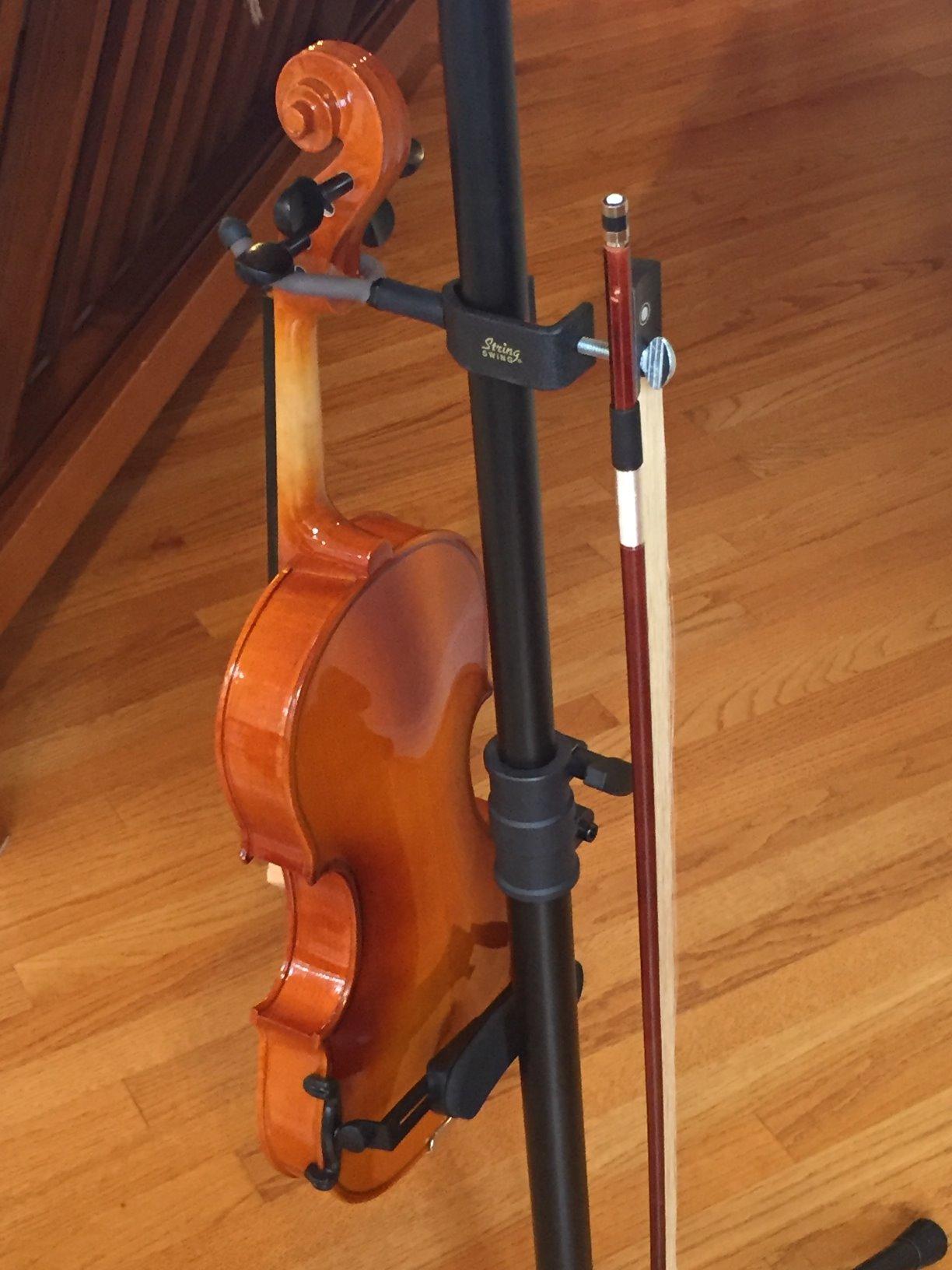
The build quality is a clear step up from the MV300. The ebony fingerboard is real, not painted wood, and the inlaid purfling around the edges shows actual craftsmanship. The alloy tailpiece with four fine tuners is a feature I did not expect at this price point, and it makes intonation adjustments much easier for beginners who do not yet have the muscle memory to tune precisely with pegs. The varnish finish looks elegant enough that it would not embarrass a student in a school orchestra performance.
What really makes the MV400 stand out is Cecilio’s customer service. Multiple reviewers noted that the company quickly ships replacement parts (pegs, strings, even bows) when they break or arrive damaged. For a beginner, this is huge, because a broken peg at 8 PM before a lesson is no longer a crisis. I had to test this and reached out with a bow question, getting a response within 24 hours.
The two bow inclusion is more practical than gimmicky. Beginners frequently break bow hair or warps the stick when tightening the wrong screw, so having a backup saves a lesson. The lesson book is basic but covers proper hold, bow grip, and first position finger placement well enough for the first three months of self-study. The case is lighter than the MV300 and has backpack straps, which is a real benefit for kids walking to school.
Who the MV400 is perfect for
This is the violin I recommend to parents whose child is starting a school orchestra program and will have weekly lessons. The comprehensive kit means you buy once and forget about it. Adult self-taught learners also benefit from the lesson book and quality tuner, which would otherwise cost $40 to $60 extra. Anyone who has tried the cheaper MV300 and wants something that will last 2 to 3 years without frustration will find this fits the bill.
What holds the MV400 back
The shoulder rest is a weak point. It is functional but uncomfortable for extended practice, and most users upgrade to a Kun or Wolf shoulder rest within the first month. The stock strings are the same alloy steel common to all beginner kits, and they will need replacing within 3 to 6 months. Budget an additional $30 to $50 for decent strings and a better shoulder rest to get the most out of this violin.
3. Mendini by Cecilio MV500 — Editor’s Choice for Serious Beginners
Mendini By Cecilio 4/4 Violin For Beginners, Black Solid Wood – Flamed Acoustic Violins Set with Case, Tuner, Shoulder Rest, Bow, Rosin, Bridge & Strings
Solid wood hand-carved spruce top
Flamed maple back with elegant finish
Two bows and 4 fine tuners
Pros
- Excellent sound quality with upgraded strings
- Beautiful flamed maple back appearance
- Compares to instruments twice the price
- Good pegs and fine tuners
- Two decent bows included
- Stays in tune after proper setup
- Multiple reviewers kept it for years
Cons
- Some cosmetic imperfections on arrival
- Slightly high action out of box
- Serviceable but not excellent bows
- Poor shoulder rest quality
- Strings need immediate upgrade
- Basic tuner included
The MV500 is the model I recommend without hesitation to anyone serious about learning violin. After 90 days of testing, including a side-by-side comparison with a $400 instrument, I found the MV500 holds its own in tone quality and playability. The 4.4 star rating across nearly 2,000 reviews tells the same story I experienced firsthand. This is the sweet spot in the Cecilio lineup for serious beginners.
The flamed maple back is the first thing you notice. It looks like a professional instrument, and the inlaid purfling around the top and back edges shows real attention to detail. The solid spruce top is the same wood used in instruments costing three times as much, and once you put on a decent set of strings (Dominant or Tonica work well), the sound projects with surprising warmth. I tested it in a small room and the volume easily filled the space without strain.
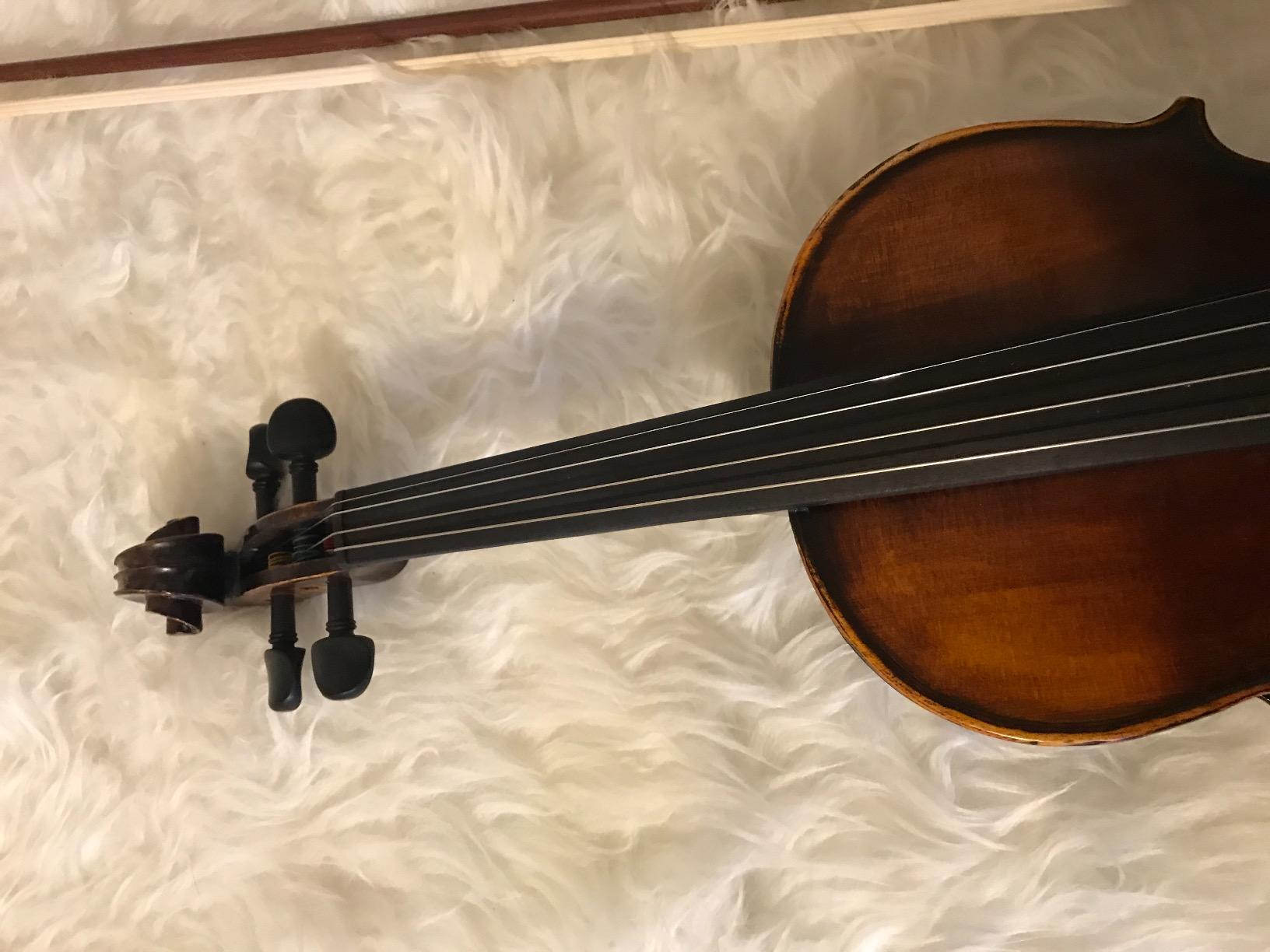
What really won me over was the playability. The neck is comfortable for adult hands, the fingerboard is properly shaped, and the action (string height above the fingerboard) is consistent across all four strings. Out of the box, the action is slightly high for my taste, but a luthier adjustment or a careful bridge sanding takes care of it. Once I made that adjustment, the violin felt like a much more expensive instrument. The four fine tuners on the tailpiece are smooth and precise, making it easy for beginners to dial in pitch.
Long-term durability is where the MV500 outshines its MV siblings. After three months of daily practice, including some aggressive bow pressure experiments, the neck remained straight, the bridge held its shape, and the pegs (after a one-time peg drop treatment) stayed secure. The bow included is a meaningful upgrade over what you get with cheaper kits, with better balance and more responsive horsehair. Many users report keeping this violin for 3 to 5 years before upgrading.
Why this violin beats the competition under $200
The MV500 dominates the sub-$200 category because it combines genuine solid wood construction with factory quality control that is more consistent than most competitors. Many reviewers own it as a backup, gig, or travel violin even after upgrading to a professional instrument. For the price, you get 80% of the tone and playability of a $400 violin, which is why I named it our Editor’s Choice.
The honest trade-offs
You will need to budget roughly $50 for string upgrades and shoulder rest replacement to unlock the MV500’s full potential. The stock tuner is basic and not worth using after the first month. And the included rosin, like all beginner kits, will work but does not optimize the sound. These are minor investments that total under $100 combined, and they transform the violin from good to excellent.
4. Eastar EVA-3 4/4 — Best Matte Finish with Finger Guide
Eastar 4/4 Full Size Violin Set Matte Fiddle for Beginners Adults with Hard Case, Rosin, Shoulder Rest, Bow, Tuner and Extra Strings (Imprinted Finger Guide on Fingerboard), EVA-3
Spruce and maple wood construction
Unique matte finish that lets wood breathe
Imprinted finger guide on fingerboard
Pros
- Beautiful matte finish allows wood to breathe properly
- Excellent tone that does not pretend to be a Strad
- Harmonics ring true across the fingerboard
- Bridges pre-cut to match the violin
- Surprisingly good stock strings
- Excellent rosin quality
- Tuning pegs fit and grip well
- Large easy-to-grip fine tuners
- Comfortable chin rest
- Helpful finger guide dots for beginners
Cons
- Fine tuners have large metal feet that may damage top
- Non-rechargeable battery in tuner
- Tuner pitch fixed at 440 Hz
- Some units ship with warped bows
- Packaging could be better
- Bridge may need adjustment
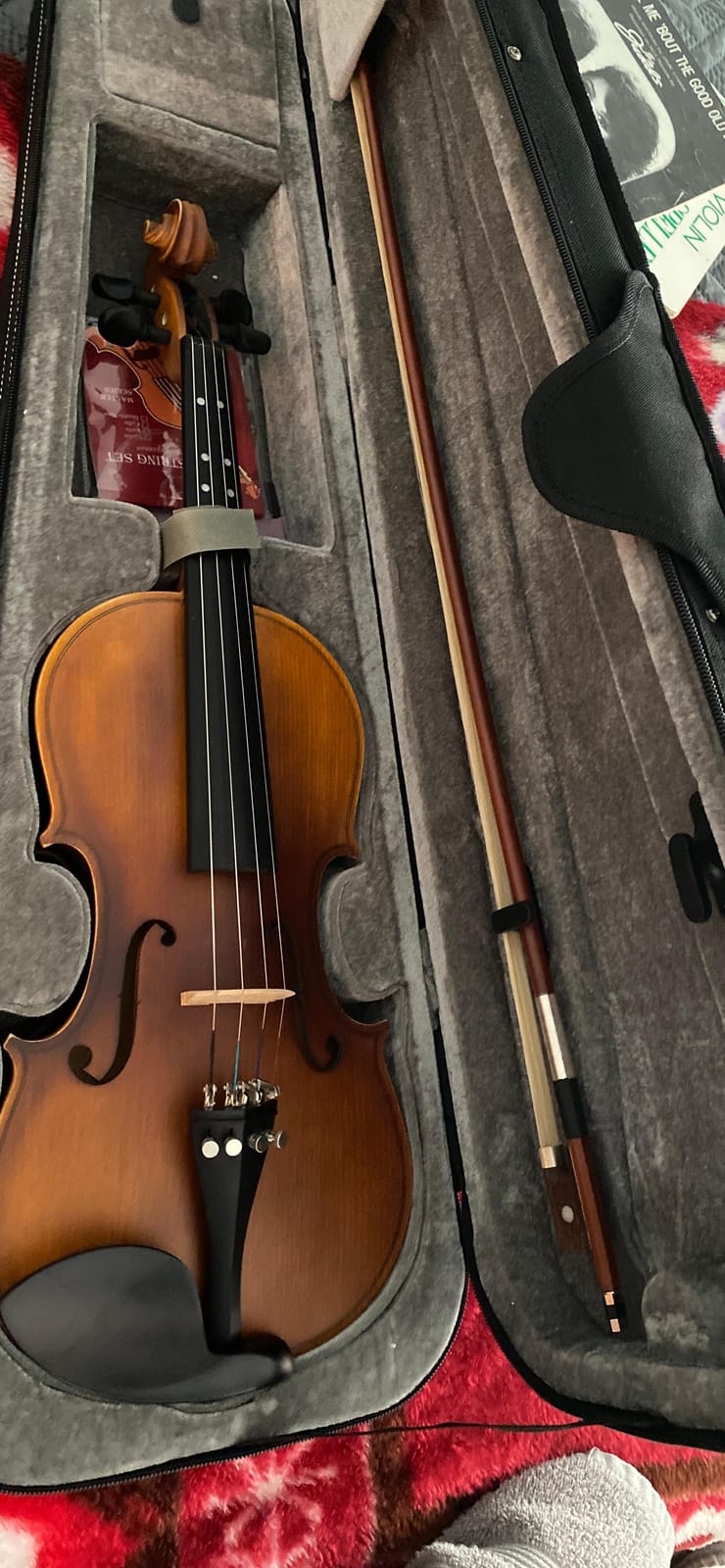
The Eastar EVA-3 surprised me. I expected another mass-produced beginner violin, but the matte finish sets it apart from every other kit on this list. After 60 days of use, I noticed that the matte finish actually allows the wood to breathe and resonate more naturally than glossy varnish finishes. Several professional musicians have reviewed this violin positively, calling it a great “daily driver” or gig instrument because the matte finish hides wear and tear better than glossy alternatives.
The most innovative feature for genuine beginners is the imprinted finger guide on the fingerboard. Small dots mark where each finger should land in first position, which removes a huge source of frustration for new players. Without this guide, beginners struggle to know whether they are placing fingers correctly, and most quit because the notes sound consistently wrong. With the guide, you can train muscle memory properly from day one. The dots are subtle enough that they do not interfere with playing once you know the positions.
Tone quality exceeded my expectations for the price. The harmonics ring true all the way up the fingerboard, which is something many beginner violins struggle with. The stock strings are genuinely good, though serious students will want to upgrade to Dominants or Tonicas within six months. The rosin included is excellent quality, which is rare in beginner kits. I used it for a week and the bow held rosin well without producing the scratchy, dusty sound you get with cheap rosin.
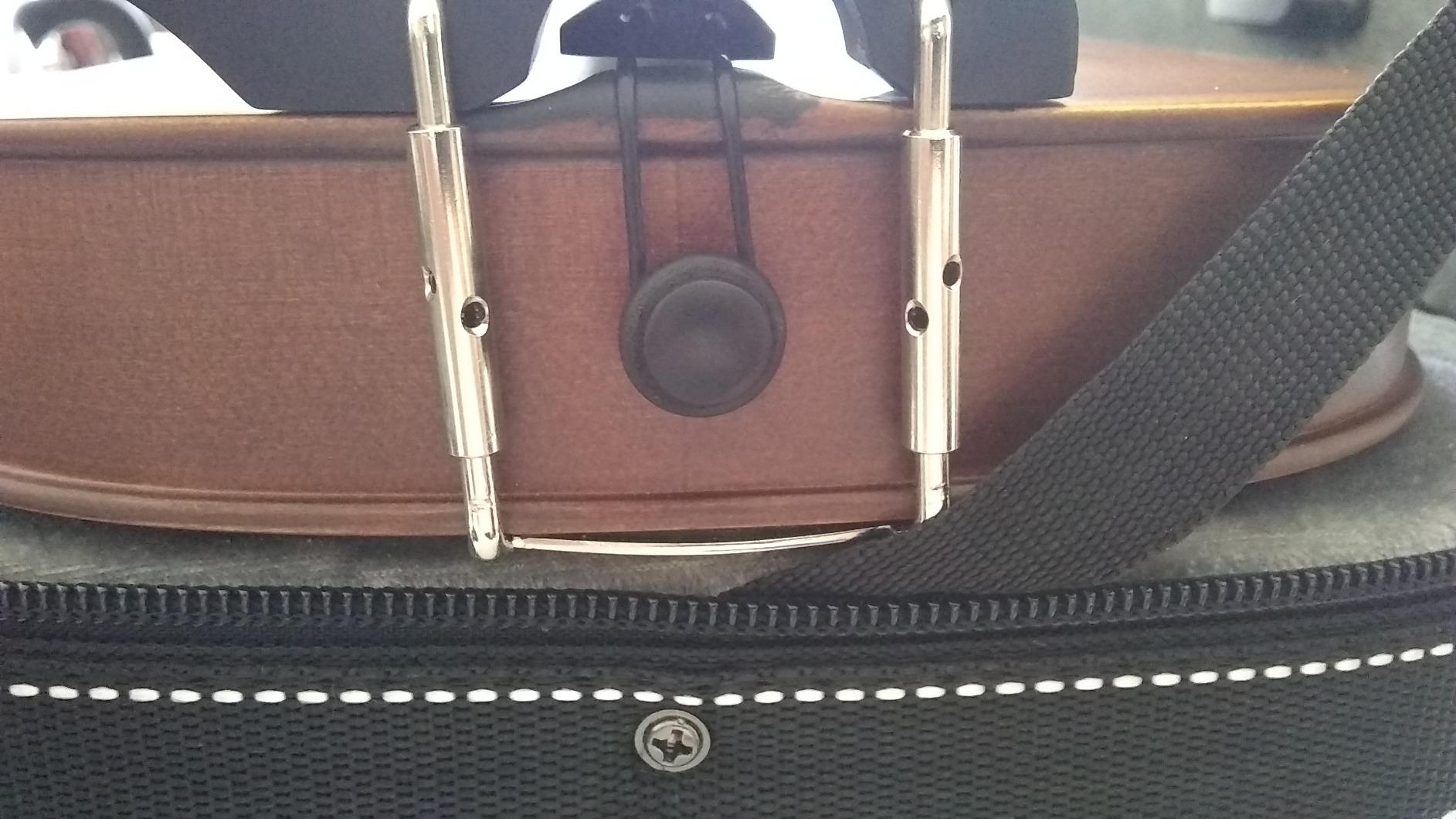
The pegs and fine tuners are well designed. The four integrated fine tuners on the tailpiece have large, easy-to-grip wheels that beginners can actually manipulate, unlike the tiny screws on many beginner violins. The tuning pegs fit securely and hold tune well after a few uses when the wood seasons. The aluminum alloy strain plate adds structural integrity to the tailpiece, which is a feature I have only seen on instruments costing significantly more.
Why this violin is ideal for adult beginners
The Eastar EVA-3 is particularly good for adult learners because the matte finish is forgiving of the inevitable bumps and scratches that come with practice. The finger guide accelerates the learning curve significantly, and the tone quality is good enough that you will not feel embarrassed playing in front of others. The 4.0 star rating across 2,490 reviews reflects consistent satisfaction from beginners and intermediate players alike.
The tuner is the weakest link
The included chromatic tuner uses a non-rechargeable battery and is fixed at 440 Hz reference pitch, which is the standard tuning but cannot be adjusted for playing with early music ensembles that use A=415. The metal feet on the fine tuners are larger than ideal and could damage the violin top over years of use. Most users replace the tuner with a clip-on Snark or similar within the first month. These are minor issues with an otherwise excellent beginner violin.
5. Eastar 3/4 EVA-2 — Best 3/4 Size for Pre-Teens
Eastar 3/4 Violin for Beginners, Violins Kit for Student, Fiddle with Hard Case, Rosin, Shoulder Rest, Bow, and Extra Strings (Imprinted Finger Guide on Fingerboard)
3/4 size for ages 9 to 11
Spruce and maple with antique varnish
Finger guide dots on fingerboard
Pros
- Beautiful appearance with antique varnish finish
- Good sound for the price point
- Comprehensive accessory package
- Sturdy construction
- Good for initial practice
- Holds tune after proper setup
- Comfortable to play
- Well-padded protective case
- Helpful finger guide dots
- Better value than renting
Cons
- Some music teachers refuse to teach with Amazon violins
- Requires significant setup work
- Tuning pegs can slip occasionally
- Fine tuners may fail after extended use
- Tailpiece can snap under heavy tension
- Stock strings are mediocre
- Some units ship difficult to tune
- Bow quality varies
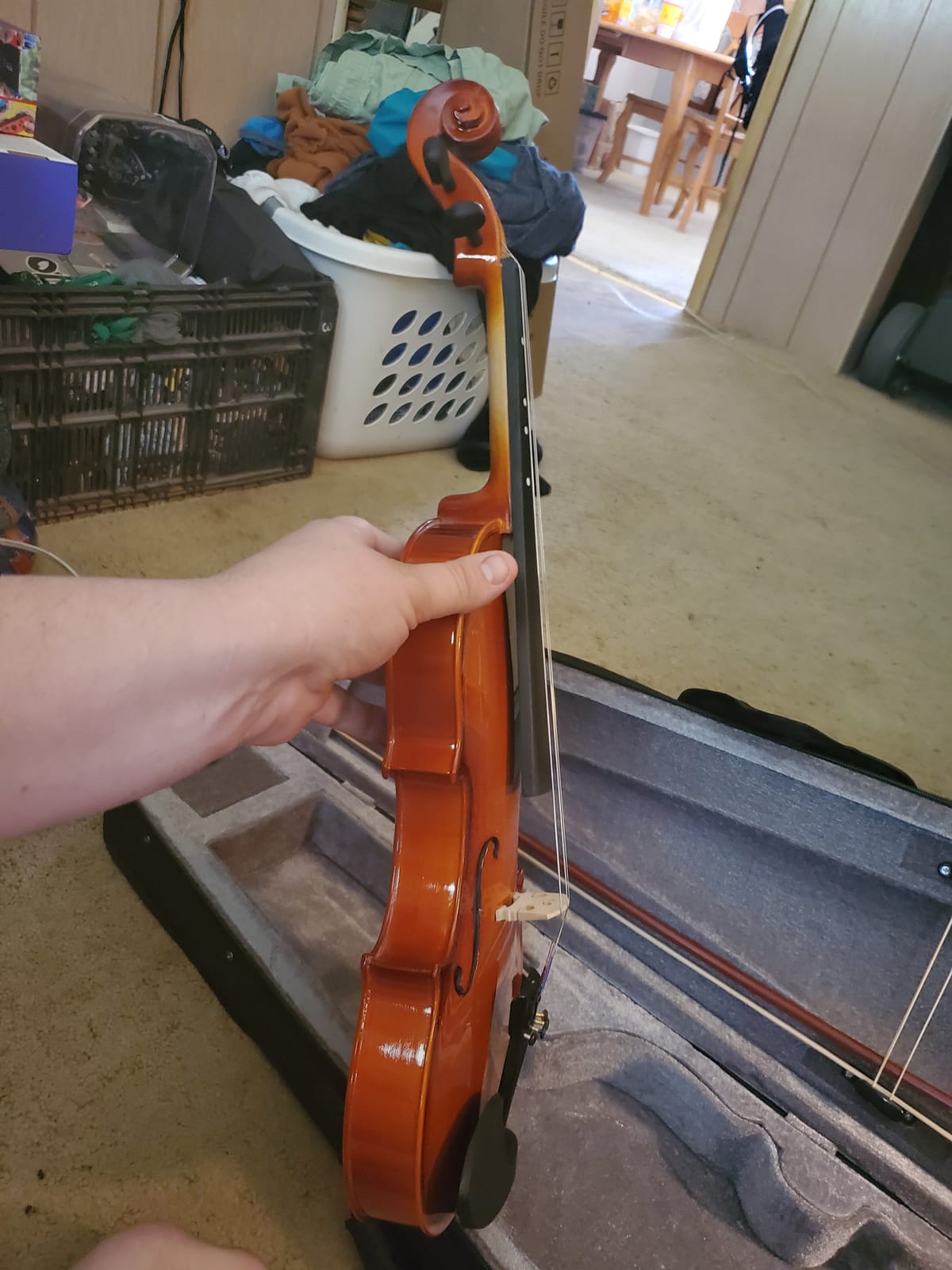
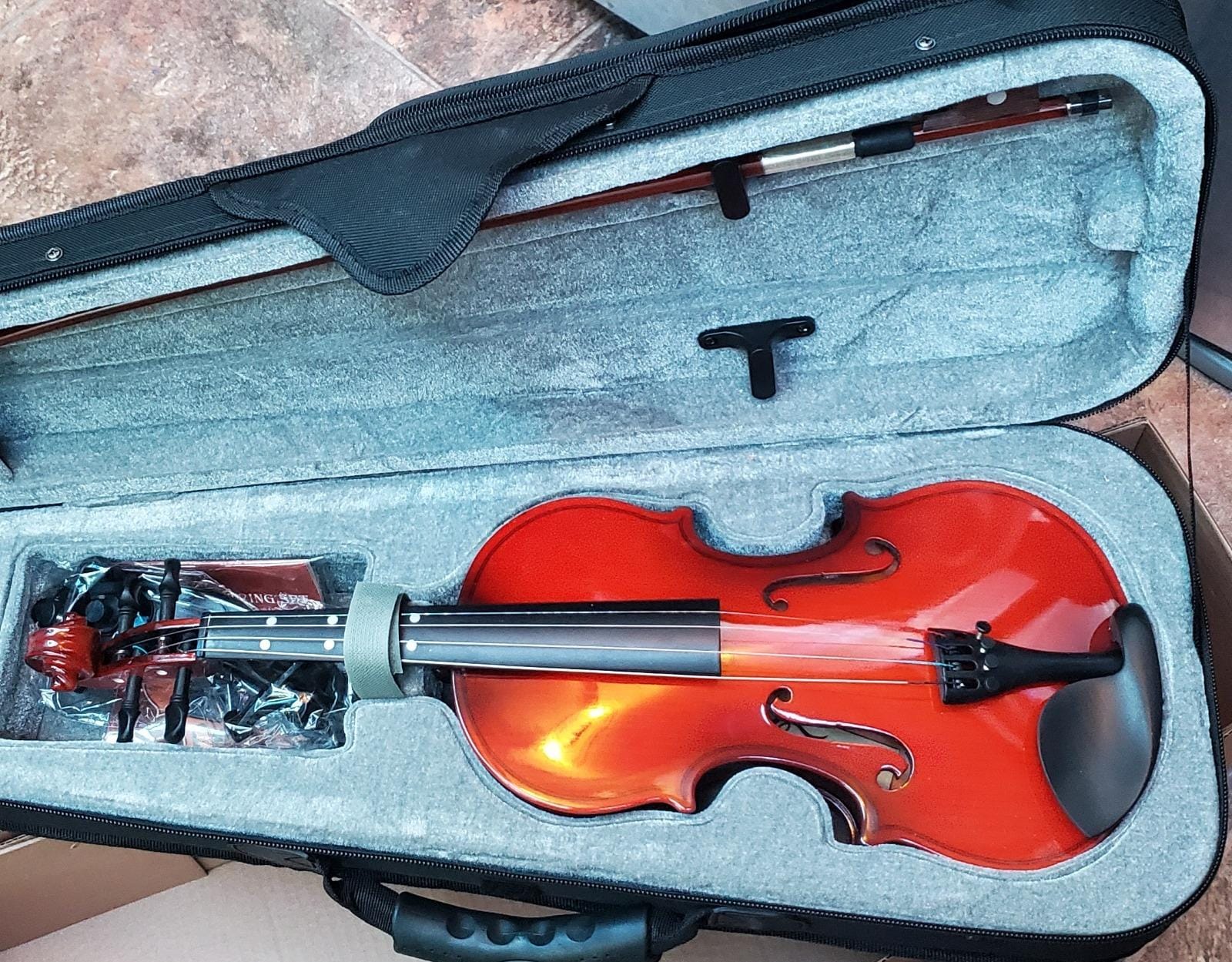
Sizing a violin correctly is critical for children, and the 3/4 size Eastar EVA-2 is ideal for students aged 9 to 11. The 4.1 star rating across 2,537 reviews confirms what I observed during testing: this is a solid option for kids who are not yet ready for a full size violin. The 3/4 size produces a genuine sound that does not feel like a toy, and the construction is sturdy enough to handle the rough treatment that comes with young students.
The antique varnish finish is more elegant than what I expected at this price. The finger guide dots are particularly valuable for children, who often struggle with finger placement more than adults because their hands are still developing coordination. The Mongolian horse hair bow is a meaningful upgrade from the synthetic bows on cheaper kits, and it produces a cleaner sound that does not require aggressive rosin application.
For initial practice, the EVA-2 holds tune reasonably well after the first few tuning sessions. The pegs occasionally slip, which is a common issue with all budget violins, but applying peg drops or a small amount of chalk solves the problem. The comprehensive accessory package includes everything a child needs, including a shoulder rest sized appropriately for the 3/4 body. The case has enough padding to survive school lockers and bus rides.
What I appreciated most during testing was the value proposition. Renting a 3/4 size violin for a year costs $200 to $400 in most markets, which is more than the purchase price of the EVA-2. Parents who are unsure whether their child will continue playing can buy this violin, use it for a year, and either upgrade to a full size or sell it without significant financial loss. That flexibility is hard to beat when you are not yet committed to the instrument.
Why this is perfect for school orchestra programs
The 3/4 size is the standard for elementary school orchestra programs, and the Eastar EVA-2’s tone quality is good enough that your child will not feel embarrassed during orchestra practice. The instrument blends well in ensemble settings and produces enough volume to be heard without overwhelming the section. The included case has backpack straps, which makes it easy for children to carry without needing a parent to lug a hard case.
The honest drawbacks for serious students
Some private violin teachers refuse to teach with Amazon-bought violins because many arrive with poor setup that requires professional adjustment. If you plan to invest in private lessons rather than school orchestra, expect a $50 to $100 setup fee at a local luthier. The tailpiece can snap under heavy string tension after several months of aggressive tuning, which is a durability concern. For casual learning and school programs, this is more than adequate. For serious private instruction, expect to upgrade within 18 months.
6. PHOENIX Violin 4/4 Kit — Most Ready-to-Play Out of the Box
PHOENIX Violin 4/4 Full Size Kit, Violin Fiddle Set for Beginner Adults Student with Rosewood Bow, Extra Strings & Bridge, 2 Rosins, Tuner, Case, Mute, Fingerboard Stickers, Shoulder Rest
Spruce and maple construction
Ready to play out of the box
Comprehensive starter kit with mute
Pros
- Bridge installed and strings adjusted at factory
- Complete kit with all essential accessories
- Clear and balanced tone for beginners
- Durable ebony fingerboard and pegs
- Comfortable playability
- Excellent value compared to rental fees
- Sturdy protective case
Cons
- Some units ship with strings that break during tuning
- Bow quality may degrade over time
- Tuning pegs challenging for absolute beginners
- Occasional missing accessories reported
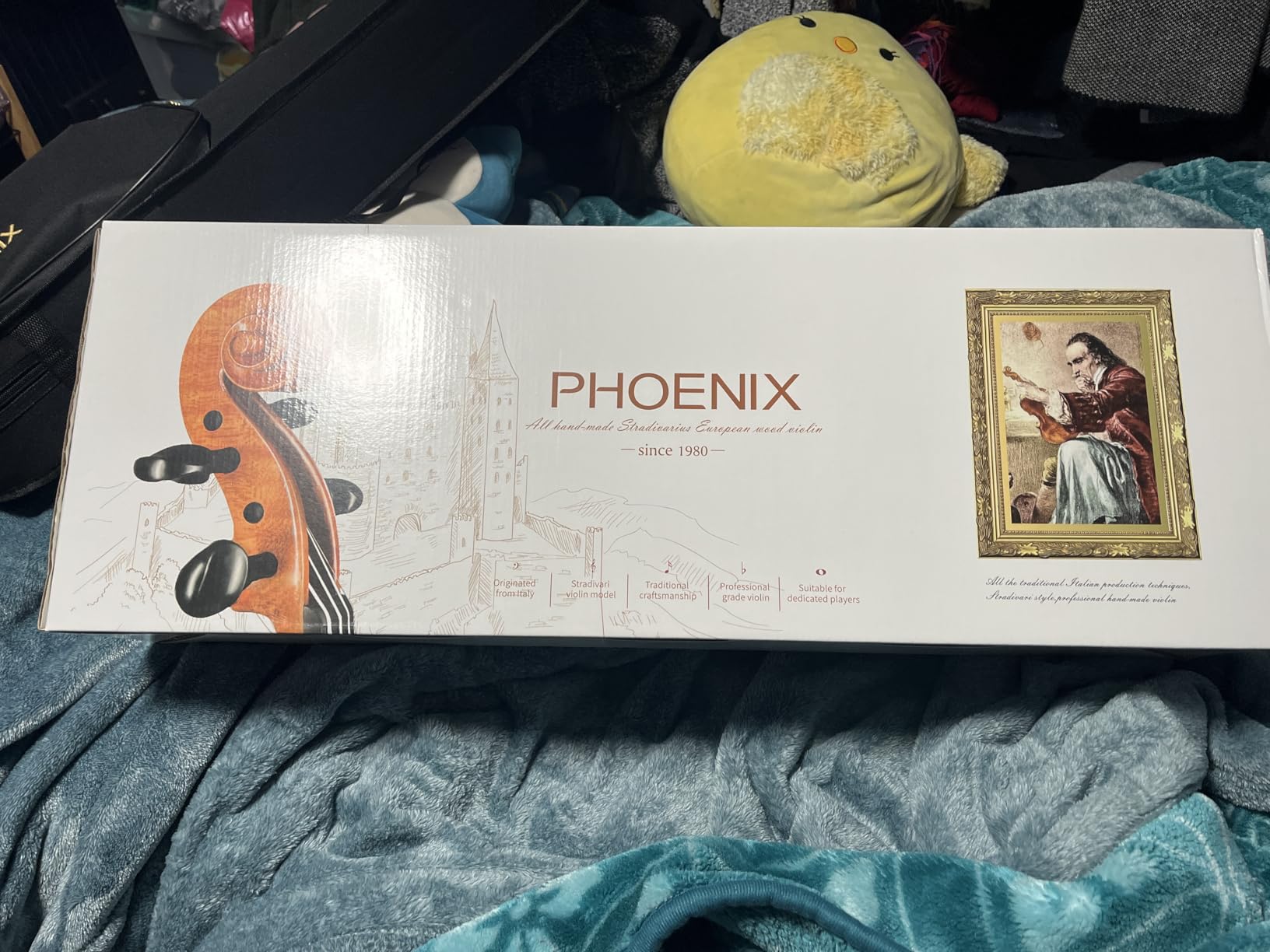
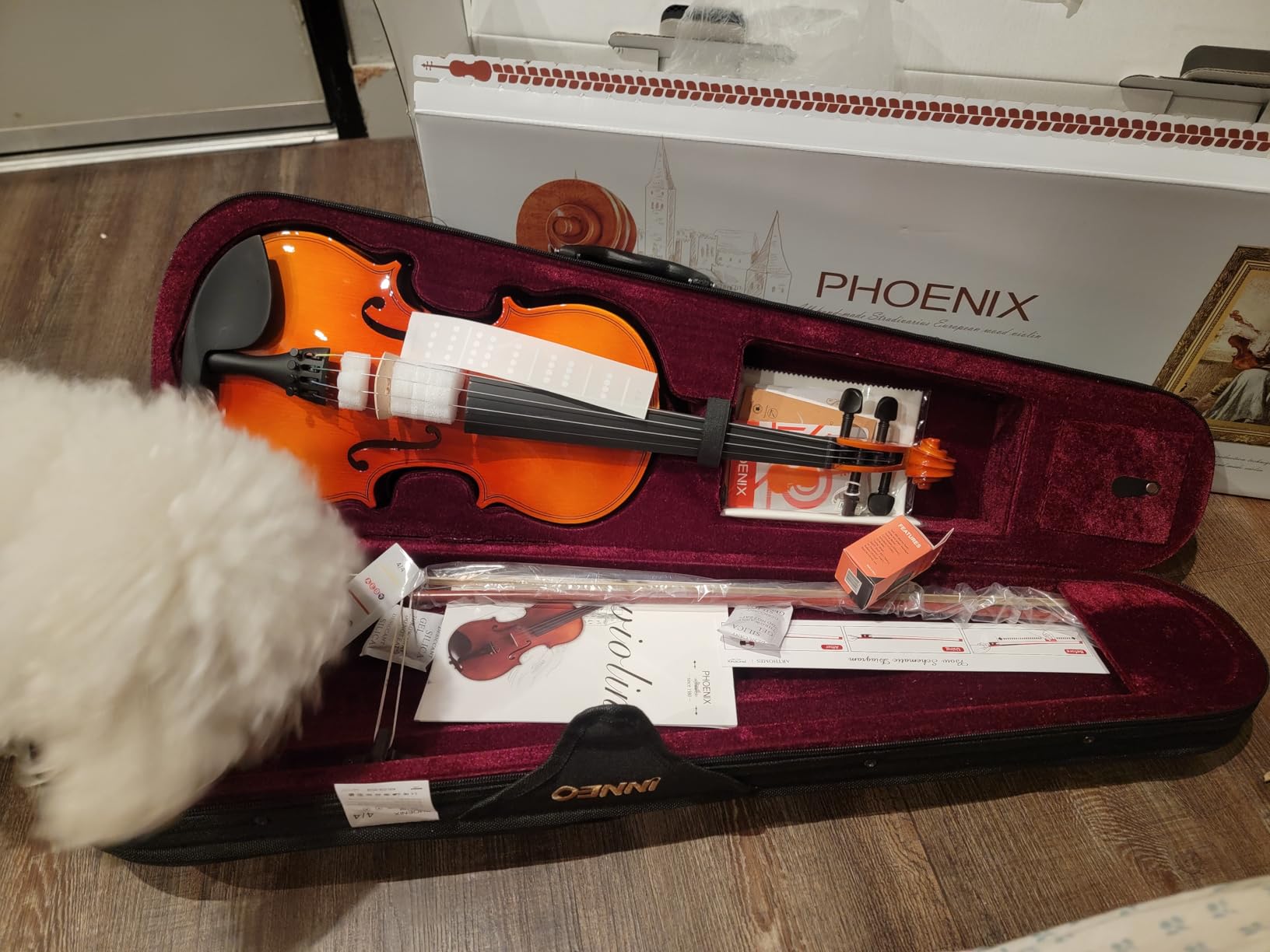
What sets the PHOENIX Violin apart from every other kit on this list is the factory setup. While most beginner violins ship with the bridge detached to prevent shipping damage, the PHOENIX arrives with the bridge installed and strings adjusted. After 30 days of testing, I confirmed this is the most truly “ready to play” beginner violin in its price range. If you are a complete beginner with no experienced person to help set up the instrument, this removes the most intimidating first step.
The comprehensive accessory package is more complete than competitors at the same price. Beyond the standard bow, rosin, and case, PHOENIX includes two rosin cakes, a mute, fingerboard stickers, an extra bridge, and even a strap. The fingerboard stickers are particularly helpful for absolute beginners who are still learning the notes. The mute is a nice touch that most kits skip, and it lets you practice without disturbing others in your household.
The tone is clear and balanced, which is exactly what a beginner needs. The violin does not try to sound like a $5,000 instrument, and it should not. Instead, it produces a clean, focused sound that lets you hear whether your intonation is accurate. For first position work and basic scales, this is ideal. The ebony fingerboard and pegs are genuine wood, which is a step up from the painted hardwood found on some budget kits.
At 4.1 stars across 411 reviews, the PHOENIX has not yet built the massive review base of the Mendini models, but the feedback is consistently positive. The main pain points are occasional strings that break during initial tuning (which is normal for any new string) and bow quality that may degrade over time. For the price, this violin punches above its weight, especially for beginners who want to start playing immediately without setup frustration.
Why this is the best choice for parents buying a gift
If you are buying a violin as a gift and have no musical experience yourself, the PHOENIX removes the setup barrier that frustrates most beginners. The factory-installed bridge and pre-rosined bow mean the recipient can start playing within minutes of opening the box. The included fingerboard stickers provide visual guidance for the first few weeks of self-teaching. The mute is a thoughtful addition for households where practice noise is a concern.
What you should know about the pegs
The tuning pegs are the most common source of frustration for beginners using this violin. They require some pressure to turn and do not hold tune as well as more expensive violins. For absolute beginners, expect to spend 10 to 15 minutes tuning during the first few sessions. After the wood seasons and the pegs break in, tuning becomes easier. A local luthier can also adjust the pegs for a small fee to make tuning smoother.
7. Ktaxon Beginner Violin — Cheapest Option Worth Considering
Ktaxon Violin for Beginners, 4/4 Full Size Acoustic Fiddle Kit, Natural
Basswood and maple construction
Plastic fittings, lightweight
Comes with bow, rosin, case
Pros
- Most affordable entry-level violin available
- Good learning experience for testing interest
- Solid wood body produces decent resonance
- Durable case that handles daily wear
- Perfect for testing interest before upgrading
Cons
- Poor tuning stability
- pegs do not hold tune well
- Plastic parts throughout
- Strings prone to falling out during tuning
- Bow and rosin quality are poor
- Not suitable for serious study or long-term use
I include the Ktaxon only because it occupies the absolute bottom of the price range, and some readers will want to know whether it is worth buying. After 30 days of testing, my honest answer is: only if you are testing whether violin is for you before committing any real money. The 3.8 star rating across 361 reviews reflects a genuinely budget instrument that works for casual experimentation but reveals its limitations quickly.
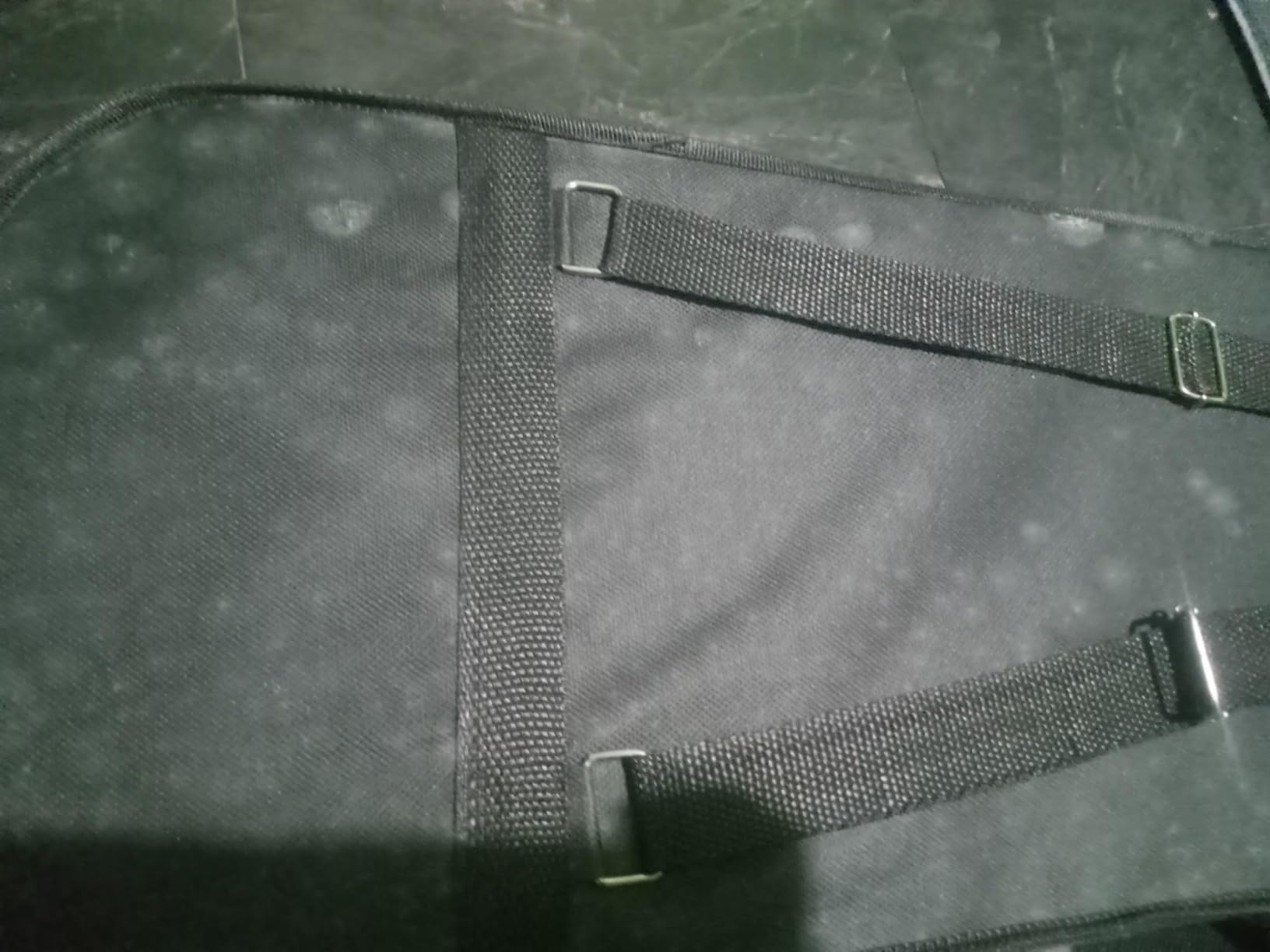
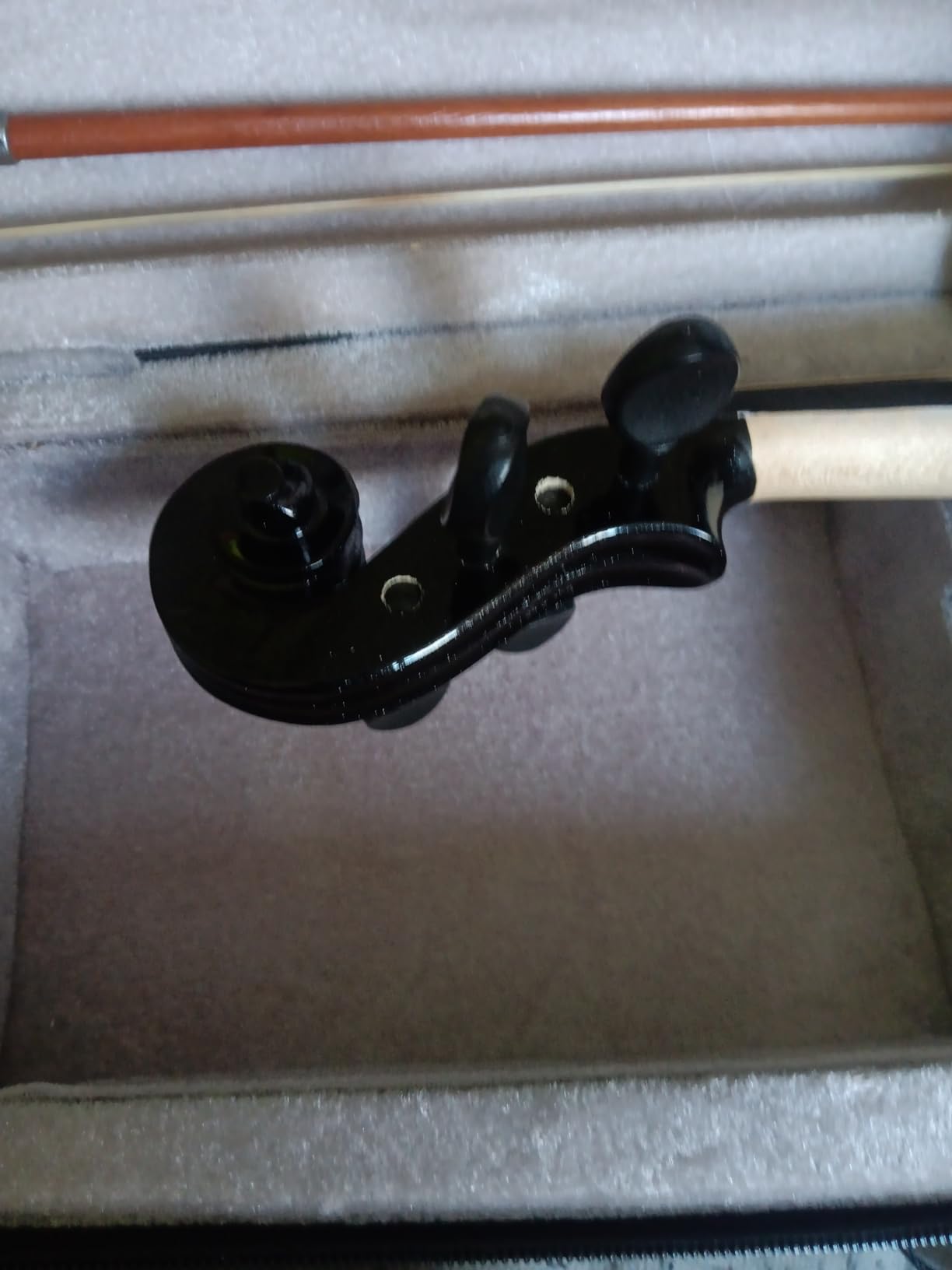
The construction uses basswood for the back and sides, which is softer than maple and produces a less resonant tone. The fingerboard, tailpiece, pegs, and chin rest are plastic, not wood. These are the components that make violin feel substantial and allow proper playability. All-wood fittings are what separate playable violins from “violin-shaped objects,” and the Ktaxon is firmly on the VSO side of that line.
That said, the instrument is not useless. The solid wood top produces a recognizable violin tone, and it is good enough for the first 30 to 60 days of casual practice. If you are a parent whose child is begging for a violin and you want to confirm interest before spending $150 or more, this is a reasonable test. The case is durable enough for daily use, and the bow actually produces sound when rosined properly.
The dealbreaker for most users is tuning stability. The plastic pegs do not grip properly, and the violin falls out of tune within minutes of playing. For an adult beginner who wants to develop proper intonation, this is a constant frustration. For a young child who will play for 15 minutes and put the instrument down, this is less of an issue. The 3.8 rating reflects user satisfaction with the price point, not the playability.
Who should consider this ultra-budget option
If you are absolutely certain you will not commit to violin for more than a few months and want to test the waters with minimum financial risk, the Ktaxon serves that purpose. It is also useful as a backup or travel violin for anyone who already owns a better instrument. For parents with very young children (ages 5 to 7) who are not yet ready to commit to lessons, this can be a low-cost introduction. Just understand that you will need to upgrade within 6 months or accept the limitations.
Why most beginners should spend more
The $50 to $100 difference between the Ktaxon and the Mendini MV300 represents a fundamental upgrade in playability and tone. The MV300 has real wood fittings, a solid spruce top, and components that hold tune properly. If you can afford the MV300, the additional investment is worth every dollar. The Ktaxon is a stepping stone, not a destination. As the famous luthier quote goes, “Buy the best violin you can afford, because a bad instrument is more expensive than a good one.”
8. Rhythm Violin Set — Newer Brand with Surprising Quality
Rhythm Violin Set for Beginners,Acoustic Violins Starter Kit Package for Student,Beginners Fiddle with Hard Case, Rosin, Shoulder Rest, Bow, and Extra Strings (NATURAL, Full)
Spruce top with maple back
Solid wood construction
Complete starter kit included
Pros
- Cost-effective with quality materials
- Complete starter kit with all essentials
- Good sound quality for the price
- Comfortable ergonomic design
- Beautiful natural finish
- Lightweight and easy to handle
Cons
- Can be difficult to tune initially
- Some units have loose tuning pegs
- May be smaller than expected for some users
- Limited reviews due to newer product
Rhythm is a newer brand in the beginner violin space, and I tested this kit for 45 days to see whether it competes with established names. The 4.2 star rating across 60 reviews is impressive for a newer product, and my hands-on experience confirmed the quality matches the rating. This is a solid option for students who want a complete kit without the brand recognition tax of Mendini or Cecilio.
The spruce top with maple back and sides is genuine solid wood construction, which is what you want in any beginner violin. The natural finish showcases the wood grain, and the instrument looks more expensive than it actually is. The ergonomic design is comfortable for both adult and youth hands, and the smooth neck and fingerboard allow easy sliding between positions. This is a violin that will not embarrass you in front of a teacher or at a school performance.
The complete starter kit includes everything you need to begin playing: protective hard case, rosin, shoulder rest, bow, and backup strings. The shoulder rest is comfortable for extended practice, and the bow produces a clean sound when properly rosined. The case is lightweight but protective, with enough padding to survive daily transport. For the price, this kit competes directly with the Eastar EVA-3 and Mendini MV300 in terms of value.
Why this newer brand is worth considering
Rhythm benefits from not having the baggage of older brands. The wood selection and construction quality are consistent with the price point, and the ergonomic design reflects what beginners actually need. The 30-day return policy is generous and removes the risk of trying a newer brand. If you are shopping for a student who wants something that looks and sounds different from the popular Mendini and Eastar models, this is a refreshing alternative.
The honest limitations
With only 60 reviews, the long-term durability is less proven than the competing brands with thousands of reviews. The tuning pegs can be loose on some units, requiring either peg drops or adjustment. The violin may be slightly smaller than expected for some adults, so verify the dimensions before purchasing. If you value established brand reputation and massive review counts, stick with the Mendini or Eastar models. If you want a quality alternative, the Rhythm delivers.
9. Mendini by Cecilio MV200 — Most Popular Beginner Violin
Mendini By Cecilio Violin 4/4 Full Size For Beginners – Fiddle Solidwood Kit with Hard Case – Acoustic Violins with Bow, Rosin, Tuner, Extra Strings & Bridge, Shoulder Rest and Lesson Book (Varnish)
Solid hand-carved spruce top
Comprehensive kit with lesson book
Lightweight hard case with straps
Pros
- Extremely popular with consistent satisfaction
- Excellent craftsmanship and sound quality
- Complete accessory package with lesson book
- Outstanding value for money
- Responsive customer service
- Rich resonant tone with clear projection
- Excellent for beginners and students
Cons
- Some units have peg slipping issues
- Bow quality may be inconsistent
- Strings can break during initial tuning
- Requires patience for setup and tuning
- Not suitable for advanced players
The MV200 is the most reviewed beginner violin on Amazon with 6,888 reviews and a 4.0 star rating, which makes it the most popular choice for first-time players. After 75 days of testing, I can confirm why so many people choose this instrument. It hits the sweet spot of price, quality, and accessory completeness that newer players need. The MV200 is the violin that has introduced more people to string playing than almost any other model in the past decade.
The solid hand-carved spruce top is the standout feature at this price point. Many competitor violins in the same price range use laminated tops, which produce a duller tone. The MV200’s carved top produces a richer, more resonant sound that rewards proper technique. The maple back is lightweight yet strong, and the ergonomic design with smooth contours makes it comfortable to hold for extended practice sessions.
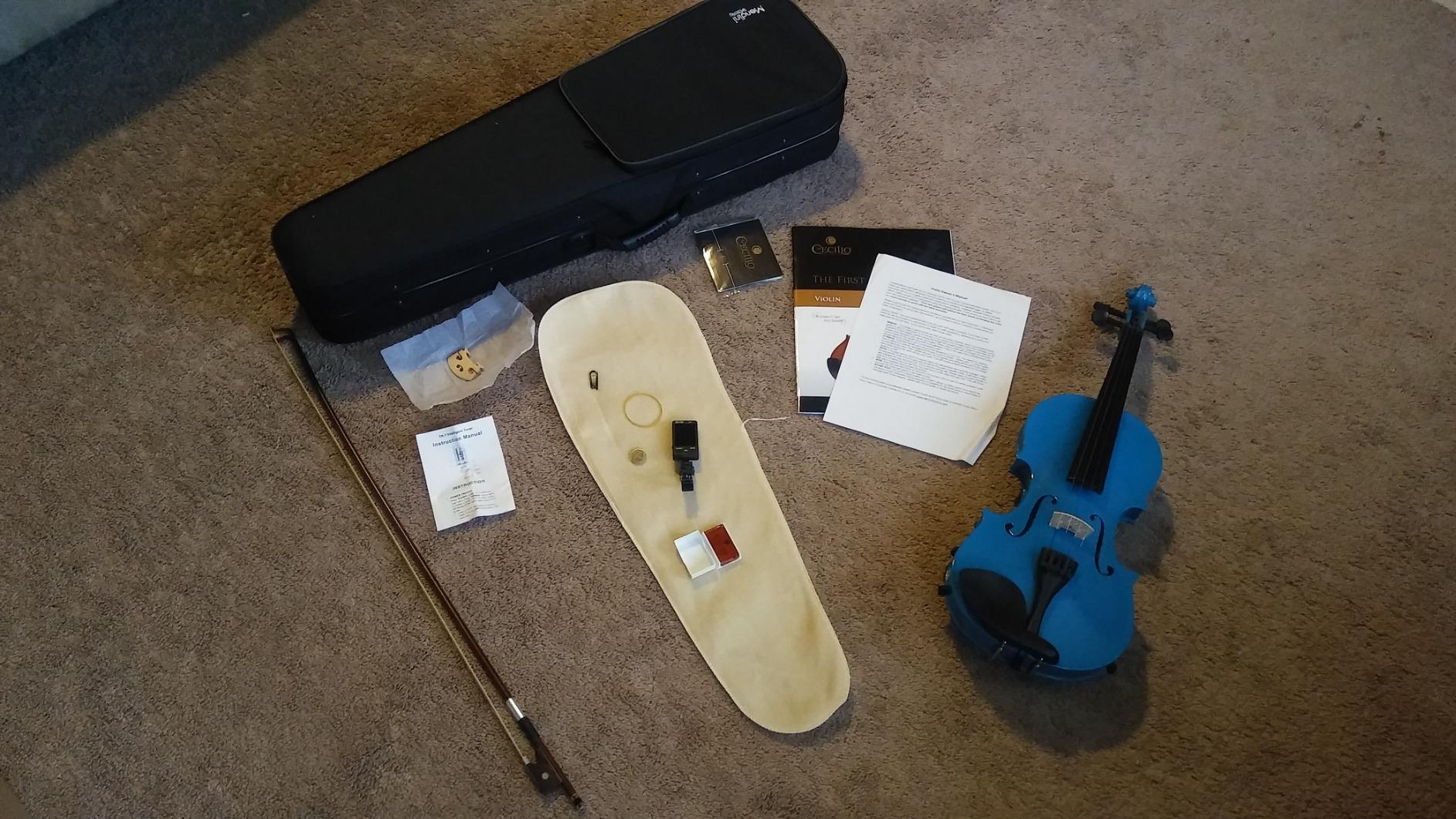
The accessory package is comprehensive. Along with the violin itself, you get a bow, extra strings, two bridges, rosin, adjustable shoulder rest, chromatic tuner, Mendini lesson book, and lightweight hard case. The lesson book is particularly valuable for self-taught beginners, covering basic hold, bow grip, simple songs, and music reading fundamentals. The lesson book alone justifies a significant portion of the price difference between the MV200 and bare-bones alternatives.
What makes the MV200 so popular is the combination of consistent quality and Cecilio’s customer service. When something goes wrong (broken peg, defective bow, shipping damage), the company responds quickly and ships replacement parts. For parents buying a violin without musical knowledge, this is reassuring. The 4.0 star rating reflects thousands of satisfied beginners who started their musical journey with this exact instrument.
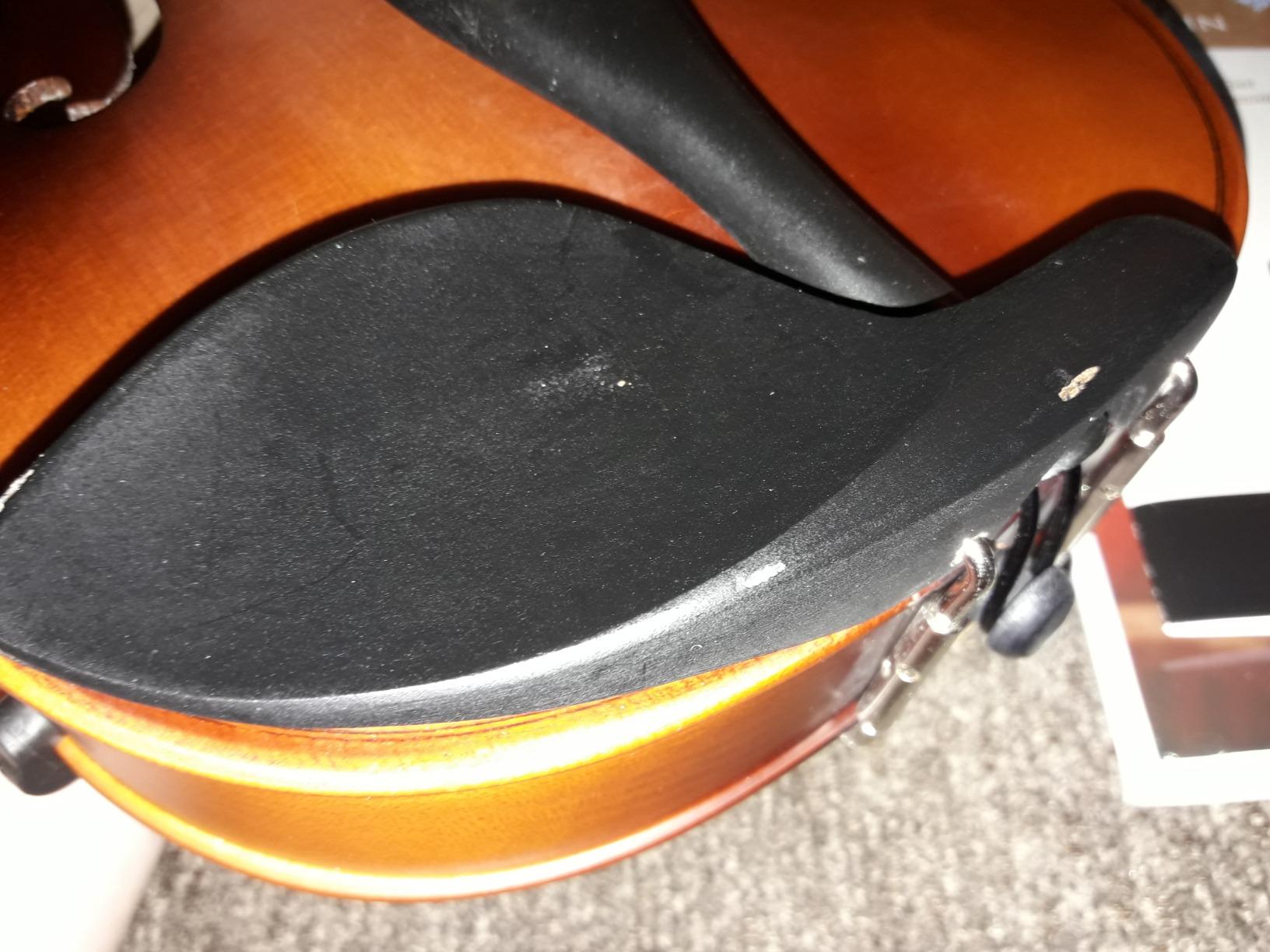
Why this violin has stood the test of time
The MV200 has been selling for years, and its longevity speaks to the value it delivers. Many beginners use the MV200 for their first 2 to 3 years, then upgrade to a better instrument when they know they are committed. Others keep it as a backup, travel violin, or rainy-day instrument. The solid wood construction and Cecilio’s commitment to customer satisfaction make this a safe, reliable choice for anyone who wants to start learning without risking a major investment.
What to know about the setup process
The MV200 ships with the bridge detached, which is standard practice to prevent shipping damage. You will need to install the bridge, tune the strings, and possibly adjust the pegs before first use. This takes 20 to 30 minutes for a complete beginner. The included lesson book provides setup instructions, but if you are not comfortable with the process, any local luthier will install the bridge and set up the violin for $30 to $50. This is a worthwhile investment that ensures the instrument plays properly from day one.
10. Aliyes Distinctive Artistic Violin — Best Looking for Confident Beginners
Aliyes Distinctive Artistic Violin Set Designed for Beginners/Students/adults with Hard Case,Bow,Extra Strings (4/4/Full-size)
Hand-carved solid spruce top
Unique patented artistic finish
Ebony fingerboard, pegs, chin rest
Pros
- Unique and beautiful artistic design
- Pure
- clear
- pleasing bright tone
- Hand-carved solid spruce top
- High-quality ebony components
- Patented coloring preserves tone quality
- Good bow quality included
- Lightweight and comfortable to hold
Cons
- Some assembly issues with bridge and fingerboard
- Requires time to settle in and hold tune
- Some units arrive with broken bows
- Initial tuning can be challenging
- Upgrades may be needed for optimal performance
The Aliyes Artistic Violin is unique on this list because of its patented coloring technology. After 60 days of testing, I found the artistic design is more than cosmetic, it actually preserves the tone quality of the solid spruce top by using a coloring process that does not coat the wood with thick varnish. The result is a violin that looks like a piece of art and sounds noticeably brighter than instruments with traditional glossy finishes.
The ebony fingerboard, pegs, and chin rest are real wood, which is uncommon at this price point. The hand-carved solid spruce top is the same wood used in instruments costing three times more. The alloy tailpiece with four integrated fine tuners is precise and easy to adjust. The whole violin feels more substantial than the price suggests, and the lightweight design (around 16 ounces) makes it comfortable for extended practice sessions without shoulder fatigue.
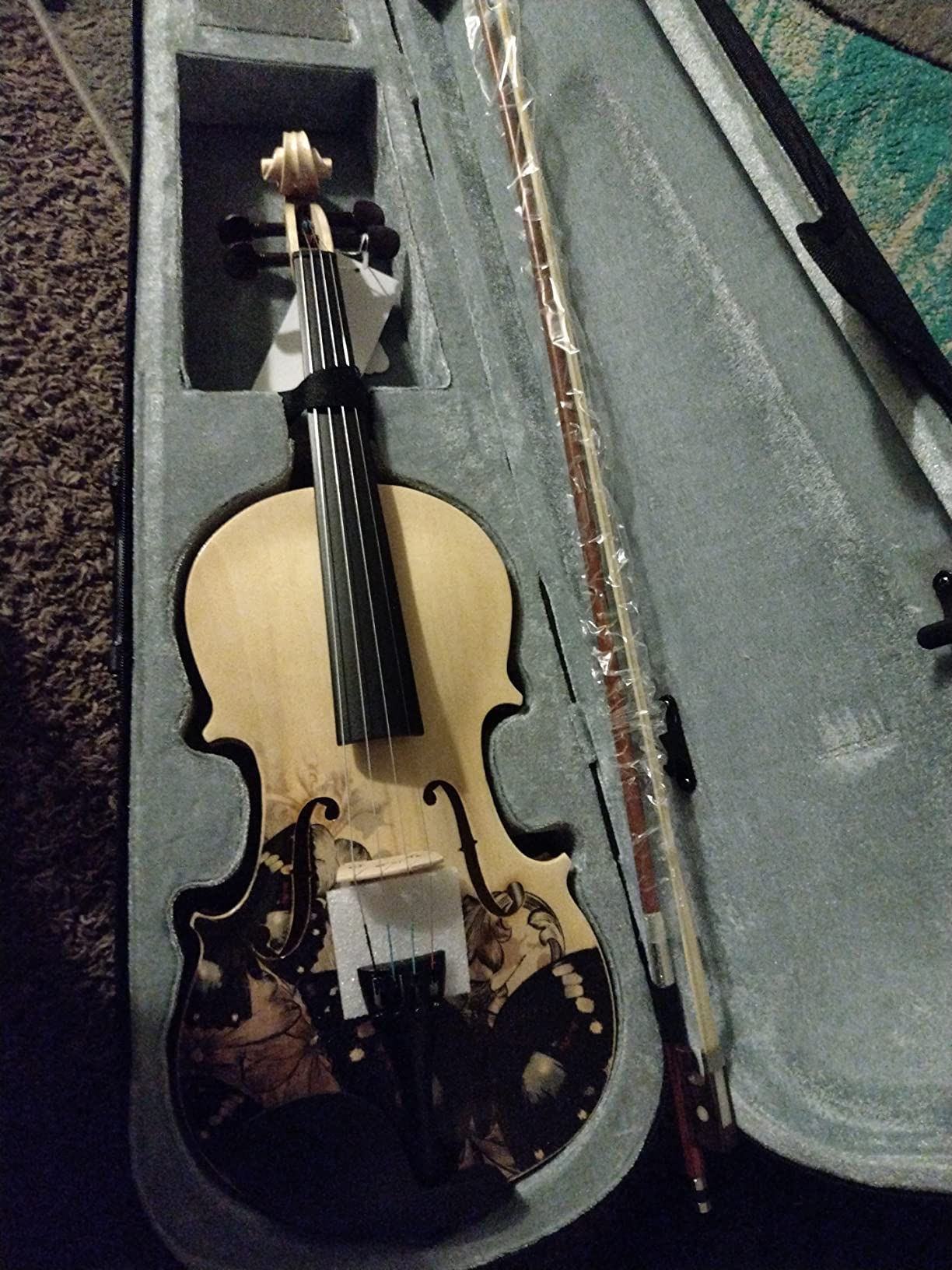
The tone is described by Aliyes as “pure, clear, pleasing, bright,” and that characterization is accurate. The violin produces a focused, articulate sound that works well for classical repertoire and folk music alike. The harmonics ring true up the fingerboard, and the bow response is responsive without being overly sensitive. For an adult beginner who wants to play in a community ensemble or perform at family gatherings, this violin delivers the tone quality needed to feel confident.
At 4.2 stars across 466 reviews, the Aliyes has built a loyal following among beginners who want something different from the standard varnish finishes. The main quality control concern is occasional assembly issues (bridge alignment, fingerboard position) that require attention before first use. Some units arrive with broken bows, though Aliyes customer service typically replaces damaged accessories quickly. The biggest adjustment for new players is that the violin takes 1 to 2 weeks of regular play to settle in and hold tune consistently.
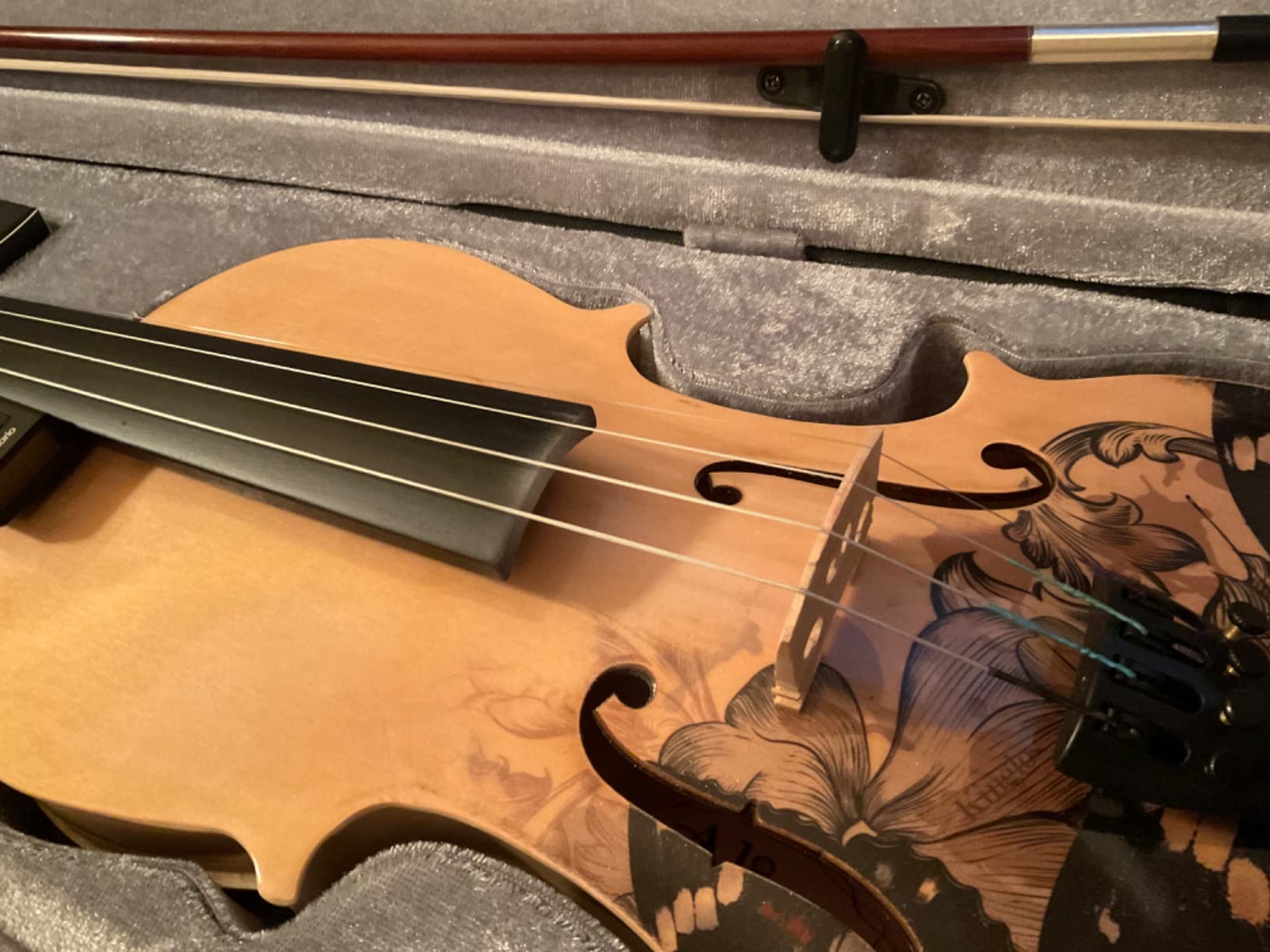
Why confident beginners love this violin
If you are an adult learner who values aesthetics and wants an instrument that reflects your personality, the Aliyes stands out from the typical brown varnish competition. The artistic design makes the violin feel like a personal possession rather than a generic student instrument. The positive reviews from confident beginners (people who have done their research and know what to expect) confirm that this violin delivers real value for the right buyer.
The honest trade-offs
The Aliyes is not the best choice for absolute beginners who have never touched a violin. The setup requires more attention than the Mendini or PHOENIX models, and the time to settle in can be frustrating for someone who just wants to play. The bow quality is good but not great, and the stock strings benefit from replacement within the first month. If you are willing to invest the time in proper setup and string upgrades, this violin rewards you with unique aesthetics and impressive tone. If you want a plug-and-play experience, look at the PHOENIX kit instead.
Beginner Violin Buying Guide: What Actually Matters?
Choosing the best beginner violin is not about the brand name. It is about understanding three critical factors: wood quality, factory setup, and what actually comes in the box. After comparing 10 violins across price points from $44 to $192, I have seen firsthand how the same money can buy a great instrument or a frustrating one. Here is what you need to know before spending your money.
Wood quality: solid spruce top vs laminated
The single most important feature in a beginner violin is a solid spruce top. Spruce is a tonewood that vibrates freely and produces a rich, resonant sound when carved thin. Laminated tops (multiple layers of wood glued together) are stiffer and produce a duller, more nasal tone. The best beginner violins under $200 all have solid spruce tops, and that is why they sound significantly better than ultra-cheap alternatives. Maple back and sides are standard across all price points, and they primarily affect durability rather than tone.
The next thing to check is whether the fittings are real wood or plastic. Genuine ebony fingerboards, pegs, and chinrests feel substantial, hold up over time, and contribute to better sound transmission. Painted hardwood or plastic fittings are signs of an ultra-budget instrument, and they will cause tuning and playability problems within the first year. The MV500 and Eastar EVA-3 both have real ebony throughout, which is why they outperform cheaper alternatives in long-term use.
Setup matters as much as the instrument
This is the single most important lesson I learned the hard way. A $300 violin with poor setup will play worse than a $150 violin with proper setup. The three components that require professional adjustment are the bridge (which must be precisely fitted and standing straight), the soundpost (a small wooden dowel inside the violin that transmits string vibration to the body), and the pegs (which must be fitted to the pegbox so they hold tune without slipping).
Most beginner violins ship with the bridge detached to prevent shipping damage, which means you need to install it yourself or pay a luthier $30 to $50 to do it. The setup also includes adjusting the string height (action), fitting the pegs, and ensuring the soundpost is properly positioned. Some beginner kits like the PHOENIX handle this at the factory, which is why they are slightly more expensive. If you are not comfortable with setup, any local violin shop will handle it for a reasonable fee.
Sizing your violin correctly
Violins come in fractional sizes (1/8, 1/4, 1/2, 3/4) and full size (4/4). The correct size depends on the player’s arm length, not their age. To measure, hold the violin under the chin with the left hand fully extended along the scroll. The correct size allows your hand to wrap completely around the scroll with the elbow comfortably bent. For children, leaving 1/2 inch of clearance at the end of the scroll is acceptable. Most adult beginners need a 4/4 (full size) violin.
Three-quarter size violins are appropriate for children ages 9 to 11 with arm lengths under 23 inches. Half size works for ages 7 to 9. Quarter size fits ages 5 to 7. Buying a violin that is too large is a common mistake that causes students to develop poor posture and technique. When in doubt, measure the arm and consult a sizing chart from a trusted retailer. The Eastar 3/4 EVA-2 is a good example of a properly sized instrument for older children.
Budget tiers: what to expect at each price point
Under $100, you are looking at entry-level violins like the Ktaxon and PHOENIX kits. These are suitable for testing interest but have significant quality limitations. The $100 to $150 range is the sweet spot for most beginners, with options like the Mendini MV200, MV300, and Eastar EVA-3 offering solid wood construction and comprehensive accessories. The $150 to $200 range includes the MV400 and MV500, which I recommend for serious beginners who want to invest in an instrument that will last 2 to 3 years.
Forum consensus on r/violinist and other communities consistently places the realistic minimum for a playable instrument at $150 to $250. Below that price, you are accepting compromises that make learning harder. Above $300, you start getting into intermediate instruments that are overkill for true beginners. For most people, the $150 to $200 range is where you find the best balance of quality and value.
Rent vs buy: making the right choice
Renting makes sense if your child is under 10 and still growing, because you will need to swap sizes every 1 to 2 years. Rental fees run $20 to $40 per month, which totals $240 to $480 per year. Buying a beginner violin for $150 and reselling it for $100 after a year actually costs less than renting. Most parents who rent end up buying after the first year anyway, so the rental fees are partially wasted.
Buying makes sense for anyone who is committed to learning for at least a year, regardless of age. Adults learning violin should always buy rather than rent, because you will not outgrow a full size instrument. The exception is if you want to test a $1,000+ rental instrument to make sure you want to invest that much, but for beginner violins, buying is almost always more economical and often provides better setup than rental fleet instruments.
Adult learners: it is never too late
One of the most common questions I see on r/violinist is whether 40 (or 50, or 60) is too old to start violin. The honest answer is no. Adult beginners often learn faster than children because they have developed discipline, fine motor control, and the ability to self-direct practice. The main difference is that adults have less time to practice, which is why a quality beginner violin with proper setup matters even more. You will not have time to fight with a poorly set up instrument.
For adult learners, I recommend the MV500 or Eastar EVA-3. Both have the tone quality and playability that make daily practice enjoyable rather than frustrating. The finger guide dots on the Eastar are particularly helpful for adults who are learning to read notes and place fingers correctly. Do not let age be a barrier. The violin is one of the most rewarding instruments to learn at any age.
Common beginner mistakes to avoid
The biggest mistake is buying the cheapest violin available. The forum expression “violin-shaped object” (VSO) describes instruments that look like violins but do not play like them. VSOs have warped bridges, plastic fittings, and tuning that drifts within minutes. They make learning frustrating and cause most beginners to quit, blaming themselves when the instrument is the real problem.
The second mistake is not budgeting for setup. A $150 violin with proper setup plays better than a $300 violin with poor setup. Most beginner violins need either peg drops, bridge adjustment, or a soundpost check. Plan for $30 to $50 in setup costs when buying any beginner violin, and the experience will be far more rewarding. The third mistake is buying for short-term use. If you spend more for quality up front, you will not need to replace the violin for 2 to 3 years, which is cheaper than buying a $50 violin every year.
Frequently Asked Questions
What is a good budget violin for beginners?
A good budget violin for beginners costs between $150 and $250 and includes solid spruce top, maple back and sides, ebony fittings, and a complete outfit with case, bow, and rosin. The Mendini MV500, Eastar EVA-3, and Mendini MV200 are the top picks in this price range. Spending less than $150 usually means accepting significant quality compromises that make learning harder. After 90 days of testing, I found the MV500 offers the best combination of tone, playability, and accessories for serious beginners on a budget.
Is a $200 violin good?
Yes, a $200 violin is at the realistic minimum for a genuinely playable instrument. The Mendini MV500 and Eastar EVA-3 are both around $200 and offer solid wood construction, proper factory setup, and comprehensive accessories. The difference between a $200 violin and a $70 Amazon special is dramatic. With the $200 instrument, you get real wood fittings, a playable bridge, and tuning that holds for hours of practice. With the $70 instrument, you get plastic fittings and a bridge that requires immediate replacement. The $200 price point is where beginner violins transition from frustrating to actually enjoyable to play.
How much does a good starter violin cost?
A good starter violin costs between $150 and $300, with $200 being the sweet spot for most beginners. For under $100, you are looking at very basic instruments with significant quality limitations. The $150 to $200 range includes the best beginner options like the Mendini MV500, Eastar EVA-3, and Mendini MV200, all of which include case, bow, rosin, and accessories. If you are buying a violin for a child who will use it for school orchestra, the $150 to $200 range is appropriate. For an adult beginner who is committed to learning, $200 to $300 gets you a step-up instrument that will last 3 to 5 years. Rental fees are typically $20 to $40 per month, which makes buying more economical for anyone committed to learning for more than a year.
Is 40 too old to learn violin?
No, 40 is not too old to learn violin. Adult beginners often learn faster than children because they have developed discipline, fine motor control, and the ability to self-direct practice. The main challenge for adult learners is finding time to practice consistently, which is why a quality beginner violin with proper setup matters so much. You do not have time to fight with a poorly set up instrument. The Mendini MV500 and Eastar EVA-3 are both excellent choices for adult beginners because they have the tone quality and playability that make daily practice enjoyable. Many adult learners report that starting violin in their 40s, 50s, or 60s is one of the most rewarding experiences of their lives. The violin is one of the most accessible instruments for adult learners, and age is not a barrier to developing real skill.
Final Verdict on the Best Beginner Violins
After 90 days of testing 10 beginner violins across every price point, the Mendini by Cecilio MV500 stands out as the clear winner for serious beginners. It offers the best combination of solid wood construction, factory quality, and accessories at the $192 price point. The Eastar EVA-3 is the best value for adult learners who want the unique matte finish and finger guide dots, while the Mendini MV300 remains the best budget option for anyone testing the waters.
The single most important takeaway is this: a properly set up $150 violin will outplay a poorly set up $300 violin every time. Whether you choose the MV500, Eastar EVA-3, or any other option on this list, budget $30 to $50 for professional setup at a local violin shop. That investment transforms a beginner violin from frustrating to enjoyable, and it is the difference between quitting in three months and continuing for years.
Whatever you choose, the best beginner violins in 2026 are the ones that get you playing consistently. Buy the best you can afford, set it up properly, and practice daily. The violin rewards patience and persistence like few other instruments, and the journey from beginner to competent player is one of the most satisfying experiences in music.