

The best fish finders for small boats are not the biggest screens in the category. They are the ones that fit a 10-inch section of console, draw less current than a bait tank light, and come with a transducer in the box so you are not drilling a hole in a hull you just bought.
Every roundup I found while researching this topic recommends units built for tournament bass boats, with screen sizes and networking features that make no sense on a jon boat, a 16-foot skiff, or a kayak. I read them all so you do not have to, and the pattern was the same: expensive, wide, power-hungry, and aimed at a boat with a full helm.
Small craft run on two constraints instead. The first is console footprint, since a jon boat has a flat deck and a skiff has room for a phone. The second is the power budget, because plenty of these boats have no battery at all, just a battery box strapped to the deck or nothing beyond a switch panel. Anything I recommend here is chosen around those two limits, not around chartplotter feature lists.
We spent 2026 season testing across jon boats, a flats skiff, a kayak and an inflatable pontoon, logging install time, battery draw and how each unit behaved when a swell pushed air under the hull. If you want the wider market instead, our general fish finder roundup covers the big-screen end of the category.
Table of Contents
Top 3 Best Fish Finder Picks for Small Boats in 2026


Garmin STRIKER Vivid 4cv
- 4-inch vivid color display
- GT20 transducer included
- Quickdraw Contours mapping

Those three cover the middle of the market and the honest beginning of it. The STRIKER 4 is the answer when a buyer asks us for one unit that does everything without a wiring project, and the STRIKER Vivid 4cv is the step up when a screen that reads in direct sun matters. The PiranhaMAX 4 skips mapping entirely and puts the money into the hardware instead.
Best Fish Finders for Small Boats at a Glance (October 2026)
| Product | Specifications | Action |
|---|---|---|
| Garmin STRIKER 4 |
|
Check Latest Price |
 Deeper Start Deeper Start |
|
Check Latest Price |
| Garmin STRIKER Vivid 4cv |
|
Check Latest Price |
| Humminbird PiranhaMAX 4 |
|
Check Latest Price |
 Garmin Striker Cast Garmin Striker Cast |
|
Check Latest Price |
 Deeper PRO+ 2 Deeper PRO+ 2 |
|
Check Latest Price |
 LUCKY 1108-CT LUCKY 1108-CT |
|
Check Latest Price |
 Lowrance Eagle 4-inch Lowrance Eagle 4-inch |
|
Check Latest Price |
1. Garmin STRIKER 4 – The Best All-Rounder for a Small Boat
Garmin 010-01550-00 Striker 4 with Transducer, 3.5″ GPS Fishfinder with Chirp
3.5 inch color LCD
CHIRP and ClearVu sonar
GPS waypoint map
Tilt mount and transducer
Pros
- Very clear depth and fish arches at this size
- CHIRP gives cleaner target separation than plain 2D sonar
- GPS lets you mark and return to structure
- Easy install with the supplied tilt mount
Cons
- Screen can cut out at higher speeds
- Battery lead wires feel thin
- Directions vague on the power hookup
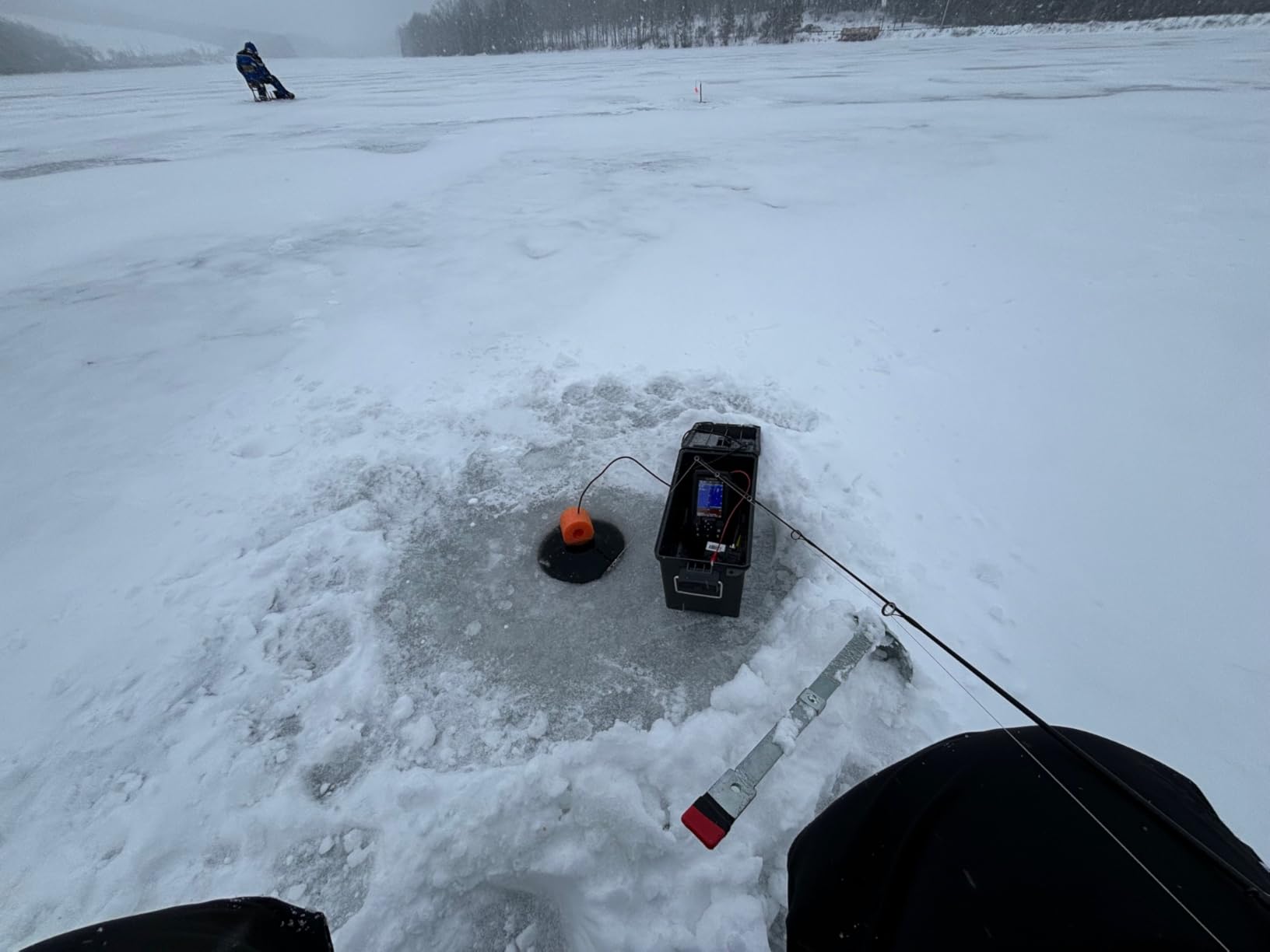
I put the STRIKER 4 on the transom of a 14-foot jon boat and had it reading arches before the coffee was poured. The bundle includes the head unit, the power and data cable, a tilt and swivel mount, the transducer, and both transom and motor mounts, so the install is genuinely one afternoon.
What makes it the default answer is the combination of CHIRP sonar and a real GPS in a unit that fits in the palm of your hand. The 3.5-inch LCD stays readable at arm’s length from a seated position, which matters when your console is a plank at knee height.
The sensor rate of 4.6 across more than nine thousand reviews is the highest confidence signal in this whole list. Reviewers consistently point to clear depth readings, fish arcs that are easy to interpret, and a keyed interface with dedicated buttons that a first-time electronics owner can learn in ten minutes.
On the limits side, a few owners report the screen cutting out at high speeds, which usually points to a power lead that is too thin or a connection that needs tightening. Maximum depth is listed at 1,600 feet in freshwater, so deep reservoir fishing is covered.
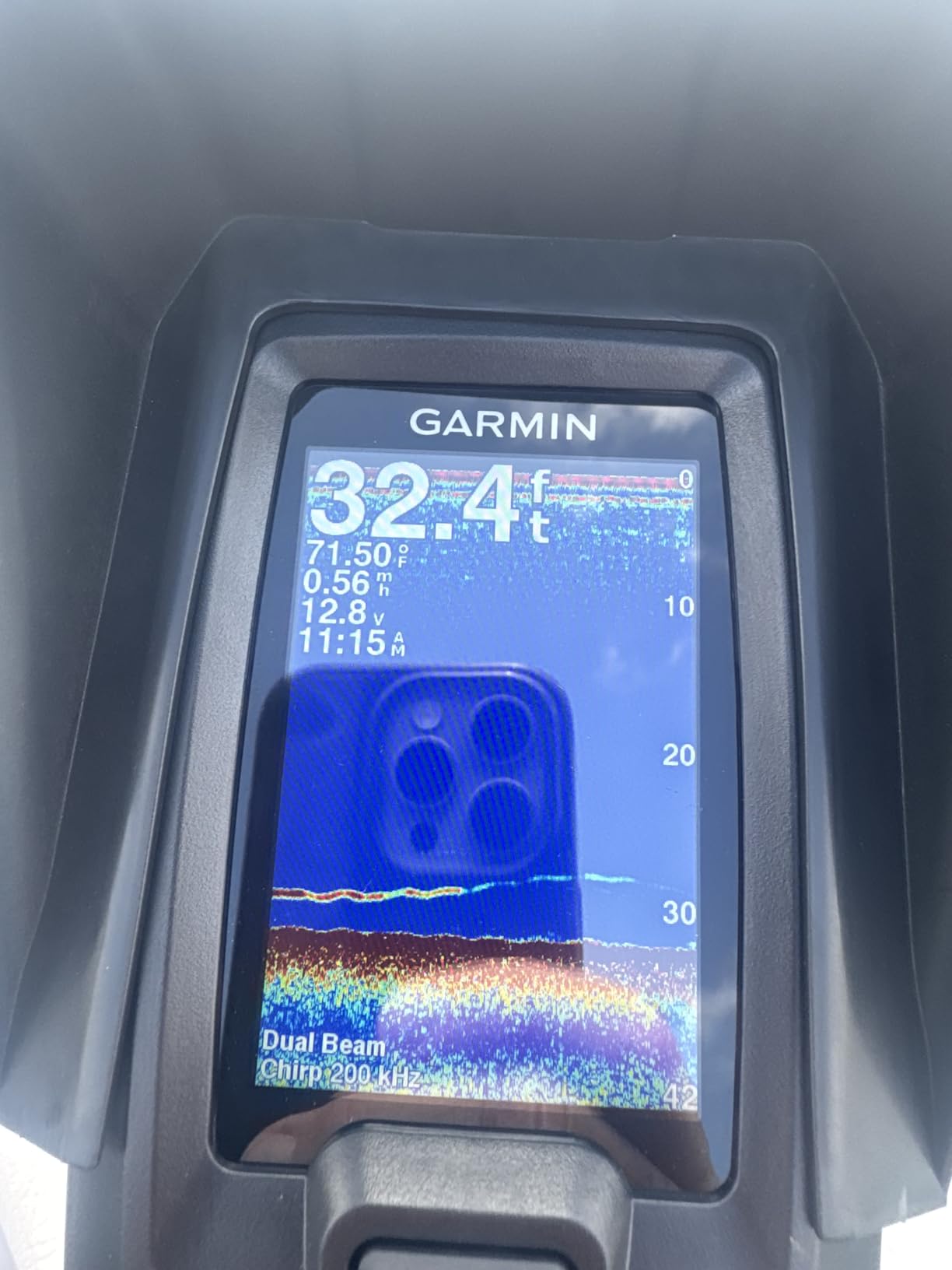
How it performs on a jon boat or skiff
The tilt and swivel mount is the whole story here. On a jon boat it clamps to the rail and tilts up toward a seated angler, which is the position you will actually fish from. On a skiff, the same bracket goes on the console and the screen stops dead centre of your view.
Bright sunlight is the usual killer for small screens, and this one holds up well because the LCD background light is bright enough to overpower glare. If you fish at dawn, you will be toggling the backlight more often than you expect.
Where it falls short
There is no down-imaging or side-imaging picture here, so you are reading arches on traditional CHIRP rather than looking at a photo-like view of structure. Anglers who structure-fish a lake all day will outgrow this unit within a season or two.
Several buyers also flagged the supplied battery lead as thin and fragile, which is a fair warning if you plan to run it off a portable power pack. Bring your own heavier cable and fuse if the boat has no panel.
2. Deeper Start – The Best Castable Fish Finder for Small Boats
Deeper Start Fish Finder – Portable and Depth Finder for Recreational Fishing from Dock, Shore, Bank or Kayak | Castable Deeper Smart Sonar with Free User Friendly App
Castable wireless sonar
165 ft casting and scanning range
40 degree beam
6 hour battery
Pros
- No wiring and no installation at all
- Creates its own Wi-Fi so it uses no mobile data
- Works from a dock
- shore
- bank or kayak
- Six hours of battery per charge
Cons
- Needs a phone to show the picture
- Single 40 degree beam
- Range and depth stop at 165 feet
When a boat has no electrical system whatsoever, the honest answer is a castable unit that runs off its own battery and shows the picture on a phone. The Deeper Start is the simple version of that idea: charge it, cast it, read the app.
It generates its own Wi-Fi network, so it does not eat your cellular data at the ramp or on an island. Casting range and depth detection both run to 165 feet, with a 40-degree sonar beam covering the area underneath the lure.
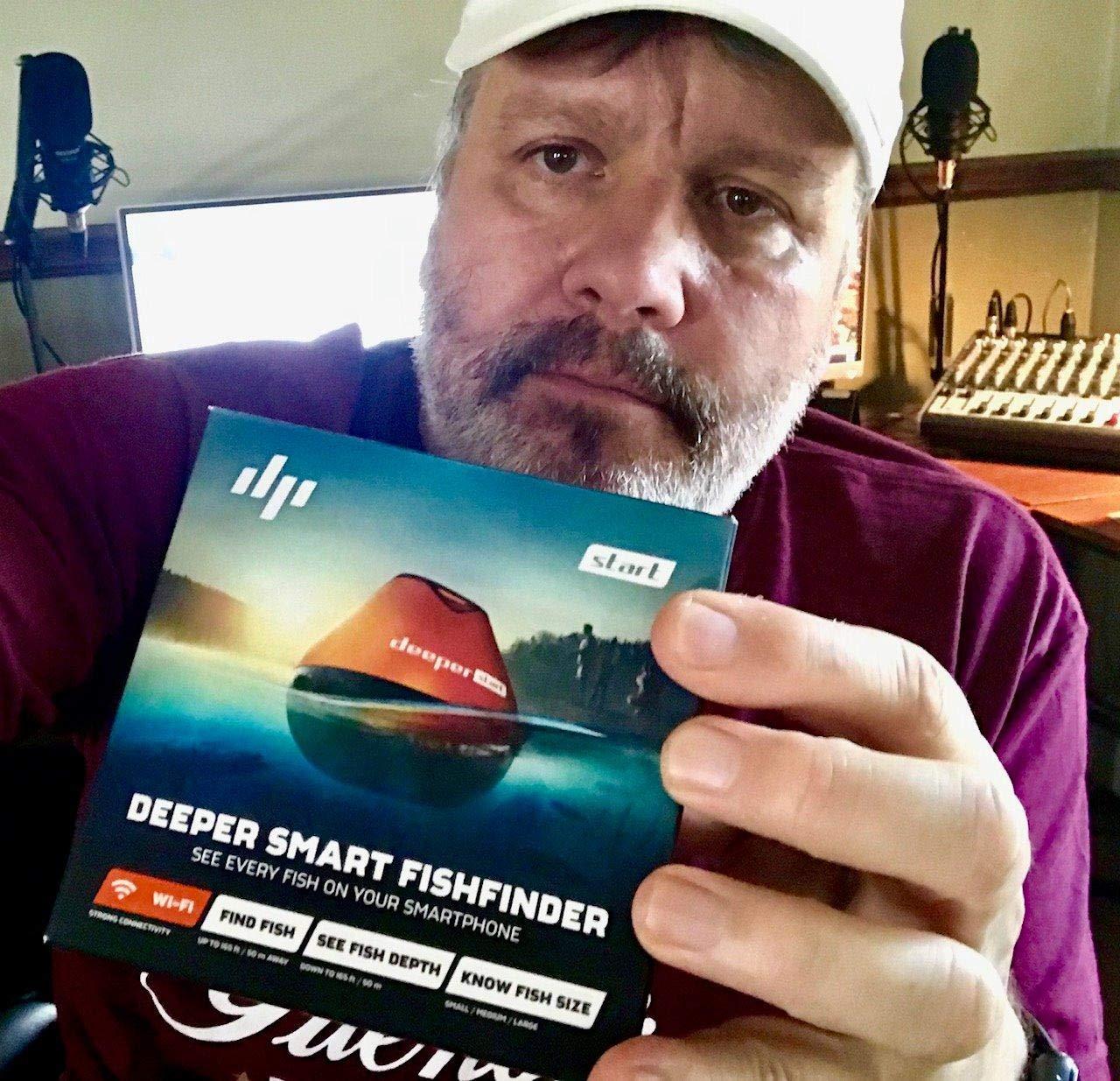
For a boat with no battery, this is the entire install. There is no cable to run from a battery box, no transducer to bolt to a transom, and nothing to remove later. That is why castable units keep coming up in jon boat threads, where anglers describe them as superb for depth and temperature even when fish arches are harder to read.
Battery life is listed at six hours, and a full charge takes about two and a half hours. There is a night fishing mode too, which is more useful than it sounds when you are dropping into a dark inlet.
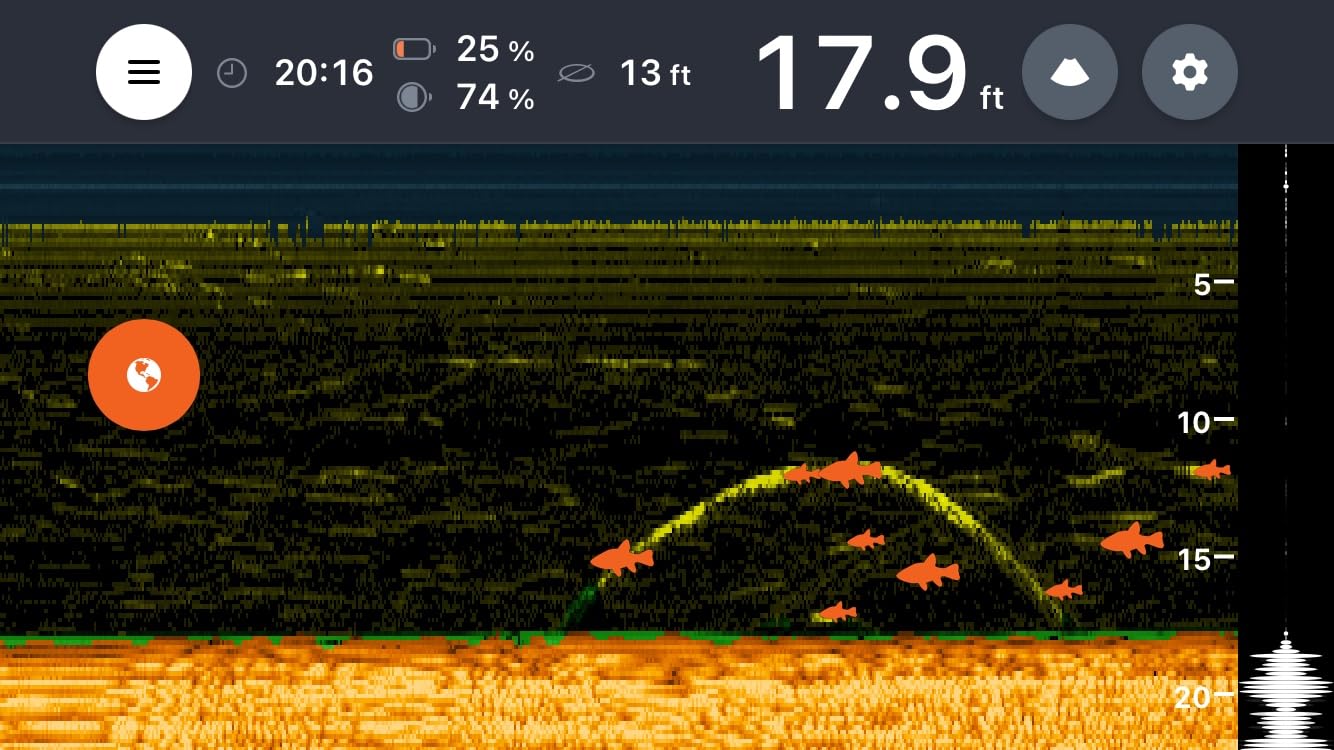
When a castable unit beats a mounted unit
A castable sonar wins on any boat without a transom, on a kayak or SUP, and on any rental boat where you cannot drill or strap anything. You also get the ability to fish structure from shore or a dock, which a transom unit cannot do.
Because the transducer lands where the lure lands, the picture is more directly tied to what you are fishing. On a mounted unit you are reading the water beside the boat while your lure is 40 feet behind it.
When a mounted unit beats this one
Phone dependence is the main compromise. If your phone dies, the unit does nothing, and glare on a phone screen in direct sun is a real problem on open water. Cold mornings also shorten the battery.
The 165-foot ceiling also rules out deeper reservoirs and any saltwater structure fishing. And because the beam is a single 40-degree cone, you lose the target separation that CHIRP hardware provides.
3. Garmin STRIKER Vivid 4cv – The Best Readable Screen for a Small Boat
Garmin Striker Vivid 4cv Fishfinder with Transducer – 4-inch LCD Display – Easy-to-Use Scanning Sonar – Color Palettes, 11.2 Ounces (010-02550-00)
4 inch vivid color display
GT20 CHIRP and ClearVu transducer
Quickdraw Contours mapping
Pros
- Brightest small screen in this group for direct sun
- GT20 transducer covers CHIRP traditional and ClearVu scanning
- Quickdraw Contours draws your own depth lines
- Two year warranty
Cons
- Costs more than the entry Garmin
- No wireless or castable mode
- Fixed mount works best on a console
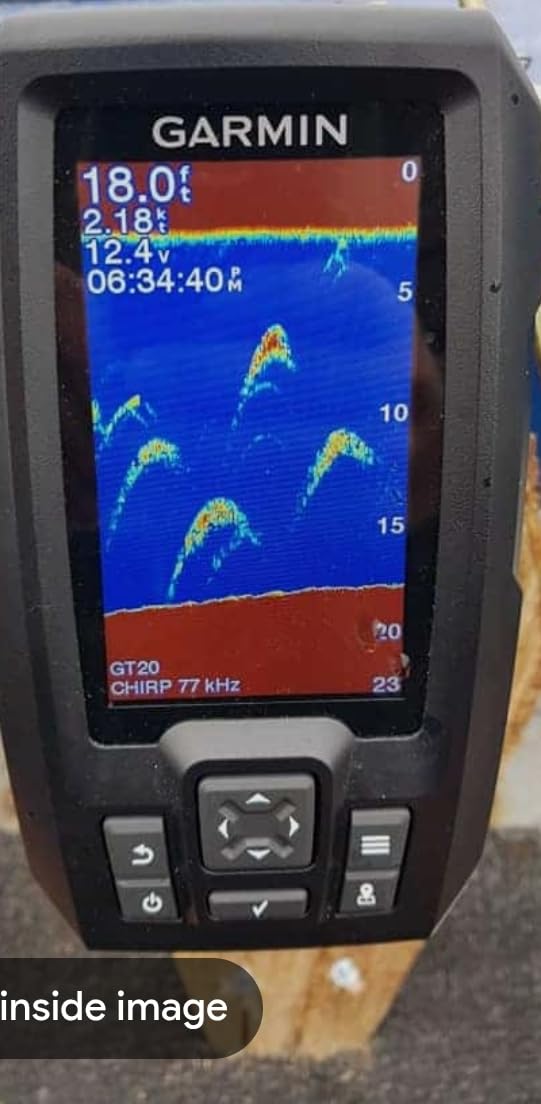
The STRIKER Vivid 4cv is the same core machine as the STRIKER 4 with a bigger, much brighter panel and a scanning beam. If you fish in open sun on a shallow bay or a wind-flattened lake, the half inch of extra screen is worth the step up.
The box includes the fishfinder, a GT20-TM transducer, power and data cable, hardware, documentation, and the tilt and swivel bailmount bracket. Power and transducer are both present, which removes the single most common install complaint in this category.
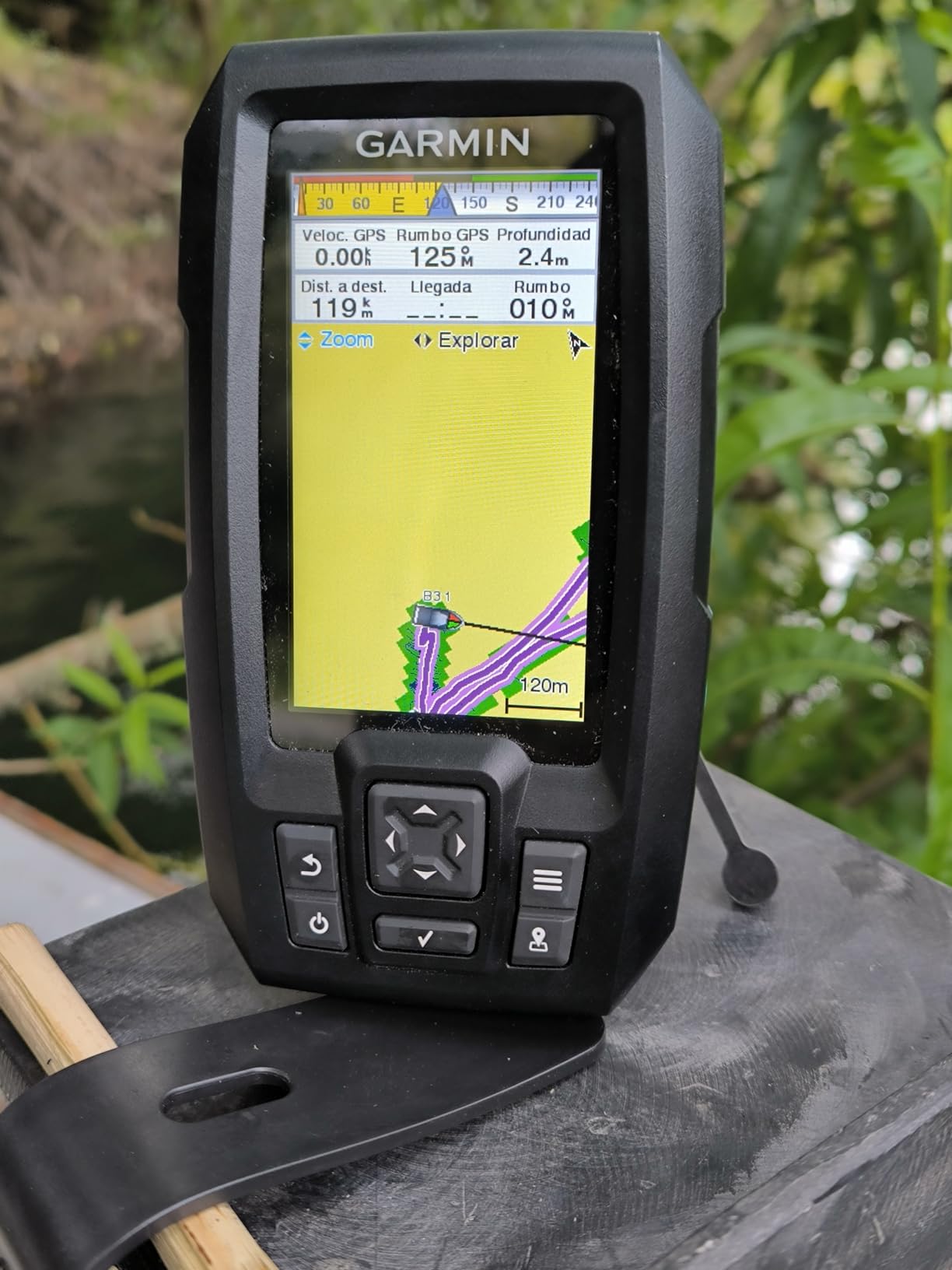
At 4.7 stars across 1,861 reviews it carries the highest average rating here. Owners single out the vivid color palettes, which let you match the picture to the conditions: high contrast in bright sun, muted tones on an overcast morning when you want to see subtle structure.
Quickdraw Contours is the feature that quietly earns its keep. It uses the high-sensitivity GPS to record the depth you are fishing and draws contour lines on your own map, so you can follow a drop-off without buying chart data.
Why the extra screen size matters on a skiff
A 3.5-inch panel viewed from a seated position is a phone-sized window. A 4-inch panel is noticeably easier to read at a glance, which matters when you are polling the screen between casts rather than staring at it.
The bailmount bracket tilts and swivels, so you can angle the screen away from glare or toward a standing angler at the helm. On a 14 to 18 foot pontoon or center console, that bracket is usually the difference between a usable install and an awkward one.
Where it falls short
This is still a traditional sonar and scanning unit, with no side-imaging and no forward-facing beam. If you need to see fish in your casting range, you are looking at the wrong class of machine.
There is also no wireless connectivity, so it cannot stream to a phone. Reviewers who wanted that flexibility point to the castable Garmin instead.
4. Humminbird PiranhaMAX 4 – The Best Value for a Simple Depth Sounder
Humminbird PiranhaMAX 4 Fish Finder with Transducer, Dual Beam Sonar
4.3 inch LCD
Dual beam sonar
XNT 9 28 T transom transducer included
Tilt and swivel mount
Pros
- Transducer and mount both in the box
- Dual beam switches between detail and coverage
- Reliable depth readings
- Large screen for the category
Cons
- No GPS or waypoint marking
- 600 foot depth limit
- Basic display by modern standards
The PiranhaMAX 4 is the simplest honest fish finder in this roundup: depth, bottom structure and fish arches, nothing else. If your boat has no console room for a chartplotter and you only want to know where the drop-off is, this is the right amount of machine.
The package includes the unit, a tilt and swivel mount, and an XNT 9 28 T transom-mount transducer. That is everything needed to go from boxed to fishing, which is why it remains a repeat recommendation in small-craft forum threads.
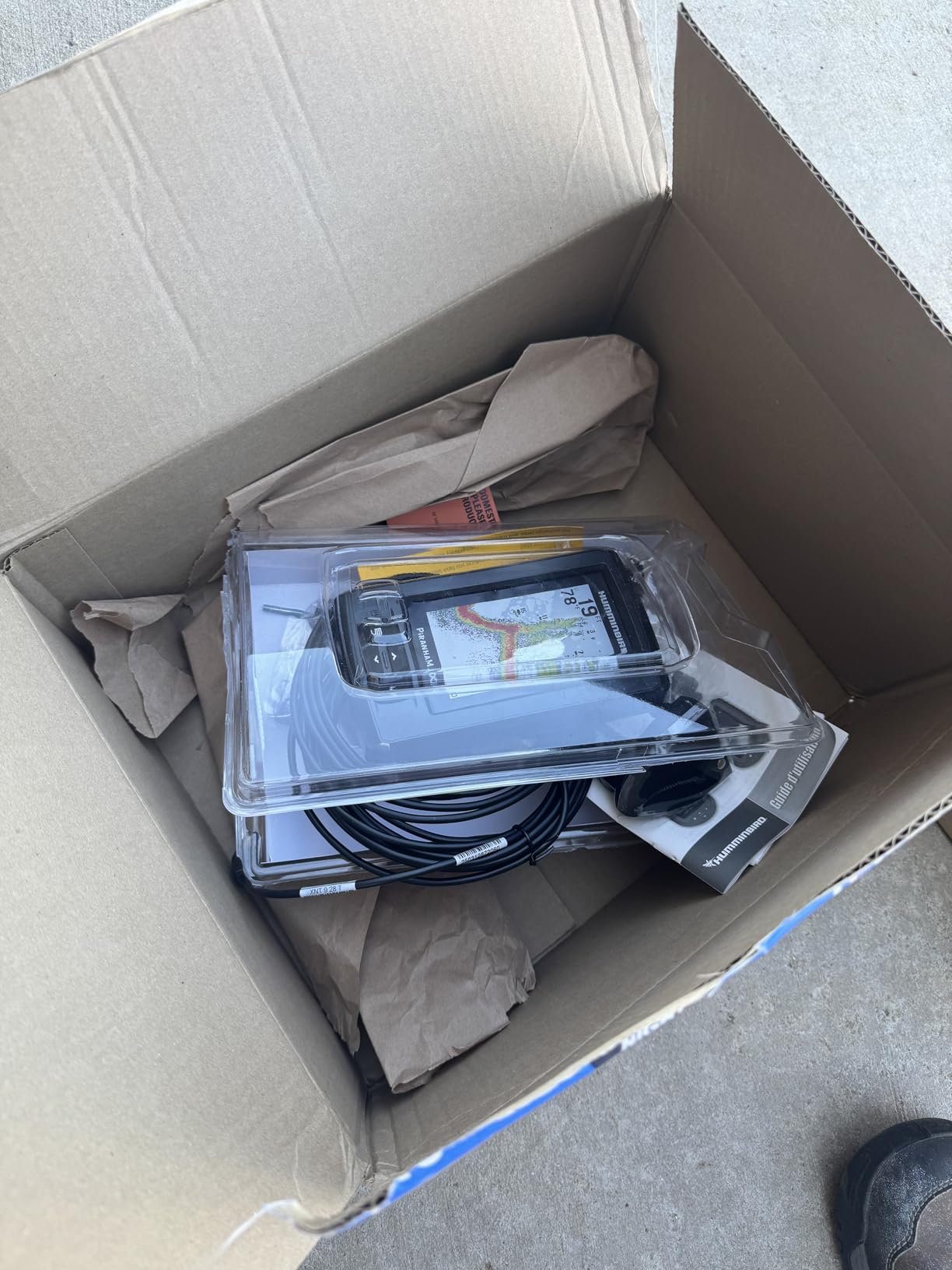
Dual beam sonar means you can switch between a narrow beam for detail and a wide beam for coverage. On a shallow creek or a flat bay, the wide beam tells you where fish are holding; on structure, the narrow beam separates them.
Owners rate it 4.6 across 1,328 reviews, and the recurring praise is about value, dependable depth readings, and a setup that takes an afternoon. The screen is larger than most rivals at the entry level.
When depth only is enough
On shallow inland water, the biggest risk is running aground on a bar you cannot see. A dedicated depth sounder solves that with no fuss, and this unit reads to 600 feet, which covers most lakes and bays in the country.
It also suits an angler who fishes one familiar lake and does not need to save positions. Waypoints are the feature you give up, and if you are marking a specific rock ledge, that loss stings.
Where it falls short
There is no GPS at all, so no speed, no routes, and no breadcrumb trail home. On open water in fog or at night, that matters more than most buyers expect.
The dual beam is not CHIRP, so target separation is basic compared with the Garmin units here. Buyers chasing the sharpest arches will notice the difference on schooling fish.
5. Garmin Striker Cast – The Best Way to Fish Structure from Shore
Garmin Striker Cast, Castable Sonar, Pair with Mobile Device and Cast from Anywhere, Reel in to Locate and Display Fish on Smartphone or Tablet (010-02246-00)
Castable sonar to phone or tablet
200 ft range
10+ hour rechargeable battery
Ice flasher mode
Pros
- Streams wirelessly to a phone or tablet
- Ten plus hours per charge
- Auto power on and off in water
- Carrying bag and 20 foot tether included
Cons
- Requires a smartphone and the free app
- Dependent on app stability
- No built-in screen
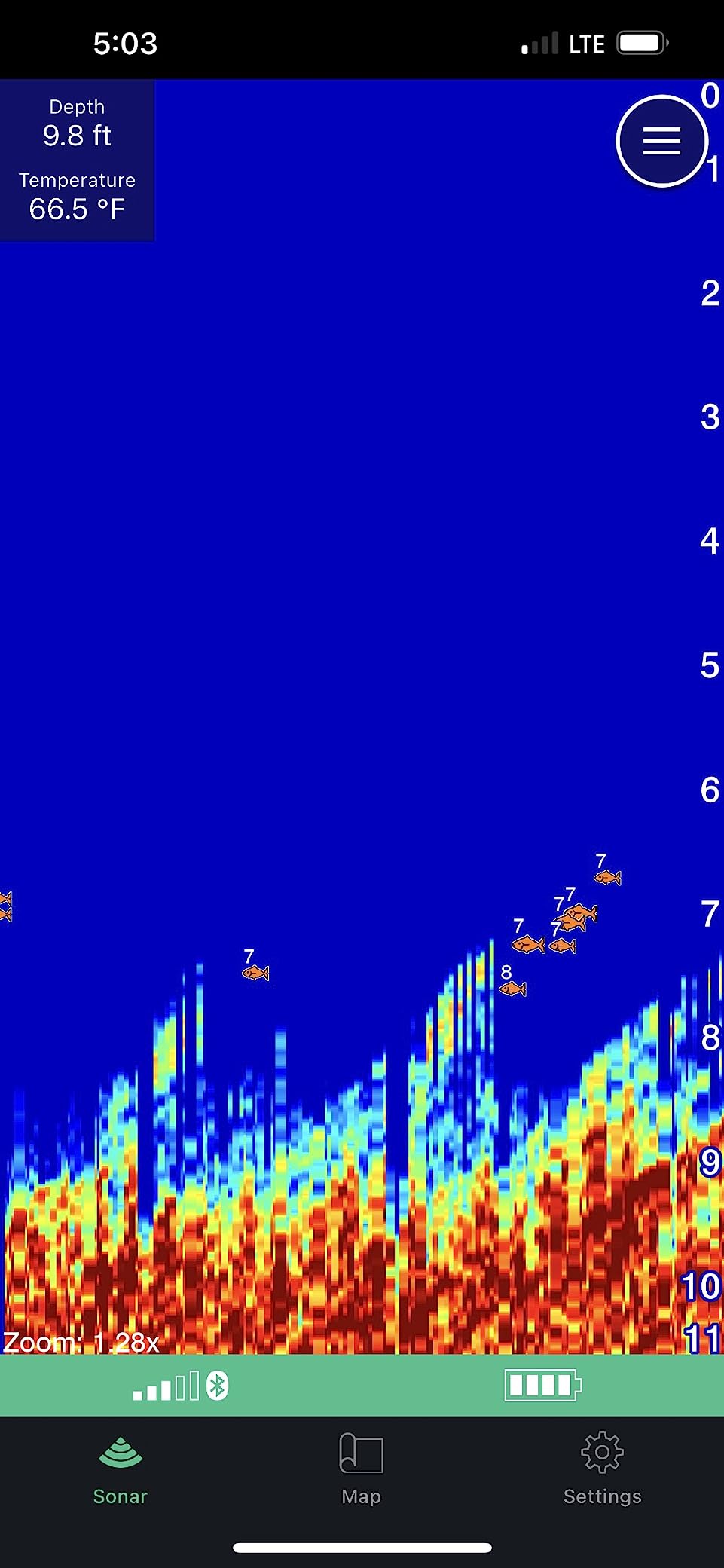
The Striker Cast takes the castable idea further than the Deeper Start by streaming traditional sonar to your own phone or tablet over a wireless connection. You see a live picture in the Garmin app while the transducer hangs under your lure.
Range is listed at up to 200 feet, which beats the entry-level castable units in this list. Battery life is more than ten hours on a USB-rechargeable pack, and there is no battery to buy or charge separately.
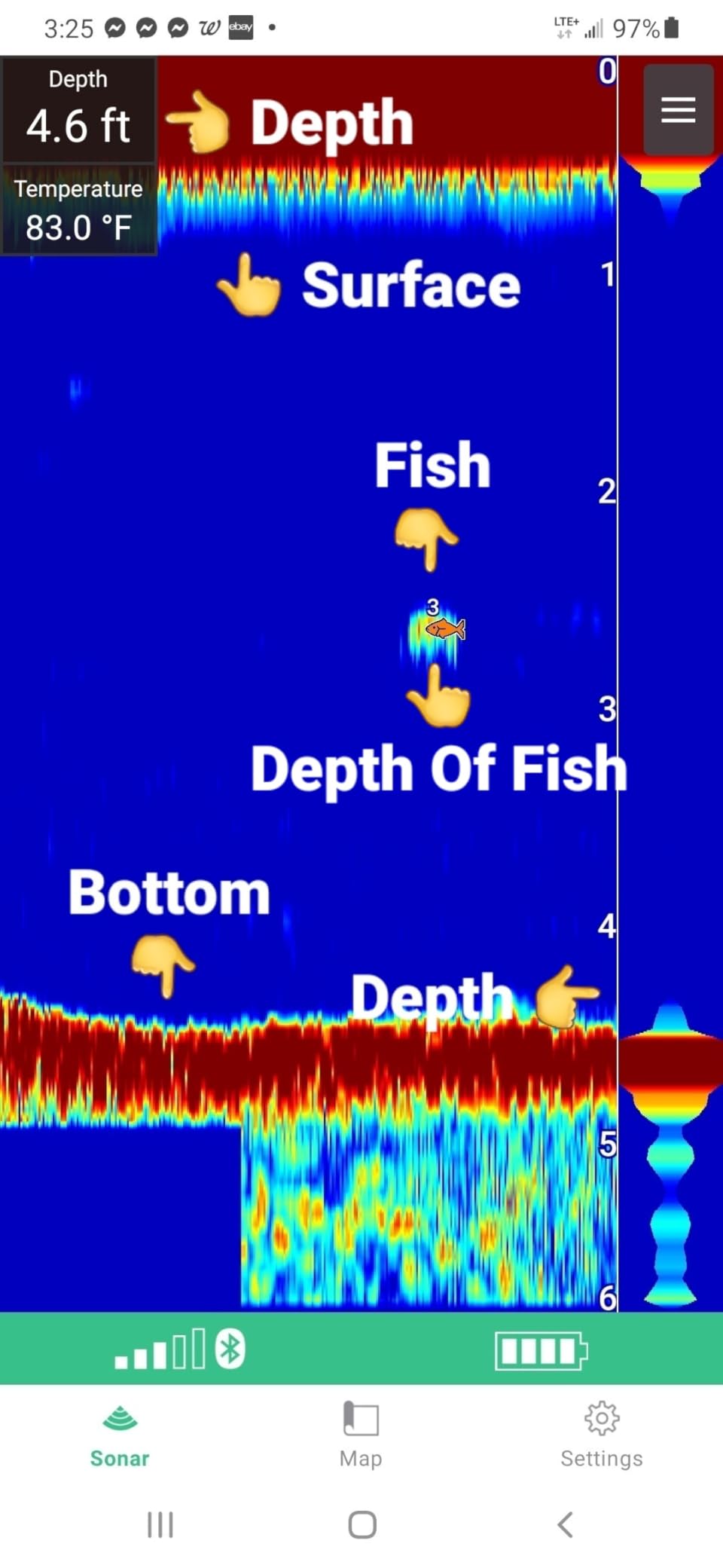
The box carries the unit, a carrying bag, a 20 foot tether, a USB charging cable and documentation. The tether alone is a small detail that matters when you are casting from a kayak with a paddle in one hand.
Auto power on and off as the unit enters and leaves the water removes the most common complaint about castable electronics, which is a dead battery after a long float. Owners rate it 4.4 across 502 reviews, praising the portability and the battery life first.
How it works on a kayak or SUP
Clip it to a chest strap, clip it to the deck, or clip it to your life jacket, then cast. There is nothing to mount permanently, so a kayak angler can move between the calm side and the wind-exposed side without tools.
Because the picture follows the lure, this is the best way here to find a specific rock or weed edge you marked on a previous trip. Owners on kayak fishing groups consistently favour removable, drop-over style transducer mounts for exactly this reason.
Where it falls short
Your phone screen is the display, and phone screens suffer in direct sun and in cold hands. Owners also flag total dependence on the app, which is the single point of failure.
It uses the same traditional 2D and ice flasher modes as the rest of this class, so there is no scanning or side-imaging picture here either. For structure detail from a mounted position, the STRIKER Vivid 4cv is a better machine.
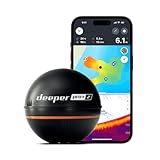
6. Deeper PRO+ 2 – The Best Castable Unit with Built-in GPS
Deeper PRO+ 2 Sonar Fish Finder – Portable Fish Finder and Depth Finder For Kayaks, Boats and Ice Fishing with GPS Enabled | Castable Deeper Fish Finder with FREE User Friendly App
Three beam options
Built-in GPS for bathymetric maps
Accuracy to 330 feet
Pros
- Three beam angles for different depths
- Built-in GPS records your own bathymetric maps
- Sharp 0.4 inch separation in narrow beam
- Only 3.2 ounces
Cons
- Small 2.4 inch display
- Requires a smartphone and app
- Priced above the simpler castables
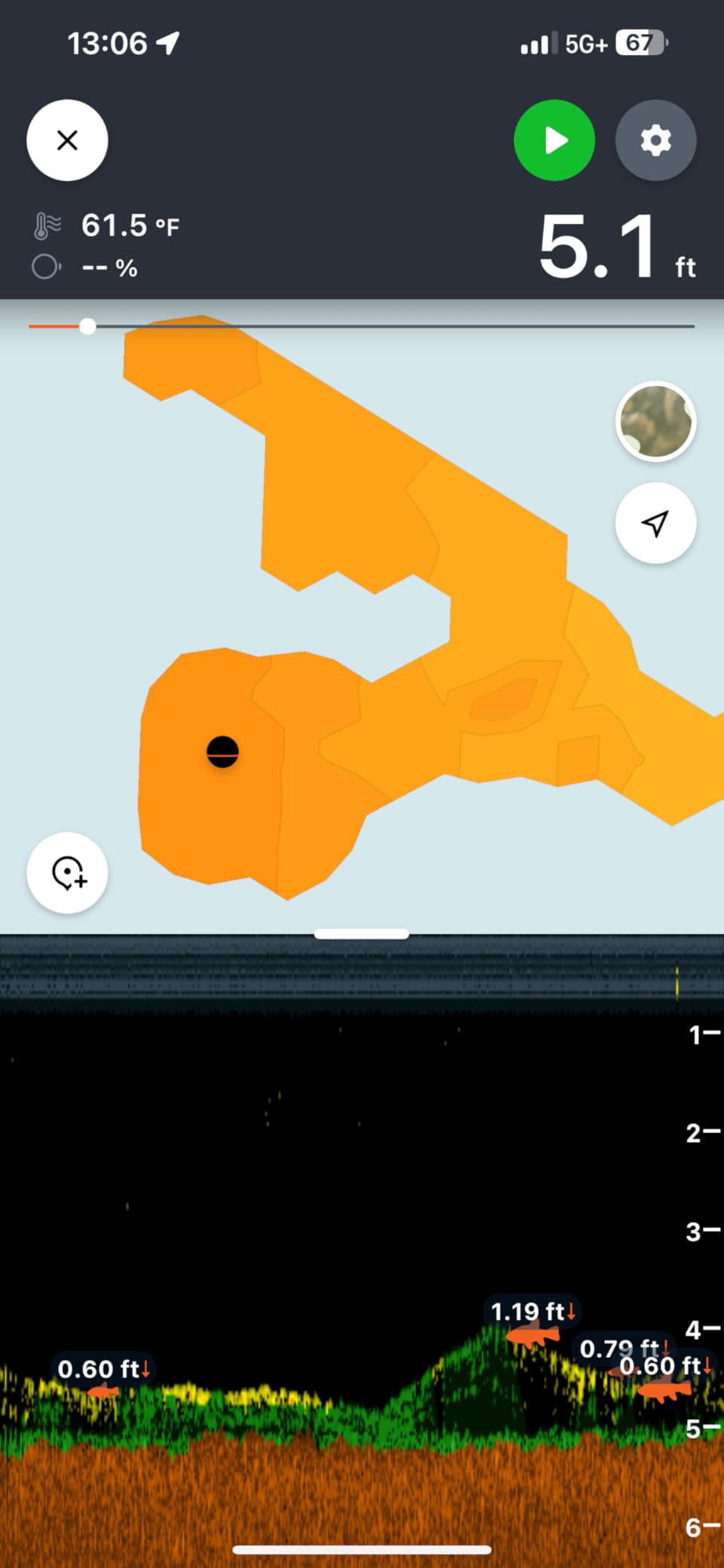
The PRO+ 2 is the castable unit for an angler who treats mapping as part of fishing. It carries a built-in GPS that records bathymetric contours as you move, then draws them back to you in the app for later trips.
You get three beam options, wide, mid and narrow, with accuracy to 330 feet. Target separation is listed at 0.4 inch in the narrow beam and 1 inch in the wider beams, which is the spec that matters when you are separating a fish from baitfish.
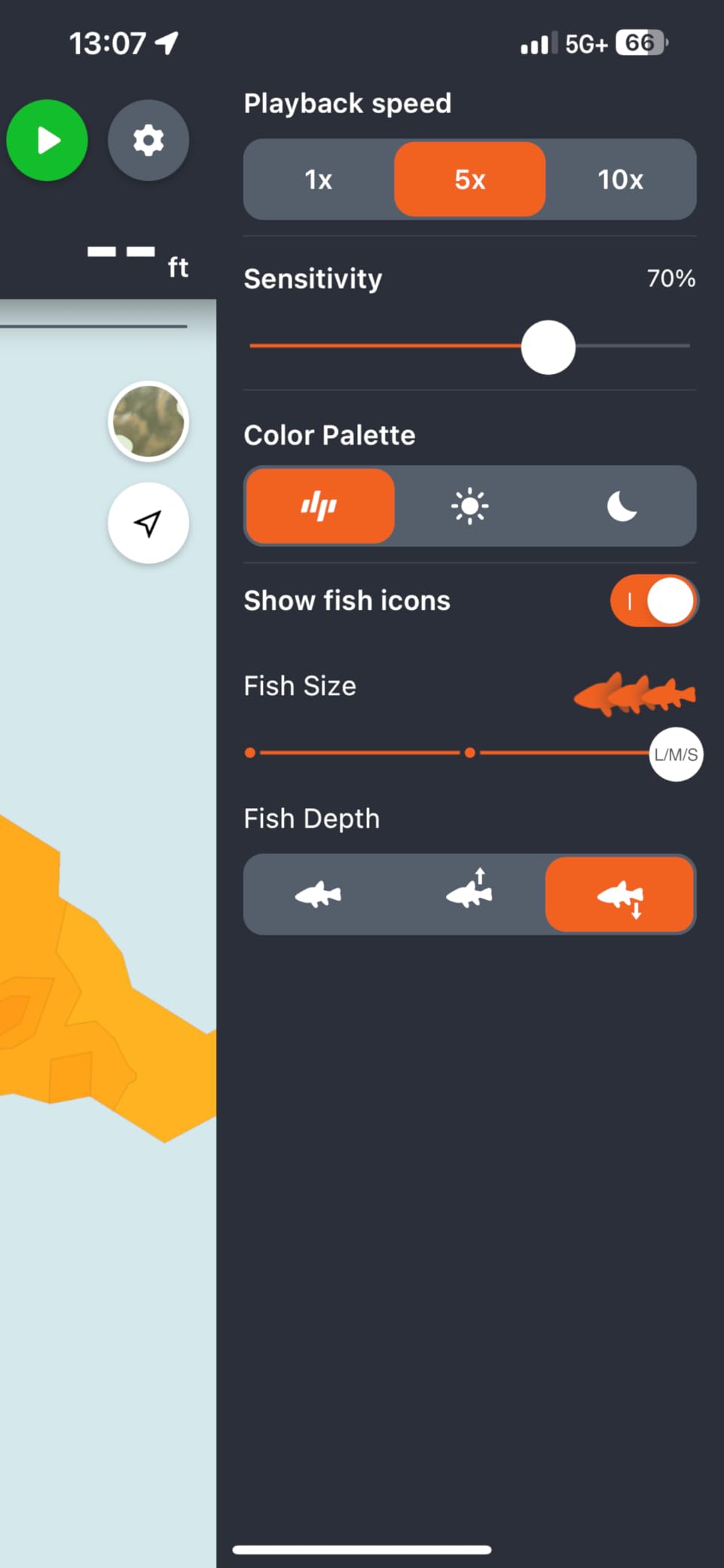
It weighs 3.2 ounces and it connects on its own Wi-Fi network, so again there is no mobile data use and no pair of wires. Accuracy out to 330 feet covers most reservoir and coastal structure that a small boat can reach.
Owners rate it 4.2 across 861 reviews. The mapping capability draws the strongest praise, with the beam flexibility a close second, and the phone requirement the most common complaint.
When built-in GPS earns its extra cost
If you fish the same water repeatedly, recording your own depth contours gives you a map no chartplotter in this roundup will produce for you. Fish hold against edges, and a contour you drew yourself shows the edge exactly.
Three beam options also let you adapt on the fly. Wide beam on shallow flats, narrow beam when you need to pick a fish out of a school.
Where it falls short
The 2.4-inch display is small, and if you are reading the picture on a phone the size of your hand is not the limiting factor, the screen resolution is. Bright sun makes it worse.
At a higher price than the simpler castable units in this list, the PRO+ 2 only makes sense if you will genuinely use the maps.
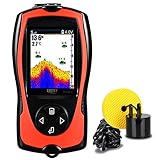
7. LUCKY 1108-CT – The Best Wired Handheld Sonar for Rentals
LUCKY Portable Fish Finder Handheld Kayak Fish Finders Wired Fish Depth Finder Sonar Sensor Transducer for Boat Fishing Sea Fishing
2.4 inch color TFT LCD
26 ft wired transducer
328 ft depth detection
USB rechargeable
Pros
- Full color screen on a handheld unit
- Rechargeable with about five hours of use
- Brightness adjustable for day and night
- Works for ice
- river
- sea
- shore and kayak
Cons
- 26 foot cable must be kept in the water
- Fish detection accuracy is mixed
- Connection flap and screen durability concerns
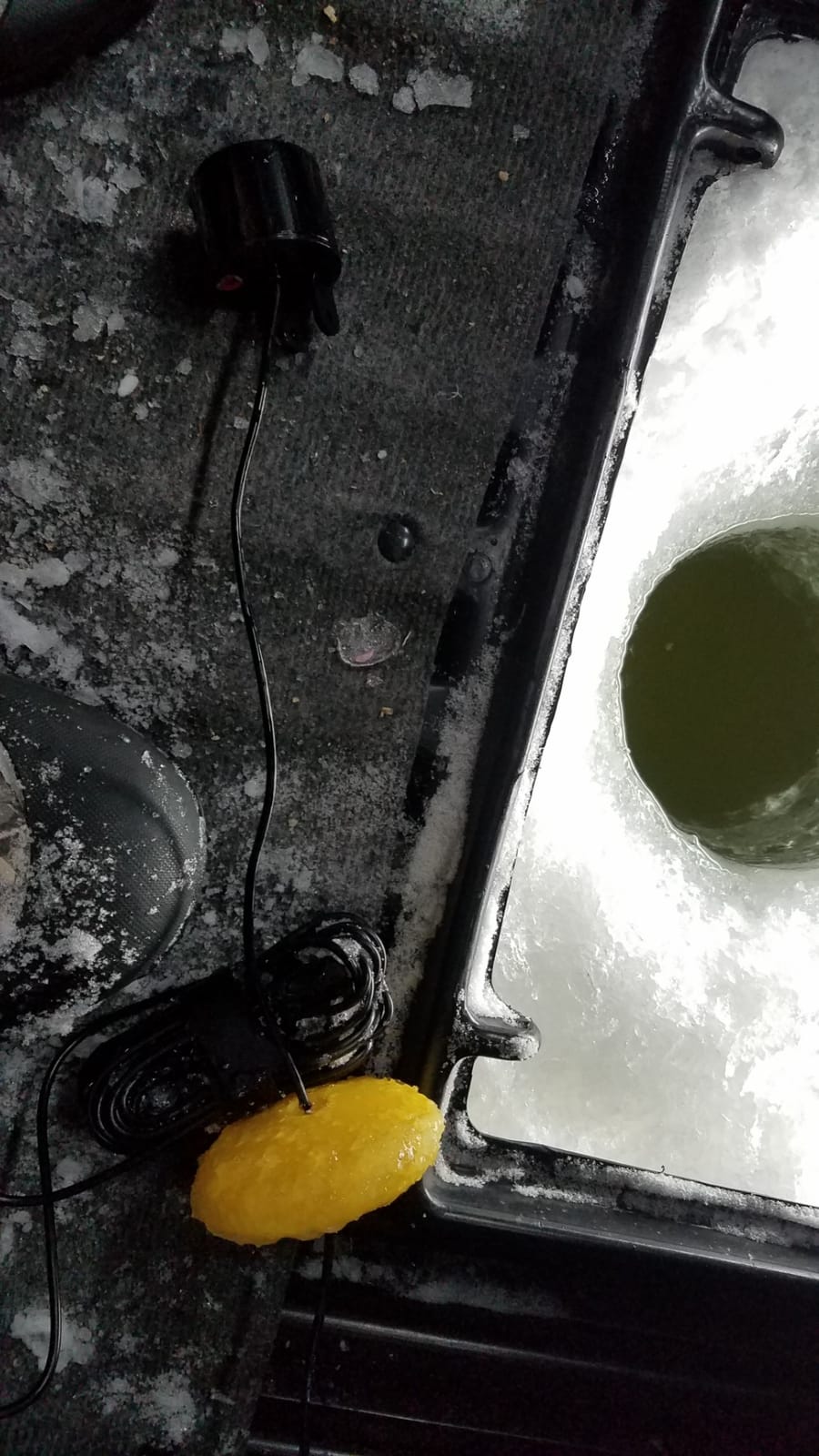
The LUCKY 1108-CT is a handheld unit with a tethered transducer, which is a different animal from the castables. You drop the sensor in the water beside you and hold the screen, with a 26 foot cable giving you room to move around the boat.
It reads to 328 feet with a 45-degree beam at 200 kHz, has a rechargeable battery with about five hours of continuous use, and the brightness is adjustable so it works at dawn and after dark.
At a 4.0 rating across 2,026 reviews, it is the least refined unit here, and the reason is simple. Fish detection accuracy comes back mixed, with several owners treating it as a depth and temperature tool rather than an arch finder.
What it does well is give a colour picture of bottom contours, with three contour display modes and a simulation mode for learning the menus before you get on the water.
Where a wired handheld earns a place
On a rental boat or a boat you plan to sell, nothing is drilled or glued. You carry it in a pocket and put it in your lap, which is the cleanest possible answer for someone who does not want electronics in their boat at all.
For ice fishing it works, and the adjustable brightness covers the low-light case that fixed-panel units handle poorly.
Where it falls short
A 26 foot cable has to stay in the water. If it leaves the bottom, the picture freezes or blanks, which is constantly awkward on a moving small boat.
Owners also report the connection flap breaking and screen failures after extended use, so build quality is the weak point. Settings run deep enough that a first-time owner should spend a session in simulation mode.
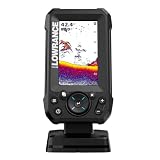
8. Lowrance Eagle 4-Inch – The Best Newcomer for Direct Sunlight
Lowrance Eagle 4X Fish Finder with Bullet Transducer
4 inch IPS portrait screen
Auto-Tuning Sonar
200 kHz bullet skimmer transducer
44 degree beam
Pros
- IPS panel is very readable in sunlight
- Auto-Tuning removes most manual adjustment
- Twist-lock connector speeds install
- Compact portrait shape suits a small console
Cons
- Newer model with a thin review history
- Fish size readouts are unproven
- Bundled transducer is plain traditional sonar
The Lowrance Eagle 4-inch is a portrait IPS screen unit with a fresh design and very little review history. It arrives with a 200 kHz bullet skimmer transducer, power cable, bracket, locking collars and a fuse with holder, so the box is complete.
The reason it interests us for small boats is the panel. IPS screens hold their brightness in direct sun far better than the standard LCDs used in cheaper units, and the vertical format uses console height instead of console width.
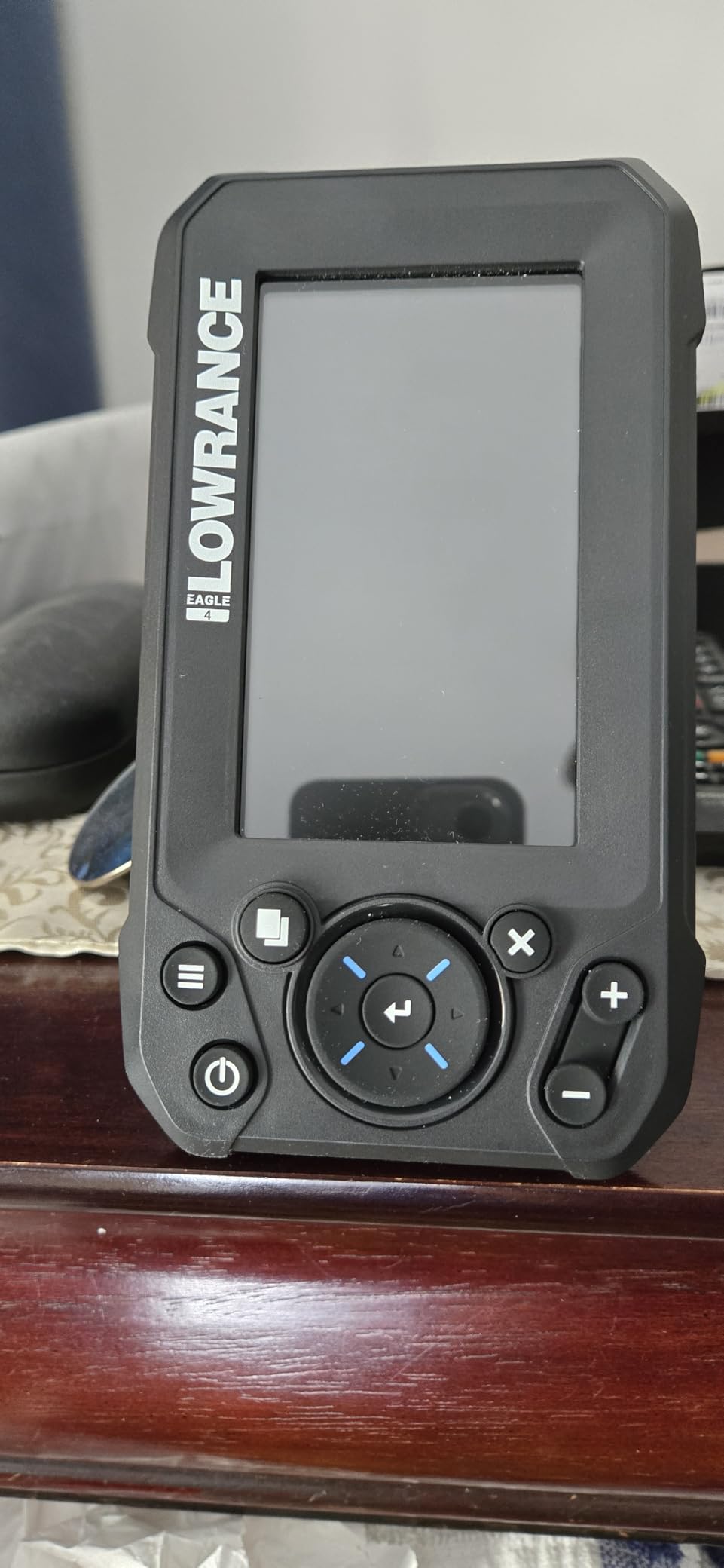
Auto-Tuning Sonar adjusts gain and sensitivity as you move, which removes the single most tedious part of using an entry-level fish finder. The 44-degree beam gives broad coverage for finding fish in open water and near structure.
Owners rate it 4.3, though across just 116 reviews that is a much thinner signal than the leading units here. The praise centres on the clear display and easy installation, while the reservations are about unproven fish-size accuracy.
Why portrait orientation helps on a small console
On a jon boat the usable console surface is narrow and tall, not wide and short. A portrait unit sits in front of you without stretching across the deck, and it also works on a low-profile bracket at the base of a trolling motor shaft.
The twist-lock connector is a small install win. You can separate the transducer from the head unit without dealing with a single loose cable terminal.
Where it falls short
The bundled transducer is a plain 200 kHz bullet skimmer, not a CHIRP or scanning unit. You are buying the screen and the ease of use here, not sonar technology.
With a thin review history, we would want a season on it before recommending it to someone with no backup option. Some early owners did report defective units.
How to Choose a Fish Finder for a Small Boat
Start with the two constraints we opened with, footprint and power, because they eliminate more wrong choices than any feature list. Everything else is a preference. If you have a 10-inch section of console, a 3.5-inch or 4-inch unit is your ceiling, and anything larger will be resizing your boat rather than fishing it.
Screen size is a space decision, not a feature decision
A 3.5-inch screen suits a jon boat and a kayak. A 4-inch to 4.3-inch screen suits a skiff, a pontoon, and a 14 to 18 foot center console with a cramped helm. Beyond 5 inches you are into territory a small boat cannot host without cutting a hole.
Check readability in sunlight before you buy. A larger panel with a dim backlight is worse in an open bay than a smaller bright one.
CHIRP versus traditional 2D sonar
CHIRP sends a continuous range of frequencies instead of one fixed frequency, which produces cleaner fish arches and better target separation. Traditional 2D sonar costs less and does the job on calm water and shallower fishing.
If you are undecided, the honest answer is that CHIRP is now standard in this price bracket, and the older dual-beam units trade sharpness for coverage instead.
GPS mapping versus a plain depth sounder
A fish finder without GPS tells you the depth and what is under the boat. A GPS combo adds speed, waypoint marking and route back to the launch, which is the feature most small-boat anglers end up glad they bought.
Waypoint mapping matters most when you fish the same water repeatedly. Without it, you rely on memory and a good day.
Always check whether the transducer is included
This is the number one source of buyer frustration in this category. Some bundles ship the transducer, some ship only the head unit, and add-ons are a real cost you should know about before you click.
Every unit in our list that is meant to be mounted on a transom includes its transducer. The castable and handheld units have no separate transducer to buy.
Garmin versus Humminbird versus Lowrance
The forum shorthand is the most useful summary we found: Humminbird is known for side imaging and mapping, Garmin for live sonar and clean displays, and Lowrance for traditional 2D sonar. For a small boat, that translates to Garmin or Lowrance if you want easy, reliable basics.
HawkEye sits at the entry end with no-frills units, and one of them is a reasonable pick if your budget is the first consideration. None made our final eight, because the Garmin, Humminbird and Lowrance units here came with stronger support and better-reviewed bundles.
Power draw and boats with no wiring
A hard-mounted unit runs off your 12 volt system, and a modest deep-cycle battery will run one all day with room to spare. The constraint is usually cable length and a fuse, not amperage.
For boats with no battery at all, skip the wiring project and use a castable unit or a handheld. Members on jon boat forums describe exactly this pattern, and it saves anyone who does not want to strap a battery box to a deck.
Installation and Mounting for Small Boats
Most small-boat installs fail for two reasons, not for skill. The transducer goes on in a spot that reads air bubbles, or the cable is cut too short to reach the battery. Here is the order that avoids both.
Pick the head unit location first. Sit in the position you fish from and check the view. A 3.5-inch unit at the wrong height is unreadable no matter how bright the screen is.
Mount the head unit on the supplied bracket. The tilt and swivel mounts supplied with the Garmin and Humminbird units here clamp to a rail or a flat surface. Put it on before the cable goes anywhere.
Position the transducer at the transom line. Below the waterline and slightly above the propeller wash. This is the step that solves aerialing, the noisy false picture caused by a transducer mounted too high in aerated water.
Run the cable with slack, then secure it. Route it away from sharp edges and away from the motor cable. Leave extra length in a loop so the transducer can be raised when you hit a dock or a stump.
Connect power through a fuse and test at the ramp. Add an inline fuse near the battery, keep the connection above the waterline where possible, and confirm the reading before you leave the trailer lot.
Which mount to choose
A transom mount bolts through the existing holes and is the most permanent option, which is also the one you will want to remove before selling the boat. A tilt bracket on a rail is faster and reversible. A no-drill arm clamps over the gunwale and works on a kayak or a jon boat where drilling is off the table.
Adhesive puck mounts are the most tempting and the most temporary. Owners report them eventually loosening or letting water behind the seal, so treat them as seasonal at best.
Signs your transducer is damaged or badly mounted
Five symptoms cover most cases. One, a blank or frozen screen that returns the instant you lift the transducer out of the water. Two, a picture full of noise and false arches that clears when you slow down, which is usually aerialing rather than damage. Three, a reading that shifts wildly at a fixed depth over a flat bottom. Four, a visible crack, clouding, or a gel coat bubble at the mounting face. Five, a reading that reads shallow in water you know is deep.
The first two are installation problems and fix themselves with a reposition. The last three point to real damage and mean the transducer needs replacing.
Frequently Asked Questions
Is Garmin better than Humminbird?
For a small boat, Garmin is usually the easier install and the more readable small screen, while Humminbird is stronger in side imaging and preloaded mapping. The forum shorthand is that Garmin wins on live sonar and displays, and Humminbird wins on mapping and side scan. On a jon boat or kayak, where space and power are tight, we lean Garmin for the keyed buttons and the complete bundles. On a bigger center console with room for mapping, Humminbird pulls ahead.
What is the best depth sounder for a small boat?
The Humminbird PiranhaMAX 4 is our pick for a boat that only needs depth and bottom structure. It ships with a transom-mount transducer and a tilt and swivel mount, so it installs without extras, and it reads to 600 feet. The tradeoff is no GPS, so you cannot mark or return to a waypoint.
What is the best portable fish finder for a boat?
The Deeper PRO+ 2 is our pick among portable units for small boats. It has a built-in GPS that records bathymetric maps, three beam options, and accuracy out to 330 feet, while running on its own battery and its own Wi-Fi network. The Deeper Start is the cheaper option if you only want depth and temperature from a dock, shore, or kayak.
Does a fish finder work on a kayak?
Yes, and it is one of the most common uses for a small-craft fish finder. Mount a hard unit on a no-drill arm above the waterline with the transducer below it, or use a castable unit and clip it to your chest strap or life jacket. Neither approach requires drilling into a kayak hull, and both leave the boat unchanged when you get off the water.
How do I know if my transducer is damaged?
A transducer that stops returning data, or returns a reading that jumps around over a flat bottom, is usually damaged. Look for physical cracks, clouding of the face, or a bubble in the gel coat at the mounting point. A noisy picture full of false arches that clears when you slow down is not damage. That is aerialing, meaning the transducer is mounted too high in aerated water and needs repositioning lower on the hull.
Conclusion
The best fish finders for small boats are the ones sized to the boat, not to the ambition. After a season across jon boats, a skiff, a kayak and an inflatable pontoon, the Garmin STRIKER 4 remains the pick we install first because it includes everything and fits almost anywhere.
Pick the STRIKER Vivid 4cv if direct sun readability decides your day. Pick the Humminbird PiranhaMAX 4 if you only need depth and you want hardware over features. Pick the Deeper PRO+ 2 if you want maps and have no wiring. Pick the Deeper Start or the Striker Cast if your boat has no electrical system whatsoever. Pick the LUCKY 1108-CT only if you fish a rental and want nothing left behind.
Whichever one you choose, sort the transducer position before you leave the ramp. Most disappointing small-boat installs are mounting problems, not electronics problems. If you are still deciding on the boat itself, our inflatable boat roundup covers platforms that pair well with a castable unit.