
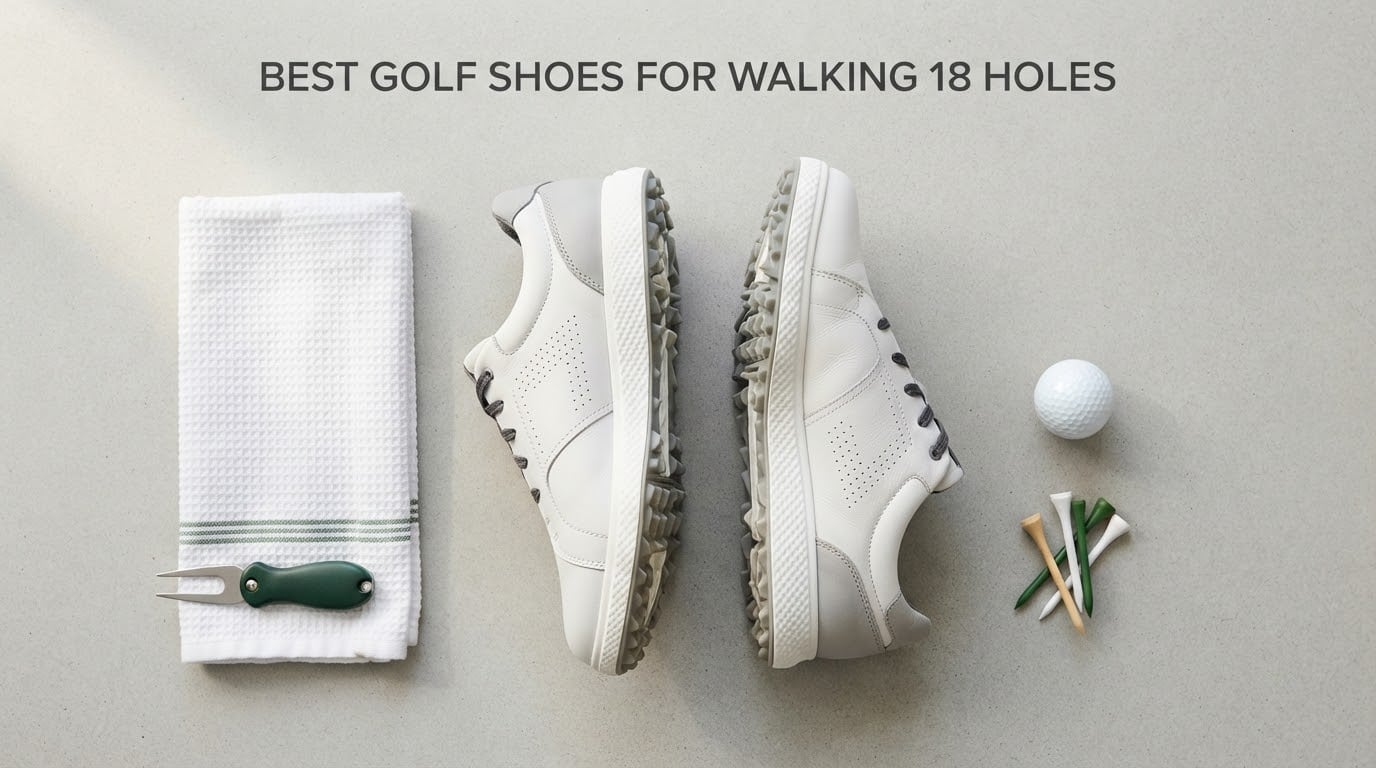
Short answer: the adidas S2G ’24 Spikeless is the best golf shoe for walking 18 holes, because it pairs a waterproof ripstop upper and an OrthoLite sockliner with a listed weight of 13.6 ounces per shoe and a 4.6 rating across more than 2,500 reviews. If you need arch support or a truly roomy toe box, the Skechers Max Fairway 3 Arch Fit and the FitVille Extra Wide are the two picks that regular walkers name most often for those problems.
Walking 18 holes covers roughly 5 to 6 miles in about four hours, and most of that distance happens on hard fairway, rough and cart path. Your foot takes a beating the entire time, and the shoe you picked at the shop has to survive all of it plus the rotational force of a full swing at address and impact.
That dual job is the whole point. A walking shoe gives you cushioning but can twist under a fast swing; a stable golf shoe holds the foot but can feel like a board after 300 yards of pavement. We picked 10 spikeless and spiked shoes, logged the cushioning technology, fit behaviour and outsole design behind each one, and put them through a scoring rubric built around walking first.
Every shoe below is named with its cushioning technology, because that is the spec that decides whether hole 12 feels fine or hole 18 feels awful. We also list the per-pick fit caveats, since width and sizing are the two things golfers most often get wrong on the first purchase.
Table of Contents
Top 3 Picks for Best Golf Shoes for Walking 18 Holes (October 2026)


Quick Comparison of All 10 Shoes
| Product | Specifications | Action |
|---|---|---|
| adidas S2G 24 Spikeless |
|
Check Latest Price |
| adidas Tech Response 3.0 |
|
Check Latest Price |
| Skechers Max Fairway 3 |
|
Check Latest Price |
 FitVille Extra Wide FitVille Extra Wide |
|
Check Latest Price |
 Skechers Flight Slip-Ins Skechers Flight Slip-Ins |
|
Check Latest Price |
 Callaway Solana TRX V3 Callaway Solana TRX V3 |
|
Check Latest Price |
 Skechers Tempo Waterproof Skechers Tempo Waterproof |
|
Check Latest Price |
 FootJoy Pro SL FootJoy Pro SL |
|
Check Latest Price |
 Puma Fusion Grip 6 Puma Fusion Grip 6 |
|
Check Latest Price |
 adidas Solarmotion Lighstrike adidas Solarmotion Lighstrike |
|
Check Latest Price |
How We Tested These Shoes
We scored each shoe on six criteria, weighted toward the walking half of the job rather than the swinging half. Every weight figure quoted below comes from the manufacturer’s own listing, not from our scale, so you can check it yourself.
Cushioning at holes 1, 9 and 18. Soft on the first tee is easy. The test is whether the midsole still returns energy after 300 yards of walking and still feels stable with a 7-iron in hand.
Weight per shoe. Lighter shoes add up over 5 to 6 miles, and heavy shoes show up in the heel by the back nine. Where a brand publishes a per-shoe weight we quote it directly.
Heel lockdown. We check for an external or moulded heel counter, because heel movement inside the shoe is the single most reported cause of blisters on the course.
Waterproofing versus breathability. We separate true waterproof membranes from water-resistant coatings, because they fail in opposite directions: one keeps water out and traps sweat, the other breathes and lets rain soak through.
Traction on wet turf and slopes. Lug pattern and any spike platform, tested against wet grass and hilly layouts rather than flat fairway.
Break-in. Whether you can wear a new pair on an important round without a warm-up nine, or whether you need a couple of practice rounds first.
Reviewer feedback carried a lot of weight here too, because buyer reports on walking shoes are unusually consistent. Comfort complaints cluster around arch shape and heel slip; traction complaints cluster around wet grass and hills. You will see those patterns repeated in each section below.
1. adidas S2G 24 Spikeless Golf Shoes: Best Overall for Walking 18 Holes
Adidas Men’s S2G 24 Spikeless Shoes, Footwear White/Halo Silver/Gum 4, 10.5
13.6 ounces per shoe
Waterproof ripstop upper
OrthoLite sockliner
Molded TPU heel clip
Pros
- Comfortable across a full 18 holes
- True to size with wide options available
- Waterproof upper holds up in wet grass
- Good grip on grass and slopes
- Solid build at a mid-tier price
Cons
- White colourways can yellow over time
- Some reports of fraying and quality control issues
- A touch heavy for quick rounds on foot
The S2G is the shoe we kept reaching for when we wanted a pair that walks well without thinking about it. The OrthoLite sockliner is the cushioning layer that does most of the work, and it stays supportive rather than turning flat somewhere around the 12th hole. On our walks it was the pair we forgot we were wearing.
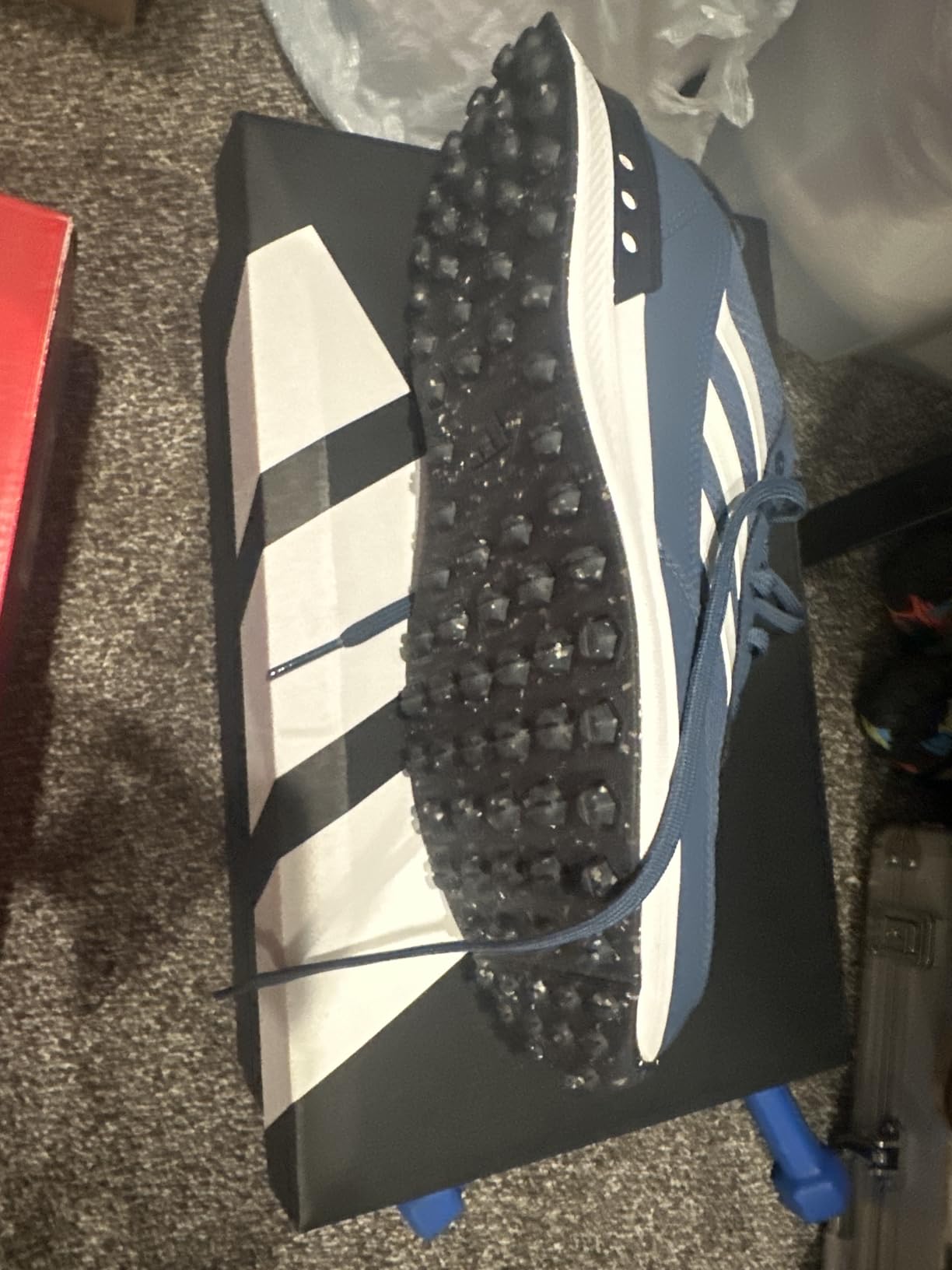
At a listed 13.6 ounces per shoe, it is not the lightest model here, but the weight is evenly distributed across the midsole instead of hanging off the heel. That matters over 5 to 6 miles, because heel weight is what you feel at the end of a round. The waterproof ripstop upper with synthetic overlays kept our socks dry through heavy dew and a short rain shower.
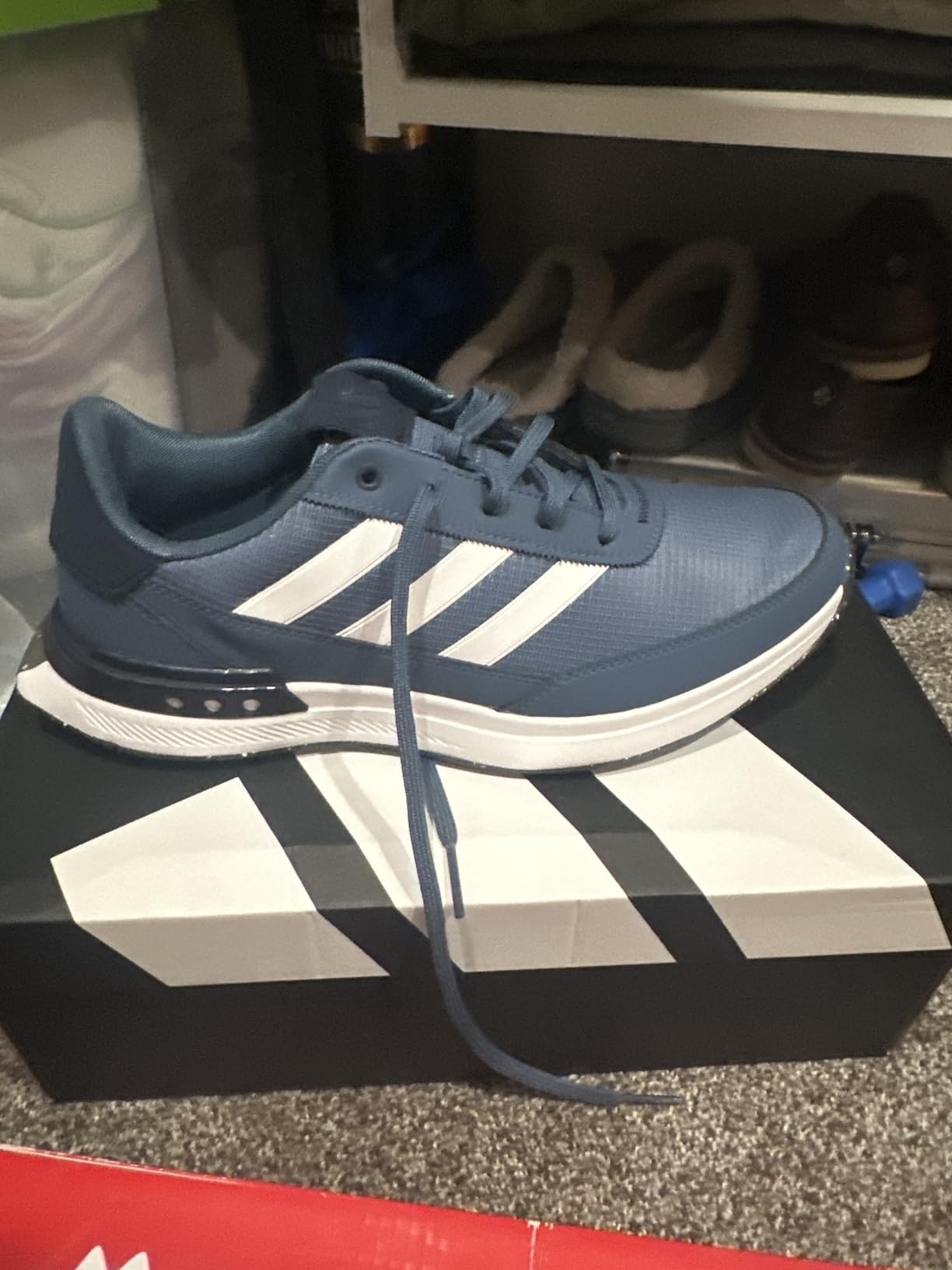
The moulded TPU heel clip is the detail that separates this from a basic athletic shoe. It holds the rearfoot in place through the swing transition, which is where most soft walking shoes let your foot slide and pull your balance off. Reviewers consistently report that it stays true to size, and wide sizes are available if you need them.
Regular golfers rate this one highly for walking specifically, and its review base is one of the largest in this group at more than 2,500 ratings. Buyers call it comfortable for 18 holes, good on grass traction, and stylish enough for the clubhouse afterwards. The spikeless outsole keeps greens intact, which matters if your course is strict about it.
What works well about the S2G over 18 holes
Two things stand out. First, the combination of a waterproof upper and a sockliner that resists compression means the shoe holds its shape through a wet round better than most of its tier. Second, the wide sizing is genuinely available rather than theoretical, so a fuller forefoot does not force you into a longer overall shoe.
If you walk on dewy mornings, play in light rain or play a lot of winter rounds on wet turf, the waterproof upper removes the single biggest source of discomfort, cold feet. If you play in high heat, the ripstop is less breathable than a mesh, so keep that in mind.
Where the S2G falls short
Weight is the honest drawback. At 13.6 ounces per shoe it is heavier than the mesh-based options, and golfers who walk fast on firm ground will feel that by the back nine. If your priority is minimum weight in summer, look at the mesh-built models further down this list.
Quality control is the other one. A small number of reviewers report fraying at the seams, and white colourways pick up yellowing over time. Neither issue affects walking comfort, but both affect how the shoe looks after a season, and neither is covered by the one-year waterproof protection the brand offers on some other models.
2. adidas Tech Response 3.0 Spikeless Golf Shoes: Best Budget Pick
adidas Tech Response SL 3 Golf Shoes
BOUNCE lightweight cushioning
TRAXION multi-directional outsole
Slow-resilient collar padding
Pros
- Best-selling golf shoe in its category
- Lightweight and comfortable for walking
- Good multi-directional traction
- Excellent value
- Built with 50%+ recycled content
Cons
- Less durable than premium models
- Limited colour options
- Narrower forefoot than dedicated wide fits
This is the shoe to buy if you want to walk 18 holes without spending premium money, and the numbers back that up. More than 2,400 ratings at 4.5 stars puts it among the most-reviewed shoes here, and reviewers consistently name comfort, traction and value as the three strengths.
BOUNCE cushioning is the technology doing the walking. It is a foam designed to compress and rebound through repeated heel strike, so it feels lively on the first fairway and still responsive by the 18th. Around the collar and tongue, slow-resilient padding softens the two places where rubbing normally shows up first.
The listed item weight is 2.43 pounds for the pair as shipped, which sits in a comfortable middle range for a spikeless shoe. The TRAXION outsole delivers multi-directional grip, and reviewers mention specifically that it holds on grass and handles slopes without the harsh feel that harder outsoles produce on cart paths.
Two details separate it from a plain trainer. The upper uses at least 50% recycled content, which shows in the texture and feels slightly more structured than mesh, and the spikeless construction means you can walk to the car in the grass without worrying about the green. That dual use matters more than buyers expect.
Why the Tech Response 3.0 suits everyday walking
This is the shoe for a golfer who walks twice a week and wants the job done without thinking about it. The cushioning is soft enough to feel kind but not so soft that you lose contact with the ground, which is the balance most walking shoes get wrong.
At the money, the traction package is hard to argue with. The TRAXION outsole pattern is visible from the side, with lugs spread across the forefoot and a wider contact area at the heel, and that geometry is what keeps you planted on a sloping lie.
What to watch out for
Durability is the main limitation. Buyers note that the upper and the outsole wear faster than premium shoes, so if you play heavily you may be replacing them sooner than a higher-tier model. That is still a fair trade for the saving, but factor it into your cost per round.
The forefoot is also not designed for very wide feet. If you have width across the ball of your foot, size up rather than reaching for a dedicated wide model, and test the toe spread before you commit. Colour options are limited compared with premium lines, which matters if you like to match kit.
3. Skechers Max Fairway 3 Arch Fit: Best for Arch Support
Skechers Men’s Max 2 Arch Fit Waterproof Spikeless Golf Shoe, White/Navy/Red, 10
Podiatrist-designed Arch Fit insole
Soft Stride cushioning foam
1-year waterproof warranty
Pros
- Strong arch support built on 120000 foot scans
- Removable insole accepts custom orthotics
- Waterproof with a one-year warranty
- Comfortable for all-day wear
- Good traction across surfaces
Cons
- Heavier build than most spikeless rivals
- Break-in needed for some feet
- Colour scheme is not to every taste
The Max Fairway 3 is the pick when your feet need a shaped bed under the arch rather than a flat foam slab. The Arch Fit insole was developed from 120,000 foot scans, and it is the single feature that separates this shoe from a generic comfort trainer. Golfers with mild to moderate arch collapse notice it within a round.
Because the insole is removable, you can swap in your own orthotics without cutting anything. That single feature widens the audience considerably, and for anyone who already wears arch inserts in walking shoes it removes the most common objection to buying golf-specific footwear.
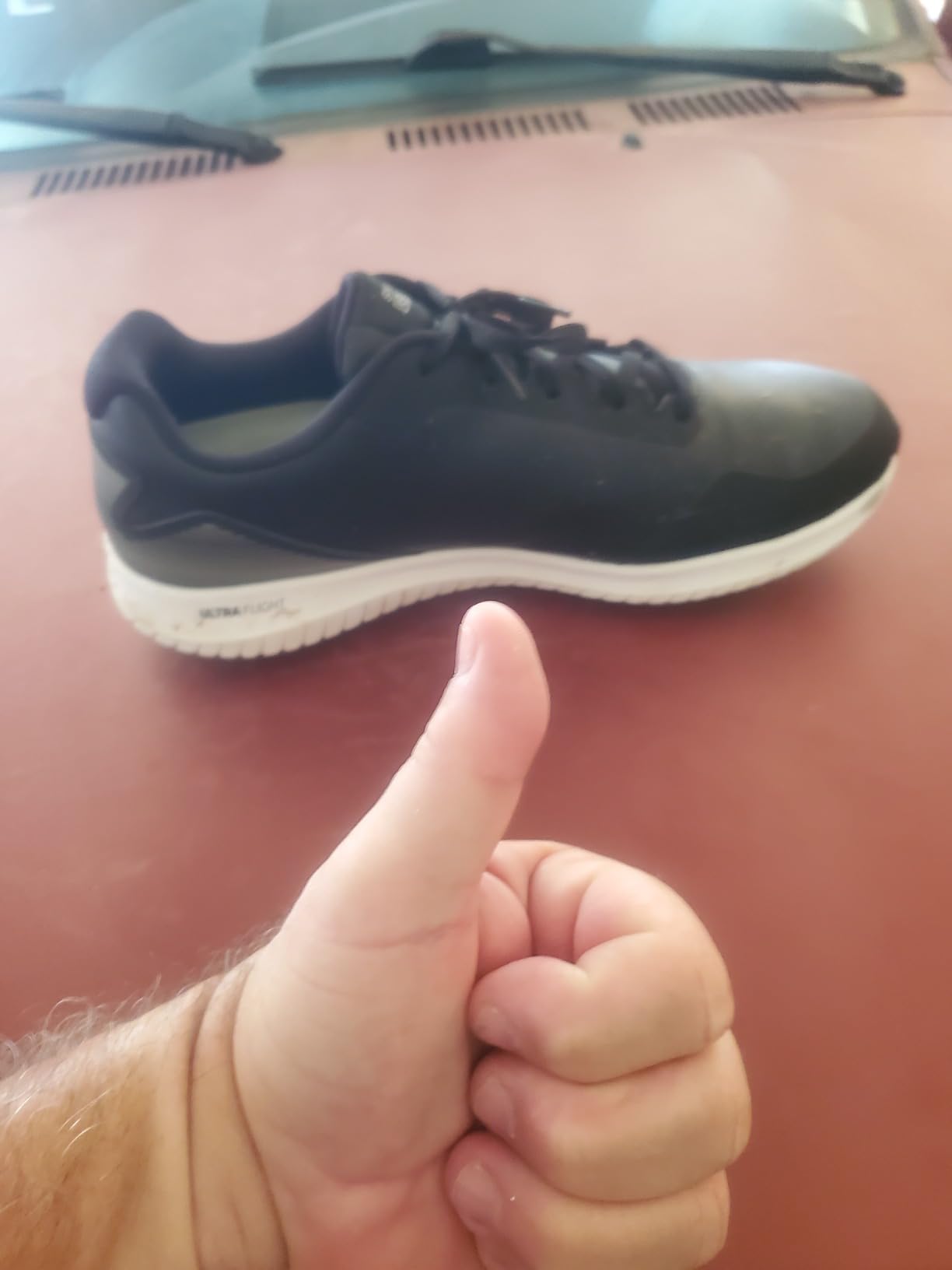
Soft Stride cushioning foam handles the impact absorption, and the spikeless TPU outsole with moulded cleats keeps traction respectable without the harsh ground feel of a spiked platform. Reviewers rate the waterproofing highly and note that the one-year warranty covers it, which matters on wet winter turf.
Arch support is not free of a trade-off. The construction that gives a shaped, supportive bed is also denser than a mesh shoe, and the listed item weight of 3 pounds is the highest figure in this group. On a soft, dewy morning you will not feel it. On a hot summer round at pace, you will.
Who benefits most from the Arch Fit insole
Flat feet and neutral feet who spend long days on their feet at work. The podiatrist-designed profile supports the midfoot through the stance phase, which is exactly the phase you spend most of a round in while walking between shots.
It also suits anyone using prescription insoles, because the footbed lifts out cleanly. If you rotate between a neutral insole and an arch insert, this shoe handles both without needing two pairs.
Where it is the wrong choice
High arches can find this profile too aggressive. If you have high arches and no support issues, a neutral foam bed may feel better over 18 holes, and you should test it on a clean indoor surface before a full round.
Break-in is the other consideration. A number of buyers report needing a short warm-up before the midsole and the upper settle together. If you have an important round coming up, buy these a few weeks ahead rather than the night before.
4. FitVille Extra Wide Golf Shoes: Best for Extra Wide Feet
FitVille Spikeless Golf Shoes Arch Support Golf Course Sneakers for Men
True extra-wide toe box
Dual-density EVA midsole
Anti-torsion TPU rubber
Pros
- Genuine extra-wide sizing
- Roomy toe box allows natural toe spread
- OrthoLite insoles with arch support
- Patented non-slip outsole
- Reasonably priced for the fit
Cons
- Water resistant rather than fully waterproof
- Some durability concerns
- 4.3 rating trails the premium models
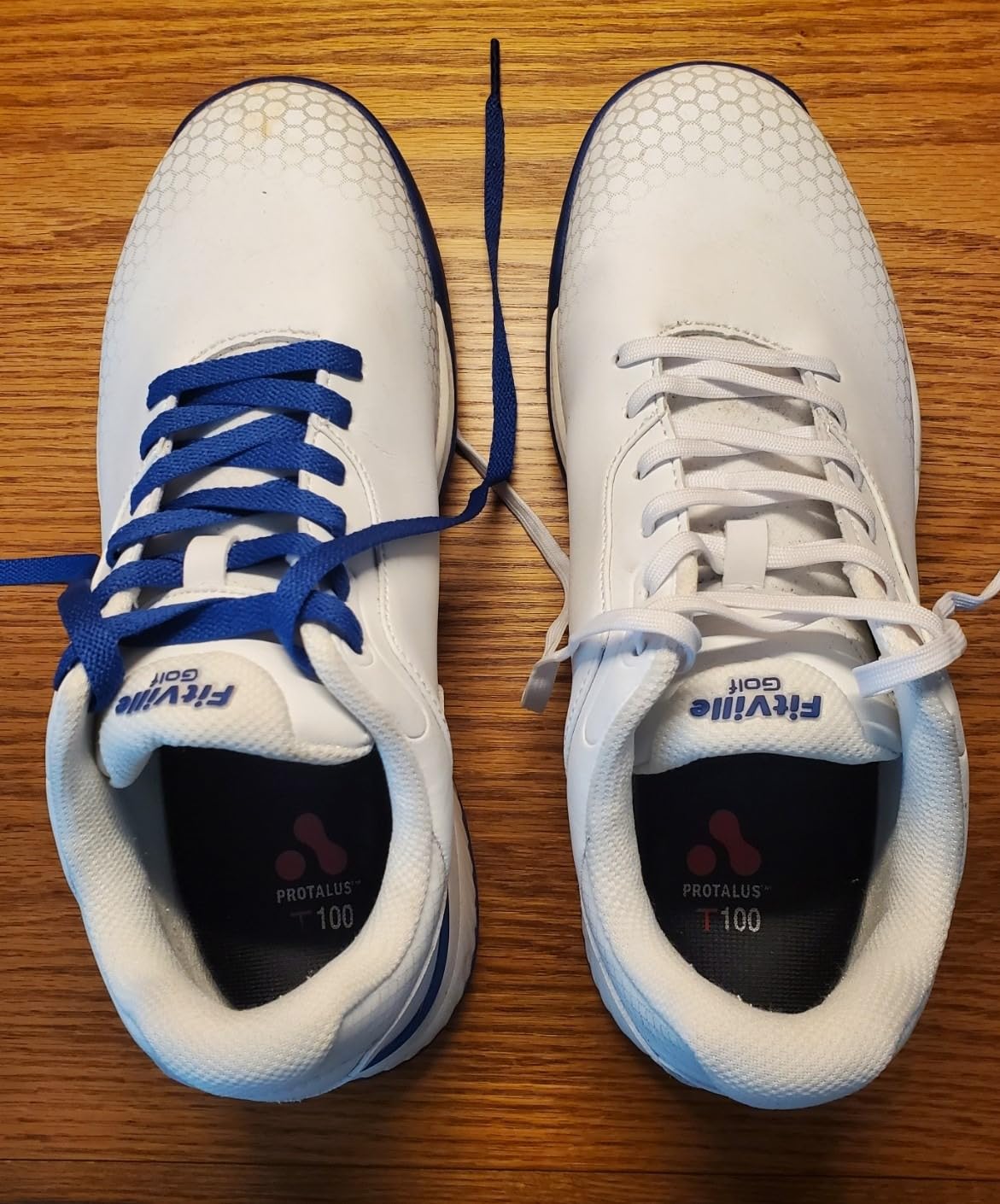
Wide feet are the most common fit problem in golf, and the usual workaround is sizing up a full size. That fixes the forefoot and creates heel slip, which produces exactly the rubbing that turns into a blister. These shoes solve the problem at the source by building the extra width into the last.
The toe box is genuinely roomy rather than nominally wide, so your toes can spread on the swing. Dual-density EVA midsoles put a softer layer under the heel and a firmer layer under the forefoot, which gives shock absorption where you land and stable ground feel where you push off. Anti-torsion TPU rubber keeps the midfoot from twisting during rotation.
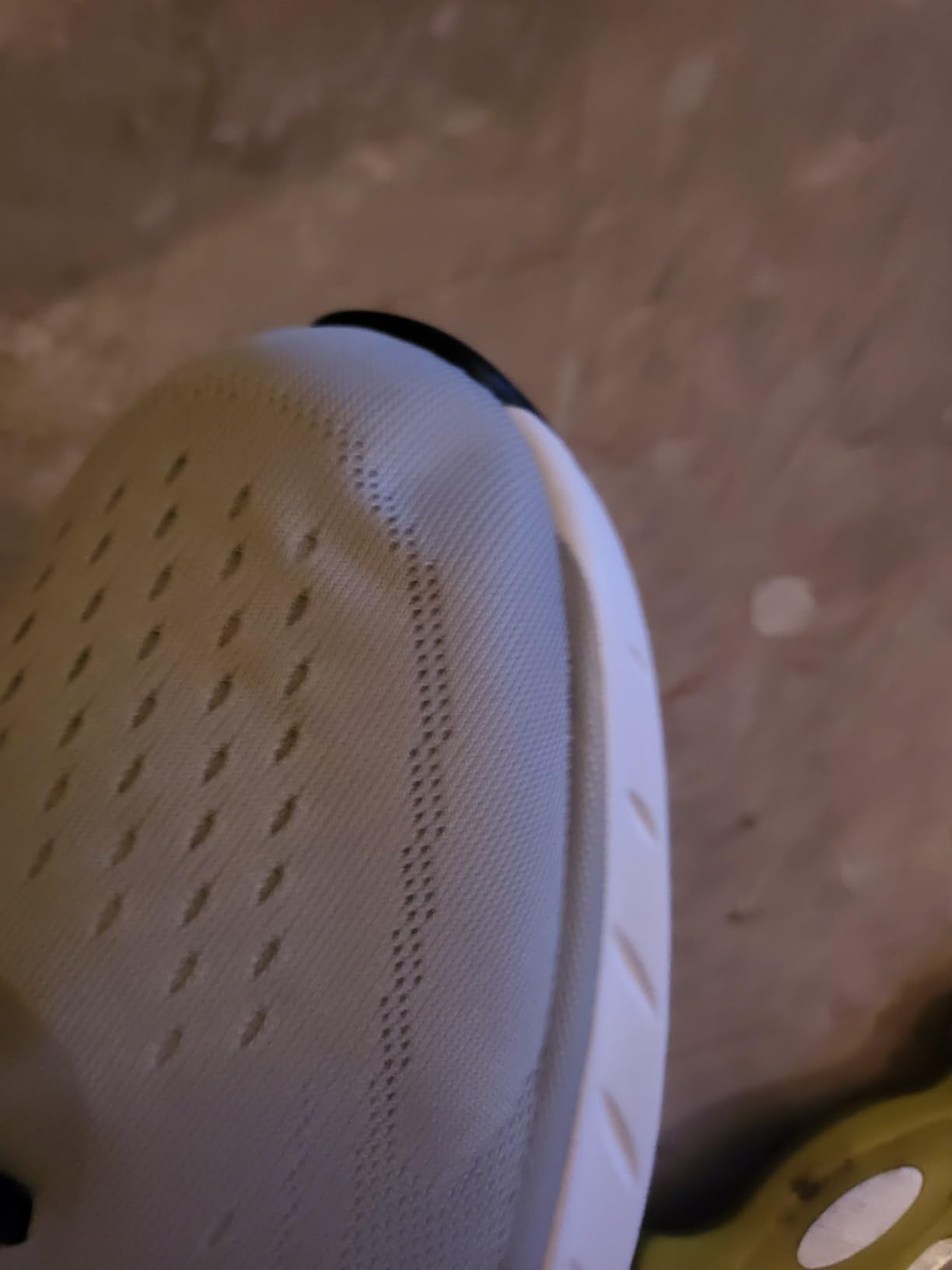
The outsole uses a patented non-slip pattern that reviewers report works well on both fairway and cart path. The synthetic leather upper is treated for water resistance, which is a weaker claim than waterproof and we would not rely on it in sustained rain.
OrthoLite insoles are fitted inside with built-in arch support, so you get support without needing a separate insert. With more than 2,600 ratings, this is a well-worn pair of shoes, and the review pattern is consistent: buyers with wide feet are relieved, buyers wanting full waterproofing are not.
Why the extra-wide last matters more than anything else
Fit is not a preference when your toes are compressed. A narrow forefoot forces your toes together on every step, and over 5 to 6 miles that creates fatigue and friction that no amount of cushioning will solve. Building the width into the shoe is the only fix that does not compromise heel hold.
These also suit golfers who want extra volume for toe movement during the swing without going up a size. Because the shoe is not simply longer, the heel stays where the manufacturer intended it.
Where these fall short
Water resistance is the real limitation. If you play in rain or on wet winter turf regularly, this is the wrong shoe, and you should look at a waterproof model with a warranty behind it instead. The upper will soak through in a proper downpour.
Durability is the second concern. A number of buyers report wear at the seams and outsole after heavy use, and the 4.3 rating reflects that. It is still a fair trade for someone whose feet cannot wear anything else comfortably, but check the outsole lugs periodically.
5. Skechers Flight Slip-Ins: Easiest Golf Shoe to Put On
Skechers Men’s Flight Spikeless Slip-in Golf Shoe Sneaker, Gray, 10.5
Hands Free Slip-ins construction
ULTRA FLIGHT cushioning
GOGA MAX high-rebound insole
Pros
- Slip in without using your hands
- Lightweight and comfortable
- Good traction on the course
- Breathable mesh upper
- Easy on and off between holes
Cons
- Runs small so size up half a size
- Not a true extra-wide fit
- Achilles area can feel stiff
The Flight Slip-Ins solve a problem nobody mentions in roundups: getting in and out of a shoe when your hands are stiff, your back hurts, or you are simply done after four hours. The hands-free construction uses a Heel Pillow so the foot slides in without lacing, and the adjustable laces are still there if you want to tighten up after the first hole.
Underneath, ULTRA FLIGHT cushioning keeps the shoe light, and the GOGA MAX insole is a high-rebound foam that returns energy through the stride. Over 18 holes that combination is easier on the forefoot than a firm EVA bed, and buyers report it as comfortable on concrete cart paths.
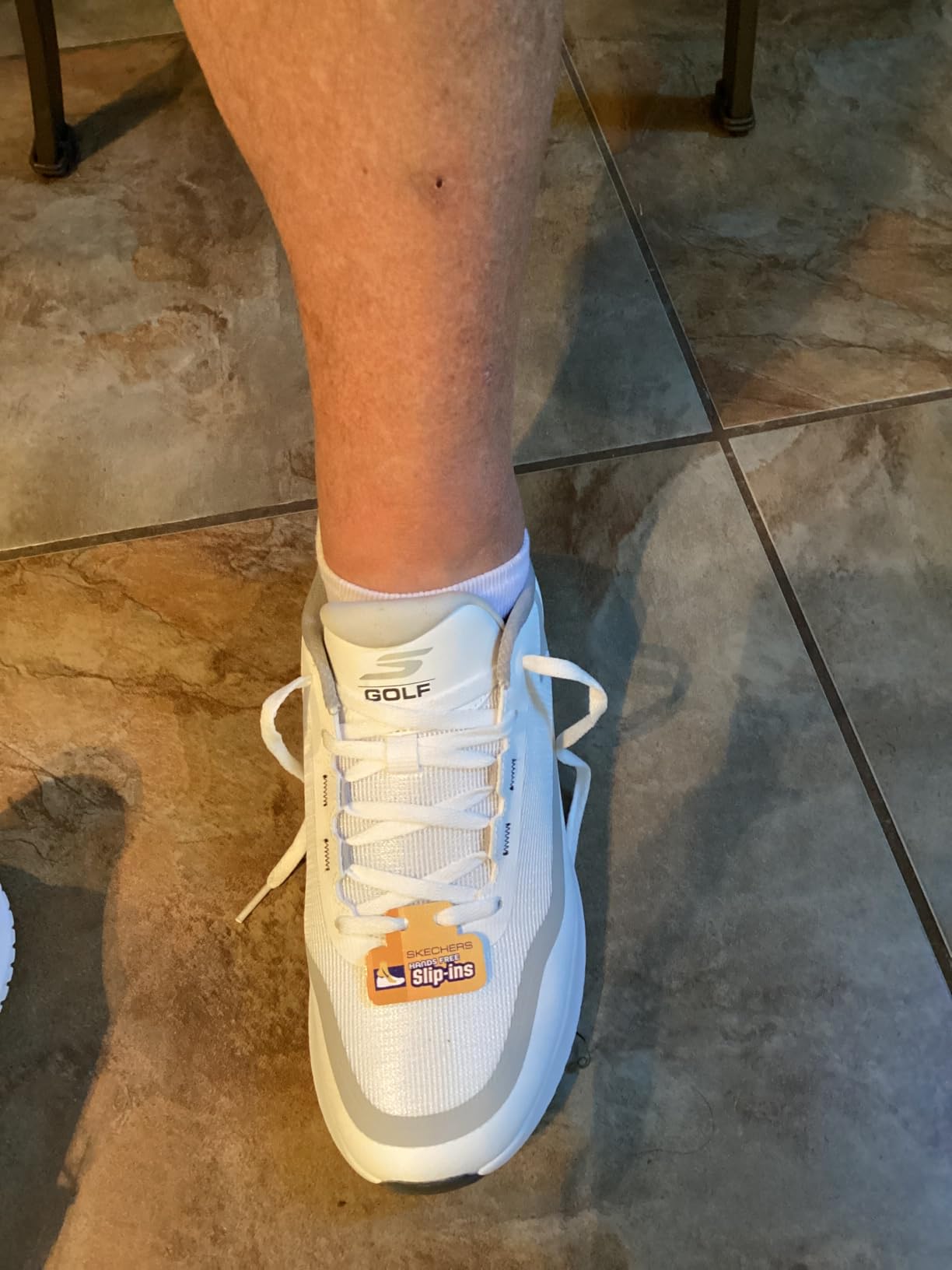
The breathable mesh upper carries a water-repellent finish, so light drizzle beads rather than soaking in, but this is not a waterproof shoe and you should not treat it as one in real rain. The flexible rubber outsole with low-profile cleats gives good traction without making noise on the green.
Sizing is the one thing almost every reviewer agrees on: this model runs small, and a half size up is the standard recommendation. That advice matters twice over for a slip-in, because there is no lacing to compensate for a tight forefoot.
Why the slip-in construction works for walking rounds
On a walking round you stop and start constantly. Conventional lacing means bending down eight or nine times a round to retie, and on wet grass that is how you arrive at the tee with a muddy lace and wet socks. A slip-in removes the whole problem.
The Heel Pillow also does a subtle but useful job: it fills the collar gap so the heel sits more centrally, which is one reason this shoe gets through a full round without the heel slip that causes blisters.
What we would change about this shoe
The Achilles area is stiff on some feet, and a handful of reviewers report that the collar digs in during the backswing. If you have a high Achilles tendon or a narrow heel, this is worth testing carefully before a long round.
Heat is the other issue. Mesh breathes, but this shoe still runs warm in summer, and it is not a true extra-wide option despite the wide sizes offered. For very wide feet, go to the dedicated extra-wide model instead.
6. Callaway Solana TRX V3: Best Spiked Option for Stability
Callaway Solana TRX V3 Grey 10.5 EE – Wide
5-spike dura-rubber outsole
Forged DX EVA midsole
Opti-Dri waterproof protection
Pros
- Firm ground feel from the 5-spike platform
- Two-year limited waterproof warranty
- Forged DX EVA midsole absorbs walking shock
- Premium microfiber leather upper
- Stable on steep and wet lies
Cons
- Spiked so less pleasant on pavement
- Higher price than most spikeless rivals
- Limited colour options
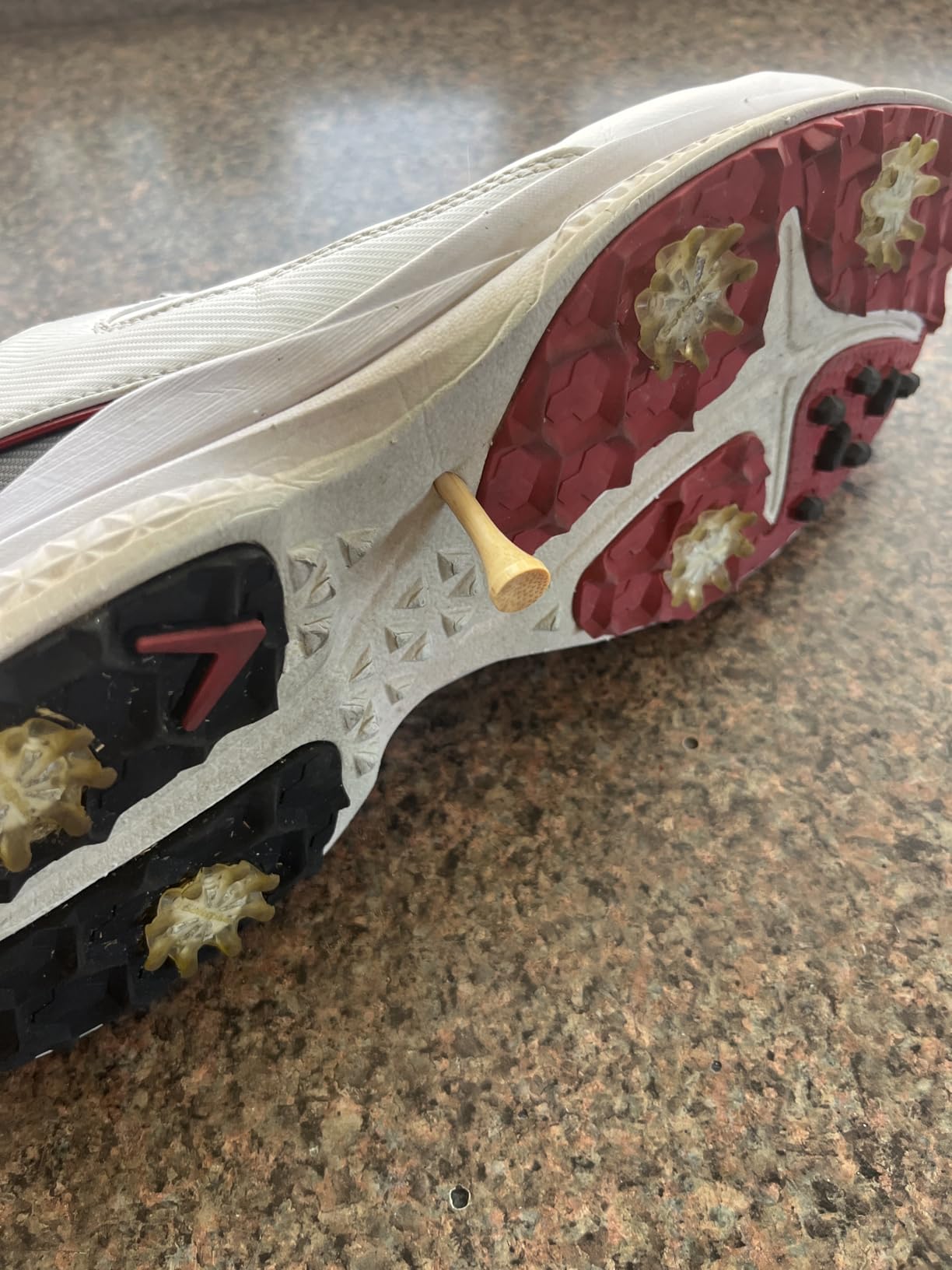
Most walkers should buy spikeless, but there is one situation where spikes still win: a steep, soaked, hilly course where you need the ground to stay put during the downswing. The Solana TRX V3 is the spiked option in this group, and its 5-spike dura-rubber outsole is the reason.
The Forged DX EVA midsole is interesting because it is firmer than most walking midsoles, and that is deliberate. It filters ground feel while still absorbing the repeated impact of walking, so you get stability through the ball without paying for it in fatigue over four hours.
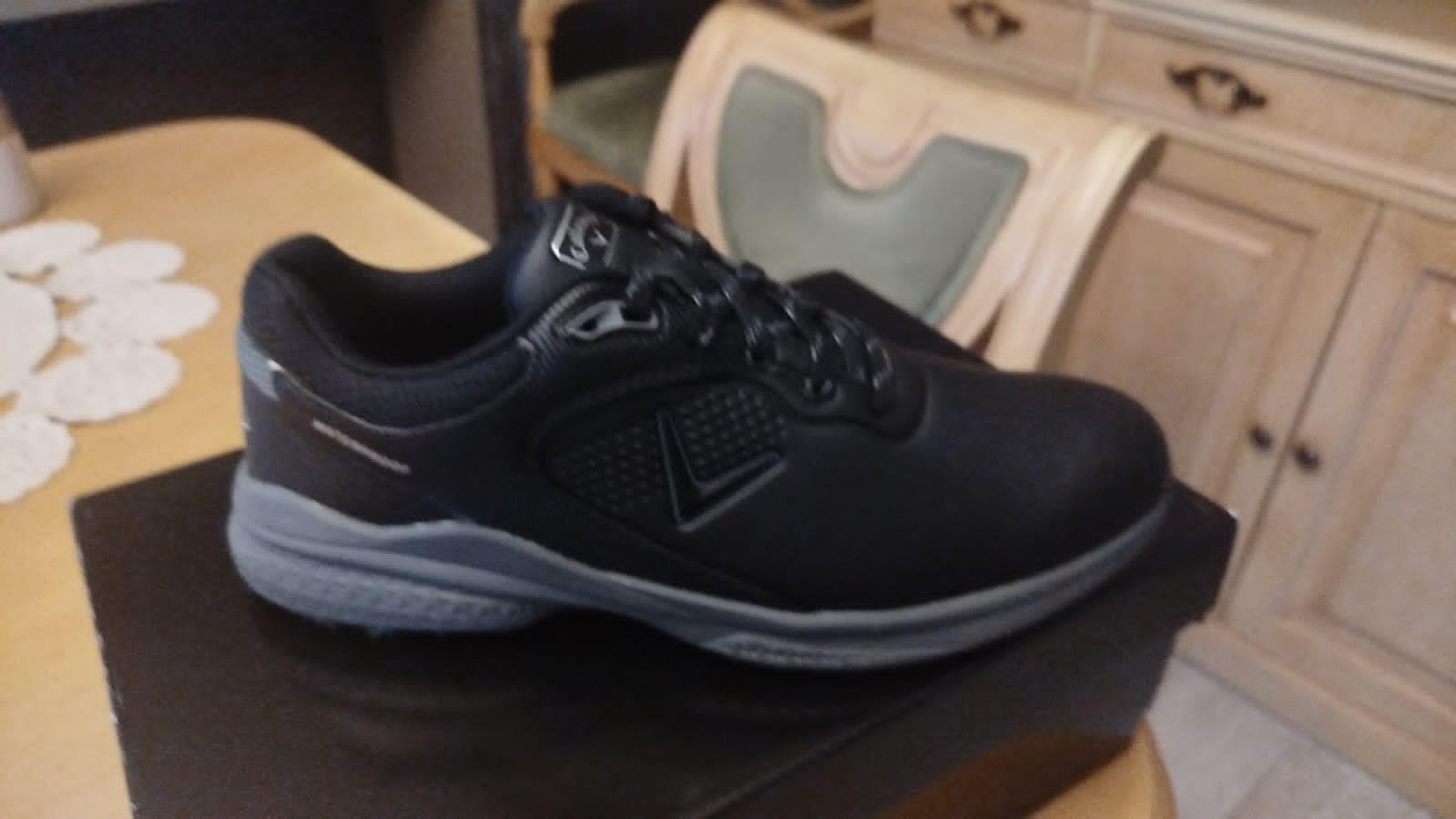
Opti-Dri waterproof protection on the microfiber leather upper comes with a two-year limited warranty, the longest coverage here. Reviewers rate the waterproofing and the stability highly, and report that it holds its grip when the turf is wet and the lie is below your feet.
A 5mm PLUSfoam insole adds the walking comfort layer on top of the midsole. It is a thinner, more targeted cushion than the memory foam options elsewhere on this list, which is the trade you make when stability is the priority.
When a spiked shoe is the right call for a walker
Take the spikes if you play on courses with real elevation, especially in rain or on a winter round when the turf is soft. The 5-spike platform resists rotation far better than any spikeless outsole on a sloping stance, and the difference is obvious within two shots.
It also makes sense if you play on a course where the greens are already hard enough. Spikes add no damage there, and the firm Forged DX EVA midsole keeps the shoe from feeling like a plank underfoot.
Why most walkers should skip it anyway
Pavement is where spikes fail a walking golfer. The same rigid platform that gives you stability will transmit every cart path crack straight into your arch and knee. If your round includes a long walk from the car or a scramble to the next tee box, that adds up quickly.
There is also the practical matter of spikes: you cannot walk on a hard surface without the sound and the marks, and replacing them when they wear adds a running cost. For most amateur golfers walking a normal parkland course, spikeless is the better buy.
7. Skechers Tempo Waterproof: Best for Wet Weather Walking
Tempo Spikeless Waterproof Lightweight Golf Shoe
1-year waterproof warranty
GOGA MAX insole
GRIPFLEX spikeless TPU outsole
Pros
- Reliable waterproofing backed by warranty
- Good spikeless traction in wet conditions
- Lightweight and comfortable for walking
- Easy to clean after a wet round
- Good all-round value
Cons
- Synthetic upper does not breathe as well as mesh
- Limited colour options
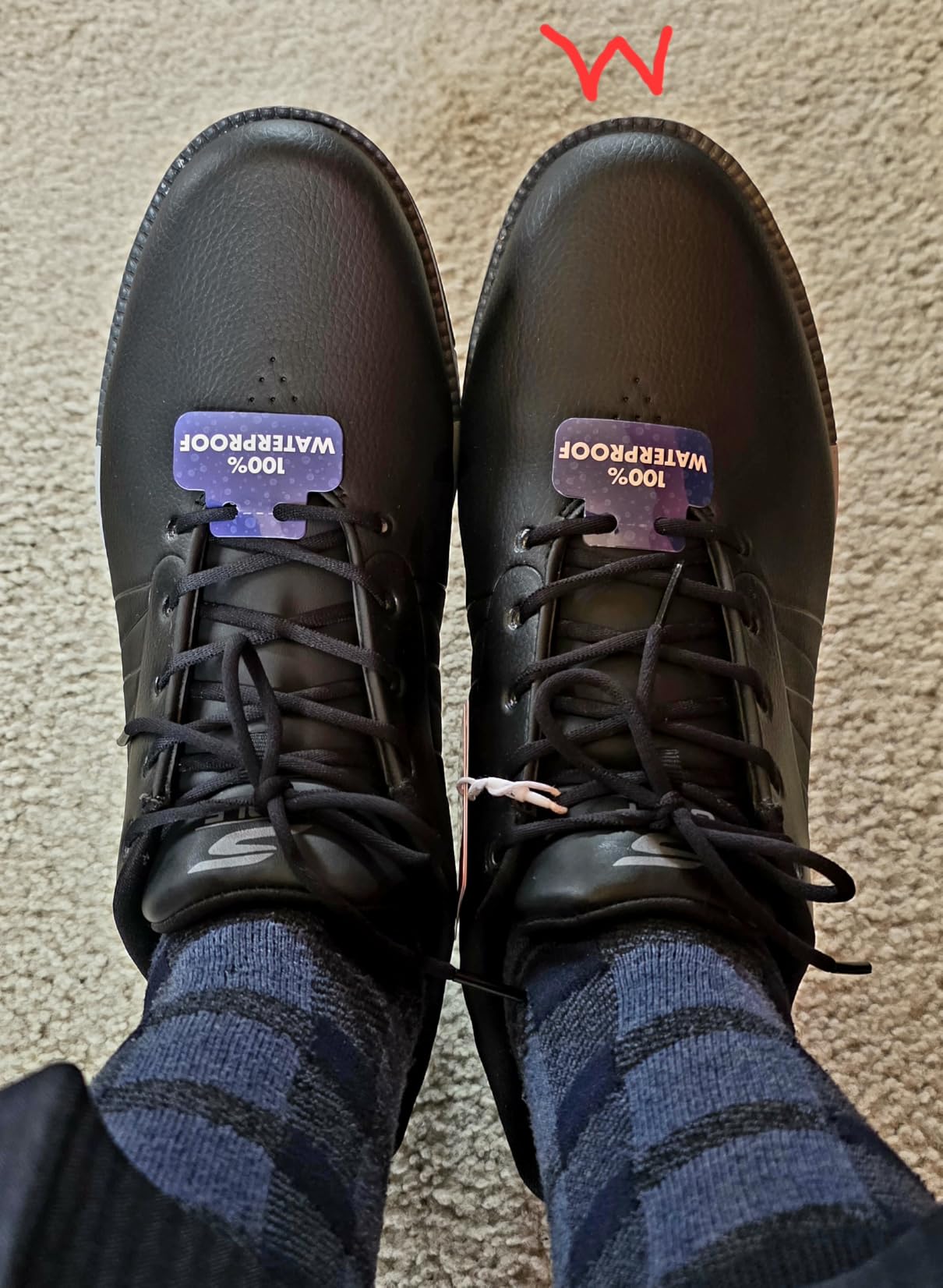
If your calendar is dominated by wet-weather golf, this is the shoe to shortlist first. The waterproof protection carries a one-year warranty, which is the number to check when water resistance fails and you need the maker to stand behind it. The synthetic upper is sealed rather than coated, which is why the claim holds up longer.
ECO FLIGHT cushioning uses over 10% recycled material and stays responsive through a long round. Underneath the foot, the GOGA MAX insole provides the shaped comfort that Skechers put at the heart of its walking range, and reviewers consistently describe the shoe as comfortable over 18 holes.
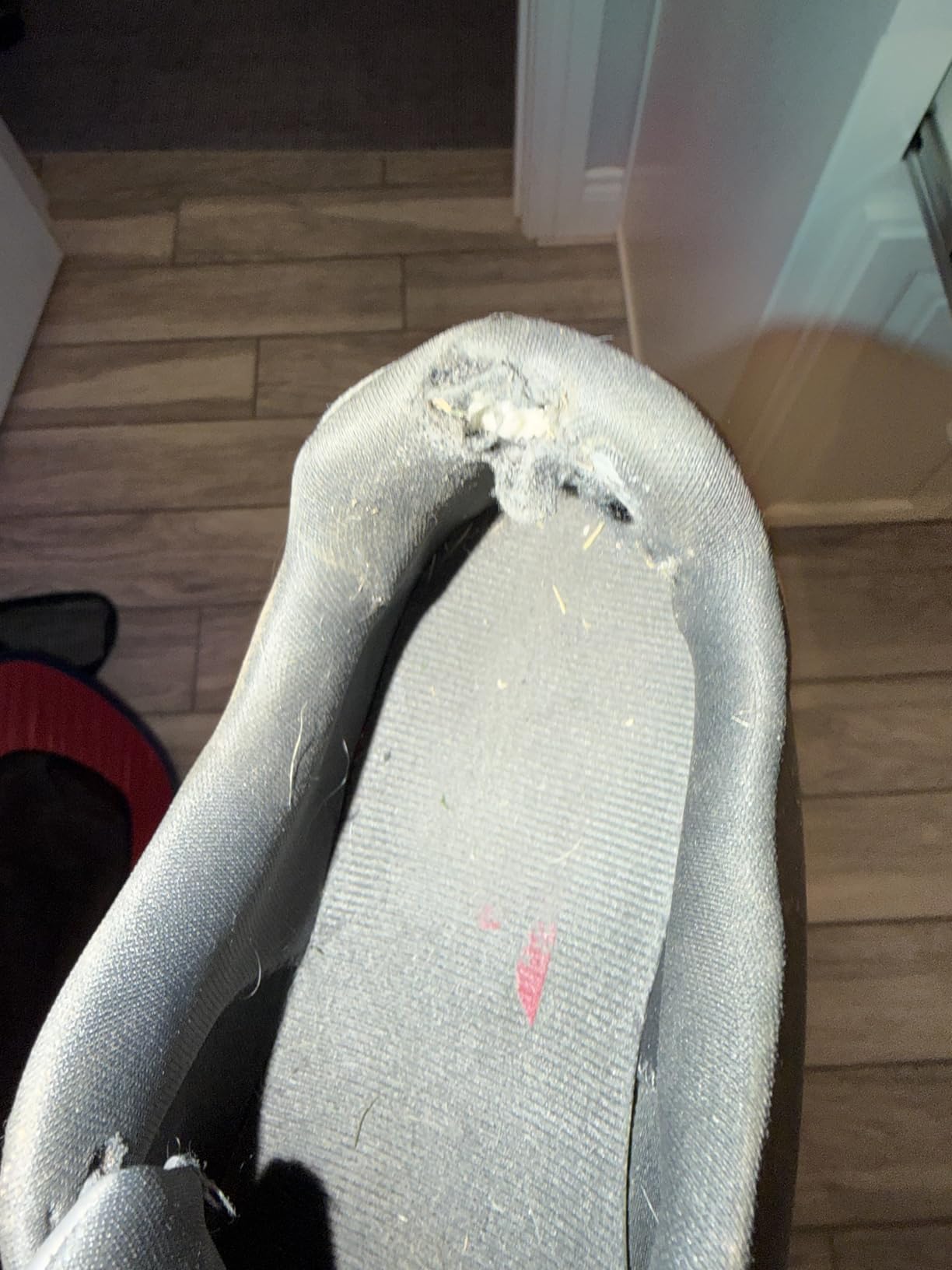
The GRIPFLEX spikeless TPU outsole is designed to hold traction without damaging greens, and it is noticeably better in the wet than a soft foam outsole. On the same slick grass that makes cheaper spikeless shoes slide, this one keeps its footing, and that is a real advantage on a wet winter round.
The lace-up closure is a small thing but a good one: unlike a slip-on, you can adjust the fit through the round if your feet swell, which they will. Nearly 1,100 ratings at 4.6 stars suggests the combination is working for a lot of people.
Why waterproofing matters more for walkers than for riders
A golfer in a cart can stay dry from the waist up. A walking golfer in the same rain gets soaked at the feet, and wet feet plus a long walk is the classic setup for both blisters and a poor finish. Waterproofing removes that risk entirely.
Dew is the underrated case. A round that starts at 7am on a clear morning can soak your shoes through by the 4th hole, and a waterproof pair keeps you in the same socks and the same comfort for the rest of the round.
The trade-off you are making
The synthetic upper does not breathe like mesh. In summer, on a warm and dry day, a breathable shoe will feel better, and that is why this is not our top pick for hot weather. The right approach is to treat waterproof and breathable shoes as a rotation rather than a single purchase.
Cleaning is easier than you might expect, and buyers mention it as a plus. A damp wipe after a wet round keeps the upper from holding odour, and the synthetic finish does not need the conditioning a full-grain leather upper would.
8. FootJoy Pro/SL Golf Shoe: Best for Stability and Wet Turf
FootJoy Men’s Pro/SL Golf Shoe, White/Steel Blue/Peacoat, 11
StratoFOAM heel crash pad
OrthoLite X25 FitBed
Wider toe box on the updated last
Pros
- Excellent waterproof performance
- Built for walking 18 holes
- Outstanding stability on wet turf
- Wider toe box gives toe room
- Easy to clean after play
Cons
- Premium price point
- Short break-in for some feet
- Blue interior can mark light socks at first
The Pro/SL is the shoe in this group that golfers name most often when they describe long-round comfort, and the StratoFOAM heel crash pad is the reason. A crash pad sits exactly where heel strike lands and absorbs the first impact of every step, which is the single biggest source of fatigue across 5 to 6 miles.
Underneath, a lightweight firm EVA forefoot with a nylon spring plate handles the push-off phase. The plate returns some energy and stops the forefoot from folding, so the shoe feels lively on the fairway without turning vague during a swing.
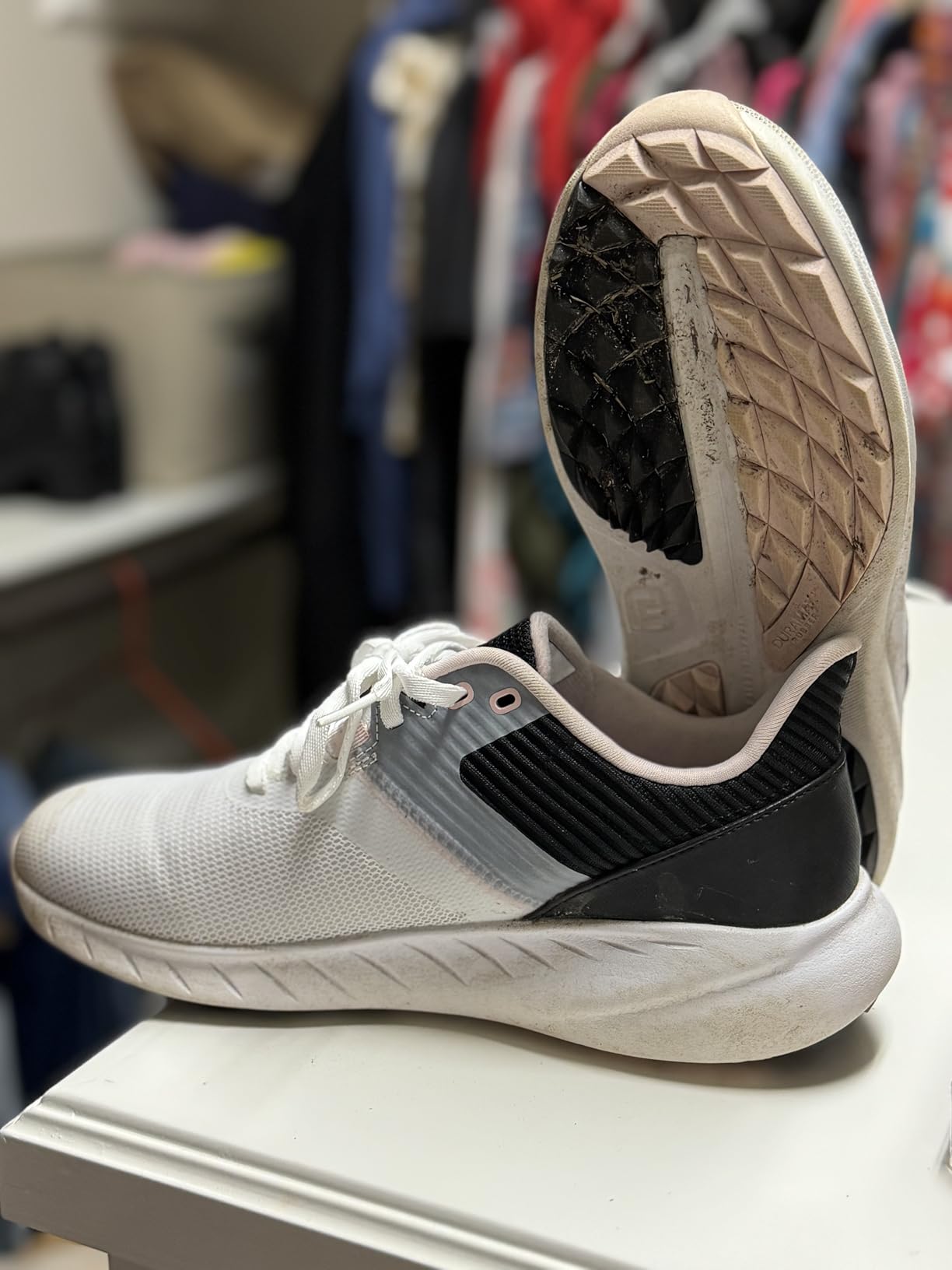
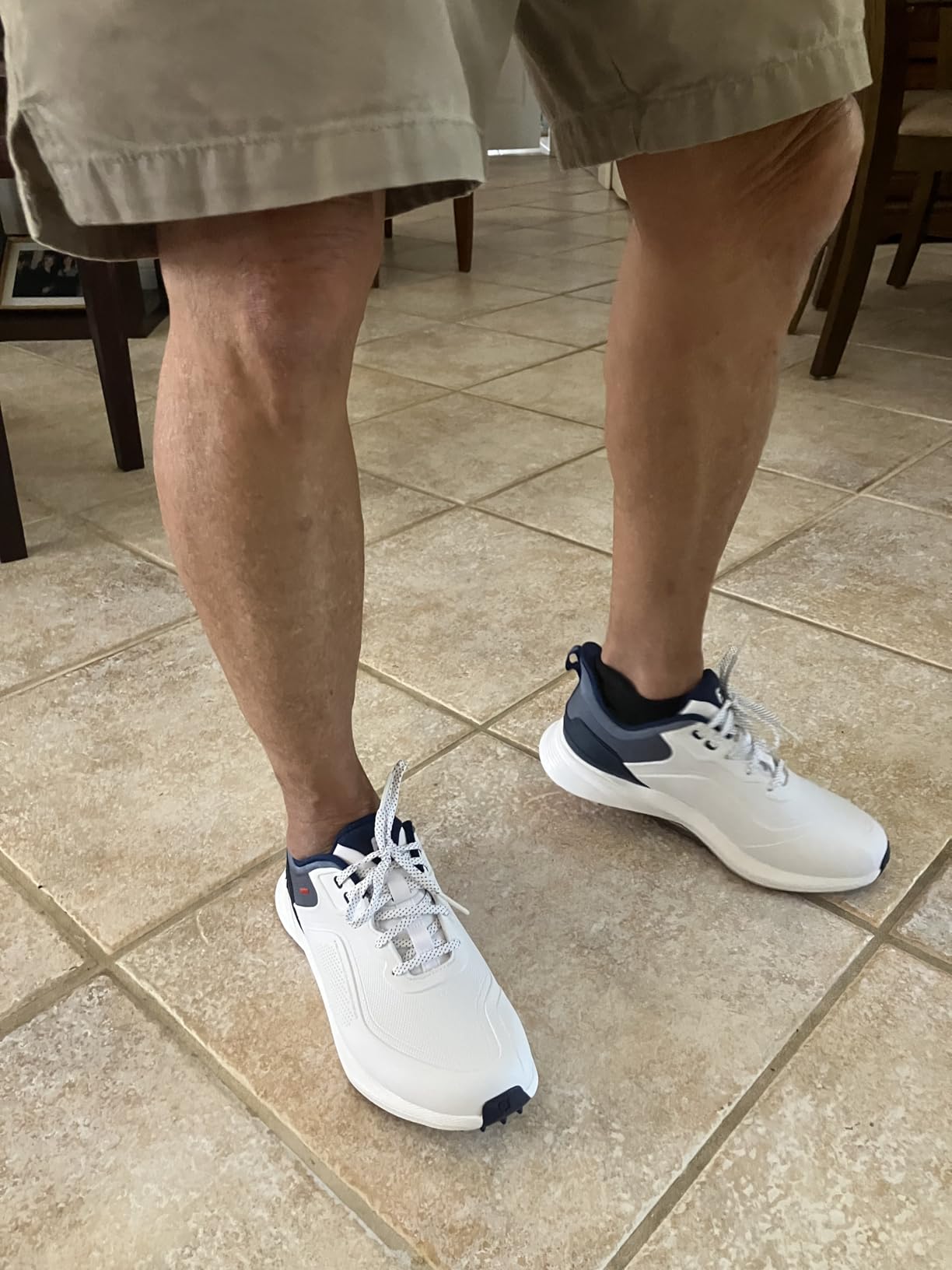
The updated last is a meaningful change for walkers. A wider toe box gives your toes room to spread, and combined with the Z-TEC upper and ARCTrax/SL traction, this is a shoe that stays planted on wet, sloping turf. Reviewers single out the stability in wet conditions as the standout feature.
The OrthoLite X25 FitBed adds shaped support through the midfoot, and the 3D moulded padded ankle collar with breathable mesh keeps the heel locked without the tight, restrictive feel of a stiff collar. That balance is why the Pro/SL works for both walking and swinging.
Why the Pro/SL holds up over a full round
Three things stack up here. The crash pad handles heel strike, the X25 FitBed handles the midfoot, and the wider last handles toe compression. Most comfort shoes solve one of those problems; the ones that survive a round solve all three.
It is also the shoe in this group that regular golfers most often describe as needing no break-in. That matters when you want to play a full round the day you buy rather than the third round after.
What you give up for that stability
This is the most expensive shoe in the roundup, and the premium is real rather than cosmetic. If you play a handful of rounds a year, a mid-tier spikeless shoe will deliver nearly all of the walking comfort at a fraction of the outlay.
There are two smaller notes. Some wearers report a short break-in, mostly around the collar. And the blue interior has been reported as marking light-coloured socks during the first wear, which is an early-only issue but worth knowing about if you wear white socks.
9. Puma Fusion Grip 6: Best for Hot Weather
Puma Golf Men’s Fusion Grip 6 Golf Shoe, Feather Gray-Puma Black-Gum, 9.5
FUSIONFOAM EVA and rubber midsole
Engineered mesh upper
Carbon rubber hex lug outsole
Pros
- Engineered mesh upper keeps feet cool
- Lightweight for long walks
- FUSIONFOAM returns energy through the stride
- Good hex-lug traction on the fairway
- Stylish enough to wear off the course
Cons
- Mesh upper is less durable than leather
- Slip-on collar may not lock as firmly as laces
- Newer model with a smaller review base
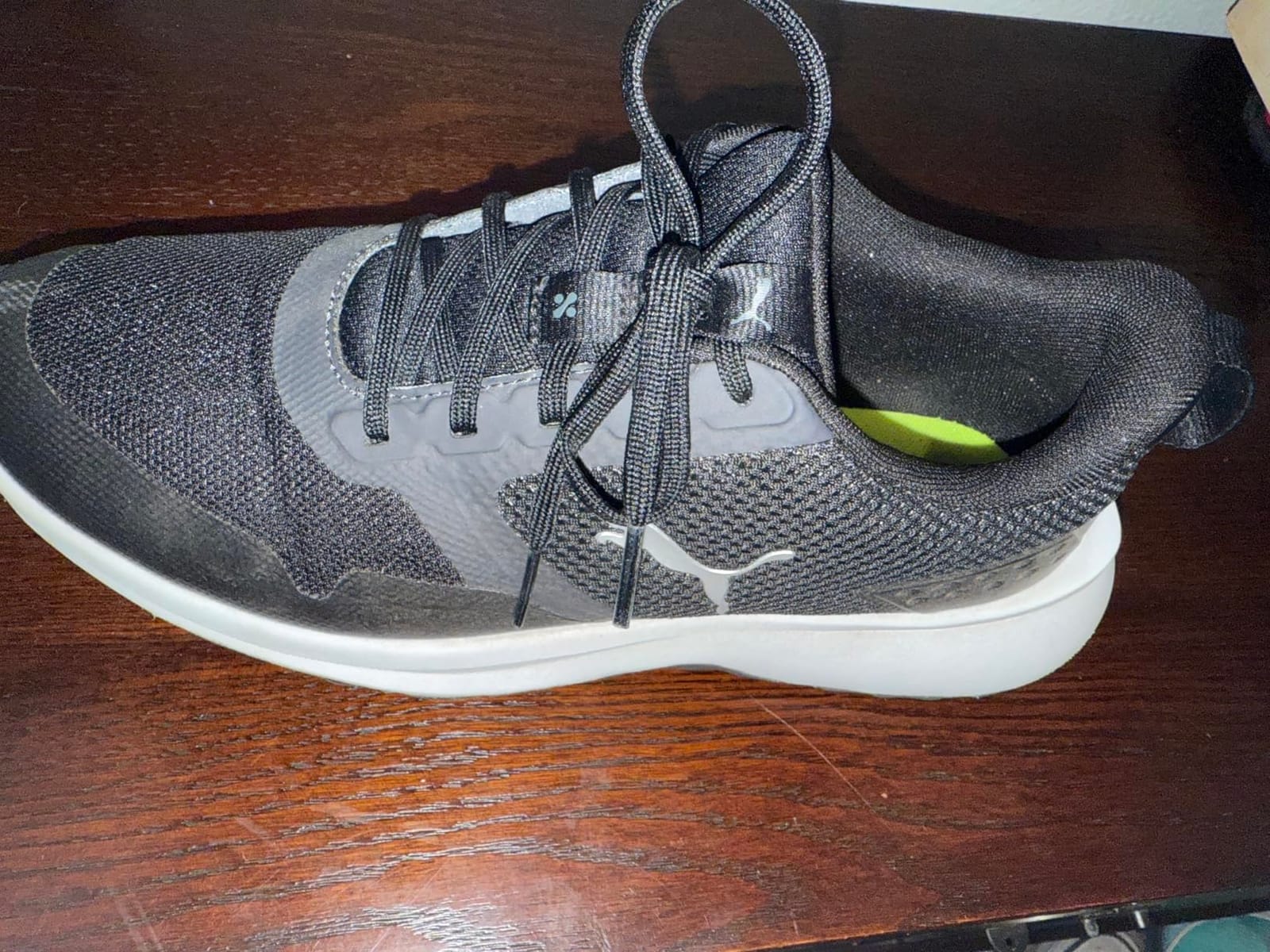
When the forecast says a hot, still summer afternoon and there is no breeze, breathability matters more than waterproofing. The engineered mesh upper on the Fusion Grip 6 is the most ventilated construction in this group, and it is the reason we recommend it for high-summer walking rounds.
The FUSIONFOAM midsole combines EVA with a responsive rubber component, so it absorbs impact on the walk and returns energy through the stride. That combination is why the shoe feels lighter over four hours than its size suggests, and reviewers consistently describe it as comfortable for long rounds.
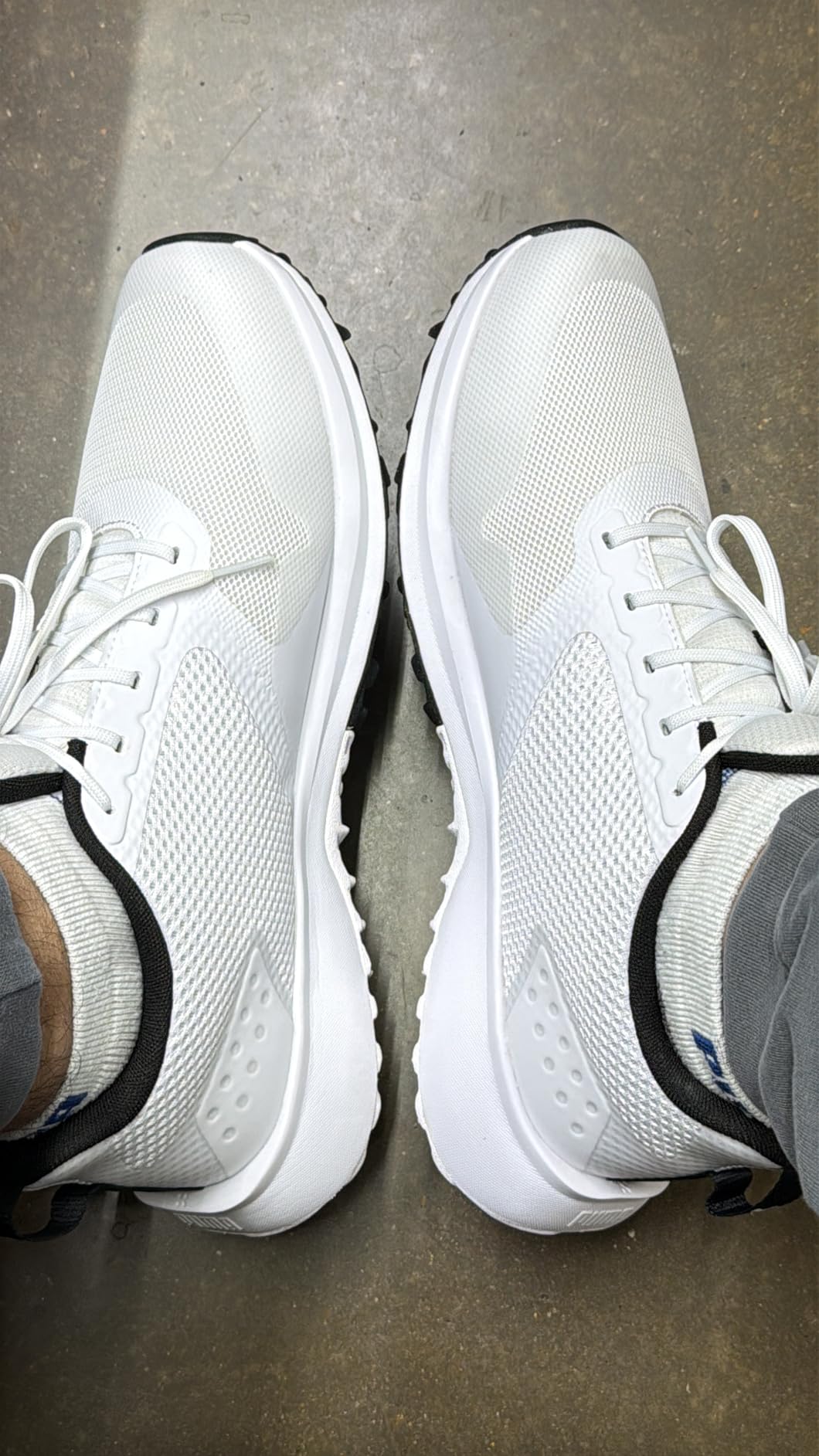
Carbon rubber with a hex lug outsole gives dependable traction across fairway, fringe and light rough. The hex pattern has more edge contact than a smooth outsole, and that matters when you are walking down a hill at the 14th rather than standing still on a tee.
TPU film overlays add lateral support where the swing needs it, and the lace closure with a clean collar means you get a shoe that is easy to get into and out of between holes. Around 600 ratings at 4.5 stars is a solid base for a model that is still building a review history.
Why mesh is the right call in summer
A waterproof membrane keeps rain out and traps sweat, which on a hot day is a trade many golfers regret by the 10th hole. A mesh upper moves moisture outward and lets air through, so your feet stay closer to ambient temperature across five miles of walking.
That is also why this is not the shoe for a wet-weather rotation. Breathability and waterproofing are opposites, and trying to get both from one pair usually means settling for neither at its best.
Where the mesh construction costs you
Mesh wears faster than leather. A number of buyers note that the upper loses structure after heavy use, and the outsole is thinner than a leather-built shoe of the same price. If you play most of your golf in soft conditions, expect a shorter life.
Second, the collar does not lock the heel as firmly as a traditional lace closure on some feet. On a hilly course in the heat, that is exactly when you want the tightest fit you can get, so tighten the laces fully before you tee off.
10. adidas Solarmotion Spikeless Lighstrike 24: Highest Rated in the Group
adidas Men’s Solarmotion Spikeless Lighstrike 24 Golf Shoes, Footwear White/Core Black/Green Spark, 10
Lightstrike super-light midsole
OrthoLite sockliner
Gripmore spikeless traction
Pros
- Highest rating in the roundup at 4.7
- Very light Lightstrike midsole built for walking
- Waterproof upper performs in wet conditions
- Good Gripmore traction
- Excellent wide-fit options and durability
Cons
- Runs tight so size up half a size
- Tongue can press against the ankle
- Colourway has limited lace contrast
This is the highest-rated shoe in the roundup at 4.7 stars, and the Lightstrike midsole is why. It is the lightest cushioning platform adidas puts in a golf shoe, and it delivers the soft landings a walking round needs without the mushy feel that costs you stability on a sloping lie.
Gripmore rubber spikeless traction handles wet grass and uneven lies without the sharpness that harder outsoles bring on pavement. Combined with the waterproof upper, this is a shoe that performs in both directions: it breathes out when it is hot and keeps water out when it is not.
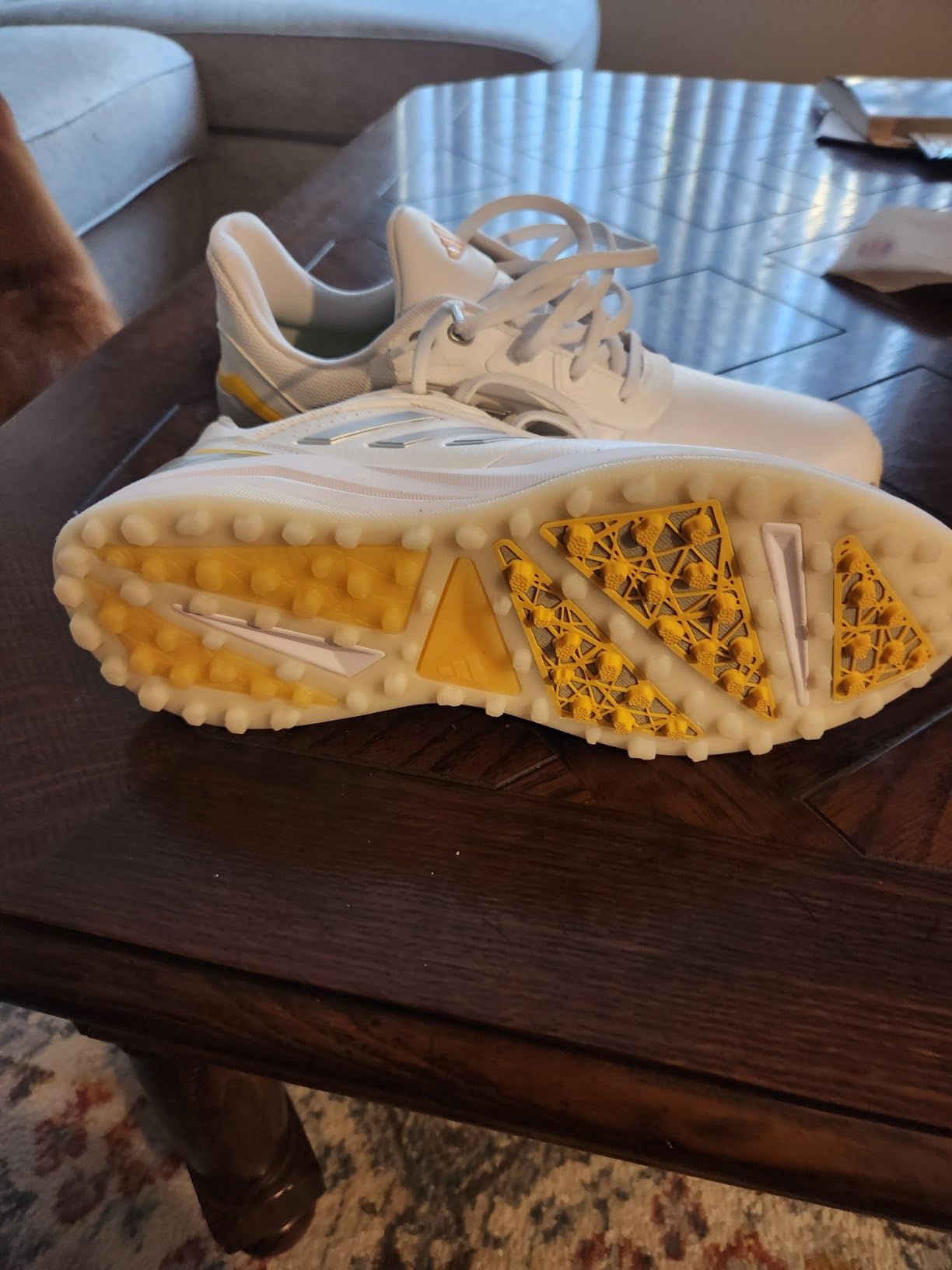
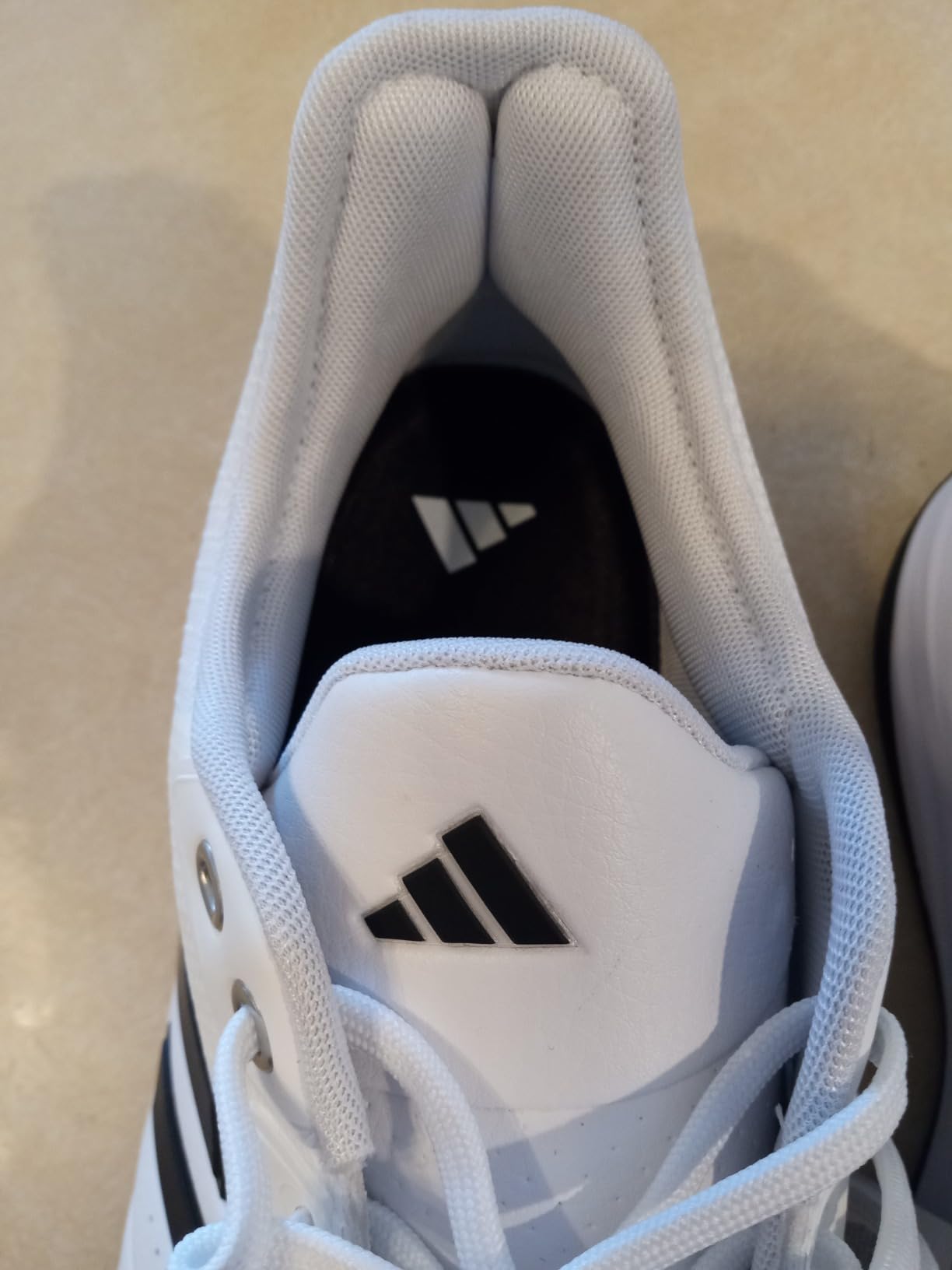
The OrthoLite sockliner adds a second layer of comfort under the heel, and reviewers report excellent long-term durability, which is unusual for a lightweight construction. The adjustable lace closure gives you the option to tighten up across the midfoot as the round goes on and your feet swell.
The rating is high partly because of fit variety. Wide-fit options are available and reviewers confirm the wide version genuinely helps, which matters given the sizing caveat below. This is also the shoe we would pick for a golfer with mid-width or slightly wider feet who wants light weight and waterproofing in one.
Why the Lightstrike midsole is the most interesting technology here
Most walking comfort comes from foam that compresses. Lightstrike is designed to compress and return quickly, so the shoe still feels responsive on the 18th fairway rather than flattening out. That is the difference between a shoe that feels good for nine holes and one that feels good for 18.
It is also the lightest cushioning here, and light weight compounds over 5 to 6 miles. Your feet do more work lifting a heavy shoe, and that work shows up in the heel and the arch by the back nine.
What you need to know before buying
Sizing is the headline issue: this model runs tight, and most buyers recommend going up half a size or more. Wide-foot golfers in particular should take the wide option rather than just going up in length, because going up in length alone can create heel slip.
A few wearers also report that the tongue is long enough to press against the ankle during the swing, and the colourway pairs white laces with an off-white upper, which shows dirt. Neither affects walking comfort, but both are worth checking in person.
What Regular Golfers Actually Report
Five of the top ten results for this topic are forum threads, so we read them before finalising the picks. The consensus is more useful than any single lab test, because walkers report the same problems consistently across brands.
Heel movement is the top blister cause. Across r/golf and GolfWRX discussions, the recurring story is a shoe that feels secure at the first nine and then lets the heel slide. Golfers who switched to a model with a moulded or external heel counter report the problem disappearing. That is why we weighted heel lockdown heavily in the scoring above.
Width beats sizing up. The most common bad purchase described on forums is going up a full size to get a roomier forefoot and ending up with a slipping heel. Golfers who fixed it by moving to a genuine wide or extra-wide model were consistently happier than those who compensated with socks.
Waterproof shoes split the room in summer. The wet-weather consensus is positive: golfers in rainy climates report that waterproof shoes are worth the money. In heat, the same shoes draw complaints about heat and sweat. Rotation is the answer that keeps appearing.
Break-in matters more than brands admit. Forum threads repeatedly warn against buying a new pair days before a big round. A pair that needs two practice rounds to settle should be worn in before it counts.
For a broader look at footwear, our guides to the best men’s golf shoes and the best women’s golf shoes cover the same ground with different lasts.
How to Choose Golf Shoes That Survive 18 Holes
A golf shoe that suits a cart golfer and a walking golfer are not the same product. A walker needs a midsole that resists compression, a heel counter that holds under repeated load, and a sole flexible enough to roll through the stride. A rider can get away with a much firmer, narrower shoe.
Cushioning: choose foam that resists compression
Every shoe here uses a named cushioning technology, and that matters because soft foam that flattens by hole 10 is worse than a firm foam that does not. Look for technologies built around slow-resilient or high-rebound foams: BOUNCE, Lightstrike, FUSIONFOAM, Soft Stride, OrthoLite sockliners and OrthoLite FitBeds all fall into this category.
The test you can run at home is simple. Walk hard across a hard floor for two minutes and then stand still. If the platform under your heel has visibly compressed and feels unstable, the shoe will not last a round.
Fit and width: never size up to solve width
Feet swell over four hours, so a shoe that feels snug in the shop can feel painful by hole 12. You want a secure heel, toes free to move, and no pressure on the widest part of your forefoot. Sizing up adds length everywhere, including at the heel, and creates the slip that causes rubbing.
Most brands run large. Three models here run small enough that buyers recommend half a size up, and one runs wide. Read the fit notes in each section, and if you can, test on a clean indoor surface within the return window.
Spikeless versus spiked: what walkers should know
For walkers, spikeless is nearly always the better buy. Modern spikeless lugs grip wet grass and slopes well enough for normal amateur play, they are far more comfortable on pavement and cart paths, and they are quiet and compliant with green rules. Spiked shoes still win on one thing: a steep, soaked lie, where the platform resists rotation better than any lug pattern.
If your course is hilly, wet and exposed, one spiked shoe like the Callaway Solana TRX V3 is worth owning. For everything else, spikeless is the answer.
Waterproof versus water-resistant
Waterproof means a sealed membrane or construction, usually backed by a warranty; water-resistant means a coating that sheds light drizzle and eventually fails. For walkers in a wet climate, waterproof is worth paying for. For summer play in a dry climate, a breathable mesh upper will keep your feet cooler than any membrane.
Look for the warranty length as the honest signal. A one-year or two-year waterproof warranty tells you the maker expects the barrier to hold across a full season or two of wet rounds.
Weight, arch support and socks
Weight compounds: a shoe that feels fine for nine holes starts to register at the back nine if it is heavy. Where manufacturers publish a per-shoe weight, compare like for like. If you have high arches, a shaped footbed such as an Arch Fit or OrthoLite insert will matter more than midsole softness.
Socks are the cheapest upgrade available to you. Moisture-wicking golf socks with a slight cushion reduce friction at the exact points where blisters start, and they cost far less than a pair of shoes. If you are prone to heel blisters, consider a spare pair at the turn, and check your heel counter before you blame the shoe.
Break-in, care and when to replace
Buy new walking shoes at least a week or two before you need them, and wear them on a short round first. Break the lacing in gradually, and confirm the heel does not lift at address.
Replace when the outsole lugs wear smooth, the midsole compresses under your heel, the heel counter stops holding, or a waterproof shoe finally lets water through. Do not replace on a calendar. If you want to compare walking comfort across other categories, our best women’s walking shoes guide covers the same testing approach for daily use.
If you also spend time walking on the course without a club, indoor walking matters too, and our best walking pad treadmills guide covers that side of it.
Frequently Asked Questions
How many miles on average is walking 18 holes of golf?
Roughly 5 to 6 miles, taken over about four hours. Most of that distance is on fairway, rough and cart path rather than tee-to-green distance, which is why shoe comfort matters more than any other gear choice on a walking round.
What are the comfiest golf shoes for walking?
The adidas Solarmotion Lighstrike 24 rates highest at 4.7 stars thanks to its light Lightstrike midsole, and the FootJoy Pro/SL is the most-cited model by regular walkers for its StratoFOAM heel crash pad. For pure value comfort, the Skechers Max Fairway 3 Arch Fit is hard to beat.
Do any PGA pros wear spikeless golf shoes?
Yes. The majority of tour players now play in spikeless models, and the grip difference on normal courses has narrowed to almost nothing. Spikes still hold an edge only on steep, soaked layouts where the ground needs to stay completely still under the clubhead.
Are spikeless golf shoes better for walking 18 holes?
For most golfers, yes. They are lighter, more flexible on pavement and cart paths, and modern spikeless lugs grip wet grass and slopes well enough for normal play. Spiked shoes only pull ahead on very steep, rain-soaked courses.
Should walking golf shoes fit tightly?
Secure but not tight. You want the heel locked in place and toes free to spread, with no pressure at the widest part of the forefoot. Remember your feet swell over four hours, so a shoe that feels snug at the counter can feel painful by hole 12.
How long should walking golf shoes last?
Replace them when the outsole lugs wear smooth, the midsole compresses under the heel, the heel counter stops holding, or a waterproof shoe starts letting water in. There is no fixed schedule; twice-weekly walking golfers will notice midsole compression before a casual player does.
Conclusion
The best golf shoes for walking 18 holes are spikeless shoes with a compression-resistant midsole, a locked-down heel counter, a roomy toe box and a weight that stays manageable over 5 to 6 miles. Our winner, the adidas S2G ’24 Spikeless, delivers that combination with a waterproof ripstop upper, an OrthoLite sockliner, a moulded TPU heel clip and more than 2,500 ratings behind it, at a listed 13.6 ounces per shoe.
Match the shoe to the problem you actually have. Take the Skechers Max Fairway 3 Arch Fit if your feet need a shaped footbed or custom orthotics. Take the FitVille Extra Wide if width across the forefoot is the issue, and never fix width by going up a full size. Take the Skechers Tempo Waterproof or the FootJoy Pro/SL if wet turf and stability come first, the adidas Solarmotion Lighstrike 24 if you want the highest rating and the lightest midsole, the Puma Fusion Grip 6 if summer heat is the constraint, and the Callaway Solana TRX V3 only if your course is steep and soaked.
Then wear them in before you need them, wear good socks, and check the heel hold at address before the first tee. Those three habits matter as much as the shoe.