
If you have been reading roundups about the best touring kayaks for ocean paddling and wondering why almost every one of them describes the same four boats, there is a reason. The short answer is that the most capable expedition touring kayaks are almost never the ones that show up in online roundups, because they are sold through small dealers, built in short runs, and priced out of most comparison lists. What you get instead is a shelf full of rotomolded polyethylene boats and a growing pile of drop-stitch inflatables.
We spent the last several weeks reading spec sheets, warranty terms, and owner feedback on every model we could verify, then lined them up against the question that actually matters: can this boat handle real coastal water, or is it a flat-water tourer with a spraydeck? This list is honest about that line. Some boats here are genuinely open-water capable. Some are coastal-exploration boats. A couple are not ocean boats at all, and we say so plainly instead of rounding them up.
One thing to set expectations early. The lineup below is hard-shell polyethylene and drop-stitch inflatable, with no carbon or Kevlar touring kayaks in it. That is a real limitation and we would rather name it than hide it. Composite hulls are the fastest way to cut a boat weight, and weight is what you feel at the end of a four-hour paddle into a headwind. If that trade is worth making for your trips, this is not the last word on the subject. If you want one boat that starts at the beach, ends at the beach, and lives in a garage between trips, this is a strong short list. Our broader breakdown of the best kayaks overall is a better starting point if you are still working out which category you are even shopping in.
Table of Contents
Top 3 Picks for Ocean Paddling (October 2026)
Three boats stood out once we sorted the list by the things that matter offshore: load capacity you can actually use, a hull that stays predictable in chop, and enough directional control to hold a line in wind. The Sea Eagle 380X Explorer carries the most usable load in the list. The RazorLite 393RL is the one that disappears into a backpack, at 35 pounds and 12 foot 10 inches. The Wilderness Systems Tsunami 140 is the best hard-shell touring kayak in the group, with sealed bulkheads the inflatables cannot match.

Sea Eagle 380X Explorer
- 12 ft 5 in tandem inflatable
- 750 lb capacity
- Rigid drop-stitch floor
- Removable swept-back skeg

Sea Eagle RazorLite 393RL
- 12 ft 10 in drop-stitch solo
- 35 lb hull weight
- Three air chambers at 10 PSI
- Removable skeg

Wilderness Systems Tsunami 140
- 14 ft polyethylene hard shell
- 325 lb capacity
- Two sealed bulkheads
- Phase 3 AirPro seat
Best Touring Kayaks for Ocean Paddling at a Glance in 2026
The table below is the whole list, in one place, with the details that decide whether a boat belongs on your coast. We have listed capacities exactly as the manufacturers state them. Read them with the derating rule in mind: once you and your gear are aboard, stay at or below roughly 60 to 65 percent of the listed number, because the last part of that rating is what keeps the hull tracking. Ocean suitability in our view is a rough grading of how much water these boats can take, and we explain the reasoning for each one in the review below.
| Product | Specifications | Action |
|---|---|---|
| Sea Eagle 380X Explorer |
|
Check Latest Price |
| Sea Eagle RazorLite 393RL |
|
Check Latest Price |
| Wilderness Systems Tsunami 140 |
|
Check Latest Price |
 Wilderness Systems Tempest 165 Wilderness Systems Tempest 165 |
|
Check Latest Price |
 Wilderness Systems Tsunami 145 Wilderness Systems Tsunami 145 |
|
Check Latest Price |
 Perception Carolina 12 Perception Carolina 12 |
|
Check Latest Price |
 Perception Cove 14.5 Perception Cove 14.5 |
|
Check Latest Price |
 Sea Eagle 300X Explorer Sea Eagle 300X Explorer |
|
Check Latest Price |
 Perception Expression 11.5 Perception Expression 11.5 |
|
Check Latest Price |
Sea Kayak vs Touring Kayak: Why Ocean Paddling Needs the Sea End
A touring kayak is generally 11 to 14 feet, built for day trips on sheltered water, with modest storage and no sealed bulkheads. A sea kayak is 14 feet and up, built with a long waterline, a hull with enough volume to stay stable in chop, two sealed bulkheads so a swamped boat still floats, and a rudder or skeg to hold a line in wind and current. Those three additions, bulkheads, directional control, and a hull shaped for coastal conditions, are what you are paying for. Ocean paddling needs the sea end of the spectrum, and the difference is capability rather than length alone.
Sellers and reviewers use the words ocean kayak, sea kayak, and touring kayak interchangeably, which is where most of the confusion in this category comes from. Our rule for the rest of this article is simple. If a boat lacks sealed bulkheads, it is not an open-water boat no matter how long it is. If it lacks directional control, it will not hold a line in a crosswind. And if the cockpit is a low-volume touring design, getting back in after a capsize in a swell is harder than it should be.
1. Sea Eagle 380X Explorer: The Load Hauler for Two or Three Paddlers
Sea Eagle 380x Inflatable Kayak with Pro Package
Length: 12 ft 5 in
Width: 39 in
Weight: 40 lbs
Capacity: 750 lbs
Pros
- 750 lb capacity suits two adults plus real gear
- Rigid drop-stitch floor stays solid in boat wakes
- Removable swept-back skeg for open water tracking
- Inflates in about 8 minutes and packs into a backpack
Cons
- PVC seams need care in sustained heat
- Large packed bag despite the backpack claim
- Heavier than solo inflatables at 40 lbs
This is the boat we kept coming back to. The 380X Explorer is a 12 foot 5 inch tandem inflatable rated to carry two to three adults, and its 750 pound capacity is the highest listed in this group. Apply the derating rule and you still land around 490 pounds of usable load, which in practice means two adults, a full dry bag of camping gear, and a week of food without the hull feeling loaded.
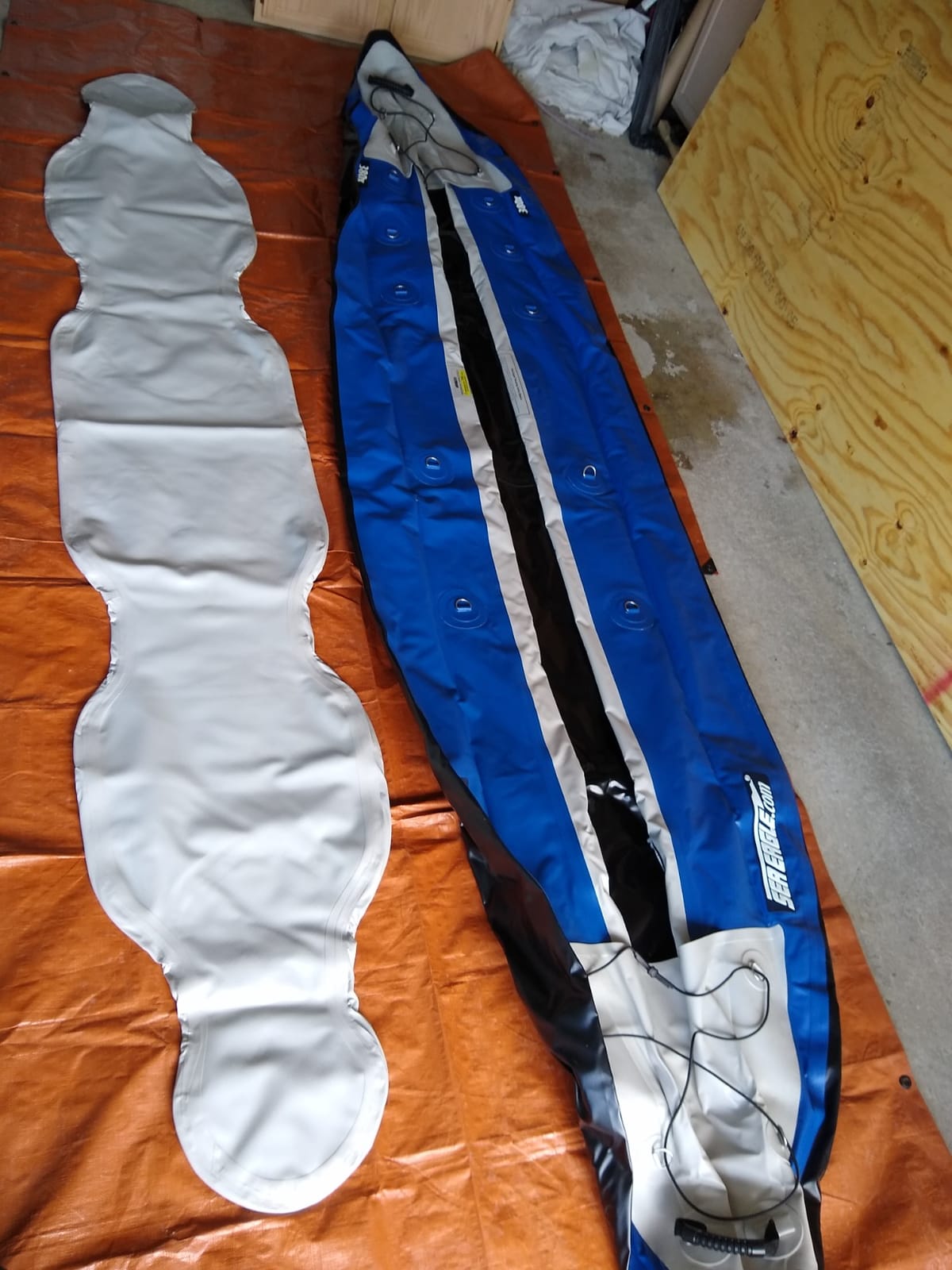
What makes that capacity work offshore is the floor. The rigid drop-stitch floor inflates to 10 PSI and gives you a platform you can stand on, which matters far more than it sounds when you are landing on a sandbar in a following sea. Reviewers repeatedly single out how planted the boat feels in heavy wakes, and the 39 inch beam gives a lot of that stability independently of the floor. Sixteen self-bailing drain valves with threaded caps keep water out on moving water, and the removable swept-back rear skeg is genuinely useful in a crosswind on an open crossing.
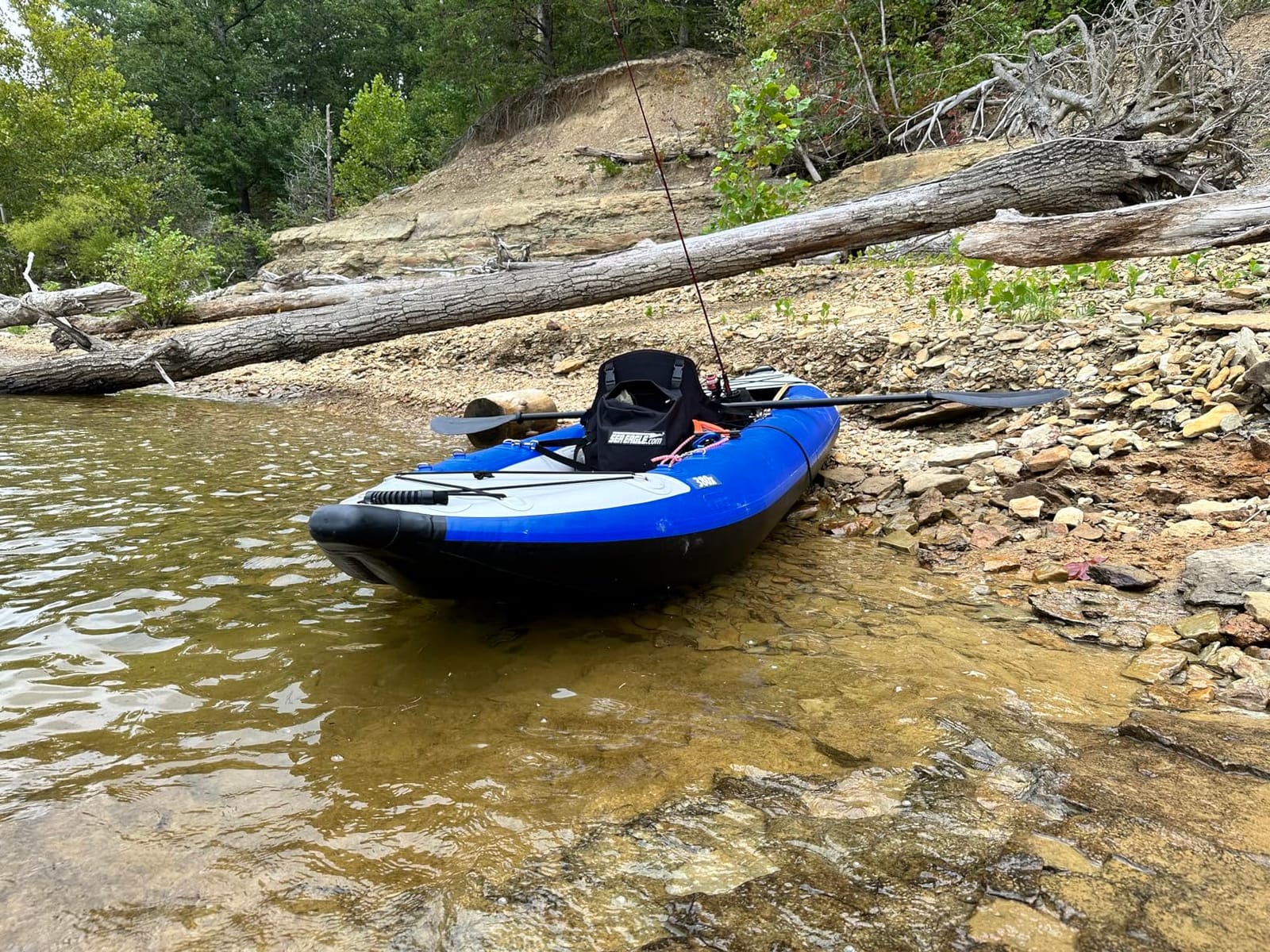
The honest limitation is the material. The hull is 1000 denier reinforced PVC with quadruple-overlapped glued seams, and owners in hot climates report long-term durability concerns with that construction. Keep it out of a hot car boot in summer and shade it when it is inflated, and you will get years out of it. The second limitation is packed size. Forty pounds is not a solo carry over a shoulder for a full day, and the packed bag is still bulky.
Our verdict is that this is a very capable ocean boat for anyone who can accept an inflatable hull. It will not slice through water the way a 16 foot composite does, and it does not have the flotation confidence of sealed bulkheads. But for two paddlers carrying a real camp, hauling gear over a boat ramp, and storing the boat in a small garage, nothing else here matches it.
Who this boat suits
If you are a pair paddling multi-day coastal trips with heavy gear, this is the boat. The 750 pound rating gives you genuine margin, which means you can carry water, food, and a tent without pushing the hull past the point where tracking falls apart.
It is also the right pick for anyone who wants one boat for rivers, lakes, and coast. The manufacturer rates it for Class IV rapids, so if part of your year is whitewater and part is open water, the versatility is real rather than marketing.
Who should skip this boat
Skip it if you paddle cold northern water in autumn and expect the boat to be your last line of defence. There are no sealed bulkheads, so a swamped inflatable has to be pumped out, and that is a very different experience from a floating hard shell.
Skip it if storage space is already tight. The packed bag is genuinely large, and if you cannot find room for it, the convenience evaporates quickly.
2. Sea Eagle RazorLite 393RL: The Only Boat Here You Can Solo Carry
Sea Eagle 393RL RazorLite Inflatable Kayak Pro Package
Length: 12 ft 10 in
Width: 28 in
Weight: 35 lbs
Capacity: 500 lbs
Pros
- 35 lb hull weight is half of a comparable hard shell
- Packs into a backpack so no roof rack is needed
- Inflates in about 7 minutes
- Open cockpit makes entry and exit simple
- Removable skeg tracks well in light chop
Cons
- Feels tippy for beginners without active balance
- Water hides in the seams and is hard to dry
- Manual pumping to 10 PSI is exhausting
The RazorLite 393RL is 12 feet 10 inches, weighs 35 pounds, and packs into a backpack. That last fact changes what kind of trip you can plan. A beach launch with no car park, a rocky shoreline, a campground reached on foot, a ferry, an airline, or simply a small flat where you cannot hang a 14 foot hard shell on the ceiling, all of these become possible with this boat and painful without it.
The hull is 1000 denier drop-stitch throughout, with three separate air chambers that each inflate to 10 PSI, and patented rigid bow and stern moulds that help it cut through chop. Owners report speeds up to 5 mph and the ability to keep pace with 13 and 14 foot hard shells. Three chambers is the number that matters most here, because it means a puncture in one chamber still leaves you with a usable boat rather than a swim.
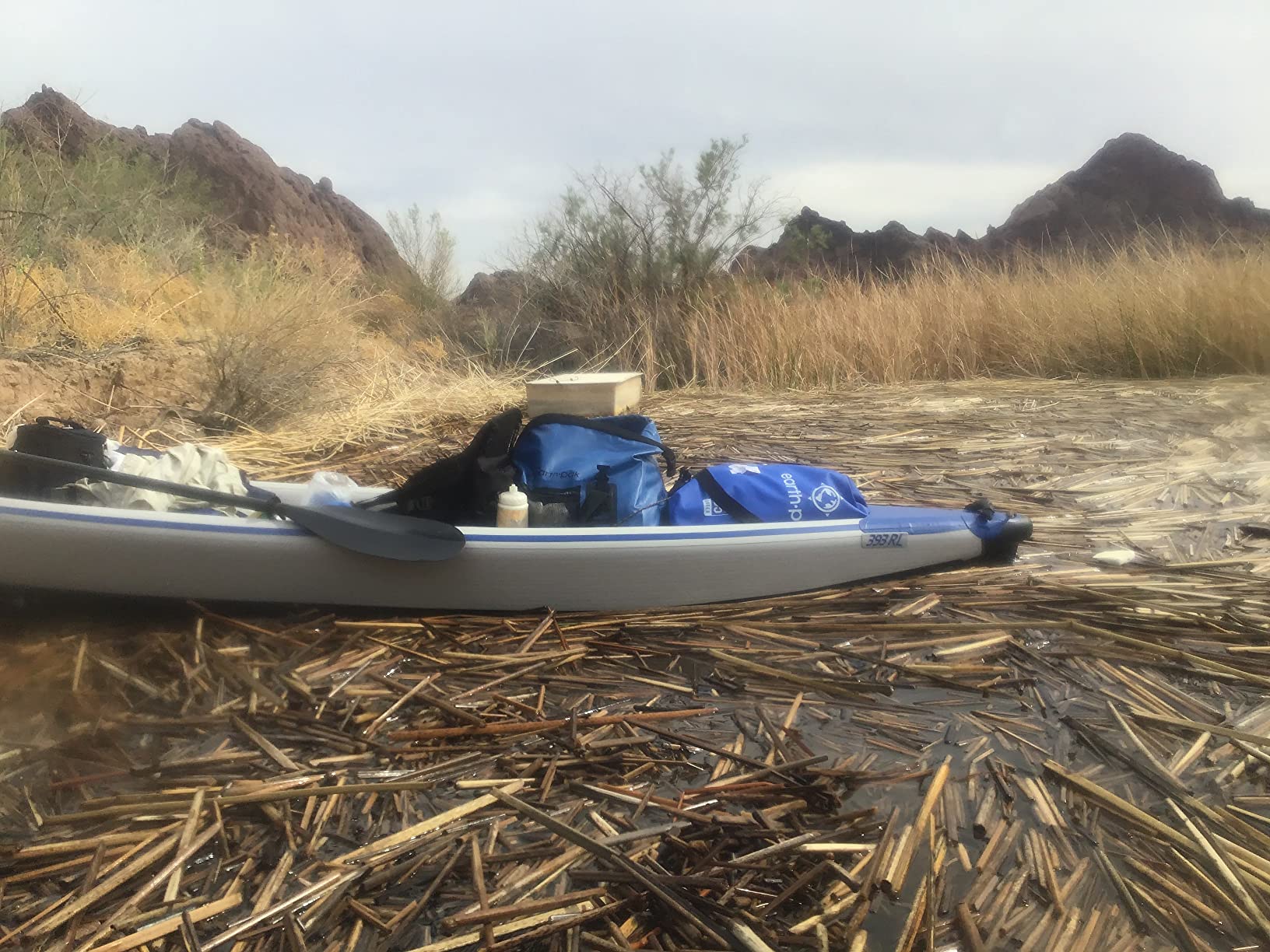
The trade-offs are real. At 28 inches wide with a high seating position, reviewers describe it as tippy for anyone without active balance, and it is not a boat to hand to a first-time paddler. The open cockpit is a genuine advantage for entry and exit, but it is also a splash risk in a following sea. Pumping it to 10 PSI by hand takes real effort, and an electric pump is worth the extra kit weight.
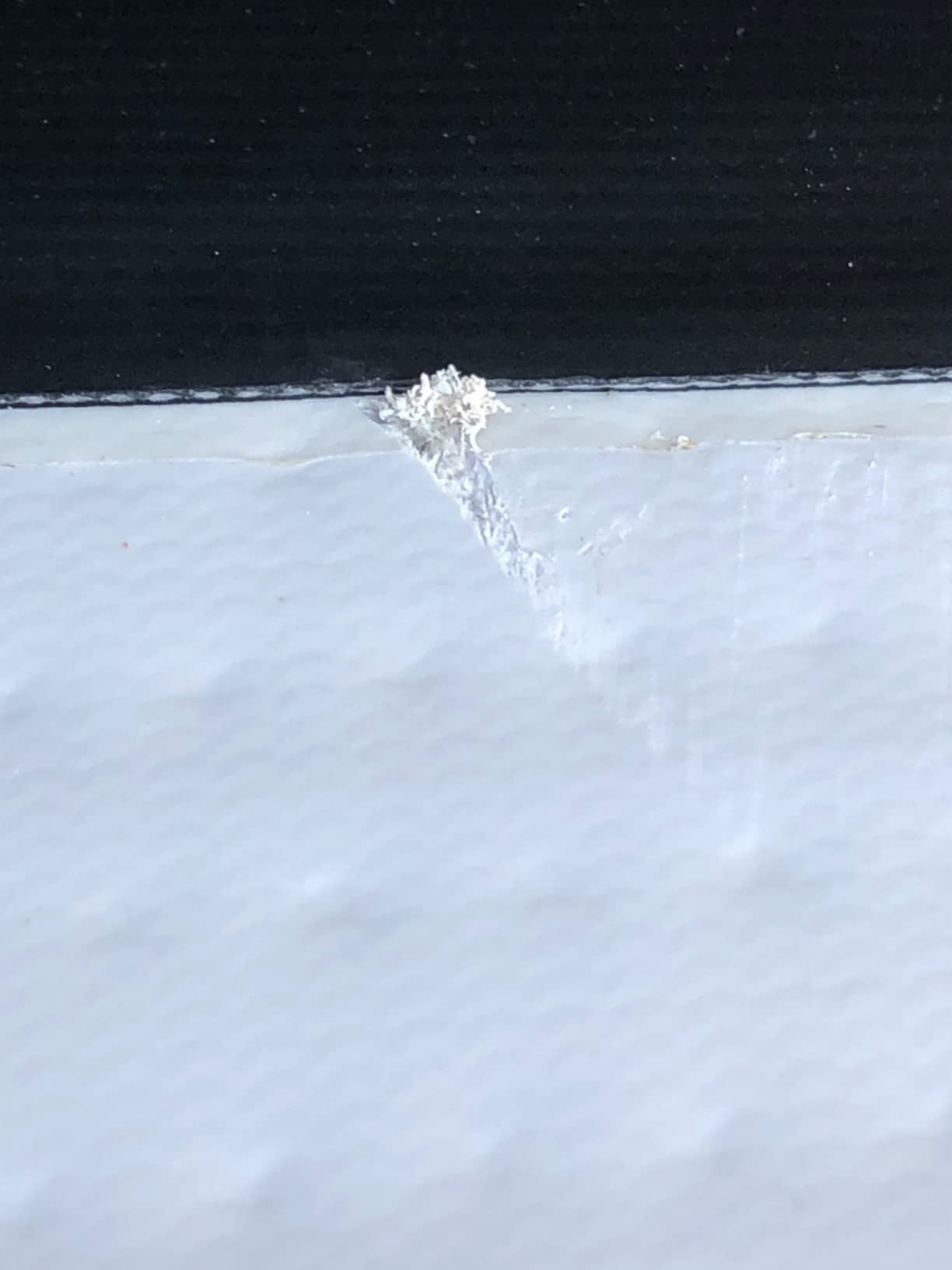
Drying is the chore nobody mentions in the marketing. Water hides in the creases after a paddle and getting the hull fully dry before storage takes longer than you expect. Seam leaks after three or four years of service in hot climates are also reported, and it is not a boat we would leave inflated in direct sun.
Who this boat suits
Solo paddlers who launch from beaches, small water, and remote shorelines will get a lot out of this boat. At 35 pounds, carrying it 300 metres across soft sand is a chore rather than an event.
It is also a strong option here for mixed water. A short sea crossing in settled conditions, a lake chain, an estuary, or a sheltered bay all suit a boat this quick to set up and this easy to stow.
Who should skip this boat
Skip it if you are heading into genuine open water with a load of camping gear. The 500 pound rating sounds generous for a boat this light, but usable load above roughly 300 pounds changes the handling completely.
Skip it if capsize recovery in a swell worries you. An open cockpit is easy to enter, and equally easy to flood. There is no sealed bulkhead protecting the hull from a following sea.
3. Wilderness Systems Tsunami 140: The Best Hard-Shell Touring Kayak Here
Wilderness Systems Tsunami 140 | Sit Inside Touring Kayak | Multiple Storage Options – Phase 3 Air Pro Seating | 14′ | Mango
Length: 14 ft
Beam: 25.5 in
Weight: 53 lbs
Capacity: 325 lbs
Pros
- Sealed bulkheads trap air so a swamped hull still floats
- 14 ft waterline tracks well without feeling twitchy
- Phase 3 AirPro Tour seat with adjustable back strap routing
- Two mesh deck gear pockets for wet kit
Cons
- 53 lb is heavy for a solo carry over soft ground
- Boat length will not fit most pickup beds
- No retractable skeg listed in the specification
The Tsunami 140 is the most convincing hard-shell touring kayak in this group, and the reason is the pair of storage hatches and sealed bulkheads. A hard shell with sealed bulkheads does not fill when it capsizes. It floats with its bow and stern compartments in the air, which converts a swim into a slow, wet, recoverable situation rather than an emergency. Every inflatable on this list lacks that protection, and it is the single biggest difference between the two boat types.
Underneath, it is a straightforward 14 foot polyethylene tourer with a 25.5 inch beam and a 325 pound listed capacity. Owners praise the speed, which comes from the long waterline relative to the beam, and the Phase 3 AirPro Tour seat, which has adjustable back strap routing so you can dial the support in for a long day. Slidelock XL foot rests and adjustable padded thigh braces make it adaptable to a range of body sizes, and the ratings skew strongly positive with 73 percent five-star feedback.
Two mesh gear pockets on deck are more useful than they sound, because they are the right home for wet kit, a paddle float, and anything you do not want loose in a cockpit. The under-deck water bottle holder is a nice touch for a boat you will be out all day. The 5 year warranty is standard for the brand and reasonable for polyethylene.
What you give up is weight. Fifty-three pounds is realistic for a 14 foot hard shell, and it means a kayak cart is not optional on a grassy or sandy approach. It also means a partner or a good shoulder technique. At 14 feet it will fit inside most midsize SUVs with the seats down, but it will not lie flat in the bed of a standard pickup, which is the transport limit for anyone who does not own a rack.
Who this boat suits
A solo paddler doing day tours and overnights on a sheltered coast or a large lake with wind will be very happy here. The sealed bulkheads and a real touring waterline are the right combination for island hopping in fair conditions.
It also suits anyone who wants one boat for fresh and salt water, since the hull does not care which one it is floating on. If you can get to the launch, the 140 is a genuinely capable tourer.
Who should skip this boat
Skip it if your plan involves surf-zone landings, rock gardens, or exposed crossings. A 14 foot polyethylene hull with modest rocker is at its limit in a following sea, and there is no retractable skeg in the specification to help you hold a line in a beam wind.
Skip it if you cannot get help or a cart to the water. Carrying 53 pounds across a rocky beach alone is where a lot of kayaking injuries actually happen.
4. Wilderness Systems Tempest 165: Long Waterline and a Genuinely Narrow Beam
Wilderness Systems Tempest 165 | Sit Inside Touring Kayak | Adjustable Skeg – Phase 3 Air Pro Seating | 16′ 6″ | Breeze Blue
Length: 16 ft 6 in
Beam: 21.5 in
Weight: 55 lbs
Adjustable skeg
Pros
- 16 ft 6 in waterline gives real open crossing speed
- Owners rate the handling and tracking among the best in any construction
- Adjustable skeg works at partial settings in side wind
- Handles 2 to 4 ft waves confidently
Cons
- 21.5 in beam is unstable for a novice
- 55 lb is a two-person carry
- Low review count limits owner feedback
The Tempest 165 is built for long open-water distances, and it is also the least forgiving. Sixteen feet six inches of length with a 21.5 inch beam is a real touring sea kayak shape, closer to what you would find on a multi-day open crossing than anything else here. Owners describe the handling and tracking as among the best they have experienced in any hull material, and report it handling 2 to 4 ft waves with confidence when it is being paddled properly.
The adjustable skeg is the feature that separates it from the Tsunami models. It can be set at partial deployment, around half to two-thirds, which lets you dial in the amount of resistance to leeway in a side wind rather than choosing between full skeg and none. In a following sea you can lift it entirely, which is exactly when a skeg can bite. The Phase 3 Air Pro seat also draws praise for its padding, and the limited lifetime warranty on hull and deck is among the strongest in the group.
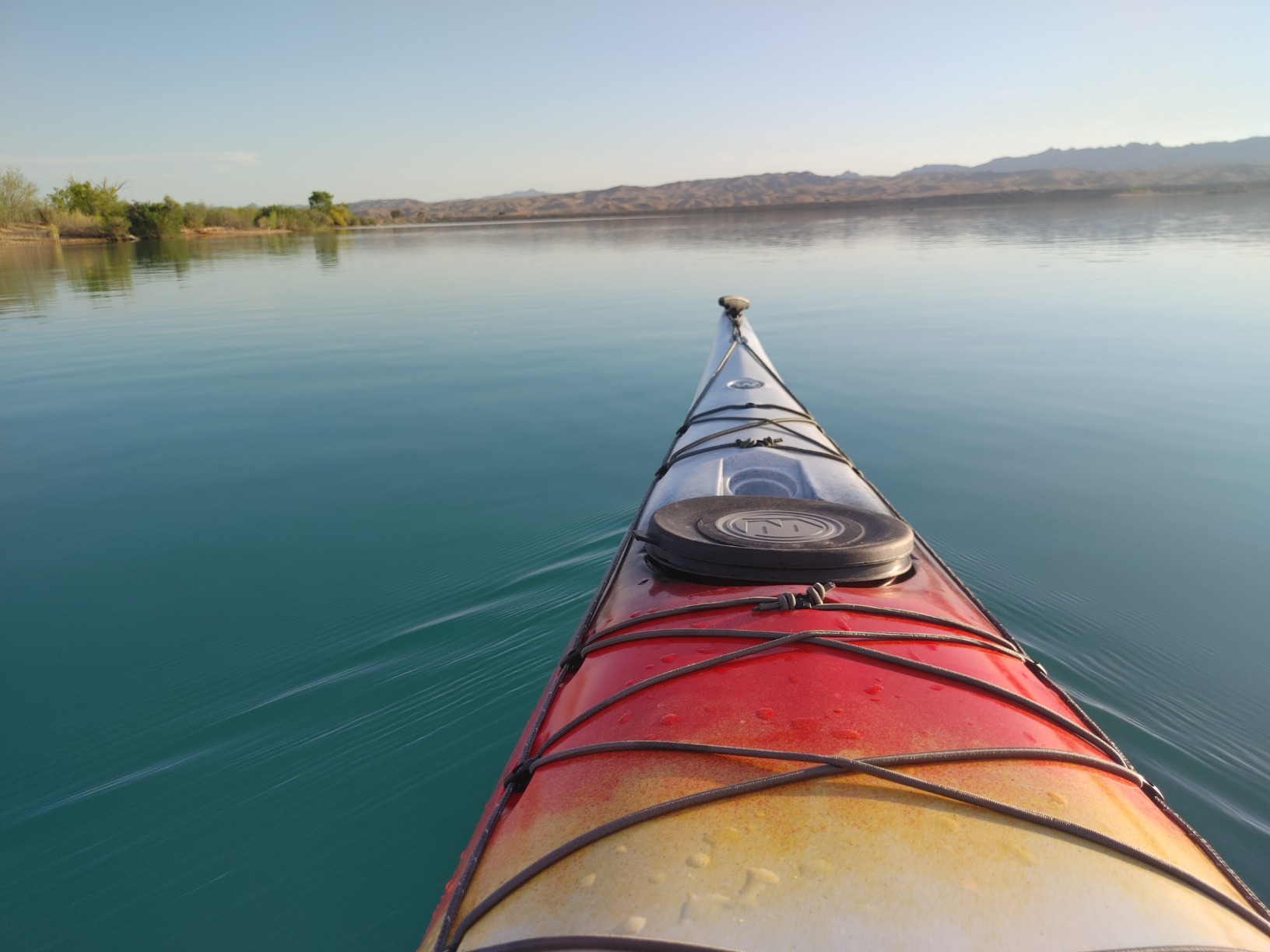
Getting the balance right matters here. The boat is specified for paddlers with a smaller frame, with a low deck and narrow beam, and experienced paddlers will find that sweet spot between tracking and turning. A novice will find the secondary stability demanding. In practice that means this is a boat for someone who has already done wet exits and has a rescue roll, or who has a solid rescue partner.
There is a real question about the feedback base. Seven reviews is a thin sample for a boat with this much performance character, and the rating distribution includes a noticeable cluster of two-star ratings, which usually means capability that outruns the person in the boat. The hull design is a selling point and a trap in equal measure. If you are buying for handling and speed, this is the one. If you are buying for forgiveness, it is the wrong tool.
Who this boat suits
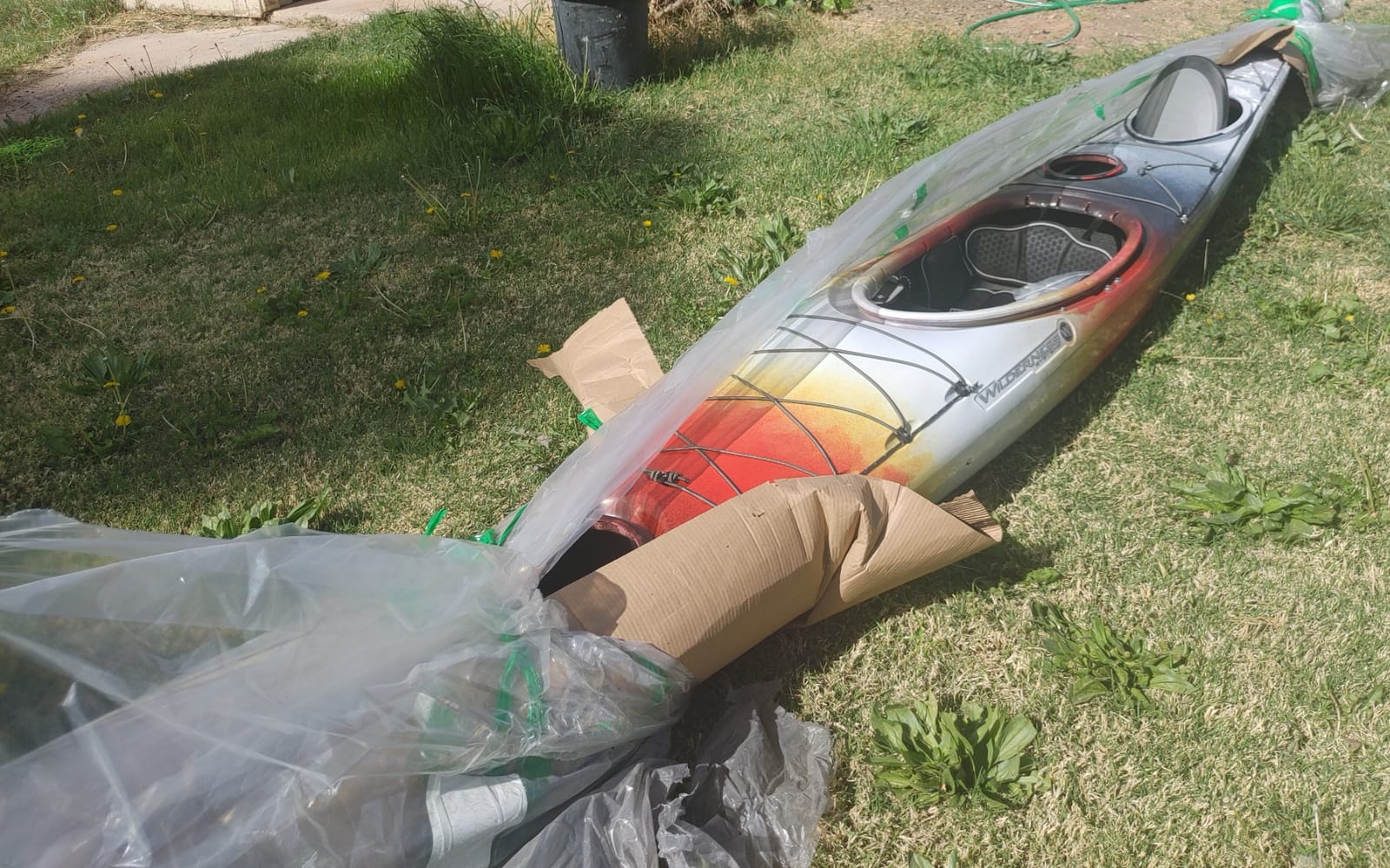
Experienced paddlers planning coastal routes, island circuits, and sheltered open crossings will get more out of this boat than anything else here. The length converts paddle strokes into distance, and the skeg makes a beam wind manageable.
It also suits smaller-framed paddlers specifically, since the low deck and narrow beam were designed around that. Owners repeatedly call the seat padding among the most comfortable they have used.
Who should skip this boat
Skip it if this would be your first sea kayak. A 21.5 inch beam is narrow, and the difference between an easy boat and a demanding one becomes obvious in a short swell, not on a calm lake.
Skip it if you are a large paddler or if you want to carry heavy gear. The boat is built for a smaller frame with a low deck, and the 55 pound weight is a two-person carry at the shoreline.
5. Wilderness Systems Tsunami 145: More Room for Bigger Paddlers
Wilderness Systems Tsunami 145 – Sit Inside Touring Kayak – Durable – Multiple Storage Options – 14.6 ft – Mango
Length: 14 ft 6 in
Weight: 56 lbs
Capacity: 350 lbs
Phase 3 AirPro seat
Pros
- 350 lb capacity is generous for a hard shell
- 14 ft 6 in length adds a little speed over the 140
- Sealed bulkheads and two storage hatches
- Limited lifetime warranty on hull and deck
Cons
- 56 lb is the heaviest of the Tsunami pair
- Only 12 reviews of owner feedback
- Longer boat needs a roof rack
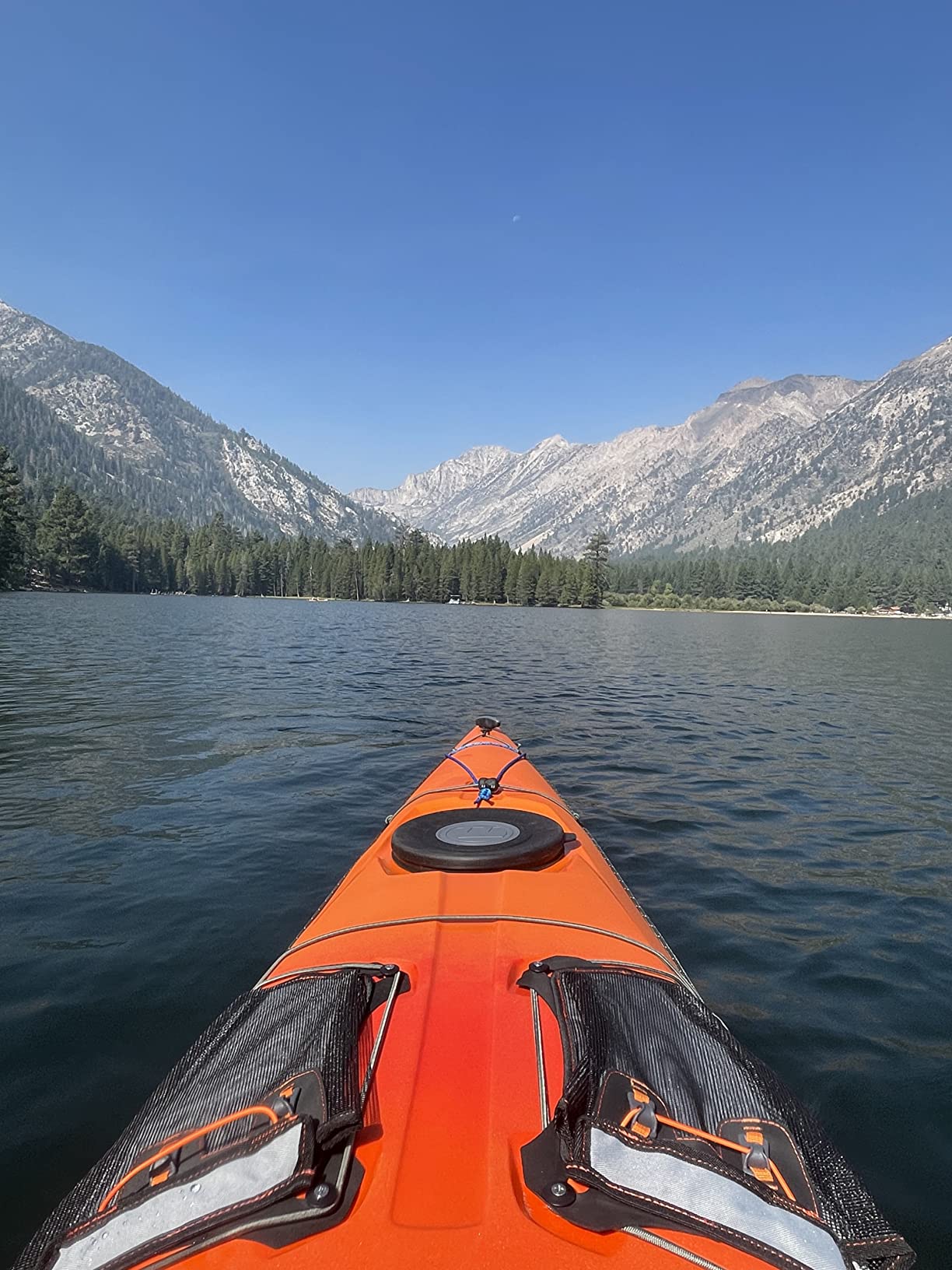
Fit is the reason to look at the Tsunami 145 rather than the 140. Its listed capacity is 350 pounds against 325 for the shorter boat, and the extra six inches of length gives it more stability and a little more speed. For a paddler who feels cramped in a standard touring cockpit, that combination is often the difference between a boat you tolerate and a boat you enjoy for four hours.
Everything else is close to the 140, which is a reasonable thing since the platform is shared. You get the Phase 3 AirPro Tour seat, Slidelock XL foot rests, adjustable padded thigh braces, two mesh deck pockets, two storage hatches with sealed bulkheads, and an under-deck water bottle holder. The warranty is the better of the two models too, a limited lifetime warranty against material or manufacturing defects in the hull and deck with one year on installed accessories.
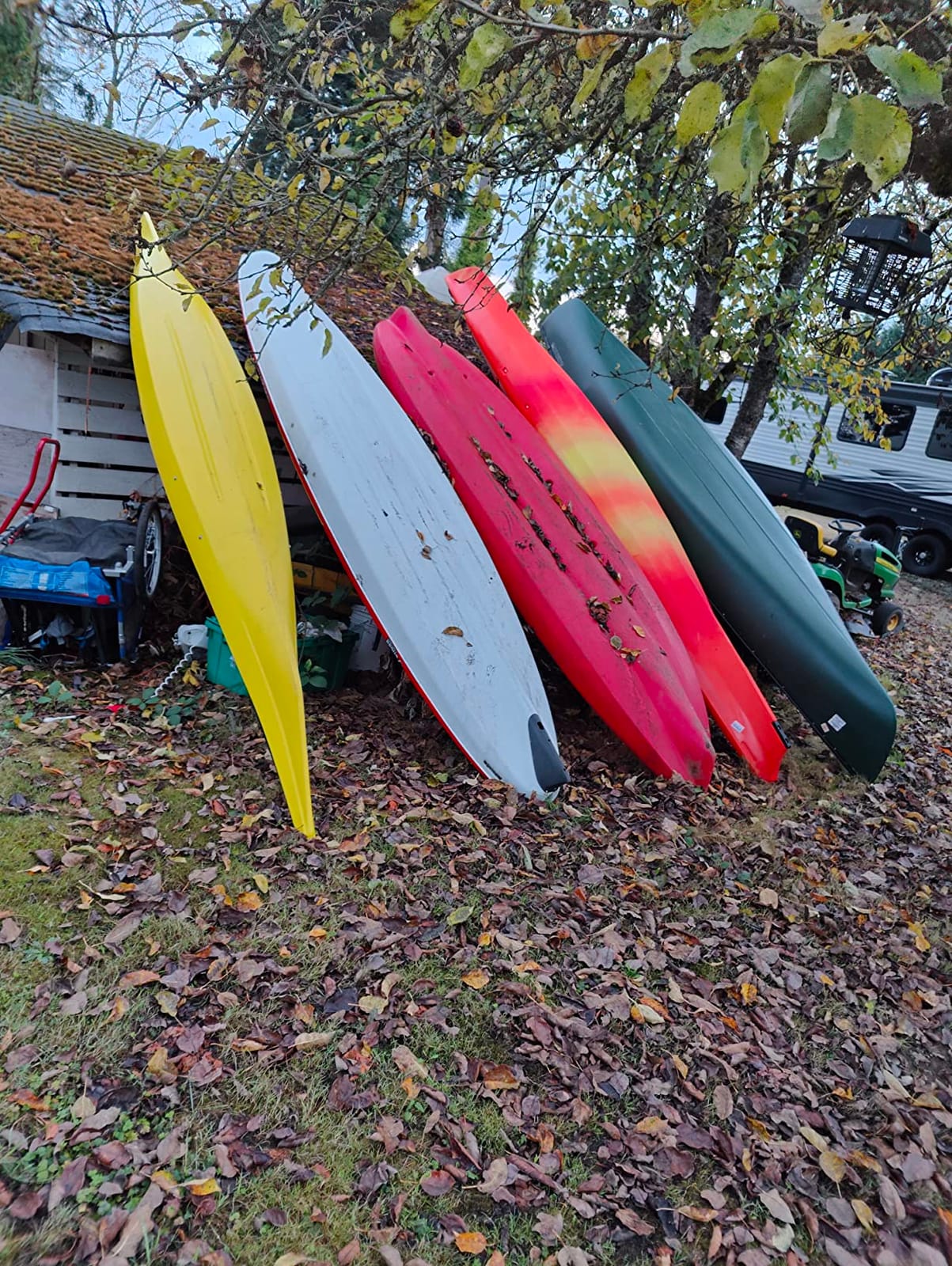
Owners consistently rate it fast and stable, and the fit for larger paddlers is the recurring theme in the feedback. That is worth saying plainly, because it is a problem the category mostly ignores. Most 11 to 14 foot boats are drawn around a mid-sized cockpit, and a paddler over six feet or above 200 pounds regularly ends up with knee bang, numb feet, and a boat that tracks badly because the seat is behind you rather than under you.
The rating here is the lowest of the Tsunami pair at 4.1, and the distribution includes a spread of three-star and one-star feedback alongside 69 percent five-star. That pattern usually signals fit variance rather than build quality, and with only 12 reviews the sample is too small to draw firm conclusions. If you are between sizes, the sensible move is to try the seat in a demo setting if you can rather than deciding on the numbers alone.
Who this boat suits
Paddlers who want a hard-shell touring boat with sealed bulkheads and need the extra capacity, this is it. The 350 pound rating is the most readable large-paddler fit in the group, and leaves a comfortable margin under the derating rule.
It is a good weekend and short multi-day tourer for larger paddlers on a sheltered coast, an estuary, or a large lake with wind and current.
Who should skip this boat
Skip it if weight is your binding constraint. At 56 pounds it is the heaviest boat here besides the tandems, and the marginal stability over the 140 does not offset that for many paddlers.
Skip it if you need directional control in a strong crosswind. No adjustable skeg is listed for this model, and a fixed hull has to be steered rather than trimmed on a long crossing.
6. Perception Carolina 12: Storage First, Entry Easy
Perception Kayak Carolina Sit Inside for Recreation
Length: 12 ft
Width: 26 in
Weight: 49 lbs
Capacity: 275 lbs
Pros
- Large sealed dry storage zones front and rear
- 26 in beam makes entry and exit straightforward
- 4.4 star average with 23 reviews
- Zone adjustable seating for body fit
Cons
- 275 lb capacity is the lowest of the touring hard shells
- Only one colour option
- Listed in the fishing kayak category
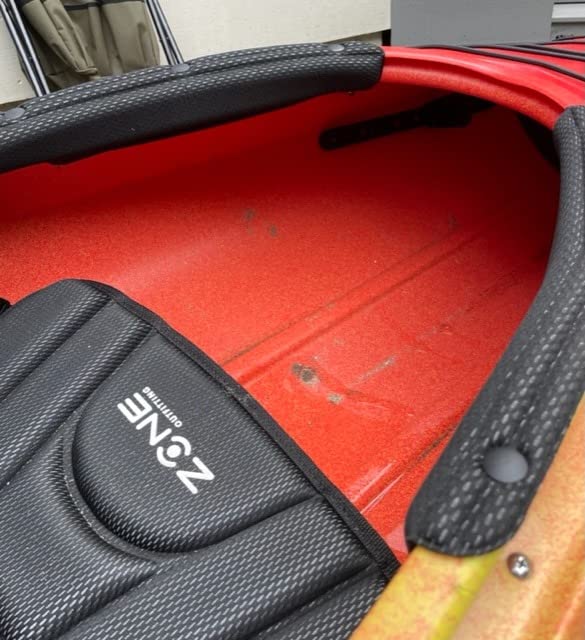
The Carolina 12 does one thing very well, which is hold gear. Large sealed dry storage compartments front and rear mean you can carry a real load of camping equipment in a hard shell that weighs 49 pounds and sits in a 26 inch wide hull. At 12 feet it is short enough to be genuinely manageable on a beach and stable enough to be a platform for loading from a low dock, which is a combination many paddlers find more useful than outright speed.
Tracking and handling are rated well for coastal exploration, and the Zone adjustable seating system lets you set the seat height and back support to suit you. 4.4 star average is well rated for the hard shells in this list, and 71 percent of reviews are five-star. The build is straightforward American-made polyethylene with a five year limited warranty on hull and deck, which is the kind of durability that matters if you plan to beach the bow regularly.
Be realistic about the capacity, though. At 275 pounds, this is the least generous rating of the touring hard shells here, and with a 200 pound paddler aboard you have roughly 75 pounds of gear before the hull is anywhere near full. That is a weekend of food, not a fortnight. And 12 feet is a transitional length, which means the waterline is short and the boat will feel lively in a beam sea in a way the 16 footers never do.
One other note. The product is ranked in the fishing kayak category on the retailer’s bestseller list, which tells you something about how it is positioned and whom it is aimed at. It is a competent fishing platform and a capable short tourer, and if you want one boat to do both this is a strong case. If you want to cover distance in an open crossing, it is not the right length.
Who this boat suits
Paddlers on a sheltered coast, a lake, or a large tidal estuary who want real dry storage and an easy cockpit will like this boat. The wide beam relative to its length makes entry and exit forgiving, which is a genuine advantage in a following sea.
It is also a good pick if you want to fish and tour with the same hull, since the storage and the stability both work for that.
Who should skip this boat
Skip it if you are a heavier paddler or if you are planning a camp longer than a weekend. The 275 pound rating and the 12 foot waterline are the two constraints that will define your trip.
Skip it if your coastline has exposed crossings on the route. Short waterlines do not glide, and you will feel every headwind stroke for stroke.
7. Perception Cove 14.5: The Tandem With a Replaceable Skid Plate
Perception Kayaks Cove 14.5 | Sit Inside Tandem Kayak | Zone Adjustable Seating and Leg Braces | 14′ 6″ | Sunset
Length: 14 ft 6 in
Width: 31.25 in
Weight: Not specified
Capacity: 550 lbs
Pros
- 550 lb capacity carries two adults plus a full camp
- 31.25 in beam is very stable for beginners
- Generous storage with rear dry stowage and bungee deck rigging
- Replaceable skid plate protects the hull on shore launches
Cons
- Weight is not published
- Heavy and awkward to handle solo at 14.5 ft
- Several reviews report shipping damage on arrival
The Cove 14.5 is the hard-shell tandem option here, and the spec that matters most is 550 pounds of capacity for a two-person boat. That is a lot for a tandem, and the generous storage with rear dry stowage and bungee deck rigging means the gear does not all have to live in the cockpit. The 31.25 inch beam is very wide for a 14 foot hull, which makes it an easy boat to enter and exit.
The replaceable skid plate is an underrated feature. Tandems take more punishment at the shoreline because people grab them by the hull, and a plate that can be swapped instead of a hull that cracks is a real long-term saving. Zone adjustable seating with adjustable backrests, knee and thigh pads, and adjustable foot pegs means both paddlers can be dialled in, which is a genuine tandem problem that solo boats never have.
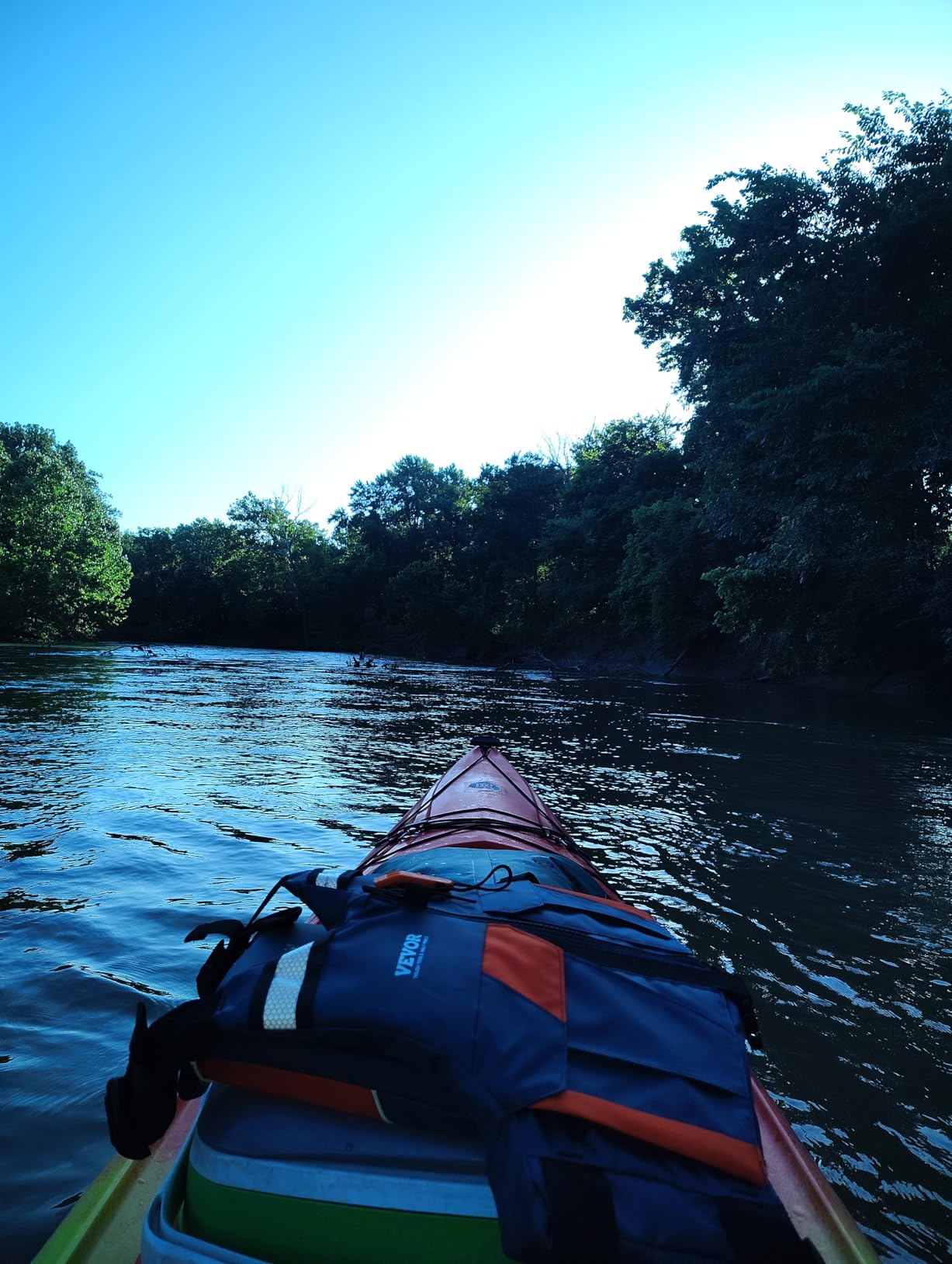
The manufacturer lists the boat for lakes, ponds, slow-moving rivers, and calm coastal and ocean use, and that wording is worth taking at face value. Calm is doing real work in that sentence. A 31.25 inch beam is a stability asset at rest and a speed penalty in motion, and a tandem needs to be able to carve a line in a following sea, which this hull was not designed to do.
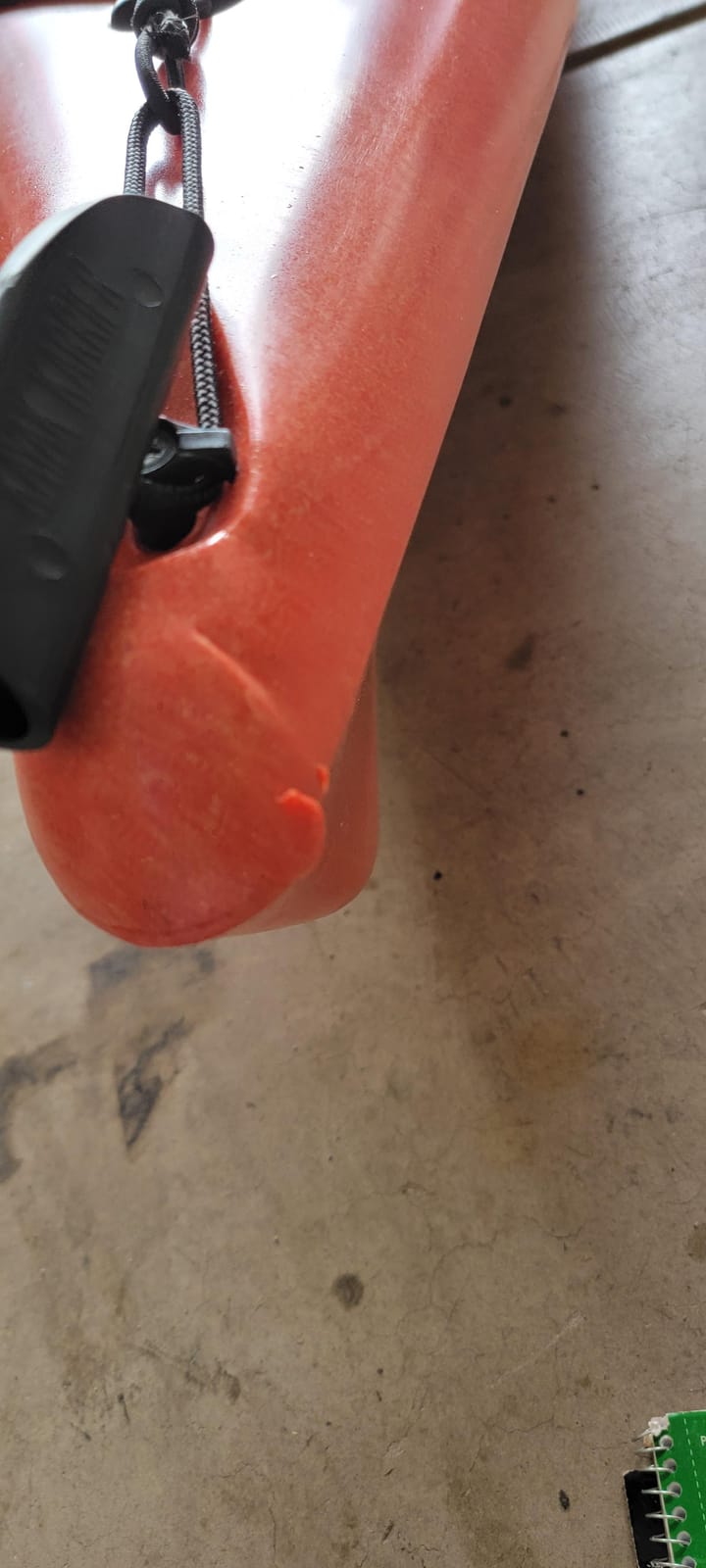
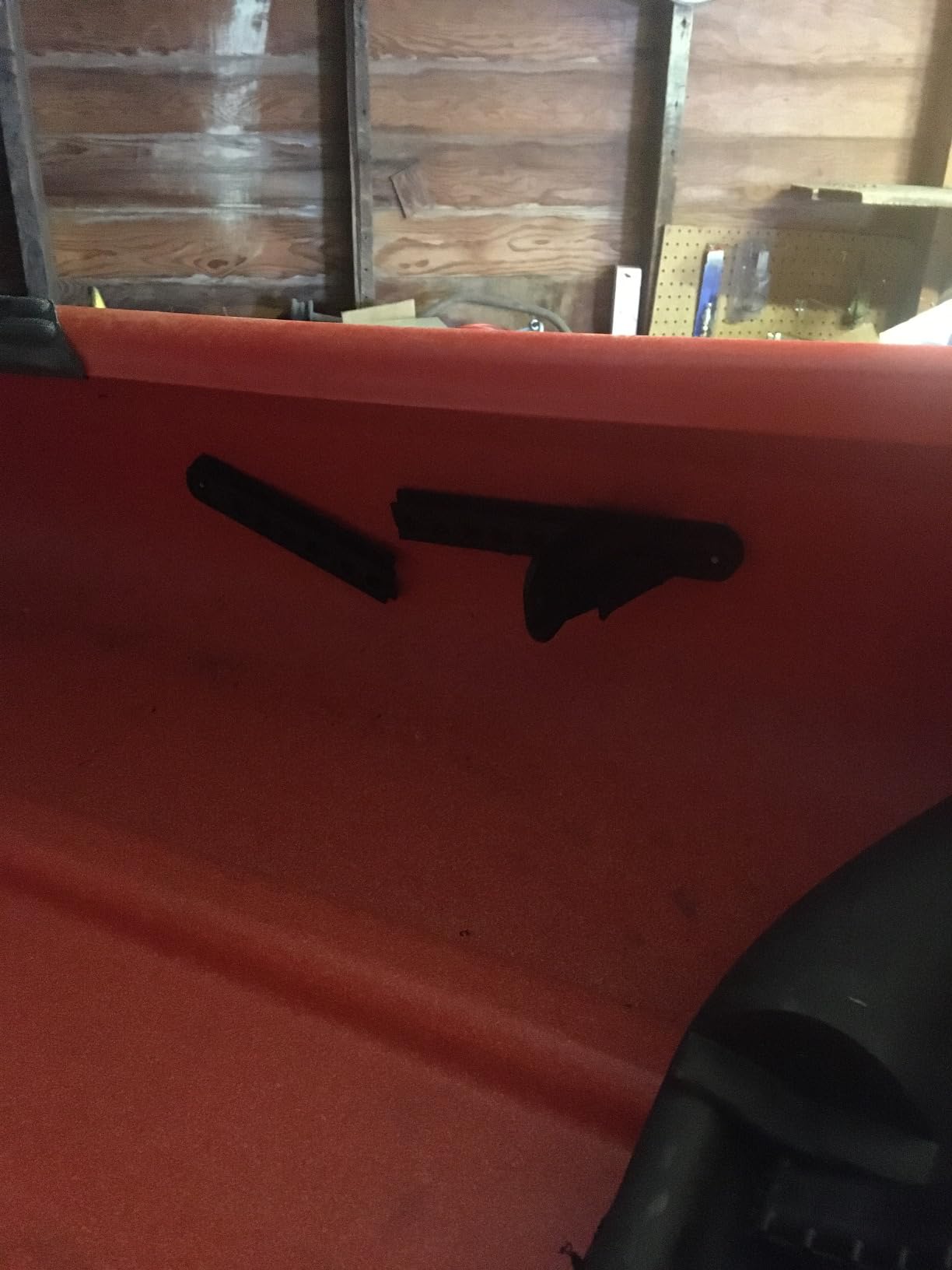
There is also a shipping problem in the reviews. Several owners report gouges, a broken foot rest track, and boats arriving without protective packaging. That is a handling issue rather than a defect, but it is worth knowing before you order, and it is a good reason to inspect the hull and the foot rest track the moment it arrives. Nine reviews is a thin base for judging a tandem, and the 4.0 average reflects a spread that includes a noticeable share of one-star feedback.
Who this boat suits
Two paddlers who want a stable, roomy boat for a week on a sheltered coast or a big lake will be very comfortable here. The wide beam makes it forgiving for less experienced crew, which is a genuine advantage in a tandem.
It is a strong choice for family outings, for carrying a child in the middle position, and for anyone who wants storage volume more than speed. If you are shopping by category rather than by length, our tandem kayak guide covers the format in more depth.
Who should skip this boat
Skip it if either paddler wants to paddle fast or wants open-water crossings. This is a platform boat, not a touring boat, and the honest answer about its ocean limits is the calm-water one.
Skip it if you will be handling it solo. At 14.5 feet with a wide beam, a solo carry from a car to a launch is a two-person job, and the manufacturer does not publish the weight, which makes planning a lift harder than it should be.
8. Sea Eagle 300X Explorer: A River Boat That Doubles on the Estuary
Sea Eagle SE300X Explorer Inflatable Kayak, Pro Package by Sea Eagle
Length: 9 ft
Width: 39 in
Height: 11.5 in
Weight: 45 lbs
Pros
- 4.8 star average across 34 reviews
- Rated for Class IV whitewater so it handles moving water
- 16 threaded self-bailing drain valves
- Drop-stitch floor is stiff enough to stand on
Cons
- 9 ft length is far too short for open water
- PVC durability concerns in hot climates
- Seat clip and pump gauge have reported minor faults
Let us be straight about where this boat belongs. The Sea Eagle 300X Explorer is nine feet long and 39 inches wide, rated for Class IV whitewater, and it is not an open-ocean boat. At nine feet there is no waterline advantage to speak of, and no paddler should be launching it into a coastal swell. The 4.8 star average is impressive but it reflects versatility, and versatility in a nine foot hull is river versatility.
What it does well is remarkable. Sixteen threaded self-bailing drain valves mean the boat sheds water on a river and stays dry on flat water depending on how you set them. The removable high-pressure drop-stitch floor inflates to 10 PSI and is stiff enough that owners stand on it, which is unusual in an inflatable of this size. Three safety chambers, five minute inflation, and a packed size of 24 by 16 by 6 inches make it a genuine trunk stowaway.
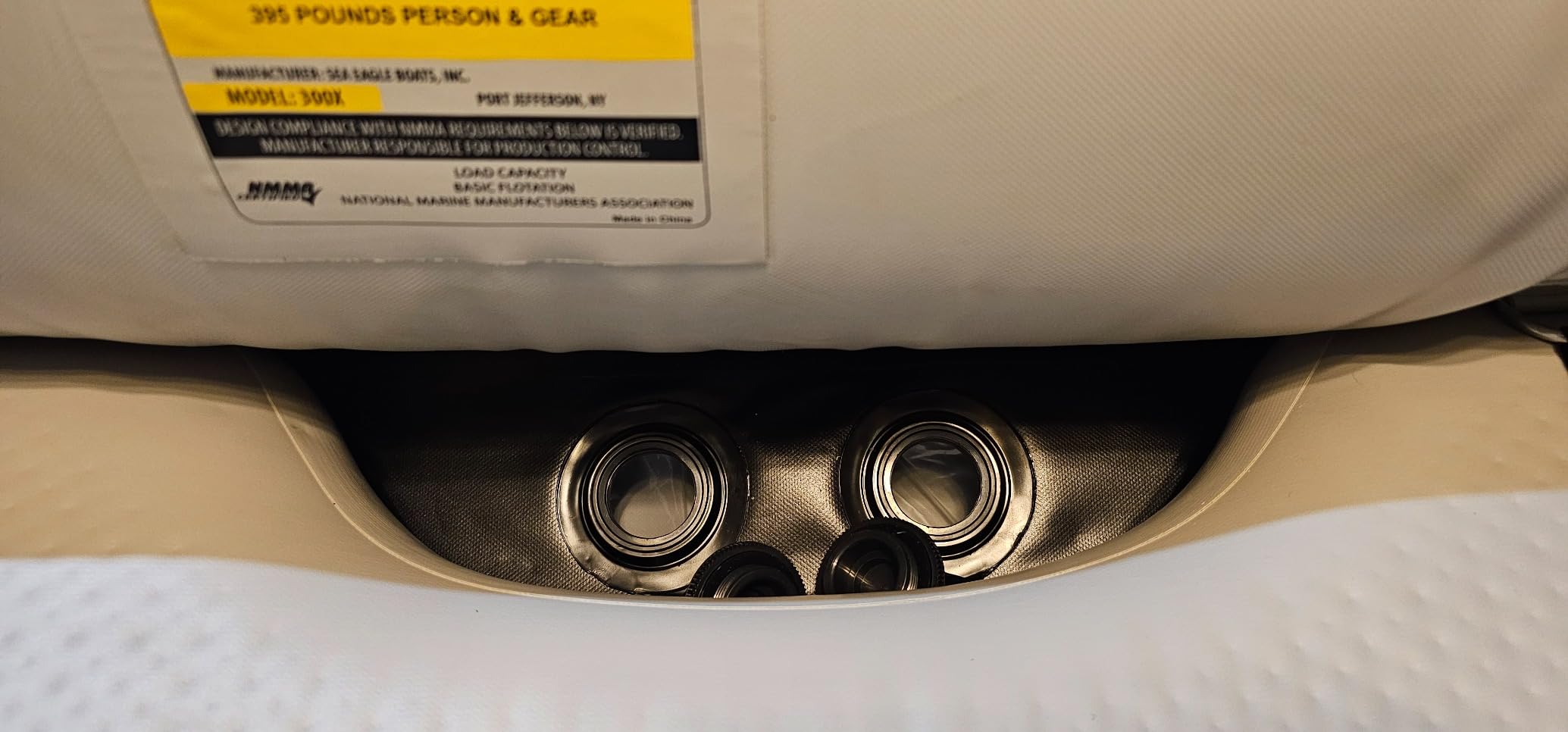
For coastal paddling the realistic use is an estuary, a tidal marsh, a short sheltered inlet, or a flat bay where you want beach access and packability over speed. Owners report the boat as very stable even in heavy boat wakes, which is exactly what you want when you are launching through a crowd of moored vessels. Customer service is also rated well, with responsive support and price matching mentioned repeatedly.
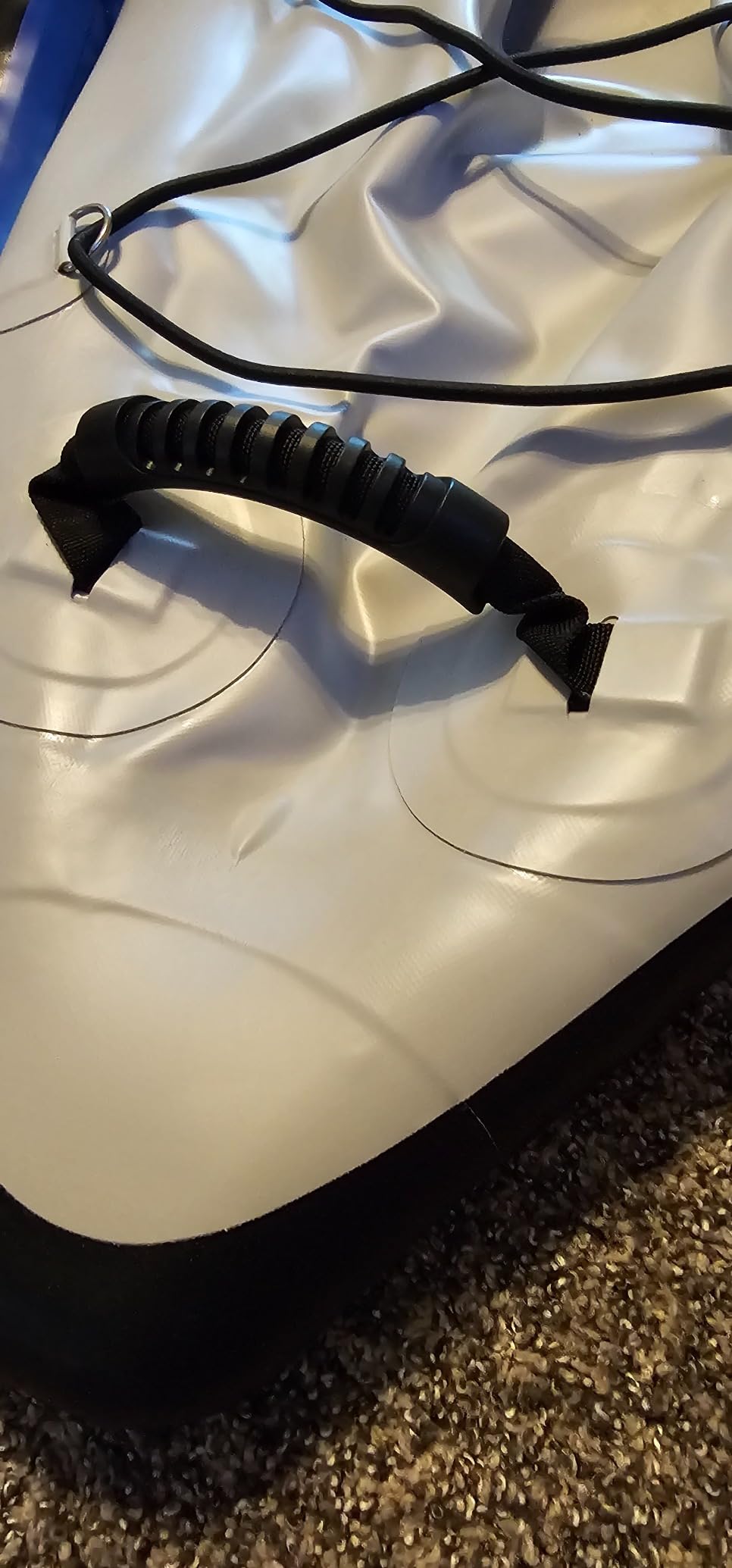
The fault list is small but worth knowing. Reviewers report a seat fastener clip that does not close fully, a pump gauge without clear sidewall markings, a pump that will not stand on its own, drain plug caps that block drainage when left open, and paddle locking pins that do not always fully engage. None of these are structural. All of them are the kind of small irritation that is easier to accept in a river boat than in an ocean boat.
Who this boat suits
Mixed-water paddlers who run rivers, lakes, and tidal flats and want one packable boat will like this more than almost anything else. The self-bailing system is the detail that sells it, because it is the only boat here that drains itself.
Anyone who lives somewhere hot and dry will appreciate the packed footprint. This boat lives in a cupboard rather than on a wall.
Who should skip this boat
Skip it for ocean paddling. Nine feet is short enough that the answer is unambiguous, and if open water is the goal this boat works against you rather than for you.
Skip it if you are shopping for a full sea kayak. The shape, the beam, and the rating are all wrong for coastal touring, however good the chassis is in a river.
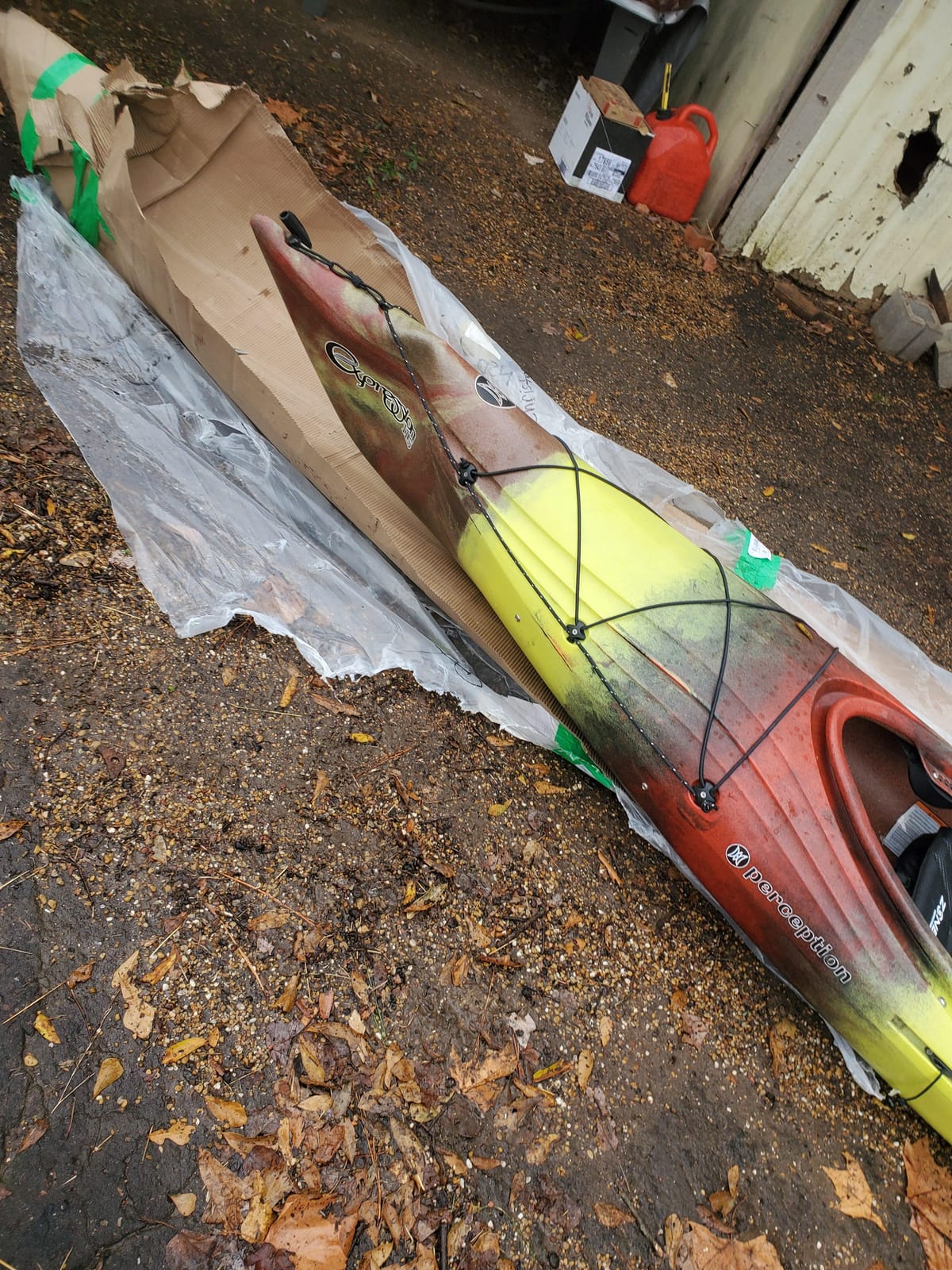
9. Perception Expression 11.5: The Lightest Hard Shell in the List
Perception Expression 11.5 – Sit Inside Kayak – Light Touring Kayak with Adjustable Zone Seating – 11.6 ft – Mystic
Length: 11 ft 6 in
Cockpit: 25.75 in
Weight: 44 lbs
Capacity: 250 lbs
Pros
- 44 lb is a light weight for a hard shell
- Most reviewed boat here with 69 reviews
- Skeg tracks well in crosswinds
- Large cockpit design makes entry and exit simple
Cons
- 250 lb capacity is the lowest rating in the group
- Storage is limited compared with longer touring boats
- Some shipping damage reported on arrival
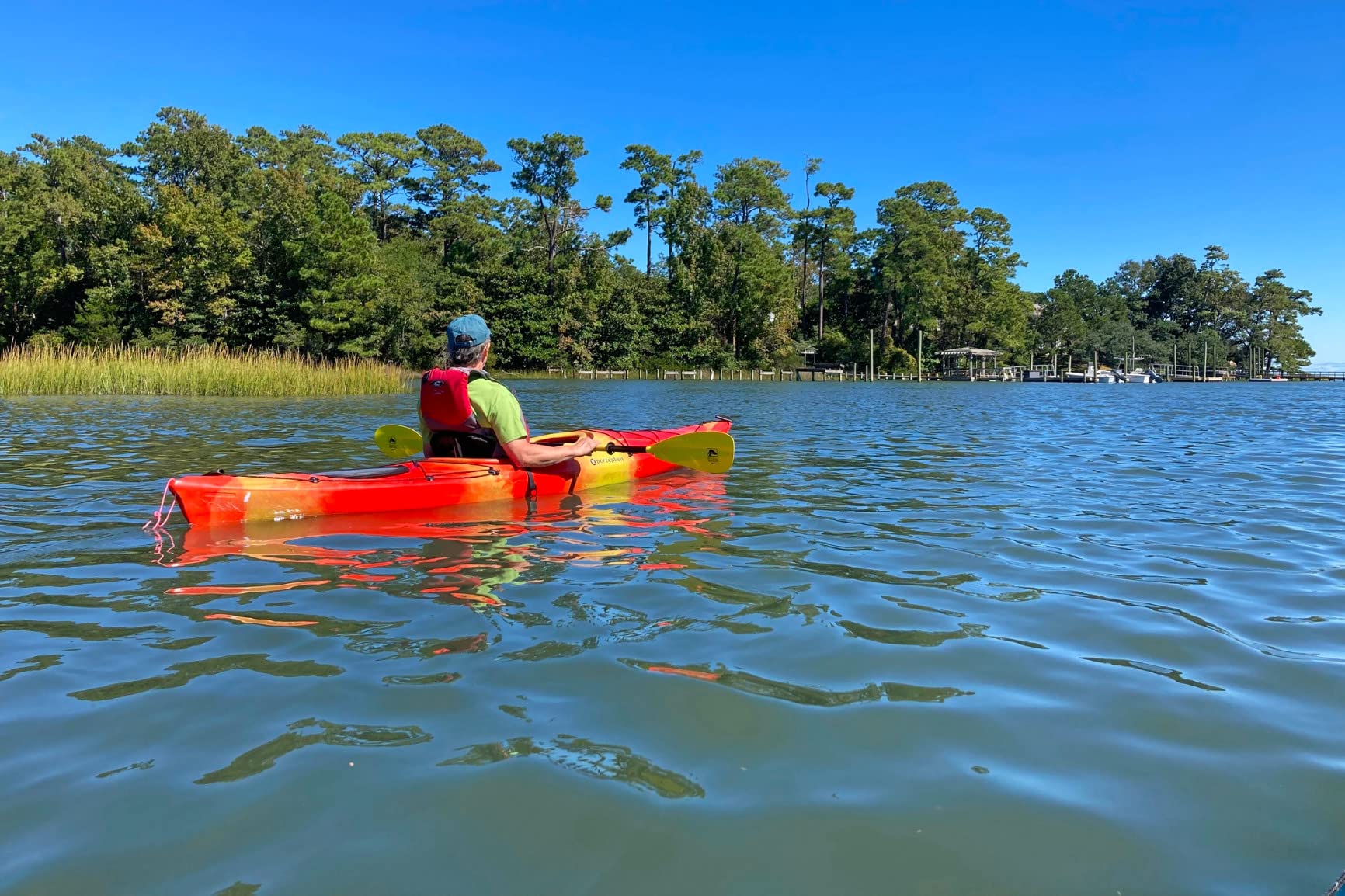
At 44 pounds, the Expression 11.5 is a light rigid boat in this list, and with 69 reviews it is the most reviewed boat here. That combination gives a new buyer a real body of owner feedback to work from before committing. Owners consistently cite the lightweight feel, the Zone deluxe seating with an adjustable backrest, and the speed for the size.
The skeg is the feature that lifts it above a pure day boat. A skeg gives you resistance to leeway in a crosswind, which on an estuary or a big lake is the difference between paddling and being blown sideways. Leak-proof one-piece polyethylene construction and UV-resistant material mean it tolerates a life spent in sun and spray, and the large cockpit design at 25.75 inches makes entry and exit much simpler than a low-volume touring cockpit.
The 250 pound capacity is the hard limit here and it is a genuine one. With a 180 pound paddler you have 70 pounds for everything, which covers a day paddle and an overnight with light gear but not a proper camp. For a heavier paddler this boat is simply not a candidate, and no amount of adjustment changes that number.
Storage is also modest, which is consistent with an 11 foot boat. The rating distribution is healthy with 70 percent five-star, but there is a visible cluster of lower scores that mostly tracks the capacity limit and reports of shipping scratches on arrival. The cup holder is not included, which is a small thing to know before you are annoyed about it on the first trip.
Who this boat suits
Solo paddlers on sheltered water who want a rigid boat they can lift themselves will find this is the one. Forty-four pounds is genuinely manageable from a car park to a launch, and the large cockpit makes getting in and out simple on soft ground.
It is an excellent first sea kayak for a paddler moving up from a recreational boat, because the skeg gives directional control the smaller day boats lack.
Who should skip this boat
Skip it if you plan to carry camping gear, or if you are a heavier paddler. At 250 pounds, it is the smallest capacity rating in the group.
Skip it if your water is exposed. An 11 foot 6 in hull is a coastal-exploration boat for bays, estuaries, and short island hops in calm conditions, not a boat for a crossing with any exposure at all.
What Actually Makes a Touring Kayak Ocean-Capable
Length alone does not make a boat safe at sea. Six things do, and a boat needs most of them before we would take it past a breakwater. Here is the checklist we used to rank the nine boats above, and the order matters, because the first three prevent a capsize and the last three manage the consequences.
1. Waterline length. The longer the hull sits in the water relative to its beam, the faster it travels for each stroke. Length buys speed, and speed is what makes distance possible in a headwind or a tide.
2. Hull volume. A beamier hull has more volume, which creates secondary stability, the tendency to stay upright once you have been pushed past flat. Length buys speed and hull volume buys forgiveness, and ocean paddling needs enough of both.
3. Secondary stability. This is the quality that lets you recover from a lean in a wave without going over. It is why a wide tandem is comfortable in a swell and a narrow touring hull is not.
4. Sealed bulkheads. Two bulkheads trap air fore and aft. A swamped hard shell with sealed bulkheads floats, and a swamped boat with no bulkheads sinks. This is the difference between a wet recovery and a recovery plan.
5. Directional control. A rudder or a skeg gives you something other than paddle strokes to resist wind and current. Without one, a beam wind is a fight you will eventually lose.
6. Load rating headroom. Listed capacity is a test figure, not a target. Load the boat past roughly 65 percent of its rating with paddler and gear aboard and tracking degrades first, then secondary stability follows.
Low-Volume vs High-Volume Hulls: The Decision That Matters Offshore
Low volume means less hull, more speed, and less forgiveness. High volume means more hull, less speed, and far more stability in moving water. Paddlers who have never thought about this distinction tend to assume the fastest boat is the best boat, which is how they end up capsized on a calm day that turns choppy at the tide change.
Pick a low-volume hull if your water is reliably sheltered, your trips are short, you are carrying light loads, and you care about speed over distance. Pick a high-volume hull if your coastline has any exposure at all, if you camp, if you are a beginner, or if you paddle with a partner who is less experienced than you are. Most people in this category are better served by the high-volume end, and most regret in this category comes from the opposite choice.
The trade-off is gear. High-volume boats carry more because the hull displaces more before it is fully immersed, which is one reason the Carolina 12 and the Cove 14.5 hold more than their length suggests. Low-volume touring hulls are popular precisely because paddlers value speed, and the community complaint about them is always the same: not enough room for a real trip. If you are buying low volume, buy it knowing the gear spaces are tight.
Hull Construction: What Your Money Buys in Weight
Construction is the only place in this category where the money genuinely changes what the boat does rather than how it looks. The whole argument is weight. Every pound you remove is a pound you do not have to lift over a boat ramp, drag across a beach, or carry on your shoulder at the end of a long day. It is also a pound that makes the boat accelerate and hold a line more easily.
Rotomolded polyethylene is the value end of the market and all five hard shells here use it. It is cheap, it shrugs off rocks and beach landings, it can be repaired with a plastic patch kit in a car park, and it does not care about a roof rack strap. What it will not do is get light. Expect it to be the heaviest option by a wide margin, and treat any attempt to carry one alone across a rough beach as a two-person job.
Drop-stitch inflatable is the middle ground, and the three Sea Eagle boats here sit in it. Drop-stitch construction inflates to around 10 PSI and feels much closer to a hard shell than a traditional inflatable tube boat. You still get packability, a stubby repair, and a hull weight roughly half of a comparable hard shell. The costs are heat management, seam durability in hot climates, and no bulkheads.
Glass, Kevlar, and carbon layups sit above this list and are worth it for one reason. They are how you get a 16 foot touring hull under 45 pounds. If you are doing multi-day open crossings and carrying heavy gear, that weight saving is the most valuable thing money buys in a kayak. None of these nine boats are in that class, and we would rather say so than pretend otherwise.
Rudder vs Skeg vs Neither
A skeg holds a line. A rudder changes it. That is the whole difference, and both are a substitute for having long enough legs. In a beam wind a skeg resists the sideways push of wind on the hull, which is what stops you crabbing. A rudder goes much further and is needed in strong current or a hard following sea, but it adds drag, adds a failure point, and needs water flow over the blade to work at all.
There is a third option. Some experienced paddlers on downwind runs carry a featherweight ski instead of deploying anything, because a deployed skeg in a following sea can catch a wave face and pitch the boat over. If you are not confident reading water, deploy the skeg in wind and lift it in following seas. If you are, the skeg-off run is faster and the boat will hold itself once the bow drops.
Within this lineup, the Tempest 165 has the most adjustable system because its skeg can be set part way rather than simply in or out. The RazorLite and 380X both use removable swept-back skegs, which is simple and effective but requires a stop to change. The Tsunami 140 and 145 have no adjustable skeg listed, so directional control is entirely on the paddle.
Sizing for Your Body and the Capacity Derating Rule
Cockpit fit decides whether you will enjoy a boat on day three or day thirty, and it is the most neglected part of most buying advice. Two measurements matter. Cockpit opening size determines how easily you get in and out, and combing height, which is the height of the seat structure under your thighs, determines how much room your legs actually have.
This is the mechanism behind the answer to the easiest kayak to get in and out of question. A wide-beam, high-volume hull with a large cockpit opening is far easier to enter and exit than a low-volume touring boat, even though the touring boat feels more refined. That matters offshore, because a cockpit you cannot re-enter cleanly in a following sea is a real hazard, and re-entering is something every paddler will eventually need to do.
On capacity, the rule is simple. Subtract 30 to 40 percent from the listed rating and stay under the result. Practically, that means keeping total load, including you and all gear, at or below roughly 60 to 65 percent of the listed number. Worked examples from this list: the 380X Explorer lists 750 pounds, so plan around 490. The Tsunami 145 lists 350, so plan around 230. The Expression 11.5 lists 250, so plan around 160, and for many paddlers that is not workable.
Fit for larger paddlers deserves its own paragraph because the category largely ignores it. If you are over six feet or above 200 pounds, the Tsunami 145 and the Cove 14.5 are the two boats here with the space to fit you, and the Expression 11.5 is very likely to be wrong for you on capacity alone. Longer thigh braces, Slidelock foot rests, and adjustable seat height are what convert a boat that fits into a boat that fits well.
Matching the Boat to Your Actual Water
The most common buying mistake in this category is choosing on length instead of conditions. A useful way to think about it is to sort your water first, then let the boat follow. Here is how the nine boats map onto five realistic water types.
Sheltered bay and estuary: the Perception Expression 11.5 and the Sea Eagle 300X Explorer are both fine here, and the Carolina 12 works well if you want storage. Short water, low consequence, low exposure.
Island hopping and coastal camp circuits: the Sea Eagle 380X Explorer with its load capacity for two, the Wilderness Systems Tsunami 140 or 145 for solo paddlers, and the Perception Cove 14.5 for a stable tandem crew on a calm route.
Protected open crossing: the Tempest 165 is the boat built for this, and the Tsunami 140 is a marginal one for experienced paddlers in settled conditions. A 12 or 13 foot boat is not a candidate regardless of how good it is on a lake.
Surf zone and beach landings: only the 380X has the width and the stiff floor to be credible, and even there you want a following swell of less than a foot. The RazorLite’s rigid bow and stern moulds help in chop but the boat is narrow. The hard shells in this group are not surf boats.
Rock gardens and boulder fields: polyethylene wins, because a rock strike on a rotomolded hull is a scuff and a rock strike on carbon is an expensive crack. The Cove 14.5 with its replaceable skid plate is the sensible choice here among the tandems. Rigid moulded bow and stern constructions like the RazorLite are also worth considering for a boat that will meet a lot of shore.
Before You Launch Offshore: The 50-90 Rule and the 120 Rule
Most capsizes in this category are not caused by a dramatic moment. They are caused by a brace at the wrong angle on a narrow hull, a paddle or knee catching a wave, a boat loaded past its usable capacity, a gust on a beam reach, or an awkward entry in a following sea. Each of those has a spec that prevents it, which is why the criteria earlier in this article are a safety argument as much as a performance one.
The 50-90 rule is the first number to know. If the water temperature is at or above 50 degrees Fahrenheit, a wetsuit is required. Below 50 degrees, a drysuit is mandatory rather than advisable. There is no third option and no judgement call, which is the point of a rule.
The 120 rule is the second. If the water is colder than 60 degrees Fahrenheit, you should be wearing 120 minutes of insulation between your skin and the water. That is roughly a thick wetsuit, and in genuinely cold conditions it is a drysuit. The number exists because cold shock is what kills cold-water paddlers, not the cold itself.
Neither rule is a substitute for the other, and neither replaces skills. Before any of the nine boats above goes past a breakwater, you want a wet exit you can do cold, a self-rescue you can do without help, a proper personal flotation device, and a partner or a shore plan for every launch. Boats that self-bail, like the 300X Explorer, still need the same preparation as boats that do not.
One more practical point. Longer boats are harder to transport than short ones, and this is where a lot of coastal touring quietly falls apart. A 12 foot boat fits in most pickup beds and can be solo carried to a launch. A 16 foot boat generally will not fit in a bed without a rack or extension, and 55 pounds over a shoulder on a rocky shore is a genuine injury risk. If you do not have a roof rack and a kayak cart in your plan, buy shorter than you think you need. Our pedal kayak picks are worth a look if driving effort is the part of the day you most want to eliminate.
How We Picked, and Who Should Skip What
We built this list from manufacturer specification, warranty terms, and aggregated owner feedback, and we weighted three things heavily. Length against beam, because that ratio is where speed and stability come from. Capacity headroom after derating, because a boat rated for 400 pounds that only gives you 200 useful pounds is a different boat from the label. And build quality of the feedback, because a 69 review base tells you much more than a 7 review base.
Every review here includes an explicit who-should-skip line, and we want to be direct that roughly half this list is not for open-ocean crossings. The 300X Explorer at nine feet and the Expression 11.5 at eleven foot six are coastal-exploration boats. The Cove 14.5 is a stable platform rather than a touring boat. Only the Tempest 165 is a genuine expedition touring shape, and the 380X Explorer earns its place through load capacity and hull stiffness rather than waterline.
Two things we deliberately did not do. We did not include composite or carbon touring kayaks, which is the most significant gap in the list, and we did not rank on price, which changes constantly. If you are still narrowing the field by hull type rather than by trip, our inflatable kayak guide and our fishing kayak guide cover the two adjacent categories in depth.
Frequently Asked Questions
What is the difference between a sea kayak and a touring kayak?
A touring kayak is usually 11 to 14 feet, built for day trips on sheltered water, with modest storage and no sealed bulkheads. A sea kayak is 14 feet and up, with a long waterline, more hull volume for stability in chop, two sealed bulkheads so a swamped boat still floats, and a rudder or skeg to hold a line in wind. Ocean paddling needs the sea end of the range.
What is the 50-90 rule in sea kayaking?
The 50-90 rule sets your clothing requirement by water temperature. At or above 50 degrees Fahrenheit you must wear a wetsuit. Below 50 degrees you must wear a drysuit. The second half of the name comes from the 90 minutes of survival time generally assumed in cold water shock, which is why the rule is a hard threshold rather than a judgement call.
What is the 120 rule for kayaking?
The 120 rule says that if the water is colder than 60 degrees Fahrenheit, you should be wearing 120 minutes of insulation between your skin and the water. In practice that means a thick wetsuit, and in genuinely cold conditions a drysuit. It is a separate rule from the 50-90 rule and both should be followed when conditions overlap.
Can a 12 or 13 foot kayak handle ocean paddling?
For sheltered bays, estuaries, and short island hops in calm conditions, a 12 or 13 foot boat can be a good coastal-exploration platform. For exposed crossings, surf, and rock gardens it cannot, and length alone will not fix that. The limits come from secondary stability, waterline length, and the absence of sealed bulkheads in that size class, not from a number.
Do I need a rudder or a skeg for ocean touring?
Most paddlers on an ocean route need one of them, because both give you resistance to wind and current that paddle strokes alone cannot provide. A skeg is simpler and cheaper but gives less control. A rudder gives more and adds drag. On a downwind run in a following sea, confident paddlers often deploy neither, because a skeg can catch a wave face and pitch the boat over.
The Bottom Line
The best touring kayaks for ocean paddling on this list divide cleanly by what kind of trip you are actually planning. If you are a pair carrying a real camp and you can live with an inflatable hull, the Sea Eagle 380X Explorer carries more usable load than anything else we looked at. If you are solo and the launch is a beach rather than a car park, the RazorLite 393RL is the only boat here you can carry on your own. And if you want a hard shell, the Wilderness Systems Tsunami 140 gives you sealed bulkheads, which nothing inflatable on this list can offer.
For long crossings specifically, the Tempest 165 is the boat that was designed for it, with the length, the narrow beam, and the adjustable skeg to match. Buy it only if you already have wet exits and a rescue roll. Whatever you choose, check the usable capacity after derating before you buy, and read the 50-90 and 120 rules before you plan the first trip in 2026.