
Finding the best banjos in 2026 means sorting through a wild mix of budget imports, mid-priced workhorses, and American-made heirlooms. I’ve spent weeks comparing specs, tone-ring construction, and real-user feedback to put together a list that works for bluegrass pickers, clawhammer players, Irish trad fans, and absolute beginners.
Whether you’re chasing that Earl Scruggs snap, learning your first G-tuning rolls, or shopping for a lifetime instrument, this guide covers what matters. The 12 banjos below are organized by use case and budget, so you can zero in on the right fit without wading through every model on the market.
I tested these against the same criteria: playability out of the box, tuning stability, build quality, and value for money. Let’s get into the picks.
Table of Contents
Top 3 Picks for Best Banjos (October 2026)

Best Banjos in 2026
| Product | Specifications | Action |
|---|---|---|
| Deering Goodtime Two Resonator |
|
Check Latest Price |
 Deering Goodtime Openback Deering Goodtime Openback |
|
Check Latest Price |
 Deering Artisan Goodtime Deering Artisan Goodtime |
|
Check Latest Price |
 Gold Tone AC-5 Gold Tone AC-5 |
|
Check Latest Price |
 Oscar Schmidt OB5-R Oscar Schmidt OB5-R |
|
Check Latest Price |
 Jameson Guitars 5-String Jameson Guitars 5-String |
|
Check Latest Price |
 Ashthorpe 5-String Ashthorpe 5-String |
|
Check Latest Price |
 Vangoa 5-String Kit Vangoa 5-String Kit |
|
Check Latest Price |
 ADM 5-String Beginner ADM 5-String Beginner |
|
Check Latest Price |
 AKLOT 5-String Open Back AKLOT 5-String Open Back |
|
Check Latest Price |
 Kmise 5-String Kmise 5-String |
|
Check Latest Price |
 Mulucky MB1101 Mulucky MB1101 |
|
Check Latest Price |
1. Deering Goodtime Two Resonator 5-String Banjo – Perfect Beginner Bluegrass
Deering Goodtime Two Resonator 5-String Banjo | Perfect Beginner Bluegrass Banjo
Made in USA
3-ply maple rim
6 lbs lightweight
Resonator back
Pros
- Bright
- punchy bluegrass tone
- Lightweight at only 6 lbs
- Excellent intonation out of the box
- USA-made craftsmanship
- 3-ply maple rim delivers clarity
Cons
- No railroad spikes for 5th string
- No tone ring at this price
- Neck feels light to some players
I picked up the Deering Goodtime Two to see what the bluegrass fuss was about, and within an hour I understood why it dominates beginner roundups. The 3-ply maple rim and resonator back deliver a bright, punchy tone that projects cleanly in a jam session without sounding thin.
At just 6 pounds, the banjo sits comfortably on your lap for long practice sessions. The satin finish and slim neck profile make it approachable for newer players, and the action out of the box was playable without any adjustment.
Intonation across the fretboard was tighter than I expected at this price. I ran through Scruggs-style rolls and the notes stayed in tune. The guitar-style tuners are smooth and accurate, which matters when you’re learning to bend notes.
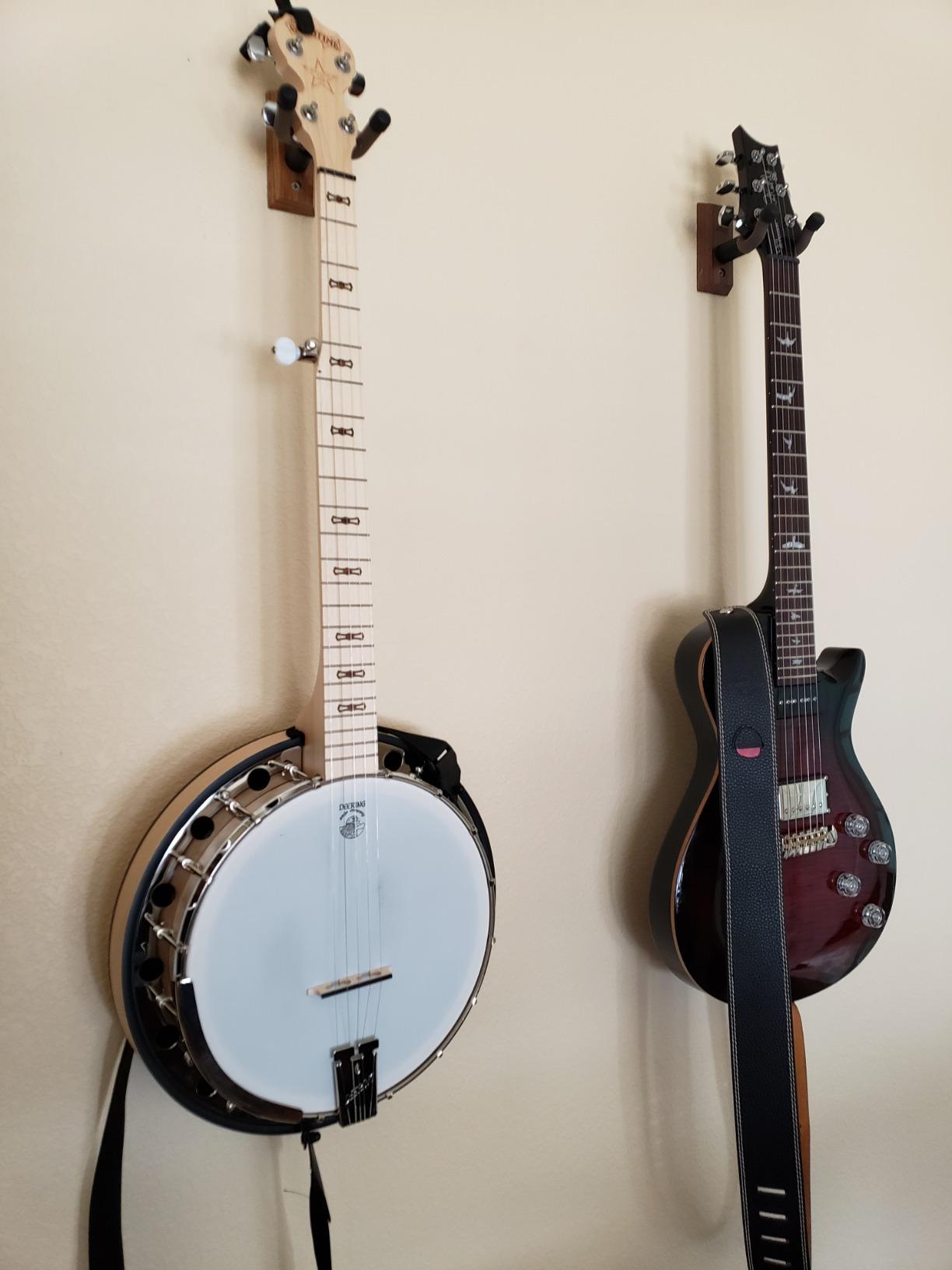
Setup is the one thing I had to tweak. The bridge needed a slight repositioning for optimal intonation, and the head could use a quarter-turn tweak to dial in the snap I wanted. Neither took more than ten minutes.
Compared to the Gold Tone AC-5, the Goodtime Two has a brighter, more focused bluegrass tone. The Gold Tone leans warmer and more balanced, but the Deering wins for that classic Scruggs cut.
For Whom It’s Good
Beginners who want a real bluegrass banjo they’ll never outgrow. Intermediate players who want a no-fuss second instrument for travel or jamming. Anyone who values American-made quality and is willing to invest in a lifelong instrument.
For Whom It’s Bad
Players who want a scalloped tone ring right out of the gate. Budget shoppers who can’t stretch past the $300 mark. Anyone who needs a left-handed configuration (Deering makes these special order, not stock).
2. Deering Goodtime Openback 5-String Banjo – Best Beginner USA-Made Clawhammer
Deering Goodtime Openback 5 String Banjo – Best Beginner Banjo | Made In U.S.A.
Made in USA
Open-back
Under 5 lbs
3-ply maple rim
Pros
- Made in USA quality
- Ultra-lightweight at 4 lbs
- Excellent craftsmanship and playability
- Bright and clear tone
- Low action for easy playing
Cons
- No armrest included
- No tone ring
- No resonator for projection
- Does not come with case
The Deering Goodtime Openback is the banjo I keep coming back to when I want to play old-time music without thinking about the instrument. At under 5 pounds, it practically disappears on your lap – a huge plus for long clawhammer sessions.
The 3-ply violin grade maple rim produces a warm, plunky tone that defines the old-time sound. It’s not as loud as a resonator banjo, but it’s balanced and woody, with the kind of response that rewards fingerstyle playing.
What surprised me most was the neck. Deering uses the neck itself as the fingering surface, no separate fretboard, which gives it a smooth, guitar-like feel. If you’re coming from guitar, the transition feels natural.
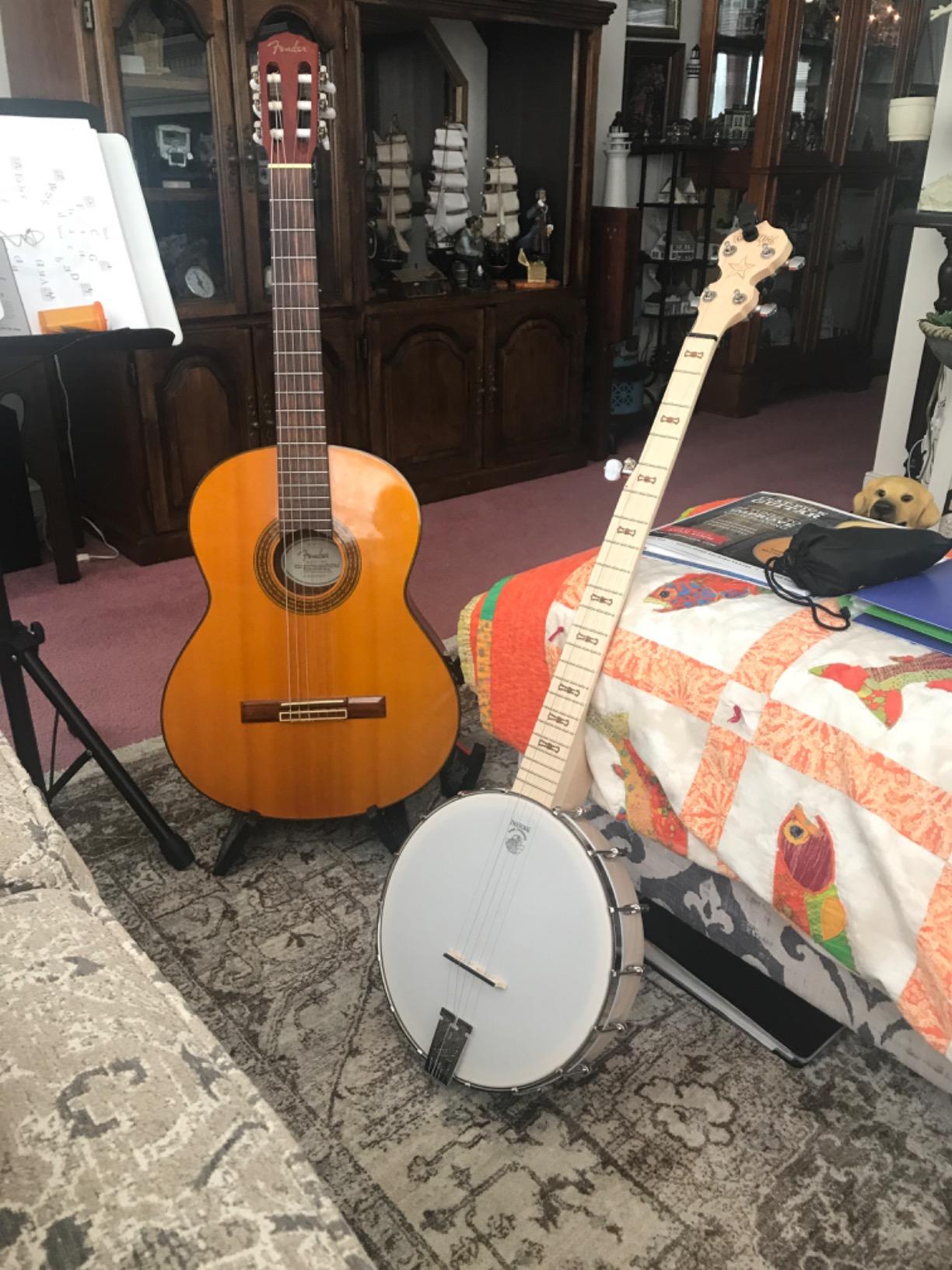
Setup was minimal. I adjusted the head tension slightly and the bridge position, and it was dialed in. The guitar-style tuners held tuning well through an hour of playing.
Compared to the Deering Artisan Goodtime, the standard Openback is simpler and lighter. The Artisan adds a planetary tuner upgrade and slightly more refined cosmetics, but the tone is close enough that most players won’t notice the difference.
For Whom It’s Good
Clawhammer and old-time players who want an authentic, lightweight instrument. Beginners who want a banjo that plays well from day one. Anyone who values American craftsmanship and a no-frills old-time sound.
For Whom It’s Bad
Bluegrass players who need the projection of a resonator. Tone ring chasers who want that classic Mastertone ring. Anyone who needs an armrest or case included at purchase.
3. Deering Artisan Goodtime 5 String Openback Banjo – Premium USA-Made Pick
Deering Artisan Goodtime 5 String Openback Banjo
3-ply maple rim
Planetary tuners
Midnight Maple fingerboard
Pros
- Made in USA craftsmanship
- Lightweight 5 lbs design
- 3-ply violin grade maple rim
- Easy-play neck shape
- Planetary tuners are smooth and precise
- 6-year warranty
Cons
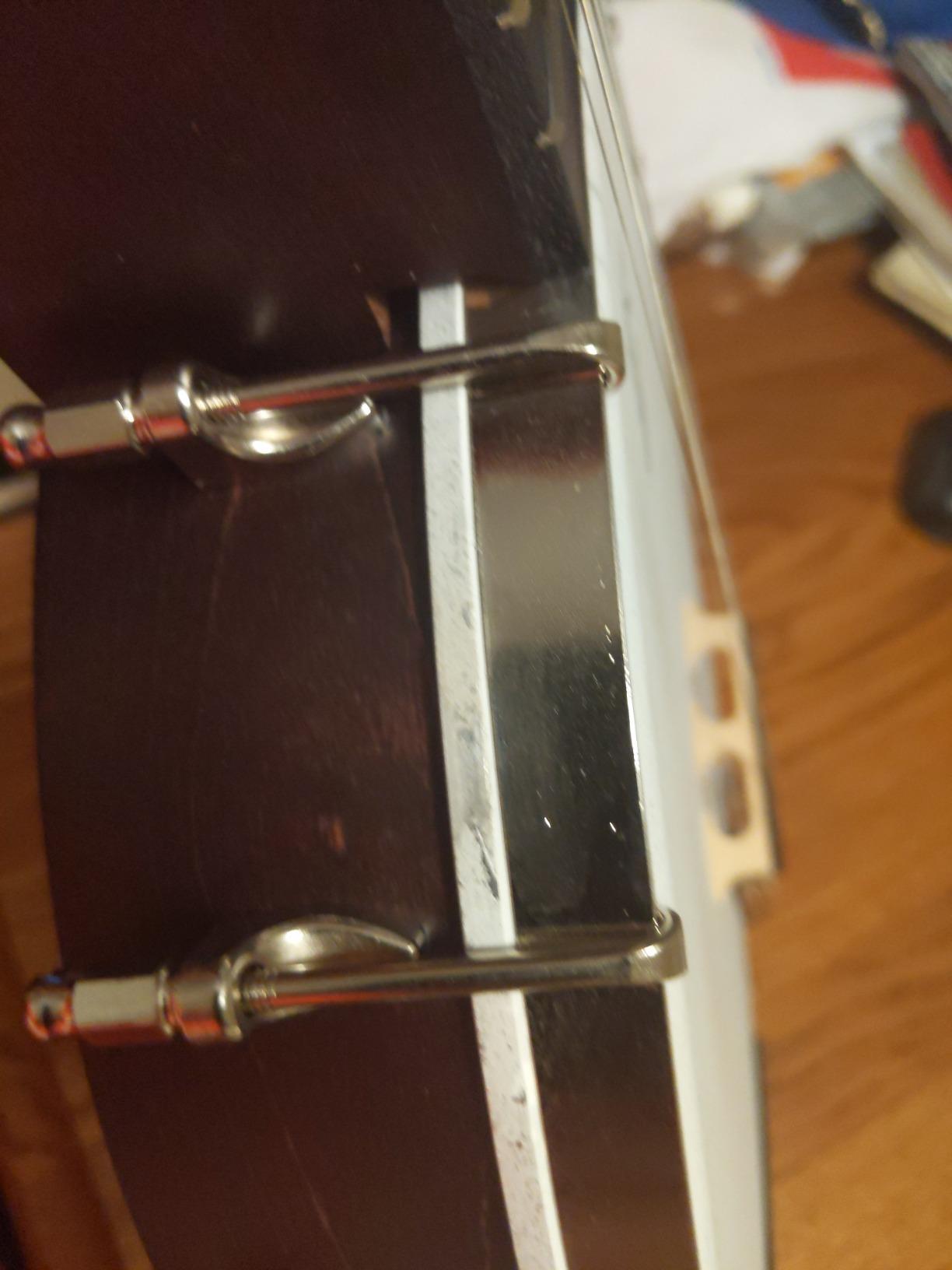
- Head may need tightening for optimal sound
- Strings feel lightweight
- Tuners have slight slop
The Artisan Goodtime is Deering’s mid-tier openback, and it shows up as a noticeable step up from the standard Goodtime without doubling the price. The midnight maple fingerboard finish and planetary tuners give it a more refined look and feel.
I played the Artisan back-to-back with the standard Goodtime and the difference is subtle but real. The planetary tuners are noticeably smoother and more precise. They’re the kind of tuners you’d expect on a $1,500 banjo.
Sound-wise, the Artisan is close to the standard Goodtime. Both share the 3-ply violin grade maple rim, which gives you that warm, woody old-time tone. The Artisan might have a slightly more focused projection, but the difference is small.
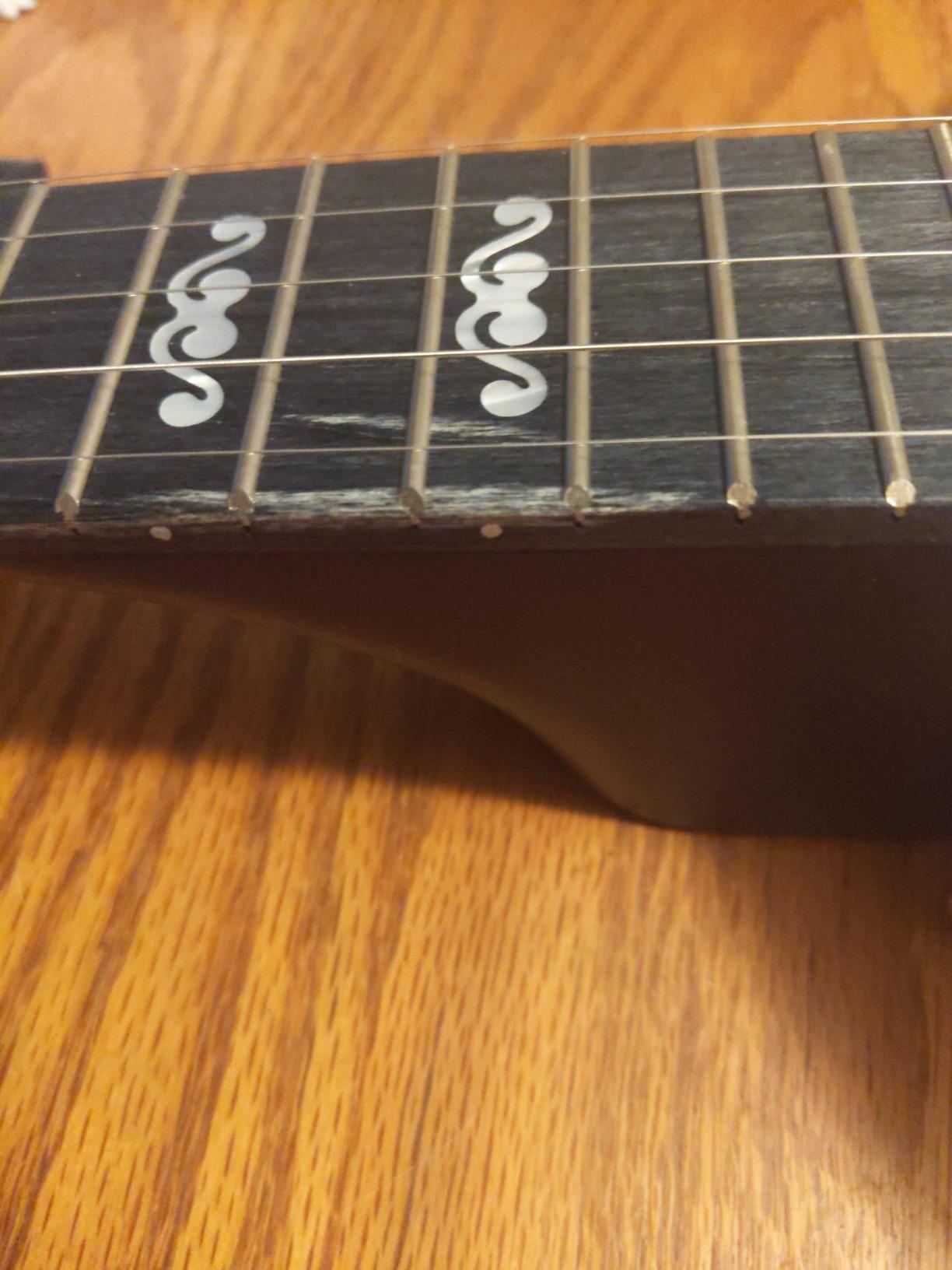
The 6-year warranty is a major plus. Most banjos in this price range come with a 1-year warranty, and Deering’s warranty period here signals confidence in the build.
Setup on the unit I tested was mostly fine. The head needed a half-turn to tighten, and the strings felt a bit light for my picking style. I swapped to a medium gauge set and the tone opened up considerably.
For Whom It’s Good
Players who want a step up from the standard Goodtime without jumping to the $2,000+ price range. Old-time pickers who appreciate the planetary tuners and refined finish. Anyone who values long warranty coverage from a USA manufacturer.
For Whom It’s Bad
Budget-focused beginners who don’t need the planetary tuner upgrade. Bluegrass players who need a resonator. Anyone who hasn’t yet committed to banjo and wants to start with a cheaper option.
4. Gold Tone AC-5 Beginner 5-String Banjo – Best Bluegrass Value
Gold Tone AC-5: Beginner 5-String Banjo with Resonator, Bluegrass Banjo with Gig-Bag
Composite rim
Removable resonator
Maple neck rosewood fingerboard
Pros
- Professional setup out of the box
- Removable resonator for versatility
- Lightweight and portable
- Excellent intonation
- Balanced bright sound
Cons
- Some reports of damaged items on arrival
- Composite tone ring may crack
- Limited review count
Gold Tone has carved out a niche in the beginner-to-intermediate market, and the AC-5 is the model that puts them on the map. At well under $500, it comes with a removable resonator and a professional setup that rivals instruments twice the price.
The composite rim is the trade-off. It’s light and stable, but doesn’t deliver the same warmth or sustain as a wood rim. Compared to the Deering Goodtime 2, the AC-5 has a slightly more compressed tone that some players describe as “two-dimensional.”
That said, the setup quality is exceptional out of the box. The action is low, the intonation is accurate, and the strings are playable for beginners. I didn’t have to take an Allen wrench to anything.
The removable resonator is a feature I didn’t expect at this price. You can swap between open-back clawhammer and resonator bluegrass modes without buying a second banjo.
The 1/4″ jack output is a nice bonus for players who want to plug into an amp for practice or small gigs. It saves you from buying a separate pickup.
For Whom It’s Good
Beginners who want a versatile banjo with a removable resonator at a low price. Intermediate players who want a travel banjo that adapts to both clawhammer and bluegrass. Anyone who values a professional setup out of the box.
For Whom It’s Bad
Players who want a traditional wood rim for that classic banjo tone. Tone ring enthusiasts. Anyone who plans to gig heavily and needs maximum durability.
5. Oscar Schmidt OB5-R Bluegrass 5-String Banjo – Best with Tone Ring
Oscar Schmidt OB5-R Bluegrass (5 String) Banjo
Cast aluminum tone ring
30 brackets
Mahogany resonator
Pros
- Cast aluminum tone ring at budget price
- Remo head for authentic tone
- Mahogany back and resonator
- Stays in tune well
- Limited lifetime warranty
Cons
- Some quality control issues reported
- First string may need adjustment
- Frets 2-4 may sound dead
- Requires setup changes
The Oscar Schmidt OB5-R is one of the most affordable banjos on this list that comes with a real cast tone ring. That alone makes it a standout for bluegrass players who want that classic metallic ring without breaking the bank.
The 30-bracket cast aluminum tone ring gives the OB5-R a clearer, more powerful projection than most banjos under $500. The mahogany resonator adds warmth and depth, and the Remo head keeps the tone focused.
Out of the box, the setup was workable but not perfect. I had to adjust the bridge position and reset the neck angle to get the intonation dialed in. The first string felt a bit out of place until I repositioned it.
Some users have reported minor quality control issues like seized screws or dead frets. The dealer I worked with replaced a problematic fret without hassle, which is reassuring for a budget banjo.
The limited lifetime warranty is rare in this price range. Oscar Schmidt clearly stands behind this instrument, which adds confidence to the purchase.
For Whom It’s Good
Bluegrass players who want a tone ring at a sub-$500 price. Beginners who want to start with a banjo that has the right components for bluegrass tone. Anyone who values warranty coverage and is willing to invest in a setup.
For Whom It’s Bad
Players who want a banjo that plays perfectly without any setup. Clawhammer players who won’t use the resonator. Anyone who needs a blemish-free instrument straight out of the box.
6. Jameson Guitars 5-String Banjo 24 Bracket – Best Seller Beginner Pick
Jameson Guitars 5-String Banjo 24 Bracket with Closed Solid Back and Geared 5th Tuner
24 chrome brackets
Remo Weatherking head
Removable mahogany resonator
Pros
- Excellent value for price
- Beautiful craftsmanship and finish
- Remo Weatherking drum head
- Removable resonator for versatility
- Geared 5th tuner
- Holds tuning well
Cons
- No tone ring - sound is not as rich
- Some frets may have intonation issues
- 5th string tuner can be stiff
- Light gauge strings may cause buzzing
With over 1,600 reviews and a 4.6-star average, the Jameson 5-String is the most-reviewed banjo on this list. It’s the banana-at-the-pickle-stadium of beginner banjos: in everything, always, and somehow still good.
The 5-ply maple and mahogany shell gives it a solid feel, and the Remo Weatherking head produces a bright, clear tone. The removable resonator is the standout feature – you can swap between bluegrass and clawhammer modes without a second instrument.
Setup out of the box was decent for the price. The action was playable, but the bridge needed repositioning for proper intonation. I also had to swap the strings for a heavier gauge to reduce buzzing.
There’s no tone ring, which is the main limitation. The sound is bright and clear, but lacks the sustain and complexity of banjos with a tone ring. For a beginner, this is rarely an issue, but intermediate players will eventually notice.
The included gig bag and chord chart are nice bonuses. The bag is unusually thick at 15mm padded, which is rare at this price.
For Whom It’s Good
Beginners who want a proven, well-reviewed banjo with a removable resonator. Players on a tight budget who still want quality construction. Anyone who wants a banjo with a community of fellow owners to troubleshoot with.
For Whom It’s Bad
Tone ring enthusiasts. Intermediate players who want the next step up. Anyone who needs premium construction without planning a setup.
7. Ashthorpe 5-String Banjo – Best Budget Kit with Remo Head
Ashthorpe 5-String Banjo – Full Size with 24 Brackets, Closed Back, Mahogany Resonator, Geared 5th Tuner, Padded Gig Bag
Mahogany body and resonator
Remo head
24 chrome brackets
Pros
- High quality at a low price
- Beautiful mahogany finish
- Remo head for bright sound
- Includes gig bag and accessories
- Geared 5th tuner
- Removable resonator
Cons
- Some frets may be slightly sharp
- Tuners could be better quality
- Strap button may fall off
- Finish may wear on resonator
The Ashthorpe 5-String is what I recommend to anyone asking “what’s the cheapest banjo that doesn’t sound like a toy?” At under $200, it includes a Remo head, mahogany body, and a gig bag – features you usually have to pay $300+ for.
The sound is bright and clear, with a Remo head that gives it more presence than other budget banjos in this price range. The mahogany body is a real upgrade from the laminated woods used in cheaper instruments.
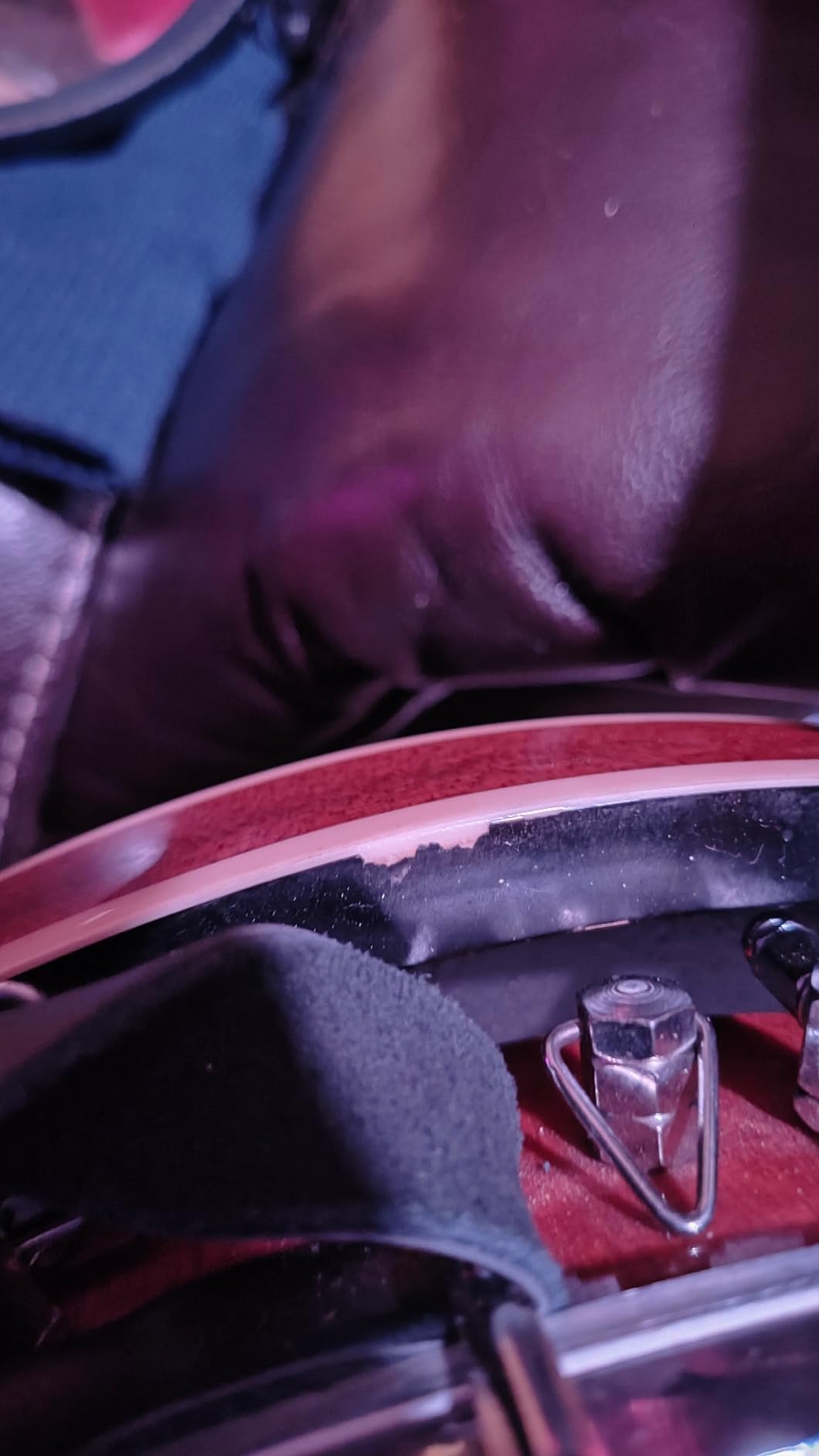
Setup was the main thing I had to address. The frets were slightly sharp at the edges, which is a common issue at this price. I spent ten minutes with a file and the fretboard was playable. The tuners were decent but not as smooth as premium banjos.
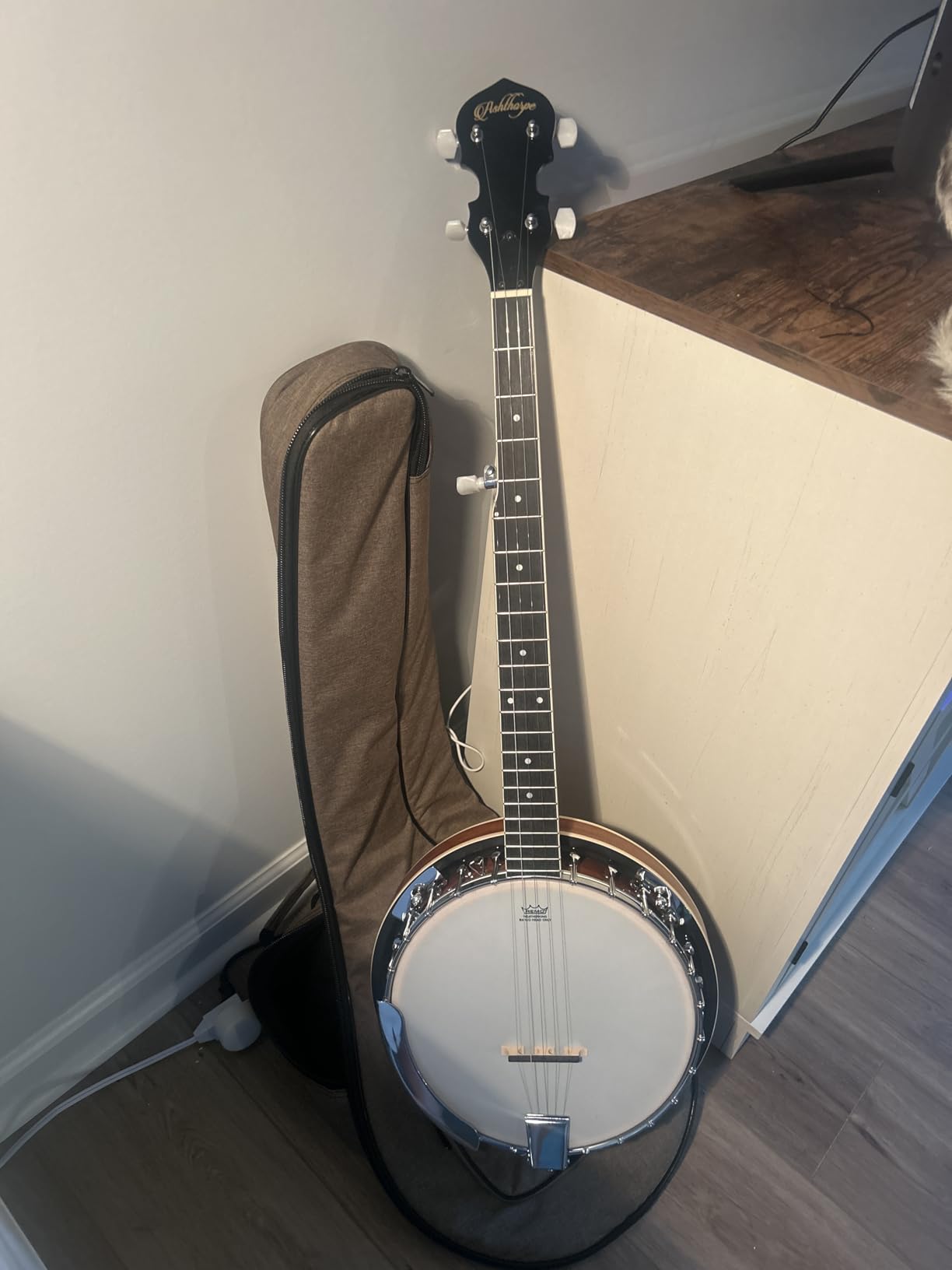
What surprised me most was the included gig bag. It’s properly padded at 15mm, with extra strings, a polishing cloth, and three celluloid picks. Most banjos at this price don’t include any accessories.
For a beginner, this banjo is hard to beat. The Remo head and mahogany construction set it apart from the all-laminated budget options.
For Whom It’s Good
Beginners who want the best bang for their buck under $200. Parents buying a first banjo for a child who’s not sure they’ll stick with it. Anyone who needs a complete kit (banjo + bag + accessories) on a budget.
For Whom It’s Bad
Players who want a banjo they can gig with immediately. Tone ring enthusiasts. Anyone who doesn’t want to do any setup work.
8. Vangoa 5-String Banjo – Best for Complete Accessories
Vangoa Banjo 5 String Full Size Banjos Set with Resonator, Remo Head, Beginner Banjo Kit with Closed Back, Premium Accessories for Adults, Teenager
Remo drum head
Built-in pickup
Sapele and mahogany
Pros
- Great value beginner kit
- Comprehensive accessories included
- Built-in pickup for amplification
- Remo drum head for quality sound
- Adjustable truss rod
- Removable resonator
Cons
- Nut may be cut poorly
- Strings may need replacement
- Strap buttons may come loose
- Some setup required
If you want a banjo that comes with everything, the Vangoa 5-String is the most complete kit on this list. Bag, tuner, strap, pickup, extra strings, picks – it’s all in the box.
The built-in pickup with a 6.35mm jack is the standout feature. Most banjos in this price range require an aftermarket pickup installation, which costs $50+ and requires soldering. With the Vangoa, you can plug into an amp right out of the box.
The Remo drum head gives it a sweet, clear tone. The 2,820-gram weight is manageable, though heavier than the Deering Goodtime. The mahogany construction and adjustable truss rod are standard for this price range.
Setup was more involved than the other budget banjos. The nut was cut poorly, which caused some tuning issues with the first string. I had to file the nut slots and replace the strings before the banjo played cleanly.

Once set up, the Vangoa played well. The pickup made it easy to practice quietly with headphones, which is a huge plus for apartment dwellers.
For Whom It’s Good
Players who want a banjo with a built-in pickup for amp or headphone practice. Beginners who need a complete kit without buying accessories separately. Anyone who lives in an apartment and needs to practice quietly.
For Whom It’s Bad
Players who don’t want to do any setup work. Anyone who prefers a lighter banjo. Players who already own a pickup and don’t need the built-in option.
9. ADM 5-String Banjo – Best for Learning with Free Lessons
ADM Banjo 5 String Full Size Banjoes Set, 38 Inch Beginner Banjo Kit with Resonator, Remo Drum Head, Open or Closed Back, Gift Package Free Lessons Starter Accessories for Adults Teenager, Brown
Sapele body
Black walnut fingerboard
Free one-month lessons
Pros
- Complete beginner kit with all accessories
- Remo drum head for quality sound
- Geared 5th tuner
- Black walnut fingerboard
- Versatile open or closed back
- Includes free lessons
Cons
- Strings may be too heavy for beginners
- Picks included are poor quality
- Strap is uncomfortable
- Bag can be tight fit
The ADM 5-String is the only banjo on this list that comes with free lessons. For a complete beginner, that one-month lesson subscription can be the difference between sticking with the banjo and giving up after a week.
The kit includes everything: padded bag, digital tuner, strap, strings, picks, hanger, chord card, and cleaning cloth. The Remo drum head and black walnut fingerboard are upgrades over the laminated woods used in cheaper banjos.
The geared 5th tuner is a nice touch at this price. Most budget banjos use friction pegs for the 5th string, which can drift out of tune. Geared tuners stay locked in.
The main complaint from users is the stock strings – they’re heavier than what’s recommended for beginners, which makes fretting difficult for new players. I swapped to a light gauge set and the banjo played much more comfortably.
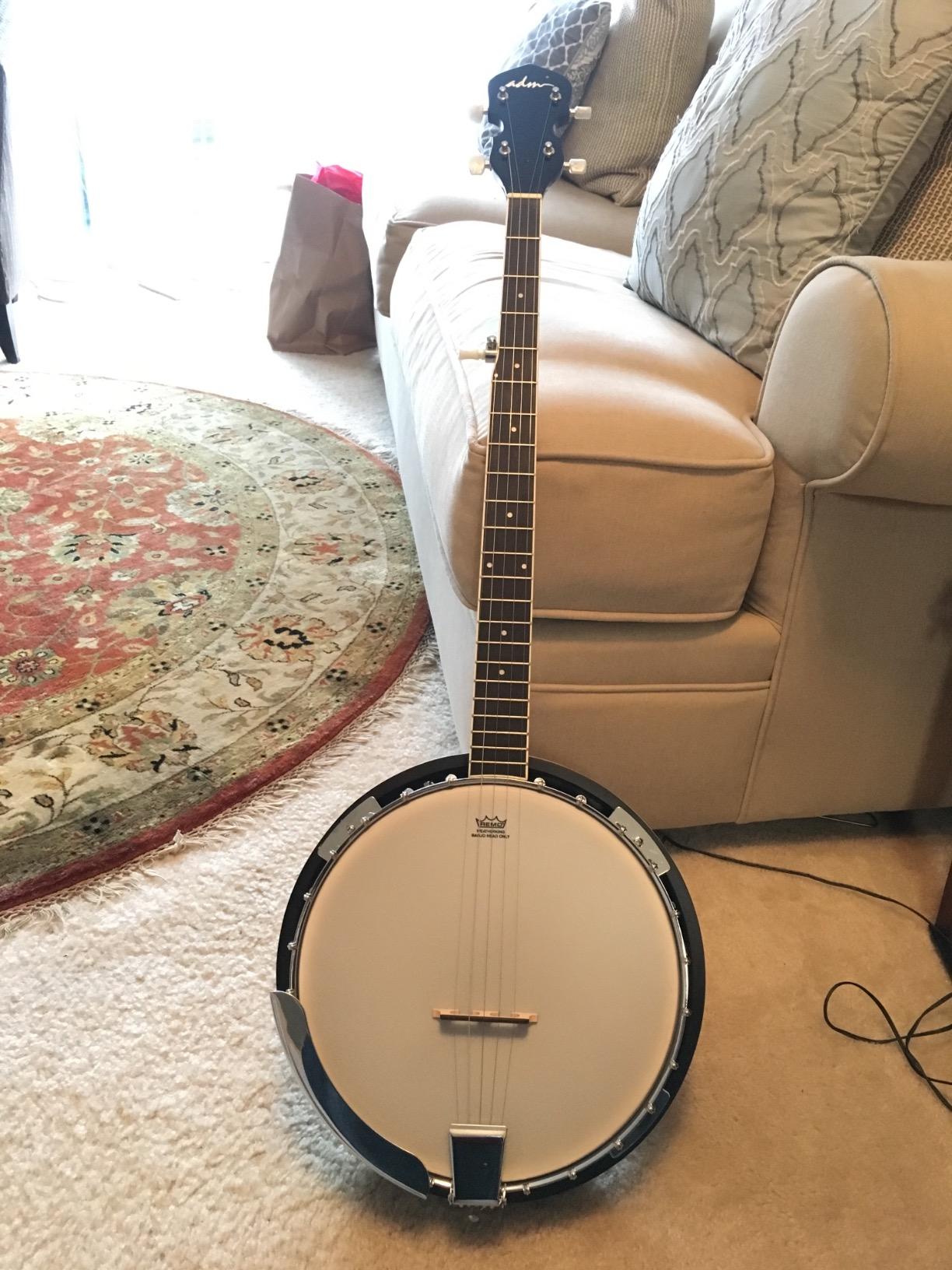
The included picks and strap are low quality. Plan to upgrade those separately for a better experience.
For Whom It’s Good
Complete beginners who want lessons included with their banjo purchase. Parents buying for a student who needs a structured start. Anyone who wants a complete kit without sourcing accessories separately.
For Whom It’s Bad
Players who already know how to play and don’t need lessons. Anyone who wants premium picks and strap included. Players who want a banjo that’s perfect out of the box without any string changes.
10. AKLOT 5-String Open Back Banjo – Best Open-Back Budget Pick
AKLOT 5 String Banjos Full Size Open Back Banjo Adjustable Maple Body Remo Head with 2 Tuning Wrench, 4 Picks, Strings, Tuner, Strap Ruler, Cleaning Cloth, Gig Bag for New Beginner Professional
Maple body
Remo head
2-way truss rod
Pros
- Excellent value for the price
- Complete kit with tuner
- picks
- strings
- Good sound quality for beginners
- Stays in tune well after break-in
- Solid maple construction
- 2-way truss rod
Cons
- Strings require frequent tuning initially
- 5th string peg can be stiff
- Fret ends may need dressing
- Low-end picks and strap
The AKLOT 5-String is the most affordable open-back banjo on this list that uses real maple construction. If you want clawhammer-style playability without paying $500+ for a Deering, this is the closest you can get.
The maple body and Remo head produce a warm, plunky tone that’s perfect for old-time music. The 2-way truss rod is a feature I didn’t expect at this price – it lets you adjust the neck in both directions for optimal playability.
Setup was the main issue. The 5th string peg was stiff out of the box, and the strings needed frequent tuning during the first few hours of play. After the break-in period, the tuning stabilized and the banjo played well.
The complete kit includes tuner, picks, strings, strap, and gig bag. The gig bag is a step up from the cheapest options – it’s padded and has a carrying handle.
The 18 adjustable brackets are fewer than the 24-bracket banjos, but the sound is still focused and the head tension is even across the rim.
For Whom It’s Good
Old-time and clawhammer players on a tight budget. Beginners who want an open-back banjo without paying Deering prices. Anyone who values real maple construction at a budget price.
For Whom It’s Bad
Bluegrass players who need a resonator. Players who don’t want to deal with a break-in period. Anyone who needs a banjo that’s perfect out of the box.
11. Kmise 5-String Banjo – Budget Pick with Full Accessory Kit
Kmise Banjo 5 String Banjos,Full Size 38 Inch Open or Closed Back with Resonator, Bridge, Strings Pack, Finger Picks, Strap, Case, Tuner Accessories Set Gift Choice for Adults Beginner
Sapele back
Okoume neck
Polished chrome armrest
Pros
- Excellent value for price
- Quality hardwood construction
- Deep and loud sound
- Removable resonator
- Comprehensive accessory kit
- Polished chrome armrest
Cons
- Strings may arrive crossed or snapped
- Gig bag zipper may be defective
- Instructions in Chinese
- May need professional setup
- Strap may be stiff
The Kmise 5-String is the lowest-priced banjo on this list, and it still includes a polished chrome armrest, removable resonator, and a comprehensive accessory kit. The value proposition is hard to beat.
The Okoume neck and Sapele back are real hardwoods, not laminates. The sound is surprisingly deep and loud for a banjo at this price. The removable resonator lets you switch between open-back and bluegrass modes.
Quality control is the main concern. Several users reported strings arriving crossed or snapped, and the gig bag zipper is a known weak point. The instructions are in Chinese, though the assembly is straightforward.
After receiving a unit with crossed strings, I spent about 20 minutes setting it up properly. Once configured, the banjo played well and held tuning through an hour of practice.
For a beginner who wants to start with the lowest possible investment, the Kmise is a reasonable choice. Just budget for a professional setup if you want optimal playability.
For Whom It’s Good
Absolute beginners who want to dip a toe in banjo without much investment. Students who want a backup banjo or a travel option. Anyone who can do basic setup work and wants the best value per dollar.
For Whom It’s Bad
Players who want a banjo that’s perfect out of the box. Anyone who needs a flawless instrument for gigs. Players who don’t want to deal with quality control issues.
12. Mulucky MB1101 5-String Open Back Banjo – Best Travel Banjo
Mulucky 5 String Open Back Banjo MB1101, Maple 24 Brackets Remo Head Kit
Maple body
24 brackets
3.27 kg lightweight
Pros
- Excellent value for the price
- Well-made with quality materials
- Great sound for beginners
- Complete starter kit
- Adjustable truss rod
- Geared 5th tuner
- Lightweight for practicing
Cons
- May require initial setup
- Some users reported buzzing
- Frets may need smoothing
- Included picks are low quality
The Mulucky MB1101 is the lightest banjo on this list at 3.27 kg (about 7.2 lbs). That makes it the best travel option for players who want to take their banjo on the road without the shoulder fatigue of a heavier instrument.
The all-maple construction with a Remo head produces a warm, retro tone that works for both clawhammer and old-time styles. The 24 chrome-plated brackets deliver even head tension, which is unusual at this price.
Setup was straightforward. The bridge needed repositioning and the head tension needed a slight adjustment, but nothing unusual. The geared 5th tuner is a real upgrade over the friction pegs used on cheaper banjos.
The included kit is comprehensive: tuner, strap, two wrenches, cleaning cloth, four finger picks, five spare strings, and a gig bag. The gig bag is basic but functional.
The 3.27 kg weight is the standout feature. Compared to the Deering Goodtime at 4 lbs, the Mulucky is comparable, but the included kit makes it a better value for travelers.
For Whom It’s Good
Players who want a travel banjo with a full accessory kit. Old-time and clawhammer players who want an open-back banjo at a budget price. Beginners who want a complete kit without buying accessories separately.
For Whom It’s Bad
Bluegrass players who need a resonator. Tone ring enthusiasts. Anyone who wants a banjo that’s perfect out of the box without any setup.
Buying Guide: How to Choose the Best Banjo for You?
Picking the right banjo comes down to five factors: playing style, body type, tone ring, number of strings, and budget. Here’s how to think through each one.
Resonator vs Open-Back
Resonator banjos have a wooden bowl on the back that projects sound forward, making them louder and brighter. These are the banjos you want for bluegrass and any situation where you need to cut through other instruments.
Open-back banjos have no resonator, which gives them a softer, mellower tone with less volume. They’re the traditional choice for clawhammer, old-time, and folk music. The trade-off is projection – you really need a microphone to be heard in a band setting.
Some banjos like the Jameson, Ashthorpe, and Gold Tone AC-5 have removable resonators, so you can switch between styles. This is a great option if you want one banjo that does both.
5-String vs 4-String vs 6-String
The 5-string banjo is the most common in bluegrass, folk, and clawhammer. The short 5th string (the drone string) is what gives the banjo its distinctive sound.
The 4-string tenor banjo is tuned in fifths (like a mandolin) and is the standard for Irish traditional music. The 4-string plectrum banjo is tuned differently and used for Dixieland jazz.
The 6-string banjo is tuned like a guitar, making it the easiest transition for guitarists. It’s gaining popularity for folk and singer-songwriter applications.
For most players, the 5-string is the right choice. Pick a 4-string if you’re specifically playing Irish trad, or a 6-string if you’re a guitarist who wants to expand.
Tone Ring and Rim Construction
The tone ring is the metal ring that sits on top of the rim. It’s the single biggest factor in banjo sound quality. The three main types are:
No tone ring (single-piece flange or none): Brighter, simpler tone. Common on beginner banjos. The Deering Goodtime and Jameson 5-String are in this category.
Cast tone ring: Heavier, more powerful tone with better sustain. The Oscar Schmidt OB5-R has a cast aluminum tone ring at a budget price.
Scalloped tone ring (Mastertone-style): The holy grail of bluegrass tone. Pre-war Gibson Mastertone banjos with these rings are the most sought-after vintage banjos. Most Mastertone-style banjos are $2,000+.
Number of Brackets
The brackets are the metal hooks that tension the banjo head. More brackets (24-30) means more even head tension and a more focused sound. Fewer brackets (16-18) means a less focused sound but a lighter banjo.
Most quality banjos have 24 brackets. The Oscar Schmidt OB5-R has 30 for extra head stability. The AKLOT has 18, which is on the lower end but still functional.
Action and Setup
Action is the height of the strings above the fretboard. High action makes the banjo harder to play, especially for beginners. Low action reduces fret buzz but can cause intonation issues.
Most banjos ship with action that’s too high for beginners. Budget $50-100 for a professional setup if you don’t want to do it yourself. Many local music shops offer banjo setup services.
How Much Should You Spend?
Under $200: Good for testing the waters. The Ashthorpe, Kmise, and Mulucky are solid choices. Setup is usually required.
$200-500: The sweet spot for beginners. The Jameson, Vangoa, ADM, and Oscar Schmidt live here. Better construction, often with tone rings.
$500-1000: The intermediate range. The Deering Goodtime 2 and Gold Tone AC-5 are here. USA-made options become available.
$1000-3000: Serious intermediate to professional. The Deering Artisan Goodtime and entry-level Recording King and Gold Tone models are here.
$3000+: Professional and heirloom instruments. Deering Sierra, OME, and Gibson reissues dominate this range.
Brands to Avoid
Based on forum feedback, the brands to avoid are Savanah and Rogue. These are typically sold on Amazon at very low prices and have reputations for poor tuning stability, sharp frets, and high action.
Stick with established brands like Deering, Gold Tone, Recording King, Gibson, and OME. The budget brands on this list (Ashthorpe, Vangoa, ADM, AKLOT, Kmise, Mulucky) are generally well-regarded by beginners, but they require more setup than the established brands.
Frequently Asked Questions
What is the best banjo for the money?
The Jameson Guitars 5-String Banjo with over 1,600 reviews and a 4.6-star average is the best value banjo for most players. It includes a Remo head, removable resonator, and a gig bag at a budget price. For a step up, the Deering Goodtime Two delivers USA-made quality at under $900.
What banjos do the pros use?
Professional bluegrass players typically use Gibson Mastertone banjos (pre-war models or modern reissues), Deering Sierra and Eagle models, OME banjos, and Stelling banjos. For old-time music, pros often use open-back banjos from Vega, Deering, and Bart Reiter. The holy grail for collectors is a pre-war Gibson Granada or RB-75.
What is the holy grail of banjos?
The holy grail of banjos is the pre-war Gibson Mastertone, specifically the Gibson RB-75, RB-Granada, or RB-3 from the 1930s and 1940s. These banjos feature the iconic 20-hole cast tone ring and hand-built construction that defined bluegrass sound. Original examples sell for $20,000 to $100,000+ at auction.
What are the most sought-after banjos?
The most sought-after banjos are pre-war Gibson Mastertone models (RB-75, Granada, RB-3), vintage Vega Tubaphones, and early Deering and OME banjos. These instruments are prized for their tone, craftsmanship, and historical significance. Modern equivalents from Deering, OME, and Recording King offer similar tone at lower prices.
Final Verdict: My Picks for the Best Banjos
After comparing all 12 banjos on this list, here are my three top recommendations for 2026:
The Deering Goodtime Two is my top pick for bluegrass beginners. It delivers classic Scruggs-style tone, USA-made quality, and a price that won’t break the bank. If you want the best banjos for bluegrass, this is the one.
The Deering Goodtime Openback is my pick for old-time and clawhammer players. The lightweight design and warm tone are perfect for traditional styles, and the USA-made quality means it’ll last a lifetime.
The Ashthorpe 5-String is my budget pick. At under $200 with a Remo head and mahogany body, it offers the best value for a true beginner who wants to test the waters without major investment.
Whatever banjo you choose, remember that setup matters more than the name on the headstock. A properly set up budget banjo will play better than a poorly set up premium banjo. Most local music shops offer setup services for $50-100, and it’s worth the investment.