
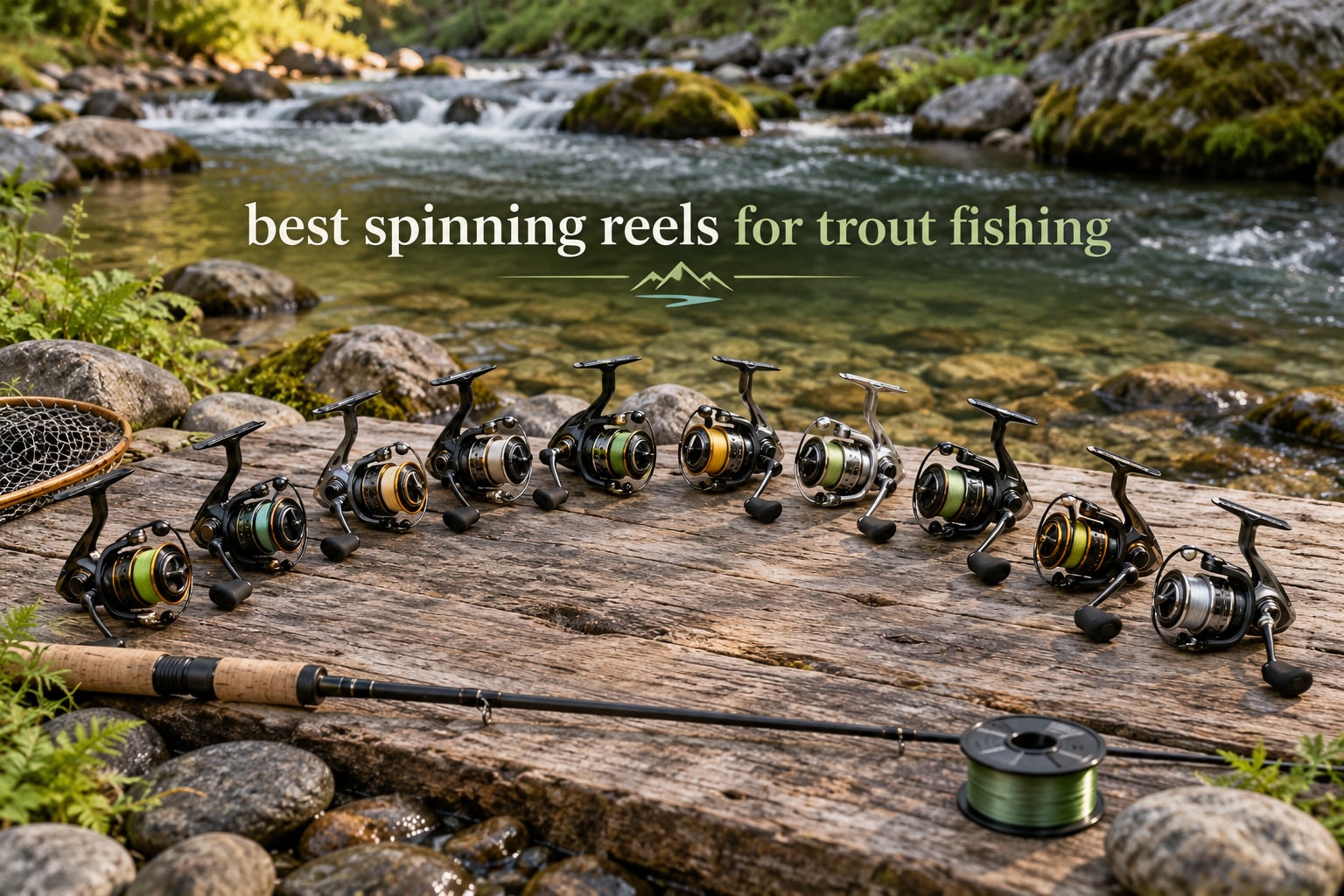
Choosing the best spinning reels for trout fishing comes down to three things: how the drag starts when you set the hook, how the reel feels at the end of a long rod, and whether the spool holds enough 4-pound line to fish a run properly. We put ten reels through those checks and narrowed the field to one per job, from a 5.1 ounce ultralight to a fully sealed metal workhorse. Our wider spinning reel roundup covers the general category if you are still working out what type of reel you want.
Most trout anglers end up casting a spinner or a small spoon across a river, or drifting a bobber through a tailwater pool. Both jobs punish a reel that is heavy on the wrist or has a drag that grinds at low pressure, because trout are soft-mouthed fish and you need a drag that feathers rather than slams. The models below cover the whole range, and we note for each one where it stops being the right tool.
Where do you fish, what are you casting, and what line are you putting on the spool? Those three answers cut this list down to a single reel in most cases. If you want the short version first, the table and top picks below are sorted by use, and the spinning wheel guide covers the reel-versus-wheel question in more detail.
Table of Contents
Top Trout Spinning Reel Picks for 2026

Penn Spinfisher VI 4500
- Sealed aluminum spool
- 20 lb max drag
- 6.2:1 ratio
- HT-100 carbon drag

Best Spinning Reels for Trout Fishing (October 2026)
| Product | Specifications | Action |
|---|---|---|
| Okuma Ceymar C-30 8BB |
|
Check Latest Price |
 Piscifun Flame 500 Piscifun Flame 500 |
|
Check Latest Price |
| KastKing Centron 500 |
|
Check Latest Price |
 Piscifun Viper X 1000 Piscifun Viper X 1000 |
|
Check Latest Price |
 KastKing Brutus 2000 KastKing Brutus 2000 |
|
Check Latest Price |
| Penn Spinfisher VI 4500 |
|
Check Latest Price |
 Shimano Syncopate FG 1000 Shimano Syncopate FG 1000 |
|
Check Latest Price |
 KastKing Zephyr 500 KastKing Zephyr 500 |
|
Check Latest Price |
 Shimano Sedona FI 1000 Shimano Sedona FI 1000 |
|
Check Latest Price |
 Piscifun Carbon X 500 Piscifun Carbon X 500 |
|
Check Latest Price |
How We Picked the Ten Reels on This List
We leaned on owner review patterns and published specifications rather than a single afternoon on the bank. Every reel here had hundreds or thousands of ratings behind it, so we could see whether the complaints repeat or are one-offs.
Five criteria decided the order. First, drag start-up in cold water, because a drag that lurches on the first turn can spool a light leader on the first fish of the morning. Second, reel weight relative to the rod it is meant to balance. Third, spool capacity for 4-pound line, since a small spool underfilled is the main cause of birds’ nests on a 1000-size. Fourth, line management, particularly with braided line. Fifth, whether drag washers and spares are practical to service.
Two things we deliberately did not rank on: bearing count on its own, and the headline max drag figure. Both are marketing-leaning numbers, and both sit far above what you should ever set on 4-pound line.
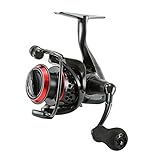
1. Okuma Ceymar C-30 8BB Spinning Reel – Our All-Round Pick
okuma Ceymar Lightweight Spinning Reel- C-30, Black/Red
8 ball bearings
37.6 inch retrieve
Graphite body
6 ounce class
1 year warranty
Pros
- Light enough for all-day creek fishing
- Smooth 8 bearing stainless retrieve
- Graphite body resists rust in freshwater
- Rated 4.7 across nearly 4000 reviews
- Ambidextrous with aluminum handle arm
Cons
- Max drag of 2.7 kg is modest for heavy fish
- Graphite frame flexes more than aluminum under load
The Ceymar C-30 is the reel we keep coming back to. It weighs in at the ultralight end, holds 110 yards of 10-pound line, and retrieves 37.6 inches per crank, which is fast enough to keep a spinner working through pocket water. The 4.7 rating across close to 4000 reviews is the highest on this list, and it is the one here that repeatedly turns up in multi-season use rather than first-season impressions.
Its graphite body is the reason it shrugs off creek water and mud. Graphite will not corrode, and it keeps the whole frame light, which is the point when you are casting a 5-foot ultralight rod for six hours. The soft-touch EVA knobs stay grippy with wet hands or cold fingers.
Line capacity is the honest trade-off here. The 10/110 figure means 110 yards of 10-pound mono, which translates to roughly 180 yards or so of 4-pound. That is enough for most river work but tight if you like to cast long on a big pool. Fill it right up to the spool rim with no gap, because an underfilled 30-size spool is where birds’ nests start.
The drag is the part to think about before you buy. A 2.7 kg rating is roughly 6 pounds, which is right for 4-pound line and a bit firm for 2-pound. Set it lower than the number and you will be fine. If you are chasing steelhead or big tailwater browns, look at the Spinfisher VI further down instead.
Who the Ceymar Suits Best
This is the reel for someone with one rod and one water type. Creek brookies, river rainbows on a spinner, panfish on the same rod, all of it works. Owners consistently report using it for trout, bass and panfish without swapping anything, and the ambidextrous handle means left-handed casting is a handle swap rather than a different reel.
It also travels well. At 8.7 ounces on the spec sheet it is light in a vest pocket and light in a pack, which matters for backcountry water where you walk in.
Where It Falls Short
The graphite frame is not as rigid as an aluminum body. Under sustained heavy pressure on a big fish the spool can flex slightly, and some owners prefer a stiffer frame for that reason. The modest max drag also means it is not the reel to reach for when something large is on.
There is no spare spool in the box, and the 1 year warranty is the shortest among the budget reels here. Budget accordingly if you are planning to keep it for a decade.
2. Penn Spinfisher VI 4500 – Sealed Build for Big Fish
PENN Spinfisher VI Spinning Inshore Fishing Reel, HT-100 Front Drag, Max of 20lb | 9.0kg, Made with an All-Metal Reel Body and Spool Design, 4500, Black Gold
IPX5 sealed aluminum spool
20 lb max drag
6.2:1 ratio
40 inch retrieve
12.16 ounces
Pros
- Sealed metal body and spool resist corrosion
- HT-100 carbon fiber drag rated to 20 lb
- Superline spool simplifies braided line setup
- Automatic bail trip on the 2500-5500 sizes
Cons
- Heavier than an ultralight trout reel at 12.16 ounces
- Large sizes need a manual bail trip
- Sits in a higher price tier than the budget picks
The Spinfisher VI is the one to buy if your trout are steelhead, if you fish a tailwater where a brown might reach double digits, or if your water is brackish enough to punish an open drag. The body and spool are sealed aluminum, rated IPX5, and that sealing is what separates it from every other reel on this list for longevity.
Owners put it through fresh and salt water for years and report it still turning smoothly. The HT-100 front drag uses carbon fiber washers and is rated to 20 pounds, which is far more than you would ever set on trout line but gives you headroom when a fish runs hard and you need to hold.
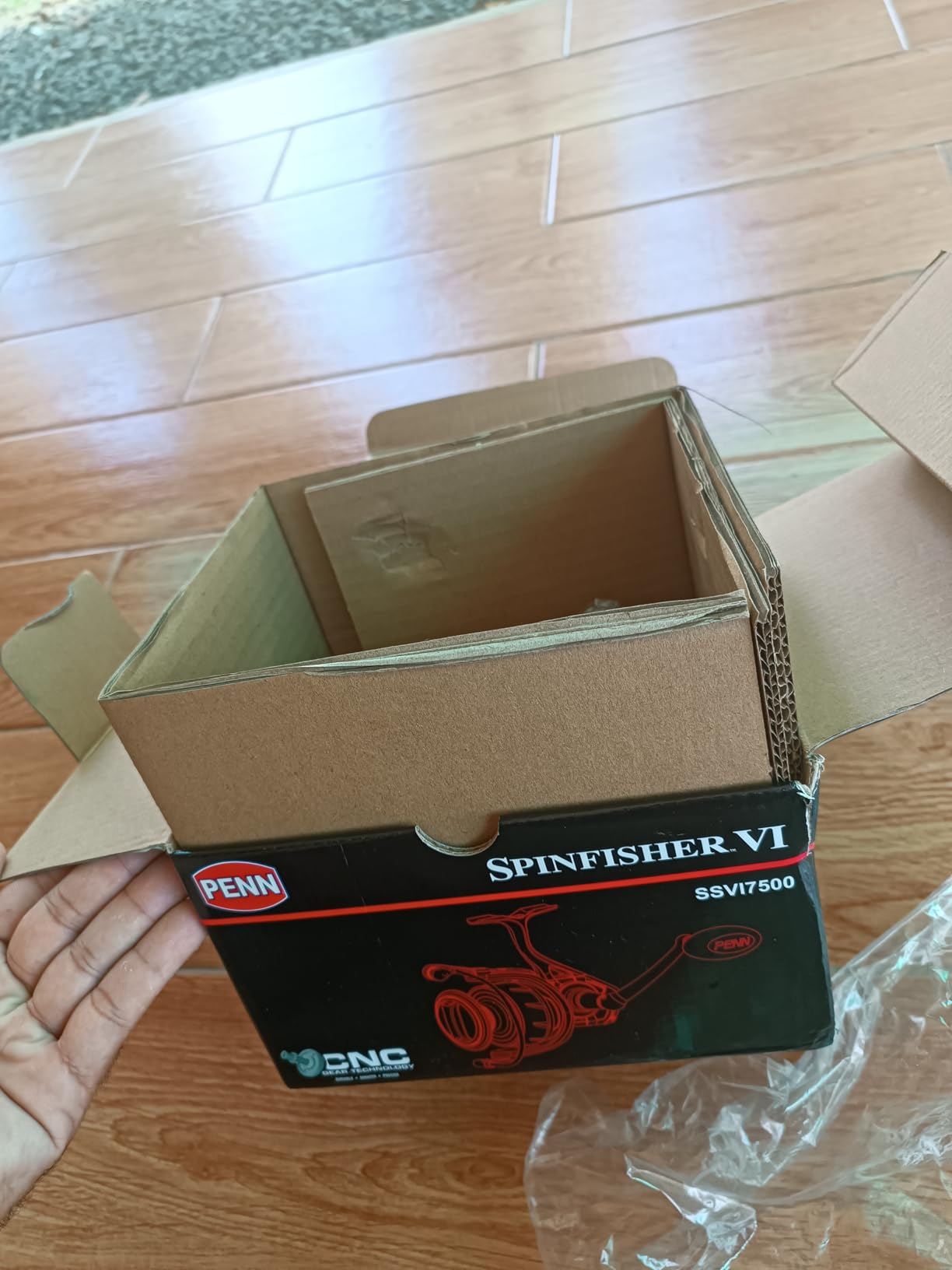
Retrieve speed is the standout number. At 6.2:1 it picks up 40 inches of line per crank, so picking up slack after a long cast is quick, and working a spinner across a run does not feel like cranking through syrup. Line capacity rings on the spool make it easy to read how much line you have left at a glance.
The Superline spool means attaching braid is straightforward. With a sealed spool you are not relying on a rubber sling alone, which is where a lot of braid line goes wrong.
Who the Spinfisher VI Suits Best
Pair it with a medium or medium-heavy rod in the 7 to 8 foot range and it stops being overkill. Anglers who fish lakes, inshore water or anywhere a reel gets dunked will appreciate the sealed construction more than any spec on the sheet. It also works for the trout angler who picks up a bass or a walleye on the same trip.
Six bearings, five stainless ball bearings plus an instant anti-reverse bearing, is fewer than the budget reels here, and it feels it. You notice the difference when you are turning in fish all day, not on a single cast.
Where It Falls Short
At just over 12 ounces it is the heaviest reel on this list. On a 5-foot ultralight rod it will feel like a brick, and a 4500 size matched to light tackle is simply too much reel for creek brookies. Balance matters more than headline weight, so pair this one with a rod that can carry it.
The 20 pound drag rating is far above anything trout fishing needs. If you are used to feeling every bite through the drag, this one will feel disconnected until you set it well below maximum.
3. KastKing Centron 500 – Budget Pick Spinning Reel
KastKing Centron Spinning Fishing Reels, 500 Size, Black
9 ball bearings plus 1 anti-reverse
17.6 lb max drag
5.2:1 ratio
CNC aluminum spool
Pros
- Smoothest retrieve in the budget tier
- Drag holds up on larger fish
- Quiet operation with no line twist
- Solid bail wire resists snap-back on hard casts
Cons
- Crank handle feels small for large hands
- Not as smooth as a premium sealed-drag reel
- 500 size runs slightly larger than expected
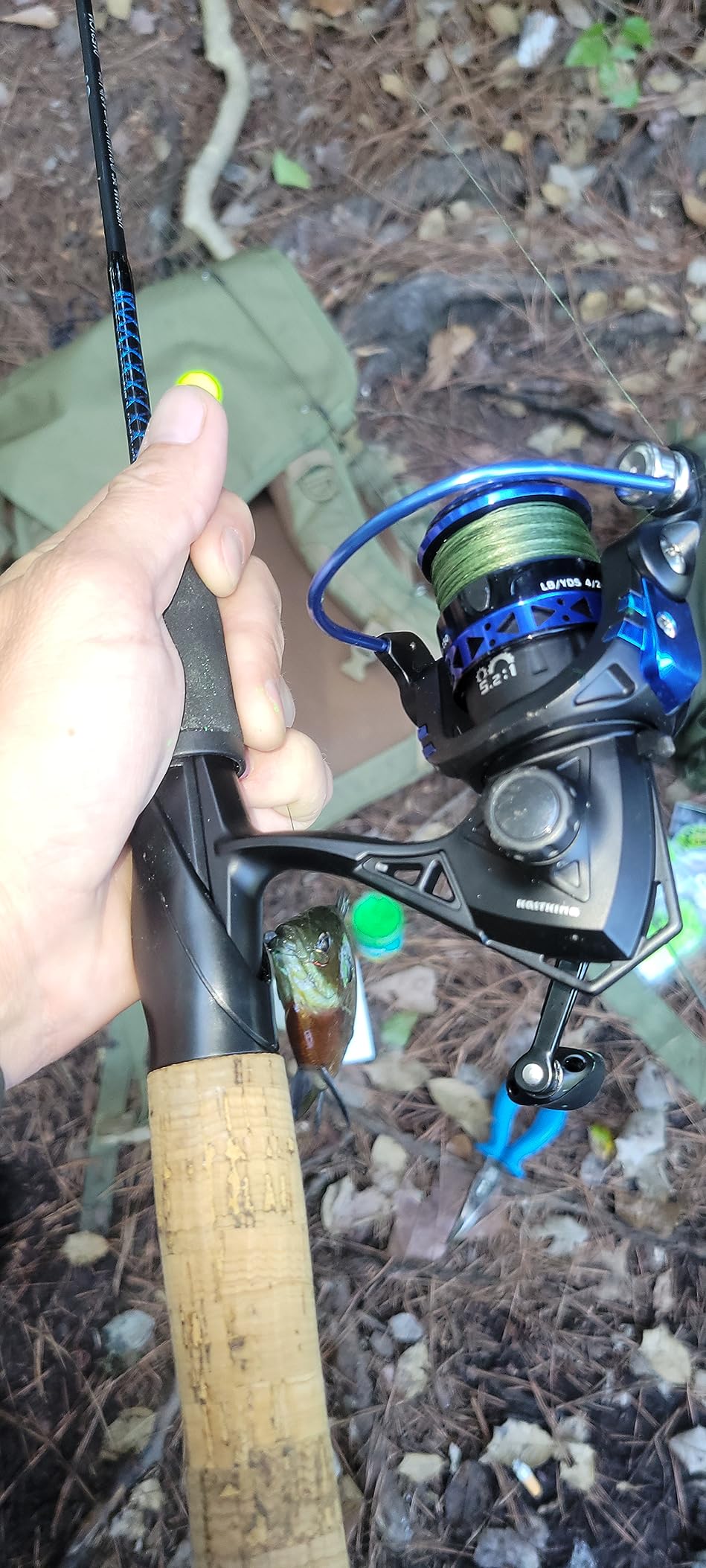
The Centron has more ratings behind it than anything else on this list, and the reason is that owners keep it for years. It is the reel people describe as feeling more expensive than it is, with a smooth drag, a quiet retrieve and no line twist showing up in the reviews again and again.
Inside there are 9 ball bearings plus an instant stop one-way anti-reverse bearing, a hardened metal main shaft and a precision machined pinion gear. The CNC aluminum spool has internal lube retention grooves, which is a small detail that shows up in long-term smoothness because the grease stays where it is.
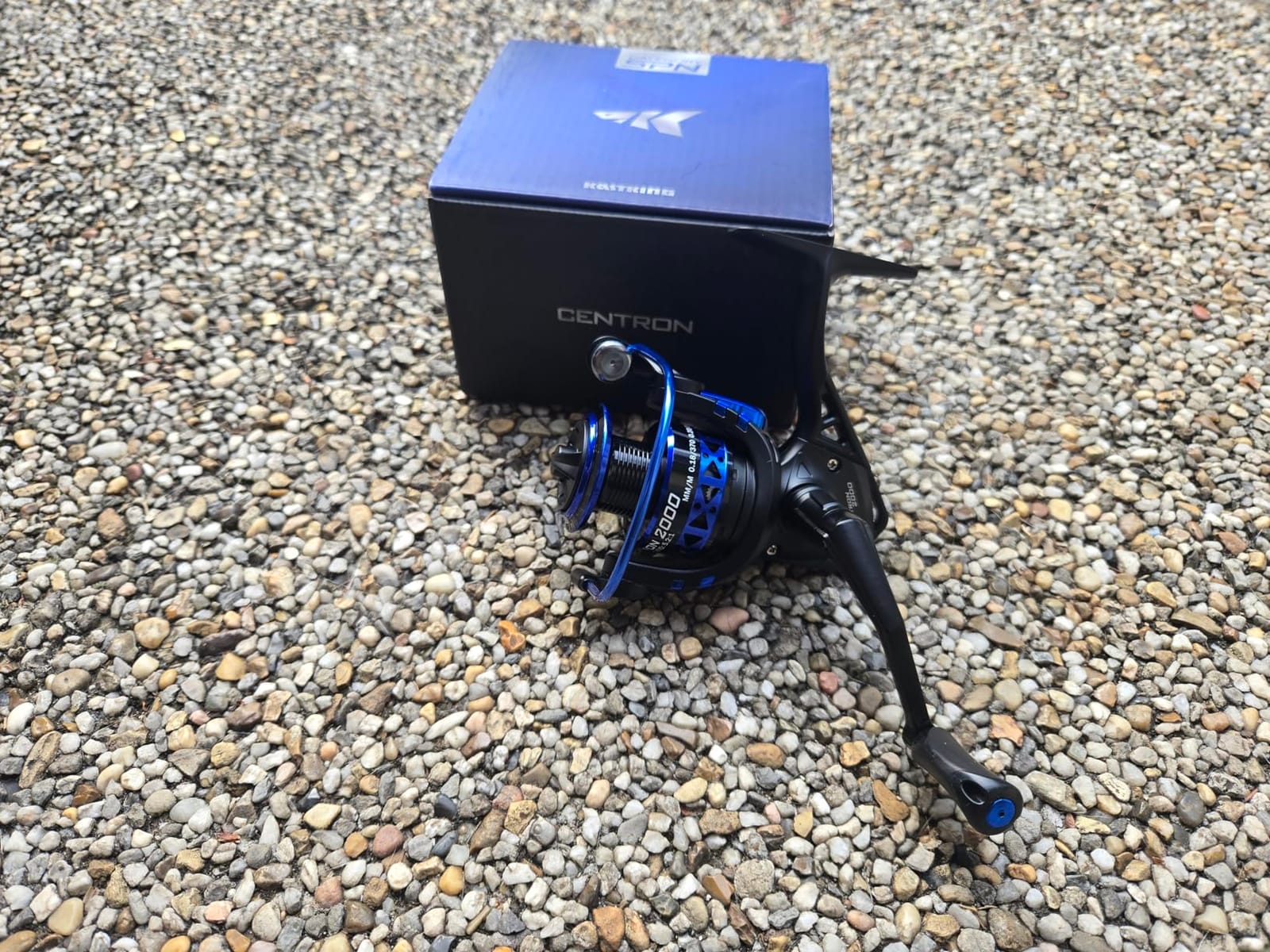
At 5.2:1 the retrieve is on the slower side, and that is actually the right side for trout. Slower gearing gives you more control when a fish comes off the bottom and less handle speed to manage on a slack-drop presentation. It also makes picking up line after a cast less frantic.
The bail is worth noting if you are new to spinning gear. Owners credit the bail wire design with not throwing line back at you on hard casts, which is the classic first-day spinning reel problem.
Who the Centron Suits Best
This is the reel for an angler who wants one spooled reel that covers everything from brookies in a creek to a stocked rainbow in a pond. The 500 size is compact enough for ultralight rods and light enough for panfish and ice fishing as well.
Drag strength is the quiet strength here. A 17.6 pound rating is far more than you will set for trout, but it means the drag keeps pulling smoothly when a fish gets heavy instead of stalling out.
Where It Falls Short
The crank handle is the most common complaint. If you have large hands it will feel cramped over a long day, and the single aluminum arm is not adjustable. It is also not the lightest reel in its size class, so pair it with an ultralight to light rod rather than an ultralight one.
Smoothness has a ceiling. Owners who have moved up to a sealed carbon drag reel notice the difference immediately, so if you are chasing feel rather than value, this is the wrong stop.
4. Piscifun Viper X 1000 – Sealed Drag on a Budget
Piscifun Viper X Spinning Reel, 8.8lb Max Drag, 1000 Series
Sealed carbon fiber drag
10+1 shielded bearings
5.2:1 ratio
6 ounce weight
2 year warranty
Pros
- Sealed carbon drag at a budget price
- Very light at 6 ounces for the 1000
- Handles 4-12 lb mono and 10-20 lb braid
- Bearing-supported spool support gives consistent drag
Cons
- Zinc alloy drive gear adds handle roughness
- Not as liquid smooth as premium Shimano or Daiwa
- No anti-reverse switch on some configurations
The Viper X solves one specific problem for very little money: getting a sealed carbon fiber drag into a trout reel. Sealed drags hold their settings better in cold water and resist the grit that comes with creek fishing, and most sealed-drag reels cost several times more.
Owners repeatedly compare it to sealed-drag models from larger brands and describe the drag as performing better than some of them. At 6 ounces for the 1000 size it is one of the lightest reels in its range, and 5.4 ounces for the 500 makes it a genuine ultralight option.
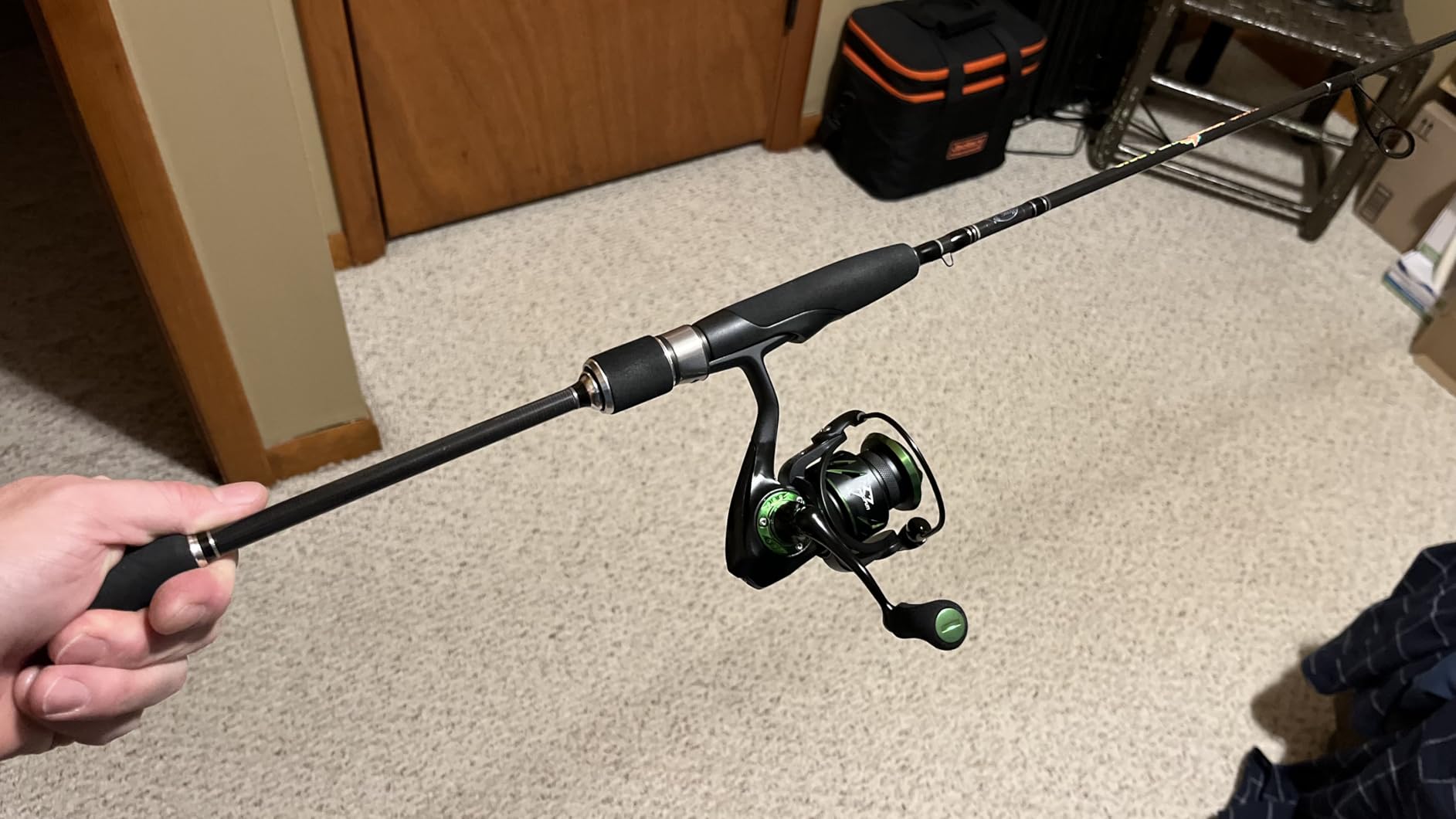
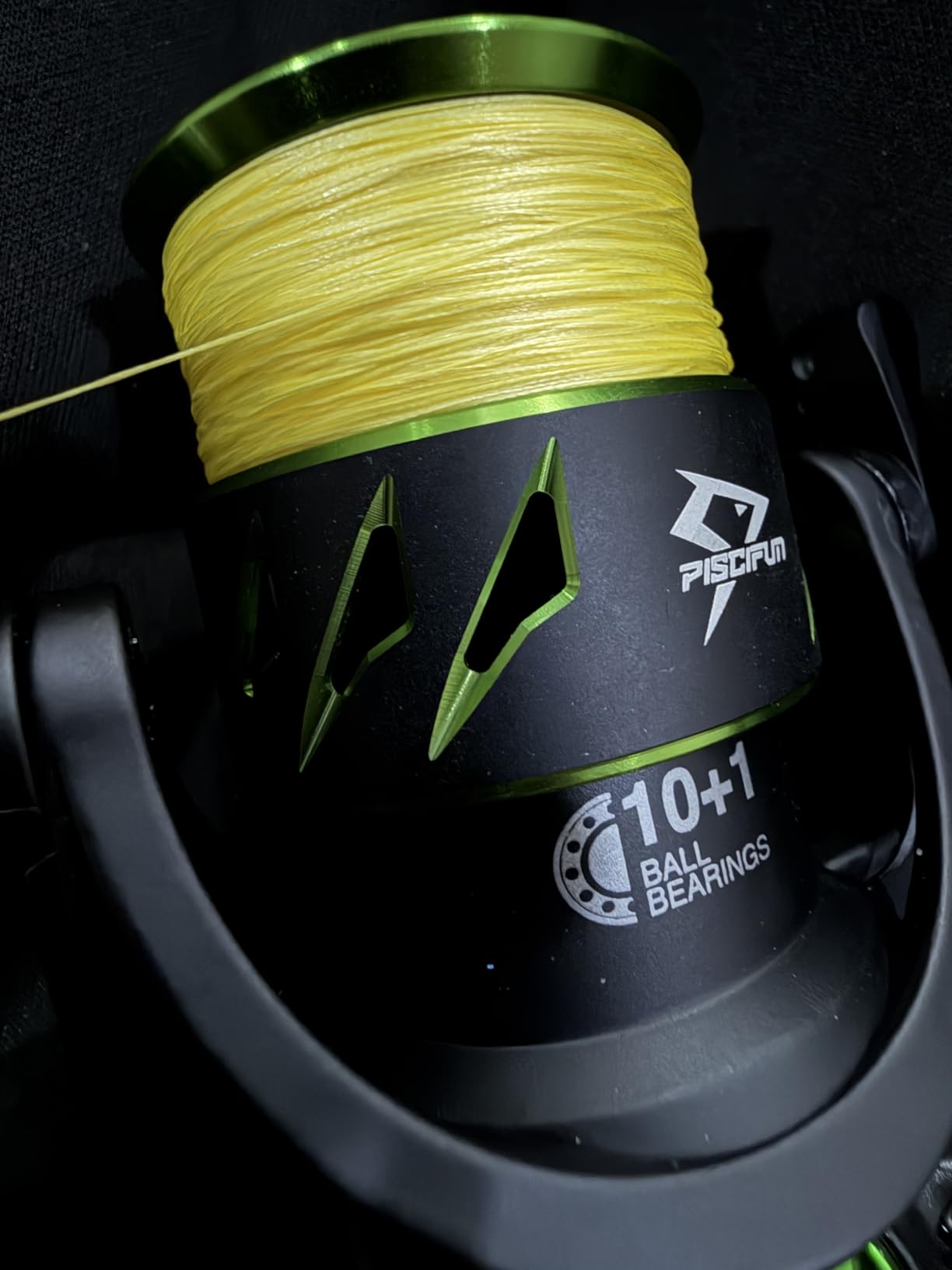
Bearing count is high for the money. Ten double-shielded stainless steel bearings plus a roller bearing, and the pinion gear and spool are both bearing supported, which is the reason drag pressure stays consistent instead of pulsing as the spool rotates.
The spool is knurled and braid ready with a round line keeper clip, so you can run 10-pound braid without a rubber sling. Owners report it handling 4 to 12 pound mono and fluoro comfortably for trout and bass.
Who the Viper X Suits Best
If your fishing happens in cold water and you are tired of a drag that starts rough, this is the reel to shortlist. It suits anyone fishing lakes, rivers and inshore water who wants sealed-drag confidence without moving up a price tier, and the graphite frame keeps the weight down.
It also handles more than trout. One owner reported holding up through a carp fight well past 40 pounds, which tells you something about the frame and shaft strength.
Where It Falls Short
The zinc alloy drive gear is the main weakness. Owners report some roughness in the handle, and the fix they suggest is greasing the handle bearing and shaft. It also is not as liquid smooth under the handle as a premium machined-gear reel, whatever the bearing count suggests.
Some configurations have no anti-reverse switch. Check that before you commit if you have ever fished a spinning reel that reverses under a strike.
5. Piscifun Flame 500 – Smooth Retrieve for Little Money
Piscifun Flame Spinning Reel, 13.2lb Max Drag, 500 Size, Red
9+1 bearings
19.8 lb max drag
3.3:1 ratio
Hollow graphite body
6.1 ounces
Pros
- Exceptionally smooth 9+1 bearing retrieve
- 6.1 ounce weight suits long sessions
- Smooth and consistent drag under load
- Sizes from 500 to 5000 cover trout bass and panfish
Cons
- 3.3:1 ratio is slower than most trout reels
- Not intended for saltwater use
- Slower gearing than similarly priced models
The Flame is the most common first trout reel we see owners talk about, and the reason is the retrieve. Nine ball bearings plus a roller bearing, a machined brass pinion gear and triple drag washers produce a feel that reviewers repeatedly compare to reels costing far more.
Reviewers frame it as the best budget freshwater reel and describe buying several sizes over time. At 6.1 ounces with a hollow graphite body, it stays comfortable through long sessions, and the hollow body is why the weight drops without gutting the frame.
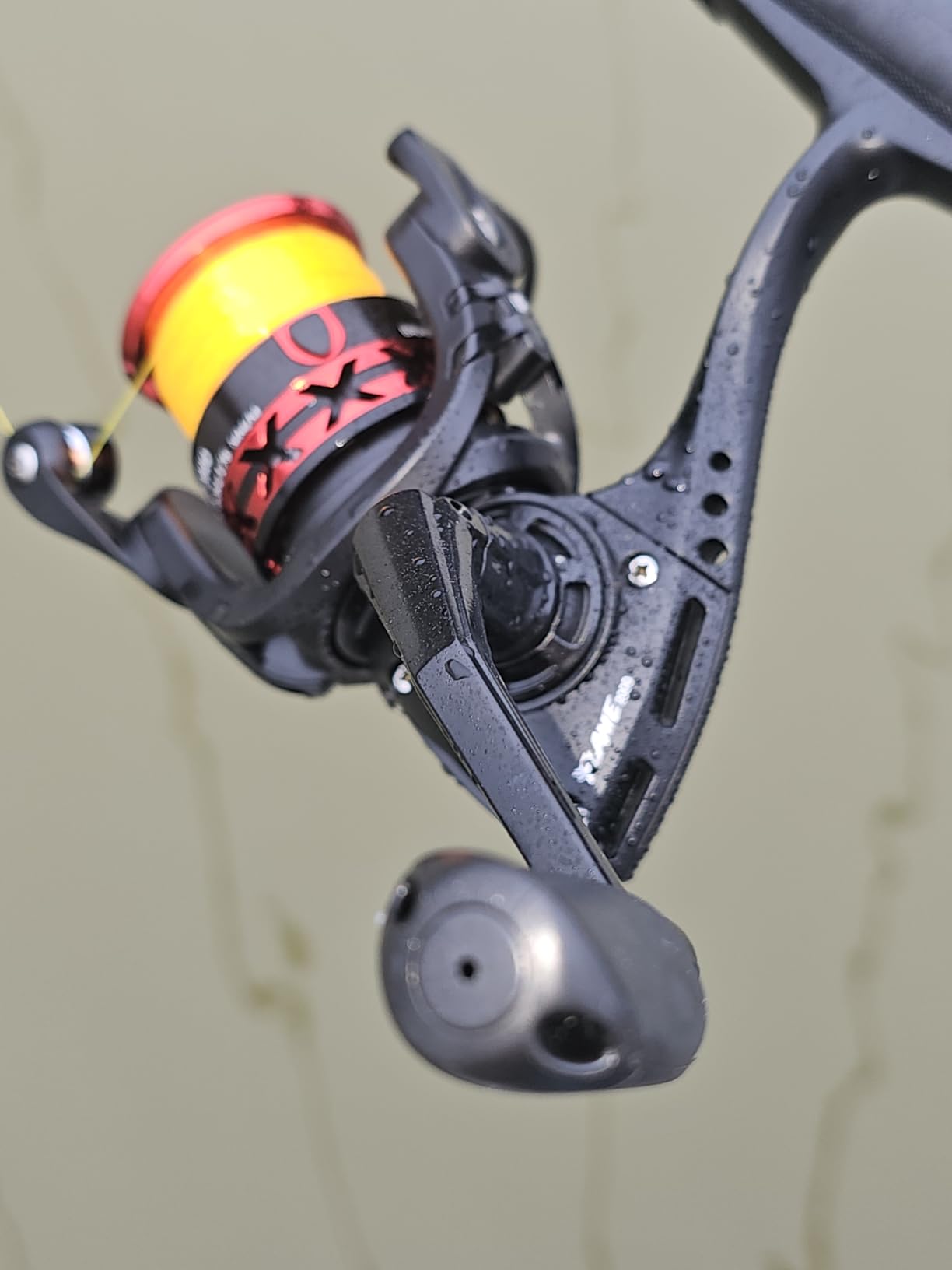
The gearing is the thing to understand before you commit. A 3.3:1 ratio is slower than the 5.0:1 to 6.2:1 you will see on most trout reels, which means more turns per fish but more control and less backlash on light lures. Owners fishing 4-pound line for trout tend to like it. Owners chasing faster lure work tend to find it slow.
Maximum drag is listed at 19.8 pounds across three washers, and reviewers report it staying smooth and responsive rather than surging.
Who the Flame Suits Best
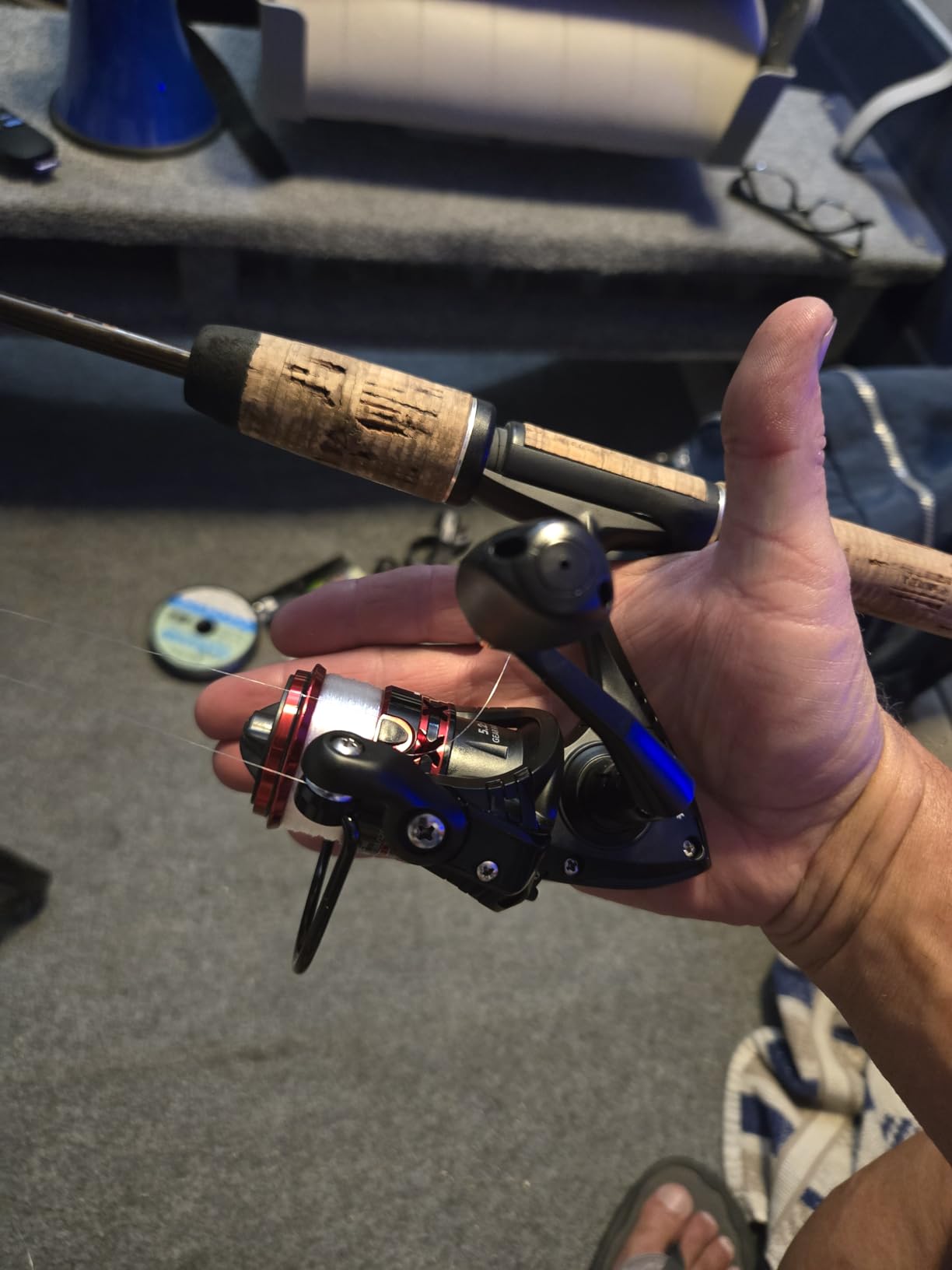
The Flame fits beginners and anyone who fishes several species from one rod. The size range runs from 500 to 5000, so the same model covers trout, crappie, bass and panfish without changing brands. The instant anti-reverse and positive click drag are simple features that work well for new spincasters.
Because the handle is metal and the body hollow, it is a good travel reel for anyone walking to a backcountry stream.
Where It Falls Short
It is explicitly not a saltwater reel. If your trout water is brackish or you plan to fish surf, pick a sealed metal body instead. The slow gearing is also the reason some owners buy a different model once they get into fast spinner work.
The drive train is simpler than premium models by design, so smoothness under sustained pressure will not match a machined aluminum gear reel.
6. KastKing Brutus 2000 – Balanced Budget Workhorse
KastKing Brutus Spinning Fishing Reels,2000 Size
4+1 stainless bearings
17.5 lb max drag
5.2:1 ratio
CNC aluminum spool
Graphite frame
Pros
- Lightweight graphite frame cuts fatigue
- CNC aluminum spool lays line evenly
- 5.2:1 ratio suits trout lure work
- Sizes 500 and 1000 give 11 lb of max drag
Cons
- Fewer bearings than similarly priced rivals
- Max drag varies a lot by size
- Graphite rotor is lighter but less rigid
The Brutus is marketed directly at trout anglers and behaves like it. The graphite frame and rotor keep the weight down, and the CNC machined aluminum spool gives an even line lay that helps with casting distance and with reducing backlash on slack line.
At 5.2:1 the gearing sits in the sweet spot for trout work. It retrieves fast enough to work a spinner through seams and slow enough to give you control when a fish picks up the lure 18 inches from the bank.
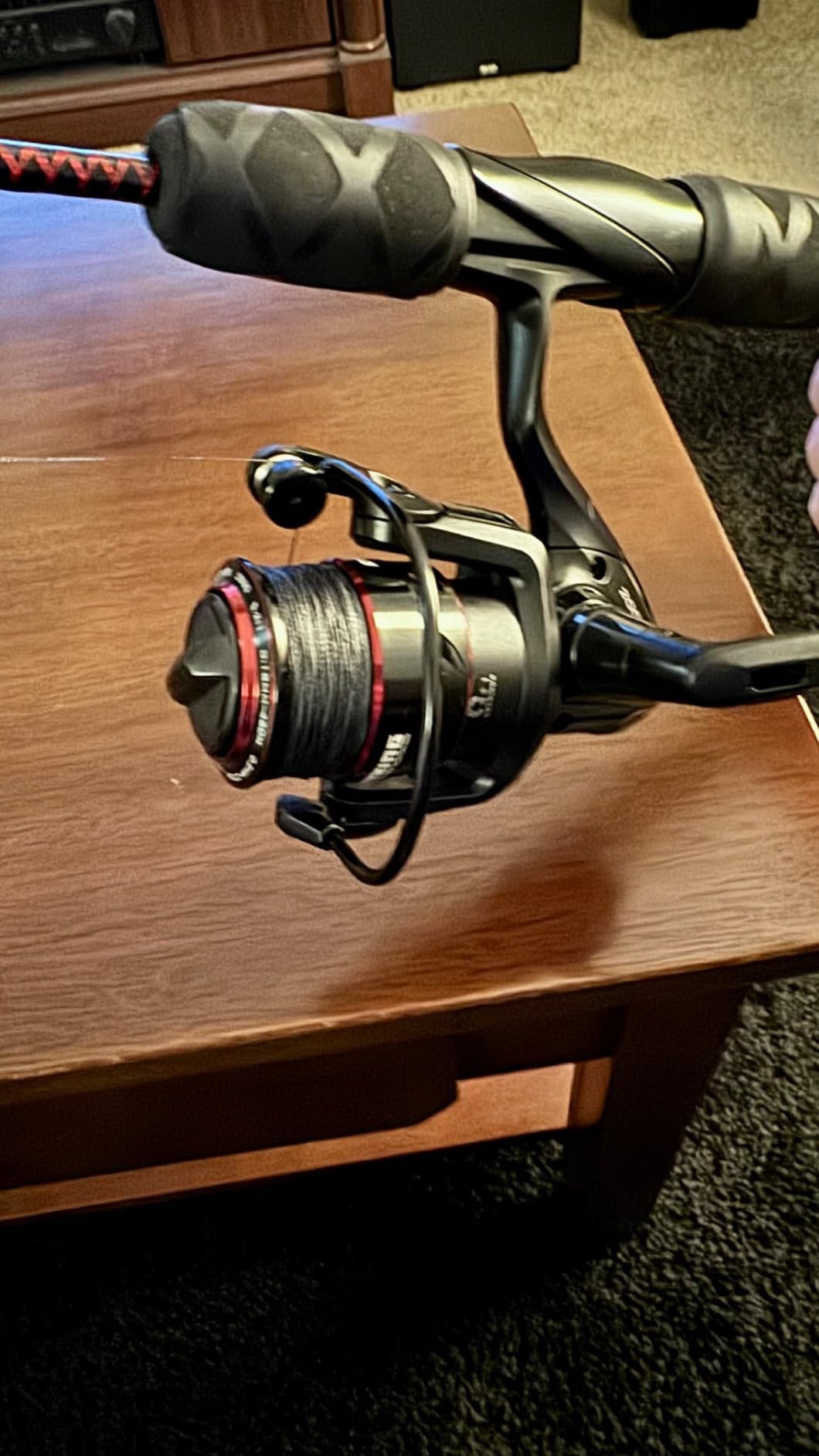
Sizes matter more here than on most reels. The 500 and 1000 deliver 11 pounds of max drag, the 2000 gives 12, and the larger sizes step up to 17.5 and 18.6 pounds. For 4-pound line you want the 500 or 1000 and a drag set well below the rating, not at it.
The steel main shaft with a zinc alloy main gear and brass pinion is a proven combination that reviewers describe as quiet and consistent, with a 76 percent five-star share.
Who the Brutus Suits Best
It is a good match for a beginner building a first trout setup, and for anyone who wants a second reel in a different size. Because the same model comes in 500 through 5000, you can buy the 1000 for creek trout and the 3000 for larger fish without changing reel families.
Owners value the low weight for long sessions and the quiet gearing, which matters when you are trying to read subtle takes by feel rather than sight.
Where It Falls Short
Four bearings plus one is fewer than the 9+1 or 10+1 setups on rivals at similar tiers, and it shows when you compare retrieves side by side. It is smoother than it has any right to be for the price, but it is not a premium feel.
The drag rating drops sharply between sizes, so buying the 2000 hoping for more pull than the 1000 will disappoint you. Read the size-specific number, not the headline figure.
7. Shimano Syncopate FG 1000 – One-Handed Casting Trigger
SHIMANO Syncopate 1000FG Front Drag Freshwater Spinning Reel
Quick-Fire II trigger
4 ball bearings
270 yards of 2 lb
7.68 ounces
1 year warranty
Pros
- Quick-Fire trigger enables true one-handed casting
- Balanced retrieve with no wobble
- Light at 7.68 ounces
- Handle converts for left-handed use
Cons
- No instant anti-reverse so the handle travels first
- No spare spool included
- Harder to find as brands move away from triggers
The Syncopate FG is the odd one out in this roundup and that is exactly why it is here. The Quick-Fire II trigger lets you hold the bail open with one finger and cast with the other hand, with no thumb to flip. Very few modern spincasters still offer this, and for a lot of trout anglers learning to cast it is the difference between frustration and a full day on the water.
It is also very light at 7.68 ounces, and the balanced frame design gives a smooth high-speed retrieve without wobble. Owners report using the same reel for a decade or more, which is the strongest long-term endorsement we found in this group.
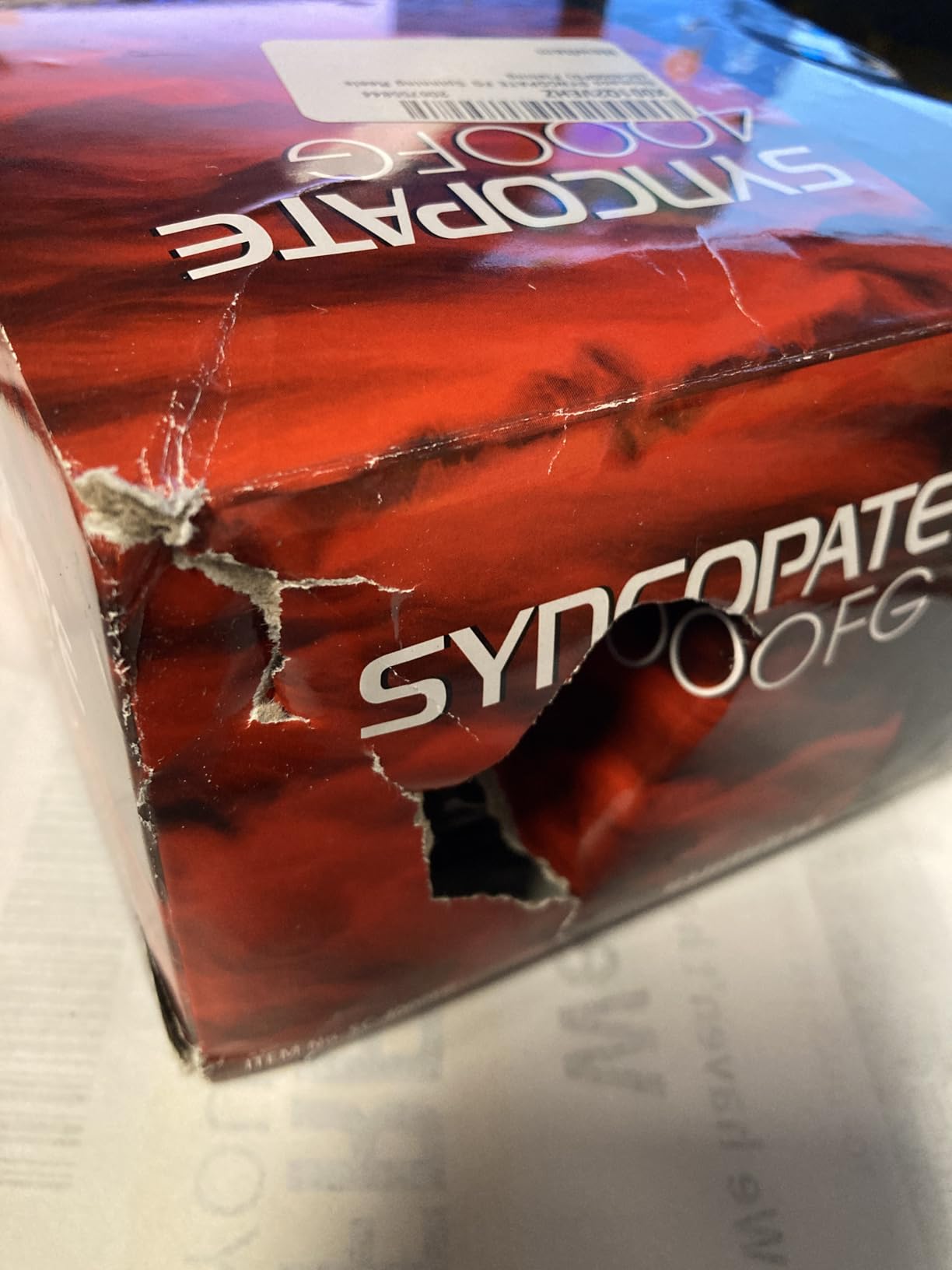
Line capacity is generous for the size. The 2/270 4/140 6/110 figures mean 140 yards of 4-pound, which is real casting range on a tailwater and enough to back a long drift. The Propulsion Line Management System keeps lay consistent across those long fills, which helps when you are casting a long way and the spool is nearly full.
Four ball bearings is modest, and it shows compared with the 9+1 setups in this list, but at this weight the smoothness holds up fine for trout work.
Who the Syncopate FG Suits Best
Beginners, and anyone whose casting hand tires after a few hours, will get the most out of the trigger. It is also a good match for anyone fishing a bank with one hand occupied, such as holding a net or a camera, because the bail stays open without a thumb.
The 1000 size pairs well with a light rod for creek and stream trout, and the 2500 and 4000 sizes cover pond and larger river work in the same model.
Where It Falls Short
Without an instant anti-reverse bearing, the handle travels before it engages. Under a hard strike that small delay can mean a loose bail or a missed hook-up window, and it is a direct consequence of the trigger design rather than a defect.
No spare spool is included, and as manufacturers move away from trigger reels this style is getting harder to find in tackle shops. If you like it, buy it.
8. KastKing Zephyr 500 – Featherweight Ultralight Reel
KastKing Zephyr Spinning Reels, 500 Size, 6+1/7+1 BB, Black
5.6 ounce weight
Carbon fiber drag
Braid-ready CNC spool
5.2:1 ratio
Pros
- Exceptionally light at 5.6 ounces
- Smooth carbon fiber drag that is easy to fine tune
- Casts far and quietly with braid and fluoro leader
- Corrosion resistant graphite and nylon body
Cons
- Line twist with weightless baits such as Senkos
- Handle can show play in some sizes
- Compact body makes larger sizes run small
The Zephyr 500 is built for one job: ultralight trout fishing. At 5.6 ounces it is the second lightest reel here, and on a 5-foot ultralight rod you will barely notice it at the end of the day. Owners describe it as a true ultralight reel built for trout, panfish and ice fishing.
The carbon fiber drag is smooth and easy to fine tune, which is the part that matters for trout. A soft, adjustable drag lets you feel a subtle take in 4-pound line without the reel surging past it, and on a weightless lure that difference is everything.
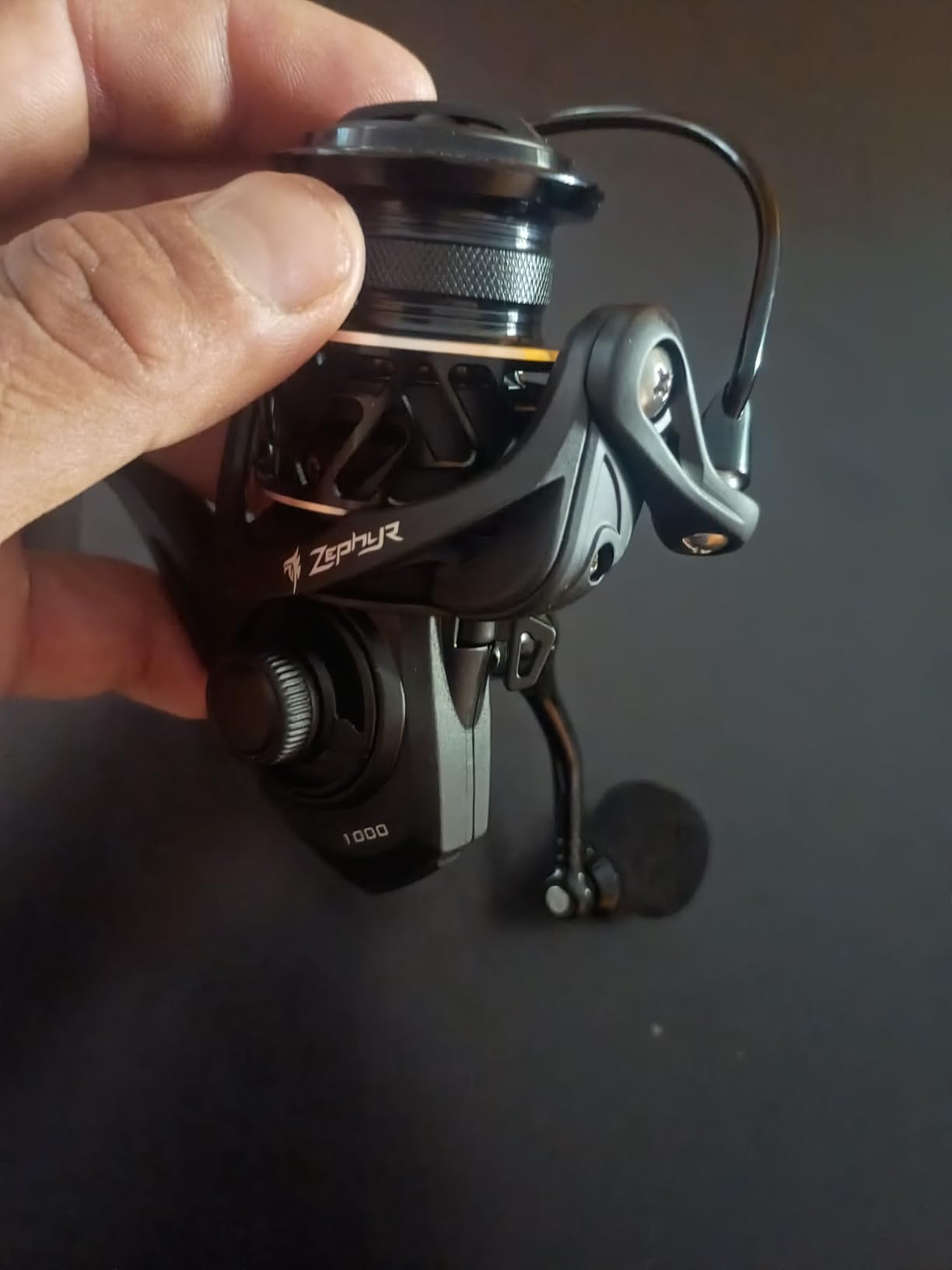
Owners single out casting performance with 8 to 10 pound braid and a fluorocarbon leader. The braid-ready CNC machined aluminum spool stops braid slipping under pressure, so you are not relying on a rubber sling and you do not need mono backing.
Inside there is an oversized stainless steel main shaft, a brass pinion gear and double shielded stainless steel bearings in the key locations. Line capacity is listed at 6/40, so it is built for light line rather than long fills.
Who the Zephyr Suits Best
Backcountry anglers and anyone fishing small creeks where trout run 8 to 14 inches are the core audience. The weight disappears on a light rod and it fits into a chest pocket without cutting into movement. It also works for anyone who fishes with braid and a leader for clarity in stained water.
For ice fishing on trout water it is the same logic: minimum weight, minimum bulk, minimum fuss.
Where It Falls Short
Line twist with weightless plastics is the recurring complaint, and on soft baits such as a Senko or a Fluke a 5.2:1 reel with a compact spool does not always shed it cleanly. If you fish those, a slower or larger spool helps.
Some owners note initial stiffness and a little play in the handle on first use, and the compact body means nominal sizes run smaller than expected. Check the actual spool capacity before committing to a long-cast setup.
9. Shimano Sedona FI 1000 – Refined Shimano for Lakes and Rivers
Sedona FI
HAGANE cold-forged gear
G-Free Body
270 yards of 2 lb
5:1 ratio
Shallow 1000 spool
Pros
- Smooth quiet retrieve from cold-forged gearing
- Very light for a full size Shimano
- G-Free Body resists corrosion over years of use
- Shallow spool pairs well with ultralight rods
Cons
- No anti-reverse switch
- Shallow spool on some sizes holds very little line
- Cross Carbon Drag upgrade only on the 8000 size
The Sedona FI is the refinement pick in this roundup. Shimano cold-forges the HAGANE gear on all sizes except the 500, and the difference is a quieter, smoother crank that holds up under a long day of spinner work. Owners regularly move up from cheaper Shimano models and note the absence of rattle.
The G-Free Body is the corrosion story. Owners report no rust after years of fresh and even salt water use with nothing more than a water-only rinse, which makes this a reasonable reel for inshore trout and for anyone who does not rinse carefully.
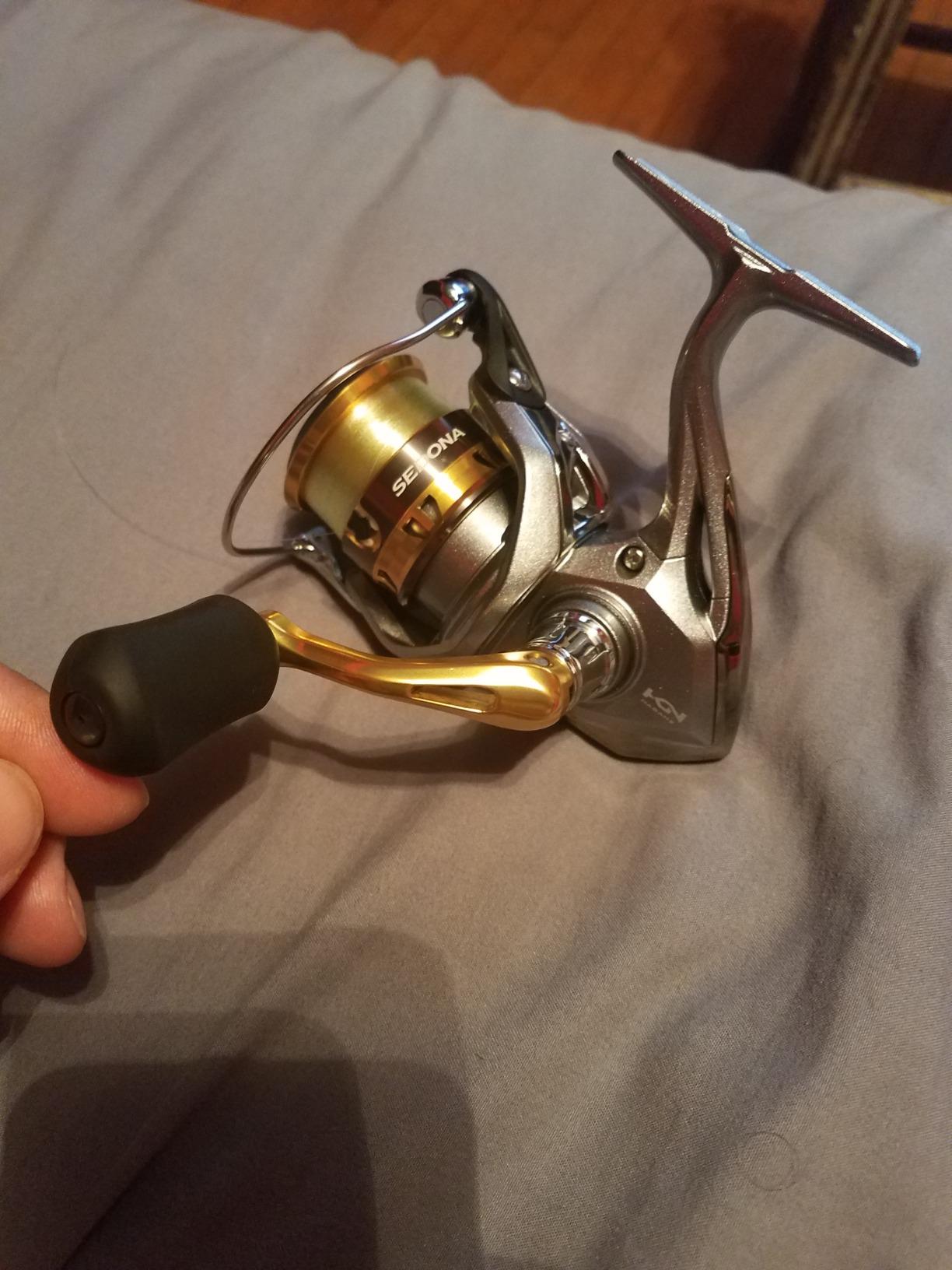
The 1000 spool is shallow and that is a design decision rather than a flaw. It pairs well with an ultralight rod and holds 270 yards of 2-pound or 140 yards of 4-pound, which is plenty for pond and river trout with slip bobbers. At 5:1 the retrieve is unhurried and easy to control.
Note that the Cross Carbon Drag upgrade is only applied to the 8000 size, so if you want Shimano carbon drag you are not getting it here. Plan on setting the drag carefully and checking it at the start of each session.
Who the Sedona FI Suits Best
It suits anglers who fish lakes, rivers and inshore water and want a reel that will still turn smoothly in several years. Several owners use it specifically for trout with slip bobbers and light lures, and the shallow 1000 spool suits a light rod better than a deeper one would.
It is also a good bridge reel for someone who already owns a budget Shimano and wants the next step up without moving to sealed premium engineering.
Where It Falls Short
There is no anti-reverse switch, so the handle travels a little before it engages. On a light rod with a light line you will notice it if you are used to an instant anti-reverse.
The shallow spool holds very little line on some variants, and a few owners report being caught out by the capacity when moving to heavier line. This is not the reel for long casts into a big pool.
10. Piscifun Carbon X 500 – Ultralight Carbon Build
Piscifun Carbon X Ultralight Spinning Reel, Carbon Frame, 500 Series
5.1 ounce weight
Carbon fiber body and rotor
33 lb carbon drag
10+1 shielded bearings
Pros
- Lightest reel here at 5.1 ounces for the 500
- 10+1 shielded stainless steel bearings
- Carbon drag washers rated to 33 lb
- Screw-in handle packs down small
- Braid-ready spool needs no backing
Cons
- Internal design is close to cheaper sibling models
- Exposed drag and spool limit surf and salt use
- Screw-in handle can loosen while fighting a fish
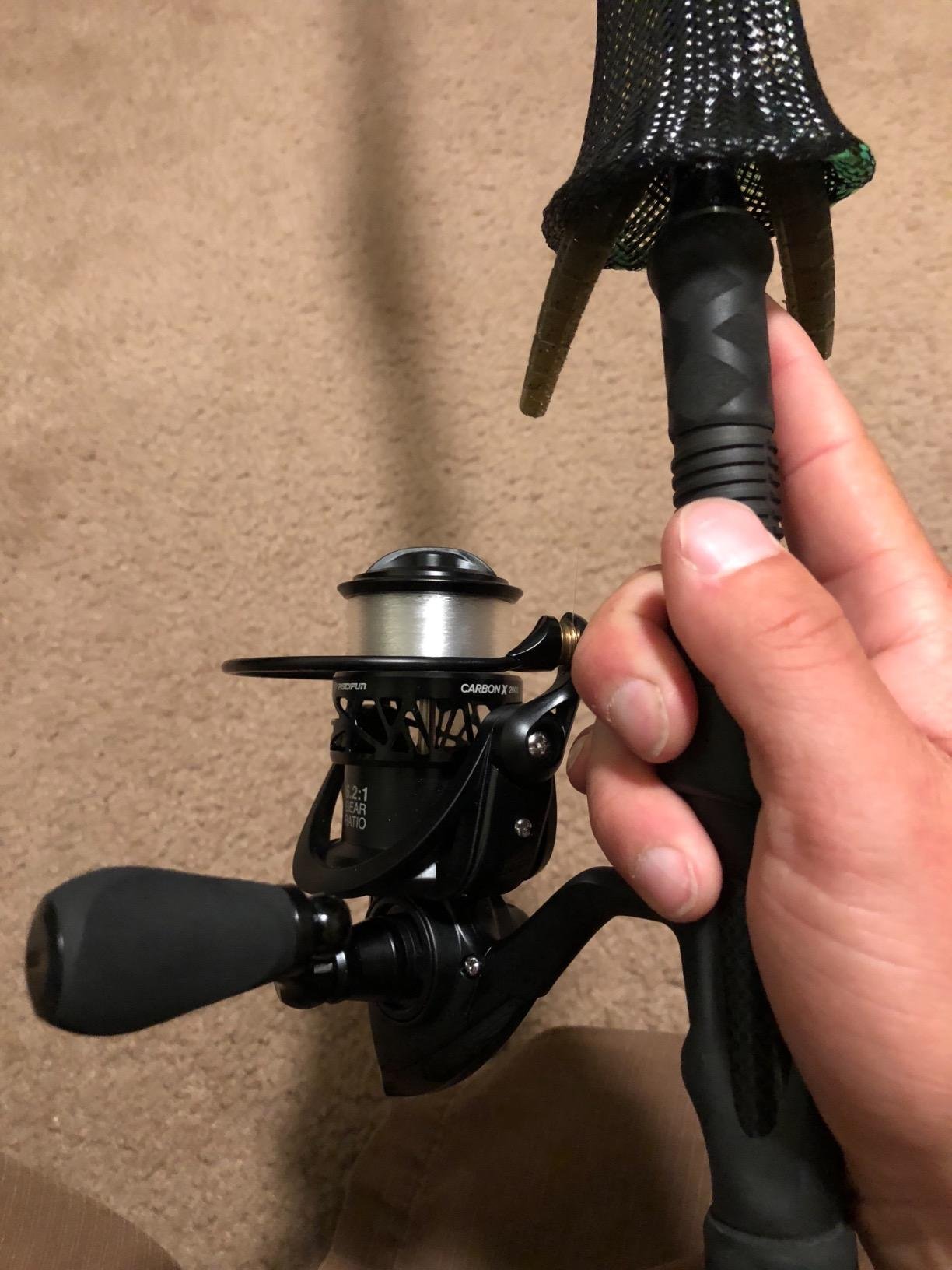
The Carbon X is the lightest reel in this roundup at 5.1 ounces for the 500 size, and the construction is unusual for the price: an all carbon fiber body, rotor and side plate. That is why it weighs so little without feeling fragile in the hand.
Owners describe the retrieve as buttery smooth and the drag as spot on. Three oversized carbon washers give a rated 33 pounds of drag, and a sealed rubber ring around the drag protects it from water and dust, though the bottom of the drag and spool stay exposed.
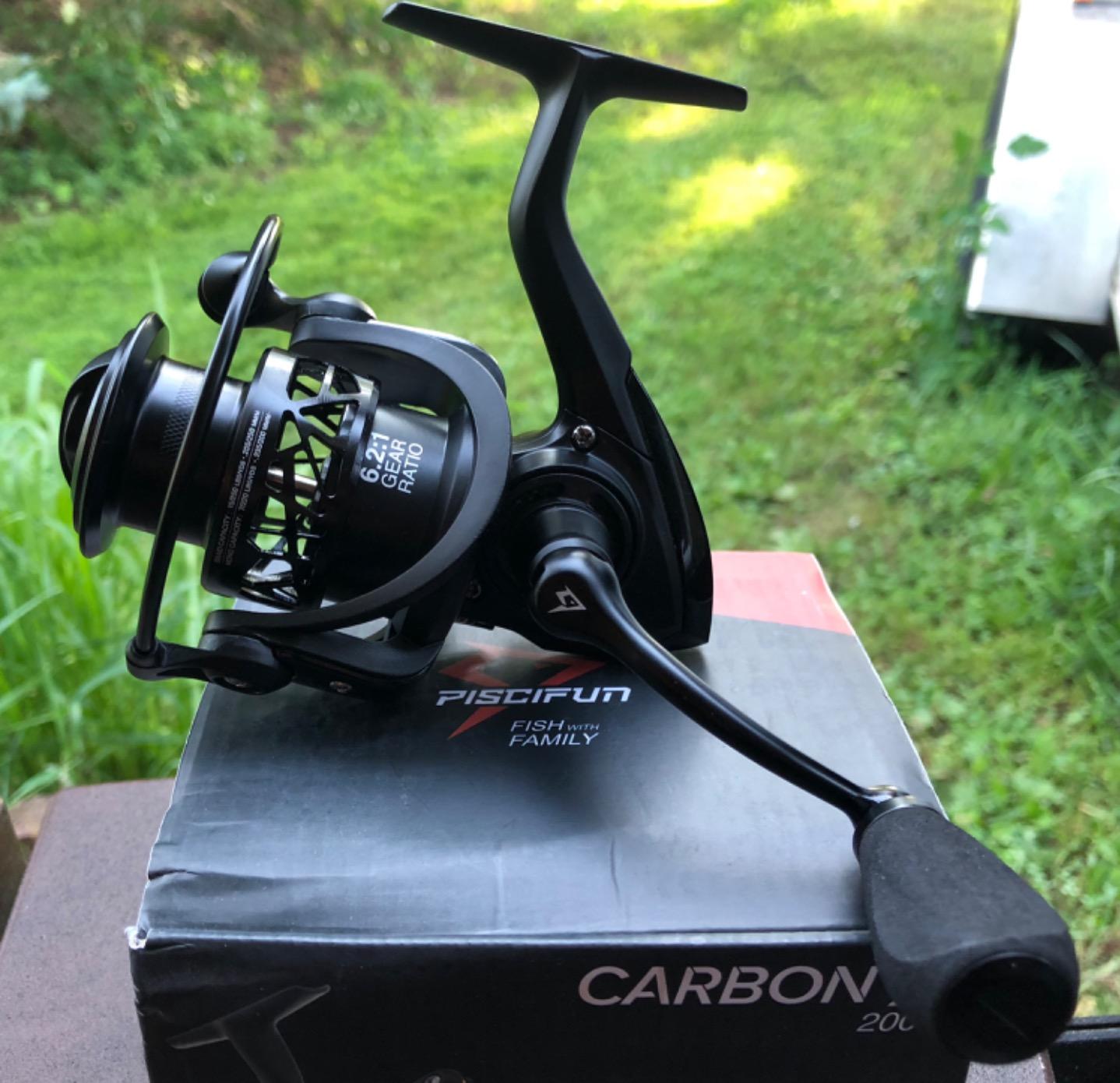
The 10+1 shielded stainless steel bearings do a lot of the work here, and reviewers compare the feel to premium Shimano models. Gearing is 5.2:1 in the 500 and 1000 sizes and 6.2:1 in the 2000 through 4000, so the same family covers ultralight trout and faster work.
The screw-in aluminum handle is a small thing that matters on a travel reel. It collapses flat instead of swinging loose in a bag, which is why this is the pick for anglers walking to remote water.
Who the Carbon X Suits Best
Anyone who counts grams, or who fishes a very light rod and refuses to put anything heavier on the end of it. It handles braid directly with no backing thanks to the hollow braid-ready spool, and 10-pound braid plus a fluoro leader is a strong trout combination.
It is also a good second reel for a trip where weight matters more than any other spec.
Where It Falls Short
The most thoughtful review we found notes that the internals are close to the cheaper models in the same line, so the upgrade over a lower-priced sibling is incremental rather than transformative. You are paying for the carbon exterior and the light weight, not for a different gear train.
Because the drag and the bottom of the spool are exposed, this is a freshwater reel. Keep it out of surf and salt water. And check the screw-in handle before each trip, since it can work loose under load.
What to Look For in a Trout Spinning Reel
Size is the first decision, and it is the one buyers get wrong most often. Sizes are spool capacity codes, not physical dimensions, and different brands use different numbers for similar reels.
500 for micro-ultralight streams, panfish and ice fishing. Lightest option, least line capacity.
1000 for creek trout, brookies and general ultralight use. The safest default for trout.
2000 for bigger rainbows, pond fish and general freshwater work.
2500 and 3000 for steelhead, large tailwater browns and heavier rods.
Pflueger uses a different convention: size 10, 20 and 30 correspond roughly to 1000, 2000 and 3000.
Weight matters more than the spec sheet suggests. A 7 ounce reel that weighs nothing on a 5-foot ultralight rod beats a 5 ounce reel that feels wrong on a fast-action 7-footer. The practical test is to balance the rod and reel on your index finger. If the balance point sits near the middle of the blank rather than forward of the reel seat, the setup will cast well and feel good all day. This technique works for any spinning gear, and our full spinning reel guide walks through it in more detail.
Understand cold-water drag start-up surge. This is the most common real-world complaint about budget trout reels and almost nothing explains it. When drag grease thickens in cold water, the drag washer sticks briefly before it breaks free. That first surge can spool light line the instant a trout picks up your lure. A sealed and lubricated drag holds its setting through temperature swings, which is why the Viper X and the Carbon X are worth considering even on cold mornings. On any reel, set the drag before you leave the truck, and re-check it after the water warms up.
Bearings help, but they are not everything. Nine or ten shielded ball bearings plus a roller bearing sounds better than four bearings, and it usually is. Roller bearings under the line roller reduce the friction that contributes to line twist, which matters most when you spool braid. Once you have 6+ bearings in the main positions, gains flatten out and other things matter more.
Set your drag at a quarter to a half of the line’s breaking strain. For 4-pound mono that is roughly 1 to 2 pounds. The reels here rate anywhere from 11 to 33 pounds because the rating is a maximum, not a setting. Smooth low-end drag on 4-pound line is the reason sealed carbon drag earns its place, and it is why we would rather see a 4-pound line drag smoothly than a 10-pound line drag roughly.
For braid users, spool capacity and spool shape come first. Braid occupies far less spool space than mono of the same diameter, so a braid-ready spool avoids rubber slings that slip. If your reel twists line with braid, filling the spool fully and closing the bail tight are the first two fixes before you blame the reel.
Pick a style to suit how you fish. A spinning reel hangs below the rod and needs no thumb control, which is why it beats a baitcaster for most trout anglers. If you already own a baitcaster and want more casting control on heavy bait, our baitcasting reel roundup covers the other half of the argument.
How to Keep a Trout Spinning Reel Running
Budget reels rarely fail because the internals are weak. They fail because creek sediment gets into the drag and the bearings, and nobody ever cleaned them. A few minutes of maintenance decides whether a reel is still turning in year two.
Rinse with fresh water only, especially after saltwater or salt spray, and never use a pressure washer or a hose nozzle.
Let the reel air dry completely with the spool off before you store it. Trapped moisture causes corrosion.
Open the drag a quarter turn before long storage so the washers do not seize under compression.
Re-grease or replace drag washers once a season if you fish silty water. Drag feel is the first thing to go.
Put a drop of reel oil on the handle bearings and the bail arm pivot, not on the drag washers.
Store the reel loose in a dry box over winter rather than mounted on a rod in a damp garage.
Budget around a few dollars and fifteen minutes a year for this list. Sealed aluminum reels such as the Spinfisher VI tolerate neglect better, but they still deserve a freshwater rinse after every salt session.
Frequently Asked Questions
What size reel is best for trout fishing?
A size 1000 is the best default for most trout fishing, covering creek brookies, river rainbows and pond fish on an ultralight or light rod. Drop to a 500 for micro-ultralight streams and panfish, and move up to a 2000 or 2500 for bigger rainbows and heavier rods. A 3000 is right for steelhead and large tailwater browns. Note that Pflueger uses size 10, 20 and 30 for roughly the same three classes.
Is a 3000 reel too big for trout?
No, not for most trout, but it is only the right answer in specific cases. A 3000 makes sense for steelhead, big tailwater browns, and rods in the medium to heavy power range where the balance point sits forward of the reel seat. On a 5-foot ultralight rod a 3000 will feel heavy and unbalanced, so choose a 1000 instead.
What is the best spinning reel for trout fishing?
The best all-round choice on this list is the Okuma Ceymar C-30, a lightweight graphite-bodied reel with an 8 bearing retrieve that suits everything from creek trout to panfish. For the lightest possible setup the Piscifun Carbon X 500 at 5.1 ounces wins on weight, and for big fish and brackish water the sealed Penn Spinfisher VI 4500 is the stronger buy.
Is 4lb or 6lb better for trout?
It depends on the water and the cover, and drag smoothness matters more than the number. In clear water with heavy pressure, 4-pound gives the trout a better chance of taking the lure, while 6-pound helps in weedy, snag-filled water or when targeting bigger fish. With either, set the drag at a quarter to a half of the breaking strain so the reel protects the line rather than snapping it.
How do I stop my spinning reel twisting line with braid?
Most twist comes from a spool that is underfilled, and the fix is mechanical rather than technical. Fill the spool completely to within an eighth of an inch of the lip and close the bail tightly, because a loose bail lets line slip and cross over. Running a small rubber band across the spool after closing the bail locks the wraps in place. A reel with a long-stroke or braid-ready spool reduces twist further.
The Best Spinning Reels for Trout Fishing, Summarised
After working through ten reels on drag start-up, weight on the rod, spool capacity and line management, the Okuma Ceymar C-30 is still our pick for the best spinning reels for trout fishing overall. It is light, it is rust-resistant, it retrieves smoothly, and at close to 4000 ratings it is the model with the longest track record of repeat ownership in this group.
The runner-ups cover the edges. Take the Piscifun Carbon X 500 or the KastKing Zephyr 500 if weight in grams is your priority. Take the Penn Spinfisher VI 4500 if your trout run to steelhead or the water is brackish. Take the Piscifun Viper X 1000 if a sealed carbon drag matters to you and you do not want to move up a tier.
Whichever reel you land on, fill the spool properly, set the drag at a fraction of the line’s breaking strain, and give it a freshwater rinse before you put it away. Those three habits matter more than any spec on the sheet. Our spinning wheel guide covers the other common beginner question, and it is updated for 2026 alongside this roundup.