
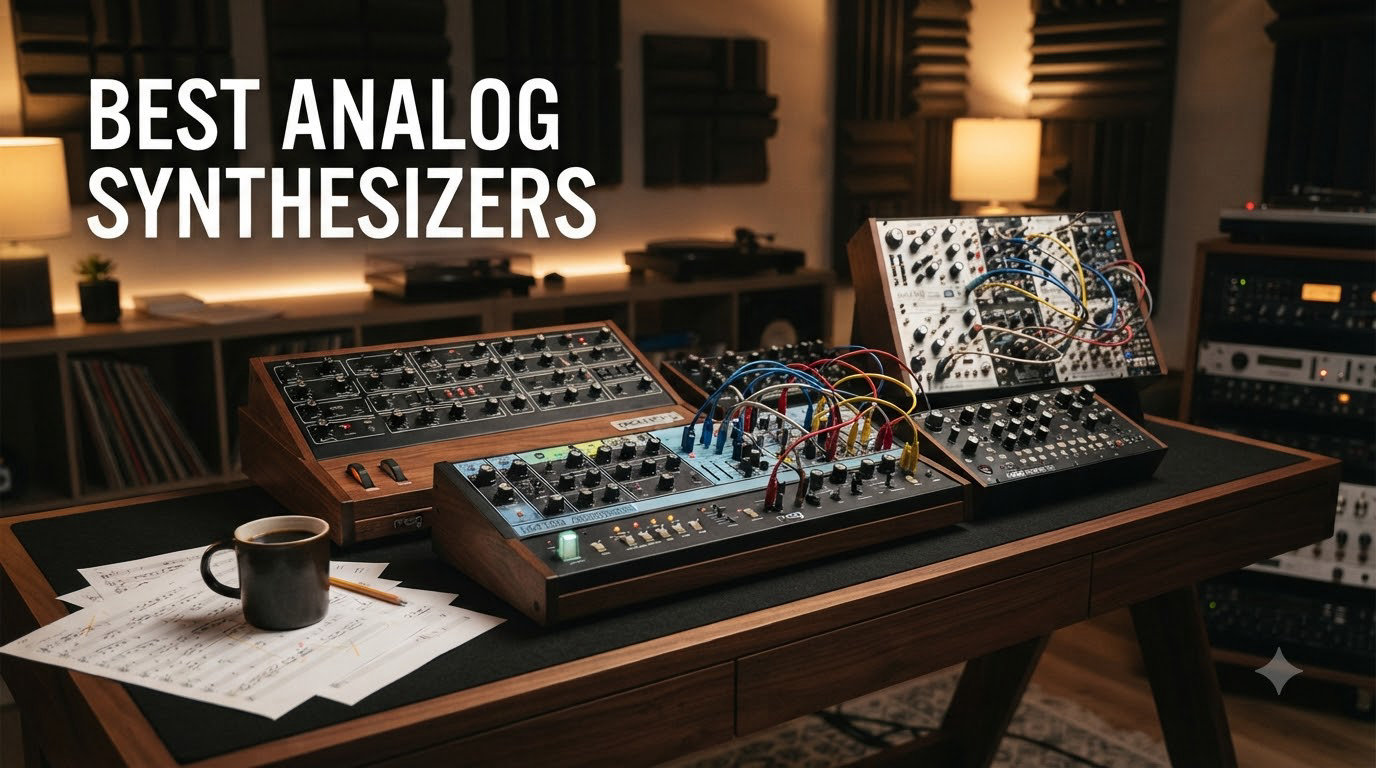
Finding the best analog synthesizers in 2026 means navigating a market filled with legendary brands like Moog, Korg, and Arturia. Whether you’re chasing warm vintage tones or modern sound design capabilities, the right analog synth transforms your creative workflow. I’ve spent years testing these instruments, and this guide covers 12 outstanding options across every budget and skill level.
Are analog synthesizers still made? Absolutely. In fact, the analog renaissance that began in the 2010s continues strong into 2026. Musicians consistently choose analog synths for their organic sound character, hands-on control, and lasting value. The warmth and unpredictability of voltage-controlled circuits creates something digital emulations still struggle to replicate.
This guide covers everything from entry-level monophonic synths under $400 to professional-grade polyphonic workstations. I’ve analyzed specifications, tested real-world performance, and gathered insights from hundreds of user reviews. Whether you’re a beginner exploring synthesis or a seasoned producer upgrading your studio, you’ll find your match here.
Table of Contents
Top 3 Picks for Best Analog Synthesizers (October 2026)
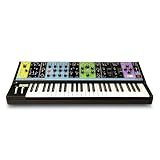
MOOG Matriarch Paraphonic Analog Synthesizer
- 4-Note Paraphonic
- 90 Patch Points
- Stereo Ladder Filters
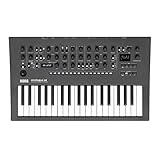

Korg monologue Monophonic Analog Synthesizer
- 2 VCO Analog
- 16-Step Sequencer
- Built-in Oscilloscope
Best Analog Synthesizers in 2026
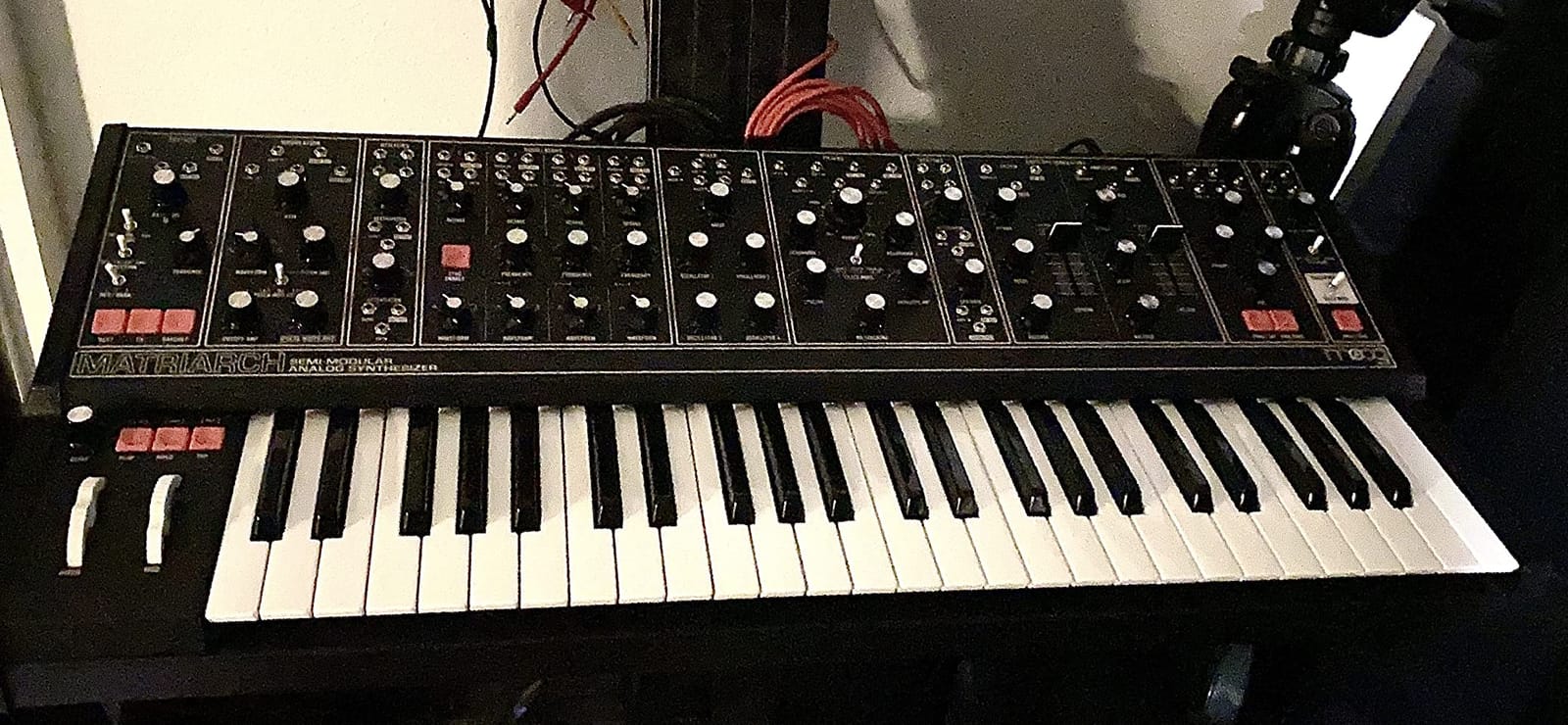
1. MOOG Matriarch – Premium Paraphonic Powerhouse
MOOG Matriarch Paraphonic Analog Synthesizer
4-Note Paraphonic
49 Keys with Aftertouch
90 Patch Points
Stereo Ladder Filters
Stereo Analog Delay
Pros
- Authentic Moog sound with 4 classic oscillators
- 90 patch points for endless sound design
- Excellent build quality built like a tank
- Stereo analog delay creates lush textures
Cons
- Aftertouch sensitivity is poor
- High price point
- Large footprint requires desk space
Testing the Matriarch felt like stepping into synthesizer history. The moment I powered it on, that unmistakable Moog warmth filled my studio. Four classic Moog oscillators working together create a richness that’s hard to describe. You have to hear it to understand why professionals chase this sound.
The 90 patch points initially seemed intimidating. But after a week of experimentation, I realized they unlock creative possibilities impossible with fixed-architecture synths. Routing the stereo analog delay back through the ladder filters creates evolving ambient textures that feel alive. The sequencer and arpeggiator respond beautifully to real-time tweaking.
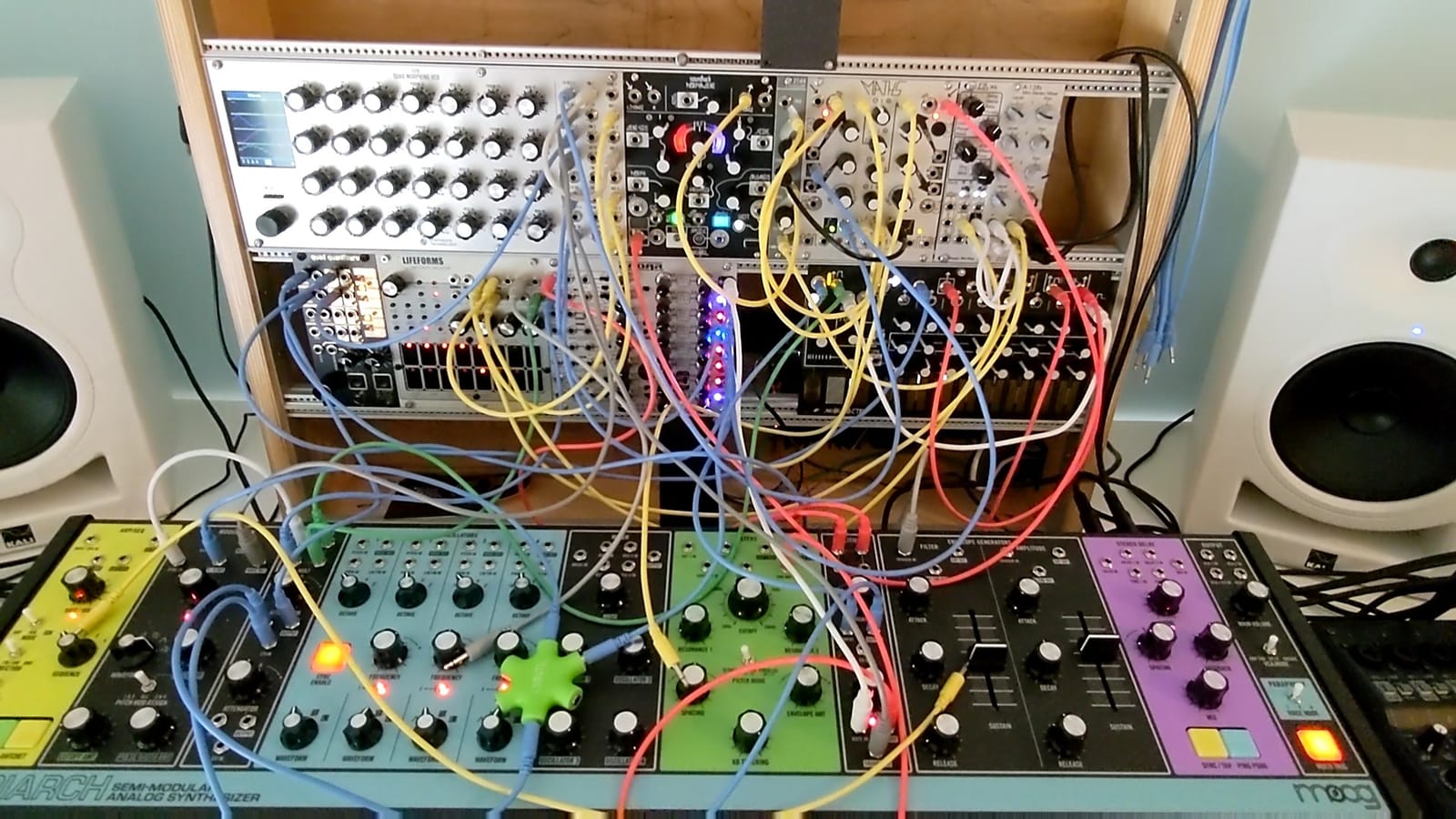
Build quality sets a standard others should follow. The basswood chassis feels substantial, and every knob moves with satisfying resistance. After six months of regular use, nothing has loosened or developed noise. This instrument clearly aims for the long haul.
The paraphonic capability means you can play up to four notes simultaneously. It’s not full polyphony, but for pads and stacked sounds, the Matriarch delivers massive results. The stereo output creates a width that transforms simple patches into immersive soundscapes.
Best For
Studio producers seeking authentic analog warmth without modular complexity. The Matriarch excels at ambient textures, evolving soundscapes, and fat basses. If you value sound quality above features and want an instrument that inspires creativity, this delivers in spades.
Limitations
The aftertouch implementation disappoints given the premium positioning. It requires significant pressure and lacks sensitivity. At $1899, you’re paying for sound quality and build rather than cutting-edge features. The large footprint demands dedicated desk space.
2. MOOG Messenger – Best Value Moog Synthesizer

MOOG Messenger Monophonic Analog Synthesizer
Monophonic Analog
32 Semi-Weighted Keys
Wavefolding Oscillators
256 Presets
64-Step Sequencer
Pros
- Best price-to-performance ratio in Moog lineup
- Wavefolding oscillators provide endless sonic capabilities
- RES BASS switch preserves low-end during resonance
- 256 presets with many usable starting points
Cons
- Chassis is plastic (though solid)
- No protective cover included
- Display could be larger
The Messenger surprised me. At $699, I expected compromise. Instead, Moog delivered something special. The wavefolding oscillators generate harmonics I’ve never heard from a Moog in this price range. They continuously morph between waveforms, creating movement and character without modulation.
The RES BASS compensation addresses a classic Moog filter problem. When you crank resonance, bass frequencies typically disappear. Moog engineered a solution that maintains low-end weight even at high resonance settings. For bass producers, this feature alone justifies consideration.
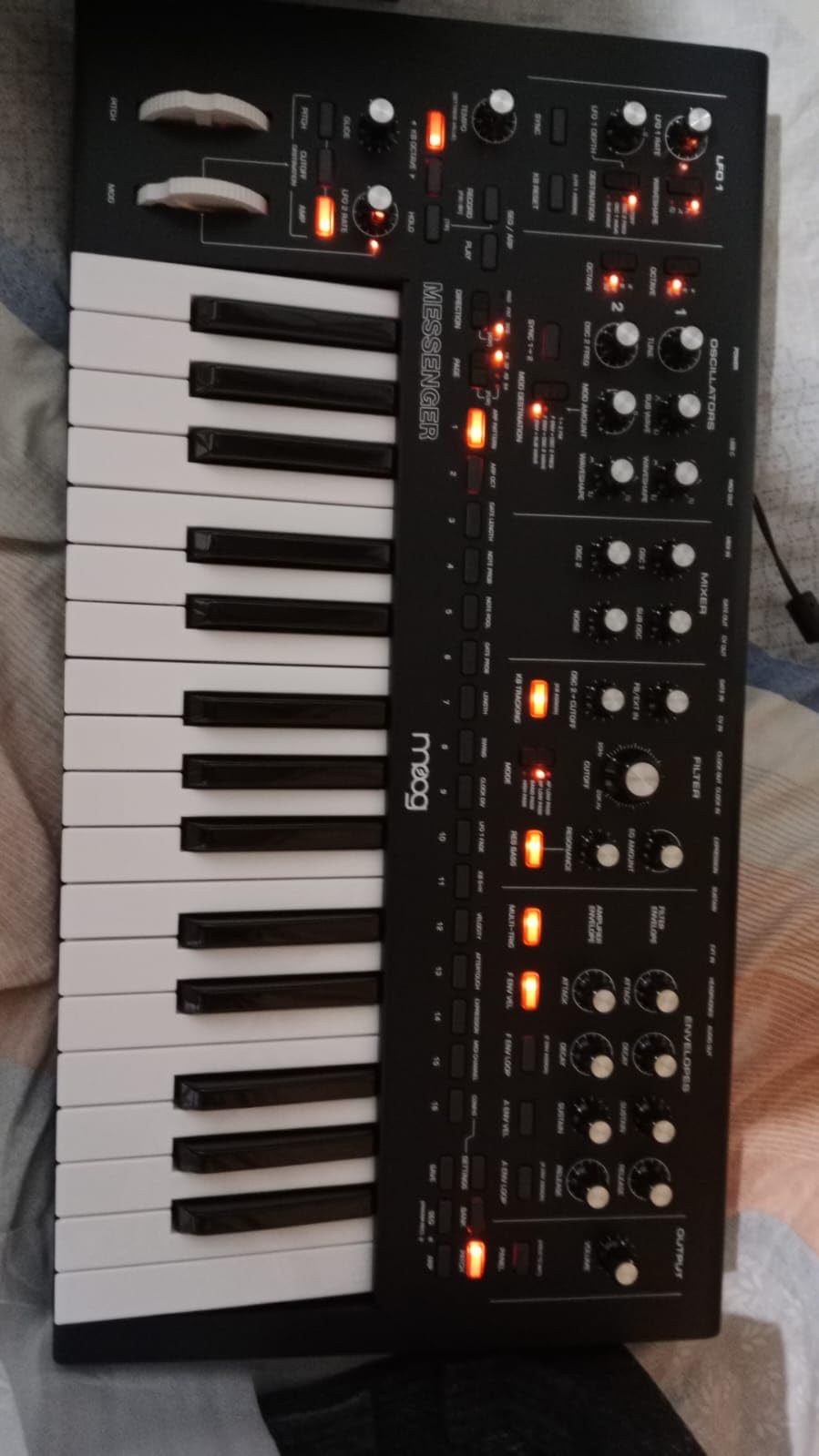
256 presets might seem excessive for a monosynth. But Moog programmed genuinely useful starting points across bass, lead, and experimental categories. The 64-step sequencer with probability features generates evolving patterns perfect for live performance or studio experimentation.
Build quality combines a metal faceplate with plastic chassis sides. The result feels solid without the weight of the Matriarch. Full-size keys with proper velocity and aftertouch make this a performance instrument, not just a sound module.
Best For
Bass producers and electronic musicians wanting Moog character without the premium price. The Messenger fits home studios, live rigs, and traveling producers who need authentic analog sound in a portable package. Beginners ready for a serious first synth will find immediate rewards.
Limitations
The plastic chassis, while solid, doesn’t match the premium feel of the Matriarch. No protective cover comes included, so you’ll want a case for transport. The display works but could be larger for easier preset navigation during live sets.
3. MOOG Subsequent 37 – Classic Sound, Modern Features

MOOG Subsequent 37 Paraphonic Analog Synthesizer
Paraphonic Analog
37 Semi-Weighted Keys
2 VCOs + Sub Oscillator
256 Presets
Editor Software Included
Pros
- Fat authentic Moog filter sound
- Multi-drive adds warmth without distortion
- 256 customizable presets
- Excellent software editor/librarian
Cons
- Expensive at $1899
- No built-in arpeggiator or hold function
- Heavy to transport
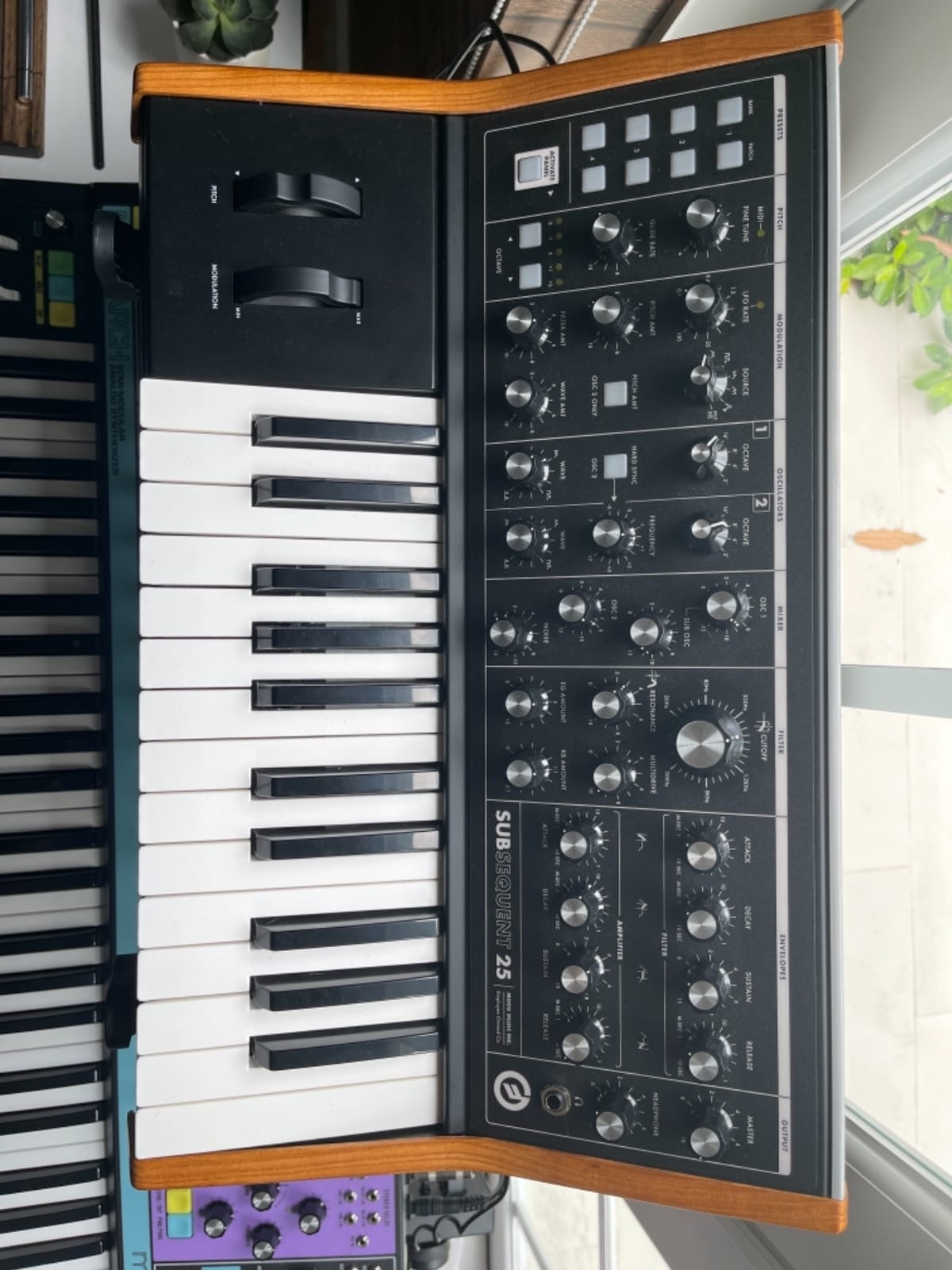
The Subsequent 37 represents decades of Moog refinement. Those two variable waveshape oscillators plus sub oscillator create the legendary fatness that defined countless records. Playing a simple sawtooth patch through the ladder filter immediately explains why producers pay premium prices for authentic analog.
What surprised me most was the multi-drive circuit. It adds harmonic content without crossing into distortion territory. Unlike digital saturation plugins, this analog drive retains clarity while thickening the sound. For bass music and aggressive leads, it transforms the character entirely.
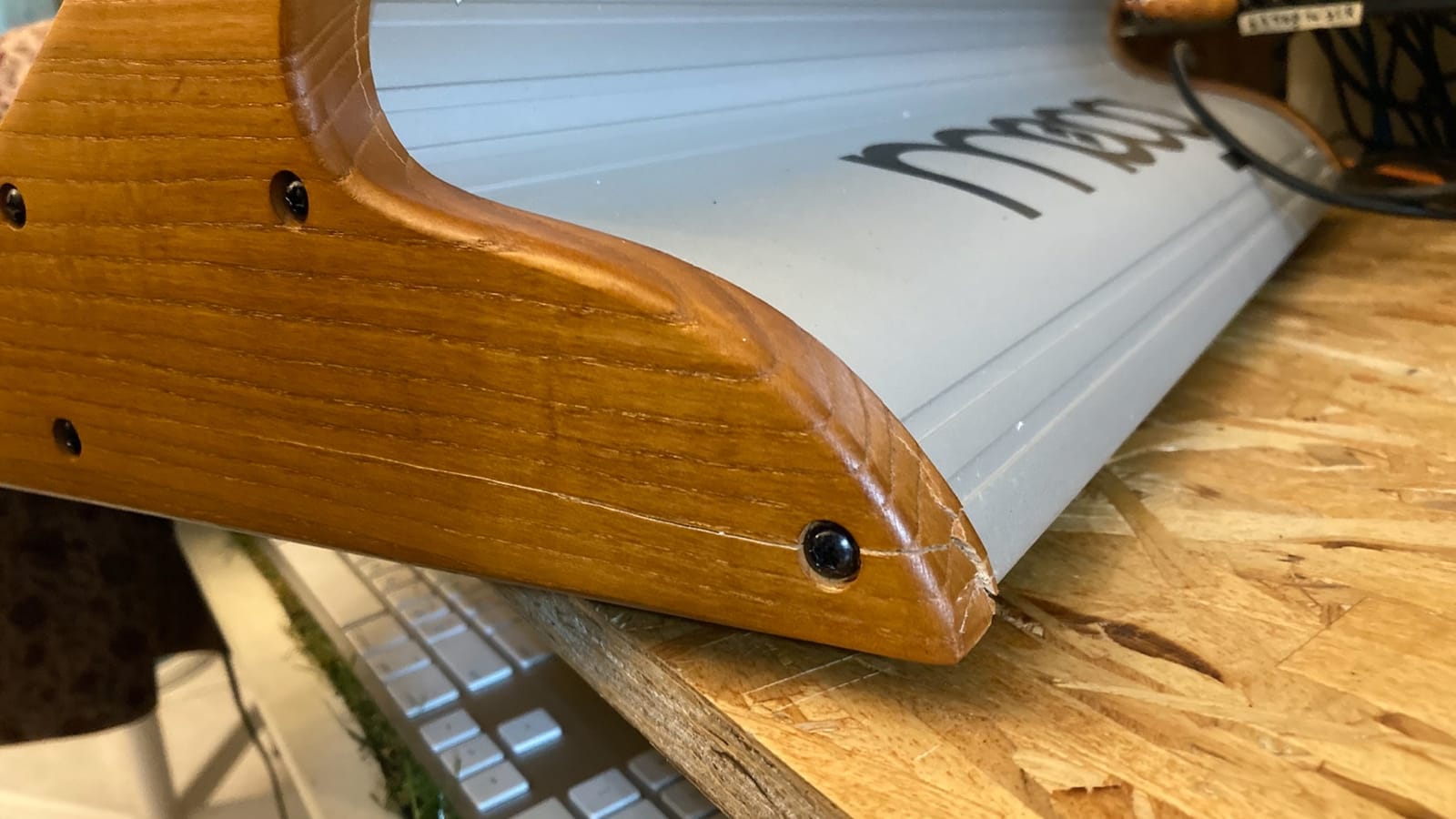
The 40 knobs and 74 switches mean almost everything has direct control. No menu diving for essential parameters. The included editor software lets you dive deeper when needed, managing your 256 presets and creating libraries for different projects.
Two-note paraphonic capability enables simple chords and layered sounds. It won’t replace a polysynth, but it expands creative possibilities beyond standard mono operation. The CV/Gate expansion opens doors to modular integration.
Best For
Producers who want classic Moog sound with modern preset management. The Subsequent 37 excels at bass, leads, and aggressive sounds. If you work primarily in the box but want authentic analog character for key parts, this integrates beautifully.
Limitations
No arpeggiator feels like an omission at this price point. You’ll need external sequencing for pattern work. The weight makes it challenging for frequent transport. And at $1899, you’re deep into premium territory where alternatives multiply.
4. Korg minilogue xd – Best Value Polysynth
Korg minilogue xd 37-key Polyphonic Analog Synththesizer w/ 16-step Sequencer, 4 Voices and OLED Oscilloscope (MINILOGUEXD)
4-Voice Polyphonic
37 Velocity Keys
Dual Oscillator Analog
Digital Multi-Engine
OLED Display
Pros
- Best analog polysynth in this price range
- Digital multi-engine adds versatility
- OLED oscilloscope aids sound design
- Easy to use for beginners
Cons
- Not Prime eligible
- Limited stock
- Keys are smaller than full-size
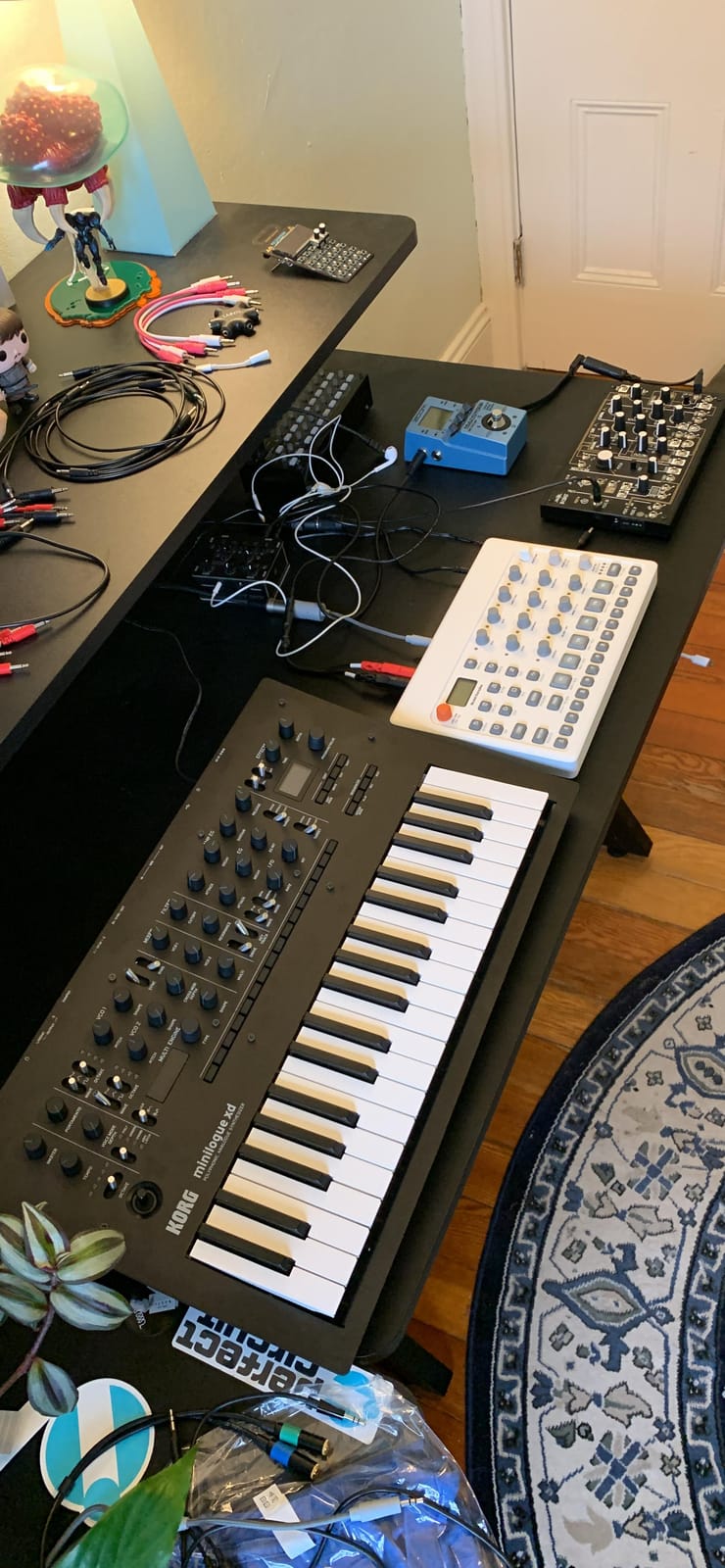
The minilogue xd democratized polyphonic analog synthesis. Four voices of true analog for under $700 seemed impossible before Korg released this. I’ve watched beginners create full compositions within hours of unboxing. That accessibility doesn’t compromise depth.
The digital multi-engine adds three sound sources: noise, VPM (phase modulation), and user-customizable slots. This hybrid element extends the tonal range far beyond traditional analog. You can even load third-party oscillators via Korg’s logue SDK platform.
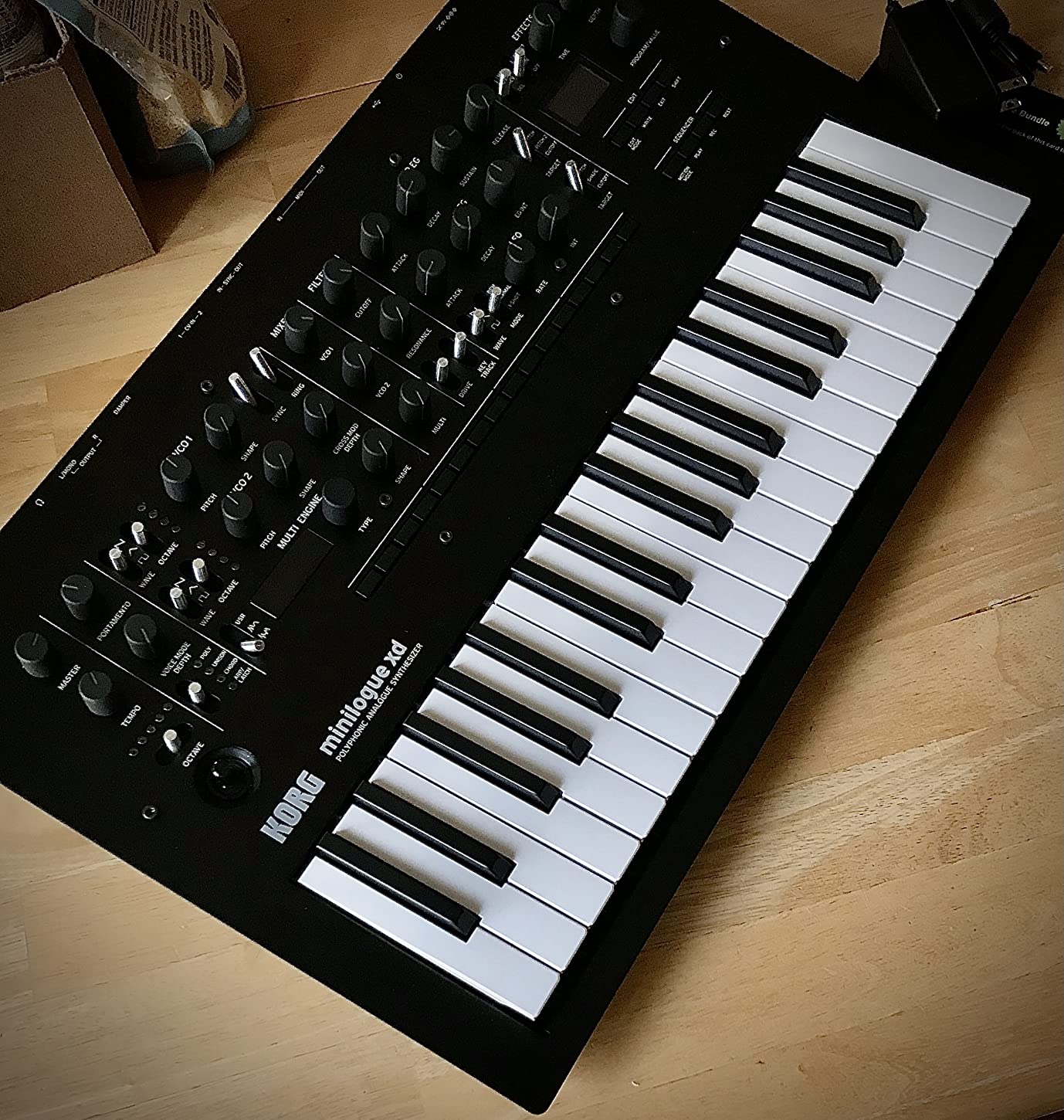
The OLED oscilloscope display became my favorite learning tool. Watching waveforms change as you tweak parameters builds intuitive understanding of synthesis. For teaching and self-education, this visual feedback accelerates the learning curve dramatically.
500 program slots mean extensive sound library potential. The 200 included presets cover essential bases, leaving 300 slots for your creations. Built-in effects including modulation, reverb, and delay add polish without external processing.
Best For
Beginners ready for their first polyphonic analog synth. The minilogue xd balances approachability with professional features. Bedroom producers, electronic musicians, and anyone wanting four-voice polyphony without breaking the bank will find their match here.
Limitations
The 37 slim keys feel smaller than full-size, which challenges players with larger hands. Limited stock availability means you might wait for shipping. The power plug design varies by region, sometimes requiring adapters.
5. Arturia MiniFreak – Hybrid Versatility Champion

Arturia MiniFreak 37 Key Polyphonic 6-Voice Hybrid Synthesizer Keyboard (Standard, 37 Key)
6-Voice Polyphonic
37 Keys with Aftertouch
Hybrid Digital/Analog
Multi-Mode Synthesis
MiniFreak V Software Included
Pros
- Incredible value for the features
- Multi-mode synthesis engine covers all methods
- 256 presets with sequences
- MiniFreak V software included
Cons
- Capacitive buttons not very responsive
- Screen could be bigger and more descriptive
- Some features hidden without manual study
Arturia packed an absurd amount of synthesis power into the MiniFreak. Six voices of polyphony with a hybrid architecture that combines digital oscillators with authentic analog filters. The multi-mode engine covers virtual analog, wavetable, FM, physical modeling, and more.
The matrix assignment system initially seemed complicated. But after a day of use, it became intuitive. Assigning modulation sources to destinations happens with button presses, creating complex routing without menu diving. This design encourages experimentation.
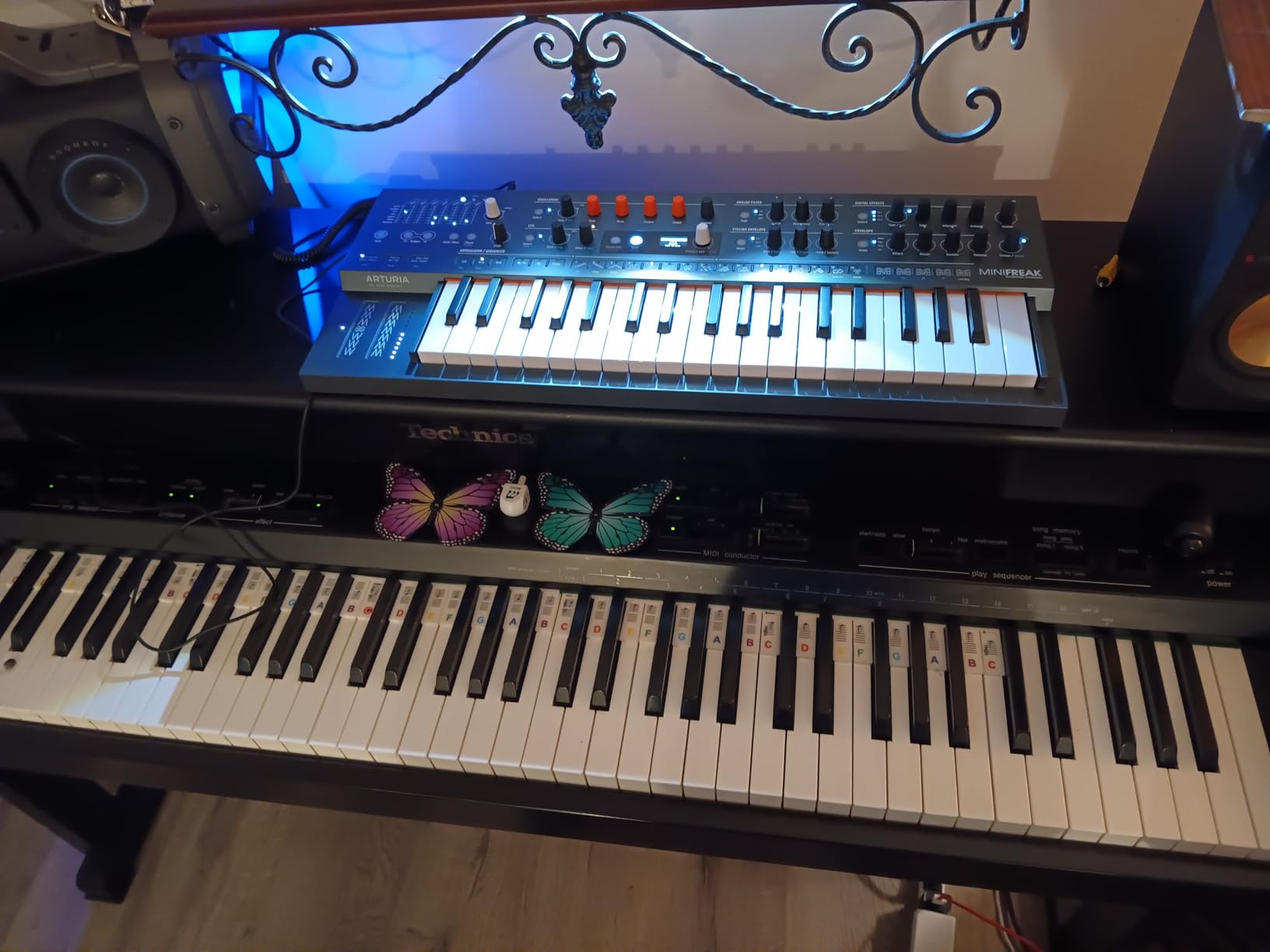
Included MiniFreak V software provides a plugin version for DAW integration. Your presets sync between hardware and software, enabling seamless studio workflow. Arturia consistently updates both platforms, adding features like new oscillator types and effects.
Build quality survived real-world testing. I accidentally knocked it off a desk onto carpet with no functional damage. The 2-year warranty provides peace of mind for regular gigging and travel.
Best For
Sound designers wanting maximum variety from one instrument. The MiniFreak covers synthesis methods that would require multiple dedicated synths. Producers who work across genres benefit from the tonal flexibility. Beginners find the immediate reward while advanced users discover depth.
Limitations
Capacitive buttons require deliberate touch. They’re not always responsive to quick taps. The screen, while functional, could provide more descriptive information. Some powerful features require manual study to discover.
6. Korg minilogue – The Original Analog Poly

Korg minilogue 37-key Polyphonic Analog Synthesizer w/ 16-step Sequencer
4-Voice Polyphonic
37 Slim Keys
2 Analog Oscillators
200 Programs
16-Step Sequencer
Pros
- Excellent entry-level analog polysynth
- All parameters have knob control
- Beautiful real analog sound
- Great build quality with aluminum and wood
Cons
- Requires retuning when cold
- Only 3-octave keyboard
- No mod wheel
The original minilogue started the analog polyphony revolution. Before this, four-voice analog cost thousands. Korg’s entry made true polysynths accessible to bedroom producers worldwide. Testing it years later, the magic remains undeniable.
Everything has a knob. Every parameter sits under your fingers for immediate tweaking. This design philosophy creates direct connection between intention and sound. For learning synthesis fundamentals, nothing beats this hands-on approach.
The built-in oscilloscope visualizes your waveforms in real-time. Watching how filter cutoff changes harmonic content builds intuitive understanding. This educational element makes the minilogue exceptional for beginners and students.
200 program slots store your creations. The 100 included presets demonstrate capabilities while leaving room for original sound design. The 16-step polyphonic sequencer captures phrases and loops for composition.
Best For
Beginners seeking their first polyphonic analog experience. The minilogue teaches synthesis through hands-on experimentation. Veterans appreciate its Swiss army knife versatility for quick sound design without complexity.
Limitations
Analog oscillators drift when cold. The synth needs warmup time in chilly environments to achieve stable tuning. No mod wheel limits expressive options. The pitch bend lever occasionally sticks during performance.
7. Arturia MicroFreak – Innovation at an Unbeatable Price
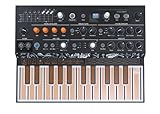
Arturia MicroFreak Synthesizer Keyboard
Paraphonic Hybrid
25 Touch-Plate Keys
21 Oscillator Modes
5x7 Mod Matrix
CV Outputs
Pros
- Incredible value with 20+ synth engines
- Unique 4-voice paraphonic capability
- Expressive touch-plate keyboard with poly aftertouch
- Compact and portable
Cons
- No onboard effects
- PCB keyboard feels unusual
- Build quality feels less robust
The MicroFreak defies categorization. Its digital oscillators span 21 different engines: virtual analog, wavetable, FM, physical modeling, and even third-party algorithms from Mutable Instruments and Noise Engineering. The analog filter adds warmth that digital-only synths lack.
That touch-plate keyboard initially seemed gimmicky. But the polyphonic aftertouch tracking genuinely works. Each key senses pressure independently, enabling expressive performance impossible on most instruments at any price. The learning curve is real, but the payoff is worth it.
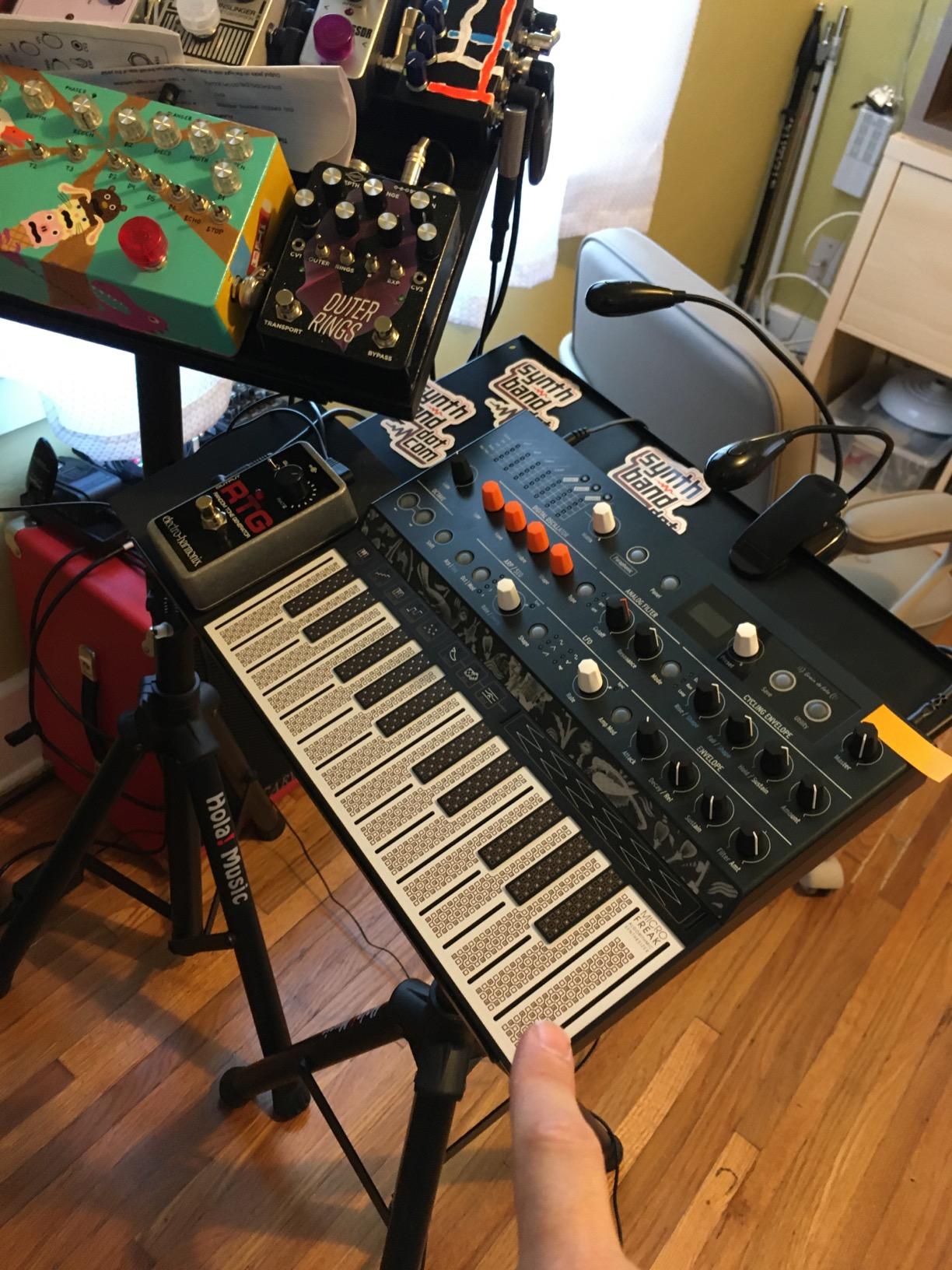
Arturia keeps adding features through firmware updates. Vocoder mode arrived after launch. Sample upload capability expanded sound design further. This isn’t a dead product sitting on shelves. It’s a platform that evolves with your skills.
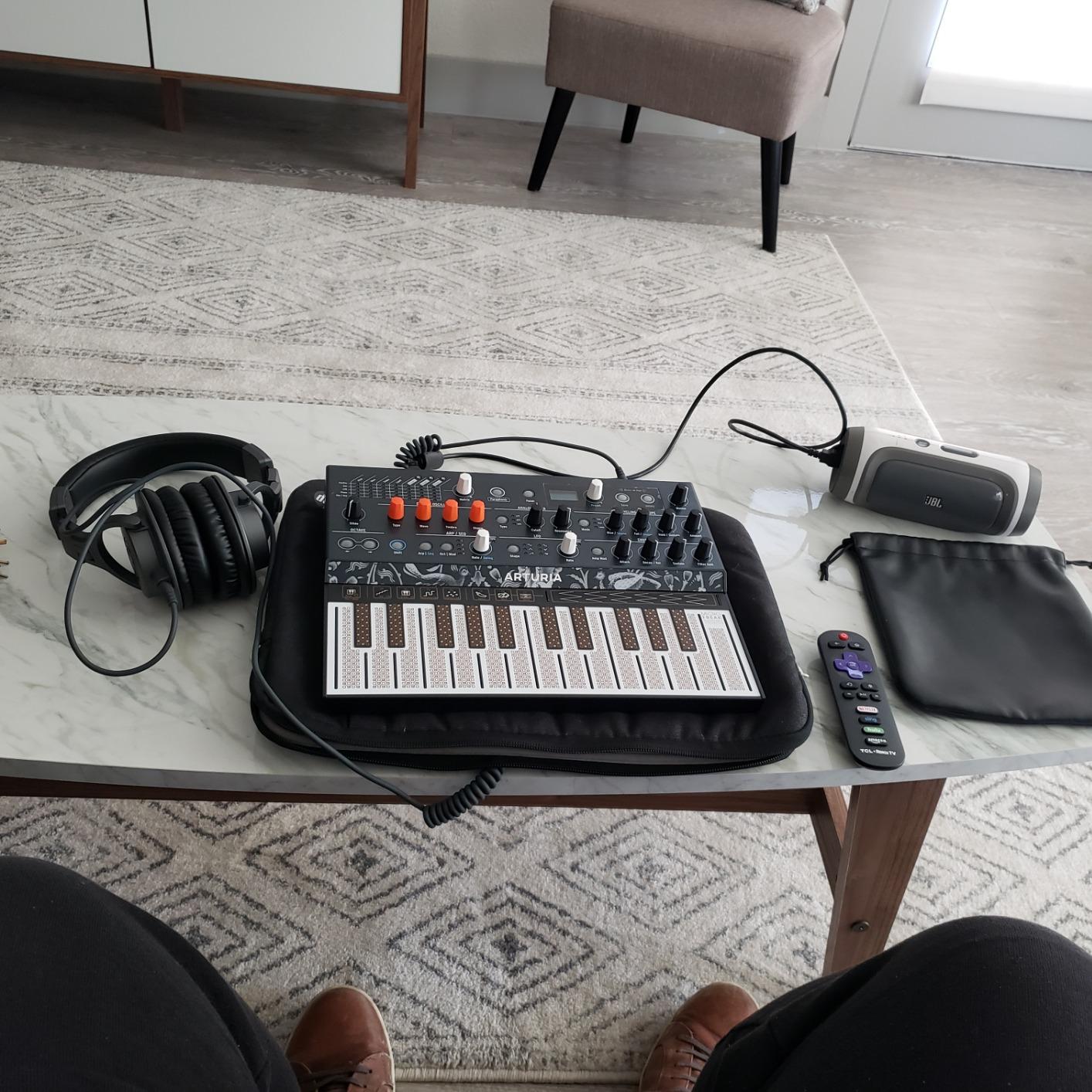
At 2.3 pounds, it travels anywhere. USB MIDI, CV outputs for pitch/gate/pressure, and included MIDI breakout cables connect to any setup. This synth fits in a laptop bag and costs less than a decent microphone.
Best For
Budget-conscious producers who refuse to sacrifice creative potential. The MicroFreak offers more synthesis types than instruments costing triple. Traveling musicians appreciate the portability. Beginners get immediate gratification while advanced users discover endless depth.
Limitations
No onboard effects means you’ll need external processing or DAW plugins for reverb, delay, and modulation. The PCB keyboard feels nothing like traditional keys. Build quality, while functional, lacks the robustness of premium instruments.
8. MOOG Mother-32 – Modular Entry Point

MOOG Mother-32 Semi-Modular Analog Synthesizer
Semi-Modular Analog
Single VCO
Classic Ladder Filter
32-Step Sequencer
Eurorack Compatible
Pros
- Pure analog warmth with unmistakable Moog character
- Classic Moog ladder filter delivers deep tones
- Powerful 32-step sequencer with great live features
- Eurorack compatibility for modular expansion
Cons
- Single oscillator limits sound design
- Mono only - not suitable for chords
- Higher price point for single oscillator
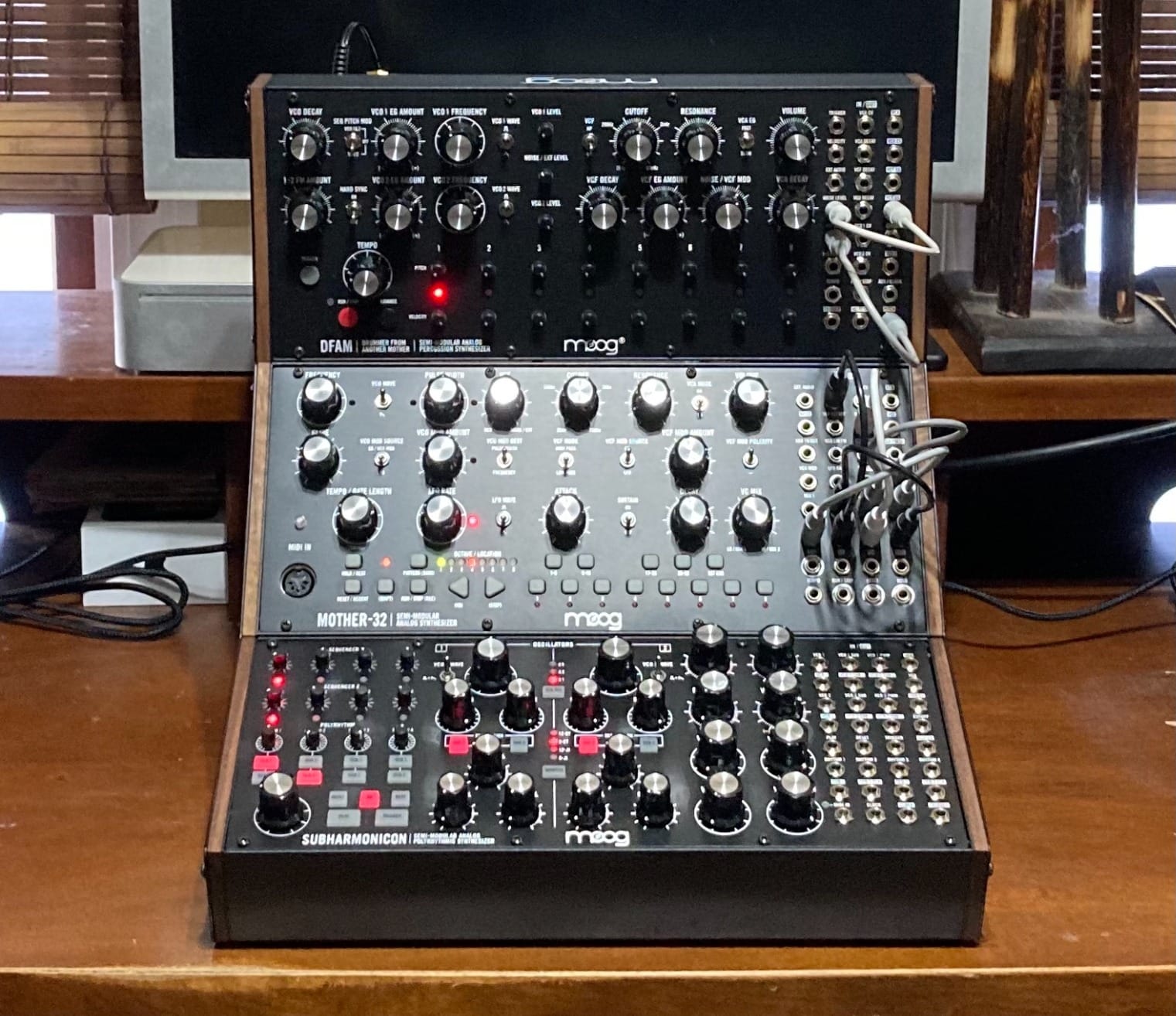
The Mother-32 opened modular synthesis to musicians intimidated by patch cables. You can play it immediately without any patching. But the extensive patch bay invites exploration when you’re ready. This progressive learning curve makes it the perfect entry to modular.
That classic Moog ladder filter defines the sound. It’s the same 24dB/octave low-pass design that made the Minimoog legendary. Single oscillator limitations become less important when the filter sounds this musical. It resonates with organic warmth.
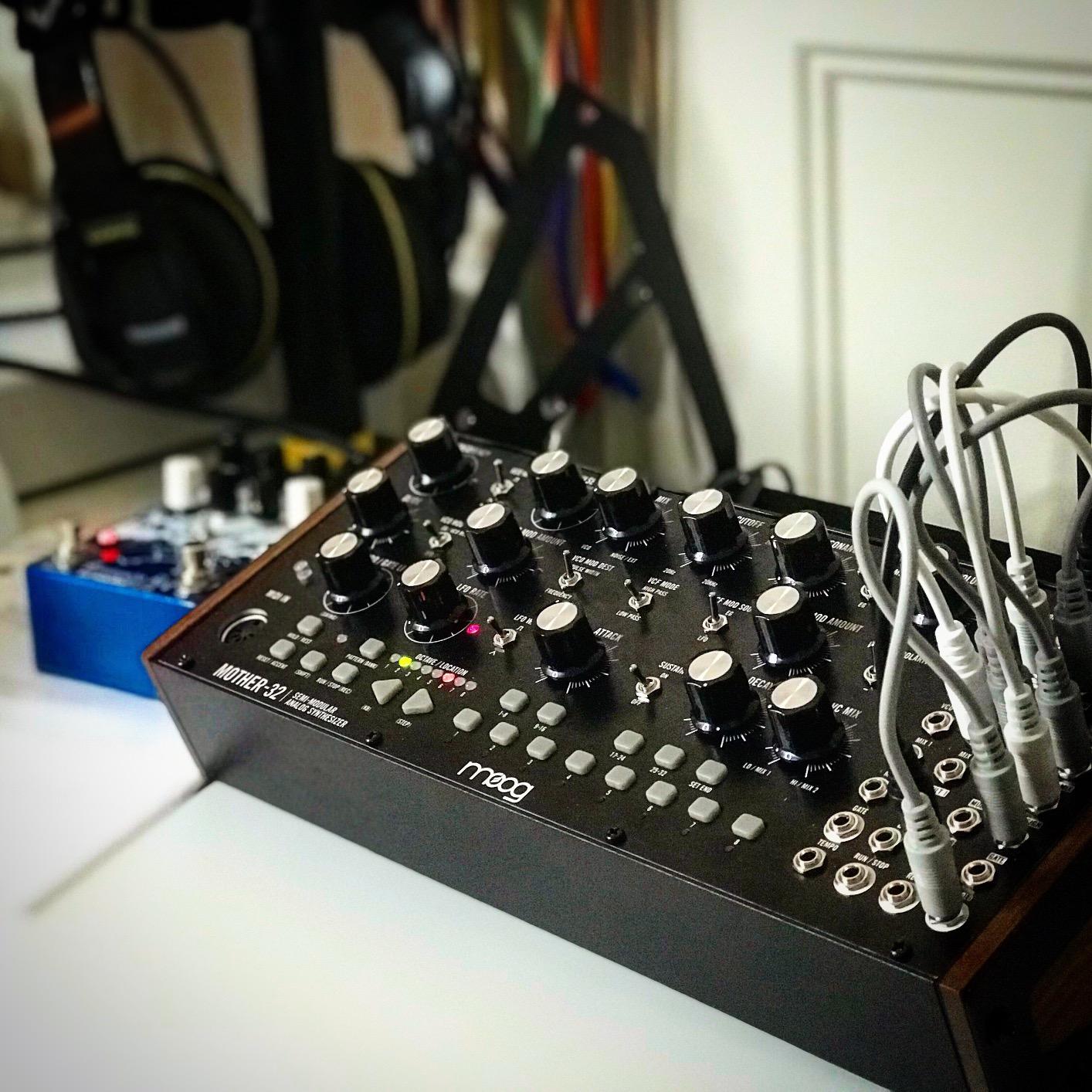
The 32-step sequencer stores up to 64 sequences. Live performance features let you manipulate sequence length, transposition, and swing in real-time. For generative composition and looping phrases, this sequencer excels.
Eurorack compatibility means the Mother-32 fits in modular systems as a 60HP module. Combine multiple units for polyphonic setups. Or integrate with Moog’s other semi-modulars like DFAM and Subharmonicon for a comprehensive system.
Best For
Musicians curious about modular synthesis but hesitant to dive in completely. The Mother-32 works standalone while teaching patching concepts. Sound designers wanting classic Moog filter character in a portable format find exactly that.
Limitations
Single oscillator constrains harmonic complexity. For chords, you need additional units. The sequencer interface uses shift-functions that require learning. Some users eventually graduate to more complex systems, making this a stepping stone.
9. Korg MS20 Mini – Legendary Aggression

Korg MS20 Mini Semi-Modular Analog Synthesizer (MS20MINI), MultiColored, M
Semi-Modular Mono
Dual Filters
External Signal Processor
Mini Keys
USB MIDI
Pros
- Faithful reproduction of legendary MS-20 sound
- Unique dual-filter design for distinctive character
- Excellent patchability with extensive patch bay
- External Signal Processor for filtering external audio
Cons
- Build quality concerns - feels delicate
- Small keyboard keys
- Reliability issues reported by some users
The MS20 Mini recreates a 1978 legend. Its aggressive, harsh character defined countless industrial, experimental, and electronic records. This isn’t the smooth warmth of Moog. It’s a snarling, unpredictable beast that rewards confrontation.
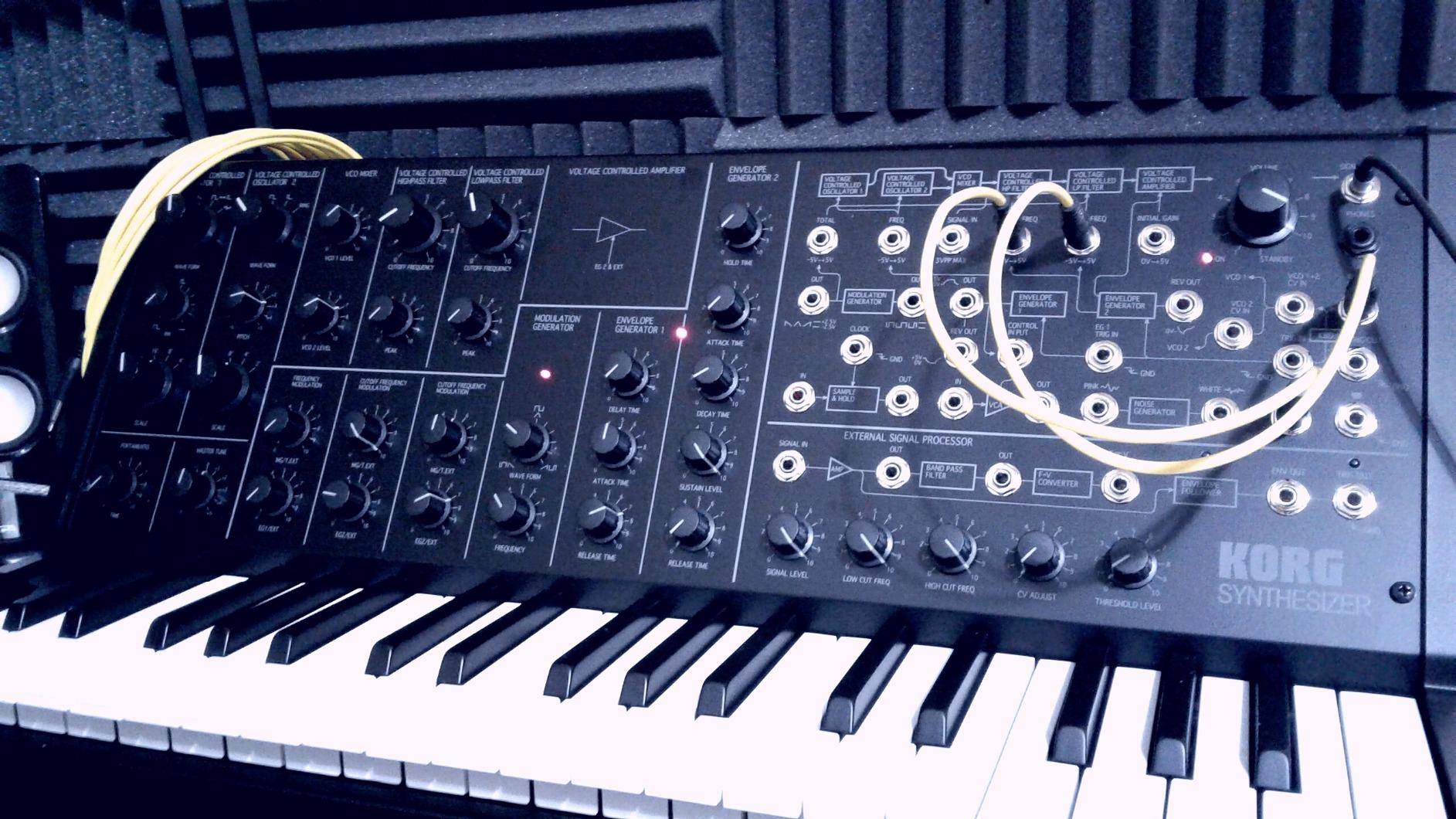
The dual-filter design sets the MS20 apart. High-pass and low-pass filters in series create distinctive distortion and self-oscillation behaviors. No other synth sounds quite like this. The External Signal Processor routes external audio through the filters and patch bay, making it a powerful effects processor.
Patching possibilities extend far beyond standard subtractive synthesis. The extensive patch bay encourages creative routing. Self-patching creates feedback loops, chaotic modulation, and sounds no other instrument generates.
Historical significance adds to the appeal. This exact design influenced generations of synthesists. Owning one connects you to decades of experimental music tradition.
Best For
Experimental musicians seeking distinctive, aggressive sounds. The MS20 excels at harsh textures, industrial tones, and unpredictable sound design. If smooth analog warmth isn’t your goal, this legendary character might be exactly what you need.
Limitations
Build quality disappoints compared to the original. The plastic body feels fragile, not tour-worthy. Some users report units failing after limited use. Smaller keys challenge traditional keyboard players. The noise floor is higher than modern designs.
10. Novation Bass Station II – Analog Workhorse

Novation Bass Station II Analog Monosynth
Monophonic Analog
25 Full-Size Keys
2 Analog Oscillators
2 Filter Types
Arpeggiator and Sequencer
Pros
- Excellent value with dual analog oscillators
- Full-size keys with aftertouch
- Dual filter design offers massive sonic variation
- Overdrive circuit adds grit and aggression
Cons
- Arpeggiator cannot be triggered by MIDI
- Limited modulation routing
- No onboard effects
The Bass Station II earned its reputation through reliability and value. Two analog oscillators with four waveforms each plus sub-oscillator create thick foundation sounds. Full-size keys with aftertouch make it a proper performance instrument, not a toy.
Two distinct filter types expand tonal range significantly. The Classic multi-mode filter handles standard duties. The Acid 24dB filter delivers the squelchy, aggressive character perfect for electronic bass and lead lines. Having both in one instrument at this price point remains remarkable.
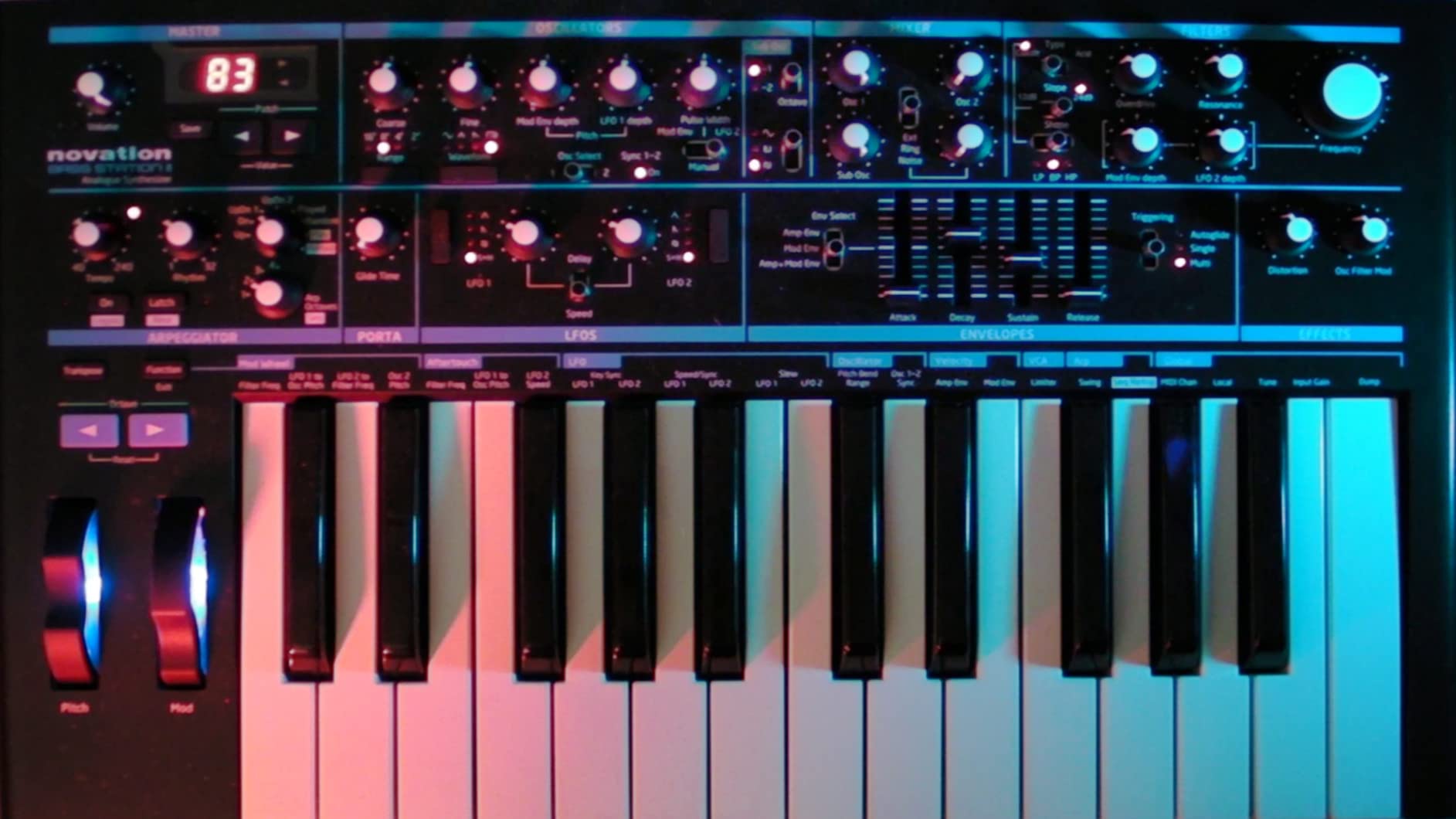
The overdrive circuit adds harmonic saturation before or after the filter. This analog distortion provides warmth and aggression without digital artifacts. For bass music, techno, and electronic genres, this drive defines the character.
128 patch storage with downloadable artist packs expands your sound library. Novation’s preset community shares creations freely. The 64 factory sounds cover essential categories, leaving room for your custom patches.
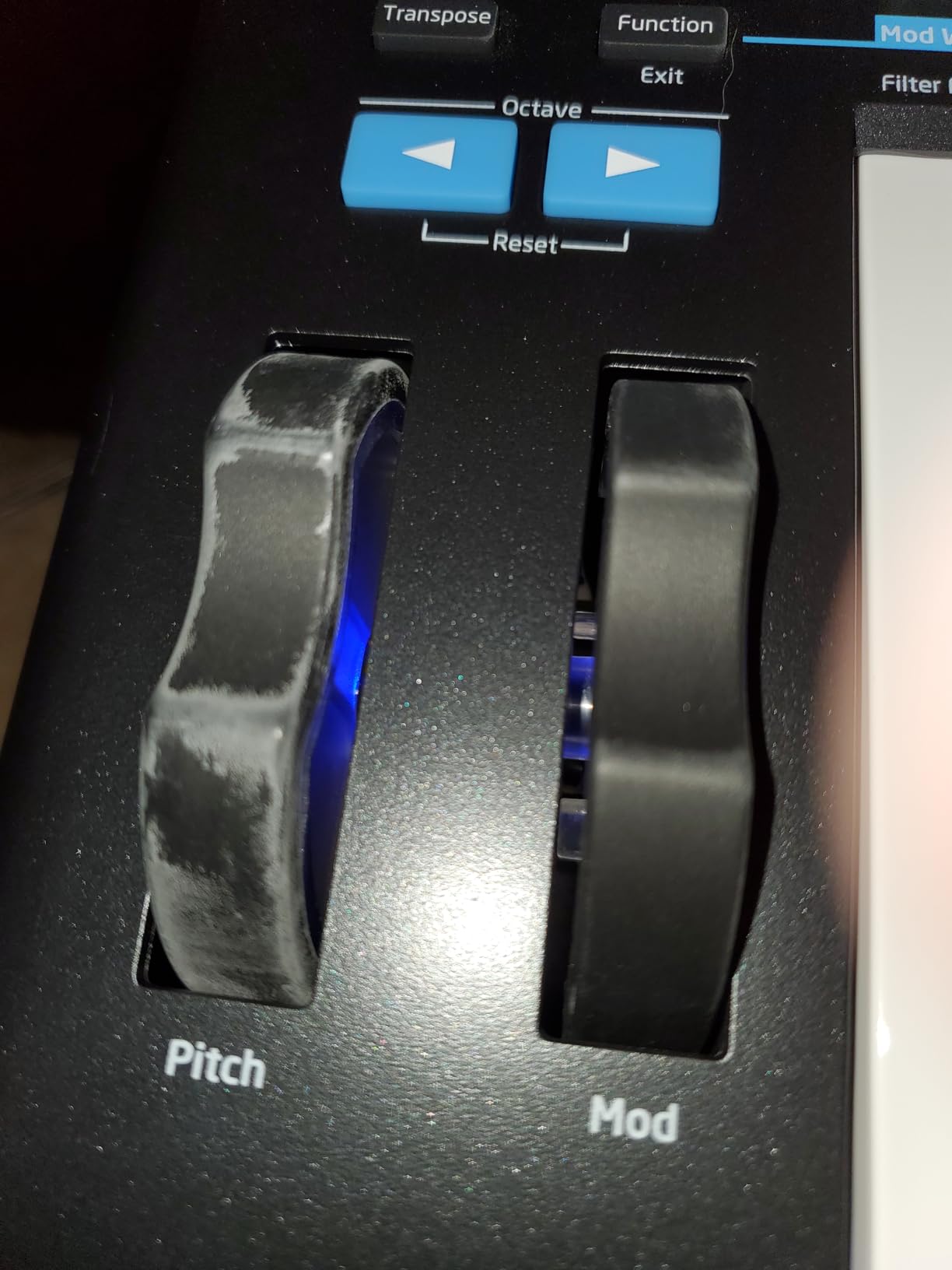
Best For
Bass producers needing analog weight without complexity. The Bass Station II delivers immediate results with intuitive controls. Beginners learning subtractive synthesis benefit from the clear layout. Live performers appreciate the full-size keys and aftertouch.
Limitations
The arpeggiator only responds to the physical keyboard, not incoming MIDI. This constrains DAW integration for pattern work. Limited modulation routing compared to advanced synths. No onboard reverb or delay means external processing is necessary.
11. Korg monologue – Budget Analog Excellence
Korg monologue Monophonic Analog Synthesizer w/ 16-step Sequencer – Black
Monophonic Analog
25 Slim Keys
2 VCOs
16-Step Sequencer
Built-in Oscilloscope
Pros
- Incredible value at $399 price point
- Excellent sound quality with aggressive filter character
- Built-in oscilloscope for learning synthesis
- Motion sequencing allows dynamic patterns
Cons
- Smaller keys than full-size
- Limited envelope (AD only)
- Mono operation only
The monologue proves that serious analog synthesis doesn’t require serious money. At $399, this monophonic Korg delivers sound quality that rivals instruments twice the price. The aggressive 2-pole filter has more bite than the minilogue, carving distinct character.
The built-in oscilloscope might be my favorite feature. Watching waveforms transform while learning synthesis creates visual understanding that accelerates learning. For students and self-taught producers, this display is invaluable.
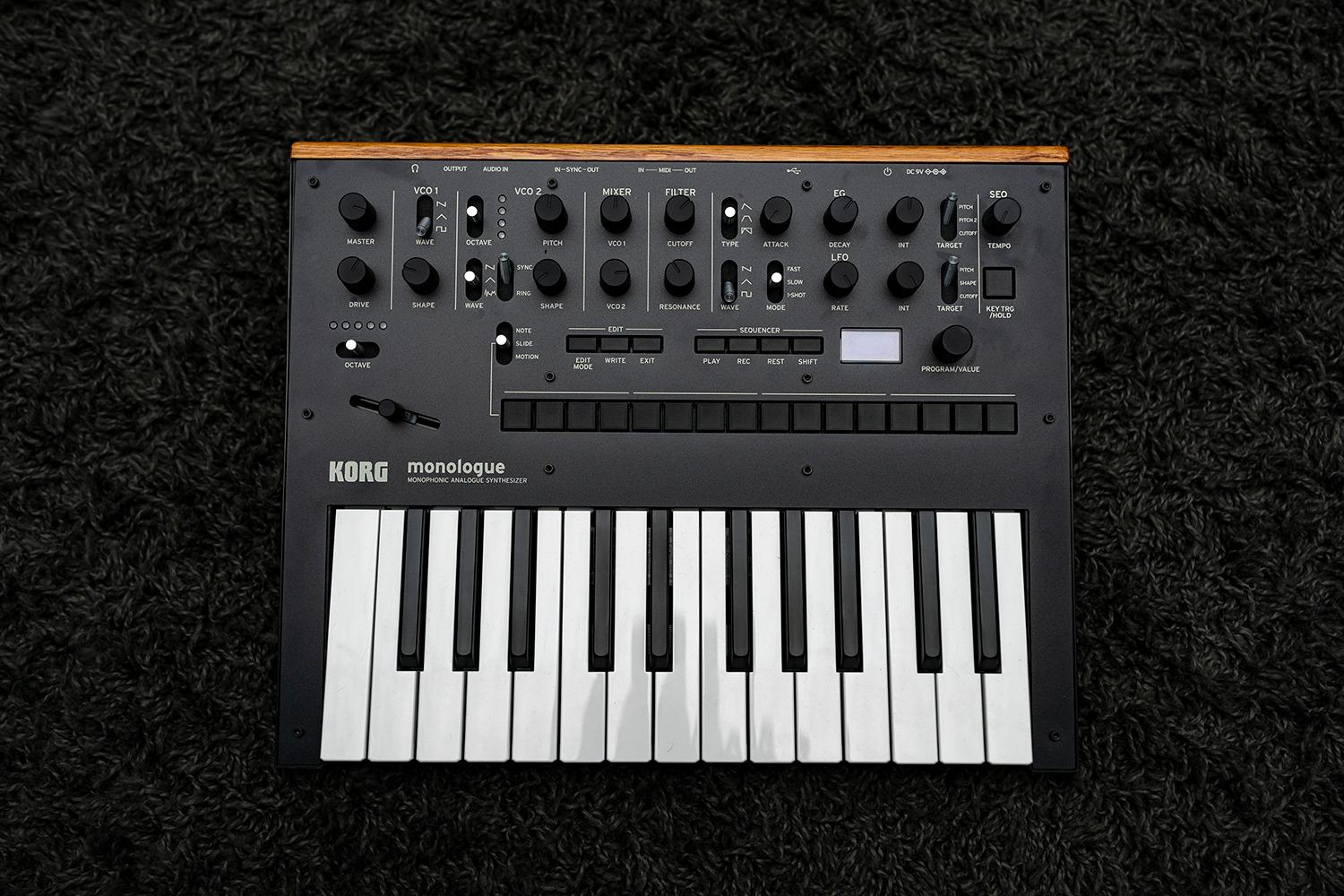
Microtuning capability developed with Aphex Twin opens experimental possibilities. You can create custom scales and alternate tuning systems that standard synths can’t touch. This feature alone distinguishes the monologue from everything else in its class.
Battery power option means true portability. Take it to the park, on the train, anywhere inspiration strikes. Motion sequencing captures knob movements for dynamic, evolving patterns that transform simple patches into complex sequences.
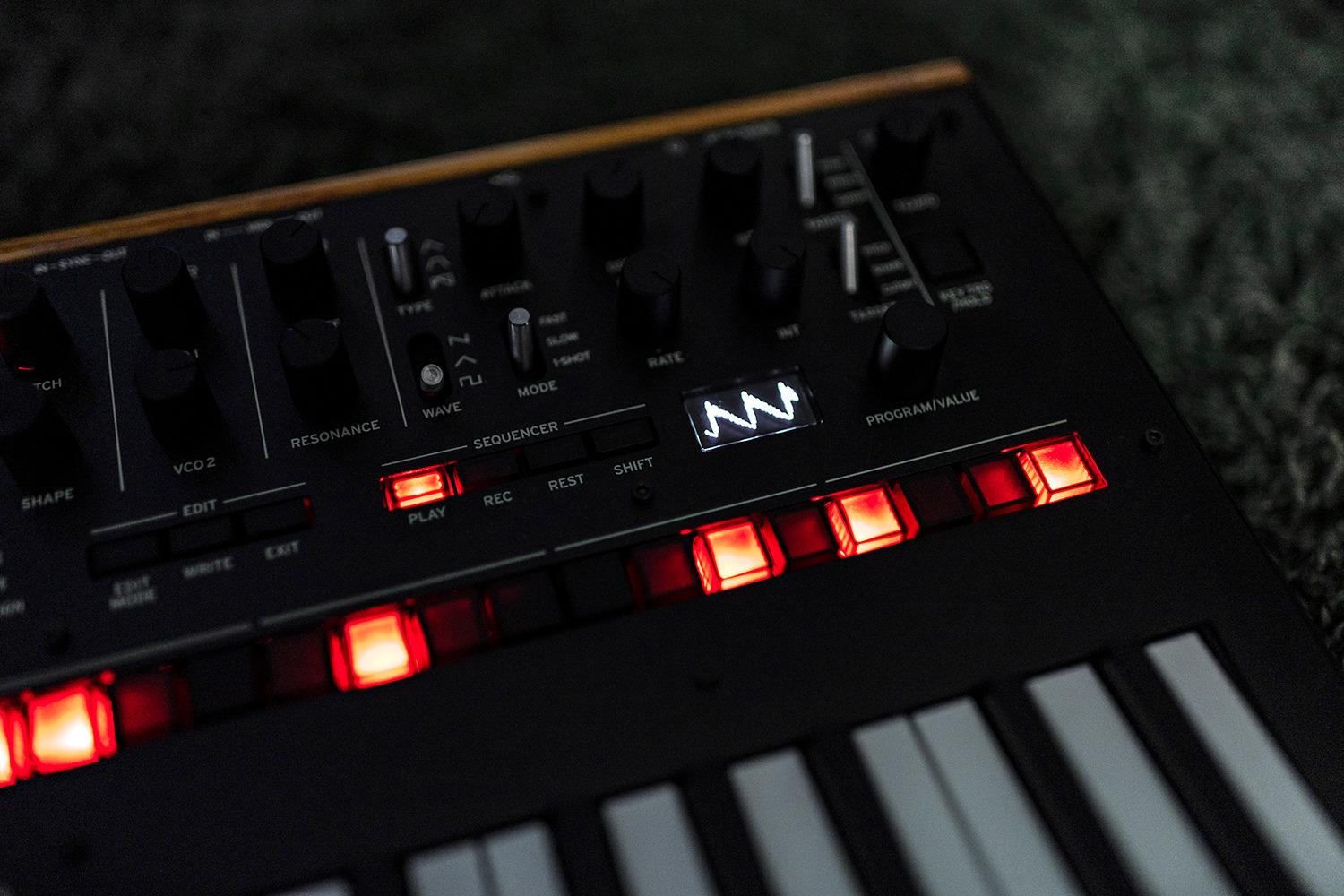
Best For
Beginners wanting their first real analog synth without financial stress. The monologue teaches synthesis fundamentals while delivering professional sound quality. Budget-conscious producers needing bass and lead sounds find everything they need here.
Limitations
AD envelope only means no sustain or release stage. This constrains certain sound shapes. Smaller keys aren’t ideal for players with larger hands. Mono operation limits you to single notes, no chords.
12. MOOG Subharmonicon – Generative Inspiration Machine

MOOG Subharmonicon Semi-Modular Analog Polyrhythmic Synthesizer
Semi-Modular Polyphonic
2 VCOs + Subharmonic Generators
Dual 4-Step Sequencers
32-Point Patch Bay
Eurorack Compatible
Pros
- Truly unique approach to sound generation
- Endless inspiration for generative music
- Polyrhythmic sequencer creates unexpected patterns
- Excellent Moog build quality
Cons
- Not flexible as traditional subtractive synth
- Limited MIDI implementation
- No on/off switch
- Higher learning curve
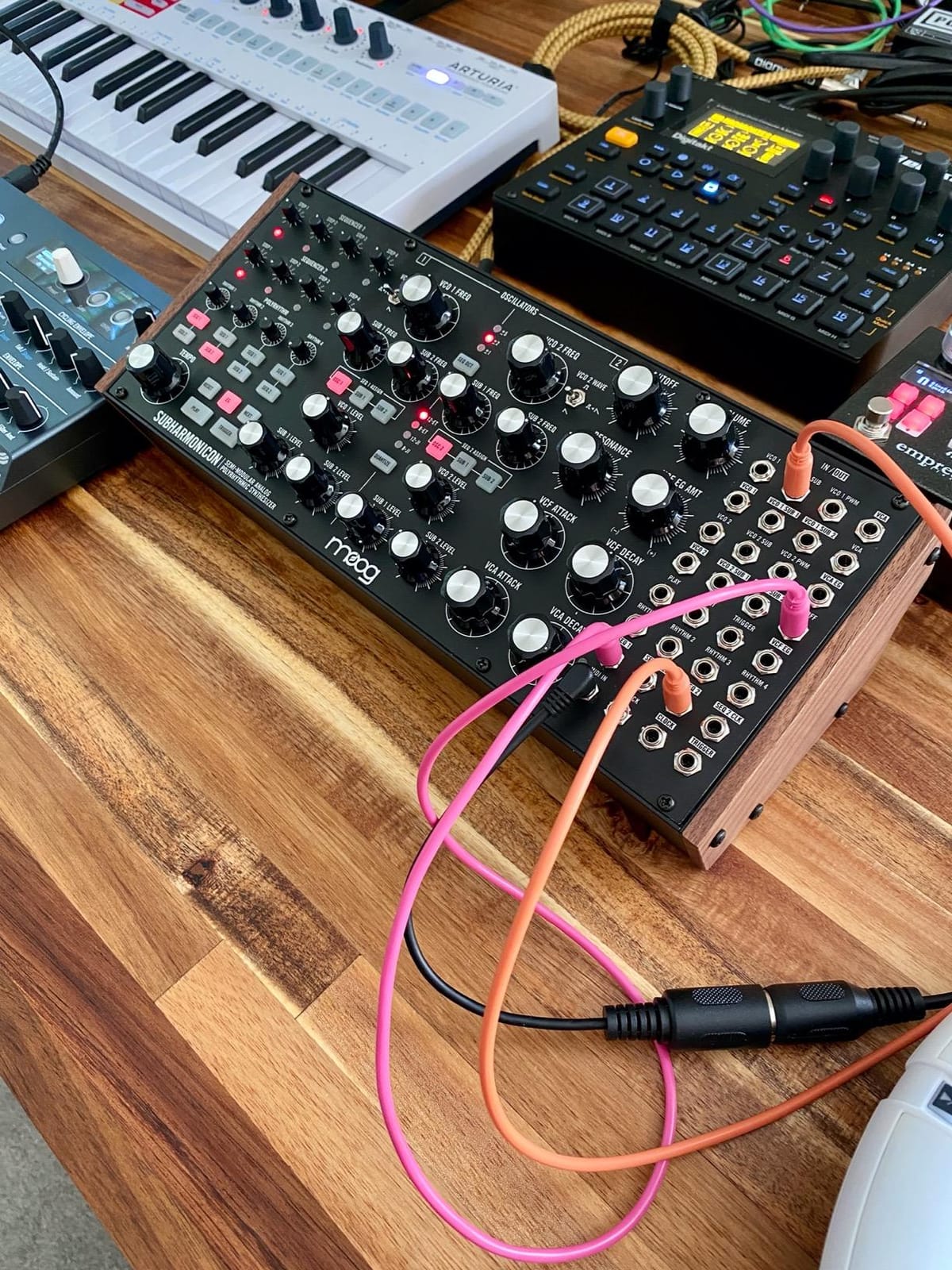
The Subharmonicon rethinks what a synthesizer should be. Instead of standard subtractive synthesis, it uses subharmonic generation. Two VCOs each have two subharmonic generators, creating six tonal sources that interweave in unexpected ways. This isn’t a keyboard instrument. It’s an inspiration generator.
The dual sequencers with polyrhythmic complexity create evolving patterns that surprise even experienced musicians. Four rhythm generators drive sequences at different rates, producing music that feels composed rather than performed. For ambient, generative, and experimental work, this approach unlocks new territory.
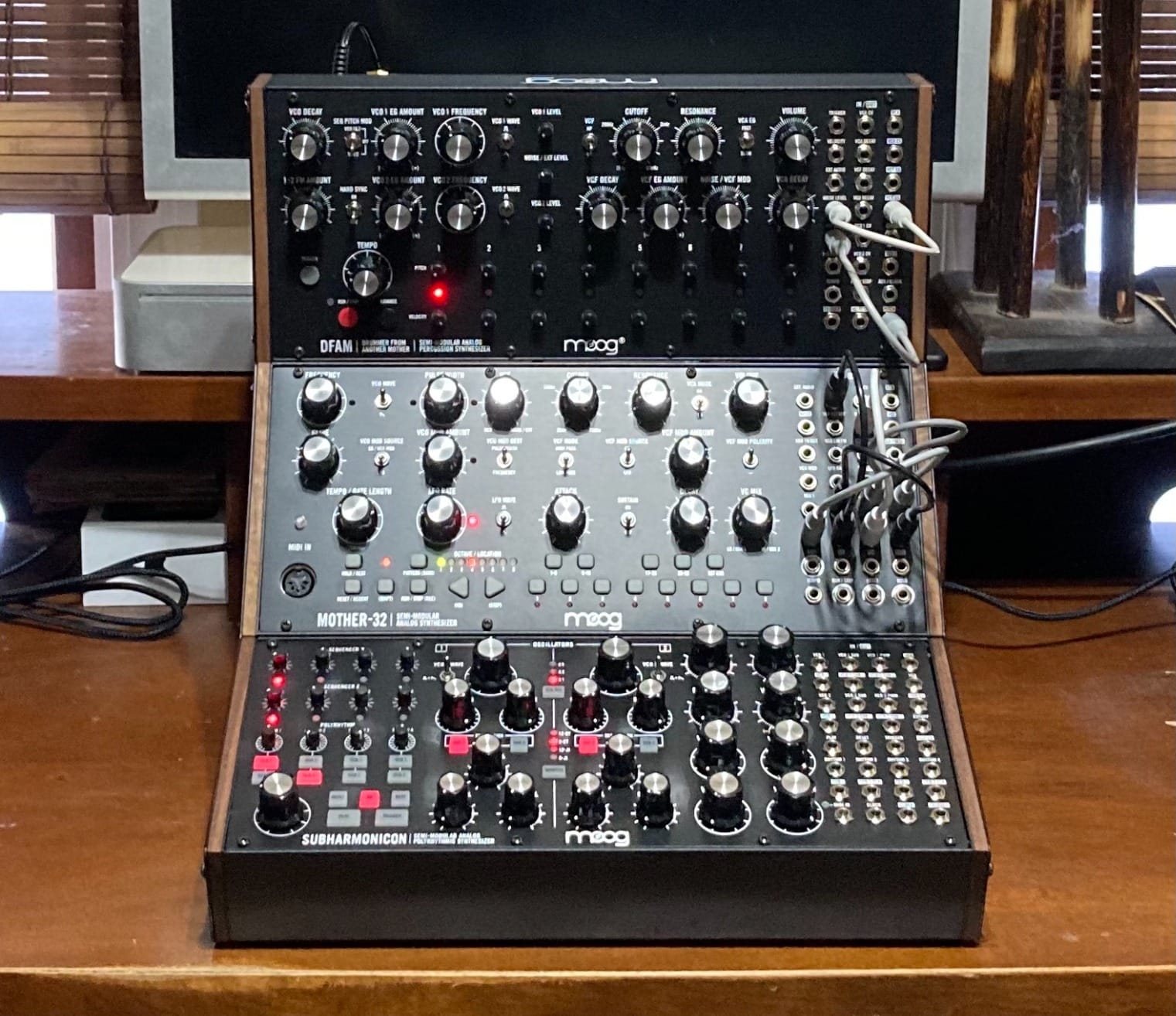
Quantize function ensures musical results. Even random patching produces consonant intervals rather than chaos. This makes the Subharmonicon approachable despite its unconventional architecture.
Combine with other Moog semi-modular units like Mother-32 and DFAM for a complete system. The Eurorack compatibility enables integration with larger modular setups. This grows with your collection rather than becoming obsolete.
Best For
Experimental musicians seeking unexpected inspiration. The Subharmonicon excels at ambient textures, generative compositions, and evolving soundscapes. If traditional keyboard performance isn’t your focus, this unique approach opens creative doors others can’t.
Limitations
Not designed for traditional subtractive synthesis. Limited MIDI implementation constrains DAW integration. No on/off switch means unplugging to power down. The learning curve challenges conventional synth expectations.
How to Choose an Analog Synthesizer?
Choosing the best analog synthesizer for your needs requires understanding several key factors. I’ve guided dozens of musicians through this decision, and the process always starts with honest assessment of goals and constraints.
Polyphony: How Many Notes Do You Need?
Monophonic synths play one note at a time. They’re perfect for bass, leads, and experimental sound design. Paraphonic designs like the Matriarch allow limited polyphony through oscillator sharing. True polyphonic synths like the minilogue xd play full chords. If you plan to play pads, chords, or layered sounds, polyphony matters.
For beginners, monophonic synths teach synthesis fundamentals without complexity. You can always add a polysynth later. Many producers maintain both mono and poly instruments for different purposes.
Modulation and Sound Design Depth
Basic subtractive synths offer limited modulation routing. Semi-modular designs like the Mother-32 provide patch points for custom routing. The depth you need depends on your sound design ambitions.
If you want to explore experimental synthesis, extensive modulation matters. If you need reliable bass and lead sounds without diving deep, simpler architectures work perfectly.
Connectivity and Integration
MIDI connectivity enables DAW integration. USB MIDI simplifies modern setups. CV/Gate outputs allow modular system expansion. Consider your existing workflow and how a new synth fits.
For live performance, aftertouch and velocity sensitivity enable expressive playing. For studio-only use, these matter less. Think about your actual use cases, not theoretical capabilities.
Build Quality and Longevity
Analog synths represent investment. Premium instruments like Moog units maintain value and often appreciate. Budget options deliver sound quality but may lack long-term reliability.
Consider repairability and service availability. Moog, Korg, and Arturia have established service networks. Lesser-known brands may lack support infrastructure.
Learning Curve and Workflow
Some synths reward immediate experimentation. Others require study before producing useful results. Match the learning curve to your patience and available time.
For beginners, direct knob-per-parameter designs like the minilogue work best. For advanced sound designers, deep modulation matrices enable complex routing. Know yourself before choosing.
Frequently Asked Questions
What are the best analog synthesizers in 2026?
The best analog synthesizers in 2026 include the MOOG Matriarch for premium quality, Korg minilogue xd for best value polyphony, and Korg monologue for budget-friendly excellence. Other top choices include Arturia MiniFreak for hybrid versatility, MOOG Mother-32 for modular exploration, and Novation Bass Station II for reliable bass production.
Are analog synthesizers still made?
Yes, analog synthesizers are definitely still made. The analog renaissance continues strong into 2026, with major manufacturers like Moog, Korg, Arturia, and Novation producing new analog instruments. The demand for authentic analog sound keeps production active and innovation ongoing.
What is the best analog synthesizer under $1000?
The best analog synthesizers under $1000 include the Korg minilogue xd at $649 for polyphony, Korg monologue at $399 for monophonic excellence, Arturia MicroFreak at $349 for hybrid versatility, and MOOG Mother-32 at $599 for semi-modular exploration. All deliver authentic analog character without breaking four figures.
What is the best analog synthesizer for beginners?
The best analog synthesizer for beginners is the Korg minilogue xd. Its 4-voice polyphony, OLED oscilloscope for visual learning, and intuitive knob-per-parameter design make synthesis accessible. The Arturia MiniFreak and Korg monologue also offer beginner-friendly features at lower price points.
How to choose an analog synthesizer?
To choose an analog synthesizer, first determine your polyphony needs (mono vs poly), then consider your budget range. Evaluate modulation depth for sound design ambitions, check connectivity for your workflow (MIDI, USB, CV), and research build quality for long-term value. Match features to your actual use cases, not theoretical capabilities.
Final Thoughts on the Best Analog Synthesizers
The best analog synthesizers in 2026 span from the premium MOOG Matriarch at $1899 to the accessible Korg monologue at $399. Each serves different needs and budgets. Your choice depends on polyphony requirements, sound design depth, and workflow integration.
For most producers, the Korg minilogue xd represents the sweet spot. Four-voice polyphony, hybrid capabilities, and accessible design deliver exceptional value. Beginners find immediate success while advanced users discover lasting depth. This is the synth I recommend most often.
Whatever you choose, the analog experience transforms creative workflow. Hands-on control, organic sound character, and lasting value make these instruments investments in your musical future. The warmth and unpredictability of voltage-controlled circuits creates something special. Trust your ears, consider your actual needs, and start creating.