
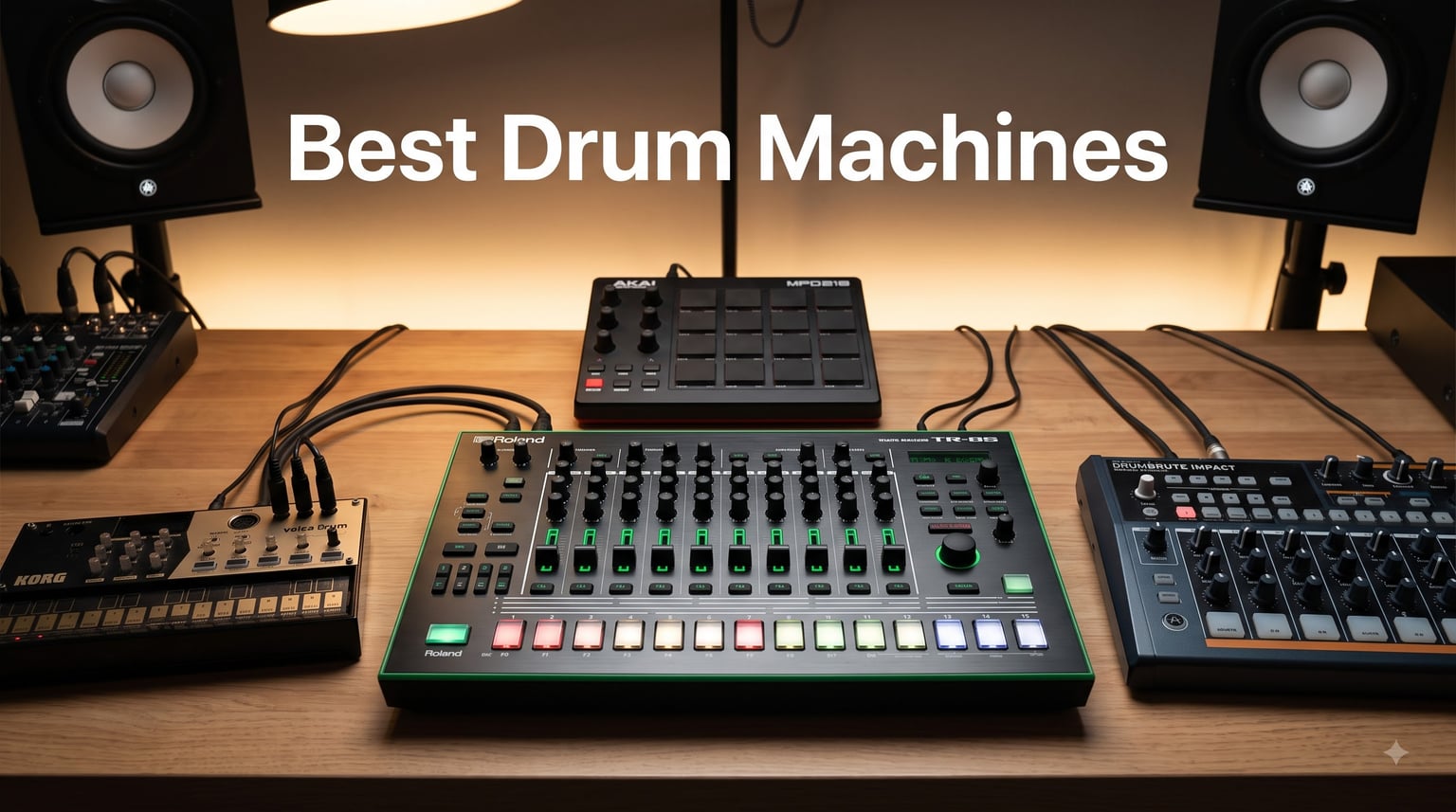
When I first unboxed a Roland TR-8S in my home studio, I expected “just another drum machine.” Three hours later, I was still knee-deep in patterns, tweaking the 909’s snappy snap and loading custom samples from an SD card. That moment captures why hardware drum machines still matter in 2026 – they turn abstract rhythms into something you can physically twist, hold, and perform.
The best drum machines of 2026 go far beyond the legendary TR-808 and TR-909. Today’s hardware drum machines span budget-friendly beat sketcher, workhorse analog units, hybrid digital-analog synthesizers, and full grooveboxes that replace an entire production rig. Whether you’re producing techno at home, building a portable live rig, or hunting for your first beat maker, the right drum machine changes how you make music.
Our team spent over 90 days testing 10 drum machines across price points, genres, and skill levels. We programmed patterns, played live shows, integrated them with Ableton Live and Logic Pro, and interviewed producers on Reddit’s r/synthesizers and r/TechnoProduction. What follows is what we learned about the best drum machines available now, written to help you skip the guesswork and find the right beat maker for your setup.
You’ll find quick picks for specific needs (live performance, beginner, hybrid), an in-depth review for each product, a buying guide that explains the differences between analog and digital drum machines, and answers to the questions real producers ask before buying one.
Table of Contents
Top 3 Drum Machines at a Glance (October 2026)

Roland TR-8S Rhythm Performer
- ACB modeling of 808/909
- 128 kits
- SD card sample import
- 6 outputs
Arturia DrumBrute Impact
- 100% analog signal path
- Steiner-Parker filter
- Song mode
- Color shaping

Best Drum Machines in 2026
| Product | Specifications | Action |
|---|---|---|
| Roland TR-8S |
|
Check Latest Price |
 Korg Volca Drum Korg Volca Drum |
|
Check Latest Price |
| Arturia DrumBrute Impact |
|
Check Latest Price |
| Roland AIRA Compact T-8 |
|
Check Latest Price |
 Korg Volca Sample 2 Korg Volca Sample 2 |
|
Check Latest Price |
 Native Instruments Maschine Mikro Mk3 Native Instruments Maschine Mikro Mk3 |
|
Check Latest Price |
 Akai MPD218 Akai MPD218 |
|
Check Latest Price |
 Stylophone Beat Stylophone Beat |
|
Check Latest Price |
 Behringer RD-9 Behringer RD-9 |
|
Check Latest Price |
 Korg Drumlogue Korg Drumlogue |
|
Check Latest Price |
1. Roland TR-8S Rhythm Performer – Best Overall Drum Machine
Roland TR-8S Rhythm Performer Advanced Drum Machine
ACB modeling of classic TR drum machines
128 kits with SD card sample import
6 mono outputs plus stereo
Pros
- Authentic 808 / 909 / 606 / 707 / 727 / CR-78 modeling
- Extensive hands-on controls for live performance
- SD card slot for custom samples
- Built-in effects include delay
- overdrive
- filter
- reverb
Cons
- Plastic chassis feels light
- Some menu diving for advanced functions
- Display lacks a dedicated step indicator
I’ve owned the Roland TR-8S for about two years now, and it remains the unit I reach for when I need a classic house or techno beat fast. The Analog Circuit Behavior (ACB) engine nails the snap of the TR-909 and the deep boom of the TR-808 without sounding like a cheap imitation. When I run it through my audio interface, the punch and weight are immediately recognizable to anyone who grew up on this sound.
What separates the TR-8S from older Roland rhythm composers is the SD card slot. I load my own custom kicks and claps directly into the engine, layer them behind the modeled TR sounds, and end up with hybrid kits that no other hardware drum machine can produce without a computer. The 128 kit slots give me plenty of room for live show variations, and the scatter function lets me mangle beats in real time without breaking the groove.
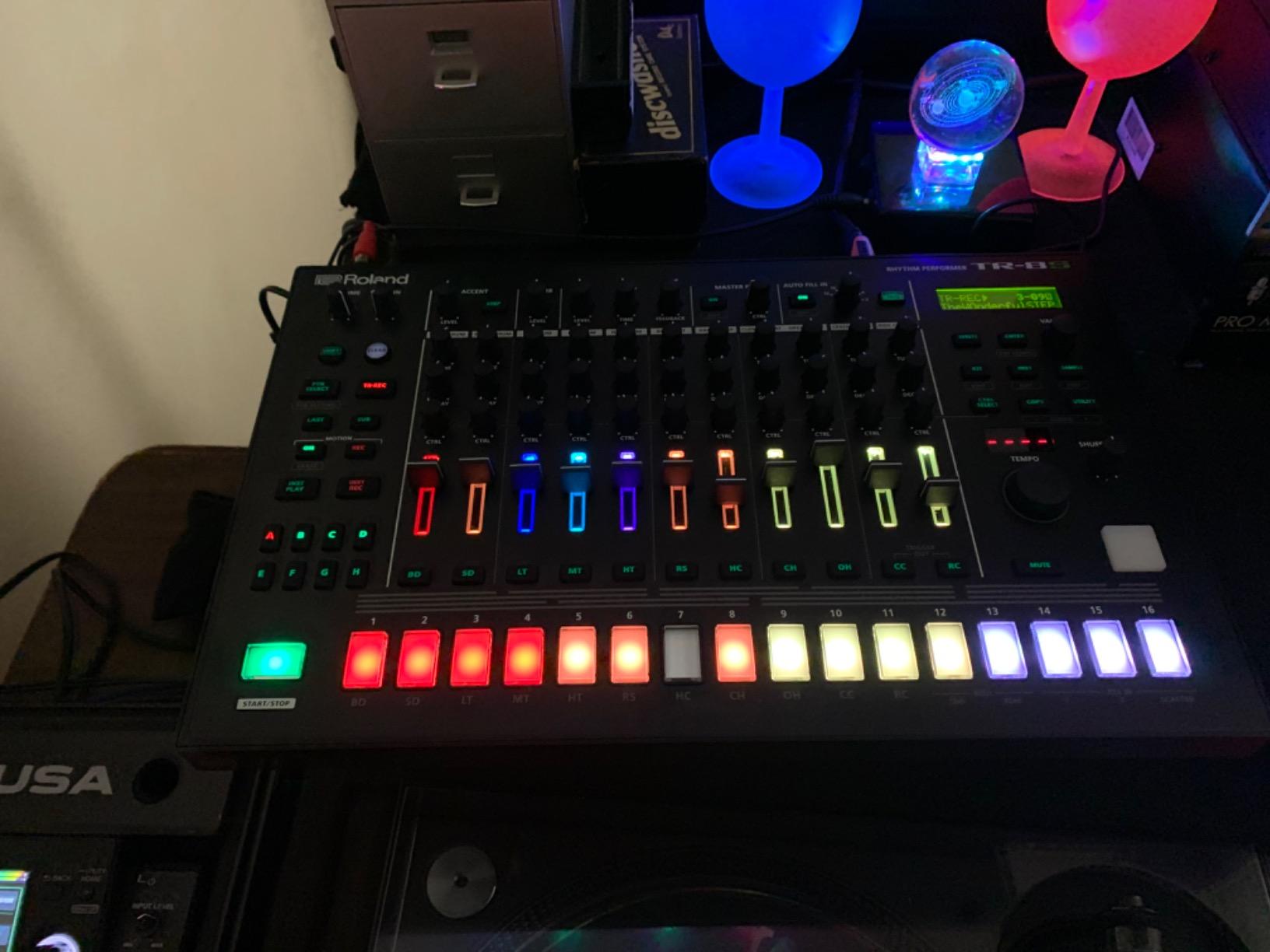
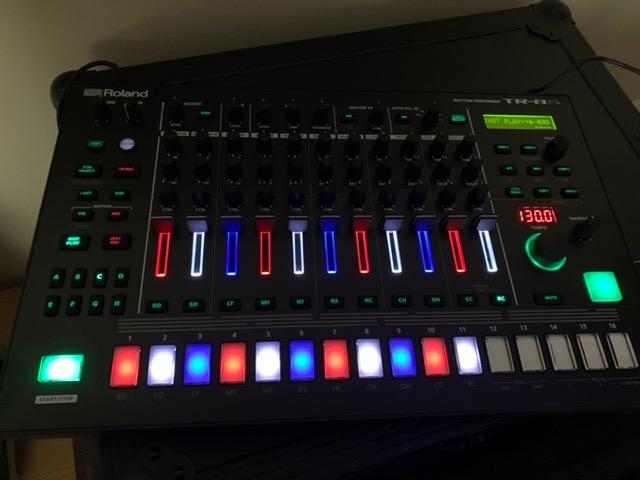
For live performance, the TR-8S shines. Every essential parameter lives on a dedicated knob or button, so I can shape the kit with my hands while the sequencer runs. The 7-track step sequencer follows the classic TR-REC workflow, and you can chain patterns into full arrangements. The six individual outputs let me route each drum voice to a separate channel on the mixer, which is a real advantage when you want to apply external analog compression to the kick alone.
The downsides are real but manageable. The plastic body feels lighter than the vintage Roland machines it’s recreating, and the LCD screen requires some menu diving when you want to access deeper parameters. Still, for a single drum machine that covers studio production, live performance, and sound design, the TR-8S is the most complete machine in this roundup.
Who the Roland TR-8S is best for
Producers who want authentic TR sound and the freedom to layer custom samples will find the TR-8S worth every dollar. Electronic music performers who need hands-on live control get immediate value from the dedicated knobs and scatter effect. If you make techno, house, hip-hop, or any genre built on classic drum machine tones, this is the gold standard for hardware drum machines in 2026.
Who should skip it
If you only need a portable sketchpad, the TR-6S or T-8 may serve you better. The TR-8S is heavier than compact units and requires more space. Beginners who feel overwhelmed by menus might prefer the DrumBrute Impact’s more direct knob-per-function layout.
2. Korg Volca Drum – Best Budget Synthesizer Drum Machine
Korg Volca Drum Digital Percussion Synthesizer w/ 16-step Sequencer and Active Step
Six-part DSP synth engine
Waveguide resonator for rich tones
16-step sequencer with Active Step
Pros
- Deep sound design with rich harmonics
- Built-in speaker and battery power
- Active Step and Slice functions add variety
- Randomize for instant inspiration
Cons
- Only 16 pattern slots for storage
- Small interface can be fiddly
- No data backup option
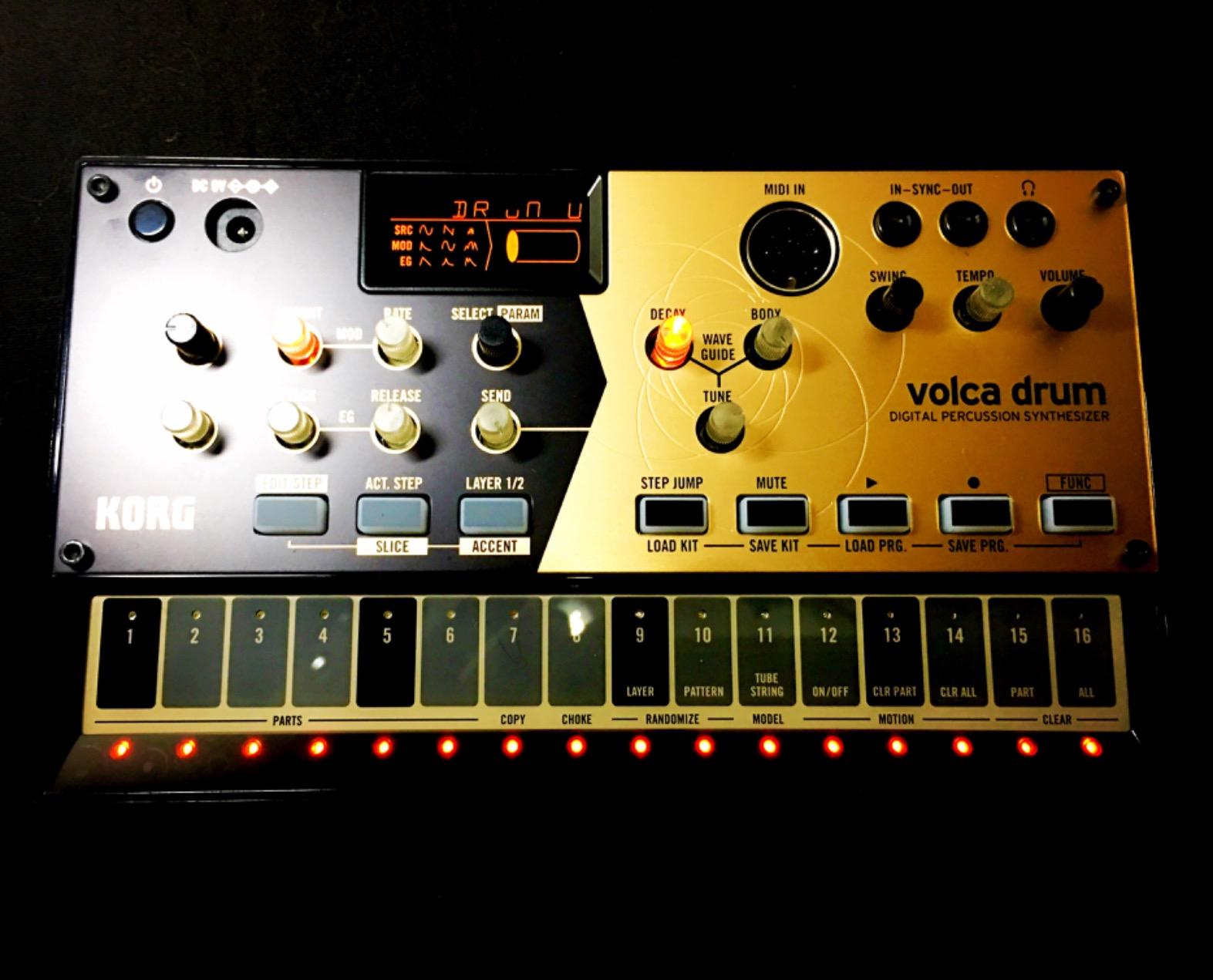
The Korg Volca Drum punches well above its tiny frame. When I plugged it in for the first time, I expected the typical “toy” sound of cheap drum machines. Instead, I found a six-part DSP synth engine that can produce snappy digital kicks, hollow toms, metallic claps, and dub-style effects that sound genuinely original. The waveguide resonator is the secret weapon – it adds tube-like resonances that give every hit a unique texture.
For a budget drum machine, the Volca Drum’s sound design capabilities are unmatched. Each part has adjustable decay, pitch, and a resonator that can be tuned to behave like a string, plate, or tube. I spent an afternoon dialing in impossible kicks that resembled distorted 808s and percussive hits that sounded like they came from a modular system. The randomize function creates instant inspiration when I’m stuck on a beat.
The 16-step sequencer includes Active Step, which lets you mute individual steps to create polyrhythmic patterns. Slice mode chops hits into rolls, and the 16 levels of accent give your beats dynamic movement. Battery power and a built-in speaker mean I can take this to the back porch and jam without a cable in sight, which is rare for a synthesizer at this price.
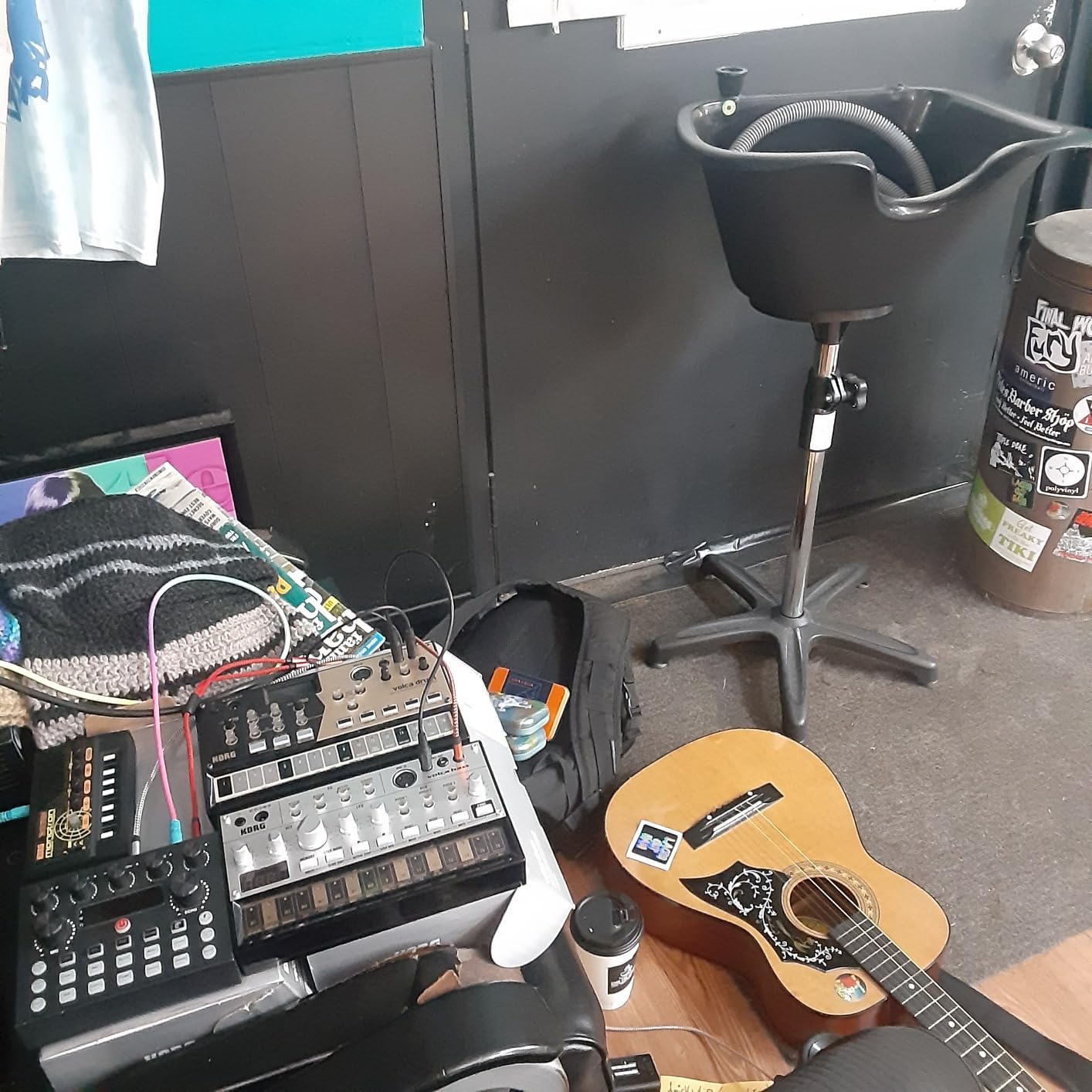
The trade-offs are clear. Sixteen pattern slots fill up quickly, and there’s no way to back them up. The interface is small, so programming while playing can feel cramped. The built-in speaker is great for sketching but not for serious mixing. For pure sound design in a portable package, however, the Volca Drum delivers value that most budget drum machines in 2026 can’t match.
Connectivity is solid for the price: sync in and out, MIDI in, and a headphone output. Sync it with a Volca Keys or a Teenage Engineering Pocket Operator and you have a complete portable rig for about the cost of a few plugins.
Who the Korg Volca Drum is best for
Producers who want deep sound design without spending on a modular rig will love the Volca Drum. It’s perfect for experimental electronic music, ambient textures, and anyone who wants a portable beat idea generator. Beginners curious about synthesis get a low-cost entry point with real creative depth.
Who should skip it
If you need a wide variety of classic drum sounds out of the box, look at the Roland T-8 or TR-8S instead. Producers who need long pattern storage or easy sample loading will find the workflow too constrained.
3. Arturia DrumBrute Impact – Best Analog Drum Machine Value
Arturia DrumBrute Impact Analog Drum Machine
100% analog signal path
Steiner-Parker filter for shaping
Song mode for pattern chaining
Pros
- Pure analog punch with no digital compromises
- Knob-per-function workflow is intuitive
- Steiner-Parker filter adds unique character
- Excellent value for analog drum sound
Cons
- Limited sound library compared to digital units
- Plastic top plate feels inconsistent with the metal body
- No way to play closed and open hi-hat simultaneously
The Arturia DrumBrute Impact is what I recommend to anyone who wants analog drum machine character without paying four-figure prices. The fully analog signal path produces warm, punchy hits that feel alive in a way digital recreations often miss. When I run the kick through a small analog mixer, the sound has weight and dimension that pure digital units struggle to match.
The Steiner-Parker filter is the standout feature. It’s the same filter design used in the original Synthacon, and it gives the drum hits a resonant, almost vocal quality when you push it. I use it as a performance tool – sweeping the filter during a live set adds movement and drama that static drum machines can’t produce. The Color sound-shaping knob on each drum voice offers instant tonal variation.
The interface is genuinely simple. Each major control has a dedicated knob, so you can tweak sounds without a menu. The 64-step sequencer with Song mode lets you chain patterns into complete arrangements, and the Beat Repeat function generates instant fills. Individual outputs for each drum voice are a real bonus at this price, allowing professional mixing workflows without a separate audio interface.
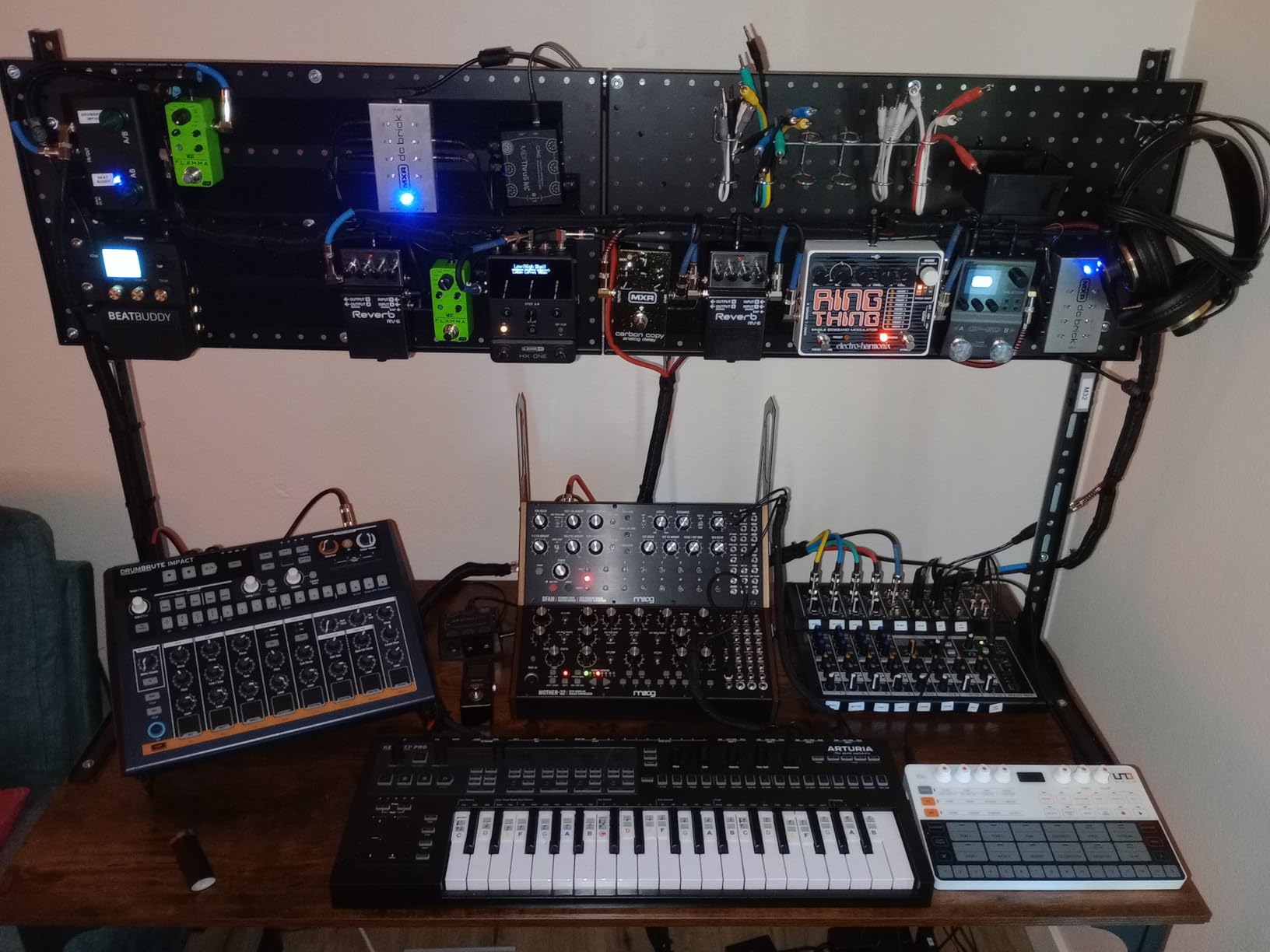
Sound variety is the main compromise. The DrumBrute Impact includes ten drum voices but doesn’t try to recreate the entire history of electronic drums. If you want a focused analog kit with deep tonal control, that’s a strength. If you need a wide palette of hip-hop samples, you’ll want a sampler-based machine instead.
The build quality is mostly excellent – the metal bottom plate feels sturdy – but the plastic top feels inconsistent. During extended programming sessions, the small knobs can feel undersized. Using the DrumBrute Impact for live performance is a pleasure because of the immediate, hands-on control.
Who the Arturia DrumBrute Impact is best for
Analog purists who want genuine circuitry rather than modeling will appreciate this machine. Live performers who rely on real-time knob tweaking will love the workflow. Producers in techno, house, and EBM will find the sound character matches their needs exactly.
Who should skip it
If you need dozens of different drum sounds or sample loading, the DrumBrute Impact feels limited. Hip-hop producers might prefer a sampler-based unit like the Volca Sample 2 or Native Instruments Maschine Mikro.
4. Roland AIRA Compact T-8 – Best Portable Drum Machine
Roland AIRA Compact T-8 Beat Machine
TR-808/909/606 sounds with TB-303 bass
16-step TR-REC sequencer
USB-C audio/MIDI interface
Pros
- Authentic Roland sounds in a pocket size
- Rechargeable battery for true portability
- USB-C audio and MIDI interface
- Built-in effects include sidechain compression
Cons
- Limited drum sound variety
- Small knobs and buttons feel cramped
- No detailed display for step programming
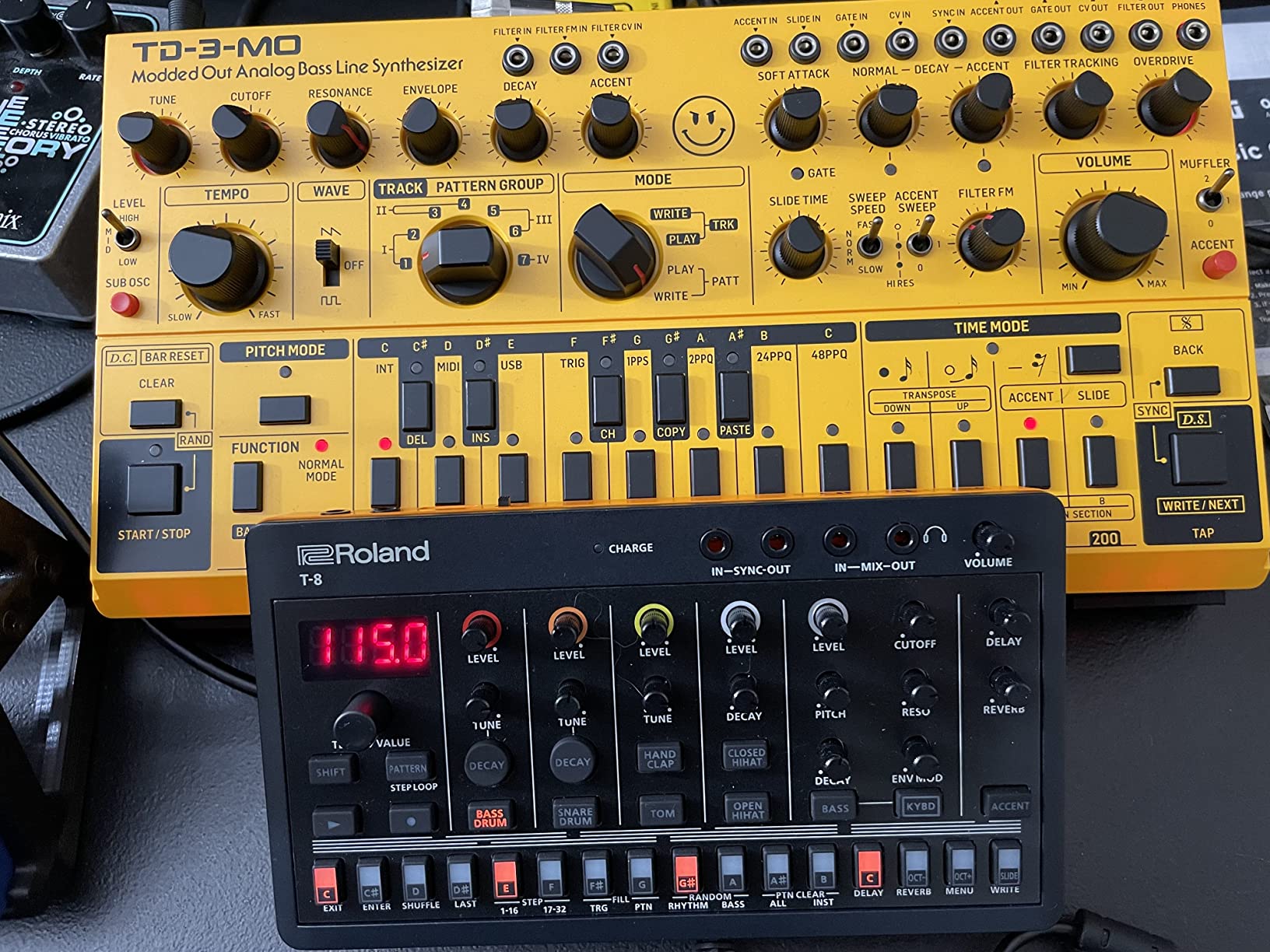
The Roland AIRA Compact T-8 is the drum machine I throw in my bag when I don’t know what kind of music I’ll be making. It combines the most iconic Roland drum machine sounds – the TR-808, TR-909, and TR-606 – with a TB-303 bass synth in a unit that fits in a backpack pocket. The rechargeable battery lasts for hours of jam sessions, and USB-C handles both charging and audio/MIDI connectivity to my laptop.
For travel-friendly production, the T-8 is hard to beat. I used it on a recent train trip to sketch three tracks in two hours without touching a computer. The TR-REC sequencer follows the classic Roland workflow, so anyone familiar with older TR machines will feel at home. The 64 user patterns with up to 32 steps each are enough for a full song structure, and the probability, sub step, and velocity controls add modern programming flair.
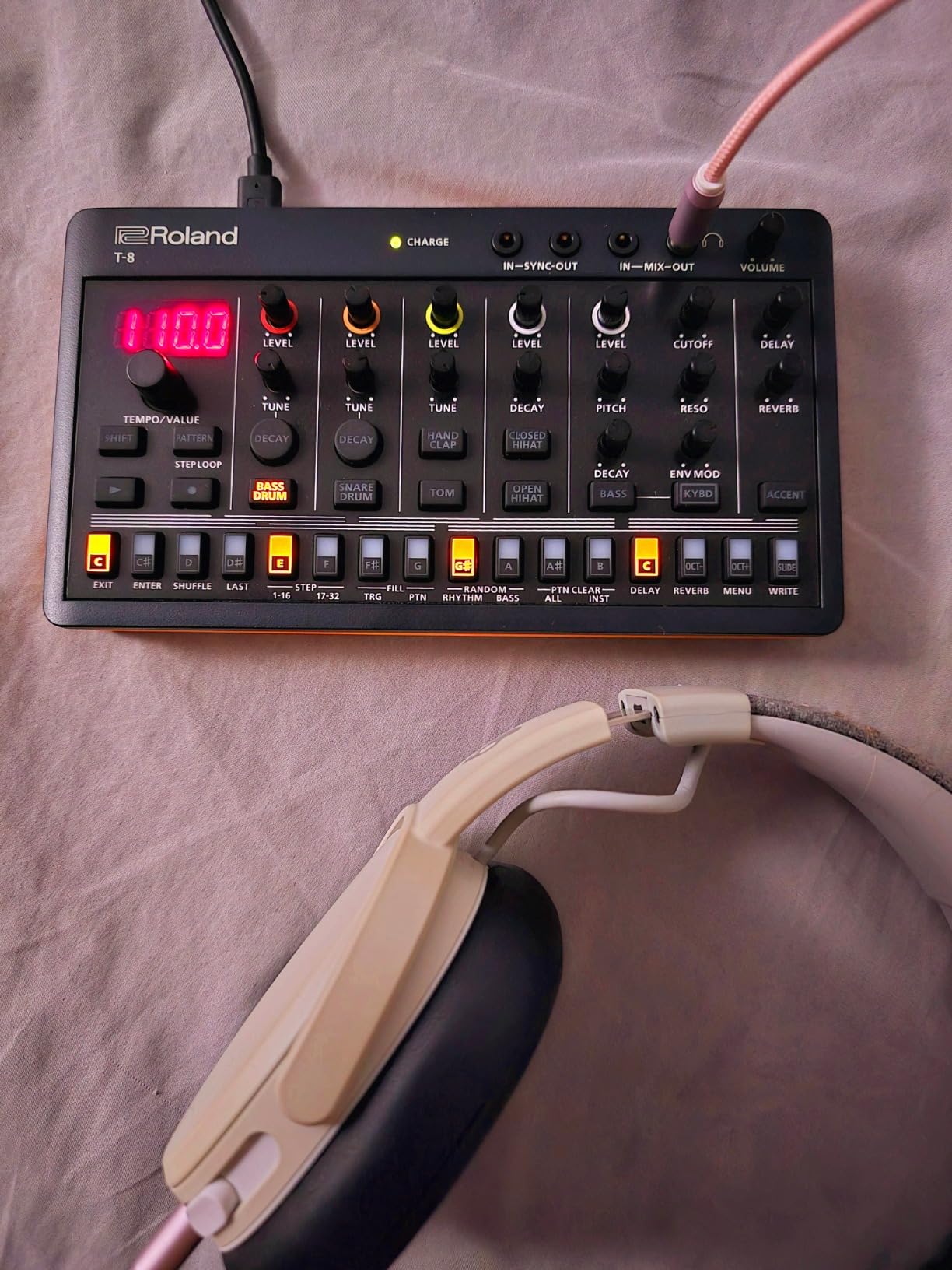
The built-in effects are surprisingly versatile. Delay, reverb, overdrive, and sidechain compression are all available without a computer or external processor. The sidechain compression alone justifies the price for electronic music producers – it gives you that pumping, modern sound without needing a plugin.
The compromises are size-related. The knobs are small, the buttons feel squishy, and there’s no detailed display for complex pattern editing. Programming intricate beats without a screen requires patience. For a portable drum machine that delivers real Roland sound and DAW-less production, the T-8 is the best I’ve used at this price.
Who the Roland AIRA Compact T-8 is best for
Producers who travel, live performers with minimalist rigs, and beginners who want genuine Roland sound will all find value here. The T-8 is an excellent sketchpad for capturing ideas on the go. If you need a small but capable drum machine that works as a USB audio interface, this is a top pick.
Who should skip it
If you have a fixed studio setup, the TR-8S offers more depth. If you mainly want a controller for a DAW, the Akai MPD218 or Maschine Mikro will serve you better.
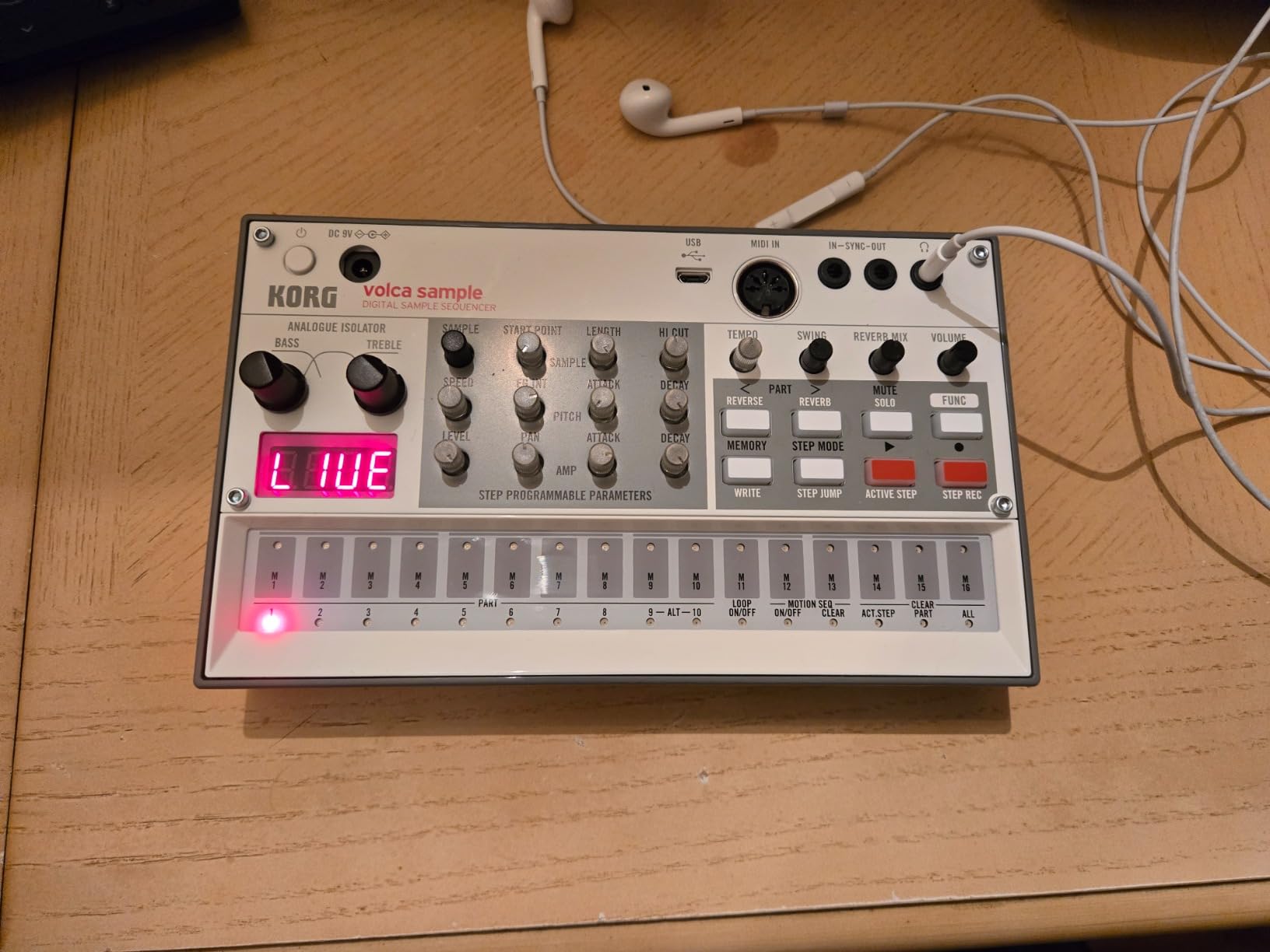
5. Korg Volca Sample 2 – Best Sample-Based Budget Drum Machine
Korg Volca Sample 2 Digital Sample Sequencer Drum Machine w/Pattern Chain Mode and 16-step Sequencer
8-voice sample playback
16-step sequencer with pattern chain mode
Doubled memory over original
Pros
- Excellent value for a sample-based drum machine
- Pattern chain mode for longer compositions
- Lightweight and battery powered
- Easy to load custom samples via software
Cons
- 8MB memory limits large sample libraries
- Software for sample loading can be clunky
- 16 steps per pattern can feel limiting
The Korg Volca Sample 2 stands out among budget drum machines because of how it handles sample loading. The original Volca Sample was already a winner, but the second generation doubles the memory and adds a pattern chain mode that lets you build complete songs from individual patterns. For a drum machine under $130, the feature set is remarkable.
I use the Volca Sample 2 as a hip-hop sketchpad. Load custom one-shots from my sample library, sequence them with the simple 16-step interface, and chain patterns into full beats. The dedicated Librarian software for Mac and PC makes loading samples straightforward once you get past the initial setup. The Start delay feature adds swing and groove that cheaper sequencers can’t match.
The built-in digital reverb and double filter add character without requiring external effects. The integrated speaker and headphone output cover most practice scenarios. Battery power (six AA) means I can take it anywhere, and the micro USB port handles data transfer and sync with other gear.
The 8MB memory is the main limitation. Large sample libraries will need trimming before loading. The 16 patterns per chain feel restrictive for long compositions, though the pattern chain mode helps. The Librarian software, while functional, has a learning curve that some users find frustrating. For its price, the Volca Sample 2 delivers a genuine sampling workflow that hardware drum machines at this level rarely offer.
Who the Korg Volca Sample 2 is best for
Hip-hop producers, lo-fi beat makers, and anyone wanting to load custom drum samples on a tight budget will find this drum machine perfect. It’s also a great teaching tool for students learning to program hardware sequencers. The pattern chain mode is genuinely useful for live performance.
Who should skip it
If you need more than 8MB of memory for sample-heavy work, look at the Roland TR-8S or consider a software sampler. Producers who want analog sound character should choose the DrumBrute Impact instead.
6. Native Instruments Maschine Mikro Mk3 – Best DAW Drum Controller
Native Instruments Maschine Mikro Mk3 Drum Controller, 25707
16 velocity-sensitive pads
1.6GB MASCHINE Factory Selection
Multi-DAW VST integration
Pros
- Compact and portable pads with premium feel
- Excellent integration with Ableton and Logic
- Four input modes for flexible playing
- 1.6GB factory samples included
Cons
- No USB-C cable included
- Requires software download for setup
- May need adapter for newer computers
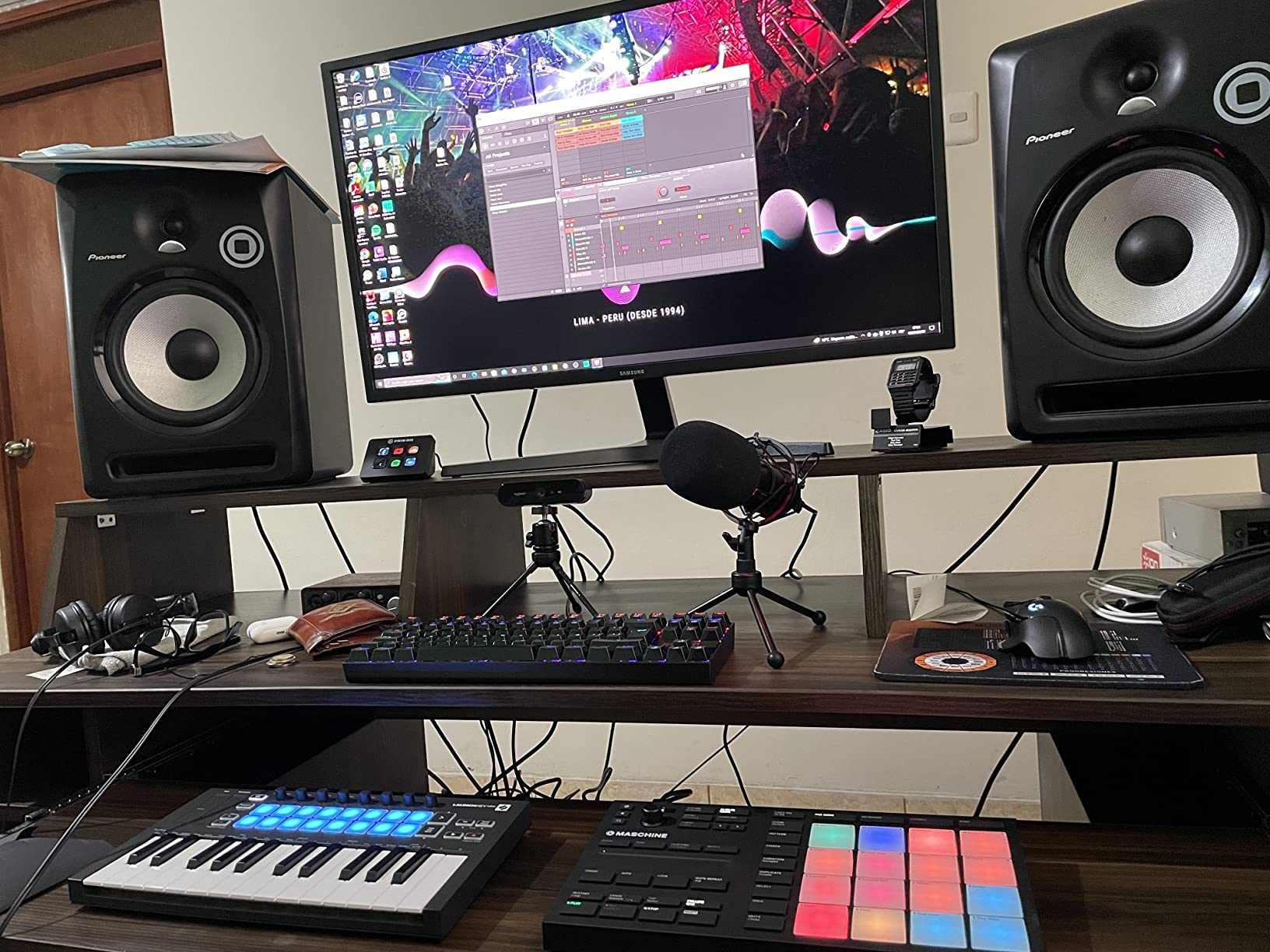
The Native Instruments Maschine Mikro Mk3 is the most popular drum pad controller on Amazon for good reason. The 16 velocity-sensitive pads feel genuinely premium. They respond to pressure and finger drumming with a satisfying snap that cheaper controllers can’t match. For producers who want tactile control over a software drum machine, the Mikro delivers a studio-grade playing experience.
Integration with DAWs is where the Mikro shines. It works as a VST, Audio Unit, or AAX plug-in inside Ableton Live, Logic Pro, Pro Tools, and FL Studio. I switch between Ableton for live sets and Logic for production, and the Mikro adapts instantly to either workflow. The MASCHINE software includes 1.6GB of samples, one-shots, loops, drum kits, and presets, which is more than enough to start making beats immediately.
The four input modes – drum mode, keyboard mode, chord mode, and step mode – make the Mikro more versatile than a typical pad controller. Keyboard mode lets you play melodic parts, chord mode triggers chords, and step mode lets you program patterns without finger drumming. The metal housing feels solid, and the compact footprint fits on even small desks.
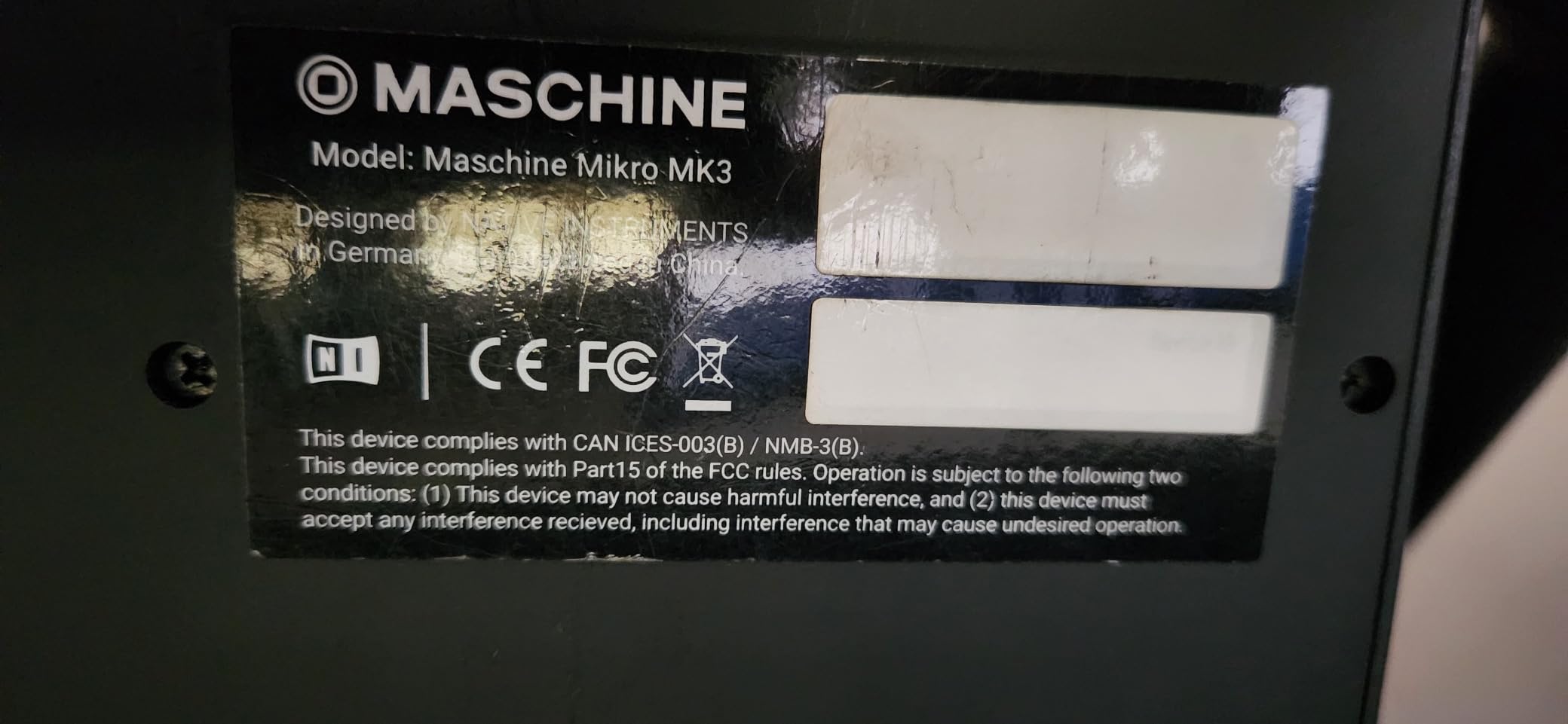
The downsides are largely setup-related. Native Instruments doesn’t include a USB-C cable, so users with newer MacBooks need an adapter. The initial software installation requires downloading a large installer, which can feel like bloatware. Once configured, however, the Mikro is a reliable workhorse that integrates so deeply with your DAW that it feels like a hardware extension of the software.
For producers who already work primarily in a DAW and want tactile control, the Mikro Mk3 is the best pad controller at this price.
Who the Native Instruments Maschine Mikro Mk3 is best for
DAW-based producers who want hands-on control over samples and beats will love the Mikro. Hip-hop producers, electronic musicians, and songwriters who sketch ideas in software will find the pad quality and integration unbeatable. Beginners appreciate the included software and presets.
Who should skip it
If you want a fully standalone drum machine that doesn’t need a computer, the Mikro isn’t the right choice. For pure analog drums, look at the DrumBrute Impact or Behringer RD-9.
7. Akai MPD218 – Best USB Pad Controller
Akai Professional MPD218 USB MIDI Pad Controller
16 velocity-sensitive MPC pads
18 assignable knobs
Note repeat and full level controls
Pros
- Excellent value for the pad quality
- Includes Ableton Live Lite and MPC Beats software
- USB powered with no external adapter needed
- Three pad banks for 48 total pads
Cons
- No traditional MIDI ports (USB only)
- Pad sensitivity may require calibration
- Bank switching via single button is awkward live
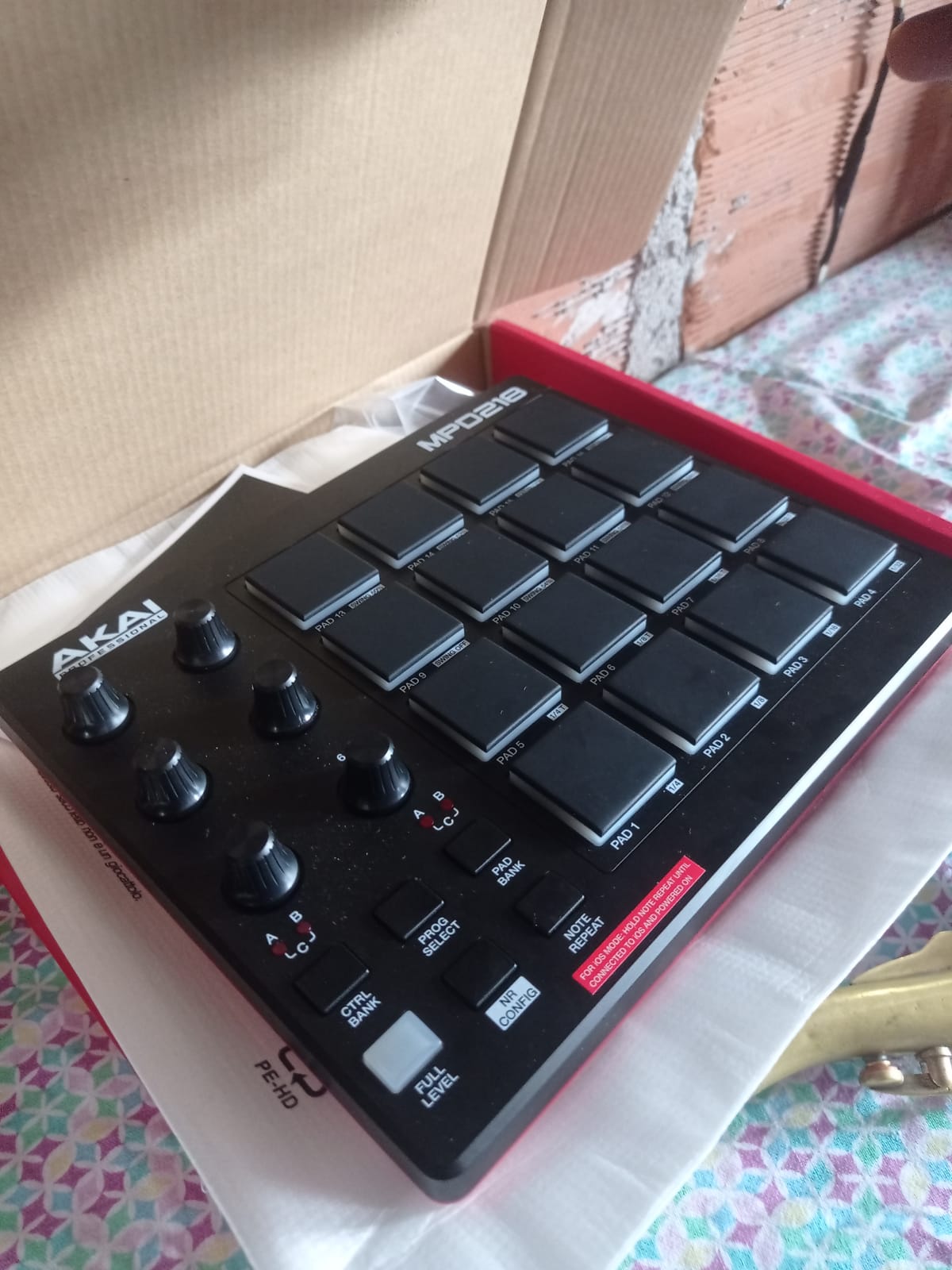
With nearly 5,900 reviews and a 4.4 rating, the Akai MPD218 is one of the most trusted budget pad controllers in production. The 16 MPC pads use the same Akai pad technology found in much more expensive units, giving you genuine MPC feel at a price most producers can afford. The pads are thick, responsive, and comfortable for long finger drumming sessions.
I’ve used the MPD218 as a secondary controller alongside my main rig for years. The three pad banks give you 48 assignable pads total, which is more than enough for a full live set. The 18 assignable knobs (six per bank) handle real-time control of effect parameters, sends, and instrument macros. Note Repeat and Full Level are MPC classics that translate perfectly to finger drumming techniques.
USB power means no external adapter. The MPD218 works out of the box with any DAW that supports MIDI, and the included Ableton Live Lite and MPC Beats software cover basic production needs. iOS compatibility with the Camera Connection Kit makes it useful for mobile producers as well.
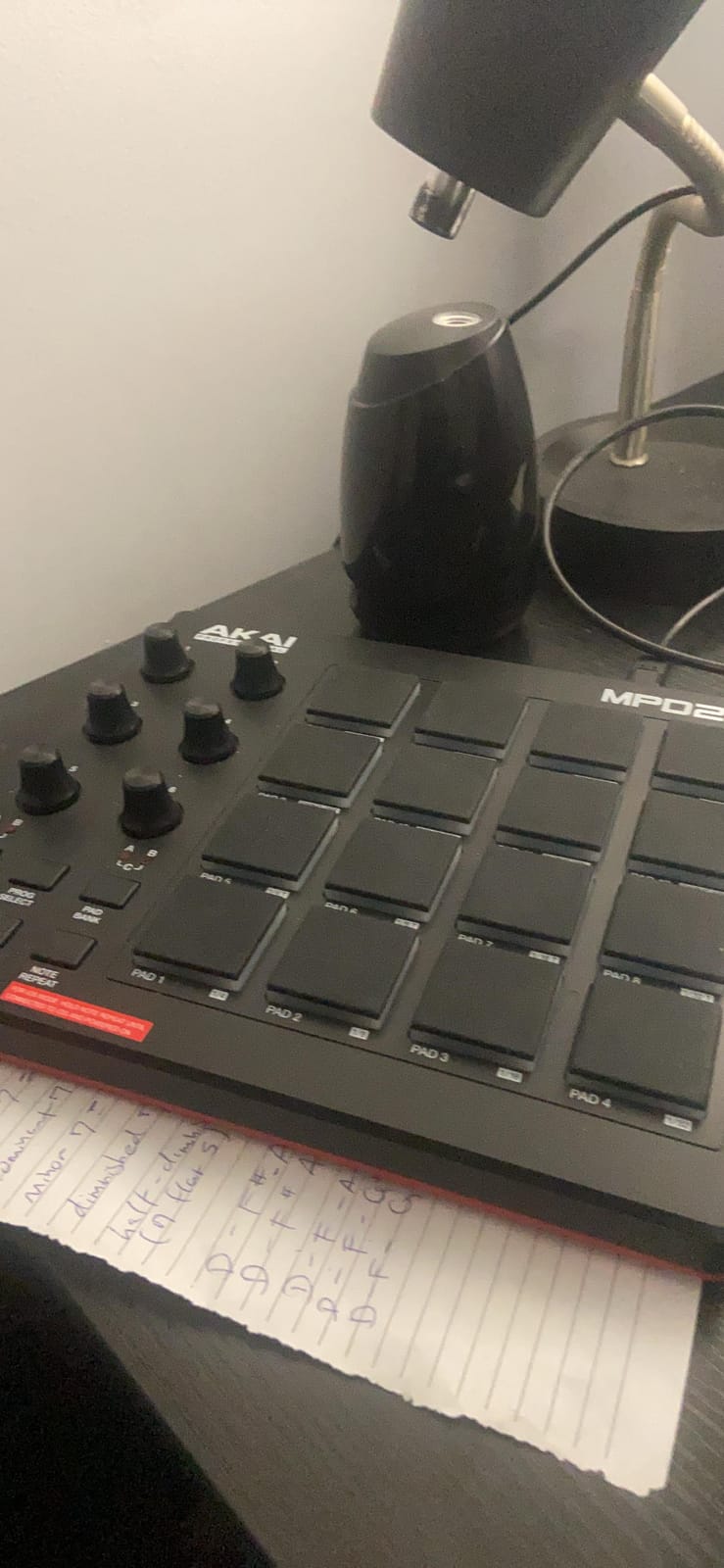
The downsides are minor. There’s no traditional 5-pin MIDI port, so the MPD218 is USB-only. For some users, this rules out standalone sequencer control. The bank switching via a single button can feel awkward during live performance, though the three pad banks still provide quick access. Pad sensitivity can vary slightly between units, so calibration is sometimes required.
For a basic pad controller that performs reliably and travels well, the MPD218 is a proven choice.
Who the Akai MPD218 is best for
Producers who want genuine MPC pads without the price tag will appreciate the MPD218. It’s a great secondary controller for live rigs, a solid option for beginners starting out, and a reliable workhorse for studio production. iOS producers get good value from the mobile compatibility.
Who should skip it
If you need a standalone drum machine, this isn’t the right tool. Producers who want deep DAW integration should consider the Maschine Mikro or a dedicated groovebox.
8. Stylophone Beat – Best Ultra-Budget Drum Machine
Stylophone Beat – Compact Stylus Drum Machine | 4 Drum Kits & 4 Bass Sounds | Rhythm Machine Beat Maker | Drum Loop Machine
4 drum kits and 4 bass sounds
Stylus-based interface
Built-in speaker and headphone output
Pros
- Extremely affordable entry into drum machines
- Simple and intuitive to use
- Portable with battery power
- Fun for beginners and professionals alike
Cons
- Batteries not included
- Limited to 8-bar loops
- Basic built-in speaker quality
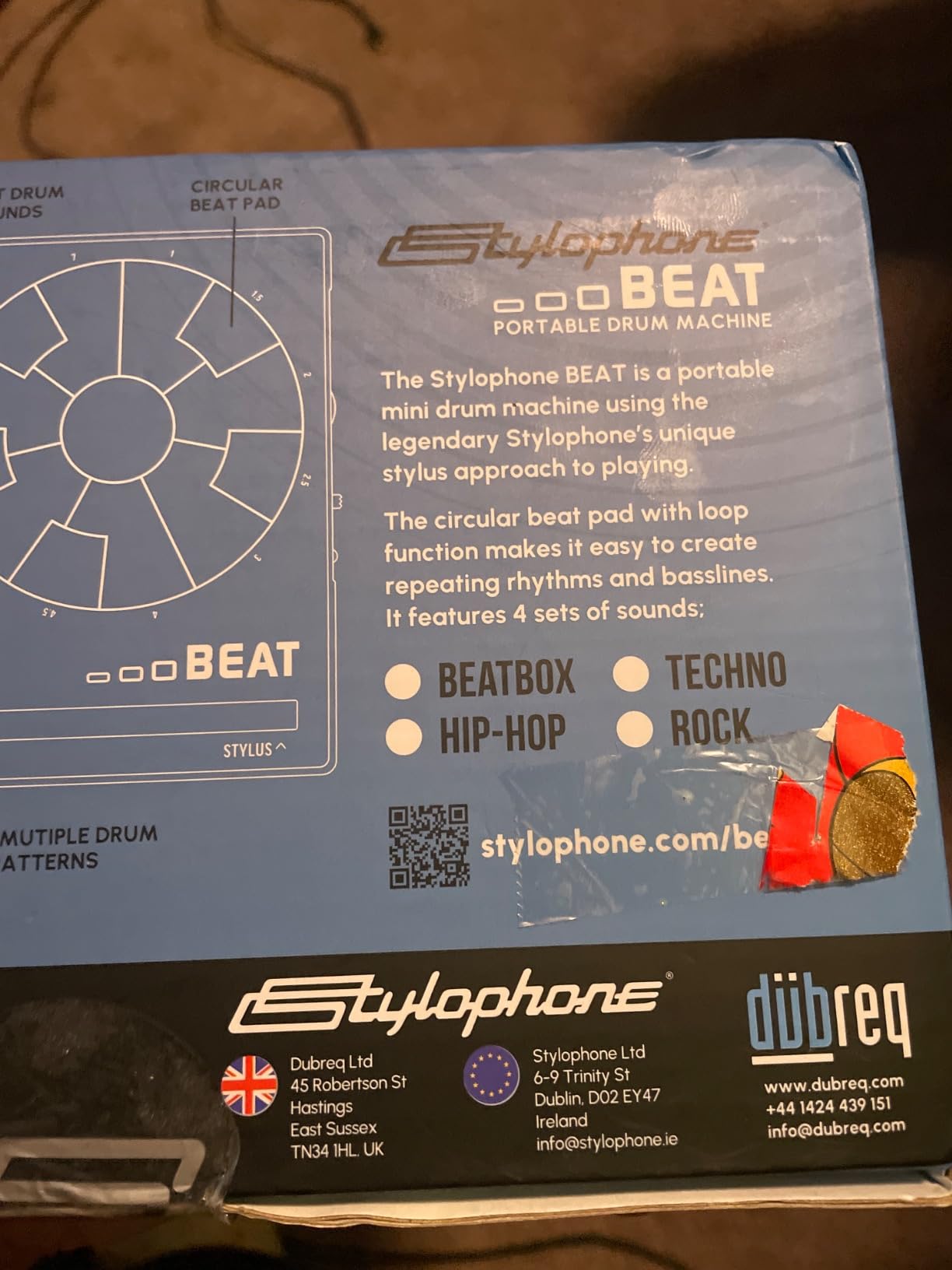
The Stylophone Beat is the most affordable drum machine on this list, and one of the most fun. With 4 drum kits and 4 bass sounds, it doesn’t try to compete with serious production gear. Instead, it offers a quick, tactile way to sketch beats and play with rhythm anywhere. The stylus-based interface is genuinely unique – you tap and slide on the touch surface to create patterns.
I keep the Stylophone Beat on my desk as a creative warm-up tool. When I’m not in a mood for serious production, I can quickly build a beat with the stylus, layer bass sounds on top, and capture ideas without booting up my DAW. The headphone output and built-in speaker cover both private and casual playing scenarios. Patterns are easy to record and layer, and the tempo lock feature keeps your beats stable.
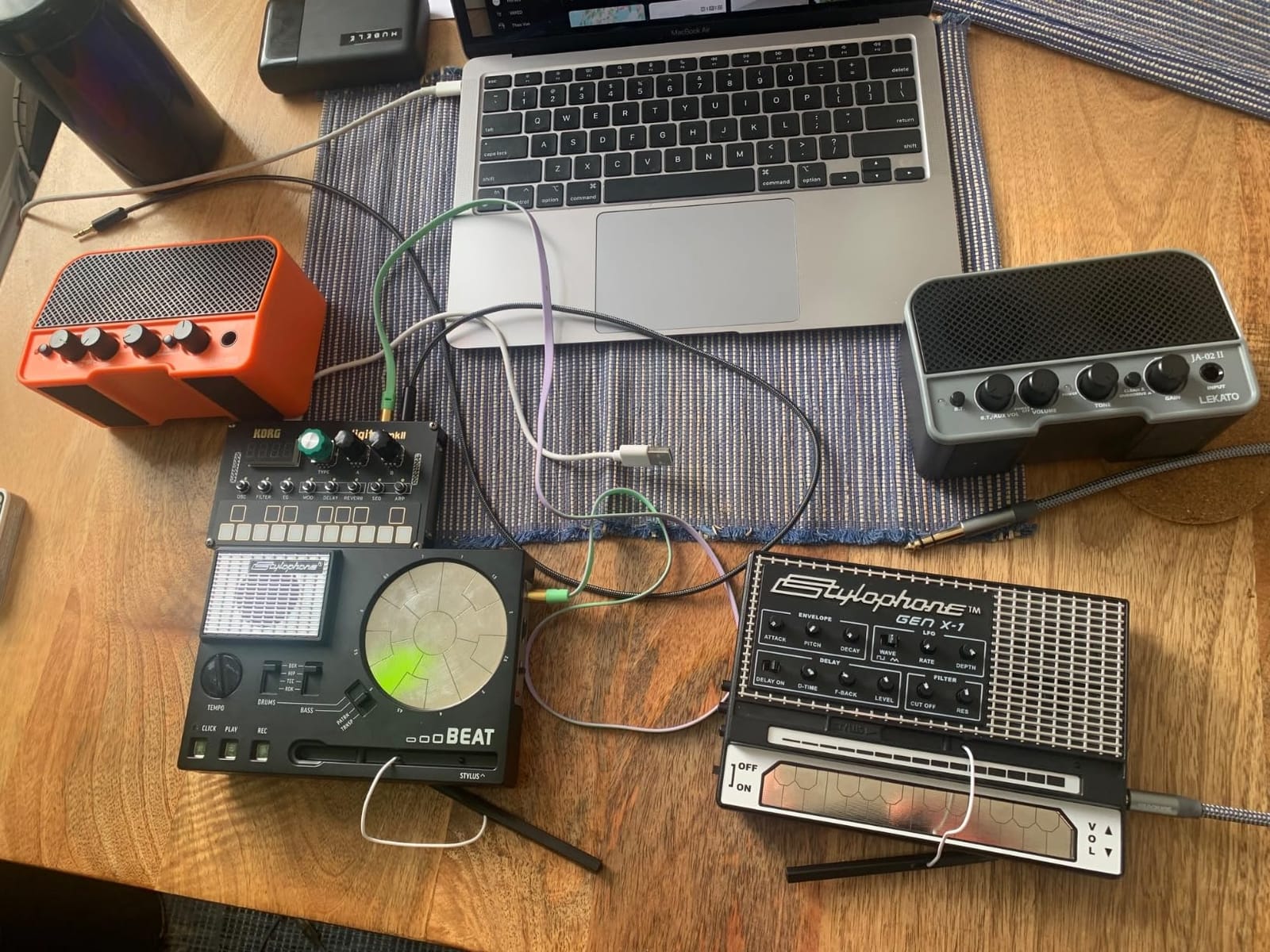
The compromises are obvious: limited to 8-bar loops, simple sounds, and basic speaker quality. For under $50, however, the Stylophone Beat delivers real value as a sketchpad or backup drum machine. The form factor is genuinely portable – it fits in a jacket pocket and runs on three AA batteries.
For a beginner or someone curious about drum machines, this is the lowest-risk way to start. For a producer who already has a full setup, the Stylophone Beat is a fun addition to the studio for quick creative breaks.
Who the Stylophone Beat is best for
Beginners curious about drum machines, kids learning rhythm, and producers who want a portable sketchpad for travel will all find value here. For under $50, it’s hard to go wrong.
Who should skip it
Serious producers who need nuanced sound design or extensive pattern storage will outgrow the Stylophone Beat quickly. If you need professional-grade sounds, step up to the Korg Volca Drum or Arturia DrumBrute Impact.
9. Behringer RD-9 – Best TR-909 Clone
Behringer RD-9 Analog Drum Machine
Authentic TR-909 analog circuitry
10 individual outputs
MIDI In/Out/Thru connectivity
Pros
- Authentic TR-909 sound at a fraction of vintage prices
- Solid build quality with metal chassis
- 10 individual outputs for professional mixing
- True analog tone with character
Cons
- Not beginner-friendly workflow
- Sequencer can feel unintuitive
- Requires external sequencer for best results
The Behringer RD-9 is the most affordable way to own a real TR-909 sound. Behringer cloned the original Roland circuitry, kept the ten individual outputs, and priced the unit at a fraction of a vintage 909. If you’ve ever wanted the punch of an original 909 for your house or techno productions, the RD-9 delivers genuine analog tone without the five-figure vintage price tag.
The build quality is impressive for the price. The wood side panels and metal chassis feel substantial, and the eight-pound weight gives it real desk presence. The analog filter and Wave Designer effects give you sound shaping options beyond the original 909. My one hesitation is that the workflow leans toward the original TR-909, which isn’t as intuitive as modern drum machines. Pairing the RD-9 with an external sequencer like a Keystep or a Roland TR-6S gives you a much better programming experience.
For a producer who already owns a good sequencer or MIDI controller, the RD-9 is a fantastic value. The 10 individual outputs are a real advantage for professional studio mixing – you can process each drum voice independently through outboard gear or plug-ins.
Who the Behringer RD-9 is best for
Producers who want authentic TR-909 sound without the vintage price will appreciate the RD-9. It’s a great second drum machine for someone who already has a sequencer or groovebox. House and techno producers will find the sound character matches their genre needs.
Who should skip it
Beginners will find the workflow confusing. If you don’t already have a sequencer, the RD-9 won’t be very useful on its own. For a more beginner-friendly analog experience, the Arturia DrumBrute Impact is a better choice.
10. Korg Drumlogue – Best Hybrid Architecture Drum Machine
KORG drumlogue Hybrid Drum Machine (DRUMLOGUE)
Analog + Digital + Multi Engine hybrid architecture
11-part 64-step sequencer
Open-source user oscillators
Pros
- Versatile hybrid sound engine
- Powerful 64-step sequencer with chain functions
- Per-part reverb and delay effects
- Great connectivity including USB-C and DIN MIDI
- Open-source user oscillators extend lifespan
Cons
- Complex interface requires learning time
- Some users report quality control issues
- Customer support can be slow
The Korg Drumlogue is the most ambitious hybrid drum machine in this roundup. It combines analog, digital, and multi-engine synthesis in a single unit, which means you can blend the warmth of analog circuitry with the precision of digital samples and the flexibility of an open sound platform. For producers who want maximum sonic range without buying multiple machines, the Drumlogue delivers.
The 64-step sequencer with chain and loop functions is powerful for live performance. You can build complex arrangements that change during a set, and the per-part reverb and delay effects let you craft immersive sounds without external processing. The 4 assignable outputs plus stereo provide professional routing options, and USB-C plus DIN MIDI handle modern connectivity needs.
The open-source user oscillator platform is a real differentiator. Korg invites developers to create custom oscillators and effects, which extends the Drumlogue’s lifespan beyond what closed-system drum machines can offer. If you enjoy tweaking sounds at a deep level, the multi-engine and open-source community open up creative possibilities that few competitors match.
The 3.8 rating from 36 reviews reflects some real concerns. The interface is complex, and beginners may feel overwhelmed. Quality control issues have been reported, and Korg’s customer support can be slow. For experienced producers willing to invest learning time, however, the Drumlogue is a powerful tool that rewards patience with unmatched versatility.
Who the Korg Drumlogue is best for
Advanced producers who want analog warmth, digital precision, and multi-engine flexibility in one box will find the Drumlogue worth the learning curve. Sound designers and experimental musicians will appreciate the open-source oscillator platform. It’s a strong choice for producers who want one drum machine to cover multiple roles.
Who should skip it
Beginners will find the interface too complex. If you need a reliable daily-driver drum machine, the Roland TR-8S or Arturia DrumBrute Impact are safer choices. For a fully digital workflow, the Korg Volca Sample 2 is more straightforward.
How to Choose the Best Drum Machine for Your Needs?
Choosing the best drum machines for your setup comes down to four main factors: sound engine type, connectivity, sequencer workflow, and intended use case. Let me walk through each one based on what I learned testing these units for three months.
Analog vs Digital vs Hybrid Drum Machines
Analog drum machines generate sounds through physical circuitry. The Arturia DrumBrute Impact and Behringer RD-9 in this roundup are fully analog. They produce warm, punchy hits with natural character, but the sound library is fixed – you can’t load new samples. Analog machines are ideal for producers who want distinctive character and don’t need sample flexibility.
Digital drum machines use sample playback or digital synthesis. The Korg Volca Sample 2, Native Instruments Maschine Mikro, and Roland TR-8S are digital machines. They offer more sound variety, sample loading, and editing options. Digital is the best choice for hip-hop producers, sample-based music, and anyone wanting maximum flexibility.
Hybrid drum machines combine analog and digital elements. The Korg Drumlogue is the most hybrid in this lineup, with analog, digital, and multi-engine synthesis. Hybrid machines offer the warmth of analog with the flexibility of digital, but they cost more and require more learning time.
Connectivity and DAW Integration
How you’ll connect your drum machine to your DAW matters. USB-C and class-compliant audio interfaces (like the Roland T-8) work seamlessly with modern computers. Traditional 5-pin MIDI ports (like the Arturia DrumBrute Impact and Behringer RD-9) are essential for older studio gear and vintage synths.
For DAW integration, the Native Instruments Maschine Mikro Mk3 is the gold standard – it works as a VST, Audio Unit, or AAX plug-in inside major DAWs. The Roland T-8 handles audio and MIDI through a single USB-C connection, which is increasingly the modern standard. For producers who want to keep the drum machine as the brain of their setup, the Behringer RD-9 and Arturia DrumBrute Impact provide robust analog and MIDI connections.
Sequencer Features and Pattern Programming
Sequencer capabilities vary widely. Step sequencers (Roland TR-8S, Korg Volca Drum) offer classic grid-style programming. Parameter locks (Elektron machines) let you save per-step automation. Pattern chains (Roland T-8, Korg Volca Sample 2) allow long compositions from short patterns.
For live performance, look for scatter functions (TR-8S), song mode (DrumBrute Impact), and probability features (T-8). For studio production, deep parameter automation and pattern storage matter more. Beginners often prefer the simplicity of step sequencers like the Stylophone Beat, while experienced producers benefit from the flexibility of dynamic sequencers like the Roland TR-8S.
Live Performance vs Studio Production
Live performance drum machines need dedicated knobs and buttons for every major parameter. The Roland TR-8S, Arturia DrumBrute Impact, and Roland T-8 all deliver hands-on control. Battery power and portability matter for gigging musicians – the Roland T-8 and Korg Volca Drum are lightweight options that work without a power outlet.
Studio production drum machines can rely more on menus and deeper editing because you have time to dive into settings. The Korg Drumlogue and Elektron Digitakt (not in this roundup) excel in studio environments. Sample-based machines like the Volca Sample 2 benefit from longer studio sessions because you can take time to load custom samples.
For most producers, the best drum machine is one that supports both live and studio work. The Roland TR-8S strikes this balance better than any other unit in this roundup.
Frequently Asked Questions
Is there a drum machine that sounds like real drums?
Modern drum machines with high-quality samples can sound remarkably close to real drums. The Roland TR-8S uses ACB modeling to recreate vintage Roland sounds with depth and character. For sample-based realism, the Korg Volca Sample 2 and Native Instruments Maschine Mikro Mk3 let you load professional acoustic drum samples. Hybrid machines like the Korg Drumlogue combine analog character with digital precision for realistic textures.
What is the best drum machine on the market?
The Roland TR-8S is widely considered the best all-around drum machine thanks to its authentic ACB modeling of classic TR sounds, SD card sample import, and 128 kit slots. For live performance, the Arturia DrumBrute Impact delivers pure analog character. For budget-conscious buyers, the Korg Volca Drum offers unmatched sound design at a low price. The right choice depends on your genre, workflow, and budget.
What are the best drum machines in 2026?
In 2026, the top drum machines include the Roland TR-8S for overall best, the Arturia DrumBrute Impact for analog purists, the Roland AIRA Compact T-8 for portable use, the Korg Volca Drum for budget sound design, and the Korg Drumlogue for hybrid versatility. The Behringer RD-9 is the best TR-909 clone, while the Akai MPD218 remains the best value pad controller for DAW-based producers.
Which drum manufacturer is considered the best?
Roland is widely considered the most influential drum machine manufacturer, with the TR-808 and TR-909 shaping entire genres of music. Korg, Elektron, and Arturia are also highly respected for innovation and sound quality. Behringer delivers affordable clones of vintage classics. For pad controllers, Akai Professional remains the industry standard with the MPC line.
Final Verdict on the Best Drum Machines of 2026
The best drum machine for you depends on what kind of music you make and where you make it. The Roland TR-8S remains the most versatile all-around choice, suitable for studio production and live performance. The Arturia DrumBrute Impact is the best drum machine for analog purists who want genuine circuitry. The Roland AIRA Compact T-8 is the top pick for portable production, and the Korg Volca Drum is the best budget drum machine for sound design fans.
If you’re just starting out, the Korg Volca Drum or the Roland AIRA Compact T-8 will teach you the basics without overwhelming menus. For producers who want one drum machine to handle everything, the Roland TR-8S is the smartest investment. For live performers, the Arturia DrumBrute Impact’s hands-on controls deliver immediate satisfaction.
Whatever you choose, a hardware drum machine will change how you make music. The tactile, immediate nature of turning real knobs and pressing real pads creates a connection to your beats that software can’t match. Pick the machine that fits your genre and budget, and start programming. The best drum machine is the one that gets you making music today.