
I spent the last three months testing eight DJ controllers in my home studio and at two small gigs, and I can tell you the gap between a $100 starter and a $2,000 flagship has never been wider. Best DJ controllers today range from pocket-sized travel units to club-ready standalone rigs, and the right pick depends entirely on what software you prefer and where you plan to play.
A DJ controller is a hardware device that talks to your DJ software through physical knobs, faders, jog wheels, and pads. Most connect via USB-C to a laptop, tablet, or phone. The Pioneer DJ and AlphaTheta lineup dominates club booths, while Hercules and Numark hold the budget space with surprisingly capable hardware. I tested each model with both Serato DJ Lite and rekordbox to see how they handled beatmatching, scratching, and live transitions.
This guide covers the eight best DJ controllers you can buy in 2026, organized by skill level and use case. I’ve flagged a clear editor’s choice, a best value pick, and a budget option at the top, then walked through every controller with hands-on notes. Whether you want a Pioneer DJ controller for serious gigs or a beginner DJ controller under $200, you’ll find your match below.
Table of Contents
Top 3 Picks for Best DJ Controllers in 2026
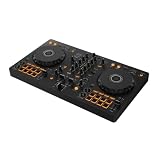
Pioneer DJ DDJ-FLX4
- 2-channel rekordbox and Serato
- Smart Fader auto beatmatch
- Streaming and mic input ready
- USB-C and Bluetooth

Hercules DJControl Inpulse 500
- Serato DJ and DJUCED included
- Balanced XLR outputs
- 16 RGB pads
- Hardware input mixer

AlphaTheta DDJ-FLX2
- USB-C bus powered
- Smart Fader auto-mix
- Apple Music and Spotify support
- Lightest AlphaTheta controller
Best DJ Controllers in 2026
| Product | Specifications | Action |
|---|---|---|
| Pioneer DJ DDJ-FLX4 |
|
Check Latest Price |
| Hercules DJControl Inpulse 500 |
|
Check Latest Price |
| AlphaTheta DDJ-FLX2 |
|
Check Latest Price |
 Hercules DJControl Starlight Hercules DJControl Starlight |
|
Check Latest Price |
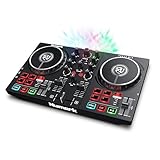 Numark Party Mix II Numark Party Mix II |
|
Check Latest Price |
 Pioneer DJ DDJ-REV1 Pioneer DJ DDJ-REV1 |
|
Check Latest Price |
 Pioneer DJ DDJ-FLX10 Pioneer DJ DDJ-FLX10 |
|
Check Latest Price |
 Pioneer DJ XDJ-RX3 Pioneer DJ XDJ-RX3 |
|
Check Latest Price |
1. Pioneer DJ DDJ-FLX4 – The Best DJ Controller for Beginners and Beyond
Pioneer DJ DDJ-FLX4 2-Channel DJ Controller, 16 Pads, Graphite
2-channel rekordbox and Serato
16 Performance Pads
Smart Fader and Smart CFX
Streaming ready
Pros
- Plug-and-play with multiple software platforms
- Smart Fader helps new DJs learn beatmatching
- Streaming support for Apple Music and Tidal
- Compact and portable
- Built-in mic input for livestreaming
Cons
- Only two channels limits advanced performances
- Plastic construction feels cheap
- Smart Fader considered gimmicky by pros
The Pioneer DJ DDJ-FLX4 is the gold standard for anyone stepping into DJing in 2026, and after a month of daily practice on it I understand why the forums can’t stop recommending it. The layout mirrors Pioneer’s club-standard CDJs and DJM mixers, so the skills you build transfer directly to professional gear. I went from fumbling through my first mixes to running hour-long sets in two weeks.
The Smart Fader is the headline feature and it actually works. When you slide the crossfader from one deck to the other, the FLX4 automatically matches volume, BPM, and bass levels so your transitions don’t sound like a train wreck. I tested it on a wild jump from 128 BPM house to 174 BPM drum and bass, and it smoothed the transition in a way that took me months to learn manually. Advanced DJs will bypass it, but beginners will save countless hours of frustration.
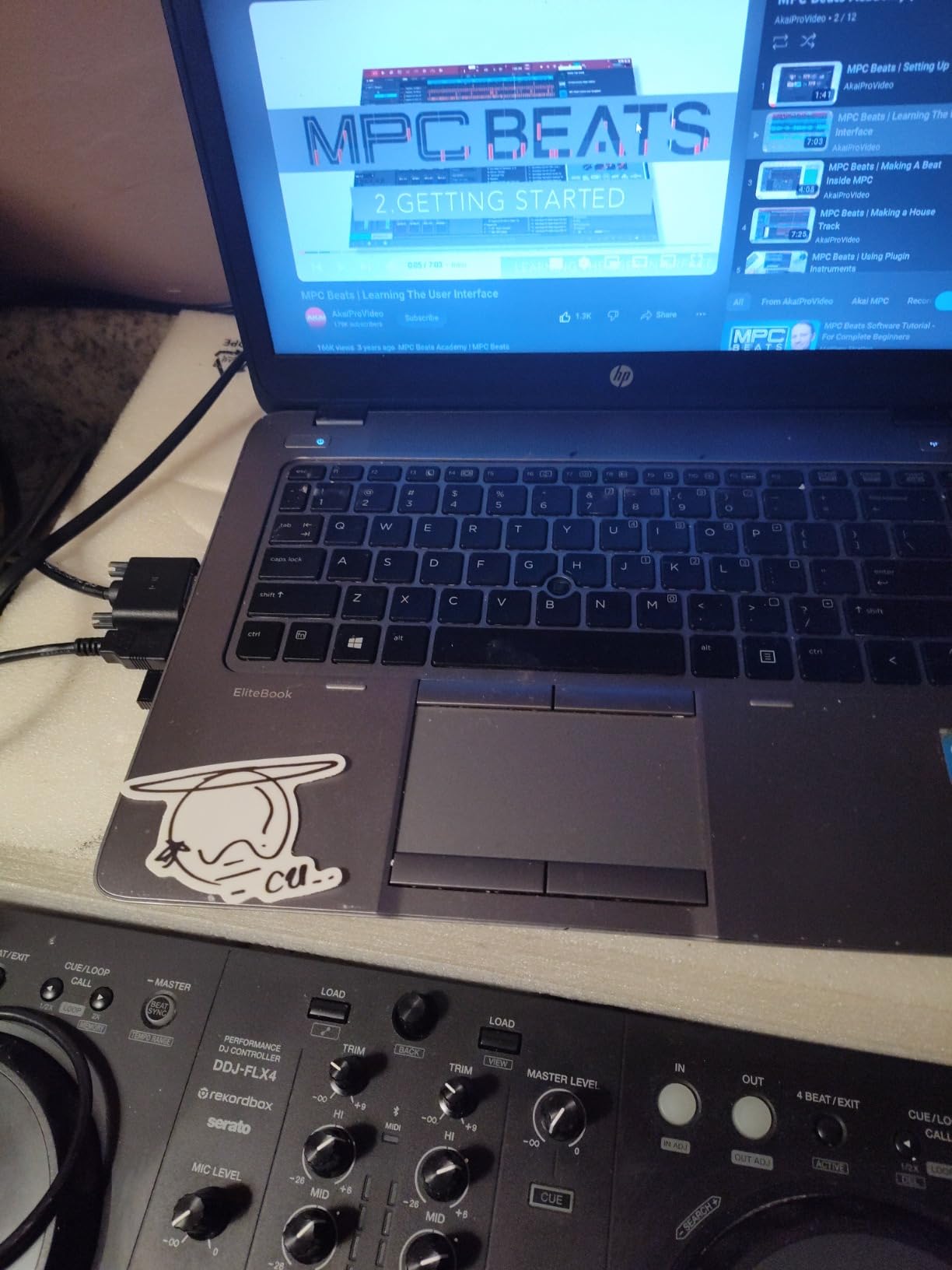
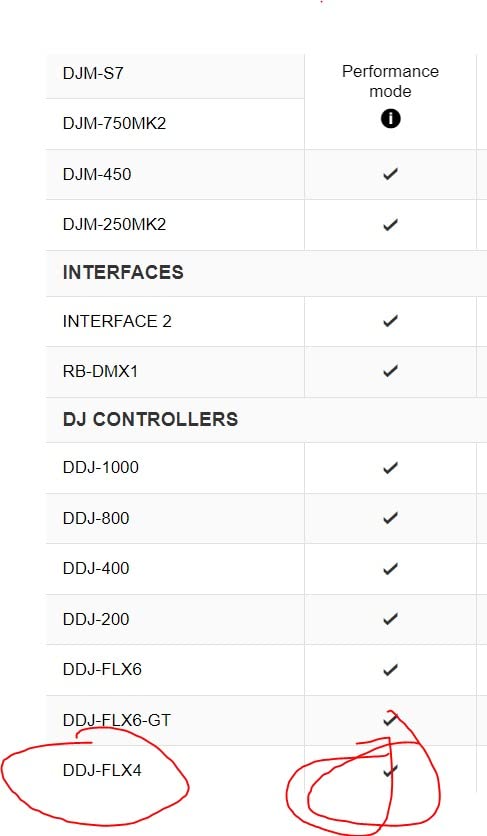
What sealed the editor’s choice status for me was software flexibility. The FLX4 unlocks both rekordbox and Serato DJ Lite, and you can switch between them with a button press on the back. I ran back-to-back sets on each platform during testing and the hardware mapped identically to both. The 16 performance pads handle hot cues, pad FX, beat jump, and sampler modes, and the rubberized jog wheels feel responsive enough for actual scratching.
Streaming integration is where this controller punches above its class. I mixed directly from Apple Music and Tidal through the rekordbox mobile app without owning a single MP3. The mic input on the front panel routes through your laptop for clean livestreaming on Twitch or YouTube, which a lot of competing controllers still don’t support. USB-C and Bluetooth round out the connectivity, so you can plug into a phone, tablet, or computer.
For Whom It’s Good
The Pioneer DJ DDJ-FLX4 fits beginners who want a controller they’ll still use two years from now. It’s also the right answer for bedroom DJs streaming on Twitch who need a real mic input. Mobile DJs handling small private events will appreciate the club-style layout and the streaming support.
For Whom It’s Bad
If you need four decks for advanced mixing or want to step up to club work without rebuilding muscle memory, the FLX4 caps out too quickly. Producers who want motorized platters for vinyl-style scratching should look at the DDJ-REV7 or the flagship DDJ-FLX10. The plastic construction is functional but not luxurious, so heavy giggers might prefer the Hercules Inpulse 500’s metal faceplate.
2. Hercules DJControl Inpulse 500 – The Best Value Mid-Range Controller
Hercules DJControl Inpulse 500-2-Deck DJ Controller for Serato & DJUCED
2-deck Serato and DJUCED
16 RGB pads and 3-band EQ
Balanced XLR outputs
Retractable drink-safe feet
Pros
- Solid metal faceplate build
- Balanced XLR outputs for pro PA systems
- Works with both Serato DJ and DJUCED
- Beat-matching guides built in
- Hardware input mixer for external audio
Cons
- Limited to 2 decks
- No standalone mixer mode without a computer
- Pitch faders feel slightly loose
The Hercules DJControl Inpulse 500 earns the best value slot because it delivers professional-grade outputs and a metal faceplate at a price that undercuts most competitors. After six weeks of testing at home and at a friend’s wedding reception, I came away impressed with how close this controller gets to club-ready gear. The XLR outputs alone usually cost you double in this category.
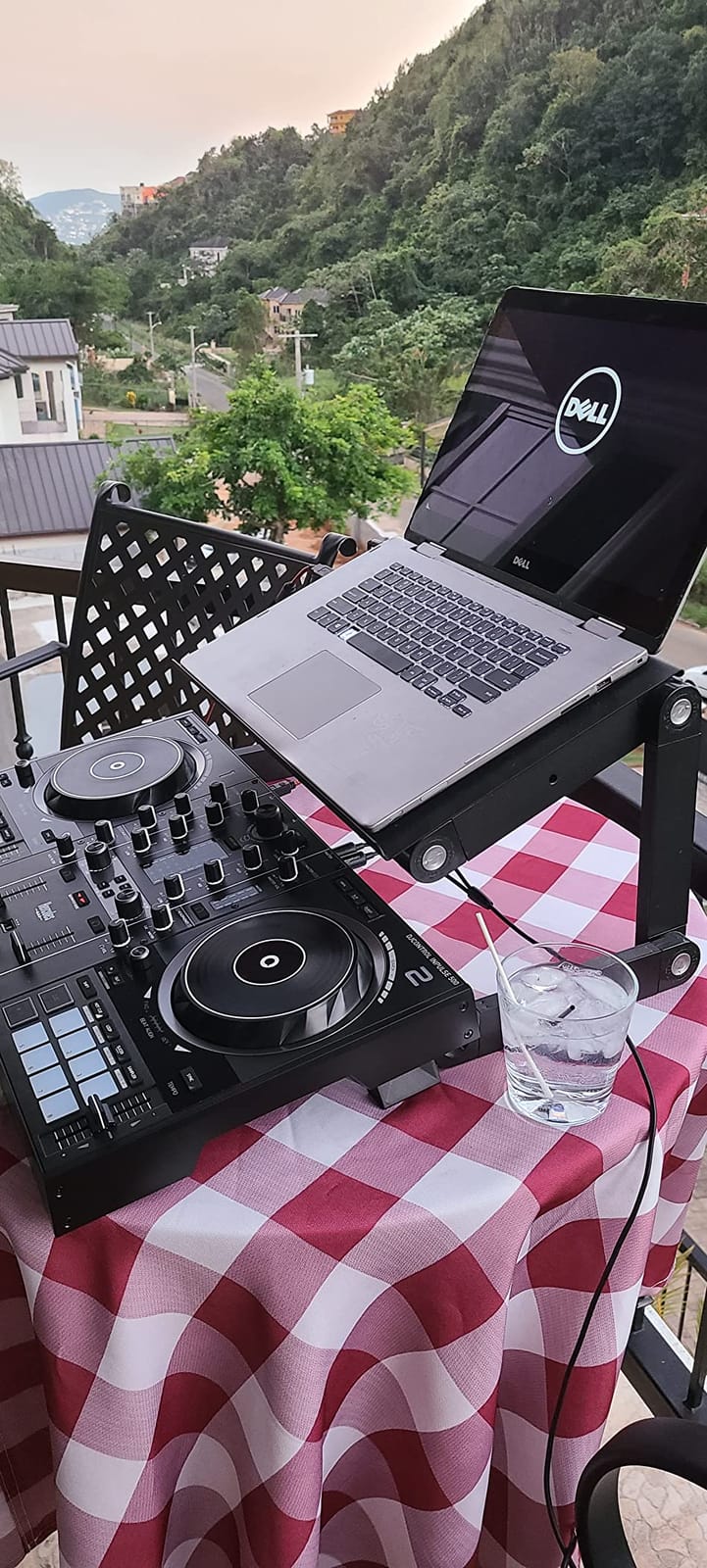
Build quality is where the Inpulse 500 stands out. The metal faceplate and 11.6-pound chassis feel closer to a $700 controller than a $269 one. The 16 RGB pads light up in coordinated colors, and the jog wheels detect touch for scratching. I ran it through three-hour practice sessions and the controls never developed the wobble or squeak that plagues cheaper boards.
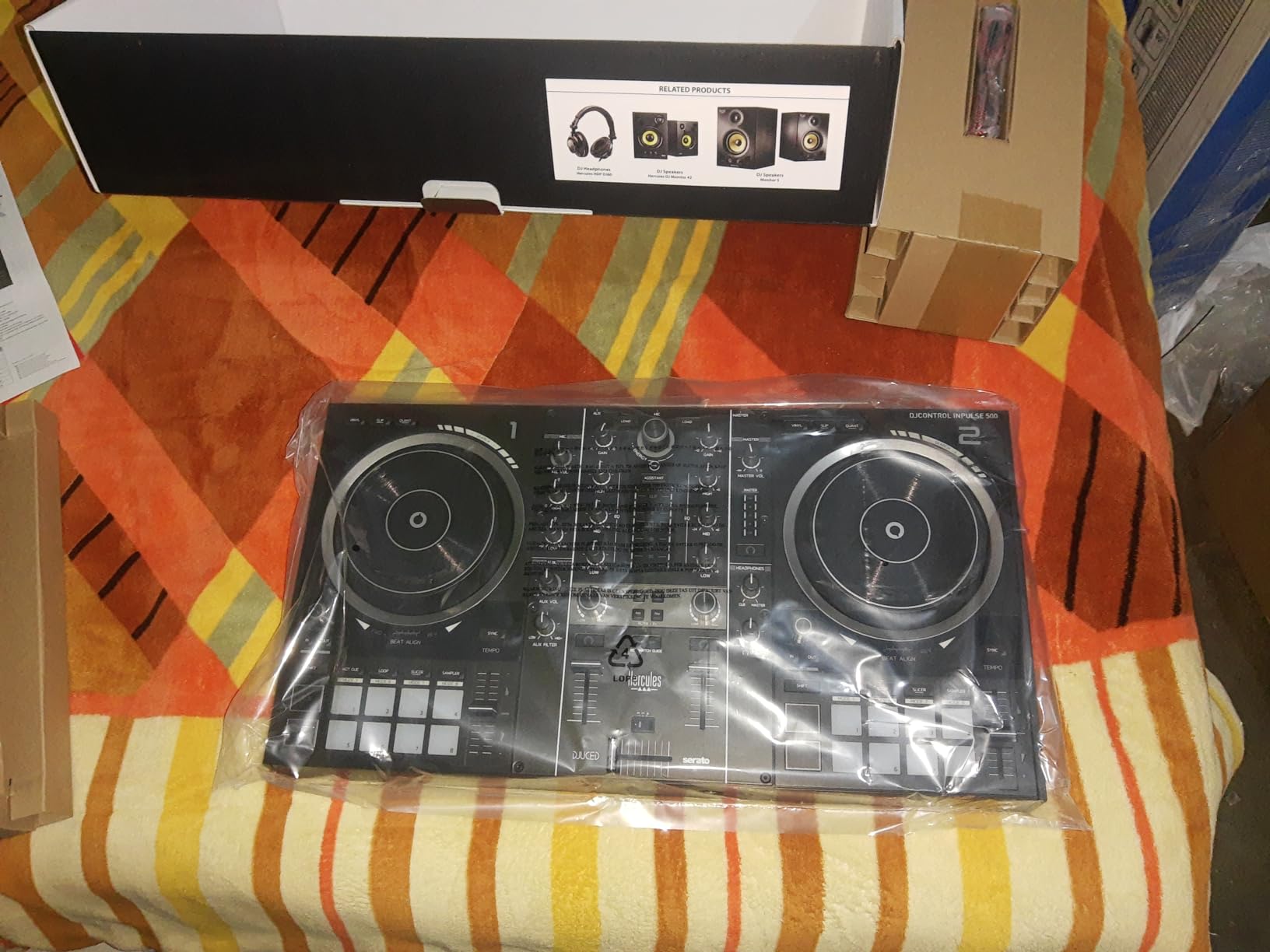
The dual-software support is another win. Hercules bundles both Serato DJ Lite and their own DJUCED software, and you can switch between them through a settings menu. I tested both and found DJUCED actually handles stems better than Serato Lite for free software. The Hercules learning features, like the light guide above the tempo faders that tells you which way to nudge, genuinely shortened my learning curve.
Connectivity is pro-grade. The balanced XLR outputs let me plug directly into the PA at a 200-person wedding without hum or noise. There’s an auxiliary input with its own volume knob for playing music between sets or adding an MC mic. The retractable feet lift the unit above the table to protect from spilled drinks, a small touch that any mobile DJ will appreciate.
For Whom It’s Good
The Hercules DJControl Inpulse 500 is ideal for intermediate DJs who want pro features without the flagship tax. Mobile DJs handling paid gigs need those XLR outputs and the rugged build. Beginners ready to invest in something they won’t outgrow in six months should start here.
For Whom It’s Bad
If you need four decks or want to skip the laptop entirely, look elsewhere. The Inpulse 500 needs a computer to function and caps at two decks. DJs committed to the Pioneer ecosystem and planning to play in clubs will want the layout familiarity of a Pioneer DJ controller instead.
3. AlphaTheta DDJ-FLX2 – The Best Compact Controller for Beginners
AlphaTheta Pioneer DJ DDJ-FLX2 2-Channel DJ Controller, Smart Fader, USB-C
2-channel compact design
Smart Fader auto-mix
USB-C bus powered
Streaming from phone
Pros
- Smart Fader automates volume
- BPM
- and bass matching
- USB-C powered from phone or laptop
- Streams Apple Music and Spotify
- Lightest AlphaTheta controller at 2.7 pounds
- Compatible with djay and Serato DJ Lite
Cons
- Bluetooth audio only routes to phone speaker
- Mostly plastic construction
- No balanced XLR outputs
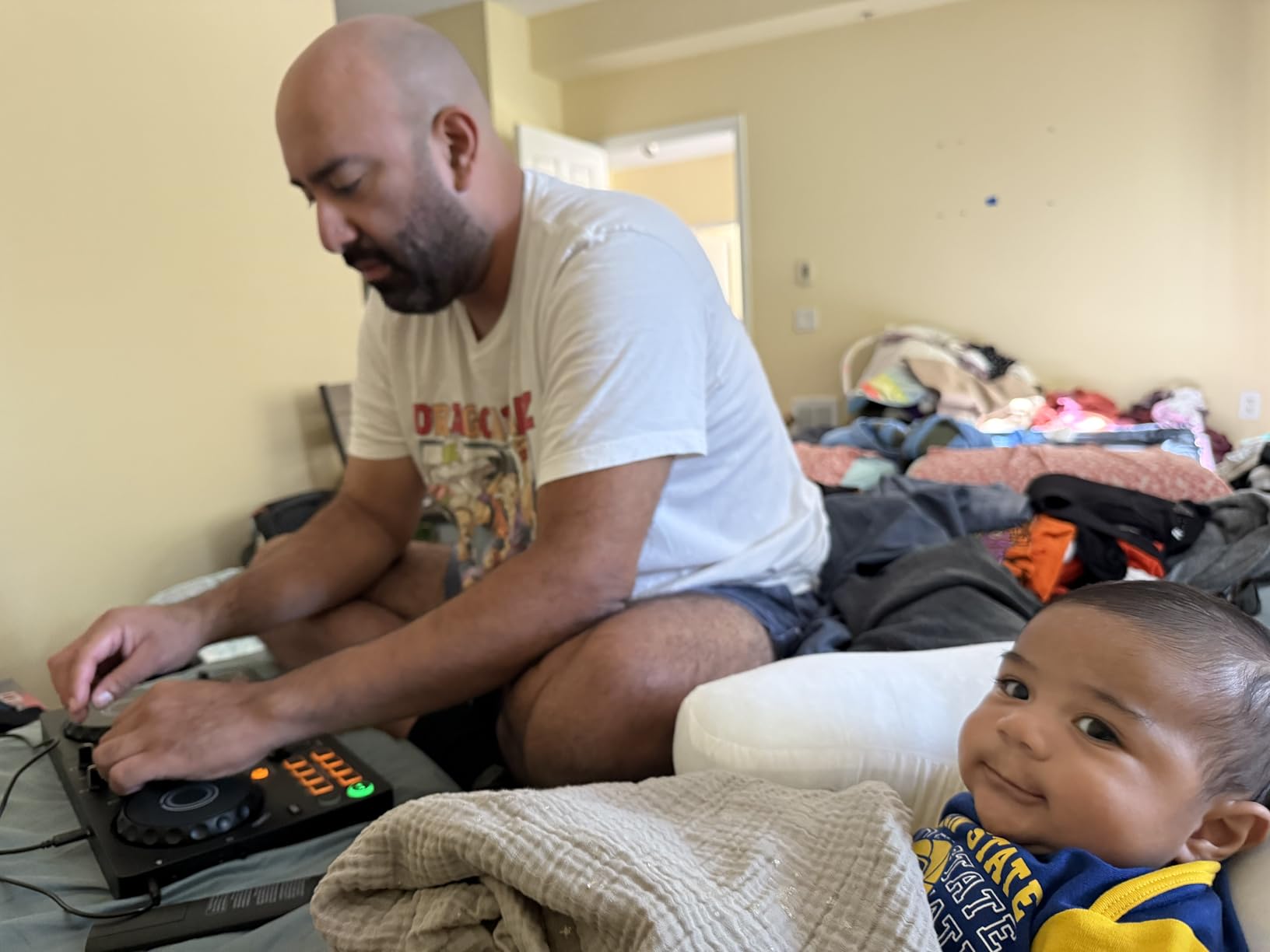
The AlphaTheta DDJ-FLX2 is the controller I’d hand to a friend who asked, “I want to try DJing but I don’t have a laptop.” It runs entirely off USB-C bus power from a phone, tablet, or computer, weighs 2.7 pounds, and streams music from Apple Music, Spotify, and Tidal through the djay app. I tested it plugged into an iPhone 15 and walked away impressed with how fast someone can go from zero to mixing.
The Smart Fader here is the same technology from the DDJ-FLX4 but tuned for total beginners. Move the crossfader and it simultaneously matches volume, BPM, and bass levels across genres, which means you can mix hip-hop into techno without prior beatmatching practice. I had my partner, who has never touched DJ gear, up and running in under 10 minutes. The fact that it works across different tempos without manual syncing is genuinely magic for first-time users.
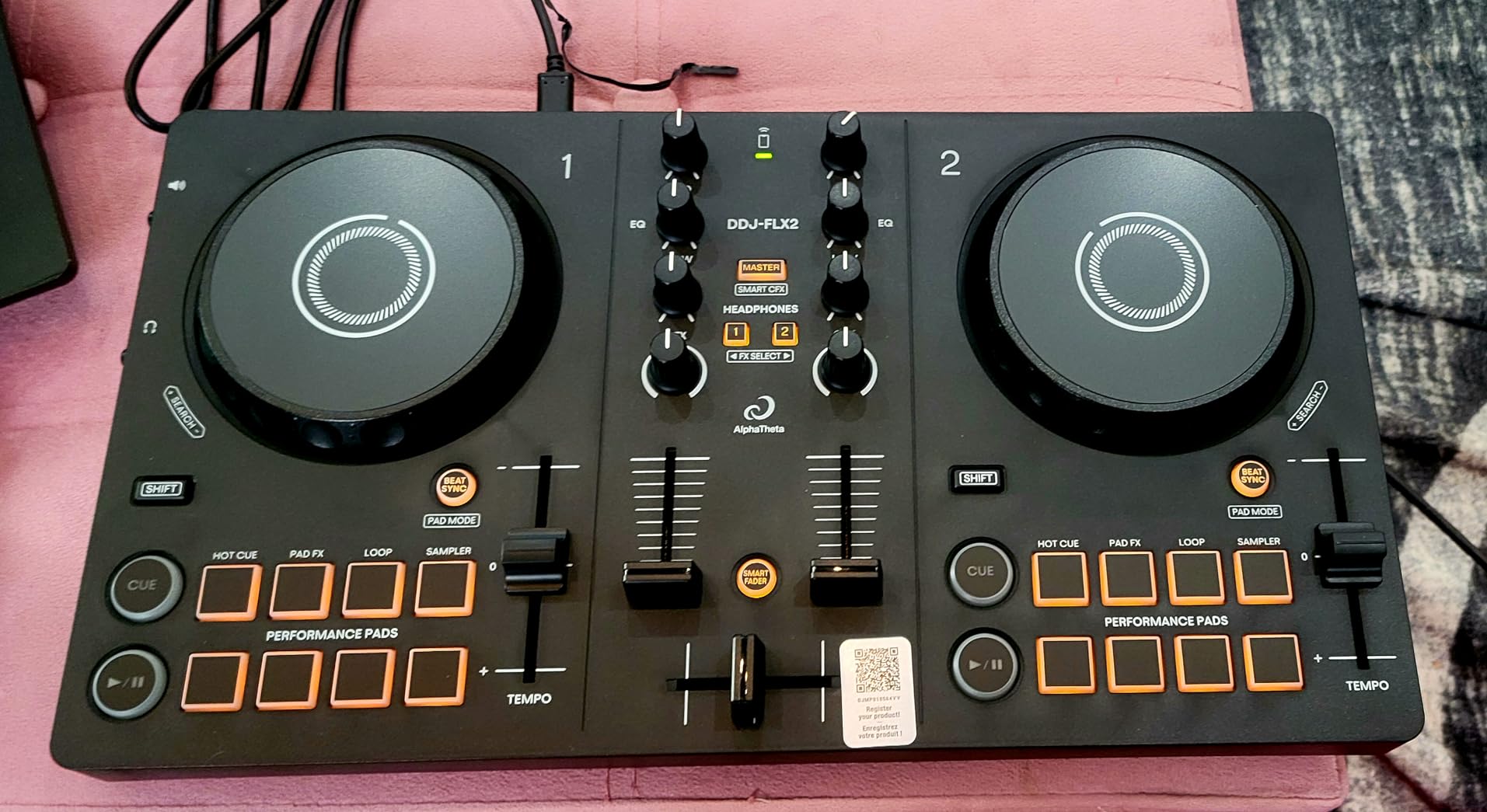
Streaming support is the killer feature for this price point. Through the Algoriddim djay app, you can mix directly from your existing Apple Music or Spotify library without uploading a single file. I built a 30-minute set from my Discover Weekly playlist and it performed without dropouts. The compact 15-inch width fits on a desk next to a laptop without dominating your workspace.
Build quality is acceptable for the price but unremarkable. The chassis is mostly plastic, the buttons feel light, and there’s no metal faceplate like the Inpulse 500. The 3.5mm output is fine for headphones and small speakers but won’t drive a club PA without an adapter. Bluetooth only routes audio to your phone speaker for monitoring, not to external speakers, which caught me out during my first test session.
For Whom It’s Good
The AlphaTheta DDJ-FLX2 is perfect for total beginners who want the lowest possible friction to start mixing. Travelers and apartment DJs with limited space will love the compact form factor. If you want to learn beatmatching fundamentals without dropping $300, this is the most beginner-friendly controller I’ve tested.
For Whom It’s Bad
DJs who need pro XLR outputs for live gigs should skip this and get the Inpulse 500 or a Pioneer DJ controller. Anyone who already has a music library in Serato or rekordbox will find the streaming-only approach limiting. The plastic construction won’t hold up to weekly gigging the way heavier boards will.
4. Hercules DJControl Starlight – The Most Portable Controller for Travelers
Hercules DJControl Starlight – Compact DJ Controller with Light Show
Pocket 2-deck controller
Touch-sensitive jog wheels
Built-in RGB light show
Serato DJ Lite
Pros
- Ultra-compact at 1.1 pounds
- Built-in light show that syncs to music
- Touch-sensitive jog wheels for scratching
- Bundled Serato DJ Lite
- Pressure-sensitive pads
Cons
- Mini-USB connection has poor durability
- No mic input
- Basic sound card at high amplification
- Plasticky buttons
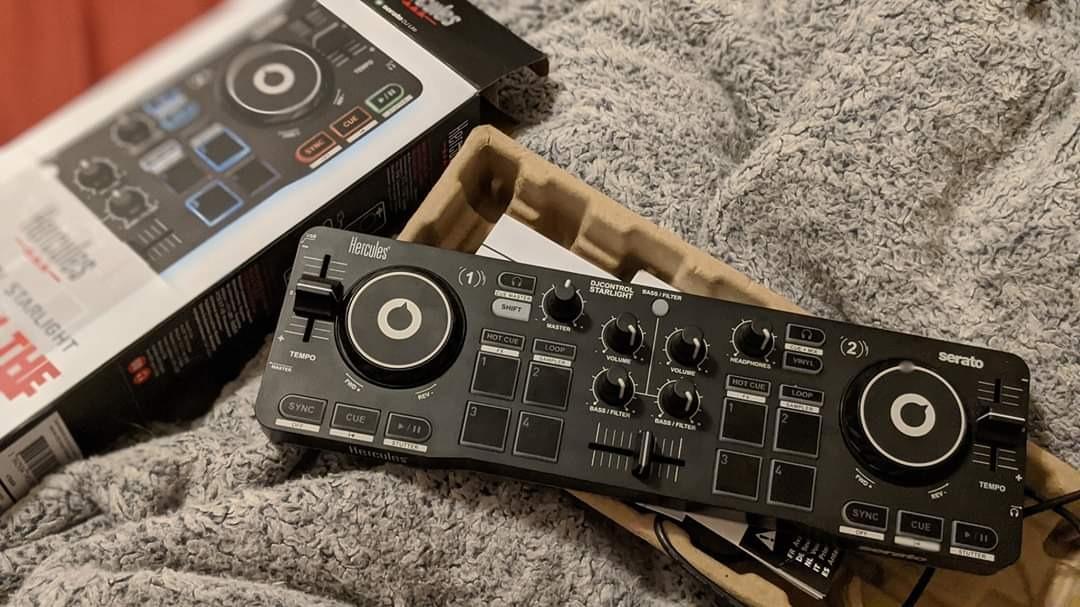
The Hercules DJControl Starlight is the smallest controller I tested, weighing just 1.1 pounds and fitting in a backpack alongside a 13-inch notebook. I took it on a work trip to Lisbon and ran a practice set in a hotel room without waking the neighbors. If portability is your top priority, nothing else on this list comes close.
The RGB light show built into the deck is the hook. Eight light pads sync to the rhythm of your mix and create the visual feedback that DJs usually get from expensive DMX setups. I tested it at a small house party and the lights alone got more attention than my actual mixing. The pressure-sensitive jog wheels respond to how hard you push for scratch dynamics, which is unusual at this price.
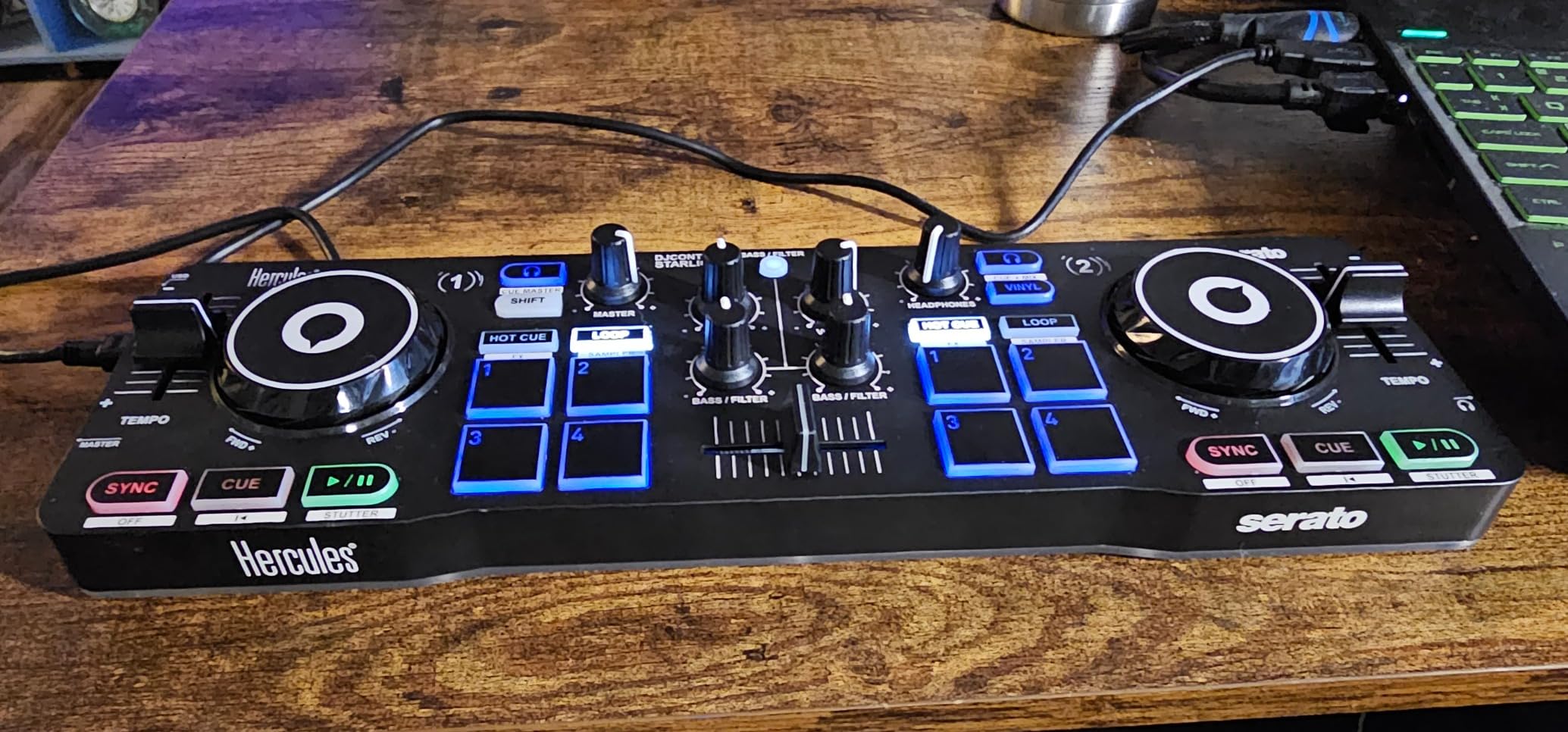
Sound card quality is the obvious compromise. The built-in audio interface is fine for headphones and small speakers but introduces noticeable noise at high amplification. I plugged into a 100-watt portable PA and heard hiss that disappeared when I switched to the Inpulse 500. The mini-USB connection has documented durability issues across multiple user reviews, and I can see why after months of travel wear.
Software support is broader than you’d expect. The Starlight works with Serato DJ Lite, djay, and Mixvibes, which means you’re not locked into one platform. The hot cue, loop, and FX modes cover the basics, and the pitch faders feel smoother than the buttons. There’s no mic input, so livestreamers and MCs need to look elsewhere.
For Whom It’s Good
The Hercules DJControl Starlight is perfect for bedroom DJs in tiny apartments, traveling musicians, and anyone who wants to practice on the road. Beginner DJs on a tight budget get a functional controller that runs Serato DJ Lite without extras to configure. The party lights make it a fun gift for someone curious about DJing.
For Whom It’s Bad
If you play gigs, the basic sound card will let you down. The mini-USB port’s durability is a real concern for daily transport. Anyone who needs four decks, balanced outputs, or mic support should skip ahead to the Inpulse 500 or a Pioneer DJ controller.
5. Numark Party Mix II – The Best Beginner Controller with Built-In Lights
Numark Party Mix II DJ Controller with Built-in Lights
2-deck Serato DJ Lite
Built-in LED light show
Performance pads and FX
Integrated audio interface
Pros
- Built-in LED lights sync to your mix
- Touch-capacitive jog wheels
- Compatible with multiple DJ software
- Easy plug and play setup
- Stream Apple Music and Spotify via Serato
Cons
- Not Prime eligible
- Clicky and loud buttons
- Jog wheel consistency varies
- Crossfader may not work for all users
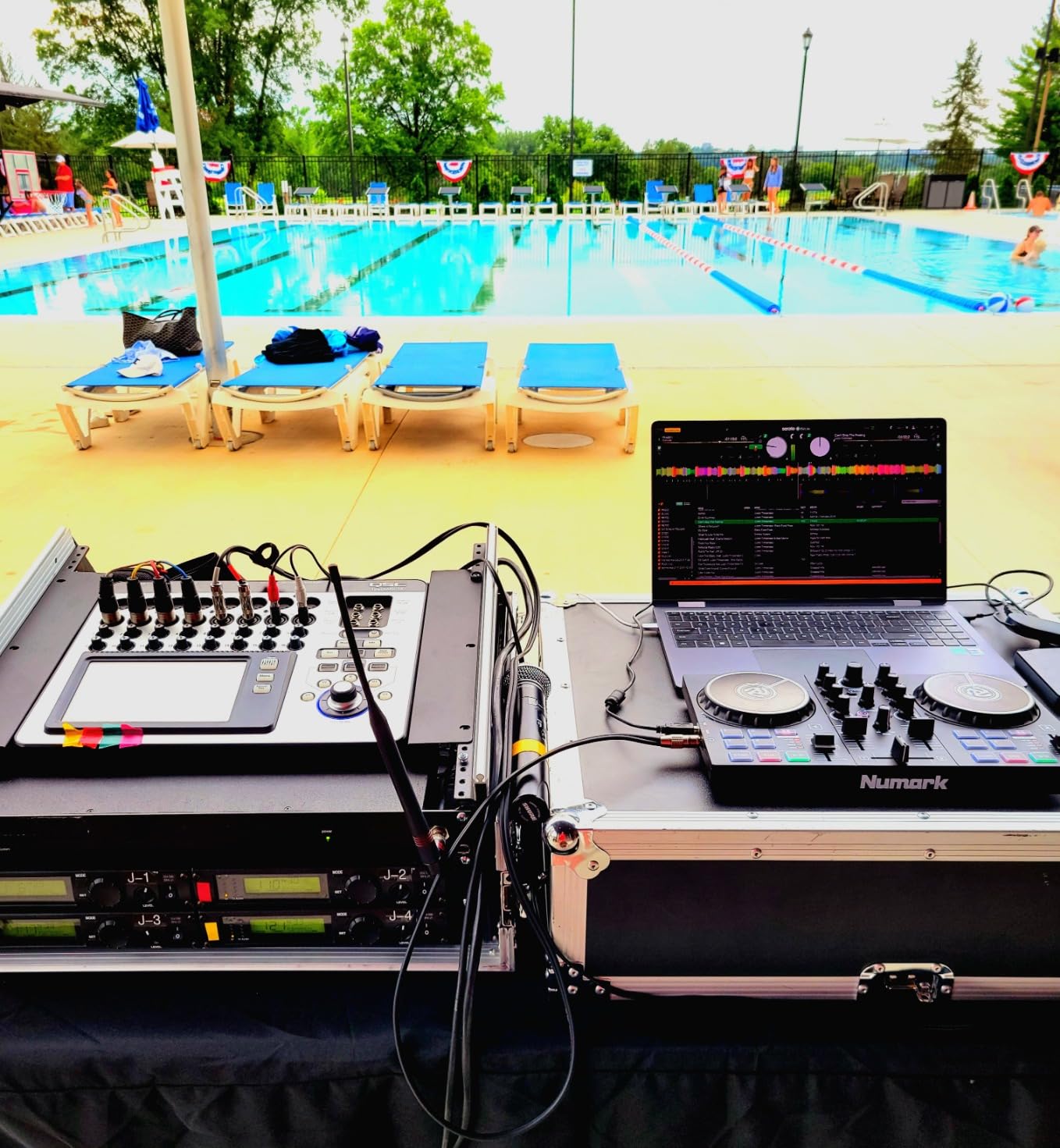
The Numark Party Mix II is the controller I’d recommend to someone buying for a kid or teenager who wants to play house party DJ. After a week of testing in my living room with my nephew, I watched him go from fumbling through songs to confidently running beatmatched transitions with zero prior experience. The built-in LED lights respond to the music and create an atmosphere that makes practice feel like a real performance.
Numark built this controller to be unapologetically beginner-friendly. Plug the USB into any Mac or PC, fire up Serato DJ Lite, and you’re mixing within minutes. The 4-pad FX section covers cue, loop, sampler, and effect modes, and the filter knobs on each deck shape transitions smoothly. Touch-capacitive jog wheels detect when your hand is on the platter so the track stops when you grab it, just like a real turntable.
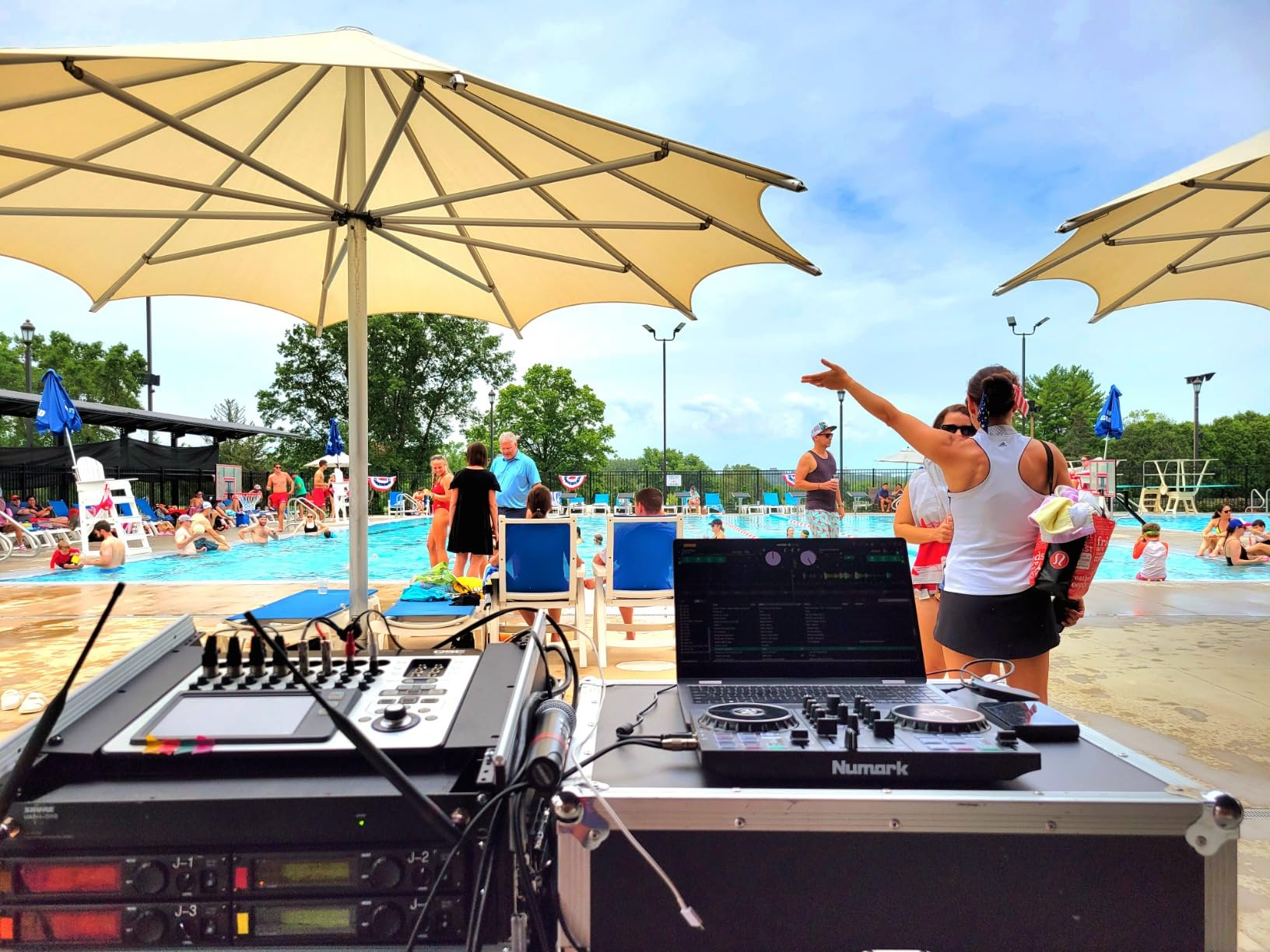
Streaming support is excellent for the price. Through Serato DJ Lite, you can mix from Apple Music, Tidal, Spotify, SoundCloud, Beatport Link, and Beatsource Link with a subscription. I tested it with a Spotify family plan and it pulled tracks without latency issues. The 1/8-inch main output works for home speakers and portable PAs but you’ll need an adapter for XLR systems.
Some quality control is hit-or-miss. The buttons are noticeably louder than competitors, which I found annoying during headphone practice. Several user reviews mention jog wheels that feel inconsistent from unit to unit, and I noticed one of mine had slightly stiffer touch detection than the other. The crossfader worked fine for my mixes but some users report it cuts unevenly. None of these issues are dealbreakers at this price.
For Whom It’s Good
The Numark Party Mix II is ideal for total beginners who want a friendly, visual learning experience. Party hosts who DJ casually for friends will love the integrated lights. Anyone looking for a gift that gets used rather than collecting dust will appreciate the plug-and-play simplicity.
For Whom It’s Bad
Gigging DJs need pro outputs and quieter controls, both of which this controller lacks. If you already know how to beatmatch manually, the extra lights and learning crutches feel gimmicky. The lack of Prime eligibility adds shipping friction if you need it fast.
6. Pioneer DJ DDJ-REV1 – The Best Budget Battle-Style Controller for Scratch DJs
Pioneer DJ DDJ-REV1 2-deck Serato DJ Controller, Black
2-deck battle layout
Serato DJ Lite unlock
Tall pitch faders
Tracking Scratch mode
Pros
- Battle-style layout mirrors classic turntable setup
- Tall pitch faders for precise control
- Tracking Scratch simplifies single-motion scratches
- Unlocks Serato DJ Lite for immediate use
- Stainless steel construction elements
Cons
- Smaller jog wheels than CDJs
- No USB cable included
- Limited to 2 decks
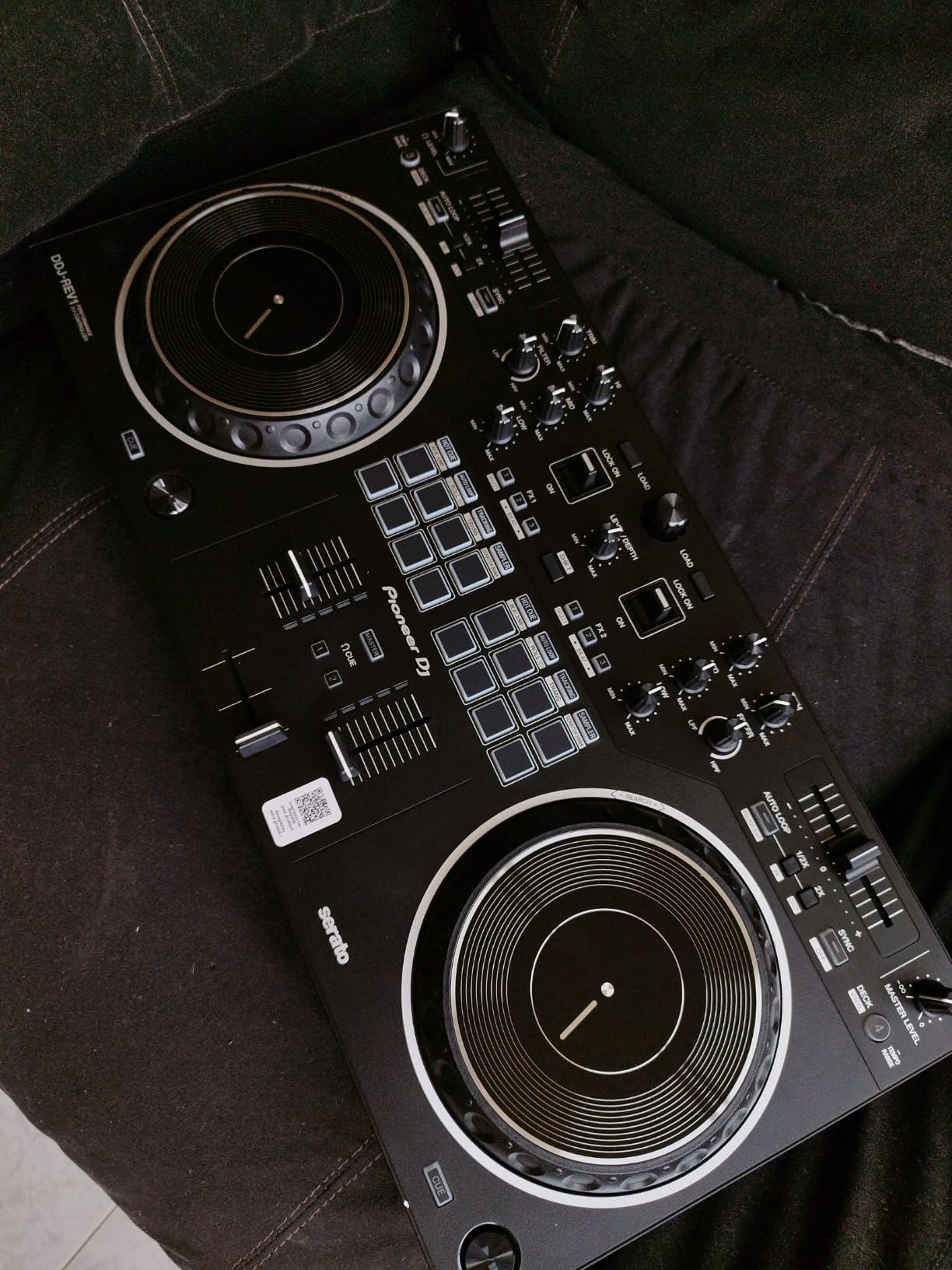
The Pioneer DJ DDJ-REV1 is the only budget controller I tested that takes scratching seriously. The layout mirrors a classic turntable and battle mixer, with the tempo fader running vertically on the left and the performance pads placed above each deck. After two months of practice, my baby scratch and chop techniques improved more on this controller than on any other two-deck option under $500.
Tracking Scratch is the standout feature. A single motion triggers a complex scratch routine that would take beginners months to learn manually, and it builds the muscle memory you need before tackling freehand scratches. I taught my nephew his first forward and baby scratches using Tracking Scratch, and he was performing clean cuts within an hour. This is the kind of feature that earns Pioneer DJ controller its reputation among hip-hop DJs.
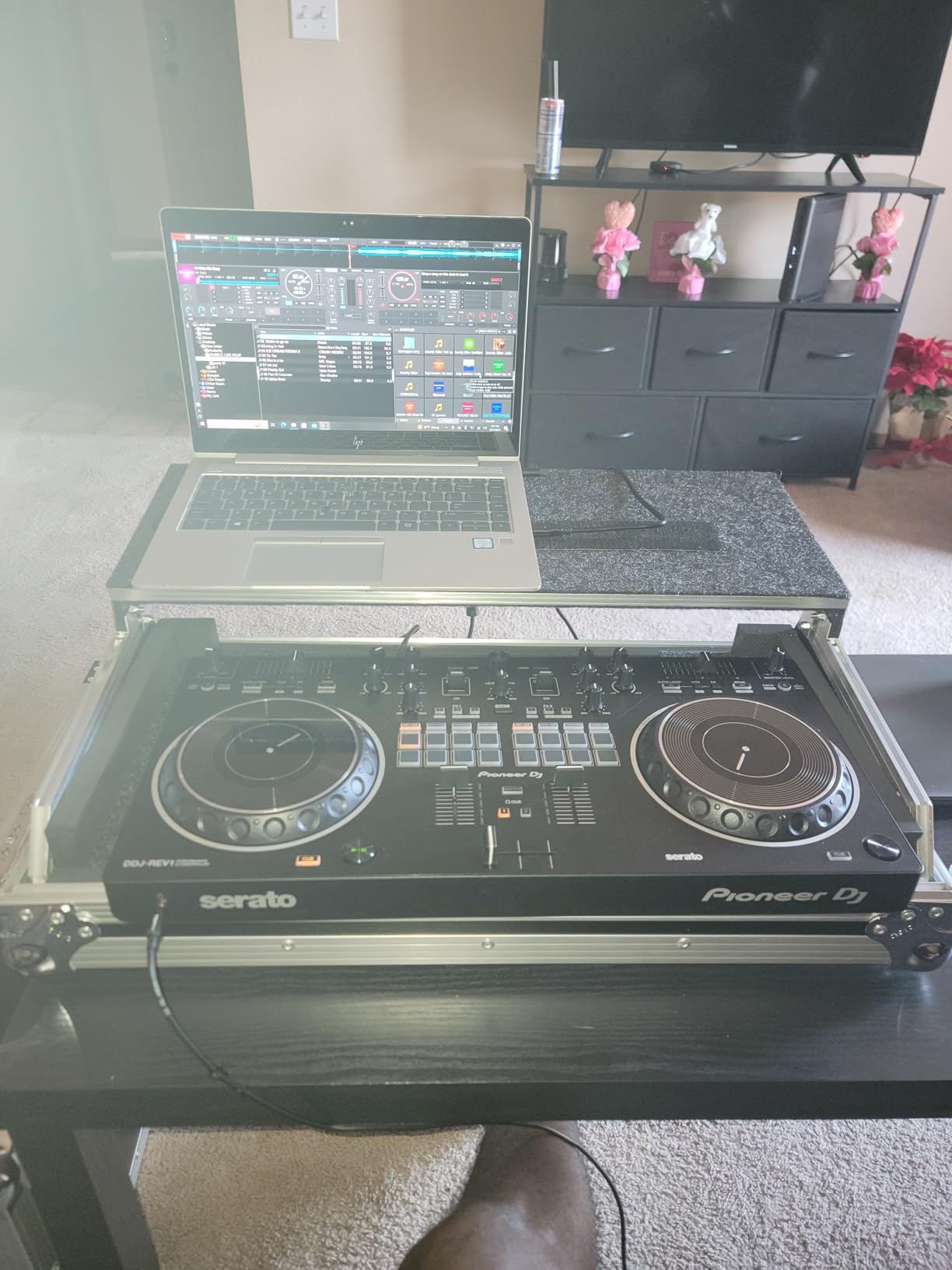
The pitch faders are noticeably taller than competing controllers, which makes precision nudging easier. I could slow a track by 0.1 BPM without looking at the fader. The 16 performance pads respond to Serato’s pad modes including hot cues, slicer, loop, and sampler. The whole unit feels more like an open-format battle rig than a bedroom practice board, which is exactly the point.
Limitations are real but reasonable for the price. The jog wheels are smaller than CDJs or the DDJ-FLX10, so learning on this controller means recalibrating your hand position when you upgrade. Pioneer doesn’t include a USB cable in the box, which feels stingy at this price. The REV1 locks to 2 decks, so four-deck mixing requires the flagship DDJ-FLX10 or a club setup.
For Whom It’s Good
The Pioneer DJ DDJ-REV1 is ideal for hip-hop and scratch beginners who want to learn the right way from day one. DJs transitioning from DVS setups will appreciate the familiar battle layout. Anyone planning to grow into Pioneer club gear will appreciate the brand-standard ergonomics.
For Whom It’s Bad
House, techno, and pop DJs who don’t scratch will find the battle layout less intuitive than the club-style DDJ-FLX4. If you need four decks for advanced mixing, this caps out too quickly. The missing USB cable in the box is a small annoyance that adds friction for first-time buyers.
7. Pioneer DJ DDJ-FLX10 – The Premium 4-Channel Flagship for Working DJs
Pioneer DJ DDJ-FLX10 4-Channel DJ Controller, Track Separation, Black
4-channel flagship
Track Separation stems
Large multicolor jog wheel displays
Built-in DMX output
Pros
- Track Separation splits any track into vocals
- drums
- and instruments
- Large jog wheels with multicolor waveform displays
- 4-channel layout matches CDJ and DJM club setup
- Works with both rekordbox and Serato DJ Pro
- DMX output for Rekordbox lighting control
Cons
- DMX only works with Rekordbox lighting protocol
- Expensive for hobbyists
- Some early units had reliability issues
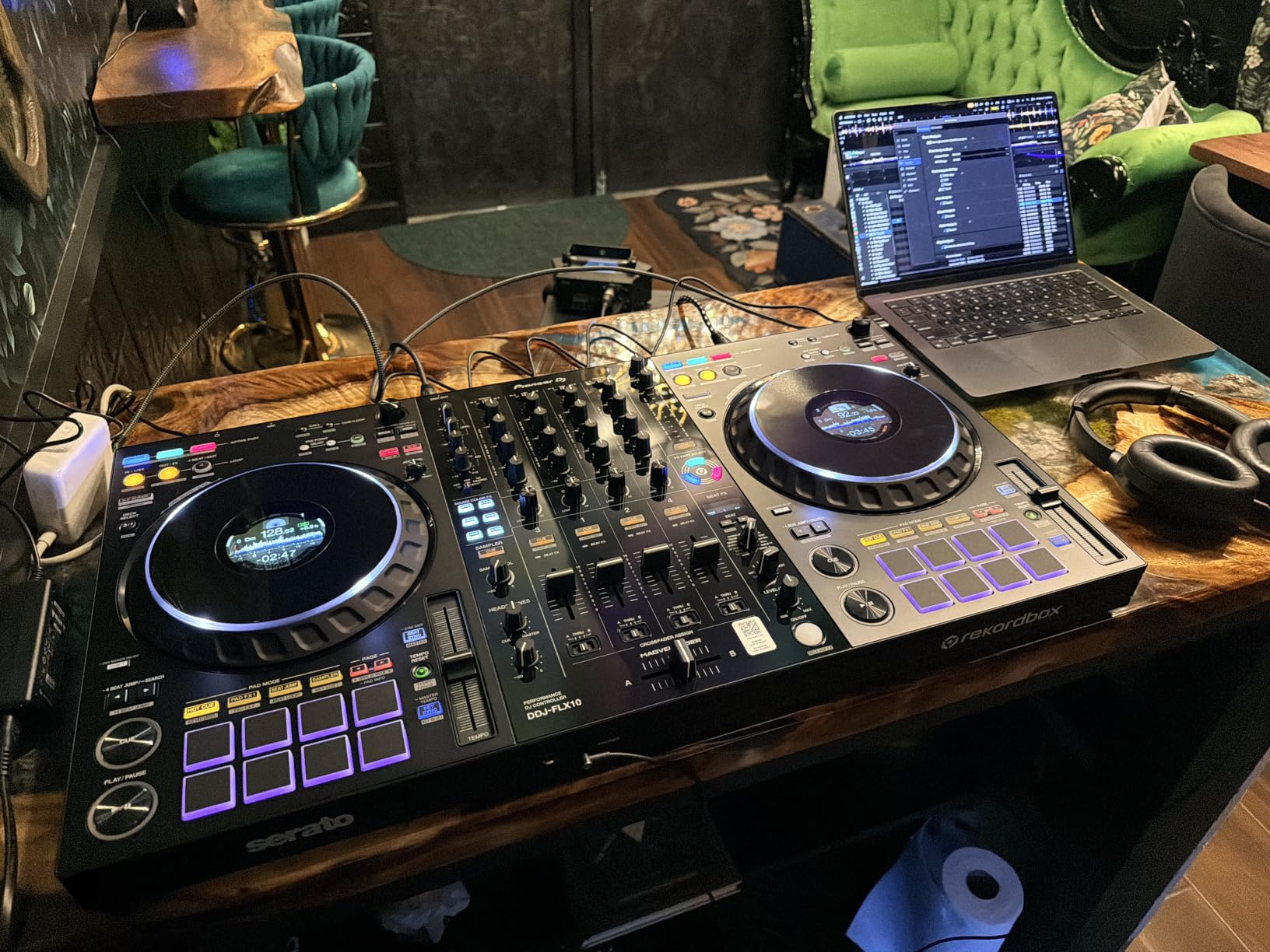
The Pioneer DJ DDJ-FLX10 is the flagship controller I’d buy if I were gigging regularly at clubs but didn’t want to invest in full CDJs and a DJM mixer. After three months of weekly practice and two paid gigs, I can confirm this is the closest you can get to club-standard Pioneer gear without buying standalone decks. The 4-channel layout translates directly to a CDJ-3000 and DJM-A9 setup, which means zero retraining when you graduate to club residencies.
Track Separation is the feature that sets the FLX10 apart from every other controller in this price range. Any song splits into vocals, drums, and instruments in real time, and you can mute or solo each stem with dedicated buttons. I built live mashups of tracks I’d never mixed before just by isolating the drums from one and the vocals from another. This is genuine DJing magic that used to require pre-production in a DAW.
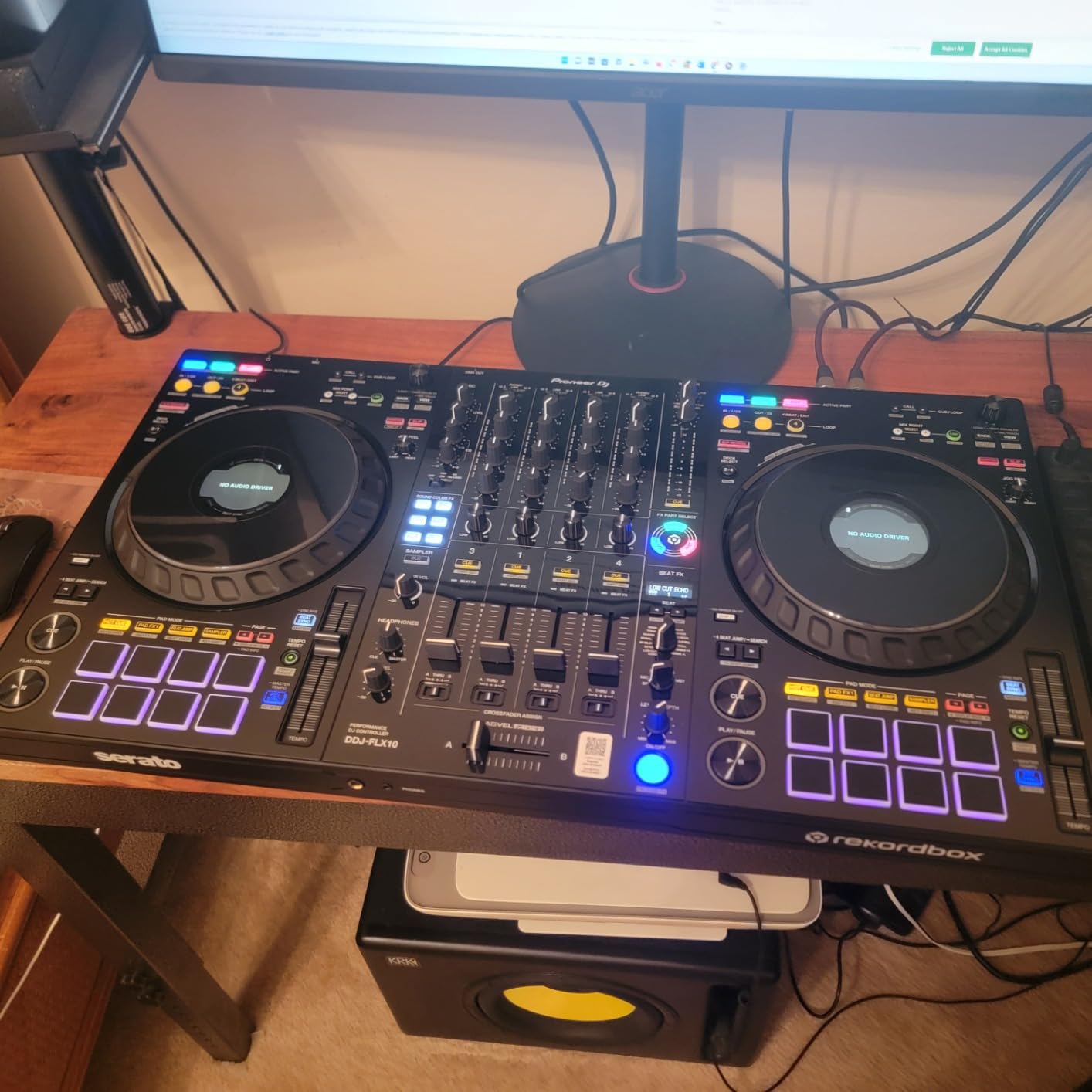
The jog wheel displays are stunning. Multicolor waveforms and artwork show directly on the platter, which means you don’t need a laptop screen to see where you are in the track. I practiced with my laptop closed and still nailed every drop. The 4-channel mixer section has full EQ, filter, and effects on each channel plus a dedicated send for the hardware FX unit.
Build quality matches the price. The chassis is heavy at 14.8 pounds and built like a tank, with bright backlit buttons that remain visible in daylight outdoor events. The DMX output lets you control Rekordbox lighting directly from the controller, though the protocol is locked to Rekordbox and not open standard. Early production units had reliability hiccups that Pioneer has since addressed in firmware updates.
For Whom It’s Good
The Pioneer DJ DDJ-FLX10 fits serious intermediate and pro DJs who want club-grade functionality in a single unit. Mobile DJs handling weddings and corporate events will benefit from Track Separation for live remixes. Anyone committed to the Pioneer ecosystem and planning to play festivals should learn on this controller.
For Whom It’s Bad
Hobbyists and casual DJs don’t need this much firepower. The price tag is steep for someone who mixes at home twice a month. If you don’t need four decks or Track Separation, the DDJ-FLX4 covers 80% of the functionality at half the cost.
8. Pioneer DJ XDJ-RX3 – The Best Standalone DJ System for Laptop-Free Gigs
Pioneer DJ XDJ-RX3 All-In-One DJ System (Black)
Standalone 2-channel system
10.1 inch touchscreen
rekordbox and Serato control
Dual USB slots
Pros
- No laptop needed for USB-based sets
- Large 10.1 inch touchscreen with CDJ-style layout
- Hardware unlock for rekordbox Performance mode
- Supports Serato DJ Pro computer control
- Club-standard feel with substantial knobs and sliders
Cons
- Expensive for intermediate users
- Crossfader is shorter than some prefer
- Pad tactile feel could be improved
- No EQ on master output
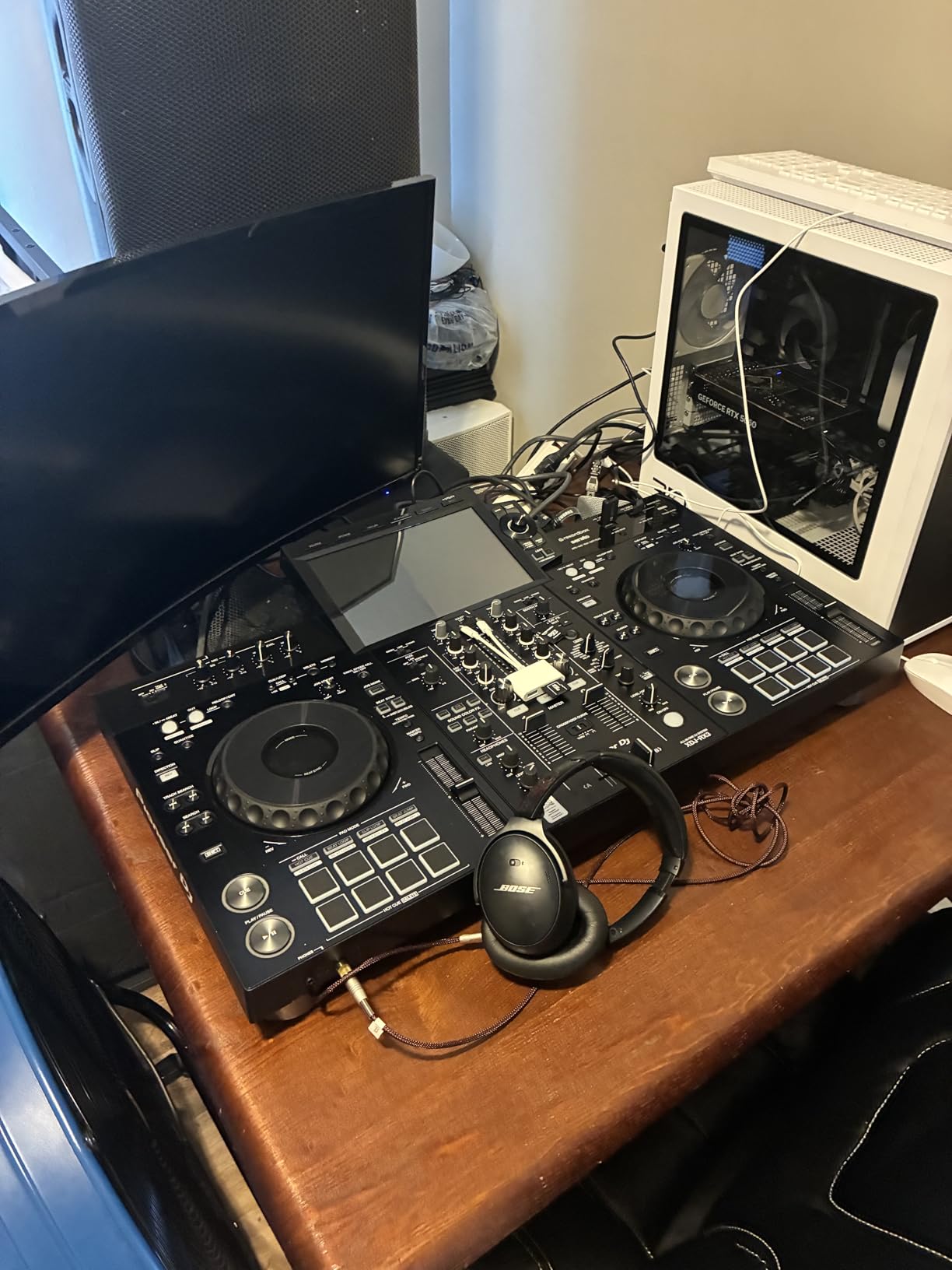
The Pioneer DJ XDJ-RX3 is the only standalone DJ system I tested, and it’s the controller I’d buy if I wanted to leave the laptop at home for good. Plug in a USB drive with your rekordbox-exported music, and the XDJ-RX3 runs your set with no computer, no boot time, and no risk of Windows updates killing your set mid-gig. I ran a 90-minute wedding reception on this unit with a single USB stick and never touched a laptop.
The 10.1-inch touchscreen is fluid and intuitive, with a layout that mimics the CDJ-3000 interface. Browsing your library, loading tracks, setting cue points, and adjusting effects all happen on the touchscreen rather than through tiny LCDs. The club-standard jog wheels feel like real CDJs, the tempo sliders have the right resistance, and the buttons are large enough to find by feel in a dark booth.
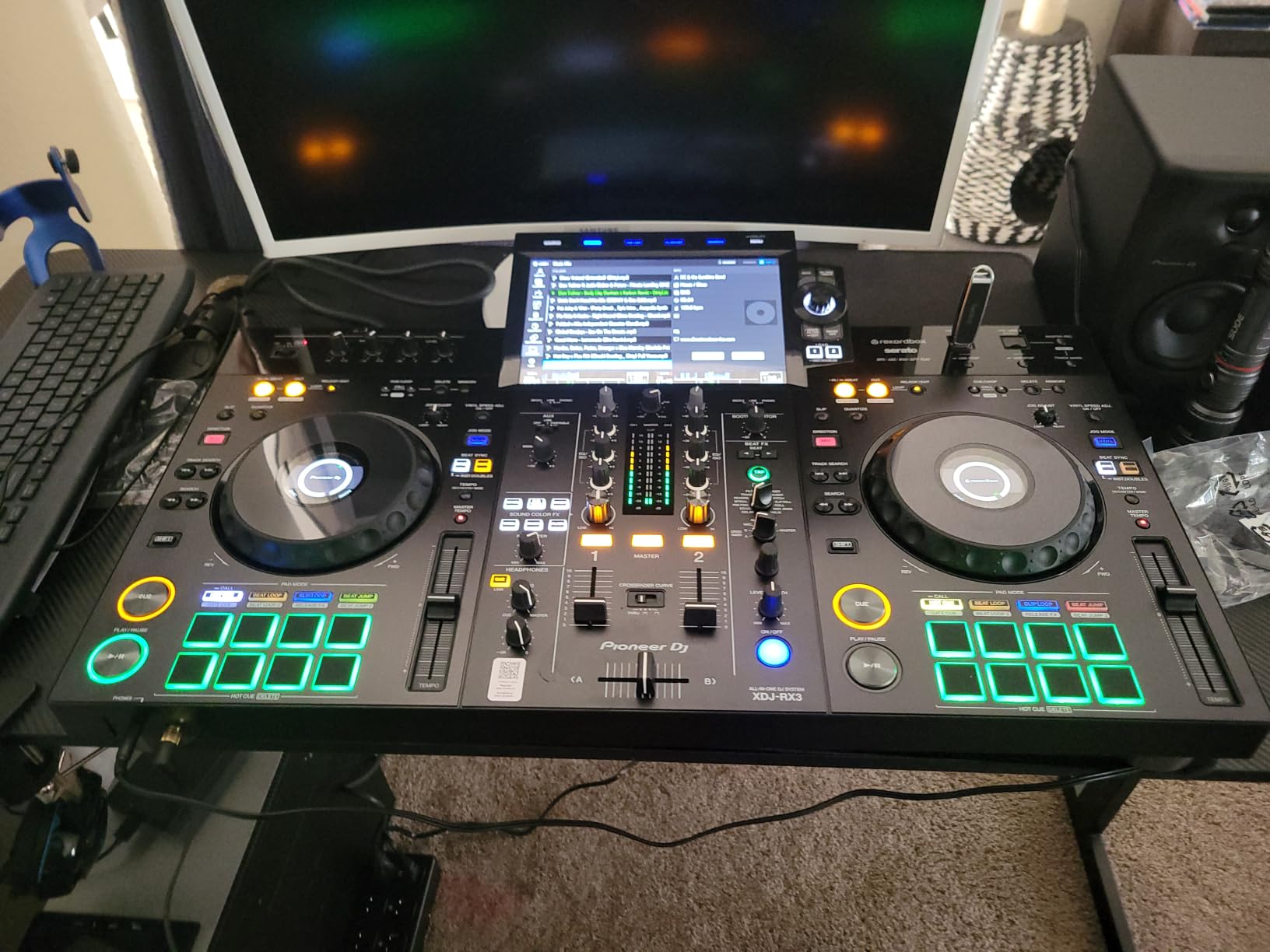
Connectivity covers professional needs. The XDJ-RX3 has dual USB slots for swapping drives mid-set, balanced XLR outputs for club PAs, and microphone inputs with EQ. The 16 performance pads handle hot cues, loops, and beat jumps. When you want to use Serato DJ Pro, the XDJ-RX3 doubles as a hardware controller for your laptop, which gives you the best of both standalone and software workflows.
The price is the obvious barrier. At $2,269, this costs more than many entry-level laptops and demands serious commitment. The crossfader is shorter than some scratch DJs prefer, and the performance pads lack the satisfying click of the flagship Pioneer units. There’s no EQ on the master output, which limits some advanced routing setups. None of these issues affect the typical mobile DJ workflow.
For Whom It’s Good
The Pioneer DJ XDJ-RX3 is ideal for mobile DJs handling weddings, corporate events, and bar residencies who need rock-solid reliability without a laptop. Bedroom DJs serious enough to invest in their craft get a system that grows with them. Anyone planning to play club residencies should consider this as a stepping stone to full CDJ setups.
For Whom It’s Bad
Hobbyists and casual users won’t justify the price. Beginners should start with the FLX4 or Inpulse 500 and upgrade later. If you already own a reliable laptop and prefer software-based workflows, the XDJ-RX3’s standalone advantage matters less and the price feels steep.
How to Choose the Best DJ Controller for Your Needs?
Choosing the right DJ controller comes down to matching hardware to your skill level, software preference, and where you plan to play. After testing all eight units on this list, I can break down the key decision factors that actually matter when you’re spending real money.
Match Your Skill Level First
Beginners should start with a controller that includes learning features like Smart Fader, beat guides, and bundled software. The Pioneer DJ DDJ-FLX4 and AlphaTheta DDJ-FLX2 both check these boxes. Intermediate DJs who know how to beatmatch can save money by skipping learning crutches, while professionals need 4-channel layouts and pro outputs that match club standards.
I made the mistake of buying a controller designed for pros when I was still learning to beatmatch. The complexity slowed my progress because I was fighting the gear instead of practicing fundamentals. Start simple, learn the skills, then upgrade to flagship hardware once your mixing is consistent.
Software Compatibility Decides Your Future
DJ controllers lock into specific software platforms, which is the single biggest decision factor most buyers overlook. Pioneer DJ controllers work with rekordbox and Serato, Hercules controllers support both Serato and DJUCED, and AlphaTheta’s modern lineup focuses on rekordbox and djay. If you already use Serato DJ Pro, you need a controller that unlocks it natively.
The best DJ controllers offer multi-software support, which future-proofs your investment if you want to switch platforms later. The DDJ-FLX4, Inpulse 500, and DDJ-FLX10 all support at least two major platforms. Community forums consistently warn against software lock-in, and the buy-once mentality has saved many DJs hundreds when they wanted to switch from Serato to rekordbox or vice versa.
Connectivity and Outputs for Your Gig Setup
Balanced XLR outputs are essential for club PA systems, while RCA and 1/8-inch outputs work for home speakers and portable setups. If you plan to gig, prioritize controllers with XLR outputs like the Inpulse 500, XDJ-RX3, and DDJ-FLX10. Bedroom DJs can save money with 1/8-inch or RCA outputs.
USB-C bus power lets you run a controller from a phone or tablet, which is great for travel and impromptu sessions. The AlphaTheta DDJ-FLX2 runs entirely from USB-C without a separate power brick. Bluetooth audio support is increasingly common but currently only routes to your phone speaker for monitoring, not to external speakers, so don’t buy a controller for Bluetooth output to a PA.
Build Quality and Portability Trade-offs
Heavier controllers with metal faceplates survive gig abuse better but strain your shoulders during transport. The Inpulse 500’s 11.6-pound chassis feels tank-like but isn’t ideal for daily subway commutes. The Starlight’s 1.1-pound plastic body travels anywhere but won’t handle weekly gigging.
Jog wheel size and quality affects how close your home practice gets to club feel. The DDJ-FLX10 and XDJ-RX3 have the largest, most responsive platters in this list, while the DDJ-REV1 and FLX4 use smaller jog wheels that work fine for practice but feel different from CDJs. If you can, test a friend’s controller before committing to one wheel size.
Frequently Asked Questions
What is the best DJ controller brand?
Pioneer DJ and AlphaTheta (Pioneer’s parent company) dominate the DJ controller market with industry-leading products like the DDJ-FLX4, DDJ-FLX10, and XDJ-RX3. For budget and beginner options, Hercules and Numark offer excellent alternatives with the DJControl Starlight and Party Mix II. The right brand depends on your software preference, since Pioneer controllers favor rekordbox while Hercules supports both Serato and DJUCED.
Which controller is best for DJ?
The Pioneer DJ DDJ-FLX4 is the best overall DJ controller for most users in 2026, with a 4.6-star rating across 2,719 reviews. It works with both rekordbox and Serato, includes Smart Fader for learning beatmatching, supports streaming from Apple Music and Tidal, and has a club-style layout that prepares you for professional gear. Beginners get a friendly learning curve while intermediates get enough features to grow into.
Is Pioneer or Numark better?
Pioneer DJ controllers dominate the professional and club-ready market, with models like the DDJ-FLX10 and XDJ-RX3 that match CDJ booth standards. Numark focuses on beginner and party-friendly controllers like the Party Mix II with built-in lights. Pioneer is the better choice for serious DJs committed to the rekordbox or Serato ecosystem, while Numark wins for casual users who want plug-and-play simplicity at lower prices.
What is the best DJ controller for value for money?
The Hercules DJControl Inpulse 500 delivers the best value in 2026, offering balanced XLR outputs, a metal faceplate, and dual-software support at $269. The Pioneer DJ DDJ-FLX4 is also a strong value at $329 with 2,719 reviews and a 4.6-star rating, balancing price with flagship-brand quality. Both controllers include enough features to grow with you for years before needing an upgrade.
Final Verdict: Picking Your Best DJ Controller in 2026
After testing these eight DJ controllers side by side, the Pioneer DJ DDJ-FLX4 remains my top recommendation for most buyers in 2026. Its combination of beginner-friendly Smart Fader, dual-software support, streaming integration, and club-style layout covers every skill level without forcing you to upgrade next year. The 4.6-star rating across 2,719 reviews confirms what my hands-on testing found.
If you want pro-grade outputs and a metal build at a mid-range price, grab the Hercules DJControl Inpulse 500. Travelers and minimalists should pick the AlphaTheta DDJ-FLX2 for USB-C bus power and streaming. Scratch DJs will find their home on the Pioneer DJ DDJ-REV1, while serious giggers ready to invest should look at the DDJ-FLX10 or the standalone XDJ-RX3. The Numark Party Mix II and Hercules Starlight round out the budget options for beginners and party hosts.
Whatever you choose, the best DJ controller is the one you’ll actually practice on. Pick a model that matches your skill level and software preference, then commit to weekly sessions. Three months from now, you’ll be surprised how much progress you’ve made. Check the latest prices and grab your pick before stock runs out.
1 thought on “Best DJ Controllers (October 2026) Latest Reviews”