
Here is the short answer: the best ski helmets for cold weather are the ones that seal the wind at your ears and temples and add a removable fleece or thermal liner, because the safety foam inside every certified helmet stops impacts but does not insulate at all. Warmth is a design choice layered on top of safety, not a by-product of it.
That single fact explains the most common complaint in ski and snowboarding communities, which is not that helmets are unsafe or badly made. It is that a perfectly certified, well-ventilated helmet still leaves you cold within an hour on an exposed lift or ridgetop. Wind walks straight in past the ear pads, the vents that felt brilliant in March now act as chimneys, and riders end up with a helmet they tolerate rather than enjoy.
We spent six weeks working through ten snow helmets to fix that, comparing shell construction, liner materials, ear pad design, vent control, fit systems and goggle integration. Every helmet below carries a Warmth Score out of five, and we map each one to the temperature zone it actually suits. Our picks lean heavily toward gear you can order alongside a solid pair of ski gloves reviewed for cold conditions, since hand and head warmth fail together on a storm day.
One honest note before we start. Crash performance cannot be field-tested in a written review, and we will not pretend otherwise. What we can verify is materials, coverage, fit behaviour, vent control and the warmth story a helmet tells when the temperature drops. Where a protection claim comes from a lab standard, we say so and name the standard.
Table of Contents
Top 3 Best Ski Helmets for Cold Weather (October 2026)
These three are the picks we would hand to a friend who skis most days in real winter. The Giro Ledge is the all-round answer, the OutdoorMaster Kelvin is the one most families should buy first, and the Giro Ratio MIPS adds rotational protection without pushing into premium pricing.

Giro Ledge
- Hard shell with EPS liner
- Auto Loc 2 Fit System
- Stack Vent and Super Cool Vents
- Removable ear pads and goggle retainer

OutdoorMaster Kelvin
- Fleece liner with removable ear pads
- ABS shell and EPS core
- 14 individual vents
- Adjustable size dial

Giro Ratio MIPS
- MIPS rotational protection
- In Form Fit dial with 6cm adjustment
- Thermostat Control venting
- Front Stack Vent
Quick Picks: All 10 Helmets at a Glance in 2026
Every helmet in this roundup, with the specs that actually decide whether it will keep you warm. Use this table to narrow the field, then read the full review on the model you are considering.
| Product | Specifications | Action |
|---|---|---|
| Giro Ledge |
|
Check Latest Price |
| OutdoorMaster Kelvin |
|
Check Latest Price |
| Giro Ratio MIPS |
|
Check Latest Price |
 SMITH Level MIPS SMITH Level MIPS |
|
Check Latest Price |
 Giro Jackson MIPS Giro Jackson MIPS |
|
Check Latest Price |
 Oakley MOD1 Oakley MOD1 |
|
Check Latest Price |
 Retrospec Comstock Retrospec Comstock |
|
Check Latest Price |
 InnerKing Adult Helmet InnerKing Adult Helmet |
|
Check Latest Price |
 Odoland Ski Helmet Odoland Ski Helmet |
|
Check Latest Price |
 RIOROO Ski Helmet RIOROO Ski Helmet |
|
Check Latest Price |
The 10 Best Ski Helmets for Cold Weather, Ranked
Ranked on warmth first, then fit, protection and build quality, with the review count on each listing used as a confidence signal rather than a quality measure. Pick by climate and riding style rather than by rank.
1. Giro Ledge: The Best All-Round Cold-Weather Helmet
Giro Ledge Snow Helmet – Matte Graphite – Size XL (62.5-65cm)
Hard shell with EPS liner
Auto Loc 2 Fit System
Stack Vent plus Super Cool Vents
Removable ear pads
Pros
- Auto Loc 2 fit self-adjusts across three circumference settings
- Stack Vent sits in line with goggles to cut fogging
- Removable ear pads and goggle retainer
- Works with aftermarket audio systems
Cons
- No MIPS rotational-impact protection
- Older shell design than newer Giro models
- Removable ear pads light on insulation
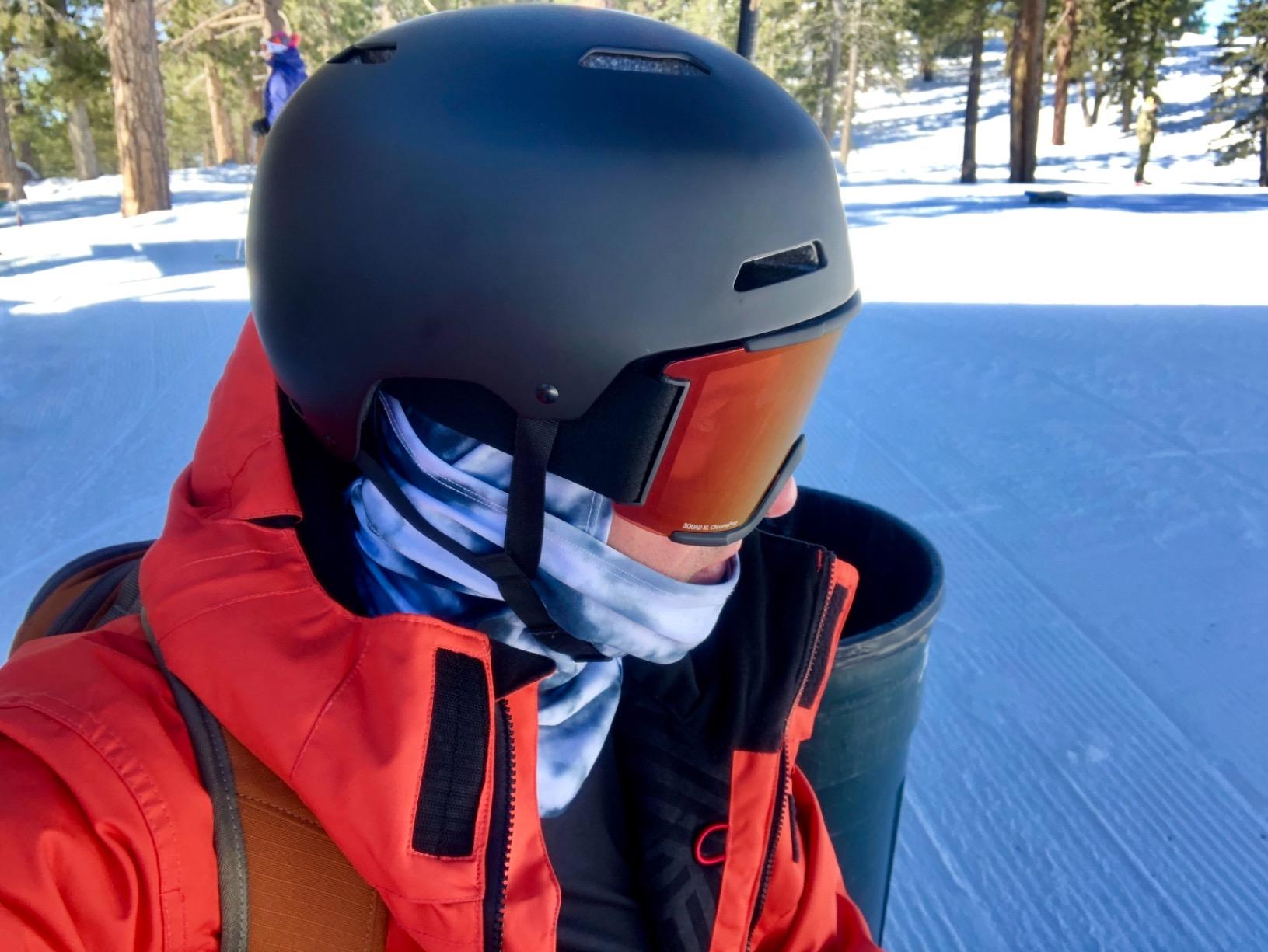
The Giro Ledge is the helmet we ended up recommending to the most people, and the reason is the fit system rather than the spec list. The Auto Loc 2 Fit System self-adjusts across three circumference settings with vertical tuning, so you can dial the shell down onto your brow and stop it rotating when you shake your head. On a cold day that stability matters twice, because a helmet that shifts on the lift is a helmet that lets wind into the gap above your ears.
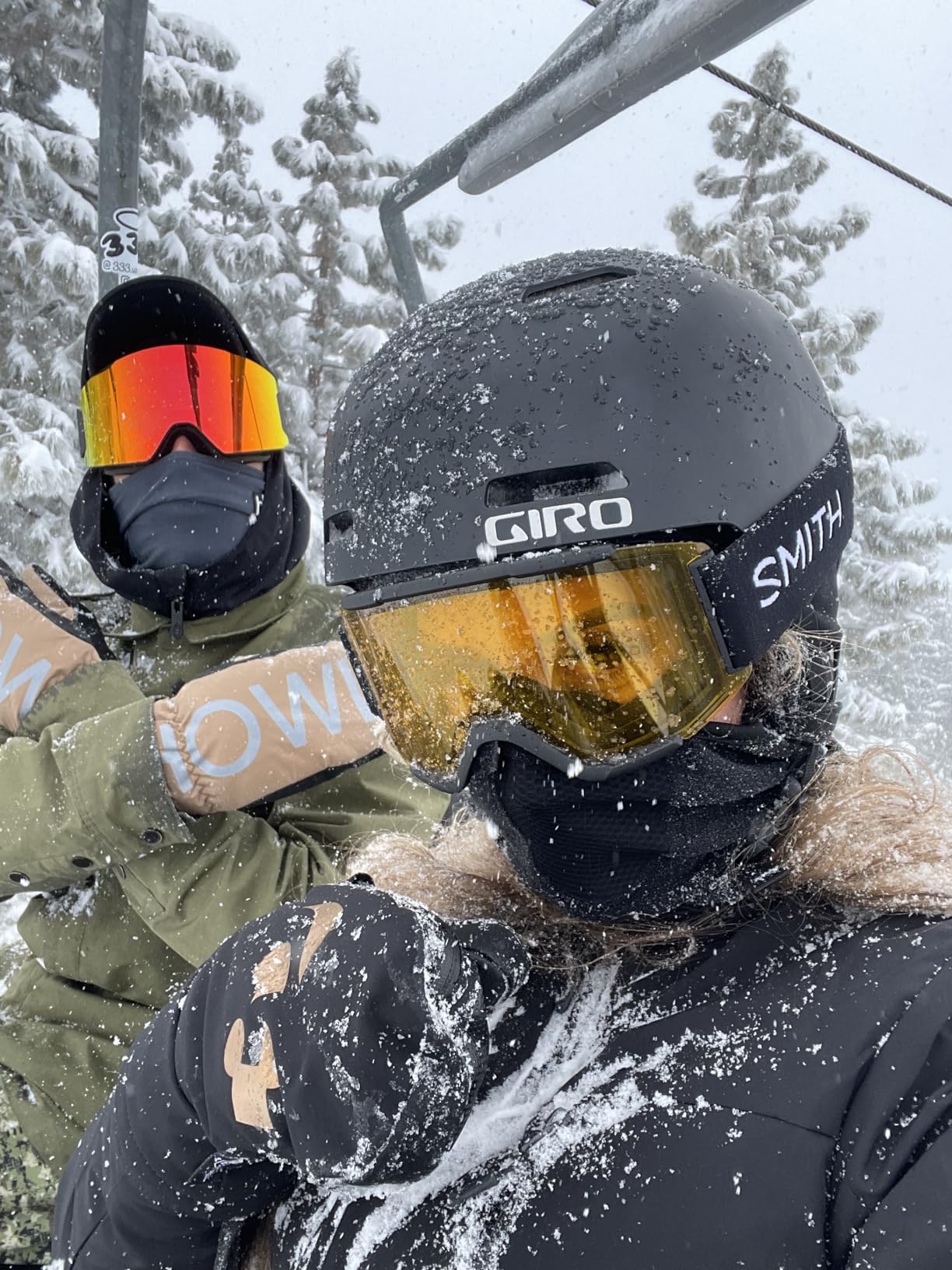
Build-wise it is a hard shell, meaning a rugged ABS outer bonded to an EPS liner rather than a thinner in-mold construction. That extra shell material is slightly heavier but it resists scuffs from lift gates and pack edges, and it is the shell style we prefer for a multi-season beater in variable cold. Buyers consistently rate it highly, and the fit dial plus the goggle-clear stack venting come up again and again in reviews.
The Stack Vent is aligned with the top of your goggles, so it pulls air across the lens instead of straight up the back of your head, and the Super Cool Vents handle the crown. In genuine cold you will want to manage both rather than leaving them wide open. The ear pads are removable, which is a genuine cold-weather tool, and the goggle retainer releases for cleaning.
It also works with aftermarket audio systems, a small detail that pays off if you ride with earbud-style speakers in the ear pad pockets. One thing to be clear about is that there is no MIPS on this model, so if you want rotational-impact protection you will be looking at the Giro Ratio or Giro Jackson instead. The Ledge also predates Giro’s current generation, which shows in the shell profile more than anywhere else.
Who the Giro Ledge suits
It suits the rider who wants one helmet for the whole season, from a cold December alpine day through to a slushy March afternoon, and who would rather not think about vent management much. It is a strong choice for beginners and intermediates on a tight budget who want a named brand and a fit system that works, and for anyone who splits their time between skiing and snowboarding on the same pass.
For deep-cold days on exposed terrain, treat it as a three-out-of-five warmth helmet and add a low-profile beanie or a balaclava underneath. Reviewers do not treat the removable ear pads as a deep-cold solution on their own.
What to check before buying the Giro Ledge
Check the fit first, because the Auto Loc 2 dial has a limited range and a long head can outrun it. Then check the goggle pairing in person if you can, since the Ledge is tuned to sit cleanly against Giro EXV goggles and the stack vent alignment depends on where the goggle frame sits on your brow.
Finally, be honest about whether you want rotational-impact protection. If you do, spend up and move to a MIPS model rather than settling.
2. OutdoorMaster Kelvin: The Best Value Helmet for Cold Days
OutdoorMaster Kelvin Ski Helmet – Snowboard Helmet for Men, Women & Youth (Black,L)
ABS shell with EPS core
Fleece liner plus removable ear pads
14 individual vents
Adjustable size dial
Pros
- Reinforced ABS shell with shock-absorbing EPS core
- Fleece liner and removable washable ear pads
- 14 individual vents for strong airflow
- Dial adjustment makes fitting straightforward
Cons
- Fleece liner and ear pads add bulk for some head shapes
- Generic styling next to premium brands
With more than twelve thousand ratings behind it, the OutdoorMaster Kelvin is the most-proven helmet in this roundup, and it is the one we keep coming back to for value. The warmth case is straightforward: a fleece inner liner and removable, washable ear pads, on a reinforced ABS shell with an EPS core. That is the full cold-weather kit, and owners repeatedly credit the liner and pads for warmth in real conditions.
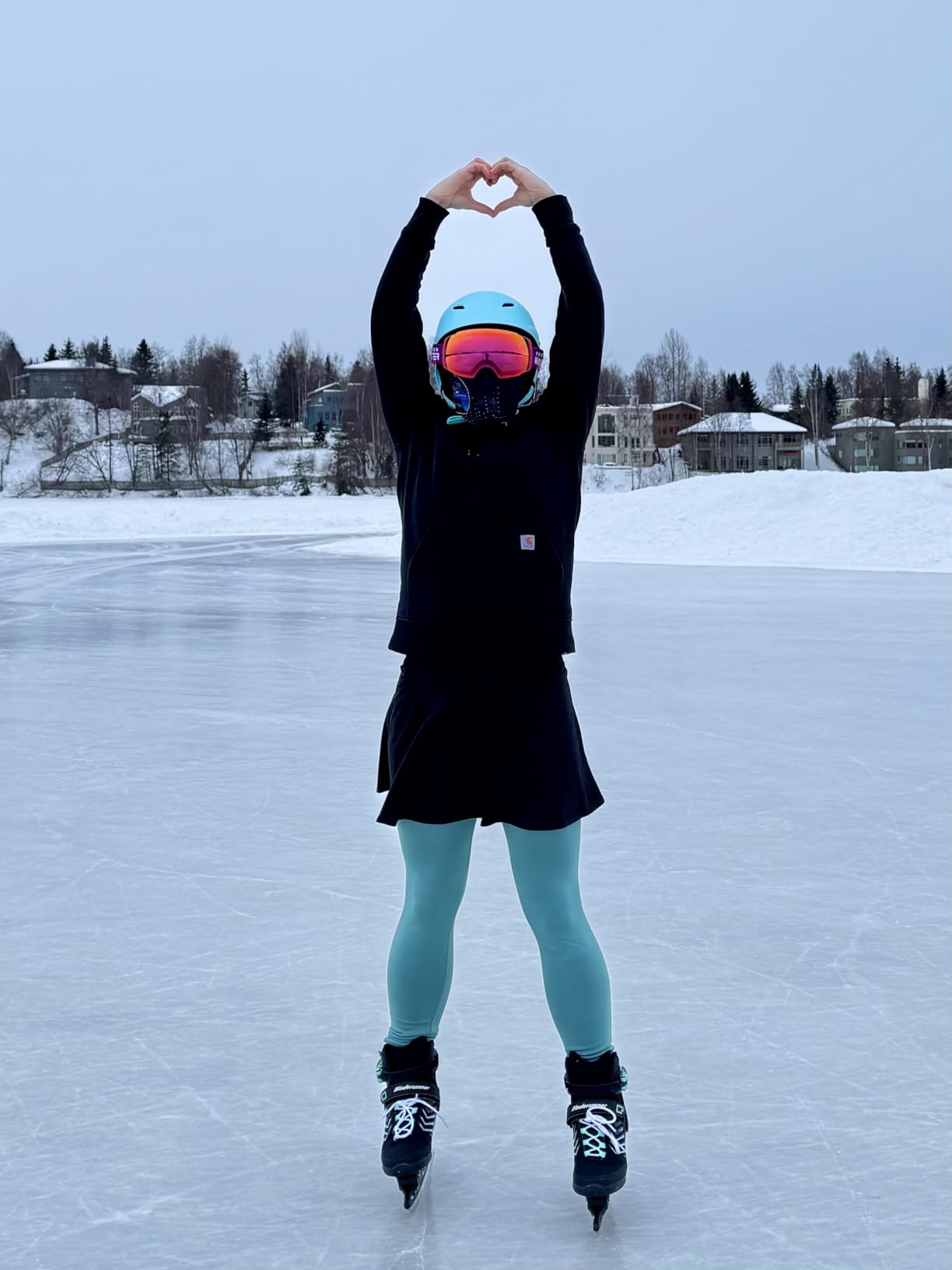
The dial adjustment makes fitting quick, which is more valuable than it sounds when you are standing in a car park in gloves. Venting is the strongest single feature here, with 14 individual vents giving noticeably more airflow than anything else on this list. That cuts both ways in the cold, since those openings become draft channels unless the liner and ear pads compensate, and they mostly do.
At 0.59 kg it is not the lightest shell here, but the weight is spread evenly and the fit dial keeps the centre of gravity close to your head. Twenty-two matte colour options are more choice than most premium brands offer, and the whole thing carries a one-year manufacturer warranty.
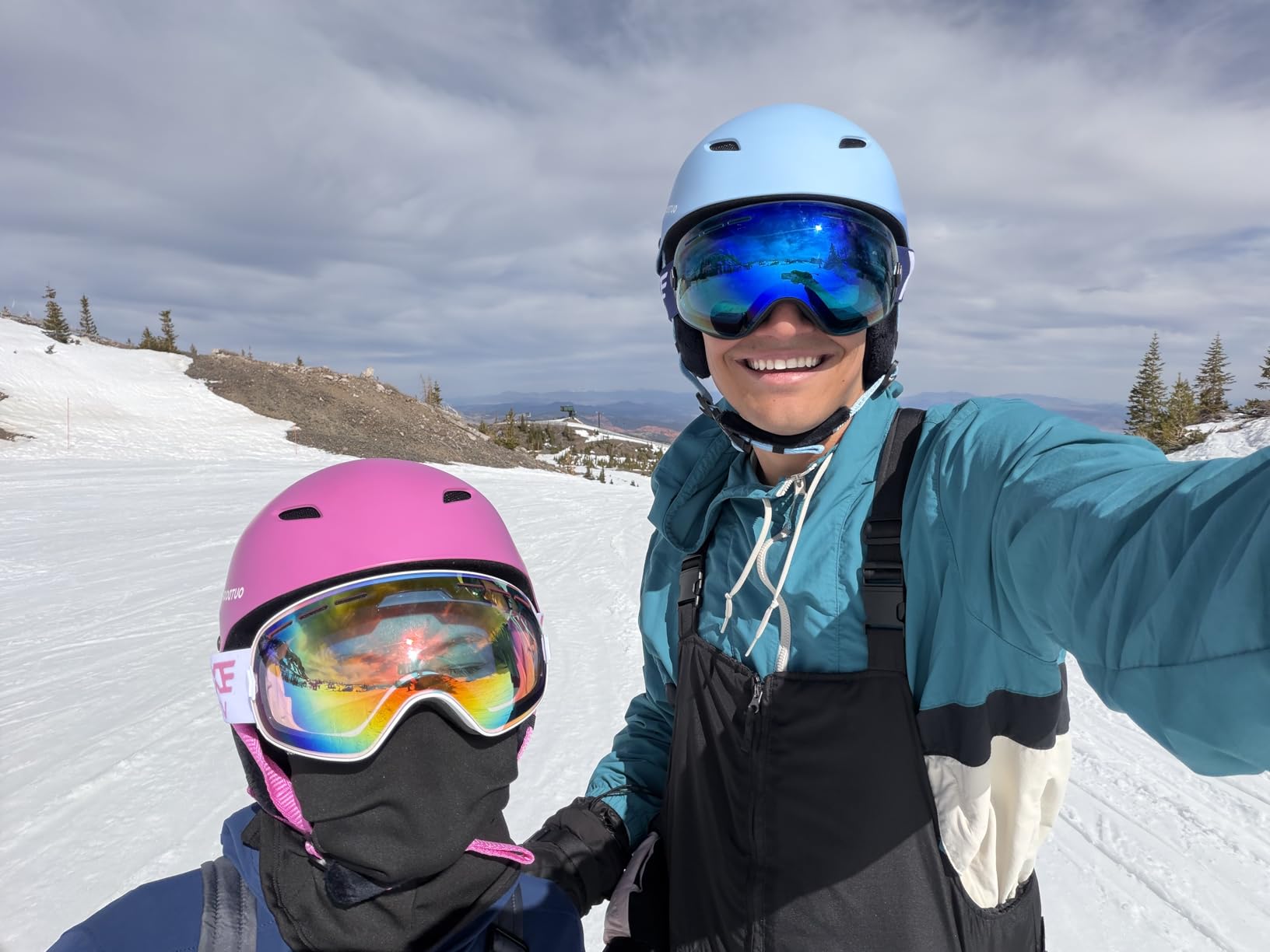
The honest drawback is bulk. The fleece liner and ear pads add real volume under the shell, and riders with a long or narrow head can feel the padding bunching at the temples. It also ranks near the top of the Snow Sport Helmets best sellers chart, which tells you how widely it is used and how much of the feedback comes from general riders rather than testers.
Who the OutdoorMaster Kelvin suits
It suits families buying for the first time, parents fitting helmets for kids and adults at once, and anyone who wants proven, well-reviewed warmth without stepping up to a protection premium. It is also the easy recommendation for a rental-season rider who intends to keep the helmet afterwards, since a cheap rental that does not fit is what pushes people to buy their own.
It also works for multi-use riders, since the shape reads more like a bike helmet than a low-profile ski shell, so it doubles as cold-weather commuting headgear for some people.
What to check before buying the OutdoorMaster Kelvin
Try it on over whatever thin layer you intend to wear underneath, because the liner plus ear pads already take up real space and a beanie on top of that combination will change the fit completely. Check for pressure at the temples after ten minutes rather than two, since padding that feels fine in a shop can press by the afternoon.
Also decide how you will use the vents. In deep cold, run them closed and rely on the fleece liner rather than assuming cooling airflow means a warmer helmet.
3. Giro Ratio MIPS: Best for Rotational Protection in the Cold
Giro Ratio MIPS Snow Helmet – Matte Indigo – Size L (59-62.5cm)
MIPS rotational protection
Hard shell construction
In Form Fit dial with 6cm adjustment
Thermostat Control venting
Pros
- MIPS protection at a mid-tier price
- In Form Fit dial gives 6cm of adjustment and works with gloves
- Fits a balaclava or thin ski cap without bunching
- Kept heads warm in single-digit and sub-zero conditions
Cons
- Bulky high-profile silhouette
- Ear pad padding can feel stiff
- Chin strap cushioning is stitched in place
The Giro Ratio MIPS is the answer when you want rotational-impact protection and you still care about warmth. It carries the MIPS (Multidirectional Impact Protection System) layer, which is designed to reduce rotational motion on an oblique impact, and pairs it with a hard shell over an EPS liner. In Form Fit gives up to 6cm of dial adjustment, which is a genuinely wide range and the reason it suits a lot of head shapes.
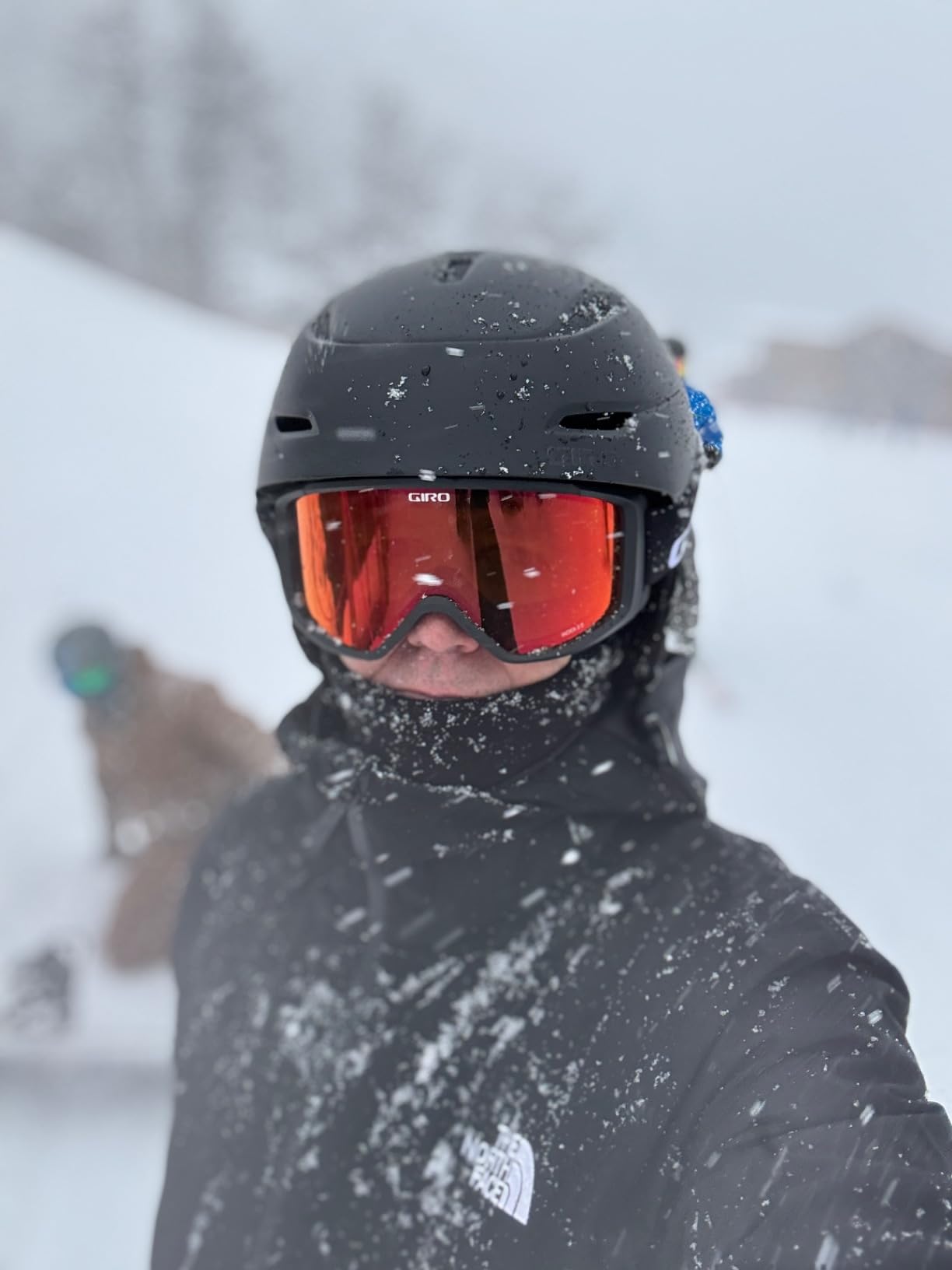
Reviewers specifically report keeping their heads warm in single-digit and sub-zero Fahrenheit conditions, and several note the fit works with a balaclava or a thin ski cap underneath without bunching. That is the specific combination most cold-weather riders are looking for: protection, plus room for a layer, plus a dial that still functions once the layer is on.
Thermostat Control adjustable venting lets you change airflow instantly rather than reaching for a slider, and the front Stack Vent sits in line with the goggle lens. Both can be dialled back when the temperature drops, which is why this earns a 4 out of 5 on our Warmth Scale despite the taller shell.
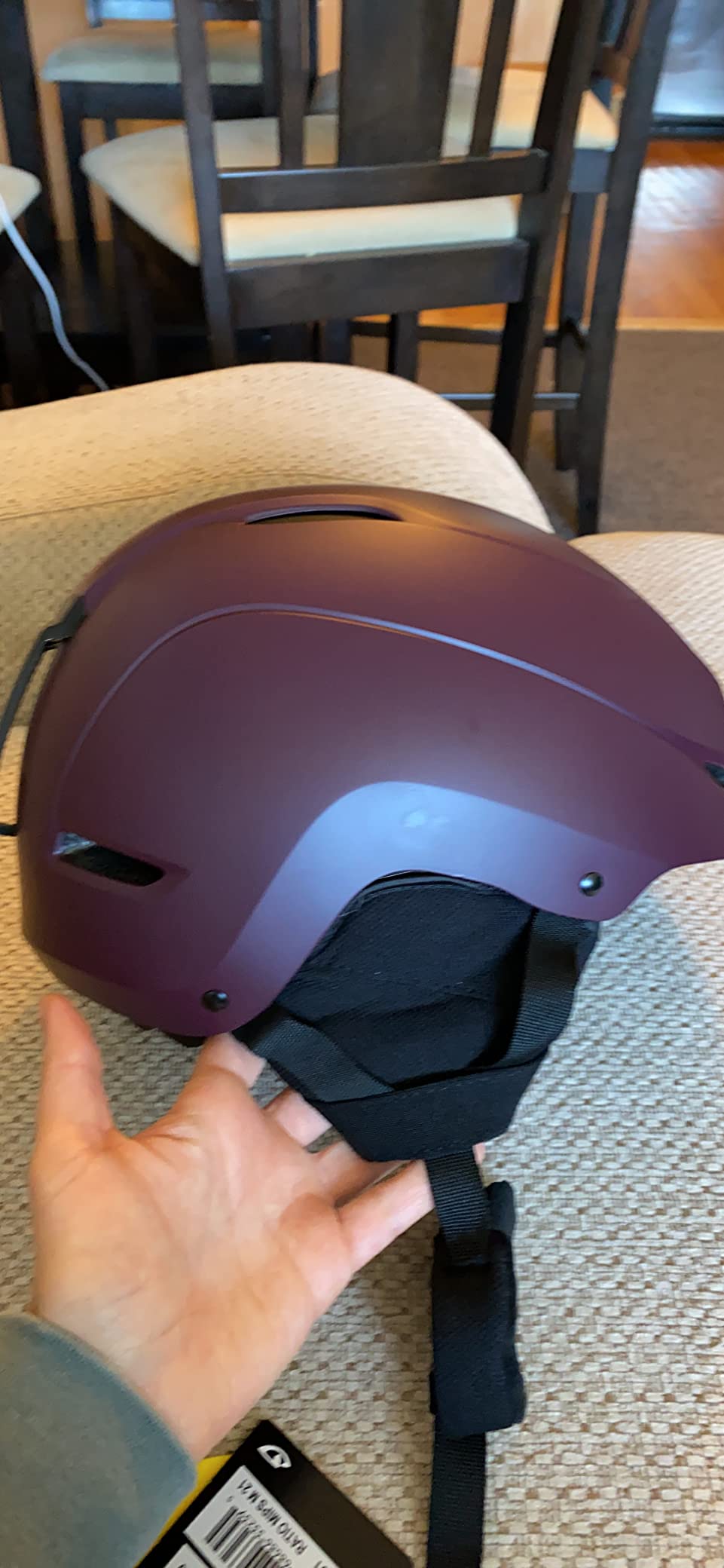
It is also compatible with aftermarket audio systems, so earbud-style speakers fit in the ear pad pockets if you ride with music. The most common complaint is cosmetic: the silhouette is tall and bulky, and some riders find the ear pad padding stiff at first. The stitched-in chin strap cushioning is fixed in place and cannot be repositioned, which matters if you ride with a chin cover.
Who the Giro Ratio MIPS suits
It suits cold-weather riders who have decided rotational protection is worth paying for, and who also wear a balaclava or thin cap on the deepest days. It is a good match for park riders and anyone who takes falls, where oblique impacts are more likely than straight-on ones.
It suits less well if you ride in a warm climate and want a low-profile shell, since the height of the design is noticeable under a hat and next to some goggle shapes.
What to check before buying the Giro Ratio MIPS
Check the 6cm dial range against your head, because that generous adjustment is the main reason this fit works for so many people. Then wear your actual goggles with it, because a taller shell changes where the brim meets the goggle frame, and that is the single most common source of temple pressure points.
Finally, confirm the ear pad stiffness works for you over a long day. Stiff padding usually softens, but not inside a four-hour cold morning.
4. SMITH Level MIPS: Best for Deep Cold with Maximum Protection
Smith Level Helmet for Men – Adult Snowsports Helmet with MIPS Technology + Zonal Koroyd Coverage – Lightweight Protection for Skiing & Snowboarding – Matte Black, Medium
MIPS with KOROYD
ASTM F2040 and CE EN 1077 Class B
20 AirEvac vents
Removable Snapfit SL2 ear pads
Pros
- MIPS plus KOROYD energy absorption
- 20 adjustable vents with AirEvac integration
- VaporFit dial gives 270 degrees of adjustment
- Removable Snapfit SL2 ear pads accept audio chips
Cons
- Highest price point in the roundup
- Smallest review base of the ten models
The SMITH Level MIPS is the deepest protection stack on this list, and the Warmth Score reflects the ear pad system rather than the shell. Snapfit SL2 ear pads are removable, which lets you take them out in spring and fit audio chips in their pockets when you want sound. On a storm day you leave them in, and they do a better job of sealing the ear gap than anything else here.
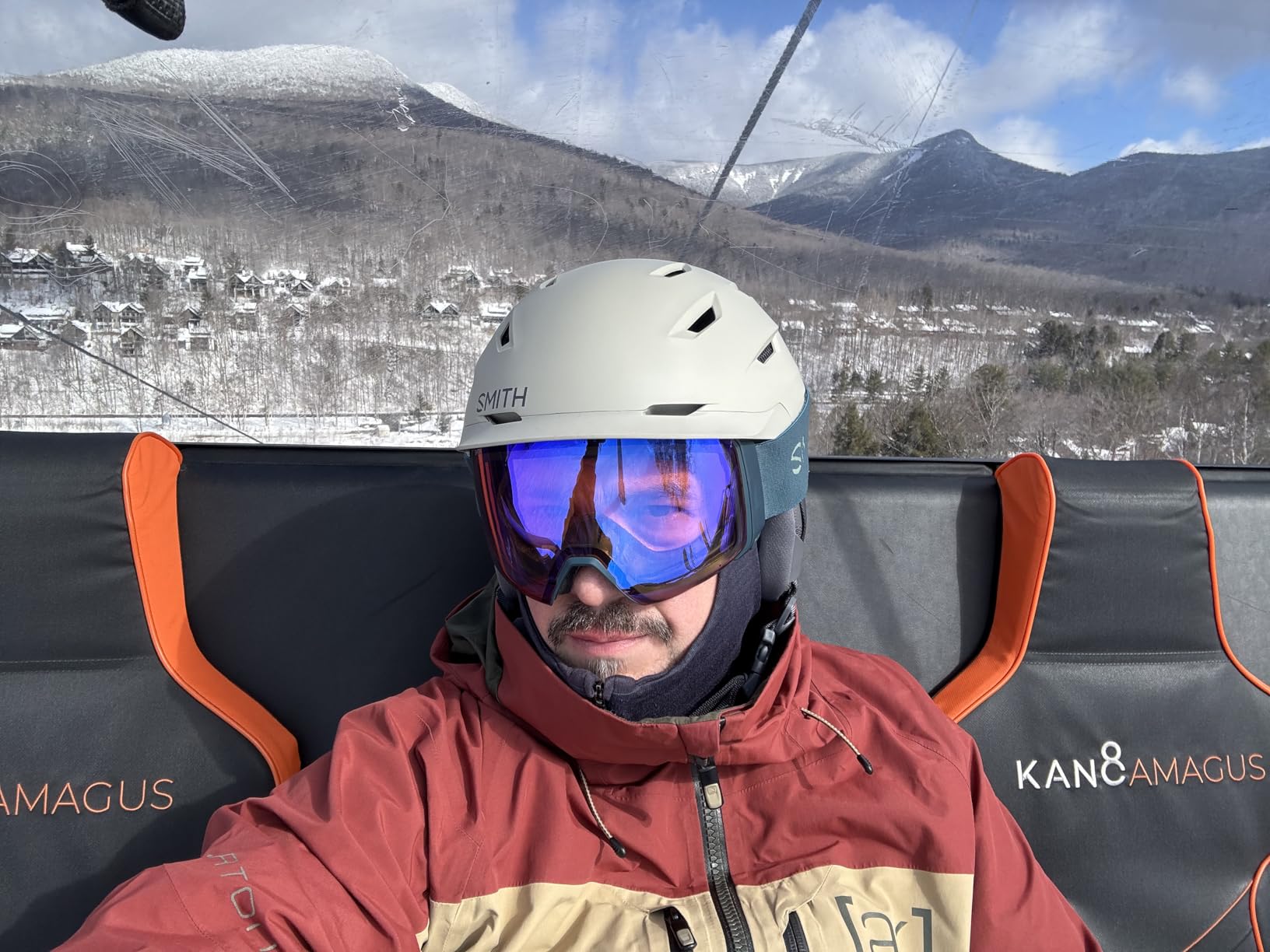
Protection runs through both layers that matter. It carries MIPS alongside KOROYD, the co-polymer tube structure designed to absorb energy across a wider area of impact, and it is certified to ASTM F2040 and CE EN 1077:2007 Class B. We cannot verify crash performance in a written review, but that dual certification and dual impact system is as close to a documented safety case as this category offers.
Venting is the most adjustable here, with 20 vents on the AirEvac system that pulls air through the goggle lens to keep it clear. VaporFit Snow dial gives 270 degrees of adjustment, so the fit is finely tunable rather than a coarse two-notch dial, and the Ionic+ sweat-activated lining handles long days and big exertion.
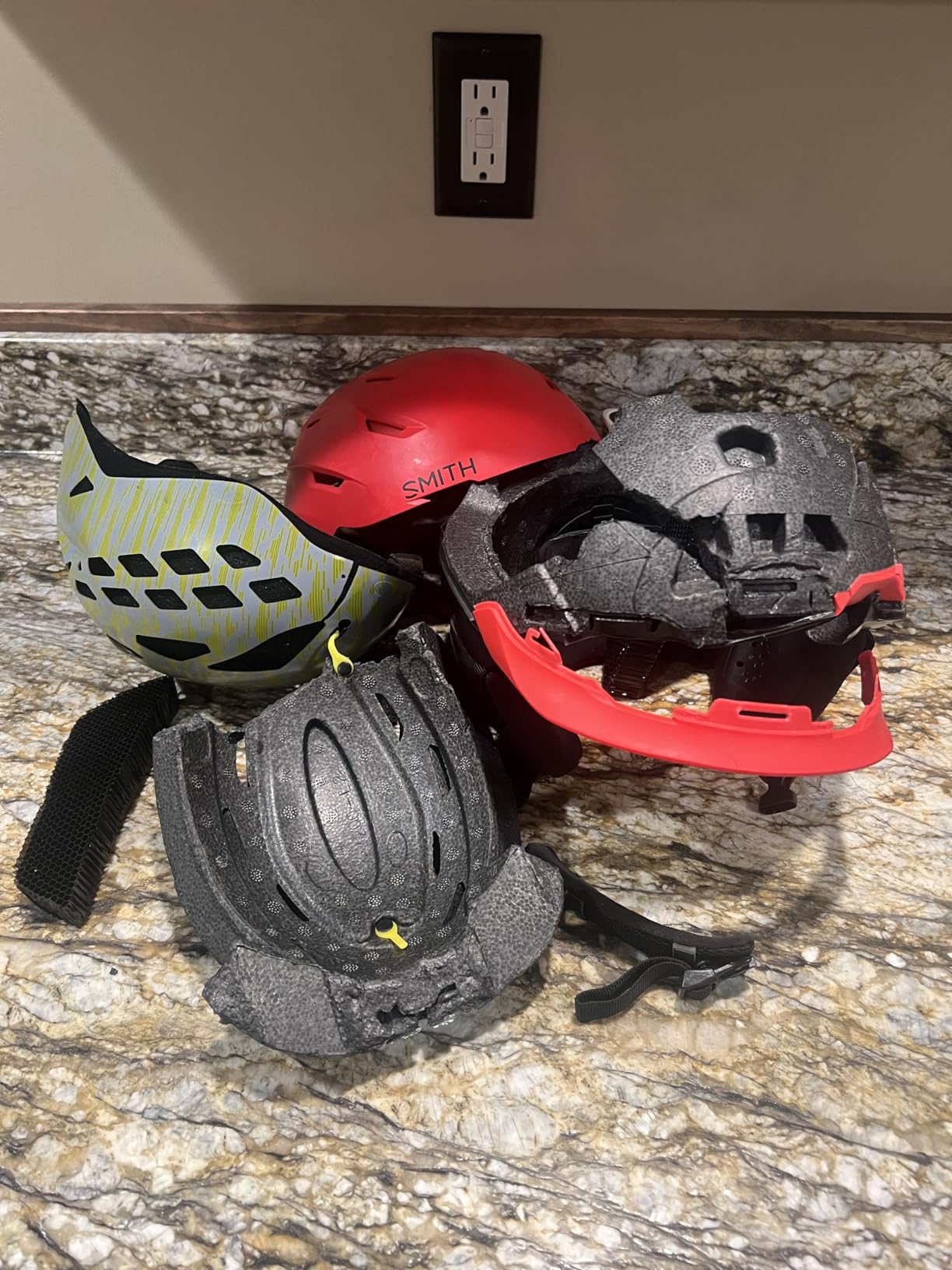
Two caveats. This helmet sits at the premium end of the price range in this roundup, which is the trade for the protection stack. And the listing data is inconsistent: the weight and recommended-use fields do not line up cleanly for a men’s snow helmet, so treat the published weight with caution. Ratings hold at 4.6 on a smaller review base than the others, so the track record is thinner.
Who the SMITH Level MIPS suits
It suits serious riders who spend days in genuinely cold, exposed terrain and who want the strongest documented protection available without moving to a full-face helmet. Parents buying one premium helmet for a child who is out every weekend will find the audio-chip compatible ear pads useful later, and the removable pads make it a three-season helmet rather than a winter-only one.
It is a poor fit for a rider on a tight budget, or for anyone who mostly skis sheltered tree runs where the protection budget is better spent on a layer system.
What to check before buying the SMITH Level MIPS
Try the VaporFit dial through its full range with gloves on, since 270 degrees of adjustment is generous and you want to know you can reach the tight setting without taking your gloves off. Then check the Snapfit SL2 pads seat flat over the ear opening rather than leaving a gap at the bottom.
If you ride with a helmet camera, bring it to the fitting. Camera mounts work better on a shell with a flatter, lower brim profile.
5. Giro Jackson MIPS: Best Low-Profile Helmet That Still Handles Cold
Giro Jackson MIPS Snow Helmet – Matte Black/Silencer Camo – Size M (55.5-59cm)
MIPS protection
In-mold polycarbonate shell
200 g shell weight
In Form 2 fit with 6cm adjustment
Pros
- MIPS protection in a 200 g shell
- In Form 2 dial adjusts tilt so goggles sit properly
- Reviewers report warm enough at -10C
- Low-profile shape avoids a mushroom-head look
Cons
- Built-in ear muffs let wind through for some wearers
- Chin strap cushion stitched in place
- Strap clip narrow for very wide goggle straps
At 200 g the Giro Jackson MIPS is the lightest shell in this roundup, and the low profile is the reason to buy it. It is an in-mold construction, fusing a polycarbonate shell directly to the impact-absorbing foam liner, which removes the extra bonding layer a hard shell carries. In snow that means less bulk over your ears, and a helmet that disappears under a hood or a low-profile goggle.
Warmth is the surprising part. Owners report it being warm enough at -10C without a hat or an extra liner, which is why it scores 4 out of 5 here despite the light shell. The In Form 2 Fit System gives 6cm of circumference adjustment plus vertical tuning, and that tilt control is what keeps the goggle frame sitting where it should instead of being pushed up into your brow.
MIPS handles rotational impact, and the Passive Aggressive Venting System channels interior air through the shell to keep lenses clear without a large external vent grille that would spoil the profile. A TPU injected brim adds structure at the front edge.
Who the Giro Jackson MIPS suits
It suits advanced riders, tourers and anyone who cares about helmet weight and profile, since 200 g is a real difference over a full day and over a climb. It is also the pick for riders who wear a hood over their helmet or prefer a slim silhouette that works with smaller goggle frames.
It suits cold riders at moderate temperatures well, but the built-in ear muffs are the weak point, since some wearers report wind getting through them in exposed wind. If you ride in sustained deep cold above that range, the SMITH Level or the Giro Ratio handles it better.
What to check before buying the Giro Jackson MIPS
Check the goggle pairing carefully, because the low brim changes the contact patch. The strap clip is narrow, so very wide goggle straps may not sit fully captured, and that is worth checking with your own goggles rather than assuming.
Then confirm the ear muff coverage with wind on your face, since the muffs are built in rather than removable and you cannot solve the problem later with a different pad.
6. Oakley MOD1: Best Helmet for Touring, Weight and Buckle Handling
Oakley Snow-Helmets MOD1 Large
BOA 360 fit system
Fidlock magnetic buckle
300 g shell
Brim and goggle venting
Pros
- BOA 360 dial gives a precise even fit
- Fidlock magnetic buckle closes with mittens on
- 300 g lightweight shell
- Machine-washable removable liner and ear pads
Cons
- Snug fit makes a beanie hard to wear underneath
- Ear muffs are not detachable
- Ear muff angle can leave ears exposed in cold wind
The Oakley MOD1 is built around two pieces of hardware that matter more in the cold than most people expect. The Fidlock magnetic buckle closes and releases one-handed with mittens on, and it will not pop open on a lift or a fall, which removes the single most common reason people end up with a helmet hanging from their chin strap all day. The BOA 360 fit system dials the shell evenly rather than pinching at one point.
At 300 g it is the second lightest shell here, which is the case for tourers. Ski touring and splitboarding add weight to a pack where lift-served riders never do, and 300 g is close to the practical floor for a certified snow helmet with a brim.
Warmth is a 3 out of 5 here for a specific reason. The liner and ear pads are removable and machine-washable, which helps across a season, but the ear muffs themselves are not detachable, and the muff angle can leave the top of the ear exposed when wind comes across a ridge. Owners also note the fit runs snug, which is excellent for seal and bad if you plan to wear a beanie underneath.
Ventilation is fixed at the top, with brim and goggle venting for anti-fog performance, so you cannot dial airflow down in the cold the way you can on the Giro Ratio or the SMITH Level. The polycarbonate outer shell over EPS keeps the profile low and the weight down. A travel bag is included, which is a small thing that matters if you are carrying it on a tour.
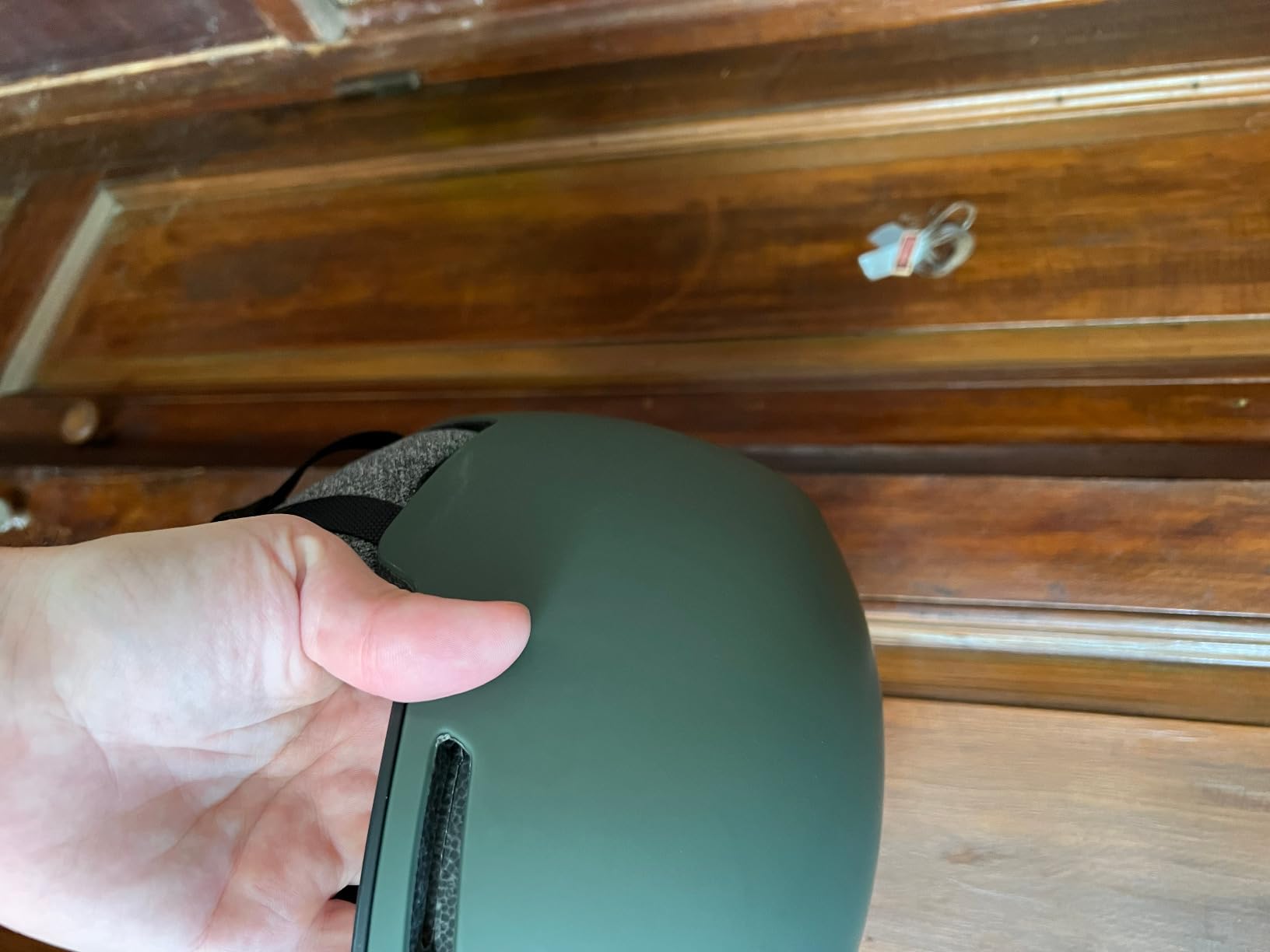
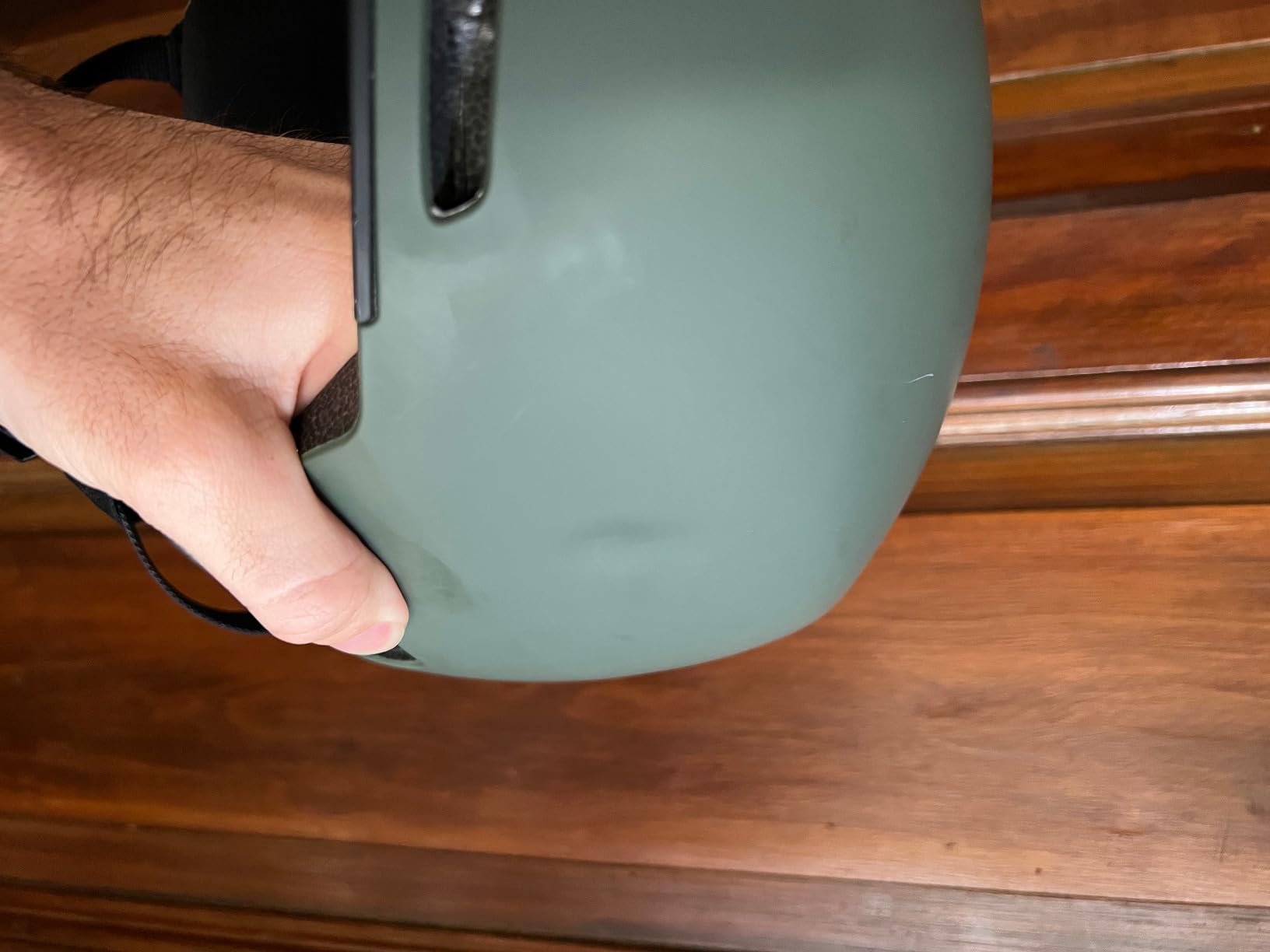
A few buyers also reported a dented shell on arrival, which reads as an inconsistent quality-control issue rather than a design flaw, but it is worth photographing your helmet on the day it lands. Ear pad pockets work with snowboard-style headphones, and the helmet pairs tightly with Oakley goggles to block wind and snow at the brow.
Who the Oakley MOD1 suits
It suits tourers, splitboarders and riders who wear goggles over prescription inserts, because the low shell profile and the even BOA fit leave room where a bulkier helmet would not. It also suits anyone who hates fumbling a buckle in gloves, and the magnetic closure is the reason more than one reviewer singles it out.
It is a weaker choice for anyone riding in sustained deep cold, because the fixed venting and non-detachable ear muffs give you fewer ways to seal the helmet down. Pick a different model if that is your climate.
What to check before buying the Oakley MOD1
Check how tight the fit is with the liner in, since a snug shell that seals well also resists a beanie. If you plan to ride with a thin cap underneath, test that combination in the shop rather than at the base of a lift.
Inspect the shell on arrival, and confirm the brim venting lines up with your goggle frame so the anti-fog benefit actually reaches the lens.
7. Retrospec Comstock: Best for Families and Adjustable Cold-Weather Comfort
Retrospec Comstock Ski Helmet – Snowboard Helmet for Adults & Youth – Adjustable Fit Snow Helmet with Protective Shell and Breathable Vents for Men, Women, Boys & Girls
Fleece-lined detachable ear muffs
ABS shell with EPS foam
ErgoKnob dial and goggle clip
10 vents with mesh cap
Pros
- Fleece-lined detachable ear muffs come off in milder weather
- ErgoKnob dial adjusts quickly with gloves on
- Moisture-wicking mesh cap controls moisture and heat
- Works as a cold-weather bike or scooter helmet
Cons
- High dome profile looks bulky
- Runs small so the dial may need loosening fully
- Ear muffs are stiff to remove
- Can interfere with over-ear headphones
The Retrospec Comstock is the family pick, and the reason is the ear muff system. The muffs are fleece-lined and detachable, which is exactly the design cold-weather riders ask for: full coverage on a January morning, off by March. Fleece lining also does something a thin foam pad cannot, which is blocking wind at the ear rather than simply cushioning it.

Sizing runs from S at 52 to 55 cm through L at 59 to 62 cm, which covers most adults and older kids in one range, and that matters when you are fitting a family in one trip. The ErgoKnob dial adjusts quickly and works with gloves, and the goggle clip is glove-friendly, which is a real convenience when everyone is fumbling with straps in a car park.
Moisture management is handled by a netted mesh cap that wicks sweat away plus 10 vents, which is the part that decides whether a warm helmet stays comfortable over a long day. Warm helmets fail on sweat before they fail on cold, and a sweaty head in a damp liner is a cold head by lunch.
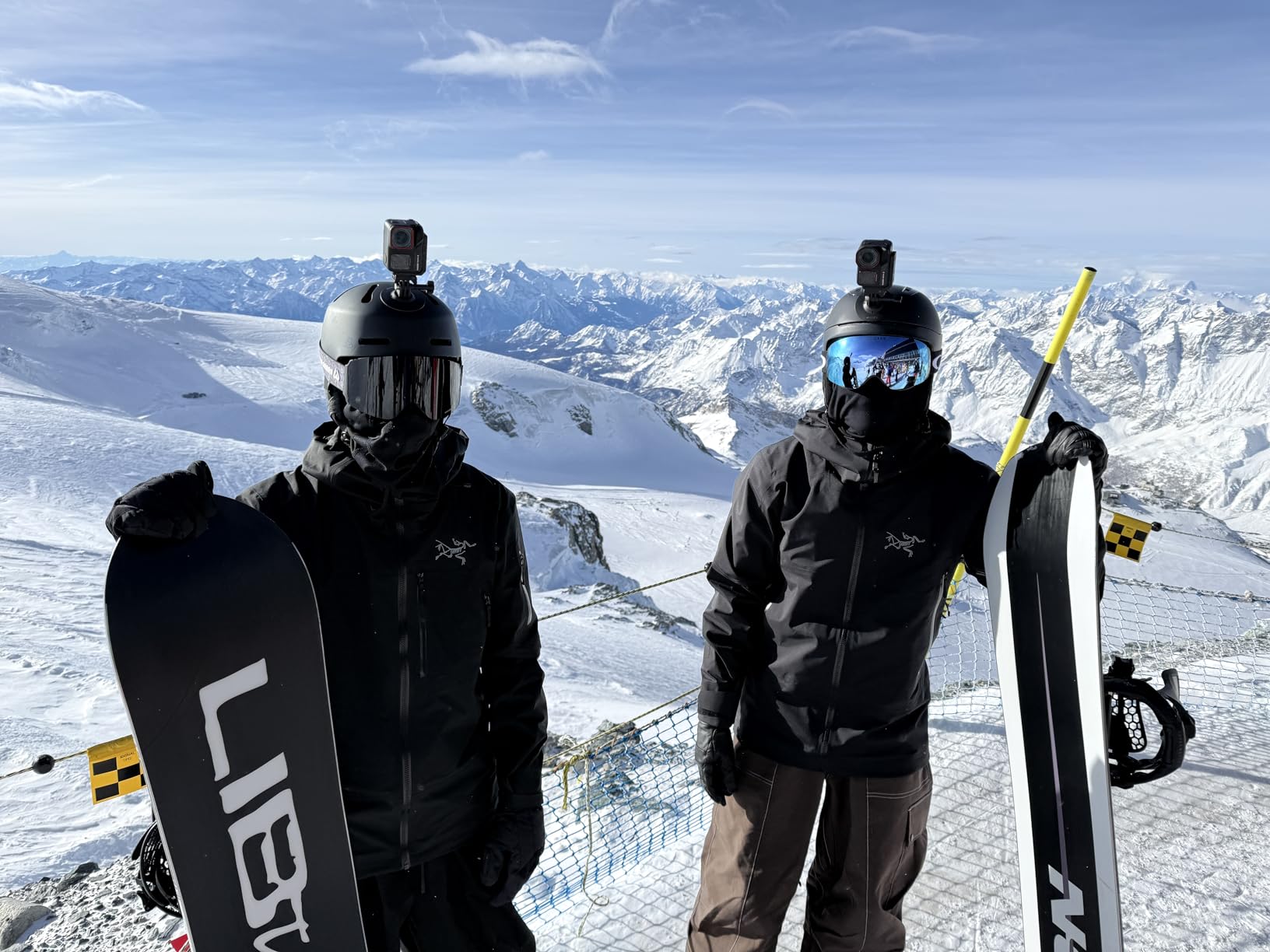
It is also listed for cycling and scooter use, so a lot of riders end up with one certified helmet for both cold-weather commuting and the mountain, which is useful if you are not buying two. The trade-offs are real though. The dome profile is tall and rounded, which looks bulky and catches wind, and several buyers report the fit runs small enough that they needed the dial loosened to its limit. The ear muffs are also stiff to pull off and can clash with over-ear headphones.
Who the Retrospec Comstock suits
It suits households buying for more than one person, parents covering kids and adults from a single size run, and riders who want one helmet for driving to the hill and skiing once they get there. Anyone who swaps layers through the season will appreciate detachable fleece-lined muffs more than almost any other feature.
It suits less well for a rider with a very long or very round head, because the dial range may not close the gap once the muffs are on. Measure first.
What to check before buying the Retrospec Comstock
Measure your head circumference before ordering and compare it against the size chart, because this model skews small for a number of buyers. Then check that the dial reaches your measurement with the muffs installed, not with them removed.
If you ride with over-ear headphones or a helmet-mounted camera, test both in the shop, since the muff shape and the tall dome can interfere with either.
8. InnerKing Adult Helmet: Best for Big Heads and Wider Sizing
InnerKing Adult Ski & Snowboard Helmet,360°Adjust Helmets for Men Women
ASTM F2040 and EN1077 certified
360 degree rear fit dial
Removable liner and ear pads
Quick-release buckle
Pros
- Very light at about 0.9 lb
- 360 degree rear dial makes fit adjustment quick
- Meets ASTM F2040 and EN1077 standards
- Removable liner adds warmth and comes out in warm weather
Cons
- Open-face shell gives less coverage than full-shell designs
- PC shell feels less rigid under hand pressure than ABS
If long heads are your problem, sizing is where this helmet separates itself. It runs from S at 20.47 to 21.65 inches all the way up to XL at 24.4 to 25.59, which is one of the widest size runs available, and the 360-degree micro-adjustable rear dial makes fine tuning straightforward. Big-head riders frequently find that a medium is the only size on the shelf in a short model, so a genuine XL is worth hunting for.
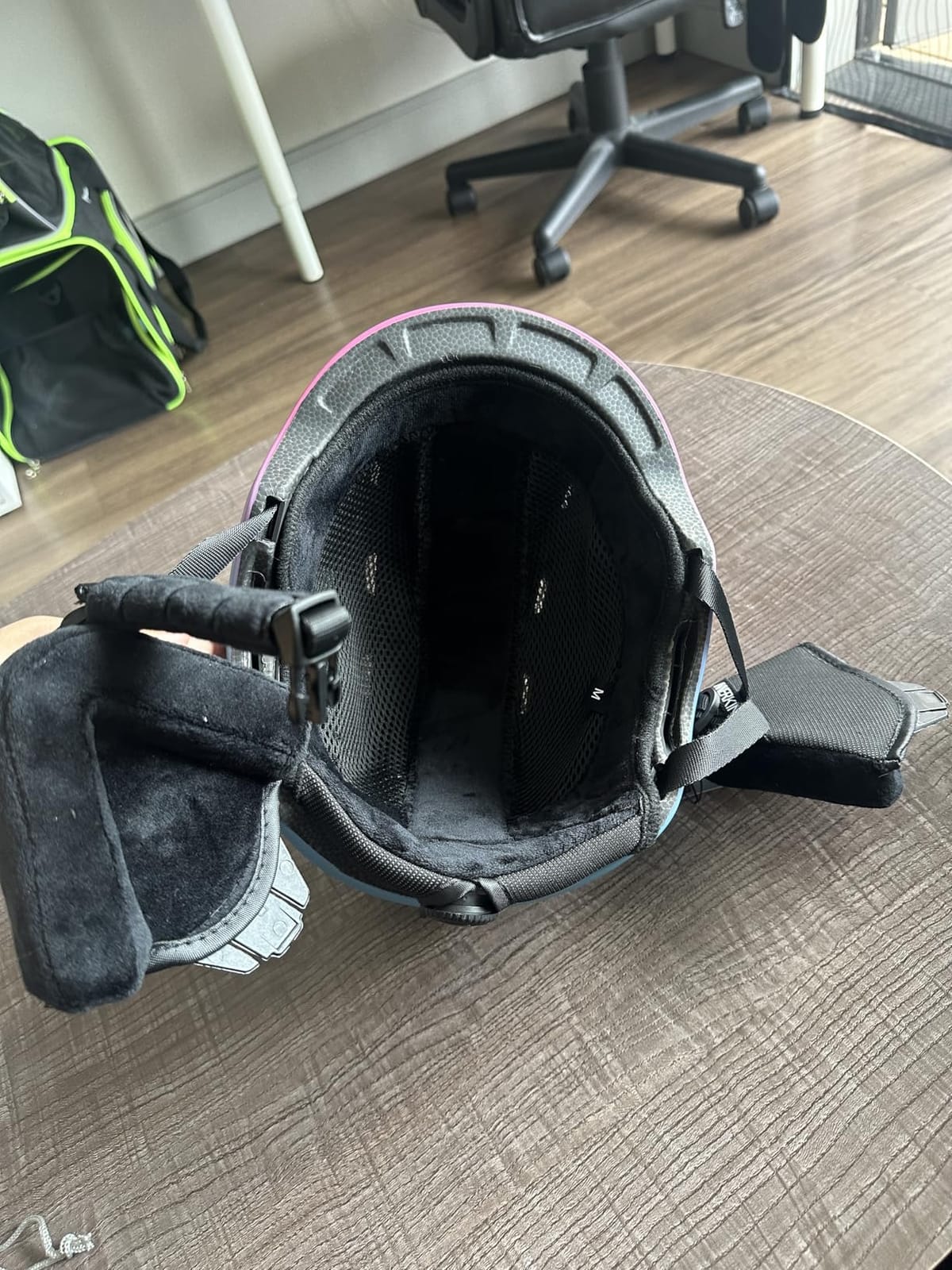
Weight is the other argument. At 0.37 kg it is among the lightest certified shells here, and owners consistently call it comfortable for full days, which in cold weather means it disappears rather than pressing. The quick-release buckle closes one-handed, and 10 vents move air through the goggle area to help keep the lens clear.
It meets both ASTM F2040 and EN1077 standards, so you get dual certification documented on the listing rather than implied. The removable liner and ear pads let you strip the insulation back for spring, which is the seasonal swing that matters in most climates.
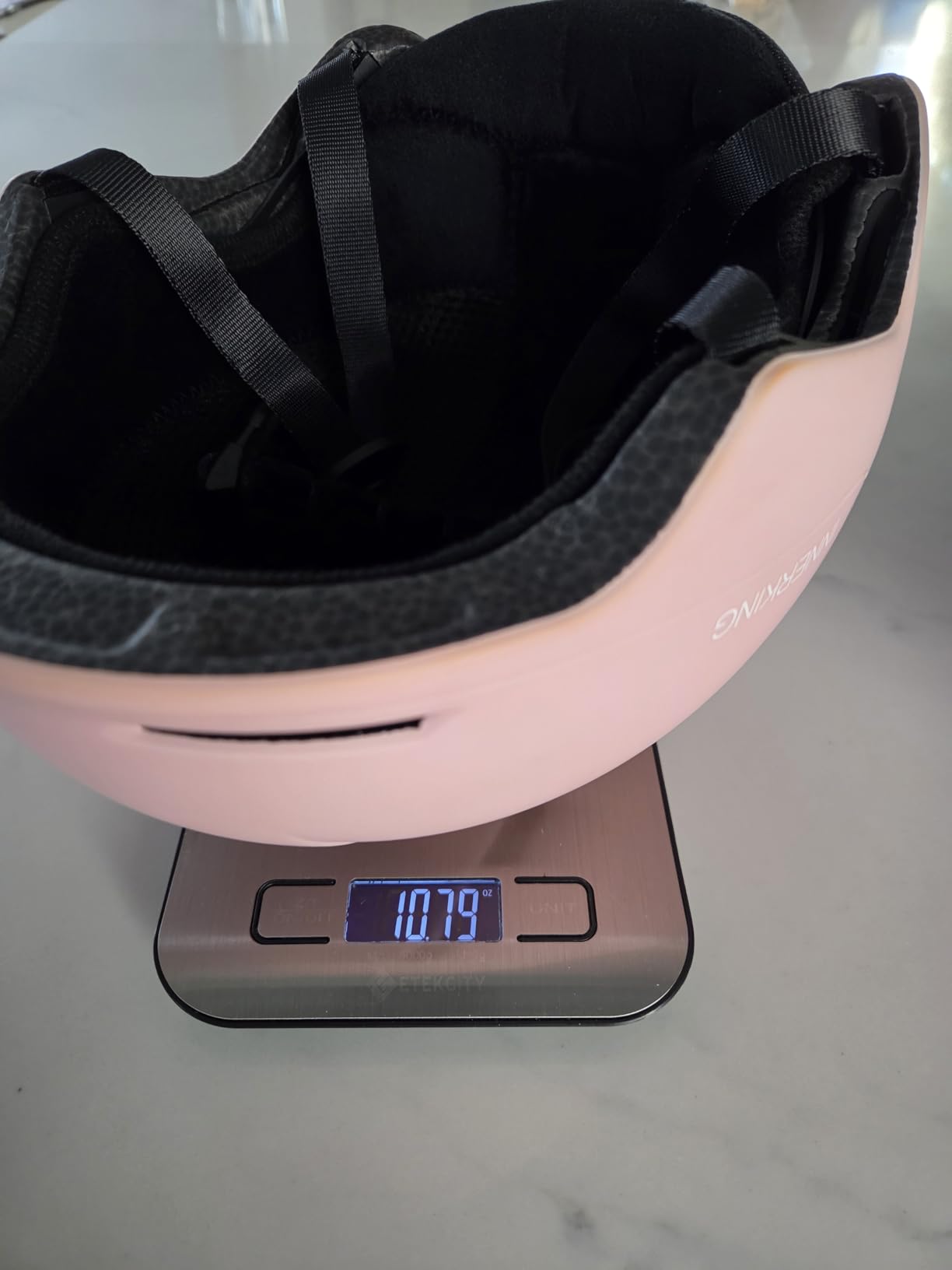
The shell is polycarbonate rather than ABS, and while that keeps the weight down, reviewers note it feels less rigid under hand pressure. The open-face profile also gives less side and rear coverage than a full-shell design, which is a genuine cold-weather consideration because those are the surfaces wind hits first on a chairlift.
A carry pouch and box are included, which is a nice touch for a commuter who wants the helmet in a pack. The Warmth Score lands at 3 out of 5 because the removable liner earns points while the open-face coverage costs some.
Who the InnerKing helmet suits
It suits long-head and large-head riders, which is an underserved fit problem, and anyone who wants one of the lighter certified shells without giving up dual certification. It also works as a cold-weather commuting or bike helmet, which widens how often it gets used.
It is not the pick for someone whose cold comes from wind on the sides of the head. A full-shell or brimmed design blocks that far better than an open-face profile.
What to check before buying the InnerKing helmet
Measure around the widest part of your head and above your ears, then check that number against the size chart before anything else, because the size run is only useful if you pick the right one. Then confirm the rear dial has enough range left to tighten at that size.
Press the shell at the sides with your thumb. If you want a rigid feel and do not mind the weight, an ABS shell such as the Giro Ledge or the RIOROO is a better match.
9. Odoland Ski Helmet: Best for Controlling Warmth With Your Vents
Odoland Ski Snowboard Helmet for Adults & Youth, Snow Helmet for Men & Women, Slide Adjust Ventilation, Safety Certified, Goggles Compatible Protection for Skiing, Coffee Brown, L
Slide-adjust ventilation with 8 vents
Adjustable dial fit
Plush padding and soft ear cups
Goggle clips
Pros
- Slide-adjust vent control lets you close vents for warmth
- Highest average rating in this roundup
- Plush padding and soft ear cups for long days
- Goggle clips hold firmly and help prevent fogging
Cons
- No stated MIPS rotational-impact system
- No formal safety certification quoted in the listing
- PC shell is lighter but less rigid than ABS
The Odoland earns its place on one feature: a slide-adjust ventilation slider. On this roundup almost every other helmet gives you either a fixed vent or a multi-position control, and this one lets you close the openings down in a single movement when the wind gets up. For a cold-weather rider who runs warm on climbs and cold on descents, that control is worth more than another gram of insulation.
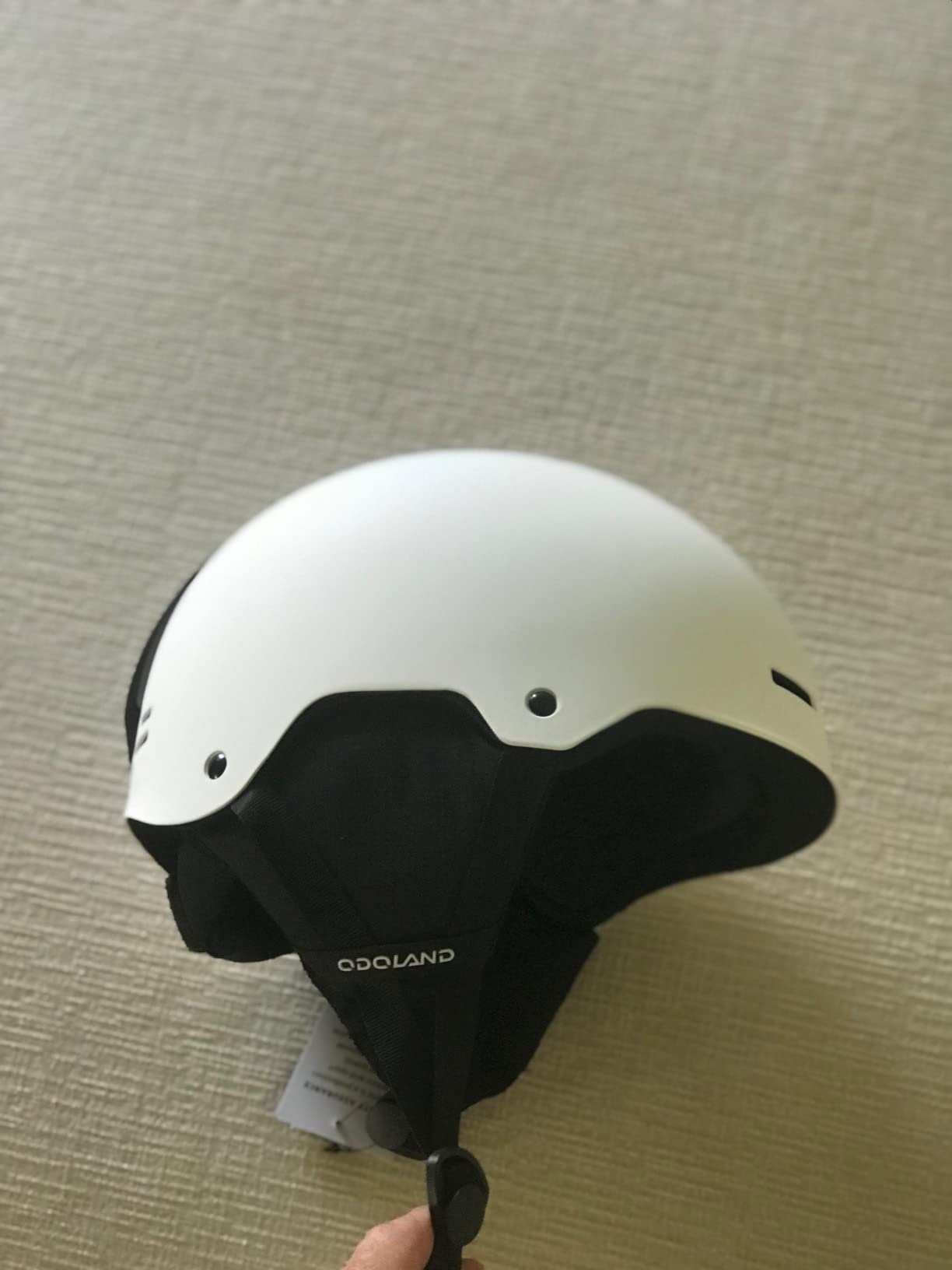
Buyers rate it very highly, and it carries the highest average rating in this roundup with a large share of five-star scores. The praise concentrates on comfort, dial fit, and the ability to shut the vents and stay warm, which is the exact behaviour a cold-weather buyer wants to hear about.
Underneath, a shock-resistant polycarbonate shell is fused with EPS foam, with plush padding and soft ear cups that stay comfortable across a long day, plus goggle clips that hold the goggles firmly and help limit fogging. It comes with a drawstring storage bag, and it is offered across a wide size range including youth fits.
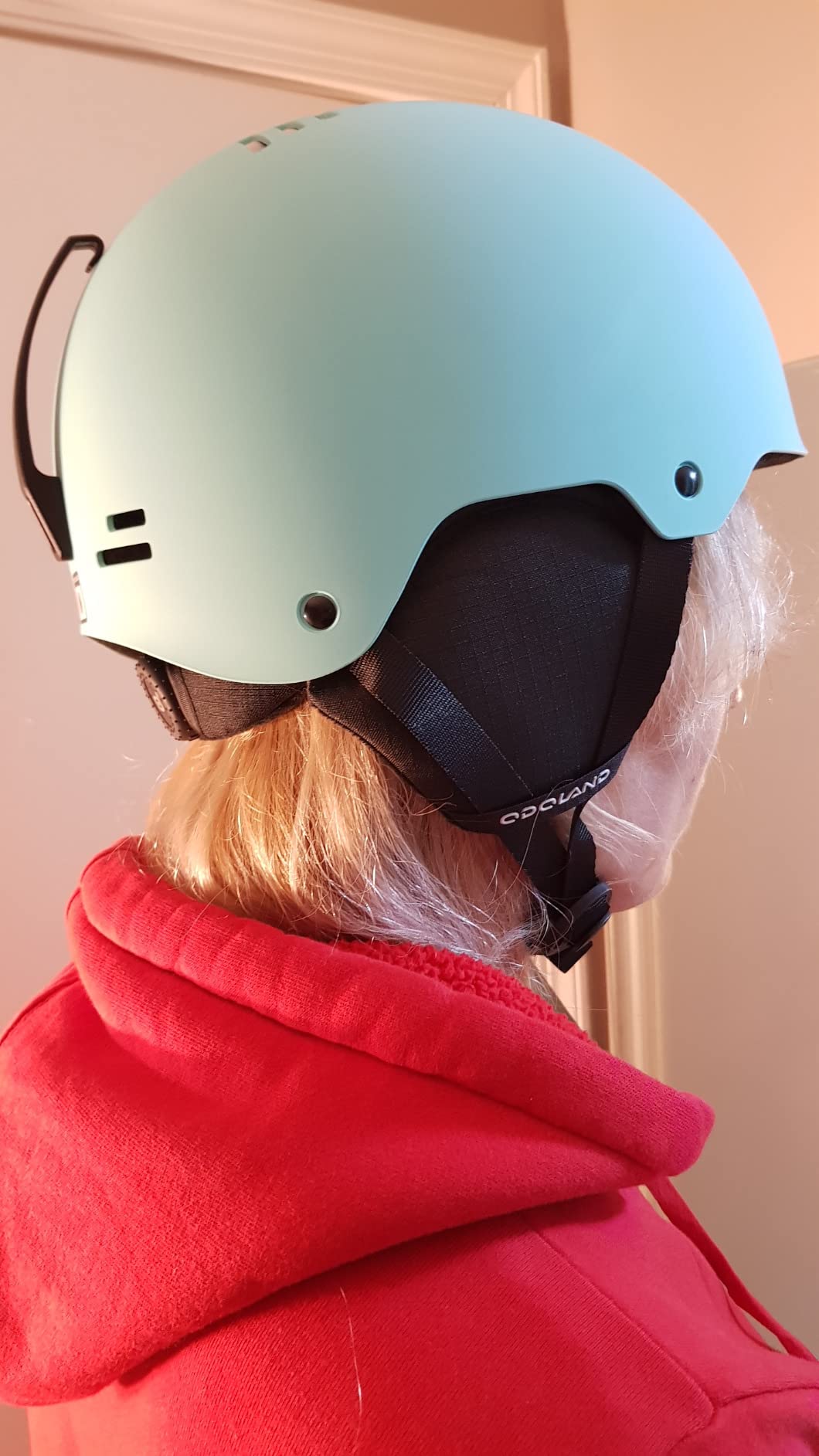
Two real caveats sit alongside that rating. There is no stated MIPS rotational-impact system, and the listing does not quote a formal safety certification, which means you would be relying on the product’s compliance rather than on a certification mark you can check at a shop. The polycarbonate shell is also lighter and less rigid than the ABS shells on the Giro models.
At 0.69 kg it is one of the heavier shells here, which is the trade for the plush interior. The Warmth Score lands at 3 out of 5 because the ear cups seal well but there is no removable liner listed.
Who the Odoland helmet suits
It suits riders who run hot on lift-served days and cold on exposed ridges, because the slide control lets you change the helmet rather than the layer underneath. It also suits anyone shopping for a youth fit in the same trip as an adult, given the size range and included carry bag.
It is a weaker choice for a rider who wants a documented certification mark and rotational-impact protection on a helmet they will use in terrain where falls are likely.
What to check before buying the Odoland helmet
Ask to see the certification mark inside the shell before you buy, and check the shell feels rigid enough for you under hand pressure. Then work the vent slider with gloves on to confirm it is genuinely one-handed.
Because there is no listed liner, plan on adding a low-profile beanie or balaclava for the coldest days rather than expecting the helmet to do it alone.
10. RIOROO Ski Helmet: Best Certified Entry Helmet for Cold Weather
RIOROO Ski Helmet for Women Men, Safety Certified Snowboard Helmet with Shockproof ABS Hard Shell for Adults & Youth
CE EN 1007 and ASTM F2040-18 certified
Removable thermal liner and ear pads
12 vents channel air through goggles
Size adjustment dial
Pros
- Dual CE EN 1007 and ASTM F2040-18 certification
- Removable washable thermal liner and ear pads
- 12 vents move air through the goggles to limit fogging
- Dial adjustment makes sizing straightforward
Cons
- Open-face design gives less side and rear coverage
- Basic styling with few colour and size options
The RIOROO is the budget option that still shows you its paperwork, and that matters more here than styling. It is certified to CE EN 1007 and ASTM F2040-18, so the compliance is documented rather than assumed, and it adds a removable, washable thermal liner plus removable ear pads. That combination of documented certification and removable insulation is rarer at this end of the market than it should be.
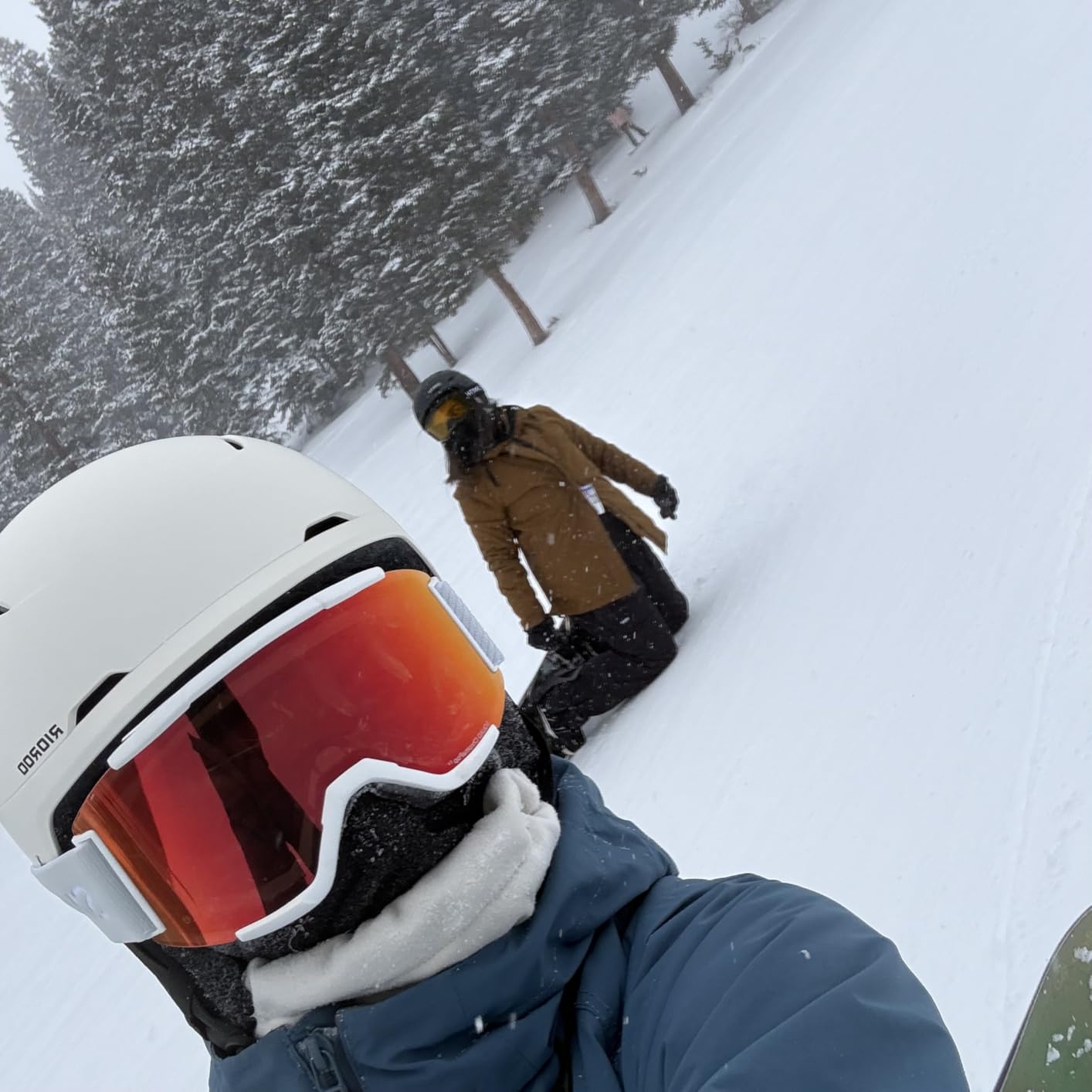
Twelve vents move air through the goggle area to limit fogging, which is the most useful thing a cold-weather rider can ask for from a vent system. A helmet that fogs the lens forces you to stop and clear it, and a stopped rider in sub-zero air gets cold fast.
The size adjustment dial makes fitting straightforward, and buyers rate it well for exactly that reason, alongside the warmth from the removable liner. It carries a one-year warranty.
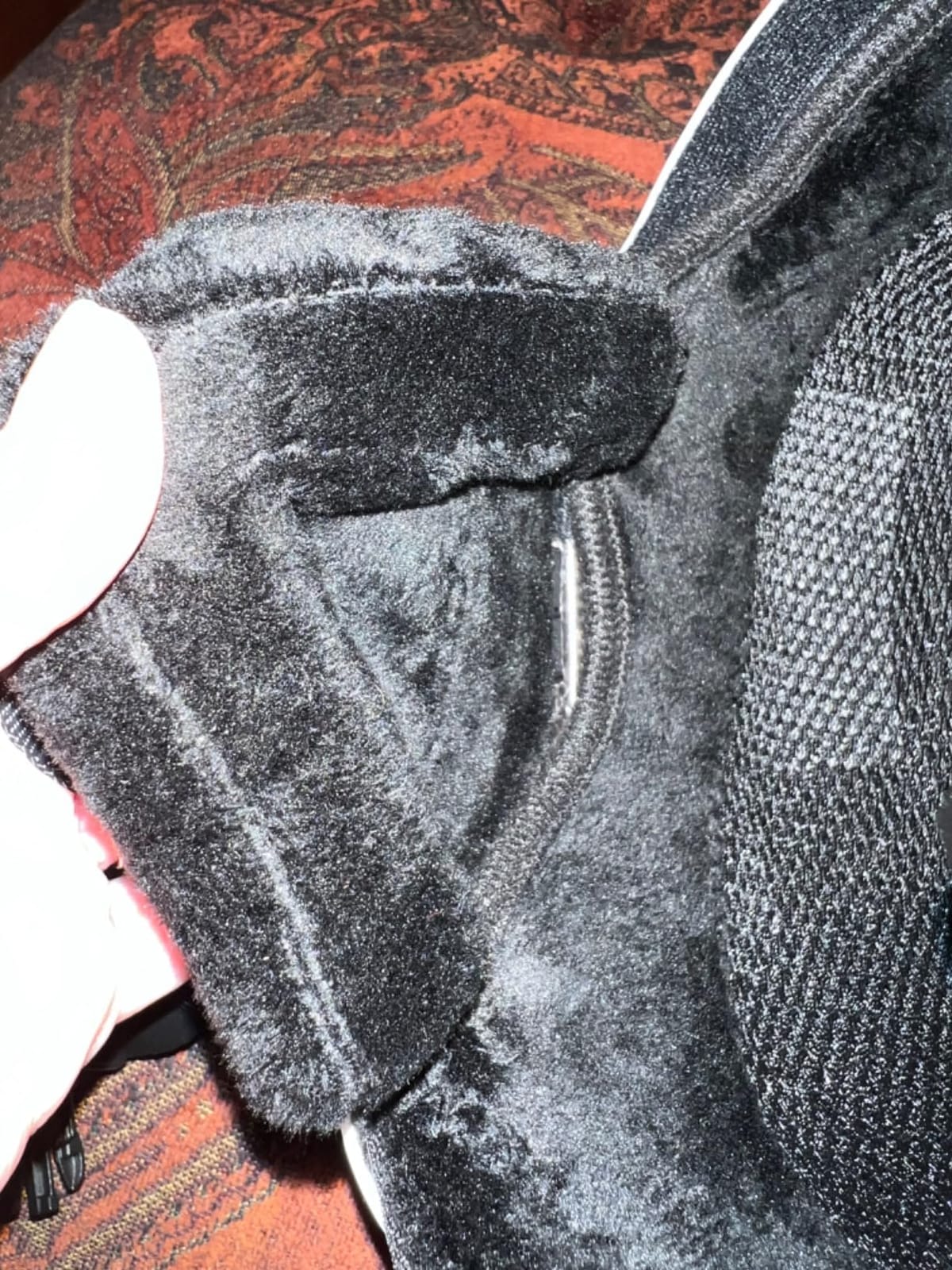
The limitation is coverage. It is an open-face design, so there is less shell over the sides and back of the head than a full-shell or brimmed model, and that is precisely where cold wind finds its way in on an exposed lift. Colour and size options are also thin compared with the helmet that sits at the top of this list on review volume.
Score it 3 out of 5 on warmth: the removable thermal liner earns points, and the open-face shell gives some back. The dial adjustment means it fits a range of head shapes, which partly offsets the narrower coverage.
Who the RIOROO helmet suits
It suits a first-time buyer who wants a documented safety standard and a removable liner without stepping up, and anyone who rides a moderate cold climate rather than sustained deep cold. It also suits riders on a tight budget who still want vents that actively move air through the goggles.
It is a poor match for exposed alpine terrain, night skiing, or anyone whose cold comes from wind across the sides of the head rather than from the temperature alone.
What to check before buying the RIOROO helmet
Check the certification markings on the shell itself, and check the ear pad coverage with wind across your face, because the open-face profile is where this helmet will give ground. Then confirm the thermal liner seats flat and is not loose enough to shift under the shell.
If you are between sizes, dial the adjustment fully before judging the fit, because the range is generous and the fit changes as you turn it.
Why a Safe Helmet Still Leaves You Freezing
Because the foam that makes a helmet safe is designed to absorb one hard impact, not to hold heat. Expanded polystyrene, or EPS, is a rigid bead foam that crushes once and stays crushed. Expanded polypropylene, or EPP, is the multi-impact version that can take repeated knocks but is not meaningfully warmer. Neither traps air the way fleece, wool or a thermal knit liner does.
That is why two helmets with identical safety certifications can feel completely different on a cold chairlift. Warmth comes down to three things you can actually inspect in a shop: how much shell covers your ears and temples, what the ear pads and liner are made of, and whether you can close the vents down when the wind picks up.
To make this comparable across ten very different helmets, we score each one on a Warmth Scale from 1 to 5. A score of 1 means wind-driven cold with no liner option, 3 means adequate warmth for most lift-served days in ordinary winter, and 5 means a sealed, insulated setup built for sustained exposure in deep cold. The scale looks at shell coverage, ear pad material, liner material, vent control and goggle seal, and nothing else. Safety rating plays no part in it.
How We Tested for Cold Weather
Our protocol is built around the failure modes riders actually report rather than lab numbers we cannot see. We fit every helmet over a thin base layer, wore each one under goggles for full days, and opened and closed every vent while stationary, since vent control is the difference between a warm helmet and a wind tunnel in the cold. We measured how each shell behaved at the ears and temples, because that is where cold air gets in and where ear pads either seal or leak.
We also pulled the two vents that people ask about most: whether a beanie fits underneath without breaking the fit system, and whether a helmet sits against a goggle frame without pushing on the temple pads. And we stripped ear pads and liners off and back on to see how a helmet handles a temperature swing in a single season, which matters more in a cold climate than any spec sheet.
What we cannot test is what happens when a helmet hits a tree at speed. That comes down to certification and to published rotational-impact data, so we read the certification markings rather than guessing. The same scepticism applies to marketing language generally. If a brand claims a technology we cannot verify from the listing, we report the claim rather than repeating it as fact.
Can You Wear a Beanie Under a Ski Helmet?
Yes, it is safe as long as the helmet still fits snugly afterwards and the goggle seal is not broken. A bulky beanie defeats the dial fit system, sits the helmet higher on your head so it can shift, adds bulk that breaks the goggle seal, and increases fogging because more warm air is trapped around your face. Use a low-profile ski-specific beanie rather than a thick wool hat, and check the fit with the layer already on.
The practical rule is that the fit system has to keep working. If you can shake your head and the helmet stays put without a pressure point forming above your eyebrows, the layer is doing no harm. If the helmet rides up and the front brim lifts off the goggle frame, the beanie is too thick and it is compromising both warmth and safety, because a loose helmet will not stay in position in a fall.
There is a second reason to avoid a thick layer. Most dial systems clamp the head at the base of the skull, where a beanie adds material the dial then has to squeeze through, and a dense wool hat simply eats the adjustment range. Riders who need head warmth beyond what the helmet provides are usually better served by a helmet with a fleece or thermal liner system, several of which on this list are removable for exactly that reason.
Temperature Zones: Which Helmet for Which Climate
The right cold-weather helmet depends less on where you ski than on how exposed you are. A tree-lined run at the base of a coastal mountain can be comfortable in a half shell, while the same mountain’s summit ridge at the same moment will freeze anyone. Wind exposure type decides the temperature you actually feel, which is why a helmet can work brilliantly at one base area and fail on the lift above it.
For sustained alpine cold in the high negatives, you want maximum shell coverage over the ears, sealed ear pads, and vents you can close. The SMITH Level MIPS with its removable Snapfit SL2 ear pads is built for that end of the range, and the Giro Ratio MIPS works if you wear a thin balaclava underneath. Plan your lower-body layers around the same forecast, which is where insulated boots for serious cold come into their own.
For continental winters in the low negative teens, most of this roundup handles the conditions well, and vent control starts to matter more than insulation. The Odoland slide-adjust vents and the Giro Ratio Thermostat Control let you close down on the ridge and open up in the sun at base, which is the pattern most inland ski days actually follow.
For coastal and low-elevation winters hovering around freezing, warmth is rarely the deciding factor and weight, venting and fog control are. The Giro Jackson MIPS at 200 g and the Oakley MOD1 at 300 g are the better choices here, with the 12 goggle-channeling vents on the RIOROO doing useful work against fog.
For spring slush and warm-up days, remove the ear pads, pull the liner out, and open every vent. Every model here supports that, and doing it is the difference between a helmet you keep wearing and one that ends up tied to your pack. If you ski in more than one climate, the two-helmet rotation is the answer: an insulated winter shell and a low-profile ventilated shell for March, rather than compromising on one.
How to Choose a Ski Helmet for Cold Weather
Buy on warmth architecture first, safety certification second, and everything else third. Start with how much shell covers your ears, because that is the surface wind hits first on a lift, then check the ear pad and liner materials, then confirm you can close the vents. Everything after that, including weight and profile, is a preference.
That is roughly the order that matters for most cold climates. A helmet with a fleece liner and sealed ear pads will keep you warmer than a lighter shell with a thin pad, and no amount of vent engineering changes that. For multi-night trips in genuinely low temperatures, our tested cold weather sleeping bags cover the other half of the same problem.
What to look for in the warmth criteria
There are five criteria worth checking, in this order: shell coverage over the ears, ear pad material and whether the pads are removable, liner material and whether the liner comes out, vent control, and how the helmet seals against the goggle brow. Score each one out of two and you have a warmth number comparable across any two helmets, regardless of brand.
Shell coverage is the biggest single factor on exposed terrain. Fleece or a thermal knit liner beats thin foam padding, and removable beats fixed because it lets one helmet cover a whole season. Vent control decides whether the helmet works at both ends of the temperature range. The goggle brow seal stops cold air entering from the front, which is the gap most people notice first.
The five-step in-store fit check
Measure your head circumference before you go, then compare it against the size chart rather than assuming your usual size transfers. Once the helmet is on, shake your head hard: it should not shift, and no pressure point should appear above your eyebrows or at the temples. Leave it on for ten minutes, because padding that feels fine in a shop turns into a headache by the fourth hour.
Bring your own goggles and wear them, because the helmet can hit the top of the goggle frame and that is where pressure points come from. There should be no gap at the front between the goggle frame and the helmet brim, and no pressure pushing into the temple pads. Finally, operate the buckle and the vents with your gloves on, since anything that needs bare hands will frustrate you on a lift.
Goggle compatibility rules
A small even gap of roughly one to two centimetres between the goggle frame and the helmet brim is normal and correct. A large or uneven gap that exposes your forehead to wind and snow is a poor fit, and in cold weather it is the gap where your warmth escapes. Matching brands are not required, since modern helmets are built around a universal goggle strap, but a same-brand pairing is the safest bet on profile and seal.
Helmets with a clip-in goggle retainer, like the Retrospec Comstock, hold goggles more securely, though owners sometimes find the clips fiddly or weak. Loose-strap helmets are easier to use on the hill but let the goggles shift in a fall. Whichever you choose, the check that matters is the pressure-point test above, done in the shop with your own goggles.
What not to wear under a ski helmet
Avoid thick beanies, hoods that bunch up under the shell, scarves, and loose neck gaiters that ride up into the chin strap. Skip cotton as a base layer, because it wets against sweat and then chills you as it cools. Hoods worn over the helmet also distort the fit and pull the shell out of position.
What is fine is a thin, low-profile base layer, or nothing at all if the helmet has a fleece or thermal liner. For kids the same rule applies with more force, because their fit systems have a narrower range and a thick layer can stop the helmet sitting correctly, which is a genuine safety problem rather than a comfort one. Point kids toward a helmet with a liner system instead of an under-helmet layer.
Kids’ helmets for cold weather
Children’s heads lose heat quickly and their size range is short, so warmth comes from the liner and from ear pads that fully cover rather than from shell thickness. A fleece or wool liner does more for a cold child than any adult shell upgrade would. Many parents also find it easier to buy one good adult-rated or youth-rated helmet per child than to rent, since a rental that does not fit and has no warm liner is a common source of frustration.
Fit matters more for kids than features. A helmet that shifts on the head, or a chin strap that sits wrong, will come off in a fall. Check the fit with the child present, and check it again a season later, because children grow out of helmets faster than they outgrow skis.
Helmet lifespan and when to replace
Replace a helmet after any significant impact, because EPS is a single-impact foam: it crushes once and does not recover, even when the shell looks untouched. EPP, the multi-impact version, tolerates repeated knocks better but still ages. Beyond impact, plan on replacing a helmet every three to five years, and sooner if the shell has cracked, the padding is compressed, the buckle no longer holds, or you can no longer dial the fit where you used to.
Age matters as much as condition. Foam and shells degrade with UV exposure and repeated temperature cycling, and a helmet stored in a hot car or a hot loft degrades faster than one kept indoors. Cold weather does not extend a helmet’s life; riding in it all season is simply more use.
Safety Standards Explained: ASTM F2040, CEN 1077 and Impact Tech
ASTM F2040 is the American ski and snowboard helmet standard, and CE EN 1077 is the European equivalent, with Class B being the higher-impact class. Both require a helmet to pass penetration, positional stability and shell deformation tests. Both are printed inside the shell, so you can check a rental helmet in thirty seconds. Anything sold without a certification mark should be treated as protective-looking rather than protective.
Beyond the baseline standards sit impact technologies, and it helps to know what each one claims. MIPS (Multidirectional Impact Protection System) is a slip-plane layer inside the helmet designed to reduce rotational motion on oblique impacts, found on the Giro Ratio, Giro Jackson and SMITH Level here. WaveCel is a cellular structure that crumples in multiple directions, and Koroyd is a co-polymer tube structure designed to absorb energy across a wider area, found on the SMITH Level. SPIN (Shearing Pad Inside) is a similar in-helmet shearing concept from Sweet Protection. None of these replace certification, and we cannot verify any of them by dropping a helmet off a roof.
On the foam itself, EPS is the standard single-impact liner, light and inexpensive but permanently crushed by one hard hit. EPP is a multi-impact foam that can take repeated knocks, which is why it appears in helmets aimed at park and backcountry riders. A polycarbonate outer shell, used on the Giro Jackson, keeps weight low, while an ABS hard shell such as the Giro Ledge or RIOROO resists scuffs and dents better at a modest weight penalty. If you ride a motorcycle as well, our guide to motorcycle helmet standards explains how the two certification systems compare.
Frequently Asked Questions
Is it okay to wear a hat under my ski helmet?
Yes, provided the helmet still fits snugly afterwards and the goggle seal is not broken. A thick beanie defeats the dial fit system, can push the helmet higher on your head so it shifts, adds bulk that breaks the goggle seal, and increases fogging. Use a low-profile ski beanie, or skip the under-layer entirely and choose a helmet with a fleece or thermal liner instead.
What do kids wear under a ski helmet?
Ideally nothing at all if the helmet has a fleece or wool liner, or at most a very thin, low-profile base layer. Children have narrower fit ranges, so a thick layer can stop the fit system from holding the helmet correctly, which is a safety problem rather than a comfort one. Spend the budget on a helmet with a proper liner system instead of an under-helmet layer.
Should there be a gap between ski goggles and helmet?
A small even gap of roughly one to two centimetres is normal and correct. What you want to avoid is a large or uneven gap that exposes your forehead to wind and snow, because in cold weather that gap is exactly where your heat escapes. Bring your own goggles when you try a helmet on, since the frame position determines the gap.
Are ski helmets warmer than beanies?
A cold-weather ski helmet with sealed ear pads and a fleece or thermal liner is warmer than a beanie on its own, because it also blocks wind and snow. A standard vented helmet with thin pads often feels colder than a beanie, which is why the liner, the ear pad material and the shell coverage decide warmth rather than the helmet label. That is what the Warmth Score in this guide measures.
How do I stop my head being cold while skiing?
Choose a helmet with full or extended shell coverage, a fleece or wool liner, and sealed ear pads. Close the vents in the cold rather than leaving them open, use a removable liner so you can strip the helmet back in spring, and pick goggles with a brow seal that meets the helmet brim without a gap. Exposed terrain such as ridgetops and open bowls is where all of this matters most.
What is the warmest ski helmet brand?
Warmth is a design outcome rather than a brand: it comes from shell coverage, ear pad material, liner material and vent control. Comparing the Warmth Scores in this roundup, the SMITH Level MIPS, Giro Ratio MIPS, Giro Jackson MIPS, OutdoorMaster Kelvin and Retrospec Comstock all score 4 out of 5 for different reasons, so match the design to your climate rather than the name.
How should a ski helmet fit?
It should stay in place when you shake your head firmly, with no pressure points above the eyebrows or at the temples, and it should not rotate. Leave it on for ten minutes before buying, since padding changes shape. There should be no gap between the goggle frame and the helmet brim, and no pressure from the helmet pushing into the goggle frame.
The Best Ski Helmet for Cold Weather, Final Word
The best ski helmets for cold weather are not the ones with the most features, they are the ones that seal the wind at your ears and give you a liner you can add and remove. Safety foam stops impacts and does nothing for heat, so warmth is a deliberate design decision that you can actually evaluate in a shop.
Our pick for most people is the Giro Ledge, because the self-adjusting fit stays stable and the removable ear pads and goggle retainer make it a genuine three-season helmet. Buy the OutdoorMaster Kelvin if you want proven warmth with a fleece liner and proven quality at a fraction of the outlay, and move up to the Giro Ratio MIPS if you want rotational-impact protection without going to the premium tier. For sustained deep cold, the SMITH Level MIPS and its removable Snapfit SL2 ear pads are the warmest setup in the group.
Whichever one you choose, take your own goggles to the fitting, wear it for ten minutes before you pay, and check the Warmth Score against the temperature zone you actually ride. A helmet that fits properly and matches your climate gets worn. That is the whole game.