
Most people searching for the best snowboard bindings for beginners are not twenty-two years old. They are thirty-eight, forty-six, sixty-one. They skied or snowboarded two decades ago, stopped for work and children, and this winter somebody gave them a lift pass. The gear shop in their town now sells bindings with names like the Flite Pro and the Re:Flex, and nobody is explaining how to choose one.
So here is the honest version. A beginner binding is not a cheap binding and it is not a fancy binding. It is a binding with a soft-to-medium flex, a highback that bends instead of fighting you, and a footbed that absorbs the repeated impacts of falling on a groomer run. Everything else in this guide is detail on top of that rule.
We spent weeks reading owner reviews across all twelve of the bindings below, comparing flex behaviour, sizing ranges, mounting options and the specific complaints each one attracts. The list covers strap-in, rear-entry and step-on designs, plus dedicated women’s fits and options for riders who need large boot sizes. Prices change constantly, so use the buttons rather than any number you remember.
If you are still building out your kit, our men’s snowboard jacket guide and women’s snowboard jacket guide cover the other two pieces of a first-season setup.
Table of Contents
Top 3 Best Snowboard Bindings for Beginners in 2026
These three are the ones we would put in front of a first-season rider with no gear knowledge. Each solves a slightly different problem, so read the descriptors before picking.
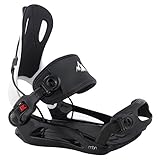
System MTN Rear Entry Binding
- Rear-entry step-in design
- Multidisc fits 4-hole and Channel EST
- EVA hi-back padding
- Three sizes from 6 to 14

Burton Step On Re:Flex
- Strap-free entry and exit
- Re:Flex FullBED cushioning
- Lightweight nylon build
- Requires Step On boots

Union Flite Pro
- Lightweight construction
- Upgraded straps and highback
- Works on all mounting systems
- Beginner to intermediate range
12 Beginner Snowboard Bindings at a Glance (October 2026)
Every binding below is written for someone who is linking turns on green runs, not someone chasing rails. Entry style tells you how you get in, flex tells you how forgiving it is, and the mounting column tells you whether it fits your board.
| Product | Specifications | Action |
|---|---|---|
| System MTN Rear Entry Step In Style Snowboard Bindings |
|
Check Latest Price |
 5th Element Summit Stealth Adult Snowboard Bindings 5th Element Summit Stealth Adult Snowboard Bindings |
|
Check Latest Price |
 Rossignol Battle Snowboard Binding Rossignol Battle Snowboard Binding |
|
Check Latest Price |
| Burton Step On Re:Flex Snowboard Bindings |
|
Check Latest Price |
| Union Flite Pro Men’s Snowboard Bindings |
|
Check Latest Price |
 System APX Men’s Snowboard Bindings System APX Men’s Snowboard Bindings |
|
Check Latest Price |
 System LUX Women’s Rear Entry Snowboard Bindings System LUX Women’s Rear Entry Snowboard Bindings |
|
Check Latest Price |
 Burton Freestyle Men’s Snowboard Bindings Burton Freestyle Men’s Snowboard Bindings |
|
Check Latest Price |
 Burton Citizen Women’s Snowboard Bindings Burton Citizen Women’s Snowboard Bindings |
|
Check Latest Price |
 XCMAN Rear Step In Snowboard Bindings XCMAN Rear Step In Snowboard Bindings |
|
Check Latest Price |
 5th Element Layla 2 Women’s Snowboard Bindings 5th Element Layla 2 Women’s Snowboard Bindings |
|
Check Latest Price |
 XCMAN All-Mountain Snowboard Binding XCMAN All-Mountain Snowboard Binding |
|
Check Latest Price |
1. System MTN Rear Entry – The Best Snowboard Binding for Most Beginners
System MTN Men’s Rear Entry Step in Style Snowboard Bindings (XL)
Rear-entry step-in
4-hole and Channel EST
Medium 6-9 to XL 11-14
2.24 kg
Pros
- Clip in and out without sitting down
- Mounts to 4-hole and Channel EST boards
- Full EVA hi-back padding
- Covers boot sizes 6 through 14
- Three year manufacturer warranty
Cons
- Thin base plate gives limited response for aggressive riding
- Hi-back does not adjust side-to-side on this model
- Large sizes can overhang a narrow board
The System MTN is the binding we recommend to the most people, and the reason is simple: it removes the single hardest part of a first season. Sitting down in the snow, threading the ankle strap, ratcheting the toe strap, and doing it all again on every lift ride is where a lot of beginners quit. The MTN’s rear-entry step-in design means you slide a boot in, click the cable closed, and ride.
Owner reviews are unusually consistent about this. Riders mention how the system holds up across several seasons of hard use, and how the combination of full EVA padding on the hi-back and high-density footbed dampening makes long groomer days less punishing on the knees. At 4.3 stars across more than 670 reviews, this is the largest review base in our set, and the pattern in the feedback is stable rather than scattered.
Technically, the multidisc base plate is the part that gets overlooked and the part that saves you. It mounts to standard four-hole boards and to Burton Channel EST setups without a separate adapter, which means the binding works on most boards a beginner is likely to own or rent. Sizing runs in three steps: Medium fits boots 6 through 9, Large fits 9 through 11, and XL fits 11 through 14, so one model covers nearly every adult foot size in the category.
The 3D moulded ankle strap is wrapped in polyurethane, which matters more than it sounds. Cheap straps crack at the edges in cold, dry snow after a season or two of being torqued. The composite and fiberglass construction keeps the whole pair at 2.24 kg, which is light enough that you stop noticing it on your feet by the second day. The three year manufacturer warranty is the longest in this roundup alongside the System LUX.
Who This Binding Suits Best
This suits anyone whose main obstacle is not riding technique but the physical ritual of getting geared up. If you have watched yourself sit awkwardly in the snow, wrestle a strap, and miss the chairlift because of it, this removes that problem entirely. It also suits a second-season rider who has the basics down and wants to stop thinking about bindings on every lift.
It is a sensible pick for an adult relearner who is heavier on their feet than average, because the base plate construction is robust and the size range extends into a true XL. The step-in cable also does not require a specific boot brand, so you are not locked into replacing an existing pair of boots to use it.
Where It Falls Short
The honest limitation is response. Owners with an aggressive riding style describe the light padding and comparatively thin base plate as giving less snap when they want to drive hard through a carve. If you already snowboard confidently and are simply buying a first setup, a stiffer binding with a stronger base plate will outlast this one.
Two smaller caveats: the hi-back on this model does not adjust side-to-side, so you cannot dial in forward lean or lateral angle, and the larger sizes can extend past the edge of a narrow board. In deep or soft snow, a rear cable design also takes more effort to step into than in packed groomer conditions, which is worth remembering if your local mountain gets big snowfall.
2. 5th Element Summit Stealth – Best for Riders Who Want to Set Their Own Stance Angles
5th Element Summit Stealth Adult Snowboard Bindings for Men-Designed for New or Replacement Snowboards. Universal bindings disc and Hardware for Beginner to Intermediate (White/Gray, Medium/Large)
Buckle closure
Men's boots 6 through 13
Composite construction
4-hole boards
Pros
- Universal mounting disc supports custom stance angles
- Three binding sizes cover most men's feet
- Easy to install and adjust on the mountain
- Reinforced toe caps
- Complete hardware kit in the box
Cons
- Some units have reported bolts popping after a few days
- Durability is limited for heavy or frequent riders
The 5th Element Summit Stealth is the pick for the beginner who already knows they want angle in their stance, and it is one of the few bindings here where the mounting disc genuinely supports that. Instead of a fixed pattern, the universal disc can be rotated to set stance angle before you bolt it down. If your eventual goal is a duck stance at plus fifteen and minus fifteen, this is a straightforward way to start there.
Reviewers describe these as well made and easy to set up straight out of the box, with repeat purchases noted for a second board or a second pair of boots. The value case is straightforward too. You get two mounting discs, eight screws, washers and hardware in the box, so there is no extra trip to a shop for mounting parts before your first day.
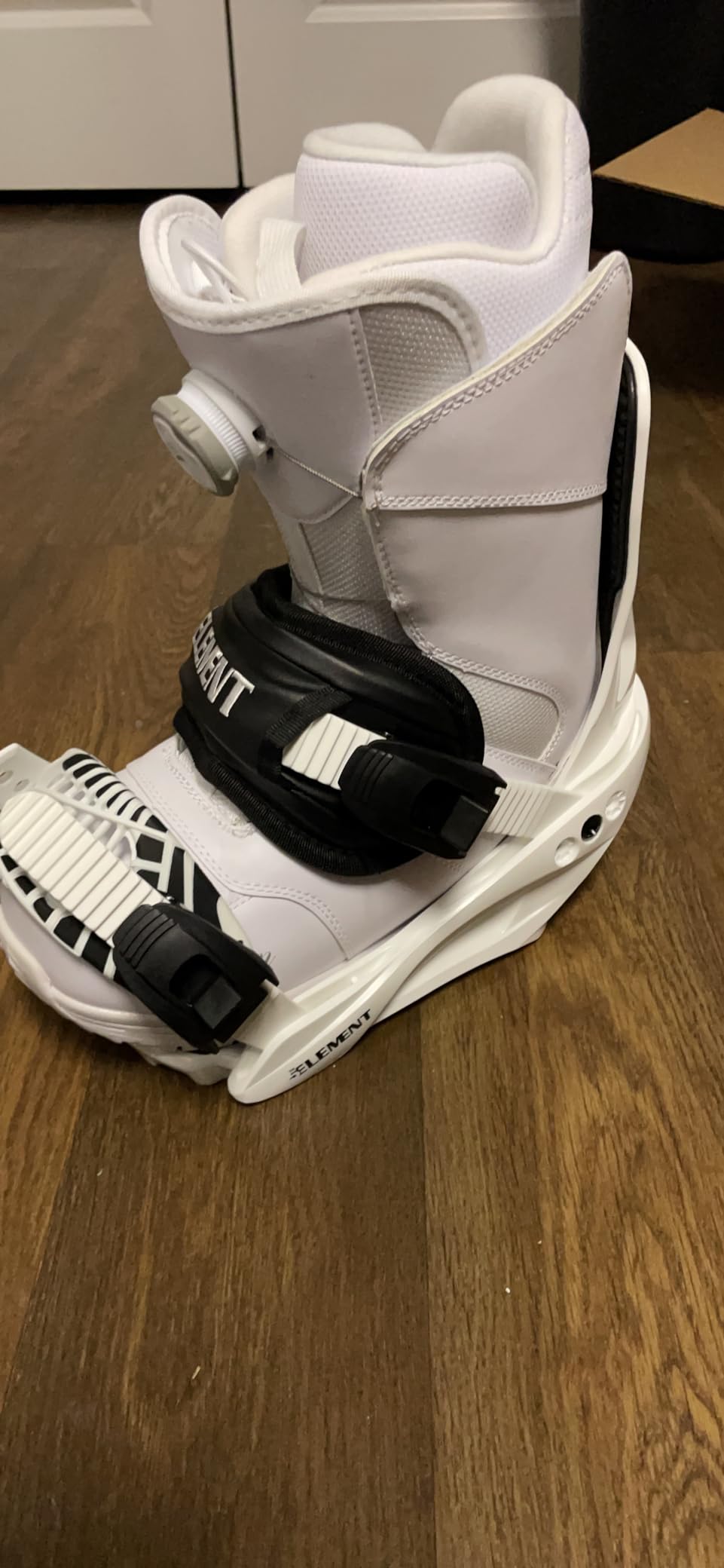
Construction is composite, which is the right material for a beginner on a budget. It is not as lively as an alloy base plate under hard carving, but it is durable enough to absorb the repeated strap tension of someone learning to ride, and it will not punish a hard landing the way carbon or titanium would. Sizing covers men’s boot sizes 6 through 13 across three bindings: Small for 5 to 7, Medium/Large for 7 to 10, and XL for 10 to 13.
One feature worth calling out for first-season riders is the reinforced toe cap. It stiffens the area around the toe where a soft composite chassis would otherwise flex under pressure, and combined with the aluminium buckle ratchet straps it gives noticeably better control through a turn than the basic two-strap designs at this tier. The two year warranty against manufacturing defects is thinner than the System bindings but reasonable for the segment.
Who This Binding Suits Best
This is the right choice if you have already been riding on a rental board and know your stance angle, or if you have a clear idea of the duck stance you want to work toward. Riders with hard-to-fit feet also do well here, because three size steps across a 6 to 13 range means fewer compromises than most single-size options in the roundup.
It is also a good second purchase. A lot of beginners end up buying bindings for a new board after a season of renting, and the Summit Stealth handles a fresh board and fresh hardware without drama. Installation is described as easy enough to do at home with the included disc and screws.
Where It Falls Short
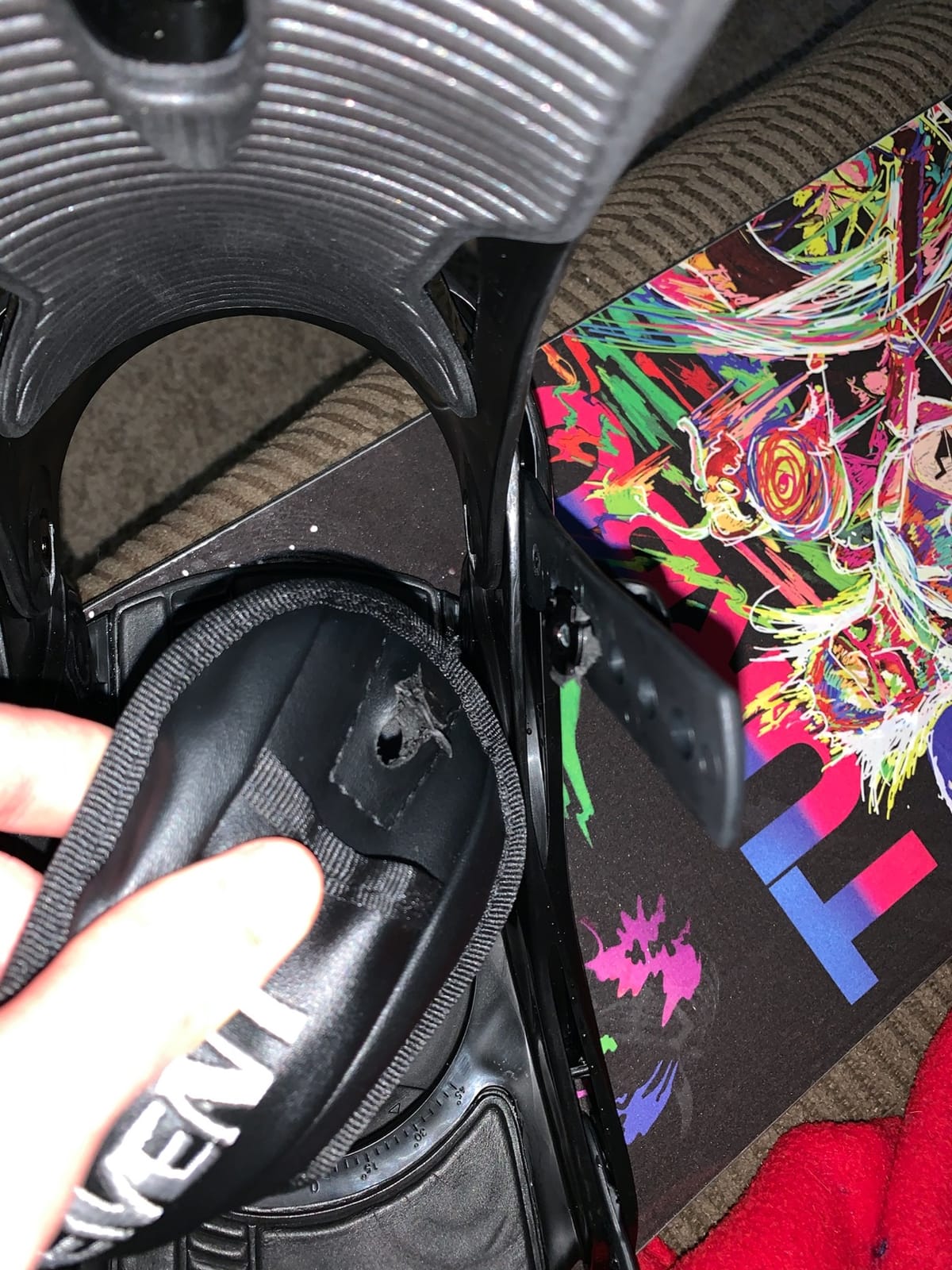
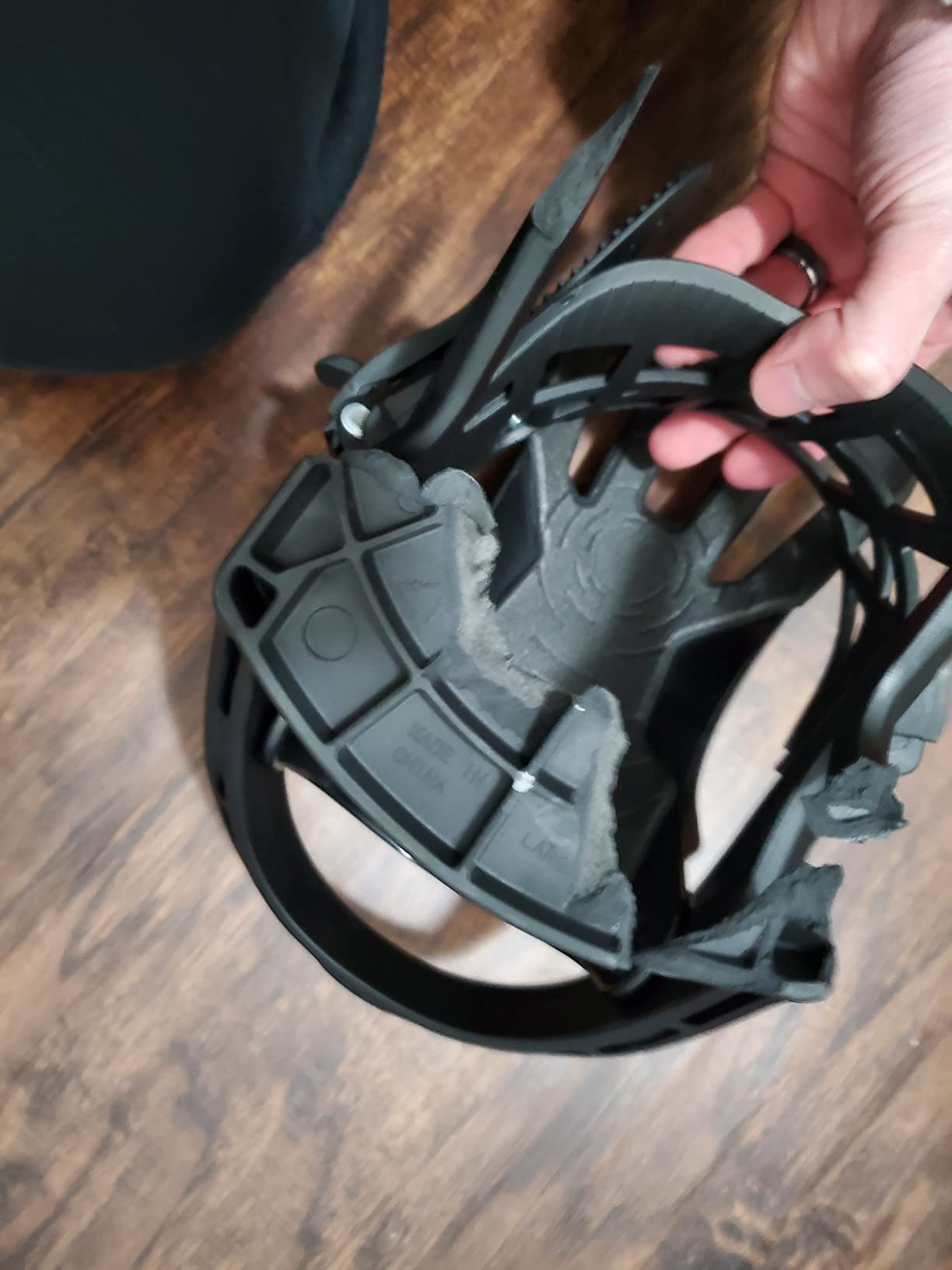
Durability is the recurring weak point. A small number of owners report a bolt popping or breaking after only a few days of riding, and reviewers with a heavier riding weight note that the construction is not meant for high-frequency or hard-charging use. If you ride most days and hit features, expect to inspect the bolts periodically rather than assuming they will hold forever.
The second limitation is narrower than it looks. This model is listed for four-hole boards, so if your board uses a Channel pattern you will need a separate adapter or a different binding. The included hardware also does not include a cant adjustment, so anyone who wants to fine-tune the footbed angle needs to handle that themselves.
3. Rossignol Battle – Best Budget Pick for a First Setup
Rossignol Battle Snowboard Bindings for Men and Women – Black M/L
Buckle closure
MainFrame highback
Dual-zone EVA footbed
5.2 pounds
Pros
- MainFrame highbacks with built-in flex zones
- Baselight nylon buckles stay easy to operate in cold
- Dual-zone Puffy Pad footbeds absorb vibration
- 3D-moulded One Shot straps wrap securely
- Reliable in cold temperatures
Cons
- Entry-level flex can feel stiff for some riders
- One reviewer reported a ratchet clamp malfunction
- Sizing runs narrow for some boot brands
The Rossignol Battle is the one to buy if you want a real name-brand binding at the bottom of the price range rather than a no-name. Rossignol has been building alpine equipment for over a century, and the Battle is the most conventional strap-in design in this roundup: two buckles, a highback, a footbed, no gimmicks. For a beginner learning to ride, conventional is a feature.
Owner reviews are strongly positive on reliability in cold conditions, which matters more than it sounds. Cheap buckles seize or crack when you are handling them with gloves on in negative temperatures. The Baselight buckles here are made with anti-shock nylon, and owners specifically call out how easy they remain to operate on a cold morning.
The MainFrame highback uses a rigid spine with built-in flex zones, which is a smarter construction than a uniformly stiff shell. The spine handles edge response while the flex zones let the highback bend where a beginner needs forgiveness. The dual-zone Puffy Pad thermoformed EVA footbed is the piece that does the fatigue work, cushioning landings and absorbing the vibration that comes from riding firm snow for two hours.
Weight comes in at 5.2 pounds for the pair, which is heavier than the nylon and ultralight designs in this list but consistent with a composite binding built for durability. Straps are 3D-moulded One Shot units that wrap the boot rather than pinching it, and that wider wrap distributes pressure instead of concentrating it on one spot, which is a real comfort benefit across a full first season.
Who This Binding Suits Best
It suits a first-season rider who wants a conventional strap-in binding and does not intend to change anything for a couple of seasons. If you are still working on linking turns and stopping reliably, the two-strap system gives you a clear, obvious reference for what your feet are doing, which some riders find easier to learn on than a cable or a step-on mechanism.
Owners commonly mention using these as a first setup, and several note repeat purchase for a second board. It is also a straightforward choice for anyone whose board uses a standard four-hole insert pattern, since no adapter is involved.
Where It Falls Short
The most important caveat is flex. This is an entry-level binding, and a minority of riders find the feel stiff and rigid, particularly if they come from softer rentals. A stiff binding transmits every micro-movement straight to the edge, and that is exactly the behaviour that makes early lessons frustrating. If you know you want a very soft flex, this is not the one.
Sizing is the other issue. The Battle runs narrow for some boot brands, so if you are between sizes or have a wide boot, check before committing. There is also an isolated report of a ratchet clamp beginning to malfunction after a few uses, though that is a single account rather than a pattern in the review data.
4. Burton Step On Re:Flex – Best Premium Pick for Riders Who Want Speed
Men’s Burton Step On Re:Flex Snowboard BindingsMediumBluestone
Strap-free step-on
Nylon construction
Medium 8.5-10.5
Re:Flex FullBED cushioning
Pros
- Fastest entry and exit in the roundup
- Re:Flex FullBED reduces fatigue over long days
- Lightweight build cuts leg fatigue
- Fits all current mounting systems
- FLAD adjustment for lean fine-tuning
Cons
- Requires compatible Burton Step On boots
- Two toe and one heel connection points take time to adapt to
At 4.7 stars this is the highest-rated binding we tested, and the reason is not subtle. There are no straps. You step in, the binding grabs your boot at two toe points and one heel point, and you ride. Owners describe the effect most clearly in terms of getting off lifts and staying upright, and several specifically mention reduced back and knee fatigue across a full day.
That matters for beginners more than any other feature on this list. Strapping in repeatedly involves a lot of standing, bending and twisting in ski boots, and that accumulated strain is part of why first-season riders get tired before the day is over. Removing it is not just faster, it is less physically demanding.
The cushioning is the technical story. Re:Flex FullBED uses a trap-door mounting design that leaves the base of the binding open to the board, so the board flexes more freely underneath the foot than a traditional binding allows. Combined with the full-bed cushioning it reduces the feedback loop between a choppy surface and your ankles. The single-component baseplate gives consistent response across terrain with no loose hardware to worry about.
The highback is a zero forward lean design with a FLAD system for micro adjustments, which lets you add lean if you want more heelside response as you progress. The nylon construction keeps the whole thing light, and the Re:Flex mounting system fits all current snowboard mounting systems, so board compatibility is not a constraint here. It is also worth noting that Burton is a certified B Corporation, which is unusual for a snowboard manufacturer.
Who This Binding Suits Best
This suits a beginner who is already confident about the basics of standing on a board and riding flat, and wants to remove the daily friction. It also suits anyone with a back, knee or lower-leg issue that is aggravated by repeatedly crouching in ski boots, because the entry motion is close to a straight step rather than a squat and a twist.
It is a good choice for a rider who knows they will still be riding in three years, since the lightweight design and full-bed cushioning hold up well as technique improves. The medium size covers boot sizes 8.5 to 10.5, so check your boot size carefully before buying.
Where It Falls Short
The cost is compatibility, and it is a real one. These bindings only work with compatible Burton Step On boots, so if you already own conventional lace-up or strap boots you are buying a boot as well as a binding. For a first-time buyer that turns a single purchase into a system purchase, and it is the single most common reason we see people return step-on setups.
There is also an adjustment curve. Two toe points and one heel point means the fit is determined by the boot shape and the centring of the three connection points, and it takes a few days to get used to. If you like to fine-tune strap tension, a traditional two-strap binding gives you more direct control. The included warranty on this model is described as limited rather than a stated year count, so check the terms before you buy.
5. Union Flite Pro – Best Value Strap-In for Adult Beginners
Union Flite Pro Men’s Snowboard Bindings (Black, Medium)
Buckle closure
Medium US 8-10
16 ounces
Compatible with all mounting systems
Pros
- Lightweight design reduces drag
- Upgraded straps and highback
- Works with every mounting system
- Budget-friendly entry point
- Aluminum and EVA construction
Cons
- Loose fit may feel unsecured with narrower boots
- Entry-level construction limits advanced terrain use
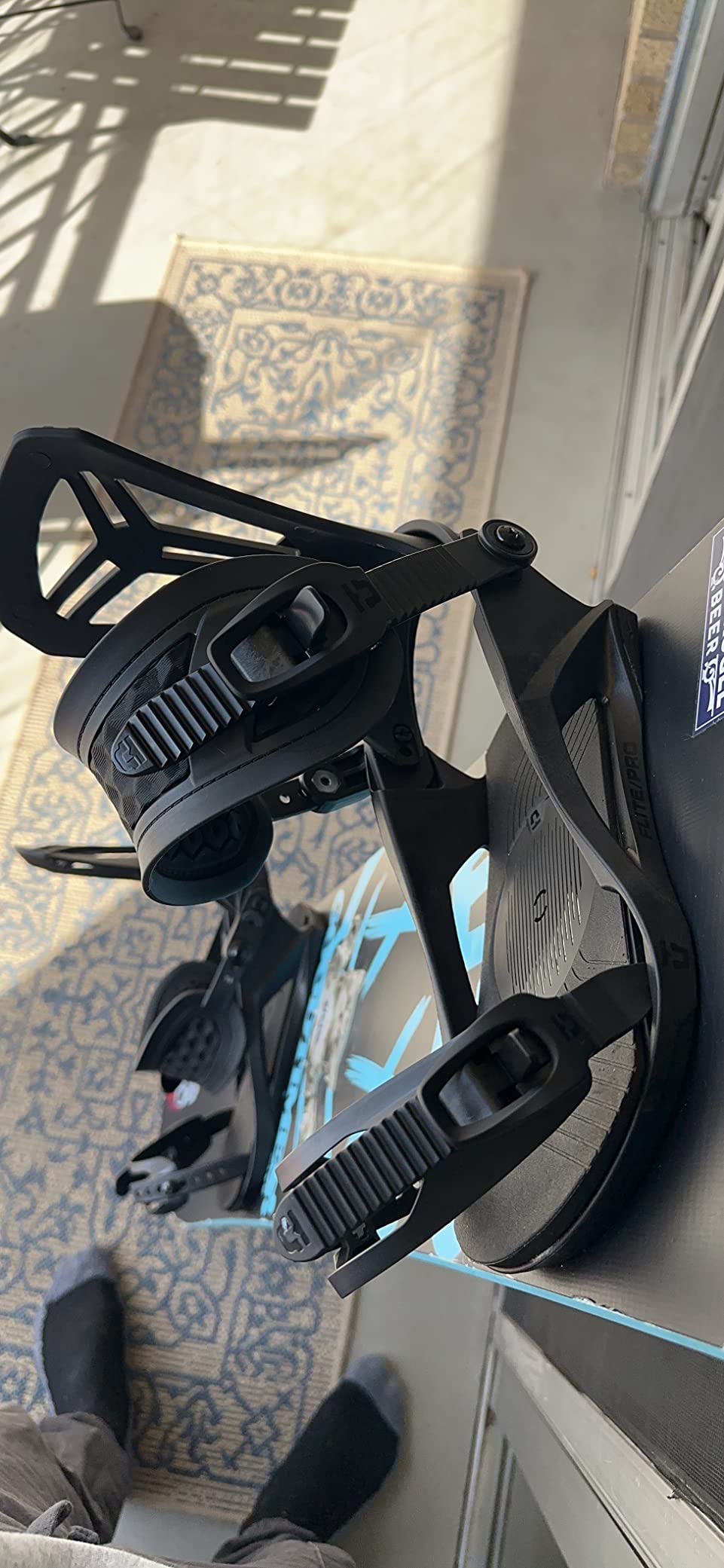
The Union Flite Pro is the pick we send people to when they ask for one recommendation that will not be a mistake. It is a conventional strap-in binding, it is light, it fits any mounting system, and reviewers describe it as a straightforward budget-friendly entry point for a beginner to intermediate rider. Nothing about it is designed to impress anyone.
What that means in practice is that it does the fundamentals well. The straps and highback are upgraded versions of what the brand puts in cheaper builds, so they hold better and last longer than a starter binding usually should. Reviewers single out the light weight as a genuine benefit, describing less drag and easier all-day riding.
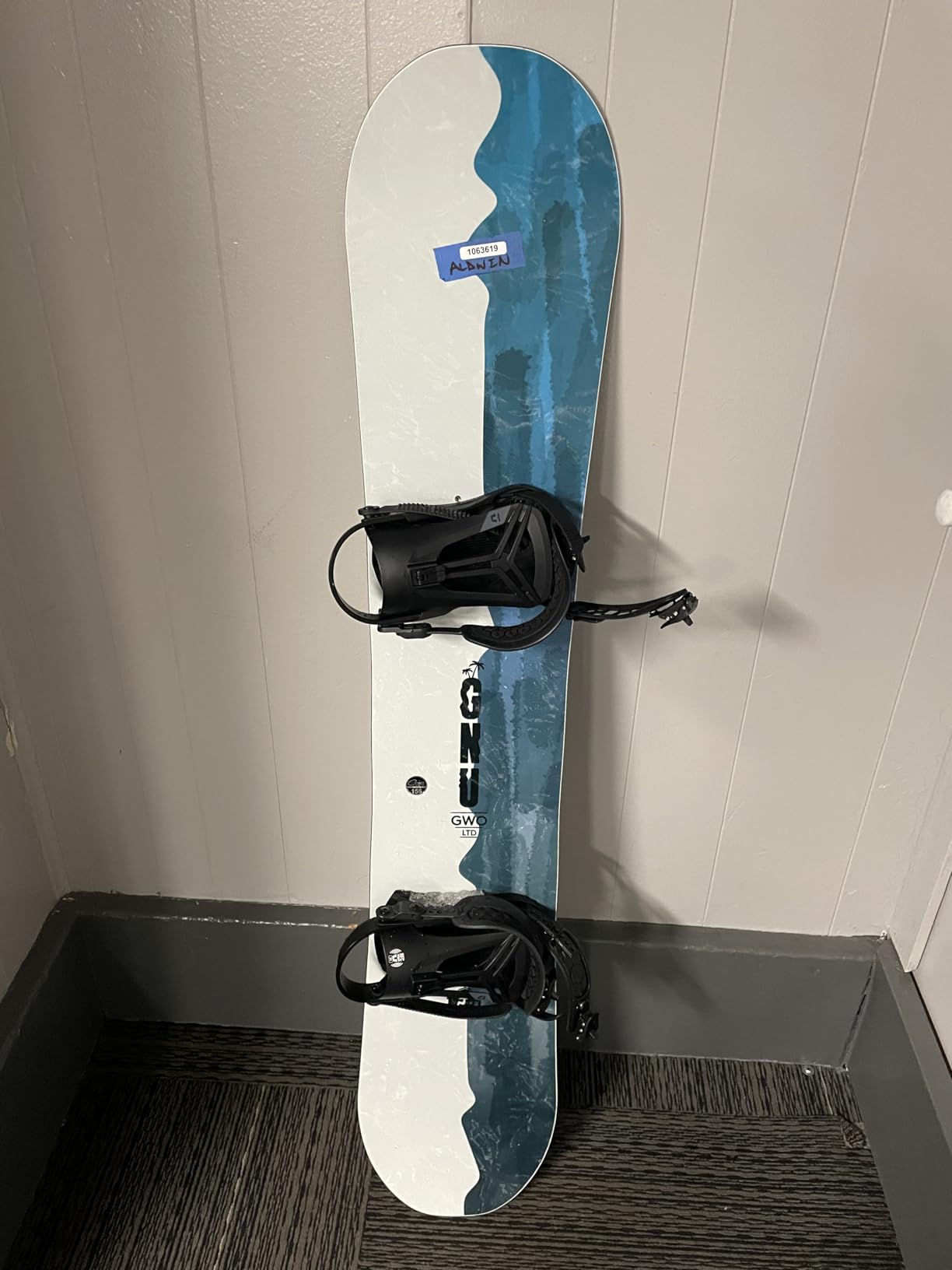
Compatibility is the standout practical feature. It works with all mounting systems, so you are not constrained to a four-hole board and you do not need an adapter if you later change boards. Construction combines aluminium and EVA, and the fit is listed as loose rather than snug, which is a deliberate choice for comfort on a beginner-friendly binding.
The medium size covers US boot sizes 8 to 10, so larger riders will want to confirm sizing. The included components are mounting hardware, which is what you need and nothing you do not. A limited manufacturer warranty applies, so treat this as a two-to-three season purchase rather than a permanent one, though many riders will move past it long before it fails.
Who This Binding Suits Best
This is the best fit for an adult who is starting in regular boots and does not want to replace their footwear. It suits a rider who wants a light, conventional binding without paying for the premium tier, and it works whether you are on a four-hole board, a 2×4 board or a Channel board.
Riders with wider feet or those who prefer a roomier fit will find the loose fit comfortable. It is also a sensible first purchase for a couple or family sharing a board, since the light weight and simple setup make it easy to move between bindings of different sizes.
Where It Falls Short
The loose fit is the same feature and the same weakness. Owners with narrower boots report that the binding can feel less snug than they would like, and a loose fit reduces fine control at the front of the board. If you have narrow boots or you like a tight, precise connection, look for a binding listed as a snug fit instead.
Second, the entry-level construction limits what you can do with it. It is built for beginner to intermediate riding, and reviewers are candid that it is not the binding to take into aggressive terrain or hard park sessions. Buy it to learn on, and plan to upgrade once your technique outgrows it.
6. System APX – Best for Riders Who Need One Binding to Cover Almost Any Boot Size
System APX Men’s Snowboard Bindings Black Camo
Traditional two-strap
Fits boots 7 to 13
Full EVA padding
4 pounds
Pros
- One model covers boot sizes 7 through 13
- Full EVA padding for everyday comfort
- Adjustable forward lean
- Mounting hardware included
- Traditional strap design is easy to learn
Cons
- Lowest rating in this set with a notable share of one-star feedback
- Basic construction lacks modern convenience features
- Adjustability is limited versus contemporary designs
The System APX solves a problem most roundups ignore: a family with one adult at a size 7 and another at a size 12. This single model covers boot sizes 7 through 13, so one purchase can serve several riders or a rider whose boot size changes over a few seasons. That is genuinely rare in this category, where most bindings come in two or three discrete sizes.
The adjustable forward lean is a nice touch for a binding at this level, because it lets a rider compensate somewhat for a boot that sits at a different angle than expected. Full EVA padding across the chassis adds comfort for everyday riding, and the mounting hardware is included, so setup is straightforward from the box.
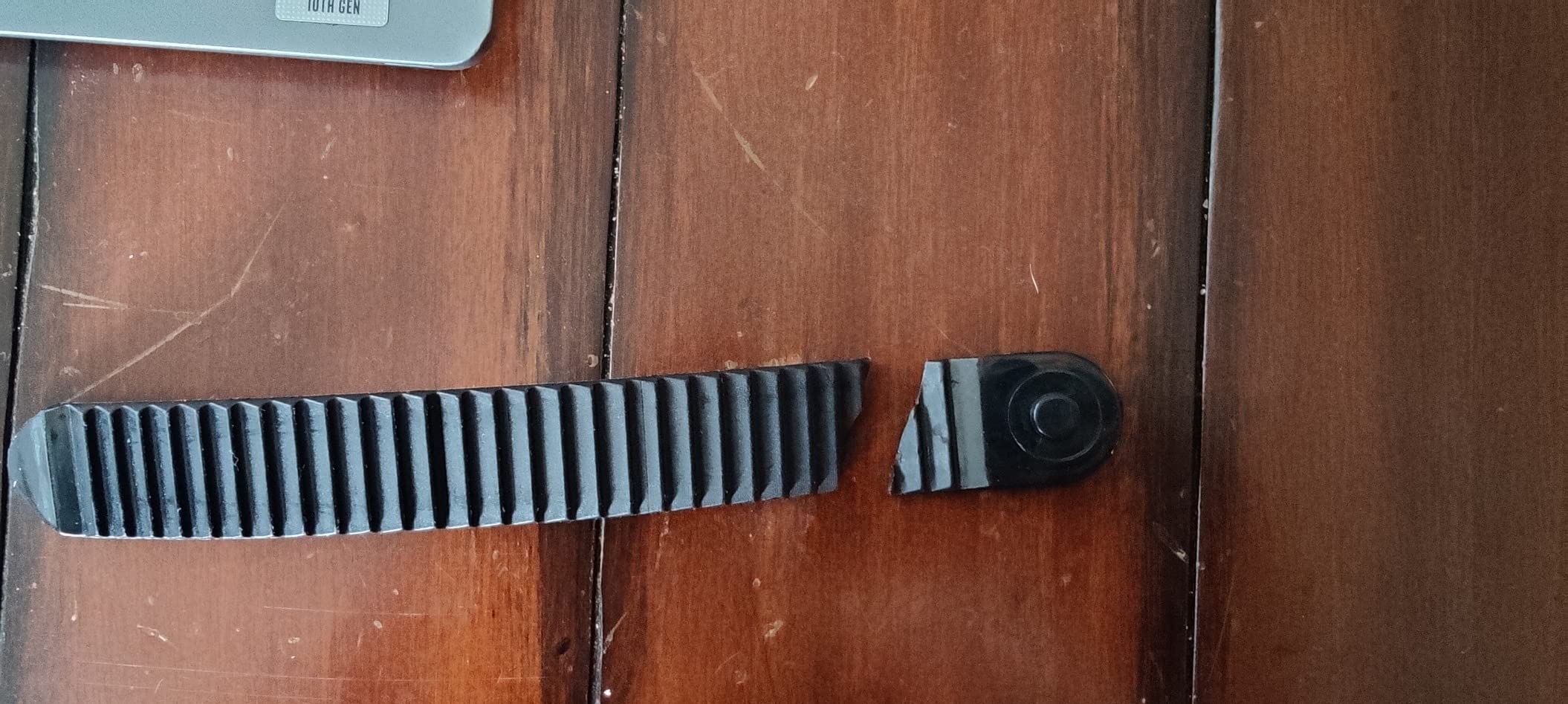
At four pounds per pair it is a light traditional binding, and the traditional two-strap layout is a deliberate choice. New riders often find two obvious straps easier to understand than a cable mechanism or a step-on connection, because the pressure they apply to each strap maps directly to how the boot is held. The construction is EVA-based, which prioritises comfort and impact absorption over response.
What you give up is modern convenience. There is no cant adjustment, no elaborate highback adjustment and no fast entry system. This is a binding that does the fundamentals and stops there. It is also sold in a traditional style with a camo pattern option, which is as much about the look as anything else for a first-season rider who wants gear that reads as classic rather than technical.
Who This Binding Suits Best
This suits a household sharing one board, an adult whose shoe size has shifted since they last snowboarded, or anyone who wants a single binding that will fit whatever boots end up in their bag. If you are not sure of your exact boot size and want to remove that risk entirely, this is the low-anxiety choice.
It is also a reasonable second-season purchase for a rider who has outgrown a pair of youth bindings and does not want to spend time on a sizing chart. Just confirm your board uses a four-hole insert pattern before you commit.
Where It Falls Short
Be clear-eyed about the ratings here. At a 4.0 star average this is the lowest-scored binding in our set, and a noticeable share of the feedback is one-star. Reviewers who like it point to the fit range and the padding, but the critical reviews concentrate on durability and limited adjustability, which are the same two things that make it appealing to a multi-rider household.
It is also simply a basic product. If you are someone who enjoys adjusting their setup or wants a binding that will grow with them, the lack of adjustment options will frustrate you within a season. Buy it for coverage and simplicity, not for performance or longevity.
7. System LUX Women’s Rear Entry – Best Rear-Entry Option for Women
System LUX Women’s Rear Entry Flow Style Snowboard Bindings (M/L)
Rear-entry step-in
Medium-Large
Nylon construction
3 year warranty
Pros
- Rear-entry system removes strapping entirely
- Multidisc fits 4-hole and Channel EST boards
- Full EVA hi-back padding and footbed dampening
- 3D moulded polyurethane ankle strap
- Three year warranty
Cons
- Sizing stops at Medium-Large
- Light padding offers limited impact absorption for large jumps
The System LUX is the rear-entry option built for women, and it is the highest-rated rear-entry binding in this roundup at 4.5 stars. The core appeal is the same as the System MTN: no sitting down, no strap threading, just slide in and click closed. The difference is the fit, which is designed around women’s boot sizing rather than scaled-down men’s.
Reviewers like the combination of convenience, board compatibility and comfort, and they rate it second among the step-in options here for a reason. The full EVA hi-back padding and high-density footbed dampening soften what would otherwise be a fairly bare rear-entry chassis, and the three year warranty is the longest on the list.
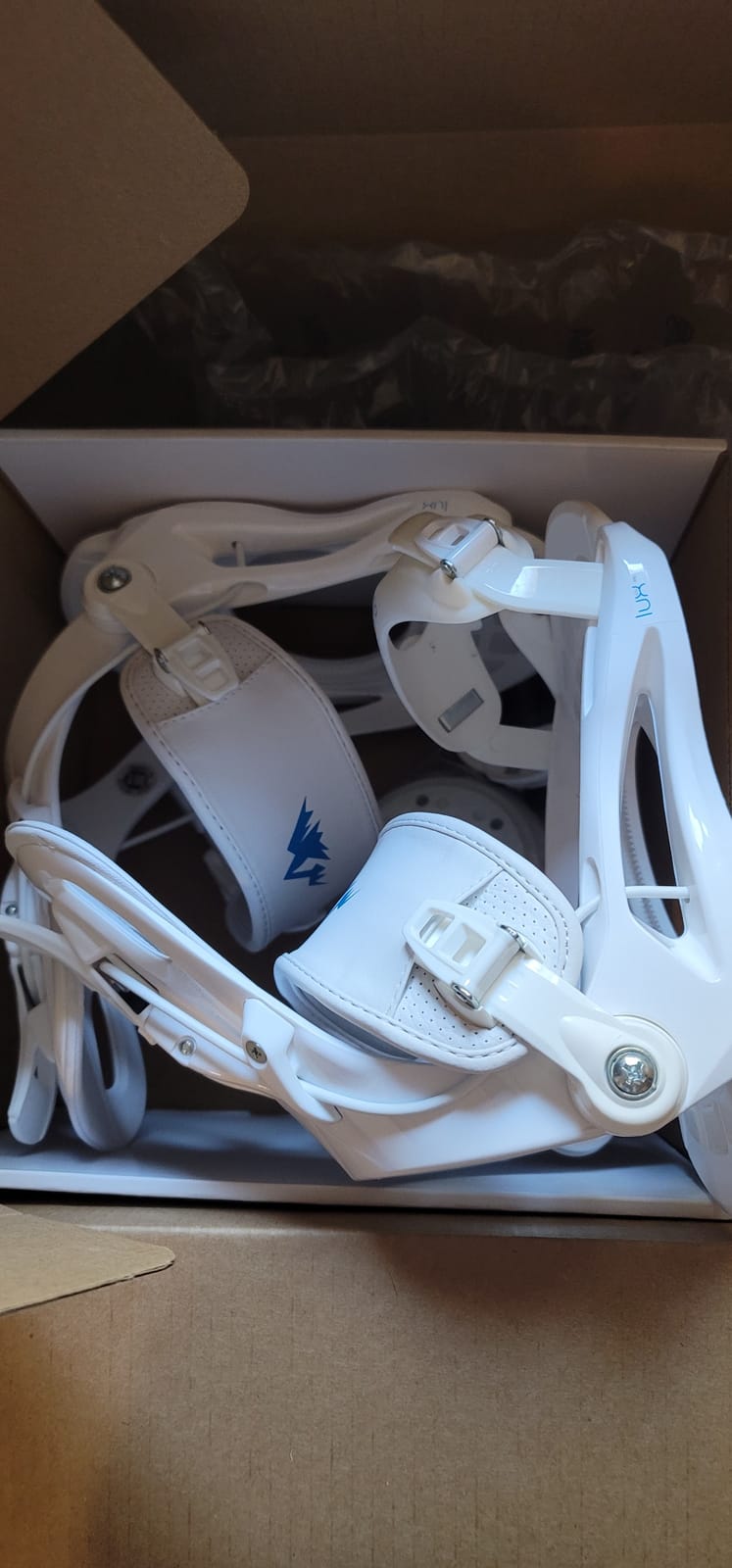
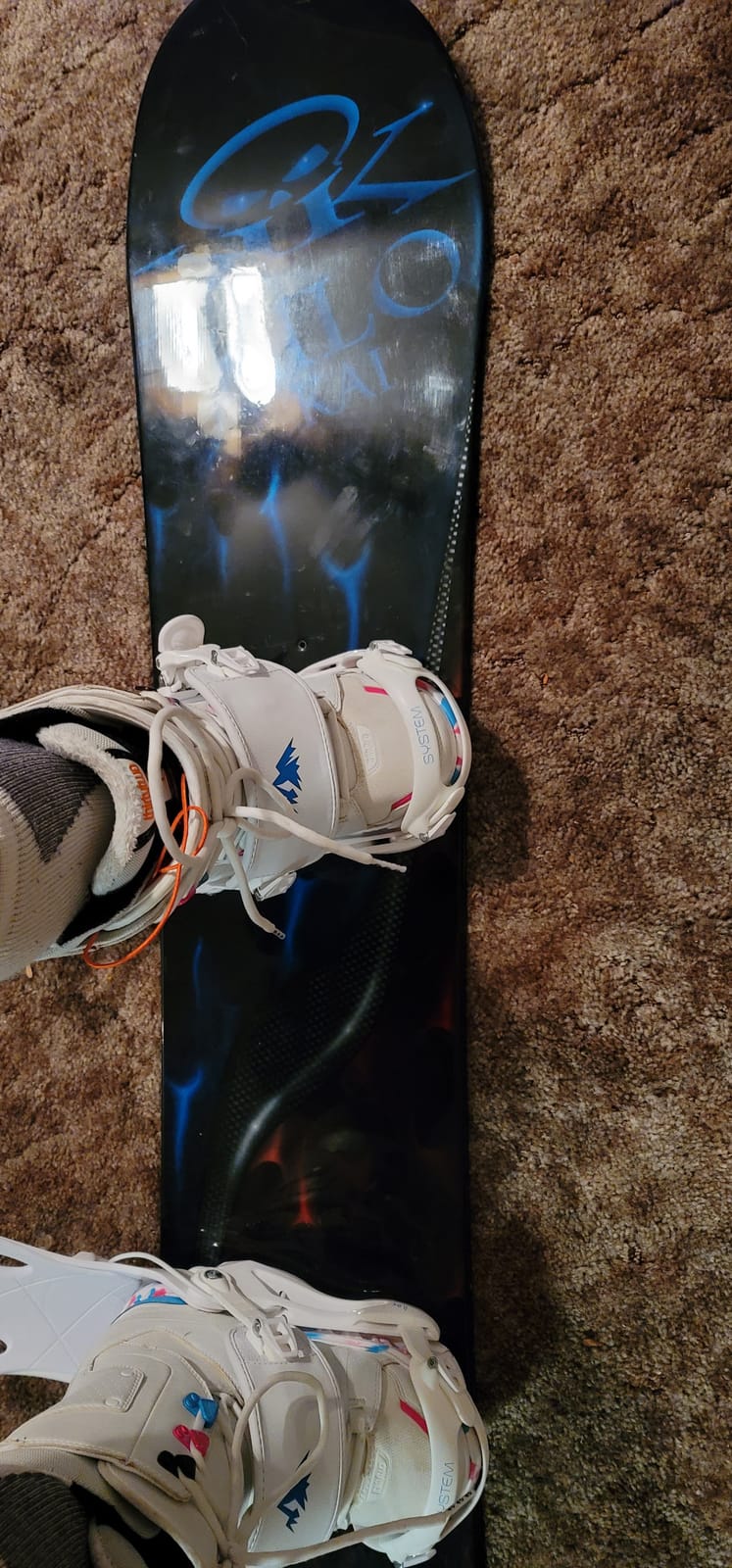
The multidisc base plate mounts to four-hole boards and Burton Channel EST boards, so you are not limited by your existing board. Construction is nylon, which keeps the pair light at 2.18 kg, and the 3D moulded ankle strap in durable polyurethane provides the actual connection to the boot once you are clipped in. That strap still matters here, because rear-entry systems hold the boot with one strap rather than two.
Dimensions of roughly twelve by twelve by seven inches tell you this is a compact, low-profile binding, which is typical of the rear-entry category. The trade-off of the rear-entry layout is that you get one strap where a conventional binding gives you two, so heel retention is somewhat less adjustable. For cruising and linking turns that is an acceptable compromise.
Who This Binding Suits Best
This suits a woman who has decided she does not want to deal with straps and has a board with either a four-hole or Channel EST insert pattern. It is a strong choice for a first-season rider who values getting on and off the lift quickly over fine-footwork control, and for anyone whose knees or lower back are sensitive.
It is also a good fit for a rider who struggles to reach their toes comfortably, since the rear-entry cable system can be operated with less trunk flexion than two forward-angled ratchets. That is not a small accessibility detail for some riders.
Where It Falls Short
Sizing is the clear limit. This model is offered in Medium-Large only, so riders with very large feet have no option within this binding. If you are above that range, the System MTN in XL, which runs to boot size 14, is the rear-entry route in this roundup.
The second limitation is padding depth. Reviewers note the light padding offers limited impact absorption on big air, so if you plan to progress into park features quickly you will feel the difference. As a first-season cruiser on groomers, that is not a problem. As a long-term park binding, it is.
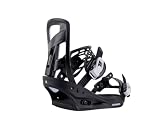
8. Burton Freestyle – Best for Long-Term Durability and Progression
Burton Men’s Freestyle Re:Flex Snowboard Bindings (True Black, Medium (8-11))
Polycarbonate
Re:Flex FullBED
Medium 8-11
Lifetime baseplate warranty
Pros
- Most comfortable binding worn by many long-time riders
- Re:Flex FullBED cushioning cuts fatigue
- Universal baseplate fits all major mounting systems
- Lifetime warranty on the baseplate
- Reactstrap conforms to any boot
Cons
- Some reviewers report strap hardware breaking after limited use
- Can loosen on Channel boards if not tightened firmly
- Bottom toe buckles hard to unlatch with snow inside
- Does not include a 3D disc
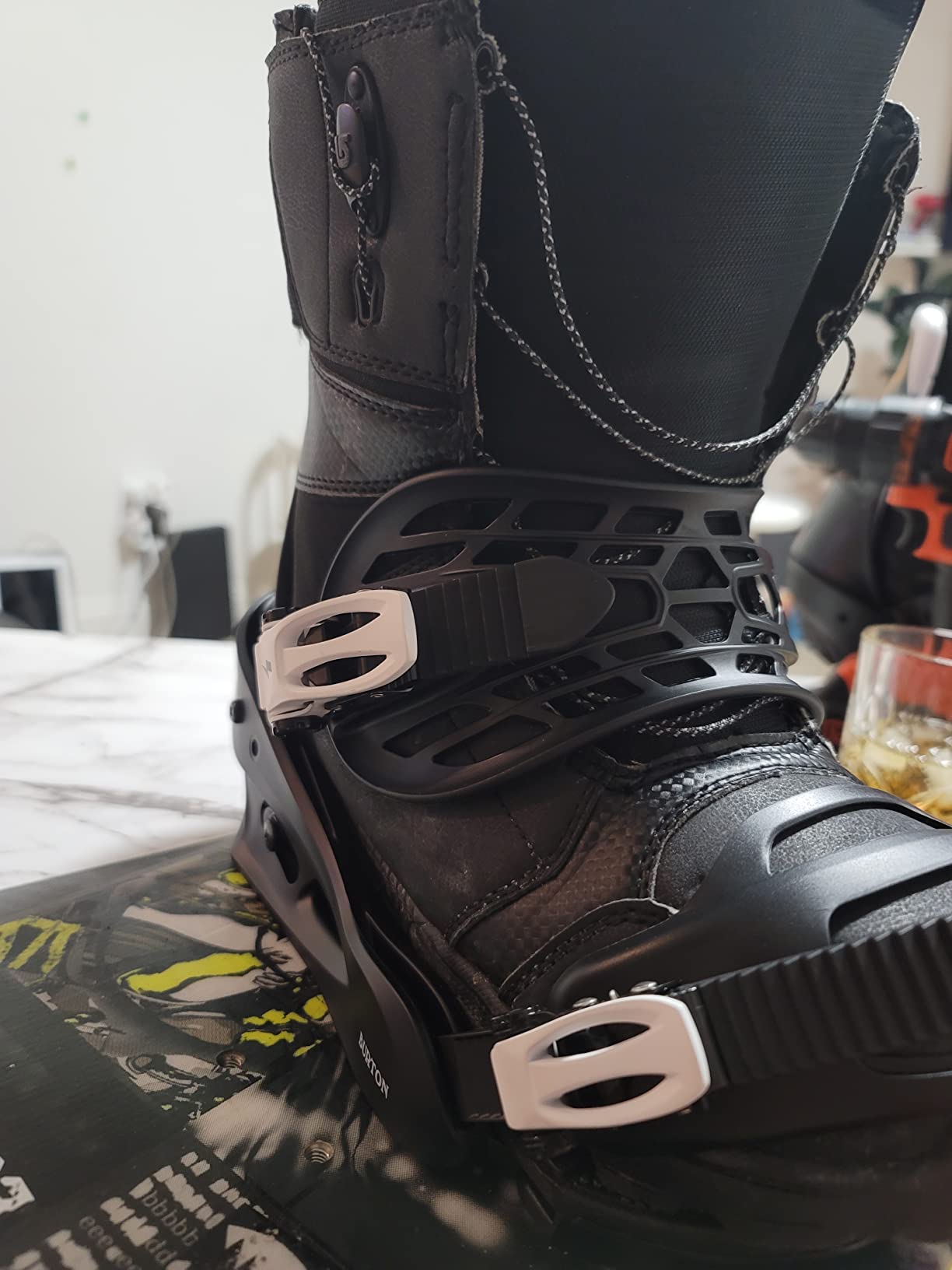
The Burton Freestyle is the pick if you are fairly sure you will still be riding in a few years and want something that will grow with you. Many long-time riders call it the most comfortable binding they have ever worn, and the reason is the cushioning package rather than any single clever component. The single-component baseplate and highback are moulded from polycarbonate, a material chosen for consistent response and durability rather than weight savings.
It is also the only binding here with a lifetime warranty on the baseplate. Burton backs all its binding baseplates for life, with straps and highbacks covered for a year. If you are worried about a first purchase feeling disposable, that is a meaningful difference in how much risk you are taking.
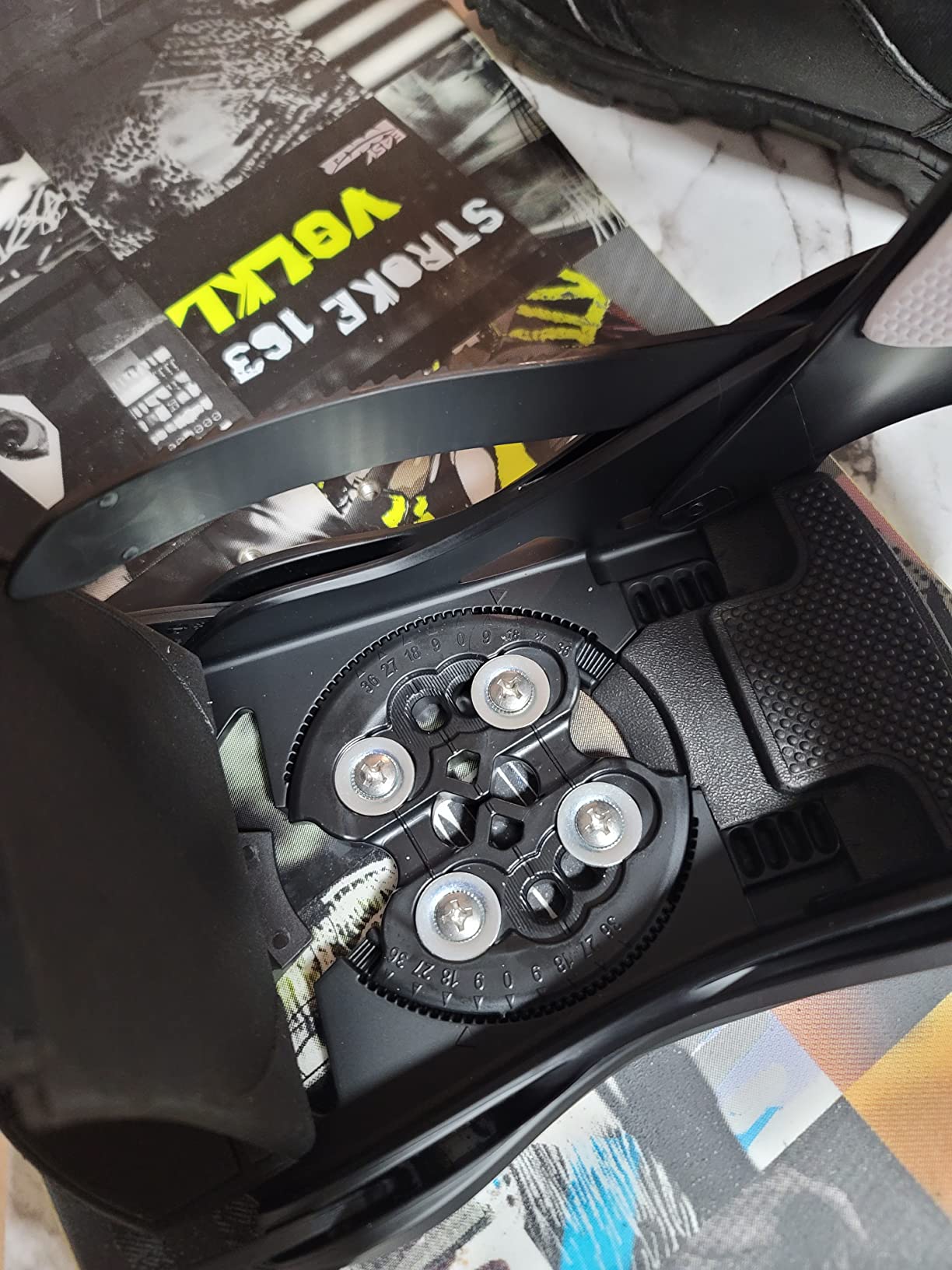
The Re:Flex FullBED system uses a trap-door design that opens the base of the binding to the board, which increases board flex underfoot and reduces dead zones. The Reactstrap ankle strap is the piece riders comment on most: it is shaped to conform to different boot profiles rather than pressing a flat band against the shell, and several owners specifically credit it with avoiding pressure points that other bindings caused them.
MicroFLAD forward lean adjustment lets you add lean in small increments as your technique develops, and Smooth Glide buckles are designed to release in cold conditions. Mounting is universal across all major systems. Sizing runs Small 6 to 8, Medium 8 to 11, and Large 10 upward, so most adult men fit one of the first two.
Who This Binding Suits Best
This suits a beginner who wants to buy once rather than buy twice, and who is not in a rush to get off the ground. The relaxed flex and heavy cushioning are exactly what you want while you are learning to link turns, and they remain comfortable when you start riding faster.
It is a strong option for a rider on a Channel board, since the Re:Flex baseplate is designed to work across all current mounting systems. Parents buying for a teenager who will keep growing also get some reassurance from the lifetime baseplate coverage.
Where It Falls Short
Strap hardware is the recurring complaint. Some reviewers report strap breakage after limited use, and the one year coverage on straps and highbacks means you are not protected on the parts most likely to fail. There is also an issue with bottom toe buckles being difficult to unlatch once snow gets into them, which is an annoying problem at the end of a long day.
On Channel-style boards, the bindings can loosen over time if they are not cranked down firmly, so expect to check and tighten them through the season. Finally, the package does not include a 3D disc, so if you want to experiment with stance angle or cant later, you will need to buy that separately.
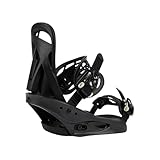
9. Burton Citizen Women’s – Best Women’s Binding with Real Adjustment Range
Women’s Burton Citizen Re:Flex Snowboard Bindings, Medium, Black
Strap closure
Medium 6-8
Nylon construction
Canted single-component hi-back
Pros
- Re:Flex FullBED cushioning reduces fatigue
- Medium disc increases board flex and cuts dead zones
- Canted single-component highback gives immediate response
- MicroFLAD lever and Smooth Glide buckles
- Ships with all screws needed for installation
Cons
- Narrow heel foam can rub some boots and requires stomping
- Fit is boot-brand dependent
- One unit arrived assembled incorrectly
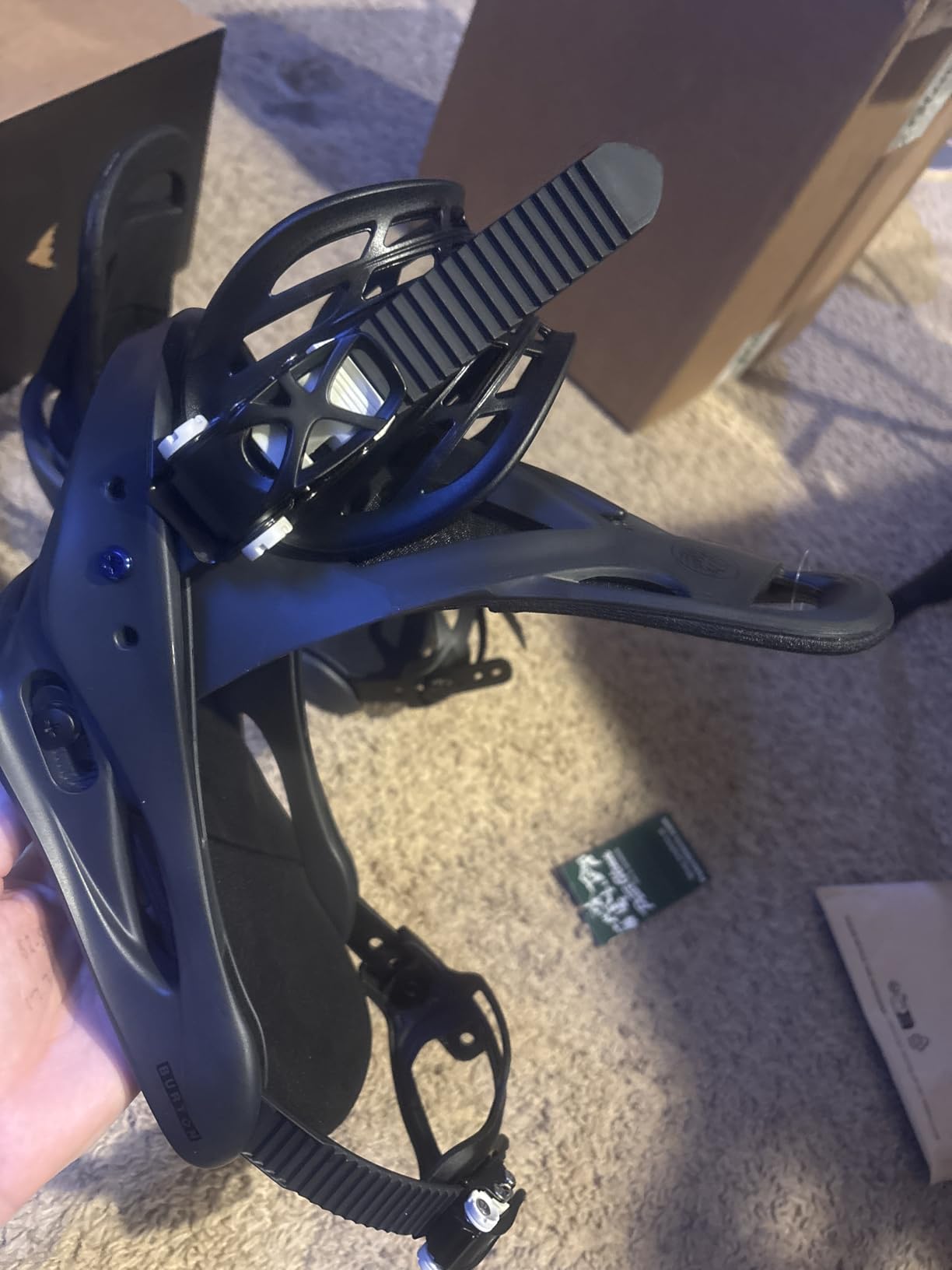
The Burton Citizen is a traditional strap-in binding built for women’s boot sizing, and it is the most adjustable women’s option in this roundup. The canted single-component highback sits at an angle that matches a natural stance, which reduces the sense of your knees pushing forward, and the MicroFLAD lever lets you add forward lean in small steps as you get stronger.
Most owners, including parents buying for beginner riders, praise easy installation and solid quality. The medium disc is a thoughtful choice: it increases board flex and minimises dead zones, so the board feels more responsive through a short radius turn than it would on a stiffer disc.
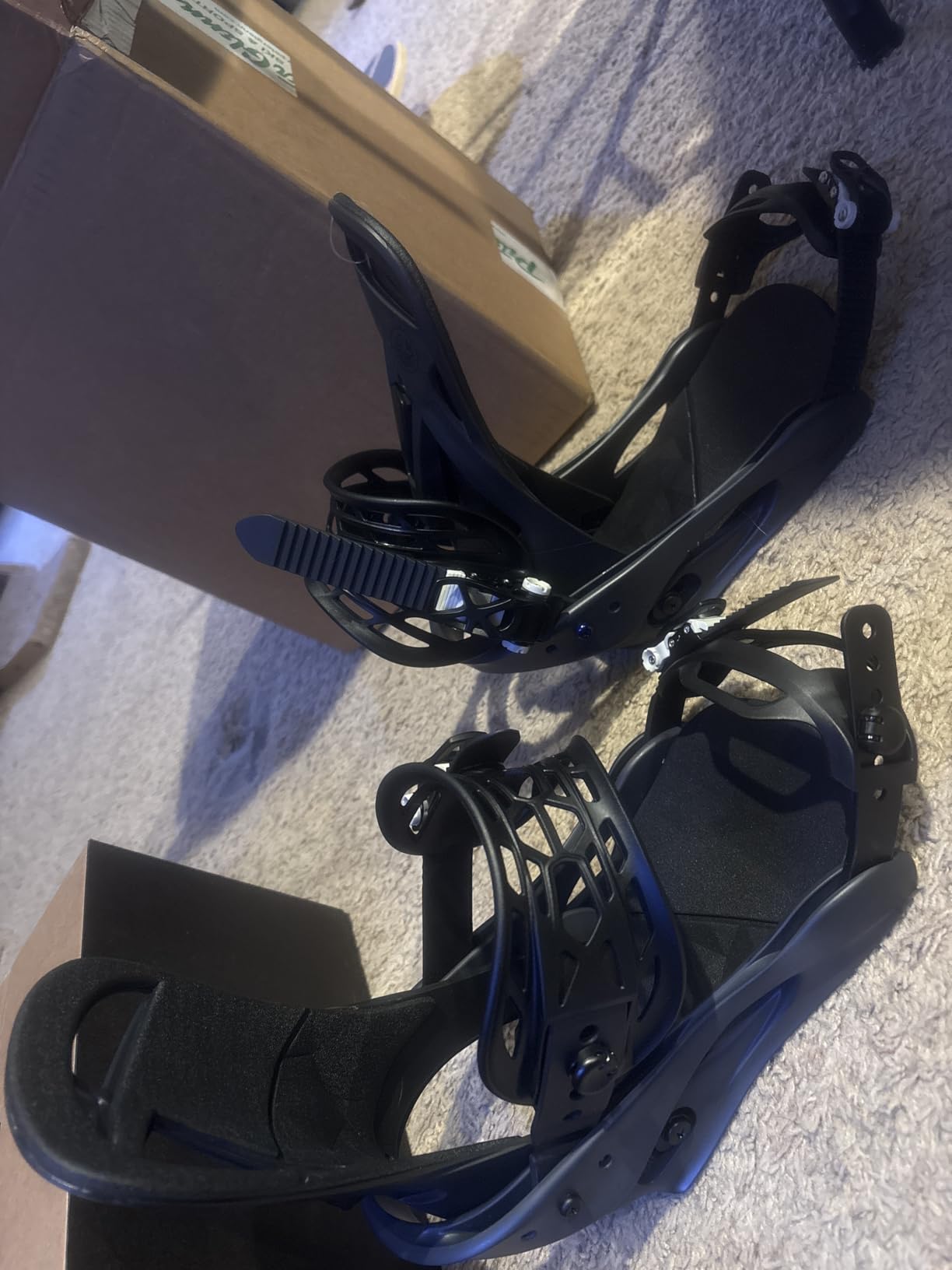
The Re:Flex FullBED cushioning is the same system used in Burton’s higher-end bindings, and it is genuinely the most important feature for a beginner here. It opens the base of the binding to the board, letting the board flex more freely underneath you, and the full-bed padding reduces the constant low-level feedback that wears down new riders. The single-component polycarbonate baseplate keeps the construction consistent and the response predictable.
Construction is nylon and the fit is listed for boot size 6 to 8 in medium, with a Medium disc for increased board flex. Smooth Glide buckles are designed to operate in cold weather, and all the screws needed for installation are included. Burton is a certified B Corporation, and the warranty on this model is a limited warranty rather than a stated term.
Who This Binding Suits Best
This suits a woman in a size 6 to 8 boot who wants a conventional strap-in binding with genuine adjustment options rather than a scaled-down version of a men’s model. The canted highback is particularly useful for anyone who feels pressure on the front of the knees, because it puts your legs in a more natural alignment from the start.
It is also a good value choice for a parent buying a first setup for an adult daughter, since it gives you the MicroFLAD lever and the board-flex benefits of a more expensive binding without the premium tier. Installation is straightforward enough to do at home.
Where It Falls Short
Heel fit is the main problem. The heel foam is narrow and can rub some boot shapes, with owners describing the need to stomp the heel to get the foot seated properly. That is uncomfortable and it is not a universal fix, so if you have a boot shape with a narrow heel you may need to look elsewhere.
Fit is also brand dependent. Some boot models simply do not seat well in this binding, and because boot last shapes differ between manufacturers, a binding that fits one brand cleanly can feel wrong in another. Finally, one unit in the review data arrived assembled incorrectly, which is a packing issue rather than a design flaw but worth knowing if you are relying on a specific delivery date.
10. XCMAN Rear Step In – Lightest Rear-Entry Design in the Roundup
XCMAN Rear Step in Style Snowboard Bindings Lightweight Rear Entry All-Mountain Bindings for Men Women Easy in and Out
Rear-entry step-in
2.06 kg
Unisex adult
Fusion 3D power straps
Pros
- Rear-entry design needs no sitting down
- Lightest construction here at 2.06 kg
- Fusion one-piece 3D power straps cover a wider foot area
- Adjustable turntable and rear board tilt
- Adapts to most major snowboards
Cons
- No warranty coverage
- Highest share of one-star reviews in the set
- Rear cable lock adds complexity compared with a simple lever
The XCMAN Rear Step In is the lightest rear-entry binding we reviewed at 2.06 kg, and it has the most adjustment features of the rear-entry group. The adjustable turntable and rear board tilt let you change the angle of the binding relative to the board, which means you can experiment with position without re-drilling everything from scratch. For a beginner who wants to try different setups, that is worth paying attention to.
The Fusion one-piece 3D Power Straps are moulded in a single piece and cover a larger area of the foot than conventional two-piece straps, which spreads pressure instead of concentrating it. Combined with the full EVA padding on both the hi-back and the footbed, this is a comfort-oriented rear-entry design rather than a minimal one.
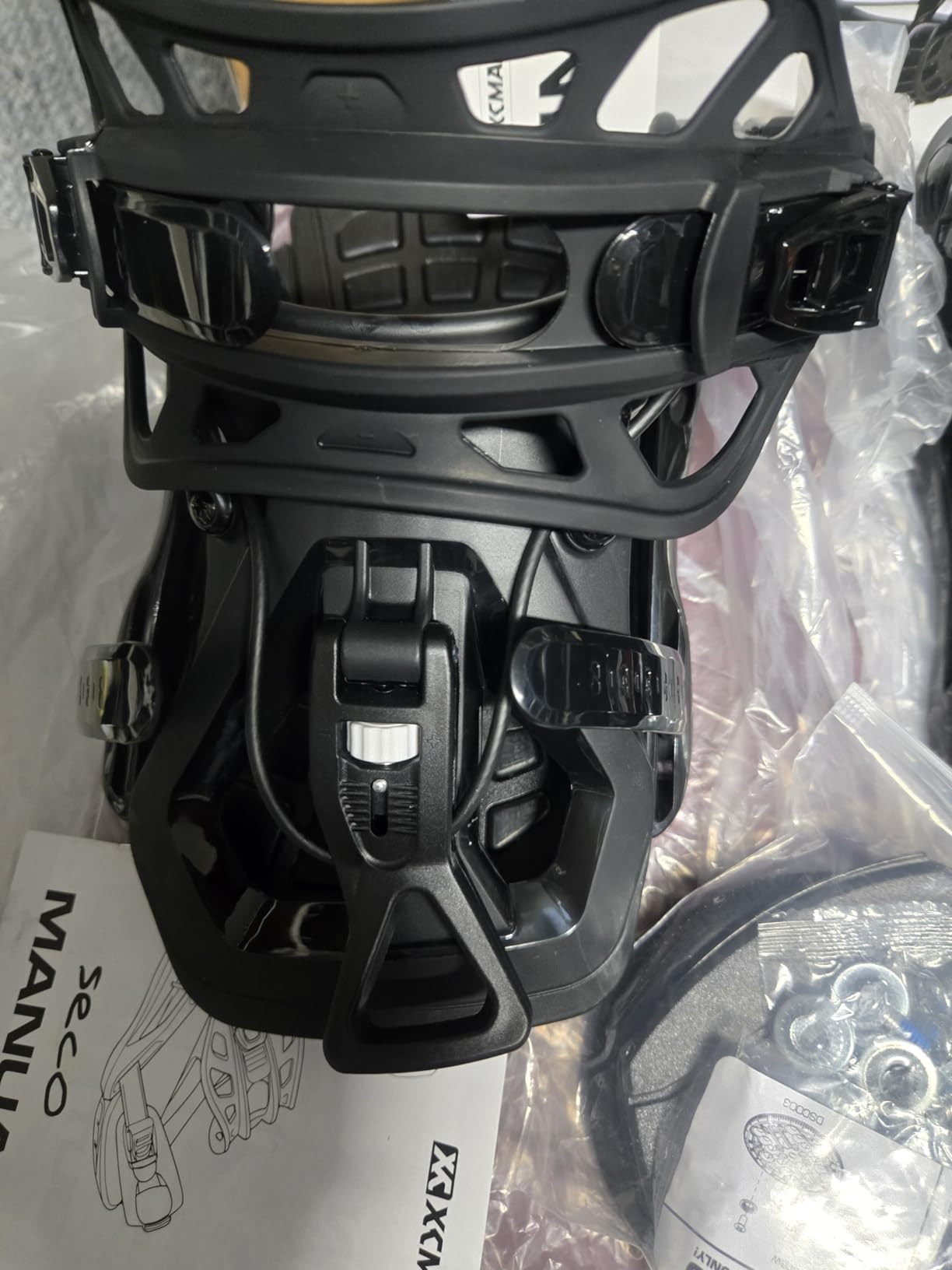
The base plate is a hybrid nylon fibre construction with snow-shedding cutouts, which is the engineering answer to a real problem: bindings packed with wet snow stop working properly. Letting snow fall away through the cutouts keeps the mechanism cleaner than a solid plate, and it also trims weight. The binding adapts to most major snowboards on the market, and the package includes the binding screw needed for mounting.
Marketed as unisex adult sizing in medium, this is the only rear-entry option here that does not position itself specifically for women. Dimensions are roughly twelve by ten by eight inches. One thing to note is the rear cable lock, which is a different mechanism from the simple lever used on other rear-entry bindings and adds a step to the process.
Who This Binding Suits Best
This suits a beginner who is put off by straps and wants to customise the position of the binding on the board. If you are the type who plans to spend time adjusting stance angle and lean, the turntable and tilt adjustability here is more than most comparable rear-entry designs offer.
It is also a reasonable option for anyone who is moving between a men’s and a women’s setup and wants a single unisex binding that works across both. As the lightest option in the roundup, it is kind to legs over a long day of lift riding.
Where It Falls Short
The warranty is the first issue. This model offers no warranty coverage, which means the durability risk sits entirely with you. Combined with a review profile that includes a relatively high share of one-star feedback, that is a meaningful difference from the System MTN and LUX, which both carry three year warranties.
Second, the cable lock mechanism is more complex than a simple lever binding, and complexity is not ideal when you are already concentrating on riding. Learn the entry motion with someone standing next to you the first few times. And as with all rear-entry designs, expect to put in more effort stepping in when you are standing in deep or soft snow rather than packed groomers.
11. 5th Element Layla 2 Women’s – Best for Smaller Women’s Feet
5th Element Layla 2 Adult Snowboard Bindings for Women-Designed for New or Replacement Snowboards. Universal bindings disc and Hardware for Beginner to Intermediate (White/Teal, S (5-7))
Buckle closure
Women's boots 6 to 10
Composite construction
2 year warranty
Pros
- Designed specifically for women's boot sizing
- Universal mounting disc allows custom stance angles
- Reinforced toe caps and aluminium ratchet straps
- Complete hardware kit included
- Two year warranty against defects
Cons
- Sizing tops out at boot size 10
- Entry-level composite construction limits progression
The 5th Element Layla 2 fills a gap the rest of the roundup leaves open: a small-footed woman with a conventional buckle binding and a real mounting disc. Sizing runs Small for boots 6 to 8 and Medium/Large for 8 to 10, so if you have been struggling to find a women’s binding that fits below a size 8, this is the answer.
Like its Summit Stealth sibling, it comes with a universal mounting disc that lets you set custom stance angles before you bolt it in, plus reinforced toe caps and aluminium buckle ratchet straps for carving control. Feedback centres on solid build quality and value, particularly as a first or replacement binding for adult women riders.
Construction is composite, which gives you a durable, forgiving chassis at a sensible weight for a learning rider. The reinforced toe cap stiffens the front of the binding where a soft composite would flex, and the aluminium ratchet hardware resists the corrosion and cracking that catches cheaper buckles after a couple of seasons of hard use.
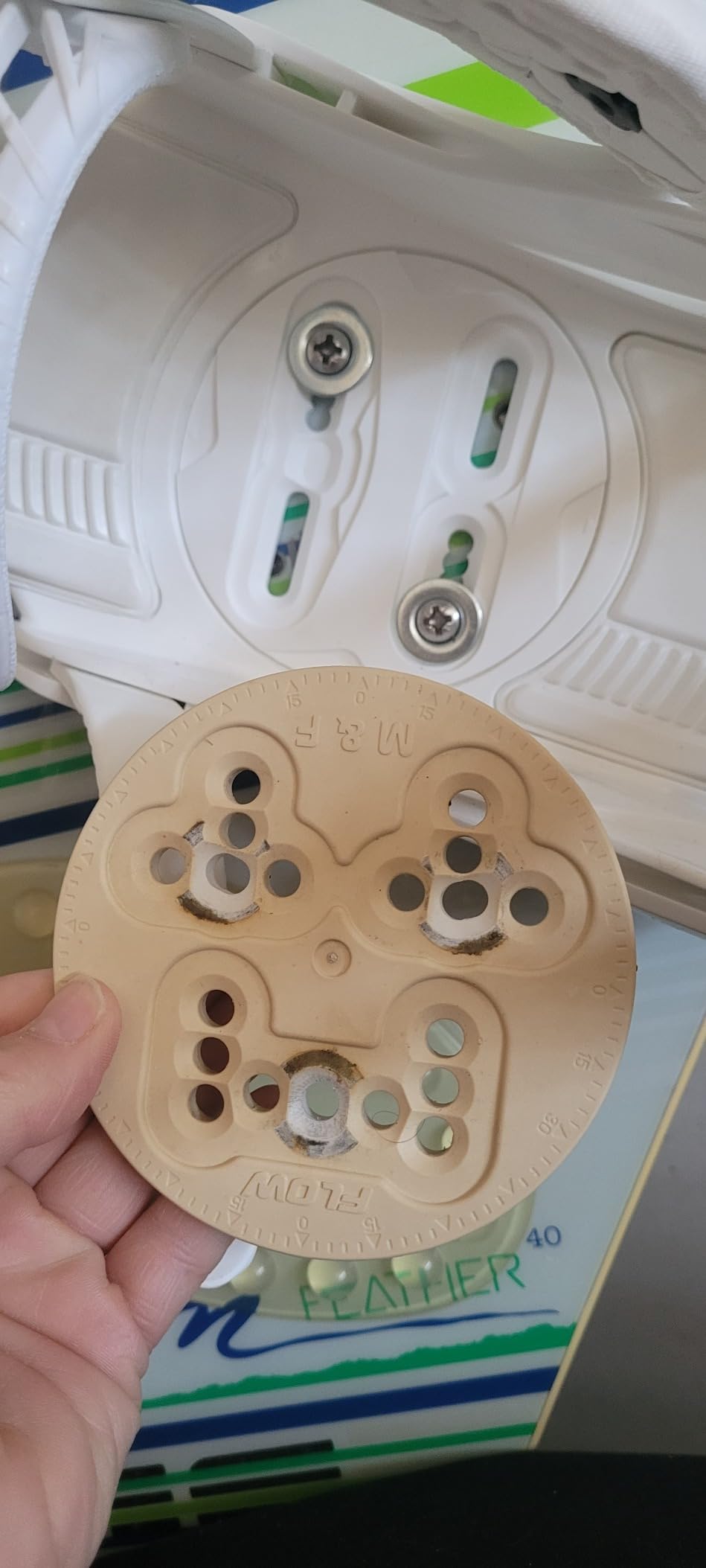
The complete hardware kit is included: two mounting discs, eight screws, washers and hardware, so there is nothing extra to buy before your first day. It mounts on four-hole boards, which is the most common pattern on beginner-friendly boards, and a two year warranty covers manufacturing defects. Be aware that the size range stops at boot size 10, so this is not a choice for larger feet.
Who This Binding Suits Best
This suits a woman in a size 6 to 10 boot who wants the same features the men’s Summit Stealth offers, including stance angle adjustment on the mounting disc. If you have a foot shape that makes generic women’s bindings a poor fit, the women’s-specific sizing here is the reason to choose it.
It is also a good replacement option. If you are moving from a rental binding to your own setup, or replacing a worn pair without changing anything else about your board, this fits a standard four-hole pattern and installs with the supplied hardware.
Where It Falls Short
The size ceiling is the hard limit. At a maximum of boot size 10, anyone with a larger foot needs to move to a men’s fit or a different model entirely, and this binding is not designed to stretch beyond that range. Check your actual boot size rather than your street shoe size, because the two differ.
The second limitation is that this is entry-level composite construction, and it is built for beginner to intermediate riding only. If you are a confident rider buying this as a long-term binding, you will outgrow it. The smaller review base means less long-term durability data exists for this specific model than for the picks with hundreds of reviews behind them.
12. XCMAN All-Mountain – Best for Tool-Free Adjustment and Cant Setup
XCMAN Outdoors All-Mountain Snowboard Binding | Boot US Size 6-9 (Black White, M)
Aluminum and plastic
Lightweight medium-rigid
Medium fits US 6-9
Cant adjustment
Pros
- Tool-free adjustable highback
- ankle strap and toe cap
- Cant adjustment aligns with your natural stance
- Aluminum heelcup with fiberglass base plate scaffolding
- Expandable EVA padded baseplate
- 360 universal mounting disc
Cons
- No included instructions or diagrams
- One reviewer received a set missing a mounting screw
- Smallest review base of the picks here
The XCMAN All-Mountain is the only binding in this roundup where you can adjust the highback, ankle strap and toe cap without tools, and it is the only one with a cant adjustment. For a beginner working out how they stand, being able to change these settings on the slope rather than at home with a screwdriver is a real convenience, and beginner riders report feeling secure and stable with the setup.
Structure is an aluminum heelcup mounted on fiberglass base plate scaffolding, which is a clever way to get stiffness where you need it and flex where you do not. The heelcup holds your foot in place through a turn, while the fiberglass layer underneath lets the base plate absorb impact rather than transmitting it straight up the leg.
The cant adjustment is the feature to pay attention to. A canted base tilts the foot slightly inward to match the angle your legs naturally sit at in a snowboard stance, which reduces strain through the knees. Riders who set it up correctly often report less knee fatigue on a full day, and it is one of the few adjustability options in this list that does not require drilling.
Sizing runs medium for US boot 6 to 9 and large for US boot 9 to 12, and the 360 universal mounting disc works across powder, freestyle and all-mountain boards. The expandable EVA padded baseplate adds cushioning that flexes with your foot, and the binding is compatible with all snowboarding boot brands, which removes the brand-matching anxiety entirely.
Who This Binding Suits Best
This suits a beginner who wants to fine-tune their stance without tools and who appreciates a canted setup for their knees. If you are someone who changes your setup frequently while you learn, or you are sharing a board with other riders of similar size, the tool-free adjustment saves a lot of fiddling.
It is also a good first binding for a rider who knows they will want an angled stance soon. Because the mounting disc and cant can both be adjusted without a permanent commitment, you can start with a neutral setup and change it as your technique develops.
Where It Falls Short
Setup documentation is the first gap. One reviewer received a set missing a mounting screw, and there are no included instructions or diagrams, so mounting the binding on a Channel or 2×4 board may involve some trial and error. Check the hardware count before you head to the mountain and keep a spare set of screws.
Second, the flex is described as medium-rigid rather than soft, which makes it a less forgiving choice than the picks earlier in this list. That is fine for an adult relearner with previous experience, but if you are genuinely starting from zero, a softer binding will be more encouraging on day one. And with only 20 reviews behind it, this is the thinnest evidence base of any pick here, so treat the feedback as a starting point rather than a settled verdict.
Beginner Snowboard Binding Buying Guide
Once you have narrowed the field, these are the five decisions that actually determine whether your first season goes well. Flex comes first because it is the one you cannot adjust later without tools.
Flex Rating: The Number That Matters Most
Flex is measured on a 1 to 10 scale, where 1 is extremely soft and 10 is extremely stiff. For a beginner, look for anything in the 1 to 5 range, with 4 to 5 being the community consensus starting point. Soft flex snowboard bindings allow the board to flex with your weight shift rather than resisting it, so a small lean produces a turn instead of a sudden edge catch.
Stiff bindings do the opposite. They transmit every micro-movement of your foot directly to the edge, which experienced riders use for precision but which beginners experience as the board fighting back. This is the most common first-season mistake and it is worth being deliberate about. A binding that feels slightly too soft on the shop floor will feel fine on a beginner slope; a binding that feels responsive in the shop will feel like an argument on day three.
The one exception is the adult relearner with real prior experience. If you snowboarded seriously twenty years ago and your body remembers how to move on a board, a medium-rigid flex will feel more like the setup you remember and will not intimidate you the way it would a genuine first-timer. Know which of these two people you are before you shop.
Strap-In vs Rear-Entry vs Step-On: Which Is Easiest for a First-Timer
Strap-in is the default and the safest recommendation for a first season. Two buckles give you direct control over tension, the fit is fully adjustable, and the system is well understood by every shop and every instructor. The cost is the daily ritual of sitting down, strapping in, and doing it again on every lift. That ritual is genuinely tiring, and some riders find it the single most demoralising part of learning.
Rear-entry, sold under names like rear step-in, Flow style and Supermatic, replaces the front strap with a highback that hinges open. You slide your boot in and close it. It is faster and easier on your back and knees, and it works with ordinary lacing boots. The drawback most marketing leaves out is behaviour in soft snow: because you have to lift your foot and push it into a high opening, rear-entry bindings are noticeably harder to step into when snow is deep or loose. On a fresh powder day after a chairlift, this is exactly when you do not want a fiddly mechanism.
Step-on removes the straps entirely and connects the boot to the binding at two toe points and one heel point. It is the fastest entry in this roundup and owners consistently praise the reduced fatigue. The catch is compatibility: step-on bindings only work with step-on boots, so a first-time buyer ends up buying a boot as well as a binding. Treat that as a system purchase with the total cost of boots and bindings together, and only commit to it if you are buying boots new anyway.
A fourth format, FASE, is a hybrid that brings rear-entry convenience together with a two-strap feel. It is worth watching as brands expand it, but we have not tested enough of it to recommend it as a first purchase. For a first season, the simplest system that removes your biggest frustration is the right one.
Matching Binding Size to Your Boots
Measure the actual boot, not the street shoe. Snowboard boot sizes in the US run roughly one size larger than street shoes, so a size 10 street boot is often a size 10 or 11 snowboard boot. Then compare that number against the binding’s published size range, and aim for your boot size to sit in the middle of that range rather than at either edge.
Large-foot beginners are the group most often left out of sizing advice, so this deserves emphasis. In this roundup, the System APX covers boot sizes 7 to 13 in a single model, the System MTN runs to an XL for boots 11 to 14, and the XCMAN All-Mountain offers a large for US boot 9 to 12. If you need a large size, check that it exists before you commit to a model, and buy from a seller who will take a return.
One physical test is worth doing in the shop. Cinch the straps as you normally would and look at how much strap is left hanging past the buckle. Excessively long strap means the binding is too big for your boot, and it will feel loose even though the size chart said it should fit. The 5th Element models include multiple discs, which makes swapping to a different size or angle straightforward if the first fit is not right.
Board Compatibility: 4×4, 2×4 and Channel Insert Patterns
The insert pattern is the hole layout on the base of your board, and it determines which bindings will physically bolt on. Most beginner boards use the standard four-hole 4×4 pattern. The 2×4 pattern is a wider rectangular layout found on some all-mountain boards. Channel is Burton’s system, with a single channel running down the centre of the board and sliding mounting hardware rather than fixed holes.
Matching the pattern correctly is not optional. Forcing a binding onto the wrong pattern leaves loose hardware, and one owner in our data reported bindings loosening on Channel-style boards because they were not tightened firmly enough against a mismatched setup. Check your board’s pattern before you buy, and check whether the binding includes the right disc.
Burton’s Re:Flex system is the one to look for if you want the widest compatibility. It fits all current snowboard mounting systems, which is why both Burton picks in this roundup mount on anything. The rear-entry System MTN and System LUX also mount to both four-hole and Channel EST boards through a multidisc. By contrast, the Rossignol Battle and both 5th Element models are listed for four-hole boards, so confirm your pattern first.
Match Your Binding Flex to Your Board
Bindings, boots and board function as one system, and mismatch is the fastest way to make a setup miserable. The general rule is that binding flex should roughly agree with boot flex and board flex. Very soft boots with a stiff binding create a disconnect where the foot moves but the board does not respond. A very stiff board with soft bindings feels dead and unpredictable, because the board is not flexing where your edges need it to.
On camber versus flat or rocker, camber is generally considered better for progressing because the board makes its own contact with the snow and gives you a defined edge hold, while flat and rocker boards are easier to catch an edge on. For a first season, a softer binding on a rocker board is a forgiving combination. Just expect to grow out of it, and know that a camber board with a matched binding is where you will end up eventually.
If you are still choosing a board, match the binding flex to what the board is designed for rather than trying to use a soft binding to make a stiff board ride nicely. Soft bindings on stiff boards are a common rental mismatch and it makes both parts feel worse than they would on their own.
What to Avoid as a Beginner (and What to Buy Instead)
Avoid stiff all-mountain and freeride bindings in your first season. These are built for riders who already control their edge, and the aggressive forward lean combined with a firm highback is precisely the combination that ends lessons early. If a shop offers you a stiffer binding because you are an adult, decline it unless your background justifies it.
Also avoid buying a step-on system without budgeting for compatible boots. The bindings are genuinely useless without them, and discovering that after purchase is a common and expensive surprise. A third mistake is buying bindings before boots. Your boot size and boot volume determine which bindings fit, so settle the boot choice first even if you buy the bindings first in time.
Two further traps: buying a binding and board as a matched set when you already own a board, which leaves you with mismatched mounting hardware; and skipping size verification entirely. Our advice is to rent for a first season if you can, learn your boot size and stance on rental gear, then buy bindings that match what you learned rather than what you assumed.
Stance Setup: Duck Stance, Angles and Forward Lean
A duck stance, where the front foot angles one way and the back foot angles the other, reduces the torque on your knees compared with standing completely square. On snowboarding forums the most common beginner recommendation is plus fifteen and minus fifteen, with plus fifteen and zero as a gentler starting point. Beginners often naturally stand with the back foot angled more than the front, so a small duck stance may need adding rather than removing.
Start with a small angle and increase it slowly. Your base angle sets how the board engages the snow, and a larger angle is faster and more powerful but harder to control. Forward lean on the highback, adjusted via a FLAD lever or similar mechanism, controls how quickly the heelside edge engages. Too much lean and you will catch heel-side edges; too little and your turns will feel flat and slow.
Bindings with a cant adjustment, like the XCMAN All-Mountain, let you tilt the footbed to match your natural leg angle and take pressure off the knees. If your knees are the part of riding that fatigues fastest, that setting is worth ten minutes of setup. Whatever you choose, set the binding up once, ride for a day, and change one variable at a time so you know what actually helped.
Frequently Asked Questions
What bindings should I get as a beginner?
Strap-in bindings with a soft-to-medium flex, roughly 4 to 5 out of 10, are the safest first purchase because they give you full control over tension and fit. Rear-entry bindings are the best alternative if sitting down and strapping in every run is what you expect to frustrate you most. Avoid stiff all-mountain and freeride bindings until you control your edge consistently.
What flex rating should a beginner snowboard binding be?
Look for a flex rating between 1 and 5, with 4 to 5 being the most common recommendation from riders and instructors. Soft flex lets a small weight shift turn the board instead of catching an edge, which is the difference between a frustrating first season and a manageable one. The exception is an adult relearner with real prior experience, who may prefer a medium-rigid feel.
Should beginners get strap-in or step-on bindings?
Strap-in is the default recommendation because it fits ordinary lace-up boots, adjusts easily and can be serviced anywhere. Step-on is faster and reduces the fatigue from crouching in ski boots, but the bindings only work with compatible step-on boots, so a first-time buyer needs to budget for a boot as well. If you are buying boots new anyway, step-on is a reasonable upgrade.
Are rear entry bindings good for beginners?
They are genuinely easier to get into and out of, which removes the daily frustration of sitting in the snow to strap in. The main drawback is soft or deep snow, where a highback opening is harder to step into than packed groomers. They also generally use a single ankle strap rather than two, so heel retention is less adjustable.
How do I know what size bindings to buy?
Measure your snowboard boot size rather than your street shoe size, then check that number against the binding’s published size range and aim for the middle of the range rather than the edge. Large-foot riders should confirm that an XL exists before committing, and should cinch the straps in a shop to check that no excess strap is left hanging.
Do binding flex and board flex need to match?
They should roughly agree, and the same applies to boot flex. Very stiff boots with a very soft binding create a disconnect where the foot moves but the board does not respond. Binding flex, boot flex and board flex form one system, so matching them sensibly is what makes a setup feel coherent under your feet.
The Bottom Line on Beginner Snowboard Bindings
If you read nothing else, pick a soft-to-medium flex binding in your exact boot size and stop thinking about it. The System MTN is our first recommendation because it removes the hardest part of a first season and carries the longest warranty in this group. Riders who want a conventional strap-in with custom stance angles should look at the 5th Element Summit Stealth, and anyone who prioritises speed above all else should read the step-on cost warning first.
Whatever you choose, avoid stiff bindings, match the mounting pattern to your board, and buy your boots before you finalise your binding size. That is the whole decision. Get it right once and your first season becomes about learning to ride rather than learning to fight your gear.