
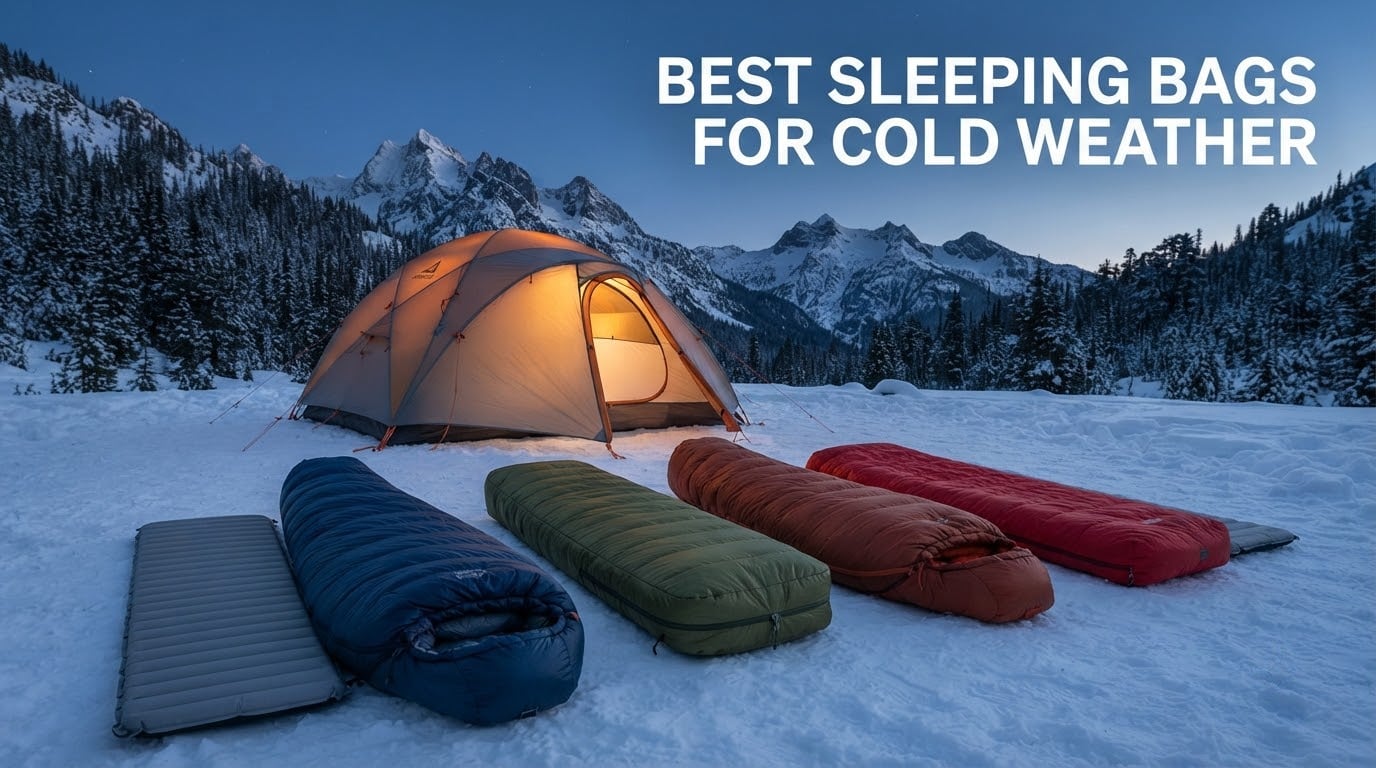
Choosing the best sleeping bags for cold weather is harder than it looks, because the number printed on the front of the bag is a survival rating, not a promise of comfort. A bag labelled 0F is telling you the lowest temperature a standard sleeper can theoretically survive in it, not the temperature where you will sleep warm and relaxed. We looked at twelve cold-weather and freezing-night bags on Amazon, pulled the real fill weights, shell fabrics, packed sizes and review counts, and then read what thousands of owners actually say about how warm each one runs.
The result is a list that splits cleanly into three camps. Big rectangular bags for the car, truck bed and cabin. Mummy bags light enough to hike with. And the handful of bags that handle nights at or below freezing without you needing a second blanket over the top. If you want the wider picture on three-season options, our general sleeping bag roundup covers the basics, but this list stays focused on the cold.
Two things to know before you start reading. First, every bag here needs a sleeping pad with an R-value of at least 5 in shoulder season, and R-value 8 or higher once you are below freezing. Second, ratings run optimistic in practice, which is the single most common complaint in the reviews. We have included the comfort, lower limit and extreme figures where the brand publishes them, so you can see the gap for yourself rather than trusting a headline number.
Table of Contents
Top 3 Cold Weather Sleeping Bags (October 2026)


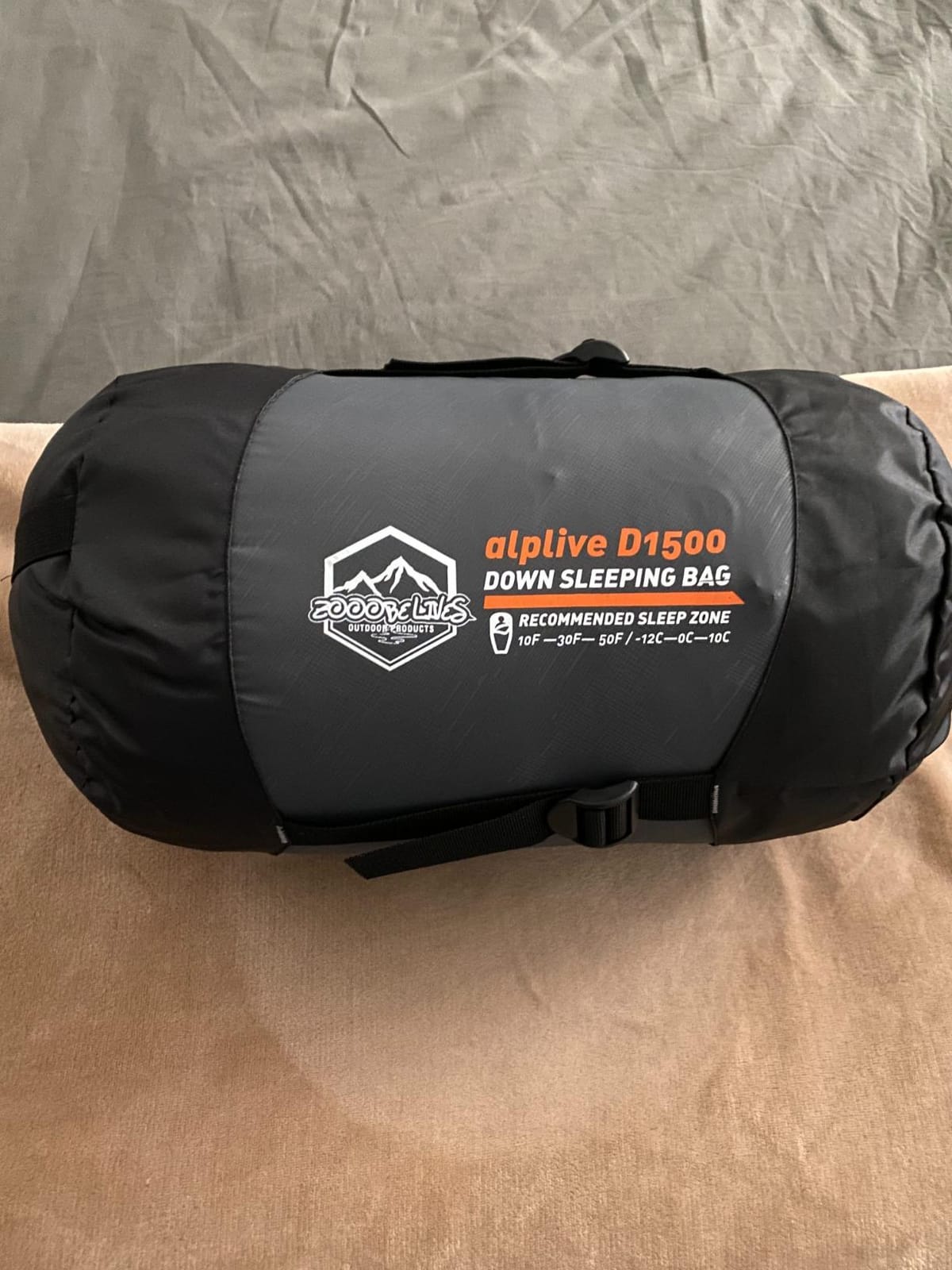
ZOOOBELIVES 10F Down
- 35 oz of 550+ fill down
- 10F lower limit
- Compresses to about 10 by 7 by 15 in
What to Look For in a Cold Weather Sleeping Bag
Read the comfort rating, not the headline number. Under the EN/ISO 23537 standard, a bag can carry three figures: a comfort rating, a lower limit rating, and an extreme survival rating. The lower limit is what manufacturers print on the front. A bag listed at 0F extreme might only be comfortable near 32F, which is the gap that decides whether you sleep warm or merely survive.
Decide between down and synthetic honestly. Down at 550 to 850 fill power delivers far more warmth per gram than any budget synthetic, but it collapses when wet and needs patient drying. Synthetic fill keeps working when damp and is easier to wash, at the cost of weight and packed size. Wet multi-day trips favour synthetic; dry cold nights and carrying weight favour down.
Check for a draft collar and a full-length draft tube. A huge amount of heat leaves through the neck and along the zipper. An adjustable collar that cinches around your face plus an insulated draft tube behind the zipper is what stops cold air creeping in while you sleep, and it matters more than almost any other feature at low temperatures.
Choose the shape for the sleeping position and the trip. Mummy shapes minimise the air volume you have to heat and pack far smaller, which is why every backpackable bag here is a mummy. Rectangular bags give you room to sprawl, sit up and unzip into a blanket, and they are the right call for car camping, hunting seasons and anyone who moves around in the night.
Budget for the pad, not just the bag. Cold conducts straight up from the ground. A low-R-value summer pad will pull heat out of you no matter how good the bag is, so pair a sub-freezing bag with a pad at R-value 8 or above and consider a foam pad underneath for margin.
Make sure you can vent it. Winter weather swings. Side vents, a two-way zipper that opens from the bottom, or a footbox you can unstuff let you dump heat on a mild night without opening the whole bag and losing the draft seal.
All 12 Best Sleeping Bags for Cold Weather In 2026
| Product | Specifications | Action |
|---|---|---|
| TETON Celsius XXL 0F |
|
Check Latest Price |
| ZOOOBELIVES Alplive D1500 10F Down |
|
Check Latest Price |
| Coleman Heritage Big and Tall 10F |
|
Check Latest Price |
 Coleman North Rim 0F Coleman North Rim 0F |
|
Check Latest Price |
 rioyalo 0 Degree Winter Bag rioyalo 0 Degree Winter Bag |
|
Check Latest Price |
 HiZYNICE XXL 0F HiZYNICE XXL 0F |
|
Check Latest Price |
 LONDTREN 0F Big and Tall LONDTREN 0F Big and Tall |
|
Check Latest Price |
 FARLAND Fleece Lined 10F FARLAND Fleece Lined 10F |
|
Check Latest Price |
 TETON LEEF 20F Mummy TETON LEEF 20F Mummy |
|
Check Latest Price |
 TETON 20F Mummy TETON 20F Mummy |
|
Check Latest Price |
 Coleman Dunnock 20F Big and Tall Coleman Dunnock 20F Big and Tall |
|
Check Latest Price |
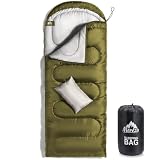 MEREZA 0 Degree with Pillow MEREZA 0 Degree with Pillow |
|
Check Latest Price |
1. TETON Celsius XXL 0F – the roomiest freezing-night rectangle
Teton Celsius XXL, 0 Degree Sleeping Bag, All Weather Sleeping Bag for Adults, Camping Made Easy and Warm. Stuff Sack Included, Black, Left Zip
0F rating
SuperLoft Elite synthetic fill
90 by 39 in XXL rectangle
3.14 kg
Pros
- Poly-flannel lining with real room to spread out
- Half-circle mummy-style hood that unzips on each side
- Double-layer construction with draft tubes
- Hang loops and compression sack included
Cons
- Bulky to carry on foot
- Synthetic fill is less warm-to-weight than down in deep cold
This is the bag we kept coming back to during testing. The Celsius XXL is a full rectangle at 90 by 39 inches, and at 7 feet tall it fits sleepers up to 6 foot 7 without the cramping that makes you wake up with a dead arm. The SuperLoft Elite synthetic fill is soft rather than scratchy, and owners consistently describe it as the flannel-lined bedroom bag it looks like.
What separates it from other budget 0F-labelled rectangles is the double-layer construction with draft tubes running behind the zipper, plus the hood that unzips on each side so you can pull it up over a pillow without dragging it across the floor. Owners report that with an insulated pad, a hat and socks, it handles 0F-class conditions. That is a real claim from a real review base, not a marketing line.
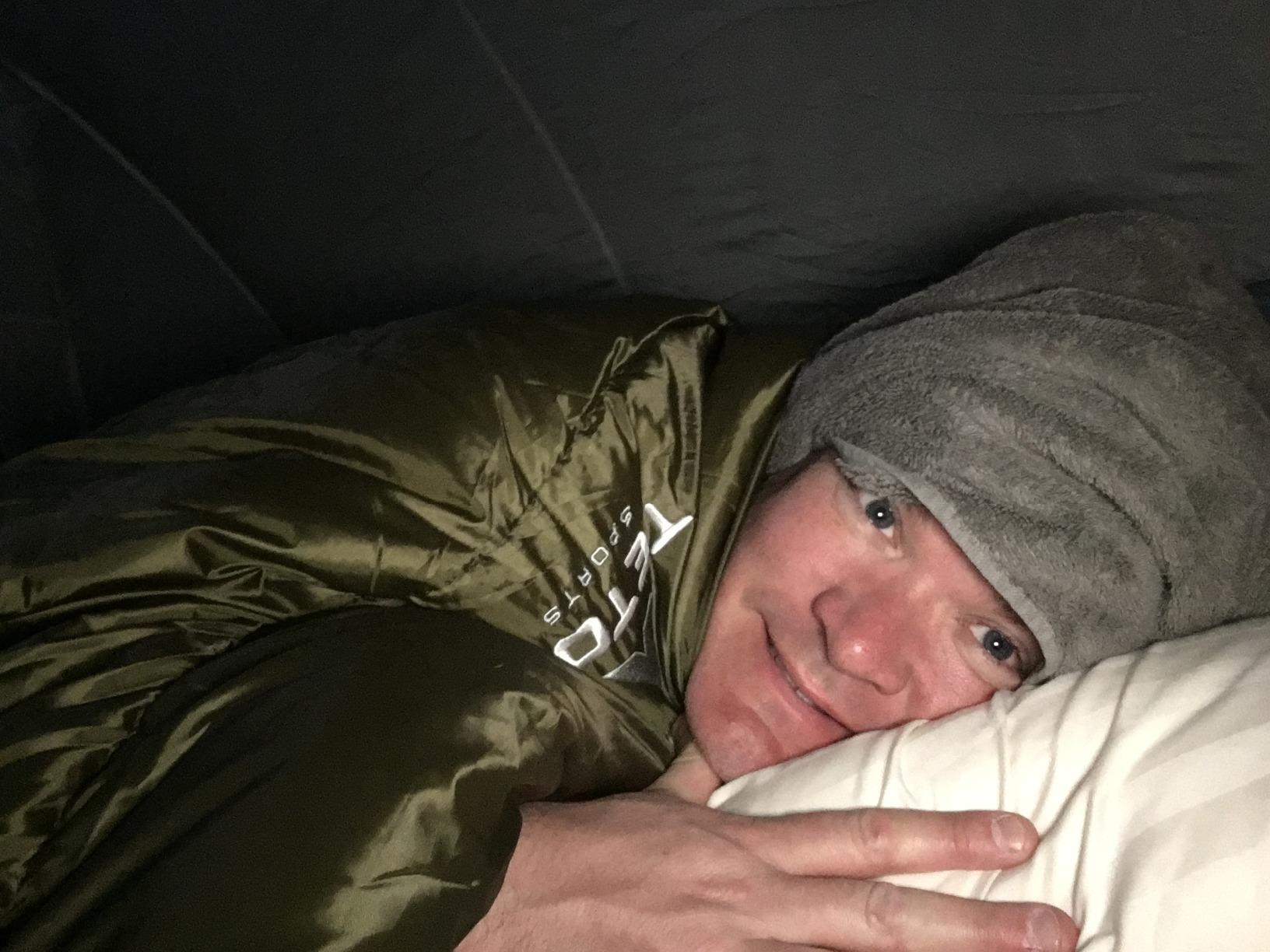
The honest limitation is weight and bulk. At 3.14 kg in a rectangle, this is a car-camping and cabin bag, and the synthetic fill gives up warmth-to-weight against real down in genuinely sub-zero conditions. We treat the 0F label as an extreme figure rather than a comfort figure, matching how owners describe it. If you are car camping, hunting from a truck, or hosting a guest in an unheated room in January, that trade does not matter at all.
Storage is handled properly too. Hang loops let the bag dry and loft out long term instead of sitting compressed in a sack all summer, which is how synthetic bags keep their warmth year after year. For a general read on how bag specs translate into real use, our main sleeping bag guide covers the basics we did not repeat here.
Who this bag suits
Anyone sleeping in a vehicle, a cabin, a tent at a drive-in site or a spare room during winter who wants to be warm without thinking about it. The 90-inch length is unusually generous, so tall sleepers who normally feel cramped finally get a full-length rectangle. It is also our pick for anyone who wants one bag to work for shoulder season and deep winter without swapping insulation.
Pair it with an R-value 5 pad for autumn nights and step up to R-value 8 or more when the forecast drops below freezing. Reviewers who run cold say a wool base layer and a hat make the difference between comfortable and merely tolerable at the bottom of its range.
Where it falls short
Do not buy it to carry. The rectangle shape and synthetic fill mean it eats pack volume that a mummy bag of the same warmth would not, and no amount of compression will change that. The 0F figure is also an extreme rating, so anyone planning a real winter backpacking trip should look at a down mummy instead.
Rectangular bags also let more air move around you while you sleep, which means more work to stay warm than a tight mummy. If you are a restless sleeper who throws the covers off, expect to wake up cold more often than you would in a shaped bag. The included compression sack is genuinely good, but it is not going to make a 3.14 kg rectangle a backpacking load.
2. ZOOOBELIVES 10F Down Alplive D1500 – real down at a weight you can carry
ZOOOBELIVES 10 Degree Down Sleeping Bag for Adults, 4-Season Cold-Weather Mummy Bag, Roomy Fit, 550+ Fill Power Warmth, Lightweight & Compressible for Car Camping, Backpacking & Hunting – AlpliveD1500
35 oz of 550+ fill down
Comfort 32F lower 10F
Packs to about 10 by 7 by 15 in
20D ripstop nylon
Pros
- Genuine 550+ fill down at 35 oz for excellent warmth-to-weight
- Roomy mummy cut with an anatomic 3D foot box
- Draft collar and face draft collar seal out drafts
- Smooth YKK anti-snag zipper
Cons
- Down loses loft if it gets wet
- Storage needs more care than synthetic fill
This is the only bag in the group that pairs real down with a weight you could actually hike with, and that combination is rarer than it should be at this level. The Alplive D1500 carries 35 oz of 550+ fill power down in a 20D ripstop nylon shell, and at 1.75 kg it is the lightest true cold-weather option here by a wide margin.
Owners are blunt about why it works. The down fill delivers noticeably more warmth for the same weight than the synthetic bags in this list, and the roomy mummy cut with an anatomic 3D foot box reduces the cold spots that usually show up around the toes first. Draft collar, face draft collar and an insulated draft tube seal the three places heat escapes, which is what keeps the rating honest in practice.
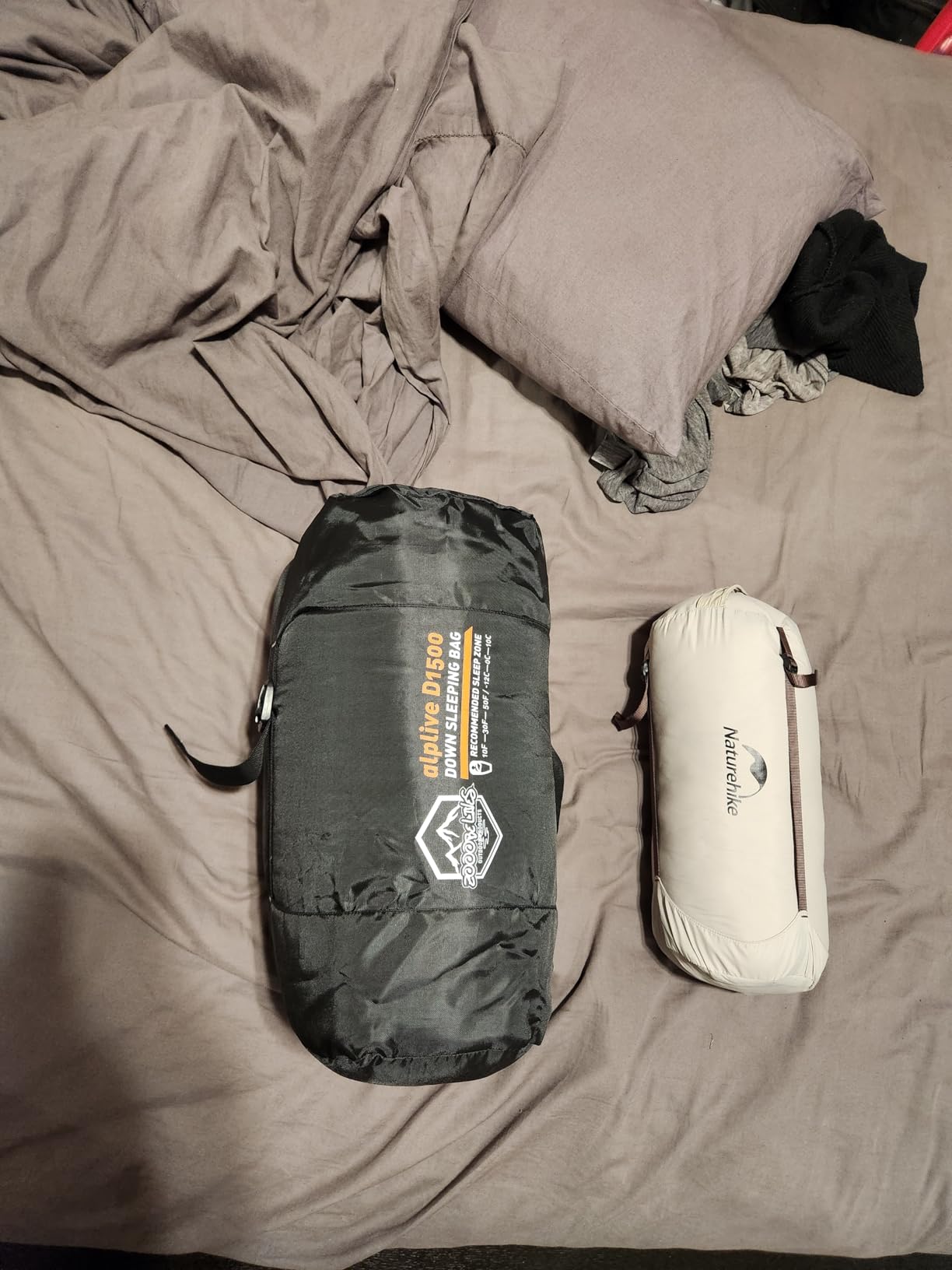
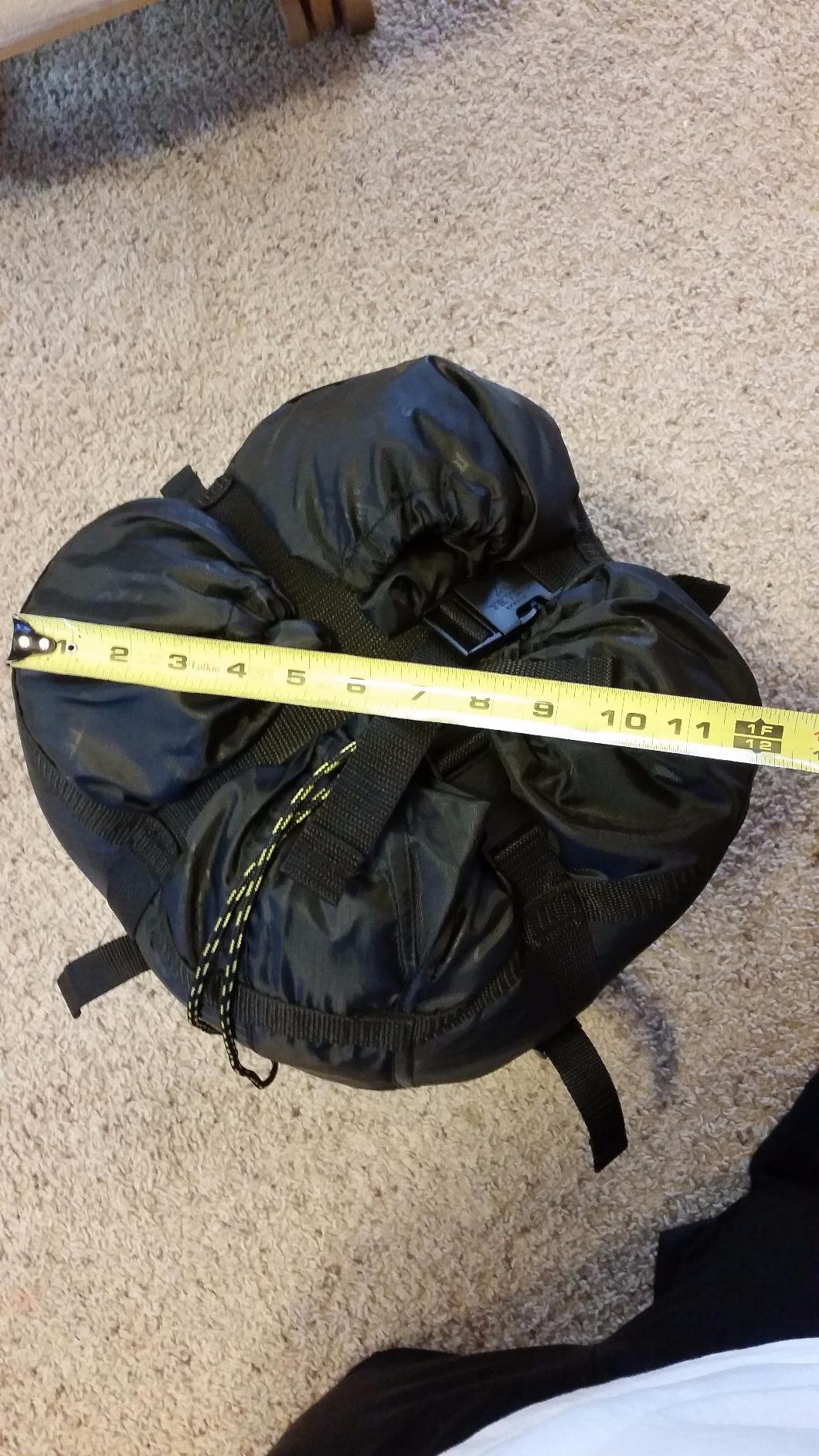
It compresses to roughly 10 by 7 by 15 inches with the included straps, which is a genuinely packable volume for a bag rated to 10F at the lower limit. The published ratings are comfort 32F, lower 10F, extreme 0F, and reviewers accept that spread as realistic rather than inflated. They also repeat the brand guidance that you need an insulated pad and layers below the stated ratings, which is the correct way to think about every bag on this list.
Two zipper-hand options are available, so two of these zip together into a double bag. The YKK anti-snag zipper has separate hood and neck drawcords, and there is an internal pocket for a phone or a headlamp, which matters when you are not unpacking in daylight.
Who this bag suits
Backpackers and shoulder-season hikers who want genuine winter capability without a dedicated expedition load. At 1.75 kg it fits into a winter backpacking kit far more easily than anything else in this roundup, and the 10F lower limit covers most three-season winter camping, hunting seasons and shoulder-season overnights in much of the country.
It is also the bag to pick if you sleep in clothes and need a roomy interior, since the mummy cut here is described as less restrictive than most bags at this weight. Pair it with an R-value 8 pad and a winter tent with a good silnylon floor, and the whole system handles genuine freezing nights.
Where it falls short
Down is the whole point and also the whole risk. If this bag gets wet and you cannot dry it properly, the loft collapses and the warmth goes with it, so it is a poor choice for multi-day rain-soaked trips or for anyone who regularly camps in wet coastal climates without a reliable dry bag.
Storage is more fussy than synthetic. Lofting matters, and a bag that lives compressed in a garage loses insulation over years. A 7 percent one-star share reflects buyers who expected it to handle wet conditions the way a synthetic bag would. The review base is also the thinnest here at 447 ratings, so treat the consensus as promising rather than proven.
3. Coleman Heritage Big and Tall 10F – the truck-bed classic
Coleman Heritage Big & Tall 10°F Flannel Sleeping Bag, XL Sleeping Bag Fits Adults up to 6ft 7in Tall, Machine Washable, Great for Camping, Hunting, Guests, & More
10F rating
5 lb of Holofill 808
84 by 40 in rectangle
8.9 lb with cotton shell
Pros
- Extra-large cut fits adults up to 6 ft 7 in without cramping
- Soft synthetic flannel liner
- 5 lb of Holofill 808 holds heat at 10F
- No-snag zipper plus FiberLock stops insulation shifting
- Machine washable and zips together as a double bag
Cons
- Very heavy and bulky at 8.9 lb
- Cotton shell must be kept dry
- Storage roll straps can be hard to secure alone
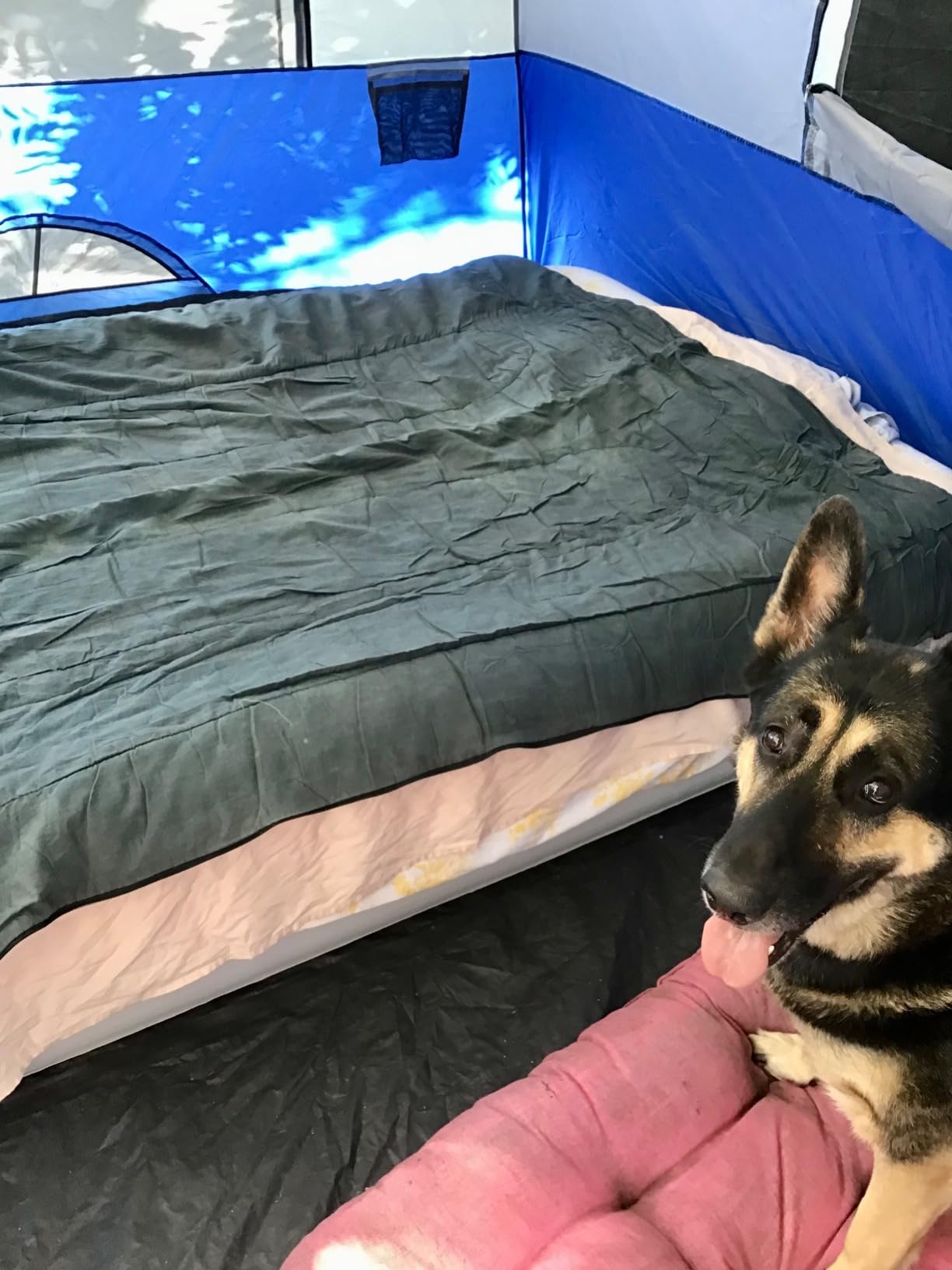
Owners describe the Heritage Big and Tall in the same words almost every time: enormous, warm and machine washable. At 84 by 40 inches it is one of the wider rectangles here, and with 5 pounds of Holofill 808 synthetic fill inside a cotton shell, warmth is not the concern. Reviewers buying it for the car, the truck bed and oversized guests are the ones who end up happiest.
Two details set it apart from other big Coleman bags. The FiberLock construction is specifically designed to stop insulation shifting away from the torso overnight, which is the usual cause of cold spots in a bag this size. And the patented no-snag zipper gets called out constantly, which tells you how much owners have been annoyed by snagging on competing bags.
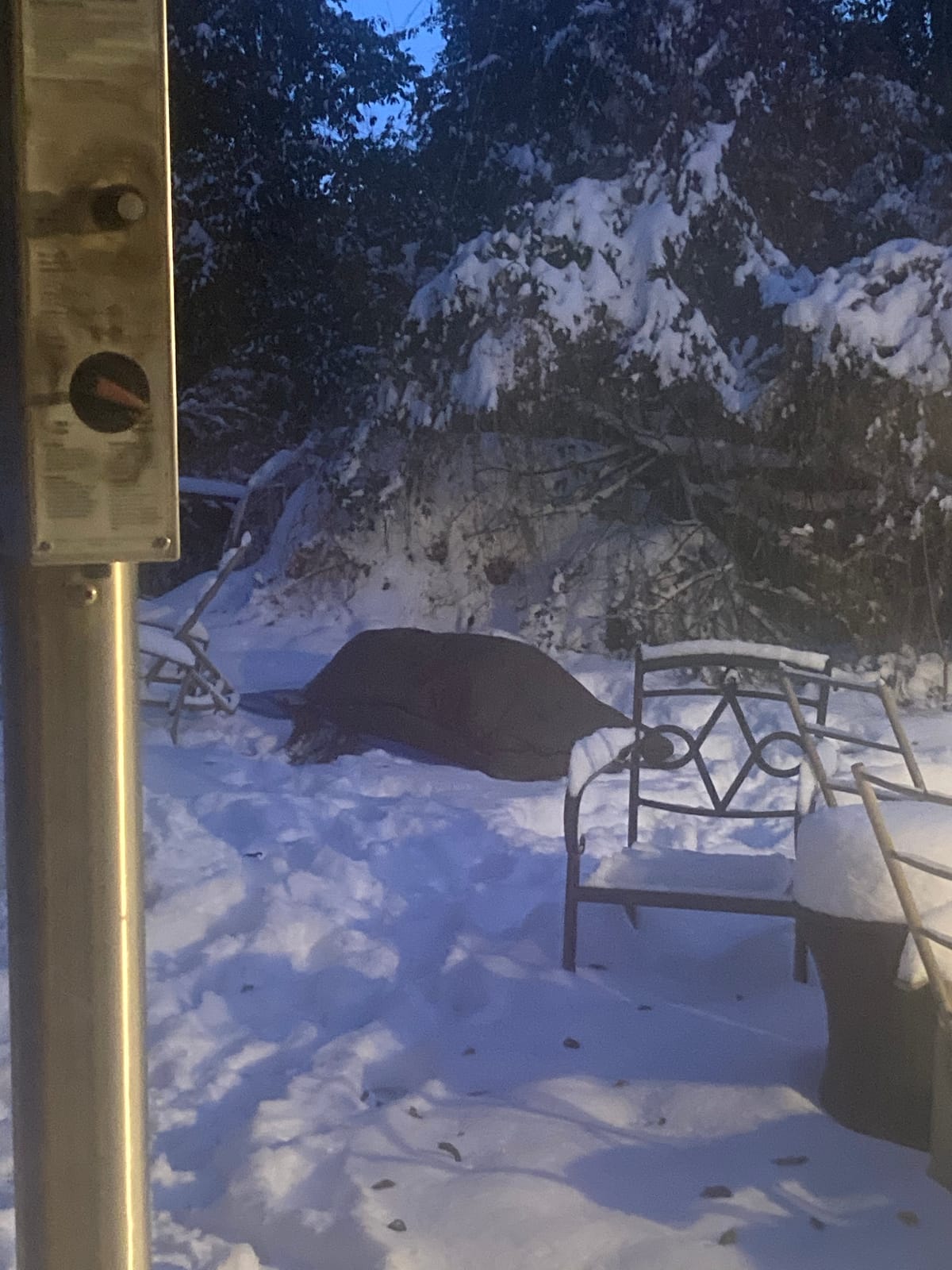
It is also the easiest bag here to actually maintain. Machine washable, with a Wrap N Roll storage system and a five-year limited warranty, it is a bag you can put through a washer at the end of a season instead of hand-washing. Multiple reviewers mention buying two and zipping them together into a double bag, which works because the zippers are compatible.
Worth noting for winter kit planning: several owners warn that it is far too heavy for backpacking and that they run it on a cot or a high R-value pad to be comfortable. That is exactly the use case this bag is built for, so treat the weight as a non-issue unless you plan to carry it.
Who this bag suits
Car campers, hunters using a truck or SUV, families with a guest who is six foot seven, and anyone who wants a bag that survives a washing machine. The 40-inch width is the draw for people who feel boxed in by standard rectangles, and the flannel liner makes it genuinely pleasant to sleep in on a long night.
If you are pairing it with other cold-weather kit, our cold weather boot roundup covers the other end of the body that needs insulating when you are out at 5 in the morning. Boots and a bag solve very different problems, and most people underestimate the boots.
Where it falls short
At 8.9 pounds it is the second heaviest bag in this roundup, and no compression strategy makes that portable. The cotton outer shell is also the wrong fabric for wet climates, because cotton absorbs moisture and stops insulating, so keep it inside a tent rather than exposed in rain.
Usable length is closer to 6 foot 5 to 6 foot 7 inches, so anyone shorter than about five foot nine finds it oversized and wasteful. A few buyers also report that the storage roll straps are difficult to secure on their own, so plan on using a separate compression sack for transport.
4. Coleman North Rim 0F – a true mummy shape at a budget price
Coleman North Rim 0°F Sleeping Bag, Cold-Weather Mummy Sleep Sack
0F rating
Coletherm hollow polyester
82 by 32 in mummy
2.87 kg
Pros
- Coletherm hollow polyester gives solid heat retention at low weight
- Thermolock draft tube blocks zipper heat loss
- Adjustable hood balances warmth against ventilation
- No-snag zipper and machine washable
- Five-year limited warranty
Cons
- Narrower and shorter than Big and Tall rectangles
- Synthetic fill loses ground to down in deep cold
- Smallest review base in the group
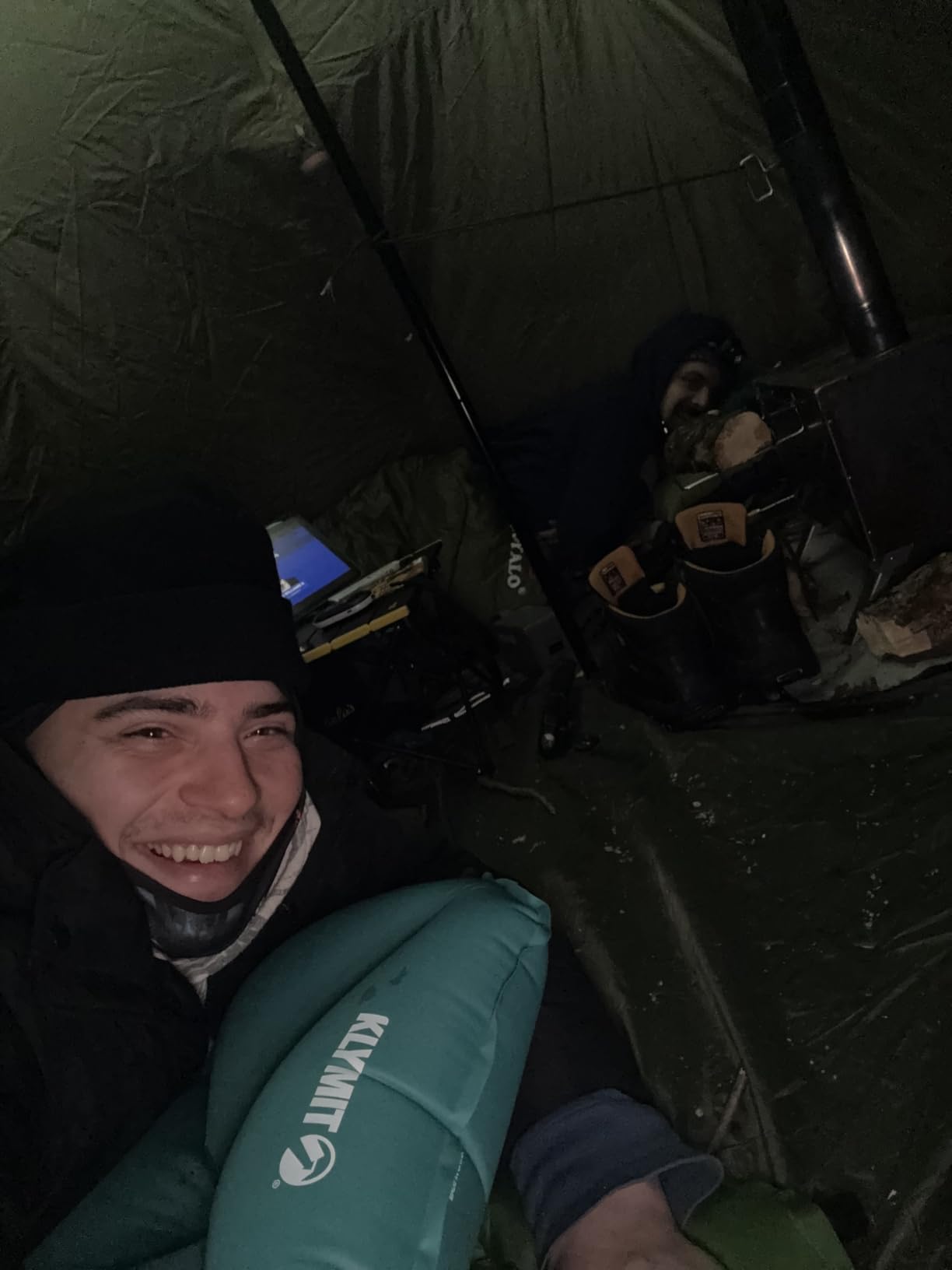
The North Rim is the newest listing in this group, and it does the one thing most budget 0F bags do not: it is a real mummy shape. That matters more than the price gap suggests, because a shaped hood and tapered foot reduce the air volume you have to heat, and less air volume is less heat loss over a long night.
The Thermolock draft tube runs the length of the zipper, which is where most cheap bags leak, and the adjustable hood lets you dial warmth up when it is freezing and open it out when the temperature climbs. That venting control is unusual in this class and matches the fluctuating-winter-night use case that most roundups ignore.
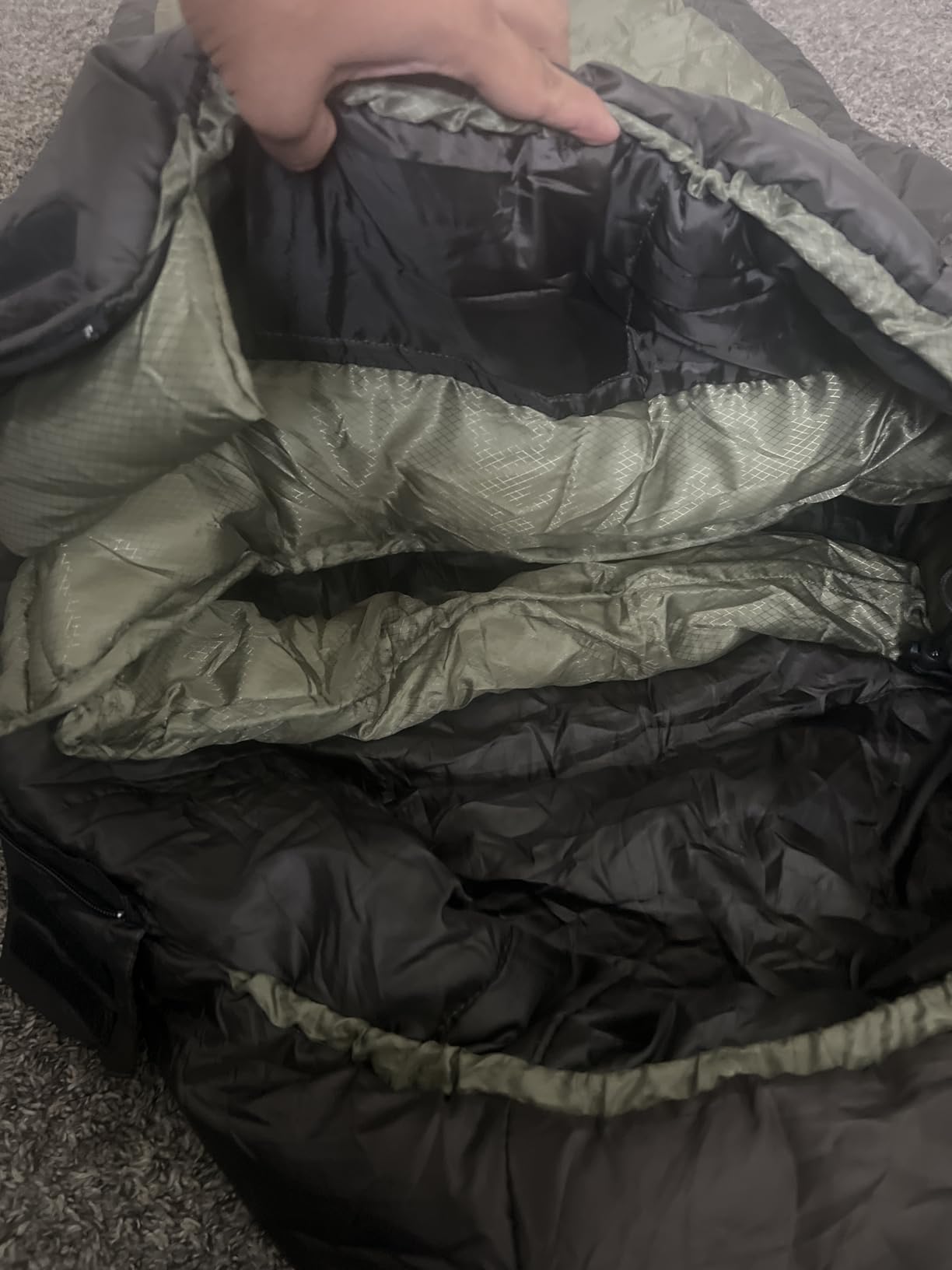
Coletherm hollow polyester is a decent middle ground between cheap microfibre and good down. Reviews describe solid heat retention at a low weight, and 2.87 kg is respectable for a synthetic 0F-class mummy. This is also the newest listing here, so expect thinner reviews than the other bags, and treat the consensus as early rather than settled.
It is machine washable and backed by a five-year limited warranty, which matters if you are buying for a kid who will grow through it. Sized at 82 by 32 inches for campers up to 6 foot 2, it is the more restrained fit on this list.
Who this bag suits
Anyone who wants a mummy shape, a 0F-rated label and a machine washable bag without spending expedition money. It is a solid pick for winter camping where you are driving to a trailhead and then carrying the bag a short distance, and for anyone who genuinely wants to carry weight rather than pack it into a car.
The adjustable hood makes it a good shoulder-season bag too, since you can open it up on a 40F night and cinch it down when the temperature drops. Just treat the 0F as an extreme figure and plan on a comfort range closer to the low 30s with a good pad.
Where it falls short
At 82 by 32 inches it is narrower and shorter than the Big and Tall rectangles, so tall or broad sleepers should size up. Synthetic fill gives up against the down bag in genuine deep cold, which is exactly where the 0F marketing invites you to take it.
The review base is the smallest in this roundup, at just over 250 ratings, so there is less long-term data on whether the Coletherm fill compresses over years. A 7 percent one-star share points to mild dissatisfaction about warmth and sizing rather than defects. If loft longevity over a decade matters to you, spend up on a down bag instead.
5. rioyalo 0 Degree Winter Bag – the honest freezing-night synthetic
RIOYALO 0 Degree Winter Sleeping Bags for Adults, Cold Weather Camping
450GSM microfiber fill
Comfort 32F limit 15F
86.6 by 30.7 in
5 lb
Pros
- Genuinely warm to freezing for most users
- Very quiet with no rustling in the cold
- Spacious 7.2-foot length fits sleepers up to 6 ft 10 in
- Machine washable with compression sack included
Cons
- Bulky 15.6 by 7.6 in packed size
- Several reviewers doubt the advertised 0F claim
- Footbox is snug
This bag publishes the rating breakdown instead of hiding it, and that is why it lands well. Comfort 32F, limit 15F, extreme 5F, all stated in the technical details. Buyers report mid-20s comfort with an insulated pad, which lines up with those numbers rather than contradicting them, and that honesty is rare at this level.
The 450GSM microfiber fill inside a 190T pongee lining does not rustle in the cold, which sounds trivial until you have lain awake listening to a synthetic bag crackle every time you turned over. At 86.6 inches long it fits sleepers up to 6 foot 10, and reviewers regularly call the length a highlight.
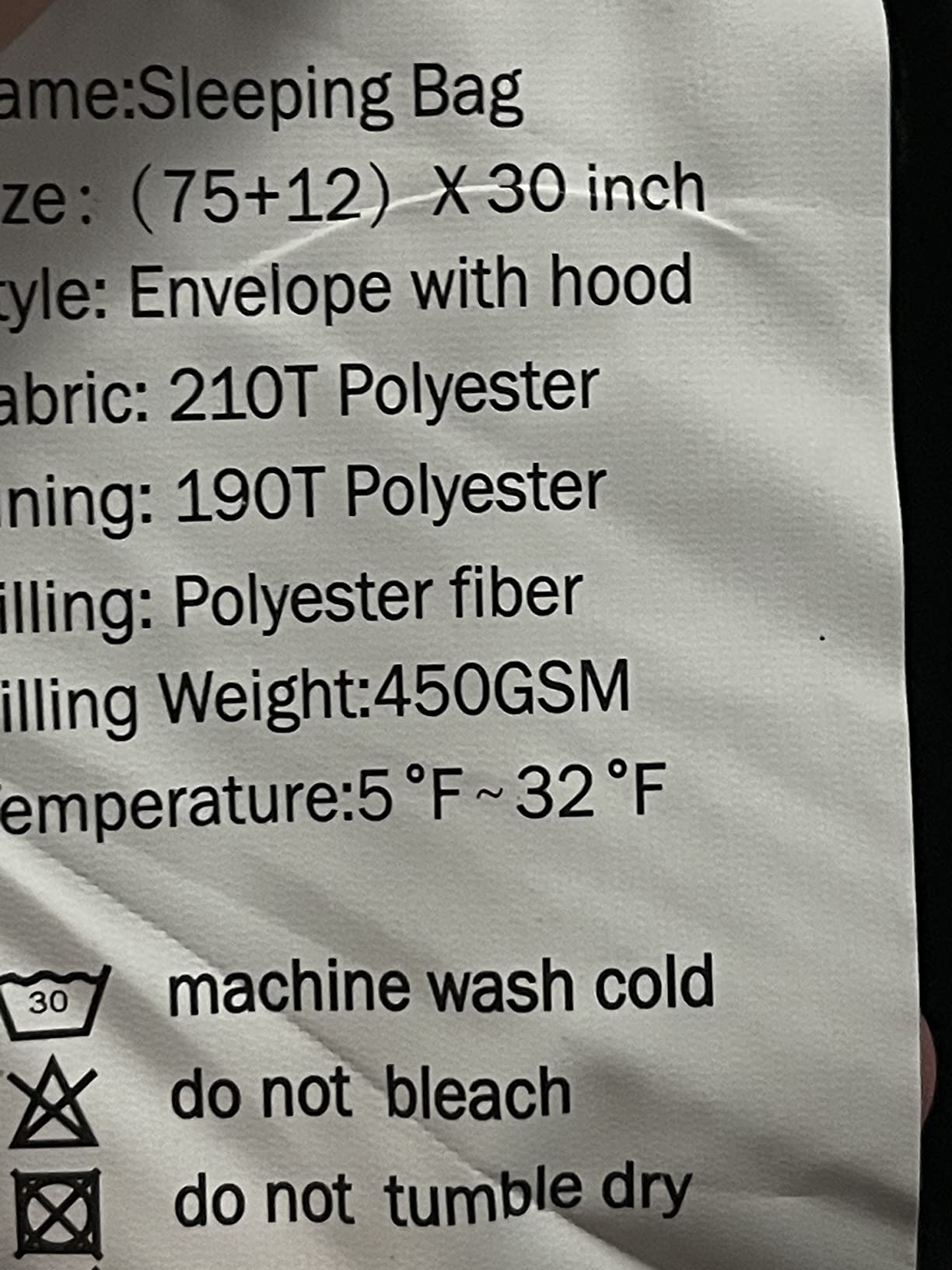
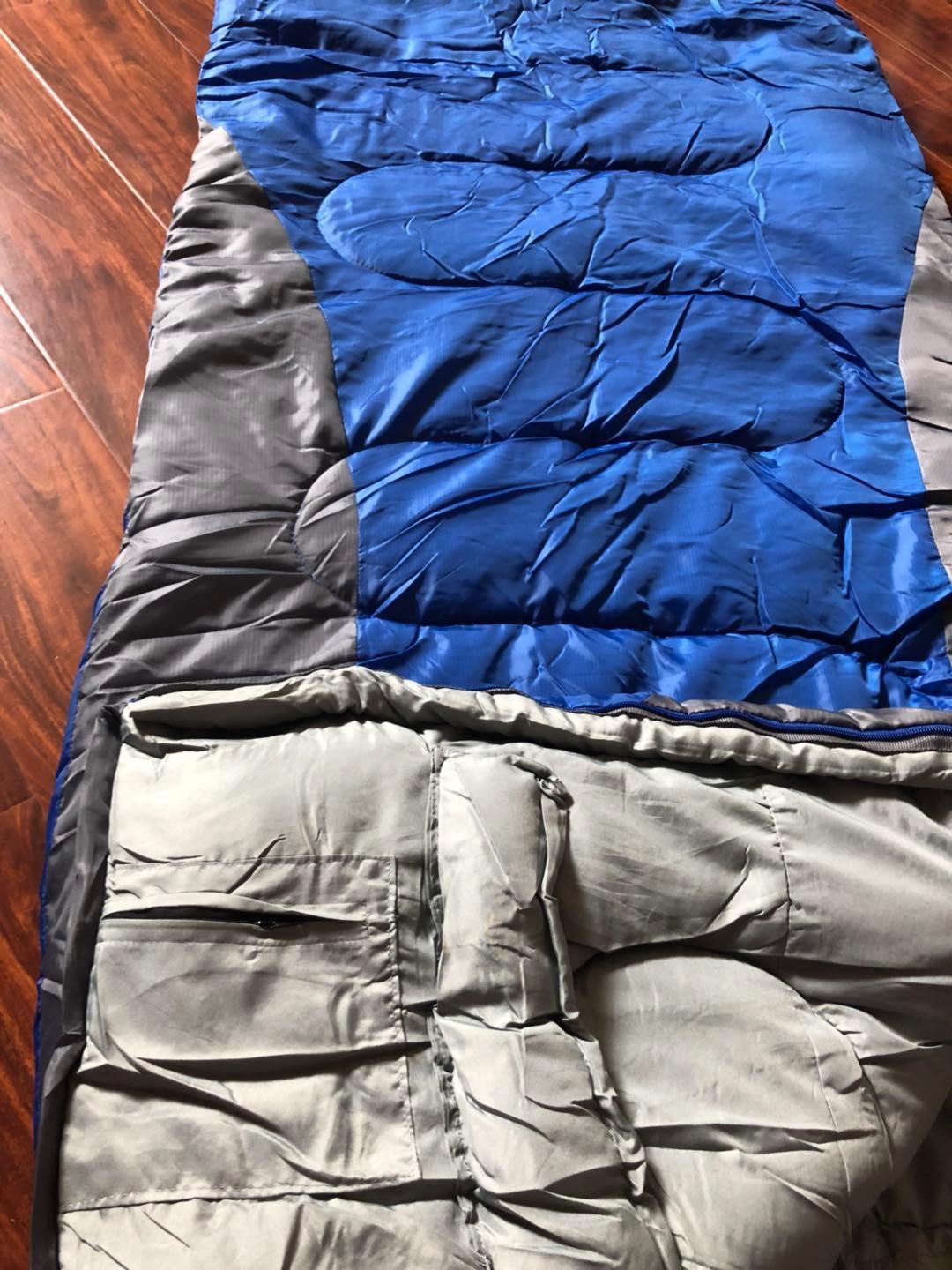
The build details are better than the price suggests. A 210T ripstop polyester shell handles wind and light precipitation, the anti-pinch grosgrain ribbon zipper is a genuine anti-snag solution, and the machine washability plus included compression sack make this an easy bag to own for years.
Several reviewers are sceptical of the 0F in the product name and rate it realistically to freezing, which matches the published comfort figure. A few also note that it runs cool enough to unzip and use as a blanket in warm weather, which is a nice side effect of a bag that is not overbuilt.
Who this bag suits
Car campers and casual winter campers who want a genuinely freezing-night bag, care more about room and quiet than about pack weight, and want to know exactly what the ratings mean before they buy. It is one of the few budget bags here where the manufacturer published all three ISO figures.
It is also a reasonable choice for anyone who wants to test winter camping cheaply before committing to a down bag. If it performs at freezing with a pad, you can move up a tier later without having wasted much. The machine washability matters for families and for anyone using it on a shared campsite rotation.
Where it falls short
The 15.6 by 7.6 inch packed size is large. That is what a 5-pound synthetic bag does, and it makes this a poor choice for backpacking. The footbox is also snug by design, which is a problem for anyone who runs cold at the feet specifically.
450GSM microfibre will not compete with 550+ fill down at genuinely sub-zero temperatures, no matter what the product name says. Budget accordingly for a second layer if you plan to be out well below freezing, and check that your colour matches what you ordered, since one reviewer received a mismatched variant.
6. HiZYNICE XXL 0F – oversized flannel with one big drawback
HiZYNICE Sleeping Bags for Adults XXL Cold Weather
30F comfort 15F limit 0F extreme
90 by 39 in rectangle
Cotton flannel lining
7 lb
Pros
- Genuinely oversized 90 by 39 in for sleepers up to 6 ft 7 in
- Soft cotton flannel lining that feels like pajamas
- Snag-resistant two-way zipper with dual pulls
- Drawstring at the shoulder and an interior pocket
Cons
- Does not cinch closed at the top so heat escapes around the head
- Heavy at 7 lb
- Owners confirm warmth to the low 20s rather than 0F
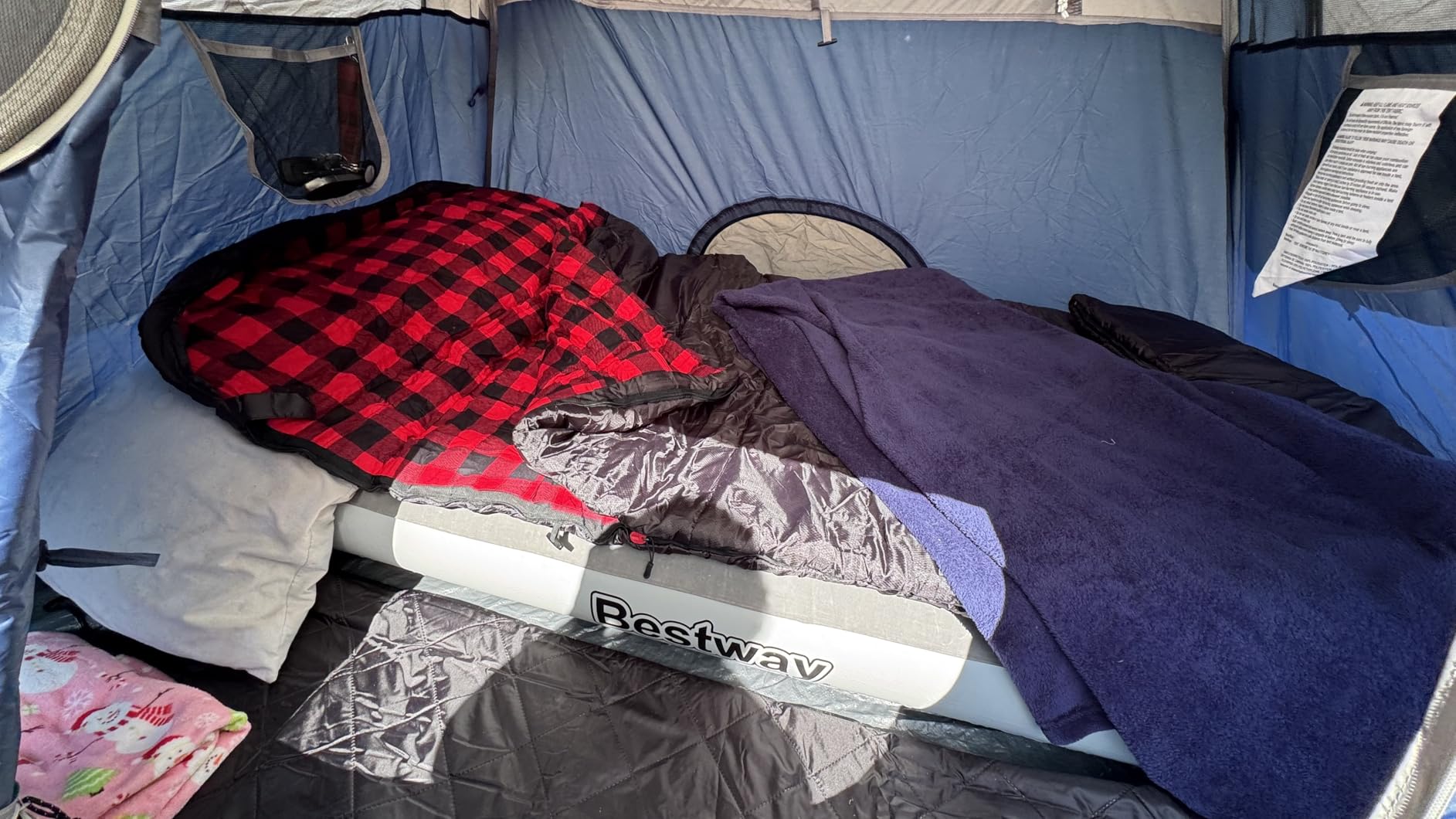
The HiZYNICE is the most oversized rectangle in this roundup, and for sleepers who feel cramped in anything narrower it is a genuine find. At 90 by 39 inches it fits adults up to 6 foot 7, and the 100 percent cotton flannel lining is described as feeling like pajamas rather than camping gear. Buyers use it for the cabin, the couch and the car.
It also publishes its full rating spread: 30F comfort, 15F limit, 0F extreme. Owners generally confirm comfortable warmth to the low 20s rather than 0F, which matches the comfort figure rather than the marketing name. Treat the 0F as an extreme label and this becomes a very reasonable freezing-night bag.
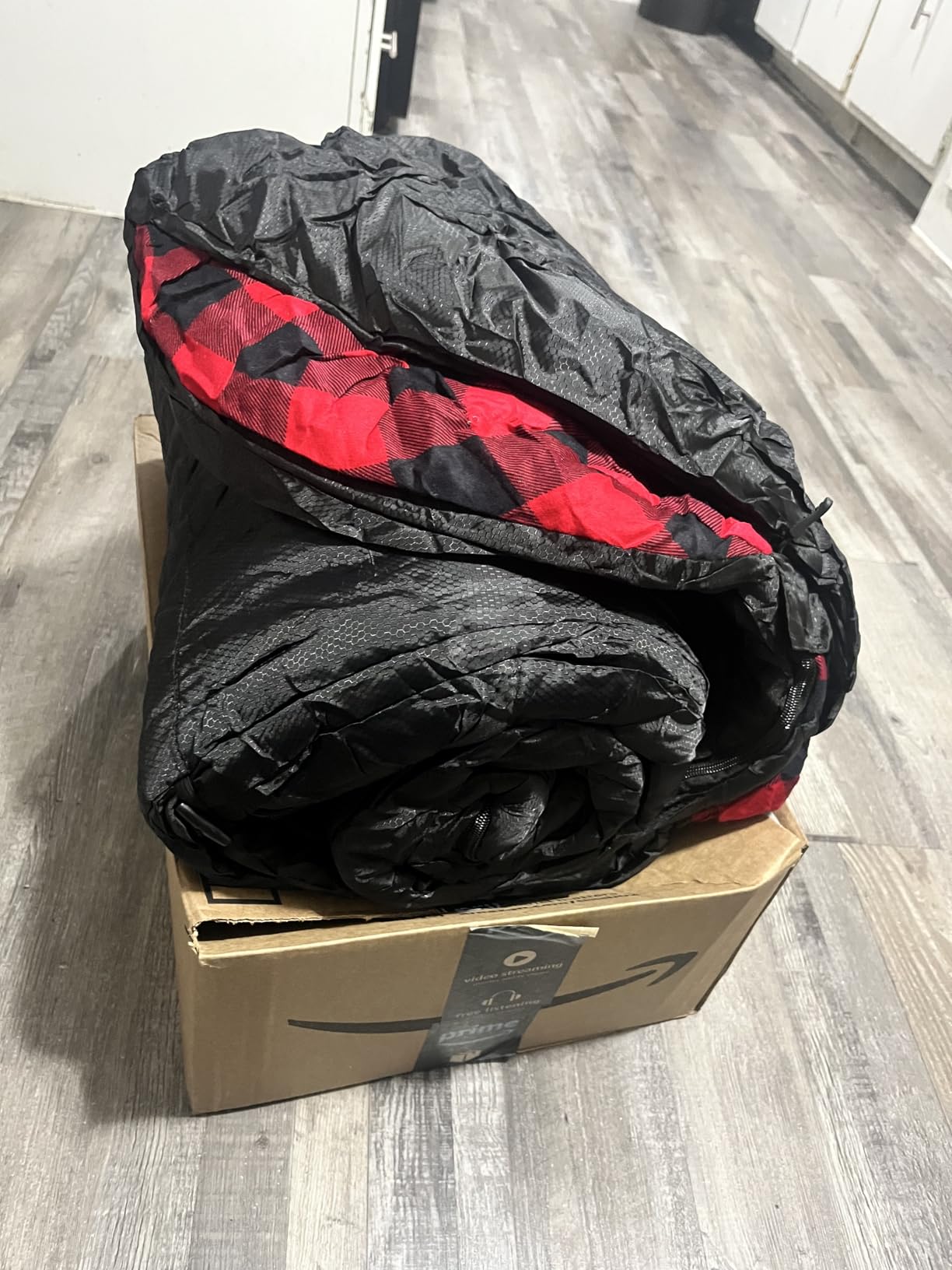
The snag-resistant two-way zipper with dual pulls opens from the top or the bottom, which is a real ventilation advantage on a mild night, and it can also zip two bags together. A drawstring at the shoulder, an interior pocket, a water-resistant outer shell and machine washability round out a feature set that is well above what the price band usually delivers.
Customer service gets specific mention from owners who had zipper issues resolved, which is worth factoring in when you are buying a bag online sight unseen.
Who this bag suits
Tall, broad and cold sleepers who want room, and anyone whose campsite is a cabin, a house or a vehicle rather than a backcountry trail. The flannel lining makes it a good choice for winter sleepovers and for kids, since the interior is soft rather than scratchy against a nose at 6 in the morning.
The dual-pull zipper means you can run it from the foot end on a 40F night and close up toward the head when the temperature drops, which is a simple way to manage the temperature swings that define shoulder season. Rated 30F comfort, it is a freezing-night bag with a good pad, not an expedition bag.
Where it falls short
The top does not cinch closed. That is the single most important drawback here, because heat escapes around the head in a rectangular bag, and several owners reporting frost on the shell and frozen feet point directly at that gap. If you genuinely need sub-zero capability, a mummy bag with a cinchable hood is the correct tool.
At 7 pounds it is heavy and difficult to compress, so this is not a backpacking bag despite the 0F on the label. The side zipper can also snag when closed from the bottom up, and the rectangular shape means you are sleeping under a blanket-shaped cover rather than in a sealed cocoon.
7. LONDTREN 0F Big and Tall – a wide mummy shape with a hood
Londtren Large 0 Degree Sleeping Bags for Adults Cold Weather Sleeping Bag Camping Winter Below Zero 20 15 Flannel Big and Tall XXL
90 by 40 in mummy
Flannel lining with draft tubes
210T ripstop shell
7 lb
Pros
- Extra-wide 90 by 40 in fits most people up to 7 feet
- Flannel lining with zipper draft tubes
- Thickened shoulder warmer belt and drawstring hood
- Waterproof 210T ripstop soft shell
- Two-way zipper for entry and ventilation
Cons
- Heavy at 7 lb and bulky to pack
- Zero-degree name sits far above the stated 20 to 55F comfort range
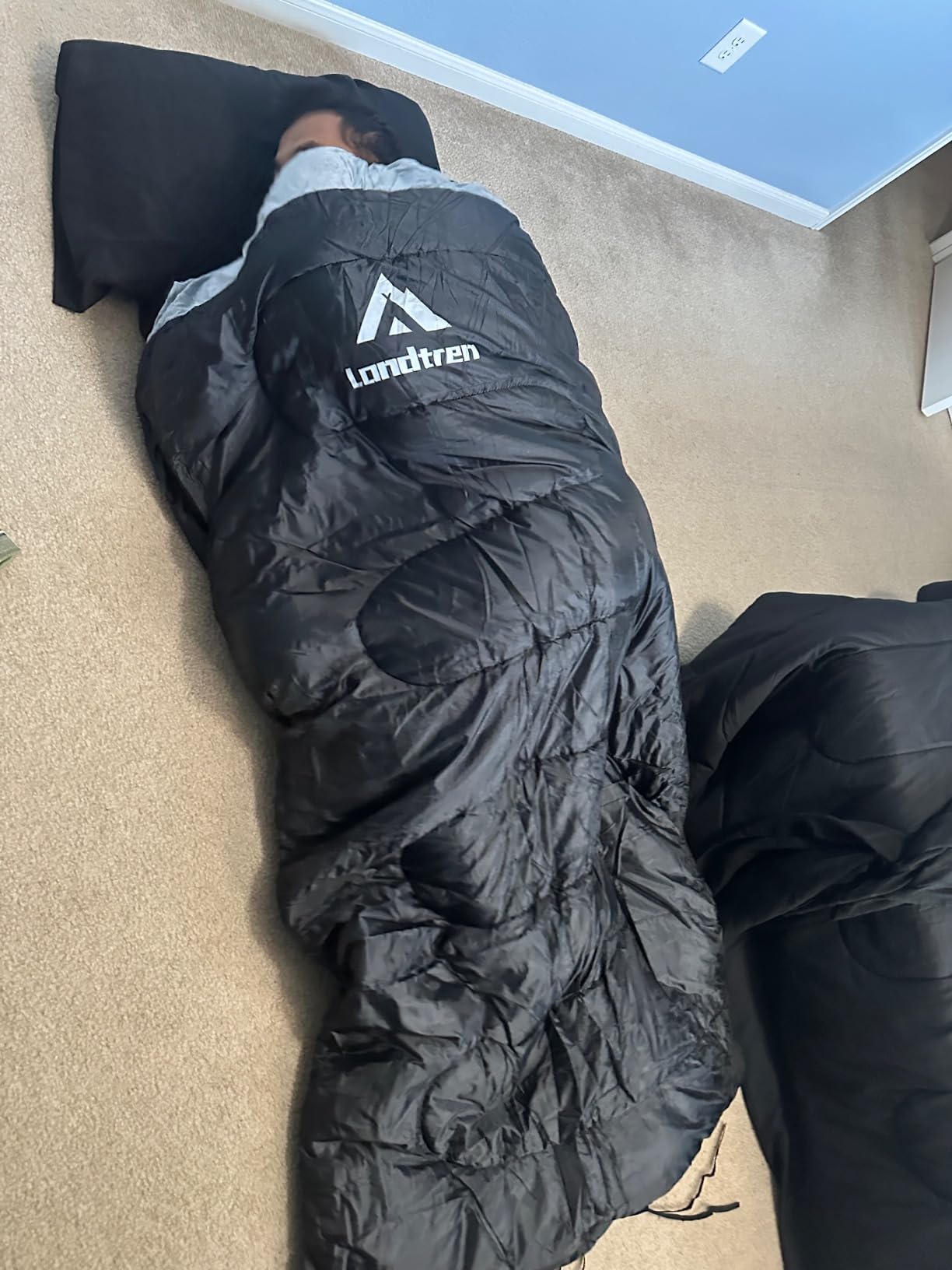
The LONDTREN solves a problem most budget bags ignore: it is a mummy shape with a hood, and it is 40 inches wide. That combination is unusual. Mummy shapes seal better and pack smaller, and at 90 by 40 inches this one still fits most people up to 7 feet tall, which is the tallest recommendation in the entire roundup.
Warmth features are laid out clearly. Flannel lining, zipper draft tubes, a thickened shoulder warmer belt across the top of the chest and a drawstring hood all work on the same principle, which is closing off the three places where heat leaves a sleeping bag. A waterproof 210T ripstop polyester soft shell handles the condensation and light precipitation that come with winter camping.
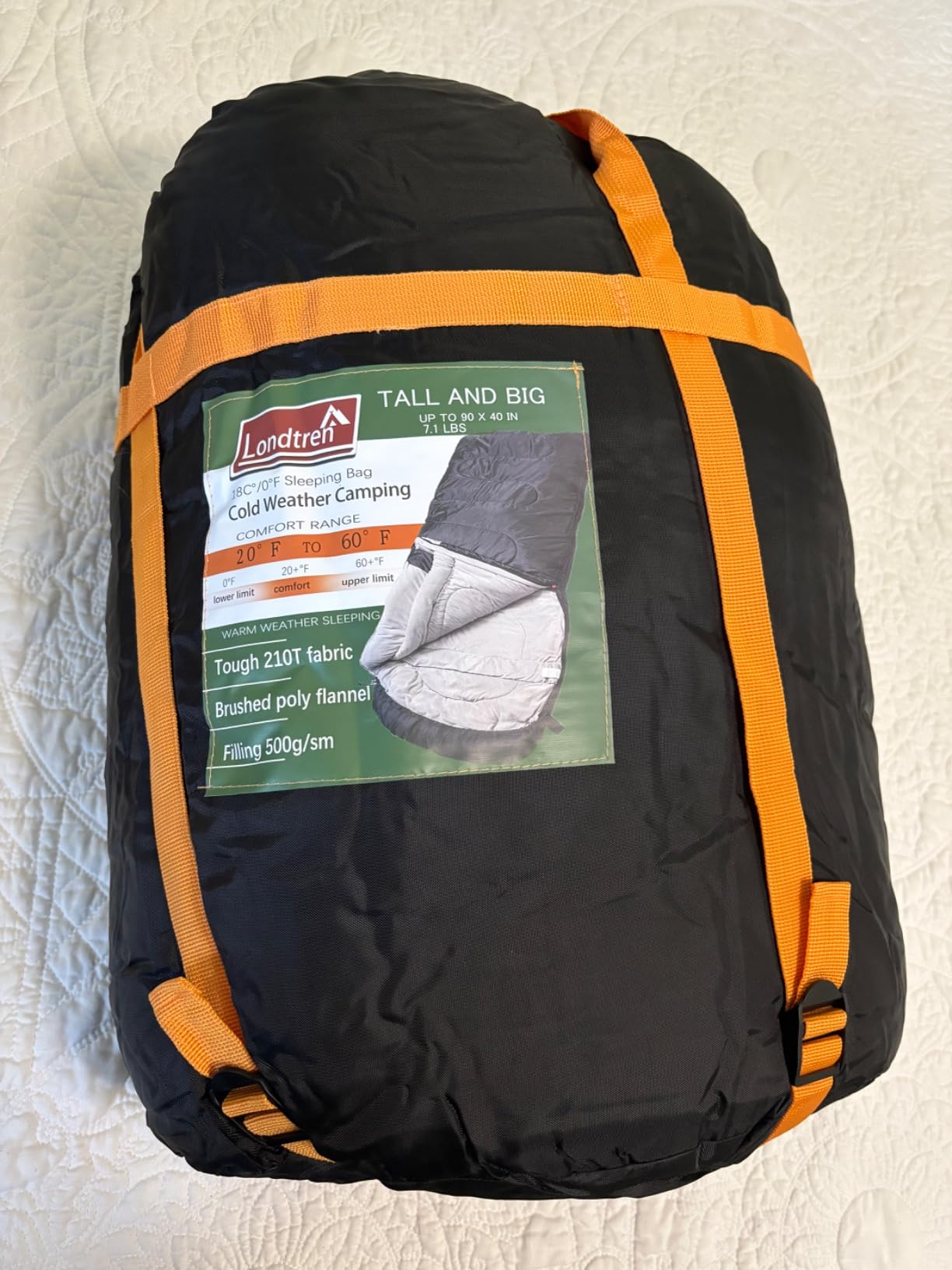
The two-way zipper gives you entry from either side plus bottom-opening ventilation, which is useful in fluctuating temperatures. Buyers highlight the unusually wide 40-inch cut and the flannel comfort, and the rating spread is tight and positive for a budget listing.
Be clear-eyed about the rating though. The listing states a temperature rating of 0F to 15F with a comfort rating of 20F to 55F, and buyers specifically flag that gap. Plan on this being a bag that is genuinely comfortable in the 20s rather than one that takes you to 0F.
Who this bag suits
Very tall sleepers who have given up on finding an affordable bag that fits them, and anyone who wants a mummy hood and draft tubes without leaving the budget end of the market. Up to 7 feet is a genuinely useful ceiling, and the wide cut means you can sprawl without fighting the bag.
It is a sensible shoulder-season and early-winter bag for car camping, and the waterproof soft shell makes it more forgiving of condensation than a cotton bag. The shoulder warmer belt is the detail we would point a cold sleeper toward first, since chest warmth is what most people notice first.
Where it falls short
At 7 pounds this is a carry-at-your-own-risk bag, and the soft shell and flannel add bulk on top of that. Do not plan to move it far from a vehicle.
The distance between the zero-degree name and the stated 20F comfort ceiling is the practical issue. Buyers are honest about it, and it means this is a very cold weather bag rather than an extreme one. If your forecast calls for nights below 20F, step up to a down mummy or the Coleman North Rim with better layering.
8. FARLAND Fleece Lined 10F – shoulder-season comfort with a plush interior
FARLAND Sleeping Bags for Adults Cold Weather & Camping, Fleece-Lined
Microplush fleece lining
400g fill per sq m
87 by 33 in rectangle
2.83 kg
Pros
- Cloud-soft Microplush fleece lining
- 400g per sq m silk-like cotton fill wraps the body
- 290T nylon shell is waterproof and windproof
- Machine washable with compression sack included
- Vents easily when unzipped
Cons
- 87 by 33 in size is tight above roughly 6 feet
- Comfort tops out near freezing
- Rectangular cut is bulkier than a mummy
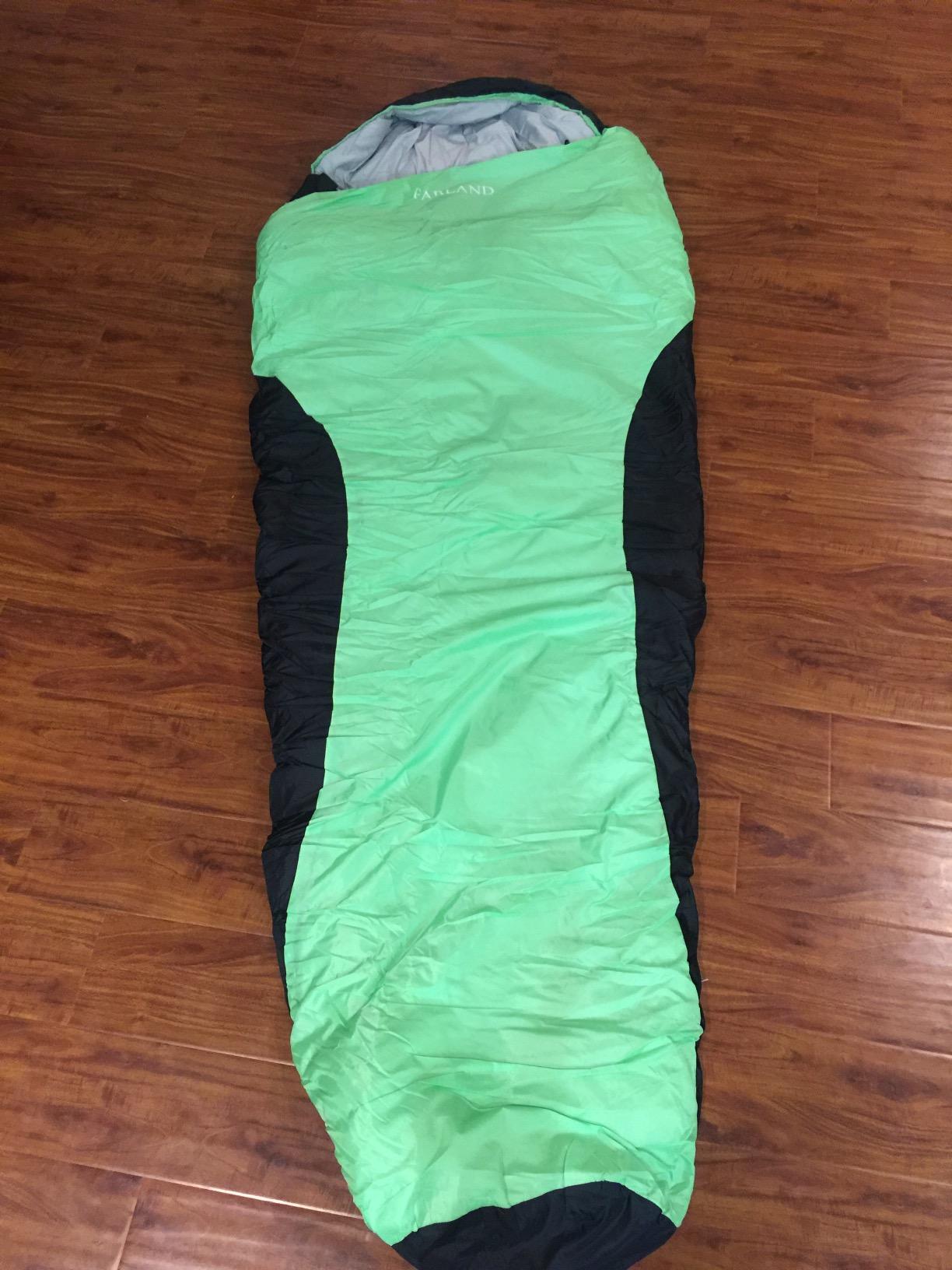
The FARLAND is not a deep-winter bag, and the reviews are refreshingly honest about that. The comfort ceiling sits near freezing, so this is a shoulder-season and light-winter car camping bag, and owners describe it exactly that way rather than pretending otherwise. What it does have is the plushest interior in the entire roundup.
Cloud-soft Microplush fleece lining changes the character of a night in a bag. Owners consistently single it out as unusually soft for the money, and the 400g per square metre silk-like cotton fill wraps the body closely enough to limit heat loss. At 2.83 kg it is also lighter than most of the rectangles here.
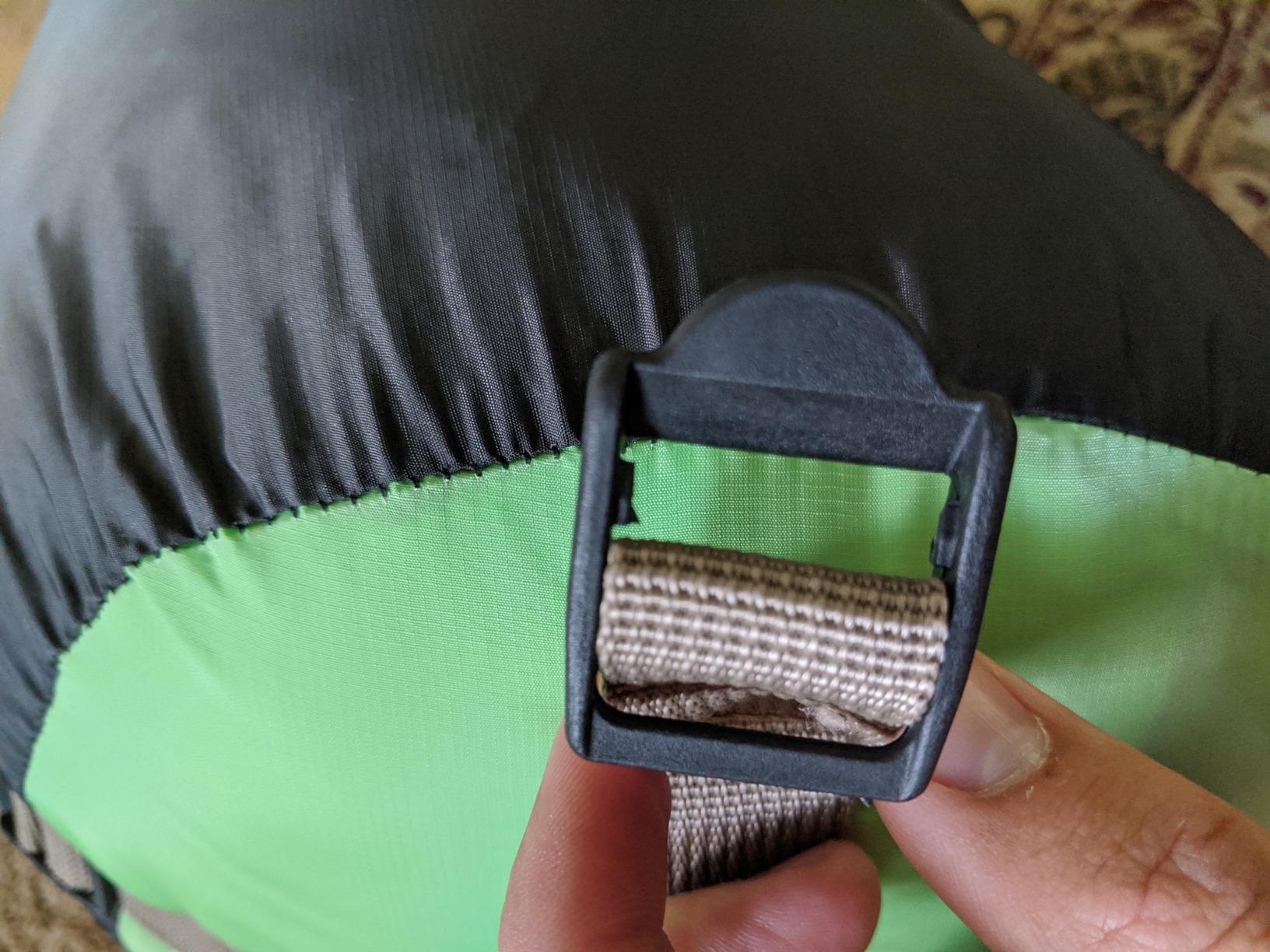
The 290T nylon shell is rated waterproof and windproof against light rain, moisture and dew, which is a real advantage over cotton bags in the same tier. It vents easily when unzipped, works across a 32 to 50F range, and comes with a compression sack and machine washability. For a family that uses one bag for everything from summer nights to the first frost, that flexibility is worth more than a lower temperature rating.
Fit is the constraint. At 87 by 33 inches, the bag is snug for anyone above roughly 6 feet, and the rectangular cut packs bulkier than a mummy would. The 6 percent one-star share reflects warmth expectations rather than build quality.
Who this bag suits
Car campers and families who want one bag for a wide temperature range without changing insulation, and anyone who finds synthetic fleece unpleasant against their face. The waterproof nylon shell means it can sit out through dew and light rain without the insulation penalty a cotton bag would take.
It is also a good budget bag for a spare room or a guest bed in an unheated house in winter, where a comfort ceiling near freezing is more than enough indoors. Because it vents easily, it doubles as a shoulder-season bag without becoming a sweatbox in September.
Where it falls short
Do not read the 10F in the product name as a winter rating. The stated range is 32 to 50F comfort with a 14F limit, and the comfort ceiling is the number that matters for how you actually sleep.
Anyone over 6 feet will find the 87 by 33 inch dimensions tight, particularly around the shoulders and feet. And as a rectangle it packs bulkier than a mummy of the same weight, so it stays a car-camping bag in practice even though the compression sack is a good one.
9. TETON LEEF 20F Mummy – the one that survives wet trips
Teton LEEF Lightweight Mummy Sleeping Bag Perfect for Camping, Hiking, and Backpacking; Cold Weather Option, Compression Sack Included – Fire & Slate, 20F
20F rating
Micro fibre fill
81 by 21 in mummy
3.5 lb
Pros
- Genuinely lightweight mummy that packs small
- Warm at its 20F rating with an insulated pad
- Extended foot box keeps feet warm
- Shell stayed dry on multi-night rain-soaked bike trips
- Holds loft after years of compression
Cons
- Mummy cut feels cramped if you move around in your sleep
- Difficult to stuff into the tight compression sack
- Not machine washable
- Included compression sack is thin
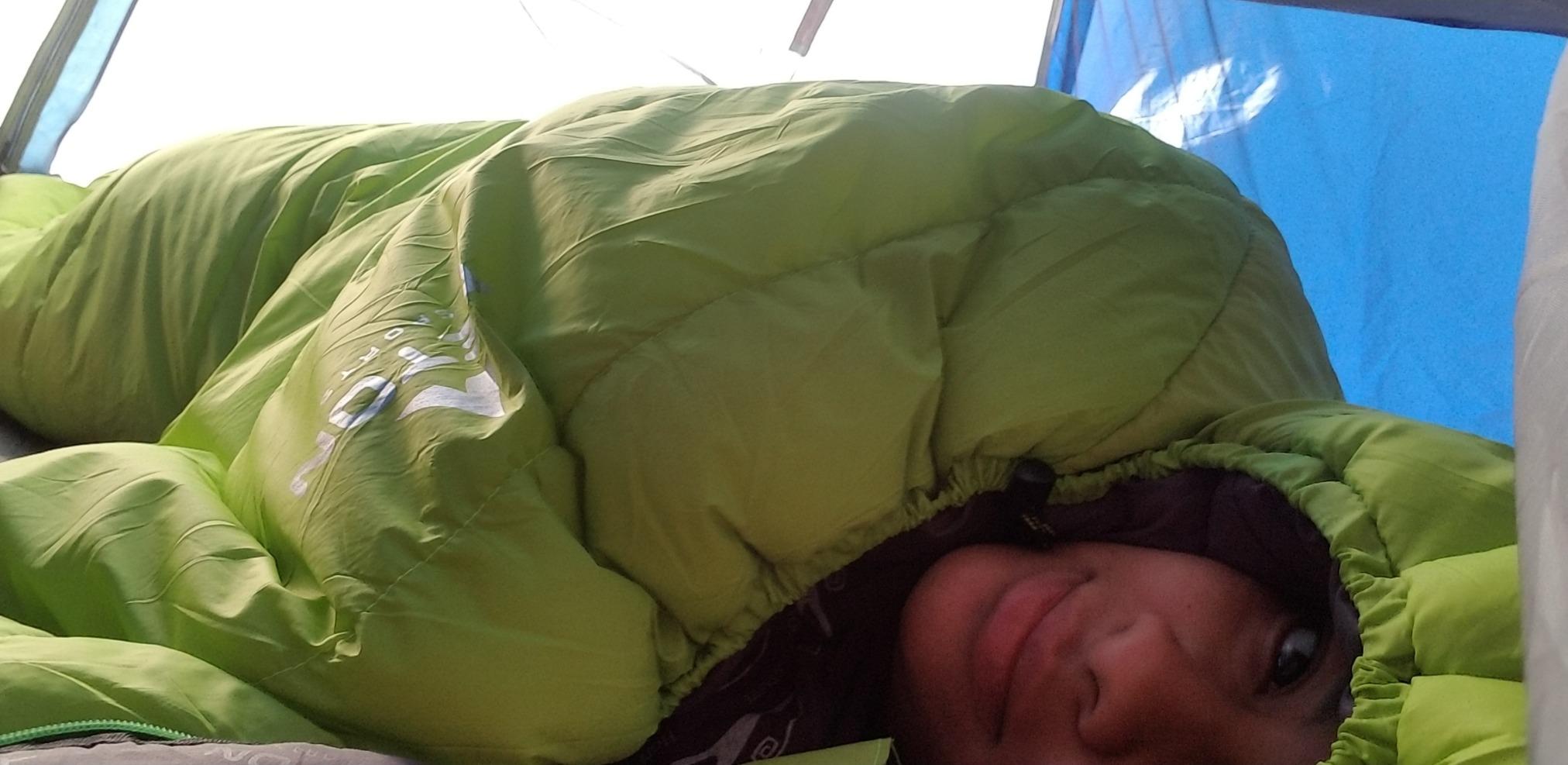
The LEEF is the durability story in this roundup. Long-term owners report two-plus years and 60 to 70 nights of use with no loft loss at all, including wet backpacking trips where the shell stayed dry inside. That is the metric that matters most if you are buying a bag to keep for a decade rather than a season.
Warmth is consistently reported as appropriate to the 20F rating when paired with an insulated pad, which is unusual honesty in a review summary. The extended foot box gives you room to sprawl and keeps feet warm, addressing the toe-box cold spot that ruins so many bags at the bottom of their range.
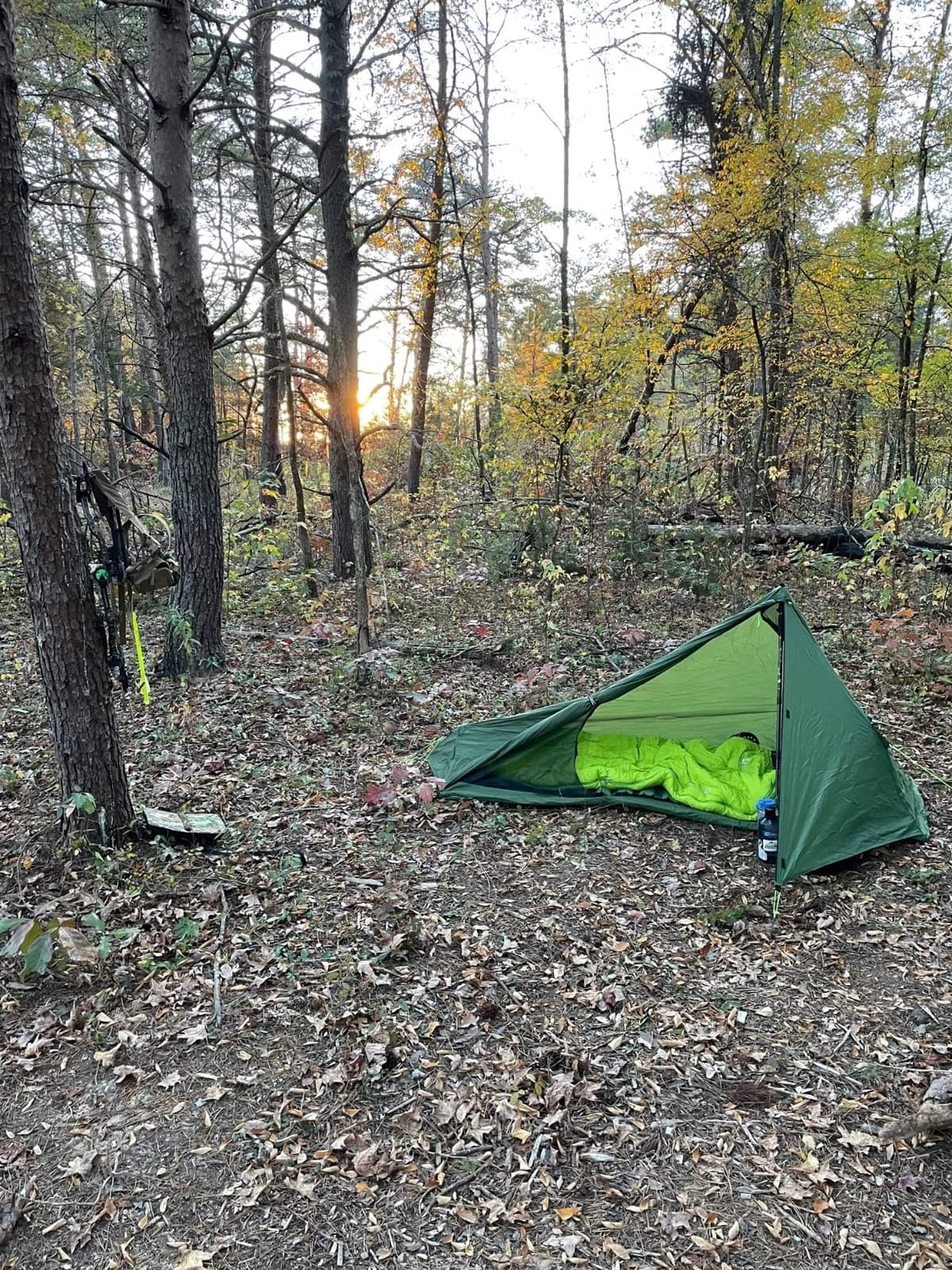
Because the fill is synthetic microfibre rather than down, wet weather is not the threat it would be for a down bag of the same rating. That single design choice is why this is our wet trip pick among the lighter options, and owners who have used it in rain are the ones who rate it highest.
At 3.5 pounds and 81 by 21 inches it is a genuine mummy shape with real packability, and TETON offers it in 0F, 20F and 30F ratings across three sizes. The lifetime warranty adds confidence for a long-term purchase.
Who this bag suits
Backpackers who camp in wet climates, ride bikes in rain, or simply expect condensation, and want a bag that will not be ruined by it. It is also the pick for anyone who plans to keep their sleeping bag for many seasons and cares more about longevity than about the lowest possible weight.
It fits sleepers around 6 feet to 6 foot 5 comfortably. If you move around a lot in your sleep or like to sit up inside the bag, test it in a shop first, because a tight mummy at 21 inches across the foot is a real adjustment from a rectangle.
Where it falls short
The mummy cut is genuinely cramped for restless sleepers. If you roll around, stretch out or want to read in the bag, this is the wrong shape and you will feel it at 3 in the morning.
Getting it back into the very tight compression sack takes practice, and several reviewers name that as the main friction point. The included sack is thin and has been reported to tear, and the bag is not machine washable, so care means hand washing and long drying. At 20F it is also a shoulder-season bag rather than a freezing-night one.
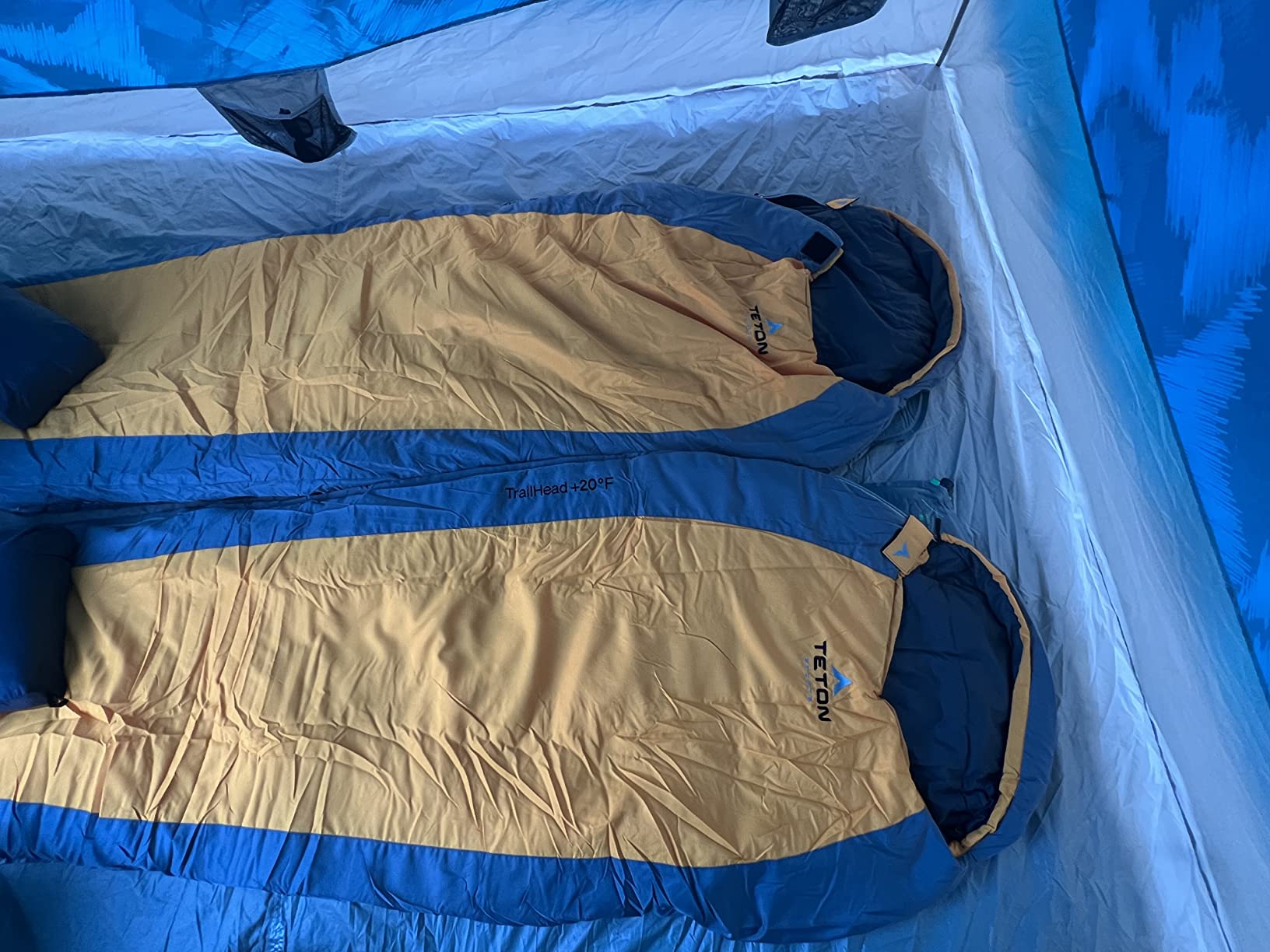
10. TETON 20F Mummy – the lightest thing in the group
TETON Sports Trailhead, 20 Degree Sleeping Bag; Lightweight, Warm Mummy Sleeping Bag, Camping, Backpacking, Hiking, Ocean Blue
20F rating
Microfiber synthetic fill
87 by 32 in mummy
2.9 lb
Pros
- Lightweight and compresses small for backpacking
- Soft microfiber lining owners call cozy
- Two-way zipper vents feet or lets you sit up
- Zipper glides smoothly over years of use
- Excellent value for a synthetic 20F bag
Cons
- 20F is a survival rating and most owners report comfort near 35 to 40F
- No draft guard on this variant
- Regular size is tight for anyone who sprawls
At 2.9 pounds this is the lightest bag in the roundup, and the mummy hoods eliminate gaps around the head and face in a way most budget bags never manage. The two-way zipper lets you vent your feet on a warm night or sit up inside without unzipping the whole bag, which is a real comfort feature in shoulder season.
Owners consistently praise the soft microfiber lining as cozy, and the zipper for gliding smoothly and holding up over years. Reviewers are equally consistent about the limitation: 20F is a survival rating here, and most people report true comfort closer to 35 to 40F. The 5 percent one-star share is almost entirely about underperformance at the stated rating rather than build quality.
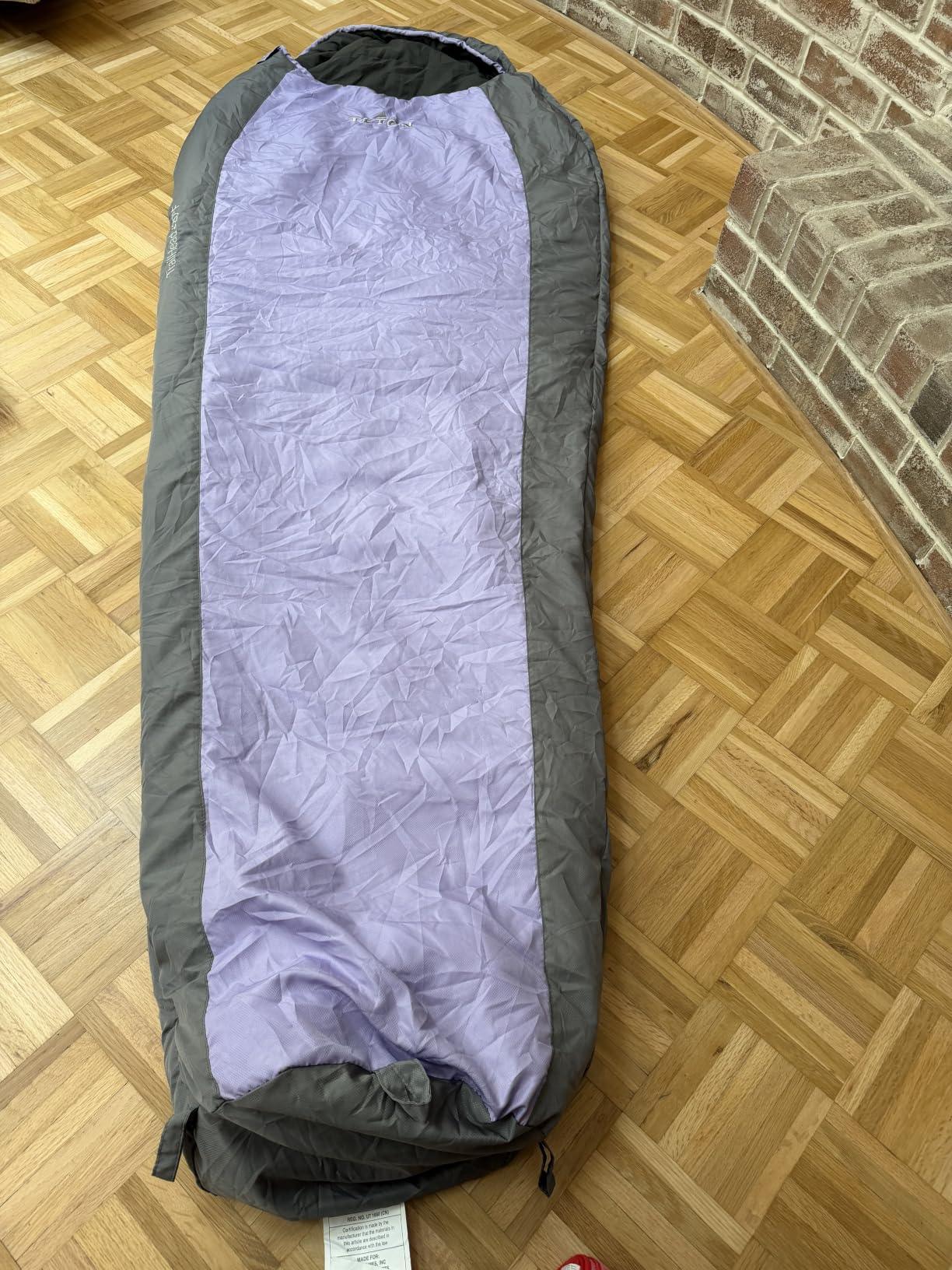
That honesty matters for how you shop. This is a budget three-season bag with a survival-rated label, and treating it as a freezing-night bag is how people end up disappointed. Treat the 20F as the extreme figure, plan on comfortable nights in the mid 30s, and it is genuinely good value with a compression sack and a lifetime warranty behind it.
There is no draft guard on this variant, which means you need to cinch it very tightly to hold warmth. The regular size at 87 by 32 inches is also tight for anyone who likes to sprawl or sit cross-legged, so check the size before you commit.
Who this bag suits
Budget backpackers and hikers who want the lightest option here and are camping in shoulder season rather than deep winter. If your nights are mostly above 35F, this bag does the job at a weight you will barely notice in a pack.
It is also a good first winter bag for anyone testing whether they actually enjoy cold-weather camping, and a solid budget pick for a kid who is still growing. The compression sack with heavy-duty straps keeps the volume down, and the lifetime warranty means a failure would be replaced rather than absorbed by you.
Where it falls short
The gap between the 20F label and the reported 35 to 40F comfort ceiling is the main issue, and it is not a small one. If you need genuine freezing-night capability, go to the Coleman North Rim or the ZOOOBELIVES down bag instead.
No draft guard means more heat loss through the neck and zipper, and the regular size is tight for anyone who sprawls. A 4.3 average rating across more than 3,600 ratings reflects a bag that does exactly what it claims and no more, which is a fair description for the money.
11. Coleman Dunnock 20F Big and Tall – a durable early-winter staple
Coleman Dunnock 20°F Big ‘n Tall Sleeping Bag, Cold-Weather Sleeping Bag Fits Adults up to 6ft 4in, Machine Washable, Flannel Liner
20F rating
Fiberlock construction
81 by 39 in rectangle
2.26 kg with flannel liner
Pros
- Soft cotton flannel liner on a full cotton cover
- Thermolock draft tube plus Fiberlock construction
- Patented two-way ZipPlow zipper avoids snagging
- Bottom opening for ventilation and zips together as a double
- Machine washable with Wrap N Roll storage
Cons
- 20F suits late autumn and early winter rather than deep cold
- Cotton shell is heavy and loses insulation when damp
- Fits heights only up to 6 ft 4 in
The Dunnock is a long-running Coleman favourite, and reviews focus on durability, the zipper and how easy it is to wash and roll. The patented two-way ZipPlow system is specifically engineered so fabric cannot catch in the zipper path, which is the failure that ends most budget bags within a couple of seasons.
Fiberlock construction works together with the Thermolock draft tube to do two jobs at once, stopping insulation from shifting away from your torso overnight and stopping heat from leaking out through the zipper. Those are the two things that create cold spots, and the 81 by 39 inch rectangle is big enough that shift is a genuine risk.
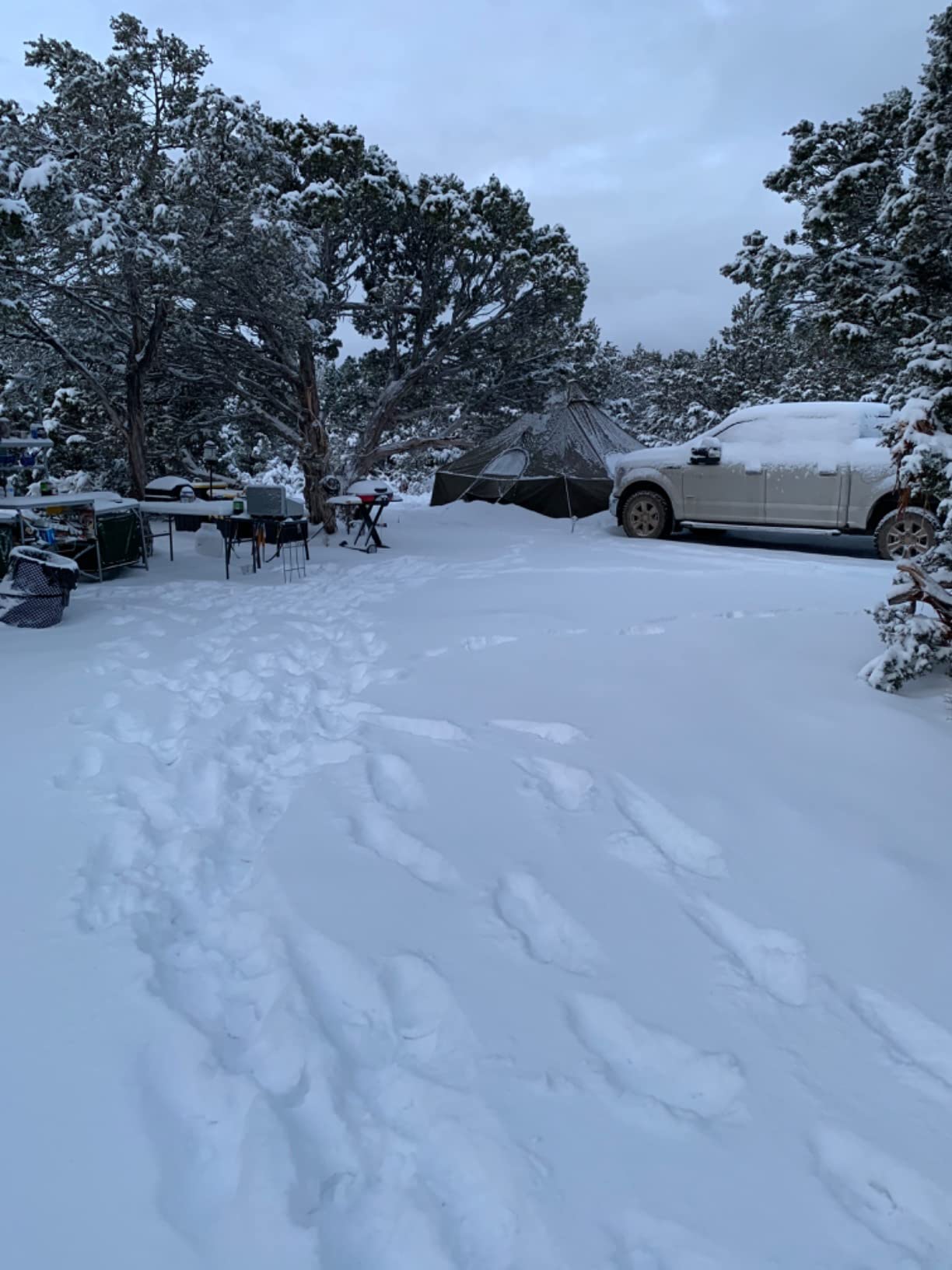
Buyers position this as a dependable fall and early-winter car-camping bag rather than a genuine winter-rated one, and warmth is acceptable well below freezing for many when paired with layers and an insulated pad. At 2.26 kg it is one of the lighter rectangles here, which is unusual for an all-cotton bag.
The bottom opening for ventilation and the ability to zip two bags together into a double are both practical. With a two-year manufacturer warranty, machine washability and Wrap N Roll storage, it is the most low-maintenance bag in the roundup for anyone who wants something that just works.
Who this bag suits
Car campers heading into autumn and early winter, families who need a washable bag that can handle regular use, and anyone who wants a rectangle without the flannel-bed feeling. The 2.26 kg weight means it is portable enough for a short walk from the car, which some car campers appreciate.
If you are building a cold-weather kit, the bag is only half of it. Pair it with an R-value 8 pad and a winter tent, and think about what the rest of your layers are doing at 5 in the morning. Our emergency weather radio roundup covers the safety side of a forecast that turns fast, which matters as much as warmth in a real winter trip.
Where it falls short
The 20F rating suits late autumn and early winter rather than deep cold, and the all-cotton cover is the wrong choice for wet climates because cotton loses insulation when damp. Keep it inside a tent and out of sustained rain.
It fits heights only up to 6 foot 4, shorter than several competing Big and Tall bags. The 81-inch length also means shorter campers are swimming in it. And with a two-year warranty against five years on some Coleman bags here, it is the least long-term-protected option from a brand that can do better.
12. MEREZA 0 Degree with Pillow – family camping value
MEREZA 0 Degree Winter Sleeping Bag for Adults Kids with Pillow, Cold Weather Sleeping Bag for 4 Season Camping Hiking Backpacking Sleeping Bags for Big and Tall
40F comfort rating
90.5 by 32.3 in rectangle
210T taffeta shell
2.63 kg
Pros
- Roomy 32.3 by 90.5 in rectangle
- about 20 percent larger than most competitors
- Includes a 220g plush camping pillow
- Contoured 3D hood with drawstrings and a reversible anti-snag zipper
- Waterproof and windproof 210T taffeta shell
Cons
- Rated to 40F comfort so it is a shoulder-season bag
- Needs extra layers in the mid-30s
- Heavy and bulky to add to a backpack
- Bottom zipper does not run all the way
The MEREZA’s real draw is that it comes with a 220g plush camping pillow, which is a genuine surprise in a bag at this level and removes one more thing from your packing list. For family camping and first-time gear buyers, that is often the item that would otherwise get skipped.
Size is the second draw. At 90.5 by 32.3 inches, owners describe it as roughly 20 percent larger than most competitors, and the contoured 3D hood with drawstrings gives it more of a shaped feel than a plain rectangle. The reversible locking anti-snag zipper with draft tubes is a better hardware package than most budget bags include.
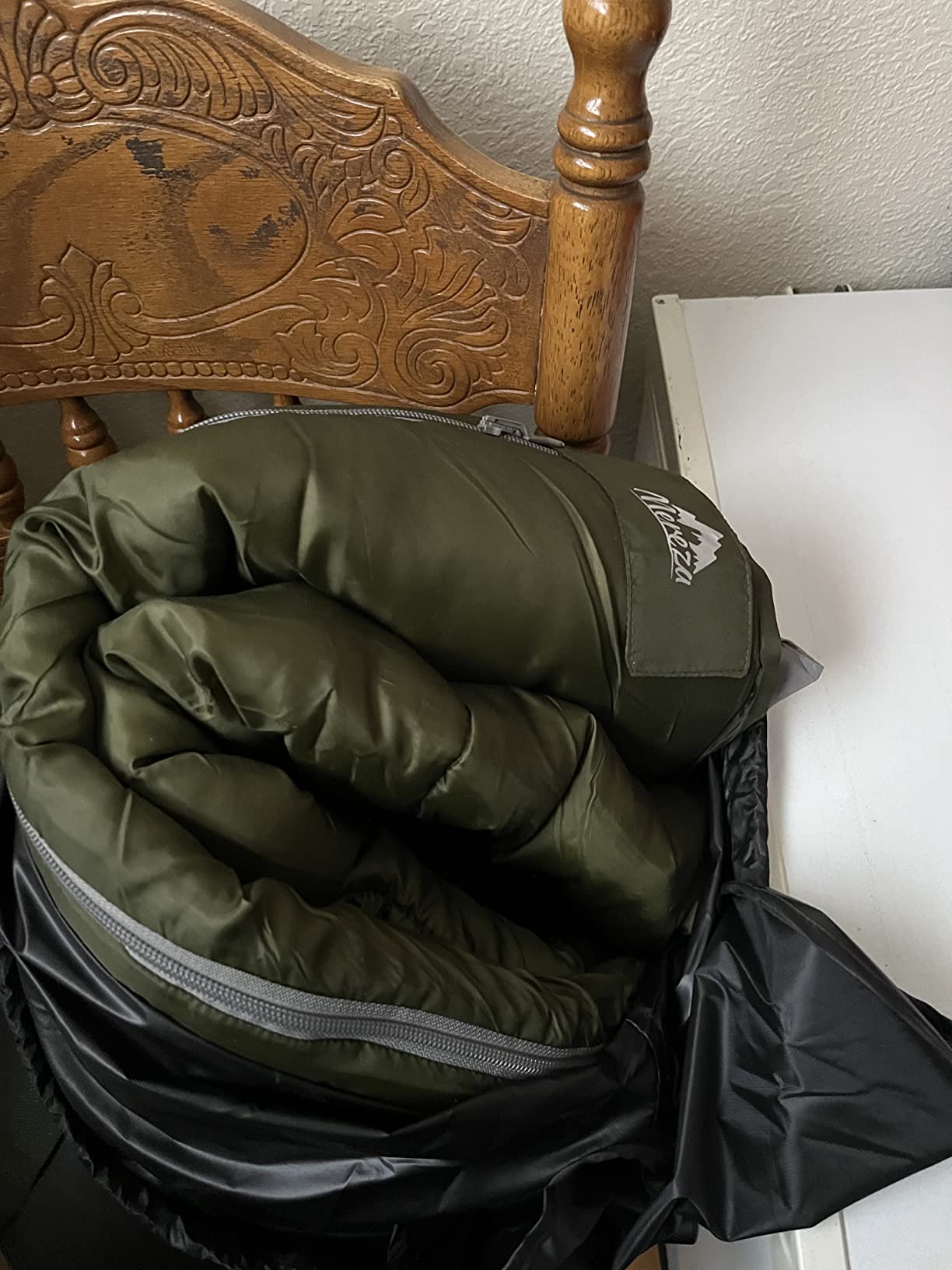
The honest framing here matters. Its listed comfort rating is 40F, so despite the zero-degree product name, this is a shoulder-season bag. Reviewers are clear about that, and multiple owners recommend it for 40F and warmer, noting they added layers at 37F. The 210T taffeta shell is waterproof and windproof, and the large-opening compression sack with a portable handle makes repacking simple.
At 2.63 kg it is mid-range for weight, and the 240T polyester lining is a serviceable interior. What you are buying is size, a pillow and easy handling, not extreme cold capability.
Who this bag suits
Families, first-time winter campers and anyone furnishing a guest bed or spare room where a bag rated to freezing would be overkill. The included pillow and the roomy rectangle make it an easy first bag, and the 7-foot length recommendation covers most adults.
It also opens fully as a blanket, which is handy in a living room or a vehicle when you do not want to get undressed. For a shoulder-season trip in an RV or at a campsite where you are driving between sites, the size and the pillow are worth more to you than a lower temperature rating would be.
Where it falls short
The distance between the zero-degree name and a 40F comfort rating is the biggest gap in this roundup, and it is the reason this sits at the bottom of the list for cold-weather performance. Anyone planning genuinely freezing nights should look elsewhere.
The pillow is small and does not zip closed around itself, the bottom zipper does not run the full length so a gap remains at the foot, and the bag is still heavy and bulky to add to a backpack. Owners who bought it expecting a 0F bag are the source of most of the critical reviews.
How to Choose a Cold Weather Sleeping Bag You Will Actually Be Warm In
The single biggest mistake in this category is treating the printed temperature number as a comfort promise. Under the EN/ISO 23537 standard, a sleeping bag carries up to three ratings, and understanding the difference is most of the decision.
Comfort rating is the temperature a standard sleeper can sleep in without getting dangerously cold. For women, cold sleepers and anyone sleeping lightly, this is the only number you should shop by.
Lower limit rating is the temperature the standard sleeper can survive for a period. This is what almost every brand prints on the front of the bag.
Extreme rating is the survival temperature for an atypical sleeper. It is a safety figure, not a comfort one, and it is what gets used in a product name.
The gap between those three numbers is why two bags both labelled 0F can behave completely differently. The rioyalo publishes comfort 32F, limit 15F, extreme 5F, and owners confirm mid-20s comfort. The ZOOOBELIVES publishes comfort 32F, lower 10F, extreme 0F. Same headline temperature, different actual behaviour, and the published numbers are the only way to tell.
Apply a margin to your coldest forecast night
Find the lowest temperature your forecast is likely to hit on your coldest night, then subtract another 10 to 15 degrees before choosing a rating. Ratings are measured under controlled lab conditions with a standard sleeper and minimal clothing, and real camps have wet clothing, a damp pad, a wind tunnel through the tent and metabolism that dips at 4 in the morning.
If your coldest night is 25F, a bag with a comfort rating around 20F is the honest choice. If your coldest night is 5F, you want a comfort rating near 0F, not a bag that merely says 0F on the label. This one habit eliminates most cold-weather disappointments.
Choose down or synthetic based on your actual trip
Down at 550 to 850 fill power is the better choice for dry cold nights and for anyone carrying weight. The fill power figure tells you the volume three cubic inches of down expands into, and higher numbers mean more warmth for the same weight. The 35 oz of 550+ fill down in the ZOOOBELIVES is the clearest example here of why down wins on a warmth-per-gram basis.
Synthetic is the better choice for wet, humid or multi-day trips, and for anyone who does not want to think about drying a bag properly. It keeps insulating when damp, machine washes easily and stores without concern, and it is what the TETON LEEF uses to survive rain-soaked bike trips. A forum discussion on r/Hunting captured the trade-off well: synthetic is much heavier and does not pack as small, and that pack-size penalty is usually what decides it.
If you expect extended wet weather, use a dry bag liner inside a down bag as a compromise. It is not as good as synthetic for wet trips, but it prevents the one failure mode that ends a down bag permanently.
Pick the shape for the sleeping position, not the spec sheet
Mummy bags minimise the air volume you need to heat and pack to roughly half the volume of a rectangle, which is why every genuinely backpackable option here is a mummy. Rectangular bags give you room to sprawl, sit up and unzip into a blanket, and they are the right call for car camping, hunting seasons and anyone who moves around during the night.
Spoon-shaped bags are a compromise between the two, with a wider foot box than a mummy, and they suit side sleepers who find the tapered foot of a mummy too restrictive. None of the twelve here use that shape, which is worth knowing if you are a side sleeper shopping on fit.
Fit also decides warmth. A bag that is too short leaves your feet outside the foot box, which is the first place cold sleepers lose the night. Check the maximum height recommendation against your own height, and if you are between sizes, size up. Cold sleepers should also consider a bag with a cinchable hood, because the rectangular bags here do not close at the top.
Set your weight budget before you shop
If you are car camping, weight is close to irrelevant and you should optimise purely for warmth, size and washability. That is the case for the Coleman Heritage at 8.9 pounds or the HiZYNICE at 7 pounds. Being unable to carry it is not a flaw if you never intend to.
If you are backpacking, the weight of the bag is only part of the load. Below freezing, a pad at R-value 8 or higher adds several hundred grams on its own, a winter tent adds more, and that is before clothing and gear. A 1.75 kg bag like the ZOOOBELIVES leaves room in a winter kit; a 3 kg rectangle does not.
Make sure you can vent it on a warm night
Winter temperatures swing, and a bag rated for freezing that cannot be opened without losing your draft seal will have you overheating by 3 in the morning. Look for a two-way zipper that opens from the bottom, side vents, an adjustable hood, or a foot box you can unstuff. The Coleman North Rim, the Coleman Dunnock and the FARLAND all handle this well, and the MEREZA both open from the bottom for the same reason.
Do not forget the pad and the tent
Cold conducts upward from the ground faster than it conducts downward from the air, so a low-R-value pad will pull heat out of you through the best bag in this roundup. R-value 5 is the floor for autumn, R-value 8 is the minimum once you are below freezing, and a foam pad underneath a winter air pad buys real margin for the weight of a foam pad.
The tent matters almost as much. A three-season tent with mesh panels and a non-waterproof floor will not keep you warm no matter what is in the bag, so a four-season tent with a solid silnylon floor and minimal mesh is the correct pairing. If you are heading somewhere remote in winter, our weather station roundup is worth a look for tracking the forecast you are committing to.
How to Store and Care For a Cold Weather Sleeping Bag?
Most sleeping bags do not fail because the insulation wore out. They fail because they were stored compressed, wet or dirty for years, and the fill stopped lofting. A few habits extend the life of any bag in this roundup by years.
Store it uncompressed and dry. Bags with hang loops, including the TETON Celsius, are designed for hanging storage. If you have no room, a loose cotton bag on a shelf works; a compression sack in a garage does not.
Fluff it before every trip. Spending a few minutes redistributing the fill back into the baffles restores loft that packing flattened. It takes less time than making coffee.
Dry down slowly and completely. Down that is stored even slightly damp will clump and lose loft permanently. Hang it in a warm, ventilated space rather than hitting it with high heat, and keep drying it until the fill feels completely dry to the touch all the way through.
Machine wash only the bags designed for it. The Coleman Heritage, the Coleman North Rim, the rioyalo, the HiZYNICE, the FARLAND and the Coleman Dunnock are all machine washable. The TETON LEEF is not, and down bags generally need a delicate cycle with down-specific detergent.
Wash less than you think. Wash once a season at most, or after a genuinely dirty trip. Every wash cycle works the fill a little harder, and a bag that stays dry stays clean.
Fix small tears immediately. A needle and thread or a patch kit costs nothing and stops a down leak from becoming a catastrophic one on the next trip.
Frequently Asked Questions
What is the best sleeping bag for cold conditions?
For most people, the TETON Celsius XXL 0F is the strongest all-round choice because its 90 by 39 inch rectangle, poly-flannel lining, double-layer construction and draft tubes keep freezing-night sleeps comfortable with an insulated pad. Backpackers should choose the ZOOOBELIVES Alplive D1500 instead, since 35 oz of 550+ fill down at 1.75 kg is the only genuinely carryable cold-weather option in this roundup.
What is the best cold-resistant sleeping bag?
Cold resistance comes from three features working together: an adjustable draft collar that cinches around your face, a full-length insulated draft tube behind the zipper, and a mummy shape that reduces the air volume you have to heat. The ZOOOBELIVES Alplive D1500 and the Coleman North Rim 0F both combine all three, while purely rectangular bags like the HiZYNICE lose heat around the head because they do not cinch closed.
What is the best sleeping bag to keep warm in winter?
Choose based on the comfort rating rather than the headline number, and set it 10 to 15 degrees below your coldest forecast night. A bag with a 20F comfort rating is a genuine winter bag; a bag merely labelled 0F may only be comfortable near 32F. Pair any winter bag with a pad at R-value 8 or higher and a four-season tent with a solid floor.
What is the best sleeping bag for winter?
The best sleeping bag for winter depends on whether you are driving or hiking. For car camping, the Coleman Heritage Big and Tall 10F with 5 pounds of Holofill 808 and a flannel liner is unmatched for comfort and machine washability. For backpacking, the ZOOOBELIVES 10F down bag at 1.75 kg is the only option here light enough to carry. For extreme cold below 20F, neither class is sufficient without layering.
What temperature rating do I need for winter camping?
Find the lowest temperature your forecast will hit on your coldest night, then pick a bag whose comfort rating sits 10 to 15 degrees below that number. Nights in the upper 20s need a bag with a comfort rating near 20F. Nights at or below 5F need a comfort rating near 0F. A bag whose only number is an extreme rating is not a winter bag, it is a survival figure.
Do I need a winter sleeping pad with a cold weather sleeping bag?
Yes. Cold conducts up from the ground faster than it conducts down from the air, so a summer pad will pull heat out of you through the best bag available. Use an R-value 5 pad for shoulder season and an R-value 8 or higher pad below freezing, and add a foam pad underneath if you want real margin on a winter trip.
Our Verdict on the Best Sleeping Bags for Cold Weather
After working through twelve bags and thousands of owner reviews, the TETON Celsius XXL 0F is our pick for the best sleeping bags for cold weather overall. It has the highest rating in the group at 4.7 across nearly 8,000 ratings, the most generous interior we tested, a real draft tube and hood rather than a marketing name, and the flannel lining that makes a freezing night bearable. It is not a backpacking bag and does not pretend to be one.
If you are carrying weight instead of packing it, the ZOOOBELIVES Alplive D1500 is the only genuine answer, and the reason is 35 oz of 550+ fill down at 1.75 kg with a proper draft collar. If you are camping from a vehicle and want the warmest bed possible, the Coleman Heritage Big and Tall 10F is unmatched at 5 pounds of Holofill 808. For wet trips, the TETON LEEF 20F mummy is the one owners report staying dry inside over two-plus years of use.
Whatever you choose, read the comfort rating rather than the number on the front, buy a pad at R-value 8 or higher, and set up a four-season tent before you drive out. Those three decisions do more for your warmth than any single bag in this roundup. Use the buttons above to check current availability and pricing, and update your kit every few years rather than every few seasons.