

If you have ever had a hand on a wire cover and wondered whether the circuit behind it was actually dead, you are in the majority. Around 26,100 electrical fires in the US caused roughly 1.5 billion dollars in property loss and 185 deaths, and almost every one of them starts with someone who assumed instead of measured.
That assumption is what a voltage tester removes. The best voltage testers for home wiring fall into two very different families. A non-contact pen senses the alternating electric field around a conductor without touching it, so you can scan a bundle of wires in a junction box and get an audible and visual alarm. A receptacle tester plugs into an outlet and tells you what is wrong with the wiring behind it, including open neutral, open ground and reverse polarity.
Our team worked through ten of the most-reviewed testers on the market, weighed the detection ranges, CAT safety ratings, power sources and failure modes, and then put them through the jobs a homeowner actually faces: swapping a receptacle, changing a light fixture, tracing a live conductor, sweeping outlets in an older house. We also ran each one through a live-dead-live check, because a tester you have not proved is worthless on the one afternoon you need it.
One warning before we start. A non-contact voltage tester is a warning tool, not proof of safe isolation. ElectriciansForums users put it bluntly: never rely on a non-contact voltage tester for safe isolation, always use an approved voltage indicator. Treat everything below as a first pass that tells you where to look, then confirm with a meter before you touch a conductor.
Table of Contents
Top 3 Picks for the Best Voltage Testers for Home Wiring in 2026

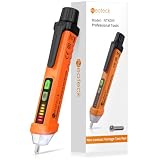
Neoteck 12-1000V AC Pen
- 12-1000V AC range
- Live and null wire separation
- Built-in flashlight
The Fluke 1AC II VoltAlert takes the top slot because of one feature no competitor in this list has: a continuous self-test. The tip glows and chirps the whole time the unit has power, so a silent tester is a dead tester, instantly and obviously.
The Klein NCVT1P is the value pick, carrying a CAT IV 1000V rating and 6.6-foot drop protection in a body that weighs less than an ounce. The Neoteck is the budget pick for anyone who wants the widest low-voltage reach on the cheapest tool here.
Every Tester in This Roundup Compared Side by Side (October 2026)
| Product | Specifications | Action |
|---|---|---|
| Fluke 1AC II VoltAlert |
|
Check Latest Price |
 Klein Tools NCVT1P Klein Tools NCVT1P |
|
Check Latest Price |
| Neoteck 12-1000V AC Pen |
|
Check Latest Price |
 KAIWEETS HT100s KAIWEETS HT100s |
|
Check Latest Price |
 Southwire 40116N Southwire 40116N |
|
Check Latest Price |
 Klein Tools RT250 Klein Tools RT250 |
|
Check Latest Price |
 Fluke ST120+ Fluke ST120+ |
|
Check Latest Price |
 Sperry VD7504GFI Sperry VD7504GFI |
|
Check Latest Price |
 Southwire 40022S Southwire 40022S |
|
Check Latest Price |
 Klein Tools RT210 Klein Tools RT210 |
|
Check Latest Price |
1. Fluke 1AC II VoltAlert – Best Overall for Home Wiring
Fluke 1AC II VoltAlert Non-Contact Voltage Tester, Pocket-Sized, 90-1000V AC, Audible Beeper, CAT IV Rating
90-1000V AC
Continuous self-test
Audible and silent modes
2 AAA batteries
2 year warranty
Pros
- Continuous self-test confirms the unit is working
- Short-range discrimination finds one hot wire in a crowded box
- Audible and silent modes plus auto power-off
- Owners report 15+ years of service
- Compact pocket size at 59 g
Cons
- Short detection range needs the tip very close to the conductor
- Thick tip must be pushed firmly into an outlet slot
- 90V minimum misses doorbell and thermostat wiring
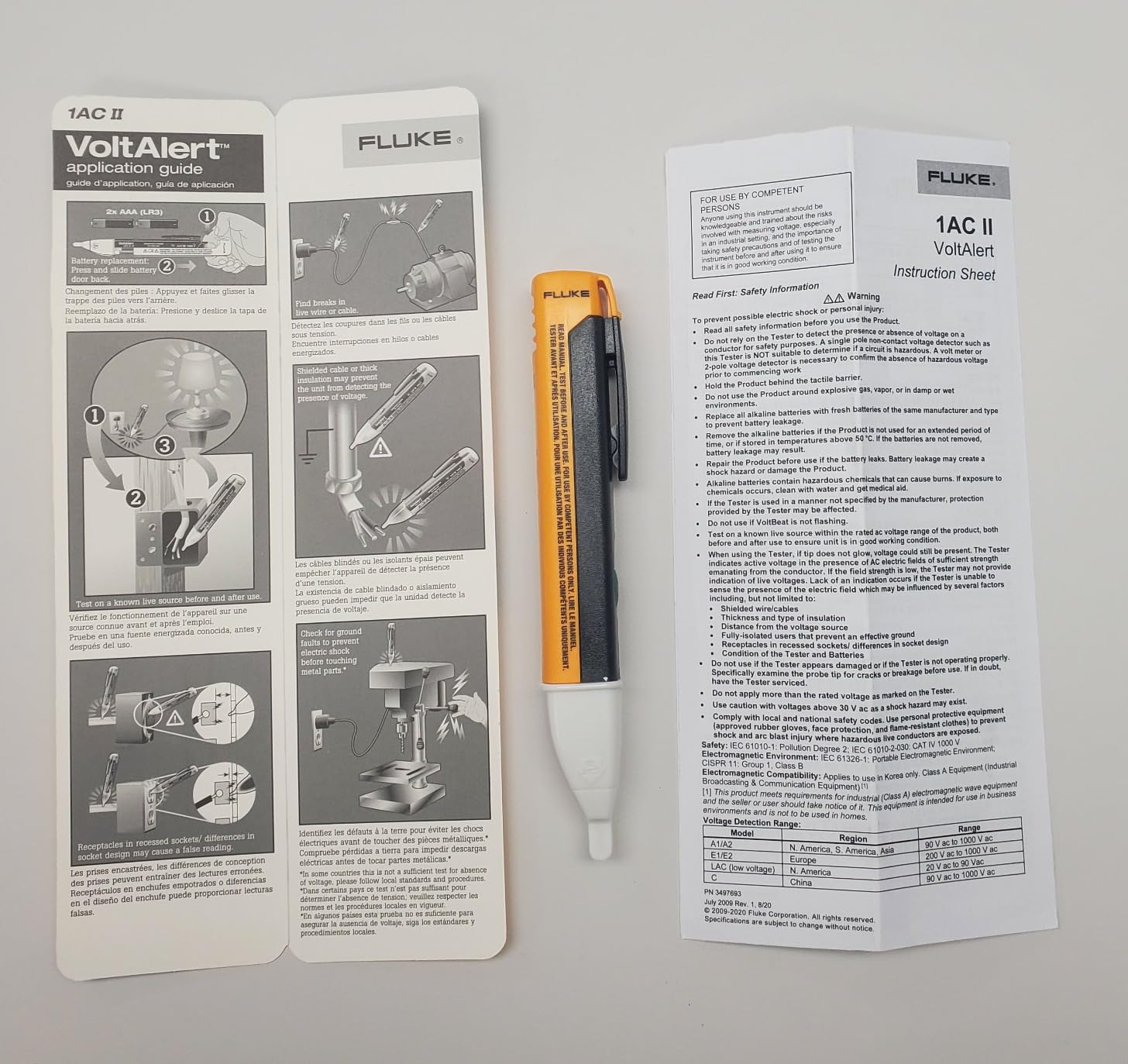
The Fluke 1AC II is the tester we keep in our own tool bag, and the reason is the self-test. The tip emits a steady tone and glow whenever the unit has power. If you pick it up and it is silent, you know within a second that the batteries are done, and a flat battery is the single most dangerous failure mode in this category because it produces a false dead reading.
Owners consistently single out two things: accuracy without false positives, and build quality. Compared with generic detectors, the short detection range is treated as a feature rather than a flaw, because a tester that beeps at every wire in a crowded box trains you to ignore the beep.
That discrimination is why it works on the hardest home-wiring job there is, tracing which conductor in a junction box is hot. Owners report consistently picking out a single hot wire with no false beeps, which is exactly the job a DIYer faces when three black cables disappear into a box above a light fixture.
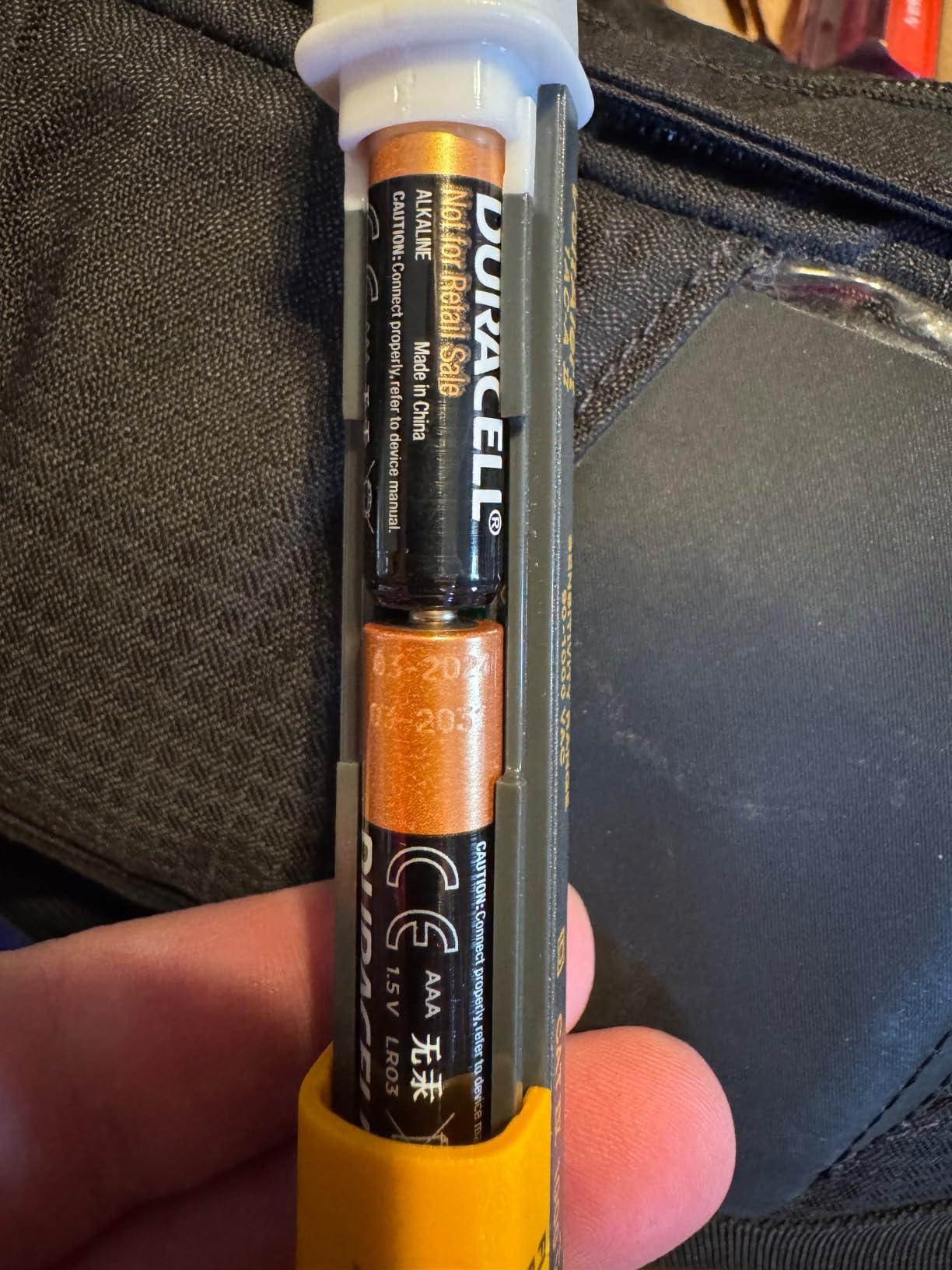
Two specifications matter here. The 90 to 1000V AC detection range covers every standard household circuit, including 240V appliances, and the unit is powered by two AAA alkaline batteries with a two-year warranty behind it. The audible and silent mode switch lets you mute the beeper in a quiet house or near a sleeping child.
The physical design is a pocket-shaped 59 g body measuring a little over 10 inches long, which is larger than some pens in this list but far easier to grip with a glove on. Fluke rates it to 50 degrees Celsius at the upper limit.
What it will and will not catch in your house
This tester handles standard 120V and 240V household circuits well, and the continuous self-test makes it the safest first-check tool in the group. It is the one we reach for when confirming a circuit is dead before removing a fixture face.
The 90V floor is the real limitation. Doorbell transformers, thermostats, irrigation controllers and landscape lighting all sit below that threshold, so this pen goes quiet on exactly the low-voltage circuits many homeowners are working on. For those, look at the Neoteck or the KAIWEETS.
Who should skip it
Skip it if your work is mostly low-voltage AC, or if you need to know whether a neutral is missing rather than just whether a conductor is energized. It reads presence, not value, and it cannot tell you a voltage number or diagnose an outlet fault.
It is also the wrong starting point if you work inside a breaker panel regularly. For panel-adjacent work, an approved two-pole voltage indicator is the accepted professional standard, and no pen in this roundup replaces one.
2. Klein Tools NCVT1P – Best Value Non-Contact Pen
Klein Tools NCVT1P Voltage Tester, Non-Contact Low Voltage Tester Pen, 50V to 1000V AC, Audible and Flashing LED Alarms, Pocket Clip
50-1000V AC
CAT IV 1000V
6.6-foot drop protection
22.68 g with pocket clip
Pros
- Bright green LED confirms the tester is operational
- 50V low end covers household and many low-voltage circuits
- Auto power-off extends battery life
- 0.8 oz body with a secure pocket clip
- CAT IV 1000V rating with 6.6-foot drop protection
Cons
- Not recommended for tamper-resistant outlets
- No adjustable sensitivity or signal strength readout
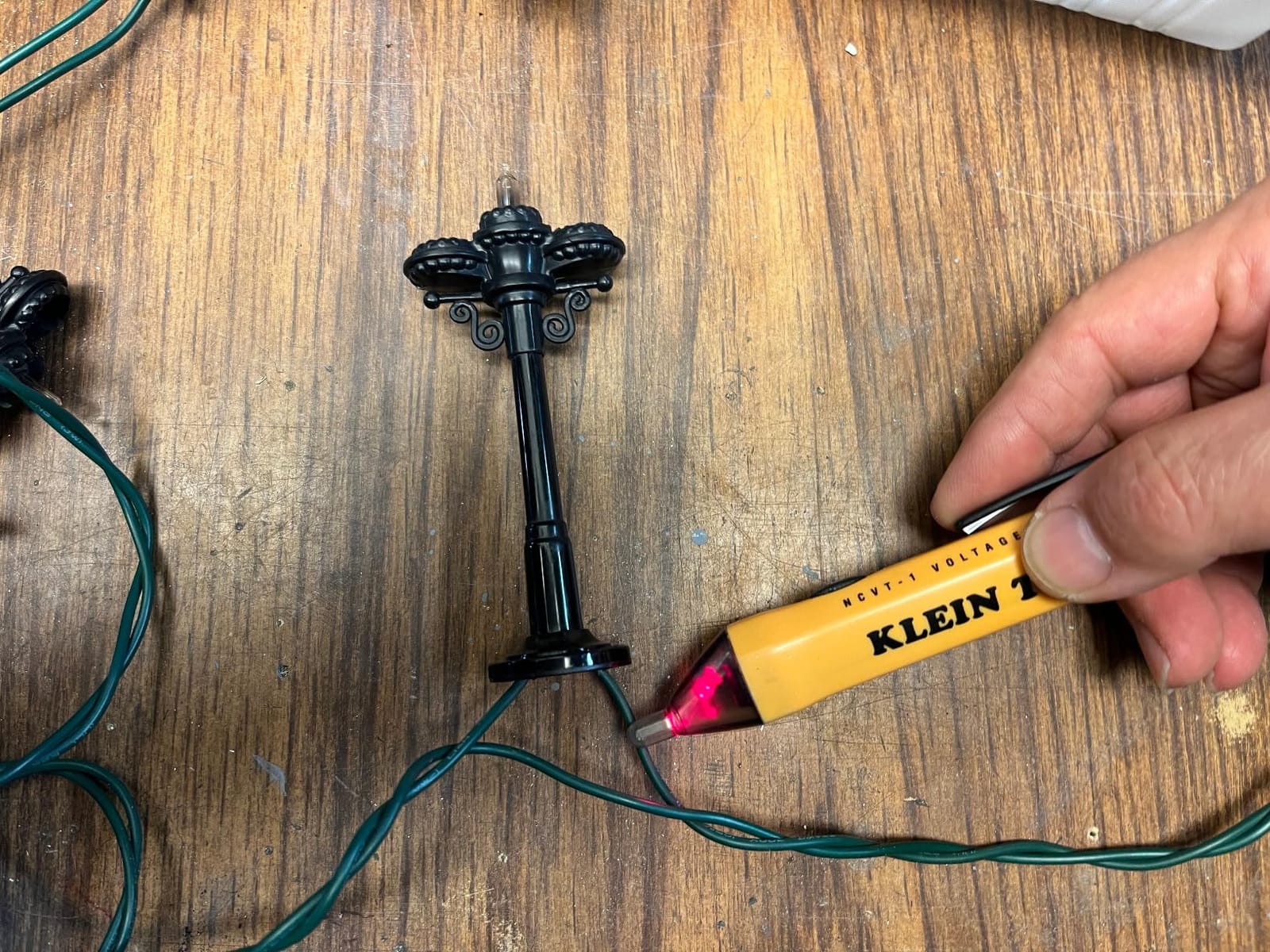
For most homeowners this is the only tester they ever need. The NCVT1P weighs 22.68 grams, clips to a pocket, and gives you two pieces of information that matter: a green LED that means the tester is live and working, and a flashing red LED with a beep that means the wire is hot.
That green-ready convention is a real usability win. Many cheap pens give you silence when they are broken, and silence is exactly the wrong answer to give you when you are about to touch something. This one tells you the opposite.
The 50V low end is sensitive enough for household circuits and many low-voltage runs, which puts it ahead of the Fluke for doorbell and thermostat work, though it still will not reach the deepest 12V circuits that the KAIWEETS and Neoteck cover.
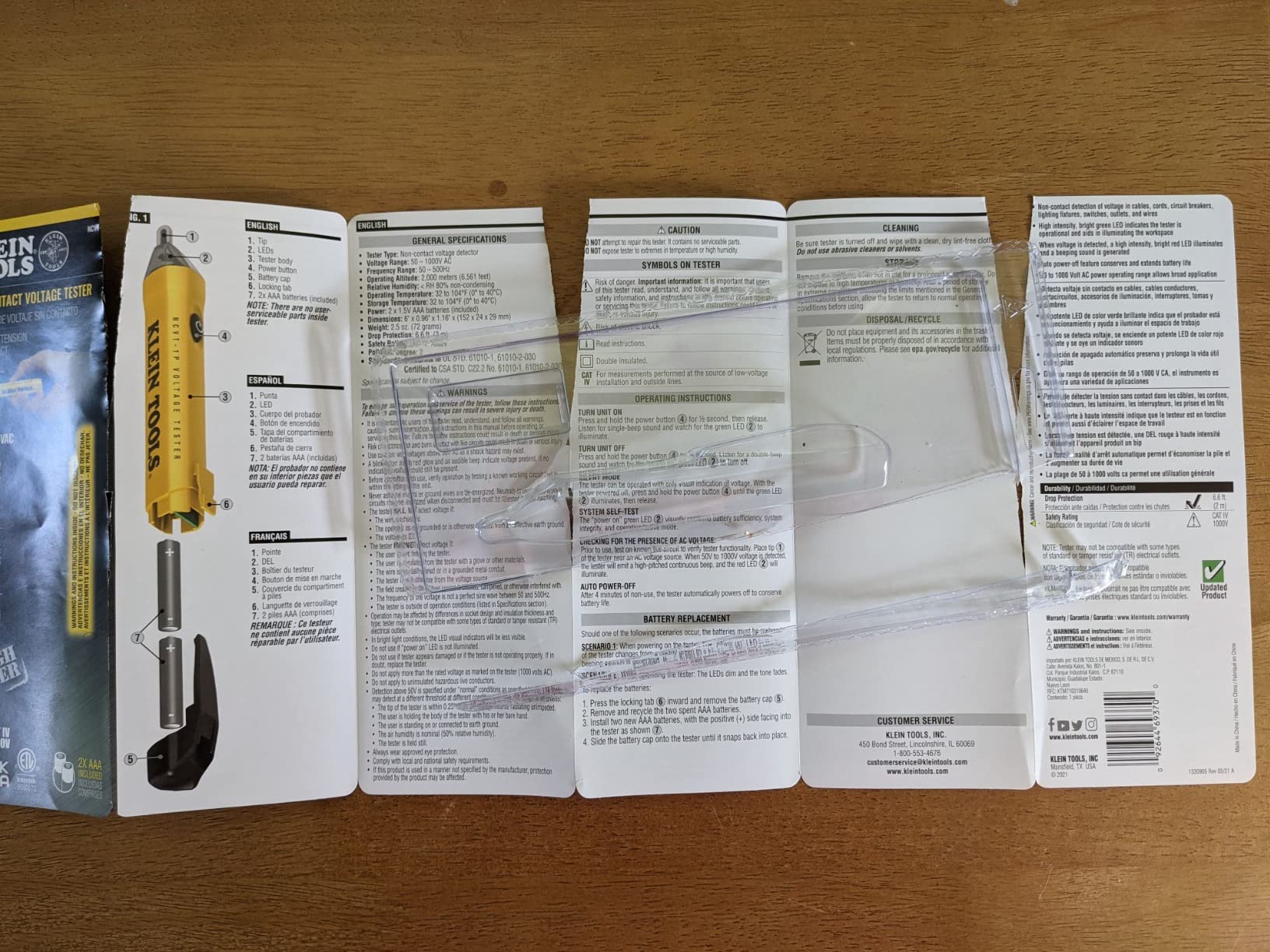
The safety rating is the detail most buyers miss. Klein prints CAT IV 1000V on this pen, which is the rating you want if the tool will ever come near a breaker panel or a receptacle fed from one. Add 6.6-foot, or 2 metre, drop protection, and you have a tool that survives being dropped off a ladder, which is where tools actually die.
Batteries and instructions are included in the box, and the listed upper temperature rating is 60 degrees Celsius. At 5.5 inches long and three quarters of an inch wide, it disappears into a shirt pocket rather than adding bulk to a tool belt.
Where it earns its place in a home toolkit
This is the pen for the routine list: checking an outlet before you replace the receptacle, confirming a switch is dead, finding which breaker feeds a bedroom outlet, and scanning a bundle of conductors in a box before you touch any of them.
For a homeowner who does one or two electrical jobs a year, the combination of a green ready light, a CAT IV 1000V rating and near-zero weight is hard to argue with. It is also the pen electricians name most often for day-to-day use in forum threads.
What you give up with this pen
There is no sensitivity adjustment and no signal strength readout, so you get a binary answer. That is fine for a straightforward check, but if you are tracing through bundled cable and need to know whether a field is strong or faint, you will want a display instead.
Klein also does not recommend it for tamper-resistant receptacles. The internal shutters on a TR outlet block the tip from reaching the conductor, so use the NCVT-2P or NCVT-3P in low-voltage mode for those sockets.
3. Neoteck 12-1000V AC – Best Budget Starter Pen
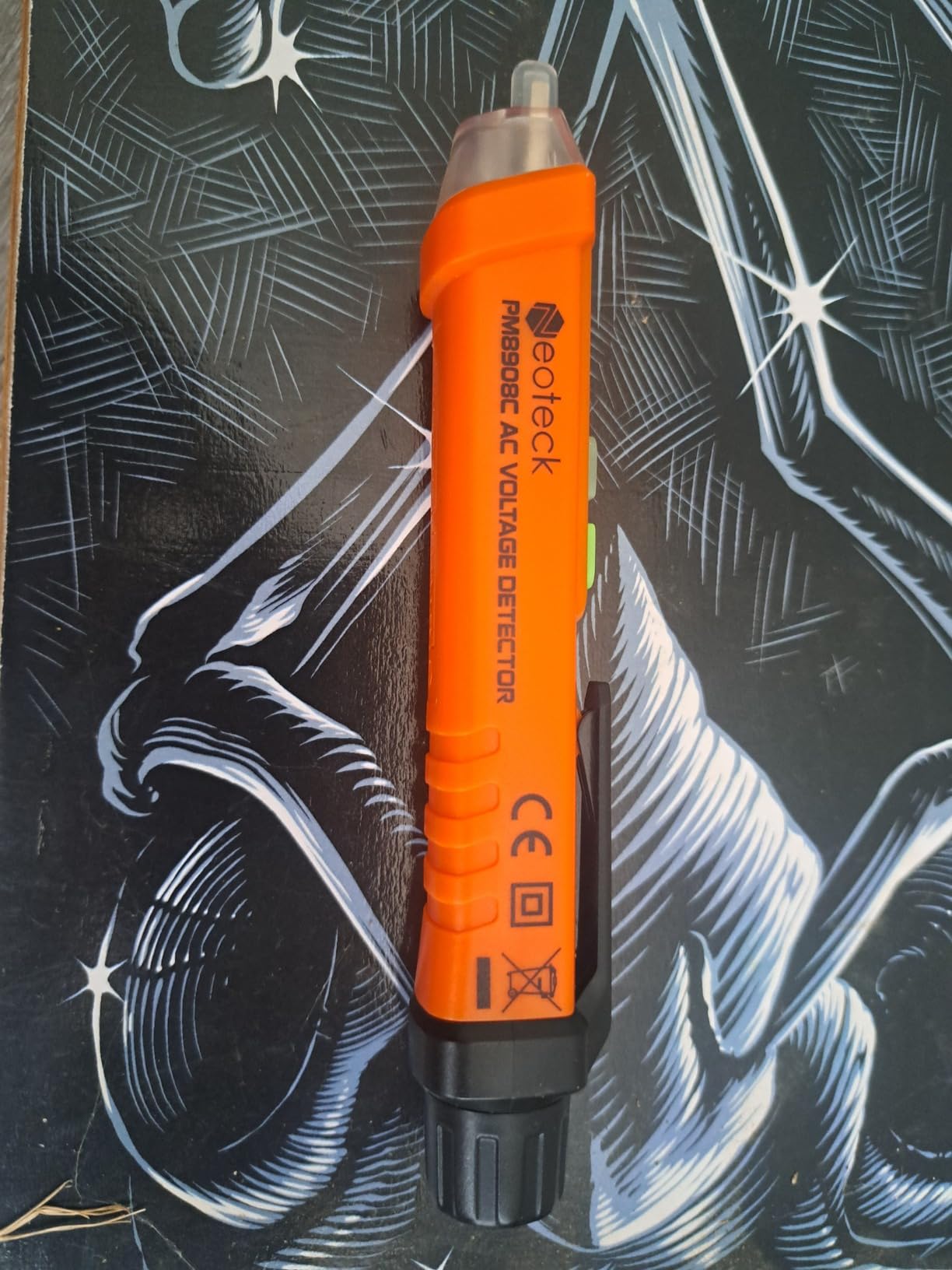
Neoteck Non Contact Voltage Detector 12-1000V AC Voltage Tester
12-1000V AC
Different alarm levels for live and null wires
Flashlight function
CE CAT III 600V
Pros
- Widest low-voltage reach in a pen at this tier
- Alarm level and LED separate live from null wires
- Doubles as an emergency flashlight in dark panels
- Batteries included in the box
- 13k+ owner reviews to draw on
Cons
- Listed 48V minimum is inconsistent with the advertised 12V range
- Not suitable for testing decorative light strings
The Neoteck earns its place by covering the one circuit type most pens cannot. Its advertised detection band starts at 12V AC and runs to 1000V, which means it will pick up doorbell transformer circuits, thermostat wiring and irrigation controller runs that leave a 50V or 90V pen silent.
That single feature is worth more than it sounds. If you have ever traced a doorbell chime that stopped working, or a thermostat that will not hold a schedule, you know how much time a tester that cannot see 16V wastes.
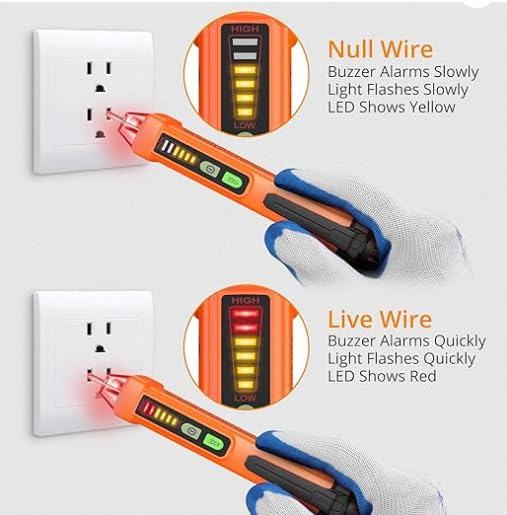
Its other useful trick is the alarm differentiation. The beep level and LED change between a live wire and a null wire, so you can distinguish hot from neutral by sound alone while your eyes stay on the conductor. For a 65 g orange pen, that is a genuinely thoughtful design.
It also carries a flashlight function, which sounds like filler until you are standing in an unlit basement panel with a breaker cover off. A pen that both alarms and illuminates saves you from carrying a second light.
Two AAA batteries are included, and the stated warranty is 18 months. Dimensions are 6.3 by 0.79 by 0.79 inches, so it is a slightly longer body than the Klein with a similar diameter.
Best value for low-voltage work
Pick this when your jobs include doorbells, thermostats, irrigation timers or landscape lighting alongside ordinary household circuits. Nothing else in this roundup reaches down to 12V for this little money, and the two AAA cells are included.
Reviewers generally find it accurate for basic live-wire checks, with the flashlight and the low cost doing most of the work in the reviews. It is a sensible first tester for a renter or a new homeowner building a tool kit from nothing.
Where the spec sheet raises an eyebrow
The listed minimum operating voltage is 48V AC, which does not match the advertised 12V range in the marketing. Treat the true floor as approximate and confirm any 12V circuit you care about with a meter before relying on the pen.
Reviewers also note it is not suitable for decorative light strings, and the upper temperature rating is only 40 degrees Celsius. That makes it a poor choice for a hot attic or a sunlit garage in summer, where the Fluke or Klein will tolerate more heat.
4. KAIWEETS HT100s – Best for Low-Voltage AC Wiring
KAIWEETS Voltage Tester/Non-Contact Voltage Tester with Signal Percentage, Dual Range AC 12V/70V-1000V, Live/Null Wire Tester, Electrical Tester with LCD Display, Buzzer Alarm, Wire Breakpoint Finder
12V and 70-1000V AC dual range
LCD signal percentage
IEC CAT III 1000V and CAT IV 600V
Pros
- LCD signal percentage and bar graph show signal strength
- Switchable dual range covers doorbells thermostats and irrigation
- Screen turns red for live and green for null wires
- Built-in LED flashlight with a loud buzzer
- Caught a circuit still energized after a breaker was off
Cons
- Batteries are not included in the box
- 12V mode can be oversensitive near tightly bundled wires
- Plastic pocket clip needs gentle handling
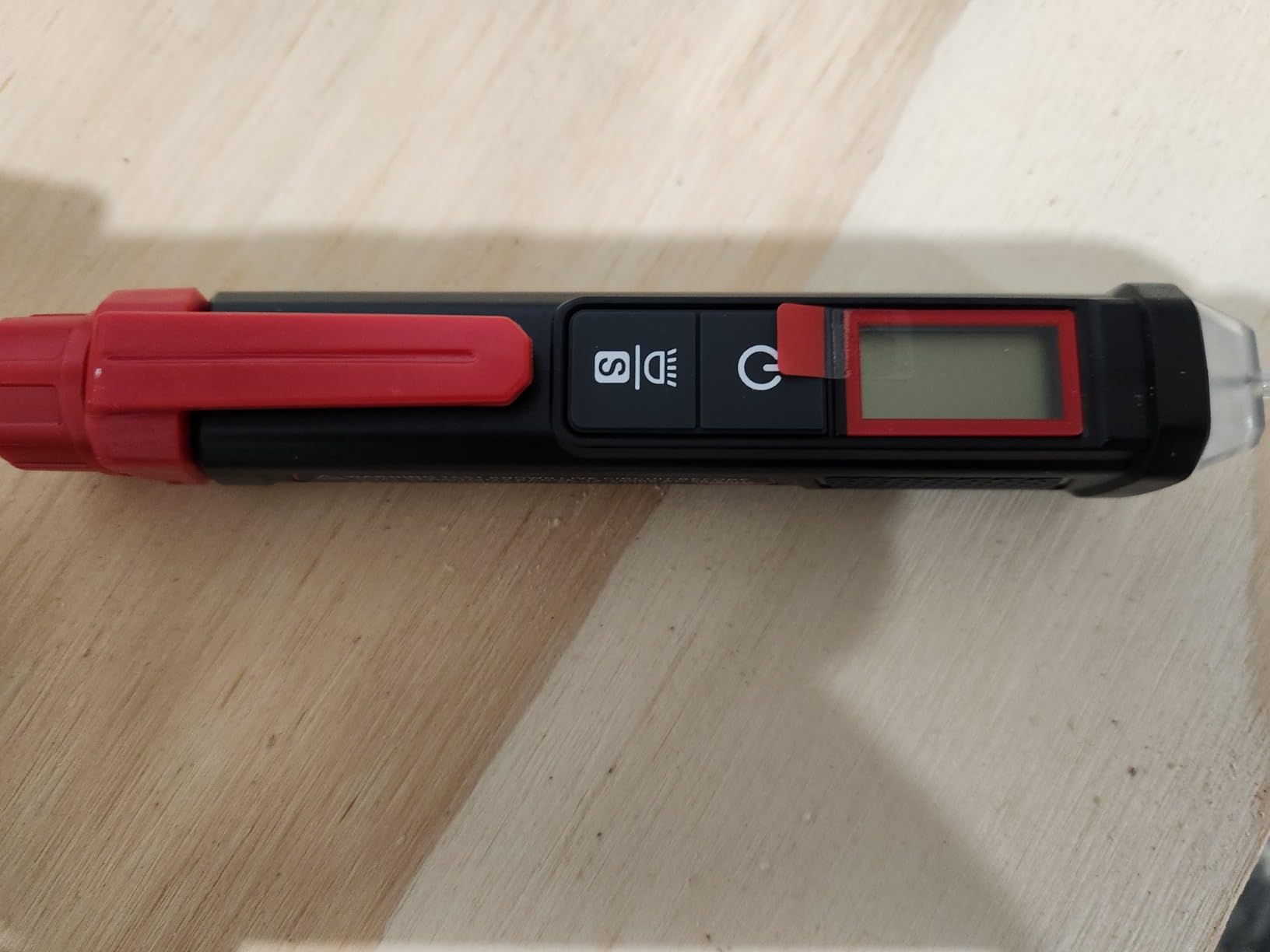
The KAIWEETS is the most informative pen here because it shows you a number instead of a yes or no. The LCD displays a signal percentage with a bar graph, and the beep frequency rises as the voltage source gets closer. In practice that turns a frustrating hunt through a wall cavity into a directional search.
Its dual range is switchable with the S button, covering 12V and 70 to 1000V AC. That gives you doorbell and thermostat coverage on one setting and normal household circuits on the other, which is the combination homeowners ask for most often.
The screen turns red for a live wire and green for a null wire, and the tip glows red with a rising tone. The built-in flashlight covers the dark-panel problem that most pens solve with a single LED.
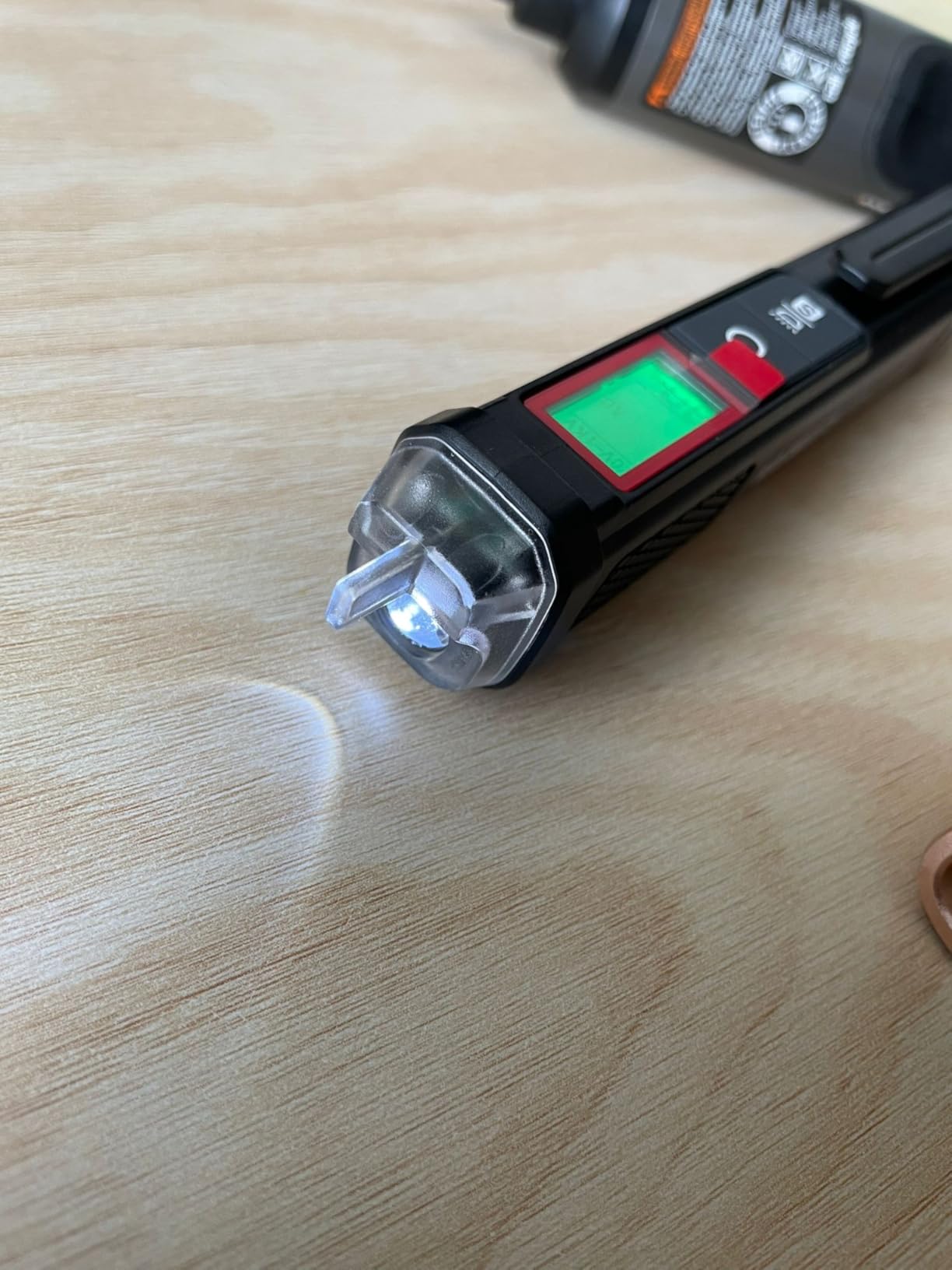
On the safety side it carries IEC ratings of CAT III 1000V and CAT IV 600V, is double insulated and meets CE requirements. Note the orientation carefully, because CAT III and CAT IV are not interchangeable labels here, and the CAT III figure is the higher of the two.
Automatic power-off after five minutes of no operation or signal detection, plus a low power indicator that lights below 2.5V, are the two features that protect you from the flat-battery false negative. At 80 g it is the heaviest pen in this roundup, a fair trade for the display.
When the signal readout genuinely helps
The percentage display earns its keep in two situations: tracing a live conductor through a wall, where a faint 5 percent reading is still information, and checking a bundle of tightly grouped cables where a binary beep cannot tell you which one you are near.
Owners report it catching a circuit that was still energized after the breaker had been switched off, which is precisely the situation where a no-signal pen would have sent you in with your hands full.
What to watch out for
Batteries are not in the box, which is a small frustration for a tool that will sit in a drawer until you need it. The 12V mode can be oversensitive to ambient static when wires are bundled closely, so treat a low-range alarm on a dead wire as suspect rather than definitive.
The plastic pocket clip needs gentle handling, and the instructions take a second pass to decode. If you want silent operation rather than a tone, this is not the pen for you, since the buzzer is the primary interface.
5. Southwire 40116N – Best for Dark Panels and Crawlspaces
Southwire Tester NCVD – Detects AC Voltage with Audible & Visual Alerts – Auto Power Off – Dual Flashlights – CAT IV 600V Safety Rating
100-600V AC detection
Built-in flashlight
Auto power-off after 5 minutes
UL and CUL listed CAT IV 600V
Pros
- Audible and visual indication across standard household circuits
- Auto power-off after five minutes of inactivity
- Green ready LED confirms the tester is live
- Built-in flashlight for dark panels
- UL and CUL listed with a CAT IV 600V rating and 2 year warranty
Cons
- 100V minimum puts low-voltage circuits out of reach
- Not designed for use with tamper-resistant outlets
The Southwire 40116N is the simplest tool in this roundup and one of the easiest to recommend. It detects AC voltage from 100 to 600V, sounds an alarm, flashes, and shuts itself off after five minutes of inactivity. There is no menu, no sensitivity dial and nothing to configure.
Its green ready LED is the feature we value most. It tells you the tester is powered and functioning before you bring it near a conductor, which is the same self-check principle the Fluke applies with its continuous self-test, just implemented with a single light.
Two flashlights are built in for working in dim spaces. Between that and the ready LED, this is the pen we would hand someone who is about to open a breaker panel in an unlit garage for the first time.
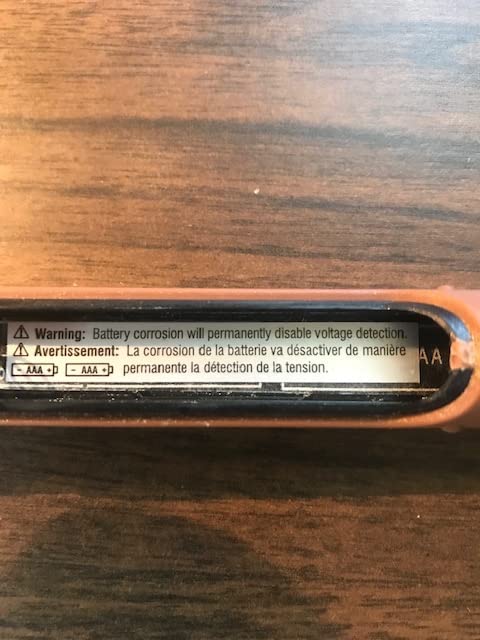
It is UL and CUL listed with a CAT IV 600V rating, which is the appropriate figure for work on a 120V household circuit, and the warranty runs two years. The listed upper temperature rating is generous for a tool of this class, and the body is 2.56 ounces.
Owners cite one-hand operation, a clear ready indicator and the flashlight as the three reasons it satisfy them. For a basic live or dead call on standard circuits, that is exactly the right feature set with nothing wasted.

Why the flashlight matters more than it sounds
Most electrical mistakes in a home start with a misread in bad light. A dark panel, a cramped attic or a basement with a single bulb is where an unnoticed live conductor causes a shock, and a light built into the tool is one less thing to juggle while your hands are occupied.
Combined with the auto power-off, the practical effect is that this tool is ready when you pull it out. You do not arrive at a panel with a dead tester and a fresh set of batteries somewhere behind the water heater.
Where its limits bite
The 100V minimum is the highest floor in this roundup. Doorbell transformers, thermostat wires, irrigation controllers and landscape lighting are all below it, so this pen simply does not apply to a meaningful share of homeowner electrical work.
Like several others here, it is not designed for tamper-resistant receptacles. If your house is full of TR outlets, look at the KAIWEETS dual range or a receptacle tester instead.
6. Klein Tools RT250 – Best Receptacle Tester With an LCD
Klein Tools RT250 GFCI Outlet Tester with LCD Display, Electric Voltage Tester for Standard 3-Wire 120V Electrical Receptacles
Backlit LCD voltage readout
GFCI trip time display
Open neutral and open ground detection
Auto-hold
Pros
- Large backlit LCD shows real voltage numbers and fault text
- GFCI trip-time display verifies protection within spec
- Detects open neutral open ground and reverse polarity
- Auto-hold keeps the reading for hard-to-reach outlets
- Two bright LEDs read clearly in daylight
Cons
- Needs batteries and the power button must be held to wake it
- Only works on standard 3-wire 120V receptacles
- No protective case and the switch can be pressed in a tool bag
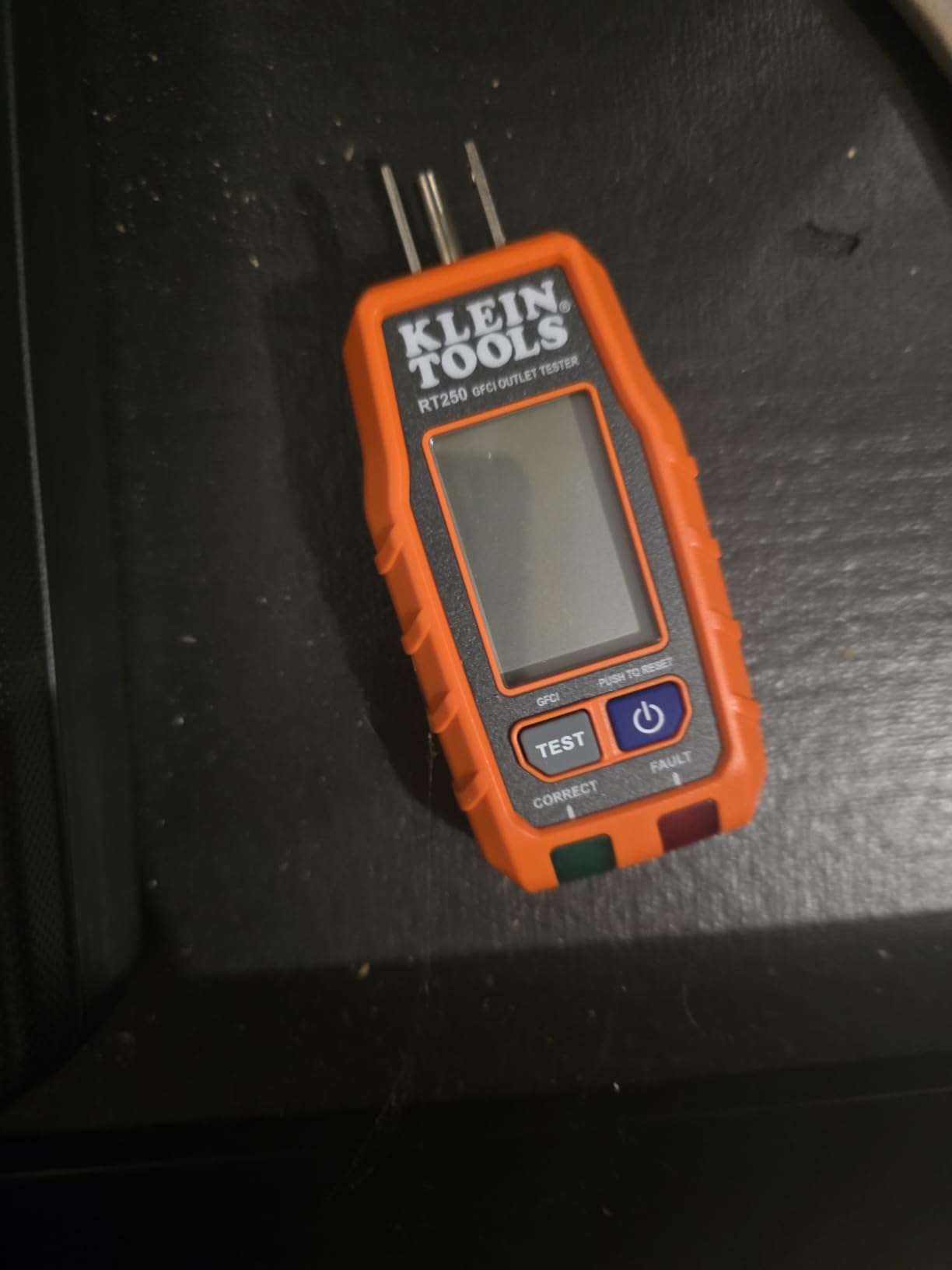
A pen tells you whether a conductor is energized. The Klein RT250 tells you what is actually wrong with an outlet, and that is a different job. It plugs into a standard three-wire 120V receptacle and displays the measured voltage on a large backlit LCD along with plain text descriptions of any fault.
That patent-pending open neutral and open ground detection is the headline. A pen cannot find either fault, because both involve a missing conductor that simply is not there to sense. If your symptom is an outlet that will not work or a lamp that flickers, this is the tool that finds the cause.
The GFCI trip time display is the second feature that justifies the upgrade over a three-light passive tester. It shows how long the device took to trip, which is how you confirm ground-fault protection is working within specification rather than just clicking once.
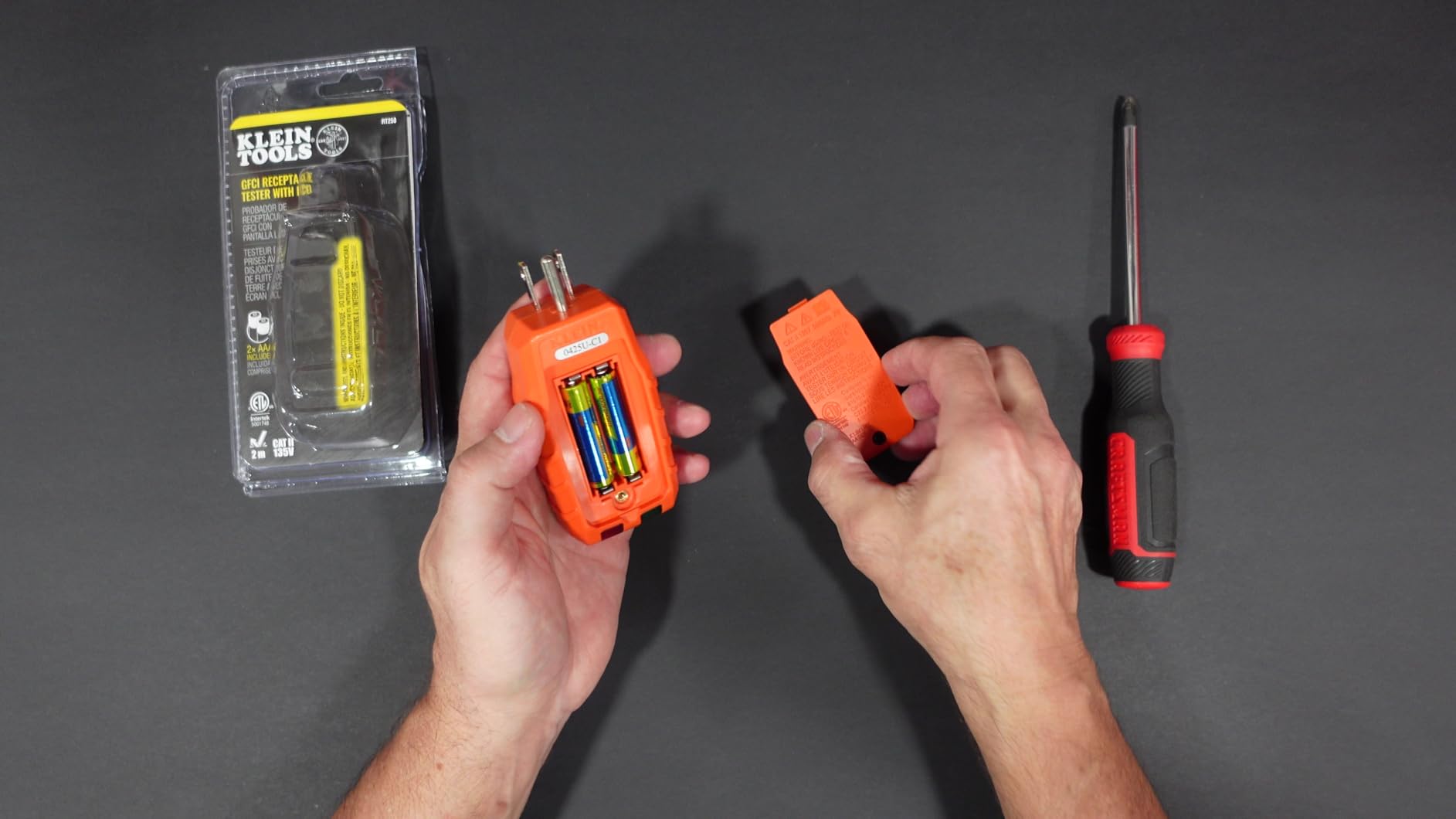
Auto-hold keeps the reading on screen after you pull it out, which matters when the outlet is behind an appliance or a bed. Two bright LEDs supplement the LCD so the result is readable in bright light or outdoors, unlike passive testers that rely on a colour code you have to memorise.
Two AAA alkaline batteries and a manual are included, the operating range is 32 to 60 degrees Celsius, and the body is 4.16 ounces at 4.53 by 1.16 by 2 inches. Owner reports cite a 6.6-foot drop rating and a CAT II 135V classification.
What this finds that a pen cannot
Open neutral, open ground and reverse polarity are the three faults behind most outlet problems, and all three are invisible to a non-contact pen. Plug this in before you replace a receptacle and you know whether you are fixing a device fault or a wiring fault.
It is also the right tool for the house-hunting case. Walk a property, plug the RT250 into every outlet, and any fault announces itself as text. The LCD also reads out actual voltage, which tells you about under-supplied circuits and loose neutrals before they become a nuisance trip.
When to use a different tool
It only handles standard three-wire 120V receptacles, so it will not help with a 240V range or dryer circuit, and it is useless on two-wire older ungrounded outlets beyond showing you what it can detect.
Battery drain is the recurring complaint, because the power button can be pressed by other tools resting on it in a toolbox. There is no protective case either, which is worth considering if you tend to leave testers loose in the back of a truck.
7. Fluke ST120+ – Best for Tracing Breakers From the Panel
Fluke ST120+ GFCI Socket Tester with Audible Beeper
GFCI test button
Switchable audible tone for panel work
Bright fault LEDs
CAT III 300V
Pros
- Integrated GFCI test button verifies protection works
- Switchable beep lets you confirm circuits at the breaker without walking back
- Protective lip around the face prevents toolbox damage
- Compact and rugged for constant job use
- Bright LEDs make miswired outlets easy to read
Cons
- High pitched beep tone is irritating to some users
- Not suitable for outdoor receptacles with slot shields
- CAT III 300V is a lower rating than most testers here
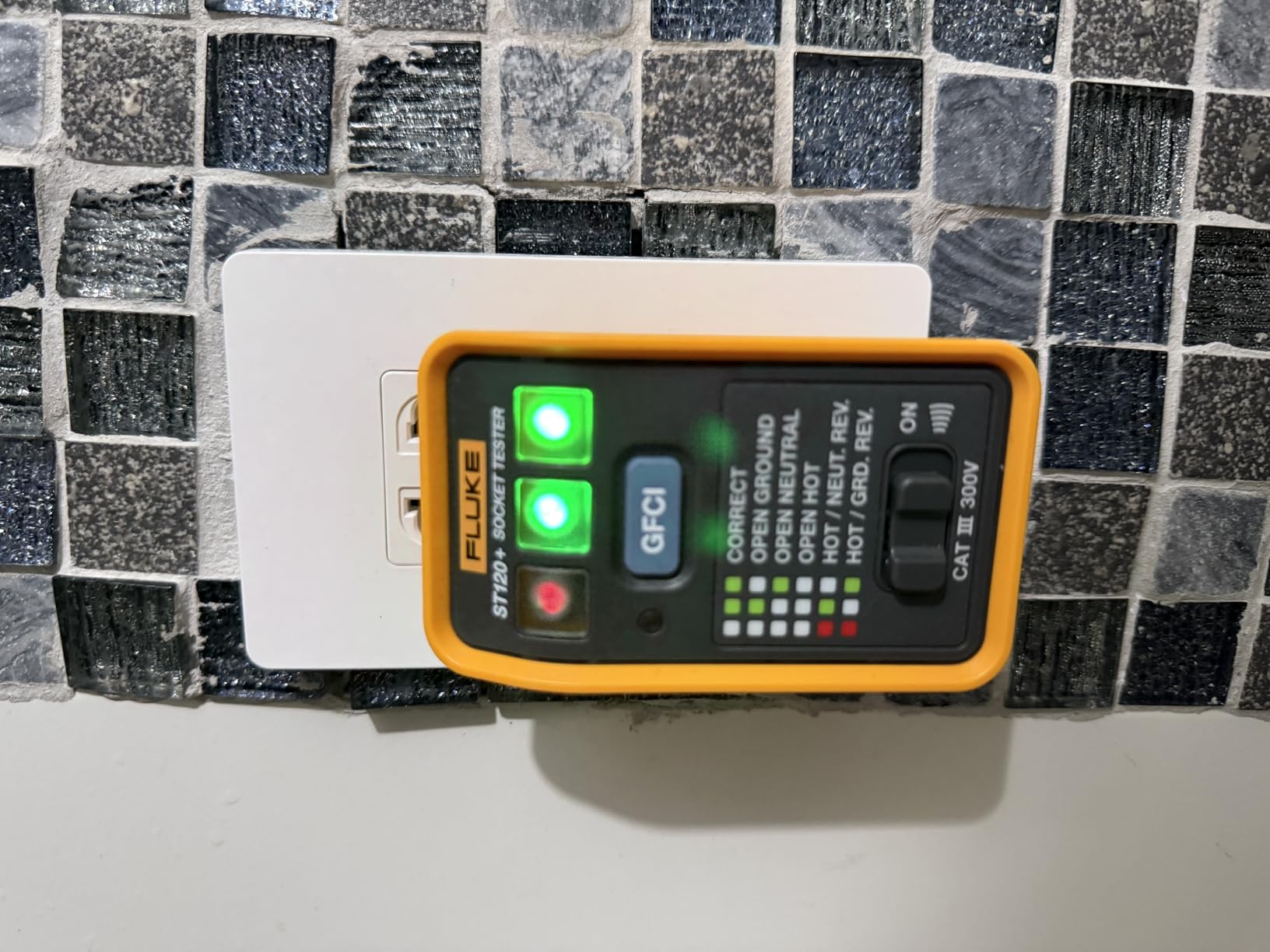
The Fluke ST120+ solves a specific, extremely common household problem: identifying which breaker feeds which outlet. The switchable audible tone means you can stand at the panel, switch a breaker, and hear whether that circuit is energized without walking back and forth to the receptacle you are testing.
That sounds like a novelty until you have spent twenty minutes flipping breakers one at a time in a dark basement. Electricians and homeowners alike name the beeper as the feature that saves the most time, and it costs nothing extra relative to the rest of the tool.
The integrated GFCI test button is the second reason to choose it. Plug it into a GFCI receptacle, press the button, and you confirm that the ground-fault device actually trips instead of merely clicking and staying on.
Bright LEDs give fast fault identification on miswired outlets, and the compact 2.28 by 2.9 by 0.98 inch body is easy to grip. The protective lip around the front panel prevents the face from being damaged when tools land on it, which is a small detail that matters in a working tool bag.
It draws its power from the outlet it is plugged into, so there is no battery to go flat at the exact moment you are tracing a circuit. The listed rating is CAT III 300V, which is appropriate for receptacle-level work.
The job it was designed around
Breaker tracing and GFCI verification are the two tasks this tool does better than anything else in the roundup. If your recurring complaint is an outlet that keeps tripping or a mystery dead circuit, start here rather than with a pen.
Because it is powered by the receptacle, it also works in a house with no batteries on hand. That reliability matters more than it sounds when you are diagnosing an intermittent fault and do not want a second variable in the equation.
What to keep in mind
The beep is high pitched, and some users find it genuinely irritating over a long session, so plan to switch it off when you are not tracing.
It will not fit outdoor receptacles with protective shielding over the slots, and it rates CAT III 300V, which is lower than several pens here. It is a receptacle-level tool and should not be taken into a panel.
8. Sperry VD7504GFI – Best Two-in-One Pen and Receptacle Tester
Sperry Instruments VD7504GFI DualCheck 2-in-1 Non-Contact Voltage Detector + GFCI Outlet Circuit Analyzer, 360° Visual & Audible Indicators, 50-1000V AC, 250 lb. Crush Rating
Non-contact detector and GFCI tester in one body
50-600V AC sensing
CAT III 1000V
10 ft drop and 250 lb crush
Pros
- Two testers in one body cuts what you carry into the field
- Plug-in half uses clear green and red indicators a client can read
- Large handle fits stiff and child-safety receptacles
- Button must be held to power on so it cannot drain in a bag
- 10 ft drop and 250 lb crush rating with CAT III 1000V
Cons
- Non-contact end is oversensitive and can false trigger through sheathing
- Some units report the non-contact sensor not responding at all
- Ground pin screws loosen with heavy daily use
- Bulky dual shape is awkward in a work pouch
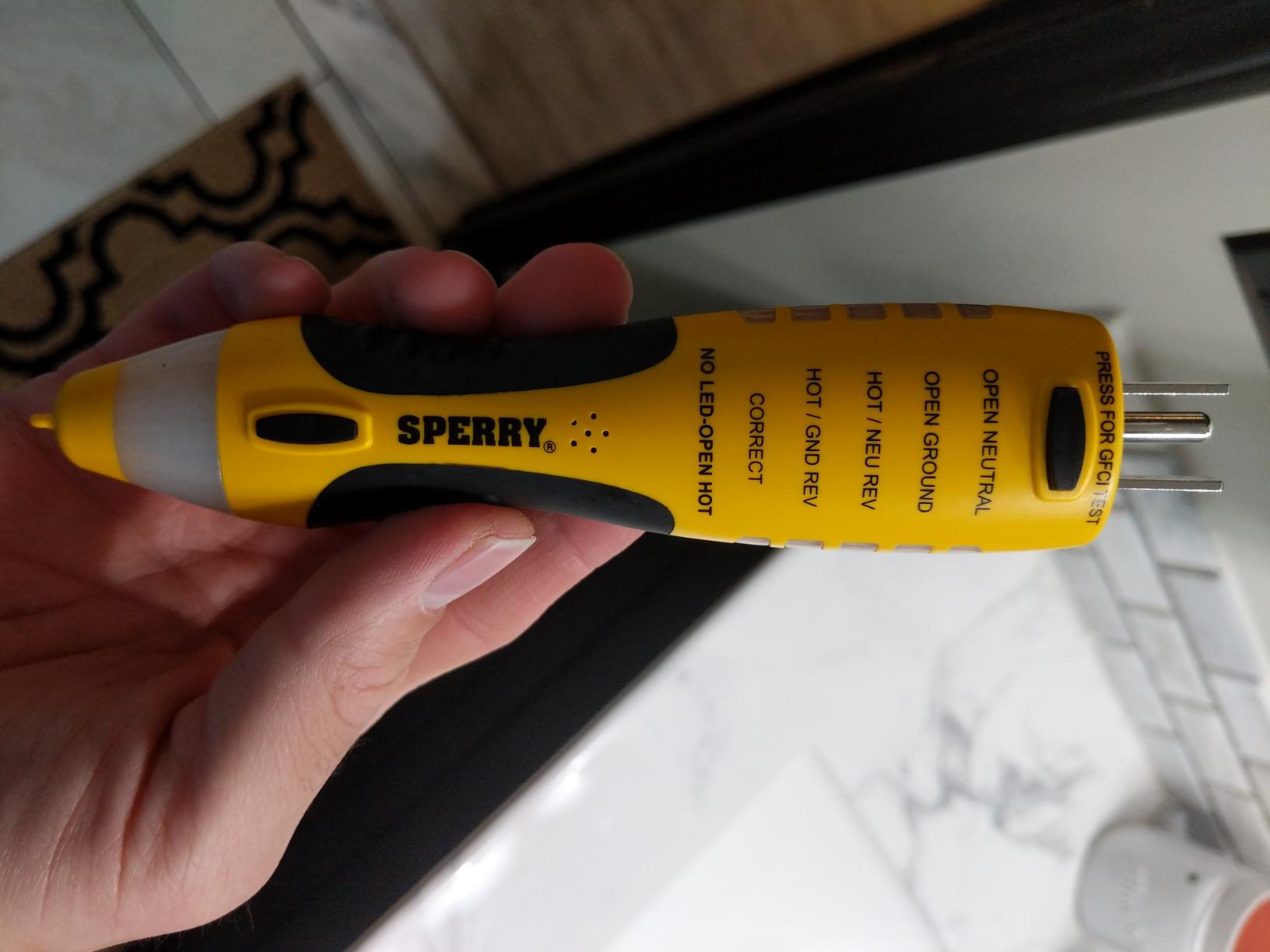
The Sperry VD7504GFI is built for inspectors and anyone who would rather carry one tool than two. One end is a plug-in receptacle and GFCI tester, the other is a non-contact voltage detector, and both work from the same body.
Professionals rate the single-tool convenience and the readable plug-in indicators highly. The green good and red fault indication is legible to a homeowner or an inspector at a glance, without decoding a chart, and the large handle makes it easy to plug into stiff or child-safety receptacles.
Durability is genuinely impressive here. It is rated to a 10-foot drop and 250 pounds of crush, carries a CAT III 1000V rating, and the polycarbonate housing carries soft over-moulded rubber grips for wet or greasy hands.
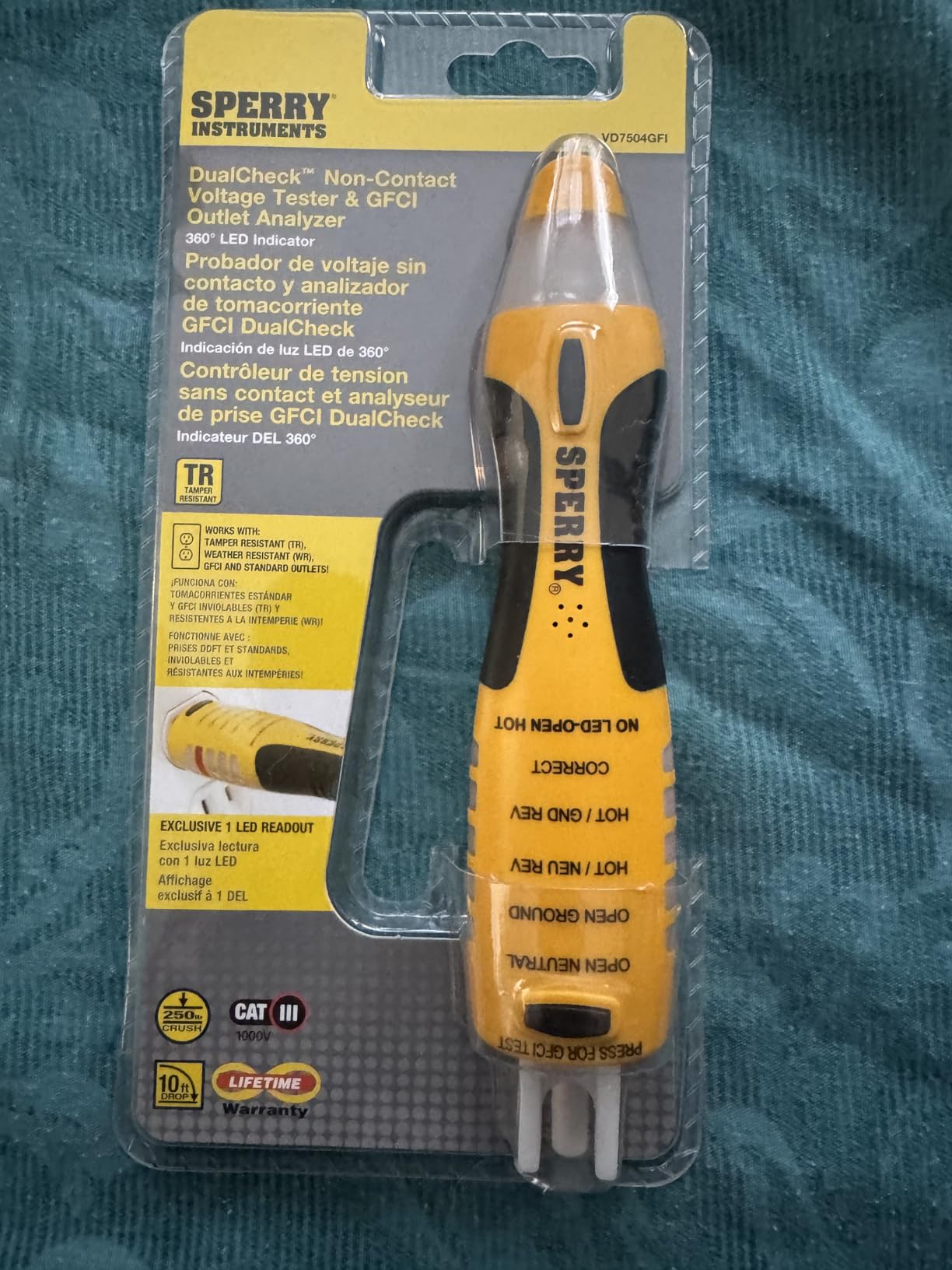
Two details matter for daily carry. The power button must be held down to switch it on, which means it cannot drain its button cell while sitting in a tool bag between calls, and the non-contact end senses 50 to 600V AC at 50 to 60Hz with 360-degree visual and audible indication.
The advanced ground testing circuitry is what separates it from a cheap three-light tester, detecting the low resistance values required for a correct ground connection.
Where combining two tools pays off
For a home inspector, a property manager or a maintenance technician moving between outlets and panels, the value is obvious. One tool in the pouch covers the two checks that make up most of a routine call.
The oversized handle is not a gimmick either. Trying to push a slim tester into a receptacle with stiff springs is a small irritation you notice every single time, and this one is designed around that problem.
The non-contact end is the weak half
Owners report the sensor is oversensitive on some units, registering live wires one to six inches away and giving false positives when it slides against wire sheathing or skin. Others report it failing to respond at all.
Because of that split, many users keep a separate dedicated voltage pen for precision work. Ground pin screws can also loosen with heavy daily use and the printed markings wear off, and the bulky dual shape does not fit a slim work pouch. The replacement button cells are not always easy to source.
9. Southwire 40022S – Best Budget Outlet Sweep Tester
Southwire GFCI Receptacle Tester – Push-Button Outlet Tester for Fast & Accurate Wiring Checks – Compact & Durable Housing – 7 Test Functions
7 test modes including push-button GFCI test
Light code chart on the housing
120V AC standard outlets
Pros
- Very inexpensive way to sweep every outlet in a home or rental
- Push-button GFCI test that many basic testers omit
- Seven test modes catch reverse polarity and missing ground
- Light code chart printed on the housing reads in any orientation
- Compact housing with a good grip
Cons
- Light code results need decoding from a printed chart
- One owner reported an ungrounded outlet was not flagged
- Passive only with no non-contact detection or voltage number
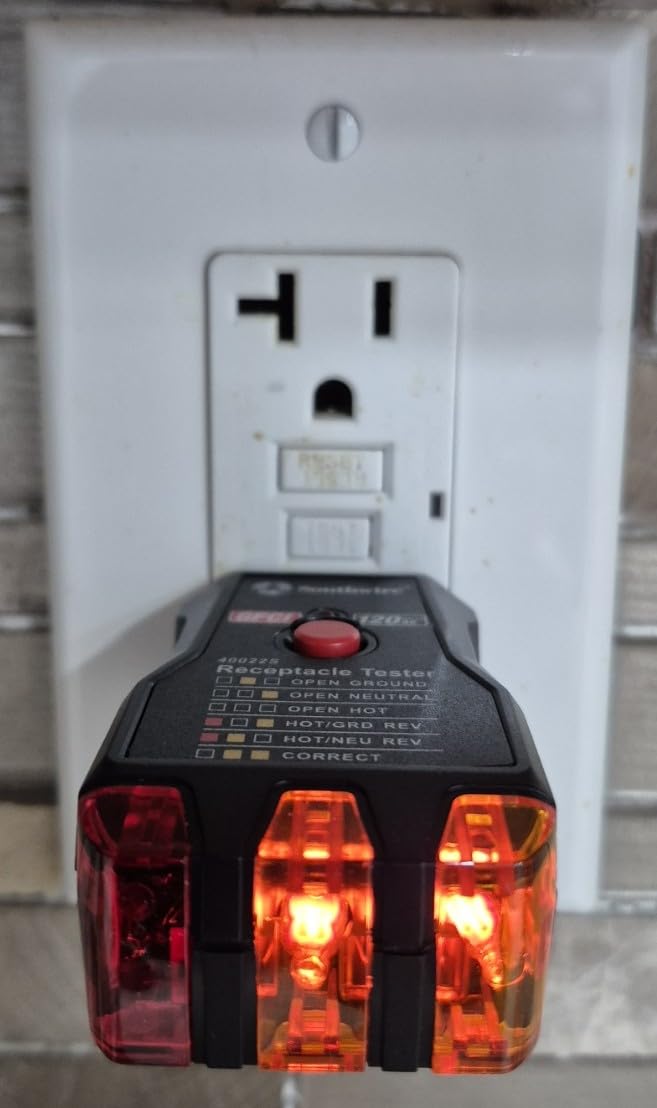
If your job is checking many outlets rather than tracing a single wire, the Southwire 40022S is the tool. It offers seven test modes including a push-button GFCI test, which is the feature that separates it from the very cheapest passive testers that only check polarity and ground.
Buyers treat it as a high-value first-pass tool for older homes, where ungrounded or loosely wired outlets are more likely. The seven modes catch reverse polarity, missing ground and hot or neutral miswiring, which covers most of what goes wrong in residential wiring.
The light code chart is printed right on the housing, so you can read the result in any orientation without a phone app or a reference card. That sounds like a small thing until you are crouching behind a sofa holding a flashlight in your teeth.
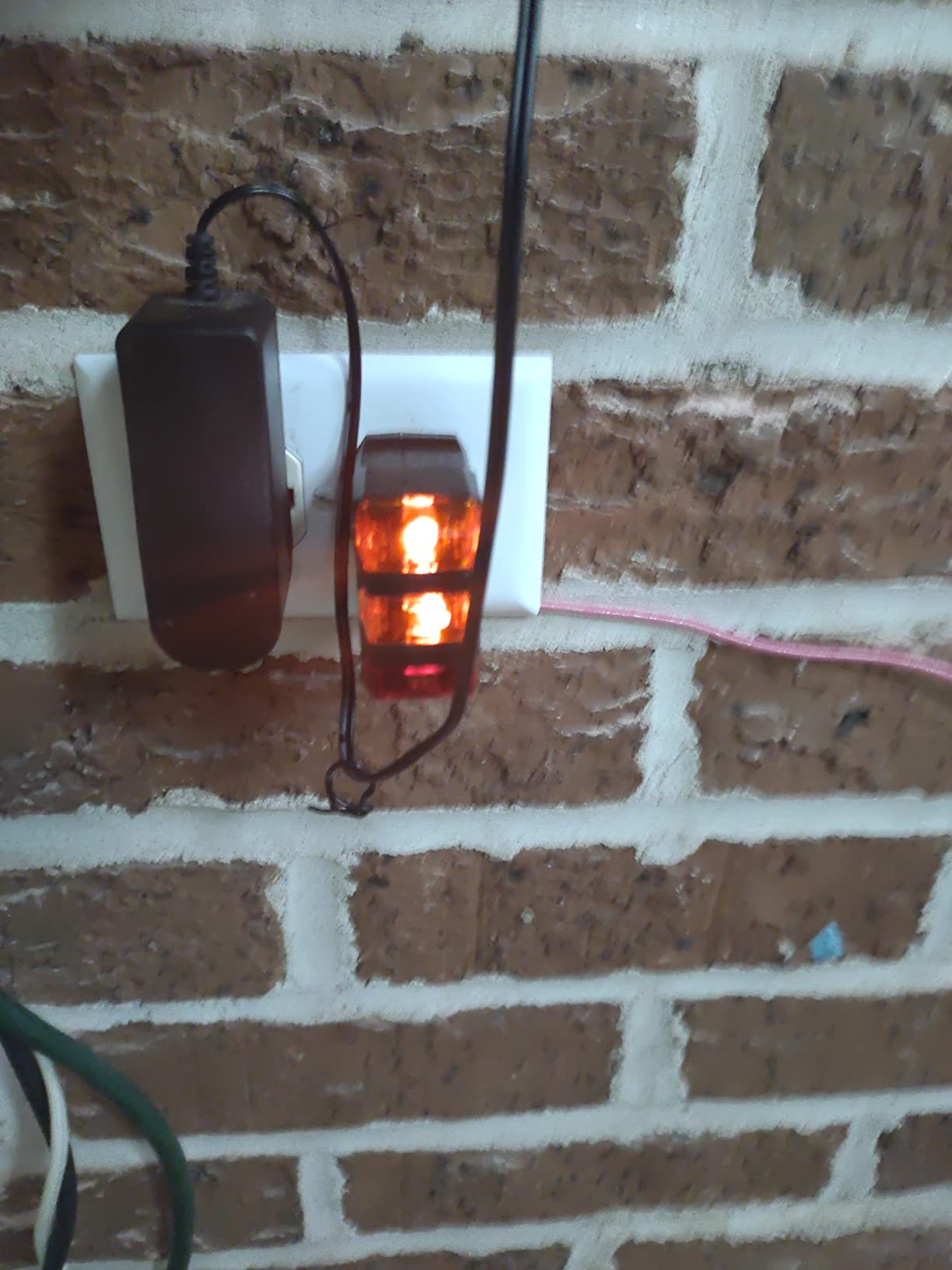
The compact 1 by 1.7 by 3.6 inch body is 1.92 ounces, and it is built to EN 61010-1 for standard 120V AC outlets. Because it draws power from the receptacle, there are no batteries to fail and nothing to charge.
It is also a defensible house-hunting purchase. A tool this small and this simple lets you check every outlet in a property in an afternoon without learning a diagnostic system first.
When a light-code tester is the right call
If your task list reads check every outlet in the basement, the rental, or the house you are buying, this is the right tool at the right level of complexity. Seven modes and a GFCI button cover the failures that actually show up in older residential wiring.
No batteries, no charging, no self-test to remember. It is ready the moment it leaves the drawer, which is exactly what you want when you are working through a list of forty rooms.
What it will not tell you
It is passive only. There is no non-contact detection and no numeric voltage readout, so it cannot check a wire in a wall or read the actual supply voltage. You must physically plug it into every outlet you want to check.
Results need decoding from the printed chart rather than a text display, and one owner reported an ungrounded outlet was not flagged. If you need certainty on a specific fault, the Klein RT250 gives you a written diagnosis and a voltage number instead.
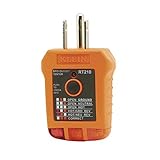
10. Klein Tools RT210 – Best Simple GFCI Receptacle Tester
Klein Tools RT210 Outlet Tester, Receptacle Tester for GFCI / Standard North American AC Electrical Outlets, Detects Common Wiring Problems
Standard and GFCI receptacle testing
110/125V AC three-wire outlets
6.6-foot drop rating
1.9 oz
Pros
- Reliable GFCI wiring fault detection on standard and GFCI receptacles
- Confirms proper operation of the ground fault protective device
- Built to a 6.6-foot drop rating
- Works from 32 to 140 degrees Fahrenheit
- Lightweight 1.9 oz handheld form factor
Cons
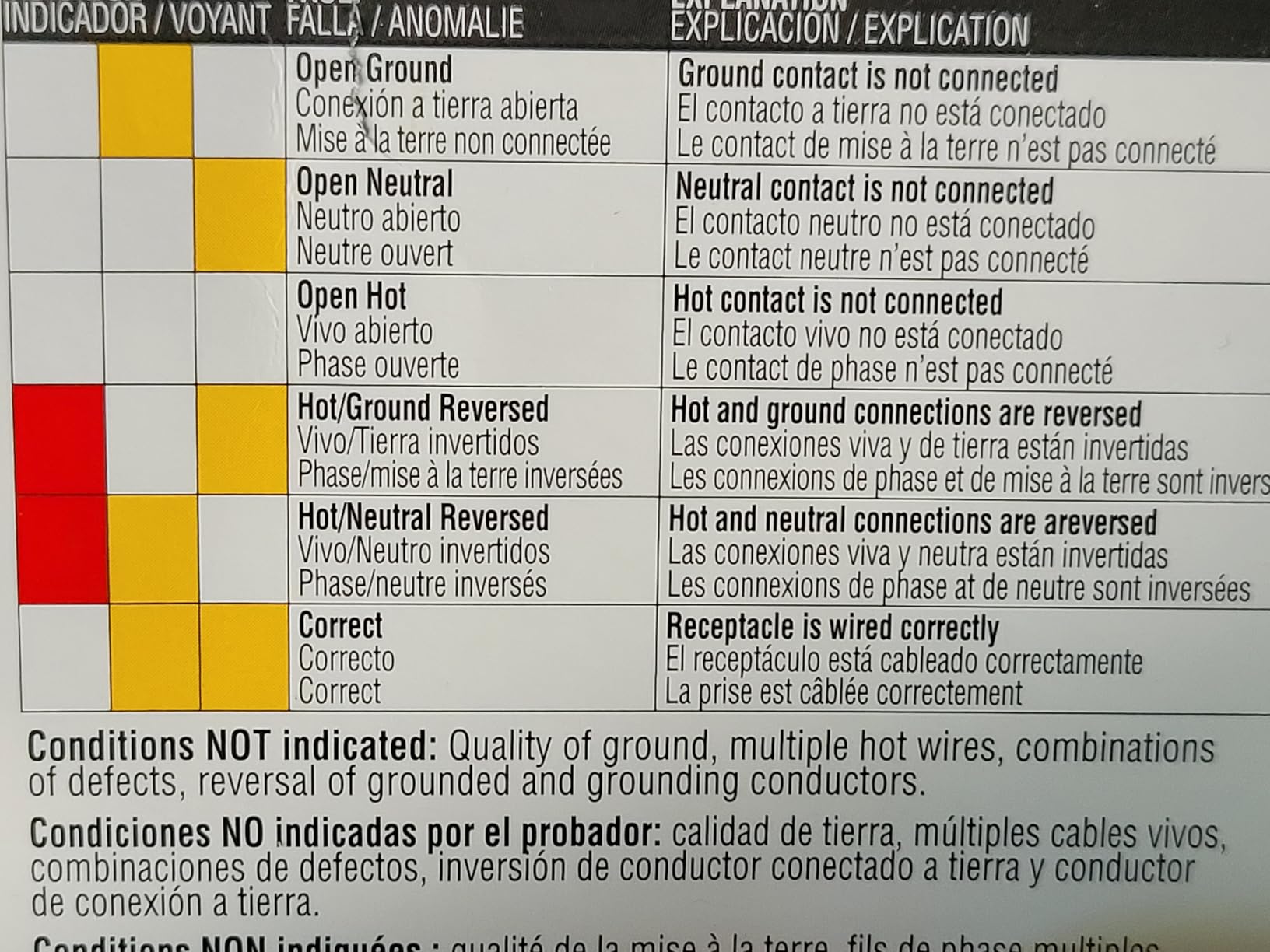
- Light-code output must be decoded from the chart on the tool
- Limited to 110/125V AC three-wire receptacles
- No numeric voltage readout or open neutral and ground indication
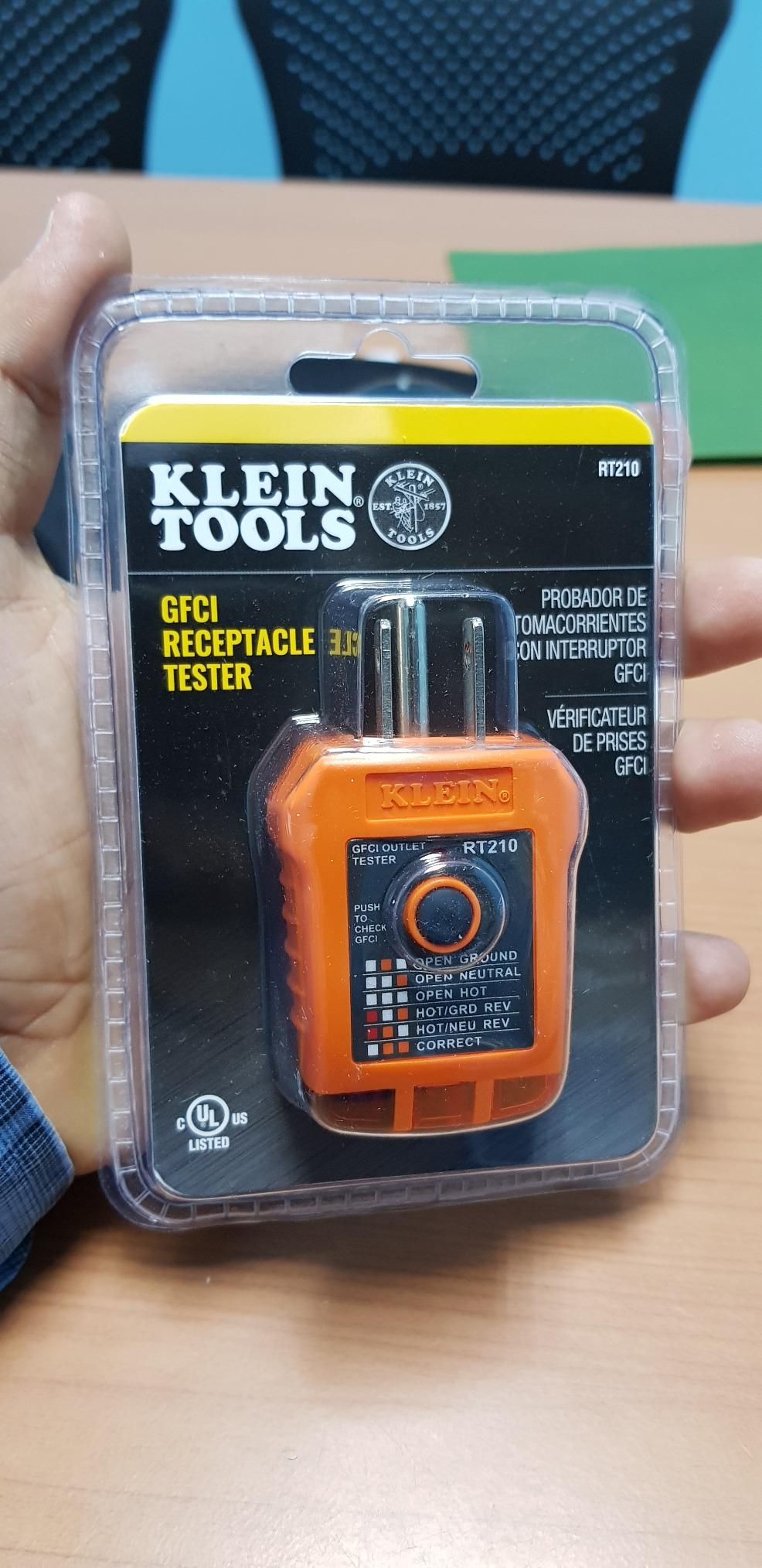
The Klein RT210 is the long-standing default receptacle tester, and with 4.8 stars across nearly 9,000 owner reviews it has earned that place. It does one job: detect GFCI and wiring problems on standard and GFCI receptacles, and it does it without batteries.
Hand powered means there is no battery to fail, nothing to charge, and no way for the tool to give you a false reading because its cells died in a drawer. For checking a house full of outlets, that reliability is worth more than any feature list.
It is built to a 6.6-foot, or 2 metre, drop rating and operates from 32 to 140 degrees Fahrenheit, which is 0 to 40 degrees Celsius. The 1.9-ounce body is the lightest receptacle tester in this roundup.
Users who later want more are typically pointed toward the RT250 in this same list, which adds an LCD readout and explicit open neutral and open ground reporting. The RT210 remains the simpler tool, and simplicity has real value when you are testing twenty outlets in a row.
One thing to plan around: because it is hand powered, you cannot use it to check a live or dead state on a wire. It only tells you about the outlet it is plugged into.
Why it stays in regular rotation
This is the tester we recommend for confirming that a GFCI receptacle is doing its job after a replacement or a repair. It verifies proper operation of the ground fault protective device in a single plug-in, with no setup.
It is also the natural companion to a pen. Scan the circuit with the pen, then plug this into the outlet, and you have covered both the conductor and the wiring behind it with two tools that weigh almost nothing.
Where it stops short
Light-code output must be decoded from the chart printed on the tool, so it gives no written diagnosis and no voltage number. You are learning a code language rather than reading a result.
It is limited to 110/125V AC three-wire receptacles, which rules out 240V appliances and two-wire ungrounded outlets, and it offers no open neutral or open ground indication. If those faults are what you are chasing, move up to the RT250.
Which Tool Do You Actually Need? Pen, Receptacle Tester, Multimeter or Clamp Meter
You need a non-contact pen and a receptacle tester for almost every homeowner, and a multimeter only if you want actual numbers. A clamp meter is for measuring current without opening the circuit, which is an electrician task rather than a homeowner one.
A non-contact voltage pen answers one question: is this conductor energized? It is fast, it needs no probes, and it works on wires inside a box without opening anything. It cannot tell you the voltage, and it cannot detect a missing neutral or an open ground, because there is no conductor there to sense.
A receptacle or GFCI tester answers a different question: is this outlet wired correctly? It plugs in, shows the voltage on an LCD or a light code, and names the fault. It tells you nothing about a wire running through a wall.
A digital multimeter gives you volts, ohms and continuity, and it is the only tool here that defeats phantom voltage by loading the circuit. A clamp meter measures current through a conductor without opening the circuit, which is how you check whether a motor or an outlet is drawing too much.
If your projects are light fixtures, receptacles, switches and finding breakers, the pen plus a receptacle tester covers essentially everything. Whole-room builds such as our picks for home theatre systems and home audio subwoofers usually mean running new circuits, so budget for the receptacle tester as well. Add a multimeter only when you need to verify a reading rather than detect presence, and call a licensed electrician for anything inside the panel.
What the CAT Rating Means Before You Buy
A CAT rating tells you what kind of electrical environment a tool was built to survive. For most homeowners, CAT III 600V covers everything from a receptacle to a panel cover, while CAT IV 1000V means the tool is also rated for the origin of the installation, at the service entrance or meter base.
CAT II 300V, which is what the Klein RT210 carries, is a receptacle-level rating. That is correct for what that tool does, but it is not a rating to take into a panel.
Practical rule for residential work: anything rated CAT III 600V or higher is fine for a 120V receptacle, a switch and a light fixture. Only CAT IV rated tools should approach a service panel or the conductors feeding it, and even then, an approved two-pole voltage indicator is the accepted professional standard for safe isolation.
How to Prove a Circuit Is Dead: The Live-Dead-Live Check
Prove the tester on a known live source, test the circuit you believe is dead, then prove the tester again on the known live source. If it reads live both times, your tool works and the circuit is dead. If it fails the first check, you have found a dead battery instead of a dead circuit.
This three-step ritual is the most repeated piece of advice across electrician forums, and almost no roundup explains it. It exists because a non-contact tester can fail silently, and because a flat battery produces a false dead reading that looks exactly like a safe circuit.
Step one: find an outlet or circuit you know is energized, and confirm your tester alarms on it. Step two: move to the circuit you are about to work on and confirm it does not alarm. Step three: return to the known live source and confirm the tester still alarms. Only after all three do you treat the circuit as dead.
For a receptacle, complete the picture by plugging in a receptacle tester, which will name an open neutral or open ground that a pen cannot see. If you need a number, confirm with a multimeter, and if you are working inside a panel, stop and call a licensed electrician.
Frequently Asked Questions
What is the best voltage tester for home use?
The Fluke 1AC II VoltAlert is the best overall for home wiring because its continuous self-test confirms the unit is working every second, and it detects 90 to 1000V AC with audible and silent modes. For a homeowner who also wants a low starting cost and CAT IV 1000V protection, the Klein Tools NCVT1P is the value pick at 50 to 1000V AC and 22.68 g. Pair either with a receptacle tester such as the Klein RT250, because a pen cannot detect a missing neutral or ground.
What is the best tool for testing electrical wires?
It depends on the question. A non-contact voltage pen tells you whether a conductor is energized. A receptacle or GFCI tester tells you whether an outlet is wired correctly, including open neutral, open ground and reverse polarity. A digital multimeter gives you an actual voltage number, continuity and resistance, and loads the circuit so phantom voltage drops away. A clamp meter measures current through a conductor without opening the circuit. Most homeowners need the first two.
Which voltage tester is better, Fluke or Klein?
Fluke is the better choice when self-testing and false-positive avoidance matter most, because the 1AC II runs a continuous self-test and uses short-range discrimination to find a single hot wire in a crowded box, though its 90V minimum misses low-voltage circuits. Klein is the better choice when you want a lower detection floor and lighter handling, since the NCVT1P starts at 50V, weighs 22.68 g, clips to a pocket and carries a CAT IV 1000V rating with 6.6-foot drop protection. Both are proven standards, so pick on range and handling rather than brand.
Do voltage testers work on wires?
Yes, but only the non-contact kind senses a wire without touching it. It detects the alternating electric field surrounding an energized conductor, so you bring the tip within a fraction of an inch of the wire and a red LED plus a buzzer signals that voltage is present. It reads AC only, so it will not detect DC circuits such as solar, batteries, or EV charging, and on twisted flex cable the cores can make the reading inconsistent from one spot to the next.
Why does my voltage tester read voltage on a dead circuit?
That is phantom or ghost voltage. A high-impedance meter picks up a small induced signal from modern LED lamps, electronic switches and smart switching gear, and can display a reading in the 83 to 103V range on a circuit that is genuinely off. Defeat it by loading the circuit, for example by plugging a known appliance or a cheap clamp-on lamp tester into the outlet, or by using a low-impedance tester that draws enough current to collapse the phantom reading. A false dead reading from a flat battery is a separate failure mode, which is why the live-dead-live check matters.
The Best Voltage Testers for Home Wiring in 2026
The Fluke 1AC II VoltAlert is the best voltage tester for home wiring overall, because a continuous self-test removes the flat-battery false negative and its short detection range keeps false positives off crowded junction boxes. The Klein NCVT1P is the value pick at 50V with CAT IV 1000V protection and a body you will actually carry, and the Neoteck reaches down to 12V for doorbells and thermostats if that is your work.
Then add a receptacle tester. The Klein RT250 gives you a voltage number, GFCI trip timing and named faults, while the Fluke ST120+ is the fastest way to trace a breaker from the panel. Whichever combination you choose, run the live-dead-live check every single time, because that habit is what turns a tool into proof. If you are planning other safety gear for the house, our picks for home AEDs and the equipment list in our guide to home projector screens are worth a look too.