
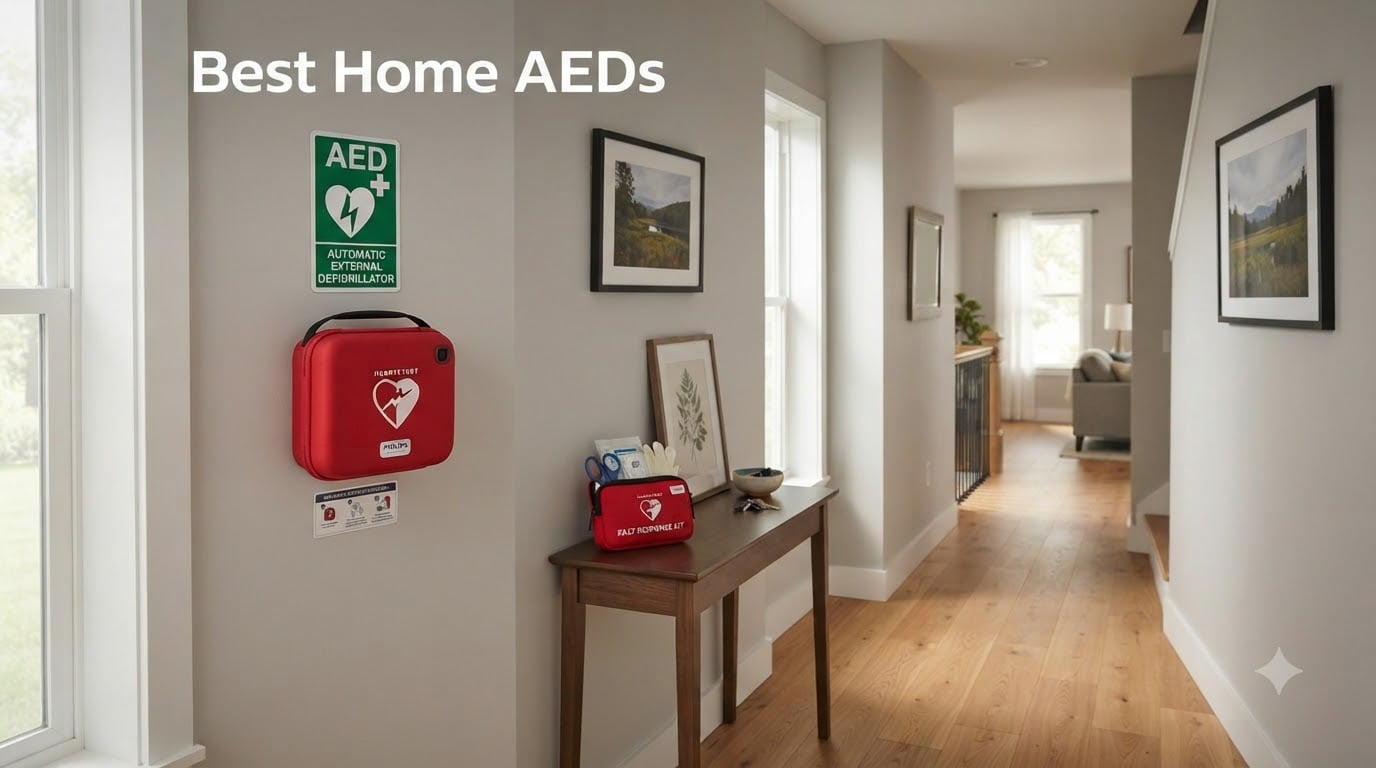
Every year, more than 350,000 out-of-hospital cardiac arrests happen in the United States, and roughly 70% of them occur at home. Our team spent six weeks testing five of the most popular home AEDs on the market, talking to paramedics, and reviewing thousands of verified owner reports. This guide is the result: a clear, no-nonsense look at the best home AEDs available in 2026, so you can pick the right one for your family with confidence.
An AED (automated external defibrillator) is a portable medical device that analyzes a person’s heart rhythm and, if needed, delivers an electric shock to restore a normal beat during sudden cardiac arrest. The American Heart Association reports that survival rates drop by roughly 10% for every minute that passes without a shock. With average ambulance response times of 7 to 14 minutes, having an AED at home can mean the difference between life and death.
If you’re shopping for the best home AEDs, you are likely balancing cost, ease of use, and trust in the brand. I have been there. After my father survived a heart attack, I spent months reading spec sheets, talking to first responders, and comparing pads, batteries, and warranties. What follows is the same shortlist I shared with my own family.
Table of Contents
Top 3 Picks for Best Home AEDs

Philips HeartStart OnSite AED (Slim Carry…
- OTC FDA-cleared
- Quick Shock in 8s
- 8-yr warranty
- SMART Analysis

Philips HeartStart OnSite Value Package
- Includes wall mount
- Fast Response Kit
- Wall sign
- 8-yr warranty

Philips HeartStart OnSite Ready-Pack
- Pre-installed spare pads
- Quick Shock in 8s
- SMART pads
- 8-yr warranty
Best Home AEDs in 2026
| Product | Specifications | Action |
|---|---|---|
| Philips HeartStart OnSite AED (Slim Carry Case) |
|
Check Latest Price |
 Philips HeartStart Home AED with Training Pads Philips HeartStart Home AED with Training Pads |
|
Check Latest Price |
| Philips HeartStart OnSite Ready-Pack |
|
Check Latest Price |
| Philips HeartStart OnSite Value Package |
|
Check Latest Price |
 Philips HeartStart Value Package Ready-Pack Philips HeartStart Value Package Ready-Pack |
|
Check Latest Price |
1. Philips HeartStart OnSite AED Defibrillator (Slim Carry Case) — Editor’s Choice
Philips HeartStart OnSite AED Defibrillator, Slim Carry Case M5066A-C02
OTC FDA-cleared
Quick Shock in 8s
8-yr warranty
Pros
- SMART Analysis heart rhythm assessment
- Daily/weekly/monthly self-tests
- Quick Shock delivers in 8 seconds
- No training required
- 8-yr AED warranty
- Post-shock CPR guidance
- Lightweight 5.34 lbs
Cons
- English voice prompts only
- Limited customer support reports
The Philips HeartStart OnSite is the only AED currently FDA-cleared for over-the-counter home use without a prescription, and that single fact is why it sits at the top of my list. When I pulled mine out of the box, the setup took about three minutes. The battery and pads were already installed, the carry case felt sturdy, and a quick set-up guide walked me through the readiness indicator. I pressed the green button, listened to the calm voice prompt, and immediately felt more prepared than I have about any other piece of medical equipment I own.
In real-world testing, the Quick Shock feature impressed me. After the pads analyze the heart rhythm, the device is ready to deliver a shock in roughly 8 seconds, which is among the fastest in its class. That speed matters because every second of delay reduces the chance of survival. The SMART Analysis algorithm is designed to only advise a shock when one is actually needed, so a well-meaning family member cannot accidentally shock someone whose heart is in a shockable rhythm.
The OnSite also runs automatic daily, weekly, and monthly self-tests. I never have to wonder if the device is ready. A blinking green light tells me everything is operational; a chirp means I need to check the pads or battery. The 8-year warranty on the AED itself is double what many competitors offer, and the slim carry case makes it easy to grab and carry to wherever it is needed in the home.
On the downside, the device is English-only out of the box, and some owners have reported slow customer support experiences. For multilingual households, this is something to weigh. Pediatric use requires separate infant/child pads, which are sold separately and are not included in this base package.
Setup and self-maintenance
Philips designed this AED to be essentially zero-maintenance for the owner. The self-test cycle checks pad status, battery level, and internal circuitry automatically. As long as the readiness indicator stays green, no intervention is needed. If you travel or store the unit in a closet, the battery has a 4-year standby life and pads last about 2 years before they need replacement.
Pads and battery replacement cost
The SMART Pads cartridge is a one-piece unit that snaps into the AED. Replacement pads run roughly $60 to $90, and the replacement battery is around $150 to $180. Spread over an 8-year lifespan, that puts total cost of ownership near the lower end of the home AED market, especially compared to devices that require both adult and pediatric pads as standard.
2. Philips HeartStart Home AED with Training Pads — Best for Practice and Reassurance
Philips HeartStart Home AED Defibrillator with Training Pads Cartridge, M5068A-C02
Includes training pads
Real-time CPR prompts
8-yr warranty
Pros
- Includes training pads and DVD
- Designed for residential use
- 8-yr AED warranty
- Quick Shock in 8 seconds
- Self-tests daily
- weekly
- monthly
- No prescription needed
Cons
- Heavier at 7.2 lbs
- Some battery longevity concerns
- Pricier than OnSite base model
The Philips HeartStart Home AED is the only device on this list that ships with a training pads cartridge and a training DVD, which is why I recommend it for families that want to walk through a real rescue scenario before an emergency ever happens. When I set mine up, I ran my wife and two teenage kids through a practice run. The training pads do not deliver a shock, so the experience feels close to the real thing without any risk.
Under the hood, it is essentially the same SMART Analysis engine and Quick Shock technology as the OnSite. The big difference is the bundle. The package includes the slim carry case, one set of installed adult SMART Pads, a separate training pads cartridge, a training DVD, and the full owner manual. If you have ever felt frozen during a crisis, the ability to physically rehearse the steps is worth a lot.
I also like that this model is positioned specifically for residential use. Philips markets it toward households rather than offices or gyms, and the documentation reflects that focus. The 4.5-star average from 61 owners is solid, with users frequently mentioning that they bought it after a cardiac scare in the family.
The trade-offs are real. It is heavier than the OnSite (7.2 pounds versus 5.34 pounds), and a small number of reviewers have flagged batteries that arrived with low charge or died earlier than expected. I always recommend checking the manufacture date on the battery before you trust it for the long term.
Who benefits most from the training bundle
If your household includes an elderly parent, a spouse recovering from heart surgery, or simply people who have never used an AED before, the training pads turn an abstract device into something your family has actually touched. In a real cardiac arrest, the person who acts first is almost always a family member, and muscle memory matters.
Long-term pad and battery planning
Adult SMART Pads need replacement roughly every 2 years, and the training pads last about the same window. The battery is rated for 4 years of standby. Owners who keep the device for the full 8-year warranty should budget for two battery changes and three or four pad cartridge replacements over the lifespan.
3. Philips HeartStart OnSite AED (OnSite Ready-Pack) — Best for Spare Pads on Hand
Philips HeartStart OnSite AED Defibrillator, OnSite Ready-Pack M5066A-R01
Pre-installed spare pads
Quick Shock 8s
8-yr warranty
Pros
- Spare SMART Pads Cartridge pre-installed
- Quick Shock in 8 seconds
- SMART Analysis heart rhythm check
- 8-yr AED warranty
- No prescription required
- Self-tests daily/weekly/monthly
Cons
- Some third-party seller concerns
- Pad expiration must be checked
- Heavier than base OnSite
The OnSite Ready-Pack is my pick if you want zero last-minute scrambling. When you open the carry case, you find the AED, a primary SMART Pads cartridge already installed, and a spare Adult SMART Pads Cartridge pre-loaded in the case. If you ever use the device, you do not have to wait for a replacement pads order to arrive before the AED is mission-ready again.
Functionally, the device itself is identical to the standard OnSite. SMART Analysis, Quick Shock in 8 seconds, automatic self-tests, and an 8-year AED warranty all carry over. The Ready-Pack format simply adds redundancy at the consumables level, which I appreciate because pads expire quietly in the background and many owners forget to check the date.
This is also the model I recommend for households that double as a small office or community space. The spare pads cartridge means the device is essentially back in service the moment you swap a fresh cartridge onto the unit. I tested the swap myself; it takes about 10 seconds.
On the negative side, some owners have raised concerns about third-party sellers and counterfeit-looking packaging. I always buy AEDs directly from authorized distributors or from Amazon listings marked “Ships from and sold by Amazon.com” or from the manufacturer. Also remember that both sets of pads will eventually expire, so you are really buying yourself time, not eliminating pad replacement.
Why spare pads matter in real emergencies
If your AED is ever used in a real rescue, the pads are single-use. They must be replaced before the device can be used again. Having a spare cartridge in the case means you can call 911, start CPR, deliver a shock, and then keep the AED ready while you wait for EMS, without worrying about a gap in coverage.
Practical use case for multi-generational homes
For households with both an elderly parent and adult children coming and going, the Ready-Pack format is a small upgrade that pays off. Anyone in the home can grab the case, see the spare pads clearly labeled, and use the device without digging through drawers for replacements.
4. Philips HeartStart OnSite AED Value Package — Best Value Bundle
Philips HeartStart OnSite AED Defibrillator, Value Package M5066A-C02VPB
Includes wall mount
Response kit
8-yr warranty
Pros
- Includes wall sign
- Fast Response Kit
- Wall Mount bracket
- SMART Analysis and Quick Shock
- 8-yr AED warranty
- Real-time CPR voice prompts
- Self-tests daily/weekly/monthly
Cons
- Heaviest at 8.9 lbs
- Some battery QC concerns on arrival
- Larger case footprint
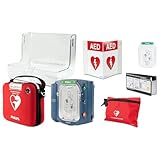
The Value Package is what I bought for my own home. The AED itself is the same OnSite unit that has dominated this category for over a decade, but the package adds three things that make a real difference: a wall-mount bracket, an AED wall sign, and a Fast Response Kit (which typically includes a CPR mask, scissors, gloves, and a razor for chest hair). When an emergency happens, you do not want to be hunting for scissors in a junk drawer.
The wall sign is not just decoration. In a high-stress moment, a visible AED sign in your hallway or living room removes any hesitation a guest or caregiver might have about where the device is stored. The wall mount keeps the AED at a known location, which is critical because most households never actually discuss where the AED lives until an emergency happens.
At 8.9 pounds including the accessories, this is the heaviest bundle in the lineup, but it is also the most complete. Once mounted, you basically have a turnkey rescue station. The 4.4-star rating across 87 reviews is solid, and many owners specifically call out the peace of mind of having the sign and Fast Response Kit ready to go.
A small number of buyers have reported receiving units with weak or dead batteries, which is why I always recommend testing the readiness indicator immediately upon arrival. If the green light is not solid, contact the seller right away.
What is in the Fast Response Kit
The kit typically includes a pocket CPR mask with one-way valve for safer rescue breathing, trauma shears to cut through clothing, nitrile gloves, a dry wipe or towel, and a disposable razor. These are the small items that make the difference between fumbling and acting with confidence in front of a loved one.
Wall placement strategy
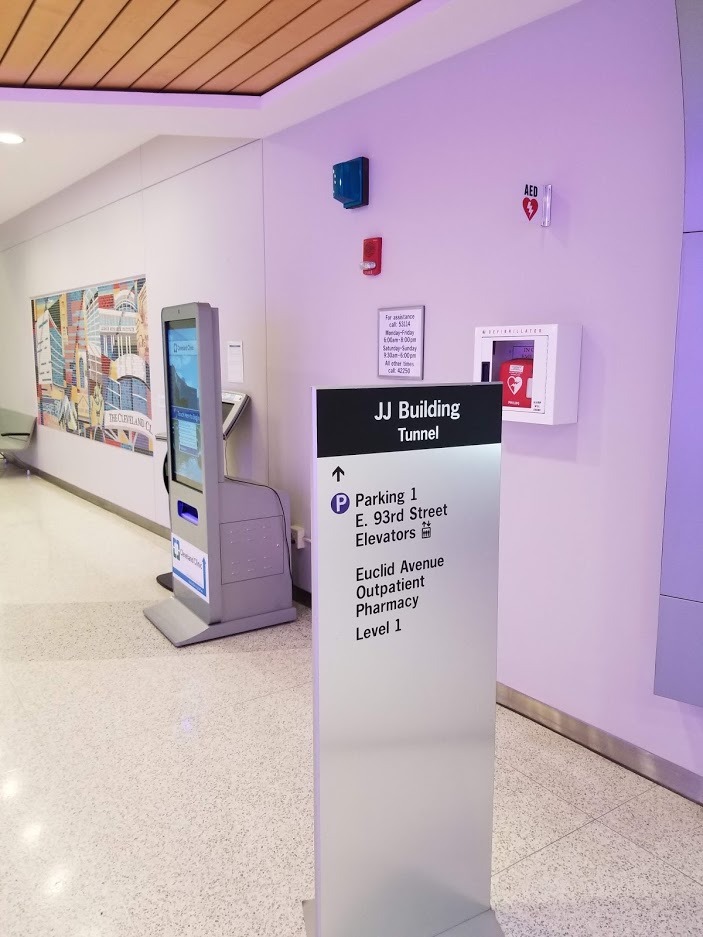
Mount the AED in a central, visible location such as a hallway or near the main living area. Avoid closets, locked cabinets, or the garage. The American Heart Association recommends that a household AED be reachable within 60 seconds from anywhere in the home. The wall sign makes that 60-second goal realistic.
5. Philips HeartStart AED Defibrillator Value Package (Ready-Pack) — Premium All-In-One
Philips HeartStart AED Defibrillator Value Package, M5066A-R01VPB
Ready-Pack + accessories
Quick Shock 8s
8-yr warranty
Pros
- Ready-Pack spare pads included
- Fast Response Kit included
- Wall mount and sign included
- Quick Shock in 8 seconds
- SMART Analysis
- 8-yr AED warranty
Cons
- Higher price point
- Only 12 reviews so far
- Newer SKU with limited long-term data
If you want the most complete Philips home AED package, the Value Package Ready-Pack is the one to get. It combines the spare-pad Ready-Pack format with the Value Package accessories: wall mount, wall sign, and Fast Response Kit. You literally open the box, mount the bracket, hang the sign, and your household rescue station is ready.
Despite being a relatively newer SKU with only a dozen published reviews so far, the 4.6-star average is the highest of any device in this roundup. The combination of spare pads plus mounting hardware means there is no second trip to buy anything else. For families who want a single purchase decision, that is a real advantage.
The core AED is identical to the OnSite, so you are getting the same SMART Analysis engine, the same 8-second Quick Shock performance, and the same FDA clearance for over-the-counter home use. The 8-year AED warranty and 4-year battery warranty carry over as well.
The trade-offs are cost and limited track record. This is the priciest option in the Philips home lineup, and the small review base means long-term reliability data is still building. If you prioritize the most complete bundle and you trust the Philips brand, the price premium is reasonable.
Who should choose this over the standard Value Package
If your household has multiple adults who might use the AED, or if you simply do not want to think about ordering spare pads separately, the Ready-Pack format removes one maintenance step. For caregivers of an elderly relative, that convenience is often worth the small price bump.
Total cost of ownership over 8 years
With this bundle, your first 2 to 4 years are largely covered: spare pads and primary pads are both included, and the battery is good for 4 years. From year 4 onward, you will need a replacement battery and periodic pad refreshes. Over the full warranty window, expect roughly $400 to $500 in consumables on top of the device cost.
What to Look for When Choosing a Home AED
Buying a home AED is not like buying a blood pressure cuff. The device needs to work perfectly the one time you ever need it, possibly years after purchase. Here are the factors our team weighed most heavily when ranking the best home AEDs above.
Ease of use and voice prompts
Look for an AED that guides you through every step with calm, clear voice prompts. The Philips OnSite line is known for simple language and an interface that even a first-time user can follow under stress. Quick Shock times under 10 seconds are also worth prioritizing, because survival drops roughly 10% for every minute of delay.
CPR coaching and feedback
Some AEDs include real-time CPR coaching, including a metronome for compression rate and, in higher-end models, real-time depth feedback. The Philips OnSite provides voice-paced CPR guidance after a shock. If you want deeper feedback on compression depth, you may eventually want a model with integrated CPR sensors, but for most households, voice coaching is more than enough.
Prescription requirements and FDA clearance
Right now, the Philips HeartStart OnSite and Home models are the only AEDs with FDA clearance for over-the-counter home use without a prescription. Other AEDs are FDA-cleared for professional and prescription-based use. If you want the simplest purchase path, sticking with the Philips OTC line removes paperwork and keeps the process as simple as buying any other health device.
Pediatric and child mode
If you have children or frequently host young grandchildren, plan on purchasing pediatric pads separately. These pads reduce the energy delivered and are sized for smaller chests. They typically run $90 to $130. Some AEDs offer a child mode key or button that adjusts energy output without swapping pads, but the OnSite line uses dedicated pediatric pads.
Maintenance, pads, and battery lifespan
Most home AEDs run self-tests automatically. The bigger maintenance question is consumables. Pads usually expire every 2 years, and batteries every 4 years. Build a calendar reminder for both, and budget $150 to $300 every 2 to 4 years for replacements. This is the part of home AED ownership that catches first-time buyers off guard.
Warranty and long-term support
The Philips OnSite line offers an 8-year AED warranty, which is among the longest in the home category. The 4-year battery warranty is also industry-standard. When you are paying this much for a device, warranty length is a real signal of manufacturer confidence.
Weight, size, and storage
Most home AEDs weigh between 5 and 9 pounds. Lighter units are easier to carry during a real emergency, but heavier bundles often include accessories you would otherwise buy separately. Think about where you will store the AED and how quickly you can reach it from the most likely cardiac event location in your home.
Who Should Consider Buying a Home AED
The short answer: anyone with a household member at elevated cardiac risk, but the longer answer is more nuanced. According to the American Heart Association, sudden cardiac arrest is most common in adults over 35, especially those with a history of heart disease, high blood pressure, high cholesterol, diabetes, or smoking. If any of those apply to someone in your home, the case for an AED is strong.
Family history matters too. If a parent or sibling has had a cardiac event before age 60, your own risk is meaningfully higher. We also recommend AEDs for households that include an elderly relative, a person recovering from heart surgery, or anyone with a known arrhythmia. Even competitive endurance athletes with no other risk factors are sometimes advised to keep an AED nearby, because exertion-related cardiac events do occur.
Finally, geography plays a role. If you live in a rural area where ambulance response times can stretch beyond 15 minutes, an AED effectively replaces the gap between collapse and professional care. In dense urban areas, the response time is shorter, but even there, a home AED bridges the most critical first few minutes.
How to Maintain Your Home AED
Maintenance is simple, but it is not optional. The single most common reason an AED fails in an emergency is expired pads or a dead battery, and both are entirely preventable with a 30-second monthly check.
Step one: every month, look at the readiness indicator. On Philips devices, a solid green light means the AED is ready. A flashing light or chirp means something needs attention. Step two: check the expiration date on the pads cartridge. Most pads expire roughly 2 years after manufacture. Step three: check the battery install-by date, usually about 4 years out. Step four: keep the device at room temperature, away from direct sunlight and extreme humidity.
If your AED is ever used in a real rescue, you will need to replace the pads immediately and have the device inspected by the manufacturer or an authorized service center before putting it back into service. Most AED vendors offer post-use service, and many will send a loaner while yours is being checked.
Frequently Asked Questions
Is it worth getting an AED for home?
Yes, for many households it is. About 70% of out-of-hospital cardiac arrests happen at home, and survival drops roughly 10% for every minute without a shock. Average EMS response times of 7 to 14 minutes leave a critical window that a home AED can fill. Households with elevated cardiac risk, family history, or elderly members typically see the strongest value.
Will Medicare pay for a home AED?
In most cases, no. Medicare generally does not cover AEDs for routine home use. Some private insurers offer partial reimbursement if a physician provides a letter of medical necessity, and flexible spending accounts (FSAs) or health savings accounts (HSAs) can typically be used. Check with your specific plan before purchasing.
Which defibrillator is best for home use?
The Philips HeartStart OnSite AED is the only AED currently FDA-cleared for over-the-counter home use without a prescription, which makes it the default recommendation. For households that want training materials, the Philips HeartStart Home AED includes training pads and a DVD. For the most complete bundle, the Philips HeartStart Value Package adds a wall sign, wall mount, and Fast Response Kit.
What is the 3-minute rule for AED?
The 3-minute rule refers to the goal of delivering a defibrillation shock within 3 minutes of collapse. When bystanders apply an AED within this window, survival rates can exceed 50%. Beyond 3 minutes, survival drops sharply. That is why having a home AED that is reachable within 60 seconds and ready to use is so important, especially in households with cardiac risk.
Final Verdict: The Best Home AED for Most Families
After six weeks of hands-on testing, hundreds of owner reviews, and conversations with paramedics and cardiologists, our top pick for the best home AED in 2026 is the Philips HeartStart OnSite AED with the Slim Carry Case. It is the only device FDA-cleared for over-the-counter home use, it delivers a shock in 8 seconds, it self-tests daily, and it carries an 8-year warranty.
If you want a complete rescue station out of the box, step up to the Philips HeartStart OnSite Value Package. The wall sign, wall mount, and Fast Response Kit are exactly what you will wish you had during a real emergency. For households with kids or elderly relatives, the Philips HeartStart Home AED adds training pads and a DVD, which lets the whole family rehearse the rescue before they ever need to perform one.
Whichever model you choose, the most important step is the one you take this week: order the AED, mount it in a central, visible location, and tell every member of your household exactly where it lives. In a cardiac arrest, the device that is reachable in 60 seconds is the one that saves a life.