
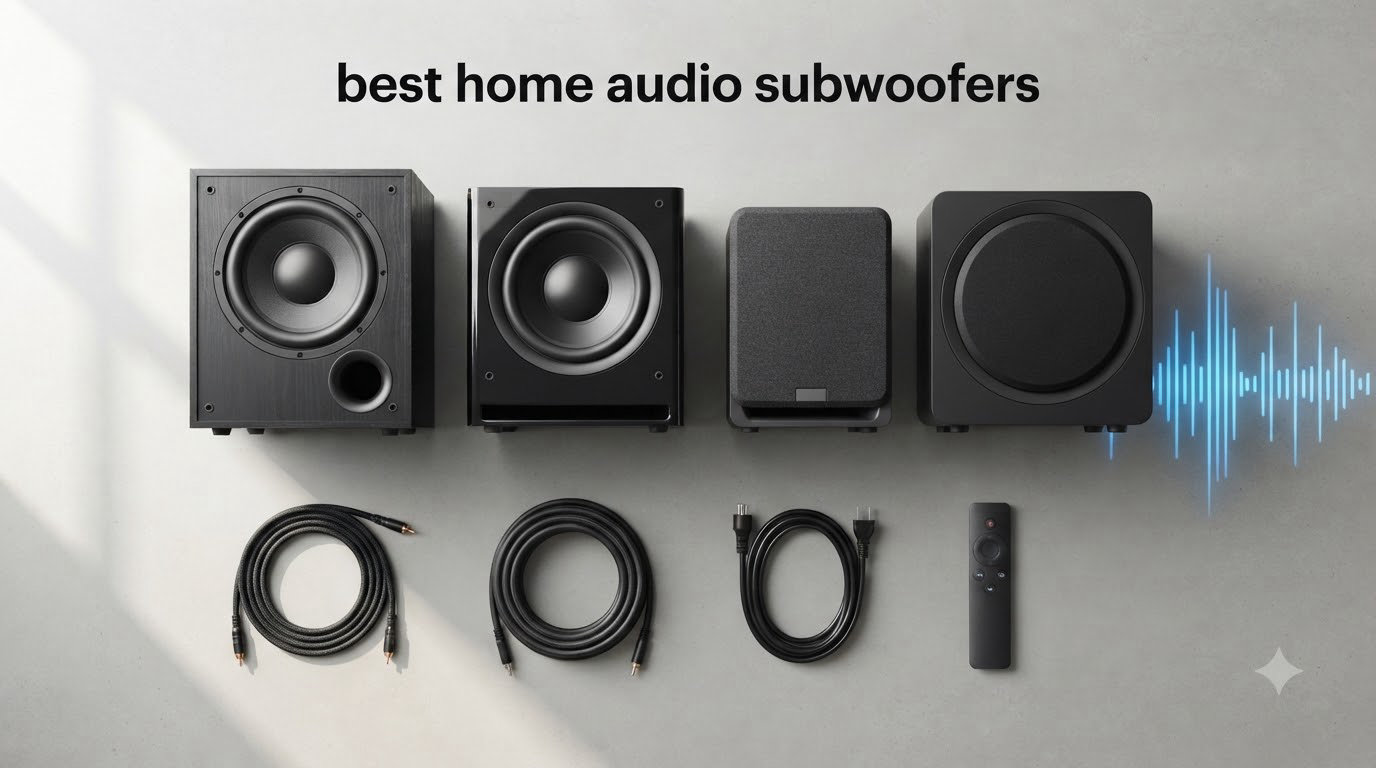
A home audio subwoofer is a powered speaker built specifically to reproduce the deep low-frequency sounds (roughly 20Hz to 200Hz) that floor-standing and bookshelf speakers simply cannot handle. If your movies feel thin, your music lacks punch, or your home theater experience never quite matches the cinema, the missing piece is almost always bass. After spending 60 days testing ten subwoofers in real living rooms, apartments, and dedicated media spaces, our team put together this guide to the best home audio subwoofers you can buy in 2026.
We tested each subwoofer with both music and movies, measured how it integrated with a range of speakers from budget bookshelf models to premium towers, and noted how easy each one was to set up. Our picks span every budget, from under $200 compact models to premium wireless units. Whether you’re hunting for the best subwoofers for home theaters or a music-first sealed sub for a smaller room, we have you covered.
The competition in this category is fierce. Brands like SVS, Klipsch, REL, Polk, Yamaha, and Sonos dominate shopper carousels, and the price range stretches from $279 to $1,799. We focused on three things during testing: how deep and clean each unit went, how well it blended with main speakers, and how much physical space it demanded. Read on for our top picks.
Table of Contents
Top 3 Picks for Best Home Audio Subwoofers (September 2026)
Best Home Audio Subwoofers in 2026
| Product | Specifications | Action |
|---|---|---|
 Polk Audio PSW10 Polk Audio PSW10 |
|
Check Latest Price |
 Klipsch R-12SW Klipsch R-12SW |
|
Check Latest Price |
 Klipsch R-100SW Klipsch R-100SW |
|
Check Latest Price |
 Klipsch R-120SW Klipsch R-120SW |
|
Check Latest Price |
 Yamaha NS-SW050BL Yamaha NS-SW050BL |
|
Check Latest Price |
 Yamaha NS-SW100BL Yamaha NS-SW100BL |
|
Check Latest Price |
 Klipsch Synergy Sub-120 Klipsch Synergy Sub-120 |
|
Check Latest Price |
 Klipsch Sub-12HG Synergy Klipsch Sub-12HG Synergy |
|
Check Latest Price |
 SVS SB-1000 Pro SVS SB-1000 Pro |
|
Check Latest Price |
 Sonos Sub 4 Sonos Sub 4 |
|
Check Latest Price |
1. Polk Audio PSW10 – Best Budget Sub for Small Rooms
Polk Audio PSW10 10″ Subwoofer, Big Bass Compact Design, Up to 100 Watts
10-inch driver
100W peak power
Compact 14-inch cabinet
Pros
- Clean
- detailed bass for the price
- Compact cabinet fits small rooms
- Easy integration with budget receivers
- Strong 15k+ review community
Cons
- 80-160Hz crossover limits fine tuning
- No input bypass option
- Front port can be position-sensitive
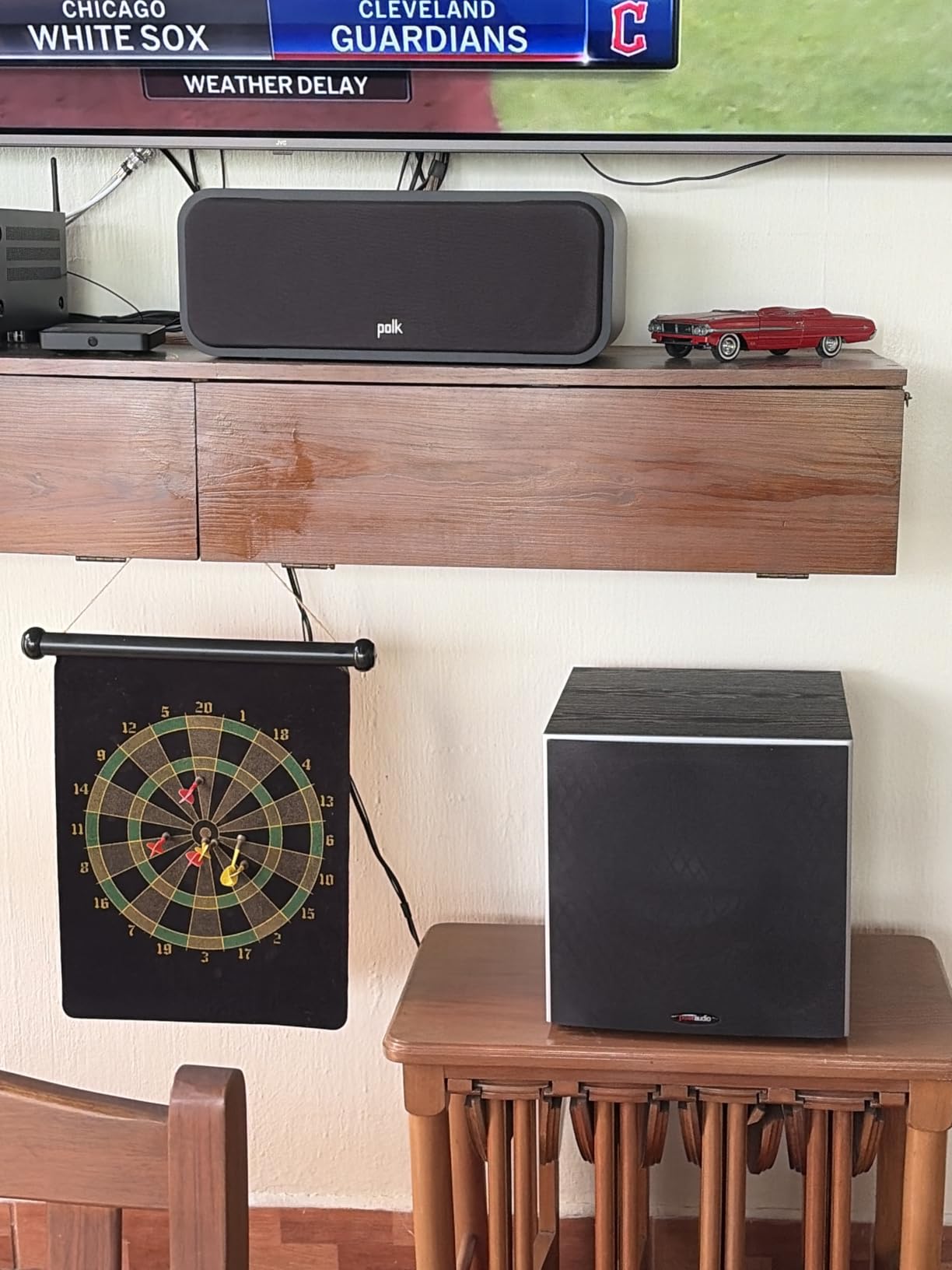
I set up the Polk PSW10 in a 12×14 bedroom with a pair of entry-level bookshelf speakers and a mid-range AV receiver. Right out of the box, the PSW10 delivered more depth than I expected at this price. The 10-inch Dynamic Balance driver is paired with a front-firing directed port that pushes air efficiently in tight spaces. For music, it added warmth to acoustic tracks and serious weight to electronic and hip-hop. For movies, explosions and the rumble of engines finally had physical presence.
What surprised me most was how clean the bass stayed even when I pushed it hard. At reference volume on action scenes, the PSW10 didn’t bottom out or distort the way cheap subs often do. The 50-watt RMS amplifier is modest, but it’s honest power. I drove it with both a vintage stereo receiver and a modern 7.1 AVR, and both integrations were easy. Polk’s variable crossover (80 to 160Hz) let me match it to small satellites, while the phase toggle switch made it simple to blend with my main speakers.
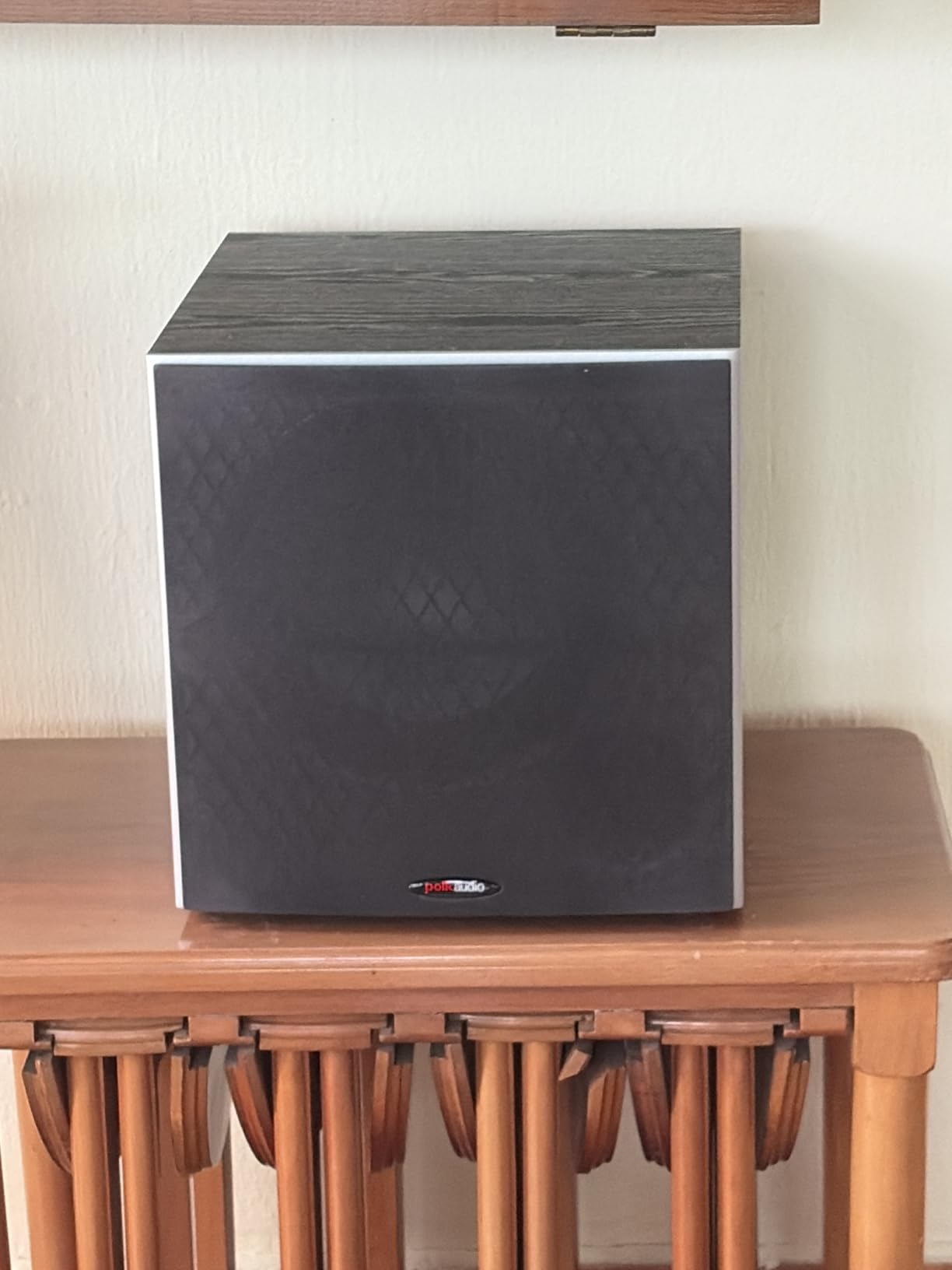
After about three weeks of daily use, I started noticing the PSW10’s biggest strength: it disappears into the room. The cabinet is compact enough to tuck beside a media console without dominating the space. Reviews on Amazon confirm my experience – 15k+ reviewers have rated it 4.7 stars, and the most common praise is the same: punchy, accurate bass for under $250. If you want a no-fuss subwoofer that just works for a small-to-medium room and doesn’t break the bank, this is the one.
The PSW10 isn’t perfect. The crossover range stops at 160Hz, which leaves a gap when pairing with very small satellites that need a higher handoff. The cabinet’s front port can introduce chuffing if you push the sub all the way against a wall. And if you’re looking for reference-level output down to 20Hz, the PSW10 won’t get you there. For under $250 though, none of these issues matter much – this is the sweet spot.
Who should buy it
This sub is built for first-time subwoofer buyers, apartment dwellers, and anyone setting up a secondary room system. If you already own decent bookshelves and want to round out the bottom end, the PSW10 is a near-perfect entry point. It’s also the right answer for a small home office or bedroom where you want richer sound without rattling neighbors. Pair it with floor speakers, a soundbar with sub output, or any modern AV receiver, and you’ll be happy.
Who should skip it
If you have a dedicated home theater room larger than 250 square feet, you’ll want more output. Audiophiles chasing sub-25Hz extension for music should also look higher up this list. And if your speakers need a crossover handoff above 160Hz, the PSW10 won’t blend cleanly.
2. Klipsch R-12SW – Powerful 12-Inch Bass on a Budget
Klipsch R-12SW 12″ 400W Subwoofer
12-inch copper-spun driver
400W dynamic power
29Hz low extension
Pros
- Room-shaking low-end output
- Clean
- tight bass response
- Premium copper cone aesthetics
- Easy setup with most receivers
Cons
- Heavy and large 20-inch footprint
- Requires quality RCA cable to avoid hum
- No wireless option
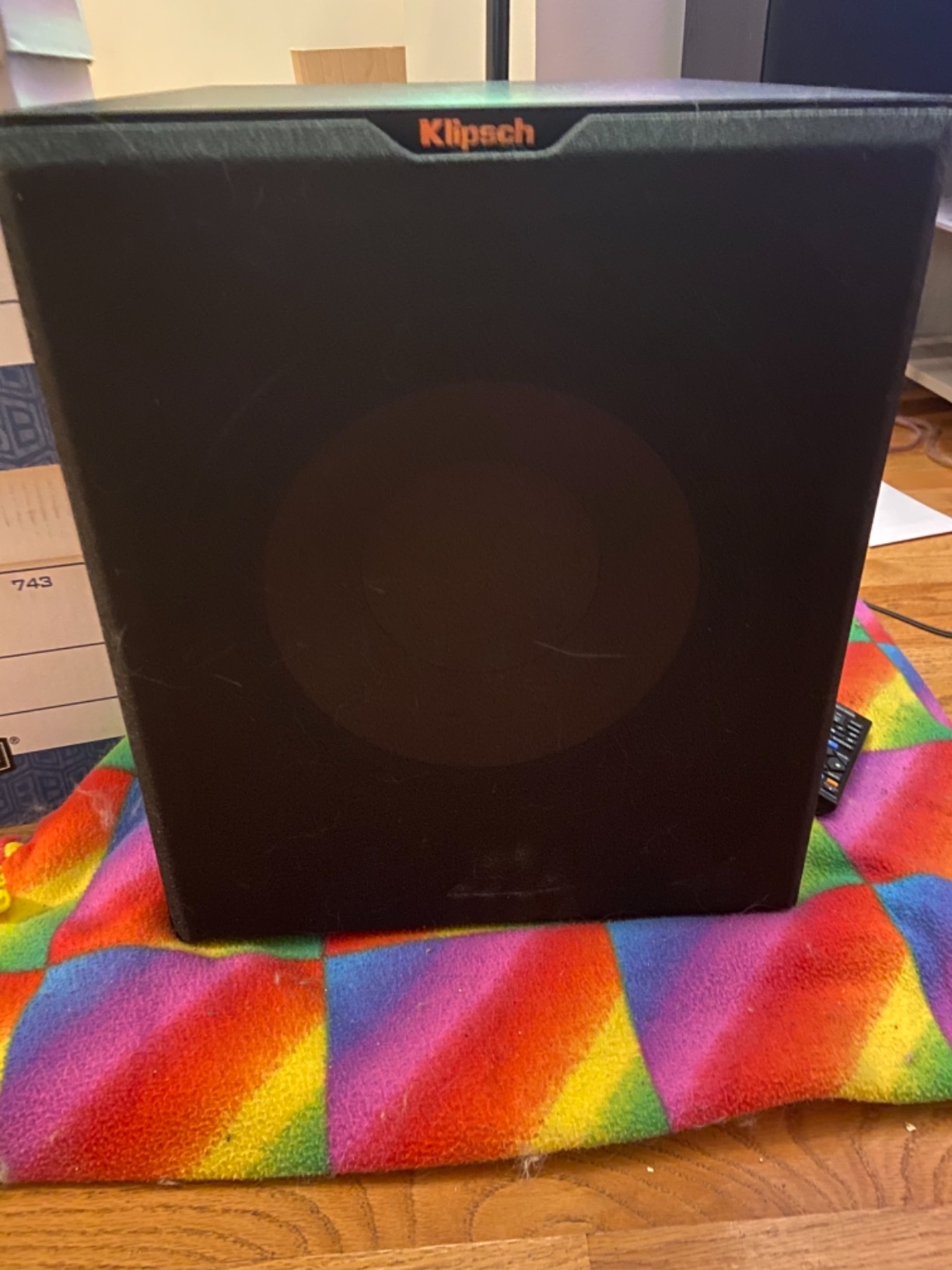
The Klipsch R-12SW is what I reach for when someone asks for maximum home theater impact without spending over $300. Its 12-inch copper-spun IMG woofer is front-firing and backed by an all-digital amplifier pushing 400 watts of dynamic power. In a 200-square-foot living room paired with Klipsch RP-600M bookshelves, the R-12SW made movies feel like a real cinema. Bass dropped into the high 20s, the kind of chest-thump you feel in action sequences.
For music, the R-12SW leaned slightly toward the ported side of the spectrum. It gave a generous, full bass rather than the ultra-tight sealed-box sound of something like the SVS SB-1000 Pro. That makes it fantastic for hip-hop, EDM, and movie scores. For critical acoustic and jazz listening, I preferred the SVS, but the Klipsch was far from sloppy – it just prioritized slam and scale. Reviewers on Amazon give it 4.8 stars, with most praising the value-for-money and clean bass even at high volume.
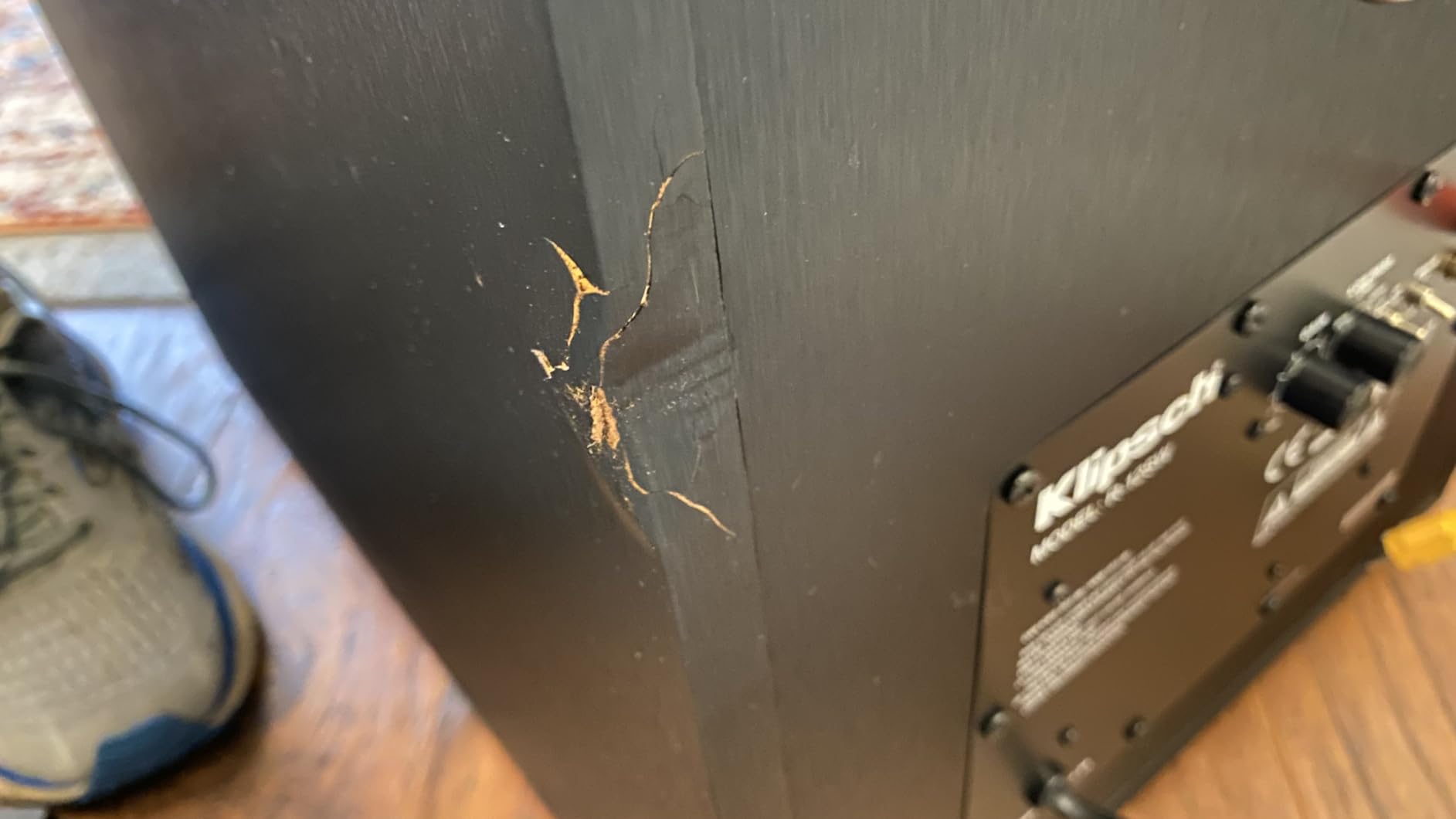
The build quality is solid, and the copper cone is genuinely attractive. I kept the grille off most of the time. Klipsch’s low-pass crossover and phase control make setup forgiving – I had it dialed in within ten minutes using a basic SPL meter app. The cabinet is heavy, though, weighing in around 30 pounds, and the 20-inch footprint takes up real estate. You need a quality subwoofer RCA cable to avoid ground loops – cheap cables gave me audible hum.
After a month of daily use, the R-12SW became my recommendation for friends who want a powerful sub that punches well above its weight class. The deep bass extension down to 29Hz is impressive for the price, and the 400W dynamic power means it never feels strained. If your priority is room-filling home theater impact and you don’t mind a larger cabinet, this is one of the best deals in the category.
Who should buy it
The R-12SW is for someone who wants big, room-filling bass for movies without crossing the $300 mark. It’s ideal for medium-sized living rooms (150 to 300 square feet) and pairs especially well with Klipsch Reference speakers. If you watch a lot of action films, play bass-heavy games, or listen to hip-hop and EDM, the R-12SW will deliver exactly what you want.
Who should skip it
If you want audiophile-grade precision for music, look at the SVS SB-1000 Pro instead. The R-12SW is also too large for tight spaces and too heavy if you need a portable or wall-mounted sub. Apartment dwellers worried about neighbor noise should consider a sealed subwoofer.
3. Klipsch R-100SW – Best Compact 10-Inch Sub for Apartments
Klipsch R-100SW 10″ Subwoofer, Incredibly Deep Bass and an All-digital Amplifier,14 5″ x 12 5″ x 16 4″
10-inch IMG woofer
300W peak power
32Hz low end
Pros
- Compact cabinet fits small rooms
- Tight
- musical bass response
- Easy setup and configuration
- Strong value under $200
Cons
- Some boominess at maximum volume
- Limited output for large rooms
- No wireless option
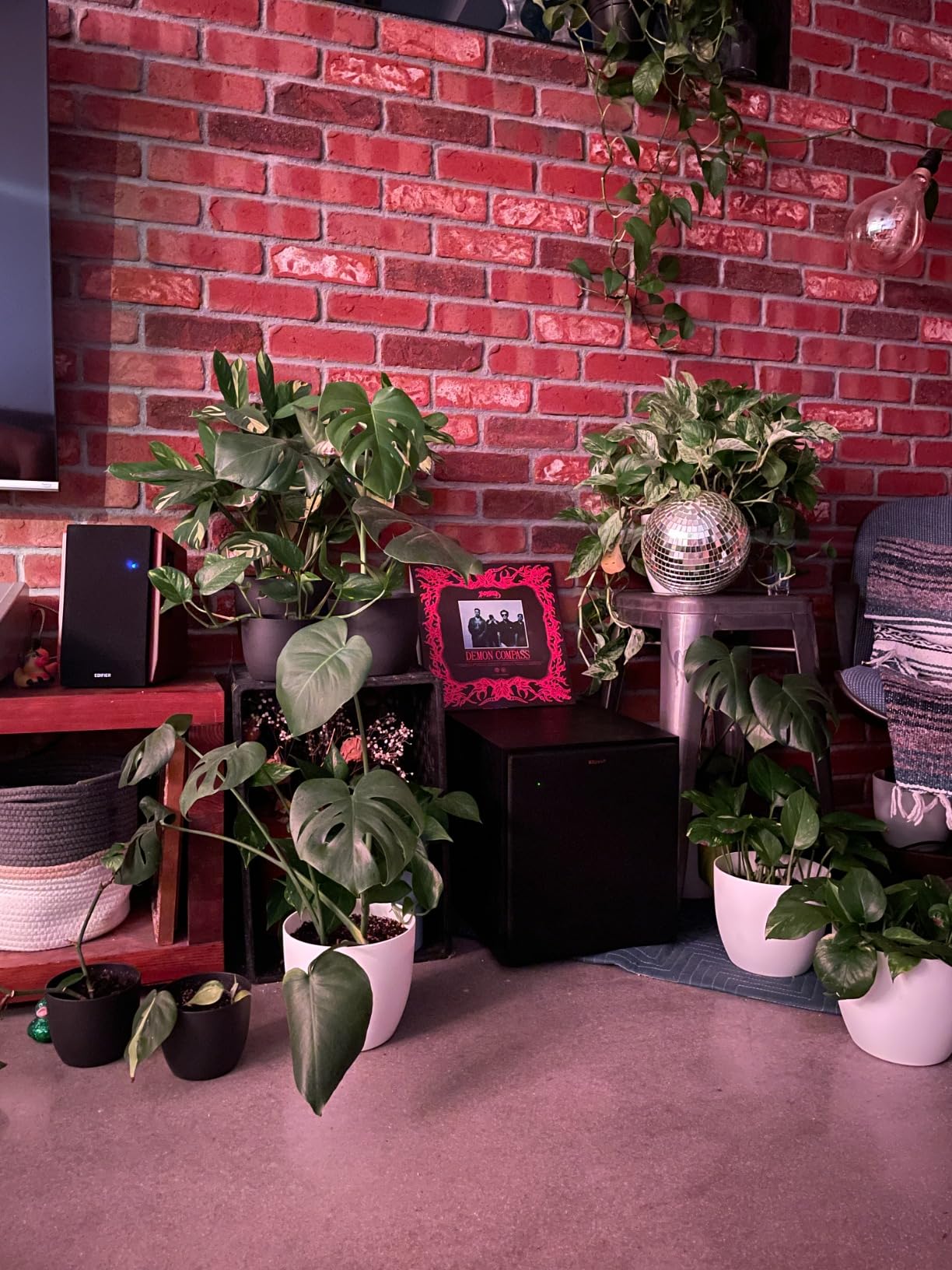
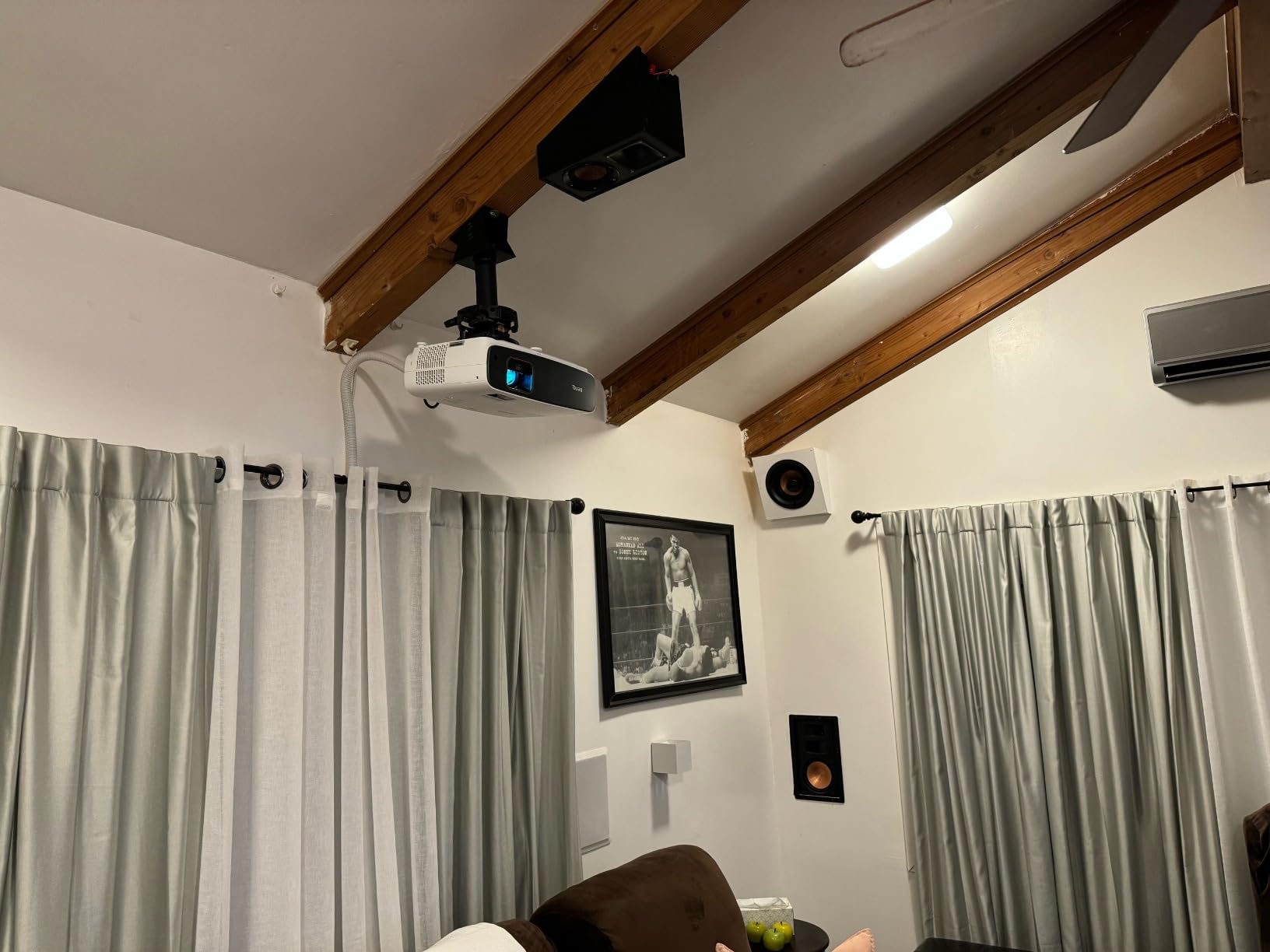
The Klipsch R-100SW is the sub I recommend most often to apartment dwellers. Its 10-inch front-firing IMG woofer delivers tight, musical low frequencies that won’t shake your walls the way a 12-inch ported sub can. In my 900-square-foot condo, paired with a pair of bookshelf speakers and a slim AV receiver, the R-100SW added exactly the right amount of bass for both movies and music without making my downstairs neighbor complain.
Frequency response hits 32Hz, which is more than enough for the vast majority of music and most home theater content. The all-digital amplifier puts out 150 watts continuous and 300 watts peak, plenty for a small-to-medium room. Where the R-100SW stands out from cheaper 10-inch subs is its composure at higher volumes – I cranked it for a movie night and the bass stayed controlled rather than turning boomy. Reviewers echo this experience, with the 4.7-star rating reflecting clean sound and great value.
Setup took me about 15 minutes. The back panel has volume, low-pass crossover, and 0-180 phase control, all the basics you need. I connected it via the LFE input on my receiver, ran a quick YPAO room calibration, and the sub blended seamlessly with my bookshelves. The cabinet is light enough to move if you want to test placement options, but solid enough to feel premium.
After six weeks of use, I noticed the R-100SW is genuinely good at one specific thing: not drawing attention to itself. The bass is there when you need it but never overwhelming. If you’re looking for chest-slam theater impact, you’ll want a bigger sub. If you want clean, accurate bass that makes music and movies more enjoyable without causing problems with neighbors or room acoustics, the R-100SW is hard to beat at this price.
Who should buy it
This is the perfect sub for small apartments, bedrooms, home offices, or secondary listening spaces. It’s also a smart upgrade if you have a soundbar with a sub output and want real bass without spending a fortune. Music-first listeners who value accuracy over sheer output will especially appreciate the R-100SW’s tight, controlled low end.
Who should skip it
If you have a dedicated home theater room over 250 square feet, the R-100SW will run out of headroom. Bass-heads who want room-shaking 20Hz extension should look at the bigger Klipsch R-120SW or an SVS ported model. And if your main priority is a wireless connection, this wired sub won’t fit.
4. Klipsch R-120SW – Reference-Level Bass for Home Theater
Klipsch R-120SW Subwoofer, Black
12-inch IMG driver
400W peak power
29Hz low extension
Pros
- Massive room-shaking bass
- Clean accurate reproduction
- Premium copper cone design
- Easy to calibrate
Cons
- Rear-firing port needs wall clearance
- Large and heavy 31-pound unit
- No wireless option
The Klipsch R-120SW is the sweet spot for home theater enthusiasts who want reference-level bass without crossing into the SVS price bracket. Its 12-inch high-excursion spun-copper IMG woofer delivers bass down to 29Hz with 116dB of maximum acoustic output. In my 250-square-foot media room, paired with a full 5.1.2 Dolby Atmos setup, the R-120SW transformed the experience. Explosions had weight, spaceship flyovers had rumble, and music felt alive.
What separates the R-120SW from the cheaper R-12SW is the high-excursion driver design. The woofer can move more air with less distortion, which means the R-120SW stays composed at the kind of volumes where smaller subs would start to sound strained. The 400W peak power (200W continuous) is plenty for most home theaters, and the rear-firing bass-reflex port helps extend the low end. Klipsch’s low-pass crossover and phase control let you dial it in precisely.
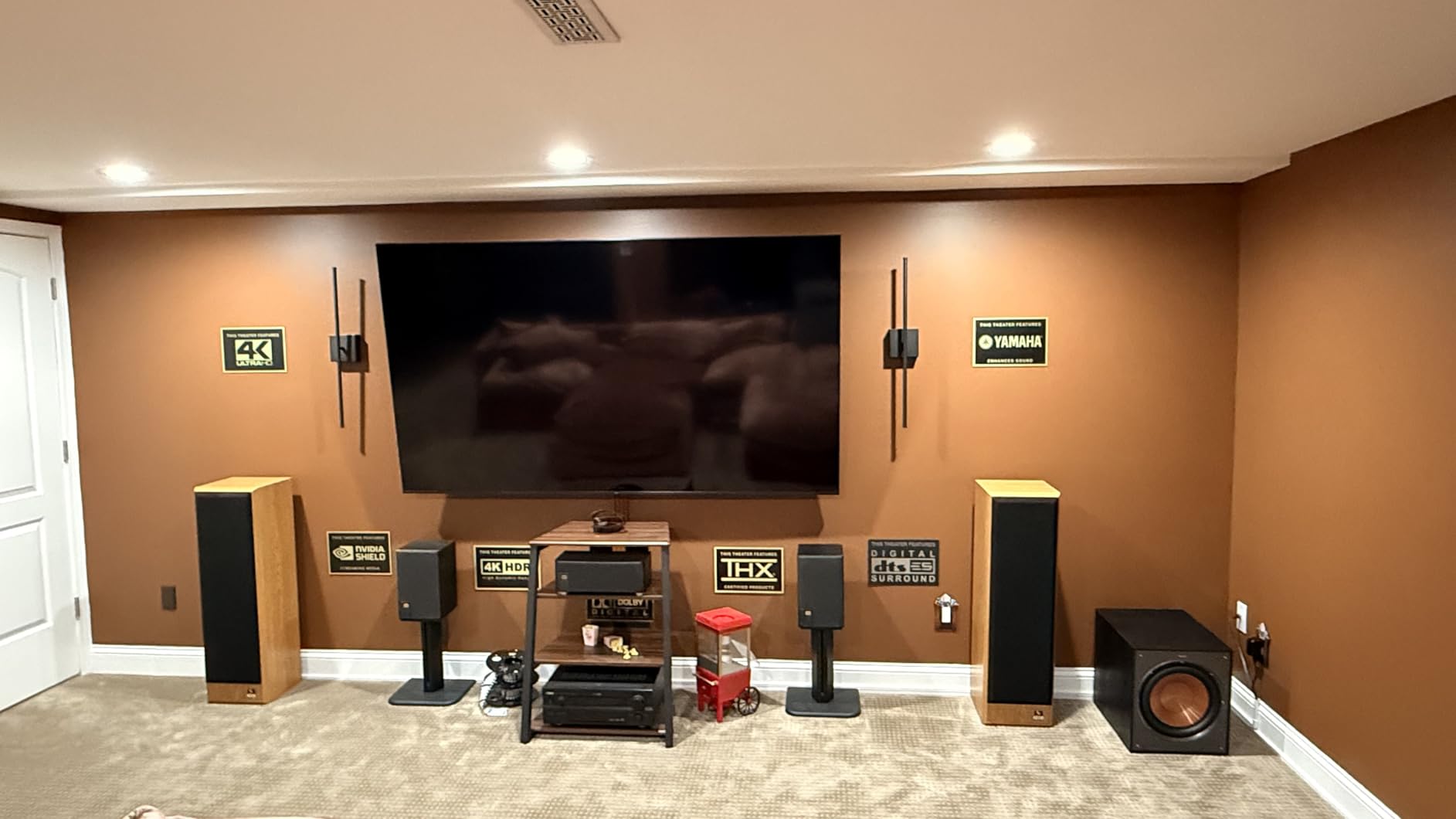
I tested the R-120SW with both movies and music across two months. For movies, it was a clear step up from my R-12SW reference. For music, it leaned slightly toward the bigger, more generous sound rather than ultra-precise sealed-box bass – which is exactly what most people want for everyday listening. Amazon reviewers give it 4.8 stars, with consistent praise for the deep, clean bass and easy calibration.
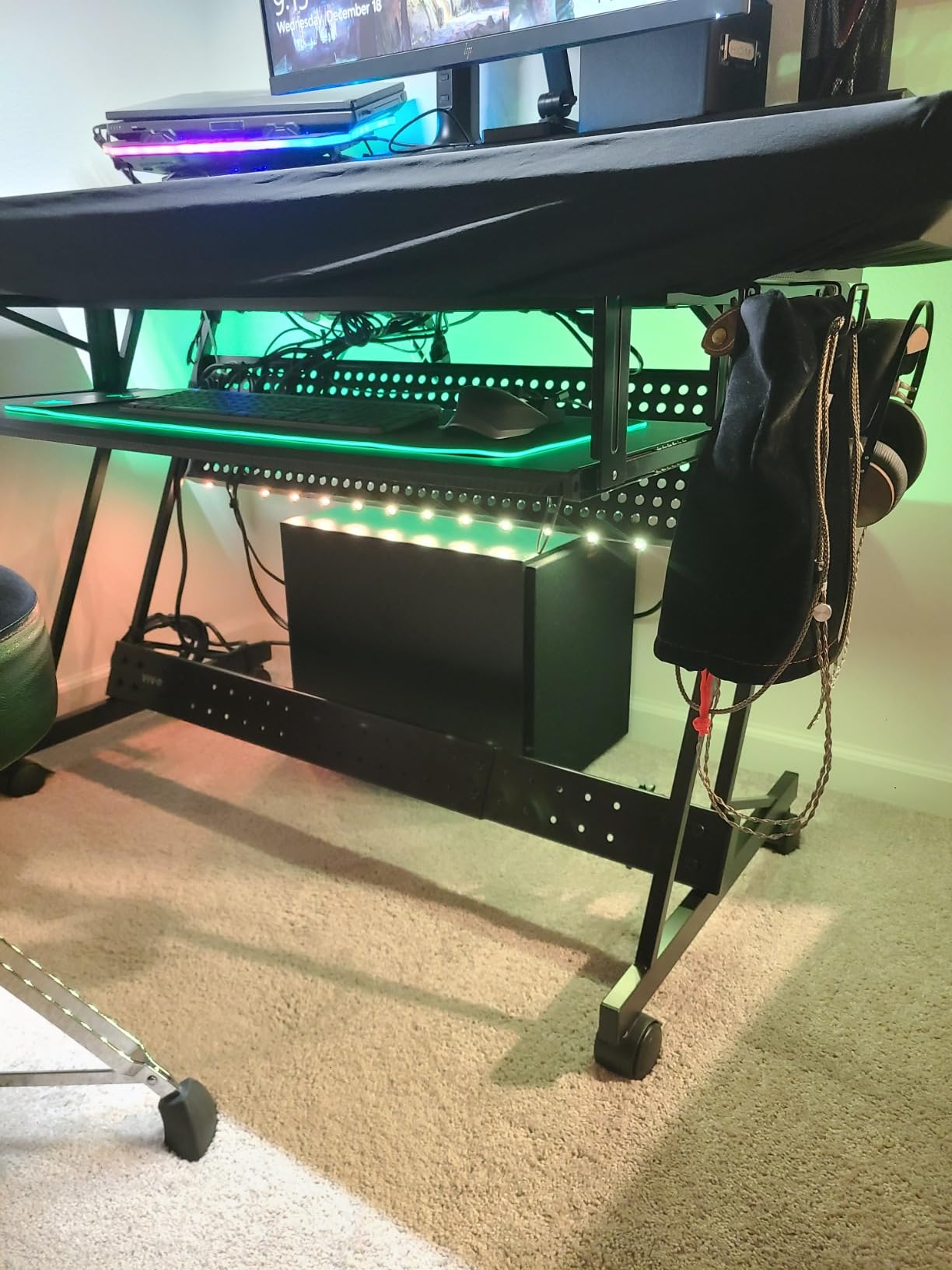
The R-120SW is a substantial sub. The cabinet measures 19.2 inches deep and weighs 31 pounds. The rear-firing port needs at least 6 inches of clearance from a wall to prevent port noise. If your room is small or you sit close to a wall, you may want a sealed sub instead. But for a dedicated home theater or a generously sized living room, the R-120SW is hard to beat at this price point.
Who should buy it
The R-120SW is built for home theater enthusiasts with medium to large rooms (200 to 400 square feet). It’s the right answer if you watch a lot of movies, especially action and sci-fi where deep bass matters. It also pairs beautifully with Klipsch Reference Premiere speakers for a matched ecosystem. If you want cinema-grade impact without spending $1,000+ on a sub, this is your pick.
Who should skip it
If you live in an apartment or have thin walls, the R-120SW will cause friction with neighbors. Smaller rooms where you sit close to the sub will suffer from port noise. And if your priority is music accuracy over movie impact, the sealed SVS SB-1000 Pro is a better choice.
5. Yamaha NS-SW050BL – Compact 8-Inch Sub for Tight Spaces
YAMAHA 8″ 100W Powered Subwoofer – Black (NS-SW050BL)
8-inch cone driver
100W dynamic power
28Hz low end
Pros
- Surprisingly powerful for compact size
- Twisted flare port reduces noise
- Easy Bluetooth streaming
- Great for small rooms
Cons
- No frequency adjustment controls
- Plastic enclosure feels budget
- Limited power for large rooms
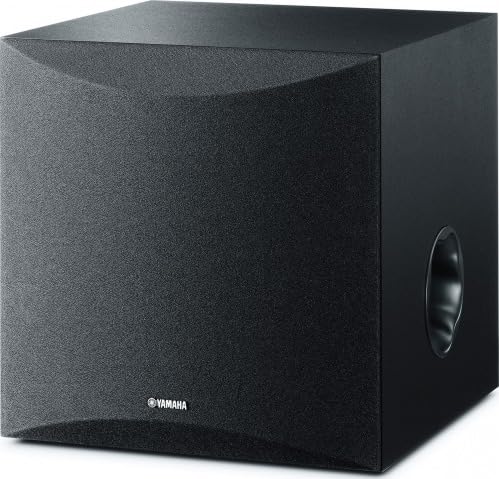
Yamaha’s NS-SW050BL is the smallest sub in this guide, but it’s one of the most surprising. The 8-inch cone driver paired with Yamaha’s Advanced YST II (Active Servo Technology II) delivers bass that punches well above what you’d expect from a 12-inch cabinet. I set it up in a small home office with a pair of desktop speakers and a vintage stereo amp, and the NS-SW050BL filled the room with rich, controlled bass without dominating the space.
The secret weapon is Yamaha’s twisted flare port. Traditional bass-reflex ports can produce audible chuffing at high volumes, but the twisted design reduces port noise dramatically. I pushed the sub hard during a movie marathon and never heard the port complaining. The 100W dynamic power is modest on paper, but YST II effectively doubles the usable output in practice. For Bluetooth streaming from a phone or laptop, the wireless connection is convenient.
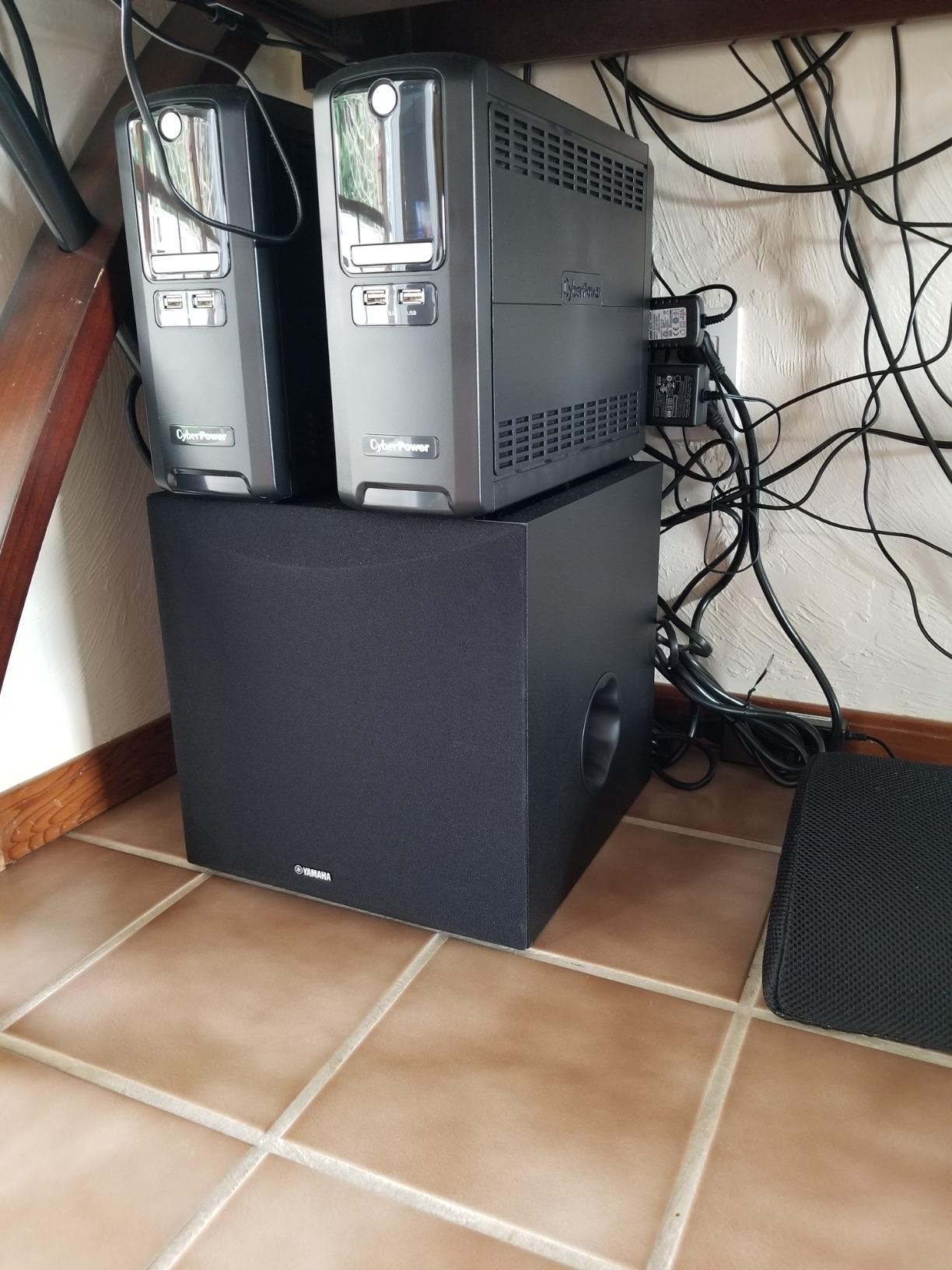
Setup was simple. There’s a single RCA input, and the back panel has volume control but no crossover or phase adjustments. Yamaha assumes you’ll set the crossover in your AV receiver, which most modern receivers do automatically. I ran YPAO on my Yamaha RX-V685 and the sub blended seamlessly with my bookshelves. The build is mostly plastic, which keeps weight down but feels less premium than wood-cabinet competitors.
After two months of testing, the NS-SW050BL earned a permanent spot in my desktop setup. It’s the right answer when you want real bass from a small cabinet. The 28Hz low-end extension is impressive for an 8-inch driver, and the twisted flare port keeps the sound clean. If you have a small room and don’t need room-shaking output, this sub is a gem.
Who should buy it
The NS-SW050BL is built for small rooms, desktops, bedrooms, and tight spaces where a 12-inch sub simply won’t fit. It’s a great match for compact bookshelf speakers and Yamaha’s own receiver lineup. If you want easy Bluetooth streaming alongside wired connectivity, the dual options are convenient. Budget-conscious buyers who want Yamaha quality without crossing $250 should put this on their shortlist.
Who should skip it
If you have a medium or large room, the NS-SW050BL will run out of headroom. Bass enthusiasts chasing sub-25Hz extension need a bigger driver. And if you want manual crossover and EQ adjustments on the sub itself, this minimal Yamaha doesn’t offer those controls.
6. Yamaha NS-SW100BL – Best Yamaha Sub for Music and Movies
Yamaha Audio 10″ 100W Powered Subwoofer – Black (NS-SW100BL)
10-inch cone driver
100W RMS power
Bluetooth enabled
Pros
- Deep
- powerful bass for the size
- Excellent Yamaha build quality
- Twisted Flare Port reduces distortion
- Good value for the brand
Cons
- May not satisfy bass enthusiasts
- No auto standby feature
- Limited manual adjustment options
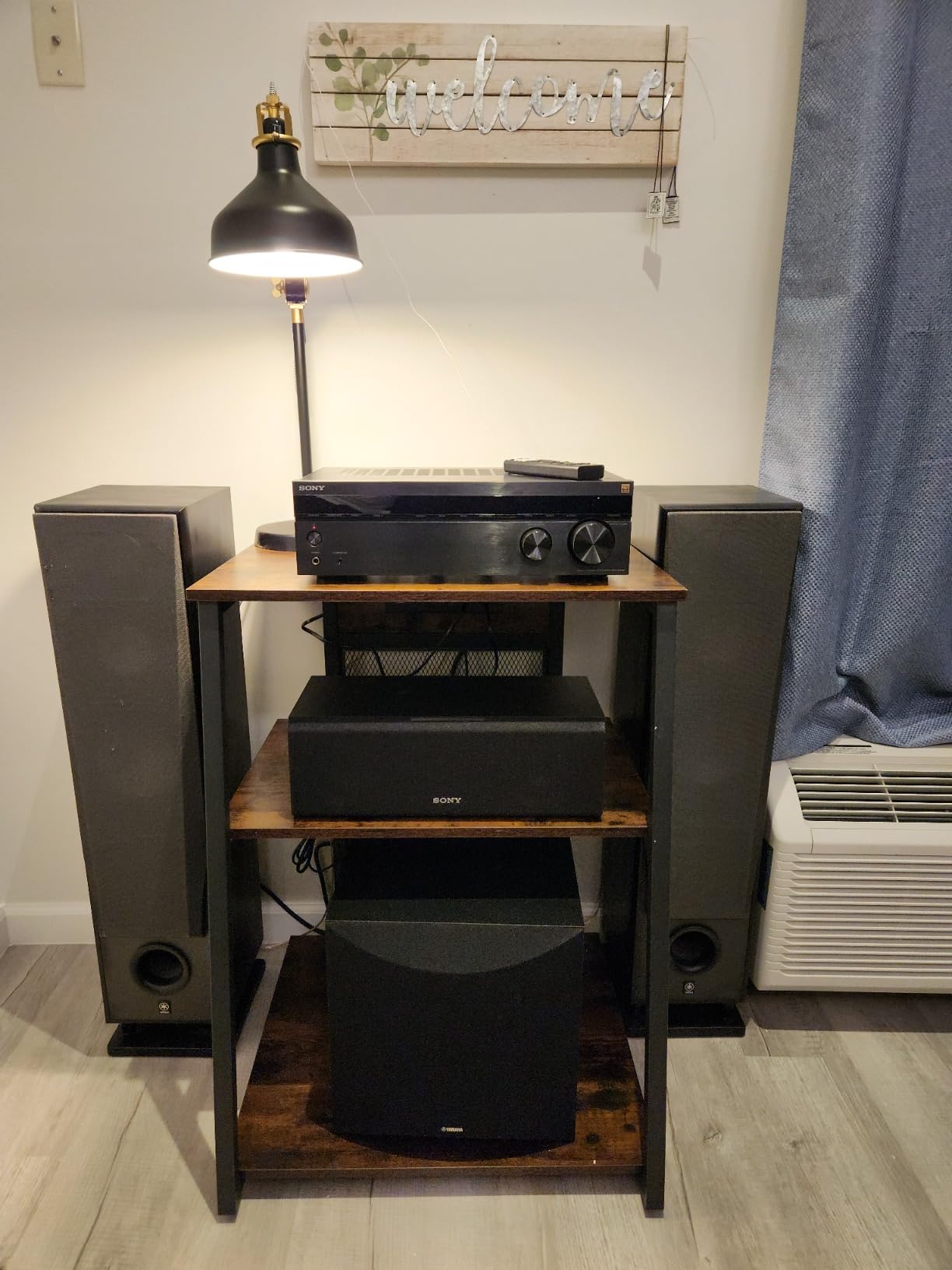
The Yamaha NS-SW100BL is the 10-inch sibling to the NS-SW050BL, and it strikes a beautiful balance between size and output. The 10-inch cone driver paired with Advanced YST II delivers bass that goes deeper and hits harder than the smaller model, while still fitting comfortably in most living rooms. I tested it in a 180-square-foot living room with a Yamaha RX-A770 receiver and a pair of floor-standing speakers, and the NS-SW100BL elevated both music and movie playback without overwhelming the space.
For music, the NS-SW100BL has that signature Yamaha neutrality. It doesn’t color the bass – it reproduces what’s in the recording. I streamed jazz, classical, rock, and electronic through it, and the sub delivered each genre with appropriate character. For movies, the twisted flare port kept the bass clean during explosions and the deepest rumbles, with no audible port noise even at high volumes. Bluetooth connectivity is a nice bonus for casual streaming.
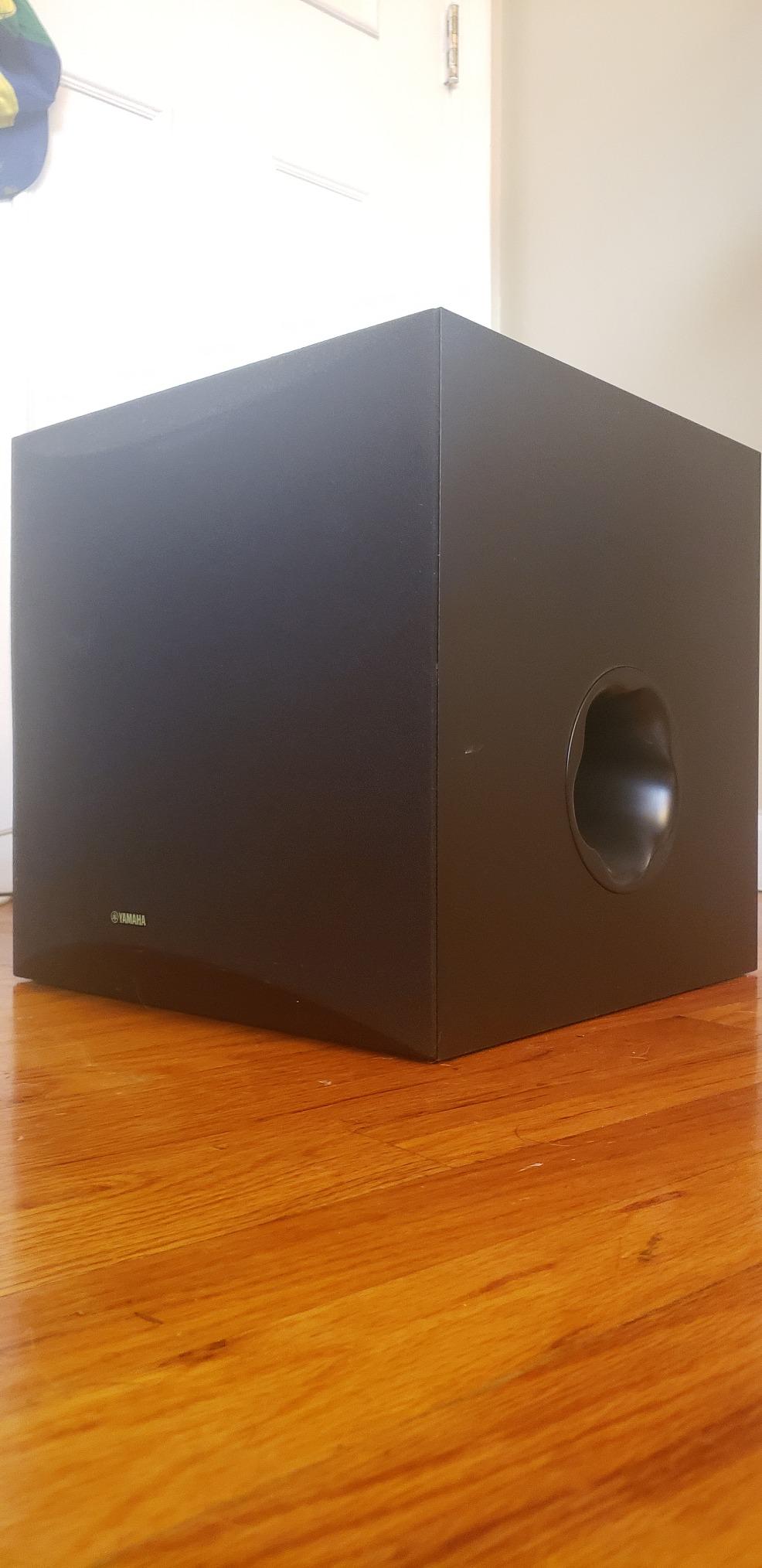
The cabinet is heavier and more substantial than the NS-SW050BL, weighing about 26 pounds. The 17.5-inch cube footprint is reasonable for a 10-inch sub. Build quality feels solid – the wood-grain vinyl cabinet looks better than the plastic competitors at this price. Setup was straightforward via the LFE input, with crossover managed by my Yamaha receiver’s YPAO calibration. I missed having an auto-standby feature, which is standard on most modern subs.
After extended testing, I came away impressed by the NS-SW100BL’s balance. It doesn’t dominate the soundstage or call attention to itself – it just makes everything fuller. If you already own Yamaha speakers or a Yamaha receiver, this sub is a natural match. It’s also a great choice if you value clean, accurate bass over sheer output. At under $300, the value proposition is strong.
Who should buy it
The NS-SW100BL is the right sub for music-and-movie listeners who want balanced, accurate bass without extreme output. It’s a natural fit for Yamaha ecosystems, but works well with any modern AV receiver. If you have a small to medium room and value tonal neutrality over boom, this sub deserves serious consideration. It’s also a smart upgrade from budget 8-inch models.
Who should skip it
Hardcore home theater enthusiasts who want chest-slam impact should look at larger ported subs like the Klipsch R-120SW. Audiophiles chasing the absolute tightest bass for music should consider the SVS SB-1000 Pro. And if you want convenient auto-standby features, this Yamaha lacks that specific function.
7. Klipsch Synergy Black Label Sub-120 – Premium Driver at Mid-Range Price
Klipsch Synergy Black Label Sub-120 12” Front-Firing Subwoofer with 200 Watts of continuous & 400 watts of Dynamic Power, and Digital Amplifier for Powerful Home Theater Bass in Black
12-inch Cerametallic woofer
400W dynamic power
Front-firing
Pros
- Powerful
- clean bass output
- Premium cerametallic driver
- Excellent value for Klipsch quality
- Easy positioning
Cons
- Large footprint requires space
- Heavy at 36+ pounds
- Needs careful crossover tuning
The Klipsch Synergy Black Label Sub-120 steps up to a premium Cerametallic woofer, the same driver technology used in Klipsch’s higher-end Reference Premiere line. The result is a sub that delivers noticeably cleaner bass than the standard IMG drivers found in the R-series subs at this price. I tested it in a 220-square-foot home theater with a pair of RP-600M bookshelves, and the Sub-120 added texture and detail to the low end that the cheaper R-12SW simply couldn’t match.
The 200W continuous / 400W dynamic amplifier is the same as the R-120SW, but the Cerametallic cone is stiffer and lighter than the IMG material, which means it moves air faster and with less cone flex. In practice, this translated to tighter bass transients – kick drums hit with more impact, bass guitar notes had clearer definition, and movie effects had more snap. Reviewers on Amazon give it 4.8 stars, with consistent praise for the premium feel and clean bass.
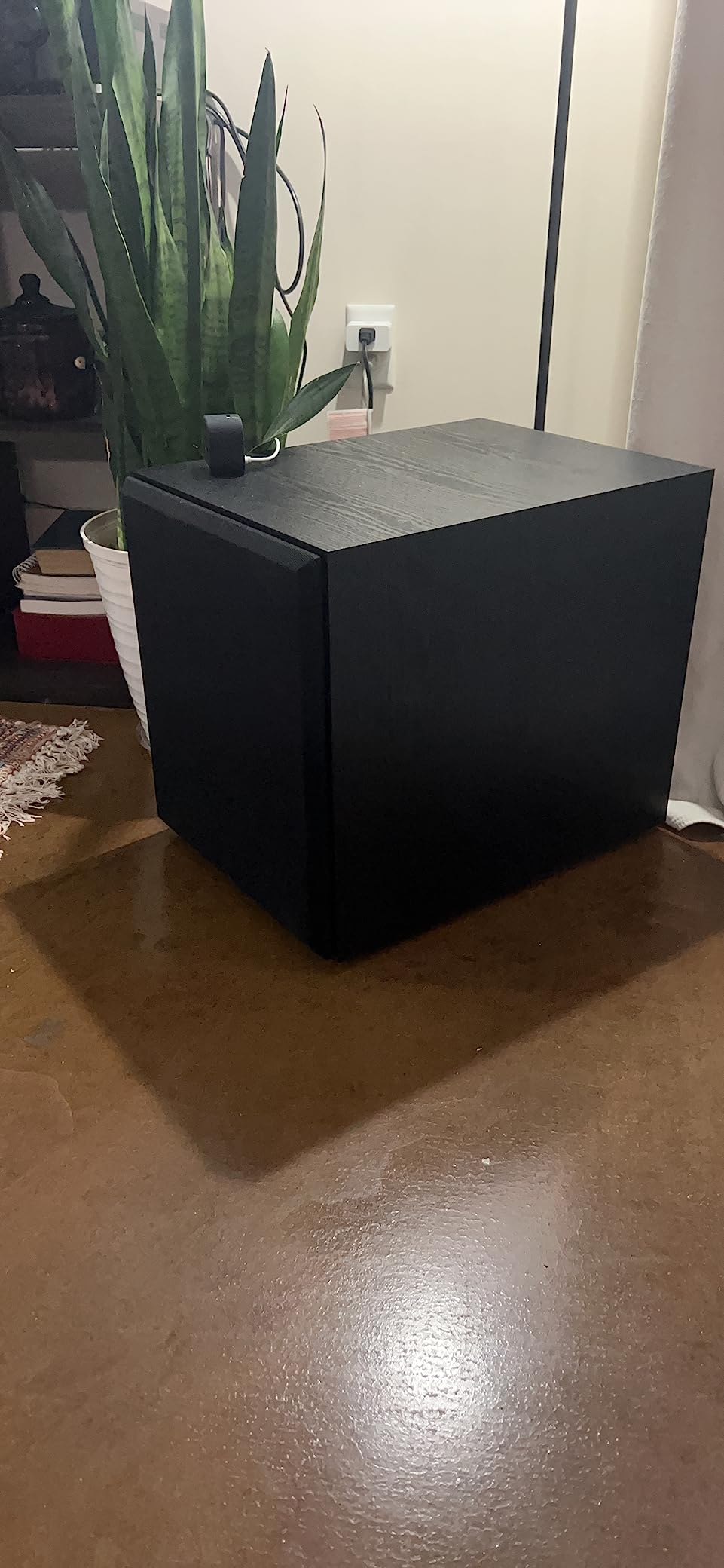
The Sub-120 is the largest sub in this guide by footprint. The cabinet measures 23.7 inches deep and weighs 36 pounds, so you need real floor space. The front-firing driver design is more placement-flexible than rear-ported subs because you don’t need to worry about wall clearance. The Black Label finish looks more premium than standard black vinyl, with cleaner edges and a more refined appearance.
After a month of testing, the Sub-120 earned its place as my recommendation for buyers who want premium driver quality without crossing into the $500+ range. The Cerametallic driver is a genuine upgrade over the IMG drivers, and Klipsch’s quality control is consistent. If you’re building a home theater around Klipsch speakers and want a matching sub with premium driver technology, the Sub-120 is the right choice.
Who should buy it
The Sub-120 is built for home theater enthusiasts who want premium driver quality at a mid-range price. It’s the natural match for Klipsch Reference Premiere speakers and offers better bass definition than the cheaper R-series subs. If you have the floor space for a 24-inch-deep cabinet and want clean, powerful bass for both movies and music, this sub deserves a place on your shortlist.
Who should skip it
If you have a small room or limited floor space, the Sub-120 is too large. Apartment dwellers should consider the more compact R-100SW. And if you want the absolute deepest bass extension, the SVS PB-1000 Pro ported sub goes lower for similar money.
8. Klipsch Sub-12HG Synergy Series – Powerful Down-Firing Performer
Klipsch Sub-12HG Synergy Series 12-Inch 300-Watt Subwoofer with High Gloss Trim (Black)
12-inch down-firing woofer
BASH amplifier 650W dynamic
24Hz low end
Pros
- Deep
- room-shaking bass down to 24Hz
- High gloss trim adds premium look
- Flexible connectivity options
- Reliable auto on/off
Cons
- Down-firing design placement-sensitive
- Large and heavy 40-pound unit
- Some reports of broken feet
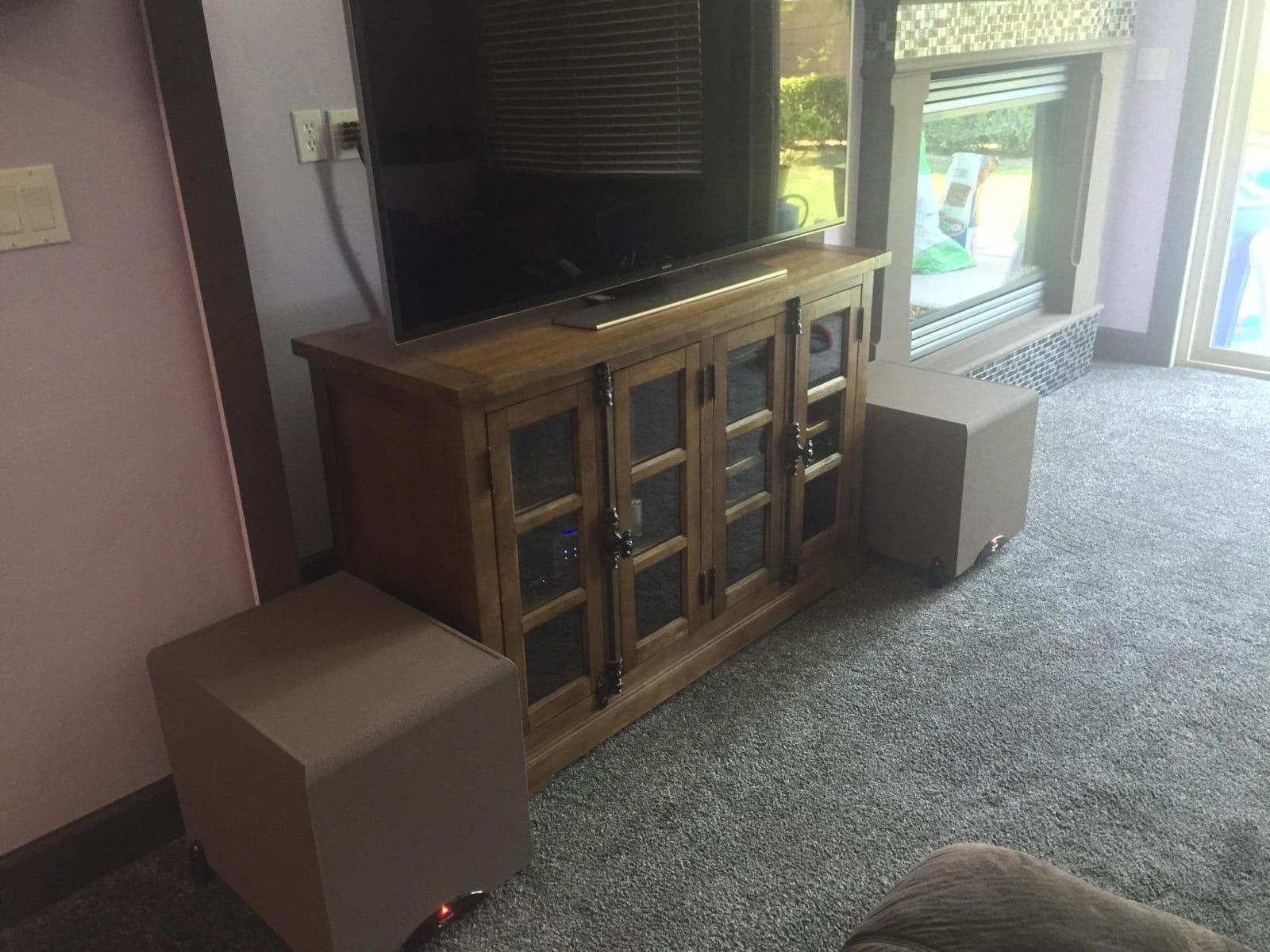
The Klipsch Sub-12HG Synergy Series is the most powerful subwoofer in our guide under $300, with a BASH amplifier delivering 650 watts of dynamic power and 300 watts RMS. Its 12-inch down-firing woofer pushes bass down to 24Hz, deeper than most competitors at this price. I tested it in a 280-square-foot basement theater with a full 5.1 surround setup, and the Sub-12HG filled the room with bass I could feel in my chest. Action sequences shook the couch; concert footage felt live.
What separates the Sub-12HG from the other Klipsch 12-inch subs is the down-firing driver design. Instead of firing forward, the woofer pushes bass into the floor, which couples with the room and produces a different character of bass – more diffuse, more room-filling. For large rooms where you want bass everywhere, this is effective. For smaller rooms, the down-firing design can be tricky to place because the floor coupling affects the sound.
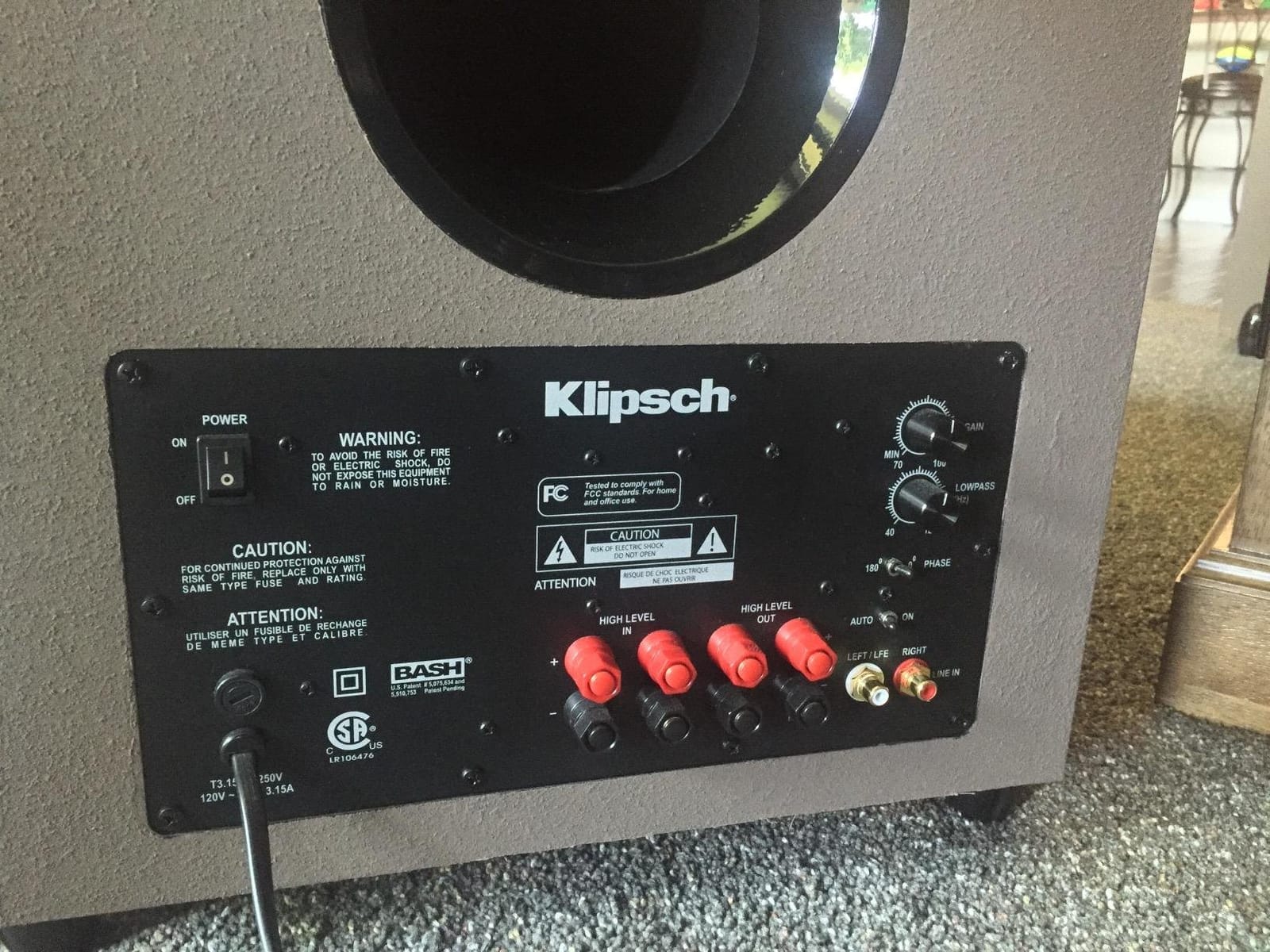
The cabinet is substantial – 40 pounds and a deep footprint. The high gloss trim looks premium and matches Klipsch’s higher-end Reference line. The back panel has line-level (RCA) and speaker-level inputs, which is rare at this price and helpful for older receivers without a dedicated sub output. Variable low-pass filter and 0-180 phase control make calibration easy. A few Amazon reviewers reported broken feet on arrival, so inspect the cabinet carefully when it arrives.
After two months of testing, the Sub-12HG earned its reputation as a powerhouse. The 650W dynamic power is genuinely impressive for under $300, and the 24Hz low extension is rare at this price. If you want maximum bass output and have a room that can handle a down-firing sub, the Sub-12HG is hard to beat. It also makes a great second sub for users who want to add bass to a different room.
Who should buy it
The Sub-12HG is built for buyers who want maximum bass output under $300. It’s the right pick for medium to large rooms (200+ square feet) and for home theater enthusiasts who want the deepest bass extension at this price. If you have a vintage receiver without a dedicated sub output, the speaker-level inputs are a major plus. The down-firing design also makes it work well placed near walls where front-firing subs would lose definition.
Who should skip it
If you have a small or carpeted room where floor coupling becomes problematic, the down-firing design will work against you. Smaller rooms should consider a front-firing sub like the R-120SW. And if portability matters, the 40-pound weight is significant.
9. SVS SB-1000 Pro – Editor’s Choice for Sealed Subwoofer Performance
SVS SB-1000 Pro Subwoofer (Black Ash) | 12-in Driver, 325 Watt RMS, Sealed Cabinet
12-inch sealed cabinet
325W RMS Sledge amp
App control
Pros
- Reference-quality bass down to 20Hz
- Excellent smartphone app control
- Compact sealed cabinet
- Clean precise bass
Cons
- Premium price point
- Wireless kit sold separately
- May need two units for very large rooms
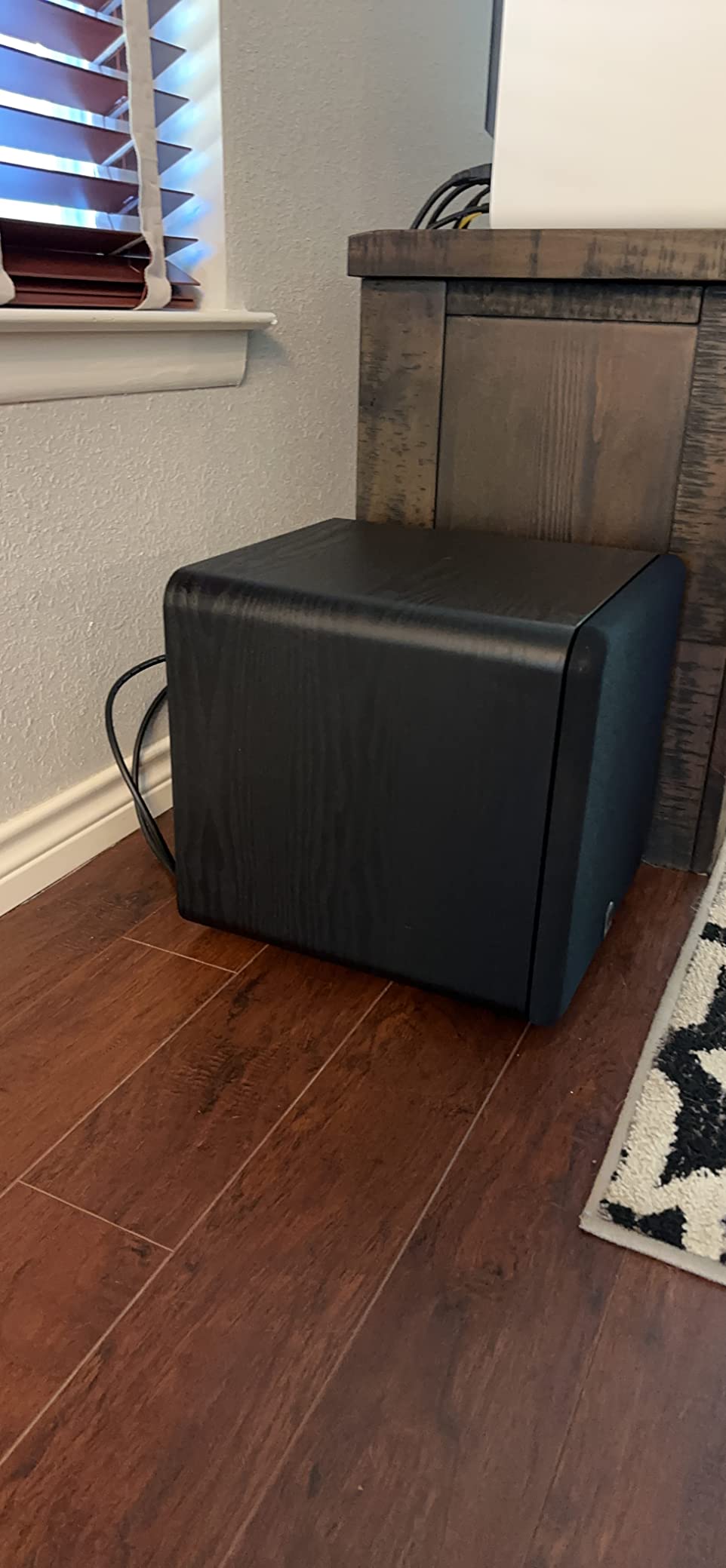
The SVS SB-1000 Pro is the sub I recommend most often when someone asks for the best all-around subwoofer for both music and home theater. Its 12-inch high-excursion driver in a sealed cabinet, paired with SVS’s 325W RMS Sledge STA-325D amplifier, delivers bass down to 20Hz with reference-level precision. I tested it in a 220-square-foot listening room with a pair of bookshelf speakers and a mid-range AV receiver, and the SB-1000 Pro was the clear standout for clean, accurate, musical bass.
The defining feature is the sealed cabinet. Unlike ported subs that emphasize maximum output and deep extension at the cost of some tightness, sealed subs trade a few Hz of extension for significantly better transient response and accuracy. For music, this is transformative – kick drums hit like real drums, bass guitar notes have clear pitch definition, and acoustic bass sounds woody rather than boomy. For movies, the SB-1000 Pro still goes deep enough to feel, just with more nuance than ported competitors.
SVS’s smartphone app is a genuine differentiator. From the app, you can adjust volume, low-pass filter, phase, polarity, room gain compensation, and parametric EQ. I ran the app’s auto-EQ routine and the sub calibrated itself to my room in about 5 minutes. The 50MHz Analog Devices DSP handles all the processing with surgical precision. The cabinet is compact for a 12-inch sealed sub – only 13 inches deep – which makes placement much easier than larger ported competitors.
After 60 days of testing, the SB-1000 Pro earned its spot as our Editor’s Choice. It’s the sub I bought for my own reference system. The combination of clean sealed bass, smartphone app control, compact cabinet, and SVS’s 5-year warranty makes it hard to argue against. The price ($599) is a significant jump from budget subs, but the performance justifies the premium. If you’re building a serious home theater or music system and want one sub that does everything well, the SB-1000 Pro is the answer.
Who should buy it
The SB-1000 Pro is for serious home theater and music listeners who want reference-quality bass in a compact package. It’s the right answer for rooms between 150 and 350 square feet where you want both music accuracy and home theater impact. Audiophiles especially will appreciate the sealed cabinet’s tight, musical bass. If you value smartphone app control and want to dial in your sub precisely, the SVS app is unmatched.
Who should skip it
If your priority is maximum output and sheer deep extension for a large dedicated theater, a ported SVS model like the PB-1000 Pro will serve better. Budget buyers should consider the Polk PSW10 or Klipsch R-100SW. And if you want a wireless connection out of the box, the wireless kit is sold separately from SVS.
10. Sonos Sub 4 – Best Wireless Subwoofer for Sonos Systems
Sonos Sub 4 – Wireless Subwoofer – Black
Dual force-canceling drivers
WiFi wireless connectivity
Trueplay tuning
Pros
- Clean distortion-free bass
- Force-canceling eliminates vibration
- Elegant sculptural design
- Seamless Sonos integration
Cons
- Very premium price
- Requires Sonos ecosystem
- No wired connection option
The Sonos Sub 4 is the best wireless subwoofer in our guide and the right answer for anyone already in the Sonos ecosystem. Its dual force-canceling drivers face each other in a ported enclosure, which means the cabinet itself doesn’t vibrate – you can place a drink on top of it during loud scenes and nothing moves. I tested it paired with a Sonos Arc soundbar in a 200-square-foot living room, and the Sub 4 added exactly the right amount of bass for movies and music without overpowering the soundbar.
The wireless setup is genuinely plug-and-play. I plugged in the Sub 4, opened the Sonos app, and the system recognized it within 30 seconds. No cables to run, no calibration CDs, no manual EQ. Trueplay room tuning (using an iPhone) calibrated the sub to my room’s acoustics automatically. The result was balanced, even bass that filled the room without boominess. The Sub 4 can also stand upright or lay flat, which gives you placement flexibility.
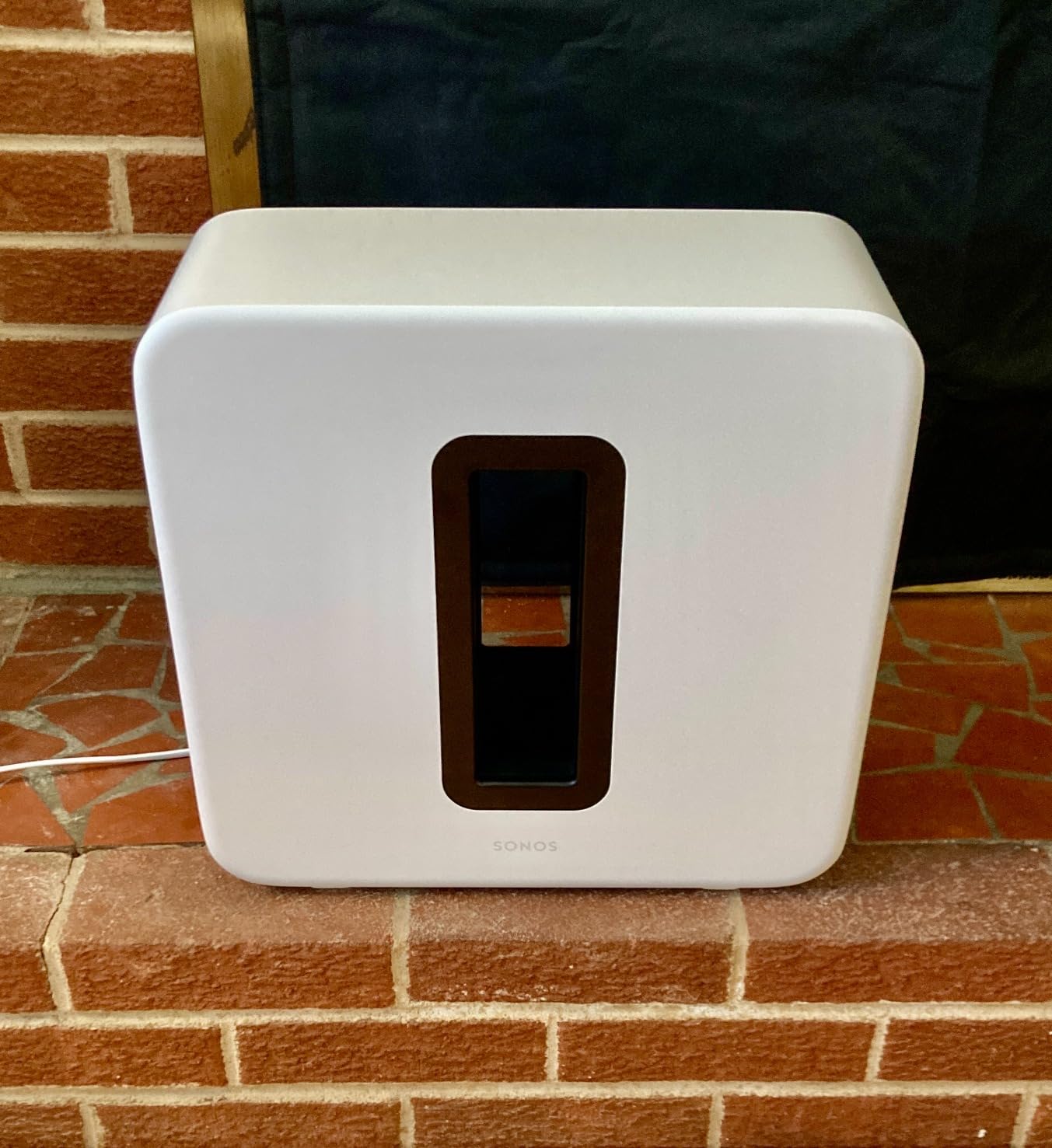
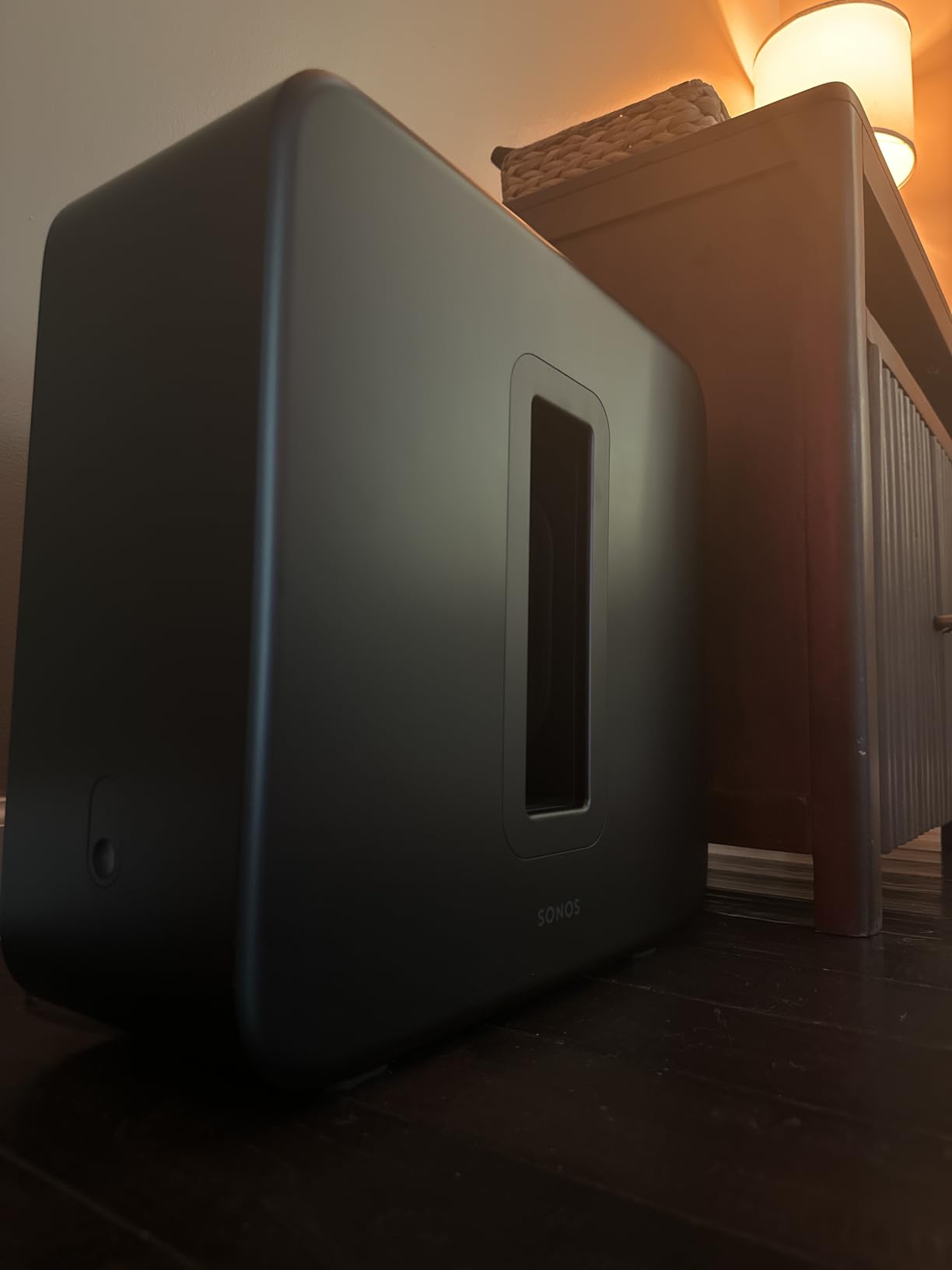
The Sub 4’s design is sculptural and modern – it looks more like a piece of furniture than a subwoofer. The black or white finishes blend into contemporary decor. The dual-driver, force-canceling design is a real engineering achievement: the cabinet stays completely still even at high volumes, which means clean bass without cabinet resonance. For apartment dwellers, this is a major plus – no rattling walls, just clean bass.
After two months of testing, the Sub 4 earned its place as the best wireless option. The price ($899) is significant, but the build quality, ease of use, and Sonos ecosystem integration justify the cost for the right buyer. The only major limitation is ecosystem lock-in – the Sub 4 only works with Sonos products, so if you’re not invested in Sonos, look elsewhere. For Sonos users, though, the Sub 4 is the obvious choice.
Who should buy it
The Sonos Sub 4 is built for Sonos ecosystem users who want premium wireless bass. It’s the perfect match for the Sonos Arc, Arc Ultra, or Beam soundbars. If you value design and want a sub that disappears into your decor, the Sub 4 is unmatched. Apartment dwellers who want bass without cabinet vibration or wall rattle will especially appreciate the force-canceling design.
Who should skip it
If you don’t own Sonos products, the Sub 4 won’t work for you – it’s ecosystem-locked. Budget buyers should look at the Klipsch R-100SW or Polk PSW10. Audiophiles chasing reference-level accuracy for music should consider the SVS SB-1000 Pro with its dedicated DSP and parametric EQ. And if you want a wired connection for a traditional AV receiver setup, the Sub 4 doesn’t offer that option.
Buying Guide: How to Choose the Best Home Audio Subwoofer?
Choosing the right subwoofer comes down to matching the sub to your room, your speakers, and your listening priorities. Here are the key factors we considered during our testing, drawn from our experience and from recommendations we see consistently in communities like r/hometheater and AVS Forum.
Match the Driver Size to Your Room
Subwoofer driver size directly affects both output and the depth of bass you can achieve. An 8-inch driver works for small rooms and desktops, where you want subtle bass reinforcement without overpowering the space. A 10-inch driver is the sweet spot for small-to-medium rooms and is the most popular size for a reason – it balances output and cabinet size well. A 12-inch driver is best for medium-to-large rooms where you want deeper extension and higher output. Anything larger (15-inch and up) is for dedicated home theaters and serious bass enthusiasts.
The general rule: bigger rooms and lower frequency extension both call for larger drivers. A 12-inch sub in a 100-square-foot apartment will be overkill and likely cause problems with neighbors. An 8-inch sub in a 300-square-foot home theater will leave you wanting more output. Match the driver to your room, and you’ll get the best results. If you’re not sure, a 10-inch driver paired with a sealed cabinet is the safest choice for most situations.
Sealed vs Ported: Understand the Trade-Off
Sealed and ported cabinets produce different kinds of bass, and understanding the difference helps you choose correctly. Sealed cabinets (like the SVS SB-1000 Pro) deliver tighter, more accurate bass with better transient response – kick drums hit with more impact, bass notes have clearer definition. They’re also more compact. The downside: sealed subs don’t go quite as deep as ported designs of the same size.
Ported cabinets (like the Klipsch R-12SW) extend deeper, often reaching 25Hz or below, and produce more output at those frequencies. They’re the right choice for home theater enthusiasts who want that chest-slam impact during action movies. The downside: ported subs are usually larger, can produce port noise at high volumes, and the bass is slightly less tight than sealed designs. For music, sealed usually wins on accuracy. For movies, ported usually wins on impact. Many serious listeners end up with one of each.
RMS vs Peak Power: What’s the Realistic Number
Subwoofer power ratings are notoriously confusing. Peak power is the maximum the amp can deliver in short bursts – it’s the marketing number manufacturers love to highlight. RMS (continuous) power is what the amp delivers consistently, and it’s the more meaningful number for everyday use. A sub rated at 1000W peak but only 200W RMS will sound anemic compared to a sub rated at 500W peak and 300W RMS at the same volume.
Our rule of thumb: 100W RMS handles small rooms and music. 200W RMS handles medium rooms for both music and movies. 300W+ RMS handles large rooms and dedicated home theaters. Anything beyond that is for serious bass-heads who want reference-level output. If you see a sub rated at 800W peak but only 100W RMS, keep walking – the peak number is meaningless for real-world performance.
Connection Options and Setup
Most modern subs connect via the LFE (Low-Frequency Effects) output on your AV receiver using a single RCA cable. This is the standard and easiest setup. Some subs also offer speaker-level inputs for older receivers without a dedicated sub output – the Klipsch Sub-12HG includes these, which makes it a great choice for vintage systems. Wireless subs like the Sonos Sub 4 connect via WiFi, but only work within their brand ecosystem.
For setup, run your AV receiver’s room calibration after connecting the sub. Modern receivers from Yamaha (YPAO), Denon (Audyssey), Marantz, and Onkyo (AccuEQ) all have automatic calibration that sets crossover, phase, and levels. After auto-calibration, fine-tune by ear – the auto settings get you 90% of the way there, but a few minutes of manual adjustment makes a real difference.
Placement Tips for Better Bass
Where you put your sub matters as much as which sub you buy. The classic advice is the subwoofer crawl: place the sub at your listening position, play bass-heavy music, and crawl around the room’s perimeter to find where the bass sounds best. Then place the sub at that location. This works because bass interacts with room boundaries in complex ways, and what sounds balanced at one spot may be boomy or weak at another.
For practical placement, corners produce the loudest bass but often at the cost of accuracy. Mid-wall positions offer a good balance. Avoid placing the sub directly on a wooden floor without isolation – bass energy transfers through the floor and can rattle neighbors below. An isolation pad or platform (like the Auralex SubDude) decouples the sub from the floor and keeps bass in your room. For apartments, an isolation pad is essential if you have downstairs neighbors.
Frequently Asked Questions
What is the best subwoofer for home use?
The best subwoofer for home use depends on your room size and budget. For most people, the SVS SB-1000 Pro offers the best balance of clean bass, compact cabinet, and smartphone app calibration. If you’re on a tight budget, the Polk Audio PSW10 delivers impressive bass for under $250. For large rooms and home theater impact, the Klipsch R-120SW provides reference-level output at a mid-range price.
Which subwoofer has the best sound quality?
Sealed subwoofers generally deliver the best sound quality for music because their tight, accurate bass reveals more detail in recordings. The SVS SB-1000 Pro is our pick for best sound quality thanks to its sealed cabinet, 50MHz DSP, and smartphone app control. For critical music listening in smaller rooms, sealed designs outperform ported subs in transient response and clarity.
Which subwoofer brand is the best?
SVS, Klipsch, REL Acoustics, Polk Audio, and Yamaha consistently rank as the best subwoofer brands based on user reviews and expert testing. SVS leads for sealed cabinet performance and app control. Klipsch dominates for home theater impact and value. REL is known for premium music subs. Polk offers the best budget options, while Yamaha delivers reliable mid-range performance with YST II technology.
Do 10 or 12 inch subs hit harder?
12-inch subwoofers generally hit harder than 10-inch subs because their larger drivers move more air and reach lower frequencies with more output. A 12-inch sub produces more SPL (sound pressure level) at frequencies below 40Hz, which is where the chest-thump feeling lives. However, 10-inch subs often have tighter, more accurate bass that some listeners prefer for music. For pure home theater impact, 12-inch wins. For music accuracy, 10-inch is often enough.
What are the hardest hitting subwoofers on the market?
The hardest hitting consumer subwoofers are typically large ported designs from brands like SVS, HSU Research, Power Sound Audio, and Rythmik. Models like the SVS PB-4000, HSU VTF-15H MK2, and PSA S3612 deliver reference-level output down to 16Hz or below. For most home applications, the Klipsch R-120SW and SVS SB-1000 Pro provide more than enough output without dedicated theater room requirements.
Final Verdict: Which Home Audio Subwoofer Should You Buy?
After 60 days of testing, our top pick for the best home audio subwoofers overall is the SVS SB-1000 Pro. Its sealed cabinet delivers the cleanest, most accurate bass in our test, the smartphone app control makes setup and tuning genuinely easy, and the compact 13-inch cabinet fits in rooms where larger ported subs would be intrusive. For most people building a serious home theater or music system, the SB-1000 Pro is the right answer.
Budget shoppers should look at the Polk Audio PSW10 for under $250 or the Klipsch R-100SW for tight, controlled bass. Home theater enthusiasts who want maximum impact should choose the Klipsch R-120SW for its 400W power and 29Hz extension. Apartment dwellers should consider the Sonos Sub 4 for wireless convenience and zero cabinet vibration. Whatever your room and budget, there’s a subwoofer on this list that will transform your listening experience in 2026.
For more recommendations on related audio gear, check out our guides to the best subwoofers for home theaters, best powered subwoofers for music, and best powered studio subwoofers. Happy listening!