
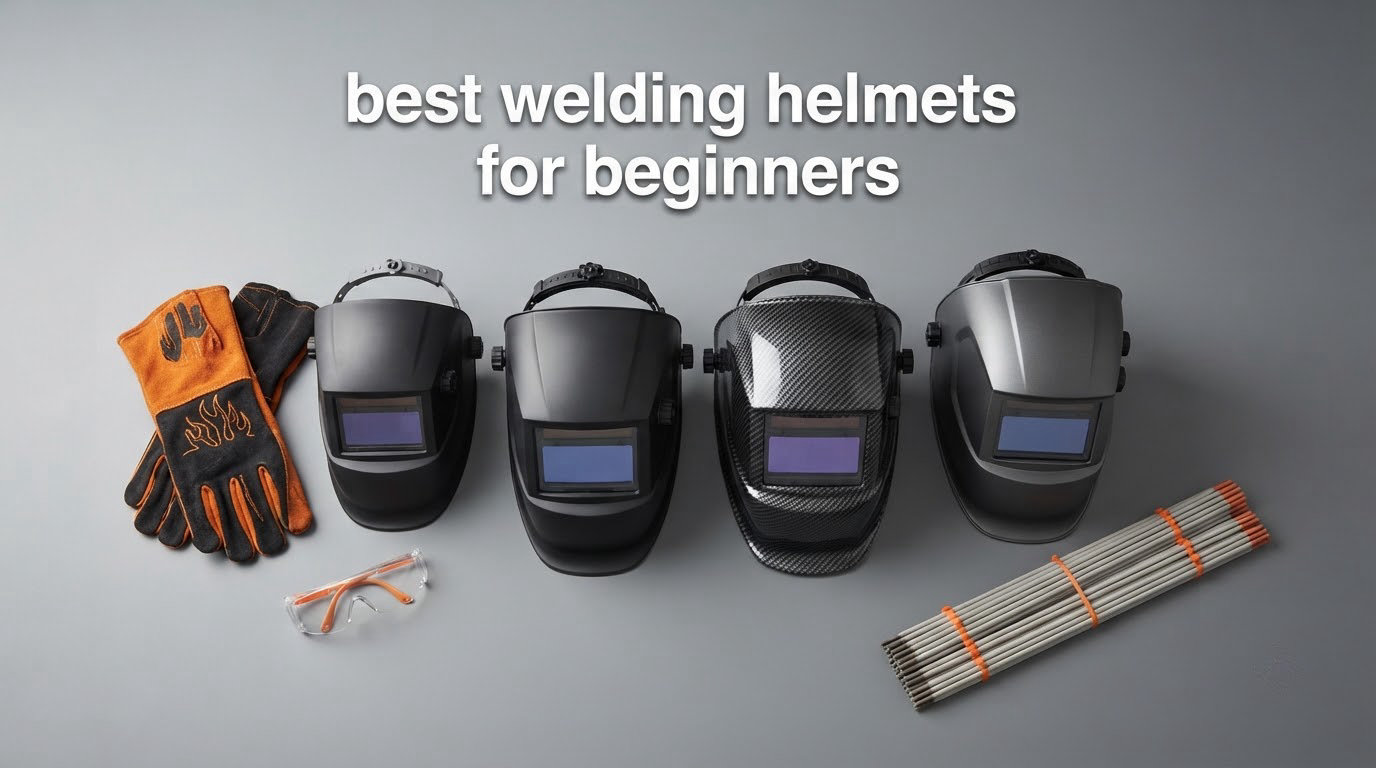
The best welding helmets for beginners are auto-darkening models with a variable shade 9-13 filter, two to four arc sensors, and switching speed faster than 1/25,000 of a second. Our top overall pick is the YESWELDER LYG-L600A, which pairs 1/1/1/1 true color optics with a 3.64 by 1.67 inch viewing area and a shade 3/7-13 range that covers TIG, MIG, stick and grinding.
That spec trio is the same answer the big search engines return, and it is the reason most first-time welders are able to learn on a cheap hood without getting flashed. A welding arc throws off intense visible light plus invisible UV and IR radiation, and arc eye (photokeratitis) is the kind of injury that heals slowly and badly. You only get one pair of eyes, so the helmet is the last place to economize.
We spent weeks putting ten of the most-reviewed helmets on this list through real garage work, comparing lens clarity, sensor behavior, headgear comfort and the failure modes nobody warns you about. If you want the wider picture on shading and switching speed, we have a separate breakdown of the best auto-darkening welding helmets that goes deeper on the electronics.
Table of Contents
What to Look For in a Welding Helmet
Auto-darkening filter (ADF) so you never nod the helmet down or weld through a clear lens.
Variable shade range from about 9 to 13, with lower shades for cutting and grinding.
Two to four arc sensors that detect a dim arc quickly and reject stray sunlight or shop fluorescents.
Switching speed of 1/20,000 to 1/30,000 second, fast enough that you never see the raw arc.
Optical clarity 1/1/1/1 or 1/1/1/2 so you can judge puddle color and fit-up without guessing.
Grind mode so one helmet covers welding, cutting, plasma work and grinding.
Published safety compliance such as ANSI Z87.1, CSA Z94.3 or EN 379, not just the words ANSI approved.
Cheater lens compatibility if you wear prescription glasses.
Top 3 Best Welding Helmet for Beginners (October 2026)

YESWELDER LYG-L600A
- 1/1/1/1 true color optics
- 2 arc sensors at 1/30000s
- Shade 3/7-13 for TIG
- MIG
- ARC and grind
- ANSI Z87.1 and CSA Z94.3
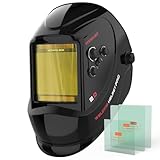
YESWELDER LYG-M800H
- 3.93 by 3.66 inch viewing area
- 4 arc sensors at 1/30000s
- Shade 3/5-9/9-13 with external knobs
- Cheater lens compatible

TOOLIOM Solar Helmet
- Weighs about 1.14 lb
- 1/25
- 000s arc detection
- External grind mode switch
- 1/1/1/1 true color optics
The Best Welding Helmets for Beginners in 2026 at a Glance
Every helmet below covers TIG, MIG and stick work, with shade ranges wide enough for cutting and grinding. The table sorts them by what actually changes your first year of welding: how much you can see, how fast the lens reacts and how well the headgear holds.
| Product | Specifications | Action |
|---|---|---|
| YESWELDER LYG-L600A |
|
Check Latest Price |
| YESWELDER LYG-M800H |
|
Check Latest Price |
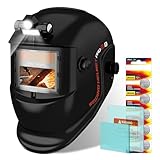 TRQWH Solar Helmet TRQWH Solar Helmet |
|
Check Latest Price |
| TOOLIOM Solar Helmet |
|
Check Latest Price |
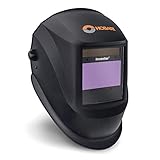 Hobart 770890 Hobart 770890 |
|
Check Latest Price |
 Sunstac SS-A800D Sunstac SS-A800D |
|
Check Latest Price |
 Miller Classic Series Miller Classic Series |
|
Check Latest Price |
 Forney 55732 Velocity Forney 55732 Velocity |
|
Check Latest Price |
 Lincoln Electric K4983-1 Lincoln Electric K4983-1 |
|
Check Latest Price |
 Miller MP-10 Passive Miller MP-10 Passive |
|
Check Latest Price |
1. YESWELDER LYG-L600A – Best Welding Helmet for Beginners Overall
YESWELDER Auto Darkening Welding Helmet 1/1/1/1 True Color, LYG-L600A
1/1/1/1 true color
3.64 by 1.67 inch view
2 arc sensors, 1/30000s
Shade 3/7-13
Pros
- True color view of the puddle
- 2 arc sensors switch in 1/30000s
- Works across stick MIG and TIG
- Spare battery and lenses in the box
- ANSI Z87.1 and CSA Z94.3
Cons
- Viewing area is small
- Shell and headgear feel light duty
- Button battery can arrive dead
We put this on the bench first because it is the helmet most beginners actually end up with, and it earns the spot. The 1/1/1/1 lens shows the puddle in natural color rather than the green cast of older filters, so you can see whether your bead is too hot before you commit to it.
Two arc sensors darken the lens in 1/30000 second, which was fast enough that we never caught a glimpse of the raw arc on any process we tried. Shade 3 light state and 7-13 range meant one helmet covered MIG, stick, TIG and grinding without swapping anything.
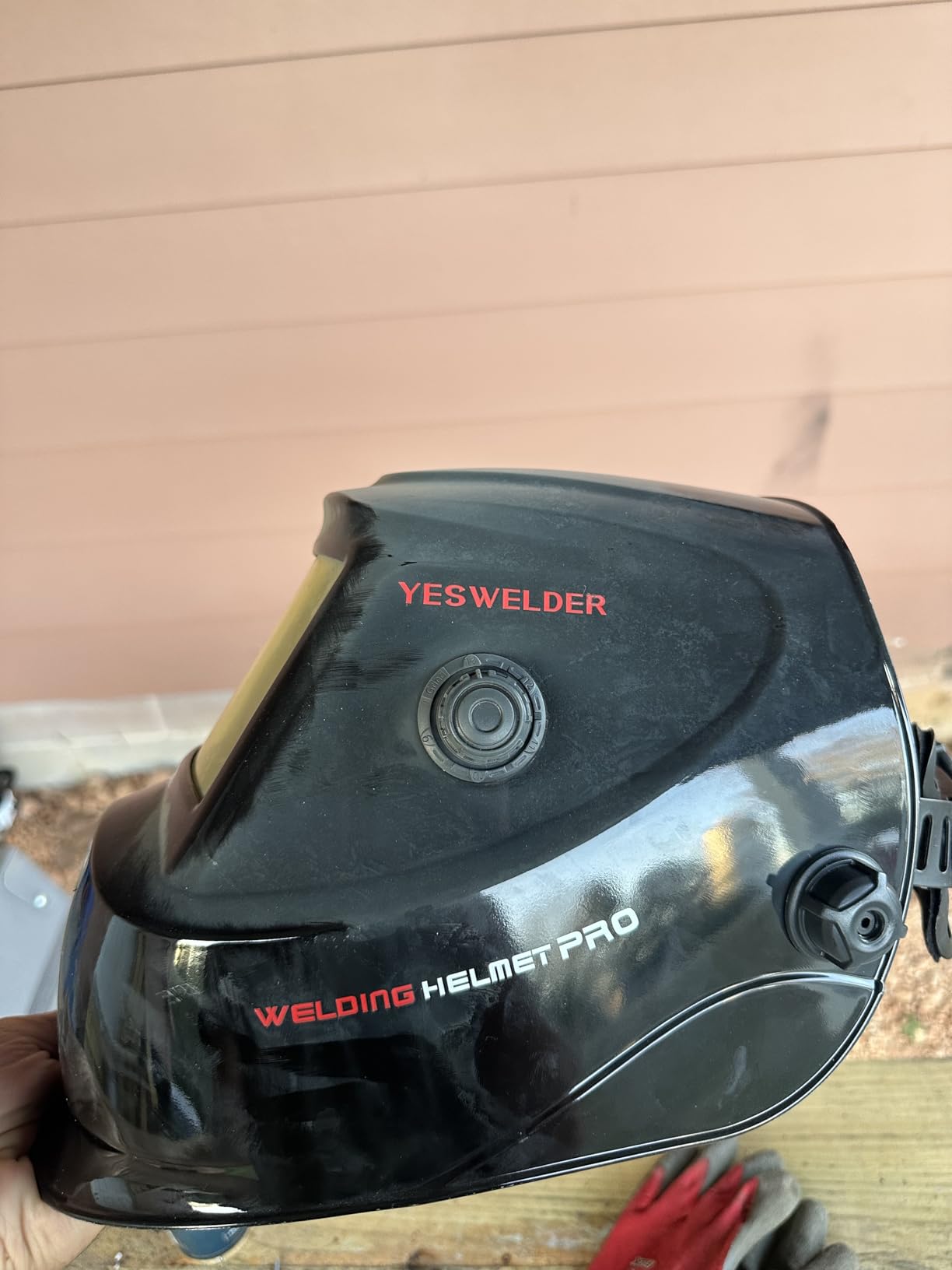
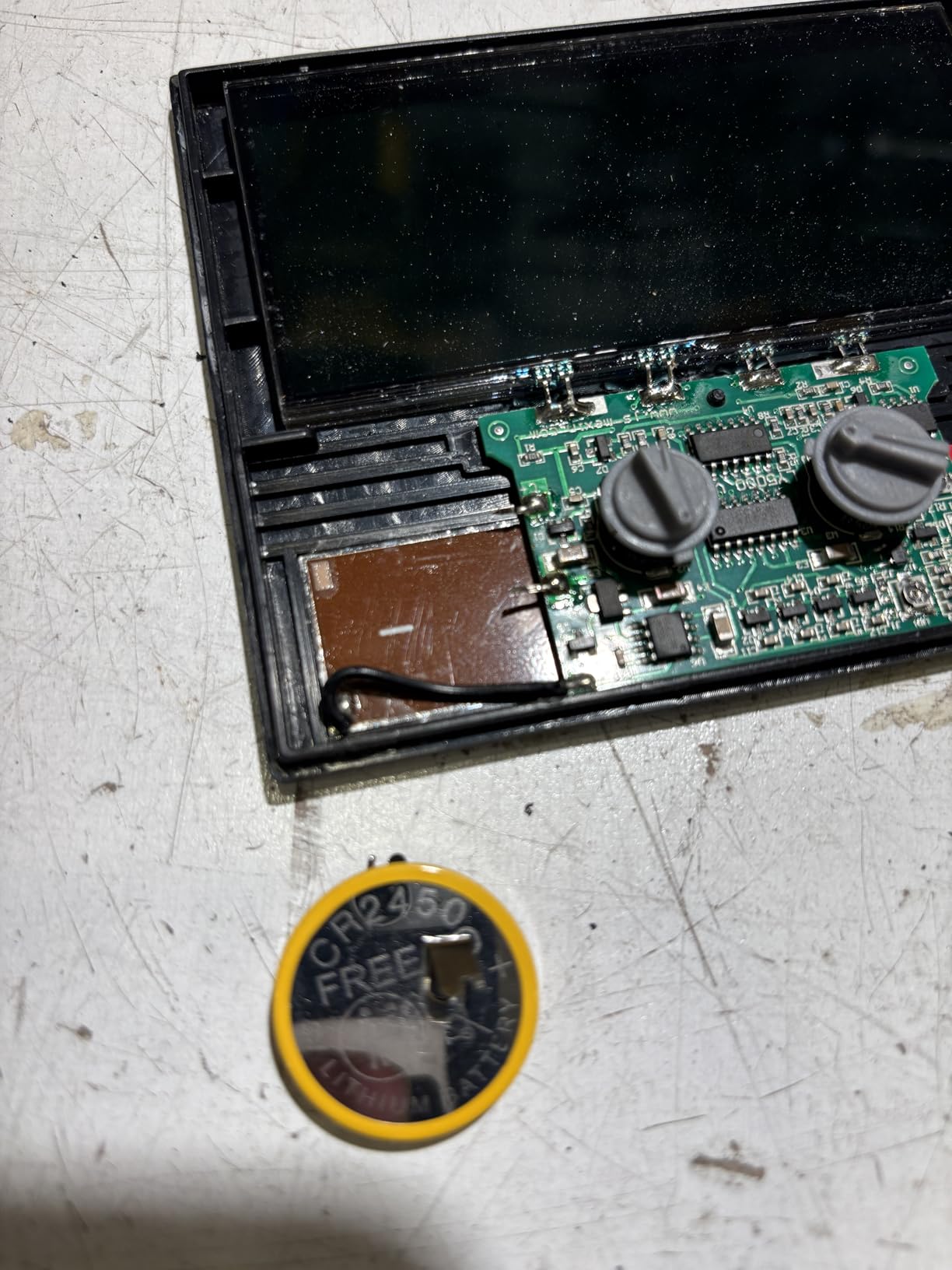
The box is unusually generous for a first helmet. You get a spare CR2450 battery, one inner replacement lens, two outer lenses and a storage bag, so the consumables that normally bite beginners are already covered.
Weight is 16 ounces and the shell is ABS and PP with pivot-style adjustable headgear, which is enough for weekend garage work. It is not built for an eight-hour production shift, and it is not built for hard hats.
What you notice in the first week
The jump from a school-style fixed shade helmet is immediate. You keep your head still, you can see your work at all times, and you stop losing your bead every time you reposition.
Owners consistently single out the true color clarity and the external shade and delay knobs, which you can adjust with gloves still on. The review data shows 75% five-star ratings across more than 13,900 reviews.
Where it falls short
The viewing area is 3.64 by 1.67 inches, and that narrow window is the most common complaint. If you work on tall vertical passes or like to see both hands and the joint, upgrade to a panoramic shell.
A minority of helmets arrive with the CR2450 button battery installed backwards or already drained. Pop it out, test with a fresh cell before your first bead, and the problem never touches you.
2. YESWELDER LYG-M800H – Best Value Helmet with a Large Viewing Area
YESWELDER Auto Darkening Welding Helmet, Large View, LYG-M800H
3.93 by 3.66 inch view
4 arc sensors, 1/30000s
DIN 3/5-9 and 9-13
About 1.32 lb
Pros
- Largest viewing area in this group
- True color optics not green tint
- All controls outside the shell
- 4 sensors handle low-amp TIG
- Cheater lens compatible
Cons
- Shell and knobs feel flimsy
- Can slip forward if tension is low
- Battery compartment is hard to open
- Inner lens awkward to change
This is the model we recommend when a beginner’s real problem is seeing. The 3.93 by 3.66 inch window is roughly three times the area of the L600A, so your hands, the joint and the arc fit in the same field of view.
Four arc sensors at 1/30,000 second stayed dependable on the low-amperage TIG we threw at it, which is where two-sensor budget helmets often leave you welding through a nearly clear filter.
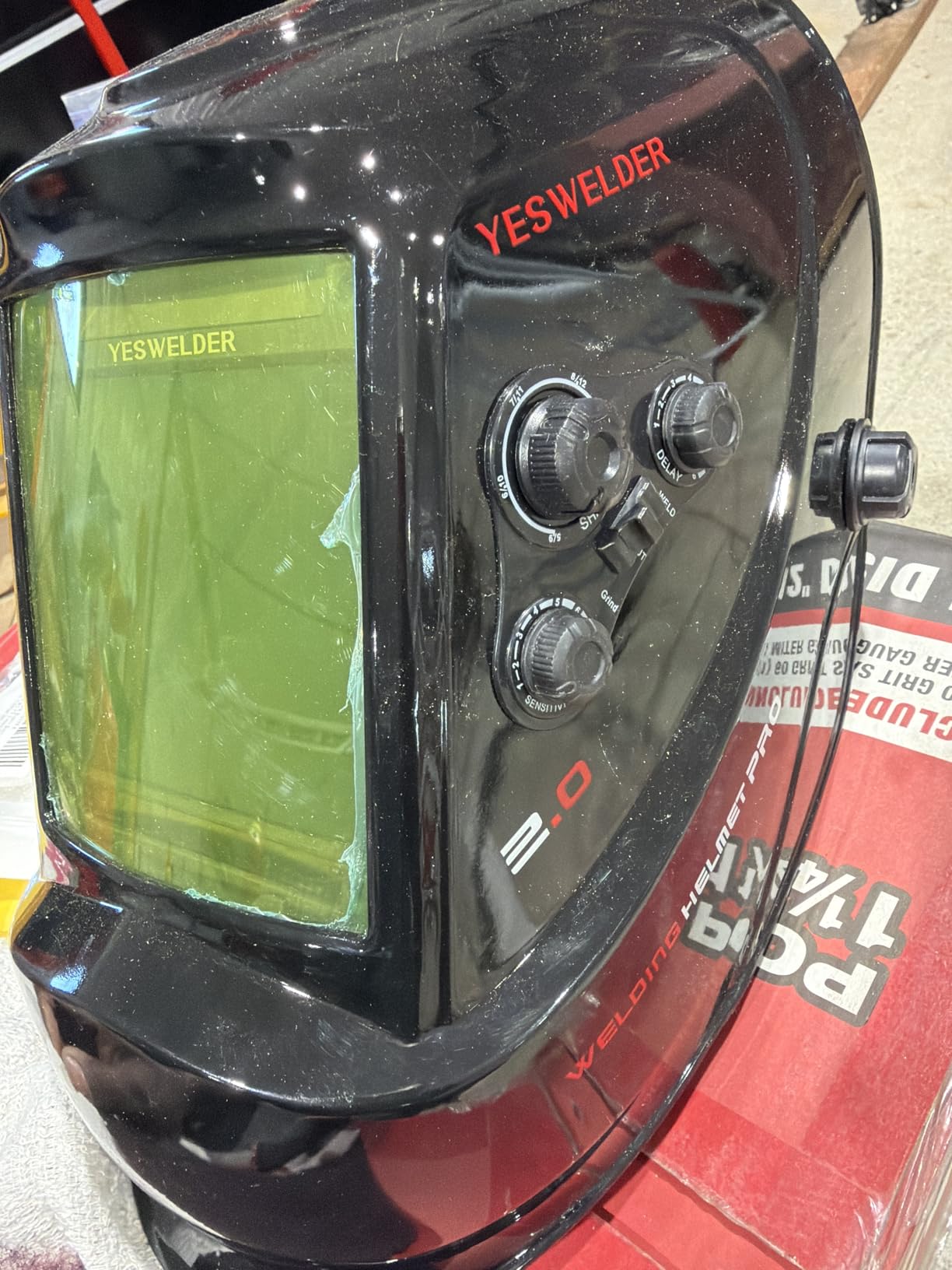
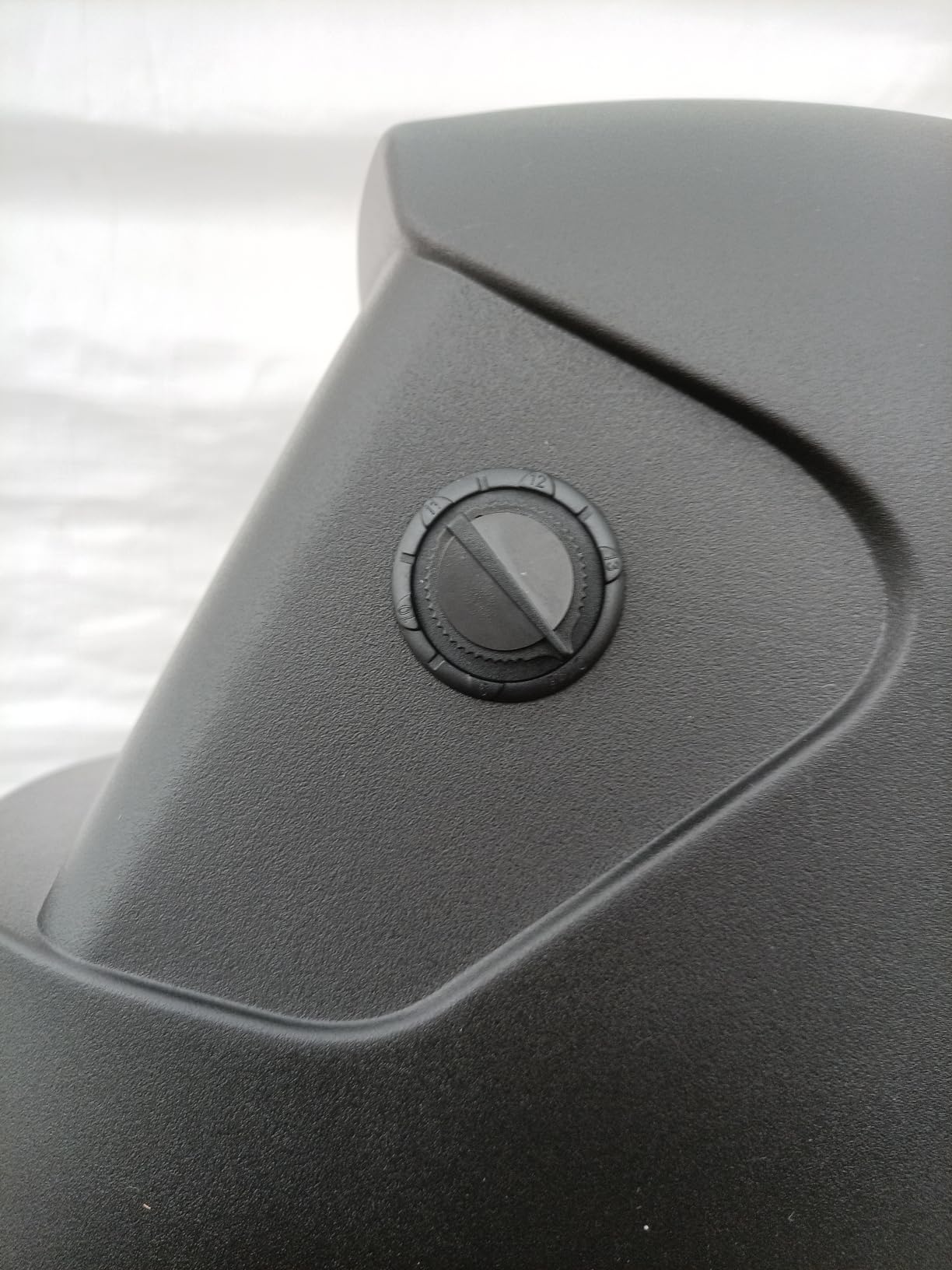
Shade settings cover DIN 3 light state, 5-9 for cutting and 9-13 for welding, and every control sits on the outside of the shell. You never remove the helmet to switch from welding to grinding.
The shell, headgear and side tension knobs are thin plastic, and the listed weight is 2.2 pounds. Crank the tension properly and it holds; leave it loose and it drifts forward.
Why beginners like the big window
New welders spend their first weeks leaning, craning and repositioning to see the joint. A wider viewing area removes most of that motion, and it makes bead placement far easier to learn.
Where it falls short
The build is where the money was saved. Reviewers repeatedly describe the shell, straps and side knobs as thin, and the battery compartment resists opening when your hands are cold and dirty.
Several owners also report the helmet slipping forward or dropping when they raise their head. Tighten the rear band until it stops moving before you start.
3. TRQWH Solar Helmet – Best Pick for Dark Garages and Basements
TRQWH Welding Helmet with Light True Color Auto Darkening Welding Helmets for Men Solar Powered Welding Hood with 2 Arc Sensor Wide Shade 4/9-13 for TIG MIG ARC Cool Welder Mask
1/1/1/2 true color
2 arc sensors, 1/20000s
DIN 4 light, 9-13 dark
Work light with USB port
Pros
- Rechargeable USB work light
- True color lens at a low entry price
- Spare CR2032 batteries included
- External shade and grind knob
- Padded forehead and ear areas
Cons
- Thin plastics crack over time
- Replacement lenses are thin
- Work light quality is poor
- Helmet falls when raised
The reason this one is on the list is the built-in work light. It is rechargeable over USB and has a swivel angle, so in a basement or a closed garage you can light the joint before striking an arc instead of fighting with a flashlight clamped to your cap.
Optics are 1/1/1/2 true color, with a DIN 4 light state and a DIN 9-13 dark state. Two sensors switch in 1/20,000 second, and it lists compliance with ANSI Z87.1, EN 379 CE and CSA Z94.3.
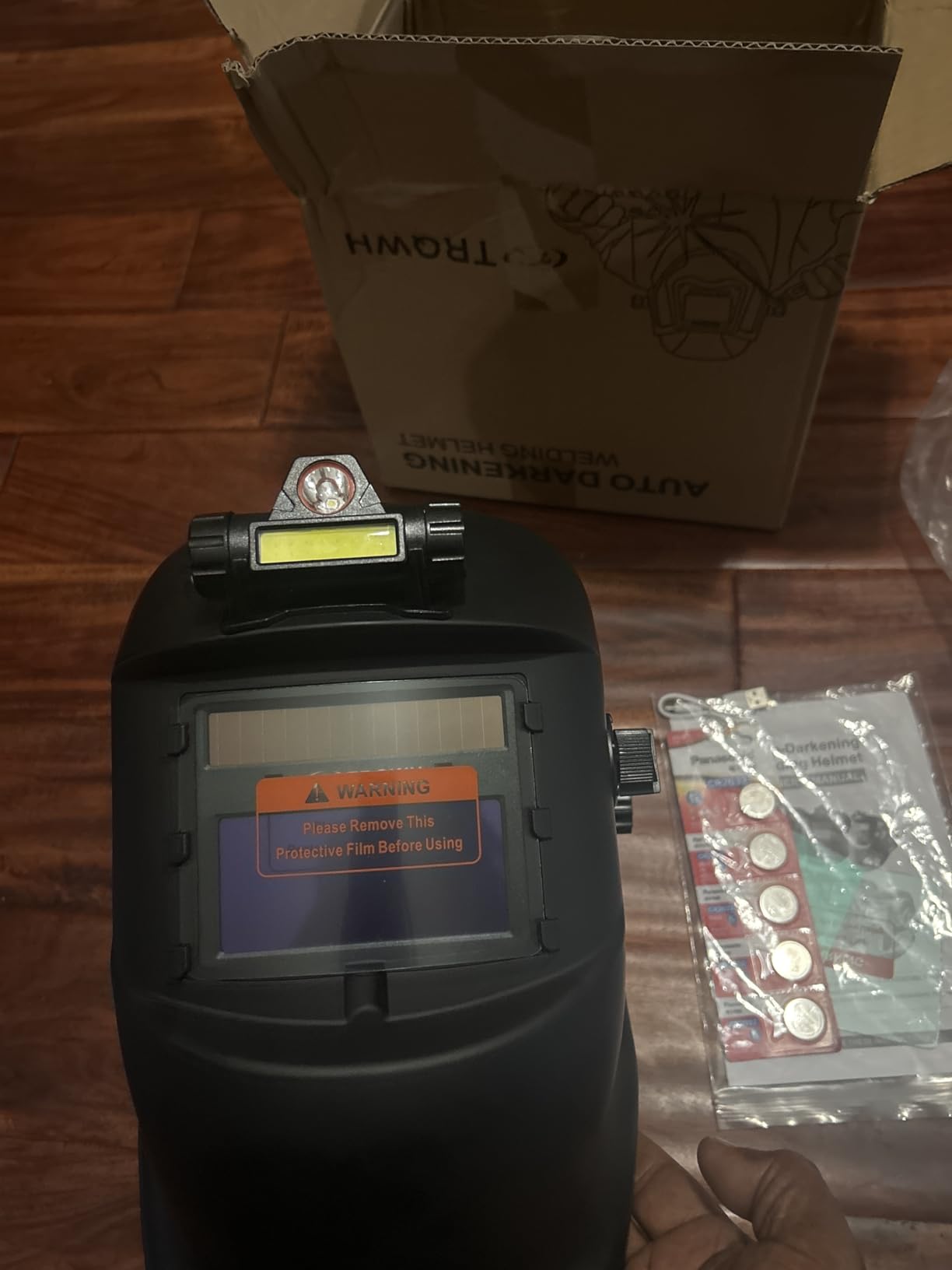
Power comes from solar cells plus two included CR2032 lithium batteries, which means the solar panel is a backup rather than your only source. The headgear carries a sweat-absorbing pad at the forehead and ears.
It weighs 1.7 pounds and the shell is polypropylene, so this is a garage helmet rather than a shop helmet. It handles MIG, MAG, DC and AC TIG, MMA and plasma cutting.
Where the work light earns its place
Setup, layout and fit-up all happen before the arc is lit. A rechargeable light pointed at the work turns a two-minute job into a setup you can actually see, which is when most beginners burn their gloves.
Where it falls short
The plastics are thin. Owners report cracking at the corners and loosening knobs after a year of shop use, and the replacement lenses are thin enough that heavy spatter means frequent changes.
The raised helmet does not stay locked open. Test the locking tension before you need it, because a hood that falls mid-task takes your attention off the weld.
4. TOOLIOM Solar Helmet – Best Lightweight Helmet for Long Sessions
TOOLIOM Auto Darkening Solar Powered Welding Helmet for TIG MIG ARC with Light
About 1.14 lb
1/25,000s arc detection
Shade 3.5/9-13
External grind switch
Pros
- Lightest shell in this group at 1.14 lb
- True color 1/1/1/1 optics
- External grind mode knob
- Low battery indicator
- Headgear holds in awkward positions
Cons
- Cheater lens slot is undersized
- Rear band is unpadded
- Manual omits the side knob
- Small viewing window
At roughly 1.14 pounds, this is the shell we would put on for a long afternoon of bead practice. Neck fatigue shows up in beginners faster than anything else, and every pound hanging off the front of your head is felt by hour three.
Arc detection runs at 1/25,000 second with an external knob that switches between weld and grind. Shade 3.5 to 9-13 with 1/1/1/1 true color optics over a 3.62 by 1.65 inch window.
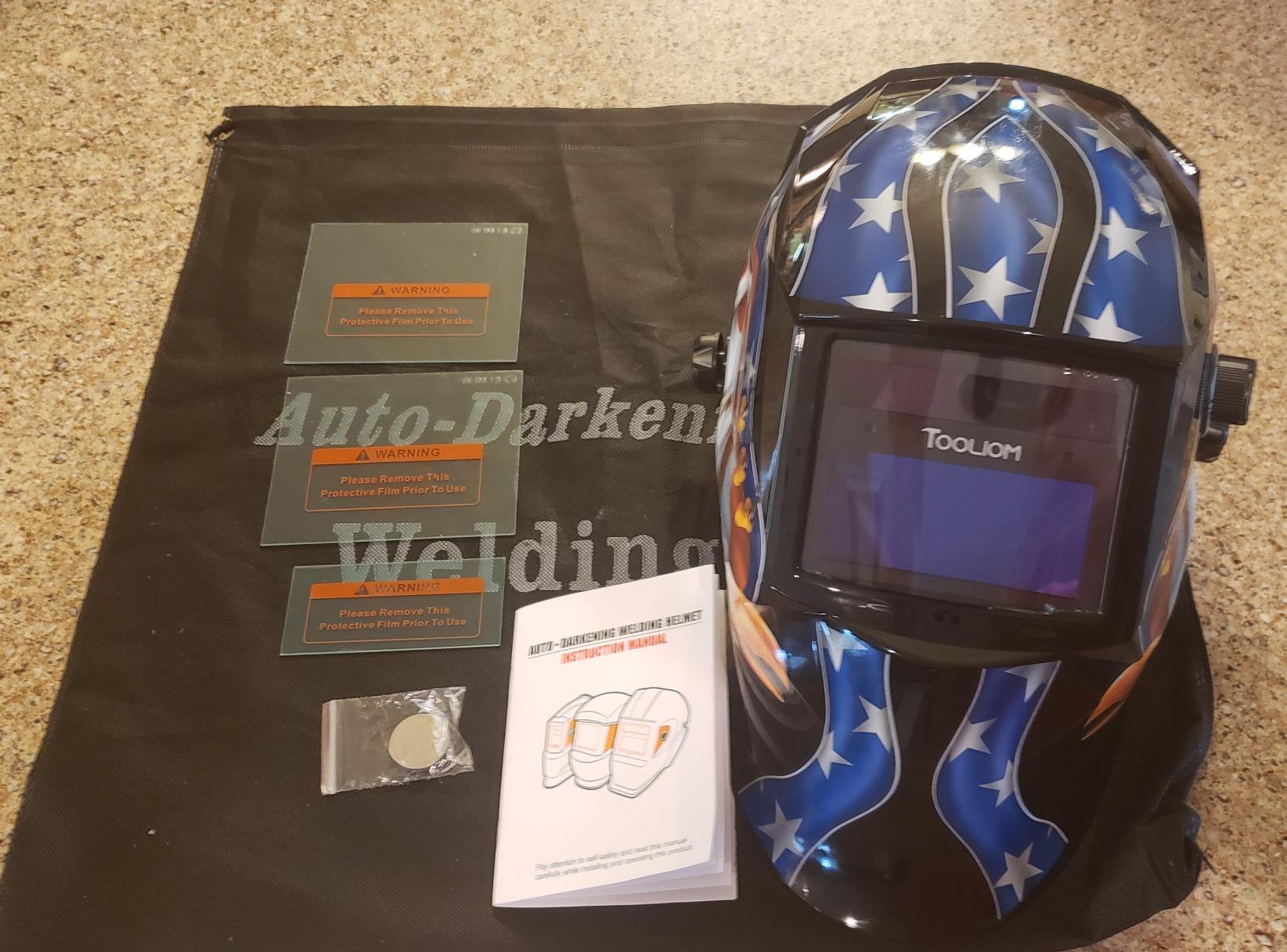
Solar powered with a user-replaceable battery and a low-battery indicator, so you find out before you strike an arc instead of wondering why the lens stayed light. The blue light blocking outer lens is a genuine plus for long days.
Adjustable polyethylene headgear with a sweatband holds position when you are leaning into a vertical pass. Buyers with larger heads report good stability, and the review set sits at 76% five-star.
How the light weight feels in practice
You notice the weight most when you are doing overhead work or stringer beads, where your neck is already at an angle. A light shell lets you forget the helmet is there.
Where it falls short
The cheater lens holder is slightly too small for standard 4.25 inch magnifiers, so if you plan to fit prescription inserts, check before you buy.
The rear headband is unpadded and can press against the back of your head, and the manual leaves out the side power and darkness knob. Learn the controls by feel, and check the writing on the shell.
5. Hobart 770890 – Best Helmet with a Wide Widescreen View
Hobart 770890 Auto-Darkening Welding Helmet, Large, Black
9.3 inch widescreen view
PureColor lens, 4 sensors
Analog shade sensitivity delay
2 year warranty
Pros
- Very wide widescreen viewing area
- Four independent arc sensors
- Analog knobs are simple and tactile
- Smooth weld to grind switching
- Two year manufacturer warranty
Cons
- Listed weight of 1.8 lb is more than the 16 oz shells
- Analog knobs instead of digital readout
- Less handy than small light shells
The Hobart 770890 solves visibility the same way the panoramic budget shells do, but with a polyamide nylon shell and a two year manufacturer warranty behind it. The 9.3 inch widescreen view is the reason fabricators like it.
Four independent arc sensors keep detection consistent, and the auto-on power control wakes the filter at the strike of an arc. Owners rate it highly enough that 83% of reviews are five-star.
Analog knobs for shade, sensitivity and delay are a real advantage for beginners. A dial you can turn with gloves on and feel click is easier to adjust mid-session than a menu-driven panel.
Switching from weld to grind mode is seamless, so you are not swapping helmets between a fill pass and cleanup work. Continuous UV and IR protection and an included CR2 lithium battery round it out.
Who benefits from the wide view
If you work on large plate, structural projects or anything where both hands and the joint matter, the widescreen window removes the head-craning that causes poor bead placement on early projects.
Where it falls short
The listed weight is 1.8 pounds, noticeably more than the 16 ounce shells in this group. For short weekend projects that is fine; for an all-day grinding and chipping session you will feel it.
The controls are analog only, with no digital readout of your current setting. If you like seeing the shade number before you start, that is a step down from a digital panel.
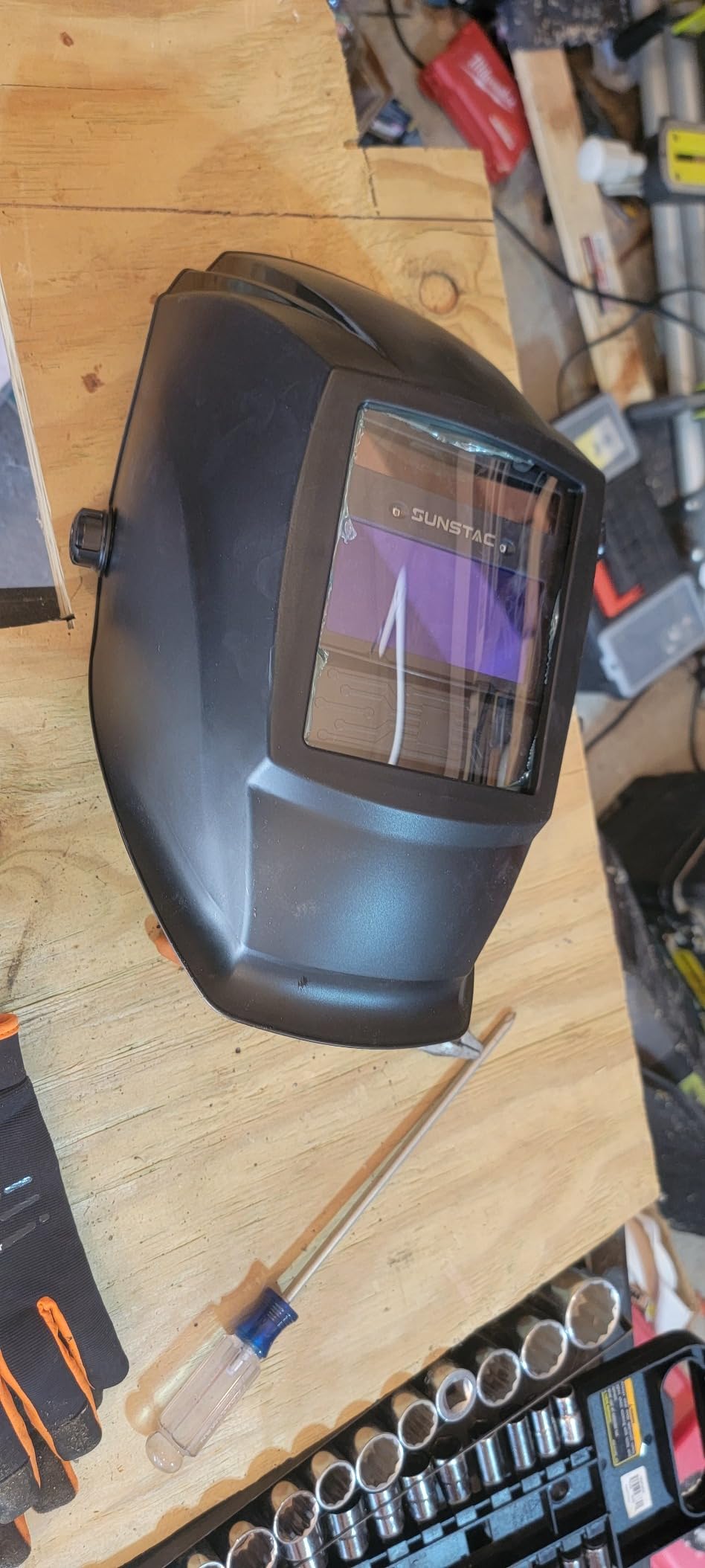
6. Sunstac SS-A800D – Best for True Color Clarity and Low-Light Work
Sunstac Auto-Darkening Welding Helmet 3.94 x 3.27″ View with Light
3.94 by 3.27 inch view
4 arc sensors, 1/30000s
Shade 4/5-9/9-13
Swivel work light
Pros
- Genuinely clear 1/1/1/1 true color view
- No darkening lag or over-darkening
- Padded headband holds position
- Rechargeable swivel work light
- Dual solar and battery power
Cons
- Filter can seem faulty at first
- Awkward battery compartment
- Deep shell presses glasses
- Delicate side tension buttons
Users comparing this against far costlier name-brand hoods usually land on the same two points: the screen is big at 3.94 by 3.27 inches, and the filter does not lag. There is no noticeable darkening delay or over-darkening on the processes we tried.
The lens is 1/1/1/1 true color with 1/30,000 second darkening and four arc sensors. Shade 4 light state, 5-9 and 9-13 for cutting and welding, plus grinding mode.
A rechargeable high-brightness work light with two modes and an adjustable swivel angle handles layout work in dim spaces. Power is dual: solar cells or the lithium battery, and it accepts a cheater lens sold separately.
Multiple adjustment points and interior padding give a closer fit than most shells at this level. It suits stick, TIG, MIG, cut, MMA and plasma work.
Why the view matters for learning
Color tells you temperature. With a clearer lens you can see the puddle shift from bright orange to a dull red and pull your amperage down before you burn through thin steel or undercut a root pass.
Where it falls short
The filter can take a moment to activate, which reads as a fault the first time you try it. Strike the arc a second time in your first session so you learn it rather than writing the helmet off.
The deep shell can press against glasses on smaller heads, the battery compartment is awkward to reach, and the side tension buttons feel delicate when the hood is raised.
7. Miller Classic Series ClearLight – Best Helmet for TIG Beginners
Miller Classic Series Welding Helmet, ClearLight™, Shade 8-13, Black
ClearLight lens, 6 square inch view
Weld 8-13, cut 5-8, grind 3
2 arc sensors, 1/23,000s
Three year warranty
Pros
- Rated for welding at 5 amps or below
- ClearLight color accuracy
- Digital shade delay sensitivity controls
- Three year warranty with parts
- 3.0 light state lets the hood stay down
Cons
- Only two arc sensors
- Six square inch view is compact
- Premium brand pricing
If TIG is the process you plan to learn, the Miller Classic Series is the one we would buy first. It is rated for welding at five amps or below, which is exactly the range where budget filters tend to fail to trigger.
ClearLight lens technology gives a high-definition view with accurate color, and the 6 square inch window is wide enough to see the puddle and the tungsten at the same time. Two arc sensors switch in 1/23,000 second.
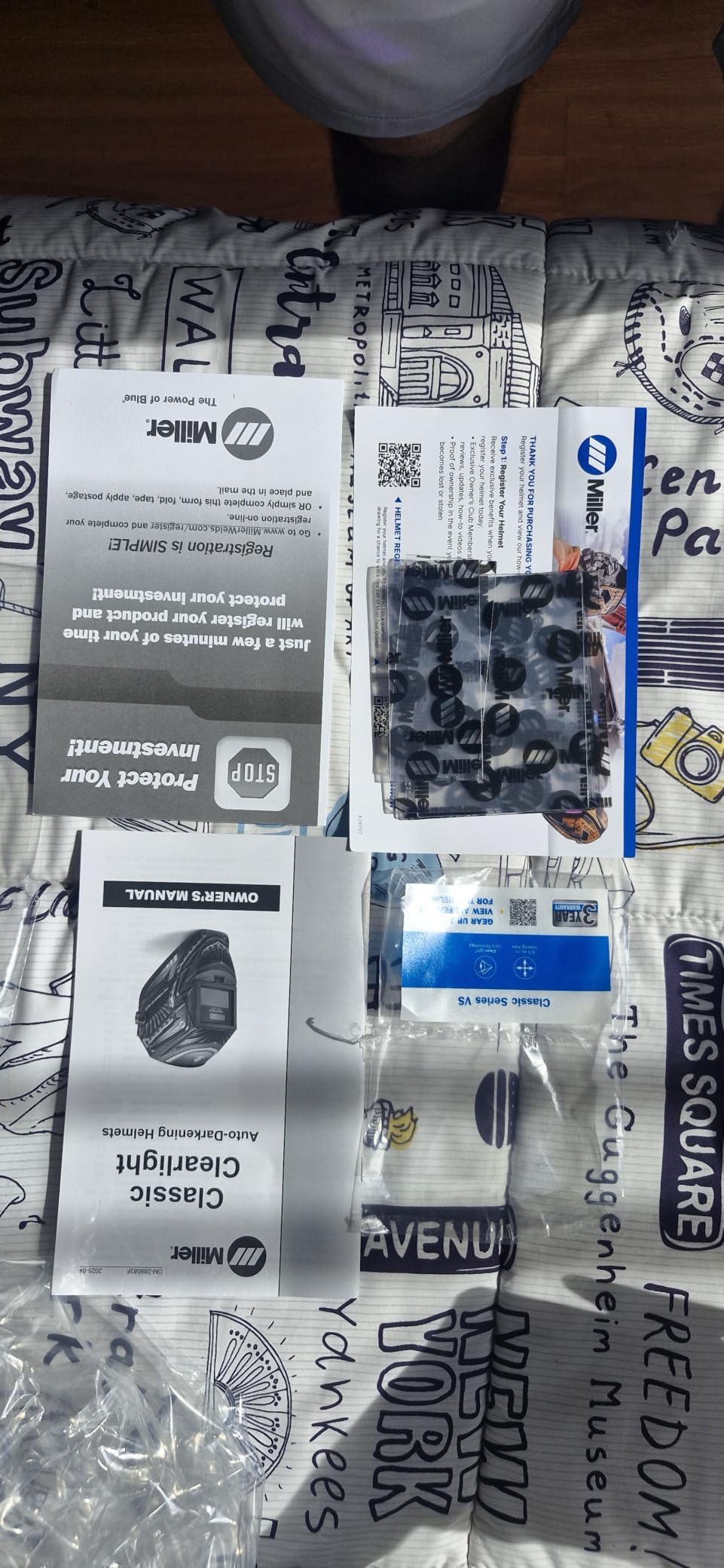
Digital controls cover shade, delay and sensitivity, and the ratchet headgear holds a secure fit through long sessions. Shade options run 8-13 for welding, 5-8 for cutting and 3 for grinding.
The 3.0 light state is a small detail with a real effect. It is light enough that you can keep the helmet down between welds instead of flipping it up and down on every pass.
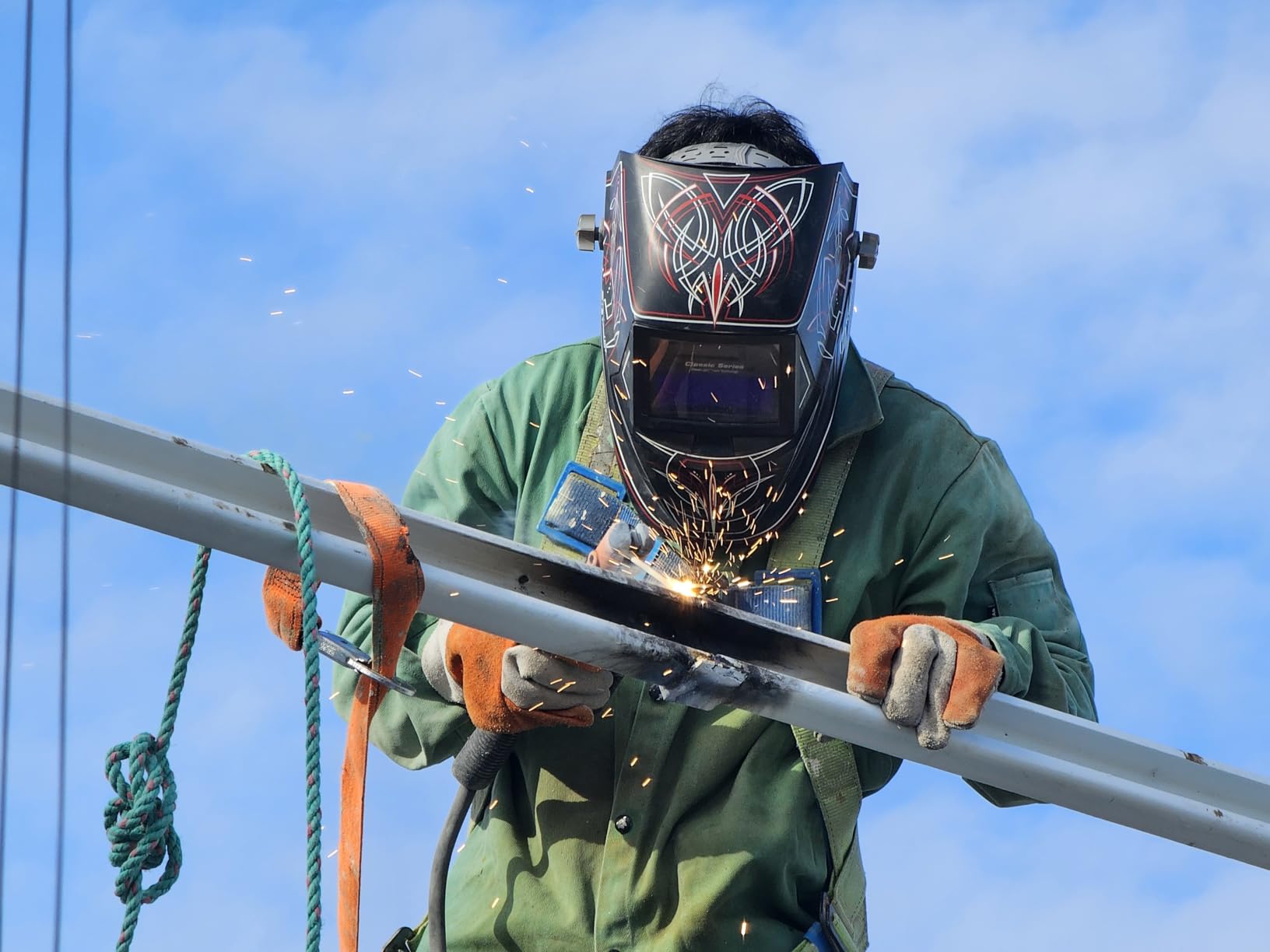
Why TIG beginners get the most from this one
TIG puts the arc nowhere near the filter, at low amperage, in bright conditions. Without a helmet rated for low amps, you end up welding through a nearly clear lens and burning your eyes.
Where it falls short
Two arc sensors is fewer than most of the shells on this list. On a bright bench with a lot of reflected light, the extra sensors on the panoramic models give more margin.
The 6 square inch viewing area is compact next to the panoramic shells, so if you plan to move to MIG and structural work later, weigh the view against the low-amp rating.
8. Forney 55732 Easy Weld Velocity – Best Helmet for Weekend Hobby Work
Forney 55732 Easy Weld Series Velocity Auto-Darkening Welding Helmet
5.97 square inch view
2 arc sensors, 1/25,000s
DIN 9-13, TIG to 5 amps
5 point headband
Pros
- True color optics for the money
- External shade and grind knob
- 5 point headband with sweatband
- Low amperage TIG capable
- Tough dual crown strap headgear
Cons
- Shell and headgear feel thin
- Viewing area sits high on the shell
- Non-replaceable battery cell
- Less durable than similar hoods
The Forney Velocity is a straightforward first helmet from a brand most beginners already recognize. The lens is 1/1/1/2 true color over a 5.97 square inch window with a UV and IR coating, and the view is clear and even.
Two optical arc sensors switch in 1/25,000 second, and the shade range is DIN 9-13 variable, TIG operable to five amps. An external knob handles shade and grind; sensitivity and delay sit inside.
Headgear is dual crown strap with a quick-fit five-point headband and sweatband, which keeps the shell from twisting when you look down at your work. It meets CE, EN166, EN175, EN379 and ANSI Z87.1.
Several reviewers bought a second helmet shortly after, mostly for comfort rather than lens performance. That tells you what the lens does well and where the shell falls short.
Good fit for occasional welders
If you weld on weekends, the shell will not be under much load. The lens performs well for the money, and a brand with a real support network is worth something when you are learning.
The external shade selector is quick to use with gloves on, which matters more than it sounds when you are stopping to check a bead.
Where it falls short
The viewing area sits high on the shell, so you end up craning your head and the helmet can creep forward. Push it down before you start and check it periodically.
The solar cells use a non-replaceable 3V lithium CR2032 cell. Once that cell fails, the helmet is finished, which is the one design choice we would not repeat.
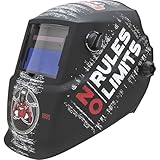
9. Lincoln Electric K4983-1 No Rules No Limits – Best Helmet for Hard Hat Jobs
Lincoln Electric No Rules No Limits Welding Helmet K4983-1, Auto Darkening, Lightweight Weld Headgear, Shade 7-13, Grind Mode, Use for Stick, TIG, Pulsed TIG, MIG, Pulsed MIG, Flux Core, Gouging
4.33 by 3.54 inch view
Shade 7-13 plus grind
Solar with battery backup
17.5 oz
Pros
- Hard hat compatible for site work
- Only 17.5 oz
- Adjustable ratchet headgear with large sweatband
- Two spare inner and outer lenses
- Broad process range including gouging
Cons
- Shade range starts at 7
- TIG rated at 5 amps or higher
- Less wear time in the review pool
This is the pick if you work construction rather than a garage bench. It is hard hat compatible, so it fits under a hard hat instead of fighting it, and at 17.5 ounces it is one of the lightest shells here.
The viewing area is 4.33 by 3.54 inches with variable shade 7-13 plus a dedicated grind mode. Ratchet headgear carries an oversized absorbent sweatband that handled an outdoor afternoon well.
Power is solar with battery backup, and two AAA batteries are included. Two extra impact resistant inner and outer lenses are in the box, which matters when you are working somewhere a replacement is not easy to find.
The process list is the broadest here: stick, TIG, pulsed TIG, MIG, pulsed MIG, flux core and gouging. It is ANSI Z87.1 certified.
Where it outshines the hobby helmets
Ratchet headgear holds a secure, repeatable fit, so you can pull it on and get the same position every time. That consistency matters when you are welding overhead or on a ladder.
Where it falls short
The shade range starts at 7 rather than 4 or 5, so there is no light state for detailed cutting or fitting work the way the shaded models offer.
TIG is rated at five amps or higher, which rules out the thinnest TIG work. The review pool is also smaller than the budget models, so there is less long-term owner history to lean on.
10. Miller MP-10 Passive Helmet – Best Passive Helmet and Backup
Miller 238497 MP-10™ Passive Welding Helmet, 4×4 in Viewing Area
Passive shade 10 lens, no batteries
4 by 4 inch view
16 oz nylon shell
Lens upgradeable later
Pros
- No batteries
- so it is always ready
- Lightweight 16 oz nylon shell
- Adjustable headgear lifts up to inspect
- Upgradeable to auto-darkening later
- Magnifier lens holder included
Cons
- Lens never darkens automatically
- Spare lenses may not be included
- Headgear locks into only two positions
- Unsuitable for low-amp TIG in the dark
Not every beginner needs auto-darkening, and this is the case where a fixed shade helmet genuinely makes sense. The Miller MP-10 uses a passive shade 10 lens with no electronics and no batteries, so it works the moment you put it on.
The shell is heavy-duty nylon at 16 ounces with a 4 by 4 inch viewing area, and the adjustable headgear lifts up for inspection so you can check your work without taking the helmet off.
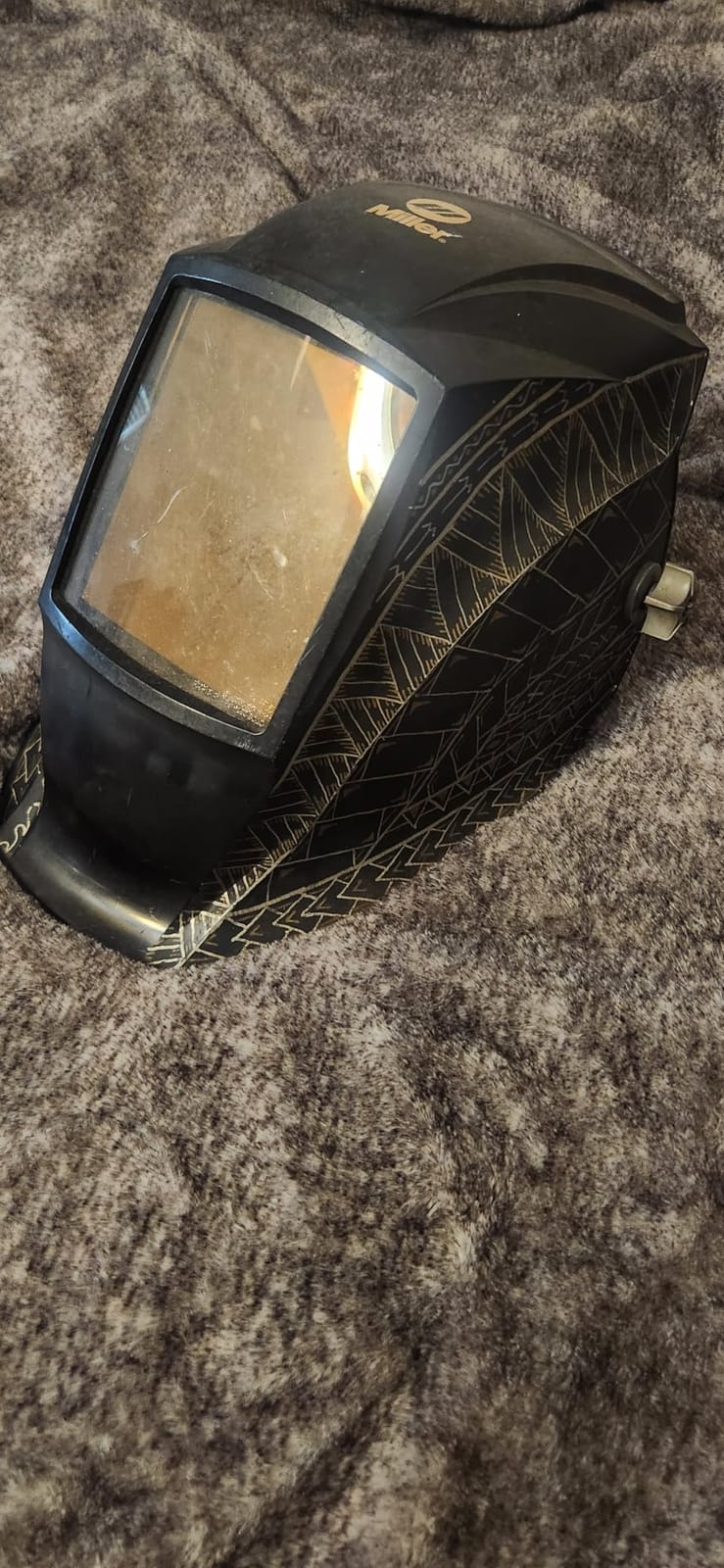
The lens is upgradeable to auto-darkening later, and a magnifier lens holder is included. That upgrade path is the reason experienced hobbyists like this approach: buy the shell once, swap the filter when you outgrow it.
When a passive helmet makes sense
Fixed shade suits short, predictable work where you nod down, weld a few passes and look at the bead. There is no electronics to fail and no settings to get wrong on day one.
Owners mainly use it as a backup or a loaner for someone learning. It also pairs well with prescription glasses, since there are no electronics to interfere with a cheater lens.
Where it falls short
The lens does not darken when the arc goes out, so you get no UV and IR protection in the light state and no view of your puddle between welds. That habit gap is why most people move to auto-darkening.
The headgear locks into only two fixed positions, which some find awkward, and listings sometimes imply spare lenses are included when only one is in the box. Check the box contents as soon as it arrives.
How to Choose a Welding Helmet for Beginners
Auto-darkening or fixed shade?
An auto-darkening filter switches from a light DIN 3-4 state to a dark DIN 8-13 state the moment sensors detect an arc, so you never weld through a clear lens or nod down mid-bead. A fixed shade helmet is always the same darkness, which is simpler but slower and blind in the light state.
For most beginners auto-darkening wins immediately, because the blind nod-and-flip moment causes most early eye injuries. A passive shell makes sense if you weld rarely, want zero electronics to fail, or want a backup helmet.
Arc sensors and switching speed
Arc sensors detect the arc and tell the filter to darken. More sensors mean more angles covered and better rejection of false triggers from sunlight or fluorescent shop lights, which is the top complaint on cheap helmets. Two sensors is workable; four is comfortable.
Switching speed is quoted as a fraction of a second, typically 1/20,000 to 1/30,000. Anything in that range is fast enough that you never see the raw arc. Also check recovery time, because a slow light-up makes bead placement harder.
Shade range and lens color
Shade 10 is the classic choice for MIG and stick on mild steel, and shade 11 to 13 for stainless, thicker material and low amperage TIG. Higher numbers are darker. A wider range such as 4/5-9/9-13 covers cutting and grinding too, so one helmet does the whole shop.
True color or ClearLight lenses remove the green cast of older filters and let you read heat color on the puddle. Optical clarity 1/1/1/1 is the top grade; 1/1/1/2 means the light state has a slightly weaker grade, which most beginners never notice.
TIG and low amperage arcs
This is the single biggest reason to read the spec sheet carefully. A TIG arc sits far from the helmet at low current, and many budget filters simply do not detect it, so you end up welding with a nearly clear lens. Look for a TIG rating stated in amps, or low-amp capable sensors.
AC TIG adds another wrinkle. Some filters tint blue on AC arcs, and on a DC low-amp arc the lens may look green. If TIG is your main process, buy the rating rather than experimenting.
Viewing area and headgear
A 3.6 by 1.6 inch window fits most work. Anything above 4 by 3.5 inches is panoramic and lets you see your hands, the joint and the arc together, which speeds up learning. Bigger windows are heavier, so balance view size against weight.
Headgear matters more than most buyers expect. Ratchet adjustment gives a repeatable fit, and a padded sweatband plus a narrow rear cradle keeps pressure off your head through a long session. Test the helmet with the gloves and jacket you actually wear.
Standards, power and the shell-plus-lens route
Look for a printed standard such as ANSI Z87.1 in the US, CSA Z94.3 in Canada, or EN 379 and EN 175 in Europe. Marketing language like ANSI approved is not the same as Z87.1 certification, so check the label. Continuous UV and IR protection matters more than any other claim on the box.
Power usually means solar cells with a replaceable battery backup. A replaceable CR2032 or CR2450 cell is a small convenience that can save the helmet later. If you plan to grow into the hobby, buying a plain shell and adding a replaceable auto-darkening cartridge is the cheapest upgrade path, and it is why shell design still matters.
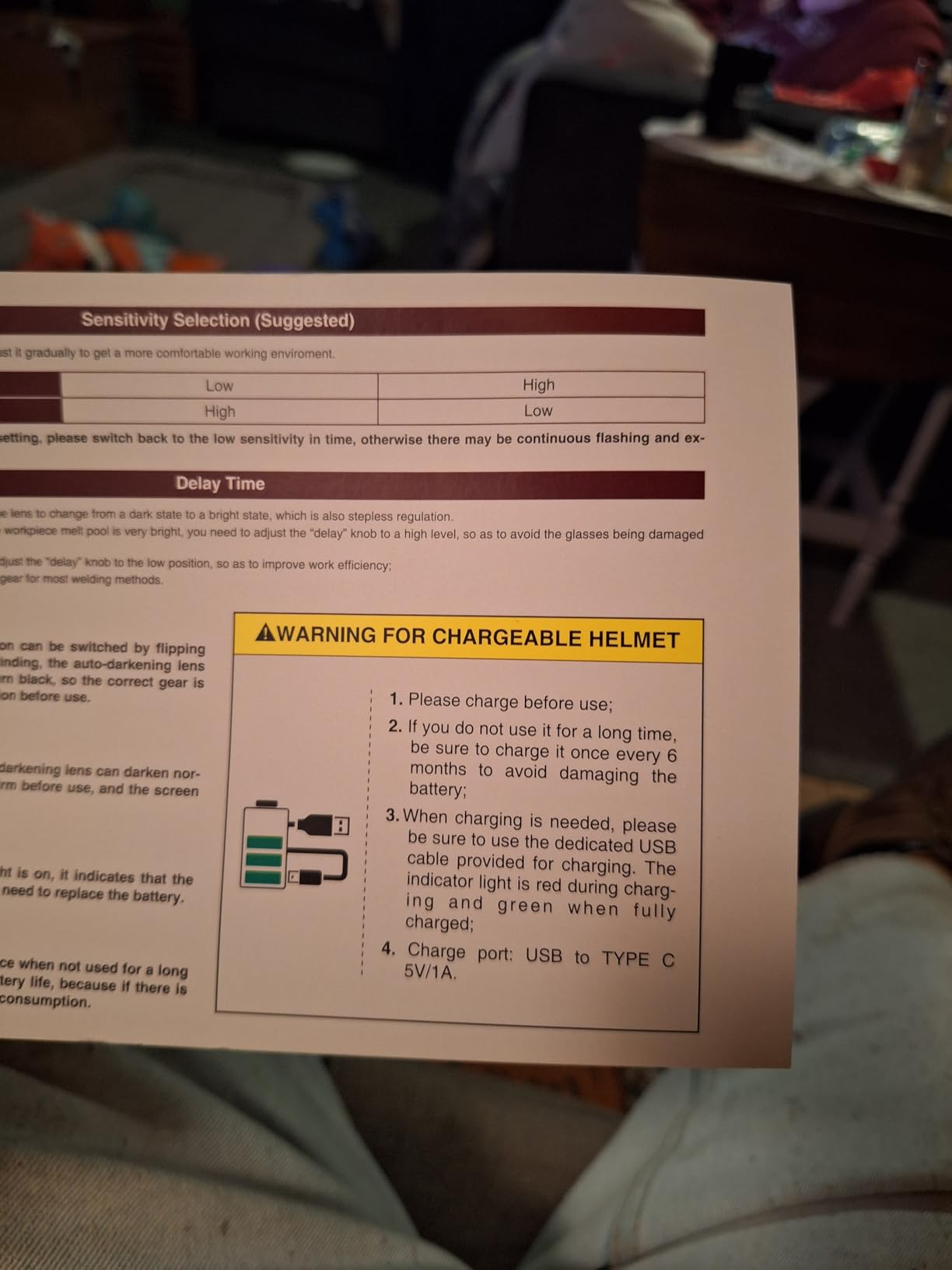
Setting sensitivity and delay on a new helmet
Start at the middle. Set shade to 10 for MIG, sensitivity and delay to the middle of their ranges, and grind mode off.
Strike a test arc on scrap. Make sure the lens darkens instantly and that you cannot see the arc at all.
Raise sensitivity if the lens hesitates. This is the setting that fixes TIG at low amps and any dim indoor arc.
Shorten delay first. Too much delay leaves the lens dark between welds and hides your puddle, which slows learning.
Work outdoors or under fluorescents if the lens false-triggers. Interference from shop lighting is the usual culprit, not a fault in the helmet.
Wear safety glasses under the helmet. Community consensus among regular welders is that a clear pair underneath adds protection for your eyes and covers the gap when the filter goes light. If you also wear a respirator, check that it fits under the headgear before you buy. Pair the helmet with the right gloves for your process, as covered in our welding gloves for TIG guide, and a magnetic square set like our best welding magnets for angles will speed up setup.
Frequently Asked Questions
What is the best auto-darkening welding helmet for beginners?
The YESWELDER LYG-L600A is our top overall pick for a first helmet. It uses a 1/1/1/1 true color lens over a 3.64 by 1.67 inch viewing area, two arc sensors that switch in 1/30000 second, and a shade 3/7-13 range covering TIG, MIG, stick and grinding. It is ANSI Z87.1 and CSA Z94.3 compliant, weighs 16 ounces and includes a spare battery and replacement lenses.
Can I trust an auto-darkening welding helmet?
You can, as long as it lists a real standard such as ANSI Z87.1, CSA Z94.3 or EN 379 and you test it before your first bead. Arc eye is caused by UV and IR exposure, and a compliant filter blocks both continuously. Test for instant darkening, check the battery before each session, and keep your inner and outer lenses clean, since spatter and scratches cut optical clarity long before the electronics fail.
Do beginners need an auto-darkening welding helmet?
Most do. Auto-darkening removes the nod-down-and-flip moment that catches beginners off guard, and it lets you keep your head still so you can watch the puddle instead of guessing at it. A fixed shade helmet is still fine for short, predictable work where you weld a few passes and check the result, or if you want zero electronics to fail. Many beginners buy a passive shell first and upgrade the lens later.
Why won’t my welding helmet darken on TIG?
A TIG arc sits far from the helmet and runs at low current, so many budget filters never detect it. Turn sensitivity to its highest setting, shorten the delay so the lens clears between welds, and check the battery. If it still fails, the helmet is not low amperage capable and you need one rated in amps, such as the Miller Classic Series, rated for five amps or below. AC arcs can also tint some lenses blue.
Is shade 10 or shade 11 better for welding?
Shade 10 is the standard choice for MIG and stick welding on mild steel of about a quarter inch or thinner. Shade 11 suits stainless steel and slightly thicker material, and shade 13 is for heavy work or very low amperage TIG. Beginners should stay at shade 10 and only step up when the arc looks too bright and your view of the puddle suffers. Never choose shade to protect your eyes; the UV and IR rating does that.
Is 9 or 13 darker on a welding helmet?
Thirteen is darker. Shade numbers rise with density, so a shade 13 filter blocks far more light than a shade 9 and is used for heavy welding or very low amperage TIG. Shade 9 is a lighter working shade, often used for thin material and short arcs. On most auto-darkening helmets the range runs from about 9 to 13 for welding, with lower shades reserved for cutting and grinding.
How do I know if my welding helmet fits?
Adjust the headgear with the gloves and jacket you will be wearing, then shake your head and look down. If the helmet shifts, slides forward or drops when you raise it, tighten the rear band until it stays put. Check that glasses fit under the shell without pressing on your temples, and that a cheater lens slot accepts your magnifier. A bad fit causes neck strain long before it causes a bad weld.
Which Welding Helmet Should You Buy First?
For most people starting out, the YESWELDER LYG-L600A is the right first buy: 1/1/1/1 true color optics, two arc sensors switching in 1/30000 second, a shade 3/7-13 range and ANSI Z87.1 plus CSA Z94.3 compliance, with spare lenses and a spare battery in the box.
Buy the LYG-M800H instead if seeing your work is your frustration, the TOOLIOM if your neck gives out first, and the Miller Classic Series if TIG at low amperage is the plan. Our full ranking of the best welding helmets for beginners covers all ten, and every pick links straight to the current listing.
Tell us your welding process and how often you expect to weld, and we will narrow it to a single helmet.