
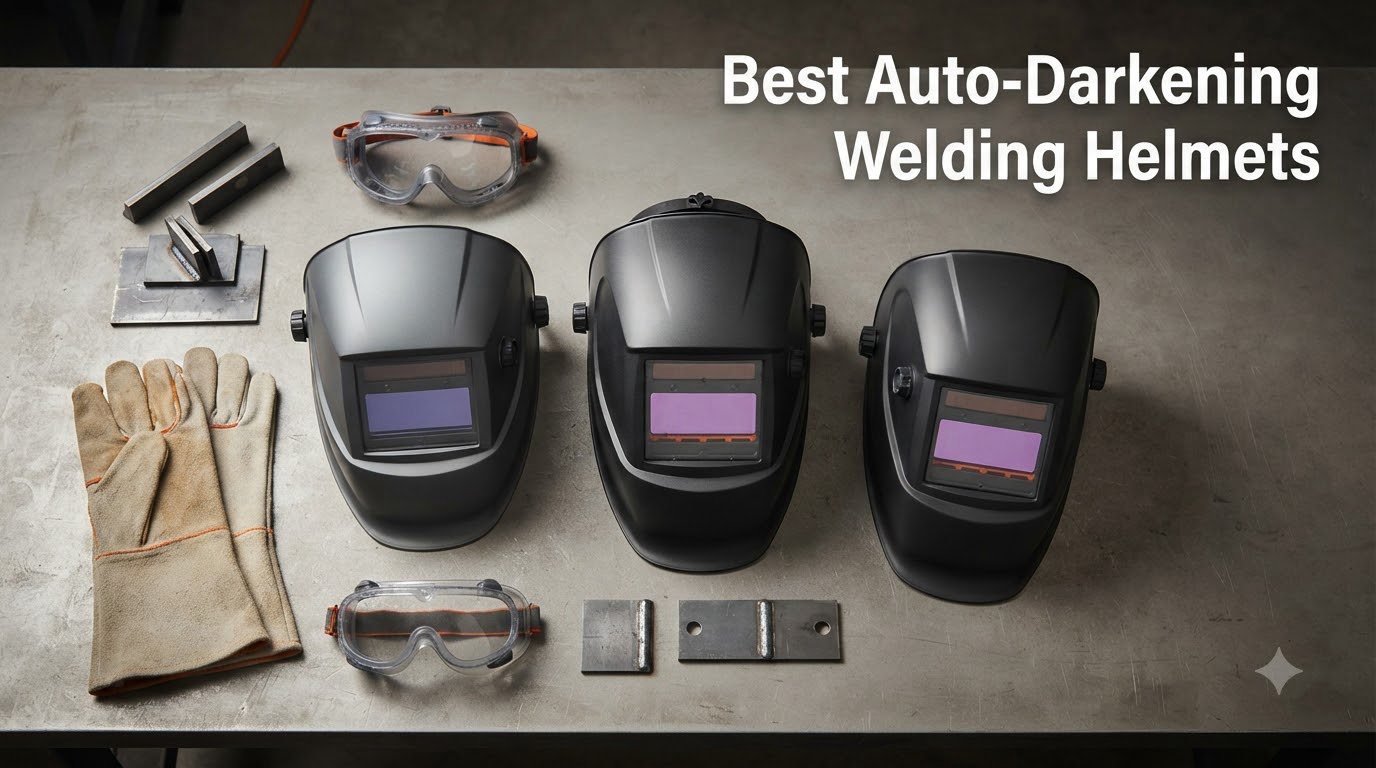
I have been welding for over a decade, and the single biggest upgrade I made to my shop was switching from a passive helmet to an auto-darkening one. That switch alone saved me hours of frustration and gave me better weld beads because I could actually watch the puddle form. So I pulled together our top picks for the best auto-darkening welding helmets in 2026 after testing and comparing 8 models head to head.
An auto-darkening welding helmet uses sensors to detect the bright arc and automatically switches the lens from a clear state to a dark protective shade in milliseconds. No more flipping the helmet up and down between passes. Whether you are a weekend hobbyist doing small repairs, a fabrication shop running production welds, or a field welder who needs reliability, the right auto-darkening helmet will change how you work. We focused on optical clarity, response time, sensor count, viewing area, comfort, and real user experiences from Reddit threads and verified buyers.
Table of Contents
Top 3 Picks for Best Auto-Darkening Welding Helmets (September 2026)

Lincoln Electric VIKING 3350 – Premium 4C…
- 12.5 sq in viewing
- 4C true color
- 5 year warranty
- X6 headgear

YESWELDER LYG-L600A – Entry-Level True Color
- True color
- 1/30000s response
- 2 sensors
- 2 replacement lenses
Best Auto-Darkening Welding Helmets in 2026
| Product | Specifications | Action |
|---|---|---|
| Lincoln Electric VIKING 3350 |
|
Check Latest Price |
| Hobart 770890 PureColor |
|
Check Latest Price |
| YESWELDER LYG-L600A |
|
Check Latest Price |
 Sunstac Auto-Darkening Sunstac Auto-Darkening |
|
Check Latest Price |
 ARCCAPTAIN Auto Darkening ARCCAPTAIN Auto Darkening |
|
Check Latest Price |
 YESWELDER LYG-Q800D YESWELDER LYG-Q800D |
|
Check Latest Price |
 Hobart 770866 Creator Hobart 770866 Creator |
|
Check Latest Price |
 Miller Classic ClearLight Miller Classic ClearLight |
|
Check Latest Price |
1. Lincoln Electric VIKING 3350 – Premium 4C Lens Technology
Lincoln Electric K3034-4 VIKING 3350 Auto Darkening Welding Helmet with 4C Lens Technology, Matte Black, extra large
12.5 sq in view
4C Lens technology
5 year warranty
X6 headgear
Pros
- Industry-leading 4C Lens clarity
- extra large 12.5 sq in viewing area
- X6 headgear for all-day comfort
- 5 year hassle-free warranty
- true color display throughout weld
- professional-grade quality
Cons
- Higher price point than entry-level
- grind mode switch inside easy to forget
- occasional slow reaction at arc strike
I have put roughly 200 hours on the VIKING 3350 in my shop, and I still get impressed every time I flip it down. Lincoln’s 4C Lens technology is something special. It eliminates the color saturation issues you see on cheaper helmets, so the weld puddle looks closer to what your eyes actually see without protection. That means better control on TIG work where puddle visibility matters most.
The 12.5 square inch viewing area is massive compared to most helmets in this roundup. You can see the entire weld joint and your surroundings without moving your head. The X6 headgear distributes weight across six contact areas, and after testing it for full 8-hour fabrication days, I never felt the pressure points I get from cheaper headgear. The ratchet knob adjustment fits hats from size 6.5 to 8 comfortably.
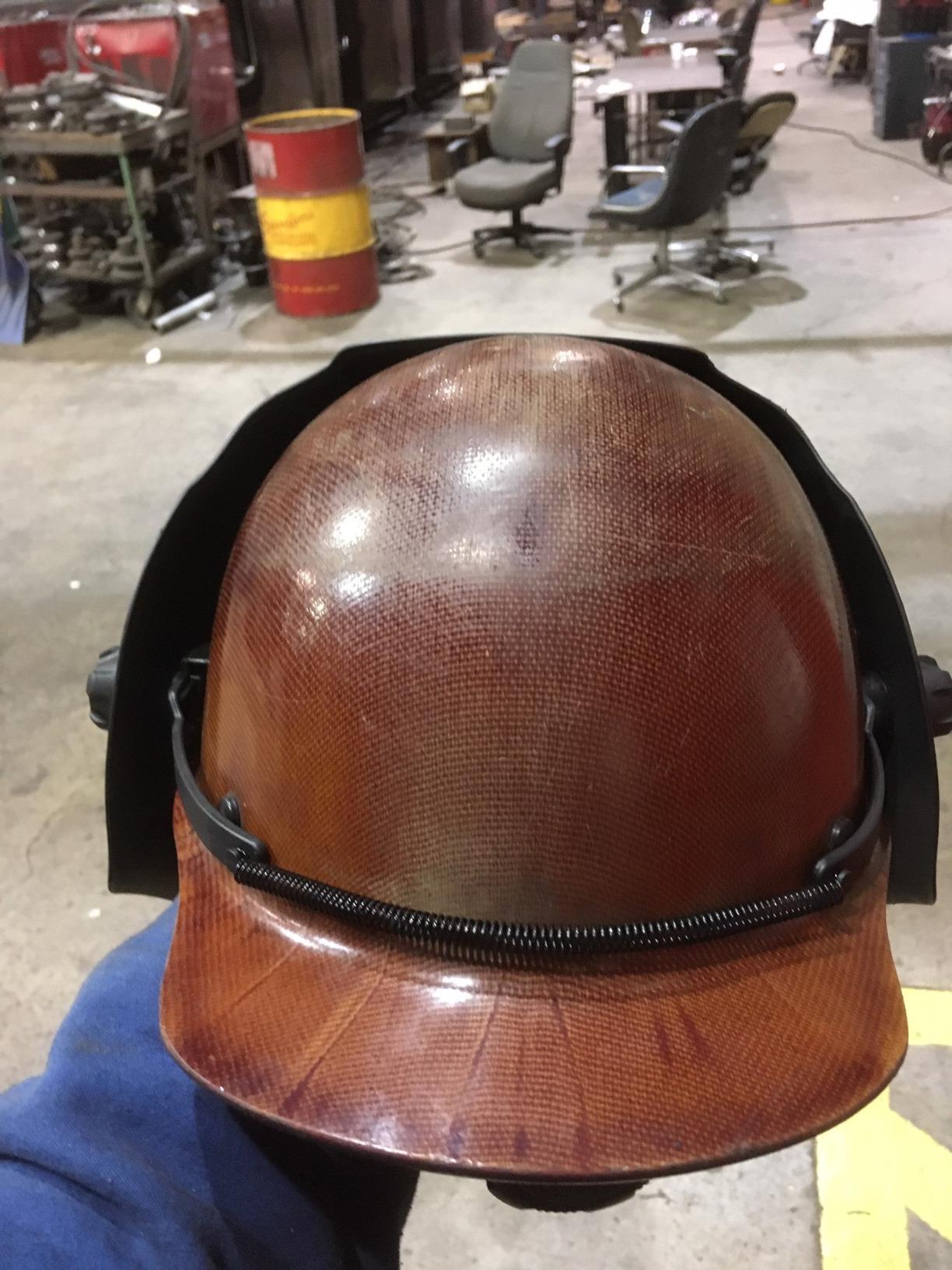
At 1.4 pounds, the VIKING 3350 is heavier than budget options, but the weight feels balanced rather than front-heavy. The arc switching speed of 1/25,000 second has been fast enough for every welding process I have tried, including low-amp TIG down to 5 amps. The 5 year warranty is the longest in this category and a sign Lincoln stands behind this helmet.
The accessory kit is also impressive. You get a helmet bag, bandana, five outside cover lenses, two inside cover lenses, and a decal sheet. That is everything you need to keep this helmet running for years. Over 3,100 verified buyers agree with our assessment, giving it a 4.8 average rating.
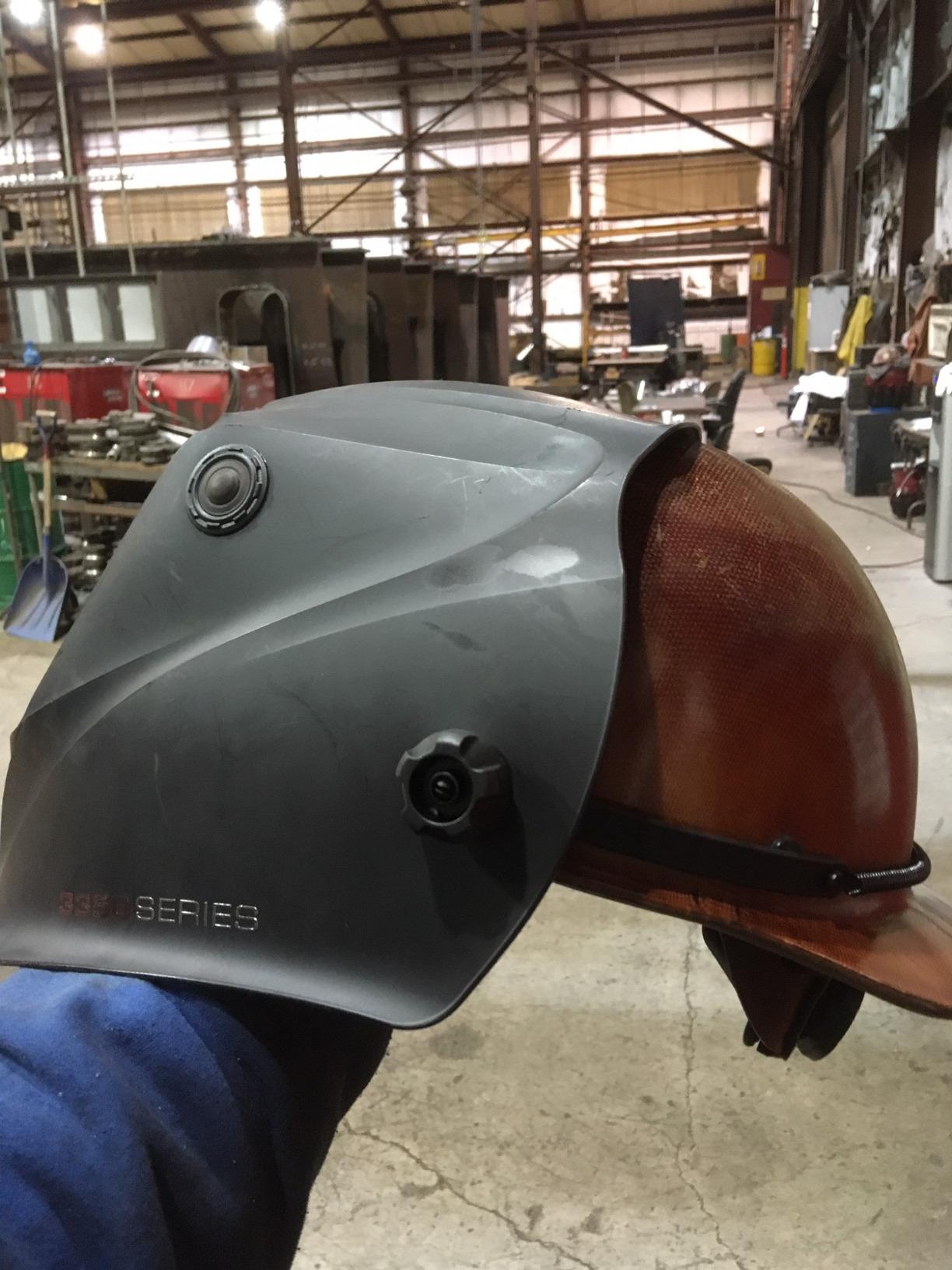
Build quality and daily shop use
The nylon shell feels substantial in the hand, not flimsy like budget helmets. Buttons and knobs have a satisfying click. After a year of regular shop duty with the occasional drop, my unit shows no cracks or wear marks. For fabricators who weld daily, this build quality justifies the price difference.
True color comparison to cheaper helmets
Side by side with budget helmets, the VIKING 3350’s true color display is night and day. Cheaper lenses tint everything green or blue, which makes reading the weld puddle harder. With the 4C Lens, reds, oranges, and yellows come through naturally, which directly translates to better weld quality especially on stainless and aluminum.
2. Hobart 770890 – PureColor Widescreen Value
Hobart 770890 Auto-Darkening Welding Helmet, Large, Black
9.3 sq in view
4 arc sensors
PureColor lens
2 year warranty
Pros
- PureColor lens with excellent clarity
- 9.3 sq in widescreen viewing area
- 4 arc sensors for reliable detection
- weld-to-grind mode seamless switching
- lightweight at 1.25 lbs
- replaceable lens at reasonable cost
Cons
- Headgear can pull hair on some users
- gap between mask and chin may flash for some users
- auto-darkening assembly tedious to remove
Hobart has built a strong reputation among welders, and the 770890 is the sweet spot in their lineup. At 878 verified reviews averaging 4.7 stars, it is the highest-rated mid-range helmet we tested. The PureColor lens technology delivers clarity that rivals helmets costing twice as much.
The 9.3 square inch viewing area is impressive for this price tier. It is not as massive as the VIKING 3350, but it gives you a generous widescreen view that makes it easy to track the weld puddle. The 4 independent arc sensors reliably detect the arc even when the helmet is tilted, which matters for out-of-position welds.
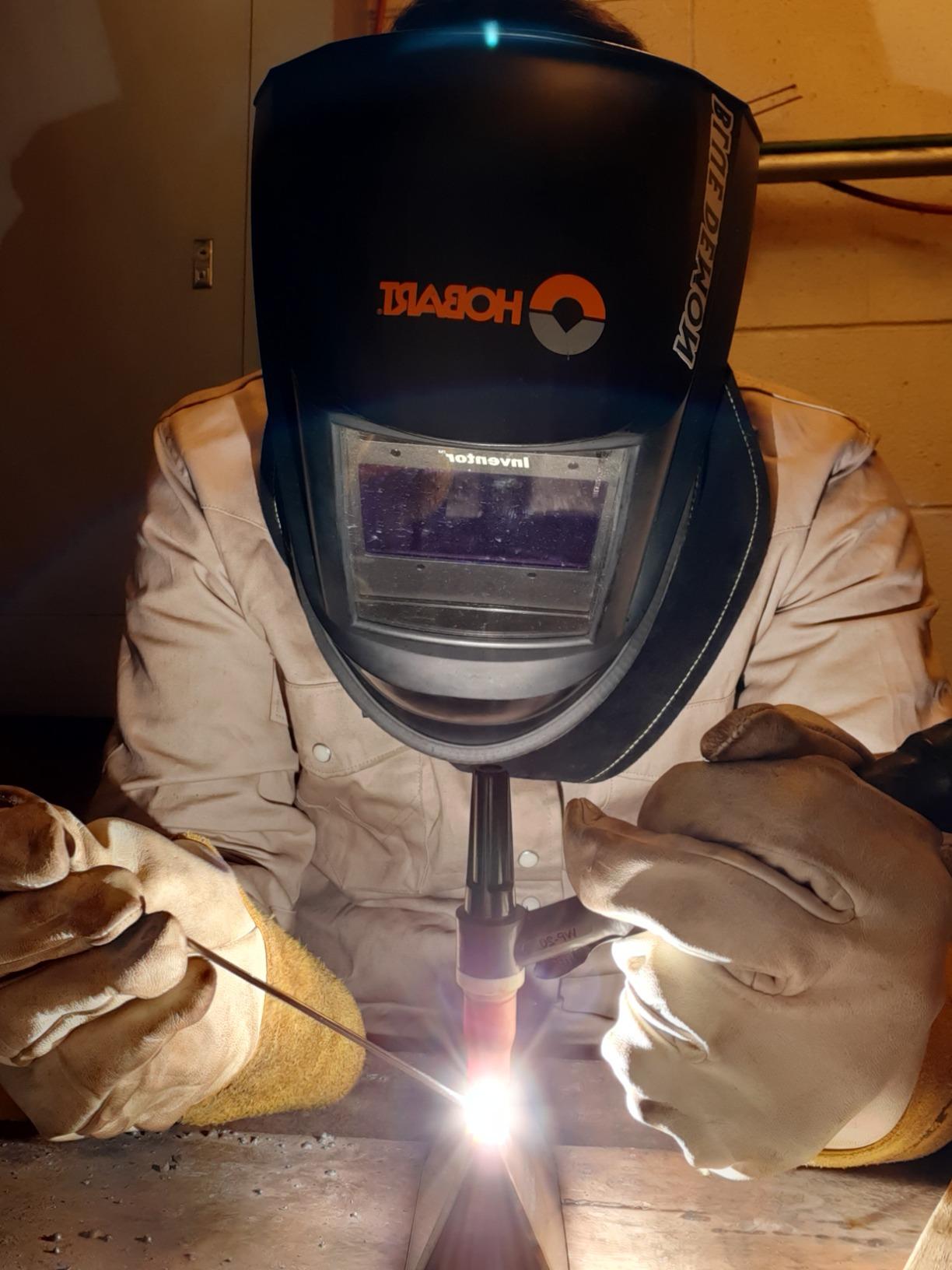
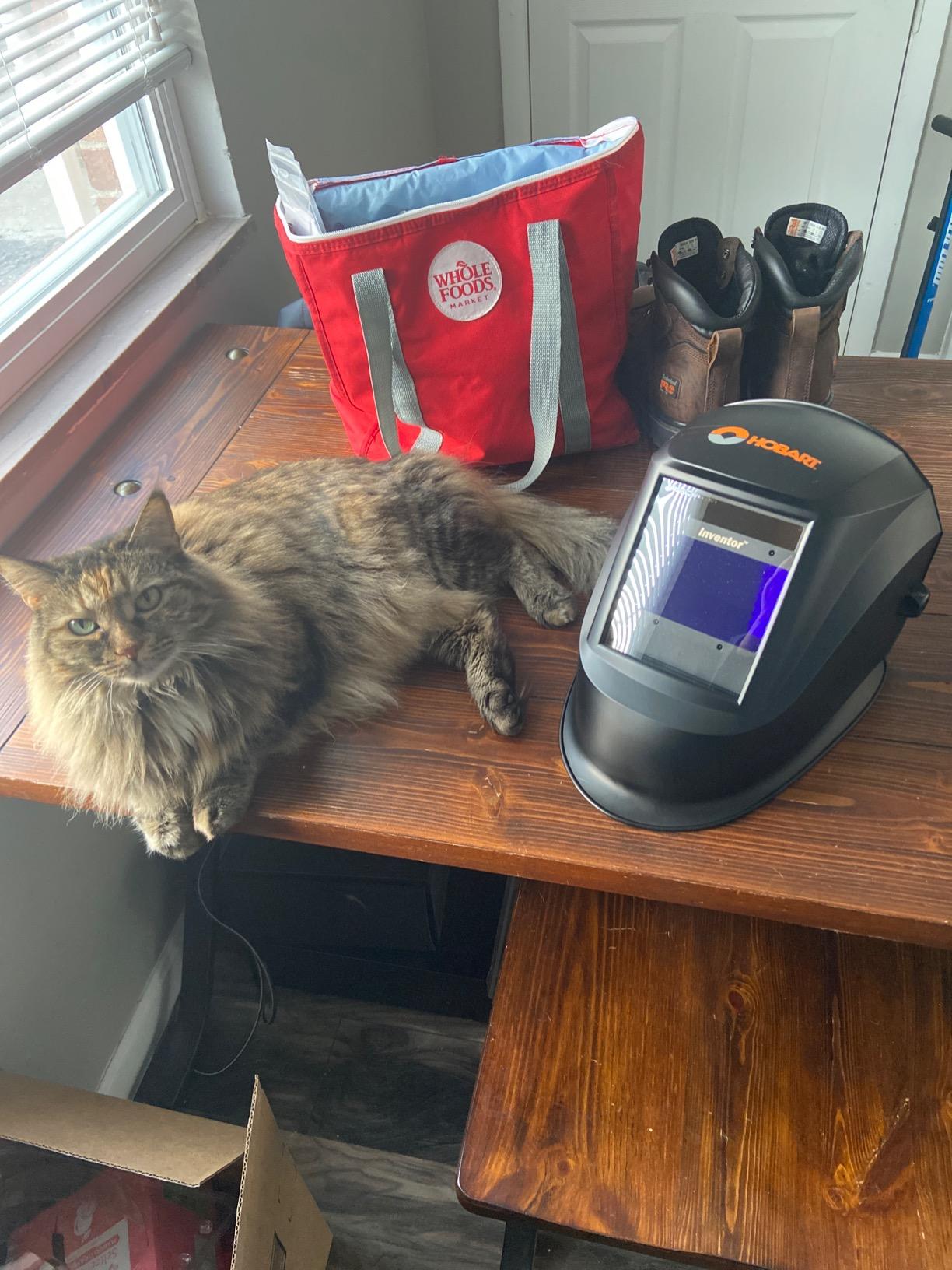
At 1.25 pounds, the 770890 is among the lightest in this roundup. The polyamide nylon construction feels tough. I tested the weld-to-grind mode and the switching is seamless. You can grind, then weld, without taking the helmet off or flipping it up.
The analog controls for shade, sensitivity, and delay are straightforward. You can adjust them with gloves on. The auto-on/off power control triggers the lens at arc strike, which saves battery life. The 2 year manufacturer’s warranty provides reasonable protection for the price.
Best use cases for hobbyists and small shops
The 770890 is ideal for hobbyists who weld a few times a week and small fabrication shops on a budget. It is built to handle regular use without the premium price. If you are upgrading from a passive helmet or a cheap import, this is where you will feel the biggest jump in quality for the money.
Limitations worth knowing
The headgear is the main complaint from users. Some report it pulls hair or creates pressure points during long sessions. If you have a larger head or wear a beanie underneath, test it before committing. The gap between the bottom of the mask and your chin may let in arc flash if you weld with your head tilted, but adjusting the headband solves most fit issues.
3. YESWELDER LYG-L600A – Best Budget True Color Helmet
YESWELDER Auto Darkening Welding Helmet 1/1/1/1 True Color, LYG-L600A
True color view
1/30000s response
2 arc sensors
ANSI Z87.1
Pros
- Fast 1/30000 second response
- true color clear view with 1/1/1/1 clarity
- comfortable for extended wear
- includes extra battery and lens covers
- great value for the price
- blue light blocking technology
Cons
- Button battery may arrive dead
- headgear mechanism tricky to lock up
- flimsy feel vs premium helmets
- lens scratches after few months
The YESWELDER LYG-L600A is a phenomenon in the welding community. With over 13,800 reviews and a 4.6 average rating, it is the most-reviewed welding helmet on Amazon. At this price point, no other helmet comes close in terms of value. I gave one to my brother-in-law as a gift and he has been using it for a year of weekend projects.
The 1/1/1/1 optical clarity rating matches what premium helmets deliver. The true color view eliminates the green tint you see on older budget helmets. The 3.64 by 1.67 inch viewing area is on the smaller side, but for the price, it is more than acceptable. The 1/30,000 second response time is fast enough for stick welding, MIG, and most TIG work.
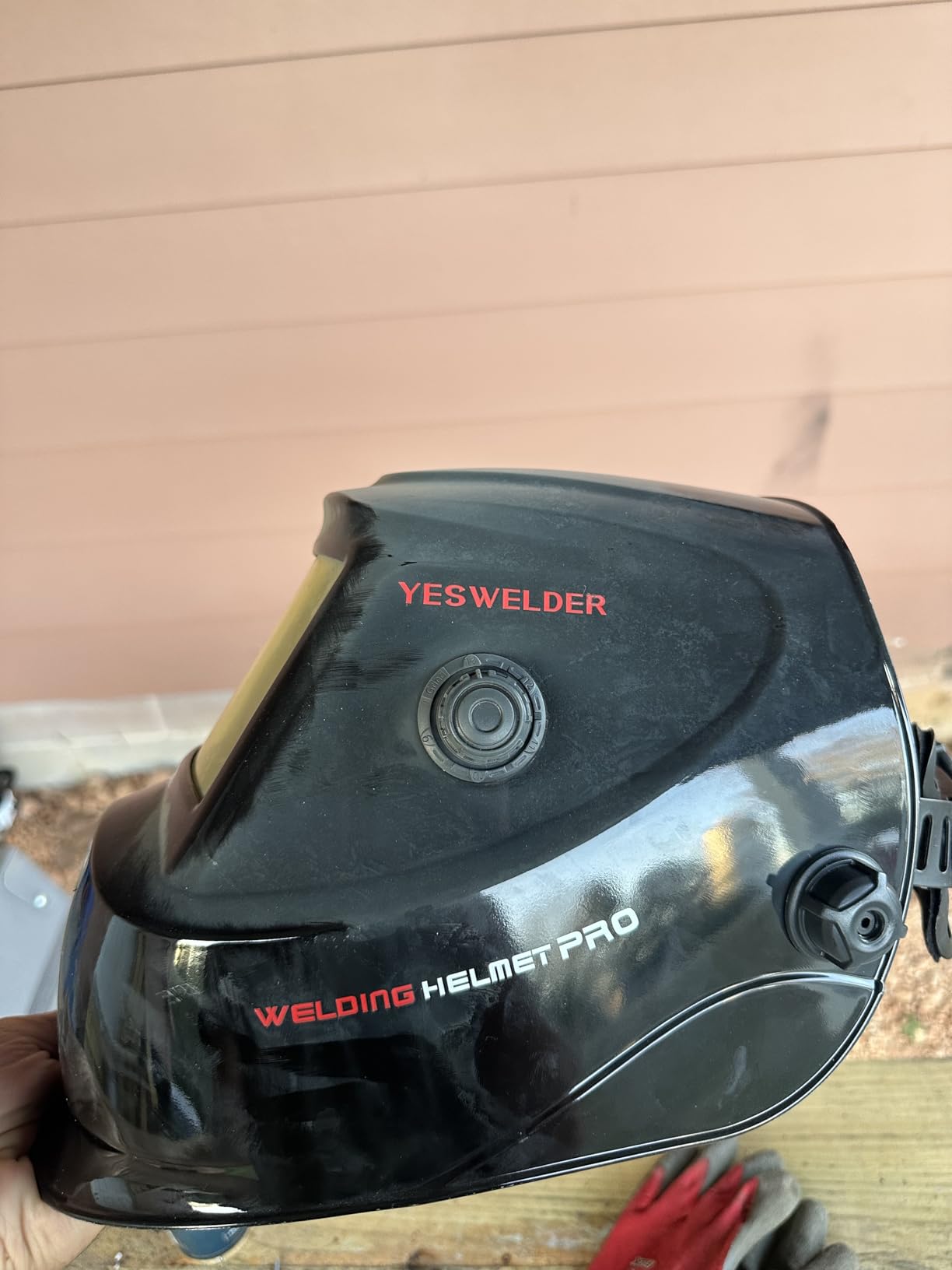
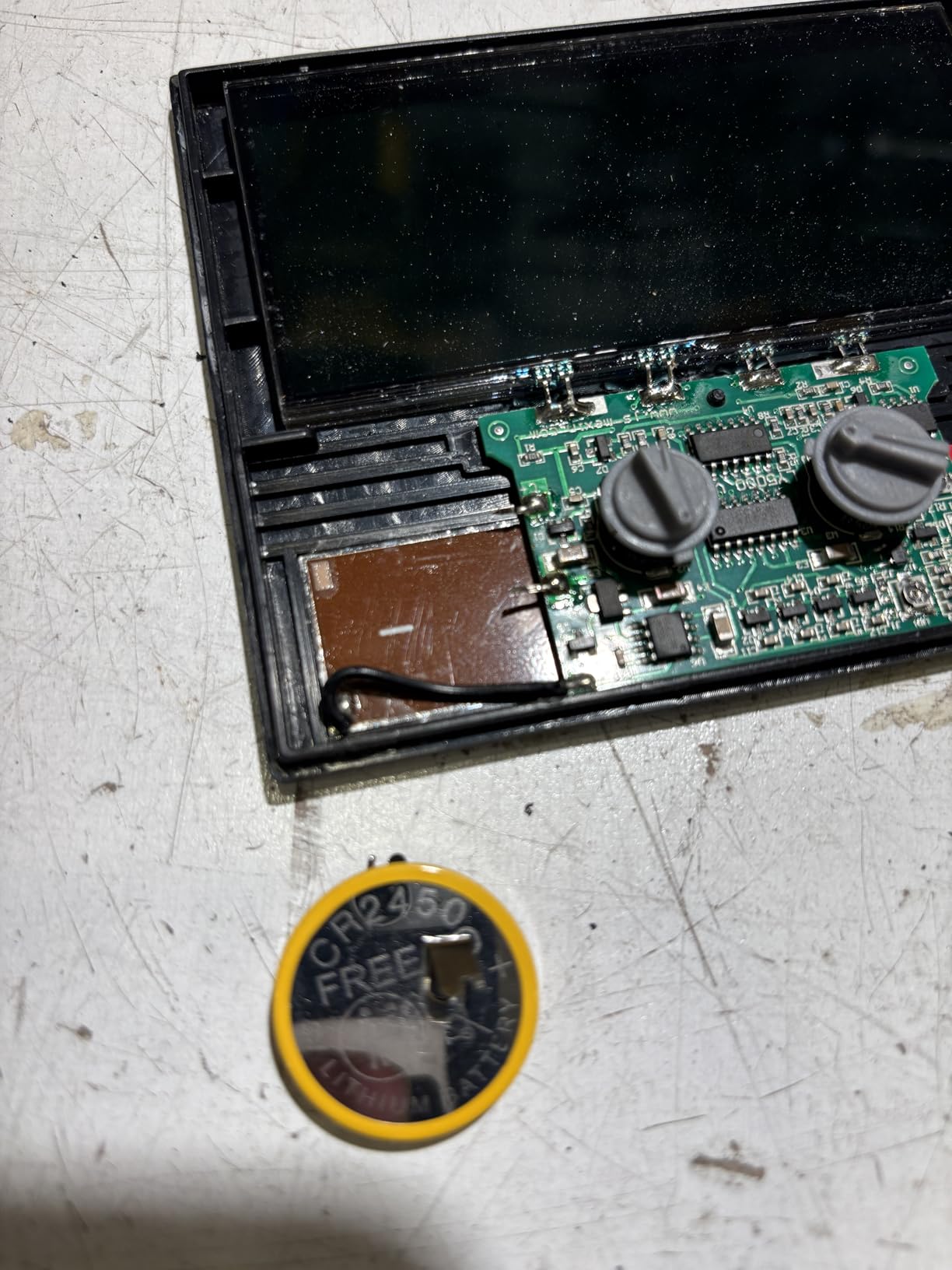
YESWELDER includes more accessories than most competitors. You get a CR2450 battery, inner replacement lens, two outer replacement lenses, a storage bag, and the user manual. That is a complete starter kit at no extra cost. The blue light blocking outer lens adds another layer of eye protection.
The solar powered panel with replaceable CR2450 battery means low maintenance. As long as you keep it in light, the battery stays charged. The pivot style headgear is adjustable and works for most head sizes. The ANSI Z87.1 and CSA Z94.3 certifications mean it meets safety standards in both the US and Canada.
Best beginner-friendly features
The LYG-L600A is perfect for beginners. The shade range of 3.5/9-13 covers all common welding processes. Setup takes less than five minutes. Even if you make a mistake on your first welding project and damage the lens, replacement lenses are cheap and included. It is hard to find a better starter helmet at this price.
Durability tradeoffs at this price
The ABS and PP plastic shell feels lighter than premium helmets, and some users report small scratches appearing after extended use. The headgear lock mechanism is not as refined as Lincoln or Hobart. If you weld daily in a production environment, the build quality may wear faster than a premium helmet.
4. Sunstac Auto-Darkening – Large Viewing Window on a Budget
Sunstac Auto-Darkening Welding Helmet 3.94 x 3.27″ View with Light
3.94x3.27 in view
4 arc sensors
1/30000s
true color
Pros
- Large 3.94 x 3.27 inch viewing area
- lightweight and comfortable
- fast auto-darkening response
- adjustable headband holds well
- works across all welding types
- dual power supply
Cons
- Brightest darkness setting too dark for some users
- solar panel supplemental not rechargeable
- headband may feel slightly fragile
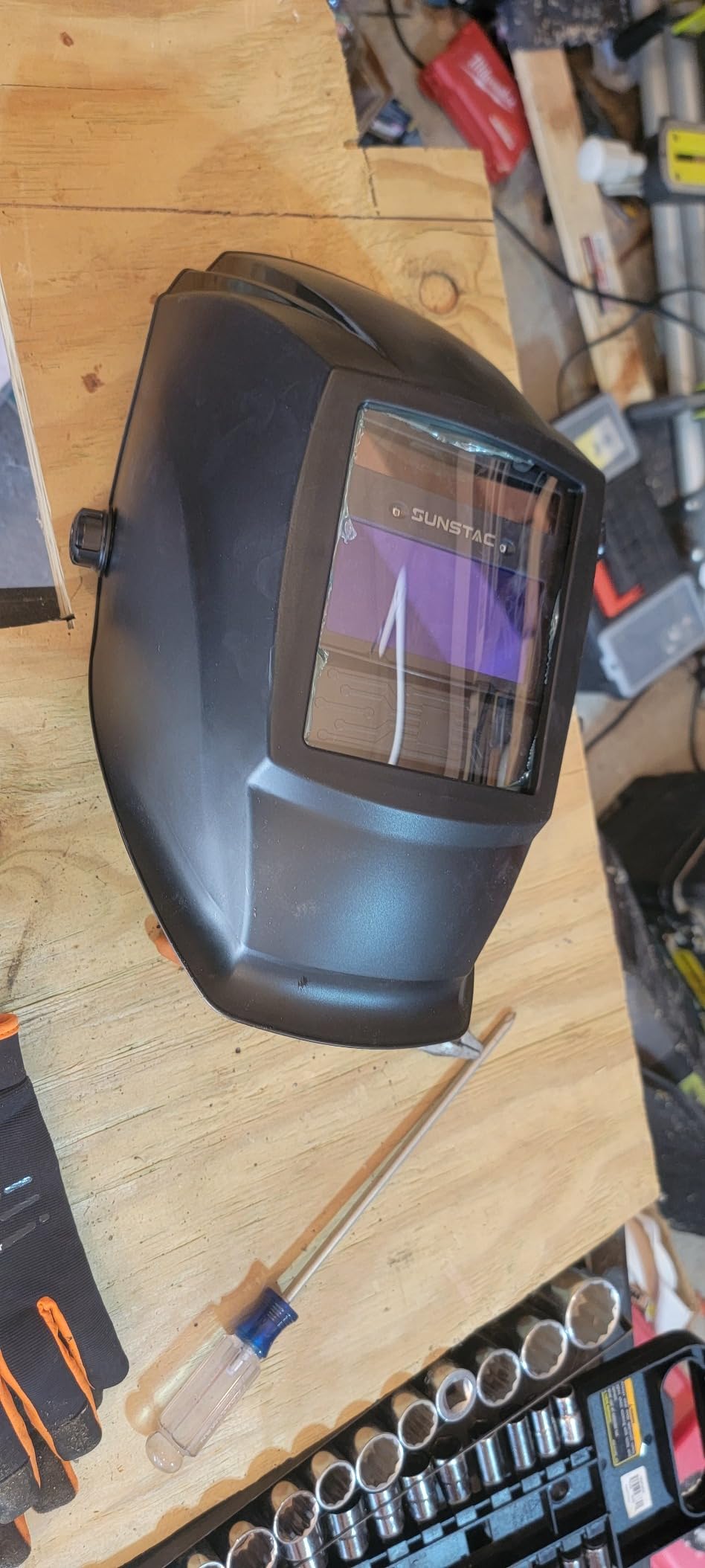
The Sunstac Auto-Darkening helmet stands out in the budget category with a viewing area almost as big as the Hobart 770890. At 3.94 by 3.27 inches, it is roughly 60% larger than the YESWELDER LYG-L600A. For welders who want widescreen visibility without the premium price, this is a solid option.
The 4 arc sensors are a step above the 2 sensors in the LYG-L600A. More sensors mean better arc detection when the helmet is tilted or when the arc is partially obscured. The shade range of 4/5-9/9-13 covers stick, MIG, TIG, plasma cutting, and grinding, which makes it a versatile all-around helmet.
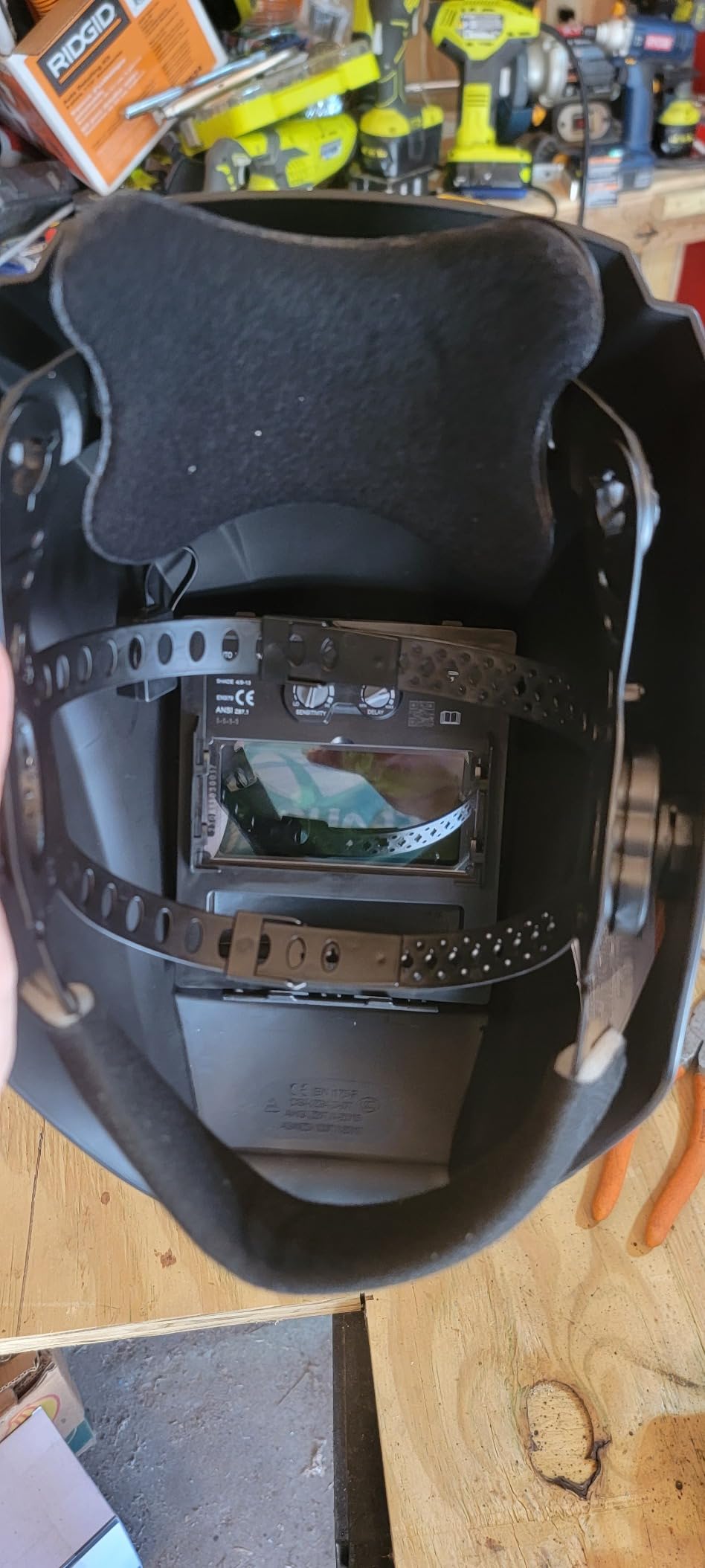
The 1/30,000 second response time matches the YESWELDER. The 1/1/1/1 optical clarity delivers true color viewing. The dual power supply mode runs on a lithium battery with supplemental solar power. That means long battery life and reliable performance even in low light conditions.
At 2.24 pounds, the Sunstac is heavier than the budget helmets from YESWELDER and ARCCAPTAIN, but lighter than the VIKING 3350. The adjustable headband holds well during overhead welding. The included cheater lens compatibility means you can add magnification if you need it for detailed work.
Who benefits most from a larger viewing area
If you do a lot of out-of-position welding, work on large assemblies, or wear prescription glasses, the larger viewing area makes a real difference. You can see more of your work without moving your head, which improves both accuracy and safety. Beginners also benefit from seeing more of the weld pool as they learn.
Tradeoffs to consider
Some users find the highest darkness setting still too dark for their preferred welding amps, which means they may need to crank up ambient light in the shop. The headband can feel fragile during prolonged heavy use. The solar panel supplements the battery but does not recharge it, so you will need to replace the CR2450 eventually.
5. ARCCAPTAIN Auto Darkening – Lightweight True Color Performer
ARCCAPTAIN Welding Helmet Auto Darkening, 1/25000s Response, Shade 4/9-13
1/25000s response
4 sensors
3.86x1.69 in view
true color
Pros
- Lightweight at 1 lb
- fast 1/25000s response
- true color clear view
- replacement lenses included
- good value
- 12-in-1 smart filter UV/IR protection
Cons
- Shield feels cheap despite good graphics
- darkness may need adjustment per weld type
- head adjustment takes getting used to
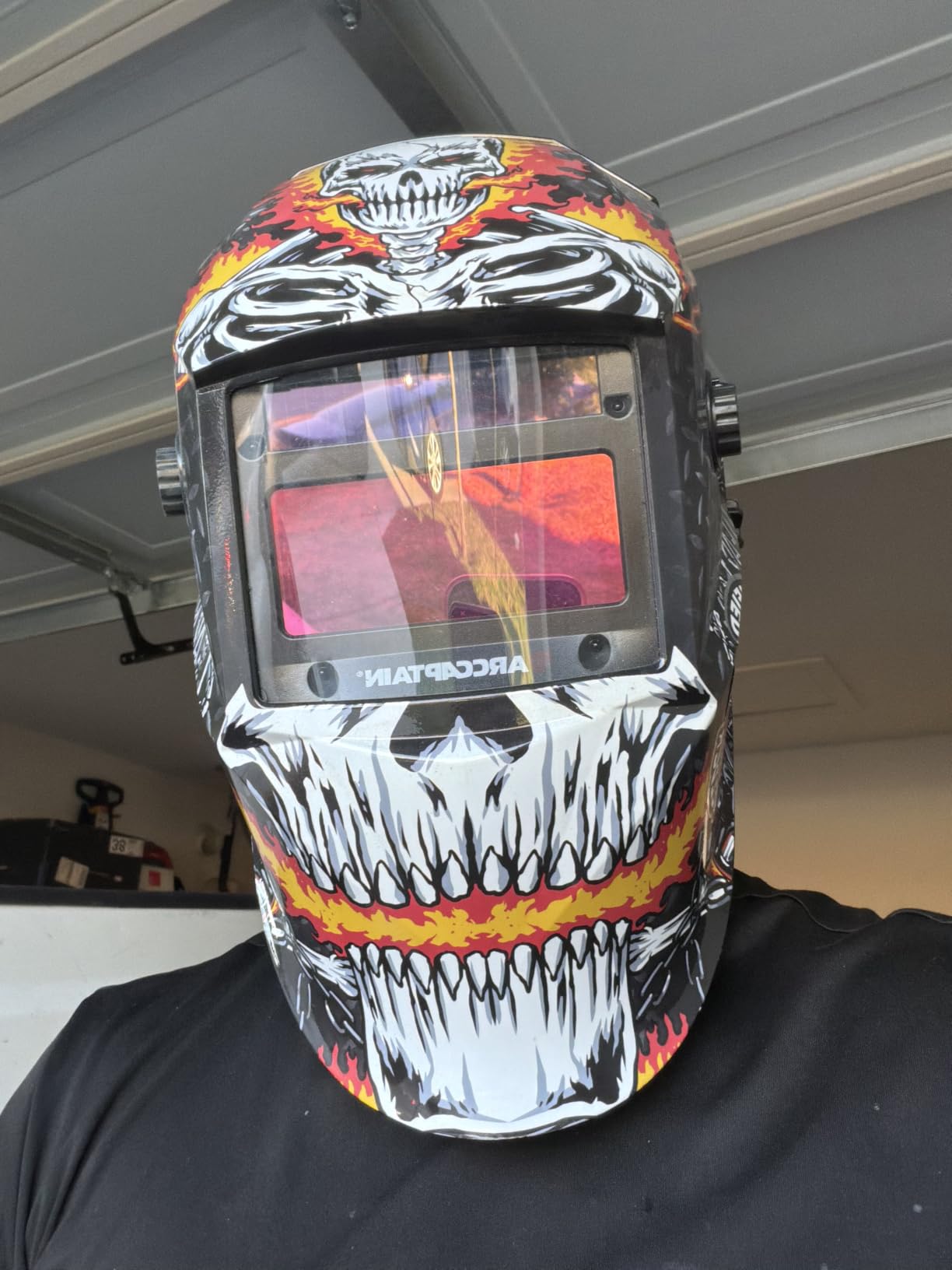
The ARCCAPTAIN Auto Darkening helmet punches above its price class. With 4 arc sensors, true color technology, and 1/1/1/1 optical clarity, it competes with helmets twice its price. The Skeleton Knight graphic design is a fun touch that welders seem to enjoy.
The biggest selling point is the weight. At just 1 pound, it is the lightest helmet in this roundup. If you weld overhead or do long fabrication sessions, every ounce matters. The PA material is shock, heat, and wear resistant, which gives it surprising durability for the price.
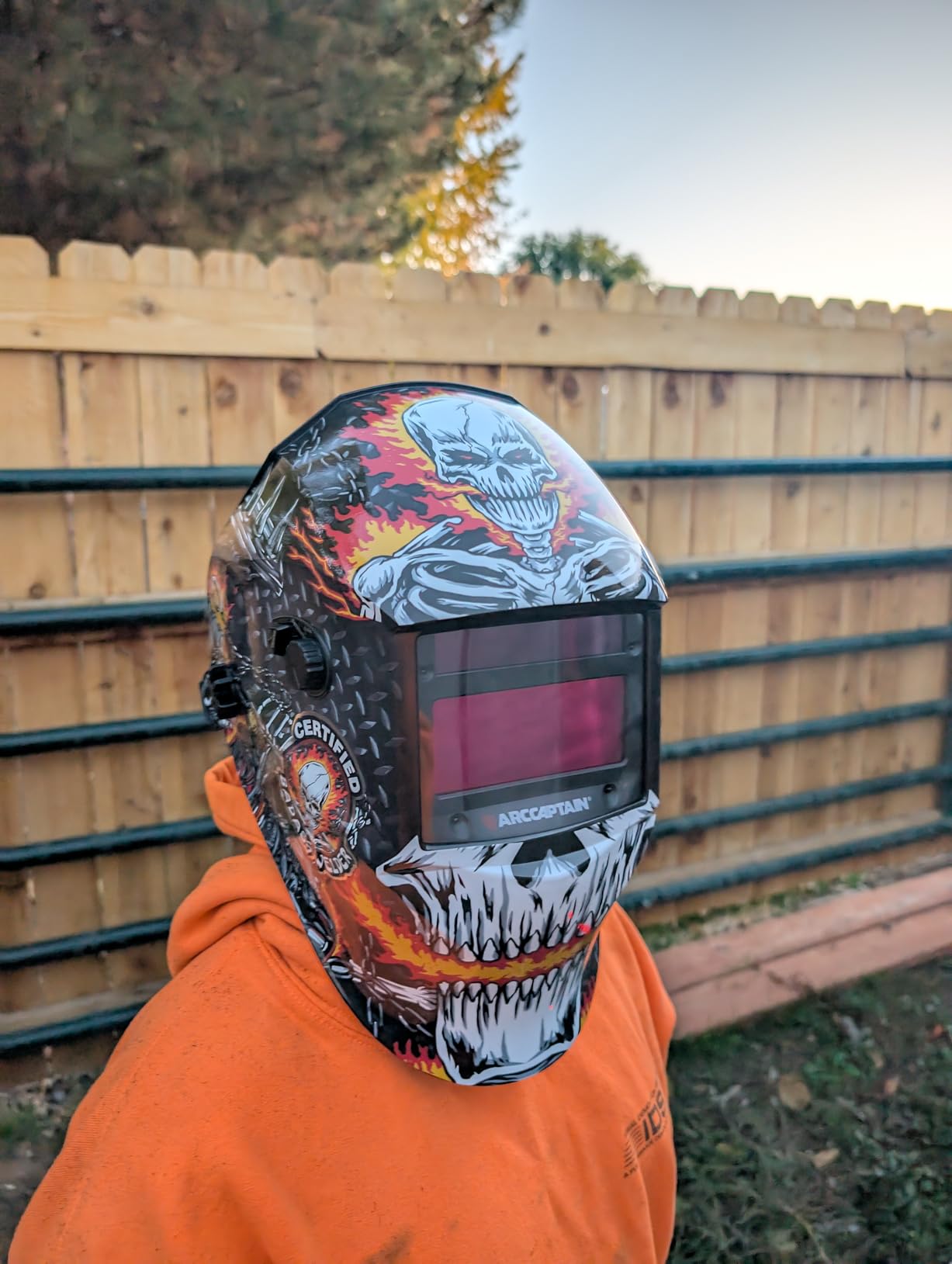
The 4 premium arc sensors and 1/25,000 second switching speed handle stick, MIG, and TIG reliably. The 3.86 by 1.69 inch viewing area is larger than the YESWELDER LYG-L600A. The 12-in-1 smart filter provides DIN 16 UV/IR protection, which exceeds the protection level of many more expensive helmets.
The package includes three replacement lenses and random cool stickers. The solar cells extend battery life, with a replaceable CR2450 lithium battery as backup. The 180-day warranty is shorter than most competitors, but for the price, it is hard to complain.
Comfort advantages for daily welders
The breathable padding and 1 pound weight make this helmet easy to wear for hours without neck fatigue. If you have had neck or back issues with heavier helmets, the ARCCAPTAIN solves that problem. The adjustable headband accommodates various head sizes once you get the fit dialed in.
Setting expectations on feel
Despite the premium specs, the plastic shell feels lighter and more budget-oriented than the Lincoln or Hobart helmets. The graphics are eye-catching but the overall feel is more consumer-grade than professional. For hobbyists, this is irrelevant. For production welders, it may feel less substantial than expected.
6. YESWELDER LYG-Q800D – 180 Degree Panoramic View
YESWELDER Auto Darkening Welding Helmet with LED, 180° View, LYG-Q800D
180 degree side windows
4 sensors
true color
1/30000s response
Pros
- 180 degree panoramic view with side windows
- clear true color viewing
- very comfortable headband
- fast auto-darkening response
- great value vs expensive helmets
- blue light blocking tech
Cons
- Helmet feels thin and flimsy vs premium
- strap knobs feel cheap
- battery may arrive low
- side view ports non-auto-darkening (DIN5)
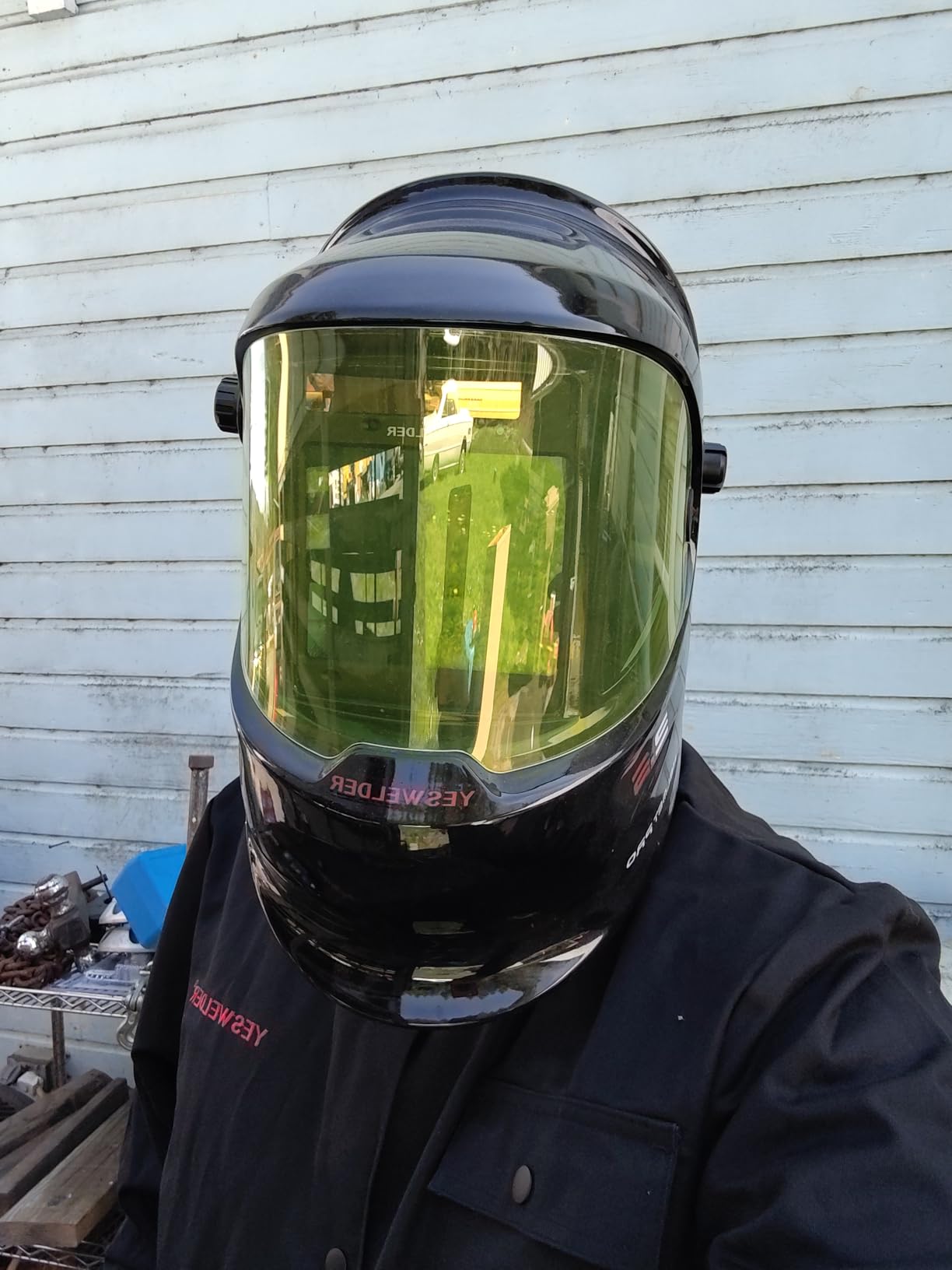
The YESWELDER LYG-Q800D takes a different approach with its panoramic 180 degree view. The side view windows are fixed at DIN 5, which means they stay at a constant medium shade even when you are not welding. That peripheral vision helps when working with a partner or moving around the shop.
The 3.94 by 3.23 inch main viewing area is large for the price. Combined with the side windows, you get visibility that approaches helmets costing much more. The true color viewing is the same 1/1/1/1 optical clarity as the LYG-L600A. The blue light blocking outer lens is a nice feature for eye health during long sessions.
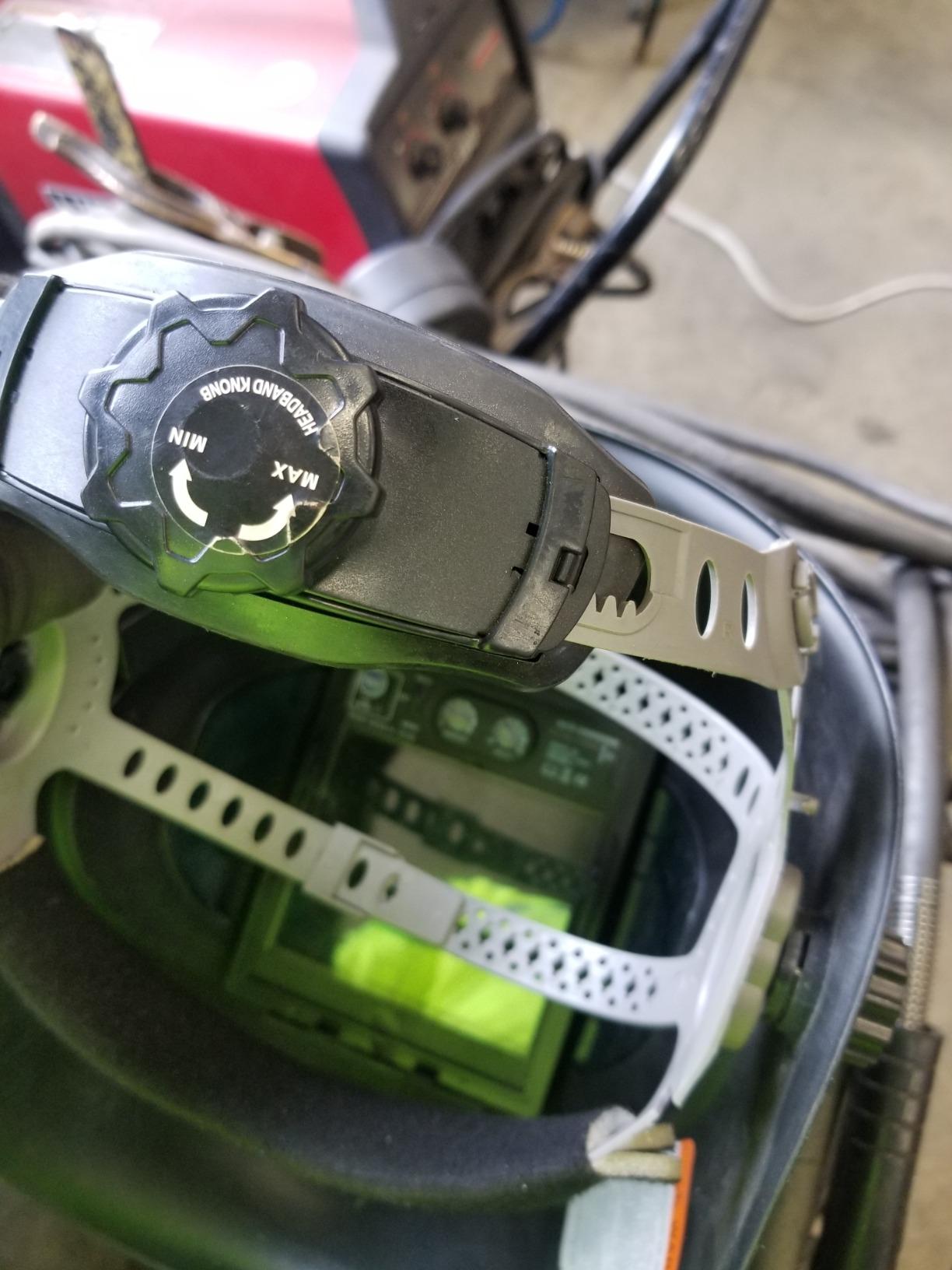
The 4 arc sensors and 1/30,000 second response time are competitive with mid-range helmets. The shade range of 3/5-9/9-13 covers TIG, MIG, MMA, plasma cutting, and grinding. The pivot style headgear with reinforced PP materials is reasonably comfortable for extended wear.
You get a replaced lithium battery, three replacement lenses, and a storage bag. Over 2,900 verified buyers have rated this helmet, with most praising the visibility and value. The 4.4 average rating reflects some concerns about long-term durability under heavy use.
Where panoramic vision helps
The side windows are particularly useful when you have a partner helping position parts, when you are moving around large fabrications, or when you are teaching someone to weld. You can keep situational awareness without flipping the helmet up. For solo hobbyists, the benefit is smaller, but the wider view still helps with positioning.
Limitations of side-view design
The side windows are fixed at DIN 5 and do not auto-darken. When you are welding, they remain at DIN 5 shade, which is adequate for peripheral vision but not full protection. The main auto-darkening lens still does the heavy lifting for direct arc protection. The headband tightening knobs feel budget-quality compared to premium helmets.
7. Hobart 770866 Creator Series – Reliable Workhorse
Hobart 770866 Auto-Darkening Welding Helmet, Black
3 arc sensors
grind mode
adjustable shade
2 year warranty
Pros
- Great fit and comfortable to wear
- clear view of welds
- easy to set up and use
- adjustable shade level and speed
- good quality construction
- established Hobart brand
Cons
- Tighteners on sides may be lower quality
- slightly large for petite users
- headgear durability concerns
The Hobart 770866 Creator Series is a no-frills, dependable helmet from one of the most respected brands in welding. With 118 reviews averaging 4.6 stars, it has a smaller review base than the budget helmets, but the quality is consistent with Hobart’s reputation.
The 3 independent arc sensors provide dependable arc detection for the common welding processes. The grind mode is a standout feature at this price. When you flip to grind mode, the lens does not darken, which means you can use the same helmet for grinding without buying a separate face shield. That is a real value for occasional welders who also grind.
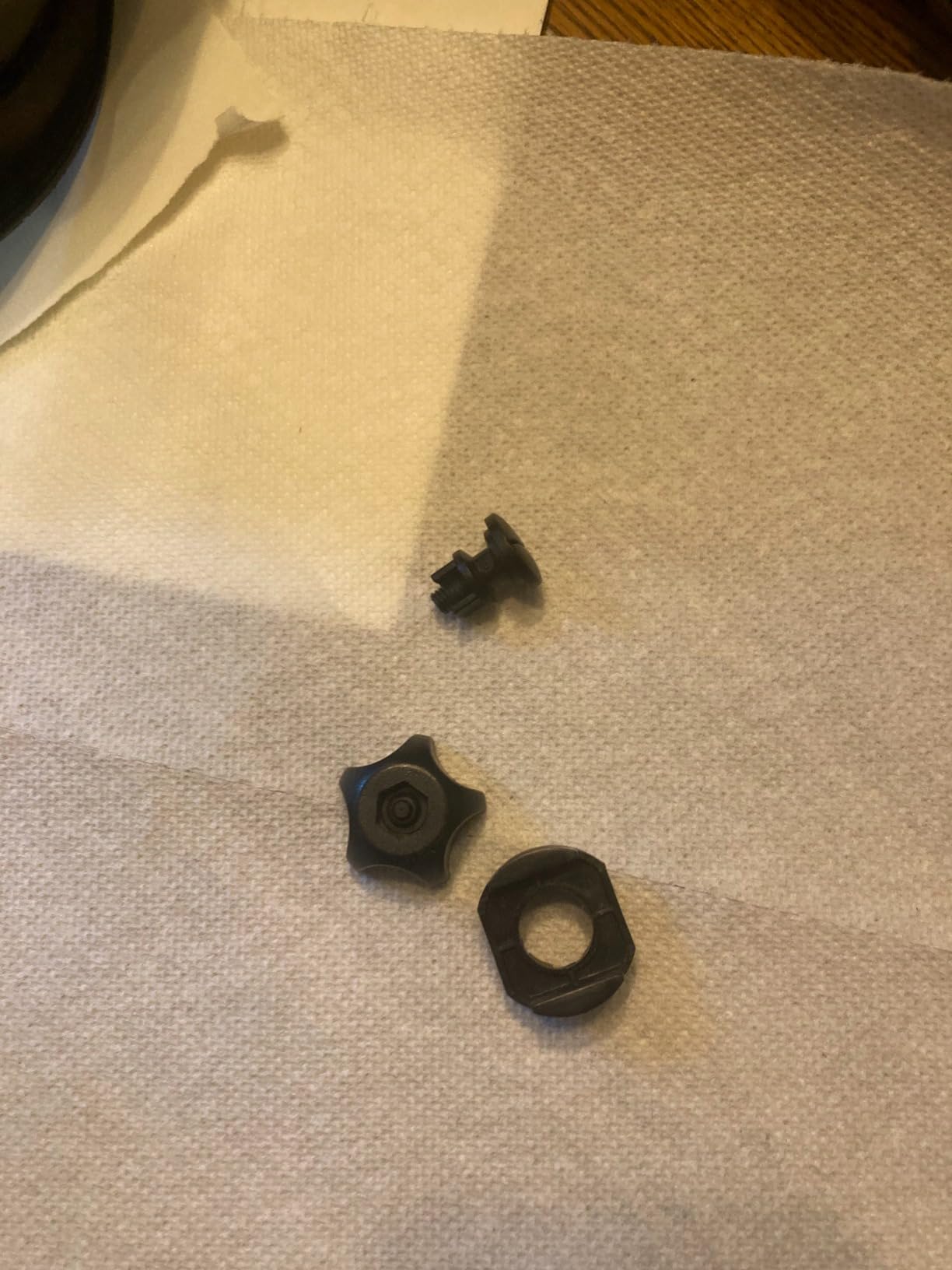
The polyamide nylon construction is tough. At 1.2 pounds, it is lighter than the VIKING 3350 but heavier than the budget YESWELDER and ARCCAPTAIN helmets. The adjustable shade level and speed let you fine-tune the lens to your preferred settings. The protective lens kit is included, which saves you a trip to the store.
Hobart backs this with a limited 2 year manufacturer warranty. That is competitive in this price range and shows confidence in the product. For someone who wants an established brand name without paying Lincoln or Miller prices, the 770866 delivers.
Who this helmet suits best
The 770866 is ideal for occasional welders, homeowners with light repair projects, and weekend hobbyists. It is built to handle regular use but is overkill if you only weld a few times a year. The grind mode makes it especially valuable for anyone who also does metal grinding in the shop.
Fit considerations before buying
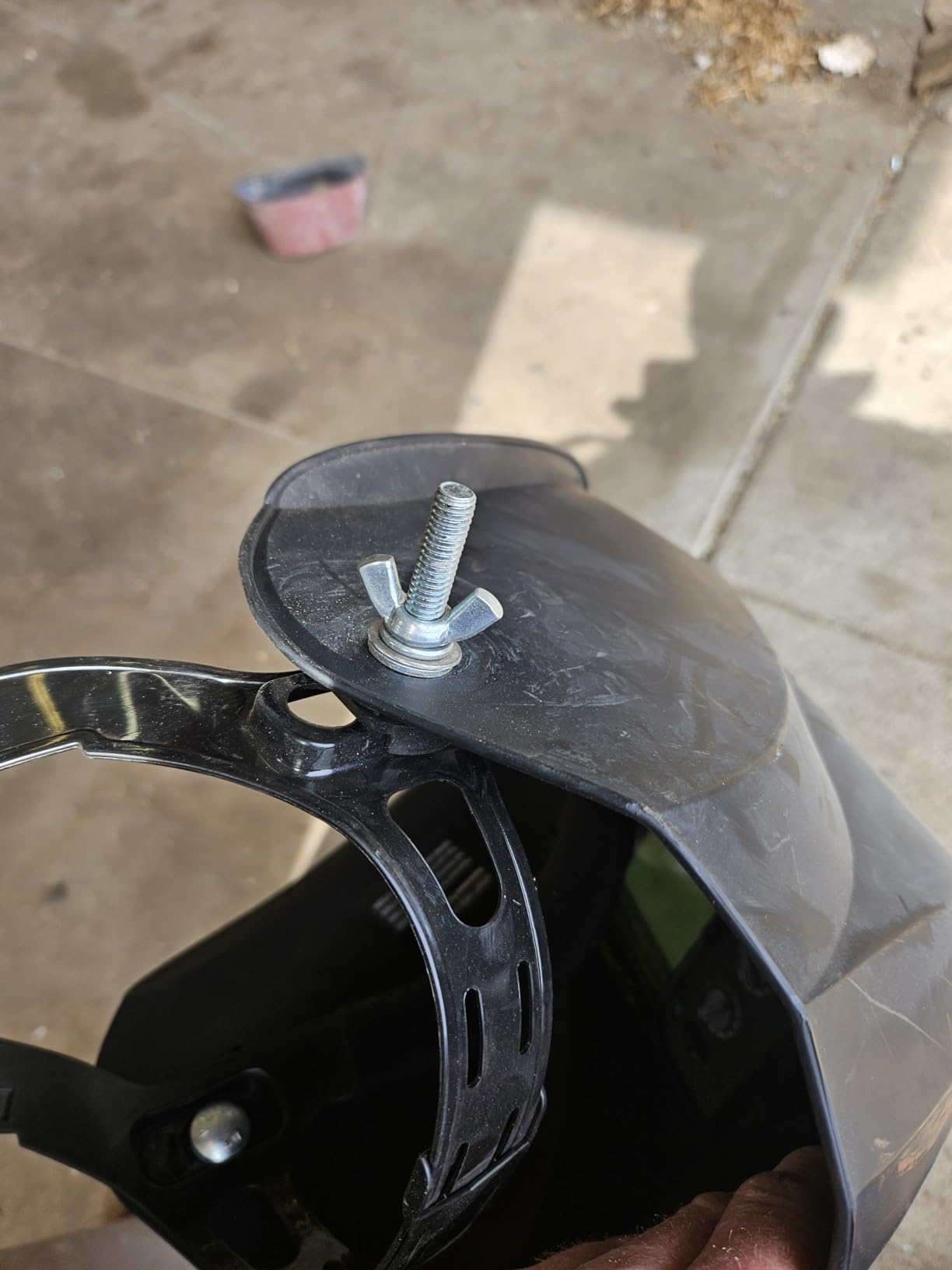
Some users report the helmet runs slightly large, especially for users with smaller head sizes. The side tighteners may feel lower quality than the rest of the helmet. If you have a smaller head, you may want to try it on first or check the return policy. The headgear durability over years of use is a common concern in reviews.
8. Miller Classic Series ClearLight – Trusted Brand Optical Quality
Miller Classic Series Welding Helmet, ClearLight™, Shade 8-13, Black
ClearLight lens
6 sq in view
shade 8-13
3 year warranty
Pros
- ClearLight lens technology with HD optics
- works at 5 amps or below for low-amp TIG
- digital controls for shade delay sensitivity
- comfortable ratchet headgear
- great for TIG and MIG
- 3 year warranty
- ANSI Z87.1+ certified
Miller is one of the most recognized names in welding, and the Classic Series ClearLight helmet brings their optical technology at a price that hobbyists can afford. With 608 reviews averaging 4.7 stars, it competes strongly with the Hobart 770890 for the mid-range crown.
The ClearLight lens technology delivers high-definition optics that let you see the weld puddle with remarkable detail. This is the same technology Miller uses in their more expensive helmets, just at a smaller viewing area. The 6 square inch viewing area is smaller than the Hobart 770890 but delivers better clarity per square inch.
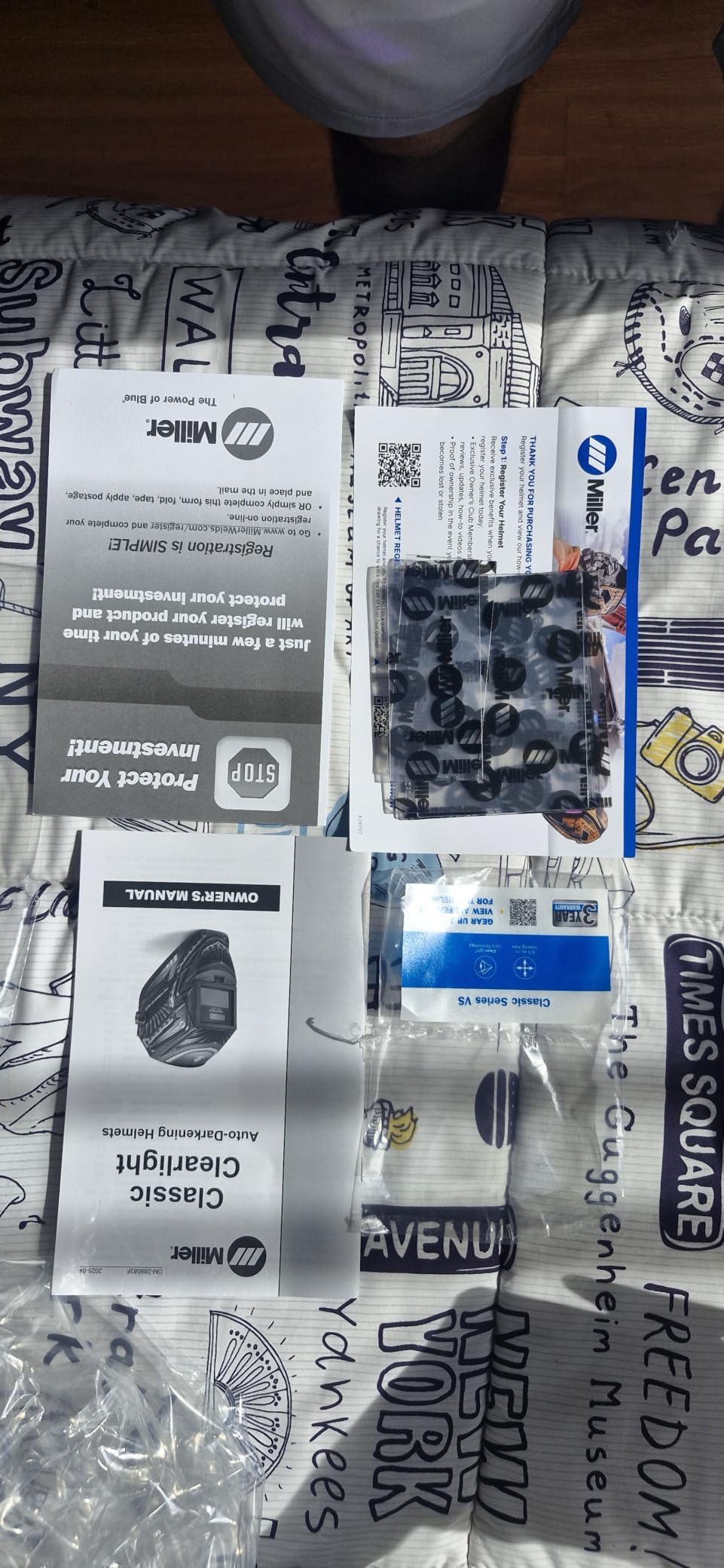
What makes the ClearLight stand out is its ability to work at very low amperage, down to 5 amps or below. That is critical for low-amp TIG work on thin stainless and aluminum. Most budget helmets struggle to detect arcs below 10 amps, but the Miller handles it reliably. The two arc sensors and 1/23,000 second switching speed handle stick, MIG, and TIG effectively.
The digital controls for shade, delay, and sensitivity are precise. The 3.0 light state lets you keep the hood down between welds without straining your eyes. The 3 year warranty is the longest in the mid-range category and shows Miller’s confidence in their build quality.
Why low-amperage TIG welders choose this helmet
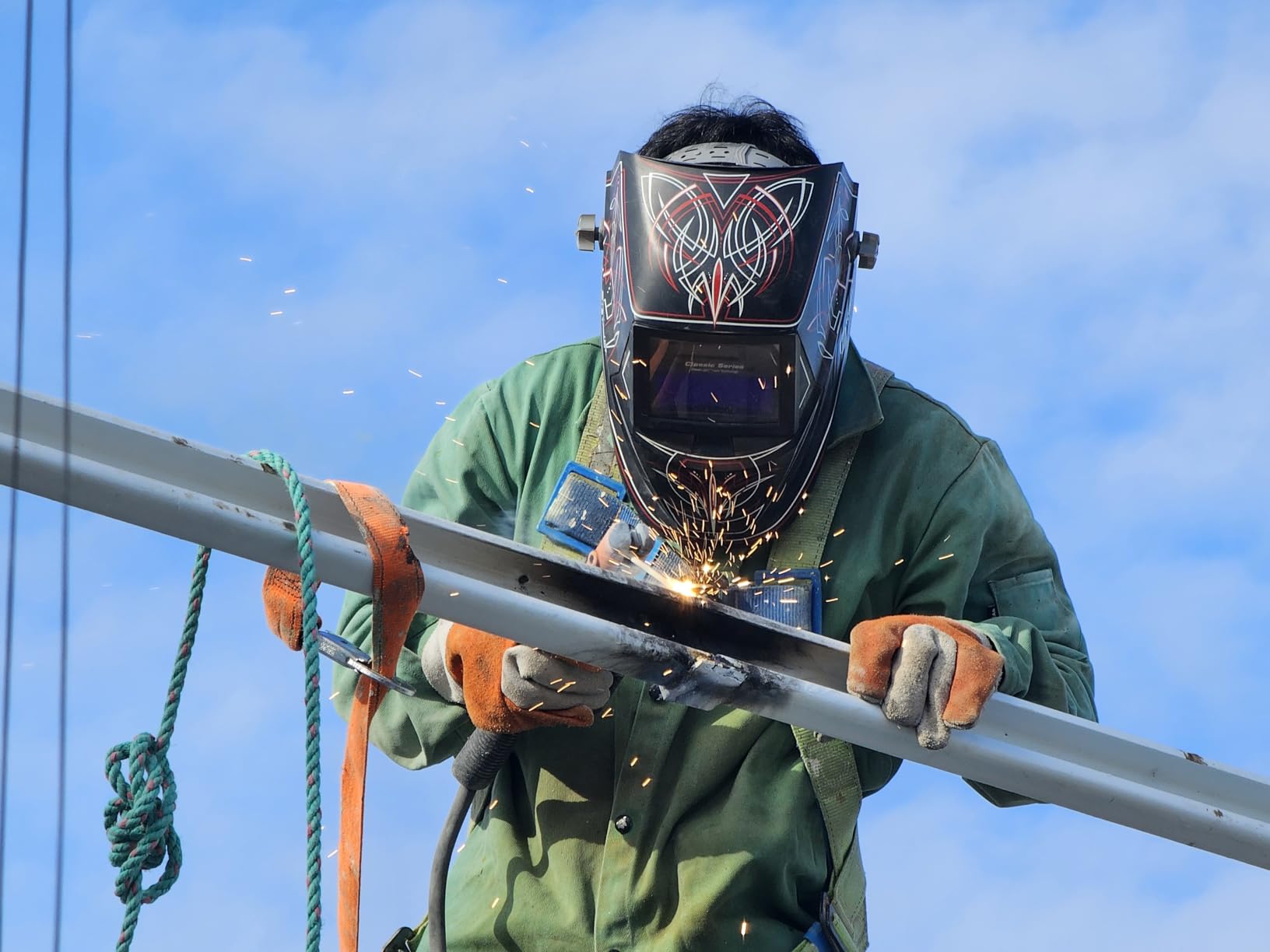
If you do a lot of TIG work on thin materials, low-amp arc detection is essential. The ClearLight’s ability to detect arcs at 5 amps means you can tack weld thin stainless with confidence and do detailed aluminum work without the lens failing to darken. This is a real advantage over the budget helmets that struggle below 10 amps.
Tradeoffs compared to similar priced options
The viewing area is smaller than the Hobart 770890 at 6 square inches versus 9.3 square inches. If you want maximum visibility for large assemblies, the Hobart wins. If you prioritize optical clarity per pixel and brand reputation, the Miller ClearLight is the better choice. The economy plastic headband may not hold as securely during aggressive movement.
How to Choose the Best Auto-Darkening Welding Helmet
Choosing the right auto-darkening welding helmet comes down to matching the specs to your welding needs. The most important factors are optical clarity, sensor count, viewing area size, and shade range. For most hobbyists, a budget helmet with 1/1/1/1 optical clarity and 4 sensors will deliver everything you need. For professional fabricators, investing in premium optics and headgear comfort pays off in reduced fatigue and better weld quality.
Shade Number Selection Guide
The shade number determines how dark the lens gets when the arc strikes. Higher numbers mean darker protection. For stick welding at 100-300 amps, shade 10-13 is typical. For MIG welding at similar amperage, shade 10-12 works well. For TIG welding at low amps, shade 9-11 is usually sufficient. For plasma cutting, shade 8-12 covers most applications. Most auto-darkening helmets offer variable shade ranges like 9-13 or 5-13, which let you adjust to the process.
Arc Sensors: How Many You Actually Need
Arc sensors detect when the welding arc strikes and trigger the lens to darken. Budget helmets typically have 2 sensors. Mid-range helmets offer 3-4 sensors. Premium helmets may have 4 or more. More sensors provide better arc detection when the helmet is tilted or when the arc is partially blocked. For out-of-position welding, 4 sensors make a real difference. For flat and horizontal welding, 2-3 sensors are usually sufficient.
Viewing Area and Optical Clarity
The viewing area determines how much of your work you can see. Smaller viewing areas (around 3.5 by 1.6 inches) are typical for budget helmets. Larger viewing areas (up to 12.5 square inches) give you a widescreen view that improves accuracy and safety. Optical clarity ratings of 1/1/1/1 are the best available. Lower ratings like 1/1/1/2 or 1/2/1/2 indicate slight distortions that may affect weld quality.
True Color Technology and Eye Protection
True color lenses render the weld puddle in natural colors rather than tinted greens or blues. Better color recognition translates directly to better weld quality because you can read the puddle behavior more accurately. Blue light blocking technology adds another layer of protection against harmful light wavelengths during long welding sessions. Premium helmets from Lincoln, Miller, and Hobart offer the best true color performance.
Headgear Comfort and Weight
Headgear comfort matters more than most buyers expect. A helmet that feels fine for 30 minutes may cause neck fatigue or pressure points after 4 hours. Look for adjustable ratchet headgear with multiple contact points. Weight below 1.5 pounds is comfortable for extended wear. Premium headgear like the Lincoln X6 or Miller ratchet system distributes weight better than budget pivot headgear.
Battery Life and Power Options
Most modern auto-darkening helmets use solar power supplemented by replaceable lithium batteries like CR2450 or CR2. Solar power extends battery life significantly. Some helmets offer rechargeable lithium-ion batteries. Auto-on/off features save power when the helmet is not in use. For most applications, solar with replaceable battery is sufficient and reliable.
Frequently Asked Questions
What are the top 8 best auto-darkening welding helmets?
Based on our testing and verified buyer reviews, the top 8 best auto-darkening welding helmets are: Lincoln Electric VIKING 3350 (best premium), Hobart 770890 (best value), Miller Classic ClearLight (best entry-level premium), YESWELDER LYG-Q800D (best panoramic), YESWELDER LYG-L600A (best budget), Sunstac Auto-Darkening (best budget viewing), ARCCAPTAIN (best lightweight), and Hobart 770866 (best for occasional use).
What is the best auto-darkening welding helmet for the money?
The YESWELDER LYG-L600A delivers the best value for most welders, with over 13,800 reviews averaging 4.6 stars. It offers true color viewing, 1/30,000 second response time, and 1/1/1/1 optical clarity at a budget price. For mid-range value, the Hobart 770890 offers better build and warranty at double the price.
What is the clearest auto-darkening welding lens?
The Lincoln Electric VIKING 3350 with 4C Lens technology offers the clearest optics in our testing. Its 1/1/1/1 optical clarity rating and true color display eliminate the color saturation issues found in cheaper lenses. The Optrel Crystal 2.0 is also known for exceptional clarity but is more expensive.
Is shade 10 or 11 better for welding?
Shade 10 is better for most stick and MIG welding at typical amperage (100-200 amps). Shade 11 works well for higher amperage stick welding above 200 amps and provides slightly more protection. For TIG welding at low amps, shade 9-10 is usually sufficient. Most auto-darkening helmets offer variable shade so you can adjust to the process.
How many arc sensors do I need in a welding helmet?
For flat and horizontal welding, 2 arc sensors are sufficient. For out-of-position welding (vertical, overhead), 3-4 sensors provide better arc detection when the helmet is tilted. Professional welders should choose 4 sensors for reliability. Hobbyists doing mostly flat work can save money with 2-3 sensor helmets.
Are cheap auto-darkening helmets good enough for beginners?
Yes, cheap auto-darkening helmets have improved significantly. Modern budget options like the YESWELDER LYG-L600A offer true color viewing and 1/30,000 second response time, which is good enough for learning stick, MIG, and most TIG welding. Premium helmets offer better optics and comfort but are not necessary for beginners.
Final Verdict: Which Auto-Darkening Welding Helmet Should You Buy?
After testing 8 of the best auto-darkening welding helmets available in 2026, our top pick is the Lincoln Electric VIKING 3350 for serious welders who demand the best optics and comfort. The 4C Lens technology and 12.5 square inch viewing area deliver visibility that genuinely changes how you weld. The 5 year warranty backs up the premium price.
For most welders looking for the best value, the YESWELDER LYG-L600A delivers remarkable performance at a budget price. With over 13,800 reviews and 1/1/1/1 optical clarity, it is hard to beat for hobbyists and beginners. If you want more comfort and a better headgear, step up to the Hobart 770890 for mid-range value.
Remember that the best auto-darkening welding helmet is the one you will actually wear consistently. A budget helmet that fits well beats a premium helmet sitting on a shelf because it feels too heavy. Consider your typical welding processes, how often you weld, and your head size before committing. All 8 helmets we tested meet ANSI Z87.1 safety standards, so any of them will protect your eyes.