
Most people shopping for the best dust collectors for small workshops are not short on options, they are short on wall space, amps, and tolerance for noise. A two-car garage or a 12 by 16 shed will not hold a 1,700 CFM industrial cabinet, and almost no residential building has the 460V three-phase service those machines need. The right machine for a small workshop is usually the smaller one, and picking it well means sizing airflow to the machines you actually own.
The short answer: the Oneida Air Systems Dust Deputy DIY is the best dust collector for a small workshop in 2026 because it costs little, pre-separates up to 99.9 percent of debris before your vacuum filter, and has the deepest review history of anything we looked at. Add the Mullet cyclone if you run one shop vac at a time, or a stainless separator such as the DEWALT 10-gallon tank if sanders are your main dust source.
We compared 10 units across airflow, horsepower, filtration rating, electrical phase, noise, and footprint, and most of them turned out to be separators that bolt onto an existing shop vac rather than standalone collectors. That is not a shortcoming, it is what actually fits a small shop. For handheld and sander work specifically, our picks on dust extractors for woodworking and quiet shop vacuums for workshops cover the machines a collector cannot serve well.
Table of Contents
Top 3 Best Dust Collectors for Small Workshops in 2026

Oneida Dust Deputy Cyclone
- 99.9 percent pre-separation
- Tapered 2.0 inch ports
- Over 4200 reviews

Mullet High-Speed Cyclone
- Parabolic one-piece body
- Over 99 percent pre-separation
- Rigid PVC collar

Quick Overview: All 10 Picks Side by Side (October 2026)
| Product | Specifications | Action |
|---|---|---|
| Oneida Dust Deputy DIY Cyclone Separator |
|
Check Latest Price |
| Mullet High-Speed Cyclone Separator |
|
Check Latest Price |
| DEWALT Dust Separator 10 Gallon Stainless Tank |
|
Check Latest Price |
 Dustopper PRO Cyclone Separator Dustopper PRO Cyclone Separator |
|
Check Latest Price |
 POWERTEC 1 HP 560 CFM Wall Mount Collector POWERTEC 1 HP 560 CFM Wall Mount Collector |
|
Check Latest Price |
 Shop Fox W1826 Wall Mount Dust Collector Shop Fox W1826 Wall Mount Dust Collector |
|
Check Latest Price |
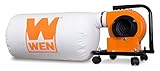 WEN DC3401 660 CFM Rolling Dust Collector WEN DC3401 660 CFM Rolling Dust Collector |
|
Check Latest Price |
 BUCKTOOL 750 CFM Auto-Start Dust Collector BUCKTOOL 750 CFM Auto-Start Dust Collector |
|
Check Latest Price |
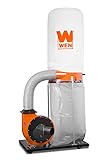 WEN DC1300 1300 CFM Dust Collector WEN DC1300 1300 CFM Dust Collector |
|
Check Latest Price |
 Oneida 2.5 Deluxe Cyclone Kit With Bucket Oneida 2.5 Deluxe Cyclone Kit With Bucket |
|
Check Latest Price |
How We Picked These Dust Collectors
Every unit here had to clear the same six tests before we would call it a small-workshop machine. Anything that needed three-phase power, more than about 1,300 CFM, or a dedicated equipment corner was excluded on principle rather than on price.
Single-phase power. A residential garage or shed gives you 120V and 240V single-phase. A machine that needs 460V three-phase is not a candidate, full stop.
Airflow matched to real machines. We checked CFM against the port diameter and static pressure of a table saw, jointer, or thickness planer rather than the headline number alone.
Published filtration rating. A stated micron figure is what lets you predict how long the filter or bag lasts between changes.
Footprint and mounting. Wall-mounted units, rolling bases, and low-profile separators scored well; anything needing a permanent equipment pad did not.
Separation before filtration. Cyclone or baffle stages that keep chips out of the filter reduce the running cost of the whole system.
Real ownership feedback. Review volume and the specific complaints owners repeat carried more weight than the spec sheet.
1. Oneida Air Systems Dust Deputy DIY Cyclone Separator – Best Overall for Small Workshops
Oneida Air Systems Dust Deputy DIY Anti-Static Retrofit Cyclone Separator for Wet/Dry Shop Vacuums (DD DIY)
Up to 99.9 percent capture
Tapered 2.0 inch ports
15.5 x 9.3 x 7.4 inches
Made in USA
Pros
- Most reviewed unit in this roundup with over 4200 ratings
- Neutral Vane technology improves efficiency 20 percent
- Extends vacuum filter and bag life
- Tapered ports fit most hose diameters
- Handles wood dust drywall concrete and metal
Cons
- Hose adapters are not included and sizing is the main install headache
- Bucket is not included and thin plastic pails can collapse
- Both ports are 2.0 inch male which narrows the flow path
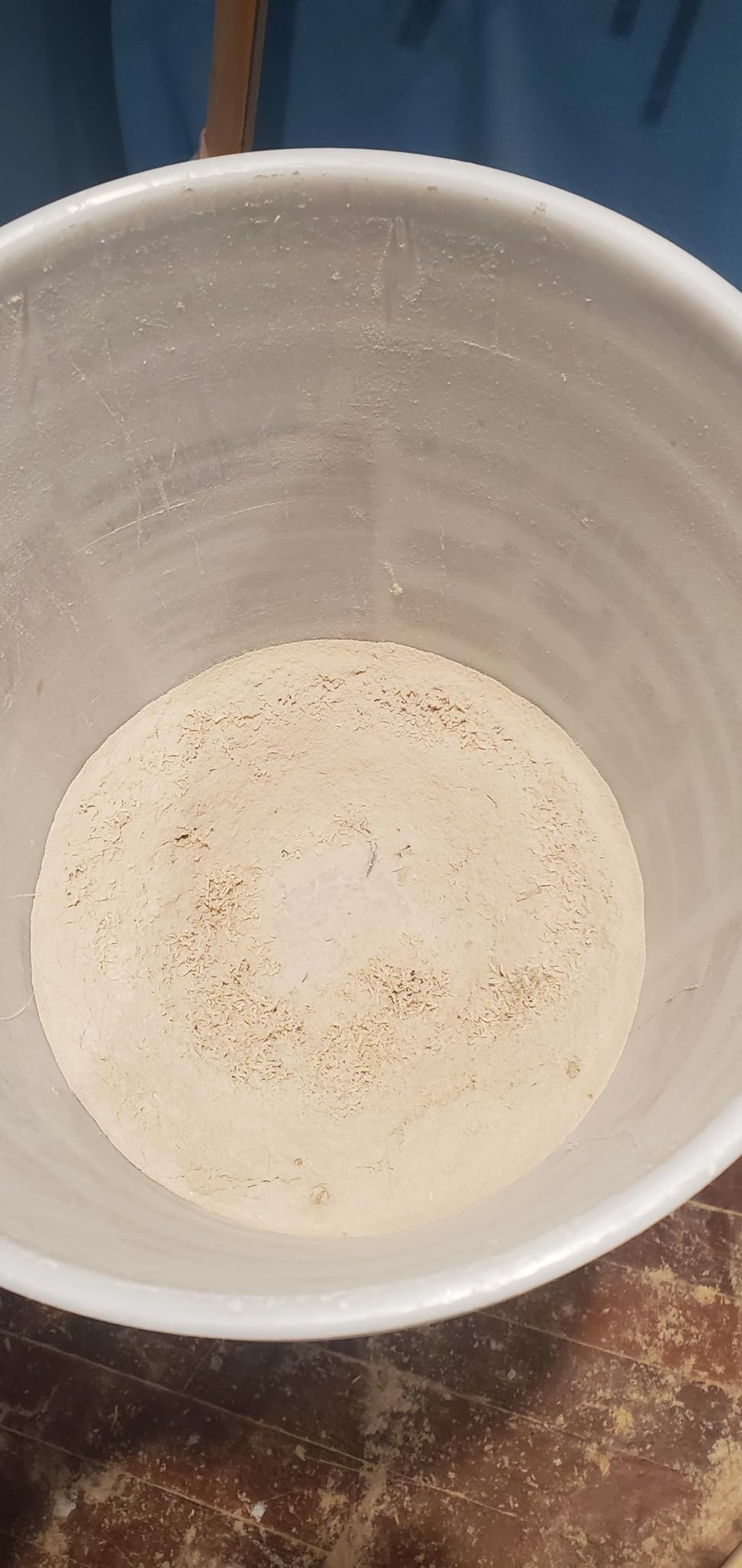
This is the separator that gets recommended more than any other in small-shop threads, and after working through the specs I understand why. It is a plastic cyclone head that sits on a drilled bucket lid, and it uses the suction from whatever wet/dry vac you already own to spin chips and dust out of the airstream before that dust reaches the vacuum filter. Owners consistently report that almost everything ends up in the bucket instead of the vac body.
The engineering detail that matters is Neutral Vane Technology, which the manufacturer rates as roughly 20 percent more efficient than the original Dust Deputy design. At 15.5 by 9.3 by 7.4 inches it fits anywhere a bucket sits, and the tapered 2.0 inch ports accept a range of hose diameters without hunting for a perfect match.
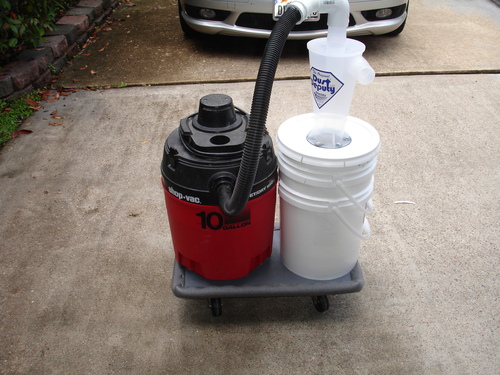
The catch is assembly, and the complaints in the reviews are almost entirely about assembly rather than separation performance. You drill the lid, seal the base, and find adapters that fit the transition between your vac port and the separator, and those adapters are not in the box. The base can also sit slightly warped on an uneven lid, which owners fix with a bead of caulk.
One further limitation worth knowing: both ports are the same 2.0 inch male end, which narrows the internal flow path compared with an unequal-port design. It is not a dealbreaker for a 1 HP vac, but it is why this works better as a pre-filter than as the sole machine pulling air through a long hose run.
When the DIY install is worth the work
Pick this if you already own a wet/dry shop vacuum and you want the cheapest path to keeping that vacuum’s filter and bags alive. For a one-person shop with a table saw and a router table, adding a Dust Deputy-style separator to an existing vac is the highest return per dollar in this entire roundup.
Forum regulars on Lumberjocks and r/woodworking describe exactly this arrangement as the standard small-shop build: a 5-gallon bucket, a shop vac, and a separator head. The reason it keeps coming up is that the total cost of ownership collapses, because the vac filter stops loading up with plaster-grade fines after every session.
When to skip it and buy a ready-built kit
Skip it if you dislike drilling, sealing, or chasing hose adapters, because a misset lid gasket will leak fine dust across your shop floor for months. The ready-to-roll version of the same idea is pick 10, and it costs more mainly to remove the assembly step.
Also skip it if your primary dust source is a drum sander or CNC router producing very fine dust, because a straight-wall cyclone in this class does not capture everything at that particle size. A canister-filtered collector handles fines better.
2. Mullet High-Speed Cyclone Separator – Best Fit for a Single Shop Vac
Mullet Cyclone Dust Collector, High-Speed Separator for Shop Vac
Over 99 percent pre-separation
Parabolic one-piece body
72 dB
7.5 pounds
Pros
- Highest rating in this roundup with 289 reviews
- Parabolic body spins debris out faster than straight-wall designs
- Rigid PVC collar needs no tape or bungee cords
- Hose adapters included
- Weighs only 7.5 pounds
Cons
- Requires a compatible shop vac or dust extractor as the power source
- You must cut a hole in the bucket lid and the bucket is not included
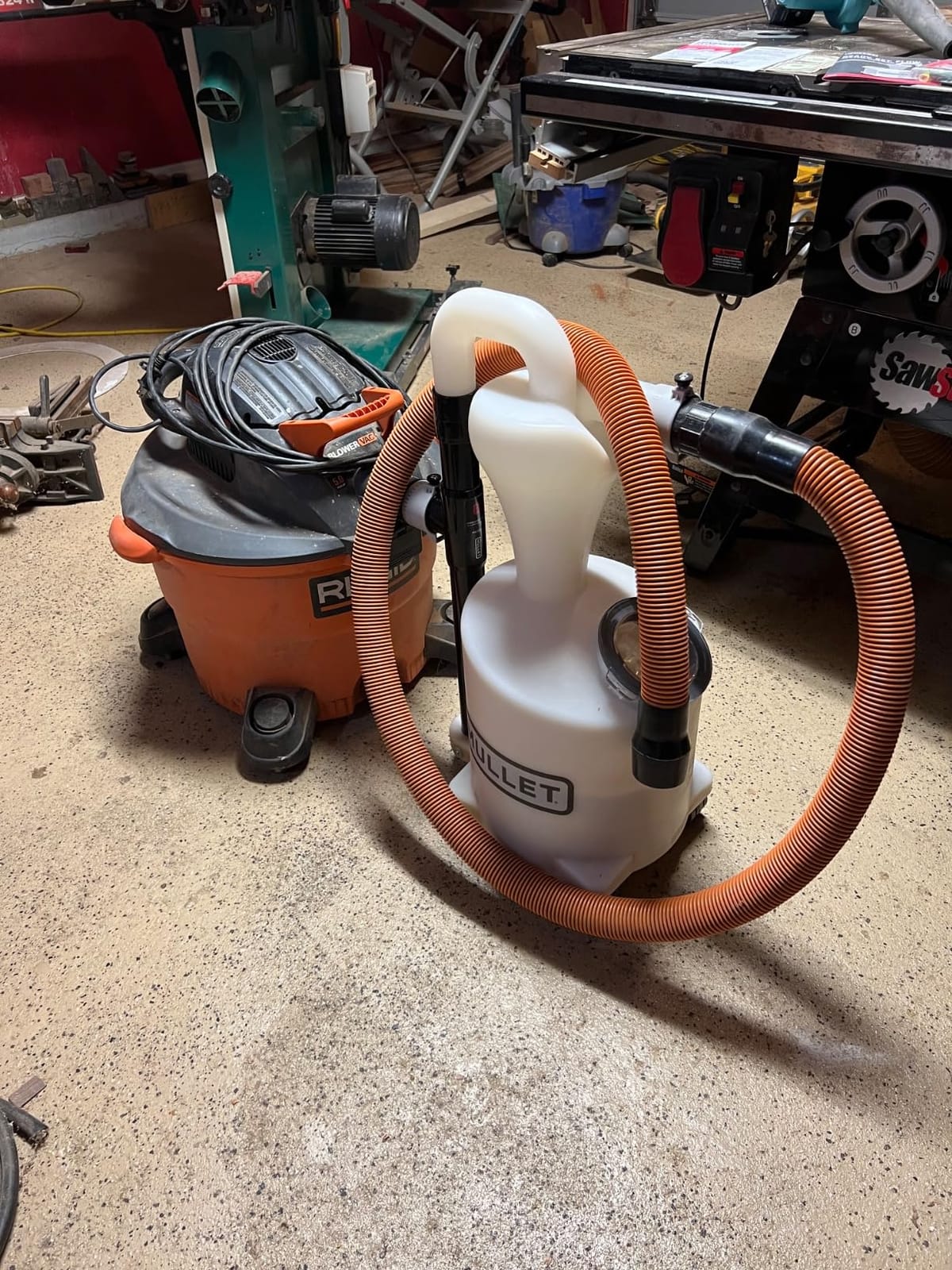
The Mullet is a cyclone head for shop vacs, and it earns the highest average rating in this roundup at 4.8 across 289 reviews. The difference from a bucket-lid cyclone is the shape: rather than a straight cylinder, the body is a single parabolic piece, which creates a faster airstream and stronger centrifugal effect. Owners credit that geometry for better capture than straight-wall cyclone-and-bucket assemblies.
The other thing I appreciate is the rigid cut-to-fit PVC connection. Most DIY cyclone builds depend on bungee cords and duct tape, which leak and shift. This one clamps rigidly, and the two included wet/dry vac hose adapters remove the fitting guesswork that stalls first-time installers.
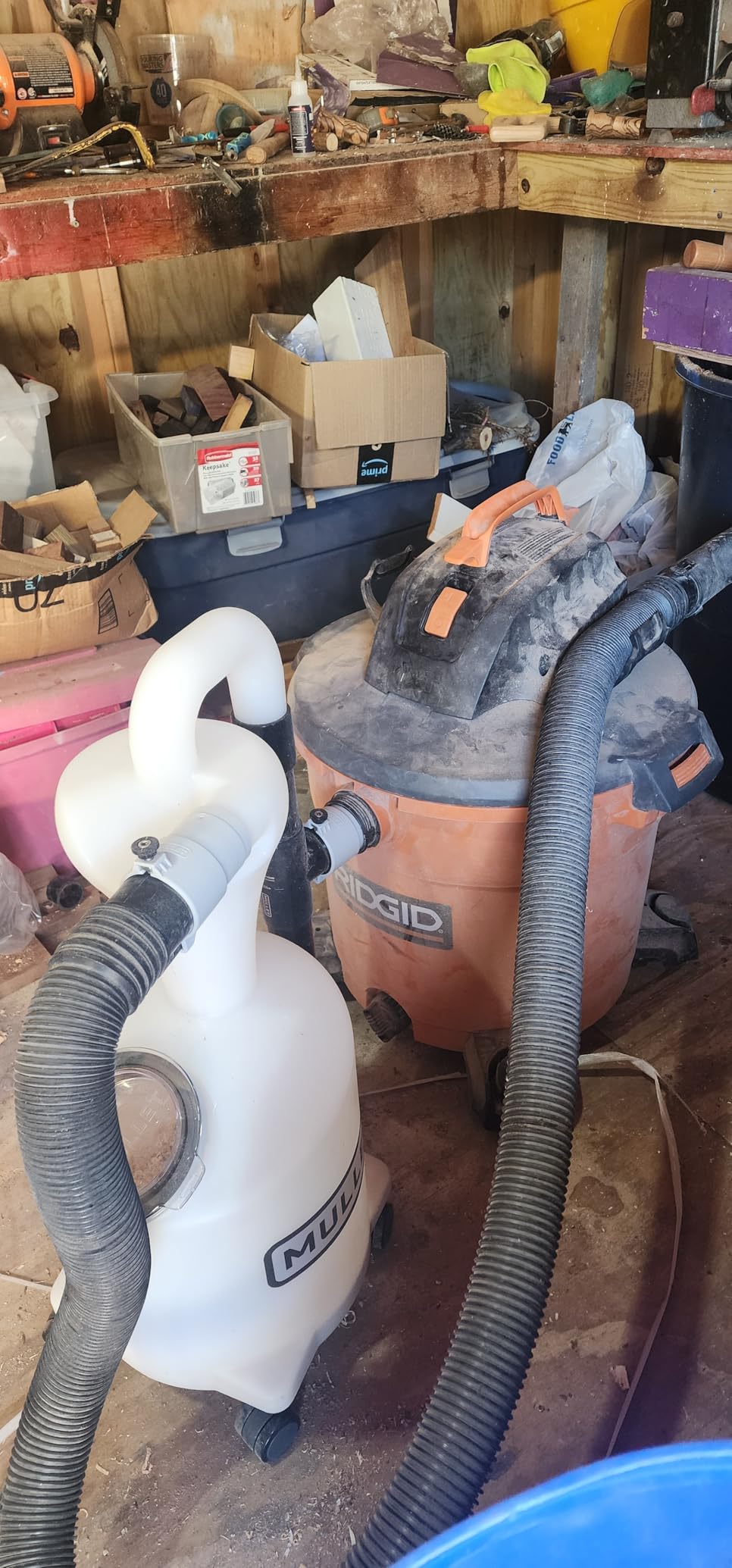
Its published sound level of 72 dB is the second quietest figure among the ten units we examined, which matters if the shop is a basement or a shared-wall garage. Because the cyclone itself has no motor, that number reflects airflow turbulence rather than a running impeller, but it still tells you the body is not adding much noise of its own.
The honest limitation is that this is an add-on, not a machine. You still need a shop vac or dust extractor, and you still need to cut the hole in a bucket lid yourself. At 7.5 pounds it is easy to move between machines, but it is also easy to forget on the floor of a walkway.
What this pair is genuinely good at
This is the setup for someone with a single shop vac, one primary machine, and a strong preference for buying parts that just work. Compared with the Oneida DIY head, you trade a little capture efficiency for a seal that does not need caulk and adapters that arrive in the box.
If you only ever run one tool at a time, the whole assembly stays tethered to one hose and you never have to think about which machine gets priority. That simplicity is the reason it rates so highly among owners who are not trying to build a whole-shop network.
Where it will disappoint you
It will not help you if you plan to run two machines at once, since a single shop vac is already the limit of what most wet/dry vacs can push through a hose and separator combination. The same over-suction problem shows up on random orbital sanders here too, where a strong vac pulls the pad onto the workpiece and leaves swirl marks.
Be realistic about the bucket as well. The Mullet does not include a bucket, and a thin retail pail can deform under steady suction. A thicker five-gallon pail solves it.
3. DEWALT 10 Gallon Stainless Steel Dust Separator – Best for Sander and CNC Dust
Dust Separator with 10 Gal. Stainless Steel Tank
10 gallon stainless steel tank
Clamp-down lid
70 dB
3 year warranty
Pros
- Stainless tank will not collapse under suction
- 10 gallon capacity means far fewer bag and filter changes
- Clamp-down lid makes it safe to move while running
- Four casters for repositioning
- Lowest noise figure here at 70 dB
Cons
- Not a powered unit and needs a separate shop vac for suction
- Intake hose height can be awkward with some floor grinders
- Hose adapters are not included
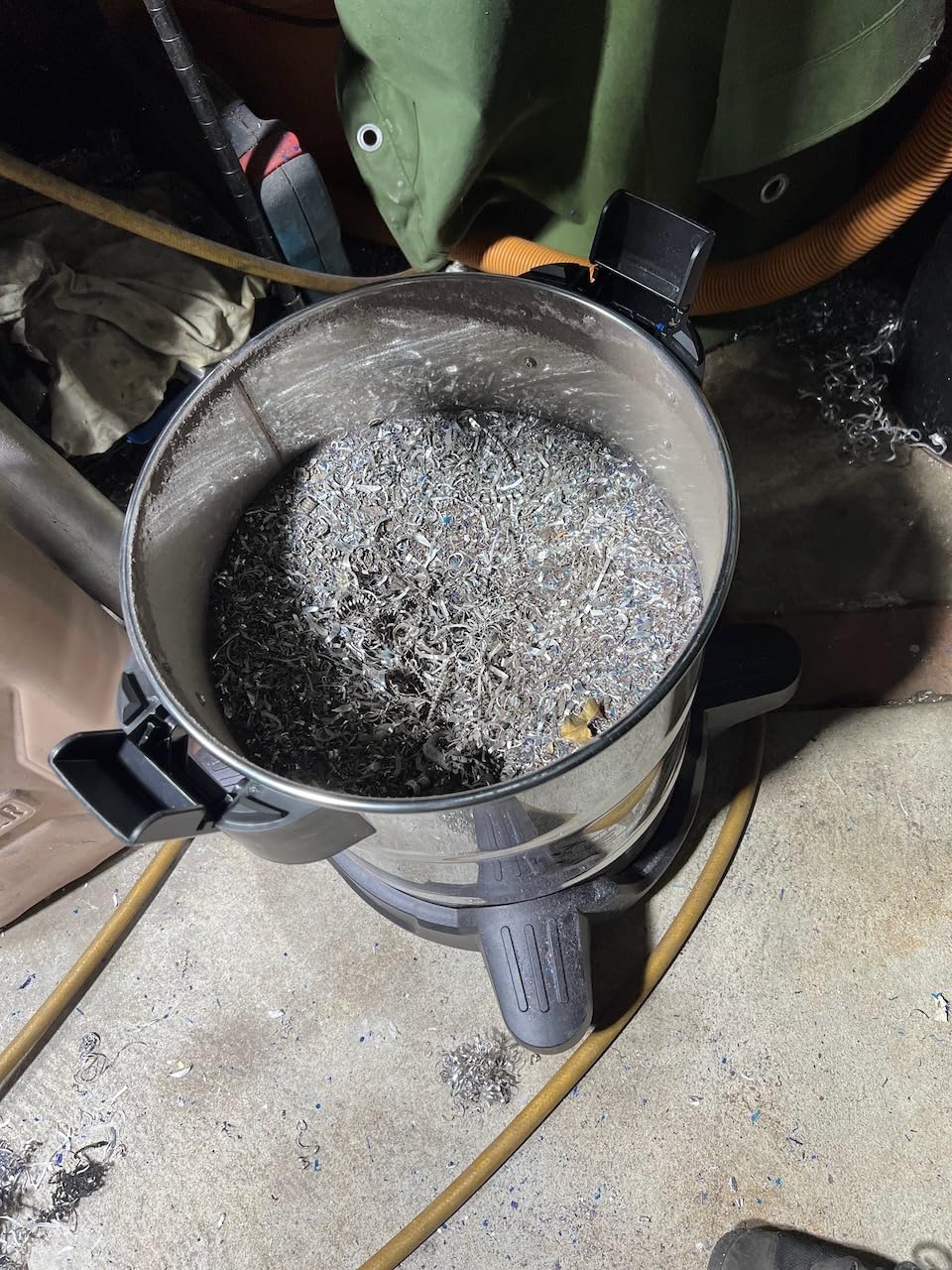
Where most separators in this price class use a plastic bucket, this DEWALT separator uses a 10-gallon stainless steel tank with a clamp-down lid. That single design choice fixes the two most common complaints in DIY cyclone builds: thin buckets collapsing inward under suction, and lids shifting when you try to roll the unit. At 18 by 17 by 34.6 inches it is taller than a bucket-top head, but it is a genuinely complete tank rather than an insert.
The stainless capacity is the real story for sanders. Owners running drum sanders, orbital sanders, and CNC routers report that the vac bodies and cartridge filters stay essentially empty, which means fewer bag and filter purchases over a year of steady work. Assembly takes about ten minutes according to the reviews, and the 3 year manufacturer and distributor warranty is the longest on any separator we covered.
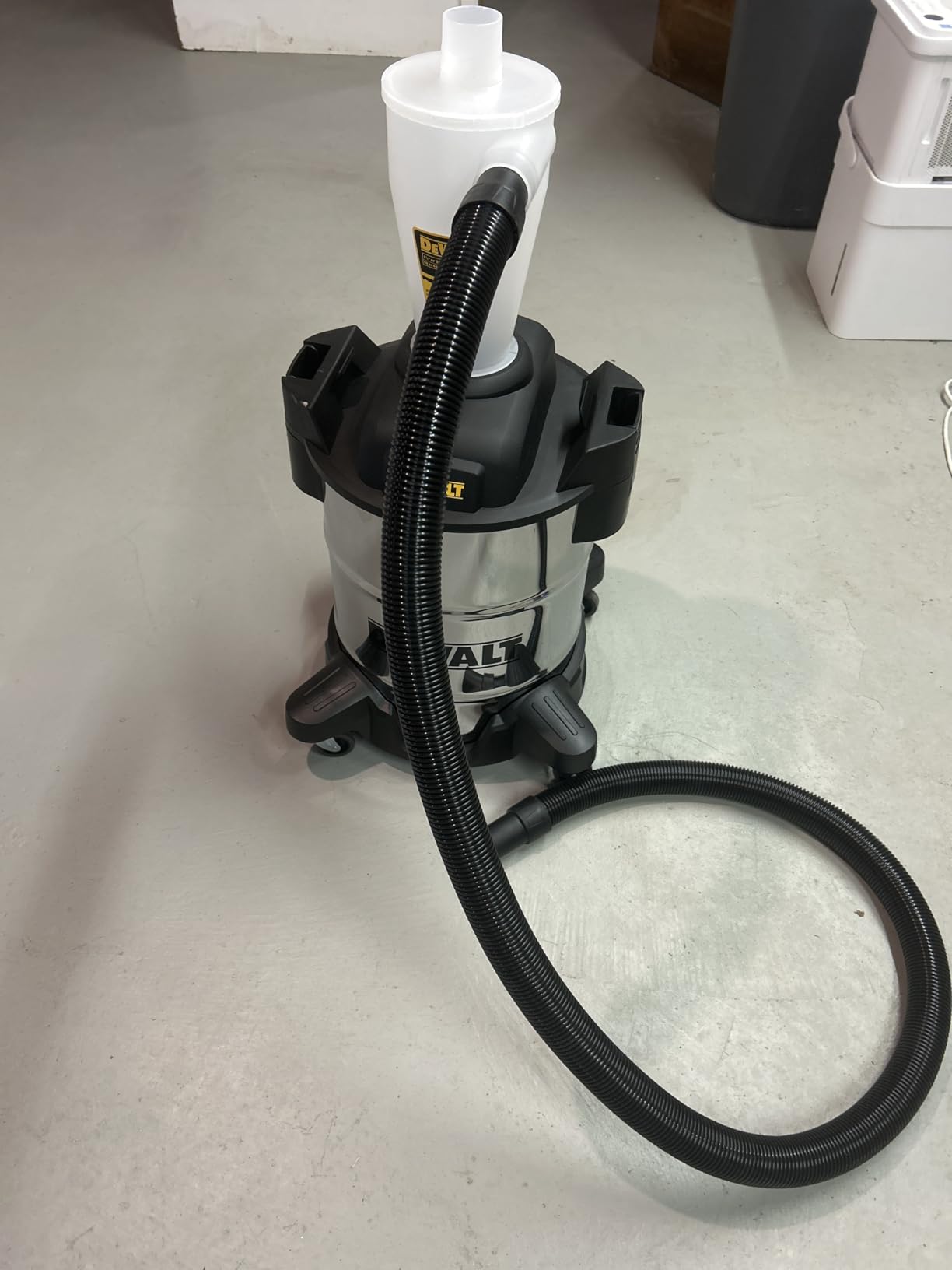
It works with a standard 2.5 inch shop vac hose, and the four casters make repositioning between machines straightforward. The 70 dB sound level is the lowest published figure in this roundup, which matters if the separator sits next to where you sand rather than across the shop.
Two practical complaints come up repeatedly. The intake hose height sits awkwardly for some floor grinders, and buyers wish hose adapters were included rather than being something you source separately. Neither is serious if your dust comes from a benchtop sander or a router table.
Why sander owners choose this one
Sanding produces the finest dust in the shop, and fine dust loads a vacuum cartridge far faster than chips do. A 10 gallon stainless tank means you are moving volume, not just spinning the same five gallons repeatedly, and the steel body does not distort the way plastic does when the hose pulls.
For a workshop that runs a CNC router alongside a sanding station, this is the separator we would point at first. Our guide to CNC routers for home workshops goes into the machines themselves, and this tank is sized to keep up with their output.
When it is the wrong shape for your shop
Skip it if floor space is the binding constraint, because at 34.6 inches tall it is the largest separator in this roundup and it needs a clear path for the intake hose. It is also the wrong choice for anyone who wants a self-contained system, since without a shop vac there is simply no suction.
If your only machine is a table saw and you produce coarse chips, a five-gallon pail design is more than adequate and takes up less room.
4. Dustopper PRO Cyclone Separator – Best Low-Profile Design for a 5-Gallon Pail
Dustopper PRO Dust Collector – 99.9% Efficiency Cyclone Dust Separator
Fits standard 5-gallon pails
Two sweep elbows included
Anti-static resin
13 x 13 inches
Pros
- Preinstalled gasket seals to any standard 5-gallon pail with no assembly
- Third-party tested separation performance
- Two high-flow sweep elbows are included
- Clear body shows how full the bucket is
- Anti-static resin body
Cons
- Separation quality depends on the horsepower of the vacuum feeding it
- Thin retail buckets can collapse under suction
- Gasket can lift out of its groove when removing the unit
- 2.25 inch port means some setups need extra adapters
The Dustopper PRO is designed around one idea: make a bucket-top separator that needs no assembly at all. A preinstalled hollow-core EPDM gasket drops into a standard five-gallon pail and seals, and the two patented high-flow sweep elbows come in the box, which most competing designs either omit or charge extra for. Across 1,218 reviews it holds a 4.6 average.
What sets it apart in testing terms is that its separation performance was verified by a third party, Aerodyne Environmental, against fine sawdust, coarse sawdust, and drywall powder. It also picked up a Most Innovative Concept Award at a National Hardware Show, and the low-profile form factor is the reason we like it in tight shops: at 13 by 13 inches it does not need a tall tank.
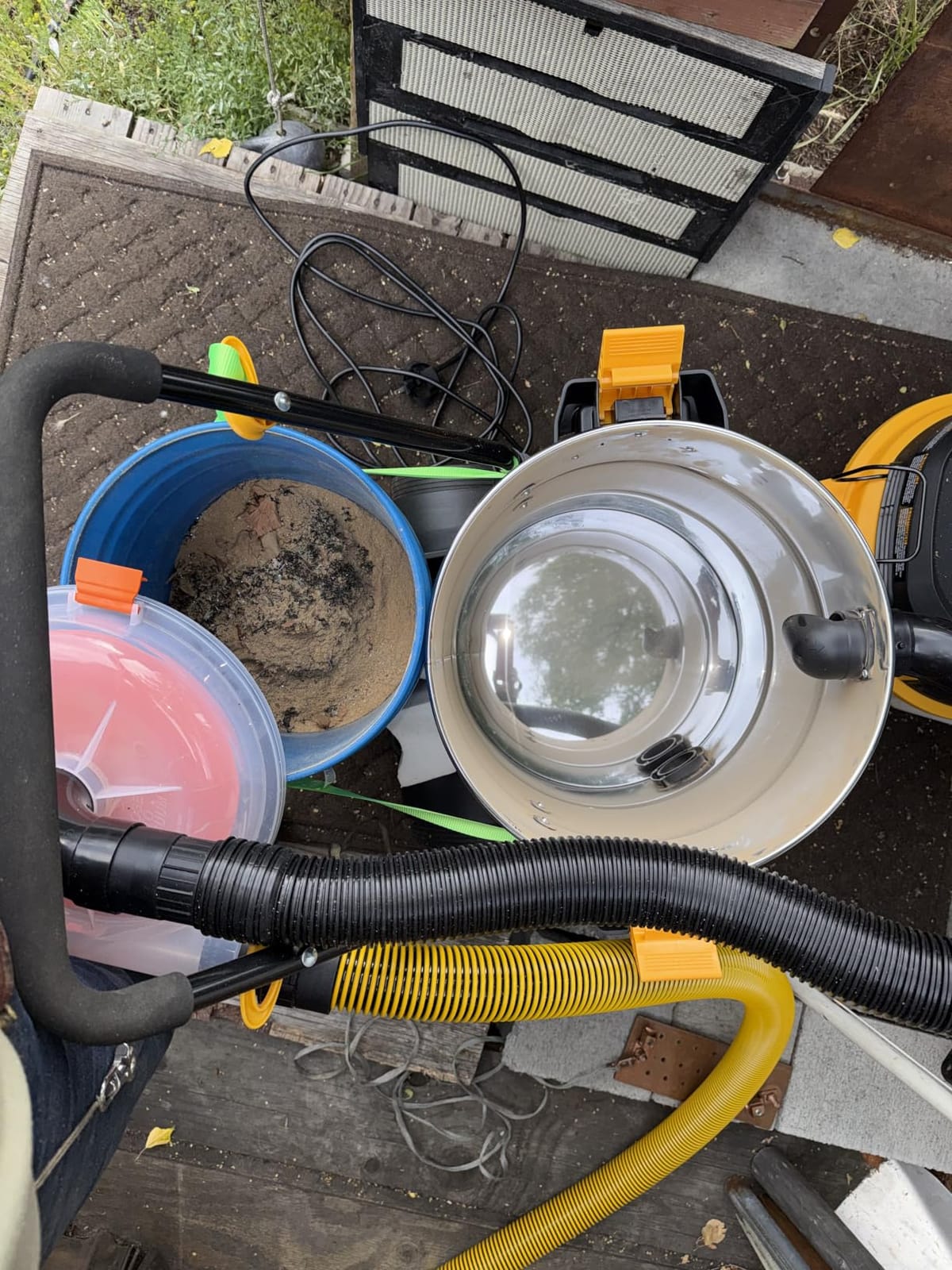
Owners credit it with keeping vacuum bodies and filters essentially empty across sawdust, drywall, MDF, and even pet hair. The clear body is a small but genuinely useful feature, because you can see the dust spinning out and judge how full the pail is without stopping the machine.
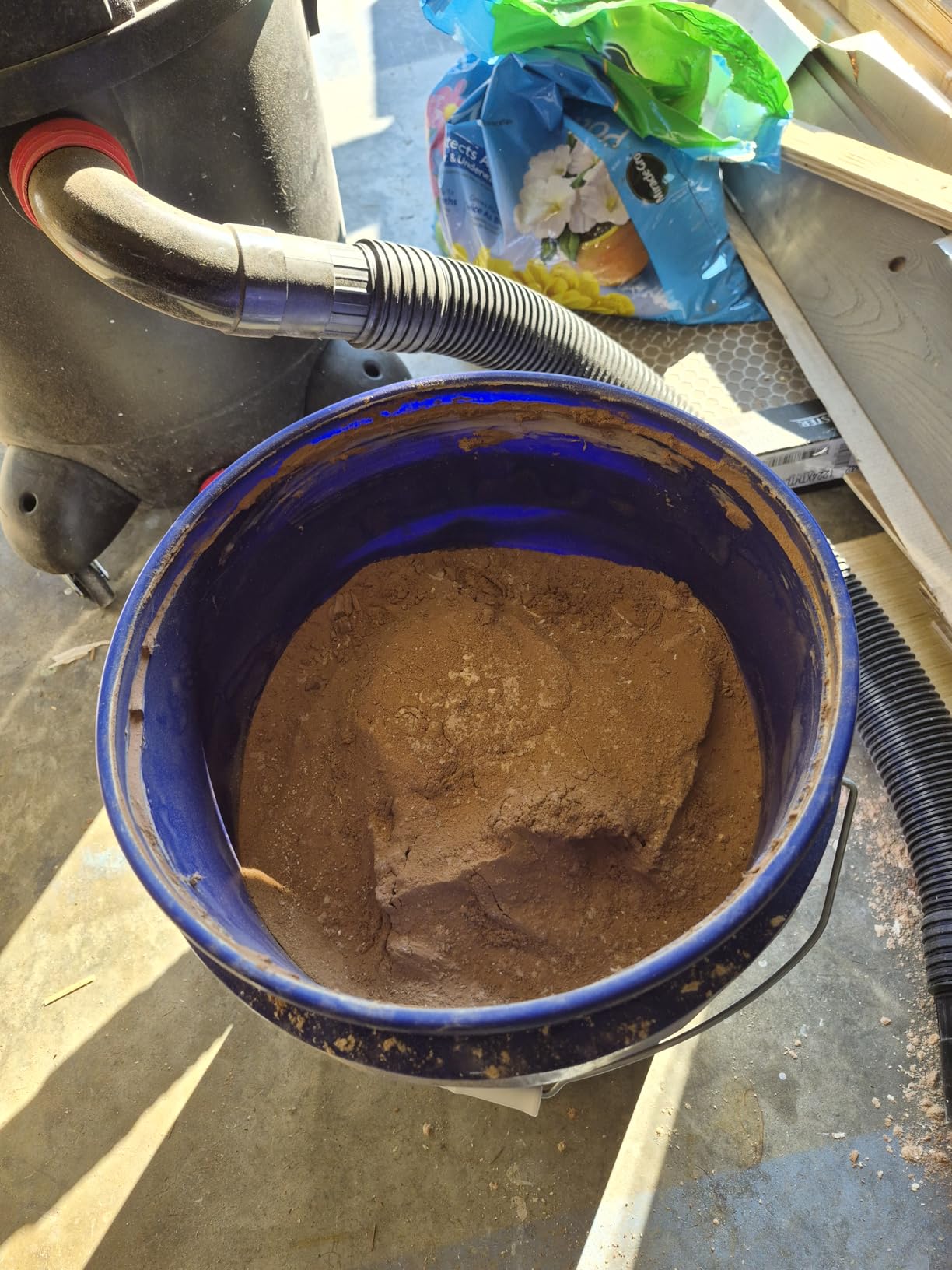
The recurring caveat is that separation quality tracks the horsepower of the vacuum feeding it. Underpowered vacs let dust through, which is a different failure mode from the unit itself. A minority of owners also report the gasket lifting out of its groove when the separator is twisted off, and that big-box five-gallon pails are frequently too thin to resist suction.
When the no-assembly gasket changes the outcome
For a first-time builder, this removes the single step where most DIY separators fail. There is no drilling, no sealant, and no caulking a warped base, which means the gap between buying it and using it is roughly the time it takes to set a pail down and connect a hose.
It suits shops where the bucket gets moved often, because the gasket is the only seal and it can be reseated in seconds. Pair it with a thicker pail and you have the shortest path to effective pre-separation on this list.
When it falls short
It is the wrong tool if your dust is dominated by very fine sanding powder and your vacuum is a small 2 to 3 gallon unit, because separation efficiency needs airflow volume to spin the dust out. It is also not a good match for vacuum hoses that need a 2.5 inch connection without an adapter, and the swept elbows do add length that has to fit between the port and the vac.
5. POWERTEC 1 HP 560 CFM Wall Mount Collector – Finest Filtration in a Wall-Mounted Body
POWERTEC 1 HP, 560 CFM Wall Mount Dust Collector with 1 Micron Dust Collector Bags, Dust Collectors for Woodworking Dust Collection System (DC5371)
1 HP motor
560 CFM
1 micron reusable bag
120V and 240V dual voltage
80 dB
Pros
- 1 micron bag is the finest filtration rating in this roundup
- Wall mounting frees all floor space
- Dual voltage runs on 120V or 240V
- Bag has a fill window and a zipper for emptying in place
- Vortex base design improves dust removal
Cons
- Single 4 inch inlet means one machine at a time
- Inlet safety grate collects large debris and needs regular checking
The POWERTEC DC5371 is a genuine standalone collector, and it is the one in this roundup with a wall-hung body and a 1 micron filter bag. The 1 HP induction motor runs at 3,450 RPM and moves 560 CFM, and the motor is dual voltage, drawing 12 amps on 120V or 6 amps on 240V. That flexibility matters in a garage, where the nearest outlet might be either.
The bag is reusable, has a built-in dust level window so you can see when it is filling, and a zipper at the bottom so you can empty it without pulling it off and spilling. The Vortex Base design underneath is claimed to improve dust removal efficiency by up to 10 percent by reducing turbulence under the bag. At 80 dB it sits in the middle of the noise range for collectors here.
The single most repeated caveat in the reviews concerns the protective impeller grate over the 4 inch inlet. It exists to stop a glove or a loose object from reaching the impeller, and the cost is that large shavings catch on it. If you ignore it, airflow drops and efficiency falls off, so it needs checking on a schedule rather than when you remember.
Because there is one 4 inch inlet, you run one machine at a time, and there is no second port to split airflow to a jointer while the planer is going. That is a deliberate trade for a unit that takes up no floor space at all and weighs 35.5 pounds.
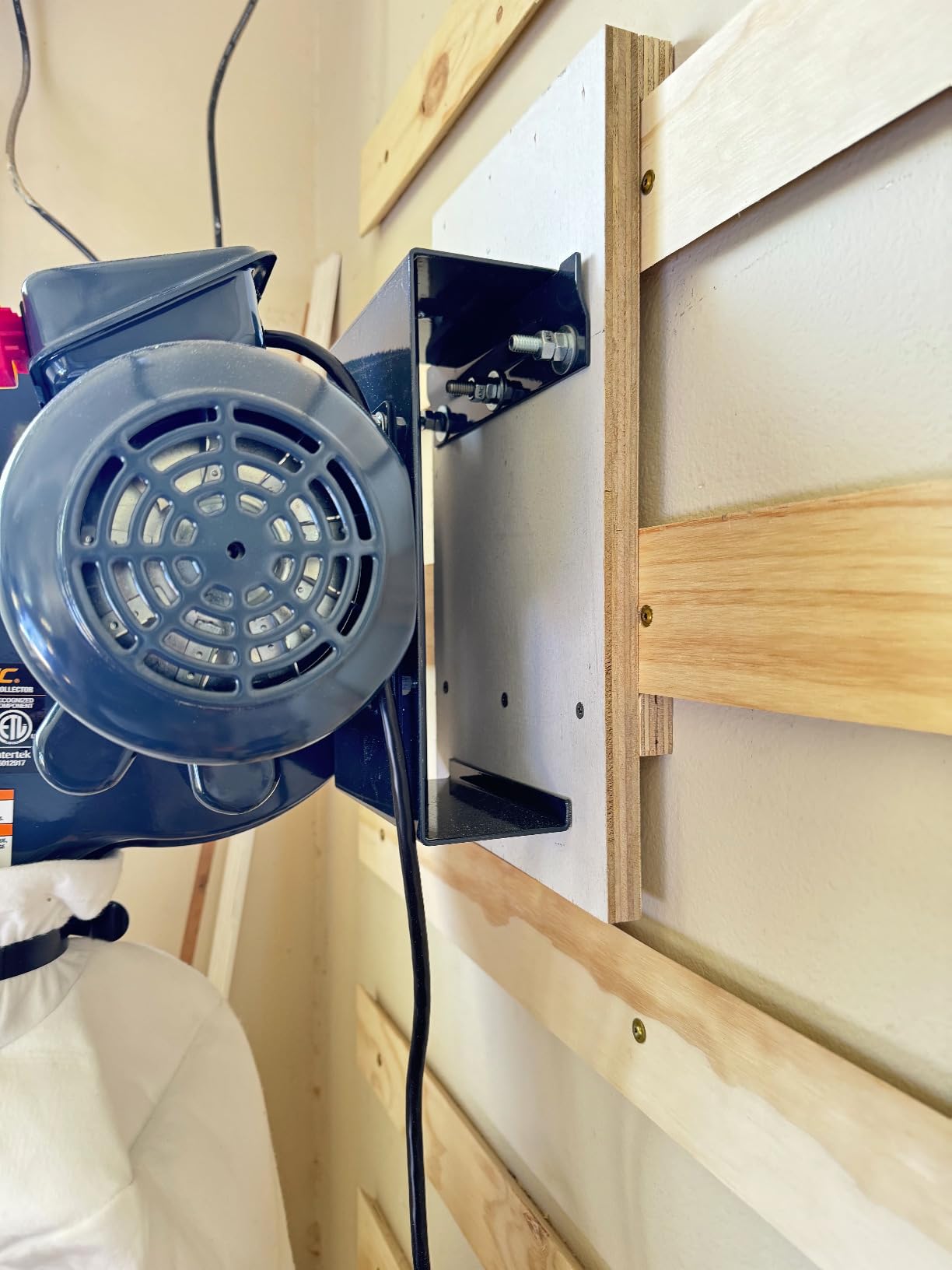
What you gain by mounting it on the wall
Wall mounting is the single most space-efficient decision available to a small workshop, and this unit is built for it, with the bracket included. A 35.5 pound body that would otherwise eat a bench corner ends up above head height, which in a 12 by 16 shed is the difference between workable and cramped.
The 1 micron bag is also the strongest filtration claim in this roundup, and it is worth understanding what it means: the bag captures particles down to one micron rather than the 2.5 micron common on wall-mount collectors. Finer filtration means higher pressure drop, so pair it with short, smooth duct runs.
When it is not the right call
Skip it if you need to run a jointer and a table saw at the same time, because one inlet cannot do both. Also skip it if fine filtration is not a real requirement, since 1 micron media clogs faster and the running cost of bags goes up compared with a 2.5 micron unit.
And be careful with the inlet grate. Owners who run planer or jointer duty and leave the grate unchecked report a noticeable loss of suction over a few weeks of work.
6. Shop Fox W1826 Wall Mount Dust Collector – Best Steel-Built Wall Mount
Shop Fox W1826 Wall Dust Collector, 2.5 Micron Filtration,White
537 CFM
7.2 inches static pressure
1 HP 110V and 220V
2.5 micron bag
85 dB
Pros
- All-steel construction that owners expect to outlast plastic bodies
- 537 CFM at 7.2 inches of static pressure
- Bag window and bottom zipper make emptying easy
- Simple wall bracket with locking screws
- Prewired 110V out of the box
Cons
- Needs full 4 inch hose or airflow drops sharply
- Inlet safety cage traps large shavings on planer and jointer work
- Exhaust port diameter is poorly specified for fitting a hose
The Shop Fox W1826 is the collector owners most often compare against the POWERTEC, and the reason is the sheet metal. It measures 19.5 by 18 by 44 inches, weighs over 50 pounds, and the all-steel body is the reason buyers describe it as something they expect to still own in a decade. The 1 HP motor is prewired at 110V, drawing 7 amps, and can be run at 220V at 3.5 amps.
The performance number that stands out is the static pressure. At 7.2 inches of water the W1826 holds 537 CFM under real resistance, which is why owners report more suction than a shop vacuum of comparable size and less noise. At 85 dB it is the loudest figure published in this roundup, so it belongs in a detached shop rather than a basement.
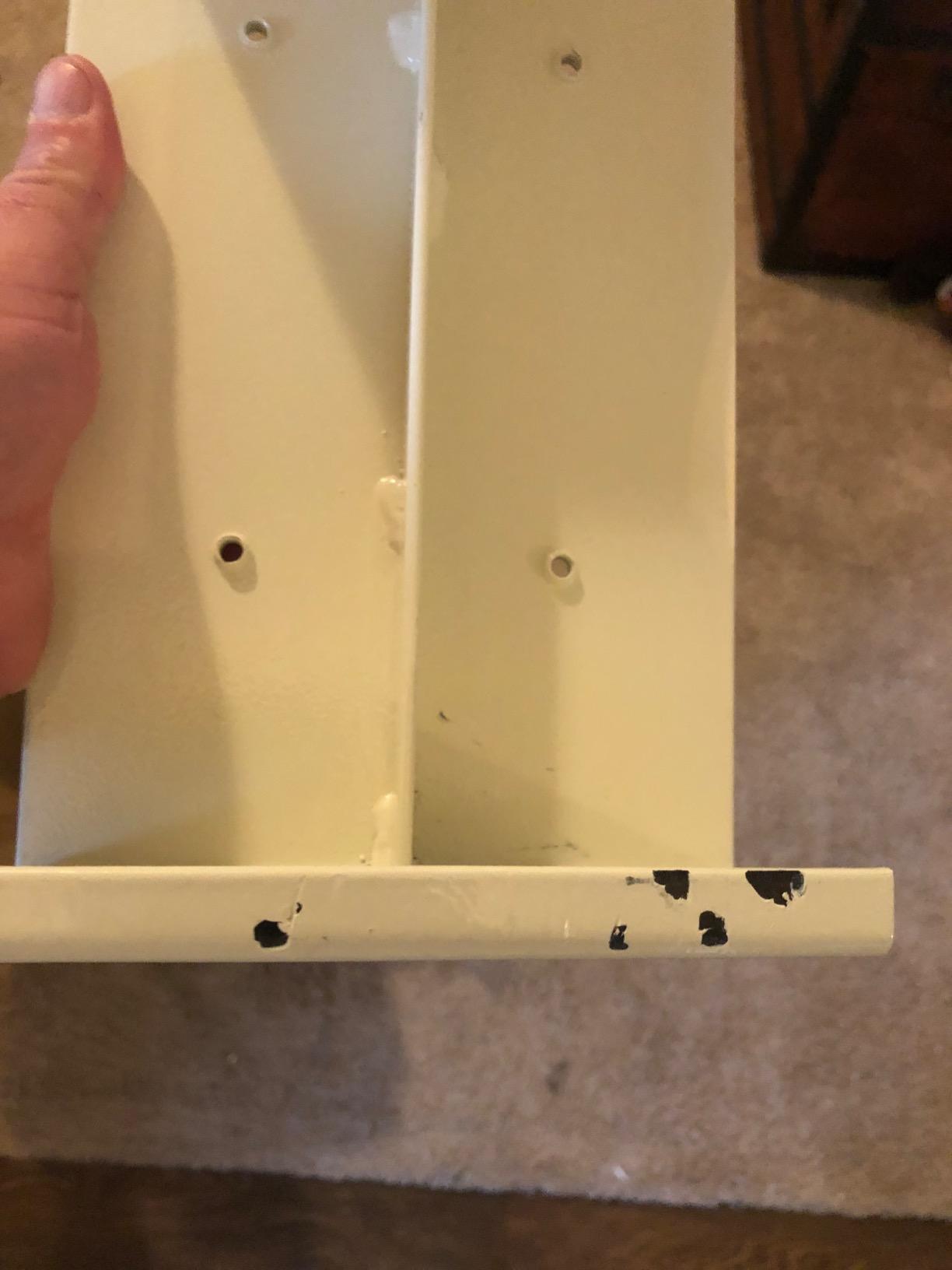
Setup guidance dominates the reviews, and it is worth reading twice. It needs full 4 inch hose from the machine, because stepping the hose down close to the inlet starves airflow. Many owners also add an upstream drum or cyclone so chips never reach the bag, which is what turns a good collector into a good system.
Two hardware complaints recur. The inlet safety cage traps large shavings on planer and jointer work, and some owners snip it off for higher throughput, which is a deliberate trade against the guard’s purpose. The exhaust port diameter is also poorly specified, which makes fitting an exhaust hose an exercise in measurement.
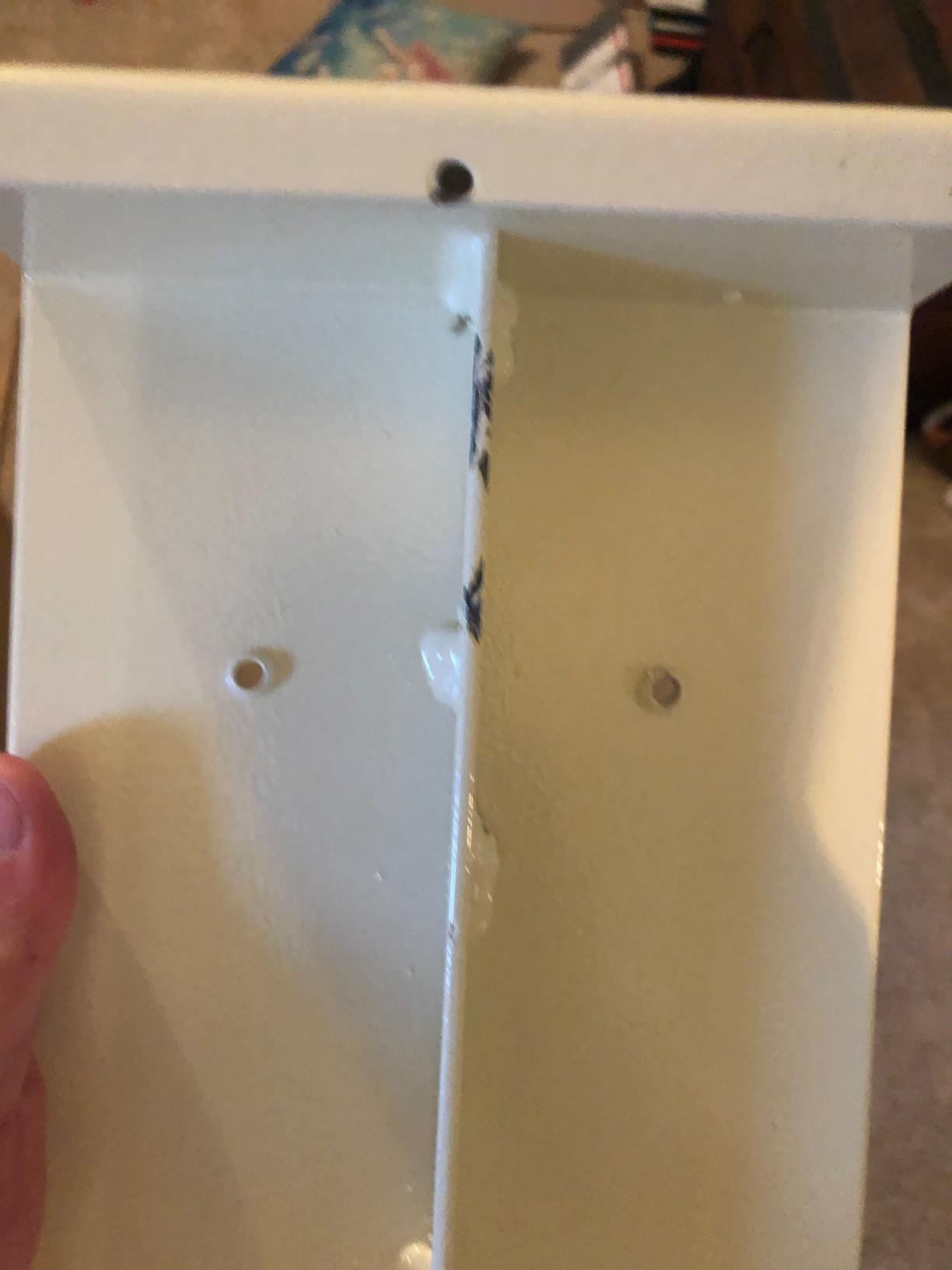
What the steel and static pressure actually buy you
Static pressure is the number that separates a collector that performs from one that only looks powerful. A unit rated for high free-air CFM but low static pressure loses most of that airflow the moment you attach 20 feet of hose and a bend, and the W1826’s 7.2 inches is the figure that keeps suction up on a real run.
The steel body also matters for noise and vibration. Sheet metal walls and a rigid bracket damp the rattle that plastic bodies produce, which is part of why owners describe it as noticeably quieter than a shop vacuum system of similar capacity.
When it is the wrong pick
Skip it in a shared-wall house or a basement, because 85 dB is the highest published figure in this roundup and collectors run continuously. Also skip it if you are not prepared to run full 4 inch hose, since the performance advantage disappears when the line is reduced near the inlet.
For a garage with no finish work, it is a strong choice. For fine dust and low noise under one machine, a 1 micron wall-mount unit is the better target.
7. WEN DC3401 660 CFM Rolling Collector – Best Budget Entry for a Small Shop
WEN Woodworking Dust Collector, 5.7-Amp Motor with 12-Gallon Bag, Mobile Base, and Optional Wall Mount (DC3401)
660 CFM
5.7 amp brushed motor
12 gallon 5 micron bag
17 pounds
Two year warranty
Pros
- Moves far more air than a canister vac at a similar outlay
- Only 17 pounds and rolls on lockable casters
- Optional wall mount kit included in the design
- 12 gallon bag empties less often than a 5 gallon pail
- Handles table saw router table and bandsaw duty
Cons
- Inlet filter screen clogs on planer and jointer shavings and most owners remove it
- Carbon motor bushings wear at roughly 250 hours
- Louder than buyers expect and audible through shop walls
- Does not push through long hose runs the way a shop vac does
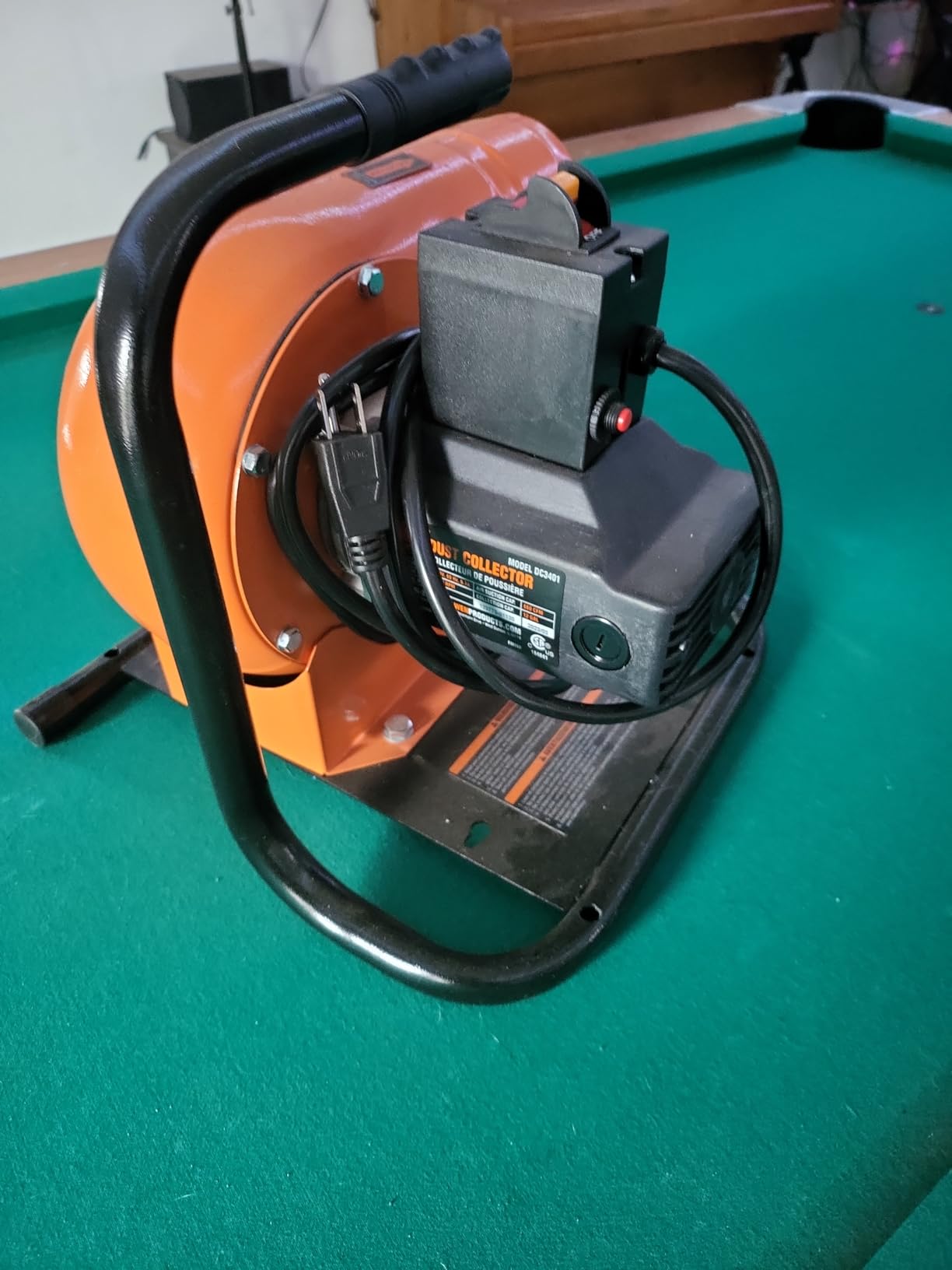
The WEN DC3401 is the entry point in this roundup, and with 676 reviews it is also one of the most proven. A 5.7 amp brushed motor drives a 6 inch impeller and moves up to 660 CFM into a 12-gallon, 5 micron zippered bag. At 17 pounds and 34.25 by 13 by 14.2 inches it is small enough to lift onto a bench, and it rolls on lockable swivel casters when you leave it on the floor.
The design anticipates small shops specifically, because a wall mount kit is part of the format. Owners mount it high when floor space is short and roll it back down when they need to move it. The 12-gallon bag is a real upgrade over the 5-gallon pail used with separators, so you empty it far less often.
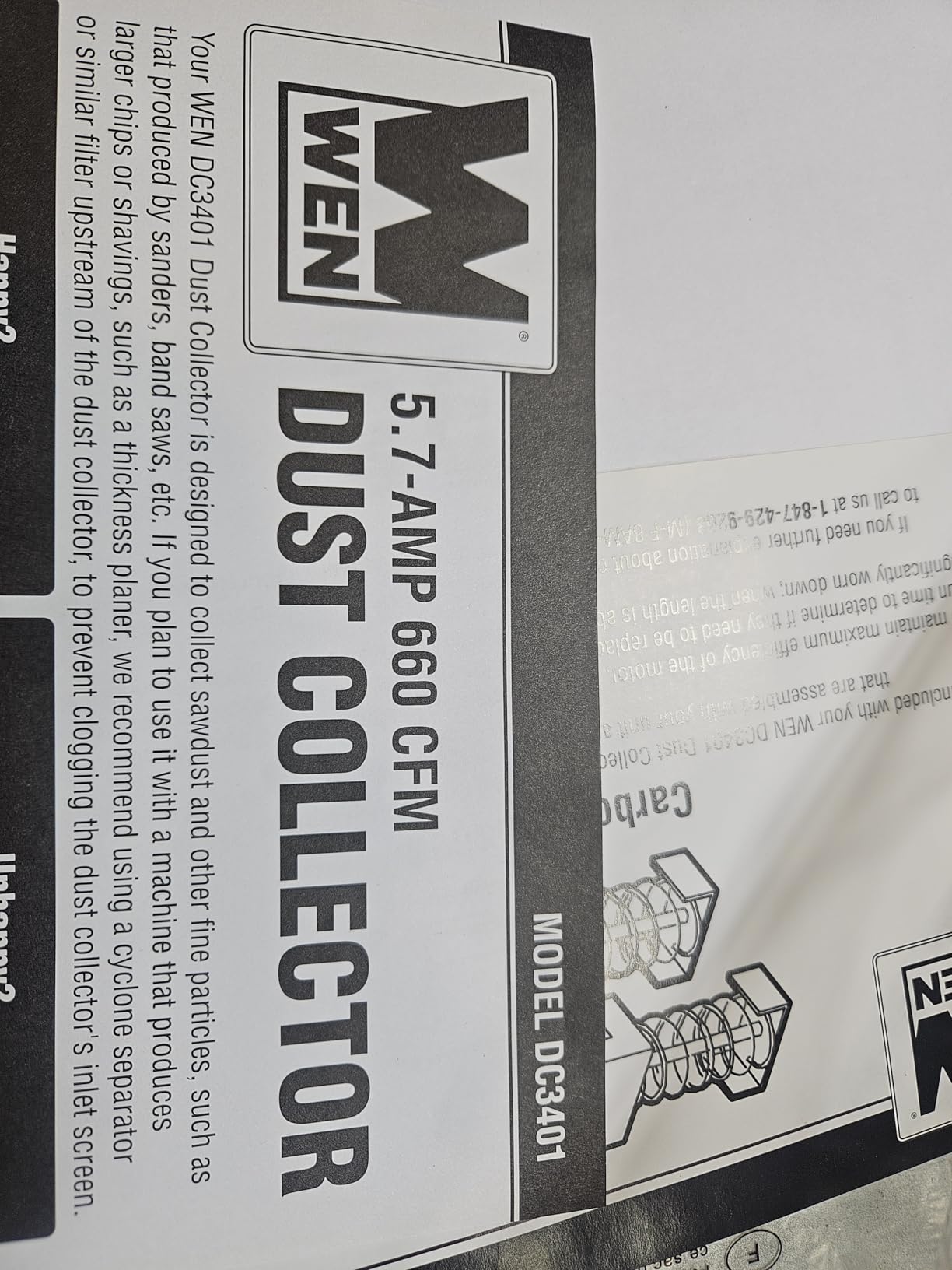
Three recurring negatives show up. The inlet filter screen clogs quickly on planer and jointer shavings, and most owners simply remove it. The carbon motor bushings are reported to need replacement at roughly 250 hours, which is a maintenance item you have to plan for. And a minority report early motor bearing failures along with slow response from customer service.
There is also a real performance limit that buyers do not always expect: this collector does not push through hose resistance the way a shop vacuum does. Hose runs need to be short, which is fine when the collector sits next to one machine and frustrating the moment you want to duct it to a corner of the shop.
Who this is genuinely right for
This is the pick for a first machine, or for a table saw and a router table in a space where nothing else fits. It moves enough air to replace a canister vac setup, empties into a bag rather than a bucket, and it costs roughly what a mid-size wet/dry vacuum does.
Owners also report it pairs well with a drum-style cyclone upstream to keep the fine dust out of the bag, which lengthens bag life and lets you run the screen-free configuration without choking airflow.
When the trade-offs bite
Skip it if you run long hose runs, want to duct the collector across the shop, or plan to add a second machine later. And skip it in a house with shared walls, because owners specifically report that it can be heard through shop walls.
If you need filtration fine enough for finishing work, 5 micron is adequate but not exceptional, and the 250-hour bushing interval is a recurring ownership cost worth budgeting for.
8. BUCKTOOL 750 CFM Auto-Start Dust Collector – Best for Tool-Activated Starting
BUCKTOOL 750 CFM Auto-Start Dust Collector,1.2HP 13-Gallon Capacity
750 CFM
1.2 HP 120V motor
Auto-start outlet to 7A
Caster base
56 pounds
Pros
- Auto-start outlet removes switching tools on and off by hand
- 750 CFM from a 1.2 HP motor is strong for this size class
- Hose and five reducers plus three bags in the box
- Caster base works as a mobile or stationary setup
- Clasp bag design avoids cutting hands on removal
Cons
- Auto-start circuit is limited to 7A so higher-draw machines need their own outlet
- Reducer set still has to be matched to each machine port
- Reviews show a roughly 10 percent one-star share
The BUCKTOOL 750 CFM is the only unit here with an integrated tool-activated outlet, and for a one-person shop that is a bigger convenience than it sounds. Switch on the table saw and the collector starts with it. No separate button, no forgetting to turn the collector off at the end of a cut, and no motor left running while you walk away.
The motor is 1.2 HP on 120V at 3,450 RPM, rated CSA listed, drawing 6.5 amps at full load, and it moves 750 CFM. That is the third-highest airflow figure among the ten we examined while still running on residential single-phase power, which is exactly the balance a small workshop needs.
The bundled kit is unusually complete. You get a 5 foot length of 4 inch flexible hose, five reducers, a plastic lower bag, a cloth lower bag, a 2 micron upper cloth bag, and a PET bag clamp. The clasp bag design lets you swap bags without the cutting hazard of a plain slip-on bag.
Its footprint is the catch. At 29.53 by 20.19 by 65.01 inches and 56 pounds, it is tall and substantial, and the rolling base measures 16.5 by 26.375 inches. In a 12 by 16 shed shop that vertical profile is a real commitment, and unlike a wall mount it cannot be moved overhead.
Reviewers also flag that the auto-start circuit tops out at 7 amps, so a higher-draw machine such as a large planer will not trigger it reliably. You can still use the collector, but the automation stops there. Our note on shop vacuum filters for fine dust covers the filter costs that dominate the running total on a high-draw setup.
Why auto-start matters more than it looks
The strongest argument for this machine is behavioural, not electrical. Collectors that people forget to switch off are the reason filters sit loaded, and a loaded filter is exactly what kills suction. Tying the start to the machine removes the most common cause of a clogged bag.
It also means the dust stops accumulating in the bag during the gaps between cuts, which is where a lot of small-shop collection systems quietly lose their suction. The feature pays for itself in filter life rather than in time saved.
When the height and rating rule it out
Skip it in a very low-ceilinged shop, since at 65 inches tall it is the tallest machine in this roundup and there is no wall mount version. Skip it if your machines draw more than 7 amps and you are buying specifically for automation, because that is the one feature you came for.
Its 4.0 average with a 10 percent one-star share is the lowest rating here, so treat the auto-start as the reason to choose it rather than expecting it to lead on raw performance.
9. WEN DC1300 1300 CFM Dust Collector – Best for Running Two Machines at Once
WEN DC1300 1,300 CFM 14-Amp 5-Micron Woodworking Dust Collector with 50-Gallon Collection Bag and Mobile Base , Black
1300 CFM
14 amp motor
Dual 4 inch inlets
50 gallon 5 micron bag
10 inch impeller
Pros
- Highest airflow in this roundup with dual 4 inch inlets for two tools
- 50 gallon vertical bag holds far more dust between changes
- 10 inch steel impeller driven at 3450 RPM
- Runs quieter than several shop vacs operating at once
- Mobile base with four swivel casters
Cons
- Fabric collection bag is a separate optional purchase
- Bag support posts feel light duty and the bag hook can slip
- Instruction manual orders the assembly steps awkwardly
- Some units arrived missing hardware and metric fasteners complicate assembly
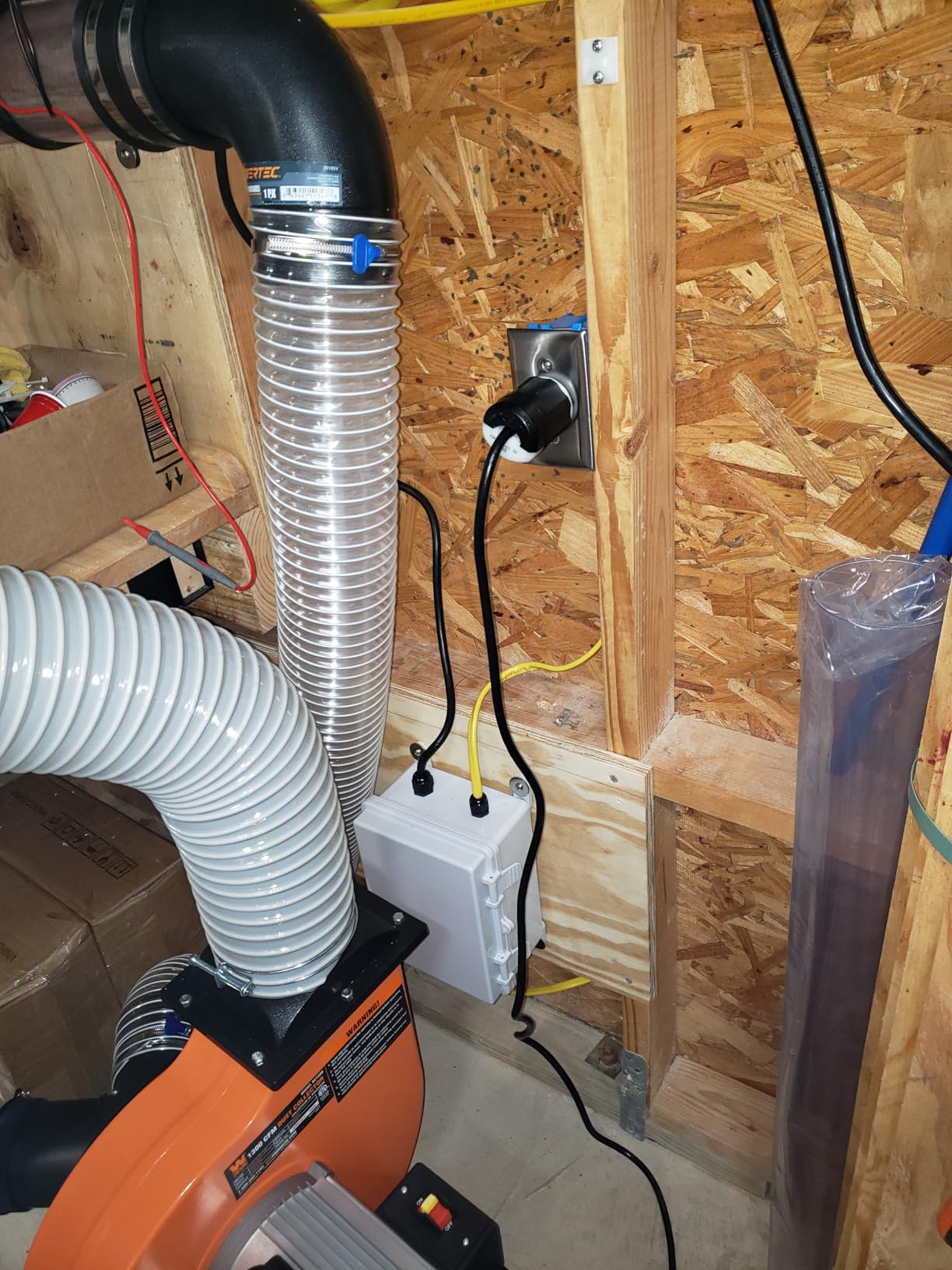
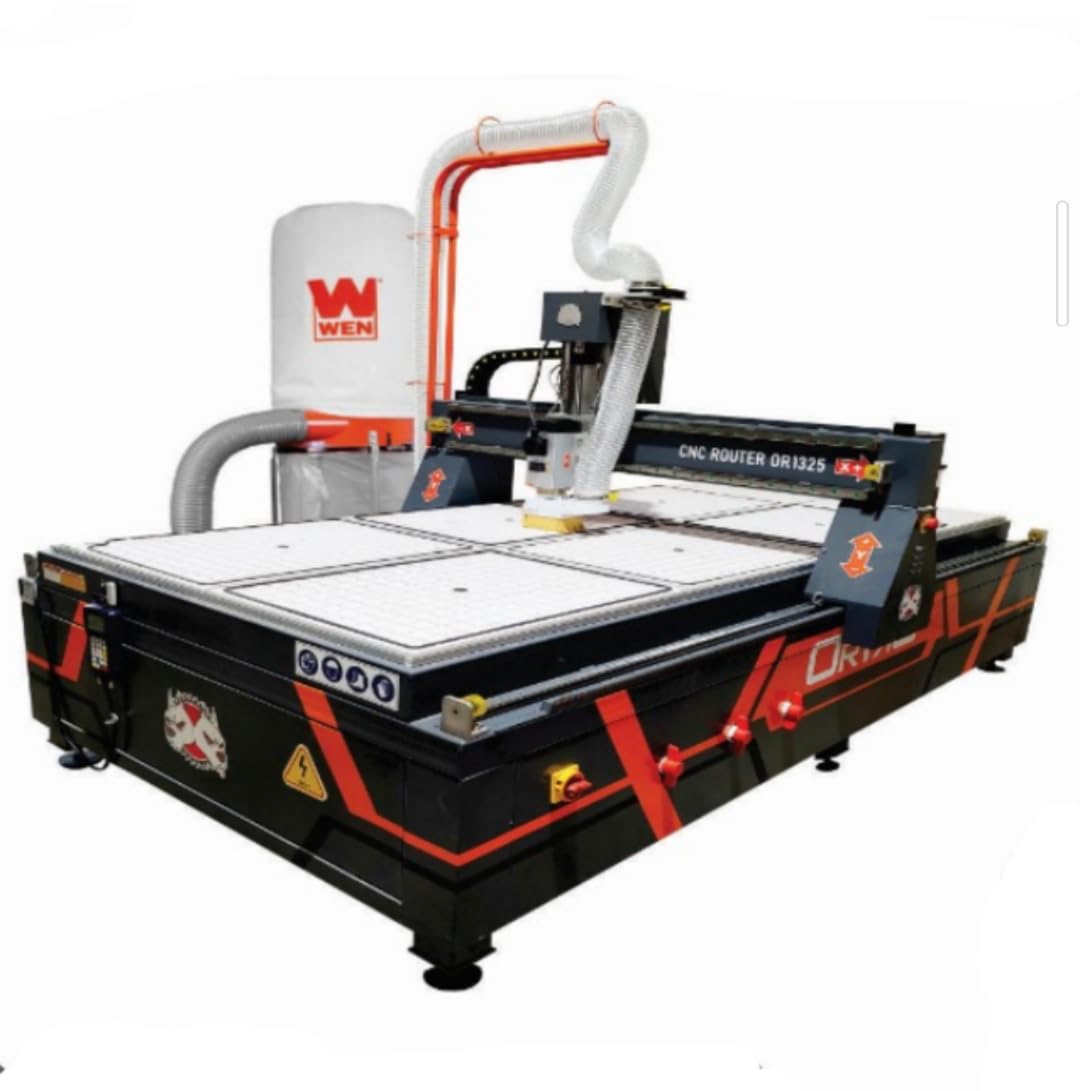
The DC1300 is the machine in this roundup that replaces a whole shop of vacuums with one box. It circulates up to 1,300 cubic feet of air per minute, driven by a 14 amp motor turning a 10 inch steel impeller at 3,450 RPM. Owners describe it as the unit that lets a CNC, a table saw, and a sanding station run at once with less noise and far fewer bag changes than three separate vacs.
Two features make that possible. The dual 4 inch inlets let you attach two tools simultaneously rather than switching a single hose, and the vertical 50 gallon collection bag means you empty dust far less often than with a 12-gallon rolling unit. It runs on residential single-phase power, which is the part that surprises people who assume this much airflow requires three-phase.
It is also the largest capacity figure in this roundup by a wide margin, and that capacity is what buys you long intervals between bag changes on high-output machines.
The complaints are about assembly and hardware rather than airflow. The fabric bag is a separate optional purchase, so budget for it. The bag support posts feel light duty and the bag hook can slip, which some owners modify. The instruction manual orders the steps awkwardly, and a number of buyers report missing hardware or metric fasteners that complicate assembly for anyone working in the US.
It is also worth asking honestly whether 1,300 CFM is more than a small workshop needs. If you own one machine, this is over-spec and the extra capacity will not improve your results.
When dual inlets genuinely change your workflow
Two machines running at once is the whole value proposition. A jointer and a planer sharing one duct, or a CNC and a sanding station running together, is a real change in workflow rather than a spec-sheet advantage. You stop shutting one machine down to use the other.
The 50-gallon bag is the quiet advantage. On fine sanding dust, where filters load fastest, a bag of that size combined with 1,300 CFM is the combination that keeps suction steady through a long session.
When it is over-buying
Skip it for a single-machine shop, where the extra airflow buys nothing and you are buying capacity you will not use. Skip it if floor space is tight, because this is a large floor-standing unit rather than a wall mount.
Also plan for the assembly friction. Verify the hardware kit on arrival, and budget separately for the collection bag if it is not included with your unit.
10. Oneida 2.5 Deluxe Cyclone Kit with Bucket – Best Ready-to-Roll Separator Package
Oneida Air Systems Dust Collector & Cyclone Separator Kit w/ Clear Bucket, 2.5 Deluxe 5-Gal – Portable Cyclone Machine for Wet and Dry Shop Vacuums
Complete kit with bucket and casters
4.5 foot hose
99 percent capture
5 gallon capacity
Pros
- Everything is in the box including bucket casters hose and gasket
- Collapse-proof bucket avoids the failure common to DIY builds
- Four casters make the whole assembly easy to move
- Neutral-vane design improves efficiency 20 percent
- Works with drywall wood dust flour pet hair and metal
Cons
- Lowest rating among the separators here with a 9 percent one-star share
- You pay a real premium over the DIY version for the same core technology
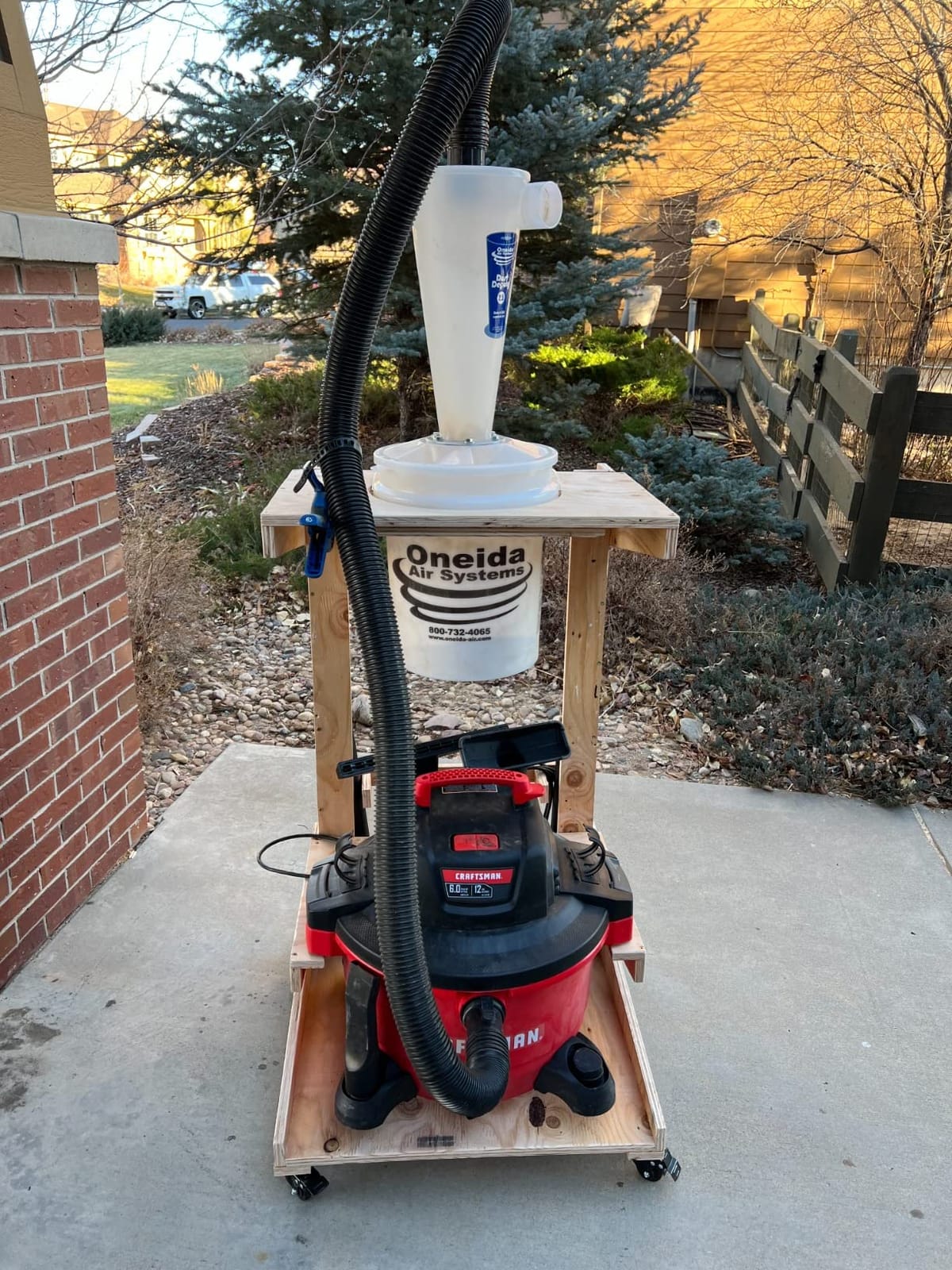
This kit is the Oneida separator technology with the assembly problem solved by shipping you the parts. You get the cyclone, a collapse-proof 5-gallon bucket, a lid, four casters with caster mounts, a 4.5 foot length of 2.5 inch hose with cuffs, a vacuum tether kit, a pre-cut gasket, and the hardware. Nothing to drill, nothing to seal.
That is a real advantage if you have never built a cyclone before, and the casters mean the whole assembly rolls to whichever machine is running rather than staying tethered to one spot. It fits shop vacs with 2.5 inch hose fittings and is backwards compatible with a 3 inch inner diameter flange.
Owners value the collapse-proof bucket specifically, because a thin retail pail deforming under suction is the most common failure of a DIY build, and this one is designed not to. The same neutral-vane cyclone captures and removes 99 percent of dust and debris before it reaches the vacuum filter, a 20 percent efficiency improvement over the earlier design.
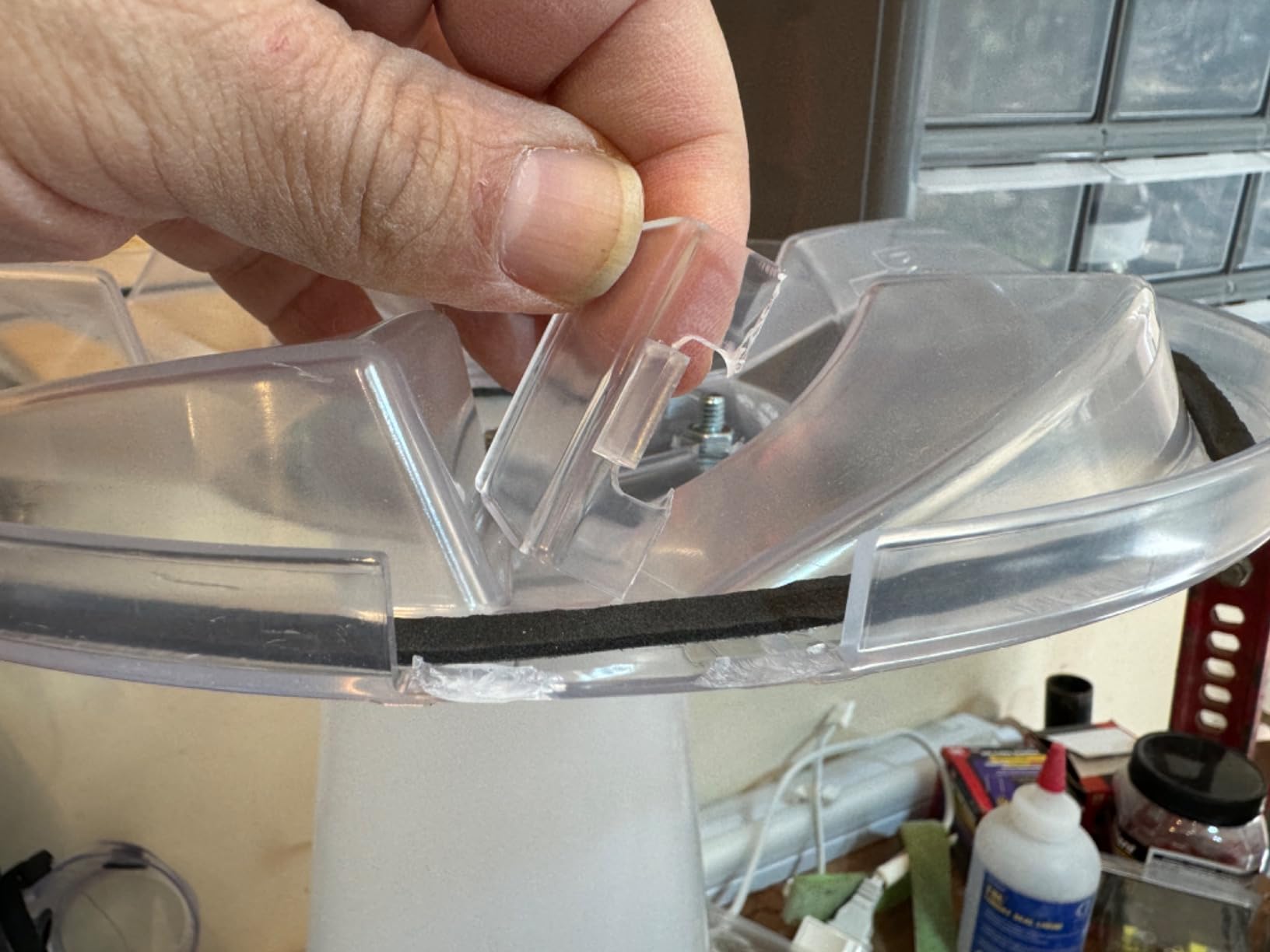
What separates it from the DIY version is the accessory kit and the hose length, and that difference is exactly what you are paying for. The core separation technology is the same, so the price premium is real and the review ratings reflect it: 4.1 across 360 reviews with a 9 percent one-star share, the lowest among the separators here.
The 4.5 foot hose is short, which is appropriate for a mobile setup but means the bucket cannot sit far from the vac. Practically, that is fine, since the casters exist precisely so the whole thing moves together.
When buying the complete kit is the smarter move
Buy this if the alternative is a bucket, a drill, a sealant, and a trip to a hose supplier. The time saved is real, and the collapse-proof bucket and pre-cut gasket remove the two failure points that generate most of the complaints on DIY cyclone builds.
It also suits a shop where the machine moves. Four casters and a tether kit mean the assembly can follow the job around the floor without anyone unplugging ductwork.
When you should build it yourself instead
Skip it if you already own a thick-walled bucket and enjoy the build, because the DIY version performs the same separation. Skip it if your shop vac has a 2.5 inch hose that already reaches comfortably, since the included 4.5 foot length adds little.
And note the rating. This is a competent kit with good hardware, not the best-reviewed separator here, so you are paying for convenience rather than performance.
Dust Collector vs Dust Extractor vs Shop Vac
The three categories get confused constantly, and buying the wrong one is the most common expensive mistake in a small workshop. A dust collector moves a large volume of air at low pressure, a dust extractor moves a modest volume at high suction, and a shop vac sits in between with a wet/dry filter and a hose instead of rigid duct.
Here is how they actually differ. A dust collector pulls 350 to 1,300 CFM at low static pressure through 4 inch duct, which is what a table saw, jointer, thickness planer, or drum sander needs to actually capture bulk debris. A dust extractor moves 100 to 200 CFM at high suction through a 1.25 inch hose, which is what a handheld sander, router, or track saw needs to capture dust at the source.
The rule that falls out of this is simple. A machine that makes chips needs volume. A machine that makes powder needs suction and fine filtration. Owners who try to run a jointer off a dust extractor consistently report falling suction, which is the practical confirmation that the extractor and collector boundary is real.
A shop vac bridges the two, and a separator turns it into something closer to a collector. That is why four of the ten picks here are separator heads or kits rather than machines, and why our guide to dust extractors for woodworking is the right reference if your dust comes from hand tools.
How to Choose a Dust Collector for a Small Workshop
Most small-shop buying errors come down to sizing on the wrong axis. Buying for peak CFM rather than sustained airflow, or ignoring what your ductwork costs you, leads to a machine that performs well in the brochure and poorly behind the wall.
Size CFM to the machines, not the ambition
A table saw with a 4 inch port, one jointer, and a belt sander is a 700 to 1,000 CFM shop. One handheld machine and a router table is closer to 400 to 600 CFM. Running two chip-making machines at once pushes you toward 1,100 CFM and above, which is where a dual-inlet design starts earning its footprint.
A common mistake is buying for the largest machine you might buy rather than the one you own. Forum consensus is consistent on this: most small shops do not need massive vacuums, and a shop vac or cyclone system with good hose and no short-radius bends beats an undersized collector with sloppy ducting.
Confirm you can actually power it
This is the hardest buying blocker and the one most roundups ignore. Residential garages, sheds, and basements give you 120V and 240V single-phase. Three-phase 460V service requires a panel most homes do not have, and it is the reason large industrial collectors appear in roundups that have nothing to do with small workshops.
Every unit in this roundup runs on single-phase power. Before buying anything, check the motor plate for the voltage and the amperage at that voltage, and confirm your circuit can carry it. A 14 amp motor needs a 20 amp circuit, not a 15 amp one.
Understand what the micron rating costs you
Micron rating tells you the particle size the media captures. A 1 micron bag captures finer dust than a 2.5 micron bag, which matters for finishing work, but finer media also holds more dust before it clogs and therefore costs more to run. Particles under 10 microns are the ones that reach your lungs, so anything at 5 microns or finer is a reasonable floor for a general woodshop.
Felt bags capture more fine dust than plastic bags but shed fibers onto the outside, which makes emptying messier. Plastic bags are cheaper to replace and easier to clean, at the cost of more dust in the air when you empty them.
Budget for filter and bag replacements
Total cost of ownership is the number nobody publishes, and it is where single-stage bag collectors surprise people. Falling suction almost always means a loaded filter, not a failing motor. Budget for bag and filter replacement from the first year rather than treating consumables as a one-time cost.
Pre-separation is the cheapest way to cut that bill. When chips land in a bucket instead of a bag, the bag lasts several times longer, and the vacuum filter barely loads at all. That is the entire argument for the four separator options in this roundup.
Work out the real footprint and the noise
Wall mounts free the floor entirely, rolling units trade floor space for mobility, and stainless tank separators trade floor space for capacity. Measure the clearance you need for the intake hose and the door swing before you order, because a 34.6 inch tall tank in a low-ceilinged shed is a common regret.
On noise, published figures run from 70 dB on the DEWALT separator to 85 dB on the Shop Fox collector. For that situation, our guide to quiet shop vacuums for workshops is the better reference.
Do not waste duct performance
Every short-radius bend and length of flex pipe steals airflow, and improvised ducting is the most common reason a good collector underperforms. Rigid smooth pipe with gentle sweeps holds more airflow than the same run in flex duct. Grounding the ducting also matters, since friction in plastic hose and duct is the main cause of static shocks at the machine.
One last warning. Do not buy a three-phase collector you cannot power, a collector rated far above 1,200 CFM when you own one machine, or a large canister system that claims a permanent equipment corner you do not have. Buy the airflow you need this year, not the airflow you imagine needing later.
Frequently Asked Questions
What is the best dust collection system for a small woodshop?
For most small workshops, the best system is a shop vac or wet/dry vacuum paired with a cyclone separator, plus a good 4 inch hose with no short-radius bends. The Oneida Dust Deputy DIY pre-separates up to 99.9 percent of debris before the vacuum filter, which keeps suction steady and cuts bag and filter replacement. Add a standalone collector only once you own two or more chip-making machines.
How much CFM do I need for a small workshop?
A single table saw, router table, or belt sander needs roughly 400 to 600 CFM. A table saw plus a jointer or thickness planer needs 700 to 1,000 CFM. Running two chip-making machines at once pushes the requirement to 1,100 CFM and above. Size to the machines you own, and remember that long hose runs and tight bends can cost you a quarter of rated airflow.
Can a shop vac replace a dust collector?
For one to two small machines, yes. A shop vac with a cyclone separator fitted to a bucket captures most debris before the filter, and it costs a fraction of a standalone collector. The limitation appears when you need to run two machines at once or push through long hose runs, since a shop vac has limited airflow and suction compared with a dedicated collector.
What is the best dust extractor for a small workshop?
A dust extractor is the right tool for handheld sanders, routers, and track saws, because it delivers high suction through a small hose to capture powder at the source. It is not a substitute for a collector on a jointer, planer, or drum sander, since those machines need high volume rather than high suction. Look for HEPA-class filtration if you handle fine dust or finish work.
Is a 1 HP dust collector enough for a small workshop?
Yes for most small workshops. A 1 HP motor delivering 500 to 750 CFM handles a table saw, jointer, or thickness planer comfortably when the duct run is short and smooth. A single 4 inch inlet means one machine at a time, so if you plan to run two machines simultaneously you need dual inlets and more than 1 HP.
Which small shop cyclone dust collector is the best?
The best small shop cyclone depends on how much assembly you want. The Oneida Dust Deputy DIY is the best-performing and best-reviewed option, but requires drilling and sealing a bucket lid. The Dustopper PRO seals to a standard 5-gallon pail with a preinstalled gasket and no assembly. The Mullet offers the quietest, most rigid connection at 72 dB. All three need a shop vac to generate suction.
The Verdict for Small Workshops in 2026
The best dust collectors for small workshops are not the biggest machines on the market, and that is the main finding from comparing these ten. The Oneida Air Systems Dust Deputy DIY takes the top spot because it delivers the core benefit, up to 99.9 percent pre-separation before your vacuum filter, at the lowest entry point of anything here, and it carries the deepest review history in the group. Add the Mullet for a cleaner rigid connection, the DEWALT stainless separator for sanding dust, or the POWERTEC 1 micron wall mount when floor space is the binding constraint.
Whichever you choose, size it to the machines you own this year, keep every run on single-phase power, and resist buying three-phase or 1,300 CFM hardware for a one-machine shop.