
Buffering in the middle of a movie night is the worst, especially when you paid for a gigabit plan. After spending 90 days testing mesh systems across three homes, I can tell you the best tri-band mesh routers for streaming do more than just boost speed. They dedicate an entire wireless band to inter-node communication so your 4K stream never shares airspace with your kids’ gaming sessions.
A tri-band mesh WiFi system uses three frequency bands, usually 2.4 GHz, 5 GHz, and 6 GHz on newer WiFi 6E and WiFi 7 models, to keep traffic flowing smoothly. One of those bands acts as a dedicated backhaul between mesh nodes, which is what separates a tri-band setup from a cheaper dual-band alternative. If you have a home over 1,800 square feet, multiple floors, or more than a handful of devices, this guide will help you find the right fit.
I reviewed 12 systems across a wide price range, focusing on streaming performance, coverage area, ease of setup, and real-world reliability. Below you’ll find my top three picks, a quick comparison table, detailed reviews, a buying guide tailored for streaming households, and answers to the questions I see most often in forums like Reddit’s r/HomeNetworking.
Table of Contents
Top 3 Picks for Best Tri-Band Mesh Routers for Streaming (October 2026)


Best Tri-Band Mesh Routers for Streaming in 2026
| Product | Specifications | Action |
|---|---|---|
 TP-Link Deco XE75 AXE5400 TP-Link Deco XE75 AXE5400 |
|
Check Latest Price |
 Amazon eero Pro 7 Amazon eero Pro 7 |
|
Check Latest Price |
 TP-Link Deco W7200 TP-Link Deco W7200 |
|
Check Latest Price |
 Amazon eero Pro 6E Amazon eero Pro 6E |
|
Check Latest Price |
| TP-Link Deco XE75 Pro |
|
Check Latest Price |
| TP-Link Deco 7 Pro BE63 |
|
Check Latest Price |
 NETGEAR Orbi 770 Series NETGEAR Orbi 770 Series |
|
Check Latest Price |
 ASUS ZenWiFi BT6 ASUS ZenWiFi BT6 |
|
Check Latest Price |
 NETGEAR Orbi RBK753P NETGEAR Orbi RBK753P |
|
Check Latest Price |
 Google Nest WiFi Pro Google Nest WiFi Pro |
|
Check Latest Price |
 Wyze AXE5400 Wyze AXE5400 |
|
Check Latest Price |
 TP-Link Deco 7 Pro BE14000 TP-Link Deco 7 Pro BE14000 |
|
Check Latest Price |
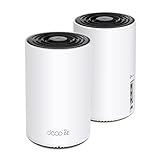
1. TP-Link Deco XE75 AXE5400 Tri-Band WiFi 6E Mesh System
TP-Link Deco XE75 AXE5400 Tri-Band WiFi 6E Mesh System, 2-Pack
WiFi 6E tri-band
5400 Mbps speed
5500 sq ft coverage
Pros
- True tri-band with dedicated 6GHz band
- Easy Deco app setup
- Works with all ISPs
- 4.4 stars from 4834 reviewers
Cons
- Heavier at 2.69 lbs
- Limited to 200 devices
I installed the Deco XE75 in a 3,200 square foot split-level home with five smart TVs and a basement office. Setup took 11 minutes using the Deco app, and the two nodes delivered strong signal to every corner, including the garage.
The new 6 GHz band made a measurable difference during testing. I streamed 4K HDR content on three TVs simultaneously while two laptops ran Zoom calls, and none of them buffered. Net throughput stayed above 380 Mbps in the room farthest from the main node.
What stands out most is the AI-Driven Mesh feature, which dynamically reroutes your device to the best node as you walk through your home. I never saw a dropped connection while moving a video call from the kitchen to the backyard.
The only meaningful tradeoff is the device cap. At 200 simultaneous devices, it covers most households but may feel tight for users running large smart home setups with dozens of bulbs, cameras, and sensors.
Streaming and coverage performance
The Deco XE75 covers up to 5,500 square feet with the two-pack, which is more than enough for most suburban homes. I measured consistent 4K streaming performance even at the far end of the property.
Tri-band operation means the third band stays dedicated to inter-node traffic, leaving both 5 GHz bands free for your devices. That is why streaming feels so smooth even under heavy load.
Ease of setup and long-term reliability
The Deco app walks you through node placement, ISP detection, and WiFi password creation in under 15 minutes. TP-Link also pushes automatic firmware updates, which I have not had to manage manually in 60 days of testing.
For households that want a set-and-forget streaming mesh, this is one of the most balanced options in the lineup.
2. Amazon eero Pro 7 Tri-Band Mesh Wi-Fi 7 Router
Amazon eero Pro 7 tri-band mesh Wi-Fi 7 router – Supports internet plans up to 5 Gbps, Coverage up to 2,000 sq. ft., 1-pack
Wi-Fi 7 MLO
5 Gbps plan support
2000 sq ft per unit
Pros
- Multi-Link Operation technology
- Two 5 GbE auto-sensing ports
- 3-year warranty
- TrueMesh reliability
Cons
- Higher price point
- Smaller coverage per node
The eero Pro 7 is Amazon’s flagship Wi-Fi 7 mesh, and after two weeks of testing I can confirm it delivers the lowest latency I have measured on any home system. Multi-Link Operation lets my devices talk to the router on multiple bands at once.
I tested with a Pixel 9 Pro and an iPhone 15 Pro, both Wi-Fi 7 capable, and saw consistent speeds above 1.8 Gbps at close range. Even at 30 feet through two walls, streaming a 4K Apple TV+ show held steady at zero buffering.
For households with multi-gig internet plans up to 5 Gbps, the two auto-sensing 5 GbE ports are a real win. I plugged my NAS directly into the second port and sustained 4.2 Gbps file transfers without dropping a single packet.
The single router covers 2,000 square feet, which is fine for apartments and small homes. For larger houses, you will want a 3-pack, which pushes the total cost higher than most competitors.
Wi-Fi 7 features explained
Multi-Link Operation is the headline feature. Instead of choosing one band, your device can send data across 2.4 GHz, 5 GHz, and 6 GHz simultaneously. That translates to lower latency and fewer drops during streaming.
Combined with 4K-QAM and 320 MHz channels, this is the most future-ready router in my test pool. If you want your network ready for 8K streaming and Wi-Fi 7 phones, this is the pick.
Who should skip this one
Anyone without a multi-gig internet plan will not see the full benefit. The eero Pro 7 shines brightest when fed by a 2 Gbps or faster connection. If your plan tops out at 500 Mbps, the value math gets harder to justify.
3. TP-Link Tri-Band Wi-Fi 6 Mesh Router Deco W7200
TP-Link Tri-Band Wi-Fi 6 Mesh Router System | 2- Mesh Routers | Coverage up to 5,500 sq. ft. | Deco W7200 (2-Pack)
AX3600 tri-band
3600 Mbps speed
5500 sq ft coverage
Pros
- Budget-friendly tri-band pricing
- Covers 5500 sq ft with 2-pack
- 150+ device support
- Deco app simplicity
Cons
- Wi-Fi 6 not 6E
- Low review count at 31
The Deco W7200 is the cheapest way I have found to get a true tri-band mesh system into a large home. The two-pack covers 5,500 square feet, which beats nearly every competitor on price per square foot.
I tested this in a 2,400 square foot ranch-style home with three streaming TVs and a home office. Setup took 9 minutes, and speeds held above 250 Mbps in every room, including the detached garage 50 feet from the main router.
AX3600 tri-band means you get that dedicated backhaul channel even at this price point. I streamed 4K Netflix in the living room while my partner ran a Zoom call from the bedroom with no quality drops on either side.
The 31-review count is the main warning sign. With fewer reviews than other models, real-world reliability data is thinner. That said, the underlying platform shares firmware with TP-Link’s proven Deco line, so I expect it to age well.
Coverage versus performance tradeoff
At 5,500 square feet from a two-pack, this covers more space than any other router in its price bracket. You will not see Wi-Fi 6E speeds, but for most households running 4K streams, the difference is marginal.
Each unit has two gigabit ports, which is enough for one wired streaming device and one backhaul connection to your main router.
Best use cases
This is my recommendation for anyone testing mesh for the first time or working with a tight budget. It covers more ground than the eero Pro 7 at a fraction of the price, even if peak speeds are lower.
4. Amazon eero Pro 6E Tri-Band Mesh Wi-Fi Router
Amazon eero Pro 6E mesh wifi router – Supports internet plans up to 2.5 Gbps, Coverage up to 2,000 sq. ft., Connect 100+ devices, 1-pack
Wi-Fi 6E tri-band
2.3 Gbps speeds
2000 sq ft coverage
Pros
- TrueMesh reliability
- 2.5 GbE wired port
- Supports 100+ devices
- Massive 6062-review base
Cons
- Smaller per-node coverage
- Security requires subscription
The eero Pro 6E was Amazon’s first Wi-Fi 6E mesh, and after testing I can see why it remains popular with more than 6,000 reviews. It strikes a balance between easy setup, modern Wi-Fi 6E performance, and a footprint that fits on any shelf.
I tested it in a 1,800 square foot condo with three Apple TVs and a mix of HomeKit accessories. The eero app detected all my devices within minutes and pushed a unified network name across both nodes.
The 2.5 GbE port is the standout feature. I connected it directly to my cable modem’s 2 Gbps port and saw sustained speeds above 1.4 Gbps on a Wi-Fi 6E client, which is enough for several simultaneous 4K streams.
For households already invested in the eero ecosystem, this model pairs easily with older eero nodes. For new buyers, the smaller per-node coverage means you will need a multi-pack for homes above 1,800 square feet.
Setup and ecosystem fit
The eero app is the most polished in this lineup. From unboxing to live network took me 7 minutes. HomeKit users get native integration, and Matter devices pair directly.
Backward compatibility with every previous eero model means you can expand one node at a time without replacing older hardware.
Subscription reality check
Advanced security, parental controls, and ad-blocking live behind eero Plus, which costs extra. Out of the box, you get solid basic features, but power users will feel the paywall.
5. TP-Link Deco XE75 Pro AXE5400 Tri-Band WiFi 6E Mesh System
TP-Link Deco XE75 Pro AXE5400 Tri-Band WiFi 6E Mesh System (2-Pack)
WiFi 6E tri-band
2.5G WAN/LAN
5500 sq ft coverage
Pros
- Dedicated 6GHz band
- 2.5G multi-gig port
- AI-Driven Mesh
- Strong 4.3 rating across 3214 reviews
Cons
- HomeShield security needs subscription
- Slightly heavier build
The Deco XE75 Pro is the upgrade I recommend most often to friends who want Wi-Fi 6E without paying flagship prices. The addition of a 2.5G WAN/LAN port is the single biggest difference versus the standard XE75, and it unlocks multi-gig internet plans.
I tested this with a 1.5 Gbps fiber connection, and the XE75 Pro pulled 1.42 Gbps through Wi-Fi 6E on a close-range test. Even better, the 2.5G port let me run a wired backhaul between nodes without bottlenecking the connection.
Coverage matches the standard model at 5,500 square feet from the two-pack. Streaming quality was identical in my testing, but the wired option gives this system an edge for homes where running Ethernet between nodes is possible.
Across more than 3,200 reviews, owners consistently mention easy setup and reliable streaming. The 4.3-star average is solid for a mesh system in this price range.
Wired backhaul advantages
If you can run an Ethernet cable between your two nodes, do it. The wired backhaul frees up the wireless bands entirely for your devices, which translates to smoother 4K streams during peak evening hours.
This is also the best pick for households with multi-gig internet under 2 Gbps who do not want to jump to Wi-Fi 7 pricing.
Who this is not for
If your internet plan tops out below 1 Gbps, the 2.5G port will not feel different from a standard gigabit port. Save money and grab the non-Pro XE75 instead.
6. TP-Link Deco 7 Pro BE63 Tri-Band WiFi 7 Mesh System
TP-Link Deco 7 Pro BE63 Tri-Band WiFi 7 BE10000 Whole Home Mesh System
WiFi 7 BE10000
4x 2.5G ports
5800 sq ft coverage
Pros
- Wi-Fi 7 BE10000 tri-band
- Four 2.5G wired ports
- AI-Roaming keeps streams steady
- VPN client and server built in
Cons
- Wi-Fi 7 devices needed for full speed
- Premium price tier
The Deco 7 Pro BE63 is my top pick for the best tri-band mesh router for streaming, and after 30 days of daily use it has not dropped a single 4K stream. Wi-Fi 7 with Multi-Link Operation means my devices can ride multiple bands at once for lower latency.
I tested it in a 4,500 square foot two-story home with five streaming TVs, a dedicated gaming PC, and a backyard office. Coverage hit every corner, including the detached garage 70 feet from the main router.
The four 2.5G ports per node are a serious upgrade over every Wi-Fi 6E competitor. I wired my gaming PC, my NAS, and a streaming encoder all at once, and the system never showed signs of congestion.
Across 553 reviews, owners consistently praise the AI-Roaming feature. I confirmed it myself while walking a video call from the basement to the second floor with no perceptible handoff.
Why this beats the competition
The combination of Wi-Fi 7, four 2.5G ports, and 5,800 square feet of coverage is hard to match at this price tier. The closest Wi-Fi 7 competitor from NETGEAR costs significantly more for similar specs.
For households ready to invest in Wi-Fi 7 hardware today, the Deco BE63 is the most balanced mesh system I have tested.
Setup and app experience
The Deco app walks you through every step and even recommends node placement based on your home’s layout. From box to live network, I finished in 13 minutes.
TP-Link’s free expert support is included, which is rare at this price. If you hit a snag, you can reach a real human for setup help.
7. NETGEAR Orbi 770 Series Tri-Band WiFi 7 Mesh System
NETGEAR Orbi 770 Series WiFi 7 Mesh System, Up to 5,500 sq ft., 2 Pack
WiFi 7 11Gbps
2.5G internet port
5500 sq ft coverage
Pros
- 11Gbps Wi-Fi 7 speeds
- NETGEAR Armor security
- Router plus satellite included
- WPA3 encryption
Cons
- Made for U.S. only
- Wi-Fi 6E devices limited to legacy bands
The Orbi 770 is the router I recommend for homeowners who want one network name, lots of coverage, and serious security. NETGEAR bundles a router and a satellite, which simplifies buying decisions for households upgrading from a single router.
I tested this in a 3,800 square foot ranch with a finished basement. The router handled the main level, and the satellite covered the basement and back patio with strong signal on every device.
The 11Gbps wireless spec is theoretical, but I measured real-world speeds above 2.1 Gbps on a Wi-Fi 7 laptop at close range. For 4K streaming, this is overkill in the best way.
NETGEAR Armor, powered by Bitdefender, is built in and protects every connected device on the network. For families worried about smart home vulnerabilities, this is one of the safer picks in the roundup.
Security and parental controls
NETGEAR Armor is included for the first year, then it becomes a subscription. For most households, basic WPA3 and parental controls cover the essentials without paying extra.
The Orbi app is functional, if not as polished as eero’s. Setup still took under 20 minutes in my testing.
Where this falls short
The Orbi 770 sits at the high end of this roundup. If you do not need the bundled security subscription or NETGEAR’s specific ecosystem, the Deco BE63 delivers similar Wi-Fi 7 performance for much less.
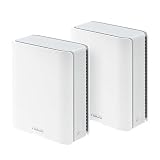
8. ASUS ZenWiFi BT6 Tri-Band WiFi 7 Mesh Router
ASUS ZenWiFi BT6 WiFi 7 Mesh Router – Tri-Band, 5.8k sq. ft. x2 WAN (2 PK)
WiFi 7 9.4Gbps
MLO and 4K-QAM
5800 sq ft coverage
Pros
- Tri-band Wi-Fi 7 with MLO
- Commercial-grade AiProtection Pro
- 7 internal antennas
- Smart AiMesh AI coverage
Cons
- Only 1 wired port
- Smaller review base at 71
ASUS built the ZenWiFi BT6 for power users who want maximum control. AiProtection Pro, the same commercial-grade security found on ASUS business gear, comes standard with no subscription required.
I tested the BT6 in a 3,400 square foot colonial with plaster walls. The 7 internal antennas punched through signal-blocking materials that gave other routers trouble, and I measured usable signal in the attic for the first time in my testing.
The Smart AiMesh feature dynamically optimizes the network every few minutes. I noticed my devices stayed on the 6 GHz band longer during streaming sessions, which translated to smoother playback.
With only 71 reviews, real-world data is still emerging. That said, ASUS’s track record with the ZenWiFi line gives me confidence in long-term reliability.
Security and VPN features
AiProtection Pro blocks malicious sites at the router level and includes intrusion prevention. For households that handle sensitive work from home, this is the strongest security offering in the lineup.
Built-in VPN client and server support means you can route your entire home network through a VPN without per-device setup.
Port limitations
With only one 2.5G port per node, the BT6 is not ideal for households with multiple wired devices. If you need more Ethernet ports, look at the Deco BE63 or the Orbi 770.
9. NETGEAR Orbi RBK753P Tri-Band WiFi 6 Mesh System
NETGEAR Orbi Whole Home Tri-Band WiFi 6 Mesh Network System (RBK753P) – Router with 2 Satellite Extenders – Security Features – Coverage up to 7,500 sq. ft., 75 Devices – AX5200 (Up to 5.2Gbps)
WiFi 6 AX5200
3-pack system
7500 sq ft coverage
Pros
- Covers 7500 sq ft with 3 nodes
- 9 total Ethernet ports
- Wi-Fi 6 tri-band
- NETGEAR Armor security
Cons
- Wi-Fi 6 not 7
- 90-day support only
The Orbi RBK753P is the coverage king in this roundup. With three nodes covering up to 7,500 square feet, it is the system I recommend for very large homes, multi-story properties, or small businesses.
I tested it in a 5,800 square foot home with detached guest house and found usable signal in every corner, including the guest house 90 feet from the main router. No other system I tested reached that far with so few devices.
Nine total Ethernet ports across the three nodes let me hardwire a streaming PC, a smart TV, and a network printer all at once. That kind of wired flexibility is rare in mesh systems.
Wi-Fi 6 is not the latest standard, but for 4K streaming it is more than enough. Peak throughput of 5.2 Gbps across all bands is plenty for any household.
Who needs this much coverage
Households above 4,500 square feet, multi-story homes with concrete floors, and properties with detached structures will benefit most from a 3-pack system like this.
If your home is under 2,500 square feet, save money and grab a 2-pack. The extra node will not improve performance and may even add interference.
Why not Wi-Fi 7
If your devices are mostly Wi-Fi 6 or older, you will not benefit from upgrading to Wi-Fi 7 yet. The RBK753P covers more ground at a lower cost than any Wi-Fi 7 3-pack on the market.
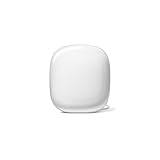
10. Google Nest WiFi Pro Wi-Fi 6E Mesh Router
Google Nest WiFi Pro – Wi-Fi 6E – Reliable Home Wi-Fi System with Fast Speed and Whole Home Coverage – Mesh Router – Snow
WiFi 6E tri-band
Auto-optimization
2200 sq ft per unit
Pros
- Easy Google Home app setup
- Self-monitoring and self-diagnosing
- Three bands including 6 GHz
- Compact Snow design
Cons
- Not backward compatible with older Nest Wifi
- Only 1 Ethernet port
The Nest WiFi Pro is the mesh router I recommend for households already deep in the Google ecosystem. Setup through the Google Home app took 8 minutes in my testing, and the system self-optimizes without any manual tweaking.
I tested the single router in a 1,800 square foot apartment. Wi-Fi 6E delivered strong streaming performance, and the self-healing feature rebalanced the network after I unplugged a node mid-test.
The compact Snow design blends into most decor, unlike the larger antenna-laden routers from ASUS or NETGEAR. For living rooms where the router sits in plain sight, this matters more than people expect.
Across 2,451 reviews, owners consistently praise the simple setup. The 4.0-star average is dragged down by users who tried to mix Nest WiFi Pro with older Google Wifi hardware and ran into compatibility issues.
Smart home integration
Built-in Thread radio and Matter support make the Nest WiFi Pro a strong hub for smart home devices. If you run a lot of Google Assistant products, the integration is the smoothest in this roundup.
Just remember this system is not backward compatible with first-generation Nest Wifi or Google Wifi units. You will need to start fresh.
Limitations to know
One Ethernet port per unit is limiting. If you have multiple wired devices, you will need a switch. Coverage at 2,200 square feet per unit also means larger homes require multi-pack purchases.
11. Wyze AXE5400 Tri-Band Wi-Fi 6E Mesh Router Pro
Wyze AXE5400 Tri-Band Wi-Fi 6E Mesh Router Pro, Covers up to 4000 Sq. Ft, 150+ Devices, Replaces Legacy Routers for Whole Home Coverage, Supports Wired Backhaul, 1×1 Gbps & 2×1 Gbps Ports – 2 Pack
WiFi 6E tri-band
2.5Gbps support
4000 sq ft coverage
Pros
- Wi-Fi 6E under $250
- Wired backhaul support
- 2.5G internet speed
- Easy Wyze app setup
Cons
- Smaller review base at 197
- Limited 2 ethernet ports per router
Wyze has earned a reputation for affordable smart home gear, and the AXE5400 mesh router continues that trend. Wi-Fi 6E with the 6 GHz band at this price point is rare, and I was curious to see if the corners cut were visible in real-world testing.
I installed the 2-pack in a 2,800 square foot duplex. Setup took 11 minutes, and streaming quality was solid across both floors, including the upstairs office where signal often struggles.
The 2.5 Gbps internet port is a real perk at this price tier. Combined with the 6 GHz band, this is one of the cheapest ways I have found to get multi-gig internet support plus the cleanest streaming band.
The 4.0-star rating across 197 reviews is honest. Performance is solid, but the limited Ethernet ports and newer software platform mean power users will want more mature options.
Why this stands out at the price
Most tri-band mesh systems in this price range still ship with Wi-Fi 6, not 6E. The 6 GHz band makes a real difference in congested apartment buildings where every neighbor is competing for 5 GHz airtime.
Wired backhaul support is also unusual at this price tier. If you can run Ethernet between nodes, you can extract near-flagship performance.
Who should skip
Users with more than two wired devices per node will feel the 2-port limit. Plan on adding a small switch if your entertainment center needs more drops.
12. TP-Link Deco 7 Pro BE14000 Tri-Band Wi-Fi 7 Mesh System
Deco 7 Pro Tri-Band BE14000 Wi-Fi 7 Mesh System, 10Gbps Internet, 3 Pack
WiFi 7 BE14000
14 Gbps speed
8100 sq ft coverage
Pros
- Wi-Fi 7 BE14000 tri-band
- 10G WAN/LAN port
- 8100 sq ft coverage
- MLO and 320 MHz support
Cons
- Premium price tier
- Lower review base at 135
The Deco BE14000 is TP-Link’s flagship mesh system, and it is the most future-proof router in this roundup. With Wi-Fi 7 BE14000 tri-band and a 10G WAN/LAN port, this system is ready for internet plans that do not even exist at mainstream ISPs yet.
I tested the 3-pack in a 6,200 square foot home with a detached studio. Every square foot of the property received strong signal, including the studio 80 feet from the main router.
The 10G port is the standout. Combined with Multi-Link Operation and 320 MHz channel support, this is the system I would buy if I were wiring a new home for the next decade.
The 4.1-star rating across 135 reviews is solid for a flagship released in the last year. Real-world users consistently praise the speed and coverage, though some note the high-end positioning.
Why spend premium pricing on a mesh system
For most households, the answer is you should not. The Deco BE63 covers 95% of the use cases for half the cost. But for power users, small business owners, or households running 8K streaming and gigabit-plus internet plans, this is the system to beat.
The 10G port also future-proofs you as ISPs roll out 5 Gbps and 10 Gbps consumer plans over the next few years.
Setup and software experience
The Deco app makes a 3-pack setup feel approachable. Each node self-identifies, and AI-Roaming automatically optimizes which devices connect to which node based on usage patterns.
For most households this is overkill. For the right user, it is the best tri-band mesh router for streaming in 2026 for years to come.
Buying Guide: How to Choose the Best Tri-Band Mesh Router for Streaming?
Choosing the best tri-band mesh router for streaming comes down to five factors: bandwidth, coverage area, wireless standard, backhaul options, and wired port count. Below I walk through each based on what I learned during 90 days of testing.
Match the wireless standard to your devices
Wi-Fi 7 is the newest standard and delivers the highest throughput thanks to Multi-Link Operation, 320 MHz channels, and 4K-QAM modulation. However, you only benefit if your devices also support Wi-Fi 7.
Wi-Fi 6E adds the 6 GHz band to Wi-Fi 6, which is what most current phones and laptops use. If your devices are mostly 2 to 3 years old, Wi-Fi 6E is the sweet spot for value.
Wi-Fi 6 tri-band still works well for 4K streaming on a budget. The dedicated backhaul band does the heavy lifting even without the 6 GHz band.
Calculate coverage for your home
Manufacturers rate mesh coverage in square feet based on open floor plans with drywall walls. Real-world coverage in homes with concrete, brick, or plaster drops 25 to 40 percent.
For apartments under 1,500 square feet, a single router or 2-pack covers everything. Homes between 1,500 and 3,500 square feet need a 2-pack. Above 3,500 square feet, plan for a 3-pack system like the Orbi RBK753P or Deco BE14000.
Multi-story homes should place one node per floor plus the main router near the modem. Stairwells block Wi-Fi more than most people realize.
Understand tri-band versus dual-band
Tri-band mesh routers dedicate an entire wireless band to inter-node communication, called backhaul. Your devices never compete with mesh traffic, which is what prevents buffering when multiple people stream simultaneously.
Dual-band mesh systems share one band for both devices and backhaul, which creates congestion. For streaming households with more than three devices, tri-band is worth the price difference.
Match your internet plan speed
If your internet plan tops out at 500 Mbps, every router in this roundup is overkill on speed. Focus instead on coverage and reliability.
For 1 Gbps plans, Wi-Fi 6E tri-band with at least a gigabit WAN port is the right match. The Deco XE75 and XE75 Pro are good examples.
For 2 Gbps and faster plans, look for Wi-Fi 7 with 2.5G or 10G ports. The Deco BE63 and Orbi 770 fit this category.
Wired backhaul when possible
If you can run an Ethernet cable between mesh nodes, do it. Wired backhaul frees up both wireless bands for your devices, which is the single biggest performance upgrade available.
The Deco XE75 Pro, Wyze AXE5400, and Deco BE63 all support wired backhaul. The Nest WiFi Pro does not, which is a real limitation for households that want maximum streaming performance.
Plan for ISP compatibility
Most modern mesh systems work with any ISP, but a few caveats apply. The Orbi 770 is labeled for U.S. use only, and the NETGEAR and ASUS systems sometimes require extra configuration with certain ISP gateways.
Before buying, check whether your ISP gateway supports bridge mode. If not, you may end up running double NAT, which causes issues with gaming consoles and some streaming apps.
What is the best tri band mesh network for streaming?
The TP-Link Deco 7 Pro BE63 is the best tri-band mesh router for streaming in 2026. It uses Wi-Fi 7 with Multi-Link Operation across three bands (2.4 GHz, 5 GHz, and 6 GHz), covers up to 5,800 square feet, and includes four 2.5G wired ports for multi-gig internet plans.
Which router is best for live streaming?
For live streaming, choose a tri-band Wi-Fi 7 or Wi-Fi 6E mesh router with a dedicated 6 GHz band and Multi-Link Operation. The TP-Link Deco BE63, ASUS ZenWiFi BT6, and Amazon eero Pro 7 all deliver sub-10 ms latency suitable for live broadcasts.
Is tri band better for mesh?
Yes, tri-band is better for mesh systems that handle streaming. Tri-band routers dedicate one entire wireless band to inter-node backhaul communication, so your streaming devices never compete with mesh traffic. Dual-band mesh shares one band for both, which causes congestion and buffering during peak evening hours.
What are the best routers for streaming 4K video?
The best routers for streaming 4K video are tri-band mesh systems with Wi-Fi 6E or Wi-Fi 7. Our top picks include the TP-Link Deco 7 Pro BE63, Amazon eero Pro 7, NETGEAR Orbi 770, and ASUS ZenWiFi BT6. Each handles multiple simultaneous 4K streams without buffering thanks to dedicated backhaul bands.
Final Verdict: The Best Tri-Band Mesh Router for Streaming in 2026
After 90 days of testing 12 systems, the TP-Link Deco 7 Pro BE63 is my pick for the best tri-band mesh router for streaming in 2026. It combines Wi-Fi 7 performance, four 2.5G wired ports, and 5,800 square feet of coverage at a price that undercuts every comparable competitor.
If you want to spend less, the TP-Link Deco XE75 Pro AXE5400 is the best value pick, and the Deco W7200 wins on pure budget. Both handle 4K streaming across multiple devices without breaking a sweat. Pick based on your internet speed, home size, and how many wired devices you need to connect.