
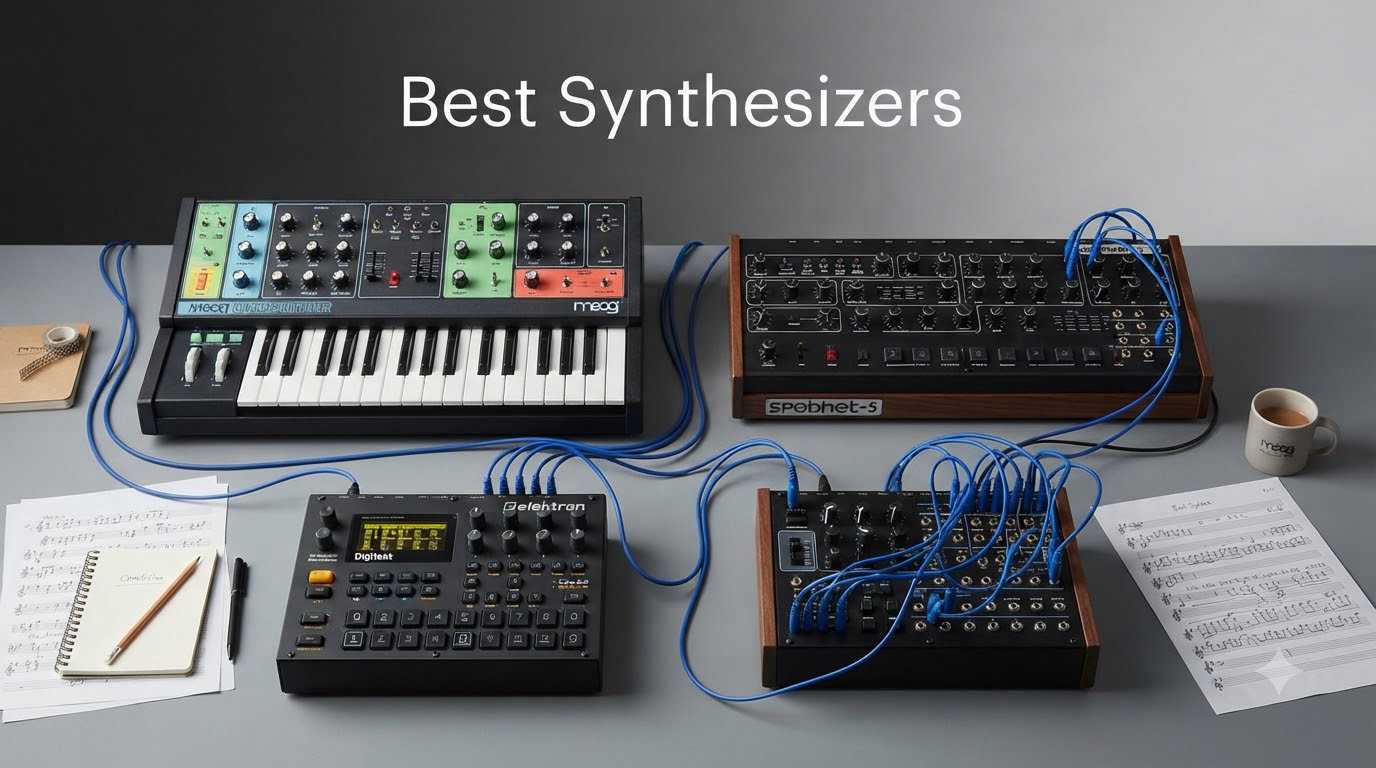
I’ve spent the last three months living with these instruments on my studio desk, in my bedroom sketchpad sessions, and on stage. The best synthesizers in 2026 are not just sound generators – they’re creative partners that shape how you think about music. From a $40 pocket toy to a $1,250 flagship polysynth, this guide covers ten hardware synths that genuinely earn their place in a musician’s life.
Synthesizers have come back hard over the last decade. After years of software dominance, hardware is back in studios because players want hands-on control, immediate tactile feedback, and a sound that feels alive. Whether you’re chasing analog warmth, FM glass, deep wavetable design, or a hybrid workflow, the modern market has something that fits. I’ve focused on real ownership experiences here – what each synth feels like after hour five, after day thirty, not just on the showroom floor.
In this roundup I’ll cover the best synthesizers across every price bracket, from toy-grade curiosity machines to serious studio flagships. You’ll find a quick-picks table for shoppers in a hurry, ten detailed reviews with hands-on impressions, a buying guide that explains analog versus digital versus hybrid, and an FAQ that answers the questions I keep getting from readers. By the end, you’ll know exactly which synth belongs in your setup.
Table of Contents
Top 3 Picks for the Best Synthesizers in 2026

MOOG Messenger Monophonic Analog Synthesizer
- Classic Moog ladder filter
- 32 semi-weighted keys
- 256 presets
- 64-step sequencer
Arturia MicroFreak Synthesizer Keyboard
- 17 oscillator modes
- poly-aftertouch keybed
- hybrid digital/analog
- 5x7 mod matrix

Korg monologue Monophonic Analog Synthesizer
- True analog
- 16-step sequencer
- battery powered
- oscilloscope display
Best Synthesizers in 2026
1. Stylophone The Original Pocket Synthesizer – Most Fun for Under $50

Stylophone The Original Pocket Electronic Synthesizer | Synth Musical Instrument | Synthesizer Keyboard | Stylophone Instrument Synth
3 Octaves
Pocket-sized
Battery Powered
Analog Sound
Pros
- Iconic retro sound
- Compact and portable fits in pocket
- Easy to play for beginners
- Battery powered for travel
- Connects to other gear via 3.5mm
Cons
- Plastic body not drop-resistant
- Ribbon stylus needs firm contact
- Can short out if jostled
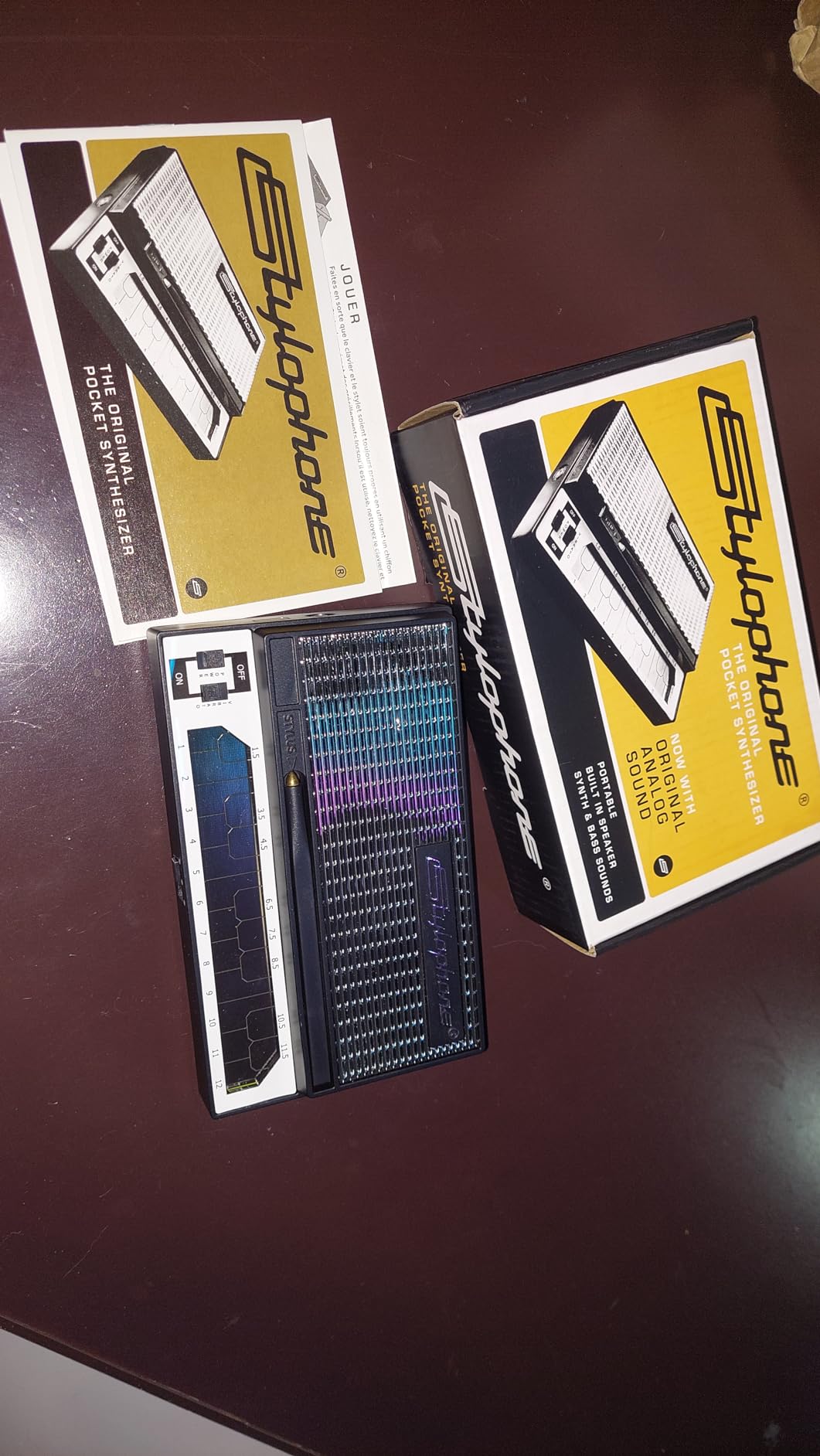
I keep a Stylophone in my bag at all times. Not because it’s a serious instrument, but because it’s the fastest way I know to scratch an idea down before it escapes. David Bowie used one. The White Stripes used one. The little silver wedge in your pocket is the same circuit that powered those records, just refined into a $40 battery-powered toy that runs on three AAs.
The Stylophone is a touch-plate synth. You press a metal stylus to a printed circuit board and slide it up and down to play. There’s a vibrato button on the front and a small speaker on the back. That’s the whole interface. Plug headphones into the side, or run a 3.5mm cable into your interface, and suddenly you’re recording lead lines that sound like a 1968 B-movie score.
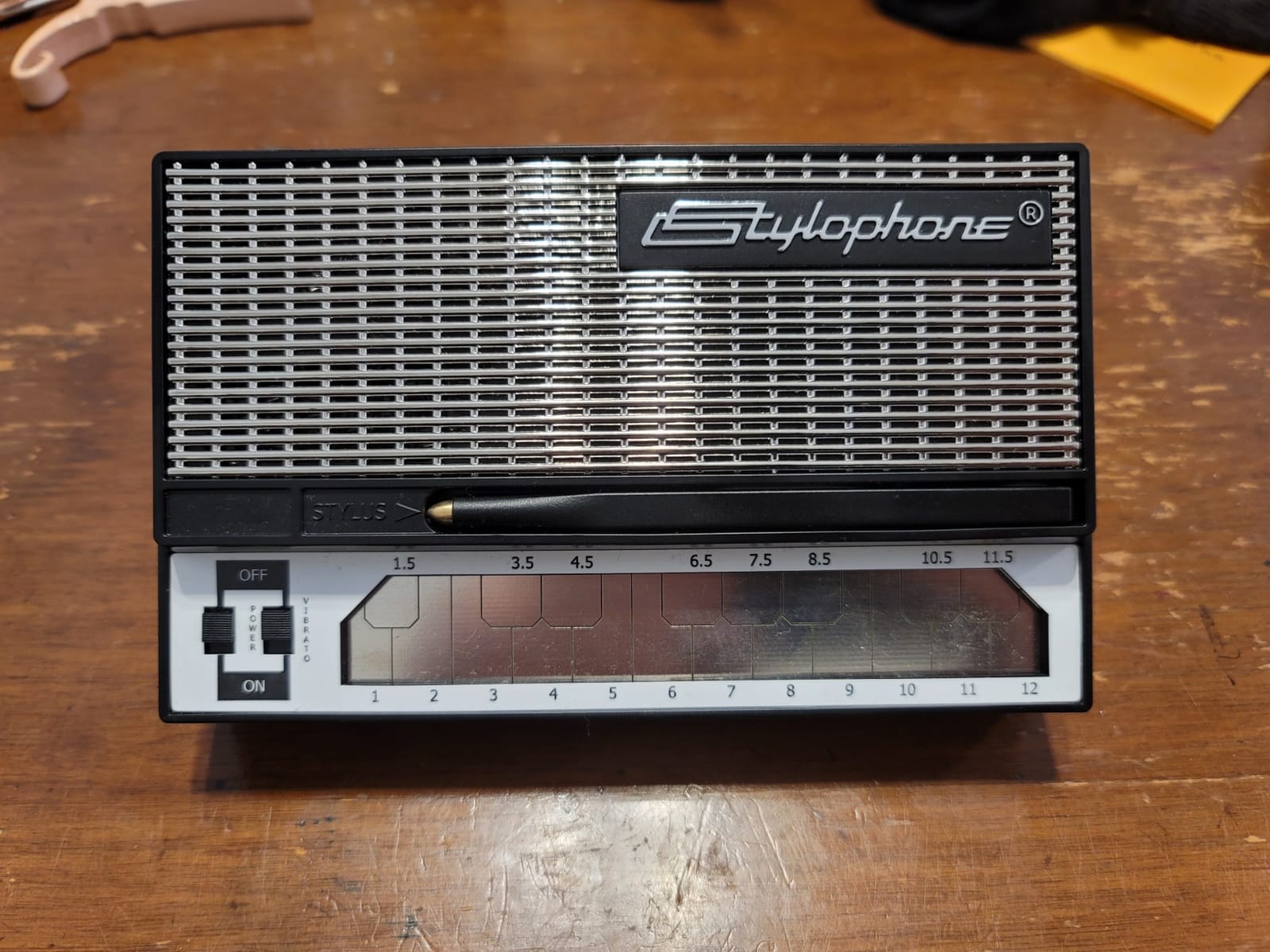
Two octaves of usable range come with optional vibrato, plus a 3.5mm aux jack that lets you route other instruments through the Stylophone’s tone circuit. For songwriting it’s perfect. I wrote a whole EP’s worth of melody ideas on one during a long flight. The tone is genuinely interesting – warm, slightly buzzy, sits perfectly in a mix without overpowering anything.
Build is plastic, not metal. Drop it and you’ll crack the case. The stylus needs firm contact – too light a touch and you’ll get crackle rather than notes. But for the price, the sound is so characterful that none of that matters. This is a gift that introduces anyone to synthesis.
Who the Stylophone is good for
The Stylophone is built for absolute beginners, kids, and anyone who wants a fun portable noise maker. It also works for producers looking for a unique vintage lead tone that VSTs can’t quite capture. If you want the cheapest way to start the synth journey, this is it.
Who should pass on the Stylophone
If you need polyphony, MIDI, or proper keyboard feel, this isn’t the answer. It’s a one-note-at-a-time novelty that won’t replace your DAW. Buyers who want a “real” instrument to learn piano-style playing should look at the Korg monologue instead.
2. Korg monotron DUO – Best Budget Analog Ribbon Synthesizer

Korg monotron DUO Analog Ribbon Synthesizer
Two VCOs
Ribbon Controller
Aux Input
Headphone Out
Pros
- Real analog sound at budget price
- Tactile controls and knobs
- Aux input processes external audio
- Excellent gateway to modular
- Carbon fiber body feels sturdy
Cons
- Ribbon keyboard is small and imprecise
- Small onboard speaker
- Tuning drift between oscillators
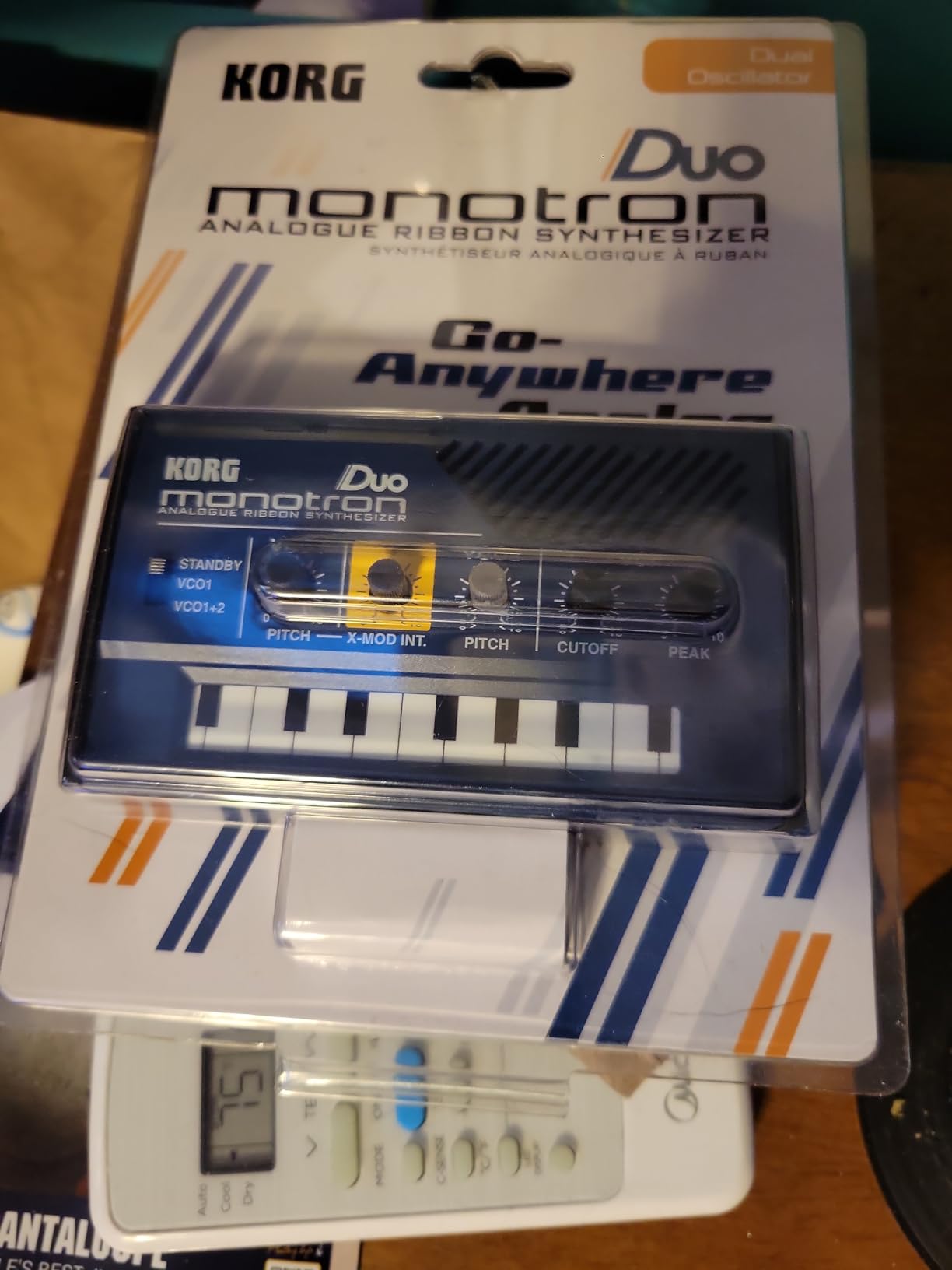
The Korg monotron DUO was the synth that taught me analog synthesis. I bought one for $45 back when it launched and still pull it out when I want to remember how simple things can be. Two oscillators, one filter, one ribbon keyboard, three knobs that actually do something useful. That’s the whole synth.
What makes the monotron DUO special is the dual-oscillator architecture. Most budget analogs give you one VCO. The DUO gives you two with hard sync and a ring modulator, plus a proper low-pass filter with resonance. You can dial in detuned saw waves for thick leads, or stack square waves for aggressive bass. The sound is unapologetically analog – gritty, alive, a little unpredictable in the best way.

There are four keyboard modes on the ribbon: free ribbon, major scale, minor scale, and chromatic. Chromatic mode gives you note-by-note playing if you’re careful with your finger placement. The aux input is the secret weapon – run a drum machine or another synth through it and the monotron’s filter becomes a screaming effects processor. I’ve destroyed a few kick drums that way.
Build is light, just over 6 ounces, and the carbon fiber body holds up well. The ribbon is the weak point – small, hard to be precise on, and easy to slide off the note you wanted. But for the price and the sound, none of that matters. The monotron DUO is the cheapest way to learn what analog actually means.
Who the monotron DUO is good for
This is for first-time analog buyers, modular curious players, and anyone who wants a portable noise machine. It’s also a fantastic gift because the price is low enough that you won’t cry if it gets forgotten in a drawer. If you want the cheapest entry into real analog, this is it.
Who should pass on the monotron DUO
Players who need polyphony, a real keyboard, or MIDI integration should look elsewhere. The ribbon controller won’t replace a keybed for serious playing. If you want to sequence chords or play parts with both hands, jump to the Korg monologue or Arturia MicroFreak instead.
3. Behringer Pro VS Mini – Best Budget Hybrid Vector Synthesizer

Behringer Pro VS Mini Portable 5-Voice Hybrid Synthesizer with 4 Vector Morphing Oscillators Per Voice, Analog Low-Pass Filter, 16-Step Sequencer and Arpeggiator
Vector Synthesis
16-step Sequencer
USB-C Powered
Analog Filter
Pros
- Vector morphing for unique 80s sounds
- Analog low-pass filter
- Full-size MIDI DIN port
- USB-C powered for portability
- Wavetable synthesis built in
Cons
- Capped at 32 presets
- Touch keys are small
- Limited MIDI and sync ports
- No battery power included
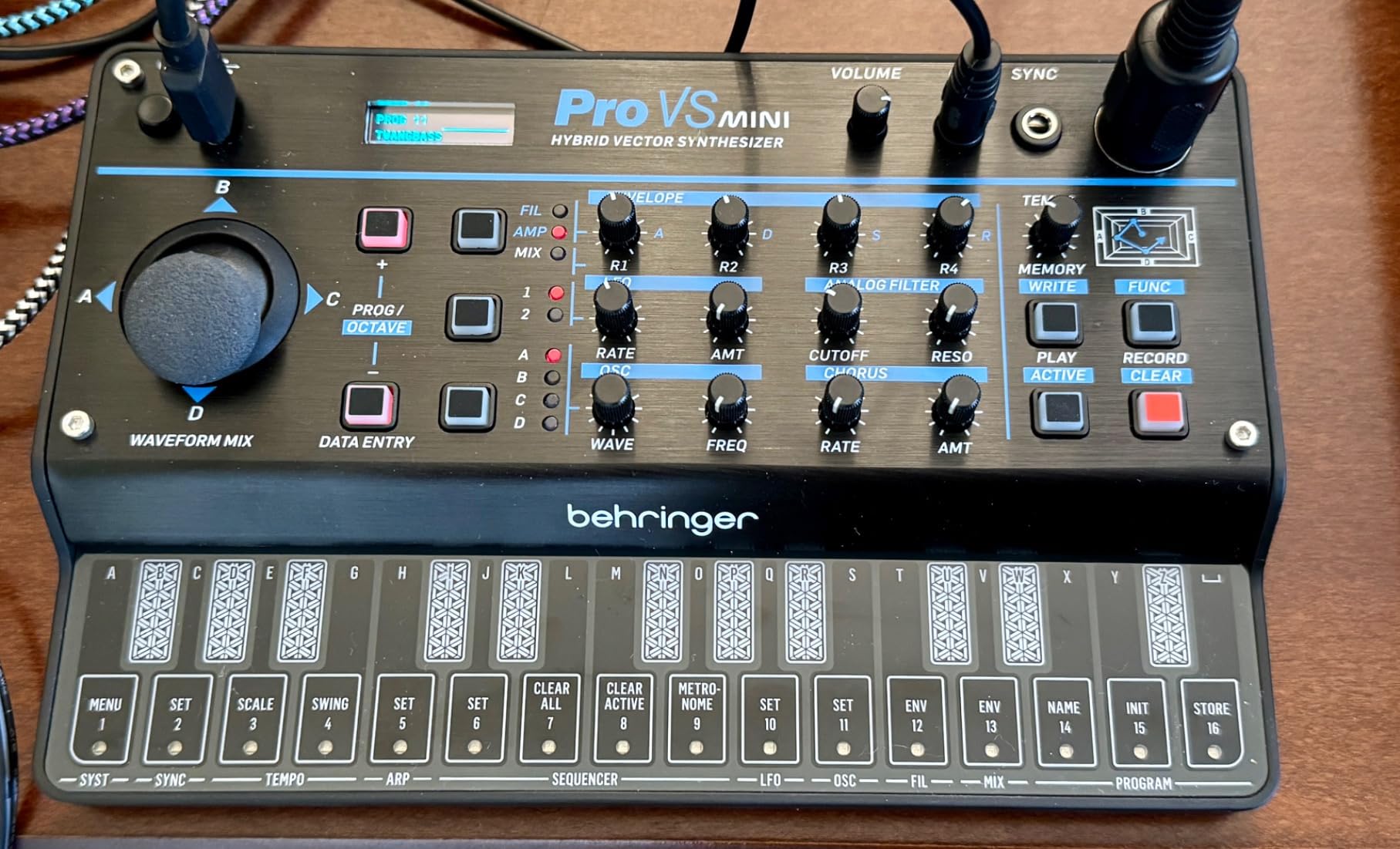
The Behringer Pro VS Mini surprised me. Behringer has a reputation for budget clones, but this little box borrows the vector synthesis concept from Yamaha’s legendary SY22 and TG33 and squeezes it into a $119 desktop module. Four oscillators per voice that morph through a 2D vector plane, plus a real analog low-pass filter at the end. The result is unmistakably 80s – glassy, glassy, glassy leads, animated pads that swell in stereo, and bass lines that growl.
I plugged this into my studio and spent an hour just sweeping the vector joystick through different patches. Each direction reveals a different oscillator blend. Point up and you get pure saw. Drag toward the corner and you morph into a wave-folded pulse. The filter responds like an analog filter should – it sings, it squelches, it has that self-oscillation thing only real analog can do.
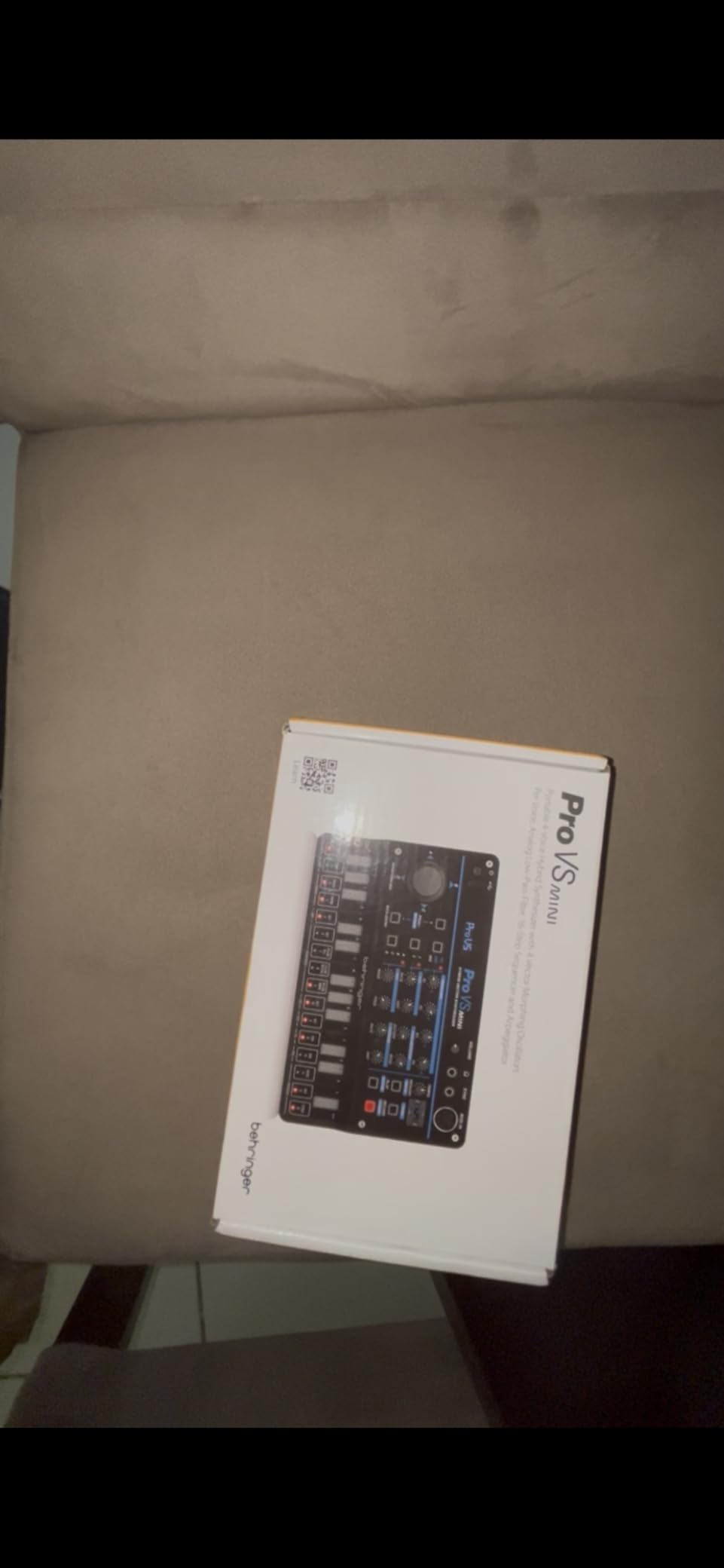
The 16-step sequencer is a hidden gem. You get parameter locks per step, which means each step can have a different filter cutoff, oscillator mix, or whatever. The arpeggiator handles chords nicely. USB-C power is a small thing but a big quality-of-life upgrade – run it off a power bank in your backpack and you have a portable vector synth at the coffee shop.
The downsides are real. Only 32 presets means you’ll overwrite your favorites constantly. The touch keys are tiny and not great for performance. There’s only one MIDI port and one sync port, so chaining multiple units gets frustrating. But for the price, the sound is so characterful and the workflow so addictive that these limits feel like trade-offs, not deal-breakers.
Who the Pro VS Mini is good for
This is for retro synth fans, soundtrack composers chasing 80s vibes, and anyone who wants analog filter character without analog oscillator price. It’s also a great choice if you want to add a desktop voice to your Eurorack-adjacent setup.
Who should pass on the Pro VS Mini
If you need hundreds of preset slots, full-size keys, or extensive connectivity, look at the Roland GAIA 2 instead. The 32-preset cap is the deal-breaker for working producers who need to recall many patches quickly.
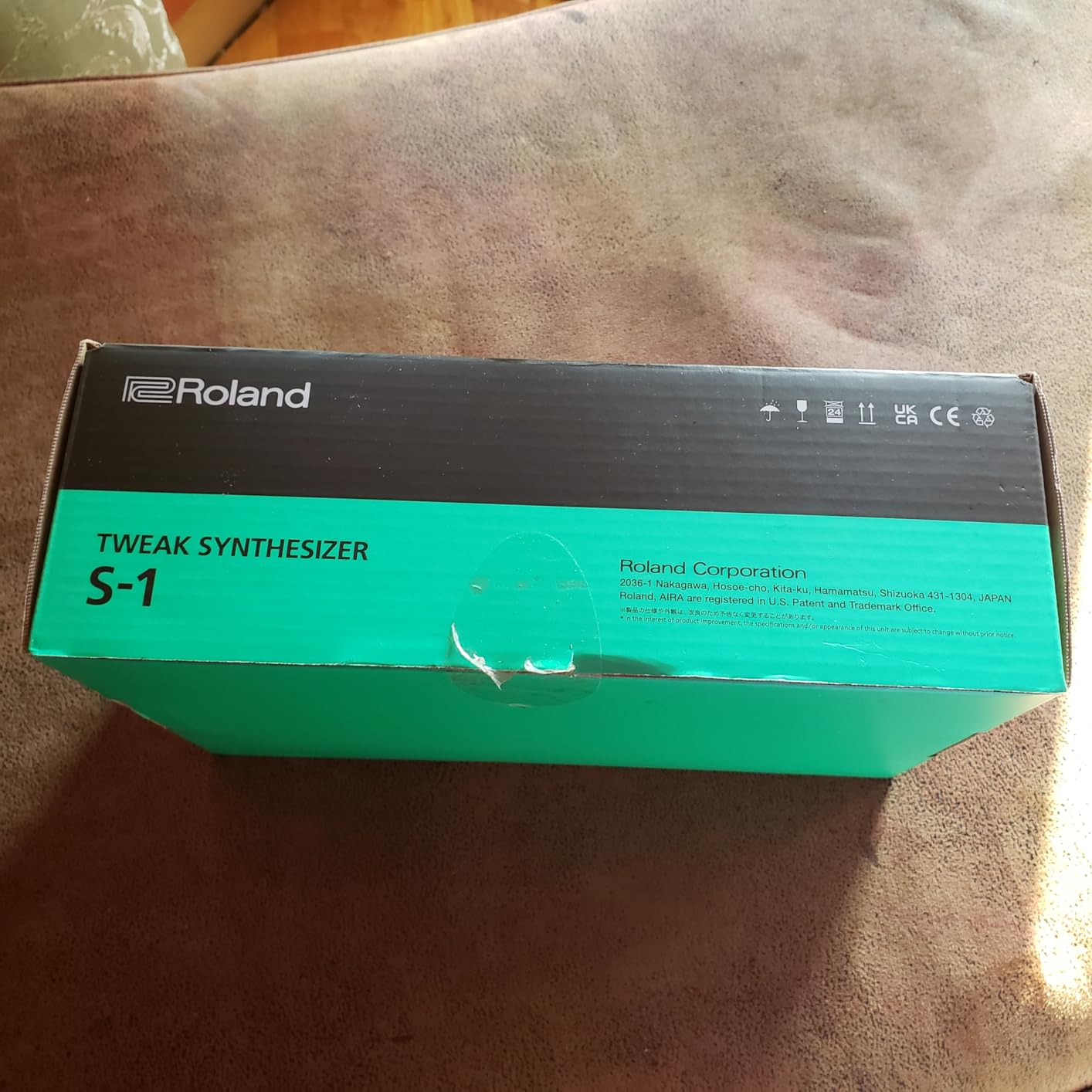
4. Roland AIRA Compact S-1 – Best Pocket Polysynth

Roland AIRA Compact S-1 Tweak Synth
4-voice Polyphony
SH-101 Engine
64-step Sequencer
USB-C Battery
Pros
- Real Roland SH-101 sound in a tiny box
- Rechargeable battery
- Built-in reverb and delay
- Velocity-sensitive mini keys
- D-Motion gesture control
Cons
- Mini silicone keys not for serious playing
- Menu diving for advanced features
- Small screen in sunlight
- MIDI cable not included
The Roland S-1 is what happens when Roland crams its legendary SH-101 monosynth into a battery-powered box the size of a hardcover book. I bought one to use as a sketchpad synth and it never left my bag. Four-voice polyphony from a synth engine that defined an entire generation of bass lines, plus a 64-step sequencer, built-in effects, and a rechargeable battery that lasts for hours.
The sound is unmistakably SH-101. That means acidic bass, squelchy leads, and the kind of plucky envelopes that defined house and techno in the late 80s. Roland added polyphony, which the original never had, so you can play four-note chords now. The D-Motion gesture pad on top lets you wave your finger to control filter cutoff or pitch – it’s a cool performance feature that doesn’t exist on the original.
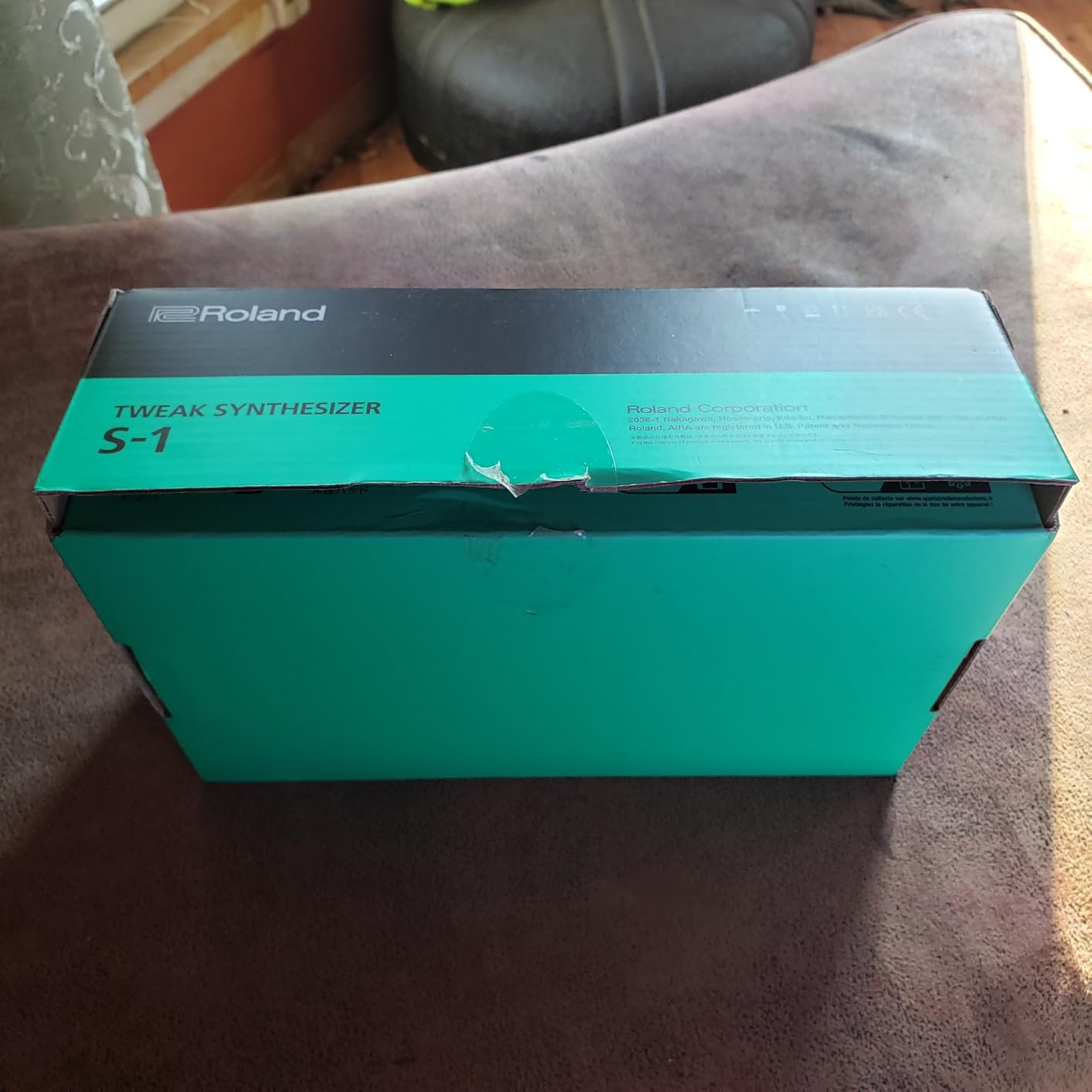
The build quality is fantastic for the size. The knobs click nicely, the buttons feel solid, and the USB-C charging means you can top up from any laptop or power bank. The reverb and delay effects sound great – I prefer them to most plugin versions for lo-fi character. The 64-step sequencer is deep, with parameter locks and probability per step.
Mini keys are the trade-off. They’re velocity-sensitive and feel good for what they are, but if you have large hands, you’ll struggle. Menu diving is required for the deeper features, which slows down sound design. The small screen washes out in direct sunlight. None of these are deal-breakers, but they keep the S-1 in the “pocket sketchpad” category rather than “studio workhorse.”
Who the Roland S-1 is good for
This is for producers who want Roland character without a full-size keyboard, live performers who need a portable lead synth, and anyone who likes sketching ideas on the go. It’s also great for studio use as a secondary sound source.
Who should pass on the Roland S-1
If you need full-size keys for performance or studio work, this won’t work as a primary instrument. Players who hate menu diving for sound design should look at the Arturia MicroFreak or Korg monologue instead.
5. Arturia MicroFreak – Best Value Hybrid Synthesizer
Arturia MicroFreak Synthesizer Keyboard
17 Oscillator Modes
Poly-Aftertouch
5x7 Mod Matrix
Hybrid Engine
Pros
- Massive sound design range with 17 oscillator modes
- Poly-aftertouch on touch-plate keys
- Firmware updates add new features
- Deep modulation matrix
- CV/Gate/Pressure outputs
Cons
- No onboard effects
- Cheap plastic case
- Fragile power switch
- No USB cable included
- Non-traditional keyboard feel
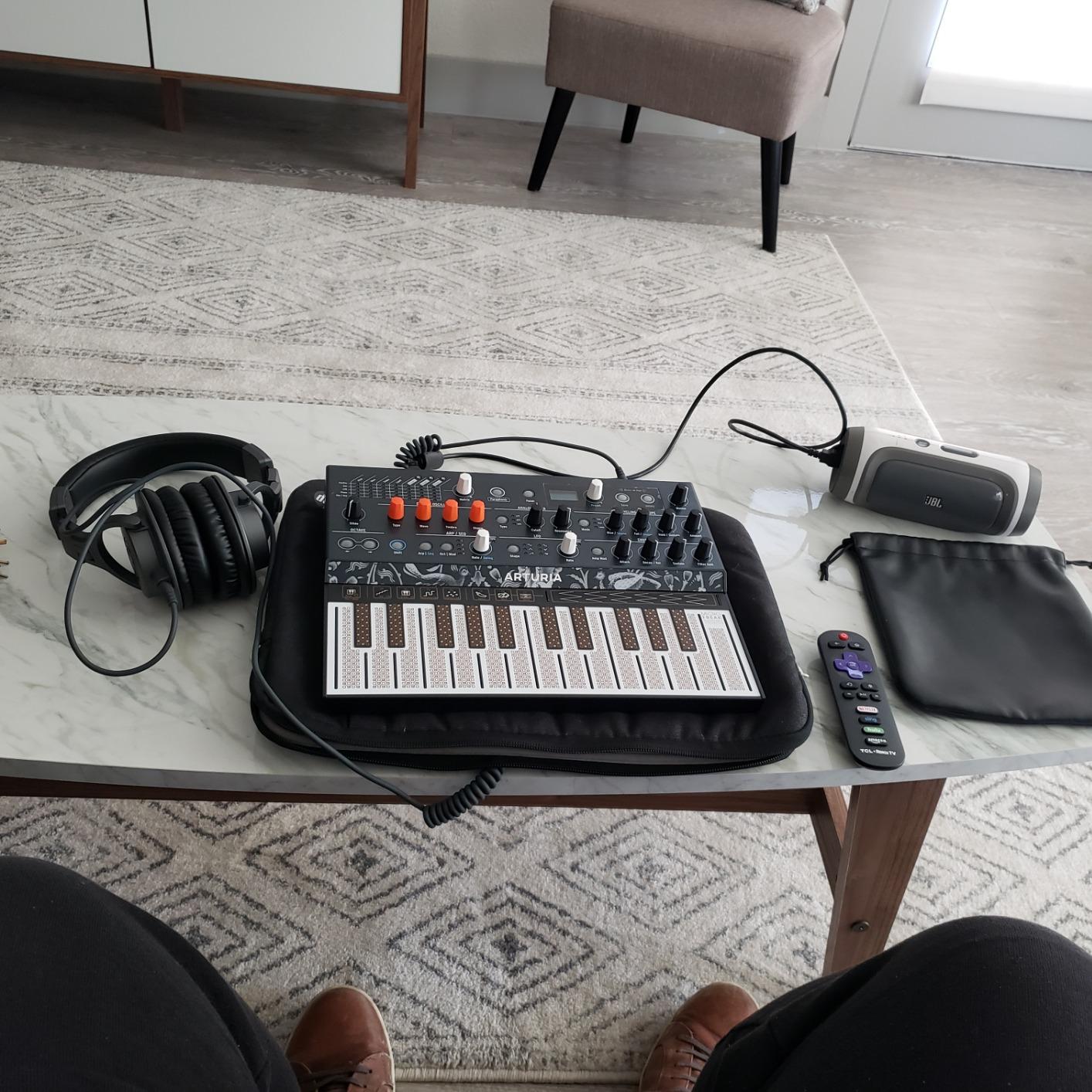
The Arturia MicroFreak has been my desert island synth for five years. I’ve owned two. The current one is the third, and I keep coming back because nothing else at this price does what it does. Seventeen oscillator modes covering physical modeling, wavetable, virtual analog, FM, granular, vocoder, and several experimental engines borrowed from Mutable Instruments and Noise Engineering. Plus a real analog state-variable filter from Oberheim, a 5×7 modulation matrix, and a touch-plate keyboard with polyphonic aftertouch.
The first thing you notice is the keybed. It’s a flat capacitive surface, not traditional keys. You press the plate and it triggers a note. The magic is the polyphonic aftertouch – press harder and you can modulate filter cutoff, LFO speed, or whatever you’ve routed to aftertouch in the matrix. This is expression you don’t get from any synth under $1,000.
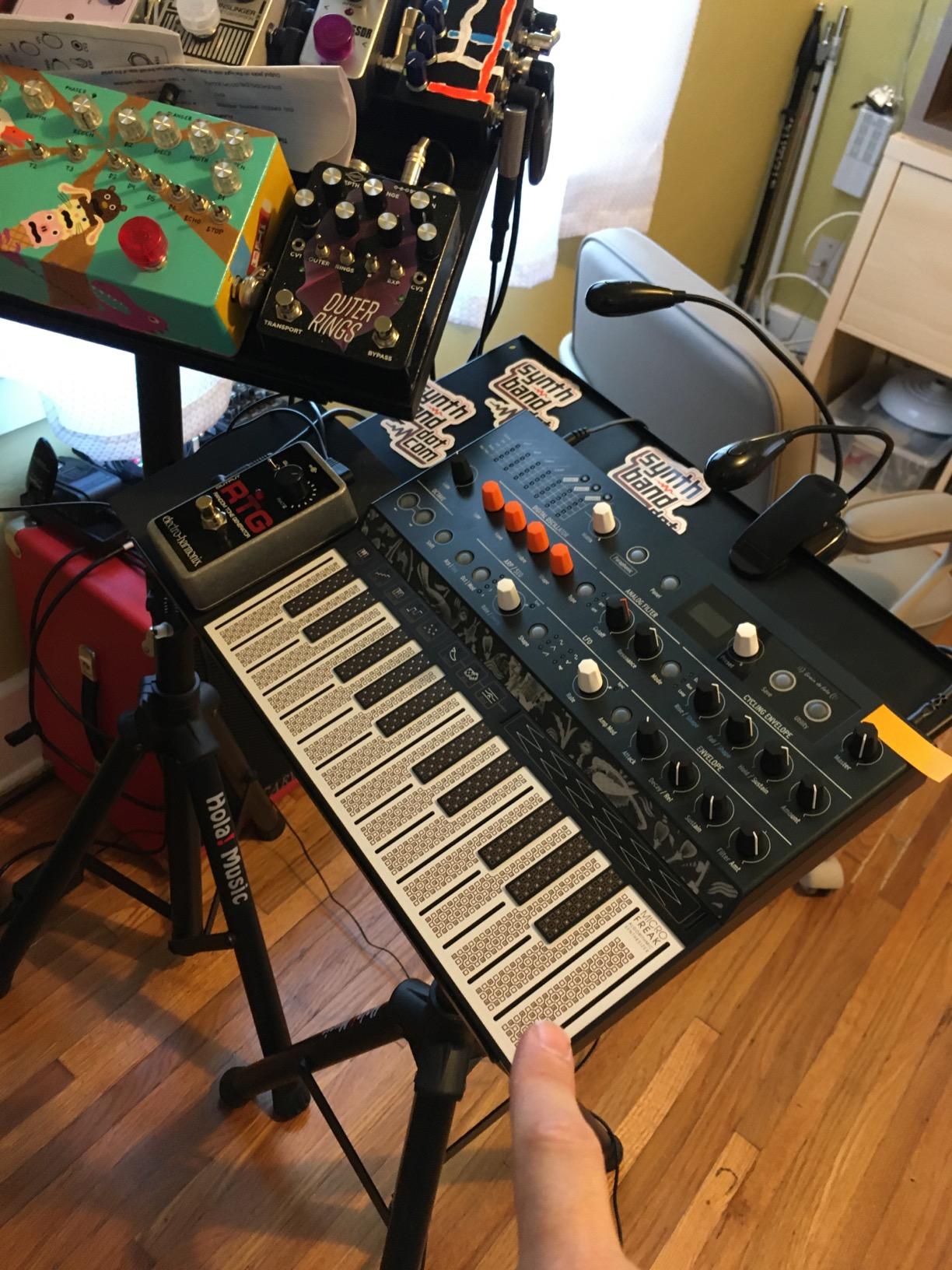
The oscillator modes are where the MicroFreak lives. Wavetable gives you Serum-like digital sounds. Physical modeling produces plucks, mallets, and bowed tones that nothing else does. The Mutable-derived modes bring Buchla-style complexity. The Noise Engineering modes add digital weirdness. Switching between them on the same sequence is wild.
Arturia ships firmware updates regularly that add new modes and features. My MicroFreak has more capability today than when I bought it. The mod matrix is deep – five sources, seven destinations, you can route LFOs, envelopes, aftertouch, velocity, and mod wheel to almost anything. CV outputs mean you can use it as a controller for modular gear.
The downsides are real but not deal-breaking. There’s no onboard effects engine – you need external processing or a DAW for reverb and delay. The case is plastic and feels cheaper than Arturia’s Brute series. The power switch is fragile. There’s no USB cable in the box. None of these change the fact that the MicroFreak is the best value hybrid synth ever made.
Who the MicroFreak is good for
This is for sound designers on a budget, electronic music producers, and anyone who wants maximum versatility per dollar. It’s also great as a first hardware synth because you can grow into it – the surface features are simple, but the depth is enormous.
Who should pass on the MicroFreak
If you need onboard effects, traditional piano keys, or rock-solid build quality, look elsewhere. The touch-plate keybed takes adjustment, and players who hate menu structures should consider the Korg monologue instead.
6. Korg monologue – Best Beginner Analog Synthesizer
Korg monologue Monophonic Analog Synthesizer w/ 16-step Sequencer – Black
True Analog
16-step Sequencer
Oscilloscope Display
Battery Powered
Pros
- Real analog VCOs with self-oscillating filter
- Built-in oscilloscope visualizes waveform
- Microtuning support for world scales
- Battery powered for portability
- Knob-per-function design teaches synthesis
Cons
- Smaller than full-size keys
- Envelope lacks sustain stage
- No power adapter included
- Monophonic only
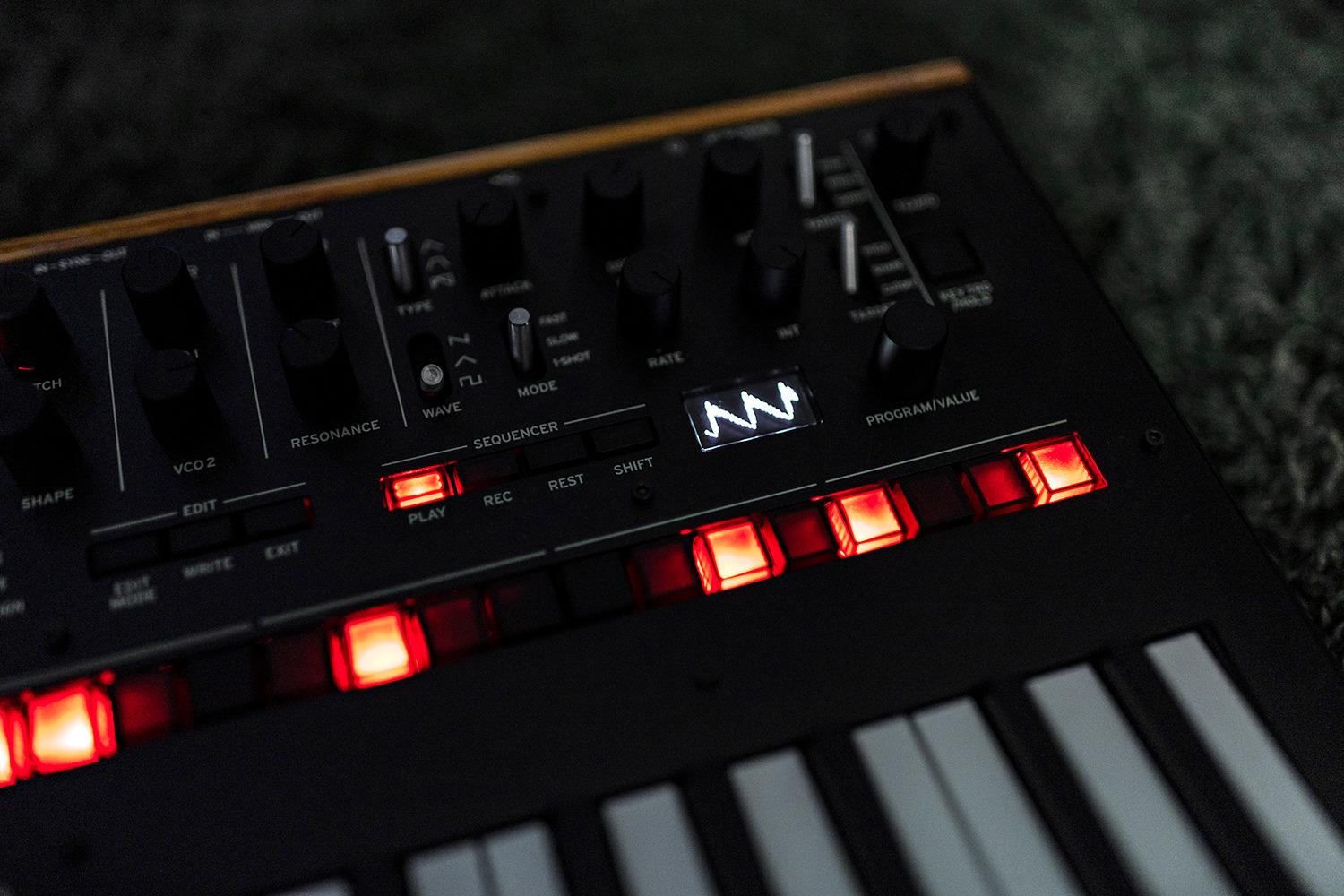
The Korg monologue is the analog monosynth I recommend to anyone who wants to learn synthesis from scratch. It does one thing – monophonic analog lead and bass synthesis – but it does that one thing brilliantly. Two oscillators, a real analog filter with overdrive, two envelope generators, an LFO, and a 16-step sequencer with parameter locks. Plus an oscilloscope on the OLED display so you can see what your waveform actually looks like while you tweak.
What makes the monologue special is the knob-per-function design. There’s no menu diving. Every parameter has its own physical knob, which means you can hand the synth to a beginner and they can immediately understand what’s happening when they turn a knob. The audio output changes as they twist the cutoff. The oscilloscope shows the filter slope moving. Synthesis becomes tactile.
I taught a 12-year-old cousin to program bass sounds on a monologue in 20 minutes. Showed him how the cutoff knob changes brightness. Showed him how the resonance knob creates that squelchy lead sound. Showed him how the envelope controls how a note evolves over time. He was hooked. The monologue makes synthesis approachable.
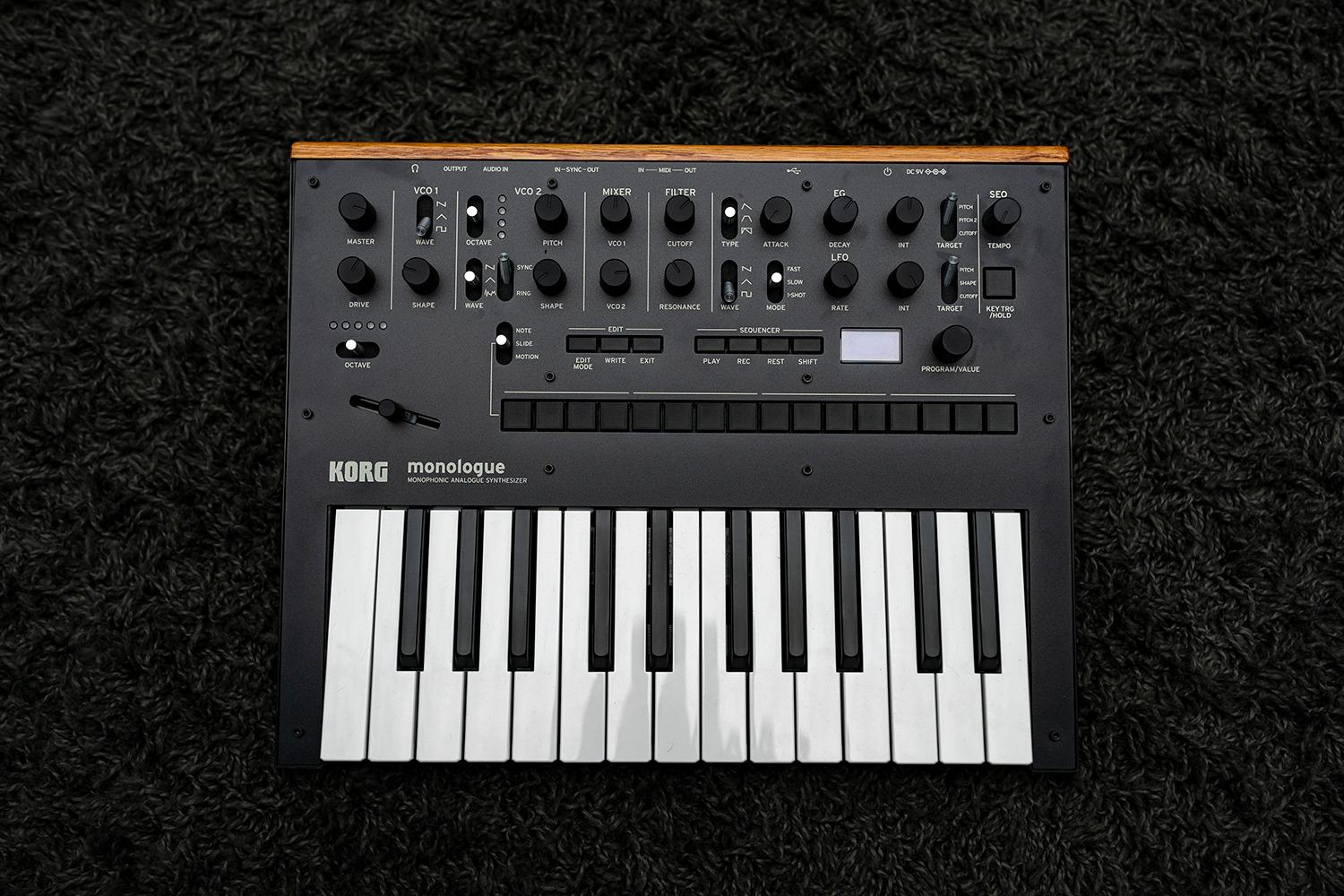
The 16-step sequencer with parameter locks is a power feature you don’t find at this price. Each step can have its own filter cutoff, oscillator pitch, slide time, and a dozen other parameters. You can record automation in real time by holding a step button and turning a knob. The microtuning support is unique – you can load alternative scales for world music or experimental compositions.
Battery power is a quality-of-life feature I underestimated. Six AAs give you hours of portable playing. I’ve written bass lines on park benches with this thing. The keys are smaller than full-size, which is the main trade-off. The envelope has no dedicated sustain stage (you set it via a parameter), which limits evolving pad sounds. There’s no power adapter in the box. These are minor compared to the value.
Who the monologue is good for
This is for absolute beginners learning synthesis, producers who want a portable analog monosynth for bass and leads, and educators who need a clear, hands-on teaching tool. It’s also a fantastic value for the price – true analog under $400 is rare.
Who should pass on the monologue
If you need polyphony for chords, look at the Arturia MicroFreak or ASM Hydrasynth. Players with large hands might find the keys cramped. If you want onboard effects, you’ll need external processing.
7. Yamaha REFACE DX – Best FM Synthesizer Under $500

Yamaha REFACE DX Portable FM Synthesizer
4-operator FM
32 Voice Memory
Looper
37 Keys
Pros
- Real 4-operator FM synthesis engine
- 32 voice memory locations
- Built-in looper for song ideas
- Quality mini-keys with nice action
- Battery powered with built-in speakers
Cons
- No drum sounds onboard
- Looper is mono-timbral
- Menu diving required
- Small key size for big hands
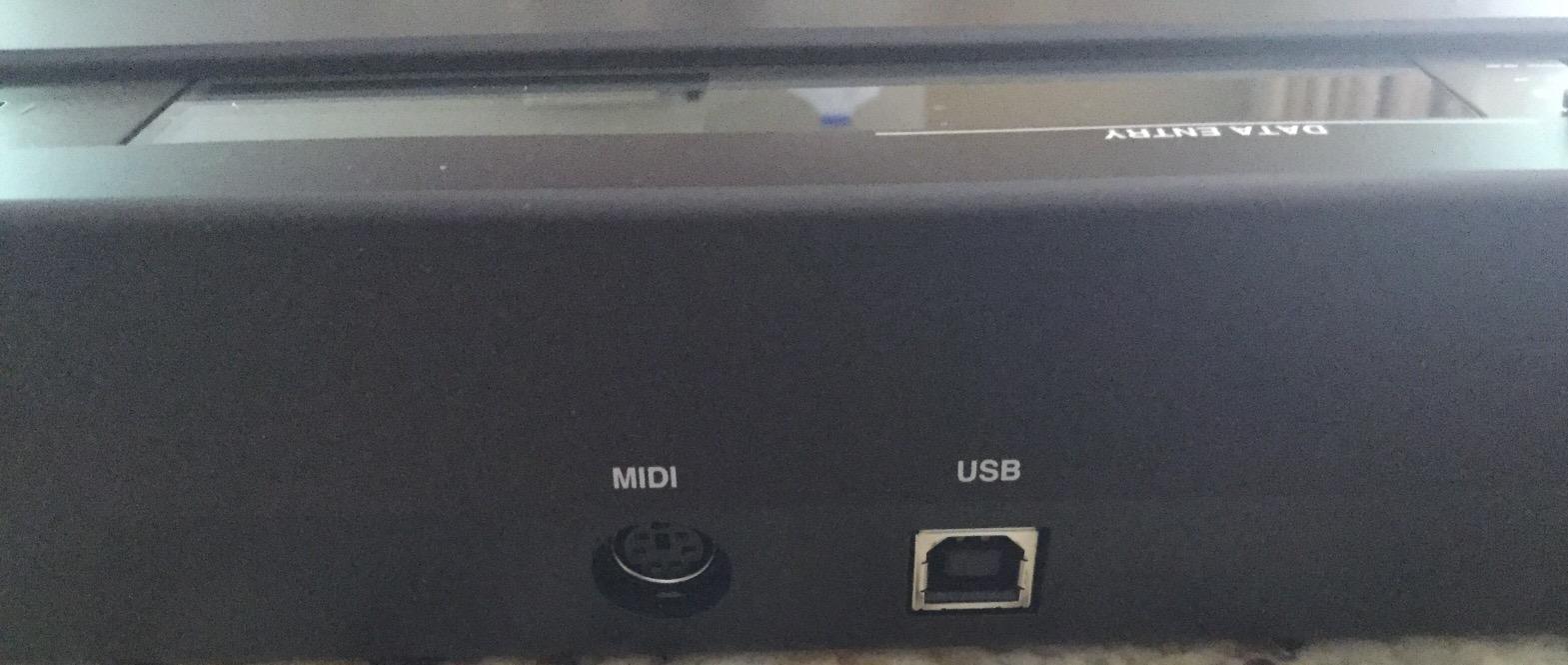
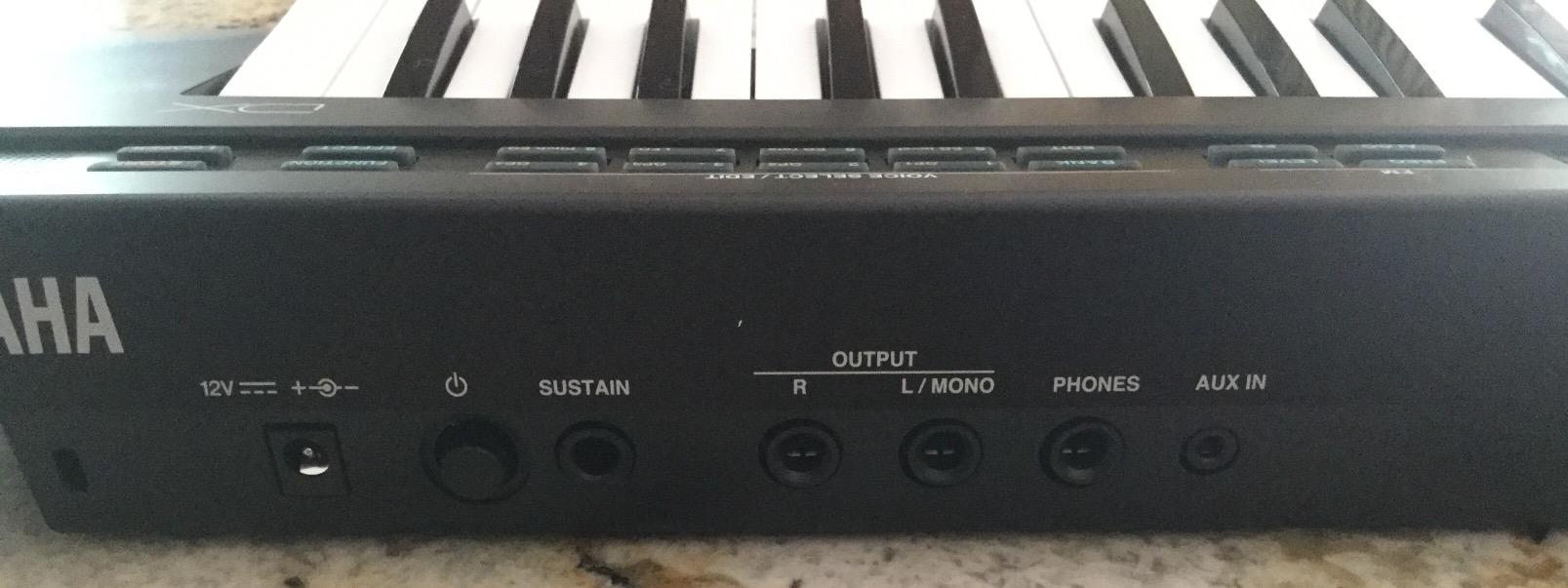
The Yamaha REFACE DX is the closest you can get to a DX7 without spending $1,500 on a vintage unit. It’s a 4-operator FM synth packed into a portable keyboard with built-in speakers, a phrase looper, and battery power. I keep one in my living room because it’s the easiest synth in my collection to grab for a quick idea. Turn it on, dial up a bell patch, loop a few bars, done.
FM synthesis has a reputation for being complex. The REFACE DX simplifies the front panel so you can approach it as a beginner. There are dedicated encoders for operator levels, frequencies, and feedback. You can get a usable bell sound in two minutes without reading the manual. That’s rare for FM.
The looper is a hidden gem. You record a phrase, then play over it with the keyboard or another sound. It’s not multi-timbral, so you can only layer one sound at a time, but for sketching chord progressions or lead lines, it’s invaluable. The SoundMondo community lets you download user-created patches and share your own. There’s a whole library of free REFACE DX presets out there.
The mini keys feel surprisingly good. They’re velocity-sensitive and the action is light but precise. The built-in speakers are louder than you expect – you can play anywhere without headphones. Battery power means true portability. The downsides are menu diving for the deeper parameters and the lack of drum sounds, but the REFACE DX is the easiest FM entry point on the market.
Who the REFACE DX is good for
This is for anyone who wants FM synthesis without the complexity, producers who need a portable sketchpad synth, and Yamaha fans who can’t justify a vintage DX7. It’s also great for live performance because of the battery and speakers.
Who should pass on the REFACE DX
If you need full-size keys, polyphonic sequencing, or a deep sound design engine, look at the ASM Hydrasynth. Players who want analog character should consider the Korg monologue or MOOG Messenger.
8. MOOG Messenger – Editor’s Choice Premium Analog
MOOG Messenger Monophonic Analog Synthesizer
Ladder Filter
Wavefolding VCOs
32 Keys
256 Presets
Pros
- Iconic Moog ladder filter with RES BASS compensation
- Wavefolding oscillators with sync and FM
- 32 semi-weighted keys with aftertouch
- 64-step generative sequencer
- 256 presets plus 6 CV patch points
Cons
- Premium price point
- No case included
- Some quality control variation
The MOOG Messenger is the synth I recommend without hesitation to anyone who can afford it. It’s the modern Moog monosynth, built around the legendary ladder filter with a new RES BASS compensation circuit that preserves low-end when you crank the resonance. Two wavefolding oscillators with sync and FM, a sub-oscillator, two loopable ADSR envelopes, two LFOs, and a 64-step sequencer with probability-based generative behavior. Plus 32 semi-weighted full-size keys with velocity and aftertouch.
The first time I played one, I made a patch that sounded like a vintage Minimoog, then slowly twisted one knob and turned it into something completely alien. That’s the Moog magic – the filter responds in a way nothing else does. The ladder filter is the sound of synthesizer history, and the RES BASS switch fixes the one complaint people had about it (bass loss at high resonance).
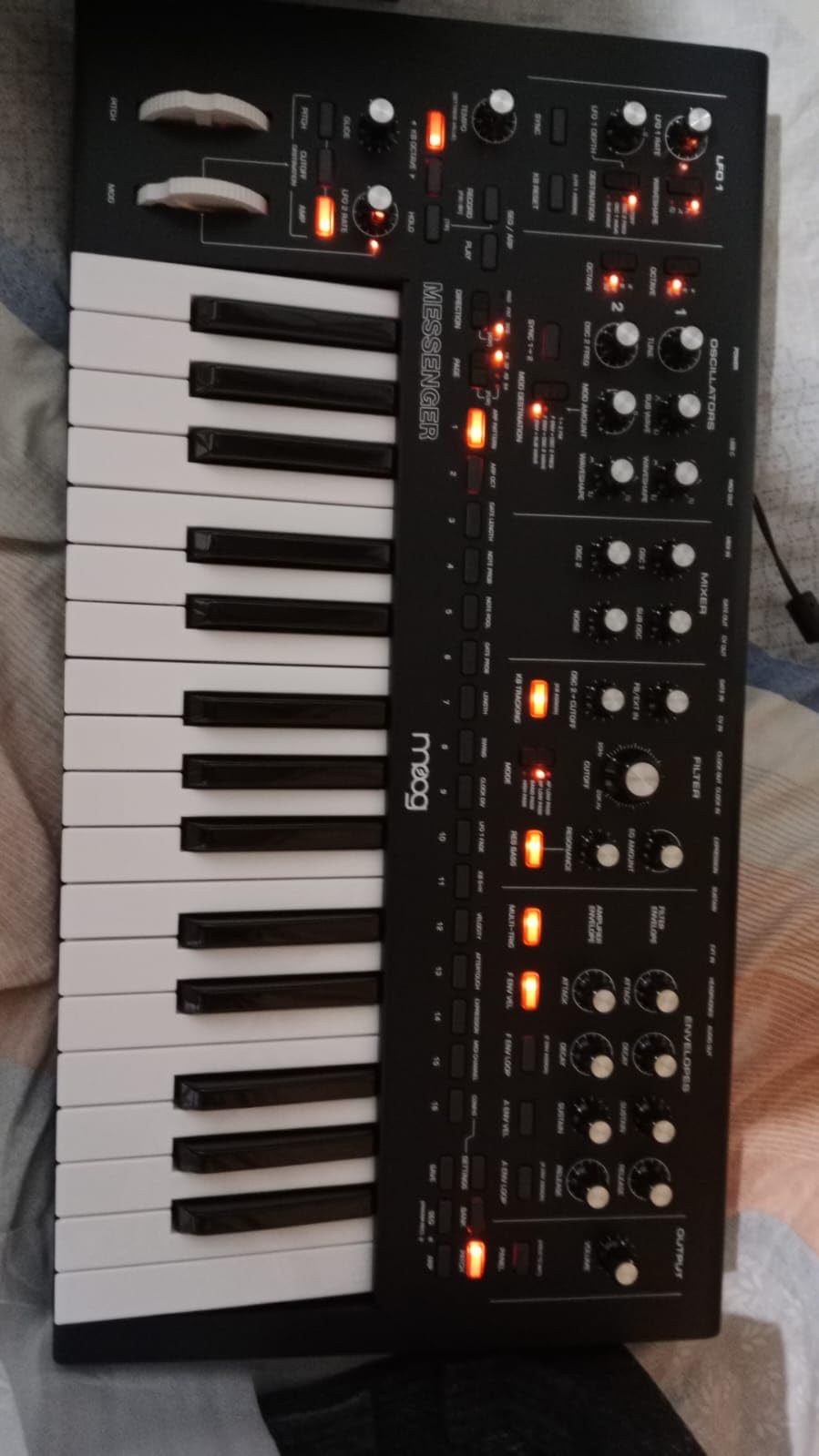
The wavefolding oscillators are a modern touch. Instead of just saw and square, you can morph the waveform continuously through triangle to pulse to folded waves. With FM and sync between the two VCOs, you can generate everything from classic Minimoog bass to West Coast modular weirdness. The sub-oscillator adds weight for bass duties.
The sequencer is a masterclass. 64 steps, each with its own parameter locks. Probability per step means it generates variations each time you press play – hit the same sequence twice and you’ll get different results. The arpeggiator is built in. The keyboard feels fantastic – semi-weighted but with the snap of a Moog action.
Connectivity is comprehensive. Six analog CV patch points for modular integration. Five-pin DIN MIDI in and out. MIDI over USB-C. 256 presets means plenty of storage. The build is solid metal. The only downsides are the premium price and the lack of a case or dust cover. But if you want the best modern analog monosynth Moog makes, this is it.
Who the MOOG Messenger is good for
This is for serious analog players, studio producers who want flagship sound, and live performers who need expressive keys with aftertouch. It’s also the right choice if you want a synth you’ll keep for decades.
Who should pass on the MOOG Messenger
If you need polyphony, this isn’t it – it’s monophonic. Budget buyers should consider the Korg monologue. Players who don’t need aftertouch and CV can save money with the Behringer Pro VS Mini.
9. Roland GAIA 2 – Best Hybrid Synthesizer With Full-Size Keys

Roland GAIA 2 Synthesizer | Advanced Sonic Capabilities | Hybrid Sound Engine Combining Wavetable & Virtual Analog Synthesis | On-Board Motional Pad
Wavetable + VA
Motional Pad
53 Effects
Aluminum Build
Pros
- Hybrid wave and VA engine is versatile
- Full-size keys with quality action
- Motional Pad adds real-time expression
- 53 effect types including JUNO chorus
- Aluminum panel with quality knobs
Cons
- No built-in speakers
- No aftertouch
- Not multi-timbral
- Low stock availability
The Roland GAIA 2 is the underdog of this list. It doesn’t have the brand recognition of a Moog or the cult following of an ASM, but it offers tremendous value for the price. A hybrid wavetable and virtual analog engine, full-size 37 keys, a Motional Pad for real-time expression, and 53 effect types including the legendary JUNO chorus. For $825 you get a serious performance synth.
The GAIA 2’s panel layout is its biggest strength. Every major parameter has a knob, slider, or button. There’s almost no menu diving, which makes it a great choice for players who want to perform rather than edit. The Motional Pad is a touch strip that controls multiple parameters simultaneously – you can route it to filter cutoff, pitch, LFO depth, and pan all at once, then move your finger for expressive sweeps.
The effects engine is deep. The JUNO chorus alone is worth the price if you love that 80s sound. Shimmer reverb, modulation effects, distortion – 53 types total. You can run two insert effects plus a delay and a reverb simultaneously. The sequencer has both real-time and step recording, which is rare at this price.
Build quality is excellent. Aluminum panel, full-size keys with nice action, quality knobs and sliders. The downsides: no built-in speakers, no aftertouch, not multi-timbral, and stock is limited (only 2 left at time of writing). For a player who wants full-size keys and a knob-per-function interface without spending $1,500, the GAIA 2 is hard to beat.
Who the GAIA 2 is good for
This is for players who want full-size keys with a knob-per-function workflow, producers who need a versatile polysynth for studio work, and anyone who loves JUNO-era effects. It’s also great for live performance because of the Motional Pad.
Who should pass on the GAIA 2
If you need aftertouch, the ASM Hydrasynth has it. If you want analog character, the MOOG Messenger is better. If you want built-in speakers for portable playing, the Yamaha REFACE DX has those.
10. ASM Hydrasynth Keyboard – Best Advanced Wavetable Synth

ASM Hydrasynth Keyboard 49 Key Synthesizer
3 Oscillators
Wavetable
Poly-Aftertouch
49 Keys
Pros
- Revolutionary polytouch aftertouch keybed
- Deep sound design with 3 oscillators and dual Wave Mutators
- All-metal solid construction
- 5 envelopes and 5 LFOs for modulation
- Unique ribbon controller
Cons
- Steeper learning curve
- Heavy at 14.7 kg
- Only 49 keys
- Time investment to master
The ASM Hydrasynth Keyboard is the most expressive synth I’ve ever played. The polytouch keybed is the star – it’s a 49-key action where every key independently senses not just velocity and aftertouch, but continuous polyphonic aftertouch. Press harder on any note and the assigned parameter responds. Play a chord and modulate each voice differently. No other synth under $2,000 does this.
Sound design depth is enormous. Three oscillators per voice, each with dual Wave Mutators that can do FM, wavefolding, harmonic scan, and more. Two filters configurable in series or parallel, with low-pass, high-pass, band-pass, and dual-band modes. Five envelopes, five LFOs, eight modulation slots per part. You can route almost anything to almost anything.
The wavetable engine is modern. You get pre-loaded wavetables covering analog-style, digital, vocal, and noise-based sounds. The Mutators let you morph through the wavetable in real time. Combined with the polytouch keybed, you can sweep wavetables per finger on a chord. The ribbon controller adds another expressive dimension.
Build quality is flagship. All-metal chassis, quality keybed, solid knobs and buttons. The weight is significant at 14.7 kg – this is a studio instrument, not a portable. The learning curve is steep because there’s so much depth, but the front panel gives you direct access to most parameters. The 49-key count is conservative but reasonable for the form factor.
Who the Hydrasynth is good for
This is for serious sound designers, ambient and electronic music producers, and any player who wants flagship expression. It’s also the right choice if you want a synth that will keep revealing new depths for years.
Who should pass on the Hydrasynth
If you want analog character, the MOOG Messenger is better. Budget buyers should consider the Arturia MicroFreak. Players who want a portable synth should look at the Roland S-1 or Yamaha REFACE DX.
How to Choose the Best Synthesizer for Your Needs?
Buying a synthesizer is one of the most personal decisions in music gear. The right synth for an ambient producer is wrong for a hip-hop beat maker, and the right beginner synth is wrong for a sound designer with ten years of patch design experience. This guide breaks down the key decisions you’ll make so you can match a synth to your actual needs, not just the spec sheet.
Analog vs Digital vs Hybrid: What Actually Matters
Analog synths use voltage to generate and shape sound. They’re famous for warmth, character, and a certain unpredictability that comes from component variation. Digital synths use mathematical models of waveforms. They’re known for precision, flexibility, and the ability to create sounds analog can’t make. Hybrid synths combine both – digital oscillators with analog filters, or analog oscillators with digital effects.
The reality is that modern digital synths can sound incredible. The Arturia MicroFreak and ASM Hydrasynth use digital oscillators that produce analog-style sounds, often with more depth than pure analog designs. The difference matters less than people think. What matters more is the architecture – subtractive synthesis, FM synthesis, wavetable, physical modeling, additive – and whether that fits your music.
If you make bass-heavy electronic music, you probably want either true analog (Moog Messenger, Korg monologue) or a hybrid with analog filters (Behringer Pro VS Mini). If you make ambient, cinematic, or experimental music, wavetable digital (ASM Hydrasynth) is hard to beat. If you make FM bells, leads, and glassy sounds, the Yamaha REFACE DX delivers without the vintage price.
Polyphony: How Many Notes Do You Need?
Polyphony is how many notes a synth can play at once. Monosynths play one note (great for bass, leads, and sound design). Polysynths play multiple notes (necessary for chords, pads, and complex arrangements). Most modern polysynths offer 4-voice to 16-voice polyphony, which covers most music.
For beginner players and bass-heavy genres, a monosynth like the Korg monologue or MOOG Messenger is plenty. For chord-based music, ambient pads, or anything cinematic, you’ll want a polysynth. The Arturia MicroFreak offers 4-voice paraphonic (limited but versatile), the Roland S-1 offers 4-voice true polyphony, and the ASM Hydrasynth and Roland GAIA 2 offer full polyphony.
Connectivity: MIDI, CV, and USB
MIDI is the standard way synths talk to computers and other gear. Every synth on this list has MIDI (usually 5-pin DIN and USB). CV (control voltage) is the older analog standard, still used in modular setups. If you have Eurorack gear or plan to, look for synths that output CV – the Arturia MicroFreak, Roland S-1, and MOOG Messenger all do.
USB-C is the modern standard for both MIDI and power. Synths like the Behringer Pro VS Mini and Roland S-1 run off USB-C, which means portable power banks work. The MOOG Messenger uses USB-C for MIDI but requires the included adapter for power.
Beginner Considerations: What to Look For
If you’re new to hardware synths, prioritize three things: knob-per-function design (no menu diving), a clear interface that teaches synthesis as you use it, and a price that won’t ruin your month if you don’t end up loving it. The Korg monologue is the classic choice – all knobs, all the time, with an oscilloscope to show what’s happening. The Arturia MicroFreak is a step more complex but offers much more depth as you grow.
Avoid synths with deep menu structures and tiny screens as your first hardware. You’ll spend more time navigating than making music. Once you’re comfortable with synthesis concepts, you can graduate to deeper instruments like the ASM Hydrasynth or MOOG Messenger.
Frequently Asked Questions
Which brand of synthesizer is considered the best?
There isn’t one best synthesizer brand – it depends on your needs. Moog is widely considered the top brand for analog monosynths with their iconic ladder filter. Korg dominates the budget and FM markets with the monologue and REFACE DX lines. Arturia excels at hybrid value synths like the MicroFreak. For wavetable and modern synthesis, ASM leads with the Hydrasynth. Roland makes legendary polysynths like the SH-101 reborn as the S-1. Each brand has a different strength.
What synth does Billie Eilish use?
Billie Eilish and producer Finneas primarily use software synths in their DAW workflow, but they have used hardware instruments including the Roland Juno-60 for pads and vintage Moog gear. Eilish is known for working in the box on a laptop rather than relying on hardware synths. Her sounds lean heavily on software emulations of classic analog gear, which is why many of their signature tones work well on modern hybrid synths like the Arturia MicroFreak or ASM Hydrasynth.
What is the best selling synth of all time?
The best-selling synthesizer of all time is widely debated, but the Yamaha DX7 leads most lists with over 200,000 units sold from 1983 to 1989. It defined the FM synthesis era and shaped the sound of 80s pop. The Roland Juno-106 is another contender with around 100,000+ units sold and a sound that defined an entire generation. Among modern synths, the Korg Minilogue has sold extremely well in the analog revival era, and the Arturia MicroFreak is one of the best-selling hybrids of the past decade.
What is the best modern synth?
The best modern synth depends on what you need. For overall flagship quality and analog character, the MOOG Messenger is hard to beat with its wavefolding oscillators and ladder filter. For sound design versatility, the ASM Hydrasynth Keyboard offers revolutionary polytouch aftertouch and deep wavetable synthesis. For value, the Arturia MicroFreak delivers hybrid versatility at an accessible price. For FM synthesis in 2026, the Yamaha REFACE DX remains the easiest entry point. Each represents a different high point in modern synth design.
Final Thoughts on the Best Synthesizers in 2026
The best synthesizers for 2026 are the ones that get you playing, recording, and experimenting every day. After three months of living with these ten instruments, the one that surprised me most was the MOOG Messenger – the ladder filter still does things nothing else can match. The Arturia MicroFreak remains my desert island pick because no other synth under $500 covers so much ground.
If you’re starting from scratch, the Korg monologue will teach you synthesis with no menus and clear knobs. If you want maximum sound design depth, the ASM Hydrasynth is a flagship that will keep revealing itself for years. If you want something portable that fits in your bag, the Roland S-1 and Yamaha REFACE DX are both excellent. Whatever you pick, the best synthesizer is the one that makes you play it every day.
The hardware synth revival isn’t slowing down. New instruments are shipping every year, and the choices keep getting better. Pick one that fits your music and budget, commit to learning it, and let it become part of your sound. That’s how synths have always worked – you don’t choose the perfect instrument, you choose the one you’ll grow with.