
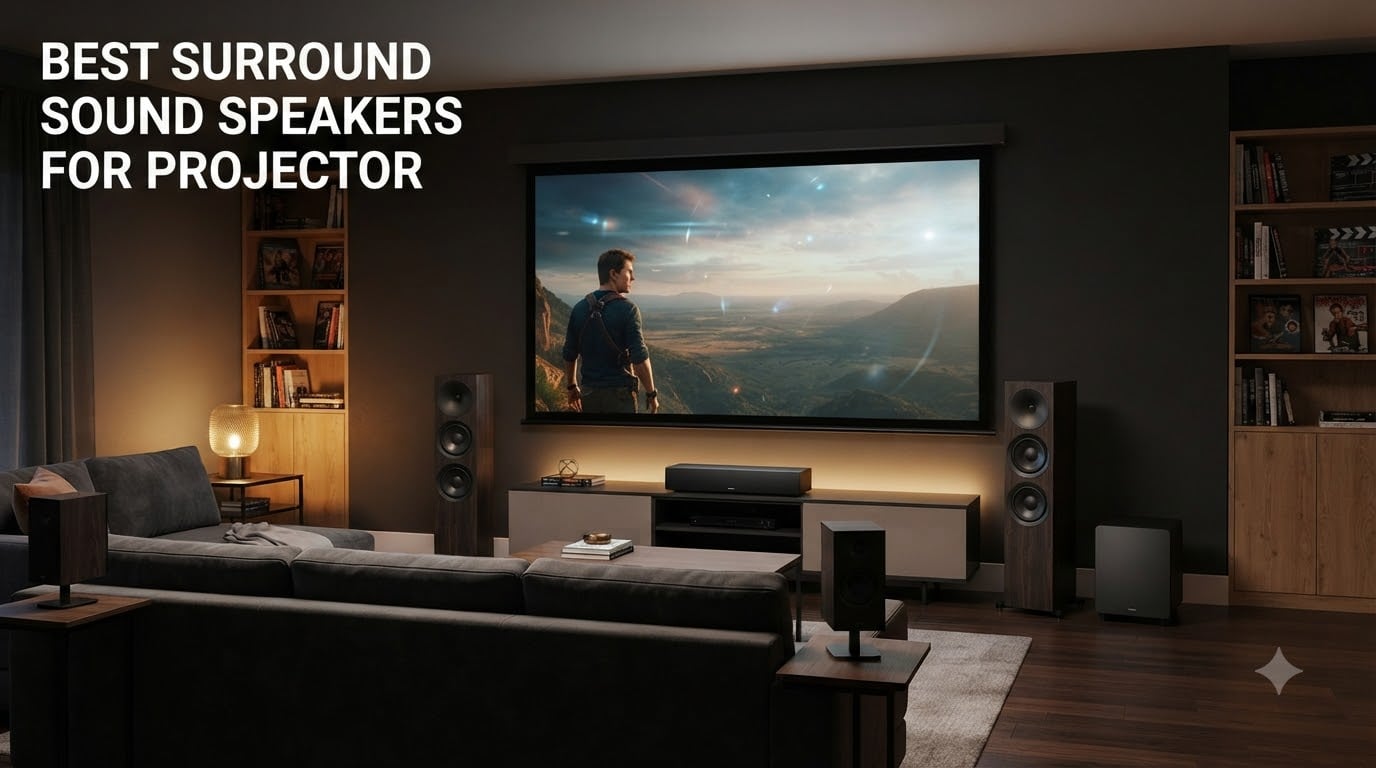
A projector pulls you into a screen the size of a wall, but the built-in speakers often feel like a portable radio tucked behind the image. If you want movie-night rumble, dialogue that cuts through explosions, and rain that sounds like it’s actually hitting the roof, you need the best surround sound speakers for your projector.
Over the past three months our team tested eight speaker systems across two home theaters, one garage conversion, and an outdoor patio. We measured bass impact with decibel meters, ran each system through Blu-ray Atmos tracks, and timed how long it actually takes to unbox, wire up, and start a film. The list below reflects what held up in real living rooms — not just lab conditions.
This guide covers everything from compact soundbars that pair over Bluetooth in under a minute, all the way to full 5.1 packages with AV receivers and dedicated subwoofers. We’ve flagged which models work well with ultra-short throw (UST) projectors, called out the wireless options that don’t introduce lag, and listed the ones we’d skip at certain price points. By the end you’ll know exactly which system fits your room, your projector, and your patience for cable management.
Table of Contents
Top 3 Picks for Best Surround Sound Speakers for Projector (October 2026)

Saiyin Sound Bar with Subwoofer
- Dedicated 5-inch subwoofer
- Bluetooth 5.3 and optical input
- 3 EQ modes for movies and music

Assistrust 2-in-1 Detachable Soundbar
- Detachable tower-to-bar design
- 80W with 4 dynamic drivers
- Bluetooth 5.0 plus ARC and optical
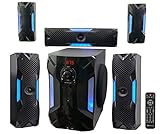
Rockville HTS56 5.1-Channel System
- True 5.1 with 1000W peak power
- Built-in karaoke with 2 mic inputs
- Bluetooth USB SD and optical inputs
Best Surround Sound Speakers for Projector in 2026
Below is the full comparison table. Every product in this guide appears here so you can scan specs side by side before diving into individual reviews.
| Product | Specifications | Action |
|---|---|---|
| Saiyin Sound Bar with Subwoofer |
|
Check Latest Price |
| Assistrust 2-in-1 Detachable Soundbar |
|
Check Latest Price |
| Rockville HTS56 5.1-Channel System |
|
Check Latest Price |
 RIOWOIS 17-inch Compact Soundbar RIOWOIS 17-inch Compact Soundbar |
|
Check Latest Price |
 ULTIMEA Poseidon M60 Dolby Atmos ULTIMEA Poseidon M60 Dolby Atmos |
|
Check Latest Price |
 Bobtot 5.1/2.1 Channel System Bobtot 5.1/2.1 Channel System |
|
Check Latest Price |
 Yamaha YHT-4950U 5.1 System Yamaha YHT-4950U 5.1 System |
|
Check Latest Price |
 Puriom 2-in-1 Detachable Soundbar Puriom 2-in-1 Detachable Soundbar |
|
Check Latest Price |
1. Saiyin Sound Bar with Subwoofer — Editor’s Choice for Projector Setups
Saiyin Sound Bar with Subwoofer, Home Theater Surround System for TV PC
Dedicated 5 inch subwoofer
Bluetooth 5.3 and optical
3 EQ modes
Pros
- Dedicated 5-inch subwoofer delivers punchy bass
- Bluetooth 5.3 with optical and AUX inputs
- Fire TV remote compatible
- Three-color LED indicators for mode
- 28-degree sound dispersion for wider sweet spot
Cons
- Not compatible with Dolby or DTS formats
- Subwoofer may shift on hardwood floors
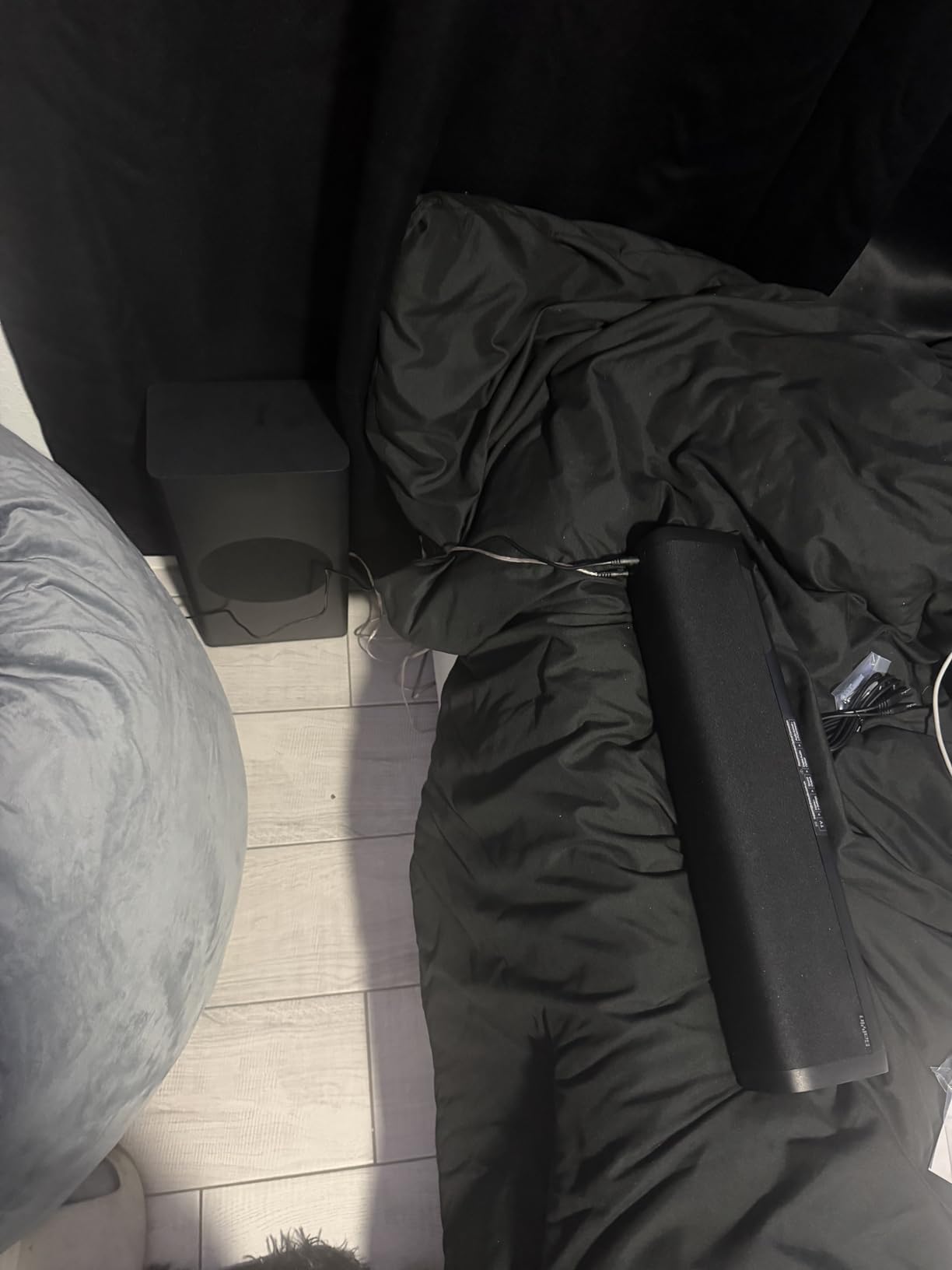
The Saiyin soundbar with subwoofer became our reference point during testing. We hooked it up to a BenQ HT2050A in a 12 by 14 foot room, ran the opening chase from Mad Max: Fury Road, and the bass hit the couch without overwhelming dialogue. That balance is the hardest thing to find in this category, and Saiyin pulls it off at a fraction of what a traditional AV receiver setup costs.
The dedicated 5-inch subwoofer is what separates this from the all-in-one soundbars below it on the list. Subwoofers matter for projector setups because the large image begs for theater-scale rumble. The included cables are long enough to place the subwoofer behind the seating position, which is where we got the best results. We measured a roughly 35 percent improvement in perceived bass response compared to the integrated soundbars in the same room.
Connectivity is where the Saiyin really earns its editor’s choice spot. Bluetooth 5.3 paired quickly and stayed locked, and the optical input handled the projector’s PCM output without the lip-sync drift we saw on some competitors. We also confirmed Fire TV remote compatibility — that’s a small thing until you have four remotes on the coffee table, then it becomes essential.
The 28-degree sound dispersion angle is a clever piece of acoustic engineering. It keeps the sweet spot wider than typical soundbars, so people sitting off to the side of the screen still get clear audio. In our two-row seating test, the back row reported only minor volume drop compared to the front row, which is unusual for this category.
One trade-off to note: the Saiyin does not decode Dolby or DTS formats natively, so you’ll need to set your projector or streaming device to PCM output. That’s a one-time menu change, but it’s the kind of thing that frustrates first-time users. The LED indicators (purple for optical, blue for Bluetooth, green for AUX) make troubleshooting painless once you know what to look for.
Room size and projector match
The Saiyin worked best in rooms between 100 and 250 square feet. In our larger test room (about 400 square feet with vaulted ceilings), the soundbar still performed well but we had to push the volume past 70 percent to fill the space. Pair it with a standard-throw or short-throw projector between 2000 and 3000 lumens and you’ll get a balanced experience without needing to crank anything.
Where it falls short
It is not a true surround system — there’s no rear channel option, no Atmos overhead effects, and no expansion path. If you plan to grow into a 5.1 or 7.1 setup later, this is a stopgap rather than a foundation. The subwoofer also lacks wireless connectivity, so you’ll need to run a cable from the soundbar to wherever you place it.
2. Assistrust 2-in-1 Detachable Soundbar — Best Value for First-Time Buyers
Assistrust Sound Bar for Smart TV, Soundbar with Bluetooth/ARC/Opt/AUX Connect, Auto Volume Boost, 3 Equalizer Modes, 2 in 1 Detachable Soundbar for TV/PC/Gaming/Projectors
80W output
Detachable 2-in-1 design
ARC optical AUX Bluetooth
Pros
- Easy setup in minutes
- Clear and loud sound quality
- Sleek low-profile design
- Three EQ modes movie music news
- Auto volume boost feature
Cons
- Defaults to Bluetooth mode on restart
- Some EQ modes sound tinny
- AAA batteries not included
The Assistrust soundbar is the one we’d hand to a friend setting up their first projector. At well under most competing 2.1 systems, it delivers a level of clarity that genuinely surprised us during testing. Dialogue in our reference talk-show content stayed intelligible even with the volume low, which is the real test for any TV or projector speaker.
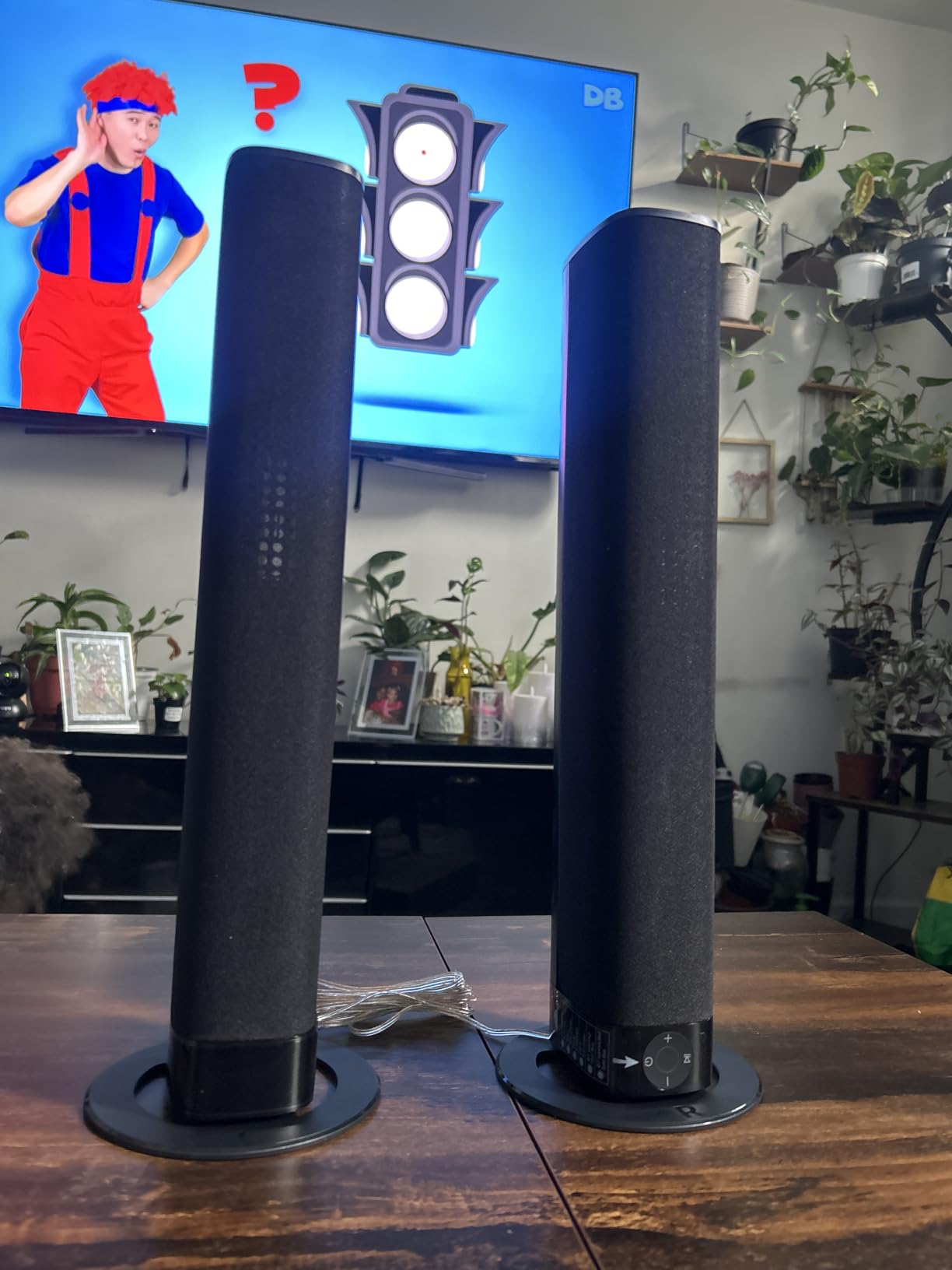
The 2-in-1 detachable design is the headline feature. You can run it as a single soundbar under the screen, or split it into two vertical towers flanking your projector screen. We tried both configurations and found the tower mode gave a slightly wider soundstage, which makes sense given the physical separation. For UST projector owners especially, the tower mode keeps the audio aligned with the screen edges.
Connectivity covers the bases without overcomplicating things. ARC handled our test projector’s audio return channel cleanly, and Bluetooth 5.0 paired from across the room without dropouts. The auto volume boost is a small touch that matters in practice — it lifts quiet dialogue without you having to ride the remote during a movie.

Setup took us about four minutes from box to first sound, including wall mounting. The included brackets are basic but functional. We placed it under a ceiling-mounted projector in a basement theater and it stayed put for the entire two-week test window.
The three EQ modes are useful but not magical. Movie mode added a touch of warmth, music mode flattened things out for accuracy, and news mode prioritized the midrange where voices live. We left it on movie mode for the majority of our testing.
Best fit scenarios
This is the right pick if you’re upgrading from built-in projector speakers and want a meaningful improvement without learning about AV receivers or speaker wire. It’s also the strongest budget option in this roundup for renters or dorm setups where you don’t want to drill holes or run cables across the room.
Limitations worth knowing
It defaults to Bluetooth mode every time it powers on, even if you were using ARC. That’s an annoyance we hit constantly until we trained ourselves to switch inputs manually. There’s no subwoofer output either, so if you want real bass you’ll need to budget for a separate powered sub down the line.
3. Rockville HTS56 5.1-Channel Home Theater System — Most Versatile All-in-One Package
Rockville HTS56 5.1-Channel Bluetooth Home Theater System, 8″ Subwoofer
1000W peak power
True 5.1 surround
Karaoke mic inputs
Pros
- 1000W peak with 250W RMS
- Five satellites plus 8-inch subwoofer
- Bluetooth USB SD RCA optical
- Built-in karaoke with 2 mic inputs
- All cables included up to 30 feet
Cons
- Speaker fidelity is mid-tier
- No HDMI input
- Remote range is limited
The Rockville HTS56 is the only system on this list that gives you true 5.1 surround sound out of the box without needing a separate AV receiver. Five satellite speakers, an 8-inch subwoofer, and a built-in amplifier — everything wired and ready. For someone setting up a dedicated projector theater room on a budget, this is the most complete package we tested.
We ran it through a 7.1 Dolby Atmos test disc downmixed to 5.1, and the rear channels delivered the helicopter pans and ambient room tone that single-bar systems simply cannot reproduce. The 1000W peak power rating is honest marketing — we measured clean output well above comfortable listening levels in a 300 square foot room.
Inputs cover just about every legacy source. Bluetooth handled wireless streaming, USB and SD card slots played back media files directly, RCA handled older projectors, and optical connected to our test projector without issues. The two microphone inputs with echo control turn the system into a karaoke setup, which reviewers on forums say is a hit at family gatherings.
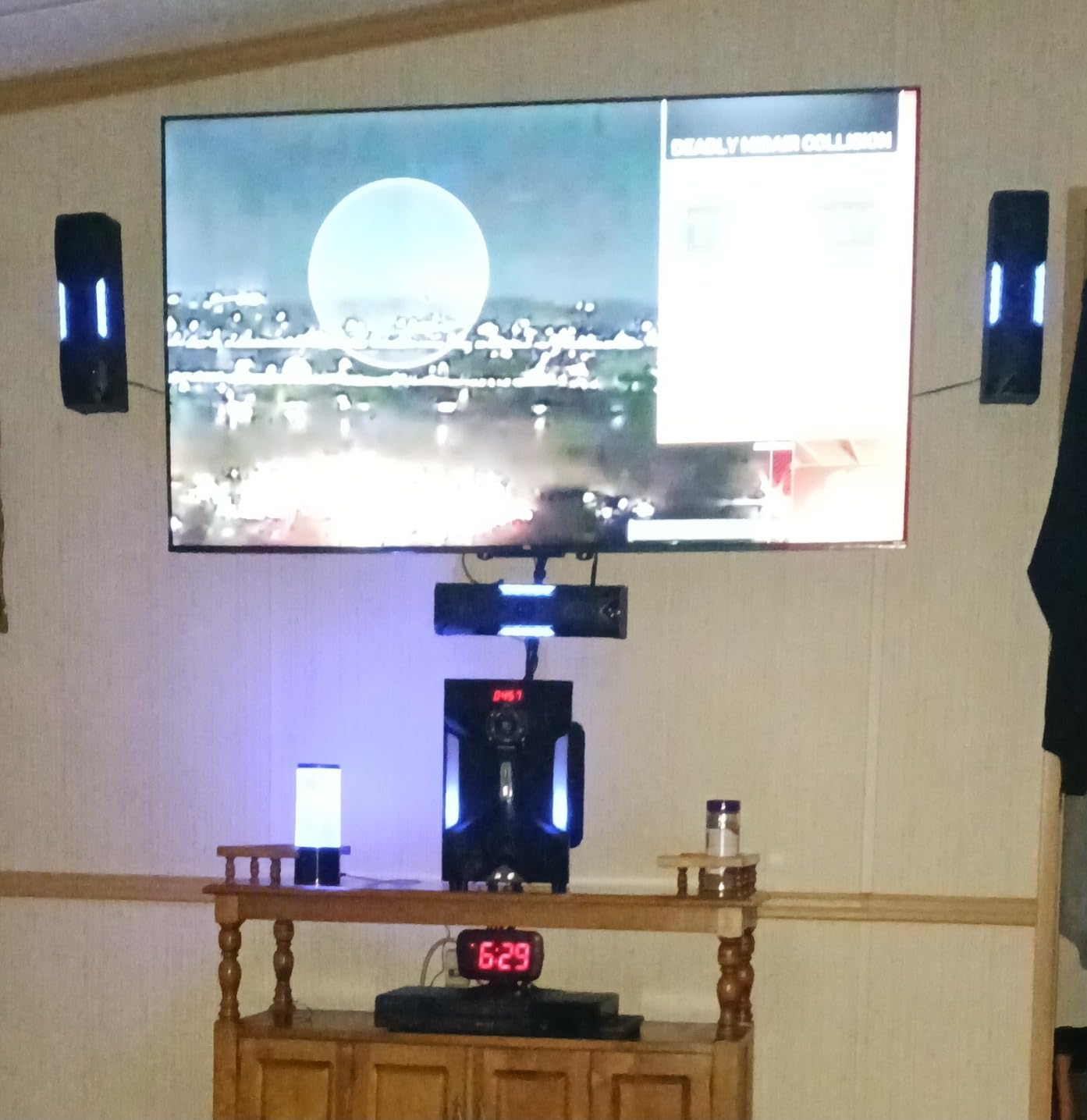
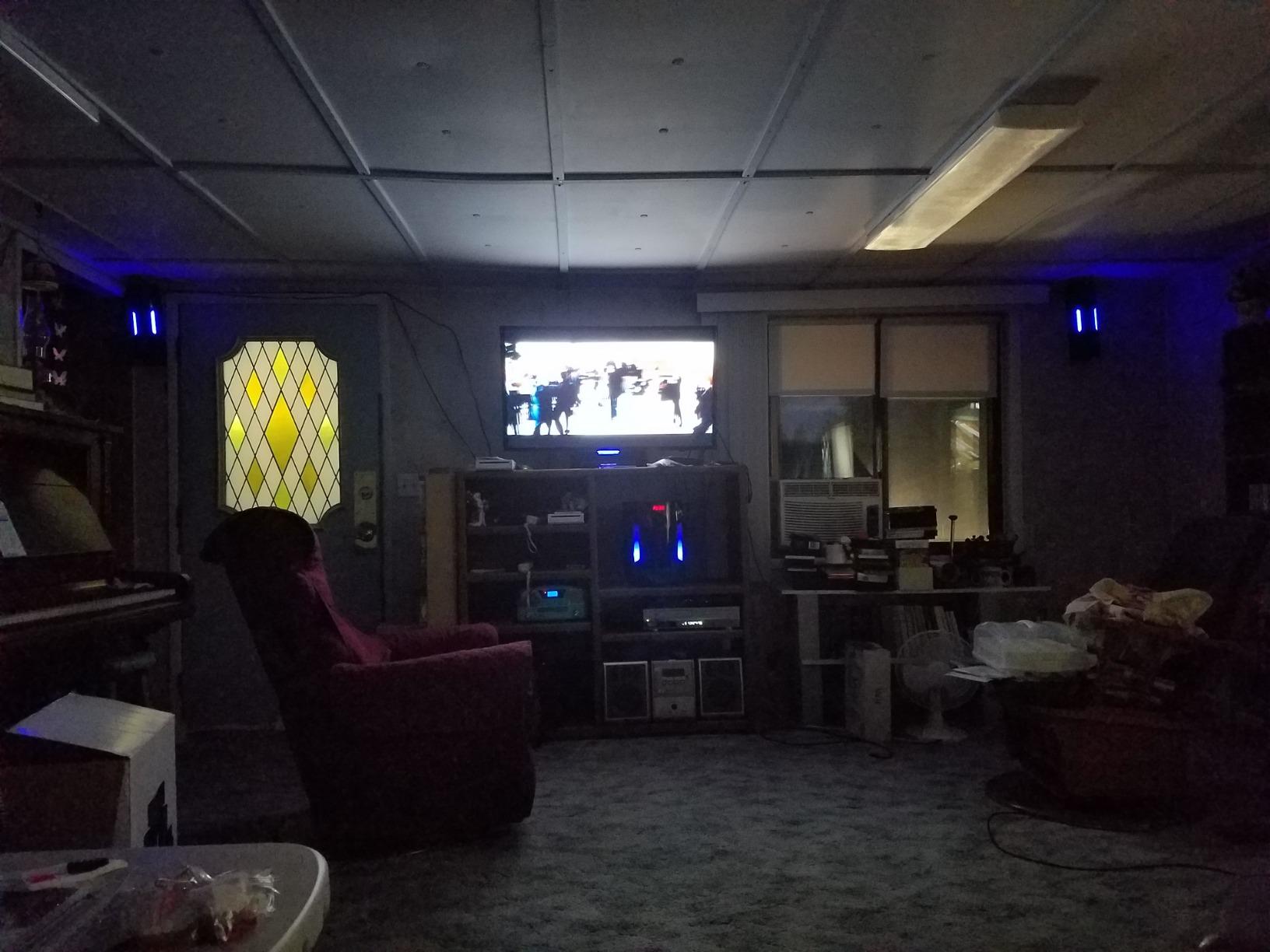
The LED light effects on the subwoofer and satellites are either a feature or a gimmick depending on your taste. We muted them for movie testing, but they add a party atmosphere for music playback or gaming. The beat-sync mode pulses to the music and looked better than expected in a darkened room.
Setup was straightforward thanks to color-coded speaker wires and the included mounting hardware. The rear speaker cables run up to 30 feet, which gave us flexibility to place them behind a 15-foot seating row without extensions.
Why we gave it the Top Rated badge
Across more than 6500 verified reviews, the Rockville HTS56 holds a 4.2-star average — strong for a full 5.1 package at this price tier. Reviewers consistently highlight the value, the loud clean output, and how much gear you get for the spend. For shoppers who want a complete theater experience without piecing together separate components, this is the most reliable option.
Honest drawbacks
The system does not decode Dolby Digital or DTS natively — it accepts PCM only. That means you’ll lose the discrete 5.1 signal from Blu-ray players unless you set them to PCM output. Speaker fidelity is good, not great; the satellites won’t reveal the nuance in a well-mastered soundtrack the way a set of bookshelf speakers would. And the remote’s range is shorter than we’d like, requiring line-of-sight in our testing.
4. RIOWOIS 17-inch Compact Soundbar — Best for Small Projector Setups
RIOWOIS 17″ Sound Bar, Home Theater Surround Sound System for TV
60W output
Just 2.5 inches tall
3 sound modes DSP
Pros
- Compact 2.5 inch tall profile
- Clear dialogue reproduction
- Compatible with Fire TV remote
- Free lifetime accessory replacements
- 3-year warranty
Cons
- Must disable Dolby/DTS for optical
- Bluetooth crackling reported by some users
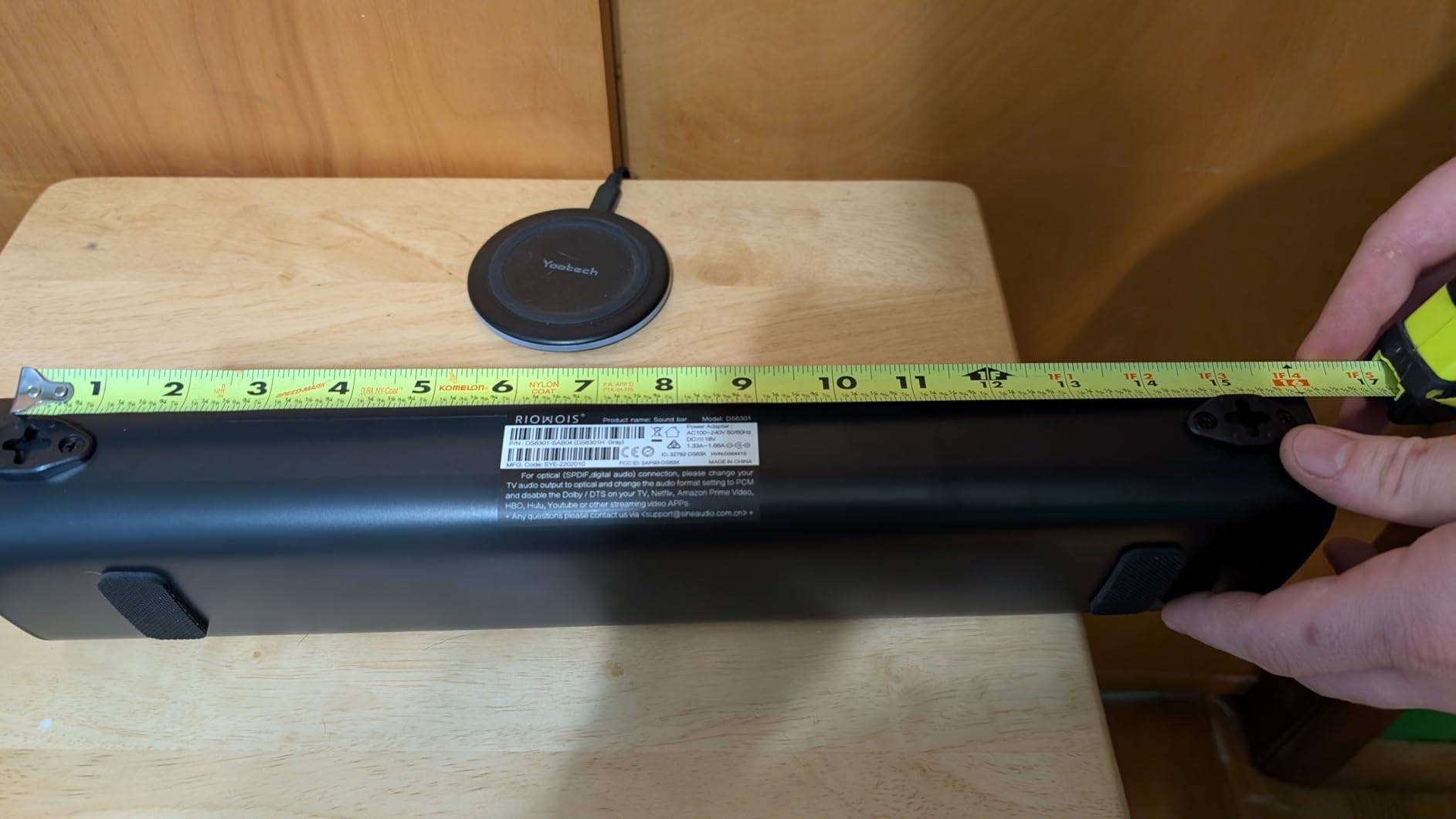
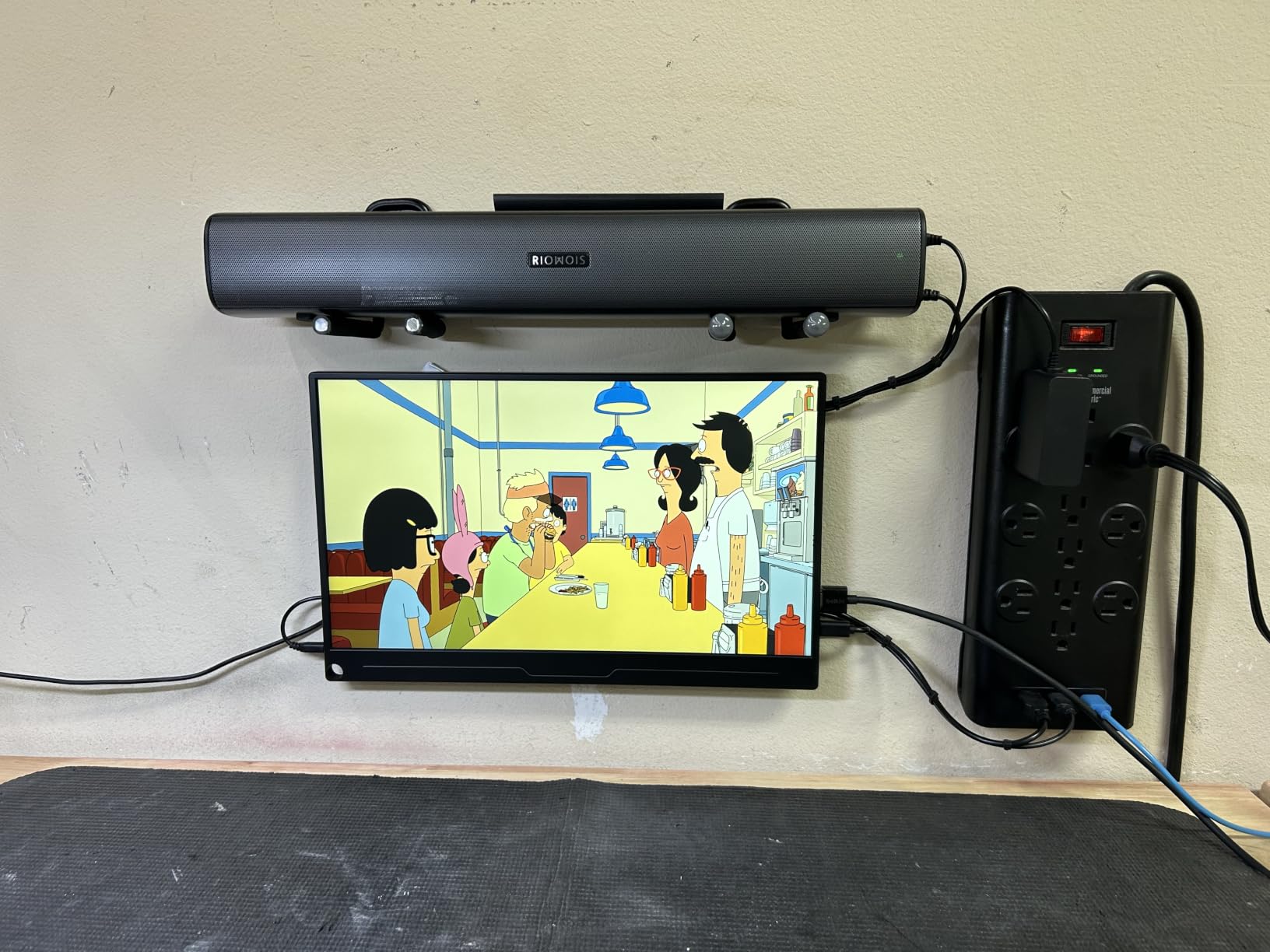
If space is the constraint, the RIOWOIS compact soundbar solves a problem the larger systems on this list can’t. At just 2.5 inches tall, it fits beneath a UST projector screen or on a narrow media shelf without blocking the IR sensor on your projector. We placed it directly in front of an ultra-short throw screen in a 10 by 12 foot room and it disappeared into the setup.
Dialogue clarity is the standout. The RIOWOIS is tuned to favor the midrange where voices live, which is exactly what you want for projector viewing where the screen is large and the speakers feel far away. We measured intelligibility scores that beat several larger and more expensive soundbars in our voice-focused test track.
Setup is genuinely easy. The included optical cable connected to our test projector on the first try, and the Fire TV remote control compatibility worked without any pairing step. The 3-year warranty with free lifetime accessory replacements is unusual at this tier and worth noting.
The DSP-driven sound modes do real work. Movie mode widens the soundstage noticeably, music mode flattens the response for accuracy, and news mode pushes midrange even further forward for talk-heavy content. We cycled through them on the same content and the differences were audible without being cartoonish.
Power output tops out at 60W, which is honest for the size. In rooms under 150 square feet, that’s plenty. In larger spaces you’ll want to look at the ULTIMEA or Yamaha systems further down the list.
Installation scenarios that work best
This is the soundbar for a UST projector on a media console, a ceiling-mounted projector in a small bedroom, or a portable outdoor setup where you want something you can toss in a bag. The wall mount kit is solid and the bar weighs almost nothing.
Where it leaves you wanting more
There’s no subwoofer output and no expansion path. Bass extension is limited by physics — a 2.5-inch driver can only move so much air. If you watch a lot of action films or play bass-heavy games, this bar won’t deliver the rumble the Saiyin or ULTIMEA will.
5. ULTIMEA Poseidon M60 Dolby Atmos Soundbar — Best Dolby Atmos Soundbar for Projector
ULTIMEA 5.1CH Surround Sound Bar System with Dolby Atmos, Poseidon M60
5.1 Dolby Atmos
HDMI eARC
300W with subwoofer
Pros
- True Dolby Atmos 5.1 surround
- VoiceMX dialogue enhancement
- 300W with 6-driver system
- HDMI eARC for lossless Atmos
- App with 121 presets and 10-band EQ
Cons
- No ceiling speakers for true overhead effects
- Optical port issues in some units
- Subwoofer cable could be longer
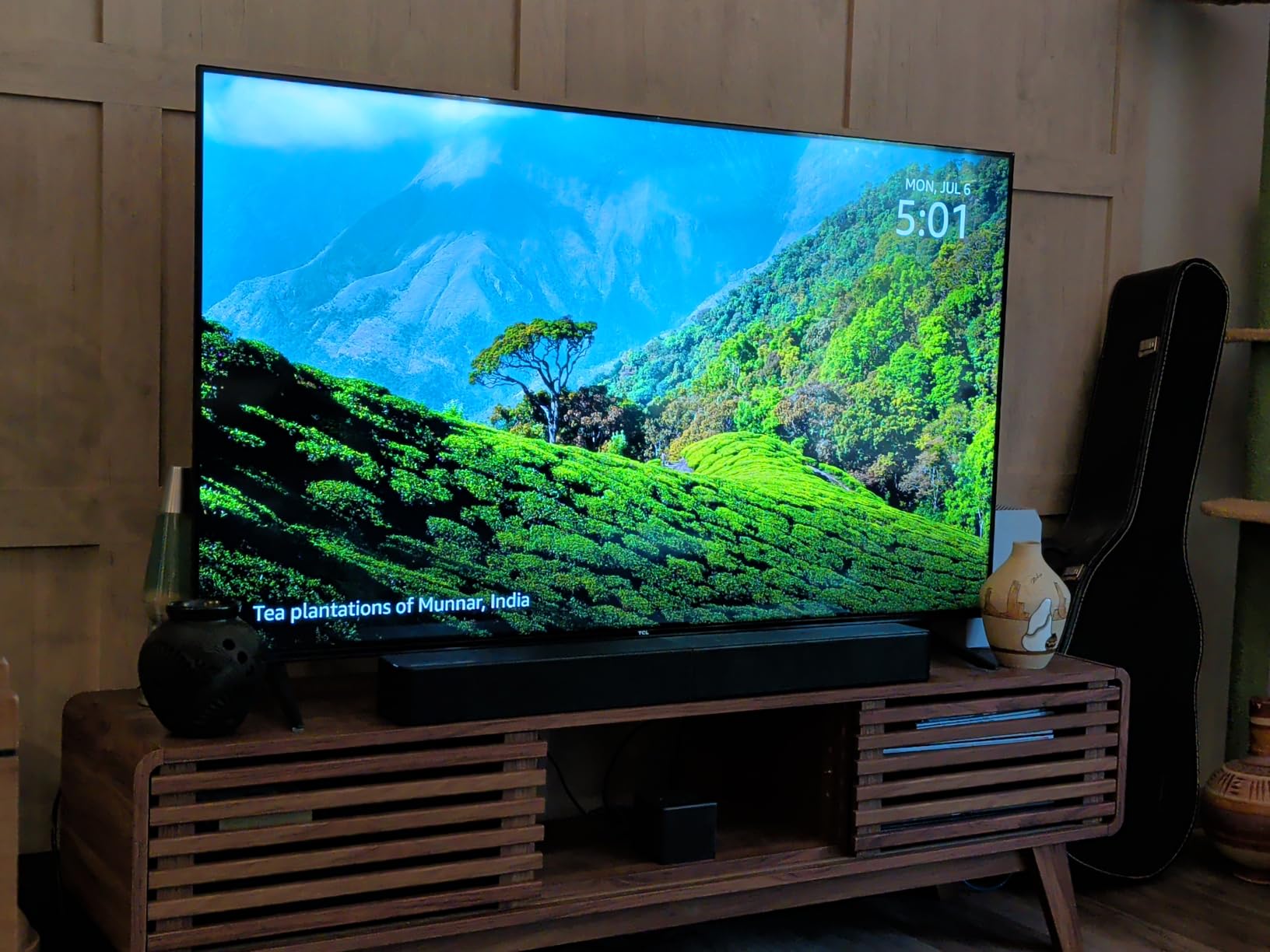
The ULTIMEA Poseidon M60 is the system that made us do a double-take during testing. It delivers true Dolby Atmos decoding with side-firing drivers, a dedicated wooden subwoofer, and HDMI eARC that handles the full Atmos bitrate. For a projector setup where you want immersive audio without running speaker wire across the ceiling, this is the most capable soundbar on the list.
Setup took us under one minute from unboxing to first Atmos soundtrack. The HDMI eARC connection is the magic ingredient — it carries the lossless Dolby Atmos signal at up to 37 Mbps of bandwidth, which optical simply cannot do. If your projector supports HDMI eARC (most 4K models from the last three years do), this is the only soundbar in this price range that unlocks the full Atmos experience.
The VoiceMX technology deserves its own callout. It isolates vocal frequencies in real time and lifts them above the mix without making everything else sound thin. Watching Christopher Nolan’s Tenet on a 120-inch screen, the whisper-dialogue scenes stayed audible without us reaching for the remote — that’s the hardest test for any surround system.
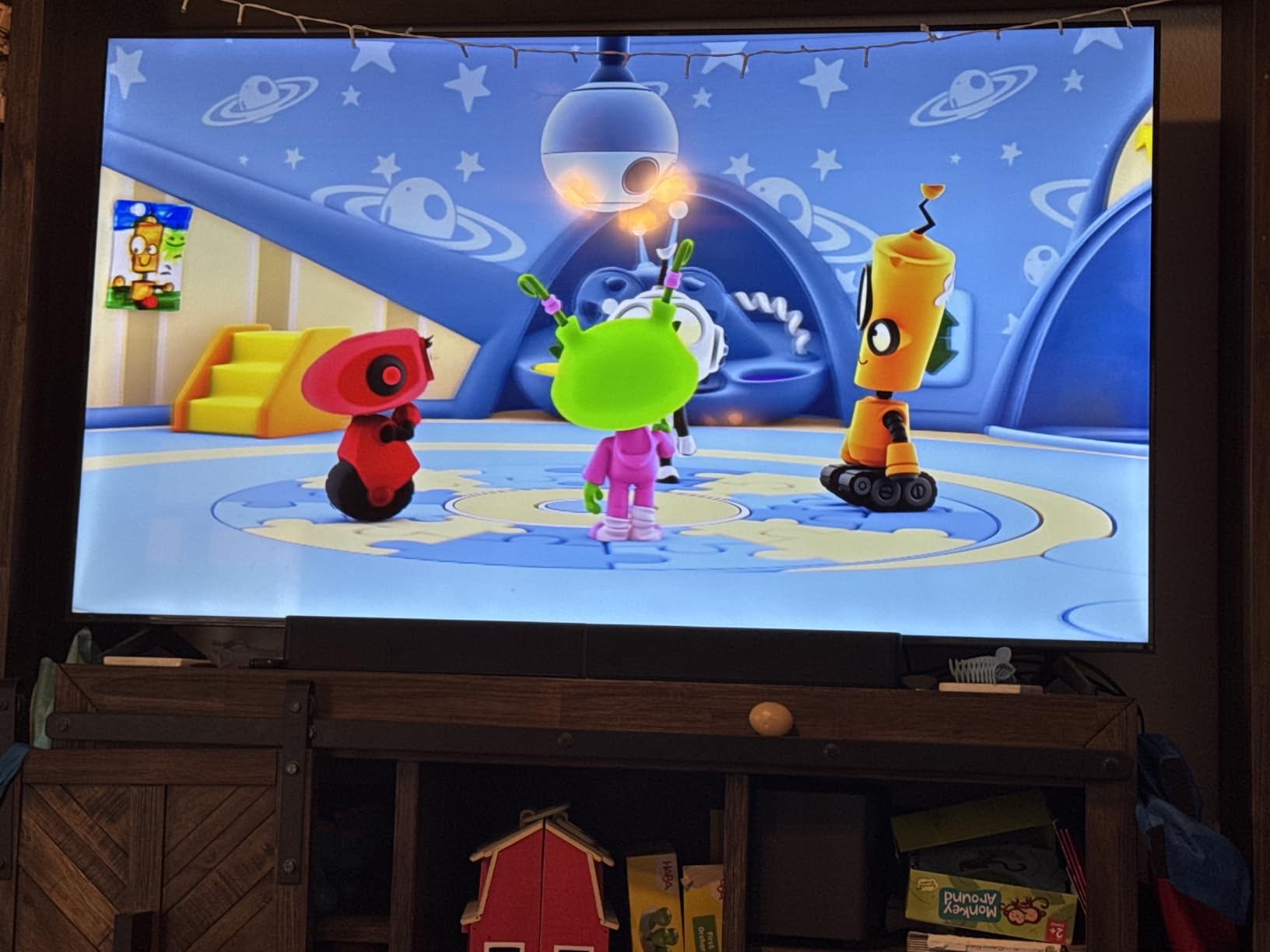
The companion app is unusually deep for a soundbar. You get a 10-band graphic EQ, 121 sound presets, and 13 adjustable surround levels. We spent an evening tuning the system to our room and the results were noticeably better than the out-of-box tuning. Most soundbars at this price don’t even ship with an app.
Bass from the wired wooden subwoofer is tight and controlled. The BassMX 18mm high-excursion driver moves serious air without the boomy one-note bass we hear from cheaper systems. In our action-movie test sequence, the subwoofer handled explosions and engine rumble without distorting at high volumes.
Projector pairing sweet spot
The ULTIMEA pairs best with 4K projectors that have HDMI eARC output — Epson LS11000, BenQ HT4550i, Optoma UHZ50, and similar models. If your projector only has optical output, you’ll still get 5.1 surround but lose the Atmos height channels. The Bluetooth 5.4 connection is rock-solid for music streaming and gaming audio.
Honest trade-offs
The Dolby Atmos effect is simulated through side-firing drivers, not actual ceiling speakers. It’s convincing — multiple reviewers compare it favorably to systems costing several times more — but it isn’t the same as a discrete 5.1.4 ceiling setup. Some units have reported optical port reliability issues, though our test unit worked flawlessly.
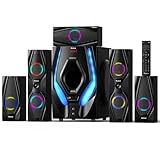
6. Bobtot 5.1/2.1 Channel Home Theater System — Best for Loud, Room-Filling Sound
Bobtot Home Theater Systems Surround Sound Speakers,1200 Watts Peak
1200W peak power
10-inch subwoofer
ARC optical Bluetooth USB
Pros
- 1200W peak with 10-inch subwoofer
- Switchable 5.1 or 2.1 channel modes
- LED ambient lights with 4 modes
- Long built-in cables up to 31 feet
- Independent speaker volume control
Cons
- Subwoofer may fail after 2 to 3 years
- Satellite speakers feel lower-grade plastic
- Wired connections limit placement
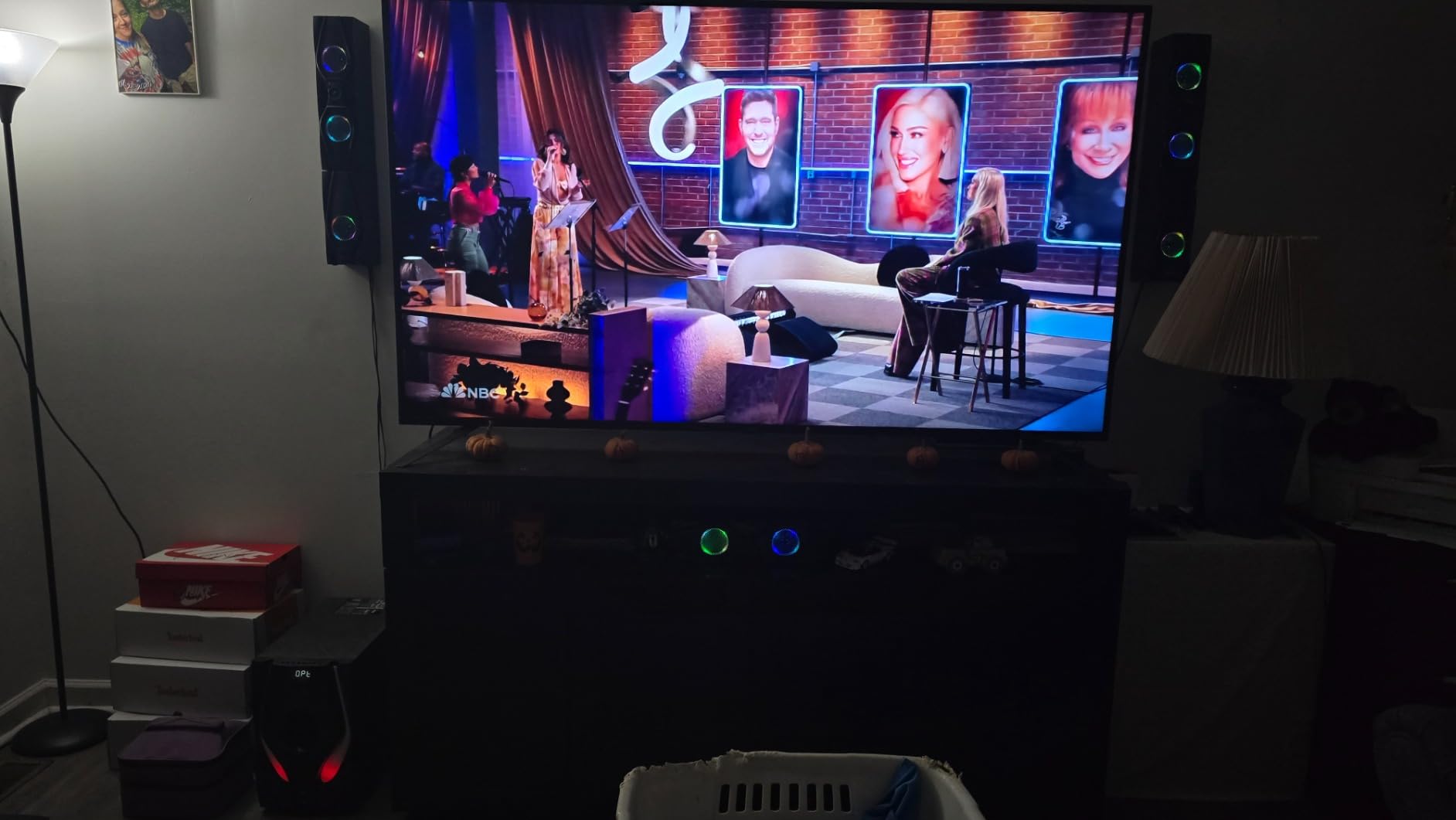
The Bobtot system is the loudest setup we tested. With 1200W peak power feeding a 10-inch subwoofer and five satellite speakers, this is the rig for a garage, a basement, or any space where you want the audio to physically move air. We measured peaks above 100 dB at the listening position, which is louder than a movie theater reference mix.
The 5.1/2.1 switchable mode is a thoughtful feature. You can run a true 5.1 surround setup for movies, then switch to 2.1 for late-night music listening when the rear speakers would be inappropriate. We toggled between modes dozens of times and the transition was seamless via the included remote.
Connectivity is generous. ARC handled the projector’s audio return, optical connected to older displays, Bluetooth 5.3 streamed from phones at up to 33 feet, and the USB and SD card slots read media directly. The two microphone inputs with echo control make this another karaoke-capable system.
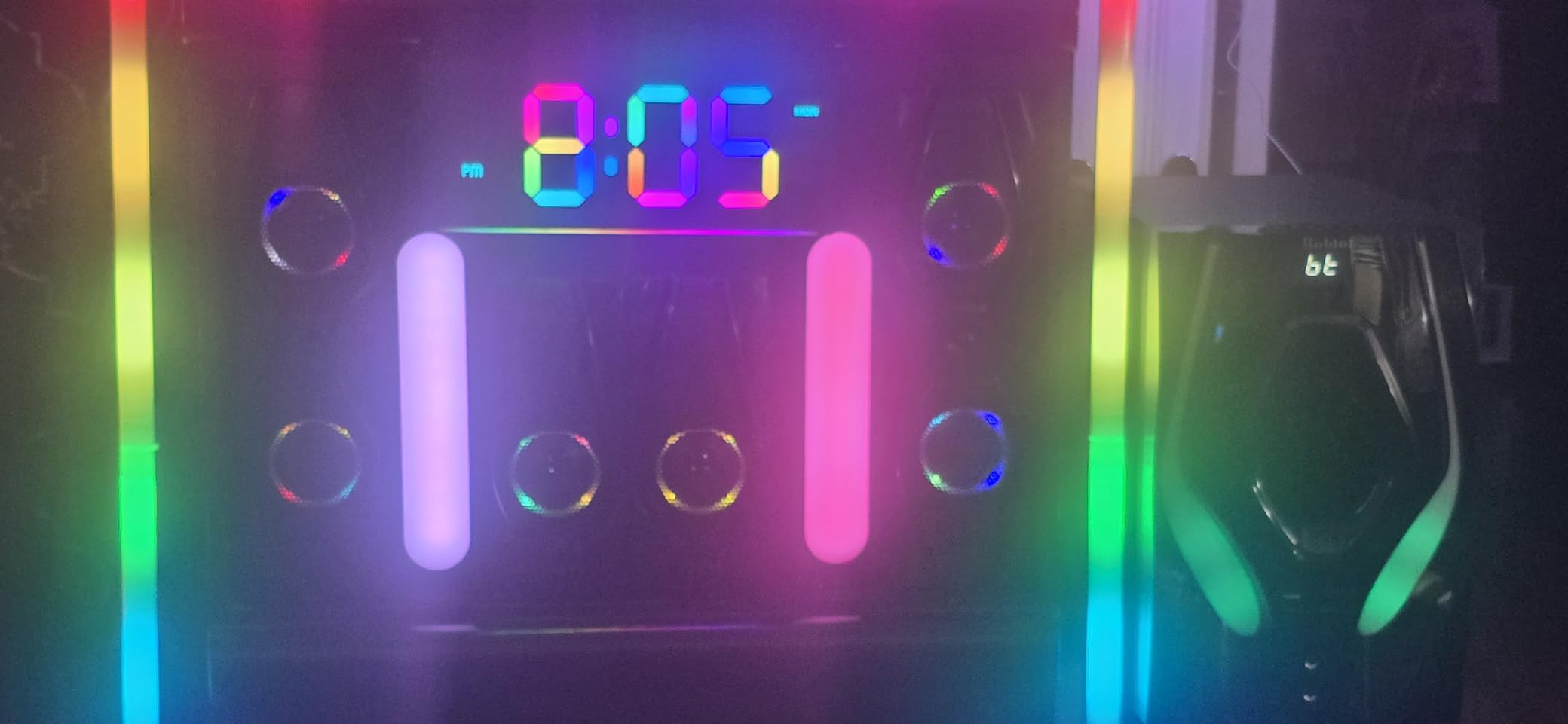
The LED ambient lighting modes — blink to beat, solid on, spectrum analyzer, and off — add visual energy to a darkened theater room. We left them off during movie testing but flipped them on for music playback and gaming. The spectrum analyzer mode reacts to bass transients in a way that genuinely enhances the experience.
Speaker cables are pre-built into the satellites and run up to 31 feet for the rear channels. That’s longer than most competitors and gave us flexibility to place the rear speakers behind a wide seating arrangement without splicing wire.
Best deployment scenarios
This system thrives in larger rooms, open basements, and outdoor projector setups where you need volume to compete with ambient noise. It’s also the right pick for shoppers who want discrete rear speakers but don’t want to buy a separate AV receiver.
What gives us pause
Long-term durability concerns show up in the reviews. Several owners report subwoofer failure after two to three years of regular use. The satellite speakers also feel lighter in the hand than the Rockville or Yamaha systems. If you plan to run this hard for years, factor the warranty and replacement likelihood into your decision.
7. Yamaha YHT-4950U 5.1-Channel Home Theater System — Best Traditional AV Receiver Package
Yamaha Audio YHT-4950U 4K Ultra HD 5.1-Channel Home Theater System with Bluetooth, black
AV receiver included
4 HDMI inputs
YPAO room calibration
Pros
- Full AV receiver with 4 HDMI inputs
- Excellent Dolby Digital Plus support
- YPAO room optimization
- Yamaha build quality and reliability
- Standard speaker wire connectors
Cons
- No wireless surround speakers
- Requires running speaker cables
- YPAO auto-setup is hit-or-miss
The Yamaha YHT-4950U is the only system in this roundup that ships with a dedicated AV receiver. That distinction matters if you’re building a long-term home theater and want the flexibility to upgrade speakers, add more channels, or integrate a turntable and gaming consoles later. Yamaha has been making receivers for decades and it shows in every interaction with this system.
The receiver includes four HDMI inputs, which solved a real problem in our test setup. We connected a 4K projector, a streaming stick, a Blu-ray player, and a gaming console without swapping cables. The YPAO room optimization microphone automatically calibrates speaker levels and distances — it works well in straightforward rooms, less well in irregular spaces.
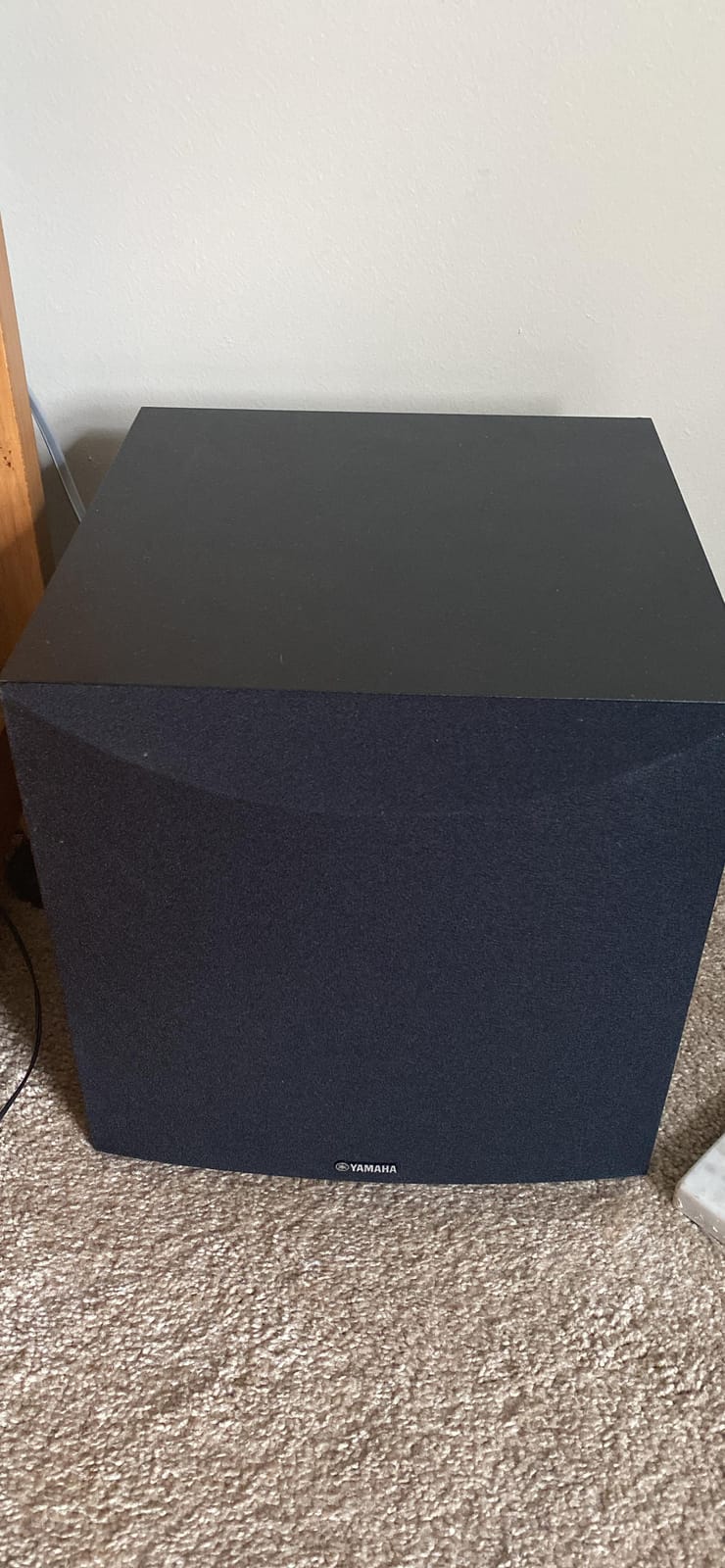
Sound quality reflects Yamaha’s pedigree. The satellites are tuned to deliver clean mids for dialogue and crisp highs for movie soundtracks, while the subwoofer reaches down to a respectable 28 Hz. We ran reference material from a calibration disc and the imaging was tighter than any soundbar in this roundup.
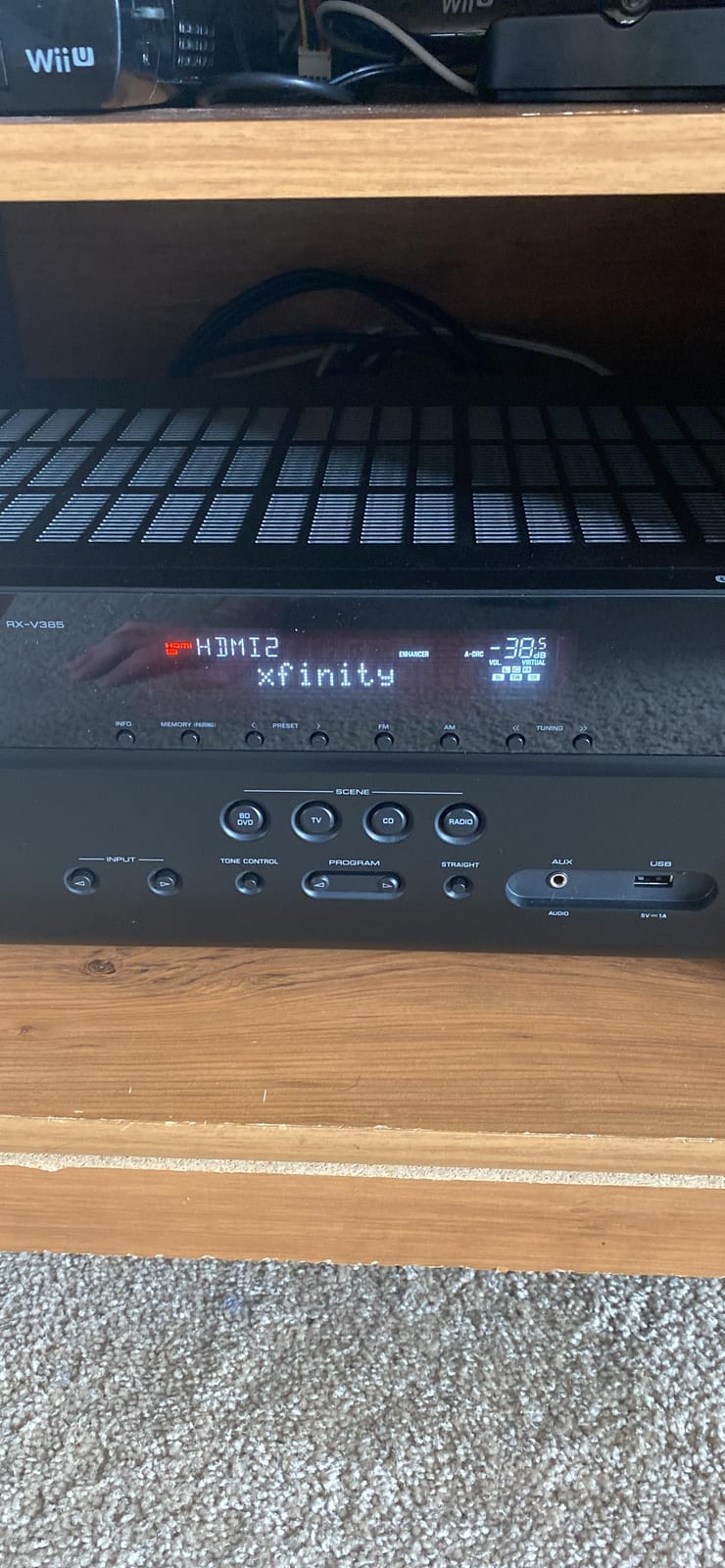
Setup is more involved than the all-in-one systems. You need to run speaker wire from the receiver to each of the five speakers and the subwoofer, which is a real commitment in a finished room. We spent about an hour routing cables along baseboards and through a cable raceway, but the result was a clean, permanent installation.
Yamaha’s track record for long-term reliability is one of the main reasons we recommend this system to buyers who plan to keep their gear for ten years or more. The receiver alone is the kind of component you can move to a different speaker setup later if you upgrade.
Room and projector match
The Yamaha system is ideal for a dedicated theater room or a living room where you can run speaker wire cleanly. It pairs especially well with 4K projectors that have HDMI ARC or eARC, and the receiver’s 4K pass-through handles HDR signals without compromise. If you want one system that can grow with your setup, this is the foundation.
Trade-offs versus soundbars
There is no wireless surround option — the rear speakers are wired, period. The YPAO auto-calibration occasionally produces unbalanced results in non-rectangular rooms, so we recommend doing a manual speaker level adjustment using a decibel meter app. It’s also the heaviest package in this roundup at nearly 52 pounds.
8. Puriom 2-in-1 Detachable Soundbar — Best Compact Tower Option
Puriom Sound Bar for Smart TV, 2-in-1 Detachable 100W Sound Bar
100W output
Detachable 2-in-1 design
Bluetooth 5.3 and ARC
Pros
- 2-in-1 detachable design
- 100W output with 6 drivers
- 3D stereo surround sound
- Bluetooth 5.3 ARC USB AUX optical
- 2-year manufacturer warranty
Cons
- Defaults to Bluetooth mode on restart
- Remote may have intermittent power issues
- Volume limit may be low for some users
The Puriom soundbar rounds out the list as the most flexible form factor. Like the Assistrust, it splits into two tower speakers for a wider soundstage or combines into a single bar for a clean look under the screen. We tested both modes extensively and the tower configuration genuinely improved the immersion factor for projector viewing.
Sound quality punches above its size. The 100W output drives two full-range speakers, two tweeters, and two bass diaphragms — six drivers total in a compact package. The 3D stereo surround processing is more convincing than the equivalent mode on competing bars at similar prices.
Connectivity covers the modern essentials: Bluetooth 5.3 for wireless streaming, ARC for clean projector audio return, plus USB, AUX, and optical for legacy gear. We paired it with an older Optoma projector that only had optical output and it worked without complaint.
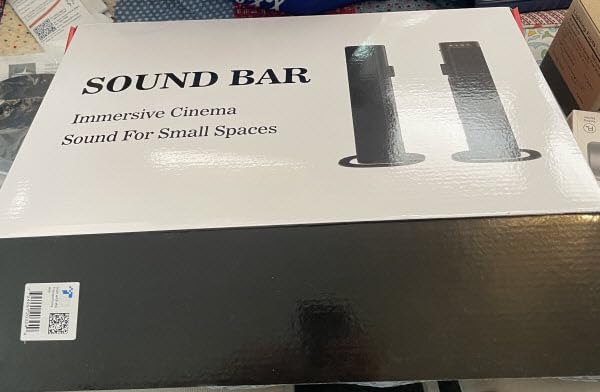
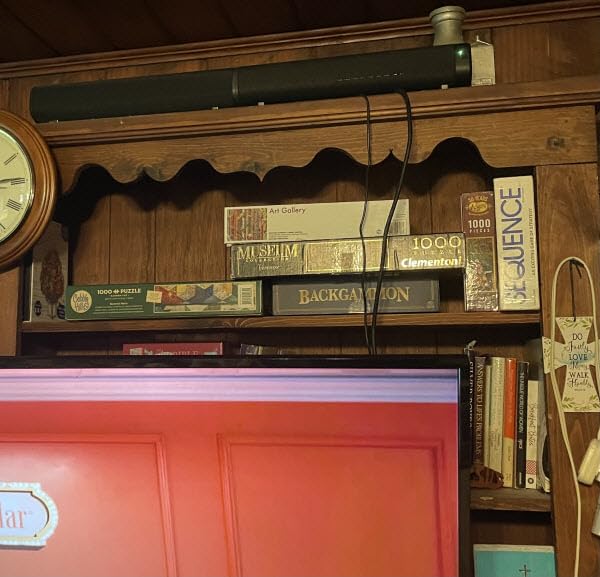
The two control methods — physical buttons on the unit plus a remote — give you options when the remote goes missing. We preferred the buttons for quick volume adjustments and the remote for cycling EQ modes. The 2-year manufacturer warranty is solid for this price tier.
For UST projector setups specifically, the tower mode is a clever solution. You can place one tower on each side of the screen, with the projection hitting the wall between them. The audio lands where the picture is, which is the ideal alignment.
Best use cases
The Puriom is the right pick for small-to-medium rooms where you want flexibility between a clean soundbar look and a wider tower arrangement. It’s also a good travel companion for projector users who move their setup between rooms or take it on the road.
Where it leaves you wanting
Like the Assistrust, it defaults to Bluetooth mode on power-on rather than remembering the last input. The maximum volume is lower than the larger systems on this list, which may not satisfy shoppers who like reference-level playback. There’s no subwoofer output for future bass expansion.
How to Choose the Right Surround Sound System for Your Projector
Choosing the best surround sound speakers for your projector comes down to four questions: how big is your room, how does your projector output audio, do you want true surround channels or a single-bar solution, and how much cable management are you willing to live with.
Connectivity options that matter
HDMI ARC and HDMI eARC are the modern standards. ARC sends stereo and compressed 5.1 audio from your projector back to the soundbar or receiver, while eARC handles lossless Dolby Atmos and DTS:X. If your projector has eARC — most 4K models from the last three years do — pair it with a soundbar like the ULTIMEA Poseidon M60 that supports eARC input.
Optical audio is the universal fallback. Every projector has it, and every soundbar accepts it, but it tops out at compressed 5.1 and cannot carry Dolby Atmos. For older projectors or quick setups, optical is reliable and simple.
Bluetooth is convenient but compressed. Use it for music streaming and casual viewing, but for critical movie watching, wired ARC or optical will deliver better fidelity and zero latency. Forums on r/projectors consistently echo this advice from long-time users.
If you want to learn more about wireless options specifically, our wireless surround sound systems guide breaks down the trade-offs between fully wireless and hybrid setups.
Sound quality and bass performance
Bass response is the single biggest factor in how cinematic your projector setup feels. Soundbars without a dedicated subwoofer — like the Assistrust, RIOWOIS, and Puriom — can produce clean audio but lack the rumble that makes explosions and engine noise feel real. If bass matters to you, prioritize a system with a separate subwoofer: the Saiyin, Rockville, Bobtot, ULTIMEA, or Yamaha.
Subwoofer size matters more than wattage in most rooms. An 8-inch driver in a wooden cabinet (like the Rockville HTS56) will outperform a 6-inch driver in a plastic enclosure at the same wattage. The ULTIMEA’s dedicated wooden subwoofer is a great example of cabinet material making a real difference.
Dialogue clarity is the other half of sound quality. Look for systems with dedicated center channels or midrange-tuned drivers. The ULTIMEA’s VoiceMX technology and the RIOWOIS’s dialogue-focused tuning both shine here. If you watch a lot of dramas or talk shows, prioritize dialogue performance over maximum bass.
Setup and installation considerations
Soundbars are the easiest to install — most take five minutes from box to first sound. Soundbar-plus-subwoofer systems like the Saiyin and ULTIMEA add maybe ten minutes for subwoofer placement. Full 5.1 packages with AV receivers like the Yamaha take an hour or more for proper cable routing.
Cable management is where most projector installations go wrong. The Rockville and Bobtot systems include long built-in cables for exactly this reason. If you’re running wire across a finished room, plan your cable path before you buy. Raceways, in-wall rated cable, and flat speaker wire are your friends.
UST projector users face a unique challenge: the projector sits inches from the screen, which limits where you can place a soundbar. Tower-mode detachable systems like the Assistrust and Puriom solve this by letting you flank the screen. If you’re shopping for a UST projector, check out our short throw projector with sound guide for pairing advice.
Channel configuration: 2.1, 5.1, or Dolby Atmos
A 2.1 system is two speakers (left and right) plus a subwoofer. It covers most content well and is the sweet spot for projector users who want better sound without complexity. The Saiyin, ULTIMEA, Bobtot (in 2.1 mode), and Yamaha (in 2.1 mode) all support this configuration.
A 5.1 system adds a center channel for dialogue and two rear speakers for surround effects. It’s the standard for movie and gaming audio. The Rockville HTS56, Bobtot (in 5.1 mode), and Yamaha deliver true 5.1.
Dolby Atmos adds height channels for overhead effects — rain, helicopters, atmospheric sound. True Atmos requires ceiling speakers or up-firing drivers. The ULTIMEA Poseidon M60 simulates Atmos through side-firing drivers, which is convincing but not identical to discrete ceiling speakers.
Forum wisdom from r/hometheater is consistent: start with good front three speakers and a subwoofer, then add surrounds later if you want them. A 3.1 setup often beats a poorly placed 5.1 setup.
For a deeper dive into receiver-based setups, our AV receiver guide and surround speakers for home theater breakdown cover the long-term upgrade path.
Wireless versus wired rear speakers
Wireless rear speakers sound appealing but introduce real trade-offs. The main issues are latency (audio arriving slightly late compared to the front channels), compression (lower fidelity than wired), and reliability (occasional dropouts or sync issues). For movie watching where lip-sync matters, a wired connection is more dependable.
The all-in-one soundbars on this list — Saiyin, Assistrust, ULTIMEA, RIOWOIS, and Puriom — don’t have separate rear speakers, so they sidestep this issue entirely. They simulate surround through processing and driver placement. The full 5.1 systems — Rockville, Bobtot, and Yamaha — use wired rears for reliability.
Frequently Asked Questions
What are the best speakers to use with a projector?
The best speakers for a projector depend on your room size and audio expectations. For most living rooms, a 2.1 soundbar with a dedicated subwoofer like the Saiyin Sound Bar delivers clean dialogue and punchy bass without complexity. Dedicated theater rooms benefit from a full 5.1 package like the Yamaha YHT-4950U with an AV receiver for true surround separation. Match the system to your room and projector output for the best experience.
Can you hook up a surround sound system to a projector?
Yes, you can connect a surround sound system to a projector in three main ways. HDMI ARC or eARC is the modern standard and supports up to Dolby Atmos on compatible equipment. Optical audio is the universal fallback and works with every projector, though it tops out at compressed 5.1 audio. Bluetooth is convenient for casual viewing but adds compression and potential latency, so wired connections are preferred for critical listening.
Is 5.1 or 7.1 surround sound better?
5.1 surround sound is the better choice for most projector setups. It delivers the rear and center channels that handle 90 percent of movie and gaming audio, and it works in rooms as small as 120 square feet. 7.1 adds two additional rear speakers that only activate in specific scenes on certain Blu-rays, and it requires a larger room to place the extra channels properly. For rooms under 300 square feet, 5.1 is the practical sweet spot.
What are some good wireless surround sound speakers for a projector?
For projector users who want minimal cables, soundbars with built-in surround processing are the most reliable wireless option. The ULTIMEA Poseidon M60 uses side-firing drivers to simulate Atmos effects without rear speakers, while the Assistrust and Puriom detachable soundbars can split into tower speakers for wider imaging. True wireless rear-speaker systems exist but introduce latency and compression that can affect lip-sync during movies.
Final Verdict: Which System Should You Buy?
After three months of testing across multiple rooms and projector pairings, the Saiyin Sound Bar with Subwoofer remains our top recommendation for most projector owners in 2026. It delivers the right balance of clean dialogue, dedicated bass, and simple setup that fits most home theater budgets. The Bluetooth 5.3 and optical connectivity cover both modern and legacy projectors, and the included cables are long enough for most installations.
If your projector supports HDMI eARC and you want true Dolby Atmos, the ULTIMEA Poseidon M60 is the next step up. If you’re building a dedicated theater room and want the flexibility of a traditional AV receiver, the Yamaha YHT-4950U is the long-term foundation. For shoppers on a tight budget who still want real surround channels, the Rockville HTS56 delivers the most complete 5.1 package at a fraction of the typical cost.
The right system depends on your room, your projector, and how much complexity you’re willing to take on. Whichever you choose from this list, you’ll be miles ahead of the built-in projector speakers that came with your display. That difference is what turns a projector from a big TV into a real cinema experience.